EP3847067B1 - Verfahren und vorrichtung zum absichern eines überholvorgangs eines auf ein fahrrad auffahrenden fahrzeugs - Google Patents
Verfahren und vorrichtung zum absichern eines überholvorgangs eines auf ein fahrrad auffahrenden fahrzeugs Download PDFInfo
- Publication number
- EP3847067B1 EP3847067B1 EP19728362.5A EP19728362A EP3847067B1 EP 3847067 B1 EP3847067 B1 EP 3847067B1 EP 19728362 A EP19728362 A EP 19728362A EP 3847067 B1 EP3847067 B1 EP 3847067B1
- Authority
- EP
- European Patent Office
- Prior art keywords
- vehicle
- path
- altered
- bicycle
- speed
- Prior art date
- Legal status (The legal status is an assumption and is not a legal conclusion. Google has not performed a legal analysis and makes no representation as to the accuracy of the status listed.)
- Active
Links
Images

Classifications
-
- B—PERFORMING OPERATIONS; TRANSPORTING
- B60—VEHICLES IN GENERAL
- B60W—CONJOINT CONTROL OF VEHICLE SUB-UNITS OF DIFFERENT TYPE OR DIFFERENT FUNCTION; CONTROL SYSTEMS SPECIALLY ADAPTED FOR HYBRID VEHICLES; ROAD VEHICLE DRIVE CONTROL SYSTEMS FOR PURPOSES NOT RELATED TO THE CONTROL OF A PARTICULAR SUB-UNIT
- B60W60/00—Drive control systems specially adapted for autonomous road vehicles
- B60W60/001—Planning or execution of driving tasks
- B60W60/0015—Planning or execution of driving tasks specially adapted for safety
-
- B—PERFORMING OPERATIONS; TRANSPORTING
- B60—VEHICLES IN GENERAL
- B60Q—ARRANGEMENT OF SIGNALLING OR LIGHTING DEVICES, THE MOUNTING OR SUPPORTING THEREOF OR CIRCUITS THEREFOR, FOR VEHICLES IN GENERAL
- B60Q1/00—Arrangement of optical signalling or lighting devices, the mounting or supporting thereof or circuits therefor
- B60Q1/26—Arrangement of optical signalling or lighting devices, the mounting or supporting thereof or circuits therefor the devices being primarily intended to indicate the vehicle, or parts thereof, or to give signals, to other traffic
- B60Q1/34—Arrangement of optical signalling or lighting devices, the mounting or supporting thereof or circuits therefor the devices being primarily intended to indicate the vehicle, or parts thereof, or to give signals, to other traffic for indicating change of drive direction
- B60Q1/346—Arrangement of optical signalling or lighting devices, the mounting or supporting thereof or circuits therefor the devices being primarily intended to indicate the vehicle, or parts thereof, or to give signals, to other traffic for indicating change of drive direction with automatic actuation
-
- B—PERFORMING OPERATIONS; TRANSPORTING
- B60—VEHICLES IN GENERAL
- B60W—CONJOINT CONTROL OF VEHICLE SUB-UNITS OF DIFFERENT TYPE OR DIFFERENT FUNCTION; CONTROL SYSTEMS SPECIALLY ADAPTED FOR HYBRID VEHICLES; ROAD VEHICLE DRIVE CONTROL SYSTEMS FOR PURPOSES NOT RELATED TO THE CONTROL OF A PARTICULAR SUB-UNIT
- B60W30/00—Purposes of road vehicle drive control systems not related to the control of a particular sub-unit, e.g. of systems using conjoint control of vehicle sub-units
- B60W30/14—Adaptive cruise control
- B60W30/16—Control of distance between vehicles, e.g. keeping a distance to preceding vehicle
-
- B—PERFORMING OPERATIONS; TRANSPORTING
- B60—VEHICLES IN GENERAL
- B60W—CONJOINT CONTROL OF VEHICLE SUB-UNITS OF DIFFERENT TYPE OR DIFFERENT FUNCTION; CONTROL SYSTEMS SPECIALLY ADAPTED FOR HYBRID VEHICLES; ROAD VEHICLE DRIVE CONTROL SYSTEMS FOR PURPOSES NOT RELATED TO THE CONTROL OF A PARTICULAR SUB-UNIT
- B60W30/00—Purposes of road vehicle drive control systems not related to the control of a particular sub-unit, e.g. of systems using conjoint control of vehicle sub-units
- B60W30/18—Propelling the vehicle
- B60W30/18009—Propelling the vehicle related to particular drive situations
- B60W30/18163—Lane change; Overtaking manoeuvres
-
- B—PERFORMING OPERATIONS; TRANSPORTING
- B60—VEHICLES IN GENERAL
- B60W—CONJOINT CONTROL OF VEHICLE SUB-UNITS OF DIFFERENT TYPE OR DIFFERENT FUNCTION; CONTROL SYSTEMS SPECIALLY ADAPTED FOR HYBRID VEHICLES; ROAD VEHICLE DRIVE CONTROL SYSTEMS FOR PURPOSES NOT RELATED TO THE CONTROL OF A PARTICULAR SUB-UNIT
- B60W40/00—Estimation or calculation of non-directly measurable driving parameters for road vehicle drive control systems not related to the control of a particular sub unit, e.g. by using mathematical models
- B60W40/08—Estimation or calculation of non-directly measurable driving parameters for road vehicle drive control systems not related to the control of a particular sub unit, e.g. by using mathematical models related to drivers or passengers
-
- B—PERFORMING OPERATIONS; TRANSPORTING
- B60—VEHICLES IN GENERAL
- B60W—CONJOINT CONTROL OF VEHICLE SUB-UNITS OF DIFFERENT TYPE OR DIFFERENT FUNCTION; CONTROL SYSTEMS SPECIALLY ADAPTED FOR HYBRID VEHICLES; ROAD VEHICLE DRIVE CONTROL SYSTEMS FOR PURPOSES NOT RELATED TO THE CONTROL OF A PARTICULAR SUB-UNIT
- B60W50/00—Details of control systems for road vehicle drive control not related to the control of a particular sub-unit, e.g. process diagnostic or vehicle driver interfaces
- B60W50/0097—Predicting future conditions
-
- B—PERFORMING OPERATIONS; TRANSPORTING
- B60—VEHICLES IN GENERAL
- B60W—CONJOINT CONTROL OF VEHICLE SUB-UNITS OF DIFFERENT TYPE OR DIFFERENT FUNCTION; CONTROL SYSTEMS SPECIALLY ADAPTED FOR HYBRID VEHICLES; ROAD VEHICLE DRIVE CONTROL SYSTEMS FOR PURPOSES NOT RELATED TO THE CONTROL OF A PARTICULAR SUB-UNIT
- B60W50/00—Details of control systems for road vehicle drive control not related to the control of a particular sub-unit, e.g. process diagnostic or vehicle driver interfaces
- B60W50/08—Interaction between the driver and the control system
- B60W50/14—Means for informing the driver, warning the driver or prompting a driver intervention
-
- B—PERFORMING OPERATIONS; TRANSPORTING
- B60—VEHICLES IN GENERAL
- B60W—CONJOINT CONTROL OF VEHICLE SUB-UNITS OF DIFFERENT TYPE OR DIFFERENT FUNCTION; CONTROL SYSTEMS SPECIALLY ADAPTED FOR HYBRID VEHICLES; ROAD VEHICLE DRIVE CONTROL SYSTEMS FOR PURPOSES NOT RELATED TO THE CONTROL OF A PARTICULAR SUB-UNIT
- B60W50/00—Details of control systems for road vehicle drive control not related to the control of a particular sub-unit, e.g. process diagnostic or vehicle driver interfaces
- B60W50/08—Interaction between the driver and the control system
- B60W50/14—Means for informing the driver, warning the driver or prompting a driver intervention
- B60W50/16—Tactile feedback to the driver, e.g. vibration or force feedback to the driver on the steering wheel or the accelerator pedal
-
- B—PERFORMING OPERATIONS; TRANSPORTING
- B60—VEHICLES IN GENERAL
- B60W—CONJOINT CONTROL OF VEHICLE SUB-UNITS OF DIFFERENT TYPE OR DIFFERENT FUNCTION; CONTROL SYSTEMS SPECIALLY ADAPTED FOR HYBRID VEHICLES; ROAD VEHICLE DRIVE CONTROL SYSTEMS FOR PURPOSES NOT RELATED TO THE CONTROL OF A PARTICULAR SUB-UNIT
- B60W60/00—Drive control systems specially adapted for autonomous road vehicles
- B60W60/001—Planning or execution of driving tasks
- B60W60/0027—Planning or execution of driving tasks using trajectory prediction for other traffic participants
-
- B—PERFORMING OPERATIONS; TRANSPORTING
- B60—VEHICLES IN GENERAL
- B60W—CONJOINT CONTROL OF VEHICLE SUB-UNITS OF DIFFERENT TYPE OR DIFFERENT FUNCTION; CONTROL SYSTEMS SPECIALLY ADAPTED FOR HYBRID VEHICLES; ROAD VEHICLE DRIVE CONTROL SYSTEMS FOR PURPOSES NOT RELATED TO THE CONTROL OF A PARTICULAR SUB-UNIT
- B60W50/00—Details of control systems for road vehicle drive control not related to the control of a particular sub-unit, e.g. process diagnostic or vehicle driver interfaces
- B60W50/08—Interaction between the driver and the control system
- B60W50/14—Means for informing the driver, warning the driver or prompting a driver intervention
- B60W2050/143—Alarm means
-
- B—PERFORMING OPERATIONS; TRANSPORTING
- B60—VEHICLES IN GENERAL
- B60W—CONJOINT CONTROL OF VEHICLE SUB-UNITS OF DIFFERENT TYPE OR DIFFERENT FUNCTION; CONTROL SYSTEMS SPECIALLY ADAPTED FOR HYBRID VEHICLES; ROAD VEHICLE DRIVE CONTROL SYSTEMS FOR PURPOSES NOT RELATED TO THE CONTROL OF A PARTICULAR SUB-UNIT
- B60W2552/00—Input parameters relating to infrastructure
- B60W2552/53—Road markings, e.g. lane marker or crosswalk
-
- B—PERFORMING OPERATIONS; TRANSPORTING
- B60—VEHICLES IN GENERAL
- B60W—CONJOINT CONTROL OF VEHICLE SUB-UNITS OF DIFFERENT TYPE OR DIFFERENT FUNCTION; CONTROL SYSTEMS SPECIALLY ADAPTED FOR HYBRID VEHICLES; ROAD VEHICLE DRIVE CONTROL SYSTEMS FOR PURPOSES NOT RELATED TO THE CONTROL OF A PARTICULAR SUB-UNIT
- B60W2554/00—Input parameters relating to objects
-
- B—PERFORMING OPERATIONS; TRANSPORTING
- B60—VEHICLES IN GENERAL
- B60W—CONJOINT CONTROL OF VEHICLE SUB-UNITS OF DIFFERENT TYPE OR DIFFERENT FUNCTION; CONTROL SYSTEMS SPECIALLY ADAPTED FOR HYBRID VEHICLES; ROAD VEHICLE DRIVE CONTROL SYSTEMS FOR PURPOSES NOT RELATED TO THE CONTROL OF A PARTICULAR SUB-UNIT
- B60W2554/00—Input parameters relating to objects
- B60W2554/40—Dynamic objects, e.g. animals, windblown objects
- B60W2554/402—Type
- B60W2554/4026—Cycles
-
- B—PERFORMING OPERATIONS; TRANSPORTING
- B60—VEHICLES IN GENERAL
- B60W—CONJOINT CONTROL OF VEHICLE SUB-UNITS OF DIFFERENT TYPE OR DIFFERENT FUNCTION; CONTROL SYSTEMS SPECIALLY ADAPTED FOR HYBRID VEHICLES; ROAD VEHICLE DRIVE CONTROL SYSTEMS FOR PURPOSES NOT RELATED TO THE CONTROL OF A PARTICULAR SUB-UNIT
- B60W2554/00—Input parameters relating to objects
- B60W2554/80—Spatial relation or speed relative to objects
-
- B—PERFORMING OPERATIONS; TRANSPORTING
- B60—VEHICLES IN GENERAL
- B60W—CONJOINT CONTROL OF VEHICLE SUB-UNITS OF DIFFERENT TYPE OR DIFFERENT FUNCTION; CONTROL SYSTEMS SPECIALLY ADAPTED FOR HYBRID VEHICLES; ROAD VEHICLE DRIVE CONTROL SYSTEMS FOR PURPOSES NOT RELATED TO THE CONTROL OF A PARTICULAR SUB-UNIT
- B60W2555/00—Input parameters relating to exterior conditions, not covered by groups B60W2552/00, B60W2554/00
- B60W2555/60—Traffic rules, e.g. speed limits or right of way
-
- B—PERFORMING OPERATIONS; TRANSPORTING
- B60—VEHICLES IN GENERAL
- B60W—CONJOINT CONTROL OF VEHICLE SUB-UNITS OF DIFFERENT TYPE OR DIFFERENT FUNCTION; CONTROL SYSTEMS SPECIALLY ADAPTED FOR HYBRID VEHICLES; ROAD VEHICLE DRIVE CONTROL SYSTEMS FOR PURPOSES NOT RELATED TO THE CONTROL OF A PARTICULAR SUB-UNIT
- B60W2754/00—Output or target parameters relating to objects
- B60W2754/10—Spatial relation or speed relative to objects
- B60W2754/20—Lateral distance
-
- B—PERFORMING OPERATIONS; TRANSPORTING
- B60—VEHICLES IN GENERAL
- B60W—CONJOINT CONTROL OF VEHICLE SUB-UNITS OF DIFFERENT TYPE OR DIFFERENT FUNCTION; CONTROL SYSTEMS SPECIALLY ADAPTED FOR HYBRID VEHICLES; ROAD VEHICLE DRIVE CONTROL SYSTEMS FOR PURPOSES NOT RELATED TO THE CONTROL OF A PARTICULAR SUB-UNIT
- B60W30/00—Purposes of road vehicle drive control systems not related to the control of a particular sub-unit, e.g. of systems using conjoint control of vehicle sub-units
- B60W30/08—Active safety systems predicting or avoiding probable or impending collision or attempting to minimise its consequences
- B60W30/095—Predicting travel path or likelihood of collision
Definitions
- the invention relates to a method and a device for securing an overtaking maneuver of a vehicle driving towards a bicycle.
- an adaptive cruise control can keep the vehicle at a set target speed as long as a safe distance from a vehicle in front is maintained that is adjusted to the target speed. If the safe distance is not reached, the adaptive cruise control reduces the speed until the vehicle is traveling at the speed of the vehicle in front and follows the vehicle in front at a safe distance that is adjusted to the reduced speed.
- US 9,227,632 B1 describes a method for path planning for an evasive steering maneuver.
- the approach presented here presents a method for securing an overtaking maneuver of a vehicle driving into a bicycle and a device for securing an overtaking maneuver of a vehicle driving into a bicycle, as well as a corresponding computer program product and a machine-readable storage medium according to the independent claims.
- Embodiments of the present invention can advantageously make it possible to maintain a lateral safety distance from a bicycle in addition to a longitudinal safety distance from the bicycle.
- the lateral safety distance can also be maintained in a confined traffic space.
- a cyclist on a bicycle can be automatically detected.
- the sensor information can also be used to determine the current direction and current speed of the cyclist.
- a probability range can be predicted in which the cyclist will move with a high probability within a period of observation.
- the probability range can be described by a probable trajectory of the bicycle.
- a The vehicle's future path can be determined by a driver assistance system, such as a lane keeping assistant.
- a safety distance of at least 1.5 meters must be maintained between the right-hand edge of the vehicle and the left-hand edge of the bicycle or cyclist. In left-hand traffic, the same applies to opposite sides.
- the safety distance can also be greater depending on the speed of the vehicle.
- the required safety distance can be greater if a child is being transported on the bicycle.
- the future path of the vehicle is automatically adjusted to the changed path so that the safety distance is at least maintained.
- the future path of the vehicle can be automatically changed based on the sensor information.
- the available traffic space can be automatically determined based on the sensor information.
- the available traffic space is limited by other road users, lane boundaries and the applicable traffic rules.
- the vehicle can drive without conflict. If there is enough traffic space available, the vehicle can drive past the bicycle while maintaining a safe distance. If there is not enough traffic space available, the vehicle cannot be safely guided along the changed path.
- the speed of the vehicle can be changed if the changed route is outside or at least partially outside the available traffic space.
- the vehicle can be braked if there is not enough space to overtake to the left of the bicycle.
- the bicycle can then be used as a target vehicle for the vehicle's adaptive cruise control, for example.
- the future path of the vehicle can be re-determined using the changed speed and the procedure repeated. If the vehicle is travelling slower, a smaller safety distance may be required than before reducing the speed.
- the future path can be predicted using a current driver input.
- the future path can be predicted from a current direction of travel, a current speed, a current steering movement and a current acceleration or braking request.
- a counterforce can be applied to the driver input if the driver input deviates from the changed path and/or speed.
- the driver can be assisted with steering, similar to a lane keeping assistant.
- a warning can be issued if the driver input deviates from the changed path and/or the changed speed.
- the warning can be issued acoustically, visually and/or haptically.
- the warning can warn the driver if the safety distance is not maintained and/or can help the driver to maintain the safety distance themselves.
- the available traffic space is determined using traffic sign information representing recognized traffic signs and, optionally, road marking information representing recognized lane markings. Traffic signs and lane markings can be recognized in the sensor information. When overtaking the bicycle, the currently applicable traffic regulations can be observed. For example, a current speed limit and/or a no-overtaking sign can be recognized by the traffic signs and/or the lane markings.
- a direction indicator device of the vehicle Before and during the overtaking maneuver, a direction indicator device of the vehicle can be activated.
- the overtaking maneuver can be made easier by automatic Flashing is used to alert following vehicles to the cyclist.
- the method can be implemented, for example, in software or hardware or in a mixed form of software and hardware, for example in a control unit.
- a computer program product or computer program with program code that can be stored on a machine-readable carrier or storage medium such as a semiconductor memory, a hard disk memory or an optical memory and is used to carry out, implement and/or control the steps of the method according to one of the embodiments described above, in particular when the program product or program is executed on a computer or device.
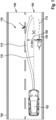
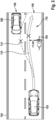
- the Figures 1 to 3 show representations of possible scenarios when overtaking bicycles.
- Cyclists are overtaken on country roads every day. Often the lateral distance is not maintained. This is not only unpleasant for cyclists, but can also be very dangerous.
- the approach presented here can avoid this using the current generation of driver assistance systems.
- the "Safe cyclist overtaking” presented here can, for example, be implemented as an extension of the ACC function (automatic distance control). An automatic overtaking maneuver is initiated when driving with ACC switched on and a cyclist is riding ahead in the same lane.
- the Figures 1 to 3 show representations of possible scenarios when overtaking bicycles 100.
- a bicycle 100 rides in front of a vehicle 102 on a road 104 with one lane in each direction 106 per direction of travel, for example a typical country road.
- the vehicle 102 is traveling faster than the bicycle 100.
- the bicycle 100 is traveling on the right edge of the lane 106 on which the vehicle 102 is approaching the bicycle 100 from behind.
- the required safety distance 108 of at least 1.5 meters, it is always necessary to move into the other lane 106 in the scenarios shown here.
- the vehicle 102 has a device according to the approach presented here, on which a method for securing an overtaking maneuver is carried out according to an embodiment.
- the device processes sensor information from a sensor system of the vehicle 102 in order to recognize the road 104, the directional lanes, traffic signs and other road users, such as the bicycle 100.
- the device reads a future path 110 of the vehicle 102, for example, from a navigation system of the vehicle 102.
- the future path 110 can also be read by a driver assistance system of the vehicle 102.
- the future path 110 can be extrapolated from current driver inputs, such as a steering wheel position, an accelerator pedal position and/or a brake pedal position.
- the device also determines a probable trajectory 112 of the bicycle 100 from the sensor information. The probable trajectory is extrapolated using a current speed and direction of the bicycle 102.
- FIG. 1 it is shown how the future path 110 is automatically changed by the device if the safety distance 108 to the probable trajectory 112 of the bicycle 100 is undercut.
- a changed path 114 runs further to the left as seen from the vehicle 102.
- the vehicle 102 is guided along the changed path 114 via control signals from the device.
- the vehicle 102 maintains a safety distance 108 of at least 1.5 meters from the bicycle 100.
- the vehicle 102 is guided at least partially on a curve over the opposite direction lane 106, since the available traffic space 116 is large enough for this due to the lack of oncoming traffic and no overtaking ban.
- a left turn signal of the vehicle 102 is automatically set before the vehicle 102 initiates the overtaking maneuver on the changed path 114.
- Fig. 2 it is shown how the safety distance 108 would be undercut by the future path 110, since the vehicle 102 could drive past the bicycle 100 at a maximum distance of only one meter due to a solid center line 200.
- the changed path 114 which would lead past the bicycle with sufficient safety distance 108, crosses the center line 200 and is thus partially outside the available traffic space 116. Therefore, the bicycle 100 is classified as a vehicle ahead and a speed of the vehicle 102 is adjusted to a speed of the bicycle 100 until the overtaking ban ends and, in addition, the available traffic space 116 is not restricted by oncoming traffic.
- Fig. 3 It is also shown how the safety distance 108 would be undercut by the future path 110. In contrast to the representation in Fig. 2 no overtaking ban. However, since an oncoming vehicle 300 is driving in the opposite lane 106, the available traffic space 116 is so small that the vehicle 102 cannot be guided on the changed path 114 here either. Consequently, the vehicle 102 is as in Fig. 2 braked and drives behind the bicycle 100 until the opposite lane 106 is clear.
- the function presented here takes into account that a minimum lateral distance to the cyclist is maintained, the speed is not exceeded, the vehicle only crosses the center line if this is permitted by the road rules and as in Fig. 1 There is no oncoming traffic. If, as in Fig. 2 If there is not enough space between the center line 200 and the cyclist, no automatic overtaking maneuver may be initiated.
- the lines can be detected by an imaging sensor.
- the driver is asked via a user interface (HMI) whether overtaking should still take place.
- HMI user interface
- ACC adaptive cruise control
- a warning is issued if there is not enough space to overtake. If overtaking is carried out manually, the required distance is corrected in one embodiment by a slight steering intervention.
Landscapes
- Engineering & Computer Science (AREA)
- Automation & Control Theory (AREA)
- Mechanical Engineering (AREA)
- Transportation (AREA)
- Human Computer Interaction (AREA)
- Physics & Mathematics (AREA)
- Mathematical Physics (AREA)
- Traffic Control Systems (AREA)
- Control Of Driving Devices And Active Controlling Of Vehicle (AREA)
Description
- Die Erfindung betrifft ein Verfahren und eine Vorrichtung zum Absichern eines Überholvorgangs eines auf ein Fahrrad auffahrenden Fahrzeugs.
- In einem Fahrzeug können verschiedene Assistenzsysteme implementiert sein. Beispielsweise kann ein Abstandsregeltempomat das Fahrzeug auf einer eingestellten Zielgeschwindigkeit halten, so lange ein an die Zielgeschwindigkeit angepasster Sicherheitsabstand zu einem vorausfahrenden Fahrzeug eingehalten wird. Wird der Sicherheitsabstand unterschritten, so reduziert der Abstandsregeltempomat die Geschwindigkeit, bis das Fahrzeug mit einer Geschwindigkeit des vorausfahrenden Fahrzeugs fährt und dem vorausfahrenden Fahrzeug mit einem an die reduzierte Geschwindigkeit angepassten Sicherheitsabstand folgt.
-
US 9,227,632 B1 - Vor diesem Hintergrund werden mit dem hier vorgestellten Ansatz ein Verfahren zum Absichern eines Überholvorgangs eines auf ein Fahrrad auffahrenden Fahrzeugs und eine Vorrichtung zum Absichern eines Überholvorgangs eines auf ein Fahrrad auffahrenden Fahrzeugs, sowie schließlich ein entsprechendes Computerprogrammprodukt und ein maschinenlesbares Speichermedium gemäß den unabhängigen Ansprüchen vorgestellt. Vorteilhafte Weiterbildungen und Verbesserungen des hier vorgestellten Ansatzes ergeben sich aus der Beschreibung und sind in den abhängigen Ansprüchen beschrieben.
- Ausführungsformen der vorliegenden Erfindung können in vorteilhafter Weise ermöglichen, zusätzlich zu einem longitudinalen Sicherheitsabstand zu einem Fahrrad einen lateralen Sicherheitsabstand zu dem Fahrrad einzuhalten. Dabei kann der laterale Sicherheitsabstand auch bei einem beengten Verkehrsraum eingehalten werden.
- Es wird ein Verfahren gemäß Anspruch 1 zum Absichern eines Überholvorgangs eines auf ein Fahrrad auffahrenden Fahrzeugs vorgeschlagen, bei dem ein zukünftiger Weg des Fahrzeugs automatisiert geändert wird, wenn ein lateraler Sicherheitsabstand zu einer wahrscheinlichen Trajektorie des Fahrrads unterschritten wird, wobei das Fahrzeug auf dem geänderten Weg geführt wird, wenn er innerhalb eines verfügbaren Verkehrsraums verläuft, wobei der verfügbare Verkehrsraum unter Verwendung einer erkannte Verkehrszeichen repräsentierenden Verkehrszeicheninformation bestimmt wird..
- Ideen zu Ausführungsformen der vorliegenden Erfindung können unter anderem als auf den nachfolgend beschriebenen Gedanken und Erkenntnissen beruhend angesehen werden.
- Unter Verwendung von Sensorinformationen eines auf weite und mittlere Entfernungen wirksamen Sensorsystems des Fahrzeugs, beispielsweise eines Kamerasystems und/oder eines Radarsystems und/oder eines Lidarsystems, kann ein Radfahrer auf einem Fahrrad automatisiert erkannt werden. Aus den Sensorinformationen kann zusätzlich eine aktuelle Richtung und aktuelle Geschwindigkeit des Radfahrers bestimmt werden. Unter Verwendung dieser Informationen kann ein Wahrscheinlichkeitsbereich vorhergesagt werden, in dem sich der Radfahrer innerhalb eines Betrachtungszeitraums mit einer hohen Wahrscheinlichkeit bewegen wird. Der Wahrscheinlichkeitsbereich kann durch eine wahrscheinliche Trajektorie des Fahrrads beschrieben werden. Ein zukünftiger Weg des Fahrzeugs kann durch ein Fahrerassistenzsystem des Fahrzeugs, beispielsweise einem Spurhalteassistent vorgegeben sein.
- Beim Überholen eines Fahrradfahrers soll ein Sicherheitsabstand zwischen einer rechten Begrenzung des Fahrzeugs und einer linken Begrenzung des Fahrrads beziehungsweise Fahrradfahrers von mindestens 1,5 Meter eingehalten werden. Bei Linksverkehr entsprechend die gegenüberliegenden Seiten. Der Sicherheitsabstand kann abhängig von einer Geschwindigkeit des Fahrzeugs auch größer sein. Zusätzlich kann der erforderliche Sicherheitsabstand größer sein, wenn auf dem Fahrrad ein Kind transportiert wird. Der zukünftige Weg des Fahrzeugs wird automatisch zu dem geänderten Weg angepasst, sodass der Sicherheitsabstand mindestens eingehalten wird.
- Der zukünftige Weg des Fahrzeugs kann automatisiert basierend auf den Sensorinformationen geändert werden. Der verfügbare Verkehrsraum kann automatisiert basierend auf den Sensorinformationen ermittelt werden. Der verfügbare Verkehrsraum wird durch andere Verkehrsteilnehmer, Fahrbahnbegrenzungen und die anzuwendenden Verkehrsregeln begrenzt. Innerhalb des verfügbaren Verkehrsraums kann das Fahrzeug konfliktfrei fahren. Wenn genügend Verkehrsraum zur Verfügung steht, kann das Fahrzeug unter Einhaltung des Sicherheitsabstands an dem Fahrrad vorbei fahren. Wenn kein genügender Verkehrsraum verfügbar ist, kann das Fahrzeug nicht sicher auf dem geänderten Weg geführt werden.
- Eine Geschwindigkeit des Fahrzeugs kann geändert werden, wenn der geänderte Weg außerhalb beziehungsweise zumindest teilweise außerhalb des verfügbaren Verkehrsraums verläuft. Das Fahrzeug kann gebremst werden, wenn links neben dem Fahrrad nicht genug Platz zum Überholen ist. Dann kann das Fahrrad beispielsweise als Zielfahrzeug für einen Abstandsregeltempomaten des Fahrzeugs verwendet werden.
- Der zukünftige Weg des Fahrzeugs kann unter Verwendung der geänderten Geschwindigkeit neu bestimmt werden und das Verfahren erneut ausgeführt werden. Wenn das Fahrzeug langsamer fährt, kann ein geringerer Sicherheitsabstand erforderlich sein, als vor dem Verringern der Geschwindigkeit.
- Der zukünftige Weg kann unter Verwendung einer aktuellen Fahrereingabe prädiziert werden. Der zukünftige Weg kann aus einer aktuellen Fahrtrichtung, einer aktuellen Geschwindigkeit, einer aktuellen Lenkbewegung und einer aktuellen Beschleunigungsforderung beziehungsweise Bremsanforderung vorhergesagt werden.
- Der Fahrereingabe kann eine Gegenkraft entgegengesetzt werden, wenn die Fahrereingabe von dem geänderten Weg und/oder der geänderten Geschwindigkeit abweicht. Der Fahrer kann wie bei einem Spurhalteassistent beim Lenken unterstützt werden.
- Alternativ oder ergänzend kann eine Warnung ausgegeben werden, wenn die Fahrereingabe von dem geänderten Weg und/oder der geänderten Geschwindigkeit abweicht. Die Warnung kann akustisch, optisch und/oder haptisch ausgegeben werden. Durch die Warnung kann der Fahrer vor einer Unterschreitung des Sicherheitsabstands gewarnt werden und/oder selbst den Sicherheitsabstand einhalten.
- Der verfügbare Verkehrsraum wird unter Verwendung einer erkannte Verkehrszeichen repräsentierenden Verkehrszeicheninformation und, optional, einer erkannte Fahrbahnmarkierungen repräsentierenden Fahrbahnmarkierungsinformation bestimmt. Verkehrszeichen und Fahrbahnmarkierungen können in der Sensorinformation erkannt werden. Beim Überholen des Fahrrads können die aktuell geltenden Verkehrsregeln eingehalten werden. Beispielswiese kann eine aktuelle Geschwindigkeitsbegrenzung und/oder ein Überholverbot durch die aufgestellten Verkehrszeichen und/oder über die Fahrbahnmarkierung erkannt werden.
- Der verfügbare Verkehrsraum kann zusätzlich unter Verwendung einer einen erkannten Gegenverkehrsweg repräsentierenden Gegenverkehrsinformation bestimmt werden. Andere Verkehrsteilnehmer, insbesondere entgegenkommende Fahrzeuge schränken den zum Überholen verfügbaren Verkehrsraum ein. Das Überholen kann unterbleiben, wenn aufgrund anderer Verkehrsteilnehmer nicht genug Platz zur Verfügung steht.
- Vor und während des Überholvorgangs kann eine Richtungsanzeigeeinrichtung des Fahrzeugs aktiviert werden. Der Überholvorgang kann durch automatisches Blinken angezeigt werden. Durch das Blinken werden nachfolgende Fahrzeuge auf den Fahrradfahrer aufmerksam gemacht.
- Das Verfahren kann beispielsweise in Software oder Hardware oder in einer Mischform aus Software und Hardware beispielsweise in einem Steuergerät implementiert sein.
- Der hier vorgestellte Ansatz schafft ferner eine Vorrichtung, die dazu ausgebildet ist, um die Schritte einer Variante des hier vorgestellten Verfahrens in entsprechenden Einrichtungen durchzuführen, anzusteuern bzw. umzusetzen.
- Die Vorrichtung kann ein elektrisches Gerät mit zumindest einer Recheneinheit zum Verarbeiten von Signalen oder Daten, zumindest einer Speichereinheit zum Speichern von Signalen oder Daten, und zumindest einer Schnittstelle und/oder einer Kommunikationsschnittstelle zum Einlesen oder Ausgeben von Daten, die in ein Kommunikationsprotokoll eingebettet sind, sein. Die Recheneinheit kann beispielsweise ein Signalprozessor, ein sogenannter System-ASIC oder ein Mikrocontroller zum Verarbeiten von Sensorsignalen und Ausgeben von Datensignalen in Abhängigkeit von den Sensorsignalen sein. Die Speichereinheit kann beispielsweise ein Flash-Speicher, ein EPROM oder eine magnetische Speichereinheit sein. Die Schnittstelle kann als Sensorschnittstelle zum Einlesen der Sensorsignale von einem Sensor und/oder als Aktorschnittstelle zum Ausgeben der Datensignale und/oder Steuersignale an einen Aktor ausgebildet sein. Die Kommunikationsschnittstelle kann dazu ausgebildet sein, die Daten drahtlos und/oder leitungsgebunden einzulesen oder auszugeben. Die Schnittstellen können auch Softwaremodule sein, die beispielsweise auf einem Mikrocontroller neben anderen Softwaremodulen vorhanden sind.
- Von Vorteil ist auch ein Computerprogrammprodukt oder Computerprogramm mit Programmcode, der auf einem maschinenlesbaren Träger oder Speichermedium wie einem Halbleiterspeicher, einem Festplattenspeicher oder einem optischen Speicher gespeichert sein kann und zur Durchführung, Umsetzung und/oder Ansteuerung der Schritte des Verfahrens nach einer der vorstehend beschriebenen Ausführungsformen verwendet wird, insbesondere wenn das Programmprodukt oder Programm auf einem Computer oder einer Vorrichtung ausgeführt wird.
- Es wird darauf hingewiesen, dass einige der möglichen Merkmale und Vorteile der Erfindung hierin mit Bezug auf unterschiedliche Ausführungsformen beschrieben sind. Ein Fachmann erkennt, dass die Merkmale der Vorrichtung und des Verfahrens in geeigneter Weise kombiniert, angepasst oder ausgetauscht werden können, um zu weiteren Ausführungsformen der Erfindung zu gelangen.
- Nachfolgend werden Ausführungsformen der Erfindung unter Bezugnahme auf die beigefügten Zeichnungen beschrieben, wobei weder die Zeichnungen noch die Beschreibung als die Erfindung einschränkend auszulegen sind.
- Die
Figuren 1 bis 3 zeigen Darstellungen von möglichen Szenarien bei Überholvorgängen von Fahrrädern. - Die Figuren sind lediglich schematisch und nicht maßstabsgetreu. Gleiche Bezugszeichen bezeichnen in den Figuren gleiche oder gleichwirkende Merkmale.
- Jeden Tag werden auf Landstraßen Fahrradfahrer überholt. Oft wird der laterale Abstand dabei nicht eingehalten. Das ist zum einen unangenehm für die Fahrradfahrer, zum anderen kann dies sehr gefährlich werden.
- Durch den hier vorgestellten Ansatz kann dies unter Verwendung der aktuellen Generation der Fahrerassistenzsysteme vermieden werden. Das hier vorgestellte "Safe cyclist overtaking" kann beispielsweise als eine Erweiterung der ACC Funktion (Abstandsregelautomat) ausgeführt sein. Dabei wird ein automatisches Überholmanöver eingeleitet, wenn mit eingeschaltetem ACC gefahren wird und ein Fahrradfahrer auf der eigenen Spur voraus fährt.
- Die
Figuren 1 bis 3 zeigen Darstellungen von möglichen Szenarien bei Überholvorgängen von Fahrrädern 100. Dabei fährt jeweils ein Fahrrad 100 vor einem Fahrzeug 102 auf einer Straße 104 mit je einem Richtungsfahrstreifen 106 pro Fahrtrichtung, also beispielsweise einer typischen Landstraße. Das Fahrzeug 102 fährt schneller als das Fahrrad 100. Das Fahrrad 100 fährt am rechten Rand des Richtungsfahrstreifens 106, auf dem sich das Fahrzeug 102 dem Fahrrad 100 von hinten nähert. Um das Fahrrad 100 mit dem erforderlichen Sicherheitsabstand 108 von mindesten 1,5 Metern überholen zu können, ist es bei den hier dargestellten Szenarien immer erforderlich auf den anderen Richtungsfahrstreifen 106 auszuweichen. - Das Fahrzeug 102 weist eine Vorrichtung gemäß dem hier vorgestellten Ansatz auf, auf der ein Verfahren zum Absichern eines Überholvorgangs gemäß einem Ausführungsbeispiel ausgeführt wird. Die Vorrichtung verarbeitet Sensorinformationen eines Sensorsystems des Fahrzeugs 102, um die Straße 104, die Richtungsfahrstreifen, Verkehrszeichen und andere Verkehrsteilnehmer, wie das Fahrrad 100 zu erkennen. Einen zukünftigen Weg 110 des Fahrzeugs 102 liest die Vorrichtung beispielsweise von einem Navigationssystem des Fahrzeugs 102 ein. Ebenso kann der zukünftige Weg 110 von einem Fahrerassistenzsystem des Fahrzeugs 102 eingelesen werden. Alternativ kann der zukünftige Weg 110 aus aktuellen Fahrereingaben, wie einer Lenkradstellung, einer Fahrpedalstellung und/oder einer Bremspedalstellung extrapoliert werden. Aus den Sensorinformationen bestimmt die Vorrichtung ferner eine wahrscheinliche Trajektorie 112 des Fahrrads 100. Die wahrscheinliche Trajektorie wird dabei unter Verwendung einer aktuellen Geschwindigkeit und Richtung des Fahrrads 102 extrapoliert.
- In
Fig. 1 ist dargestellt, wie von der Vorrichtung der zukünftige Weg 110 automatisch geändert wird, wenn der Sicherheitsabstand 108 zu der wahrscheinlichen Trajektorie 112 des Fahrrads 100 unterschritten wird. Ein geänderter Weg 114 verläuft von dem Fahrzeug 102 aus gesehen weiter links. Das Fahrzeug 102 wird über Steuersignale von der Vorrichtung auf dem geänderten Weg 114 geführt. Auf dem geänderten Weg 114 hält das Fahrzeug 102 mindestens 1,5 Meter Sicherheitsabstand 108 zu dem Fahrrad 100 ein. Das Fahrzeug 102 wird zumindest teilweise auf einem Bogen über den entgegengesetzten Richtungsfahrstreifen 106 geführt, da aufgrund von fehlendem Gegenverkehr und ohne Überholverbot ein verfügbarer Verkehrsraum 116 groß genug dazu ist. - In einem Ausführungsbeispiel wird automatisch ein linker Blinker des Fahrzeugs 102 gesetzt, bevor das Fahrzeug 102 auf dem geänderten Weg 114 den Überholvorgang einleitet.
- In
Fig. 2 ist dargestellt, wie der Sicherheitsabstand 108 durch den zukünftigen Weg 110 unterschritten würde, da das Fahrzeug 102 aufgrund einer durchgezogenen Mittellinie 200 mit maximal nur einem Meter Abstand an dem Fahrrad 100 vorbeifahren könnte. Der geänderte Weg 114, der mit genügend Sicherheitsabstand 108 an dem Fahrrad vorbeiführen würde, kreuzt die Mittellinie 200 und liegt damit teilweise außerhalb des verfügbaren Verkehrsraums 116. Daher wird das Fahrrad 100 als vorausfahrendes Fahrzeug eingestuft und eine Geschwindigkeit des Fahrzeugs 102 an eine Geschwindigkeit des Fahrrads 100 angepasst, bis das Überholverbot endet und zusätzlich auch der verfügbare Verkehrsraum 116 nicht durch Gegenverkehr eingeschränkt ist. - In
Fig. 3 ist ebenfalls dargestellt, wie der Sicherheitsabstand 108 durch den zukünftigen Weg 110 unterschritten würde. Hier besteht im Gegensatz zu der Darstellung inFig. 2 kein Überholverbot. Da jedoch ein entgegenkommendes Fahrzeug 300 auf dem entgegengesetzten Richtungsfahrstreifen 106 fährt, ist der verfügbare Verkehrsraum 116 so gering, dass das Fahrzeug 102 auch hier nicht auf dem geänderten Weg 114 geführt werden kann. Folglich wird das Fahrzeug 102 wie inFig. 2 abgebremst und fährt hinter dem Fahrrad 100 her, bis der entgegengesetzte Richtungsfahrstreifen 106 frei ist. - Die hier vorgestellte Funktion berücksichtigt, dass ein lateraler Mindestabstand zum Fahrradfahrer eingehalten wird, die Geschwindigkeit nicht überschritten wird, nur über die Mittellinie gefahren wird, wenn dies durch die Straßenregeln erlaubt ist und wie in
Fig. 1 kein Gegenverkehr vorhanden ist. Sollte wie inFig. 2 der Platz zwischen Mittellinie 200 und Fahrradfahrer nicht ausreichend sein, so darf kein automatisches Überholmanöver eingeleitet werden. Die Linien können durch einen bildgebenden Sensor detektiert werden. - In einem Ausführungsbeispiel wird der Fahrer über eine Benutzerschnittstelle (HMI) gefragt, ob trotzdem überholt werden soll. In einem Ausführungsbeispiel erfolgt bei deaktiviertem Abstandsregeltempomat (ACC) eine Warnung, wenn der Freiraum zum Überholen nicht ausreichend ist. Wird manuell überholt, so wird der benötigte Abstand in einem Ausführungsbeispiel durch einen leichten Lenkeingriff korrigiert.
- Abschließend ist darauf hinzuweisen, dass Begriffe wie "aufweisend", "umfassend", etc. keine anderen Elemente oder Schritte ausschließen und Begriffe wie "eine" oder "ein" keine Vielzahl ausschließen. Bezugszeichen in den Ansprüchen sind nicht als Einschränkung anzusehen.
Claims (14)
- Verfahren zum Absichern eines Überholvorgangs eines auf ein Fahrrad (100) auffahrenden Fahrzeugs (102), wobei ein zukünftiger Weg (110) des Fahrzeugs (102) automatisiert geändert wird, wenn ein lateraler Sicherheitsabstand (108) zu einer wahrscheinlichen Trajektorie (108) des Fahrrads (100) unterschritten wird, wobei das Fahrzeug (102) auf dem geänderten Weg (114) geführt wird, wenn er innerhalb eines verfügbaren Verkehrsraums (116) verläuft,
wobei der verfügbare Verkehrsraum (116) unter Verwendung einer erkannte Verkehrszeichen repräsentierenden Verkehrszeicheninformation bestimmt wird. - Verfahren gemäß Anspruch 1, bei dem der zukünftige Weg (110) des Fahrzeugs (102) automatisiert basierend auf Sensorinformationen eines Sensorsystems des Fahrzeugs (102) geändert wird und der verfügbare Verkehrsraum (116) automatisiert basierend auf den Sensorinformationen ermittelt wird.
- Verfahren nach einem der Ansprüche 1 und 2, bei dem eine Geschwindigkeit des Fahrzeugs (102) geändert wird, wenn der geänderte Weg (114) außerhalb des verfügbaren Verkehrsraums (116) verläuft.
- Verfahren gemäß Anspruch 3, bei dem der zukünftige Weg (110) des Fahrzeugs (102) unter Verwendung der geänderten Geschwindigkeit neu bestimmt wird und das Verfahren erneut ausgeführt wird.
- Verfahren gemäß einem der vorhergehenden Ansprüche, bei dem der zukünftige Weg (114) unter Verwendung einer aktuellen Fahrereingabe prädiziert wird.
- Verfahren gemäß Anspruch 5, bei dem der Fahrereingabe eine Gegenkraft entgegengesetzt wird, wenn die Fahrereingabe von dem geänderten Weg (114) und/oder der geänderten Geschwindigkeit abweicht.
- Verfahren gemäß einem der Ansprüche 5 bis 6, bei dem eine Warnung ausgegeben wird, wenn die Fahrereingabe von dem geänderten Weg (114) und/oder der geänderten Geschwindigkeit abweicht.
- Verfahren gemäß einem der vorhergehenden Ansprüche, bei dem der verfügbare Verkehrsraum (116) unter Verwendung einer einen erkannten Gegenverkehrsweg repräsentierenden Gegenverkehrsinformation bestimmt wird.
- Verfahren gemäß einem der vorhergehenden Ansprüche, bei dem vor und während des Überholvorgangs eine Richtungsanzeigeeinrichtung des Fahrzeugs (102) aktiviert wird.
- Vorrichtung (100), wobei die Vorrichtung dazu ausgebildet ist, das Verfahren gemäß einem der vorhergehenden Ansprüche in entsprechenden Einrichtungen auszuführen, umzusetzen und/oder anzusteuern.
- Computerprogrammprodukt, das dazu eingerichtet ist, das Verfahren gemäß einem der Ansprüche 1 bis 9 auszuführen, umzusetzen und/oder anzusteuern.
- Maschinenlesbares Speichermedium, auf dem das Computerprogrammprodukt gemäß Anspruch 11 gespeichert ist.
- Verfahren gemäß einem der Ansprüche 1 bis 9, wobei die wahrscheinliche Trajektorie einen Wahrscheinlichkeitsbereich angibt, in dem sich der Radfahrer innerhalb eines Betrachtungszeitraums mit einer hohen Wahrscheinlichkeit bewegen wird.
- Verfahren gemäß einem der Ansprüche 1 bis 9 und 13, wobei der laterale Sicherheitsabstand mindestens 1,5 m beträgt.
Applications Claiming Priority (2)
| Application Number | Priority Date | Filing Date | Title |
|---|---|---|---|
| DE102018214962.3A DE102018214962A1 (de) | 2018-09-04 | 2018-09-04 | Verfahren und Vorrichtung zum Absichern eines Überholvorgangs eines auf ein Fahrrad auffahrenden Fahrzeugs |
| PCT/EP2019/063698 WO2020048651A1 (de) | 2018-09-04 | 2019-05-27 | Verfahren und vorrichtung zum absichern eines überholvorgangs eines auf ein fahrrad auffahrenden fahrzeugs |
Publications (2)
| Publication Number | Publication Date |
|---|---|
| EP3847067A1 EP3847067A1 (de) | 2021-07-14 |
| EP3847067B1 true EP3847067B1 (de) | 2024-10-09 |
Family
ID=66752072
Family Applications (1)
| Application Number | Title | Priority Date | Filing Date |
|---|---|---|---|
| EP19728362.5A Active EP3847067B1 (de) | 2018-09-04 | 2019-05-27 | Verfahren und vorrichtung zum absichern eines überholvorgangs eines auf ein fahrrad auffahrenden fahrzeugs |
Country Status (6)
| Country | Link |
|---|---|
| US (1) | US20210139047A1 (de) |
| EP (1) | EP3847067B1 (de) |
| JP (2) | JP2021535043A (de) |
| CN (1) | CN112654543B (de) |
| DE (1) | DE102018214962A1 (de) |
| WO (1) | WO2020048651A1 (de) |
Families Citing this family (7)
| Publication number | Priority date | Publication date | Assignee | Title |
|---|---|---|---|---|
| DE102019101662A1 (de) * | 2019-01-23 | 2020-07-23 | Bayerische Motoren Werke Aktiengesellschaft | Verfahren und Steuereinheit zum Betrieb eines adaptiven Geschwindigkeitsreglers |
| CN113138593A (zh) * | 2020-01-02 | 2021-07-20 | 苏州宝时得电动工具有限公司 | 自主机器人的地图创建方法、装置、设备及存储介质 |
| CN111452789A (zh) * | 2020-04-07 | 2020-07-28 | 北京汽车集团越野车有限公司 | 自动驾驶超车控制方法及系统 |
| FR3117437A1 (fr) * | 2020-12-16 | 2022-06-17 | Psa Automobiles Sa | Procédé et dispositif de dépassement d’un cycle par un véhicule autonome sans changement de voie. |
| FR3123490A1 (fr) | 2021-06-01 | 2022-12-02 | Psa Automobiles Sa | Procédé de gestion de l’affichage de la distance latérale de sécurité devant être respectée par un véhicule automobile en cas de dépassement d’un usager de la route vulnérable |
| AT527121B1 (de) * | 2023-06-28 | 2024-11-15 | Avl List Gmbh | Verfahren und Vorrichtung zur Ermittlung und Einhaltung eines Seitenabstandes eines ersten Fahrzeugs zu einem zweiten Fahrzeug beim Überholvorgang |
| SE547565C2 (en) * | 2023-10-27 | 2025-10-21 | Scania Cv Ab | Control arrangement and method for deactivating an adaptive cruise control system of a vehicle |
Family Cites Families (18)
| Publication number | Priority date | Publication date | Assignee | Title |
|---|---|---|---|---|
| JP4211809B2 (ja) * | 2006-06-30 | 2009-01-21 | トヨタ自動車株式会社 | 物体検出装置 |
| JP2011006007A (ja) * | 2009-06-29 | 2011-01-13 | Nissan Motor Co Ltd | 追従制御装置および追従制御方法 |
| DE102010063420A1 (de) * | 2010-12-17 | 2012-06-21 | Bayerische Motoren Werke Aktiengesellschaft | Fahrerassistenzsystem mit einer Sensoranordnung zur Erfassung des Abstandes des eigenen Fahrzeuges zu einem Fremdobjekt |
| US8849515B2 (en) * | 2012-07-24 | 2014-09-30 | GM Global Technology Operations LLC | Steering assist in driver initiated collision avoidance maneuver |
| US9731716B2 (en) * | 2014-07-30 | 2017-08-15 | Komatsu Ltd. | Transporter vehicle, dump truck, and transporter vehicle control method |
| US9963144B2 (en) * | 2014-08-29 | 2018-05-08 | Nissan Motor Co., Ltd. | Travel control device and travel control method |
| US9227632B1 (en) * | 2014-08-29 | 2016-01-05 | GM Global Technology Operations LLC | Method of path planning for evasive steering maneuver |
| DE112014006929B4 (de) * | 2014-09-05 | 2023-03-02 | Mitsubishi Electric Corporation | Autonomes Fahrmanagementsystem, Server und autonomes Fahrmanagementverfahren |
| JP2016181260A (ja) * | 2015-03-23 | 2016-10-13 | コンチネンタル オートモーティブ システムズ インコーポレイテッドContinental Automotive Systems, Inc. | 適応型運転者支援 |
| DE102015212583A1 (de) * | 2015-07-06 | 2017-01-12 | Conti Temic Microelectronic Gmbh | Fahrerassistenzvorrichtung für ein Kraftfahrzeug, Kraftfahrzeug mit einer solchen Fahrerassistenzvorrichtung sowie ein Verfahren zur Unterstützung eines Kraftfahrzeugführers beim Führen eines Kraftfahrzeugs mit einer solchen Fahrerassistenzvorrichtung |
| EP3150465B1 (de) * | 2015-10-01 | 2018-12-12 | Volvo Car Corporation | Verfahren und system zur anzeige eines potenziellen fahrspurwechsels eines fahrzeugs |
| GB201517752D0 (en) * | 2015-10-07 | 2015-11-18 | Trw Ltd | A vehicle safety system |
| JP6380920B2 (ja) * | 2016-09-05 | 2018-08-29 | マツダ株式会社 | 車両制御装置 |
| DE102016223579A1 (de) * | 2016-11-28 | 2018-05-30 | Robert Bosch Gmbh | Verfahren zum Ermitteln von Daten einer Verkehrssituation |
| JP6844234B2 (ja) * | 2016-12-08 | 2021-03-17 | 三菱自動車工業株式会社 | 車両の自動運転装置 |
| US10011216B1 (en) * | 2017-04-27 | 2018-07-03 | Toyota Motor Engineering & Manufacturing North America, Inc. | Auto turn signal initiation based on lane change and driver history |
| US10589664B2 (en) * | 2017-09-11 | 2020-03-17 | Stanislav D. Kashchenko | System and method for automatically activating turn indicators in a vehicle |
| US11940798B2 (en) * | 2018-07-06 | 2024-03-26 | Toyota Research Institute, Inc. | System, method, and computer-readable medium for an autonomous vehicle to pass a bicycle |
-
2018
- 2018-09-04 DE DE102018214962.3A patent/DE102018214962A1/de not_active Withdrawn
-
2019
- 2019-05-27 CN CN201980057831.3A patent/CN112654543B/zh active Active
- 2019-05-27 EP EP19728362.5A patent/EP3847067B1/de active Active
- 2019-05-27 US US17/047,911 patent/US20210139047A1/en not_active Abandoned
- 2019-05-27 JP JP2021536148A patent/JP2021535043A/ja active Pending
- 2019-05-27 WO PCT/EP2019/063698 patent/WO2020048651A1/de not_active Ceased
-
2023
- 2023-02-28 JP JP2023029128A patent/JP7467717B2/ja active Active
Also Published As
| Publication number | Publication date |
|---|---|
| JP2023071812A (ja) | 2023-05-23 |
| US20210139047A1 (en) | 2021-05-13 |
| CN112654543A (zh) | 2021-04-13 |
| JP2021535043A (ja) | 2021-12-16 |
| CN112654543B (zh) | 2024-08-06 |
| DE102018214962A1 (de) | 2020-03-05 |
| JP7467717B2 (ja) | 2024-04-15 |
| EP3847067A1 (de) | 2021-07-14 |
| WO2020048651A1 (de) | 2020-03-12 |
Similar Documents
| Publication | Publication Date | Title |
|---|---|---|
| EP3847067B1 (de) | Verfahren und vorrichtung zum absichern eines überholvorgangs eines auf ein fahrrad auffahrenden fahrzeugs | |
| EP2676857B1 (de) | Verfahren und vorrichtung zum erzeugen eines steuerparameters für ein bildbasiertes abstandsassistenzsystem eines fahrzeugs | |
| EP3707043B1 (de) | Verfahren und steuergerät zur totwinkelüberwachung an einem zweirad | |
| EP3160813B1 (de) | Verfahren zur erstellung eines umfeldmodells eines fahrzeugs | |
| EP3722169B1 (de) | Kraftfahrzeug und verfahren zur kollisionsvermeidung | |
| EP3027479B1 (de) | Bereitstellen eines umfeldmodells beim ausfall eines sensors eines fahrzeugs | |
| EP3281830A1 (de) | Steuerungssystem und steuerungsverfahren zum bestimmen einer trajektorie und zum erzeugen von zugehörigen signalen oder steuerbefehlen | |
| DE102017100323A1 (de) | Steuerung für die Fahrt eines Fahrzeugs | |
| DE102018209183B4 (de) | Verfahren und Vorrichtung zum Unterstützen eines Fahrers in einem Fahrzeug | |
| EP3281831A1 (de) | Steuerungssystem und steuerungsverfahren zum ermitteln einer wahrscheinlichkeit für einen fahrspurwechsel eines vorausfahrenden kraftfahrzeugs | |
| DE102018203121A1 (de) | Verfahren zur Berechnung einer AR-Einblendung von Zusatzinformationen für eine Anzeige auf einer Anzeigeeinheit, Vorrichtung zur Durchführung des Verfahrens sowie Kraftfahrzeug und Computerprogramm | |
| DE112020004474T5 (de) | Fahrzeugsteuervorrichtung | |
| DE102013217436A1 (de) | Fahrerassistenzsystem in einem Ego-Fahrzeug mit einem elektronischen Steuergerät zum Erkennen eines Abbiegemanövers | |
| DE102017011140A1 (de) | Steuerungssystem und Steuerungsverfahren zum Führen eines Kraftfahrzeugs und zum Vermeiden einer Kollision mit einem anderen Kraftfahrzeug | |
| WO2018019800A1 (de) | Verfahren und vorrichtung zur ausführung eines zumindest teilweise automatisierten fahr-manövers | |
| DE102018215509A1 (de) | Verfahren und Vorrichtung zum Betrieb eines zumindest teilweise automatisiert betriebenen ersten Fahrzeugs | |
| DE102015005364A1 (de) | Vorrichtung und Verfahren zum Verzögern eines Fahrzeugs | |
| DE102019205802A1 (de) | Verfahren zum Betreiben eines Fahrassistenzsystems und Fahrassistenzsystem | |
| DE112020001681T5 (de) | Fahrzeugsteuervorrichtung, fahrzeugsteuerverfahren und programm | |
| DE102019215657A1 (de) | Fahrzeugsteuerungsstystem und -verfahren | |
| DE102021006510A1 (de) | Fahrerassistenzgerät und Fahrerassistenzverfahren | |
| DE102014207541A1 (de) | Fahrbahnmarkierungsbezogene Fahrassistenz | |
| EP2847052B1 (de) | Verfahren zur ermittlung einer geschwindigkeitsempfehlung | |
| DE102019218028B4 (de) | Steuereinheit für ein Fahrzeug, Fahrzeug, Netzwerkserver und Intelligente Infrastruktureinheit | |
| DE102013003219A1 (de) | Unterstützung eines Fahrers eines Kraftfahrzeugs beim Fahren auf einer Überholspur einer zumindest zweispurigen Straße |
Legal Events
| Date | Code | Title | Description |
|---|---|---|---|
| STAA | Information on the status of an ep patent application or granted ep patent |
Free format text: STATUS: UNKNOWN |
|
| STAA | Information on the status of an ep patent application or granted ep patent |
Free format text: STATUS: THE INTERNATIONAL PUBLICATION HAS BEEN MADE |
|
| PUAI | Public reference made under article 153(3) epc to a published international application that has entered the european phase |
Free format text: ORIGINAL CODE: 0009012 |
|
| STAA | Information on the status of an ep patent application or granted ep patent |
Free format text: STATUS: REQUEST FOR EXAMINATION WAS MADE |
|
| 17P | Request for examination filed |
Effective date: 20210406 |
|
| AK | Designated contracting states |
Kind code of ref document: A1 Designated state(s): AL AT BE BG CH CY CZ DE DK EE ES FI FR GB GR HR HU IE IS IT LI LT LU LV MC MK MT NL NO PL PT RO RS SE SI SK SM TR |
|
| DAV | Request for validation of the european patent (deleted) | ||
| DAX | Request for extension of the european patent (deleted) | ||
| STAA | Information on the status of an ep patent application or granted ep patent |
Free format text: STATUS: EXAMINATION IS IN PROGRESS |
|
| 17Q | First examination report despatched |
Effective date: 20230306 |
|
| GRAP | Despatch of communication of intention to grant a patent |
Free format text: ORIGINAL CODE: EPIDOSNIGR1 |
|
| STAA | Information on the status of an ep patent application or granted ep patent |
Free format text: STATUS: GRANT OF PATENT IS INTENDED |
|
| INTG | Intention to grant announced |
Effective date: 20240802 |
|
| GRAS | Grant fee paid |
Free format text: ORIGINAL CODE: EPIDOSNIGR3 |
|
| GRAA | (expected) grant |
Free format text: ORIGINAL CODE: 0009210 |
|
| STAA | Information on the status of an ep patent application or granted ep patent |
Free format text: STATUS: THE PATENT HAS BEEN GRANTED |
|
| AK | Designated contracting states |
Kind code of ref document: B1 Designated state(s): AL AT BE BG CH CY CZ DE DK EE ES FI FR GB GR HR HU IE IS IT LI LT LU LV MC MK MT NL NO PL PT RO RS SE SI SK SM TR |
|
| REG | Reference to a national code |
Ref country code: CH Ref legal event code: EP |
|
| REG | Reference to a national code |
Ref country code: DE Ref legal event code: R096 Ref document number: 502019012269 Country of ref document: DE |
|
| REG | Reference to a national code |
Ref country code: IE Ref legal event code: FG4D Free format text: LANGUAGE OF EP DOCUMENT: GERMAN |
|
| REG | Reference to a national code |
Ref country code: LT Ref legal event code: MG9D |
|
| REG | Reference to a national code |
Ref country code: NL Ref legal event code: MP Effective date: 20241009 |
|
| PG25 | Lapsed in a contracting state [announced via postgrant information from national office to epo] |
Ref country code: NL Free format text: LAPSE BECAUSE OF FAILURE TO SUBMIT A TRANSLATION OF THE DESCRIPTION OR TO PAY THE FEE WITHIN THE PRESCRIBED TIME-LIMIT Effective date: 20241009 |
|
| PG25 | Lapsed in a contracting state [announced via postgrant information from national office to epo] |
Ref country code: NL Free format text: LAPSE BECAUSE OF FAILURE TO SUBMIT A TRANSLATION OF THE DESCRIPTION OR TO PAY THE FEE WITHIN THE PRESCRIBED TIME-LIMIT Effective date: 20241009 |
|
| PG25 | Lapsed in a contracting state [announced via postgrant information from national office to epo] |
Ref country code: IS Free format text: LAPSE BECAUSE OF FAILURE TO SUBMIT A TRANSLATION OF THE DESCRIPTION OR TO PAY THE FEE WITHIN THE PRESCRIBED TIME-LIMIT Effective date: 20250209 Ref country code: PT Free format text: LAPSE BECAUSE OF FAILURE TO SUBMIT A TRANSLATION OF THE DESCRIPTION OR TO PAY THE FEE WITHIN THE PRESCRIBED TIME-LIMIT Effective date: 20250210 Ref country code: HR Free format text: LAPSE BECAUSE OF FAILURE TO SUBMIT A TRANSLATION OF THE DESCRIPTION OR TO PAY THE FEE WITHIN THE PRESCRIBED TIME-LIMIT Effective date: 20241009 |
|
| PG25 | Lapsed in a contracting state [announced via postgrant information from national office to epo] |
Ref country code: FI Free format text: LAPSE BECAUSE OF FAILURE TO SUBMIT A TRANSLATION OF THE DESCRIPTION OR TO PAY THE FEE WITHIN THE PRESCRIBED TIME-LIMIT Effective date: 20241009 |
|
| PG25 | Lapsed in a contracting state [announced via postgrant information from national office to epo] |
Ref country code: BG Free format text: LAPSE BECAUSE OF FAILURE TO SUBMIT A TRANSLATION OF THE DESCRIPTION OR TO PAY THE FEE WITHIN THE PRESCRIBED TIME-LIMIT Effective date: 20241009 |
|
| PG25 | Lapsed in a contracting state [announced via postgrant information from national office to epo] |
Ref country code: ES Free format text: LAPSE BECAUSE OF FAILURE TO SUBMIT A TRANSLATION OF THE DESCRIPTION OR TO PAY THE FEE WITHIN THE PRESCRIBED TIME-LIMIT Effective date: 20241009 |
|
| PG25 | Lapsed in a contracting state [announced via postgrant information from national office to epo] |
Ref country code: NO Free format text: LAPSE BECAUSE OF FAILURE TO SUBMIT A TRANSLATION OF THE DESCRIPTION OR TO PAY THE FEE WITHIN THE PRESCRIBED TIME-LIMIT Effective date: 20250109 |
|
| PG25 | Lapsed in a contracting state [announced via postgrant information from national office to epo] |
Ref country code: LV Free format text: LAPSE BECAUSE OF FAILURE TO SUBMIT A TRANSLATION OF THE DESCRIPTION OR TO PAY THE FEE WITHIN THE PRESCRIBED TIME-LIMIT Effective date: 20241009 Ref country code: GR Free format text: LAPSE BECAUSE OF FAILURE TO SUBMIT A TRANSLATION OF THE DESCRIPTION OR TO PAY THE FEE WITHIN THE PRESCRIBED TIME-LIMIT Effective date: 20250110 |
|
| PG25 | Lapsed in a contracting state [announced via postgrant information from national office to epo] |
Ref country code: PL Free format text: LAPSE BECAUSE OF FAILURE TO SUBMIT A TRANSLATION OF THE DESCRIPTION OR TO PAY THE FEE WITHIN THE PRESCRIBED TIME-LIMIT Effective date: 20241009 |
|
| PG25 | Lapsed in a contracting state [announced via postgrant information from national office to epo] |
Ref country code: RS Free format text: LAPSE BECAUSE OF FAILURE TO SUBMIT A TRANSLATION OF THE DESCRIPTION OR TO PAY THE FEE WITHIN THE PRESCRIBED TIME-LIMIT Effective date: 20250109 |
|
| PG25 | Lapsed in a contracting state [announced via postgrant information from national office to epo] |
Ref country code: SM Free format text: LAPSE BECAUSE OF FAILURE TO SUBMIT A TRANSLATION OF THE DESCRIPTION OR TO PAY THE FEE WITHIN THE PRESCRIBED TIME-LIMIT Effective date: 20241009 |
|
| PG25 | Lapsed in a contracting state [announced via postgrant information from national office to epo] |
Ref country code: DK Free format text: LAPSE BECAUSE OF FAILURE TO SUBMIT A TRANSLATION OF THE DESCRIPTION OR TO PAY THE FEE WITHIN THE PRESCRIBED TIME-LIMIT Effective date: 20241009 |
|
| PGFP | Annual fee paid to national office [announced via postgrant information from national office to epo] |
Ref country code: GB Payment date: 20250522 Year of fee payment: 7 |
|
| REG | Reference to a national code |
Ref country code: DE Ref legal event code: R097 Ref document number: 502019012269 Country of ref document: DE |
|
| PG25 | Lapsed in a contracting state [announced via postgrant information from national office to epo] |
Ref country code: EE Free format text: LAPSE BECAUSE OF FAILURE TO SUBMIT A TRANSLATION OF THE DESCRIPTION OR TO PAY THE FEE WITHIN THE PRESCRIBED TIME-LIMIT Effective date: 20241009 |
|
| PGFP | Annual fee paid to national office [announced via postgrant information from national office to epo] |
Ref country code: FR Payment date: 20250521 Year of fee payment: 7 |
|
| PG25 | Lapsed in a contracting state [announced via postgrant information from national office to epo] |
Ref country code: RO Free format text: LAPSE BECAUSE OF FAILURE TO SUBMIT A TRANSLATION OF THE DESCRIPTION OR TO PAY THE FEE WITHIN THE PRESCRIBED TIME-LIMIT Effective date: 20241009 |
|
| PG25 | Lapsed in a contracting state [announced via postgrant information from national office to epo] |
Ref country code: SK Free format text: LAPSE BECAUSE OF FAILURE TO SUBMIT A TRANSLATION OF THE DESCRIPTION OR TO PAY THE FEE WITHIN THE PRESCRIBED TIME-LIMIT Effective date: 20241009 |
|
| PG25 | Lapsed in a contracting state [announced via postgrant information from national office to epo] |
Ref country code: CZ Free format text: LAPSE BECAUSE OF FAILURE TO SUBMIT A TRANSLATION OF THE DESCRIPTION OR TO PAY THE FEE WITHIN THE PRESCRIBED TIME-LIMIT Effective date: 20241009 |
|
| PG25 | Lapsed in a contracting state [announced via postgrant information from national office to epo] |
Ref country code: IT Free format text: LAPSE BECAUSE OF FAILURE TO SUBMIT A TRANSLATION OF THE DESCRIPTION OR TO PAY THE FEE WITHIN THE PRESCRIBED TIME-LIMIT Effective date: 20241009 |
|
| PLBE | No opposition filed within time limit |
Free format text: ORIGINAL CODE: 0009261 |
|
| STAA | Information on the status of an ep patent application or granted ep patent |
Free format text: STATUS: NO OPPOSITION FILED WITHIN TIME LIMIT |
|
| PG25 | Lapsed in a contracting state [announced via postgrant information from national office to epo] |
Ref country code: SE Free format text: LAPSE BECAUSE OF FAILURE TO SUBMIT A TRANSLATION OF THE DESCRIPTION OR TO PAY THE FEE WITHIN THE PRESCRIBED TIME-LIMIT Effective date: 20241009 |
|
| 26N | No opposition filed |
Effective date: 20250710 |
|
| PGFP | Annual fee paid to national office [announced via postgrant information from national office to epo] |
Ref country code: DE Payment date: 20250716 Year of fee payment: 7 |
|
| REG | Reference to a national code |
Ref country code: CH Ref legal event code: H13 Free format text: ST27 STATUS EVENT CODE: U-0-0-H10-H13 (AS PROVIDED BY THE NATIONAL OFFICE) Effective date: 20251223 |
|
| PG25 | Lapsed in a contracting state [announced via postgrant information from national office to epo] |
Ref country code: LU Free format text: LAPSE BECAUSE OF NON-PAYMENT OF DUE FEES Effective date: 20250527 |
|
| PG25 | Lapsed in a contracting state [announced via postgrant information from national office to epo] |
Ref country code: CH Free format text: LAPSE BECAUSE OF NON-PAYMENT OF DUE FEES Effective date: 20250531 |
|
| REG | Reference to a national code |
Ref country code: BE Ref legal event code: MM Effective date: 20250531 |
|
| PG25 | Lapsed in a contracting state [announced via postgrant information from national office to epo] |
Ref country code: MC Free format text: LAPSE BECAUSE OF FAILURE TO SUBMIT A TRANSLATION OF THE DESCRIPTION OR TO PAY THE FEE WITHIN THE PRESCRIBED TIME-LIMIT Effective date: 20241009 |
|
| PG25 | Lapsed in a contracting state [announced via postgrant information from national office to epo] |
Ref country code: IE Free format text: LAPSE BECAUSE OF NON-PAYMENT OF DUE FEES Effective date: 20250527 |
|
| PG25 | Lapsed in a contracting state [announced via postgrant information from national office to epo] |
Ref country code: BE Free format text: LAPSE BECAUSE OF NON-PAYMENT OF DUE FEES Effective date: 20250531 |