EP3845554A1 - Verfahren zur bestimmung von 5-methylcytosin-konfigurationen in dna - Google Patents
Verfahren zur bestimmung von 5-methylcytosin-konfigurationen in dna Download PDFInfo
- Publication number
- EP3845554A1 EP3845554A1 EP19220082.2A EP19220082A EP3845554A1 EP 3845554 A1 EP3845554 A1 EP 3845554A1 EP 19220082 A EP19220082 A EP 19220082A EP 3845554 A1 EP3845554 A1 EP 3845554A1
- Authority
- EP
- European Patent Office
- Prior art keywords
- cytosine
- mbd
- cac
- hmc
- interest
- Prior art date
- Legal status (The legal status is an assumption and is not a legal conclusion. Google has not performed a legal analysis and makes no representation as to the accuracy of the status listed.)
- Withdrawn
Links
Images





Classifications
-
- C—CHEMISTRY; METALLURGY
- C07—ORGANIC CHEMISTRY
- C07K—PEPTIDES
- C07K14/00—Peptides having more than 20 amino acids; Gastrins; Somatostatins; Melanotropins; Derivatives thereof
- C07K14/435—Peptides having more than 20 amino acids; Gastrins; Somatostatins; Melanotropins; Derivatives thereof from animals; from humans
- C07K14/46—Peptides having more than 20 amino acids; Gastrins; Somatostatins; Melanotropins; Derivatives thereof from animals; from humans from vertebrates
- C07K14/47—Peptides having more than 20 amino acids; Gastrins; Somatostatins; Melanotropins; Derivatives thereof from animals; from humans from vertebrates from mammals
- C07K14/4701—Peptides having more than 20 amino acids; Gastrins; Somatostatins; Melanotropins; Derivatives thereof from animals; from humans from vertebrates from mammals not used
- C07K14/4702—Regulators; Modulating activity
- C07K14/4703—Inhibitors; Suppressors
-
- C—CHEMISTRY; METALLURGY
- C12—BIOCHEMISTRY; BEER; SPIRITS; WINE; VINEGAR; MICROBIOLOGY; ENZYMOLOGY; MUTATION OR GENETIC ENGINEERING
- C12N—MICROORGANISMS OR ENZYMES; COMPOSITIONS THEREOF; PROPAGATING, PRESERVING, OR MAINTAINING MICROORGANISMS; MUTATION OR GENETIC ENGINEERING; CULTURE MEDIA
- C12N15/00—Mutation or genetic engineering; DNA or RNA concerning genetic engineering, vectors, e.g. plasmids, or their isolation, preparation or purification; Use of hosts therefor
- C12N15/09—Recombinant DNA-technology
-
- G—PHYSICS
- G01—MEASURING; TESTING
- G01N—INVESTIGATING OR ANALYSING MATERIALS BY DETERMINING THEIR CHEMICAL OR PHYSICAL PROPERTIES
- G01N33/00—Investigating or analysing materials by specific methods not covered by groups G01N1/00 - G01N31/00
- G01N33/48—Biological material, e.g. blood, urine; Haemocytometers
- G01N33/50—Chemical analysis of biological material, e.g. blood, urine; Testing involving biospecific ligand binding methods; Immunological testing
- G01N33/53—Immunoassay; Biospecific binding assay; Materials therefor
- G01N33/5308—Immunoassay; Biospecific binding assay; Materials therefor for analytes not provided for elsewhere, e.g. nucleic acids, uric acid, worms, mites
-
- G—PHYSICS
- G01—MEASURING; TESTING
- G01N—INVESTIGATING OR ANALYSING MATERIALS BY DETERMINING THEIR CHEMICAL OR PHYSICAL PROPERTIES
- G01N33/00—Investigating or analysing materials by specific methods not covered by groups G01N1/00 - G01N31/00
- G01N33/48—Biological material, e.g. blood, urine; Haemocytometers
- G01N33/50—Chemical analysis of biological material, e.g. blood, urine; Testing involving biospecific ligand binding methods; Immunological testing
- G01N33/53—Immunoassay; Biospecific binding assay; Materials therefor
- G01N33/543—Immunoassay; Biospecific binding assay; Materials therefor with an insoluble carrier for immobilising immunochemicals
Definitions
- the present invention relates to an isolated Methyl-CpG binding domain (MBD) variant comprising an MBD core domain that has at least 60 % sequence homology relative to any one of SEQ ID Nos. 1-45 and comprising at least one amino acid substitution relative to the corresponding wildtype MBD in at least one of the positions corresponding to positions 12, 14, 19, 21, 22, 23, 24, 25, 26, 27, 35, 36, 37, 38, 39 and 40 in SEQ ID NO:1.
- MBD Methyl-CpG binding domain
- the invention relates to a conjugate comprising the isolated MBD variant and to the use of the isolated MBD variant or the conjugate for the determination of the methylation state of cytosine residues and/or oxidation state of 5-methylated cytosine residues in a CpG dinucleotide of interest and its complement in a DNA molecule or for the enrichment of DNA molecules comprising a CpG dinucleotide of interest and its complement in which at least one cytosine nucleobase in the CpG dinucleotide of interest is modified and selected from the group consisting of 5-methylcytosine (mC), 5-hydroxymethylcytosine (hmC), 5-formylcytosine (fC), and 5-carboxylcytosine (caC).
- the invention relates to specific methods for the determination of the methylation state of cytosine residues and/or oxidation state of the methyl group of 5-methylated cytosine residues as described above or for the enrichment of DNA molecules as described above
- Modifications of the canonical DNA nucleobases with small chemical groups such as a methyl or carboxy group alter the physicochemical properties of the DNA major groove and in that way, the lead interface at which DNA-binding proteins such as transcription factors access the genetic information.
- This 'epigenetic' mechanism is used in many organisms to naturally control gene expression.
- 5-methylcytosine (mC) a pervasive modification of cytosine in mammalian genomes (4-5 mol% of all deoxycytidines), is decisively absent from activating regulatory elements such as gene promoters and enhancers.
- mC is almost exclusively limited to the deoxycytidine-phosphate-deoxyguanosine (CpG) dinucleotide context, with both deoxycytidines in the DNA double-strand being modified concurrently.
- the mC landscape is actively shaped throughout development and differentiation by DNA methyltransferases such as DNMT3a and DNMT3b, which establish mC at non-methylated CpGs, or DNMT1, which re-consolidates hemi-methylated CpGs after semi-conservative DNA replication.
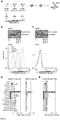
- TET ten-eleven translocation dioxygenases iteratively oxidize mC to 5-hydroxymethyl-(hmC), 5-formyl- (fC), and 5-carboxycytosine (caC) ( FIG. 1A ), eventually promoting demethylation by base-excision repair.
- oxi-mC oxidized mC species
- TET enzymes oxidize modified and hemi-modified CpGs in a non-processive manner, independent of the oxi-mC species on the complementary DNA strand.
- different mC and oxi-mC species likely co-exist at any CpG dinucleotide ( FIG. 1B ) in one of 15 conceivable, symmetric and asymmetric configurations ( FIG. 1C ).
- FIG. 1B CpG dinucleotide
- FIG. 1C symmetric and asymmetric configurations
- Direct sequencing of genomic DNA indicates that of all CpGs that contain hmC (6.2 mol%) only 21 % are symmetrically modified [1, 2]. Likewise, the mean difference of hmC or fC levels at CpGs in CpG-rich regions is 43-46 % (for mC this is 18 %) [3], and the genome-wide average correlation of oxi-mC levels within CpGs as low as 1-15 % (82 % for mC) [4].
- MBD Methyl-CpG binding domains
- the inventors found specific engineered Methyl-CpG binding domains (MBD) that preferably provide differential interactions with different mC and/or oxi-mC configurations at (single) CpGs in a DNA molecule.
- MBD Methyl-CpG binding domains
- the inventors created molecular probes on the basis of these engineered Methyl-CpG binding domains which preferably resolve the precise configuration of oxi-mC species across the DNA double-strand, more preferably at the single-molecule level.
- These molecular probes or engineered Methyl-CpG binding domains can find application in diverse analytical formats, ranging from affinity enrichment over imaging, flow cytometry, improved direct high-throughput sequencing methods and others.
- they can enable affinity enrichment assays with MBD-functionalized capture beads that enable retrieving double-stranded DNA molecules with defined oxi-mC configurations from complex genomic DNA samples ( FIG. 2 ).
- they can be used for mapping CpGs with distinct configurations, and ultimately allow correlating such genome-wide maps with known (epi-)genetic features to reveal biological functions.
- the invention relates to an isolated Methyl-CpG binding domain (MBD) variant, comprising an MBD core domain that has at least 60 % sequence homology relative to any one of SEQ ID Nos. 1-45 and comprising at least one amino acid substitution relative to the corresponding wildtype MBD in at least one of the positions corresponding to positions 12, 14, 19, 21, 22, 23, 24, 25, 26, 27, 35, 36, 37, 38, 39 and 40, preferably 12, 19, 21, 22, 23, 25, 26, 27, 35, 36, 37, 38, and 39, more preferably 12, 25, 26, 27, 36 and 37, most preferably 12, 25, 26, 37, in SEQ ID NO:1.
- MBD Methyl-CpG binding domain
- the inventors have found that these positions are involved with base recognition and binding and/or are located in the three-dimensional structure such as to contact the cytosine base of the bound DNA molecule.
- the variant comprises said at least one amino acid substitution relative to the corresponding wildtype MBD in at least one of the positions corresponding to positions 12, 19, 21, 22, 23, 25, 26, 27, 35, 36, 37, 38, and 39 in SEQ ID NO:1.
- the variant comprises said at least one amino acid substitution relative to the corresponding wildtype MBD in at least one of the positions corresponding to positions 12, 25, 26, 27, 36 and 37 in SEQ ID NO:1.
- the variant comprises said at least one amino acid substitution relative to the corresponding wildtype MBD in at least one of the positions corresponding to positions 12, 25, 26, 37 in SEQ ID NO:1.
- the variant comprises two or more of the above-mentioned amino acid substitutions, such as 3, 4, 5, 6, 7, 8, 9, 10, 11, 12, 13, 14, 15 or all 16. In various embodiments, the variant comprises at least 2, 3 or 4 amino acid substitutions. These are preferably selected from substitutions in positions 12, 25, 26 and 37. In embodiments, where the variant comprises more than 4 substitutions, the 5 th and subsequent substitutions may occur in positions 19, 21, 22, 23, 27, 35, 38 and 39. In embodiments, where the variant comprises more than 12 substitutions, the additional substitutions may be selected from those at positions 14, 24, 36, and 40. In some embodiments, the variant does not comprise any other modifications, in particular no other amino acid substitutions, outside of the positions listed herein.
- said at least one amino acid substitution is selected from 12S, 12T, 12A, 12V, 12R, 25I, 25T, 25A, 25C, 25L, 26T, 26S, 26F, 26L, 27F, 36C, 37N, 37K, 37Q, 37R, 37V and 37C, preferably 12S, 12T, 12A, 12V, 12R, 25I, 25T, 25A, 25C, 25L, 26T, 26S, 26F, 26L, 37N, 37K, 37Q, 37R and 37V, more preferably 12S, 12T, 25I, 25T, 25A, 26T, 37N and 37K using the positional numbering of SEQ ID NO:1.
- the MBD core domain which is comprised in the isolated MBD variant has at least 65, 70, 75 or 80 % sequence homology or sequence identity to any one of SEQ ID Nos. 1-45 over its entire length.
- the MBD core domain comprises any one or more of the amino acids 14R/K, 24D/E, 36R/K and 40E/Q/D using the positional numbering of SEQ ID NO:1. These amino acids typically correspond to those at the same position in the wildtype MBD and are in some embodiments invariable.
- the MBD core domain comprises any one or more of the amino acids 14R/K, 24D/E, 36R/K and 40E/Q/D/S using the positional numbering of SEQ ID NO:1. These amino acids typically correspond to those at the same position in the wildtype MBD and are in some embodiments invariable.
- the MBD core domain comprises any one or more of the amino acids 14R/K/T, 24D/E/H, 36R/E/S/K and 40E/Q/S, preferably any one or more of the amino acids 14R, 24D, 36R and 40E/Q/S, using the positional numbering of SEQ ID NO:1.
- These amino acids typically correspond to those at the same position in the wildtype MBD and are in some embodiments invariable.
- the MBD core domain comprises any one or more of the amino acids 1P/K, 3L/V, 6G/D, 7W/F, 8R/Q/K/E, 9R/K, 17G, 27Y/F/L, 30P, 32G, 44Y/F and 45L/I using the positional numbering of SEQ ID NO:1. These amino acids typically correspond to those at the same position in the wildtype MBD and are in some embodiments invariable.
- the MBD core domain comprises any one or more of the amino acids 1P/K, 3L/V, 6G/D, 7W/F, 8R/Q/K/E/T, 9R/K, 17G, 27Y/F/L, 30P, 32G, 44Y/F and 45L/I/F using the positional numbering of SEQ ID NO:1.
- amino acids typically correspond to those at the same position in the wildtype MBD and are in some embodiments invariable.
- the MBD core domain comprises any one or more of the amino acids 1P/K/S/T/W/A/L/I/F/V, 3L/V/T/I, 6G/D/H, 7W/F, 8R/Q/K/E/T, 9R/K/M, 17G/A/Y/S/N/H, 27Y/F/L, 30P, 32G, 44Y/F/A and 45L/I/F/V, preferably any one or more of the amino acids 1P/K, 3L/V, 6G, 7W, 8K/E/T, 9R/K, 17G, 27Y/F/L, 30P, 32G, 44Y, 45L/F, using the positional numbering of SEQ ID NO:1.
- These amino acids typically correspond to those at the same position in the wildtype MBD and are in some embodiments invariable.
- the MBD core domain comprises any one or more of the amino acids 1P/K, 2A/S/T, 3L,V, 4G/P, 5P/Q/C/E, 6G/D, 7W/F, 8R/Q/K/E, 9R/K, 10R/E/V/K, 11E/V/L, 12V/K, 13F/I/P/Q, 14R/K, 15K/R/L, 16F/S, 17G, 18A/L/K/R, 19T/S, 20C/A, 21G, 22R/K/H, 23S/R/F/Y, 24D/E, 25T/V, 26Y/F, 27Y/F/L, 28Q/F/Y/I, 29S/N, 30P, 31T/S/Q, 32G, 33D/K/L, 34R/K/A, 35I/F, 36R/K, 37S, 38K, 39V/P/S, 40E/Q/D,
- the MBD core domain comprises any one or more of the amino acids 1P/K, 2A/S/T, 3L,V, 4G/P, 5P/Q/C/E, 6G/D, 7W/F, 8R/Q/K/E/T, 9R/K, 10R/E/V/K, 11E/V/L, 12V/K, 13F/I/P/Q, 14R/K, 15K/R/L, 16F/S, 17G, 18A/L/K/R, 19T/S, 20C/A, 21G, 22R/K/H, 23S/R/F/Y, 24D/E, 25T/V, 26Y/F, 27Y/F/L, 28Q/F/Y/I, 29S/N, 30P, 31T/S/Q, 32G, 33D/K/L, 34R/K/A, 35I/F, 36R/K, 37S, 38K, 39V/P/S, 40E/Q/
- the MBD core domain comprises any one or more of the amino acids 1P/K/S/T/W/A/L/I/F/V, 2A/S/T/P/L/G/K/R, 3L,V/T/I, 4G/P/A/Q/E/L/K/R, 5P/Q/C/E/N/K/A/L/R/H/Y, 6G/D/H, 7W/F, 8R/Q/K/E/T, 9R/K/M, 10R/E/V/K/Q/S/M, 11E/V/L/N/T/H, 12V/K/S/A/I/C/R/G, 13F/I/P/Q/T/V/L/R/K, 14R/K/T, 15K/R/L/Q/S/N, 16F/S/L/T/I/D/G/V, 17G/A/Y/S/N/H, 18A/L/L/N
- the isolated MBD variant has, relative to the corresponding wildtype MBD, an altered affinity for a DNA molecule comprising a CpG dinucleotide of interest and its complement in which at least one cytosine nucleobase in the CpG dinucleotide of interest is modified and selected from the group consisting of 5-methylcytosine (mC), 5-hydroxymethylcytosine (hmC), 5-formylcytosine (fC), and 5-carboxylcytosine (caC), preferably consisting of 5-hydroxymethylcytosine (hmC), 5-formylcytosine (fC), and 5-carboxylcytosine (caC).
- mC 5-methylcytosine
- hmC 5-hydroxymethylcytosine
- fC 5-formylcytosine
- caC 5-carboxylcytosine
- said variant has an altered binding affinity, preferably increased affinity, for CpG dinucleotides and their complement in which
- said variant has differential binding affinity for any two CpG dinucleotides and their complement selected from the following oxidized 5-methylated cytosine configurations:
- the isolated MBD variant comprises, consists essentially of or consists of any one of the amino acid sequences set forth in SEQ ID Nos. 46 to 52 and/or 53 to 55.
- the invention in a second aspect, relates to a conjugate comprising the isolated MBD variant according to the invention.
- the conjugate further comprises an enzyme, preferably a nuclease or methyltransferase, or a detectable label, preferably a fluorophore.
- an enzyme preferably a nuclease or methyltransferase
- a detectable label preferably a fluorophore
- the invention relates to a use of the isolated MBD variant as described herein or the conjugate as described herein for the determination of the methylation state of cytosine residues and/or oxidation state of 5-methylated cytosine residues in a CpG dinucleotide of interest and its complement in a DNA molecule or for the enrichment of DNA molecules comprising a CpG dinucleotide of interest and its complement in which at least one cytosine nucleobase in the CpG dinucleotide of interest is modified and selected from the group consisting of 5-methylcytosine (mC), 5-hydroxymethylcytosine (hmC), 5-formylcytosine (fC), and 5-carboxylcytosine (caC), preferably consisting of 5-hydroxymethylcytosine (hmC), 5-formylcytosine (fC), and 5-carboxylcytosine (caC).
- mC 5-methylcytosine
- hmC 5-hydroxymethylcytosine
- the invention relates to a method for the determination of the methylation state of cytosine residues and/or oxidation state of the methyl group of 5-methylated cytosine residues in a CpG dinucleotide of interest and its complement in a DNA molecule, said method comprising
- the determination of the methylation state of cytosine residues and/or oxidation state of the methyl group of 5-methylated cytosine residues in a CpG dinucleotide of interest and its complement in a DNA molecule comprises determining the presence or the level of a nucleobase selected from the group consisting of cytosine (C), 5-methylcytosine (mC), 5-hydroxymethylcytosine (hmC), 5-formylcytosine (fC), and 5-carboxylcytosine (caC), preferably consisting of 5-hydroxymethylcytosine (hmC), 5-formylcytosine (fC), and 5-carboxylcytosine (caC), in the CpG dinucleotide of interest and its complement.
- a nucleobase selected from the group consisting of cytosine (C), 5-methylcytosine (mC), 5-hydroxymethylcytosine (hmC), 5-formylcytosine (fC), and 5-carboxylcytosine (ca
- the invention relates to a method for the enrichment of DNA molecules comprising a CpG dinucleotide of interest in which at least one cytosine nucleobase in the CpG dinucleotide of interest and its complement is modified and selected from the group consisting of 5-methylcytosine (mC), 5-hydroxymethylcytosine (hmC), 5-formylcytosine (fC), and 5-carboxylcytosine (caC), preferably consisting of 5-hydroxymethylcytosine (hmC), 5-formylcytosine (fC), and 5-carboxylcytosine (caC), said method comprising
- the molecular probe is immobilized on a substrate.
- the molecular probe comprises an affinity ligand that allows immobilization of the molecular probe on a substrate.
- the enrichment step of the method may comprise separating the complexes of the DNA molecules with the immobilized molecular probe from the non-complexed DNA molecules, the enrichment optionally including chromatography, centrifugation or magnetic bead separation.
- the molecular probe comprises a variant MBD that comprises at least one amino acid substitution relative to the respective wildtype MBD, preferably an MBD variant as defined for the variant according to the invention.
- the difference in binding affinity of the molecular probe is an increased binding affinity for an oxidized state of 5-methylated cytosine, in particular 5-hydroxymethylcytosine, relative to the non-oxidized 5-methylated cytosine.
- the difference in binding affinity of the molecular probe is an increased binding affinity for a 5-methylated state of cytosine relative to the non-methylated cytosine.
- one or more or “at least one”, as interchangeably used herein, relate to at least 1, or at least 2, 3, 4, 5, 6, 7, 8, 9, 10, 11, 12, 13, 14, 15, 20, 25 or a plurality of species, e.g. at least one amino acid substitution.
- plural means more than one, preferably 2 or more, such as up to 1000.
- substantially typically means that the given amount or property is dominant compared to other amounts or properties. With respect to purification, this means that little amounts of impurities, i.e. the to-be-separated species, can still be present.
- these impurities are comprised in amounts of less than 10 wt.-%, more preferably less than 5 wt.-%, more preferably less than 1 wt.-%, more preferably less than 0.1 wt. %, more preferably less than 0.01 wt.-%, more preferably less than 0.001 wt.-%, most preferably these impurities are not present, if not explicitly stated otherwise.
- properties it means that the original properties/functionalities are retained to a considerable extent, for example by at least 80% with respect to functionalities and activities.
- the present invention relates to an isolated Methyl-CpG binding domain (MBD) variant, comprising an MBD core domain that has at least 60 % sequence homology relative to any one of SEQ ID Nos.1-45 and comprising at least one amino acid substitution relative to the corresponding wildtype MBD in at least one of the positions corresponding to positions 12, 14, 19, 21, 22, 23, 24, 25, 26, 27, 35, 36, 37, 38, 39 and 40, preferably 12, 19, 21, 22, 23, 25, 26, 27, 35, 36, 37, 38, and 39, more preferably 12, 25, 26, 27, 36 and 37, most preferably 12, 25, 26, 37, in SEQ ID NO:1.
- MBD Methyl-CpG binding domain
- the isolated Methyl-CpG binding domain (MBD) variant comprises an MBD core domain that has at least 60 % sequence homology relative to any one of SEQ ID Nos.1-5, preferably SEQ ID NO:2 or 5, and comprises at least one amino acid substitution relative to the corresponding wildtype MBD in at least one of the positions corresponding to positions 12, 14, 19, 21, 22, 23, 24, 25, 26, 27, 35, 36, 37, 38, 39 and 40, preferably 12, 19, 21, 22, 23, 25, 26, 27, 35, 36, 37, 38, and 39, more preferably 12, 25, 26, 27, 36 and 37, most preferably 12, 25, 26, 37, in SEQ ID NO:1.
- MBD Metal-CpG binding domain
- MBD variant refers to a Methyl-CpG binding domain or a segment or fragment thereof that varies in its sequence compared to a naturally occuring version of the same molecule. In various embodiments, this means that its sequence has one or more amino acids added, deleted, substituted or otherwise chemically modified in comparison to the corresponding wildtype MBD or the corresponding segment or fragment thereof. It is however understood that such variants substantially retain the same properties as the wildtype MBD to which they are compared, in particular such that they still have the characteristic functionality and activity of an MBD.
- the modified MBD (variant) is "isolated" from the cell in which it was generated, using standard techniques known to the person skilled in the art.
- the term can also apply to a variant, which has been substantially purified from other components, which naturally accompany the variant, e.g., proteins, RNA or DNA which naturally accompany it in the cell.
- the variant can be displayed on the surface of a cell, preferably on the surface of E. coli, using standard techniques known to the person skilled in the art (e.g. AIDA surface display).
- the term therefore includes, for example, a recombinant MBD or a segment or fragment thereof, which is encoded by a nucleic acid incorporated into a vector, into an autonomously replicating plasmid or virus, or into the genomic DNA of a prokaryote or eukaryote, or which exists as a separate molecule (e.g., as a cDNA or a genomic or cDNA fragment produced by PCR or restriction enzyme digestion) independent of other sequences.
- the variant is based on the Methyl-CpG binding domain of an MBD or MeCp2 protein, which is recombinantly produced, preferably in E. coli, and subsequently either isolated from the cell for further use or displayed on the cell surface, preferably on the cell surface of E. coli.
- MBD core domain refers to a domain comprised in the amino acid sequence of the MBD wildtype or variant, which is typically necessary to enable the binding of MBD with a DNA molecule comprising a CpG dinucleotide, if not explicitly stated otherwise.
- the core domain is typically about 45 amino acids in length.
- the core domain is 42 to 46 amino acids in length, preferably 42, 43, 44, 45 or 46 amino acids in length.
- said MBD variant has relative to the wildtype MBD an altered affinity, preferably an increased or decreased affinity, for a DNA molecule comprising a CpG dinucleotide of interest and its complement in which at least one cytosine nucleobase in the CpG dinucleotide of interest is modified, wherein the cytosine nucleobase is selected from the group of cytosine (C), 5-methylcytosine (mC), 5-hydroxymethylcytosine (hmC), 5-formylcytosine (fC), and 5-carboxylcytosine (caC), preferably the cytosine nucleobase in the CpG dinucleotide of interest is modified and is selected from the group of 5-methylcytosine (mC), 5-hydroxymethylcytosine (hmC), 5-formylcytosine (fC), and 5-carboxylcytosine (caC), more preferably from the group of 5-hydroxymethylcytosine (hmC), 5-formylcytosine (fC),
- “Altered affinity”, as used herein, means that the affinity if tested in a suitable assay, such as calorimetry, surface plasmon resonance, etc, detectably differs compared to the corresponding wildtype protein. "Detectably differs” thus means that the difference falls outside the error margins of the measurement.
- such an alteration or difference in affinity means a change by at least 10 %, at least 20 %, at least 50 % or more.
- the change is at least 2-fold, more preferably at least 5-fold or most preferably at least one order of magnitude (10-fold). This applies in two directions, i.e. the affinity may be double the original value or half the original value, etc.
- CpG-dinucleotide describes a part of a DNA molecule in which two nucleotides containing the nucleobases cytosine and guanine are linked to each other. Typically, the CpG-dinucleotide contains or consists of the unit deoxycytidine-phosphate-deoxyguanosine (in 5'-3' direction). In general, without being limited to this, the presence and level of the CpG-dinucleotide in a DNA molecule is organism- and region-dependent. CpG sites occur with high frequency in genomic regions called CpG islands (or CG islands) with the cytosine often being subject to methylation. In the target nucleic acid sequences, i.e.
- the nucleobase cytosine can thus be modified and selected from the group of 5-methylcytosine (5mC), 5-hydroxymethylcytosine (hmC), 5-formylcytosine (fC), and 5-carboxylcytosine (caC). It is an object of the invention to design MBD variants that can distinguish between those different variants.
- sequence identity refers to polypeptides, peptides or proteins or segments or fragments thereof that share identical amino acids at corresponding positions or nucleic acids sharing identical nucleotides at corresponding positions.
- sequence homology also takes conserved amino acid exchanges into account in the case of amino acid sequences, i.e. amino acids having similar chemical activity, since they usually perform similar chemical activities within the protein. Under the concept of sequence homology, conservative amino acid changes are thus not counted as changes. Conservative replacements means a change within the following groups of amino acids:
- the determination of percent sequence homology or percent sequence identity described herein between two amino acid or nucleotide sequences can be accomplished using a mathematical algorithm.
- a mathematical algorithm useful for comparing two sequences is the algorithm incorporated into the BLASTN and BLASTX programs and can be accessed, for example, at the National Center for Biotechnology Information (NCBI) world wide web site having the universal resource locator "www.ncbi.nlm.nih.gov/BLAST".
- Blast nucleotide searches can be performed with BLASTN program
- BLAST protein searches can be performed with BLASTX program or the NCBI "blastp" program.
- Identity or homology information can be provided regarding whole polypeptides, peptides, proteins or genes or only regarding individual regions.
- identity or homology information in the present application relates to the entire length of the particular nucleic acid or amino acid sequence indicated.
- percent homology is based on the entire amino acid sequence of the MBD core domain according to any one of SEQ ID Nos. 1-45, preferably to any one of SEQ ID Nos. 1-32, more preferably to anyone of SEQ ID Nos. 1-10, most preferably to anyone of SEQ ID Nos. 1-5, in particular according to any one of SEQ ID NO: 1, 2, 3, 4, 5, 6, 7, 8, 9, or 10.
- the feature "at least 60 % sequence homology” includes every variation, in particular every amino acid substitution, in the MBD core domain of the Methyl-CpG-binding domain variant which is/are present relative to any one of SEQ ID Nos. 1-45, preferably to any one of SEQ ID Nos. 1-32, more preferably to any one of SEQ ID Nos. 1-10, most preferably to any one of SEQ ID Nos. 1-5.
- "60% homology” thus means that 60% of all amino acids present at the corresponding positions in the variant are either substituted such that they are still homologous or are unaltered.
- the MBD core domain of the MBD variant has at least 65, 70, 75 or 80 % sequence homology or sequence identity to any one of SEQ ID Nos.1-45, preferably to any one of SEQ ID Nos.1-32, more preferably to any one of SEQ ID NO:1, 2, 3, 4, 5, 6, 7, 8, 9, or 10.
- the "60% homology" are "60% identity”.
- sequence homology or identity is at least 61, 62, 63, 64, 65, 66, 67, 68, 69, 70, 71, 72, 73, 74, 75, 76, 77, 78, 79, 80, 81, 82, 83, 84, 85, 86, 87, 88, 89, 90, 91, 92, 93, 94, 95, 96, or 97 %.
- the variants comprise at least one amino acid substitution relative to the corresponding wildtype MBD in at least one of the positions corresponding to positions 12, 14, 19, 21, 22, 23, 24, 25, 26, 27, 35, 36, 37, 38, 39 and 40, preferably 12, 19, 21, 22, 23, 25, 26, 27, 35, 36, 37, 38, and 39, more preferably 12, 25, 26, 27, 36 and 37, most preferably 12, 25, 26 and 37 according to SEQ ID NO:1.
- SEQ ID NO:1 is used as a reference here to allow positional numbering.
- the corresponding positions to the positions in SEQ ID NO:1 can be determined by an alignment, as explained above.
- the variants described herein comprise only 1 amino acid substitution relative to the template sequence.
- the variants comprise two or more, 3 or more, 4 or more, 5 or more, 6 or more, 7 or more, 8 or more, 9 or more, 10 or more, 11 or more, 12 or more, 13 or more, 14 or more, 15 or 16 substitutions.
- substitutions are preferably selected from substitutions in the positions listed above, with the target amino acids being any amino acid with the exception of the amino acid occurring naturally at this position, preferably being those described herein.
- said at least one amino acid substitution relative to the corresponding wildtype MBD is selected from 12S, 12T, 12A, 12V, 12R, 25I, 25T, 25A, 25C, 25L, 26T, 26S, 26F, 26L, 27F, 36C, 37N, 37K, 37Q, 37R, 37V and 37C, preferably 12S, 12T, 12A, 12V, 12R, 25I, 25T, 25A, 25C, 25L, 26T, 26S, 26F, 26L, 37N, 37K, 37Q, 37R and 37V, more preferably 12S, 12T, 25I, 25T, 25A, 26T, 37N and 37K using the positional numbering of SEQ ID NO:1.
- positional numbering refers to the numbering and arrangement of the present amino acids of the MBD core domain of the MBD wildtype construct according to SEQ ID Nos. 1, if not explicitly stated otherwise.
- SEQ ID Nos. 2-27 and 29-30 have the same positional numbering as SEQ ID NO:1.
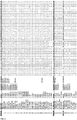
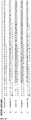
- SEQ ID NO: 28 comprises an insertion at position 20 and SEQ ID Nos. 31-45 contain amino acid deletions ( FIG. 4 ).
- amino acid sequence set forth in SEQ ID NO:2 can be modified with at least one of the following amino acid substitutions: V12S, V12T, V12R, V25I, V25T, V25A, Y26T, S37N, S37K, S37V.
- V12S means that the amino acid valine which is present at position 12 in the wildtype MBD core domain of the human MBD2 is substituted by (replaced with) a serine.
- amino acid sequence set forth in SEQ ID NO:2 is modified with the following amino acid substitutions: V12R and S37V.
- the amino acid sequence set forth in SEQ ID NO:5 is modified with one of the following amino acid substitution(s): i) L27F; ii) R36C, iii) S37C, iv) K12T, V25T, Y26T, S37K; iv) K12T, V25A, S37N; v) K25C, Y26S, S37Q; vi) K12A, V25C, Y26F, S37R; vii) K25L, Y26T, S37R; viii) K12V, Y26L, S37R.
- the isolated MBD variant comprises one of the following amino acid substitutions or amino acid substitution combinations, preferably in its MBD core domain: i) 12S; ii) 12T; iii) 25I; iv) 25T; v) 26T; vi) 37N; vii) 37K; viii) 12S, 25I; ix) 12S, 25T; x) 12S, 26T; xi)12S, 37N; xii) 12S, 37K; xiii) 12T, 25I; xiv) 12T, 25T; xv) 12T, 26T; xvi) 12T, 37N; xvii) 12T, 37K; xviii) 25I, 26T; xix) 25I, 37N; xx) 25I, 37K; xxi) 25T, 26T; xxii) 25T, 26T; xxii) 25T, 37N; xxiii) 25T, 37K; xxii
- the isolated MBD variant comprises one of the following amino acid substitutions or amino acid substitution combinations, preferably in its MBD core domain: i) 12T, 25T, 26T, 37K; ii) 12T, 25A, 37N; iii) 25C, 26S, 37Q; iv) 12A, 25C, 26F, 37R; v) 25L, 26T, 37R; vi) 12V, 26L, 37R; vii) 12R, 37V, viii) 27F; ix) 36C; x) 37C; relative to the corresponding wildtype MBD according to any one of SEQ ID Nos. 1-45, preferably to any one of SEQ ID Nos. 1, 2, 3, 4 or 5, more preferably to any one of SEQ ID NO:2 or 5, wherein the positional numbering is according to SEQ ID NO:1.
- the MBD core domain of the isolated MBD variant comprises any one or more of the amino acids 14R/K, 24D/E, 36R/K and 40E/Q/D, optionally any one or more of the amino acids 14R/K, 24D/E, 27Y/F/L, 36R/K and 40E/Q/D/S, using the positional numbering of SEQ ID NO:1.
- one or more of the amino acids 14R/K, 24D/E, 36R/K and 40E/Q/D/S are present in addition to the at least one amino acid substitution selected from 12S, 12T, 25I, 25T, 25A, 26T, 37N and 37K using the positional numbering of SEQ ID NO:1.
- amino acids at positions 14, 24, 27, 36 and 40 using the positional numbering according to SEQ ID NO:1 correspond to the amino acids at the corresponding positions in the wildtype MBD core domain and are thus in some embodiments unaltered, i.e. not substituted. This can help to ensure MBD functionality.
- the isolated MBD variant comprises any one or more of the amino acids 1P/K, 3L/V, 6G/D, 7W/F, 8R/Q/K/E/T, 9R/K, 17G, 27Y/F/L, 30P, 32G, 44Y/F and 45L/I/F, preferably 1P/K, 2A/S/T, 3L,V, 4G/P, 5P/Q/C/E, 6G/D, 7W/F, 8R/Q/K/E/T, 9R/K, 10R/E/V/K, 11E/V/L, 12V/K, 13F/I/P/Q, 14R/K, 15K/R/L, 16F/S, 17G, 18A/L/K/R, 19T/S, 20C/A, 21G, 22R/K/H, 23S/R/F/Y, 24D/E, 25T/V, 26Y/F, 27Y/F/L, 28Q/
- the MBD variants comprise an amino acid substitution at at least one of the positions corresponding to positions 12, 14, 19, 21, 22, 23, 24, 25, 26, 27, 35, 36, 37, 38, 39 and 40, preferably 12, 19, 21, 22, 23, 25, 26, 27, 35, 36, 37, 38, and 39, more preferably 12, 25, 26, 27, 36 and 37, most preferably 12, 25, 26 and 37, according to SEQ ID NO:1 means that the above amino acid in the consensus sequence is replaced by another amino acid, which is typically not a consensus amino acid.
- the target amino acid is preferably not F (including if the starting amino acid is Y) or Y (including if the starting amino acid is F).
- the target amino acid of any of the substitutions according to the invention is thus not any one listed above as a consensus amino acid.
- the MBD core domain of the isolated MBD variant comprises at least one amino acid substitution selected from 12S, 12T, 12A, 12V, 12R, 25I, 25T, 25A, 25C, 25L, 26T, 26S, 26F, 26L, 27F, 36C, 37N, 37Q, 37R, 37V, 37C and 37K, preferably selected from 12T, 12A, 12V, 12R, 25T, 25A, 25C, 25L, 26T, 26S, 26F, 26T, 26L, 37K, 37N, 37Q, 37R and 37V or from 27F, 36C and 37C, while retaining consensus amino acids according to the above list in all other positions.
- these MBD variants comprise an MBD core domain that has preferably at least 65, 70, 75 or 80 %, sequence homology or identity relative to any one of SEQ ID Nos.1-45, preferably to any one of SEQ ID Nos. 1, 2, 3, 4, or 5.
- positions 1-45 correspond to the amino acids at the corresponding positions in the wildtype MBD core domain, i.e. form a consensus sequence of the wildtype MBD core domain, and are thus in some embodiments unaltered, i.e. not substituted. It is understood that when some of these positions overlap with those that are disclosed herein as optionally being substituted, such as positions 12, 14, 19, 25, etc., that the substitutions prevail. In all embodiments, it is, however, preferred that the non-substituted positions are occupied by amino acids as listed above. This means, for example, that if position 25 is not substituted, it is preferably T or V, which typically corresponds to the respective wildtype sequence.
- the polypeptide comprising the MBD domain may comprise at least one amino acid substitution in the amino acid sequence N- or C-terminal to the MBD core domain, preferably C-terminal to the MBD core domain, in particular in position 158 of hMeCp2[90-181] (SEQ ID NO:58) (16 amino acids C-terminal to amino acid 45 of the MBD core domain of SEQ ID NO:5 (position 61).
- the amino acid sequence of variant T158M comprises or consists of the amino acid sequence set forth in SEQ ID NO:56.
- the MBD core domain of the isolated MBD variant may or may not comprise a substitution, as described above.
- MBD domain variants disclosed herein may additionally comprise flanking amino acid sequences, i.e. amino acid sequences that are located directly N- and/or C-terminal to the MBD core domain as defined herein. These sequences may correspond to the respective wildtype template sequences or may be different, heterologous or mutated sequences.
- such polypeptides comprising the MBD core domain as defined herein are at least 50 amino acids in length, for example 60, 70, 80, 90, 100 or more amino acids.
- these polypeptides may comprise further domains, such as those naturally occurring in the corresponding wildtype polypeptides.
- the present invention relates to isolated MBD variants that have relative to the corresponding wildtype MBD an altered affinity for a DNA molecule comprising a CpG dinucleotide of interest and its complement in which at least one cytosine nucleobase in the CpG dinucleotide of interest is modified and selected from the group consisting of 5-methylcytosine (mC), 5-hydroxymethylcytosine (hmC), 5-formylcytosine (fC), and 5-carboxylcytosine (caC), preferably consisting of 5-hydroxymethylcytosine (hmC), 5-formylcytosine (fC), and 5-carboxylcytosine (caC).
- these variants are those described above having amino acid substitutions at the indicated positions, while in other embodiments they have alternative modifications.
- all isolated MBD variants disclosed herein may have an altered binding affinity, preferably increased affinity, for CpG dinucleotides and their complement in which
- the isolated MBD variant has differential binding affinity for any two CpG dinucleotides and their complement selected from the following oxidized 5-methylated cytosine configurations:
- the DNA molecule may be single-stranded or double-stranded, wherein double-stranded DNA is preferred.
- the DNA molecule is in its native state and is not chemically modified by any pretreatment.
- the cytosine nucleobases selected from the group consisting of cytosine (C), 5-methylcytosine (mC), 5-hydroxymethylcytosine (hmC), 5-formylcytosine (fC), and 5-carboxylcytosine (caC), preferably consisting of 5-hydroxymethylcytosine (hmC), 5-formylcytosine (fC), and 5-carboxylcytosine (caC), in the CpG dinucleotide of interest and its complement are physiological cytosine states known in the art.
- the DNA molecule(s) can be labelled, preferably fluorescently labelled.
- the labelled DNA molecules may have different oxi-mC configurations in a single CpG.
- the isolated MBD variant comprises or consists of the amino acid sequence set forth in SEQ ID Nos. 46 to 52 and/or 53 to 55.
- the invention further encompasses a conjugate comprising the isolated MBD variant as described above.
- conjugate refers to a molecule that comprises the isolated MBD variant as described above coupled, typically covalently coupled, to another moiety, such as another protein, peptide, polypeptide, affinity ligand or detectable label or other moiety.
- moieties are not particularly limited and can be easily chosen by a person skilled in the art in accordance with the particular application of interest.
- moieties include fluorescent dyes, fluorescent proteins such as e.g. green fluorescent protein (GFP), affinity ligands such as e.g. biotin, digoxigenin, dinitrophenol, magnetic particles, antibodies, including antibody fragments and antibody mimetics known in the art, protein tags, and proteins having enzymatic activities such as nuclease activities.
- Suitable protein tags in this respect include e.g.
- 18A-Tag ACP-Tag, Avi-Tag, BCCP-Tag, Calmodulin-Tag (CaM-Tag), Chitin-binding-Protein-Tag (CBP-Tag), E-Tag, ELK16-Tag, ELP-Tag, FLAG-Tag, Flash-Tag, poly-glutamic acid-Tag, Glutathion-S-Transferase-Tag (GST-Tag), Green fluorescent protein-Tag (GFP-Tag), Hemagglutinin-Tag (HA-Tag), poly-Histidin-Tag (His-Tag), Isopeptag, Maltose binding protein-Tag (MBP-Tag), Myc-Tag, Nus-Tag, ProtA-Tag, ProtC-Tag, S-Tag, SBP-Tag, Snap-Tag, SpyTag, SofTag 1 and 3, Streptavidin-Tag (Strep-Tag), Strep-II-Tag, Tandem Affinity Purification-Tag (TAP-Tag), TC-Tag, Thioredoxin-Tag (
- Coupled moieties can be coupled directly or indirectly to the MBD variant, or can be expressed as part of a conjugate comprising also the MBD variant.
- Methods for the coupling of respective “coupling moieties” and for the expression of respective conjugates are not particularly limited and are known in the art. For example, they include methods employing a His-Tag on the expressed conjugates and purification via NiNTA as known in the art, without being limited to this method.
- MBD variants or conjugates can include non-natural amino acids with reactive groups.
- the coupling of the above compounds can be effected e.g. via click chemistry at said reactive groups.
- Suitable reactive groups in this context are not particularly limited and include e.g. azides, alkynes, alkenes, including strained alkynes and alkenes that have been genetically encoded in the form of non-natural amino acids.
- the conjugate further comprises an enzyme, preferably a nucleic acid modifying enzyme such as a nuclease (Fokl nuclease, Micrococcal nuclease, DNasel or other endo- and exonucleases), a methyltransferase (DNMT1, DNMT3a, DNMT3b, M.SssI, DamI or other Mtases known in the art), a deaminase, a biotin-ligase (BirA) or others.
- a nucleic acid modifying enzyme such as a nuclease (Fokl nuclease, Micrococcal nuclease, DNasel or other endo- and exonucleases), a methyltransferase (DNMT1, DNMT3a, DNMT3b, M.SssI, DamI or other Mtases known in the art), a deaminase, a biotin-ligas
- SNAP tag Sun tag, Flag tag, HA tag, His tag, etc.
- a fluorophore e.g. GFP, mCherry, mClover, BFP, mRuby, DsRed etc.
- the isolated MBD variant or the conjugate as described above can be used for the determination of the methylation state of cytosine residues and/or oxidation state of 5-methylated cytosine residues in a CpG dinucleotide of interest and its complement in a DNA molecule or for the enrichment of DNA molecules comprising a CpG dinucleotide of interest and its complement in which at least one cytosine nucleobase in the CpG dinucleotide of interest is modified and selected from the group consisting of 5-methylcytosine (mC), 5-hydroxymethylcytosine (hmC), 5-formylcytosine (fC), and 5-carboxylcytosine (caC), preferably consisting of 5-hydroxymethylcytosine (hmC), 5-formylcytosine (fC), and 5-carboxylcytosine (caC).
- mC 5-methylcytosine
- hmC 5-hydroxymethylcytosine
- fC 5-formylcytosine
- the invention also relates to the use of the isolated MBD variant as described above or the conjugate as described above for the determination of the methylation state of cytosine residues and/or oxidation state of 5-methylated cytosine residues in a CpG dinucleotide of interest and its complement in a DNA molecule or for the enrichment of DNA molecules comprising a CpG dinucleotide of interest and its complement in which at least one cytosine nucleobase in the CpG dinucleotide of interest is modified and selected from the group consisting of 5-methylcytosine (mC), 5-hydroxymethylcytosine (hmC), 5-formylcytosine (fC), and 5-carboxylcytosine (caC), preferably consisting of 5-hydroxymethylcytosine (hmC), 5-formylcytosine (fC), and 5-carboxylcytosine (caC).
- mC 5-methylcytosine
- hmC 5-hydroxymethylcytosine
- fC 5-
- a method for the determination of the methylation state of cytosine residues and/or oxidation state of the methyl group of 5-methylated cytosine residues in a CpG dinucleotide of interest and its complement in a DNA molecule comprising
- the determination of the methylation state of cytosine residues and/or oxidation state of the methyl group of 5-methylated cytosine residues in a CpG dinucleotide of interest and its complement in a DNA molecule comprises determining the presence or the level of a nucleobase selected from the group consisting of cytosine (C), 5-methylcytosine (mC), 5-hydroxymethylcytosine (hmC), 5-formylcytosine (fC), and 5-carboxylcytosine (caC), preferably consisting of 5-hydroxymethylcytosine (hmC), 5-formylcytosine (fC), and 5-carboxylcytosine (caC), in the CpG dinucleotide of interest and its complement.
- a nucleobase selected from the group consisting of cytosine (C), 5-methylcytosine (mC), 5-hydroxymethylcytosine (hmC), 5-formylcytosine (fC), and 5-carboxylcytosine (ca
- the binding affinity can be determined from a recombinantly expressed, isolated, and purified protein containing said MBD core domain using for example an electrophoretic mobility shift assay (EMSA) with fluorescently or radioactively labelled probes that contain a single CpG dinucleotide with one of the modification states specified above.
- ESA electrophoretic mobility shift assay
- the probe is added in nanomolar concentrations, e.g. 2 nM
- the MBD protein in micromolar to nanomolar concentrations, e.g. 1,024 nM or 128 nM (e.g. FIG. 6D ) [7,8].
- the selectivity of an immobilized MBD can also be determined using a mixture of said DNA probes of which at least one DNA probe is labelled with a different/distinguishable label such as a different fluorophore or other. Immobilization can be performed on cell surfaces, e.g. the bacterial cell surface, or on beads for purified proteins. In combination with fluorophore-labelled probes, a microfluidic or a flow cytometer enabled for fluorescence-activated cell sorting (FACS) can be used to quantify the selectivity of the MBD domain. If the detectable label is a unique barcode, e.g. a unique DNA sequence, the determination of binding selectivity can take place using a next-generation sequencing platform.
- a different/distinguishable label such as a different fluorophore or other.
- Immobilization can be performed on cell surfaces, e.g. the bacterial cell surface, or on beads for purified proteins.
- the MBD variant and the DNA molecules are added in a molar ratio of MBD to DNA of between 2:1 and 500:1, more preferably of between 30:1 to 70:1, more preferably of between 40:1 to 60:1, most preferably of 50:1.
- the invention further relates to a method for the enrichment of DNA molecules comprising a CpG dinucleotide of interest in which at least one cytosine nucleobase in the CpG dinucleotide of interest and its complement is modified and selected from the group consisting of 5-methylcytosine (mC), 5-hydroxymethylcytosine (hmC), 5-formylcytosine (fC), and 5-carboxylcytosine (caC), preferably consisting of 5-hydroxymethylcytosine (hmC), 5-formylcytosine (fC), and 5-carboxylcytosine (caC), said method comprising
- the binding affinity of the variant MBD to the DNA molecule comprising specific cytosine nucleobases as described above in a CpG dinucleotide differs from the binding affinity of the wildtype MBD to the DNA molecule comprising the same specific cytosine nucleobases in the CpG dinucleotide by at least 1%, preferably at least 5 %, more preferably at least 10 %, even more preferably at least 20 %, or even more preferably 50 % or more.
- the affinity may be expressed in terms of the dissociation constant Kd, as can for example be determined by various methods known in the art, including the aforementioned electromobility shift assays, fluorescence polarization assays, ELISA, footprinting, surface plasmon resonance based assays, microscale thermophoresis, calorimetric and other spectroscopic methods.
- the molecular probe of the method for the enrichment is immobilized on a substrate, more preferably on a functionalized capture bead.
- the molecular probe may thus comprise an affinity ligand that allows immobilization of the molecular probe on a substrate.
- Affinity ligands for use according to these embodiments are not particularly limited and are known in the art. They include for example biotin, digoxigenin, dinitrophenol, magnetic particles, antibodies, including antibody fragments and antibody mimetics, and protein tags, e.g. as indicated above.
- Methods for the direct or indirect coupling of affinity ligands to MBD variants are not particularly limited and are known in the art.
- the term “coupled directly or indirectly” expressly includes the expression of conjugate molecules of MBD proteins and any particular proteinaceous affinity ligands. Further, the term “coupled indirectly” includes any coupling strategies employing linkers, binding via further affinity partners, and the like, which are known in the art.
- the enrichment step of the enrichment method comprises separating the complexes of the DNA molecules with the immobilized molecular probe from the non-complexed DNA molecules, the enrichment optionally including chromatography, centrifugation or magnetic bead separation.
- the enrichment step may also comprise methods of DNA depletion.
- Particular methods include the use of His-tags as affinity ligand and depletion of DNAs bound to respective variant MBDs via Ni-NTA-beads, as well as the use of other protein tags as indicated above in connection with the respective affinity binding partners.
- DNA molecules in which specific (modified) cytosine nucleobases or specific oxidation states of the methyl group of 5-methylated cytosine residues in a CpG dinucleotide of interest and its complement are absent (or present) are depleted from a mixture containing DNA molecules in which the cytosine nucleobases are present, as well as DNA molecules in which the cytosine nucleobases are absent. In this manner, DNA molecules in which the cytosine nucleobases are present (or absent) are enriched in the mixture.
- the MBD variant may be coupled directly or indirectly to a protein having nuclease activity, said protein allowing for the differential digestion of DNA molecules in which the cytosine nucleobases of interest are absent, wherein DNA molecules in which epigenetic modifications of said nucleobases of interest are present remain undigested.
- Proteins having nuclease activity for use according to this embodiment are not particularly limited and are known in the art. They include for example restriction enzymes and cleavage domains of restriction enzymes, e.g. the cleavage domain of Fokl. Methods for the direct or indirect coupling of proteins having nuclease activity to MBD variants are not particularly limited and are known in the art.
- the term “coupled directly or indirectly” expressly includes the expression of conjugate molecules of MBD variants and any particular proteins having nuclease activity. Further, the term “coupled indirectly” includes any coupling strategies employing linkers, binding via further affinity partners, and the like, which are known in the art.
- DNA molecules in which specific modification (or a specific oxidation state) of said nucleobases is absent using said proteins having nuclease activity are not particularly limited and are known in the art. In this manner, DNA molecules in which the cytosine nucleobases of interest are present are enriched in the mixture.
- the enriched DNA molecules, in which the cytosine nucleobases of interest are present, obtained by the method as described above, can be further used for any particular application of interest.
- said DNA molecules can be used for sequencing applications known in the art, including PCR and so-called Next Generation Sequencing methods, microarray analyses, or any methods for the analysis of nucleic acids known in the art.
- the methods of the present invention can be used for the concurrent determination of the presence or absence of more than one particular cytosine nucleobase of interest in a given DNA molecule.
- several aliquots of a given DNA molecule can be provided, and the presence of different cytosine nucleobases of interest can be determined, respectively.
- the method of the present invention can be performed with respect to the detection of C, mC, hmC, fC, and caC, respectively, for a given DNA molecule.
- the molecular probes used in the methods of the invention may generally comprise a variant MBD that comprises at least one amino acid substitution relative to the respective wildtype MBD, preferably an MBD variant as defined above.
- the difference in binding affinity of the molecular probe is an increased binding affinity for a methylated state of cytosine and/or an oxidized state of 5-methylated cytosine, in particular 5-hydroxymethylcytosine, relative to the non-methylated cytosine and/or the non-oxidized 5-methylated cytosine.
- the MBD expression plasmids were derived from pET-21d(+) (Merck, Darmstadt, Germany), digested with Xho I and Nco I (New England Biolabs) to replace the T7 tag by Gibson assembly with a FLAG peptide-maltose-binding protein (MBP) tag, a factor Xa and a TEV recognition and cleavage site.
- MBP FLAG peptide-maltose-binding protein
- the resulting vector pBeB1379 allowed expression of N-terminal MBP-MBD fusion proteins with a non-cleavable C-terminal 6xHis tag for purification.
- the MBD surface display plasmid pBeB1383 was derived from a pBeB1379 digest with Xho I and Nde I to replace the FLAG-MBP tag, the factor Xa and the TEV recognition and cleavage site with an AIDA-I surface display cassette by Gibson assembly.
- Both pBeB1379 and pBeB1383 contained a suitable multiple cloning site to incorporate, exchange, or isolate the coding sequences of said MBD variants.
- expression plasmids were transformed into E. coli BL21-Gold(DE3) (Agilent), and fresh overnight cultures of single clones were diluted to an optical density (OD 600 ) of 0.05 in 30 mL LB-Miller broth supplemented with 50 ⁇ g/mL carbenicillin, 1 mM MgCl 2 and 1 mM ZnSO 4 . Cultures were grown at 37 °C (220 rpm) to an OD 600 of 0.5-0.6, briefly chilled on ice, and then induced by supplying 1 mM isopropyl ⁇ -d-1-thiogalactopyranoside (IPTG).
- IPTG isopropyl ⁇ -d-1-thiogalactopyranoside
- the non-specific binding trap duplex was prepared by annealing a 24-mer poly(dA) with a 24-mer poly(dT) at equimolar ratios of 50 ⁇ M.
- EMSA were carried out according to a well-established protocol [9].
- purified MBDs were diluted to 0, 2, 4, 8, 16, 32, 64, 128, 256, 512, and 1,024 nM in dialysis buffer with 0.1 mg/mL BSA (New England Biolabs) and incubated with 2 nM labeled duplex and 50 ng/ ⁇ L poly(dA) ⁇ poly(dT) in EMSA buffer containing 1 mM dithiothreitol and 0.2 % Tween 20 in a final volume of 15 ⁇ L.
- BSA New England Biolabs
- the fraction of bound duplex was determined using ImageQuant TL v8.1 1D Gel Analysis (GE Healthcare) applying rubber band background subtraction and manual peak detection with approximately equal peak areas across all lanes.
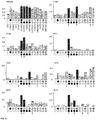
- the fraction of bound probe serves as a means to quantitate the relative affinity of a MBD at a fixed protein concentration ( FIG. 6A ).
- the removal of the N-terminal solubility tag such as MBP is optional and does not affect binding selectivity at the concentrations typically used in such assays.
- oligodeoxynucleotide (ODNs) pairs containing one of the specific combinations of modified cytosine residues and a 5'-biotin label were combined at equimolar ratios, annealed as described, and diluted to a final concentration of 400 nM in 6 x EMSA buffer and 300 ng/ ⁇ L poly(dA) ⁇ poly(dT).
- Individual probes were labelled with fluorescent streptavidin (SAv) conjugates such as SAv-(R)-phycoerythrin (BioLegend) or SAv-AF488 (ThermoFisher) at 1.5-fold excess over the biotin component.
- SAv fluorescent streptavidin
- both assays, the electrophoretic mobility shift assay (EMSA) and the surface display assay on FACS result in comparable estimates of the binding selectivity for a known binding MBD such as hMBD2 [2-81] containing SEQ ID NO:2 ( FIG. 6B ) as well as a known non-binding MBD such as hMBD3 [2-81] containing SEQ ID NO:3 ( FIG. 6C ) with the dynamic range of the EMSA at low protein concentrations, e.g. 128 nM ( FIG. 6D ) being most similar to the behavior observed under the conditions of said surface display assay ( FIG. 6E ).
- a known binding MBD such as hMBD2 [2-81] containing SEQ ID NO:2 ( FIG. 6B )
- hMBD3 [2-81] containing SEQ ID NO:3 FIG. 6C
- Immobilization on the bacterial cell surface was used to purify candidate binders from codon-degenerated MBD proteins containing SEQ ID Nos. 1, 2, 3, 4, or 5 using a modified procedure of the surface display assay described above. Codons corresponding to positions 12, 25, 26 (not SEQ ID NO:3), 27 (SEQ ID NO:3 only), and 37 were randomized using NNK-degenerated primers and standard molecular biology and protein engineering technologies. Individual clones harboring a single MBD variant of said libraries were sub-cloned in an expression plasmid such as pBeB1379, the protein product expressed and purified and subjected to EMSA ( FIG. 7 and FIG. 8 ).
- an expression plasmid such as pBeB1379
- MBDs showed markedly different selectivity profiles for differentially modified CpGs despite their high degree of sequence conservation, particularly at residues interacting with the CpG. Therefore, it is of interest how RTT-associated single amino acid substitutions in MeCp2 would affect the selectivity profile of its MBD.
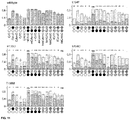
- the mutants L124F, T158M, R133C and S134C [14] of human MeCp2[90-181] were evaluated using EMSA and affinity measurements (Table 1 and FIG. 11 ).
- the single amino acid substitutions L124F (position 27 of SEQ ID NO:5), R133C (position 36 of SEQ ID NO:5) and S134C (position 37 of SEQ ID NO:5) are within the MBD core domain of hMeCp2 as defined herein ( FIG. 12A ).
- the single amino acid substitution T158M is present C-terminal to the MBD core domain as defined herein (position 61) ( FIG. 12B ).
- Table 1 Dissociation constants K d /nM duplex wildtype R133C S134C mC/mC 27 ⁇ 4 118 ⁇ 12 117 ⁇ 9 mC/hmC 224 ⁇ 25 660 ⁇ 70 1,150 ⁇ 70 mC/fC 197 ⁇ 24 540 ⁇ 50 790 ⁇ 50 hmC/hmC 970 ⁇ 90 2,560 ⁇ 260 7,600 ⁇ 600 hmC/fC 540 ⁇ 60 1,630 ⁇ 90 4,600 ⁇ 400 C/hmC 1,080 ⁇ 100 8,100 ⁇ 500 7,600 ⁇ 700
Landscapes
- Health & Medical Sciences (AREA)
- Life Sciences & Earth Sciences (AREA)
- Chemical & Material Sciences (AREA)
- Engineering & Computer Science (AREA)
- Molecular Biology (AREA)
- Immunology (AREA)
- Biomedical Technology (AREA)
- Hematology (AREA)
- Urology & Nephrology (AREA)
- General Health & Medical Sciences (AREA)
- Organic Chemistry (AREA)
- Biochemistry (AREA)
- Biotechnology (AREA)
- Genetics & Genomics (AREA)
- Medicinal Chemistry (AREA)
- Microbiology (AREA)
- Zoology (AREA)
- Physics & Mathematics (AREA)
- Analytical Chemistry (AREA)
- Cell Biology (AREA)
- Pathology (AREA)
- General Physics & Mathematics (AREA)
- Food Science & Technology (AREA)
- Biophysics (AREA)
- General Engineering & Computer Science (AREA)
- Bioinformatics & Cheminformatics (AREA)
- Wood Science & Technology (AREA)
- Gastroenterology & Hepatology (AREA)
- Toxicology (AREA)
- Proteomics, Peptides & Aminoacids (AREA)
- Tropical Medicine & Parasitology (AREA)
- Plant Pathology (AREA)
- Peptides Or Proteins (AREA)
Priority Applications (4)
| Application Number | Priority Date | Filing Date | Title |
|---|---|---|---|
| EP19220082.2A EP3845554A1 (de) | 2019-12-30 | 2019-12-30 | Verfahren zur bestimmung von 5-methylcytosin-konfigurationen in dna |
| PCT/EP2020/087979 WO2021136780A1 (en) | 2019-12-30 | 2020-12-29 | Method for determining 5-methylcytosine configurations in dna |
| EP20839350.4A EP4085067A1 (de) | 2019-12-30 | 2020-12-29 | Verfahren zur bestimmung von 5-methylcytosin-konfigurationen in dna |
| US17/790,187 US20230043577A1 (en) | 2019-12-30 | 2020-12-29 | Method for determining 5-methylcytosine configurations in dna |
Applications Claiming Priority (1)
| Application Number | Priority Date | Filing Date | Title |
|---|---|---|---|
| EP19220082.2A EP3845554A1 (de) | 2019-12-30 | 2019-12-30 | Verfahren zur bestimmung von 5-methylcytosin-konfigurationen in dna |
Publications (1)
| Publication Number | Publication Date |
|---|---|
| EP3845554A1 true EP3845554A1 (de) | 2021-07-07 |
Family
ID=69055871
Family Applications (2)
| Application Number | Title | Priority Date | Filing Date |
|---|---|---|---|
| EP19220082.2A Withdrawn EP3845554A1 (de) | 2019-12-30 | 2019-12-30 | Verfahren zur bestimmung von 5-methylcytosin-konfigurationen in dna |
| EP20839350.4A Pending EP4085067A1 (de) | 2019-12-30 | 2020-12-29 | Verfahren zur bestimmung von 5-methylcytosin-konfigurationen in dna |
Family Applications After (1)
| Application Number | Title | Priority Date | Filing Date |
|---|---|---|---|
| EP20839350.4A Pending EP4085067A1 (de) | 2019-12-30 | 2020-12-29 | Verfahren zur bestimmung von 5-methylcytosin-konfigurationen in dna |
Country Status (3)
| Country | Link |
|---|---|
| US (1) | US20230043577A1 (de) |
| EP (2) | EP3845554A1 (de) |
| WO (1) | WO2021136780A1 (de) |
Families Citing this family (1)
| Publication number | Priority date | Publication date | Assignee | Title |
|---|---|---|---|---|
| KR20260068070A (ko) * | 2023-08-09 | 2026-05-13 | 시아먼 유니버시티 | 시트룰린화된 setdb1 폴리펩티드 및 이를 이용한 류마티스 관절염 진단 |
Citations (1)
| Publication number | Priority date | Publication date | Assignee | Title |
|---|---|---|---|---|
| WO2016210124A2 (en) * | 2015-06-23 | 2016-12-29 | Massachusetts Institute Of Technology | Characterization and directed evolution of a methyl binding domain protein for high-sensitivity dna methylation analysis |
Family Cites Families (3)
| Publication number | Priority date | Publication date | Assignee | Title |
|---|---|---|---|---|
| AU2003209340A1 (en) * | 2002-01-18 | 2003-09-02 | Bristol-Myers Squibb Company | Predictor sets for tyrosine kinase pathways |
| JP2018528191A (ja) * | 2015-08-19 | 2018-09-27 | ラトガーズ, ザ ステイト ユニバーシティ オブ ニュー ジャージー | 抗体を生成する新規な方法 |
| RU2019133002A (ru) * | 2017-03-24 | 2021-04-26 | Зе Юнивёрсити Корт Оф Зе Юнивёрсити Оф Эдинбург | ЭКСПРЕССИОННЫЕ КАССЕТЫ MeCP2 |
-
2019
- 2019-12-30 EP EP19220082.2A patent/EP3845554A1/de not_active Withdrawn
-
2020
- 2020-12-29 US US17/790,187 patent/US20230043577A1/en active Pending
- 2020-12-29 EP EP20839350.4A patent/EP4085067A1/de active Pending
- 2020-12-29 WO PCT/EP2020/087979 patent/WO2021136780A1/en not_active Ceased
Patent Citations (1)
| Publication number | Priority date | Publication date | Assignee | Title |
|---|---|---|---|---|
| WO2016210124A2 (en) * | 2015-06-23 | 2016-12-29 | Massachusetts Institute Of Technology | Characterization and directed evolution of a methyl binding domain protein for high-sensitivity dna methylation analysis |
Non-Patent Citations (16)
| Title |
|---|
| A. FREE ET AL., J BIOL CHEM, vol. 276, 2001, pages 3353 - 3360 |
| E. C. HULMEM.A. TREVETHICK, BR J PHARMACOL, vol. 161, 2010, pages 1219 - 1237 |
| F. NERID. INCARNATO ET AL., CELL REP, vol. 10, no. 5, 2015, pages 674 - 683 |
| H. HASHIMOTO ET AL., NATURE, vol. 506, no. 7488, 2014, pages 391 - 395 |
| H. WUY. ZHANG, GENES DEV., vol. 25, no. 23, 2011, pages 2436 - 2452 |
| J. CHRISTODOULOUA. GRIMM ET AL., HUMAN MUT, vol. 21, 2003, pages 466 - 472 |
| L. SHENH. WU ET AL., CELL, vol. 153, no. 3, 2013, pages 692 - 706 |
| M. YUG.C. HON ET AL., CELL, vol. 149, no. 6, 2012, pages 1368 - 1380 |
| M.J. BOOTHG. MARSICO ET AL., NAT CHEM, vol. 6, no. 5, 2014, pages 435 - 440 |
| M.J. BOOTHM.R. BRANCO ET AL., SCIENCE, vol. 336, no. 6083, 2012, pages 934 - 937 |
| NAOYUKI FUJITA ET AL: "Mechanism of Transcriptional Regulation by Methyl-CpG Binding Protein MBD1", MOLECULAR AND CELLULAR BIOLOGY, vol. 20, no. 14, 1 January 2000 (2000-01-01), pages 5107 - 5118, XP055704784 * |
| S KUDO: "Heterogeneity in residual function of MeCP2 carrying missense mutations in the methyl CpG binding domain", JOURNAL OF MEDICAL GENETICS, vol. 40, no. 7, 1 July 2003 (2003-07-01), pages 487 - 493, XP055705067, DOI: 10.1136/jmg.40.7.487 * |
| S. KHRAPUNOV ET AL., BIOCHEMISTRY, vol. 53, 2014, pages 3379 - 3391 |
| T. C. GALVAO ET AL: "Structure-specific binding of MeCP2 to four-way junction DNA through its methyl CpG-binding domain", NUCLEIC ACIDS RESEARCH, vol. 33, no. 20, 27 November 2005 (2005-11-27), pages 6603 - 6609, XP055704860, ISSN: 0305-1048, DOI: 10.1093/nar/gki971 * |
| V. VALINLUCKH. TSAI ET AL., NUCL ACIDS RES, vol. 32, no. 14, 2004, pages 4100 - 4108 |
| Y. YANGT. G. KUCUKKAL ET AL., ACS CHEM BIOL, vol. 11, 2016, pages 2706 - 2715 |
Also Published As
| Publication number | Publication date |
|---|---|
| WO2021136780A1 (en) | 2021-07-08 |
| EP4085067A1 (de) | 2022-11-09 |
| US20230043577A1 (en) | 2023-02-09 |
Similar Documents
| Publication | Publication Date | Title |
|---|---|---|
| US11685949B2 (en) | Mutant pore | |
| EP3619224B1 (de) | Aus zwei csgg-poren bestehende transmembranpore | |
| Chong et al. | Single-column purification of free recombinant proteins using a self-cleavable affinity tag derived from a protein splicing element | |
| JP2024133465A (ja) | 細孔 | |
| EP3137627B1 (de) | Verfahren zur verbesserung der bewegung eines zielpolynukleotids bezüglich einer transmembranpore | |
| EP3259351B1 (de) | Verfahren zur herstellung hetero-oligomerer poren | |
| Garinot-Schneider et al. | Identification of putative active-site residues in the DNase domain of colicin E9 by random mutagenesis | |
| JP2013514758A (ja) | 修飾dnaを切断するための組成物、方法および関連する使用 | |
| US20230257730A1 (en) | Double-Stranded DNA Deaminases | |
| US20250154581A1 (en) | Single molecule nanopore sequencing method | |
| Xu et al. | Method for efficient soluble expression and purification of recombinant hyperactive Tn5 transposase | |
| Wu et al. | Identification of photocrosslinking peptide ligands by mRNA display | |
| US20230043577A1 (en) | Method for determining 5-methylcytosine configurations in dna | |
| Ozawa et al. | The proofreading exonuclease subunit ε of Escherichia coli DNA polymerase III is tethered to the polymerase subunit α via a flexible linker | |
| US20120164754A1 (en) | Kit and method of determining nucleotide sequence of target nucleic acid | |
| CN118086286A (zh) | 一种DNA -肽偶联物、ARCFU-like解旋酶及其在检测肽段的应用 | |
| Iakhiaeva et al. | Identification of amino acid residues in protein SRP72 required for binding to a kinked 5e motif of the human signal recognition particle RNA | |
| JP2003517285A (ja) | 核酸中のミスマッチおよび変異の検出方法および修飾方法 | |
| Aksenov et al. | Full-size recombinant ORF1p-L1 and RT domain of ORF2p-L1: Protein expression, purification and characterization | |
| JP2000308489A (ja) | 微小変異dna検出方法 | |
| AU2023385943A1 (en) | Double-stranded dna deaminases and uses thereof | |
| Ghosh et al. | Stabilizing C‐terminal tails on AraC | |
| HK40067564A (en) | Mutant pore | |
| CN117721101A (zh) | 一种经修饰的CaPif1解旋酶及其应用 |
Legal Events
| Date | Code | Title | Description |
|---|---|---|---|
| PUAI | Public reference made under article 153(3) epc to a published international application that has entered the european phase |
Free format text: ORIGINAL CODE: 0009012 |
|
| STAA | Information on the status of an ep patent application or granted ep patent |
Free format text: STATUS: THE APPLICATION HAS BEEN PUBLISHED |
|
| AK | Designated contracting states |
Kind code of ref document: A1 Designated state(s): AL AT BE BG CH CY CZ DE DK EE ES FI FR GB GR HR HU IE IS IT LI LT LU LV MC MK MT NL NO PL PT RO RS SE SI SK SM TR |
|
| STAA | Information on the status of an ep patent application or granted ep patent |
Free format text: STATUS: THE APPLICATION IS DEEMED TO BE WITHDRAWN |
|
| 18D | Application deemed to be withdrawn |
Effective date: 20220108 |