EP3840183B1 - Stator mit pins für eine elektrische maschine - Google Patents
Stator mit pins für eine elektrische maschine Download PDFInfo
- Publication number
- EP3840183B1 EP3840183B1 EP20213652.9A EP20213652A EP3840183B1 EP 3840183 B1 EP3840183 B1 EP 3840183B1 EP 20213652 A EP20213652 A EP 20213652A EP 3840183 B1 EP3840183 B1 EP 3840183B1
- Authority
- EP
- European Patent Office
- Prior art keywords
- pin
- slot
- stator
- connection
- pins
- Prior art date
- Legal status (The legal status is an assumption and is not a legal conclusion. Google has not performed a legal analysis and makes no representation as to the accuracy of the status listed.)
- Active
Links
Images


Classifications
-
- B—PERFORMING OPERATIONS; TRANSPORTING
- B60—VEHICLES IN GENERAL
- B60K—ARRANGEMENT OR MOUNTING OF PROPULSION UNITS OR OF TRANSMISSIONS IN VEHICLES; ARRANGEMENT OR MOUNTING OF PLURAL DIVERSE PRIME-MOVERS IN VEHICLES; AUXILIARY DRIVES FOR VEHICLES; INSTRUMENTATION OR DASHBOARDS FOR VEHICLES; ARRANGEMENTS IN CONNECTION WITH COOLING, AIR INTAKE, GAS EXHAUST OR FUEL SUPPLY OF PROPULSION UNITS IN VEHICLES
- B60K1/00—Arrangement or mounting of electrical propulsion units
-
- H—ELECTRICITY
- H02—GENERATION; CONVERSION OR DISTRIBUTION OF ELECTRIC POWER
- H02K—DYNAMO-ELECTRIC MACHINES
- H02K1/00—Details of the magnetic circuit
- H02K1/06—Details of the magnetic circuit characterised by the shape, form or construction
- H02K1/12—Stationary parts of the magnetic circuit
- H02K1/16—Stator cores with slots for windings
- H02K1/165—Shape, form or location of the slots
-
- H—ELECTRICITY
- H02—GENERATION; CONVERSION OR DISTRIBUTION OF ELECTRIC POWER
- H02K—DYNAMO-ELECTRIC MACHINES
- H02K15/00—Processes or apparatus specially adapted for manufacturing, assembling, maintaining or repairing of dynamo-electric machines
- H02K15/02—Processes or apparatus specially adapted for manufacturing, assembling, maintaining or repairing of dynamo-electric machines of stator or rotor bodies
- H02K15/021—Magnetic cores
-
- H—ELECTRICITY
- H02—GENERATION; CONVERSION OR DISTRIBUTION OF ELECTRIC POWER
- H02K—DYNAMO-ELECTRIC MACHINES
- H02K3/00—Details of windings
- H02K3/04—Windings characterised by the conductor shape, form or construction, e.g. with bar conductors
- H02K3/12—Windings characterised by the conductor shape, form or construction, e.g. with bar conductors arranged in slots
-
- H—ELECTRICITY
- H02—GENERATION; CONVERSION OR DISTRIBUTION OF ELECTRIC POWER
- H02K—DYNAMO-ELECTRIC MACHINES
- H02K3/00—Details of windings
- H02K3/04—Windings characterised by the conductor shape, form or construction, e.g. with bar conductors
- H02K3/28—Layout of windings or of connections between windings
-
- H—ELECTRICITY
- H02—GENERATION; CONVERSION OR DISTRIBUTION OF ELECTRIC POWER
- H02K—DYNAMO-ELECTRIC MACHINES
- H02K2213/00—Specific aspects, not otherwise provided for and not covered by codes H02K2201/00 - H02K2211/00
- H02K2213/03—Machines characterised by numerical values, ranges, mathematical expressions or similar information
Definitions
- Electric machines are well known and are increasingly being used as electric motors to power vehicles.
- An electric machine consists of a stator and a rotor.
- the stator comprises a plurality of slots in which the windings are guided.
- the windings can be formed from insulated copper rods, known as pins.
- the rotor is located inside the stator and is connected to a rotor shaft.
- Such a pin, UPin or hairpin motor is, for example, made of DE 11 2013 006 691 T5 , DE 10 2010 053 719 A1 , EP 3 096 441 A1 , US 2011/0025162 A1 , WO 2012/072754 A2 or US 9,136,738 B2 known.
- the object of the present invention is to provide a stator according to claim 1 with windings made of pins, which is easy to manufacture.
- a stator for an electrical machine comprises a plurality of pins arranged on concentric circles with different distances from a stator center in slots in the stator, and each concentric circle forms a layer, wherein six pins in different layers are connected to one another in series and form a winding, a first pin of the winding is located in a first slot in the 6n-1 layer, where n is a natural number, a second pin of the winding is located in a second slot in the 6n layer, the second slot being at a first radial distance from the first slot in a first circumferential direction of the stator, a third pin of the winding is located in a third slot in the 6n-2 layer, a fourth pin of the winding is located in a fourth slot in the 6n-3 layer, a fifth pin is located in the first slot in the 6n-5 layer, and a sixth pin of the winding is located in the second slot in the 6n-4 layer.
- a winding can also revolve around the teeth several times.
- the layers can
- connection types establish an electrically conductive connection between the pins in the slots.
- the connection type can be welding conductors to the pins, or the pins can already be formed as double pins, so-called upins, and thus establish a connection upon insertion into the stator.
- Another connection type is welding pin end sections bent toward each other.
- the third groove has a first distance from the fourth groove which is equal to the first distance between the second groove and the first groove.
- the third groove is located adjacent to and circumferentially on the same side adjacent to the first groove as the fourth groove is located relative to the second groove.
- the stator has a first and a second end face, and the first and second pins on the second end face are connected to one another by means of a first type of connection, the second and third pins on the first end face are connected to one another by means of a second type of connection, the third and fourth pins on the second end face are connected to one another by means of a third type of connection, the fourth and fifth pins on the first end face are connected to one another by means of a fourth type of connection, the fifth and sixth pins on the second end face are connected to one another by means of a fifth type of connection, the first, second, third, fourth and fifth types of connection being different from one another.
- connection types enable improved manufacturing. Alternating the connection types on different end faces enables the efficient formation of a winding around the stator teeth located between the slots.
- connection types on the same end face of the stator can differ due to different bending directions of a pin base to the inner or outer stator.
- a pin of a winding can be a first, sixth, seventh or twelfth end pin and can be designed as a single pin, for example as an IPin.
- the stator has at least two windings and at least the sixth pin in the second slot is connected to a seventh pin in the 6n-1 layer in a third slot by means of a sixth type of connection.
- connection types on different or identical stator faces are also possible.
- Using the same connection type on the same faces and different connection types on different stator faces allows for simple and fast production.
- the connection is made using a type of pre-bent pin, so-called double pins or upins, while on another face of the stator, individual pins or one side of the double pin is welded together.
- the welding points can be located at the bases of the pins or double pins.
- the stator has a plurality of windings which extend over the entire circumference of the stator and thereby form a partial coil.
- the windings therefore have a symmetry which creates a uniform rotating field.
- one pin of each of three partial coils can be connected to one another using a seventh connection type or an eighth connection type, forming a coil.
- These pins can be so-called end pins, as they mark the end of a partial coil.
- the partial coils can form six coils and be assigned to three phases in such a way that two coils assigned to the same phase are located in four adjacent slots.
- each end pin of two coils can be connected to each other by means of a ninth type of connection.
- the ninth type of connection can be made by a conductor attached to the pins or by a conductive ring.
- the two coils can be connected in parallel and can also be powered by the same phase.
- the parallel connection can be achieved by connecting a first and seventh or sixth and twelfth end pin in pairs.
- Two coils in the same slots can be connected in parallel and fed from one phase, forming a stator with windings for a three-phase electrical machine.
- two phases can each have a nearly identical current and voltage profile, allowing a six-phase inverter to drive only one three-phase motor. This arrangement enables current sharing among the switching elements in the inverter.
- a vehicle has an electric machine with a stator according to one of the preferred embodiments.
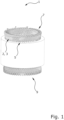
- Figure 1 shows a stator 1 with a plurality of slots 5 in which pins 2, 3 are guided.
- the stator 1 has a first end face 7 and an opposite second end face 9.
- a rotor is also necessary to operate an electrical machine.
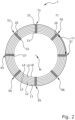
- Figure 2 shows a stator 1 with slots and pins on six layers, with only eight slots 51 - 58 being shown. Pins 21, 22, 25, 26, 27, and 28 are arranged in the slots. The pins are located next to each other in a slot. In the example of the Figure 2 There is room for six adjacent pins in a slot. The six pins within a slot are therefore located on different concentric circles L1, L2, L3, L4, L5, L6 around the center point M of the stator, forming individual layers. Between each two slots there is a first distance 11, which is Figure 2 shown grooves is identical.
- Figure 3 shows the stator 1 from Figure 2
- the pins are still arranged on concentric circles, i.e. layers, although the concentric circles are not shown for better presentation.
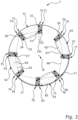
- FIG 3 It is shown which pins are connected in series.
- a first pin 21 is located in a first groove 51 in layer L5.
- This first pin 21 is connected by means of a first connection type 61, shown as a solid line, to a second pin 22 in a second groove 52.
- the second pin 22 is located in layer L6.
- the second pin 22 is connected to a third pin 23 in a third slot 71 by means of a second connection type 62, shown as a dashed line.
- the third pin 23 is located in layer L4.
- the third slot 71 is directly adjacent to the first slot 51.
- the third pin 23 is connected to a fourth pin 24 via a third connection type 63, shown as a dotted line with very short distances. connected.
- the fourth pin 24 is located in a fourth slot 72.
- the fourth pin 24 is located in layer L3.
- the fourth slot 72 is directly adjacent to the second slot 52. Between the fourth slot 72 and the first slot 51 there is a second distance 13, which is one slot shorter than the first distance 11 and two slots shorter than the fourth distance 17.
- the fourth pin 24 is connected to a fifth pin 25 in the first slot 51 by means of a fourth connection type 64, shown as a dashed line with long spacing.
- the fifth pin 25 is in turn located in the first slot 51, i.e. in the same slot as the first pin 21.
- the fifth pin 25 is in layer L1. Between the first pin 21 and the fifth pin 25 in the first slot 51 there is therefore space for three more pins in layers L2 - L4. There is also space in the first slot 51 for one more pin in layer L6.
- the fifth pin 25 is connected to a sixth pin 26 by means of a fifth connection type 65, shown as a dotted line with long spacing.
- the sixth pin 26 is in the second slot 52, i.e. the same slot as the second pin 22.
- the sixth pin 26 is in layer L2. Between the second pin 22 and the sixth pin 26, there is still space in the second slot 52 for three additional pins in layers L3 - L5. Furthermore, there is still space in the second slot 52 for one additional pin in layer L
- the connection of the first, second, third, fourth, fifth, and sixth pins forms a first turn 41.
- the first pin 21 is also a first end pin. This end pin has an input 101 for connecting a power source, such as an inverter.
- the first end pin 21 is therefore only connected to one other pin, the second pin 22.
- the first end pin 21 can thus be configured as a so-called single pin or Ipin.
- the sixth pin 26 is connected via a sixth connection type 66, shown as a dotted line with short spacing, to a seventh pin 27 in layer L2 in a third slot 53.
- the seventh pin 27 begins the previously described serial connection of the subsequent pins in the stator again, with the seventh pin 27 being similar to the first pin 21, except that the slot is offset by 90 degrees.
- the seventh pin 27 is not an end pin, as the seventh pin 27 is connected to two other pins: the sixth pin 26 and another pin in slot 54, layer L6.
- the serial connection of the seventh pin 27 with further pins in three further slots 54, 73 and 74 forms a second turn 42.
- the first, second, third, fourth and fifth connection types 61 - 65 between these pins are identical to the respective first, second, third, fourth and fifth connection types 61 - 65 of the pins of the first turn 41.
- the two windings 41, 42 are connected by the sixth connection type 66.
- the third winding 43 is formed in four additional slots 55, 56, 75, and 76.
- the windings 41, 42, and 43 are each connected by the sixth connection type 66.
- the sixth connection type 66 between the respective windings is thus identical.
- the first, second, third, fourth, and fifth connection types 61-65 between the pins of the third winding 43 are also identical to the first, second, third, fourth, and fifth connection types 61-65 of the first and second windings 41, 42.
- the fourth winding 44 is formed in four further slots 57, 58, 77 and 78.
- the windings 41, 42, 43, 44 are each connected to the sixth connection type 66.
- the sixth Connection type 66 between the respective turns is thus identical.
- the first, second, third, fourth, and fifth connection types 61-65 between the pins of the fourth turn 44 are also identical to the first, second, third, fourth, and fifth connection types 61-65 of the first, second, and third turns 41, 42, and 43.
- the four windings 41, 42, 43, 44 form a first partial coil by rotating counterclockwise around the stator 1.
- the first pin 21 also has an input 81 for connecting a power source.
- the first pin 21 of the winding 41 thus represents a first end pin.
- the partial coil ends with pin 28 of the fourth winding 44.
- the last pin 28 of the fourth winding 44 thus represents a second end pin.
- the second end pin 28 has connections to two further pins, as in connection with Figure 6 explained.
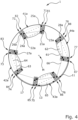
- Figure 4 shows the stator 1 from Figure 3 , where eight further grooves 81 - 88 are shown, which are located in direct proximity to the grooves 71 - 78 of Figure 3 Distances 11, 13, 17 have the same lengths as in Figure 3 on.
- Pins 21a - 28a are connected in the same way as pins 21 - 28 of the Figure 3 Even the connection type is identical to the Figure 3 and are indicated by the same reference numerals. In the same way as Figure 3 As described above, the windings 41a, 42a, 43a, 44a are formed and are connected to each other counterclockwise by the sixth connection type 66.
- the four windings 41a, 42a, 43a, 44a form a second partial coil by circulating around the stator 1.
- the partial coil begins with a pin 21a, which is a third end pin.
- the third end pin 21a in contrast to the first end pin 21, has connections to two further pins, as in connection with Figure 6 explained.
- the partial coil ends with pin 28a of winding 44a.
- the last pin 28a of winding 44a thus represents a fourth end pin.
- Figure 5 shows the stator 1 from Figure 3 and 4 , where eight further grooves 91 - 98 are shown, which are located in direct proximity to the grooves 81 - 88 of Figure 4 Distances 11, 13, 17 have the same lengths as in Figure 3 on.
- Pins 21b - 28b are connected in the same way as pins 21 - 28 of the Figure 3 and pins 21a - 28a of the Figure 4 Even the connection type is identical to the Figures 3 and 4 and are indicated by the same reference numerals. In the same way as Figure 3 and 4 As described above, the windings 41b, 42b, 43b, 44b are formed and are connected to each other counterclockwise by the sixth connection type 66.
- the four windings 41b, 42b, 43b, 44b form a third partial coil by circulating the stator 1.
- the partial coil begins with a pin 21b, which is a fifth end pin.
- the fifth end pin 21b has connections to two further pins, as in connection with Figure 6 explained.
- the partial coil ends with pin 28b of winding 44b.
- the last pin 28b of winding 44b thus represents a sixth end pin.
- the sixth end pin 28b is designed similarly to the first end pin, for example, as a single pin or Ipin, and has an output 103 for connecting a power source.
- Figure 6 shows a pin assignment through the first, second and third partial coil from Figure 3 , 4 and 5 , which are characterized by black Rectangles are shown.
- the same reference numerals denote the same pins, grooves, and connections in the figures.
- the second end pin 28 of turn 44 of the first partial coil in slot 58, layer L2, and the third end pin 21a of the first turn 41a of the second partial coil in slot 71, layer L5, are connected to a seventh connection type 67.
- the seventh connection type overcomes a second distance 13.
- the fourth end pin 28a of turn 44a of the second partial coil in slot 78, layer L2, and the fifth end pin 21b of the first turn 41b of the third partial coil in slot 81, layer L5, are connected to a seventh connection type 67.
- the seventh connection type overcomes a second distance 13.
- the seventh connection type 67 connects two partial coils each, with three partial coils forming a first coil 201 with an input 101 and an output 103 after three radial revolutions around the stator in a counterclockwise direction.
- a third distance 15 shown in the figure is three slots shorter than the first distance 11 from the previous figure. The blocks of the four adjacent slots occupied by the coil pins are each spaced the third distance apart.
- Figure 7 shows the stator 1 from Figure 2
- the pins are also arranged on concentric circles, i.e., layers, although the concentric circles are not shown for clarity. It shows which pins, represented as black squares on a white background, are connected in series and form a first partial coil of a second coil 202.
- a first pin 31 is located in the first groove 51 in layer L6.
- the first pin 31 is also a seventh end pin 31.
- This end pin 31 has an input 105 for connecting a power source, for example, an inverter.
- the seventh end pin 31 is therefore only connected to one other pin, i.e., the seventh pin 37.
- the seventh end pin 31 can thus be designed as a so-called single pin or Ipin.
- the first pin 31 is connected to a seventh pin 37 in a groove 58 by means of the first connection type 61, shown as a solid line.
- the seventh pin 37 is located in layer L5. Between the first groove 51 and the groove 58 there is a first distance 11, which is the same length as the first distance 11 from Figure 2 is.
- the seventh pin 37 is connected to a sixth pin 36 in a slot 57 by means of a sixth connection type 66, shown as a dotted line with short spacing.
- the sixth pin 36 is located in layer L2.
- the sixth pin 36 is connected to a fifth pin 35 in slot 56 by means of a fifth connection type 65, shown as a dotted line with long spacing.
- the fifth pin 35 is located in layer L1.
- the fifth pin 35 is connected to a fourth pin 34 in a slot 77 by means of the fourth connection type 64, shown as a dashed line with long spacing.
- the second distance 13 is between the slot 77 and the slot 56.
- the fourth pin 34 is connected to a third pin 33 via the third connection type 63, shown as a dotted line with very short spacing.
- the third pin 33 is located in slot 76.
- the third pin 33 is located in layer L4. Slot 76 is directly adjacent to slot 56.
- the third pin 33 is connected to a second pin 32 in slot 57 via the second connection type 62, shown as a dashed line.
- the second pin 32 is located in slot 57, i.e. the same slot as the sixth pin 36.
- the sixth pin 36 is located in layer L2. Between the second pin 32 and the sixth pin 36, There is still room in slot 57 for three more pins in layers L3 - L5. There is also room in slot 57 for one more pin in layer L1.
- the second pin 32 is connected via the first connection type 61, shown as a solid line, to a ninth pin 39 in slot 56.
- the ninth pin 39 is located in layer L4.
- the ninth pin 39 is in turn located in slot 56, i.e., in the same slot as the fifth pin 35.
- the fifth pin 35 is located in layer L1. Between the ninth pin 39 and the fifth pin 35 in slot 56, there is therefore space for three more pins in layers L2 - L4. Furthermore, there is space in slot 56 for one more pin in layer L6.
- connection of the second, third, fourth, fifth, sixth and ninth pins forms a fifth turn 45.
- the ninth pin 39 is connected to a tenth pin 36(2) via the fifth connection type 65, shown as a dotted line with long spacing.
- the tenth pin 36(2) is located in slot 55 in layer L2. With the tenth pin 36(2), the previously described serial connection of the subsequent pins in the stator begins again, with the tenth pin 36(2) being similar to the sixth pin 36, except that the slot is offset by 90 degrees.
- the serial connection of the tenth pin 36(2) with further pins in three further slots 54, 75 and 74 forms a sixth turn 46.
- the first, second, third, fourth and fifth connection types 61 - 65 between these pins are identical to the respective first, second, third, fourth and fifth connection types 61 - 65 of the pins of the first to fifth turns 41 - 45.
- the two windings 45, 46 are connected by the sixth connection type 66.
- the seventh winding 47 is formed in four additional slots 53, 52, 73, and 72.
- the windings 45-47 are each connected to the sixth connection type 66.
- the sixth connection type 66 between the respective windings is thus identical.
- the first, second, third, fourth, and fifth connection types 61-65 between the pins of the seventh winding 47 are also identical to the first, second, third, fourth, and fifth connection types 61-65 of the previous windings 41-46.
- the eighth turn 48 is formed in four additional slots 51, 58, 71, and 78.
- the turns 45, 46, 47, and 48 are each connected to the sixth connection type 66.
- the sixth connection type 66 between the respective turns is thus identical.
- the first, third, fourth, and fifth connection types 61, 63-65 between the pins of the eighth turn 48 are also identical to the first, third, fourth, and fifth connection types 61, 63-65 of the previous turns 41-47.
- the eighth turn 48 has two end pins 31, 38.
- the four windings 45-48 form a first partial coil by rotating clockwise around the stator 1.
- the first partial coil of the second coil 202 ends with an eighth end pin 38.
- Figure 8 shows the stator 1 from Figure 7 , where eight further grooves 81 - 88 are shown, which are located in direct proximity to the grooves 71 - 78 of Figure 7 Distances 11, 13, 17 have the same length as in the previous figures.
- Pins 31a - 38a are connected in the same way as pins 31 - 38 of the Figure 7 Even the connection type is identical to the previous figures and is Reference symbols are made clear. In the same way as with Figure 7 As described above, the windings 45a, 46a, 47a, 46a are formed and are connected to each other in a clockwise direction by the sixth connection type 66.
- the four windings 45a, 46a, 47a, 48a form a second partial coil by circulating the stator 1.
- the partial coil begins with a pin 31a, which is a ninth end pin.
- the ninth end pin 31a in contrast to the seventh end pin 31, has connections to two further pins, as in connection with Figure 10 explained.
- the partial coil ends with pin 38a of winding 48a.
- Pin 38a of winding 48a thus represents a tenth end pin 38a.
- the eighth winding 48a has two end pins 31a, 38a.
- Figure 9 shows the stator 1 from Figure 7 and 8 , where eight further grooves 91 - 98 are shown, which are located in direct proximity to the grooves 81 - 88 of Figure 7 Distances 11, 13, 17 have the same lengths as in the previous figures.
- Pins 31b - 38b are connected in the same way as pins 31 - 38 of the Figure 7 and pins 31a - 38a of the Figure 8 Even the type of connection is identical to the previous figures and is indicated by the same reference numerals. In the same way as with Figure 7 and 8 As described above, the windings 45b, 46b, 47b, 48b are formed and are connected to each other in a clockwise direction by the sixth connection type 66.
- the four windings 45b, 46b, 47b, and 48b form a third partial coil by winding around the stator 1.
- the partial coil begins with a pin 31b, which is an eleventh end pin.
- the eleventh end pin 31b has connections to two additional pins, as shown in Connection with Figure 10 explained.
- the partial coil ends with pin 38b of winding 48b.
- Pin 38b of winding 48b thus represents a twelfth end pin.
- the twelfth end pin 38b is designed similarly to the seventh end pin, for example, as a single pin or I pin, and has an output 107 for connecting a power source.
- Figure 10 shows a pin assignment through the first, second and third sub-coil of the second coil 202 from Figure 7 , 8 and 9 , represented by black squares on a white background.
- the same reference numerals indicate the same pins, grooves, and connections in the figures.
- the eighth end pin 38 of the eighth turn 48 of the first partial coil in slot 78, layer L4, and the ninth end pin 31a of the fifth turn 45a of the second partial coil in slot 71, layer L6, are connected to an eighth connection type 68.
- the eighth connection type overcomes a first distance 11.
- the tenth end pin 38a of the fifth turn 45a of the second partial coil in slot 88, layer L2, and the eleventh end pin 31b of the fifth turn 45b of the third partial coil in slot 81, layer L6, are connected to an eighth connection type 68.
- the seventh connection type overcomes a first distance 11.
- connection type 68 connects two partial coils each, with three partial coils forming a second coil 202 with an input 105 and an output 107 after three radial revolutions around the stator in a clockwise direction.
- a third distance 15 shown in the figure is three slots shorter than the first distance 11 from the previous figure. The blocks of the four adjacent slots occupied by the coil pins are each spaced the third distance apart.
- Figure 11 shows a pin assignment through the first coil 201 from Figure 6 , which are represented by black squares. Like reference numerals denote like pins, grooves, and connections in the figures. Furthermore, the second coil 202 is Figure 10 represented as black squares on a white background, located in the same slots but different layers. The sub-coils of the two coils are connected with the seventh connection type 67 (first coil) or the eighth connection type 68 (second coil).
- Figure 12 shows two further coils, each formed by pins with a black dot and a white dot.
- the three sub-coils of the coil with the pins with white dots are connected according to the description of the Figures 3 - 6 formed, with the grooves offset by 30 degrees counterclockwise.
- the three sub-coils of the coil with the pins with black dots are connected according to the Figures 7 - 10 formed, with the grooves offset by 30 degrees counterclockwise.
- Figure 13 shows two further coils, each formed by pins with a black cross and a white cross.
- the three sub-coils of the coil with the pins with white cross are connected according to the description of the Figures 3 - 6 formed, with the grooves offset by 60 degrees counterclockwise.
- the three sub-coils of the coil with the pins with black cross are connected according to the Figures 7 - 10 formed, with the grooves offset by 60 degrees counterclockwise.
- Figure 14 shows a pin assignment through the six coils as a combination of the Figures 10 , 11 and 12 .
- the position of the inputs 101, 105, 111, 115, 121, 125 and outputs 103, 107, 113, 117, 123, 127 shows that The coils can be connected within 25 slots.
- the inputs and outputs can be connected within almost one-third of the stator circumference. In terms of the inputs and outputs alone, separate connection would be possible within 13 slots.
- Figure 15 shows the winding pattern of the three sub-coils of the first coil 201.
- the consecutive "slot number" is not a reference symbol.
- the reference symbols with arrows on the slots are identical to the previous figures and allow for comparison with these figures.
- Figure 16 shows the winding pattern of the three sub-coils of the second coil 202.
- the consecutive "slot number" is not a reference symbol.
- the reference symbols with arrows on the slots are identical to the previous figures and allow for comparison with these figures.
- FIG 17 is a schematic diagram of an embodiment of a vehicle 403, for example a hybrid vehicle or an electric vehicle, comprising an electric machine 401, in particular an electric motor, with an embodiment of the stator 1 for driving the vehicle 403. Furthermore, the vehicle 403 can have an inverter 405 which supplies the electric machine 401 with an alternating current from a direct current source.
- a vehicle 403 for example a hybrid vehicle or an electric vehicle, comprising an electric machine 401, in particular an electric motor, with an embodiment of the stator 1 for driving the vehicle 403.
- the vehicle 403 can have an inverter 405 which supplies the electric machine 401 with an alternating current from a direct current source.
Landscapes
- Engineering & Computer Science (AREA)
- Power Engineering (AREA)
- Chemical & Material Sciences (AREA)
- Combustion & Propulsion (AREA)
- Transportation (AREA)
- Mechanical Engineering (AREA)
- Manufacturing & Machinery (AREA)
- Windings For Motors And Generators (AREA)
Description
- Elektrische Maschinen sind allgemein bekannt und finden als Elektromotor zunehmend Anwendung für den Antrieb von Fahrzeugen. Eine elektrische Maschine besteht aus einem Stator und einem Rotor.
- Der Stator umfasst eine Vielzahl von Nuten, in welchen die Windungen geführt werden. Die Windungen können aus isolierten Kupferstäben, als sogenannte Pins, gebildet werden. Der Rotor befindet sich im Stator und ist mit einer Rotorwelle verbunden.
- Ein solcher Pin-, UPin- oder Hairpinmotor ist beispielsweise aus
DE 11 2013 006 691 T5 ,DE 10 2010 053 719 A1 ,EP 3 096 441 A1 ,US 2011/0025162 A1 ,WO 2012/072754 A2 oderUS 9,136,738 B2 - Aufgabe der vorliegenden Erfindung ist es, einen Stator nach Anspruch 1 mit Windungen aus Pins bereitzustellen, welcher einfach zu fertigen ist.
- Erfindungsgemäß umfasst ein Stator für eine elektrische Maschine eine Vielzahl von Pins, die auf konzentrischen Kreisen mit unterschiedlichen Abständen zu einem Statormittelpunkt in Nuten im Stator angeordnet sind, und jeder konzentrische Kreis einen Layer bildet, wobei jeweils sechs Pins in unterschiedlichen Layer miteinander seriell verbunden sind und eine Windung bilden, ein erster Pin der Windung befindet sich in einer ersten Nut im 6n-1 Layer, wobei n eine natürliche Zahl ist, ein zweiter Pin der Windung befindet sich in einer zweiten Nut im 6n Layer, wobei die zweite Nut einen ersten radialen Abstand in einer ersten Umfangsrichtung des Stators zu der ersten Nut aufweist, ein dritter Pin der Windung befindet sich in einer dritten Nut im 6n-2 Layer, ein vierter Pin der Windung befindet sich in einer vierten Nut im 6n-3 Layer, ein fünfter Pin befindet sich in der ersten Nut im 6n-5 Layer, ein sechster Pin der Windung befindet sich in der zweiten Nut im 6n-4 Layer. Dabei kann eine Windung die Zähne auch mehrfach umlaufen. Die Layer können von außen nach innen zum Statormittelpunkt aufsteigend nummeriert werden. Die Zahl Null gehört nicht zu den erwähnten natürlichen Zahlen.
- Ein Stator mit der erfindungsgemäßen Wicklung lässt sich einfach herstellen und erzeugt ein effizientes elektromagnetisches Feld. Die Verbindungsarten stellen eine elektrisch leitfähige Verbindung zwischen den Pins in den Nuten her. Die Verbindungsart kann ein Anschweißen von Leitern an die Pins sein oder die Pins können bereits als Doppelpin, sogenannte Upins, ausgebildet sein und dadurch bereits beim Einführen in den Stator eine Verbindung herstellen. Ferner stellt auch ein Verschweißen von zueinander gebogenen Endabschnitten von Pins eine Verbindungsart dar.
- Erfindungsgemäß weist die dritte Nut zur vierten Nut einen ersten Abstand auf, der gleich dem ersten Abstand zwischen der zweiten Nut und der ersten Nut ist.
- Das mit einer solchen Windung erzeugte Drehfeld weist weniger störende Harmonische auf und hat dadurch weniger Torqueripple und kleinere Drehmomentschwankungen sowie ein besseres NVH Verhalten.
- Erfindungsgemäß liegt die dritte Nut benachbart und in Umfangsrichtung auf einer gleichen Nachbarschaftsseite bezüglich der ersten Nut wie die vierte Nut bezüglich der zweiten Nut.
- Erfindungsgemäß weist der Stator eine erste und eine zweite Stirnseite auf und ist der erste und zweite Pin auf der zweiten Stirnseite mittels einer ersten Verbindungsart miteinander verbunden, der zweite und dritte Pin auf der ersten Stirnseite mittels einer zweiten Verbindungsart miteinander verbunden, der dritte und vierte Pin auf der zweiten Stirnseite mittels einer dritten Verbindungsart miteinander verbunden, der vierte und fünfte Pin auf der ersten Stirnseite mittels einer vierten Verbindungsart miteinander verbunden, der fünfte und sechste Pin auf der zweiten Stirnseite mittels einer fünften Verbindungsart miteinander verbunden, wobei sich die erste, zweite, dritte, vierte und fünfte Verbindungsart voneinander unterscheiden.
- Die unterschiedlichen Verbindungsarten ermöglichen eine verbesserte Fertigung. Eine abwechselnde Lage der Verbindungsarten auf verschiedenen Stirnseiten ermöglicht das effiziente Bilden einer Windung um die zwischen den Nuten liegenden Statorzähne.
- Selbst Verbindungsarten auf derselben Stirnseite des Stators können sich durch unterschiedliche Biegerichtungen eines Pinfußes zum Stator inneren oder -äußeren unterscheiden.
- In einer Ausgestaltung der Erfindung kann ein Pin einer Windung ein erster, sechster, siebter oder zwölfter Endpin sein und als Einzelpin, beispielsweise als IPin, ausgebildet sein.
- Erfindungsgemäß weist der Stator zumindest zwei Windungen auf und ist zumindest der sechste Pin in der zweiten Nut mit einem siebten Pin im 6n-1 Layer in einer dritten Nut mittels einer sechsten Verbindungsart verbunden.
- Eine Kombination der vorher genannten Verbindungsarten auf unterschiedlichen oder gleichen Stirnseiten des Stators ist auch möglich. Durch eine gleiche Verbindungsart auf gleichen Stirnseiten und verschiedenen Verbindungsarten auf unterschiedlichen Stirnseiten des Stators ist eine einfache und schnelle Fertigung möglich. Beispielsweise wird auf einer Stirnseite die Verbindung durch eine Art vorgebogene Pins, sogenannte Doppelpins oder auch Upins genannt, hergestellt und auf einer anderen Stirnseite des Stators werden Pins einzeln oder jeweils eine Seite des Doppelpins miteinander verschweißt. Die Schweißpunkte können an Füßen der Pins oder Doppelpins liegen.
- Erfindungsgemäß weist der Stator eine Vielzahl von Windungen auf, die sich über den gesamten Umfang des Stators erstrecken und dabei eine Teilspule bilden.
- Die Wicklungen weisen dadurch eine Symmetrie auf, welche ein gleichmäßiges Drehfeld erzeugt.
- In einer weiteren Ausgestaltung kann je ein Pin von drei Teilspulen mittels einer siebten Verbindungsart oder einer achten Verbindungsart miteinander verbunden sein und eine Spule bilden. Bei diesen Pins kann es sich um sogenannte Endpins handeln, da sie das Ende einer Teilspule markieren. Bevorzugt können die Teilspulen sechs Spulen bilden und diesen derart drei Phasen zugeordnet sein, dass sich jeweils zwei Spulen, die einer gleichen Phase zugeordnet sind, in vier benachbarten Nuten befinden.
- Weiter bevorzugt kann je ein Eingang eines Endpins von zwei Spulen mittels einer neunten Verbindungsart miteinander verbunden sein.
- Die neunte Verbindungsart kann durch einen an den Pins angebrachten Leiter oder durch einen leitenden Ring hergestellt werden.
- Die beiden Spulen können parallel verbunden sein und können zusätzlich von einer gleichen Phase gespeist werden. Die Parallelverbindung kann durch das paarweise Verbinden von einem ersten und siebten oder sechsten und zwölften Endpin erfolgen.
- Zwei Spulen in gleichen Nuten können parallelgeschaltet und von einer Phase gespeist werden, sodass ein Stator mit Windungen für eine dreiphasige elektrische Maschine ausgebildet wird.
- Ferner können jeweils zwei Phasen einen annährend identischen Strom- und Spannungsverlauf aufweisen und dadurch ein sechs Phaseninverter lediglich einen dreiphasigen Motor ansteuern. Mit dieser Anordnung ist eine Stromteilung der Schaltelemente im Inverter möglich.
- Erfindungsgemäß weist ein Fahrzeug eine elektrische Maschine mit einem Stator gemäß einer der bevorzugten Ausgestaltungen auf.
-
-
Figur 1 zeigt einen Stator. -
Figur 2 zeigt einen Stator mit acht Nuten und sechs Layer. -
Figur 3 zeigt ein Wickelschema einer ersten Teilspule. -
Figur 4 zeigt ein Wickelschema einer zweiten Teilspule. -
Figur 5 zeigt ein Wickelschema einer dritten Teilspule. -
Figur 6 zeigt einen Stator mit drei Teilspulen und deren Verbindung miteinander und somit eine erste Spule. -
Figur 7 zeigt ein Wickelschema einer weiteren ersten Teilspule. -
Figur 8 zeigt ein Wickelschema einer weiteren zweiten Teilspule. -
Figur 9 zeigt ein Wickelschema einer weiteren dritten Teilspule. -
Figur 10 zeigt einen Stator mit drei weiteren Teilspulen und deren Verbindung miteinander und somit eine zweite Spule. -
Figur 11 zeigt einen Stator mit zwei Spulen, bestehend aus jeweils drei Teilspulen. -
Figur 12 zeigt einen Stator mit zwei weiteren Spulen. -
Figur 13 zeigt einen Stator mit zwei weiteren Spulen. -
Figur 14 zeigt einen Stator mit sechs Spulen. -
Figur 15 zeigt ein Windungsschema einer ersten Spule. -
Figur 16 zeigt ein Windungsschema einer zweiten Spule. -
Figur 17 zeigt ein Fahrzeug mit einer elektrischen Maschine insbesondere einem Elektromotor mit einem Stator. -
Figur 1 zeigt einen Stator 1 mit einer Vielzahl an Nuten 5 in welchen Pins 2, 3 geführt werden. Der Stator 1 weist eine erste Stirnseite 7 und eine gegenüberliegende zweite Stirnseite 9 auf. Selbstverständlich ist zum Betrieb einer elektrischen Maschine ferner ein Rotor nötig. -
Figur 2 zeigt einen Stator 1 mit Nuten und Pins auf sechs Layer, wobei lediglich acht Nuten 51 - 58 dargestellt sind. In den Nuten sind exemplarisch Pins 21, 22, 25, 26, 27, 28 angeordnet. Die Pins liegen nebeneinander in einer Nut. Im Beispiel derFigur 2 ist für sechs nebeneinanderliegenden Pins Platz in einer Nut. Die sechs Pins innerhalb einer Nut liegen somit auf unterschiedlichen konzentrischen Kreisen L1, L2, L3, L4, L5, L6 um den Mittelpunkt M des Stators, die somit einzelne Layer bilden. Zwischen jeweils zwei Nuten liegt ein erster Abstand 11, welcher zwischen allen inFigur 2 gezeigten Nuten identisch ist. -
Figur 3 zeigt den Stator 1 ausFigur 2 . Die Pins sind weiterhin auf konzentrischen Kreisen, also Layer, angeordnet, wobei die konzentrischen Kreise wegen einer besseren Darstellung nicht eingezeichnet sind. InFigur 3 ist dargestellt, welche Pins miteinander in Serie verbunden sind. Ein erster Pin 21 befindet sich in einer ersten Nut 51 im Layer L5. Dieser erste Pin 21 ist mittels einer ersten Verbindungsart 61, als durchgezogene Linie dargestellt, mit einem zweiten Pin 22 in einer zweiten Nut 52 verbunden. Der zweite Pin 22 befindet sich im Layer L6. Zwischen der ersten Nut 51 und der zweiten Nut 52 liegt ein erster Abstand 11 der gleichlang wie der erste Abstand 11 ausFigur 2 ist. - Der zweite Pin 22 ist mittels einer zweiten Verbindungsart 62, als gestrichelte Linie dargestellt, mit einem dritten Pin 23 in einer dritten Nut 71 verbunden. Der dritte Pin 23 liegt im Layer L4. Die dritte Nut 71 liegt direkt benachbart zur ersten Nut 51. Zwischen der dritten Nut 71 und der zweiten Nut 52 liegt ein vierter Abstand 17, der eine Nut länger als der erste Abstand 11 ist. Der dritte Pin 23 ist über eine dritte Verbindungsart 63, als gepunktete Linie mit sehr kurzen Abständen dargestellt, mit einem vierten Pin 24 verbunden. Der vierte Pin 24 liegt in einer vierten Nut 72. Der vierte Pin 24 liegt im Layer L3. Die vierte Nut 72 liegt direkt benachbart zur zweiten Nut 52. Zwischen der vierten Nut 72 und der ersten Nut 51 liegt ein zweiter Abstand 13, der eine Nut kürzer als der erste Abstand 11 und zwei Nuten kürzer als der vierte Abstand 17 ist.
- Der vierte Pin 24 ist mittels einer vierten Verbindungsart 64, als gestrichelte Linie mit langen Abständen dargestellt, mit einem fünften Pin 25 in der ersten Nut 51 verbunden. Der fünfte Pin 25 befindet sich wiederum in der ersten Nut 51, also in derselben Nut wie der erste Pin 21. Der fünfte Pin 25 liegt im Layer L1. Zwischen dem ersten Pin 21 und dem fünften Pin 25 in der ersten Nut 51 ist somit noch Platz für drei weiteren Pins in Layer L2 - L4. Außerdem ist in der ersten Nut 51 noch Platz für einen weiteren Pin in Layer L6. Der fünfte Pin 25 ist über eine fünfte Verbindungsart 65, als gepunktete Linie mit langen Abständen dargestellt, mit einem sechsten Pin 26 verbunden. Der sechste Pin 26 liegt in der zweiten Nut 52, also derselben Nut wie der zweite Pin 22. Der sechste Pin 26 liegt im Layer L2. Zwischen dem zweiten Pin 22 und dem sechsten Pin 26 ist somit noch Platz in der zweiten Nut 52 für drei weitere Pins in den Layer L3 - L5. Außerdem ist in der zweiten Nut 52 noch Platz für einen weiteren Pin in Layer L1.
- Die Verbindung des ersten, zweiten, dritten, vierten, fünften und sechsten Pins bildet eine erste Windung 41. Der erste Pin 21 ist gleichzeitig auch ein erster Endpin. Dieser Endpin weist einen Eingang 101 zum Anschluss einer Energiequelle, beispielsweise eines Inverters, auf. Der erste Endpin 21 ist daher nur mit einem weiteren Pin, also dem zweiten Pin 22, verbunden. Der erste Endpin 21 kann somit als sogenannter Einzelpin oder Ipin ausgestaltet sein.
- Der sechste Pin 26 ist über eine sechste Verbindungsart 66, als gepunktete Linie mit kurzen Abständen dargestellt, mit einem siebten Pin 27 in Layer L2 in einer dritten Nut 53 verbunden. Mit dem siebten Pin 27 beginnt die vorher beschriebene serielle Verbindung der im Stator nachfolgenden Pins erneut, wobei der siebte Pin 27 ähnlich zum ersten Pin 21 mit einem Versatz der Nut um 90 Grad ist. Der siebte Pin 27 ist im Gegensatz zum ersten Pin 21 kein Endpin, da der siebte Pin 27 mit zwei weiteren Pins, also dem sechsten Pin 26 und einem weiteren Pin in Nut 54, Layer L6 verbunden ist.
- Die serielle Verbindung des siebten Pins 27 mit weiteren Pins in drei weiteren Nuten 54, 73 und 74 bildet eine zweite Windung 42. Die erste, zweite, dritte, vierte und fünfte Verbindungsart 61 - 65 zwischen diesen Pins ist identisch zu der jeweiligen ersten, zweiten, dritten, vierten, fünften Verbindungsart 61 - 65 der Pins der ersten Windung 41.
- Die beiden Windungen 41, 42 sind durch die sechste Verbindungsart 66 verbunden. Durch die Fortsetzung der seriellen Verbindung wird die dritte Windung 43 in vier weiteren Nuten 55, 56, 75 und 76 gebildet. Die Windungen 41, 42, 43 sind jeweils mit der sechsten Verbindungsart 66 verbunden. Die sechste Verbindungsart 66 zwischen den jeweiligen Windungen ist somit identisch. Auch die erste, zweite, dritte, vierte und fünfte Verbindungsart 61 - 65 zwischen den Pins der dritten Windung 43 ist identisch zu der ersten, zweiten, dritten, vierten und fünften Verbindungsart 61 - 65 der ersten und zweiten Windung 41, 42.
- Durch die Fortsetzung der seriellen Verbindung wird die vierte Windung 44 in vier weiteren Nuten 57, 58, 77 und 78 gebildet. Die Windungen 41, 42, 43, 44 sind jeweils mit der sechsten Verbindungsart 66 verbunden. Die sechste Verbindungsart 66 zwischen den jeweiligen Windungen ist somit identisch. Auch die erste, zweite, dritte, vierte und fünfte Verbindungsart 61 - 65 zwischen den Pins der vierten Windung 44 ist identisch zu der ersten, zweiten, dritten, vierten und fünften Verbindungsart 61 - 65 der ersten, zweiten und dritten Windung 41, 42, 43.
- Die vier Windungen 41, 42, 43, 44 bilden durch einen Umlauf um den Stator 1 entgegen dem Uhrzeigersinn eine erste Teilspule. Der erste Pin 21 weist ferner einen Eingang 81 für den Anschluss einer Energiequelle auf. Der erste Pin 21 der Windung 41 stellt somit einen ersten Endpin dar. Die Teilspule endet mit dem Pin 28 der vierten Windung 44. Der letzte Pin 28 der vierten Windung 44 stellt somit einen zweiten Endpin dar. Der zweite Endpin 28 weist im Gegensatz zum ersten Endpin 21 jedoch Verbindungen zu zwei weiteren Pins auf, wie in Verbindung mit
Figur 6 erläutert. -
Figur 4 zeigt den Stator 1 ausFigur 3 , wobei dort acht weitere Nuten 81 - 88 gezeigt sind, die sich in direkter Nachbarschaft zu den Nuten 71 - 78 ausFigur 3 befinden. Die Abstände 11, 13, 17 weisen die gleichen Längen wie inFigur 3 auf. - Die Pins 21a - 28a sind in gleicher Weise wie die Pins 21 - 28 der
Figur 3 verbunden. Selbst die Verbindungsart ist identisch zurFigur 3 und durch die gleichen Bezugszeichen deutlich gemacht. In gleicher Weise wie beiFigur 3 beschrieben, werden die Windungen 41a, 42a, 43a, 44a gebildet und sind entgegen dem Uhrzeigersinn miteinander durch die sechste Verbindungsart 66 verbunden. - Die vier Windungen 41a, 42a, 43a, 44a bilden durch einen Umlauf um den Stator 1 eine zweite Teilspule. Die Teilspule beginnt mit einem Pin 21a, der ein dritter Endpin ist. Der dritte Endpin 21a weist im Gegensatz zum ersten Endpin 21 jedoch Verbindungen zu zwei weiteren Pins auf, wie in Verbindung mit
Figur 6 erläutert. Die Teilspule endet mit dem Pin 28a der Windung 44a. Der letzte Pin 28a der Windung 44a stellt somit einen vierten Endpin dar. -
Figur 5 zeigt den Stator 1 ausFigur 3 und4 , wobei dort acht weitere Nuten 91 - 98 gezeigt sind, die sich in direkter Nachbarschaft zu den Nuten 81 - 88 ausFigur 4 befinden. Die Abstände 11, 13, 17 weisen die gleiche Längen wie inFigur 3 auf. - Die Pins 21b - 28b sind in gleicher Weise wie die Pins 21 - 28 der
Figur 3 und die Pins 21a - 28a derFigur 4 verbunden. Selbst die Verbindungsart ist identisch zu denFiguren 3 und4 und durch gleiche Bezugszeichen deutlich gemacht. In gleicher Weise wie beiFigur 3 und4 beschrieben, werden die Windungen 41b, 42b, 43b, 44b gebildet und sind entgegen den Uhrzeigersinn miteinander durch die sechste Verbindungsart 66 verbunden. - Die vier Windungen 41b, 42b, 43b, 44b bilden durch einen Umlauf um den Stator 1 eine dritte Teilspule. Die Teilspule beginnt mit einem Pin 21b, der ein fünfter Endpin ist. Der fünfte Endpin 21b weist im Gegensatz zum ersten Endpin 21 jedoch Verbindungen zu zwei weiteren Pins auf, wie in Verbindung mit
Figur 6 erläutert. Die Teilspule endet mit dem Pin 28b der Windung 44b. Der letzte Pin 28b der Windung 44b stellt somit einen sechsten Endpin dar. Der sechste Endpin 28b wiederum ist ähnlich zum ersten Endpin ausgebildet, also beispielsweise als Einzelpin oder Ipin und weist einen Ausgang 103 zum Anschluss einer Energiequelle auf. -
Figur 6 zeigt eine Pinbelegung durch die erste, zweite und dritte Teilspule ausFigur 3 ,4 und5 , welche durch schwarze Vierecke dargestellt sind. Gleiche Bezugszeichen bezeichnen gleiche Pins, Nuten, Verbindungen in den Figuren. - Der zweite Endpin 28 der Windung 44 der ersten Teilspule in Nut 58, Layer L2 und der dritte Endpin 21a der ersten Windung 41a der zweiten Teilspule in Nut 71, Layer L5 ist mit einer siebten Verbindungsart 67 verbunden. Die siebte Verbindungsart überwindet einen zweiten Abstand 13. Der vierte Endpin 28a der Windung 44a der zweiten Teilspule in Nut 78, Layer L2 und der fünfte Endpin 21b der ersten Windung 41b der dritten Teilspule in Nut 81, Layer L5 ist mit einer siebten Verbindungsart 67 verbunden. Die siebte Verbindungsart überwindet einen zweiten Abstand 13.
- Somit verbindet die siebte Verbindungsart 67 jeweils zwei Teilspulen, wobei drei Teilspulen eine erste Spule 201 mit einem Eingang 101 und einem Ausgang 103 nach dreimaligem radialen Umlauf um den Stator entgegen dem Uhrzeigersinn bilden. Ein in der Figur dargestellter dritter Abstand 15 ist drei Nuten kürzer als der erste Abstand 11 aus der vorherigen Figur. Die Blöcke der vier benachbarten Nuten, die mit Pins der Spule belegt sind weisen jeweils den dritten Abstand voneinander auf.
-
Figur 7 zeigt den Stator 1 ausFigur 2 . Die Pins sind weiterhin auf konzentrischen Kreisen, also Layer, angeordnet, wobei die konzentrischen Kreise wegen einer besseren Darstellung nicht eingezeichnet sind. Es ist dargestellt, welche Pins, als schwarze Vierecke auf weißem Grund dargestellt, miteinander in Serie verbunden sind und eine erste Teilspule einer zweiten Spule 202 bilden. - Ein erster Pin 31 befindet sich in der ersten Nut 51 im Layer L6. Der erste Pin 31 ist gleichzeitig auch ein siebter Endpin 31. Dieser Endpin 31 weist einen Eingang 105 zum Anschluss einer Energiequelle, beispielsweise eines Inverters, auf. Der siebte Endpin 31 ist daher nur mit einem weiteren Pin, also dem siebten Pin 37, verbunden. Der siebte Endpin 31 kann somit als sogenannter Einzelpin oder Ipin ausgestaltete sein. Der erste Pin 31 ist mittels der ersten Verbindungsart 61, als durchgezogene Linie dargestellt, mit einem siebten Pin 37 in einer Nut 58 verbunden. Der siebte Pin 37 befindet sich im Layer L5. Zwischen der ersten Nut 51 und der Nut 58 liegt ein erster Abstand 11, der gleichlang wie der erste Abstand 11 aus
Figur 2 ist. - Der siebte Pin 37 ist mittels einer sechsten Verbindungsart 66, als gepunktete Linie mit kurzen Abständen dargestellt, mit einem sechsten Pin 36 in einer Nut 57 verbunden. Der sechste Pin 36 liegt in Layer L2. Der sechste Pin 36 ist über eine fünfte Verbindungsart 65, als gepunktete Linie mit langen Abständen dargestellt, mit einem fünften Pin 35 in Nut 56 verbunden. Der fünfte Pin 35 liegt in Layer L1. Der fünfte Pin 35 ist mittels der vierten Verbindungsart 64, als gestrichelte Linie mit langen Abständen dargestellt, mit einem vierten Pin 34 in einer Nut 77 verbunden. Zwischen der Nut 77 und der Nut 56 liegt der zweite Abstand 13.
- Der vierte Pin 34 ist über die dritte Verbindungsart 63, als gepunktete Linie mit sehr kurzen Abständen dargestellt, mit einem dritten Pin 33 verbunden. Der dritte Pin 33 liegt in der Nut 76. Der dritte Pin 33 liegt im Layer L4. Die Nut 76 liegt direkt benachbart zur Nut 56. Der dritte Pin 33 ist über die zweiten Verbindungsart 62, als gestrichelte Linie dargestellt, mit einem zweiten Pin 32 in der Nut 57 verbunden. Der zweite Pin 32 liegt im Layer L6. Der zweite Pin 32 liegt in der Nut 57, also derselben Nut wie der sechste Pin 36. Der sechste Pin 36 liegt im Layer L2. Zwischen dem zweiten Pin 32 und dem sechsten Pin 36 ist somit noch Platz in der Nut 57 für drei weitere Pins in den Layer L3 - L5. Außerdem ist in der Nut 57 noch Platz für einen weiteren Pin in Layer L1.
- Der zweite Pin 32 ist über die erste Verbindungsart 61, als durchgezogene Linie dargestellt, mit einem neunten Pin 39 in der Nut 56 verbunden. Der neunte Pin 39 liegt im Layer L4. Der neunte Pin 39 befindet sich wiederum in der Nut 56, also in derselben Nut wie der fünfte Pin 35. Der fünfte Pin 35 liegt im Layer L1. Zwischen dem neunten Pin 39 und dem fünften Pin 35 in der Nut 56 ist somit noch Platz für drei weitere Pins in Layer L2 - L4. Außerdem ist in der Nut 56 noch Platz für einen weiteren Pin in Layer L6.
- Die Verbindung des zweiten, dritten, vierten, fünften, sechsten und neunten Pins bildet eine fünfte Windung 45.
- Der neunte Pin 39 ist über die fünfte Verbindungsart 65, als gepunktete Linie mit langen Abständen dargestellt, mit einem zehnten Pin 36(2) verbunden. Der zehnte Pin 36(2) liegt in der Nut 55 im Layer L2. Mit dem zehnten Pin 36(2) beginnt die vorher beschriebene serielle Verbindung der im Stator nachfolgenden Pins erneut, wobei der zehnte Pin 36(2) ähnlich zum sechsten Pin 36 mit einem Versatz der Nut um 90 Grad ist.
- Die serielle Verbindung des zehnten Pins 36(2) mit weiteren Pins in drei weiteren Nuten 54, 75 und 74 bildet eine sechste Windung 46. Die erste, zweite, dritte, vierte und fünfte Verbindungsart 61 - 65 zwischen diesen Pins ist identisch zu der jeweiligen ersten, zweiten, dritten, vierten und fünften Verbindungsart 61 - 65 der Pins der ersten bis fünften Windung 41 - 45.
- Die beiden Windungen 45, 46 sind durch die sechste Verbindungsart 66 verbunden. Durch die Fortsetzung der seriellen Verbindung wird die siebte Windung 47 in vier weiteren Nuten 53, 52, 73 und 72 gebildet. Die Windungen 45 - 47 sind jeweils mit der sechsten Verbindungsart 66 verbunden. Die sechste Verbindungsart 66 zwischen den jeweiligen Windungen ist somit identisch. Auch die erste, zweite, dritte, vierte und fünfte Verbindungsart 61 - 65 zwischen den Pins der siebten Windung 47 ist identisch zu der ersten, zweiten, dritten, vierten und fünften Verbindungsart 61 - 65 der vorherigen Windungen 41 - 46.
- Durch die Fortsetzung der seriellen Verbindung wird die achte Windung 48 in vier weiteren Nuten 51, 58, 71 und 78 gebildet. Die Windungen 45, 46, 47, 48 sind jeweils mit der sechsten Verbindungsart 66 verbunden. Die sechste Verbindungsart 66 zwischen den jeweiligen Windungen ist somit identisch. Auch die erste, dritte, vierte und fünfte Verbindungsart 61, 63 - 65 zwischen den Pins der achten Windung 48 ist identisch zu der ersten, dritten, vierten und fünften Verbindungsart 61, 63 - 65 der vorherigen Windungen 41 - 47. Ferner weist die achte Windung 48 zwei Endpins 31, 38 auf.
- Die vier Windungen 45 - 48 bilden durch einen Umlauf um den Stator 1 mit dem Uhrzeigersinn eine erste Teilspule. Die erste Teilspule der zweiten Spule 202 endet mit einem achten Endpin 38.
-
Figur 8 zeigt den Stator 1 ausFigur 7 , wobei dort acht weitere Nuten 81 - 88 gezeigt sind, die sich in direkter Nachbarschaft zu den Nuten 71 - 78 ausFigur 7 befinden. Die Abstände 11, 13, 17 weisen die gleiche Länge wie in den vorherigen Figuren auf. - Die Pins 31a - 38a sind in gleicher Weise wie die Pins 31 - 38 der
Figur 7 verbunden. Selbst die Verbindungsart ist identisch zu den vorherigen Figuren und durch gleiche Bezugszeichen deutlich gemacht. In gleicher Weise wie beiFigur 7 beschrieben, werden die Windungen 45a, 46a, 47a, 46a gebildet und sind mit dem Uhrzeigersinn miteinander durch die sechste Verbindungsart 66 verbunden. - Die vier Windungen 45a, 46a, 47a, 48a bilden durch einen Umlauf um den Stator 1 eine zweite Teilspule. Die Teilspule beginnt mit einem Pin 31a, der ein neunter Endpin ist. Der neunte Endpin 31a weist im Gegensatz zum siebten Endpin 31 jedoch Verbindungen zu zwei weiteren Pins auf, wie in Verbindung mit
Figur 10 erläutert. Die Teilspule endet mit dem Pin 38a der Windung 48a. Der Pin 38a der Windung 48a stellt somit einen zehnten Endpin 38a dar. Ferner weist die achte Windung 48a zwei Endpins 31a, 38a auf. -
Figur 9 zeigt den Stator 1 ausFigur 7 und8 , wobei dort acht weitere Nuten 91 - 98 gezeigt sind, die sich in direkter Nachbarschaft zu den Nuten 81 - 88 ausFigur 7 befinden. Die Abstände 11, 13, 17 weisen die gleiche Längen wie in den vorherigen Figuren auf. - Die Pins 31b - 38b sind in gleicher Weise wie die Pins 31 - 38 der
Figur 7 und die Pins 31a - 38a derFigur 8 verbunden. Selbst die Verbindungsart ist identisch zu den vorherigen Figuren und durch gleiche Bezugszeichen deutlich gemacht. In gleicher Weise wie beiFigur 7 und8 beschrieben, werden die Windungen 45b, 46b, 47b, 48b gebildet und sind mit dem Uhrzeigersinn miteinander durch die sechste Verbindungsart 66 verbunden. - Die vier Windungen 45b, 46b, 47b, 48b bilden durch einen Umlauf um den Stator 1 eine dritte Teilspule. Die Teilspule beginnt mit einem Pin 31b, der ein elfter Endpin ist. Der elfte Endpin 31b weist im Gegensatz zum siebten Endpin 31 jedoch Verbindungen zu zwei weiteren Pins auf, wie in Verbindung mit
Figur 10 erläutert. Die Teilspule endet mit dem Pin 38b der Windung 48b. Der Pin 38b der Windung 48b stellt somit einen zwölften Endpin dar. Der zwölfte Endpin 38b wiederum ist ähnlich zum siebten Endpin ausgebildet, also beispielsweise als Einzelpin oder Ipin, und weist einen Ausgang 107 zum Anschluss einer Energiequelle auf. -
Figur 10 zeigt eine Pinbelegung durch die erste, zweite und dritte Teilspule der zweiten Spule 202 ausFigur 7 ,8 und9 , welche durch schwarze Vierecke auf weißem Grund dargestellt sind. Gleiche Bezugszeichen bezeichnen gleiche Pins, Nuten, Verbindungen in den Figuren. - Der achte Endpin 38 der achten Windung 48 der ersten Teilspule in Nut 78, Layer L4, und der neunte Endpin 31a der fünften Windung 45a der zweiten Teilspule in Nut 71, Layer L6, ist mit einer achten Verbindungsart 68 verbunden. Die achte Verbindungsart überwindet einen ersten Abstand 11. Der zehnte Endpin 38a der fünften Windung 45a der zweiten Teilspule in Nut 88, Layer L2 und der elfte Endpin 31b der fünften Windung 45b der dritten Teilspule in Nut 81, Layer L6, ist mit einer achten Verbindungsart 68 verbunden. Die siebte Verbindungsart überwindet einen ersten Abstand 11.
- Somit verbindet die achte Verbindungsart 68 jeweils zwei Teilspulen, wobei drei Teilspulen eine zweite Spule 202 mit einem Eingang 105 und einem Ausgang 107 nach dreimaligem radialen Umlauf um den Stator mit dem Uhrzeigersinn bilden. Ein in der Figur dargestellter dritter Abstand 15 ist drei Nuten kürzer als der erste Abstand 11 aus der vorherigen Figur. Die Blöcke der vier benachbarten Nuten, die mit Pins der Spule belegt sind, weisen jeweils den dritten Abstand voneinander auf.
-
Figur 11 zeigt eine Pinbelegung durch die erste Spule 201 ausFigur 6 , welche durch schwarze Vierecke dargestellt sind. Gleiche Bezugszeichen bezeichnen gleiche Pins, Nuten, Verbindungen in den Figuren. Ferner ist die zweite Spule 202 aus derFigur 10 als schwarze Vierecke auf weißem Grund dargestellt, die sich in gleichen Nuten aber unterschiedlichen Layer befindet. Die Teilspulen der beiden Spulen sind mit der siebten Verbindungsart 67 (erste Spule) oder der achten Verbindungsart 68 (zweite Spule) verbunden. -
Figur 12 zeigt zwei weitere Spulen, wie jeweils durch Pins mit einem schwarzen Punkt bzw. mit einem weißen Punkt, gebildet werden. Die drei Teilspulen der Spule mit den Pins mit weißen Punkt werden gemäß der Beschreibung derFiguren 3 - 6 gebildet, wobei die Nuten um 30 Grad entgegen dem Uhrzeigersinn versetzt sind. Die drei Teilspulen der Spule mit den Pins mit schwarzen Punkt werden gemäß derFiguren 7 - 10 gebildet, wobei die Nuten um 30 Grad entgegen dem Uhrzeigersinn versetzt sind. -
Figur 13 zeigt zwei weitere Spulen, wie jeweils durch Pins mit einem schwarzen Kreuz bzw. mit einem weißen Kreuz, gebildet werden. Die drei Teilspulen der Spule mit den Pins mit weißen Kreuz werden gemäß der Beschreibung derFiguren 3 - 6 gebildet, wobei die Nuten um 60 Grad entgegen dem Uhrzeigersinn versetzt sind. Die drei Teilspulen der Spule mit den Pins mit schwarzen Kreuz werden gemäß derFiguren 7 - 10 gebildet, wobei die Nuten um 60 Grad entgegen dem Uhrzeigersinn versetzt sind. -
Figur 14 zeigt eine Pinbelegung durch die sechs Spulen als eine Kombination aus denFiguren 10 ,11 und12 . Insbesondere aus der Lage der Ein- 101, 105, 111, 115, 121, 125 und Ausgänge 103, 107, 113, 117, 123, 127 wird ersichtlich, dass eine Verschaltung der Spulen innerhalb von fünfundzwanzig Nuten erfolgen kann. Bei dem exemplarisch dargestellten Stator mit zweiundsiebzig Nuten ist eine Verschaltung der Ein- und Ausgänge somit innerhalb von fast einem Drittel des Statorumfangs möglich. Rein bezogen auf die Ein- oder Ausgänge, wäre eine getrennte Beschaltung innerhalb von dreizehn Nuten möglich. -
Figur 15 zeigt das Wickelschema der drei Teilspulen der ersten Spule 201. Die fortlaufende "Nutennummer" ist kein Bezugszeichen. Die Bezugszeichen mit Pfeil an den Nuten sind identisch zu den vorherigen Figuren und ermöglichen einen Vergleich mit diesen Figuren. -
Figur 16 zeigt das Wickelschema der drei Teilspulen der zweiten Spule 202. Die fortlaufende "Nutennummer" ist kein Bezugszeichen. Die Bezugszeichen mit Pfeil an den Nuten sind identisch zu den vorherigen Figuren und ermöglichen einen Vergleich mit diesen Figuren. -
Figur 17 ist eine Prinzipskizze eines Ausführungsbeispiels eines Fahrzeugs 403, beispielsweise eines Hybridfahrzeugs oder eines Elektrofahrzeugs, umfassend eine elektrische Maschine 401, insbesondere einen Elektromotor, mit einem Ausführungsbeispiel des Stators 1 zum Antreiben des Fahrzeugs 403. Ferner kann das Fahrzeug 403 einen Inverter 405 aufweisen, der die elektrische Maschine 401 mit einem Wechselstrom aus einer Gleichstromquelle versorgt. -
- 1
- Stator
- 2, 3, 21-38b
- Pin
- 5, 51 - 58, 71 - 78
- Nut
- 81 - 88, 91 - 96
- Nut
- 7
- erste Stirnseite
- 9
- zweite Stirnseite
- 11
- erster Abstand
- 13
- zweiter Abstand
- 15
- dritter Abstand
- 21
- erster Endpin
- 28
- zweiter Endpin
- 21a
- dritter Endpin
- 28a
- vierter Endpin
- 21b
- fünfter Endpin
- 28b
- sechster Endpin
- 31
- siebter Endpin
- 38
- achter Endpin
- 31a
- neunter Endpin
- 38a
- zehnter Endpin
- 31b
- elfter Endpin
- 38b
- zwölfter Endpin
- 41 - 48, 41a - 48a, 41b - 48b
- Windung
- 61
- erste Verbindungsart
- 62
- zweite Verbindungsart
- 63
- dritte Verbindungsart
- 64
- vierte Verbindungsart
- 65
- fünfte Verbindungsart
- 66
- sechste Verbindungsart
- 67
- siebte Verbindungsart
- 68
- achte Verbindungsart
- 101, 105, 111, 115, 121, 125
- Eingang
- 103, 107, 113, 117, 123, 127
- Ausgang
- 201
- erste Spule
- 202
- zweite Spule
- 401
- elektrische Maschine
- 403
- Fahrzeug
- 405
- Inverter
- L1, L2, L3, L4, L5, L6
- Layer
- M
- Statormittelpunkt
Claims (6)
- Stator (1) für eine elektrische Maschine (100), umfassend eine erste Stirnseite (7), eine gegenüberliegende zweite Stirnseite (9) eine Vielzahl von Pins (21 - 27), die auf konzentrischen Kreisen mit unterschiedlichen Abständen zu einem Statormittelpunkt (M) in Nuten (51 - 58, 71 - 78) im Stator angeordnet sind, wobei jeder konzentrische Kreis einen Layer (L1 - L6) bildet; wobei- der Stator (1) eine Vielzahl von Windungen (41, 42) aufweist, die sich über den gesamten Umfang des Stators (1) erstrecken und dabei eine Teilspule bilden;- jeweils sechs Pins (21 - 27) in unterschiedlichen Layer (L1 - L6) miteinander seriell verbunden sind und eine Windung (41 - 44) bilden,- sich ein erster Pin (21) der ersten Windung (41) in einer ersten Nut (51, 53, 55, 57) im fünften Layer (L5) befindet;- sich ein zweiter Pin (22) der ersten Windung (41) in einer zweiten Nut (52, 54, 56, 58) im sechsten Layer (L6) befindet und mit dem ersten Pin (21) auf der zweiten Stirnseite (9) mittels einer ersten Verbindungsart (61) verbunden ist, wobei die zweite Nut (52, 54, 56, 58) einen ersten radialen Abstand (11) in einer ersten Umfangsrichtung des Stators (1) zu der ersten Nut (51, 53, 55, 57) aufweist;- sich ein dritter Pin (23) der ersten Windung (41) in einer dritten Nut (71, 73, 75, 77) im vierten Layer (L4) befindet und mit dem zweiten Pin (22) mittels einer zweiten Verbindungsart (62) verbunden ist;- sich ein vierter Pin (24) der ersten Windung (41) in einer vierten Nut (72, 74, 76, 78) im dritten Layer (L3) befindet und mit dem dritten Pin (23) auf der zweiten Stirnseite (9) mittels einer dritten Verbindungsart (63) verbunden ist, wobei die dritte Nut (71, 73, 75, 77) zur vierten Nut einen ersten Abstand aufweist, der gleich dem ersten Abstand (11) zwischen der zweiten Nut (52, 54, 56, 58) und der ersten Nut (51, 53, 55, 57) ist, und in Umfangsrichtung auf einer gleichen Nachbarschaftsseite bezüglich der ersten Nut (51, 53, 55, 57) wie die vierte Nut (72, 74, 76, 78) bezüglich der zweiten Nut (52, 54, 56, 58) liegt;- sich ein fünfter Pin (25) der ersten Windung (41) in der ersten Nut (51, 53, 55, 57) im ersten Layer (L1) befindet und mit dem vierten Pin (24) mittels einer vierten Verbindungsart (64) miteinander verbunden;- sich ein sechster Pin (26) der ersten Windung (41) in der zweiten Nut (52, 54, 56, 58) im zweiten Layer (L2) befindet und mit dem fünften Pin (25) auf der zweiten Stirnseite mittels einer fünften Verbindungsart (65) verbunden ist;- sich ein siebter Pin (27) der zweiten Windung (42) in einer weiteren Nut (53) im fünften Layer (L5) befindet und mit dem sechsten Pin (26) mittels einer sechsten Verbindungsart (66) verbunden ist;- wobei zwischen der weiteren Nut (53) und der zweiten Nut (52, 54, 56, 58) der gleiche erste Abstand (11) wie zwischen der zweiten Nut und der ersten Nut liegt;- mit dem siebten Pin (27) die serielle Verbindung der im Stator (1) nachfolgenden Pins erneut beginnt;- sich die erste, zweite, dritte, vierte und fünfte Verbindungsart /61, 62, 63, 64, 65) voneinander unterscheiden.
- Stator (1) gemäß Anspruch 1, wobei drei Teilspulen vorgesehen sind, die mittels einer siebten Verbindungsart (67) oder einer achten Verbindungsart (68) miteinander verbunden sind und eine Spule (201, 202) bilden.
- Stator (1) gemäß Anspruch 2, wobei der Stator (1) drei Phasen aufweist, wobei jeweils zwei Spulen (201, 202) derart einer der drei Phasen zugeordnet sind, dass sich jeweils zwei Spulen, die einer gleichen Phase zugeordnet sind, in vier benachbarten Nuten (51 - 58, 71 - 98) befinden.
- Stator (1) gemäß Anspruch 3, wobei je ein Eingang (101, 105, 111, 115, 121, 125) eines Endpins (21, 31) von zwei Spulen (201, 202) mittels einer neunten Verbindungsart miteinander verbunden ist.
- Stator (1) gemäß Anspruch 4, wobei je ein Ausgang (103, 107, 113, 117, 123, 127) eines Endpins (28b, 38b) der zwei Spulen (201, 202) miteinander verbunden ist und die zwei Spulen (201, 202) dadurch parallelgeschaltet zugeordnet sind.
- Fahrzeug (403) mit einer elektrischen Maschine (401) mit einem Stator (1) gemäß einem der vorherigen Ansprüche.
Applications Claiming Priority (1)
| Application Number | Priority Date | Filing Date | Title |
|---|---|---|---|
| DE102019134793.9A DE102019134793A1 (de) | 2019-12-17 | 2019-12-17 | Stator mit Pins für eine elektrische Maschine |
Publications (2)
| Publication Number | Publication Date |
|---|---|
| EP3840183A1 EP3840183A1 (de) | 2021-06-23 |
| EP3840183B1 true EP3840183B1 (de) | 2025-03-26 |
Family
ID=73835344
Family Applications (1)
| Application Number | Title | Priority Date | Filing Date |
|---|---|---|---|
| EP20213652.9A Active EP3840183B1 (de) | 2019-12-17 | 2020-12-14 | Stator mit pins für eine elektrische maschine |
Country Status (6)
| Country | Link |
|---|---|
| US (1) | US11770040B2 (de) |
| EP (1) | EP3840183B1 (de) |
| JP (1) | JP7687823B2 (de) |
| KR (1) | KR102813358B1 (de) |
| CN (1) | CN112994303B (de) |
| DE (1) | DE102019134793A1 (de) |
Families Citing this family (1)
| Publication number | Priority date | Publication date | Assignee | Title |
|---|---|---|---|---|
| DE102019133549A1 (de) * | 2019-12-09 | 2021-06-10 | Valeo Siemens Eautomotive Germany Gmbh | Stator mit Pins für eine elektrische Maschine |
Family Cites Families (18)
| Publication number | Priority date | Publication date | Assignee | Title |
|---|---|---|---|---|
| JPS585346B2 (ja) * | 1980-02-21 | 1983-01-31 | 株式会社竹中工務店 | 逆打ち工法における打継部の処理方法 |
| DE10321956B4 (de) * | 2002-05-15 | 2013-09-12 | Remy Inc. | Wicklungen aus rechtwinkligen Kupferhaarnadeln in mehreren Sätzen für elektrische Maschinen |
| JP3741081B2 (ja) * | 2002-06-12 | 2006-02-01 | 株式会社デンソー | 回転電機のセグメント順次接合型ステータコイル |
| DE10326095A1 (de) * | 2002-06-12 | 2004-04-15 | Denso Corp., Kariya | Spule aus sequentiell verbundenen Segmenten für eine rotierende elektrische Maschine |
| JP3745707B2 (ja) | 2002-06-12 | 2006-02-15 | 株式会社デンソー | セグメント順次接合型ステータコイルを有する高電圧車両用回転電機 |
| JP4117469B2 (ja) | 2003-01-28 | 2008-07-16 | 株式会社デンソー | 回転電機の固定子 |
| JP5516562B2 (ja) | 2011-02-09 | 2014-06-11 | 株式会社豊田自動織機 | コイル、ステータ、コイルの製造方法 |
| DE102012108943B4 (de) * | 2011-09-24 | 2026-01-22 | Denso Corporation | Rotierende elektrische Maschine |
| JP5469687B2 (ja) | 2011-09-24 | 2014-04-16 | 株式会社日本自動車部品総合研究所 | 回転電機 |
| DE112013003398T5 (de) * | 2012-07-06 | 2015-04-09 | Mitsubishi Electric Corporation | Drehende elektrische Maschine und Herstellungsverfahren für diese |
| DE112013003663B4 (de) | 2012-07-26 | 2025-01-23 | Mitsubishi Electric Corporation | Elektrische Rotationsmaschine |
| JP5741556B2 (ja) * | 2012-11-07 | 2015-07-01 | 株式会社デンソー | 固定子および回転電機 |
| CN105191071B (zh) * | 2013-02-18 | 2017-09-26 | 三菱电机株式会社 | 旋转电机 |
| DE102014223202A1 (de) | 2014-11-13 | 2016-05-19 | Volkswagen Aktiengesellschaft | Wellenwicklung, Stator und elektrische Maschine |
| CN113346660B (zh) * | 2017-02-23 | 2024-07-19 | 博格华纳公司 | 包括具有从公共绕组层延伸的多根引线的定子的电机 |
| DE102017210445A1 (de) | 2017-06-21 | 2018-12-27 | Robert Bosch Gmbh | Stator für eine elektrische Maschine |
| CN209434991U (zh) * | 2018-11-08 | 2019-09-24 | 重庆宗申电动力科技有限公司 | 一种组合线圈 |
| DE102019131973A1 (de) * | 2019-11-26 | 2021-05-27 | Valeo Siemens Eautomotive Germany Gmbh | Stator mit Pins für eine elektrische Maschine |
-
2019
- 2019-12-17 DE DE102019134793.9A patent/DE102019134793A1/de active Pending
-
2020
- 2020-12-09 CN CN202011451147.4A patent/CN112994303B/zh active Active
- 2020-12-14 EP EP20213652.9A patent/EP3840183B1/de active Active
- 2020-12-14 JP JP2020207061A patent/JP7687823B2/ja active Active
- 2020-12-14 US US17/120,642 patent/US11770040B2/en active Active
- 2020-12-15 KR KR1020200175329A patent/KR102813358B1/ko active Active
Also Published As
| Publication number | Publication date |
|---|---|
| CN112994303B (zh) | 2026-03-24 |
| DE102019134793A1 (de) | 2021-06-17 |
| US20210184527A1 (en) | 2021-06-17 |
| CN112994303A (zh) | 2021-06-18 |
| JP7687823B2 (ja) | 2025-06-03 |
| US11770040B2 (en) | 2023-09-26 |
| EP3840183A1 (de) | 2021-06-23 |
| KR102813358B1 (ko) | 2025-05-26 |
| JP2021097593A (ja) | 2021-06-24 |
| KR20210077619A (ko) | 2021-06-25 |
Similar Documents
| Publication | Publication Date | Title |
|---|---|---|
| EP3836362B1 (de) | Stator mit pins für eine elektrische maschine | |
| DE112014005444B4 (de) | Anker für eine elektrische Maschine | |
| DE102017201533A1 (de) | Stator für eine elektrische Maschine | |
| DE112018000146T5 (de) | Elektrische Maschine mit einem Stator, der mehrere Anschlussdrähte hat, die von einer gemeinsamen Wicklungsschicht ausgehen | |
| DE112013003663T5 (de) | Elektrische Rotationsmaschine | |
| EP3763020A1 (de) | Wickelschema für eine elektrische maschine | |
| DE102018203469A1 (de) | Wickelschema für eine elektrische Maschine | |
| EP3840184B1 (de) | Stator mit versetzten pins für eine elektrische maschine | |
| EP3149836B1 (de) | Elektrische maschine | |
| EP3829036B1 (de) | Stator mit pins für eine elektrische maschine | |
| DE102019215094A1 (de) | Wickelschema für eine elektrische Maschine | |
| DE112018000190T5 (de) | Elektrische Maschine mit einem Stator, der mehrlagige Endschlaufen hat | |
| EP4029122A1 (de) | Hairpin-wicklung eines stators einer elektromaschine | |
| EP3840183B1 (de) | Stator mit pins für eine elektrische maschine | |
| DE102020211785A1 (de) | Stator einer elektrischen Maschine | |
| WO2021063649A1 (de) | Hairpin-wicklung eines stators einer elektromaschine | |
| EP4181355A1 (de) | Antriebseinrichtung für ein elektrisches fahrzeug und fahrzeug | |
| EP4181356A1 (de) | Stator für eine elektrische maschine, antriebseinrichtung für ein elektrisches fahrzeug und fahrzeug | |
| DE102020214895A1 (de) | Statorkern für einen Stator einer elektrischen Maschine und Verfahren zur Herstellung eines solchen, Stator für eine elektrische Maschine sowie elektrische Maschine zum Antreiben eines Fahrzeugs | |
| EP4203256B1 (de) | Stator für eine elektrische maschine, elektrische maschine und fahrzeug | |
| EP4029124A1 (de) | Hairpin-wicklung eines stators einer elektromaschine | |
| DE102019218115A1 (de) | Maschinenkomponente für eine elektrische Maschine | |
| EP4029123A1 (de) | Hairpin-wicklung eines stators einer elektromaschine | |
| EP4165754A1 (de) | Stator für eine elektrische maschine, sowie elektrische maschine | |
| EP3422535A1 (de) | Formspulenwicklung für einen stator einer elektrischen rotierenden maschine |
Legal Events
| Date | Code | Title | Description |
|---|---|---|---|
| PUAI | Public reference made under article 153(3) epc to a published international application that has entered the european phase |
Free format text: ORIGINAL CODE: 0009012 |
|
| STAA | Information on the status of an ep patent application or granted ep patent |
Free format text: STATUS: THE APPLICATION HAS BEEN PUBLISHED |
|
| AK | Designated contracting states |
Kind code of ref document: A1 Designated state(s): AL AT BE BG CH CY CZ DE DK EE ES FI FR GB GR HR HU IE IS IT LI LT LU LV MC MK MT NL NO PL PT RO RS SE SI SK SM TR |
|
| STAA | Information on the status of an ep patent application or granted ep patent |
Free format text: STATUS: REQUEST FOR EXAMINATION WAS MADE |
|
| 17P | Request for examination filed |
Effective date: 20211221 |
|
| RBV | Designated contracting states (corrected) |
Designated state(s): AL AT BE BG CH CY CZ DE DK EE ES FI FR GB GR HR HU IE IS IT LI LT LU LV MC MK MT NL NO PL PT RO RS SE SI SK SM TR |
|
| RAP3 | Party data changed (applicant data changed or rights of an application transferred) |
Owner name: VALEO EAUTOMOTIVE GERMANY GMBH |
|
| P01 | Opt-out of the competence of the unified patent court (upc) registered |
Effective date: 20230528 |
|
| STAA | Information on the status of an ep patent application or granted ep patent |
Free format text: STATUS: EXAMINATION IS IN PROGRESS |
|
| 17Q | First examination report despatched |
Effective date: 20240123 |
|
| GRAP | Despatch of communication of intention to grant a patent |
Free format text: ORIGINAL CODE: EPIDOSNIGR1 |
|
| STAA | Information on the status of an ep patent application or granted ep patent |
Free format text: STATUS: GRANT OF PATENT IS INTENDED |
|
| INTG | Intention to grant announced |
Effective date: 20241121 |
|
| GRAS | Grant fee paid |
Free format text: ORIGINAL CODE: EPIDOSNIGR3 |
|
| GRAA | (expected) grant |
Free format text: ORIGINAL CODE: 0009210 |
|
| STAA | Information on the status of an ep patent application or granted ep patent |
Free format text: STATUS: THE PATENT HAS BEEN GRANTED |
|
| AK | Designated contracting states |
Kind code of ref document: B1 Designated state(s): AL AT BE BG CH CY CZ DE DK EE ES FI FR GB GR HR HU IE IS IT LI LT LU LV MC MK MT NL NO PL PT RO RS SE SI SK SM TR |
|
| REG | Reference to a national code |
Ref country code: GB Ref legal event code: FG4D Free format text: NOT ENGLISH |
|
| REG | Reference to a national code |
Ref country code: CH Ref legal event code: EP |
|
| REG | Reference to a national code |
Ref country code: DE Ref legal event code: R096 Ref document number: 502020010673 Country of ref document: DE |
|
| REG | Reference to a national code |
Ref country code: IE Ref legal event code: FG4D Free format text: LANGUAGE OF EP DOCUMENT: GERMAN |
|
| PG25 | Lapsed in a contracting state [announced via postgrant information from national office to epo] |
Ref country code: RS Free format text: LAPSE BECAUSE OF FAILURE TO SUBMIT A TRANSLATION OF THE DESCRIPTION OR TO PAY THE FEE WITHIN THE PRESCRIBED TIME-LIMIT Effective date: 20250626 |
|
| PG25 | Lapsed in a contracting state [announced via postgrant information from national office to epo] |
Ref country code: FI Free format text: LAPSE BECAUSE OF FAILURE TO SUBMIT A TRANSLATION OF THE DESCRIPTION OR TO PAY THE FEE WITHIN THE PRESCRIBED TIME-LIMIT Effective date: 20250326 |
|
| REG | Reference to a national code |
Ref country code: LT Ref legal event code: MG9D |
|
| PG25 | Lapsed in a contracting state [announced via postgrant information from national office to epo] |
Ref country code: NO Free format text: LAPSE BECAUSE OF FAILURE TO SUBMIT A TRANSLATION OF THE DESCRIPTION OR TO PAY THE FEE WITHIN THE PRESCRIBED TIME-LIMIT Effective date: 20250626 |
|
| PG25 | Lapsed in a contracting state [announced via postgrant information from national office to epo] |
Ref country code: HR Free format text: LAPSE BECAUSE OF FAILURE TO SUBMIT A TRANSLATION OF THE DESCRIPTION OR TO PAY THE FEE WITHIN THE PRESCRIBED TIME-LIMIT Effective date: 20250326 |
|
| PG25 | Lapsed in a contracting state [announced via postgrant information from national office to epo] |
Ref country code: LV Free format text: LAPSE BECAUSE OF FAILURE TO SUBMIT A TRANSLATION OF THE DESCRIPTION OR TO PAY THE FEE WITHIN THE PRESCRIBED TIME-LIMIT Effective date: 20250326 |
|
| PG25 | Lapsed in a contracting state [announced via postgrant information from national office to epo] |
Ref country code: BG Free format text: LAPSE BECAUSE OF FAILURE TO SUBMIT A TRANSLATION OF THE DESCRIPTION OR TO PAY THE FEE WITHIN THE PRESCRIBED TIME-LIMIT Effective date: 20250326 Ref country code: GR Free format text: LAPSE BECAUSE OF FAILURE TO SUBMIT A TRANSLATION OF THE DESCRIPTION OR TO PAY THE FEE WITHIN THE PRESCRIBED TIME-LIMIT Effective date: 20250627 |
|
| REG | Reference to a national code |
Ref country code: NL Ref legal event code: MP Effective date: 20250326 |
|
| PG25 | Lapsed in a contracting state [announced via postgrant information from national office to epo] |
Ref country code: NL Free format text: LAPSE BECAUSE OF FAILURE TO SUBMIT A TRANSLATION OF THE DESCRIPTION OR TO PAY THE FEE WITHIN THE PRESCRIBED TIME-LIMIT Effective date: 20250326 |
|
| PG25 | Lapsed in a contracting state [announced via postgrant information from national office to epo] |
Ref country code: SE Free format text: LAPSE BECAUSE OF FAILURE TO SUBMIT A TRANSLATION OF THE DESCRIPTION OR TO PAY THE FEE WITHIN THE PRESCRIBED TIME-LIMIT Effective date: 20250326 |
|
| PG25 | Lapsed in a contracting state [announced via postgrant information from national office to epo] |
Ref country code: SM Free format text: LAPSE BECAUSE OF FAILURE TO SUBMIT A TRANSLATION OF THE DESCRIPTION OR TO PAY THE FEE WITHIN THE PRESCRIBED TIME-LIMIT Effective date: 20250326 |
|
| PG25 | Lapsed in a contracting state [announced via postgrant information from national office to epo] |
Ref country code: PT Free format text: LAPSE BECAUSE OF FAILURE TO SUBMIT A TRANSLATION OF THE DESCRIPTION OR TO PAY THE FEE WITHIN THE PRESCRIBED TIME-LIMIT Effective date: 20250728 Ref country code: ES Free format text: LAPSE BECAUSE OF FAILURE TO SUBMIT A TRANSLATION OF THE DESCRIPTION OR TO PAY THE FEE WITHIN THE PRESCRIBED TIME-LIMIT Effective date: 20250326 |
|
| PG25 | Lapsed in a contracting state [announced via postgrant information from national office to epo] |
Ref country code: PL Free format text: LAPSE BECAUSE OF FAILURE TO SUBMIT A TRANSLATION OF THE DESCRIPTION OR TO PAY THE FEE WITHIN THE PRESCRIBED TIME-LIMIT Effective date: 20250326 Ref country code: IT Free format text: LAPSE BECAUSE OF FAILURE TO SUBMIT A TRANSLATION OF THE DESCRIPTION OR TO PAY THE FEE WITHIN THE PRESCRIBED TIME-LIMIT Effective date: 20250326 |
|
| PG25 | Lapsed in a contracting state [announced via postgrant information from national office to epo] |
Ref country code: EE Free format text: LAPSE BECAUSE OF FAILURE TO SUBMIT A TRANSLATION OF THE DESCRIPTION OR TO PAY THE FEE WITHIN THE PRESCRIBED TIME-LIMIT Effective date: 20250326 |
|
| PG25 | Lapsed in a contracting state [announced via postgrant information from national office to epo] |
Ref country code: RO Free format text: LAPSE BECAUSE OF FAILURE TO SUBMIT A TRANSLATION OF THE DESCRIPTION OR TO PAY THE FEE WITHIN THE PRESCRIBED TIME-LIMIT Effective date: 20250326 |
|
| PG25 | Lapsed in a contracting state [announced via postgrant information from national office to epo] |
Ref country code: SK Free format text: LAPSE BECAUSE OF FAILURE TO SUBMIT A TRANSLATION OF THE DESCRIPTION OR TO PAY THE FEE WITHIN THE PRESCRIBED TIME-LIMIT Effective date: 20250326 |
|
| PG25 | Lapsed in a contracting state [announced via postgrant information from national office to epo] |
Ref country code: IS Free format text: LAPSE BECAUSE OF FAILURE TO SUBMIT A TRANSLATION OF THE DESCRIPTION OR TO PAY THE FEE WITHIN THE PRESCRIBED TIME-LIMIT Effective date: 20250726 |
|
| REG | Reference to a national code |
Ref country code: DE Ref legal event code: R097 Ref document number: 502020010673 Country of ref document: DE |
|
| PG25 | Lapsed in a contracting state [announced via postgrant information from national office to epo] |
Ref country code: DK Free format text: LAPSE BECAUSE OF FAILURE TO SUBMIT A TRANSLATION OF THE DESCRIPTION OR TO PAY THE FEE WITHIN THE PRESCRIBED TIME-LIMIT Effective date: 20250326 |
|
| PGFP | Annual fee paid to national office [announced via postgrant information from national office to epo] |
Ref country code: FR Payment date: 20251230 Year of fee payment: 6 |
|
| PG25 | Lapsed in a contracting state [announced via postgrant information from national office to epo] |
Ref country code: CZ Free format text: LAPSE BECAUSE OF FAILURE TO SUBMIT A TRANSLATION OF THE DESCRIPTION OR TO PAY THE FEE WITHIN THE PRESCRIBED TIME-LIMIT Effective date: 20250326 |
|
| PLBE | No opposition filed within time limit |
Free format text: ORIGINAL CODE: 0009261 |
|
| STAA | Information on the status of an ep patent application or granted ep patent |
Free format text: STATUS: NO OPPOSITION FILED WITHIN TIME LIMIT |
|
| REG | Reference to a national code |
Ref country code: CH Ref legal event code: L10 Free format text: ST27 STATUS EVENT CODE: U-0-0-L10-L00 (AS PROVIDED BY THE NATIONAL OFFICE) Effective date: 20260211 |
|
| 26N | No opposition filed |
Effective date: 20260105 |
|
| PGFP | Annual fee paid to national office [announced via postgrant information from national office to epo] |
Ref country code: DE Payment date: 20251231 Year of fee payment: 6 |