EP3836636A1 - Empfangskonfigurationsverfahren und -gerät, empfangssteuerungsverfahren und -gerät, endgerät, basisstation und speichermedium - Google Patents
Empfangskonfigurationsverfahren und -gerät, empfangssteuerungsverfahren und -gerät, endgerät, basisstation und speichermedium Download PDFInfo
- Publication number
- EP3836636A1 EP3836636A1 EP19846904.1A EP19846904A EP3836636A1 EP 3836636 A1 EP3836636 A1 EP 3836636A1 EP 19846904 A EP19846904 A EP 19846904A EP 3836636 A1 EP3836636 A1 EP 3836636A1
- Authority
- EP
- European Patent Office
- Prior art keywords
- drx
- indication information
- duration
- time length
- drx cycle
- Prior art date
- Legal status (The legal status is an assumption and is not a legal conclusion. Google has not performed a legal analysis and makes no representation as to the accuracy of the status listed.)
- Granted
Links
Images
Classifications
-
- H—ELECTRICITY
- H04—ELECTRIC COMMUNICATION TECHNIQUE
- H04W—WIRELESS COMMUNICATION NETWORKS
- H04W76/00—Connection management
- H04W76/20—Manipulation of established connections
- H04W76/28—Discontinuous transmission [DTX]; Discontinuous reception [DRX]
-
- H—ELECTRICITY
- H04—ELECTRIC COMMUNICATION TECHNIQUE
- H04W—WIRELESS COMMUNICATION NETWORKS
- H04W52/00—Power management, e.g. Transmission Power Control [TPC] or power classes
- H04W52/02—Power saving arrangements
- H04W52/0209—Power saving arrangements in terminal devices
- H04W52/0225—Power saving arrangements in terminal devices using monitoring of external events, e.g. the presence of a signal
- H04W52/0248—Power saving arrangements in terminal devices using monitoring of external events, e.g. the presence of a signal dependent on the time of the day, e.g. according to expected transmission activity
-
- H—ELECTRICITY
- H04—ELECTRIC COMMUNICATION TECHNIQUE
- H04W—WIRELESS COMMUNICATION NETWORKS
- H04W52/00—Power management, e.g. Transmission Power Control [TPC] or power classes
- H04W52/02—Power saving arrangements
- H04W52/0209—Power saving arrangements in terminal devices
- H04W52/0212—Power saving arrangements in terminal devices managed by the network, e.g. network or access point is leader and terminal is follower
- H04W52/0216—Power saving arrangements in terminal devices managed by the network, e.g. network or access point is leader and terminal is follower using a pre-established activity schedule, e.g. traffic indication frame
-
- H—ELECTRICITY
- H04—ELECTRIC COMMUNICATION TECHNIQUE
- H04W—WIRELESS COMMUNICATION NETWORKS
- H04W52/00—Power management, e.g. Transmission Power Control [TPC] or power classes
- H04W52/02—Power saving arrangements
- H04W52/0209—Power saving arrangements in terminal devices
- H04W52/0225—Power saving arrangements in terminal devices using monitoring of external events, e.g. the presence of a signal
- H04W52/0229—Power saving arrangements in terminal devices using monitoring of external events, e.g. the presence of a signal where the received signal is a wanted signal
-
- H—ELECTRICITY
- H04—ELECTRIC COMMUNICATION TECHNIQUE
- H04W—WIRELESS COMMUNICATION NETWORKS
- H04W52/00—Power management, e.g. Transmission Power Control [TPC] or power classes
- H04W52/02—Power saving arrangements
- H04W52/0209—Power saving arrangements in terminal devices
- H04W52/0261—Power saving arrangements in terminal devices managing power supply demand, e.g. depending on battery level
- H04W52/0274—Power saving arrangements in terminal devices managing power supply demand, e.g. depending on battery level by switching on or off the equipment or parts thereof
-
- H—ELECTRICITY
- H04—ELECTRIC COMMUNICATION TECHNIQUE
- H04W—WIRELESS COMMUNICATION NETWORKS
- H04W72/00—Local resource management
- H04W72/20—Control channels or signalling for resource management
- H04W72/23—Control channels or signalling for resource management in the downlink direction of a wireless link, i.e. towards a terminal
-
- H—ELECTRICITY
- H04—ELECTRIC COMMUNICATION TECHNIQUE
- H04W—WIRELESS COMMUNICATION NETWORKS
- H04W72/00—Local resource management
- H04W72/50—Allocation or scheduling criteria for wireless resources
- H04W72/53—Allocation or scheduling criteria for wireless resources based on regulatory allocation policies
-
- Y—GENERAL TAGGING OF NEW TECHNOLOGICAL DEVELOPMENTS; GENERAL TAGGING OF CROSS-SECTIONAL TECHNOLOGIES SPANNING OVER SEVERAL SECTIONS OF THE IPC; TECHNICAL SUBJECTS COVERED BY FORMER USPC CROSS-REFERENCE ART COLLECTIONS [XRACs] AND DIGESTS
- Y02—TECHNOLOGIES OR APPLICATIONS FOR MITIGATION OR ADAPTATION AGAINST CLIMATE CHANGE
- Y02D—CLIMATE CHANGE MITIGATION TECHNOLOGIES IN INFORMATION AND COMMUNICATION TECHNOLOGIES [ICT], I.E. INFORMATION AND COMMUNICATION TECHNOLOGIES AIMING AT THE REDUCTION OF THEIR OWN ENERGY USE
- Y02D30/00—Reducing energy consumption in communication networks
- Y02D30/70—Reducing energy consumption in communication networks in wireless communication networks
Definitions
- the present application relates to the field of communications and, in particular, to a reception configuration method and apparatus, a reception control method and apparatus, a terminal, a base station and a storage medium.
- the 4th generation (4G) mobile communication technology, long-term evolution (LTE), long-term evolution advance (LTE-Advance) and the 5th generation (5G) mobile communication technology are facing increasing requirements. From the development trend, both the 4G system and the 5G system are studying features of supporting enhanced mobile broadband, ultra-high reliability, ultra-low latency transmission and massive connectivity.
- a terminal while supporting these features, a terminal also has increasing energy consumption. To solve the energy consumption problem, it is necessary to further optimize the dormancy problem of the terminal.
- an existing dormancy mechanism of the terminal is discontinuous reception (DRX).
- DRX discontinuous reception
- the terminal still needs to wake up at configured cycle times and perform PDCCH blind detections for a period of time, resulting in energy consumption. Meanwhile, there is no explicit restriction on reception of public messages during sleep, so it is necessary to further optimize the DRX mechanism.
- Embodiments of the present disclosure provide a reception configuration method and apparatus, a reception control method and apparatus, a terminal, a base station and a storage medium. These solve the problem that a terminal still needs to wake up at cyclic times configured for DRX and perform PDCCH blind detections, resulting in energy consumption, and meanwhile, there is no explicit restriction on reception of public messages during sleep, limiting the DRX performance in the related art.
- An embodiment of the present disclosure provides a reception configuration method. The method includes the steps described below.
- a detection result of indication information within a first time length in a DRX cycle is determined.
- a DRX operation is determined according to the detection result.
- the DRX cycle includes an on duration and an off duration.
- An embodiment of the present disclosure further provides a reception control method.
- the method includes the steps described below.
- Indication information is sent to a terminal.
- the sending situation of the indication information is used for instructing the terminal to determine a DRX operation.
- the DRX cycle includes an on duration and an off duration.
- An embodiment of the present disclosure further provides a reception configuration apparatus.
- the apparatus includes a strategy determination module.
- the strategy determination module is configured to determine a detection result of indication information within a first time length in a DRX cycle, and determine a DRX operation according to the detection result.
- the DRX cycle includes an on duration and an off duration.
- An embodiment of the present disclosure further provides a reception control apparatus.
- the apparatus includes a sending module and a reception module.
- the sending module is configured to send indication information to a terminal.
- the sending situation of the indication information is used for instructing the terminal to determine a DRX operation.
- the reception module is configured to receive response information sent by the terminal after the terminal detects the indication information within a first time length in a DRX cycle.
- the DRX cycle includes an on duration and an off duration.
- An embodiment of the present disclosure provides a terminal.
- the terminal includes a first processor, a first memory and a first communication bus.
- the first communication bus is configured to implement connection and communication between the first processor and the first memory.
- the processor is configured to execute one or more programs stored in the memory, so as to perform the steps of any reception configuration method above.
- An embodiment of the present disclosure further provides a base station.
- the base station includes a second processor, a second memory and a second communication bus.
- the second communication bus is configured to implement connection and communication between the second processor and the second memory.
- the second processor is configured to execute one or more programs stored in the second memory, so as to perform the steps of any reception control method above.
- An embodiment of the present disclosure further provides a computer-readable storage medium.
- the computer-readable storage medium stores one or more programs executable by one or more processors, so to perform the steps of any reception configuration method above or the steps of any reception control method above.
- the embodiments of the present disclosure provide a reception configuration method and apparatus, a reception control method and apparatus, a terminal, a base station and a storage medium.
- a detection result of indication information within a first time length in a DRX cycle is determined.
- the DRX cycle includes an on duration and an off duration.
- a DRX operation to be executed is determined according to the detection result.
- DRX configuration is performed according to the DRX operation.
- DRX is configured by detecting the indication information, thereby optimizing the DRX performance.
- a DRX mechanism is introduced into an LTE system to reduce energy consumption of a terminal. That is, when the terminal is in a connected state, it is not necessary to continuously monitor a control channel of a base station, and instead, the control channel is intermittently monitored.
- An on duration refers to a time period in which the terminal monitors the control channel. Other time excluding the on duration are off durations in which the terminal is in a dormancy state and a radio frequency link of the terminal is closed.
- the terminal wakes up in an on duration at the start of a configured DRX cycle and performs continuous PDCCH detections, while performs no PDCCH detections in an off duration.
- the DRX cycle may include a long DRX cycle or a short DRX cycle. Compared with in the long DRX cycle, on durations occur more frequently in the short DRX cycle.
- the UE is awakened after detecting a PDCCH dedicated to the terminal. If the physical downlink control channel (PDCCH) dedicated to the terminal is not detected and a DRX-on duration timer also expires, the terminal maintains in the dormancy state.
- PDCCH physical downlink control channel
- the terminal maintains the dormancy state when the DRX-inactivity timer expires or the terminal receives a DRX command or a medium access control (MAC) control element (CE).
- MAC medium access control
- a DRX mechanism enhancement method is urgently needed to further improve the dormancy of the terminal.
- this embodiment provides a discontinuous reception (DRX) configuration method.
- DRX discontinuous reception
- step S201 a detection result of indication information within a first time length in a discontinuous reception (DRX) cycle is determined.
- the indication information may be physical layer indication information.
- the terminal may switch between a DRX wake up state and a DRX dormancy state.
- the DRX wake up state refers to performing continuous PDCCH blind detections in an on duration.
- the DRX dormancy state refers to performing discontinuous PDCCH blind detections in an off duration, or receiving no signals or no channels other than the indication information.
- the indication information includes a state switch channel or a state switch signal.
- the state switch channel or the state switch signal is a unidirectional state switch channel or a unidirectional state switch signal, where one form may be a wake up signal and/or a wake up channel (PDCCH) (WUS/WUP)
- the state switch channel or the state switch signal may be used for indicating a switch to a wake up state.
- the state switch channel or the state switch signal is a unidirectional/bidirectional state switch channel or a unidirectional/bidirectional state switch signal, where one form may be L1 signaling including an L1 signal and/or an L1 channel
- the state switch channel or the state switch signal has at least the function of indicating a switch to a dormancy state (go to sleep).
- the DRX cycle consists of the on duration and the off duration.
- the first time length is a detection time length of the indication information. The first time length may be selectively set in any one of the on duration or the off duration of the DRX cycle, or may be set in both the on duration and the off duration.
- the detection result of the indication information detection is used for indicating whether the terminal receives the indication information.
- step S202 a DRX operation to be executed is determined according to the detection result.
- the corresponding DRX operation is triggered according to whether the indication information is received, so as to enhance the DRX performance.
- step S203 DRX configuration is performed according to the DRX operation.
- the DRX operation includes at least one of: a DRX wake up state operation of the on duration, a DRX dormancy state operation of the off duration, or an operation of dynamically switching from the DRX wake up state to the DRX dormancy state.
- the DRX wake up state operation of the on duration includes at least one of the following: performing PDCCH detections in an on duration of the current DRX cycle or on durations of N DRX cycles after the current DRX cycle, or continuing maintaining the dormancy state in an on duration of the current DRX cycle or on durations of N DRX cycles after the current DRX cycle, where N is an integer greater than or equal to 1.
- the first time length is set in the on duration of the DRX cycle.
- the length of the first time length is configured through high layer signaling.
- a starting time of the first time length is the same as a starting time of the DRX cycle.
- First indication information includes wake up state indication information used for instructing the terminal to switch to the wake up state, which may be a wake up signal and/or a wake up channel.
- the step in which the DRX operation to be executed is determined according to the detection result includes that: when the detection result is that the wake up signal and/or the wake up channel is detected, it is determined that the DRX operation to be executed is performing the PDCCH detections of the on duration of the current DRX cycle or the on durations of the N DRX cycles after the current DRX; and when the detection result is that the wake up signal and/or the wake up channel is not detected, it is determined that the DRX operation to be executed is continuing maintaining the dormancy state in the on duration of the current DRX cycle or the on durations of the N DRX cycles after the current DRX cycle.
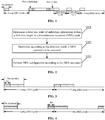
- T0 denotes a first time length. Only when a WUS/WUP is detected within T0 can PDCCH detections be performed in on durations. Otherwise, a dormancy state is continuously maintained. It is to be noted that the first time length may be less than or equal to the time length of an on duration.
- a configuration cycle of the first indication information such as the wake up signal and/or the wake up channel is the same as the DRX cycle. That is, a time interval between same reference times of every two T0s is the same as a time interval between same reference times of every two DRX cycles.
- the configuration cycle of the first indication information may be greater than or less than the DRX cycle, which may be flexibly set according to specific application scenarios.
- some parameters of the DRX configuration such as a cycle and an offset, may be shared, and only some parameters need to be additionally configured.
- the first time length may include at least one of: a time length required for transmitting the first indication information, a time length required for switching from the dormancy state to the wake up state, or a response feedback time length of the first indication information.
- the DRX wake up state operation of the on duration includes at least one of the following: maintaining the dormancy state in an on duration of subsequent at least one DRX cycle, or performing PDCCH detections in an on duration of subsequent at least one DRX cycle.
- the first time length is set in the off duration of the DRX cycle.
- the length of the first time length is configured through high layer signaling.
- the first time length is less than or equal to the time length of the off duration.
- the first indication information includes wake up state indication information for indicating a switch to the wake up state, which may be, for example, a wake up signal and/or a wake up channel.
- the step in which the DRX operation to be executed is determined according to the detection result includes that: when the detection result is that the wake up signal and/or the wake up channel is detected, it is determined that the DRX operation to be executed is performing PDCCH detections of the on duration of the subsequent at least one DRX cycle; and when the detection result is that the wake up signal and/or the wake up channel is not detected, it is determined that the DRX operation to be executed is continuing maintaining the dormancy state in the on duration of the subsequent at least one DRX cycle.
- a DRX cycle in FIG. 4 is a long DRX cycle, where T0 denotes a first time length.
- a configuration cycle of the first indication information may be the same as the DRX cycle, and a starting time of the first time length where the first indication information is located may be determined according to a preset offset value.
- the offset value may be determined as a length difference between the DRX cycle and the first time length. That is, an end time of the first time length is the same as a starting time of the next DRX cycle.
- a certain time interval may be set between the end time of the first time length and the starting time of the next DRX cycle.
- the first indication information may be configured independently of the DRX cycle. That is, T0 and the DRX cycle are two sets of configurations independent of each other. Different from that in FIG. 4 , in this embodiment, there is a certain time interval between an end time of T0 and the starting time of the next DRX cycle, and in the case where the configuration cycle of the first indication information is less than the DRX cycle, there may be multiple T0s in one DRX cycle, thereby increasing setting density of T0s.
- each WUS/WUP transmitted in T0 corresponds to a wake up of a respective DRX cycle.
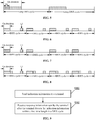
- each WUS/WUP may correspond to wake ups of subsequent N DRX cycles, i.e., indicating whether a terminal needs to perform PDCCH detections in on durations of subsequent X DRX cycles, where X is a preset value or a configured value or a dynamically indicated value.
- X shown in FIG. 5 is 2.
- the starting time of the first time length and the end time of the first time length are located in different DRX cycles. That is, the first time length for indicating information is in both an off duration of the current DRX cycle and an on duration of the next DRX cycle. Thus, the starting time of the first time length is in the off duration of the current DRX cycle, then the first time length lasts to the on duration of the next DRX cycle, and the end time of the first time length is set in the on duration of the next DRX cycle.
- the length of the first time length is configured through high layer signaling. In this case, the first indication information has the wake up state indication information.
- the step in which the DRX operation to be executed is determined according to the detection result includes that: when the detection result is that the first indication information such as a wake up signal and/or a wake up channel is detected in a discontinuous detection duration of the current DRX cycle, it is determined that the DRX operation to be executed is performing PDCCH detections in an on duration of subsequent at least one DRX cycle; and when the detection result is that the wake up signal and/or the wake up channel is not detected, it is determined that the DRX operation to be executed is continuing maintaining the dormancy state in the on duration of the subsequent at least one DRX cycle.
- the DRX operation to be executed is performing PDCCH detections in an on duration of subsequent at least one DRX cycle; and when the detection result is that the wake up signal and/or the wake up channel is not detected, it is determined that the DRX operation to be executed is continuing maintaining the dormancy state in the on duration of the subsequent at least one DRX cycle.
- the first time length is set in the off duration of the DRX cycle.
- the first time length is less than or equal to the time length of the off duration.
- Second indication information includes dormancy state indication information used for instructing the terminal to switch to the dormancy state, which may be, for example, L1 signaling including an L1 signal and/or an L1 channel.
- the step in which the DRX operation to be executed is determined according to the detection result includes that: when the detection result is that the L1 signaling instructing the terminal to switch to the dormancy state is detected, it is determined that the DRX operation to be executed is continuing maintaining the dormancy state in the on duration of the subsequent at least one DRX cycle; and when the detection result is that the L1 signaling is not detected, it is determined that the DRX operation to be executed is performing the PDCCH detections in the on duration of the subsequent at least one DRX cycle.
- a DRX cycle in FIG. 6 is a long DRX cycle, where the position indicated by L1 denotes a first time length.
- FIG. 6 illustrates the case where the detection time length of the L1 signaling is equal to the DRX cycle.
- different offset values are configured for the detection time length, or the values of a gap with respect to a starting time of the next DRX cycle is configured for the detection time length.
- the gap value is greater than or equal to 0.
- a detection time length of L1 signaling may be set to be greater than a DRX cycle; and as shown in FIG. 8 , a detection time length of L1 signaling may be set to be less than a DRX cycle.
- the DRX operation to be executed is determined according to the last detection result.
- two first time lengths are configured in each DRX cycle.
- a DRX operation is determined according to the detection result of the previous time length where the second indication information is detected.
- the DRX operation is determined according to the detection result of the later time length.
- the indication information further includes length indication information of the on duration
- the DRX wake up state operation of the on duration further includes a length indication strategy of the on duration.
- the indication information may further indicate the length of the on duration.
- the WUS/WUP or the L1 signal and/or channel having a function of indicating a wake up indicates a wake up time length or a wake up timer threshold.
- the time length of the wake up state may be determined according to the wake up time length indicated by the WUS/WUP or the L1 signal and/or the L1 channel having the function of indicating a wake up, or according to expiring of a wake up timer indicated by the WUS/WUP or the L1 signal and/or the L1 channel having the function of indicating a wake up.
- the terminal restarts the wake up timer after successfully detecting a dedicated PDCCH. That is, an activity timer previously configured is replaced with the wake up timer or the newly indicated wake up time length.
- the WUS/WUP further indicates a band width part (BWP) switch/slot format indication (SFI) and other information.
- BWP band width part
- SFI switch/slot format indication
- the method further includes: determining, according to the detection result, whether the indication information is not received within the first time length; if the indication information is not received, setting the second time length as a missed detection compensation time length in the DRX cycle; and performing indication information detections again within the second time length.
- the base station sends indication information within the first time length, but an ACK/NACK response feedback of the terminal is not received, or an ACK/NACK response feedback of a subsequent scheduled physical downlink shared channel (PDSCH) is not received, then the base station sends, at preset/configured cyclic positions in the DRX cycle of the terminal, again the indication information instructing the terminal to switch to the wake up state, so as to avoid ambiguous understanding between the terminal and the base station.
- the terminal does not receive the indication information within the first time length, then the terminal tries to receive the indication information again on a preset/configured cycle in the DRX cycle. Further, if the terminal detects the indication information within the first time length or detects the indication information again in the DRX cycle, it is not necessary to continue detecting the indication information in the DRX cycle.
- the method further includes: if the indication information is detected within the second time length, adjusting a starting time of the on duration to a time when the indication information is detected within the second time length.
- the DRX wake up state is optimized, so that when there are no traffic transmission requirements, the terminal does not need to wake up in each DRX cycle and perform PDCCH blind detections, thereby improving the dormancy effect of the terminal and ensuring the terminal to operate with low energy consumption.
- the DRX dormancy state operation of the off duration includes at least one of the following: performing PDCCH detections in an off duration of the current DRX cycle or off durations of M DRX cycles after the current DRX cycle, or continuing maintaining the dormancy state in an off duration of the current DRX cycle or off durations of M DRX cycles after the current DRX cycle, where M is an integer greater than or equal to 1.
- a detection result of indication information is determined within the first time length having a preset length and set in the off duration of the DRX cycle.
- the length of the first time length is configured through high layer signaling.
- the first time length is less than or equal to the time length of the off duration.
- the first indication information includes wake up state indication information.
- the DRX operation to be executed is performing the PDCCH detections in the off duration of the current DRX cycle or the off durations of the M DRX cycles after the current DRX; and when the detection result is that the first indication information is not detected, it is determined that the DRX operation to be executed is continuing maintaining the dormancy state in the off duration of the current DRX cycle or the off durations of the M DRX cycles after the current DRX cycle.
- An implementation is independently configuring a WUS/WUP cycle of WUS/WUP detections in only a DRX off duration.
- the off duration once a WUS/WUP is detected at WUS/WUP cyclic times, the terminal continues performing PDCCH blind detections, and the performing time length may be a threshold of a DRX on duration timer.
- the WUS/WUP cycle of the WUS/WUP detections in only the DRX off duration is independently configured.
- the WUS/WUP cycle is configured as same as the DRX cycle and only at a starting position of the DRX off duration.
- Another implementation is that in the DRX off duration, once L1 signaling having the wake up state indication information is detected at cyclic times of the L1 signaling, the terminal continues performing PDCCH blind detections, and the performing time length is the threshold of the DRX on duration timer.
- the DRX dormancy state is optimized so that the terminal has a wake up opportunity in the DRX dormancy state, thus implementing a compromise between low latency-high reliability and dormancy.
- a detection result of third indication information is determined within the first time length having a preset length and set in the on duration of the DRX cycle.
- the length of the first time length is configured by high layer signaling.
- the first time length is less than or equal to the time length of the on duration.
- the third indication information includes both dormancy state indication information and wake up state indication information.
- the third indication information may be L1 signaling that has a bidirectional state switch indication function and may be used for indicating both a switch to the dormancy state and a switch to the wake up state.
- the DRX operation to be executed is continuing maintaining the dormancy state in an on duration of the current DRX cycle or on durations of multiple DRX cycles after the current DRX cycle.
- the terminal In the on duration, once the L1 signaling indicating the switch to the dormancy state is detected at the cyclic times of the L1 signaling, the terminal enters the dormancy state or enters a deep dormancy state (the deep dormancy state is retaining only the ability to detect the L1 signaling).
- the L1 signaling may indicate a switch to the dormancy state after a time interval of T.
- the value of T may be preset or one of multiple values configured for radio resource control (RRC).
- a detection result of fourth indication information within the first time length having a preset length and set in the on duration of the DRX cycle is determined.
- the first time length is less than or equal to the time length of the on duration.
- the fourth indication information includes adding wake up state indication information to physical downlink control information that schedules downlink control information (DCI) of unicast traffic.
- DCI downlink control information
- the fourth indication information may indicate, by introducing 1 bit into the DCI that schedules the unicast traffic, that there is no need to receive and detect subsequent PDCCHs.
- a switch is performed from the on duration to the off duration.
- the optimization of dynamic switching from the DRX wake up state to the DRX dormancy state is supported, so that the terminal can switch to the DRX dormancy state by merely receiving and detecting the L1 signaling, thus implementing dormancy more flexibly.
- a priority rule includes at least one of the modes described below.
- Mode 1 In the case where both the wake up signal (WUS) and the DRX are configured: if a BWP where the WUS is located cannot support PDCCH transmission, then when the WUS has a higher priority, the DRX enters the dormancy state and still allows a wake up through the WUS; and when the DRX has a higher priority, the BWP where a WUS monitoring period is located cannot support PDCCH transmission, the DRX cannot be woken up and performed in cycles, or a switch to a default BWP is performed for DRX wake up state PDCCH detections, and in the DRX dormancy state, the terminal cannot wake up through the WUS.
- the BWP where the WUS is located may support PDCCH transmission, then when the WUS has a higher priority, the DRX enters the dormancy state and still allows a wake up by the WUS; and when the DRX has a higher priority, during the WUS detection period in which the WUS is not detected, PDCCH detections may still be woken up and performed in a period of the DRX wake up state, and the terminal cannot be woken up through the WUS in a period of the DRX dormancy state.
- Mode 2 In the case where both the wake up channel (WUP) and the DRX are configured: when the WUP has a higher priority, the DRX enters the dormancy state and still allows a wake up through the WUP; and when the DRX has a higher priority, in a WUP detection period without detecting the WUP, a DRX wake up may still be performed to detect PDCCHs, and the terminal cannot be woken up through the WUP in a period of the DRX dormancy state.
- Mode 3 In the case where both the WUS/WUP and the DRX are configured: if a BWP where the WUS is located cannot support PDCCH transmission, then when the WUS/WUP has a higher priority, the DRX enters the dormancy state and still allows a wake up through the WUS/WUP; and when the DRX has a higher priority, during a WUP detection period in which the WUP is not detected, a DRX wake up may still be performed to detect PDCCHs, the terminal cannot be woken up through the WUP in a period of the DRX dormancy state, a BWP where a WUS monitoring period is located cannot support PDCCH transmission, and the DRX cannot be woken up and performed in cycles, or a switch to a default BWP is performed for DRX wake up state PDCCH detections, and the terminal cannot be woken up through the WUS in the period of the DRX dormancy state.
- the BWP where the WUS is located may support PDCCH transmission, then when the WUS/WUP has a higher priority, the DRX enters the dormancy state and still allows a wake up through the WUS/WUP; and when the DRX has a higher priority, during the WUS/WUP detection period in which the WUS/WUP is not detected, the terminal may be woken up and perform PDCCH detections in a period of the DRX wake up state, and the terminal cannot be woken up through the WUS during the period of the DRX dormancy state.
- the priorities of different dormancy mechanisms are determined to avoid ambiguous understanding between the terminal and the base station, thereby ensuring the coexistence of different dormancy mechanisms.
- a detection of indication information within a first time length in a DRX cycle is determined, where the DRX cycle includes an on duration and an off duration; a DRX operation to be executed is determined according to the detection result; and DRX configuration is performed according to the DRX operation.
- DRX is configured by detecting the indication information, thereby optimizing the DRX performance.
- This embodiment provides a reception control method.
- FIG. 9 it shows a flowchart of a reception control method.
- step S901 indication information is sent to a terminal, where sending situation of the indication information is used for instructing the terminal to determine a DRX operation.
- step S902 response information sent by the terminal after the terminal detects the indication information within a first time length in a DRX cycle is received, where the DRX cycle includes an on duration and an off duration.
- a base station sends the indication information to the terminal.
- a wake up signal and/or a wake up channel (PDCCH) (WUS/WUP) may be used to indicate a switch to a wake up state.
- L1 signaling includes an L1 signal and/or channel and has at least the function of indicating a switch to a dormancy state (go to sleep).
- the terminal After the terminal receives the indication information within the first time length set in the DRX cycle, the corresponding DRX operation is determined according to the indication information, and then, the terminal returns the corresponding response information to the base station.
- the base station makes a corresponding PDCCH transmission strategy and decides whether or when to send, in the on duration of the terminal, a PDCCH that schedules unicast traffic of the terminal.
- the method further includes: if the response information from the terminal is not received, continuing sending indication information to the terminal within a second time length in the DRX cycle of the terminal.
- the base station if the base station sends the indication information within the first time length, but an ACK/NACK response feedback of the terminal is not received, or an ACK/NACK response feedback of a subsequently scheduled physical downlink shared channel (PDSCH) is not received, then the base station sends, at preset/configured cyclic positions in the DRX cycle of the terminal, a WUS/WUP again to avoid ambiguous understanding between the terminal and the base station.
- the terminal does not receive the indication information within the first time length, the terminal tries to receive the indication information again on a preset/configured cycle in the DRX cycle.
- the base station in the case of introducing the indication information, sends the indication information to the terminal to control the terminal to configure DRX according to the indication information, and the DRX wake up state of the terminal is optimized, so that when there are no traffic transmission requirements, the terminal does not need to wake up in each DRX cycle and perform PDCCH blind detections, thereby improving the dormancy effect of the terminal and ensuring the terminal to operate with low energy consumption.
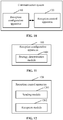
- FIG. 10 is a structure diagram of a communication system according to this embodiment.
- the communication system includes a reception configuration apparatus 110 and a reception control apparatus 120.
- the reception configuration apparatus 110 and the reception control apparatus 120 are used for indication information interaction and PDCCH scheduling and detections.
- FIG. 11 is a structure diagram of a reception configuration apparatus 110 according to this embodiment.
- the reception configuration apparatus 110 is applied to a terminal and includes a strategy determination module 1101.
- the strategy determination module 110 is configured to determine a detection result of indication information within a first time length in a DRX cycle, and determine the DRX operation according to the detection result.
- the DRX cycle includes an on duration and an off duration.
- the indication information includes a state switch channel or a state switch signal.
- the state switch channel or the state switch signal is a unidirectional state switch channel or a unidirectional state switch signal, where one form may be a wake up signal and/or a wake up channel (PDCCH) (WUS/WUP)
- the state switch channel or the state switch signal may be used for indicating a switch to a wake up state.
- the state switch channel or the state switch signal is a unidirectional/bidirectional state switch channel or a unidirectional/bidirectional state switch signal, where one form may be L1 signaling including an L1 signal and/or an L1 channel
- the state switch channel or the state switch signal has at least the function of indicating a switch to a dormancy state (go to sleep).
- the DRX cycle is composed of the on duration and the off duration.
- the first time length is a detection time length of the indication information. The first time length may be selectively set in any one of the on duration or the off duration of the DRX cycle, or may be set in both the on duration and the off duration. Additionally, it is to be understood that in this embodiment, the detection result of the indication information is used for indicating whether the terminal receives the indication information.
- the DRX operation includes at least one of: a DRX wake up state operation of the on duration, a DRX dormancy state operation of the off duration, or an operation of dynamically switching from a DRX wake up state to a DRX dormancy state.
- the DRX wake up state operation of the on duration includes: performing PDCCH detections in an on duration of the current DRX cycle or on durations of N DRX cycles after the current DRX cycle, and/or continuing maintaining the dormancy state in an on duration of the current DRX cycle or on durations of N DRX cycles after the current DRX cycle, where N is an integer greater than or equal to 1.
- the first time length is set in the on duration of the DRX cycle.
- the length of the first time length is configured through high layer signaling.
- a starting time of the first time length is the same as a starting time of the DRX cycle.
- First indication information includes wake up state indication information used for indicating a switch to the wake up state, which may be a wake up signal and/or a wake up channel.
- the strategy determination module 110 determines that the DRX operation to be executed is performing the PDCCH detections in the on duration of the current DRX cycle or the on durations of the N DRX cycles after the current DRX; and when the detection result is that the wake up signal and/or the wake up channel is not detected, the strategy determination module 1101 determines that the DRX operation to be executed is continuing maintaining the dormancy state in the on duration of the current DRX cycle or the on durations of the N DRX cycles after the current DRX cycles.
- a configuration cycle of the first indication information is the same as the DRX cycle.
- the configuration cycle of the first indication information may be greater than or less than the DRX cycle, which may be flexibly set according to specific application scenarios.
- some parameters of the DRX configuration such as a cycle and an offset, may be shared, and only some parameters need to be additionally configured.
- the first time length may include at least one of: a time length required for transmitting the first indication information, a time length required for switching from the dormancy state to the wake up state, or a response feedback time length of the first indication information.
- the DRX wake up state operation of the on duration includes at least one of the following: maintaining the dormancy state in an on duration of subsequent at least one DRX cycle, or performing PDCCH detections in an on duration of subsequent at least one DRX cycle.
- the first time length is set in the off duration of the DRX cycle.
- the length of the first time length is configured through high layer signaling.
- the first time length is less than or equal to the time length of the off duration.
- the first indication information includes wake up state indication information used for instructing the terminal to switch to the wake up state, which may be, for example, a wake up signal and/or a wake up channel.
- the strategy determination module 1101 determines that the DRX operation to be executed is performing the PDCCH detections in the on duration of the subsequent at least one DRX cycle; and when the detection result is that the wake up signal and/or the wake up channel is not detected, the strategy determination module 1101 determines that the DRX operation to be executed is continuing maintaining the dormancy state in the on duration of the subsequent at least one DRX cycle.
- the wake up signal and/or the wake up channel cycle may be configured independently of the DRX cycle. That is, T0 and the DRX cycle are two sets of configurations independent of each other.
- the first time length is set in the off duration of the DRX cycle.
- the first time length is less than or equal to the time length of the off duration.
- Second indication information includes dormancy state indication information used for instructing the terminal to switch to the dormancy state, which may be, for example, L1 signaling including an L1 signal and/or an L1 channel.
- the strategy determination module 1101 determines that the DRX operation to be executed is continuing maintaining the dormancy state in the on duration of the subsequent at least one DRX cycle; and when the detection result is that the L1 signaling is not detected, the strategy determination module 1101 determines that the DRX operation to be executed is performing the PDCCH detections in the on duration of the subsequent at least one DRX cycle.
- the strategy determination module 1101 determines, according to the last detection result, the DRX operation to be executed.
- the indication information further includes length indication information of the on duration
- the DRX wake up state operation of the on duration further includes a length indication strategy of the on duration.
- the indication information may further indicate the length of the on duration.
- the WUS/WUP or the L1 signal and/or the L1 channel having a function of indicating a wake up indicates a wake up time length or a wake up timer threshold.
- the time length of the wake up state may be determined according to the wake up time length indicated by the WUS/WUP or the L1 signal and/or the L1 channel having the function of indicating a wake up, or according to expiring of a wake up timer indicated by the WUS/WUP or the L1 signal and/or the L1 channel having the function of indicating a wake up.
- the terminal restarts the wake up timer after successfully detecting a dedicated PDCCH. That is, an activity timer previously configured is replaced with the wake up timer or the newly indicated wake up time length.
- the WUS/WUP further indicates a BWP switch/SFI and other information.
- the apparatus further includes a missed detection compensation module.
- the missed detection compensation module is configured to determine whether the indication information is not received within the first time length according to the detection result; if the indication information is not received, set a second time length as a missed detection compensation time length in the DRX cycle; and perform indication information detection again within the second time length.
- the apparatus further includes an on-duration adjustment module.
- the on-duration adjustment module is configured to adjust, when the indication information is detected within the second time length, a starting time of the on duration to a time when the indication information is detected within the second time length.
- the DRX wake up state is optimized, so that when there are no traffic transmission requirements, the terminal does not need to wake up in each DRX cycle and perform PDCCH blind detections, thereby improving the dormancy effect of the terminal and ensuring the terminal to operate with low energy consumption.
- the DRX dormancy state operation of the off duration includes at least one of the following: performing PDCCH detections in an off duration of the current DRX cycle or off durations of M DRX cycles after the current DRX cycle, and/or continuing maintaining the dormancy state in an off duration of the current DRX cycle or off durations of M DRX cycles after the current DRX cycle, where M is an integer greater than or equal to 1.
- the strategy determination module 1101 determines a detection result of indication information within the first time length having a preset length and set in the off duration of the DRX cycle.
- the length of the first time length is configured through high layer signaling.
- the first time length is less than or equal to the time length of the off duration.
- the first indication information includes the wake up state indication information.
- the strategy determination module 1101 determines that the DRX operation to be executed is performing the PDCCH detections in the off duration of the current DRX cycle or the off durations of the M DRX cycles after the current DRX; and when the detection result is that the first indication information is not detected, the strategy determination module 1101 determines that the DRX operation to be executed is to continuing maintaining the dormancy state in the off duration in the current DRX cycle or the off durations of the M DRX cycles after the current DRX cycle.
- the DRX dormancy state is optimized so that the terminal has a wake up opportunity in the DRX dormancy state, thereby implementing a compromise between low latency-high reliability and dormancy.
- the strategy determination module 1101 determines a detection result of indication information within the first time length having a preset length and set in the on duration of the DRX cycle.
- the length of the first time length is configured by high layer signaling.
- the first time length is less than or equal to the time length of the on duration.
- Third indication information includes both dormancy state indication information and wake up state indication information.
- the third indication information may be L1 signaling that has a bidirectional state switch indication function and may be used for indicating both a switch to the dormancy state and a switch to the wake up state.
- the strategy determination module 1101 determines that the DRX operation to be executed is continuing maintaining the dormancy state in an on duration of the current DRX cycle or on durations of multiple DRX cycles after the current DRX cycle.
- the strategy determination module 1101 determines a detection result of indication information within the first time length having a preset length and set in the on duration of the DRX cycle.
- the first time length is less than or equal to the time length of the on duration.
- Fourth indication information includes adding wake up state indication information to physical downlink control information that schedules downlink control information (DCI) of unicast traffic.
- DCI downlink control information
- the strategy determination module 1101 determines that the DRX operation to be executed is continuing maintaining the dormancy state in an on duration of the current DRX cycle or on durations of multiple DRX cycles after the DRX cycle.
- the optimization of dynamic switching from the DRX wake up state to the DRX dormancy state is supported so that the terminal can switch to the DRX dormancy state by merely receiving and detecting the L1 signaling, thereby implementing dormancy more flexibly.
- FIG. 12 is a structure diagram of a reception control apparatus 120 according to this embodiment.
- the reception control apparatus 120 is applied to a base station and includes a sending module 1201 and a reception module 1202.
- the sending module 1201 is configured to send indication information to a terminal, where sending situation of the indication information is used for instructing the terminal to determine a DRX operation.
- the reception module 1202 is configured to receive response information sent by the terminal after the terminal detects the indication information within a first time length in a DRX cycle.
- the DRX cycle includes an on duration and an off duration.
- the sending module 1201 sends the indication information to the terminal.
- a wake up signal and/or a wake up channel (PDCCH) (WUS/WUP) may be used for indicating a switch to a wake up state.
- L1 signaling includes an L1 signal and/or an L1 channel and has at least the function of indicating a switch to a dormancy state (go to sleep).
- the terminal After the terminal receives the indication information within the first time length set in the DRX cycle, the corresponding DRX operation is determined according to the indication information, and then, the terminal returns the corresponding response information to the reception module 1202.
- the base station makes the corresponding PDCCH transmission strategy and decides whether or when to send, in the on duration of the terminal, a PDCCH that schedules unicast traffic of the terminal.
- the sending module 1201 is further configured to, if the response information from the terminal is not received, continue sending indication information to the terminal within a second time length in the DRX cycle of the terminal.
- the base station sends indication information to the terminal, and after detecting the indication information within the first time length in the DRX cycle, the terminal determines the DRX operation to be executed and performs DRX configuration according to the detection result; and when the base station receives response information fed back by the terminal according to the DRX operation, the base station determines a PDCCH sending strategy according to the response information.
- the DRX wake up state is optimized, so that when there are no traffic transmission requirements, the terminal does not need to wake up in each DRX cycle and perform PDCCH blind detections, thereby improving the dormancy effect of the terminal and ensuring that the terminal to operate with low energy consumption.
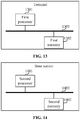
- FIG. 13 is a structure diagram of a terminal according to this embodiment.
- the terminal includes a first processor 1301, a first memory 1302 and a first communication bus 1303.
- the first communication bus 1303 is configured to implement connection and communication between the first processor 1301 and the first memory 1302.
- the first processor 1301 is configured to execute one or more computer programs stored in the first memory 1302, so as to perform the processes of the reception configuration methods of the various embodiments of the present disclosure, which are not repeated here.
- FIG. 14 is a structure diagram of a terminal according to this embodiment.
- the terminal includes a second processor 1401, a second memory 1402 and a second communication bus 1403.
- the second communication bus 1403 is configured to implement connection and communication between the second processor 1401 and the second memory 1402.
- the second processor 1401 is configured to execute one or more computer programs stored in the second memory 1402, so as to perform the processes of the reception control methods of the various embodiments of the present disclosure, which are not repeated here.
- This embodiment provides a computer-readable storage medium.
- the computer-readable storage medium stores one or more computer programs executable by one or more processors to perform the reception configuration methods of the various embodiments above, or the reception control methods of the various embodiments above, which are not repeated here.
- each of the modules or steps in the embodiments of the present disclosure above may be implemented by a general-purpose computing apparatus, the modules or steps may be concentrated on a single computing apparatus or distributed on a network composed of multiple computing apparatuses, and optionally, the modules or steps may be implemented by program codes executable by the computing apparatuses, so that the modules or steps may be stored in a computer storage medium (such as a read-only memory (ROM)/random access memory (RAM), a magnetic disk or an optical disk) and executed by the computing apparatuses.
- ROM read-only memory
- RAM random access memory
- the illustrated or described steps may be executed in sequences different from those described herein, or the modules or steps are made into various integrated circuit modules separately, or multiple modules or steps therein are made into a single integrated circuit module for implementation. Therefore, the present application is not limited to any particular combination of hardware and software.
Landscapes
- Engineering & Computer Science (AREA)
- Computer Networks & Wireless Communication (AREA)
- Signal Processing (AREA)
- Mobile Radio Communication Systems (AREA)
- Telephone Function (AREA)
Applications Claiming Priority (2)
| Application Number | Priority Date | Filing Date | Title |
|---|---|---|---|
| CN201810912159.9A CN110536381B (zh) | 2018-08-10 | 2018-08-10 | 接收配置和控制方法、装置、终端、基站及存储介质 |
| PCT/CN2019/100183 WO2020030175A1 (zh) | 2018-08-10 | 2019-08-12 | 接收配置和控制方法、装置、终端、基站及存储介质 |
Publications (3)
| Publication Number | Publication Date |
|---|---|
| EP3836636A1 true EP3836636A1 (de) | 2021-06-16 |
| EP3836636A4 EP3836636A4 (de) | 2022-04-13 |
| EP3836636B1 EP3836636B1 (de) | 2025-08-13 |
Family
ID=68657461
Family Applications (1)
| Application Number | Title | Priority Date | Filing Date |
|---|---|---|---|
| EP19846904.1A Active EP3836636B1 (de) | 2018-08-10 | 2019-08-12 | Empfangskonfigurationsverfahren, empfangssteuerungsverfahren, endgerät, basisstation und speichermedien |
Country Status (6)
| Country | Link |
|---|---|
| US (1) | US12048047B2 (de) |
| EP (1) | EP3836636B1 (de) |
| KR (1) | KR102650292B1 (de) |
| CN (1) | CN110536381B (de) |
| FI (1) | FI3836636T3 (de) |
| WO (1) | WO2020030175A1 (de) |
Families Citing this family (20)
| Publication number | Priority date | Publication date | Assignee | Title |
|---|---|---|---|---|
| EP3840482A4 (de) | 2018-08-13 | 2021-09-01 | Beijing Xiaomi Mobile Software Co., Ltd. | Aufweckverfahren, aufweckvorrichtung, elektronische vorrichtung und computerlesbares speichermedium |
| CN112740764B (zh) * | 2018-09-17 | 2025-04-25 | 苹果公司 | 用于功率节省的信令的系统、方法和设备 |
| CN111436098A (zh) * | 2019-01-11 | 2020-07-21 | 华为技术有限公司 | 通信方法及装置 |
| US12010723B2 (en) * | 2019-07-26 | 2024-06-11 | Sony Group Corporation | Network configuration for monitoring an open spectrum |
| CN113163516B (zh) * | 2020-01-22 | 2024-02-09 | 大唐移动通信设备有限公司 | 信号传输方法及装置 |
| CN113162726B (zh) * | 2020-01-23 | 2023-03-21 | 维沃移动通信有限公司 | Pdcch的检测方法及终端 |
| US20230189145A1 (en) * | 2020-04-28 | 2023-06-15 | Beijing Xiaomi Mobile Software Co., Ltd. | Information processing method, communication device and storage medium |
| US20230239796A1 (en) * | 2020-07-24 | 2023-07-27 | Beijing Xiaomi Mobile Software Co., Ltd. | Wake up signal processing method and apparatus |
| WO2022021033A1 (zh) * | 2020-07-27 | 2022-02-03 | 北京小米移动软件有限公司 | 信息处理方法、装置、通信设备及存储介质 |
| CN114071793B (zh) * | 2020-08-05 | 2023-10-27 | 维沃移动通信有限公司 | 处理方法及装置 |
| US11985597B2 (en) * | 2021-08-05 | 2024-05-14 | Qualcomm Incorporated | Techniques for aperiodic discontinuous reception mode communications |
| US12041000B2 (en) | 2021-08-05 | 2024-07-16 | Qualcomm Incorporated | Techniques for communicating data channel transmissions |
| CN115915346A (zh) * | 2021-08-13 | 2023-04-04 | 华为技术有限公司 | 一种通信方法和设备 |
| CN118303085A (zh) * | 2021-11-30 | 2024-07-05 | Oppo广东移动通信有限公司 | 通信方法及通信装置 |
| JP2025509723A (ja) * | 2022-03-16 | 2025-04-11 | 日本電気株式会社 | 通信の方法 |
| US20250280465A1 (en) * | 2022-04-28 | 2025-09-04 | Lg Electronics Inc. | Wireless signal transmission/reception method and device in wireless communication system |
| CN115175284B (zh) * | 2022-07-04 | 2025-07-22 | Oppo广东移动通信有限公司 | 信号接收方法、装置、终端、芯片、存储介质及程序产品 |
| KR20240019621A (ko) * | 2022-08-04 | 2024-02-14 | 삼성전자주식회사 | 무선 통신 시스템에서 웨이크업 수신기를 가진 단말의 파워 소모를 감소시키는 방법 및 장치 |
| WO2025005708A1 (ko) * | 2023-06-30 | 2025-01-02 | 주식회사 케이티 | 저전력 웨이크업 수신기를 이용하여 무선 통신을 수행하는 방법 및 장치 |
| CN119997158A (zh) * | 2023-11-10 | 2025-05-13 | 中兴通讯股份有限公司 | 一种省电方法、电子设备及存储介质 |
Family Cites Families (29)
| Publication number | Priority date | Publication date | Assignee | Title |
|---|---|---|---|---|
| US8107987B2 (en) | 2007-02-14 | 2012-01-31 | Qualcomm Incorporated | Apparatus and method for uplink power control of wireless communications |
| CN102655668A (zh) * | 2011-03-02 | 2012-09-05 | 中兴通讯股份有限公司 | 非连续接收方法及装置 |
| US8923178B2 (en) | 2011-04-29 | 2014-12-30 | Blackberry Limited | Managing group messages for LTE wakeup |
| CN102256321A (zh) * | 2011-07-14 | 2011-11-23 | 新邮通信设备有限公司 | 控制非连续接收下终端小区切换的方法和系统 |
| CN102932884B (zh) | 2011-08-12 | 2019-08-13 | 中兴通讯股份有限公司 | 一种实现drx的方法和系统 |
| US9369960B2 (en) | 2011-09-08 | 2016-06-14 | Lg Electronics Inc. | Method for operation based on switching discontinuous reception state in wireless communication system and apparatus for the same |
| EP2621242A1 (de) * | 2012-01-26 | 2013-07-31 | Panasonic Corporation | Verbesserter diskontinuierlicher Empfangsbetrieb mit zusätzlichen Aufweckgelegenheiten |
| CN103582087B (zh) * | 2012-07-20 | 2017-05-31 | 华为终端有限公司 | 非连续接收参数配置方法、数据发送方法及设备 |
| WO2014069946A1 (en) | 2012-11-01 | 2014-05-08 | Lg Electronics Inc. | Method and apparatus for supporting scheduling groups of devices characteristics in a wireless communication system |
| CN103906123B (zh) * | 2012-12-28 | 2018-08-21 | 展讯通信(上海)有限公司 | 终端测量调度方法和装置 |
| CN104219740B (zh) | 2013-05-31 | 2018-06-26 | 华为技术有限公司 | 激活状态处理方法及装置 |
| US10602442B2 (en) | 2013-06-28 | 2020-03-24 | Telefonaktiebolaget Lm Ericsson (Publ) | Method for managing a user equipment device |
| CN104602328A (zh) | 2013-10-31 | 2015-05-06 | 电信科学技术研究院 | 一种配置drx和监听控制信道的方法、系统及设备 |
| WO2015096166A1 (zh) | 2013-12-28 | 2015-07-02 | 华为技术有限公司 | 一种信号发送方法,信号检测方法和相关设备以及系统 |
| CN105101472B (zh) | 2014-05-08 | 2019-08-27 | 上海诺基亚贝尔股份有限公司 | 双连接系统中的drx协调机制 |
| US10499451B2 (en) * | 2014-06-13 | 2019-12-03 | Apple Inc. | Adaptive C-DRX management |
| US9872252B1 (en) * | 2016-09-30 | 2018-01-16 | Qualcomm Incorporated | Discontinuous reception mode with multiple-stage wake-up |
| WO2016072787A1 (en) * | 2014-11-06 | 2016-05-12 | Samsung Electronics Co., Ltd. | Method and system for enabling discontinuous reception (drx) over an unlicensed band in cellular networks |
| CN106465268B (zh) * | 2015-01-23 | 2019-09-27 | 华为技术有限公司 | 一种用户设备省电方法及设备 |
| EP3257321B1 (de) | 2015-03-13 | 2020-01-08 | Huawei Technologies Co., Ltd. | Vorrichtung und verfahren in einem drahtloskommunikationsnetzwerk für diskontinuierlichen empfang und datenempfang |
| CN104812032B (zh) | 2015-04-10 | 2018-09-07 | 宇龙计算机通信科技(深圳)有限公司 | 一种在非授权频段应用drx的方法及装置 |
| CN108307547A (zh) * | 2016-09-30 | 2018-07-20 | 中兴通讯股份有限公司 | 一种确定非连续接收配置信息的方法及装置 |
| CN108307406B (zh) * | 2016-09-30 | 2020-03-06 | 电信科学技术研究院 | 一种非连续接收的方法及相关装置 |
| WO2018066923A1 (en) | 2016-10-07 | 2018-04-12 | Lg Electronics Inc. | Method and apparatus for supporting energy saving mechanisms for nr in wireless communication system |
| WO2018129654A1 (zh) | 2017-01-10 | 2018-07-19 | 广东欧珀移动通信有限公司 | 用于确定非连续接收状态的方法、终端设备和网络设备 |
| US10856203B2 (en) | 2017-01-19 | 2020-12-01 | Qualcomm Incorporated | Signaling for link aggregation setup and reconfiguration |
| CN108235412B (zh) * | 2017-12-19 | 2021-09-10 | 中兴通讯股份有限公司 | 一种电能优化的方法、装置、系统及用户设备 |
| US11297674B2 (en) * | 2018-02-14 | 2022-04-05 | Samsung Electronics Co., Ltd. | Method and apparatus for power savings at a user equipment |
| AU2018418717A1 (en) * | 2018-04-11 | 2020-11-26 | Guangdong Oppo Mobile Telecommunications Corp., Ltd. | Method and device for transmitting power saving signal |
-
2018
- 2018-08-10 CN CN201810912159.9A patent/CN110536381B/zh active Active
-
2019
- 2019-08-12 WO PCT/CN2019/100183 patent/WO2020030175A1/zh not_active Ceased
- 2019-08-12 EP EP19846904.1A patent/EP3836636B1/de active Active
- 2019-08-12 FI FIEP19846904.1T patent/FI3836636T3/fi active
- 2019-08-12 US US17/266,865 patent/US12048047B2/en active Active
- 2019-08-12 KR KR1020217007328A patent/KR102650292B1/ko active Active
Also Published As
| Publication number | Publication date |
|---|---|
| KR20210057732A (ko) | 2021-05-21 |
| EP3836636A4 (de) | 2022-04-13 |
| EP3836636B1 (de) | 2025-08-13 |
| US20210298115A1 (en) | 2021-09-23 |
| CN110536381A (zh) | 2019-12-03 |
| US12048047B2 (en) | 2024-07-23 |
| CN110536381B (zh) | 2024-11-29 |
| KR102650292B1 (ko) | 2024-03-21 |
| FI3836636T3 (fi) | 2025-11-04 |
| WO2020030175A1 (zh) | 2020-02-13 |
Similar Documents
| Publication | Publication Date | Title |
|---|---|---|
| US12048047B2 (en) | Reception configuration method and apparatus, reception control method and apparatus, terminal, base station, and storage medium | |
| US11570713B2 (en) | Methods and apparatus relating to paging in a wireless communications network | |
| CN110913462B (zh) | 信道的监听、节能信号的处理、装置、终端及网络侧设备 | |
| US12356495B2 (en) | Method and apparatus for handling discontinuous reception in a communications network | |
| US12452874B2 (en) | Method for monitoring physical downlink control channel, user terminal and readable storage medium | |
| US20230208563A1 (en) | Discontinuous reception control method and apparatus, terminal, and readable storage medium | |
| US9414313B2 (en) | Discontinuous reception (DRX) for diverse traffic | |
| US11382060B2 (en) | Method and system for paging user equipment | |
| CN115066933B (zh) | 控制信道监控的方法 | |
| WO2021023076A1 (zh) | 一种通信方法及装置 | |
| US20230104198A1 (en) | Power saving pdcch monitoring techniques equipment | |
| US20260067819A1 (en) | Devices, methods and system for controlling low-power wake up signal monitoring | |
| CN114765837B (zh) | 省电处理方法、装置及设备 | |
| EP4404636A1 (de) | Übertragungsverfahren und -vorrichtung unter diskontinuierlichem empfang | |
| WO2025140173A1 (zh) | 由用户设备执行的方法以及用户设备 | |
| CN120188444A (zh) | 利用较低功率唤醒信号的上行链路同步 |
Legal Events
| Date | Code | Title | Description |
|---|---|---|---|
| STAA | Information on the status of an ep patent application or granted ep patent |
Free format text: STATUS: THE INTERNATIONAL PUBLICATION HAS BEEN MADE |
|
| PUAI | Public reference made under article 153(3) epc to a published international application that has entered the european phase |
Free format text: ORIGINAL CODE: 0009012 |
|
| STAA | Information on the status of an ep patent application or granted ep patent |
Free format text: STATUS: REQUEST FOR EXAMINATION WAS MADE |
|
| 17P | Request for examination filed |
Effective date: 20210310 |
|
| AK | Designated contracting states |
Kind code of ref document: A1 Designated state(s): AL AT BE BG CH CY CZ DE DK EE ES FI FR GB GR HR HU IE IS IT LI LT LU LV MC MK MT NL NO PL PT RO RS SE SI SK SM TR |
|
| DAV | Request for validation of the european patent (deleted) | ||
| DAX | Request for extension of the european patent (deleted) | ||
| A4 | Supplementary search report drawn up and despatched |
Effective date: 20220311 |
|
| RIC1 | Information provided on ipc code assigned before grant |
Ipc: H04W 76/28 20180101ALI20220305BHEP Ipc: H04W 52/02 20090101AFI20220305BHEP |
|
| STAA | Information on the status of an ep patent application or granted ep patent |
Free format text: STATUS: EXAMINATION IS IN PROGRESS |
|
| 17Q | First examination report despatched |
Effective date: 20231218 |
|
| GRAP | Despatch of communication of intention to grant a patent |
Free format text: ORIGINAL CODE: EPIDOSNIGR1 |
|
| STAA | Information on the status of an ep patent application or granted ep patent |
Free format text: STATUS: GRANT OF PATENT IS INTENDED |
|
| INTG | Intention to grant announced |
Effective date: 20250311 |
|
| GRAS | Grant fee paid |
Free format text: ORIGINAL CODE: EPIDOSNIGR3 |
|
| GRAA | (expected) grant |
Free format text: ORIGINAL CODE: 0009210 |
|
| STAA | Information on the status of an ep patent application or granted ep patent |
Free format text: STATUS: THE PATENT HAS BEEN GRANTED |
|
| AK | Designated contracting states |
Kind code of ref document: B1 Designated state(s): AL AT BE BG CH CY CZ DE DK EE ES FI FR GB GR HR HU IE IS IT LI LT LU LV MC MK MT NL NO PL PT RO RS SE SI SK SM TR |
|
| REG | Reference to a national code |
Ref country code: GB Ref legal event code: FG4D |
|
| REG | Reference to a national code |
Ref country code: CH Ref legal event code: EP |
|
| REG | Reference to a national code |
Ref country code: DE Ref legal event code: R096 Ref document number: 602019074175 Country of ref document: DE |
|
| REG | Reference to a national code |
Ref country code: IE Ref legal event code: FG4D |
|
| REG | Reference to a national code |
Ref country code: SE Ref legal event code: TRGR |
|
| REG | Reference to a national code |
Ref country code: NL Ref legal event code: FP |
|
| REG | Reference to a national code |
Ref country code: FI Ref legal event code: FGE |
|
| PG25 | Lapsed in a contracting state [announced via postgrant information from national office to epo] |
Ref country code: IS Free format text: LAPSE BECAUSE OF FAILURE TO SUBMIT A TRANSLATION OF THE DESCRIPTION OR TO PAY THE FEE WITHIN THE PRESCRIBED TIME-LIMIT Effective date: 20251213 |
|
| PG25 | Lapsed in a contracting state [announced via postgrant information from national office to epo] |
Ref country code: NO Free format text: LAPSE BECAUSE OF FAILURE TO SUBMIT A TRANSLATION OF THE DESCRIPTION OR TO PAY THE FEE WITHIN THE PRESCRIBED TIME-LIMIT Effective date: 20251113 |
|
| REG | Reference to a national code |
Ref country code: LT Ref legal event code: MG9D |
|
| PG25 | Lapsed in a contracting state [announced via postgrant information from national office to epo] |
Ref country code: PT Free format text: LAPSE BECAUSE OF FAILURE TO SUBMIT A TRANSLATION OF THE DESCRIPTION OR TO PAY THE FEE WITHIN THE PRESCRIBED TIME-LIMIT Effective date: 20251215 |
|
| PG25 | Lapsed in a contracting state [announced via postgrant information from national office to epo] |
Ref country code: HR Free format text: LAPSE BECAUSE OF FAILURE TO SUBMIT A TRANSLATION OF THE DESCRIPTION OR TO PAY THE FEE WITHIN THE PRESCRIBED TIME-LIMIT Effective date: 20250813 |
|
| PG25 | Lapsed in a contracting state [announced via postgrant information from national office to epo] |
Ref country code: GR Free format text: LAPSE BECAUSE OF FAILURE TO SUBMIT A TRANSLATION OF THE DESCRIPTION OR TO PAY THE FEE WITHIN THE PRESCRIBED TIME-LIMIT Effective date: 20251114 |
|
| PG25 | Lapsed in a contracting state [announced via postgrant information from national office to epo] |
Ref country code: LV Free format text: LAPSE BECAUSE OF FAILURE TO SUBMIT A TRANSLATION OF THE DESCRIPTION OR TO PAY THE FEE WITHIN THE PRESCRIBED TIME-LIMIT Effective date: 20250813 |
|
| PG25 | Lapsed in a contracting state [announced via postgrant information from national office to epo] |
Ref country code: BG Free format text: LAPSE BECAUSE OF FAILURE TO SUBMIT A TRANSLATION OF THE DESCRIPTION OR TO PAY THE FEE WITHIN THE PRESCRIBED TIME-LIMIT Effective date: 20250813 Ref country code: PL Free format text: LAPSE BECAUSE OF FAILURE TO SUBMIT A TRANSLATION OF THE DESCRIPTION OR TO PAY THE FEE WITHIN THE PRESCRIBED TIME-LIMIT Effective date: 20250813 |
|
| PG25 | Lapsed in a contracting state [announced via postgrant information from national office to epo] |
Ref country code: RS Free format text: LAPSE BECAUSE OF FAILURE TO SUBMIT A TRANSLATION OF THE DESCRIPTION OR TO PAY THE FEE WITHIN THE PRESCRIBED TIME-LIMIT Effective date: 20251113 |
|
| PG25 | Lapsed in a contracting state [announced via postgrant information from national office to epo] |
Ref country code: ES Free format text: LAPSE BECAUSE OF FAILURE TO SUBMIT A TRANSLATION OF THE DESCRIPTION OR TO PAY THE FEE WITHIN THE PRESCRIBED TIME-LIMIT Effective date: 20250813 |
|
| REG | Reference to a national code |
Ref country code: AT Ref legal event code: MK05 Ref document number: 1826128 Country of ref document: AT Kind code of ref document: T Effective date: 20250813 |