EP3834441B1 - Compressive sensing method and edge node of distributed computing networks - Google Patents
Compressive sensing method and edge node of distributed computing networks Download PDFInfo
- Publication number
- EP3834441B1 EP3834441B1 EP19748532.9A EP19748532A EP3834441B1 EP 3834441 B1 EP3834441 B1 EP 3834441B1 EP 19748532 A EP19748532 A EP 19748532A EP 3834441 B1 EP3834441 B1 EP 3834441B1
- Authority
- EP
- European Patent Office
- Prior art keywords
- data signal
- signal
- edge node
- compressed data
- distributed computing
- Prior art date
- Legal status (The legal status is an assumption and is not a legal conclusion. Google has not performed a legal analysis and makes no representation as to the accuracy of the status listed.)
- Active
Links
Images


Classifications
-
- H—ELECTRICITY
- H03—ELECTRONIC CIRCUITRY
- H03M—CODING; DECODING; CODE CONVERSION IN GENERAL
- H03M7/00—Conversion of a code where information is represented by a given sequence or number of digits to a code where the same, similar or subset of information is represented by a different sequence or number of digits
- H03M7/30—Compression; Expansion; Suppression of unnecessary data, e.g. redundancy reduction
- H03M7/3059—Digital compression and data reduction techniques where the original information is represented by a subset or similar information, e.g. lossy compression
- H03M7/3062—Compressive sampling or sensing
-
- H—ELECTRICITY
- H04—ELECTRIC COMMUNICATION TECHNIQUE
- H04W—WIRELESS COMMUNICATION NETWORKS
- H04W4/00—Services specially adapted for wireless communication networks; Facilities therefor
- H04W4/18—Information format or content conversion, e.g. adaptation by the network of the transmitted or received information for the purpose of wireless delivery to users or terminals
-
- G—PHYSICS
- G06—COMPUTING OR CALCULATING; COUNTING
- G06F—ELECTRIC DIGITAL DATA PROCESSING
- G06F7/00—Methods or arrangements for processing data by operating upon the order or content of the data handled
- G06F7/58—Random or pseudo-random number generators
- G06F7/588—Random number generators, i.e. based on natural stochastic processes
-
- H—ELECTRICITY
- H04—ELECTRIC COMMUNICATION TECHNIQUE
- H04L—TRANSMISSION OF DIGITAL INFORMATION, e.g. TELEGRAPHIC COMMUNICATION
- H04L67/00—Network arrangements or protocols for supporting network services or applications
- H04L67/01—Protocols
- H04L67/10—Protocols in which an application is distributed across nodes in the network
-
- H—ELECTRICITY
- H04—ELECTRIC COMMUNICATION TECHNIQUE
- H04Q—SELECTING
- H04Q9/00—Arrangements in telecontrol or telemetry systems for selectively calling a substation from a main station, in which substation desired apparatus is selected for applying a control signal thereto or for obtaining measured values therefrom
-
- H—ELECTRICITY
- H04—ELECTRIC COMMUNICATION TECHNIQUE
- H04W—WIRELESS COMMUNICATION NETWORKS
- H04W4/00—Services specially adapted for wireless communication networks; Facilities therefor
- H04W4/30—Services specially adapted for particular environments, situations or purposes
- H04W4/38—Services specially adapted for particular environments, situations or purposes for collecting sensor information
Definitions
- the present disclosure is directed generally to distributed computing systems, and more particularly to enabling compressive sensing at the sensor-enabled edge nodes of distributed computing systems.
- the edge nodes of these systems include sensors and communication modules that enable the system as a whole to more effectively, efficiently, and/or automatically react to dynamic changes in the relevant environment (e.g., home, office, warehouse, etc.).
- one typical characteristic of these systems is the limited availability of computation resources at the edge nodes (e.g., at the luminaires in a connected lighting system) and the low power bandwidth with which the nodes of the system are interconnected.
- One method to address the constraints imposed by the limited resources of a connected system includes compressive sensing in which the raw collected sensor data is compressed at the edge, and then transferred to centralized or designated network infrastructure, such as a local server or the cloud, for decompression and analysis.
- centralized or designated network infrastructure such as a local server or the cloud
- WO2017007546 purports to describe an apparatus and method for data compression using compressive sensiing in a wearable device. It purports to describe a machine-readable storage media having instructions stored thereon that when executed cause one or more processors to perform an operation comprising: receiving an input signal from a sensor, converting the input signal to a digital stream, and symmetrically paddong on either ends of the digital signal stream a portion of the digital signal stream to form a padded digital stream.
- EP2369748 purports to describe configuring a sensor chasis to remotely receive a set of parameters for compressively sampling an input signal and compressively sampling the input signal using a compressive sampling protocol based on the received parameters.
- the purported compressive sampling protocal is dynamically determined for achieving a desired sampling performance.
- the present disclosure is directed to a method for providing compressive sensing and to an edge node of distributed computing networks.
- Various embodiments and implementations herein are directed to data compression and reconstruction methods in which data is first collected by the sensor(s) of one or more edge nodes of a distributed computing network.
- a signal energy indicator is computed, which represents or corresponds to energy distortion in the data signal, such as variance, entropy, norm, etc.
- Compression parameters such as sampling frequency, window length, etc. can be determined as a function of (e.g., proportional to) the signal energy indictors.
- a preferred window length and/or sampling frequency of the compression is determined and parameterized by increasing the length of the window and decreasing the sampling frequency for signals of lower energy.
- the signal energy indictor can be automatically updated to variably adjust to changing conditions.
- the compressed data signal can be decompressed based on a compression scheme selected using the energy content in the original data signal. In this way, the system can autonomously alter the characteristics of compression and decompression to variably react to changing needs while maintaining accuracy and minimizing the required transmission bandwidth and computing resources.
- a method for compressive sensing executed by an edge node of a distributed computing network is provided.
- an edge node for a distributed computing network is provided.
- the present disclosure describes various embodiments of providing compressive sensing using edge nodes of a distributed computing network. More generally, Applicant has recognized and appreciated that it would be beneficial to provide a sensor-enabled edge node that is configured to adaptively adjust compression characteristics based on a signal energy indicator that is determined as an estimate or quantification of energy distortion in the raw data signal collected by the sensors of the edge node.
- a particular goal of utilization of certain embodiments of the present disclosure is to improve the reconstruction accuracy of compressed data, particularly with respect to data compressed by resource-limited edge nodes.
- various embodiments and implementations are directed to data compression and reconstruction methods in which data is first collected by the sensor(s) of one or more edge nodes of a distributed computing network.
- a signal energy indicator is computed, which represents or corresponds to energy distortion in the data signal, such as variance, entropy, norm, etc.
- Compression parameters such as sampling frequency, window length, etc. can be determined as a function of (e.g., proportional to) the signal energy indictors.
- a preferred window length and/or sampling frequency of the compression is determined and parameterized by increasing the length of the window and decreasing the sampling frequency for signals of lower energy.
- the signal energy indictor can be automatically updated to variably adjust to changing conditions thereby causing a corresponding adjustment to the window length and sampling frequency of the compression scheme.
- the compressed data signal can be decompressed based on a compression scheme selected based on the energy content in the original data signal. In this way, the system can autonomously alter the characteristics of compression and decompression to variably react to changing needs while maintaining accuracy and minimizing the required transmission bandwidth and computing resources.
- FIG. 1 a distributed computing network or system 10 having a plurality of edge nodes 12 is provided.
- FIG. 1 illustrates the computing system 10 as a connected lighting system, with the edge nodes 12 provided as luminaires.
- any other connected or “smart" computing system may be utilized, e.g., building control systems such as for automating heating, cooling, ventilation, security, noise suppression, etc., or other computing systems such as inventory tracking systems, Internet of Things systems, etc.
- each of the edge nodes 12 includes a sensor 14 (or multiple sensors) configured to collect data related to one or more parameters pertaining to the surrounding environment and/or diagnostic data pertaining to the sensor 14, a controller 15 configured to control operation of the respective edge node 12, and a communication interface or module 16 that enables data communication between the edge nodes 12 and/or with other nodes or devices.
- a sensor 14 or multiple sensors
- controller 15 configured to control operation of the respective edge node 12
- a communication interface or module 16 that enables data communication between the edge nodes 12 and/or with other nodes or devices.
- centralized node as used herein is intended to broadly refer to any designated network or processing equipment. Examples include a gateway 18, a server 20 (e.g., local network server), and a cloud computing implementation 22 (alternatively, the "cloud 22").
- the centralized nodes generally provide additional computing resources for higher level processing needs, control operation of the system 10, enable certain features of the system 10, facilitate network traffic, etc.
- the system 10 may include one or both of the server 20 and the cloud 22, which separately and/or together provide centralized computing resources for the system 10.
- the central server 20 and/or the cloud 22 can be included to decompress and/or analyze the data collected by the sensors 14 and compressed at the edge nodes 12 as discussed in more detail herein.
- each of the edge nodes 12, the gateway 18, the server 20, and/or the cloud 22 may include suitable hardware and software to embody and enable the structure, features, and functionality disclosed herein.
- each of the gateway 18, the server 20, and the cloud 22 may include sensors, controllers, and communication modules akin to (e.g., but having more computational resources than) those described with respect to the edge nodes 12.
- Any such controllers may be, or include, a processor, memory, algorithm, or other hardware or software component.
- Processors may take any suitable form, such as a microcontroller, plural microcontrollers, circuitry, a single processor, or plural processors configured to execute software instructions.
- memory e.g., for the controllers 15
- RAM random access memory
- ROM read only memory
- HDD hard disk drive
- SSD solid state drive
- Memory may be used by a processor for the temporary storage of data during its operation.
- Communication modules as referred to herein (e.g., the communication modules 16) are arranged to enable communication between the components of the system 10.
- the communication module may be or include any module, device, or means capable of enabling the transmission and/or reception of a wired or wireless communication signal, e.g., a transmitter, receiver, transceiver, antenna, etc., utilizing technologies that include, but are not limited to Wi-Fi (e.g., IEEE 802.11), Bluetooth, cellular, Ethernet, Zigbee, etc.
- Wi-Fi e.g., IEEE 802.11
- Bluetooth e.g., Bluetooth
- cellular e.g., Ethernet
- Zigbee e.g., Zigbee
- the sensors 14 can be configured to collect any desired or selected data parameter related to the local environment, such as motion detection (e.g., radiated infrared energy), temperature, humidity, ambient noise level, ambient light level, etc. Additionally, the sensors 14 can also be configured to collect diagnostic data pertaining to the health and/or performance of the sensor 14.
- the system 10 may be arranged to utilize this data to automate or make more efficient certain features or functionality of its components, such as the edge nodes 12.
- the sensors 14 may be motion detection sensors that enable the system 10 to automatically turn lights on upon detection of movement and/or to turn off lights after a preset period of time elapses in which movement is not detected.
- Those of ordinary skill in the art will recognize other types of distributed computing systems and collected data that can be utilized to facilitate operation of these other systems.
- the system 10 may be equipped with algorithms related to artificial intelligence, machine learning, artificial neural networks, etc. in order to enable advance decision making analytics and determination, such as context awareness, activity, event, or scene recognition, etc., based on the collected data.
- one or more algorithms may be utilized (e.g., by the server 20 and/or the cloud 22) to process the data collected by the sensors 14 to attempt to make a higher level determination or probabilistic guess as to a corresponding activity or scenario based on that data.
- collected motion detection data may be analyzed to estimate a number of occupants in one or more designated areas.
- motion detection data only indicates detected motion
- the data can be analyzed for patterns that the algorithm learns, or is trained to, recognize or correlate to a corresponding event (or a likelihood of the corresponding event occurring), such as occupant count.
- a corresponding event or a likelihood of the corresponding event occurring
- higher levels of detected motion in a concentrated area may be interpreted as or correlated to a larger estimated occupant count. It is to be appreciated that this is merely one example and many other possibilities of higher level determinations made from collected sensor data will be appreciable to those of ordinary skill in the art.
- the edge nodes 12 are configured to compress the raw data collected by the sensors 14 by taking samples adaptively and/or across varying time-windows, based on the assessed signal energy of the data signal for the corresponding time window.
- sampling adaptively and across varying time-windows leads to significant improvements in the recovery accuracy of the decompression algorithm, which in particular enables compressive sensing to be feasible for deployment on low power or limited bandwidth communication networks (e.g., Zigbee).
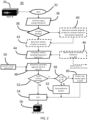
- a method 30 according to one embodiment for compressing raw collected data is shown in FIG. 2 .
- the method may be implemented by the edge nodes 12 to create a smaller sized data package that can be more efficiently transmitted over limited bandwidth to a centralized processing node such as the server 20 and/or the cloud 22.
- a centralized processing node such as the server 20 and/or the cloud 22.
- the method 30 starts at step 32 in which an input signal 34 is received in the form of a raw data signal, also indicated as a signal X. That is, the signal X (and/or the input 34) may be generated from the data collected by the relevant sensors (e.g., one or more of the sensors 14) and sent to a controller (e.g., the controller 15) of the edge node.
- a signal energy indicator (E) is determined (e.g., by the controller 15 of the corresponding edge node 12).
- the signal energy indicator ⁇ refers to one or more selected values or parameters that indicate or correspond to energy distortion in the data signal.
- parameters that can be used as, or for determining, the signal energy indicator ⁇ include variance, entropy, norm, etc., although it is to be appreciated that any other statistical or mathematical parameter that directly or indirectly identifies, quantifies, or represents the energy of the signal may be utilized, e.g., by detecting changes, variability, or fluctuations in the raw data signal.
- the parameters such as variance, entropy, norm, etc., can be calculated according to any mathematical and/or statistical methodology known or discovered in the art.
- one or more compression characteristics such as sampling frequency, sampling window length, etc. may be determined based on the signal energy indicator.
- variable window compression refers to the entire period of time (the window) over which data is to be collected for creating the final transmitted compressed data package. If it is desired to variably set the size of the window, then the method proceeds to step 40 in which the window length (N) is determined based on the signal energy indicator E, the network capacity ( ⁇ ), etc. For example, if the network capacity ⁇ indicates limited bandwidth or other resources in the network, then the window length N may be shorter than for higher bandwidth networks. Similarly, if the signal energy indicator ⁇ indicates a high degree of information content of which variance is an indicator (e.g., signal is changing frequently), then the system may set the window length N shorter to ensure the changes in the collected data sufficiently captured after the data is compressed.
- the signal energy indicator ⁇ indicates a high degree of information content of which variance is an indicator (e.g., signal is changing frequently)
- the system may set the window length N shorter to ensure the changes in the collected data sufficiently captured after the data is compressed.
- step 38 may proceed directly to step 42, e.g., utilizing a default value for the window length N and/or a previously selected/determined value for the window length N (e.g., from a previous iteration or cycle of the method 30).
- a sampling frequency ( ⁇ ) is determined based on the signal energy indicator E.
- the system may determine the sampling frequency ⁇ in proportion to the signal energy indicator E, with values of the signal energy indicator E indicating higher variability in the collected data signal X resulting in a faster sampling frequency ⁇ .
- faster sampling speeds are selected so that volatility in the collected data signal X is not lost after compression.
- the sampling frequency can be slowed down if the raw data signal isn't changing much.
- the sampling frequency ⁇ may vary widely depending on the requirements of the system. For example, the sampling frequency ⁇ may be once every few seconds, minutes, hours, etc., multiple times each second, minute, hour, etc., hundreds of times a second, or more.
- the relationship between signal energy indicator E and the sampling frequency ⁇ may be determined via a preset function or algorithm.
- the variables of the function may be set and updated over time based on the resulting accuracy of the decompression of the data compressed in accordance with the equation.
- each of the edge nodes 12 may have a table stored in memory, which enables the edge node 12, e.g., via the controller 15, to look up values for the sampling frequency ⁇ , the window length N, etc., corresponding to the computed value of the signal energy indicator E.
- the collected data signal X is subsampled based on the sampling frequency ⁇ .
- a random number generator 50 may be included to create random numbers G, from which the subsampling is randomly performed.
- the random numbers can be used as the indices for the subsampling.
- the random number generator 50 can be arranged according to any desired implementation, e.g., a software algorithm. Additionally, it is to be appreciated that "random" is not intended to mean truly random, and can include pseudo-random or other values.
- the random number generator 50 may be a seedable random number generator, such that the same values for G can be later created during decompression by another node running the same algorithm as the random number generator 50, thereby avoiding the need to separate transmit a dictionary of the indices.
- Subsampling the signal X in step 48 results in a compressed signal X.
- step 52 it may be determined whether a fixed network bandwidth is to be used. If not, then the method 30 can terminate at step 54, which results in an output 56, e.g., the compressed signal X and the window length N, as applicable, which are output regardless of size. Alternatively, if a fixed network bandwidth is to be imposed, then step 52 may proceed to step 58 at which it is determined whether the size of the compressed signal X is greater than that permitted by the network capacity ⁇ . If the compressed signal X is still too large, the compressed signal X can be further subsampled at step 60, e.g., akin to the step 48, and provided to the output 56.
- step 60 e.g., akin to the step 48
- step 58 determines that the compressed signal X is less than the network capacity ⁇
- step 62 either the compressed signal X is provided to the output 56 or the compressed signal X is augmented with additional data samples or packets. For example, additional samples may be taken from the raw data signal within the window as determined at step 42, or additional packets can be generated on data gathered outside of the window. The compressed signal X, with or without any additional packets, may then be provided to the output 56.
- the method 30 may repeat and iterate multiple successive times, e.g., the method 30 may be implemented continuously.
- the signal energy indicator ⁇ can be updated on a periodic basis and continuously updated over time in response to the collected data signal X.
- the collected data signal X may likewise be collected continuously, which may include a constant stream of data, discrete successive pulses (with or without pauses between each), etc.
- distributed systems such as the system 10 that operate in accordance with the method 30 can dynamically react (e.g., in real-time) to changing conditions as indicated by the data signal X collected by the sensors 14.
- the system 10 can automatically and dynamically change the sampling parameters (e.g., sampling frequency ⁇ , window length N, etc.) to enable more accurate reconstruction of the resulting compressed signal X.
- the system 10 can automatically and dynamically change the sampling parameters to reduce the computational resources and bandwidth requirements, thereby increasing operational efficiency in the system 10.
- a method 70 for decompressing the compressed data signal X is shown in FIG. 3 , which may be implemented by a centralized node, such as the gateway 18, the server 20, and/or the cloud 22.
- the method starts at step 72 at which at least a compressed data signal X is received, e.g., the output 56 from the method 30.
- the indices of the compressed data signal are retrieved based on the random numbers (G) generated by the random number generator 50. That is, as discussed above, the random number generator 50 may be a seedable random number generator, with instances of the same algorithm installed on both the edge nodes 12 and the centralized node that performs the decompression.
- the energy of the original raw data signal X is estimated based on the size of the compressed data signal X with respect to the raw data signal X.
- the output 56 may include the energy signal indictor E, which is provided to the centralized node in lieu of or in addition to the step 76.
- the decompression scheme P for solving the reconstruction problem may include solving the primal dual optimization, basis pursuit, the L1-Norm optimization problem, the linear approximation problem, any dictionary learning completion scheme, total variation compression scheme, Principal Components Analysis (PCA), smoothing, etc.
- each decompression scheme P may correspond to different values of estimated energy and/or other known parameters of the type of data compressed (sensor modality), signal window length, etc.
- decompression can be implemented via a default or preset decompression scheme.
- the compressed data signal X is recovered using a decompression algorithm corresponding to the selected decompression scheme P, resulting in a recovered data signal X P .
- a suitable basis representation to accompany decompression scheme P can also be identified. For example, signals of higher energy content can be decompressed with a different kind of basis function compared to lower energy or large signal windows.
Landscapes
- Engineering & Computer Science (AREA)
- Theoretical Computer Science (AREA)
- Computer Networks & Wireless Communication (AREA)
- Signal Processing (AREA)
- General Physics & Mathematics (AREA)
- Physics & Mathematics (AREA)
- Computational Mathematics (AREA)
- Mathematical Analysis (AREA)
- Mathematical Optimization (AREA)
- Pure & Applied Mathematics (AREA)
- General Engineering & Computer Science (AREA)
- Mobile Radio Communication Systems (AREA)
- Arrangements For Transmission Of Measured Signals (AREA)
- Compression, Expansion, Code Conversion, And Decoders (AREA)
Applications Claiming Priority (3)
| Application Number | Priority Date | Filing Date | Title |
|---|---|---|---|
| US201862715472P | 2018-08-07 | 2018-08-07 | |
| EP18190723 | 2018-08-24 | ||
| PCT/EP2019/070592 WO2020030488A1 (en) | 2018-08-07 | 2019-07-31 | Compressive sensing systems and methods using edge nodes of distributed computing networks |
Publications (2)
| Publication Number | Publication Date |
|---|---|
| EP3834441A1 EP3834441A1 (en) | 2021-06-16 |
| EP3834441B1 true EP3834441B1 (en) | 2023-10-04 |
Family
ID=67513525
Family Applications (1)
| Application Number | Title | Priority Date | Filing Date |
|---|---|---|---|
| EP19748532.9A Active EP3834441B1 (en) | 2018-08-07 | 2019-07-31 | Compressive sensing method and edge node of distributed computing networks |
Country Status (5)
| Country | Link |
|---|---|
| US (1) | US11496150B2 (https=) |
| EP (1) | EP3834441B1 (https=) |
| JP (1) | JP7413352B2 (https=) |
| CN (1) | CN112534842B (https=) |
| WO (1) | WO2020030488A1 (https=) |
Families Citing this family (2)
| Publication number | Priority date | Publication date | Assignee | Title |
|---|---|---|---|---|
| CN113641684B (zh) * | 2021-10-18 | 2022-01-25 | 上海英哈科技有限公司 | 物联网大数据处理装置及方法 |
| CN118118553B (zh) * | 2024-04-30 | 2024-08-20 | 南京中科智慧生态科技有限公司 | 基于边缘计算的智能传感器数据缓存方法及系统 |
Family Cites Families (27)
| Publication number | Priority date | Publication date | Assignee | Title |
|---|---|---|---|---|
| US4546342A (en) | 1983-12-14 | 1985-10-08 | Digital Recording Research Limited Partnership | Data compression method and apparatus |
| JP3141450B2 (ja) | 1991-09-30 | 2001-03-05 | ソニー株式会社 | オーディオ信号処理方法 |
| GB9625661D0 (en) * | 1996-12-11 | 1997-01-29 | Hewlett Packard Co | A method and apparatus for compression of electronic ink |
| EP1634438A1 (en) * | 2003-05-13 | 2006-03-15 | Medical Insight A/S | Method and system for remote and adaptive visualization of graphical image data |
| FR2898757A1 (fr) * | 2006-03-14 | 2007-09-21 | Canon Kk | Procede et dispositif d'adaptation d'une frequence temporelle d'une sequence d'images video |
| US7558685B2 (en) * | 2006-11-29 | 2009-07-07 | Samplify Systems, Inc. | Frequency resolution using compression |
| US7554467B2 (en) * | 2007-07-31 | 2009-06-30 | Novell, Inc. | Network content in dictionary-based (DE)compression |
| US7930436B1 (en) * | 2009-03-09 | 2011-04-19 | Znosko Dmitry Y | System and method for dynamically adjusting data compression parameters |
| US20110231155A1 (en) | 2010-03-22 | 2011-09-22 | General Electric Company | Dynamically configurable sensor chassis |
| KR20120062551A (ko) * | 2010-12-06 | 2012-06-14 | 한국전자통신연구원 | 디지털 비디오 송신 장치 및 방법, 디지털 비디오 수신 장치 및 방법, 디지털 비디오 송수신 시스템 |
| US9294113B2 (en) * | 2011-07-05 | 2016-03-22 | Massachusetts Institute Of Technology | Energy-efficient time-stampless adaptive nonuniform sampling |
| CN102340667B (zh) * | 2011-09-16 | 2013-06-12 | 沈阳航空航天大学 | 一种面向无线多媒体传感器网络的分布式图像传输方法 |
| JP5670860B2 (ja) | 2011-10-25 | 2015-02-18 | 日本電信電話株式会社 | 信号処理システム及び信号処理方法 |
| CN102833000B (zh) * | 2012-08-14 | 2015-06-17 | 电信科学技术研究院 | 一种数据传输方法及设备 |
| CN102821303B (zh) * | 2012-08-31 | 2016-06-29 | 哈尔滨工程大学 | 一种像素级视频信息网络实时分级压缩传输方法 |
| CN103347268B (zh) * | 2013-06-05 | 2016-03-30 | 杭州电子科技大学 | 认知传感器网络中基于能量有效性观测的自适应压缩重构方法 |
| US9788721B2 (en) * | 2014-07-22 | 2017-10-17 | Biobit, Inc. | Low-power activity monitoring |
| KR20170046760A (ko) | 2014-09-04 | 2017-05-02 | 피씨엠에스 홀딩스, 인크. | 컨텍스트 이벤트 검출에 기초한 센서 노드 로컬리제이션 및 센서 네트워크 조직화를 위한 시스템 및 방법 |
| CN104598735A (zh) * | 2015-01-23 | 2015-05-06 | 四川大学 | 基于l1同伦恢复算法的时变同伦算法 |
| US10015272B2 (en) * | 2015-03-12 | 2018-07-03 | Intel Corporation | Method and apparatus for compaction of data received over a network |
| CN107735953B (zh) * | 2015-07-03 | 2023-04-14 | 英特尔公司 | 用于在可穿戴装置中进行数据压缩的设备和方法 |
| CN105120469B (zh) * | 2015-07-06 | 2016-09-07 | 湘潭大学 | 基于压缩感知的质量可伸缩低信息密度数据收集方法 |
| US9496894B1 (en) * | 2015-10-21 | 2016-11-15 | GE Lighting Solutions, LLC | System and method for data compression over a communication network |
| CN105676222B (zh) * | 2015-10-30 | 2018-09-21 | 中国人民解放军空军工程大学 | 一种合成孔径雷达数据自适应压缩与快速重构方法 |
| WO2017114579A1 (en) * | 2015-12-30 | 2017-07-06 | Teraki Gmbh | Method and system for obtaining and storing sensor data |
| US10435869B2 (en) * | 2016-12-22 | 2019-10-08 | Navilas Solutions, Inc. | Spatial-temporal compression of sensing data for sensor network |
| US10149131B2 (en) * | 2017-01-24 | 2018-12-04 | Intel Corporation | Compressive sensing for power efficient data aggregation in a wireless sensor network |
-
2019
- 2019-07-31 JP JP2021506533A patent/JP7413352B2/ja active Active
- 2019-07-31 WO PCT/EP2019/070592 patent/WO2020030488A1/en not_active Ceased
- 2019-07-31 EP EP19748532.9A patent/EP3834441B1/en active Active
- 2019-07-31 US US17/266,766 patent/US11496150B2/en active Active
- 2019-07-31 CN CN201980052244.5A patent/CN112534842B/zh active Active
Also Published As
| Publication number | Publication date |
|---|---|
| US20210314001A1 (en) | 2021-10-07 |
| US11496150B2 (en) | 2022-11-08 |
| JP2021533667A (ja) | 2021-12-02 |
| WO2020030488A1 (en) | 2020-02-13 |
| JP7413352B2 (ja) | 2024-01-15 |
| CN112534842A (zh) | 2021-03-19 |
| EP3834441A1 (en) | 2021-06-16 |
| CN112534842B (zh) | 2024-05-28 |
Similar Documents
| Publication | Publication Date | Title |
|---|---|---|
| US11108575B2 (en) | Training models for IOT devices | |
| US11412574B2 (en) | Split predictions for IoT devices | |
| WO2013006697A2 (en) | Energy-efficient time-stampless adaptive nonuniform sampling | |
| US20220178978A1 (en) | Compressing information in an end node using an autoencoder neural network | |
| EP3834441B1 (en) | Compressive sensing method and edge node of distributed computing networks | |
| US11799983B2 (en) | Ranking internet of things (IoT) data based on IoT analytics services | |
| Charalampidis et al. | Rate-adaptive compressive sensing for IoT applications | |
| CN117579101A (zh) | 载波通讯模块的控制方法及其系统 | |
| US20190392292A1 (en) | Method and system for optimizing event prediction in data systems | |
| Kadhum Idrees et al. | SZ4IoT: an adaptive lightweight lossy compression algorithm for diverse IoT devices and data types: SK Idrees et al. | |
| US11431805B2 (en) | Systems and methods for compressing sensor data using clustering and shape matching in edge nodes of distributed computing networks | |
| US11050858B2 (en) | Programmable data router | |
| JP2021533667A5 (https=) | ||
| CN119629172A (zh) | 一种基于边缘计算的物联网开关控制方法及系统 | |
| WO2020030527A1 (en) | Systems and methods for optimizing compression and reconstruction of sensor data in distributed computing networks | |
| KR102695065B1 (ko) | 딥러닝 기반 구름 분석을 위한 구름 데이터 자동 수집 전송 장치 및 이를 이용한 구름 데이터 자동 수집 전송 방법 | |
| WO2019022979A1 (en) | MULTI-LEVEL DATA PROCESSING FOR IOT DEVICE GROUPS | |
| Frederiksen et al. | Link-Aware Energy-Frugal Continual Learning for Fault Detection in IoT Networks | |
| CN120389910B (zh) | 异常流量检测网络训练方法、异常流量检测方法及装置 | |
| Press et al. | DSP: a deep learning based approach to extend the lifetime of wireless sensor networks | |
| CN114448599B (zh) | 入侵检测方法及系统 | |
| CN120724218B (zh) | 一种基于深度神经网络的机电点检设备故障诊断方法 | |
| CN119575040A (zh) | 一种基于多源数据融合的电力设备试验数据采集方法及装置 | |
| Firos | Semantic Based Emotional Voice Coding Using Feed Forward Artificial Neural Network for Smart Home Devices | |
| CN121037459A (zh) | 一种基于drl的多源异构数据自适应压缩传输方法及系统 |
Legal Events
| Date | Code | Title | Description |
|---|---|---|---|
| STAA | Information on the status of an ep patent application or granted ep patent |
Free format text: STATUS: UNKNOWN |
|
| STAA | Information on the status of an ep patent application or granted ep patent |
Free format text: STATUS: THE INTERNATIONAL PUBLICATION HAS BEEN MADE |
|
| PUAI | Public reference made under article 153(3) epc to a published international application that has entered the european phase |
Free format text: ORIGINAL CODE: 0009012 |
|
| STAA | Information on the status of an ep patent application or granted ep patent |
Free format text: STATUS: REQUEST FOR EXAMINATION WAS MADE |
|
| 17P | Request for examination filed |
Effective date: 20210309 |
|
| AK | Designated contracting states |
Kind code of ref document: A1 Designated state(s): AL AT BE BG CH CY CZ DE DK EE ES FI FR GB GR HR HU IE IS IT LI LT LU LV MC MK MT NL NO PL PT RO RS SE SI SK SM TR |
|
| DAV | Request for validation of the european patent (deleted) | ||
| DAX | Request for extension of the european patent (deleted) | ||
| STAA | Information on the status of an ep patent application or granted ep patent |
Free format text: STATUS: EXAMINATION IS IN PROGRESS |
|
| 17Q | First examination report despatched |
Effective date: 20221115 |
|
| REG | Reference to a national code |
Ref country code: DE Ref legal event code: R079 Free format text: PREVIOUS MAIN CLASS: H04W0004700000 Ipc: H04W0004180000 Ref country code: DE Ref legal event code: R079 Ref document number: 602019038644 Country of ref document: DE Free format text: PREVIOUS MAIN CLASS: H04W0004700000 Ipc: H04W0004180000 |
|
| GRAP | Despatch of communication of intention to grant a patent |
Free format text: ORIGINAL CODE: EPIDOSNIGR1 |
|
| STAA | Information on the status of an ep patent application or granted ep patent |
Free format text: STATUS: GRANT OF PATENT IS INTENDED |
|
| RIC1 | Information provided on ipc code assigned before grant |
Ipc: H03M 7/30 20060101ALI20230404BHEP Ipc: H04W 4/38 20180101ALI20230404BHEP Ipc: H04W 4/18 20090101AFI20230404BHEP |
|
| INTG | Intention to grant announced |
Effective date: 20230503 |
|
| P01 | Opt-out of the competence of the unified patent court (upc) registered |
Effective date: 20230530 |
|
| GRAS | Grant fee paid |
Free format text: ORIGINAL CODE: EPIDOSNIGR3 |
|
| GRAA | (expected) grant |
Free format text: ORIGINAL CODE: 0009210 |
|
| STAA | Information on the status of an ep patent application or granted ep patent |
Free format text: STATUS: THE PATENT HAS BEEN GRANTED |
|
| AK | Designated contracting states |
Kind code of ref document: B1 Designated state(s): AL AT BE BG CH CY CZ DE DK EE ES FI FR GB GR HR HU IE IS IT LI LT LU LV MC MK MT NL NO PL PT RO RS SE SI SK SM TR |
|
| REG | Reference to a national code |
Ref country code: GB Ref legal event code: FG4D |
|
| REG | Reference to a national code |
Ref country code: CH Ref legal event code: EP |
|
| REG | Reference to a national code |
Ref country code: DE Ref legal event code: R096 Ref document number: 602019038644 Country of ref document: DE |
|
| REG | Reference to a national code |
Ref country code: IE Ref legal event code: FG4D |
|
| REG | Reference to a national code |
Ref country code: LT Ref legal event code: MG9D |
|
| REG | Reference to a national code |
Ref country code: NL Ref legal event code: MP Effective date: 20231004 |
|
| REG | Reference to a national code |
Ref country code: AT Ref legal event code: MK05 Ref document number: 1619070 Country of ref document: AT Kind code of ref document: T Effective date: 20231004 |
|
| PG25 | Lapsed in a contracting state [announced via postgrant information from national office to epo] |
Ref country code: NL Free format text: LAPSE BECAUSE OF FAILURE TO SUBMIT A TRANSLATION OF THE DESCRIPTION OR TO PAY THE FEE WITHIN THE PRESCRIBED TIME-LIMIT Effective date: 20231004 |
|
| PG25 | Lapsed in a contracting state [announced via postgrant information from national office to epo] |
Ref country code: GR Free format text: LAPSE BECAUSE OF FAILURE TO SUBMIT A TRANSLATION OF THE DESCRIPTION OR TO PAY THE FEE WITHIN THE PRESCRIBED TIME-LIMIT Effective date: 20240105 |
|
| PG25 | Lapsed in a contracting state [announced via postgrant information from national office to epo] |
Ref country code: IS Free format text: LAPSE BECAUSE OF FAILURE TO SUBMIT A TRANSLATION OF THE DESCRIPTION OR TO PAY THE FEE WITHIN THE PRESCRIBED TIME-LIMIT Effective date: 20240204 |
|
| PG25 | Lapsed in a contracting state [announced via postgrant information from national office to epo] |
Ref country code: LT Free format text: LAPSE BECAUSE OF FAILURE TO SUBMIT A TRANSLATION OF THE DESCRIPTION OR TO PAY THE FEE WITHIN THE PRESCRIBED TIME-LIMIT Effective date: 20231004 |
|
| PG25 | Lapsed in a contracting state [announced via postgrant information from national office to epo] |
Ref country code: AT Free format text: LAPSE BECAUSE OF FAILURE TO SUBMIT A TRANSLATION OF THE DESCRIPTION OR TO PAY THE FEE WITHIN THE PRESCRIBED TIME-LIMIT Effective date: 20231004 |
|
| PG25 | Lapsed in a contracting state [announced via postgrant information from national office to epo] |
Ref country code: ES Free format text: LAPSE BECAUSE OF FAILURE TO SUBMIT A TRANSLATION OF THE DESCRIPTION OR TO PAY THE FEE WITHIN THE PRESCRIBED TIME-LIMIT Effective date: 20231004 |
|
| PG25 | Lapsed in a contracting state [announced via postgrant information from national office to epo] |
Ref country code: LT Free format text: LAPSE BECAUSE OF FAILURE TO SUBMIT A TRANSLATION OF THE DESCRIPTION OR TO PAY THE FEE WITHIN THE PRESCRIBED TIME-LIMIT Effective date: 20231004 Ref country code: IS Free format text: LAPSE BECAUSE OF FAILURE TO SUBMIT A TRANSLATION OF THE DESCRIPTION OR TO PAY THE FEE WITHIN THE PRESCRIBED TIME-LIMIT Effective date: 20240204 Ref country code: GR Free format text: LAPSE BECAUSE OF FAILURE TO SUBMIT A TRANSLATION OF THE DESCRIPTION OR TO PAY THE FEE WITHIN THE PRESCRIBED TIME-LIMIT Effective date: 20240105 Ref country code: ES Free format text: LAPSE BECAUSE OF FAILURE TO SUBMIT A TRANSLATION OF THE DESCRIPTION OR TO PAY THE FEE WITHIN THE PRESCRIBED TIME-LIMIT Effective date: 20231004 Ref country code: BG Free format text: LAPSE BECAUSE OF FAILURE TO SUBMIT A TRANSLATION OF THE DESCRIPTION OR TO PAY THE FEE WITHIN THE PRESCRIBED TIME-LIMIT Effective date: 20240104 Ref country code: AT Free format text: LAPSE BECAUSE OF FAILURE TO SUBMIT A TRANSLATION OF THE DESCRIPTION OR TO PAY THE FEE WITHIN THE PRESCRIBED TIME-LIMIT Effective date: 20231004 Ref country code: PT Free format text: LAPSE BECAUSE OF FAILURE TO SUBMIT A TRANSLATION OF THE DESCRIPTION OR TO PAY THE FEE WITHIN THE PRESCRIBED TIME-LIMIT Effective date: 20240205 |
|
| PG25 | Lapsed in a contracting state [announced via postgrant information from national office to epo] |
Ref country code: SE Free format text: LAPSE BECAUSE OF FAILURE TO SUBMIT A TRANSLATION OF THE DESCRIPTION OR TO PAY THE FEE WITHIN THE PRESCRIBED TIME-LIMIT Effective date: 20231004 Ref country code: RS Free format text: LAPSE BECAUSE OF FAILURE TO SUBMIT A TRANSLATION OF THE DESCRIPTION OR TO PAY THE FEE WITHIN THE PRESCRIBED TIME-LIMIT Effective date: 20231004 Ref country code: PL Free format text: LAPSE BECAUSE OF FAILURE TO SUBMIT A TRANSLATION OF THE DESCRIPTION OR TO PAY THE FEE WITHIN THE PRESCRIBED TIME-LIMIT Effective date: 20231004 Ref country code: NO Free format text: LAPSE BECAUSE OF FAILURE TO SUBMIT A TRANSLATION OF THE DESCRIPTION OR TO PAY THE FEE WITHIN THE PRESCRIBED TIME-LIMIT Effective date: 20240104 Ref country code: LV Free format text: LAPSE BECAUSE OF FAILURE TO SUBMIT A TRANSLATION OF THE DESCRIPTION OR TO PAY THE FEE WITHIN THE PRESCRIBED TIME-LIMIT Effective date: 20231004 Ref country code: HR Free format text: LAPSE BECAUSE OF FAILURE TO SUBMIT A TRANSLATION OF THE DESCRIPTION OR TO PAY THE FEE WITHIN THE PRESCRIBED TIME-LIMIT Effective date: 20231004 |
|
| REG | Reference to a national code |
Ref country code: DE Ref legal event code: R097 Ref document number: 602019038644 Country of ref document: DE |
|
| PG25 | Lapsed in a contracting state [announced via postgrant information from national office to epo] |
Ref country code: DK Free format text: LAPSE BECAUSE OF FAILURE TO SUBMIT A TRANSLATION OF THE DESCRIPTION OR TO PAY THE FEE WITHIN THE PRESCRIBED TIME-LIMIT Effective date: 20231004 |
|
| PG25 | Lapsed in a contracting state [announced via postgrant information from national office to epo] |
Ref country code: CZ Free format text: LAPSE BECAUSE OF FAILURE TO SUBMIT A TRANSLATION OF THE DESCRIPTION OR TO PAY THE FEE WITHIN THE PRESCRIBED TIME-LIMIT Effective date: 20231004 |
|
| PG25 | Lapsed in a contracting state [announced via postgrant information from national office to epo] |
Ref country code: SK Free format text: LAPSE BECAUSE OF FAILURE TO SUBMIT A TRANSLATION OF THE DESCRIPTION OR TO PAY THE FEE WITHIN THE PRESCRIBED TIME-LIMIT Effective date: 20231004 |
|
| PG25 | Lapsed in a contracting state [announced via postgrant information from national office to epo] |
Ref country code: SM Free format text: LAPSE BECAUSE OF FAILURE TO SUBMIT A TRANSLATION OF THE DESCRIPTION OR TO PAY THE FEE WITHIN THE PRESCRIBED TIME-LIMIT Effective date: 20231004 Ref country code: SK Free format text: LAPSE BECAUSE OF FAILURE TO SUBMIT A TRANSLATION OF THE DESCRIPTION OR TO PAY THE FEE WITHIN THE PRESCRIBED TIME-LIMIT Effective date: 20231004 Ref country code: RO Free format text: LAPSE BECAUSE OF FAILURE TO SUBMIT A TRANSLATION OF THE DESCRIPTION OR TO PAY THE FEE WITHIN THE PRESCRIBED TIME-LIMIT Effective date: 20231004 Ref country code: IT Free format text: LAPSE BECAUSE OF FAILURE TO SUBMIT A TRANSLATION OF THE DESCRIPTION OR TO PAY THE FEE WITHIN THE PRESCRIBED TIME-LIMIT Effective date: 20231004 Ref country code: EE Free format text: LAPSE BECAUSE OF FAILURE TO SUBMIT A TRANSLATION OF THE DESCRIPTION OR TO PAY THE FEE WITHIN THE PRESCRIBED TIME-LIMIT Effective date: 20231004 Ref country code: DK Free format text: LAPSE BECAUSE OF FAILURE TO SUBMIT A TRANSLATION OF THE DESCRIPTION OR TO PAY THE FEE WITHIN THE PRESCRIBED TIME-LIMIT Effective date: 20231004 Ref country code: CZ Free format text: LAPSE BECAUSE OF FAILURE TO SUBMIT A TRANSLATION OF THE DESCRIPTION OR TO PAY THE FEE WITHIN THE PRESCRIBED TIME-LIMIT Effective date: 20231004 |
|
| PLBE | No opposition filed within time limit |
Free format text: ORIGINAL CODE: 0009261 |
|
| STAA | Information on the status of an ep patent application or granted ep patent |
Free format text: STATUS: NO OPPOSITION FILED WITHIN TIME LIMIT |
|
| 26N | No opposition filed |
Effective date: 20240705 |
|
| PG25 | Lapsed in a contracting state [announced via postgrant information from national office to epo] |
Ref country code: SI Free format text: LAPSE BECAUSE OF FAILURE TO SUBMIT A TRANSLATION OF THE DESCRIPTION OR TO PAY THE FEE WITHIN THE PRESCRIBED TIME-LIMIT Effective date: 20231004 |
|
| PG25 | Lapsed in a contracting state [announced via postgrant information from national office to epo] |
Ref country code: SI Free format text: LAPSE BECAUSE OF FAILURE TO SUBMIT A TRANSLATION OF THE DESCRIPTION OR TO PAY THE FEE WITHIN THE PRESCRIBED TIME-LIMIT Effective date: 20231004 |
|
| PG25 | Lapsed in a contracting state [announced via postgrant information from national office to epo] |
Ref country code: MC Free format text: LAPSE BECAUSE OF FAILURE TO SUBMIT A TRANSLATION OF THE DESCRIPTION OR TO PAY THE FEE WITHIN THE PRESCRIBED TIME-LIMIT Effective date: 20231004 |
|
| REG | Reference to a national code |
Ref country code: CH Ref legal event code: PL |
|
| PG25 | Lapsed in a contracting state [announced via postgrant information from national office to epo] |
Ref country code: LU Free format text: LAPSE BECAUSE OF NON-PAYMENT OF DUE FEES Effective date: 20240731 |
|
| PG25 | Lapsed in a contracting state [announced via postgrant information from national office to epo] |
Ref country code: LU Free format text: LAPSE BECAUSE OF NON-PAYMENT OF DUE FEES Effective date: 20240731 |
|
| PG25 | Lapsed in a contracting state [announced via postgrant information from national office to epo] |
Ref country code: BE Free format text: LAPSE BECAUSE OF NON-PAYMENT OF DUE FEES Effective date: 20240731 Ref country code: CH Free format text: LAPSE BECAUSE OF NON-PAYMENT OF DUE FEES Effective date: 20240731 |
|
| REG | Reference to a national code |
Ref country code: BE Ref legal event code: MM Effective date: 20240731 |
|
| PG25 | Lapsed in a contracting state [announced via postgrant information from national office to epo] |
Ref country code: IE Free format text: LAPSE BECAUSE OF NON-PAYMENT OF DUE FEES Effective date: 20240731 |
|
| PG25 | Lapsed in a contracting state [announced via postgrant information from national office to epo] |
Ref country code: FI Free format text: LAPSE BECAUSE OF FAILURE TO SUBMIT A TRANSLATION OF THE DESCRIPTION OR TO PAY THE FEE WITHIN THE PRESCRIBED TIME-LIMIT Effective date: 20231004 |
|
| PGFP | Annual fee paid to national office [announced via postgrant information from national office to epo] |
Ref country code: DE Payment date: 20250926 Year of fee payment: 7 |
|
| PGFP | Annual fee paid to national office [announced via postgrant information from national office to epo] |
Ref country code: GB Payment date: 20250722 Year of fee payment: 7 |
|
| PGFP | Annual fee paid to national office [announced via postgrant information from national office to epo] |
Ref country code: FR Payment date: 20250725 Year of fee payment: 7 |
|
| PG25 | Lapsed in a contracting state [announced via postgrant information from national office to epo] |
Ref country code: CY Free format text: LAPSE BECAUSE OF FAILURE TO SUBMIT A TRANSLATION OF THE DESCRIPTION OR TO PAY THE FEE WITHIN THE PRESCRIBED TIME-LIMIT; INVALID AB INITIO Effective date: 20190731 |
|
| PG25 | Lapsed in a contracting state [announced via postgrant information from national office to epo] |
Ref country code: HU Free format text: LAPSE BECAUSE OF FAILURE TO SUBMIT A TRANSLATION OF THE DESCRIPTION OR TO PAY THE FEE WITHIN THE PRESCRIBED TIME-LIMIT; INVALID AB INITIO Effective date: 20190731 |