EP3830705B1 - Zugriff auf ein flüchtiges speichermodul - Google Patents
Zugriff auf ein flüchtiges speichermodul Download PDFInfo
- Publication number
- EP3830705B1 EP3830705B1 EP19790773.6A EP19790773A EP3830705B1 EP 3830705 B1 EP3830705 B1 EP 3830705B1 EP 19790773 A EP19790773 A EP 19790773A EP 3830705 B1 EP3830705 B1 EP 3830705B1
- Authority
- EP
- European Patent Office
- Prior art keywords
- command
- sub
- memory
- execution
- commands
- Prior art date
- Legal status (The legal status is an assumption and is not a legal conclusion. Google has not performed a legal analysis and makes no representation as to the accuracy of the status listed.)
- Active
Links
Images






Classifications
-
- G—PHYSICS
- G06—COMPUTING OR CALCULATING; COUNTING
- G06F—ELECTRIC DIGITAL DATA PROCESSING
- G06F3/00—Input arrangements for transferring data to be processed into a form capable of being handled by the computer; Output arrangements for transferring data from processing unit to output unit, e.g. interface arrangements
- G06F3/06—Digital input from, or digital output to, record carriers, e.g. RAID, emulated record carriers or networked record carriers
- G06F3/0601—Interfaces specially adapted for storage systems
- G06F3/0602—Interfaces specially adapted for storage systems specifically adapted to achieve a particular effect
- G06F3/0608—Saving storage space on storage systems
-
- G—PHYSICS
- G06—COMPUTING OR CALCULATING; COUNTING
- G06F—ELECTRIC DIGITAL DATA PROCESSING
- G06F13/00—Interconnection of, or transfer of information or other signals between, memories, input/output devices or central processing units
- G06F13/14—Handling requests for interconnection or transfer
- G06F13/16—Handling requests for interconnection or transfer for access to memory bus
- G06F13/1605—Handling requests for interconnection or transfer for access to memory bus based on arbitration
- G06F13/1647—Handling requests for interconnection or transfer for access to memory bus based on arbitration with interleaved bank access
-
- G—PHYSICS
- G06—COMPUTING OR CALCULATING; COUNTING
- G06F—ELECTRIC DIGITAL DATA PROCESSING
- G06F13/00—Interconnection of, or transfer of information or other signals between, memories, input/output devices or central processing units
- G06F13/14—Handling requests for interconnection or transfer
- G06F13/16—Handling requests for interconnection or transfer for access to memory bus
- G06F13/1605—Handling requests for interconnection or transfer for access to memory bus based on arbitration
- G06F13/1642—Handling requests for interconnection or transfer for access to memory bus based on arbitration with request queuing
-
- G—PHYSICS
- G06—COMPUTING OR CALCULATING; COUNTING
- G06F—ELECTRIC DIGITAL DATA PROCESSING
- G06F13/00—Interconnection of, or transfer of information or other signals between, memories, input/output devices or central processing units
- G06F13/38—Information transfer, e.g. on bus
- G06F13/42—Bus transfer protocol, e.g. handshake; Synchronisation
- G06F13/4204—Bus transfer protocol, e.g. handshake; Synchronisation on a parallel bus
- G06F13/4234—Bus transfer protocol, e.g. handshake; Synchronisation on a parallel bus being a memory bus
-
- G—PHYSICS
- G06—COMPUTING OR CALCULATING; COUNTING
- G06F—ELECTRIC DIGITAL DATA PROCESSING
- G06F3/00—Input arrangements for transferring data to be processed into a form capable of being handled by the computer; Output arrangements for transferring data from processing unit to output unit, e.g. interface arrangements
- G06F3/06—Digital input from, or digital output to, record carriers, e.g. RAID, emulated record carriers or networked record carriers
- G06F3/0601—Interfaces specially adapted for storage systems
- G06F3/0628—Interfaces specially adapted for storage systems making use of a particular technique
- G06F3/0655—Vertical data movement, i.e. input-output transfer; data movement between one or more hosts and one or more storage devices
- G06F3/0659—Command handling arrangements, e.g. command buffers, queues, command scheduling
-
- G—PHYSICS
- G06—COMPUTING OR CALCULATING; COUNTING
- G06F—ELECTRIC DIGITAL DATA PROCESSING
- G06F3/00—Input arrangements for transferring data to be processed into a form capable of being handled by the computer; Output arrangements for transferring data from processing unit to output unit, e.g. interface arrangements
- G06F3/06—Digital input from, or digital output to, record carriers, e.g. RAID, emulated record carriers or networked record carriers
- G06F3/0601—Interfaces specially adapted for storage systems
- G06F3/0668—Interfaces specially adapted for storage systems adopting a particular infrastructure
- G06F3/0671—In-line storage system
- G06F3/0673—Single storage device
-
- G—PHYSICS
- G11—INFORMATION STORAGE
- G11C—STATIC STORES
- G11C7/00—Arrangements for writing information into, or reading information out from, a digital store
- G11C7/10—Input/output [I/O] data interface arrangements, e.g. I/O data control circuits, I/O data buffers
- G11C7/1015—Read-write modes for single port memories, i.e. having either a random port or a serial port
- G11C7/1042—Read-write modes for single port memories, i.e. having either a random port or a serial port using interleaving techniques, i.e. read-write of one part of the memory while preparing another part
-
- B—PERFORMING OPERATIONS; TRANSPORTING
- B60—VEHICLES IN GENERAL
- B60W—CONJOINT CONTROL OF VEHICLE SUB-UNITS OF DIFFERENT TYPE OR DIFFERENT FUNCTION; CONTROL SYSTEMS SPECIALLY ADAPTED FOR HYBRID VEHICLES; ROAD VEHICLE DRIVE CONTROL SYSTEMS FOR PURPOSES NOT RELATED TO THE CONTROL OF A PARTICULAR SUB-UNIT
- B60W10/00—Conjoint control of vehicle sub-units of different type or different function
- B60W10/04—Conjoint control of vehicle sub-units of different type or different function including control of propulsion units
-
- B—PERFORMING OPERATIONS; TRANSPORTING
- B60—VEHICLES IN GENERAL
- B60W—CONJOINT CONTROL OF VEHICLE SUB-UNITS OF DIFFERENT TYPE OR DIFFERENT FUNCTION; CONTROL SYSTEMS SPECIALLY ADAPTED FOR HYBRID VEHICLES; ROAD VEHICLE DRIVE CONTROL SYSTEMS FOR PURPOSES NOT RELATED TO THE CONTROL OF A PARTICULAR SUB-UNIT
- B60W10/00—Conjoint control of vehicle sub-units of different type or different function
- B60W10/18—Conjoint control of vehicle sub-units of different type or different function including control of braking systems
-
- B—PERFORMING OPERATIONS; TRANSPORTING
- B60—VEHICLES IN GENERAL
- B60W—CONJOINT CONTROL OF VEHICLE SUB-UNITS OF DIFFERENT TYPE OR DIFFERENT FUNCTION; CONTROL SYSTEMS SPECIALLY ADAPTED FOR HYBRID VEHICLES; ROAD VEHICLE DRIVE CONTROL SYSTEMS FOR PURPOSES NOT RELATED TO THE CONTROL OF A PARTICULAR SUB-UNIT
- B60W10/00—Conjoint control of vehicle sub-units of different type or different function
- B60W10/20—Conjoint control of vehicle sub-units of different type or different function including control of steering systems
-
- B—PERFORMING OPERATIONS; TRANSPORTING
- B60—VEHICLES IN GENERAL
- B60W—CONJOINT CONTROL OF VEHICLE SUB-UNITS OF DIFFERENT TYPE OR DIFFERENT FUNCTION; CONTROL SYSTEMS SPECIALLY ADAPTED FOR HYBRID VEHICLES; ROAD VEHICLE DRIVE CONTROL SYSTEMS FOR PURPOSES NOT RELATED TO THE CONTROL OF A PARTICULAR SUB-UNIT
- B60W2420/00—Indexing codes relating to the type of sensors based on the principle of their operation
- B60W2420/40—Photo, light or radio wave sensitive means, e.g. infrared sensors
- B60W2420/403—Image sensing, e.g. optical camera
-
- B—PERFORMING OPERATIONS; TRANSPORTING
- B60—VEHICLES IN GENERAL
- B60W—CONJOINT CONTROL OF VEHICLE SUB-UNITS OF DIFFERENT TYPE OR DIFFERENT FUNCTION; CONTROL SYSTEMS SPECIALLY ADAPTED FOR HYBRID VEHICLES; ROAD VEHICLE DRIVE CONTROL SYSTEMS FOR PURPOSES NOT RELATED TO THE CONTROL OF A PARTICULAR SUB-UNIT
- B60W2420/00—Indexing codes relating to the type of sensors based on the principle of their operation
- B60W2420/54—Audio sensitive means, e.g. ultrasound
-
- G—PHYSICS
- G05—CONTROLLING; REGULATING
- G05D—SYSTEMS FOR CONTROLLING OR REGULATING NON-ELECTRIC VARIABLES
- G05D1/00—Control of position, course, altitude or attitude of land, water, air or space vehicles, e.g. using automatic pilots
- G05D1/02—Control of position or course in two dimensions
- G05D1/021—Control of position or course in two dimensions specially adapted to land vehicles
- G05D1/0231—Control of position or course in two dimensions specially adapted to land vehicles using optical position detecting means
- G05D1/0246—Control of position or course in two dimensions specially adapted to land vehicles using optical position detecting means using a video camera in combination with image processing means
-
- G—PHYSICS
- G06—COMPUTING OR CALCULATING; COUNTING
- G06N—COMPUTING ARRANGEMENTS BASED ON SPECIFIC COMPUTATIONAL MODELS
- G06N3/00—Computing arrangements based on biological models
- G06N3/02—Neural networks
- G06N3/08—Learning methods
-
- H—ELECTRICITY
- H04—ELECTRIC COMMUNICATION TECHNIQUE
- H04N—PICTORIAL COMMUNICATION, e.g. TELEVISION
- H04N23/00—Cameras or camera modules comprising electronic image sensors; Control thereof
- H04N23/90—Arrangement of cameras or camera modules, e.g. multiple cameras in TV studios or sports stadiums
Definitions
- ADAS Advanced driver assistance systems
- AV autonomous vehicle
- object classifiers are designed to detect specific objects in an environment of a vehicle navigating a road.
- Object classifiers are designed to detect predefined objects and are used within ADAS and AV systems to control the vehicle or alert a driver based on the type of object that is detected its location, etc.
- ADAS and AV systems are required to process a significant amount of information (such as image pixels) in real time. This may involve accessing dynamic memory modules that store the information.
- Dynamic memory modules may include multiple memory banks.
- the multiple memory banks may be arranged in groups of memory banks.
- Some dynamic memory modules such as fifth generation low power memory devices (LPDDR5), impose a significant time gap between consecutive accesses to the same group of memory banks.
- LPDDR5 fifth generation low power memory devices
- WO 02/056187 A1 describes a method of accessing a dynamic random access memory, wherein memory requests are converted to yield row address strobe commands and column address strobe commands.
- the execution of row address strobe commands and column address strobe commands related to memory banks on different chips is scheduled to be interleaved with each other.
- the execution of column address strobe commands is scheduled to be interleaved between the execution of row address strobe commands for different rows in a memory bank.
- WO 2006/058200 A2 describes a method of accessing a dynamic random access memory, wherein the execution of commands related to different groups of subbanks is scheduled to be interleaved with each other.
- US 2018/025773 describes a memory subsystem refresh management that enables commands to access one or more identified banks across different bank groups, wherein a single command can cause the memory device to access banks in different bank groups.
- US 2008/0091881 A1 describes a memory controller, wherein a first memory access command and a portion of a second memory access command are stored in the same queue entry location of the memory queue if the first and second memory access commands refer to consecutive memory locations in the memory and wherein the first memory access command and the second memory access command are stored in different queue entry locations of the memory queue if the first and second memory access commands do not refer to consecutive memory locations in the memory.
- US 2018/188976 A1 describes ways of increasing the size of a read pending queue in a memory controller.
- a read request for data in a memory having a physical address identification including row and column ID a lookup is performed for a pending read transaction with a physical address ID having the same row ID as the incoming read request.
- the column ID of the incoming request is appended to the physical address ID of the pending read transaction to form an appended read transaction.
- the invention provides a method according to claim 1 and a corresponding device and computer program product. Specific embodiments are set out in the dependent claims.
- Disclosed embodiments provide systems and methods that can be used as part of or in combination with autonomous navigation/driving and/or driver assist technology features.
- Driver assist technology refers to any suitable technology to assist drivers in the navigation and/or control of their vehicles, such as FCW, LDW and TSR, as opposed to fully autonomous driving.
- the system may be arranged to process images of an environment ahead of a vehicle navigating a road for training a neural networks or deep learning algorithms to estimate a future path of a vehicle based on images or feature of the processing of images of an environment ahead of a vehicle navigating a road using a trained neural network to estimate a future path of the vehicle.
- a vehicle mountable system that can be used for carrying out and implementing the methods according to examples of the presently disclosed subject matter.
- various examples of the system can be mounted in a vehicle and can be operated while the vehicle is in motion.
- the system can implement the methods according to examples of the presently disclosed subject matter.
- embodiments of the present disclosure are not limited to scenarios where a suspected upright object indication is caused by a high-grade road.
- the suspected upright object indication can be associated with various other circumstances and can result from other types of image data and also from data that is not image based or is not exclusively image based, as well.
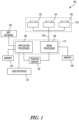
- FIG. 1 is a block diagram representation of a system.
- System 100 can include various components depending on the requirements of a particular implementation.
- system 100 can include a processing unit 110, an image acquisition unit 120 and one or more memory units 140, 150.
- Processing unit 110 can include one or more processing devices.
- processing unit 110 can include an application processor 180, an image processor 190, or any other suitable processing device.
- image acquisition unit 120 can include any number of image acquisition devices and components depending on the requirements of a particular application.
- image acquisition unit 120 can include one or more image capture devices (e.g., cameras), such as image capture device 122, image capture device 124, and image capture device 126.
- System 100 can also include a data interface 128 communicatively connecting processing unit 110 to image acquisition device 120.
- data interface 128 can include any wired and/or wireless link or links for transmitting image data acquired by image acquisition device 120 to processing unit 110.
- Both application processor 180 and image processor 190 can include various types of processing devices.
- application processor 180 and image processor 190 can include one or more microprocessors, preprocessors (such as image preprocessors), graphics processors, central processing units (CPUs), support circuits, digital signal processors, integrated circuits, memory, or any other types of devices suitable for running applications and for image processing and analysis.
- Application processor 180 and/or image processor 190 can include any type of single or multi-core processor, mobile device microcontroller, central processing unit, etc.
- Various processing devices can be used, including, for example, processors available from manufacturers such as Intel ® , AMD ® , etc. and can include various architectures (e.g., x86 processor, ARM ® , etc.).
- Application processor 180 and/or image processor 190 can include any of the EyeQ series of processor chips available from Mobileye ® . These processor designs each include multiple processing units with local memory and instruction sets. Such processors may include video inputs for receiving image data from multiple image sensors and may also include video out capabilities. In one example, the EyeQ2 ® uses 90 nm-micron technology operating at 332 Mhz.
- the EyeQ2 ® architecture has two floating point, hyper-thread 32-bit RISC CPUs (MIPS32 ® 34K ® cores), five Vision Computing Engines (VCE), three Vector Microcode Processors (VMP ® ), Denali 64-bit Mobile DDR Controller, 128-bit internal Sonics Interconnect, dual 16-bit Video input and 18-bit Video output controllers, 16 channels DMA and several peripherals.
- the MIPS34K CPU manages the five VCEs, three VMP.TM. and the DMA, the second MIPS34K CPU and the multi-channel DMA as well as the other peripherals.
- the five VCEs, three VMP ® and the MIPS34K CPU can perform intensive vision computations required by multi-function bundle applications.
- the EyeQ3 ® which is a third-generation processor and is six times more powerful that the EyeQ2 ® , may be used in the disclosed examples.
- the EyeQ4 ® the fourth-generation processor, may be used in the disclosed examples.
- FIG. 1 depicts two separate processing devices included in processing unit 110, more or fewer processing devices can be used.
- a single processing device may be used to accomplish the tasks of application processor 180 and image processor 190.
- these tasks can be performed by more than two processing devices.
- Processing unit 110 can include various types of devices.
- processing unit 110 may include various devices, such as a controller, an image preprocessor, a central processing unit (CPU), support circuits, digital signal processors, integrated circuits, memory, or any other types of devices for image processing and analysis.
- the image preprocessor can include a video processor for capturing, digitizing, and processing the imagery from the image sensors.
- the CPU can include any number of microcontrollers or microprocessors.
- the support circuits can be any number of circuits generally well known in the art, including cache, power supply, clock, and input-output circuits.
- the memory can store software that, when executed by the processor, controls the operation of the system.
- the memory can include databases and image processing software, including a trained system, such as a neural network, for example.
- the memory can include any number of random access memories, read only memories, flash memories, disk drives, optical storage, removable storage, and other types of storage.
- the memory can be separate from the processing unit 110. In another instance, the memory can be integrated into the processing unit 110.
- Each memory 140, 150 can include software instructions that when executed by a processor (e.g., application processor 180 and/or image processor 190), can control operation of various aspects of system 100.
- These memory units can include various databases and image processing software.
- the memory units can include random access memory, read only memory, flash memory, disk drives, optical storage, tape storage, removable storage, and/or any other types of storage.
- memory units 140, 150 can be separate from the application processor 180 and/or image processor 190. In other embodiments, these memory units can be integrated into application processor 180 and/or image processor 190.
- the system can include a position sensor 130.
- the position sensor 130 can include any type of device suitable for determining a location associated with at least one component of system 100
- Position sensor 130 can include a GPS receiver. Such receivers can determine a user position and velocity by processing signals broadcasted by global positioning system satellites. Position information from position sensor 130 can be made available to application processor 180 and/or image processor 190.
- the system 100 can be operatively connectible to various systems, devices and units onboard a vehicle in which the system 100 can be mounted, and through any suitable interfaces (e.g., a communication bus) the system 100 can communicate with the vehicle's systems.
- vehicle systems with which the system 100 can cooperate include: a throttling system, a braking system, and a steering system.
- the system 100 can include a user interface 170.
- User interface 170 can include any device suitable for providing information to or for receiving inputs from one or more users of system 100, including, for example, a touchscreen, microphone, keyboard, pointer devices, track wheels, cameras, knobs, buttons, etc. Information can be provided by the system 100, through the user interface 170, to the user.
- the system 100 can include a map database 160.
- the map database 160 can include any type of database for storing digital map data.
- map database 160 can include data relating to a position, in a reference coordinate system, of various items, including roads, water features, geographic features, points of interest, etc.
- Map database 160 can store not only the locations of such items, but also descriptors relating to those items, including, for example, names associated with any of the stored features and other information about them. For example, locations and types of known obstacles can be included in the database, information about a topography of a road or a grade of certain points along a road, etc.
- Map database 160 can be physically located with other components of system 100.
- map database 160 or a portion thereof can be located remotely with respect to other components of system 100 (e.g., processing unit 110). In such arrangements, information from map database 160 can be downloaded over a wired or wireless data connection to a network (e.g., over a cellular network and/or the Internet, etc.).
- a network e.g., over a cellular network and/or the Internet, etc.
- Image capture devices 122, 124, and 126 can each include any type of device suitable for capturing at least one image from an environment. Moreover, any number of image capture devices can be used to acquire images for input to the image processor. Some examples can include or can be implemented with only a single-image capture device, while other examples can include or can be implemented with two, three, or even four or more image capture devices. Image capture devices 122, 124, and 126 will be further described with reference to FIGS. 2B-2E , below.
- the system 100 can include or can be operatively associated with other types of sensors, including for example: an acoustic sensor, a RF sensor (e.g., radar transceiver), a LIDAR sensor.
- sensors can be used independently of or in cooperation with the image acquisition device 120.
- the data from the radar system (not shown) can be used for validating the processed information that is received from processing images acquired by the image acquisition device 120, e.g., to filter certain false positives resulting from processing images acquired by the image acquisition device 120, or it can be combined with or otherwise compliment the image data from the image acquisition device 120, or some processed variation or derivative of the image data from the image acquisition device 120.
- System 100 can be incorporated into various different platforms.
- System 100 may be included on a vehicle 200, as shown in FIG. 2A .
- vehicle 200 can be equipped with a processing unit 110 and any of the other components of system 100, as described above relative to FIG. 1 .
- vehicle 200 can be equipped with only a single-image capture device (e.g., camera), in other examples, such as those discussed in connection with FIGS. 2B-2E , multiple image capture devices can be used.
- ADAS Advanced Driver Assistance Systems
- image capture devices included on vehicle 200 as part of the image acquisition unit 120 can be positioned at any suitable location. As shown in FIGS. 2A-2E and 3A-3C, image capture device 122 can be located in the vicinity of the rearview mirror. This position may provide a line of sight similar to that of the driver of vehicle 200, which can aid in determining what is and is not visible to the driver.
- image capture device 124 can be located on or in a bumper of vehicle 200. Such a location can be especially suitable for image capture devices having a wide field of view. The line of sight of bumper-located image capture devices can be different from that of the driver.
- the image capture devices e.g., image capture devices 122, 124, and 126) can also be located in other locations.
- the image capture devices may be located on or in one or both of the side mirrors of vehicle 200, on the roof of vehicle 200, on the hood of vehicle 200, on the trunk of vehicle 200, on the sides of vehicle 200, mounted on, positioned behind, or positioned in front of any of the windows of vehicle 200, and mounted in or near light figures on the front and/or back of vehicle 200, etc.
- the image capture unit 120 or an image capture device that is one of a plurality of image capture devices that are used in an image capture unit 120, can have a field-of-view (FOV) that is different than the FOV of a driver of a vehicle, and not always see the same objects.
- FOV field-of-view
- the FOV of the image acquisition unit 120 can extend beyond the FOV of a typical driver and can thus image objects which are outside the FOV of the driver.
- the FOV of the image acquisition unit 120 is some portion of the FOV of the driver.
- the FOV of the image acquisition unit 120 corresponding to a sector which covers an area of a road ahead of a vehicle and possibly also surroundings of the road.
- vehicle 200 can be include various other components of system 100.
- processing unit 110 may be included on vehicle 200 either integrated with or separate from an engine control unit (ECU) of the vehicle.
- Vehicle 200 may also be equipped with a position sensor 130, such as a GPS receiver and may also include a map database 160 and memory units 140 and 150.
- FIG. 2A is a diagrammatic side view representation of a vehicle imaging system
- FIG. 2B is a diagrammatic top view illustration of the example shown in FIG. 2A
- the disclosed examples can include a vehicle 200 including in its body a system 100 with a first image capture device 122 positioned in the vicinity of the rearview mirror and/or near the driver of vehicle 200, a second image capture device 124 positioned on or in a bumper region (e.g., one of bumper regions 210) of vehicle 200, and a processing unit 110.
- a vehicle 200 including in its body a system 100 with a first image capture device 122 positioned in the vicinity of the rearview mirror and/or near the driver of vehicle 200, a second image capture device 124 positioned on or in a bumper region (e.g., one of bumper regions 210) of vehicle 200, and a processing unit 110.
- a bumper region e.g., one of bumper regions 210
- image capture devices 122 and 124 may both be positioned in the vicinity of the rearview mirror and/or near the driver of vehicle 200. Additionally, while two image capture devices 122 and 124 are shown in FIGS. 2B and 2C , it should be understood that other examples may include more than two image capture devices. For example, in the embodiment shown in FIG. 2D , first, second, and third image capture devices 122, 124, and 126, are included in the system 100 of vehicle 200.
- image capture devices 122, 124, and 126 may be positioned in the vicinity of the rearview mirror and/or near the driver seat of vehicle 200.
- the disclosed examples are not limited to any particular number and configuration of the image capture devices, and the image capture devices may be positioned in any appropriate location within and/or on vehicle 200.
- the first image capture device 122 can include any suitable type of image capture device.
- Image capture device 122 can include an optical axis.
- the image capture device 122 can include an Aptina M9V024 WVGA sensor with a global shutter.
- a rolling shutter sensor can be used.
- Image acquisition unit 120, and any image capture device which is implemented as part of the image acquisition unit 120, can have any desired image resolution.
- image capture device 122 can provide a resolution of 1280x960 pixels and can include a rolling shutter.
- Image acquisition unit 120 can include various optical elements.
- One or more lenses can be included, for example, to provide a desired focal length and field of view for the image acquisition unit 120, and for any image capture device which is implemented as part of the image acquisition unit 120.
- an image capture device which is implemented as part of the image acquisition unit 120 can include or be associated with any optical elements, such as a 6 mm lens or a 12 mm lens, for example.
- image capture device 122 can be arranged to capture images having a desired (and known) field-of-view (FOV).
- FOV field-of-view
- the first image capture device 122 may have a scan rate associated with acquisition of each of the first series of image scan lines.
- the scan rate may refer to a rate at which an image sensor can acquire image data associated with each pixel included in a particular scan line.
- FIG. 2E is a diagrammatic representation of vehicle control systems
- vehicle 200 can include throttling system 220, braking system 230, and steering system 240.
- System 100 can provide inputs (e.g., control signals) to one or more of throttling system 220, braking system 230, and steering system 240 over one or more data links (e.g., any wired and/or wireless link or links for transmitting data).
- data links e.g., any wired and/or wireless link or links for transmitting data.
- system 100 can provide control signals to one or more of throttling system 220, braking system 230, and steering system 240 to navigate vehicle 200 (e.g., by causing an acceleration, a turn, a lane shift, etc.). Further, system 100 can receive inputs from one or more of throttling system 220, braking system 230, and steering system 240 indicating operating conditions of vehicle 200 (e.g., speed, whether vehicle 200 is braking and/or turning, etc.).
- vehicle 200 may also include a user interface 170 for interacting with a driver or a passenger of vehicle 200.
- user interface 170 in a vehicle application may include a touch screen 320, knobs 330, buttons 340, and a microphone 350.
- a driver or passenger of vehicle 200 may also use handles (e.g., located on or near the steering column of vehicle 200 including, for example, turn signal handles), buttons (e.g., located on the steering wheel of vehicle 200), and the like, to interact with system 100.
- handles e.g., located on or near the steering column of vehicle 200 including, for example, turn signal handles), buttons (e.g., located on the steering wheel of vehicle 200), and the like, to interact with system 100.
- microphone 350 may be positioned adjacent to a rearview mirror 310.
- image capture device 122 may be located near rearview mirror 310.
- user interface 170 may also include one or more speakers 360 (e.g., speakers of a vehicle audio system).
- system 100 may provide various notifications (e.g
- system 100 can provide a wide range of functionality to analyze the surroundings of vehicle 200 and, in response to this analysis, navigate and/or otherwise control and/or operate vehicle 200.
- Navigation, control, and/or operation of vehicle 200 may include enabling and/or disabling (directly or via intermediary controllers, such as the controllers mentioned above) various features, components, devices, modes, systems, and/or subsystems associated with vehicle 200.
- Navigation, control, and/or operation may alternately or additionally include interaction with a user, driver, passenger, passerby, and/or other vehicle or user, which may be located inside or outside vehicle 200, for example by providing visual, audio, haptic, and/or other sensory alerts and/or indications.
- System 100 may provide a variety of features related to autonomous driving, semi-autonomous driving and/or driver assist technology. For example, system 100 may analyze image data, position data (e.g., GPS location information), map data, speed data, and/or data from sensors included in vehicle 200. System 100 may collect the data for analysis from, for example, image acquisition unit 120, position sensor 130, and other sensors. Further, system 100 may analyze the collected data to determine whether or not vehicle 200 should take a certain action, and then automatically take the determined action without human intervention. It would be appreciated that in some cases, the actions taken automatically by the vehicle are under human supervision, and the ability of the human to intervene adjust abort or override the machine action is enabled under certain circumstances or at all times.
- position data e.g., GPS location information
- map data e.g., map data
- speed data e.g., speed data from sensors included in vehicle 200.
- System 100 may collect the data for analysis from, for example, image acquisition unit 120, position sensor 130, and other sensors. Further, system 100 may
- system 100 may automatically control the braking, acceleration, and/or steering of vehicle 200 (e.g., by sending control signals to one or more of throttling system 220, braking system 230, and steering system 240). Further, system 100 may analyze the collected data and issue warnings, indications, recommendations, alerts, or instructions to a driver, passenger, user, or other person inside or outside of the vehicle (or to other vehicles) based on the analysis of the collected data. Additional details regarding the system 100 are provided below
- Method 1000 of FIG.4 illustrates an embodiment of the present invention.
- Method 1000 is for accessing a dynamic memory module.
- the dynamic memory module may belong to an ADAS system or an AV system.
- the dynamic memory module may be LPDDR5 dynamic memory module - or any other dynamic memory module.
- the method may be applied on sequential accesses - for example sequential reading or sequential writing of image data, filtering coefficients, instructions, and the like.
- the dynamic memory controller includes multiple memory banks that are arranged in multiple groups of memory banks.
- the dynamic memory module may include any number of memory banks per group, any number of overall memory banks, and there may be any number of memory banks per group.
- the dynamic memory module may enforce a time gap between consecutive accesses to the same group of memory banks. This may be an inherent limitation of the dynamic memory module.
- the time gap may be significant in the sense that its duration is of the order of a duration of a write or read operation of a burst of data atoms.
- the time gap may exceed the duration of the read or write operation of the burst of data atoms.
- the data atoms that are written (or read) during the burst may be regarded as a data sub-block.
- Method 1000 starts by step 1010 of receiving, by a memory controller, a set of access requests for accessing the dynamic memory module.
- the set of access requests may be received during one or more periods of time. There may be any number of access requests.
- Non-limiting examples of access requests include a read request, a write request, and the like.
- the receiving of the set of access requests may include storing the one or more access requests in any manner.
- the set of access requests may be stored in one queue, in multiple queues, and the like. Different queues may be allocated to different memory banks and/or to different groups of memory banks.
- Step 1010 is followed by step 1020 of converting the set of access requests to a set of commands.
- the converting may be executed by a converter such as access request converter 822 of FIG. 5 .
- the converting includes generating commands that fulfill the access requests.
- the converting includes adding commands that facilitate the execution of the access requests.
- the converting includes adding commands such as pre-charge, activate, and the like.
- the commands of the set are classified to data-related commands (such as read and write) and to management commands (such as pre-charge and activate) that are not related to data.
- a data related command may refer to a sub-block of data.
- a read command may be a command to read a data sub-block.
- a management command related to the second group of memory banks is represented by a flag or any other indicator that will be associated with a corresponding management command that is related to the first group of memory bank.
- the representation of a management command by a flag or indicator may save memory space.
- the set of commands includes multiple sub-sets of commands that are related to the multiple groups of memory banks.
- the set of commands includes (a) a first sub-set of commands that are related to a first group of memory banks, and (b) a second sub-set of commands that are related to a second group of memory banks.
- Step 1020 is followed by step 1030 of scheduling, by a scheduler of the memory controller, an execution of the first sub-set.
- Any scheduling method may be applied.
- the scheduler may perform the scheduling without reading (or without taking into account) the second sub-set. This may save either time or allow the scheduler to operate at a lower frequency.
- the scheduling may be regarded as a bottleneck of the access process as the scheduler may be required to scan a large number of commands per each scheduling cycle. By skipping some of the commands of the set, this may unblock the bottleneck.
- Step 1030 is followed by step 1040 of scheduling an execution of the second sub-set to be interleaved with the execution of the first sub-set.
- the interleaving contributes to the maintaining of the same status between different memory banks (or at least between corresponding memory banks that belong to different groups of memory banks).
- Step 1040 may be executed by an entity that differs from the scheduler.
- This entity may be a converter that may convert each command of the first sub-set to a pair of commands - a command of the sub-set of the commands and a corresponding command of the second sub-set of the commands.
- the first and second commands of the pair may share an operand.
- the converter may be, for example, the scheduling decisions converter 827 of FIG. 5 .
- steps 1030 and 1040 may be executed so that after the scheduling of one or more commands of the first sub-set, the method schedules the execution of one or more corresponding commands of the second sub-set.
- Step 1040 may be executed by adding, to each scheduler decision about a timing of execution of a first command of the first sub-set, another decision regarding a timing of an execution of a second command of the second sub-set, so that the execution of the second command immediately follows the execution of the first command.
- the interleaving of the first and second command causes the first and second groups of memory banks (or at least a first memory bank of the first group and a second memory bank of the second group) to have substantially the same status.
- the same status allows the scheduler to schedule the execution of the commands of the first sub-set while ignoring the commands of the second sub-set.
- Step 1040 is followed by step 1050 of executing the set of commands according to the schedule.
- FIG. 5 is an example of a dynamic memory controller 820 and of a dynamic memory module 810.
- the dynamic memory controller is configured to carry out the steps of method 1000.
- Dynamic memory module 810 includes sixteen memory banks Bank 811(0) - Bank 811(15) that are arranged in four groups of memory banks - Bank_Group_0 812A, Bank_Group_1 812B, Bank_Group_2 812C, and Bank_Group_3 812D.
- First group of memory banks Bank _Group_0 812A includes first, fifth, ninth and thirteenth memory banks 811(0), 811(4), 811(8) and 811(12).
- Second group of memory banks Bank_Group_1 812B includes second, sixth, tenth and fourteenth memory banks 811(1), 811(5), 811(9) and 811(13).
- Third group of memory banks Bank _Group_2 812C includes third, seventh, eleventh and fifteenth memory banks 811(2), 811(6), 811(10) and 811(14).
- Fourth group of memory banks Bank_Group_3 812D includes fourth, eighth, twelfth and sixteenth memory banks 811(3), 811(7), 811(11) and 811(15).
- mapping between memory banks and group of memory banks may be provided.
- a first sequence of data sub-blocks may be written in an interleaved manner to the first and second groups of memory banks Bank _Group_0 812A and Bank_Group_1 812B.
- a second sequence of data sub-blocks may be written in an interleaved manner to the third and fourth groups of memory banks Bank_Group_2 812C and Bank_Group_3 812D.
- the dynamic memory controller 820 includes a memory module 821, converter 822, control unit 824, scheduler 826, scheduling decision converter 827, and command execution unit 828.
- the dynamic memory controller 820 may include one or more integrated circuits.
- the memory module 821, converter 822, control unit 824, scheduler 826, scheduling decision converter 827, and command execution unit 828 may be included in the one or more integrated circuits, may include one or more hardware accelerators, may be included in one or more processing circuits, wherein the one or more processing circuits may be constructed and arranged (for example be programmed, have certain structures, certain connectivity, and the like) to execute at least some of the steps of method 1000.
- Memory module 821 may store access requests 823 and memory controller commands ("commands") 825.
- Converter 822 may be constructed and arranged to execute step 1020 of method 1000. Accordingly, converter 822 may be constructed and arranged to convert the set of access requests 823 to a set of commands 825.
- Converter 822 may be constructed and arranged to generate pairs of management commands, wherein each pair of management commands includes (a) a first management command that is associated with the first group of memory banks, and (b) a second management command that is associated with the second group of memory banks.
- the converter 822 may be constructed and arranged to generate a compressed representation of the pair of management commands.
- the above-mentioned set of commands includes (a) a first sub-set of commands that are related to a first group of memory banks, and (b) a second sub-set of commands that are related to a second group of memory banks.
- Scheduler 826 may be constructed and arranged to execute step 1030 of method 1000.
- scheduler 826 may be constructed and arranged to schedule an execution of the first sub-set. This can be executed without reading the second sub-set.
- Scheduling decision converter 827 may be constructed and arranged to execute step 1040 of method 1000.
- scheduling decision converter 827 may be constructed and arranged to schedule an execution of the second sub-set to be interleaved with the execution of the first sub-set.
- Command execution unit 828 may be constructed and arranged to execute step 1050 of method 1000.
- command execution unit 828 may be constructed and arranged to execute the set of commands according to the schedule. This may include, for example, pre-charging, read and/or write operations, activating, refreshing, and the like.
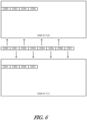
- FIG. 6 illustrates a sequence of data sub-blocks DSB0-DSB7 that are written in an interleaved manner to first and second memory banks 811(0) and 811(1).
- FIG. 7 illustrates an example of a process.
- a set of access requests 823 are fed to access request converter 822 that converts the set of access requests 823 to a set of commands that are stored in multiple queues - especially sixteen queues - 825(0) to 825(15) that are associated with the sixteen memory banks 811(0) to 811(15).
- Scheduler 826 may access only some of these queues 825 in order to schedule only some of the commands. For example, assuming that the scheduler 826 has to schedule the first sub-set that are related to a first group of memory banks, then the scheduler 826 may access the queues 825 that store the first sub-set without accessing the queues that store the second sub-set.
- the scheduler 826 may access queues 825(0), 825(4), 825(8), and 825(12) and not access queues 825(1), 825(5), 825(9), and 825(13).
- scheduler 826 may also access 825(2), 825(6), 825(10), and 825(14) and not access queues 825(3), 825(7), 825(11), and 825(15).
- the scheduler 826 may output, during each scheduling iteration, a selected command 841.
- the scheduling decisions converter 827 converts the selected command 841 to a pair of commands that includes the selected command 841 and a corresponding command 842.
- the selected command 841 and the corresponding command 842 are aimed to different groups of memory banks 811.
- the corresponding command 842 may be retrieved from the queues 825 not accessed by the scheduler 826.
- the selected command 841 and the corresponding command 842 are executed by the command execution unit 828.
- FIG. 8 illustrates an example of a generation of a compressed representation of a pair of management commands.
- Memory management command 846 is converted, by scheduling decision converter 822, to a memory controller command and an indicator (collectively denoted 847).
- the indicator may be a duplicate flag that indicates that the execution of the memory management command 846 should be immediately followed by the execution of a same memory management command, which will be aimed to another group of memory banks.
- FIG. 9 illustrates an example of various commands.
- FIG. 9 illustrates a portion 825(0) of the memory controller commands 825 of FIG. 5 .
- Each command may include an opcode (such as PRE - precharge, ACT - activate, RD - read, WR - write, and REFRESH- refresh), address bits, data (when applicable) and a flag (when applicable).
- an opcode such as PRE - precharge, ACT - activate, RD - read, WR - write, and REFRESH- refresh
- address bits such as data (when applicable) and a flag (when applicable).
- Management commands such as pre-charge and refresh also include a duplicate flag that indicates that they should be duplicated for one or more other groups of memory banks.
- a first PRE command that is aimed to a first memory bank of the first group of memory banks may include a duplicate flag. Accordingly, when the scheduler determines to execute the first PRE command, the dynamic memory controller also generates a second PRE command that is aimed to the second memory bank of the second group of memory banks- and schedules the second PRE command to be executed immediately after the execution of the first PRE command.
- the interleaving may be applicable when the dynamic memory module is used to store error correction code (ECC).
- ECC error correction code
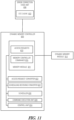
- FIG. 10 illustrates that the dynamic memory controller 820 may include an error correction code unit 830 that includes an ECC cache 832 for storing error correction codes sub-blocks.
- FIG. 11 illustrates that the dynamic memory controller 820 may be coupled to an error correction code unit 830 that includes an ECC cache 832 for storing error correction codes sub-blocks.
- the first and second groups of memory banks may belong to multiple memory banks of the dynamic memory module; and the method may include imposing, by the dynamic memory module, a time gap between consecutive input output accesses to a same group of memory banks.
- the scheduling of the execution of the first sub-set may include accessing, by the scheduler, the first sub-set without accessing, by the scheduler, the second sub-set.
- the scheduling of the execution of the first sub-set may include accessing, by the scheduler, a compressed representation of the group.
- the scheduling of the execution of the second sub-set may include adding, to each scheduler decision about a timing of execution of a first command of the first sub-set, another decision regarding a timing of an execution of a second command of the second sub-set, so that the execution of the second command immediately follows the execution of the first command.
- the second command and the first command may have a same operand.
- the converting includes generating pairs of management commands; wherein each pair of management commands comprises (a) a first management command that is associated with the first group of memory banks, and (b) a second management command that is associated with the second group of memory banks; and storing each pair of management commands in a compressed form.
- the storing of each pair of management commands in the compressed form includes storing, for each pair, (a) a single management command that is associated with one of the first and second groups of memory bank, and (b) an indication that a similar command should be generated for the other group of memory banks of the first and second groups of memory bank.
- the management commands comprise a refresh command, a pre-charge command and an activate command.
- the scheduling of the execution of the first sub-set may include grouping together access requests that are associated with a same row of a memory bank of the first group of memory bank.
- the scheduling of the execution of the second sub-set may be performed by a command converter of the memory controller.
- the first and second groups of memory banks may belong to multiple memory banks of the dynamic memory module; and the instructions may cause the memory controller to execute the steps of imposing, by the dynamic memory module, a time gap between consecutive input output accesses to a same group of memory banks.
- the scheduling of the execution of the first sub-set may include accessing, by the scheduler, the first sub-set without accessing, by the scheduler, the second sub-set.
- the scheduling of the execution of the first sub-set may include accessing, by the scheduler, a compressed representation of the group.
- the scheduling of the execution of the second sub-set may include adding, to each scheduler decision about a timing of execution of a first command of the first sub-set, another decision regarding a timing of an execution of a second command of the second sub-set, so that the execution of the second command immediately follows the execution of the first command.
- the second command and the first command may have a same operand.
- the converting includes generating pairs of management commands; wherein each pair of management commands comprises (a) a first management command that is associated with the first group of memory banks, and (b) a second management command that is associated with the second group of memory banks; and storing each pair of management commands in a compressed form.
- the storing of each pair of management commands in the compressed form includes storing, for each pair, (a) a single management command that is associated with one of the first and second groups of memory bank, and (b) an indication that a similar command should be generated for the other group of memory banks of the first and second groups of memory bank.
- the management commands comprise a refresh command, a pre-charge command and an activate command.
- the scheduling of the execution of the first sub-set may include grouping together access requests that are associated with a same row of a memory bank of the first group of memory bank.
- the computer program product may include instructions for scheduling the execution of the second sub-set by a command converter of the memory controller.
- a device that comprises a memory controller; wherein the memory controller is constructed and arranged to perform the steps of a method according to claim 1.
- the first and second groups of memory banks may belong to multiple memory banks of the dynamic memory module; and wherein the dynamic memory module is constructed and arranged to impose a time gap between consecutive input output accesses to a same group of memory banks.
- the scheduler of the memory controller may be constructed and arranged to schedule the execution of the first sub-set by accessing the first sub-set without accessing, by the scheduler, the second sub-set.
- the scheduler of the memory controller may be constructed and arranged to schedule the execution of the first sub-set by accessing a compressed representation of the group.
- the scheduler of the memory controller may be constructed and arranged to schedule the execution of the second sub-set by adding, to each scheduler decision about a timing of execution of a first command of the first sub-set, another decision regarding a timing of an execution of a second command of the second sub-set, so that the execution of the second command immediately follows the execution of the first command.
- the second command and the first command may have a same operand.
- the memory controller is constructed and arranged to convert the access request to commands by generating pairs of management commands; wherein each pair of management commands comprises (a) a first management command that is associated with the first group of memory banks, and (b) a second management command that is associated with the second group of memory banks; and store each pair of management commands in a compressed form.
- the memory controller is constructed and arranged to store of each pair of management commands in the compressed form by storing, for each pair, (a) a single management command that is associated with one of the first and second groups of memory bank, and (b) an indication that a similar command should be generated for the other group of memory banks of the first and second groups of memory bank.
- the management commands comprise a refresh command, a pre-charge command and an activate command.
- the scheduler of the memory controller may be constructed and arranged to schedule the execution of the first sub-set by grouping together access requests that are associated with a same row of a memory bank of the first group of memory bank.
- the memory controller may include a command converter that is constructed and arranged to schedule an execution of the second sub-set.
- the computer program product is non-transitory and may be, for example, an integrated circuit, a magnetic memory, an optical memory, a disk, and the like.
- Any reference to a computer program product should be applied, mutatis mutandis to a method that is executed by a system and/or a system that is configured to execute the instructions stored in the computer program product.
- any arrangement of components to achieve the same functionality is effectively “associated” such that the desired functionality is achieved.
- any two components herein combined to achieve a particular functionality may be seen as “associated with” each other such that the desired functionality is achieved, irrespective of architectures or intermedial components.
- any two components so associated can also be viewed as being “operably connected,” or “operably coupled,” to each other to achieve the desired functionality.
- condition X may be fulfilled. This phrase also suggests that condition X may not be fulfilled. For example - any reference to a system as including a certain component should also cover the scenario in which the system does not include the certain component.
- the illustrated examples may be implemented as circuitry located on a single integrated circuit or within a same device.
- the examples may be implemented as any number of separate integrated circuits or separate devices interconnected with each other in a suitable manner.
- the examples, or portions thereof may implemented as soft or code representations of physical circuitry or of logical representations convertible into physical circuitry, such as in a hardware description language of any appropriate type.
- the invention is not limited to physical devices or units implemented in non-programmable hardware but can also be applied in programmable devices or units able to perform the desired device functions by operating in accordance with suitable program code, such as mainframes, minicomputers, servers, workstations, personal computers, notepads, personal digital assistants, electronic games, automotive and other embedded systems, cell phones and various other wireless devices, commonly denoted in this application as "computer systems.”
- suitable program code such as mainframes, minicomputers, servers, workstations, personal computers, notepads, personal digital assistants, electronic games, automotive and other embedded systems, cell phones and various other wireless devices, commonly denoted in this application as "computer systems.”
- any reference signs placed between parentheses shall not be construed as limiting the claim.
- the word “comprising” does not exclude the presence of other elements or steps then those listed in a claim.
- the terms "a” or “an,” as used herein, are defined as one as or more than one.
Landscapes
- Engineering & Computer Science (AREA)
- Theoretical Computer Science (AREA)
- Physics & Mathematics (AREA)
- General Engineering & Computer Science (AREA)
- General Physics & Mathematics (AREA)
- Human Computer Interaction (AREA)
- Traffic Control Systems (AREA)
- Memory System (AREA)
- Dram (AREA)
Claims (10)
- Verfahren zum Zugreifen auf ein dynamisches Speichermodul, wobei das Verfahren Folgendes umfasst:Empfangen, durch eine Speichersteuerung, eines Satzes von Zugriffsanforderungen zum Zugreifen auf das dynamische Speichermodul;Umwandeln der Zugriffsanforderungen in einen Satz von Befehlen, wobei der Satz von Befehlen (a) einen ersten Teilsatz von Befehlen, die sich auf eine erste Gruppe von Speicherbänken beziehen, und (b) einen zweiten Teilsatz von Befehlen, die sich auf eine zweite Gruppe von Speicherbänken beziehen, umfasst;Planen, durch einen Planer der Speichersteuerung, einer Ausführung des ersten Teilsatzes;Planen einer Ausführung des zweiten Teilsatzes, um sich mit der Ausführung des ersten Teilsatzes zu überlappen; undAusführen des Satzes von Befehlen wie geplant,wobei das Umwandeln das Erzeugen von Paaren von Verwaltungsbefehlen umfasst, wobei die Verwaltungsbefehle einen Aktualisierungsbefehl, einen Vorladebefehl und einen Aktivierungsbefehl umfassen und wobei jedes dieser Paare von Verwaltungsbefehlen(a) einen ersten Verwaltungsbefehl, der mit der ersten Gruppe von Speicherbänken assoziiert ist, und(b) einen zweiten Verwaltungsbefehl, der mit der zweiten Gruppe von Speicherbänken assoziiert ist, umfasst;dadurch gekennzeichnet, dass das Verfahren fernerdas Speichern jedes dieser Paare von Verwaltungsbefehlen in einer komprimierten Form umfasst, wobei das Speichern jedes dieser Paare von Verwaltungsbefehlen in der komprimierten Form für jedes Paar das Speichern (a) eines einzelnen Verwaltungsbefehls, der mit einer der ersten und zweiten Gruppen von Speicherbänken assoziiert ist, und (b) einer Angabe, dass ein ähnlicher Befehl für die andere Gruppe von Speicherbänken der ersten und zweiten Gruppen von Speicherbänken erzeugt werden sollte, umfasst.
- Verfahren nach Anspruch 1, wobei die erste und die zweite Gruppe von Speicherbänken zu mehreren Speicherbänken des dynamischen Speichermoduls gehören; und wobei das Verfahren das Erzwingen, durch das dynamische Speichermodul, einer Zeitlücke zwischen aufeinanderfolgenden Eingabe-Ausgabe-Zugriffen auf eine gleiche Gruppe von Speicherbänken umfasst.
- Verfahren nach Anspruch 1, wobei das Planen der Ausführung der ersten Teilmenge das Zugreifen auf die erste Teilmenge durch den Planer ohne Zugreifen auf die zweite Teilmenge durch den Planer umfasst.
- Verfahren nach Anspruch 1, wobei das Planen der Ausführung der ersten Teilmenge das Zugreifen auf ein Paar von Verwaltungsbefehlen, die in komprimierter Form gespeichert sind, durch den Planer umfasst.
- Verfahren nach Anspruch 1, wobei das Planen der Ausführung der zweiten Teilmenge das Hinzufügen, zu jeder Planerentscheidung über einen Zeitpunkt der Ausführung eines ersten Befehls der ersten Teilmenge, einer weiteren Entscheidung hinsichtlich eines Zeitpunkts einer Ausführung eines zweiten Befehls der zweiten Teilmenge umfasst, sodass die Ausführung des zweiten Befehls unmittelbar auf die Ausführung des ersten Befehls folgt.
- Verfahren nach Anspruch 5, wobei der zweite Befehl und der erste Befehl einen gleichen Operanden aufweisen.
- Verfahren nach Anspruch 1, wobei das Planen der Ausführung der ersten Teilmenge das Gruppieren von Zugriffsanforderungen umfasst, die mit derselben Zeile einer Speicherbank der ersten Gruppe von Speicherbanken assoziiert sind.
- Verfahren nach Anspruch 1, wobei das Planen der Ausführung der zweiten Teilmenge durch einen Befehlswandler der Speichersteuerung durchgeführt wird.
- Computerprogrammprodukt, das Anweisungen speichert, die, wenn sie von einer Speichersteuerung ausgeführt werden, die Speichersteuerung veranlassen, die Schritte eines Verfahrens nach einem der Ansprüche 1 bis 8 auszuführen.
- Vorrichtung, die eine Speichersteuerung umfasst; wobei die Speichersteuerung konfiguriert ist, um die Schritte eines Verfahrens nach einem der Ansprüche 1 bis 8 durchzuführen.
Applications Claiming Priority (2)
| Application Number | Priority Date | Filing Date | Title |
|---|---|---|---|
| US201862714449P | 2018-08-03 | 2018-08-03 | |
| PCT/IB2019/000886 WO2020026030A2 (en) | 2018-08-03 | 2019-08-02 | Accessing a dynamic memory module |
Publications (2)
| Publication Number | Publication Date |
|---|---|
| EP3830705A2 EP3830705A2 (de) | 2021-06-09 |
| EP3830705B1 true EP3830705B1 (de) | 2025-04-23 |
Family
ID=68296541
Family Applications (1)
| Application Number | Title | Priority Date | Filing Date |
|---|---|---|---|
| EP19790773.6A Active EP3830705B1 (de) | 2018-08-03 | 2019-08-02 | Zugriff auf ein flüchtiges speichermodul |
Country Status (4)
| Country | Link |
|---|---|
| US (2) | US11327656B2 (de) |
| EP (1) | EP3830705B1 (de) |
| CN (1) | CN113168385B (de) |
| WO (1) | WO2020026030A2 (de) |
Families Citing this family (3)
| Publication number | Priority date | Publication date | Assignee | Title |
|---|---|---|---|---|
| US11327656B2 (en) | 2018-08-03 | 2022-05-10 | Mobileye Vision Technologies Ltd. | Accessing a dynamic memory module |
| KR20220135786A (ko) * | 2021-03-31 | 2022-10-07 | 에스케이하이닉스 주식회사 | 메모리 시스템에 포함된 복수의 메모리 장치에서 수행되는 동작에 대해 스케줄링하는 장치 및 방법 |
| IT202100012395A1 (it) * | 2021-05-13 | 2022-11-13 | St Microelectronics Srl | Circuito controllore, sistema e procedimento corrispondenti |
Citations (5)
| Publication number | Priority date | Publication date | Assignee | Title |
|---|---|---|---|---|
| WO2002056187A2 (en) * | 2001-01-16 | 2002-07-18 | Sun Microsystems, Inc. | Spin-wheel sdram access scheduler for high performance microprocessors |
| WO2006058200A2 (en) * | 2004-11-29 | 2006-06-01 | Rambus Inc. | Micro-threaded memory |
| US20080091881A1 (en) * | 2006-10-13 | 2008-04-17 | Ibm Corporation | Method and apparatus for queuing memory access commands in a memory queue of an information handling system |
| US20180025773A1 (en) * | 2015-02-28 | 2018-01-25 | Intel Corporation | Precharging and refreshing banks in memory device with bank group architecture |
| US20180188976A1 (en) * | 2016-12-30 | 2018-07-05 | Intel Corporation | Increasing read pending queue capacity to increase memory bandwidth |
Family Cites Families (17)
| Publication number | Priority date | Publication date | Assignee | Title |
|---|---|---|---|---|
| US6853382B1 (en) * | 2000-10-13 | 2005-02-08 | Nvidia Corporation | Controller for a memory system having multiple partitions |
| US6785793B2 (en) * | 2001-09-27 | 2004-08-31 | Intel Corporation | Method and apparatus for memory access scheduling to reduce memory access latency |
| US7631066B1 (en) * | 2002-03-25 | 2009-12-08 | Symantec Operating Corporation | System and method for preventing data corruption in computer system clusters |
| CN101622606B (zh) * | 2006-12-06 | 2014-04-09 | 弗森-艾奥公司 | 用于作为大容量、非易失性存储器的高速缓存的固态存储器的装置、系统和方法 |
| EP2204740A1 (de) * | 2008-12-31 | 2010-07-07 | ST-Ericsson SA (ST-Ericsson Ltd) | Speicherverwaltungsverfahren und Vorrichtung dafür |
| JP4771438B2 (ja) * | 2009-03-27 | 2011-09-14 | エヌイーシーコンピュータテクノ株式会社 | メモリアクセス制御装置、メモリアクセス制御方法、及びメモリアクセス制御用プログラム |
| US9336164B2 (en) * | 2012-10-04 | 2016-05-10 | Applied Micro Circuits Corporation | Scheduling memory banks based on memory access patterns |
| US9286964B2 (en) * | 2012-12-21 | 2016-03-15 | Intel Corporation | Method, apparatus and system for responding to a row hammer event |
| KR20150017526A (ko) * | 2013-08-07 | 2015-02-17 | 삼성전자주식회사 | 메모리 명령 스케줄러 및 메모리 명령 스케줄링 방법 |
| TWI540582B (zh) * | 2014-07-10 | 2016-07-01 | 群聯電子股份有限公司 | 資料管理方法、記憶體控制電路單元以及記憶體儲存裝置 |
| US9418723B2 (en) * | 2014-12-23 | 2016-08-16 | Intel Corporation | Techniques to reduce memory cell refreshes for a memory device |
| EP3274818B1 (de) * | 2015-03-26 | 2021-01-27 | Intel Corporation | Berechnungsverfahren und vorrichtungen mit grafik und systemspeicherkonfliktprüfung |
| EP4557209A3 (de) * | 2015-06-10 | 2025-08-13 | Mobileye Vision Technologies Ltd. | Bildprozessor und verfahren zur verarbeitung eines bildes |
| US10481799B2 (en) * | 2016-03-25 | 2019-11-19 | Samsung Electronics Co., Ltd. | Data storage device and method including receiving an external multi-access command and generating first and second access commands for first and second nonvolatile memories |
| CN106875971B (zh) * | 2017-02-16 | 2021-01-22 | 上海兆芯集成电路有限公司 | 动态随机存取存储器控制器及其控制方法 |
| EP3588405A1 (de) * | 2018-06-29 | 2020-01-01 | Tata Consultancy Services Limited | Systeme und verfahren zum planen eines satzes von nicht präventiven aufgaben in einer multiroboterumgebung |
| US11327656B2 (en) | 2018-08-03 | 2022-05-10 | Mobileye Vision Technologies Ltd. | Accessing a dynamic memory module |
-
2019
- 2019-08-02 US US16/530,126 patent/US11327656B2/en active Active
- 2019-08-02 WO PCT/IB2019/000886 patent/WO2020026030A2/en not_active Ceased
- 2019-08-02 CN CN201980065538.1A patent/CN113168385B/zh active Active
- 2019-08-02 EP EP19790773.6A patent/EP3830705B1/de active Active
-
2022
- 2022-04-25 US US17/728,338 patent/US20220253221A1/en not_active Abandoned
Patent Citations (5)
| Publication number | Priority date | Publication date | Assignee | Title |
|---|---|---|---|---|
| WO2002056187A2 (en) * | 2001-01-16 | 2002-07-18 | Sun Microsystems, Inc. | Spin-wheel sdram access scheduler for high performance microprocessors |
| WO2006058200A2 (en) * | 2004-11-29 | 2006-06-01 | Rambus Inc. | Micro-threaded memory |
| US20080091881A1 (en) * | 2006-10-13 | 2008-04-17 | Ibm Corporation | Method and apparatus for queuing memory access commands in a memory queue of an information handling system |
| US20180025773A1 (en) * | 2015-02-28 | 2018-01-25 | Intel Corporation | Precharging and refreshing banks in memory device with bank group architecture |
| US20180188976A1 (en) * | 2016-12-30 | 2018-07-05 | Intel Corporation | Increasing read pending queue capacity to increase memory bandwidth |
Also Published As
| Publication number | Publication date |
|---|---|
| US20220253221A1 (en) | 2022-08-11 |
| US11327656B2 (en) | 2022-05-10 |
| US20200042191A1 (en) | 2020-02-06 |
| CN113168385A (zh) | 2021-07-23 |
| WO2020026030A3 (en) | 2020-04-30 |
| EP3830705A2 (de) | 2021-06-09 |
| WO2020026030A2 (en) | 2020-02-06 |
| CN113168385B (zh) | 2024-10-11 |
Similar Documents
| Publication | Publication Date | Title |
|---|---|---|
| US20220253221A1 (en) | Accessing a dynamic memory module | |
| US12086239B2 (en) | Secure distributed execution of jobs | |
| US12135761B2 (en) | Applying a convolution kernel on input data | |
| US11366717B2 (en) | Systems and methods for error correction | |
| US10998023B2 (en) | Error correction coding in a dynamic memory module | |
| US11868801B2 (en) | Priority based management of access to shared resources | |
| US20220366215A1 (en) | Applying a convolution kernel on input data | |
| US12608587B2 (en) | Neural network processor | |
| US12554581B2 (en) | Multi-part compare and exchange operation | |
| US12288085B2 (en) | On the fly configuration of a processing circuit | |
| US12020041B2 (en) | Fast configuration of a processing circuit | |
| US12299840B2 (en) | Transposed convolution on downsampled data |
Legal Events
| Date | Code | Title | Description |
|---|---|---|---|
| STAA | Information on the status of an ep patent application or granted ep patent |
Free format text: STATUS: UNKNOWN |
|
| STAA | Information on the status of an ep patent application or granted ep patent |
Free format text: STATUS: THE INTERNATIONAL PUBLICATION HAS BEEN MADE |
|
| PUAI | Public reference made under article 153(3) epc to a published international application that has entered the european phase |
Free format text: ORIGINAL CODE: 0009012 |
|
| STAA | Information on the status of an ep patent application or granted ep patent |
Free format text: STATUS: REQUEST FOR EXAMINATION WAS MADE |
|
| 17P | Request for examination filed |
Effective date: 20210301 |
|
| AK | Designated contracting states |
Kind code of ref document: A2 Designated state(s): AL AT BE BG CH CY CZ DE DK EE ES FI FR GB GR HR HU IE IS IT LI LT LU LV MC MK MT NL NO PL PT RO RS SE SI SK SM TR |
|
| DAV | Request for validation of the european patent (deleted) | ||
| DAX | Request for extension of the european patent (deleted) | ||
| PUAG | Search results despatched under rule 164(2) epc together with communication from examining division |
Free format text: ORIGINAL CODE: 0009017 |
|
| STAA | Information on the status of an ep patent application or granted ep patent |
Free format text: STATUS: EXAMINATION IS IN PROGRESS |
|
| 17Q | First examination report despatched |
Effective date: 20230525 |
|
| B565 | Issuance of search results under rule 164(2) epc |
Effective date: 20230525 |
|
| RIC1 | Information provided on ipc code assigned before grant |
Ipc: G06N 3/08 20060101ALI20230522BHEP Ipc: G11C 7/10 20060101ALI20230522BHEP Ipc: G06F 13/42 20060101ALI20230522BHEP Ipc: G06F 13/16 20060101AFI20230522BHEP |
|
| P01 | Opt-out of the competence of the unified patent court (upc) registered |
Effective date: 20230705 |
|
| GRAP | Despatch of communication of intention to grant a patent |
Free format text: ORIGINAL CODE: EPIDOSNIGR1 |
|
| STAA | Information on the status of an ep patent application or granted ep patent |
Free format text: STATUS: GRANT OF PATENT IS INTENDED |
|
| INTG | Intention to grant announced |
Effective date: 20241119 |
|
| GRAS | Grant fee paid |
Free format text: ORIGINAL CODE: EPIDOSNIGR3 |
|
| GRAA | (expected) grant |
Free format text: ORIGINAL CODE: 0009210 |
|
| STAA | Information on the status of an ep patent application or granted ep patent |
Free format text: STATUS: THE PATENT HAS BEEN GRANTED |
|
| AK | Designated contracting states |
Kind code of ref document: B1 Designated state(s): AL AT BE BG CH CY CZ DE DK EE ES FI FR GB GR HR HU IE IS IT LI LT LU LV MC MK MT NL NO PL PT RO RS SE SI SK SM TR |
|
| REG | Reference to a national code |
Ref country code: GB Ref legal event code: FG4D |
|
| REG | Reference to a national code |
Ref country code: CH Ref legal event code: EP |
|
| REG | Reference to a national code |
Ref country code: DE Ref legal event code: R096 Ref document number: 602019069045 Country of ref document: DE |
|
| REG | Reference to a national code |
Ref country code: IE Ref legal event code: FG4D |
|
| REG | Reference to a national code |
Ref country code: NL Ref legal event code: FP |
|
| RAP4 | Party data changed (patent owner data changed or rights of a patent transferred) |
Owner name: MOBILEYE VISION TECHNOLOGIES LTD. |
|
| REG | Reference to a national code |
Ref country code: AT Ref legal event code: MK05 Ref document number: 1788450 Country of ref document: AT Kind code of ref document: T Effective date: 20250423 |
|
| PG25 | Lapsed in a contracting state [announced via postgrant information from national office to epo] |
Ref country code: PT Free format text: LAPSE BECAUSE OF FAILURE TO SUBMIT A TRANSLATION OF THE DESCRIPTION OR TO PAY THE FEE WITHIN THE PRESCRIBED TIME-LIMIT Effective date: 20250825 Ref country code: FI Free format text: LAPSE BECAUSE OF FAILURE TO SUBMIT A TRANSLATION OF THE DESCRIPTION OR TO PAY THE FEE WITHIN THE PRESCRIBED TIME-LIMIT Effective date: 20250423 Ref country code: ES Free format text: LAPSE BECAUSE OF FAILURE TO SUBMIT A TRANSLATION OF THE DESCRIPTION OR TO PAY THE FEE WITHIN THE PRESCRIBED TIME-LIMIT Effective date: 20250423 |
|
| PGFP | Annual fee paid to national office [announced via postgrant information from national office to epo] |
Ref country code: DE Payment date: 20250722 Year of fee payment: 7 |
|
| REG | Reference to a national code |
Ref country code: LT Ref legal event code: MG9D |
|
| PG25 | Lapsed in a contracting state [announced via postgrant information from national office to epo] |
Ref country code: GR Free format text: LAPSE BECAUSE OF FAILURE TO SUBMIT A TRANSLATION OF THE DESCRIPTION OR TO PAY THE FEE WITHIN THE PRESCRIBED TIME-LIMIT Effective date: 20250724 Ref country code: NO Free format text: LAPSE BECAUSE OF FAILURE TO SUBMIT A TRANSLATION OF THE DESCRIPTION OR TO PAY THE FEE WITHIN THE PRESCRIBED TIME-LIMIT Effective date: 20250723 |
|
| PG25 | Lapsed in a contracting state [announced via postgrant information from national office to epo] |
Ref country code: PL Free format text: LAPSE BECAUSE OF FAILURE TO SUBMIT A TRANSLATION OF THE DESCRIPTION OR TO PAY THE FEE WITHIN THE PRESCRIBED TIME-LIMIT Effective date: 20250423 |
|
| PGFP | Annual fee paid to national office [announced via postgrant information from national office to epo] |
Ref country code: NL Payment date: 20250901 Year of fee payment: 7 |
|
| PG25 | Lapsed in a contracting state [announced via postgrant information from national office to epo] |
Ref country code: BG Free format text: LAPSE BECAUSE OF FAILURE TO SUBMIT A TRANSLATION OF THE DESCRIPTION OR TO PAY THE FEE WITHIN THE PRESCRIBED TIME-LIMIT Effective date: 20250423 |
|
| PGFP | Annual fee paid to national office [announced via postgrant information from national office to epo] |
Ref country code: GB Payment date: 20250829 Year of fee payment: 7 |
|
| PG25 | Lapsed in a contracting state [announced via postgrant information from national office to epo] |
Ref country code: HR Free format text: LAPSE BECAUSE OF FAILURE TO SUBMIT A TRANSLATION OF THE DESCRIPTION OR TO PAY THE FEE WITHIN THE PRESCRIBED TIME-LIMIT Effective date: 20250423 |
|
| PG25 | Lapsed in a contracting state [announced via postgrant information from national office to epo] |
Ref country code: AT Free format text: LAPSE BECAUSE OF FAILURE TO SUBMIT A TRANSLATION OF THE DESCRIPTION OR TO PAY THE FEE WITHIN THE PRESCRIBED TIME-LIMIT Effective date: 20250423 |
|
| PG25 | Lapsed in a contracting state [announced via postgrant information from national office to epo] |
Ref country code: RS Free format text: LAPSE BECAUSE OF FAILURE TO SUBMIT A TRANSLATION OF THE DESCRIPTION OR TO PAY THE FEE WITHIN THE PRESCRIBED TIME-LIMIT Effective date: 20250723 |
|
| PG25 | Lapsed in a contracting state [announced via postgrant information from national office to epo] |
Ref country code: IS Free format text: LAPSE BECAUSE OF FAILURE TO SUBMIT A TRANSLATION OF THE DESCRIPTION OR TO PAY THE FEE WITHIN THE PRESCRIBED TIME-LIMIT Effective date: 20250823 |
|
| PG25 | Lapsed in a contracting state [announced via postgrant information from national office to epo] |
Ref country code: LV Free format text: LAPSE BECAUSE OF FAILURE TO SUBMIT A TRANSLATION OF THE DESCRIPTION OR TO PAY THE FEE WITHIN THE PRESCRIBED TIME-LIMIT Effective date: 20250423 |
|
| PG25 | Lapsed in a contracting state [announced via postgrant information from national office to epo] |
Ref country code: DK Free format text: LAPSE BECAUSE OF FAILURE TO SUBMIT A TRANSLATION OF THE DESCRIPTION OR TO PAY THE FEE WITHIN THE PRESCRIBED TIME-LIMIT Effective date: 20250423 Ref country code: SM Free format text: LAPSE BECAUSE OF FAILURE TO SUBMIT A TRANSLATION OF THE DESCRIPTION OR TO PAY THE FEE WITHIN THE PRESCRIBED TIME-LIMIT Effective date: 20250423 |
|
| PG25 | Lapsed in a contracting state [announced via postgrant information from national office to epo] |
Ref country code: CZ Free format text: LAPSE BECAUSE OF FAILURE TO SUBMIT A TRANSLATION OF THE DESCRIPTION OR TO PAY THE FEE WITHIN THE PRESCRIBED TIME-LIMIT Effective date: 20250423 |
|
| PG25 | Lapsed in a contracting state [announced via postgrant information from national office to epo] |
Ref country code: EE Free format text: LAPSE BECAUSE OF FAILURE TO SUBMIT A TRANSLATION OF THE DESCRIPTION OR TO PAY THE FEE WITHIN THE PRESCRIBED TIME-LIMIT Effective date: 20250423 |
|
| REG | Reference to a national code |
Ref country code: DE Ref legal event code: R097 Ref document number: 602019069045 Country of ref document: DE |
|
| PG25 | Lapsed in a contracting state [announced via postgrant information from national office to epo] |
Ref country code: RO Free format text: LAPSE BECAUSE OF FAILURE TO SUBMIT A TRANSLATION OF THE DESCRIPTION OR TO PAY THE FEE WITHIN THE PRESCRIBED TIME-LIMIT Effective date: 20250423 Ref country code: SK Free format text: LAPSE BECAUSE OF FAILURE TO SUBMIT A TRANSLATION OF THE DESCRIPTION OR TO PAY THE FEE WITHIN THE PRESCRIBED TIME-LIMIT Effective date: 20250423 |
|
| PG25 | Lapsed in a contracting state [announced via postgrant information from national office to epo] |
Ref country code: IT Free format text: LAPSE BECAUSE OF FAILURE TO SUBMIT A TRANSLATION OF THE DESCRIPTION OR TO PAY THE FEE WITHIN THE PRESCRIBED TIME-LIMIT Effective date: 20250423 |
|
| PLBE | No opposition filed within time limit |
Free format text: ORIGINAL CODE: 0009261 |
|
| STAA | Information on the status of an ep patent application or granted ep patent |
Free format text: STATUS: NO OPPOSITION FILED WITHIN TIME LIMIT |
|
| REG | Reference to a national code |
Ref country code: CH Ref legal event code: L10 Free format text: ST27 STATUS EVENT CODE: U-0-0-L10-L00 (AS PROVIDED BY THE NATIONAL OFFICE) Effective date: 20260304 |
|
| REG | Reference to a national code |
Ref country code: CH Ref legal event code: H13 Free format text: ST27 STATUS EVENT CODE: U-0-0-H10-H13 (AS PROVIDED BY THE NATIONAL OFFICE) Effective date: 20260324 |
|
| PG25 | Lapsed in a contracting state [announced via postgrant information from national office to epo] |
Ref country code: MC Free format text: LAPSE BECAUSE OF FAILURE TO SUBMIT A TRANSLATION OF THE DESCRIPTION OR TO PAY THE FEE WITHIN THE PRESCRIBED TIME-LIMIT Effective date: 20250423 |
|
| 26N | No opposition filed |
Effective date: 20260126 |
|
| PG25 | Lapsed in a contracting state [announced via postgrant information from national office to epo] |
Ref country code: LU Free format text: LAPSE BECAUSE OF NON-PAYMENT OF DUE FEES Effective date: 20250802 |
|
| PG25 | Lapsed in a contracting state [announced via postgrant information from national office to epo] |
Ref country code: CH Free format text: LAPSE BECAUSE OF NON-PAYMENT OF DUE FEES Effective date: 20250831 |