EP3825397B1 - Verfahren zur herstellung von parasympathischen nervenzellen - Google Patents
Verfahren zur herstellung von parasympathischen nervenzellen Download PDFInfo
- Publication number
- EP3825397B1 EP3825397B1 EP19852399.5A EP19852399A EP3825397B1 EP 3825397 B1 EP3825397 B1 EP 3825397B1 EP 19852399 A EP19852399 A EP 19852399A EP 3825397 B1 EP3825397 B1 EP 3825397B1
- Authority
- EP
- European Patent Office
- Prior art keywords
- signaling pathway
- activator
- cells
- pathway activator
- retinoic acid
- Prior art date
- Legal status (The legal status is an assumption and is not a legal conclusion. Google has not performed a legal analysis and makes no representation as to the accuracy of the status listed.)
- Active
Links
Images




Classifications
-
- C—CHEMISTRY; METALLURGY
- C12—BIOCHEMISTRY; BEER; SPIRITS; WINE; VINEGAR; MICROBIOLOGY; ENZYMOLOGY; MUTATION OR GENETIC ENGINEERING
- C12N—MICROORGANISMS OR ENZYMES; COMPOSITIONS THEREOF; PROPAGATING, PRESERVING, OR MAINTAINING MICROORGANISMS; MUTATION OR GENETIC ENGINEERING; CULTURE MEDIA
- C12N5/00—Undifferentiated human, animal or plant cells, e.g. cell lines; Tissues; Cultivation or maintenance thereof; Culture media therefor
- C12N5/06—Animal cells or tissues; Human cells or tissues
- C12N5/0602—Vertebrate cells
- C12N5/0618—Cells of the nervous system
- C12N5/0619—Neurons
-
- C—CHEMISTRY; METALLURGY
- C12—BIOCHEMISTRY; BEER; SPIRITS; WINE; VINEGAR; MICROBIOLOGY; ENZYMOLOGY; MUTATION OR GENETIC ENGINEERING
- C12N—MICROORGANISMS OR ENZYMES; COMPOSITIONS THEREOF; PROPAGATING, PRESERVING, OR MAINTAINING MICROORGANISMS; MUTATION OR GENETIC ENGINEERING; CULTURE MEDIA
- C12N2500/00—Specific components of cell culture medium
- C12N2500/30—Organic components
- C12N2500/38—Vitamins
-
- C—CHEMISTRY; METALLURGY
- C12—BIOCHEMISTRY; BEER; SPIRITS; WINE; VINEGAR; MICROBIOLOGY; ENZYMOLOGY; MUTATION OR GENETIC ENGINEERING
- C12N—MICROORGANISMS OR ENZYMES; COMPOSITIONS THEREOF; PROPAGATING, PRESERVING, OR MAINTAINING MICROORGANISMS; MUTATION OR GENETIC ENGINEERING; CULTURE MEDIA
- C12N2501/00—Active agents used in cell culture processes, e.g. differentation
- C12N2501/01—Modulators of cAMP or cGMP, e.g. non-hydrolysable analogs, phosphodiesterase inhibitors, cholera toxin
-
- C—CHEMISTRY; METALLURGY
- C12—BIOCHEMISTRY; BEER; SPIRITS; WINE; VINEGAR; MICROBIOLOGY; ENZYMOLOGY; MUTATION OR GENETIC ENGINEERING
- C12N—MICROORGANISMS OR ENZYMES; COMPOSITIONS THEREOF; PROPAGATING, PRESERVING, OR MAINTAINING MICROORGANISMS; MUTATION OR GENETIC ENGINEERING; CULTURE MEDIA
- C12N2501/00—Active agents used in cell culture processes, e.g. differentation
- C12N2501/10—Growth factors
- C12N2501/115—Basic fibroblast growth factor (bFGF, FGF-2)
-
- C—CHEMISTRY; METALLURGY
- C12—BIOCHEMISTRY; BEER; SPIRITS; WINE; VINEGAR; MICROBIOLOGY; ENZYMOLOGY; MUTATION OR GENETIC ENGINEERING
- C12N—MICROORGANISMS OR ENZYMES; COMPOSITIONS THEREOF; PROPAGATING, PRESERVING, OR MAINTAINING MICROORGANISMS; MUTATION OR GENETIC ENGINEERING; CULTURE MEDIA
- C12N2501/00—Active agents used in cell culture processes, e.g. differentation
- C12N2501/10—Growth factors
- C12N2501/13—Nerve growth factor [NGF]; Brain-derived neurotrophic factor [BDNF]; Cilliary neurotrophic factor [CNTF]; Glial-derived neurotrophic factor [GDNF]; Neurotrophins [NT]; Neuregulins
-
- C—CHEMISTRY; METALLURGY
- C12—BIOCHEMISTRY; BEER; SPIRITS; WINE; VINEGAR; MICROBIOLOGY; ENZYMOLOGY; MUTATION OR GENETIC ENGINEERING
- C12N—MICROORGANISMS OR ENZYMES; COMPOSITIONS THEREOF; PROPAGATING, PRESERVING, OR MAINTAINING MICROORGANISMS; MUTATION OR GENETIC ENGINEERING; CULTURE MEDIA
- C12N2501/00—Active agents used in cell culture processes, e.g. differentation
- C12N2501/10—Growth factors
- C12N2501/155—Bone morphogenic proteins [BMP]; Osteogenins; Osteogenic factor; Bone inducing factor
-
- C—CHEMISTRY; METALLURGY
- C12—BIOCHEMISTRY; BEER; SPIRITS; WINE; VINEGAR; MICROBIOLOGY; ENZYMOLOGY; MUTATION OR GENETIC ENGINEERING
- C12N—MICROORGANISMS OR ENZYMES; COMPOSITIONS THEREOF; PROPAGATING, PRESERVING, OR MAINTAINING MICROORGANISMS; MUTATION OR GENETIC ENGINEERING; CULTURE MEDIA
- C12N2501/00—Active agents used in cell culture processes, e.g. differentation
- C12N2501/30—Hormones
- C12N2501/38—Hormones with nuclear receptors
- C12N2501/385—Hormones with nuclear receptors of the family of the retinoic acid recptor, e.g. RAR, RXR; Peroxisome proliferator-activated receptor [PPAR]
-
- C—CHEMISTRY; METALLURGY
- C12—BIOCHEMISTRY; BEER; SPIRITS; WINE; VINEGAR; MICROBIOLOGY; ENZYMOLOGY; MUTATION OR GENETIC ENGINEERING
- C12N—MICROORGANISMS OR ENZYMES; COMPOSITIONS THEREOF; PROPAGATING, PRESERVING, OR MAINTAINING MICROORGANISMS; MUTATION OR GENETIC ENGINEERING; CULTURE MEDIA
- C12N2501/00—Active agents used in cell culture processes, e.g. differentation
- C12N2501/40—Regulators of development
- C12N2501/41—Hedgehog proteins; Cyclopamine (inhibitor)
-
- C—CHEMISTRY; METALLURGY
- C12—BIOCHEMISTRY; BEER; SPIRITS; WINE; VINEGAR; MICROBIOLOGY; ENZYMOLOGY; MUTATION OR GENETIC ENGINEERING
- C12N—MICROORGANISMS OR ENZYMES; COMPOSITIONS THEREOF; PROPAGATING, PRESERVING, OR MAINTAINING MICROORGANISMS; MUTATION OR GENETIC ENGINEERING; CULTURE MEDIA
- C12N2501/00—Active agents used in cell culture processes, e.g. differentation
- C12N2501/40—Regulators of development
- C12N2501/415—Wnt; Frizzeled
-
- C—CHEMISTRY; METALLURGY
- C12—BIOCHEMISTRY; BEER; SPIRITS; WINE; VINEGAR; MICROBIOLOGY; ENZYMOLOGY; MUTATION OR GENETIC ENGINEERING
- C12N—MICROORGANISMS OR ENZYMES; COMPOSITIONS THEREOF; PROPAGATING, PRESERVING, OR MAINTAINING MICROORGANISMS; MUTATION OR GENETIC ENGINEERING; CULTURE MEDIA
- C12N2501/00—Active agents used in cell culture processes, e.g. differentation
- C12N2501/70—Enzymes
- C12N2501/72—Transferases [EC 2.]
- C12N2501/727—Kinases (EC 2.7.)
-
- C—CHEMISTRY; METALLURGY
- C12—BIOCHEMISTRY; BEER; SPIRITS; WINE; VINEGAR; MICROBIOLOGY; ENZYMOLOGY; MUTATION OR GENETIC ENGINEERING
- C12N—MICROORGANISMS OR ENZYMES; COMPOSITIONS THEREOF; PROPAGATING, PRESERVING, OR MAINTAINING MICROORGANISMS; MUTATION OR GENETIC ENGINEERING; CULTURE MEDIA
- C12N2501/00—Active agents used in cell culture processes, e.g. differentation
- C12N2501/999—Small molecules not provided for elsewhere
-
- C—CHEMISTRY; METALLURGY
- C12—BIOCHEMISTRY; BEER; SPIRITS; WINE; VINEGAR; MICROBIOLOGY; ENZYMOLOGY; MUTATION OR GENETIC ENGINEERING
- C12N—MICROORGANISMS OR ENZYMES; COMPOSITIONS THEREOF; PROPAGATING, PRESERVING, OR MAINTAINING MICROORGANISMS; MUTATION OR GENETIC ENGINEERING; CULTURE MEDIA
- C12N2506/00—Differentiation of animal cells from one lineage to another; Differentiation of pluripotent cells
- C12N2506/02—Differentiation of animal cells from one lineage to another; Differentiation of pluripotent cells from embryonic cells
-
- C—CHEMISTRY; METALLURGY
- C12—BIOCHEMISTRY; BEER; SPIRITS; WINE; VINEGAR; MICROBIOLOGY; ENZYMOLOGY; MUTATION OR GENETIC ENGINEERING
- C12N—MICROORGANISMS OR ENZYMES; COMPOSITIONS THEREOF; PROPAGATING, PRESERVING, OR MAINTAINING MICROORGANISMS; MUTATION OR GENETIC ENGINEERING; CULTURE MEDIA
- C12N2506/00—Differentiation of animal cells from one lineage to another; Differentiation of pluripotent cells
- C12N2506/08—Differentiation of animal cells from one lineage to another; Differentiation of pluripotent cells from cells of the nervous system
-
- C—CHEMISTRY; METALLURGY
- C12—BIOCHEMISTRY; BEER; SPIRITS; WINE; VINEGAR; MICROBIOLOGY; ENZYMOLOGY; MUTATION OR GENETIC ENGINEERING
- C12N—MICROORGANISMS OR ENZYMES; COMPOSITIONS THEREOF; PROPAGATING, PRESERVING, OR MAINTAINING MICROORGANISMS; MUTATION OR GENETIC ENGINEERING; CULTURE MEDIA
- C12N2506/00—Differentiation of animal cells from one lineage to another; Differentiation of pluripotent cells
- C12N2506/45—Differentiation of animal cells from one lineage to another; Differentiation of pluripotent cells from artificially induced pluripotent stem cells
-
- C—CHEMISTRY; METALLURGY
- C12—BIOCHEMISTRY; BEER; SPIRITS; WINE; VINEGAR; MICROBIOLOGY; ENZYMOLOGY; MUTATION OR GENETIC ENGINEERING
- C12N—MICROORGANISMS OR ENZYMES; COMPOSITIONS THEREOF; PROPAGATING, PRESERVING, OR MAINTAINING MICROORGANISMS; MUTATION OR GENETIC ENGINEERING; CULTURE MEDIA
- C12N2533/00—Supports or coatings for cell culture, characterised by material
- C12N2533/30—Synthetic polymers
- C12N2533/32—Polylysine, polyornithine
-
- C—CHEMISTRY; METALLURGY
- C12—BIOCHEMISTRY; BEER; SPIRITS; WINE; VINEGAR; MICROBIOLOGY; ENZYMOLOGY; MUTATION OR GENETIC ENGINEERING
- C12N—MICROORGANISMS OR ENZYMES; COMPOSITIONS THEREOF; PROPAGATING, PRESERVING, OR MAINTAINING MICROORGANISMS; MUTATION OR GENETIC ENGINEERING; CULTURE MEDIA
- C12N2533/00—Supports or coatings for cell culture, characterised by material
- C12N2533/50—Proteins
- C12N2533/52—Fibronectin; Laminin
Definitions
- the present invention relates to a method for producing parasympathetic neurons.
- the present invention relates to a method for producing parasympathetic neurons from autonomic neural progenitor cells or neural crest cells.
- Autonomic nerves are a part of the peripheral nervous system, form a neural pathway connecting the central nervous system and organs, and play an important role in regulation of body functions. Therefore, the loss or dysfunction of autonomic neurons leads to malfunction of organs.
- drug discovery support and cell transplantation treatment using human cells are progressing; however, a culture of a single type of cells derived from an organ or tissue is insufficient as a material used for such studies.
- the inventors have been developing techniques to efficiently induce autonomic nerves from human pluripotent stem cells and have already reported a method for selectively inducing sympathetic neurons or parasympathetic neurons (e.g., Patent Document 1).
- parasympathetic neurons are prepared by this method, autonomic neural progenitor cells need to be seeded at low density because progenitor cells seeded at high density differentiate into sympathetic neurons, and thus, there has been a problem that parasympathetic neurons can be obtained only with low efficiency. Improving of induction efficiency is therefore imperative to prepare parasympathetic neurons to be used in compound screening or cell transplantation.
- Patent Document 1 WO 2016/194522
- the present invention provides a method for producing parasympathetic neurons from neural crest cells or autonomic neural progenitor cells derived therefrom with higher efficiency. Because neurotrophic factors are expensive, the inventors explored low molecular weight compounds that are inexpensive and can improve the efficiency of differentiation into parasympathetic neurons.
- Phorbol 12-myristate 13-acetate is a protein kinase C (PKC) activator and is known to enhance the expression of a transcription factor GATA3, which is essential for regulation of Th2 cell differentiation ( M. Yamashita et al., "Identification of a conserved GATA3 response element upstream proximal from the Interleukin-13 gene locus", The Journal of Biological Chemistry, vol. 277, pp. 42399-42408, 2002 ).
- GATA3 is expressed in a variety of cells in addition to immune cells and has also been shown to be expressed in tumor cells in the autonomic nervous system ( D.
- Retinoic acid has been shown to reduce the expression level of a marker of sympathetic neurons, tyrosine hydroxylase (TH), and enhance the expression of a marker of parasympathetic neurons, choline acetyltransferase (ChAT), in cultured rat sympathetic neurons ( M. Kobayashi et al., "Cholinergic differentiation of cultured sympathetic neurons induced by retinoic acid. Induction of choline acetyltransferase-mRNA and suppression of tyrosine hydroxylase-mRNA levels", FEBS Letters, vol. 337, pp. 259-264, 1994 ). However, the effect of RA on induction of differentiation of undifferentiated autonomic neural progenitor cells into sympathetic/parasympathetic neurons has not been documented.
- parasympathetic neurons can be produced with high efficiency by further using a combination of PMA and RA in the abovementioned method for selectively inducing sympathetic/parasympathetic neurons, which has already been reported.
- an embodiment of the present invention provides a method for producing parasympathetic neurons from neural crest cells or autonomic neural progenitor cells derived therefrom, comprising:
- the protein kinase C activator is preferably a phorbol ester or an ingenol ester, more preferably phorbol 12-myristate 13-acetate.
- the retinoic acid receptor agonist is preferably retinoic acid, tamibarotene, or Ch55, more preferably all-transretinoic acid.
- the protein kinase C activator is preferably phorbol 12-myristate 13-acetate and the retinoic acid receptor agonist is preferably all-transretinoic acid,
- the neural crest cells or autonomic neural progenitor cells derived therefrom are preferably cultured in the presence of a BMP signaling pathway activator, an SHH signaling pathway inhibitor, and a Wnt signaling pathway inhibitor before the step (a), wherein theBMP signaling pathway activator is BMP2, BMP4, BMP7, or BMP2/4, the SHH signaling pathway inhibitor is SANT-1, SANT-2, JK184, or jervine, and the Wnt signaling pathway inhibitor is IWR-1, XAV939, or IWP-2.
- BMP signaling pathway activator is BMP2, BMP4, BMP7, or BMP2/4
- the SHH signaling pathway inhibitor is SANT-1, SANT-2, JK184, or jervine
- the Wnt signaling pathway inhibitor is IWR-1, XAV939, or IWP-2.
- the neural crest cells or autonomic neural progenitor cells derived therefrom are preferably seeded at a concentration of 2 ⁇ 10 5 to 5 ⁇ 10 5 cells/cm 2 .
- the neural crest cells or autonomic neural progenitor cells derived therefrom are preferably derived from a human.
- the neural crest cells or autonomic neural progenitor cells derived therefrom are preferably differentiation-induced from pluripotent stem cells.
- the parasympathetic neurons may express PHOX2B, ChAT, and MAP2.
- the present invention provides a kit for preparing parasympathetic neurons from neural crest cells or autonomic neural progenitor cells derived therefrom, the kit comprising a cAMP production promoter, a BDNF signaling pathway activator, a GDNF signaling pathway activator, an NGF signaling pathway activator, an NT-3 signaling pathway activator, vitamin C, a protein kinase C activator, a retinoic acid receptor agonist, a BMP signaling pathway activator, an SHH signaling pathway inhibitor, and a Wnt signaling pathway inhibitor;
- parasympathetic neurons can be produced with high efficiency without an additional neurotrophic factor at a cost comparable to the cost in the reported method for selectively inducing parasympathetic neurons.
- the present invention is a method for producing parasympathetic neurons from neural crest cells or autonomic neural progenitor cells derived therefrom, comprising (a) a step of culturing the neural crest cells or autonomic neural progenitor cells derived therefrom in the presence of a cAMP production promoter, a BDNF signaling pathway activator, a GDNF signaling pathway activator, an NGF signaling pathway activator, an NT-3 signaling pathway activator, vitamin C, a protein kinase C activator, and a retinoic acid receptor agonist (hereinafter also referred to as "differentiation induction step”), wherein the cAMP production promoter is selected from the group consisting of forskolin (FSK), L-858051, and dibutyryl cAMP (DB-cAMP), the BDNF signaling pathway activator is BDNF, the GDNF signaling pathway activator is GDNF, the NGF signaling pathway activator is N
- neural crest cells are cells released from a neural crest tissue which is formed transiently in a vertebrate during early embryogenesis, and have the potential to differentiate into a variety of cells, such as Schwann cells, melanin cells, and cardiac muscle cells in addition to peripheral neurons including autonomic neurons.
- the neural crest cells that can be used in this embodiment may be derived from freely selected vertebrate animals, preferably derived from mammals such as mice, rats, guinea pigs, hamsters, rabbits, cats, dogs, sheep, pigs, cows, horses, goats, monkeys, or humans, in particular, preferably derived from humans.
- the neural crest cells according to this embodiment can be isolated from the embryonic neural crest tissue.
- neural crests are classified into the cranial neural crest, vagal and sciatic neural crests, trunk neural crest, and cardiac neural crest, and neural crest cells derived from all of these crests have the potential to differentiate into autonomic neurons.
- These cells can be differentiated into autonomic neurons by the differentiation induction procedure as described below and can be used in this embodiment.
- neural crest-derived cells that are undifferentiated and maintain the same pluripotency as neural crest cells are present in neural crest cell-derived tissues such as bone marrow, heart, cornea, iris, dental pulp, and olfactory mucosa, and the neural crest-derived cells isolated from such adult tissues may be included in the neural crest cells according to this embodiment.
- the neural crest cells according to this embodiment can be differentiation-induced from stem cells.
- stem cell used herein means a cell having a self-renewal potential and a differentiation potential.
- Stem cells are classified into totipotent stem cells, pluripotent stem cells, unipotent stem cells, and the like depending on the differentiation potential thereof. Any stem cells can be used in the method of this embodiment as long as they have at least the potential to differentiate into neural crest cells.
- the neural crest cells according to this embodiment are preferably differentiation-induced from pluripotent stem cells.
- the pluripotent stem cells include embryonic stem (ES) cells, induced pluripotent stem (iPS) cells, embryonic germ (EG) cells, multipotent germline stem (mGS) cells (embryonic germ cells and multi potent germline cells mentioned for reference only), and Muse cells. Any pluripotent stem cells can be used in the method of this embodiment, but iPS cells or ES cells are preferred. Methods for preparing pluripotent stem cells have been well established (Practical protocol for culturing human pluripotent stem cells [second edition], 2010, Center for Developmental Biology, RIKEN, Japan).
- pluripotent stem cells can be prepared from cells isolated from the skin, blood, or the like and freely chosen cells such as established cell lines such as, for example, MRC-5 cells.
- established cell lines such as, for example, MRC-5 cells.
- established ES cell lines or iPS cell lines obtained from, e.g., American Type Culture Collection (ATCC)
- ATCC American Type Culture Collection
- pluripotent stem cells modified by genetic engineering techniques may also be used in the method of this embodiment.
- neural crest cells can be prepared by a method known in the field.
- neural crest cells are preferably prepared by culturing pluripotent stem cells using a DMEM/HAM's F-12 medium, a human embryonic stem (hES) cell medium, an N2 medium, a mixture thereof, or the like as a base medium and suitably adding a BMP signaling pathway inhibitor such as dorsomorphin (DM), a TGF signaling pathway inhibitor such as SB431542 (SB), a Wnt signaling pathway activator such as CHIR99021 (CHIR), an FGF signaling pathway activator such as bFGF, an epithelium growth factor (EGF) receptor (EGFR) signaling pathway activator such as an EGF, and the like.
- pluripotent stem cells are preferably preconditioned by culturing using a medium containing a Rho kinase (ROCK) inhibitor such as Y-27632 for two to three days before differentiation induction ( WO 2016/194522 ).
- a Rho kinase (ROCK) inhibitor such as Y
- the "autonomic neural progenitor cell” refers to a cell that is derived from a neural crest cell, and it is more likely to differentiate into an autonomic neuron than a neural crest cell, and it has the potential to differentiate into a sympathetic neuron and a parasympathetic neuron.
- the autonomic neural progenitor cell according to this embodiment can be defined based on expressions of both SOX10 and PHOX2B.
- the autonomic neural progenitor cells according to this embodiment can be prepared by a method in accordance with the above-described method for producing neural crest cells.
- the neural crest cells or autonomic neural progenitor cells derived therefrom can be subcultured stably using a medium supplemented with EGF, basic fibroblast growth factor (bFGF), and the like, while maintaining the differentiating potential, until differentiation into parasympathetic neurons is induced ( Fukuta et al., PLoS ONE, 9(12):e112291, 2014 ).
- EGF EGF
- bFGF basic fibroblast growth factor
- neural crest cells or autonomic neural progenitor cells derived therefrom are cultured in the presence of a cAMP production promoter, a BDNF signaling pathway activator, a GDNF signaling pathway activator, an NGF signaling pathway activator, an NT-3 signaling pathway activator, vitamin C, a protein kinase C activator, and a retinoic acid receptor agonist.
- a “cAMP production promoter” may be any known compound that promotes production of cyclic adenosine monophosphate (cAMP).
- the cAMP production promoter is selected from the group consisting of forskolin (FSK), L-858051, and dibutyryl cAMP (DB-cAMP).
- forskolin can be preferably used, and the concentration of forskolin in a medium can preferably be 5 to 50 ⁇ M.
- a "BDNF signaling pathway activator” may be any known compound that activates brain-derived neurotrophic factor (BDNF), its receptor TrkB, and a downstream signaling pathway thereof. According to the method of the invention the BDNF signaling pathway activator is BDNF.
- the concentration of BDNF in a medium can preferably be 1 to 100 ng/mL.
- a "GDNF signaling pathway activator” may be any known compound that activates glia cell line derived neurotrophic factor (GDNF), its receptor GFR ⁇ , and a downstream signaling pathway thereof. According to the method of the invention the GDNF signaling pathway activator is GDNF.
- the concentration of GDNF in a medium can preferably be 1 to 50 ng/mL.
- NGF signaling pathway activator may be any known compound that activates nerve growth factor (NGF), its receptor TrkA, and a downstream signaling pathway thereof. According to the method of the invention the NGF signaling pathway activator is NGF- ⁇ .
- the concentration of NGF- ⁇ in a medium can preferably be 1 to 50 ng/mL.
- NT-3 signaling pathway activator may be any known compound that activates neurotrophin-3 (NT-3), its receptor TrkC, and a downstream signaling pathway thereof. According to the method of the invention the NT-3 signaling pathway activator is NT-3.
- the concentration of NT-3 in a medium can preferably be 1 to 50 ng/mL.
- Vitamin C may mean ascorbic acid and a derivative thereof.
- Vitamin C may be ascorbic acid, ascorbic acid 2-phosphate, a salt thereof, or a mixture thereof. According to the method of the invention the vitamin C is ascorbic acid.
- the concentration of ascorbic acid in a medium can preferably be 10 to 100 ⁇ M.
- a “protein kinase C activator” may be any known compound that activates protein kinase C (PKC).
- PLC protein kinase C
- the protein kinase C activator is selected from the group consisting ofphorbol esters such as phorbol 12-myristate 13-acetate (PMA) (also referred to as TPA), phorbol 12,13-dibutyrate (PDBu), 12-deoxyphorbol 13-acetate (prostratin), and phorbol 12,13-dihexanoate; ingenol esters such as ingenol 3-angelate (I3A) (also referred to as PEP005); bryostatin 1, bryostatin 2, DCP-LA ( FR236924 ), (-)-Indolactam V, SC-9, SC-10, 1-oleoyl-2-acetylglycerol (OAG), 1-O-hexadecyl-2-O-arachidonyl-sn-
- the PKC activator according to this embodiment is preferably a phorbol ester or an ingenol ester, in particular, preferably phorbol 12-myristate 13-acetate (PMA).
- concentration of the PKC activator in a medium can be suitably determined.
- the concentration of PMA in a medium can preferably be 100 pg/mL to 10 ⁇ g/mL, more preferably 1 to 100 ng/mL, and in particular, preferably 1 to 50 ng/mL.
- a "retinoic acid receptor agonist” may be any known compound that can activate a retinoic acid receptor (RAR), and may be a retinoid or a compound that does not have a retinoid structure as long as it has an RAR agonist activity.
- the retinoic acid receptor agonist is selected from the group consisting of retinoic acids such as all-transretinoic acid (ATRA) and 9- cis -retinoic acid (9cRA) which are examples of the retinoid having the RAR agonist activity and tamibarotene (Am80), Ch55, TTNPB, and AM580, which are examples of the compound that has the RAR agonist activity and does not have a retinoid structure.
- ATRA all-transretinoic acid
- 9cRA 9- cis -retinoic acid
- Am80 tamibarotene
- Ch55 TTNPB
- AM580 tamibarotene
- the RAR agonist according to this embodiment is preferably retinoic acid, tamibarotene, or Ch55, more preferably retinoic acid, in particular, preferably all-transretinoic acid (ATRA).
- the concentration of the RAR agonist in a medium can be suitably determined.
- the concentration of ATRA in a medium can be preferably 1 nM to 1 mM, more preferably 100 nM to 50 ⁇ M, in particular, preferably 500 nM to 10 ⁇ M.
- the medium that can be used in the method of this embodiment can be prepared by using a DMEM/HAM's F-12 medium, an hES medium, an N2 medium, or a mixture thereof used in known methods (for example, Mizuseki et al., Proc. Natl. Acad. Sci. USA, 100:5828-5833 (2003 ); Fukuta et al., PLoS ONE 9(12):e112291 (2014 ); and WO 2016/194522 ) as a base medium and adding the abovementioned components.
- the differentiation induction step (a) in the method of this embodiment preferably uses an N2 medium as a base medium.
- the medium that can be used in the differentiation induction step (a) may further contain a CNTF signaling pathway activator optionally.
- the "CNTF signaling pathway activator" according to this embodiment may be any known compound that activates ciliary body neurotrophic factor (CNTF), its receptor CNTFR, and a downstream signaling pathway thereof.
- CNTF can preferably be used, and the concentration of CNTF in a medium can preferably be 1 to 100 ng/mL.
- neural crest cells or autonomic neural progenitor cells derived therefrom can be seeded at a concentration within a range of, for example, 5 ⁇ 10 4 to 5 ⁇ 10 5 cells/cm 2 , preferably 2 ⁇ 10 5 to 5 ⁇ 10 5 cells/cm 2 , more preferably 2.5 ⁇ 10 5 to 5 ⁇ 10 5 cells/cm 2 .
- neural crest cells or autonomic neural progenitor cells derived therefrom can be adherent-cultured.
- a plate that can be used for adherent culture is preferably coated with a single compound or a mixture of two or more compounds selected from extracellular substrates such as poly-L-ornithine, poly-D-lysine, laminin, fibronectin, and Matrigel.
- the culture conditions in the differentiation induction step (a) of this embodiment vary depending on the animal species from which cells are derived. For example, neural crest cells or autonomic neural progenitor cells derived therefrom that are derived from mammals are preferably cultured under conditions of 37°C and 5% CO 2 .
- the duration of the differentiation induction step (a) of this embodiment can be changed suitably depending on the intended maturity of parasympathetic neurons to be prepared. For example, the duration may be at least 20 days, 30 days, 50 days, 70 days, or longer, preferably 20 to 50 days, in particular, preferably 20 to 30 days.
- the method of this embodiment may further comprise (b) a step of culturing neural crest cells or autonomic neural progenitor cells derived therefrom in the presence of a BMP signaling pathway activator, an SHH signaling pathway inhibitor, and a Wnt signaling pathway inhibitor (hereinafter, also referred to as "preconditioning step") before the differentiation induction step (a),
- a “BMP signaling pathway activator” may be any known compound that activates bone morphogenetic protein (BMP), its receptor (BMPR-I and/or BMPR-II), and a downstream signaling pathway thereof (e.g., Smad1, Smad5, Smad8) and may be a natural or modified BMP family protein.
- BMP signaling pathway activator is a BMP family protein selected from BMP2, BMP4, BMP7, and BMP2/4.
- a single compound or a combination of two or more compounds selected from these compounds can be used as the BMP signaling pathway activator according to this embodiment.
- the BMP signaling pathway activator according to this embodiment is preferably BMP4.
- the concentration of the BMP signaling pathway activator in a medium can be suitably determined.
- the concentration of BMP4 in a medium can be preferably 0.1 to 100 ng/mL, more preferably 5 to 50 ng/mL.
- a “SHH signaling pathway inhibitor” may be any known compound that inhibits a Sonic Hedgehog (SHH) signaling pathway, which comprises SHH, its receptor Patched (PTCH), its adjacent protein Smoothened (SMO), and a downstream glioma-associated oncogene (GLI) thereof.
- SHH signaling pathway inhibitor is SANT-1, SANT-2, or jervine (SMO inhibitors) or JK184 (a GLI inhibitor), and a single compound or a combination of two or more compounds selected from these compounds can be used as the SHH signaling pathway inhibitor according this embodiment.
- the SHH signaling pathway inhibitor according to this embodiment is preferably SANT-1.
- the concentration of the SHH signaling pathway inhibitor in a medium can be suitably determined.
- the concentration of SANT-1 in a medium can be preferably 20 nM to 2 ⁇ M, more preferably 100 to 500 nM.
- a "Wnt signaling pathway inhibitor” may be any known compound that inhibits a Wnt family protein, its receptor (e.g., a seven-pass transmembrane receptor Frizzled [Fz], single-pass transmembrane receptors low-density lipoprotein receptor-related proteins 5 and 6 [LRP5/6], orphan receptor tyrosine kinases 1 and 2 [Ror1/2], receptor type tyrosine kinase [Ryk]), or a downstream signaling pathway thereof ( ⁇ -catenin pathway, planar cell polar [PCP] pathway, Ca 2+ pathway).
- a single compound or a combination of two or more compounds selected from the Wnt signaling pathway inhibitor compounds according to the method of the invention can be used as the Wnt signaling pathway inhibitor according to this embodiment.
- the Wnt signaling pathway inhibitor is a compound that inhibits Wnt-3a, its receptors Fz and LRP5/6, and a downstream ⁇ -catenin pathway thereof and is IWR-1, XAV939 or IWP-2, in particular, preferably IWR-1.
- the concentration of the Wnt signaling pathway inhibitor in a medium can be suitably determined.
- the concentration of IWR-1 in a medium can be preferably 0.5 to 100 ⁇ M, more preferably 2 to 20 ⁇ M.
- the medium that can be used in the preconditioning step (b) according to this embodiment can be prepared using a base medium similar to the media that can be used in the differentiation culture step (a) defined above.
- a medium mixture of an hES medium and an N2 medium is preferably used as a base medium, and the mixing ratio thereof is preferably within a range of 1:3 to 3:1.
- the preconditioning step (b) according to this embodiment is performed by either adherent culturing or suspension culturing (see WO 2016/194522 ).
- parasympathetic neurons can be prepared with high efficiency even under a high density culturing conditions of 2 ⁇ 10 5 cells/cm 2 only by further using a combination of PMA and RA in the reported method for selectively inducing parasympathetic neurons.
- the efficiency for selective induction of differentiation into parasympathetic neurons can be assessed based on the ratio (ChAT/TH) of a parasympathetic neuron marker choline acetyltransferase (ChAT) and a sympathetic neuron marker tyrosine hydroxylase (TH).
- parasympathetic neurons can be prepared with high efficiency in a ChAT/TH of 5 or higher, preferably 10 or higher.
- neurons obtained by the above-described method are parasympathetic neurons. Whether cells obtained by the above-described method are parasympathetic neurons is preferably determined by expressions of PHOX2B, ChAT, and microtubule associated protein 2 (MAP2), and confirmation of presence of a nicotinic acetylcholine receptor is more preferred.
- MAP2 microtubule associated protein 2
- the present invention is a kit for producing parasympathetic neurons from neural crest cells or autonomic neural progenitor cells derived therefrom, the kit comprising a cAMP production promoter, a BDNF signaling pathway activator, a GDNF signaling pathway activator, an NGF signaling pathway activator, an NT-3 signaling pathway activator, vitamin C, a protein kinase C activator, a retinoic acid receptor agonist, a BMP signaling pathway activator, an SHH signaling pathway inhibitor, and a Wnt signaling pathway inhibitor;
- cAMP production promoter "BDNF signaling pathway activator,” “GDNF signaling pathway activator,” “NGF signaling pathway activator,” “NT-3 signaling pathway activator,” “vitamin C,” “protein kinase C activator,” and “retinoic acid receptor agonist” are similar to those defined above.
- the kit of this embodiment can contain the above-described reagents by selecting them appropriately. Additionally, the kit of this embodiment may further contain additional reagents such as a CNTF signaling pathway activator, reagents for preconditioning neural crest cells or autonomic neural progenitor cells derived therefrom, a culture plate, a manual including a differentiation induction protocol, and the like, in addition to the above-described reagents.
- additional reagents such as a CNTF signaling pathway activator, reagents for preconditioning neural crest cells or autonomic neural progenitor cells derived therefrom, a culture plate, a manual including a differentiation induction protocol, and the like, in addition to the above-described reagents.
- a DMEM/Ham's F-12 containing 20% KSR, 1% NEAA, 1% monothioglycerol solution, and 1% P/S was used as a human embryonic stem cell medium (hESM).
- a DMEM/Ham's F-12 containing 1% N2 supplement, 1% NEAA, and 1% P/S was used as an N2 medium.
- Human iPS cells (201B7 strain) were obtained from RIKEN BioResource Center. 1.5 mL of PBS was added to each well of a six-well plate, followed by further addition of iMatrix-511 (Nippi: 892002) at 0.5 ⁇ g/cm 2 , and coating treatment was performed for one hour. Then, the solution was removed from each well, followed by addition of 2 mL of mTeSR1, and a Y-27632 stock solution was further added at a final concentration of 10 ⁇ M.
- iPS cells were seeded at 4 ⁇ 10 4 to 1 ⁇ 10 5 cells/well (4 ⁇ 10 2 to 1 ⁇ 10 4 cells/cm 2 ), and culture was continued on the day following the seeding and after, while the medium was replaced with mTeSR1 not containing Y-27632 every day.
- iPS cells When iPS cells grew and became semiconfluent, the cells were subcultured by the following procedures. mTeSR1 was removed from each well, followed by addition of 1 mL of an Accutase solution heated at 37°C, and the mixture was incubated for five minutes. Subsequently, the Accutase solution in each well was blown on the culture surface with a pipette to exfoliate the human iPS cells, and exfoliated human iPS cells were collected in a centrifuge tube. 1 mL of PBS was further added to the well to collect the human iPS cells remaining in the well into the centrifuge tube. The mixture was centrifuged at 200 ⁇ g for four minutes.
- the supernatant was removed, and 1 mL of mTeSR1 was added to suspend the human iPS cells. The cells were counted. After the concentration was adjusted, the cells were placed in a fresh six-well plate coated with iMatrix.
- MPC polymer Up to 300 ⁇ L of MPC polymer was added to each well of a six-well plate, and non-adhesive treatment was performed on the well surface by drying the well in a clean bench for one hour. Each well was washed with PBS, followed by addition of 2 mL of mTeSR1 containing 10 ⁇ M Y-27632, and iPS cells were seeded at 1 ⁇ 10 6 cells/well. Then, the cells were cultured for two to three days until cell aggregates were formed, while the medium was replaced with mTeSR1 containing 10 ⁇ M Y-27632 every day.
- iPS cells were differentiated into neural crest cells at Steps 1 to 3 below, and autonomic neural progenitor cells with regulated intracellular signals were further obtained by performing preconditioning treatment at Steps 4 and 5 below:
- a 24-well plate coated with poly-L-ornithine and laminin was prepared by the following procedure.
- the plate was coated for one hour with a PLO solution (20 ⁇ g/mL) prepared with DW, washed once with DW, and coated for two hours with a laminin solution (5 ⁇ g/mL) prepared with PBS.
- the N2 medium was supplemented with 10 ⁇ M FSK, 10 ng/mL BDNF, 10 ng/mL GDNF, 10 ng/mL NT-3, 10 ng/mL NGF, and 50 ⁇ g/mL Ascorbic Acid (all final concentrations) to prepare a neural differentiation medium (NDM).
- NDM neural differentiation medium
- the autonomic neural progenitor cells obtained by the above-described Step 5 were washed once with PBS, followed by addition of TrypLE Express Enzyme (250 ⁇ L/well), and cells were exfoliated by incubating the medium for five minutes. 10% FBS-containing DMEM was added to terminate the enzyme reaction, and the cells were collected in a centrifuge tube. After the medium was centrifuged at 200 ⁇ g for four minutes, the supernatant was removed, cells were suspended with NDM, and the cells were counted.
- the cell concentrations were adjusted with the above-described differentiation-inducing media 1 to 4 (up to 2.5 ⁇ 10 5 cells/cm 2 ), and cells were placed on the above-prepared 24-well plate coated with PLO/laminin at 5 ⁇ 10 5 cells/well. Thereafter, culturing was continued while half of the medium was replaced with fresh differentiation-inducing media 1 to 4 twice per week.
- the media cultured for at least 20 days from the start of culturing with the differentiation-inducing media 1 to 4 were analyzed by immune staining and intracellular calcium imaging following the procedure described below.
- the culture was washed with PBS and fixed with a 3.7% formaldehyde/PBS solution for 20 minutes. Then, the medium was washed with PBS, followed by addition of a 0.2% Tween 20/PBS solution, and the mixture was incubated for five minutes. Then, the 0.2% Tween 20/PBS solution was removed, and the plate was blocked for 30 minutes by adding a 4% Block Ace/0.2% Tween 20/PBS solution. Then, the plate was washed once with 0.2% Tween 20/PBS, followed by addition of a primary antibody/Can Get Signal Solution A (TOYOBO), and the mixture was left to stand overnight at 4°C.
- the used primary antibodies were as follows:
- the primary antibody solution was removed, and the plate was washed twice with 0.2% Tween 20/PBS, followed by addition of a secondary antibody/Can Get Signal Solution A (1000-fold diluted Alexa Fluro488 or 1000-fold diluted Alexa Fluor555) or 3000-fold diluted Hoechst 33342 solution, and the mixture was allowed to stand for one hour at room temperature.
- the secondary antibody solution was removed, and the plate was washed twice with 0.2% Tween 20/PBS and then observed under a fluorescence microscope.
- Fig. 2 shows the results about cells subjected to differentiation induction to the 13th to 87th day from the start of culturing using the differentiation-inducing medium 4 (NDM only).
- the upper left figure shows stained TH
- the upper right figure shows stained ChAT
- the lower right figure shows an overlapped image of stained TH and ChAT
- the lower left figure shows a microscopic phase contrast image.
- a mixed state of cells positive for a sympathetic neuron marker TH and cells positive for a parasympathetic neuron marker ChAT was observed.
- the results showed that when differentiation was induced with NDM, autonomic neural progenitor cells were differentiation-induced into both sympathetic neurons and parasympathetic neurons.
- Fig. 3 shows the results about cells subjected to differentiation induction to the 13th to 87th day from the start of culturing using the differentiation-inducing medium 1 (NDM+PMA).
- the upper left figure shows stained TH
- the upper right figure shows stained ChAT
- the lower right figure shows an overlapped image of stained TH and ChAT
- the lower left figure shows a microscopic phase contrast image.
- Both TH positive cells and ChAT positive cells were markedly reduced compared with Fig. 2 .
- the result showed that addition of only PMA reduced the differentiation induction efficiency.
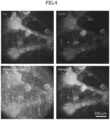
- Fig. 4 shows the results about cells subjected to differentiation induction to the 13th to 87th day from the start of culturing using the differentiation-inducing medium 2 (NDM+RA).
- the upper left figure shows stained TH
- the upper right figure shows stained ChAT
- the lower right figure shows an overlapped image of stained TH and ChAT
- the lower left figure shows a microscopic phase contrast image.
- No significant change was observed in the ratio of TH positive cells and ChAT positive cells compared with Fig. 2 .
- the result showed that addition of only RA did not change the differentiation induction efficiency.
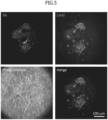
- Fig. 5 shows the results about cells subjected to differentiation induction to the 13th to 87th day from the start of culturing using the differentiation-inducing medium 3 (NDM+PMA+RA).
- the upper left figure shows stained TH
- the upper right figure shows stained ChAT
- the lower right figure shows an overlapped image of stained TH and ChAT
- the lower left figure shows a microscopic phase contrast image.
- Virtually no TH positive cells were observed, whereas a large number of ChAT positive cells were observed.
- the result showed that simultaneous addition of PMA and RA was important to induce selective differentiation into parasympathetic neurons.
- Fig. 6A shows the results about cells subjected to differentiation induction to the 13th to 40th day from the start of culturing using the differentiation-inducing medium 4 (NDM only).
- Fig. 6B shows the results of cells subjected to differentiation induction to the 13th to 44th day from the start of culturing using the differentiation-inducing medium 3 (NDM+PMA+RA).
- Fig. 7 shows the ratio of ChAT positive cells and TH positive cells (ChAT/TH) calculated by analyzing the results shown in Fig. 6 with ImageJ. When differentiation was induced with only NDM, ChAT positive cells and TH positive cells were mixed in about 1: 1 ratio.
- Fig. 8 shows stained PHOX2B, ChAT, and MAP2 for cells subjected to differentiation induction to the 13th to 87th day from the start of culturing ( Figs. 8A to 8D ) or cells subjected to differentiation induction to the 13th to 38th day ( Figs. 8E to 8H ), using the differentiation-inducing medium 3 (NDM+PMA+RA).
- ChAT positive cells were also positive for an autonomic neuron marker PHOX2B ( Figs. 8A to 8D ).
- PHOX2B positive cells were also positive for a mature neuron marker MAP2 ( Figs. 8E to 8H ).
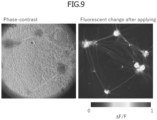
- Fig. 9 The results are shown in Fig. 9 .
- This result showed that the prepared neurons had functional characteristics of autonomic neurons and supported, together with the above-described immune cell staining results, that the prepared neurons were parasympathetic neurons.
Landscapes
- Engineering & Computer Science (AREA)
- Health & Medical Sciences (AREA)
- Biomedical Technology (AREA)
- Life Sciences & Earth Sciences (AREA)
- Zoology (AREA)
- Wood Science & Technology (AREA)
- Biotechnology (AREA)
- Organic Chemistry (AREA)
- Bioinformatics & Cheminformatics (AREA)
- Genetics & Genomics (AREA)
- Chemical & Material Sciences (AREA)
- Neurology (AREA)
- Neurosurgery (AREA)
- Microbiology (AREA)
- Biochemistry (AREA)
- General Engineering & Computer Science (AREA)
- General Health & Medical Sciences (AREA)
- Cell Biology (AREA)
- Micro-Organisms Or Cultivation Processes Thereof (AREA)
Claims (9)
- Verfahren zur Herstellung parasympathischer Nervenzellen aus Neuralleistenzellen oder davon abgeleiteten autonomen neuralen Vorläuferzellen, wobei das Verfahren Folgendes umfasst:(a) einen Schritt des Kultivierens der Neuralleistenzellen oder davon abgeleiteten autonomen neuralen Vorläuferzellen in Gegenwart eines cAMP-Produktionspromotors, eines BDNF-Signalweg-Aktivators, eines GDNF-Signalweg-Aktivators, eines NGF-Signalweg-Aktivators, eines NT-3-Signalweg-Aktivators, Vitamin C, eines Proteinkinase-C-Aktivators und eines Retinsäurerezeptor-Agonisten;wobei der cAMP-Produktionspromotor ausgewählt ist aus der Gruppe bestehend aus Forskolin (FSK), L-858051 und Dibutyryl-cAMP (DB-cAMP),wobei der BDNF-Signalweg-Aktivator BDNF ist,wobei der GDNF-Signalweg-Aktivator GDNF ist,wobei der NGF-Signalweg-Aktivator NGF-β ist,wobei der NT-3-Signalweg-Aktivator NT-3 ist,wobei das Vitamin C Ascorbinsäure ist,wobei der Proteinkinase-C-Aktivator ausgewählt ist aus der Gruppe bestehend aus einem Phorbolester, einem Ingenolester, Bryostatin 1, Bryostatin 2, DCP-LA (FR236924), (-)-Indolactam V, SC-9, SC-10, 1-Oleoyl-2-acetylglycerol (OAG), 1-O-Hexadecyl-2-O-arachidonyl-sn-glycerin, 1,2-Dioctanoyl-sn-glycerin, Phosphatidylinositol-4,5-bis-phosphorsäure (PIP2), Resiniferatoxin, Mezerein, RHC-80267 und Lipoxin A4 undwobei der Retinsäurerezeptor-Agonist ausgewählt ist aus der Gruppe bestehend aus Retinsäure, Tamibaroten, Ch55, TTNPB und AM580.
- Verfahren nach Anspruch 1, wobei der Proteinkinase-C-Aktivator ein Phorbolester oder ein Ingenolester ist.
- Verfahren nach Anspruch 1 oder 2, wobei der Retinsäurerezeptor-Agonist Retinsäure, Tamibaroten oder Ch55 ist.
- Verfahren nach einem der Ansprüche 1 bis 3, wobei der Proteinkinase-C-Aktivator Phorbol-12-myristat-13-acetat ist und der Retinsäurerezeptor-Agonist all-trans-Retinsäure ist.
- Verfahren nach einem der Ansprüche 1 bis 4, das ferner Folgendes umfasst(b) einen Schritt des Kultivierens der Neuralleistenzellen oder davon abgeleiteten autonomen neuralen Vorläuferzellen in Gegenwart eines BMP-Signalweg-Aktivators, eines SHH-Signalweg-Inhibitors und eines Wnt-Signalweg-Inhibitors vor dem Schritt (a),wobei der BMP-Signalweg-Aktivator BMP2, BMP4, BMP7 oder BMP2/4 ist,wobei der SHH-Signalweg-Inhibitor SANT-1, SANT-2, JK184 oder Jervin ist
undwobei der Wnt-Signalweg-Inhibitor IWR-1, XAV939 oder IWP-2 ist. - Verfahren nach einem der Ansprüche 1 bis 5, wobei die Neuralleistenzellen oder davon abgeleiteten autonomen neuralen Vorläuferzellen in einer Konzentration von 2×10⁵ bis 5×10⁵ Zellen/cm2 gesät werden.
- Verfahren nach einem der Ansprüche 1 bis 6, wobei die Neuralleistenzellen oder davon abgeleiteten autonomen neuralen Vorläuferzellen von einem Menschen abgeleitet sind.
- Verfahren nach einem der Ansprüche 1 bis 7, wobei die Neuralleistenzellen oder davon abgeleiteten autonomen neuralen Vorläuferzellen von pluripotenten Stammzellen differenzierungsinduziert sind.
- Kit zur Herstellung parasympathischer Nervenzellen aus Neuralleistenzellen oder davon abgeleiteten autonomen neuralen Vorläuferzellen, wobei das Kit einen cAMP-Produktionspromotor, einen BDNF-Signalweg-Aktivator, einen GDNF-Signalweg-Aktivator, einen NGF-Signalweg-Aktivator, einen NT-3-Signalweg-Aktivator, Vitamin C, einen Proteinkinase-C-Aktivator, einen Retinsäurerezeptor-Agonisten, einen BMP-Signalweg-Aktivator, einen SHH-Signalweg-Inhibitor und einen Wnt-Signalweg-Inhibitor umfasst;wobei der cAMP-Produktionspromotor ausgewählt ist aus der Gruppe bestehend aus Forskolin (FSK), L-858051 und Dibutyryl-cAMP (DB-cAMP),wobei der BDNF-Signalweg-Aktivator BDNF ist,wobei der GDNF-Signalweg-Aktivator GDNF ist,wobei der NGF-Signalweg-Aktivator NGF-β ist,wobei der NT-3-Signalweg-Aktivator NT-3 ist,wobei das Vitamin C Ascorbinsäure ist,wobei der Proteinkinase-C-Aktivator ein Phorbolester oder ein Ingenolester ist,wobei der Retinsäurerezeptor-Agonist Retinsäure, Tamibaroten oder Ch55 ist,wobei der BMP-Signalweg-Aktivator BMP2, BMP4, BMP7 oder BMP2/4 ist,wobei der SHH-Signalweg-Inhibitor SANT-1, SANT-2, JK184 oder Jervin ist
undwobei der Wnt-Signalweg-Inhibitor IWR-1, XAV939 oder IWP-2 ist.
Applications Claiming Priority (2)
| Application Number | Priority Date | Filing Date | Title |
|---|---|---|---|
| JP2018157466 | 2018-08-24 | ||
| PCT/JP2019/033019 WO2020040286A1 (ja) | 2018-08-24 | 2019-08-23 | 副交感神経細胞の作製方法 |
Publications (3)
| Publication Number | Publication Date |
|---|---|
| EP3825397A1 EP3825397A1 (de) | 2021-05-26 |
| EP3825397A4 EP3825397A4 (de) | 2021-09-29 |
| EP3825397B1 true EP3825397B1 (de) | 2023-04-19 |
Family
ID=69592998
Family Applications (1)
| Application Number | Title | Priority Date | Filing Date |
|---|---|---|---|
| EP19852399.5A Active EP3825397B1 (de) | 2018-08-24 | 2019-08-23 | Verfahren zur herstellung von parasympathischen nervenzellen |
Country Status (4)
| Country | Link |
|---|---|
| US (1) | US11359178B2 (de) |
| EP (1) | EP3825397B1 (de) |
| JP (1) | JP6942398B2 (de) |
| WO (1) | WO2020040286A1 (de) |
Families Citing this family (3)
| Publication number | Priority date | Publication date | Assignee | Title |
|---|---|---|---|---|
| WO2024024955A1 (ja) * | 2022-07-29 | 2024-02-01 | 国立研究開発法人産業技術総合研究所 | 迷走神経様副交感神経細胞およびその作製方法 |
| JP2024065647A (ja) * | 2022-10-31 | 2024-05-15 | 国立研究開発法人産業技術総合研究所 | グロムス細胞様細胞およびその作製方法 |
| US20240150709A1 (en) * | 2022-11-04 | 2024-05-09 | University Of Georgia Research Foundation, Inc. | Compositions and methods for making parasympathetic neurons |
Family Cites Families (3)
| Publication number | Priority date | Publication date | Assignee | Title |
|---|---|---|---|---|
| WO2004099395A2 (en) | 2003-05-08 | 2004-11-18 | Cellartis Ab | A method for the generation of neural progenitor cells |
| WO2016194522A1 (ja) | 2015-06-02 | 2016-12-08 | 国立研究開発法人産業技術総合研究所 | 神経堤細胞から自律神経系の細胞への分化誘導方法 |
| CA3064864A1 (en) | 2017-05-25 | 2018-11-29 | New York Stem Cell Foundation, Inc. | Method and composition for generating basal forebrain cholinergic neurons (bfcns) |
-
2019
- 2019-08-23 JP JP2020538484A patent/JP6942398B2/ja active Active
- 2019-08-23 US US17/268,234 patent/US11359178B2/en active Active
- 2019-08-23 WO PCT/JP2019/033019 patent/WO2020040286A1/ja not_active Ceased
- 2019-08-23 EP EP19852399.5A patent/EP3825397B1/de active Active
Also Published As
| Publication number | Publication date |
|---|---|
| JP6942398B2 (ja) | 2021-09-29 |
| US20210171905A1 (en) | 2021-06-10 |
| WO2020040286A1 (ja) | 2020-02-27 |
| JPWO2020040286A1 (ja) | 2021-09-09 |
| US11359178B2 (en) | 2022-06-14 |
| EP3825397A4 (de) | 2021-09-29 |
| EP3825397A1 (de) | 2021-05-26 |
Similar Documents
| Publication | Publication Date | Title |
|---|---|---|
| EP3305889B1 (de) | Verfahren zur induzierung der differenzierung neuraler crest-zellen in autonomen nervensystemzellen | |
| Fligor et al. | Three-dimensional retinal organoids facilitate the investigation of retinal ganglion cell development, organization and neurite outgrowth from human pluripotent stem cells | |
| US11730770B2 (en) | Methods for making and using sinoatrial node-like pacemaker cardiomyocytes and ventricular-like cardiomyocytes | |
| Constantinescu et al. | Neuronal differentiation and long-term culture of the human neuroblastoma line SH-SY5Y | |
| Mount et al. | Evidence that the canonical Wnt signalling pathway regulates deer antler regeneration | |
| Krencik et al. | Specification of transplantable astroglial subtypes from human pluripotent stem cells | |
| JP6419073B2 (ja) | ドパミン神経細胞の製造方法 | |
| WO2017160234A1 (en) | Generation of midbrain-specific organoids from human pluripotent stem cells | |
| US11359178B2 (en) | Method for producing parasympathetic neurons | |
| JP7676043B2 (ja) | 多能性幹細胞から各種細胞への段階的製造方法 | |
| WO2019208788A1 (ja) | 膵臓β細胞の製造方法 | |
| Pierret et al. | Developmental cues and persistent neurogenic potential within an in vitro neural niche | |
| WO2021193360A1 (ja) | 膵臓α細胞への分化誘導方法 | |
| Hackett et al. | Prostaglandin production by human osteoclasts in culture. | |
| Richard et al. | Early, middle, and late stages of neural cells from ovine embryo in primary cultures | |
| WO2019208787A1 (ja) | 原始腸管細胞の製造方法 | |
| Helle et al. | Glial and neuronal regulation of the lipid carrier R-FABP | |
| Ebadi et al. | Comparison of two different media for maturation rate of neural progenitor cells to neuronal and glial cells emphasizing on expression of neurotrophins and their respective receptors | |
| WO2024238977A2 (en) | Liver organoids with intrahepatic sympathetic nerves, and methods of use thereof | |
| Fligor | Axonal Outgrowth and Pathfinding of Human Pluripotent Stem Cell-Derived Retinal Ganglion Cells | |
| TW202409273A (zh) | 擬迷走神經副交感神經細胞及其製作方法 | |
| Zack et al. | Clarisse M. Fligor1, Kirstin B. Langer1, Akshayalakshmi Sridhar1, 10, Yuan Ren2, 3, Priya K. Shields1, Michael C. Edler1, Sarah K. Ohlemacher1, Valentin M. Sluch 4 | |
| Kléber et al. | Neural Crest Stem Cells | |
| Krause et al. | Antje Appelt-Menzel, Alevtina Cubukova, 2 Katharina Günther, 3 Frank Edenhofer, 3, 4 Jörg Piontek, 5 |
Legal Events
| Date | Code | Title | Description |
|---|---|---|---|
| STAA | Information on the status of an ep patent application or granted ep patent |
Free format text: STATUS: THE INTERNATIONAL PUBLICATION HAS BEEN MADE |
|
| PUAI | Public reference made under article 153(3) epc to a published international application that has entered the european phase |
Free format text: ORIGINAL CODE: 0009012 |
|
| STAA | Information on the status of an ep patent application or granted ep patent |
Free format text: STATUS: REQUEST FOR EXAMINATION WAS MADE |
|
| 17P | Request for examination filed |
Effective date: 20210222 |
|
| AK | Designated contracting states |
Kind code of ref document: A1 Designated state(s): AL AT BE BG CH CY CZ DE DK EE ES FI FR GB GR HR HU IE IS IT LI LT LU LV MC MK MT NL NO PL PT RO RS SE SI SK SM TR |
|
| A4 | Supplementary search report drawn up and despatched |
Effective date: 20210831 |
|
| RIC1 | Information provided on ipc code assigned before grant |
Ipc: C12N 5/0797 20100101ALI20210825BHEP Ipc: C12N 5/0793 20100101AFI20210825BHEP |
|
| DAV | Request for validation of the european patent (deleted) | ||
| DAX | Request for extension of the european patent (deleted) | ||
| STAA | Information on the status of an ep patent application or granted ep patent |
Free format text: STATUS: EXAMINATION IS IN PROGRESS |
|
| 17Q | First examination report despatched |
Effective date: 20220609 |
|
| GRAP | Despatch of communication of intention to grant a patent |
Free format text: ORIGINAL CODE: EPIDOSNIGR1 |
|
| STAA | Information on the status of an ep patent application or granted ep patent |
Free format text: STATUS: GRANT OF PATENT IS INTENDED |
|
| INTG | Intention to grant announced |
Effective date: 20230109 |
|
| GRAS | Grant fee paid |
Free format text: ORIGINAL CODE: EPIDOSNIGR3 |
|
| GRAA | (expected) grant |
Free format text: ORIGINAL CODE: 0009210 |
|
| STAA | Information on the status of an ep patent application or granted ep patent |
Free format text: STATUS: THE PATENT HAS BEEN GRANTED |
|
| AK | Designated contracting states |
Kind code of ref document: B1 Designated state(s): AL AT BE BG CH CY CZ DE DK EE ES FI FR GB GR HR HU IE IS IT LI LT LU LV MC MK MT NL NO PL PT RO RS SE SI SK SM TR |
|
| REG | Reference to a national code |
Ref country code: GB Ref legal event code: FG4D |
|
| REG | Reference to a national code |
Ref country code: CH Ref legal event code: EP |
|
| REG | Reference to a national code |
Ref country code: DE Ref legal event code: R096 Ref document number: 602019027875 Country of ref document: DE |
|
| REG | Reference to a national code |
Ref country code: IE Ref legal event code: FG4D |
|
| REG | Reference to a national code |
Ref country code: AT Ref legal event code: REF Ref document number: 1561214 Country of ref document: AT Kind code of ref document: T Effective date: 20230515 |
|
| REG | Reference to a national code |
Ref country code: LT Ref legal event code: MG9D |
|
| REG | Reference to a national code |
Ref country code: NL Ref legal event code: MP Effective date: 20230419 |
|
| REG | Reference to a national code |
Ref country code: AT Ref legal event code: MK05 Ref document number: 1561214 Country of ref document: AT Kind code of ref document: T Effective date: 20230419 |
|
| PG25 | Lapsed in a contracting state [announced via postgrant information from national office to epo] |
Ref country code: NL Free format text: LAPSE BECAUSE OF FAILURE TO SUBMIT A TRANSLATION OF THE DESCRIPTION OR TO PAY THE FEE WITHIN THE PRESCRIBED TIME-LIMIT Effective date: 20230419 |
|
| PG25 | Lapsed in a contracting state [announced via postgrant information from national office to epo] |
Ref country code: SE Free format text: LAPSE BECAUSE OF FAILURE TO SUBMIT A TRANSLATION OF THE DESCRIPTION OR TO PAY THE FEE WITHIN THE PRESCRIBED TIME-LIMIT Effective date: 20230419 Ref country code: PT Free format text: LAPSE BECAUSE OF FAILURE TO SUBMIT A TRANSLATION OF THE DESCRIPTION OR TO PAY THE FEE WITHIN THE PRESCRIBED TIME-LIMIT Effective date: 20230821 Ref country code: NO Free format text: LAPSE BECAUSE OF FAILURE TO SUBMIT A TRANSLATION OF THE DESCRIPTION OR TO PAY THE FEE WITHIN THE PRESCRIBED TIME-LIMIT Effective date: 20230719 Ref country code: ES Free format text: LAPSE BECAUSE OF FAILURE TO SUBMIT A TRANSLATION OF THE DESCRIPTION OR TO PAY THE FEE WITHIN THE PRESCRIBED TIME-LIMIT Effective date: 20230419 Ref country code: AT Free format text: LAPSE BECAUSE OF FAILURE TO SUBMIT A TRANSLATION OF THE DESCRIPTION OR TO PAY THE FEE WITHIN THE PRESCRIBED TIME-LIMIT Effective date: 20230419 |
|
| PG25 | Lapsed in a contracting state [announced via postgrant information from national office to epo] |
Ref country code: RS Free format text: LAPSE BECAUSE OF FAILURE TO SUBMIT A TRANSLATION OF THE DESCRIPTION OR TO PAY THE FEE WITHIN THE PRESCRIBED TIME-LIMIT Effective date: 20230419 Ref country code: PL Free format text: LAPSE BECAUSE OF FAILURE TO SUBMIT A TRANSLATION OF THE DESCRIPTION OR TO PAY THE FEE WITHIN THE PRESCRIBED TIME-LIMIT Effective date: 20230419 Ref country code: LV Free format text: LAPSE BECAUSE OF FAILURE TO SUBMIT A TRANSLATION OF THE DESCRIPTION OR TO PAY THE FEE WITHIN THE PRESCRIBED TIME-LIMIT Effective date: 20230419 Ref country code: LT Free format text: LAPSE BECAUSE OF FAILURE TO SUBMIT A TRANSLATION OF THE DESCRIPTION OR TO PAY THE FEE WITHIN THE PRESCRIBED TIME-LIMIT Effective date: 20230419 Ref country code: IS Free format text: LAPSE BECAUSE OF FAILURE TO SUBMIT A TRANSLATION OF THE DESCRIPTION OR TO PAY THE FEE WITHIN THE PRESCRIBED TIME-LIMIT Effective date: 20230819 Ref country code: HR Free format text: LAPSE BECAUSE OF FAILURE TO SUBMIT A TRANSLATION OF THE DESCRIPTION OR TO PAY THE FEE WITHIN THE PRESCRIBED TIME-LIMIT Effective date: 20230419 Ref country code: GR Free format text: LAPSE BECAUSE OF FAILURE TO SUBMIT A TRANSLATION OF THE DESCRIPTION OR TO PAY THE FEE WITHIN THE PRESCRIBED TIME-LIMIT Effective date: 20230720 Ref country code: AL Free format text: LAPSE BECAUSE OF FAILURE TO SUBMIT A TRANSLATION OF THE DESCRIPTION OR TO PAY THE FEE WITHIN THE PRESCRIBED TIME-LIMIT Effective date: 20230419 |
|
| PG25 | Lapsed in a contracting state [announced via postgrant information from national office to epo] |
Ref country code: FI Free format text: LAPSE BECAUSE OF FAILURE TO SUBMIT A TRANSLATION OF THE DESCRIPTION OR TO PAY THE FEE WITHIN THE PRESCRIBED TIME-LIMIT Effective date: 20230419 |
|
| PG25 | Lapsed in a contracting state [announced via postgrant information from national office to epo] |
Ref country code: SK Free format text: LAPSE BECAUSE OF FAILURE TO SUBMIT A TRANSLATION OF THE DESCRIPTION OR TO PAY THE FEE WITHIN THE PRESCRIBED TIME-LIMIT Effective date: 20230419 |
|
| REG | Reference to a national code |
Ref country code: DE Ref legal event code: R097 Ref document number: 602019027875 Country of ref document: DE |
|
| PG25 | Lapsed in a contracting state [announced via postgrant information from national office to epo] |
Ref country code: SM Free format text: LAPSE BECAUSE OF FAILURE TO SUBMIT A TRANSLATION OF THE DESCRIPTION OR TO PAY THE FEE WITHIN THE PRESCRIBED TIME-LIMIT Effective date: 20230419 Ref country code: SK Free format text: LAPSE BECAUSE OF FAILURE TO SUBMIT A TRANSLATION OF THE DESCRIPTION OR TO PAY THE FEE WITHIN THE PRESCRIBED TIME-LIMIT Effective date: 20230419 Ref country code: RO Free format text: LAPSE BECAUSE OF FAILURE TO SUBMIT A TRANSLATION OF THE DESCRIPTION OR TO PAY THE FEE WITHIN THE PRESCRIBED TIME-LIMIT Effective date: 20230419 Ref country code: EE Free format text: LAPSE BECAUSE OF FAILURE TO SUBMIT A TRANSLATION OF THE DESCRIPTION OR TO PAY THE FEE WITHIN THE PRESCRIBED TIME-LIMIT Effective date: 20230419 Ref country code: DK Free format text: LAPSE BECAUSE OF FAILURE TO SUBMIT A TRANSLATION OF THE DESCRIPTION OR TO PAY THE FEE WITHIN THE PRESCRIBED TIME-LIMIT Effective date: 20230419 Ref country code: CZ Free format text: LAPSE BECAUSE OF FAILURE TO SUBMIT A TRANSLATION OF THE DESCRIPTION OR TO PAY THE FEE WITHIN THE PRESCRIBED TIME-LIMIT Effective date: 20230419 |
|
| PLBE | No opposition filed within time limit |
Free format text: ORIGINAL CODE: 0009261 |
|
| STAA | Information on the status of an ep patent application or granted ep patent |
Free format text: STATUS: NO OPPOSITION FILED WITHIN TIME LIMIT |
|
| PG25 | Lapsed in a contracting state [announced via postgrant information from national office to epo] |
Ref country code: MC Free format text: LAPSE BECAUSE OF FAILURE TO SUBMIT A TRANSLATION OF THE DESCRIPTION OR TO PAY THE FEE WITHIN THE PRESCRIBED TIME-LIMIT Effective date: 20230419 |
|
| 26N | No opposition filed |
Effective date: 20240122 |
|
| PG25 | Lapsed in a contracting state [announced via postgrant information from national office to epo] |
Ref country code: MC Free format text: LAPSE BECAUSE OF FAILURE TO SUBMIT A TRANSLATION OF THE DESCRIPTION OR TO PAY THE FEE WITHIN THE PRESCRIBED TIME-LIMIT Effective date: 20230419 |
|
| PG25 | Lapsed in a contracting state [announced via postgrant information from national office to epo] |
Ref country code: LU Free format text: LAPSE BECAUSE OF NON-PAYMENT OF DUE FEES Effective date: 20230823 |
|
| PG25 | Lapsed in a contracting state [announced via postgrant information from national office to epo] |
Ref country code: LU Free format text: LAPSE BECAUSE OF NON-PAYMENT OF DUE FEES Effective date: 20230823 |
|
| PG25 | Lapsed in a contracting state [announced via postgrant information from national office to epo] |
Ref country code: SI Free format text: LAPSE BECAUSE OF FAILURE TO SUBMIT A TRANSLATION OF THE DESCRIPTION OR TO PAY THE FEE WITHIN THE PRESCRIBED TIME-LIMIT Effective date: 20230419 |
|
| REG | Reference to a national code |
Ref country code: BE Ref legal event code: MM Effective date: 20230831 |
|
| REG | Reference to a national code |
Ref country code: IE Ref legal event code: MM4A |
|
| PG25 | Lapsed in a contracting state [announced via postgrant information from national office to epo] |
Ref country code: SI Free format text: LAPSE BECAUSE OF FAILURE TO SUBMIT A TRANSLATION OF THE DESCRIPTION OR TO PAY THE FEE WITHIN THE PRESCRIBED TIME-LIMIT Effective date: 20230419 Ref country code: IT Free format text: LAPSE BECAUSE OF FAILURE TO SUBMIT A TRANSLATION OF THE DESCRIPTION OR TO PAY THE FEE WITHIN THE PRESCRIBED TIME-LIMIT Effective date: 20230419 |
|
| PG25 | Lapsed in a contracting state [announced via postgrant information from national office to epo] |
Ref country code: IE Free format text: LAPSE BECAUSE OF NON-PAYMENT OF DUE FEES Effective date: 20230823 |
|
| PG25 | Lapsed in a contracting state [announced via postgrant information from national office to epo] |
Ref country code: IE Free format text: LAPSE BECAUSE OF NON-PAYMENT OF DUE FEES Effective date: 20230823 |
|
| PG25 | Lapsed in a contracting state [announced via postgrant information from national office to epo] |
Ref country code: BE Free format text: LAPSE BECAUSE OF NON-PAYMENT OF DUE FEES Effective date: 20230831 |
|
| PG25 | Lapsed in a contracting state [announced via postgrant information from national office to epo] |
Ref country code: BG Free format text: LAPSE BECAUSE OF FAILURE TO SUBMIT A TRANSLATION OF THE DESCRIPTION OR TO PAY THE FEE WITHIN THE PRESCRIBED TIME-LIMIT Effective date: 20230419 |
|
| PG25 | Lapsed in a contracting state [announced via postgrant information from national office to epo] |
Ref country code: BG Free format text: LAPSE BECAUSE OF FAILURE TO SUBMIT A TRANSLATION OF THE DESCRIPTION OR TO PAY THE FEE WITHIN THE PRESCRIBED TIME-LIMIT Effective date: 20230419 |
|
| PGFP | Annual fee paid to national office [announced via postgrant information from national office to epo] |
Ref country code: GB Payment date: 20250624 Year of fee payment: 7 |
|
| PGFP | Annual fee paid to national office [announced via postgrant information from national office to epo] |
Ref country code: FR Payment date: 20250624 Year of fee payment: 7 |
|
| PG25 | Lapsed in a contracting state [announced via postgrant information from national office to epo] |
Ref country code: CY Free format text: LAPSE BECAUSE OF FAILURE TO SUBMIT A TRANSLATION OF THE DESCRIPTION OR TO PAY THE FEE WITHIN THE PRESCRIBED TIME-LIMIT; INVALID AB INITIO Effective date: 20190823 |
|
| PG25 | Lapsed in a contracting state [announced via postgrant information from national office to epo] |
Ref country code: HU Free format text: LAPSE BECAUSE OF FAILURE TO SUBMIT A TRANSLATION OF THE DESCRIPTION OR TO PAY THE FEE WITHIN THE PRESCRIBED TIME-LIMIT; INVALID AB INITIO Effective date: 20190823 |
|
| PGFP | Annual fee paid to national office [announced via postgrant information from national office to epo] |
Ref country code: DE Payment date: 20250624 Year of fee payment: 7 |
|
| PGFP | Annual fee paid to national office [announced via postgrant information from national office to epo] |
Ref country code: CH Payment date: 20250901 Year of fee payment: 7 |
|
| PG25 | Lapsed in a contracting state [announced via postgrant information from national office to epo] |
Ref country code: TR Free format text: LAPSE BECAUSE OF FAILURE TO SUBMIT A TRANSLATION OF THE DESCRIPTION OR TO PAY THE FEE WITHIN THE PRESCRIBED TIME-LIMIT Effective date: 20230419 |