EP3824660B1 - Funkressourcenverwaltung zum funkrufen in einem nicht-ankerträger - Google Patents
Funkressourcenverwaltung zum funkrufen in einem nicht-ankerträger Download PDFInfo
- Publication number
- EP3824660B1 EP3824660B1 EP19746269.0A EP19746269A EP3824660B1 EP 3824660 B1 EP3824660 B1 EP 3824660B1 EP 19746269 A EP19746269 A EP 19746269A EP 3824660 B1 EP3824660 B1 EP 3824660B1
- Authority
- EP
- European Patent Office
- Prior art keywords
- anchor carrier
- measurement
- aspects
- anchor
- value
- Prior art date
- Legal status (The legal status is an assumption and is not a legal conclusion. Google has not performed a legal analysis and makes no representation as to the accuracy of the status listed.)
- Active
Links
Images




Classifications
-
- H—ELECTRICITY
- H04—ELECTRIC COMMUNICATION TECHNIQUE
- H04W—WIRELESS COMMUNICATION NETWORKS
- H04W36/00—Hand-off or reselection arrangements
- H04W36/0005—Control or signalling for completing the hand-off
- H04W36/0055—Transmission or use of information for re-establishing the radio link
- H04W36/0058—Transmission of hand-off measurement information, e.g. measurement reports
-
- H—ELECTRICITY
- H04—ELECTRIC COMMUNICATION TECHNIQUE
- H04W—WIRELESS COMMUNICATION NETWORKS
- H04W24/00—Supervisory, monitoring or testing arrangements
- H04W24/10—Scheduling measurement reports ; Arrangements for measurement reports
-
- H—ELECTRICITY
- H04—ELECTRIC COMMUNICATION TECHNIQUE
- H04W—WIRELESS COMMUNICATION NETWORKS
- H04W24/00—Supervisory, monitoring or testing arrangements
- H04W24/08—Testing, supervising or monitoring using real traffic
-
- H—ELECTRICITY
- H04—ELECTRIC COMMUNICATION TECHNIQUE
- H04W—WIRELESS COMMUNICATION NETWORKS
- H04W36/00—Hand-off or reselection arrangements
- H04W36/0005—Control or signalling for completing the hand-off
- H04W36/0083—Determination of parameters used for hand-off, e.g. generation or modification of neighbour cell lists
- H04W36/0085—Hand-off measurements
-
- H—ELECTRICITY
- H04—ELECTRIC COMMUNICATION TECHNIQUE
- H04W—WIRELESS COMMUNICATION NETWORKS
- H04W36/00—Hand-off or reselection arrangements
- H04W36/24—Reselection being triggered by specific parameters
- H04W36/30—Reselection being triggered by specific parameters by measured or perceived connection quality data
- H04W36/302—Reselection being triggered by specific parameters by measured or perceived connection quality data due to low signal strength
-
- H—ELECTRICITY
- H04—ELECTRIC COMMUNICATION TECHNIQUE
- H04W—WIRELESS COMMUNICATION NETWORKS
- H04W48/00—Access restriction; Network selection; Access point selection
- H04W48/20—Selecting an access point
-
- H—ELECTRICITY
- H04—ELECTRIC COMMUNICATION TECHNIQUE
- H04W—WIRELESS COMMUNICATION NETWORKS
- H04W72/00—Local resource management
- H04W72/04—Wireless resource allocation
- H04W72/044—Wireless resource allocation based on the type of the allocated resource
- H04W72/0453—Resources in frequency domain, e.g. a carrier in FDMA
-
- H—ELECTRICITY
- H04—ELECTRIC COMMUNICATION TECHNIQUE
- H04W—WIRELESS COMMUNICATION NETWORKS
- H04W76/00—Connection management
- H04W76/20—Manipulation of established connections
- H04W76/28—Discontinuous transmission [DTX]; Discontinuous reception [DRX]
-
- H—ELECTRICITY
- H04—ELECTRIC COMMUNICATION TECHNIQUE
- H04L—TRANSMISSION OF DIGITAL INFORMATION, e.g. TELEGRAPHIC COMMUNICATION
- H04L5/00—Arrangements affording multiple use of the transmission path
- H04L5/0001—Arrangements for dividing the transmission path
- H04L5/0003—Two-dimensional division
- H04L5/0005—Time-frequency
- H04L5/0007—Time-frequency the frequencies being orthogonal, e.g. OFDM(A) or DMT
- H04L5/001—Time-frequency the frequencies being orthogonal, e.g. OFDM(A) or DMT the frequencies being arranged in component carriers
-
- H—ELECTRICITY
- H04—ELECTRIC COMMUNICATION TECHNIQUE
- H04W—WIRELESS COMMUNICATION NETWORKS
- H04W48/00—Access restriction; Network selection; Access point selection
- H04W48/08—Access restriction or access information delivery, e.g. discovery data delivery
- H04W48/12—Access restriction or access information delivery, e.g. discovery data delivery using downlink control channel
-
- H—ELECTRICITY
- H04—ELECTRIC COMMUNICATION TECHNIQUE
- H04W—WIRELESS COMMUNICATION NETWORKS
- H04W68/00—User notification, e.g. alerting and paging, for incoming communication, change of service or the like
- H04W68/005—Transmission of information for alerting of incoming communication
Definitions
- aspects of the technology described below generally relate to wireless communication and to techniques and apparatuses for radio resource management for paging in a non-anchor carrier.
- Wireless communication systems are widely deployed to provide various telecommunication services such as telephony, video, data, messaging, and broadcasts.
- Typical wireless communication systems may employ multiple-access technologies capable of supporting communication with multiple users by sharing available system resources (e.g., bandwidth, transmit power, and/or the like).
- multiple-access technologies include code division multiple access (CDMA) systems, time division multiple access (TDMA) systems, frequency-division multiple access (FDMA) systems, orthogonal frequency-division multiple access (OFDMA) systems, single-carrier frequency-division multiple access (SC-FDMA) systems, time division synchronous code division multiple access (TD-SCDMA) systems, and Long Term Evolution (LTE).
- LTE/LTE-Advanced is a set of enhancements to the Universal Mobile Telecommunications System (UMTS) mobile standard promulgated by the Third Generation Partnership Project (3GPP).
- UMTS Universal Mobile Telecommunications System
- a wireless communication network may include a number of base stations (BSs) that can support communication for a number of user equipment (UEs).
- a user equipment (UE) may communicate with a base station (BS) via the downlink and uplink.
- the downlink (or forward link) refers to the communication link from the BS to the UE
- the uplink (or reverse link) refers to the communication link from the UE to the BS.
- a BS may be referred to as a Node B, a gNB, an access point (AP), a radio head, a transmit receive point (TRP), a New Radio (NR) BS, a 5G Node B, and/or the like.
- New Radio which may also be referred to as 5G, is a set of enhancements to the LTE mobile standard promulgated by the Third Generation Partnership Project (3GPP).
- 3GPP Third Generation Partnership Project
- NR is designed to better support mobile broadband Internet access by improving spectral efficiency, lowering costs, improving services, making use of new spectrum, and better integrating with other open standards using orthogonal frequency division multiplexing (OFDM) with a cyclic prefix (CP) (CP-OFDM) on the downlink (DL), using CP-OFDM and/or SC-FDM (e.g., also known as discrete Fourier transform spread OFDM (DFT-s-OFDM)) on the uplink (UL), as well as supporting beamforming, multiple-input multiple-output (MIMO) antenna technology, and carrier aggregation.
- OFDM orthogonal frequency division multiplexing
- SC-FDM e.g., also known as discrete Fourier transform spread OFDM (DFT-s-OFDM)
- MIMO multiple-input multiple-output
- US2018/4124644 relates to techniques for determining presence of narrowband reference signals (NRSs) in non-anchor physical resource blocks (PRBs).
- An exemplary method that may be performed by a user equipment (UE) includes deciding that a paging occasion (PO), a RAR transmission, or a SC-PTM transmission will occur or has occurred, determining occurrence of a narrowband reference signal (NRS) in a non-anchor resource block (RB) based on at least one of: the decision, one or more narrowband transmission parameters, or presence of one or more other transmissions in a same RB as the PO, the RAR transmission, or the SC-PTM transmission; and processing the NRS.
- PO paging occasion
- RAR Radio Access
- SC-PTM SC-PTM transmission
- WO2018/027933 discloses certain wireless communication systems may benefit from an approach in which detection-less radio resource management measurements may be taken.
- a method can include determining that handover of a user equipment is possible.
- the method can also include providing the user equipment with measurement assistance information.
- the measurement assistance information can be configured to permit the user equipment to hand over from a non-anchor physical resource block of a source cell to a non-anchor physical resource block of a target cell.
- TELEKOM RESEARCH & DEVELOPMENT SDN BHD "Further Consideration of NB-IoT Small Cell Support", vol. RAN WG2, no. Reno, Nevada, USA; 20171127 - 20171201, (20171114), 3GPP DRAFT; R2-1712283, 3RD GENERATION PARTNERSHIP PROJECT (3GPP), MOBILE COMPETENCE CENTRE ; 650, ROUTE DES LUCIOLES ; F-06921 SOPHIA-ANTIPOLIS CEDEX ; FRANCE provides further consideration of NB-IoT Small cell support.
- ERICSSON "Relaxed monitoring in NB-IoT", vol. RAN WG2, no. Berlin, Germany; 20170821 - 20170825, (20170820), 3GPP DRAFT; R2-1708273 RELAXED MONITORING IN NB-IOT, 3RD GENERATION PARTNERSHIP PROJECT (3GPP), MOBILE COMPETENCE CENTRE ; 650, ROUTE DES LUCIOLES ; F-06921 SOPHIA-ANTIPOLIS CEDEX ; FRANCE is a discussion document discussing relaxed monitoring in NB-IOT.
- a method of wireless communication may include receiving information indicating whether measurement is permitted on a non-anchor carrier; and selectively performing a measurement on at least one of the non-anchor carrier or an anchor carrier based at least in part on the information indicating whether the measurement is permitted on the non-anchor carrier.
- a UE for wireless communication may include memory and one or more processors operatively coupled to the memory.
- the memory and the one or more processors may be configured to receive information indicating whether measurement is permitted on a non-anchor carrier; and selectively perform a measurement on at least one of the non-anchor carrier or an anchor carrier based at least in part on the information indicating whether the measurement is permitted on the non-anchor carrier
- a non-transitory computer-readable medium may store one or more instructions for wireless communication.
- the one or more instructions when executed by one or more processors of a UE, may cause the one or more processors to receive information indicating whether measurement is permitted on a non-anchor carrier; and selectively perform a measurement on at least one of the non-anchor carrier or an anchor carrier based at least in part on the information indicating whether the measurement is permitted on the non-anchor carrier.
- an apparatus for wireless communication may include means for receiving information indicating whether measurement is permitted on a non-anchor carrier; and means for selectively performing a measurement on at least one of the non-anchor carrier or an anchor carrier, based at least in part on the information indicating whether the measurement is permitted on the non-anchor carrier.
- a method of wireless communication may include determining that a measurement value for a non-anchor carrier or a change in the measurement value satisfies a threshold; and skipping a measurement for an anchor carrier based at least in part on determining that the measurement value or the change in the measurement value for the non-anchor carrier satisfies the threshold.
- a UE for wireless communication may include memory and one or more processors operatively coupled to the memory.
- the memory and the one or more processors may be configured to determine that a measurement value for a non-anchor carrier or a change in the measurement value satisfies a threshold; and skip a measurement for an anchor carrier based at least in part on determining that the measurement value or the change in the measurement value for the non-anchor carrier satisfies the threshold.
- a non-transitory computer-readable medium may store one or more instructions for wireless communication.
- the one or more instructions when executed by one or more processors of a UE, may cause the one or more processors to determine that a measurement value for a non-anchor carrier or a change in the measurement value satisfies a threshold; and skip a measurement for an anchor carrier based at least in part on determining that the measurement value or the change in the measurement value for the non-anchor carrier satisfies the threshold.
- an apparatus for wireless communication may include means for determining that a measurement value for a non-anchor carrier or a change in the measurement value satisfies a threshold; and means for skipping a measurement for an anchor carrier based at least in part on determining that the measurement value or the change in the measurement value for the non-anchor carrier satisfies the threshold.
- a method of wireless communication may include determining one or more power values for an anchor carrier and a non-anchor carrier and one or more quality values for the anchor carrier and the non-anchor carrier; and performing a cell selection or a cell reselection based at least in part on the one or more power values and the one or more quality values.
- a UE for wireless communication may include memory and one or more processors operatively coupled to the memory.
- the memory and the one or more processors may be configured to determine one or more power values for an anchor carrier and a non-anchor carrier and one or more quality values for the anchor carrier and the non-anchor carrier; and perform a cell selection or a cell reselection based at least in part on the one or more power values and the one or more quality values.
- a non-transitory computer-readable medium may store one or more instructions for wireless communication.
- the one or more instructions when executed by one or more processors of a UE, may cause the one or more processors to determine one or more power values for an anchor carrier and a non-anchor carrier and one or more quality values for the anchor carrier and the non-anchor carrier; and perform a cell selection or a cell reselection based at least in part on the one or more power values and the one or more quality values.
- an apparatus for wireless communication may include means for determining one or more power values for an anchor carrier and a non-anchor carrier and one or more quality values for the anchor carrier and the non-anchor carrier; and performing a cell selection or a cell reselection based at least in part on the one or more power values and the one or more quality values.
- a method of wireless communication may include receiving an indication from a base station, wherein the indication identifies a non-anchor carrier; and transmitting a power value or a quality value for the non-anchor carrier to the base station.
- a UE for wireless communication may include memory and one or more processors operatively coupled to the memory.
- the memory and the one or more processors may be configured to receive an indication from a base station, wherein the indication identifies a non-anchor carrier; and transmit a power value or a quality value for the non-anchor carrier to the base station.
- a non-transitory computer-readable medium may store one or more instructions for wireless communication.
- the one or more instructions when executed by one or more processors of a UE, may cause the one or more processors to receive an indication from a base station, wherein the indication identifies a non-anchor carrier; and transmit a power value or a quality value for the non-anchor carrier to the base station.
- an apparatus for wireless communication may include means for receiving an indication from a base station, wherein the indication identifies a non-anchor carrier; and transmitting a power value or a quality value for the non-anchor carrier to the base station.
- aspects generally include a method, apparatus, system, computer program product, non-transitory computer-readable medium, user equipment, base station, wireless communication device, and processing system as substantially described with reference to and as illustrated by the drawings and specification.
- a UE may receive a synchronization signal (e.g., a primary synchronization signal (PSS), a secondary synchronization signal (SSS), a physical broadcast channel (PBCH), a narrowband primary synchronization signal (NPSS), a narrowband secondary synchronization signal (NSSS), a narrowband physical broadcast channel (NPBCH), and/or the like) and/or system information (e.g., a master information block (MIB), a system information block (SIB), and/or the like) in an anchor carrier.
- the UE may receive a paging message in the anchor carrier. Receiving a paging message may be referred to herein as paging.
- Non-anchor carriers e.g., a carrier that does not include a synchronization signal or system information
- NB-IoT narrowband Internet of Things
- TS 3GPP Technical Specification
- a non-anchor carrier e.g., a carrier that does not include a narrowband PSS (NPSS), a narrowband SSS (NSSS), a narrowband PBCH (NPBCH), a SIB, and/or the like
- a UE may select a carrier in which to receive paging based at least in part on a UE identifier of the UE.
- the UE may still perform measurement or cell reselection based at least in part on an anchor carrier, even when a non-anchor carrier is selected.
- power consumption and wake-up time may be increased in comparison to UEs that monitor paging in an anchor carrier, since the non-anchor carrier UEs must wake up, tune to the anchor carrier, perform a measurement, and tune back to the non-anchor to decode paging.
- the quality of the anchor carrier may be acceptable, but the quality of the non-anchor carrier may be below a desired threshold (e.g., due to narrowband interference, such as from an illegal repeater).
- the UE may camp on a cell that appears suitable in view of the condition of the anchor carrier, but may receive paging on a non-anchor carrier that suffers from strong interference, thus rendering the UE unreachable using paging.
- Some techniques and apparatuses described herein may provide radio resource management (RRM) procedures using non-anchor carriers.
- RRM radio resource management
- some techniques and apparatuses described herein may use a narrowband reference signal (NRS) transmitted on the non-anchor carrier for RRM purposes in order to perform or configure measurement, cell selection, and/or cell reselection using a non-anchor carrier and/or an anchor carrier.
- NSS narrowband reference signal
- techniques and apparatuses described herein may perform cell selection or reselection based at least in part on a measurement on at least one of a non-anchor carrier or an anchor carrier.
- a base station may indicate whether measurement on a non-anchor carrier is allowed, and a UE may determine whether to perform measurements (e.g., for cell selection, cell reselection, and/or the like) on the anchor carrier on the non-anchor carrier. This may provide for configuration of the UE not to monitor the non-anchor carrier, for example, in a situation where interference on the non-anchor carrier is significant, thus improving air interface performance.
- the UE may enter a relaxed monitoring state with regard to the anchor carrier (e.g., based at least in part on a measurement for the anchor carrier and/or the non-anchor carrier), and may therefore cease monitoring of the anchor carrier.
- the UE may continue to perform measurements on the non-anchor carrier, and may determine whether relaxed monitoring criteria are satisfied based at least in part on the non-anchor carrier measurement. In this way, the UE may selectively monitor or perform measurement for the anchor carrier and/or the non-anchor carrier based at least in part on the relaxed monitoring criteria.
- techniques and apparatuses described herein may perform measurements in the anchor carrier, and may skip some measurements (e.g., determine not to perform one or more measurements, may perform relaxed monitoring, and/or the like) if a measurement of the non-anchor carrier satisfies a condition. For example, some techniques and apparatuses described herein may determine that the anchor carrier and/or the non-anchor carrier are in a steady state (defined elsewhere herein), and may perform relaxed monitoring accordingly. As another example, some techniques and apparatuses described herein may determine that a measurement value for a non-anchor carrier satisfies a threshold, and may determine not to perform one or more measurements for the anchor carrier when the measurement satisfies the threshold. In this way, wake-up time and resource consumption are reduced that would otherwise be used in connection with performing measurement for the anchor carrier.
- techniques and apparatuses described herein may perform cell selection and/or cell reselection based at least in part on a quality and/or power measurement value for the anchor carrier and the non-anchor carrier.
- techniques and apparatuses described herein may use cell selection and/or reselection criteria that are based at least in part on quality and/or power levels for the anchor carrier and the non-anchor carrier. This may reduce the likelihood of selecting or reselecting a cell with a non-anchor carrier that is associated with unacceptable interference, thereby improving radio interface performance.
- techniques and apparatuses described herein may provide information to a base station relating to a quality and/or power level of a non-anchor carrier.
- the UE may provide quality and/or power level measurements for a non-anchor carrier based at least in part on an instruction or indication, from a BS, to provide measurements for the non-anchor carrier.
- the BS may identify non-anchor carriers associated with interference, and may reconfigure appropriately, thereby reducing interference and improving network performance.
- Implementations may range a spectrum from chip-level or modular components to non-modular, non-chip-level implementations and further to aggregate, distributed, or original equipment manufacturer devices or systems incorporating one or more aspects of the described innovations.
- devices incorporating described aspects and features may also necessarily include additional components and features for implementation and practice of claimed and described embodiments.
- transmission and reception of wireless signals necessarily includes a number of components for analog and digital purposes (e.g., hardware components including one or more antennas, radio frequency (RF)-chains, power amplifiers, modulators, buffers, processors, interleavers, adders/summers, and/or the like).
- RF radio frequency
- Fig. 1 is a diagram illustrating a network 100 in which aspects of the present disclosure may be practiced.
- the network 100 may be an LTE network or some other wireless network, such as a 5G or NR network.
- Wireless network 100 may include a number of BSs 110 (shown as BS 110a, BS 110b, BS 110c, and BS 110d) and other network entities.
- a BS is an entity that communicates with user equipment (UEs) and may also be referred to as a base station, a NR BS, a Node B, a gNB, a 5G node B (NB), an access point, a transmit receive point (TRP), and/or the like.
- Each BS may provide communication coverage for a particular geographic area.
- the term "cell" can refer to a coverage area of a BS and/or a BS subsystem serving this coverage area, depending on the context in which the term is used.
- a BS may provide communication coverage for a macro cell, a pico cell, a femto cell, and/or another type of cell.
- a macro cell may cover a relatively large geographic area (e.g., several kilometers in radius) and may allow unrestricted access by UEs with service subscription.
- a pico cell may cover a relatively small geographic area and may allow unrestricted access by UEs with service subscription.
- a femto cell may cover a relatively small geographic area (e.g., a home) and may allow restricted access by UEs having association with the femto cell (e.g., UEs in a closed subscriber group (CSG)).
- a BS for a macro cell may be referred to as a macro BS.
- a BS for a pico cell may be referred to as a pico BS.
- a BS for a femto cell may be referred to as a femto BS or a home BS.
- a BS 110a may be a macro BS for a macro cell 102a
- a BS 110b may be a pico BS for a pico cell 102b
- a BS 110c may be a femto BS for a femto cell 102c.
- a BS may support one or multiple (e.g., three) cells.
- the terms "eNB”, “base station”, “NR BS”, “gNB”, “TRP”, “AP”, “node B", “5G NB”, and “cell” may be used interchangeably herein.
- a cell may not necessarily be stationary, and the geographic area of the cell may move according to the location of a mobile BS.
- the BSs may be interconnected to one another and/or to one or more other BSs or network nodes (not shown) in the access network 100 through various types of backhaul interfaces such as a direct physical connection, a virtual network, and/or the like using any suitable transport network.
- Wireless network 100 may also include relay stations.
- a relay station is an entity that can receive a transmission of data from an upstream station (e.g., a BS or a UE) and send a transmission of the data to a downstream station (e.g., a UE or a BS).
- a relay station may also be a UE that can relay transmissions for other UEs.
- a relay station 1 10d may communicate with macro BS 110a and a UE 120d in order to facilitate communication between BS 110a and UE 120d.
- a relay station may also be referred to as a relay BS, a relay base station, a relay, and/or the like.
- Wireless network 100 may be a heterogeneous network that includes BSs of different types, e.g., macro BSs, pico BSs, femto BSs, relay BSs, and/or the like. These different types of BSs may have different transmit power levels, different coverage areas, and different impact on interference in wireless network 100.
- macro BSs may have a high transmit power level (e.g., 5 to 40 Watts) whereas pico BSs, femto BSs, and relay BSs may have lower transmit power levels (e.g., 0.1 to 2 Watts).
- a network controller 130 may couple to a set of BSs and may provide coordination and control for these BSs.
- Network controller 130 may communicate with the BSs via a backhaul.
- the BSs may also communicate with one another, e.g., directly or indirectly via a wireless or wireline backhaul.
- UEs 120 may be dispersed throughout wireless network 100, and each UE may be stationary or mobile.
- a UE may also be referred to as an access terminal, a terminal, a mobile station, a subscriber unit, a station, and/or the like.
- a UE may be a cellular phone (e.g., a smart phone), a personal digital assistant (PDA), a wireless modem, a wireless communication device, a handheld device, a laptop computer, a cordless phone, a wireless local loop (WLL) station, a tablet, a camera, a gaming device, a netbook, a smartbook, an ultrabook, a medical device or equipment, a biometric sensor or device, a wearable device (smart watches, smart clothing, smart glasses, smart wrist bands, smart jewelry (e.g., smart ring, smart bracelet)), an entertainment device (e.g., a music or video device, or a satellite radio), a vehicular component or sensor, smart meters/sensors, industrial manufacturing equipment, a global positioning system device, or any other suitable device that is configured to communicate via a wireless or wired medium.
- a cellular phone e.g., a smart phone
- PDA personal digital assistant
- WLL wireless local loop
- MTC and eMTC UEs include, for example, robots, drones, remote devices, sensors, meters, monitors, location tags, and/or the like, that may communicate with a base station, another device (e.g., remote device), or some other entity.
- a wireless node may provide, for example, connectivity for or to a network (e.g., a wide area network such as Internet or a cellular network) via a wired or wireless communication link.
- Some UEs may be considered Internet-of Things (IoT) devices, and/or may be implemented as NB-IoT (narrowband internet of things) devices.
- Some UEs may be considered a Customer Premises Equipment (CPE).
- UE 120 may be included inside a housing that houses components of UE 120, such as processor components, memory components, and/or the like.
- any number of wireless networks may be deployed in a given geographic area.
- Each wireless network may support a particular RAT and may operate on one or more frequencies.
- a RAT may also be referred to as a radio technology, an air interface, and/or the like.
- a frequency may also be referred to as a carrier, a frequency channel, and/or the like.
- Each frequency may support a single RAT in a given geographic area in order to avoid interference between wireless networks of different RATs.
- NR or 5G RAT networks may be deployed.
- two or more UEs 120 may communicate directly using one or more sidelink channels (e.g., without using a base station 110 as an intermediary to communicate with one another).
- the UEs 120 may communicate using peer-to-peer (P2P) communications, device-to-device (D2D) communications, a vehicle-to-everything (V2X) protocol (e.g., which may include a vehicle-to-vehicle (V2V) protocol, a vehicle-to-infrastructure (V2I) protocol, and/or the like), a mesh network, and/or the like).
- V2X vehicle-to-everything
- the UE 120 may perform scheduling operations, resource selection operations, and/or other operations described elsewhere herein as being performed by the base station 110.
- Fig. 1 is provided as an example. Other examples may differ from what is described with regard to Fig. 1 .
- Fig. 2 shows a block diagram of a design 200 of base station 110 and UE 120, which may be one of the base stations and one of the UEs in Fig. 1 .
- Base station 110 may be equipped with T antennas 234a through 234t
- UE 120 may be equipped with R antennas 252a through 252r, where in general T ⁇ 1 and R ⁇ 1.
- a transmit processor 220 may receive data from a data source 212 for one or more UEs, select one or more modulation and coding schemes (MCS) for each UE based at least in part on channel quality indicators (CQIs) received from the UE, process (e.g., encode and modulate) the data for each UE based at least in part on the MCS(s) selected for the UE, and provide data symbols for all UEs. Transmit processor 220 may also process system information (e.g., for semi-static resource partitioning information (SRPI) and/or the like) and control information (e.g., CQI requests, grants, upper layer signaling, and/or the like) and provide overhead symbols and control symbols.
- MCS modulation and coding schemes
- CQIs channel quality indicators
- Transmit processor 220 may also process system information (e.g., for semi-static resource partitioning information (SRPI) and/or the like) and control information (e.g., CQI requests, grants, upper layer signal
- Transmit processor 220 may also generate reference symbols for reference signals (e.g., the cell-specific reference signal (CRS)) and synchronization signals (e.g., the primary synchronization signal (PSS) and secondary synchronization signal (SSS)).
- a transmit (TX) multiple-input multiple-output (MIMO) processor 230 may perform spatial processing (e.g., precoding) on the data symbols, the control symbols, the overhead symbols, and/or the reference symbols, if applicable, and may provide T output symbol streams to T modulators (MODs) 232a through 232t. Each modulator 232 may process a respective output symbol stream (e.g., for OFDM and/or the like) to obtain an output sample stream.
- Each modulator 232 may further process (e.g., convert to analog, amplify, filter, and upconvert) the output sample stream to obtain a downlink signal.
- T downlink signals from modulators 232a through 232t may be transmitted via T antennas 234a through 234t, respectively.
- the synchronization signals can be generated with location encoding to convey additional information.
- antennas 252a through 252r may receive the downlink signals from base station 110 and/or other base stations and may provide received signals to demodulators (DEMODs) 254a through 254r, respectively.
- Each demodulator 254 may condition (e.g., filter, amplify, downconvert, and digitize) a received signal to obtain input samples.
- Each demodulator 254 may further process the input samples (e.g., for OFDM and/or the like) to obtain received symbols.
- a MIMO detector 256 may obtain received symbols from all R demodulators 254a through 254r, perform MIMO detection on the received symbols if applicable, and provide detected symbols.
- a receive processor 258 may process (e.g., demodulate and decode) the detected symbols, provide decoded data for UE 120 to a data sink 260, and provide decoded control information and system information to a controller/processor 280.
- a channel processor may determine reference signal received power (RSRP), received signal strength indicator (RSSI), reference signal received quality (RSRQ), channel quality indicator (CQI), and/or the like.
- RSRP reference signal received power
- RSSI received signal strength indicator
- RSRQ reference signal received quality indicator
- CQI channel quality indicator
- one or more components of UE 120 may be included in a housing.
- a transmit processor 264 may receive and process data from a data source 262 and control information (e.g., for reports comprising RSRP, RSSI, RSRQ, CQI, and/or the like) from controller/processor 280. Transmit processor 264 may also generate reference symbols for one or more reference signals. The symbols from transmit processor 264 may be precoded by a TX MIMO processor 266 if applicable, further processed by modulators 254a through 254r (e.g., for DFT-s-OFDM, CP-OFDM, and/or the like), and transmitted to base station 110.
- control information e.g., for reports comprising RSRP, RSSI, RSRQ, CQI, and/or the like
- Transmit processor 264 may also generate reference symbols for one or more reference signals.
- the symbols from transmit processor 264 may be precoded by a TX MIMO processor 266 if applicable, further processed by modulators 254a through 254r (e.g., for DFT-
- the uplink signals from UE 120 and other UEs may be received by antennas 234, processed by demodulators 232, detected by a MIMO detector 236 if applicable, and further processed by a receive processor 238 to obtain decoded data and control information sent by UE 120.
- Receive processor 238 may provide the decoded data to a data sink 239 and the decoded control information to controller/processor 240.
- Base station 110 may include communication unit 244 and communicate to network controller 130 via communication unit 244.
- Network controller 130 may include communication unit 294, controller/processor 290, and memory 292.
- Controller/processor 240 of base station 110, controller/processor 280 of UE 120, and/or any other component(s) of Fig. 2 may perform one or more techniques associated with RRM for paging in a non-anchor carrier, as described in more detail elsewhere herein.
- controller/processor 240 of base station 110, controller/processor 280 of UE 120, and/or any other component(s) of Fig. 2 may perform or direct operations of, for example, process 700 of Fig. 7 , process 800 of Fig. 8 , process 900 of Fig. 9 , process 1000 of Fig. 10 , and/or other processes as described herein.
- Memories 242 and 282 may store data and program codes for base station 110 and UE 120, respectively.
- a scheduler 246 may schedule UEs for data transmission on the downlink and/or uplink.
- UE 120 may include means for receiving information indicating whether measurement is permitted on a non-anchor carrier; means for selectively performing a measurement on at least one of the non-anchor carrier or an anchor carrier based at least in part on the information indicating whether the measurement is permitted on the non-anchor carrier; means for performing a cell selection or cell reselection procedure based at least in part on the measurement; means for receiving information identifying the one or more parameters; means for determining a value for the anchor carrier based at least in part on performing the measurement on the non-anchor carrier; means for determining a value for the non-anchor carrier based at least in part on performing the measurement on the anchor carrier; means for performing a measurement on the anchor carrier according to a periodicity or a discontinuous reception cycle of the UE; means for determining that a measurement value for a non-anchor carrier or a change in the measurement value satisfies a threshold; means for skipping a measurement for an anchor carrier based at least in part on determining that the measurement
- Fig. 2 is provided as an example. Other examples may differ from what is described with regard to Fig. 2 .
- a UE may receive a synchronization signal (e.g., a primary synchronization signal (PSS), a secondary synchronization signal (SSS), a physical broadcast channel (PBCH), a narrowband primary synchronization signal (NPSS), a narrowband secondary synchronization signal (NSSS), a narrowband physical broadcast channel (NPBCH), and/or the like) and/or system information (e.g., a master information block (MIB), a system information block (SIB), and/or the like) in an anchor carrier.
- the UE may receive a paging message in the anchor carrier. Receiving a paging message may be referred to herein as paging.
- Non-anchor carriers e.g., a carrier that does not include a synchronization signal or system information
- NB-IoT narrowband Internet of Things
- TS 3GPP Technical Specification
- a non-anchor carrier e.g., a carrier that does not include a narrowband PSS (NPSS), a narrowband SSS (NSSS), a narrowband PBCH (NPBCH), a SIB, and/or the like
- a UE may select a carrier in which to receive paging based at least in part on a UE identifier of the UE.
- the UE may still perform measurement or cell reselection based at least in part on an anchor carrier, even when a non-anchor carrier is selected.
- power consumption and wake-up time may be increased in comparison to UEs that monitor paging in an anchor carrier, since the non-anchor carrier UEs must wake up, tune to the anchor carrier, perform a measurement, and tune back to the non-anchor to decode paging.
- the quality of the anchor carrier may be acceptable, but the quality of the non-anchor carrier may be below a desired threshold (e.g., due to narrowband interference, such as from an illegal repeater).
- the UE may camp on a cell that appears suitable in view of the condition of the anchor carrier, but may receive paging on a non-anchor carrier that suffers from strong interference, thus rendering the UE unreachable using paging.
- Some techniques and apparatuses described herein may provide radio resource management (RRM) procedures using non-anchor carriers.
- RRM radio resource management
- some techniques and apparatuses described herein may use a narrowband reference signal (NRS) transmitted on the non-anchor carrier for RRM purposes in order to perform or configure measurement, cell selection, and/or cell reselection using a non-anchor carrier and/or an anchor carrier.
- NSS narrowband reference signal
- techniques and apparatuses described herein may perform cell selection or reselection based at least in part on a measurement on at least one of a non-anchor carrier or an anchor carrier.
- a base station may indicate whether measurement on a non-anchor carrier is allowed, and a UE may determine whether to perform measurements (e.g., for cell selection, cell reselection, and/or the like) on the anchor carrier on the non-anchor carrier. This may provide for configuration of the UE not to monitor the non-anchor carrier, for example, in a situation where interference on the non-anchor carrier is significant, thus improving air interface performance.
- the UE may enter a relaxed monitoring state with regard to the anchor carrier (e.g., based at least in part on a measurement for the anchor carrier and/or the non-anchor carrier), and may therefore cease monitoring of the anchor carrier.
- the UE may continue to perform measurements on the non-anchor carrier, and may determine whether relaxed monitoring criteria are satisfied based at least in part on the non-anchor carrier measurement. In this way, the UE may selectively monitor or perform measurement for the anchor carrier and/or the non-anchor carrier based at least in part on the relaxed monitoring criteria.
- techniques and apparatuses described herein may perform measurements in the anchor carrier, and may skip some measurements (e.g., determine not to perform one or more measurements, may perform relaxed monitoring, etc.) if a measurement of the non-anchor carrier satisfies a condition. For example, some techniques and apparatuses described herein may determine that the anchor carrier and/or the non-anchor carrier are in a steady state (defined elsewhere herein), and may perform relaxed monitoring accordingly. As another example, some techniques and apparatuses described herein may determine that a measurement value for a non-anchor carrier satisfies a threshold, and may determine not to perform one or more measurements for the anchor carrier when the measurement satisfies the threshold. In this way, wake-up time and resource consumption are reduced that would otherwise be used in connection with performing measurement for the anchor carrier.
- techniques and apparatuses described herein may perform cell selection and/or cell reselection based at least in part on a quality and/or power measurement value for the anchor carrier and the non-anchor carrier.
- techniques and apparatuses described herein may use cell selection and/or reselection criteria that are based at least in part on quality and/or power levels for the anchor carrier and the non-anchor carrier. This may reduce the likelihood of selecting or reselecting a cell with a non-anchor carrier that is associated with unacceptable interference, thereby improving radio interface performance.
- techniques and apparatuses described herein may provide information to a base station relating to a quality and/or power level of a non-anchor carrier.
- the UE may provide quality and/or power level measurements for a non-anchor carrier based at least in part on an instruction or indication, from a BS, to provide measurements for the non-anchor carrier.
- the BS may identify non-anchor carriers associated with interference, and may reconfigure appropriately, thereby reducing interference and improving network performance.
- Fig. 3 is a diagram illustrating an example 300 of RRM for paging in a non-anchor carrier, in accordance with various aspects of the present disclosure.
- example 300 includes a BS 110 and a UE 120.
- the BS 110 may provide one or more anchor carriers and one or more non-anchor carriers for the UE 120 (e.g., for UEs 120 covered by the BS 110).
- the BS 110 may provide a SIB to the UE 120.
- the SIB may indicate that measurement is permitted in a non-anchor carrier (e.g., a non-anchor carrier provided by the BS 110).
- the BS 110 may provide information (e.g., a SIB or information other than a SIB) indicating whether measurement is permitted on a non-anchor carrier.
- the SIB may indicate a set of non-anchor carriers for which measurement is permitted. Additionally, or alternatively, the SIB may indicate a set of non-anchor carriers for which measurement is not permitted.
- the BS 110 may provide the information indicating whether measurement is permitted on an anchor carrier.
- the BS 110 may broadcast the information indicating whether measurement is permitted.
- the measurement may include at least one of a power measurement (e.g., to determine a power value, such as an RxLev value, a reference signal received power (RSRP), and/or the like), a quality measurement (e.g., to determine a quality value, such as a Qqual value, a reference signal received quality (RSRQ), and/or the like), and/or the like.
- a power measurement e.g., to determine a power value, such as an RxLev value, a reference signal received power (RSRP), and/or the like
- a quality measurement e.g., to determine a quality value, such as a Qqual value, a reference signal received quality (RSRQ), and/or the like
- the BS 110 may provide information (e.g., with the SIB, in the SIB, or separate from the SIB) indicating a parameter associated with the measurement.
- the BS 110 may provide information identifying a parameter (e.g., threshold, and/or the like), a configuration for cell reselection (e.g., a Srxlev parameter, a Q rxlev parameter, a Pcompensation parameter, a Qoffset parameter, an Squal parameter, a Q qual parameter, and/or the like), a configuration for measurement relaxation (e.g., a threshold and/or the like).
- a parameter e.g., threshold, and/or the like
- a configuration for cell reselection e.g., a Srxlev parameter, a Q rxlev parameter, a Pcompensation parameter, a Qoffset parameter, an Squal parameter, a Q qual parameter, and/or the like
- a configuration for measurement relaxation e.g.,
- the UE 120 may be configured with the parameter or configuration (e.g., based at least in part on radio resource control (RRC) messaging, downlink control information (DCI), system information (SI), an initial configuration of the UE 120, an agreement between the BS 110 and the UE 120, etc.).
- RRC radio resource control
- DCI downlink control information
- SI system information
- the UE 120 may receive information identifying one or more parameters for a cell selection or reselection parameters for one or more non-anchor carriers of a plurality of non-anchor carriers.
- a parameter may be different for an anchor carrier than for a non-anchor carrier. In some aspects, a parameter may be different for one non-anchor carrier than for another non-anchor carrier.
- the BS 110 may signal parameters per non-anchor carrier, which permits more fine-grained configuration of cell selection and/or reselection.
- a parameter or threshold may be different for cell selection than for cell reselection. As just one example, a parameter or threshold for cell reselection may be based at least in part on 3GPP TS 36.331 Clause 5.2.4.6, substantially reproduced below with internal citations omitted: Q meas RSRP measurement quantity used in cell reselections.
- the offset is applied to all cells on the SC-PTM frequency. If Qoffset SCPTM is valid, Qoffset for inter-frequency neighbour cells is not used.
- the UE 120 may perform a measurement on a non-anchor carrier.
- the UE 120 may determine whether to perform the measurement on the non-anchor carrier or the anchor carrier (e.g., based at least in part on a UE identifier of the UE 120, based at least in part on channel conditions, and/or the like).
- the UE 120 may perform a quality measurement and/or a power measurement.
- the UE 120 may perform the measurement for cell selection and/or cell reselection, as described in more detail below.
- the UE 120 may perform a measurement on an anchor carrier.
- the UE 120 may perform the measurement on the anchor carrier when the BS 110 has configured the UE 120 to perform neighbor cell measurements on the non-anchor carrier (e.g., so the UE 120 may perform measurements on both the anchor carrier and the non-anchor carrier).
- the UE 120 may determine whether a measurement relaxation criterion (described elsewhere herein) is satisfied by the measurement on the anchor carrier. When the measurement relaxation criterion is satisfied, then the UE 120 may stop performing measurements on the anchor carrier, and may continue performing measurements on the non-anchor carrier.
- the UE 120 may furthermore determine or receive information identifying an offset between the anchor carrier and the non-anchor carrier (e.g., between measurements on the anchor carrier and the non-anchor carrier). This offset may be referred to herein as Delta A-NA , and may be used to determine when the UE 120 is to exit the relaxed monitoring state. In some aspects, “measurement relaxation” may be used interchangeably herein with “relaxed monitoring.”
- the UE 120 may perform a cell reselection procedure based at least in part on the measurement.
- the UE 120 may perform the cell reselection procedure based at least in part on the parameters described above.
- the UE 120 may determine a value for the anchor carrier based at least in part on performing the measurement on the non-anchor carrier. For example, the UE 120 may perform a measurement for a non-anchor carrier to determine a measurement value (e.g., a power value), and may apply an offset to the measurement value to determine a measurement value for the anchor carrier. In some aspects, the offset may be based at least in part on a power offset between the anchor carrier and the non-anchor carrier. For example, the UE 120 may receive or determine information identifying the power offset (e.g., based at least in part on a SIB, information received from the BS 110, and/or the like).
- a measurement value e.g., a power value
- the offset may be based at least in part on a power offset between the anchor carrier and the non-anchor carrier.
- the UE 120 may receive or determine information identifying the power offset (e.g., based at least in part on a SIB, information received from the BS 110
- the power offset may be the value Delta A-NA described above.
- the UE 120 may determine a value for the non-anchor carrier based at least in part on a measurement value for the anchor carrier. For example, the UE 120 may apply an offset to a measurement value for the anchor carrier to determine a measurement value for the non-anchor carrier.
- the offset may be the value Delta A-NA described above.
- the UE 120 may perform a measurement for the anchor carrier based at least in part on a periodicity or a cycle (e.g., a discontinuous reception cycle). For example, the UE 120 may perform the measurement for the anchor carrier every N discontinuous reception cycles (N greater than or equal to 1), or may perform the measurement based at least in part on a particular periodicity.
- a periodicity or a cycle e.g., a discontinuous reception cycle
- the UE 120 may exit the relaxed monitoring state based at least in part on a non-anchor carrier measurement. For example, the UE 120 may determine whether a measurement relaxation criterion associated with the anchor carrier is satisfied based at least in part on a non-anchor carrier measurement (e.g., a serving cell measurement for the non-anchor carrier) and based at least in part on an offset (e.g., Delta A-NA, by applying the offset to the non-anchor carrier measurement). For example, the UE 120 may translate a non-anchor carrier measurement to an equivalent anchor carrier measurement (e.g., using the offset) and may use the translated measurement to make the determination regarding whether to enter or exit the relaxed measurement state.
- a non-anchor carrier measurement e.g., a serving cell measurement for the non-anchor carrier
- an offset e.g., Delta A-NA, by applying the offset to the non-anchor carrier measurement
- the UE 120 may translate a non-anchor carrier measurement to an equivalent anchor carrier measurement (e.g
- the measurement relaxation criterion may be based at least in part on the non-anchor carrier measurement.
- the measurement relaxation criterion may take into account the non-anchor carrier measurement and the anchor carrier measurement that is determined based at least in part on the non-anchor carrier measurement.
- the cell reselection rules described elsewhere herein may apply.
- the UE 120 may perform measurement relaxation for the anchor carrier without configuration of new parameters.
- the techniques and apparatuses described herein may not negatively impact the performance of highly-mobile UEs, since these UEs can use anchor carrier measurements for measurement relaxation purposes.
- Fig. 3 is provided as an example. Other examples may differ from what is described with respect to Fig. 3 .
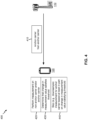
- Fig. 4 is a diagram illustrating an example 400 of RRM for paging in a non-anchor carrier, in accordance with various aspects of the present disclosure.
- a BS 110 may provide one or more anchor carriers and one or more non-anchor carriers for a UE 120.
- Example 400 relates to performing measurement based at least in part on a relaxed monitoring technique.
- relaxed monitoring may be used (e.g., for eMTC UEs, NB-IoT UEs, and/or the like) to conserve measurement resources.
- the UE 120 may skip one or more measurements.
- the reference value may be updated periodically.
- the threshold may be configured (e.g., using a SIB and/or the like).
- the UE 120 may perform a measurement on (e.g., in) the non-anchor carrier and/or the anchor carrier. For example, the UE 120 may perform a power measurement, a quality measurement and/or the like. The UE 120 may perform the measurement on the non-anchor carrier and/or the anchor carrier. For example, in some aspects, the UE 120 may monitor the anchor carrier and the non-anchor carrier. In some aspects, the UE 120 may monitor the non-anchor carrier.
- the UE 120 may determine that a change in the measurement value satisfies a threshold. For example, the UE 120 may determine that a difference between the measurement value and a reference value satisfies a threshold, indicating that the non-anchor carrier and/or the anchor carrier are in a steady state. Thus, the UE 120 may determine that a measurement relaxation technique can be performed with regard to the anchor carrier.
- the UE 120 may determine that the measurement value satisfies the threshold. For example, the UE 120 may determine that the non-anchor carrier is associated with a threshold power value (e.g., indicating an acceptable power level), and may determine that the measurement relaxation technique is to be performed based at least in part on the measurement value satisfying the threshold. In some aspects, the threshold for the measurement value may be different than the threshold for the change in the measurement value.
- the UE 120 may adjust the threshold based at least in part on determining that the measurement value does not satisfy the threshold. For example, when the threshold is not satisfied (e.g., when the power value is low), then the UE 120 may lower the threshold (e.g., for a length of time, for a number of discontinuous reception cycles, and/or the like). This may reduce the number of measurements on the anchor carrier, thereby conserving battery power and reducing wakeup time.
- the UE 120 may determine the threshold or the reference value for the non-anchor carrier. For example, the UE 120 may determine that a change in the measurement value (or the measurement value) of the anchor carrier satisfies a threshold (e.g., for relaxed measurement), and may determine the threshold or the reference value for the non-anchor carrier accordingly. For example, the UE 120 may set the reference value to be equal to a current power value of the non-anchor carrier. Thus, the UE 120 may configure the reference value or threshold based at least in part on a measurement for the non-anchor carrier, which reduces signaling overhead associated with the BS 110 configuring the reference value or threshold.
- a threshold e.g., for relaxed measurement
- the UE 120 may skip one or more measurements for the anchor carrier based at least in part on the change in the measurement value satisfying the threshold.
- the UE 120 may downsample a measurement for the anchor carrier (e.g., may perform X out of every Y measurements, where X and Y are integers). For example, when the measurement is a periodic measurement, the UE 120 may determine not to perform one or more measurements of the periodic measurement.
- a UE 120 performs a measurement according to a time T (or a number of cycles N) in the anchor carrier and according to a time T' (or a number of cycles N') in the non-anchor carrier. Assume further that the change in measurement value during these time or cycle windows does not change. In that case, the UE 120 may determine that the anchor carrier is not to be monitored for a next T" time window and/or a next N" number of cycles. In some aspects, the UE 120 may determine that the anchor carrier is to be monitored once per T" time window and/or N" cycles.
- the UE 120 may determine that the anchor carrier is to be monitored based at least in part on a value or change in the non-anchor carrier. For example, the UE 120 may determine that the anchor carrier is to be monitored based at least in part on a measurement performed with regard to the non-anchor carrier, as described in more detail elsewhere herein.
- the UE 120 may determine that the anchor carrier is to be monitored based at least in part on a change in the anchor carrier. For example, when the UE 120 moves to a new cell, the UE 120 may determine that the anchor carrier is to be monitored. In some aspects, the UE 120 may monitor the anchor carrier based at least in part on a periodicity or a discontinuous reception cycle. For example, the UE 120 may monitor the anchor carrier after a particular length of time, or after a particular number of discontinuous reception cycles, irrespective of whether the UE 120 is performing relaxed monitoring.
- the relaxed monitoring criterion for non-anchor carriers may be fulfilled when: ⁇ Srxlev Ref ,NA ⁇ Srxlev NA ⁇ S SearchDeltaP ,NA AND Srxlev Ref ⁇ Srxlev ⁇ S SearchDeltaP Where:
- Fig. 4 is provided as an example. Other examples may differ from what is described with respect to Fig. 4 .
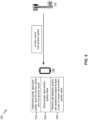
- Fig. 5 is a diagram illustrating an example 500 of RRM for paging in a non-anchor carrier, in accordance with various aspects of the present disclosure.
- a BS 110 may provide one or more anchor carriers and one or more non-anchor carriers for a UE 120.
- the UE 120 may determine a power value and a quality value for the anchor carrier and for the non-anchor carrier. For example, the UE 120 may determine a power value for the anchor carrier, a quality value for the anchor carrier, a power value for the non-anchor carrier, and a quality value for the non-anchor carrier.
- the power value may include, for example, RxLev, RSRP, and/or the like.
- the quality value may include, for example, RSRQ, Qqual, and/or the like.
- the UE 120 may determine one or more of the above measurements for a neighbor cell. For example, the UE 120 may determine a measurement for an anchor carrier of a neighbor cell. This may enable cell reselection based at least in part on the measurement for the anchor carrier of the neighbor cell.
- the UE 120 may store the power value and/or the quality value.
- the UE 120 may store a measurement of a non-anchor carrier of a previous serving cell of the UE 120. This measurement may be referred to as T NA_meas_valid .
- the UE 120 may store the measurement for a length of time.
- the UE 120 may use the stored measurement to perform cell reselection, as described in more detail below. This may reduce the likelihood of a ping-pong effect wherein the UE 120 ping-pongs between a serving cell associated with a poor non-anchor carrier measurement and a good anchor carrier measurement, and a neighbor cell associated with a poor anchor carrier measurement.
- the UE 120 may consider the non-anchor carrier measurement as valid and may apply the reselection rules as described above. These stored non-anchor measurements may be invalidated once a timer or time period associated with T NA_meas_valid expires.
- the UE 120 may perform cell selection and/or cell reselection based at least in part on the power value and/or the quality value. For example, the UE 120 may determine whether the power value and/or the quality value for the anchor carrier and the non-anchor carrier satisfy a threshold.
- the UE 120 may perform cell selection and/or reselection based at least in part on a suitability criterion, such as the following: Srxlev > 0 AND Squal > 0 AND Srxlev NA > 0 AND Squal NA > 0 , wherein Srxlev is a power value of the anchor carrier, Squal is a quality value of the anchor carrier, Srxlev NA is a power level of the non-anchor carrier, and Squal NA is a quality value of the non-anchor carrier.
- a suitability criterion such as the following: Srxlev > 0 AND Squal > 0 AND Srxlev NA > 0 AND Squal NA > 0 , wherein Srxlev is a power value of the anchor carrier, Squal is a quality value of the anchor carrier, Srxlev NA is a power level of the non-anchor carrier, and Squal NA is a quality value of the non-anchor carrier.
- Fig. 5 is provided as an example. Other examples may differ from what is described with respect to Fig. 5 .
- Fig. 6 is a diagram illustrating an example 600 of RRM for paging in a non-anchor carrier, in accordance with various aspects of the present disclosure.
- example 600 may include a BS 110 and a UE 120.
- the BS 110 may provide one or more anchor carriers and one or more non-anchor carriers for the UE 120.
- Example 600 relates to providing UE feedback regarding quality, power level, etc. of non-anchor carriers so that a BS 110 may configure the placement and/or number of non-anchor carriers, thereby improving network performance and reducing interference.
- the BS 110 may provide an indication to the UE 120.
- the indication may indicate that the UE 120 is to perform a measurement in a non-anchor carrier.
- the BS 110 may broadcast the indication to multiple, different UEs.
- the indication may explicitly identify the non-anchor carrier.
- the indication may indicate that the UE 120 (or any recipient UE 120) is to perform the measurement for a current non-anchor carrier of the UE 120.
- the indication may identify particular measurements to be performed (e.g., by all UEs 120, for particular non-anchor carriers, and/or the like).
- the indication may be system information, an RRC message, and/or the like.
- the UE 120 may perform a measurement in the non-anchor carrier. For example, the UE 120 may determine a quality value and/or a power value of the non-anchor carrier. In some aspects, the UE 120 may determine another value, such as an access failure associated with the non-anchor carrier, a radio link failure associated with the non-anchor carrier, a paging failure associated with the non-anchor carrier, and/or the like.
- the UE 120 may transmit a minimization of drive test (MDT) report that indicates the quality value and/or the power value.
- MDT minimization of drive test
- the UE 120 may transmit information that indicates the quality value and/or the power value.
- the MDT report may include an indication that indicates that the reported measurements are for the non-anchor carrier.
- the MDT report (e.g., the information) may identify an access failure, a radio link failure, a paging failure, and/or the like.
- the MDT report may include the aforementioned information for one or more of non-anchor carriers and anchor carriers.
- the UE 120 may receive a second indication from the BS 110.
- the second indication may be unicast to the UE 120.
- the second indication may be broadcast to the UE 120.
- the second indication may indicate that the UE 120 is to monitor paging in a particular carrier.
- the particular carrier may be the same carrier as the non-anchor carrier described above, or can be a different carrier than the non-anchor carrier described above.
- the BS 110 may redirect the UE 120 to monitor paging in a different carrier.
- the second indication may indicate that the UE 120 is to perform a measurement in the particular carrier.
- the BS 110 may configure UEs 120 to perform measurements of specified non-anchor carriers, which may permit the BS 110 to identify interference (e.g., from illegal interferers or from other sources).
- the BS 110 may configure one or more non-anchor carriers based at least in part on the measurements. For example, the BS 110 may change a frequency of a non-anchor carrier, may activate or deactivate a non-anchor carrier, and/or the like. Thus, the BS 110 may improve network performance and reduce interference based at least in part on measurements regarding non-anchor carriers received from UEs 120.
- the UE 120 may monitor paging in the particular carrier.
- the UE 120 may perform a measurement in the particular carrier.
- the UE 120 may report the measurement (e.g., and/or other information described above) to the BS 110, which enables further reconfiguration of the non-anchor carriers. In this way, network performance is improved and interference on non-anchor carriers is reduced.
- the UE 120 may monitor or perform the measurement in the particular carrier for a length of time or a number of cycles. For example, the UE 120 may monitor or perform the measurement on the particular carrier for a particular length of time or a particular number of discontinuous reception cycles, and may not monitor or perform the measurement on the particular carrier thereafter.
- each cell where the particular carrier is used may be associated with a respective timer.
- the BS 110 may store information identifying carriers (e.g., NB-IoT carriers) that the UE 120 has determined may suffer from jamming. In this way, storage resources of the UE 120 and the BS 110 are conserved that would otherwise be used to store a larger number of configurations with regard to particular carriers.
- Fig. 6 is provided as an example. Other examples may differ from what is described with respect to Fig. 6 .
- Fig. 7 is a diagram illustrating an example process 700 performed, for example, by a UE, in accordance with various aspects of the present disclosure.
- Example process 700 is an example where a UE (e.g., UE 120) performs RRM for paging in a non-anchor carrier.
- a UE e.g., UE 120
- process 700 may include receiving information indicating whether measurement is permitted on a non-anchor carrier (block 710).
- the UE e.g., using antenna 252, DEMOD 254, MIMO detector 256, receive processor 258, controller/processor 280, and/or the like
- the information may indicate that the measurement is permitted on the non-anchor carrier.
- the information may indicate that the measurement is not permitted on the non-anchor carrier.
- the information may relate to a single carrier.
- the information may relate to multiple non-anchor carriers (e.g., a plurality of non-anchor carriers, all non-anchor carriers, etc.).
- process 700 may include selectively performing a measurement on at least one of the non-anchor carrier or an anchor carrier, based at least in part on the information indicating whether the measurement is permitted on the non-anchor carrier (block 720).
- the UE e.g., using antenna 252, DEMOD 254, MIMO detector 256, receive processor 258, controller/processor 280, and/or the like
- the UE may determine whether the measurement is to be performed on the non-anchor carrier or on the anchor carrier based at least in part on the information indicating whether the measurement is permitted on the non-anchor carrier.
- the UE may receive paging on the anchor carrier or the non-anchor carrier based at least in part on the information.
- Process 700 may include additional aspects, such as any single aspect or any combination of aspects described below and/or in connection with one or more other processes described elsewhere herein.
- the UE may perform a cell selection or cell reselection procedure based at least in part on the measurement.
- the information is received as system information.
- one or more parameters for a cell selection or reselection procedure are different when the measurement is performed on the anchor carrier than when the measurement is performed on the non-anchor carrier.
- the non-anchor carrier is one of a plurality of non-anchor carriers.
- one or more parameters for a cell selection or reselection procedure are different for one or more non-anchor carriers of the plurality of non-anchor carriers.
- the UE may receive information identifying the one or more parameters.
- the UE may determine a value for the anchor carrier based at least in part on performing the measurement on the non-anchor carrier.
- the UE may determine a value for the non-anchor carrier based at least in part on performing the measurement on the anchor carrier.
- the UE may perform a measurement on the anchor carrier according to a periodicity or a discontinuous reception cycle of the UE.
- selectively performing the measurement on at least one of the non-anchor carrier or the anchor carrier comprises: performing the measurement on the non-anchor carrier based at least in part on the UE being in a relaxed monitoring state with regard to the anchor carrier.
- the UE may exit the relaxed monitoring state based at least in part on a value that is determined based at least in part on applying an offset to a non-anchor carrier measurement.
- the offset is determined based at least in part on an anchor carrier measurement and a previous non-anchor carrier measurement.
- the offset is configured by a network.
- the UE may enter the relaxed monitoring state based at least in part on an anchor carrier measurement.
- the UE may enter the relaxed monitoring state based at least in part on an anchor carrier measurement; exit the relaxed monitoring state based at least in part on a non-anchor carrier measurement; and optionally apply an offset to the non-anchor carrier measurement when exiting the relaxed monitoring state based at least in part on the non-anchor carrier measurement.
- the UE may determine that a change in a measurement value for the anchor carrier satisfies a corresponding threshold, wherein the measurement value is determined by performing the measurement on the non-anchor carrier; and skip the measurement on the anchor carrier based at least in part on determining that the measurement value or the change in the measurement value for the non-anchor carrier satisfies the threshold.
- process 700 may include additional blocks, fewer blocks, different blocks, or differently arranged blocks than those depicted in Fig. 7 . Additionally, or alternatively, two or more of the blocks of process 700 may be performed in parallel.
- Fig. 8 is a diagram illustrating an example process 800 performed, for example, by a UE, in accordance with various aspects of the present disclosure.
- Example process 800 is an example where a UE (e.g., UE 120) performs RRM for paging in a non-anchor carrier.
- a UE e.g., UE 120
- process 800 may include determining that a measurement value for a non-anchor carrier or a change in the measurement value satisfies a threshold (block 810).
- the UE e.g., using antenna 252, DEMOD 254, MIMO detector 256, receive processor 258, controller/processor 280, and/or the like
- the threshold for the measurement value may be different than a threshold for the change in the measurement value.
- process 800 may include skipping a measurement for an anchor carrier based at least in part on determining that the measurement value or the change in the measurement value for the non-anchor carrier satisfies the threshold (block 820).
- the UE e.g., using antenna 252, DEMOD 254, MIMO detector 256, receive processor 258, controller/processor 280, and/or the like
- the UE may downsample the measurement for the anchor carrier.
- Process 800 may include additional aspects, such as any single aspect or any combination of aspects described below and/or in connection with one or more other processes described elsewhere herein.
- the UE skips the measurement for the anchor carrier further based at least in part on determining that the change in the measurement value for the anchor carrier satisfies the corresponding threshold.
- the UE may determine that a change in a measurement value for the anchor carrier satisfies a corresponding threshold; and determine the threshold for the non-anchor carrier based at least in part on determining that the change in the measurement value for the anchor carrier satisfies the corresponding threshold.
- the method further comprises: determining that the measurement value for the non-anchor carrier does not satisfy the threshold; and performing the measurement for the anchor carrier based at least in part on the measurement value for the non-anchor carrier not satisfying the threshold.
- the UE may adjust the threshold for a period of time.
- the measurement for the anchor carrier is part of a periodic measurement, and skipping the measurement further comprises skipping a subset of measurements of the periodic measurement.
- skipping the subset of measurements further comprises: performing at least one measurement of the periodic measurement based at least in part on a discontinuous reception cycle of the UE.
- the UE may receive information indicating that measurement is permitted on the non-anchor carrier; and perform a measurement on the non-anchor carrier to determine the measurement value for the non-anchor carrier based at least in part on the information indicating that the measurement is permitted on the non-anchor carrier.
- process 800 may include additional blocks, fewer blocks, different blocks, or differently arranged blocks than those depicted in Fig. 8 . Additionally, or alternatively, two or more of the blocks of process 800 may be performed in parallel.
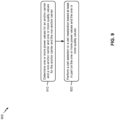
- Fig. 9 is a diagram illustrating an example process 900 performed, for example, by a UE, in accordance with various aspects of the present disclosure.
- Example process 900 is an example where a UE (e.g., UE 120) performs RRM for paging in a non-anchor carrier.
- a UE e.g., UE 120
- process 900 may include determining one or more power values for an anchor carrier and a non-anchor carrier and one or more quality values for the anchor carrier and the non-anchor carrier (block 910).
- the UE e.g., using controller/processor 280 and/or the like
- the UE may determine one or more quality values for the anchor carrier and the non-anchor carrier.
- process 900 may include performing a cell selection or a cell reselection based at least in part on the one or more power values and the one or more quality values (block 920).
- the UE e.g., using controller/processor 280 and/or the like
- the UE may perform a cell reselection based at least in part on a power value for the anchor carrier, a power value for the non-anchor carrier, a quality value for the anchor carrier, and a quality value for the non-anchor carrier.
- Process 900 may include additional aspects, such as any single aspect or any combination of aspects described below and/or in connection with one or more other processes described elsewhere herein.
- determining the one or more power values and the one or more quality values further comprises: determining a power value and/or a quality value for an anchor carrier of a neighbor cell. In some aspects, performing the cell reselection is based at least in part on the power value and/or the quality value.
- the UE may store the one or more power values for the non-anchor carrier or the one or more quality values for the non-anchor carrier for a length of time.
- performing the cell selection or the cell reselection is based at least in part on comparing the stored one or more power values and the stored one or more quality values for the non-anchor carrier to a power value or quality value of a neighbor cell.
- process 900 may include additional blocks, fewer blocks, different blocks, or differently arranged blocks than those depicted in Fig. 9 . Additionally, or alternatively, two or more of the blocks of process 900 may be performed in parallel.
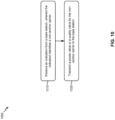
- Fig. 10 is a diagram illustrating an example process 1000 performed, for example, by a UE, in accordance with various aspects of the present disclosure.
- Example process 1000 is an example where a UE (e.g., UE 120) performs RRM for paging in a non-anchor carrier.
- a UE e.g., UE 120
- process 1000 may include receiving an indication from a base station, wherein the indication identifies a non-anchor carrier (block 1010).
- the UE e.g., using antenna 252, DEMOD 254, MIMO detector 256, receive processor 258, controller/processor 280, and/or the like
- the indication may identify a non-anchor carrier.
- the indication may identify the non-anchor carrier for the UE to perform a measurement or monitor the non-anchor carrier.
- process 1000 may include transmitting a power value or a quality value for the non-anchor carrier to the base station (block 1020).
- the UE e.g., using controller/processor 280, transmit processor 264, TX MIMO processor 266, MOD 254, antenna 252, and/or the like
- the UE may transmit information identifying the power value or the quality value.
- the UE may transmit a MDT report that identifies the power value or the quality value.
- Process 1000 may include additional aspects, such as any single aspect or any combination of aspects described below and/or in connection with one or more other processes described elsewhere herein.
- the UE may monitor paging on a particular carrier based at least in part on a second indication received from the base station, wherein the second indication is based at least in part on the power value or the quality value.
- the second indication identifies the particular carrier, wherein the particular carrier is different than the non-anchor carrier.
- monitoring paging on the particular carrier based at least in part on the second indication further comprises: monitoring the paging on the particular carrier for a particular length of time.
- the non-anchor carrier is the particular carrier.
- the indication indicates to perform a measurement for one or more carriers including the non-anchor carrier.
- the UE may transmit information identifying at least one of an access failure, a radio link failure, or a paging failure to the base station.
- process 1000 may include additional blocks, fewer blocks, different blocks, or differently arranged blocks than those depicted in Fig. 10 . Additionally, or alternatively, two or more of the blocks of process 1000 may be performed in parallel.
- the term component is intended to be broadly construed as hardware, firmware, or a combination of hardware and software.
- a processor is implemented in hardware, firmware, or a combination of hardware and software.
- satisfying a threshold may refer to a value being greater than the threshold, greater than or equal to the threshold, less than the threshold, less than or equal to the threshold, equal to the threshold, not equal to the threshold, and/or the like.
Landscapes
- Engineering & Computer Science (AREA)
- Signal Processing (AREA)
- Computer Networks & Wireless Communication (AREA)
- Computer Security & Cryptography (AREA)
- Mobile Radio Communication Systems (AREA)
Claims (15)
- Ein Verfahren für eine drahtlose Kommunikation, das durch ein Benutzergerät (User Equipment bzw. UE) (120) durchgeführt wird, aufweisend:Empfangen (710) von Informationen, die angeben, ob eine Leistungsmessung auf einem nicht-Ankerträger erlaubt ist, undwahlweises Durchführen (720) der Leistungsmessung auf dem nicht-Ankerträger und/oder einem Ankerträger basierend wenigstens teilweise auf den Informationen, die angeben, ob die Leistungsmessung auf dem nicht-Ankerträger erlaubt ist, wobei das wahlweise Durchführen der Leistungsmessung auf dem nicht-Ankerträger und/oder dem Ankerträger das Durchführen der Leistungsmessung auf dem nicht-Ankerträger basierend wenigstens teilweise darauf, dass sich das UE (120) in einem entspannten Überwachungszustand in Bezug auf den Ankerträger befindet, aufweist.
- Verfahren nach Anspruch 1, das weiterhin aufweist:
Durchführen (920) einer Zellenauswahl- oder Zellenwiederauswahlprozedur basierend wenigstens teilweise auf der Leistungsmessung. - Verfahren nach Anspruch 1, wobei die Informationen als Systeminformationen empfangen werden.
- Verfahren nach Anspruch 1, wobei ein oder mehrere Parameter für eine Zellenauswahl- oder Zellenwiederauswahlprozedur jeweils verschieden sind, wenn die Leistungsmessung auf dem Ankerträger durchgeführt wird und wenn die Leistungsmessung auf dem nicht-Ankerträger durchgeführt wird.
- Verfahren nach Anspruch 1, wobei der nicht-Ankerträger einer aus einer Vielzahl von nicht-Ankerträgern ist und wobei ein oder mehrere Parameter für eine Zellenauswahl- oder Zellenwiederauswahlprozedur für einen oder mehrere nicht-Ankerträger aus der Vielzahl von nicht-Ankerträgern verschieden sind.
- Verfahren nach Anspruch 5, das weiterhin aufweist:
Empfangen von Informationen, die den einen oder die mehreren Parameter identifizieren. - Verfahren nach Anspruch 1, das weiterhin aufweist:Bestimmen eines Werts für den Ankerträger basierend wenigstens teilweise auf dem Durchführen der Leistungsmessung auf dem nicht-Ankerträger, oderBestimmen eines Werts für den nicht-Ankerträger basierend wenigstens teilweise auf dem Durchführen der Leistungsmessung auf dem Ankerträger.
- Verfahren nach Anspruch 1, wobei das wahlweise Durchführen der Leistungsmessung weiterhin aufweist:
Durchführen einer Messung auf dem Ankerträger gemäß einer Periodizität oder einem diskontinuierlichen Empfangszyklus des UE. - Verfahren nach Anspruch 1, das weiterhin aufweist:
Austreten aus dem entspannten Überwachungszustand basierend wenigstens teilweise auf einem Wert, der basierend wenigstens teilweise auf dem Anwenden eines Versatzes auf eine nicht-Ankerträger-Messung bestimmt wird. - Verfahren nach Anspruch 9, wobei der Versatz basierend wenigstens teilweise auf einer Ankerträger-Messung und einer vorausgehenden nicht-Ankerträger-Messung bestimmt wird oder wobei der Versatz durch ein Netz konfiguriert wird.
- Verfahren nach Anspruch 1, das weiterhin aufweist:
Eintreten in den entspannten Überwachungszustand basierend wenigstens teilweise auf einer Ankerträger-Messung. - Verfahren nach Anspruch 11, das weiterhin aufweist:Austreten aus dem entspannten Überwachungszustand basierend wenigstens teilweise auf einer nicht-Ankerträger-Messung, undoptionales Anwenden eines Versatzes auf die nicht-Ankerträger-Messung, wenn aus dem entspannten Überwachungszustand ausgetreten wird, basierend wenigstens teilweise auf der nicht-Ankerträger-Messung.
- Verfahren nach Anspruch 1, das weiterhin aufweist:Bestimmen (810), dass ein Messwert für den nicht-Ankerträger oder eine Änderung des Messwerts einen Schwellwert erfüllt, wobei der Messwert bestimmt wird durch das Durchführen der Leistungsmessung auf dem nicht-Ankerträger, undÜberspringen (820) der Leistungsmessung auf dem Ankerträger basierend wenigstens teilweise auf dem Bestimmen, dass der Messwert oder die Änderung des Messwerts für den nicht-Ankerträger den Schwellwert erfüllt.
- Eine Vorrichtung an einem Benutzergerät für eine drahtlose Kommunikation, aufweisend:
Mittel zum Durchführen der Schritte des Verfahrens der Ansprüche 1 bis 13. - Ein computerlesbares, programmierbares Medium mit einem darauf gespeicherten Computerprogramm, das bei einer Ausführung durch ein Verarbeitungsmodul veranlasst, dass ein assoziiertes Benutzergerät (UE) (120) die Schritte des Verfahrens gemäß den Ansprüchen 1 bis 13 durchführt.
Applications Claiming Priority (4)
| Application Number | Priority Date | Filing Date | Title |
|---|---|---|---|
| IN201841027022 | 2018-07-19 | ||
| IN201841037797 | 2018-10-05 | ||
| US16/507,820 US11197210B2 (en) | 2018-07-19 | 2019-07-10 | Radio resource management for paging in a non-anchor carrier |
| PCT/US2019/041422 WO2020018347A1 (en) | 2018-07-19 | 2019-07-11 | Radio resource management for paging in a non-anchor carrier |
Publications (3)
| Publication Number | Publication Date |
|---|---|
| EP3824660A1 EP3824660A1 (de) | 2021-05-26 |
| EP3824660B1 true EP3824660B1 (de) | 2023-06-14 |
| EP3824660C0 EP3824660C0 (de) | 2023-06-14 |
Family
ID=69161239
Family Applications (1)
| Application Number | Title | Priority Date | Filing Date |
|---|---|---|---|
| EP19746269.0A Active EP3824660B1 (de) | 2018-07-19 | 2019-07-11 | Funkressourcenverwaltung zum funkrufen in einem nicht-ankerträger |
Country Status (7)
| Country | Link |
|---|---|
| US (1) | US11197210B2 (de) |
| EP (1) | EP3824660B1 (de) |
| KR (1) | KR102920730B1 (de) |
| CN (1) | CN112425196B (de) |
| SG (1) | SG11202012873PA (de) |
| TW (1) | TWI831805B (de) |
| WO (1) | WO2020018347A1 (de) |
Families Citing this family (19)
| Publication number | Priority date | Publication date | Assignee | Title |
|---|---|---|---|---|
| CN112771914B (zh) * | 2018-09-24 | 2024-03-08 | 瑞典爱立信有限公司 | 无线电资源测量的执行方法、无线设备和网络节点 |
| WO2020067763A1 (en) * | 2018-09-28 | 2020-04-02 | Lg Electronics Inc. | Relaxed measurement based on data transmission |
| CN114223241A (zh) * | 2019-08-14 | 2022-03-22 | 三星电子株式会社 | 用于在无线通信系统中执行rrm测量的方法和终端 |
| WO2021026933A1 (zh) * | 2019-08-15 | 2021-02-18 | 华为技术有限公司 | 测量方法、设备及系统 |
| WO2021064283A1 (en) * | 2019-09-30 | 2021-04-08 | Nokia Technologies Oy | Terminal uplink parameter based measurement relaxation change |
| US11356884B2 (en) * | 2019-10-02 | 2022-06-07 | Lg Electronics Inc. | Method and apparatus for reporting relaxed measurement in a wireless communication system |
| EP4011115B1 (de) * | 2019-10-02 | 2023-11-22 | Samsung Electronics Co., Ltd. | Verfahren und vorrichtung zur durchführung einer funkressourcenverwaltungs (rrm)-messung in einem drahtlosen kommunikationssystem |
| JP7298022B2 (ja) * | 2019-10-02 | 2023-06-26 | エルジー エレクトロニクス インコーポレイティド | 無線通信システムにおいて弛緩測定を制御するための方法及び装置 |
| CN113498085B (zh) * | 2020-04-08 | 2025-06-10 | 华为技术有限公司 | 一种通信方法及装置 |
| CN115516925B (zh) * | 2020-05-09 | 2025-04-25 | Oppo广东移动通信有限公司 | 测量放松的方法及装置、终端设备、网络设备 |
| WO2021230648A1 (ko) * | 2020-05-13 | 2021-11-18 | 엘지전자 주식회사 | 셀 재선택을 위한 측정 수행 방법 |
| CN113840318B (zh) * | 2020-06-23 | 2024-08-23 | 广东小天才科技有限公司 | 一种执行放松测量的方法以及终端设备 |
| CN116686346A (zh) * | 2020-10-22 | 2023-09-01 | 瑞典爱立信有限公司 | 用于静态移动性装置的rrm测量放松的方法和系统 |
| WO2022151259A1 (en) | 2021-01-14 | 2022-07-21 | Zte Corporation | Method, device, and system for cell measurement in wireless networks |
| EP4068837B1 (de) * | 2021-04-01 | 2024-05-01 | Nokia Technologies Oy | Messberichterstattung mit sich ändernden messmodi in einem drahtlosen kommunikationssystem |
| WO2023272583A1 (zh) * | 2021-06-30 | 2023-01-05 | 北京小米移动软件有限公司 | 一种数据传输方法、装置及设备 |
| WO2023082235A1 (en) * | 2021-11-15 | 2023-05-19 | Qualcomm Incorporated | Carrier selection for paging on flexible cell |
| EP4346292A1 (de) * | 2022-09-30 | 2024-04-03 | Nokia Technologies Oy | Herstellung von s-zellen |
| US20240276269A1 (en) * | 2023-02-14 | 2024-08-15 | Samsung Electronics Co., Ltd.S | Measurement control with low power wakeup signals |
Family Cites Families (29)
| Publication number | Priority date | Publication date | Assignee | Title |
|---|---|---|---|---|
| EP1927199B1 (de) * | 2005-09-21 | 2013-09-11 | LG Electronics Inc. | Verfahren zur reduktion von signalisierungs-overhead und leistungsverbrauch in einem drahtlosen kommunikationssystem |
| WO2008099341A2 (en) * | 2007-02-12 | 2008-08-21 | Nokia Corporation | Apparatus, method and computer program product providing priority setting for multi-rat interworking |
| US8391192B2 (en) * | 2007-05-14 | 2013-03-05 | Qualcomm Incorporated | Carrier switching in a multi-carrier wireless communication network |
| EP3809769A1 (de) * | 2007-12-17 | 2021-04-21 | Coranci, LLC | Mobiles endgerät, basisstation, verfahren durchgeführt von einem mobilen endgerät, und verfahren durchgeführt von einer basisstation |
| CN104936298B (zh) * | 2008-11-04 | 2018-07-10 | 苹果公司 | 在第一载波中提供下行链路控制结构 |
| WO2010099105A1 (en) * | 2009-02-27 | 2010-09-02 | Interdigital Patent Holdings, Inc. | Anchor carrier reselection and cell reselection in long term evolution-advanced |
| KR101313357B1 (ko) * | 2009-03-12 | 2013-10-02 | 인터디지탈 패튼 홀딩스, 인크 | 요소 반송파 특유의 재구성을 수행하는 방법 및 장치 |
| JP5579253B2 (ja) * | 2009-03-31 | 2014-08-27 | テレフオンアクチーボラゲット エル エム エリクソン(パブル) | 通信システムにおける方法及び装置 |
| NL1036914C2 (nl) * | 2009-04-29 | 2010-11-01 | Wouter Garot | Verankeringsorgaan. |
| KR101695811B1 (ko) * | 2009-06-02 | 2017-01-23 | 엘지전자 주식회사 | 다중 하향링크 반송파에 대한 측정 방법 및 이를 위한 장치 |
| WO2011082988A1 (en) * | 2010-01-11 | 2011-07-14 | Telefonaktiebolaget L M Ericsson (Publ) | Measurement handling with carrier aggregation |
| WO2015042870A1 (en) * | 2013-09-27 | 2015-04-02 | Qualcomm Incorporated | Csi reporting for lte-tdd eimta |
| CN107046707B (zh) * | 2016-02-06 | 2021-11-16 | 中兴通讯股份有限公司 | 频点选择方法及装置 |
| CN107666709B (zh) * | 2016-07-28 | 2022-03-29 | 夏普株式会社 | 用户设备、基站及其用于寻呼的方法 |
| EP3965486A1 (de) * | 2016-08-10 | 2022-03-09 | ZTE Corporation | Funkrufverfahren, -vorrichtung und -system sowie benutzergerät |
| WO2018027933A1 (en) | 2016-08-12 | 2018-02-15 | Nokia Solutions And Networks Oy | Detection-less radio resource management measurement |
| CN107734667A (zh) * | 2016-08-12 | 2018-02-23 | 夏普株式会社 | 执行随机接入的方法、用户设备和基站 |
| CN107734687B (zh) * | 2016-08-12 | 2024-01-02 | 中兴通讯股份有限公司 | 一种获取网络系统资源配置方法、终端、网络设备及系统 |
| GB2552838B (en) * | 2016-08-12 | 2018-08-08 | Tcl Communication Ltd | Non-Anchor carrier utilisation |
| WO2018029375A1 (en) * | 2016-08-12 | 2018-02-15 | Telefonaktiebolaget Lm Ericsson (Publ) | Selection of a carrier in multi-carrier operation system |
| EP3496476B1 (de) * | 2016-09-13 | 2022-03-30 | LG Electronics Inc. | Verfahren und drahtlose vorrichtung zur durchführung einer positionsmessung in nb iot |
| CN109983826B (zh) * | 2016-09-29 | 2022-08-23 | 瑞典爱立信有限公司 | 调度的和基于竞争的上行链路传送的协调 |
| US10506472B2 (en) | 2016-11-03 | 2019-12-10 | Qualcomm Incorporated | Narrowband reference signals in non-anchor resource blocks |
| WO2018142240A1 (en) * | 2017-02-01 | 2018-08-09 | Telefonaktiebolaget Lm Ericsson (Publ) | A method for transmitting random access messages on non-anchor carriers |
| US11139881B2 (en) * | 2017-03-23 | 2021-10-05 | Ntt Docomo, Inc. | User terminal and radio communication method |
| US11272460B2 (en) * | 2017-06-08 | 2022-03-08 | Telefonaktiebolaget Lm Ericsson (Publ) | Communication device and method for indicating a preference based on the device power consumption or on performance of carriers |
| US10511987B2 (en) * | 2017-09-20 | 2019-12-17 | Qualcomm Incorporated | Methods and apparatus related to enhanced machine type communication |
| US11290995B2 (en) * | 2017-09-25 | 2022-03-29 | Lg Electronics Inc. | Method and wireless device for monitoring downlink channel or downlink signal using power saving signal |
| US10932149B2 (en) * | 2018-04-05 | 2021-02-23 | Qualcomm Incorporated | Using narrowband reference signal (NRS) tones in a non-anchor carrier to determine quality of the non-anchor carrier |
-
2019
- 2019-07-10 US US16/507,820 patent/US11197210B2/en active Active
- 2019-07-11 EP EP19746269.0A patent/EP3824660B1/de active Active
- 2019-07-11 TW TW108124498A patent/TWI831805B/zh active
- 2019-07-11 KR KR1020217000817A patent/KR102920730B1/ko active Active
- 2019-07-11 WO PCT/US2019/041422 patent/WO2020018347A1/en not_active Ceased
- 2019-07-11 SG SG11202012873PA patent/SG11202012873PA/en unknown
- 2019-07-11 CN CN201980046719.XA patent/CN112425196B/zh active Active
Also Published As
| Publication number | Publication date |
|---|---|
| TW202033017A (zh) | 2020-09-01 |
| SG11202012873PA (en) | 2021-01-28 |
| US11197210B2 (en) | 2021-12-07 |
| CN112425196A (zh) | 2021-02-26 |
| WO2020018347A1 (en) | 2020-01-23 |
| TWI831805B (zh) | 2024-02-11 |
| EP3824660C0 (de) | 2023-06-14 |
| US20200029256A1 (en) | 2020-01-23 |
| KR102920730B1 (ko) | 2026-01-29 |
| EP3824660A1 (de) | 2021-05-26 |
| CN112425196B (zh) | 2024-04-19 |
| KR20210025047A (ko) | 2021-03-08 |
Similar Documents
| Publication | Publication Date | Title |
|---|---|---|
| EP3824660B1 (de) | Funkressourcenverwaltung zum funkrufen in einem nicht-ankerträger | |
| EP3718344B1 (de) | Verfahren und vorrichtungen zur bereitstellung von systeminformationsaktualisierungen in einem system unter verwendung von bandbreitenteilen | |
| US20210045177A1 (en) | Handling repeated network configuration failure | |
| US11419170B2 (en) | Radio access technology ping-pong reselection and registration avoidance | |
| US12294881B2 (en) | User equipment (UE) measurement gap request and release for power savings and multiple subscriber identity module (MSIM) measurements | |
| US12200546B2 (en) | Broadcast or multicast support for standalone mode | |
| WO2021018146A1 (en) | Techniques for using a first subscription of a user equipment to perform idle mode operations for a second subscription of the user equipment | |
| US11445414B2 (en) | Neighbor measurement method for multiple subscriber identity module (SIM) user equipment (UE) | |
| EP4173351B1 (de) | Minimierung von antriebstests (mdt) | |
| US20230171632A1 (en) | Redundant wireless communication message removal | |
| US12526712B2 (en) | Multiple subscriber identity module (SIM) user equipment (UE) forced radio access technology (RAT) selection | |
| WO2021226982A1 (en) | Measurement report offset increase for avoiding ping-pong between long term evolution cells in non-stand-alone mode | |
| US10701602B2 (en) | Cell reselection to high priority neighbor cells | |
| WO2021138825A1 (en) | Cell reselection according to dual connectivity support | |
| WO2021232182A1 (en) | Recovery from a problematic cell | |
| WO2021226983A1 (en) | Hysteresis increase for avoiding ping-pong between long term evolution cells in non-stand-alone mode | |
| WO2021226985A1 (en) | Barring handover to cell for avoiding ping-pong between long term evolution cells in non-stand-alone mode | |
| WO2021196153A1 (en) | Cell reselection according to dual connectivity support |
Legal Events
| Date | Code | Title | Description |
|---|---|---|---|
| STAA | Information on the status of an ep patent application or granted ep patent |
Free format text: STATUS: UNKNOWN |
|
| STAA | Information on the status of an ep patent application or granted ep patent |
Free format text: STATUS: THE INTERNATIONAL PUBLICATION HAS BEEN MADE |
|
| PUAI | Public reference made under article 153(3) epc to a published international application that has entered the european phase |
Free format text: ORIGINAL CODE: 0009012 |
|
| STAA | Information on the status of an ep patent application or granted ep patent |
Free format text: STATUS: REQUEST FOR EXAMINATION WAS MADE |
|
| 17P | Request for examination filed |
Effective date: 20201222 |
|
| AK | Designated contracting states |
Kind code of ref document: A1 Designated state(s): AL AT BE BG CH CY CZ DE DK EE ES FI FR GB GR HR HU IE IS IT LI LT LU LV MC MK MT NL NO PL PT RO RS SE SI SK SM TR |
|
| DAV | Request for validation of the european patent (deleted) | ||
| DAX | Request for extension of the european patent (deleted) | ||
| GRAP | Despatch of communication of intention to grant a patent |
Free format text: ORIGINAL CODE: EPIDOSNIGR1 |
|
| STAA | Information on the status of an ep patent application or granted ep patent |
Free format text: STATUS: GRANT OF PATENT IS INTENDED |
|
| RIC1 | Information provided on ipc code assigned before grant |
Ipc: H04W 76/28 20180101ALN20230118BHEP Ipc: H04W 68/00 20090101ALN20230118BHEP Ipc: H04W 48/12 20090101ALN20230118BHEP Ipc: H04L 5/00 20060101ALN20230118BHEP Ipc: H04W 48/20 20090101ALI20230118BHEP Ipc: H04W 24/10 20090101AFI20230118BHEP |
|
| INTG | Intention to grant announced |
Effective date: 20230210 |
|
| RIC1 | Information provided on ipc code assigned before grant |
Ipc: H04W 76/28 20180101ALN20230127BHEP Ipc: H04W 68/00 20090101ALN20230127BHEP Ipc: H04W 48/12 20090101ALN20230127BHEP Ipc: H04L 5/00 20060101ALN20230127BHEP Ipc: H04W 48/20 20090101ALI20230127BHEP Ipc: H04W 24/10 20090101AFI20230127BHEP |
|
| GRAS | Grant fee paid |
Free format text: ORIGINAL CODE: EPIDOSNIGR3 |
|
| GRAA | (expected) grant |
Free format text: ORIGINAL CODE: 0009210 |
|
| STAA | Information on the status of an ep patent application or granted ep patent |
Free format text: STATUS: THE PATENT HAS BEEN GRANTED |
|
| AK | Designated contracting states |
Kind code of ref document: B1 Designated state(s): AL AT BE BG CH CY CZ DE DK EE ES FI FR GB GR HR HU IE IS IT LI LT LU LV MC MK MT NL NO PL PT RO RS SE SI SK SM TR |
|
| REG | Reference to a national code |
Ref country code: CH Ref legal event code: EP |
|
| REG | Reference to a national code |
Ref country code: DE Ref legal event code: R096 Ref document number: 602019031049 Country of ref document: DE |
|
| REG | Reference to a national code |
Ref country code: AT Ref legal event code: REF Ref document number: 1580126 Country of ref document: AT Kind code of ref document: T Effective date: 20230715 |
|
| U01 | Request for unitary effect filed |
Effective date: 20230616 |
|
| U07 | Unitary effect registered |
Designated state(s): AT BE BG DE DK EE FI FR IT LT LU LV MT NL PT SE SI Effective date: 20230627 |
|
| U20 | Renewal fee for the european patent with unitary effect paid |
Year of fee payment: 5 Effective date: 20230720 |
|
| REG | Reference to a national code |
Ref country code: LT Ref legal event code: MG9D |
|
| PG25 | Lapsed in a contracting state [announced via postgrant information from national office to epo] |
Ref country code: NO Free format text: LAPSE BECAUSE OF FAILURE TO SUBMIT A TRANSLATION OF THE DESCRIPTION OR TO PAY THE FEE WITHIN THE PRESCRIBED TIME-LIMIT Effective date: 20230914 Ref country code: ES Free format text: LAPSE BECAUSE OF FAILURE TO SUBMIT A TRANSLATION OF THE DESCRIPTION OR TO PAY THE FEE WITHIN THE PRESCRIBED TIME-LIMIT Effective date: 20230614 |
|
| PG25 | Lapsed in a contracting state [announced via postgrant information from national office to epo] |
Ref country code: RS Free format text: LAPSE BECAUSE OF FAILURE TO SUBMIT A TRANSLATION OF THE DESCRIPTION OR TO PAY THE FEE WITHIN THE PRESCRIBED TIME-LIMIT Effective date: 20230614 Ref country code: HR Free format text: LAPSE BECAUSE OF FAILURE TO SUBMIT A TRANSLATION OF THE DESCRIPTION OR TO PAY THE FEE WITHIN THE PRESCRIBED TIME-LIMIT Effective date: 20230614 Ref country code: GR Free format text: LAPSE BECAUSE OF FAILURE TO SUBMIT A TRANSLATION OF THE DESCRIPTION OR TO PAY THE FEE WITHIN THE PRESCRIBED TIME-LIMIT Effective date: 20230915 |
|
| PG25 | Lapsed in a contracting state [announced via postgrant information from national office to epo] |
Ref country code: SK Free format text: LAPSE BECAUSE OF FAILURE TO SUBMIT A TRANSLATION OF THE DESCRIPTION OR TO PAY THE FEE WITHIN THE PRESCRIBED TIME-LIMIT Effective date: 20230614 |
|
| PG25 | Lapsed in a contracting state [announced via postgrant information from national office to epo] |
Ref country code: IS Free format text: LAPSE BECAUSE OF FAILURE TO SUBMIT A TRANSLATION OF THE DESCRIPTION OR TO PAY THE FEE WITHIN THE PRESCRIBED TIME-LIMIT Effective date: 20231014 |
|
| PG25 | Lapsed in a contracting state [announced via postgrant information from national office to epo] |
Ref country code: SM Free format text: LAPSE BECAUSE OF FAILURE TO SUBMIT A TRANSLATION OF THE DESCRIPTION OR TO PAY THE FEE WITHIN THE PRESCRIBED TIME-LIMIT Effective date: 20230614 Ref country code: SK Free format text: LAPSE BECAUSE OF FAILURE TO SUBMIT A TRANSLATION OF THE DESCRIPTION OR TO PAY THE FEE WITHIN THE PRESCRIBED TIME-LIMIT Effective date: 20230614 Ref country code: RO Free format text: LAPSE BECAUSE OF FAILURE TO SUBMIT A TRANSLATION OF THE DESCRIPTION OR TO PAY THE FEE WITHIN THE PRESCRIBED TIME-LIMIT Effective date: 20230614 Ref country code: IS Free format text: LAPSE BECAUSE OF FAILURE TO SUBMIT A TRANSLATION OF THE DESCRIPTION OR TO PAY THE FEE WITHIN THE PRESCRIBED TIME-LIMIT Effective date: 20231014 Ref country code: CZ Free format text: LAPSE BECAUSE OF FAILURE TO SUBMIT A TRANSLATION OF THE DESCRIPTION OR TO PAY THE FEE WITHIN THE PRESCRIBED TIME-LIMIT Effective date: 20230614 |
|
| PG25 | Lapsed in a contracting state [announced via postgrant information from national office to epo] |
Ref country code: PL Free format text: LAPSE BECAUSE OF FAILURE TO SUBMIT A TRANSLATION OF THE DESCRIPTION OR TO PAY THE FEE WITHIN THE PRESCRIBED TIME-LIMIT Effective date: 20230614 |
|
| REG | Reference to a national code |
Ref country code: CH Ref legal event code: PL |
|
| PG25 | Lapsed in a contracting state [announced via postgrant information from national office to epo] |
Ref country code: MC Free format text: LAPSE BECAUSE OF FAILURE TO SUBMIT A TRANSLATION OF THE DESCRIPTION OR TO PAY THE FEE WITHIN THE PRESCRIBED TIME-LIMIT Effective date: 20230614 |
|
| REG | Reference to a national code |
Ref country code: DE Ref legal event code: R097 Ref document number: 602019031049 Country of ref document: DE |
|
| PG25 | Lapsed in a contracting state [announced via postgrant information from national office to epo] |
Ref country code: MC Free format text: LAPSE BECAUSE OF FAILURE TO SUBMIT A TRANSLATION OF THE DESCRIPTION OR TO PAY THE FEE WITHIN THE PRESCRIBED TIME-LIMIT Effective date: 20230614 |
|
| PLBE | No opposition filed within time limit |
Free format text: ORIGINAL CODE: 0009261 |
|
| STAA | Information on the status of an ep patent application or granted ep patent |
Free format text: STATUS: NO OPPOSITION FILED WITHIN TIME LIMIT |
|
| PG25 | Lapsed in a contracting state [announced via postgrant information from national office to epo] |
Ref country code: CH Free format text: LAPSE BECAUSE OF NON-PAYMENT OF DUE FEES Effective date: 20230731 |
|
| 26N | No opposition filed |
Effective date: 20240315 |
|
| U20 | Renewal fee for the european patent with unitary effect paid |
Year of fee payment: 6 Effective date: 20240614 |
|
| PGFP | Annual fee paid to national office [announced via postgrant information from national office to epo] |
Ref country code: GB Payment date: 20250612 Year of fee payment: 7 |
|
| U20 | Renewal fee for the european patent with unitary effect paid |
Year of fee payment: 7 Effective date: 20250617 |
|
| PG25 | Lapsed in a contracting state [announced via postgrant information from national office to epo] |
Ref country code: CY Free format text: LAPSE BECAUSE OF FAILURE TO SUBMIT A TRANSLATION OF THE DESCRIPTION OR TO PAY THE FEE WITHIN THE PRESCRIBED TIME-LIMIT; INVALID AB INITIO Effective date: 20190711 |
|
| PGFP | Annual fee paid to national office [announced via postgrant information from national office to epo] |
Ref country code: IE Payment date: 20250612 Year of fee payment: 7 |
|
| PG25 | Lapsed in a contracting state [announced via postgrant information from national office to epo] |
Ref country code: HU Free format text: LAPSE BECAUSE OF FAILURE TO SUBMIT A TRANSLATION OF THE DESCRIPTION OR TO PAY THE FEE WITHIN THE PRESCRIBED TIME-LIMIT; INVALID AB INITIO Effective date: 20190711 |
|
| PG25 | Lapsed in a contracting state [announced via postgrant information from national office to epo] |
Ref country code: TR Free format text: LAPSE BECAUSE OF FAILURE TO SUBMIT A TRANSLATION OF THE DESCRIPTION OR TO PAY THE FEE WITHIN THE PRESCRIBED TIME-LIMIT Effective date: 20230614 |