EP3823645B1 - Mitochondrial augmentation therapy of renal diseases - Google Patents
Mitochondrial augmentation therapy of renal diseases Download PDFInfo
- Publication number
- EP3823645B1 EP3823645B1 EP19841655.4A EP19841655A EP3823645B1 EP 3823645 B1 EP3823645 B1 EP 3823645B1 EP 19841655 A EP19841655 A EP 19841655A EP 3823645 B1 EP3823645 B1 EP 3823645B1
- Authority
- EP
- European Patent Office
- Prior art keywords
- stem cells
- mitochondria
- cells
- human
- mitochondrial
- Prior art date
- Legal status (The legal status is an assumption and is not a legal conclusion. Google has not performed a legal analysis and makes no representation as to the accuracy of the status listed.)
- Active
Links
Images





Classifications
-
- A—HUMAN NECESSITIES
- A61—MEDICAL OR VETERINARY SCIENCE; HYGIENE
- A61K—PREPARATIONS FOR MEDICAL, DENTAL OR TOILETRY PURPOSES
- A61K35/00—Medicinal preparations containing materials or reaction products thereof with undetermined constitution
- A61K35/12—Materials from mammals; Compositions comprising non-specified tissues or cells; Compositions comprising non-embryonic stem cells; Genetically modified cells
- A61K35/14—Blood; Artificial blood
- A61K35/15—Cells of the myeloid line, e.g. granulocytes, basophils, eosinophils, neutrophils, leucocytes, monocytes, macrophages or mast cells; Myeloid precursor cells; Antigen-presenting cells, e.g. dendritic cells
-
- A—HUMAN NECESSITIES
- A61—MEDICAL OR VETERINARY SCIENCE; HYGIENE
- A61K—PREPARATIONS FOR MEDICAL, DENTAL OR TOILETRY PURPOSES
- A61K35/00—Medicinal preparations containing materials or reaction products thereof with undetermined constitution
- A61K35/12—Materials from mammals; Compositions comprising non-specified tissues or cells; Compositions comprising non-embryonic stem cells; Genetically modified cells
- A61K35/14—Blood; Artificial blood
- A61K35/17—Lymphocytes; B-cells; T-cells; Natural killer cells; Interferon-activated or cytokine-activated lymphocytes
-
- A—HUMAN NECESSITIES
- A61—MEDICAL OR VETERINARY SCIENCE; HYGIENE
- A61K—PREPARATIONS FOR MEDICAL, DENTAL OR TOILETRY PURPOSES
- A61K35/00—Medicinal preparations containing materials or reaction products thereof with undetermined constitution
- A61K35/12—Materials from mammals; Compositions comprising non-specified tissues or cells; Compositions comprising non-embryonic stem cells; Genetically modified cells
- A61K35/14—Blood; Artificial blood
- A61K35/18—Erythrocytes
-
- A—HUMAN NECESSITIES
- A61—MEDICAL OR VETERINARY SCIENCE; HYGIENE
- A61K—PREPARATIONS FOR MEDICAL, DENTAL OR TOILETRY PURPOSES
- A61K35/00—Medicinal preparations containing materials or reaction products thereof with undetermined constitution
- A61K35/12—Materials from mammals; Compositions comprising non-specified tissues or cells; Compositions comprising non-embryonic stem cells; Genetically modified cells
- A61K35/14—Blood; Artificial blood
- A61K35/19—Platelets; Megacaryocytes
-
- A—HUMAN NECESSITIES
- A61—MEDICAL OR VETERINARY SCIENCE; HYGIENE
- A61K—PREPARATIONS FOR MEDICAL, DENTAL OR TOILETRY PURPOSES
- A61K35/00—Medicinal preparations containing materials or reaction products thereof with undetermined constitution
- A61K35/12—Materials from mammals; Compositions comprising non-specified tissues or cells; Compositions comprising non-embryonic stem cells; Genetically modified cells
- A61K35/28—Bone marrow; Haematopoietic stem cells; Mesenchymal stem cells of any origin, e.g. adipose-derived stem cells
-
- A—HUMAN NECESSITIES
- A61—MEDICAL OR VETERINARY SCIENCE; HYGIENE
- A61K—PREPARATIONS FOR MEDICAL, DENTAL OR TOILETRY PURPOSES
- A61K35/00—Medicinal preparations containing materials or reaction products thereof with undetermined constitution
- A61K35/12—Materials from mammals; Compositions comprising non-specified tissues or cells; Compositions comprising non-embryonic stem cells; Genetically modified cells
- A61K35/33—Fibroblasts
-
- A—HUMAN NECESSITIES
- A61—MEDICAL OR VETERINARY SCIENCE; HYGIENE
- A61K—PREPARATIONS FOR MEDICAL, DENTAL OR TOILETRY PURPOSES
- A61K35/00—Medicinal preparations containing materials or reaction products thereof with undetermined constitution
- A61K35/12—Materials from mammals; Compositions comprising non-specified tissues or cells; Compositions comprising non-embryonic stem cells; Genetically modified cells
- A61K35/35—Fat tissue; Adipocytes; Stromal cells; Connective tissues
-
- A—HUMAN NECESSITIES
- A61—MEDICAL OR VETERINARY SCIENCE; HYGIENE
- A61K—PREPARATIONS FOR MEDICAL, DENTAL OR TOILETRY PURPOSES
- A61K35/00—Medicinal preparations containing materials or reaction products thereof with undetermined constitution
- A61K35/12—Materials from mammals; Compositions comprising non-specified tissues or cells; Compositions comprising non-embryonic stem cells; Genetically modified cells
- A61K35/37—Digestive system
- A61K35/38—Stomach; Intestine; Goblet cells; Oral mucosa; Saliva
-
- A—HUMAN NECESSITIES
- A61—MEDICAL OR VETERINARY SCIENCE; HYGIENE
- A61K—PREPARATIONS FOR MEDICAL, DENTAL OR TOILETRY PURPOSES
- A61K35/00—Medicinal preparations containing materials or reaction products thereof with undetermined constitution
- A61K35/12—Materials from mammals; Compositions comprising non-specified tissues or cells; Compositions comprising non-embryonic stem cells; Genetically modified cells
- A61K35/48—Reproductive organs
- A61K35/54—Ovaries; Ova; Ovules; Embryos; Foetal cells; Germ cells
- A61K35/545—Embryonic stem cells; Pluripotent stem cells; Induced pluripotent stem cells; Uncharacterised stem cells
-
- A—HUMAN NECESSITIES
- A61—MEDICAL OR VETERINARY SCIENCE; HYGIENE
- A61P—SPECIFIC THERAPEUTIC ACTIVITY OF CHEMICAL COMPOUNDS OR MEDICINAL PREPARATIONS
- A61P13/00—Drugs for disorders of the urinary system
Definitions
- the present invention provides a pharmaceutical composition for use in a method of treating a renal disease, comprising stem cells enriched with functional mitochondria.
- Kidney disease or renal disease, also known as nephropathy, is damage to or disease of a kidney.
- Nephritis is an inflammatory kidney disease.
- Nephrosis is non-inflammatory kidney disease.
- Nephritis and nephrosis can give rise to nephritic syndrome and nephrotic syndrome, respectively.
- Kidney disease usually causes a loss of kidney function to some degree and can result in kidney failure, the complete loss of kidney function. Kidney failure is known as the end-stage of kidney disease, where dialysis or a kidney transplant is the only treatment option.
- kidney disease causes deposition of the Immunoglobulin A antibodies in the glomerulus, administration of analgesics, xanthine oxidase deficiency, toxicity of chemotherapy agents, and/or long-term exposure to lead or its salts.
- Chronic conditions that can produce nephropathy include systemic lupus erythematosus, diabetes mellitus and high blood pressure (hypertension), which lead to diabetic nephropathy and hypertensive nephropathy, respectively. Sepsis is also known to induce acute kidney diseases.
- Mitochondrial diseases are a genetically heterogeneous group of disorders caused by mutations in mitochondrial DNA (mtDNA) or nuclear DNA (nDNA) displaying a wide range of severity and phenotypes ( Wallace, D.C. and Chalkia, D., Cold Spring Harb. Perspect. Biol. 2013;5:a021220 ).
- the prevalence of mtDNA-related disease is about 1 in 8500 in the population ( Elliott, H. R. et al., American Journal of Human Genetics, 83, 254-260, 2008 ), yet to date, apart from supportive therapy there is no effective treatment for the majority of mitochondrial diseases.
- a variety of treatments have been evaluated in clinical trials but none has delivered breakthrough results ( Kanabus, M. et al., British journal of pharmacology, 171, 1798-1817, 2014 ).
- the pharmaceutical composition is administered by systemic administration. In alternative embodiments, the pharmaceutical composition is administered directly to the renal system. In certain embodiments, the pharmaceutical composition is administered directly to a kidney, the renal pelvis, the adrenal gland, the renal artery, the inferior vena cava, the abdominal aorta, the common iliac artery or the common iliac vein. Each possibility represents a separate embodiment of the present invention.
- the human stem cells have undergone at least one freeze-thaw cycle prior to introducing healthy functional human exogenous mitochondria into said human stem cells. In certain embodiments, this may be achieved by (a) freezing the healthy functional human exogenous mitochondria, (b) thawing the healthy functional human exogenous mitochondria, and (c) introducing the healthy functional human exogenous mitochondria into the human stem cells.
- the human stem cells are isolated, derived or obtained from cells of the bone marrow, adipose tissue, oral mucosa, skin fibroblasts, blood or umbilical cord blood.
- the healthy functional human exogenous mitochondria are isolated or obtained from placenta, placental cells grown in culture or blood cells. Each possibility represents a separate embodiment of the present invention.
- the human stem cells have undergone at least one freeze-thaw cycle after enrichment with the healthy functional human exogenous mitochondria. In certain embodiments, this may be achieved by the additional steps of (a) freezing the human stem cells enriched with healthy functional human exogenous mitochondria, and (b) thawing the human stem cells enriched with healthy functional human exogenous mitochondria, prior to administering the human stem cells enriched with healthy functional human exogenous mitochondria to the patient.
- the healthy functional human exogenous mitochondria constitute at least 3% of the total mitochondria in the mitochondrially enriched human stem cells. In certain embodiments, the healthy functional human exogenous mitochondria constitute at least 10% of the total mitochondria in the mitochondrially enriched human stem cells. In certain embodiments, the healthy functional human exogenous mitochondria constitute at least 1% of the total mitochondria in the mitochondrially enriched human stem cells.
- the symptom is selected from the group consisting of, low blood alkaline phosphatase levels, low blood magnesium levels, high blood creatinine levels, low blood bicarbonate levels, low blood base excess levels, high urine glucose/creatinine ratios, high urine chloride/creatinine ratios, high urine sodium/creatinine ratios, high blood lactate levels, high urine magnesium/creatinine ratios, high urine potassium/creatinine ratios, high urine calcium/creatinine ratios, and high blood urea levels.
- the symptom is selected from the group consisting of, low blood alkaline phosphatase levels, low blood magnesium levels, high blood creatinine levels, low blood bicarbonate levels, low blood base excess levels, high urine glucose/creatinine ratios, high urine chloride/creatinine ratios, high urine sodium/creatinine ratios, high blood lactate levels, high urine magnesium/creatinine ratios, high urine potassium/creatinine ratios, high urine calcium/creatinine ratios,
- augmented stem cells as described below are recruited to damaged or diseased organs and improve their function either by e.g. mitochondrial transfer, secretion of different factors, differentiation, etc.
- secondary mitochondrial dysfunction and “acquired mitochondrial dysfunction” are used interchangeably and refer to an acquired mitochondrial dysfunction that can accompany many non-primary mitochondrial diseases and may be caused by genes encoding neither function nor production of the oxidative phosphorylation (OXPHOS) proteins. Secondary mitochondrial dysfunction can also be caused by environmental factors which can cause oxidative stress.
- OXPHOS oxidative phosphorylation
- a pharmaceutical composition for use in treating a renal disease, disorder or a symptom thereof in a human patient in need of such treatment, the composition comprising a plurality of human stem cells in a pharmaceutically acceptable liquid medium capable of supporting the viability of the cells, wherein the human stem cells are enriched with frozen thawed healthy functional human exogenous mitochondria.
- the renal disease or disorder is not a primary mitochondrial disease or disorder caused by a pathogenic mutation in mitochondrial DNA or by a pathogenic mutation in nuclear DNA encoding a mitochondrial protein.
- the term "pharmaceutically acceptable carrier” includes any and all solvents, dispersion media, coatings, anti-bacterial and anti-fungal agents, isotonic and absorption delaying agents, and the like that are physiologically compatible.
- pharmaceutically acceptable carriers include one or more of water, saline, phosphate buffered saline, dextrose, glycerol, ethanol and the like, as well as combinations thereof.
- the pharmaceutical composition is frozen.
- the pharmaceutical composition is thawed.
- the pharmaceutical composition is thawed prior to being administered.
- the pharmaceutical composition is thawed up to 24 hours prior to being administered.
- the enriched human stem cells are the only active ingredient in the pharmaceutical composition.
- iPSCs induced pluripotent stem cells
- ESC embryonic stem cells
- the stem cells are derived from adipose tissue, oral mucosa, peripheral blood or umbilical cord blood. Each possibility represents a separate embodiment of the present invention.
- the stem cells are derived from bone marrow cells.
- the term "bone marrow cells” as used herein generally refers to all human cells naturally found in the bone marrow of humans, and to all cell populations naturally found in the bone marrow of humans.
- the term “bone marrow stem cells” refers to the stem cell population derived from the bone marrow.
- common myeloid progenitor refers to the cells that generate myeloid cells.
- common lymphoid progenitor refers to the cells that generate lymphocytes.
- the method described above further comprises the preceding steps of isolating or obtaining healthy functional human exogenous mitochondria form a suitable source, and introducing the healthy functional human exogenous mitochondria into human stem cells, thus producing the mitochondrially-enriched human stem cells.
- the method may include the steps of: (a) freezing the healthy functional human exogenous mitochondria, (b) thawing the healthy functional human exogenous mitochondria, and (c) introducing the healthy functional human exogenous mitochondria into the human stem cells.
- the healthy functional human exogenous mitochondria are isolated or obtained from a suitable source, including, but not limited to: placenta, placental cells grown in culture or blood cells. Each possibility represents a separate embodiment of the present invention.
- the possibility to freeze healthy functional exogenous mitochondria before enriching the human stem cells is crucial for mitochondrial augmentation therapy process as it e.g. provides sufficient time to test functionality and/or certain attributes of the healthy functional exogenous mitochondria, as well as increases the shelf-life of the healthy functional exogenous mitochondria and/or allows the healthy functional exogenous mitochondria to be easily distributed, before enriching the human stem cells.
- the freeze-thaw cycle comprises freezing said functional mitochondria for at least 24 hours prior to thawing. According to other embodiments, the freeze-thaw cycle comprises freezing said functional mitochondria for at least 1 month prior to thawing, several months prior to thawing or longer. Each possibility represents a separate embodiment of the present invention. According to another embodiment, the oxygen consumption of the functional mitochondria after the freeze-thaw cycle is equal or higher than the oxygen consumption of the functional mitochondria prior to the freeze-thaw cycle.
- the mitochondria that have undergone a freeze-thaw cycle were frozen at a temperature of -70° C or lower. In another embodiment, the mitochondria that have undergone a freeze-thaw cycle were frozen at a temperature of -20 °C or lower. In another embodiment, the mitochondria that have undergone a freeze-thaw cycle were frozen at a temperature of -4 °C or lower. According to another embodiment, freezing of the mitochondria is gradual. According to some embodiment, freezing of mitochondria is through flash-freezing. As used herein, the term “flash-freezing" refers to rapidly freezing the mitochondria by subjecting them to cryogenic temperatures.
- thawing is at room temperature. In another embodiment, thawing is at body temperature. According to another embodiment, thawing is at a temperature which enables administering the mitochondria according to the methods of the invention. According to another embodiment, thawing is performed gradually.
- the freezing buffer comprises a cryoprotectant.
- the cryoprotectant is a saccharide, an oligosaccharide or a polysaccharide.
- the saccharide concentration in the freezing buffer is a sufficient saccharide concentration which acts to preserve mitochondrial function.
- the isolation buffer comprises a saccharide.
- the saccharide concentration in the isolation buffer is a sufficient saccharide concentration which acts to preserve mitochondrial function.
- the saccharide is sucrose.
- the healthy functional exogenous mitochondria constitute at least 3% of the total mitochondria in the mitochondrially-enriched cell. In certain embodiments, the healthy functional exogenous mitochondria constitute at least 10% of the total mitochondria in the mitochondrially-enriched cell. In some embodiments, the healthy functional exogenous mitochondria constitute at least about 3%, 5%, 10%, 15%, 20%, 25% or 30% of the total mitochondria in the mitochondrially-enriched cell. Each possibility represents a separate embodiment of the present invention.
- the extent of enrichment of the stem cells with functional mitochondria may be determined by functional and/or enzymatic assays, including but not limited to rate of oxygen (O 2 ) consumption, content or activity level of citrate synthase, rate of adenosine triphosphate (ATP) production.
- O 2 rate of oxygen
- ATP rate of adenosine triphosphate
- the enrichment of the stem cells with healthy donor mitochondria may be confirmed by the detection of mitochondrial DNA of the donor.
- the extent of enrichment of the stem cells with functional mitochondria may be determined by the level of change in heteroplasmy and/or by the copy number of mtDNA per cell. Each possibility represents a separate embodiment of the present invention.
- TMRM tetramethylrhodamine methyl ester
- TMRE tetramethylrhodamine ethyl ester
- the level of enrichment can be determined by staining with TMRE or TMRM.
- the intactness of a mitochondrial membrane may be determined by any method known in the art.
- intactness of a mitochondrial membrane is measured using the tetramethylrhodamine methyl ester (TMRM) or the tetramethylrhodamine ethyl ester (TMRE) fluorescent probes.
- TMRM tetramethylrhodamine methyl ester
- TMRE tetramethylrhodamine ethyl ester
- the level of mitochondrial enrichment in the mitochondrially-enriched human stem cells is determined by sequencing at least a statistically-representative portion of total mitochondrial DNA in the cells and determining the relative levels of host/endogenous mitochondrial DNA and exogenous mitochondrial DNA. In certain embodiments, the level of mitochondrial enrichment in the mitochondrially-enriched human stem cells is determined by single nucleotide polymorphism (SNP) analysis.
- SNP single nucleotide polymorphism
- the largest mitochondrial population and/or the largest mitochondrial DNA population is the host/endogenous mitochondrial population and/or the host/endogenous mitochondrial DNA population; and/or the second-largest mitochondrial population and/or the second-largest mitochondrial DNA population is the exogenous mitochondrial population and/or the exogenous mitochondrial DNA population.
- the level of mitochondrial enrichment in the mitochondrially-enriched human stem cells is determined by at least one of: (i) the levels of host mitochondrial DNA and exogenous mitochondrial DNA in case of allogeneic mitochondria; (ii) the level of citrate synthase activity; (iii) the level of succinate dehydrogenase complex flavoprotein subunit A (SDHA) or cytochrome C oxidase (COX1); (iv) the rate of oxygen (O 2 ) consumption; (v) the rate of adenosine triphosphate (ATP) production or (vi) any combination thereof
- SDHA succinate dehydrogenase complex flavoprotein subunit A
- COX1 cytochrome C oxidase
- the pharmaceutical composition may further include non-enriched stem cells, megakaryocytes, erythrocytes, mast cells, myeloblasts, basophils, neutrophils, eosinophils, monocytes, macrophages, natural killer (NK) cells, small lymphocytes, T lymphocytes, B lymphocytes, plasma cells, reticular cells, or any combination thereof.
- non-enriched stem cells megakaryocytes, erythrocytes, mast cells, myeloblasts, basophils, neutrophils, eosinophils, monocytes, macrophages, natural killer (NK) cells, small lymphocytes, T lymphocytes, B lymphocytes, plasma cells, reticular cells, or any combination thereof.
- the present invention provides, a pharmaceutical composition for use in a method of treating a renal disease in a human patient in need of such treatment, the composition administered to the human patient comprising at least 10 5 to 2 ⁇ 10 7 human stem cells per kilogram bodyweight of the patient in a pharmaceutically acceptable liquid medium capable of supporting the viability of the cells, wherein the human stem cells are enriched ex vivo with human exogenous mitochondria and have increased mitochondrial DNA content after incubation with mitochondria relative to the mitochondrial DNA content in the human stem cells prior to mitochondrial enrichment, wherein the renal disease is not a primary mitochondrial disease caused by a pathogenic mutation in mitochondrial DNA or by a pathogenic mutation in nuclear DNA encoding a mitochondrial protein, and wherein the disease is selected from the group consisting of nephropathy, nephritis, nephrosis, nephritic syndrome, nephrotic syndrome, Fanconi's syndrome and kidney failure.
- a pharmaceutical composition comprising a plurality of human stem cells enriched with healthy functional mitochondria without a pathogenic mutation in mitochondrial DNA, for use in a method of treating a renal disease, disorder or a symptom thereof, wherein the renal disease or disorder is not a primary mitochondrial disease or disorder caused by a pathogenic mutation in mitochondrial DNA or with a pathogenic mutation in nuclear DNA encoding a mitochondrial protein.
- a pharmaceutical composition comprising a plurality of human stem cells enriched with healthy functional human mitochondria, for use in a method of treating a renal disease, disorder or a symptom thereof, wherein the renal disease or disorder is not a primary mitochondrial disease or disorder caused by a pathogenic mutation in mitochondrial DNA or by a pathogenic mutation in nuclear DNA encoding a mitochondrial molecule.
- a pharmaceutical composition comprising a plurality of human stem cells enriched with healthy functional exogenous mitochondria without a pathogenic mutation in mitochondrial DNA, for use in a method of treating a renal disease, disorder or a symptom thereof, wherein the renal disease or disorder is not a primary mitochondrial disease or disorder caused by a pathogenic mutation in mitochondrial DNA or by a pathogenic mutation in nuclear DNA.
- an ex-vivo method for enriching human stem cells with healthy functional human exogenous mitochondria comprising the steps of: (i) providing a first composition, comprising a plurality of isolated or partially purified human stem cells from a patient afflicted with a renal disease or a renal disorder or a symptom thereof, wherein the renal disease or disorder is not a primary mitochondrial disease or disorder caused by a pathogenic mutation in mitochondrial DNA or with a pathogenic mutation in nuclear DNA encoding a mitochondrial molecule, or plurality of isolated or partially purified human stem cells from a healthy donor; (ii) providing a second composition, comprising a plurality of isolated healthy functional human exogenous mitochondria obtained from a donor without a pathogenic mutation in mitochondrial DNA or in a mitochondrial molecule (such as a protein); (iii) contacting the human stem cells of the first composition with the healthy functional human exogenous mitochondria of the second composition, thus providing a third composition; and (iv) incubating the third composition under conditions
- ex-vivo method refers to a method comprising steps performed exclusively outside the human body.
- an ex vivo method comprises manipulation of cells outside the body that are subsequently reintroduced or transplanted into the subject to be treated.
- health donor and "healthy subject” are used interchangeably, and refer to a subject not suffering from the disease or condition which is being treated.
- isolated human healthy functional mitochondria refers to intact mitochondria isolated, obtained or derived from cells obtained from a healthy subject, not afflicted with a mitochondrial disease. In some embodiments, such mitochondria are exogenous mitochondria.
- isolated as used herein and in the claims in the context of mitochondria includes mitochondria that were purified, at least partially, from other components found in said source.
- the total amount of mitochondrial proteins in the second composition comprising the plurality of isolated healthy functional exogenous mitochondria is between 20%-80%, 20-70%, 40-70%, 20-40%, or 20-30% of the total amount of cellular proteins within the sample. Each possibility represents a separate embodiment of the present invention.
- the total amount of mitochondrial proteins in the second composition comprising the plurality of isolated healthy functional exogenous mitochondria is between 20%-80% of the total amount of cellular proteins within the sample. In certain embodiments, the total amount of mitochondrial proteins in the second composition comprising the plurality of isolated healthy functional exogenous mitochondria, is between 20%-80% of the combined weight of the mitochondria and other sub-cellular fractions. In other embodiments, the total amount of mitochondrial proteins in the second composition comprising the plurality of isolated healthy functional exogenous mitochondria, is above 80% of the combined weight of the mitochondria and other sub-cellular fractions.
- the methods described above in various embodiments thereof further comprises expanding the stem cells of the first composition by culturing said stem cells in a proliferation medium capable of expanding stem cells.
- the method further comprises expanding the mitochondrially-enriched stem cells of the fourth composition by culturing said cells in a culture or proliferation medium capable of expanding stem cells.
- culture or proliferation medium is a fluid medium such as cell culture media, cell growth media, buffer which provides sustenance to the cells.
- pharmaceutical composition comprises a fluid carrier such as cell culture media, cell growth media, buffer which provides sustenance to the cells.
- the human stem cells are expanded before or after mitochondrial augmentation.
- the method for enriching human stem cells with healthy functional exogenous mitochondria does not comprise measuring the membrane potential of the cell.
- the enrichment of the stem cells with healthy functional exogenous mitochondria comprises introducing into the stem cells a dose of mitochondria of at least 0.044 up to 176 milliunits of CS activity per million cells. In some embodiments, the enrichment of the stem cells with healthy functional exogenous mitochondria comprises introducing into the stem cells a dose of mitochondria of at least 0.088 up to 176 milliunits of CS activity per million cells. In other embodiments, the enrichment of the stem cells with healthy functional exogenous mitochondria comprises introducing into the stem cells a dose of mitochondria of at least 0.2 up to 150 milliunits of CS activity per million cells.
- the enrichment of the stem cells with healthy functional exogenous mitochondria comprises introducing into the stem cells a dose of mitochondria of at least 0.4 up to 100 milliunits of CS activity per million cells. In some embodiments, the enrichment of the stem cells with healthy functional exogenous mitochondria comprises introducing into the stem cells a dose of mitochondria of at least 0.6 up to 80 milliunits of CS activity per million cells. In some embodiments, the enrichment of the stem cells with healthy functional exogenous mitochondria comprises introducing into the stem cells a dose of mitochondria of at least 0.7 up to 50 milliunits of CS activity per million cells.
- the enrichment of the stem cells with healthy functional exogenous mitochondria comprises introducing into the stem cells a dose of mitochondria of at least 0.8 up to 20 milliunits of CS activity per million cells. In some embodiments, the enrichment of the stem cells with healthy functional exogenous mitochondria comprises introducing into the stem cells a dose of mitochondria of at least 0.88 up to 17.6 milliunits of CS activity per million cells. In some embodiments, the enrichment of the stem cells with healthy functional exogenous mitochondria comprises introducing into the stem cells a dose of mitochondria of at least 0.44 up to 17.6 milliunits of CS activity per million cells.
- Mitochondrial dose can be expressed in terms of units of CS activity or mtDNA copy number of other quantifiable measurements of the amount of healthy functional mitochondria as explained herein.
- a "unit of CS activity" is defined as the amount that enables conversion of one micromole substrate in 1 minute in 1mL reaction volume.
- Disclosed herein is a plurality of human stem cells enriched with healthy functional human exogenous mitochondria, obtained by the method described above.
- composition comprising a therapeutically-effective amount of a plurality of human stem cells enriched with healthy functional human exogenous mitochondria, as described above.
- the pharmaceutical composition described above may be for use in a method for treating a renal disease or a renal disorder or a symptom thereof, wherein the renal disease or disorder is not a primary mitochondrial disease or disorder caused by a pathogenic mutation in mitochondrial DNA or with a pathogenic mutation in nuclear DNA.
- Disclosed herein is a method for treating a renal disease or a renal disorder or a symptom thereof in a patient in need thereof, comprising administering to the patient the pharmaceutical composition described above, wherein the renal disease or disorder is not a primary mitochondrial disease or disorder caused by a pathogenic mutation in mitochondrial DNA or with a pathogenic mutation in nuclear DNA.
- the first composition is fresh. In certain embodiments, the first composition was frozen and then thawed prior to incubation. In certain embodiments, the second composition is fresh. In certain embodiments, the second composition was frozen and then thawed prior to incubation. In certain embodiments, the fourth composition is fresh. In certain embodiments, the fourth composition was frozen and then thawed prior to administration.
- the total amount of mitochondrial proteins in the second composition comprising the plurality of isolated healthy functional exogenous mitochondria is between 20%-80% of the total amount of cellular proteins within the sample. In certain embodiments, the total amount of mitochondrial proteins in the second composition comprising the plurality of isolated healthy functional exogenous mitochondria, is between 20%-70%, 20%-60% or 30%-50% of the total amount of cellular proteins within the sample. Each possibility represents a separate embodiment of the present invention. In certain embodiments, the total amount of mitochondrial proteins in the second composition comprising the plurality of isolated healthy functional exogenous mitochondria, is between 20%-80% of the combined weight of the mitochondria and other sub-cellular fractions. In other embodiments, the total amount of mitochondrial proteins in the second composition comprising the plurality of isolated healthy functional exogenous mitochondria, is above 80% of the combined weight of the mitochondria and other sub-cellular fractions.
- Eukaroytic NADPH-cytochrome C reductase (cytochrome C reductase) is a flavoprotein localized to the endoplasmic reticulum. It transfers electrons from NADPH to several oxygenases, the most important of which are the cytochrome P450 family of enzymes, responsible for xenobiotic detoxification. Cytochrome C reductase is widely used as an endoplasmic reticulum marker.
- the second composition is substantially free from cytochrome C reductase or cytochrome C reductase activity.
- the fourth composition is not enriched with cytochrome C reductase or cytochrome C reductase activity compared to the first composition.
- the stem cells in the fourth composition have at least one of (i) an increased mitochondrial DNA content; (ii) an increased content of at least one mitochondrial protein selected from the group consisting of CS, COX1 and SDHA; (iii) an increased rate of oxygen (O2) consumption; (ii) an increased activity level of citrate synthase; (iii) an increased rate of adenosine triphosphate (ATP) production; or (iv) any combination thereof, relative to the stem cells in the first composition.
- O2 oxygen
- O2 oxygen
- ATP adenosine triphosphate
- mitochondrial DNA content refers to the content of mitochondrial DNA which is detectably higher than the mitochondrial DNA content in the first composition, prior to mitochondria enrichment.
- Mitochondrial DNA content may be measured by performing quantitative PCR of a mitochondrial gene prior and post mitochondrial enrichment, normalized to a nuclear gene.
- the term "increased content of at least one mitochondrial protein” as used herein refers to the content of either nuclear-encoded or mitochondrial-encoded mitochondrial proteins, e.g., CS, COX1 and SDHA, which is detectably higher than content of said mitochondrial protein in the first composition, prior to mitochondrial enrichment.
- Increased rate of oxygen (O2) consumption refers to a rate of oxygen (O2) consumption which is detectably higher than the rate of oxygen (O2) consumption in the first composition, prior to mitochondrial enrichment.
- the term "increased content or activity level of citrate synthase” as used herein refers to a content or activity level of citrate synthase which is detectably higher than the content value or activity level of citrate synthase in the first composition, prior to mitochondrial enrichment.
- ATP adenosine triphosphate
- ATP adenosine triphosphate
- the term “detectably higher” as used herein refers to a statistically-significant increase between the normal and increased values. In certain embodiments, the term “detectably higher” as used herein refers to a non-pathological increase, i.e. to a level in which no pathological symptom associated with the substantially higher value becomes apparent. In certain embodiments, the term “increased” as used herein refers to a value which is 1.05 fold, 1.1 fold, 1.25 fold, 1.5 fold, 2 fold, 3 fold, 4 fold, 5 fold, 6 fold, 7 fold or higher than the corresponding value found in corresponding cells or corresponding mitochondria of a plurality of healthy subjects or in the stem cells of the first composition prior to mitochondrial enrichment. Each possibility represents a separate embodiment of the invention.
- the same cells prior to mitochondrial enrichment, serve as controls to measure CS and ATP activity and determine enrichment level.
- incubation is for 24 hours. In some embodiments, incubation is at room temperature (20 °C to 30 °C). In certain embodiments, incubation is at 37 °C. In some embodiments, incubation is in a 5% CO 2 atmosphere for at least 1, 5, 10, 15 or 20 hours, and/or up to 1, 5, 10, 15 or 20 hours. In other embodiments, incubation does not include added CO 2 above the level found in air.. In some embodiments, incubation is in a medium supporting cell survival. In some embodiments, the medium is Dulbecco's Modified Eagle Medium (DMEM). In other embodiment, the medium is saline containing HSA (human serum albumin).
- DMEM Dulbecco's Modified Eagle Medium
- HSA human serum albumin
- the methods described above in various embodiments thereof further include centrifugation before, during or after incubation of the stem cells with the exogenous mitochondria.
- the methods described above in various embodiments thereof include a single centrifugation step before, during or after incubation of the stem cells with the exogenous mitochondria.
- the centrifugation force ranges from 1000g to 8500g. In some embodiments, the centrifugation force ranges from 2000g to 4000g. In some embodiments, the centrifugation force is above 2500g. In some embodiments, the centrifugation force ranges from 2500g to 8500g.
- centrifugation is performed in a temperature ranging from 4 to 37°C. In certain embodiments, centrifugation is performed in a temperature ranging from 4 to 10°C or 16-30°C. Each possibility represents a separate embodiment of the present invention. In specific embodiments, centrifugation is performed at 2-6°C. In specific embodiments, centrifugation is performed at 4°C. In some embodiments, the methods described above in various embodiments thereof include a single centrifugation before, during or after incubation of the stem cells with the exogenous mitochondria, followed by resting the cells at a temperature lower than 30°C.
- peripheral blood refers to blood circulating in the blood system.
- isolated from the peripheral blood refers to the isolation of the stem cells from the other constituents found in the blood.
- syngeneic refers to genetic identity or genetic near-identity sufficient to allow grafting among individuals without rejection.
- syngeneic in the context of mitochondria is used herein interchangeably with the term autologous mitochondria meaning of the same maternal bloodline.
- the identification/discrimination of endogenous mitochondria from exogenous mitochondria can be performed by various means, including, for example, but not limited to: identifying differences in mitochondrial DNA (mtDNA) sequences, for example different haplotypes, between the endogenous mitochondria and endogenous mitochondria, identify specific mitochondrial proteins originating from the tissue of the exogenous mitochondria, such as, for example, cytochrome p450 Cholesterol side chain cleavage (P450SCC) from placenta, UCP1 from brown adipose tissue, and the like, or any combination thereof.
- mtDNA mitochondrial DNA
- mtDNA mitochondrial DNA
- haplotypes cytochrome p450 Cholesterol side chain cleavage
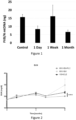
- Figure 1 presents the level of FVB/N mtDNA found in the bone marrow as a function of time post the I.V. injection.
- the data teach that the level of mutated mtDNA in the bone marrow was significantly reduced over time.
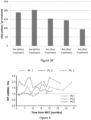
- Mitochondria were isolated from term C57BL murine placenta. Bone marrow cells of 12 months old C57BL mice were obtained. Bone marrow cells enriched with mitochondria (MNV-BM-PLC, 1 ⁇ 10 6 cells), bone marrow cells alone (BM, 1 ⁇ 10 6 cells) or a control vehicle solution (VEHICLE, 4.5% Albumin in 0.9% w/v NaCl) were injected IV to the tail vein of 12 months old C57BL mice at the beginning of the experiment and again at about the age of 15 months, 18 months, 21 months. BUN blood test was performed 1, 3, 4 and 6 months post first IV injection.
- MNV-BM-PLC Bone marrow cells enriched with mitochondria
- BM bone marrow cells alone
- VEHICLE 4.5% Albumin in 0.9% w/v NaCl
- Example 4 Compassionate treatment using autologous CD34 + cells enriched with MNV-BLD (blood derived mitochondria) for a young patient with Pearson Syndrome (PS) and PS-related Renal Fanconi's Syndrome (FS).
- PS Pearson Syndrome
- FS PS-related Renal Fanconi's Syndrome
- Patient 1 was a 6.5-years old male patient diagnosed with Pearson Syndrome, having a deletion of nucleotides 5835-9753 in his mtDNA. Prior to mitochondrial augmentation therapy (MAT), his weight was 14.5 KG. His growth was significantly delayed for 3 years prior to treatment with no improvement despite being fed by a gastrostomy tube (G-tube) for more than a year.
- the patient had renal failure (GFR 22ml/min), proximal tubulopathy requiring electrolyte supplementation and hypoparathyroidism requiring calcium supplementation.
- FIG. 3D presents the level of lactate found in the blood of the patient as a function of time post the I.V. injection. As can be seen in Figure 3D after MAT, blood lactate level of patient 1 has decreased to normal values.
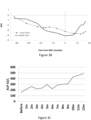
- Figure 3H presents the level of creatinine in the blood of the patient as a function of time pre and post cellular therapy.
- the data teach that the creatinine level of the patient was initially normal (below 1 mg/dL) but over time, about 12 month before the treatment, his condition deteriorated. Reaching high levels of creatinine is a marker of kidney failure. After initializing cellular therapy, his condition stabilized and further deterioration (illustrated by the dotted line) was prevented.
- a genetic indication to the success of the therapy used is the prevalence of normal mtDNA compared to total mtDNA.
- Pt.1 the prevalence of normal mtDNA in the patient was increased from a baseline of about 1 to as high as 1.6 (+ 60%) in just 4 months, and to 1.9 (+90%) after 20 months from treatment.
- normal mtDNA levels were above the baseline level on most of the time points.
- HSPC autologous hematopoietic stem and progenitor cells
- Mitochondria were isolated from maternal peripheral blood mononuclear cells (PBMCs) using 250 mM sucrose buffer pH 7.4 by differential centrifugation.
- the autologous CD34 + cells were incubated with the healthy mitochondria from the patient's mother (1*10 6 cells per amount of mitochondria having 4.4 units of citrate synthase (CS)), resulting in a 1.62 fold increase in the cells mitochondrial content (62% increase in mitochondrial DNA content as demonstrated CS activity. Incubation with mitochondria was performed for 24 hours at R.T. in saline containing 4.5% HSA. It should be noted that after mitochondrial enrichment, the CD34 + cells from the patient increased the rate of colony formation by 26%.
- CS citrate synthase
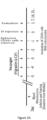
- Patient 2 (15 KG at day of treatment) was treated by IV infusion with 1.8*10 6 autologous CD34 + cells enriched with healthy mitochondria per kilogram body weight, according to the timeline presented in Figure 5A .
- Figure 5B presents the level of lactate found in the blood of the patient as a function of time post the I.V. injection.
- Blood lactate is lactic acid that appears in the blood as a result of anaerobic metabolism when mitochondria are damaged or when oxygen delivery to the tissues is insufficient to support normal metabolic demands, one of the hallmarks of mitochondria dysfunction.
- the data teach that the level of blood lactate was significantly reduced over time.
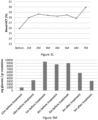
- Figures 5C , 5D and 5E present the ratios of magnesium, potassium and calcium compared to creatinine found in the urine of the patient as a function of time post the I.V. injection, respectively. The data teach that those rations were significantly reduced over time.
- Figure 5F presents the genetic ratio between ATP8 to 18S in the urine of the patient as a function of time post the I.V. injection. The data teach that the patient's ATP8/18S ratio was improved over time.
- Figure 5G presents the ATP content in lymphocytes of the patient as a function of time post the I.V. injection.
- the control is the ATP content in lymphocytes of the patient's mother, which is the donor of the mitochondria.
- the data teach that the patient's ATP content was improved over time.
- Figure 4 presents the prevalence of normal mtDNA as a function of time post the I.V. injection.
- the prevalence of normal mtDNA was increased from a baseline of about 1 to as high as 2 (+ 100%) in just 1 month, remaining relatively high until 10 months post treatment.
- normal mtDNA levels were above the baseline level at all time points.
- Example 6 Compassionate treatment using autologous CD34 + cells enriched with MNV-BLD (blood derived mitochondria) for a young patient with Pearson Syndrome (PS).
- MNV-BLD blood derived mitochondria
- Patient 3 was a 10.5-years old female patient, diagnosed with Pearson Syndrome, having a deletion of nucleotides 12113-14421 in her mtDNA. The patient also suffered from anemia, and from Fanconi's Syndrome that developed into kidney insufficiency stage 4.
- Patient was treated with dialysis three times a week. In the last two months, patient also suffered from a severe vision disorder, narrowing of the vision field and loss of near vision. Patient was incapable of any physical activity at all (no walking, sits in a stroller).
- Patient had high lactate levels (>50 mg/dL), and a pancreatic disorder which was treated with insulin. Brain MRI showed many lesions and atrophic regions. Patient was fed only through a gastrostomy. Patient had memory and learning problems.
- Patient had low mitochondrial activity in peripheral lymphocytes as determined by Tetramethylrhodamine, Ethyl Ester (TMRE), ATP content and O 2 consumption rate (relative to the healthy mother) tests.
- TRE Te
- the autologous CD34 + cells were incubated with healthy mitochondria from the patient's mother (1*10 6 cells per amount of mitochondria having 4.4 units of citrate synthase (CS)), resulting in a 1.14 fold increase in the cells mitochondrial content (14% increase in mitochondrial content as demonstrated by CS activity).
- Cells were incubated with mitochondria for 24 hours at R.T. in saline containing 4.5% HSA. It should be noted that after mitochondrial enrichment, the CD34+ cells from the patient increased the rate of colony formation by 52%.
- Patient 3 (21 KG) was treated by IV infusion with 2.8*10 6 autologous CD34 + cells enriched with healthy mitochondria from her mother per kilogram body weight, according to the timeline presented in Figure 6A .
- FIG.3 presents the prevalence of normal mtDNA as a function of time post the I.V. injection. As can be seen in Figure 3 (Pt.3), the prevalence of normal mtDNA was increased by 50% at 7 months post treatment. Notably, normal mtDNA levels were above the baseline level on most of the time points.
- Glycated hemoglobin (sometimes also referred to as hemoglobin A1c, HbA1c, A1C, Hb1c, Hb1c or HGBA1C) is a form of hemoglobin that is measured primarily to identify the three-month average plasma glucose concentration. The test is limited to a three-month average because the lifespan of a red blood cell is four months (120 days).
- Figure 6C presents the result of the HbA1C test of the patient as a function of time before and after therapy.
- Treatment Doses Therapeutic cell dose of up to 4 ⁇ 10 6 cells/kg body weight, are transplanted by IV infusion according to the routine standard procedure at the clinical department.
- MNV-BM-BLD bone marrow cells enriched with blood-derived mitochondria
- effect on distal organs Hospitalization avoidance, Transfusion avoidance, Weight gain on standard growth curves, as compared to rate of gain in the year prior to the therapy.
- Additional patient-specific individualized outcomes include change in disease target organs (Renal glomerular function measured by creatinine clearance, compared to the year prior to the study; Renal tubular function, measured by serum and urine levels of potassium and magnesium; Endocrine pancreatic function as assessed by insulin requirement, C-peptide and hemoglobin A1c; Exocrine pancreatic function and rate of diarrhea; Change in Brain MRI findings compared to baseline; Change in Quality of Life (QoL) questionnaire/PEDI-CAT (Pediatric Evaluation of Disability Inventory - Computer Adaptive Test) scores).
Landscapes
- Health & Medical Sciences (AREA)
- Life Sciences & Earth Sciences (AREA)
- Cell Biology (AREA)
- Immunology (AREA)
- Developmental Biology & Embryology (AREA)
- Engineering & Computer Science (AREA)
- Biomedical Technology (AREA)
- Veterinary Medicine (AREA)
- Public Health (AREA)
- Pharmacology & Pharmacy (AREA)
- General Health & Medical Sciences (AREA)
- Animal Behavior & Ethology (AREA)
- Chemical & Material Sciences (AREA)
- Medicinal Chemistry (AREA)
- Biotechnology (AREA)
- Epidemiology (AREA)
- Zoology (AREA)
- Virology (AREA)
- Hematology (AREA)
- Reproductive Health (AREA)
- Gynecology & Obstetrics (AREA)
- Bioinformatics & Cheminformatics (AREA)
- Physiology (AREA)
- Nutrition Science (AREA)
- Urology & Nephrology (AREA)
- Chemical Kinetics & Catalysis (AREA)
- General Chemical & Material Sciences (AREA)
- Nuclear Medicine, Radiotherapy & Molecular Imaging (AREA)
- Organic Chemistry (AREA)
- Medicines Containing Material From Animals Or Micro-Organisms (AREA)
- Medicines That Contain Protein Lipid Enzymes And Other Medicines (AREA)
- Pharmaceuticals Containing Other Organic And Inorganic Compounds (AREA)
- Micro-Organisms Or Cultivation Processes Thereof (AREA)
Applications Claiming Priority (3)
| Application Number | Priority Date | Filing Date | Title |
|---|---|---|---|
| US201862701783P | 2018-07-22 | 2018-07-22 | |
| US201862753934P | 2018-11-01 | 2018-11-01 | |
| PCT/IL2019/050821 WO2020021534A1 (en) | 2018-07-22 | 2019-07-22 | Mitochondrial augmentation therapy of renal diseases |
Publications (4)
| Publication Number | Publication Date |
|---|---|
| EP3823645A1 EP3823645A1 (en) | 2021-05-26 |
| EP3823645A4 EP3823645A4 (en) | 2022-04-13 |
| EP3823645B1 true EP3823645B1 (en) | 2024-07-03 |
| EP3823645C0 EP3823645C0 (en) | 2024-07-03 |
Family
ID=69180899
Family Applications (1)
| Application Number | Title | Priority Date | Filing Date |
|---|---|---|---|
| EP19841655.4A Active EP3823645B1 (en) | 2018-07-22 | 2019-07-22 | Mitochondrial augmentation therapy of renal diseases |
Country Status (5)
| Country | Link |
|---|---|
| US (1) | US12329781B2 (https=) |
| EP (1) | EP3823645B1 (https=) |
| JP (1) | JP7586811B2 (https=) |
| ES (1) | ES2992862T3 (https=) |
| WO (1) | WO2020021534A1 (https=) |
Families Citing this family (3)
| Publication number | Priority date | Publication date | Assignee | Title |
|---|---|---|---|---|
| TWI857807B (zh) * | 2020-03-20 | 2024-10-01 | 台灣粒線體應用技術股份有限公司 | 含有粒線體之組合物及其用於作為皮膚纖維母細胞活性促進劑之用途 |
| US20240082183A1 (en) * | 2021-01-07 | 2024-03-14 | The Regents Of The University Of Michigan | Methods for preventing or treating conditions related to t cell mediated intestinal disorders |
| CA3239683A1 (en) * | 2021-12-13 | 2023-06-22 | Natalie YIVGI-OHANA | Mitochondrial augmentation therapy for myelodysplastic syndrome |
Family Cites Families (74)
| Publication number | Priority date | Publication date | Assignee | Title |
|---|---|---|---|---|
| CA2186636A1 (en) | 1994-03-30 | 1995-10-12 | Corinna Herrnstadt | Diagnosis, therapy and cellular and animal models for diseases associated with mitochondrial defects |
| US6472378B2 (en) | 1998-08-31 | 2002-10-29 | Pro-Neuron, Inc. | Compositions and methods for treatment of mitochondrial diseases |
| EP1119368A2 (en) | 1999-03-03 | 2001-08-01 | Biogen, Inc. | Methods of modulating lipid metabolism and storage |
| GB2350565A (en) | 1999-05-28 | 2000-12-06 | Johnson & Johnson Medical Ltd | Biological wound dressings comprising mitochondria |
| DE19937348A1 (de) | 1999-08-11 | 2001-02-22 | Aventis Cropscience Gmbh | Nukleinsäuremoleküle aus Pflanzen codierend Enzyme, die an der Stärkesynthese beteiligt sind |
| EP1267800A4 (en) | 2000-03-31 | 2004-08-25 | Gen Hospital Corp | METHOD FOR INFLUENCING HAIR GROWTH |
| WO2002030418A1 (fr) | 2000-10-13 | 2002-04-18 | Chugai Seiyaku Kabushiki Kaisha | Compositions servant a ameliorer le metabolisme lipidique |
| US20030040475A1 (en) | 2001-01-16 | 2003-02-27 | Yasuhiro Toba | Agents for improving lipid metabolism and reducing high blood pressure |
| US7339090B2 (en) | 2001-02-13 | 2008-03-04 | Avigenics, Inc. | Microinjection devices and methods of use |
| JP4603192B2 (ja) | 2001-05-10 | 2010-12-22 | 株式会社カネカ | 毛髪頭皮用組成物 |
| AU2002330938A1 (en) | 2001-07-31 | 2003-02-17 | Northeastern University | Mitochondrial genome replenishment |
| EP1423504B1 (en) | 2001-08-08 | 2009-09-23 | Levesque Biosciences, Inc. | Compositions and methods for isolation, propagation, and differentiation of non-embryonic human stem cells and uses thereof |
| US7138134B2 (en) | 2001-12-18 | 2006-11-21 | Arizona Health Consulting Group, Llc | Preparation and administration of jojoba product for reducing weight, fat and blood lipid levels |
| US20050153381A1 (en) | 2002-02-14 | 2005-07-14 | Marusich Michael F. | Immunocapture of mitochondrial protein complexes |
| CA2525560A1 (en) | 2003-05-13 | 2004-11-25 | The Regents Of The University Of Colorado | Diagnostic and therapeutic treatments related to mitochondrial disorders |
| EP1626732B1 (en) | 2003-05-22 | 2013-04-03 | CHIESI FARMACEUTICI S.p.A. | Means for preventing and treating cellular death and their biological applications |
| US7407800B1 (en) | 2003-09-19 | 2008-08-05 | Pierce Biotechnology, Inc. | Method for the isolation of intact mitochondria from cells |
| EP1709084A4 (en) | 2003-12-23 | 2008-05-28 | Nono Inc | POLYPEPTIDES FOR MODULATING BINDING OF TRP-CHANNEL PROTEINS AND TRP-ASSOCIATED PROTEINS |
| US20060024277A1 (en) | 2004-07-27 | 2006-02-02 | Sivak Hannah N | Method of skin care and/or treatment using extracts enriched in mitochondria |
| JP2006131600A (ja) | 2004-11-09 | 2006-05-25 | R & D Cell-Science Optional Medico:Kk | 発毛促進のためのヒト細胞組成物 |
| CA2609208C (en) | 2005-06-10 | 2016-10-18 | Per-Ake Albertsson | Use of plant cell membrane for the treatment of obesity |
| AU2012201710B2 (en) | 2006-05-11 | 2014-01-16 | Regenics As | Administration of cells and cellular extracts for rejuvenation |
| AT502353B1 (de) | 2006-06-29 | 2007-07-15 | Avl List Gmbh | Verfahren und vorrichtung zur konditionierung eines o2-hältigen gases |
| US9603872B2 (en) | 2007-05-02 | 2017-03-28 | The McLeon Hospital Corporation | Methods and compositions for mitochondrial replacement therapy |
| WO2008152640A2 (en) | 2007-06-13 | 2008-12-18 | Pluristem Ltd. | Three dimensional biocompatible scaffolds for ex-vivo expansion and transplantation of stem cells |
| JP5866601B2 (ja) | 2008-06-18 | 2016-02-17 | ザ テキサス エーアンドエム ユニバーシティ システムThe Texas A&M University System | 医薬組成物の製造方法 |
| KR20120100962A (ko) * | 2009-10-02 | 2012-09-12 | 박스터 헬쓰케어 에스.에이. | 신장 손상을 치료하는데 사용하기 위한 조혈 줄기 세포 |
| WO2011059547A2 (en) | 2009-10-30 | 2011-05-19 | Xenotech, Llc | Cryopreservation of cells and subcellular fractions |
| US8846028B2 (en) | 2010-10-28 | 2014-09-30 | The Invention Science Fund I, Llc | Mitochondrial enhancement of cells |
| US8883838B2 (en) | 2010-12-03 | 2014-11-11 | Allergan, Inc. | Pharmaceutical cream compositions and methods of use |
| PH12022550598A1 (en) | 2010-12-23 | 2024-03-11 | Amazentis Sa | Compositions and methods for improving mitochondrial function and treating neurodenegenerative diseases and cognitive disorders |
| EA201490050A1 (ru) | 2011-06-29 | 2014-07-30 | Зе Дженерэл Хоспитэл Корпорейшн | Композиции и способы повышения биоэнергетического состояния женских зародышевых клеток |
| CN102266350A (zh) | 2011-07-20 | 2011-12-07 | 黄必录 | 逆转干细胞衰老的方案 |
| US20130022666A1 (en) | 2011-07-20 | 2013-01-24 | Anna Brzezinska | Methods and compositions for transfer of mitochondria into mammalian cells |
| CN102293178A (zh) | 2011-08-28 | 2011-12-28 | 黄必录 | 使个体去衰老的方法 |
| IL282198B2 (en) | 2011-09-11 | 2025-11-01 | Minovia Therapeutics Ltd | Compositions of functional mitochondria and uses thereof |
| JP6220791B2 (ja) | 2011-12-02 | 2017-10-25 | フェイト セラピューティクス,インコーポレイテッド | 増強された幹細胞組成物 |
| US8648034B2 (en) | 2011-12-09 | 2014-02-11 | Changhua Christian Hospital | Method and applications of peptide-mediated mitochondrial delivery system |
| WO2013149064A1 (en) | 2012-03-30 | 2013-10-03 | University Of Pittsburgh-Of The Commonwealth System Of Higher Education | Uridine diphosphate compounds as mobilizers of hematopoietic progenitor cells |
| WO2013171752A1 (en) | 2012-05-16 | 2013-11-21 | Minovia Therapeutics Ltd. | Compositions and methods for inducing angiogenesis |
| EP3459522B1 (en) | 2012-12-10 | 2021-02-17 | Regenics AS | Use of egg cellular extracts for wound treatment |
| AU2014219026B2 (en) | 2013-02-19 | 2018-11-29 | Children's Medical Center Corporation | ABCB5(+) stem cells for treating ocular disease |
| DE102013225588A1 (de) | 2013-12-11 | 2014-04-17 | Henkel Ag & Co. Kgaa | Verwendung und Mittel zur Verbesserung der Haarstruktur |
| AU2015214145A1 (en) | 2014-02-04 | 2016-08-25 | Kite Pharma. Inc. | Methods for producing autologous T cells useful to treat B cell malignancies and other cancers and compositions thereof |
| EP2918458B1 (en) | 2014-03-11 | 2016-12-07 | Autoliv Development AB | A vehicle braking arrangement |
| WO2015142855A1 (en) | 2014-03-17 | 2015-09-24 | University Of Virginia Patent Foundation | Compositions and methods for treating retinopathy |
| CN103976935A (zh) | 2014-05-28 | 2014-08-13 | 广州市白云区天芳化妆品厂 | 一种抗衰原液及其制备方法 |
| KR20170032406A (ko) | 2014-07-15 | 2017-03-22 | 주노 쎄러퓨티크스 인코퍼레이티드 | 입양 세포 치료를 위한 조작된 세포 |
| WO2016008937A1 (en) | 2014-07-16 | 2016-01-21 | INSERM (Institut National de la Santé et de la Recherche Médicale) | Methods for the intercellular transfer of isolated mitochondria in recipient cells |
| TWI707040B (zh) | 2014-09-11 | 2020-10-11 | 台灣粒線體應用技術股份有限公司 | 一種用於治療退化性神經疾病的細胞、含有該細胞的醫藥組合物及其應用 |
| JP6441472B2 (ja) | 2014-09-30 | 2018-12-19 | 台灣粒線體應用技術股▲扮▼有限公司Taiwan Mitochondrion Applied Technology Co.,Ltd. | 活性成分として外因性ミトコンドリアを含む組成物、ならびにその使用およびそのための細胞修復法 |
| JP6644702B2 (ja) | 2014-11-14 | 2020-02-12 | Jcrファーマ株式会社 | 歯髄由来多能性幹細胞を含有する筋ジストロフィー治療剤 |
| GB201500427D0 (en) | 2015-01-12 | 2015-02-25 | Isis Innovation | Method |
| US20180007913A1 (en) | 2015-01-14 | 2018-01-11 | Calix Ltd | Improved pathogen inhibitor |
| IL299482B2 (en) | 2015-02-26 | 2025-02-01 | Minovia Therapeutics Ltd | Mammalian cells are enriched with active mitochondria |
| MA41757A (fr) | 2015-02-27 | 2018-01-03 | Univ Connecticut | Transplantation ciblée de mitochondries dans des hépatocytes |
| EP3302065A4 (en) | 2015-05-28 | 2019-04-10 | Celularity, Inc. | PLACENTIAL STEM CELLS FOR RECOVERING THE REGENERATIVE MOTOR, CORRECTING PROTEOMIC DEFECTS AND EXTENDING THE LIFE |
| US11903974B2 (en) | 2015-11-30 | 2024-02-20 | Flagship Pioneering Innovations V, Inc. | Methods and compositions relating to chondrisomes from cultured cells |
| WO2017124037A1 (en) | 2016-01-15 | 2017-07-20 | The Children's Medical Center Corporation | Therapeutic use of mitochondria and combined mitochondrial agents |
| KR20190109389A (ko) | 2016-11-03 | 2019-09-25 | 엑소스템 바이오텍 리미티드 | 간엽 줄기 세포 집단, 이들의 산물 및 이들의 용도 |
| JP7187036B2 (ja) * | 2016-11-14 | 2022-12-12 | パイアン バイオテクノロジ- インコーポレイテッド | 外因性ミトコンドリアを細胞内に送達する方法 |
| JP2020502078A (ja) | 2016-11-30 | 2020-01-23 | パイアン・バイオテクノロジー・インコーポレイテッドPaean Biotechnology Inc. | ミトコンドリアを含む医薬組成物 |
| WO2018178970A1 (en) | 2017-03-26 | 2018-10-04 | Minovia Therapeutics Ltd. | Mitochondrial compositions and methods for treatment of skin and hair |
| EP3823644A4 (en) * | 2018-07-22 | 2022-06-08 | Minovia Therapeutics Ltd. | MITOCHONDRIAL AUGMENTATION THERAPY OF PANCREATIC DISEASES |
| US11951135B2 (en) * | 2018-07-22 | 2024-04-09 | Minovia Therapeutics Ltd. | Mitochondrial augmentation therapy of muscle diseases |
| EP3823646A4 (en) * | 2018-07-22 | 2022-06-08 | Minovia Therapeutics Ltd. | Mitochondrial augmentation therapy of brain diseases |
| AU2019311859B2 (en) * | 2018-07-22 | 2025-12-18 | Minovia Therapeutics Ltd. | Mitochondrial augmentation therapy for primary mitochondrial diseases |
| EP3823643A4 (en) * | 2018-07-22 | 2022-06-08 | Minovia Therapeutics Ltd. | MITOCHONDRIAL AUGMENTATION THERAPY OF LIVER DISEASES |
| WO2020021535A1 (en) | 2018-07-22 | 2020-01-30 | Minovia Therapeutics Ltd. | Mitochondrial augmentation therapy of ocular diseases |
| US20210322485A1 (en) * | 2018-07-22 | 2021-10-21 | Minovia Therapeutics Ltd. | Mitochondrial augmentation therapy with stem cells enriched with functional mitochondria |
| US20200054682A1 (en) | 2018-08-14 | 2020-02-20 | Imel Biotherapeutics, Inc. | Methods and compositions for treating mitochondrial disease or disorders and heteroplasmy |
| CN121610569A (zh) | 2019-04-30 | 2026-03-06 | 拉利玛生物医药公司 | 用于测定共济蛋白替代疗法的疗效的共济蛋白敏感性标志物 |
| BR112022019609A2 (pt) | 2020-03-31 | 2022-11-29 | Minovia Therapeutics Ltd | Células geneticamente modificadas enriquecidas com mitocôndrias e usos das mesmas |
| AU2021248780A1 (en) | 2020-03-31 | 2022-11-10 | Minovia Therapeutics Ltd. | Mitochondrial augmentation therapy |
-
2019
- 2019-07-22 JP JP2021502765A patent/JP7586811B2/ja active Active
- 2019-07-22 EP EP19841655.4A patent/EP3823645B1/en active Active
- 2019-07-22 US US17/251,666 patent/US12329781B2/en active Active
- 2019-07-22 ES ES19841655T patent/ES2992862T3/es active Active
- 2019-07-22 WO PCT/IL2019/050821 patent/WO2020021534A1/en not_active Ceased
Non-Patent Citations (2)
| Title |
|---|
| FINSTERER JOSEF ET AL: "Renal manifestations of primary mitochondrial disorders", BIOMEDICAL REPORTS MAY 2014 SPANDIDOS PUBLICATIONS GBR, vol. 6, no. 5, 1 May 2017 (2017-05-01), Greece, pages 487 - 494, XP093052363, ISSN: 2049-9434, Retrieved from the Internet <URL:https://www.ncbi.nlm.nih.gov/pmc/articles/PMC5431253/pdf/br-06-05-0487.pdf> DOI: 10.3892/br.2017.892 * |
| WANG WANG ET AL: "Novel targets for mitochondrial medicine", SCIENCE TRANSLATIONAL MEDICINE, vol. 8, no. 326, 17 February 2016 (2016-02-17), XP093052365, ISSN: 1946-6234, Retrieved from the Internet <URL:https://www.ncbi.nlm.nih.gov/pmc/articles/PMC4819426/pdf/nihms769346.pdf> DOI: 10.1126/scitranslmed.aac7410 * |
Also Published As
| Publication number | Publication date |
|---|---|
| EP3823645A1 (en) | 2021-05-26 |
| JP7586811B2 (ja) | 2024-11-19 |
| WO2020021534A1 (en) | 2020-01-30 |
| ES2992862T3 (en) | 2024-12-18 |
| WO2020021534A9 (en) | 2020-04-09 |
| EP3823645A4 (en) | 2022-04-13 |
| EP3823645C0 (en) | 2024-07-03 |
| US20210275587A1 (en) | 2021-09-09 |
| US12329781B2 (en) | 2025-06-17 |
| JP2021531281A (ja) | 2021-11-18 |
Similar Documents
| Publication | Publication Date | Title |
|---|---|---|
| US12551504B2 (en) | Mitochondrial augmentation therapy of pancreatic diseases | |
| US11951135B2 (en) | Mitochondrial augmentation therapy of muscle diseases | |
| US12239672B2 (en) | Mitochondrial augmentation therapy of ocular diseases | |
| US12440515B2 (en) | Mitochondrial augmentation therapy of brain diseases | |
| US20240415894A1 (en) | Mitochondrial augmentation therapy with stem cells enriched with functional mitochondria | |
| US20210252075A1 (en) | Mitochondrial augmentation therapy of liver diseases | |
| EP3823645B1 (en) | Mitochondrial augmentation therapy of renal diseases | |
| US20210205368A1 (en) | Mitochondrial augmentation therapy of renal diseases |
Legal Events
| Date | Code | Title | Description |
|---|---|---|---|
| STAA | Information on the status of an ep patent application or granted ep patent |
Free format text: STATUS: THE INTERNATIONAL PUBLICATION HAS BEEN MADE |
|
| PUAI | Public reference made under article 153(3) epc to a published international application that has entered the european phase |
Free format text: ORIGINAL CODE: 0009012 |
|
| STAA | Information on the status of an ep patent application or granted ep patent |
Free format text: STATUS: REQUEST FOR EXAMINATION WAS MADE |
|
| 17P | Request for examination filed |
Effective date: 20210217 |
|
| AK | Designated contracting states |
Kind code of ref document: A1 Designated state(s): AL AT BE BG CH CY CZ DE DK EE ES FI FR GB GR HR HU IE IS IT LI LT LU LV MC MK MT NL NO PL PT RO RS SE SI SK SM TR |
|
| DAV | Request for validation of the european patent (deleted) | ||
| DAX | Request for extension of the european patent (deleted) | ||
| A4 | Supplementary search report drawn up and despatched |
Effective date: 20220311 |
|
| RIC1 | Information provided on ipc code assigned before grant |
Ipc: A61P 13/00 20060101ALI20220305BHEP Ipc: A61K 35/28 20150101AFI20220305BHEP |
|
| STAA | Information on the status of an ep patent application or granted ep patent |
Free format text: STATUS: EXAMINATION IS IN PROGRESS |
|
| 17Q | First examination report despatched |
Effective date: 20230110 |
|
| P01 | Opt-out of the competence of the unified patent court (upc) registered |
Effective date: 20230404 |
|
| GRAP | Despatch of communication of intention to grant a patent |
Free format text: ORIGINAL CODE: EPIDOSNIGR1 |
|
| STAA | Information on the status of an ep patent application or granted ep patent |
Free format text: STATUS: GRANT OF PATENT IS INTENDED |
|
| RIC1 | Information provided on ipc code assigned before grant |
Ipc: A61K 35/19 20150101ALI20240219BHEP Ipc: A61K 35/18 20150101ALI20240219BHEP Ipc: A61K 35/17 20150101ALI20240219BHEP Ipc: A61K 35/15 20150101ALI20240219BHEP Ipc: A61K 35/545 20150101ALI20240219BHEP Ipc: A61K 35/38 20150101ALI20240219BHEP Ipc: A61K 35/35 20150101ALI20240219BHEP Ipc: A61K 35/33 20150101ALI20240219BHEP Ipc: A61P 13/00 20060101ALI20240219BHEP Ipc: A61K 35/28 20150101AFI20240219BHEP |
|
| INTG | Intention to grant announced |
Effective date: 20240304 |
|
| GRAS | Grant fee paid |
Free format text: ORIGINAL CODE: EPIDOSNIGR3 |
|
| GRAA | (expected) grant |
Free format text: ORIGINAL CODE: 0009210 |
|
| STAA | Information on the status of an ep patent application or granted ep patent |
Free format text: STATUS: THE PATENT HAS BEEN GRANTED |
|
| AK | Designated contracting states |
Kind code of ref document: B1 Designated state(s): AL AT BE BG CH CY CZ DE DK EE ES FI FR GB GR HR HU IE IS IT LI LT LU LV MC MK MT NL NO PL PT RO RS SE SI SK SM TR |
|
| REG | Reference to a national code |
Ref country code: CH Ref legal event code: EP |
|
| REG | Reference to a national code |
Ref country code: DE Ref legal event code: R096 Ref document number: 602019054745 Country of ref document: DE |
|
| U01 | Request for unitary effect filed |
Effective date: 20240731 |
|
| P04 | Withdrawal of opt-out of the competence of the unified patent court (upc) registered |
Free format text: CASE NUMBER: APP_48688/2024 Effective date: 20240826 |
|
| U07 | Unitary effect registered |
Designated state(s): AT BE BG DE DK EE FI FR IT LT LU LV MT NL PT RO SE SI Effective date: 20240902 |
|
| U20 | Renewal fee for the european patent with unitary effect paid |
Year of fee payment: 6 Effective date: 20240905 |
|
| REG | Reference to a national code |
Ref country code: ES Ref legal event code: FG2A Ref document number: 2992862 Country of ref document: ES Kind code of ref document: T3 Effective date: 20241218 |
|
| P05 | Withdrawal of opt-out of the competence of the unified patent court (upc) changed |
Free format text: CASE NUMBER: APP_48688/2024 Effective date: 20240902 |
|
| PG25 | Lapsed in a contracting state [announced via postgrant information from national office to epo] |
Ref country code: NO Free format text: LAPSE BECAUSE OF FAILURE TO SUBMIT A TRANSLATION OF THE DESCRIPTION OR TO PAY THE FEE WITHIN THE PRESCRIBED TIME-LIMIT Effective date: 20241003 |
|
| PG25 | Lapsed in a contracting state [announced via postgrant information from national office to epo] |
Ref country code: PL Free format text: LAPSE BECAUSE OF FAILURE TO SUBMIT A TRANSLATION OF THE DESCRIPTION OR TO PAY THE FEE WITHIN THE PRESCRIBED TIME-LIMIT Effective date: 20240703 Ref country code: GR Free format text: LAPSE BECAUSE OF FAILURE TO SUBMIT A TRANSLATION OF THE DESCRIPTION OR TO PAY THE FEE WITHIN THE PRESCRIBED TIME-LIMIT Effective date: 20241004 |
|
| PG25 | Lapsed in a contracting state [announced via postgrant information from national office to epo] |
Ref country code: IS Free format text: LAPSE BECAUSE OF FAILURE TO SUBMIT A TRANSLATION OF THE DESCRIPTION OR TO PAY THE FEE WITHIN THE PRESCRIBED TIME-LIMIT Effective date: 20241103 |
|
| PG25 | Lapsed in a contracting state [announced via postgrant information from national office to epo] |
Ref country code: CZ Free format text: LAPSE BECAUSE OF FAILURE TO SUBMIT A TRANSLATION OF THE DESCRIPTION OR TO PAY THE FEE WITHIN THE PRESCRIBED TIME-LIMIT Effective date: 20240703 Ref country code: HR Free format text: LAPSE BECAUSE OF FAILURE TO SUBMIT A TRANSLATION OF THE DESCRIPTION OR TO PAY THE FEE WITHIN THE PRESCRIBED TIME-LIMIT Effective date: 20240703 |
|
| PG25 | Lapsed in a contracting state [announced via postgrant information from national office to epo] |
Ref country code: RS Free format text: LAPSE BECAUSE OF FAILURE TO SUBMIT A TRANSLATION OF THE DESCRIPTION OR TO PAY THE FEE WITHIN THE PRESCRIBED TIME-LIMIT Effective date: 20241003 |
|
| PG25 | Lapsed in a contracting state [announced via postgrant information from national office to epo] |
Ref country code: RS Free format text: LAPSE BECAUSE OF FAILURE TO SUBMIT A TRANSLATION OF THE DESCRIPTION OR TO PAY THE FEE WITHIN THE PRESCRIBED TIME-LIMIT Effective date: 20241003 Ref country code: PL Free format text: LAPSE BECAUSE OF FAILURE TO SUBMIT A TRANSLATION OF THE DESCRIPTION OR TO PAY THE FEE WITHIN THE PRESCRIBED TIME-LIMIT Effective date: 20240703 Ref country code: NO Free format text: LAPSE BECAUSE OF FAILURE TO SUBMIT A TRANSLATION OF THE DESCRIPTION OR TO PAY THE FEE WITHIN THE PRESCRIBED TIME-LIMIT Effective date: 20241003 Ref country code: IS Free format text: LAPSE BECAUSE OF FAILURE TO SUBMIT A TRANSLATION OF THE DESCRIPTION OR TO PAY THE FEE WITHIN THE PRESCRIBED TIME-LIMIT Effective date: 20241103 Ref country code: HR Free format text: LAPSE BECAUSE OF FAILURE TO SUBMIT A TRANSLATION OF THE DESCRIPTION OR TO PAY THE FEE WITHIN THE PRESCRIBED TIME-LIMIT Effective date: 20240703 Ref country code: GR Free format text: LAPSE BECAUSE OF FAILURE TO SUBMIT A TRANSLATION OF THE DESCRIPTION OR TO PAY THE FEE WITHIN THE PRESCRIBED TIME-LIMIT Effective date: 20241004 Ref country code: CZ Free format text: LAPSE BECAUSE OF FAILURE TO SUBMIT A TRANSLATION OF THE DESCRIPTION OR TO PAY THE FEE WITHIN THE PRESCRIBED TIME-LIMIT Effective date: 20240703 |
|
| PG25 | Lapsed in a contracting state [announced via postgrant information from national office to epo] |
Ref country code: SM Free format text: LAPSE BECAUSE OF FAILURE TO SUBMIT A TRANSLATION OF THE DESCRIPTION OR TO PAY THE FEE WITHIN THE PRESCRIBED TIME-LIMIT Effective date: 20240703 |
|
| PG25 | Lapsed in a contracting state [announced via postgrant information from national office to epo] |
Ref country code: MC Free format text: LAPSE BECAUSE OF FAILURE TO SUBMIT A TRANSLATION OF THE DESCRIPTION OR TO PAY THE FEE WITHIN THE PRESCRIBED TIME-LIMIT Effective date: 20240703 |
|
| PG25 | Lapsed in a contracting state [announced via postgrant information from national office to epo] |
Ref country code: SK Free format text: LAPSE BECAUSE OF FAILURE TO SUBMIT A TRANSLATION OF THE DESCRIPTION OR TO PAY THE FEE WITHIN THE PRESCRIBED TIME-LIMIT Effective date: 20240703 |
|
| PLBE | No opposition filed within time limit |
Free format text: ORIGINAL CODE: 0009261 |
|
| STAA | Information on the status of an ep patent application or granted ep patent |
Free format text: STATUS: NO OPPOSITION FILED WITHIN TIME LIMIT |
|
| 26N | No opposition filed |
Effective date: 20250404 |
|
| PG25 | Lapsed in a contracting state [announced via postgrant information from national office to epo] |
Ref country code: IE Free format text: LAPSE BECAUSE OF NON-PAYMENT OF DUE FEES Effective date: 20240722 |
|
| U20 | Renewal fee for the european patent with unitary effect paid |
Year of fee payment: 7 Effective date: 20250724 |
|
| PGFP | Annual fee paid to national office [announced via postgrant information from national office to epo] |
Ref country code: ES Payment date: 20250819 Year of fee payment: 7 |
|
| PGFP | Annual fee paid to national office [announced via postgrant information from national office to epo] |
Ref country code: GB Payment date: 20250721 Year of fee payment: 7 |
|
| PGFP | Annual fee paid to national office [announced via postgrant information from national office to epo] |
Ref country code: CH Payment date: 20250801 Year of fee payment: 7 |
|
| PG25 | Lapsed in a contracting state [announced via postgrant information from national office to epo] |
Ref country code: CY Free format text: LAPSE BECAUSE OF FAILURE TO SUBMIT A TRANSLATION OF THE DESCRIPTION OR TO PAY THE FEE WITHIN THE PRESCRIBED TIME-LIMIT; INVALID AB INITIO Effective date: 20190722 |
|
| PG25 | Lapsed in a contracting state [announced via postgrant information from national office to epo] |
Ref country code: HU Free format text: LAPSE BECAUSE OF FAILURE TO SUBMIT A TRANSLATION OF THE DESCRIPTION OR TO PAY THE FEE WITHIN THE PRESCRIBED TIME-LIMIT; INVALID AB INITIO Effective date: 20190722 |