EP3822100B1 - Luftfederkomponente - Google Patents
Luftfederkomponente Download PDFInfo
- Publication number
- EP3822100B1 EP3822100B1 EP20200647.4A EP20200647A EP3822100B1 EP 3822100 B1 EP3822100 B1 EP 3822100B1 EP 20200647 A EP20200647 A EP 20200647A EP 3822100 B1 EP3822100 B1 EP 3822100B1
- Authority
- EP
- European Patent Office
- Prior art keywords
- component
- air spring
- joining
- joining agent
- projection
- Prior art date
- Legal status (The legal status is an assumption and is not a legal conclusion. Google has not performed a legal analysis and makes no representation as to the accuracy of the status listed.)
- Active
Links
Images


Classifications
-
- B—PERFORMING OPERATIONS; TRANSPORTING
- B60—VEHICLES IN GENERAL
- B60G—VEHICLE SUSPENSION ARRANGEMENTS
- B60G11/00—Resilient suspensions characterised by arrangement, location or kind of springs
- B60G11/26—Resilient suspensions characterised by arrangement, location or kind of springs having fluid springs only, e.g. hydropneumatic springs
- B60G11/27—Resilient suspensions characterised by arrangement, location or kind of springs having fluid springs only, e.g. hydropneumatic springs wherein the fluid is a gas
-
- B—PERFORMING OPERATIONS; TRANSPORTING
- B29—WORKING OF PLASTICS; WORKING OF SUBSTANCES IN A PLASTIC STATE IN GENERAL
- B29C—SHAPING OR JOINING OF PLASTICS; SHAPING OF MATERIAL IN A PLASTIC STATE, NOT OTHERWISE PROVIDED FOR; AFTER-TREATMENT OF THE SHAPED PRODUCTS, e.g. REPAIRING
- B29C45/00—Injection moulding, i.e. forcing the required volume of moulding material through a nozzle into a closed mould; Apparatus therefor
- B29C45/14—Injection moulding, i.e. forcing the required volume of moulding material through a nozzle into a closed mould; Apparatus therefor incorporating preformed parts or layers, e.g. injection moulding around inserts or for coating articles
- B29C45/14467—Joining articles or parts of a single article
-
- F—MECHANICAL ENGINEERING; LIGHTING; HEATING; WEAPONS; BLASTING
- F16—ENGINEERING ELEMENTS AND UNITS; GENERAL MEASURES FOR PRODUCING AND MAINTAINING EFFECTIVE FUNCTIONING OF MACHINES OR INSTALLATIONS; THERMAL INSULATION IN GENERAL
- F16F—SPRINGS; SHOCK-ABSORBERS; MEANS FOR DAMPING VIBRATION
- F16F9/00—Springs, vibration-dampers, shock-absorbers, or similarly-constructed movement-dampers using a fluid or the equivalent as damping medium
- F16F9/02—Springs, vibration-dampers, shock-absorbers, or similarly-constructed movement-dampers using a fluid or the equivalent as damping medium using gas only or vacuum
- F16F9/04—Springs, vibration-dampers, shock-absorbers, or similarly-constructed movement-dampers using a fluid or the equivalent as damping medium using gas only or vacuum in a chamber with a flexible wall
- F16F9/0445—Springs, vibration-dampers, shock-absorbers, or similarly-constructed movement-dampers using a fluid or the equivalent as damping medium using gas only or vacuum in a chamber with a flexible wall characterised by intermediate rings or other not embedded reinforcing elements
-
- F—MECHANICAL ENGINEERING; LIGHTING; HEATING; WEAPONS; BLASTING
- F16—ENGINEERING ELEMENTS AND UNITS; GENERAL MEASURES FOR PRODUCING AND MAINTAINING EFFECTIVE FUNCTIONING OF MACHINES OR INSTALLATIONS; THERMAL INSULATION IN GENERAL
- F16F—SPRINGS; SHOCK-ABSORBERS; MEANS FOR DAMPING VIBRATION
- F16F9/00—Springs, vibration-dampers, shock-absorbers, or similarly-constructed movement-dampers using a fluid or the equivalent as damping medium
- F16F9/02—Springs, vibration-dampers, shock-absorbers, or similarly-constructed movement-dampers using a fluid or the equivalent as damping medium using gas only or vacuum
- F16F9/04—Springs, vibration-dampers, shock-absorbers, or similarly-constructed movement-dampers using a fluid or the equivalent as damping medium using gas only or vacuum in a chamber with a flexible wall
- F16F9/0454—Springs, vibration-dampers, shock-absorbers, or similarly-constructed movement-dampers using a fluid or the equivalent as damping medium using gas only or vacuum in a chamber with a flexible wall characterised by the assembling method or by the mounting arrangement, e.g. mounting of the membrane
-
- F—MECHANICAL ENGINEERING; LIGHTING; HEATING; WEAPONS; BLASTING
- F16—ENGINEERING ELEMENTS AND UNITS; GENERAL MEASURES FOR PRODUCING AND MAINTAINING EFFECTIVE FUNCTIONING OF MACHINES OR INSTALLATIONS; THERMAL INSULATION IN GENERAL
- F16F—SPRINGS; SHOCK-ABSORBERS; MEANS FOR DAMPING VIBRATION
- F16F9/00—Springs, vibration-dampers, shock-absorbers, or similarly-constructed movement-dampers using a fluid or the equivalent as damping medium
- F16F9/02—Springs, vibration-dampers, shock-absorbers, or similarly-constructed movement-dampers using a fluid or the equivalent as damping medium using gas only or vacuum
- F16F9/04—Springs, vibration-dampers, shock-absorbers, or similarly-constructed movement-dampers using a fluid or the equivalent as damping medium using gas only or vacuum in a chamber with a flexible wall
- F16F9/05—Springs, vibration-dampers, shock-absorbers, or similarly-constructed movement-dampers using a fluid or the equivalent as damping medium using gas only or vacuum in a chamber with a flexible wall the flexible wall being of the rolling diaphragm type
- F16F9/057—Springs, vibration-dampers, shock-absorbers, or similarly-constructed movement-dampers using a fluid or the equivalent as damping medium using gas only or vacuum in a chamber with a flexible wall the flexible wall being of the rolling diaphragm type characterised by the piston
-
- B—PERFORMING OPERATIONS; TRANSPORTING
- B60—VEHICLES IN GENERAL
- B60G—VEHICLE SUSPENSION ARRANGEMENTS
- B60G2206/00—Indexing codes related to the manufacturing of suspensions: constructional features, the materials used, procedures or tools
- B60G2206/01—Constructional features of suspension elements, e.g. arms, dampers, springs
- B60G2206/40—Constructional features of dampers and/or springs
- B60G2206/42—Springs
- B60G2206/424—Plunger or top retainer construction for bellows or rolling lobe type air springs
-
- B—PERFORMING OPERATIONS; TRANSPORTING
- B60—VEHICLES IN GENERAL
- B60G—VEHICLE SUSPENSION ARRANGEMENTS
- B60G2206/00—Indexing codes related to the manufacturing of suspensions: constructional features, the materials used, procedures or tools
- B60G2206/01—Constructional features of suspension elements, e.g. arms, dampers, springs
- B60G2206/70—Materials used in suspensions
- B60G2206/71—Light weight materials
- B60G2206/7104—Thermoplastics
- B60G2206/71043—Polyamid elastomer
-
- B—PERFORMING OPERATIONS; TRANSPORTING
- B60—VEHICLES IN GENERAL
- B60G—VEHICLE SUSPENSION ARRANGEMENTS
- B60G2206/00—Indexing codes related to the manufacturing of suspensions: constructional features, the materials used, procedures or tools
- B60G2206/01—Constructional features of suspension elements, e.g. arms, dampers, springs
- B60G2206/80—Manufacturing procedures
- B60G2206/81—Shaping
- B60G2206/8101—Shaping by casting
- B60G2206/81012—Shaping by casting by injection moulding
-
- B—PERFORMING OPERATIONS; TRANSPORTING
- B60—VEHICLES IN GENERAL
- B60G—VEHICLE SUSPENSION ARRANGEMENTS
- B60G2206/00—Indexing codes related to the manufacturing of suspensions: constructional features, the materials used, procedures or tools
- B60G2206/01—Constructional features of suspension elements, e.g. arms, dampers, springs
- B60G2206/80—Manufacturing procedures
- B60G2206/82—Joining
-
- F—MECHANICAL ENGINEERING; LIGHTING; HEATING; WEAPONS; BLASTING
- F16—ENGINEERING ELEMENTS AND UNITS; GENERAL MEASURES FOR PRODUCING AND MAINTAINING EFFECTIVE FUNCTIONING OF MACHINES OR INSTALLATIONS; THERMAL INSULATION IN GENERAL
- F16F—SPRINGS; SHOCK-ABSORBERS; MEANS FOR DAMPING VIBRATION
- F16F2226/00—Manufacturing; Treatments
- F16F2226/04—Assembly or fixing methods; methods to form or fashion parts
Definitions
- the invention relates to an air spring component for an air spring, an air spring strut or an air spring damper, which has a first component made from a first material, a second component made from a second material and a joining material made from a third material. Furthermore, the invention relates to an air spring, an air spring strut or an air spring damper with such an air spring component and a method for producing such an air spring component.
- Air springs or air spring struts have been an integral part of suspension systems in rail vehicles, commercial vehicles and passenger vehicles for decades. With such suspension systems, the high comfort requirements of customers are met by the various vehicles. Almost 100% of heavy commercial vehicles today have air springs. For example, the rear axles of a commercial vehicle are exposed to strong load fluctuations. When operating without a trailer, the axles only have to carry the tractor's own weight. With a fully loaded articulated lorry, on the other hand, loads of more than ten tons each act on the two rear axles. For this reason, air springs are almost exclusively used today on the axles of heavy trucks, as well as on semi-trailers or trailers. Air spring dampers are used in passenger cars, commercial vehicles and also motorcycles to cushion and dampen vibrations.
- Air springs consist of a pot filled with compressed air and a rolling piston with a mechanical connection to the axle. Between the two are bellows and a piston, which form the effective surface for the compressed air.
- the rolling piston or the pot of an air spring are referred to as air spring components that are pressurized during operation. When a load is applied, the air spring bellows rolls on the outer surface of the rolling piston.
- the air spring is also connected to a vehicle part via the rolling piston.
- Compressed air is the only resilient medium in an air spring.
- the pressure increases.
- the volume of air increases again, the air pressure drops. This represents a load cycle, for example.
- the magnitude of the pressure that occurs is therefore dependent, among other things, on the size of the difference in volume and the weight of the vehicle.
- high air pressures therefore occur due to the predominant use in heavy vehicles.
- air spring components are nowadays mostly made of plastic using injection molding or centrifugal casting. Internal reinforcement ribs are often required to increase the rigidity and load-bearing capacity of a rolling piston made of plastic. In the case of air spring components produced in one piece, the resulting undercuts can only be removed from the mold with difficulty or in most cases not at all.
- a two-part or multi-part design has the disadvantage that special structural measures must be taken to seal the individual parts. In particular, it must be ensured that the joint between the two individual parts is sufficiently tight to ensure that the air spring functions correctly.
- an air spring component which has at least two components with corresponding joining areas. These are bonded in an inert atmosphere so that the joint is sufficiently tight, strong and temperature and aging resistant.
- the invention is based on the object of creating an air spring component, an air spring, an air spring strut or an air spring damper and a method for producing an air spring component which have an improved airtight connection with a long service life.
- an air spring component with the features of claim 1 and an air spring, an air spring strut or an air spring damper with the features of claim 12 and a method for producing an air spring, an air spring strut or an air spring damper with the features of claim 13 are provided.
- An air spring component for an air spring, an air spring strut or an air spring damper has a first component made of a first material, a second component made of a second material, a joining material made of a third material, the first component and the second component having corresponding joining areas and the first component and the second component are cohesively connected to one another by overmolding the joining areas with the joining material.
- the overmolding melts the joining areas so that the two components can form a positive and material connection similar to a welding process.
- the components and the joining material can have the same or different materials, but the joining material must be able to be welded to the first and second material.
- hollow bodies can be formed which have sufficient tightness with high strength, which can be produced easily, quickly and inexpensively.
- Such a connection is particularly suitable for axially spaced components, since these can thus form a particularly flat and at the same time airtight connection.
- higher tolerances can be permitted with simultaneous high strength.
- Under Tolerances can include the following: Distance between the components or evenness of the seam geometries to one another. Since the joining areas preferably have a uniform radius to the longitudinal axis, it is possible to produce the component in a simple manner.
- such a configuration of the air spring component is particularly suitable for being connected to components that have been produced by means of a turning process.
- the components can also have a polygonal cross section or an asymmetrical cross section. Such forms allow the special space requirements in a vehicle to be taken into account.
- An air spring component of the type described above can thus be manufactured from a number of parts, each of which has a large component size which cannot be manufactured at a comparable unit cost by other typical welding processes for plastic components.
- the connection can have a high fatigue strength, as a result of which a large number of load cycles, which occur in particular during driving, can be guaranteed.
- the air spring component can be an air spring pot, a rolling piston, or an additional volume reservoir.
- the first and the second material have a lower melting point than the third material, so that the first and/or the second material melts when the third material is overmolded in order to bond the two components together.
- the first and second material can be based on a PA6, while the third material is based on a higher-melting PA66.
- the first and/or the second material can also melt again locally at the joining zone when the third material is overmolded in order to bond the two components together.
- the material connection can be produced by the third material in the form of melt melting the joining areas of the first and/or the second component. Subsequently, the surfaces of the first and the third material as well as those of the second and third material bond by means of diffusion processes in order to subsequently solidify together.
- the third material thus forms a bridging, materially bonded connection between the first and second component.
- the first component and the second component are advantageously spaced apart axially, so that a joining agent filling space is formed, into which the joining material is injected.
- the joining agent filling space is defined by the two adjoining joining areas of the first and second component.
- Such a joining agent filling space can also be referred to as a gap.
- the joining material in the joining agent filling space can counteract tensile forces that occur due to the adhesive forces and can hold the first and the second component together.
- the joining agent filling space is advantageously designed to taper conically towards an inner side.
- the inside is on the pressurized air or gas side.
- the inside of the first component and of the second component can also advantageously be aligned in a flat surface.
- the outside is on the opposite side to the inside.
- the joining material is injected into the joining agent filling space from the outside.
- the configuration which diverges conically towards the outside, ensures that the joining material can enter into a material connection with the entire surface of the side walls of the first and the second component of the joining agent filling space.
- the joining material can thus be designed primarily to absorb splitting forces.
- the first component and the second component are advantageously connected to form an airtight hollow body. This results in the advantage that an airtight space can be delimited with only a small number of components and a small number of corresponding joining areas.
- the first component advantageously has a recess and the second component has a projection, with the projection engaging in the recess in a form-fitting manner.
- a positive connection enables the first component to be positioned in relation to the second component in a guided manner. This ensures that the joining material does not reach the inside of the first or second component.
- the length of the protrusion is longer than the depth of the recess, thereby defining the width of the cement plenum.
- the width can be essentially constant.
- the inside of the first component and the second component can be aligned in one plane.
- the defined width of the joining agent filling space ensures a constant amount of joining material in the joining agent filling space, so that a homogeneous connection force can be produced over the entire seam or connection length.
- the width of the filling space for the joining agent is advantageously defined by the length of the projection and the depth of the recess.
- the width of the filling space for the joining agent can be determined and consequently also the required volume of the third material for filling the filling space for the joining agent.
- a further parameter is thus created, whereby the quality of the connection can be monitored.
- a check is made as to whether the calculated quantity for connecting the components was injected or whether, for example, air inclusions prevented the calculated quantity for overmolding the connection from being injected completely.
- the length of the projection is matched to the depth of the recess in such a way that in the positively engaged position a joining agent filling space is formed, into which the joining material can be injected.
- the joining material can thus be injected over the entire joining area, so that the first and the second component are connected in a material-to-material manner over the entire connection by means of the third material.
- the first component advantageously has a first projection with a first contact surface and the second component has a second projection with a second contact surface, which are pressed onto one another during overmolding.
- the lengths of the protrusions collectively define the width of the bonding agent plenum. This results in the advantage that pressure can be applied to hold the components together without a component slipping off or buckling during overmolding. The positioning of the first component and the second component is thus defined and ensured.
- the joining material advantageously has a primary joining material section and a secondary joining material section, with the primary joining material section filling the joining material filling space and the secondary joining material section extending over an area on the outside of the components.
- the primary joining material section and the secondary joining material section together form a monolithic unit.
- the first component and the second component advantageously have an anchoring projection with a plateau, with the secondary joining material section extending over the plateau. Due to the anchoring projection, an enlarged contact area can be provided, which is available to the primary joining material section. Additional shearing forces can be absorbed via the secondary joining material section, which rests on the plateau, so that the connection is increased in strength.
- the joining material advantageously has a tertiary joining material section, the tertiary joining material section running essentially parallel to the primary joining material section and enclosing at least part of the anchoring projection of the first component and part of the anchoring projection of the second component.
- the primary joining material section, the secondary joining material section and the tertiary joining material section form a monolithic unit.
- a mechanical connection can advantageously be ensured via the tertiary joining material region, which allows an additional increase in the strength of the connection.
- Such a connection requires a controlled application of the joining material, since a constant thickness with a constant radius must be ensured in particular at the transition between the secondary and the tertiary joining material section in order to prevent constriction.
- the first component and/or the second component advantageously has stiffening ribs. These stiffening ribs ensure sufficient stability and rigidity of the components or the air spring component.
- the ribs advantageously protrude radially outwards from a housing wall of the components.
- the component can be designed in such a way that the joining area is arranged on the outer circumference of the component. As a result, the surface of the joining areas can be enlarged.
- the first material and the second material are PA 6 and the third material is PA 6.6. These materials are particularly suitable for injection molded components due to their good performance-to-cost ratio. Both materials have similar properties and differ only slightly.
- PA 66 is characterized by a very short cycle time. This is due to the high solidification temperature and shorter crystallization time. The slower solidification of PA 6 allows parts with a good surface and less distortion to be obtained without additional additives. Due to these small differences in the material properties, especially in the rigidity at temperatures below 180 °C, quasi-uniform components can be manufactured. However, the small differences in the material properties that still exist are essential for the critical, production-relevant parameters, in particular the different melting points. This is precisely what makes the material combination of PA6 and PA66 particularly advantageous.
- an air spring, an air spring strut or an air spring damper with an air spring component is proposed. Due to the loads that typically occur in an air spring, an air spring strut or an air spring damper, an air spring component produced in this way is particularly suitable due to the high degree of tightness and the cost-effective production process.
- a method for producing an air spring component is proposed.
- a first component and a second component with corresponding joining areas are cast in an injection molding process.
- the first component and the second component are then positioned in such a way that the corresponding joining areas of the components are opposite one another.
- the joining areas of the first and the second component are sprayed over using a joining material.
- the first component can be connected to the second component. This can take place either immediately after the injection molding or, for example, 5 days after the injection molding of the first and the second component.
- the joining areas are melted again during overmolding. This results in the advantage that an integral connection can be established between the first and the second component.
- the joining areas are pressed together during overmolding. It can thus be ensured that the components enter into a tight connection.
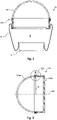
- an air spring 1 is shown in longitudinal section, which is used in a motor vehicle, not shown, between the chassis and the body.
- the air spring 1 has a rolling piston 2, an air spring component 10, which is designed here as an air spring pot 4, and an air spring bellows 6, which is attached with a first free end to the rolling piston 2, forming a rolling fold, and with a second free end to the air spring pot 4 is.
- the air spring bellows 6 forms an air spring interior 8 filled with air. During a compression and rebound process, the air spring bellows 6 rolls on the outside of the rolling piston 2 .
- an air spring component 10 for an air spring, an air spring strut or an air spring damper which has a first component 11a and a second component 11b.
- the first component 11a and the second component 11b each have corresponding joining areas 12a and 12b.
- the joining areas 12a, 12b brought together are sprayed over with a joining material 20.
- the first component 11a and the second component 11b each represent a shell.
- a hollow body By connecting the corresponding joining regions 12a, 12b by means of the joining material 20, a hollow body is delimited. This hollow body is designed to maintain a defined air pressure.
- This detailed view A shows the joining areas 12a, 12b and the joining material 20, which is sprayed from an outside 14 over the joined joining areas 12a, 12b of the first and second components 11a, 11b.
- the first and/or the second component 11a, 11b has an inside 15. This inside 15 delimits a volume that has a defined air pressure.
- the joining area 11a has a recess 16 and the joining area 11b has a corresponding projection 17, the projection 17 engaging in the recess 16 in a form-fitting manner.
- the recess 16 and the projection 17 are arranged on the inside 15 of the first and the second component 11a, 11b, so that the inside 15 of the first and the second component 11a, 11b is aligned in a flat surface.
- the length of the projection 17 is longer than the depth of the recess 16, so that between the first and the second component in the remaining joining area 12a, 12b a jointing agent filling space 13 is formed, which has an opening towards the outside 14 into which the jointing agent material 20 during of over-pointing can be injected.
- the joining material 20 has a primary joining material section 21 and a secondary joining material section 22, these forming a monolithic unit.
- the primary joining material section 21 fills the joining agent filling space 13, and the secondary joining material section 22 rests on the respective outer side 14 of the joining regions 12a and 12b.
- the primary joining material section 21 can absorb tensile forces of the first and the second component pulling apart, while the secondary joining material section 22 can absorb shearing forces.
- the first component 11a and the second component 11b are injected using an injection molding process.
- the corresponding joining areas 12a, 12b of the components 11a, 11b are positioned in such a way that they face one another and are in contact.
- the components 11a, 11b are overmolded.
- the components 11a, 11b are pressed during the overmolding.
- the joining material 20 has such a high temperature during the overmolding that the material of the first and/or second component 11a, 11b melts again in the joining area 12a, 12b and thus forms a material bond with the joining material 20.
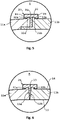
- the first component 11a has a projection 30a with a contact surface 31a and the second component 11b has a projection 30b with a contact surface 31b.
- the contact surfaces 31a, 31b are designed in such a way that they can be pressed against one another.
- the respective projection 30a, 30b is designed in such a way that it does not buckle.
- the inside 15 of the projections 30a, 30b is flush with a flat surface.
- the joining agent filling space 13 is delimited towards the inside 15 by the corresponding projections 30a, 30b pressed against one another.
- the respective anchoring projection 32a, 32b has a plateau 33a, 33b at the upper end.
- the height of the joining agent filling space 13 increases with the length of the anchoring projection 32a, 32b. As a result, an enlarged area is made available for a material connection, which the primary joining material section 21 can enter into with the first and/or second component 11a, 11b.
- the secondary joining material section 22 extends on the plateau 33a, 33b and has an integral connection in the contact area.
- FIG. 5 shows a further embodiment of the air spring component 10.
- the joining area 12a, 12b also has the anchoring projection 32a, 32b with the plateau 33a, 33b.
- the joining material 20 is injected into the joining agent filling space 13 .
- the joining material 20 comprises the primary joining material section 21, the secondary joining material section 22 and a tertiary joining material section 23, which form a monolithic unit.
- the tertiary joining material section 23 runs parallel to the primary joining material section 21 and encloses the anchoring projection 32a, 32b. A mechanical connection is thus formed by the tertiary joining material section 23 by means of a form fit. In addition, the tertiary joining material section 23 forms a material connection in the contact area with the first and/or second component 11a, 11b.
- the joining agent filling space 13 is designed to taper conically towards the inside 15.
- the first component 11a and the second component 11b are pressed against one another when the joining material 20 is injected and are in contact on the inside 15 .
- the air spring component 10 is characterized by the easy-to-manufacture integral connection of the components 11a, 11b made of plastic, in particular PA6 and PA66. As a result, the air spring components 10 meet the requirements placed on pressure-retaining air spring components in terms of tightness, strength, and resistance to temperature and aging.
Landscapes
- Engineering & Computer Science (AREA)
- General Engineering & Computer Science (AREA)
- Mechanical Engineering (AREA)
- Manufacturing & Machinery (AREA)
- Fluid-Damping Devices (AREA)
- Vehicle Body Suspensions (AREA)
Description
- Die Erfindung betrifft eine Luftfederkomponente für eine Luftfeder, ein Luftfederbein oder einen Luftfederdämpfer, die ein erstes Bauteil aus einem ersten Werkstoff, ein zweites Bauteil aus einem zweiten Werkstoff und ein Fügewerkstoff aus einem dritten Werkstoff aufweist. Ferner betrifft die Erfindung eine Luftfeder, ein Luftfederbein oder einen Luftfederdämpfer mit einer derartigen Luftfederkomponente sowie ein Verfahren zur Herstellung einer derartigen Luftfederkomponente.
- Luftfedern oder auch Luftfederbeine sind seit Jahrzenten fester Bestandteil von Federungssystemen in Schienenfahrzeugen, Nutzfahrzeugen und in Personenkraftfahrzeugen. Durch derartige Federungssysteme werden die hohen Komfortanforderungen der Kunden von den verschiedenen Fahrzeugen erfüllt. Schwere Nutzfahrzeuge haben heute zu fast 100 % Luftfedern. Beispielsweise sind die Hinterachsen eines Nutzfahrzeugs starken Lastschwankungen ausgesetzt. Im Betrieb ohne Auflieger müssen die Achsen nur das Eigengewicht der Zugmaschine tragen. Bei einem voll beladenen Sattelzug hingegen wirken auf die beiden Hinterachsen Lasten von jeweils mehr als zehn Tonnen. Deswegen werden an den Achsen schwerer Lkw-wie auch beim Auflieger oder Anhänger - heute fast ausschließlich Luftfedern eingesetzt. Luftfederdämpfer werden bei Personenkraftwagen, Nutzfahrzeugen aber genauso auch Motorrädern zur Federung und Dämpfung von Schwingungen verwendet.
- Luftfedern bestehen aus einem mit Druckluft gefüllten Topf und einem Abrollkolben mit mechanischer Verbindung zur Achse. Zwischen beiden befinden sich ein Balg und ein Kolben, die die Wirkfläche für die Druckluft bilden. Insbesondere der Abrollkolben oder auch der Topf einer Luftfeder werden als Luftfederkomponente bezeichnet, die während des Betriebes druckbeaufschlagt sind. Bei einer Belastung rollt sich der Luftfederbalg an der Außenfläche des Abrollkolbens ab. Über den Abrollkolben erfolgt zudem die Anbindung der Luftfeder an einem Fahrzeugteil.
- Die Druckluft ist das einzig federnde Medium einer Luftfeder. Wird das Luftvolumen in der eingeschlossenen Luftfederkomponente reduziert, steigt der Druck. Wenn das Luftvolumen wieder vergrößert wird, fällt der Luftdruck ab. Dies stellt beispielsweise einen Lastzyklus dar. Die Höhe des auftretenden Drucks ist folglich unter anderem durch die Größe des Volumenunterschieds und des Gewichts des Fahrzeugs abhängig. Es treten somit entsprechend hohe Luftdrücke durch die vorwiegende Verwendung bei schweren Fahrzeugen auf. Zusammen mit einer geringeren Verfügbarkeit an Bauraum für eine hohe Anzahl an Zyklen, wobei stets eine ausreichende Dichtheit aufgewiesen werden muss, ist eine luftdichte, belastbare und feste Verbindung von insbesondere dünnwandigen Bauteilen essentiell.
- Ferner ist eine mehrteilige Ausgestaltung der Luftfederkomponenten allein schon aus fertigungstechnischen Gründen erforderlich. Denn Luftfederkomponenten werden heutzutage aus Gewichts- und Kostengründen zumeist aus Kunststoff im Spritzgussverfahren oder im Schleudergussverfahren hergestellt. Zur Erhöhung der Steifigkeit und Belastbarkeit eines aus Kunststoff gefertigten Abrollkolbens sind dabei oftmals innenliegende Verstärkungsrippen erforderlich. Die sich dabei ergebenden Hinterschneidungen lassen sich bei einteilig hergestellten Luftfederkomponenten nur schwer oder zumeist gar nicht entformen.
- Dadurch ist eine mehrteilige Ausgestaltung der Luftfederkomponente notwendig.
- Eine zweiteilige beziehungsweise mehrteilige Ausgestaltung hat jedoch den Nachteil, dass besondere konstruktive Maßnahmen zur Abdichtung der Einzelteile ergriffen werden müssen. Insbesondere ist darauf zu achten, dass an der Fügestelle der beiden Einzelteile eine ausreichende Dichtheit gegeben ist, um eine einwandfreie Funktion der Luftfeder zu gewährleisten.
- Aus
DE 102013 113 737 A1 ist eine Luftfederkomponente bekannt, die mindestens zwei Bauteile mit korrespondierenden Fügebereichen aufweist. Diese werden unter inerter Atmosphäre stoffschlüssig verbunden, sodass die Fügestelle ausreichend dicht, fest sowie temperatur- und alterungsbeständig ist. - Aus den Dokumenten
WO 2007/104671 A1 undDE 102013113737 A1 sind jeweils Luftfederkomponenten bekannt, die mindestens zwei Bauteile mit korrespondierenden Fügebereichen aufweisen. - Aus dem Dokument
EP 0681898 A1 ist ein Kunststoffteil, aus dem DokumentJP H11 179758 A EP 2 959 876 A1 ist ein medizinisches Behälterteil bekannt, wobei alle Dokumente das Verbinden zweiter Teile betreffen. Der Erfindung liegt die Aufgabe zugrunde, eine Luftfederkomponente, eine Luftfeder, ein Luftfederbein oder einen Luftfederdämpfer sowie ein Verfahren zur Herstellung einer Luftfederkomponente zu schaffen, die eine verbesserte luftdichte Verbindung mit einer langen Lebensdauer aufweisen. - Zur Lösung der Aufgabe wird eine Luftfederkomponente mit den Merkmalen des Anspruchs 1 sowie eine Luftfeder, ein Luftfederbein oder ein Luftfederdämpfer mit den Merkmalen des Anspruchs 12 und ein Verfahren zur Herstellung einer Luftfeder, eines Luftfederbeins oder eines Luftfederdämpfers mit den Merkmalen des Anspruchs 13 vorgesehen.
- Vorteilhafte Ausgestaltungen sind Gegenstand der jeweiligen abhängigen Ansprüche.
- Eine Luftfederkomponente für eine Luftfeder, ein Luftfederbein oder einen Luftfederdämpfer weist ein erstes Bauteil aus einem ersten Werkstoff, ein zweites Bauteil aus einem zweiten Werkstoff, ein Fügewerkstoff aus einem dritten Werkstoff auf, wobei das erste Bauteil und das zweite Bauteil korrespondierende Fügebereiche aufweisen und wobei das erste Bauteil und das zweite Bauteil stoffschlüssig durch Überspritzen der Fügebereiche mit dem Fügewerkstoff miteinander verbunden sind.
- Durch das Überspritzen werden die Fügebereiche angeschmolzen, sodass die beiden Bauteile ähnlich einem Schweißverfahren sowohl eine form- als auch stoffschlüssige Verbindung eingehen können. Die Bauteile und der Fügewerkstoff können dabei gleiche oder unterschiedliche Werkstoffe aufweisen, jedoch muss eine Verschweißbarkeit des Fügewerkstoffs mit dem ersten und zweiten Werkstoff gegeben sein. Dadurch können Hohlkörper gebildet werden, die eine ausreichende Dichtheit mit einer hohen Festigkeit aufweisen, die einfach, schnell und kostengünstig herzustellen sind.
- Eine derartige Verbindung eignet sich insbesondere für axial beabstandete Bauteile, da diese somit eine besonders flache und zugleich luftdichte Verbindung eingehen können. Darüber hinaus können bei gleichzeitiger hoher Festigkeit höhere Toleranzen zugelassen werden. Unter Toleranzen kann unter anderen folgendes verstanden werden: Abstand der Bauteile oder Ebenheit der Nahtgeometrien zueinander. Indem die Fügebereiche vorzugsweise einen gleichmäßigen Radius zur Längsachse aufweisen, ist es möglich, in einfacher Weise, das Bauteil herzustellen. Darüber hinaus eignet sich eine derartige Ausgestaltung der Luftfederkomponente insbesondere mit Bauteilen, die mittels eines Drehverfahrens hergestellt wurden, verbunden zu werden. Darüber hinaus können die Bauteile auch einen polygonförmigen Querschnitt oder einen asymmetrischen Querschnitt aufweisen. Durch derartige Formen können die besonderen Bauraumanforderungen in einem Fahrzeug berücksichtigt werden.
- Eine Luftfederkomponente der zuvor beschriebenen Art kann somit aus mehreren Teilen gefertigt werden, die jeweils eine große Bauteilgröße aufweisen, die durch andere typische Schweißverfahren für Kunststoffbauteile nicht zu einer vergleichbaren Stückkostenanzahl gefertigt werden können. Zugleich kann die Verbindung eine hohe Dauerfestigkeit aufweisen, wodurch eine hohe Anzahl an Lastzyklen, die insbesondere während des Fahrbetriebs auftreten, gewährleistet werden können.
- Die Luftfederkomponente kann ein Luftfedertopf, ein Abrollkolben oder ein Zusatzvolumenbehälter sein.
- In einer vorteilhaften Ausgestaltung weist der erste und der zweite Werkstoff einen niedrigeren Schmelzpunkt auf als der dritte Werkstoff, sodass der erste und/oder der zweite Werkstoff beim Überspritzen mit dem dritten Werkstoff anschmilzt, um die beiden Bauteile stoffschlüssig zu verbinden. Beispielsweise kann der erste und zweite Werkstoff auf einem PA6 basieren, während der dritte Werkstoff auf einem höherschmelzenden PA66 basiert. In einer weiteren vorteilhaften Ausgestaltung kann dabei auch der erste und/oder der zweite Werkstoff beim Überspritzen mit dem dritten Werkstoff lokal an der Fügezone wieder anschmelzen, um die beiden Bauteile stoffschlüssig zu verbinden.
- Die stoffschlüssige Verbindung kann erzeugt werden, indem der dritte Werkstoff in Form von Schmelze die Fügbereiche des ersten und/oder des zweiten Bauteils anschmilzt. Anschließend verbinden sich die Oberflächen des ersten und des dritten Werkstoffes sowie die des zweiten und dritten Werkstoffes stoffschlüssig mittels Diffusionsvorgängen, um im Anschluss gemeinsam zu erstarren. So bildet der dritte Werkstoff eine überbrückende, stoffschlüssige Verbindung zwischen dem ersten und zweiten Bauteil. Durch die Auswahl der Werkstoffe mit den zuvor beschriebenen Eigenschaften wird es ermöglicht, einen Stoffschluss zu erzeugen, ohne zusätzlich ein Schweißverfahren anzuwenden, wie beispielsweise Ultraschallschweißen, Reibschweißen oder Heißgasschweißen. Es wird somit eine Verbindung mit einer hohen Festigkeit und Dichtheit geschaffen.
- Vorteilhaft ist das erste Bauteil und das zweite Bauteil axial beabstandet, sodass ein Fügemittelfüllraum gebildet ist, in welchen der Fügewerkstoff eingespritzt ist. Der Fügemittelfüllraum ist definiert durch die zwei angrenzenden Fügebereiche des ersten und des zweiten Bauteils. Ein derartiger Fügemittelfüllraum kann auch als Spalt bezeichnet werden. Der Fügewerkstoff in dem Fügemittelfüllraum kann aufgrund der Haftkräfte auftretenden Zugkräften entgegenwirken und das erste und das zweite Bauteil zusammenhalten.
- Vorteilhaft ist der Fügemittelfüllraum konisch zu einer Innenseite hin zulaufend ausgebildet. Die Innenseite befindet sich auf der unter Druck stehenden Luft oder dem Gas zugewandten Seite. Weiterhin vorteilhaft kann die Innenseite des ersten Bauteils und des zweiten Bauteils in einer ebenen Fläche fluchten. Die Außenseite befindet sich auf der zur Innenseite gegenüberliegend Seite. Der Fügewerkstoff wird über die Außenseite in den Fügemittelfüllraum eingespritzt. Durch die zur Außenseite hin konisch auseinander laufende Ausgestaltung wird sichergestellt, dass der Fügewerkstoff mit der gesamten Fläche der Seitenwände des ersten und des zweiten Bauteils des Fügemittelfüllraums eine stoffschlüssige Verbindung eingehen kann. Indem die Bereiche des ersten und des zweiten Bauteils zur Innenseite in Kontakt stehen, während des Anspritzens des dritten Werkstoffes zusammengepresst werden und die Innenseite des ersten Bauteils mit dem zweiten Bauteil fluchtet, wird gewährleistet, dass kein Fügewerkstoff in den Hohlraum gelangt und eine ebene innere Oberfläche geschaffen wird. Der Fügewerkstoff kann somit vorwiegend zur Aufnahme von Spaltkräften ausgelegt werden.
- Vorteilhaft sind das erste Bauteil und das zweite Bauteil zu einem luftdichten Holkörper verbunden. Dadurch ergibt sich der Vorteil, dass mit nur einer geringen Anzahl an Bauteilen und einer geringen Anzahl an korrespondierenden Fügebereichen ein luftdichter Raum begrenzt werden kann.
- Vorteilhaft weist das erste Bauteil einen Rücksprung und das zweite Bauteil einen Vorsprung auf, wobei der Vorsprung in den Rücksprung formschlüssig eingreift. Eine derartige formschlüssige Verbindung ermöglicht eine geführte Positionierung des ersten Bauteils zum zweiten Bauteil. Dadurch wird sichergestellt, dass der Fügemittelwerkstoff nicht bis zur Innenseite des ersten oder des zweiten Bauteils gelangt. Die Länge des Vorsprungs ist länger als die Tiefe des Rücksprungs, wodurch die Breite des Fügemittelfüllraums definiert ist. Zusätzlich kann die Breite im Wesentlichen konstant verlaufen. Die Innenseite des ersten Bauteils und des zweiten Bauteils können in einer Ebene fluchten.
- Die definierte Breite des Fügemittelfüllraums gewährleistet eine konstante Füllmenge an Fügewerkstoff in dem Fügemittelfüllraum, sodass eine homogene Verbindungskraft über die gesamte Naht, bzw. Verbindungslänge hergestellt werden kann.
- Vorteilhaft ist die Breite des Fügemittelfüllraums durch die Länge des Vorsprungs und der Tiefe des Rücksprungs definiert. Dadurch kann die Breite des Fügemittelfüllraums bestimmt werden und folglich auch das benötigte Volumen des dritten Werkstoffs zur Füllung des Fügemittelfüllraums. Ein weiterer Parameter wird somit geschaffen, wodurch die Qualität der Verbindung überwacht werden kann. Dabei wird überprüft, ob die berechnete Menge zum Verbinden der Bauteile eingespritzt wurde oder ob beispielsweise Lufteinschlüsse verhindert haben, dass die berechnete Menge zum Überspritzen der Verbindung vollständig eingespritzt wurde.
- Vorteilhaft ist die Länge des Vorsprungs auf die Tiefe des Rücksprungs in der Art abgestimmt, dass sich in der formschlüssig eingegriffenen Position ein Fügemittelfüllraum bildet, in welchen der Fügewerkstoff einspritzbar ist. Somit kann der Fügewerkstoff über den gesamten Fügebereich eingespritzt werden, sodass das erste und das zweite Bauteil über die gesamte Verbindung stoffschlüssig mittels des dritten Werkstoffs verbunden ist.
- Vorteilhaft weist das erste Bauteil einen ersten Vorsprung mit einer ersten Anpressfläche und das zweite Bauteil einen zweiten Vorsprung mit einer zweiten Anpressfläche auf, die während des Überspritzens aufeinander gepresst werden. Die Längen der Vorsprünge definieren gemeinsam die Breite des Fügemittelfüllraums. Es ergibt sich daraus der Vorteil, dass ein Druck zum Zusammenhalten der Bauteile aufgebracht werden kann, ohne dass ein Bauteil während des Überspritzens abrutscht oder abknickt. Die Positionierung des ersten Bauteils und des zweiten Bauteils wird somit definiert und sichergestellt.
- Vorteilhaft weist der Fügewerkstoff einen primären Fügewerkstoffabschnitt und einen sekundären Fügewerkstoffabschnitt auf, wobei der primäre Fügewerkstoffabschnitt den Fügemittelfüllraum füllt und der sekundäre Fügewerkstoffabschnitt sich über einen Bereich der Außenseite der Bauteile erstreckt. Der primäre Fügewerkstoffabschnitt und der sekundäre Fügewerkstoffabschnitt bilden gemeinsam eine monolithische Einheit. Dadurch kann eine deutlich erhöhte Festigkeit der Verbindung hergestellt werden, da der Fügewerkstoff zum einen über den primären Fügewerkstoffabschnitt Zugkräfte und zugleich über den sekundären Fügewerkstoffabschnitt Scherkräfte aufnehmen kann.
- Vorteilhaft weist das erste Bauteil und das zweite Bauteil einen Verankerungsvorsprung mit einem Plateau auf, wobei sich der sekundäre Fügewerkstoffabschnitt über das Plateau erstreckt. Aufgrund des Verankerungsvorsprungs kann eine vergrößerte Kontaktfläche bereitgestellt werden, die dem primären Fügewerkstoffabschnitt zur Verfügung steht. Über den sekundären Fügewerkstoffabschnitt, der auf dem Plateau aufliegt, können zusätzlich Scherkräfte aufgenommen werden, sodass eine erhöhte Festigkeit der Verbindung gegeben ist.
- Vorteilhaft weist der Fügewerkstoff einen tertiären Fügewerkstoffabschnitt auf, wobei der tertiäre Fügewerkstoffabschnitt im Wesentlichen parallel zum primären Fügewerkstoffabschnitt verläuft und mindestens einen Teil des Verankerungsvorsprungs des ersten Bauteils und einen Teil des Verankerungsvorsprungs des zweiten Bauteils umschließt. Der primäre Fügewerkstoffabschnitt, der sekundäre Fügewerkstoffabschnitt und der tertiären Fügewerkstoffabschnitt bilden dabei eine monolithische Einheit. Über den tertiären Fügewerkstoffbereich kann vorteilhafterweise eine mechanische Verbindung gewährleistet werden, die eine zusätzliche Erhöhung der Festigkeit der Verbindung ermöglicht. Eine derartige Verbindung bedarf einer kontrollierten Aufbringung des Fügemittelwerkstoffs, da insbesondere an dem Übergang zwischen dem sekundären zu dem tertiären Fügewerkstoffabschnitt eine konstante Dicke mit einem gleichbleibenden Radius gewährleistet werden muss, um ein Einschnüren zu verhindern.
- Vorteilhaft weist das erste Bauteil und/oder das zweite Bauteil Versteifungsrippen auf. Diese Versteifungsrippen sorgen für eine ausreichende Stabilität und Steifigkeit der Bauteile bzw. der Luftfederkomponente.
- Vorteilhaft ragen die Rippen von einer Gehäusewand der Bauteile radial nach außen ab. Dadurch kann das Bauteil so gestaltet werden, dass der Fügebereich am äußeren Umfang des Bauteils angeordnet ist. Hierdurch kann die Oberfläche der Fügebereiche vergrößert werden.
- Vorteilhaft sind der erste Werkstoff und der zweite Werkstoff PA 6 und der dritte Werkstoff PA 6.6. Diese Materialien eignen sich insbesondere für Spritzgussbauteile aufgrund ihrer guten Leistungs- zu Kostenverhältnisse. Beide Werkstoffe besitzen ähnliche Eigenschaften und unterscheiden sich nur geringfügig. PA 66 zeichnet sich im Vergleich zu PA 6 durch eine sehr kurze Zykluszeit aus. Dies ist auf die hohe Erstarrungstemperatur und kürzere Kristallisationszeit zurückzuführen. Die langsamere Erstarrung von PA 6 erlaubt ohne zusätzliche Additive, Teile mit guter Oberfläche und weniger Verzug zu erhalten. Aufgrund dieser geringen Unterschiede in den Materialeigenschaften, insbesondere in der Steifigkeit bei Temperaturen unter 180 °C, können quasi einheitliche Komponenten hergestellt werden. Die trotzdem noch vorhandenen geringen Unterschiede in den Materialeigenschaften sind jedoch gerade für die kritischen, herstellungsrelevanten Parameter essenziell, insbesondere die unterschiedlichen Schmelzpunkte. Gerade dadurch zeichnet sich die Materialkombination von PA6 und PA66 besonders vorteilhaft aus.
- Gemäß einem weiteren Aspekt wird eine Luftfeder, ein Luftfederbein oder ein Luftfederdämpfer mit einer Luftfederkomponente vorgeschlagen. Aufgrund der typischen auftretenden Belastungen bei einer Luftfeder, einem Luftfederbein oder einem Luftfederdämpfer eignet sich eine derartig hergestellte Luftfederkomponente aufgrund der hohen Dichtheit und dem kostengünstigen Herstellverfahren besonders.
- Gemäß einem weiteren Aspekt wird ein Verfahren zur Herstellung einer Luftfederkomponente vorgeschlagen. Dabei werden in einem ersten Verfahrensschritt ein erstes Bauteil und ein zweites Bauteil mit korrespondierenden Fügebereichen in einem Spritzgießverfahren gegossen. Anschließend werden das erste Bauteil und das zweite Bauteil derart positioniert, sodass die korrespondierenden Fügebereiche der Bauteile einander gegenüberliegen. Zuletzt werden die Fügebereiche des ersten und des zweiten Bauteils mittels eines Fügewerkstoffs überspritzt. Somit kann das erste Bauteil mit dem zweiten Bauteil verbunden werden. Dies kann sowohl unmittelbar nach dem Spritzgießen, als auch beispielsweise 5 Tage nach dem Spritzgießen des ersten und des zweiten Bauteils geschehen.
- Vorteilhaft werden die Fügebereiche beim Überspritzen wieder angeschmolzen. Dadurch ergibt sich der Vorteil, dass eine stoffschlüssige Verbindung zwischen dem ersten und dem zweiten Bauteil hergestellt werden kann.
- In einer weiteren vorteilhaften Ausgestaltung des Herstellungsverfahrens werden die Fügebereiche beim Überspritzen zusammengedrückt. Es kann somit sichergestellt werden, dass die Bauteile eine dichte Verbindung eingehen.
- Nachfolgend werden eine Luftfederkomponente, ein Verfahren zur Herstellung einer Luftfederkomponente sowie weitere Merkmale und Vorteile anhand von Ausführungsbeispielen näher erläutert, die in schematischer Weise in den beigefügten Zeichnungen dargestellt sind. Hierbei zeigt:
- Fig. 1
- einen Längsschnitt durch eine Luftfeder mit einer ausgebildeten erfindungsgemäßen Luftfederkomponente;
- Fig. 2
- einen Längsschnitt durch eine Luftfederkomponente;
- Fig. 3
- eine Detailansicht A des Fügebereichs des Längsschnitts der Luftfederkomponente der
Fig.2 ; - Fig. 4
- eine Detailansicht A eines alternativen Ausführungsbeispiels des Fügebereichs einer Luftfederkomponente der
Fig.2 ; - Fig. 5
- eine Detailansicht A eines weiteren alternativen Ausführungsbeispiels des Fügebereichs einer Luftfederkomponente der
Fig.2 ; - Fig. 6
- eine Detailansicht A eines weiteren alternativen Ausführungsbeispiels des Fügebereichs einer Luftfederkomponente der
Fig.2 ; - Fig. 7
- Verfahrensschritte zur Herstellung einer Luftfederkomponente der
Fig.2 . - In
Fig. 1 ist eine Luftfeder 1 im Längsschnitt dargestellt, die bei einem nicht dargestellten Kraftfahrzeug zwischen dem Fahrwerk und der Karosserie eingesetzt wird. - Die Luftfeder 1 weist einen Abrollkolben 2, eine Luftfederkomponente 10, die vorliegend als Luftfedertopf 4 ausgebildet ist, und einen Luftfederbalg 6, der mit einem ersten freien Ende an dem Abrollkolben 2 unter Ausbildung einer Rollfalte und mit einem zweiten freien Ende an dem Luftfedertopf 4 angebracht ist. Der Luftfederbalg 6 bildet dabei einen mit Luft gefüllten Luftfederinnenraum 8 aus. Während eines Ein- und Ausfederungsvorgangs rollt der Luftfederbalg 6 an der Außenseite des Abrollkolbens 2 ab.
- In
Fig. 2 ist eine Luftfederkomponente 10 für eine Luftfeder, ein Luftfederbein oder einen Luftfederdämpfer dargestellt, die ein erstes Bauteil 11a und ein zweites Bauteil 11b aufweist. Das erste Bauteil 11a und das zweite Bauteil 11b weisen jeweils korrespondierende Fügebereiche 12a und 12b auf. Die zusammen geführten Fügebereiche 12a, 12b sind mit einem Fügewerkstoff 20 überspritzt. - Das erste Bauteil 11a und das zweite Bauteil 11b stellen jeweils eine Schale dar. Durch das Verbinden der korrespondierenden Fügebereiche 12a, 12b mittels des Fügewerkstoffs 20 wird ein Hohlkörper begrenzt. Dieser Hohlkörper ist dazu ausgebildet, einen definierten Luftdruck zu halten.
- Die in
Fig. 2 gezeigte Detailansicht A ist inFig. 3 vergrößert dargestellt. Diese Detailansicht A zeigt die Fügebereiche 12a, 12b und den Fügewerkstoff 20, der von einer Außenseite 14 über die zusammen geführten Fügebereiche 12a, 12b des ersten und des zweiten Bauteils 11a, 11b gespritzt ist. Auf der gegenüberliegenden Seite der Außenseite 14 weist das erste und/oder das zweite Bauteil 11a, 11b eine Innenseite 15 auf. Diese Innenseite 15 begrenzt ein Volumen, das einen definierten Luftdruck aufweist. - Der Fügebereich 11a weist einen Rücksprung 16 und der Fügebereich 11b einen korrespondierenden Vorsprung 17 auf, wobei der Vorsprung 17 formschlüssig in den Rücksprung 16 eingreift. Der Rücksprung 16 und der Vorsprung 17 sind derart auf der Innenseite 15 des ersten und des zweiten Bauteils 11a, 11b angeordnet, sodass die Innenseite 15 des ersten und des zweiten Bauteils 11a, 11b in einer ebenen Fläche fluchtet.
- Die Länge des Vorsprungs 17 ist länger als die Tiefe des Rücksprungs 16, sodass zwischen dem ersten und dem zweiten Bauteil in dem verbleibenden Fügebereich 12a, 12b ein Fügemittelfüllraum 13 gebildet ist, der zur Außenseite 14 hin eine Öffnung aufweist, in die der Fügemittelwerkstoff 20 während des Überspitzens eingespritzt werden kann.
- Der Fügewerkstoff 20 weist einen primären Fügewerkstoffabschnitt 21 und einen sekundären Fügewerkstoffabschnitt 22 auf, wobei diese eine monolithische Einheit bilden. Der primäre Fügewerkstoffabschnitt 21 füllt den Fügemittelfüllraum 13, und der sekundäre Fügewerkstoffabschnitt 22 liegt auf der jeweiligen Außenseite 14 der Fügebereiche 12a, und 12b auf.
- Indem der Fügewerkstoff 20 eine stoffschlüssige Verbindung mit dem ersten und dem zweiten Bauteil 11a, 11b eingeht, kann der primäre Fügewerkstoffabschnitt 21 auseinander ziehende Zugkräfte des ersten und des zweiten Bauteils aufnehmen, während der sekundäre Fügewerkstoffabschnitt 22 Scherkräfte aufnehmen kann.
-
Fig. 7 zeigt drei Verfahrensschritte für eine mögliche Herstellung der Luftfederkomponente 10. - In einem ersten Schritt wird das erste Bauteil 11a und das zweite Bauteil 11b mittels eines Spritzgussverfahrens gespritzt.
- In einem zweiten Schritt werden die korrespondierenden Fügebereiche 12a, 12b der Bauteile 11a, 11b derart positioniert, sodass diese einander gegenüberliegen und in Kontakt stehen.
- In einem dritten Schritt werden die Bauteile 11a, 11b überspritzt. Während des Überspritzens werden die Bauteile 11a, 11b verpresst. Der Fügewerkstoff 20 weist während des Überspritzens eine derart hohe Temperatur auf, sodass das Material des ersten und/oder zweiten Bauteils 11a, 11b im Fügebereich 12a, 12b wieder aufschmilzt und somit eine stoffschlüssige Verbindung mit dem Fügewerkstoff 20 eingeht.
- Nachfolgend werden weitere Ausführungsformen der Luftfederkomponente 10 beschrieben, wobei zu deren Beschreibung für gleiche oder funktionsgleiche Teile die bereits zuvor verwendeten Bezugszeichen verwendet werden.
-
Fig. 4 zeigt eine weitere Ausführungsform der Luftfederkomponente 10. Das erste Bauteil 11a weist einen Vorsprung 30a mit einer Anpressfläche 31a und das zweite Bauteil 11b weist einen Vorsprung 30b mit einer Anpressfläche 31b auf. Die Anpressflächen 31a, 31b sind derart ausgestaltet, dass diese aneinander gepresst werden können. Der jeweilige Vorsprung 30a, 30b ist derart ausgebildet, dass dieser nicht einknickt. Die Innenseite 15 der Vorsprünge 30a, 30b fluchtet in einer ebenen Fläche. - Der Fügemittelfüllraum 13 wird durch die korrespondierenden und aneinander gepressten Vorsprünge 30a, 30b zur Innenseite 15 begrenzt.
- An der Außenseite 14 im Fügebereich 12a, 12b ragt ein Verankerungsvorsprung 32a des ersten Bauteils 11a und ein Verankerungsvorsprung 32b des zweiten Bauteils 11b ab. Der jeweilige Verankerungsvorsprung 32a, 32b weist am oberen Ende ein Plateau 33a, 33b auf.
- Die Höhe des Fügemittelfüllraums 13 vergrößert sich mit der Länge des Verankerungsvorsprungs 32a, 32b. Dadurch wird eine vergrößerte Fläche für eine stoffschlüssige Verbindung zur Verfügung gestellt, die der primäre Fügewerkstoffabschnitt 21 mit dem ersten und/oder zweiten Bauteil 11a, 11b eingehen kann.
- Auf dem Plateau 33a, 33b erstreckt sich der sekundäre Fügewerkstoffabschnitt 22 und weist im Kontaktbereich eine stoffschlüssige Verbindung auf.
-
Fig. 5 zeigt eine weitere Ausführungsform der Luftfederkomponente 10. Der Fügebereich 12a, 12b weist ebenfalls den Verankerungsvorsprung 32a, 32b mit dem Plateau 33a, 33b auf. In den Fügemittelfüllraum 13 wird der Fügewerkstoff 20 gespritzt. - Der Fügewerkstoff 20 umfasst den primären Fügewerkstoffabschnitt 21, den sekundären Fügewerkstoffabschnitt 22 und einen tertiären Fügewerkstoffabschnitt 23, die eine monolithische Einheit bilden.
- Der tertiäre Fügewerkstoffabschnitt 23 verläuft parallel zu dem primären Fügewerkstoffabschnitt 21 und umschließt den Verankerungsvorsprung 32a, 32b. Somit wird durch den tertiären Fügewerkstoffabschnitt 23 eine mechanische Verbindung mittels Formschluss gebildet. Zusätzlich geht der tertiäre Fügewerkstoffabschnitt 23 eine stoffschlüssige Verbindung im Kontaktbereich mit dem ersten und/oder zweiten Bauteil 11a, 11b ein.
-
Fig. 6 zeigt eine weitere Ausführungsform der Luftfederkomponente 10. Der Fügemittelfüllraum 13 ist zur Innenseite 15 konisch zulaufend ausgebildet. Das erste Bauteil 11a und das zweite Bauteil 11b werden beim Einspritzen des Fügewerkstoffs 20 aneinandergepresst und stehen an der Innenseite 15 in Kontakt. - Die Luftfederkomponente 10 zeichnet sich durch die einfach herzustellende stoffschlüssige Verbindung der aus Kunststoff, insbesondere PA6 und PA66, hergestellten Bauteile 11a, 11b aus. Dadurch erfüllen die Luftfederkomponenten 10 die an druckführende Luftfederbauteile gestellten Anforderungen hinsichtlich der Dichtheit, Festigkeit, Temperatur- und Alterungsbeständigkeit.
-
- 1
- Luftfeder
- 2
- Abrollkolben
- 4
- Luftfedertopf
- 6
- Luftfederbalg
- 8
- Luftfederinnenraum
- 10
- Luftfederkomponente
- 11a
- Erstes Bauteil
- 11b
- Zweites Bauteil
- 12a
- Fügebereich des ersten Bauteils
- 12b
- Fügebereich des zweiten Bauteils
- 13
- Fügemittelfüllraum
- 14
- Außenseite
- 15
- Innenseite
- 16
- Rücksprung
- 17
- Vorsprung
- 18
- Längsachse
- 20
- Fügewerkstoff
- 21
- Primärer Fügewerkstoffabschnitt
- 22
- Sekundärer Fügewerkstoffabschnitt
- 23
- Tertiärer Fügewerkstoffabschnitt
- 30a
- Vorsprung des ersten Bauteils
- 30b
- Vorsprung des zweiten Bauteils
- 31a
- Erste Anpressfläche
- 31b
- Zweite Anpressfläche
- 32a
- Verankerungsvorsprung des ersten Bauteils
- 32a
- Verankerungsvorsprung des zweiten Bauteils
- 33a
- Plateau des ersten Bauteils
- 33b
- Plateau des zweiten Bauteils
- A
- Detailansicht
Claims (15)
- Luftfederkomponente (10) für eine Luftfeder (1), ein Luftfederbein oder einen Luftfederdämpfer, aufweisend ein erstes Bauteil (11a) aus einem ersten Werkstoff, ein zweites Bauteil (11b) aus einem zweiten Werkstoff, einen Fügewerkstoff (20) aus einem dritten Werkstoff, wobei das erste Bauteil (11a) und das zweite Bauteil (11b) korrespondierende Fügebereiche (12a, 12b) aufweisen, wobei das erste Bauteil (11a) und das zweite Bauteil (11b) stoffschlüssig durch Überspritzen der Fügebereiche (12a, 12b) mit dem Fügewerkstoff (20) miteinander verbunden sind.
- Luftfederkomponente (10) nach Anspruch 1, dadurch gekennzeichnet, dass der erste und der zweite Werkstoff einen niedrigeren Schmelzpunkt aufweisen als der dritte Werkstoff, sodass der erste und/oder der zweite Werkstoff beim Überspritzen mit dem dritten Werkstoff anschmilzt, um die beiden Bauteile stoffschlüssig zu verbinden.
- Luftfederkomponente (10) nach einem der vorhergehenden Ansprüche, dadurch gekennzeichnet, dass das erste Bauteil (11a) und das zweite Bauteil (11b) axial beabstandet sind, sodass ein Fügemittelfüllraum (13) gebildet ist, in welchen der Fügewerkstoff (20) eingespritzt ist.
- Luftfederkomponente (10) nach Anspruch 3, dadurch gekennzeichnet, dass der Fügemittelfüllraum (13) konisch zu einer Innenseite (15) hin zulaufend ausgebildet ist.
- Luftfederkomponente (10) nach einem der vorhergehenden Ansprüche, dadurch gekennzeichnet, dass das erste Bauteil (11a) und das zweite Bauteil (11b) zu einem luftdichten Hohlkörper verbunden sind.
- Luftfederkomponente (10) nach einem der vorhergehenden Ansprüche, dadurch gekennzeichnet, dass das erste Bauteil (11a) einen Rücksprung (16) und das zweite Bauteil (11b) einen Vorsprung (17) aufweist, wobei der Vorsprung (17) in den Rücksprung (16) formschlüssig eingreift.
- Luftfederkomponente (10) nach Anspruch 6, dadurch gekennzeichnet, dass die Länge des Vorsprungs (17) auf die Tiefe des Rücksprungs (16) in der Art abgestimmt ist, dass sich in der formschlüssig eingegriffenen Position ein Fügemittelfüllraum (13) bildet, in welchen der Fügewerkstoff (20) einspritzbar ist.
- Luftfederkomponente (10) nach einem der vorhergehenden Ansprüche, dadurch gekennzeichnet, dass das erste Bauteil (11a) einen ersten Vorsprung (30a) mit einer ersten Anpressfläche (31a) und das zweite Bauteil (11b) einen zweiten Vorsprung (30b) mit einer zweiten Anpressfläche (31b) aufweisen, wobei die erste und die zweite Anpressfläche (31a, 31b) geeignet sind, während des Überspritzens aufeinander gepresst zu werden.
- Luftfederkomponente (10) nach einem der Ansprüche 3 bis 8, dadurch gekennzeichnet, dass der Fügewerkstoff (20) einen primären Fügewerkstoffabschnitt (21) und einen sekundären Fügewerkstoffabschnitt (22) aufweist, wobei der primäre Fügewerkstoffabschnitt (21) den Fügemittelfüllraum (13) füllt und der sekundäre Fügewerkstoffabschnitt (22) sich über einen Bereich der Außenseite (14) der Bauteile (11a, 11b) erstreckt, wobei das erste Bauteil (11a) und das zweite Bauteil (11b) einen Verankerungsvorsprung (32a, 32b) mit einem Plateau (33a, 33b) aufweisen, wobei sich der sekundäre Fügewerkstoffabschnitt (22) über das Plateau (33a, 33b) erstreckt.
- Luftfederkomponente (10) nach Anspruch 9, dadurch gekennzeichnet, dass der Fügewerkstoff (20) einen tertiären Fügewerkstoffabschnitt (23) aufweist, wobei der tertiäre Fügewerkstoffabschnitt (23) im Wesentlichen parallel zum primären Fügewerkstoffabschnitt (21) verläuft und mindestens einen Teil des Verankerungsvorsprungs (32a, 32b) des ersten Bauteils (11a) und einen Teil des Verankerungsvorsprungs (32a, 32b) des zweiten Bauteils (11b) umschließt.
- Luftfederkomponente (10) nach einem der vorhergehenden Ansprüche, dadurch gekennzeichnet, dass der erste Werkstoff und/oder der zweite Werkstoff PA 6 ist und der dritte Werkstoff PA 6.6 ist.
- Luftfeder (1), Luftfederbein oder Luftfederdämpfer mit einer Luftfederkomponente (10) nach einem der Ansprüche 1 bis 11.
- Verfahren zur Herstellung einer Luftfederkomponente (10) nach einem der Ansprüche 1 bis 11, aufweisend die folgenden Verfahrensschritte:a. Spritzgießen eines ersten Bauteils (11a) und eines zweiten Bauteils (11b), wobei die Bauteile (11a, 11b) korrespondierende Fügebereiche aufweisen;b. Positionieren des ersten Bauteils (11a) und des zweiten Bauteils (11b), sodass die korrespondierenden Fügebereiche (12a, 12b) einander gegenüberliegen;c. Überspritzen der Fügebereiche (12a, 12b) mittels eines Fügewerkstoffs (20).
- Verfahren nach Anspruch 13, dadurch gekennzeichnet, dass die Fügebereiche (12a, 12b) beim Überspritzen wieder angeschmolzen werden.
- Verfahren nach Anspruch 13 oder 14, dadurch gekennzeichnet, dass die Fügebereiche beim Überspritzen zusammengedrückt werden.
Applications Claiming Priority (1)
| Application Number | Priority Date | Filing Date | Title |
|---|---|---|---|
| DE102019130989.1A DE102019130989B8 (de) | 2019-11-15 | 2019-11-15 | Luftfederkomponente |
Publications (2)
| Publication Number | Publication Date |
|---|---|
| EP3822100A1 EP3822100A1 (de) | 2021-05-19 |
| EP3822100B1 true EP3822100B1 (de) | 2022-04-27 |
Family
ID=72801435
Family Applications (1)
| Application Number | Title | Priority Date | Filing Date |
|---|---|---|---|
| EP20200647.4A Active EP3822100B1 (de) | 2019-11-15 | 2020-10-07 | Luftfederkomponente |
Country Status (2)
| Country | Link |
|---|---|
| EP (1) | EP3822100B1 (de) |
| DE (1) | DE102019130989B8 (de) |
Family Cites Families (9)
| Publication number | Priority date | Publication date | Assignee | Title |
|---|---|---|---|---|
| EP0681898B1 (de) * | 1994-05-11 | 1999-11-24 | Techcoma Ag | Ein Verfahren zur Herstellung von hohlen Gegenständen aus Kunststoff |
| JPH08230044A (ja) * | 1995-02-27 | 1996-09-10 | Aisamu:Kk | 合成樹脂材の溶接方法と溶接装置 |
| DE19522459C1 (de) * | 1995-06-21 | 1996-10-02 | Fichtel & Sachs Ag | Abdichtung eines Abrollrohres bei einer Luftfeder |
| JPH11179758A (ja) * | 1997-12-24 | 1999-07-06 | Toray Ind Inc | 合成樹脂中空成形品およびその製造方法 |
| WO2007104671A1 (en) * | 2006-03-10 | 2007-09-20 | Trelleborg Automotive Uk Ltd. | Air spring with improved piston |
| DE102013113737A1 (de) * | 2013-12-10 | 2015-06-11 | Trelleborgvibracoustic Gmbh | Luftfederkomponente |
| JP2016007248A (ja) * | 2014-06-23 | 2016-01-18 | 株式会社大協精工 | 医療用容器 |
| DE102017216052A1 (de) * | 2016-11-24 | 2018-05-24 | Continental Teves Ag & Co. Ohg | Luftfederbein mit einem Luftfederdeckel mit Bajonettverschluss |
| WO2019068790A1 (de) * | 2017-10-04 | 2019-04-11 | Continental Teves Ag & Co. Ohg | Luftfederbein mit einem kunststoff-luftfederdeckel |
-
2019
- 2019-11-15 DE DE102019130989.1A patent/DE102019130989B8/de not_active Expired - Fee Related
-
2020
- 2020-10-07 EP EP20200647.4A patent/EP3822100B1/de active Active
Also Published As
| Publication number | Publication date |
|---|---|
| DE102019130989B4 (de) | 2023-05-17 |
| DE102019130989A1 (de) | 2021-05-20 |
| EP3822100A1 (de) | 2021-05-19 |
| DE102019130989B8 (de) | 2023-07-20 |
Similar Documents
| Publication | Publication Date | Title |
|---|---|---|
| EP3615357B1 (de) | Achsstrebe | |
| EP2038157B1 (de) | Fahrwerksrahmen eines schienenfahrzeugs | |
| EP1036680B1 (de) | Verbundlenkerachse für Kraftfahrzeuge | |
| EP3080477B1 (de) | Luftfederkomponente | |
| EP2619466B1 (de) | Verfahren zum herstellen eines kugelhülsengelenks | |
| EP3242806B1 (de) | Verbundbauteil sowie luftfederkomponente mit einem derartigen verbundbauteil | |
| EP3174696A1 (de) | Lenker sowie verfahren zu dessen herstellung | |
| EP2295827A2 (de) | Schwingungsdämpfer | |
| EP3378739B1 (de) | Strukturbauteil eines fahrzeugrahmens mit einem integrierten speicherbehälter | |
| DE102018202307A1 (de) | Lenker für eine Radaufhängung | |
| EP2137048A1 (de) | Karosseriebauteil für einen kraftwagen | |
| WO2017045978A1 (de) | Dämpferlager mit gehäuse und deckel | |
| EP3310594A1 (de) | Strebe für eine radaufhängung | |
| DE10335956A1 (de) | Federkonstruktion | |
| EP3822100B1 (de) | Luftfederkomponente | |
| DE102018208268A1 (de) | Verfahren zum Herstellen einer Klebeverbindung sowie eine Achstrebe für ein Fahrzeug | |
| DE102020121231A1 (de) | Fahrwerkslenker | |
| EP2948362A1 (de) | Trägerstruktur und verfahren zum herstellen einer trägerstruktur | |
| DE102006007253A1 (de) | Kraftfahrzeug-Hybridbauteil | |
| EP3898173B1 (de) | Kraftstoffbehälter für ein kraftfahrzeug und verfahren zur herstellung eines solchen kraftstoffbehälters und aussteifungselement für einen kraftstoffbehälter | |
| DE102007018458A1 (de) | Karosseriebauteil für einen Kraftwagen und Verfahren zu dessen Herstellung | |
| EP3415341B1 (de) | Achskörper für ein nutzfahrzeug und herstellungsverfahren hierfür | |
| DE102016102258A1 (de) | Bauteil, insbesondere für eine Tragstruktur in einem Kraftfahrzeug und Verfahren zu dessen Aufbau | |
| DE102021201719A1 (de) | Lasteinleitungselement für ein Fahrwerkbauteil, Verfahren zum Herstellen eines Lasteinleitungselementes sowie Fahrwerkbauteil | |
| DE102021205347B3 (de) | Elastomerverbundlager, Lageranordnung und Verfahren zur Herstellung einer Außenhülse eines Elastomerverbundlagers |
Legal Events
| Date | Code | Title | Description |
|---|---|---|---|
| PUAI | Public reference made under article 153(3) epc to a published international application that has entered the european phase |
Free format text: ORIGINAL CODE: 0009012 |
|
| STAA | Information on the status of an ep patent application or granted ep patent |
Free format text: STATUS: THE APPLICATION HAS BEEN PUBLISHED |
|
| AK | Designated contracting states |
Kind code of ref document: A1 Designated state(s): AL AT BE BG CH CY CZ DE DK EE ES FI FR GB GR HR HU IE IS IT LI LT LU LV MC MK MT NL NO PL PT RO RS SE SI SK SM TR |
|
| RAP3 | Party data changed (applicant data changed or rights of an application transferred) |
Owner name: VIBRACOUSTIC SE |
|
| STAA | Information on the status of an ep patent application or granted ep patent |
Free format text: STATUS: REQUEST FOR EXAMINATION WAS MADE |
|
| 17P | Request for examination filed |
Effective date: 20210825 |
|
| RBV | Designated contracting states (corrected) |
Designated state(s): AL AT BE BG CH CY CZ DE DK EE ES FI FR GB GR HR HU IE IS IT LI LT LU LV MC MK MT NL NO PL PT RO RS SE SI SK SM TR |
|
| RIC1 | Information provided on ipc code assigned before grant |
Ipc: F16F 9/04 20060101ALI20210920BHEP Ipc: F16F 9/05 20060101ALI20210920BHEP Ipc: B29C 65/00 20060101ALI20210920BHEP Ipc: B29C 65/70 20060101ALI20210920BHEP Ipc: B29C 45/14 20060101ALI20210920BHEP Ipc: B60G 11/27 20060101AFI20210920BHEP |
|
| GRAP | Despatch of communication of intention to grant a patent |
Free format text: ORIGINAL CODE: EPIDOSNIGR1 |
|
| STAA | Information on the status of an ep patent application or granted ep patent |
Free format text: STATUS: GRANT OF PATENT IS INTENDED |
|
| GRAJ | Information related to disapproval of communication of intention to grant by the applicant or resumption of examination proceedings by the epo deleted |
Free format text: ORIGINAL CODE: EPIDOSDIGR1 |
|
| STAA | Information on the status of an ep patent application or granted ep patent |
Free format text: STATUS: REQUEST FOR EXAMINATION WAS MADE |
|
| INTG | Intention to grant announced |
Effective date: 20211104 |
|
| INTC | Intention to grant announced (deleted) | ||
| GRAP | Despatch of communication of intention to grant a patent |
Free format text: ORIGINAL CODE: EPIDOSNIGR1 |
|
| STAA | Information on the status of an ep patent application or granted ep patent |
Free format text: STATUS: GRANT OF PATENT IS INTENDED |
|
| INTG | Intention to grant announced |
Effective date: 20220117 |
|
| GRAS | Grant fee paid |
Free format text: ORIGINAL CODE: EPIDOSNIGR3 |
|
| GRAA | (expected) grant |
Free format text: ORIGINAL CODE: 0009210 |
|
| STAA | Information on the status of an ep patent application or granted ep patent |
Free format text: STATUS: THE PATENT HAS BEEN GRANTED |
|
| AK | Designated contracting states |
Kind code of ref document: B1 Designated state(s): AL AT BE BG CH CY CZ DE DK EE ES FI FR GB GR HR HU IE IS IT LI LT LU LV MC MK MT NL NO PL PT RO RS SE SI SK SM TR |
|
| REG | Reference to a national code |
Ref country code: GB Ref legal event code: FG4D Free format text: NOT ENGLISH |
|
| REG | Reference to a national code |
Ref country code: CH Ref legal event code: EP |
|
| REG | Reference to a national code |
Ref country code: DE Ref legal event code: R096 Ref document number: 502020001011 Country of ref document: DE |
|
| REG | Reference to a national code |
Ref country code: AT Ref legal event code: REF Ref document number: 1486677 Country of ref document: AT Kind code of ref document: T Effective date: 20220515 |
|
| REG | Reference to a national code |
Ref country code: IE Ref legal event code: FG4D Free format text: LANGUAGE OF EP DOCUMENT: GERMAN |
|
| REG | Reference to a national code |
Ref country code: LT Ref legal event code: MG9D |
|
| REG | Reference to a national code |
Ref country code: NL Ref legal event code: MP Effective date: 20220427 |
|
| PG25 | Lapsed in a contracting state [announced via postgrant information from national office to epo] |
Ref country code: NL Free format text: LAPSE BECAUSE OF FAILURE TO SUBMIT A TRANSLATION OF THE DESCRIPTION OR TO PAY THE FEE WITHIN THE PRESCRIBED TIME-LIMIT Effective date: 20220427 |
|
| PG25 | Lapsed in a contracting state [announced via postgrant information from national office to epo] |
Ref country code: SE Free format text: LAPSE BECAUSE OF FAILURE TO SUBMIT A TRANSLATION OF THE DESCRIPTION OR TO PAY THE FEE WITHIN THE PRESCRIBED TIME-LIMIT Effective date: 20220427 Ref country code: PT Free format text: LAPSE BECAUSE OF FAILURE TO SUBMIT A TRANSLATION OF THE DESCRIPTION OR TO PAY THE FEE WITHIN THE PRESCRIBED TIME-LIMIT Effective date: 20220829 Ref country code: NO Free format text: LAPSE BECAUSE OF FAILURE TO SUBMIT A TRANSLATION OF THE DESCRIPTION OR TO PAY THE FEE WITHIN THE PRESCRIBED TIME-LIMIT Effective date: 20220727 Ref country code: LT Free format text: LAPSE BECAUSE OF FAILURE TO SUBMIT A TRANSLATION OF THE DESCRIPTION OR TO PAY THE FEE WITHIN THE PRESCRIBED TIME-LIMIT Effective date: 20220427 Ref country code: HR Free format text: LAPSE BECAUSE OF FAILURE TO SUBMIT A TRANSLATION OF THE DESCRIPTION OR TO PAY THE FEE WITHIN THE PRESCRIBED TIME-LIMIT Effective date: 20220427 Ref country code: GR Free format text: LAPSE BECAUSE OF FAILURE TO SUBMIT A TRANSLATION OF THE DESCRIPTION OR TO PAY THE FEE WITHIN THE PRESCRIBED TIME-LIMIT Effective date: 20220728 Ref country code: FI Free format text: LAPSE BECAUSE OF FAILURE TO SUBMIT A TRANSLATION OF THE DESCRIPTION OR TO PAY THE FEE WITHIN THE PRESCRIBED TIME-LIMIT Effective date: 20220427 Ref country code: BG Free format text: LAPSE BECAUSE OF FAILURE TO SUBMIT A TRANSLATION OF THE DESCRIPTION OR TO PAY THE FEE WITHIN THE PRESCRIBED TIME-LIMIT Effective date: 20220727 |
|
| PG25 | Lapsed in a contracting state [announced via postgrant information from national office to epo] |
Ref country code: RS Free format text: LAPSE BECAUSE OF FAILURE TO SUBMIT A TRANSLATION OF THE DESCRIPTION OR TO PAY THE FEE WITHIN THE PRESCRIBED TIME-LIMIT Effective date: 20220427 Ref country code: PL Free format text: LAPSE BECAUSE OF FAILURE TO SUBMIT A TRANSLATION OF THE DESCRIPTION OR TO PAY THE FEE WITHIN THE PRESCRIBED TIME-LIMIT Effective date: 20220427 Ref country code: LV Free format text: LAPSE BECAUSE OF FAILURE TO SUBMIT A TRANSLATION OF THE DESCRIPTION OR TO PAY THE FEE WITHIN THE PRESCRIBED TIME-LIMIT Effective date: 20220427 Ref country code: IS Free format text: LAPSE BECAUSE OF FAILURE TO SUBMIT A TRANSLATION OF THE DESCRIPTION OR TO PAY THE FEE WITHIN THE PRESCRIBED TIME-LIMIT Effective date: 20220827 |
|
| REG | Reference to a national code |
Ref country code: DE Ref legal event code: R097 Ref document number: 502020001011 Country of ref document: DE |
|
| PG25 | Lapsed in a contracting state [announced via postgrant information from national office to epo] |
Ref country code: SM Free format text: LAPSE BECAUSE OF FAILURE TO SUBMIT A TRANSLATION OF THE DESCRIPTION OR TO PAY THE FEE WITHIN THE PRESCRIBED TIME-LIMIT Effective date: 20220427 Ref country code: SK Free format text: LAPSE BECAUSE OF FAILURE TO SUBMIT A TRANSLATION OF THE DESCRIPTION OR TO PAY THE FEE WITHIN THE PRESCRIBED TIME-LIMIT Effective date: 20220427 Ref country code: RO Free format text: LAPSE BECAUSE OF FAILURE TO SUBMIT A TRANSLATION OF THE DESCRIPTION OR TO PAY THE FEE WITHIN THE PRESCRIBED TIME-LIMIT Effective date: 20220427 Ref country code: ES Free format text: LAPSE BECAUSE OF FAILURE TO SUBMIT A TRANSLATION OF THE DESCRIPTION OR TO PAY THE FEE WITHIN THE PRESCRIBED TIME-LIMIT Effective date: 20220427 Ref country code: EE Free format text: LAPSE BECAUSE OF FAILURE TO SUBMIT A TRANSLATION OF THE DESCRIPTION OR TO PAY THE FEE WITHIN THE PRESCRIBED TIME-LIMIT Effective date: 20220427 Ref country code: DK Free format text: LAPSE BECAUSE OF FAILURE TO SUBMIT A TRANSLATION OF THE DESCRIPTION OR TO PAY THE FEE WITHIN THE PRESCRIBED TIME-LIMIT Effective date: 20220427 Ref country code: CZ Free format text: LAPSE BECAUSE OF FAILURE TO SUBMIT A TRANSLATION OF THE DESCRIPTION OR TO PAY THE FEE WITHIN THE PRESCRIBED TIME-LIMIT Effective date: 20220427 |
|
| PLBE | No opposition filed within time limit |
Free format text: ORIGINAL CODE: 0009261 |
|
| STAA | Information on the status of an ep patent application or granted ep patent |
Free format text: STATUS: NO OPPOSITION FILED WITHIN TIME LIMIT |
|
| PG25 | Lapsed in a contracting state [announced via postgrant information from national office to epo] |
Ref country code: AL Free format text: LAPSE BECAUSE OF FAILURE TO SUBMIT A TRANSLATION OF THE DESCRIPTION OR TO PAY THE FEE WITHIN THE PRESCRIBED TIME-LIMIT Effective date: 20220427 |
|
| 26N | No opposition filed |
Effective date: 20230130 |
|
| PG25 | Lapsed in a contracting state [announced via postgrant information from national office to epo] |
Ref country code: SI Free format text: LAPSE BECAUSE OF FAILURE TO SUBMIT A TRANSLATION OF THE DESCRIPTION OR TO PAY THE FEE WITHIN THE PRESCRIBED TIME-LIMIT Effective date: 20220427 Ref country code: MC Free format text: LAPSE BECAUSE OF FAILURE TO SUBMIT A TRANSLATION OF THE DESCRIPTION OR TO PAY THE FEE WITHIN THE PRESCRIBED TIME-LIMIT Effective date: 20220427 |
|
| REG | Reference to a national code |
Ref country code: BE Ref legal event code: MM Effective date: 20221031 |
|
| PG25 | Lapsed in a contracting state [announced via postgrant information from national office to epo] |
Ref country code: LU Free format text: LAPSE BECAUSE OF NON-PAYMENT OF DUE FEES Effective date: 20221007 |
|
| PG25 | Lapsed in a contracting state [announced via postgrant information from national office to epo] |
Ref country code: BE Free format text: LAPSE BECAUSE OF NON-PAYMENT OF DUE FEES Effective date: 20221031 |
|
| PG25 | Lapsed in a contracting state [announced via postgrant information from national office to epo] |
Ref country code: IE Free format text: LAPSE BECAUSE OF NON-PAYMENT OF DUE FEES Effective date: 20221007 |
|
| PG25 | Lapsed in a contracting state [announced via postgrant information from national office to epo] |
Ref country code: IT Free format text: LAPSE BECAUSE OF FAILURE TO SUBMIT A TRANSLATION OF THE DESCRIPTION OR TO PAY THE FEE WITHIN THE PRESCRIBED TIME-LIMIT Effective date: 20220427 |
|
| PG25 | Lapsed in a contracting state [announced via postgrant information from national office to epo] |
Ref country code: CY Free format text: LAPSE BECAUSE OF FAILURE TO SUBMIT A TRANSLATION OF THE DESCRIPTION OR TO PAY THE FEE WITHIN THE PRESCRIBED TIME-LIMIT Effective date: 20220427 |
|
| PG25 | Lapsed in a contracting state [announced via postgrant information from national office to epo] |
Ref country code: MK Free format text: LAPSE BECAUSE OF FAILURE TO SUBMIT A TRANSLATION OF THE DESCRIPTION OR TO PAY THE FEE WITHIN THE PRESCRIBED TIME-LIMIT Effective date: 20220427 |
|
| REG | Reference to a national code |
Ref country code: CH Ref legal event code: PL |
|
| PG25 | Lapsed in a contracting state [announced via postgrant information from national office to epo] |
Ref country code: TR Free format text: LAPSE BECAUSE OF FAILURE TO SUBMIT A TRANSLATION OF THE DESCRIPTION OR TO PAY THE FEE WITHIN THE PRESCRIBED TIME-LIMIT Effective date: 20220427 |
|
| PG25 | Lapsed in a contracting state [announced via postgrant information from national office to epo] |
Ref country code: CH Free format text: LAPSE BECAUSE OF NON-PAYMENT OF DUE FEES Effective date: 20231031 |
|
| PG25 | Lapsed in a contracting state [announced via postgrant information from national office to epo] |
Ref country code: HU Free format text: LAPSE BECAUSE OF FAILURE TO SUBMIT A TRANSLATION OF THE DESCRIPTION OR TO PAY THE FEE WITHIN THE PRESCRIBED TIME-LIMIT; INVALID AB INITIO Effective date: 20201007 Ref country code: CH Free format text: LAPSE BECAUSE OF NON-PAYMENT OF DUE FEES Effective date: 20231031 |
|
| PG25 | Lapsed in a contracting state [announced via postgrant information from national office to epo] |
Ref country code: MT Free format text: LAPSE BECAUSE OF FAILURE TO SUBMIT A TRANSLATION OF THE DESCRIPTION OR TO PAY THE FEE WITHIN THE PRESCRIBED TIME-LIMIT Effective date: 20220427 |
|
| PG25 | Lapsed in a contracting state [announced via postgrant information from national office to epo] |
Ref country code: BG Free format text: LAPSE BECAUSE OF FAILURE TO SUBMIT A TRANSLATION OF THE DESCRIPTION OR TO PAY THE FEE WITHIN THE PRESCRIBED TIME-LIMIT Effective date: 20220427 |
|
| PG25 | Lapsed in a contracting state [announced via postgrant information from national office to epo] |
Ref country code: BG Free format text: LAPSE BECAUSE OF FAILURE TO SUBMIT A TRANSLATION OF THE DESCRIPTION OR TO PAY THE FEE WITHIN THE PRESCRIBED TIME-LIMIT Effective date: 20220427 |
|
| PGFP | Annual fee paid to national office [announced via postgrant information from national office to epo] |
Ref country code: DE Payment date: 20251031 Year of fee payment: 6 |
|
| PGFP | Annual fee paid to national office [announced via postgrant information from national office to epo] |
Ref country code: GB Payment date: 20251030 Year of fee payment: 6 |
|
| PGFP | Annual fee paid to national office [announced via postgrant information from national office to epo] |
Ref country code: AT Payment date: 20260113 Year of fee payment: 5 |
|
| PGFP | Annual fee paid to national office [announced via postgrant information from national office to epo] |
Ref country code: FR Payment date: 20251031 Year of fee payment: 6 |