EP3818545B1 - Graph database for outbreak tracking and management - Google Patents
Graph database for outbreak tracking and management Download PDFInfo
- Publication number
- EP3818545B1 EP3818545B1 EP19745017.4A EP19745017A EP3818545B1 EP 3818545 B1 EP3818545 B1 EP 3818545B1 EP 19745017 A EP19745017 A EP 19745017A EP 3818545 B1 EP3818545 B1 EP 3818545B1
- Authority
- EP
- European Patent Office
- Prior art keywords
- node
- outbreak
- host
- link
- patient
- Prior art date
- Legal status (The legal status is an assumption and is not a legal conclusion. Google has not performed a legal analysis and makes no representation as to the accuracy of the status listed.)
- Active
Links
Images









Classifications
-
- G—PHYSICS
- G16—INFORMATION AND COMMUNICATION TECHNOLOGY [ICT] SPECIALLY ADAPTED FOR SPECIFIC APPLICATION FIELDS
- G16H—HEALTHCARE INFORMATICS, i.e. INFORMATION AND COMMUNICATION TECHNOLOGY [ICT] SPECIALLY ADAPTED FOR THE HANDLING OR PROCESSING OF MEDICAL OR HEALTHCARE DATA
- G16H50/00—ICT specially adapted for medical diagnosis, medical simulation or medical data mining; ICT specially adapted for detecting, monitoring or modelling epidemics or pandemics
- G16H50/80—ICT specially adapted for medical diagnosis, medical simulation or medical data mining; ICT specially adapted for detecting, monitoring or modelling epidemics or pandemics for detecting, monitoring or modelling epidemics or pandemics, e.g. flu
-
- G—PHYSICS
- G06—COMPUTING OR CALCULATING; COUNTING
- G06F—ELECTRIC DIGITAL DATA PROCESSING
- G06F16/00—Information retrieval; Database structures therefor; File system structures therefor
- G06F16/20—Information retrieval; Database structures therefor; File system structures therefor of structured data, e.g. relational data
- G06F16/24—Querying
- G06F16/245—Query processing
- G06F16/2455—Query execution
-
- G—PHYSICS
- G06—COMPUTING OR CALCULATING; COUNTING
- G06F—ELECTRIC DIGITAL DATA PROCESSING
- G06F16/00—Information retrieval; Database structures therefor; File system structures therefor
- G06F16/90—Details of database functions independent of the retrieved data types
- G06F16/901—Indexing; Data structures therefor; Storage structures
- G06F16/9024—Graphs; Linked lists
-
- G—PHYSICS
- G06—COMPUTING OR CALCULATING; COUNTING
- G06F—ELECTRIC DIGITAL DATA PROCESSING
- G06F3/00—Input arrangements for transferring data to be processed into a form capable of being handled by the computer; Output arrangements for transferring data from processing unit to output unit, e.g. interface arrangements
- G06F3/01—Input arrangements or combined input and output arrangements for interaction between user and computer
- G06F3/048—Interaction techniques based on graphical user interfaces [GUI]
- G06F3/0484—Interaction techniques based on graphical user interfaces [GUI] for the control of specific functions or operations, e.g. selecting or manipulating an object, an image or a displayed text element, setting a parameter value or selecting a range
-
- G—PHYSICS
- G06—COMPUTING OR CALCULATING; COUNTING
- G06T—IMAGE DATA PROCESSING OR GENERATION, IN GENERAL
- G06T11/00—Two-dimensional [2D] image generation
- G06T11/20—Drawing from basic elements
- G06T11/26—Drawing of charts or graphs
-
- G—PHYSICS
- G16—INFORMATION AND COMMUNICATION TECHNOLOGY [ICT] SPECIALLY ADAPTED FOR SPECIFIC APPLICATION FIELDS
- G16H—HEALTHCARE INFORMATICS, i.e. INFORMATION AND COMMUNICATION TECHNOLOGY [ICT] SPECIALLY ADAPTED FOR THE HANDLING OR PROCESSING OF MEDICAL OR HEALTHCARE DATA
- G16H10/00—ICT specially adapted for the handling or processing of patient-related medical or healthcare data
- G16H10/60—ICT specially adapted for the handling or processing of patient-related medical or healthcare data for patient-specific data, e.g. for electronic patient records
-
- G—PHYSICS
- G16—INFORMATION AND COMMUNICATION TECHNOLOGY [ICT] SPECIALLY ADAPTED FOR SPECIFIC APPLICATION FIELDS
- G16H—HEALTHCARE INFORMATICS, i.e. INFORMATION AND COMMUNICATION TECHNOLOGY [ICT] SPECIALLY ADAPTED FOR THE HANDLING OR PROCESSING OF MEDICAL OR HEALTHCARE DATA
- G16H70/00—ICT specially adapted for the handling or processing of medical references
- G16H70/60—ICT specially adapted for the handling or processing of medical references relating to pathologies
-
- H—ELECTRICITY
- H04—ELECTRIC COMMUNICATION TECHNIQUE
- H04L—TRANSMISSION OF DIGITAL INFORMATION, e.g. TELEGRAPHIC COMMUNICATION
- H04L67/00—Network arrangements or protocols for supporting network services or applications
- H04L67/01—Protocols
- H04L67/10—Protocols in which an application is distributed across nodes in the network
-
- G—PHYSICS
- G06—COMPUTING OR CALCULATING; COUNTING
- G06T—IMAGE DATA PROCESSING OR GENERATION, IN GENERAL
- G06T2200/00—Indexing scheme for image data processing or generation, in general
- G06T2200/24—Indexing scheme for image data processing or generation, in general involving graphical user interfaces [GUIs]
-
- H—ELECTRICITY
- H04—ELECTRIC COMMUNICATION TECHNIQUE
- H04L—TRANSMISSION OF DIGITAL INFORMATION, e.g. TELEGRAPHIC COMMUNICATION
- H04L67/00—Network arrangements or protocols for supporting network services or applications
- H04L67/01—Protocols
-
- Y—GENERAL TAGGING OF NEW TECHNOLOGICAL DEVELOPMENTS; GENERAL TAGGING OF CROSS-SECTIONAL TECHNOLOGIES SPANNING OVER SEVERAL SECTIONS OF THE IPC; TECHNICAL SUBJECTS COVERED BY FORMER USPC CROSS-REFERENCE ART COLLECTIONS [XRACs] AND DIGESTS
- Y02—TECHNOLOGIES OR APPLICATIONS FOR MITIGATION OR ADAPTATION AGAINST CLIMATE CHANGE
- Y02A—TECHNOLOGIES FOR ADAPTATION TO CLIMATE CHANGE
- Y02A90/00—Technologies having an indirect contribution to adaptation to climate change
- Y02A90/10—Information and communication technologies [ICT] supporting adaptation to climate change, e.g. for weather forecasting or climate simulation
Definitions
- the world population was approximately 7.6 billion people.
- the Unit Nations estimates that the population will reach 8 billion by 2024 and 9 billion by 2042.
- the population is relocating to more dense suburban and urban areas in addition to encroaching upon undeveloped areas, such as forests and grasslands.
- the city of Manila in the Philippines has a density of 107,000 people per square mile while more populous Indian cities, such as Mumbai have almost 12 million people with an average density of 73,000 people per square mile.
- pandemic or wave of pandemics
- the data model has the ability to detect the path of infectious diseases and the probable epidemicity and is based on the graph data model, a type of NoSQL data model.
- the present disclosure sets forth a graph database for outbreak tracking and management.
- the disclosure describes a method, system, and apparatus for the creation and updating of a graph database to track one or more outbreaks.
- the method, system, and apparatus disclosed herein may also be configured to analyze the graph database to provide for outbreak management and outbreak predictions.
- the graph databases incorporate medical, positional, temporal, and/or demographic relationships between nodes according to a predefined structure.
- the definitions and relationships provided among different types of nodes enables information to automatically be incorporated into the graph database. Further, the definitions and relationships enable an origin of an outbreak to be located for identifying a cause and potential solutions for an outbreak.
- an outbreak management server apparatus According to a first aspect of the present invention there is provided an outbreak management server apparatus according to claim 1.
- the node processor is configured to use at least a portion of the patient data to create epidemiological links between at least some of the host nodes that are linked to the same outbreak node.
- the database analyzer is configured to receive a request, from a user device, to view relationships of a designated host that is associated with a particular disease that is specified by a related outbreak node, determine epidemiological links between the designated host and at least one of (i) other hosts that are connected to the same related outbreak node, or (ii) persons that have been in a same location at the same time as the host, and cause a user interface to be displayed on the user device that graphically shows the designated host connected to the other hosts to show potential contacts that are at risk of contacting the particular disease that is associated with the host.
- the node processor is configured to determine the 'possible', 'probable', or 'confirmed' classification for at least some of the other hosts
- the database analyzer is configured to provide a graphical indication of the 'possible', 'probable', or 'confirmed' classification in the user interface for the at least some of the other hosts.
- the epidemiological links of the first or second embodiment may include at least one of an 'airborne' link, an ⁇ animal reservoir' link, an ⁇ environmental reservoir' link, a ⁇ food and drinking water' link, an ⁇ insect bite' link, an ⁇ animal-to-person contact' link, a ⁇ contaminated object' link, a ⁇ droplet spread' link, or a ⁇ person-to-person contact' link, and each of the other hosts are at least one of a patient, a clinician, a person, an animal, a fomite, or an object.
- the node processor is configured to, for each host node in which specimen data is available within the patient data for the respective patient create a specimen node that is linked to the respective host node via a specimen link, the specimen node being associated with specimen parameters that indicate a time or status of a specimen acquired from the patient, create an isolate node that is linked to the specimen node via an isolate link, the isolate node being associated with isolate parameters that specify an isolate in specimen results that are related to the acquired specimen, and create an organism node that is linked to the isolate node via an organism link, the organism node being associated with organism parameters that specify at least one organism that was found in an isolation routine.
- the node processor is configured to determine, as a first set of hosts, hosts that have the same organism specified in the respective organism parameter of the organism node, determine as a second set of hosts from the first set of hosts, hosts that are linked to the same outbreak node, and display a graphical representation that shows connections between the organism node and the outbreak node for the second set of hosts to show a spread of the disease and a biologic that is responsible for the outbreak of the disease.
- the node processor is configured to, for each host node in which location data is available within the patient data for the respective patient create a stay node that is linked to the respective host node via a stayed link, the stay node being associated with stay parameters that specify a date/time that the host node was in a particular location, and create a location node that is linked to the stay node via an 'in' link, the location node being associated with location parameters that specify the particular location.
- the particular location of the sixth embodiment may include at least one of a hospital bed identifier or node, a room identifier or node, a corridor identifier or node, a ward identifier or node, a level identifier or node, a wing identifier or node, a hospital identifier or node, a structure identifier or node, a building identifier or node, a street identifier or node, a site identifier or node, an area identifier or node, a state identifier or node, a country identifier or node, or GPS coordinates.
- the interface is configured to receive the patient data from at least one of an Electronic Medical Record (“EMR”) server or a third-party server, and wherein the patient data includes at least one of patient medical data, social media data, location data, or demographic data.
- EMR Electronic Medical Record
- an outbreak management system according to claim 11.
- the host parameters include at least one of a name of the host, a patient classification flag, a clinician classification flag, a person classification flag, an animal classification flag, a fomite classification flag, an object classification flag, patient demographic data, or patient medical data.
- the episode parameters include at least one of a case number for the host, a 'possible' classification for the disease for the host, a 'probable' classification for the disease for the host, a 'confirmed' classification for the disease for the host, an immunization status of the host, an immunization type of the host, a flag indicative that the host acquired the disease in a medical facility, or death information related to the host.
- the disease parameters include at least one of a name of the disease, a background of the disease, a time/place related to the disease, clinical criteria for the disease, laboratory criteria for the disease, modes of transmission for the disease, criteria for determining the 'suspected' classification, criteria for determining the 'probable' classification, and criteria for determining the 'confirmed' classification.
- the server is configured to determine a case classification for the episode node for the host node by comparing at least some of the patient parameters to the criteria for determining the ⁇ suspected', 'probable', and ⁇ confirmed' classifications in the disease parameters, and store at the respective episode parameter of the episode node at least one of the ⁇ suspected', 'probable', or 'confirmed' classification for the disease based on the comparison.
- the server is configured to generate the case number for the respective episode parameter of the episode node after determining the 'confirmed' or 'probable' classification for the host.
- the instructions specify for the given host that a role node is connected to the episode node via a role link, the role node being associated with role parameters that specify whether the host is a patient, a clinician, a family member, or an individual.
- the instructions specify for the given host that a symptom node is connected to the host node via a 'has symptom' link, the symptom node being associated with one or more symptom parameters that specify at least one of a start date of a symptom, an end date of a symptom, and a symptom identifier corresponding to a symptom experienced by the host.
- the instructions specify for the given host that the host node is connected to another host node via an epidemiological link
- the epidemiological link includes at least one of an 'airborne' link, an ⁇ animal reservoir' link, an ⁇ environmental reservoir' link, a 'food and drinking water' link, an ⁇ insect bite' link, an 'animal-to-person contact' link, a ⁇ contaminated object' link, a 'droplet spread' link, or a 'person-to-person contact' link.
- the present disclosure relates in general to a method, system, and apparatus that create and analyze outbreak graph databases for outbreak management.
- the graph databases disclosed herein are specifically configured to provide a medical, positional, and/or temporal relationship between components of an outbreak.
- the unique definition between the components of the graph database enable links to be automatically determined among a plurality of individuals with minimal input from clinicians.
- the example method, system, and apparatus disclosed herein are configured to perform certain defined analytics on the graph database to determine, in near real-time, distribution, spread, and origin of an outbreak as soon as a first suspected, probable or confirmed case is received.
- relational databases In comparison to graph databases, traditional relational databases comprise tables of data. Unique keys are used to link certain data together from different tables. Relational databases are generally adapted for flat data layouts where relationships between data are only one to three levels deep. As additional data levels are added or data becomes increasing interrelated, relational databases require significant computational power for analysis. Some computation may be avoided using indexes with relational databases. However, the indexes may be stale as new data is added, which may require recompilation of the databases and subsequent analysis.
- a graph database includes a data structure that links nodes via a data relationship (e.g., an edge).
- the relationships between nodes may be semantic, which enable semantic analysis and queries to be conducted.
- Each of the nodes may have one or more parameters or attributes that define and store underlying data.
- the example graph database disclosed herein enables complex hierarchical structures to be computationally efficiently modeled and constantly updated as new data is provided. In some instances, the disclosed graph databases may have seven to twenty different data levels. Graph databases are especially well adapted for outbreak management since the hierarchical multi-level nature of a graph database approximates the actual spread of a condition during an outbreak.
- the graph database disclosed herein includes nodes and edges/relationships.
- the graph database is configured to relate data items in a memory or store to a collection of nodes and edges.
- the nodes and edges may be stored in a table or list, with edges being used to link nodes together.
- the edges of a graph database enable stored data to be linked together and retrieved with one or a few operations.
- a node represents an outbreak, a definition of an outbreak, an episode of an outbreak, a host (e.g., a person, object, an animal, equipment, a fomite, etc.), a symptom of a host, a location of a host, a date/time a host was at a location, and a location hierarchy (e.g., organizational structure of a hospital facility).
- a host e.g., a person, object, an animal, equipment, a fomite, etc.
- a symptom of a host e.g., a person, object, an animal, equipment, a fomite, etc.
- Each node has one or more parameters or attributes, which define stored data that is relevant to the node.
- Nodes also include edges or relationships. The edges or relationships connect nodes together and define the relation between them.
- the example graph databases created and processed by the example methods, apparatus, and system may be stored in a data structure configured for storing nodes, parameters or attributes, and relationships.
- the graph database may be configured for a query language such as Gremlin, SPARQL, Cypher, etc.
- the graph database may be accessed via one or more application programming interfaces ("APIs").
- APIs application programming interfaces
- the example graph databases disclosed herein enable outbreak information to be created automatically from patient medical records, demographic databases, and/or clinician entry information. As such, the graph databases enable outbreaks to be tracked for each person identified as having a defined condition. As additional information is received, the example system, methods, and apparatus are configured to update, in near-real time, the graph database to provide an up-to-date representation of potential and actual outbreaks. Additional information is easily added by the example system, methods, and apparatus as through the creation of nodes, parameters or attributes, and/or relationships. Since the new nodes, parameters or attributes, and relationships build on what is already in the graph database, re-compilation of the database is not needed.
- the example system, method, and apparatus disclosed herein are configured to analyze the graph databases to determine the distribution, spread, and origin of an outbreak in addition to providing information to help stop the spread.
- the system, method, and apparatus disclosed herein may be configured to identify ⁇ at risk' persons for quarantine or vaccination, provide graphical representations to illustrate the progress of an outbreak, identify points of intervention, provide reports to governmental bodies, conduct statistical analysis of outbreaks to determine for example, attack rates, epicurves, etc., and/or combine outbreak data to determine an overall picture of a burden of an outbreak on a health system region, or country.
- outbreaks may include small public health incidents (e.g., food poisoning) and/or large public health incidents (e.g., epidemics or pandemics).
- Outbreaks may also include traumatic neurological events, contamination events, and/or hospital-based contagion infections.
- outbreaks are not limited to viral or bacterial infections, but can also include chemical, radiation, or biological exposures.
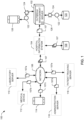
- Figs. 1 to 3 show example embodiments of an example outbreak tracking and management system 100, according to example embodiments of the present disclosure.
- the example system 100 includes an outbreak management server 102 and a Hospital Information System ("HIS") 104.
- the server 102 is configured to create, analyze, and manage graph databases.
- the example HIS 104 is configured to provide connectivity within a hospital or medical environment.
- the server 102 may be included within the HIS 104.
- the server 102 may be external to and communicatively coupled to the HIS 104.
- the example HIS 104 is communicatively coupled via a network 106 to one or more devices or computers that are configured to transmit or otherwise provide patient medical data 107.
- the HIS 104 stores the patient medical data 107 as an Electronic Medical Record ("EMR") within a memory device 108.
- EMR Electronic Medical Record
- the HIS 104 is communicatively coupled to a laboratory server 110, which is configured to transmit laboratory patient medical data 107a, a medical device 112 configured to transmit device patient medical data 107b, a clinician device 114 configured to transmit clinician patient medical data 107c, an administration server 116 configured to transmit administration patient medical data 107d, and a patient tracking server 118 configured to transmit patient tracking medical data 107e.
- the laboratory server 110 may be communicatively coupled to one or more laboratory instruments that generate laboratory data from analysis of one or more biological samples from a patient.
- the laboratory server 110 stores the laboratory data as the laboratory patient medical data 107a, which is periodically transmitted to the patient's EMR via the HIS 104, which is stored at the memory device 108.
- the medical device 112 includes any type of clinical medical device including an infusion pump, a renal failure therapy machine, a physiological sensor, a patient bedside monitor, a pulse-ox monitor, a CT scanner, an MRI scanner, etc.
- the medical device 112 generates operational data and/or alarms/alerts regarding a treatment performed on a patient or a measurement performed on a patient.
- the data is stored as the device patient medical data 107b and transmitted to the patient's EMR located at the memory device 108. While the example environment 100 of Fig. 1 shows one medical device, it should be appreciated that the environment 100 may include tens to thousands of medical devices.
- the example clinician device 114 includes any smartphone, tablet computer, laptop computer, desktop computer, workstation, etc. that is configured to receive clinician-entered data regarding a condition of a patient.
- the data may include observation notes, prescriptions, treatments, diagnosis, observed/identified symptoms, etc.
- the received data is stored as the clinician patient medical data 107c and transmitted to the patient's EMR, which is stored at the memory device 108. While the example environment 100 of Fig. 1 shows one clinician device 114, it should be appreciated that the environment 100 may include tens to thousands of devices.
- the example administration server 116 is configured to receive patient administration information.
- the information includes patient demographic and/or physiological information such as gender, weight, age, birth date, height, medical history, etc.
- the information may also include a ward (e.g., care area) and/or room assigned to the patient.
- the information may be received at the time of admittance of the patient or entered/acquired after a patient has been admitted or moved to a new location in a medical facility.
- the administration server 116 transmits the administration information as the administration patient medical data 107d to the patient's EMR at the memory device 108.
- the example patient tracking server 118 is configured to track a patient's location in a medical facility.
- the example server 118 is configured to receive information indicative of a ward to which a patient is assigned or has been moved.
- the server 118 is also configured to receive information indicative of a room or bed to which the patient is assigned.
- the server 118 transmits the patient tracking medical data 107e to the patient's EMR at the memory device 108 via the HIS 104.
- the server 118 may transmit the data 107e each time a patient's location changes, and may include an indication of a discharge.
- the example network 106 may include any wired or wireless local area network ("LAN”) and/or wide area network ("WAN"). In some examples, the network 106 may include one or more firewalls, gateways, and/or switches that control access, formatting, and data routing. The network 106 may be configured to be self-contained within a medical facility and/or may include an external network and corresponding interfaces/virtual tunnels.
- LAN local area network
- WAN wide area network
- the network 106 may include one or more firewalls, gateways, and/or switches that control access, formatting, and data routing.
- the network 106 may be configured to be self-contained within a medical facility and/or may include an external network and corresponding interfaces/virtual tunnels.
- the example HIS 104 is configured to store the received data 107 to the appropriate patient EMR stored in the memory device 108.
- the patient medical data 107 includes a patient name or other identifier that corresponds to an identifier within or linked to the EMR.
- the HIS 104 compares identifiers to determine a match. After a match is identified, the HIS 104 stores the patient medical data to the matching EMR.
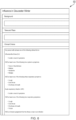
- Fig. 5 shows an example patient EMR 500, according to an example embodiment of the present disclosure.
- the EMR 500 includes patient medical data 107 received from one or more of the devices 110 to 118 of Fig. 1 . This includes a patient identifier and/or name, patient physiological and/or demographic information, patient location(s), symptoms, diagnosis, medical history, medical device data, laboratory results, prescriptions, and notes.
- the patient medical data 107 is stored in a relational or table data structure and provides a substantive medical characterization of a patient.
- the different categories of information include data fields, labels, or metadata that identifies the stored data.
- the EMR 500 may include a label "room number" next to an alphanumeric value that corresponds to a patient's room and bed.
- each of the different types of patient medical data are stored to different fields or sections of the EMR 500 in a predefined or pre-structured arrangement.
- the example HIS 104 is configured to provide access to the patient EMRs 500 (and more generally the patient medical data 107) that is located in the memory device 108.
- the clinician device 114 may access the memory device 108 via the HIS 104 to view, edit, add, or remove patient medical data from a patient's EMR.
- the example outbreak management server 102 is configured to periodically (e.g., every 60 seconds, every 5 minutes, every hour, etc.) or continuously access the memory device 108 to acquire patient medical data 107. Additionally or alternatively, the HIS 104 may transmit a copy of patient medical data 107 to the outbreak management server 102 at periodic times or as the data is received.
- the example outbreak management server 102 is configured to enable clinicians to specify a framework for the creation of outbreak graph databases.
- the example outbreak management server 102 operates accordingly to the framework to automatically (or with minimal clinician input) create graph databases for specified types of outbreaks.
- the outbreak management server 102 is also configured to analyze graph databases to determine a distribution, spread, and origin of outbreaks.
- the management server 102 is configured to render graph databases into a graphical representation to provide different views of an outbreak or provide results of an analysis or semantic query.
- the outbreak management server 102 may be configured to provide an interactive graphical representation that enable a clinician to filter or hide certain levels of data or view parameter or attribute values of the underlying data for one or more specified nodes.
- the outbreak management server 102 is communicatively coupled to a memory device 120, which is configured to store graph databases. As illustrated in Fig. 1 , the outbreak management server 102 receives or otherwise accesses copies of patient medial data 107. The outbreak management server 102 is configured to create, from the copy of the patient medical data 107, graph databases 122, including nodes, relationships, and parameters of graph databases. The outbreak management server 102 analyzes the graph databases 122 to create analysis data 124, which is also stored in the memory device 120.
- the outbreak management server 102 of Fig. 1 is communicatively coupled to one or more user devices 126 via a wired or wireless network.
- the server 102 is configured to transmit the graph databases 122 and/or analysis data from the memory device 120 for viewing, navigating, and/or editing at the user device 126.
- the user device 126 accesses the outbreak management server 102, which provides and/or transmits an interface for interacting with the graph databases 122 that are located in the memory device 120.
- the interface is configured to include features that enable a user to submit a semantic query and/or select options for analysis.
- the example outbreak management server 102 performs the requested analysis on the graph database to generate the analysis data 124, which is sent to the user device 126 for display.
- the interface may also be configured to enable the user device 126 to modify or add nodes, relationships, and/or parameters to a graph database (or confirm nodes, relationships, and/or parameters).
- the example user device 126 includes a smartphone, tablet computer, laptop computer, desktop computer, workstation, server, etc.
- the user device 126 may comprise the clinician device 114.
- the user device 126 may be a device that is external or separate from a hospital system that can connect to the server 102 via a secure gateway, access port, and/or firewall.
- the outbreak management server 102 operates according to instructions 128 stored in a memory (e.g., the memory device 120), which when executed, cause the outbreak management server 102 to perform the operations, steps, methods, procedures, routines, algorithms, etc. described herein.
- the instructions enable the server 102 to create, manage, and analyze the outbreak graph databases 122 according to user-specified criteria.
- the example instructions 128 may also be configured to cause the outbreak management server 102 to improve upon how outbreak medical information is structured in a database by creating a storage structure or framework based on nodes and relationships that approximates actual outbreaks.
- the instructions 128 specify the creation of outbreak graph databases with well defined relationships between different types of nodes at different data levels, which enables computationally efficient processing and analysis for real-time analysis results and almost instant query results based on semantic language inputs. Further, the example instructions 128 are configured to render and process the graph databases 122 in graphical representations that approximate the actual underlying data structure, which are relatively easy for a user to understand compared to excess quantities of raw patient medical data or data stored in relational databases.
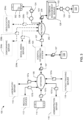
- Fig. 2 illustrates a diagram of another embodiment of the outbreak tracking and management system 100 of Fig. 1 , according to an example embodiment of the present disclosure.
- the example outbreak management server 102 is communicatively coupled to the user device 126 via a network 202 (e.g., the Internet).
- the outbreak management server 102 is also communicatively coupled to data servers 204, which are configured to transmit patient data 206 for creating graph databases.
- the example data servers 204 are configured to generate certain data that describes a location of a patient at a particular date/time.
- the data servers 204 may also include data that is indicative of a patient's symptoms, physiological information, or anything else that may be relevant for determining nodes, parameters, and/or relationships for a graph database.
- the social media server 204a is configured to transmit social media data 206a related to a patient.
- the social media data may include posts, tweets, images, check-in information, etc.
- the social media data 206a is processed by the outbreak management server 102 using, for example, word maps, keyword identifiers, and other textural natural language search routines to identify data for one or more nodes, relationships, and/or parameters.
- a social media post may include information indicative that a patient checked into a certain location at a specified time/date.
- the example outbreak management server 102 is configured to parse the post for the location information for creating a location node. Further, the outbreak management server 102 parses the data 206a for the time/date for a time/date node.
- the outbreak management server 102 may then create relationships between a node for the patient and the location and times/date nodes, which would be stored in a graph database as: "Person (node)-STAYED (relationship)-Stay (node with start and end date/time) - IN - Location (node)".
- the server 102 is configured to identify tags within the data 206 to identify contacts of a patient with other individuals at a certain location on a certain date/time.
- the example outbreak management server 102 is also communicatively coupled to a demographic server 204b, which is configured to manage demographic information of patients and family relationships. For example, some governmental organizations maintain one or more databases of individuals, which may include the person's name, address, age, gender, race, ethnicity, etc. The databases may also include a list of other individuals that reside at the same address or are related to the person.
- the server 102 is configured to receive demographic data 206b from the server 204b. The server 102 analyzes the demographic data to create relationships among individuals as well as population parameter information for a patient.
- the example outbreak management server 102 is further communicatively coupled to a geolocation server 204c, which is configured to transmit geolocation tracking data.
- a geolocation server 204c For instance, cellular operators provide location tracking services for smartphones. The operators maintain a database that correlates a user's location (e.g., a GPS location) to a date/time the user was at the location. The server 102 receives this location data 206c from the geolocation server 204c, which it uses to create location and/or date/time nodes regarding the travels of a patient.
- Fig. 3 illustrates a diagram of a further embodiment of the outbreak tracking and management system 100 of Fig. 1 , according to an example embodiment of the present disclosure.
- the outbreak management server 102 optionally receives the patient data 206 from the servers 204.
- the outbreak management server 102 is communicatively coupled to the HIS 104 via the network 202.
- the server 102 may comprise a cloud-based service host that is configured to provide distributive computing across one or more locations.
- Fig. 3 also shows that the user device 126 includes an application 302 (e.g., an App) that is configured to display the graph databases 122.
- the application 302 is also configured to enable a user of the device 126 to interact with and/or modify the graph database 122 and/or analysis data 124.
- the application 302 may comprise instructions that cause the device 126 to communicate with one or more APIs at the server 102 for accessing the graph databases 122 and/or the analysis data 124.
- the application 302 may also include instructions that specify how the graph databases 122 and/or analysis data 124 is to be rendered and displayed on the device 126.
- the application 302 may further include instructions that define interface tools that a user may use to modify or manipulate the graph databases 122 and/or analysis data 124.
- the application 302 may be configured to access the patient medical data 107 at the memory device 108 via the HIS 104.
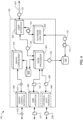
- Fig. 4 illustrates a diagram of the outbreak management server 102 of Figs. 1 to 3 , according to an example embodiment of the present disclosure.
- operations of the outbreak management server 102 may be defined by the instructions 128 stored in a memory device that is communicatively coupled to the server 102.
- Fig. 4 shows a graphical representation of the instructions 128 as operational blocks. In some embodiments, the blocks may be combined, added, removed, or further subdivided. It should be appreciated that the graphical representation of the instructions 128 is provided to describe the operations of the server 102.
- the instructions 128 may be embodied as hardware or a combination of hardware and software, such as an Application Specific Integrated Circuit ("ASIC"), a microcontroller, and/or a processor. Additionally or alternatively, the instructions 128 may be executed by a single processor or a group of processors, such as in a distributed computing environment.
- ASIC Application Specific Integrated Circuit
- the instructions 128 may be executed by a single processor or a group of processors, such as in a distributed computing environment.
- the example outbreak management server 102 of Fig. 4 includes an EMR interface 402 configured to receive or otherwise acquire a copy of the patient medical data 107 from the HIS 104.
- the example EMR interface 402 may include one or more instructions for accessing one or more APIs at the HIS 104 for reading the patient medical data 107 from the memory device 108.
- the interface 402 may additionally or alternatively be configured to transmit request messages for the patient medical data 107.
- the request messages may subscribe to the patient medical data 107 such that changes to the data 107 are automatically sent from the HIS 104 to the EMR interface 402.
- the interface 402 may periodically or continually receive the patient medical data 107 from the HIS 104 without having to send a request message.
- the example interface 402 is configured to transmit received data 107 to a node processor 404.
- the interface 402 may queue the data 107 until the node processor 404 is available.
- the interface 402 may be configured to convert the patient medical data from a first format into a second format compatible for processing by the node processor 404 or storage in a graph database.
- the interface 402 may be configured to convert patient medical data 107 from an HL7 format to an ASCII format for storing data to an EMR or graph database.
- the interface 402 converts the data 107 into a JSON, HTML, text, or nonSQL, format.
- An external data interface 406 of the server 102 is configured to process the patient data 206 from the external third-party servers 204. Similar to the EMR interface 402, the external data interface 406 may include one or more instructions for accessing one or more APIs at the servers 204 for reading the patient data 206. The interface 406 may additionally or alternatively be configured to transmit request messages for the patient data 206. The request messages may include authentication information to access the patient data 206. The request messages may also include identifiers (e.g., a name, address, alpha-numeric code, etc.) of a patient for which information is being requested. For example, the external data interface 406 may only request information after a host node in an outbreak graph database has been created for a patient based on patient medical data 107.
- identifiers e.g., a name, address, alpha-numeric code, etc.
- the request messages may subscribe to the patient data 206 such that changes to the data are automatically sent from the servers 204 to the external data interface 406.
- the interface 406 may periodically or continually receive the patient data 206 from the servers 204 without having to send a request message.
- the example interface 406 is configured to transmit received data 206 to the node processor 404.
- the interface 406 may queue the data 206 until the node processor 404 is available.
- the interface 406 may be configured to convert the patient data from a first format into a second format compatible that is for processing by the node processor 404 or storage in a graph database.
- the interface 402 may be configured to convert patient data 206 from a text format to an ASCII format for storing data to an EMR or graph database.
- the interface 406 converts the data 107 into a JSON, HTML, text, or nonSQL, format.
- the example server 102 includes a graph configuration interface 408 and a graph configurer 410 configured to enable a user to configure conditions 412 for outbreak detection and conditions for determining possible/suspected, possible, and confirmed cases.
- the interface 408 and the configurer 410 are also configured to enable a user specify a hierarchy of node types in a location, such as a hospital.
- the user-provided or system-generated information 412 is stored to a database 414 as an outbreak graph template or definition file.
- the conditions 412 do not specify or define the structure of an outbreak graph database itself, but rather the conditions for creating different node types, determining relationships between nodes, or determining values for writing to one or more node parameters.
- the database 414 may store a different type of graph database template for each type of disease, infection or outbreak.
- the Official Journal of the European Union - Commission Implementing Decision of August 8, 2012 laying down case definitions for reporting communicable diseases, dated September 27, 2012 defines preconditions (if appropriate), clinical criteria, and diagnostic criteria for numerous diseases or infections.
- the document specifies epidemiological criteria and case classification criteria (i.e., a definition of a possible/suspected case of an infection, a definition of a probable case of the infection, and/or a definition of a confirmed case of the infection) for each infection or outbreak condition.
- the case classification criteria are based on the clinical criteria and the diagnostic criteria. Together, this information is used for specifying parameters and determining a case classification for a case definition of diseases or infections of a host node in agraph database.
- the epidemiological criteria specify contraction criteria, which are used for assessing relationships between hosts to determine possibilities or susceptibility to a host or other individual's contraction of an infection.
- the clinical criteria is defined as any person with at least one of the following three symptoms: fever, pneumonia, or hepatitis.
- Laboratory criteria are defined as at least one of: isolation of Coxiella burnetii from a clinical specimen, detection of Coxiella burnetii in nucleic acid in a clinical specimen, or a Coxiella burnetii specific antibody response (IgG or IgM phase II).
- Epidemiological criteria include at least one of exposure to a common source or animal to human transmission. While there is no 'possible' classification case definition, a 'probable' classification case definition includes any person meeting the clinical criteria with an epidemiological link and a 'confirmed' case classification includes any person meeting the clinical and laboratory criteria.
- the graph configuration interface 408 is configured to receive the conditions 412 from a clinician or other user (from devices 114 or 126 of Fig. 1 ).
- the graph configuration interface 408 may, for example, provide an input user interface or fields prompting a user for the case conditions.
- the received conditions are processed by the graph configurer 410 to define the conditions for the specified outbreak.
- the example node processor 404 is configured to determine if a patient's symptoms or other medical data 107 matches the specified conditions to determine if the patient has a ⁇ possible', 'probable', or ⁇ confirmed' classification case for the outbreak. If so, the node processor 404 creates an episode in the outbreak graph database 122 for the patient, which may include adding a graph or node for the patient to the existing graph database of other patients/nodes with the same disease or outbreak.
- the graph configuration interface 408 is configured to receive the conditions 412 as source information from, for example, an electronic version of "The Official Journal of the European Union".
- the graph configurer 410 is configured to read and parse the text to identify an infection name, preconditions, clinical criteria, diagnostic or laboratory criteria, epidemiological criteria, and case classifications.
- the graph configurer 410 automatically creates an outbreak template or definitions for each infection by populating the identified information into the appropriate parameters, nodes, relationships, etc.
- This configuration enables the interface 408 to be communicatively coupled to a health system or governmental database of infections.
- the interface 408 uses the connection to acquire new infection information as it is published, thereby increasing the speed at which an outbreak can be detected/tracked. It should be appreciated that outbreak conditions can also be determined for other types of outbreaks, such as food contamination or spoilage, chemical, radiation, etc.
- Figs. 6 and 7 illustrate a graphical representation 600 of the conditions 412 of Fig. 4 , according to an example embodiment of the present disclosure.
- the example graphical representation 600 of Fig. 6 includes clinical criteria for influenza.
- the example graphical representation 600 of Fig. 7 includes laboratory criteria for influenza, epidemiological criteria, and case classifications for 'probable', 'possible', and ⁇ confirmed' .
- the conditions 412 may be provided by a user or automatically extracted from a document or database.
- the example node configurer 410 is configured to create a definition file or template for an influenza outbreak graph database based on the information in the graphical representation 600.
- the clinical criteria may be labeled as symptoms, with AND and OR logic being used to provide a computational relationship between the symptom in a definition file or template.
- the laboratory criteria may labeled as laboratory data types.
- the node configurer 410 may use the epidemiological criteria to determine epidemiological links for the graph database that may correspond to higher weights for identifying potentially infected individuals.
- the case classification includes Boolean logic of the laboratory and clinical criteria, which are used by the node configurer 410 for programming conditions for triggering ⁇ suspected', 'probable', and 'confirmed' classifications in the graph database.
- the example node processor 404 of Fig. 4 is configured to create outbreak graph databases for infections and other outbreak types that have been defined.
- the node processor 404 creates graph databases based on the graph database structure or framework 800 shown in Fig. 8 , according to an example embodiment of the present disclosure.
- the example graph database structure 800 is specifically configured to record different data levels related to an outbreak.
- the graph database structure 800 defines relationships between different types of nodes (shown as circular elements) and the textural or sematic relationships (e.g., edges) between the nodes.
- the node processor 404 uses the graph database structure 800 for linking together nodes based on the specified format so as to only create meaningful links for downstream analysis.
- the graph database structure 800 specifies that an Outbreak Node is defined by a Definition Node using a "DEFINED AS" edge or relationship.
- each occurrence of the outbreak is specified as an Episode Node which has a "PART OF" edge or relationship with the Outbreak Node.
- an unlimited number of Episode Nodes may be linked to an Outbreak Node representing hosts that are have classified cases of 'confirmed', probable', or 'possible' with respect to the disease that is associated with the outbreak .
- the structure 800 prevents nodes other than Episode Nodes from being linked directly with an Outbreak Node, or even Outbreak Nodes from being linked to other Outbreak Nodes.
- each Episode Node is connected to a Host Node via a "CASE" relationship or link.
- a Host Node may be connected to other Host Nodes via an epidemiological link, with at least some of the other Host Nodes having their own Episode Nodes linking back to the Outbreak Node (not shown).
- the Host Node is also connected to Symptom Nodes via a "HAS SYMPTOM" edge, relationship, or link.
- the Host Node may further be connected to one or more STAY Nodes via a "STAYED” relationship or link.
- the STAY Node is connected to a "Location Node” via an "IN” relationship or link.
- the Location Node may be part of a larger hierarchy of Location nodes representative of a hierarchy of physical spaces in a location, as is shown in Fig. 10 .
- a Role Node is linked to the Episode Node via a "ROLE" edge, relationship, or link. This enables the graph database to reflect whether the same person or host acted as a carrier during an outbreak based on a certain role, such as clinician or patient.
- an Outbreak Node may be linked to a Notes Node via a "HAS NOTE” relationship or link. The Nodes Node may specify information related to the outbreak.
- the example node processor 404 is configured to generate an outbreak graph database when a patient has at least a suspected case of an infection or condition related to the outbreak.
- the node processor 404 may create separate outbreak graph databases for specific locations until there is sufficient data indicative of a spread of the outbreak to larger areas. For example, the node processor 404 may create different outbreak graphs for patients in different locations of a town. However, as the data provides new cases and interrelationships between patients, the node processor 404 may have sufficient information to combine the graphs together via epidemiological links to other host nodes.
- Every Outbreak Node is connected to a Definition Node, which contains a case definition for the outbreak. As illustrated, there is a single Definition Node for each Outbreak Node.
- Table 1 shows parameters of the Definition Node. Values for the parameters are identified or received from the conditions 412, shown in Fig. 4 . It should be appreciated that the parameters or attributes shown in Table 1 are only illustrative and that the table may contain additional or fewer parameters or attributes. For example, some outbreaks may not have 'suspected' classification criteria.
- Table 1 Attribute Description name Name (currently "Definition”) background Background to the case (HTML) time_place Information on the time and place of the outbreak/incident (HTML) clinical_criteria Clinical criteria (HTML) lab criteria Laboratory criteria (HTML) primary_mode_of_transmission Primary mode of transmission (retiationship name) other_modes_of_transmission Other modes of transmission (JSON object of multiple relationships) suspected_enabled Possible / suspected case classification applicable to this outbreak (boolean) probable_enabled Probable case classification applicable to this outbreak (boolean) suspected Criteria for determining a possible / suspected case (HTML) probable Criteria for determining a probable case (HTML) confirmed Criteria for determining a confirmed case (HTML) notes Additional notes (HTML) created at When the node was created (populated by NeoEloquent) updated_at When the node was last updated (populated by NeoEloquent)
- the cypher query may be filtered for non-null case classifications so as to focus on individuals who are 'affected' by the outbreak.
- people e.g., hosts
- the server 102 is configured to create the same relationship (i.e. with a connecting Episode Node), but a case classification may not be initially set. This is so that there is a short-list of people or hosts for investigation before ultimately assigning case status. This process is followed whenever a host is added to an outbreak or when individual hosts are synchronized from a connected server 204.
- Table 2 below shows parameters of an Episode Node.
- the node processor 404 determines the parameter values for the Episode Node from, for example, a patient's medical data 107.
- the start_date/start_ts of the Episode Node is used to determine the 'incidence' (e.g. an outbreak epicurve) to indicate when the host or individual became part of the outbreak.
- the classification may change at any time as a host may transition in between 'possible', 'probable' & 'confirmed' case classifications.
- the node processor 404 uses the Definition Node to determine the case classification for the Episode Node. For example, symptoms and laboratory data 107 of the patient are matched by the node processor 404 to the case classification conditions in the Definition Node to determine if the patient is suspected, possible, or confirmed for a disease associated with the outbreak. In other examples, a clinician may provide or enter the classification.
- the node processor 404 may determine a recommended classification, which is displayed to a clinician to confirm after reviewing the patient's information in relation to the classification conditions.
- Table 2 Attribute Descripton start_date Human readable Y-m-d H:i:s date of the start of the case start_ts Timestamp version of the above (better for querying) classification NULL or "?” (possible) , 'P' (probable), 'C' (confirmed) immunisation_status Immunisation status at case onset (json terminology source) immunisation_type Type of immunisation (json terminology source) acquisition_of_infection e.g. hospital-acquired (json terminology source) death_certificate If person died was the outbreak/incident organism/related condition recorded on the death certificate? created_at Automatically set by NeoEloquent updated_at Automatically set by NeoEloquent
- a single Episode Node may be identified as the index case. This is identified by a one-to-one relationship in between the Outbreak Node and the Episode Node called INDEX.
- the example Host Node includes parameters that provide information related to the host. This includes a parameter providing an indication or flag as to whether the host is a person, animal, fomite, object, etc.
- the Host Node may also include parameters regarding a name, demographics, physical attributes, medical data 107, or other information related to a person.
- the node processor 404 may analyze or parse the data 107 and 206 for information to populate the parameters. In some examples, the node processor 404 may use word maps, natural language matches, label/field identifiers, and/or metadata to determine a property for population.
- the Role Node shown in Fig. 8 may be linked to the Episode Node and provide a role for at least each some Outbreak Nodes that are linked to people.
- Table 3 shows examples of roles, which include a patient, staff, and public. It should be appreciated that an Episode Node may have more than one Role Node, where for example, staff of a hospital may eventually also be a patient.
- Table 3 Role 'role' Attribute Decription Staff stopped_work Date staff member stepped work staff returned_to_work Date staff member returned to work Patient discharge_delayed Whether or not discharge/transfer was delayed as a result of the outbreak/incident (Y/N) Patient surgery_cancelled Where or not surgery was cancelled as a result of the outbreak/incident (Y/N)
- the example Symptom Node is linked to a Host by the node generator 404 of the server 102 using, for example, the following cypher query: Cypher query to see people and symptoms MATCH (p:Person)-[:HAS_SYMPTOM] -> (s:Symptom) RETURN p, s
- the node generator 404 may determine symptoms from the patient's medical data 107 by, for example, searching for symptom keywords. Table 4 below shows example parameters or attributes of the Symptom Node that may be determined by the node generator 404.
- the example node generator 404 uses the symptom parameters to determine a case classification of a host for the Episode Node using the defined criteria. As new symptoms are received, the host generator 404 adds the new symptoms as new Symptom Nodes that are connected to the Host Node, and updates a case classification accordingly. In addition, if a symptom ends, the host generator 404 notes the ending of the symptom.
- the node generator 404 via user interface 420, receives an input message 422 from device 114 or 126.
- the input message 422 includes symptom information provided by a clinician.
- the message 422 may also include a case classification.
- the user interface 420 may display an input window for a selected patient that enables a user to select a symptom from a drop-down list and/or select an icon representative of the case classification.
- Table 4 Attribute Details uuid Unique identifier symptom Symptom - see constants in App ⁇ Symptom start_date Start date of symptom (ATOM format) end_date End date of symptom (ATOM format) created_at Automatically populated by NeoEloquent updated_at Automatically populated by NeoEloquent
- the example graph database structure 800 of Fig. 8 illustrates that Host Nodes are linked together via epidemiological links.
- Table 5 shows examples of types of epidemiological links.
- Table 5 may include a risk score or weight based on the link that corresponds to how a disease is typically transmitted. Links that are not associated with transmission maybe assigned a lower risk score when a database analyzer 430 of the server 102 searches for potential infected hosts. In other instances, Table 5 may contain only epidemiological links that are relevant towards transmission.
- Table 5 Relationship Description AIRBORNE Airborne ANIMAL_RESERVOIRS Animal reservoirs ANIMAL_TO_PERSON_CONTACT Animal to person contact CONTAMINATED_OBJECTS Contaminated objects DROPLET_SPREAD Droplet spread! ENVIRONMENTAL_RESERVOIRS Environmental reservoirs FOOD_AND_DRINKING_WATER Food and drinking water INSECT_SITES Insect bites PERSON_TO_PERSON_CONTACT Person-to-person contact
- the node generator 404 is configured to determine epidemiological links (or potential links for confirmation) between hosts using data 107 and/or 206. For example, social media or demographic relationship data may be used to determine epidemiological links. In other examples, geographic location may be used to determine when two hosts were in the same location at the same time. In other examples, a clinician's notes may include a list of individuals that came in contact with a patient. In yet other examples, a treatment schedule of a patient, included within the data 107, may identify which clinicians came in contact with a patient. The node generator 404 is configured to use word maps, fields, labels, or metadata to identify names from the data 107 and/or 206 for identifying hosts and potential epidemiological links between the hosts.
- epidemiological links or potential links for confirmation
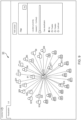
- the user interface 420 of Fig. 4 may display an interface screen 900 that provides a graphical representation of links or potential links between hosts, for a given selected host 902.
- the database analyzer 430 analyzes links (or links labeled as ⁇ potential links') between a selected host and other hosts to determine and render the graphical representation.
- a clinician interacts with the interface screen 900 by selecting potential links and assigning a corresponding epidemiological link. Selection of the epidemiological link by the clinician causes the node generator 404 to update a link between selected hosts in the graph database with the received epidemiological link. For example, a potential link is changed by the node generator 404 to an epidemiological link.
- the Host Node is linked to a Location Node via a Stay Node.
- the Stay Node specifies start and end dates and/or times in which a host was at a particular location.
- Table 6 shows example parameters or attributes of the Stay Node.
- the example node generator 404 determines the date/time, for example, from the patient medical data 107 corresponding to patient admittance and tracking within a medical facility. For example, a patient record may indicate that a patient was located in Bed A of Room 1774 of an Acute Care Ward or care area for a week in April 2018.
- the node generator 404 uses metadata, data labels, fields, etc. to locate the date, which it uses to populate as a value into the appropriate parameters or attributes of the Stay Node.
- a user may provide the dates/times via the user interface 420. Further, the node generator 402 may use geolocation data 206 to determine date/time information. The example date/time information may be used by the data analyzer 430 to determine which hosts were in the same location at the same time.
- the Location Node includes parameters that identify a location.
- Table 7 shows an example of parameters for a Location Node.
- a location node may include parameters for GPS coordinates, a street address, a building name, and/or a place of interest.
- the node generator 404 uses the data 107 and/or 206 to determine values for the parameters or attributes similar to determining a date/time for the Location Node.
- Table 7 Attribute Description uuid Unique identifier of a location name Name of the location type Type of the location: e.g. room, bay, hospital_group etc.
- risk Location proximity risk score (see above) readonly Set to true if the locations data is imported from a third party system (see below) created_at When the node was created - recorded automatically by NeoEloquent updated_at When the node was last updated - recorded automatically by NeoEloquent
- a location is part of a larger hierarchical location.
- the link to the Stay Node corresponds to a Location Node lowest in the hierarchy.
- the hierarchy may correspond to an organization in a geographic location or physical space, such as a hospital.
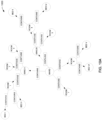
- the example graph configurer 410 of Fig. 4 is configured to automatically create a hierarchical location map 1000, as shown in Fig. 10A from imported data, which may specify a hierarchical structure of a location. In other examples, the graph configurer 410 enables a user to create the hierarchical location map 1000. As shown in Fig. 10A , each sub-location is linked to a higher-order location via a "CONTAINS" relationship or link.
- a hospital Ward Location Node contains Wing Location Nodes A and B, which each contains a number of Room Location Nodes.
- some Room Location Nodes directly connected to the Ward Location Node without connection to a Wing Node.
- some Room Location Nodes connect to separate Bed Location Nodes.
- the graph configurer 410 may create relational maps for businesses, neighborhoods, cities, commercial/residential buildings, public spaces, transportation systems, etc.
- the Location Nodes are used by the database analyzer 430 to determine a relational and/or physical distance between hosts during designated times/dates.
- the Location Nodes may include a risk score, which provides a numerical indication of a risk of infection of hosts corresponding to a distance between locations.
- the example database analyzer 430 may use the risk scores for locations to identify potential hosts that have epidemiological links to other hosts. For example, patients in adjacent beds may be assigned relatively high risk scores for their respective Bed Nodes. Table 8 below shows an example of risk scores for different Location Nodes. Table 8 Node type Description Risk score Locaticii:Bed A space that is allocated for sleeping/laying on.
- Location Street A defined path to travel between 2 points that has a known name 9
- Location Site A collection of buildings or other locations such as a, site or a campus 10
- Location:Hospital A medical facility specific collection of buildings 10
- Location Area A zone, region, postcode, zip code 11
- Location:HospitalGroup A group of hospitals such as a Health Board/Authority 11
- the Ward Location (or other centralized Location Node) includes parameters or attributes that provide general (e.g., survey) information relevant for the location.
- the parameters may be related to the outbreak and/or related to an activity level of the location.
- the survey information may be its own node (e.g., a Survey Node), which is linked to the Location.
- Table 9 shows an example of parameters or attributes of a Survey or Location Node regarding activity level.
- the user interface 420 enables a user to provide the information in Table 9.
- the node generator 404 is configured to read hospital patient tracking information to determine an overall activity for a particular location. For example, the node generator 404 may determine a number of patients in beds for a care area compared to a total number of beds.
- the database analyzer 430 may display the information in Table 9 to show how activity level of a location changes or corresponds to an outbreak.
- Table 9 Attribute Description date Human readable date (Y-m-d), date_ts Timestamp of the date of the survey (at 00:00 hours) specialty Specialty of the ward (text) closed Boolean: whether or not the ward is closed rooms Number of bays/rooms rooms_closed Number of bays/rooms closed cohorted Number of cohorted patients empty_beds Number of empty beds (at 10am) isolation_rooms Number of isolation rooms staffed_beds Number of staffed! beds created_at When the node was created - recorded automatically by NeoEloquent updated_at When the node was last updated - recorded automatically by NeoEloquent
- the example node processor 404 receives batch information regarding patients in a hospital during a time period related to an outbreak.
- the node processor 404 may create clusters of nodes that are linked together by the hospital Location Nodes.
- the node processor 404 determines relationships (e.g., epidemiological links) between the patients.
- Table 10 shows nodes and relationships of a graph database that the node processor 404 may use to synchronize different clusters of one or more patients among the same location.
- the database analyzer 430 determines, for example, from the data in Table 10 that an outbreak is local to a particular hospital ward or care area or room level.
- the node processor 404 is configured to create a single graph database for an outbreak type per location. As new patients are admitted or include symptoms, the example node processor 404 is configured to add the patients as Host Nodes to the graph database. Tracking patients that do not show symptoms, but are in the same location as an outbreak, enables the database analyzer 430 to identify patients that are vulnerable to an outbreak.
- the node processor 404 is configured to include microbiology information within a graph database. As illustrated in Fig. 8 , each Host Node may be connected to a Specimen Node via a "SPECIMEN" edge, relationship, or link. Additionally, the corresponding Episode Node of the Host Node may also have a "SPECIMEN” edge or relationship with the Specimen Node. This linking accounts for a Host potentially having many different microbiology specimens, which may or may not be relevant to an outbreak. Table 11 shows example parameters or attributes of the Specimen Node.
- Each Specimen Node may be linked to an Isolate Node via an "ISOLATE" edge or relationship.
- the Isolate Node specifies an isolate within specimen results.
- Table 12 shows example parameters for the Isolate Node.
- Table 12 Attribute Description uuid String " ⁇ lab_request_id ⁇ # ⁇ specimen_number ⁇ # ⁇ organism_code ⁇ ” readonly (boolean) indication that this is imported data so is read only in the UI result_status PFA result status of the isolate (Preliminary, Final or Amended) created_at When the node was created updated_at When the node was last updated
- An Isolate Node may be connected to an Organism Node via an "ORGANISM" edge or relationship.
- the Organism Node identifies a single organism found in an isolation routine.
- Table 13 shows example parameters of the Organism Node.
- Table 13 Attribute Description uuid Code for the organism (the organism code from ICNet) readonly (boolean) indication that this is imported data so is read only in the UI name Name of the organism created_at When the node was created updated_at When the node was last updated
- the node generator 404 may be configured to use the Preliminary, Final, Amended, and Deleted ("PFA(D)") system for the specimen result and isolate level.
- Fig. 10B illustrates a graph database 1050 that includes Specimen Nodes, Isolate Nodes, and Organism Nodes, according to an example embodiment of the present disclosure.
- the graph database 1050 shows that specimens and isolates from different hosts are traced back to the same organism. Such information is useful by not only showing a spread of an outbreak, but also a biologic that is responsible (or suspected) for the outbreak.
- the graph database may replace the specimen, isolate, and organism with similar nodes for identifying exposure to chemical substances, radiation types, etc.
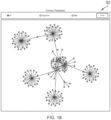
- Fig. 11 illustrates an example graph database 1100 for a Ward Location Node, according to an example embodiment of the present disclosure.
- the graph database 1100 may be rendered by the database analyzer 430 in response to view relationships relative to the Ward Location Node.
- the database analyzer 430 may compress or hide the location hierarchy to view Stay and Host Nodes that have a relationship with the Ward Location Node.
- the database analyzer 430 is configured to color code the Host Nodes based on their case classification to an outbreak to visually indicate the spread of an outbreak relative to the Ward Location Node.
- Fig. 12 illustrates an example graph database 1200 for an Influenza Outbreak Node, according to an example embodiment of the present disclosure.
- different types of host nodes are shown, with Host Nodes 1202 corresponding to persons and Host Nodes 1204, 1206, and 1207 corresponding to fomites or objects.
- the example node generator 404 is configured to generate a separate Episode Node 1208 for each of the Host Nodes.
- only the Episode Nodes 1208c and 1208e that are linked to a confirmed or probably case of influenza in a person are provided a case number.
- the other Episode Nodes 1208a, 1208b, 1208d, and 1208f are not linked to a confirmed or probably case of influenza and accordingly are not assigned a case number.
- the example node generator 404 provides epidemiological links between the Host Nodes 1202, 1204, 1206, and 1208. In some instances, the node generator 404 determines the links from data 107 and 206. In other instances, the links are specified by a clinician via the user interface 420.
- each outbreak may be a separate cluster, with clusters linked together based on location and/or hosts. For example, for a particular, location, some hosts may be linked to a first outbreak while other hosts are linked to a second outbreak.
- the interrelation between outbreaks enables the database analyzer 430 to determine and display information regarding vulnerability of patients to certain overlapping outbreaks or determine correlation between different outbreaks.
- the database analyzer 430 is configured to filter a graph database for a single outbreak type by removing or hiding nodes that are related to other outbreaks.
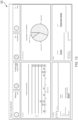
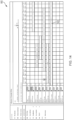
- Fig. 13 shows a dashboard interface 1300 that is configured to be rendered by the database analyzer 430, according to an example embodiment of the present disclosure.
- the dashboard interface 1300 includes separate sections that provide an overview for a selected outbreak.
- the database analyzer 430 analyzes, for example, nodes related to the specified outbreak (e.g., influenza) to determine, for example, a length of the outbreak, a total number of people affected, a total number of deaths attributable to the outbreak, a timeline of incidence, and a graph of case classification.
- nodes related to the specified outbreak e.g., influenza
- Fig. 14 shows a symptom tracker interface 1400 that is configured to be rendered by the database analyzer 430, according to an example embodiment of the present disclosure.
- the database analyzer 430 is configured to determine, using Host and Symptom Nodes, which patients had a particular symptom and the corresponding time period for the symptom.
- the interface 1400 also includes, under a patient name, a location of the patient or identifier and demographic information. Such information provides an indication of all patients showing at least one symptom that may be related to an outbreak.
- the interface 1400 is interactive.
- the interface 1400 may include a filter feature to filter by location, case classification, etc.
- the database analyzer 430 determines the appropriate information to display from the outbreak graph database.
- the interface 1400 is configured to enable a clinician to move, expand, or shorten a time period for a symptom, such as symptom 1402 for 'vomiting'.
- the interface 1400 transmits commends provided by the clinician to the node processor 404, which adjusts the parameters in the Symptom Node accordingly (e.g., changes the duration of the symptom).
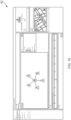
- Fig. 15 illustrates a diagram of a patient interface screen 1500 for a patient (i.e., Patient 3) associated with a Host Node of an outbreak, according to an example embodiment of the present disclosure.
- the database analyzer 430 determines information to display in the interface screen 1500 based on patient information, relationship with other Hosts and Time/Date-Location information.
- a clinician may view the screen 1500 by selecting a patient in the screens/interfaces 1200 and 1400 or by providing a query entry of a patient's name or identifier.
- the interface 1500 may provide an overview of a patient's locations over time, including a map of those locations.
- the interface screen 1500 may also display a graphical relationship between the patient and other Hosts that the patient came into contact with at certain identified locations.
- the interface screen 1500 further shows which of those other Host Nodes have a confirmed or probable case of influenza, for example.
- Fig. 16 illustrates a diagram of an outbreak interface screen 1600 for a Norovirus Outbreak, determined by the database analyzer 430, according to an example embodiment of the present disclosure.
- the database analyzer 430 receives a request to view dates of occurrence of the Norovirus at a specified location.
- the database analyzer 430 analyzes a graph database for nodes related to Norovirus and compiles the information from case classifications of Hosts corresponding to patients/persons.
- the interface screen 1600 may include options for selection that cause the database analyzer 430 to display confirmed cases compared to suspected and probable cases.
- Fig. 17 illustrates a diagram of a map screen 1700 showing an outbreak of Norovirus for Welsh Counties, according to an example embodiment of the present disclosure.
- the database analyzer 430 receives a request to view a map of outbreaks of Norovirus for a specified location.
- the database analyzer 430 analyzes a graph database for nodes related to Norovirus and the specified location. If a number of confirmed and/or probable cases exceeds a threshold for a particular location, the database analyzer 430 determines that an icon is to be placed on a map to indicate the presence of an outbreak in that location.
- the threshold may be as low as one case.
- the database analyzer 430 may select a color and/or size of an icon based on confirmed and/or probably cases for a particular area.
- a clinician may use tools with the map screen 1700 to zoom into a particular location to view, for example, individual cases by address and/or area in a medical facility.
- the database analyzer 430 may provide the icons at a higher resolution, such as by neighborhood, street, or residence rather than by town. To do this, the database analyzer 430 determines a scale of the displayed map, regions (e.g., neighborhoods, streets, addresses, etc.) within the display map, and confirmed and/or probable cases that correspond to the identified regions.
- the database analyzer 430 may also analyzer the outbreak information over time to provide an indication as to whether incidence is increasing or decreasing for a location and compare dates of incidence to determine a spread location.
- Fig. 18 illustrates a diagram of a contacts screen 1800 for an outbreak, according to an example embodiment of the present disclosure.
- the database analyzer 430 receives a request to view links between person hosts or nodes.
- the database analyzer 430 may identify confirmed, probable, or possible cases compared to all contacts for a given host. Such information may be used to quarantine or take preventive measures for certain individuals connected to an infected host.
- the screen 1800 may also show the interrelations among different hosts and how an outbreak is spreading.
- FIGS. 19 and 20 illustrate flow diagrams showing example procedures 1900 and 2000 to configure and create graphs databases, according example embodiments of the present disclosure.
- the procedures 1900 and 2000 are described with reference to the flow diagrams illustrated in FIGS. 19 and 20 , it should be appreciated that many other methods of performing the steps associated with the procedures 1900 and 2000 may be used. For example, the order of many of the blocks may be changed, certain blocks may be combined with other blocks, and many of the blocks described are optional.
- the actions described in procedures 1900 and 2000 may be performed among multiple devices including, for example the outbreak management server 102, the user device 126, the clinician device 114, the HIS 104, and/or the servers 204 of Figs. 1 to 3 . Further, the procedure may be illustrative of the instructions 128 of Fig. 4 .
- the example procedure 1900 of Fig. 19 begins when the outbreak management server 102 receives one or more conditions 412 for an infection or event (block 1902).
- the conditions 412 may be received in a document, from a website, and/or entered by a clinician.
- the server 102 identifies clinical information within the outbreak conditions and creates a definition node, template, and/or file for the specified outbreak (blocks 1904 and 1906). As described above in regard to Fig. 4 , this includes identifying case criteria and populating the criteria into parameters or attributes of a Definition Node for the outbreak.
- the server 102 may also create an outbreak node that is linked to the definition node (block 1908).
- the server 102 stores the definition node and the outbreak node to a memory (block 1910).
- the case criteria for the outbreak may then be used to determine if a host has an episode within the new outbreak. If so, the outbreak may be created in a new graph database or added to a current graph database for a corresponding location.
- the example outbreak management server 102 also identifies a patient's symptoms from the data 107 and/or 206 (block 2012). From the identified symptoms, the outbreak management server 102 determines if the patient's symptoms match a case classification for one or more outbreaks (block 2014). If there is a match to an outbreak, the outbreak management server 102 creates an Episode Node and creates a link between the patient and the outbreak (block 2016). If there is not a match to a case classification, the outbreak management server 102 returns to block 2002 and receives data for the same patient or additional patients.
- the server 102 may then compare the number of patient episodes (with the same or similar Episode Nodes) to a threshold to determine if an alert should be generated or the outbreak should otherwise be promoted for further attention (block 2018). If the threshold is exceeded, the management server 102 is configured to generate an alert or otherwise transmit a message or provide an indication that the outbreak should receive attention (block 2020). This may include, for example, the server 102 transmitting one or more text messages or push notifications to clinician devices 114. If the threshold is not exceeded and/or after an alert is generated, the outbreak management server 102 returns to block 2002 for processing newly received data for the same patient or other patients.
Landscapes
- Engineering & Computer Science (AREA)
- Theoretical Computer Science (AREA)
- Health & Medical Sciences (AREA)
- Public Health (AREA)
- Medical Informatics (AREA)
- Databases & Information Systems (AREA)
- General Engineering & Computer Science (AREA)
- General Physics & Mathematics (AREA)
- Physics & Mathematics (AREA)
- General Health & Medical Sciences (AREA)
- Primary Health Care (AREA)
- Data Mining & Analysis (AREA)
- Epidemiology (AREA)
- Pathology (AREA)
- Biomedical Technology (AREA)
- Signal Processing (AREA)
- Computer Networks & Wireless Communication (AREA)
- Human Computer Interaction (AREA)
- Software Systems (AREA)
- Computational Linguistics (AREA)
- Medical Treatment And Welfare Office Work (AREA)
- Measuring And Recording Apparatus For Diagnosis (AREA)
Priority Applications (1)
| Application Number | Priority Date | Filing Date | Title |
|---|---|---|---|
| EP24188297.6A EP4421823A3 (en) | 2018-07-02 | 2019-07-02 | Graph database for outbreak tracking and management |
Applications Claiming Priority (2)
| Application Number | Priority Date | Filing Date | Title |
|---|---|---|---|
| US201862693017P | 2018-07-02 | 2018-07-02 | |
| PCT/US2019/040349 WO2020010113A1 (en) | 2018-07-02 | 2019-07-02 | Graph database for outbreak tracking and management |
Related Child Applications (2)
| Application Number | Title | Priority Date | Filing Date |
|---|---|---|---|
| EP24188297.6A Division-Into EP4421823A3 (en) | 2018-07-02 | 2019-07-02 | Graph database for outbreak tracking and management |
| EP24188297.6A Division EP4421823A3 (en) | 2018-07-02 | 2019-07-02 | Graph database for outbreak tracking and management |
Publications (2)
| Publication Number | Publication Date |
|---|---|
| EP3818545A1 EP3818545A1 (en) | 2021-05-12 |
| EP3818545B1 true EP3818545B1 (en) | 2024-08-28 |
Family
ID=67439428
Family Applications (2)
| Application Number | Title | Priority Date | Filing Date |
|---|---|---|---|
| EP19745017.4A Active EP3818545B1 (en) | 2018-07-02 | 2019-07-02 | Graph database for outbreak tracking and management |
| EP24188297.6A Pending EP4421823A3 (en) | 2018-07-02 | 2019-07-02 | Graph database for outbreak tracking and management |
Family Applications After (1)
| Application Number | Title | Priority Date | Filing Date |
|---|---|---|---|
| EP24188297.6A Pending EP4421823A3 (en) | 2018-07-02 | 2019-07-02 | Graph database for outbreak tracking and management |
Country Status (10)
| Country | Link |
|---|---|
| US (4) | US11023467B2 (https=) |
| EP (2) | EP3818545B1 (https=) |
| JP (3) | JP7432537B2 (https=) |
| CN (2) | CN112368782B (https=) |
| AU (2) | AU2019299442A1 (https=) |
| BR (1) | BR112020026894A2 (https=) |
| CA (1) | CA3105405A1 (https=) |
| MX (2) | MX2021000139A (https=) |
| SG (1) | SG11202013061XA (https=) |
| WO (1) | WO2020010113A1 (https=) |
Families Citing this family (27)
| Publication number | Priority date | Publication date | Assignee | Title |
|---|---|---|---|---|
| US20210005324A1 (en) * | 2018-08-08 | 2021-01-07 | Hc1.Com Inc. | Methods and systems for a health monitoring command center and workforce advisor |
| US12027243B2 (en) | 2017-02-17 | 2024-07-02 | Hc1 Insights, Inc. | System and method for determining healthcare relationships |
| US11243976B2 (en) | 2015-05-01 | 2022-02-08 | The Government of the United States of America, as represented by the Secretary of Homeland Security | System and method for monitoring and analyzing animal related data |
| US20180137667A1 (en) * | 2016-11-14 | 2018-05-17 | Oracle International Corporation | Graph Visualization Tools With Summary Visualization For Very Large Labeled Graphs |
| US11948116B2 (en) | 2017-09-22 | 2024-04-02 | 1Nteger, Llc | Systems and methods for risk data navigation |
| US11120082B2 (en) | 2018-04-18 | 2021-09-14 | Oracle International Corporation | Efficient, in-memory, relational representation for heterogeneous graphs |
| BR112020026894A2 (pt) * | 2018-07-02 | 2021-03-30 | Baxter International Inc. | Banco de dados de gráfico para rastreamento e gerenciamento de surto |
| JP7422308B2 (ja) * | 2018-08-08 | 2024-01-26 | パナソニックIpマネジメント株式会社 | 情報提供方法、サーバ、音声認識装置、及び情報提供プログラム |
| US11538586B2 (en) * | 2019-05-07 | 2022-12-27 | International Business Machines Corporation | Clinical decision support |
| JP7752628B2 (ja) * | 2020-03-24 | 2025-10-10 | バクスター・インターナショナル・インコーポレイテッド | 医療デバイスからのデータの伝送のためのデジタル通信モジュール |
| JP6796892B1 (ja) * | 2020-04-27 | 2020-12-09 | 株式会社歯科専門集患アウトソーシング | 診療分析サーバ及び医療機関支援システム |
| CN111640515A (zh) * | 2020-05-26 | 2020-09-08 | 深圳市通用互联科技有限责任公司 | 区域的疫情风险确定方法、装置、计算机设备和存储介质 |
| CN111739650B (zh) * | 2020-05-28 | 2024-03-26 | 百度在线网络技术(北京)有限公司 | 匿名社交接触回溯方法、装置、电子设备及存储介质 |
| US20230245767A1 (en) * | 2020-07-15 | 2023-08-03 | Lifelens Technologies, Inc. | Wearable sensor system configured for monitoring and modeling health data |
| US10991185B1 (en) | 2020-07-20 | 2021-04-27 | Abbott Laboratories | Digital pass verification systems and methods |
| US20220027816A1 (en) * | 2020-07-21 | 2022-01-27 | Cox Automotive, Inc. | Workplace disruption data and protocols |
| US20220028561A1 (en) | 2020-07-22 | 2022-01-27 | Pandemic Insights, Inc. | Enriching geographic-information systems with geolocation attributes to enhance accuracy of pandemic-bio-surveillance multi pathogen systems |
| US11818624B1 (en) | 2020-11-19 | 2023-11-14 | Wells Fargo Bank, N.A. | System and methods for passive contact tracing |
| US11933619B2 (en) * | 2020-12-07 | 2024-03-19 | International Business Machines Corporation | Safe zones and routes planning |
| WO2022226022A1 (en) * | 2021-04-20 | 2022-10-27 | Baxter International Inc. | Case sift and cluster sift for outbreak tracking and management |
| CN113076328B (zh) * | 2021-06-08 | 2021-08-24 | 中航信移动科技有限公司 | 一种疫情数据处理系统 |
| TWI795854B (zh) * | 2021-07-23 | 2023-03-11 | 臺中榮民總醫院 | 以目視化智慧系統進行隔離病人之管理系統 |
| CN113724892B (zh) * | 2021-08-31 | 2024-06-21 | 深圳平安智慧医健科技有限公司 | 一种人口流动的分析方法、装置、电子设备及存储介质 |
| JP7767083B2 (ja) * | 2021-09-28 | 2025-11-11 | 富士フイルム株式会社 | 情報処理装置、情報処理方法及び情報処理プログラム |
| US12242521B2 (en) * | 2022-09-09 | 2025-03-04 | Third Bridge (US) Inc. | Dynamic interactive graphing for attributes |
| CN115544172A (zh) * | 2022-11-28 | 2022-12-30 | 杭州欧若数网科技有限公司 | 一种一主多从的集群间数据实时同步的方法和系统 |
| CN115865761B (zh) * | 2022-12-07 | 2024-06-18 | 安世亚太科技股份有限公司 | 一种考虑阻塞反馈的网络实体任务活动代价评估方法 |
Family Cites Families (16)
| Publication number | Priority date | Publication date | Assignee | Title |
|---|---|---|---|---|
| US20030129578A1 (en) * | 2001-10-26 | 2003-07-10 | Mault James R. | Method and system for early detection of infectious diseases or symptoms of bioterrorism attacks |
| US7908155B2 (en) * | 2002-04-12 | 2011-03-15 | Becton, Dickinson And Company | System for collecting, storing, presenting and analyzing immunization data having remote stations in communication with a vaccine and disease database over a network |
| CN1881227A (zh) * | 2006-05-16 | 2006-12-20 | 中国人民解放军第三军医大学 | 传染病疫情诊断及危害度分类智能分析模型技术 |
| US7792779B2 (en) * | 2007-06-05 | 2010-09-07 | Intel Corporation | Detection of epidemic outbreaks with Persistent Causal-Chain Dynamic Bayesian Networks |
| US20130332195A1 (en) * | 2012-06-08 | 2013-12-12 | Sony Network Entertainment International Llc | System and methods for epidemiological data collection, management and display |
| PT3055803T (pt) * | 2013-10-08 | 2022-03-09 | Cota Inc | Análise e monitorização de resultados clínicos |
| CN107710207B (zh) * | 2015-03-12 | 2022-03-08 | 皇家飞利浦有限公司 | 感染管理和控制 |
| US20170103172A1 (en) * | 2015-10-07 | 2017-04-13 | The Arizona Board Of Regents On Behalf Of The University Of Arizona | System And Method To Geospatially And Temporally Predict A Propagation Event |
| BR112018008541A2 (pt) * | 2015-10-30 | 2018-10-30 | Koninklijke Philips Nv | método implementado por computador para determinar uma rota de transmissão de patógenos relacionados, mídia de armazenamento não transitório legível por computador e sistema implementado por computador para pré-formar uma análise de genoma |
| CN105740615B (zh) * | 2016-01-28 | 2018-10-16 | 中山大学 | 利用手机轨迹追踪传染源和预测传染病流行趋势的方法 |
| EP3296903A1 (en) * | 2016-09-20 | 2018-03-21 | Fujitsu Limited | Method and apparatus for discovering a sequence of events forming an episode in a set of medical records from a patient |
| US20190311810A1 (en) * | 2016-12-12 | 2019-10-10 | Koninklijke Philips N.V. | System and method for facilitating computational analysis of a health condition |
| CN106780234A (zh) * | 2017-02-25 | 2017-05-31 | 深圳市前海安测信息技术有限公司 | 基于数据关联的医生评级推荐系统及方法 |
| BR112020026894A2 (pt) * | 2018-07-02 | 2021-03-30 | Baxter International Inc. | Banco de dados de gráfico para rastreamento e gerenciamento de surto |
| US20200388287A1 (en) * | 2018-11-13 | 2020-12-10 | CurieAI, Inc. | Intelligent health monitoring |
| US20200373018A1 (en) * | 2020-04-22 | 2020-11-26 | Yeda Research And Development Co. Ltd. | Method of diagnosing pathogenesis of viral infection for epidemic prevention |
-
2019
- 2019-07-02 BR BR112020026894-1A patent/BR112020026894A2/pt not_active IP Right Cessation
- 2019-07-02 CN CN201980044469.6A patent/CN112368782B/zh active Active
- 2019-07-02 EP EP19745017.4A patent/EP3818545B1/en active Active
- 2019-07-02 SG SG11202013061XA patent/SG11202013061XA/en unknown
- 2019-07-02 CN CN202411298914.0A patent/CN119381013A/zh active Pending
- 2019-07-02 WO PCT/US2019/040349 patent/WO2020010113A1/en not_active Ceased
- 2019-07-02 MX MX2021000139A patent/MX2021000139A/es unknown
- 2019-07-02 EP EP24188297.6A patent/EP4421823A3/en active Pending
- 2019-07-02 JP JP2020573463A patent/JP7432537B2/ja active Active
- 2019-07-02 CA CA3105405A patent/CA3105405A1/en active Pending
- 2019-07-02 US US16/460,335 patent/US11023467B2/en active Active
- 2019-07-02 AU AU2019299442A patent/AU2019299442A1/en not_active Abandoned
-
2021
- 2021-01-06 MX MX2025001305A patent/MX2025001305A/es unknown
- 2021-06-01 US US17/335,752 patent/US11500872B2/en active Active
-
2022
- 2022-11-14 US US17/986,332 patent/US11966397B2/en active Active
-
2024
- 2024-02-05 JP JP2024015570A patent/JP7723772B2/ja active Active
- 2024-04-22 US US18/641,806 patent/US20240273101A1/en active Pending
-
2025
- 2025-02-28 AU AU2025201485A patent/AU2025201485A1/en active Pending
- 2025-08-01 JP JP2025129203A patent/JP2025156487A/ja active Pending
Also Published As
| Publication number | Publication date |
|---|---|
| AU2025201485A1 (en) | 2025-03-20 |
| AU2019299442A1 (en) | 2021-02-04 |
| US20240273101A1 (en) | 2024-08-15 |
| EP3818545A1 (en) | 2021-05-12 |
| EP4421823A3 (en) | 2024-10-30 |
| CN119381013A (zh) | 2025-01-28 |
| JP2024032996A (ja) | 2024-03-12 |
| US11500872B2 (en) | 2022-11-15 |
| JP2025156487A (ja) | 2025-10-14 |
| SG11202013061XA (en) | 2021-01-28 |
| WO2020010113A1 (en) | 2020-01-09 |
| CA3105405A1 (en) | 2020-01-09 |
| MX2025001305A (es) | 2025-03-07 |
| BR112020026894A2 (pt) | 2021-03-30 |
| JP7432537B2 (ja) | 2024-02-16 |
| US11023467B2 (en) | 2021-06-01 |
| US20230079922A1 (en) | 2023-03-16 |
| CN112368782B (zh) | 2024-10-11 |
| EP4421823A2 (en) | 2024-08-28 |
| US11966397B2 (en) | 2024-04-23 |
| MX2021000139A (es) | 2021-03-25 |
| JP2021530058A (ja) | 2021-11-04 |
| US20210294796A1 (en) | 2021-09-23 |
| JP7723772B2 (ja) | 2025-08-14 |
| CN112368782A (zh) | 2021-02-12 |
| US20200004746A1 (en) | 2020-01-02 |
Similar Documents
| Publication | Publication Date | Title |
|---|---|---|
| US11966397B2 (en) | Graph database for outbreak tracking and management | |
| US20090006125A1 (en) | Method and apparatus for implementing digital video modeling to generate an optimal healthcare delivery model | |
| US20220336110A1 (en) | Case sift and cluster sift for outbreak tracking and management | |
| Sha et al. | Spatiotemporal analysis of medical resource deficiencies in the US under COVID-19 pandemic | |
| Antón et al. | Non-invasive ambient intelligence in real life: Dealing with noisy patterns to help older people | |
| WO2021108003A1 (en) | Data management system to track and distribute public data collection with user privacy protection and event token exchange | |
| Bono et al. | Urban-rural disparities in geographic accessibility to care for people living with HIV | |
| CN113744887A (zh) | 传染病的传染概率计算方法及装置、存储介质、电子设备 | |
| Duong et al. | The Willingness to get Vaccinated Against SARS-CoV-2 Virus among Southeast Asian Countries: Does the Vaccine Brand Matter? The Willingness to get Vaccinated Against SARS-CoV-2 Virus among Southeast Asian Countries: Does the Vaccine Brand Matter? | |
| Pah et al. | Big data: What is it and what does it mean for cardiovascular research and prevention policy | |
| Jacquez et al. | Residential mobility and breast cancer in Marin County, California, USA | |
| Sundram et al. | Utilizing artificial intelligence as a dengue surveillance and prediction tool | |
| Farina et al. | Implementation outcomes for agitation detection technologies in people with dementia: a systematic review | |
| Amjad et al. | The Role of the Home Environment in Perinatal Depression: A Systematic Review and Meta-Analysis of Observational Epidemiological Studies | |
| Augusto et al. | Pattern Recognition in Older Adults’ Activities of Daily Living | |
| Anastasiou et al. | Modelhealth: an innovative software platform for machine learning in healthcare leveraging indoor localization services | |
| Wang | The application and development of smart city technologies in public health during the COVID-19 pandemic | |
| Owens et al. | A Place to Stay: Building a Centralized Public Map of Lodging Resources for Patients and Caregivers Traveling for Care | |
| Preethi et al. | Risk Prediction and Management of Corona Virus Pandemic Using Big Data IoT and Machine Learning | |
| Akagi et al. | Graph-based system for predictive epidemiological surveillance | |
| Abburu | GIS Based Health Information Management through LETL, Multi Criteria Query, Analysis, Visualization | |
| Huang et al. | A Flexible Syndromic Surveillance and Outbreak Detection Feedback System | |
| De Vito et al. | Utilization of big data to improve management of the emergency departments. Results of a systematic review | |
| Onwodi et al. | Accra Bespoke Multidisciplinary Innovations Conference (ABMIC) |
Legal Events
| Date | Code | Title | Description |
|---|---|---|---|
| STAA | Information on the status of an ep patent application or granted ep patent |
Free format text: STATUS: UNKNOWN |
|
| STAA | Information on the status of an ep patent application or granted ep patent |
Free format text: STATUS: THE INTERNATIONAL PUBLICATION HAS BEEN MADE |
|
| PUAI | Public reference made under article 153(3) epc to a published international application that has entered the european phase |
Free format text: ORIGINAL CODE: 0009012 |
|
| STAA | Information on the status of an ep patent application or granted ep patent |
Free format text: STATUS: REQUEST FOR EXAMINATION WAS MADE |
|
| 17P | Request for examination filed |
Effective date: 20210118 |
|
| AK | Designated contracting states |
Kind code of ref document: A1 Designated state(s): AL AT BE BG CH CY CZ DE DK EE ES FI FR GB GR HR HU IE IS IT LI LT LU LV MC MK MT NL NO PL PT RO RS SE SI SK SM TR |
|
| DAV | Request for validation of the european patent (deleted) | ||
| DAX | Request for extension of the european patent (deleted) | ||
| GRAP | Despatch of communication of intention to grant a patent |
Free format text: ORIGINAL CODE: EPIDOSNIGR1 |
|
| STAA | Information on the status of an ep patent application or granted ep patent |
Free format text: STATUS: GRANT OF PATENT IS INTENDED |
|
| INTG | Intention to grant announced |
Effective date: 20240215 |
|
| GRAS | Grant fee paid |
Free format text: ORIGINAL CODE: EPIDOSNIGR3 |
|
| GRAA | (expected) grant |
Free format text: ORIGINAL CODE: 0009210 |
|
| STAA | Information on the status of an ep patent application or granted ep patent |
Free format text: STATUS: THE PATENT HAS BEEN GRANTED |
|
| AK | Designated contracting states |
Kind code of ref document: B1 Designated state(s): AL AT BE BG CH CY CZ DE DK EE ES FI FR GB GR HR HU IE IS IT LI LT LU LV MC MK MT NL NO PL PT RO RS SE SI SK SM TR |
|
| REG | Reference to a national code |
Ref country code: GB Ref legal event code: FG4D |
|
| REG | Reference to a national code |
Ref country code: CH Ref legal event code: EP |
|
| REG | Reference to a national code |
Ref country code: DE Ref legal event code: R096 Ref document number: 602019057879 Country of ref document: DE |
|
| REG | Reference to a national code |
Ref country code: IE Ref legal event code: FG4D |
|
| REG | Reference to a national code |
Ref country code: LT Ref legal event code: MG9D |
|
| PG25 | Lapsed in a contracting state [announced via postgrant information from national office to epo] |
Ref country code: NO Free format text: LAPSE BECAUSE OF FAILURE TO SUBMIT A TRANSLATION OF THE DESCRIPTION OR TO PAY THE FEE WITHIN THE PRESCRIBED TIME-LIMIT Effective date: 20241128 |
|
| REG | Reference to a national code |
Ref country code: AT Ref legal event code: MK05 Ref document number: 1718925 Country of ref document: AT Kind code of ref document: T Effective date: 20240828 |
|
| PG25 | Lapsed in a contracting state [announced via postgrant information from national office to epo] |
Ref country code: NL Free format text: LAPSE BECAUSE OF FAILURE TO SUBMIT A TRANSLATION OF THE DESCRIPTION OR TO PAY THE FEE WITHIN THE PRESCRIBED TIME-LIMIT Effective date: 20240828 Ref country code: PT Free format text: LAPSE BECAUSE OF FAILURE TO SUBMIT A TRANSLATION OF THE DESCRIPTION OR TO PAY THE FEE WITHIN THE PRESCRIBED TIME-LIMIT Effective date: 20241230 Ref country code: FI Free format text: LAPSE BECAUSE OF FAILURE TO SUBMIT A TRANSLATION OF THE DESCRIPTION OR TO PAY THE FEE WITHIN THE PRESCRIBED TIME-LIMIT Effective date: 20240828 Ref country code: GR Free format text: LAPSE BECAUSE OF FAILURE TO SUBMIT A TRANSLATION OF THE DESCRIPTION OR TO PAY THE FEE WITHIN THE PRESCRIBED TIME-LIMIT Effective date: 20241129 Ref country code: PL Free format text: LAPSE BECAUSE OF FAILURE TO SUBMIT A TRANSLATION OF THE DESCRIPTION OR TO PAY THE FEE WITHIN THE PRESCRIBED TIME-LIMIT Effective date: 20240828 |
|
| PG25 | Lapsed in a contracting state [announced via postgrant information from national office to epo] |
Ref country code: BG Free format text: LAPSE BECAUSE OF FAILURE TO SUBMIT A TRANSLATION OF THE DESCRIPTION OR TO PAY THE FEE WITHIN THE PRESCRIBED TIME-LIMIT Effective date: 20240828 |
|
| PG25 | Lapsed in a contracting state [announced via postgrant information from national office to epo] |
Ref country code: LV Free format text: LAPSE BECAUSE OF FAILURE TO SUBMIT A TRANSLATION OF THE DESCRIPTION OR TO PAY THE FEE WITHIN THE PRESCRIBED TIME-LIMIT Effective date: 20240828 |
|
| REG | Reference to a national code |
Ref country code: NL Ref legal event code: MP Effective date: 20240828 |
|
| PG25 | Lapsed in a contracting state [announced via postgrant information from national office to epo] |
Ref country code: AT Free format text: LAPSE BECAUSE OF FAILURE TO SUBMIT A TRANSLATION OF THE DESCRIPTION OR TO PAY THE FEE WITHIN THE PRESCRIBED TIME-LIMIT Effective date: 20240828 Ref country code: IS Free format text: LAPSE BECAUSE OF FAILURE TO SUBMIT A TRANSLATION OF THE DESCRIPTION OR TO PAY THE FEE WITHIN THE PRESCRIBED TIME-LIMIT Effective date: 20241228 |
|
| PG25 | Lapsed in a contracting state [announced via postgrant information from national office to epo] |
Ref country code: HR Free format text: LAPSE BECAUSE OF FAILURE TO SUBMIT A TRANSLATION OF THE DESCRIPTION OR TO PAY THE FEE WITHIN THE PRESCRIBED TIME-LIMIT Effective date: 20240828 |
|
| PG25 | Lapsed in a contracting state [announced via postgrant information from national office to epo] |
Ref country code: RS Free format text: LAPSE BECAUSE OF FAILURE TO SUBMIT A TRANSLATION OF THE DESCRIPTION OR TO PAY THE FEE WITHIN THE PRESCRIBED TIME-LIMIT Effective date: 20241128 Ref country code: ES Free format text: LAPSE BECAUSE OF FAILURE TO SUBMIT A TRANSLATION OF THE DESCRIPTION OR TO PAY THE FEE WITHIN THE PRESCRIBED TIME-LIMIT Effective date: 20240828 |
|
| PG25 | Lapsed in a contracting state [announced via postgrant information from national office to epo] |
Ref country code: RS Free format text: LAPSE BECAUSE OF FAILURE TO SUBMIT A TRANSLATION OF THE DESCRIPTION OR TO PAY THE FEE WITHIN THE PRESCRIBED TIME-LIMIT Effective date: 20241128 Ref country code: PT Free format text: LAPSE BECAUSE OF FAILURE TO SUBMIT A TRANSLATION OF THE DESCRIPTION OR TO PAY THE FEE WITHIN THE PRESCRIBED TIME-LIMIT Effective date: 20241230 Ref country code: PL Free format text: LAPSE BECAUSE OF FAILURE TO SUBMIT A TRANSLATION OF THE DESCRIPTION OR TO PAY THE FEE WITHIN THE PRESCRIBED TIME-LIMIT Effective date: 20240828 Ref country code: NO Free format text: LAPSE BECAUSE OF FAILURE TO SUBMIT A TRANSLATION OF THE DESCRIPTION OR TO PAY THE FEE WITHIN THE PRESCRIBED TIME-LIMIT Effective date: 20241128 Ref country code: NL Free format text: LAPSE BECAUSE OF FAILURE TO SUBMIT A TRANSLATION OF THE DESCRIPTION OR TO PAY THE FEE WITHIN THE PRESCRIBED TIME-LIMIT Effective date: 20240828 Ref country code: LV Free format text: LAPSE BECAUSE OF FAILURE TO SUBMIT A TRANSLATION OF THE DESCRIPTION OR TO PAY THE FEE WITHIN THE PRESCRIBED TIME-LIMIT Effective date: 20240828 Ref country code: IS Free format text: LAPSE BECAUSE OF FAILURE TO SUBMIT A TRANSLATION OF THE DESCRIPTION OR TO PAY THE FEE WITHIN THE PRESCRIBED TIME-LIMIT Effective date: 20241228 Ref country code: HR Free format text: LAPSE BECAUSE OF FAILURE TO SUBMIT A TRANSLATION OF THE DESCRIPTION OR TO PAY THE FEE WITHIN THE PRESCRIBED TIME-LIMIT Effective date: 20240828 Ref country code: GR Free format text: LAPSE BECAUSE OF FAILURE TO SUBMIT A TRANSLATION OF THE DESCRIPTION OR TO PAY THE FEE WITHIN THE PRESCRIBED TIME-LIMIT Effective date: 20241129 Ref country code: FI Free format text: LAPSE BECAUSE OF FAILURE TO SUBMIT A TRANSLATION OF THE DESCRIPTION OR TO PAY THE FEE WITHIN THE PRESCRIBED TIME-LIMIT Effective date: 20240828 Ref country code: ES Free format text: LAPSE BECAUSE OF FAILURE TO SUBMIT A TRANSLATION OF THE DESCRIPTION OR TO PAY THE FEE WITHIN THE PRESCRIBED TIME-LIMIT Effective date: 20240828 Ref country code: BG Free format text: LAPSE BECAUSE OF FAILURE TO SUBMIT A TRANSLATION OF THE DESCRIPTION OR TO PAY THE FEE WITHIN THE PRESCRIBED TIME-LIMIT Effective date: 20240828 Ref country code: AT Free format text: LAPSE BECAUSE OF FAILURE TO SUBMIT A TRANSLATION OF THE DESCRIPTION OR TO PAY THE FEE WITHIN THE PRESCRIBED TIME-LIMIT Effective date: 20240828 |
|
| PG25 | Lapsed in a contracting state [announced via postgrant information from national office to epo] |
Ref country code: SM Free format text: LAPSE BECAUSE OF FAILURE TO SUBMIT A TRANSLATION OF THE DESCRIPTION OR TO PAY THE FEE WITHIN THE PRESCRIBED TIME-LIMIT Effective date: 20240828 Ref country code: RO Free format text: LAPSE BECAUSE OF FAILURE TO SUBMIT A TRANSLATION OF THE DESCRIPTION OR TO PAY THE FEE WITHIN THE PRESCRIBED TIME-LIMIT Effective date: 20240828 Ref country code: DK Free format text: LAPSE BECAUSE OF FAILURE TO SUBMIT A TRANSLATION OF THE DESCRIPTION OR TO PAY THE FEE WITHIN THE PRESCRIBED TIME-LIMIT Effective date: 20240828 |
|
| PG25 | Lapsed in a contracting state [announced via postgrant information from national office to epo] |
Ref country code: EE Free format text: LAPSE BECAUSE OF FAILURE TO SUBMIT A TRANSLATION OF THE DESCRIPTION OR TO PAY THE FEE WITHIN THE PRESCRIBED TIME-LIMIT Effective date: 20240828 |
|
| PG25 | Lapsed in a contracting state [announced via postgrant information from national office to epo] |
Ref country code: CZ Free format text: LAPSE BECAUSE OF FAILURE TO SUBMIT A TRANSLATION OF THE DESCRIPTION OR TO PAY THE FEE WITHIN THE PRESCRIBED TIME-LIMIT Effective date: 20240828 |
|
| PG25 | Lapsed in a contracting state [announced via postgrant information from national office to epo] |
Ref country code: SK Free format text: LAPSE BECAUSE OF FAILURE TO SUBMIT A TRANSLATION OF THE DESCRIPTION OR TO PAY THE FEE WITHIN THE PRESCRIBED TIME-LIMIT Effective date: 20240828 Ref country code: IT Free format text: LAPSE BECAUSE OF FAILURE TO SUBMIT A TRANSLATION OF THE DESCRIPTION OR TO PAY THE FEE WITHIN THE PRESCRIBED TIME-LIMIT Effective date: 20240828 |
|
| REG | Reference to a national code |
Ref country code: DE Ref legal event code: R097 Ref document number: 602019057879 Country of ref document: DE |
|
| PLBE | No opposition filed within time limit |
Free format text: ORIGINAL CODE: 0009261 |
|
| STAA | Information on the status of an ep patent application or granted ep patent |
Free format text: STATUS: NO OPPOSITION FILED WITHIN TIME LIMIT |
|
| PGFP | Annual fee paid to national office [announced via postgrant information from national office to epo] |
Ref country code: GB Payment date: 20250619 Year of fee payment: 7 |
|
| PGFP | Annual fee paid to national office [announced via postgrant information from national office to epo] |
Ref country code: FR Payment date: 20250620 Year of fee payment: 7 |
|
| 26N | No opposition filed |
Effective date: 20250530 |
|
| PG25 | Lapsed in a contracting state [announced via postgrant information from national office to epo] |
Ref country code: SE Free format text: LAPSE BECAUSE OF FAILURE TO SUBMIT A TRANSLATION OF THE DESCRIPTION OR TO PAY THE FEE WITHIN THE PRESCRIBED TIME-LIMIT Effective date: 20240828 |
|
| PGFP | Annual fee paid to national office [announced via postgrant information from national office to epo] |
Ref country code: DE Payment date: 20250620 Year of fee payment: 7 |
|
| REG | Reference to a national code |
Ref country code: CH Ref legal event code: H13 Free format text: ST27 STATUS EVENT CODE: U-0-0-H10-H13 (AS PROVIDED BY THE NATIONAL OFFICE) Effective date: 20260224 |
|
| PG25 | Lapsed in a contracting state [announced via postgrant information from national office to epo] |
Ref country code: LU Free format text: LAPSE BECAUSE OF NON-PAYMENT OF DUE FEES Effective date: 20250702 |
|
| REG | Reference to a national code |
Ref country code: BE Ref legal event code: MM Effective date: 20250731 |
|
| PG25 | Lapsed in a contracting state [announced via postgrant information from national office to epo] |
Ref country code: BE Free format text: LAPSE BECAUSE OF NON-PAYMENT OF DUE FEES Effective date: 20250731 |
|
| PG25 | Lapsed in a contracting state [announced via postgrant information from national office to epo] |
Ref country code: CH Free format text: LAPSE BECAUSE OF NON-PAYMENT OF DUE FEES Effective date: 20250731 |