EP3816239A1 - Substrate treated with antimicrobial coating agent and method for producing same - Google Patents
Substrate treated with antimicrobial coating agent and method for producing same Download PDFInfo
- Publication number
- EP3816239A1 EP3816239A1 EP19864338.9A EP19864338A EP3816239A1 EP 3816239 A1 EP3816239 A1 EP 3816239A1 EP 19864338 A EP19864338 A EP 19864338A EP 3816239 A1 EP3816239 A1 EP 3816239A1
- Authority
- EP
- European Patent Office
- Prior art keywords
- substrate
- urushiol
- antimicrobial
- agent
- coating agent
- Prior art date
- Legal status (The legal status is an assumption and is not a legal conclusion. Google has not performed a legal analysis and makes no representation as to the accuracy of the status listed.)
- Granted
Links
Images



Classifications
-
- C—CHEMISTRY; METALLURGY
- C09—DYES; PAINTS; POLISHES; NATURAL RESINS; ADHESIVES; COMPOSITIONS NOT OTHERWISE PROVIDED FOR; APPLICATIONS OF MATERIALS NOT OTHERWISE PROVIDED FOR
- C09D—COATING COMPOSITIONS, e.g. PAINTS, VARNISHES OR LACQUERS; FILLING PASTES; CHEMICAL PAINT OR INK REMOVERS; INKS; CORRECTING FLUIDS; WOODSTAINS; PASTES OR SOLIDS FOR COLOURING OR PRINTING; USE OF MATERIALS THEREFOR
- C09D5/00—Coating compositions, e.g. paints, varnishes or lacquers, characterised by their physical nature or the effects produced; Filling pastes
- C09D5/14—Paints containing biocides, e.g. fungicides, insecticides or pesticides
-
- C—CHEMISTRY; METALLURGY
- C09—DYES; PAINTS; POLISHES; NATURAL RESINS; ADHESIVES; COMPOSITIONS NOT OTHERWISE PROVIDED FOR; APPLICATIONS OF MATERIALS NOT OTHERWISE PROVIDED FOR
- C09D—COATING COMPOSITIONS, e.g. PAINTS, VARNISHES OR LACQUERS; FILLING PASTES; CHEMICAL PAINT OR INK REMOVERS; INKS; CORRECTING FLUIDS; WOODSTAINS; PASTES OR SOLIDS FOR COLOURING OR PRINTING; USE OF MATERIALS THEREFOR
- C09D7/00—Features of coating compositions, not provided for in group C09D5/00; Processes for incorporating ingredients in coating compositions
- C09D7/40—Additives
- C09D7/60—Additives non-macromolecular
- C09D7/63—Additives non-macromolecular organic
-
- B—PERFORMING OPERATIONS; TRANSPORTING
- B01—PHYSICAL OR CHEMICAL PROCESSES OR APPARATUS IN GENERAL
- B01D—SEPARATION
- B01D39/00—Filtering material for liquid or gaseous fluids
- B01D39/14—Other self-supporting filtering material ; Other filtering material
-
- B—PERFORMING OPERATIONS; TRANSPORTING
- B01—PHYSICAL OR CHEMICAL PROCESSES OR APPARATUS IN GENERAL
- B01D—SEPARATION
- B01D39/00—Filtering material for liquid or gaseous fluids
- B01D39/14—Other self-supporting filtering material ; Other filtering material
- B01D39/16—Other self-supporting filtering material ; Other filtering material of organic material, e.g. synthetic fibres
- B01D39/1607—Other self-supporting filtering material ; Other filtering material of organic material, e.g. synthetic fibres the material being fibrous
- B01D39/1615—Other self-supporting filtering material ; Other filtering material of organic material, e.g. synthetic fibres the material being fibrous of natural origin
-
- B—PERFORMING OPERATIONS; TRANSPORTING
- B01—PHYSICAL OR CHEMICAL PROCESSES OR APPARATUS IN GENERAL
- B01D—SEPARATION
- B01D39/00—Filtering material for liquid or gaseous fluids
- B01D39/14—Other self-supporting filtering material ; Other filtering material
- B01D39/16—Other self-supporting filtering material ; Other filtering material of organic material, e.g. synthetic fibres
- B01D39/1607—Other self-supporting filtering material ; Other filtering material of organic material, e.g. synthetic fibres the material being fibrous
- B01D39/1623—Other self-supporting filtering material ; Other filtering material of organic material, e.g. synthetic fibres the material being fibrous of synthetic origin
-
- B—PERFORMING OPERATIONS; TRANSPORTING
- B01—PHYSICAL OR CHEMICAL PROCESSES OR APPARATUS IN GENERAL
- B01D—SEPARATION
- B01D39/00—Filtering material for liquid or gaseous fluids
- B01D39/14—Other self-supporting filtering material ; Other filtering material
- B01D39/16—Other self-supporting filtering material ; Other filtering material of organic material, e.g. synthetic fibres
- B01D39/18—Other self-supporting filtering material ; Other filtering material of organic material, e.g. synthetic fibres the material being cellulose or derivatives thereof
-
- B—PERFORMING OPERATIONS; TRANSPORTING
- B01—PHYSICAL OR CHEMICAL PROCESSES OR APPARATUS IN GENERAL
- B01D—SEPARATION
- B01D39/00—Filtering material for liquid or gaseous fluids
- B01D39/14—Other self-supporting filtering material ; Other filtering material
- B01D39/20—Other self-supporting filtering material ; Other filtering material of inorganic material, e.g. asbestos paper, metallic filtering material of non-woven wires
- B01D39/2003—Glass or glassy material
- B01D39/2017—Glass or glassy material the material being filamentary or fibrous
-
- B—PERFORMING OPERATIONS; TRANSPORTING
- B01—PHYSICAL OR CHEMICAL PROCESSES OR APPARATUS IN GENERAL
- B01D—SEPARATION
- B01D39/00—Filtering material for liquid or gaseous fluids
- B01D39/14—Other self-supporting filtering material ; Other filtering material
- B01D39/20—Other self-supporting filtering material ; Other filtering material of inorganic material, e.g. asbestos paper, metallic filtering material of non-woven wires
- B01D39/2027—Metallic material
- B01D39/2041—Metallic material the material being filamentary or fibrous
-
- B—PERFORMING OPERATIONS; TRANSPORTING
- B05—SPRAYING OR ATOMISING IN GENERAL; APPLYING FLUENT MATERIALS TO SURFACES, IN GENERAL
- B05D—PROCESSES FOR APPLYING FLUENT MATERIALS TO SURFACES, IN GENERAL
- B05D3/00—Pretreatment of surfaces to which liquids or other fluent materials are to be applied; After-treatment of applied coatings, e.g. intermediate treating of an applied coating preparatory to subsequent applications of liquids or other fluent materials
- B05D3/02—Pretreatment of surfaces to which liquids or other fluent materials are to be applied; After-treatment of applied coatings, e.g. intermediate treating of an applied coating preparatory to subsequent applications of liquids or other fluent materials by baking
- B05D3/0254—After-treatment
-
- B—PERFORMING OPERATIONS; TRANSPORTING
- B05—SPRAYING OR ATOMISING IN GENERAL; APPLYING FLUENT MATERIALS TO SURFACES, IN GENERAL
- B05D—PROCESSES FOR APPLYING FLUENT MATERIALS TO SURFACES, IN GENERAL
- B05D5/00—Processes for applying liquids or other fluent materials to surfaces to obtain special surface effects, finishes or structures
-
- B—PERFORMING OPERATIONS; TRANSPORTING
- B05—SPRAYING OR ATOMISING IN GENERAL; APPLYING FLUENT MATERIALS TO SURFACES, IN GENERAL
- B05D—PROCESSES FOR APPLYING FLUENT MATERIALS TO SURFACES, IN GENERAL
- B05D7/00—Processes, other than flocking, specially adapted for applying liquids or other fluent materials to particular surfaces or for applying particular liquids or other fluent materials
- B05D7/24—Processes, other than flocking, specially adapted for applying liquids or other fluent materials to particular surfaces or for applying particular liquids or other fluent materials for applying particular liquids or other fluent materials
-
- C—CHEMISTRY; METALLURGY
- C08—ORGANIC MACROMOLECULAR COMPOUNDS; THEIR PREPARATION OR CHEMICAL WORKING-UP; COMPOSITIONS BASED THEREON
- C08K—Use of inorganic or non-macromolecular organic substances as compounding ingredients
- C08K5/00—Use of organic ingredients
- C08K5/0008—Organic ingredients according to more than one of the "one dot" groups of C08K5/01 - C08K5/59
- C08K5/0025—Crosslinking or vulcanising agents; including accelerators
-
- C—CHEMISTRY; METALLURGY
- C09—DYES; PAINTS; POLISHES; NATURAL RESINS; ADHESIVES; COMPOSITIONS NOT OTHERWISE PROVIDED FOR; APPLICATIONS OF MATERIALS NOT OTHERWISE PROVIDED FOR
- C09D—COATING COMPOSITIONS, e.g. PAINTS, VARNISHES OR LACQUERS; FILLING PASTES; CHEMICAL PAINT OR INK REMOVERS; INKS; CORRECTING FLUIDS; WOODSTAINS; PASTES OR SOLIDS FOR COLOURING OR PRINTING; USE OF MATERIALS THEREFOR
- C09D7/00—Features of coating compositions, not provided for in group C09D5/00; Processes for incorporating ingredients in coating compositions
- C09D7/40—Additives
-
- C—CHEMISTRY; METALLURGY
- C09—DYES; PAINTS; POLISHES; NATURAL RESINS; ADHESIVES; COMPOSITIONS NOT OTHERWISE PROVIDED FOR; APPLICATIONS OF MATERIALS NOT OTHERWISE PROVIDED FOR
- C09D—COATING COMPOSITIONS, e.g. PAINTS, VARNISHES OR LACQUERS; FILLING PASTES; CHEMICAL PAINT OR INK REMOVERS; INKS; CORRECTING FLUIDS; WOODSTAINS; PASTES OR SOLIDS FOR COLOURING OR PRINTING; USE OF MATERIALS THEREFOR
- C09D7/00—Features of coating compositions, not provided for in group C09D5/00; Processes for incorporating ingredients in coating compositions
- C09D7/40—Additives
- C09D7/60—Additives non-macromolecular
- C09D7/61—Additives non-macromolecular inorganic
-
- D—TEXTILES; PAPER
- D06—TREATMENT OF TEXTILES OR THE LIKE; LAUNDERING; FLEXIBLE MATERIALS NOT OTHERWISE PROVIDED FOR
- D06M—TREATMENT, NOT PROVIDED FOR ELSEWHERE IN CLASS D06, OF FIBRES, THREADS, YARNS, FABRICS, FEATHERS OR FIBROUS GOODS MADE FROM SUCH MATERIALS
- D06M16/00—Biochemical treatment of fibres, threads, yarns, fabrics, or fibrous goods made from such materials, e.g. enzymatic
-
- B—PERFORMING OPERATIONS; TRANSPORTING
- B01—PHYSICAL OR CHEMICAL PROCESSES OR APPARATUS IN GENERAL
- B01D—SEPARATION
- B01D2239/00—Aspects relating to filtering material for liquid or gaseous fluids
- B01D2239/04—Additives and treatments of the filtering material
- B01D2239/0442—Antimicrobial, antibacterial, antifungal additives
-
- B—PERFORMING OPERATIONS; TRANSPORTING
- B01—PHYSICAL OR CHEMICAL PROCESSES OR APPARATUS IN GENERAL
- B01D—SEPARATION
- B01D2239/00—Aspects relating to filtering material for liquid or gaseous fluids
- B01D2239/04—Additives and treatments of the filtering material
- B01D2239/0471—Surface coating material
-
- B—PERFORMING OPERATIONS; TRANSPORTING
- B01—PHYSICAL OR CHEMICAL PROCESSES OR APPARATUS IN GENERAL
- B01D—SEPARATION
- B01D2239/00—Aspects relating to filtering material for liquid or gaseous fluids
- B01D2239/04—Additives and treatments of the filtering material
- B01D2239/0471—Surface coating material
- B01D2239/0478—Surface coating material on a layer of the filter
-
- B—PERFORMING OPERATIONS; TRANSPORTING
- B01—PHYSICAL OR CHEMICAL PROCESSES OR APPARATUS IN GENERAL
- B01D—SEPARATION
- B01D46/00—Filters or filtering processes specially modified for separating dispersed particles from gases or vapours
- B01D46/0027—Filters or filtering processes specially modified for separating dispersed particles from gases or vapours with additional separating or treating functions
- B01D46/0028—Filters or filtering processes specially modified for separating dispersed particles from gases or vapours with additional separating or treating functions provided with antibacterial or antifungal means
-
- B—PERFORMING OPERATIONS; TRANSPORTING
- B05—SPRAYING OR ATOMISING IN GENERAL; APPLYING FLUENT MATERIALS TO SURFACES, IN GENERAL
- B05D—PROCESSES FOR APPLYING FLUENT MATERIALS TO SURFACES, IN GENERAL
- B05D1/00—Processes for applying liquids or other fluent materials
- B05D1/18—Processes for applying liquids or other fluent materials performed by dipping
-
- B—PERFORMING OPERATIONS; TRANSPORTING
- B05—SPRAYING OR ATOMISING IN GENERAL; APPLYING FLUENT MATERIALS TO SURFACES, IN GENERAL
- B05D—PROCESSES FOR APPLYING FLUENT MATERIALS TO SURFACES, IN GENERAL
- B05D2252/00—Sheets
-
- B—PERFORMING OPERATIONS; TRANSPORTING
- B05—SPRAYING OR ATOMISING IN GENERAL; APPLYING FLUENT MATERIALS TO SURFACES, IN GENERAL
- B05D—PROCESSES FOR APPLYING FLUENT MATERIALS TO SURFACES, IN GENERAL
- B05D2401/00—Form of the coating product, e.g. solution, water dispersion, powders or the like
- B05D2401/10—Organic solvent
-
- C—CHEMISTRY; METALLURGY
- C08—ORGANIC MACROMOLECULAR COMPOUNDS; THEIR PREPARATION OR CHEMICAL WORKING-UP; COMPOSITIONS BASED THEREON
- C08K—Use of inorganic or non-macromolecular organic substances as compounding ingredients
- C08K3/00—Use of inorganic substances as compounding ingredients
- C08K3/18—Oxygen-containing compounds, e.g. metal carbonyls
- C08K3/20—Oxides; Hydroxides
- C08K3/22—Oxides; Hydroxides of metals
- C08K2003/2248—Oxides; Hydroxides of metals of copper
-
- C—CHEMISTRY; METALLURGY
- C08—ORGANIC MACROMOLECULAR COMPOUNDS; THEIR PREPARATION OR CHEMICAL WORKING-UP; COMPOSITIONS BASED THEREON
- C08K—Use of inorganic or non-macromolecular organic substances as compounding ingredients
- C08K3/00—Use of inorganic substances as compounding ingredients
- C08K3/18—Oxygen-containing compounds, e.g. metal carbonyls
- C08K3/20—Oxides; Hydroxides
- C08K3/22—Oxides; Hydroxides of metals
- C08K2003/2296—Oxides; Hydroxides of metals of zinc
-
- C—CHEMISTRY; METALLURGY
- C08—ORGANIC MACROMOLECULAR COMPOUNDS; THEIR PREPARATION OR CHEMICAL WORKING-UP; COMPOSITIONS BASED THEREON
- C08K—Use of inorganic or non-macromolecular organic substances as compounding ingredients
- C08K3/00—Use of inorganic substances as compounding ingredients
- C08K3/10—Metal compounds
- C08K3/105—Compounds containing metals of Groups 1 to 3 or of Groups 11 to 13 of the Periodic Table
-
- C—CHEMISTRY; METALLURGY
- C08—ORGANIC MACROMOLECULAR COMPOUNDS; THEIR PREPARATION OR CHEMICAL WORKING-UP; COMPOSITIONS BASED THEREON
- C08K—Use of inorganic or non-macromolecular organic substances as compounding ingredients
- C08K5/00—Use of organic ingredients
- C08K5/0008—Organic ingredients according to more than one of the "one dot" groups of C08K5/01 - C08K5/59
- C08K5/0058—Biocides
-
- C—CHEMISTRY; METALLURGY
- C08—ORGANIC MACROMOLECULAR COMPOUNDS; THEIR PREPARATION OR CHEMICAL WORKING-UP; COMPOSITIONS BASED THEREON
- C08K—Use of inorganic or non-macromolecular organic substances as compounding ingredients
- C08K5/00—Use of organic ingredients
- C08K5/0091—Complexes with metal-heteroatom-bonds
-
- C—CHEMISTRY; METALLURGY
- C08—ORGANIC MACROMOLECULAR COMPOUNDS; THEIR PREPARATION OR CHEMICAL WORKING-UP; COMPOSITIONS BASED THEREON
- C08K—Use of inorganic or non-macromolecular organic substances as compounding ingredients
- C08K5/00—Use of organic ingredients
- C08K5/04—Oxygen-containing compounds
- C08K5/13—Phenols; Phenolates
-
- C—CHEMISTRY; METALLURGY
- C08—ORGANIC MACROMOLECULAR COMPOUNDS; THEIR PREPARATION OR CHEMICAL WORKING-UP; COMPOSITIONS BASED THEREON
- C08K—Use of inorganic or non-macromolecular organic substances as compounding ingredients
- C08K5/00—Use of organic ingredients
- C08K5/36—Sulfur-, selenium-, or tellurium-containing compounds
- C08K5/37—Thiols
- C08K5/378—Thiols containing heterocyclic rings
Definitions
- the present disclosure relates to a substrate in which an antimicrobial coating agent including urushiol and an inorganic antimicrobial agent is fixed and coated onto the surface, and a method for antimicrobial coating on the surface of the substrate.
- the inorganic-based antimicrobial agents when inorganic-based antimicrobial agents are to be used in the substrates such as the antimicrobial filters in this way, the inorganic-based antimicrobial agents exist in the form of particles with several micro units in size, and therefore, it may be difficult to introduce them into the filter
- a coating technique capable of not only imparting antimicrobial properties against various microorganisms, but also fixing an antimicrobial agent on the surface of a substrate is needed.
- a substrate in which an antimicrobial coating agent showing antimicrobial properties against various microorganisms including Gram-positive and Gram-negative bacteria is fixed and coated onto the surface, and a method for antimicrobial coating of the surface of the substrate.
- a substrate in which an antimicrobial coating agent including urushiol and an inorganic antimicrobial agent is coated onto the surface, wherein the inorganic antimicrobial agent is fixed to the surface of the substrate while urushiol being crosslinked.
- the present disclosure provides a method for antimicrobial coating on the surface of a substrate, including the steps of: adding an inorganic antimicrobial agent to a coating agent including urushiol; impregnating the substrate with the coating agent to perform high temperature polymerization; and drying the substrate, wherein the inorganic antimicrobial agent is fixed on the surface of the substrate while urushiol being crosslinked.
- a substrate in which an antimicrobial coating agent is fixed on the surface is provided.
- a natural polymer having antimicrobial properties is used as the antimicrobial coating agent instead of a synthetic polymer, which is thus environmentally friendly, the concentration of the coating agent can be easily adjusted, polymerization can be performed through drying, it is excellent in chemical resistance and thermal stability, fiber coating can be performed and thus pores are not clogged, and it is effective for providing excellent antimicrobial activity by the inorganic antimicrobial agent due to a thin coating thickness.
- a substrate in which an antimicrobial coating agent including urushiol and an inorganic antimicrobial agent is coated onto the surface, wherein the inorganic antimicrobial agent is fixed onto the surface of the substrate while urushiol being crosslinked.
- the term "substrate” may be a material having a fixed form, which can support the antimicrobial coating agent according to the present disclosure such that it can be fixed on the surface.
- materials such as fiber, silicon, glass, metal, magnetic material, semiconductor, ceramic, and the like may be used without limitation. Specific Examples thereof include nonwoven fabric; acrylic polymers such as poly(methyl methacrylate) (PMMA) or the like; polyethylene (PE), polypropylene (PP), polystyrene, polyethersulfone (PES), polycycloolefin (PCO), polyurethane, or polycarbonate (PC), but are not limited thereto. Additionally, the substrate can modify the surface to have reactivity or introduce an additional layer of new material.
- the substrate may have various forms such as a sphere or plate, without being limited thereto.
- the inorganic antimicrobial agent When the coating agent is treated on the surface of the substrate, the inorganic antimicrobial agent may be fixed on the surface of the substrate while urushiol being crosslinked, preferably thermally crosslinked. In addition, the coating agent may be uniformly coated on the surface of the substrate.
- a method for antimicrobial coating on the surface of a substrate including the steps of: adding an inorganic antimicrobial agent to a coating agent including urushiol; impregnating the substrate with the coating agent to perform high temperature polymerization; and drying the substrate, wherein the inorganic antimicrobial agent is fixed on the surface of the substrate while urushiol being crosslinked.
- the urushiol may be diluted in an alcoholic solvent or oil
- an antimicrobial filter including the substrate.
- an air purification apparatus including an antimicrobial filter.
- Urushiols are phenolic materials which are major components of the sap of the lacquer tree Toxicodendron spp., including Rhus verniciflua.
- the urushiol monomer has a structure containing two -OH groups (catechol structure) adjacent to a benzene ring in which 15 or 17 long-chain hydrocarbons are bonded to the adjacent carbon.
- the side-chain hydrocarbons are saturated hydrocarbons or unsaturated hydrocarbons containing 1 to 3 double bonds.
- Urushiol consists of a catechol structure which is a strong antioxidant active site, and an amphiphilic structure having a lipid-soluble long side chain within the same molecule, so it has excellent biocompatibility, and can exhibit strong antioxidant and antimicrobial activities.
- Urushiol can be obtained by purifying from urushi lacquer, and the purification method may generally include, but not limited to, an extraction method using an organic solvent such as n-hexane, methanol, ethanol, isopropanol or butanol.
- urushiol can be obtained by an extraction method in which urushi lacquer and a hydrophilic organic solvent are mixed and subjected to centrifugation to separate an urushiol layer in a state of being dissolved in the hydrophilic organic solvent, and the separated urushiol layer is heated to remove the organic solvent and water, thereby extracting urushiol.
- Urushiol may also be obtained through various synthetic methods known in the art, or may be commercially available.
- dermatitis referred to as "poison ivy rash” may be caused in the whole body just by approaching Toxicodendron vernicifluum.
- This allergen is urushiol. Therefore, since urushiol can cause an allergic reaction when used in the form of monomers, it can be used by polymerization.
- urushiol sap it is cured by an enzymatic reaction catalyzed by laccase, and in the case of urushiol extract, it is common to cure with hydrogen peroxide or photo-crosslink by introducing molecules capable of photo-crosslinking.
- urushiol has a chemically stronger bond and a stronger adhesion by forming a polymer as described above.
- urushiol is thermally crosslinked and cured, and is firmly bound to the inorganic antimicrobial agent on the surface, and therefore, there is no difference in the surface of the substrate before and after washing ( FIG. 2 ) .
- the inorganic antimicrobial agent is coated by urushiol and is thereby bound to the surface of the fiber, the surface is relatively smooth, and the fiber surface and the particles are stably fixed because they are coated together during the urushiol curing process ( FIG. 3 ) .
- urushiol contains saturated or unsaturated alkyl groups in the molecule and thus can impart hydrophobicity to the substrate.
- inorganic antimicrobial agent is a generic term for an inorganic compound containing metals or metal ions having antimicrobial properties such as silver, zinc, copper and the like.
- the inorganic antimicrobial agent may be a liquid or solid, preferably solid.
- examples of inorganic antimicrobial agent include, but are not limited to, inorganic materials such as zeolites, synthetic zeolites, metal oxides, zirconium phosphate, calcium phosphate, calcium zinc phosphate, ceramics, soluble glass powder, silica alumina, titanium zeolite, apatite, calcium carbonate, and the like.
- the inorganic antimicrobial agent may be those in which metal ions having excellent antimicrobial properties such as silver, copper, manganese, zinc, or the like are subjected to ion exchange or adsorbed on an inorganic carrier such as zeolites or silica alumina.
- the inorganic antimicrobial agent may be copper oxide, zinc oxide, zinc pyrithione, zeolite, specifically zeolite containing silver ions.
- Zeolites are crystalline aluminosilicates having a plurality of pores. Zeolites are inorganic polymer materials formed by three-dimensionally connecting silicon (Si) and aluminum (Al) through oxygen atoms and usually have a fine crystal size of 1 ⁇ m. Zeolites have structural characteristics that they have various shapes and nanopores in the size of 0.3 nm to 10 nm depending on the type.
- the zeolites may be at least one selected from the group consisting of A-type zeolite, X-type zeolite, Y-type zeolite, high-silica zeolite, sodalite, mordenite, analcime, clinoptilolite, chabazite, and erionite.
- Zeolites In zeolites, the bonds of each atom are loose in the crystal structure, and water molecules are usually filled in the nanopores existing on the inside, and even when this water is released with high heat, the skeleton is maintained as it is, and thus other fine particles can be adsorbed. Zeolites is excellent in the roles as a cation exchanger and the adsorption function of foreign substances due to numerous nano-sized pores, and thus may exhibit an effect of adsorbing and removing heavy metals or bacteria.
- silver ions Ag +
- zeolites a large number of silver ions (Ag + ) are absorbed in zeolites, thereby having excellent sterilization and antimicrobial activities.
- the sterilization and antimicrobial actions of silver ions (Ag + ) are achieved while the silver ions (Ag + ) being eluted, and the elution of silver ions (Ag + ) is achieved through an ion exchange reaction between cations such as Na + , Ca 2+ , Mg 2+ and the like and Ag + ions.
- the eluted Ag + ions adsorb and bind -SH and COO - or OH - ions in proteins from bacterial cells as microorganisms, which cause cell transformation, and leads to a condensation-dehydration reaction, and makes bacterial metabolism and energy metabolism and respiration difficult, thereby exhibiting bactericidal and antimicrobial effects based on the principle of killing bacteria.
- silver ions may exist in the state of being ionically bonded in zeolites.
- the particle size of the zeolites i.e., the particle size
- the particle size is 1 to 3 ⁇ m. If the size is smaller than 1 ⁇ m, there is a problem that the cost of washing and drying in the preparation process is increased. In addition, inhalation toxicity by nanoparticles may occur. If the size is greater than 3 ⁇ m, it may be difficult to carry out dispersion, and the phenomenon of clogging of the pores of the substrate may occur. In addition, reaction with silver nitrate solution may not work well.
- Urushiol has antimicrobial activity against Gram-positive bacteria
- the inorganic antimicrobial agent has antimicrobial activity against Gram-negative bacteria.
- the coating agent composition provided in the present disclosure may have antimicrobial activity against both Gram-positive bacteria and Gram-negative bacteria because the inorganic antimicrobial agent is firmly fixed onto the surface of the substrate while the urushiol being thermally crosslinked when treated on the substrate surface.
- the bacteria against which the coating composition of the present disclosure shows antimicrobial activity may be Gram-positive or Gram-negative bacteria, or may be non-responsive to gram staining.
- the bacteria may also be aerobic or anaerobic.
- the bacteria may be pathogenic or nonpathogenic.
- Examples of the species or genus of the bacteria include Abiotrophia, Achromobacter, Acidaminococcus, Acidovorax, Acinetobacter, Actinobacillus, Actinobaculum, Actinomadura, Actinomyces, Aerococcus, Aeromonas, Afipia, Agrobacterium, Alcaligenes, Alloiococcus, Alteromonas, Amycolata, Amycolatopsis, Anaerobiospirillum, Anaerorhabdus, Arachnia, Arcanobacterium, Arcobacter, Arthrobacter, Atopobium, Aureobacterium, Bacteroides, Balneatrix, Bartonella, Bergeyella, Bifidobacterium, Bilophila Branhamella, Borrelia, Bordetella, Brachyspira, Brevibacillus, Brevibacterium, Brevundimonas, Brucella, Burkholderia, Buttiauxella, Butyriv
- Gram-positive bacteria examples include Mycobacterium tuberculosis, Mycobacterium bovis, Mycobacterium avium, Mycobacterium intracellular, Mycobacterium africanum, Mycobacterium kansasii, Mycobacterium marinum, Mycobacterium ulcerans, Staphylococcus aureus, Staphylococcus epidermidis, Staphylococcus equi, Streptococcus pyogenes, Streptococcus agalactiae, Listeria monocytogenes, Listeria ivanovii, Bacillus anthracis, Bacillus subtilis, Nocardia asteroides, Actinomyces israelii, Propionibacterium acnes, and Enterococcus sp.
- Gram-negative bacteria examples include Clostridium tetani, Clostridium perfringens, Clostridium botulinum, Pseudomonas aeruginosa, Vibrio cholerae, Actinobacillus pleuropneumoniae, Pasteurella haemolytica, Pasteurella multocida, Legionella pneumophila, Salmonella typhi, Brucella abortus, Chlamydi trachomatis, Chlamydia psittaci, Coxiella burnetii, Escherichia coli, Neisseria meningitidis, Neiserria gonorrhea, Haemophilus influenzae, Haemophilus ducreyi, Yersinia pestis, Yersinia enterolitica, Escherichia coli, Enterococcus hirae, Burkholderia cepacia, Burkholderia pseudomallei, Francisella
- urushiol may be contained in an amount of 1 to 20% by weight. If the content is less than 1% by weight, it may be difficult to express the properties of urushiol with a too small content. If the content is more than 20% by weight, the content of urushiol is too high and thus complete thermal curing may not occur, which may leave unreacted materials on the coating surface. In addition, the high viscosity may cause a problem in the preparation process, and the phenomenon of clogging of the pores of the substrate may occur.
- the content of the inorganic antimicrobial agent in the coating agent may be 0.1 to 1% by weight. If the content is less than the above range, the antimicrobial activity may be reduced. If the content exceeds the above range, there may be a problem in dispersibility due to aggregation between the antimicrobial agents.
- the content of urushiol on the substrate may be 15 to 170% by weight, and that of the inorganic antimicrobial agent may be 4 to 10% by weight. If the content is less than the above range, there may be a problem that the antimicrobial activity is reduced, and if the content exceeds the above range, the phenomenon of clogging of the pores of the substrate may occur.
- the substrate may be a nonwoven fabric material.
- the nonwoven fabric is a fiber structure of a planar structure which is prepared by forming sheet-shaped webs that entangle various fibers such as natural fiber, chemical fiber, glass fiber, metal fiber or the like, according to their mutual properties, and bonding the webs by a mechanical or physical method.
- a raw material fiber one or more selected from the group consisting of natural fibers and synthetic fibers may be used.
- it may be a nonwoven fabric material containing one or more selected from viscose rayon fiber, polypropylene fiber, polyethylene fiber, polyethylene terephthalate fiber, polyester fiber, nylon fiber and cellulose fiber.
- the material or preparation method of the nonwoven fabric is not particularly limited.
- the nonwoven fabric can be applied as long as it is those commonly used in the art.
- the nonwoven fabric may be one or more types selected from chemical bonded nonwoven fabric, thermal bonded nonwoven fabric, Air Ray nonwoven fabric, wet-laid nonwoven fabric, needle punched nonwoven fabric, spunlace nonwoven fabric (water-jet entanglement), spun bonded nonwoven fabric, melt blown nonwoven fabric, stitch bonded nonwoven fabric and electrospun nonwoven fabric.
- the nonwoven fabric may have an average thickness of 0.1 to 5 mm or 0.2 to 1 mm, and may be appropriately changed depending on the type of apparatus to which the substrate is applied.
- a method for antimicrobial coating on the surface of a substrate including the step of: adding an inorganic antimicrobial agent to a coating agent including urushiol; impregnating the substrate with the coating agent to perform high temperature polymerization; and drying the substrate, wherein the inorganic antimicrobial agent is fixed onto the surface of the substrate while urushiol being crosslinked.
- Urushiol may be diluted with an organic solvent.
- the organic solvent may include methanol, ethanol, propanol, butanol, benzene, toluene, ethylbenzene, diethylbenzene, xylene, C 1-4 alkyl acetate, methyl ethyl ketone, acetone, tetrahydrofuran, 1,4-dioxane, turpentine, but are not limited thereto.
- urushiol may be diluted with an alcoholic solvent or oil.
- urushiol The dilution concentration of urushiol is not particularly limited, but, for example, urushiol may be diluted by 0.1 to 50% by weight, 0.5 to 30% by weight, or 0.1 to 20% by weight with the organic solvent, and can be appropriately adjusted and used by those skilled in the art.
- Examples of the method of impregnating the substrate in the urushiol coating solution may include, but are not limited to, an immersion method, a dipping method, a roller method, an air knife method, a spray method, and the like.
- the substrate to which the coating agent is introduced can be subjected to high temperature treatment to induce thermal crosslinking and polymerization of urushiol. Since the urushiol is cured by the high temperature treatment and is tightly bound to the inorganic antimicrobial agent on the surface, the inorganic antimicrobial agent may be firmly fixed onto the surface of the substrate.
- the heating temperature for inducing the polymerization reaction of urushiol may be 70 to 200°C, or 100 to 150°C, and the heating time may be 1 to 100 hours, 1 to 72 hours, or 1 hour to 6 hours. Within this range, the reaction time may be shorter as the temperature increases and be longer as the temperature decreases.
- the polymerization reaction may proceed rapidly, and it may be difficult to adjust the reaction.
- the reaction time may be appropriately adjusted depending on the degree to which the coating agent is fixed on the surface of the substrate, but the reaction may be terminated when the fluidity of urushiol is significantly reduced.
- the substrate of the present disclosure may be used as an antimicrobial filter, and the antimicrobial filter may be effectively used as an antimicrobial filter applied to vacuum cleaners, air purification apparatuses, automobiles, refrigerators, air handlers, gas masks, water purifiers, clean rooms, and the like.
- the antimicrobial filter may be an air filter that can be used for air purification.
- the air filter may be a vacuum cleaner filter or an air purifier filter used in homes, but it may also be an air filter used in an air purification facility or a dust collection facility that may be used in a large capacity for vehicles or industries such as factories or research institutes.
- the filter may also be used for water treatment.
- a zeolite inorganic-based antimicrobial agent containing silver ions was added to a natural coating agent based on a urushiol solution to prepare a coating agent for substrate surface treatment.
- urushiol (HanKook National Co., Ltd.) was diluted to 1/30 in ethanol to prepare a coating solution, to which zeolites containing silver ions (Zeomic product provided by IlKwang Polymer) were added and dispersed.
- the zeolites containing silver ions were added to the coating solution in a 0.3% w/v ratio.
- a coating agent was prepared in the same manner as in Example 1, except that a 1/5 diluted urushiol solution was used, and then the coating agent was introduced onto the surface of the substrate.
- a coating agent was prepared in the same manner as in Example 1, except that a 1/100 diluted urushiol solution was used, and then the coating agent was introduced onto the surface of the substrate.
- Urushiol (HanKook National Co., Ltd.) was diluted by 1/30 with ethanol to prepare a urushiol coating agent. After the substrate of Miracloth nonwoven fabric (Sigma-Aldrich) was immersed in the prepared coating agent for 30 minutes, it was subjected to high temperature polymerization and drying at 140°C to introduce the coating agent onto the surface of the substrate.
- Miracloth nonwoven fabric Sigma-Aldrich
- Zeolites containing silver ions were added and dispersed in ethanol.
- the zeolites containing silver ions were added thereto in a 0.3% w/v ratio.
- the substrate of Miracloth nonwoven fabric Sigma-Aldrich
- Urushiol (HanKook National Co., Ltd.) was diluted by 1/30 with ethanol to prepare a coating solution, and zeolites containing silver ions (Zeomic product provided by IlKwang Polymer) were added and dispersed in the coating solution.
- the zeolites containing silver ions were added to the coating solution in a 0.3% w/v ratio.
- the substrate of Miracloth nonwoven fabric (Sigma-Aldrich) was immersed in the prepared coating agent for 30 minutes, it was dried at 30°C to introduce the coating agent onto the surface of the substrate.
- Example 2 As a result of observing the antimicrobial substrate of Example 1 under a scanning electron microscope (SEM), the coating agent was uniformly coated onto the surface of the nonwoven fabric fiber, and the inorganic antimicrobial agent was attached to the surface of the fiber ( FIG. 1 ). In particular, it was confirmed that since urushiol was thermally crosslinked and cured, and was firmly bound to the inorganic antimicrobial agent on the surface, there was no difference in the surface of the substrate before and after washing ( FIG. 2 ).
- SEM scanning electron microscope
- Example 1 the inorganic antimicrobial agent was coated by urushiol and thus bound onto the surface of the fiber, the surface was relatively smooth, and the fiber surface and the particles were coated together during the curing process of urushiol and thus stably fixed ( FIG. 3 ).
- Comparative Example 1 only urushiol was used as the coating agent without inorganic antimicrobial agent. It was confirmed that as the coating agent was cured, the white nonwoven fabric was changed to brown, and it was confirmed through SEM image that the coating agent was uniformly coated onto the surface of the nonwoven fabric ( FIG. 1 ).
- Comparative Example 2 only the inorganic antimicrobial agent (silver ion-containing zeolites) was used as the coating agent without urushiol, and it was observed that a large amount of the inorganic antimicrobial agent dropped out after washing of the coated substrate. In addition, in the absence of urushiol, it was observed that the inorganic antimicrobial agent was introduced onto the nonwoven fabric in the aggregated form ( FIG. 2 ). Further, the inorganic antimicrobial agent (silver ion-containing zeolites) was in the form of a hexahedral shape, had a rough surface, and was fixed onto the surface of the fiber by simple physical adsorption ( FIG. 3 ).
- Comparative Example 3 the coating agent containing both urushiol and the inorganic antimicrobial agent was used, but the urushiol was not cured at a high temperature. Thus, it was observed that the inorganic antimicrobial agent dropped out after washing of the coated substrate ( FIG. 2 ).
- FIG. 4 shows the results of FT-IR analysis of the polyurushiol crosslinked with the urushiol monomer.
- the 3600-3200 cm -1 region represents -OH vibration, which was indicated by a sharp peak in the case of the urushiol monomer, but the peak was broadened due to hydrogen bonds as urushiol was thermally crosslinked.
- the FT-IR peaks of the inorganic antimicrobial agent were -OH peak at 3600-3200 cm -1 , Si-OH peak at 900-850 cm -1 , and Si-O-Si peak at 1100-1000 cm -1 .
- the -OH vibration region at 3600-3200 cm -1 overlapped with the peak of the urushiol monomer.
- the 1100-850 cm -1 region represents the Si-OH and Si-O-Si peaks, which were possibly distinguished as the peak of the inorganic antibacterial agent. It could be seen that a large amount of inorganic antimicrobial agent existed on the surface, in view of the fact that the intensity of the peak at the 1100-850 cm -1 region was very large compared to the other specific peaks.
- Antimicrobial experiments were carried out on the substrates except for Comparative Example 2 in which the desorption of particles occurred during the washing process, and Comparative Example 3 in which no urushiol crosslinking was formed.
- Staphylococcus aureus was used as Gram-positive bacteria, and Escherichia coli was used as Gram-negative bacteria.
- the strains were obtained from the Korea Culture Center of Microorganisms.
- the prepared specimens were subjected to suspension culture at (37 ⁇ 1)°C for 24 hours using a shaking incubator. After the bacterial culture was completed, the specimens were diluted 5-fold by adding 16 ml of 1 ⁇ PBS, and vortexed for 30 minutes to 1 hour depending on the type of the fabric. This step was carried out for the purpose of removing bacteria stuck in the fabric or attached to the surface as a liquid phase. To this end, the Miracloth should be vortexed for at least 30 minutes, and yarn for at least 1 hour.
- the fibers coated with urushiol and the inorganic antimicrobial agent according to Examples 1, 2, and 3 showed antimicrobial activity of 99.9% against both Staphylococcus aureus and Escherichia coli.
- antimicrobial activities against Escherichia coli were not exhibited, and antimicrobial activities of 99.9% were exhibited only against Gram-positive Staphylococcus aureus ( FIG. 6 ).
Landscapes
- Chemical & Material Sciences (AREA)
- Life Sciences & Earth Sciences (AREA)
- Engineering & Computer Science (AREA)
- Organic Chemistry (AREA)
- Wood Science & Technology (AREA)
- Chemical Kinetics & Catalysis (AREA)
- Materials Engineering (AREA)
- Plant Pathology (AREA)
- Inorganic Chemistry (AREA)
- Geology (AREA)
- Health & Medical Sciences (AREA)
- Medicinal Chemistry (AREA)
- Polymers & Plastics (AREA)
- Biochemistry (AREA)
- General Chemical & Material Sciences (AREA)
- Microbiology (AREA)
- Textile Engineering (AREA)
- Agricultural Chemicals And Associated Chemicals (AREA)
- Apparatus Associated With Microorganisms And Enzymes (AREA)
- Measuring Or Testing Involving Enzymes Or Micro-Organisms (AREA)
- Paints Or Removers (AREA)
- Chemical Or Physical Treatment Of Fibers (AREA)
- Treatments For Attaching Organic Compounds To Fibrous Goods (AREA)
Abstract
Description
- This application claims the benefit of priority from Korean Patent Application No.
10-2018-0115319 filed on September 27, 2018 10-2019-0119139 filed on September 26, 2019 - The present disclosure relates to a substrate in which an antimicrobial coating agent including urushiol and an inorganic antimicrobial agent is fixed and coated onto the surface, and a method for antimicrobial coating on the surface of the substrate.
- Recently, as a concern over the quality of air increases, the demands for indoor air cleanliness have increased, and accordingly, air purification filters for removing foreign substances in the air have been developed. High efficiency filters used for air purification can effectively trap almost all harmful microorganisms, and the microorganisms trapped in the filter can survive for a long time and even proliferate. Therefore, by imparting antimicrobial or antibacterial properties to the filters, antimicrobial filters that can not only remove bacteria present in the filter but also sufficiently remove or sterilize microorganisms such as bacteria, viruses, fungi, and the like floating in the air have been developed.
- However, when inorganic-based antimicrobial agents are to be used in the substrates such as the antimicrobial filters in this way, the inorganic-based antimicrobial agents exist in the form of particles with several micro units in size, and therefore, it may be difficult to introduce them into the filter
- Accordingly, a coating technique capable of not only imparting antimicrobial properties against various microorganisms, but also fixing an antimicrobial agent on the surface of a substrate is needed.
- There is provided a substrate in which an antimicrobial coating agent showing antimicrobial properties against various microorganisms including Gram-positive and Gram-negative bacteria is fixed and coated onto the surface, and a method for antimicrobial coating of the surface of the substrate.
- In one aspect, there is provided a substrate in which an antimicrobial coating agent including urushiol and an inorganic antimicrobial agent is coated onto the surface, wherein the inorganic antimicrobial agent is fixed to the surface of the substrate while urushiol being crosslinked.
- In another aspect, the present disclosure provides a method for antimicrobial coating on the surface of a substrate, including the steps of: adding an inorganic antimicrobial agent to a coating agent including urushiol; impregnating the substrate with the coating agent to perform high temperature polymerization; and drying the substrate, wherein the inorganic antimicrobial agent is fixed on the surface of the substrate while urushiol being crosslinked.
- A substrate in which an antimicrobial coating agent is fixed on the surface is provided. A natural polymer having antimicrobial properties is used as the antimicrobial coating agent instead of a synthetic polymer, which is thus environmentally friendly, the concentration of the coating agent can be easily adjusted, polymerization can be performed through drying, it is excellent in chemical resistance and thermal stability, fiber coating can be performed and thus pores are not clogged, and it is effective for providing excellent antimicrobial activity by the inorganic antimicrobial agent due to a thin coating thickness.
-
-
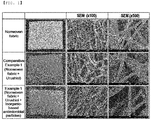
FIG. 1 shows scanning electron microscope (SEM) images of the surface of the substrates prepared according to one Example and Comparative Example of the present discourse. -
FIG. 2 shows scanning electron microscope (SEM) images the surface of the substrates prepared according to one Example and Comparative Example of the present disclosure before and after washing. -
FIG. 3 shows scanning electron microscope (SEM) images of the surface of the substrates prepared according to one Example and Comparative Example of the present disclosure. -
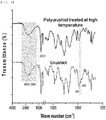
FIG. 4 shows the results of FT-IR analysis of polyurushiol thermally crosslinked with urushiol monomer. -
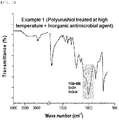
FIG. 5 shows the results of FT-IR analysis of the substrate coated according to one Example of the present disclosure. -
FIG. 6 shows the antimicrobial test results for confirming the antimicrobial activity on the surface of the substrates prepared according to one Example and Comparative Example of the present disclosure. - According to one aspect of the present disclosure, there is provided a substrate in which an antimicrobial coating agent including urushiol and an inorganic antimicrobial agent is coated onto the surface, wherein the inorganic antimicrobial agent is fixed onto the surface of the substrate while urushiol being crosslinked.
- As used herein, the term "substrate" may be a material having a fixed form, which can support the antimicrobial coating agent according to the present disclosure such that it can be fixed on the surface. As a material of the substrate, materials such as fiber, silicon, glass, metal, magnetic material, semiconductor, ceramic, and the like may be used without limitation. Specific Examples thereof include nonwoven fabric; acrylic polymers such as poly(methyl methacrylate) (PMMA) or the like; polyethylene (PE), polypropylene (PP), polystyrene, polyethersulfone (PES), polycycloolefin (PCO), polyurethane, or polycarbonate (PC), but are not limited thereto. Additionally, the substrate can modify the surface to have reactivity or introduce an additional layer of new material. The substrate may have various forms such as a sphere or plate, without being limited thereto.
- When the coating agent is treated on the surface of the substrate, the inorganic antimicrobial agent may be fixed on the surface of the substrate while urushiol being crosslinked, preferably thermally crosslinked. In addition, the coating agent may be uniformly coated on the surface of the substrate.
- According to another aspect of the present disclosure, there is provided a method for antimicrobial coating on the surface of a substrate, including the steps of: adding an inorganic antimicrobial agent to a coating agent including urushiol; impregnating the substrate with the coating agent to perform high temperature polymerization; and drying the substrate, wherein the inorganic antimicrobial agent is fixed on the surface of the substrate while urushiol being crosslinked.
- The urushiol may be diluted in an alcoholic solvent or oil
- According to still another aspect of the present disclosure, there is provided an antimicrobial filter including the substrate.
- According to still further another aspect of the present disclosure, there is provided an air purification apparatus including an antimicrobial filter.
- Urushiols are phenolic materials which are major components of the sap of the lacquer tree Toxicodendron spp., including Rhus verniciflua. The urushiol monomer has a structure containing two -OH groups (catechol structure) adjacent to a benzene ring in which 15 or 17 long-chain hydrocarbons are bonded to the adjacent carbon. The side-chain hydrocarbons are saturated hydrocarbons or unsaturated hydrocarbons containing 1 to 3 double bonds. Urushiol consists of a catechol structure which is a strong antioxidant active site, and an amphiphilic structure having a lipid-soluble long side chain within the same molecule, so it has excellent biocompatibility, and can exhibit strong antioxidant and antimicrobial activities.
- Urushiol can be obtained by purifying from urushi lacquer, and the purification method may generally include, but not limited to, an extraction method using an organic solvent such as n-hexane, methanol, ethanol, isopropanol or butanol. For example, urushiol can be obtained by an extraction method in which urushi lacquer and a hydrophilic organic solvent are mixed and subjected to centrifugation to separate an urushiol layer in a state of being dissolved in the hydrophilic organic solvent, and the separated urushiol layer is heated to remove the organic solvent and water, thereby extracting urushiol.
- Urushiol may also be obtained through various synthetic methods known in the art, or may be commercially available.
- In addition, in the case of people with idiosyncrasy, dermatitis referred to as "poison ivy rash" may be caused in the whole body just by approaching Toxicodendron vernicifluum. This allergen is urushiol. Therefore, since urushiol can cause an allergic reaction when used in the form of monomers, it can be used by polymerization. In the case of urushiol sap, it is cured by an enzymatic reaction catalyzed by laccase, and in the case of urushiol extract, it is common to cure with hydrogen peroxide or photo-crosslink by introducing molecules capable of photo-crosslinking.
- In one embodiment of the present disclosure, it has been found through the FT-IR analysis that when the coating agent composition of the present disclosure is treated on the surface of the substrate, urushiol is cured through a simple thermal crosslinking in the air(
FIG. 5 ). In another embodiment of the present disclosure, it has been found that urushiol has a chemically stronger bond and a stronger adhesion by forming a polymer as described above. Specifically, it has been found that when the coating agent composition of the present disclosure is treated on the surface of the substrate, urushiol is thermally crosslinked and cured, and is firmly bound to the inorganic antimicrobial agent on the surface, and therefore, there is no difference in the surface of the substrate before and after washing (FIG. 2 ) . Moreover, it has been found that the inorganic antimicrobial agent is coated by urushiol and is thereby bound to the surface of the fiber, the surface is relatively smooth, and the fiber surface and the particles are stably fixed because they are coated together during the urushiol curing process (FIG. 3 ) . - Further, urushiol contains saturated or unsaturated alkyl groups in the molecule and thus can impart hydrophobicity to the substrate.
- As used herein, the term "inorganic antimicrobial agent" is a generic term for an inorganic compound containing metals or metal ions having antimicrobial properties such as silver, zinc, copper and the like. The inorganic antimicrobial agent may be a liquid or solid, preferably solid. Examples of inorganic antimicrobial agent include, but are not limited to, inorganic materials such as zeolites, synthetic zeolites, metal oxides, zirconium phosphate, calcium phosphate, calcium zinc phosphate, ceramics, soluble glass powder, silica alumina, titanium zeolite, apatite, calcium carbonate, and the like. In a specific example, the inorganic antimicrobial agent may be those in which metal ions having excellent antimicrobial properties such as silver, copper, manganese, zinc, or the like are subjected to ion exchange or adsorbed on an inorganic carrier such as zeolites or silica alumina. In a preferred example, the inorganic antimicrobial agent may be copper oxide, zinc oxide, zinc pyrithione, zeolite, specifically zeolite containing silver ions.
- Zeolites are crystalline aluminosilicates having a plurality of pores. Zeolites are inorganic polymer materials formed by three-dimensionally connecting silicon (Si) and aluminum (Al) through oxygen atoms and usually have a fine crystal size of 1 µm. Zeolites have structural characteristics that they have various shapes and nanopores in the size of 0.3 nm to 10 nm depending on the type.
- The zeolites may be at least one selected from the group consisting of A-type zeolite, X-type zeolite, Y-type zeolite, high-silica zeolite, sodalite, mordenite, analcime, clinoptilolite, chabazite, and erionite.
- In zeolites, the bonds of each atom are loose in the crystal structure, and water molecules are usually filled in the nanopores existing on the inside, and even when this water is released with high heat, the skeleton is maintained as it is, and thus other fine particles can be adsorbed. Zeolites is excellent in the roles as a cation exchanger and the adsorption function of foreign substances due to numerous nano-sized pores, and thus may exhibit an effect of adsorbing and removing heavy metals or bacteria.
- In addition, a large number of silver ions (Ag+) are absorbed in zeolites, thereby having excellent sterilization and antimicrobial activities. The sterilization and antimicrobial actions of silver ions (Ag+) are achieved while the silver ions (Ag+) being eluted, and the elution of silver ions (Ag+) is achieved through an ion exchange reaction between cations such as Na+, Ca2+, Mg2+ and the like and Ag+ ions. Further, the eluted Ag+ ions adsorb and bind -SH and COO- or OH- ions in proteins from bacterial cells as microorganisms, which cause cell transformation, and leads to a condensation-dehydration reaction, and makes bacterial metabolism and energy metabolism and respiration difficult, thereby exhibiting bactericidal and antimicrobial effects based on the principle of killing bacteria.
- In the present disclosure, silver ions (Ag+) may exist in the state of being ionically bonded in zeolites.
- It is preferable that the particle size of the zeolites, i.e., the particle size, is 1 to 3 µm. If the size is smaller than 1 µm, there is a problem that the cost of washing and drying in the preparation process is increased. In addition, inhalation toxicity by nanoparticles may occur. If the size is greater than 3µm, it may be difficult to carry out dispersion, and the phenomenon of clogging of the pores of the substrate may occur. In addition, reaction with silver nitrate solution may not work well.
- Urushiol has antimicrobial activity against Gram-positive bacteria, and the inorganic antimicrobial agent has antimicrobial activity against Gram-negative bacteria. The coating agent composition provided in the present disclosure may have antimicrobial activity against both Gram-positive bacteria and Gram-negative bacteria because the inorganic antimicrobial agent is firmly fixed onto the surface of the substrate while the urushiol being thermally crosslinked when treated on the substrate surface.
- In one example, the bacteria against which the coating composition of the present disclosure shows antimicrobial activity may be Gram-positive or Gram-negative bacteria, or may be non-responsive to gram staining. The bacteria may also be aerobic or anaerobic. The bacteria may be pathogenic or nonpathogenic. Examples of the species or genus of the bacteria include Abiotrophia, Achromobacter, Acidaminococcus, Acidovorax, Acinetobacter, Actinobacillus, Actinobaculum, Actinomadura, Actinomyces, Aerococcus, Aeromonas, Afipia, Agrobacterium, Alcaligenes, Alloiococcus, Alteromonas, Amycolata, Amycolatopsis, Anaerobiospirillum, Anaerorhabdus, Arachnia, Arcanobacterium, Arcobacter, Arthrobacter, Atopobium, Aureobacterium, Bacteroides, Balneatrix, Bartonella, Bergeyella, Bifidobacterium, Bilophila Branhamella, Borrelia, Bordetella, Brachyspira, Brevibacillus, Brevibacterium, Brevundimonas, Brucella, Burkholderia, Buttiauxella, Butyrivibrio, Calymmatobacterium, Campylobacter, Capnocytophaga, Cardiobacterium, Catonella, Cedecea, Cellulomonas, Centipeda, Chlamydia, Chlamydophila, Chromobacterium, Chyseobacterium, Chryseomonas, Citrobacter, Clostridium, Collinsella, Comamonas, Corynebacterium, Coxiella, Cryptobacterium, Delftia, Dermabacter, Dermatophilus, Desulfomonas, Desulfovibrio, Dialister, Dichelobacter, Dolosicoccus, Dolosigranulum, Edwardsiella, Eggerthella, Ehrlichia, Eikenella, Empedobacter, Enterobacter, Enterococcus, Erwinia, Erysipelothrix, Escherichia, Eubacterium, Ewingella, Exiguobacterium, Facklamia, Filifactor, Flavimonas, Flavobacterium, Francisella, Fusobacterium, Gardnerella, Globicatella, Gemella, Gordona, Haemophilus, Hafnia, Helicobacter, Helococcus, Holdemania Ignavigranum, Johnsonella, Kingella, Klebsiella, Kocuria, Koserella, Kurthia, Kytococcus, Lactobacillus, Lactococcus, Lautropia, Leclercia, Legionella, Leminorella, Leptospira, Leptotrichia, Leuconostoc, Listeria, Listonella, Megasphaera, Methylobacterium, Microbacterium, Micrococcus, Mitsuokella, Mobiluncus, Moellerella, Moraxella, Morganella, Mycobacterium, Mycoplasma, Myroides, Neisseria, Nocardia, Nocardiopsis, Ochrobactrum, Oeskovia, Oligella, Orientia, Paenibacillus, Pantoea, Parachlamydia, Pasteurella, Pediococcus, Peptococcus, Peptostreptococcus, Photobacterium, Photorhabdus, Plesiomonas, Porphyrimonas, Prevotella, Propionibacterium, Proteus, Providencia, Pseudomonas, Pseudonocardia, Pseudoramibacter, Psychrobacter, Rahnella, Ralstonia, Rhodococcus, Rickettsia Rochalimaea Roseomonas, Rothia, Ruminococcus, Salmonella, Selenomonas, Serpulina, Serratia, Shewenella, Shigella, Simkania, Slackia, Sphingobacterium, Sphingomonas, Spirillum, Staphylococcus, Stenotrophomonas, Stomatococcus, Streptobacillus, Streptococcus, Streptomyces, Succinivibrio, Sutterella, Suttonella, Tatumella, Tissierella, Trabulsiella, Treponema, Tropheryma, Tsukamurella, Turicella, Ureaplasma, Vagococcus, Veillonella, Vibrio, Weeksella, Wolinella, Xanthomonas, Xenorhabdus, Yersinia, and Yokenella.
- Examples of the Gram-positive bacteria include Mycobacterium tuberculosis, Mycobacterium bovis, Mycobacterium avium, Mycobacterium intracellular, Mycobacterium africanum, Mycobacterium kansasii, Mycobacterium marinum, Mycobacterium ulcerans, Staphylococcus aureus, Staphylococcus epidermidis, Staphylococcus equi, Streptococcus pyogenes, Streptococcus agalactiae, Listeria monocytogenes, Listeria ivanovii, Bacillus anthracis, Bacillus subtilis, Nocardia asteroides, Actinomyces israelii, Propionibacterium acnes, and Enterococcus sp. Examples of the Gram-negative bacteria include Clostridium tetani, Clostridium perfringens, Clostridium botulinum, Pseudomonas aeruginosa, Vibrio cholerae, Actinobacillus pleuropneumoniae, Pasteurella haemolytica, Pasteurella multocida, Legionella pneumophila, Salmonella typhi, Brucella abortus, Chlamydi trachomatis, Chlamydia psittaci, Coxiella burnetii, Escherichia coli, Neisseria meningitidis, Neiserria gonorrhea, Haemophilus influenzae, Haemophilus ducreyi, Yersinia pestis, Yersinia enterolitica, Escherichia coli, Enterococcus hirae, Burkholderia cepacia, Burkholderia pseudomallei, Francisella tularensis, Bacteroides fragilis, Fusobascterium nucleatum, Cowdria ruminantium, but are not limited thereto.
- In the coating agent of the present disclosure, urushiol may be contained in an amount of 1 to 20% by weight. If the content is less than 1% by weight, it may be difficult to express the properties of urushiol with a too small content. If the content is more than 20% by weight, the content of urushiol is too high and thus complete thermal curing may not occur, which may leave unreacted materials on the coating surface. In addition, the high viscosity may cause a problem in the preparation process, and the phenomenon of clogging of the pores of the substrate may occur.
- Further, the content of the inorganic antimicrobial agent in the coating agent may be 0.1 to 1% by weight. If the content is less than the above range, the antimicrobial activity may be reduced. If the content exceeds the above range, there may be a problem in dispersibility due to aggregation between the antimicrobial agents.
- In addition, in the substrate of the present disclosure, the content of urushiol on the substrate may be 15 to 170% by weight, and that of the inorganic antimicrobial agent may be 4 to 10% by weight. If the content is less than the above range, there may be a problem that the antimicrobial activity is reduced, and if the content exceeds the above range, the phenomenon of clogging of the pores of the substrate may occur.
- In a specific example, the substrate may be a nonwoven fabric material. The nonwoven fabric is a fiber structure of a planar structure which is prepared by forming sheet-shaped webs that entangle various fibers such as natural fiber, chemical fiber, glass fiber, metal fiber or the like, according to their mutual properties, and bonding the webs by a mechanical or physical method. As a raw material fiber, one or more selected from the group consisting of natural fibers and synthetic fibers may be used. For example, it may be a nonwoven fabric material containing one or more selected from viscose rayon fiber, polypropylene fiber, polyethylene fiber, polyethylene terephthalate fiber, polyester fiber, nylon fiber and cellulose fiber. In the present disclosure, the material or preparation method of the nonwoven fabric is not particularly limited. The nonwoven fabric can be applied as long as it is those commonly used in the art. Preferably, the nonwoven fabric may be one or more types selected from chemical bonded nonwoven fabric, thermal bonded nonwoven fabric, Air Ray nonwoven fabric, wet-laid nonwoven fabric, needle punched nonwoven fabric, spunlace nonwoven fabric (water-jet entanglement), spun bonded nonwoven fabric, melt blown nonwoven fabric, stitch bonded nonwoven fabric and electrospun nonwoven fabric. The nonwoven fabric may have an average thickness of 0.1 to 5 mm or 0.2 to 1 mm, and may be appropriately changed depending on the type of apparatus to which the substrate is applied.
- In one embodiment of the present disclosure, there is provided a method for antimicrobial coating on the surface of a substrate, including the step of: adding an inorganic antimicrobial agent to a coating agent including urushiol; impregnating the substrate with the coating agent to perform high temperature polymerization; and drying the substrate, wherein the inorganic antimicrobial agent is fixed onto the surface of the substrate while urushiol being crosslinked.
- Urushiol may be diluted with an organic solvent. Examples of the organic solvent may include methanol, ethanol, propanol, butanol, benzene, toluene, ethylbenzene, diethylbenzene, xylene, C1-4 alkyl acetate, methyl ethyl ketone, acetone, tetrahydrofuran, 1,4-dioxane, turpentine, but are not limited thereto. In a specific example, urushiol may be diluted with an alcoholic solvent or oil. The dilution concentration of urushiol is not particularly limited, but, for example, urushiol may be diluted by 0.1 to 50% by weight, 0.5 to 30% by weight, or 0.1 to 20% by weight with the organic solvent, and can be appropriately adjusted and used by those skilled in the art.
- Examples of the method of impregnating the substrate in the urushiol coating solution may include, but are not limited to, an immersion method, a dipping method, a roller method, an air knife method, a spray method, and the like.
- The substrate to which the coating agent is introduced can be subjected to high temperature treatment to induce thermal crosslinking and polymerization of urushiol. Since the urushiol is cured by the high temperature treatment and is tightly bound to the inorganic antimicrobial agent on the surface, the inorganic antimicrobial agent may be firmly fixed onto the surface of the substrate. The heating temperature for inducing the polymerization reaction of urushiol may be 70 to 200°C, or 100 to 150°C, and the heating time may be 1 to 100 hours, 1 to 72 hours, or 1 hour to 6 hours. Within this range, the reaction time may be shorter as the temperature increases and be longer as the temperature decreases. However, if the temperature exceeds 200°C, the polymerization reaction may proceed rapidly, and it may be difficult to adjust the reaction. The reaction time may be appropriately adjusted depending on the degree to which the coating agent is fixed on the surface of the substrate, but the reaction may be terminated when the fluidity of urushiol is significantly reduced.
- The substrate of the present disclosure may be used as an antimicrobial filter, and the antimicrobial filter may be effectively used as an antimicrobial filter applied to vacuum cleaners, air purification apparatuses, automobiles, refrigerators, air handlers, gas masks, water purifiers, clean rooms, and the like.
- In one example, the antimicrobial filter may be an air filter that can be used for air purification. The air filter may be a vacuum cleaner filter or an air purifier filter used in homes, but it may also be an air filter used in an air purification facility or a dust collection facility that may be used in a large capacity for vehicles or industries such as factories or research institutes. In addition, the filter may also be used for water treatment.
- The present disclosure will be described in more detail by way of Examples. However, these Examples are given for illustrative purposes only, and the scope of the present disclosure is not limited by these examples.
- A zeolite inorganic-based antimicrobial agent containing silver ions was added to a natural coating agent based on a urushiol solution to prepare a coating agent for substrate surface treatment. To this end, urushiol (HanKook National Co., Ltd.) was diluted to 1/30 in ethanol to prepare a coating solution, to which zeolites containing silver ions (Zeomic product provided by IlKwang Polymer) were added and dispersed. The zeolites containing silver ions were added to the coating solution in a 0.3% w/v ratio. After the substrate of Miracloth nonwoven fabric (Sigma-Aldrich) was immersed in the prepared coating agent for 30 minutes, it was subjected to high temperature polymerization and drying at 140°C to introduce the coating agent onto the surface of the substrate.
- A coating agent was prepared in the same manner as in Example 1, except that a 1/5 diluted urushiol solution was used, and then the coating agent was introduced onto the surface of the substrate.
- A coating agent was prepared in the same manner as in Example 1, except that a 1/100 diluted urushiol solution was used, and then the coating agent was introduced onto the surface of the substrate.
- Urushiol (HanKook National Co., Ltd.) was diluted by 1/30 with ethanol to prepare a urushiol coating agent. After the substrate of Miracloth nonwoven fabric (Sigma-Aldrich) was immersed in the prepared coating agent for 30 minutes, it was subjected to high temperature polymerization and drying at 140°C to introduce the coating agent onto the surface of the substrate.
- Zeolites containing silver ions (Zeomic product provided by IlKwang Polymer) were added and dispersed in ethanol. The zeolites containing silver ions were added thereto in a 0.3% w/v ratio. After the substrate of Miracloth nonwoven fabric (Sigma-Aldrich) was immersed in the prepared coating agent for 30 minutes, it was subjected to high temperature polymerization and drying at 140°C to introduce the coating agent onto the surface of the substrate.
- Urushiol (HanKook National Co., Ltd.) was diluted by 1/30 with ethanol to prepare a coating solution, and zeolites containing silver ions (Zeomic product provided by IlKwang Polymer) were added and dispersed in the coating solution. The zeolites containing silver ions were added to the coating solution in a 0.3% w/v ratio. After the substrate of Miracloth nonwoven fabric (Sigma-Aldrich) was immersed in the prepared coating agent for 30 minutes, it was dried at 30°C to introduce the coating agent onto the surface of the substrate.
[Table 1] Summary of Examples and Comparative Examples Inorganic-base d Antimicrobial agent Urushiol Heat Treatment Example 1 ○ 1/30 diluted solution ○ Example 2 ○ 1/5 diluted solution ○ Example 3 ○ 1/100 diluted solution ○ Comparative Example 1 - 1/30 diluted solution ○ Comparative Example 2 ○ - ○ Comparative Example 3 ○ 1/30 diluted solution X - As a result of observing the antimicrobial substrate of Example 1 under a scanning electron microscope (SEM), the coating agent was uniformly coated onto the surface of the nonwoven fabric fiber, and the inorganic antimicrobial agent was attached to the surface of the fiber (
FIG. 1 ). In particular, it was confirmed that since urushiol was thermally crosslinked and cured, and was firmly bound to the inorganic antimicrobial agent on the surface, there was no difference in the surface of the substrate before and after washing (FIG. 2 ). In addition, in Example 1, the inorganic antimicrobial agent was coated by urushiol and thus bound onto the surface of the fiber, the surface was relatively smooth, and the fiber surface and the particles were coated together during the curing process of urushiol and thus stably fixed (FIG. 3 ). - In Comparative Example 1, only urushiol was used as the coating agent without inorganic antimicrobial agent. It was confirmed that as the coating agent was cured, the white nonwoven fabric was changed to brown, and it was confirmed through SEM image that the coating agent was uniformly coated onto the surface of the nonwoven fabric (
FIG. 1 ). - In Comparative Example 2, only the inorganic antimicrobial agent (silver ion-containing zeolites) was used as the coating agent without urushiol, and it was observed that a large amount of the inorganic antimicrobial agent dropped out after washing of the coated substrate. In addition, in the absence of urushiol, it was observed that the inorganic antimicrobial agent was introduced onto the nonwoven fabric in the aggregated form (
FIG. 2 ). Further, the inorganic antimicrobial agent (silver ion-containing zeolites) was in the form of a hexahedral shape, had a rough surface, and was fixed onto the surface of the fiber by simple physical adsorption (FIG. 3 ). - In Comparative Example 3, the coating agent containing both urushiol and the inorganic antimicrobial agent was used, but the urushiol was not cured at a high temperature. Thus, it was observed that the inorganic antimicrobial agent dropped out after washing of the coated substrate (
FIG. 2 ). - It was confirmed through FT-IR analysis that urushiol was cured through a simple thermal crosslinking in the air. To this end, each sample was cut into 2 x 2 cm size and measured in reflection mode (ATR).
-
FIG. 4 shows the results of FT-IR analysis of the polyurushiol crosslinked with the urushiol monomer. InFIG. 4 , the 3012 cm-1 region represents =C-H stretching vibration, which was reduced as urushiol was thermally crosslinked (-CH=CH- + -CH=CR1 -> -CH-CH-CH-CR1). The 3600-3200 cm-1 region represents -OH vibration, which was indicated by a sharp peak in the case of the urushiol monomer, but the peak was broadened due to hydrogen bonds as urushiol was thermally crosslinked. It was confirmed that the 948 and 985 cm-1 regions were reduced or disappeared as the conjugated double bond of the urushiol monomer was thermally crosslinked. Accordingly, it was confirmed that the urushiol monomer was crosslinked through a thermal crosslinking, and thus was ultimately found in the form of a cured polyurushiol. - Based on these, FT-IR analysis was carried out on the antimicrobial substrate coated according to Example 1, and the results were shown in
FIG. 5 . InFIG. 5 , the FT-IR peaks of the inorganic antimicrobial agent (silver ion-containing zeolites) were -OH peak at 3600-3200 cm-1, Si-OH peak at 900-850 cm-1, and Si-O-Si peak at 1100-1000 cm-1. The -OH vibration region at 3600-3200 cm-1 overlapped with the peak of the urushiol monomer. The 1100-850 cm-1 region represents the Si-OH and Si-O-Si peaks, which were possibly distinguished as the peak of the inorganic antibacterial agent. It could be seen that a large amount of inorganic antimicrobial agent existed on the surface, in view of the fact that the intensity of the peak at the 1100-850 cm-1 region was very large compared to the other specific peaks. - Antimicrobial experiments were carried out on the substrates except for Comparative Example 2 in which the desorption of particles occurred during the washing process, and Comparative Example 3 in which no urushiol crosslinking was formed. The antimicrobial experiments were performed by appropriately modifying KS K 0693, the antimicrobial experiment standard. Specifically, 4 ml of bacteria at a concentration of 104 CFU (1X PBS 4 ml, 40 µl of bacteria at OD 600 nm=1) was added to 0.4 g of antimicrobial fabric specimen finely cut into a 50 ml conical tube. A control specimen was prepared by adding 0.4 g of untreated fabric instead of the antimicrobial fabric specimen. Staphylococcus aureus was used as Gram-positive bacteria, and Escherichia coli was used as Gram-negative bacteria. The strains were obtained from the Korea Culture Center of Microorganisms. The prepared specimens were subjected to suspension culture at (37±1)°C for 24 hours using a shaking incubator. After the bacterial culture was completed, the specimens were diluted 5-fold by adding 16 ml of 1×PBS, and vortexed for 30 minutes to 1 hour depending on the type of the fabric. This step was carried out for the purpose of removing bacteria stuck in the fabric or attached to the surface as a liquid phase. To this end, the Miracloth should be vortexed for at least 30 minutes, and yarn for at least 1 hour. When the vortexing was completed, 100 µl of each specimen was inoculated into agar solid media and smeared using a spreader or glass beads until absorbed into the media. The solid media were subjected to stationary culture at (37±1) °C for 24 hours. The colonies of each Petri dish were counted and recorded. Then, the reduction in bacteriostatic was determined by calculating the reduction percentage of the CFU count of the antimicrobial specimen relative to the control specimen.
- As a result, the fibers coated with urushiol and the inorganic antimicrobial agent according to Examples 1, 2, and 3 showed antimicrobial activity of 99.9% against both Staphylococcus aureus and Escherichia coli. However, in the case of the fiber coated with urushiol according to Comparative Example 1, antimicrobial activities against Escherichia coli were not exhibited, and antimicrobial activities of 99.9% were exhibited only against Gram-positive Staphylococcus aureus (
FIG. 6 ). - While the present disclosure has been described with reference to the particular illustrative embodiments, it will be understood by those skilled in the art that the present disclosure may be embodied in other specific forms without departing from the technical spirit or essential characteristics of the present disclosure. Therefore, the embodiments described above are considered to be illustrative in all respects and not restrictive . Furthermore, the scope of the present disclosure is defined by the appended claims rather than the detailed description, and it should be understood that all modifications or variations derived from the meanings and scope of the present disclosure and equivalents thereof are included in the scope of the appended claims.
Claims (13)
- A substrate in which an antimicrobial coating agent comprising urushiol and an inorganic antimicrobial agent is coated onto the surface,
wherein the inorganic antimicrobial agent is fixed onto the surface of the substrate while urushiol being crosslinked. - The substrate of claim 1, wherein the inorganic antimicrobial agent is an inorganic antimicrobial agent including silver ions and zeolites, copper oxide, zinc oxide, or zinc pyrithione.
- The substrate of claim 1 or 2, wherein the content of urushiol in the coating agent is 1 to 20% by weight, and that of the inorganic antimicrobial agent is 0.1 to 1% by weight.
- The substrate of any one of claim 1 to 3, wherein the content of urushiol on the substrate is 15 to 170% by weight, and that of the inorganic antimicrobial agent is 4 to 10% by weight.
- The substrate of any one of claims 1 to 4, wherein the coating agent has antimicrobial activity against Gram-positive bacteria and Gram-negative bacteria.
- The substrate of any one of claims 1 to 5, wherein the coating agent is uniformly coated onto the surface.
- The substrate of any one of claims 1 to 6, wherein the substrate is fiber.
- A method for antimicrobial coating of the surface of a substrate, comprising the steps of:adding an inorganic antimicrobial agent to a coating agent including urushiol;impregnating the substrate with the coating agent to perform high temperature polymerization; anddrying the substrate,wherein the inorganic antimicrobial agent is fixed on the surface of the substrate while urushiol being crosslinked.
- The method of claim 8, wherein the urushiol is diluted in an alcoholic solvent or oil.
- The method of claim 8 or 9, wherein the inorganic antimicrobial agent is an inorganic antimicrobial agent including silver ions and zeolites, copper oxide, zinc oxide, or zinc pyrithione.
- The method of any one of claims 8 to 10, wherein the content of urushiol in the coating agent is 1 to 20% by weight, and that of the inorganic antimicrobial agent is 0.1 to 1% by weight.
- The method of any one of claims 8 to 11, wherein the content of urushiol on the substrate is 15 to 170% by weight, and that of the inorganic antimicrobial agent is 4 to 10% by weight.
- The method of any one of claims 8 to 12, wherein the coating agent has antimicrobial activity against Gram-positive bacteria and Gram-negative bacteria.
Applications Claiming Priority (3)
| Application Number | Priority Date | Filing Date | Title |
|---|---|---|---|
| KR20180115319 | 2018-09-27 | ||
| KR1020190119139A KR20200035898A (en) | 2018-09-27 | 2019-09-26 | Substrate treated with antibacterial coating composition and method for preparing the same |
| PCT/KR2019/012637 WO2020067799A1 (en) | 2018-09-27 | 2019-09-27 | Substrate treated with antimicrobial coating agent and method for producing same |
Publications (3)
| Publication Number | Publication Date |
|---|---|
| EP3816239A1 true EP3816239A1 (en) | 2021-05-05 |
| EP3816239A4 EP3816239A4 (en) | 2021-08-18 |
| EP3816239B1 EP3816239B1 (en) | 2025-04-09 |
Family
ID=70282162
Family Applications (1)
| Application Number | Title | Priority Date | Filing Date |
|---|---|---|---|
| EP19864338.9A Active EP3816239B1 (en) | 2018-09-27 | 2019-09-27 | Substrate treated with antimicrobial coating agent and method for producing same |
Country Status (5)
| Country | Link |
|---|---|
| US (1) | US11814544B2 (en) |
| EP (1) | EP3816239B1 (en) |
| JP (1) | JP2021531270A (en) |
| KR (1) | KR20200035898A (en) |
| CN (1) | CN112469785A (en) |
Families Citing this family (4)
| Publication number | Priority date | Publication date | Assignee | Title |
|---|---|---|---|---|
| KR20210119231A (en) | 2020-03-24 | 2021-10-05 | 주식회사 바이오앱 | Recombinant Protein for Animal Neutering and Vaccine Composition Comprising the Same |
| CA3199743A1 (en) | 2020-10-29 | 2022-05-05 | Industrial Polymers and Chemicals, Inc. | Air filter with pathogen monitoring and inactivation |
| KR102829900B1 (en) * | 2021-11-12 | 2025-07-09 | 한국과학기술연구원 | Coating composition, coating film using the same, and method for manufacturing the coating film |
| KR20240025804A (en) | 2022-08-19 | 2024-02-27 | (주)팍스이노텍 | Biological antidote composition and method for preparing the same |
Family Cites Families (25)
| Publication number | Priority date | Publication date | Assignee | Title |
|---|---|---|---|---|
| KR100332702B1 (en) | 1999-07-28 | 2002-04-17 | 정명세 | New coating material based on urushiol and curing method |
| JP2002001024A (en) | 2000-06-22 | 2002-01-08 | Asahi Optical Co Ltd | Antibacterial filter and method for producing the same |
| KR100596720B1 (en) * | 2003-10-08 | 2006-07-07 | 주식회사 하미 | Lacquer coating composition |
| JP2006022075A (en) * | 2004-07-09 | 2006-01-26 | Matsushita Electric Ind Co Ltd | Antimicrobial composition for application |
| KR100668782B1 (en) * | 2005-10-18 | 2007-01-17 | 김인규 | Silver-containing lacquer paint composition |
| KR100752556B1 (en) | 2006-01-27 | 2007-08-29 | 삼성토탈 주식회사 | High Rigidity Polypropylene Resin Composition for Drum Washing Machine Reservoir with Excellent Antibacterial Activity |
| KR100878858B1 (en) | 2007-04-25 | 2009-01-15 | 한국내쇼날주식회사 | Method for producing urushiol-containing urethane paint |
| KR20090011881A (en) | 2007-07-27 | 2009-02-02 | 한국내쇼날주식회사 | Manufacturing method of coating product coated with one-component paint containing urushiol extract |
| KR100979955B1 (en) | 2007-10-30 | 2010-09-03 | 주식회사 누리들 | Inorganic paint composition containing urushiol and method for preparing same |
| US20090162560A1 (en) | 2007-12-21 | 2009-06-25 | Envont L.L.C. | Hybrid vehicle systems |
| KR101013203B1 (en) | 2008-02-25 | 2011-02-10 | 마산대학산학협력단 | Antimicrobial composition and preparation method thereof |
| KR101204218B1 (en) * | 2009-12-30 | 2012-11-27 | 주식회사 포스코 | Surface treatment method of substrate using hydroxyl group substituted urushiol from Toxicodendron vernicifluum |
| KR101215268B1 (en) | 2010-01-22 | 2012-12-26 | 연세대학교 원주산학협력단 | Photo-curable coating composition comprising urushiol, and a photo-curing process by using the same |
| KR101165346B1 (en) | 2010-03-04 | 2012-07-17 | (주)피엠제이테크 | Purification method of urushiol and purified urushiol obtained the above method |
| KR101189198B1 (en) | 2011-08-26 | 2012-10-09 | 주식회사 엘지화학 | Method for manufacturing anti-reflective coating film |
| CL2012002350A1 (en) * | 2012-08-24 | 2014-08-29 | Univ Chile | Polymeric materials with antifouling antiviral and antimicrobial biocidal properties composed of a thermoplastic and / or thermosetting resin and / or organic paint-like coating; elaboration method; and its uses |
| KR101452047B1 (en) | 2012-11-06 | 2014-10-21 | 김승일 | Filter for Water Purifier and Thereof Method |
| KR101307376B1 (en) | 2013-04-22 | 2013-09-11 | 김승록 | Composition for purifying the water and producing method thereof |
| KR101599112B1 (en) | 2013-12-31 | 2016-03-02 | 도레이케미칼 주식회사 | Positive electric charge-coating agent for antivirus media, Antivirus media using that and Preparing method thereof |
| KR20150079096A (en) * | 2013-12-31 | 2015-07-08 | 도레이케미칼 주식회사 | PTFE filter media and production method thereof |
| WO2016017836A1 (en) * | 2014-07-30 | 2016-02-04 | (주)피이솔브 | Conductive ink |
| KR101765130B1 (en) | 2014-11-06 | 2017-08-04 | 도레이케미칼 주식회사 | Positive electric charge-coating agent for antivirus media, Antivirus media using that and Preparing method thereof |
| EP3334282B1 (en) * | 2015-08-14 | 2022-12-21 | Imertech Sas | Inorganic particulate containing antimicrobial metal |
| KR101839187B1 (en) | 2015-10-07 | 2018-03-16 | 중앙대학교 산학협력단 | Urushiol thin film and method for preparing the same |
| KR101871963B1 (en) | 2016-10-25 | 2018-06-27 | 한국생산기술연구원 | Antibiotic compound and manufacturing method thereof |
-
2019
- 2019-09-26 KR KR1020190119139A patent/KR20200035898A/en not_active Ceased
- 2019-09-27 EP EP19864338.9A patent/EP3816239B1/en active Active
- 2019-09-27 US US17/263,994 patent/US11814544B2/en active Active
- 2019-09-27 JP JP2021501043A patent/JP2021531270A/en active Pending
- 2019-09-27 CN CN201980048822.8A patent/CN112469785A/en active Pending
Also Published As
| Publication number | Publication date |
|---|---|
| US11814544B2 (en) | 2023-11-14 |
| EP3816239A4 (en) | 2021-08-18 |
| KR20200035898A (en) | 2020-04-06 |
| JP2021531270A (en) | 2021-11-18 |
| EP3816239B1 (en) | 2025-04-09 |
| US20210301152A1 (en) | 2021-09-30 |
| CN112469785A (en) | 2021-03-09 |
Similar Documents
| Publication | Publication Date | Title |
|---|---|---|
| EP3816239B1 (en) | Substrate treated with antimicrobial coating agent and method for producing same | |
| EP2563843B1 (en) | Photochemical cross-linkable polymers, methods of marking photochemical cross-linkable polymers, methods of using photochemical cross-linkable polymers, and methods of making articles containing photochemical cross-linkable polymers | |
| CN102325825B (en) | Photochemically crosslinkable polymers, methods of preparing photochemically crosslinkable polymers and methods of using photochemically crosslinkable polymers | |
| US11065344B2 (en) | Nanocluster capped mesoporous nanoparticles, methods of making and use | |
| US20130108702A1 (en) | Copper/silica nanoparticles, methods of making, and methods of use | |
| US20130108678A1 (en) | Ag loaded silica nanoparticle/nanogel formulation, methods of making, and methods of use | |
| US10010074B2 (en) | Photochemical cross-linkable polymers, methods of making photochemical cross-linkable polymers, methods of using photochemical cross-linkable polymers, and methods of making articles containing photochemical cross-linkable polymers | |
| WO2020067799A1 (en) | Substrate treated with antimicrobial coating agent and method for producing same | |
| US10070651B2 (en) | Synthesis and characterization of antimicrobial non-color forming silver-silica nanocomposite | |
| US9781936B2 (en) | Compositions, methods of making a composition, and methods of use | |
| US11910798B2 (en) | Compositions including a vacancy-engineered (VE)-ZnO nanocomposite, methods of making the compositions and methods of using the compositions | |
| EP3102540B1 (en) | Compositions including a vacancy-engineered (ve)-zno nanocomposite, methods of making a composition, methods of using a composition | |
| AU2011248752A1 (en) | Synthesis and application reactive antimicrobial copolymers for textile fibers | |
| US20240366545A1 (en) | Antibacterial porphyrin nanoparticles and methods for making and using the same | |
| US20230380419A1 (en) | Nanocomposite compositions comprising multi-valent metal material and immobilized quat material, methods of making the compositions and methods of using the compositions | |
| AU2015253484A1 (en) | Compositions, methods of making a composition, and methods of use | |
| US20140141230A1 (en) | Permanent attachment of ammonium and guanidine-based antimicrobials to surfaces containing c-h functionality | |
| WO2013019918A2 (en) | Permanent attachment of ammonium and guanidine-based antimicrobials to surfaces containing-oh functionality |
Legal Events
| Date | Code | Title | Description |
|---|---|---|---|
| STAA | Information on the status of an ep patent application or granted ep patent |
Free format text: STATUS: THE INTERNATIONAL PUBLICATION HAS BEEN MADE |
|
| PUAI | Public reference made under article 153(3) epc to a published international application that has entered the european phase |
Free format text: ORIGINAL CODE: 0009012 |
|
| STAA | Information on the status of an ep patent application or granted ep patent |
Free format text: STATUS: REQUEST FOR EXAMINATION WAS MADE |
|
| 17P | Request for examination filed |
Effective date: 20210126 |
|
| AK | Designated contracting states |
Kind code of ref document: A1 Designated state(s): AL AT BE BG CH CY CZ DE DK EE ES FI FR GB GR HR HU IE IS IT LI LT LU LV MC MK MT NL NO PL PT RO RS SE SI SK SM TR |
|
| A4 | Supplementary search report drawn up and despatched |
Effective date: 20210716 |
|
| RIC1 | Information provided on ipc code assigned before grant |
Ipc: C09D 5/14 20060101AFI20210712BHEP Ipc: B05D 1/18 20060101ALI20210712BHEP Ipc: C09D 7/61 20180101ALI20210712BHEP Ipc: B01D 39/14 20060101ALI20210712BHEP Ipc: B01D 46/00 20060101ALI20210712BHEP |
|
| DAV | Request for validation of the european patent (deleted) | ||
| DAX | Request for extension of the european patent (deleted) | ||
| STAA | Information on the status of an ep patent application or granted ep patent |
Free format text: STATUS: EXAMINATION IS IN PROGRESS |
|
| 17Q | First examination report despatched |
Effective date: 20231027 |
|
| GRAP | Despatch of communication of intention to grant a patent |
Free format text: ORIGINAL CODE: EPIDOSNIGR1 |
|
| STAA | Information on the status of an ep patent application or granted ep patent |
Free format text: STATUS: GRANT OF PATENT IS INTENDED |
|
| RIC1 | Information provided on ipc code assigned before grant |
Ipc: C09D 7/63 20180101ALI20241129BHEP Ipc: C09D 7/61 20180101ALI20241129BHEP Ipc: B05D 5/00 20060101ALI20241129BHEP Ipc: C09D 7/40 20180101ALI20241129BHEP Ipc: B05D 7/24 20060101ALI20241129BHEP Ipc: B05D 3/02 20060101ALI20241129BHEP Ipc: B01D 39/20 20060101ALI20241129BHEP Ipc: B01D 39/18 20060101ALI20241129BHEP Ipc: B01D 39/16 20060101ALI20241129BHEP Ipc: C09D 5/14 20060101AFI20241129BHEP |
|
| INTG | Intention to grant announced |
Effective date: 20241213 |
|
| GRAS | Grant fee paid |
Free format text: ORIGINAL CODE: EPIDOSNIGR3 |
|
| GRAA | (expected) grant |
Free format text: ORIGINAL CODE: 0009210 |
|
| STAA | Information on the status of an ep patent application or granted ep patent |
Free format text: STATUS: THE PATENT HAS BEEN GRANTED |
|
| AK | Designated contracting states |
Kind code of ref document: B1 Designated state(s): AL AT BE BG CH CY CZ DE DK EE ES FI FR GB GR HR HU IE IS IT LI LT LU LV MC MK MT NL NO PL PT RO RS SE SI SK SM TR |
|
| REG | Reference to a national code |
Ref country code: GB Ref legal event code: FG4D |
|
| REG | Reference to a national code |
Ref country code: CH Ref legal event code: EP |
|
| REG | Reference to a national code |
Ref country code: DE Ref legal event code: R096 Ref document number: 602019068537 Country of ref document: DE |
|
| REG | Reference to a national code |
Ref country code: IE Ref legal event code: FG4D |
|
| REG | Reference to a national code |
Ref country code: NL Ref legal event code: MP Effective date: 20250409 |
|
| PG25 | Lapsed in a contracting state [announced via postgrant information from national office to epo] |
Ref country code: NL Free format text: LAPSE BECAUSE OF FAILURE TO SUBMIT A TRANSLATION OF THE DESCRIPTION OR TO PAY THE FEE WITHIN THE PRESCRIBED TIME-LIMIT Effective date: 20250409 |
|
| REG | Reference to a national code |
Ref country code: AT Ref legal event code: MK05 Ref document number: 1783515 Country of ref document: AT Kind code of ref document: T Effective date: 20250409 |
|
| PG25 | Lapsed in a contracting state [announced via postgrant information from national office to epo] |
Ref country code: FI Free format text: LAPSE BECAUSE OF FAILURE TO SUBMIT A TRANSLATION OF THE DESCRIPTION OR TO PAY THE FEE WITHIN THE PRESCRIBED TIME-LIMIT Effective date: 20250409 Ref country code: ES Free format text: LAPSE BECAUSE OF FAILURE TO SUBMIT A TRANSLATION OF THE DESCRIPTION OR TO PAY THE FEE WITHIN THE PRESCRIBED TIME-LIMIT Effective date: 20250409 Ref country code: PT Free format text: LAPSE BECAUSE OF FAILURE TO SUBMIT A TRANSLATION OF THE DESCRIPTION OR TO PAY THE FEE WITHIN THE PRESCRIBED TIME-LIMIT Effective date: 20250811 |
|
| PGFP | Annual fee paid to national office [announced via postgrant information from national office to epo] |
Ref country code: DE Payment date: 20250820 Year of fee payment: 7 |
|
| REG | Reference to a national code |
Ref country code: LT Ref legal event code: MG9D |
|
| PG25 | Lapsed in a contracting state [announced via postgrant information from national office to epo] |
Ref country code: GR Free format text: LAPSE BECAUSE OF FAILURE TO SUBMIT A TRANSLATION OF THE DESCRIPTION OR TO PAY THE FEE WITHIN THE PRESCRIBED TIME-LIMIT Effective date: 20250710 Ref country code: NO Free format text: LAPSE BECAUSE OF FAILURE TO SUBMIT A TRANSLATION OF THE DESCRIPTION OR TO PAY THE FEE WITHIN THE PRESCRIBED TIME-LIMIT Effective date: 20250709 |
|
| PG25 | Lapsed in a contracting state [announced via postgrant information from national office to epo] |
Ref country code: PL Free format text: LAPSE BECAUSE OF FAILURE TO SUBMIT A TRANSLATION OF THE DESCRIPTION OR TO PAY THE FEE WITHIN THE PRESCRIBED TIME-LIMIT Effective date: 20250409 |
|
| PG25 | Lapsed in a contracting state [announced via postgrant information from national office to epo] |
Ref country code: BG Free format text: LAPSE BECAUSE OF FAILURE TO SUBMIT A TRANSLATION OF THE DESCRIPTION OR TO PAY THE FEE WITHIN THE PRESCRIBED TIME-LIMIT Effective date: 20250409 |
|
| PGFP | Annual fee paid to national office [announced via postgrant information from national office to epo] |
Ref country code: GB Payment date: 20250820 Year of fee payment: 7 |
|
| PG25 | Lapsed in a contracting state [announced via postgrant information from national office to epo] |
Ref country code: HR Free format text: LAPSE BECAUSE OF FAILURE TO SUBMIT A TRANSLATION OF THE DESCRIPTION OR TO PAY THE FEE WITHIN THE PRESCRIBED TIME-LIMIT Effective date: 20250409 |
|
| PG25 | Lapsed in a contracting state [announced via postgrant information from national office to epo] |
Ref country code: AT Free format text: LAPSE BECAUSE OF FAILURE TO SUBMIT A TRANSLATION OF THE DESCRIPTION OR TO PAY THE FEE WITHIN THE PRESCRIBED TIME-LIMIT Effective date: 20250409 |
|
| PGFP | Annual fee paid to national office [announced via postgrant information from national office to epo] |
Ref country code: FR Payment date: 20250821 Year of fee payment: 7 |
|
| PG25 | Lapsed in a contracting state [announced via postgrant information from national office to epo] |
Ref country code: RS Free format text: LAPSE BECAUSE OF FAILURE TO SUBMIT A TRANSLATION OF THE DESCRIPTION OR TO PAY THE FEE WITHIN THE PRESCRIBED TIME-LIMIT Effective date: 20250709 |
|
| PG25 | Lapsed in a contracting state [announced via postgrant information from national office to epo] |
Ref country code: IS Free format text: LAPSE BECAUSE OF FAILURE TO SUBMIT A TRANSLATION OF THE DESCRIPTION OR TO PAY THE FEE WITHIN THE PRESCRIBED TIME-LIMIT Effective date: 20250809 |
|
| PG25 | Lapsed in a contracting state [announced via postgrant information from national office to epo] |
Ref country code: LV Free format text: LAPSE BECAUSE OF FAILURE TO SUBMIT A TRANSLATION OF THE DESCRIPTION OR TO PAY THE FEE WITHIN THE PRESCRIBED TIME-LIMIT Effective date: 20250409 |
|
| REG | Reference to a national code |
Ref country code: DE Ref legal event code: R097 Ref document number: 602019068537 Country of ref document: DE |
|
| PG25 | Lapsed in a contracting state [announced via postgrant information from national office to epo] |
Ref country code: DK Free format text: LAPSE BECAUSE OF FAILURE TO SUBMIT A TRANSLATION OF THE DESCRIPTION OR TO PAY THE FEE WITHIN THE PRESCRIBED TIME-LIMIT Effective date: 20250409 Ref country code: SM Free format text: LAPSE BECAUSE OF FAILURE TO SUBMIT A TRANSLATION OF THE DESCRIPTION OR TO PAY THE FEE WITHIN THE PRESCRIBED TIME-LIMIT Effective date: 20250409 |
|
| PG25 | Lapsed in a contracting state [announced via postgrant information from national office to epo] |
Ref country code: CZ Free format text: LAPSE BECAUSE OF FAILURE TO SUBMIT A TRANSLATION OF THE DESCRIPTION OR TO PAY THE FEE WITHIN THE PRESCRIBED TIME-LIMIT Effective date: 20250409 |
|
| PG25 | Lapsed in a contracting state [announced via postgrant information from national office to epo] |
Ref country code: EE Free format text: LAPSE BECAUSE OF FAILURE TO SUBMIT A TRANSLATION OF THE DESCRIPTION OR TO PAY THE FEE WITHIN THE PRESCRIBED TIME-LIMIT Effective date: 20250409 |
|
| PG25 | Lapsed in a contracting state [announced via postgrant information from national office to epo] |
Ref country code: SK Free format text: LAPSE BECAUSE OF FAILURE TO SUBMIT A TRANSLATION OF THE DESCRIPTION OR TO PAY THE FEE WITHIN THE PRESCRIBED TIME-LIMIT Effective date: 20250409 Ref country code: RO Free format text: LAPSE BECAUSE OF FAILURE TO SUBMIT A TRANSLATION OF THE DESCRIPTION OR TO PAY THE FEE WITHIN THE PRESCRIBED TIME-LIMIT Effective date: 20250409 |
|
| PG25 | Lapsed in a contracting state [announced via postgrant information from national office to epo] |
Ref country code: IT Free format text: LAPSE BECAUSE OF FAILURE TO SUBMIT A TRANSLATION OF THE DESCRIPTION OR TO PAY THE FEE WITHIN THE PRESCRIBED TIME-LIMIT Effective date: 20250409 |
|
| PLBE | No opposition filed within time limit |
Free format text: ORIGINAL CODE: 0009261 |
|
| STAA | Information on the status of an ep patent application or granted ep patent |
Free format text: STATUS: NO OPPOSITION FILED WITHIN TIME LIMIT |
|
| REG | Reference to a national code |
Ref country code: CH Ref legal event code: L10 Free format text: ST27 STATUS EVENT CODE: U-0-0-L10-L00 (AS PROVIDED BY THE NATIONAL OFFICE) Effective date: 20260218 |
|
| 26N | No opposition filed |
Effective date: 20260112 |
|
| REG | Reference to a national code |
Ref country code: CH Ref legal event code: H13 Free format text: ST27 STATUS EVENT CODE: U-0-0-H10-H13 (AS PROVIDED BY THE NATIONAL OFFICE) Effective date: 20260425 |