EP3814769B1 - Vorrichtung, verfahren und system zur anzeige einer oxidativen behandlung - Google Patents
Vorrichtung, verfahren und system zur anzeige einer oxidativen behandlung Download PDFInfo
- Publication number
- EP3814769B1 EP3814769B1 EP19795307.8A EP19795307A EP3814769B1 EP 3814769 B1 EP3814769 B1 EP 3814769B1 EP 19795307 A EP19795307 A EP 19795307A EP 3814769 B1 EP3814769 B1 EP 3814769B1
- Authority
- EP
- European Patent Office
- Prior art keywords
- indicator
- discoloration
- polymer
- oxidative treatment
- color value
- Prior art date
- Legal status (The legal status is an assumption and is not a legal conclusion. Google has not performed a legal analysis and makes no representation as to the accuracy of the status listed.)
- Active
Links
Images
Classifications
-
- G—PHYSICS
- G01—MEASURING; TESTING
- G01N—INVESTIGATING OR ANALYSING MATERIALS BY DETERMINING THEIR CHEMICAL OR PHYSICAL PROPERTIES
- G01N31/00—Investigating or analysing non-biological materials by the use of the chemical methods specified in the subgroup; Apparatus specially adapted for such methods
- G01N31/22—Investigating or analysing non-biological materials by the use of the chemical methods specified in the subgroup; Apparatus specially adapted for such methods using chemical indicators
- G01N31/226—Investigating or analysing non-biological materials by the use of the chemical methods specified in the subgroup; Apparatus specially adapted for such methods using chemical indicators for investigating the degree of sterilisation
-
- A—HUMAN NECESSITIES
- A61—MEDICAL OR VETERINARY SCIENCE; HYGIENE
- A61L—METHODS OR APPARATUS FOR STERILISING MATERIALS OR OBJECTS IN GENERAL; DISINFECTION, STERILISATION OR DEODORISATION OF AIR; CHEMICAL ASPECTS OF BANDAGES, DRESSINGS, ABSORBENT PADS OR SURGICAL ARTICLES; MATERIALS FOR BANDAGES, DRESSINGS, ABSORBENT PADS OR SURGICAL ARTICLES
- A61L2/00—Disinfection or sterilisation of materials or objects, in general; Accessories therefor
- A61L2/16—Disinfection or sterilisation of materials or objects, in general; Accessories therefor using chemical substances
- A61L2/18—Liquid substances
- A61L2/186—Peroxide solutions
-
- A—HUMAN NECESSITIES
- A61—MEDICAL OR VETERINARY SCIENCE; HYGIENE
- A61L—METHODS OR APPARATUS FOR STERILISING MATERIALS OR OBJECTS IN GENERAL; DISINFECTION, STERILISATION OR DEODORISATION OF AIR; CHEMICAL ASPECTS OF BANDAGES, DRESSINGS, ABSORBENT PADS OR SURGICAL ARTICLES; MATERIALS FOR BANDAGES, DRESSINGS, ABSORBENT PADS OR SURGICAL ARTICLES
- A61L2/00—Disinfection or sterilisation of materials or objects, in general; Accessories therefor
- A61L2/26—Accessories
- A61L2/28—Devices for testing the effectiveness or completeness of sterilisation or disinfection, e.g. indicators which change colour
-
- G—PHYSICS
- G01—MEASURING; TESTING
- G01N—INVESTIGATING OR ANALYSING MATERIALS BY DETERMINING THEIR CHEMICAL OR PHYSICAL PROPERTIES
- G01N21/00—Investigating or analysing materials by the use of optical means, i.e. using sub-millimetre waves, infrared, visible or ultraviolet light
- G01N21/17—Systems in which incident light is modified in accordance with the properties of the material investigated
-
- G—PHYSICS
- G01—MEASURING; TESTING
- G01N—INVESTIGATING OR ANALYSING MATERIALS BY DETERMINING THEIR CHEMICAL OR PHYSICAL PROPERTIES
- G01N21/00—Investigating or analysing materials by the use of optical means, i.e. using sub-millimetre waves, infrared, visible or ultraviolet light
- G01N21/75—Systems in which material is subjected to a chemical reaction, the progress or the result of the reaction being investigated
- G01N21/77—Systems in which material is subjected to a chemical reaction, the progress or the result of the reaction being investigated by observing the effect on a chemical indicator
- G01N21/78—Systems in which material is subjected to a chemical reaction, the progress or the result of the reaction being investigated by observing the effect on a chemical indicator producing a change of colour
-
- A—HUMAN NECESSITIES
- A61—MEDICAL OR VETERINARY SCIENCE; HYGIENE
- A61L—METHODS OR APPARATUS FOR STERILISING MATERIALS OR OBJECTS IN GENERAL; DISINFECTION, STERILISATION OR DEODORISATION OF AIR; CHEMICAL ASPECTS OF BANDAGES, DRESSINGS, ABSORBENT PADS OR SURGICAL ARTICLES; MATERIALS FOR BANDAGES, DRESSINGS, ABSORBENT PADS OR SURGICAL ARTICLES
- A61L2209/00—Aspects relating to disinfection, sterilisation or deodorisation of air
- A61L2209/20—Method-related aspects
- A61L2209/21—Use of chemical compounds for treating air or the like
- A61L2209/211—Use of hydrogen peroxide, liquid and vaporous
-
- G—PHYSICS
- G01—MEASURING; TESTING
- G01N—INVESTIGATING OR ANALYSING MATERIALS BY DETERMINING THEIR CHEMICAL OR PHYSICAL PROPERTIES
- G01N21/00—Investigating or analysing materials by the use of optical means, i.e. using sub-millimetre waves, infrared, visible or ultraviolet light
- G01N21/17—Systems in which incident light is modified in accordance with the properties of the material investigated
- G01N2021/1738—Optionally different kinds of measurements; Method being valid for different kinds of measurement
-
- G—PHYSICS
- G01—MEASURING; TESTING
- G01N—INVESTIGATING OR ANALYSING MATERIALS BY DETERMINING THEIR CHEMICAL OR PHYSICAL PROPERTIES
- G01N21/00—Investigating or analysing materials by the use of optical means, i.e. using sub-millimetre waves, infrared, visible or ultraviolet light
- G01N21/17—Systems in which incident light is modified in accordance with the properties of the material investigated
- G01N21/25—Colour; Spectral properties, i.e. comparison of effect of material on the light at two or more different wavelengths or wavelength bands
- G01N21/31—Investigating relative effect of material at wavelengths characteristic of specific elements or molecules, e.g. atomic absorption spectrometry
- G01N2021/3125—Measuring the absorption by excited molecules
-
- G—PHYSICS
- G01—MEASURING; TESTING
- G01N—INVESTIGATING OR ANALYSING MATERIALS BY DETERMINING THEIR CHEMICAL OR PHYSICAL PROPERTIES
- G01N21/00—Investigating or analysing materials by the use of optical means, i.e. using sub-millimetre waves, infrared, visible or ultraviolet light
- G01N21/75—Systems in which material is subjected to a chemical reaction, the progress or the result of the reaction being investigated
- G01N21/77—Systems in which material is subjected to a chemical reaction, the progress or the result of the reaction being investigated by observing the effect on a chemical indicator
- G01N21/7703—Systems in which material is subjected to a chemical reaction, the progress or the result of the reaction being investigated by observing the effect on a chemical indicator using reagent-clad optical fibres or optical waveguides
- G01N2021/7706—Reagent provision
- G01N2021/773—Porous polymer jacket; Polymer matrix with indicator
Definitions
- the present invention relates to a system and a method for determining a degree of an oxidative treatment of a medical device.
- Various medical devices are used in numerous procedures in the medical field. These devices are as varied as the procedures themselves.
- a medical device such as an endoscope
- the medical device is treated (e.g cleaned, disinfected, and/or sterilized) in order to prepare the medical device for its next use.
- the treatment may include placing the medical device in a sterilizer and exposing the medical device to a sterilant.
- a sterilizer is the STERRAD ® brand of sterilizers manufactured by Advanced Sterilization Products, of Irvine, California, a division of Ethicon, Inc. of Somerville, New Jersey.
- the STERRAD ® sterilizer can house one or more removable trays that fit within a sterilization chamber.
- Each tray may be filled with medical devices such as a scalpel, an endoscope, scissors, and the like.
- medical devices such as a scalpel, an endoscope, scissors, and the like.
- an oxidative chemical such as, hydrogen peroxide, is introduced into the sterilization chamber. Ensuring the medical devices are sterilized prior to use on a patient can prevent the risk of cross contamination and the spread of disease.
- the present invention provides a method for determining a degree of an oxidative treatment of an object, wherein the object is a medical device.
- the method comprises incorporating an indicator comprising a polymer, said indicator being suitable to discoloration based on an oxidation of the polymer by a process condition of the oxidative treatment oxidizing the polymer.
- the object and the indicator are subjected to the oxidative treatment.
- a discoloration of the indicator occurs based on an oxidation of the polymer by a process condition of the oxidative treatment oxidizing the polymer.
- the discoloration of the indicator is measured against a threshold color value to determine the degree of the oxidative treatment.
- the indicator comprises a polymer comprising at least one group selected from an amine, a methylene, and a methine.
- the group is suitable to oxidation responsive to exposure to an oxidative chemical in the oxidative treatment.
- the oxidation of the group discoloring the indicator.
- the present invention provides a system for determining a degree of an oxidative treatment of an object, which object is a medical device.
- the system comprises an indicator, a chamber, and a color value device.
- the indicator comprises a polymer suitable to discoloration based on an oxidation of the polymer by a process condition of the oxidative treatment oxidizing the polymer.
- the chamber is suitable to receive an object and the indicator.
- the chamber is suitable to subject the object and the indicator to the oxidative treatment including the process condition.
- the color value device is suitable to determine the discoloration of the indicator against a threshold color value.
- any numerical range recited herein includes all sub-ranges subsumed within the recited range.
- a range of "1 to 10" includes all sub-ranges between (and including) the recited minimum value of 1 and the recited maximum value of 10, that is, having a minimum value equal to or greater than 1 and a maximum value equal to or less than 10.
- Any maximum numerical limitation recited in this specification is intended to include all lower numerical limitations subsumed therein and any minimum numerical limitation recited in this specification is intended to include all higher numerical limitations subsumed therein. Accordingly, Applicant reserves the right to amend this specification, including the claims, to expressly recite any sub-range subsumed within the ranges expressly recited. All such ranges are inherently described in this specification such that amending to expressly recite any such sub-ranges would comply with the requirements of 35 U.S.C. ⁇ 112 and 35 U.S.C. ⁇ 132(a).
- polymer means prepolymers, oligomers, and both homopolymers and copolymers.
- a “treatment process” may be a cleaning process, a disinfecting process, a sterilization process, the like, and combinations thereof.
- a treatment process may be either manual, automated, or some combination thereof, and may utilize a treatment agent.
- a “treatment agent” can comprise at least one of a cleaning agent, a disinfectant, and a sterilant.
- a “cleaning process” means a treatment process employing a cleaning agent that removes and/or eliminates debris such as, for example, a dirt, a dust, a particle, an oil, a protein, a carbohydrate, and the like.
- a “cleaning agent” means a type of treatment agent that removes and/or eliminates debris during a cleaning process such as, for example, a surfactant and/or a detergent.
- a disinfecting process and a sterilization process can remove and/or eliminate a bioburden from an object.
- a bioburden may be, for example, a bacterium (e.g., mycobacterium, bacterial spores), an archaeon, a eukaryote, a virus, a fungus, and/or other forms of biological agents.
- Bacterial spores e.g., endospores
- a "disinfecting process” means a treatment process that substantially removes a bioburden except for bacterial spores.
- substantially remove means that at least 99% of the bioburden has been removed from the object such as, for example, at least 99.9% of the bioburden, at least 99.99% of the bioburden, at least 99.999% of the bioburden, or at least 99.9999% of the bioburden has been removed from the object.
- a "sterilization process” means a treatment process which substantially removes a bioburden including bacterial spores.
- the sterilization process may include, for example, the addition of heat, freezing, a sterilant, irradiation, pressure, and combinations thereof.
- the sterilant may comprise a chemical capable of sterilization.
- the disinfection process may include, for example, the addition of heat, a disinfectant, irradiation, pressure, and combinations thereof.
- the disinfectant may comprise a chemical capable of disinfection.
- an "oxidative treatment” is meant to mean a treatment process which includes exposing an object to an oxidative chemical.
- a cleaning process, a disinfecting process, and/or a sterilization process can comprise an oxidative treatment.
- a cleaning agent, a disinfectant, and/or a sterilant can comprise an oxidative chemical.
- the oxidative chemical can comprise, for example, hydrogen peroxide, nitrogen oxide, ozone, peracetic acid, chlorine, iodine, and combinations thereof.
- the oxidative chemical can comprise hydrogen peroxide such as, for example, at least 10 percent by weight, at least 20 percent by weight, at least 30 percent by weight, at least 40 percent by weight, at least 50 percent by weight, or at least 60 percent by weight, at least 70 percent by weight, at least 80 percent by weight, at least 90 percent by weight, or 99 percent by weight hydrogen peroxide.
- the oxidative chemical comprises hydrogen peroxide and a balance of water.
- Process indicators such as chemical indicators
- chemical indicators can be used in a sterilization system to visually indicate whether a sterilization process has taken place.
- many medical devices must be sterilized prior to use on a patient.
- device manufacturers often sterilize instruments before providing them to medical facilities, and medical facilities generally have their own sterilization systems to sterilize instruments prior to use on a patient to ensure sterility.
- Chemical indicators can be defined into six types in accordance with ISO 11140-1:2014.
- Type 1 chemical indicators can indicate a binary result that an object has been exposed to a process condition of a treatment process or that the object has not been exposed to the process condition of the treatment process. Thus, Type 1 chemical indicators can only indicate the gross failure of a treatment process.
- an indicator and method of use thereof, and indicator system and method of use thereof are provided to determine the degree of an oxidative treatment that an object was exposed to.
- the indicator can determine a degree of a process condition of the oxidizing treatment.
- the indicator used in the present invention comprises a polymer which is suitable to oxidation responsive to a process condition of the oxidative treatment.
- the process condition can be one or more process parameter used during the oxidative treatment that exposes the polymer to an oxidative chemical, such as exposure time and/or exposure concentration.
- the polymer can comprise at least one group selected from an amine, a methylene, and a methine. The group can be suitable to oxidation responsive to the process condition.
- the polymer can comprise at least one of polyurethane and epoxy.
- the polymer can comprise an aromatic polymer.
- the indicator can be transparent and/or colorless prior to exposure to an oxidative treatment, and in other examples the indicator can be white prior to exposure to an oxidative treatment. The description of the color is for illustration purposes only and the color of the polymer prior to exposure to an oxidative treatment may be different.
- the indicator can become discolored based on the oxidation of the polymer. For example, a change in an absorption and/or a reflection of electromagnetic radiation by the indicator can occur. The change in absorption and/or reflection can be at a wavelength of 400nm to 700nm such as, for example, 550nm to 600nm or 570 nm to 590 nm.
- the color of the indicator can be yellow responsive to the oxidation of the polymer.
- the degree of discoloration of the indicator can correspond to the degree of oxidation of the indicator. For example, depending on the degree of oxidation of the polymer, the color of the indicator can be, for example, various shades of yellow.
- the discoloration of the indicator can be based on the oxidation of the group in the polymer.
- the discoloration may at least partly occur through oxidation of the amine, oxidation of the methylene, and/or oxidation of the methine.
- the oxidation of the polymer of the indicator can be suitable to form a quinone.
- a non-limiting example of an oxidation of a polymer comprising polyurethane is provided in Schemes 1-3.
- Ri and R 2 may be an additional polymer unit as known in the art.
- a polyurethane polymer comprising methylene diphenyl diisocyanate (MDI) is exposed to hydrogen peroxide, in examples where the oxidative treatment employs hydrogen peroxide as the oxidative chemical.
- the hydrogen peroxide oxidizes the central alkyl group (e.g., methylene) and a first amine adjacent to a phenyl group to form a monoquinone-imide as shown in Scheme 2.
- the monoquinone-imide is exposed to hydrogen peroxide as shown in Scheme 2.
- the hydrogen peroxide oxidizes the central alkyl group (e.g., methine) and a second amine adjacent to the phenyl group to form a diquinone-imide as shown in Scheme 3. Accordingly, the oxidation of the amine, the methylene, and/or the methine in the polymer of the indicator can be suitable to form a quinone.
- the central alkyl group e.g., methine
- a quinone can be an aromatic compound and can have an absorption at a wavelength of 400nm to 700nm such as, for example, 550nm to 600nm or 570nm to 590nm.
- the quinone can comprise a quinone-imide such as, for example, monoquinone-imide and diquinone-imide.
- An increase in oxidation of the group can result in an increase in formation of the quinone in the polymer resulting in an increase in absorption in a wavelength range of 400nm to 700nm such as, for example, 550nm to 600nm or 570nm 590nm.
- the degree of discoloration of the indicator can correspond to the degree of oxidation of the indicator.
- the degree of oxidation of the polymer in the indicator can be based on the exposure concentration and/or exposure time of the indicator to an oxidative chemical.
- the indicator may be a Type 5 indicator according to ISO 11140-1:2014.
- the indicator can be equivalent to, or exceed, the performance requirements in ISO 11138 for biological indicators.
- a method for determining a degree of an oxidative treatment of the medical device comprises exposing the object and the indicator to an oxidative chemical at a sufficient exposure concentration and for a sufficient exposure time to achieve treatment of the object such as, for example, remove and/or eliminate bioburden.
- the process condition of the oxidative treatment can comprise an exposure to hydrogen peroxide at an exposure concentration of at least 2 mg/L, such as for example at least 2.3 mg/L or at least 6 mg/L.
- the process condition of oxidative treatment can comprise exposure to hydrogen peroxide for an exposure time of at least 5 minutes such as, for example, at least 10 minutes, at least 30 minutes, or at least 1 hour.
- Discoloration of the indicator can occur based on oxidation of the polymer by the process condition of the oxidative treatment that oxidizes the polymer, and in various examples, the discoloration of the indicator can at least partly occur through oxidization of at least one group selected from an amine, a methylene group, and a methine. The oxidation of the group can form a quinone.
- the indicator may be discolored based on a change in the absorption and/or reflection of electromagnetic radiation by the indicator. For example, the absorption and/or the reflection of the indicator can change in a wavelength range of 400nm to 700nm such as, for example, 550nm to 600nm or 570nm to 590nm. In various examples, the polymer in the indicator changes to a shade of yellow.
- the discoloration of the indicator can be measured against a threshold color value to determine the degree of oxidative treatment.
- the indicator can be measured against a plurality of threshold color values.
- Discoloration of the indicator can be measured by measuring the absorption and/or reflection of electromagnetic radiation by the indicator.
- the absorption and/or reflection of electromagnetic radiation by the indicator can be measured at a wavelength in the range of at 400nm to 700nm such as, for example, 550nm to 600nm or 570 nm to 590nm.
- the discoloration is measured utilizing a color value device and/or through visual observation of the indicator.
- the color value device can comprise, for example, at least one of a spectrometer, a colorimeter, and a color chart.
- the absorbance or transmittance of the indicator may be measured utilizing a spectrometer.
- the threshold color value can be an absolute measurement of the absorbance and/or the reflection the indicator.
- the threshold color value may be an absorbance value or a transmittance value of the indicator at a wavelength in the wavelength range of 400nm to 700nm.
- the threshold color value may be a value in the International Commission on Illumination L*a*b* (CIELAB) color space, which expresses color as three numerical values L*, a*, and b*.
- An L* value, an a* value, and/or a b* value of an indicator can be measured by a spectrophotometer and/or by capturing a photo of the indicator and analyzing the captured photo.
- a photo can be captured with a digital camera and an L* value, an a* value, and/or a b* value can be measured from the captured photo utilizing analysis software such as Adobe Photoshop, available from Adobe Inc., San Jose, California, United States.
- the threshold color value can be a value for a change in measurement of the absorbance and/or the reflection of the indicator after exposure to an oxidative treatment compared to before the oxidative treatment.
- a visual observation of the indicator can be made to measure the discoloration.
- the visual color of the polymer of the indicator can indicate the degree of oxidative treatment to which the indicator has been exposed during the oxidative treatment. The visual color of the polymer may then be compared to a color chart to determine the degree of the oxidative treatment.
- the measured discoloration can be used to determine the degree of oxidative treatment.
- the measured discoloration can indicate the degree of oxidation of the polymer in the indicator which can be a result of exposure to an oxidative chemical.
- the degree of oxidation of the polymer in the indicator can be based on the exposure concentration and/or the exposure time to the oxidative chemical.
- the indicator can be incorporated into an oxidative treatment process in order to determine the degree of an oxidative treatment to which the indicator and the object were exposed to during the oxidative treatment which then can be used to determine the degree of disinfection or sterilization of the object.
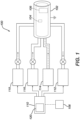
- a treatment system 100 for determining a degree of an oxidative treatment of an object 108 comprises a chamber 102, and an indicator 104, a color value device 106.
- the chamber 102 can be suitable to receive the object 108 to be treated and the indicator 104.
- the chamber 102 can be suitable to subject the object 108 and the indicator 104 to an oxidative treatment under various process conditions.
- the chamber 102 can be suitable to clean, disinfect, and/or sterilize the object 108.
- the object 108 can comprise a medical device such as, for example, a scalpel, an endoscope, scissors, and the like.
- the object 108 can comprise the indicator 104.
- the object 108 can comprise a housing comprising the indicator 104
- the object 108 can comprise a window comprising the indicator 108
- a tag comprising the indicator can be operatively coupled to the object 108.
- the color value device 106 can comprise, for example, a spectrometer, a colorimeter, and a color chart. In various examples comprising a spectrometer and/or a colorimeter, the color value device 106 can output an absorbance value and/or a reflectance value which can be manually compared to a threshold color value and/or automatically compared to a threshold color value to determine the degree of oxidative treatment to which the indicator 104 and object 108 have been exposed.
- a processor 110 can be provided that is operatively coupled to memory 120 and in communication with the color value device 106 to determine the discoloration of the object 108.
- the processor 110 can receive the measurement from the color value device 106 and compare the measurement to the threshold color value.
- the threshold color value is stored in memory 120. Based on the comparison, the processor 110 can determine the degree of the oxidative treatment achieved during the treatment process. For example, the processor 110 can determine the discoloration is greater than or equal to a threshold color value.
- the degree of discoloration can correspond to the degree of oxidative treatment of the indicator 104 and thus, the degree of oxidative treatment of the object 108.
- the degree of discoloration can be an aggregate degree of discoloration.
- the aggregate degree of discoloration can be based on an aggregate of oxidative treatments to which the object 108 has been exposed. The aggregate degree of discoloration may be used to determine the age of the object 108, the operational life of the object 108 remaining, and/or that the object 108 should no longer be used.
- the processor 110 can be in communication with each of the components of the system 100 that are in communication with the chamber 102 such that the processor 110 can control each component.
- the processor 110 can control the system 100 based on the measurement of the discoloration of the indicator 104. For example, the processor 110 may end the oxidative treatment when the discoloration of the indicator 104 is greater than or equal to the threshold color value indicating that the object 108 has been sterilized.
- the system 100 comprises a vacuum pump 112, a radio frequency (RF) generator 114, a dispenser 116, and a vent 118.
- the vacuum pump 112 and vent 118 can be in fluid communication with the chamber 102 and the vacuum pump 112 and the vent 118 can be suitable to control a pressure of the chamber 102.
- the RF generator 114 can be in communication with the chamber 102 and can generate a plasma utilizing RF energy.
- plasma is intended to include any portion of the gas or vapor that contains electrons, ions, free radicals, dissociated and/or excited atoms, and/or molecules produced as a result of an applied electric field, including any accompanying radiation that might be produced.
- An oxidative treatment can be performed in the following manner schematically illustrated by system 100 in FIG. 1 .
- the object 108 can be placed in the chamber 102, the chamber 102 can be closed, and the pressure in the chamber 102 can be reduced, for example, by vacuum pump 112.
- An oxidative chemical of, for example, hydrogen peroxide can be injected and vaporized by dispenser 116 and provided to the chamber 102 so that the oxidative chemical diffuses onto the object 108 and indicator 104.
- the pressure in the chamber 102 can be reduced and the oxidative chemical can be left in contact with the object 108 and the indicator 104 for a period of time to remove bioburden on the object 108.
- a plasma can be initiated by applying RF energy from RF generator 114.
- the oxidative chemical can be disassociated into reactive species that collide/react with and reduce and/or eliminate bioburden.
- the plasma can convert residual hydrogen peroxide into water and oxygen.
- the plasma can be maintained for a sufficient time to achieve treatment such as, for example, sterilization of the object 108.
- the RF energy from the RF generator 114 can be turned off, the vacuum can be released, and the chamber 102 can be returned to atmospheric pressure by the introduction of filtered air through vent 118.
- plasma can be used to remove residual oxidative chemical and can enhance sterilization efficacy.
- the indicator according to the present disclosure can determine a degree of an oxidative treatment such as, for example, a STERRAD ® sterilization process, in a treatment system such as, for example, a STERRAD ® hydrogen peroxide gas plasma type sterilizer. It is to be appreciated that the indicator is not limited to uses associated with the STERRAD ® sterilization process. Instead, the indicator may find use in a plurality of applications including plasma sterilization processes. The STERRAD ® sterilization process should be viewed as exemplary of the plurality of applications.
- the discoloration of an indicator comprising a polyurethane polymer was tested.
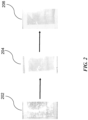
- an initial photo 202 of the indicator and a control object was taken. Analysis of the initial photo 202 was performed in Adobe Photoshop, and the initial b* color value of the indicator in the photo 202 was measured to be 8.
- the indicator and the control object were placed in a STERRAD ® 100NX sterilizer manufactured by Advanced Sterilization Products, of Irvine, California, a division of Ethicon, Inc. of Somerville, New Jersey.
- the indicator and the control object were treated in a STERRAD ® sterilization process in the sterilizer for 90 minutes.
- the oxidative chemical utilized in the sterilization process was hydrogen peroxide vapor at a concentration of 15 mg/L.
- the color of the indicator was observed after each sterilization cycle.
- the indicator began discoloring upon subjecting the indicator to the sterilization process (e.g., absorption in a wavelength range of 550nm to 600nm as evidenced by the yellow color). It is believed that the yellow color of the indicator could be detected after a single cycle utilizing a spectrometer and/or a colorimeter. After 8 cycles of the sterilization process, a visible yellow color of the indicator could be observed as shown in photo 204 Analysis of the photo 204 was performed in Adobe Photoshop, and the b* color value of the indicator in the photo 204 was measured to be 14 which is an increase of 6 compared to the photo 202.
- measuring the discoloration of the indicator can be used to determine the exposure concentration and/or exposure time of the indicator and object to an oxidative chemical such as hydrogen peroxide.
- an oxidative chemical such as hydrogen peroxide.
- Other polymers are also believed to have an according discoloration responsive to oxidation in an oxidative treatment.
- any two components so associated can also be viewed as being “operably connected,” or “operably coupled,” to each other to achieve the desired functionality, and any two components capable of being so associated can also be viewed as being “operably couplable,” to each other to achieve the desired functionality.
- operably couplable include but are not limited to physically mateable and/or physically interacting components, and/or wirelessly interactable, and/or wirelessly interacting components, and/or logically interacting, and/or logically interactable components.
Landscapes
- Health & Medical Sciences (AREA)
- Life Sciences & Earth Sciences (AREA)
- Chemical & Material Sciences (AREA)
- General Health & Medical Sciences (AREA)
- Physics & Mathematics (AREA)
- Analytical Chemistry (AREA)
- Biochemistry (AREA)
- General Physics & Mathematics (AREA)
- Immunology (AREA)
- Pathology (AREA)
- Chemical Kinetics & Catalysis (AREA)
- Animal Behavior & Ethology (AREA)
- Epidemiology (AREA)
- Public Health (AREA)
- Veterinary Medicine (AREA)
- Molecular Biology (AREA)
- Biophysics (AREA)
- Engineering & Computer Science (AREA)
- Plasma & Fusion (AREA)
- General Chemical & Material Sciences (AREA)
- Apparatus For Disinfection Or Sterilisation (AREA)
- Investigating Or Analyzing Non-Biological Materials By The Use Of Chemical Means (AREA)
- Investigating Or Analysing Materials By The Use Of Chemical Reactions (AREA)
Claims (21)
- Verfahren zum Bestimmen eines Grades an einer oxidativen Behandlung eines Gegenstands, wobei das Verfahren umfasst:Aufnehmen eines Indikators in die oxidative Behandlung, wobei der Indikator ein Polymer umfasst, wobei der Indikator sich zur Verfärbung basierend auf einer Oxidation des Polymers durch eine Prozessbedingung der oxidativen Behandlung eignet, die das Polymer oxidiert;Aussetzen des Gegenstands und des Indikators gegenüber der oxidativen Behandlung, wobei eine Verfärbung des Indikators basierend auf einer Oxidation des Polymers durch eine Prozessbedingung der oxidativen Behandlung auftritt, die das Polymer oxidiert; undMessen der Verfärbung des Indikators gegen einen Schwellenfarbwert, um den Grad der oxidativen Behandlung zu bestimmen;wobei der Gegenstand eine medizinische Vorrichtung umfasst.
- Verfahren nach Anspruch 1, wobei das Polymer ferner eine Gruppe umfasst, die ausgewählt wird aus einem Amin, einem Methylen und einem Methin, wobei das Oxidieren der Gruppe wahlweise das Bilden eines Chinons umfasst.
- Verfahren nach einem der Ansprüche 1 bis 2, wobei die Verfärbung des Indikators das Ändern mindestens eines von Absorption und Reflexion elektromagnetischer Strahlung durch den Indikator umfasst.
- Verfahren nach einem der Ansprüche 1 bis 3, wobei das Ändern der mindestens einen von der Absorption und der Reflexion der elektromagnetischen Strahlung durch den Indikator bei einer Wellenlänge von 400 nm bis 700 nm erfolgt.
- Verfahren nach einem der Ansprüche 1 bis 4, wobei das Messen der Verfärbung das Messen mindestens einer von einer Absorption und einer Reflexion von elektromagnetischer Strahlung durch den Indikator umfasst, wobei wahlweise das Messen mindestens einer von der Absorption und der Reflexion der elektromagnetischen Strahlung durch den Indikator bei einer Wellenlänge von 400 nm bis 700 nm erfolgt.
- Verfahren nach einem der Ansprüche 1 bis 5, wobei das Messen der Verfärbung das Nutzen einer Farbwertvorrichtung umfasst.
- Verfahren nach einem der Ansprüche 1 bis 6, wobei das Messen der Verfärbung eine visuelle Beobachtung des Indikators umfasst.
- Verfahren nach einem der Ansprüche 1 bis 7, wobei das Polymer mindestens eines von Polyurethan und Epoxid umfasst.
- Verfahren nach einem der Ansprüche 1 bis 8, wobei der Indikator vor der oxidativen Behandlung transparent ist.
- Verfahren nach einem der Ansprüche 1 bis 9, wobei der Indikator ein chemischer Indikator vom Typ 5 nach ISO 11140-1:2014 ist.
- Verfahren nach einem der Ansprüche 1 bis 10, wobei die oxidative Behandlung mindestens eines von Reinigen, Desinfizieren und Sterilisieren umfasst.
- Verfahren nach einem der Ansprüche 1 bis 11, wobei die oxidative Behandlung mindestens eines von Desinfizieren und Sterilisieren umfasst.
- Verfahren nach einem der Ansprüche 1 bis 12, wobei der Gegenstand sterilisiert wird, wenn die Verfärbung des Indikators höher als der Schwellenfarbwert ist.
- Verfahren nach einem der Ansprüche 1 bis 13, wobei die Prozessbedingung der oxidativen Behandlung ein Aussetzen gegenüber einer oxidativen Chemikalie ist, wobei die oxidative Chemikalie wahlweise Wasserstoffperoxid ist, wobei die Prozessbedingung der oxidativen Behandlung ferner wahlweise ein Aussetzen gegenüber Wasserstoffperoxid von höher oder gleich 2 mg/l ist.
- Verfahren nach Anspruch 1, wobei das Polymer mindestens eine Gruppe umfasst, die ausgewählt wird aus einem Amin, einem Methylen und einem Methin; und wobei die Verfärbung des Indikators zumindest teilweise durch Oxidation der Gruppe zum Bilden eines Chinons auftritt; und
wobei das Messen der Verfärbung des Indikators gegen einen Schwellenfarbwert durch Messen mindestens einer von einer Absorption und einer Reflexion elektromagnetischer Strahlung durch den Indikator bei einer Wellenlänge von 400 nm bis 700 nm erfolgt, um den Grad der oxidativen Behandlung zu bestimmen. - System zum Bestimmen eines Grades an einer oxidativen Behandlung eines Gegenstands, wobei das System umfasst:einen Indikator (104), der ein Polymer umfasst, wobei der Indikator sich zur Verfärbung basierend auf einer Oxidation des Polymers durch eine Prozessbedingung der oxidativen Behandlung eignet, die das Polymer oxidiert;eine Kammer (102), die sich dazu eignet, einen Gegenstand und den Indikator aufzunehmen, wobei die Kammer sich dazu eignet, den Gegenstand und den Indikator gegenüber der oxidativen Behandlung auszusetzen, welche die Prozessbedingung umfasst;eine Farbwertvorrichtung (106), die sich dazu eignet, die Verfärbung des Indikators gegen eine Schwellenfarbe zu bestimmen, undeinen Prozessor (110), der betriebsfähig an einen Speicher (120) gekoppelt ist und in Kommunikation mit der Farbwertvorrichtung (106) steht, um den Grad an oxidativer Behandlung des Gegenstands zu bestimmen, wobei der Prozessor dazu ausgestaltet ist, die Messung von der Farbwertvorrichtung (106) zu empfangen und die Messung mit dem Schwellenfarbwert zu vergleichen,wobei der Gegenstand eine medizinische Vorrichtung umfasst.
- System nach Anspruch 16, wobei das Polymer mindestens eine Gruppe umfasst, die ausgewählt ist aus einem Amin, Methylen und Methin.
- System nach einem der Ansprüche 16 bis 17, wobei der Prozessor dazu ausgestaltet ist, zu bestimmen, dass die Verfärbung des Indikators größer oder gleich einem Schwellenfarbwert ist.
- System nach einem der Ansprüche 16 bis 18, wobei die Schwellenfarbwertvorrichtung mindestens eines von einem Spektrometer, einem Kolorimeter und einer Farbtafel umfasst.
- System nach einem der Ansprüche 16 bis 19, wobei das Polymer mindestens eines von Polyurethan und Epoxid umfasst.
- System nach einem der Ansprüche 16 bis 20, wobei die Kammer sich für mindestens eines von Reinigen, Desinfizieren und Sterilisieren des Gegenstands eignet.
Applications Claiming Priority (2)
| Application Number | Priority Date | Filing Date | Title |
|---|---|---|---|
| US201862692278P | 2018-06-29 | 2018-06-29 | |
| PCT/IB2019/000818 WO2020003001A1 (en) | 2018-06-29 | 2019-06-21 | Apparatus, method, and system for indication of an oxidative treatment |
Publications (2)
| Publication Number | Publication Date |
|---|---|
| EP3814769A1 EP3814769A1 (de) | 2021-05-05 |
| EP3814769B1 true EP3814769B1 (de) | 2024-09-04 |
Family
ID=68387348
Family Applications (1)
| Application Number | Title | Priority Date | Filing Date |
|---|---|---|---|
| EP19795307.8A Active EP3814769B1 (de) | 2018-06-29 | 2019-06-21 | Vorrichtung, verfahren und system zur anzeige einer oxidativen behandlung |
Country Status (5)
| Country | Link |
|---|---|
| US (2) | US11579127B2 (de) |
| EP (1) | EP3814769B1 (de) |
| JP (1) | JP2021530675A (de) |
| CN (1) | CN112534257A (de) |
| WO (1) | WO2020003001A1 (de) |
Families Citing this family (1)
| Publication number | Priority date | Publication date | Assignee | Title |
|---|---|---|---|---|
| WO2022220064A1 (ja) * | 2021-04-16 | 2022-10-20 | 富士フイルム株式会社 | 検査装置、検査方法、検査プログラム及び検査システム |
Family Cites Families (12)
| Publication number | Priority date | Publication date | Assignee | Title |
|---|---|---|---|---|
| US5942438A (en) | 1997-11-07 | 1999-08-24 | Johnson & Johnson Medical, Inc. | Chemical indicator for oxidation-type sterilization processes using bleachable dyes |
| US6410338B1 (en) * | 1999-05-14 | 2002-06-25 | Ethicon, Inc. | Method of indicating an oxidizing agent |
| US6485979B1 (en) * | 1999-08-05 | 2002-11-26 | 3M Innovative Properties Company | Electronic system for tracking and monitoring articles to be sterilized and associated method |
| US6534006B2 (en) * | 2000-08-04 | 2003-03-18 | 3M Innovative Properties Company | Chemical indicator for determining the adequacy of a liquid sterilization process |
| US9274101B2 (en) * | 2001-04-20 | 2016-03-01 | Biolog, Inc. | Methods and kits for obtaining a metabolic profile of living animal cells |
| US7009082B2 (en) | 2003-05-06 | 2006-03-07 | E.I. Du Pont De Nemours And Company | Removal of color bodies from polytrimethylene ether glycol polymers |
| JP2005233839A (ja) | 2004-02-20 | 2005-09-02 | Bridgestone Corp | 樹脂の変色試験方法 |
| US7569359B2 (en) * | 2004-10-14 | 2009-08-04 | American Sterilizer Company | Indicator device having an active agent encapsulated in an electrospun nanofiber |
| US8481331B2 (en) * | 2005-09-08 | 2013-07-09 | American Sterilizer Company | Oxidative dye composition and indicator |
| JP5650370B2 (ja) | 2008-03-10 | 2015-01-07 | 株式会社ホギメディカル | プラズマ滅菌用インジケーター |
| CN103189523B (zh) * | 2010-11-01 | 2016-03-02 | 3M创新有限公司 | 生物灭菌指示器 |
| US9291570B2 (en) * | 2013-06-26 | 2016-03-22 | Eastman Kodak Company | Reactive indicator compositions and articles containing same |
-
2019
- 2019-06-11 US US16/437,753 patent/US11579127B2/en active Active
- 2019-06-21 WO PCT/IB2019/000818 patent/WO2020003001A1/en not_active Ceased
- 2019-06-21 CN CN201980044087.3A patent/CN112534257A/zh active Pending
- 2019-06-21 JP JP2020566266A patent/JP2021530675A/ja active Pending
- 2019-06-21 EP EP19795307.8A patent/EP3814769B1/de active Active
-
2022
- 2022-12-22 US US18/087,294 patent/US20230129570A1/en active Pending
Also Published As
| Publication number | Publication date |
|---|---|
| WO2020003001A1 (en) | 2020-01-02 |
| US20230129570A1 (en) | 2023-04-27 |
| EP3814769A1 (de) | 2021-05-05 |
| JP2021530675A (ja) | 2021-11-11 |
| US11579127B2 (en) | 2023-02-14 |
| CN112534257A (zh) | 2021-03-19 |
| US20200003740A1 (en) | 2020-01-02 |
| WO2020003001A4 (en) | 2020-03-19 |
Similar Documents
| Publication | Publication Date | Title |
|---|---|---|
| Rutala et al. | New disinfection and sterilization methods | |
| US11000607B2 (en) | Methods and systems for the sterilization of endoscopes | |
| US20230364289A1 (en) | Apparatus And Method For Sterilizing Endoscope | |
| CA3122224C (en) | Sterilization container capable of providing an indication regarding whether or not surgical instruments sterilized in the container were properly sterilized | |
| Rutala et al. | Infection control: the role of disinfection and sterilization | |
| CA2763710C (en) | Portable antimicrobial ultra violet sterilizer | |
| Rutala et al. | Disinfection, sterilization and antisepsis: An overview | |
| US20200000951A1 (en) | Method and apparatus for cleaning, disinfection, sterilization, or combinations thereof | |
| TW201832785A (zh) | 具有獨立真空腔室的滅菌系統 | |
| KR20190078527A (ko) | 세정, 소독, 멸균, 또는 이들의 조합을 위한 프로세스 및 장치 | |
| US20230129570A1 (en) | Apparatus, method, and system for indication of an oxidative treatment | |
| Lerouge | Introduction to sterilization: definitions and challenges | |
| McDonnell et al. | Decontamination of prions | |
| Lerouge | Non-traditional sterilization techniques for biomaterials and medical devices | |
| McDonnell | Prion disease transmission: can we apply standard precautions to prevent or reduce risks? | |
| Lambert | Radiation sterilization | |
| US20060233661A1 (en) | Methods for disinfection and tracking of soiled items | |
| US20060275172A1 (en) | Item reprocessing and sterile packaging apparatus | |
| Steer | Decontamination | |
| Mc Donnell et al. | New low temperature sterilization processes | |
| Jain et al. | Ravindra B Sabnis |
Legal Events
| Date | Code | Title | Description |
|---|---|---|---|
| STAA | Information on the status of an ep patent application or granted ep patent |
Free format text: STATUS: UNKNOWN |
|
| STAA | Information on the status of an ep patent application or granted ep patent |
Free format text: STATUS: THE INTERNATIONAL PUBLICATION HAS BEEN MADE |
|
| PUAI | Public reference made under article 153(3) epc to a published international application that has entered the european phase |
Free format text: ORIGINAL CODE: 0009012 |
|
| STAA | Information on the status of an ep patent application or granted ep patent |
Free format text: STATUS: REQUEST FOR EXAMINATION WAS MADE |
|
| 17P | Request for examination filed |
Effective date: 20210126 |
|
| AK | Designated contracting states |
Kind code of ref document: A1 Designated state(s): AL AT BE BG CH CY CZ DE DK EE ES FI FR GB GR HR HU IE IS IT LI LT LU LV MC MK MT NL NO PL PT RO RS SE SI SK SM TR |
|
| DAV | Request for validation of the european patent (deleted) | ||
| DAX | Request for extension of the european patent (deleted) | ||
| GRAP | Despatch of communication of intention to grant a patent |
Free format text: ORIGINAL CODE: EPIDOSNIGR1 |
|
| STAA | Information on the status of an ep patent application or granted ep patent |
Free format text: STATUS: GRANT OF PATENT IS INTENDED |
|
| INTG | Intention to grant announced |
Effective date: 20231002 |
|
| P01 | Opt-out of the competence of the unified patent court (upc) registered |
Effective date: 20231109 |
|
| GRAJ | Information related to disapproval of communication of intention to grant by the applicant or resumption of examination proceedings by the epo deleted |
Free format text: ORIGINAL CODE: EPIDOSDIGR1 |
|
| STAA | Information on the status of an ep patent application or granted ep patent |
Free format text: STATUS: REQUEST FOR EXAMINATION WAS MADE |
|
| INTC | Intention to grant announced (deleted) | ||
| GRAP | Despatch of communication of intention to grant a patent |
Free format text: ORIGINAL CODE: EPIDOSNIGR1 |
|
| STAA | Information on the status of an ep patent application or granted ep patent |
Free format text: STATUS: GRANT OF PATENT IS INTENDED |
|
| INTG | Intention to grant announced |
Effective date: 20240306 |
|
| GRAS | Grant fee paid |
Free format text: ORIGINAL CODE: EPIDOSNIGR3 |
|
| GRAA | (expected) grant |
Free format text: ORIGINAL CODE: 0009210 |
|
| STAA | Information on the status of an ep patent application or granted ep patent |
Free format text: STATUS: THE PATENT HAS BEEN GRANTED |
|
| AK | Designated contracting states |
Kind code of ref document: B1 Designated state(s): AL AT BE BG CH CY CZ DE DK EE ES FI FR GB GR HR HU IE IS IT LI LT LU LV MC MK MT NL NO PL PT RO RS SE SI SK SM TR |
|
| REG | Reference to a national code |
Ref country code: GB Ref legal event code: FG4D |
|
| REG | Reference to a national code |
Ref country code: CH Ref legal event code: EP |
|
| REG | Reference to a national code |
Ref country code: IE Ref legal event code: FG4D |
|
| REG | Reference to a national code |
Ref country code: DE Ref legal event code: R096 Ref document number: 602019058359 Country of ref document: DE |
|
| REG | Reference to a national code |
Ref country code: LT Ref legal event code: MG9D |
|
| REG | Reference to a national code |
Ref country code: NL Ref legal event code: MP Effective date: 20240904 |
|
| PG25 | Lapsed in a contracting state [announced via postgrant information from national office to epo] |
Ref country code: NO Free format text: LAPSE BECAUSE OF FAILURE TO SUBMIT A TRANSLATION OF THE DESCRIPTION OR TO PAY THE FEE WITHIN THE PRESCRIBED TIME-LIMIT Effective date: 20241204 |
|
| PG25 | Lapsed in a contracting state [announced via postgrant information from national office to epo] |
Ref country code: FI Free format text: LAPSE BECAUSE OF FAILURE TO SUBMIT A TRANSLATION OF THE DESCRIPTION OR TO PAY THE FEE WITHIN THE PRESCRIBED TIME-LIMIT Effective date: 20240904 Ref country code: PL Free format text: LAPSE BECAUSE OF FAILURE TO SUBMIT A TRANSLATION OF THE DESCRIPTION OR TO PAY THE FEE WITHIN THE PRESCRIBED TIME-LIMIT Effective date: 20240904 Ref country code: GR Free format text: LAPSE BECAUSE OF FAILURE TO SUBMIT A TRANSLATION OF THE DESCRIPTION OR TO PAY THE FEE WITHIN THE PRESCRIBED TIME-LIMIT Effective date: 20241205 |
|
| PG25 | Lapsed in a contracting state [announced via postgrant information from national office to epo] |
Ref country code: BG Free format text: LAPSE BECAUSE OF FAILURE TO SUBMIT A TRANSLATION OF THE DESCRIPTION OR TO PAY THE FEE WITHIN THE PRESCRIBED TIME-LIMIT Effective date: 20240904 |
|
| PG25 | Lapsed in a contracting state [announced via postgrant information from national office to epo] |
Ref country code: LV Free format text: LAPSE BECAUSE OF FAILURE TO SUBMIT A TRANSLATION OF THE DESCRIPTION OR TO PAY THE FEE WITHIN THE PRESCRIBED TIME-LIMIT Effective date: 20240904 |
|
| PG25 | Lapsed in a contracting state [announced via postgrant information from national office to epo] |
Ref country code: HR Free format text: LAPSE BECAUSE OF FAILURE TO SUBMIT A TRANSLATION OF THE DESCRIPTION OR TO PAY THE FEE WITHIN THE PRESCRIBED TIME-LIMIT Effective date: 20240904 |
|
| PG25 | Lapsed in a contracting state [announced via postgrant information from national office to epo] |
Ref country code: ES Free format text: LAPSE BECAUSE OF FAILURE TO SUBMIT A TRANSLATION OF THE DESCRIPTION OR TO PAY THE FEE WITHIN THE PRESCRIBED TIME-LIMIT Effective date: 20240904 Ref country code: RS Free format text: LAPSE BECAUSE OF FAILURE TO SUBMIT A TRANSLATION OF THE DESCRIPTION OR TO PAY THE FEE WITHIN THE PRESCRIBED TIME-LIMIT Effective date: 20241204 |
|
| PG25 | Lapsed in a contracting state [announced via postgrant information from national office to epo] |
Ref country code: RS Free format text: LAPSE BECAUSE OF FAILURE TO SUBMIT A TRANSLATION OF THE DESCRIPTION OR TO PAY THE FEE WITHIN THE PRESCRIBED TIME-LIMIT Effective date: 20241204 Ref country code: PL Free format text: LAPSE BECAUSE OF FAILURE TO SUBMIT A TRANSLATION OF THE DESCRIPTION OR TO PAY THE FEE WITHIN THE PRESCRIBED TIME-LIMIT Effective date: 20240904 Ref country code: NO Free format text: LAPSE BECAUSE OF FAILURE TO SUBMIT A TRANSLATION OF THE DESCRIPTION OR TO PAY THE FEE WITHIN THE PRESCRIBED TIME-LIMIT Effective date: 20241204 Ref country code: LV Free format text: LAPSE BECAUSE OF FAILURE TO SUBMIT A TRANSLATION OF THE DESCRIPTION OR TO PAY THE FEE WITHIN THE PRESCRIBED TIME-LIMIT Effective date: 20240904 Ref country code: HR Free format text: LAPSE BECAUSE OF FAILURE TO SUBMIT A TRANSLATION OF THE DESCRIPTION OR TO PAY THE FEE WITHIN THE PRESCRIBED TIME-LIMIT Effective date: 20240904 Ref country code: GR Free format text: LAPSE BECAUSE OF FAILURE TO SUBMIT A TRANSLATION OF THE DESCRIPTION OR TO PAY THE FEE WITHIN THE PRESCRIBED TIME-LIMIT Effective date: 20241205 Ref country code: FI Free format text: LAPSE BECAUSE OF FAILURE TO SUBMIT A TRANSLATION OF THE DESCRIPTION OR TO PAY THE FEE WITHIN THE PRESCRIBED TIME-LIMIT Effective date: 20240904 Ref country code: ES Free format text: LAPSE BECAUSE OF FAILURE TO SUBMIT A TRANSLATION OF THE DESCRIPTION OR TO PAY THE FEE WITHIN THE PRESCRIBED TIME-LIMIT Effective date: 20240904 Ref country code: BG Free format text: LAPSE BECAUSE OF FAILURE TO SUBMIT A TRANSLATION OF THE DESCRIPTION OR TO PAY THE FEE WITHIN THE PRESCRIBED TIME-LIMIT Effective date: 20240904 |
|
| REG | Reference to a national code |
Ref country code: AT Ref legal event code: MK05 Ref document number: 1720870 Country of ref document: AT Kind code of ref document: T Effective date: 20240904 |
|
| PG25 | Lapsed in a contracting state [announced via postgrant information from national office to epo] |
Ref country code: NL Free format text: LAPSE BECAUSE OF FAILURE TO SUBMIT A TRANSLATION OF THE DESCRIPTION OR TO PAY THE FEE WITHIN THE PRESCRIBED TIME-LIMIT Effective date: 20240904 |
|
| PG25 | Lapsed in a contracting state [announced via postgrant information from national office to epo] |
Ref country code: IS Free format text: LAPSE BECAUSE OF FAILURE TO SUBMIT A TRANSLATION OF THE DESCRIPTION OR TO PAY THE FEE WITHIN THE PRESCRIBED TIME-LIMIT Effective date: 20250104 Ref country code: PT Free format text: LAPSE BECAUSE OF FAILURE TO SUBMIT A TRANSLATION OF THE DESCRIPTION OR TO PAY THE FEE WITHIN THE PRESCRIBED TIME-LIMIT Effective date: 20250106 |
|
| PG25 | Lapsed in a contracting state [announced via postgrant information from national office to epo] |
Ref country code: SM Free format text: LAPSE BECAUSE OF FAILURE TO SUBMIT A TRANSLATION OF THE DESCRIPTION OR TO PAY THE FEE WITHIN THE PRESCRIBED TIME-LIMIT Effective date: 20240904 Ref country code: RO Free format text: LAPSE BECAUSE OF FAILURE TO SUBMIT A TRANSLATION OF THE DESCRIPTION OR TO PAY THE FEE WITHIN THE PRESCRIBED TIME-LIMIT Effective date: 20240904 |
|
| PG25 | Lapsed in a contracting state [announced via postgrant information from national office to epo] |
Ref country code: AT Free format text: LAPSE BECAUSE OF FAILURE TO SUBMIT A TRANSLATION OF THE DESCRIPTION OR TO PAY THE FEE WITHIN THE PRESCRIBED TIME-LIMIT Effective date: 20240904 Ref country code: EE Free format text: LAPSE BECAUSE OF FAILURE TO SUBMIT A TRANSLATION OF THE DESCRIPTION OR TO PAY THE FEE WITHIN THE PRESCRIBED TIME-LIMIT Effective date: 20240904 |
|
| PG25 | Lapsed in a contracting state [announced via postgrant information from national office to epo] |
Ref country code: CZ Free format text: LAPSE BECAUSE OF FAILURE TO SUBMIT A TRANSLATION OF THE DESCRIPTION OR TO PAY THE FEE WITHIN THE PRESCRIBED TIME-LIMIT Effective date: 20240904 |
|
| PG25 | Lapsed in a contracting state [announced via postgrant information from national office to epo] |
Ref country code: SK Free format text: LAPSE BECAUSE OF FAILURE TO SUBMIT A TRANSLATION OF THE DESCRIPTION OR TO PAY THE FEE WITHIN THE PRESCRIBED TIME-LIMIT Effective date: 20240904 Ref country code: IT Free format text: LAPSE BECAUSE OF FAILURE TO SUBMIT A TRANSLATION OF THE DESCRIPTION OR TO PAY THE FEE WITHIN THE PRESCRIBED TIME-LIMIT Effective date: 20240904 |
|
| REG | Reference to a national code |
Ref country code: DE Ref legal event code: R097 Ref document number: 602019058359 Country of ref document: DE |
|
| PGFP | Annual fee paid to national office [announced via postgrant information from national office to epo] |
Ref country code: DE Payment date: 20250626 Year of fee payment: 7 |
|
| PG25 | Lapsed in a contracting state [announced via postgrant information from national office to epo] |
Ref country code: DK Free format text: LAPSE BECAUSE OF FAILURE TO SUBMIT A TRANSLATION OF THE DESCRIPTION OR TO PAY THE FEE WITHIN THE PRESCRIBED TIME-LIMIT Effective date: 20240904 |
|
| PGFP | Annual fee paid to national office [announced via postgrant information from national office to epo] |
Ref country code: GB Payment date: 20250618 Year of fee payment: 7 |
|
| PLBE | No opposition filed within time limit |
Free format text: ORIGINAL CODE: 0009261 |
|
| STAA | Information on the status of an ep patent application or granted ep patent |
Free format text: STATUS: NO OPPOSITION FILED WITHIN TIME LIMIT |
|
| PGFP | Annual fee paid to national office [announced via postgrant information from national office to epo] |
Ref country code: FR Payment date: 20250624 Year of fee payment: 7 |
|
| 26N | No opposition filed |
Effective date: 20250605 |
|
| PG25 | Lapsed in a contracting state [announced via postgrant information from national office to epo] |
Ref country code: SE Free format text: LAPSE BECAUSE OF FAILURE TO SUBMIT A TRANSLATION OF THE DESCRIPTION OR TO PAY THE FEE WITHIN THE PRESCRIBED TIME-LIMIT Effective date: 20240904 |
|
| PGFP | Annual fee paid to national office [announced via postgrant information from national office to epo] |
Ref country code: CH Payment date: 20250701 Year of fee payment: 7 |
|
| PG25 | Lapsed in a contracting state [announced via postgrant information from national office to epo] |
Ref country code: MC Free format text: LAPSE BECAUSE OF FAILURE TO SUBMIT A TRANSLATION OF THE DESCRIPTION OR TO PAY THE FEE WITHIN THE PRESCRIBED TIME-LIMIT Effective date: 20240904 |
|
| PG25 | Lapsed in a contracting state [announced via postgrant information from national office to epo] |
Ref country code: LU Free format text: LAPSE BECAUSE OF NON-PAYMENT OF DUE FEES Effective date: 20250621 |
|
| REG | Reference to a national code |
Ref country code: BE Ref legal event code: MM Effective date: 20250630 |
|
| PG25 | Lapsed in a contracting state [announced via postgrant information from national office to epo] |
Ref country code: IE Free format text: LAPSE BECAUSE OF NON-PAYMENT OF DUE FEES Effective date: 20250621 |
|
| PG25 | Lapsed in a contracting state [announced via postgrant information from national office to epo] |
Ref country code: BE Free format text: LAPSE BECAUSE OF NON-PAYMENT OF DUE FEES Effective date: 20250630 |