EP3812716B1 - Dynamic weighing device - Google Patents
Dynamic weighing device Download PDFInfo
- Publication number
- EP3812716B1 EP3812716B1 EP20203341.1A EP20203341A EP3812716B1 EP 3812716 B1 EP3812716 B1 EP 3812716B1 EP 20203341 A EP20203341 A EP 20203341A EP 3812716 B1 EP3812716 B1 EP 3812716B1
- Authority
- EP
- European Patent Office
- Prior art keywords
- weighing
- time
- primary node
- weighing sensor
- sensors
- Prior art date
- Legal status (The legal status is an assumption and is not a legal conclusion. Google has not performed a legal analysis and makes no representation as to the accuracy of the status listed.)
- Active
Links
Images
Classifications
-
- G—PHYSICS
- G01—MEASURING; TESTING
- G01G—WEIGHING
- G01G23/00—Auxiliary devices for weighing apparatus
- G01G23/18—Indicating devices, e.g. for remote indication; Recording devices; Scales, e.g. graduated
- G01G23/36—Indicating the weight by electrical means, e.g. using photoelectric cells
-
- G—PHYSICS
- G01—MEASURING; TESTING
- G01G—WEIGHING
- G01G23/00—Auxiliary devices for weighing apparatus
-
- H—ELECTRICITY
- H04—ELECTRIC COMMUNICATION TECHNIQUE
- H04W—WIRELESS COMMUNICATION NETWORKS
- H04W4/00—Services specially adapted for wireless communication networks; Facilities therefor
- H04W4/30—Services specially adapted for particular environments, situations or purposes
- H04W4/38—Services specially adapted for particular environments, situations or purposes for collecting sensor information
-
- G—PHYSICS
- G01—MEASURING; TESTING
- G01G—WEIGHING
- G01G19/00—Weighing apparatus or methods adapted for special purposes not provided for in the preceding groups
-
- H—ELECTRICITY
- H04—ELECTRIC COMMUNICATION TECHNIQUE
- H04J—MULTIPLEX COMMUNICATION
- H04J3/00—Time-division multiplex systems
- H04J3/02—Details
- H04J3/06—Synchronising arrangements
- H04J3/0635—Clock or time synchronisation in a network
- H04J3/0638—Clock or time synchronisation among nodes; Internode synchronisation
- H04J3/0658—Clock or time synchronisation among packet nodes
-
- H—ELECTRICITY
- H04—ELECTRIC COMMUNICATION TECHNIQUE
- H04L—TRANSMISSION OF DIGITAL INFORMATION, e.g. TELEGRAPHIC COMMUNICATION
- H04L1/00—Arrangements for detecting or preventing errors in the information received
- H04L1/0001—Systems modifying transmission characteristics according to link quality, e.g. power backoff
- H04L1/0002—Systems modifying transmission characteristics according to link quality, e.g. power backoff by adapting the transmission rate
-
- H—ELECTRICITY
- H04—ELECTRIC COMMUNICATION TECHNIQUE
- H04W—WIRELESS COMMUNICATION NETWORKS
- H04W84/00—Network topologies
- H04W84/18—Self-organising networks, e.g. ad-hoc networks or sensor networks
- H04W84/20—Leader-follower arrangements
-
- H—ELECTRICITY
- H04—ELECTRIC COMMUNICATION TECHNIQUE
- H04W—WIRELESS COMMUNICATION NETWORKS
- H04W84/00—Network topologies
- H04W84/18—Self-organising networks, e.g. ad-hoc networks or sensor networks
- H04W84/22—Self-organising networks, e.g. ad-hoc networks or sensor networks with access to wired networks
Definitions
- the present invention relates to a dynamic weighing device, and in particular to a high-speed dynamic weighing device.
- weighing detection data of current dynamic weighing devices is unreliable. This is because sampling synchronization is poor. In addition, this is because sampling data cannot be transmitted effectively, in particular in the case of high-speed sampling, the reliability of transmission of a large amount of data cannot be ensured.
- US2008/053712 discloses a dynamic weighing device.
- the technical problem to be solved by the present invention is unreliability of data sampling synchronization and effective transmission in dynamic weighing.
- a device for dynamic weighing is provided, wherein Ethernet is enabled to improve the reliability of sampling and data transmission of dynamic weighing by using an Ethernet information synchronization protocol and reducing the number of data packets.
- the present invention solves the above technical problem through the following technical solution: providing a device for dynamic weighing, characterised by comprising:
- the time synchronization protocol in Ethernet is used to implement time synchronization between the weighing sensors in the network and the weighing sensor which is the primary node, and therefore, the weighed weight result calculated, by the terminal, from weighing information obtained at the same moment is reliable, wherein the weighed weight result is a result, which can represent the weight of a weighed object, calculated from weighing data obtained by each weighing sensor in the weighing network.
- the method in which multiple pieces of data are packetised before being sent reduces the number of data packets transmitted in the Ethernet, and thereby avoiding congestion in transmission over the network, and increasing the transmission rate.
- the primary node performs a time synchronization with the other weighing sensors via a PTP or an NTP.
- the PTP is short for Precision Timing Protocol
- the NTP is short for Network Time Protocol. High-precision time synchronization may be achieved by means of the two time synchronization protocols.
- the primary node performs a time synchronization with the other nodes in the network at a preset time interval; or the other weighing sensors perform time synchronization with the primary node at a preset time interval, or a time verification with the primary node at a preset time interval, in which a weighing sensor with a time error exceeding an error threshold performs the time synchronization with the primary node.
- the primary node sends a time synchronization broadcast to the other weighing sensors; wherein the other weighing sensors perform time synchronization with the primary node, or a time verification with the primary node, in which a weighing sensor with a time error exceeding an error threshold performs the time synchronization with the primary node.
- the time synchronization between the primary node and the other weighing sensors in the solution described above may be initiated by the primary node or the other weighing sensors.
- the primary node performs a time synchronization with the other nodes in the network, and updates the time offsets of the other nodes relative to the time of the primary node at a preset time interval; or the other weighing sensors perform a time verification with the primary node, and updates the time offsets of the other nodes relative to the time of the primary node at a preset time interval.
- time of the other time weighing sensors is not updated to be time of the primary node, but instead a difference (i.e. a time offset) between the time of the other weighing sensors and the time of the primary node is recorded.
- a clock function or clock circuit in the weighing sensor does not need to have a time update function, instead time synchronization for all the weighing sensors in the network is performed conveniently by using the stored time offset.
- the terminal apparatus calculates a weighed weight result of the dynamic weighing device at the same moment based on the time of the primary node and the time offsets of the other weighing sensors in the weighing information obtained through depacketisation.
- the weighing sensor network selects one weighing sensor as a primary node through an election mechanism; or the weighing sensor network selects one weighing sensor as a primary node, and another weighing sensor as a secondary node through an election mechanism, and when the primary node fails, the secondary node becomes a primary node.
- the weighing sensor network further selects another weighing sensor as a new secondary node through the election mechanism.
- the primary node and the secondary node are selected from the network constituted by the weighing sensors by using the node election mechanism in existing network technologies.
- the election mechanism and the primary and secondary nodes are used, provided that a necessary number of nodes are present in the weighing sensor network, the data transmission function of the entire network is not lost. Therefore, such a drawback is avoided that in settings of primary and secondary nodes in the traditional weighing sensor network, the entire weighing sensor network fails due to a failure of the primary node.
- an amount of weighing data to be transmitted in the network is reduced and thus transmission reliability of the data is improved by packetising and sending multiple segments of data.
- all weighing sensors in a device constitute a network, and synchronize the time of all the weighing sensors to a reference time, taking the time of the weighing sensor which is the primary node as the reference. Therefore, time information in the weighing information output by each weighing sensor is completely synchronous, and thus during the process in which a terminal weighs weights, the weight of the object loaded at any one particular moment may be calculated accurately. That is, timestamps are added to weighing data output by each weighing sensor, so that the terminal is always able to accurately obtain the weighing data output by each weighing sensor at the same moment.
- a high-speed dynamic checkweigher comprises eight weighing sensors.
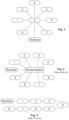
- the eight weighing sensors utilize an election mechanism to select a weighing sensor numbered 3 as a primary node, and the other seven weighing sensors together with the weighing sensor numbered 3 constitute a star topology shown in Fig. 1 .
- the weighing sensor numbered 3 achieves time synchronization with the other weighing sensors via a PTP protocol.
- the weighing sensor numbered 3 sends a time synchronization broadcast to the other seven weighing sensors every 10 seconds.
- the weighing sensors send a request to perform time synchronization with the weighing sensor numbered 3 using the PTP protocol after receiving the broadcast.
- the other seven weighing sensors respectively initiate a synchronization request to the weighing sensor numbered 3 at intervals of 10 seconds, and the weighing sensor numbered 3 performs time synchronization with the corresponding weighing sensors using the PTP protocol after receiving the request.
- the other weighing sensors send time verification information to the weighing sensor numbered 3, and the weighing sensor numbered 3 compares the time of the other weighing sensors and that of itself. If time errors of the weighing sensors numbered 1, 2 and 4 exceed 1 ms, the weighing sensor numbered 3 directly initiates time synchronization with the weighing sensors numbered 1, 2 and 4. In another variant, the weighing sensors numbered 1, 2 and 4 respectively find that there is a time error, and initiate a synchronization request to the weighing sensor numbered 3, and the weighing sensor numbered 3 performs time synchronization after receiving the request. Time errors of the weighing sensors numbered 5 to 8 do not exceed 1 ms, and the weighing sensors will not perform any time synchronization operation.
- the time synchronization in the embodiments described above is to synchronize the time of the other weighing sensors to the time of the weighing sensor numbered 3, which requires that each weighing sensor has an ability to modify the time of a clock module behind the internal circuit inside a sensor.
- the weighing sensor numbered 3 stores time differences between the other seven weighing sensors and the weighing sensor numbered 3 in the corresponding weighing sensors, when performing time synchronization with the other weighing sensors.
- the time of the weighing sensor numbered 7 has a difference of ⁇ 2 ms from the time of the weighing sensor numbered 3.
- the difference of ⁇ 2 ms is stored in the weighing sensor numbered 7, and then when the weighing sensor numbered 7 outputs time information, the time difference of ⁇ 2 ms is included, thereby the finally output time is consistent with the time of the weighing sensor numbered 3.
- each weighing sensor only needs to record a time difference from the primary node, and counts this difference in subsequent time calculation so as to have a same moment, and the clock function in a weighing sensor no longer needs to have an ability to calibrate, update, etc.
- time synchronization in the weighing sensor network is performed continuously so that time information output by all the weighing sensors in the entire network keeps consistent.
- the weighing sensors numbered 1 to 8 continuously output weighing data.
- the weighing data will be packetised before being sent to a meter.
- the sum of bytes of the weighing data output does not reach 100 bytes, but waiting time exceeds 1 ms, the weighing data that has been collected is forced to be packetised and sent to the meter.
- the meter After receiving the weighing data respectively packetised and sent by the eight weighing sensors, the meter depacketises the data packets, performs calculation on the weighing data from the eight weighing sensors, which have timestamps of the same moment, and obtains the weighed weight of the object to be weighed on the high-speed dynamic checkweigher at this moment.
- the other weighing sensors store time differences, and when the meter screens the weighing data at the same moment, the timestamps of the other seven weighing sensors should count the time differences, so that the weighing data at indeed the same moment can be obtained through screening.
- the network further selects the weighing sensor numbered 7 as the secondary node by means of the election mechanism.
- the weighing sensor numbered 7 in the network automatically takes over as a primary node, and again, a new secondary node is selected from the remaining effective weighing sensors.
- the reliability of a weighing sensor network is improved by means of node backup.
Landscapes
- Engineering & Computer Science (AREA)
- Computer Networks & Wireless Communication (AREA)
- Signal Processing (AREA)
- Physics & Mathematics (AREA)
- General Physics & Mathematics (AREA)
- Quality & Reliability (AREA)
- Small-Scale Networks (AREA)
- Arrangements For Transmission Of Measured Signals (AREA)
- Synchronisation In Digital Transmission Systems (AREA)
Description
- The present invention relates to a dynamic weighing device, and in particular to a high-speed dynamic weighing device.
- At present, weighing detection data of current dynamic weighing devices, in particular high-speed dynamic weighing devices, is unreliable. This is because sampling synchronization is poor. In addition, this is because sampling data cannot be transmitted effectively, in particular in the case of high-speed sampling, the reliability of transmission of a large amount of data cannot be ensured.
- In the prior art, for a clock synchronization problem, there generally is a requirement for clock calibration apparatus external to a system, such as GPS (Global Positioning System) clock synchronization, or network time service, etc. If a clock synchronization apparatus or method in such manners is used, the production cost is significantly increased, and in practice, the reliability is mediocre, for example, a GPS signal is difficult to meet use requirements in indoor or metal shielded scenarios.
- Additionally, existing weighing technologies (shown in
Figures 2 and 3 ) usually use CAN (Controller Area Network) buses or RS485/RS422 (a type of bus) buses to transmit data. However, the data transmission rates of these buses are low, and clock synchronization is lacking. Therefore, synchronization precision of weighing data depends on the sampling rate of weights (this rate being less than 100 Hz), and requirements of dynamic weighing applications cannot be met. - Moreover, even if Ethernet is used in the weighing technologies, theoretically, the bandwidth of the Ethernet can meet the requirements of dynamic weighing, even high-speed dynamic weighing, but actually, a large number of data packets are produced by various nodes in the network, thereby inevitably causing congestion during information transmission, which results in the unreliability of a weighing device or system. Therefore, data packet transmission rate required for dynamic weighing cannot actually be reached.
-
US2008/053712 discloses a dynamic weighing device. - The technical problem to be solved by the present invention is unreliability of data sampling synchronization and effective transmission in dynamic weighing. In order to overcome this problem in the prior art, a device for dynamic weighing is provided, wherein Ethernet is enabled to improve the reliability of sampling and data transmission of dynamic weighing by using an Ethernet information synchronization protocol and reducing the number of data packets.
- The present invention solves the above technical problem through the following technical solution: providing a device for dynamic weighing, characterised by comprising:
- a plurality of weighing sensors constituting a weighing sensor network via Ethernet, wherein
- one weighing sensor in the weighing sensor network is selected as a primary node, and, as the primary node, either
- performs a time synchronization with other nodes in the weighing sensor network by way of a time synchronization protocol, or
- provides a time, relative to which the other weighing sensors synchronize a time offset;
- wherein each weighing sensor continuously packetises and sends a plurality of consecutive pieces of weighing information to a terminal apparatus; and
- wherein the terminal apparatus calculates a weighed weight result of the dynamic weighing device at the same moment, based on time information in the weighing information obtained through depacketisation.
- In this solution, the time synchronization protocol in Ethernet is used to implement time synchronization between the weighing sensors in the network and the weighing sensor which is the primary node, and therefore, the weighed weight result calculated, by the terminal, from weighing information obtained at the same moment is reliable, wherein the weighed weight result is a result, which can represent the weight of a weighed object, calculated from weighing data obtained by each weighing sensor in the weighing network.
- Also, the method in which multiple pieces of data are packetised before being sent reduces the number of data packets transmitted in the Ethernet, and thereby avoiding congestion in transmission over the network, and increasing the transmission rate.
- Further, the primary node performs a time synchronization with the other weighing sensors via a PTP or an NTP. The PTP is short for Precision Timing Protocol, and the NTP is short for Network Time Protocol. High-precision time synchronization may be achieved by means of the two time synchronization protocols.
- Still further, the primary node performs a time synchronization with the other nodes in the network at a preset time interval; or the other weighing sensors perform time synchronization with the primary node at a preset time interval, or a time verification with the primary node at a preset time interval, in which a weighing sensor with a time error exceeding an error threshold performs the time synchronization with the primary node.
- Still further, the primary node sends a time synchronization broadcast to the other weighing sensors; wherein the other weighing sensors perform time synchronization with the primary node, or a time verification with the primary node, in which a weighing sensor with a time error exceeding an error threshold performs the time synchronization with the primary node.
- The time synchronization between the primary node and the other weighing sensors in the solution described above may be initiated by the primary node or the other weighing sensors.
- When the other weighing sensors perform the time synchronization with the primary node, and if the time errors of some of the weighing sensors do not exceed the threshold, these weighing sensors do not update their time, and the remaining weighing sensors whose time error exceed the threshold need to update their time to synchronize with the primary node.
- According to the invention, the primary node performs a time synchronization with the other nodes in the network, and updates the time offsets of the other nodes relative to the time of the primary node at a preset time interval; or the other weighing sensors perform a time verification with the primary node, and updates the time offsets of the other nodes relative to the time of the primary node at a preset time interval.
- In this solution, during time synchronization between the primary node and the other weighing sensors, time of the other time weighing sensors is not updated to be time of the primary node, but instead a difference (i.e. a time offset) between the time of the other weighing sensors and the time of the primary node is recorded. In this solution, a clock function or clock circuit in the weighing sensor does not need to have a time update function, instead time synchronization for all the weighing sensors in the network is performed conveniently by using the stored time offset.
- Further, if a sum of data lengths of a continuously output weighing information by each weighing sensor reaches a threshold or waiting time for packetisation exceeds a threshold, then the continuously output weighing information is packetised and sent.
- In this solution, in addition to using the sum of processed data lengths as a determination condition for packetisation before sending, waiting time for packetisation is used to avoid that weighing data is sent too late, and as a result, the weighing data for which the terminal waits for a particular time cannot be used to calculate a weighed weight in time.
- Still further, the terminal apparatus calculates a weighed weight result of the dynamic weighing device at the same moment based on the time of the primary node and the time offsets of the other weighing sensors in the weighing information obtained through depacketisation.
- Further, the weighing sensor network selects one weighing sensor as a primary node through an election mechanism; or the weighing sensor network selects one weighing sensor as a primary node, and another weighing sensor as a secondary node through an election mechanism, and when the primary node fails, the secondary node becomes a primary node.
- Still further, when the secondary node becomes the primary node, then the weighing sensor network further selects another weighing sensor as a new secondary node through the election mechanism.
- In the solution described above, the primary node and the secondary node are selected from the network constituted by the weighing sensors by using the node election mechanism in existing network technologies. When the election mechanism and the primary and secondary nodes are used, provided that a necessary number of nodes are present in the weighing sensor network, the data transmission function of the entire network is not lost. Therefore, such a drawback is avoided that in settings of primary and secondary nodes in the traditional weighing sensor network, the entire weighing sensor network fails due to a failure of the primary node.
- The positive and progressive effects of the above solution are as follows:
In a weighing sensor network, by means of time synchronization between sensors, weighing data is accurate at each moment when the weighing data is processed on a terminal such as a meter, thereby improving the reliability of sampling. - Moreover, in a weighing sensor network, an amount of weighing data to be transmitted in the network is reduced and thus transmission reliability of the data is improved by packetising and sending multiple segments of data.
- Fig. 1
- is a topological diagram of a weighing sensor network according to an embodiment of the present invention.
- Fig. 2
- is a topological diagram of a weighing sensor network according to an embodiment of the prior art.
- Fig. 3
- is a topological diagram of a weighing sensor network according to an embodiment of the prior art.
- The present invention will be further described below by way of embodiments, but the present invention is not therefore limited to the scope of the described embodiments.
- In the present invention, all weighing sensors in a device constitute a network, and synchronize the time of all the weighing sensors to a reference time, taking the time of the weighing sensor which is the primary node as the reference. Therefore, time information in the weighing information output by each weighing sensor is completely synchronous, and thus during the process in which a terminal weighs weights, the weight of the object loaded at any one particular moment may be calculated accurately. That is, timestamps are added to weighing data output by each weighing sensor, so that the terminal is always able to accurately obtain the weighing data output by each weighing sensor at the same moment.
- Also, by means of packetising a plurality of output pieces of weighing data in each weighing sensor, the risk of network transmission congestion brought by production of a large amount of data is avoided.
- Hereinafter, the implementation of the present invention will be illustrated by way of example via the following embodiments.
- In a first embodiment, a high-speed dynamic checkweigher comprises eight weighing sensors. During a checkweigher initialization process, the eight weighing sensors utilize an election mechanism to select a weighing sensor numbered 3 as a primary node, and the other seven weighing sensors together with the weighing sensor numbered 3 constitute a star topology shown in
Fig. 1 . Also, the weighing sensor numbered 3 achieves time synchronization with the other weighing sensors via a PTP protocol. - In this embodiment (
Figure 1 ), the weighing sensor numbered 3 sends a time synchronization broadcast to the other seven weighing sensors every 10 seconds. The weighing sensors send a request to perform time synchronization with the weighing sensor numbered 3 using the PTP protocol after receiving the broadcast. - In another embodiment, the other seven weighing sensors respectively initiate a synchronization request to the weighing sensor numbered 3 at intervals of 10 seconds, and the weighing sensor numbered 3 performs time synchronization with the corresponding weighing sensors using the PTP protocol after receiving the request.
- In still another embodiment, the other weighing sensors send time verification information to the weighing sensor numbered 3, and the weighing sensor numbered 3 compares the time of the other weighing sensors and that of itself. If time errors of the weighing sensors numbered 1, 2 and 4 exceed 1 ms, the weighing sensor numbered 3 directly initiates time synchronization with the weighing sensors numbered 1, 2 and 4. In another variant, the weighing sensors numbered 1, 2 and 4 respectively find that there is a time error, and initiate a synchronization request to the weighing sensor numbered 3, and the weighing sensor numbered 3 performs time synchronization after receiving the request. Time errors of the weighing sensors numbered 5 to 8 do not exceed 1 ms, and the weighing sensors will not perform any time synchronization operation.
- The time synchronization in the embodiments described above is to synchronize the time of the other weighing sensors to the time of the weighing sensor numbered 3, which requires that each weighing sensor has an ability to modify the time of a clock module behind the internal circuit inside a sensor.
- In another embodiment, the weighing sensor numbered 3 stores time differences between the other seven weighing sensors and the weighing sensor numbered 3 in the corresponding weighing sensors, when performing time synchronization with the other weighing sensors. For example, the time of the weighing sensor numbered 7 has a difference of ~2 ms from the time of the weighing sensor numbered 3. In this case, the difference of ~2 ms is stored in the weighing sensor numbered 7, and then when the weighing sensor numbered 7 outputs time information, the time difference of ~2 ms is included, thereby the finally output time is consistent with the time of the weighing sensor numbered 3. As such, each weighing sensor only needs to record a time difference from the primary node, and counts this difference in subsequent time calculation so as to have a same moment, and the clock function in a weighing sensor no longer needs to have an ability to calibrate, update, etc.
- In this embodiment, time synchronization in the weighing sensor network is performed continuously so that time information output by all the weighing sensors in the entire network keeps consistent.
- While time synchronization is performed continuously over the network, if objects to be weighed are constantly loaded onto the high-speed checkweigher, the weighing sensors numbered 1 to 8 continuously output weighing data. In this embodiment, if the sum of bytes of the weighing data output by each weighing sensor reaches 100 bytes, the weighing data will be packetised before being sent to a meter. And if the sum of bytes of the weighing data output does not reach 100 bytes, but waiting time exceeds 1 ms, the weighing data that has been collected is forced to be packetised and sent to the meter.
- After receiving the weighing data respectively packetised and sent by the eight weighing sensors, the meter depacketises the data packets, performs calculation on the weighing data from the eight weighing sensors, which have timestamps of the same moment, and obtains the weighed weight of the object to be weighed on the high-speed dynamic checkweigher at this moment.
- In a further embodiment, except the weighing sensor numbered 3, the other weighing sensors store time differences, and when the meter screens the weighing data at the same moment, the timestamps of the other seven weighing sensors should count the time differences, so that the weighing data at indeed the same moment can be obtained through screening.
- In a still further embodiment, after selecting the weighing sensor numbered 3 as the primary node, the network further selects the weighing sensor numbered 7 as the secondary node by means of the election mechanism. In this embodiment, only when the weighing sensor numbered 3 fails, the weighing sensor numbered 7 in the network automatically takes over as a primary node, and again, a new secondary node is selected from the remaining effective weighing sensors. In this embodiment, the reliability of a weighing sensor network is improved by means of node backup.
- Although specific implementations of the present invention have been described above, those skilled in the art should understand that these are merely examples, and the scope of protection of the present invention is defined by the appended claims.
Claims (9)
- Device for dynamic weighing, comprising:a plurality of weighing sensors constituting a weighing sensor network, wherein one weighing sensor in the weighing sensor network is selected as a primary node, and, as the primary node, is configured to either perform a time synchronization with other nodes in the weighing sensor network by way of a time synchronization protocol, or provide a time, relative to which the other weighing sensors synchronize a time offset;wherein each weighing sensor is configured to continuously packetise and send a plurality of consecutive pieces of weighing information to a terminal apparatus; andwherein the terminal apparatus is configured to calculate a weighed weight result of the dynamic weighing device at the same moment based on time information in the weighing information obtained through depacketisationcharacterised in thatthe plurality of weighing sensors is constituting a weighing sensor network via Ethernet and the primary node is configured to perform a time synchronization with the other nodes in the network, and to update the time offsets of the other nodes relative to the time of the primary node at a preset time interval; orthe other weighing sensors are configured to perform a time verification with the primary node, and to update the time offsets of the other nodes relative to the time of the primary node at a preset time interval.
- Device according to claim 1, characterised in that
the primary node configured to perform a time synchronization with the other weighing sensors via a PTP (Precision Timing Protocol) or an NTP (Network Time Protocol). - Device according to claim 1, characterised in thatthe primary node is configured to perform a time synchronization with the other nodes in the network at a preset time interval; orthe other weighing sensors are configured to perform a time synchronization with the primary node at a preset time interval, ora time verification with the primary node at a preset time interval, in which a weighing sensor with a time error exceeding an error threshold performs the time synchronization with the primary node.
- Device according to claim 1, characterised in thatthe primary node is configured to send a time synchronization broadcast to the other weighing sensors;wherein the other weighing sensors are configured to performa time synchronization with the primary node, ora time verification with the primary node, in which a weighing sensor with a time error exceeding an error threshold performs the time synchronization with the primary node.
- Device according to claim 4, characterised in that whenthe other weighing sensors perform the time synchronization withe the primary node, and if the time errors of some of the weighing sensors do not exceed the threshold,then these weighing sensors do not update their time, and the remaining weighing sensors whose time error exceed the threshold need to update their time to synchronize with the primary node.
- Device according to claim 1, characterised in that ifa sum of data lengths of a continuously output weighing information by each weighing sensor reaches a threshold ora waiting time for packetisation exceeds a threshold,then the continuously output weighing information is packetised and sent.
- Device according to claim 1, characterised in that
the terminal apparatus calculates a weighed weight result of the dynamic weighing device at the same moment based on the time of the primary node and the time offsets of the other weighing sensors in the weighing information obtained through depacketisation. - Device according to claim 1, characterised in thatthe weighing sensor network selects one weighing sensor as a primary node through an election mechanism; orthe weighing sensor network selects one weighing sensor as a primary node, and another weighing sensor as a secondary node through an election mechanism, and when the primary node fails, the secondary node becomes a primary node.
- Device according to claim 8, characterised in thatwhen the secondary node becomes the primary node,then the weighing sensor network further selects another weighing sensor as a new secondary node through the election mechanism.
Applications Claiming Priority (1)
| Application Number | Priority Date | Filing Date | Title |
|---|---|---|---|
| CN201911023945.4A CN112710377B (en) | 2019-10-25 | 2019-10-25 | Dynamic weighing equipment |
Publications (2)
| Publication Number | Publication Date |
|---|---|
| EP3812716A1 EP3812716A1 (en) | 2021-04-28 |
| EP3812716B1 true EP3812716B1 (en) | 2024-06-26 |
Family
ID=73013247
Family Applications (1)
| Application Number | Title | Priority Date | Filing Date |
|---|---|---|---|
| EP20203341.1A Active EP3812716B1 (en) | 2019-10-25 | 2020-10-22 | Dynamic weighing device |
Country Status (4)
| Country | Link |
|---|---|
| US (1) | US11445341B2 (en) |
| EP (1) | EP3812716B1 (en) |
| CN (1) | CN112710377B (en) |
| PL (1) | PL3812716T3 (en) |
Families Citing this family (2)
| Publication number | Priority date | Publication date | Assignee | Title |
|---|---|---|---|---|
| CN116479194B (en) * | 2023-05-06 | 2024-07-12 | 中钢石家庄工程设计研究院有限公司 | Self-adaptive bearing method and device for blast furnace ironmaking, electronic equipment and medium |
| CN121643962A (en) * | 2024-09-03 | 2026-03-10 | 梅特勒-托利多(常州)精密仪器有限公司 | Alignment processing methods, systems and computer-readable media for weighing data |
Family Cites Families (21)
| Publication number | Priority date | Publication date | Assignee | Title |
|---|---|---|---|---|
| JP2003240629A (en) * | 2002-02-14 | 2003-08-27 | Anritsu Sanki System Co Ltd | Combination weighing device |
| DE10221628B4 (en) * | 2002-05-15 | 2005-06-23 | Sartorius Ag | Force measuring system with several load cells and a circuit for calculating a total signal |
| US7447931B1 (en) * | 2005-12-09 | 2008-11-04 | Rockwell Automation Technologies, Inc. | Step time change compensation in an industrial automation network |
| DE102006041836B4 (en) * | 2006-09-04 | 2009-04-02 | Wipotec Wiege- Und Positioniersysteme Gmbh | Weighing device, in particular load cell for a compound scale |
| CN102466512A (en) * | 2010-11-15 | 2012-05-23 | 常熟市佳衡天平仪器有限公司 | Electronic balance with windshield |
| CN103674216B (en) * | 2012-09-24 | 2015-10-28 | 梅特勒-托利多(常州)精密仪器有限公司 | Based on the LOAD CELLS topological network of multi-way cable |
| CN103381123B (en) * | 2013-06-13 | 2015-12-02 | 厚福医疗装备有限公司 | Sick bed high precision dynamic weighing system automatic control method |
| CN205537895U (en) * | 2016-04-16 | 2016-08-31 | 传力电子衡器(南京)有限公司 | Digital weighing sensor and applied this weighing sensor's weighing device |
| CN205826099U (en) * | 2016-06-03 | 2016-12-21 | 北京智衡物联科技有限公司 | A kind of weighing system |
| US10215619B1 (en) * | 2016-09-06 | 2019-02-26 | PhysioWave, Inc. | Scale-based time synchrony |
| CN206488838U (en) * | 2017-03-06 | 2017-09-12 | 深圳市安尔通科技有限公司 | A kind of dynamic weigher of screening machine |
| CN108692801B (en) * | 2017-04-12 | 2022-01-28 | 梅特勒-托利多(常州)精密仪器有限公司 | Weighing and measuring system and metering system |
| CN107197514B (en) * | 2017-04-27 | 2020-10-16 | 上海大学 | A Cognitive Global Clock Synchronization Method for Wireless Sensor Networks and Its Application in Multi-hop Networks |
| US10771669B1 (en) * | 2017-09-26 | 2020-09-08 | Apple Inc. | Time synchronization of sensor data |
| CN108332837A (en) * | 2017-12-06 | 2018-07-27 | 芯海科技(深圳)股份有限公司 | It is a kind of applied to electronic scale based on BP neural network compensation temperature gain method |
| CN108846971A (en) * | 2018-05-25 | 2018-11-20 | 合肥欧仕嘉机电设备有限公司 | A kind of bulk product automatic identification weighing settlement method |
| US10820292B1 (en) * | 2018-06-07 | 2020-10-27 | Lytx, Inc. | Time synchronization for sensor data recording devices |
| CN110657875B (en) * | 2018-06-29 | 2025-10-21 | 梅特勒-托利多(常州)测量技术有限公司 | Sensor weighing device |
| CN208635900U (en) * | 2018-08-13 | 2019-03-22 | 南京鹏图电源有限公司 | A kind of novel dynamic track balance system |
| CN110296792A (en) * | 2019-05-17 | 2019-10-01 | 中国铁路成都局集团有限公司计量所 | A kind of method of freight container unbalance loading calibration |
| US20210006344A1 (en) * | 2019-07-01 | 2021-01-07 | Nio Usa, Inc. | Method, system, and device for seamless fault tolerant clock synchronization in a vehicle communication system |
-
2019
- 2019-10-25 CN CN201911023945.4A patent/CN112710377B/en active Active
-
2020
- 2020-10-22 EP EP20203341.1A patent/EP3812716B1/en active Active
- 2020-10-22 PL PL20203341.1T patent/PL3812716T3/en unknown
- 2020-10-26 US US16/949,318 patent/US11445341B2/en active Active
Also Published As
| Publication number | Publication date |
|---|---|
| CN112710377A (en) | 2021-04-27 |
| US20220217510A9 (en) | 2022-07-07 |
| PL3812716T3 (en) | 2024-10-07 |
| US20210127240A1 (en) | 2021-04-29 |
| US11445341B2 (en) | 2022-09-13 |
| EP3812716A1 (en) | 2021-04-28 |
| CN112710377B (en) | 2024-11-22 |
Similar Documents
| Publication | Publication Date | Title |
|---|---|---|
| US11552871B2 (en) | Receive-side timestamp accuracy | |
| EP2801162B1 (en) | Method and apparatus for communicating time information between time-aware devices | |
| US5566180A (en) | Method for recognizing events and synchronizing clocks | |
| US9252903B2 (en) | System and method for accounting for time that a packet spends in transit through a transparent clock | |
| US8107502B2 (en) | Method and apparatus for monitoring packet networks | |
| US7649912B2 (en) | Time synchronization, deterministic data delivery and redundancy for cascaded nodes on full duplex ethernet networks | |
| US9698926B2 (en) | Distributed two-step clock | |
| US8953645B2 (en) | Communication system, communication apparatus and time synchronization method | |
| JP5358813B2 (en) | Network node, time synchronization method, and network system | |
| JP5804086B2 (en) | Node device and time synchronization method | |
| CN104054284B (en) | Pass through the data transfer of packet switching network | |
| EP3259861B1 (en) | Methods and nodes for synchronisation of networks | |
| CN108599888A (en) | A kind of distributed network clock synchronizing system | |
| CN106664145A (en) | Method for transmitting time synchronization messages in a communication network, network component, and communication network | |
| US10320507B2 (en) | Method for determining a propagation time of a telegram in a communication network, and corresponding network components | |
| CN101145896B (en) | Control system and method for realizing clock synchronization between control stations | |
| WO2016106908A1 (en) | Method and system for synchronizing clocks in sdh network | |
| EP3935764B1 (en) | Network entities and methods for a wireless network system for determining time information | |
| EP3812716A1 (en) | Dynamic weighing device | |
| CN112751639B (en) | Time synchronization method, communication equipment and system | |
| US12294451B2 (en) | System and methods for network data processing | |
| JP2011071869A (en) | Clock synchronizing method and packet communication system | |
| WO2020132834A1 (en) | Method and device for stamping processing | |
| JP3571218B2 (en) | Synchronous operation system | |
| JP7625384B2 (en) | Communication device, communication method, and program |
Legal Events
| Date | Code | Title | Description |
|---|---|---|---|
| PUAI | Public reference made under article 153(3) epc to a published international application that has entered the european phase |
Free format text: ORIGINAL CODE: 0009012 |
|
| STAA | Information on the status of an ep patent application or granted ep patent |
Free format text: STATUS: THE APPLICATION HAS BEEN PUBLISHED |
|
| AK | Designated contracting states |
Kind code of ref document: A1 Designated state(s): AL AT BE BG CH CY CZ DE DK EE ES FI FR GB GR HR HU IE IS IT LI LT LU LV MC MK MT NL NO PL PT RO RS SE SI SK SM TR |
|
| AX | Request for extension of the european patent |
Extension state: BA ME |
|
| STAA | Information on the status of an ep patent application or granted ep patent |
Free format text: STATUS: REQUEST FOR EXAMINATION WAS MADE |
|
| 17P | Request for examination filed |
Effective date: 20211026 |
|
| RBV | Designated contracting states (corrected) |
Designated state(s): AL AT BE BG CH CY CZ DE DK EE ES FI FR GB GR HR HU IE IS IT LI LT LU LV MC MK MT NL NO PL PT RO RS SE SI SK SM TR |
|
| STAA | Information on the status of an ep patent application or granted ep patent |
Free format text: STATUS: EXAMINATION IS IN PROGRESS |
|
| 17Q | First examination report despatched |
Effective date: 20220907 |
|
| GRAP | Despatch of communication of intention to grant a patent |
Free format text: ORIGINAL CODE: EPIDOSNIGR1 |
|
| STAA | Information on the status of an ep patent application or granted ep patent |
Free format text: STATUS: GRANT OF PATENT IS INTENDED |
|
| INTG | Intention to grant announced |
Effective date: 20240123 |
|
| RAP3 | Party data changed (applicant data changed or rights of an application transferred) |
Owner name: METTLER-TOLEDO INTERNATIONAL TRADING (SHANGHAI) CO. LTD. Owner name: METTLER TOLEDO (CHANGZHOU) MEASUREMENT TECHNOLOGY LTD. Owner name: METTLER-TOLEDO (CHANGZHOU) PRECISION INSTRUMENTS CO., LTD. |
|
| GRAS | Grant fee paid |
Free format text: ORIGINAL CODE: EPIDOSNIGR3 |
|
| GRAA | (expected) grant |
Free format text: ORIGINAL CODE: 0009210 |
|
| STAA | Information on the status of an ep patent application or granted ep patent |
Free format text: STATUS: THE PATENT HAS BEEN GRANTED |
|
| AK | Designated contracting states |
Kind code of ref document: B1 Designated state(s): AL AT BE BG CH CY CZ DE DK EE ES FI FR GB GR HR HU IE IS IT LI LT LU LV MC MK MT NL NO PL PT RO RS SE SI SK SM TR |
|
| REG | Reference to a national code |
Ref country code: GB Ref legal event code: FG4D |
|
| REG | Reference to a national code |
Ref country code: CH Ref legal event code: EP |
|
| REG | Reference to a national code |
Ref country code: DE Ref legal event code: R096 Ref document number: 602020032901 Country of ref document: DE |
|
| PG25 | Lapsed in a contracting state [announced via postgrant information from national office to epo] |
Ref country code: BG Free format text: LAPSE BECAUSE OF FAILURE TO SUBMIT A TRANSLATION OF THE DESCRIPTION OR TO PAY THE FEE WITHIN THE PRESCRIBED TIME-LIMIT Effective date: 20240626 |
|
| PG25 | Lapsed in a contracting state [announced via postgrant information from national office to epo] |
Ref country code: FI Free format text: LAPSE BECAUSE OF FAILURE TO SUBMIT A TRANSLATION OF THE DESCRIPTION OR TO PAY THE FEE WITHIN THE PRESCRIBED TIME-LIMIT Effective date: 20240626 Ref country code: HR Free format text: LAPSE BECAUSE OF FAILURE TO SUBMIT A TRANSLATION OF THE DESCRIPTION OR TO PAY THE FEE WITHIN THE PRESCRIBED TIME-LIMIT Effective date: 20240626 |
|
| REG | Reference to a national code |
Ref country code: LT Ref legal event code: MG9D |
|
| PG25 | Lapsed in a contracting state [announced via postgrant information from national office to epo] |
Ref country code: GR Free format text: LAPSE BECAUSE OF FAILURE TO SUBMIT A TRANSLATION OF THE DESCRIPTION OR TO PAY THE FEE WITHIN THE PRESCRIBED TIME-LIMIT Effective date: 20240927 |
|
| PG25 | Lapsed in a contracting state [announced via postgrant information from national office to epo] |
Ref country code: LV Free format text: LAPSE BECAUSE OF FAILURE TO SUBMIT A TRANSLATION OF THE DESCRIPTION OR TO PAY THE FEE WITHIN THE PRESCRIBED TIME-LIMIT Effective date: 20240626 |
|
| REG | Reference to a national code |
Ref country code: NL Ref legal event code: MP Effective date: 20240626 |
|
| PG25 | Lapsed in a contracting state [announced via postgrant information from national office to epo] |
Ref country code: NO Free format text: LAPSE BECAUSE OF FAILURE TO SUBMIT A TRANSLATION OF THE DESCRIPTION OR TO PAY THE FEE WITHIN THE PRESCRIBED TIME-LIMIT Effective date: 20240926 Ref country code: LV Free format text: LAPSE BECAUSE OF FAILURE TO SUBMIT A TRANSLATION OF THE DESCRIPTION OR TO PAY THE FEE WITHIN THE PRESCRIBED TIME-LIMIT Effective date: 20240626 Ref country code: HR Free format text: LAPSE BECAUSE OF FAILURE TO SUBMIT A TRANSLATION OF THE DESCRIPTION OR TO PAY THE FEE WITHIN THE PRESCRIBED TIME-LIMIT Effective date: 20240626 Ref country code: GR Free format text: LAPSE BECAUSE OF FAILURE TO SUBMIT A TRANSLATION OF THE DESCRIPTION OR TO PAY THE FEE WITHIN THE PRESCRIBED TIME-LIMIT Effective date: 20240927 Ref country code: FI Free format text: LAPSE BECAUSE OF FAILURE TO SUBMIT A TRANSLATION OF THE DESCRIPTION OR TO PAY THE FEE WITHIN THE PRESCRIBED TIME-LIMIT Effective date: 20240626 Ref country code: BG Free format text: LAPSE BECAUSE OF FAILURE TO SUBMIT A TRANSLATION OF THE DESCRIPTION OR TO PAY THE FEE WITHIN THE PRESCRIBED TIME-LIMIT Effective date: 20240626 Ref country code: RS Free format text: LAPSE BECAUSE OF FAILURE TO SUBMIT A TRANSLATION OF THE DESCRIPTION OR TO PAY THE FEE WITHIN THE PRESCRIBED TIME-LIMIT Effective date: 20240926 |
|
| PG25 | Lapsed in a contracting state [announced via postgrant information from national office to epo] |
Ref country code: NL Free format text: LAPSE BECAUSE OF FAILURE TO SUBMIT A TRANSLATION OF THE DESCRIPTION OR TO PAY THE FEE WITHIN THE PRESCRIBED TIME-LIMIT Effective date: 20240626 |
|
| REG | Reference to a national code |
Ref country code: AT Ref legal event code: MK05 Ref document number: 1698072 Country of ref document: AT Kind code of ref document: T Effective date: 20240626 |
|
| PG25 | Lapsed in a contracting state [announced via postgrant information from national office to epo] |
Ref country code: NL Free format text: LAPSE BECAUSE OF FAILURE TO SUBMIT A TRANSLATION OF THE DESCRIPTION OR TO PAY THE FEE WITHIN THE PRESCRIBED TIME-LIMIT Effective date: 20240626 |
|
| PG25 | Lapsed in a contracting state [announced via postgrant information from national office to epo] |
Ref country code: PT Free format text: LAPSE BECAUSE OF FAILURE TO SUBMIT A TRANSLATION OF THE DESCRIPTION OR TO PAY THE FEE WITHIN THE PRESCRIBED TIME-LIMIT Effective date: 20241028 |
|
| PG25 | Lapsed in a contracting state [announced via postgrant information from national office to epo] |
Ref country code: PT Free format text: LAPSE BECAUSE OF FAILURE TO SUBMIT A TRANSLATION OF THE DESCRIPTION OR TO PAY THE FEE WITHIN THE PRESCRIBED TIME-LIMIT Effective date: 20241028 |
|
| PG25 | Lapsed in a contracting state [announced via postgrant information from national office to epo] |
Ref country code: EE Free format text: LAPSE BECAUSE OF FAILURE TO SUBMIT A TRANSLATION OF THE DESCRIPTION OR TO PAY THE FEE WITHIN THE PRESCRIBED TIME-LIMIT Effective date: 20240626 |
|
| PG25 | Lapsed in a contracting state [announced via postgrant information from national office to epo] |
Ref country code: AT Free format text: LAPSE BECAUSE OF FAILURE TO SUBMIT A TRANSLATION OF THE DESCRIPTION OR TO PAY THE FEE WITHIN THE PRESCRIBED TIME-LIMIT Effective date: 20240626 Ref country code: IS Free format text: LAPSE BECAUSE OF FAILURE TO SUBMIT A TRANSLATION OF THE DESCRIPTION OR TO PAY THE FEE WITHIN THE PRESCRIBED TIME-LIMIT Effective date: 20241026 |
|
| PG25 | Lapsed in a contracting state [announced via postgrant information from national office to epo] |
Ref country code: CZ Free format text: LAPSE BECAUSE OF FAILURE TO SUBMIT A TRANSLATION OF THE DESCRIPTION OR TO PAY THE FEE WITHIN THE PRESCRIBED TIME-LIMIT Effective date: 20240626 |
|
| PG25 | Lapsed in a contracting state [announced via postgrant information from national office to epo] |
Ref country code: SK Free format text: LAPSE BECAUSE OF FAILURE TO SUBMIT A TRANSLATION OF THE DESCRIPTION OR TO PAY THE FEE WITHIN THE PRESCRIBED TIME-LIMIT Effective date: 20240626 Ref country code: RO Free format text: LAPSE BECAUSE OF FAILURE TO SUBMIT A TRANSLATION OF THE DESCRIPTION OR TO PAY THE FEE WITHIN THE PRESCRIBED TIME-LIMIT Effective date: 20240626 |
|
| PG25 | Lapsed in a contracting state [announced via postgrant information from national office to epo] |
Ref country code: SM Free format text: LAPSE BECAUSE OF FAILURE TO SUBMIT A TRANSLATION OF THE DESCRIPTION OR TO PAY THE FEE WITHIN THE PRESCRIBED TIME-LIMIT Effective date: 20240626 Ref country code: ES Free format text: LAPSE BECAUSE OF FAILURE TO SUBMIT A TRANSLATION OF THE DESCRIPTION OR TO PAY THE FEE WITHIN THE PRESCRIBED TIME-LIMIT Effective date: 20240626 |
|
| PG25 | Lapsed in a contracting state [announced via postgrant information from national office to epo] |
Ref country code: SM Free format text: LAPSE BECAUSE OF FAILURE TO SUBMIT A TRANSLATION OF THE DESCRIPTION OR TO PAY THE FEE WITHIN THE PRESCRIBED TIME-LIMIT Effective date: 20240626 Ref country code: SK Free format text: LAPSE BECAUSE OF FAILURE TO SUBMIT A TRANSLATION OF THE DESCRIPTION OR TO PAY THE FEE WITHIN THE PRESCRIBED TIME-LIMIT Effective date: 20240626 Ref country code: RO Free format text: LAPSE BECAUSE OF FAILURE TO SUBMIT A TRANSLATION OF THE DESCRIPTION OR TO PAY THE FEE WITHIN THE PRESCRIBED TIME-LIMIT Effective date: 20240626 Ref country code: IS Free format text: LAPSE BECAUSE OF FAILURE TO SUBMIT A TRANSLATION OF THE DESCRIPTION OR TO PAY THE FEE WITHIN THE PRESCRIBED TIME-LIMIT Effective date: 20241026 Ref country code: ES Free format text: LAPSE BECAUSE OF FAILURE TO SUBMIT A TRANSLATION OF THE DESCRIPTION OR TO PAY THE FEE WITHIN THE PRESCRIBED TIME-LIMIT Effective date: 20240626 Ref country code: EE Free format text: LAPSE BECAUSE OF FAILURE TO SUBMIT A TRANSLATION OF THE DESCRIPTION OR TO PAY THE FEE WITHIN THE PRESCRIBED TIME-LIMIT Effective date: 20240626 Ref country code: CZ Free format text: LAPSE BECAUSE OF FAILURE TO SUBMIT A TRANSLATION OF THE DESCRIPTION OR TO PAY THE FEE WITHIN THE PRESCRIBED TIME-LIMIT Effective date: 20240626 Ref country code: AT Free format text: LAPSE BECAUSE OF FAILURE TO SUBMIT A TRANSLATION OF THE DESCRIPTION OR TO PAY THE FEE WITHIN THE PRESCRIBED TIME-LIMIT Effective date: 20240626 |
|
| PG25 | Lapsed in a contracting state [announced via postgrant information from national office to epo] |
Ref country code: IT Free format text: LAPSE BECAUSE OF FAILURE TO SUBMIT A TRANSLATION OF THE DESCRIPTION OR TO PAY THE FEE WITHIN THE PRESCRIBED TIME-LIMIT Effective date: 20240626 |
|
| REG | Reference to a national code |
Ref country code: DE Ref legal event code: R097 Ref document number: 602020032901 Country of ref document: DE |
|
| PG25 | Lapsed in a contracting state [announced via postgrant information from national office to epo] |
Ref country code: DK Free format text: LAPSE BECAUSE OF FAILURE TO SUBMIT A TRANSLATION OF THE DESCRIPTION OR TO PAY THE FEE WITHIN THE PRESCRIBED TIME-LIMIT Effective date: 20240626 |
|
| PLBE | No opposition filed within time limit |
Free format text: ORIGINAL CODE: 0009261 |
|
| STAA | Information on the status of an ep patent application or granted ep patent |
Free format text: STATUS: NO OPPOSITION FILED WITHIN TIME LIMIT |
|
| 26N | No opposition filed |
Effective date: 20250327 |
|
| PG25 | Lapsed in a contracting state [announced via postgrant information from national office to epo] |
Ref country code: MC Free format text: LAPSE BECAUSE OF FAILURE TO SUBMIT A TRANSLATION OF THE DESCRIPTION OR TO PAY THE FEE WITHIN THE PRESCRIBED TIME-LIMIT Effective date: 20240626 |
|
| PG25 | Lapsed in a contracting state [announced via postgrant information from national office to epo] |
Ref country code: BE Free format text: LAPSE BECAUSE OF NON-PAYMENT OF DUE FEES Effective date: 20241031 Ref country code: LU Free format text: LAPSE BECAUSE OF NON-PAYMENT OF DUE FEES Effective date: 20241022 |
|
| REG | Reference to a national code |
Ref country code: BE Ref legal event code: MM Effective date: 20241031 |
|
| PG25 | Lapsed in a contracting state [announced via postgrant information from national office to epo] |
Ref country code: SE Free format text: LAPSE BECAUSE OF FAILURE TO SUBMIT A TRANSLATION OF THE DESCRIPTION OR TO PAY THE FEE WITHIN THE PRESCRIBED TIME-LIMIT Effective date: 20240626 |
|
| PG25 | Lapsed in a contracting state [announced via postgrant information from national office to epo] |
Ref country code: IE Free format text: LAPSE BECAUSE OF NON-PAYMENT OF DUE FEES Effective date: 20241022 |
|
| REG | Reference to a national code |
Ref country code: CH Ref legal event code: U11 Free format text: ST27 STATUS EVENT CODE: U-0-0-U10-U11 (AS PROVIDED BY THE NATIONAL OFFICE) Effective date: 20251101 |
|
| PGFP | Annual fee paid to national office [announced via postgrant information from national office to epo] |
Ref country code: DE Payment date: 20251028 Year of fee payment: 6 |
|
| PGFP | Annual fee paid to national office [announced via postgrant information from national office to epo] |
Ref country code: GB Payment date: 20251023 Year of fee payment: 6 |
|
| PGFP | Annual fee paid to national office [announced via postgrant information from national office to epo] |
Ref country code: FR Payment date: 20251027 Year of fee payment: 6 |
|
| PGFP | Annual fee paid to national office [announced via postgrant information from national office to epo] |
Ref country code: CH Payment date: 20251101 Year of fee payment: 6 |
|
| PGFP | Annual fee paid to national office [announced via postgrant information from national office to epo] |
Ref country code: PL Payment date: 20251006 Year of fee payment: 6 |
|
| PG25 | Lapsed in a contracting state [announced via postgrant information from national office to epo] |
Ref country code: CY Free format text: LAPSE BECAUSE OF FAILURE TO SUBMIT A TRANSLATION OF THE DESCRIPTION OR TO PAY THE FEE WITHIN THE PRESCRIBED TIME-LIMIT; INVALID AB INITIO Effective date: 20201022 |
|
| PG25 | Lapsed in a contracting state [announced via postgrant information from national office to epo] |
Ref country code: HU Free format text: LAPSE BECAUSE OF FAILURE TO SUBMIT A TRANSLATION OF THE DESCRIPTION OR TO PAY THE FEE WITHIN THE PRESCRIBED TIME-LIMIT; INVALID AB INITIO Effective date: 20201022 |