EP3812432B1 - Separation membrane comprising a coating layer - Google Patents
Separation membrane comprising a coating layer Download PDFInfo
- Publication number
- EP3812432B1 EP3812432B1 EP18927693.4A EP18927693A EP3812432B1 EP 3812432 B1 EP3812432 B1 EP 3812432B1 EP 18927693 A EP18927693 A EP 18927693A EP 3812432 B1 EP3812432 B1 EP 3812432B1
- Authority
- EP
- European Patent Office
- Prior art keywords
- separation membrane
- coating composition
- casein
- coating
- polymer compound
- Prior art date
- Legal status (The legal status is an assumption and is not a legal conclusion. Google has not performed a legal analysis and makes no representation as to the accuracy of the status listed.)
- Active
Links
Images



Classifications
-
- C—CHEMISTRY; METALLURGY
- C09—DYES; PAINTS; POLISHES; NATURAL RESINS; ADHESIVES; COMPOSITIONS NOT OTHERWISE PROVIDED FOR; APPLICATIONS OF MATERIALS NOT OTHERWISE PROVIDED FOR
- C09D—COATING COMPOSITIONS, e.g. PAINTS, VARNISHES OR LACQUERS; FILLING PASTES; CHEMICAL PAINT OR INK REMOVERS; INKS; CORRECTING FLUIDS; WOODSTAINS; PASTES OR SOLIDS FOR COLOURING OR PRINTING; USE OF MATERIALS THEREFOR
- C09D133/00—Coating compositions based on homopolymers or copolymers of compounds having one or more unsaturated aliphatic radicals, each having only one carbon-to-carbon double bond, and at least one being terminated by only one carboxyl radical, or of salts, anhydrides, esters, amides, imides, or nitriles thereof; Coating compositions based on derivatives of such polymers
-
- C—CHEMISTRY; METALLURGY
- C08—ORGANIC MACROMOLECULAR COMPOUNDS; THEIR PREPARATION OR CHEMICAL WORKING-UP; COMPOSITIONS BASED THEREON
- C08F—MACROMOLECULAR COMPOUNDS OBTAINED BY REACTIONS ONLY INVOLVING CARBON-TO-CARBON UNSATURATED BONDS
- C08F120/00—Homopolymers of compounds having one or more unsaturated aliphatic radicals, each having only one carbon-to-carbon double bond, and only one being terminated by only one carboxyl radical or a salt, anhydride, ester, amide, imide or nitrile thereof
- C08F120/02—Monocarboxylic acids having less than ten carbon atoms; Derivatives thereof
- C08F120/04—Acids; Metal salts or ammonium salts thereof
- C08F120/06—Acrylic acid; Methacrylic acid; Metal salts or ammonium salts thereof
-
- C—CHEMISTRY; METALLURGY
- C08—ORGANIC MACROMOLECULAR COMPOUNDS; THEIR PREPARATION OR CHEMICAL WORKING-UP; COMPOSITIONS BASED THEREON
- C08F—MACROMOLECULAR COMPOUNDS OBTAINED BY REACTIONS ONLY INVOLVING CARBON-TO-CARBON UNSATURATED BONDS
- C08F283/00—Macromolecular compounds obtained by polymerising monomers on to polymers provided for in subclass C08G
- C08F283/04—Macromolecular compounds obtained by polymerising monomers on to polymers provided for in subclass C08G on to polycarbonamides, polyesteramides or polyimides
-
- C—CHEMISTRY; METALLURGY
- C08—ORGANIC MACROMOLECULAR COMPOUNDS; THEIR PREPARATION OR CHEMICAL WORKING-UP; COMPOSITIONS BASED THEREON
- C08F—MACROMOLECULAR COMPOUNDS OBTAINED BY REACTIONS ONLY INVOLVING CARBON-TO-CARBON UNSATURATED BONDS
- C08F289/00—Macromolecular compounds obtained by polymerising monomers on to macromolecular compounds not provided for in groups C08F251/00 - C08F287/00
-
- C—CHEMISTRY; METALLURGY
- C08—ORGANIC MACROMOLECULAR COMPOUNDS; THEIR PREPARATION OR CHEMICAL WORKING-UP; COMPOSITIONS BASED THEREON
- C08J—WORKING-UP; GENERAL PROCESSES OF COMPOUNDING; AFTER-TREATMENT NOT COVERED BY SUBCLASSES C08B, C08C, C08F, C08G or C08H
- C08J3/00—Processes of treating or compounding macromolecular substances
- C08J3/12—Powdering or granulating
- C08J3/126—Polymer particles coated by polymer, e.g. core shell structures
-
- C—CHEMISTRY; METALLURGY
- C08—ORGANIC MACROMOLECULAR COMPOUNDS; THEIR PREPARATION OR CHEMICAL WORKING-UP; COMPOSITIONS BASED THEREON
- C08L—COMPOSITIONS OF MACROMOLECULAR COMPOUNDS
- C08L89/00—Compositions of proteins; Compositions of derivatives thereof
- C08L89/005—Casein
-
- C—CHEMISTRY; METALLURGY
- C09—DYES; PAINTS; POLISHES; NATURAL RESINS; ADHESIVES; COMPOSITIONS NOT OTHERWISE PROVIDED FOR; APPLICATIONS OF MATERIALS NOT OTHERWISE PROVIDED FOR
- C09D—COATING COMPOSITIONS, e.g. PAINTS, VARNISHES OR LACQUERS; FILLING PASTES; CHEMICAL PAINT OR INK REMOVERS; INKS; CORRECTING FLUIDS; WOODSTAINS; PASTES OR SOLIDS FOR COLOURING OR PRINTING; USE OF MATERIALS THEREFOR
- C09D133/00—Coating compositions based on homopolymers or copolymers of compounds having one or more unsaturated aliphatic radicals, each having only one carbon-to-carbon double bond, and at least one being terminated by only one carboxyl radical, or of salts, anhydrides, esters, amides, imides, or nitriles thereof; Coating compositions based on derivatives of such polymers
- C09D133/02—Homopolymers or copolymers of acids; Metal or ammonium salts thereof
-
- C—CHEMISTRY; METALLURGY
- C09—DYES; PAINTS; POLISHES; NATURAL RESINS; ADHESIVES; COMPOSITIONS NOT OTHERWISE PROVIDED FOR; APPLICATIONS OF MATERIALS NOT OTHERWISE PROVIDED FOR
- C09D—COATING COMPOSITIONS, e.g. PAINTS, VARNISHES OR LACQUERS; FILLING PASTES; CHEMICAL PAINT OR INK REMOVERS; INKS; CORRECTING FLUIDS; WOODSTAINS; PASTES OR SOLIDS FOR COLOURING OR PRINTING; USE OF MATERIALS THEREFOR
- C09D151/00—Coating compositions based on graft polymers in which the grafted component is obtained by reactions only involving carbon-to-carbon unsaturated bonds; Coating compositions based on derivatives of such polymers
-
- D—TEXTILES; PAPER
- D06—TREATMENT OF TEXTILES OR THE LIKE; LAUNDERING; FLEXIBLE MATERIALS NOT OTHERWISE PROVIDED FOR
- D06M—TREATMENT, NOT PROVIDED FOR ELSEWHERE IN CLASS D06, OF FIBRES, THREADS, YARNS, FABRICS, FEATHERS OR FIBROUS GOODS MADE FROM SUCH MATERIALS
- D06M15/00—Treating fibres, threads, yarns, fabrics, or fibrous goods made from such materials, with macromolecular compounds; Such treatment combined with mechanical treatment
- D06M15/01—Treating fibres, threads, yarns, fabrics, or fibrous goods made from such materials, with macromolecular compounds; Such treatment combined with mechanical treatment with natural macromolecular compounds or derivatives thereof
-
- D—TEXTILES; PAPER
- D06—TREATMENT OF TEXTILES OR THE LIKE; LAUNDERING; FLEXIBLE MATERIALS NOT OTHERWISE PROVIDED FOR
- D06M—TREATMENT, NOT PROVIDED FOR ELSEWHERE IN CLASS D06, OF FIBRES, THREADS, YARNS, FABRICS, FEATHERS OR FIBROUS GOODS MADE FROM SUCH MATERIALS
- D06M15/00—Treating fibres, threads, yarns, fabrics, or fibrous goods made from such materials, with macromolecular compounds; Such treatment combined with mechanical treatment
- D06M15/01—Treating fibres, threads, yarns, fabrics, or fibrous goods made from such materials, with macromolecular compounds; Such treatment combined with mechanical treatment with natural macromolecular compounds or derivatives thereof
- D06M15/03—Polysaccharides or derivatives thereof
- D06M15/05—Cellulose or derivatives thereof
-
- D—TEXTILES; PAPER
- D06—TREATMENT OF TEXTILES OR THE LIKE; LAUNDERING; FLEXIBLE MATERIALS NOT OTHERWISE PROVIDED FOR
- D06M—TREATMENT, NOT PROVIDED FOR ELSEWHERE IN CLASS D06, OF FIBRES, THREADS, YARNS, FABRICS, FEATHERS OR FIBROUS GOODS MADE FROM SUCH MATERIALS
- D06M15/00—Treating fibres, threads, yarns, fabrics, or fibrous goods made from such materials, with macromolecular compounds; Such treatment combined with mechanical treatment
- D06M15/01—Treating fibres, threads, yarns, fabrics, or fibrous goods made from such materials, with macromolecular compounds; Such treatment combined with mechanical treatment with natural macromolecular compounds or derivatives thereof
- D06M15/03—Polysaccharides or derivatives thereof
- D06M15/05—Cellulose or derivatives thereof
- D06M15/07—Cellulose esters
-
- D—TEXTILES; PAPER
- D06—TREATMENT OF TEXTILES OR THE LIKE; LAUNDERING; FLEXIBLE MATERIALS NOT OTHERWISE PROVIDED FOR
- D06M—TREATMENT, NOT PROVIDED FOR ELSEWHERE IN CLASS D06, OF FIBRES, THREADS, YARNS, FABRICS, FEATHERS OR FIBROUS GOODS MADE FROM SUCH MATERIALS
- D06M15/00—Treating fibres, threads, yarns, fabrics, or fibrous goods made from such materials, with macromolecular compounds; Such treatment combined with mechanical treatment
- D06M15/01—Treating fibres, threads, yarns, fabrics, or fibrous goods made from such materials, with macromolecular compounds; Such treatment combined with mechanical treatment with natural macromolecular compounds or derivatives thereof
- D06M15/15—Proteins or derivatives thereof
-
- D—TEXTILES; PAPER
- D06—TREATMENT OF TEXTILES OR THE LIKE; LAUNDERING; FLEXIBLE MATERIALS NOT OTHERWISE PROVIDED FOR
- D06M—TREATMENT, NOT PROVIDED FOR ELSEWHERE IN CLASS D06, OF FIBRES, THREADS, YARNS, FABRICS, FEATHERS OR FIBROUS GOODS MADE FROM SUCH MATERIALS
- D06M15/00—Treating fibres, threads, yarns, fabrics, or fibrous goods made from such materials, with macromolecular compounds; Such treatment combined with mechanical treatment
- D06M15/19—Treating fibres, threads, yarns, fabrics, or fibrous goods made from such materials, with macromolecular compounds; Such treatment combined with mechanical treatment with synthetic macromolecular compounds
- D06M15/21—Macromolecular compounds obtained by reactions only involving carbon-to-carbon unsaturated bonds
- D06M15/263—Macromolecular compounds obtained by reactions only involving carbon-to-carbon unsaturated bonds of unsaturated carboxylic acids; Salts or esters thereof
-
- D—TEXTILES; PAPER
- D06—TREATMENT OF TEXTILES OR THE LIKE; LAUNDERING; FLEXIBLE MATERIALS NOT OTHERWISE PROVIDED FOR
- D06M—TREATMENT, NOT PROVIDED FOR ELSEWHERE IN CLASS D06, OF FIBRES, THREADS, YARNS, FABRICS, FEATHERS OR FIBROUS GOODS MADE FROM SUCH MATERIALS
- D06M23/00—Treatment of fibres, threads, yarns, fabrics or fibrous goods made from such materials, characterised by the process
- D06M23/08—Processes in which the treating agent is applied in powder or granular form
-
- H—ELECTRICITY
- H01—ELECTRIC ELEMENTS
- H01M—PROCESSES OR MEANS, e.g. BATTERIES, FOR THE DIRECT CONVERSION OF CHEMICAL ENERGY INTO ELECTRICAL ENERGY
- H01M10/00—Secondary cells; Manufacture thereof
- H01M10/05—Accumulators with non-aqueous electrolyte
- H01M10/052—Li-accumulators
- H01M10/0525—Rocking-chair batteries, i.e. batteries with lithium insertion or intercalation in both electrodes; Lithium-ion batteries
-
- H—ELECTRICITY
- H01—ELECTRIC ELEMENTS
- H01M—PROCESSES OR MEANS, e.g. BATTERIES, FOR THE DIRECT CONVERSION OF CHEMICAL ENERGY INTO ELECTRICAL ENERGY
- H01M50/00—Constructional details or processes of manufacture of the non-active parts of electrochemical cells other than fuel cells, e.g. hybrid cells
- H01M50/40—Separators; Membranes; Diaphragms; Spacing elements inside cells
- H01M50/403—Manufacturing processes of separators, membranes or diaphragms
-
- H—ELECTRICITY
- H01—ELECTRIC ELEMENTS
- H01M—PROCESSES OR MEANS, e.g. BATTERIES, FOR THE DIRECT CONVERSION OF CHEMICAL ENERGY INTO ELECTRICAL ENERGY
- H01M50/00—Constructional details or processes of manufacture of the non-active parts of electrochemical cells other than fuel cells, e.g. hybrid cells
- H01M50/40—Separators; Membranes; Diaphragms; Spacing elements inside cells
- H01M50/409—Separators, membranes or diaphragms characterised by the material
-
- H—ELECTRICITY
- H01—ELECTRIC ELEMENTS
- H01M—PROCESSES OR MEANS, e.g. BATTERIES, FOR THE DIRECT CONVERSION OF CHEMICAL ENERGY INTO ELECTRICAL ENERGY
- H01M50/00—Constructional details or processes of manufacture of the non-active parts of electrochemical cells other than fuel cells, e.g. hybrid cells
- H01M50/40—Separators; Membranes; Diaphragms; Spacing elements inside cells
- H01M50/409—Separators, membranes or diaphragms characterised by the material
- H01M50/411—Organic material
-
- H—ELECTRICITY
- H01—ELECTRIC ELEMENTS
- H01M—PROCESSES OR MEANS, e.g. BATTERIES, FOR THE DIRECT CONVERSION OF CHEMICAL ENERGY INTO ELECTRICAL ENERGY
- H01M50/00—Constructional details or processes of manufacture of the non-active parts of electrochemical cells other than fuel cells, e.g. hybrid cells
- H01M50/40—Separators; Membranes; Diaphragms; Spacing elements inside cells
- H01M50/409—Separators, membranes or diaphragms characterised by the material
- H01M50/411—Organic material
- H01M50/414—Synthetic resins, e.g. thermoplastics or thermosetting resins
- H01M50/42—Acrylic resins
-
- H—ELECTRICITY
- H01—ELECTRIC ELEMENTS
- H01M—PROCESSES OR MEANS, e.g. BATTERIES, FOR THE DIRECT CONVERSION OF CHEMICAL ENERGY INTO ELECTRICAL ENERGY
- H01M50/00—Constructional details or processes of manufacture of the non-active parts of electrochemical cells other than fuel cells, e.g. hybrid cells
- H01M50/40—Separators; Membranes; Diaphragms; Spacing elements inside cells
- H01M50/409—Separators, membranes or diaphragms characterised by the material
- H01M50/411—Organic material
- H01M50/429—Natural polymers
-
- H—ELECTRICITY
- H01—ELECTRIC ELEMENTS
- H01M—PROCESSES OR MEANS, e.g. BATTERIES, FOR THE DIRECT CONVERSION OF CHEMICAL ENERGY INTO ELECTRICAL ENERGY
- H01M50/00—Constructional details or processes of manufacture of the non-active parts of electrochemical cells other than fuel cells, e.g. hybrid cells
- H01M50/40—Separators; Membranes; Diaphragms; Spacing elements inside cells
- H01M50/409—Separators, membranes or diaphragms characterised by the material
- H01M50/443—Particulate material
-
- H—ELECTRICITY
- H01—ELECTRIC ELEMENTS
- H01M—PROCESSES OR MEANS, e.g. BATTERIES, FOR THE DIRECT CONVERSION OF CHEMICAL ENERGY INTO ELECTRICAL ENERGY
- H01M50/00—Constructional details or processes of manufacture of the non-active parts of electrochemical cells other than fuel cells, e.g. hybrid cells
- H01M50/40—Separators; Membranes; Diaphragms; Spacing elements inside cells
- H01M50/409—Separators, membranes or diaphragms characterised by the material
- H01M50/449—Separators, membranes or diaphragms characterised by the material having a layered structure
-
- H—ELECTRICITY
- H01—ELECTRIC ELEMENTS
- H01M—PROCESSES OR MEANS, e.g. BATTERIES, FOR THE DIRECT CONVERSION OF CHEMICAL ENERGY INTO ELECTRICAL ENERGY
- H01M50/00—Constructional details or processes of manufacture of the non-active parts of electrochemical cells other than fuel cells, e.g. hybrid cells
- H01M50/40—Separators; Membranes; Diaphragms; Spacing elements inside cells
- H01M50/489—Separators, membranes, diaphragms or spacing elements inside the cells, characterised by their physical properties, e.g. swelling degree, hydrophilicity or shut down properties
-
- H—ELECTRICITY
- H01—ELECTRIC ELEMENTS
- H01M—PROCESSES OR MEANS, e.g. BATTERIES, FOR THE DIRECT CONVERSION OF CHEMICAL ENERGY INTO ELECTRICAL ENERGY
- H01M50/00—Constructional details or processes of manufacture of the non-active parts of electrochemical cells other than fuel cells, e.g. hybrid cells
- H01M50/40—Separators; Membranes; Diaphragms; Spacing elements inside cells
- H01M50/489—Separators, membranes, diaphragms or spacing elements inside the cells, characterised by their physical properties, e.g. swelling degree, hydrophilicity or shut down properties
- H01M50/491—Porosity
-
- C—CHEMISTRY; METALLURGY
- C08—ORGANIC MACROMOLECULAR COMPOUNDS; THEIR PREPARATION OR CHEMICAL WORKING-UP; COMPOSITIONS BASED THEREON
- C08J—WORKING-UP; GENERAL PROCESSES OF COMPOUNDING; AFTER-TREATMENT NOT COVERED BY SUBCLASSES C08B, C08C, C08F, C08G or C08H
- C08J2333/00—Characterised by the use of homopolymers or copolymers of compounds having one or more unsaturated aliphatic radicals, each having only one carbon-to-carbon double bond, and only one being terminated by only one carboxyl radical, or of salts, anhydrides, esters, amides, imides, or nitriles thereof; Derivatives of such polymers
- C08J2333/02—Homopolymers or copolymers of acids; Metal or ammonium salts thereof
-
- C—CHEMISTRY; METALLURGY
- C08—ORGANIC MACROMOLECULAR COMPOUNDS; THEIR PREPARATION OR CHEMICAL WORKING-UP; COMPOSITIONS BASED THEREON
- C08J—WORKING-UP; GENERAL PROCESSES OF COMPOUNDING; AFTER-TREATMENT NOT COVERED BY SUBCLASSES C08B, C08C, C08F, C08G or C08H
- C08J2489/00—Characterised by the use of proteins; Derivatives thereof
-
- C—CHEMISTRY; METALLURGY
- C08—ORGANIC MACROMOLECULAR COMPOUNDS; THEIR PREPARATION OR CHEMICAL WORKING-UP; COMPOSITIONS BASED THEREON
- C08K—Use of inorganic or non-macromolecular organic substances as compounding ingredients
- C08K3/00—Use of inorganic substances as compounding ingredients
- C08K3/18—Oxygen-containing compounds, e.g. metal carbonyls
- C08K3/20—Oxides; Hydroxides
- C08K3/22—Oxides; Hydroxides of metals
- C08K2003/2227—Oxides; Hydroxides of metals of aluminium
-
- Y—GENERAL TAGGING OF NEW TECHNOLOGICAL DEVELOPMENTS; GENERAL TAGGING OF CROSS-SECTIONAL TECHNOLOGIES SPANNING OVER SEVERAL SECTIONS OF THE IPC; TECHNICAL SUBJECTS COVERED BY FORMER USPC CROSS-REFERENCE ART COLLECTIONS [XRACs] AND DIGESTS
- Y02—TECHNOLOGIES OR APPLICATIONS FOR MITIGATION OR ADAPTATION AGAINST CLIMATE CHANGE
- Y02E—REDUCTION OF GREENHOUSE GAS [GHG] EMISSIONS, RELATED TO ENERGY GENERATION, TRANSMISSION OR DISTRIBUTION
- Y02E60/00—Enabling technologies; Technologies with a potential or indirect contribution to GHG emissions mitigation
- Y02E60/10—Energy storage using batteries
Definitions
- lithium contained in the secondary battery can rapidly react with moisture to cause an explosion.
- a separation membrane using an aqueous slurry needs to reduce moisture content in order to prevent such explosion accidents.
- Korean Patent No. 10-1801049 Korean Publication No. 10-2013-0114152 , etc. disclose a configuration in which a natural polymer compound is used as viscosity modifier for a slurry composition to change the viscosity of the slurry to increase the dispersibility of particles or to increase coatability.
- the configuration described in the above patent is a simple mixture of a natural polymer compound with a binder or the like, and the storage stability of the produced slurry is poor, and there is no effect of improving heat resistance or moisture content characteristics.
- the present invention has been made to solve the above-mentioned problems of the related art, and an object of the present invention is to provide a coating composition having a low moisture content and excellent heat resistance and adhesive strength.
- Another object of the present invention is to provide a separation membrane having excellent stability by applying the coating composition.
- the solid content of the coating composition may be 5 to 25% by weight.
- Another aspect of the present invention provides a method for preparing a separation membrane according to any one of claims 1 to 7, comprising preparing the coating composition comprising: (a) adding water and a natural polymer compound into a reactor and adjusting the pH to dissociate the natural polymer; and (b) adding a water-soluble initiator and an acrylic monomer into the reactor and allowing the resulting mixture to react.
- the acrylic monomer may be saponified prior to the addition.
- the coating composition comprises a composite in which a dissociated natural polymer compound is bound to at least a portion of the surface of an acrylic polymer particle.
- the coating composition may be water-soluble.
- the animal-based polymer compound may be one selected from the group consisting of collagen, casein, albumin, gelatin, and a combination of two or more thereof.
- the solid content of the coating composition may be 5 to 25% by weight, preferably 10 to 20% by weight and more preferably 15 to 20%.
- adhesive strength may be lowered, and when it is more than 25% by weight, viscosity may be excessively high, resulting in poor coating properties.
- the pH of the coating composition may be in a range of 4 to 5. If the pH of the composition is outside this range, the composite may not be formed.
- the pH of the reactor in step (a) can be adjusted to a value capable of dissociating the natural polymeric compound.
- the pH of step (a) may be less than or equal to 3 or greater than or equal to 7.
- ammonium persulfate (APS), potassium persulfate (KPS) and similar initiators can be used as the water-soluble initiator.
- the concentration of the natural polymer compound may be 1% to 10% by weight. When the concentration is less than 1% by weight, the effect of improving heat resistance and adhesive strength may be reduced, and when it is more than 10% by weight, it may be gelled and the use thereof may not be possible.
- the separation membrane which is one aspect of the present invention, may comprise a coating layer formed by applying the coating composition onto at least one surface of a polyolefin-based porous substrate.
- FIG. 1 shows a schematic representation of a coating composition comprising a composite in which dissociated casein is bound to at least a portion of the surface of a polyacrylic acid particle and
- FIG. 2 shows a method for preparing the coating composition.
- a coating composition was prepared by cold mixing a 10 wt % aqueous casein solution and a 20 wt % polyacrylic acid solution at a weight ratio of 1:9, respectively, but could not be used for coating the separation membrane due to the generation of excessive precipitate.
- FIG. 5 shows a comparison of the coating compositions of Comparative Preparation Examples 2 and 3 and Preparation Example 5 having different pHs
- FIG. 6 shows the solubility curve of casein according to pH.
- the coating composition of Preparation Example 5 formed particles and thus had a milky formulation, but the coating compositions of Comparative Preparation Examples 2 and 3 formed a solution due to the increase in casein solubility depending on pH and could not obtain the desired properties.
- FIG. 7 shows a view of the coating composition of the Preparation Example having a casein content of 1% to 10% by weight, and it could be visually confirmed that the opacity of the composition also increases depending on the content of casein.
- the coating composition of Comparative Preparation Example 4 with a casein content of 15% could not be used for separation membrane coating due to gelation.
Landscapes
- Chemical & Material Sciences (AREA)
- Chemical Kinetics & Catalysis (AREA)
- Engineering & Computer Science (AREA)
- Electrochemistry (AREA)
- General Chemical & Material Sciences (AREA)
- Organic Chemistry (AREA)
- Polymers & Plastics (AREA)
- Health & Medical Sciences (AREA)
- Medicinal Chemistry (AREA)
- Textile Engineering (AREA)
- Materials Engineering (AREA)
- Wood Science & Technology (AREA)
- Life Sciences & Earth Sciences (AREA)
- Manufacturing & Machinery (AREA)
- Crystallography & Structural Chemistry (AREA)
- Paints Or Removers (AREA)
- Laminated Bodies (AREA)
- Cell Separators (AREA)
Description
- The present invention relates to a separation membrane and a method for preparing the same.
- Lithium secondary batteries are widely used as power sources for various electric products requiring miniaturization and weight reduction, such as smartphones, notebook computers, tablet PCs, and the like, and as the fields of application extend to smart grids and medium-large batteries for electric vehicles, the development of a lithium secondary cell having a large capacity, a long life, and high stability is required.
- In order to improve the above-mentioned stability, a separation membrane in which fine pores are formed by separating the positive electrode and the negative electrode to prevent an internal short circuit and to facilitate the migration of lithium ions during charging and discharging is used, and polyolefin-based polyethylene or polypropylene is used as representative material for such a separation membrane.
- The non-ideal behavior of the battery may cause mechanical shrinkage or damage of the separation membrane when the separation membrane is exposed to a high temperature environment, in this case, the positive electrode and negative electrode come into contact and the battery ignites. In order to overcome such problems, a technique for suppressing the thermal shrinkage of a separation membrane and ensuring the stability of a battery is required. In particular, the standard of stability required for a separation membrane has been increased while the market has extended from a small battery to a medium-large battery, and in order to satisfy this, a method of increasing the thermal resistance of a separation film by mixing and coating inorganic particles having high thermal resistance with organic binder having an adhesive property is known. However, the separation membrane manufactured in the related art cannot secure the desired adhesive strength, and it is difficult for the separation membrane to be applied collectively to separation membranes having various shapes and sizes. Therefore, it is necessary to develop a separation membrane having high heat resistance and excellent adhesive strength.
- In addition, lithium contained in the secondary battery can rapidly react with moisture to cause an explosion. In particular, a separation membrane using an aqueous slurry needs to reduce moisture content in order to prevent such explosion accidents.
-
Korean Patent No. 10-1801049 Korean Publication No. 10-2013-0114152 -
CN 105 504 169 B discloses an adhesive for a lithium ion battery.US 2014/182064 A1 describes graft polymers of polysaccharides or polypeptides.WO 2018/000579 A1 teaches a multifunctionalized modified polymer binder for a lithium battery.WO 2012/029805 A1 discloses a slurry composition for a porous film in a battery. - (Related Art Document1)
Korean Patent No. 10-1801049 - (Related Art Document 2)
Korean Patent Publication No. 10-2013-0114152 - (Related Art Document 3)
CN 105 504 169 B - (Related Art Document 4)
US 2014/182064 A1 - (Related Art Document 5)
WO 2018/000579 A1 - (Related Art Document 6)
WO 2012/029805 A1 . - The present invention has been made to solve the above-mentioned problems of the related art, and an object of the present invention is to provide a coating composition having a low moisture content and excellent heat resistance and adhesive strength.
- Another object of the present invention is to provide a separation membrane having excellent stability by applying the coating composition.
- One aspect of the present invention provides a separation membrane comprising a coating layer, the coating layer being formed by applying a coating composition onto at least one surface of a porous substrate, wherein the coating composition comprises a composite in which a dissociated natural polymer compound is bound to at least a portion of the surface of acrylic polymer particles.
- In one embodiment, the coating composition may be water-soluble.
- In one embodiment, the natural polymer compound may be one selected from the group consisting of a plant-based polymer compound, an animal-based compound, a microbial-based polymer compound, and a combination of two or more thereof.
- In one embodiment, the solid content of the coating composition may be 5 to 25% by weight.
- In one embodiment, the pH of the coating composition may be in a range of 4 to 5.
- Another aspect of the present invention provides a method for preparing a separation membrane according to any one of
claims 1 to 7, comprising preparing the coating composition comprising: (a) adding water and a natural polymer compound into a reactor and adjusting the pH to dissociate the natural polymer; and (b) adding a water-soluble initiator and an acrylic monomer into the reactor and allowing the resulting mixture to react. - In one embodiment, the acrylic monomer may be saponified prior to the addition.
- In one embodiment, the concentration of the natural polymer compound may be 1% to 10% by weight.
- In one embodiment, the coating layer is formed by applying the coating composition onto at least one surface of a polyolefin-based porous substrate.
- In one embodiment, the moisture content of the coating layer may be 1,000 ppm or less.
- In one embodiment, the thermal shrinkage rate of the separation membrane at 150 °C in the machine and transverse directions may be 10.0% or less, respectively.
- It is possible to provide a coating composition having a low moisture content and excellent heat resistance and adhesive strength.
- According to one aspect of the present invention, a separation membrane excellent in stability can be provided by applying the coating composition.
- It should be understood that the effects of the present invention are not limited to the above-described effects, and include all effects derivable from the constitution of the present invention described in the detailed description or the claims of the present invention.
-
-
FIG. 1 shows an outline of a PAA-casein composite comprised in a coating composition, wherein the composite is dissociated casein bound to a surface of polyacrylic acid. -
FIG. 2 shows a schematic diagram of a reactor for preparing a coating composition. -
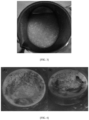
FIG. 3 is a result of cold mixing an aqueous casein solution and a polyacrylic acid solution. -
FIG. 4A shows a state in which casein is agglomerated as a result of allowing a mixture prepared by cold mixing an aqueous casein solution and a polyacrylic acid solution to stand for 2 days, andFIG. 4B shows that the casein and the polyacrylic acid in the mixture are separated from each other. -
FIG. 5 shows a mutual comparison after the pH is changed and the coating composition is prepared. -
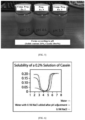
FIG. 6 shows the solubility curve of an aqueous casein solution. -
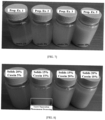
FIG. 7 shows a mutual comparison after the casein content is changed and the coating composition is prepared. -
FIG. 8 shows a mutual comparison after the solid content is changed and the coating composition is prepared -
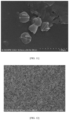
FIG. 9 shows a scanning electron microscope image of particles of a coating composition prepared according to Preparation Example 5. -
FIG. 10 shows a scanning electron microscope image of particles of a coating composition prepared according to Comparative Preparation Example 5. -
FIG. 11 shows a scanning electron microscope image of particles of a coating composition prepared according to Comparative Preparation Example 6. -
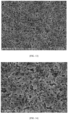
FIG. 12 shows a scanning electron microscope image of a coating layer of a separation membrane prepared according to Example 5 of the present invention, the coating layer being observed at a magnification of 1,000 x. -
FIG. 13 shows a scanning electron microscope image of a coating layer of a separation membrane prepared according to Example 5 of the present invention, the coating layer being observed at a magnification of 3,000 x. -
FIG. 14 shows a scanning electron microscope image of a coating layer of a separation membrane prepared according to Example 5 of the present invention, the coating layer being observed at a magnification of 5,000 x. -
FIG. 15 shows a scanning electron microscope image of a coating layer of a separation membrane prepared according to Example 5 of the present invention, the coating layer being observed at a magnification of 10,000 x. -
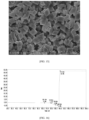
FIG. 16 shows the results of thermomechanical analysis of the separation membrane prepared according to Example 5 of the present invention. -
FIG. 17 shows the results of thermomechanical analysis of the separation membrane prepared according to Comparative Example 1. - The present invention will now be described with reference to the accompanying drawings. However, the present invention may be embodied in many different forms and is therefore not limited to the embodiments described herein. In the drawings, parts not related to the description are omitted for clearly describing the present invention, and similar parts are denoted by similar figure numerals throughout the specification.
- Throughout the specification, when a part is referred to as being "connected" to another part, it includes not only the case of being "directly connected" but also the case being "indirectly connected", with another member interposed therebetween. Also, when a part is said to "comprise" a certain component, it means that it may not exclude other components but may further comprise other components unless otherwise specified.
- Embodiments of the present invention will now be described in detail with reference to the accompanying drawings.
- The coating composition comprises a composite in which a dissociated natural polymer compound is bound to at least a portion of the surface of an acrylic polymer particle.
-
FIG. 1 shows a case where the acrylic polymer in the composite is polyacrylic acid (PAA) and the natural polymer compound is casein. Referring toFIG. 1 , the dissociated natural polymer compound is bound to a portion of the surface of the acrylic polymer particles. The dissociated natural polymeric compound may promote crosslinking and/or bonding between the composites, and these properties may improve the heat resistance and adhesive strength of the slurry containing the composite. - The coating composition may be water-soluble.
- "Non-aqueous coating liquid" is a coating liquid obtained by dissolving a water-insoluble binder in an organic solvent, and has a disadvantage that although it is excellent in heat resistance and adhesive strength, a coating layer which is non-uniform due to gelation in a drying process can be formed, and thus a separate post-treatment is required, and it is difficult to shorten a processing speed due to the risk of explosion during drying, and storage stability is poor due to the volatility of the organic solvent and causes environmental pollution.
- "Aqueous coating liquid" is a coating liquid obtained by dissolving a water-soluble binder in water, and is more economical and environmentally friendly than a non-aqueous coating liquid, but a general aqueous coating liquid has disadvantages of poor adhesive strength, and decreasing air permeability by closing pores of a separation membrane. However, the coating composition may have excellent heat resistance and adhesive strength compared to conventional aqueous coating solutions.
- The natural polymer compound may be one selected from the group consisting of a plant-based polymer compound, an animal-based polymer compound and a microbial-based polymer compound as well as a combination of two or more thereof, and may preferably be the animal-based polymer compound.
- The animal-based polymer compound may be one selected from the group consisting of collagen, casein, albumin, gelatin, and a combination of two or more thereof.
- The casein is a protein obtainable from milk and consists of α-casein, β-casein, κ-casein and traces of other caseins. The casein used in the present invention may have a ratio of α, β and κ of 40 to 50:20 to 40:10 to 15, respectively.
- The solid content of the coating composition may be 5 to 25% by weight, preferably 10 to 20% by weight and more preferably 15 to 20%. When the solid content of the coating composition is less than 5% by weight, adhesive strength may be lowered, and when it is more than 25% by weight, viscosity may be excessively high, resulting in poor coating properties.
- The pH of the coating composition may be in a range of 4 to 5. If the pH of the composition is outside this range, the composite may not be formed.
- In another aspect of the present invention, a method for preparing the separation membrane according to any one of
claims 1 to 7 comprises preparing the coating composition including the steps of: (a) adding water and a natural polymer compound into a reactor and adjusting the pH to dissociate the natural polymer; and (b) adding a water-soluble initiator and an acrylic monomer into the reactor and allowing the resulting mixture to react. - The pH of the reactor in step (a) can be adjusted to a value capable of dissociating the natural polymeric compound. For example, if the natural polymeric compound is casein, the pH of step (a) may be less than or equal to 3 or greater than or equal to 7.
- As the water-soluble initiator, ammonium persulfate (APS), potassium persulfate (KPS) and similar initiators can be used.
- The acrylic monomer may be saponified before being added in step (b). When the acrylic monomer is added after being saponified, the miscibility with the dissociated natural polymer compound can be improved, and the composite can be more easily formed.
- The concentration of the natural polymer compound may be 1% to 10% by weight. When the concentration is less than 1% by weight, the effect of improving heat resistance and adhesive strength may be reduced, and when it is more than 10% by weight, it may be gelled and the use thereof may not be possible.
- The separation membrane, which is one aspect of the present invention, may comprise a coating layer formed by applying the coating composition onto at least one surface of a polyolefin-based porous substrate.
- The thermal shrinkage rate in the transverse and machine directions of the separation membrane may be 5.0%, preferably 0.55% or less at 105 °C and 5.0%, and preferably 1.2% or less at 120 °C, depending on the temperature. In addition, the thermal shrinkage rate of the separation membrane at 150 °C in the transverse and machine directions may be 10.0% or less, preferably 5.0% or less and more preferably 1.0% or less. The coating layer comprising the coating composition can improve the heat resistance of the separation membrane and reduce the thermal shrinkage rate of the separation membrane.
- The moisture content of the coating layer may be 1,000 ppm or less, preferably 500 ppm or less. The natural polymer compound bound to the surface of the acrylic polymer particles can prevent the acrylic polymer from containing moisture and reduce the moisture content.
- Hereinafter, embodiments of the present invention will be described in more detail. However, the following experimental results are only representative experimental results of the above-described examples, and the scope and content of the present invention cannot be reduced or limited by the examples and the like. The respective effects of the various embodiments of the present invention, which are not explicitly set out below, will be described in detail in the relevant sections.
- The following experimental results are obtained by preparing coating compositions and separation membranes by varying the composition content according to one embodiment of the present invention, and comparatively analyzing each of the physical properties.
- An aqueous casein solution was charged into a reactor and stirred. Ammonium (NH4+) was added so that the pH of the reactor was 8, and thus the casein was dissociated. An acrylic acid (AA) monomer saponified with NH4+ was added dropwise to a first feeder at the upper part of the reactor, and ammonium persulfate was added dropwise to the second feeder and reacted. After completion of the reaction, a coating composition was obtained.
-
FIG. 1 shows a schematic representation of a coating composition comprising a composite in which dissociated casein is bound to at least a portion of the surface of a polyacrylic acid particle andFIG. 2 shows a method for preparing the coating composition. - According to the
above Patent Documents - Referring to
FIG. 3 , which is immediately after mixing the composition, casein and polyacrylic acid were poorly dispersed upon simple mixing to form a mass, which hindered the stirring of the reactor impeller.FIG. 4 shows a state onday 2 after mixing the composition of the above Comparative Preparation Example 7, and referring toFIGS. 4A and 4B , it can be confirmed that casein alone is separately aggregated and separated, and the composition has poor storage stability. - The composition and properties of the coating compositions prepared according to the above Preparation Examples and Comparative Preparation Examples are shown in Tables 1 and 2 below.
[Table 1] Item Prep. Ex. 1 Prep. Ex. 2 Prep. Ex. 3 Prep. Ex. 4 Prep. Ex. 5 Casein content (wt %) 1 3 5 7 10 Solids (wt %) 20.9 21.1 21.1 21.3 22.6 pH 4.5 4.5 4.4 4.5 4.5 Viscosity (cps@25°C) 440 470 1,320 3,370 13,000 [Table 2] Item Comp. Prep. Ex. 1 Comp. Prep. Ex. 2 Comp. Prep. Ex. 3 Comp. Prep. Ex. 4 Comp. Prep. Ex. 5 Comp. Prep. Ex. 6 Comp. Prep. Ex. 7 Casein content (wt %) 0 10 10 15 15 20 10 Solids (wt %) 20.9 20 20 20 15.7 14.8 - pH 4.7 2.5 5.7 - 4.5 4.3 - Viscosity (cps@25°C) 190 - - - 330 4,100 - - Referring to Tables 1 and 2, it can be confirmed that the viscosity of the coating composition increases with increasing casein and solids content.
-
FIG. 5 shows a comparison of the coating compositions of Comparative Preparation Examples 2 and 3 and Preparation Example 5 having different pHs, andFIG. 6 shows the solubility curve of casein according to pH. - Referring to
FIGS. 5 and 6 , the coating composition of Preparation Example 5 formed particles and thus had a milky formulation, but the coating compositions of Comparative Preparation Examples 2 and 3 formed a solution due to the increase in casein solubility depending on pH and could not obtain the desired properties. -
FIG. 7 shows a view of the coating composition of the Preparation Example having a casein content of 1% to 10% by weight, and it could be visually confirmed that the opacity of the composition also increases depending on the content of casein. The coating composition of Comparative Preparation Example 4 with a casein content of 15% could not be used for separation membrane coating due to gelation. -
FIG. 8 shows a comparison of the coating compositions of Comparative Preparation Examples 5 and 6 having a solid content of 15% by weight with the coating composition of Preparation Examples 3 and 5. The coating composition of Comparative Preparation Example 5 had poor storage stability, resulting in a layer separation phenomenon, and thus viscosity was measured to be low. The coating composition of Comparative Preparation Example 6 had poor reactivity because 333 mg of unreacted grit was formed per 100 g. - An aqueous coating slurry comprising 30 parts by weight of solids consisting of 2% by weight of a coating composition, 3% by weight of carboxymethylcellulose (CMC) and 95% by weight of alumina, and 70 parts by weight of water was coated to thickness of 4 µm based on a cross section on a porous polyethylene fabric having a thickness of 14 µm and an air permeability of 170 sec/100 mL using a bar coating method to manufacture a separation membrane.
- The properties of the aqueous coating slurry used in the above Examples and Comparative Examples are shown in Table 3 below. The coating composition of Comparative Preparation Example 5 was sufficiently stirred before use to remove the layer separation phenomenon and then used.
- Further, in order to confirm the particle size of the formed particles, the aqueous coating slurry prepared from the coating compositions of Preparation Example 5 and Comparative Preparation Examples 5 and 6 was photographed with a scanning electron microscope (SEM) and the results are shown in
FIGS. 9 to 11 .[Table 3] Item Ex. 1 Ex. 2 Ex. 3 Ex. 4 Ex. 5 Comp. Ex. 1 Comp. Ex. 2 Coating composition Prep. Ex. 1 Prep. Ex. 2 Prep. Ex. 3 Prep. Ex. 4 Prep. Ex. 5 Comp. Prep. Ex. 1 Comp. Prep. Ex. 5 D mean (µm) 1.61 1.62 1.61 1.62 1.63 1.64 1.69 D10(µm) 0.92 0.92 0.92 0.92 0.93 0.91 0.93 D50(µm) 1.31 1.31 1.31 1.32 1.34 1.35 1.36 D90(µm) 2.99 3.00 3.01 3.02 3.04 2.68 3.04 pH 7.14 7.16 7.19 7.22 7.24 7.81 7.21 Viscosity (cps@25°C) 30 30 30 31 32 11 27 - In Table 3, D mean, D10, D50, and D90 are values obtained by measuring the distribution of particles of the slurry using a particle size analyzer. D mean is the average value of the particle sizes and Dx is the particle size value corresponding to x %.
- Referring to Table 3, it can be confirmed that D10 and D50 are constant regardless of the casein content, but in the case of D90, Comparative Example 1, which does not include casein, is about 10% smaller than the other slurries. In addition, Comparative Example 1 has pH of about 0.6 higher and viscosity of about 20 cps lower than those of the other slurries.
- Referring to
FIG. 9 , it can be confirmed that casein on the surface of the PAA-casein composite in Preparation Example 5 promoted the binding between composites to form particles of 8.67 to 34.9 µm. ComparingFIGS. 10 and11 photographed by enlarging the particles of Comparative Preparation Examples 5 and 6 by 50,000 to 100,000 x, it can be confirmed that Comparative Preparation Example 5 having a casein content of 15% has a PAA-casein composite particle size of 248 to 280 nm, and Comparative Preparation Example 6 having a casein content of 20% has a PAA-casein composite particle size of 376 to 382 nm, and the higher the casein content, the larger the particle size of the PAA-casein composite. - From the above results, it can be confirmed that casein in the slurry forms a composite with a polyacrylic acid particle to increase the size thereof, and induces binding between the composites to form aggregated particles, thereby increasing viscosity and pH.
- Physical properties of the separation membranes manufactured according to the above Examples and Comparative Examples were measured and shown in Table 4 below.
- Further, the slurry coating layer of the separation membrane manufactured according to Example 5 was photographed by SEM and the results thereof are shown in
FIGS. 12 to 15 .[Table 4] Item Ex. 1 Ex. 2 Ex. 3 Ex. 4 Ex. 5 Comp. Ex. 1 Comp. Ex. 2 Thickness(µm) 18.2 18.2 18.1 18.0 18.0 18.0 18.3 Air permeability (sec/100 mL) 190.3 191.9 194.1 196.6 200.2 189.3 190.3 Amount of coating (g/m2) 5.19 5.20 5.21 5.21 5.23 5.23 5.58 Thermal shrinkage rate at 150°C (%) MD 1.0/ TD 1.0 MD 1.0/ TD 1.0 MD 1.0/ TD 1.0 MD 1.0/ TD 1.0 MD 1.0/ TD 1.0 MD 3.0/ TD 3.5 MD 0.5/ TD 0.5 Moisture content (ppm) 501.0 499.6 497.3 494.2 492.0 567.4 494.7 - When the thermal shrinkage rate of the separation membrane is high, the separation membrane is deformed at the time of heat generation of the battery, and it is highly likely that a short circuit occurs. The lithium contained in the lithium secondary battery can explode upon contact with moisture, and when the moisture content of the separation membrane is high, the stability of the battery is degraded.
- Referring to Table 4, it can be confirmed that the coating composition of the present invention has a significantly improved thermal shrinkage rate at 150 °C and a significantly improved moisture content and thus improved stability as compared with the separation membrane of Comparative Example 1 containing no casein.
- Referring to
FIGS. 12 to 15 , when a slurry comprising the coating composition of the present invention was coated onto a porous fabric, the coating layer was preferably formed in a form that can ensure air permeability. - A specimen having length of 10 mm was taken from the separation membranes prepared according to Example 5 and Comparative Examples 1 and 2 and was subjected to thermomechanical analysis to measure the shutdown and meltdown temperatures and the thermal shrinkage rate at 105 °C, 120 °C and 130 °C The results was shown in Table 5 below and
FIGS. 16 and17 . The temperature was measured while raising a temperature at a rate of 10 °C/min in a temperature range of 20 to 200 °C.[Table 5] Item Shutdown Temp. (°C) Meltdown Temp. (°C) Thermal shrinkage rate at 150°C (%) Thermal shrinkage rate at 120°C (%) Thermal shrinkage rate at 130°C (%) 14µm Porous fabric 137.5 145.5 1.18 3.34 15.05 Ex. 5 134.3 141.0 0.54 1.17 3.83 Comp. Ex. 1 133.3 142.1 0.79 1.69 3.68 Comp. Ex. 2 133.1 141.9 0.60 1.42 4.05 - Referring to Table 5 and
FIGS. 16 and17 , the thermal shrinkage rate of all three types of separation membranes compared to the porous fabric was improved, and the thermal shrinkage rate at 105° C and 120° C of the separation membrane of Example 5 was the best. The shutdown temperature and meltdown temperature were about 4 °C lower for the separation membranes than for the porous fabric. - Test methods for each of the physical properties measured in the present invention are as follows. Measurements were made at room temperature (25 °C) unless otherwise stated.
- Thickness (µm): The thickness of the separation membrane specimen was measured using a precision thickness gauge.
- Air permeability (Gurley, sec/100 mL): The time taken for 100 mL of air to pass through a separation membrane specimen having a diameter of 29.8 mm at measurement pressure of 0.025 MPa was measured using the Gurley densometer EGO2-5 model from Asahi Seiko.
- Coating amount (g/m2): It was calculated by dividing the weight of the coated slurry by the area of the porous fabric.
- Thermal shrinkage rate at 150 °C (%): A separation membrane specimen having a size of 200×200 mm was placed between A4 papers and allowed to stand, and then cooled at room temperature to measure lengths of the specimen shrunk in the machine direction (MD) and transverse direction (TM), and the thermal shrinkage rate was calculated using the following calculation formula. Table 4 above refers to a temperature shrinkage value at 150 °C of the separation membrane that is equal to or less than the value described.

- (In the above calculation formula, l 1 is the length in the machine or transverse direction of the specimen before shrinkage, and l 2 is the length in the machine or transverse directions of the specimen after shrinkage).
- Moisture content (ppm): 2 g of sample was taken from the separation membrane and the moisture content was measured by the Karl Fischer method.
Claims (10)
- A separation membrane comprising a coating layer, the coating layer being formed by applying a coating composition onto at least one surface of a porous substrate,
wherein the coating composition comprises a composite in which a dissociated natural polymer compound is bound to at least a portion of a surface of an acrylic polymer particle. - The separation membrane according to claim 1, wherein the coating composition is water-soluble.
- The separation membrane according to claim 1, wherein the natural polymer compound is one selected from the group consisting of a plant-based polymer compounds, an animal-based polymer compounds, a microbial-based polymer compounds and a combination of two or more thereof.
- The separation membrane according to claim 1, wherein the solid content of the coating composition is 5 to 25% by weight.
- The separation membrane according to claim 1, wherein the pH of the coating composition is in a range of 4 to 5.
- The separation membrane according to claim 1, wherein the moisture content of the coating layer is 1,000 ppm or less.
- The separation membrane according to claim 1, wherein the thermal shrinkage rate at 150 °C in machine and transverse directions of the separation membrane are 10.0% or less, respectively.
- A method for preparing the separation membrane according to any one of claims 1 to 7, comprising preparing the coating composition comprising:(a) adding water and a natural polymer compound into a reactor and adjusting the pH to dissociate the natural polymer; and(b) adding a water-soluble initiator and an acrylic monomer into the reactor and allowing the resulting mixture to react.
- The method of claim 8, wherein the acrylic monomer is saponified prior to the addition.
- The method of claim 8, wherein the concentration of the natural polymer compound is 1% to 10% by weight.
Applications Claiming Priority (2)
| Application Number | Priority Date | Filing Date | Title |
|---|---|---|---|
| KR1020180086078A KR102181126B1 (en) | 2018-07-24 | 2018-07-24 | A coating composition, a method for manufacturing thereof and a separator comprising the same |
| PCT/KR2018/013153 WO2020022562A1 (en) | 2018-07-24 | 2018-11-01 | Coating composition, method for manufacturing same, and separator comprising same |
Publications (3)
| Publication Number | Publication Date |
|---|---|
| EP3812432A1 EP3812432A1 (en) | 2021-04-28 |
| EP3812432A4 EP3812432A4 (en) | 2022-05-18 |
| EP3812432B1 true EP3812432B1 (en) | 2025-06-25 |
Family
ID=69180909
Family Applications (1)
| Application Number | Title | Priority Date | Filing Date |
|---|---|---|---|
| EP18927693.4A Active EP3812432B1 (en) | 2018-07-24 | 2018-11-01 | Separation membrane comprising a coating layer |
Country Status (7)
| Country | Link |
|---|---|
| US (1) | US12168721B2 (en) |
| EP (1) | EP3812432B1 (en) |
| KR (1) | KR102181126B1 (en) |
| CN (1) | CN112469789B (en) |
| HU (1) | HUE072125T2 (en) |
| PL (1) | PL3812432T3 (en) |
| WO (1) | WO2020022562A1 (en) |
Families Citing this family (1)
| Publication number | Priority date | Publication date | Assignee | Title |
|---|---|---|---|---|
| KR102181126B1 (en) * | 2018-07-24 | 2020-11-23 | 더블유스코프코리아 주식회사 | A coating composition, a method for manufacturing thereof and a separator comprising the same |
Family Cites Families (22)
| Publication number | Priority date | Publication date | Assignee | Title |
|---|---|---|---|---|
| KR100348371B1 (en) | 1994-07-01 | 2005-02-23 | 미네소타 마이닝 앤드 매뉴팩춰링 캄파니 | Repositionable Pressure Sensitive Adhesive with Adhesive Microspheres |
| EP1164157B1 (en) * | 1999-12-28 | 2007-01-17 | Hitoshi Kanazawa | Method of modifying polymeric material and use thereof |
| JP2005330387A (en) * | 2004-05-20 | 2005-12-02 | Nippon Dekoratsukusu Kk | Adhesive for securing anchor |
| GB0412856D0 (en) * | 2004-06-09 | 2004-07-14 | Unilever Plc | Process for preparation of particles |
| KR20090103222A (en) | 2008-03-28 | 2009-10-01 | 주식회사 코오롱 | Ymer bead and acrylic sol composition with improved storage stability and coating property for substrate |
| KR101198295B1 (en) | 2009-10-22 | 2012-11-07 | 주식회사 엘지화학 | A forming method of anode active material layer of a lithium secondary battery, and an anode of lithium secondary battery formed therefrom and a lithium secondary battery having the same |
| CN102198372A (en) * | 2010-03-25 | 2011-09-28 | 吕晓龙 | Separating membrane and preparation method thereof |
| KR101801049B1 (en) | 2010-08-31 | 2017-11-24 | 제온 코포레이션 | Slurry composition for porous film in battery, method for manufacturing porous film for secondary battery, porous film for secondary battery, electrode for secondary battery, separator for secondary battery, and secondary battery |
| WO2012043729A1 (en) | 2010-09-30 | 2012-04-05 | 日本ゼオン株式会社 | Secondary-battery porous-membrane slurry, secondary-battery porous membrane, secondary-battery electrode, secondary-battery separator, secondary battery, and method for manufacturing secondary-battery porous membrane |
| PT2714756T (en) * | 2011-06-02 | 2018-07-16 | Lanxess Deutschland Gmbh | Polysaccharide and/or polypeptide based graft polymers as synthetic tannins |
| KR101522451B1 (en) | 2012-08-30 | 2015-05-28 | 주식회사 엘지화학 | Fabricating method and device of seperator and electrochemical cell having the same seperator |
| CN102898589A (en) * | 2012-09-11 | 2013-01-30 | 青岛清大联创高新技术有限公司 | Novel environment-friendly high-molecular polymerized emulsion and preparation method thereof |
| PL2908364T3 (en) * | 2012-10-10 | 2018-08-31 | Zeon Corporation | Method for producing positive electrode for secondary battery, secondary battery, and method for producing stack for secondary battery |
| CN102936390B (en) * | 2012-11-06 | 2014-09-17 | 南京理工大学 | Collagen-g-polymer/Ag multi-hole nano antibacterial film material and preparation method thereof |
| KR101601919B1 (en) * | 2013-12-12 | 2016-03-09 | 울산과학기술원 | Negative electrode active material, methode for manufacturing the same, and lithium rechargable battery including the same |
| EP2886184A1 (en) * | 2013-12-23 | 2015-06-24 | Medizinische Universität Innsbruck | Electrochemical cell |
| DE112016001677T5 (en) * | 2015-04-10 | 2018-01-25 | Celgard Llc | Improved microporous membranes, separators, lithium batteries, and related processes |
| JP2017101004A (en) * | 2015-12-04 | 2017-06-08 | 東ソー株式会社 | Fine particle shaped protein binder and separation method using the same |
| CN105504169B (en) * | 2016-01-07 | 2018-05-01 | 上海交通大学 | A kind of binding agent for lithium ion battery |
| KR102178154B1 (en) * | 2016-03-31 | 2020-11-12 | 주식회사 엘지화학 | Method for manufacturing a separator and the separator manufactured by the method |
| CN105914377B (en) * | 2016-06-28 | 2019-05-17 | 中国科学院广州能源研究所 | A kind of pluralistic function modified high-molecular lithium ion battery binder and the application in electrochemical energy storing device |
| KR102181126B1 (en) * | 2018-07-24 | 2020-11-23 | 더블유스코프코리아 주식회사 | A coating composition, a method for manufacturing thereof and a separator comprising the same |
-
2018
- 2018-07-24 KR KR1020180086078A patent/KR102181126B1/en active Active
- 2018-11-01 CN CN201880095836.0A patent/CN112469789B/en active Active
- 2018-11-01 EP EP18927693.4A patent/EP3812432B1/en active Active
- 2018-11-01 PL PL18927693.4T patent/PL3812432T3/en unknown
- 2018-11-01 WO PCT/KR2018/013153 patent/WO2020022562A1/en not_active Ceased
- 2018-11-01 US US17/262,108 patent/US12168721B2/en active Active
- 2018-11-01 HU HUE18927693A patent/HUE072125T2/en unknown
Also Published As
| Publication number | Publication date |
|---|---|
| KR102181126B1 (en) | 2020-11-23 |
| CN112469789B (en) | 2022-07-26 |
| CN112469789A (en) | 2021-03-09 |
| US12168721B2 (en) | 2024-12-17 |
| PL3812432T3 (en) | 2025-09-01 |
| HUE072125T2 (en) | 2025-10-28 |
| US20210292592A1 (en) | 2021-09-23 |
| KR20200011233A (en) | 2020-02-03 |
| WO2020022562A1 (en) | 2020-01-30 |
| EP3812432A4 (en) | 2022-05-18 |
| EP3812432A1 (en) | 2021-04-28 |
Similar Documents
| Publication | Publication Date | Title |
|---|---|---|
| EP1432054B1 (en) | Partially crosslinked adhesive-supported porous film for battery separator and its use | |
| EP4507107B1 (en) | Battery separator and preparation method therefor, and battery | |
| CN106784534B (en) | The preparation method of PVDF copolymer ceramic coating membrane | |
| Li et al. | Improvements of dispersion homogeneity and cell performance of aqueous-processed LiCoO2 cathodes by using dispersant of PAA–NH4 | |
| JP6237622B2 (en) | Slurry for lithium ion secondary battery negative electrode, electrode for lithium ion secondary battery and method for producing the same, and lithium ion secondary battery | |
| KR102598046B1 (en) | Composition for functional layer of non-aqueous secondary battery, functional layer for non-aqueous secondary battery and non-aqueous secondary battery | |
| EP2330658B1 (en) | Battery separator and method for producing same, and lithium ion secondary battery and method for producing same | |
| KR20190005841A (en) | A composition for a non-aqueous secondary battery functional layer, a functional layer for a non-aqueous secondary battery, and a non-aqueous secondary battery | |
| CN106887554A (en) | Barrier film and its manufacture method | |
| EP3719865A1 (en) | Separator for power storage device and method for producing same, and power storage device and method for producing same | |
| EP4481927B1 (en) | Polymer-coated separator having secondary aggregates, manufacturing method therefor, and battery | |
| WO2016157770A1 (en) | Composition for nonaqueous secondary battery function layers, method for producing same, function layer for nonaqueous secondary batteries, and nonaqueous secondary battery | |
| CN116535576A (en) | Polymer binder, preparation method, ceramic diaphragm coating slurry, ceramic diaphragm and battery | |
| CN118431675A (en) | Separator for secondary battery including dispersant and method for manufacturing the same | |
| EP3812432B1 (en) | Separation membrane comprising a coating layer | |
| EP4020657A1 (en) | Composite separator for lithium secondary battery, and manufacturing method therefor | |
| WO2018168657A1 (en) | Slurry composition for nonaqueous secondary battery functional layers, functional layer for nonaqueous secondary batteries, and nonaqueous secondary battery | |
| KR102190691B1 (en) | Separator coating material for secondary battery of electric vehicle or energy storage system and coating separator manufacturing method using the same, middle or large sized secondary battery of electric vehicle or energy storage system | |
| Zhang et al. | A thermo-responsive dual-crosslinked hydrogel with ultrahigh mechanical strength | |
| JP6657780B2 (en) | Slurry composition for non-aqueous secondary battery porous membrane, method for producing electrode for non-aqueous secondary battery, and method for producing non-aqueous secondary battery | |
| CN109536003B (en) | Coating for battery diaphragm, preparation method of coating, battery diaphragm and lithium ion battery | |
| KR102360122B1 (en) | Porous separator for secondary battery | |
| KR20200105470A (en) | Separator coating material for secondary battery of electric vehicle or energy storage system and coating separator manufacturing method using the same, middle or large sized secondary battery of electric vehicle or energy storage system | |
| CN104823311A (en) | Lithium-ion battery positive electrode active material, lithium-ion battery positive electrode, and lithium-ion battery | |
| JP7669033B2 (en) | Solid electrolyte, powder for producing solid electrolyte, and method for producing solid electrolyte |
Legal Events
| Date | Code | Title | Description |
|---|---|---|---|
| STAA | Information on the status of an ep patent application or granted ep patent |
Free format text: STATUS: THE INTERNATIONAL PUBLICATION HAS BEEN MADE |
|
| PUAI | Public reference made under article 153(3) epc to a published international application that has entered the european phase |
Free format text: ORIGINAL CODE: 0009012 |
|
| STAA | Information on the status of an ep patent application or granted ep patent |
Free format text: STATUS: REQUEST FOR EXAMINATION WAS MADE |
|
| 17P | Request for examination filed |
Effective date: 20210125 |
|
| AK | Designated contracting states |
Kind code of ref document: A1 Designated state(s): AL AT BE BG CH CY CZ DE DK EE ES FI FR GB GR HR HU IE IS IT LI LT LU LV MC MK MT NL NO PL PT RO RS SE SI SK SM TR |
|
| AX | Request for extension of the european patent |
Extension state: BA ME |
|
| DAV | Request for validation of the european patent (deleted) | ||
| DAX | Request for extension of the european patent (deleted) | ||
| A4 | Supplementary search report drawn up and despatched |
Effective date: 20220420 |
|
| RIC1 | Information provided on ipc code assigned before grant |
Ipc: H01M 50/42 20210101ALI20220412BHEP Ipc: C08F 283/04 20060101ALI20220412BHEP Ipc: C09D 151/00 20060101ALI20220412BHEP Ipc: C08F 289/00 20060101ALI20220412BHEP Ipc: C08F 251/00 20060101ALI20220412BHEP Ipc: C09D 133/00 20060101AFI20220412BHEP |
|
| STAA | Information on the status of an ep patent application or granted ep patent |
Free format text: STATUS: EXAMINATION IS IN PROGRESS |
|
| 17Q | First examination report despatched |
Effective date: 20231108 |
|
| REG | Reference to a national code |
Ref country code: DE Ref legal event code: R079 Free format text: PREVIOUS MAIN CLASS: C09D0133000000 Ref country code: DE Ref legal event code: R079 Ref document number: 602018083053 Country of ref document: DE Free format text: PREVIOUS MAIN CLASS: C09D0133000000 Ipc: H01M0050420000 |
|
| GRAP | Despatch of communication of intention to grant a patent |
Free format text: ORIGINAL CODE: EPIDOSNIGR1 |
|
| STAA | Information on the status of an ep patent application or granted ep patent |
Free format text: STATUS: GRANT OF PATENT IS INTENDED |
|
| RIC1 | Information provided on ipc code assigned before grant |
Ipc: C08F 289/00 20060101ALI20250124BHEP Ipc: C08F 283/04 20060101ALI20250124BHEP Ipc: D06M 23/08 20060101ALI20250124BHEP Ipc: D06M 15/15 20060101ALI20250124BHEP Ipc: D06M 15/01 20060101ALI20250124BHEP Ipc: H01M 50/42 20210101AFI20250124BHEP |
|
| INTG | Intention to grant announced |
Effective date: 20250206 |
|
| GRAS | Grant fee paid |
Free format text: ORIGINAL CODE: EPIDOSNIGR3 |
|
| GRAA | (expected) grant |
Free format text: ORIGINAL CODE: 0009210 |
|
| STAA | Information on the status of an ep patent application or granted ep patent |
Free format text: STATUS: THE PATENT HAS BEEN GRANTED |
|
| P01 | Opt-out of the competence of the unified patent court (upc) registered |
Free format text: CASE NUMBER: APP_22138/2025 Effective date: 20250509 |
|
| AK | Designated contracting states |
Kind code of ref document: B1 Designated state(s): AL AT BE BG CH CY CZ DE DK EE ES FI FR GB GR HR HU IE IS IT LI LT LU LV MC MK MT NL NO PL PT RO RS SE SI SK SM TR |
|
| REG | Reference to a national code |
Ref country code: GB Ref legal event code: FG4D |
|
| REG | Reference to a national code |
Ref country code: CH Ref legal event code: EP |
|
| REG | Reference to a national code |
Ref country code: DE Ref legal event code: R096 Ref document number: 602018083053 Country of ref document: DE |
|
| REG | Reference to a national code |
Ref country code: CH Ref legal event code: EP |
|
| REG | Reference to a national code |
Ref country code: IE Ref legal event code: FG4D |
|
| REG | Reference to a national code |
Ref country code: NL Ref legal event code: FP |
|
| PG25 | Lapsed in a contracting state [announced via postgrant information from national office to epo] |
Ref country code: FI Free format text: LAPSE BECAUSE OF FAILURE TO SUBMIT A TRANSLATION OF THE DESCRIPTION OR TO PAY THE FEE WITHIN THE PRESCRIBED TIME-LIMIT Effective date: 20250625 |
|
| REG | Reference to a national code |
Ref country code: LT Ref legal event code: MG9D |
|
| PG25 | Lapsed in a contracting state [announced via postgrant information from national office to epo] |
Ref country code: NO Free format text: LAPSE BECAUSE OF FAILURE TO SUBMIT A TRANSLATION OF THE DESCRIPTION OR TO PAY THE FEE WITHIN THE PRESCRIBED TIME-LIMIT Effective date: 20250925 Ref country code: GR Free format text: LAPSE BECAUSE OF FAILURE TO SUBMIT A TRANSLATION OF THE DESCRIPTION OR TO PAY THE FEE WITHIN THE PRESCRIBED TIME-LIMIT Effective date: 20250926 |
|
| PG25 | Lapsed in a contracting state [announced via postgrant information from national office to epo] |
Ref country code: BG Free format text: LAPSE BECAUSE OF FAILURE TO SUBMIT A TRANSLATION OF THE DESCRIPTION OR TO PAY THE FEE WITHIN THE PRESCRIBED TIME-LIMIT Effective date: 20250625 |
|
| PG25 | Lapsed in a contracting state [announced via postgrant information from national office to epo] |
Ref country code: HR Free format text: LAPSE BECAUSE OF FAILURE TO SUBMIT A TRANSLATION OF THE DESCRIPTION OR TO PAY THE FEE WITHIN THE PRESCRIBED TIME-LIMIT Effective date: 20250625 |
|
| PG25 | Lapsed in a contracting state [announced via postgrant information from national office to epo] |
Ref country code: RS Free format text: LAPSE BECAUSE OF FAILURE TO SUBMIT A TRANSLATION OF THE DESCRIPTION OR TO PAY THE FEE WITHIN THE PRESCRIBED TIME-LIMIT Effective date: 20250925 |
|
| REG | Reference to a national code |
Ref country code: HU Ref legal event code: AG4A Ref document number: E072125 Country of ref document: HU |
|
| PG25 | Lapsed in a contracting state [announced via postgrant information from national office to epo] |
Ref country code: LV Free format text: LAPSE BECAUSE OF FAILURE TO SUBMIT A TRANSLATION OF THE DESCRIPTION OR TO PAY THE FEE WITHIN THE PRESCRIBED TIME-LIMIT Effective date: 20250625 |
|
| PG25 | Lapsed in a contracting state [announced via postgrant information from national office to epo] |
Ref country code: PT Free format text: LAPSE BECAUSE OF FAILURE TO SUBMIT A TRANSLATION OF THE DESCRIPTION OR TO PAY THE FEE WITHIN THE PRESCRIBED TIME-LIMIT Effective date: 20251027 |
|
| PGFP | Annual fee paid to national office [announced via postgrant information from national office to epo] |
Ref country code: HU Payment date: 20251121 Year of fee payment: 8 |
|
| PGFP | Annual fee paid to national office [announced via postgrant information from national office to epo] |
Ref country code: NL Payment date: 20251119 Year of fee payment: 8 |
|
| REG | Reference to a national code |
Ref country code: AT Ref legal event code: MK05 Ref document number: 1807564 Country of ref document: AT Kind code of ref document: T Effective date: 20250625 |
|
| PG25 | Lapsed in a contracting state [announced via postgrant information from national office to epo] |
Ref country code: IS Free format text: LAPSE BECAUSE OF FAILURE TO SUBMIT A TRANSLATION OF THE DESCRIPTION OR TO PAY THE FEE WITHIN THE PRESCRIBED TIME-LIMIT Effective date: 20251025 |
|
| PGFP | Annual fee paid to national office [announced via postgrant information from national office to epo] |
Ref country code: DE Payment date: 20251128 Year of fee payment: 8 |
|
| PG25 | Lapsed in a contracting state [announced via postgrant information from national office to epo] |
Ref country code: AT Free format text: LAPSE BECAUSE OF FAILURE TO SUBMIT A TRANSLATION OF THE DESCRIPTION OR TO PAY THE FEE WITHIN THE PRESCRIBED TIME-LIMIT Effective date: 20250625 Ref country code: SM Free format text: LAPSE BECAUSE OF FAILURE TO SUBMIT A TRANSLATION OF THE DESCRIPTION OR TO PAY THE FEE WITHIN THE PRESCRIBED TIME-LIMIT Effective date: 20250625 |
|
| PGFP | Annual fee paid to national office [announced via postgrant information from national office to epo] |
Ref country code: FR Payment date: 20251126 Year of fee payment: 8 |
|
| PG25 | Lapsed in a contracting state [announced via postgrant information from national office to epo] |
Ref country code: CZ Free format text: LAPSE BECAUSE OF FAILURE TO SUBMIT A TRANSLATION OF THE DESCRIPTION OR TO PAY THE FEE WITHIN THE PRESCRIBED TIME-LIMIT Effective date: 20250625 |
|
| PGFP | Annual fee paid to national office [announced via postgrant information from national office to epo] |
Ref country code: PL Payment date: 20251030 Year of fee payment: 8 |
|
| PG25 | Lapsed in a contracting state [announced via postgrant information from national office to epo] |
Ref country code: EE Free format text: LAPSE BECAUSE OF FAILURE TO SUBMIT A TRANSLATION OF THE DESCRIPTION OR TO PAY THE FEE WITHIN THE PRESCRIBED TIME-LIMIT Effective date: 20250625 |
|
| PG25 | Lapsed in a contracting state [announced via postgrant information from national office to epo] |
Ref country code: SK Free format text: LAPSE BECAUSE OF FAILURE TO SUBMIT A TRANSLATION OF THE DESCRIPTION OR TO PAY THE FEE WITHIN THE PRESCRIBED TIME-LIMIT Effective date: 20250625 |
|
| PG25 | Lapsed in a contracting state [announced via postgrant information from national office to epo] |
Ref country code: ES Free format text: LAPSE BECAUSE OF FAILURE TO SUBMIT A TRANSLATION OF THE DESCRIPTION OR TO PAY THE FEE WITHIN THE PRESCRIBED TIME-LIMIT Effective date: 20250625 |
|
| PG25 | Lapsed in a contracting state [announced via postgrant information from national office to epo] |
Ref country code: RO Free format text: LAPSE BECAUSE OF FAILURE TO SUBMIT A TRANSLATION OF THE DESCRIPTION OR TO PAY THE FEE WITHIN THE PRESCRIBED TIME-LIMIT Effective date: 20250625 |
|
| PG25 | Lapsed in a contracting state [announced via postgrant information from national office to epo] |
Ref country code: DK Free format text: LAPSE BECAUSE OF FAILURE TO SUBMIT A TRANSLATION OF THE DESCRIPTION OR TO PAY THE FEE WITHIN THE PRESCRIBED TIME-LIMIT Effective date: 20250625 |
|
| PG25 | Lapsed in a contracting state [announced via postgrant information from national office to epo] |
Ref country code: IT Free format text: LAPSE BECAUSE OF FAILURE TO SUBMIT A TRANSLATION OF THE DESCRIPTION OR TO PAY THE FEE WITHIN THE PRESCRIBED TIME-LIMIT Effective date: 20250625 |
|
| PLBE | No opposition filed within time limit |
Free format text: ORIGINAL CODE: 0009261 |
|
| STAA | Information on the status of an ep patent application or granted ep patent |
Free format text: STATUS: NO OPPOSITION FILED WITHIN TIME LIMIT |