EP3801490B1 - Compounds for use in cancer cachexia - Google Patents
Compounds for use in cancer cachexia Download PDFInfo
- Publication number
- EP3801490B1 EP3801490B1 EP19730484.3A EP19730484A EP3801490B1 EP 3801490 B1 EP3801490 B1 EP 3801490B1 EP 19730484 A EP19730484 A EP 19730484A EP 3801490 B1 EP3801490 B1 EP 3801490B1
- Authority
- EP
- European Patent Office
- Prior art keywords
- compound
- hydroxybutyrate
- subject
- use according
- cancer
- Prior art date
- Legal status (The legal status is an assumption and is not a legal conclusion. Google has not performed a legal analysis and makes no representation as to the accuracy of the status listed.)
- Active
Links
Images


Classifications
-
- A—HUMAN NECESSITIES
- A61—MEDICAL OR VETERINARY SCIENCE; HYGIENE
- A61K—PREPARATIONS FOR MEDICAL, DENTAL OR TOILETRY PURPOSES
- A61K31/00—Medicinal preparations containing organic active ingredients
- A61K31/21—Esters, e.g. nitroglycerine, selenocyanates
- A61K31/215—Esters, e.g. nitroglycerine, selenocyanates of carboxylic acids
- A61K31/22—Esters, e.g. nitroglycerine, selenocyanates of carboxylic acids of acyclic acids, e.g. pravastatin
-
- A—HUMAN NECESSITIES
- A23—FOODS OR FOODSTUFFS; TREATMENT THEREOF, NOT COVERED BY OTHER CLASSES
- A23L—FOODS, FOODSTUFFS OR NON-ALCOHOLIC BEVERAGES, NOT OTHERWISE PROVIDED FOR; PREPARATION OR TREATMENT THEREOF
- A23L33/00—Modifying nutritive qualities of foods; Dietetic products; Preparation or treatment thereof
- A23L33/10—Modifying nutritive qualities of foods; Dietetic products; Preparation or treatment thereof using additives
- A23L33/115—Fatty acids or derivatives thereof; Fats or oils
-
- A—HUMAN NECESSITIES
- A23—FOODS OR FOODSTUFFS; TREATMENT THEREOF, NOT COVERED BY OTHER CLASSES
- A23L—FOODS, FOODSTUFFS OR NON-ALCOHOLIC BEVERAGES, NOT OTHERWISE PROVIDED FOR; PREPARATION OR TREATMENT THEREOF
- A23L33/00—Modifying nutritive qualities of foods; Dietetic products; Preparation or treatment thereof
- A23L33/10—Modifying nutritive qualities of foods; Dietetic products; Preparation or treatment thereof using additives
- A23L33/125—Modifying nutritive qualities of foods; Dietetic products; Preparation or treatment thereof using additives containing carbohydrate syrups; containing sugars; containing sugar alcohols; containing starch hydrolysates
-
- A—HUMAN NECESSITIES
- A23—FOODS OR FOODSTUFFS; TREATMENT THEREOF, NOT COVERED BY OTHER CLASSES
- A23L—FOODS, FOODSTUFFS OR NON-ALCOHOLIC BEVERAGES, NOT OTHERWISE PROVIDED FOR; PREPARATION OR TREATMENT THEREOF
- A23L33/00—Modifying nutritive qualities of foods; Dietetic products; Preparation or treatment thereof
- A23L33/40—Complete food formulations for specific consumer groups or specific purposes, e.g. infant formula
-
- A—HUMAN NECESSITIES
- A61—MEDICAL OR VETERINARY SCIENCE; HYGIENE
- A61K—PREPARATIONS FOR MEDICAL, DENTAL OR TOILETRY PURPOSES
- A61K47/00—Medicinal preparations characterised by the non-active ingredients used, e.g. carriers or inert additives; Targeting or modifying agents chemically bound to the active ingredient
- A61K47/06—Organic compounds, e.g. natural or synthetic hydrocarbons, polyolefins, mineral oil, petrolatum or ozokerite
- A61K47/26—Carbohydrates, e.g. sugar alcohols, amino sugars, nucleic acids, mono-, di- or oligo-saccharides; Derivatives thereof, e.g. polysorbates, sorbitan fatty acid esters or glycyrrhizin
-
- A—HUMAN NECESSITIES
- A61—MEDICAL OR VETERINARY SCIENCE; HYGIENE
- A61K—PREPARATIONS FOR MEDICAL, DENTAL OR TOILETRY PURPOSES
- A61K47/00—Medicinal preparations characterised by the non-active ingredients used, e.g. carriers or inert additives; Targeting or modifying agents chemically bound to the active ingredient
- A61K47/44—Oils, fats or waxes according to two or more groups of A61K47/02-A61K47/42; Natural or modified natural oils, fats or waxes, e.g. castor oil, polyethoxylated castor oil, montan wax, lignite, shellac, rosin, beeswax or lanolin
-
- A—HUMAN NECESSITIES
- A61—MEDICAL OR VETERINARY SCIENCE; HYGIENE
- A61P—SPECIFIC THERAPEUTIC ACTIVITY OF CHEMICAL COMPOUNDS OR MEDICINAL PREPARATIONS
- A61P21/00—Drugs for disorders of the muscular or neuromuscular system
-
- A—HUMAN NECESSITIES
- A61—MEDICAL OR VETERINARY SCIENCE; HYGIENE
- A61P—SPECIFIC THERAPEUTIC ACTIVITY OF CHEMICAL COMPOUNDS OR MEDICINAL PREPARATIONS
- A61P21/00—Drugs for disorders of the muscular or neuromuscular system
- A61P21/06—Anabolic agents
-
- A—HUMAN NECESSITIES
- A61—MEDICAL OR VETERINARY SCIENCE; HYGIENE
- A61P—SPECIFIC THERAPEUTIC ACTIVITY OF CHEMICAL COMPOUNDS OR MEDICINAL PREPARATIONS
- A61P35/00—Antineoplastic agents
-
- A—HUMAN NECESSITIES
- A23—FOODS OR FOODSTUFFS; TREATMENT THEREOF, NOT COVERED BY OTHER CLASSES
- A23V—INDEXING SCHEME RELATING TO FOODS, FOODSTUFFS OR NON-ALCOHOLIC BEVERAGES AND LACTIC OR PROPIONIC ACID BACTERIA USED IN FOODSTUFFS OR FOOD PREPARATION
- A23V2002/00—Food compositions, function of food ingredients or processes for food or foodstuffs
Definitions
- the present invention is defined in the appended claims. It relates to compounds for use in preventing or treating cachexia in a subject, specifically the cachexia associated with cancer.
- Cancer cachexia is a wasting syndrome suffered by cancer patients and characterised by weight loss, anorexia, asthenia and anaemia. It leads to an involuntary loss of muscle in patients. Cachexia adversely affects the patient's ability to fight against infection and withstand chemotherapy and radiotherapy treatment. Consequently, the patient's body begins to waste away.
- the mechanism involved in cancer cachexia appears to be complex and multifactorial.
- the treatment modalities at present include appetite stimulants and drugs against cachexia signalling molecules and mediators, which help prevent and treat wasting.
- Ketogenic diets are well known and have been used widely to treat cancer, as discussed in previous patent US9,801,903 .
- the ketogenic diet is characterised by high-fat, moderate-to-low protein, and very-low carbohydrate content.
- the use of a ketogenic diet in cancer has shown potentially promising, but inconsistent results ( Oliveira et al; J Acad Nutr Diet, 2017 "A nutritional perspective of ketogenic diet in cancer: A narrative review .")
- the use of a ketogenic diet is based on the underlying theory of metabolic therapy targeting the abnormal energy metabolism of cancer cells.
- the ketogenic state restricts glucose availability and impairs glycolysis in cancer cells while providing alternative energy sources for healthy cells. This selectively starves cancer cells, while leaving normal cells unharmed.
- the ketogenic diet may be a promising anti-cancer therapy.
- the paper discusses how the ketogenic diet has been shown to reduce angiogenesis, inflammation, peritumoral oedema, plus tumour migration and invasion. Furthermore, the diet can enhance the efficacy of radiation and chemotherapy in a mouse model of glioma, thus increasing survival. Furthermore, the paper discusses how ketone bodies themselves possess antitumor effects, and therefore ketone supplementation can be effective against some diseases when used alone.
- GB2517088A discloses the use of ketone body esters to treat muscle breakdown. Cachexia is mentioned in this publication, but cancer cachexia is not specifically disclosed.
- Tumour cells are known to have a high rate of glucose consumption, to show increased rates of aerobic glycolysis, and to be susceptible to carbohydrate deprivation. Furthermore, many tumours lack certain key mitochondrial enzymes and thus have largely lost the ability to use fat or ketone bodies for energy production. Therefore, the replacement of glucose by ketone bodies is thought to reduce the energy supply to the tumour, while maintaining energy supply to the host. On the other hand, there is some concern that cancer patients might lose too much weight on a ketogenic diet.
- ketoone bodies encompasses three compounds: D- ⁇ -hydroxybutyrate, acetoacetate and acetone.
- D- ⁇ -hydroxybutyrate is otherwise known as ⁇ HB or (R)-3-hydroxybutyrate.
- Ketone bodies are produced by the liver from fatty acids during periods of low food intake.
- WO2004/108740 discloses nutritional supplements and therapeutic compositions comprising (R)-3-hydroxybutyrate derivatives.
- the compositions disclosed therein can be used to treat tumours, particularly brain tumours, such as astrocytoma.
- the treatment of cancer cachexia is not mentioned.
- Kenneth C. et al. shows an increase in body weight in cachectic cancer patients fed with a high fat ketogenic diet containing medium chain triglycerides supplemented with arginine D-3-hydroxybutyrate.
- ketone salts cannot be used to raise ⁇ HB or AcAc concentrations to appropriate levels in humans (for instance, to the range 10 to 20 mM in blood), as such levels of salt could lead to acidosis, high blood pressure and/or kidney failure. It would be impossible for a human to ingest the required amount of salt without vastly exceeding the daily recommended salt dosages. Gastrointestinal distress and hypertension are often the consequence of high salt ingestion.
- the present invention therefore provides, in a first aspect, a compound for use in preventing or treating cancer cachexia in a subject, wherein the compound is of general formula I: or a pharmaceutically acceptable salt or solvate thereof; wherein
- the present invention provides, in a second aspect, a compound which is (R)-3-hydroxybutyrate (R)-1,3-butanediol monoester of formula: for use in the treatment of cancer in a subject.
- the present invention provides, in a third aspect, a compound for use in treating cancer in a subject, wherein the compound is of general formula I: or a pharmaceutically acceptable salt or solvate thereof; wherein
- inventions include: The claimed compounds for use in a method of treatment of cancer cachexia in a subject comprising administering to the subject a therapeutically effective amount of a compound of general formula I as defined above;
- the claimed compounds for use in a method of treatment of cancer in a subject comprising administering to the subject a therapeutically effective amount of (R) -3-hydroxybutyrate (R) -1,3-butanediol monoester of formula:
- the claimed compounds for use in a method of treatment of cancer in a subject comprising administering to the subject a therapeutically effective amount of a compound of general formula I as defined above, wherein one hour after administration of the compound, blood (R)-3-hydroxybutyrate levels in the subject are in the range 1-20 mM;
- (R) -3-hydroxybutyrate is a ketone body, as defined in "Metabolic Regulation: A Human Perspective” by K N Frayn.
- WO2004/108740 discloses that ketone bodies may be administered directly to subjects to achieve elevated levels of ketone bodies.
- direct administration of ketone salts or acids can be difficult and risky under certain circumstances, and the use of esters has therefore been proposed as a preferred alternative.
- the manufacture of ketone esters has been disclosed, for instance, in WO2014/140308 , which describes processes for producing (R) -3-hydroxybutyl (R)- 3-hydroxybutyrate.
- An ester of (R) -3-hydroxybutyrate can be produced via a transesterification reaction of ethyl- (R) -3-hydroxybutyrate with an alcohol.
- This reaction may be enzyme catalysed.
- an ethyl ester of (R) -3-hydroxybutyrate and (R) -1,3-butanediol may be reacted together in the presence of immobilized lipase under mild vacuum to remove the resultant ethanol by-product.
- zero, one or two -OR 2 groups represent a (R) -3-hydroxybutyrate moiety.
- (R) -3-hydroxybutyrate (R) -1,3-butanediol monoester and (R) -3-hydroxybutyrate-glycerol partial esters provide high circulating levels of (R) -3-hydroxybutyrate in the blood. Furthermore, these esters provide a surprisingly high level of uptake in the gut, thereby enabling high blood concentrations of (R) -3-hydroxybutyrate to be achieved upon consumption of a drink.
- (R) -3-hydroxybutyl- (R) -3-hydroxybutyrate as it allows a large rise in blood (R) -3-hydroxybutyrate to be achieved with oral ingestion of a smaller volume of material than with racemic ketones.
- a subject ingesting this material is more readily able to ingest adequate ketone in order to provide a physiologically beneficial response without risk of physical discomfort (due to, for instance, ingestion of a large volume of liquid, or a bitter/otherwise aversive flavour).
- the (R) -3-hydroxybutyl- (R) -3-hydroxybutyrate also raises (R) -3-hydroxybutyrate concentrations for a longer period than ketone salts. A lower frequency of doses is then required to maintain higher (R) -3-hydroxybutyrate levels. This also facilitates compliance of the subject with dosing regimens.
- a further preferred compound of the invention is (R) -3-hydroxybutyrate-glycerol partial ester, i.e. (R) -3-hydroxybutyrate-glycerol monoester or diester.
- R 1 is derived from an alcohol HOR 1 , wherein said alcohol is a sugar.
- the sugar may be selected from altrose, arabinose, dextrose, erythrose, fructose, galactose, glucose, gulose, idose, lactose, lyxose, mannose, ribose, ribulose, sucrose, talose, threose, and xylose.
- R 1 is derived from an alcohol HOR 1 , which is a polyol
- the polyol may be selected from glycerol, sorbitol and xylitol.
- the compounds of the invention may contain a chiral centre in addition to that depicted in the formulae above, the compounds may be present as racemic mixtures or pure enantiomeric forms.
- Administration of the compounds defined above to a subject can treat or prevent cachexia in the subject, especially cachexia in patients suffering from cancer.
- cachexia is a wasting syndrome suffered by patients characterised by involuntary loss of muscle weight.
- “Cancer cachexia” is a wasting syndrome experienced by patients suffering from cancer.
- the subject's total body weight in maintained or increased during the ingestion of the invention.
- the subject's normal intake of food is maintained or increased.
- the compound or composition defined herein preferably (R) -3-hydroxybutyrate- (R) -1,3-butanediol monoester, is ingested at a level of at least 100 mg per kilogram of body weight of ketone per day.
- the compound is ingested at a level adequate to provide a blood plasma ketone ( (R) -3-hydroxybutyrate) concentration of at least 0.1 mM, preferably at least 0.2 mM, more preferably at least 1 mM and optimally at least 2 mM.
- the blood plasma level of (R) -3-hydroxybutyrate lies within the range 1-20 mM within one hour of administering the compound.
- the compound or composition is ingested at a level such that the blood ketone concentration does not exceed 20 mM, suitably does not exceed 10 mM or 8 mM and may not exceed 5 mM.
- the blood concentration of ketone will depend on the body weight of the individual and we have found that oral administration of (R) -3-hydroxybutyrate- (R) -1,3-butanediol monoester of at least 300 mg per kilogram of body weight provides a blood plasma concentration of (R) -3-hydroxybutyrate of around 1.5 mM and administration at 500 mg/kg provides at least 3 mM (R) -3-hydroxybutyrate.
- the blood (R) -3-hydroxybutyrate concentration is suitably at least 5 mM, preferably 6 mM.
- the blood (R) -3-hydroxybutyrate concentration is suitably at least 7 mM, preferably at least 8 mM, especially at least 9 mM.
- a dosing regime comprises multiple drinks consumed separately.
- Blood levels of (R) -3-hydroxybutyrate may be determined by commercially available testing kits, for example, (R) -3-hydroxybutyrate can be measured on whole blood using a handheld monitor and reagent strips (Precision Xtra, Abbott Diabetes Care, UK).
- administration of the compound or composition defined herein increases the contractile properties of a subject's muscle. This may advantageously lead to improved strength of the subject.
- the activity level of the subject may be increased. Accordingly, the subject may feel more desire to engage in physical activity, and become more active during the course of the treatment.
- survival of the subject may be enhanced. Accordingly, the subject may live for a longer period of time than without the treatment.
- Muscle mass, contractile properties of a muscle, activity levels of a subject, tumour growth and survival of a subject can be measured in mammals, for instance, mice, by the methods used in the Examples and in humans using bioimpedance, body callipers, activity monitors (e.g. pedometers), dual-energy X-ray (DEXA) scans , CT scans, and MR scans etc.
- bioimpedance, body callipers, activity monitors e.g. pedometers
- activity monitors e.g. pedometers
- DEXA dual-energy X-ray
- cancer refers to the physiological condition that is typically characterised by unregulated cell growth, i.e. proliferative disorders.
- proliferative disorders include carcinoma, lymphoma, blastoma, sarcoma, and leukemia.
- administration can treat cachexia associated with colon cancer.
- the compound defined herein may administered together with a carbohydrate.
- the carbohydrate may be, for instance, a simple sugar such as glucose, fructose or maltose.
- the compound may alternatively (or as well as) be administered together with protein or amino acids.
- the compound (R) -3-hydroxybutyrate- (R)- 1,3-butanediol monoester otherwise known as (R) -3-hydroxybutyl (R) -3-hydroxybutyrate, is administered to a subject in a method of treatment of cancer.
- the subject may be an animal, preferably a mammal, for instance, a human.
- the compound of the invention may not be for use in the treatment of a subject suffering from fatty liver disease including non-alcoholic fatty liver disease (NAFLD), non-alcoholic steatohepatitis (NASH), alcoholic steatohepatitis (ASH) and non-alcoholic fatty liver (NAFL), cirrhosis and hepatocellular carcinoma.
- NAFLD non-alcoholic fatty liver disease
- NASH non-alcoholic steatohepatitis
- NAFL non-alcoholic steatohepatitis
- NAFL non-alcoholic steatohepatitis
- NAFL non-alcoholic fatty liver
- cirrhosis cirrhosis and hepatocellular carcinoma
- the cancer is colon cancer.
- the subject may be suffering from cancer cachexia, as outlined above.
- the nutritional composition comprises water and a source of (R) -3-hydroxybutyrate.
- the composition comprises an ester of (R) -3-hydroxybutyrate, a flavouring and optionally one or more of a protein, carbohydrate, sugars, fat, fibre, vitamins and minerals.
- the flavouring may comprise a fruit-based flavouring.
- the flavouring is suitably bitter, for example coffee, chocolate, and cranberry.
- a bitter flavouring may be combined with other flavourings such as fruit based flavourings, for example grapefruit, raspberry and cranberry.
- compositions of the invention may comprise mixtures of isomers of the compounds of formula I discussed above.
- the composition of the invention may comprise L-carnitine or a derivative of L-carnitine.
- derivatives of L-carnitine include decanoylcarnitine, hexanoylcarnitine, caproylcarnitine, lauroylcarnitine, octanoylcarnitine, stearoylcarnitine, myristoylcarnitine, acetyl-L-carnitine, O-Acetyl-L-carnitine, and palmitoyl-L-carnitine.
- the composition of the invention comprises i) a ketone body, preferably a ketone monoester, more preferably a (R) -3-hydroxybutyrate monoester and ii) L-carnitine or a derivative of L-carnitine.
- compositions according to the invention may be provided in any suitable form, including a solid, for example a powder, tablet, bar, confectionary product or a granule, a liquid, for example a beverage, a gel, a capsule or any other conventional product form.
- the composition may be a food product, food supplement, dietary supplement, functional food or a nutraceutical or a component thereof.
- Examples of food products into which the composition may be incorporated as an additive include snack bars, cereals, confectionery and probiotic formulations including yoghurts.
- Examples of beverages include soft beverages, alcoholic beverages, energy beverages, dry drink mixes, nutritional beverages and herbal teas for infusion or herbal blends for decoction in water.
- a nutraceutical is a food ingredient, food supplement or food product, which is considered to provide a medical or health benefit, including the prevention and treatment of disease.
- a nutraceutical is specifically adapted to confer a health benefit on the consumer.
- a nutraceutical typically comprises a micronutrient such as a vitamin, mineral, herb or phytochemical at a higher level than would be found in a corresponding regular food product. That level is typically selected to optimise the intended health benefit of the nutraceutical when taken either as a single serving or as part of a diet regimen or course of nutritional therapy.
- the compound used in the invention is typically formulated as a nutraceutical.
- the composition suitably comprises at least 5% by weight of the compound of the invention, more preferably at least 10% by weight and up to 95% by weight of the composition. Whilst a level of 15 to 30% by weight of a dry composition may be suitable, for example where the composition is a dry powder intended for use with a liquid to produce a liquid composition, a solid bar or product form suitably comprises from 30 to 95%, especially 50 to 95% by weight of the composition.
- composition when the composition is in solid form the composition may further comprise one or more of the following components:
- the composition suitably comprises a compound as defined herein at a level of at least 1%, for example 3 to 40% by weight of the liquid composition, but may be higher for example up to 50% by weight of the composition depending on whether the composition is intended to be taken as a single dose or in multiple smaller doses to reach the desired blood ketone level.
- composition in liquid form may comprise several liquid components which are suitably blended together or may comprise liquid and solid components which are mixed with or dissolved in the liquid component as appropriate.
- a dry composition comprising the compound define above is diluted with a suitable liquid, for example water, fruit juice, yoghurt or milk, preferably at a ratio of 1:1 to 1:10, more preferably 1:3 to 1:7 of dry composition to liquid.
- the composition may be provided, as desired, as a liquid product in a form ready for consumption or as a concentrate or paste suitable for dilution on use.
- the diluent for use with the liquid composition is preferably milk, fruit juice or water.
- composition may also be provided in encapsulated form, provided that the encapsulation material and the quantity in which it is used is suitable for safe human consumption.
- One aspect of the invention provides compounds of the invention as defined above in a pharmaceutical composition, together with one or more pharmaceutically acceptable excipients.
- a pharmaceutically acceptable salt is a salt with a pharmaceutically acceptable acid or base.
- Pharmaceutically acceptable acids include both inorganic acids such as hydrochloric, sulphuric, phosphoric, diphosphoric, hydrobromic or nitric acid and organic acids such as citric, fumaric, maleic, malic, ascorbic, succinic, tartaric, benzoic, acetic, methanesulphonic, ethanesulphonic, benzenesulphonic or p -toluenesulphonic acid.
- Pharmaceutically acceptable bases include alkali metal (e.g. sodium or potassium) and alkali earth metal (e.g. calcium or magnesium) hydroxides and organic bases such as alkyl amines, aralkyl amines and heterocyclic amines.
- solvates refers to a complex or aggregate formed by one or more molecules of a solute, i.e. compounds of the invention or pharmaceutically-acceptable salts thereof, and one or more molecules of a solvent. Such solvates are typically crystalline solids having a substantially fixed molar ratio of solute and solvent.
- Representative solvents include by way of example, water, methanol, ethanol, isopropanol, acetic acid, and the like. When the solvent is water, the solvate formed is a hydrate.
- the compounds of the invention contain a chiral center. Accordingly, they can be used in the form of a racemic mixture, an enantiomer, or a mixture enriched in one or more stereoisomer.
- the scope of the invention as described and claimed encompasses the racemic forms of the compounds of the invention as well as the individual enantiomers, and stereoisomer-enriched mixtures.
- the pharmaceutical composition comprises a compound of the invention admixed with one or more pharmaceutically acceptable diluents, excipients or carriers. Even though the compounds useful in the present invention (including their pharmaceutically acceptable salts, esters and pharmaceutically acceptable solvates) can be administered alone, they will generally be administered in admixture with a pharmaceutical carrier, excipient or diluent, particularly for human therapy.
- the pharmaceutical compositions may be for human or animal usage in human and veterinary medicine.
- compositions may comprise an adsorbent that is pharmaceutically acceptable.
- the adsorbent adsorbs the compound of the invention in or on the adsorbent.
- the flavour of the compound (which may be aversive to taste) is experienced to a lesser degree by the user than would be experienced on consumption of the same composition without the adsorbent.
- the adsorbent comprises a lattice or voids capable of retaining the compound of the invention. Any adsorbents used or known for use in food products may be employed.
- adsorbents include a polymer hydrogel, for example a polymer of a crosslinked polycarboxylate homopolymer or copolymer, a clathrate, a cyclic oligosaccharide, for example cyclodextrins, and milk powder.
- the adsorbent may be present at any desired level according to the particular formulation and may be from 5% to 80% by weight of the composition, for example from 10 to 50%.
- use of the invention involves administering compounds orally, parenterally or intravenously. Oral administration is preferred.
- the present invention also provides a compound, as defined herein, in substantially pure form or in association with one or more pharmaceutically acceptable diluents or carriers for use in treating cancer, specifically cancer cachexia, in a subject.
- substantially pure form typically refers to a compound at a purity of 50% or greater, preferably 75% or greater, more preferably 90% or greater, even more preferably 95% or greater, and most preferably 99% or greater.
- mice Animal housing and husbandry - Male Balb/c mice were obtained at 11 weeks of age and housed in polycarbonate cages on a 6:00 am to 6:00 pm light cycle under controlled room temperature (21-23°C) and humidity (40-60%). Mice were individually housed to allow assessment of individual energy intake and physical activity parameters. Cages contained spruce particles (Lignocel ® BK 8/15) bedding, and were changed every three weeks. Enrichment was provided by two cotton pellets, which were replaced during cage changing. Mice received one wooden stick to allow correct wearing off of their teeth while on the liquid diets.
- Solid food was provided in a recess of the metal wire lid at the top of the cage, whilst liquid diets were provided on a daily basis by means of feeding tubes (Bio-Serv TM , catalog #14-726-518). Water was provided by a centralized system with a metal dispenser extending into the cage. All procedures were approved by the Animal Ethics Committee of KU Leuven, Belgium (P093/2017).
- mice Powdered Lieber-DeCarli diets were purchased from Bio-Serv (products F1258SP and F1259SP; Bio-Serv, Frenchtown, NJ, USA).
- the control diet (CON) was prepared by adding warm water to the Lieber-DeCarli control diet powder (F1259SP).
- the ketone-ester diet (KET) was prepared by adding warm water, (R)-3-hydroxybutyl-(R)-3-hydroxybutyrate (ketone ester) and maltodextrin (Canderel, Ternat, Belgium) to the F1258SP powder.
- a commercially available vanilla flavour (at 0.4% v/v; Dr. Oetker, Diegem, Belgium) was added to both liquid diets to increase palatability.
- mice were individually housed and received ad libitum access to standard chow (Ssniff ® R/M-H, Soest, Germany) prior to the start of the study. Food intake was registered and body weight was measured daily for 5 days to assess their normal rate of food intake.
- mice were matched for body weight and food intake where after they were randomly assigned to five experimental groups: i) C26 tumour-bearing mice at rest on control diet (CON rest ), ii) C26-bearing mice at rest on ketone diet (KET rest ), iii) C26-bearing mice performing voluntary wheel running (WR) on control diet (CON ex ), iv) C26-bearing mice performing WR on ketone diet (KET ex ), and v) healthy mice at rest on control diet (WT).
- Mice were habituated to their experimental diet by a step-wise change of their food supply. During the first three days, the mice received both their experimental liquid diet (without the addition of ketones) as well as standard chow.
- tumour-xenografts were induced by interscapular injection of 5 ⁇ 10 5 murine colon carcinoma C26 cells dissolved in 100 ⁇ l of phosphate-buffered saline (PBS).
- C26 cell line was cultured in DMEM (Thermo Fisher Scientific, 41965-062) supplemented with 10% foetal bovine serum (FBS), 1% glutamine (Sigma G7513) and 1% penicillin and streptomycin.
- FBS foetal bovine serum
- glutamine Sigma G7513
- penicillin and streptomycin WT mice were injected with an identical volume of PBS. Twenty four hours before tumour inoculation, WR mice (CON ex and KET ex ) received a running wheel to induce voluntary exercise, as previously reported in Coletti D et al;.
- mice were anesthetized by an intraperitoneal injection of ketamine-xylazine (10 mg/kg). After dissection of m. soleus and m. extensor digitorum longus (EDL) of both hindlimbs, muscles were mounted vertically on a force transducer (HSE, March-Hugstetten, Germany) and incubated in organ baths containing Krebs-Henseleit solution (118 mM NaCl, 25 mM NaHCO 3 , 5 mM KCI, 1mM MgSO 4 , 1mM KH 2 PO 4 , 2.5 mM CaCl 2 and 1 mM glucose).
- HSE March-Hugstetten, Germany
- Organ baths were continuously gassed with a mixture of 95% O 2 and 5% CO 2 and maintained at 25°C. After mounting, a 15-min stabilization period was allowed to enable recovery from the dissection procedure. Following recovery, resting length (L 0 ) was determined with a micropositioner and an oscilloscope by stimulating the soleus and EDL tetanically for 350 ms at 80 Hz and 120 Hz, respectively, interspersed with 2-min rest intervals. Muscles were subsequently stimulated to evaluate twitch and tetanic characteristics.
- Muscles were electrically stimulated 3 times at 5 Hz, interspersed with 1-min rest intervals (twitch stimulation), and three times for 500 ms at 80 Hz (Sol) and 250 ms at 100 Hz (EDL) with 2-min rest intervals (tetanic stimulation). Average maximal tension and specific tension (force corrected for muscle cross-sectional area) were calculated for both the twitch and tetanic stimulations. Cross-sectional area was determined by dividing the wet muscle mass by the product of resting muscle length (L 0 ) and the density of mammalian skeletal muscle (1.06 g/cm 3 ).
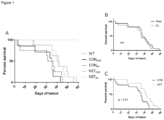
- Figure 1 illustrates the survival times - Figure 1(A) contains survival curves for all five experimental groups; figure 1(B) illustrates the main effect of exercise condition (CON rest & KET rest vs. CON ex & KET ex ); and figure 1(C) shows the main effect of nutritional condition (CON rest + CON WR vs. KET rest + KET ex ). Mice from the ketone groups showed a substantial increase in both mean and median survival time compared to control groups (+40% and +17%, respectively, p ⁇ 0.01). Survival was similar between the rest and exercise groups.
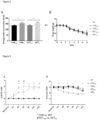
- Figure 2 shows the food intake and body weight - (A) Food intake and (B) body weight for the different experimental groups.
- Food intake in the exercise groups (CON ex & KET ex ) was on average -15% higher than in the rest groups (CON rest & KET rest ), whilst no differences were observed between KET and CON groups.
- Body weight similarly decreased over time in all experimental groups.
- Figure 3 shows blood parameters - (A) Blood ⁇ HB and (B) blood glucose levels for the different experimental groups.
- blood ⁇ HB levels were undetectable ( ⁇ 0.1mM) in all groups.
- ⁇ HB levels increased up to ⁇ 2mM in KET groups, whilst no increase above baseline was found in CON.
- Figure 4 shows wheel running activity. Mice from the KET ex groups showed a substantial increase in wheel running activity compared to CON ex , as evidenced by an increase in both running distance (km/day), running speed and duration, as shown in Table 2 below.
- Table 2 Mouse wheel running activity when consuming either a control or ketone ester diet.
- CON ex KET ex Av distance/day (km) 11.41 ⁇ 1.83 19.78 ⁇ 1.36 * Av running speed (km/h) 2.10 ⁇ 0.23 2.94 ⁇ 0.12 * Av running time/day (hh:mm:ss) 3:15:40 ⁇ 0:25:28 6:45:17 ⁇ 0:27:49 *
- Figure 5 shows tumour weights. Compared with CON groups (455 ⁇ 22 mg), KET mice had substantially lower tumour weights (204 ⁇ 32 mg, p ⁇ 0.05). Tumour weights were similar between the rest and exercise groups.
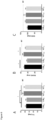
- Figure 6 shows muscle weights - (A) Tibialis anterior (TA), (B) quadriceps (QUAD) and (C) gastrocnemius (GAS) weights for the different experimental groups.
- TA weight was on average -12% higher in KET (41.6 ⁇ 2.1 mg, p ⁇ 0.05).
- QUAD weights were lower in the exercise groups than in the rest groups (44.4 ⁇ 1.1 vs. 51.4 ⁇ 1.6 mg, p ⁇ 0.05).
- GAS weights were similar between the groups.
- Figure 7 shows grip strength - (A) Forelimb and (B) hindlimb strength at day 16 for the different experimental groups. Both forelimb and hindlimb grip strength were higher in the ketone groups (KET rest & KET ex ) than in both the control groups (CON rest & CON ex , p ⁇ 0.05). Exercise per se did not alter grip strength.
Landscapes
- Health & Medical Sciences (AREA)
- Life Sciences & Earth Sciences (AREA)
- Chemical & Material Sciences (AREA)
- General Health & Medical Sciences (AREA)
- Pharmacology & Pharmacy (AREA)
- Medicinal Chemistry (AREA)
- Animal Behavior & Ethology (AREA)
- Public Health (AREA)
- Veterinary Medicine (AREA)
- Engineering & Computer Science (AREA)
- Epidemiology (AREA)
- Chemical Kinetics & Catalysis (AREA)
- General Chemical & Material Sciences (AREA)
- Nuclear Medicine, Radiotherapy & Molecular Imaging (AREA)
- Organic Chemistry (AREA)
- Emergency Medicine (AREA)
- Mycology (AREA)
- Food Science & Technology (AREA)
- Oil, Petroleum & Natural Gas (AREA)
- Polymers & Plastics (AREA)
- Nutrition Science (AREA)
- Neurology (AREA)
- Orthopedic Medicine & Surgery (AREA)
- Physical Education & Sports Medicine (AREA)
- Bioinformatics & Cheminformatics (AREA)
- Molecular Biology (AREA)
- Endocrinology (AREA)
- Biochemistry (AREA)
- Pediatric Medicine (AREA)
- Acyclic And Carbocyclic Compounds In Medicinal Compositions (AREA)
- Organic Low-Molecular-Weight Compounds And Preparation Thereof (AREA)
- Medicinal Preparation (AREA)
- Steroid Compounds (AREA)
- Pharmaceuticals Containing Other Organic And Inorganic Compounds (AREA)
Applications Claiming Priority (2)
| Application Number | Priority Date | Filing Date | Title |
|---|---|---|---|
| GB1809113.2A GB2575623B (en) | 2018-06-04 | 2018-06-04 | 3-hydroxybutyrate esters for treating cancer cachexia |
| PCT/GB2019/051532 WO2019234402A1 (en) | 2018-06-04 | 2019-06-03 | Compounds for use in cancer cachexia |
Publications (2)
| Publication Number | Publication Date |
|---|---|
| EP3801490A1 EP3801490A1 (en) | 2021-04-14 |
| EP3801490B1 true EP3801490B1 (en) | 2024-12-04 |
Family
ID=62872859
Family Applications (1)
| Application Number | Title | Priority Date | Filing Date |
|---|---|---|---|
| EP19730484.3A Active EP3801490B1 (en) | 2018-06-04 | 2019-06-03 | Compounds for use in cancer cachexia |
Country Status (11)
| Country | Link |
|---|---|
| US (1) | US12226387B2 (pl) |
| EP (1) | EP3801490B1 (pl) |
| JP (1) | JP7402826B2 (pl) |
| KR (1) | KR102863322B1 (pl) |
| CN (1) | CN112384211B (pl) |
| CA (1) | CA3102503A1 (pl) |
| DK (1) | DK3801490T3 (pl) |
| ES (1) | ES3014285T3 (pl) |
| GB (1) | GB2575623B (pl) |
| PL (1) | PL3801490T3 (pl) |
| WO (1) | WO2019234402A1 (pl) |
Families Citing this family (3)
| Publication number | Priority date | Publication date | Assignee | Title |
|---|---|---|---|---|
| US12396974B2 (en) | 2020-03-27 | 2025-08-26 | KetoneAid | Ketone ester as a therapeutic treatment of Covid-19 and related viral infections |
| US20240336646A1 (en) * | 2021-11-12 | 2024-10-10 | Arxada Ag | Polyol-Derived Compounds |
| KR20250145172A (ko) | 2024-03-28 | 2025-10-13 | 한림대학교 산학협력단 | 암 악액질의 예방 또는 치료를 위한 약학 조성물 |
Family Cites Families (12)
| Publication number | Priority date | Publication date | Assignee | Title |
|---|---|---|---|---|
| US20060280721A1 (en) * | 2003-06-03 | 2006-12-14 | The Gov Of Usa Represented By Secretary Of Dpt Of | Nutritional supplements and therapeutic compositions comprising (r)-3- hydroxybutyrate derivatives |
| KR101520591B1 (ko) | 2003-06-13 | 2015-05-14 | 가부시키가이샤 니콘 | 노광 방법, 기판 스테이지, 노광 장치, 및 디바이스 제조 방법 |
| US8642654B2 (en) * | 2009-04-16 | 2014-02-04 | Isis Innovation Limited | Hydroxybutyrate ester and medical use thereof |
| NO2328858T3 (pl) * | 2008-08-21 | 2018-03-10 | ||
| GB201002983D0 (en) * | 2010-02-22 | 2010-04-07 | Tdeltas Ltd | Nutritinal composition |
| JP5269128B2 (ja) | 2010-03-12 | 2013-08-21 | エーエスエムエル ネザーランズ ビー.ブイ. | リソグラフィ装置および方法 |
| GB201206192D0 (en) * | 2012-04-05 | 2012-05-23 | Tdeltas Ltd | Ketone bodies and ketone body esters and for maintaining or improving muscle power output |
| WO2014085652A1 (en) | 2012-11-28 | 2014-06-05 | University Of South Florida | Targeting cancer with metabolic therapy and hyperbaric oxygen |
| GB201304467D0 (en) * | 2013-03-12 | 2013-04-24 | Tdeltas Ltd | Compound for use in protecting skin |
| KR102265842B1 (ko) | 2013-03-14 | 2021-06-15 | 옥스포드 유니버시티 이노베이션 리미티드 | (r)3하이드록시부틸 (r)3하이드록시부티레이트를 생산하는 방법 |
| GB201314127D0 (en) * | 2013-08-07 | 2013-09-18 | Tdeltas Ltd | Ketone body and ketone body ester for reducing muscle breakdown |
| WO2018114309A1 (en) * | 2016-12-23 | 2018-06-28 | Katholieke Universiteit Leuven | 3-hydroxybutyrate alone or in combination for use in the treatment of critical care treatment |
-
2018
- 2018-06-04 GB GB1809113.2A patent/GB2575623B/en active Active
-
2019
- 2019-06-03 CN CN201980038028.5A patent/CN112384211B/zh active Active
- 2019-06-03 DK DK19730484.3T patent/DK3801490T3/da active
- 2019-06-03 WO PCT/GB2019/051532 patent/WO2019234402A1/en not_active Ceased
- 2019-06-03 EP EP19730484.3A patent/EP3801490B1/en active Active
- 2019-06-03 CA CA3102503A patent/CA3102503A1/en active Pending
- 2019-06-03 KR KR1020217000016A patent/KR102863322B1/ko active Active
- 2019-06-03 JP JP2020567530A patent/JP7402826B2/ja active Active
- 2019-06-03 ES ES19730484T patent/ES3014285T3/es active Active
- 2019-06-03 US US15/734,159 patent/US12226387B2/en active Active
- 2019-06-03 PL PL19730484.3T patent/PL3801490T3/pl unknown
Non-Patent Citations (1)
| Title |
|---|
| TISDALE ET AL.: "Cancer cachexia", INTERNATIONAL JOURNAL OF PANCREATOLOGY, vol. 7, no. 1-3, 1990, pages 141 - 150, XP009543458, DOI: 10.1007/BF02924231 * |
Also Published As
| Publication number | Publication date |
|---|---|
| DK3801490T3 (da) | 2025-03-03 |
| EP3801490A1 (en) | 2021-04-14 |
| CN112384211A (zh) | 2021-02-19 |
| JP7402826B2 (ja) | 2023-12-21 |
| CA3102503A1 (en) | 2019-12-12 |
| GB201809113D0 (en) | 2018-07-18 |
| WO2019234402A1 (en) | 2019-12-12 |
| GB2575623B (en) | 2022-10-26 |
| ES3014285T3 (en) | 2025-04-21 |
| PL3801490T3 (pl) | 2025-04-14 |
| CN112384211B (zh) | 2025-01-03 |
| KR102863322B1 (ko) | 2025-09-22 |
| KR20210019052A (ko) | 2021-02-19 |
| US20210212977A1 (en) | 2021-07-15 |
| US12226387B2 (en) | 2025-02-18 |
| JP2021525775A (ja) | 2021-09-27 |
| GB2575623A (en) | 2020-01-22 |
Similar Documents
| Publication | Publication Date | Title |
|---|---|---|
| JP7632979B2 (ja) | 肝臓脂肪を減らすことにおいて使用するための3-ヒドロキシ酪酸化合物 | |
| JP6830359B2 (ja) | 栄養組成物 | |
| EP2328858B1 (en) | Drink comprising hydroxybutyrate ester and medical use thereof | |
| US12370165B2 (en) | Hunger suppression | |
| WO2001087291A1 (fr) | Compositions permettant de regulariser le rythme circadien | |
| EP3801490B1 (en) | Compounds for use in cancer cachexia | |
| EP1829537A1 (en) | Composition for body fat reduction | |
| JP2019019143A (ja) | Vcam−1発現抑制剤 | |
| JP5281268B2 (ja) | 筋力向上剤 | |
| CN111939154A (zh) | 抗衰老组合物及其用途和含有它的保健食品与药品 | |
| JP2009057336A (ja) | 羅漢果エキスを含有する創傷治癒促進組成物と適用方法 | |
| WO2021123779A1 (en) | (r)-3-hydroxybutyrate, esters and oligomers thereof for the treatment of multiple sclerosis | |
| HK1053269B (en) | Compositions normalizing circadian rhythm |
Legal Events
| Date | Code | Title | Description |
|---|---|---|---|
| STAA | Information on the status of an ep patent application or granted ep patent |
Free format text: STATUS: UNKNOWN |
|
| STAA | Information on the status of an ep patent application or granted ep patent |
Free format text: STATUS: THE INTERNATIONAL PUBLICATION HAS BEEN MADE |
|
| PUAI | Public reference made under article 153(3) epc to a published international application that has entered the european phase |
Free format text: ORIGINAL CODE: 0009012 |
|
| STAA | Information on the status of an ep patent application or granted ep patent |
Free format text: STATUS: REQUEST FOR EXAMINATION WAS MADE |
|
| 17P | Request for examination filed |
Effective date: 20201223 |
|
| AK | Designated contracting states |
Kind code of ref document: A1 Designated state(s): AL AT BE BG CH CY CZ DE DK EE ES FI FR GB GR HR HU IE IS IT LI LT LU LV MC MK MT NL NO PL PT RO RS SE SI SK SM TR |
|
| AX | Request for extension of the european patent |
Extension state: BA ME |
|
| DAV | Request for validation of the european patent (deleted) | ||
| DAX | Request for extension of the european patent (deleted) | ||
| STAA | Information on the status of an ep patent application or granted ep patent |
Free format text: STATUS: EXAMINATION IS IN PROGRESS |
|
| 17Q | First examination report despatched |
Effective date: 20230405 |
|
| GRAP | Despatch of communication of intention to grant a patent |
Free format text: ORIGINAL CODE: EPIDOSNIGR1 |
|
| STAA | Information on the status of an ep patent application or granted ep patent |
Free format text: STATUS: GRANT OF PATENT IS INTENDED |
|
| INTG | Intention to grant announced |
Effective date: 20240710 |
|
| GRAS | Grant fee paid |
Free format text: ORIGINAL CODE: EPIDOSNIGR3 |
|
| GRAA | (expected) grant |
Free format text: ORIGINAL CODE: 0009210 |
|
| STAA | Information on the status of an ep patent application or granted ep patent |
Free format text: STATUS: THE PATENT HAS BEEN GRANTED |
|
| RIN1 | Information on inventor provided before grant (corrected) |
Inventor name: HESPEL, PETER Inventor name: CLARKE, KIERAN |
|
| AK | Designated contracting states |
Kind code of ref document: B1 Designated state(s): AL AT BE BG CH CY CZ DE DK EE ES FI FR GB GR HR HU IE IS IT LI LT LU LV MC MK MT NL NO PL PT RO RS SE SI SK SM TR |
|
| REG | Reference to a national code |
Ref country code: GB Ref legal event code: FG4D |
|
| REG | Reference to a national code |
Ref country code: CH Ref legal event code: EP |
|
| REG | Reference to a national code |
Ref country code: DE Ref legal event code: R096 Ref document number: 602019062939 Country of ref document: DE |
|
| P01 | Opt-out of the competence of the unified patent court (upc) registered |
Free format text: CASE NUMBER: APP_62221/2024 Effective date: 20241121 |
|
| REG | Reference to a national code |
Ref country code: IE Ref legal event code: FG4D |
|
| REG | Reference to a national code |
Ref country code: DK Ref legal event code: T3 Effective date: 20250228 |
|
| REG | Reference to a national code |
Ref country code: SE Ref legal event code: TRGR |
|
| REG | Reference to a national code |
Ref country code: NL Ref legal event code: FP |
|
| REG | Reference to a national code |
Ref country code: LT Ref legal event code: MG9D |
|
| PG25 | Lapsed in a contracting state [announced via postgrant information from national office to epo] |
Ref country code: HR Free format text: LAPSE BECAUSE OF FAILURE TO SUBMIT A TRANSLATION OF THE DESCRIPTION OR TO PAY THE FEE WITHIN THE PRESCRIBED TIME-LIMIT Effective date: 20241204 |
|
| PG25 | Lapsed in a contracting state [announced via postgrant information from national office to epo] |
Ref country code: FI Free format text: LAPSE BECAUSE OF FAILURE TO SUBMIT A TRANSLATION OF THE DESCRIPTION OR TO PAY THE FEE WITHIN THE PRESCRIBED TIME-LIMIT Effective date: 20241204 |
|
| PG25 | Lapsed in a contracting state [announced via postgrant information from national office to epo] |
Ref country code: BG Free format text: LAPSE BECAUSE OF FAILURE TO SUBMIT A TRANSLATION OF THE DESCRIPTION OR TO PAY THE FEE WITHIN THE PRESCRIBED TIME-LIMIT Effective date: 20241204 |
|
| REG | Reference to a national code |
Ref country code: ES Ref legal event code: FG2A Ref document number: 3014285 Country of ref document: ES Kind code of ref document: T3 Effective date: 20250421 |
|
| PG25 | Lapsed in a contracting state [announced via postgrant information from national office to epo] |
Ref country code: NO Free format text: LAPSE BECAUSE OF FAILURE TO SUBMIT A TRANSLATION OF THE DESCRIPTION OR TO PAY THE FEE WITHIN THE PRESCRIBED TIME-LIMIT Effective date: 20250304 |
|
| PG25 | Lapsed in a contracting state [announced via postgrant information from national office to epo] |
Ref country code: LV Free format text: LAPSE BECAUSE OF FAILURE TO SUBMIT A TRANSLATION OF THE DESCRIPTION OR TO PAY THE FEE WITHIN THE PRESCRIBED TIME-LIMIT Effective date: 20241204 Ref country code: GR Free format text: LAPSE BECAUSE OF FAILURE TO SUBMIT A TRANSLATION OF THE DESCRIPTION OR TO PAY THE FEE WITHIN THE PRESCRIBED TIME-LIMIT Effective date: 20250305 |
|
| PG25 | Lapsed in a contracting state [announced via postgrant information from national office to epo] |
Ref country code: RS Free format text: LAPSE BECAUSE OF FAILURE TO SUBMIT A TRANSLATION OF THE DESCRIPTION OR TO PAY THE FEE WITHIN THE PRESCRIBED TIME-LIMIT Effective date: 20250304 |
|
| REG | Reference to a national code |
Ref country code: AT Ref legal event code: MK05 Ref document number: 1747407 Country of ref document: AT Kind code of ref document: T Effective date: 20241204 |
|
| PG25 | Lapsed in a contracting state [announced via postgrant information from national office to epo] |
Ref country code: SM Free format text: LAPSE BECAUSE OF FAILURE TO SUBMIT A TRANSLATION OF THE DESCRIPTION OR TO PAY THE FEE WITHIN THE PRESCRIBED TIME-LIMIT Effective date: 20241204 |
|
| PGFP | Annual fee paid to national office [announced via postgrant information from national office to epo] |
Ref country code: DE Payment date: 20250618 Year of fee payment: 7 Ref country code: PL Payment date: 20250523 Year of fee payment: 7 |
|
| PGFP | Annual fee paid to national office [announced via postgrant information from national office to epo] |
Ref country code: GB Payment date: 20250618 Year of fee payment: 7 Ref country code: DK Payment date: 20250625 Year of fee payment: 7 |
|
| PG25 | Lapsed in a contracting state [announced via postgrant information from national office to epo] |
Ref country code: IS Free format text: LAPSE BECAUSE OF FAILURE TO SUBMIT A TRANSLATION OF THE DESCRIPTION OR TO PAY THE FEE WITHIN THE PRESCRIBED TIME-LIMIT Effective date: 20250404 |
|
| PGFP | Annual fee paid to national office [announced via postgrant information from national office to epo] |
Ref country code: NL Payment date: 20250618 Year of fee payment: 7 Ref country code: BE Payment date: 20250618 Year of fee payment: 7 |
|
| PG25 | Lapsed in a contracting state [announced via postgrant information from national office to epo] |
Ref country code: PT Free format text: LAPSE BECAUSE OF FAILURE TO SUBMIT A TRANSLATION OF THE DESCRIPTION OR TO PAY THE FEE WITHIN THE PRESCRIBED TIME-LIMIT Effective date: 20250404 |
|
| PG25 | Lapsed in a contracting state [announced via postgrant information from national office to epo] |
Ref country code: EE Free format text: LAPSE BECAUSE OF FAILURE TO SUBMIT A TRANSLATION OF THE DESCRIPTION OR TO PAY THE FEE WITHIN THE PRESCRIBED TIME-LIMIT Effective date: 20241204 |
|
| PGFP | Annual fee paid to national office [announced via postgrant information from national office to epo] |
Ref country code: FR Payment date: 20250626 Year of fee payment: 7 |
|
| PG25 | Lapsed in a contracting state [announced via postgrant information from national office to epo] |
Ref country code: RO Free format text: LAPSE BECAUSE OF FAILURE TO SUBMIT A TRANSLATION OF THE DESCRIPTION OR TO PAY THE FEE WITHIN THE PRESCRIBED TIME-LIMIT Effective date: 20241204 Ref country code: AT Free format text: LAPSE BECAUSE OF FAILURE TO SUBMIT A TRANSLATION OF THE DESCRIPTION OR TO PAY THE FEE WITHIN THE PRESCRIBED TIME-LIMIT Effective date: 20241204 |
|
| PG25 | Lapsed in a contracting state [announced via postgrant information from national office to epo] |
Ref country code: SK Free format text: LAPSE BECAUSE OF FAILURE TO SUBMIT A TRANSLATION OF THE DESCRIPTION OR TO PAY THE FEE WITHIN THE PRESCRIBED TIME-LIMIT Effective date: 20241204 |
|
| PGFP | Annual fee paid to national office [announced via postgrant information from national office to epo] |
Ref country code: CZ Payment date: 20250528 Year of fee payment: 7 |
|
| PGFP | Annual fee paid to national office [announced via postgrant information from national office to epo] |
Ref country code: IE Payment date: 20250618 Year of fee payment: 7 |
|
| PGFP | Annual fee paid to national office [announced via postgrant information from national office to epo] |
Ref country code: SE Payment date: 20250618 Year of fee payment: 7 |
|
| REG | Reference to a national code |
Ref country code: DE Ref legal event code: R097 Ref document number: 602019062939 Country of ref document: DE |
|
| PGFP | Annual fee paid to national office [announced via postgrant information from national office to epo] |
Ref country code: ES Payment date: 20250731 Year of fee payment: 7 |
|
| PLBE | No opposition filed within time limit |
Free format text: ORIGINAL CODE: 0009261 |
|
| STAA | Information on the status of an ep patent application or granted ep patent |
Free format text: STATUS: NO OPPOSITION FILED WITHIN TIME LIMIT |
|
| PGFP | Annual fee paid to national office [announced via postgrant information from national office to epo] |
Ref country code: IT Payment date: 20250619 Year of fee payment: 7 |
|
| PGFP | Annual fee paid to national office [announced via postgrant information from national office to epo] |
Ref country code: CH Payment date: 20250701 Year of fee payment: 7 |
|
| 26N | No opposition filed |
Effective date: 20250905 |