EP3799072B1 - Method for calculating tolerance dose of human body to sugar alcohol and functional sugar - Google Patents
Method for calculating tolerance dose of human body to sugar alcohol and functional sugar Download PDFInfo
- Publication number
- EP3799072B1 EP3799072B1 EP19886727.7A EP19886727A EP3799072B1 EP 3799072 B1 EP3799072 B1 EP 3799072B1 EP 19886727 A EP19886727 A EP 19886727A EP 3799072 B1 EP3799072 B1 EP 3799072B1
- Authority
- EP
- European Patent Office
- Prior art keywords
- rats
- dose
- xylitol
- human body
- sorbitol
- Prior art date
- Legal status (The legal status is an assumption and is not a legal conclusion. Google has not performed a legal analysis and makes no representation as to the accuracy of the status listed.)
- Active
Links
Images

Classifications
-
- A—HUMAN NECESSITIES
- A61—MEDICAL OR VETERINARY SCIENCE; HYGIENE
- A61K—PREPARATIONS FOR MEDICAL, DENTAL OR TOILETRY PURPOSES
- A61K49/00—Preparations for testing in vivo
- A61K49/0004—Screening or testing of compounds for diagnosis of disorders, assessment of conditions, e.g. renal clearance, gastric emptying, testing for diabetes, allergy, rheuma, pancreas functions
-
- G—PHYSICS
- G16—INFORMATION AND COMMUNICATION TECHNOLOGY [ICT] SPECIALLY ADAPTED FOR SPECIFIC APPLICATION FIELDS
- G16H—HEALTHCARE INFORMATICS, i.e. INFORMATION AND COMMUNICATION TECHNOLOGY [ICT] SPECIALLY ADAPTED FOR THE HANDLING OR PROCESSING OF MEDICAL OR HEALTHCARE DATA
- G16H50/00—ICT specially adapted for medical diagnosis, medical simulation or medical data mining; ICT specially adapted for detecting, monitoring or modelling epidemics or pandemics
- G16H50/30—ICT specially adapted for medical diagnosis, medical simulation or medical data mining; ICT specially adapted for detecting, monitoring or modelling epidemics or pandemics for calculating health indices; for individual health risk assessment
Definitions
- the present disclosure belongs to the technical field of application of sugar alcohol, and particularly relates to a method for calculating a tolerated dose of a human body to sugar alcohol and functional sugar selected from xylitol, L-arabinose and sorbitol.
- sugar alcohol for a human body
- excessive intake also has certain adverse effect on the human body, for example, daily excessive intake of sugar alcohol may cause diarrhea and other situations.
- sugar alcohol enters intestines directly without being decomposed by gastric enzyme, an absorption time is longer than that of glucose in small intestine due to its molecular structure different from sugar, and a large amount of intake in a short time will cause borborygmus and diarrhea.
- the technical problem to be solved by the present disclosure is to provide a method for calculating a tolerated dose of a human body to sugar alcohol and functional sugar selected from xylitol, L-arabinose and sorbitol.
- a more accurate range of the tolerated dose of the human body to sugar alcohol and functional sugar can be obtained through animal experiments.
- the present invention is realized by providing a method for calculating a tolerated dose of a human body to sugar alcohol and functional sugar selected from xylitol, L-arabinose and sorbitol as defined in the appended claim.
- a method for calculating a tolerated dose of a human body to sugar alcohol and functional sugar is established by using the most commonly-used xylitol, L-arabinose and sorbitol as the experimental materials and 200 g Wistar rats in animal experiments as the experimental objects in combination with the dose conversion between a human body and an animal in the animal experiments, so as to obtain a more accurate range of the tolerated dose of the human body to sugar alcohol and functional sugar.
- a preferred embodiment of a method for calculating a tolerated dose of a human body to sugar alcohol and functional sugar in the present disclosure includes the following steps 1-5.
- 200 g rats are selected as experimental animal objects, and the 200 g rats are divided into six experimental groups and one control group, with each group including ten numbered rats; and the rats in the six experimental groups (namely, dose (1) experimental group, dose (2) experimental group, dose (3) experimental group, dose (4) experimental group, dose (5) experimental group and dose (6) experimental group) are gavaged with different doses of xylitol each day. The ten rats in each group are gavaged with the same dose.
- the ten rats in the control group are gavaged with the same dose of sucrose or normal saline each day; enough drinking water and common feed are provided to all the experimental rats each day; whether there is fecal matter at the anus of each rat in each group is checked every night, wherein the existence of the fecal matter indicates that the rat has diarrhea, and statistics are made on the quantity and numbers of rats with diarrhea.
- step 2 the step 1 is continued for 14 days.
- step 3 by combining the diarrhea situations of rats on the last day (day 14) with results of intestinal segment slice maps and diamine oxidase contents of the rats in each group, a maximum dose group in which all the rats do not have diarrhea is used to obtain a maximum tolerated dose N of the rats in the group to xylitol.
- the results of the intestinal segment slices and the diamine oxidase of the rats prove that the rats with diarrhea found through observation are subjected to gastrointestinal damage due to their doses exceeding a normal tolerated dose, and the intestinal segment slice maps and the diamine oxidase contents of the rats still having diarrhea on the last day (day 14) are significantly different from those of the rats in the control group and the rats without diarrhea. Therefore, the maximum dose group in which all the rats in this group do not have diarrhea on the last day can be taken as the maximum tolerated dose.
- the maximum tolerated dose N of the rat to xylitol and the tolerated dose R of the human body to the xylitol are both in the unit of g/d; or,
- the maximum tolerated dose of the human body to a certain sugar alcohol or functional sugar recorded in the existing data is used as a reference value firstly.
- the existing companies have declared that the daily intake of xylitol should not exceed 50g. 50 g of xylitol is set as the reference value, and fluctuation is performed based on the reference value to obtain an estimated value of the experimental range.
- the daily experimental dose of 200 g rats to xylitol is obtained through conversion, the group experiment is performed according to the daily experimental dose and statistics are made on the experimental results each day. The experiment is continued for 14 days.
- the maximum tolerated dose N of 200 g rats to xylitol is obtained. Then, according to the maximum tolerated dose N, the most appropriate maximum tolerated dose R of the human body to xylitol is obtained by conversion based on the conversion formula of drug doses of experimental animal and human body.
- the maximum tolerated doses of the human body to L-arabinose and sorbitol can be obtained.
- the daily experimental dose of xylitol of 200 g rats was respectively obtained as 0.36 g/d, 0.54 g/d, 0.71 g/d, 0.89 g/d, 1.07 g/d and 1.25 g/d (six groups in total), and then experiments were performed respectively.
- estimated values of the human body to L-arabinose were respectively set to 70 g/d, 80 g/d, 90 g/d, 100 g/d, 110 g/d and 120g/d (six groups in total) as the experimental range.
- the daily experimental dose of L-arabinose of 200 g rats was respectively obtained as 1.25 g/d, 1.43 g/d, 1.61 g/d, 1.79 g/d, 1.96 g/d and 2.14 g/d (six groups in total), and then experiments were performed respectively.
- estimated values of the human body to sorbitol were respectively set to 5 g/d, 10 g/d, 15 g/d, 20 g/d, 25 g/d and 30 g/d (six groups in total) as the experimental range.
- the daily experimental dose of sorbitol of 200 g rats was respectively obtained as 0.09 g/d, 0.18 g/d, 0.27 g/d, 0.36 g/d, 0.45 g/d and 0.54 g/d (six groups in total), and then experiments were performed respectively.
- the experimental dose of 200 g rats in the control group was 0.5 g/d sucrose solution.
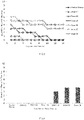
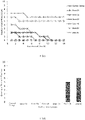
- FIG. 1 to FIG. 6 are the statistics of diarrhea situations of 200 g rats for sugar alcohol and functional sugar during an experimental period.
- the experimental rats theoretically have a maximum sugar alcohol or functional sugar tolerated dose threshold, so the following three situations may occur during feeding:
- the maximum tolerated dose is divided according to the above: situation (1) and situation (2) are regarded as within the tolerable range, situation (3) is regarded as beyond the tolerable range, and the maximum dose of situation (2) is considered to be the maximum tolerated dose of the sugar alcohol or functional sugar.
- the maximum tolerated dose 40 g of the human body to xylitol obtained by the method of the present disclosure is more specific, more accurate and more well-grounded than the currently-known daily xylitol intake amount of the human body which is preferably no more than 50 g.
Landscapes
- Health & Medical Sciences (AREA)
- Engineering & Computer Science (AREA)
- Public Health (AREA)
- Epidemiology (AREA)
- Biomedical Technology (AREA)
- Medical Informatics (AREA)
- Pathology (AREA)
- General Health & Medical Sciences (AREA)
- Gastroenterology & Hepatology (AREA)
- Veterinary Medicine (AREA)
- Toxicology (AREA)
- Life Sciences & Earth Sciences (AREA)
- Animal Behavior & Ethology (AREA)
- Rheumatology (AREA)
- Endocrinology (AREA)
- Urology & Nephrology (AREA)
- Data Mining & Analysis (AREA)
- Databases & Information Systems (AREA)
- Diabetes (AREA)
- Primary Health Care (AREA)
- Acyclic And Carbocyclic Compounds In Medicinal Compositions (AREA)
- Investigating Or Analysing Biological Materials (AREA)
- Medicinal Preparation (AREA)
Description
- The present disclosure belongs to the technical field of application of sugar alcohol, and particularly relates to a method for calculating a tolerated dose of a human body to sugar alcohol and functional sugar selected from xylitol, L-arabinose and sorbitol.
- The many benefits of sugar alcohol for a human body are self-evident, but excessive intake also has certain adverse effect on the human body, for example, daily excessive intake of sugar alcohol may cause diarrhea and other situations. Since sugar alcohol enters intestines directly without being decomposed by gastric enzyme, an absorption time is longer than that of glucose in small intestine due to its molecular structure different from sugar, and a large amount of intake in a short time will cause borborygmus and diarrhea. At the same time, some companies have ever declared that the daily intake of xylitol should not exceed 50 g, the daily intake of maltitol should not exceed 100 g, the daily intake of L-arabinose should not exceed 120 g, and the daily intake of sorbitol should not exceed 50 g, etc. However, because no corresponding experimental methods and experimental data prove the above and the dosage requirements are too broad, they have no significant instruction significance for the amount of sugar alcohol added in products.
- Skoog S. M. et al., Effects of an osmotically active agent on colonic transit, Neurogastroenterology and Motility (2006) 18, 300-306, disclose a study comparing the effects of sorbitol to glucose, given with or without a meal, on gastrointestinal symptoms, colonic transit, and hydrogen breath excretion in healthy subjects.
- The technical problem to be solved by the present disclosure is to provide a method for calculating a tolerated dose of a human body to sugar alcohol and functional sugar selected from xylitol, L-arabinose and sorbitol. By this method, a more accurate range of the tolerated dose of the human body to sugar alcohol and functional sugar can be obtained through animal experiments.
- The present invention is realized by providing a method for calculating a tolerated dose of a human body to sugar alcohol and functional sugar selected from xylitol, L-arabinose and sorbitol as defined in the appended claim.
- Compared with the prior art, according to the method for calculating the tolerated dose of the human body to sugar alcohol and functional sugar in the present disclosure, a method for calculating a tolerated dose of a human body to sugar alcohol and functional sugar is established by using the most commonly-used xylitol, L-arabinose and sorbitol as the experimental materials and 200 g Wistar rats in animal experiments as the experimental objects in combination with the dose conversion between a human body and an animal in the animal experiments, so as to obtain a more accurate range of the tolerated dose of the human body to sugar alcohol and functional sugar.
-
-
FIG. 1 is a statistical diagram of diarrhea situations of rats in experimental groups when a xylitol tolerated dose test is performed for rats according to the present disclosure. -
FIG. 2 is a comparison diagram of diarrhea situations of rats in experimental groups on the last day when a xylitol tolerated dose test is performed for rats according to the present disclosure. -
FIG. 3 is a statistical diagram of diarrhea situations of rats in experimental groups when an L-arabinose tolerated dose test is performed for rats according to the present disclosure. -
FIG. 4 is a comparison diagram of diarrhea situations of rats in experimental groups on the last day when an L-arabinose tolerated dose test is performed for rats according to the present disclosure. -
FIG. 5 is a statistical diagram of diarrhea situations of rats in experimental groups when a sorbitol tolerated dose test is performed for rats according to the present disclosure. -
FIG. 6 is a comparison diagram of diarrhea situations of rats in experimental groups on the last day when a sorbitol tolerated dose test is performed for rats according to the present disclosure. - In order to make the technical problems to be solved, technical solutions and advantageous effects of the present disclosure clearer, the present disclosure will be described in detail below with reference to the accompanying drawing and embodiments.
- A preferred embodiment of a method for calculating a tolerated dose of a human body to sugar alcohol and functional sugar in the present disclosure includes the following steps 1-5.
- At
step 1, 200 g rats are selected as experimental animal objects, and the 200 g rats are divided into six experimental groups and one control group, with each group including ten numbered rats; and the rats in the six experimental groups (namely, dose (1) experimental group, dose (2) experimental group, dose (3) experimental group, dose (4) experimental group, dose (5) experimental group and dose (6) experimental group) are gavaged with different doses of xylitol each day. The ten rats in each group are gavaged with the same dose. The ten rats in the control group are gavaged with the same dose of sucrose or normal saline each day; enough drinking water and common feed are provided to all the experimental rats each day; whether there is fecal matter at the anus of each rat in each group is checked every night, wherein the existence of the fecal matter indicates that the rat has diarrhea, and statistics are made on the quantity and numbers of rats with diarrhea. - At
step 2, thestep 1 is continued for 14 days. - At
step 3, by combining the diarrhea situations of rats on the last day (day 14) with results of intestinal segment slice maps and diamine oxidase contents of the rats in each group, a maximum dose group in which all the rats do not have diarrhea is used to obtain a maximum tolerated dose N of the rats in the group to xylitol. - The results of the intestinal segment slices and the diamine oxidase of the rats prove that the rats with diarrhea found through observation are subjected to gastrointestinal damage due to their doses exceeding a normal tolerated dose, and the intestinal segment slice maps and the diamine oxidase contents of the rats still having diarrhea on the last day (day 14) are significantly different from those of the rats in the control group and the rats without diarrhea. Therefore, the maximum dose group in which all the rats in this group do not have diarrhea on the last day can be taken as the maximum tolerated dose.
- At
step 4, the maximum tolerated dose N of the 200 g rats to xylitol is converted according to the following conversion formula of drug doses of experimental animal and human body to obtain a tolerated dose R of the human body to xylitol:
- at
step 5, the xylitol in thestep 1 is replaced with L-arabinose, and the steps 1-4 above are repeated to obtain a tolerated dose of the 70 kg human body to L-arabinose; or, - the xylitol in the
step 1 is replaced with sorbitol, and the steps 1-4 are repeated to obtain a tolerated dose of the 70 kg human body to sorbitol. - In the specific implementation, the maximum tolerated dose of the human body to a certain sugar alcohol or functional sugar recorded in the existing data is used as a reference value firstly. Taking xylitol as an example, the existing companies have declared that the daily intake of xylitol should not exceed 50g. 50 g of xylitol is set as the reference value, and fluctuation is performed based on the reference value to obtain an estimated value of the experimental range. According to the conversion formula of drug doses of experimental animal and human body, the daily experimental dose of 200 g rats to xylitol is obtained through conversion, the group experiment is performed according to the daily experimental dose and statistics are made on the experimental results each day. The experiment is continued for 14 days. Considering the experimental results and verification results comprehensively, the maximum tolerated dose N of 200 g rats to xylitol is obtained. Then, according to the maximum tolerated dose N, the most appropriate maximum tolerated dose R of the human body to xylitol is obtained by conversion based on the conversion formula of drug doses of experimental animal and human body.
- Similarly, the maximum tolerated doses of the human body to L-arabinose and sorbitol can be obtained.
- Specifically, 50 g of xylitol was set as the reference value, and estimated values of the experimental range of the human body to xylitol were set to 20 g/d, 30 g/d, 40 g/d, 50 g/d, 60 g/d and 70 g/d (six groups in total) according to the reference value. According to the conversion formula of drug doses of experimental animal and human body, the daily experimental dose of xylitol of 200 g rats was respectively obtained as 0.36 g/d, 0.54 g/d, 0.71 g/d, 0.89 g/d, 1.07 g/d and 1.25 g/d (six groups in total), and then experiments were performed respectively.
- Similarly, estimated values of the human body to L-arabinose were respectively set to 70 g/d, 80 g/d, 90 g/d, 100 g/d, 110 g/d and 120g/d (six groups in total) as the experimental range. According to the conversion formula of drug doses of experimental animal and human body, the daily experimental dose of L-arabinose of 200 g rats was respectively obtained as 1.25 g/d, 1.43 g/d, 1.61 g/d, 1.79 g/d, 1.96 g/d and 2.14 g/d (six groups in total), and then experiments were performed respectively.
- Similarly, estimated values of the human body to sorbitol were respectively set to 5 g/d, 10 g/d, 15 g/d, 20 g/d, 25 g/d and 30 g/d (six groups in total) as the experimental range. According to the conversion formula of drug doses of experimental animal and human body, the daily experimental dose of sorbitol of 200 g rats was respectively obtained as 0.09 g/d, 0.18 g/d, 0.27 g/d, 0.36 g/d, 0.45 g/d and 0.54 g/d (six groups in total), and then experiments were performed respectively.
- The experimental dose of 200 g rats in the control group was 0.5 g/d sucrose solution.
-
FIG. 1 to FIG. 6 are the statistics of diarrhea situations of 200 g rats for sugar alcohol and functional sugar during an experimental period. For each sugar alcohol or functional sugar, the experimental rats theoretically have a maximum sugar alcohol or functional sugar tolerated dose threshold, so the following three situations may occur during feeding: - (1) no diarrhea occurred during the experimental period;
- (2) the diarrhea occurred at the beginning, then improved until the diarrhea disappeared (rats had tolerance adaptivity);
- (3) diarrhea existed throughout the experimental period.
- Therefore, the maximum tolerated dose is divided according to the above: situation (1) and situation (2) are regarded as within the tolerable range, situation (3) is regarded as beyond the tolerable range, and the maximum dose of situation (2) is considered to be the maximum tolerated dose of the sugar alcohol or functional sugar.
- Referring to
FIG. 1 and FIG. 2 , when the xylitol tolerated dose experiment was performed with the rats, the maximum sugar tolerance dose was dose (3), that is, the dose for gavaging the rats was 0.71 g/d, and the maximum tolerated dose of the human body to xylitol was calculated as 0.71*56.0=40 g/d according to the conversion formula of drug doses of experimental animal and human body. The maximum tolerated dose 40 g of the human body to xylitol obtained by the method of the present disclosure is more specific, more accurate and more well-grounded than the currently-known daily xylitol intake amount of the human body which is preferably no more than 50 g. - Referring to
FIG. 3 and FIG. 4 , when the L-arabinose tolerated dose experiment was performed with the rats, the maximum sugar tolerance dose was dose (3), that is, the dose for gavaging the rats was 1.61 g/d, and the maximum tolerated dose of the human body to xylitol was calculated as 1.61*56.0=90 g/d according to the conversion formula of drug dose of experimental animal and human body. - Referring to
FIG. 5 and FIG. 6 , when the sorbitol tolerated dose experiment was performed with the rats, the maximum sugar tolerance dose was dose (4), that is, the dose for gavaging the rats was 0.36 g/d, and the maximum tolerated dose of the human body to xylitol was calculated as 0.36*56.0=20 g/d according to the conversion formula of drug doses of experimental animal and human body.
Claims (1)
- A method for calculating a tolerated dose of a human body to sugar alcohol and functional sugar selected from xylitol, L-arabinose and sorbitol, comprising the following steps:at step 1, selecting 200 g rats as experimental animal objects, and dividing the 200 g rats into six experimental groups and one control group, with each including ten numbered rats; gavaging different doses of xylitol, L-arabinose or sorbitol to the rats in the six experimental groups each day, wherein the ten rats in each group are gavaged with the same dose, and gavaging the same dose of sucrose or normal saline to the ten rats in the control group each day; providing enough drinking water and common feed to all the experimental rats each day, checking whether there is fecal matter at the anus of each rat in each group every night, wherein the existence of the fecal matter indicates that the rat has diarrhea, and making statistics on the quantity and numbers of rats with diarrhea;at step 2, continuing the step 1 for 14 days;at step 3, by combining the diarrhea situations of rats on the last day (day 14) with results of intestinal segment slice maps and diamine oxidase contents of the rats in each group, using a maximum dose group in which all the rats do not have diarrhea to obtain a maximum tolerated dose N of the rats in the group to xylitol, L-arabinose or sorbitol;at step 4, converting the maximum tolerated dose N of the 200 g rats to xylitol, L-arabinose or sorbitol according to the following conversion formula of drug doses of experimental animal and human body to obtain a tolerated dose R of the human body to xylitol, L-arabinose or sorbitol:

Applications Claiming Priority (2)
| Application Number | Priority Date | Filing Date | Title |
|---|---|---|---|
| CN201811422592.0A CN109493974A (en) | 2018-11-23 | 2018-11-23 | A method of human body is calculated to sugar alcohol and functional sugar dosis tolerata |
| PCT/CN2019/120304 WO2020103941A1 (en) | 2018-11-23 | 2019-11-22 | Method for calculating tolerance dose of human body to sugar alcohol and functional sugar |
Publications (3)
| Publication Number | Publication Date |
|---|---|
| EP3799072A1 EP3799072A1 (en) | 2021-03-31 |
| EP3799072A4 EP3799072A4 (en) | 2021-10-13 |
| EP3799072B1 true EP3799072B1 (en) | 2022-05-04 |
Family
ID=65696685
Family Applications (1)
| Application Number | Title | Priority Date | Filing Date |
|---|---|---|---|
| EP19886727.7A Active EP3799072B1 (en) | 2018-11-23 | 2019-11-22 | Method for calculating tolerance dose of human body to sugar alcohol and functional sugar |
Country Status (5)
| Country | Link |
|---|---|
| US (1) | US20210379204A1 (en) |
| EP (1) | EP3799072B1 (en) |
| JP (1) | JP6889812B2 (en) |
| CN (1) | CN109493974A (en) |
| WO (1) | WO2020103941A1 (en) |
Families Citing this family (3)
| Publication number | Priority date | Publication date | Assignee | Title |
|---|---|---|---|---|
| CN109493974A (en) * | 2018-11-23 | 2019-03-19 | 浙江华康药业股份有限公司 | A method of human body is calculated to sugar alcohol and functional sugar dosis tolerata |
| CN110619958A (en) * | 2019-10-21 | 2019-12-27 | 浙江华康药业股份有限公司 | Method for calculating tolerance of human body to sugar alcohol and functional sugar |
| CN112568438B (en) | 2020-12-07 | 2022-07-05 | 浙江华康药业股份有限公司 | Sweet taste liquid for preventing and relieving sugar alcohol intolerance of intestinal tract and preparation method and application thereof |
Family Cites Families (11)
| Publication number | Priority date | Publication date | Assignee | Title |
|---|---|---|---|---|
| KR100239879B1 (en) * | 1997-11-05 | 2000-02-01 | 김상조 | Herbal medicine for preventing and treating liver cancer |
| JP2004049093A (en) * | 2002-07-18 | 2004-02-19 | Meiji Milk Prod Co Ltd | Food composition and pharmaceuticals with increased intestinal butyric acid |
| US20040067255A1 (en) * | 2002-10-07 | 2004-04-08 | Chaplin David J. | Method of administering split doses of a vascular targeting agent |
| CN1651018B (en) * | 2004-12-01 | 2010-08-25 | 贵州益佰制药股份有限公司 | Preparation method of medicinal composition for treating upper respiration duct infection |
| US20070060639A1 (en) * | 2005-09-09 | 2007-03-15 | University Of Kentucky | Compositions and methods for intranasal delivery of tricyclic cannabinoids |
| JP4894044B2 (en) * | 2007-03-28 | 2012-03-07 | 長崎県公立大学法人 | Intestinal environment improving composition, sweetening composition and functional food |
| CN101356972B (en) * | 2007-07-30 | 2013-06-12 | 石药集团中奇制药技术(石家庄)有限公司 | Anti-fatigue anti-hypoxia sports health food |
| WO2012016384A1 (en) * | 2010-08-05 | 2012-02-09 | Xie Chen | Anti-fatigue composition of plant material and preparation method, use and products thereof |
| CN103484524A (en) * | 2013-09-26 | 2014-01-01 | 邱思锋 | Pharmacodynamic and toxicologic test methods for honeysuckle and aster immunoenhancer |
| CN109493974A (en) * | 2018-11-23 | 2019-03-19 | 浙江华康药业股份有限公司 | A method of human body is calculated to sugar alcohol and functional sugar dosis tolerata |
| CN110619958A (en) * | 2019-10-21 | 2019-12-27 | 浙江华康药业股份有限公司 | Method for calculating tolerance of human body to sugar alcohol and functional sugar |
-
2018
- 2018-11-23 CN CN201811422592.0A patent/CN109493974A/en active Pending
-
2019
- 2019-11-22 EP EP19886727.7A patent/EP3799072B1/en active Active
- 2019-11-22 WO PCT/CN2019/120304 patent/WO2020103941A1/en not_active Ceased
- 2019-11-22 JP JP2020558452A patent/JP6889812B2/en active Active
- 2019-11-22 US US17/286,006 patent/US20210379204A1/en not_active Abandoned
Also Published As
| Publication number | Publication date |
|---|---|
| JP2021514067A (en) | 2021-06-03 |
| EP3799072A1 (en) | 2021-03-31 |
| CN109493974A (en) | 2019-03-19 |
| EP3799072A4 (en) | 2021-10-13 |
| WO2020103941A1 (en) | 2020-05-28 |
| US20210379204A1 (en) | 2021-12-09 |
| JP6889812B2 (en) | 2021-06-18 |
Similar Documents
| Publication | Publication Date | Title |
|---|---|---|
| EP3799072A1 (en) | Method for calculating tolerance dose of human body to sugar alcohol and functional sugar | |
| Peregrine et al. | Larval cyathostominosis in horses in Ontario: an emerging disease? | |
| Rawla et al. | Doxycycline-induced acute pancreatitis: a rare adverse event | |
| Nazareth et al. | Ampicillin sensitivity in infectious mononucleosis-temporary or permanent? | |
| Christensen et al. | Pseudo-obstruction | |
| Na-Phatthalung et al. | Immune-related gene expression and physiological responses in rainbow trout (Oncorhynchus mykiss) after intraperitoneal administration of Rhodomyrtus tomentosa leaf extract: A potent phytoimmunostimulant | |
| KRAMETTER‐FROETSCHER et al. | Zinc‐responsive dermatosis in goats suggestive of hereditary malabsorption: two field cases | |
| Arya et al. | Treatment of gonorrhoea with trimethoprim-sulphamethoxazole in Uganda | |
| Askvig et al. | Absence of axonal sprouting following unilateral lesion in 125‐day‐old rat supraoptic nucleus may be due to age‐dependent decrease in protein levels of ciliary neurotrophic factor receptor alpha | |
| Gunnels et al. | Failure of vaccines to protect salmon from vibriosis enzootic in Puget Sound, Washington | |
| CN110619958A (en) | Method for calculating tolerance of human body to sugar alcohol and functional sugar | |
| Thomas et al. | Dysphagia, a reversible cause not to be forgotten | |
| Schöler et al. | Biological properties of 9, 10-isomeric steroids | |
| Williams | Griseofulvin | |
| Semple et al. | Cushing’s syndrome and autonomous thyroid nodules, a variant of multiple endocrine neoplasia? | |
| Lejeune | Cure of Tapeworms in Gyrfalcon | |
| Kines | Hashimoto’s Thyroiditis: Clinical Blind Spots and Solutions for a Hidden Epidemic | |
| UA32674U (en) | Method for phytotherapy of immunodeficiency caused by ecological factors | |
| Tal Gavriel | The Effect of Obesity and Weight Loss on the Feline Fecal Microbiota, Inflammation and Intestinal Health Markers | |
| Marine | The Thyroid Gland and its Relation to Disease, May 19, 1927 | |
| Rutkowska et al. | Vitamin D deficiency in women with gestational diabetes mellitus | |
| Singh | Pregnancy in Addison's disease | |
| Borzelleca et al. | An evaluation of the reproductive and developmental effects of tara gum in rats | |
| Polani et al. | Chromosomes of man | |
| Heaton-Ward et al. | Appearance of Parkinsonism in Mentally Defective Patients Treated with “Dartalan” |
Legal Events
| Date | Code | Title | Description |
|---|---|---|---|
| STAA | Information on the status of an ep patent application or granted ep patent |
Free format text: STATUS: THE INTERNATIONAL PUBLICATION HAS BEEN MADE |
|
| PUAI | Public reference made under article 153(3) epc to a published international application that has entered the european phase |
Free format text: ORIGINAL CODE: 0009012 |
|
| STAA | Information on the status of an ep patent application or granted ep patent |
Free format text: STATUS: REQUEST FOR EXAMINATION WAS MADE |
|
| 17P | Request for examination filed |
Effective date: 20201222 |
|
| AK | Designated contracting states |
Kind code of ref document: A1 Designated state(s): AL AT BE BG CH CY CZ DE DK EE ES FI FR GB GR HR HU IE IS IT LI LT LU LV MC MK MT NL NO PL PT RO RS SE SI SK SM TR |
|
| AX | Request for extension of the european patent |
Extension state: BA ME |
|
| REG | Reference to a national code |
Ref country code: DE Ref legal event code: R079 Ref document number: 602019014678 Country of ref document: DE Free format text: PREVIOUS MAIN CLASS: G16H0050300000 Ipc: A61K0049000000 |
|
| A4 | Supplementary search report drawn up and despatched |
Effective date: 20210915 |
|
| RIC1 | Information provided on ipc code assigned before grant |
Ipc: G16H 50/30 20180101ALI20210909BHEP Ipc: A61K 49/00 20060101AFI20210909BHEP |
|
| GRAP | Despatch of communication of intention to grant a patent |
Free format text: ORIGINAL CODE: EPIDOSNIGR1 |
|
| STAA | Information on the status of an ep patent application or granted ep patent |
Free format text: STATUS: GRANT OF PATENT IS INTENDED |
|
| DAV | Request for validation of the european patent (deleted) | ||
| DAX | Request for extension of the european patent (deleted) | ||
| INTG | Intention to grant announced |
Effective date: 20220216 |
|
| GRAS | Grant fee paid |
Free format text: ORIGINAL CODE: EPIDOSNIGR3 |
|
| GRAA | (expected) grant |
Free format text: ORIGINAL CODE: 0009210 |
|
| STAA | Information on the status of an ep patent application or granted ep patent |
Free format text: STATUS: THE PATENT HAS BEEN GRANTED |
|
| AK | Designated contracting states |
Kind code of ref document: B1 Designated state(s): AL AT BE BG CH CY CZ DE DK EE ES FI FR GB GR HR HU IE IS IT LI LT LU LV MC MK MT NL NO PL PT RO RS SE SI SK SM TR |
|
| REG | Reference to a national code |
Ref country code: GB Ref legal event code: FG4D |
|
| REG | Reference to a national code |
Ref country code: CH Ref legal event code: EP |
|
| REG | Reference to a national code |
Ref country code: AT Ref legal event code: REF Ref document number: 1488330 Country of ref document: AT Kind code of ref document: T Effective date: 20220515 |
|
| REG | Reference to a national code |
Ref country code: IE Ref legal event code: FG4D Ref country code: DE Ref legal event code: R096 Ref document number: 602019014678 Country of ref document: DE |
|
| REG | Reference to a national code |
Ref country code: NL Ref legal event code: FP |
|
| REG | Reference to a national code |
Ref country code: LT Ref legal event code: MG9D |
|
| REG | Reference to a national code |
Ref country code: AT Ref legal event code: MK05 Ref document number: 1488330 Country of ref document: AT Kind code of ref document: T Effective date: 20220504 |
|
| PG25 | Lapsed in a contracting state [announced via postgrant information from national office to epo] |
Ref country code: SE Free format text: LAPSE BECAUSE OF FAILURE TO SUBMIT A TRANSLATION OF THE DESCRIPTION OR TO PAY THE FEE WITHIN THE PRESCRIBED TIME-LIMIT Effective date: 20220504 Ref country code: PT Free format text: LAPSE BECAUSE OF FAILURE TO SUBMIT A TRANSLATION OF THE DESCRIPTION OR TO PAY THE FEE WITHIN THE PRESCRIBED TIME-LIMIT Effective date: 20220905 Ref country code: NO Free format text: LAPSE BECAUSE OF FAILURE TO SUBMIT A TRANSLATION OF THE DESCRIPTION OR TO PAY THE FEE WITHIN THE PRESCRIBED TIME-LIMIT Effective date: 20220804 Ref country code: LT Free format text: LAPSE BECAUSE OF FAILURE TO SUBMIT A TRANSLATION OF THE DESCRIPTION OR TO PAY THE FEE WITHIN THE PRESCRIBED TIME-LIMIT Effective date: 20220504 Ref country code: HR Free format text: LAPSE BECAUSE OF FAILURE TO SUBMIT A TRANSLATION OF THE DESCRIPTION OR TO PAY THE FEE WITHIN THE PRESCRIBED TIME-LIMIT Effective date: 20220504 Ref country code: GR Free format text: LAPSE BECAUSE OF FAILURE TO SUBMIT A TRANSLATION OF THE DESCRIPTION OR TO PAY THE FEE WITHIN THE PRESCRIBED TIME-LIMIT Effective date: 20220805 Ref country code: FI Free format text: LAPSE BECAUSE OF FAILURE TO SUBMIT A TRANSLATION OF THE DESCRIPTION OR TO PAY THE FEE WITHIN THE PRESCRIBED TIME-LIMIT Effective date: 20220504 Ref country code: BG Free format text: LAPSE BECAUSE OF FAILURE TO SUBMIT A TRANSLATION OF THE DESCRIPTION OR TO PAY THE FEE WITHIN THE PRESCRIBED TIME-LIMIT Effective date: 20220804 Ref country code: AT Free format text: LAPSE BECAUSE OF FAILURE TO SUBMIT A TRANSLATION OF THE DESCRIPTION OR TO PAY THE FEE WITHIN THE PRESCRIBED TIME-LIMIT Effective date: 20220504 |
|
| PG25 | Lapsed in a contracting state [announced via postgrant information from national office to epo] |
Ref country code: RS Free format text: LAPSE BECAUSE OF FAILURE TO SUBMIT A TRANSLATION OF THE DESCRIPTION OR TO PAY THE FEE WITHIN THE PRESCRIBED TIME-LIMIT Effective date: 20220504 Ref country code: PL Free format text: LAPSE BECAUSE OF FAILURE TO SUBMIT A TRANSLATION OF THE DESCRIPTION OR TO PAY THE FEE WITHIN THE PRESCRIBED TIME-LIMIT Effective date: 20220504 Ref country code: LV Free format text: LAPSE BECAUSE OF FAILURE TO SUBMIT A TRANSLATION OF THE DESCRIPTION OR TO PAY THE FEE WITHIN THE PRESCRIBED TIME-LIMIT Effective date: 20220504 Ref country code: IS Free format text: LAPSE BECAUSE OF FAILURE TO SUBMIT A TRANSLATION OF THE DESCRIPTION OR TO PAY THE FEE WITHIN THE PRESCRIBED TIME-LIMIT Effective date: 20220904 |
|
| PG25 | Lapsed in a contracting state [announced via postgrant information from national office to epo] |
Ref country code: SM Free format text: LAPSE BECAUSE OF FAILURE TO SUBMIT A TRANSLATION OF THE DESCRIPTION OR TO PAY THE FEE WITHIN THE PRESCRIBED TIME-LIMIT Effective date: 20220504 Ref country code: SK Free format text: LAPSE BECAUSE OF FAILURE TO SUBMIT A TRANSLATION OF THE DESCRIPTION OR TO PAY THE FEE WITHIN THE PRESCRIBED TIME-LIMIT Effective date: 20220504 Ref country code: RO Free format text: LAPSE BECAUSE OF FAILURE TO SUBMIT A TRANSLATION OF THE DESCRIPTION OR TO PAY THE FEE WITHIN THE PRESCRIBED TIME-LIMIT Effective date: 20220504 Ref country code: ES Free format text: LAPSE BECAUSE OF FAILURE TO SUBMIT A TRANSLATION OF THE DESCRIPTION OR TO PAY THE FEE WITHIN THE PRESCRIBED TIME-LIMIT Effective date: 20220504 Ref country code: EE Free format text: LAPSE BECAUSE OF FAILURE TO SUBMIT A TRANSLATION OF THE DESCRIPTION OR TO PAY THE FEE WITHIN THE PRESCRIBED TIME-LIMIT Effective date: 20220504 Ref country code: DK Free format text: LAPSE BECAUSE OF FAILURE TO SUBMIT A TRANSLATION OF THE DESCRIPTION OR TO PAY THE FEE WITHIN THE PRESCRIBED TIME-LIMIT Effective date: 20220504 Ref country code: CZ Free format text: LAPSE BECAUSE OF FAILURE TO SUBMIT A TRANSLATION OF THE DESCRIPTION OR TO PAY THE FEE WITHIN THE PRESCRIBED TIME-LIMIT Effective date: 20220504 |
|
| REG | Reference to a national code |
Ref country code: DE Ref legal event code: R097 Ref document number: 602019014678 Country of ref document: DE |
|
| PLBE | No opposition filed within time limit |
Free format text: ORIGINAL CODE: 0009261 |
|
| STAA | Information on the status of an ep patent application or granted ep patent |
Free format text: STATUS: NO OPPOSITION FILED WITHIN TIME LIMIT |
|
| PG25 | Lapsed in a contracting state [announced via postgrant information from national office to epo] |
Ref country code: AL Free format text: LAPSE BECAUSE OF FAILURE TO SUBMIT A TRANSLATION OF THE DESCRIPTION OR TO PAY THE FEE WITHIN THE PRESCRIBED TIME-LIMIT Effective date: 20220504 |
|
| 26N | No opposition filed |
Effective date: 20230207 |
|
| PG25 | Lapsed in a contracting state [announced via postgrant information from national office to epo] |
Ref country code: SI Free format text: LAPSE BECAUSE OF FAILURE TO SUBMIT A TRANSLATION OF THE DESCRIPTION OR TO PAY THE FEE WITHIN THE PRESCRIBED TIME-LIMIT Effective date: 20220504 |
|
| PG25 | Lapsed in a contracting state [announced via postgrant information from national office to epo] |
Ref country code: MC Free format text: LAPSE BECAUSE OF FAILURE TO SUBMIT A TRANSLATION OF THE DESCRIPTION OR TO PAY THE FEE WITHIN THE PRESCRIBED TIME-LIMIT Effective date: 20220504 |
|
| REG | Reference to a national code |
Ref country code: CH Ref legal event code: PL |
|
| PG25 | Lapsed in a contracting state [announced via postgrant information from national office to epo] |
Ref country code: LI Free format text: LAPSE BECAUSE OF NON-PAYMENT OF DUE FEES Effective date: 20221130 Ref country code: CH Free format text: LAPSE BECAUSE OF NON-PAYMENT OF DUE FEES Effective date: 20221130 |
|
| PG25 | Lapsed in a contracting state [announced via postgrant information from national office to epo] |
Ref country code: LU Free format text: LAPSE BECAUSE OF NON-PAYMENT OF DUE FEES Effective date: 20221122 |
|
| PG25 | Lapsed in a contracting state [announced via postgrant information from national office to epo] |
Ref country code: IE Free format text: LAPSE BECAUSE OF NON-PAYMENT OF DUE FEES Effective date: 20221122 |
|
| PG25 | Lapsed in a contracting state [announced via postgrant information from national office to epo] |
Ref country code: FR Free format text: LAPSE BECAUSE OF NON-PAYMENT OF DUE FEES Effective date: 20221130 |
|
| PG25 | Lapsed in a contracting state [announced via postgrant information from national office to epo] |
Ref country code: IT Free format text: LAPSE BECAUSE OF FAILURE TO SUBMIT A TRANSLATION OF THE DESCRIPTION OR TO PAY THE FEE WITHIN THE PRESCRIBED TIME-LIMIT Effective date: 20220504 |
|
| PG25 | Lapsed in a contracting state [announced via postgrant information from national office to epo] |
Ref country code: CY Free format text: LAPSE BECAUSE OF FAILURE TO SUBMIT A TRANSLATION OF THE DESCRIPTION OR TO PAY THE FEE WITHIN THE PRESCRIBED TIME-LIMIT Effective date: 20220504 |
|
| PG25 | Lapsed in a contracting state [announced via postgrant information from national office to epo] |
Ref country code: MK Free format text: LAPSE BECAUSE OF FAILURE TO SUBMIT A TRANSLATION OF THE DESCRIPTION OR TO PAY THE FEE WITHIN THE PRESCRIBED TIME-LIMIT Effective date: 20220504 Ref country code: HU Free format text: LAPSE BECAUSE OF FAILURE TO SUBMIT A TRANSLATION OF THE DESCRIPTION OR TO PAY THE FEE WITHIN THE PRESCRIBED TIME-LIMIT; INVALID AB INITIO Effective date: 20191122 |
|
| PG25 | Lapsed in a contracting state [announced via postgrant information from national office to epo] |
Ref country code: TR Free format text: LAPSE BECAUSE OF FAILURE TO SUBMIT A TRANSLATION OF THE DESCRIPTION OR TO PAY THE FEE WITHIN THE PRESCRIBED TIME-LIMIT Effective date: 20220504 |
|
| PG25 | Lapsed in a contracting state [announced via postgrant information from national office to epo] |
Ref country code: MT Free format text: LAPSE BECAUSE OF FAILURE TO SUBMIT A TRANSLATION OF THE DESCRIPTION OR TO PAY THE FEE WITHIN THE PRESCRIBED TIME-LIMIT Effective date: 20220504 |
|
| PG25 | Lapsed in a contracting state [announced via postgrant information from national office to epo] |
Ref country code: BG Free format text: LAPSE BECAUSE OF FAILURE TO SUBMIT A TRANSLATION OF THE DESCRIPTION OR TO PAY THE FEE WITHIN THE PRESCRIBED TIME-LIMIT Effective date: 20220504 |
|
| PG25 | Lapsed in a contracting state [announced via postgrant information from national office to epo] |
Ref country code: BG Free format text: LAPSE BECAUSE OF FAILURE TO SUBMIT A TRANSLATION OF THE DESCRIPTION OR TO PAY THE FEE WITHIN THE PRESCRIBED TIME-LIMIT Effective date: 20220504 |
|
| PGFP | Annual fee paid to national office [announced via postgrant information from national office to epo] |
Ref country code: NL Payment date: 20251119 Year of fee payment: 7 |
|
| PGFP | Annual fee paid to national office [announced via postgrant information from national office to epo] |
Ref country code: DE Payment date: 20251119 Year of fee payment: 7 |
|
| PGFP | Annual fee paid to national office [announced via postgrant information from national office to epo] |
Ref country code: GB Payment date: 20251119 Year of fee payment: 7 |
|
| PGFP | Annual fee paid to national office [announced via postgrant information from national office to epo] |
Ref country code: BE Payment date: 20251119 Year of fee payment: 7 |