EP3796145B1 - A method and correspond device for selecting graphical objects - Google Patents
A method and correspond device for selecting graphical objects Download PDFInfo
- Publication number
- EP3796145B1 EP3796145B1 EP19306135.5A EP19306135A EP3796145B1 EP 3796145 B1 EP3796145 B1 EP 3796145B1 EP 19306135 A EP19306135 A EP 19306135A EP 3796145 B1 EP3796145 B1 EP 3796145B1
- Authority
- EP
- European Patent Office
- Prior art keywords
- selection
- computing device
- text
- graphical object
- block section
- Prior art date
- Legal status (The legal status is an assumption and is not a legal conclusion. Google has not performed a legal analysis and makes no representation as to the accuracy of the status listed.)
- Active
Links
Images






Classifications
-
- G—PHYSICS
- G06—COMPUTING OR CALCULATING; COUNTING
- G06F—ELECTRIC DIGITAL DATA PROCESSING
- G06F3/00—Input arrangements for transferring data to be processed into a form capable of being handled by the computer; Output arrangements for transferring data from processing unit to output unit, e.g. interface arrangements
- G06F3/01—Input arrangements or combined input and output arrangements for interaction between user and computer
- G06F3/048—Interaction techniques based on graphical user interfaces [GUI]
- G06F3/0484—Interaction techniques based on graphical user interfaces [GUI] for the control of specific functions or operations, e.g. selecting or manipulating an object, an image or a displayed text element, setting a parameter value or selecting a range
- G06F3/04842—Selection of displayed objects or displayed text elements
-
- G—PHYSICS
- G06—COMPUTING OR CALCULATING; COUNTING
- G06F—ELECTRIC DIGITAL DATA PROCESSING
- G06F18/00—Pattern recognition
- G06F18/20—Analysing
- G06F18/21—Design or setup of recognition systems or techniques; Extraction of features in feature space; Blind source separation
- G06F18/211—Selection of the most significant subset of features
- G06F18/2113—Selection of the most significant subset of features by ranking or filtering the set of features, e.g. using a measure of variance or of feature cross-correlation
-
- G—PHYSICS
- G06—COMPUTING OR CALCULATING; COUNTING
- G06F—ELECTRIC DIGITAL DATA PROCESSING
- G06F3/00—Input arrangements for transferring data to be processed into a form capable of being handled by the computer; Output arrangements for transferring data from processing unit to output unit, e.g. interface arrangements
- G06F3/01—Input arrangements or combined input and output arrangements for interaction between user and computer
- G06F3/048—Interaction techniques based on graphical user interfaces [GUI]
- G06F3/0484—Interaction techniques based on graphical user interfaces [GUI] for the control of specific functions or operations, e.g. selecting or manipulating an object, an image or a displayed text element, setting a parameter value or selecting a range
-
- G—PHYSICS
- G06—COMPUTING OR CALCULATING; COUNTING
- G06F—ELECTRIC DIGITAL DATA PROCESSING
- G06F3/00—Input arrangements for transferring data to be processed into a form capable of being handled by the computer; Output arrangements for transferring data from processing unit to output unit, e.g. interface arrangements
- G06F3/01—Input arrangements or combined input and output arrangements for interaction between user and computer
- G06F3/048—Interaction techniques based on graphical user interfaces [GUI]
- G06F3/0487—Interaction techniques based on graphical user interfaces [GUI] using specific features provided by the input device, e.g. functions controlled by the rotation of a mouse with dual sensing arrangements, or of the nature of the input device, e.g. tap gestures based on pressure sensed by a digitiser
- G06F3/0488—Interaction techniques based on graphical user interfaces [GUI] using specific features provided by the input device, e.g. functions controlled by the rotation of a mouse with dual sensing arrangements, or of the nature of the input device, e.g. tap gestures based on pressure sensed by a digitiser using a touch-screen or digitiser, e.g. input of commands through traced gestures
-
- G—PHYSICS
- G06—COMPUTING OR CALCULATING; COUNTING
- G06F—ELECTRIC DIGITAL DATA PROCESSING
- G06F3/00—Input arrangements for transferring data to be processed into a form capable of being handled by the computer; Output arrangements for transferring data from processing unit to output unit, e.g. interface arrangements
- G06F3/01—Input arrangements or combined input and output arrangements for interaction between user and computer
- G06F3/048—Interaction techniques based on graphical user interfaces [GUI]
- G06F3/0487—Interaction techniques based on graphical user interfaces [GUI] using specific features provided by the input device, e.g. functions controlled by the rotation of a mouse with dual sensing arrangements, or of the nature of the input device, e.g. tap gestures based on pressure sensed by a digitiser
- G06F3/0488—Interaction techniques based on graphical user interfaces [GUI] using specific features provided by the input device, e.g. functions controlled by the rotation of a mouse with dual sensing arrangements, or of the nature of the input device, e.g. tap gestures based on pressure sensed by a digitiser using a touch-screen or digitiser, e.g. input of commands through traced gestures
- G06F3/04883—Interaction techniques based on graphical user interfaces [GUI] using specific features provided by the input device, e.g. functions controlled by the rotation of a mouse with dual sensing arrangements, or of the nature of the input device, e.g. tap gestures based on pressure sensed by a digitiser using a touch-screen or digitiser, e.g. input of commands through traced gestures for inputting data by handwriting, e.g. gesture or text
-
- G—PHYSICS
- G06—COMPUTING OR CALCULATING; COUNTING
- G06F—ELECTRIC DIGITAL DATA PROCESSING
- G06F40/00—Handling natural language data
- G06F40/10—Text processing
- G06F40/166—Editing, e.g. inserting or deleting
- G06F40/169—Annotation, e.g. comment data or footnotes
-
- G—PHYSICS
- G06—COMPUTING OR CALCULATING; COUNTING
- G06F—ELECTRIC DIGITAL DATA PROCESSING
- G06F40/00—Handling natural language data
- G06F40/10—Text processing
- G06F40/166—Editing, e.g. inserting or deleting
- G06F40/171—Editing, e.g. inserting or deleting by use of digital ink
-
- G—PHYSICS
- G06—COMPUTING OR CALCULATING; COUNTING
- G06V—IMAGE OR VIDEO RECOGNITION OR UNDERSTANDING
- G06V30/00—Character recognition; Recognising digital ink; Document-oriented image-based pattern recognition
- G06V30/10—Character recognition
- G06V30/14—Image acquisition
- G06V30/142—Image acquisition using hand-held instruments; Constructional details of the instruments
- G06V30/1423—Image acquisition using hand-held instruments; Constructional details of the instruments the instrument generating sequences of position coordinates corresponding to handwriting
-
- G—PHYSICS
- G06—COMPUTING OR CALCULATING; COUNTING
- G06V—IMAGE OR VIDEO RECOGNITION OR UNDERSTANDING
- G06V30/00—Character recognition; Recognising digital ink; Document-oriented image-based pattern recognition
- G06V30/10—Character recognition
- G06V30/32—Digital ink
Definitions
- Computing devices generally comprise of at least one processing element, such as a central processing unit (CPU), some form of memory, and input and output devices.
- CPU central processing unit
- input and output devices input devices and output devices.
- One such input device is a touch sensitive surface such as a touchscreen or touchpad wherein the user input is received through contact between a user body part (e.g. a finger) or an instrument (e.g. a pen or stylus), and the touch sensitive surface.
- a user body part e.g. a finger
- an instrument e.g. a pen or stylus
- Another input device is an input surface that senses gestures made by a user above the input surface.
- a further input device is a position detection system which detects the relative position of either touch or non-touch interactions with a non-touch physical or virtual surface.
- Handwriting recognition can be implemented in computing devices to input and process various types of graphical objects (also called input elements), hand-drawn or handwritten by a user, such as text content (e.g., alphanumeric characters) or non-text content (e.g. shapes, drawings).
- text content e.g., alphanumeric characters
- non-text content e.g. shapes, drawings
- the input elements are usually displayed as digital ink and undergo handwriting recognition to be converted into typeset versions.
- the user handwriting input is typically interpreted using a real-time handwriting recognition system or method. To this end, either on-line systems (recognition carried out using a cloud-based solution or the like) or off-line systems may be used.
- the user input may be drawings, diagrams or any other content of text, non-text or mixed content of text and non-text.
- Handwriting input may be made on a structured document according to guiding lines (base lines) which guide and constraint input by the user.
- base lines guide and constraint input by the user.
- a user may handwrite in free-mode, i.e. without any constraints of lines to follow or input size to comply with (e.g. on a blank page).
- Figure 1A shows an example of a computing device 1 comprising a display device 1 which displays digital ink graphical objects hand-drawn or handwritten by a user using an appropriate user interface.
- the computing device 1 detects and displays text content 4 and 6 and non-text content 8, 10 and 12.
- Each of these elements is formed by one or more strokes of digital ink.
- text and non-text may each take various forms.
- Graphical objects may comprise text handwriting, diagrams, musical annotations, and so on...
- the shape 8 is a rectangle or the like which constitutes a container (a box) containing text content 6 so that both elements 6 and 8 can be selected and manipulated together.
- handwriting recognition applications it is usually possible to perform some level of editing on user input displayed on a computing device.
- such applications are however limited in their capabilities to handle editing functions and typically constrain users to adopt behaviours or accept compromises which do not reflect the user's original intent.
- some conventional handwritten recognition applications force users to navigate menus to select and edit ink elements.
- Document US 9 965 175 B2 discloses a system, method and computer program product for use in digital note taking with handwriting input to a computing device.
- Document US 2014143721 A1 discloses an information processing device associated with a display unit displaying information, including first and second detection units and an executing unit.
- the selection module in the second mode is configured to authorise only selection of any graphical object within said target block section by blocking the selection path within the target block section even if the user selection gesture moves outside the target block section.
- the selection module is configured to determine a connection line joining the initiation point and an end point of the selection path to thereby form the selection area.
- the selection path and the connection line are represented on the display device by two respective strokes of digital ink having a predefined stroke width, the selection area being defined collectively by the selection path and the connection line so that said selection area includes the area occupied by the selection path and the connection line.
- the selection module is configured, in the first and second mode, to select each graphical object which presents a relative proportion within the selection area exceeding a predetermined threshold.
- the display device is configured to generate a visual feedback for each graphical object being currently selected by the user selection gesture while the selection path is being drawn.
- the user selection gesture is an interaction of a user's body part with the input surface which causes generation of a stroke of digital ink on the display device along the selection path.
- said at least one block section comprises at least one of the following:
- the computing device comprises a storing module for storing a respective rank for each of said graphical objects present in the display area, the ranks of said graphical objects being ordered according to a rank order, wherein the selection module is configured to:
- the present invention also relates to a corresponding method implemented by the computing device of the invention.
- the invention concerns a method implemented by a computing device, the method comprising:
- an aspect of the present invention involves using a computing device to display graphical objects (input elements) in various sections of a display area, locate an initiation point in the display area from which starts a user selection gesture which is performed on the computing device to define a selection area, and select each graphical object contained (partially or totally) in the selection area defined by the user selection gesture. More particularly, this selection area is formed by a selection path defined by the user selection gesture. Further aspects of the present invention will be described hereafter.
- the memory 108 may be remote from the computing device 100, such as at a server or cloud-based system, which is remotely accessible by the computing device 100.
- the non-volatile memory 108 is coupled to the processor 106, so that the processor 106 is capable of reading information from and writing information to the memory 108.
- the memory 108 is integral to the computing device 100.
- the memory 108 includes an operating system (OS) 110 and a handwriting application (or computer program) 112.
- the operating system 110 controls the execution of the application 112.
- the application 112 constitutes (or comprises) a computer program (or computer-readable program code) according to a particular embodiment of the invention, this computer program having instructions to implement a method according to a particular embodiment of the invention.
- the language unit 126 generates linguistic meaning for the different paths in the segmentation graph using language models (e.g., grammar or semantics).
- the language unit 126 checks the candidates suggested by the units 122 and 124 based on linguistic information 130.
- the linguistic information 130 can include a lexicon(s), such as text-based lexicons (regular expressions, etc.) and/or shape-based lexicons.
- the language unit 130 aims at finding the best recognition path.
- the language unit 126 may use statistical information modelling for how frequent a given sequence of elements appears in the specified language or is used by a specific user to evaluate the likelihood of the interpretation of a given path of the segmentation graph.
- the locating module MD2 may be configured to locate an initiation point in a display area from which starts a user selection gesture (referred to later as GT1) performed with the input surface 104 to define a selection area.
- GT1 user selection gesture
- the selection module MD4 is configured to operate according to either a first mode ME1 or a second mode ME2, as a function of the initiation point's location determined by the locating module MD2.
- the modes ME1 and ME2 are two different selection modes selectively applicable by the selection module MD4 in response to the location of the initiation point as determined by the locating module MD2.
- the selection module MD4 may thus apply either the selection mode ME1 or the selection mode ME2 as a function of where the user selection gesture starts.
- a method implemented by the computing device 100 illustrated in figures 2-5 is now described with reference to figures 6-17 , in accordance with a particular embodiment of the present invention. More specifically, the computing device 100 implements this method by executing the application 112 stored in the memory 108.
- the structured text section 202 forms a background of the display area 200 with guidelines for guiding text input.
- the block sections BL are displayed over (i.e. on top of and along with) this background.
- Other implementations are however possible.
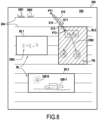
- the computing device 100 locates an initiation point PT1 in the display area 202 from which starts a user selection gesture GT1 performed with the input surface 104 to define a selection area (also called lasso enclosure) 212.
- the computing device 100 detects initiation of a user selection gesture GT1 performed by a user with the input surface 104 to define a selection area 212, and locates the initiate point (or start point) PT1 from which originates this user selection gesture GT1.
- the user selection gesture GT1 is an interaction of a user's body part (or any input tool) with the input surface 104 which causes generation of a stroke of digital ink on the display device along the selection path. Display of this digital ink provides visual feedback to assist the user while he/she is drawing a selection path in the display area.
- An initiation of a user selection gesture GT1 may thus be detected upon detecting a pen down event, i.e. a contact of a user's body (or any appropriate input tool) with the input surface 104.
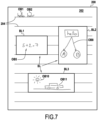
- the computing device 100 determines in S4 in which section of the display area 200 the initiation point PT1 is located among the structured text section 202 and the 3 block sections BL1, BL2 and BL3 ( figure 8 ).
- the way the forthcoming user selection will be performed is function of the location of the initiation point PT1 within the display area 200.
- selection of one or more graphical objects OB may be performed in accordance with either a first mode ME1 or a second mode ME2, depending on the location of the initiation point PT1 of the user selection gesture GT1.
- the computing device 100 selects (S6) the first mode ME1. If however the initiation point is located (54) in one of the block sections BL, then the computing device 100 selects (S6) the second mode ME1. These two modes ME1 and ME2 are described in more details below in a particular embodiment.
- the user selection gesture GT1 performed with the input surface 104 starts from the initiation point PT1 to select at least one graphical object OB in the display area 200.
- the user moves a point of contact (or point of interaction) on the input surface 104 starting from the initiation point PT1 to perform the user selection gesture GT1.
- the selection step S7 in figure 6 is referred to more specifically as steps S8 and S9 when the computing device 100 operates respectively in the first mode ME1 and second mode ME2.
- the computing device 100 allows (S8, figure 6 ) the selection path 210 to be drawn in the display area 200 to select any graphical object OB of the structured text section 202 and of the block sections BL.
- the computing device 100 confines (S10, figure 6 ) the selection path 210 within the target block section to prevent selection of any graphical object OB outside said target block section.
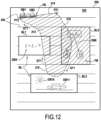
- the selection path 210 drawn by the user is limited or confined (S10) by the computing device 100 into the one block section - so-called target block section - which contains the initiation point PT1 located in step S4. Even if the user selection gesture GT1 moves outside the target block section BL, the computing device 100 restraints the selection path 210 within the target block section such that no graphical object OB outside said target block section can be selected. In the second mode ME2, only selection of one or more graphical objects OB present within the target block section BL can thus be made.
- the computing device 100 operates in accordance with the first mode ME1, thereby allowing the selection path 210 to be drawn (58) in the display area 200 to select any graphical object OB of the structured text section 200 and of the 3 block section BL. It means that if the user selection gesture GT1 is detected as moving within any one of the block section BL, the computing device 100 determines that the selection path 210 is drawn along a corresponding path within said block section BL. As already indicated, no boundary or localisation restraint is imposed on the selection path 210 within the display area 202 in the first mode ME1.
- the path of the point of contact applied by the user over time on the input surface 104 is identical to (or matches) the selection path 210.
- the computing device 100 determines a selection area 212 formed by the selection path determined in S6.
- this determination S12 is performed dynamically while the user selection gesture GT1 is being performed.
- Other implementations are possible however where the selection area 212 is only determined once the user selection gesture GT1 is completed.
- the computing device 100 determines a connection line 214 joining the initiation point PT1 with the end point PT2 of the selection path 210, thereby forming the selection area 212.
- the connection line 214 is a straight line, although other implementations are possible.
- the computing device 100 thus determines dynamically the selection area 212 defined by the selection path 210 and the connection line 214, while the user selection gesture GT1 is still in progress.
- the computing device 100 detects (S30) a current end point PT2 while the selection path 210 is still being drawn by the user selection gesture GT1, defines (S32) dynamically the connection line 214 joining the initiation point PT1 (determined in S4) and the current end point PT2, and determines (S34) the selection area 212 formed by the selection path 210 and the connection line 214.
- the computing device 100 selects each graphical object OB contained at least partially within the selection area 212 determined in S12.
- the computing device 100 can thus identify dynamically which graphical objects OB are positioned at least partially within the selection area 212 while the user selection gesture GT1 is being performed.
- the user selection gesture GT1 thus results in selecting each graphical object OB encircled at least partially in the selection area 212.
- the computing device 100 detects (S14) that a portion of the graphical object OB8 is positioned within the selection area 212 and thus identifies the graphical object OB8 as part of a selection in response to the user selection gesture GT1.
- the computing device 100 may also generate and store (S14) a data structure 113 comprising information relative to each graphical object OB which is being currently selected by the user selection gesture GT1 (i.e. which is currently part of the selection).
- the data structure 113 may for instance list a respective identifier of each graphical object OB which is currently part of the selection.
- the data structure can be dynamically updated while the user selection gesture GT1 progresses over time (thereby changing the selection area 214).
- the identifier of each newly selected graphical object OB can for instance be added over time within the data structure 113 to update the selection being made.
- a graphical object OB currently part of the selection may get unselected (i.e. removed from the current selection) if the selection area 212 dynamically determined (S12) based on the selection path 210 no longer contains said graphical object OB.
- the identifier of each graphical object OB which becomes unselected is removed from the data structure 113.
- each graphical object OB which is at least partially contained (whatever the relative proportion thereof) in the current selection area 212 is included as part of the selection.
- selection is performed in S14 such that each graphical object OB which presents a relative proportion within the selection area 212 exceeding a predetermined threshold is selected. For instance, each graphical objects having at least 20%, or 50%, positioned inside the current selection area 212 is included as part of the selection. In this case, if only a relative small portion of a graphical object OB, below the predetermined threshold, is positioned within the selection area 212, then the graphical object is not included in the selection.
- the computing device 100 dynamically updates (S12) the selection area 212 based on the current selection path 210, thereby also updating (S14) the graphical object selection based on the selection area 212.
- the data structure 113 may be updated to keep an up-to-date selection of the one or more graphical objects OB being currently selected by the user selection gesture GT1.
- the computing device 100 may for instance detect that the user selection gesture GT1 moves on across the block section BL3.
- the computing device 100 allows (S8) the selection path 210 to be drawn along a corresponding path within the block section BL3.
- the new selection area 212 is determined (S12) dynamically and the selection is updated (S14) in the same manner as described earlier.
- the computing device 100 detects in this example that the user selection gesture GT1 moves on across the block section BL2.
- the computing device 100 allows (S8) the selection path to be drawn along a corresponding path within the block section BL2.
- the new selection area 212 is determined (S12) dynamically and the selection is updated (S14) in the same manner as described earlier.
- the selection module MD4 is configured to operate according to either a first mode ME1 or a second mode ME2, as a function of the initiation point's location determined in locating step S4 ( figure 6 ) by the locating module MD2.
- a particular example was described above with reference to figures 8-14 where the computing device 100 operates according to the first mode ME1, thereby allowing the selection path 210 to be drawn in the display area 200 to select any graphical object OB of the structured text section 202 and of the block sections BL.
- any graphical object OB positioned within the structured text section 202 and within the block sections BL, and which is at least partially contained in said selection area, can thus be selected by means of the user selection gesture GT1.
- the computing device 100 draws (S10) dynamically a corresponding selection path 210 confined within the target block section BL2, determines (S12) a connection line 214 joining the end point PT2 and the initiation point PT1 of the selection path 210, determines (S12) a selection area 212 formed by the selection path 210 and the connection line 214, and selects (S14) the graphical object OB8 which is partially contained within the selection area 212.
- a visual feedback representing selection of the graphical object OB8 is provided on the display device 102.
- the stroke 220 in this example is determined in S14 ( figure 6 ) to be part of the selection since it is positioned within the selection area 212. Additionally, the stroke 222 is also determined in S14 ( figure 6 ) to be part of the selection since it is partially contained in the area A8 which forms part of the selection area 212. In other words, the stroke 222 is selected as a result of the area intersection A12 which is commonly shared by the area A8 of the stroke 214 and the area A10 of the stroke 222.
Landscapes
- Engineering & Computer Science (AREA)
- Theoretical Computer Science (AREA)
- General Engineering & Computer Science (AREA)
- Physics & Mathematics (AREA)
- General Physics & Mathematics (AREA)
- Human Computer Interaction (AREA)
- Artificial Intelligence (AREA)
- Health & Medical Sciences (AREA)
- Audiology, Speech & Language Pathology (AREA)
- General Health & Medical Sciences (AREA)
- Computational Linguistics (AREA)
- Computer Vision & Pattern Recognition (AREA)
- Multimedia (AREA)
- Data Mining & Analysis (AREA)
- Evolutionary Biology (AREA)
- Evolutionary Computation (AREA)
- Life Sciences & Earth Sciences (AREA)
- Bioinformatics & Computational Biology (AREA)
- Bioinformatics & Cheminformatics (AREA)
- User Interface Of Digital Computer (AREA)
- Character Discrimination (AREA)
Priority Applications (6)
| Application Number | Priority Date | Filing Date | Title |
|---|---|---|---|
| EP19306135.5A EP3796145B1 (en) | 2019-09-19 | 2019-09-19 | A method and correspond device for selecting graphical objects |
| US16/715,960 US10996843B2 (en) | 2019-09-19 | 2019-12-16 | System and method for selecting graphical objects |
| KR1020227008687A KR102677199B1 (ko) | 2019-09-19 | 2020-09-18 | 그래픽 객체를 선택하기 위한 방법 및 대응하는 디바이스 |
| JP2022511043A JP7388645B2 (ja) | 2019-09-19 | 2020-09-18 | グラフィックオブジェクトを選択するための方法及び対応するデバイス |
| PCT/EP2020/076080 WO2021053130A1 (en) | 2019-09-19 | 2020-09-18 | A method and correspond device for selecting graphical objects |
| CN202080062571.1A CN114365075B (zh) | 2019-09-19 | 2020-09-18 | 用于选择图形对象的方法和对应装置 |
Applications Claiming Priority (1)
| Application Number | Priority Date | Filing Date | Title |
|---|---|---|---|
| EP19306135.5A EP3796145B1 (en) | 2019-09-19 | 2019-09-19 | A method and correspond device for selecting graphical objects |
Publications (2)
| Publication Number | Publication Date |
|---|---|
| EP3796145A1 EP3796145A1 (en) | 2021-03-24 |
| EP3796145B1 true EP3796145B1 (en) | 2024-07-03 |
Family
ID=68242589
Family Applications (1)
| Application Number | Title | Priority Date | Filing Date |
|---|---|---|---|
| EP19306135.5A Active EP3796145B1 (en) | 2019-09-19 | 2019-09-19 | A method and correspond device for selecting graphical objects |
Country Status (6)
| Country | Link |
|---|---|
| US (1) | US10996843B2 (https=) |
| EP (1) | EP3796145B1 (https=) |
| JP (1) | JP7388645B2 (https=) |
| KR (1) | KR102677199B1 (https=) |
| CN (1) | CN114365075B (https=) |
| WO (1) | WO2021053130A1 (https=) |
Families Citing this family (10)
| Publication number | Priority date | Publication date | Assignee | Title |
|---|---|---|---|---|
| EP3561656A1 (en) * | 2018-04-23 | 2019-10-30 | Koninklijke Philips N.V. | Precise positioning of a marker on a display |
| EP3736677A1 (en) * | 2019-05-10 | 2020-11-11 | MyScript | A method and corresponding device for selecting and editing handwriting input elements |
| EP3859602B1 (en) * | 2020-01-28 | 2023-08-09 | MyScript | Math detection in handwriting |
| US11631206B2 (en) * | 2021-06-10 | 2023-04-18 | Adobe Inc. | Glyph selection tool for digital text content |
| US12013910B2 (en) * | 2021-07-26 | 2024-06-18 | Patrick Thomson Conklin | Interactive map-based user search for online dating candidates |
| US20230315271A1 (en) * | 2022-03-18 | 2023-10-05 | Sony Group Corporation | Collaborative whiteboard for meetings |
| US12360663B2 (en) | 2022-04-26 | 2025-07-15 | Snap Inc. | Gesture-based keyboard text entry |
| US12327302B2 (en) * | 2022-05-18 | 2025-06-10 | Snap Inc. | Hand-tracked text selection and modification |
| US12373096B2 (en) | 2022-05-31 | 2025-07-29 | Snap Inc. | AR-based virtual keyboard |
| EP4627433A1 (en) * | 2022-12-02 | 2025-10-08 | MyScript | Selecting handwritten objects |
Family Cites Families (43)
| Publication number | Priority date | Publication date | Assignee | Title |
|---|---|---|---|---|
| JP2749020B2 (ja) | 1991-11-14 | 1998-05-13 | 日立ソフトウエアエンジニアリング株式会社 | ダイアグラム認識システム |
| DE69428675T2 (de) | 1993-12-30 | 2002-05-08 | Xerox Corp | Apparat und Verfahren zur Unterstützung einer impliziten Strukturation von Freiform-Listen, Übersichten, Texten, Tabellen und Diagrammen in einem auf Handzeichen basierenden Eingabesystem und Editiersystem |
| US5847712A (en) | 1995-01-03 | 1998-12-08 | University Of Washington | Method and system for generating graphic illustrations according to a stroke texture and a tone |
| GB9701793D0 (en) | 1997-01-29 | 1997-03-19 | Gay Geoffrey N W | Means for inputting characters or commands into a computer |
| ATE443946T1 (de) | 1999-05-27 | 2009-10-15 | Tegic Communications Inc | Tastatursystem mit automatischer korrektur |
| US7298903B2 (en) | 2001-06-28 | 2007-11-20 | Microsoft Corporation | Method and system for separating text and drawings in digital ink |
| TW577020B (en) * | 2001-07-12 | 2004-02-21 | Ip Flex Inc | Integrated circuit device |
| US8412915B2 (en) * | 2001-11-30 | 2013-04-02 | Altera Corporation | Apparatus, system and method for configuration of adaptive integrated circuitry having heterogeneous computational elements |
| US20030215145A1 (en) | 2002-05-14 | 2003-11-20 | Microsoft Corporation | Classification analysis of freeform digital ink input |
| CA2390506C (en) | 2002-06-12 | 2013-04-02 | Smart Technologies Inc. | System and method for recognizing connector gestures |
| US7218779B2 (en) | 2003-01-21 | 2007-05-15 | Microsoft Corporation | Ink divider and associated application program interface |
| US7218783B2 (en) | 2003-06-13 | 2007-05-15 | Microsoft Corporation | Digital ink annotation process and system for recognizing, anchoring and reflowing digital ink annotations |
| US7616333B2 (en) | 2003-08-21 | 2009-11-10 | Microsoft Corporation | Electronic ink processing and application programming interfaces |
| US7631001B2 (en) | 2003-08-21 | 2009-12-08 | Microsoft Corporation | Electronic ink processing |
| US7324691B2 (en) | 2003-09-24 | 2008-01-29 | Microsoft Corporation | System and method for shape recognition of hand-drawn objects |
| US7352902B2 (en) | 2003-09-24 | 2008-04-01 | Microsoft Corporation | System and method for detecting a hand-drawn object in ink input |
| US20050273761A1 (en) | 2004-06-07 | 2005-12-08 | The Mathworks, Inc. | Freehand system and method for creating, editing, and manipulating block diagrams |
| US7496232B2 (en) | 2004-06-23 | 2009-02-24 | Microsoft Corporation | Distinguishing text from non-text in digital ink |
| US7904810B2 (en) | 2004-09-21 | 2011-03-08 | Microsoft Corporation | System and method for editing a hand-drawn list in ink input |
| US7394935B2 (en) | 2004-09-21 | 2008-07-01 | Microsoft Corporation | System and method for editing a hand-drawn chart in ink input |
| US7440616B2 (en) | 2004-09-21 | 2008-10-21 | Microsoft Corporation | System and method for recognition of a hand-drawn chart in ink input |
| US7512273B2 (en) | 2004-10-21 | 2009-03-31 | Microsoft Corporation | Digital ink labeling |
| US7643687B2 (en) | 2005-03-18 | 2010-01-05 | Microsoft Corporation | Analysis hints |
| US8161415B2 (en) * | 2005-06-20 | 2012-04-17 | Hewlett-Packard Development Company, L.P. | Method, article, apparatus and computer system for inputting a graphical object |
| EP1783593A3 (en) | 2005-10-07 | 2012-12-19 | Sony Corporation | Information processing apparatus with a user interface comprising a touch panel, method and program |
| US20080195931A1 (en) | 2006-10-27 | 2008-08-14 | Microsoft Corporation | Parsing of ink annotations |
| US8014607B2 (en) | 2007-03-23 | 2011-09-06 | Palo Alto Research Center Incorporated | Method and apparatus for creating and editing node-link diagrams in pen computing systems |
| US7945097B2 (en) | 2007-05-21 | 2011-05-17 | Microsoft Corporation | Classifying digital ink into a writing or a drawing |
| US8718375B2 (en) | 2010-12-03 | 2014-05-06 | Massachusetts Institute Of Technology | Sketch recognition system |
| US8782549B2 (en) | 2012-10-05 | 2014-07-15 | Google Inc. | Incremental feature-based gesture-keyboard decoding |
| JP2014102669A (ja) * | 2012-11-20 | 2014-06-05 | Toshiba Corp | 情報処理装置、情報処理方法およびプログラム |
| US9171204B2 (en) | 2012-12-12 | 2015-10-27 | Qualcomm Incorporated | Method of perspective correction for devanagari text |
| US20140313216A1 (en) | 2013-04-18 | 2014-10-23 | Baldur Andrew Steingrimsson | Recognition and Representation of Image Sketches |
| KR102183448B1 (ko) | 2013-04-26 | 2020-11-26 | 삼성전자주식회사 | 사용자 단말 장치 및 그 디스플레이 방법 |
| KR102199193B1 (ko) | 2014-01-22 | 2021-01-06 | 삼성전자주식회사 | 핸드라이팅 정보 운용 방법 및 이를 지원하는 전자 장치 |
| JP6364893B2 (ja) * | 2014-04-01 | 2018-08-01 | 日本電気株式会社 | 端末装置、電子ホワイトボードシステム、電子ホワイトボードの入力支援方法、及びプログラム |
| KR20160062565A (ko) * | 2014-11-25 | 2016-06-02 | 삼성전자주식회사 | 디바이스 및 디바이스의 필기 컨텐트 제공 방법 |
| US9965175B2 (en) * | 2015-08-25 | 2018-05-08 | Myscript | System and method of digital note taking |
| US20170068868A1 (en) | 2015-09-09 | 2017-03-09 | Google Inc. | Enhancing handwriting recognition using pre-filter classification |
| US10643067B2 (en) | 2015-10-19 | 2020-05-05 | Myscript | System and method of handwriting recognition in diagrams |
| US10248635B2 (en) * | 2016-02-29 | 2019-04-02 | Myscript | Method for inserting characters in a character string and the corresponding digital service |
| US10802673B2 (en) * | 2017-08-11 | 2020-10-13 | Salesforce.Com, Inc. | Multi-selection on a chart |
| KR20190027633A (ko) * | 2017-09-07 | 2019-03-15 | 엠플레어 주식회사 | 전자 동화책 콘텐츠 제공 방법 |
-
2019
- 2019-09-19 EP EP19306135.5A patent/EP3796145B1/en active Active
- 2019-12-16 US US16/715,960 patent/US10996843B2/en active Active
-
2020
- 2020-09-18 CN CN202080062571.1A patent/CN114365075B/zh active Active
- 2020-09-18 JP JP2022511043A patent/JP7388645B2/ja active Active
- 2020-09-18 KR KR1020227008687A patent/KR102677199B1/ko active Active
- 2020-09-18 WO PCT/EP2020/076080 patent/WO2021053130A1/en not_active Ceased
Also Published As
| Publication number | Publication date |
|---|---|
| US20210089801A1 (en) | 2021-03-25 |
| WO2021053130A1 (en) | 2021-03-25 |
| US10996843B2 (en) | 2021-05-04 |
| CN114365075A (zh) | 2022-04-15 |
| JP7388645B2 (ja) | 2023-11-29 |
| EP3796145A1 (en) | 2021-03-24 |
| CN114365075B (zh) | 2023-07-18 |
| KR20220061985A (ko) | 2022-05-13 |
| KR102677199B1 (ko) | 2024-06-20 |
| JP2022548494A (ja) | 2022-11-21 |
Similar Documents
| Publication | Publication Date | Title |
|---|---|---|
| EP3796145B1 (en) | A method and correspond device for selecting graphical objects | |
| CN108369484B (zh) | 引导手写图输入的系统和方法 | |
| US11687618B2 (en) | System and method for processing text handwriting in a free handwriting mode | |
| EP3387582B1 (en) | System and method for beautifying digital ink | |
| US10416868B2 (en) | Method and system for character insertion in a character string | |
| US11209976B2 (en) | System and method for editing input management | |
| KR20180115699A (ko) | 다중 입력 관리를 위한 시스템 및 방법 | |
| US11429259B2 (en) | System and method for selecting and editing handwriting input elements | |
| EP4047465B1 (en) | Modifying digital content | |
| US20250190690A1 (en) | Merging text blocks | |
| US20250190099A1 (en) | Creating text block sections | |
| WO2024115177A1 (en) | Selecting handwritten objects |
Legal Events
| Date | Code | Title | Description |
|---|---|---|---|
| PUAI | Public reference made under article 153(3) epc to a published international application that has entered the european phase |
Free format text: ORIGINAL CODE: 0009012 |
|
| STAA | Information on the status of an ep patent application or granted ep patent |
Free format text: STATUS: THE APPLICATION HAS BEEN PUBLISHED |
|
| AK | Designated contracting states |
Kind code of ref document: A1 Designated state(s): AL AT BE BG CH CY CZ DE DK EE ES FI FR GB GR HR HU IE IS IT LI LT LU LV MC MK MT NL NO PL PT RO RS SE SI SK SM TR |
|
| AX | Request for extension of the european patent |
Extension state: BA ME |
|
| STAA | Information on the status of an ep patent application or granted ep patent |
Free format text: STATUS: REQUEST FOR EXAMINATION WAS MADE |
|
| 17P | Request for examination filed |
Effective date: 20210921 |
|
| RBV | Designated contracting states (corrected) |
Designated state(s): AL AT BE BG CH CY CZ DE DK EE ES FI FR GB GR HR HU IE IS IT LI LT LU LV MC MK MT NL NO PL PT RO RS SE SI SK SM TR |
|
| REG | Reference to a national code |
Ipc: G06F0003048420 Ref country code: DE Ref legal event code: R079 Ref document number: 602019054521 Country of ref document: DE Free format text: PREVIOUS MAIN CLASS: G06F0003048400 Ipc: G06F0003048420 |
|
| GRAP | Despatch of communication of intention to grant a patent |
Free format text: ORIGINAL CODE: EPIDOSNIGR1 |
|
| STAA | Information on the status of an ep patent application or granted ep patent |
Free format text: STATUS: GRANT OF PATENT IS INTENDED |
|
| RIC1 | Information provided on ipc code assigned before grant |
Ipc: G06F 40/171 20200101ALI20240229BHEP Ipc: G06F 40/169 20200101ALI20240229BHEP Ipc: G06F 3/04883 20220101ALI20240229BHEP Ipc: G06F 3/04842 20220101AFI20240229BHEP |
|
| INTG | Intention to grant announced |
Effective date: 20240320 |
|
| GRAS | Grant fee paid |
Free format text: ORIGINAL CODE: EPIDOSNIGR3 |
|
| GRAA | (expected) grant |
Free format text: ORIGINAL CODE: 0009210 |
|
| STAA | Information on the status of an ep patent application or granted ep patent |
Free format text: STATUS: THE PATENT HAS BEEN GRANTED |
|
| AK | Designated contracting states |
Kind code of ref document: B1 Designated state(s): AL AT BE BG CH CY CZ DE DK EE ES FI FR GB GR HR HU IE IS IT LI LT LU LV MC MK MT NL NO PL PT RO RS SE SI SK SM TR |
|
| REG | Reference to a national code |
Ref country code: CH Ref legal event code: EP |
|
| REG | Reference to a national code |
Ref country code: DE Ref legal event code: R096 Ref document number: 602019054521 Country of ref document: DE |
|
| REG | Reference to a national code |
Ref country code: LT Ref legal event code: MG9D |
|
| REG | Reference to a national code |
Ref country code: NL Ref legal event code: MP Effective date: 20240703 |
|
| PG25 | Lapsed in a contracting state [announced via postgrant information from national office to epo] |
Ref country code: PT Free format text: LAPSE BECAUSE OF FAILURE TO SUBMIT A TRANSLATION OF THE DESCRIPTION OR TO PAY THE FEE WITHIN THE PRESCRIBED TIME-LIMIT Effective date: 20241104 |
|
| REG | Reference to a national code |
Ref country code: AT Ref legal event code: MK05 Ref document number: 1700525 Country of ref document: AT Kind code of ref document: T Effective date: 20240703 |
|
| PG25 | Lapsed in a contracting state [announced via postgrant information from national office to epo] |
Ref country code: NL Free format text: LAPSE BECAUSE OF FAILURE TO SUBMIT A TRANSLATION OF THE DESCRIPTION OR TO PAY THE FEE WITHIN THE PRESCRIBED TIME-LIMIT Effective date: 20240703 |
|
| PG25 | Lapsed in a contracting state [announced via postgrant information from national office to epo] |
Ref country code: PT Free format text: LAPSE BECAUSE OF FAILURE TO SUBMIT A TRANSLATION OF THE DESCRIPTION OR TO PAY THE FEE WITHIN THE PRESCRIBED TIME-LIMIT Effective date: 20241104 Ref country code: NL Free format text: LAPSE BECAUSE OF FAILURE TO SUBMIT A TRANSLATION OF THE DESCRIPTION OR TO PAY THE FEE WITHIN THE PRESCRIBED TIME-LIMIT Effective date: 20240703 |
|
| PG25 | Lapsed in a contracting state [announced via postgrant information from national office to epo] |
Ref country code: NO Free format text: LAPSE BECAUSE OF FAILURE TO SUBMIT A TRANSLATION OF THE DESCRIPTION OR TO PAY THE FEE WITHIN THE PRESCRIBED TIME-LIMIT Effective date: 20241003 |
|
| PG25 | Lapsed in a contracting state [announced via postgrant information from national office to epo] |
Ref country code: GR Free format text: LAPSE BECAUSE OF FAILURE TO SUBMIT A TRANSLATION OF THE DESCRIPTION OR TO PAY THE FEE WITHIN THE PRESCRIBED TIME-LIMIT Effective date: 20241004 Ref country code: FI Free format text: LAPSE BECAUSE OF FAILURE TO SUBMIT A TRANSLATION OF THE DESCRIPTION OR TO PAY THE FEE WITHIN THE PRESCRIBED TIME-LIMIT Effective date: 20240703 Ref country code: PL Free format text: LAPSE BECAUSE OF FAILURE TO SUBMIT A TRANSLATION OF THE DESCRIPTION OR TO PAY THE FEE WITHIN THE PRESCRIBED TIME-LIMIT Effective date: 20240703 |
|
| PG25 | Lapsed in a contracting state [announced via postgrant information from national office to epo] |
Ref country code: BG Free format text: LAPSE BECAUSE OF FAILURE TO SUBMIT A TRANSLATION OF THE DESCRIPTION OR TO PAY THE FEE WITHIN THE PRESCRIBED TIME-LIMIT Effective date: 20240703 |
|
| PG25 | Lapsed in a contracting state [announced via postgrant information from national office to epo] |
Ref country code: LV Free format text: LAPSE BECAUSE OF FAILURE TO SUBMIT A TRANSLATION OF THE DESCRIPTION OR TO PAY THE FEE WITHIN THE PRESCRIBED TIME-LIMIT Effective date: 20240703 |
|
| PG25 | Lapsed in a contracting state [announced via postgrant information from national office to epo] |
Ref country code: AT Free format text: LAPSE BECAUSE OF FAILURE TO SUBMIT A TRANSLATION OF THE DESCRIPTION OR TO PAY THE FEE WITHIN THE PRESCRIBED TIME-LIMIT Effective date: 20240703 Ref country code: IS Free format text: LAPSE BECAUSE OF FAILURE TO SUBMIT A TRANSLATION OF THE DESCRIPTION OR TO PAY THE FEE WITHIN THE PRESCRIBED TIME-LIMIT Effective date: 20241103 |
|
| PG25 | Lapsed in a contracting state [announced via postgrant information from national office to epo] |
Ref country code: CZ Free format text: LAPSE BECAUSE OF FAILURE TO SUBMIT A TRANSLATION OF THE DESCRIPTION OR TO PAY THE FEE WITHIN THE PRESCRIBED TIME-LIMIT Effective date: 20240703 Ref country code: HR Free format text: LAPSE BECAUSE OF FAILURE TO SUBMIT A TRANSLATION OF THE DESCRIPTION OR TO PAY THE FEE WITHIN THE PRESCRIBED TIME-LIMIT Effective date: 20240703 |
|
| PG25 | Lapsed in a contracting state [announced via postgrant information from national office to epo] |
Ref country code: RS Free format text: LAPSE BECAUSE OF FAILURE TO SUBMIT A TRANSLATION OF THE DESCRIPTION OR TO PAY THE FEE WITHIN THE PRESCRIBED TIME-LIMIT Effective date: 20241003 Ref country code: ES Free format text: LAPSE BECAUSE OF FAILURE TO SUBMIT A TRANSLATION OF THE DESCRIPTION OR TO PAY THE FEE WITHIN THE PRESCRIBED TIME-LIMIT Effective date: 20240703 |
|
| PG25 | Lapsed in a contracting state [announced via postgrant information from national office to epo] |
Ref country code: RS Free format text: LAPSE BECAUSE OF FAILURE TO SUBMIT A TRANSLATION OF THE DESCRIPTION OR TO PAY THE FEE WITHIN THE PRESCRIBED TIME-LIMIT Effective date: 20241003 Ref country code: PL Free format text: LAPSE BECAUSE OF FAILURE TO SUBMIT A TRANSLATION OF THE DESCRIPTION OR TO PAY THE FEE WITHIN THE PRESCRIBED TIME-LIMIT Effective date: 20240703 Ref country code: NO Free format text: LAPSE BECAUSE OF FAILURE TO SUBMIT A TRANSLATION OF THE DESCRIPTION OR TO PAY THE FEE WITHIN THE PRESCRIBED TIME-LIMIT Effective date: 20241003 Ref country code: LV Free format text: LAPSE BECAUSE OF FAILURE TO SUBMIT A TRANSLATION OF THE DESCRIPTION OR TO PAY THE FEE WITHIN THE PRESCRIBED TIME-LIMIT Effective date: 20240703 Ref country code: IS Free format text: LAPSE BECAUSE OF FAILURE TO SUBMIT A TRANSLATION OF THE DESCRIPTION OR TO PAY THE FEE WITHIN THE PRESCRIBED TIME-LIMIT Effective date: 20241103 Ref country code: HR Free format text: LAPSE BECAUSE OF FAILURE TO SUBMIT A TRANSLATION OF THE DESCRIPTION OR TO PAY THE FEE WITHIN THE PRESCRIBED TIME-LIMIT Effective date: 20240703 Ref country code: GR Free format text: LAPSE BECAUSE OF FAILURE TO SUBMIT A TRANSLATION OF THE DESCRIPTION OR TO PAY THE FEE WITHIN THE PRESCRIBED TIME-LIMIT Effective date: 20241004 Ref country code: FI Free format text: LAPSE BECAUSE OF FAILURE TO SUBMIT A TRANSLATION OF THE DESCRIPTION OR TO PAY THE FEE WITHIN THE PRESCRIBED TIME-LIMIT Effective date: 20240703 Ref country code: ES Free format text: LAPSE BECAUSE OF FAILURE TO SUBMIT A TRANSLATION OF THE DESCRIPTION OR TO PAY THE FEE WITHIN THE PRESCRIBED TIME-LIMIT Effective date: 20240703 Ref country code: CZ Free format text: LAPSE BECAUSE OF FAILURE TO SUBMIT A TRANSLATION OF THE DESCRIPTION OR TO PAY THE FEE WITHIN THE PRESCRIBED TIME-LIMIT Effective date: 20240703 Ref country code: BG Free format text: LAPSE BECAUSE OF FAILURE TO SUBMIT A TRANSLATION OF THE DESCRIPTION OR TO PAY THE FEE WITHIN THE PRESCRIBED TIME-LIMIT Effective date: 20240703 Ref country code: AT Free format text: LAPSE BECAUSE OF FAILURE TO SUBMIT A TRANSLATION OF THE DESCRIPTION OR TO PAY THE FEE WITHIN THE PRESCRIBED TIME-LIMIT Effective date: 20240703 |
|
| REG | Reference to a national code |
Ref country code: DE Ref legal event code: R097 Ref document number: 602019054521 Country of ref document: DE |
|
| PG25 | Lapsed in a contracting state [announced via postgrant information from national office to epo] |
Ref country code: RO Free format text: LAPSE BECAUSE OF FAILURE TO SUBMIT A TRANSLATION OF THE DESCRIPTION OR TO PAY THE FEE WITHIN THE PRESCRIBED TIME-LIMIT Effective date: 20240703 Ref country code: SM Free format text: LAPSE BECAUSE OF FAILURE TO SUBMIT A TRANSLATION OF THE DESCRIPTION OR TO PAY THE FEE WITHIN THE PRESCRIBED TIME-LIMIT Effective date: 20240703 Ref country code: DK Free format text: LAPSE BECAUSE OF FAILURE TO SUBMIT A TRANSLATION OF THE DESCRIPTION OR TO PAY THE FEE WITHIN THE PRESCRIBED TIME-LIMIT Effective date: 20240703 |
|
| PG25 | Lapsed in a contracting state [announced via postgrant information from national office to epo] |
Ref country code: EE Free format text: LAPSE BECAUSE OF FAILURE TO SUBMIT A TRANSLATION OF THE DESCRIPTION OR TO PAY THE FEE WITHIN THE PRESCRIBED TIME-LIMIT Effective date: 20240703 Ref country code: MC Free format text: LAPSE BECAUSE OF FAILURE TO SUBMIT A TRANSLATION OF THE DESCRIPTION OR TO PAY THE FEE WITHIN THE PRESCRIBED TIME-LIMIT Effective date: 20240703 |
|
| PG25 | Lapsed in a contracting state [announced via postgrant information from national office to epo] |
Ref country code: IT Free format text: LAPSE BECAUSE OF FAILURE TO SUBMIT A TRANSLATION OF THE DESCRIPTION OR TO PAY THE FEE WITHIN THE PRESCRIBED TIME-LIMIT Effective date: 20240703 Ref country code: SK Free format text: LAPSE BECAUSE OF FAILURE TO SUBMIT A TRANSLATION OF THE DESCRIPTION OR TO PAY THE FEE WITHIN THE PRESCRIBED TIME-LIMIT Effective date: 20240703 |
|
| REG | Reference to a national code |
Ref country code: CH Ref legal event code: PL |
|
| PLBE | No opposition filed within time limit |
Free format text: ORIGINAL CODE: 0009261 |
|
| STAA | Information on the status of an ep patent application or granted ep patent |
Free format text: STATUS: NO OPPOSITION FILED WITHIN TIME LIMIT |
|
| PG25 | Lapsed in a contracting state [announced via postgrant information from national office to epo] |
Ref country code: LU Free format text: LAPSE BECAUSE OF NON-PAYMENT OF DUE FEES Effective date: 20240919 |
|
| 26N | No opposition filed |
Effective date: 20250404 |
|
| REG | Reference to a national code |
Ref country code: BE Ref legal event code: MM Effective date: 20240930 |
|
| PG25 | Lapsed in a contracting state [announced via postgrant information from national office to epo] |
Ref country code: BE Free format text: LAPSE BECAUSE OF NON-PAYMENT OF DUE FEES Effective date: 20240930 |
|
| PG25 | Lapsed in a contracting state [announced via postgrant information from national office to epo] |
Ref country code: CH Free format text: LAPSE BECAUSE OF NON-PAYMENT OF DUE FEES Effective date: 20240930 |
|
| PG25 | Lapsed in a contracting state [announced via postgrant information from national office to epo] |
Ref country code: IE Free format text: LAPSE BECAUSE OF NON-PAYMENT OF DUE FEES Effective date: 20240919 |
|
| PG25 | Lapsed in a contracting state [announced via postgrant information from national office to epo] |
Ref country code: SE Free format text: LAPSE BECAUSE OF FAILURE TO SUBMIT A TRANSLATION OF THE DESCRIPTION OR TO PAY THE FEE WITHIN THE PRESCRIBED TIME-LIMIT Effective date: 20240703 |
|
| PGFP | Annual fee paid to national office [announced via postgrant information from national office to epo] |
Ref country code: DE Payment date: 20250919 Year of fee payment: 7 |
|
| PGFP | Annual fee paid to national office [announced via postgrant information from national office to epo] |
Ref country code: GB Payment date: 20250919 Year of fee payment: 7 |
|
| PGFP | Annual fee paid to national office [announced via postgrant information from national office to epo] |
Ref country code: FR Payment date: 20250922 Year of fee payment: 7 |
|
| PG25 | Lapsed in a contracting state [announced via postgrant information from national office to epo] |
Ref country code: CY Free format text: LAPSE BECAUSE OF FAILURE TO SUBMIT A TRANSLATION OF THE DESCRIPTION OR TO PAY THE FEE WITHIN THE PRESCRIBED TIME-LIMIT; INVALID AB INITIO Effective date: 20190919 |
|
| PG25 | Lapsed in a contracting state [announced via postgrant information from national office to epo] |
Ref country code: HU Free format text: LAPSE BECAUSE OF FAILURE TO SUBMIT A TRANSLATION OF THE DESCRIPTION OR TO PAY THE FEE WITHIN THE PRESCRIBED TIME-LIMIT; INVALID AB INITIO Effective date: 20190919 |