EP3786223A1 - Method of producing porous body of water-insoluble polymer - Google Patents
Method of producing porous body of water-insoluble polymer Download PDFInfo
- Publication number
- EP3786223A1 EP3786223A1 EP20192789.4A EP20192789A EP3786223A1 EP 3786223 A1 EP3786223 A1 EP 3786223A1 EP 20192789 A EP20192789 A EP 20192789A EP 3786223 A1 EP3786223 A1 EP 3786223A1
- Authority
- EP
- European Patent Office
- Prior art keywords
- water
- solvent
- insoluble polymer
- porous body
- thin film
- Prior art date
- Legal status (The legal status is an assumption and is not a legal conclusion. Google has not performed a legal analysis and makes no representation as to the accuracy of the status listed.)
- Granted
Links
Images
Classifications
-
- B—PERFORMING OPERATIONS; TRANSPORTING
- B01—PHYSICAL OR CHEMICAL PROCESSES OR APPARATUS IN GENERAL
- B01D—SEPARATION
- B01D67/00—Processes specially adapted for manufacturing semi-permeable membranes for separation processes or apparatus
-
- C—CHEMISTRY; METALLURGY
- C08—ORGANIC MACROMOLECULAR COMPOUNDS; THEIR PREPARATION OR CHEMICAL WORKING-UP; COMPOSITIONS BASED THEREON
- C08J—WORKING-UP; GENERAL PROCESSES OF COMPOUNDING; AFTER-TREATMENT NOT COVERED BY SUBCLASSES C08B, C08C, C08F, C08G or C08H
- C08J9/00—Working-up of macromolecular substances to porous or cellular articles or materials; After-treatment thereof
- C08J9/28—Working-up of macromolecular substances to porous or cellular articles or materials; After-treatment thereof by elimination of a liquid phase from a macromolecular composition or article, e.g. drying of coagulum
- C08J9/286—Working-up of macromolecular substances to porous or cellular articles or materials; After-treatment thereof by elimination of a liquid phase from a macromolecular composition or article, e.g. drying of coagulum the liquid phase being a solvent for the monomers but not for the resulting macromolecular composition, i.e. macroporous or macroreticular polymers
-
- C—CHEMISTRY; METALLURGY
- C08—ORGANIC MACROMOLECULAR COMPOUNDS; THEIR PREPARATION OR CHEMICAL WORKING-UP; COMPOSITIONS BASED THEREON
- C08J—WORKING-UP; GENERAL PROCESSES OF COMPOUNDING; AFTER-TREATMENT NOT COVERED BY SUBCLASSES C08B, C08C, C08F, C08G or C08H
- C08J3/00—Processes of treating or compounding macromolecular substances
- C08J3/02—Making solutions, dispersions, lattices or gels by other methods than by solution, emulsion or suspension polymerisation techniques
- C08J3/09—Making solutions, dispersions, lattices or gels by other methods than by solution, emulsion or suspension polymerisation techniques in organic liquids
-
- C—CHEMISTRY; METALLURGY
- C08—ORGANIC MACROMOLECULAR COMPOUNDS; THEIR PREPARATION OR CHEMICAL WORKING-UP; COMPOSITIONS BASED THEREON
- C08J—WORKING-UP; GENERAL PROCESSES OF COMPOUNDING; AFTER-TREATMENT NOT COVERED BY SUBCLASSES C08B, C08C, C08F, C08G or C08H
- C08J9/00—Working-up of macromolecular substances to porous or cellular articles or materials; After-treatment thereof
- C08J9/28—Working-up of macromolecular substances to porous or cellular articles or materials; After-treatment thereof by elimination of a liquid phase from a macromolecular composition or article, e.g. drying of coagulum
-
- B—PERFORMING OPERATIONS; TRANSPORTING
- B29—WORKING OF PLASTICS; WORKING OF SUBSTANCES IN A PLASTIC STATE IN GENERAL
- B29C—SHAPING OR JOINING OF PLASTICS; SHAPING OF MATERIAL IN A PLASTIC STATE, NOT OTHERWISE PROVIDED FOR; AFTER-TREATMENT OF THE SHAPED PRODUCTS, e.g. REPAIRING
- B29C67/00—Shaping techniques not covered by groups B29C39/00 - B29C65/00, B29C70/00 or B29C73/00
- B29C67/20—Shaping techniques not covered by groups B29C39/00 - B29C65/00, B29C70/00 or B29C73/00 for porous or cellular articles, e.g. of foam plastics, coarse-pored
-
- B—PERFORMING OPERATIONS; TRANSPORTING
- B32—LAYERED PRODUCTS
- B32B—LAYERED PRODUCTS, i.e. PRODUCTS BUILT-UP OF STRATA OF FLAT OR NON-FLAT, e.g. CELLULAR OR HONEYCOMB, FORM
- B32B5/00—Layered products characterised by the non- homogeneity or physical structure, i.e. comprising a fibrous, filamentary, particulate or foam layer; Layered products characterised by having a layer differing constitutionally or physically in different parts
- B32B5/18—Layered products characterised by the non- homogeneity or physical structure, i.e. comprising a fibrous, filamentary, particulate or foam layer; Layered products characterised by having a layer differing constitutionally or physically in different parts characterised by features of a layer of foamed material
-
- C—CHEMISTRY; METALLURGY
- C08—ORGANIC MACROMOLECULAR COMPOUNDS; THEIR PREPARATION OR CHEMICAL WORKING-UP; COMPOSITIONS BASED THEREON
- C08F—MACROMOLECULAR COMPOUNDS OBTAINED BY REACTIONS ONLY INVOLVING CARBON-TO-CARBON UNSATURATED BONDS
- C08F18/00—Homopolymers and copolymers of compounds having one or more unsaturated aliphatic radicals, each having only one carbon-to-carbon double bond, and at least one being terminated by an acyloxy radical of a saturated carboxylic acid, of carbonic acid or of a haloformic acid
- C08F18/02—Esters of monocarboxylic acids
- C08F18/04—Vinyl esters
-
- C—CHEMISTRY; METALLURGY
- C08—ORGANIC MACROMOLECULAR COMPOUNDS; THEIR PREPARATION OR CHEMICAL WORKING-UP; COMPOSITIONS BASED THEREON
- C08F—MACROMOLECULAR COMPOUNDS OBTAINED BY REACTIONS ONLY INVOLVING CARBON-TO-CARBON UNSATURATED BONDS
- C08F6/00—Post-polymerisation treatments
- C08F6/06—Treatment of polymer solutions
-
- C—CHEMISTRY; METALLURGY
- C08—ORGANIC MACROMOLECULAR COMPOUNDS; THEIR PREPARATION OR CHEMICAL WORKING-UP; COMPOSITIONS BASED THEREON
- C08J—WORKING-UP; GENERAL PROCESSES OF COMPOUNDING; AFTER-TREATMENT NOT COVERED BY SUBCLASSES C08B, C08C, C08F, C08G or C08H
- C08J5/00—Manufacture of articles or shaped materials containing macromolecular substances
- C08J5/02—Direct processing of dispersions, e.g. latex, to articles
-
- C—CHEMISTRY; METALLURGY
- C08—ORGANIC MACROMOLECULAR COMPOUNDS; THEIR PREPARATION OR CHEMICAL WORKING-UP; COMPOSITIONS BASED THEREON
- C08J—WORKING-UP; GENERAL PROCESSES OF COMPOUNDING; AFTER-TREATMENT NOT COVERED BY SUBCLASSES C08B, C08C, C08F, C08G or C08H
- C08J5/00—Manufacture of articles or shaped materials containing macromolecular substances
- C08J5/18—Manufacture of films or sheets
-
- C—CHEMISTRY; METALLURGY
- C08—ORGANIC MACROMOLECULAR COMPOUNDS; THEIR PREPARATION OR CHEMICAL WORKING-UP; COMPOSITIONS BASED THEREON
- C08J—WORKING-UP; GENERAL PROCESSES OF COMPOUNDING; AFTER-TREATMENT NOT COVERED BY SUBCLASSES C08B, C08C, C08F, C08G or C08H
- C08J9/00—Working-up of macromolecular substances to porous or cellular articles or materials; After-treatment thereof
- C08J9/16—Making expandable particles
-
- C—CHEMISTRY; METALLURGY
- C08—ORGANIC MACROMOLECULAR COMPOUNDS; THEIR PREPARATION OR CHEMICAL WORKING-UP; COMPOSITIONS BASED THEREON
- C08L—COMPOSITIONS OF MACROMOLECULAR COMPOUNDS
- C08L23/00—Compositions of homopolymers or copolymers of unsaturated aliphatic hydrocarbons having only one carbon-to-carbon double bond; Compositions of derivatives of such polymers
- C08L23/02—Compositions of homopolymers or copolymers of unsaturated aliphatic hydrocarbons having only one carbon-to-carbon double bond; Compositions of derivatives of such polymers not modified by chemical after-treatment
- C08L23/04—Homopolymers or copolymers of ethene
- C08L23/08—Copolymers of ethene
- C08L23/0846—Copolymers of ethene with unsaturated hydrocarbons containing atoms other than carbon or hydrogen
- C08L23/0853—Ethylene vinyl acetate copolymers
- C08L23/0861—Saponified copolymers, e.g. ethylene vinyl alcohol copolymers
-
- C—CHEMISTRY; METALLURGY
- C08—ORGANIC MACROMOLECULAR COMPOUNDS; THEIR PREPARATION OR CHEMICAL WORKING-UP; COMPOSITIONS BASED THEREON
- C08L—COMPOSITIONS OF MACROMOLECULAR COMPOUNDS
- C08L27/00—Compositions of homopolymers or copolymers of compounds having one or more unsaturated aliphatic radicals, each having only one carbon-to-carbon double bond, and at least one being terminated by a halogen; Compositions of derivatives of such polymers
- C08L27/02—Compositions of homopolymers or copolymers of compounds having one or more unsaturated aliphatic radicals, each having only one carbon-to-carbon double bond, and at least one being terminated by a halogen; Compositions of derivatives of such polymers not modified by chemical after-treatment
- C08L27/12—Compositions of homopolymers or copolymers of compounds having one or more unsaturated aliphatic radicals, each having only one carbon-to-carbon double bond, and at least one being terminated by a halogen; Compositions of derivatives of such polymers not modified by chemical after-treatment containing fluorine atoms
- C08L27/18—Homopolymers or copolymers or tetrafluoroethene
-
- C—CHEMISTRY; METALLURGY
- C08—ORGANIC MACROMOLECULAR COMPOUNDS; THEIR PREPARATION OR CHEMICAL WORKING-UP; COMPOSITIONS BASED THEREON
- C08J—WORKING-UP; GENERAL PROCESSES OF COMPOUNDING; AFTER-TREATMENT NOT COVERED BY SUBCLASSES C08B, C08C, C08F, C08G or C08H
- C08J2201/00—Foams characterised by the foaming process
- C08J2201/04—Foams characterised by the foaming process characterised by the elimination of a liquid or solid component, e.g. precipitation, leaching out, evaporation
- C08J2201/05—Elimination by evaporation or heat degradation of a liquid phase
- C08J2201/0502—Elimination by evaporation or heat degradation of a liquid phase the liquid phase being organic
-
- C—CHEMISTRY; METALLURGY
- C08—ORGANIC MACROMOLECULAR COMPOUNDS; THEIR PREPARATION OR CHEMICAL WORKING-UP; COMPOSITIONS BASED THEREON
- C08J—WORKING-UP; GENERAL PROCESSES OF COMPOUNDING; AFTER-TREATMENT NOT COVERED BY SUBCLASSES C08B, C08C, C08F, C08G or C08H
- C08J2201/00—Foams characterised by the foaming process
- C08J2201/04—Foams characterised by the foaming process characterised by the elimination of a liquid or solid component, e.g. precipitation, leaching out, evaporation
- C08J2201/05—Elimination by evaporation or heat degradation of a liquid phase
- C08J2201/0504—Elimination by evaporation or heat degradation of a liquid phase the liquid phase being aqueous
-
- C—CHEMISTRY; METALLURGY
- C08—ORGANIC MACROMOLECULAR COMPOUNDS; THEIR PREPARATION OR CHEMICAL WORKING-UP; COMPOSITIONS BASED THEREON
- C08J—WORKING-UP; GENERAL PROCESSES OF COMPOUNDING; AFTER-TREATMENT NOT COVERED BY SUBCLASSES C08B, C08C, C08F, C08G or C08H
- C08J2301/00—Characterised by the use of cellulose, modified cellulose or cellulose derivatives
- C08J2301/08—Cellulose derivatives
- C08J2301/10—Esters of organic acids
- C08J2301/12—Cellulose acetate
-
- C—CHEMISTRY; METALLURGY
- C08—ORGANIC MACROMOLECULAR COMPOUNDS; THEIR PREPARATION OR CHEMICAL WORKING-UP; COMPOSITIONS BASED THEREON
- C08J—WORKING-UP; GENERAL PROCESSES OF COMPOUNDING; AFTER-TREATMENT NOT COVERED BY SUBCLASSES C08B, C08C, C08F, C08G or C08H
- C08J2323/00—Characterised by the use of homopolymers or copolymers of unsaturated aliphatic hydrocarbons having only one carbon-to-carbon double bond; Derivatives of such polymers
- C08J2323/02—Characterised by the use of homopolymers or copolymers of unsaturated aliphatic hydrocarbons having only one carbon-to-carbon double bond; Derivatives of such polymers not modified by chemical after treatment
- C08J2323/04—Homopolymers or copolymers of ethene
- C08J2323/08—Copolymers of ethene
-
- C—CHEMISTRY; METALLURGY
- C08—ORGANIC MACROMOLECULAR COMPOUNDS; THEIR PREPARATION OR CHEMICAL WORKING-UP; COMPOSITIONS BASED THEREON
- C08J—WORKING-UP; GENERAL PROCESSES OF COMPOUNDING; AFTER-TREATMENT NOT COVERED BY SUBCLASSES C08B, C08C, C08F, C08G or C08H
- C08J2327/00—Characterised by the use of homopolymers or copolymers of compounds having one or more unsaturated aliphatic radicals, each having only one carbon-to-carbon double bond, and at least one being terminated by a halogen; Derivatives of such polymers
- C08J2327/02—Characterised by the use of homopolymers or copolymers of compounds having one or more unsaturated aliphatic radicals, each having only one carbon-to-carbon double bond, and at least one being terminated by a halogen; Derivatives of such polymers not modified by chemical after-treatment
- C08J2327/12—Characterised by the use of homopolymers or copolymers of compounds having one or more unsaturated aliphatic radicals, each having only one carbon-to-carbon double bond, and at least one being terminated by a halogen; Derivatives of such polymers not modified by chemical after-treatment containing fluorine atoms
- C08J2327/16—Homopolymers or copolymers of vinylidene fluoride
-
- C—CHEMISTRY; METALLURGY
- C08—ORGANIC MACROMOLECULAR COMPOUNDS; THEIR PREPARATION OR CHEMICAL WORKING-UP; COMPOSITIONS BASED THEREON
- C08J—WORKING-UP; GENERAL PROCESSES OF COMPOUNDING; AFTER-TREATMENT NOT COVERED BY SUBCLASSES C08B, C08C, C08F, C08G or C08H
- C08J2329/00—Characterised by the use of homopolymers or copolymers of compounds having one or more unsaturated aliphatic radicals, each having only one carbon-to-carbon double bond, and at least one being terminated by an alcohol, ether, aldehydo, ketonic, acetal, or ketal radical; Hydrolysed polymers of esters of unsaturated alcohols with saturated carboxylic acids; Derivatives of such polymer
- C08J2329/02—Homopolymers or copolymers of unsaturated alcohols
- C08J2329/04—Polyvinyl alcohol; Partially hydrolysed homopolymers or copolymers of esters of unsaturated alcohols with saturated carboxylic acids
-
- C—CHEMISTRY; METALLURGY
- C08—ORGANIC MACROMOLECULAR COMPOUNDS; THEIR PREPARATION OR CHEMICAL WORKING-UP; COMPOSITIONS BASED THEREON
- C08J—WORKING-UP; GENERAL PROCESSES OF COMPOUNDING; AFTER-TREATMENT NOT COVERED BY SUBCLASSES C08B, C08C, C08F, C08G or C08H
- C08J2331/00—Characterised by the use of copolymers of compounds having one or more unsaturated aliphatic radicals, each having only one carbon-to-carbon double bond, and at least one being terminated by an acyloxy radical of a saturated carboxylic acid, or carbonic acid, or of a haloformic acid
- C08J2331/02—Characterised by the use of omopolymers or copolymers of esters of monocarboxylic acids
- C08J2331/04—Homopolymers or copolymers of vinyl acetate
-
- Y—GENERAL TAGGING OF NEW TECHNOLOGICAL DEVELOPMENTS; GENERAL TAGGING OF CROSS-SECTIONAL TECHNOLOGIES SPANNING OVER SEVERAL SECTIONS OF THE IPC; TECHNICAL SUBJECTS COVERED BY FORMER USPC CROSS-REFERENCE ART COLLECTIONS [XRACs] AND DIGESTS
- Y02—TECHNOLOGIES OR APPLICATIONS FOR MITIGATION OR ADAPTATION AGAINST CLIMATE CHANGE
- Y02E—REDUCTION OF GREENHOUSE GAS [GHG] EMISSIONS, RELATED TO ENERGY GENERATION, TRANSMISSION OR DISTRIBUTION
- Y02E60/00—Enabling technologies; Technologies with a potential or indirect contribution to GHG emissions mitigation
- Y02E60/10—Energy storage using batteries
Definitions
- the present disclosure relates to a method of producing a porous body of a water-insoluble polymer.
- Porous bodies of water-insoluble polymers can exhibit a variety of characteristics, such as lightness, shock-absorbing properties, thermal insulation properties, sound absorption properties, separation properties and adsorption properties. Therefore, porous bodies of water-insoluble polymers have been used in a wide variety of applications, such as packing materials, construction materials, sound-absorbing materials, cleaning articles, cosmetic products, separation membranes, adsorbent materials, carriers for purification, catalyst carriers and culture carriers.
- 2011-236292 discloses a method of producing a porous body of poly(vinylidene fluoride), which includes preparing a solution by dissolving poly(vinylidene fluoride) in a mixed solvent of a good solvent for the poly(vinylidene fluoride) and a poor solvent for the poly(vinylidene fluoride) while heating, cooling the solution to obtain a molded body, immersing the molded body in another solvent to replace the mixed solvent with the other solvent, and then removing the other solvent by drying.
- an object of the present disclosure is to provide a method of producing a porous body of a water-insoluble polymer, the method being excellent in terms of simplicity.
- the method of producing a porous body of a water-insoluble polymer disclosed here includes the steps of: preparing a solution in which a water-insoluble polymer is dissolved in a mixed solvent containing a good solvent for the water-insoluble polymer and a poor solvent for the water-insoluble polymer; and removing the mixed solvent from the solution by vaporization.
- the poor solvent has a boiling point higher than a boiling point of the good solvent.
- a porous body is obtained by removing the mixed solvent by vaporization to form pores.
- a porous body of a water-insoluble polymer by the simple procedure of preparing a solution of a water-insoluble polymer and vaporizing a mixed solvent. That is, provided by such a constitution is a method of producing a porous body of a water-insoluble polymer, the method being excellent in terms of simplicity.
- a method of producing a porous body of a water-insoluble polymer of the present disclosure includes the steps of: preparing a solution in which a water-insoluble polymer is dissolved in a mixed solvent containing a good solvent for the water-insoluble polymer and a poor solvent for the water-insoluble polymer (hereinafter referred to as a "solution preparation step”); and removing the mixed solvent from the solution by vaporization (hereinafter referred to as a "mixed solvent removal step”).
- the poor solvent has a boiling point higher than a boiling point of the good solvent.
- a porous body is obtained by removing the mixed solvent by vaporization to form pores.
- the "good solvent for the water-insoluble polymer” is a solvent in which the solubility of the water-insoluble polymer at 25°C is 1 mass% or more.
- the solubility of the water-insoluble polymer in the good solvent at 25°C is desirably 2.5 mass% or more, more desirably 5 mass% or more, further desirably 7.5 mass% or more, and most desirably 10 mass% or more.
- the type of good solvent to be used in the present disclosure is selected, as appropriate, according to the type of water-insoluble polymer. It is possible to use a single good solvent in isolation or a mixed solvent obtained by mixing two or more types of good solvents.
- the "poor solvent for the water-insoluble polymer” is a solvent in which the solubility of the water-insoluble polymer at 25°C is less than 1 mass%.
- the solubility of the water-insoluble polymer in the poor solvent at 25°C is desirably 0.5 mass% or less, more desirably 0.2 mass% or less, further desirably 0.1 mass% or less, and most desirably 0.05 mass% or less.
- the type of poor solvent to be used in the present disclosure is selected, as appropriate, according to the type of water-insoluble polymer. It is possible to use a single poor solvent in isolation or a mixed solvent obtained by mixing two or more types of poor solvents.
- HSP Hansen solubility parameter
- the interaction radius of the specific polymer compound is denoted by R 0 , it is predicted that the polymer compound will be soluble if the ratio Ra/R 0 is less than 1, partially soluble if the ratio Ra/R 0 is 0, and insoluble if the ratio Ra/R 0 is greater than 1.
- a specific solvent is a good solvent or a poor solvent for a specific polymer compound by carrying out a test involving mixing the polymer compound and the solvent in a sample bottle or the like.
- the good solvent and the poor solvent are mixed and used as a homogeneous solvent. Therefore, the good solvent and the poor solvent are compatible with each other.
- the boiling point of the poor solvent being used is higher than the boiling point of the good solvent being used. From the perspective of enabling a homogeneous porous body having a relatively high porosity to be obtained easily, the boiling point of the poor solvent is desirably at least 10°C higher, and more desirably at least 90°C higher, than the boiling point of the good solvent. From the perspective of drying speed, the boiling point of the poor solvent is desirably lower than 300°C.
- water-insoluble polymer means a polymer that has a solubility in water of less than 1 mass% at 25°C.
- the solubility of the water-insoluble polymer in water at 25°C is desirably 0.5 mass% or less, more desirably 0.2 mass% or less, and further desirably 0.1 mass% or less.
- the "water-insoluble polymer" used in the solution preparation step is the same as the water-insoluble polymer that constitutes the porous molded body.
- a polymer for which a good solvent and a poor solvent exist is used as the water-insoluble polymer.
- the type of water-insoluble polymer to be used is not particularly limited as long as a good solvent and a poor solvent for the polymer exist.
- water-insoluble polymers examples include olefin-based resins such as polyethylene and polypropylene; fluorine-based resins such as poly(vinyl fluoride) and poly(vinylidene fluoride); (meth)acrylic-based resins such as poly(methyl (meth)acrylate) and poly(ethyl (meth)acrylate); styrene-based resins such as polystyrene, styrene-acrylonitrile copolymers and acrylonitrile-butadiene-styrene copolymers; water-insoluble cellulose derivatives such as ethyl cellulose, cellulose acetate and cellulose propionate; vinyl chloride-based resins such as poly(vinyl chloride) and ethylene-vinyl chloride copolymers; and ethylene-vinyl alcohol copolymers.
- olefin-based resins such as polyethylene and polypropylene
- fluorine-based resins such as
- the water-insoluble polymer is desirably an aliphatic polymer compound (that is, a polymer compound having no aromatic ring) from the perspectives of usability of a porous body of the water-insoluble polymer and usability of a simple method of producing same.
- the water-insoluble polymer is desirably an addition polymerization type polymer compound (that is, a polymer compound produced by polymerization of an ethylenically unsaturated double bond in a monomer having the ethylenically unsaturated double bond; for example, a vinyl-based polymer or vinylidene-based polymer).
- the water-insoluble polymer is desirably an ethylene-vinyl alcohol copolymer from the perspectives of usability of a porous body having a three-dimensional network type porous structure and usability of a simple method of producing same.
- the average degree of polymerization of the water-insoluble polymer is not particularly limited, but is desirably not less than 70 but not more than 500,000, and more desirably not less than 100 but not more than 200,000. It should be noted that the average degree of polymerization of the water-insoluble polymer can be determined using a publicly known method (for example, NMR measurements or the like).
- Suitable good solvents and suitable poor solvents will now be explained in more detail mentioning specific water-insoluble polymers as examples.
- the production method of the present disclosure can be advantageously carried out by using the good solvents and poor solvents explained below with the water-insoluble polymers given below.
- An ethylene-vinyl alcohol copolymer is a copolymer containing ethylene units and vinyl alcohol units as monomer units.
- the content of ethylene units in the EVOH is not particularly limited, but is desirably 10 mol% or more, more desirably 15 mol% or more, further desirably 20 mol% or more, and particularly desirably 25 mol% or more.
- the content of ethylene units in the EVOH is desirably 60 mol% or less, more desirably 50 mol% or less, and further desirably 45 mol% or less.
- the degree of saponification of the EVOH is not particularly limited, but is desirably 80 mol% or more, more desirably 90 mol% or more, and further desirably 95 mol% or more.
- the upper limit for the degree of saponification is determined by technical limitations relating to saponification and is, for example, 99.99 mol%. It should be noted that the content of ethylene units and the degree of saponification in the EVOH can be determined using a publicly known method (for example, 1 H-NMR measurements or the like).
- EVOHs are generally produced by saponifying copolymers of ethylene and vinyl esters using an alkali catalyst or the like.
- EVOHs can contain vinyl ester units.
- Vinyl esters in such units are typically vinyl acetate, and may also be vinyl formate, vinyl propionate, vinyl valerate, vinyl caprate, vinyl laurate, and the like.
- the EVOH may also contain other monomer units as long as the advantageous effect of the present disclosure is not significantly impaired.
- suitable good solvents for the EVOH include dimethyl sulfoxide (DMSO) and mixed solvents of water and alcohols.
- the alcohol used in the mixed solvent is desirably propyl alcohol.
- the propyl alcohol may be n-propyl alcohol or isopropyl alcohol. Therefore, a particularly suitable good solvent is DMSO or a mixed solvent of water and propyl alcohol.
- suitable poor solvents for the EVOH include cyclic esters such as ⁇ -butyrolactone; cyclic carbonates such as propylene carbonate; cyclic sulfones such as sulfolane; ether group-containing monools such as propylene glycol monomethyl ether, propylene glycol monoethyl ether, diethylene glycol monomethyl ether, diethylene glycol monoethyl ether and 2-ethoxyethanol; and diols such as 1,3-butane diol, 1,4-butane diol, 1,5-pentane diol and 1,6-hexane diol.
- cyclic esters such as ⁇ -butyrolactone
- cyclic carbonates such as propylene carbonate
- cyclic sulfones such as sulfolane
- ether group-containing monools such as propylene glycol monomethyl ether, propylene glycol monoethyl ether, diethylene
- cyclic esters, cyclic carbonates, cyclic sulfones and ether group-containing monools are desired, ⁇ -butyrolactone, propylene carbonate, sulfolane and ether group-containing monools are more desired, and ⁇ -butyrolactone and sulfolane are further desired.
- the solubility parameter (Hildebrand SP value) ⁇ of the poor solvent is desirably at least 1.6 MPa 1/2 higher than the solubility parameter ⁇ of the EVOH.
- suitable good solvents for cellulose acetate include nitrogen-containing polar solvents (particularly, nitrogen-containing aprotic polar solvents) such as N,N-dimethylformamide, N,N-dimethylacetamide and N-methylpyrrolidone; esters such as methyl formate and methyl acetate; ketones such as acetone and cyclohexanone; cyclic ethers such as tetrahydrofuran, dioxane and dioxolane; glycol derivatives such as methyl glycol and methyl glycol acetate; halogenated hydrocarbons such as methylene chloride, chloroform and tetrachloroethane; cyclic carbonates such as propylene carbonate; and sulfur-containing polar solvents (particularly, sulfur-containing aprotic polar solvents) such as DMSO.
- nitrogen-containing polar solvents such as N,N-dimethylformamide, N,N-dimethylacetamide and N-methylpyrroli
- suitable poor solvents for cellulose acetate include alcohols such as 1-hexanol, 1,3-butane diol, 1,4-butane diol, 1,5-pentane diol and 1,6-hexane diol.
- alcohols such as 1-hexanol, 1,3-butane diol, 1,4-butane diol, 1,5-pentane diol and 1,6-hexane diol.
- a monohydric or dihydric alcohol having 4 to 6 carbon atoms is desired as the alcohol.
- suitable good solvents for poly(vinylidene fluoride) include nitrogen-containing polar solvents (particularly, nitrogen-containing aprotic polar solvents) such as N,N-dimethylformamide, N,N-dimethylacetamide and N-methylpyrrolidone; and sulfur-containing polar solvents (particularly, sulfur-containing aprotic polar solvents) such as DMSO.
- nitrogen-containing aprotic polar solvents particularly, nitrogen-containing aprotic polar solvents
- sulfur-containing polar solvents particularly, sulfur-containing aprotic polar solvents
- DMSO sulfur-containing aprotic polar solvent
- suitable poor solvents for poly(vinylidene fluoride) include alcohols such as 1-hexanol, 1,3-butane diol, 1,4-butane diol, 1,5-pentane diol, 1,6-hexane diol and glycerin; and cyclic ethers such as tetrahydrofuran, dioxane and dioxolane.
- alcohols such as 1-hexanol, 1,3-butane diol, 1,4-butane diol, 1,5-pentane diol, 1,6-hexane diol and glycerin
- cyclic ethers such as tetrahydrofuran, dioxane and dioxolane.
- a dihydric or trihydric alcohol having 3 to 6 carbon atoms is desired as the alcohol.
- the usage quantities of the water-insoluble polymer, the good solvent and the poor solvent should be selected, as appropriate, according to the types thereof being used.
- the mixing amount of the water-insoluble polymer is desirably 1 part by mass or more, more desirably 5 parts by mass or more, and further desirably 10 parts by mass or more, relative to 100 parts by mass of the good solvent.
- the mixing amount of the water-insoluble polymer is desirably 40 parts by mass or less, more desirably 35 parts by mass or less, and further desirably 30 parts by mass or less, relative to 100 parts by mass of the good solvent.
- the mixing amount of the poor solvent is desirably 10 parts by mass or more, more desirably 20 parts by mass or more, and further desirably 30 parts by mass or more, relative to 100 parts by mass of the good solvent.
- the mixing amount of the poor solvent is desirably 400 parts by mass or less, more desirably 200 parts by mass or less, and further desirably 100 parts by mass or less, relative to 100 parts by mass of the good solvent.
- the solution of the water-insoluble polymer may further contain other components as long as the advantageous effect of the present disclosure is not significantly impaired.
- the method for preparing the solution of the water-insoluble polymer is not particularly limited. It is possible to dissolve a water-insoluble polymer in a good solvent, then add a poor solvent and then mix until a homogeneous solution is obtained, or add a water-insoluble polymer to a mixed solvent of a good solvent and a poor solvent and dissolve the water-insoluble polymer in the mixed solvent.
- the solution can be prepared using a publicly known stirring device, mixing device, or the like.
- When preparing the solution of the water-insoluble polymer it is possible to irradiate with ultrasonic waves, carry out heating, or the like.
- the heating temperature is, for example, not less than 40°C but not more than 100°C.
- the mixed solvent removal step the good solvent and the poor solvent are removed by vaporization (volatilization in particular). At this time, pores are formed by this operation, and particularly by the poor solvent, and a porous body of the water-insoluble polymer is obtained. Typically, pores are formed by, for example, phase separation between the water-insoluble polymer and the mixed solvent in which the poor solvent has become highly concentrated. Specifically, because the poor solvent has a higher boiling point than the good solvent, the good solvent is preferentially vaporized ahead of the poor solvent in this step. As the amount of good solvent decreases, the concentration of the poor solvent in the mixed solvent increases.
- phase separation occurs between the water-insoluble polymer and the mixed solvent in which the poor solvent has become highly concentrated, and a porous skeleton of the water-insoluble polymer is formed.
- This phase separation may be spinodal decomposition. Therefore, a porous skeleton of the water-insoluble polymer is formed in the mixed solvent removal step.
- the good solvent is removed, the water-insoluble polymer is precipitated, the high boiling point poor solvent is removed through vaporization, and pores are produced. A porous body of the water-insoluble polymer is produced in this way. It should be noted that in order to effect phase separation between the water-insoluble polymer and the mixed solvent in which the poor solvent has become highly concentrated, the type and usage amount of the good solvent and the type and usage amount of the poor solvent should be appropriately selected.
- the method for vaporizing the good solvent and the poor solvent is not particularly limited, and examples thereof include methods involving heating, methods involving leaving in a vacuum, methods involving heating under reduced pressure and methods involving air drying. These methods can be carried out in the same way as publicly known drying methods. From the perspective of ease of carrying out the procedure, a method involving heating is desired.
- the heating temperature is not particularly limited, but is desirably a temperature at which the mixed solvent does not boil and the water-insoluble polymer and the poor solvent do not decompose. Specifically, the heating temperature is, for example, 25°C or higher, desirably 50°C or higher, and more desirably 70°C or higher.
- the heating temperature is, for example, 180°C or lower, desirably 150°C or lower, and more desirably 125°C or lower.
- the heating time should be decided, as appropriate, according to the type of solvent and the heating temperature. While vaporizing the good solvent and the poor solvent, it is desirable to leave the solution of the water-insoluble polymer to stand.
- a porous body of the water-insoluble polymer can be obtained in the manner described above.
- the thus produced porous body can have a three-dimensional network-shaped porous structure.
- the porous body can have a three-dimensional network-shaped porous structure in which pores are connected from one main surface of the thin film-shaped porous body to the other main surface.
- the average pore diameter can be determined by taking an electron microscope photograph of a cross section of the porous body and determining the average pore diameter as the average value of the diameters of 100 or more pores. In cases where the cross section of a pore is aspherical, the average value of the maximum diameter and minimum diameter of the pore may be taken to be the pore diameter. According to the production method of the present disclosure, it is possible to obtain a porous body having a porosity of, for example, 15% or more (and particularly 42% or more, 51.5% or more, or even 61.5% or more) and less than 80% (and particularly less than 75%). It should be noted that the porosity can be calculated in accordance with a publicly known method using the true density and the apparent density.
- Obtained porous bodies of water-insoluble polymers can be used in a variety of applications, depending on the type of water-insoluble polymer. Examples of applications include packing materials, construction materials, sound-absorbing materials, cleaning articles, cosmetic products, separation membranes, adsorbent materials, carriers for purification, catalyst carriers and culture carriers.
- the present disclosure it is possible to produce a porous body of the water-insoluble polymer using the simple procedures, namely preparing a solution of a water-insoluble polymer and vaporizing a good solvent and a poor solvent.
- Example 1 Polymer Good solvent Poor solvent Porosity (%) Type Usage amount (g) Type Usage amount (mL) Type Usage amount (mL) Example 1 EVOH-1 1 nPA/water 3.5/1.5 GBL 1 65.9
- Example 2 EVOH-1 1 DMSO 4 PC 2.5 56.8
- Example 3 EVOH-1 1 DMSO 5 PC 2.5 51.8
- Example 4 EVOH-1 0.5 nPA/water 1.25/1.25 Sulfolane 1 74.3
- Example 5 EVOH-1 0.5 nPA/water 1.25/1.25 GBL 1 72.4
- Example 6 EVOH-1 0.5 nPA/water 1.25/1.25 PGM 1 48.8
- Example 7 EVOH-1 1 nPA/water 1.5/3.5 Sulfolane 2 70.2
- Example 8 EVOH-1 1 nPA/water 1.5/3.5 GBL 2 69.7
- Example 9 EVOH-1 1 nPA/water 1.5/3.5 PGM 2 65.1
- Example 10 EVOH-1 1 n
Landscapes
- Chemical & Material Sciences (AREA)
- Chemical Kinetics & Catalysis (AREA)
- Polymers & Plastics (AREA)
- Organic Chemistry (AREA)
- Health & Medical Sciences (AREA)
- Medicinal Chemistry (AREA)
- Engineering & Computer Science (AREA)
- Materials Engineering (AREA)
- Manufacturing & Machinery (AREA)
- Dispersion Chemistry (AREA)
- Mechanical Engineering (AREA)
- Manufacture Of Porous Articles, And Recovery And Treatment Of Waste Products (AREA)
- Moulding By Coating Moulds (AREA)
- Molding Of Porous Articles (AREA)
Abstract
Description
- The present disclosure relates to a method of producing a porous body of a water-insoluble polymer.
- Porous bodies of water-insoluble polymers can exhibit a variety of characteristics, such as lightness, shock-absorbing properties, thermal insulation properties, sound absorption properties, separation properties and adsorption properties. Therefore, porous bodies of water-insoluble polymers have been used in a wide variety of applications, such as packing materials, construction materials, sound-absorbing materials, cleaning articles, cosmetic products, separation membranes, adsorbent materials, carriers for purification, catalyst carriers and culture carriers.
- From perspectives such as production costs, it is desired for a method of producing a porous body of a water-insoluble polymer to be simple. As a method capable of producing a porous body of poly(vinylidene fluoride), which is a water-insoluble polymer, in a simple manner, Japanese Patent Application Publication No.
2011-236292 - As a result of diligent research, the inventors of the present disclosure have found that the production method of the prior art had further room for improvement in terms of producing a porous body in a simple manner.
- Therefore, an object of the present disclosure is to provide a method of producing a porous body of a water-insoluble polymer, the method being excellent in terms of simplicity.
- The method of producing a porous body of a water-insoluble polymer disclosed here includes the steps of: preparing a solution in which a water-insoluble polymer is dissolved in a mixed solvent containing a good solvent for the water-insoluble polymer and a poor solvent for the water-insoluble polymer; and removing the mixed solvent from the solution by vaporization. The poor solvent has a boiling point higher than a boiling point of the good solvent. A porous body is obtained by removing the mixed solvent by vaporization to form pores.
- According to such a constitution, it is possible to produce a porous body of a water-insoluble polymer by the simple procedure of preparing a solution of a water-insoluble polymer and vaporizing a mixed solvent. That is, provided by such a constitution is a method of producing a porous body of a water-insoluble polymer, the method being excellent in terms of simplicity.
-
-
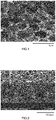
FIG. 1 is a SEM photograph of a cross section of a thin film obtained in Example 1; -
FIG. 2 is a SEM photograph of a cross section of a thin film obtained in Example 3; -
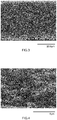
FIG. 3 is a SEM photograph of a cross section of a thin film obtained in Example 19; and -
FIG. 4 is a SEM photograph of a cross section of a thin film obtained in Example 21. - A method of producing a porous body of a water-insoluble polymer of the present disclosure includes the steps of: preparing a solution in which a water-insoluble polymer is dissolved in a mixed solvent containing a good solvent for the water-insoluble polymer and a poor solvent for the water-insoluble polymer (hereinafter referred to as a "solution preparation step"); and removing the mixed solvent from the solution by vaporization (hereinafter referred to as a "mixed solvent removal step"). Here, the poor solvent has a boiling point higher than a boiling point of the good solvent. A porous body is obtained by removing the mixed solvent by vaporization to form pores.
- First, an explanation will be given of the solution preparation step. In the present disclosure, the "good solvent for the water-insoluble polymer" is a solvent in which the solubility of the water-insoluble polymer at 25°C is 1 mass% or more. The solubility of the water-insoluble polymer in the good solvent at 25°C is desirably 2.5 mass% or more, more desirably 5 mass% or more, further desirably 7.5 mass% or more, and most desirably 10 mass% or more. It should be noted that the type of good solvent to be used in the present disclosure is selected, as appropriate, according to the type of water-insoluble polymer. It is possible to use a single good solvent in isolation or a mixed solvent obtained by mixing two or more types of good solvents.
- In the present disclosure, the "poor solvent for the water-insoluble polymer" is a solvent in which the solubility of the water-insoluble polymer at 25°C is less than 1 mass%. The solubility of the water-insoluble polymer in the poor solvent at 25°C is desirably 0.5 mass% or less, more desirably 0.2 mass% or less, further desirably 0.1 mass% or less, and most desirably 0.05 mass% or less. The type of poor solvent to be used in the present disclosure is selected, as appropriate, according to the type of water-insoluble polymer. It is possible to use a single poor solvent in isolation or a mixed solvent obtained by mixing two or more types of poor solvents.
- It is possible to use a Hansen solubility parameter (HSP) in order to assess whether a specific solvent is a good solvent or a poor solvent for a specific polymer compound. For example, if the dispersion term, polarity term and hydrogen bonding term of the HPS of the polymer compound are denoted by δD1, δP1 and δH1 respectively and the dispersion term, polarity term and hydrogen bonding term of the HPS of the solvent are denoted by δD2, δP2 and δH2 respectively, the solubility of the polymer compound tends to increase as the distance Ra (MPa1/2) between the HSPs of the polymer compound and that of the solvent, as represented by the formula below, decreases.

- In addition, if the interaction radius of the specific polymer compound is denoted by R0, it is predicted that the polymer compound will be soluble if the ratio Ra/R0 is less than 1, partially soluble if the ratio Ra/R0 is 0, and insoluble if the ratio Ra/R0 is greater than 1.
- Alternatively, it is possible to assess whether a specific solvent is a good solvent or a poor solvent for a specific polymer compound by carrying out a test involving mixing the polymer compound and the solvent in a sample bottle or the like.
- The good solvent and the poor solvent are mixed and used as a homogeneous solvent. Therefore, the good solvent and the poor solvent are compatible with each other. In the present disclosure, the boiling point of the poor solvent being used is higher than the boiling point of the good solvent being used. From the perspective of enabling a homogeneous porous body having a relatively high porosity to be obtained easily, the boiling point of the poor solvent is desirably at least 10°C higher, and more desirably at least 90°C higher, than the boiling point of the good solvent. From the perspective of drying speed, the boiling point of the poor solvent is desirably lower than 300°C.
- In the present disclosure, the term "water-insoluble polymer" means a polymer that has a solubility in water of less than 1 mass% at 25°C. The solubility of the water-insoluble polymer in water at 25°C is desirably 0.5 mass% or less, more desirably 0.2 mass% or less, and further desirably 0.1 mass% or less.
- The "water-insoluble polymer" used in the solution preparation step is the same as the water-insoluble polymer that constitutes the porous molded body. A polymer for which a good solvent and a poor solvent exist is used as the water-insoluble polymer. The type of water-insoluble polymer to be used is not particularly limited as long as a good solvent and a poor solvent for the polymer exist. Examples of water-insoluble polymers include olefin-based resins such as polyethylene and polypropylene; fluorine-based resins such as poly(vinyl fluoride) and poly(vinylidene fluoride); (meth)acrylic-based resins such as poly(methyl (meth)acrylate) and poly(ethyl (meth)acrylate); styrene-based resins such as polystyrene, styrene-acrylonitrile copolymers and acrylonitrile-butadiene-styrene copolymers; water-insoluble cellulose derivatives such as ethyl cellulose, cellulose acetate and cellulose propionate; vinyl chloride-based resins such as poly(vinyl chloride) and ethylene-vinyl chloride copolymers; and ethylene-vinyl alcohol copolymers. It is possible to use a polymer that has been rendered water-insoluble through modification of a water-soluble polymer. Of these, the water-insoluble polymer is desirably an aliphatic polymer compound (that is, a polymer compound having no aromatic ring) from the perspectives of usability of a porous body of the water-insoluble polymer and usability of a simple method of producing same. From the perspective of enabling a homogeneous porous body having a relatively high porosity to be obtained easily, the water-insoluble polymer is desirably an addition polymerization type polymer compound (that is, a polymer compound produced by polymerization of an ethylenically unsaturated double bond in a monomer having the ethylenically unsaturated double bond; for example, a vinyl-based polymer or vinylidene-based polymer). The water-insoluble polymer is desirably an ethylene-vinyl alcohol copolymer from the perspectives of usability of a porous body having a three-dimensional network type porous structure and usability of a simple method of producing same.
- The average degree of polymerization of the water-insoluble polymer is not particularly limited, but is desirably not less than 70 but not more than 500,000, and more desirably not less than 100 but not more than 200,000. It should be noted that the average degree of polymerization of the water-insoluble polymer can be determined using a publicly known method (for example, NMR measurements or the like).
- Suitable good solvents and suitable poor solvents will now be explained in more detail mentioning specific water-insoluble polymers as examples. The production method of the present disclosure can be advantageously carried out by using the good solvents and poor solvents explained below with the water-insoluble polymers given below.
- An ethylene-vinyl alcohol copolymer (EVOH) is a copolymer containing ethylene units and vinyl alcohol units as monomer units. The content of ethylene units in the EVOH is not particularly limited, but is desirably 10 mol% or more, more desirably 15 mol% or more, further desirably 20 mol% or more, and particularly desirably 25 mol% or more. On the other hand, the content of ethylene units in the EVOH is desirably 60 mol% or less, more desirably 50 mol% or less, and further desirably 45 mol% or less. The degree of saponification of the EVOH is not particularly limited, but is desirably 80 mol% or more, more desirably 90 mol% or more, and further desirably 95 mol% or more. The upper limit for the degree of saponification is determined by technical limitations relating to saponification and is, for example, 99.99 mol%. It should be noted that the content of ethylene units and the degree of saponification in the EVOH can be determined using a publicly known method (for example, 1H-NMR measurements or the like).
- In addition, EVOHs are generally produced by saponifying copolymers of ethylene and vinyl esters using an alkali catalyst or the like. As a result, EVOHs can contain vinyl ester units. Vinyl esters in such units are typically vinyl acetate, and may also be vinyl formate, vinyl propionate, vinyl valerate, vinyl caprate, vinyl laurate, and the like. In addition to ethylene units, vinyl alcohol units and vinyl ester units, the EVOH may also contain other monomer units as long as the advantageous effect of the present disclosure is not significantly impaired.
- Examples of suitable good solvents for the EVOH include dimethyl sulfoxide (DMSO) and mixed solvents of water and alcohols. The alcohol used in the mixed solvent is desirably propyl alcohol. The propyl alcohol may be n-propyl alcohol or isopropyl alcohol. Therefore, a particularly suitable good solvent is DMSO or a mixed solvent of water and propyl alcohol.
- Examples of suitable poor solvents for the EVOH include cyclic esters such as γ-butyrolactone; cyclic carbonates such as propylene carbonate; cyclic sulfones such as sulfolane; ether group-containing monools such as propylene glycol monomethyl ether, propylene glycol monoethyl ether, diethylene glycol monomethyl ether, diethylene glycol monoethyl ether and 2-ethoxyethanol; and diols such as 1,3-butane diol, 1,4-butane diol, 1,5-pentane diol and 1,6-hexane diol. Of these, cyclic esters, cyclic carbonates, cyclic sulfones and ether group-containing monools are desired, γ-butyrolactone, propylene carbonate, sulfolane and ether group-containing monools are more desired, and γ-butyrolactone and sulfolane are further desired. The solubility parameter (Hildebrand SP value) δ of the poor solvent is desirably at least 1.6 MPa1/2 higher than the solubility parameter δ of the EVOH.
- Examples of suitable good solvents for cellulose acetate include nitrogen-containing polar solvents (particularly, nitrogen-containing aprotic polar solvents) such as N,N-dimethylformamide, N,N-dimethylacetamide and N-methylpyrrolidone; esters such as methyl formate and methyl acetate; ketones such as acetone and cyclohexanone; cyclic ethers such as tetrahydrofuran, dioxane and dioxolane; glycol derivatives such as methyl glycol and methyl glycol acetate; halogenated hydrocarbons such as methylene chloride, chloroform and tetrachloroethane; cyclic carbonates such as propylene carbonate; and sulfur-containing polar solvents (particularly, sulfur-containing aprotic polar solvents) such as DMSO. Of these, a sulfur-containing aprotic polar solvent is desired, and DMSO is more desired.
- Examples of suitable poor solvents for cellulose acetate include alcohols such as 1-hexanol, 1,3-butane diol, 1,4-butane diol, 1,5-pentane diol and 1,6-hexane diol. A monohydric or dihydric alcohol having 4 to 6 carbon atoms is desired as the alcohol.
- Examples of suitable good solvents for poly(vinylidene fluoride) include nitrogen-containing polar solvents (particularly, nitrogen-containing aprotic polar solvents) such as N,N-dimethylformamide, N,N-dimethylacetamide and N-methylpyrrolidone; and sulfur-containing polar solvents (particularly, sulfur-containing aprotic polar solvents) such as DMSO. Of these, a nitrogen-containing aprotic polar solvent is desired, and N,N-dimethylformamide is more desired.
- Examples of suitable poor solvents for poly(vinylidene fluoride) include alcohols such as 1-hexanol, 1,3-butane diol, 1,4-butane diol, 1,5-pentane diol, 1,6-hexane diol and glycerin; and cyclic ethers such as tetrahydrofuran, dioxane and dioxolane. A dihydric or trihydric alcohol having 3 to 6 carbon atoms is desired as the alcohol.
- The usage quantities of the water-insoluble polymer, the good solvent and the poor solvent should be selected, as appropriate, according to the types thereof being used. The mixing amount of the water-insoluble polymer is desirably 1 part by mass or more, more desirably 5 parts by mass or more, and further desirably 10 parts by mass or more, relative to 100 parts by mass of the good solvent. On the other hand, the mixing amount of the water-insoluble polymer is desirably 40 parts by mass or less, more desirably 35 parts by mass or less, and further desirably 30 parts by mass or less, relative to 100 parts by mass of the good solvent. The mixing amount of the poor solvent is desirably 10 parts by mass or more, more desirably 20 parts by mass or more, and further desirably 30 parts by mass or more, relative to 100 parts by mass of the good solvent. On the other hand, the mixing amount of the poor solvent is desirably 400 parts by mass or less, more desirably 200 parts by mass or less, and further desirably 100 parts by mass or less, relative to 100 parts by mass of the good solvent. By altering these amounts, it is possible to control the state of pores (for example, porosity, pore diameter, and the like) in an obtained porous body.
- In addition to the water-insoluble polymer and the mixed solvent, the solution of the water-insoluble polymer may further contain other components as long as the advantageous effect of the present disclosure is not significantly impaired.
- The method for preparing the solution of the water-insoluble polymer is not particularly limited. It is possible to dissolve a water-insoluble polymer in a good solvent, then add a poor solvent and then mix until a homogeneous solution is obtained, or add a water-insoluble polymer to a mixed solvent of a good solvent and a poor solvent and dissolve the water-insoluble polymer in the mixed solvent. The solution can be prepared using a publicly known stirring device, mixing device, or the like. When preparing the solution of the water-insoluble polymer, it is possible to irradiate with ultrasonic waves, carry out heating, or the like. The heating temperature is, for example, not less than 40°C but not more than 100°C. Is possible to prepare the solution of the water-insoluble polymer by heating, and then cool the solution in such a way that the good solvent and the poor solvent do not separate. In addition, this cooling is desirably carried out so that the water-insoluble polymer does not precipitate. This is because precipitated water-insoluble polymer can be an impurity.
- Next, an explanation will be given of the mixed solvent removal step. In the mixed solvent removal step, the good solvent and the poor solvent are removed by vaporization (volatilization in particular). At this time, pores are formed by this operation, and particularly by the poor solvent, and a porous body of the water-insoluble polymer is obtained. Typically, pores are formed by, for example, phase separation between the water-insoluble polymer and the mixed solvent in which the poor solvent has become highly concentrated. Specifically, because the poor solvent has a higher boiling point than the good solvent, the good solvent is preferentially vaporized ahead of the poor solvent in this step. As the amount of good solvent decreases, the concentration of the poor solvent in the mixed solvent increases. Because the solubility of the water-insoluble polymer in the poor solvent is lower than in the good solvent, phase separation occurs between the water-insoluble polymer and the mixed solvent in which the poor solvent has become highly concentrated, and a porous skeleton of the water-insoluble polymer is formed. This phase separation may be spinodal decomposition. Therefore, a porous skeleton of the water-insoluble polymer is formed in the mixed solvent removal step. Finally, the good solvent is removed, the water-insoluble polymer is precipitated, the high boiling point poor solvent is removed through vaporization, and pores are produced. A porous body of the water-insoluble polymer is produced in this way. It should be noted that in order to effect phase separation between the water-insoluble polymer and the mixed solvent in which the poor solvent has become highly concentrated, the type and usage amount of the good solvent and the type and usage amount of the poor solvent should be appropriately selected.
- The method for vaporizing the good solvent and the poor solvent is not particularly limited, and examples thereof include methods involving heating, methods involving leaving in a vacuum, methods involving heating under reduced pressure and methods involving air drying. These methods can be carried out in the same way as publicly known drying methods. From the perspective of ease of carrying out the procedure, a method involving heating is desired. The heating temperature is not particularly limited, but is desirably a temperature at which the mixed solvent does not boil and the water-insoluble polymer and the poor solvent do not decompose. Specifically, the heating temperature is, for example, 25°C or higher, desirably 50°C or higher, and more desirably 70°C or higher. On the other hand, the heating temperature is, for example, 180°C or lower, desirably 150°C or lower, and more desirably 125°C or lower. The heating time should be decided, as appropriate, according to the type of solvent and the heating temperature. While vaporizing the good solvent and the poor solvent, it is desirable to leave the solution of the water-insoluble polymer to stand.
- In cases where a porous body having a predetermined shape is to be obtained, it is possible to place the solution of the water-insoluble polymer in a container having a shape corresponding to the predetermined shape and then use an appropriate heating method. In cases where a film-shaped porous body is to be obtained, it is possible to coat the solution of the water-insoluble polymer in a form of a thin film on a surface of a substrate and then use an appropriate heating method.
- A porous body of the water-insoluble polymer can be obtained in the manner described above. The thus produced porous body can have a three-dimensional network-shaped porous structure. In the case of a thin film-shaped porous body in particular, the porous body can have a three-dimensional network-shaped porous structure in which pores are connected from one main surface of the thin film-shaped porous body to the other main surface. According to the production method of the present disclosure, it is possible to obtain a porous body having an average pore diameter of, for example, 0.5 µm or more (and particularly 0.9 µm or more or even 1.4 µm or more) and 5 µm or less (and particularly 4.2 µm or less or even 3.8 µm or less). It should be noted that the average pore diameter can be determined by taking an electron microscope photograph of a cross section of the porous body and determining the average pore diameter as the average value of the diameters of 100 or more pores. In cases where the cross section of a pore is aspherical, the average value of the maximum diameter and minimum diameter of the pore may be taken to be the pore diameter. According to the production method of the present disclosure, it is possible to obtain a porous body having a porosity of, for example, 15% or more (and particularly 42% or more, 51.5% or more, or even 61.5% or more) and less than 80% (and particularly less than 75%). It should be noted that the porosity can be calculated in accordance with a publicly known method using the true density and the apparent density.
- Obtained porous bodies of water-insoluble polymers can be used in a variety of applications, depending on the type of water-insoluble polymer. Examples of applications include packing materials, construction materials, sound-absorbing materials, cleaning articles, cosmetic products, separation membranes, adsorbent materials, carriers for purification, catalyst carriers and culture carriers.
- According to the present disclosure, it is possible to produce a porous body of the water-insoluble polymer using the simple procedures, namely preparing a solution of a water-insoluble polymer and vaporizing a good solvent and a poor solvent. In the present disclosure, it is not necessary to carry out a procedure of cooling so as to precipitate a molded body or a procedure of replacing a solvent, which was necessary in the prior art. Therefore, the method of producing a porous body of a water-insoluble polymer of the present disclosure is excellent in terms of simplicity.
- Explanations will now be given of examples relating to the present disclosure, but it is not intended that the present disclosure is limited to these examples.
- Example 1
Into a sample bottle, 1 g of an ethylene-vinyl alcohol copolymer ("Eval L171B" available from Kuraray Co., Ltd.; ethylene content 27 mol%, hereinafter abbreviated to "EVOH-1") was weighed out. To this was added 5 mL of a mixed solvent containing n-propyl alcohol (nPA) and water at a volume ratio of 7:3 as a good solvent and 1 mL of y-butyrolactone (GBL) as a poor solvent. The sample bottle was heated to 80°C to 90°C and stirred until the EVOH-1 completely dissolved in these solvents, thereby obtaining a solution of EVOH-1. The solution of EVOH-1 was then cooled to 25°C. The solution of EVOH-1 was then coated on an aluminum sheet by casting. This was then placed in a drier set to 120°C and heated, thereby removing the good solvent and the poor solvent by vaporization. A thin film was obtained on the aluminum sheet in this way. A cross section of the obtained thin film was observed using a scanning electron microscope (SEM), and thereby it was confirmed that the thin film was a porous body. For reference purposes, a SEM photograph of a cross section of the thin film obtained in Example 1 is shown inFIG. 1 . - Example 2
A thin film was obtained using the same procedure as that used in Example 1, except that 4 mL of dimethyl sulfoxide (DMSO) was used as the good solvent and 2.5 mL of propylene carbonate (PC) was used as the poor solvent. A cross section of the obtained thin film was observed using a SEM, and thereby it was confirmed that the thin film was a porous body. - Example 3
A thin film was obtained using the same procedure as that used in Example 1, except that 5 mL of dimethyl sulfoxide (DMSO) was used as the good solvent and 2.5 mL of propylene carbonate (PC) was used as the poor solvent. A cross section of the obtained thin film was observed using a SEM, and thereby it was confirmed that the thin film was a porous body. For reference purposes, a SEM photograph of a cross section of the thin film obtained in Example 3 is shown inFIG. 2 . - Example 4
A thin film was obtained using the same procedure as that used in Example 1, except that the amount of EVOH-1 was changed to 0.5 g, 2.5 mL of a mixed solvent containing n-propyl alcohol (nPA) and water at a volume ratio of 5:5 was used as the good solvent, and 1 mL of sulfolane was used as the poor solvent. A cross section of the obtained thin film was observed using a SEM, and thereby it was confirmed that the thin film was a porous body. - Example 5
A thin film was obtained using the same procedure as that used in Example 1, except that the amount of EVOH-1 was changed to 0.5 g, 2.5 mL of a mixed solvent containing n-propyl alcohol (nPA) and water at a volume ratio of 5:5 was used as the good solvent, and 1 mL of γ-butyrolactone (GBL) was used as the poor solvent. A cross section of the obtained thin film was observed using a SEM, and thereby it was confirmed that the thin film was a porous body. - Example 6
A thin film was obtained using the same procedure as that used in Example 1, except that the amount of EVOH-1 was changed to 0.5 g, 2.5 mL of a mixed solvent containing n-propyl alcohol and water at a volume ratio of 5:5 was used as the good solvent, and 1 mL of propylene glycol monomethyl ether (PGM) was used as the poor solvent. A cross section of the obtained thin film was observed using a SEM, and thereby it was confirmed that the thin film was a porous body. - Example 7
A thin film was obtained using the same procedure as that used in Example 1, except that 5 mL of a mixed solvent containing n-propyl alcohol (nPA) and water at a volume ratio of 3:7 was used as the good solvent, and 2 mL of sulfolane was used as the poor solvent. A cross section of the obtained thin film was observed using a SEM, and thereby it was confirmed that the thin film was a porous body. - Example 8
A thin film was obtained using the same procedure as that used in Example 1, except that 5 mL of a mixed solvent containing n-propyl alcohol (nPA) and water at a volume ratio of 3:7 was used as the good solvent, and 2 mL of γ-butyrolactone (GBL) was used as the poor solvent. A cross section of the obtained thin film was observed using a SEM, and thereby it was confirmed that the thin film was a porous body. - Example 9
A thin film was obtained using the same procedure as that used in Example 1, except that 5 mL of a mixed solvent containing n-propyl alcohol (nPA) and water at a volume ratio of 3:7 was used as the good solvent, and 2 mL of propylene glycol monomethyl ether (PGM) was used as the poor solvent. A cross section of the obtained thin film was observed using a SEM, and thereby it was confirmed that the thin film was a porous body. - Example 10
A thin film was obtained using the same procedure as that used in Example 1, except that 5 mL of a mixed solvent containing n-propyl alcohol (nPA) and water at a volume ratio of 5:5 was used as the good solvent, and 2 mL of 2-ethoxyethanol was used as the poor solvent. A cross section of the obtained thin film was observed using a SEM, and thereby it was confirmed that the thin film was a porous body. - Example 11
A thin film was obtained using the same procedure as that used in Example 1, except that 5 mL of a mixed solvent containing n-propyl alcohol (nPA) and water at a volume ratio of 3:7 was used as the good solvent, and 2 mL of 2-ethoxyethanol was used as the poor solvent. A cross section of the obtained thin film was observed using a SEM, and thereby it was confirmed that the thin film was a porous body. - Example 12
A thin film was obtained using the same procedure as that used in Example 1, except that 5 mL of dimethyl sulfoxide (DMSO) was used as the good solvent and 2.5 mL of 1,6-hexane diol was used as the poor solvent. A cross section of the obtained thin film was observed using a SEM, and thereby it was confirmed that the thin film was a porous body. - Example 13
A thin film was obtained using the same procedure as that used in Example 1, except that 5 mL of dimethyl sulfoxide (DMSO) was used as the good solvent and 2.5 mL of sulfolane was used as the poor solvent. A cross section of the obtained thin film was observed using a SEM, and thereby it was confirmed that the thin film was a porous body. - Example 14
A thin film was obtained using the same procedure as that used in Example 1, except that 5 mL of a mixed solvent containing n-propyl alcohol (nPA) and water at a volume ratio of 3:7 was used as the good solvent, and 2 mL of diethylene glycol monoethyl ether (DEGEE) was used as the poor solvent. A cross section of the obtained thin film was observed using a SEM, and thereby it was confirmed that the thin film was a porous body. - Example 15
A thin film was obtained using the same procedure as that used in Example 1, except that 5 mL of dimethyl sulfoxide (DMSO) was used as the good solvent and 2.5 mL οf γ-butyrolactone (GBL) was used as the poor solvent. A cross section of the obtained thin film was observed using a SEM, and thereby it was confirmed that the thin film was a porous body. - Example 16
A thin film was obtained using the same procedure as that used in Example 1, except that "Eval E171B" available from Kuraray Co., Ltd. (ethylene content 44 mol%, hereinafter abbreviated to "EVOH-2") was used as the EVOH, 5 mL of dimethyl sulfoxide (DMSO) was used as the good solvent and 2.5 mL of γ-butyrolactone (GBL) was used as the poor solvent. A cross section of the obtained thin film was observed using a SEM, and thereby it was confirmed that the thin film was a porous body. - Example 17
Into a sample bottle, 1 g of cellulose acetate (available from Sigma-Aldrich, average molecular weight 50,000; CA) was weighed out. To this was added 5 mL of N,N-dimethylformamide (DMF) as a good solvent and 2.5 mL of 1,3-butane diol as a poor solvent. The sample bottle was heated to 80°C to 90°C and stirred until the cellulose acetate completely dissolved in these solvents, thereby obtaining a solution of cellulose acetate. The cellulose acetate solution was then cooled to 25°C. The cellulose acetate solution was then coated on an aluminum sheet by casting. This was then placed in a drier set to 120°C and heated, thereby removing the good solvent and the poor solvent by vaporization. A thin film was obtained on the aluminum sheet in this way. A cross section of the obtained thin film was observed using a SEM, and thereby it was confirmed that the thin film was a porous body. - Example 18
A thin film was obtained using the same procedure as that used in Example 17, except that 2.5 mL of 1,4-butane diol was used as the poor solvent. A cross section of the obtained thin film was observed using a SEM, and thereby it was confirmed that the thin film was a porous body. - Example 19
A thin film was obtained using the same procedure as that used in Example 17, except that 2.5 mL of 1,6-hexane diol was used as the poor solvent. A cross section of the obtained thin film was observed using a SEM, and thereby it was confirmed that the thin film was a porous body. For reference purposes, a SEM photograph of a cross section of the thin film obtained in Example 19 is shown inFIG. 3 . - Example 20
A thin film was obtained using the same procedure as that used in Example 17, except that 5 mL of 1-hexanol was used as the poor solvent. A cross section of the obtained thin film was observed using a SEM, and thereby it was confirmed that the thin film was a porous body. - Example 21
To a sample bottle, 0.5 mL of a 5 mass% N-methylpyrrolidone (NMP) solution of poly(vinylidene fluoride) (PVdF) was added. To this was added 0.5 mL of 1,4-butane diol as a poor solvent. The sample bottle was heated to 80°C to 90°C and stirred until the PVdF completely dissolved in these solvents, thereby obtaining a solution of PVdF. The PVdF solution was then cooled to 25°C. The PVdF solution was then coated on an aluminum sheet by casting. This was then placed in a drier set to 120°C and heated, thereby removing the good solvent and the poor solvent by vaporization. A thin film was obtained on the aluminum sheet in this way. A cross section of the obtained thin film was observed using a SEM, and thereby it was confirmed that the thin film was a porous body. For reference purposes, a SEM photograph of a cross section of the thin film obtained in Example 21 is shown inFIG. 4 . - Example 22
A thin film was obtained using the same procedure as that used in Example 21, except that 0.5 g of glycerin was used as the poor solvent. A cross section of the obtained thin film was observed using a SEM, and thereby it was confirmed that the thin film was a porous body. - Samples were prepared by punching out the thin films obtained in the examples to a predetermined size. The weights and film thicknesses of these samples were determined. From the area and film thickness of a sample, the volume of the sample was determined and the apparent density was calculated. The porosity was calculated from the true density of the water-insoluble polymer that constitutes the thin film, using the formula below. The results are shown in Table 1.

- From the results in Table 1, it can be confirmed that a porous body of a water-insoluble polymer can be produced using the method of the present disclosure.
-
Table 1 Polymer Good solvent Poor solvent Porosity (%) Type Usage amount (g) Type Usage amount (mL) Type Usage amount (mL) Example 1 EVOH-1 1 nPA/water 3.5/1.5 GBL 1 65.9 Example 2 EVOH-1 1 DMSO 4 PC 2.5 56.8 Example 3 EVOH-1 1 DMSO 5 PC 2.5 51.8 Example 4 EVOH-1 0.5 nPA/water 1.25/1.25 Sulfolane 1 74.3 Example 5 EVOH-1 0.5 nPA/water 1.25/1.25 GBL 1 72.4 Example 6 EVOH-1 0.5 nPA/water 1.25/1.25 PGM 1 48.8 Example 7 EVOH-1 1 nPA/water 1.5/3.5 Sulfolane 2 70.2 Example 8 EVOH-1 1 nPA/water 1.5/3.5 GBL 2 69.7 Example 9 EVOH-1 1 nPA/water 1.5/3.5 PGM 2 65.1 Example 10 EVOH-1 1 nPA/water 2.5/2.5 2-ethoxyethanol 2 66.0 Example 11 EVOH-1 1 nPA/water 1.5/3.5 2-ethoxyethanol 2 50.1 Example 12 EVOH-1 1 DMSO 5 1,6-hexane diol 2.5 37.8 Example 13 EVOH-1 1 DMSO 5 Sulfolane 2.5 61.9 Example 14 EVOH-1 1 nPA/water 1.5/3.5 DEGEE 2 66.2 Example 15 EVOH-1 1 DMSO 5 GBL 2.5 65.3 Example 16 EVOH-2 1 DMSO 5 GBL 2.5 44.0 Example 17 CA 1 DMF 5 1,3-butane diol 2.5 24.6 Example 18 CA 1 DMF 5 1,4-butane diol 2.5 16.2 Example 19 CA 1 DMF 5 1,6-hexane diol 2.5 45.2 Example 20 CA 1 DMF 5 1-hexanol 5 15.1 Example 21 PVdF Approx. 0.26 NMP Approx. 0.49 1,4-butane diol 0.5 59.4 Example 22 PVdF Approx. 0.26 NMP Approx. 0.49 Glycerin Approx. 0.4 42.7
Claims (7)
- A method of producing a porous body of a water-insoluble polymer, the method comprising the steps of:preparing a solution in which a water-insoluble polymer is dissolved in a mixed solvent containing a good solvent for the water-insoluble polymer and a poor solvent for the water-insoluble polymer; andremoving the mixed solvent from the solution by vaporization, whereinthe poor solvent has a boiling point higher than a boiling point of the good solvent, anda porous body is obtained by removing the mixed solvent by vaporization to form pores.
- The production method according to claim 1, wherein the boiling point of the poor solvent is at least 10°C higher than the boiling point of the good solvent.
- The production method according to claim 1 or claim 2, wherein the water-insoluble polymer is an addition polymerization type polymer compound.
- The production method according to claim 1 or claim 2, wherein the water-insoluble polymer is an ethylene-vinyl alcohol copolymer.
- The production method according to claim 1 or claim 2, wherein
the water-insoluble polymer is an ethylene-vinyl alcohol copolymer,
the good solvent is dimethyl sulfoxide or a mixed solvent of water and propyl alcohol, and
the poor solvent is γ-butyrolactone, propylene carbonate, sulfolane or an ether group-containing monool. - The production method according to claim 1 or claim 2, wherein
the water-insoluble polymer is cellulose acetate,
the good solvent is a nitrogen-containing polar solvent, an ester, a ketone, a cyclic ether, a glycol derivative, a halogenated hydrocarbon, a cyclic carbonate or a sulfur-containing polar solvent, and
the poor solvent is a monohydric or dihydric alcohol having 4 to 6 carbon atoms. - The production method according to claim 1 or claim 2, wherein
the water-insoluble polymer is poly(vinylidene fluoride),
the good solvent is a nitrogen-containing polar solvent or a sulfur-containing polar solvent, and
the poor solvent is a dihydric or trihydric alcohol having 3 to 6 carbon atoms.
Applications Claiming Priority (1)
| Application Number | Priority Date | Filing Date | Title |
|---|---|---|---|
| JP2019156314A JP7240608B2 (en) | 2019-08-29 | 2019-08-29 | Method for producing porous body of water-insoluble polymer |
Publications (2)
| Publication Number | Publication Date |
|---|---|
| EP3786223A1 true EP3786223A1 (en) | 2021-03-03 |
| EP3786223B1 EP3786223B1 (en) | 2023-09-13 |
Family
ID=72242971
Family Applications (1)
| Application Number | Title | Priority Date | Filing Date |
|---|---|---|---|
| EP20192789.4A Active EP3786223B1 (en) | 2019-08-29 | 2020-08-26 | Method of producing porous body of water-insoluble polymer |
Country Status (6)
| Country | Link |
|---|---|
| US (2) | US12227630B2 (en) |
| EP (1) | EP3786223B1 (en) |
| JP (1) | JP7240608B2 (en) |
| KR (2) | KR20210027155A (en) |
| CN (1) | CN112442210A (en) |
| RU (1) | RU2745954C1 (en) |
Cited By (3)
| Publication number | Priority date | Publication date | Assignee | Title |
|---|---|---|---|---|
| EP3786222A1 (en) * | 2019-08-29 | 2021-03-03 | Toyota Jidosha Kabushiki Kaisha | Method of producing porous body of ethylene-vinyl alcohol copolymer |
| US12024610B2 (en) | 2019-10-09 | 2024-07-02 | Toyota Jidosha Kabushiki Kaisha | Method of producing porous body |
| US12227630B2 (en) | 2019-08-29 | 2025-02-18 | Toyota Jidosha Kabushiki Kaisha | Method of producing porous body of water-insoluble polymer |
Families Citing this family (5)
| Publication number | Priority date | Publication date | Assignee | Title |
|---|---|---|---|---|
| JP7340148B2 (en) * | 2020-01-14 | 2023-09-07 | トヨタ自動車株式会社 | Manufacturing method of resin porous body |
| JP7303987B2 (en) * | 2020-03-06 | 2023-07-06 | トヨタ自動車株式会社 | Separator-integrated electrode manufacturing method |
| JP7258000B2 (en) | 2020-10-15 | 2023-04-14 | プライムプラネットエナジー&ソリューションズ株式会社 | Manufacturing method of resin porous body |
| JP2022187087A (en) * | 2021-06-07 | 2022-12-19 | 株式会社ダイセル | Liquid composition and its manufacturing method |
| JP7534280B2 (en) * | 2021-12-03 | 2024-08-14 | トヨタ自動車株式会社 | Manufacturing method of olefin-based resin porous body, manufacturing method of battery separator, and manufacturing device |
Citations (10)
| Publication number | Priority date | Publication date | Assignee | Title |
|---|---|---|---|---|
| US3450650A (en) * | 1963-06-13 | 1969-06-17 | Yuasa Battery Co Ltd | Method of making porous bodies |
| JPH10278417A (en) * | 1997-04-01 | 1998-10-20 | Daicel Chem Ind Ltd | Recording sheet and its manufacture |
| JP2000296668A (en) * | 1999-04-14 | 2000-10-24 | Daicel Chem Ind Ltd | Ink image receiving sheet and method of manufacturing the same |
| JP2001088432A (en) * | 1999-09-24 | 2001-04-03 | Daicel Chem Ind Ltd | Recording sheet |
| JP2001270946A (en) * | 2000-03-24 | 2001-10-02 | Harima Chem Inc | Aqueous dispersion of ethylene-vinyl alcohol copolymer and preparation method thereof |
| US6464351B1 (en) * | 2000-07-27 | 2002-10-15 | Eastman Kodak Company | Ink jet printing method |
| KR20060116323A (en) * | 2005-05-09 | 2006-11-15 | 삼성에스디아이 주식회사 | Plasma display panel and driving method for driving same |
| JP2011165574A (en) * | 2010-02-12 | 2011-08-25 | Tomoegawa Paper Co Ltd | Method of manufacturing separator for electronic component |
| JP2011236292A (en) | 2010-05-07 | 2011-11-24 | Kri Inc | Polyvinylidene fluoride porous body |
| FR3041352A1 (en) * | 2015-09-21 | 2017-03-24 | Arkema France | SOLVENT SYSTEM COMPRISING A MIXTURE OF DIMETHYLSULFOXIDE AND AT LEAST ONE LACTONE |
Family Cites Families (60)
| Publication number | Priority date | Publication date | Assignee | Title |
|---|---|---|---|---|
| JPS5938805B2 (en) * | 1979-04-06 | 1984-09-19 | ダイセル化学工業株式会社 | Manufacturing method of semipermeable membrane with selective permselectivity |
| JPS5980446A (en) * | 1982-10-29 | 1984-05-09 | Nitto Electric Ind Co Ltd | Ethylene-vinyl alcohol membrane and preparation thereof |
| US5238636A (en) | 1988-03-07 | 1993-08-24 | Rikagaku Kenkyusho | Processes for producing porous polymer films and composite films |
| WO1989008679A1 (en) * | 1988-03-07 | 1989-09-21 | Rikagaku Kenkyusho | Process for producing porous polymer membrane and composite polymer membrane |
| JP3037964B2 (en) * | 1990-06-15 | 2000-05-08 | 日本写真印刷株式会社 | Electromagnetic wave shield plate and method of manufacturing the same |
| JPH05168880A (en) | 1991-12-20 | 1993-07-02 | Mitsubishi Kasei Corp | Composite separation membrane |
| CA2085549A1 (en) | 1991-12-25 | 1993-06-26 | Noboru Nakano | Fuel cell and electrolyte membrane therefor |
| JPH05309959A (en) | 1992-05-06 | 1993-11-22 | Fuji Photo Film Co Ltd | Thermal transfer image receiving material |
| JPH0676838A (en) | 1992-06-25 | 1994-03-18 | Aqueous Res:Kk | Ion exchange membrane fuel cell and its manufacture |
| EP0740952B1 (en) | 1994-01-17 | 2002-12-11 | Mitsubishi Rayon Co., Ltd. | Composite microporous polyolefin film and process for producing the same |
| JPH08311771A (en) | 1995-05-12 | 1996-11-26 | Tonen Chem Corp | Hydrophilic synthetic resin fiber molding and method for producing the same |
| JPH10116630A (en) | 1996-10-15 | 1998-05-06 | Toray Ind Inc | Non-aqueous electrolyte secondary battery |
| WO1998025997A1 (en) * | 1996-12-10 | 1998-06-18 | Daicel Chemical Industries, Ltd. | Porous films, process for producing the same, and laminate films and recording sheets made with the use of the porous films |
| US6287730B1 (en) | 1998-08-14 | 2001-09-11 | Celgard Inc. | Hydrophilic polyolefin having a coating containing a surfactant and an EVOH copolymer |
| KR100713395B1 (en) | 1999-10-27 | 2007-05-03 | 삼성전자주식회사 | Nonlinear Distortion Reduction Device and Method for Automatic Gain Control System |
| JP2001260520A (en) | 2000-03-15 | 2001-09-25 | Nichiban Co Ltd | INK JET RECORDING MEDIUM AND ITS MANUFACTURING METHOD |
| JP4353613B2 (en) | 2000-04-25 | 2009-10-28 | 株式会社ユポ・コーポレーション | Porous resin film |
| JP4449164B2 (en) | 2000-05-16 | 2010-04-14 | 株式会社デンソー | Non-aqueous electrolyte secondary battery electrode, method for producing the same, and non-aqueous electrolyte secondary battery |
| US20050020699A1 (en) | 2001-12-25 | 2005-01-27 | Yasuhide Isobe | Inorganic porous fine particles |
| US20030215624A1 (en) | 2002-04-05 | 2003-11-20 | Layman John M. | Electrospinning of vinyl alcohol polymer and copolymer fibers |
| GB0216834D0 (en) | 2002-07-19 | 2002-08-28 | Accentus Plc | Porous polymeric membrane |
| US20040241550A1 (en) | 2003-05-28 | 2004-12-02 | Wensley C. Glen | Battery separator for lithium polymer battery |
| JP4761966B2 (en) | 2003-09-25 | 2011-08-31 | ダイセル化学工業株式会社 | Porous film with chemical resistance |
| KR100804360B1 (en) | 2003-12-15 | 2008-02-15 | 아사히 가세이 케미칼즈 가부시키가이샤 | Porous molded body and manufacturing method thereof |
| EP1713728A2 (en) | 2004-01-20 | 2006-10-25 | Boundless Corp. | Highly microporous polymers and methods for producing and using the same |
| JP2005213315A (en) | 2004-01-28 | 2005-08-11 | Toray Ind Inc | POLYMER POLYMER MEMBRANE MANUFACTURING METHOD AND POLYMER POLYMER POROUS MEMBRANE |
| KR100647966B1 (en) | 2004-02-24 | 2006-11-23 | 가부시키가이샤 도모에가와 세이시쇼 | Separator for electronic components and process for producing the same |
| JP2006179205A (en) | 2004-12-21 | 2006-07-06 | Hitachi Maxell Ltd | Non-aqueous electrolyte battery |
| JP2006218441A (en) * | 2005-02-14 | 2006-08-24 | Nitto Denko Corp | Porous membrane and method for producing the same |
| JP2006306945A (en) | 2005-04-27 | 2006-11-09 | Toray Ind Inc | POLYMER POLYMER MEMBRANE MANUFACTURING METHOD AND POLYMER POLYMER POROUS MEMBRANE |
| JP2006331759A (en) | 2005-05-25 | 2006-12-07 | Tomoegawa Paper Co Ltd | Separator for electronic parts and method for manufacturing the same |
| JP2006338918A (en) | 2005-05-31 | 2006-12-14 | Tomoegawa Paper Co Ltd | Electronic component separator and electronic component |
| KR100925643B1 (en) | 2006-04-28 | 2009-11-06 | 주식회사 엘지화학 | Separator for battery with gel polymer layer |
| JP2008056905A (en) | 2006-07-31 | 2008-03-13 | Toray Ind Inc | POLYMER POLYMER MEMBRANE MANUFACTURING METHOD AND POLYMER POLYMER POROUS MEMBRANE |
| US7888410B2 (en) * | 2007-04-24 | 2011-02-15 | Eastman Kodak Company | Method of making porous particles |
| US8183337B1 (en) * | 2009-04-29 | 2012-05-22 | Abbott Cardiovascular Systems Inc. | Method of purifying ethylene vinyl alcohol copolymers for use with implantable medical devices |
| JP5717107B2 (en) | 2010-05-07 | 2015-05-13 | 国立大学法人大阪大学 | Polyacrylonitrile porous material |
| KR101198806B1 (en) | 2010-12-06 | 2012-11-07 | 현대자동차주식회사 | Electrode of secondary cell including por0us insulating layer and manufacturing thereof |
| KR101358764B1 (en) | 2011-11-11 | 2014-02-07 | 주식회사 엘지화학 | Separator and electrochemical device having the same |
| CN104321375B (en) * | 2012-03-12 | 2019-05-10 | 纳米西泰有限公司 | Polymer Ultrathin Films and Porous Polymer Ultrathin Films |
| RU2647599C2 (en) * | 2012-10-30 | 2018-03-16 | Курарей Ко., Лтд. | Porous particles of graft copolymer, the method of their production and adsorbing material, which they apply |
| CN104823307B (en) | 2013-01-07 | 2018-05-04 | 尤尼吉可株式会社 | Electrode for lithium secondary battery and manufacturing method thereof |
| JP6206089B2 (en) | 2013-04-23 | 2017-10-04 | Jnc株式会社 | Polysaccharide monolith structure and production method thereof |
| JP6270097B2 (en) | 2013-06-05 | 2018-01-31 | 国立大学法人大阪大学 | Porous body of ethylene vinyl alcohol copolymer and method for producing the same |
| JP6159585B2 (en) | 2013-06-14 | 2017-07-05 | 日清紡ホールディングス株式会社 | Porous carbon catalyst, method for producing the same, electrode and battery |
| JP6284818B2 (en) | 2014-04-24 | 2018-02-28 | 株式会社ダイセル | Porous membrane laminate having micropores and handling strength and method for producing the same |
| KR101670802B1 (en) | 2014-12-01 | 2016-10-31 | 에스케이씨 주식회사 | Porous membrane for secondary battery |
| JP6094711B2 (en) | 2015-06-19 | 2017-03-15 | 宇部興産株式会社 | Polyolefin microporous membrane, separator film for electricity storage device, and electricity storage device |
| WO2016204274A1 (en) | 2015-06-19 | 2016-12-22 | 宇部興産株式会社 | Polyolefin micro porous film, separator film for power-storage device, and power-storage device |
| KR101872094B1 (en) | 2016-07-29 | 2018-07-31 | 롯데케미칼 주식회사 | Polymer resin composition for filter membrane, method for preparing thereof, and filter membrane by using the same |
| CN106299209A (en) | 2016-10-19 | 2017-01-04 | 电子科技大学 | Lithium ion battery separator and preparation method thereof, lithium ion battery |
| JP7029637B2 (en) | 2018-05-30 | 2022-03-04 | トヨタ自動車株式会社 | Method for producing a porous body of a water-soluble polymer |
| JP6992701B2 (en) | 2018-08-06 | 2022-01-13 | トヨタ自動車株式会社 | Manufacturing method of separator integrated electrode and separator integrated electrode |
| CN109346656B (en) | 2018-10-12 | 2021-11-05 | 深圳中科瑞能实业有限公司 | Application of organic coating, pole piece for lithium ion battery and its application, lithium ion battery and its application |
| KR102425513B1 (en) | 2019-05-03 | 2022-07-25 | 삼성에스디아이 주식회사 | Lithium secondary battery |
| JP7240608B2 (en) | 2019-08-29 | 2023-03-16 | トヨタ自動車株式会社 | Method for producing porous body of water-insoluble polymer |
| JP7276688B2 (en) | 2019-08-29 | 2023-05-18 | トヨタ自動車株式会社 | Method for producing porous body of ethylene-vinyl alcohol copolymer |
| CN110518283B (en) | 2019-09-12 | 2024-11-15 | 深圳先进技术研究院 | All-solid-state secondary battery and its preparation process, electric vehicle |
| JP7281086B2 (en) | 2019-10-09 | 2023-05-25 | トヨタ自動車株式会社 | Method for manufacturing porous body |
| JP7340148B2 (en) | 2020-01-14 | 2023-09-07 | トヨタ自動車株式会社 | Manufacturing method of resin porous body |
-
2019
- 2019-08-29 JP JP2019156314A patent/JP7240608B2/en active Active
-
2020
- 2020-08-07 RU RU2020126421A patent/RU2745954C1/en active
- 2020-08-20 US US16/998,664 patent/US12227630B2/en active Active
- 2020-08-21 CN CN202010846922.XA patent/CN112442210A/en active Pending
- 2020-08-26 EP EP20192789.4A patent/EP3786223B1/en active Active
- 2020-08-27 KR KR1020200108469A patent/KR20210027155A/en not_active Ceased
-
2023
- 2023-04-19 KR KR1020230051362A patent/KR102636545B1/en active Active
-
2025
- 2025-01-14 US US19/021,099 patent/US20250154331A1/en active Pending
Patent Citations (10)
| Publication number | Priority date | Publication date | Assignee | Title |
|---|---|---|---|---|
| US3450650A (en) * | 1963-06-13 | 1969-06-17 | Yuasa Battery Co Ltd | Method of making porous bodies |
| JPH10278417A (en) * | 1997-04-01 | 1998-10-20 | Daicel Chem Ind Ltd | Recording sheet and its manufacture |
| JP2000296668A (en) * | 1999-04-14 | 2000-10-24 | Daicel Chem Ind Ltd | Ink image receiving sheet and method of manufacturing the same |
| JP2001088432A (en) * | 1999-09-24 | 2001-04-03 | Daicel Chem Ind Ltd | Recording sheet |
| JP2001270946A (en) * | 2000-03-24 | 2001-10-02 | Harima Chem Inc | Aqueous dispersion of ethylene-vinyl alcohol copolymer and preparation method thereof |
| US6464351B1 (en) * | 2000-07-27 | 2002-10-15 | Eastman Kodak Company | Ink jet printing method |
| KR20060116323A (en) * | 2005-05-09 | 2006-11-15 | 삼성에스디아이 주식회사 | Plasma display panel and driving method for driving same |
| JP2011165574A (en) * | 2010-02-12 | 2011-08-25 | Tomoegawa Paper Co Ltd | Method of manufacturing separator for electronic component |
| JP2011236292A (en) | 2010-05-07 | 2011-11-24 | Kri Inc | Polyvinylidene fluoride porous body |
| FR3041352A1 (en) * | 2015-09-21 | 2017-03-24 | Arkema France | SOLVENT SYSTEM COMPRISING A MIXTURE OF DIMETHYLSULFOXIDE AND AT LEAST ONE LACTONE |
Non-Patent Citations (1)
| Title |
|---|
| YOUNG T-H ET AL: "Preparation of EVAL membranes with smooth and particulate morphologies for neuronal culture", BIOMATERIALS, ELSEVIER, AMSTERDAM, NL, vol. 22, no. 13, 1 July 2001 (2001-07-01), pages 1771 - 1777, XP004245935, ISSN: 0142-9612, DOI: 10.1016/S0142-9612(00)00337-9 * |
Cited By (4)
| Publication number | Priority date | Publication date | Assignee | Title |
|---|---|---|---|---|
| EP3786222A1 (en) * | 2019-08-29 | 2021-03-03 | Toyota Jidosha Kabushiki Kaisha | Method of producing porous body of ethylene-vinyl alcohol copolymer |
| US11407876B2 (en) | 2019-08-29 | 2022-08-09 | Toyota Jidosha Kabushiki Kaisha | Method of producing porous body of ethylene-vinyl alcohol copolymer |
| US12227630B2 (en) | 2019-08-29 | 2025-02-18 | Toyota Jidosha Kabushiki Kaisha | Method of producing porous body of water-insoluble polymer |
| US12024610B2 (en) | 2019-10-09 | 2024-07-02 | Toyota Jidosha Kabushiki Kaisha | Method of producing porous body |
Also Published As
| Publication number | Publication date |
|---|---|
| US20210061970A1 (en) | 2021-03-04 |
| JP7240608B2 (en) | 2023-03-16 |
| KR20210027155A (en) | 2021-03-10 |
| EP3786223B1 (en) | 2023-09-13 |
| RU2745954C1 (en) | 2021-04-05 |
| KR102636545B1 (en) | 2024-02-15 |
| US12227630B2 (en) | 2025-02-18 |
| BR102020017467A2 (en) | 2022-02-01 |
| KR20230057324A (en) | 2023-04-28 |
| JP2021030666A (en) | 2021-03-01 |
| CN112442210A (en) | 2021-03-05 |
| US20250154331A1 (en) | 2025-05-15 |
Similar Documents
| Publication | Publication Date | Title |
|---|---|---|
| EP3786223A1 (en) | Method of producing porous body of water-insoluble polymer | |
| EP3575352B1 (en) | Method for producing porous material of water-soluble polymer | |
| US11407876B2 (en) | Method of producing porous body of ethylene-vinyl alcohol copolymer | |
| US20240254300A1 (en) | Method of producing porous body | |
| KR102544659B1 (en) | Method of manufacturing resin porous body | |
| EP3985054B1 (en) | Production method of resin porous material | |
| KR20210113093A (en) | Method for producing separator-integrated electrode | |
| CN114768549A (en) | High-pressure deformation resistant porous membrane capable of being used as distillation membrane and preparation method thereof | |
| US20070026219A1 (en) | Cellulose-based microporous membrane | |
| JP3092864B2 (en) | Separation membrane and separation method | |
| JP2021134277A (en) | Method for producing resin porous body | |
| BR102020017467B1 (en) | PRODUCTION METHOD OF POROUS WATER-INSOLUBLE POLYMER BODY | |
| JP7258000B2 (en) | Manufacturing method of resin porous body |
Legal Events
| Date | Code | Title | Description |
|---|---|---|---|
| PUAI | Public reference made under article 153(3) epc to a published international application that has entered the european phase |
Free format text: ORIGINAL CODE: 0009012 |
|
| STAA | Information on the status of an ep patent application or granted ep patent |
Free format text: STATUS: REQUEST FOR EXAMINATION WAS MADE |
|
| 17P | Request for examination filed |
Effective date: 20200826 |
|
| AK | Designated contracting states |
Kind code of ref document: A1 Designated state(s): AL AT BE BG CH CY CZ DE DK EE ES FI FR GB GR HR HU IE IS IT LI LT LU LV MC MK MT NL NO PL PT RO RS SE SI SK SM TR |
|
| AX | Request for extension of the european patent |
Extension state: BA ME |
|
| STAA | Information on the status of an ep patent application or granted ep patent |
Free format text: STATUS: EXAMINATION IS IN PROGRESS |
|
| 17Q | First examination report despatched |
Effective date: 20211108 |
|
| GRAP | Despatch of communication of intention to grant a patent |
Free format text: ORIGINAL CODE: EPIDOSNIGR1 |
|
| STAA | Information on the status of an ep patent application or granted ep patent |
Free format text: STATUS: GRANT OF PATENT IS INTENDED |
|
| INTG | Intention to grant announced |
Effective date: 20230419 |
|
| RAP3 | Party data changed (applicant data changed or rights of an application transferred) |
Owner name: TOYOTA JIDOSHA KABUSHIKI KAISHA |
|
| GRAS | Grant fee paid |
Free format text: ORIGINAL CODE: EPIDOSNIGR3 |
|
| GRAA | (expected) grant |
Free format text: ORIGINAL CODE: 0009210 |
|
| STAA | Information on the status of an ep patent application or granted ep patent |
Free format text: STATUS: THE PATENT HAS BEEN GRANTED |
|
| GRAT | Correction requested after decision to grant or after decision to maintain patent in amended form |
Free format text: ORIGINAL CODE: EPIDOSNCDEC |
|
| AK | Designated contracting states |
Kind code of ref document: B1 Designated state(s): AL AT BE BG CH CY CZ DE DK EE ES FI FR GB GR HR HU IE IS IT LI LT LU LV MC MK MT NL NO PL PT RO RS SE SI SK SM TR |
|
| REG | Reference to a national code |
Ref country code: CH Ref legal event code: EP |
|
| REG | Reference to a national code |
Ref country code: DE Ref legal event code: R096 Ref document number: 602020017529 Country of ref document: DE |
|
| REG | Reference to a national code |
Ref country code: IE Ref legal event code: FG4D |
|
| P01 | Opt-out of the competence of the unified patent court (upc) registered |
Effective date: 20231024 |
|
| REG | Reference to a national code |
Ref country code: LT Ref legal event code: MG9D |
|
| REG | Reference to a national code |
Ref country code: NL Ref legal event code: MP Effective date: 20230913 |
|
| PG25 | Lapsed in a contracting state [announced via postgrant information from national office to epo] |
Ref country code: GR Free format text: LAPSE BECAUSE OF FAILURE TO SUBMIT A TRANSLATION OF THE DESCRIPTION OR TO PAY THE FEE WITHIN THE PRESCRIBED TIME-LIMIT Effective date: 20231214 |
|
| PG25 | Lapsed in a contracting state [announced via postgrant information from national office to epo] |
Ref country code: SE Free format text: LAPSE BECAUSE OF FAILURE TO SUBMIT A TRANSLATION OF THE DESCRIPTION OR TO PAY THE FEE WITHIN THE PRESCRIBED TIME-LIMIT Effective date: 20230913 Ref country code: RS Free format text: LAPSE BECAUSE OF FAILURE TO SUBMIT A TRANSLATION OF THE DESCRIPTION OR TO PAY THE FEE WITHIN THE PRESCRIBED TIME-LIMIT Effective date: 20230913 Ref country code: NO Free format text: LAPSE BECAUSE OF FAILURE TO SUBMIT A TRANSLATION OF THE DESCRIPTION OR TO PAY THE FEE WITHIN THE PRESCRIBED TIME-LIMIT Effective date: 20231213 Ref country code: LV Free format text: LAPSE BECAUSE OF FAILURE TO SUBMIT A TRANSLATION OF THE DESCRIPTION OR TO PAY THE FEE WITHIN THE PRESCRIBED TIME-LIMIT Effective date: 20230913 Ref country code: LT Free format text: LAPSE BECAUSE OF FAILURE TO SUBMIT A TRANSLATION OF THE DESCRIPTION OR TO PAY THE FEE WITHIN THE PRESCRIBED TIME-LIMIT Effective date: 20230913 Ref country code: HR Free format text: LAPSE BECAUSE OF FAILURE TO SUBMIT A TRANSLATION OF THE DESCRIPTION OR TO PAY THE FEE WITHIN THE PRESCRIBED TIME-LIMIT Effective date: 20230913 Ref country code: GR Free format text: LAPSE BECAUSE OF FAILURE TO SUBMIT A TRANSLATION OF THE DESCRIPTION OR TO PAY THE FEE WITHIN THE PRESCRIBED TIME-LIMIT Effective date: 20231214 Ref country code: FI Free format text: LAPSE BECAUSE OF FAILURE TO SUBMIT A TRANSLATION OF THE DESCRIPTION OR TO PAY THE FEE WITHIN THE PRESCRIBED TIME-LIMIT Effective date: 20230913 |
|
| REG | Reference to a national code |
Ref country code: AT Ref legal event code: MK05 Ref document number: 1611280 Country of ref document: AT Kind code of ref document: T Effective date: 20230913 |
|
| PG25 | Lapsed in a contracting state [announced via postgrant information from national office to epo] |
Ref country code: NL Free format text: LAPSE BECAUSE OF FAILURE TO SUBMIT A TRANSLATION OF THE DESCRIPTION OR TO PAY THE FEE WITHIN THE PRESCRIBED TIME-LIMIT Effective date: 20230913 |
|
| PG25 | Lapsed in a contracting state [announced via postgrant information from national office to epo] |
Ref country code: IS Free format text: LAPSE BECAUSE OF FAILURE TO SUBMIT A TRANSLATION OF THE DESCRIPTION OR TO PAY THE FEE WITHIN THE PRESCRIBED TIME-LIMIT Effective date: 20240113 |
|
| REG | Reference to a national code |
Ref country code: DE Ref legal event code: R084 Ref document number: 602020017529 Country of ref document: DE |
|
| PG25 | Lapsed in a contracting state [announced via postgrant information from national office to epo] |
Ref country code: AT Free format text: LAPSE BECAUSE OF FAILURE TO SUBMIT A TRANSLATION OF THE DESCRIPTION OR TO PAY THE FEE WITHIN THE PRESCRIBED TIME-LIMIT Effective date: 20230913 |
|
| PG25 | Lapsed in a contracting state [announced via postgrant information from national office to epo] |
Ref country code: ES Free format text: LAPSE BECAUSE OF FAILURE TO SUBMIT A TRANSLATION OF THE DESCRIPTION OR TO PAY THE FEE WITHIN THE PRESCRIBED TIME-LIMIT Effective date: 20230913 |
|
| PG25 | Lapsed in a contracting state [announced via postgrant information from national office to epo] |
Ref country code: SM Free format text: LAPSE BECAUSE OF FAILURE TO SUBMIT A TRANSLATION OF THE DESCRIPTION OR TO PAY THE FEE WITHIN THE PRESCRIBED TIME-LIMIT Effective date: 20230913 Ref country code: RO Free format text: LAPSE BECAUSE OF FAILURE TO SUBMIT A TRANSLATION OF THE DESCRIPTION OR TO PAY THE FEE WITHIN THE PRESCRIBED TIME-LIMIT Effective date: 20230913 Ref country code: IS Free format text: LAPSE BECAUSE OF FAILURE TO SUBMIT A TRANSLATION OF THE DESCRIPTION OR TO PAY THE FEE WITHIN THE PRESCRIBED TIME-LIMIT Effective date: 20240113 Ref country code: ES Free format text: LAPSE BECAUSE OF FAILURE TO SUBMIT A TRANSLATION OF THE DESCRIPTION OR TO PAY THE FEE WITHIN THE PRESCRIBED TIME-LIMIT Effective date: 20230913 Ref country code: EE Free format text: LAPSE BECAUSE OF FAILURE TO SUBMIT A TRANSLATION OF THE DESCRIPTION OR TO PAY THE FEE WITHIN THE PRESCRIBED TIME-LIMIT Effective date: 20230913 Ref country code: CZ Free format text: LAPSE BECAUSE OF FAILURE TO SUBMIT A TRANSLATION OF THE DESCRIPTION OR TO PAY THE FEE WITHIN THE PRESCRIBED TIME-LIMIT Effective date: 20230913 Ref country code: AT Free format text: LAPSE BECAUSE OF FAILURE TO SUBMIT A TRANSLATION OF THE DESCRIPTION OR TO PAY THE FEE WITHIN THE PRESCRIBED TIME-LIMIT Effective date: 20230913 Ref country code: SK Free format text: LAPSE BECAUSE OF FAILURE TO SUBMIT A TRANSLATION OF THE DESCRIPTION OR TO PAY THE FEE WITHIN THE PRESCRIBED TIME-LIMIT Effective date: 20230913 Ref country code: PT Free format text: LAPSE BECAUSE OF FAILURE TO SUBMIT A TRANSLATION OF THE DESCRIPTION OR TO PAY THE FEE WITHIN THE PRESCRIBED TIME-LIMIT Effective date: 20240115 |
|
| PG25 | Lapsed in a contracting state [announced via postgrant information from national office to epo] |
Ref country code: PL Free format text: LAPSE BECAUSE OF FAILURE TO SUBMIT A TRANSLATION OF THE DESCRIPTION OR TO PAY THE FEE WITHIN THE PRESCRIBED TIME-LIMIT Effective date: 20230913 Ref country code: IT Free format text: LAPSE BECAUSE OF FAILURE TO SUBMIT A TRANSLATION OF THE DESCRIPTION OR TO PAY THE FEE WITHIN THE PRESCRIBED TIME-LIMIT Effective date: 20230913 |
|
| REG | Reference to a national code |
Ref country code: DE Ref legal event code: R097 Ref document number: 602020017529 Country of ref document: DE |
|
| REG | Reference to a national code |
Ref country code: GB Ref legal event code: 746 Effective date: 20240528 |
|
| PG25 | Lapsed in a contracting state [announced via postgrant information from national office to epo] |
Ref country code: DK Free format text: LAPSE BECAUSE OF FAILURE TO SUBMIT A TRANSLATION OF THE DESCRIPTION OR TO PAY THE FEE WITHIN THE PRESCRIBED TIME-LIMIT Effective date: 20230913 |
|
| PLBE | No opposition filed within time limit |
Free format text: ORIGINAL CODE: 0009261 |
|
| STAA | Information on the status of an ep patent application or granted ep patent |
Free format text: STATUS: NO OPPOSITION FILED WITHIN TIME LIMIT |
|
| PG25 | Lapsed in a contracting state [announced via postgrant information from national office to epo] |
Ref country code: DK Free format text: LAPSE BECAUSE OF FAILURE TO SUBMIT A TRANSLATION OF THE DESCRIPTION OR TO PAY THE FEE WITHIN THE PRESCRIBED TIME-LIMIT Effective date: 20230913 |
|
| 26N | No opposition filed |
Effective date: 20240614 |
|
| PG25 | Lapsed in a contracting state [announced via postgrant information from national office to epo] |
Ref country code: SI Free format text: LAPSE BECAUSE OF FAILURE TO SUBMIT A TRANSLATION OF THE DESCRIPTION OR TO PAY THE FEE WITHIN THE PRESCRIBED TIME-LIMIT Effective date: 20230913 |
|
| PG25 | Lapsed in a contracting state [announced via postgrant information from national office to epo] |
Ref country code: SI Free format text: LAPSE BECAUSE OF FAILURE TO SUBMIT A TRANSLATION OF THE DESCRIPTION OR TO PAY THE FEE WITHIN THE PRESCRIBED TIME-LIMIT Effective date: 20230913 |
|
| PG25 | Lapsed in a contracting state [announced via postgrant information from national office to epo] |
Ref country code: BG Free format text: LAPSE BECAUSE OF FAILURE TO SUBMIT A TRANSLATION OF THE DESCRIPTION OR TO PAY THE FEE WITHIN THE PRESCRIBED TIME-LIMIT Effective date: 20230913 |
|
| PG25 | Lapsed in a contracting state [announced via postgrant information from national office to epo] |
Ref country code: BG Free format text: LAPSE BECAUSE OF FAILURE TO SUBMIT A TRANSLATION OF THE DESCRIPTION OR TO PAY THE FEE WITHIN THE PRESCRIBED TIME-LIMIT Effective date: 20230913 |
|
| REG | Reference to a national code |
Ref country code: CH Ref legal event code: PL |
|
| PG25 | Lapsed in a contracting state [announced via postgrant information from national office to epo] |
Ref country code: LU Free format text: LAPSE BECAUSE OF NON-PAYMENT OF DUE FEES Effective date: 20240826 |
|
| PG25 | Lapsed in a contracting state [announced via postgrant information from national office to epo] |
Ref country code: CH Free format text: LAPSE BECAUSE OF NON-PAYMENT OF DUE FEES Effective date: 20240831 Ref country code: MC Free format text: LAPSE BECAUSE OF FAILURE TO SUBMIT A TRANSLATION OF THE DESCRIPTION OR TO PAY THE FEE WITHIN THE PRESCRIBED TIME-LIMIT Effective date: 20230913 |
|
| REG | Reference to a national code |
Ref country code: BE Ref legal event code: MM Effective date: 20240831 |
|
| PG25 | Lapsed in a contracting state [announced via postgrant information from national office to epo] |
Ref country code: BE Free format text: LAPSE BECAUSE OF NON-PAYMENT OF DUE FEES Effective date: 20240831 |
|
| PG25 | Lapsed in a contracting state [announced via postgrant information from national office to epo] |
Ref country code: IE Free format text: LAPSE BECAUSE OF NON-PAYMENT OF DUE FEES Effective date: 20240826 |
|
| PGFP | Annual fee paid to national office [announced via postgrant information from national office to epo] |
Ref country code: DE Payment date: 20250702 Year of fee payment: 6 |
|
| PGFP | Annual fee paid to national office [announced via postgrant information from national office to epo] |
Ref country code: GB Payment date: 20250703 Year of fee payment: 6 |
|
| PGFP | Annual fee paid to national office [announced via postgrant information from national office to epo] |
Ref country code: FR Payment date: 20250703 Year of fee payment: 6 |
|
| PG25 | Lapsed in a contracting state [announced via postgrant information from national office to epo] |
Ref country code: CY Free format text: LAPSE BECAUSE OF FAILURE TO SUBMIT A TRANSLATION OF THE DESCRIPTION OR TO PAY THE FEE WITHIN THE PRESCRIBED TIME-LIMIT; INVALID AB INITIO Effective date: 20200826 |
|
| PG25 | Lapsed in a contracting state [announced via postgrant information from national office to epo] |
Ref country code: HU Free format text: LAPSE BECAUSE OF FAILURE TO SUBMIT A TRANSLATION OF THE DESCRIPTION OR TO PAY THE FEE WITHIN THE PRESCRIBED TIME-LIMIT; INVALID AB INITIO Effective date: 20200826 |