EP3781218B1 - Desinfektionsverfahren mit einem durch reaktion von h2o2 und no2- in situ gebildetem desinfektionswirkstoff - Google Patents
Desinfektionsverfahren mit einem durch reaktion von h2o2 und no2- in situ gebildetem desinfektionswirkstoff Download PDFInfo
- Publication number
- EP3781218B1 EP3781218B1 EP19728898.8A EP19728898A EP3781218B1 EP 3781218 B1 EP3781218 B1 EP 3781218B1 EP 19728898 A EP19728898 A EP 19728898A EP 3781218 B1 EP3781218 B1 EP 3781218B1
- Authority
- EP
- European Patent Office
- Prior art keywords
- time
- active solution
- reactants
- disinfection process
- process according
- Prior art date
- Legal status (The legal status is an assumption and is not a legal conclusion. Google has not performed a legal analysis and makes no representation as to the accuracy of the status listed.)
- Active
Links
Images




Classifications
-
- A—HUMAN NECESSITIES
- A01—AGRICULTURE; FORESTRY; ANIMAL HUSBANDRY; HUNTING; TRAPPING; FISHING
- A01N—PRESERVATION OF BODIES OF HUMANS OR ANIMALS OR PLANTS OR PARTS THEREOF; BIOCIDES, e.g. AS DISINFECTANTS, AS PESTICIDES OR AS HERBICIDES; PEST REPELLANTS OR ATTRACTANTS; PLANT GROWTH REGULATORS
- A01N59/00—Biocides, pest repellants or attractants, or plant growth regulators containing elements or inorganic compounds
-
- A—HUMAN NECESSITIES
- A61—MEDICAL OR VETERINARY SCIENCE; HYGIENE
- A61K—PREPARATIONS FOR MEDICAL, DENTAL OR TOILETRY PURPOSES
- A61K33/00—Medicinal preparations containing inorganic active ingredients
-
- A—HUMAN NECESSITIES
- A61—MEDICAL OR VETERINARY SCIENCE; HYGIENE
- A61K—PREPARATIONS FOR MEDICAL, DENTAL OR TOILETRY PURPOSES
- A61K33/00—Medicinal preparations containing inorganic active ingredients
- A61K33/40—Peroxides
-
- A—HUMAN NECESSITIES
- A61—MEDICAL OR VETERINARY SCIENCE; HYGIENE
- A61L—METHODS OR APPARATUS FOR STERILISING MATERIALS OR OBJECTS IN GENERAL; DISINFECTION, STERILISATION OR DEODORISATION OF AIR; CHEMICAL ASPECTS OF BANDAGES, DRESSINGS, ABSORBENT PADS OR SURGICAL ARTICLES; MATERIALS FOR BANDAGES, DRESSINGS, ABSORBENT PADS OR SURGICAL ARTICLES
- A61L2/00—Disinfection or sterilisation of materials or objects, in general; Accessories therefor
- A61L2/02—Disinfection or sterilisation of materials or objects, in general; Accessories therefor using physical processes
- A61L2/14—Plasma, i.e. ionised gases
-
- A—HUMAN NECESSITIES
- A61—MEDICAL OR VETERINARY SCIENCE; HYGIENE
- A61L—METHODS OR APPARATUS FOR STERILISING MATERIALS OR OBJECTS IN GENERAL; DISINFECTION, STERILISATION OR DEODORISATION OF AIR; CHEMICAL ASPECTS OF BANDAGES, DRESSINGS, ABSORBENT PADS OR SURGICAL ARTICLES; MATERIALS FOR BANDAGES, DRESSINGS, ABSORBENT PADS OR SURGICAL ARTICLES
- A61L2/00—Disinfection or sterilisation of materials or objects, in general; Accessories therefor
- A61L2/16—Disinfection or sterilisation of materials or objects, in general; Accessories therefor using chemical substances
- A61L2/18—Liquid substances
-
- A—HUMAN NECESSITIES
- A61—MEDICAL OR VETERINARY SCIENCE; HYGIENE
- A61L—METHODS OR APPARATUS FOR STERILISING MATERIALS OR OBJECTS IN GENERAL; DISINFECTION, STERILISATION OR DEODORISATION OF AIR; CHEMICAL ASPECTS OF BANDAGES, DRESSINGS, ABSORBENT PADS OR SURGICAL ARTICLES; MATERIALS FOR BANDAGES, DRESSINGS, ABSORBENT PADS OR SURGICAL ARTICLES
- A61L2/00—Disinfection or sterilisation of materials or objects, in general; Accessories therefor
- A61L2/16—Disinfection or sterilisation of materials or objects, in general; Accessories therefor using chemical substances
- A61L2/18—Liquid substances
- A61L2/186—Peroxide solutions
-
- A—HUMAN NECESSITIES
- A61—MEDICAL OR VETERINARY SCIENCE; HYGIENE
- A61L—METHODS OR APPARATUS FOR STERILISING MATERIALS OR OBJECTS IN GENERAL; DISINFECTION, STERILISATION OR DEODORISATION OF AIR; CHEMICAL ASPECTS OF BANDAGES, DRESSINGS, ABSORBENT PADS OR SURGICAL ARTICLES; MATERIALS FOR BANDAGES, DRESSINGS, ABSORBENT PADS OR SURGICAL ARTICLES
- A61L2103/00—Materials or objects being the target of disinfection or sterilisation
-
- A—HUMAN NECESSITIES
- A61—MEDICAL OR VETERINARY SCIENCE; HYGIENE
- A61L—METHODS OR APPARATUS FOR STERILISING MATERIALS OR OBJECTS IN GENERAL; DISINFECTION, STERILISATION OR DEODORISATION OF AIR; CHEMICAL ASPECTS OF BANDAGES, DRESSINGS, ABSORBENT PADS OR SURGICAL ARTICLES; MATERIALS FOR BANDAGES, DRESSINGS, ABSORBENT PADS OR SURGICAL ARTICLES
- A61L2103/00—Materials or objects being the target of disinfection or sterilisation
- A61L2103/05—Living organisms or biological materials
-
- A—HUMAN NECESSITIES
- A61—MEDICAL OR VETERINARY SCIENCE; HYGIENE
- A61L—METHODS OR APPARATUS FOR STERILISING MATERIALS OR OBJECTS IN GENERAL; DISINFECTION, STERILISATION OR DEODORISATION OF AIR; CHEMICAL ASPECTS OF BANDAGES, DRESSINGS, ABSORBENT PADS OR SURGICAL ARTICLES; MATERIALS FOR BANDAGES, DRESSINGS, ABSORBENT PADS OR SURGICAL ARTICLES
- A61L2202/00—Aspects relating to methods or apparatus for disinfecting or sterilising materials or objects
- A61L2202/10—Apparatus features
- A61L2202/11—Apparatus for generating biocidal substances, e.g. vaporisers, UV lamps
-
- A—HUMAN NECESSITIES
- A61—MEDICAL OR VETERINARY SCIENCE; HYGIENE
- A61L—METHODS OR APPARATUS FOR STERILISING MATERIALS OR OBJECTS IN GENERAL; DISINFECTION, STERILISATION OR DEODORISATION OF AIR; CHEMICAL ASPECTS OF BANDAGES, DRESSINGS, ABSORBENT PADS OR SURGICAL ARTICLES; MATERIALS FOR BANDAGES, DRESSINGS, ABSORBENT PADS OR SURGICAL ARTICLES
- A61L2202/00—Aspects relating to methods or apparatus for disinfecting or sterilising materials or objects
- A61L2202/10—Apparatus features
- A61L2202/12—Apparatus for isolating biocidal substances from the environment
- A61L2202/121—Sealings, e.g. doors, covers, valves, sluices
-
- A—HUMAN NECESSITIES
- A61—MEDICAL OR VETERINARY SCIENCE; HYGIENE
- A61L—METHODS OR APPARATUS FOR STERILISING MATERIALS OR OBJECTS IN GENERAL; DISINFECTION, STERILISATION OR DEODORISATION OF AIR; CHEMICAL ASPECTS OF BANDAGES, DRESSINGS, ABSORBENT PADS OR SURGICAL ARTICLES; MATERIALS FOR BANDAGES, DRESSINGS, ABSORBENT PADS OR SURGICAL ARTICLES
- A61L2202/00—Aspects relating to methods or apparatus for disinfecting or sterilising materials or objects
- A61L2202/10—Apparatus features
- A61L2202/14—Means for controlling sterilisation processes, data processing, presentation and storage means, e.g. sensors, controllers, programs
-
- A—HUMAN NECESSITIES
- A61—MEDICAL OR VETERINARY SCIENCE; HYGIENE
- A61L—METHODS OR APPARATUS FOR STERILISING MATERIALS OR OBJECTS IN GENERAL; DISINFECTION, STERILISATION OR DEODORISATION OF AIR; CHEMICAL ASPECTS OF BANDAGES, DRESSINGS, ABSORBENT PADS OR SURGICAL ARTICLES; MATERIALS FOR BANDAGES, DRESSINGS, ABSORBENT PADS OR SURGICAL ARTICLES
- A61L2202/00—Aspects relating to methods or apparatus for disinfecting or sterilising materials or objects
- A61L2202/10—Apparatus features
- A61L2202/15—Biocide distribution means, e.g. nozzles, pumps, manifolds, fans, baffles, sprayers
Definitions
- the present disclosure relates to a method (claimed) and a device (not part of the claims) for disinfecting surfaces, in particular for disinfecting body parts, in particular hands.
- Peroxynitric acid in particular is considered to be a strong biocide in the literature, but has a very short lifetime of only 0.8 s, which makes its use as a disinfectant problematic, since a minimum duration of action must be observed in order to kill a sufficiently large number of germs.
- reaction rate of reaction (1) depends on the pH value of the solution and has been investigated in various studies (Anbar & Taube, 1954; Damschen & Martin, 1983; E. Halfpenny, 1952; Lee & Lind, 1986; Lukes et al., 2015; Vione et al., 2003).
- the intermediate steps of reaction (1) are not known in detail. In (Vione et al., 2003) the reactions are considered as intermediate steps for reaction (1). suggested as a possible educational path for ONOOH.
- Fig.1 a selection of chemical processes is shown which, according to a chemical model created within the scope of the invention, lead to the formation of reactive species as a result of the mixing of H 2 O 2 and NO 2 - .
- NO x nitrogen oxides
- H 2 O 2 and NO 2 - but also in water - produces nitrogen oxides (NO x ).
- NO x are foul-smelling and health-endangering gases. It is also known that NO x are not highly soluble in liquids and can therefore outgas from liquids. This outgassing is particularly relevant in liquid films with a large surface area. In contrast to the smaller When disinfecting liquid surfaces in suspension tests, outgassing is a factor to be taken into account and therefore complicates the use of reaction (1) for disinfection.
- the work of Heaselgrave, Andrew, & Kilvington, 2010 proposes a combination of H 2 O 2 and NO 2 - to disinfect contact lenses.
- the authors use a disinfectant solution containing 171 mmol H 2 O 2 and 29 mmol NO 2 - at a pH of 5.
- the shortest exposure time that the authors specify to achieve a disinfectant effect is 18 minutes.
- this exposure time would not be satisfactory.
- a more effective method can be achieved by simply increasing the concentrations of NO 2 - and H 2 O 2.
- the present invention is directed to a method which, with limited use of NO 2 -, enables non-enveloped viruses and bacterial spores to be killed in a very limited time and which does not cause long-term toxicity.
- the optimal procedure is one that has the highest possible efficiency under given conditions, whereby efficiency is understood as the quotient of the respective effectiveness and the theoretically maximum achievable effectiveness.
- the half-life of the disinfecting species peroxosnitric acid, is given there as around 10 minutes at room temperature, while in other documents (Lammel et al., 1990) it is given as around 3 minutes at room temperature.
- the disinfecting species in the present invention decompose at room temperature in a much shorter time (half-life of around 1 s), so that it can be ruled out that these are the same active substances.
- the method described below aims at the decontamination of surfaces by means of mixtures of NO 2 - and H 2 O 2 in a very short time, whereby an active solution is formed by mixing N0 2 - and H 2 O 2 and is applied to a surface in a distribution step and/or distributed there or is distributed there by diffusion.
- the problem therefore arises of providing a process for surface disinfection based on the starting materials H 2 O 2 and NO 2 - , which are distributed via a distribution step on the surface to be disinfected and/or distributed, and whose entire process duration is significantly shorter than with previously known processes based on the mixture of H 2 O 2 and NO 2 -.
- the process must tolerate surfaces with a buffering effect, keep NO x emissions as far as possible below the concentrations assumed to be harmful to health and still function reliably even if part of the NO 2 - used outgasses as NO x .
- a further object of the invention is to provide a disinfection process in which an active solution is produced by reaction of H 2 O 2 and NO 2 which can be used to disinfect surfaces.
- a further object of the present disclosure is to provide a device with which the necessary reagents for use in a disinfection process with an active solution prepared in situ can be held, brought together and applied to the surface to be disinfected.
- the active solution comprises a disinfectant solution that is applied to the surface to be disinfected.
- the surface refers to a flat surface or a surface with unevenness and/or cavities.
- the active solution can contain additives in addition to the disinfectant active ingredients formed in situ.
- additives include, but are not limited to, solvents, buffer solutions, bases, fragrances, dyes and/or other disinfectants and/or ozone, as well as other reaction products and reactive intermediates of the reaction between H 2 O 2 and NO 2 - .
- a dilution step comprises the dilution of the reactants with solvents and/or additives.
- the dilution step precedes the mixing step or takes place at the same time as the mixing step.
- a mixing step comprises the mixing of reactants to obtain the active solution.
- additives can also be mixed with the reactants.
- a distribution step comprises the distribution of the active solution on the surface to be disinfected.
- every point on the surface to be disinfected is wetted with active solution.
- the distribution step can begin at the same time as the mixing step at time t or can be carried out after it.
- the processing period Z A comprises the mixing and distribution step, i.e. the period of time required to mix the reactants to obtain the active solution and to wet each point on the surface to be disinfected with active solution.
- the pH value and the temperature can change within the processing period, particularly if the mixing takes place before the first contact with the surface and the surface influences the pH value and/or the temperature. For this reason, the pH value and temperature are time-dependent during the process.
- an exposure step comprises the exposure of the active solution to the surface wetted with the active solution for disinfection.
- the exposure step is described by the exposure period Z E.
- the exposure period Z E comprises the period of time required for the active solution to achieve a sufficient disinfection effect.
- the exposure period begins at time t 1 , at which every point of the surface to be disinfected is wetted with active solution, and ends at time t 2 , at which every point of the surface wetted with active solution is disinfected.
- the nitrite salt can be present as a salt in solution or as a solid. Depending on the pH value, NO 2 - is present in solution as anion NO 2 - or as acid HNO 2 .
- the active substances which are the reaction products of the reaction of H 2 O 2 and NO 2 - , are formed in situ. In situ means that the active substances are only generated when needed.
- r 0.11 , where pure is the outgassing coefficient that describes the formation of NO x from NO 2 - and is described in more detail below.
- the heuristic formula (5) allows applicable concentrations of H 2 O 2 and NO 2 - and a corresponding pH value to be selected for decontamination applications at a certain process temperature.
- the time-integrated reaction rate W of the reaction between H 2 O 2 and NO 2 - is greater than or equal to 17.
- W 0.3, in particular 0.5.
- a higher time-integrated reaction rate W increases the disinfecting effect on the surface in contact with the active solution.
- the duration of the processing period and the exposure period play an important role in the effectiveness of the disinfection process.
- the processing period which ends at time t 1 is selected from a range of 0 ⁇ t 1 ⁇ 75 s, in particular selected from the range 0 ⁇ t 1 ⁇ 30 s, in particular selected from a range 0 ⁇ t 1 ⁇ 15s, in particular selected from a range 0 ⁇ t 1 ⁇ 2s.
- the exposure time begins after 2s.
- the exposure time begins after 15s.
- the exposure time begins after 30s.
- the exposure time begins after 75s.
- a longer processing period is necessary, which ends at time t 1 , which is selected from a range of 15 ⁇ t 1 ⁇ 75 s, in particular selected from the range 30 ⁇ t 1 ⁇ 75 s, in particular selected from a range 50 ⁇ t 1 ⁇ 75s.
- a shorter processing period is necessary, which ends at time t 1 , which is selected from a range of 0 ⁇ t 1 ⁇ 30 s, in particular selected from the range 0 ⁇ t 1 ⁇ 15 s, in particular selected from a range 0 ⁇ t 1 ⁇ 2s.
- a processing period is necessary which ends at time t 1 , which is selected from a range of 2 ⁇ t 1 ⁇ 75 s, in particular selected from the range 2 ⁇ t 1 ⁇ 30 s, in particular selected from a range 2 ⁇ t 1 ⁇ 15s.
- the processing time must be long enough to wet every point on the surface to be disinfected with the active solution. At the same time, the processing time must be short enough so that after the active solution has been distributed on the surface to be disinfected, there is still enough reactive active solution to achieve a disinfecting effect.
- the exposure period which begins at time t 1 and ends at time t 2 , is a maximum of 90 s.
- a short exposure period is advantageous in order to be able to carry out the disinfection process, especially for surface disinfection, in the shortest possible time.
- the exposure period which begins at time t 1 and ends at time t 2 , is a maximum of 50 s, in particular a maximum of 30 s, and in particular a maximum of 15 s.
- This embodiment is particularly suitable for the disinfection of skin, such as hand disinfection.
- the exposure time must be long enough to achieve a disinfecting effect.
- the time range (sum of Z A and Z E ), especially when used in hand disinfection, should be sufficiently short to achieve the necessary disinfecting effect within a reasonable range.
- the mixing of the reactants H 2 O 2 and NO 2 to produce the active solution can take place before contact with the surface to be disinfected, or directly on the surface to be disinfected.
- the mixing step can take place without external influence through diffusion and convection, be supported by mechanical distribution, or be integrated into a spraying process in which the reactants are sprayed together onto the surface to be disinfected.
- the pH value plays a decisive role in the disinfection process according to the invention.
- the pH value of the active solution on the surface in contact with the active solution is in the range of 2.1 ⁇ pH ⁇ 6.8, in particular in a range of 2.5 ⁇ pH ⁇ 5, and in particular in a range of 3.3 ⁇ pH ⁇ 4.7.
- the reaction rate of the reaction between H 2 O 2 and NO 2 - depends on the pH value of the solution according to (6). With decreasing pH value, i.e. with increasing concentration of H 3 O + , the reaction rate k 1 increases. At low pH values, the disinfecting effect of the Active solution higher, however, low pH values do not allow a sufficiently long processing and exposure time due to the high reaction rate of H 2 O 2 and NO 2 - in combination with the short lifespan of the resulting reaction products. At higher pH values, the reaction rate of H 2 O 2 and NO 2 - decreases significantly, which also reduces the disinfecting effect of the active solution.
- the disinfection method is to be used for disinfecting a surface that strongly buffers the pH value, in particular skin, or other organic surfaces, wherein a suitable pH value on the surface results from the pH value of the active solution before contact with the surface to be disinfected being in the range from 2.1 to 4.5, in particular in a range from 2.1 to 3.6, in particular in a range from 2.1 to 3.2.
- This pH value is increased by contact with the buffering surface by 0.2 to 1.7, in particular by 0.2 to 0.8, depending on the surface condition.
- the pH value of the active solution is lower than the pH value of the active solution on the surface to be disinfected. Due to this property, the reactants react quickly outside the surface to be disinfected and do not accumulate in the environment. On the surface to be disinfected, in particular the surface of a body part, in particular a hand, the reaction between H 2 O 2 and NO 2 - takes place somewhat more slowly due to the buffer effect of the surface, which reduces the disinfecting effect. can unfold. The disinfectant effect therefore remains effective for a sufficiently long time on the intended surface, while on non-intended surfaces the educts are broken down more quickly and thus no accumulation occurs.
- the starting material quantities of the reactants are identical, particularly in applications where outgassing of NO x is negligible, thus NO 2 - and H 2 O 2 are completely converted. As a result, no biocidal active substances are released into the environment.
- the starting material quantities of reactants differ from one another by less than 10%, in particular the starting material quantity of NO 2 - is 2% to 10% higher than the starting material quantity of H 2 O 2 .
- the exact value is to be determined for a given application, i.e. for a given surface and quantity of liquid. In this case, only nitrate and water are formed as stable end products, while NO 2 - and H 2 O 2 are completely converted. As a result, no biocidal active substances are released into the environment.
- the disinfection process according to the invention is therefore particularly environmentally friendly.
- a slightly higher starting material amount of NO 2 - compared to H 2 O 2 is helpful to prevent the loss of effective NO 2 - through outgassing of NO x .
- the outgassing of NOx is significantly greater during surface disinfection than during disinfection that takes place in solution or suspension.
- the active solution is spread over a surface, only a thin liquid film is formed, in which large amounts of the NO 2 - used can be released as gaseous nitrogen oxides (NO x ).
- NO x gaseous nitrogen oxides
- the outgassing leads to an accelerated degradation of NO 2 - in an active solution of H 2 O 2 and NO 2 - on surfaces, compared with an identically prepared active solution in suspension. The outgassing influences the reaction kinetics and should be kept low for health reasons.
- NO x emissions are due to two basic processes: On the one hand, the use of an acid to adjust the pH value can directly cause NO x outgassing, for example in Fig.1 Process shown: HNO 2 + HNO 2 ⁇ NO + NO 2 + H 2 O ⁇ NO(g) + NO 2 (g) + H 2 O. (18)
- the outgassing of NO x was investigated by means of experiments and computer simulations.
- r denotes a proportion related to R 1 which leads to the outgassing of NO 2 - in the form of NO x .
- One way to limit the amount of outgassing NO x is to limit the initial concentration of NO 2 - .
- a maximum initial concentration of NO 2 - at time t 0 a concentration of 300 mM, in particular of 200 mM, in particular of 100 mM - should therefore not be exceeded.
- the disinfection method according to the invention can be used to disinfect surfaces.
- the disinfection method according to the invention can be used in particular to disinfect skin
- the disinfection method of the present invention can also be used for the decontamination of medical devices, in particular thermolabile medical devices such as tubes of endoscopes as well as containers and tubs.
- the disinfection method of the present invention can further be used for the decontamination of seeds, crops, animal products, food, packaging as well as beverage containers or beverage lines.
- acid buffers or acid buffer solutions can be added to the reactants and/or the active solution.
- Citrate buffers, acetic acid acetate buffers, phosphate citrate buffers, phosphate buffers or citrate buffers can be used as buffers.
- Buffer solutions containing citrate are particularly suitable due to their pleasant smell.
- additives can be added to the reactants before and/or during the mixing step.
- Possible additives include solvents, bases, fragrances, dyes and/or other disinfectants, and/or ozone.
- suspensions with non-water-soluble substances can be produced, in particular by adding fats and surfactants.
- one or more plasma sources can be used to produce one or more of the reactants.
- the plasma additionally produces ozone, which can be part of the active solution.
- the method for disinfecting surfaces which is the subject of this invention, is characterized by the fact that it has a sporicidal effect. In Germany, there is no approved disinfectant for disinfecting skin that also has a disinfecting effect on bacterial spores. Furthermore, the method according to the invention has little odor and is advantageous over conventional disinfection methods for disinfecting skin, e.g. alcohol, because it does not dry out the skin.
- the storage area and the mixing device as well as the dispensing device are fluidically connected to one another so that the reactants can pass through closable openings after activation from the storage area into the mixing device and from there as an active solution via the dispensing device onto the surface to be disinfected.
- the reactants can also be mixed outside the device using, for example, two nozzles directed at one another.
- the reactants can be stored and mixed in various ways.
- H 2 O 2 , NO 2 - and an acid are each stored separately, i.e. in three separate storage units.
- H 2 O 2 and the acid are stored together in one storage unit, and NO 2 - in a second separate storage unit.
- only two storage units are required to store the reactants ( Fig. 2 ).
- NO 2 - is stored together with the acid, in particular with nitric acid, in a storage tank, and H 2 O 2 is stored in a second storage tank.
- Acidification of NO 2 - with nitric acid produces NO x gases above the liquid, which lead to pressures of several bar in the respective storage tank. This pressure can be used in a further embodiment of the present disclosure as a drive for the device.
- both H 2 O 2 and NO 2 - are kept in acidified form.
- the acidification for pressure build-up and the acidification required for the reaction of H 2 O 2 and NO 2 - (1) can be carried out independently of one another. It is possible to present the reactants in different forms.
- the reactants can be provided in the concentrations required for the effectiveness of the product.
- the device can comprise a dilution region in which the reactants are diluted with solvents and/or additives.
- the reactants can be introduced as a concentrate, which is then diluted in the process.
- water can be used as a solvent for the described method.
- Possible additives include, among others, bases, buffer solutions, fragrances, dyes and/or ozone.
- 3 to 200 parts of active solution can be obtained from one part of concentrate by initially preparing the concentrate and then diluting it.
- the reactants can be introduced as salts which are dissolved in the process.
- H 2 O 2 is present in particular as a salt, in particular as sodium percarbonate, or in solution
- NO 2 is present in particular as a salt, in particular as a sodium or potassium salt, or in solution.
- the reactants can be present in different forms.
- H 2 O 2 in higher concentrations, in particular in concentrations greater than or equal to 0.5% (v/v), so that H 2 O 2 itself has a bactericidal and/or virucidal, but no sporicidal effect.
- the sporicidal effect of the inventive is then further described by the inequality (5). It is possible to keep the reactants, mixed with additives or in pure form, ready in an appropriate device.
- the reactants and/or additives When activated, the reactants and/or additives are released from the storage tanks.
- the active solution is formed by mixing the reactants and/or additives.
- the storage tanks can have an outlet valve through which liquid can be drained and discarded.
- the storage devices are equipped with level sensors, in particular with mechanical level sensors or electrical, in particular capacitive, inductive level sensors, optical level sensors or ultrasonic level sensors, combined with a shutdown device which prevents the activation of the device if a minimum level of a reactant is undercut.
- the removable storage devices can be equipped with a device that allows the contents to be clearly identified and prevents the device from being activated if it is filled incorrectly.
- process control can take place at the storage area and/or between the storage area and the dispensing device by one or more barometers and/or one or more flow sensors, in particular combined with a shutdown device which can prevent the activation of the device if the required operating pressure or the operating flow is not maintained due to malfunction or empty storage tank.
- the device has sensors to determine the concentration of the reactants or additives.
- the sensors can be conductivity, capacitance or pH electrodes in particular.
- absorption spectroscopy in the ultraviolet and visible range to determine the reactant concentrations and/or the pH value is also advantageous for process control.
- the device comprises a sensor or a camera which serve to dose the dispensed amount of liquid appropriately for the respective user, whereby the dispensing can be controlled in particular by detecting the size of the surface to be disinfected.
- the camera and/or a sensor can be used for user or usage control.
- the device can contain a microprocessor for further evaluation of this data and/or an interface for external data processing, in particular a wireless data interface.
- the device comprises one or more temperature sensors and/or heating or cooling elements, in particular Peltier elements, in order to ensure a constant temperature of the starting liquids and/or to temper the liquid to a temperature that is comfortable for the user.
- the device comprises one or more plasma sources which generate at least one of the reactants, wherein the plasma source is integrated into the at least one storage device, or is connected upstream of the at least one storage device, or is connected upstream of the device for mixing the reactants, or is integrated into the device for dispensing the reactants.
- the plasma sources can be used to produce H 2 O 2 and/or NO 2 - and to bring about sufficient acidification of the respective liquids.
- a hot plasma source in particular an arc or a microwave discharge can be used to enrich NO 2 -
- a cold plasma source in particular a dielectrically impeded discharge, a corona discharge or a radio frequency discharge can be used to enrich H 2 O 2 .
- the storage tanks can have a water inlet through which water can be added, in particular from a house connection.
- the device can be connected upstream of a commercially available water tap or water dispenser.
- the reactants are additionally diluted in the mixing region and/or enriched with additives.
- the dilution of the reactants and/or the enrichment with additives takes place in a dilution region upstream of the mixing region.
- the mixing region can be a mixing chamber or mixing section in which the liquids are mixed.
- the mixing section can be designed as a microfluidic mixer.
- the device has a water supply line which is fed from another storage chamber or an external water connection, in particular a domestic water pipe. By opening a valve or operating a pump, the water is added to dilute the active solution to the desired concentration.
- the supply lines of the mixing area are preferably designed such that the concentrated NO 2 and H 2 O 2 solutions are diluted with water before they come into contact.
- the mixing region and the exit region are identical, so that the mixing of the reactants upon exit from the device and/or on the surface to be disinfected.
- the device has a compressed air supply line which is used to distribute the active solution/aerosol, whereby the compressed air is provided by an internal pump or compressor or is provided externally.
- the device has a power supply, in particular an internal battery, a rechargeable battery, a solar cell or a fuel cell.
- the device is equipped with an applicator which serves to mix and/or distribute the liquids.
- the applicator can consist of an aerosol generator which generates an aerosol which is distributed by an air stream, wherein the aerosol generator can be one or more ultrasonic nebulizers or can be one or more jet nebulizers.
- the applicator can consist of liquid pumps which convey the liquids, which can in particular be hand pumps, piston pumps, diaphragm pumps, peristaltic pumps, or venturi pumps, and the outlet of the applicator can be designed as a nozzle which delivers the liquid as a jet or spray.
- liquid pumps which convey the liquids
- the outlet of the applicator can be designed as a nozzle which delivers the liquid as a jet or spray.
- at least two liquids can be conveyed with a single pump and mixed before or after the pump in a mixing unit.
- the pumps are designed such that all pumps are operated by a common drive.
- the drive may be a common shaft in the case of peristaltic pumps or piston pumps, or a common compressed air supply in the case of pneumatic pumps or venturi pumps.
- the device can comprise a water treatment system, in particular a still, an osmosis filter or a carbon filter.
- This water treatment system can be used in particular to purify water from a domestic water pipe and to achieve a defined, in particular lower, buffer capacity. This is advantageous for the process, since the pH value for the process would otherwise have to be adjusted by using a stronger pH buffer.
- the active solution can be applied to the surface to be disinfected as an aerosol, liquid jet or steam.
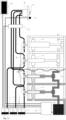
- a corresponding construction is shown in which the piston pumps (6, 7, 8) for conveying the fluids are driven by a crankshaft (12).
- the pistons are drawn up and emptied.
- the dilution solution C is conveyed from the storage tank C (3) into the piston by pulling up the piston (8).
- the dilution solution C reaches the mixing device (10).
- Check valves (5) prevent the dilution solution C from flowing back into the storage tank C (3).
- the drawing up and subsequent ejection of the reactant solutions A and B into the mixing device (10) takes place with a time delay to the provision of the dilution solution C.
- the volume of the mixing device (10) is chosen so that the sum of the individual volumes of solutions A, B and C can be accommodated.
- the active solution is present in the mixing device (10).
- the active solution is pressed from the mixing device into the dispensing device (11) (e.g. a nozzle) by means of a piston (9), which sucks in air via the supply 18, compresses it and expels it in the direction of the mixing device and is then applied to the surface to be disinfected.
- the process of mixing the reactants and then releasing the active ingredient can be repeated continuously thanks to the crankshaft design.
- the frequency of the active solution being released can be adjusted using the rotation speed of the crankshaft (12).
- An optical sensor (17) is used to determine without contact whether a surface to be disinfected is in the spray area and what size this area is. This information is evaluated by a control unit (14) and the device is then activated. Depending on the size of the surface to be disinfected, one or more sprays are released. In a further embodiment, the optical sensor (17) is used to identify the surface and/or the user. This makes it possible to determine, as part of a subsequent evaluation, which surfaces and/or which users have received which amount of active ingredient, how often and at what time.
- Information about the system and/or the surface to be disinfected and/or the user is provided to the user via a display unit (16). This includes warnings in the event of system-critical failures such as an empty storage tank or a leaky piston. Such sources of error can be detected by level sensors (4) on the storage tanks and by using pressure sensors on all supply lines to the mixing device.
- the display unit (16) also has a module that allows all data stored by the device to be transferred to another device, preferably a computer.
- the storage tanks (1-3) are equipped with a coding system that allows the liquid they contain to be clearly identified. If liquids are not clearly identified, the control unit (14) interrupts the operation of the device until the intended liquid is in the storage tank.
- Fig. 12 an embodiment of the dispensing device is shown in which the active solution is applied as an aerosol to the surface to be disinfected.
- aerosols are generated from the reactant solutions by means of an aerosol generator (30).
- fans (19) generate a circulating air flow above the reactant solutions by means of an air supply (18).
- This circulating air flow is enriched with liquid droplets so that aerosols are formed above the reactant solutions.
- the reactant aerosols are fed into a mixing device (10) via the air flow. where the active solution is formed in the form of an aerosol.
- the active solution is then applied to the surface to be disinfected in the form of an aerosol.
- Fig. 13 an embodiment of the dispensing device is shown in which the active solution is first formed in the form of a liquid spray on the surface to be disinfected.
- the storage tanks (1, 2) are each equipped with pumps (20).
- the reactant solutions are passed through nozzles (21) via the respective pumps (20) as required, so that a spray (28) is created.
- this spray (28) the reactant solutions are combined and applied together to the surface to be disinfected.
- a device in which the active solution is applied via a water pipe (22) using a water tap (23).
- the reactants are introduced into the water flow (25) by pumps (24), whereby the active solution is created.
- a flow sensor (26) is integrated into the water pipe (22), which is used for process control and activates the inflow of reactants (29) when water flow is detected.
- a further embodiment of a device is shown in which the active solution is applied via an inflow of reactants (29) into a water pipe (25) by means of a water tap (23).
- the reactants are sucked into the water flow by a Venturi pump (27), mixed in the water flow and applied as an active solution via the water tap (23) onto the surface to be disinfected.
- Fig. 16 an embodiment of a device is shown in which some of the reactants are stored in a storage tank (1 or 2), while another part of the reactants is generated by a plasma source (32) integrated into the dispensing device.
- the aerosol generator (30), the fan (18) and the air supply generate an aerosol from the reactant solution, which is then reacted with the other reactant in the dispensing device by the plasma source.
- the active solution thus created is applied as an aerosol (33) in the application area (34) to the surface to be disinfected.
- This embodiment of the device also has a suction device (35) which is equipped with a filter (36) which removes harmful gaseous liquid and gaseous components from the room air.
- the effectiveness of the active solution was investigated in suspension tests.
- the active solution was obtained by mixing two starting liquids A and B.
- Starting liquid A contained 50 mM H 2 O 2 and 2% (w/v) or 10% citric acid.
- Starting liquid B contained 50 mM NO 2 - .
- the effectiveness of the active solution was compared with that of isopropanol, a well-known and widely used disinfectant, as the sole active ingredient.
- 0.1 mL of bacterial solution E. coli
- CASO broth casein peptone soy flour peptone broth, Carl Roth GmbH + Co. KG, Germany.
- the exposure time was 30 s.
- hand disinfection tests were carried out in accordance with the EN 1500 standard.
- the tests in accordance with the EN 1500 standard check how a disinfectant to be tested works in comparison to the active ingredient isopropanol in terms of its disinfectant effect.
- the hands are first immersed in a CASO broth containing bacteria (E. coli) and then disinfected with the agent to be tested in accordance with the protocol.
- Fig.5 Three types of pH measurements are shown. These are the pH value of the subjects before Treatment on the inside of the palm (pre-value), the pH values in the mixed active solutions and the pH values on the skin after hand disinfection according to EN 1500. The latter two were tested with 0.5%, 2% and 10% citric acid concentration in active solution B.
- the dependence of the effectiveness on the dose and exposure time must be known.
- the effectiveness parameter W can be described as the product of the dose and the exposure time Z E according to Haber's rule .
- a large number of reactive species with different lifetimes are created, so that this dependence is not clear.
- the pre-factor c 1 ⁇ c 2 in equation (26) only causes a scaling.
- the effectiveness parameter W ⁇ t 1 t 2 k 1 ⁇ H 2 O 2 ⁇ NO 2 ⁇ engl which can be used to specify a necessary and sufficient condition for the effectiveness of the disinfectant produced according to the invention.
- the effectiveness of a mixture of NO 2 - and H 2 O 2 as a function of the effectiveness parameter W defined in this way was determined within the framework of the investigations on which this invention is based.
- equation (5) The validity of equation (5) is confirmed by the following experiment: 0.22 mL of CASO broth is added to a bacterial solution with a volume of 0.1 mL. This bacterial solution is exposed to an active solution of H 2 O 2 , NO 2 and pH buffer for an exposure time Z E , whereby the volume of the active solution is 0.78 mL.
- the calculated efficacy parameter is presented together with the experimental results, which confirm the validity of the relationship (5).
- a distribution step must always be carried out in which the active solution is applied and/or distributed on the surface to be disinfected.
- the active solution when used as a hand disinfectant, the active solution is typically rubbed for a certain time, usually 30 s.
- the starting liquid A contained 50 mM H 2 O 2 and a buffer solution and the starting liquid B contained 50 mM NO 2 - the buffer solution is used to adjust the pH value of the mixture of active solution and CASO broth.
- 0.1 mL of a bacterial suspension E. coli was added to this mixture. After an exposure time of 15 s, the resulting suspension was plated.
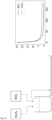
- Fig.7 the log 10 bacterial reduction thus obtained is shown.
- a maximum reduction of colony forming units of up to 2 log 10 steps can be achieved if 0.15 mM ⁇ W ⁇ 0.3 mM. If 0.3 mM ⁇ W ⁇ 0.5 mM, 2 to 5 log 10 steps can be achieved. If W>0.5 mM, up to 7 log 10 steps are achieved.
- the good agreement with the experimental data with the effectiveness parameter defined according to (13) underlines the validity of the dose-effect relationship described by formulas (23) - (28) for the use of NO 2 - and H 2 O 2 as disinfectants.
- the method for W>0.3 mM, or better W>0.5 mM can be used for hygienic surface and especially hand disinfection. Higher values of W are necessary for a sporicidal and virucidal effect (see below).
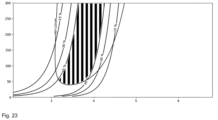
- Fig.8 The start and end pH values are also shown by arrows. These were determined by pH measurement in the hand disinfection tests described above.
- the start value is the pH value in the active solution before the start of hand disinfection and the end value is the pH value of the active solution on the skin after hand disinfection in accordance with the EN 1500 standard.
- the temporal course of the pH value should ideally be known so that equation (27) can be integrated.
- Fig.9 shows the measurement setup for quantifying the total amount of outgassed NO 2.
- a Petri dish was filled with 10 mL of the disinfectant liquid and placed in a container through which a gas flow of 1 slm was passed.
- NO 2 generation rate determined in this way ( Fig.9 right), it was determined that in this case up to 3% of the NO 2 in the liquid is released as NO 2 .
- the outgassing also affects the course of the chemical reactions in the liquid, as the following experiment shows.
- H 2 O 2 and NO 2 - were mixed with citric acid at a concentration of 50 mM each and a volume of 3 mL each in a beaker at a pH of 2.8 for one second.
- 2 mL of the mixture from the beaker was poured into a flat vessel with a diameter of 15 cm in order to achieve a distribution of the liquid similar to a surface disinfection.
- An Ames test was carried out to investigate the mutagenicity of the disinfectant product.
- the test is based on the fact that a point mutation deprives an E. coli strain of the ability to grow on a given nutrient medium.
- a mutagen By adding a mutagen, revertants are formed which are able to grow on the nutrient medium. Even without adding a mutagen, a few revertants are formed through spontaneous mutations (natural mutagenicity).
- the mutagenicity test was carried out with two solutions of 50 mM NO 2 - and 50 mM H 2 O 2 , acidified with 2% citric acid. These initial tests showed no mutagenicity (mutagenicity level corresponds approximately to the natural mutagenicity) for the product.
- the integral (5) can be calculated piece by piece for corresponding temperatures and pH values in successive process steps.
- UV spectroscopy is particularly suitable for measuring the pH value curve in suspension.
- the pH value can be determined from the ratio of NO 2 - to HNO 2 in the liquid.
- Conventional pH probes can also be used for this purpose.
- the pH measurement of the liquid applied to a surface can also be carried out by using appropriate pH probes.
- pH surface electrode from Mettler-Toledo International Inc. was used (pH electrode InLab Surface).
- pH electrode InLab Surface A wide variety of methods are available for temperature measurement. The temperature values given in this work were determined using a fiber optic temperature sensor with a fast response time and low heat capacity (FOTEMP1-OEM from Weidmann Technologies GmbH).
- the temperature dependence of the reaction coefficient k 1 was determined using UV absorption spectroscopy.
- the reactants NaNO 2 and H 2 O 2 were reacted at temperatures between 0°C and 40°C using a citric acid phosphate buffer.
- the reaction rate was determined by time-resolved quantification of the densities of NO 2 - and HNO 2.
- Initial concentrations of H 2 O 2 and NO 2 - of 5 mM each were used to determine the reaction rates.
- the corresponding Arrhenius graph is shown.
- the concentrations [i] wavelength-dependent cross sections ⁇ i ( ⁇ ) of the species i ⁇ NO 2 ⁇ , ENT 2 , NO 3 ⁇ , H 2 O 2 in the wavelength range 250 nm ⁇ ⁇ ⁇ 420 nm using the least squares method using the model function ("fit") A ⁇ i [i] ⁇ i L, so that the best agreement between model function A and experimentally determined absorbance A exp is obtained.
- 19 mM NO 2 and 4.8 mM HNO 2 were determined. H 2 O 2 and NO 2 - were not detected.
- the cross section of the acid or the conjugated base was calculated in advance for the pH value 2.1.
- the cross section used for ONOOH was determined in our own preliminary work and is consistent with the cross section published in Loegager & Sehested (1993). The formation of ONOOH was thus also demonstrated in the limit range of the process carried out according to the invention (0°C, pH 2.1).
- Heaselgrave et al. require efficacy parameters of 4.6 mM to achieve a reduction factor of 4 log levels. For bacterial spores, which are much more resistant, the required efficacy parameter is significantly higher. According to the test parameters of Heaselgrave et al. (2010), the efficacy parameter for Bacillus subtilis endospores is calculated to be 14.2 mM. In contrast to the disinfection process according to the invention, much longer periods of time (15 min and 60 min, respectively) are required to achieve the efficacy parameters of 4.6 mM and 14.2 mM, respectively.
- the effectiveness parameter achieved by Heaselgrave et al. corresponds to only 1.9% of the effectiveness parameter that could theoretically be achieved with a favorable choice of pH value and initial concentrations of H 2 O 2 and NO 2 - .
- the process according to the invention is therefore also preferable to that of Heaselgrave et al. in terms of efficiency against the background of efficient use of raw materials.
Landscapes
- Health & Medical Sciences (AREA)
- Life Sciences & Earth Sciences (AREA)
- General Health & Medical Sciences (AREA)
- Epidemiology (AREA)
- Animal Behavior & Ethology (AREA)
- Public Health (AREA)
- Veterinary Medicine (AREA)
- Chemical & Material Sciences (AREA)
- Chemical Kinetics & Catalysis (AREA)
- General Chemical & Material Sciences (AREA)
- Inorganic Chemistry (AREA)
- Engineering & Computer Science (AREA)
- Pharmacology & Pharmacy (AREA)
- Medicinal Chemistry (AREA)
- Physics & Mathematics (AREA)
- Plasma & Fusion (AREA)
- Agronomy & Crop Science (AREA)
- Pest Control & Pesticides (AREA)
- Plant Pathology (AREA)
- Dentistry (AREA)
- Wood Science & Technology (AREA)
- Zoology (AREA)
- Environmental Sciences (AREA)
- Apparatus For Disinfection Or Sterilisation (AREA)
- Agricultural Chemicals And Associated Chemicals (AREA)
Applications Claiming Priority (2)
| Application Number | Priority Date | Filing Date | Title |
|---|---|---|---|
| PCT/EP2018/063226 WO2019219220A1 (de) | 2018-05-18 | 2018-05-18 | Desinfektionsverfahren mit einem durch reaktion von h2o2 und no2- in situ gebildetem desinfektionswirkstoff |
| PCT/EP2019/062897 WO2019219959A1 (de) | 2018-05-18 | 2019-05-17 | Desinfektionsverfahren mit einem durch reaktion von h2o2 und no2– in situ gebildetem desinfektionswirkstoff |
Publications (3)
| Publication Number | Publication Date |
|---|---|
| EP3781218A1 EP3781218A1 (de) | 2021-02-24 |
| EP3781218B1 true EP3781218B1 (de) | 2024-09-18 |
| EP3781218C0 EP3781218C0 (de) | 2024-09-18 |
Family
ID=62597429
Family Applications (1)
| Application Number | Title | Priority Date | Filing Date |
|---|---|---|---|
| EP19728898.8A Active EP3781218B1 (de) | 2018-05-18 | 2019-05-17 | Desinfektionsverfahren mit einem durch reaktion von h2o2 und no2- in situ gebildetem desinfektionswirkstoff |
Country Status (10)
| Country | Link |
|---|---|
| US (1) | US11596701B2 (https=) |
| EP (1) | EP3781218B1 (https=) |
| JP (1) | JP7417546B2 (https=) |
| KR (1) | KR102742477B1 (https=) |
| CN (1) | CN112118873B (https=) |
| AU (1) | AU2019270515B2 (https=) |
| BR (1) | BR112020023445B1 (https=) |
| ES (1) | ES2999262T3 (https=) |
| PL (1) | PL3781218T3 (https=) |
| WO (2) | WO2019219220A1 (https=) |
Families Citing this family (5)
| Publication number | Priority date | Publication date | Assignee | Title |
|---|---|---|---|---|
| CN115053189A (zh) * | 2020-02-04 | 2022-09-13 | 株式会社大赛璐 | 预测装置、预测方法以及程序 |
| DE102021201293B4 (de) | 2021-02-11 | 2024-10-24 | Meiko Maschinenbau Gmbh & Co. Kg | Verfahren zur Behandlung von Behältern für menschliche Ausscheidungen |
| US12582735B2 (en) * | 2021-10-25 | 2026-03-24 | Nebula Biocides Gmbh | Disinfection method comprising a disinfectant formed by reaction of H2O2 and NO2 in situ with retarded release of the active substance |
| WO2026008846A1 (de) | 2024-07-05 | 2026-01-08 | Meiko Maschinenbau Gmbh & Co. Kg | Transportspülmaschine und verfahren zur reinigung von reinigungsgut |
| WO2026046975A1 (de) | 2024-08-27 | 2026-03-05 | Meiko Maschinenbau Gmbh & Co. Kg | Geschirrspülmaschine und reinigungsverfahren mit desinfektionsschritt |
Family Cites Families (13)
| Publication number | Priority date | Publication date | Assignee | Title |
|---|---|---|---|---|
| RU2021820C1 (ru) * | 1992-05-22 | 1994-10-30 | Эдуард Арутюнович Петросян | Способ обработки кожи рук хирурга и медперсонала |
| US5834251A (en) | 1994-12-30 | 1998-11-10 | Alko Group Ltd. | Methods of modifying carbohydrate moieties |
| AU747353B2 (en) * | 1997-12-12 | 2002-05-16 | Tetra Laval Holdings & Finance Sa | A continuous process for hyperactivation of fluids for sterilization |
| DE102005014033A1 (de) * | 2005-03-23 | 2006-09-28 | Basf Ag | Oberflächenbehandlung |
| EP2206521B1 (en) * | 2007-09-27 | 2019-07-17 | Satoshi Ikawa | Apparatus for sterilization |
| CN101628006B (zh) * | 2008-07-14 | 2011-06-22 | 烟台绿叶动物保健品有限公司 | 一种用于奶牛乳头皮肤消毒的组合物 |
| WO2011027542A1 (ja) | 2009-09-03 | 2011-03-10 | 国立大学法人大阪大学 | 液体にイオンを供給する方法および装置並びに殺菌方法および装置 |
| WO2011134010A1 (en) | 2010-04-28 | 2011-11-03 | The University Of Queensland | Control of bacterial activity, such as in sewers and wastewater treatment systems |
| US9339572B2 (en) * | 2013-03-15 | 2016-05-17 | EP Technologies LLC | Methods and solutions for killing or deactivating spores |
| EP3189857B1 (en) | 2014-09-02 | 2020-11-04 | Katsuhisa Kitano | Sterilization method, preparation for sterilization, and device for producing bactericidal liquid |
| JP2017171627A (ja) | 2016-03-25 | 2017-09-28 | パナソニックIpマネジメント株式会社 | 水溶液及び対象物処理方法 |
| WO2017192618A1 (en) * | 2016-05-02 | 2017-11-09 | Symbios Technologies, Inc. | Electrochemical plasma activated aqueous chemotherapeutics |
| EP3346808A1 (en) * | 2017-01-06 | 2018-07-11 | INP Greifswald Leibniz-institut Fuer Plasmaforschung Und Technologie E. V. | Planar device and method for generating a plasma or reactive species |
-
2018
- 2018-05-18 WO PCT/EP2018/063226 patent/WO2019219220A1/de not_active Ceased
-
2019
- 2019-05-17 JP JP2020564657A patent/JP7417546B2/ja active Active
- 2019-05-17 AU AU2019270515A patent/AU2019270515B2/en active Active
- 2019-05-17 EP EP19728898.8A patent/EP3781218B1/de active Active
- 2019-05-17 ES ES19728898T patent/ES2999262T3/es active Active
- 2019-05-17 CN CN201980032640.1A patent/CN112118873B/zh active Active
- 2019-05-17 BR BR112020023445-1A patent/BR112020023445B1/pt active IP Right Grant
- 2019-05-17 WO PCT/EP2019/062897 patent/WO2019219959A1/de not_active Ceased
- 2019-05-17 PL PL19728898.8T patent/PL3781218T3/pl unknown
- 2019-05-17 KR KR1020207036038A patent/KR102742477B1/ko active Active
-
2020
- 2020-11-18 US US16/950,929 patent/US11596701B2/en active Active
Also Published As
| Publication number | Publication date |
|---|---|
| JP2021524315A (ja) | 2021-09-13 |
| AU2019270515A1 (en) | 2020-11-26 |
| CN112118873A (zh) | 2020-12-22 |
| EP3781218A1 (de) | 2021-02-24 |
| US20210069361A1 (en) | 2021-03-11 |
| WO2019219220A1 (de) | 2019-11-21 |
| BR112020023445B1 (pt) | 2023-11-28 |
| ES2999262T3 (en) | 2025-02-25 |
| CN112118873B (zh) | 2023-12-05 |
| PL3781218T3 (pl) | 2025-03-10 |
| KR102742477B1 (ko) | 2024-12-12 |
| KR20210010904A (ko) | 2021-01-28 |
| JP7417546B2 (ja) | 2024-01-18 |
| EP3781218C0 (de) | 2024-09-18 |
| CA3099881A1 (en) | 2019-11-21 |
| BR112020023445A2 (pt) | 2021-02-23 |
| WO2019219959A1 (de) | 2019-11-21 |
| AU2019270515B2 (en) | 2023-05-18 |
| US11596701B2 (en) | 2023-03-07 |
Similar Documents
| Publication | Publication Date | Title |
|---|---|---|
| EP3781218B1 (de) | Desinfektionsverfahren mit einem durch reaktion von h2o2 und no2- in situ gebildetem desinfektionswirkstoff | |
| US20230001125A1 (en) | Nitric oxide generation, dilution, and topical application compositions, systems, apparatus and methods | |
| US8685467B2 (en) | Nitric oxide generation, dilution, and topical application apparatus and method | |
| DE69834835T2 (de) | Dynamische reduzierung von biologischer beladung durch o(x) | |
| DE69709502T2 (de) | Reaktorbehälter und Verfahren zur Herstellung einer kontrollierten Menge Chlordioxidlösung | |
| CH700121B1 (de) | Verfahren und Anordnung zur Dekontamination eines Reinraums. | |
| EP4291253B1 (de) | Verfahren zur behandlung von behältern für menschliche ausscheidungen | |
| EP3813891A1 (de) | Anordnung und verfahren zur dekontamination von objekten | |
| DE102009016542A1 (de) | Verfahren zur Desinfektion von Oberflächen flowdurchströmter Bereiche durch Nutzung synergistischer Wirkungen desinfektionswirksamer Mittel | |
| DE102020007932A1 (de) | Verfahren zur Herstellung von elektrochemisch modifiziertem Wasser | |
| DE60114472T2 (de) | Verfahren zum auffinden von ozonverbrauchenden verbindungen | |
| DE102010006920A1 (de) | Verfahren zur Steuerung der Sterilisation von Behältern innerhalb einer Sterilisationsvorrichtung, basierend auf der Infrarot-Spektroskopie von Wasserstoffperoxid in der Gasphase sowie Vorrichtung | |
| WO2011120703A1 (de) | Verfahren zur raumdesinfektion und vernebelungsvorrichtung | |
| CA3099881C (en) | Disinfection method using a disinfection agent formed in situ by reaction of h2o2 and no2- | |
| EP3789045A1 (de) | Desinfektionsverfahren mit einem durch reaktion von h2o2 und no2 in situ gebildetem desinfektionswirkstoff mit retardierter wirkstofffreisetzung | |
| HK40042693B (en) | Disinfection process using an active disinfecting substance formed in situ by reacting h2o2 and no2- | |
| US12582735B2 (en) | Disinfection method comprising a disinfectant formed by reaction of H2O2 and NO2 in situ with retarded release of the active substance | |
| HK40042693A (en) | Disinfection process using an active disinfecting substance formed in situ by reacting h2o2 and no2- | |
| WO2023110574A1 (de) | Vorrichtung und verfahren zum reinigen einer behältnisfüllanlage | |
| EP3034099B1 (de) | Verfahren und System zur Entkeimung von Räumen aufweisend Wasserperoxid und ein Tensid | |
| EP2407180A1 (de) | Verfahren zur Desinfektion von Oberflächen, Vernebelungsvorrichtungen und mobiles Austragsgerät |
Legal Events
| Date | Code | Title | Description |
|---|---|---|---|
| STAA | Information on the status of an ep patent application or granted ep patent |
Free format text: STATUS: UNKNOWN |
|
| STAA | Information on the status of an ep patent application or granted ep patent |
Free format text: STATUS: THE INTERNATIONAL PUBLICATION HAS BEEN MADE |
|
| PUAI | Public reference made under article 153(3) epc to a published international application that has entered the european phase |
Free format text: ORIGINAL CODE: 0009012 |
|
| STAA | Information on the status of an ep patent application or granted ep patent |
Free format text: STATUS: REQUEST FOR EXAMINATION WAS MADE |
|
| 17P | Request for examination filed |
Effective date: 20201120 |
|
| AK | Designated contracting states |
Kind code of ref document: A1 Designated state(s): AL AT BE BG CH CY CZ DE DK EE ES FI FR GB GR HR HU IE IS IT LI LT LU LV MC MK MT NL NO PL PT RO RS SE SI SK SM TR |
|
| AX | Request for extension of the european patent |
Extension state: BA ME |
|
| DAV | Request for validation of the european patent (deleted) | ||
| DAX | Request for extension of the european patent (deleted) | ||
| REG | Reference to a national code |
Ref country code: HK Ref legal event code: DE Ref document number: 40042693 Country of ref document: HK |
|
| STAA | Information on the status of an ep patent application or granted ep patent |
Free format text: STATUS: EXAMINATION IS IN PROGRESS |
|
| 17Q | First examination report despatched |
Effective date: 20220512 |
|
| RAP1 | Party data changed (applicant data changed or rights of an application transferred) |
Owner name: NEBULA BIOCIDES GMBH |
|
| GRAP | Despatch of communication of intention to grant a patent |
Free format text: ORIGINAL CODE: EPIDOSNIGR1 |
|
| STAA | Information on the status of an ep patent application or granted ep patent |
Free format text: STATUS: GRANT OF PATENT IS INTENDED |
|
| INTG | Intention to grant announced |
Effective date: 20240710 |
|
| GRAS | Grant fee paid |
Free format text: ORIGINAL CODE: EPIDOSNIGR3 |
|
| GRAA | (expected) grant |
Free format text: ORIGINAL CODE: 0009210 |
|
| STAA | Information on the status of an ep patent application or granted ep patent |
Free format text: STATUS: THE PATENT HAS BEEN GRANTED |
|
| AK | Designated contracting states |
Kind code of ref document: B1 Designated state(s): AL AT BE BG CH CY CZ DE DK EE ES FI FR GB GR HR HU IE IS IT LI LT LU LV MC MK MT NL NO PL PT RO RS SE SI SK SM TR |
|
| REG | Reference to a national code |
Ref country code: GB Ref legal event code: FG4D Free format text: NOT ENGLISH |
|
| REG | Reference to a national code |
Ref country code: CH Ref legal event code: EP |
|
| REG | Reference to a national code |
Ref country code: IE Ref legal event code: FG4D Free format text: LANGUAGE OF EP DOCUMENT: GERMAN |
|
| REG | Reference to a national code |
Ref country code: DE Ref legal event code: R096 Ref document number: 502019012155 Country of ref document: DE |
|
| U01 | Request for unitary effect filed |
Effective date: 20241018 |
|
| U07 | Unitary effect registered |
Designated state(s): AT BE BG DE DK EE FI FR IT LT LU LV MT NL PT RO SE SI Effective date: 20241104 |
|
| PG25 | Lapsed in a contracting state [announced via postgrant information from national office to epo] |
Ref country code: NO Free format text: LAPSE BECAUSE OF FAILURE TO SUBMIT A TRANSLATION OF THE DESCRIPTION OR TO PAY THE FEE WITHIN THE PRESCRIBED TIME-LIMIT Effective date: 20241218 |
|
| PG25 | Lapsed in a contracting state [announced via postgrant information from national office to epo] |
Ref country code: GR Free format text: LAPSE BECAUSE OF FAILURE TO SUBMIT A TRANSLATION OF THE DESCRIPTION OR TO PAY THE FEE WITHIN THE PRESCRIBED TIME-LIMIT Effective date: 20241219 |
|
| PG25 | Lapsed in a contracting state [announced via postgrant information from national office to epo] |
Ref country code: HR Free format text: LAPSE BECAUSE OF FAILURE TO SUBMIT A TRANSLATION OF THE DESCRIPTION OR TO PAY THE FEE WITHIN THE PRESCRIBED TIME-LIMIT Effective date: 20240918 |
|
| PG25 | Lapsed in a contracting state [announced via postgrant information from national office to epo] |
Ref country code: RS Free format text: LAPSE BECAUSE OF FAILURE TO SUBMIT A TRANSLATION OF THE DESCRIPTION OR TO PAY THE FEE WITHIN THE PRESCRIBED TIME-LIMIT Effective date: 20241218 |
|
| PG25 | Lapsed in a contracting state [announced via postgrant information from national office to epo] |
Ref country code: RS Free format text: LAPSE BECAUSE OF FAILURE TO SUBMIT A TRANSLATION OF THE DESCRIPTION OR TO PAY THE FEE WITHIN THE PRESCRIBED TIME-LIMIT Effective date: 20241218 Ref country code: NO Free format text: LAPSE BECAUSE OF FAILURE TO SUBMIT A TRANSLATION OF THE DESCRIPTION OR TO PAY THE FEE WITHIN THE PRESCRIBED TIME-LIMIT Effective date: 20241218 Ref country code: HR Free format text: LAPSE BECAUSE OF FAILURE TO SUBMIT A TRANSLATION OF THE DESCRIPTION OR TO PAY THE FEE WITHIN THE PRESCRIBED TIME-LIMIT Effective date: 20240918 Ref country code: GR Free format text: LAPSE BECAUSE OF FAILURE TO SUBMIT A TRANSLATION OF THE DESCRIPTION OR TO PAY THE FEE WITHIN THE PRESCRIBED TIME-LIMIT Effective date: 20241219 |
|
| REG | Reference to a national code |
Ref country code: ES Ref legal event code: FG2A Ref document number: 2999262 Country of ref document: ES Kind code of ref document: T3 Effective date: 20250225 |
|
| PG25 | Lapsed in a contracting state [announced via postgrant information from national office to epo] |
Ref country code: IS Free format text: LAPSE BECAUSE OF FAILURE TO SUBMIT A TRANSLATION OF THE DESCRIPTION OR TO PAY THE FEE WITHIN THE PRESCRIBED TIME-LIMIT Effective date: 20250118 |
|
| PG25 | Lapsed in a contracting state [announced via postgrant information from national office to epo] |
Ref country code: SM Free format text: LAPSE BECAUSE OF FAILURE TO SUBMIT A TRANSLATION OF THE DESCRIPTION OR TO PAY THE FEE WITHIN THE PRESCRIBED TIME-LIMIT Effective date: 20240918 |
|
| PG25 | Lapsed in a contracting state [announced via postgrant information from national office to epo] |
Ref country code: CZ Free format text: LAPSE BECAUSE OF FAILURE TO SUBMIT A TRANSLATION OF THE DESCRIPTION OR TO PAY THE FEE WITHIN THE PRESCRIBED TIME-LIMIT Effective date: 20240918 |
|
| PG25 | Lapsed in a contracting state [announced via postgrant information from national office to epo] |
Ref country code: SK Free format text: LAPSE BECAUSE OF FAILURE TO SUBMIT A TRANSLATION OF THE DESCRIPTION OR TO PAY THE FEE WITHIN THE PRESCRIBED TIME-LIMIT Effective date: 20240918 |
|
| U20 | Renewal fee for the european patent with unitary effect paid |
Year of fee payment: 7 Effective date: 20250516 |
|
| PGFP | Annual fee paid to national office [announced via postgrant information from national office to epo] |
Ref country code: PL Payment date: 20250505 Year of fee payment: 7 |
|
| PGFP | Annual fee paid to national office [announced via postgrant information from national office to epo] |
Ref country code: ES Payment date: 20250616 Year of fee payment: 7 |
|
| PGFP | Annual fee paid to national office [announced via postgrant information from national office to epo] |
Ref country code: CH Payment date: 20250601 Year of fee payment: 7 |
|
| PGFP | Annual fee paid to national office [announced via postgrant information from national office to epo] |
Ref country code: TR Payment date: 20250508 Year of fee payment: 7 |
|
| PLBE | No opposition filed within time limit |
Free format text: ORIGINAL CODE: 0009261 |
|
| STAA | Information on the status of an ep patent application or granted ep patent |
Free format text: STATUS: NO OPPOSITION FILED WITHIN TIME LIMIT |
|
| 26N | No opposition filed |
Effective date: 20250619 |
|
| PG25 | Lapsed in a contracting state [announced via postgrant information from national office to epo] |
Ref country code: MC Free format text: LAPSE BECAUSE OF FAILURE TO SUBMIT A TRANSLATION OF THE DESCRIPTION OR TO PAY THE FEE WITHIN THE PRESCRIBED TIME-LIMIT Effective date: 20240918 |
|
| PGFP | Annual fee paid to national office [announced via postgrant information from national office to epo] |
Ref country code: GB Payment date: 20260324 Year of fee payment: 8 |
|
| PG25 | Lapsed in a contracting state [announced via postgrant information from national office to epo] |
Ref country code: IE Free format text: LAPSE BECAUSE OF NON-PAYMENT OF DUE FEES Effective date: 20250517 |