EP3780819B1 - Verfahren und vorrichtung zur zuteilung von teilbandsignalen - Google Patents
Verfahren und vorrichtung zur zuteilung von teilbandsignalen Download PDFInfo
- Publication number
- EP3780819B1 EP3780819B1 EP19785269.2A EP19785269A EP3780819B1 EP 3780819 B1 EP3780819 B1 EP 3780819B1 EP 19785269 A EP19785269 A EP 19785269A EP 3780819 B1 EP3780819 B1 EP 3780819B1
- Authority
- EP
- European Patent Office
- Prior art keywords
- scheduling
- subbands
- pusch
- frequency domain
- precoding
- Prior art date
- Legal status (The legal status is an assumption and is not a legal conclusion. Google has not performed a legal analysis and makes no representation as to the accuracy of the status listed.)
- Active
Links
Images



Classifications
-
- H—ELECTRICITY
- H04—ELECTRIC COMMUNICATION TECHNIQUE
- H04B—TRANSMISSION
- H04B7/00—Radio transmission systems, i.e. using radiation field
- H04B7/02—Diversity systems; Multi-antenna system, i.e. transmission or reception using multiple antennas
- H04B7/04—Diversity systems; Multi-antenna system, i.e. transmission or reception using multiple antennas using two or more spaced independent antennas
- H04B7/0413—MIMO systems
- H04B7/0417—Feedback systems
-
- H—ELECTRICITY
- H04—ELECTRIC COMMUNICATION TECHNIQUE
- H04L—TRANSMISSION OF DIGITAL INFORMATION, e.g. TELEGRAPHIC COMMUNICATION
- H04L5/00—Arrangements affording multiple use of the transmission path
- H04L5/003—Arrangements for allocating sub-channels of the transmission path
- H04L5/0053—Allocation of signalling, i.e. of overhead other than pilot signals
-
- H—ELECTRICITY
- H04—ELECTRIC COMMUNICATION TECHNIQUE
- H04L—TRANSMISSION OF DIGITAL INFORMATION, e.g. TELEGRAPHIC COMMUNICATION
- H04L5/00—Arrangements affording multiple use of the transmission path
- H04L5/0091—Signalling for the administration of the divided path, e.g. signalling of configuration information
- H04L5/0094—Indication of how sub-channels of the path are allocated
-
- H—ELECTRICITY
- H04—ELECTRIC COMMUNICATION TECHNIQUE
- H04W—WIRELESS COMMUNICATION NETWORKS
- H04W72/00—Local resource management
- H04W72/04—Wireless resource allocation
- H04W72/044—Wireless resource allocation based on the type of the allocated resource
- H04W72/0453—Resources in frequency domain, e.g. a carrier in FDMA
-
- H—ELECTRICITY
- H04—ELECTRIC COMMUNICATION TECHNIQUE
- H04W—WIRELESS COMMUNICATION NETWORKS
- H04W76/00—Connection management
- H04W76/10—Connection setup
-
- H—ELECTRICITY
- H04—ELECTRIC COMMUNICATION TECHNIQUE
- H04L—TRANSMISSION OF DIGITAL INFORMATION, e.g. TELEGRAPHIC COMMUNICATION
- H04L5/00—Arrangements affording multiple use of the transmission path
- H04L5/0001—Arrangements for dividing the transmission path
- H04L5/0003—Two-dimensional division
- H04L5/0005—Time-frequency
- H04L5/0007—Time-frequency the frequencies being orthogonal, e.g. OFDM(A) or DMT
- H04L5/001—Time-frequency the frequencies being orthogonal, e.g. OFDM(A) or DMT the frequencies being arranged in component carriers
-
- H—ELECTRICITY
- H04—ELECTRIC COMMUNICATION TECHNIQUE
- H04L—TRANSMISSION OF DIGITAL INFORMATION, e.g. TELEGRAPHIC COMMUNICATION
- H04L5/00—Arrangements affording multiple use of the transmission path
- H04L5/003—Arrangements for allocating sub-channels of the transmission path
- H04L5/0044—Allocation of payload; Allocation of data channels, e.g. PDSCH or PUSCH
-
- H—ELECTRICITY
- H04—ELECTRIC COMMUNICATION TECHNIQUE
- H04L—TRANSMISSION OF DIGITAL INFORMATION, e.g. TELEGRAPHIC COMMUNICATION
- H04L5/00—Arrangements affording multiple use of the transmission path
- H04L5/003—Arrangements for allocating sub-channels of the transmission path
- H04L5/0048—Allocation of pilot signals, i.e. of signals known to the receiver
- H04L5/0051—Allocation of pilot signals, i.e. of signals known to the receiver of dedicated pilots, i.e. pilots destined for a single user or terminal
-
- H—ELECTRICITY
- H04—ELECTRIC COMMUNICATION TECHNIQUE
- H04W—WIRELESS COMMUNICATION NETWORKS
- H04W72/00—Local resource management
- H04W72/20—Control channels or signalling for resource management
- H04W72/23—Control channels or signalling for resource management in the downlink direction of a wireless link, i.e. towards a terminal
Definitions
- the present application relates to uplink transmission technologies and, for example, relates to a scheduling subband allocation method and apparatus.
- the uplink transmission includes codebook based transmission and non-codebook based transmission
- the new radio technology only supports the notification of broadband precoding information by using a precoding indication in downlink control information (DCI).
- DCI downlink control information
- the precoding indication will cause performance loss.
- no effective solution has been proposed to solve the problem of how to indicate the precoding information of the uplink scheduling subband.
- the reference R1-1710447 discloses a codebook based transmission for UL MIMO.
- the reference R1-1800626 discloses TRI and TPMI indication for CB-based UL transmission.
- a base station uses DCI to notify some scheduling information to a user, such as allocation of frequency domain resources, indication of precoding information, etc.
- the allocation of frequency domain resources in the NR is classified into two modes, i.e., the resource allocation mode Type 0 and the resource allocation mode Type 1.
- the unit of resource scheduling is a resource block group (RBG).
- One RBG includes multiple physical resource blocks (PRBs).
- PRBs physical resource blocks
- the multiple RBGs allocated by the base station to the user may be discontinuous.
- the unit of resource scheduling is the PRB.
- the multiple PRBs allocated by the base station to the user must be continuous.
- the number of RBGs or PRBs allocated by the base station to the user is dynamic.
- the DCI further includes a precoding indication, and this precoding indication is used in all scheduled frequency domain PRBs of a Physical Uplink Shared Channel (PUSCH).
- PUSCH Physical Uplink Shared Channel
- One intuitive method is to divide resources scheduled by the PUSCH into several parts, each part is a scheduling subband, and each scheduling subband corresponds to a precoding indication.
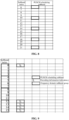
- this method can cause problems in multi-user scheduling, especially when the frequency domain resources allocated by multiple users partially overlap. For example, as shown in FIG. 1 , assuming that the number of scheduling subbands is 4, 8 PRBs allocated to the user UE0 are PRBs 4 to 11, and 8 PRBs allocated to the user UE1 are PRBs 3 to 10. For the UE0, PRB4 and PRB5 are one scheduling subband, and the precoding information of PRB4 is the same as the precoding information of PRB5.
- PRB3 and PRB4 are one scheduled subband
- PRB5 and PRG6 are another scheduled subband
- the precoding information of PRB3 and PRB4 may be different from the precoding information of PRB5 and PRG6.
- the UE0 and the UE1 both scheduled on PRB4 and PRB5 are subjected to different interferences on PRB4 and PRB5 respectively, thereby causing great troubles to demodulation.
- each frequency domain resource group is a frequency domain subband, and each frequency domain subband is the minimum unit of variation of precoding information, that is, the precoding information of all PRBs included in each frequency domain subband should be the same.
- every 2 continuous PRBs is one frequency domain subband; thus, for the UE0, four frequency domain subbands, i.e., PRB ⁇ 4, 5 ⁇ , PRB ⁇ 6, 7 ⁇ , PRB ⁇ 8, 9 ⁇ , and PRB ⁇ 10, 11 ⁇ , are scheduled; for the UE1, five frequency domain subbands, i.e., PRB ⁇ 3 ⁇ , PRB ⁇ 4, 5 ⁇ , PRB ⁇ 6, 7 ⁇ , PRB ⁇ 8, 9 ⁇ and PRB ⁇ 10 ⁇ , are scheduled.
- This method ensures that the division of the frequency domain subbands of different users is the same.
- the precoding information does not vary in the same frequency domain subband, so that the multi-user interference does not vary in the frequency domain subband either.
- the base station only needs to perform demodulation by taking the frequency domain subband as the minimum unit.
- the frequency domain subbands are divided according to a system bandwidth of the CC or the BWP, and have nothing to do with locations of scheduled frequency domain resources of the user.
- the size of the frequency domain subband may be a fixed value or notified through signaling such as high-layer signaling, or may be related to the number of PRBs scheduled by the PUSCH.
- the base station can configure a precoding indication for each scheduling subband.
- TPMIs transmit precoder indicators
- the payload size of one DCI corresponds to a user equipment (UE) preforming a blind detection on the PDCCH
- the number of precoding indications reserved in the DCI cannot vary dynamically as the number of PRBs or RBGs allocated to the PUSCH varies. Therefore, the number of precoding indications in the DCI must semi-statically varies or be fixed.
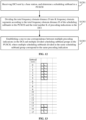
- a first embodiment of the present application provides a scheduling subband allocation method. As shown in FIG. 2 , the method includes steps S201 and S202.
- step S201 DCI sent by a base station is received, and a scheduling subband in a PUSCH is determined.
- step S202 a correspondence between precoding indications in the DCI and the scheduling subbands in the PUSCH is established according to at least one parameter of the total number of the scheduling subbands in the PUSCH or a total frequency domain distance of the scheduling subbands in the PUSCH and according to the total number of the precoding indications in the DCI.
- the precoding indication includes one of: an indication of a TPMI or an indication of an SRI.
- the precoding indication may also include other subband information indications, such as an indication of a transmission rank indicator (TRI), an indication of a demodulation reference signal (DMRS) port, etc.
- TRI transmission rank indicator
- DMRS demodulation reference signal
- the total number of precoding indications in the DCI is configured through high-layer signaling or is a default fixed value.
- the size of the scheduling subband in this embodiment is not necessarily equal to the RBG in the resource allocation mode Type 0, and may be composed of one or more RBGs.
- the size of the scheduling subband may be predefined as the RBG in the resource allocation mode Type 0, or may be notified through the high-layer signaling, or may be a candidate value selected by using DCI signaling from several candidate values configured by the high-layer signaling. Furthermore, the UE does not necessarily schedule all PRBs per subband, that is, only part of PRBs is actually scheduled on some scheduled subbands. The number of scheduling subbands specifically scheduled is determined by a frequency domain resource allocation indicating bit of the PUSCH in the DCI.
- the correspondence refers to at least one of the number of scheduling subbands and the scheduling subband sequence number in a PUSCH corresponding to each precoding indication in the DCI.
- the step S202 includes one of steps described below.
- the correspondence between the precoding indications in the DCI and the scheduling subbands in the PUSCH is established according to the total number of the scheduling subbands in the PUSCH and the total number of the precoding indications in the DCI.
- the correspondence between the precoding indications in the DCI and the scheduling subbands in the PUSCH is established according to the total frequency domain distance of the scheduling subbands in the PUSCH and the total number of the precoding indications in the DCI.
- the correspondence between the precoding indications in the DCI and the scheduling subbands in the PUSCH is established according to the total number of the scheduling subbands in the PUSCH, the total frequency domain distance of the scheduling subbands in the PUSCH and the total number of the precoding indications in the DCI.
- the above is applicable to the case where the number of precoding indications reserved in the DCI is less than the number of scheduling subbands included in the PUSCH, and in this case, some scheduling subbands should share the same precoding indication.
- the value of the remaining (K-N) precoding indications is determined by one or more of N precoding indication values.
- first N precoding indications correspond to the N PUSCH scheduling subbands respectively, and each value of the remaining (K-N) precoding indications is equal to the value of an N-th precoding indication.
- the value of each of the remaining (K-N) precoding indications is equal to the value of a first precoding indication. This means repeated notifications, and the robustness is strong.
- a second embodiment of the present application provides a scheduling subband allocation method. As shown in FIG. 3 , the method includes steps S301, S302 and S303.
- step S301 DCI sent by a base station is received, and a scheduling subband in a PUSCH is determined.
- N scheduling subbands in the PUSCH are divided into K 1 first scheduling subband groups and K 2 second scheduling subband groups according to the total number N of the scheduling subbands in the PUSCH and the total number K of precoding indications in the DCI, where each first scheduling subband group includes A 1 scheduling subbands, and each second scheduling subband group includes A 2 scheduling subbands.
- K 1 mod(N, K), where mod() is a mathematical operation of taking the remainder;
- K 2 K ⁇ K 1 ;
- a 1 ⁇ N K ⁇ , where ⁇ ⁇ ⁇ is a mathematical operation of rounding up to an integer;
- a 2 ⁇ N K ⁇ , ⁇ ⁇ ⁇ is a mathematical operation of rounding down to an integer.
- the scheduling subbands in the PUSCH are divided into scheduling subband groups, the quantity of which is the same as the total number of precoding indications in the DCI, and each scheduling subband in the PUSCH cannot exist in multiple scheduling subband groups simultaneously.
- two types of scheduling subband groups are included in this embodiment: the first scheduling subband group includes A 1 scheduling subbands, and the second scheduling subband group includes A 2 scheduling subbands.
- N scheduling subbands in the PUSCH are divided into the K 1 first scheduling subband groups and the K 2 second scheduling subband groups specifically in one of four division manners described below.
- the first division manner is to divide first (K 1 *A 1 ) scheduling subbands in the PUSCH into the K 1 first scheduling subband groups, and divide last (K 2 *A 2 ) scheduling subbands in the PUSCH into the K 2 second scheduling subband groups.
- the precoding information of the scheduling subband 0 and the scheduling subband 1 is notified by the precoding indication 0, and each of remaining scheduling subbands is notified by one separate precoding indication.
- Each precoding indication may require several bits.
- the second division manner is to divide first (K 2 *A 2 ) scheduling subbands in the PUSCH into the K 2 second scheduling subband groups, and divide last (K 1 *A 1 ) scheduling subbands in the PUSCH into the K 1 first scheduling subband groups.
- the third division manner is to alternately and sequentially divide N scheduling subbands in the PUSCH into a first scheduling subband group and a second scheduling subband group. That is, first A 1 continuous scheduling subbands in the PUSCH are divided into a first scheduling subband group, next A 2 continuous scheduling subbands are divided into a second scheduling subband group, then next A 1 continuous scheduling subbands are divided into a first scheduling subband group, and rest scheduling subbands are divided in the same way until K 1 or K 1 precoding indications are completely allocated. If K 1 is not equal to K 2 , the last several indications are not alternated.
- the advantage of the third division manner is that the scheduling subband corresponding to each precoding indication is more uniform.
- the fourth division manner is to alternately divide N scheduling subbands in the PUSCH into a first scheduling subband group and a second scheduling subband group reversely. For example, first A 1 continuous scheduling subbands in the PUSCH are divided into a first scheduling subband group, next A 2 continuous scheduling subbands are divided into a second scheduling subband group, then next A 2 continuous scheduling subbands are divided into a second scheduling subband group, and then next A 1 continuous scheduling subbands are divided into a first scheduling subband group until K 1 or K 2 precoding indications are completely allocated. If K 1 is not equal to K 2 , the last several scheduling subbands will not be alternated.
- step S303 a one-to-one correspondence between multiple precoding indications in the DCI and multiple divided scheduling subband groups in the PUSCH is established, where multiple scheduling subbands divided in the same scheduling subband group correspond to the same precoding indication.
- a one-to-one correspondence between first K 1 precoding indications in the DCI and the K 1 first scheduling subband groups is established, and a one-to-one correspondence between last K 2 precoding indications in the DCI and the K 2 second scheduling subband groups is established.
- First K 1 precoding indications in the K precoding indications correspond to first (K 1 *A 1 ) scheduling subbands in the PUSCH, where in the first (K 1 *A 1 ) scheduling subbands in the PUSCH, every A 1 continuous scheduling subbands corresponds to the same precoding indication.
- Last K 2 precoding indications in the K precoding indications correspond to last (K 2 *A 2 ) scheduling subbands in the PUSCH, where in the last (K 2 *A 2 ) scheduling subbands in the PUSCH, every A 2 continuous scheduling subbands corresponds to the same precoding indication.
- a one-to-one correspondence between first K 2 precoding indications in the DCI and the K 2 second scheduling subband groups is established, and a one-to-one correspondence between last K 1 precoding indications in the DCI and the K 1 first scheduling subband groups is established.
- first (K 2 *A 2 ) scheduling subbands in the PUSCH every A 2 continuous scheduling subbands corresponds to the same precoding indication; while in the last (K 1 *A 1 ) scheduling subbands in the PUSCH, every A 1 continuous scheduling subbands corresponds to the same precoding indication.
- a first precoding indication corresponds to first A 1 continuous scheduling subbands in the PUSCH
- a second precoding indication corresponds to next A 2 continuous scheduling subbands
- a third precoding indication corresponds to next A 1 continuous scheduling subbands
- a first precoding indication corresponds to first A 1 continuous scheduling subbands in the PUSCH
- a second precoding indication corresponds to next A 2 continuous scheduling subbands
- a third precoding indication corresponds to next A 2 continuous scheduling subbands
- a fourth precoding indication corresponds to next A 1 continuous scheduling subbands.
- the continuous scheduling subbands in the PUSCH refer to that scheduling subbands allocated to the UE are continuous or adjacent, but are not defined as the absolute subband in the frequency domain.
- the scheduling subbands scheduled by the base station to the UE through the DCI are subbands #0 and #2
- the scheduling subbands #0 and #2 are two continuous scheduling subbands of the PUSCH because the scheduling subband #1 is not allocated to the UE.
- the K precoding indications can correspond to the approximate number of scheduling subbands as much as possible.
- the method described in this embodiment is also applicable to a case of level 2 DCI, that is, K precoding indications are included in two DCIs.
- the solution in the embodiment two is simple and easy to implement, but may also bring some problems.
- the scheduling subband 0 and the scheduling subband 12 correspond to the same precoding indication I 0 .
- the channel difference is too large, and using the same precoding indication may cause the performance loss.
- a third embodiment of the present application provides a scheduling subband allocation method. As shown in FIG. 7 , the method includes steps S701, S702 and S703.
- step S701 DCI sent by a base station is received, and a scheduling subband in a PUSCH is determined.
- step S702 the total frequency domain distance D is divided into K frequency domain segments according to the total frequency domain distance D of the scheduling subbands in the PUSCH and the total number K of precoding indications in the DCI.
- the total frequency domain distance of the scheduling subbands in the PUSCH refers to a frequency domain distance from a first scheduling subband to a last scheduling subband in the PUSCH, or a frequency domain distance from the first scheduling subband to the last scheduling subband in the PUSCH plus 1.
- the correspondence of the precoding indications and the PUSCH scheduling frequency domain resources is at least related to the frequency domain distance of the PUSCH scheduling resources.
- the unit of the frequency domain distance may be one or more of the number of PRBs, the number of subbands, or the number of subcarriers in the frequency domain.
- the frequency domain subbands refer to some frequency domain resources in the frequency domain, and the frequency domain subbands are composed of several PRBs or RBGs.
- the index of each frequency domain subband has a relation with the frequency domain resource and has nothing to do with whether the frequency domain subband is scheduled by the UE.
- the precoding indication corresponding to the frequency domain subband is not useful.
- the 4 frequency domain segments and the 4 precoding indications are in a one-to-one correspondence.
- the scheduling subbands in the PUSCH actually only have frequency domain subbands 0, 12, 13, 14 and 15, that is, the scheduled PUSCH scheduling subbands are allocated only in frequency domain segments 1 and 3, the precoding information of the frequency domain subband 0 in the allocated scheduling subbands in the PUSCH is notified by the first precoding indication I 0 , the precoding information of allocated scheduling subbands 12 to 15 in the PUSCH is notified by the fourth precoding indication I 3 , and the remaining second and third precoding indications are not used.
- the second and third precoding indications which are not used are determined by the first or fourth precoding indication, such as the second and third precoding indications are the same as the first or fourth precoding indication, so as to enhance the robustness of the indication.
- step S702 includes the step described below.
- the total frequency domain distance D is divided into K 1 first frequency domain segments and K 2 second frequency domain segments, where each first frequency domain segment includes G 1 continuous frequency domain subbands, and each second frequency domain segment includes G 2 continuous frequency domain subbands.
- K 1 mod(D, K)
- K 2 K - K 1
- G 1 ⁇ D K ⁇
- G 2 ⁇ D K ⁇ .
- each first frequency domain segment includes G 1 frequency domain subbands that are continuous in the frequency domain; and there are K 2 second frequency domain segments and each second frequency domain segment includes G 2 frequency domain subbands that are continuous in the frequency domain.
- the total frequency domain distance D may be divided into the K 1 first frequency domain segments and the K 2 second frequency domain segments according to one of four division manners described below.
- the first division manner is to divide first (K 1 *G 1 ) frequency domain subbands in the total frequency domain distance D into the K 1 first frequency domain segments, and divide last (K 2 *G 2 ) frequency domain subbands in the total frequency domain distance D into the K 2 second frequency domain segments.
- first two frequency domain segments each include 5 frequency domain subbands, that is, frequency domain subbands 0 to 4 belong to the frequency domain segment 0, and frequency domain subbands 5 to 9 belong to the frequency domain segment 1; and last two frequency domain segments 2 and 3 each include 4 frequency domain subbands.
- the precoding information of scheduling subbands 0 and 2 is indicated by the precoding indication I 0 . Since scheduling subbands 5 and 8 in the PUSCH belong to the frequency domain segment 1, the precoding information of scheduling subbands 5 and 8 is indicated by the precoding indication I 1 . Since scheduling subbands 12 and 13 in the PUSCH belong to the frequency domain segment 2, the precoding information of scheduling subbands 12 and 13 is indicated by the precoding indication I 2 . Since scheduling subbands 14, 15 and 17 in the PUSCH belong to the frequency domain segment 3, the precoding information of scheduling subbands 14, 15 and 17 is indicated by the precoding indication I 3 .
- the second division manner is to divide first (K 2 *G 2 ) frequency domain subbands in the total frequency domain distance D into the K 2 second frequency domain segments, and dividing last (K 1 *G 1 ) frequency domain subbands in the total frequency domain distance D into the K 1 first frequency domain segments.
- the third division manner is to alternately and sequentially divide the total frequency domain distance D into a first frequency domain segment and a second frequency domain segment. That is, first G 1 continuous frequency domain subbands in the total frequency domain distance D are divided into a first frequency domain segment, next G 1 continuous frequency domain subbands are divided into a second frequency domain segment, next G 1 continuous frequency domain subbands are divided into a first frequency domain segment, and so forth until K 1 or K 2 frequency domain segments are placed. If K 1 is not equal to K 2 , the last several frequency domain subbands will not be alternated. For example, as shown in FIG. 11 , frequency domain segments 0 and 2 each include 5 continuous frequency domain subbands, while frequency domain segments 1 and 3 each include 4 continuous frequency domain subbands.
- the fourth division manner is to alternately divide frequency domain subbands in the total frequency domain distance D into a first frequency domain segment and a second frequency domain segment reversely.
- first G 1 continuous frequency domain subbands in the total frequency domain distance D are divided into a first first frequency domain segment
- next G 1 continuous frequency domain subbands are divided into a second first frequency domain segment
- next G 2 continuous frequency domain subbands are divided into a first second frequency domain segment
- next G 2 continuous frequency domain subbands are divided into a second second frequency domain segment
- K 1 or K 2 frequency domain segments are placed. If K 1 is not equal to K 2 , the last several frequency domain subbands will not be alternated.
- step S703 a one-to-one correspondence between multiple precoding indications in the DCI and multiple divided frequency domain segments is established, where multiple scheduling subbands allocated in the same frequency domain segment correspond to the same precoding indication.
- the total frequency domain distance D of the scheduling subbands in the PUSCH is divided into K frequency domain segments, where each precoding indication in K 1 precoding indications corresponds to G 1 frequency domain subbands, and each precoding indication in K 2 precoding indications corresponds to G 2 frequency domain subbands.
- Scheduling subbands allocated in the same frequency domain segment correspond to the same precoding indication.
- Each frequency domain segment corresponds to one precoding indication.
- the total frequency domain distance D of the scheduling subbands in the PUSCH is divided into K frequency domain segments, and each frequency domain segment includes several frequency domain subbands. Scheduling subbands allocated in one frequency domain segment correspond to the same precoding indication. Each frequency domain segment corresponds to one precoding indication, that is, K precoding indications and K frequency domain segments are in a one-to-one correspondence.
- the method described in this embodiment is also applicable to a case of two-level DCI, that is, K precoding indications are included in two DCIs.
- the correspondence between the precoding indications and the scheduling subbands in the PUSCH is related to the total frequency domain distance of the scheduling subbands in the PUSCH, so that scheduling subbands with farther frequency domain distances and less similar channels use different precoding indications, and the frequency selectivity channel can be well resisted.
- the total frequency domain distance D of the scheduling subbands in the PUSCH is divided into K frequency domain segments and each frequency domain segment corresponds to one precoding indication, if the PUSCH is not scheduled on some frequency domain segments, waste may be occur.
- a fourth embodiment of the present application provides a scheduling subband allocation method. As shown in FIG. 12 , the method includes steps S1201, S1202 and S1203.
- step S1201 DCI sent by a base station is received, and a scheduling subband in a PUSCH is determined.
- step S1202 the scheduling subbands in the PUSCH are divided into at most K scheduling subband groups according to the total number N of the scheduling subbands in the PUSCH, a total frequency domain distance D of the scheduling subbands in the PUSCH and the total number K of precoding indications in the DCI, where a total frequency domain distance of scheduling subbands in at least part of the scheduling subband groups is not greater than T.
- the value of T may also be a default value or notified through high-layer signaling.
- each scheduling subband group includes at least P continuous scheduling subbands, or each scheduling subband group includes at most P continuous scheduling subbands.
- the value of P is at least determined by values of N and K.
- P may also be a default value such as 1, or notified through signaling such as high-layer signaling.
- the step 1202 may include two division manners described below.
- each scheduling subband group includes at most P continuous PUSCH scheduling subbands.
- the scheduling subbands in the PUSCH are divided into K scheduling subband groups, including K 1 first scheduling subband groups and K 1 second scheduling subband groups, where each first scheduling subband group includes A 1 scheduling subbands, each second scheduling subband group includes A 2 scheduling subbands, and a total frequency domain distance of the A 1 scheduling subbands in each first scheduling subband group is not greater than T. It is to be noted that a total frequency domain distance of the A 2 scheduling subbands in each second scheduling subband group may be greater than T.
- K 1 mod N
- K , K 2 K ⁇ K 1
- a 1 ⁇ N K ⁇
- a 2 ⁇ N K ⁇ .
- an exemplary division process of the first division method is as follows: step 1, step 2, and step 3.
- a PUSCH precoding indication j corresponds to a PUSCH scheduling subband group j.
- the step 2 includes step a, step b and step c.
- step a the n-th to (n+A 2 )-th PUSCH scheduling subbands belong to the subband group j.
- step b if the distance of from the n-th PUSCH scheduling subband to the (n+A 1 )-th PUSCH scheduling subband is not greater than G 1 and j ⁇ K 1 , the (n+A 1 )-th PUSCH scheduling subband also belongs to the subband group j.
- n becomes a next PUSCH scheduling subband of the last subband in the PUSCH scheduling subband group j.
- step 3 repeat step 2 until j is the last scheduling subband group.
- each of K 1 precoding indications corresponds to A 1 scheduling subbands, and the A 1 scheduling subbands must meet the requirement that the total frequency domain distance is less than or equal to T.
- the second division manner is to divide the scheduling subbands in the PUSCH into the at most K scheduling subband groups, where a total frequency domain distance of scheduling subbands in each scheduling subband group is not greater than T.
- each scheduling subband group can be limited to include at most P continuous PUSCH scheduling subbands.
- the scheduling subbands in the PUSCH are divided into K scheduling subband groups, each scheduling subband group includes at most P scheduling subbands, and the total frequency domain distance of scheduling subbands in each scheduling subband group is not greater than T.
- each scheduling subband group includes at most P scheduling subbands
- the total frequency domain distance of scheduling subbands in each scheduling subband group is not greater than T.
- the condition 1 is whether the number of scheduling subbands corresponding to the i-th precoding indication has reached P, and if it has reached P, the (j+1)-th scheduling subband corresponds to an (i+1)-th precoding indication; while if it has not reached P, the second condition further needs to be determined.
- the second condition is that if the (j+1)-th scheduling subband also corresponds to the i-th precoding indication, that is, the (j+1)-th scheduling subband and the j-th scheduling subband belong to the same scheduling subband group, whether the total frequency domain distance of this scheduling subband group is greater than T needs to be determined, and if it is greater than T, the (j+1)-th scheduling subband corresponds to the (i+1)-th precoding indication; while if it is not greater than T, the (j+1)-th scheduling subband also corresponds to the i-th precoding indication.
- each scheduling subband group includes at most 3 scheduling subbands, and the total frequency domain distance of each scheduling subband group is not greater than 3.
- the first scheduling subband 0 belongs to the scheduling subband group 0.
- two conditions need to be determined. If the scheduling subband 1 is also brought into the scheduling subband group 0, whether the number of the scheduling subbands in the scheduling subband group 0 exceeds a limit value needs to be determined, and whether the total frequency domain distance of the scheduling subband group 0 exceeds a limit value needs to be determined.
- both limit values are not exceed, so the scheduling subband 1 also belongs to the scheduling subband group 0, and precoding information is notified by a precoding indication I 0 . That the scheduling subband 2 also belongs to scheduling subband group 0 is determined in the same way. Since the number of scheduling subbands of the scheduling subband group 0 exceeds 3 if the scheduling subband 3 is added to the scheduling subband group 0, the scheduling subband 3 must belong to the scheduling subband group 1.
- FIG. 14 can be obtained by sequentially determining the next scheduling subband. As can be seen from FIG. 14 , this solution may result in that the last precoding indications have no corresponding scheduling subband, and thus these indication bits are wasted. But this is a disadvantage due to scheduling and cannot be avoided.
- step S1203 a one-to-one correspondence between multiple precoding indications in the DCI and multiple divided scheduling subband groups in the PUSCH is established, where multiple scheduling subbands divided in the same scheduling subband group correspond to the same precoding indication.
- This embodiment limits the total frequency domain distance of scheduling subbands of part of scheduling subband groups, so that the scheduling subbands corresponding to the same precoding indication in frequency domain are as close as possible, bringing benefits to the scheduling.
- the problem of too large total frequency domain distance of scheduling subbands corresponding to the same precoding indication is avoided, thereby avoiding the performance loss.
- the method described in this embodiment is also applicable to a case of level 2 DCI, that is, K precoding indications are included in two DCIs.
- a fifth embodiment of the present application provides a scheduling subband allocation apparatus.
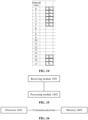
- the apparatus includes the following components: a receiving module 1501 and a processing module 1502.
- the receiving module 1501 is configured to receive DCI sent by a base station, and determine a scheduling subband in a PUSCH.
- the processing module 1502 is configured to establish a correspondence between precoding indications in the DCI and the scheduling subbands in the PUSCH according to at least one parameter of the total number of the scheduling subbands in the PUSCH or a total frequency domain distance of the scheduling subbands in the PUSCH and according to the total number of the precoding indications in the DCI.
- the total number of the precoding indications in the DCI is configured through high-layer signaling.
- the processing module 1502 is further configured to:
- the processing module 1502 when the processing module 1502 divides the N scheduling subbands in the PUSCH into K 1 first scheduling subband groups and K 2 second scheduling subband groups according to the total number N of scheduling subbands in the PUSCH and the total number K of the precoding indications in the DCI, the processing module 1502 is further configured to:
- processing module 1502 when the processing module 1502 divides the total frequency domain distance D into the K 1 first frequency domain segments and the K 2 second frequency domain segments, it, for example, may include the following steps:
- the processing module 1502 when the processing module 1502 divides the scheduling subbands in the PUSCH into at most K scheduling subband groups according to the total number N of the scheduling subbands in the PUSCH, the total frequency domain distance D of the scheduling subbands in the PUSCH and the total number K of the precoding indications in the DCI, where a total frequency domain distance of scheduling subbands in at least part of the scheduling subband groups is not greater than T, the processing module 1502 is further configured to:
- T ⁇ D K ⁇ .
- each scheduling subband group includes at least P continuous scheduling subbands, or each scheduling subband group includes at most P continuous scheduling subbands.
- P is at least determined by N and K.
- each scheduling subband group includes at least P continuous PUSCH scheduling subbands
- P ⁇ N K ⁇ .
- a sixth embodiment of the present application provides a scheduling subband allocation device. As shown in FIG. 16 , the device includes a processor 1601, a memory 1602, and a communication bus.
- the communication bus is configured to implement connection communication between the processor 1601 and the memory 1602.
- the processor 1601 is configured to execute a scheduling subband allocation program stored in the memory 1602 to implement the steps described below.
- DCI sent by a base station is received, and a scheduling subband in a PUSCH is determined.
- a correspondence between precoding indications in the DCI and the scheduling subbands in the PUSCH is established according to at least one parameter of the total number of the scheduling subbands in the PUSCH or a total frequency domain distance of the scheduling subbands in the PUSCH and according to the total number of the precoding indications in the DCI.
- a seventh embodiment of the present application provides a computer-readable storage medium configured to store a scheduling subband allocation program.
- the at least one processor When the scheduling subband allocation program is executed by at least one processor, the at least one processor performs the steps described below.
- DCI sent by a base station is received, and a scheduling subband in a PUSCH is determined.
- a correspondence between precoding indications in the DCI and the scheduling subbands in the PUSCH is established according to at least one parameter of the total number of the scheduling subbands in the PUSCH or a total frequency domain distance of the scheduling subbands in the PUSCH and according to the total number of the precoding indications in the DCI.
- the scheduling subband allocation method and apparatus, device and readable storage medium described in the present application provide a method for indicating precoding information to an uplink scheduling subband, and especially, in a case where the number of precoding indications in the DCI is less than the number of scheduling subbands in the PUSCH, provide a method for establishing a correspondence between precoding indications in the DCI and scheduling subbands in the PUSCH. Therefore, the scheduling subband corresponding to each precoding indication is relatively averaged in both the number and the frequency domain distance, thereby reducing the performance loss of the precoding indication.
- the present application can also notify precoding information of the uplink scheduling subband whose quantity dynamically varies by using a fixed precoding indication in the DCI.
Landscapes
- Engineering & Computer Science (AREA)
- Signal Processing (AREA)
- Computer Networks & Wireless Communication (AREA)
- Mobile Radio Communication Systems (AREA)
Claims (4)
- Verfahren zur Zuteilung von Teilbandsignalen, umfassend:Empfangen (S201) von Downlink-Steuerinformationen, DCI, die von einer Basisstation gesendet werden, und Bestimmen von Zuteilungs-Teilbandsignalen in einem gemeinsam genutzten physikalischen Uplink-Kanal, PUSCH; undHerstellen (S202) einer Korrespondenz zwischen Vorcodierungsangaben in den DCI und den Zuteilungs-Teilbandsignalen im PUSCH gemäß mindestens einem Parameter einer Gesamtzahl der Zuteilungs-Teilbandsignale im PUSCH oder einem Gesamtabstand der Zuteilungs-Teilbandsignale im PUSCH im Frequenzbereich und gemäß einer Gesamtzahl der Vorcodierungsangaben in den DCI,dadurch gekennzeichnet, dass das Herstellen (S202) der Korrespondenz zwischen Vorcodierungsangaben in den DCI und den Zuteilungs-Teilbandsignalen im PUSCH gemäß mindestens einem Parameter der Gesamtzahl der Zuteilungs-Teilbandsignale im PUSCH oder dem Gesamtabstand der Zuteilungs-Teilbandsignale im PUSCH im Frequenzbereich und gemäß der Gesamtzahl der Vorcodierungsangaben in den DCI, umfasst:Aufteilen (S302) von N Zuteilungs-Teilbandsignalen in dem PUSCH in K1 erste Zuteilungs-Teilbandsignalgruppen und K2 zweite Zuteilungs-Teilbandsignalgruppen gemäß der Gesamtzahl N von Zuteilungs-Teilbandsignalen in dem PUSCH und der Gesamtzahl K von Vorcodierungsindikationen in der DCI, wobei jede der K1 ersten Zuteilungs-Teilbandsignalgruppen A1 Zuteilungs-Teilbandsignale umfasst und jede der K2 zweiten Zuteilungs-Teilbandsignalgruppen A2 Zuteilungs-Teilbandsignale umfasst; undHerstellen (S303) einer Eins-zu-Eins-Entsprechung zwischen den Vorcodierungsindikatoren in den DCI und einer Vielzahl von geteilten Zuteilungs-Teilbandsignalgruppen in dem PUSCH, wobei eine Vielzahl von Zuteilungs-Teilbandsignalen, die in eine gleiche Zuteilungs-Teilbandsignalgruppe geteilt sind, einem gleichen Vorcodierungsindikator entsprechen;wobei K1 = mod (N, K), K2 = K - K1,


- Verfahren nach Anspruch 1, wobei das Aufteilen (S302) der N Zuteilungs-Teilbandsignale in dem PUSCH in die K1 ersten Zuteilungs-Teilbandsignalgruppen und die K2 zweiten Zuteilungs-Teilbandsignalgruppen umfasst:Aufteilen der ersten (K1* A1) Zuteilungs-Teilbandsignale im PUSCH in die K1 ersten Zuteilungs-Teilbandsignalgruppen, und Aufteilen der letzten (K2 * A2) Zuteilungs-Teilbandsignale im PUSCH in die K2 zweiten Zuteilungs-Teilbandsignalgruppen; unddas Herstellen der Eins-zu-Eins-Entsprechung zwischen den Vorcodierungsindikatoren in den DCI und der Vielzahl von geteilten Zuteilungs-Teilbandsignalgruppen in dem PUSCH umfasst:
Herstellen einer Eins-zu-Eins-Entsprechung zwischen ersten K1 Vorcodierungsindikatoren in den DCI und den K1 ersten Zuteilungs-Teilbandsignalgruppen, und Herstellen einer Eins-zu-Eins-Entsprechung zwischen letzten K2 Vorcodierungsindikatoren in den DCI und den K2 zweiten Zuteilungs-Teilbandsignalgruppen. - Zuteilungs-Teilbandsignal-Gerät, umfassend:ein Empfangsmodul (1501), das so konfiguriert ist, dass es von einer Basisstation gesendete Downlink-Steuerinformationen, DCI, empfängt und ein Zuteilungs-Teilbandsignal in einem gemeinsam genutzten physikalischen Uplink-Kanal, PUSCH, bestimmt; undein Verarbeitungsmodul (1502), das konfiguriert ist zum Herstellen einer Korrespondenz zwischen Vorcodierungsangaben in den DCI und den Zuteilungs-Teilbandsignalen im PUSCH gemäß mindestens einem Parameter einer Gesamtzahl der Zuteilungs-Teilbandsignale im PUSCH oder einem Gesamtabstand der Zuteilungs-Teilbandsignale im PUSCH im Frequenzbereich und gemäß einer Gesamtzahl der Vorcodierungsangaben in den DCI,dadurch gekennzeichnet, dass das Verarbeitungsmodul ferner konfiguriert ist zum:Aufteilen von N Zuteilungs-Teilbandsignalen in dem PUSCH in K1 erste Zuteilungs-Teilbandsignalgruppen und K2 zweite Zuteilungs-Teilbandsignalgruppen gemäß der Gesamtzahl N von Zuteilungs-Teilbandsignalen in dem PUSCH und der Gesamtzahl K von Vorcodierungsindikationen in der DCI, wobei jede der A1 ersten Zuteilungs-Teilbandsignalgruppen A2 Zuteilungs-Teilbandsignale umfasst und jede der K1 zweiten Zuteilungs-Teilbandsignalgruppen A2 Zuteilungs-Teilbandsignale umfasst; undHerstellen einer Eins-zu-Eins-Entsprechung zwischen den Vorcodierungsindikatoren in den DCI und einer Vielzahl von geteilten Zuteilungs-Teilbandsignalgruppen in dem PUSCH, wobei eine Vielzahl von Zuteilungs-Teilbandsignalen, die in eine gleiche Zuteilungs-Teilbandsignalgruppe geteilt sind, einem gleichen Vorcodierungsindikator entsprechen;wobei K1 = mod (N, K), K2 = K - K2,


- Zuteilungs-Teilbandsignal-Gerät nach Anspruch 3, wobei das Aufteilen der N Zuteilungs-Teilbandsignale in dem PUSCH in die K_1 ersten Zuteilungs-Teilbandsignalgruppen und die K_2 zweiten Zuteilungs-Teilbandsignalgruppen umfasst:Aufteilen der ersten (K_1* A_1) Zuteilungs-Teilbandsignale im PUSCH in die K_1 ersten Zuteilungs-Teilbandsignalgruppen, und Aufteilen der letzten (K_2 * A_2) Zuteilungs-Teilbandsignale im PUSCH in die K_2 zweiten Zuteilungs-Teilbandsignalgruppen; unddas Herstellen der Eins-zu-Eins-Entsprechung zwischen den Vorcodierungsindikatoren in den DCI und der Vielzahl von geteilten Zuteilungs-Teilbandsignalgruppen in dem PUSCH umfasst:
Herstellen einer Eins-zu-Eins-Entsprechung zwischen ersten K_1 Vorcodierungsindikatoren in den DCI und den K_1 ersten Zuteilungs-Teilbandsignalgruppen, und Herstellen einer Eins-zu-Eins-Entsprechung zwischen letzten K_2 Vorcodierungsindikatoren in den DCI und den K_2 zweiten Zuteilungs-Teilbandsignalgruppen.
Applications Claiming Priority (2)
| Application Number | Priority Date | Filing Date | Title |
|---|---|---|---|
| CN201810327045.8A CN108668368B (zh) | 2018-04-12 | 2018-04-12 | 分配调度子带的方法、装置、设备及可读存储介质 |
| PCT/CN2019/079071 WO2019196623A1 (zh) | 2018-04-12 | 2019-03-21 | 分配调度子带的方法以及装置、设备及可读存储介质 |
Publications (3)
| Publication Number | Publication Date |
|---|---|
| EP3780819A1 EP3780819A1 (de) | 2021-02-17 |
| EP3780819A4 EP3780819A4 (de) | 2022-01-12 |
| EP3780819B1 true EP3780819B1 (de) | 2024-08-14 |
Family
ID=63782287
Family Applications (1)
| Application Number | Title | Priority Date | Filing Date |
|---|---|---|---|
| EP19785269.2A Active EP3780819B1 (de) | 2018-04-12 | 2019-03-21 | Verfahren und vorrichtung zur zuteilung von teilbandsignalen |
Country Status (4)
| Country | Link |
|---|---|
| US (1) | US11337244B2 (de) |
| EP (1) | EP3780819B1 (de) |
| CN (1) | CN108668368B (de) |
| WO (1) | WO2019196623A1 (de) |
Families Citing this family (21)
| Publication number | Priority date | Publication date | Assignee | Title |
|---|---|---|---|---|
| CN108668368B (zh) * | 2018-04-12 | 2022-06-03 | 中兴通讯股份有限公司 | 分配调度子带的方法、装置、设备及可读存储介质 |
| WO2020087536A1 (zh) * | 2018-11-02 | 2020-05-07 | 华为技术有限公司 | 一种上行数据传输的预编码指示方法及相关设备 |
| WO2020163988A1 (en) * | 2019-02-12 | 2020-08-20 | Qualcomm Incorporated | Dynamic physical uplink shared channel configuration |
| US11490382B2 (en) * | 2019-06-21 | 2022-11-01 | Huawei Technologies Co., Ltd. | Physical uplink shared channel enhancements for transmission with configured grant in unlicensed spectrum |
| JP7337927B2 (ja) * | 2019-07-10 | 2023-09-04 | 株式会社Nttドコモ | 端末、無線通信方法、基地局及びシステム |
| CN111836378B (zh) * | 2019-08-15 | 2023-07-25 | 维沃移动通信有限公司 | 一种频域资源分配方法、网络侧设备及终端 |
| EP4070601A4 (de) | 2019-12-06 | 2023-08-30 | Qualcomm Incorporated | Robustheitsüberlegungen für 2-stufige dci für frequenzbereichskomprimierte uplink-subband-vorcodierung |
| CN113055066B (zh) | 2019-12-26 | 2022-11-04 | 大唐移动通信设备有限公司 | 一种通信方法和装置 |
| CN113497645B (zh) | 2020-04-03 | 2022-11-08 | 大唐移动通信设备有限公司 | 一种预编码矩阵指示、确定方法、设备及介质 |
| WO2021203445A1 (zh) * | 2020-04-10 | 2021-10-14 | 华为技术有限公司 | 一种通信方法、装置及系统 |
| CN113824481B (zh) * | 2020-06-19 | 2023-03-28 | 华为技术有限公司 | 上行传输方法、装置、芯片系统及存储介质 |
| US11432161B2 (en) * | 2020-06-23 | 2022-08-30 | At&T Intellectual Property I, L.P. | Joint scheduling in 5G or other next generation network dynamic spectrum sharing |
| WO2022032647A1 (en) * | 2020-08-14 | 2022-02-17 | Qualcomm Incorporated | Physical uplink shared channel with switched antenna frequency domain resource allocation determination |
| WO2022032651A1 (en) | 2020-08-14 | 2022-02-17 | Qualcomm Incorporated | Physical uplink shared channel with switched antenna and frequency hopping |
| US20240155634A1 (en) * | 2021-04-30 | 2024-05-09 | Qualcomm Incorporated | Frequency selective precoder indication in wireless communications |
| CN115915433B (zh) * | 2021-08-04 | 2026-03-20 | 维沃移动通信有限公司 | Pusch发送方法及设备 |
| CN117040706A (zh) * | 2022-04-29 | 2023-11-10 | 大唐移动通信设备有限公司 | 一种dci确定方法、设备及装置 |
| US20240413852A1 (en) * | 2023-06-08 | 2024-12-12 | Qualcomm Incorporated | Wideband precoding resource group across downlink subbands |
| CN117641437B (zh) * | 2024-01-26 | 2024-07-19 | 荣耀终端有限公司 | 信道状态信息报告的反馈方法、用户终端以及网络设备 |
| CN117639861A (zh) * | 2024-01-26 | 2024-03-01 | 荣耀终端有限公司 | 一种预编码方法及相关装置 |
| CN117651339B (zh) * | 2024-01-26 | 2024-06-28 | 荣耀终端有限公司 | 一种预编码方法及相关装置 |
Family Cites Families (11)
| Publication number | Priority date | Publication date | Assignee | Title |
|---|---|---|---|---|
| CN101272364B (zh) * | 2008-05-05 | 2012-09-05 | 中兴通讯股份有限公司 | 基于mu-mimo的预编码指示方法及装置、控制方法 |
| CN102083223A (zh) * | 2010-03-05 | 2011-06-01 | 大唐移动通信设备有限公司 | 一种发送dci和上行传输的方法、系统及装置 |
| US9288691B2 (en) * | 2011-01-24 | 2016-03-15 | Lg Electronics Inc. | Method for reporting channel state information in wireless communication system and apparatus therefor |
| US9578625B2 (en) * | 2012-02-28 | 2017-02-21 | Lg Electronics Inc. | Method and apparatus for allocating resources in wireless communication system |
| WO2016072688A2 (ko) * | 2014-11-05 | 2016-05-12 | 엘지전자 주식회사 | Ack/nack 신호 수신 방법 및 mtc 기기 |
| CN106793101B (zh) * | 2016-05-09 | 2019-06-04 | 展讯通信(上海)有限公司 | 用户设备、网络侧设备及用户设备的控制方法 |
| CN109150471B (zh) * | 2017-06-16 | 2020-02-14 | 华为技术有限公司 | 信息传输方法、装置及存储介质 |
| US12166541B2 (en) * | 2017-06-16 | 2024-12-10 | Telefonaktiebolaget Lm Ericsson (Publ) | Multi-resource uplink sounding and antenna subset transmission |
| CN107612599A (zh) * | 2017-08-04 | 2018-01-19 | 深圳市金立通信设备有限公司 | 一种指示频率选择性预编码信息的方法、基站及用户设备 |
| US10715229B2 (en) * | 2018-01-19 | 2020-07-14 | At&T Intellectual Property I, L.P. | Facilitating semi-open loop based transmission diversity for uplink transmissions for 5G or other next generation networks |
| CN108668368B (zh) * | 2018-04-12 | 2022-06-03 | 中兴通讯股份有限公司 | 分配调度子带的方法、装置、设备及可读存储介质 |
-
2018
- 2018-04-12 CN CN201810327045.8A patent/CN108668368B/zh active Active
-
2019
- 2019-03-21 WO PCT/CN2019/079071 patent/WO2019196623A1/zh not_active Ceased
- 2019-03-21 EP EP19785269.2A patent/EP3780819B1/de active Active
- 2019-03-21 US US17/046,846 patent/US11337244B2/en active Active
Also Published As
| Publication number | Publication date |
|---|---|
| CN108668368B (zh) | 2022-06-03 |
| EP3780819A1 (de) | 2021-02-17 |
| US11337244B2 (en) | 2022-05-17 |
| US20210160913A1 (en) | 2021-05-27 |
| WO2019196623A1 (zh) | 2019-10-17 |
| CN108668368A (zh) | 2018-10-16 |
Similar Documents
| Publication | Publication Date | Title |
|---|---|---|
| EP3780819B1 (de) | Verfahren und vorrichtung zur zuteilung von teilbandsignalen | |
| EP3836468B1 (de) | Verfahren zur bestimmung einer uplink-kanal-ressource und endgerät | |
| US10200990B2 (en) | Method and apparatus for implementing dynamic signaling of downlink control usage | |
| EP2911446B1 (de) | Verfahren und vorrichtung zur abbildung und erkennung eines steuerungskanals | |
| US9621315B2 (en) | Method for allocating multi-UEs' sounding reference signal (SRS) uplink resources and eNB | |
| CN108449795B (zh) | 一种资源分配的方法、装置和一种通信系统 | |
| US10805053B2 (en) | Methods and apparatuses for receiving and sending control channel | |
| KR101767021B1 (ko) | 물리적 다운링크 제어 채널의 검색 공간의 매핑 방법 및 장치 | |
| KR102139309B1 (ko) | 네트워크 노드, 사용자 디바이스 및 그 방법들 | |
| EP2584850A1 (de) | Verfahren und vorrichtung für uplink-übertragungen auf zufriedenheitsbasis | |
| CN101998526B (zh) | 控制信道映射的方法、控制信道检测的方法和装置 | |
| CN107006003B (zh) | 在多个时间实例中的上行链路资源调度 | |
| JP6139686B2 (ja) | ダウンリンク制御情報を送信するための方法、ネットワーク側装置、およびユーザ機器 | |
| EP2660994A1 (de) | Verfahren und vorrichtung zur zuweisung von referenzressourcen | |
| WO2016161917A1 (zh) | 一种实现资源分配的方法和装置 | |
| CN107734665B (zh) | 资源指示、确定方法及装置、网络侧设备及移动通信终端 | |
| KR20130099172A (ko) | 업링크 사운딩 기준 신호를 트리거하고 송신하기 위한 방법 및 장치 | |
| EP2822212A1 (de) | Mobilkommunikationsverfahren, drahtlose Basisstation und Mobilstation | |
| CN111600693A (zh) | 上行控制信息的传输方法、装置及系统 | |
| CN103002585A (zh) | 一种小区srs资源分配方法和装置 | |
| EP3448101B1 (de) | Datenübertragungsverfahren und -vorrichtung | |
| CN102711251B (zh) | 一种导频端口的确定方法及装置 | |
| CN104104470B (zh) | 一种上行传输方法及设备 |
Legal Events
| Date | Code | Title | Description |
|---|---|---|---|
| STAA | Information on the status of an ep patent application or granted ep patent |
Free format text: STATUS: THE INTERNATIONAL PUBLICATION HAS BEEN MADE |
|
| PUAI | Public reference made under article 153(3) epc to a published international application that has entered the european phase |
Free format text: ORIGINAL CODE: 0009012 |
|
| STAA | Information on the status of an ep patent application or granted ep patent |
Free format text: STATUS: REQUEST FOR EXAMINATION WAS MADE |
|
| 17P | Request for examination filed |
Effective date: 20201112 |
|
| AK | Designated contracting states |
Kind code of ref document: A1 Designated state(s): AL AT BE BG CH CY CZ DE DK EE ES FI FR GB GR HR HU IE IS IT LI LT LU LV MC MK MT NL NO PL PT RO RS SE SI SK SM TR |
|
| AX | Request for extension of the european patent |
Extension state: BA ME |
|
| DAV | Request for validation of the european patent (deleted) | ||
| DAX | Request for extension of the european patent (deleted) | ||
| A4 | Supplementary search report drawn up and despatched |
Effective date: 20211210 |
|
| RIC1 | Information provided on ipc code assigned before grant |
Ipc: H04L 25/03 20060101ALI20211206BHEP Ipc: H04B 7/0417 20170101ALI20211206BHEP Ipc: H04B 7/0456 20170101ALI20211206BHEP Ipc: H04L 5/00 20060101ALI20211206BHEP Ipc: H04W 72/04 20090101AFI20211206BHEP |
|
| STAA | Information on the status of an ep patent application or granted ep patent |
Free format text: STATUS: EXAMINATION IS IN PROGRESS |
|
| 17Q | First examination report despatched |
Effective date: 20230127 |
|
| GRAP | Despatch of communication of intention to grant a patent |
Free format text: ORIGINAL CODE: EPIDOSNIGR1 |
|
| STAA | Information on the status of an ep patent application or granted ep patent |
Free format text: STATUS: GRANT OF PATENT IS INTENDED |
|
| RIC1 | Information provided on ipc code assigned before grant |
Ipc: H04W 72/0453 20230101ALI20240412BHEP Ipc: H04L 5/00 20060101ALI20240412BHEP Ipc: H04B 7/0456 20170101ALI20240412BHEP Ipc: H04B 7/0417 20170101ALI20240412BHEP Ipc: H04L 25/03 20060101ALI20240412BHEP Ipc: H04W 72/04 20090101AFI20240412BHEP |
|
| INTG | Intention to grant announced |
Effective date: 20240506 |
|
| GRAS | Grant fee paid |
Free format text: ORIGINAL CODE: EPIDOSNIGR3 |
|
| GRAA | (expected) grant |
Free format text: ORIGINAL CODE: 0009210 |
|
| STAA | Information on the status of an ep patent application or granted ep patent |
Free format text: STATUS: THE PATENT HAS BEEN GRANTED |
|
| AK | Designated contracting states |
Kind code of ref document: B1 Designated state(s): AL AT BE BG CH CY CZ DE DK EE ES FI FR GB GR HR HU IE IS IT LI LT LU LV MC MK MT NL NO PL PT RO RS SE SI SK SM TR |
|
| REG | Reference to a national code |
Ref country code: GB Ref legal event code: FG4D |
|
| REG | Reference to a national code |
Ref country code: CH Ref legal event code: EP |
|
| REG | Reference to a national code |
Ref country code: DE Ref legal event code: R096 Ref document number: 602019057039 Country of ref document: DE |
|
| REG | Reference to a national code |
Ref country code: IE Ref legal event code: FG4D |
|
| REG | Reference to a national code |
Ref country code: LT Ref legal event code: MG9D |
|
| REG | Reference to a national code |
Ref country code: NL Ref legal event code: MP Effective date: 20240814 |
|
| PG25 | Lapsed in a contracting state [announced via postgrant information from national office to epo] |
Ref country code: NO Free format text: LAPSE BECAUSE OF FAILURE TO SUBMIT A TRANSLATION OF THE DESCRIPTION OR TO PAY THE FEE WITHIN THE PRESCRIBED TIME-LIMIT Effective date: 20241114 |
|
| REG | Reference to a national code |
Ref country code: AT Ref legal event code: MK05 Ref document number: 1714461 Country of ref document: AT Kind code of ref document: T Effective date: 20240814 |
|
| PG25 | Lapsed in a contracting state [announced via postgrant information from national office to epo] |
Ref country code: FI Free format text: LAPSE BECAUSE OF FAILURE TO SUBMIT A TRANSLATION OF THE DESCRIPTION OR TO PAY THE FEE WITHIN THE PRESCRIBED TIME-LIMIT Effective date: 20240814 Ref country code: GR Free format text: LAPSE BECAUSE OF FAILURE TO SUBMIT A TRANSLATION OF THE DESCRIPTION OR TO PAY THE FEE WITHIN THE PRESCRIBED TIME-LIMIT Effective date: 20241115 Ref country code: NL Free format text: LAPSE BECAUSE OF FAILURE TO SUBMIT A TRANSLATION OF THE DESCRIPTION OR TO PAY THE FEE WITHIN THE PRESCRIBED TIME-LIMIT Effective date: 20240814 Ref country code: PL Free format text: LAPSE BECAUSE OF FAILURE TO SUBMIT A TRANSLATION OF THE DESCRIPTION OR TO PAY THE FEE WITHIN THE PRESCRIBED TIME-LIMIT Effective date: 20240814 Ref country code: PT Free format text: LAPSE BECAUSE OF FAILURE TO SUBMIT A TRANSLATION OF THE DESCRIPTION OR TO PAY THE FEE WITHIN THE PRESCRIBED TIME-LIMIT Effective date: 20241216 |
|
| PG25 | Lapsed in a contracting state [announced via postgrant information from national office to epo] |
Ref country code: BG Free format text: LAPSE BECAUSE OF FAILURE TO SUBMIT A TRANSLATION OF THE DESCRIPTION OR TO PAY THE FEE WITHIN THE PRESCRIBED TIME-LIMIT Effective date: 20240814 |
|
| PG25 | Lapsed in a contracting state [announced via postgrant information from national office to epo] |
Ref country code: LV Free format text: LAPSE BECAUSE OF FAILURE TO SUBMIT A TRANSLATION OF THE DESCRIPTION OR TO PAY THE FEE WITHIN THE PRESCRIBED TIME-LIMIT Effective date: 20240814 |
|
| PG25 | Lapsed in a contracting state [announced via postgrant information from national office to epo] |
Ref country code: AT Free format text: LAPSE BECAUSE OF FAILURE TO SUBMIT A TRANSLATION OF THE DESCRIPTION OR TO PAY THE FEE WITHIN THE PRESCRIBED TIME-LIMIT Effective date: 20240814 Ref country code: IS Free format text: LAPSE BECAUSE OF FAILURE TO SUBMIT A TRANSLATION OF THE DESCRIPTION OR TO PAY THE FEE WITHIN THE PRESCRIBED TIME-LIMIT Effective date: 20241214 |
|
| PG25 | Lapsed in a contracting state [announced via postgrant information from national office to epo] |
Ref country code: HR Free format text: LAPSE BECAUSE OF FAILURE TO SUBMIT A TRANSLATION OF THE DESCRIPTION OR TO PAY THE FEE WITHIN THE PRESCRIBED TIME-LIMIT Effective date: 20240814 |
|
| PG25 | Lapsed in a contracting state [announced via postgrant information from national office to epo] |
Ref country code: RS Free format text: LAPSE BECAUSE OF FAILURE TO SUBMIT A TRANSLATION OF THE DESCRIPTION OR TO PAY THE FEE WITHIN THE PRESCRIBED TIME-LIMIT Effective date: 20241114 Ref country code: ES Free format text: LAPSE BECAUSE OF FAILURE TO SUBMIT A TRANSLATION OF THE DESCRIPTION OR TO PAY THE FEE WITHIN THE PRESCRIBED TIME-LIMIT Effective date: 20240814 |
|
| PG25 | Lapsed in a contracting state [announced via postgrant information from national office to epo] |
Ref country code: RS Free format text: LAPSE BECAUSE OF FAILURE TO SUBMIT A TRANSLATION OF THE DESCRIPTION OR TO PAY THE FEE WITHIN THE PRESCRIBED TIME-LIMIT Effective date: 20241114 Ref country code: PT Free format text: LAPSE BECAUSE OF FAILURE TO SUBMIT A TRANSLATION OF THE DESCRIPTION OR TO PAY THE FEE WITHIN THE PRESCRIBED TIME-LIMIT Effective date: 20241216 Ref country code: PL Free format text: LAPSE BECAUSE OF FAILURE TO SUBMIT A TRANSLATION OF THE DESCRIPTION OR TO PAY THE FEE WITHIN THE PRESCRIBED TIME-LIMIT Effective date: 20240814 Ref country code: NO Free format text: LAPSE BECAUSE OF FAILURE TO SUBMIT A TRANSLATION OF THE DESCRIPTION OR TO PAY THE FEE WITHIN THE PRESCRIBED TIME-LIMIT Effective date: 20241114 Ref country code: NL Free format text: LAPSE BECAUSE OF FAILURE TO SUBMIT A TRANSLATION OF THE DESCRIPTION OR TO PAY THE FEE WITHIN THE PRESCRIBED TIME-LIMIT Effective date: 20240814 Ref country code: LV Free format text: LAPSE BECAUSE OF FAILURE TO SUBMIT A TRANSLATION OF THE DESCRIPTION OR TO PAY THE FEE WITHIN THE PRESCRIBED TIME-LIMIT Effective date: 20240814 Ref country code: IS Free format text: LAPSE BECAUSE OF FAILURE TO SUBMIT A TRANSLATION OF THE DESCRIPTION OR TO PAY THE FEE WITHIN THE PRESCRIBED TIME-LIMIT Effective date: 20241214 Ref country code: HR Free format text: LAPSE BECAUSE OF FAILURE TO SUBMIT A TRANSLATION OF THE DESCRIPTION OR TO PAY THE FEE WITHIN THE PRESCRIBED TIME-LIMIT Effective date: 20240814 Ref country code: GR Free format text: LAPSE BECAUSE OF FAILURE TO SUBMIT A TRANSLATION OF THE DESCRIPTION OR TO PAY THE FEE WITHIN THE PRESCRIBED TIME-LIMIT Effective date: 20241115 Ref country code: FI Free format text: LAPSE BECAUSE OF FAILURE TO SUBMIT A TRANSLATION OF THE DESCRIPTION OR TO PAY THE FEE WITHIN THE PRESCRIBED TIME-LIMIT Effective date: 20240814 Ref country code: ES Free format text: LAPSE BECAUSE OF FAILURE TO SUBMIT A TRANSLATION OF THE DESCRIPTION OR TO PAY THE FEE WITHIN THE PRESCRIBED TIME-LIMIT Effective date: 20240814 Ref country code: BG Free format text: LAPSE BECAUSE OF FAILURE TO SUBMIT A TRANSLATION OF THE DESCRIPTION OR TO PAY THE FEE WITHIN THE PRESCRIBED TIME-LIMIT Effective date: 20240814 Ref country code: AT Free format text: LAPSE BECAUSE OF FAILURE TO SUBMIT A TRANSLATION OF THE DESCRIPTION OR TO PAY THE FEE WITHIN THE PRESCRIBED TIME-LIMIT Effective date: 20240814 |
|
| PG25 | Lapsed in a contracting state [announced via postgrant information from national office to epo] |
Ref country code: RO Free format text: LAPSE BECAUSE OF FAILURE TO SUBMIT A TRANSLATION OF THE DESCRIPTION OR TO PAY THE FEE WITHIN THE PRESCRIBED TIME-LIMIT Effective date: 20240814 Ref country code: DK Free format text: LAPSE BECAUSE OF FAILURE TO SUBMIT A TRANSLATION OF THE DESCRIPTION OR TO PAY THE FEE WITHIN THE PRESCRIBED TIME-LIMIT Effective date: 20240814 Ref country code: SM Free format text: LAPSE BECAUSE OF FAILURE TO SUBMIT A TRANSLATION OF THE DESCRIPTION OR TO PAY THE FEE WITHIN THE PRESCRIBED TIME-LIMIT Effective date: 20240814 |
|
| PG25 | Lapsed in a contracting state [announced via postgrant information from national office to epo] |
Ref country code: EE Free format text: LAPSE BECAUSE OF FAILURE TO SUBMIT A TRANSLATION OF THE DESCRIPTION OR TO PAY THE FEE WITHIN THE PRESCRIBED TIME-LIMIT Effective date: 20240814 |
|
| PG25 | Lapsed in a contracting state [announced via postgrant information from national office to epo] |
Ref country code: CZ Free format text: LAPSE BECAUSE OF FAILURE TO SUBMIT A TRANSLATION OF THE DESCRIPTION OR TO PAY THE FEE WITHIN THE PRESCRIBED TIME-LIMIT Effective date: 20240814 |
|
| PG25 | Lapsed in a contracting state [announced via postgrant information from national office to epo] |
Ref country code: IT Free format text: LAPSE BECAUSE OF FAILURE TO SUBMIT A TRANSLATION OF THE DESCRIPTION OR TO PAY THE FEE WITHIN THE PRESCRIBED TIME-LIMIT Effective date: 20240814 Ref country code: SK Free format text: LAPSE BECAUSE OF FAILURE TO SUBMIT A TRANSLATION OF THE DESCRIPTION OR TO PAY THE FEE WITHIN THE PRESCRIBED TIME-LIMIT Effective date: 20240814 |
|
| REG | Reference to a national code |
Ref country code: DE Ref legal event code: R097 Ref document number: 602019057039 Country of ref document: DE |
|
| PLBE | No opposition filed within time limit |
Free format text: ORIGINAL CODE: 0009261 |
|
| STAA | Information on the status of an ep patent application or granted ep patent |
Free format text: STATUS: NO OPPOSITION FILED WITHIN TIME LIMIT |
|
| 26N | No opposition filed |
Effective date: 20250515 |
|
| PG25 | Lapsed in a contracting state [announced via postgrant information from national office to epo] |
Ref country code: SE Free format text: LAPSE BECAUSE OF FAILURE TO SUBMIT A TRANSLATION OF THE DESCRIPTION OR TO PAY THE FEE WITHIN THE PRESCRIBED TIME-LIMIT Effective date: 20240814 |
|
| PG25 | Lapsed in a contracting state [announced via postgrant information from national office to epo] |
Ref country code: MC Free format text: LAPSE BECAUSE OF FAILURE TO SUBMIT A TRANSLATION OF THE DESCRIPTION OR TO PAY THE FEE WITHIN THE PRESCRIBED TIME-LIMIT Effective date: 20240814 |
|
| REG | Reference to a national code |
Ref country code: CH Ref legal event code: H13 Free format text: ST27 STATUS EVENT CODE: U-0-0-H10-H13 (AS PROVIDED BY THE NATIONAL OFFICE) Effective date: 20251023 |
|
| PG25 | Lapsed in a contracting state [announced via postgrant information from national office to epo] |
Ref country code: LU Free format text: LAPSE BECAUSE OF NON-PAYMENT OF DUE FEES Effective date: 20250321 |
|
| REG | Reference to a national code |
Ref country code: BE Ref legal event code: MM Effective date: 20250331 |
|
| PGFP | Annual fee paid to national office [announced via postgrant information from national office to epo] |
Ref country code: FR Payment date: 20251231 Year of fee payment: 8 |
|
| PG25 | Lapsed in a contracting state [announced via postgrant information from national office to epo] |
Ref country code: BE Free format text: LAPSE BECAUSE OF NON-PAYMENT OF DUE FEES Effective date: 20250331 |
|
| PG25 | Lapsed in a contracting state [announced via postgrant information from national office to epo] |
Ref country code: CH Free format text: LAPSE BECAUSE OF NON-PAYMENT OF DUE FEES Effective date: 20250331 |
|
| PG25 | Lapsed in a contracting state [announced via postgrant information from national office to epo] |
Ref country code: IE Free format text: LAPSE BECAUSE OF NON-PAYMENT OF DUE FEES Effective date: 20250321 |
|
| PGFP | Annual fee paid to national office [announced via postgrant information from national office to epo] |
Ref country code: GB Payment date: 20260106 Year of fee payment: 8 |
|
| PGFP | Annual fee paid to national office [announced via postgrant information from national office to epo] |
Ref country code: DE Payment date: 20260102 Year of fee payment: 8 |