EP3779772B1 - Trajektorieverfolgungsverfahren und -einrichtung und computervorrichtung und speichermedium - Google Patents
Trajektorieverfolgungsverfahren und -einrichtung und computervorrichtung und speichermedium Download PDFInfo
- Publication number
- EP3779772B1 EP3779772B1 EP19776970.6A EP19776970A EP3779772B1 EP 3779772 B1 EP3779772 B1 EP 3779772B1 EP 19776970 A EP19776970 A EP 19776970A EP 3779772 B1 EP3779772 B1 EP 3779772B1
- Authority
- EP
- European Patent Office
- Prior art keywords
- head
- image
- face
- images
- face image
- Prior art date
- Legal status (The legal status is an assumption and is not a legal conclusion. Google has not performed a legal analysis and makes no representation as to the accuracy of the status listed.)
- Active
Links
Images



Classifications
-
- G—PHYSICS
- G06—COMPUTING OR CALCULATING; COUNTING
- G06T—IMAGE DATA PROCESSING OR GENERATION, IN GENERAL
- G06T7/00—Image analysis
- G06T7/20—Analysis of motion
- G06T7/246—Analysis of motion using feature-based methods, e.g. the tracking of corners or segments
-
- G—PHYSICS
- G06—COMPUTING OR CALCULATING; COUNTING
- G06F—ELECTRIC DIGITAL DATA PROCESSING
- G06F18/00—Pattern recognition
- G06F18/20—Analysing
- G06F18/22—Matching criteria, e.g. proximity measures
-
- G—PHYSICS
- G06—COMPUTING OR CALCULATING; COUNTING
- G06T—IMAGE DATA PROCESSING OR GENERATION, IN GENERAL
- G06T7/00—Image analysis
- G06T7/60—Analysis of geometric attributes
- G06T7/62—Analysis of geometric attributes of area, perimeter, diameter or volume
-
- G—PHYSICS
- G06—COMPUTING OR CALCULATING; COUNTING
- G06T—IMAGE DATA PROCESSING OR GENERATION, IN GENERAL
- G06T7/00—Image analysis
- G06T7/70—Determining position or orientation of objects or cameras
- G06T7/73—Determining position or orientation of objects or cameras using feature-based methods
-
- G—PHYSICS
- G06—COMPUTING OR CALCULATING; COUNTING
- G06V—IMAGE OR VIDEO RECOGNITION OR UNDERSTANDING
- G06V40/00—Recognition of biometric, human-related or animal-related patterns in image or video data
- G06V40/10—Human or animal bodies, e.g. vehicle occupants or pedestrians; Body parts, e.g. hands
- G06V40/16—Human faces, e.g. facial parts, sketches or expressions
- G06V40/161—Detection; Localisation; Normalisation
-
- G—PHYSICS
- G06—COMPUTING OR CALCULATING; COUNTING
- G06V—IMAGE OR VIDEO RECOGNITION OR UNDERSTANDING
- G06V40/00—Recognition of biometric, human-related or animal-related patterns in image or video data
- G06V40/10—Human or animal bodies, e.g. vehicle occupants or pedestrians; Body parts, e.g. hands
- G06V40/16—Human faces, e.g. facial parts, sketches or expressions
- G06V40/161—Detection; Localisation; Normalisation
- G06V40/167—Detection; Localisation; Normalisation using comparisons between temporally consecutive images
-
- G—PHYSICS
- G06—COMPUTING OR CALCULATING; COUNTING
- G06V—IMAGE OR VIDEO RECOGNITION OR UNDERSTANDING
- G06V40/00—Recognition of biometric, human-related or animal-related patterns in image or video data
- G06V40/10—Human or animal bodies, e.g. vehicle occupants or pedestrians; Body parts, e.g. hands
- G06V40/16—Human faces, e.g. facial parts, sketches or expressions
- G06V40/172—Classification, e.g. identification
- G06V40/173—Classification, e.g. identification face re-identification, e.g. recognising unknown faces across different face tracks
-
- G—PHYSICS
- G06—COMPUTING OR CALCULATING; COUNTING
- G06V—IMAGE OR VIDEO RECOGNITION OR UNDERSTANDING
- G06V40/00—Recognition of biometric, human-related or animal-related patterns in image or video data
- G06V40/20—Movements or behaviour, e.g. gesture recognition
-
- G—PHYSICS
- G06—COMPUTING OR CALCULATING; COUNTING
- G06T—IMAGE DATA PROCESSING OR GENERATION, IN GENERAL
- G06T2207/00—Indexing scheme for image analysis or image enhancement
- G06T2207/10—Image acquisition modality
- G06T2207/10016—Video; Image sequence
-
- G—PHYSICS
- G06—COMPUTING OR CALCULATING; COUNTING
- G06T—IMAGE DATA PROCESSING OR GENERATION, IN GENERAL
- G06T2207/00—Indexing scheme for image analysis or image enhancement
- G06T2207/10—Image acquisition modality
- G06T2207/10024—Color image
-
- G—PHYSICS
- G06—COMPUTING OR CALCULATING; COUNTING
- G06T—IMAGE DATA PROCESSING OR GENERATION, IN GENERAL
- G06T2207/00—Indexing scheme for image analysis or image enhancement
- G06T2207/30—Subject of image; Context of image processing
- G06T2207/30196—Human being; Person
-
- G—PHYSICS
- G06—COMPUTING OR CALCULATING; COUNTING
- G06T—IMAGE DATA PROCESSING OR GENERATION, IN GENERAL
- G06T2207/00—Indexing scheme for image analysis or image enhancement
- G06T2207/30—Subject of image; Context of image processing
- G06T2207/30196—Human being; Person
- G06T2207/30201—Face
-
- G—PHYSICS
- G06—COMPUTING OR CALCULATING; COUNTING
- G06T—IMAGE DATA PROCESSING OR GENERATION, IN GENERAL
- G06T2207/00—Indexing scheme for image analysis or image enhancement
- G06T2207/30—Subject of image; Context of image processing
- G06T2207/30232—Surveillance
-
- G—PHYSICS
- G06—COMPUTING OR CALCULATING; COUNTING
- G06T—IMAGE DATA PROCESSING OR GENERATION, IN GENERAL
- G06T2207/00—Indexing scheme for image analysis or image enhancement
- G06T2207/30—Subject of image; Context of image processing
- G06T2207/30241—Trajectory
Definitions
- This disclosure relates to the field of motion tracking technologies, and specifically, to a trajectory tracking method and apparatus, a computer device, and a storage medium.
- motion tracking technologies are widely applied to fields such as smart security protection and monitoring.
- people present in a video are tracked to obtain complete motion trajectories of different people from appearance to disappearance in the video.
- Accurate motion tracking is a precondition for analyzing crowd behaviors, for example, analyzing behaviors such as fights and brawls.
- JP5077164B2 provides a technique executing tracking processing of a person in a moving picture with high reliability from a stage as early as possible.
- the tracking device for tracking and recording movement of a person in a moving picture includes: a detection means which detects, from an image of each of successively input frames, a person and a candidate that is an object which cannot be determined to be the person; a person tracking means which executes tracking processing with the person as tracking object; a candidate tracking means which executes tracking processing with the candidate as tracking object; a storage means which stores tracking information recording position information of the person of the tracking object and tracking information recording position information of the candidate of the tracking object; and an update means which updates the tracking information in the storage means.
- the update means changes, when a person who is evaluated as the same object as the candidate taken as the tracking object by the candidate tracking means is present among persons detected by the detection means, the tracking information of the candidate stored in the storage means to the tracking information of the person.
- US8463029B2 discloses an image processing apparatus, which includes a face detection unit configured to detect a face area of a person from an image, and a head detection area setting unit configured to set a head detection area based on the detected face area of the person.
- An edge detection unit is configured to detect an edge from the set head detection area, and to generate an edge image which is comprised of the detected edge.
- An edge deletion unit is configured to delete an edge existing between the face and hair from the edge image, and an ellipse detection unit is configured to detect a candidate ellipse corresponding to a head area from an edge image from which an edge is deleted by the edge deletion unit.
- Pedestrian detection is performed via a 3D clustering process within a region-growing framework.
- the clustering process avoids using hard thresholds by using bio-metrically inspired constraints and a number of plan-view statistics.
- Pedestrian tracking is achieved by formulating the track matching process as a weighted bipartite graph and using a Weighted Maximum Cardinality Matching scheme.
- the approach is evaluated using both indoor and outdoor sequences, captured using a variety of different camera placements and orientations, that feature significant challenges in terms of the number of pedestrians present, their interactions and scene lighting conditions.
- the evaluation is performed against a manually generated groundtruth for all sequences. Results point to the extremely accurate performance of the proposed approach in all cases.
- An embodiment of this disclosure provides a trajectory tracking system.
- the trajectory tracking system includes any trajectory tracking apparatus provided in the embodiments of this disclosure.
- the trajectory tracking apparatus may be integrated in a server.
- the server is provided with a memory and installed with a processor to have a computing capability.
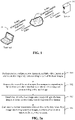
- the trajectory tracking system includes a server 10 and a terminal 20.
- the server 10 is connected to the terminal 20 via a network 30.
- the network 30 includes network entities such as a router and a gateway, and the network entities are not shown one by one in FIG. 1 .
- the terminal 20 may exchange information with the server 10 by using a wired network or a wireless network.
- the terminal 20 may capture a video on which motion tracking needs to be performed by using a video capture device (such as a surveillance camera), and transmit the captured video to the server 10 by using the network 30.
- a video capture device such as a surveillance camera
- the server 10 After receiving the video from the terminal 20, the server 10 performs motion tracking on head images in multiple video frames of the video, to obtain motion trajectories corresponding to the head images, combines the motion trajectories belonging to a same person, then synthesizes a new combined motion trajectory into the video, and finally returns the video carrying the motion trajectory to the terminal 20. In this way, when the terminal 20 presents the video carrying the motion trajectory, the motion trajectory of the person in the video is displayed in a video picture in real-time.
- the server 10 may obtain a video from the terminal 20 by using the network 30, and parse the video, to obtain multiple video frames; perform motion tracking on head images in the multiple video frames, to obtain a motion trajectory corresponding to each of the head images; acquire, for each of the head images, face images corresponding to the head image in the video frames, to obtain a face image set corresponding to the head image; determine, from the face image sets corresponding to the head images, at least two face image sets having same face images; and combine the motion trajectories corresponding to the determined face image sets having same face images. Subsequently, the server 10 may synthesize a new combined motion trajectory into the video, and transmit the video carrying the motion trajectory to the terminal 20 by using the network 30.
- FIG. 1 is merely an example of a system architecture for implementing the embodiments of this disclosure, and the embodiments of this disclosure are not limited to the system architecture shown in FIG. 1 .
- the embodiments of this disclosure are provided based on the system architecture.
- trajectory tracking apparatus may be integrated in a server.
- a trajectory tracking method includes: performing motion tracking on head images in multiple video frames, to obtain a motion trajectory corresponding to each of the head images; acquiring, for each of the head images, face images corresponding to the head image in the video frames, to obtain a face image set corresponding to the head image; determining from the face image sets corresponding to the head images, at least two face image sets having same face images; and combining the motion trajectories corresponding to the determined face image sets having same face images.
- FIG. 2a is a schematic flowchart of a trajectory tracking method according to an embodiment of this disclosure. As shown in FIG. 2a , the trajectory tracking method includes the following steps 101 to 104.
- Step 101 Perform motion tracking on head images in multiple video frames, to obtain a motion trajectory corresponding to each of the head images.
- a trajectory tracking apparatus first obtains a video on which motion tracking needs to be performed.
- a manner of obtaining the video is not specifically limited herein, and the video on which motion tracking needs to be performed may be obtained in multiple manners. For example, a video that is actively pushed by a surveillance device and on which motion tracking needs to be performed nay be received. For another example, a video on which motion tracking needs to be performed may be actively pulled from a surveillance device.
- the trajectory tracking apparatus After obtaining the video on which motion tracking needs to be performed, the trajectory tracking apparatus first decodes video stream data of the video, to obtain multiple video frames corresponding to the video. For example, referring to FIG. 2b , the video on which motion tracking needs to be performed is decoded, to obtain N video frames.
- a motion trajectory of a head is used as a motion trajectory of a person.
- the head images present in the multiple video frames are used as tracking targets, and a head tracking algorithm is used for performing motion tracking on the head images in the video frames, to obtain the motion trajectories corresponding to the head images.
- Motion tracking on the head image may be performed based on profile information, color information (such as color of hair and distribution of the color), motion information (such as motion correlation between points on a head surface), and the like of the head image.
- head tracking algorithms that may be used include, but are not limited to, a model method, a grayscale distribution method, and a block feature method.
- a head and organs of the head are modeled, and template matching is used for implementing motion tracking on the head image.
- a mosaic diagram of grayscale distribution on a head surface in a three-dimensional space is solved, and matching is used for implementing motion tracking on the head image.
- motion tracking on the head image is implemented by using motion vector calculation of block features in batches.
- the method has advantages such as high precision and independence of a specific target model, so that tracking of free motion of the head image can be implemented.
- the head tracking algorithm to be used is not specifically limited in this embodiment of this disclosure.
- the head tracking algorithm may be selected by a person skilled in the art according to an actual requirement.
- the selected head tracking algorithm may be a head tracking algorithm described in this embodiment of this disclosure or may be a head tracking algorithm not described in this embodiment of this disclosure.
- Step 102 Acquire, for each of the head images, face images corresponding to the head image in the video frames, to obtain a face image set corresponding to the head image.
- a correspondence between a head image and a face image is used for describing that "the head image and the face image that correspond to each other belong to a same person".
- the correspondence between the head image and the face image may be established before motion tracking is performed on the head images or may be simultaneously established when motion tracking is performed on the head images or may be established after motion tracking has been performed on the head images.
- the method before the performing motion tracking on head images in multiple video frames to obtain a motion trajectory corresponding to each of the head images, the method further includes: performing, for each of the video frames, head detection and face detection on the video frame to determine a head image and a face image in the video frame; and determining, for each of the video frames, the head image and the face image that belong to a same person in the video frame, and establishing a correspondence between the head image and the face image that belong to a same person.
- the acquiring, for each of the head images, face images corresponding to the head image in the video frames includes: acquiring, for each of the head images and by the computer device, face images corresponding to the head image in the video frames according to the established correspondences.
- the trajectory tracking apparatus first performs head detection and face detection on each of the multiple video frames, to determine a head image and a face image in the video frame.
- head detection is performed on each of the video frames to obtain head data.
- the head data includes one or more head coordinate boxes used for indicating positions of one or more head images.
- Face detection is performed on each of the video frames to obtain face data.
- the face data includes one or more face coordinate boxes used for indicating positions of one or more face images. Both the head coordinate box and the face coordinate box are rectangular boxes.
- a head detection algorithm such as an AdaBoost method, a SVM method, a Bayesian method, and a neural network method
- a face detection algorithm such as the AdaBoost method, a classification and regression tree method, and a neural network method
- the used head detection algorithm and the used face detection algorithm are not specifically limited in this embodiment of this disclosure.
- the head detection algorithm and the face detection algorithm may be selected by a person skilled in the art according to an actual requirement.
- a head detection algorithm is used to detect a video frame to obtain 5 different head images
- a face detection algorithm is used to detect the video frame to obtain 5 different face images.
- a correspondence between the head image and the face image need to be established. That is, a correspondence between the head image and the face image that are in the video frame and belong to a same person are established. Therefore, the head image and the face image that are in the video frame and belong to a same person first need to be determined.
- the determining, for each of the video frames, the head image and the face image that belong to a same person in the video frame includes: obtaining, for each of the video frames, an area overlap ratio between the head image and the face image in the video frame; and determining, for each of the video frames, the head image and the face image that belong to a same person in the video frame according to the area overlap ratio obtained from the video frame.
- a video frame is used as an example. 5 different face images and 5 different head images are determined from the video frame. Area similarities between each of the head images and each of the 5 face images are obtained, in this case, 5 ⁇ 5, that is, a total of 25 similarities are obtained. To be specific, there are 25 possible combination manners between the head images and the face images.
- an area of the head coordinate box corresponding to the head image is used as an area of the head image
- an area of the face coordinate box corresponding to the face image is used as an area of the face image
- the head image and the face image that are in the video frame and belong to a same person are determined according to the area overlap ratios obtained from the video frame.
- the determining, for each of the video frames, the head image and the face image that belong to a same person in the video frame according to the area overlap ratio obtained from the video frame includes: performing, for each of the video frames, bipartite graph optimal matching on the head image and the face image in the video frame according to the area overlap ratio obtained from the video frame; and determining, for each of the video frames, that the head image and the face image that are in the video frame and match each other belong to a same person.
- a bipartite graph in which head images and face images are used as vertexes is constructed according to area overlap ratios obtained from the video frame, and optimal matching (or referred to as maximum matching) is then solved for the bipartite graph, to determine that a head image and a face image that match each other belong to a same person.
- the Hungarian algorithm may be used for solving the optimal matching of the bipartite graph.
- the head image and the face image that are in the video frame and belong to a same person are determined, a correspondence between the head image and the face image that belong to a same person can be established. In other words, the head image and the face image that are in the video frame and belong to a same person are bound.
- the face images corresponding to the head image in the video frames may be correspondingly acquired according to the established correspondences, so as to obtain the face image set (including face images that are in the video frames and belong to a same person as the head image) corresponding to the head image.
- the determining, for each of the video frames, the head image and the face image that belong to a same person in the video frame according to the area overlap ratio obtained from the video frame includes: for each head image in each video frame, determining that the head image and a face image having the highest area similarity with the head image belong to a same person.
- m head images and n face images are detected from the video frame.
- n combination manners between the head image and the face images there are n combination manners between the head image and the face images.
- a total of n area similarities between the head image and the different face images are obtained.
- an area overlap ratio between the first head image and a second face image in the n face images is greater than an area overlap ratio between the first head image and a face image other than the second face image, it is determined that the first head image and the second face image belong to a same person.
- the head image and the face image that are in the video frame and belong to a same person are determined, a correspondence between the head image and the face image that belong to a same person can be established. In other words, the head image and the face image that are in the video frame and belong to a same person are bound.
- the face images corresponding to the head image in the video frames may be correspondingly acquired according to the established correspondences, so as to obtain the face image set (including face images that are in the video frames and belong to a same person as the head image) corresponding to the head image.
- the performing, for each of the video frames, head detection and face detection on the video frame to determine a head image and a face image in the video frame includes: performing the head detection on each of the multiple video frames, to determine a head image in the video frame; and performing the face detection on the head image in the video frame, to determine a face image in the head image in the video frame.
- the determining, for each of the video frames, the head image and the face image that belong to a same person in the video frame includes: for each video frame, determining that a head image in the video frame and a face image determined from the head image belong to a same person.
- any video frame is used as an example.
- Head detection is first performed on the video frame, to determine head images in the video frame; and face detection is then performed on each of the head images determined from the video frame, to determine a face image in the head image. Because the face image is directly determined from the determined head image, it is determined that the head image and the face image determined from the head image belong to a same person.
- Step 103 Determine at least two face image sets having same face images from the face image sets corresponding to the head images.
- At least two face image sets having same face images are determined from the face image sets corresponding to the head images.
- the determining from the face image sets corresponding to the head images, at least two face image sets having same face images includes: selecting two face image sets from the face image sets corresponding to the head images; obtaining a similarity between any one face image in one of the two face image sets and any one face image in the other of the two face image sets, to obtain multiple similarities; and determining whether a similarity of the multiple similarities reaches a first preset similarity; and determining, in a case that a similarity of the multiple similarities reaches the first preset similarity, that the two face image sets have same face images.
- any two face image sets may correspond to a same head image, and may also correspond to different head images. In other words, any two face image sets may belong to a same person or may belong to different persons.
- two face image sets are first selected from the face image sets corresponding to the head images.
- two face image sets may be arbitrarily selected.
- a similarity between any one face image in one of the two face image sets and any one face image in the other of the two face image sets is obtained, to obtain multiple similarities.
- one of the selected face image sets includes 5 face images
- the other of the selected face image sets includes 6 face images. Because there are a total of 5 ⁇ 6, that is, 30 combination manners among the face images of the selected face image sets, 30 similarities corresponding to the different combination manners among the face images of the face image sets are obtained.
- the first preset similarity is used for describing that two face images are the same, or that the two face images belong to the same person.
- the value of the first preset similarity may be set by a person skilled in the art according to an actual requirement. For example, the first preset similarity may be set to 95%.
- the method further includes: obtaining an average similarity of the multiple similarities in a case that none of the multiple similarities reaches the first preset similarity; and determining whether an average similarity reaches a second preset similarity, the second preset similarity being less than the first preset similarity; determining, in a case that the average similarity reaches a second preset similarity, that the two face image sets have same face images.
- the multiple similarities After the multiple similarities are obtained, it is further determined whether a similarity reaching the first preset similarity exists in the multiple obtained similarities. In other words, it is determined whether a maximum similarity in the multiple obtained similarities reaches the first preset similarity.
- an average similarity of the multiple obtained similarities is further calculated. Subsequently, it is determined whether the calculated average similarity reaches a second preset similarity, the second preset similarity being configured to be less than the first preset similarity. For example, when the first preset similarity is configured to be 95%, the second preset similarity is configured to be 85%. In a case that the calculated average similarity reaches the second preset similarity, it is determined that the two selected face image sets have same face images.
- the obtaining a similarity between any one face image in one of the two face image sets and any one face image in the other of the two face image sets includes: selecting one face image from each of the two face image sets, to obtain two face images; obtaining multidimensional image features of each of the two face images, to obtain a first image feature set and a second image feature set; and obtaining a distance between the first image feature set and the second image feature set as a similarity between the two face images.
- the type of the obtained image feature is not specifically limited herein, and may be selected by a person skilled in the art according to an actual requirement.
- a histogram of oriented gradient (HOG) feature may be obtained.
- a distance between the first image feature set and the second image feature set is obtained, and the obtained distance is used as a similarity between the two face images.
- a person skilled in the art may select any feature distance (such as a Euclidean distance, a Manhattan distance, or a Chebyshev distance) according to an actual requirement to measure a distance between the two image feature sets.
- Step 104 Combine the motion trajectories corresponding to the determined face image sets having same face images, to obtain a final motion trajectory for trajectory tracking.
- motion trajectories corresponding to the determined face image sets belonging to a same person are combined (a head image corresponding to the face image set is first determined, and a motion trajectory corresponding to the head image is then determined as the motion trajectory corresponding to the face image set), to obtain a final motion trajectory for trajectory tracking, that is, a complete motion trajectory corresponding to the person.
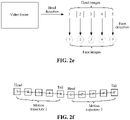
- a motion trajectory A and a motion trajectory B are used as an example. If a moment of a video frame (that is, a moment at which the video frame is located in a video) in which a head image at the tail of the motion trajectory A is located is earlier than a moment of a video frame (that is, a moment at which the video frame is located in the video) in which a head image at the head of the motion trajectory B is located, the tail of the motion trajectory A is connected to the head of the motion trajectory B, thereby implementing the combination of the motion trajectory A and the motion trajectory B.
- a motion trajectory 1 includes a head image 1, a head image 2, a head image 3, a head image 4, and a head image 5, and the 5 head images are same head images (in other words, head images of a same head in different video frames).
- a motion trajectory 2 includes a head image 1', a head image 2', a head image 3', a head image 4', and a head image 5', and the 5 head images are same head images (in other words, head images of a same head in different video frames).
- a moment of a video frame in which the head image 5 is located is earlier than a moment of a video frame in which the head image 1' is located. Therefore, the tail of the motion trajectory 1 is connected to the head of the motion trajectory 2, to obtain a complete motion trajectory of the person.
- motion tracking is performed on head images in multiple video frames, to obtain a motion trajectory corresponding to each of the head images; for each of the head images, face images corresponding to the head image in the video frames are acquired, to obtain a face image set corresponding to the head image; at least two face image sets having same face images are determined from the face image sets corresponding to the head images; and the motion trajectories corresponding to the determined face image sets having same face images are combined to obtain a final motion trajectory for trajectory tracking.
- a head feature is relatively fixed compared with other parts of a human body and is less likely to be blocked, a more accurate motion trajectory can be obtained by performing motion tracking on a head image compared with performing motion tracking on an entire human body. Even though tracking is interrupted, interrupted motion trajectories can be combined based on the face images corresponding to the head image, so as to improve the accuracy of motion tracking.
- an example in which the video on which motion tracking needs to be performed is a surveillance video captured by a surveillance camera is used as an example for describing the trajectory tracking method provided in this disclosure in detail.
- the trajectory tracking system includes a terminal, a network, and a server.
- the terminal is connected to a surveillance camera and controls the surveillance camera, receives video images from the surveillance camera, performs encoding to obtain a surveillance video, and subsequently uses the surveillance video obtained through encoding as a video on which motion tracking needs to be performed, and the video is transmitted to the server by using the network.
- the server performs motion tracking on the surveillance video from the terminal, to obtain complete motion trajectories of all head images (that is, motion trajectories of the head images from appearance to disappearance) present in the surveillance video, then synthesizes the obtained motion trajectories into the surveillance video, and finally returns the surveillance video carrying the motion trajectories to the terminal.
- a specific procedure of the trajectory tracking method includes steps 201 to 210.
- Step 201 A terminal obtains a surveillance video by using a surveillance camera.
- the terminal may be simultaneously connected to multiple surveillance cameras. During the acquisition of the surveillance video, the terminal may select, according to a tracking requirement, one of the surveillance cameras to acquire the surveillance video.
- Step 202 The terminal transmits the obtained surveillance video to a server by using a network.
- the network includes network entities such as a router and a gateway and is used for exchanging information between the terminal and the server.
- Step 203 The server decodes the surveillance video, to obtain multiple video frames of the surveillance video.
- the server After receiving the surveillance video from the terminal, the server uses the surveillance video as a video on which motion tracking needs to be performed, decodes video stream data of the surveillance video, to obtain multiple video frames corresponding to the surveillance video.
- Step 204 The server performs, for each of the video frames, head detection and face detection on the video frame to determine a head image and a face image in the video frame.
- a head detection algorithm such as an AdaBoost method, a SVM method, a Bayesian method, and a neural network method
- a face detection algorithm such as the AdaBoost method, a classification and regression tree method, and a neural network method
- the used head detection algorithm and the used face detection algorithm are not specifically limited in this embodiment of this disclosure.
- the head detection algorithm and the face detection algorithm may be selected by a person skilled in the art according to an actual requirement.
- a head detection algorithm is used to detect a video frame to obtain 5 different head images
- a face detection algorithm is used to detect the video frame to obtain 5 different face images.
- Step 205 The server determines, for each of the video frames, the head image and the face image that belong to a same person in the video frame, and establishes a correspondence between the head image and the face image that belong to a same person.
- the determining, for each of the video frames, the head image and the face image that belong to a same person in the video frame includes: obtaining, for each of the video frames, an area overlap ratio between the head image and the face image in the video frame; and determining, for each of the video frames, the head image and the face image that belong to a same person in the video frame according to the area overlap ratio obtained from the video frame.
- a video frame is used as an example. 5 different face images and 5 different head images are determined from the video frame. Area similarities between each of the head images and each of the 5 face images are obtained, in this case, 5 ⁇ 5, that is, a total of 25 similarities are obtained. To be specific, there are 25 possible combination manners between the head images and the face images.
- an area of the head coordinate box corresponding to the head image is used as an area of the head image
- an area of the face coordinate box corresponding to the face image is used as an area of the face image
- the head image and the face image that are in the video frame and belong to a same person are determined according to the area overlap ratios obtained from the video frame.
- the determining, for each of the video frames, the head image and the face image that belong to a same person in the video frame according to the area overlap ratio obtained from the video frame includes: performing, for each of the video frames, bipartite graph optimal matching on the head image and the face image in the video frame according to the area overlap ratio obtained from the video frame; and determining, for each of the video frames, that the head image and the face image that are in the video frame and match each other belong to a same person.
- a bipartite graph in which head images and face images are used as vertexes is constructed according to area overlap ratios obtained from the video frame, and optimal matching (or referred to as maximum matching) is then solved for the bipartite graph, to determine that a head image and a face image that match each other belong to a same person.
- the Hungarian algorithm may be used for solving the optimal matching of the bipartite graph.
- the head image and the face image that are in the video frame and belong to a same person are determined, a correspondence between the head image and the face image that belong to a same person can be established. In other words, the head image and the face image that are in the video frame and belong to a same person are bound.
- the determining, for each of the video frames, the head image and the face image that belong to a same person in the video frame according to the area overlap ratio obtained from the video frame includes: for each head image in each video frame, determining that the head image and a face image having the highest area similarity with the head image belong to a same person.
- m head images and n face images are detected from the video frame.
- n combination manners between the head image and the face images there are n combination manners between the head image and the face images.
- a total of n area similarities between the head image and the different face images are obtained.
- an area overlap ratio between the first head image and a second face image in the n face images is greater than an area overlap ratio between the first head image and a face image other than the second face image, it is determined that the first head image and the second face image belong to a same person.
- the head image and the face image that are in the video frame and belong to a same person are determined, a correspondence between the head image and the face image that belong to a same person can be established. In other words, the head image and the face image that are in the video frame and belong to a same person are bound.
- Step 206 The server performs motion tracking on head images in multiple video frames, to obtain a motion trajectory corresponding to each of the head images.
- a motion trajectory of a head is used as a motion trajectory of a person.
- the head images present in the multiple video frames are used as tracking targets, and a head tracking algorithm is used for performing motion tracking on the head images in the video frames, to obtain the motion trajectories corresponding to the head images.
- Motion tracking on the head image may be performed based on profile information, color information (such as color of hair and distribution of the color), motion information (such as motion correlation between points on a head surface), and the like of the head image.
- head tracking algorithms that may be used include, but are not limited to, a model method, a grayscale distribution method, and a block feature method.
- a head and organs of the head are modeled, and template matching is used for implementing motion tracking on the head image.
- a mosaic diagram of grayscale distribution on a head surface in a three-dimensional space is solved, and matching is used for implementing motion tracking on the head image.
- motion tracking on the head image is implemented by using motion vector calculation of block features in batches.
- the method has advantages such as high precision and independence of a specific target model, so that tracking of free motion of the head image can be implemented.
- the head tracking algorithm to be used is not specifically limited in this embodiment of this disclosure.
- the head tracking algorithm may be selected by a person skilled in the art according to an actual requirement.
- the selected head tracking algorithm may be a head tracking algorithm described in this embodiment of this disclosure or may be a head tracking algorithm not described in this embodiment of this disclosure.
- Step 207 For each of the head images, the server acquires, according to the established correspondences, face images corresponding to the head image in the video frames, to obtain a face image set corresponding to the head image.
- the server may acquire, according to the previously established correspondences between the head images and the face images, face images corresponding to the head image in the video frames, so as to obtain a face image set (including face images that are in the video frames and belong to a same person as the head image) corresponding to the head image.
- Step 208 The server determines at least two face image sets having same face images from the face image sets corresponding to the head images.
- At least two face image sets having same face images are determined from the face image sets corresponding to the head images.
- the determining from the face image sets corresponding to the head images, at least two face image sets having same face images includes: selecting two face image sets from the face image sets corresponding to the head images; obtaining a similarity between any one face image in one of the two face image sets and any one face image in the other of the two face image sets, to obtain multiple similarities; and determining whether a similarity of the multiple similarities reaches a first preset similarity; and determining, in a case that a similarity of the multiple similarities reaches the first preset similarity, that the two face image sets have same face images.
- any two face image sets may correspond to a same head image, and may also correspond to different head images. In other words, any two face image sets may belong to a same person or may belong to different persons.
- two face image sets are first selected from the face image sets corresponding to the head images.
- two face image sets may be arbitrarily selected.
- a similarity between any one face image in one of the two face image sets and any one face image in the other of the two face image sets is obtained, to obtain multiple similarities.
- one of the selected face image sets includes 5 face images
- the other of the selected face image sets includes 6 face images. Because there are a total of 5 ⁇ 6, that is, 30 combination manners among the face images of the selected face image sets, 30 similarities corresponding to the different combination manners among the face images of the face image sets are obtained.
- the first preset similarity is used for describing that two face images are the same, or that the two face images belong to the same person.
- the value of the first preset similarity may be set by a person skilled in the art according to an actual requirement. For example, the first preset similarity may be set to 95%.
- the method further includes: obtaining an average similarity of the multiple similarities in a case that none of the multiple similarities reaches the first preset similarity; and determining whether an average similarity reaches a second preset similarity, the second preset similarity being less than the first preset similarity; determining, in a case that the average similarity reaches a second preset similarity, that the two face image sets have same face images.
- the multiple similarities After the multiple similarities are obtained, it is further determined whether a similarity reaching the first preset similarity exists in the multiple obtained similarities. In other words, it is determined whether a maximum similarity in the multiple obtained similarities reaches the first preset similarity.
- an average similarity of the multiple obtained similarities is further calculated. Subsequently, it is determined whether the calculated average similarity reaches a second preset similarity, the second preset similarity being configured to be less than the first preset similarity. For example, when the first preset similarity is configured to be 95%, the second preset similarity is configured to be 85%. In a case that the calculated average similarity reaches the second preset similarity, it is determined that the two selected face image sets have same face images.
- the obtaining a similarity between any one face image in one of the two face image sets and any one face image in the other of the two face image sets includes: selecting one face image from each of the two face image sets, to obtain two face images; obtaining multidimensional image features of each of the two face images, to obtain a first image feature set and a second image feature set; and obtaining a distance between the first image feature set and the second image feature set as a similarity between the two face images.
- the type of the obtained image feature is not specifically limited herein, and may be selected by a person skilled in the art according to an actual requirement.
- a histogram of oriented gradient (HOG) feature may be obtained.
- a distance between the first image feature set and the second image feature set is obtained, and the obtained distance is used as a similarity between the two face images.
- a person skilled in the art may select any feature distance (such as a Euclidean distance, a Manhattan distance, or a Chebyshev distance) according to an actual requirement to measure a distance between the two image feature sets.
- Step 209 The server combines the motion trajectories corresponding to the determined face image sets having same face images, to obtain a final motion trajectory for trajectory tracking.
- the server After the at least two face image sets having same face images are determined, that is, after the face image sets belonging to a same person are determined, the server combines motion trajectories corresponding to the determined face image sets belonging to a same person are (a head image corresponding to the face image set is first determined, and a motion trajectory corresponding to the head image is then determined as the motion trajectory corresponding to the face image set), to obtain a final motion trajectory for trajectory tracking, that is, a complete motion trajectory corresponding to the person.
- a motion trajectory A and a motion trajectory B are used as an example. If a moment of a video frame (that is, a moment at which the video frame is located in a video) in which a head image at the tail of the motion trajectory A is located is earlier than a moment of a video frame (that is, a moment at which the video frame is located in the video) in which a head image at the head of the motion trajectory B is located, the tail of the motion trajectory A is connected to the head of the motion trajectory B, thereby implementing the combination of the motion trajectory A and the motion trajectory B.
- a motion trajectory 1 includes a head image 1, a head image 2, a head image 3, a head image 4, and a head image 5, and the 5 head images are same head images (in other words, head images of a same head in different video frames).
- a motion trajectory 2 includes a head image 1', a head image 2', a head image 3', a head image 4', and a head image 5', and the 5 head images are same head images (in other words, head images of a same head in different video frames).
- a moment of a video frame in which the head image 5 is located is earlier than a moment of a video frame in which the head image 1' is located. Therefore, the tail of the motion trajectory 1 is connected to the head of the motion trajectory 2, to obtain a complete motion trajectory of the person.
- Step S210 The server synthesizes the combined motion trajectory into the surveillance video, and returns the surveillance video carrying the motion trajectory to the terminal by using the network.
- the terminal can present motion trajectories of different head images at moments along with moment changes by playing the surveillance video. For example, referring to FIG. 3b , a video frame corresponding to a moment is shown. As shown in FIG. 3b , motion trajectories of a person C, a person D, and a person E until the moment are presented.
- a first motion trajectory 110 of the person C shows that the person C appears from an upper left side of a surveillance region, and walks towards a lower left side of the surveillance region.
- a second motion trajectory 120 of the person D shows that the person D appears from an upper side of the surveillance region, and walks towards a lower side of the surveillance region.
- a third motion trajectory 130 of the person E shows that the person E appears from an upper right side of the surveillance region, and walks towards an upper left side of the surveillance region.
- the server may further analyze the combined motion trajectory, to obtain an analysis result.
- the analysis result obtained through analysis is also returned to the terminal by using the network.
- the server may analyze the combined motion trajectories as follows.
- a person skilled in the art may further configure an analysis rule of another type for the server according to an actual requirement.
- the server completes analysis of the motion trajectories, to obtain a required analysis result.
- a trajectory tracking apparatus is further provided in an embodiment. Terms have meanings the same as those in the foregoing trajectory tracking method, and for specific implementation details, reference may be made to the description in the method embodiments.
- a trajectory tracking apparatus is further provided. As shown in FIG. 4a , the trajectory tracking apparatus may include a motion tracking module 301, an image acquisition module 302, an image determination module 303, and a trajectory combination module 304.
- the motion tracking module 301 is configured to perform motion tracking on head images in multiple video frames, to obtain a motion trajectory corresponding to each of the head images.
- the image acquisition module 302 is configured to acquire, for each of the head images, face images corresponding to the head image in the video frames, to obtain a face image set corresponding to the head image.
- the image determination module 303 is configured to determine from the face image sets corresponding to the head images, at least two face image sets having same face images.
- the trajectory combination module 304 is configured to combine the motion trajectories corresponding to the determined face image sets having same face images.
- the trajectory tracking apparatus further includes a relationship establishment module 305, configured to: perform, for each of the video frames, head detection and face detection on the video frame to determine a head image and a face image in the video frame; and determine, for each of the video frames, the head image and the face image that belong to a same person in the video frame, and establish a correspondence between the head image and the face image that belong to a same person.
- the image acquisition module 302 is specifically configured to: acquire, for each of the head images, face images corresponding to the head image in the video frames according to the correspondences established by the relationship establishment module 305.
- the relationship establishment module 305 is specifically configured to: obtain, for each of the video frames, an area overlap ratio between the head image and the face image in the video frame; and determine, for each of the video frames, the head image and the face image that belong to a same person in the video frame according to the area overlap ratio obtained from the video frame.
- the relationship establishment module 305 is further specifically configured to: perform, for each of the video frames, bipartite graph optimal matching on the head image and the face image in the video frame according to the area overlap ratio obtained from the video frame; and determine, for each of the video frames, that the head image and the face image that are in the video frame and match each other belong to a same person.
- the image determination module 303 is specifically configured to: select two face image sets from the face image sets corresponding to the head images; obtain a similarity between any one face image in one of the two face image sets and any one face image in the other of the two face image sets, to obtain multiple similarities; determine whether a similarity reaching a first preset similarity exists in the multiple obtained similarities; and determine, in a case that a similarity of the multiple similarities reaches the first preset similarity, that the two face image sets have same face images.
- the image determination module 303 is further configured to: obtain an average similarity of the multiple similarities in a case that none of the multiple similarities reaches the first preset similarity; determine whether the average similarity reaches a second preset similarity, the second preset similarity being less than the first preset similarity; and determine, in a case that the average similarity reaches the second preset similarity, that the two face image sets have same face images.
- the image determination module 303 is further configured to: select one face image from each of the two face image sets, to obtain two face images; obtain multidimensional image features of each of the two face images, to obtain a first image feature set and a second image feature set; and obtain a distance between the first image feature set and the second image feature set as a similarity between the two face images.
- the foregoing modules may be implemented as independent entities or may be randomly combined as a same entity or several entities for implementation.
- the foregoing modules refer to the foregoing method embodiments. Details are not provided herein again.
- the motion tracking module 301 performs motion tracking on head images in multiple video frames, to obtain a motion trajectory corresponding to each of the head images;
- the image acquisition module 302 acquires, for each of the head images, face images corresponding to the head image in the video frames, to obtain a face image set corresponding to the head image;
- the image determination module 303 determines from the face image sets corresponding to the head images, at least two face image sets having same face images; and the trajectory combination module 304 combines the motion trajectories corresponding to the determined face image sets having same face images.
- a head feature is relatively fixed compared with other parts of a human body and is less likely to be blocked, a more accurate motion trajectory can be obtained by performing motion tracking on a head image compared with performing motion tracking on an entire human body. Even though tracking is interrupted, interrupted motion trajectories can be combined based on the face images corresponding to the head image, so as to improve the accuracy of motion tracking.
- an embodiment of this disclosure provides a server that may include components such as a processor 401 including one or more processing cores, a memory 402 including one or more computer-readable storage medium, a radio frequency (RF) circuit 403, a power supply 404, an input unit 405, and a display unit 406.
- a processor 401 including one or more processing cores
- a memory 402 including one or more computer-readable storage medium
- RF radio frequency
- the processor 401 is a control center of the server, and is connected to various parts of the entire server by using various interfaces and lines. By running or executing a software program and/or module stored in the memory 402, and invoking data stored in the memory 402, the processor 401 executes various functions of the server and performs data processing, thereby monitoring the entire server.
- the processor 401 may include one or more processing cores.
- the processor 401 may integrate an application processor and a modem, where the application processor mainly processes an operating system, a user interface, and an application program and the like, and the modem mainly processes wireless communication. It can be understood that the foregoing modem may alternatively not be integrated into the processor 401.
- the memory 402 may be configured to store a software program and a module.
- the processor 401 runs the software program and the module stored in the memory 402, to perform various functional applications and data processing.
- the RF circuit 403 may be configured to receive and transmit signals in a process of information receiving and transmission.
- the server further includes the power supply 404 (for example, a battery) that supplies power to each component.
- the power supply may be logically connected to the processor 401 by using a power supply management system, so that functions such as management of charging, discharging, and power consumption are implemented by using the power supply management system.
- the server may further include an input unit 405.
- the input unit 405 may be configured to receive inputted digit or character information, and generate a keyboard, mouse, joystick, optical or track ball signal input related to the user setting and function control.
- the server may further include the display unit 406.
- the display unit 406 may be configured to display information entered by the user or information provided for the user, and various graphical user interfaces of the server.
- the graphical user interfaces may be formed by a graph, text, an icon, a video, or any combination thereof.
- the processor 401 in the server loads, into the memory 402 according to the following instructions, executable files corresponding to processes of one or more application programs, and the processor 401 runs the application programs stored in the memory 402 to implement the following various functions: performing motion tracking on head images in multiple video frames, to obtain a motion trajectory corresponding to each of the head images; acquiring, for each of the head images, face images corresponding to the head image in the video frames, to obtain a face image set corresponding to the head image; determining from the face image sets corresponding to the head images, at least two face image sets having same face images; and combining the motion trajectories corresponding to the determined face image sets having same face images.
- FIG. 6 is a diagram of the internal structure of a computer device in an embodiment.
- the computer device may be specifically a server.
- the computer device includes a processor, a memory, a network interface, an input apparatus, and a camera apparatus that are connected by a system bus.
- the memory includes a non-volatile storage medium and an internal memory.
- the non-volatile storage medium of the computer device stores an operating system, and may further store a computer-readable instruction.
- the computer-readable instruction when executed by the processor, may cause the processor to implement the trajectory tracking method.
- the internal memory may also store a computer-readable instruction, and the computer-readable instruction, when executed by a processor, may cause the processor to perform the trajectory tracking method.
- the camera apparatus of the computer device is a camera, configured to capture an image.
- the input apparatus of the computer device may be a touch layer covering a display screen, or may be a button, a trackball, or a touch panel disposed on a housing of the computer device, or may be an external keyboard, a touch panel, or a mouse.
- FIG. 6 is only a block diagram of a partial structure related to the solution in this disclosure, and does not limit the computer device to which the solution of this disclosure is applied.
- the computer device may include more components or fewer components than those shown in the figure, or some components may be combined, or a different component deployment may be used.
- the trajectory tracking method provided in this disclosure may be implemented in the form of a computer-readable instruction, and the computer-readable instruction may be run on the computer device shown in FIG. 6 .
- the memory of the computer device may store program modules forming a trajectory tracking apparatus, for example, the motion tracking module 301, the image acquisition module 302, the image determination module 303, and the trajectory combination module 304 in FIG. 4a .
- a computer-readable instruction formed by the program modules causes the processor to perform the steps in the trajectory tracking apparatus in the embodiments of this disclosure described in this specification.
- the 6 may perform motion tracking on head images in multiple video frames by using the motion tracking module 301, to obtain a motion trajectory corresponding to each of the head images; acquire, for each of the head images and by using the image acquisition module 302, face images corresponding to the head image in the video frames, to obtain a face image set corresponding to the head image; determine, by using the image determination module 303 and from the face image sets corresponding to the head images, at least two face image sets having same face images; and combine, by using the trajectory combination module 304, the motion trajectories corresponding to the determined face image sets having same face images, to obtain a final motion trajectory for trajectory tracking.
- the motion tracking module 301, the image acquisition module 302, the image determination module 303, and the trajectory combination module 304 of the trajectory tracking apparatus are shown in FIG. 4a .
- a computer device in an embodiment, includes a memory and a processor.
- the memory stores a computer-readable instruction.
- the computer-readable instruction when executed by the processor, causes the processor to perform the steps in the foregoing trajectory tracking method.
- the steps of the trajectory tracking method herein may be the steps of the trajectory tracking method in the foregoing embodiments.
- a computer-readable storage medium stores a computer-readable instruction.
- the computer-readable instruction when executed by a processor, causes the processor to perform the steps in the foregoing trajectory tracking method.
- the steps of the trajectory tracking method herein may be the steps of the trajectory tracking method in the foregoing embodiments.
- the steps in the embodiments of this disclosure are not necessarily performed in an order indicated by the step numbers. Unless explicitly specified in this disclosure, the order for performing the steps is not strictly limited, and the steps may be performed in other orders. Moreover, at least a part of the steps in each embodiment may include multiple sub-steps or multiple stages. The sub-steps or stages are not necessarily performed at the same moment but may be performed at different moments. These sub-steps or stages are not necessarily performed in sequence, but may be performed in turn or alternately with at least a part of other steps or sub-steps or stages of the other steps.
- the non-volatile memory may include a read-only memory (ROM), a programmable ROM (PROM), an electrically programmable ROM (EPROM), an electrically erasable programmable ROM (EEPROM), or a flash.
- ROM read-only memory
- PROM programmable ROM
- EPROM electrically programmable ROM
- EEPROM electrically erasable programmable ROM
- the volatile memory may include a random access memory (RAM) or an external cache.
- the RAM is available in various forms, such as a static RAM (SRAM), a dynamic RAM (DRAM), a synchronous DRAM (SDRAM), a double data rate SDRAM (DDRSDRAM), an enhanced SDRAM (ESDRAM), a synchronization link (Synchlink) DRAM (SLDRAM), a rambus direct RAM (RDRAM), a direct rambus dynamic RAM (DRDRAM), and a rambus dynamic RAM (RDRAM).
- SRAM static RAM
- DRAM dynamic RAM
- SDRAM synchronous DRAM
- DDRSDRAM double data rate SDRAM
- ESDRAM enhanced SDRAM
- SLDRAM synchronization link
- RDRAM rambus direct RAM
- DRAM direct rambus dynamic RAM
- RDRAM rambus dynamic RAM
Landscapes
- Engineering & Computer Science (AREA)
- Physics & Mathematics (AREA)
- Theoretical Computer Science (AREA)
- General Physics & Mathematics (AREA)
- Multimedia (AREA)
- General Health & Medical Sciences (AREA)
- Health & Medical Sciences (AREA)
- Human Computer Interaction (AREA)
- Computer Vision & Pattern Recognition (AREA)
- Oral & Maxillofacial Surgery (AREA)
- Social Psychology (AREA)
- Psychiatry (AREA)
- Data Mining & Analysis (AREA)
- Geometry (AREA)
- Life Sciences & Earth Sciences (AREA)
- Artificial Intelligence (AREA)
- Bioinformatics & Cheminformatics (AREA)
- Bioinformatics & Computational Biology (AREA)
- Evolutionary Biology (AREA)
- Evolutionary Computation (AREA)
- General Engineering & Computer Science (AREA)
- Image Analysis (AREA)
Claims (9)
- Bewegungsbahn-Nachverfolgungsverfahren, Folgendes umfassend:Durchführen einer Bewegungsnachverfolgung an Kopfbildern in mehreren Video-Frames durch eine Computervorrichtung, um eine Bewegungsbahn zu gewinnen, die jedem der Kopfbilder entspricht (101),Erfassen von Gesichtsbildern, die dem Kopfbild in den Video-Frames entsprechen, für jedes der Kopfbilder und durch die Computervorrichtung, um einen Satz von Gesichtsbildern zu gewinnen, die dem Kopfbild entsprechen (102),Bestimmen mindestens zweier Sätze von Gesichtsbildern, welche die gleichen Gesichtsbilder aufweisen, aus den Sätzen von Gesichtsbildern, die den Kopfbildern entsprechen, durch die Computervorrichtung (103), undKombinieren der Bewegungsbahnen, die den bestimmen Sätzen von Gesichtsbildern entsprechen, die gleiche Gesichtsbilder aufweisen, durch die Computervorrichtung, um eine endgültige Bewegungsbahn für die Bewegungsbahn-Nachverfolgung zu gewinnen (104),wobei das Verfahren vor dem Durchführen der Bewegungsnachverfolgung an Kopfbildern in mehreren Video-Frames durch eine Computervorrichtung ferner Folgendes umfasst:Durchführen einer Kopferkennung und Gesichtserkennung an dem Video-Frame für jeden der Video-Frames und durch die Computervorrichtung, um ein Kopfbild und ein Gesichtsbild in dem Video-Frame zu bestimmen, undBestimmen des Kopfbildes und des Gesichtsbildes in dem Video-Frame, die zur gleichen Person gehören, und Feststellen einer Entsprechung zwischen dem Kopfbild und dem Gesichtsbild, die zur gleichen Person gehören, für jeden der Video-Frames und durch die Computervorrichtung undwobei das Erfassen von Gesichtsbildern, die dem Kopfbild in den Video-Frames entsprechen, für jedes der Kopfbilder und durch die Computervorrichtung Folgendes umfasst:Erfassen von Gesichtsbildern, die dem Kopfbild in den Video-Frames entsprechen, gemäß den festgestellten Entsprechungen für jedes der Kopfbilder und durch die Computervorrichtung,wobei das Bestimmen des Kopfbildes und des Gesichtsbildes in dem Video-Frame, die zur gleichen Person gehören, für jeden der Video-Frames und durch die Computervorrichtung Folgendes umfasst:Gewinnen eines Bereichsüberlappungsverhältnisses zwischen dem Kopfbild und dem Gesichtsbild in dem Video-Frame für jeden der Video-Frames und durch die Computervorrichtung undBestimmen des Kopfbildes und des Gesichtsbildes in dem Video-Frame, die zur gleichen Person gehören, gemäß dem Bereichsüberlappungsverhältnis, das aus dem Video-Frame erzielt wurde, für jeden der Video-Frames und durch die Computervorrichtung,wobei das Bestimmen des Kopfbildes und des Gesichtsbildes in dem Video-Frame, die zur gleichen Person gehören, gemäß dem Bereichsüberlappungsverhältnis, das aus dem Video-Frame gewonnen wurde, für jeden der Video-Frames und durch die Computervorrichtung Folgendes umfasst:Durchführen eines optimalen bipartiten Graphenmatchings an dem Kopfbild und dem Gesichtsbild in dem Video-Frame gemäß dem Bereichsüberlappungsverhältnis, das von dem Video-Frame gewonnen wird, für jeden der Video-Frames und durch die Computervorrichtung, wobei für einen Video-Frame ein bipartiter Graph, in dem Kopfbilder und Gesichtsbilder als Vertices verwendet werden, gemäß Bereichsüberlappungsverhältnissen konstruiert wird, die aus dem Video-Frame gewonnen werden, und das optimale Matching dann für den bipartiten Graphen aufgelöst wird, undBestimmen, dass das Kopfbild und das Gesichtsbild, die sich in dem Video-Frame befinden und miteinander übereinstimmen, zur gleichen Person gehören, für jeden der Video-Frames und durch die Computervorrichtung.
- Bewegungsbahn-Nachverfolgungsverfahren nach Anspruch 1, wobei das Bestimmen mindestens zweier Sätze von Gesichtsbildern, welche die gleichen Gesichtsbilder aufweisen, aus den Sätzen von Gesichtsbildern, die den Kopfbildern entsprechen, durch die Computervorrichtung Folgendes umfasst:Auswählen zweier Sätze von Gesichtsbildern aus den Sätzen von Gesichtsbildern, die den Kopfbildern entsprechen, durch die Computervorrichtung,Gewinnen einer Ähnlichkeit zwischen einem Gesichtsbild in einem der zwei Sätze von Gesichtsbildern und einem Gesichtsbild in dem anderen der zwei Sätze von Gesichtsbildern durch die Computervorrichtung, um mehrere Ähnlichkeiten zu gewinnen, undBestimmen, dass die zwei Sätze von Gesichtsbildern gleiche Gesichtsbilder aufweisen, durch die Computervorrichtung, wenn eine Ähnlichkeit der mehreren Ähnlichkeiten eine erste voreingestellte Ähnlichkeit erreicht.
- Bewegungsbahn-Nachverfolgungsverfahren nach Anspruch 2, wobei das Verfahren vor dem Bestimmen, dass die zwei Sätze von Gesichtsbildern gleiche Gesichtsbilder aufweisen, durch die Computervorrichtung ferner Folgendes umfasst:Gewinnen einer durchschnittlichen Ähnlichkeit der mehreren Ähnlichkeiten durch die Computervorrichtung, wenn keine der mehreren Ähnlichkeiten die erste voreingestellte Ähnlichkeit erreicht, undBestimmen, dass die zwei Sätze von Gesichtsbildern gleiche Gesichtsbilder aufweisen, durch die Computervorrichtung, wenn die durchschnittliche Ähnlichkeit eine zweite voreingestellte Ähnlichkeit erreicht, wobei die zweite voreingestellte Ähnlichkeit kleiner als die erste voreingestellte Ähnlichkeit ist.
- Bewegungsbahn-Nachverfolgungsverfahren nach Anspruch 2, wobei das Gewinnen einer Ähnlichkeit zwischen einem Gesichtsbild in einem der zwei Sätze von Gesichtsbildern und einem Gesichtsbild in dem anderen der zwei Sätze von Gesichtsbildern durch die Computervorrichtung Folgendes umfasst:Auswählen eines Gesichtsbildes aus jedem der zwei Sätze von Gesichtsbildern durch die Computervorrichtung, um zwei Gesichtsbilder zu gewinnen,Gewinnen multidimensionaler Bildmerkmale von jedem der zwei Gesichtsbilder durch die Computervorrichtung, um einen ersten Bildmerkmalsatz und einen zweiten Bildmerkmalsatz zu gewinnen, undGewinnen einer Distanz zwischen dem ersten Bildmerkmalsatz und dem zweiten Bildmerkmalsatz als eine Ähnlichkeit zwischen den zwei Gesichtsbildern durch die Computervorrichtung.
- Computervorrichtung, einen Speicher und einen Prozessor umfassend, wobei der Speicher einen computerlesbaren Befehl speichert und der computerlesbare Befehl bei Ausführung durch den Prozessor den Prozessor veranlasst, die folgenden Operationen durchzuführen:Durchführen einer Bewegungsnachverfolgung an Kopfbildern in mehreren Video-Frames, um eine Bewegungsbahn zu gewinnen, die jedem der Kopfbilder entspricht (101),Erfassen von Gesichtsbildern, die dem Kopfbild in den Video-Frames entsprechen, für jedes der Kopfbilder, um einen Satz von Gesichtsbildern zu gewinnen, die dem Kopfbild entsprechen (102),Bestimmen mindestens zweier Sätze von Gesichtsbildern, welche die gleichen Gesichtsbilder aufweisen, aus den Sätzen von Gesichtsbildern, die den Kopfbildern entsprechen (103), undKombinieren der Bewegungsbahnen, die den bestimmen Sätzen von Gesichtsbildern entsprechen, die gleiche Gesichtsbilder aufweisen, um eine endgültige Bewegungsbahn für die Bewegungsbahn-Nachverfolgung zu gewinnen (104);wobei der computerlesbare Befehl den Prozessor ferner veranlasst, vor dem Durchführen der Bewegungsnachverfolgung an Kopfbildern in mehreren Video-Frames die folgenden Operationen durchzuführen:Durchführen einer Kopferkennung und Gesichtserkennung an dem Video-Frame für jeden der Video-Frames, um ein Kopfbild und ein Gesichtsbild in dem Video-Frame zu bestimmen, undBestimmen des Kopfbildes und des Gesichtsbildes in dem Video-Frame, die zur gleichen Person gehören, und Feststellen einer Entsprechung zwischen dem Kopfbild und dem Gesichtsbild, die zur gleichen Person gehören, für jeden der Video-Frames undwobei das Erfassen von Gesichtsbildern, die dem Kopfbild in den Video-Frames entsprechen, für jedes der Kopfbilder Folgendes umfasst:Erfassen von Gesichtsbildern, die dem Kopfbild in dem Video-Frame entsprechen, gemäß den festgestellten Entsprechungen für jedes der Kopfbilder,wobei das Bestimmen des Kopfbildes und des Gesichtsbildes in dem Video-Frame, die zur gleichen Person gehören, für jeden der Video-Frames Folgendes umfasst:Gewinnen eines Bereichsüberlappungsverhältnisses zwischen dem Kopfbild und dem Gesichtsbild in dem Video-Frame für jeden der Video-Frames undBestimmen des Kopfbildes und des Gesichtsbildes in dem Video-Frame, die zur gleichen Person gehören, gemäß dem Bereichsüberlappungsverhältnis, das aus dem Video-Frame gewonnen wurde, für jeden der Video-Frames,wobei das Bestimmen des Kopfbildes und des Gesichtsbildes in dem Video-Frame, die zur gleichen Person gehören, gemäß dem Bereichsüberlappungsverhältnis, das aus dem Video-Frame gewonnen wurde, für jeden der Video-Frames Folgendes umfasst:Durchführen eines optimalen bipartiten Graphenmatching an dem Kopfbild und dem Gesichtsbild in dem Video-Frame gemäß dem Bereichsüberlappungsverhältnis, das von dem Video-Frame gewonnen wird, für jeden der Video-Frames, wobei für einen Video-Frame ein bipartiter Graph, in dem Kopfbilder und Gesichtsbilder als Vertices verwendet werden, gemäß Bereichsüberlappungsverhältnissen konstruiert wird, die aus dem Video-Frame gewonnen wurden, und das optimale Matching dann für den bipartiten Graphen aufgelöst wird, undBestimmen, dass das Kopfbild und das Gesichtsbild, die sich in dem Video-Frame befinden und miteinander übereinstimmen, zur gleichen Person gehören, für jeden der Video-Frames.
- Computervorrichtung nach Anspruch 5, wobei das Bestimmen mindestens zweier Sätze von Gesichtsbildern, die gleiche Gesichtsbilder aufweisen, aus den Sätzen von Gesichtsbildern, die den Kopfbildern entsprechen, Folgendes umfasst:Auswählen zweier Sätze von Gesichtsbildern aus den Sätzen von Gesichtsbildern, die den Kopfbildern entsprechen,Gewinnen einer Ähnlichkeit zwischen einem Gesichtsbild in einem der zwei Sätze von Gesichtsbildern und einem Gesichtsbild in dem anderen der zwei Sätze von Gesichtsbildern, um mehrere Ähnlichkeiten zu gewinnen, undBestimmen, dass die zwei Sätze von Gesichtsbildern gleiche Gesichtsbilder aufweisen, wenn eine Ähnlichkeit der mehreren Ähnlichkeiten eine erste voreingestellte Ähnlichkeit erreicht.
- Computervorrichtung nach Anspruch 6, wobei der computerlesbare Befehl, nachdem bestimmt wurde, ob eine Ähnlichkeit der mehreren Ähnlichkeiten die erste voreingestellte Ähnlichkeit erreicht, den Prozessor ferner veranlasst, die folgenden Operationen durchzuführen:Gewinnen einer durchschnittlichen Ähnlichkeit der mehreren Ähnlichkeiten, wenn keine der mehreren Ähnlichkeiten die erste voreingestellte Ähnlichkeit erreicht, undBestimmen, dass die zwei Sätze von Gesichtsbildern gleiche Gesichtsbilder aufweisen, wenn die durchschnittliche Ähnlichkeit eine zweite voreingestellte Ähnlichkeit erreicht, wobei die zweite voreingestellte Ähnlichkeit kleiner als die erste voreingestellte Ähnlichkeit ist.
- Computervorrichtung nach Anspruch 6, wobei das Gewinnen einer Ähnlichkeit zwischen einem Gesichtsbild in einem der zwei Sätze von Gesichtsbildern und einem Gesichtsbild in dem anderen der zwei Sätze von Gesichtsbildern Folgendes umfasst:Auswählen eines Gesichtsbildes aus jedem der zwei Sätze von Gesichtsbildern, um zwei Gesichtsbilder zu gewinnen,Gewinnen multidimensionaler Bildmerkmale von jedem der zwei Gesichtsbilder, um einen ersten Bildmerkmalsatz und einen zweiten Bildmerkmalsatz zu gewinnen, undGewinnen einer Distanz zwischen dem ersten Bildmerkmalsatz und dem zweiten Bildmerkmalsatz als eine Ähnlichkeit zwischen den zwei Gesichtsbildern.
- Ein oder mehrere nicht-flüchtige Speichermedien, die computerlesbare Befehle speichern, wobei die computerlesbaren Befehle bei Ausführen durch einen oder mehrere Prozessoren den einen oder die mehreren Prozessoren veranlassen, das Bewegungsbahn-Nachverfolgungsverfahren nach einem der Ansprüche 1 bis 4 durchzuführen.
Applications Claiming Priority (2)
| Application Number | Priority Date | Filing Date | Title |
|---|---|---|---|
| CN201810267283.4A CN108509896B (zh) | 2018-03-28 | 2018-03-28 | 一种轨迹跟踪方法、装置和存储介质 |
| PCT/CN2019/078529 WO2019184749A1 (zh) | 2018-03-28 | 2019-03-18 | 轨迹跟踪方法、装置、计算机设备和存储介质 |
Publications (3)
| Publication Number | Publication Date |
|---|---|
| EP3779772A1 EP3779772A1 (de) | 2021-02-17 |
| EP3779772A4 EP3779772A4 (de) | 2021-12-15 |
| EP3779772B1 true EP3779772B1 (de) | 2022-07-27 |
Family
ID=63379076
Family Applications (1)
| Application Number | Title | Priority Date | Filing Date |
|---|---|---|---|
| EP19776970.6A Active EP3779772B1 (de) | 2018-03-28 | 2019-03-18 | Trajektorieverfolgungsverfahren und -einrichtung und computervorrichtung und speichermedium |
Country Status (4)
| Country | Link |
|---|---|
| US (1) | US11087476B2 (de) |
| EP (1) | EP3779772B1 (de) |
| CN (1) | CN108509896B (de) |
| WO (1) | WO2019184749A1 (de) |
Cited By (1)
| Publication number | Priority date | Publication date | Assignee | Title |
|---|---|---|---|---|
| US20230084096A1 (en) * | 2020-03-23 | 2023-03-16 | Nec Corporation | A method and an apparatus for estimating an appearance of a first target |
Families Citing this family (29)
| Publication number | Priority date | Publication date | Assignee | Title |
|---|---|---|---|---|
| CN108509896B (zh) | 2018-03-28 | 2020-10-13 | 腾讯科技(深圳)有限公司 | 一种轨迹跟踪方法、装置和存储介质 |
| CN109325467A (zh) * | 2018-10-18 | 2019-02-12 | 广州云从人工智能技术有限公司 | 一种基于视频检测结果的车辆跟踪方法 |
| EP3912362A4 (de) * | 2019-02-28 | 2022-10-05 | Stats Llc | System und verfahren zur erzeugung von verfolgbaren videoeinzelbildern aus einem rundfunkvideo |
| CN110211161B (zh) * | 2019-05-20 | 2021-06-11 | 深兰科技(上海)有限公司 | 一种多摄像头轨迹重合分析的方法及装置 |
| CN112001209A (zh) * | 2019-05-27 | 2020-11-27 | 深圳市希科普股份有限公司 | 一种基于人工智能的学生课堂学习行为的监测系统 |
| CN110221699B (zh) * | 2019-06-13 | 2022-03-25 | 北京师范大学珠海分校 | 一种前置摄像头视频源的眼动行为识别方法 |
| CN110674719B (zh) * | 2019-09-18 | 2022-07-26 | 北京市商汤科技开发有限公司 | 目标对象匹配方法及装置、电子设备和存储介质 |
| CN111209845A (zh) * | 2020-01-03 | 2020-05-29 | 平安科技(深圳)有限公司 | 人脸识别方法、装置、计算机设备及存储介质 |
| CN113158706B (zh) * | 2020-01-07 | 2024-08-13 | 北京地平线机器人技术研发有限公司 | 脸部抓拍方法、装置、介质以及电子设备 |
| CN111239727B (zh) * | 2020-02-26 | 2020-12-29 | 深圳雷研技术有限公司 | 一种乘客计数方法及通信设备 |
| CN111340427B (zh) * | 2020-03-02 | 2022-05-03 | 西南交通大学 | 一种基于轨迹数据的货车运行状态识别方法 |
| CN113515982B (zh) * | 2020-05-22 | 2022-06-14 | 阿里巴巴集团控股有限公司 | 轨迹还原方法及设备、设备管理方法及管理设备 |
| CN111784730B (zh) * | 2020-07-01 | 2024-05-03 | 杭州海康威视数字技术股份有限公司 | 一种对象跟踪方法、装置、电子设备及存储介质 |
| CN112163503A (zh) * | 2020-09-24 | 2021-01-01 | 高新兴科技集团股份有限公司 | 办案区人员无感轨迹生成方法、系统、存储介质及设备 |
| CN112232153A (zh) * | 2020-09-30 | 2021-01-15 | 广东职业技术学院 | 一种获取目标人物的轨迹的方法及系统 |
| CN112364714B (zh) * | 2020-10-23 | 2024-07-19 | 岭东核电有限公司 | 人脸识别方法、装置、计算机设备和存储介质 |
| CN114513741B (zh) * | 2020-10-28 | 2024-01-30 | 华为技术有限公司 | 基于测量报告对终端设备进行定位的方法及装置 |
| CN112464875B (zh) * | 2020-12-09 | 2024-06-25 | 南京大学 | 一种视频中的人-物交互关系检测方法及装置 |
| CN112634326A (zh) * | 2020-12-17 | 2021-04-09 | 深圳云天励飞技术股份有限公司 | 目标跟踪方法、装置、电子设备及存储介质 |
| WO2022133993A1 (zh) * | 2020-12-25 | 2022-06-30 | 京东方科技集团股份有限公司 | 基于视频数据进行人脸注册的方法、装置和电子白板 |
| CN112597924B (zh) * | 2020-12-28 | 2024-06-21 | 深圳市金溢科技股份有限公司 | 电动自行车轨迹追踪方法、摄像机装置和服务器 |
| CN113536914A (zh) * | 2021-06-09 | 2021-10-22 | 重庆中科云从科技有限公司 | 一种对象跟踪识别方法、系统、设备及介质 |
| CN114445854B (zh) * | 2021-12-24 | 2025-11-21 | 深圳云天励飞技术股份有限公司 | 一种跟踪轨迹重连方法及装置 |
| CN114972434B (zh) * | 2022-06-06 | 2024-08-09 | 电子科技大学 | 一种级联检测和匹配的端到端多目标跟踪系统 |
| CN115098732B (zh) * | 2022-08-11 | 2022-11-11 | 腾讯科技(深圳)有限公司 | 数据处理方法及相关装置 |
| CN116417110A (zh) * | 2022-09-30 | 2023-07-11 | 海信视像科技股份有限公司 | 一种运动评分方法、装置和电子设备 |
| CN115953599B (zh) * | 2022-12-22 | 2026-04-17 | 深圳云天励飞技术股份有限公司 | 短轨迹匹配方法、装置、电子设备及存储介质 |
| CN116260992A (zh) * | 2022-12-30 | 2023-06-13 | 世优(北京)科技有限公司 | 基于视频图像的头部替换的方法及装置 |
| CN117671774B (zh) * | 2024-01-11 | 2024-04-26 | 好心情健康产业集团有限公司 | 一种人脸情绪智能识别分析设备 |
Family Cites Families (12)
| Publication number | Priority date | Publication date | Assignee | Title |
|---|---|---|---|---|
| JP5077164B2 (ja) * | 2008-09-16 | 2012-11-21 | オムロン株式会社 | 追跡装置及び追跡方法 |
| CN101464946B (zh) * | 2009-01-08 | 2011-05-18 | 上海交通大学 | 基于头部识别和跟踪特征的检测方法 |
| JP5538909B2 (ja) * | 2010-01-05 | 2014-07-02 | キヤノン株式会社 | 検出装置およびその方法 |
| CN102324024B (zh) * | 2011-09-06 | 2014-09-17 | 苏州科雷芯电子科技有限公司 | 一种基于目标跟踪技术的机场乘客识别定位方法及系统 |
| CN105303191A (zh) * | 2014-07-25 | 2016-02-03 | 中兴通讯股份有限公司 | 一种前视监视场景下的行人计数方法和装置 |
| CN104361327B (zh) * | 2014-11-20 | 2018-09-18 | 苏州科达科技股份有限公司 | 一种行人检测方法和系统 |
| CN105069408B (zh) * | 2015-07-24 | 2018-08-03 | 上海依图网络科技有限公司 | 一种复杂场景下基于人脸识别的视频人像跟踪方法 |
| CN105184258B (zh) * | 2015-09-09 | 2019-04-30 | 苏州科达科技股份有限公司 | 目标跟踪方法及系统、人员行为分析方法及系统 |
| CN106778637B (zh) * | 2016-12-19 | 2020-01-07 | 江苏慧眼数据科技股份有限公司 | 一种对男女客流的统计方法 |
| CN107341445A (zh) * | 2017-06-07 | 2017-11-10 | 武汉大千信息技术有限公司 | 监控场景下行人目标的全景描述方法及系统 |
| CN107610151B (zh) * | 2017-08-24 | 2021-07-13 | 汇纳科技股份有限公司 | 行人轨迹线处理方法/系统、计算机可读存储介质及设备 |
| CN108509896B (zh) * | 2018-03-28 | 2020-10-13 | 腾讯科技(深圳)有限公司 | 一种轨迹跟踪方法、装置和存储介质 |
-
2018
- 2018-03-28 CN CN201810267283.4A patent/CN108509896B/zh not_active Expired - Fee Related
-
2019
- 2019-03-18 WO PCT/CN2019/078529 patent/WO2019184749A1/zh not_active Ceased
- 2019-03-18 EP EP19776970.6A patent/EP3779772B1/de active Active
-
2020
- 2020-06-02 US US16/890,087 patent/US11087476B2/en not_active Expired - Fee Related
Cited By (1)
| Publication number | Priority date | Publication date | Assignee | Title |
|---|---|---|---|---|
| US20230084096A1 (en) * | 2020-03-23 | 2023-03-16 | Nec Corporation | A method and an apparatus for estimating an appearance of a first target |
Also Published As
| Publication number | Publication date |
|---|---|
| CN108509896A (zh) | 2018-09-07 |
| US11087476B2 (en) | 2021-08-10 |
| US20200294250A1 (en) | 2020-09-17 |
| WO2019184749A1 (zh) | 2019-10-03 |
| CN108509896B (zh) | 2020-10-13 |
| EP3779772A1 (de) | 2021-02-17 |
| EP3779772A4 (de) | 2021-12-15 |
Similar Documents
| Publication | Publication Date | Title |
|---|---|---|
| US11087476B2 (en) | Trajectory tracking method and apparatus, computer device, and storage medium | |
| US12175684B2 (en) | Pedestrian tracking method, computing device, pedestrian tracking system and storage medium | |
| US10417503B2 (en) | Image processing apparatus and image processing method | |
| US20210343027A1 (en) | Object tracking method and apparatus, storage medium and electronic device | |
| EP3912089B1 (de) | System und verfahren zur spielerneuidentifizierung in einem rundfunkvideo | |
| US9251424B2 (en) | Assisted video surveillance of persons-of-interest | |
| Cannons | A review of visual tracking | |
| Vezzani et al. | People reidentification in surveillance and forensics: A survey | |
| US11176382B2 (en) | System and method for person re-identification using overhead view images | |
| US8369574B2 (en) | Person tracking method, person tracking apparatus, and person tracking program storage medium | |
| Jeyakar et al. | Robust object tracking with background-weighted local kernels | |
| EP2490171B1 (de) | Personenbildsuche ausgehend von einer kleidungstextanfrage | |
| US8374392B2 (en) | Person tracking method, person tracking apparatus, and person tracking program storage medium | |
| US8577151B2 (en) | Method, apparatus, and program for detecting object | |
| CN106845385A (zh) | 视频目标跟踪的方法和装置 | |
| CN105518744A (zh) | 行人再识别方法及设备 | |
| Cai et al. | Multi-object detection and tracking by stereo vision | |
| CN114373203B (zh) | 图片归档方法、装置、终端设备及计算机可读存储介质 | |
| KR20190093799A (ko) | Cctv를 통한 실시간 실종자 얼굴 인식 시스템 및 그 방법 | |
| Chen et al. | Discovering social interactions in real work environments | |
| Tu et al. | Online updating appearance generative mixture model for meanshift tracking | |
| US20170278265A1 (en) | Video processing apparatus and control method | |
| Tu et al. | An intelligent video framework for homeland protection | |
| KR102250712B1 (ko) | 전자 장치 및 제어 방법 | |
| Smith et al. | Integrating and employing multiple levels of zoom for activity recognition |
Legal Events
| Date | Code | Title | Description |
|---|---|---|---|
| STAA | Information on the status of an ep patent application or granted ep patent |
Free format text: STATUS: THE INTERNATIONAL PUBLICATION HAS BEEN MADE |
|
| PUAI | Public reference made under article 153(3) epc to a published international application that has entered the european phase |
Free format text: ORIGINAL CODE: 0009012 |
|
| STAA | Information on the status of an ep patent application or granted ep patent |
Free format text: STATUS: REQUEST FOR EXAMINATION WAS MADE |
|
| 17P | Request for examination filed |
Effective date: 20200901 |
|
| AK | Designated contracting states |
Kind code of ref document: A1 Designated state(s): AL AT BE BG CH CY CZ DE DK EE ES FI FR GB GR HR HU IE IS IT LI LT LU LV MC MK MT NL NO PL PT RO RS SE SI SK SM TR |
|
| AX | Request for extension of the european patent |
Extension state: BA ME |
|
| DAV | Request for validation of the european patent (deleted) | ||
| DAX | Request for extension of the european patent (deleted) | ||
| A4 | Supplementary search report drawn up and despatched |
Effective date: 20211116 |
|
| RIC1 | Information provided on ipc code assigned before grant |
Ipc: G06K 9/00 20060101AFI20211110BHEP |
|
| GRAP | Despatch of communication of intention to grant a patent |
Free format text: ORIGINAL CODE: EPIDOSNIGR1 |
|
| STAA | Information on the status of an ep patent application or granted ep patent |
Free format text: STATUS: GRANT OF PATENT IS INTENDED |
|
| INTG | Intention to grant announced |
Effective date: 20220519 |
|
| GRAS | Grant fee paid |
Free format text: ORIGINAL CODE: EPIDOSNIGR3 |
|
| GRAA | (expected) grant |
Free format text: ORIGINAL CODE: 0009210 |
|
| STAA | Information on the status of an ep patent application or granted ep patent |
Free format text: STATUS: THE PATENT HAS BEEN GRANTED |
|
| RAP3 | Party data changed (applicant data changed or rights of an application transferred) |
Owner name: TENCENT TECHNOLOGY (SHENZHEN) COMPANY LIMITED |
|
| AK | Designated contracting states |
Kind code of ref document: B1 Designated state(s): AL AT BE BG CH CY CZ DE DK EE ES FI FR GB GR HR HU IE IS IT LI LT LU LV MC MK MT NL NO PL PT RO RS SE SI SK SM TR |
|
| REG | Reference to a national code |
Ref country code: CH Ref legal event code: EP |
|
| REG | Reference to a national code |
Ref country code: AT Ref legal event code: REF Ref document number: 1507560 Country of ref document: AT Kind code of ref document: T Effective date: 20220815 |
|
| REG | Reference to a national code |
Ref country code: DE Ref legal event code: R096 Ref document number: 602019017575 Country of ref document: DE |
|
| REG | Reference to a national code |
Ref country code: IE Ref legal event code: FG4D |
|
| REG | Reference to a national code |
Ref country code: LT Ref legal event code: MG9D |
|
| REG | Reference to a national code |
Ref country code: DE Ref legal event code: R079 Ref document number: 602019017575 Country of ref document: DE Free format text: PREVIOUS MAIN CLASS: G06K0009000000 Ipc: G06V0010000000 |
|
| REG | Reference to a national code |
Ref country code: NL Ref legal event code: MP Effective date: 20220727 |
|
| PG25 | Lapsed in a contracting state [announced via postgrant information from national office to epo] |
Ref country code: SE Free format text: LAPSE BECAUSE OF FAILURE TO SUBMIT A TRANSLATION OF THE DESCRIPTION OR TO PAY THE FEE WITHIN THE PRESCRIBED TIME-LIMIT Effective date: 20220727 Ref country code: RS Free format text: LAPSE BECAUSE OF FAILURE TO SUBMIT A TRANSLATION OF THE DESCRIPTION OR TO PAY THE FEE WITHIN THE PRESCRIBED TIME-LIMIT Effective date: 20220727 Ref country code: PT Free format text: LAPSE BECAUSE OF FAILURE TO SUBMIT A TRANSLATION OF THE DESCRIPTION OR TO PAY THE FEE WITHIN THE PRESCRIBED TIME-LIMIT Effective date: 20221128 Ref country code: NO Free format text: LAPSE BECAUSE OF FAILURE TO SUBMIT A TRANSLATION OF THE DESCRIPTION OR TO PAY THE FEE WITHIN THE PRESCRIBED TIME-LIMIT Effective date: 20221027 Ref country code: NL Free format text: LAPSE BECAUSE OF FAILURE TO SUBMIT A TRANSLATION OF THE DESCRIPTION OR TO PAY THE FEE WITHIN THE PRESCRIBED TIME-LIMIT Effective date: 20220727 Ref country code: LV Free format text: LAPSE BECAUSE OF FAILURE TO SUBMIT A TRANSLATION OF THE DESCRIPTION OR TO PAY THE FEE WITHIN THE PRESCRIBED TIME-LIMIT Effective date: 20220727 Ref country code: LT Free format text: LAPSE BECAUSE OF FAILURE TO SUBMIT A TRANSLATION OF THE DESCRIPTION OR TO PAY THE FEE WITHIN THE PRESCRIBED TIME-LIMIT Effective date: 20220727 Ref country code: FI Free format text: LAPSE BECAUSE OF FAILURE TO SUBMIT A TRANSLATION OF THE DESCRIPTION OR TO PAY THE FEE WITHIN THE PRESCRIBED TIME-LIMIT Effective date: 20220727 Ref country code: ES Free format text: LAPSE BECAUSE OF FAILURE TO SUBMIT A TRANSLATION OF THE DESCRIPTION OR TO PAY THE FEE WITHIN THE PRESCRIBED TIME-LIMIT Effective date: 20220727 |
|
| REG | Reference to a national code |
Ref country code: AT Ref legal event code: MK05 Ref document number: 1507560 Country of ref document: AT Kind code of ref document: T Effective date: 20220727 |
|
| PG25 | Lapsed in a contracting state [announced via postgrant information from national office to epo] |
Ref country code: PL Free format text: LAPSE BECAUSE OF FAILURE TO SUBMIT A TRANSLATION OF THE DESCRIPTION OR TO PAY THE FEE WITHIN THE PRESCRIBED TIME-LIMIT Effective date: 20220727 Ref country code: IS Free format text: LAPSE BECAUSE OF FAILURE TO SUBMIT A TRANSLATION OF THE DESCRIPTION OR TO PAY THE FEE WITHIN THE PRESCRIBED TIME-LIMIT Effective date: 20221127 Ref country code: HR Free format text: LAPSE BECAUSE OF FAILURE TO SUBMIT A TRANSLATION OF THE DESCRIPTION OR TO PAY THE FEE WITHIN THE PRESCRIBED TIME-LIMIT Effective date: 20220727 Ref country code: GR Free format text: LAPSE BECAUSE OF FAILURE TO SUBMIT A TRANSLATION OF THE DESCRIPTION OR TO PAY THE FEE WITHIN THE PRESCRIBED TIME-LIMIT Effective date: 20221028 |
|
| PG25 | Lapsed in a contracting state [announced via postgrant information from national office to epo] |
Ref country code: SM Free format text: LAPSE BECAUSE OF FAILURE TO SUBMIT A TRANSLATION OF THE DESCRIPTION OR TO PAY THE FEE WITHIN THE PRESCRIBED TIME-LIMIT Effective date: 20220727 Ref country code: RO Free format text: LAPSE BECAUSE OF FAILURE TO SUBMIT A TRANSLATION OF THE DESCRIPTION OR TO PAY THE FEE WITHIN THE PRESCRIBED TIME-LIMIT Effective date: 20220727 Ref country code: DK Free format text: LAPSE BECAUSE OF FAILURE TO SUBMIT A TRANSLATION OF THE DESCRIPTION OR TO PAY THE FEE WITHIN THE PRESCRIBED TIME-LIMIT Effective date: 20220727 Ref country code: CZ Free format text: LAPSE BECAUSE OF FAILURE TO SUBMIT A TRANSLATION OF THE DESCRIPTION OR TO PAY THE FEE WITHIN THE PRESCRIBED TIME-LIMIT Effective date: 20220727 Ref country code: AT Free format text: LAPSE BECAUSE OF FAILURE TO SUBMIT A TRANSLATION OF THE DESCRIPTION OR TO PAY THE FEE WITHIN THE PRESCRIBED TIME-LIMIT Effective date: 20220727 |
|
| REG | Reference to a national code |
Ref country code: DE Ref legal event code: R097 Ref document number: 602019017575 Country of ref document: DE |
|
| PG25 | Lapsed in a contracting state [announced via postgrant information from national office to epo] |
Ref country code: SK Free format text: LAPSE BECAUSE OF FAILURE TO SUBMIT A TRANSLATION OF THE DESCRIPTION OR TO PAY THE FEE WITHIN THE PRESCRIBED TIME-LIMIT Effective date: 20220727 Ref country code: EE Free format text: LAPSE BECAUSE OF FAILURE TO SUBMIT A TRANSLATION OF THE DESCRIPTION OR TO PAY THE FEE WITHIN THE PRESCRIBED TIME-LIMIT Effective date: 20220727 |
|
| PLBE | No opposition filed within time limit |
Free format text: ORIGINAL CODE: 0009261 |
|
| STAA | Information on the status of an ep patent application or granted ep patent |
Free format text: STATUS: NO OPPOSITION FILED WITHIN TIME LIMIT |
|
| PG25 | Lapsed in a contracting state [announced via postgrant information from national office to epo] |
Ref country code: AL Free format text: LAPSE BECAUSE OF FAILURE TO SUBMIT A TRANSLATION OF THE DESCRIPTION OR TO PAY THE FEE WITHIN THE PRESCRIBED TIME-LIMIT Effective date: 20220727 |
|
| 26N | No opposition filed |
Effective date: 20230502 |
|
| PG25 | Lapsed in a contracting state [announced via postgrant information from national office to epo] |
Ref country code: SI Free format text: LAPSE BECAUSE OF FAILURE TO SUBMIT A TRANSLATION OF THE DESCRIPTION OR TO PAY THE FEE WITHIN THE PRESCRIBED TIME-LIMIT Effective date: 20220727 |
|
| REG | Reference to a national code |
Ref country code: DE Ref legal event code: R119 Ref document number: 602019017575 Country of ref document: DE |
|
| PG25 | Lapsed in a contracting state [announced via postgrant information from national office to epo] |
Ref country code: MC Free format text: LAPSE BECAUSE OF FAILURE TO SUBMIT A TRANSLATION OF THE DESCRIPTION OR TO PAY THE FEE WITHIN THE PRESCRIBED TIME-LIMIT Effective date: 20220727 |
|
| REG | Reference to a national code |
Ref country code: CH Ref legal event code: PL |
|
| GBPC | Gb: european patent ceased through non-payment of renewal fee |
Effective date: 20230318 |
|
| REG | Reference to a national code |
Ref country code: BE Ref legal event code: MM Effective date: 20230331 |
|
| PG25 | Lapsed in a contracting state [announced via postgrant information from national office to epo] |
Ref country code: LU Free format text: LAPSE BECAUSE OF NON-PAYMENT OF DUE FEES Effective date: 20230318 |
|
| REG | Reference to a national code |
Ref country code: IE Ref legal event code: MM4A |
|
| PG25 | Lapsed in a contracting state [announced via postgrant information from national office to epo] |
Ref country code: GB Free format text: LAPSE BECAUSE OF NON-PAYMENT OF DUE FEES Effective date: 20230318 |
|
| PG25 | Lapsed in a contracting state [announced via postgrant information from national office to epo] |
Ref country code: LI Free format text: LAPSE BECAUSE OF NON-PAYMENT OF DUE FEES Effective date: 20230331 Ref country code: IE Free format text: LAPSE BECAUSE OF NON-PAYMENT OF DUE FEES Effective date: 20230318 Ref country code: GB Free format text: LAPSE BECAUSE OF NON-PAYMENT OF DUE FEES Effective date: 20230318 Ref country code: FR Free format text: LAPSE BECAUSE OF NON-PAYMENT OF DUE FEES Effective date: 20230331 Ref country code: DE Free format text: LAPSE BECAUSE OF NON-PAYMENT OF DUE FEES Effective date: 20231003 Ref country code: CH Free format text: LAPSE BECAUSE OF NON-PAYMENT OF DUE FEES Effective date: 20230331 |
|
| PG25 | Lapsed in a contracting state [announced via postgrant information from national office to epo] |
Ref country code: BE Free format text: LAPSE BECAUSE OF NON-PAYMENT OF DUE FEES Effective date: 20230331 |
|
| PG25 | Lapsed in a contracting state [announced via postgrant information from national office to epo] |
Ref country code: IT Free format text: LAPSE BECAUSE OF FAILURE TO SUBMIT A TRANSLATION OF THE DESCRIPTION OR TO PAY THE FEE WITHIN THE PRESCRIBED TIME-LIMIT Effective date: 20220727 |
|
| PG25 | Lapsed in a contracting state [announced via postgrant information from national office to epo] |
Ref country code: BG Free format text: LAPSE BECAUSE OF FAILURE TO SUBMIT A TRANSLATION OF THE DESCRIPTION OR TO PAY THE FEE WITHIN THE PRESCRIBED TIME-LIMIT Effective date: 20220727 |
|
| PG25 | Lapsed in a contracting state [announced via postgrant information from national office to epo] |
Ref country code: BG Free format text: LAPSE BECAUSE OF FAILURE TO SUBMIT A TRANSLATION OF THE DESCRIPTION OR TO PAY THE FEE WITHIN THE PRESCRIBED TIME-LIMIT Effective date: 20220727 |
|
| PG25 | Lapsed in a contracting state [announced via postgrant information from national office to epo] |
Ref country code: CY Free format text: LAPSE BECAUSE OF FAILURE TO SUBMIT A TRANSLATION OF THE DESCRIPTION OR TO PAY THE FEE WITHIN THE PRESCRIBED TIME-LIMIT; INVALID AB INITIO Effective date: 20190318 |
|
| PG25 | Lapsed in a contracting state [announced via postgrant information from national office to epo] |
Ref country code: HU Free format text: LAPSE BECAUSE OF FAILURE TO SUBMIT A TRANSLATION OF THE DESCRIPTION OR TO PAY THE FEE WITHIN THE PRESCRIBED TIME-LIMIT; INVALID AB INITIO Effective date: 20190318 |
|
| PG25 | Lapsed in a contracting state [announced via postgrant information from national office to epo] |
Ref country code: TR Free format text: LAPSE BECAUSE OF FAILURE TO SUBMIT A TRANSLATION OF THE DESCRIPTION OR TO PAY THE FEE WITHIN THE PRESCRIBED TIME-LIMIT Effective date: 20220727 |