EP3771129B1 - Harq-ack transmission method, terminal, and base station - Google Patents
Harq-ack transmission method, terminal, and base station Download PDFInfo
- Publication number
- EP3771129B1 EP3771129B1 EP19781475.9A EP19781475A EP3771129B1 EP 3771129 B1 EP3771129 B1 EP 3771129B1 EP 19781475 A EP19781475 A EP 19781475A EP 3771129 B1 EP3771129 B1 EP 3771129B1
- Authority
- EP
- European Patent Office
- Prior art keywords
- bwp switching
- harq
- ack
- pucch
- bwp
- Prior art date
- Legal status (The legal status is an assumption and is not a legal conclusion. Google has not performed a legal analysis and makes no representation as to the accuracy of the status listed.)
- Active
Links
Images





Classifications
-
- H—ELECTRICITY
- H04—ELECTRIC COMMUNICATION TECHNIQUE
- H04L—TRANSMISSION OF DIGITAL INFORMATION, e.g. TELEGRAPHIC COMMUNICATION
- H04L1/00—Arrangements for detecting or preventing errors in the information received
- H04L1/12—Arrangements for detecting or preventing errors in the information received by using return channel
- H04L1/16—Arrangements for detecting or preventing errors in the information received by using return channel in which the return channel carries supervisory signals, e.g. repetition request signals
- H04L1/1607—Details of the supervisory signal
-
- H—ELECTRICITY
- H04—ELECTRIC COMMUNICATION TECHNIQUE
- H04L—TRANSMISSION OF DIGITAL INFORMATION, e.g. TELEGRAPHIC COMMUNICATION
- H04L1/00—Arrangements for detecting or preventing errors in the information received
- H04L1/12—Arrangements for detecting or preventing errors in the information received by using return channel
- H04L1/16—Arrangements for detecting or preventing errors in the information received by using return channel in which the return channel carries supervisory signals, e.g. repetition request signals
- H04L1/18—Automatic repetition systems, e.g. Van Duuren systems
- H04L1/1829—Arrangements specially adapted for the receiver end
- H04L1/1854—Scheduling and prioritising arrangements
-
- H—ELECTRICITY
- H04—ELECTRIC COMMUNICATION TECHNIQUE
- H04L—TRANSMISSION OF DIGITAL INFORMATION, e.g. TELEGRAPHIC COMMUNICATION
- H04L1/00—Arrangements for detecting or preventing errors in the information received
- H04L1/12—Arrangements for detecting or preventing errors in the information received by using return channel
- H04L1/16—Arrangements for detecting or preventing errors in the information received by using return channel in which the return channel carries supervisory signals, e.g. repetition request signals
- H04L1/18—Automatic repetition systems, e.g. Van Duuren systems
- H04L1/1812—Hybrid protocols; Hybrid automatic repeat request [HARQ]
- H04L1/1819—Hybrid protocols; Hybrid automatic repeat request [HARQ] with retransmission of additional or different redundancy
-
- H—ELECTRICITY
- H04—ELECTRIC COMMUNICATION TECHNIQUE
- H04B—TRANSMISSION
- H04B7/00—Radio transmission systems, i.e. using radiation field
- H04B7/02—Diversity systems; Multi-antenna system, i.e. transmission or reception using multiple antennas
- H04B7/04—Diversity systems; Multi-antenna system, i.e. transmission or reception using multiple antennas using two or more spaced independent antennas
- H04B7/0413—MIMO systems
- H04B7/0456—Selection of precoding matrices or codebooks, e.g. using matrices antenna weighting
-
- H—ELECTRICITY
- H04—ELECTRIC COMMUNICATION TECHNIQUE
- H04L—TRANSMISSION OF DIGITAL INFORMATION, e.g. TELEGRAPHIC COMMUNICATION
- H04L1/00—Arrangements for detecting or preventing errors in the information received
- H04L1/12—Arrangements for detecting or preventing errors in the information received by using return channel
- H04L1/16—Arrangements for detecting or preventing errors in the information received by using return channel in which the return channel carries supervisory signals, e.g. repetition request signals
- H04L1/1607—Details of the supervisory signal
- H04L1/1664—Details of the supervisory signal the supervisory signal being transmitted together with payload signals; piggybacking
-
- H—ELECTRICITY
- H04—ELECTRIC COMMUNICATION TECHNIQUE
- H04L—TRANSMISSION OF DIGITAL INFORMATION, e.g. TELEGRAPHIC COMMUNICATION
- H04L1/00—Arrangements for detecting or preventing errors in the information received
- H04L1/12—Arrangements for detecting or preventing errors in the information received by using return channel
- H04L1/16—Arrangements for detecting or preventing errors in the information received by using return channel in which the return channel carries supervisory signals, e.g. repetition request signals
- H04L1/1607—Details of the supervisory signal
- H04L1/1671—Details of the supervisory signal the supervisory signal being transmitted together with control information
-
- H—ELECTRICITY
- H04—ELECTRIC COMMUNICATION TECHNIQUE
- H04L—TRANSMISSION OF DIGITAL INFORMATION, e.g. TELEGRAPHIC COMMUNICATION
- H04L1/00—Arrangements for detecting or preventing errors in the information received
- H04L1/12—Arrangements for detecting or preventing errors in the information received by using return channel
- H04L1/16—Arrangements for detecting or preventing errors in the information received by using return channel in which the return channel carries supervisory signals, e.g. repetition request signals
- H04L1/18—Automatic repetition systems, e.g. Van Duuren systems
- H04L1/1806—Go-back-N protocols
-
- H—ELECTRICITY
- H04—ELECTRIC COMMUNICATION TECHNIQUE
- H04L—TRANSMISSION OF DIGITAL INFORMATION, e.g. TELEGRAPHIC COMMUNICATION
- H04L1/00—Arrangements for detecting or preventing errors in the information received
- H04L1/12—Arrangements for detecting or preventing errors in the information received by using return channel
- H04L1/16—Arrangements for detecting or preventing errors in the information received by using return channel in which the return channel carries supervisory signals, e.g. repetition request signals
- H04L1/18—Automatic repetition systems, e.g. Van Duuren systems
- H04L1/1812—Hybrid protocols; Hybrid automatic repeat request [HARQ]
-
- H—ELECTRICITY
- H04—ELECTRIC COMMUNICATION TECHNIQUE
- H04L—TRANSMISSION OF DIGITAL INFORMATION, e.g. TELEGRAPHIC COMMUNICATION
- H04L1/00—Arrangements for detecting or preventing errors in the information received
- H04L1/12—Arrangements for detecting or preventing errors in the information received by using return channel
- H04L1/16—Arrangements for detecting or preventing errors in the information received by using return channel in which the return channel carries supervisory signals, e.g. repetition request signals
- H04L1/18—Automatic repetition systems, e.g. Van Duuren systems
- H04L1/1867—Arrangements specially adapted for the transmitter end
- H04L1/1896—ARQ related signaling
-
- H—ELECTRICITY
- H04—ELECTRIC COMMUNICATION TECHNIQUE
- H04L—TRANSMISSION OF DIGITAL INFORMATION, e.g. TELEGRAPHIC COMMUNICATION
- H04L5/00—Arrangements affording multiple use of the transmission path
- H04L5/003—Arrangements for allocating sub-channels of the transmission path
- H04L5/0053—Allocation of signalling, i.e. of overhead other than pilot signals
- H04L5/0055—Physical resource allocation for ACK/NACK
-
- H—ELECTRICITY
- H04—ELECTRIC COMMUNICATION TECHNIQUE
- H04L—TRANSMISSION OF DIGITAL INFORMATION, e.g. TELEGRAPHIC COMMUNICATION
- H04L5/00—Arrangements affording multiple use of the transmission path
- H04L5/003—Arrangements for allocating sub-channels of the transmission path
- H04L5/0078—Timing of allocation
-
- H—ELECTRICITY
- H04—ELECTRIC COMMUNICATION TECHNIQUE
- H04L—TRANSMISSION OF DIGITAL INFORMATION, e.g. TELEGRAPHIC COMMUNICATION
- H04L5/00—Arrangements affording multiple use of the transmission path
- H04L5/0091—Signalling for the administration of the divided path, e.g. signalling of configuration information
- H04L5/0092—Indication of how the channel is divided
-
- H—ELECTRICITY
- H04—ELECTRIC COMMUNICATION TECHNIQUE
- H04L—TRANSMISSION OF DIGITAL INFORMATION, e.g. TELEGRAPHIC COMMUNICATION
- H04L5/00—Arrangements affording multiple use of the transmission path
- H04L5/0091—Signalling for the administration of the divided path, e.g. signalling of configuration information
- H04L5/0096—Indication of changes in allocation
- H04L5/0098—Signalling of the activation or deactivation of component carriers, subcarriers or frequency bands
-
- H—ELECTRICITY
- H04—ELECTRIC COMMUNICATION TECHNIQUE
- H04L—TRANSMISSION OF DIGITAL INFORMATION, e.g. TELEGRAPHIC COMMUNICATION
- H04L5/00—Arrangements affording multiple use of the transmission path
- H04L5/14—Two-way operation using the same type of signal, i.e. duplex
-
- H—ELECTRICITY
- H04—ELECTRIC COMMUNICATION TECHNIQUE
- H04L—TRANSMISSION OF DIGITAL INFORMATION, e.g. TELEGRAPHIC COMMUNICATION
- H04L5/00—Arrangements affording multiple use of the transmission path
- H04L5/14—Two-way operation using the same type of signal, i.e. duplex
- H04L5/1469—Two-way operation using the same type of signal, i.e. duplex using time-sharing
-
- H—ELECTRICITY
- H04—ELECTRIC COMMUNICATION TECHNIQUE
- H04W—WIRELESS COMMUNICATION NETWORKS
- H04W72/00—Local resource management
- H04W72/04—Wireless resource allocation
- H04W72/044—Wireless resource allocation based on the type of the allocated resource
- H04W72/0446—Resources in time domain, e.g. slots or frames
-
- H—ELECTRICITY
- H04—ELECTRIC COMMUNICATION TECHNIQUE
- H04W—WIRELESS COMMUNICATION NETWORKS
- H04W72/00—Local resource management
- H04W72/04—Wireless resource allocation
- H04W72/044—Wireless resource allocation based on the type of the allocated resource
- H04W72/0453—Resources in frequency domain, e.g. a carrier in FDMA
-
- H—ELECTRICITY
- H04—ELECTRIC COMMUNICATION TECHNIQUE
- H04W—WIRELESS COMMUNICATION NETWORKS
- H04W72/00—Local resource management
- H04W72/12—Wireless traffic scheduling
- H04W72/1263—Mapping of traffic onto schedule, e.g. scheduled allocation or multiplexing of flows
- H04W72/1268—Mapping of traffic onto schedule, e.g. scheduled allocation or multiplexing of flows of uplink data flows
-
- H—ELECTRICITY
- H04—ELECTRIC COMMUNICATION TECHNIQUE
- H04W—WIRELESS COMMUNICATION NETWORKS
- H04W72/00—Local resource management
- H04W72/20—Control channels or signalling for resource management
- H04W72/23—Control channels or signalling for resource management in the downlink direction of a wireless link, i.e. towards a terminal
-
- H—ELECTRICITY
- H04—ELECTRIC COMMUNICATION TECHNIQUE
- H04L—TRANSMISSION OF DIGITAL INFORMATION, e.g. TELEGRAPHIC COMMUNICATION
- H04L5/00—Arrangements affording multiple use of the transmission path
- H04L5/0001—Arrangements for dividing the transmission path
- H04L5/0003—Two-dimensional division
- H04L5/0005—Time-frequency
- H04L5/0007—Time-frequency the frequencies being orthogonal, e.g. OFDM(A) or DMT
-
- H—ELECTRICITY
- H04—ELECTRIC COMMUNICATION TECHNIQUE
- H04L—TRANSMISSION OF DIGITAL INFORMATION, e.g. TELEGRAPHIC COMMUNICATION
- H04L5/00—Arrangements affording multiple use of the transmission path
- H04L5/003—Arrangements for allocating sub-channels of the transmission path
- H04L5/0053—Allocation of signalling, i.e. of overhead other than pilot signals
Definitions
- the present disclosure relates to the field of communication technology, in particular, relates to a method of transmitting a HARQ-ACK message, a terminal and a base station.
- 5th generation new wireless access technology 5th Generation New RAT(5G NR)
- 5G NR 5th generation new wireless access technology
- a physical downlink shared channel Physical Downlink Shared Channel
- PDCCH Physical Downlink Control Channel
- HARQ-ACK Hybrid Automatic Repeat Request Acknowledgement
- a time domain resource allocation indication field in a Downlink Control Information (DCI) format used by the PDCCH indicates a slot offset K0 between a slot where the PDSCH is located and a slot where the DCI is located;
- a PDSCH-to-HARQ-ACK feedback timing indication field in the DCI indicates the number of slots K1 between the end of the PDSCH and the beginning of the HARQ-ACK, as shown in FIG. 1 .
- the largest set of K0 is ⁇ 0, 1, 2, 3, 4, 5, 8, 10, 16, 20, 32 ⁇ .
- the 5G NR system supports two HARQ-ACK codebook generation methods including a semi-static HARQ-ACK codebook generation method and a dynamic HARQ-ACK codebook generation method.
- the so-called HARQ-ACK codebook refers to a HARQ-ACK feedback sequence generated for downlink transmission for which a HARQ-ACK feedback is performed on the same time domain location or uplink channel.
- the Dynamic HARQ-ACK codebook is to sort HARQ-ACKs based on an indication of Downlink Assignment Index (DAI) field in a Downlink (DL) DCI and determine the total number of bits in the HARQ-ACK codebook.
- DAI Downlink Assignment Index
- DL Downlink
- a size of a codebook may be dynamically changed at different feedback moments.
- a carrier may contain a maximum of 4 Bandwidth Parts (BWP), and ta terminal will only operate on one BWP at a time point, and this BWP is called an activated BWP.
- the activation of a BWP may be triggered by a timer, or by scheduling a PDCCH of a PDSCH or a Physical Uplink Shared Channel (PUSCH) to dynamically instruct switching of a BWP, that is, a DCI used by the PDCCH contains a BWP indicator field to indicate which BWP on a scheduled carrier is used for a terminal to receive the PDSCH or send the PUSCH, the indicated BWP is the activated BWP.
- PUSCH Physical Uplink Shared Channel
- the terminal When the indicated BWP number is different from a previous BWP number for receiving the PDSCH or sending the PUSCH, this indicates that the terminal is instructed to perform dynamic BWP switching, that is, the terminal needs to receive the PDSCH or send the PUSCH on the indicated new BWP, and start working on the new BWP after the PDSCH or the PUSCH, as shown in FIG. 2 .
- a time interval between an end position of the PDCCH indicating switching of the BWP and a start position of the PDSCH or PUSCH scheduled by the PDCCH is called transient time which includes PDCCH processing, radio-frequency adjustment, and preparation of uplink data (for PUSCH transmission) etc. During the transient time, the terminal does not receive or send any data.
- Switching of a BWP includes DL BWP switching and Uplink (UL) BWP switching.
- FDD Frequency Division Duplex
- UL Uplink
- the PDCCH scheduling the PDSCH may be used to notify the DL BWP switching
- the PDCCH scheduling the PUSCH may be used to notify the UL BWP switching.
- TDD Time Division Duplex
- both the PDCCH scheduling the PDSCH and the PDCCH scheduling the PUSCH may be used to notify the BWP switching, and during switching, the DL DWP switching and the UL BWP switching are performed simultaneously.
- a BWP switching is performed when a timer expires.
- TDD Time Division Duplex
- the UL BWP and the DL BWP are switched to a default (Default) BWP simultaneously.
- FDD Frequency Division Duplex
- only DL BWP switching to a default BWP is supported.
- the timer is started when the terminal switches to a new BWP (which may be a BWP indicated by the PDCCH or the default BWP switching ed to according to the timer). If a PDCCH indicating the BWP switching is correctly received, the timer will restart.
- 3GPP draft R1-1802441 and 3GPP draft R1-1800552 disclose a method of transmitting, a method of receiving and HARQ-ACK message, a terminal and a base station according to the preamble of the independent claims.
- the present invention is defined by the independent claims 1, 6, 11 and 14 and provides a method of transmitting and a method of receiving a HARQ-ACK message, a terminal, and a base station, as defined in accompanying claims, so as to solve the problem in the related art which a clear transmission method is not provided for a situation of feeding back, after BWP switching, HARQ-ACK for a physical downlink channel received before the BWP switching.
- a beneficial effect of the technical solutions of the embodiments of the present disclosure includes following at least: in the technical solutions of the present disclosure, when a physical downlink channel received before Bandwidth Part (BWP) switching needs HARQ-ACK feedback to be performed after the BWP switching, whether the HARQ-ACK for the physical downlink channel is transmitted after BWP switching is determined according to a preset rule. According to a configured condition, a condition of HARQ-ACK transmission for the physical downlink channel after the BWP switching may be determined, thereby ensuring normal feedback of the HARQ-ACK for the physical downlink channel during the BWP switching, and improving a system efficiency.
- BWP Bandwidth Part
- Some embodiments of the present disclosure provide a method of transmitting a Hybrid Automatic Repeat reQuest ACKnowledge (HARQ-ACK) message. As shown in FIG. 4 , the method includes a Step 401.
- HARQ-ACK Hybrid Automatic Repeat reQuest ACKnowledge
- Step 401 when HARQ-ACK for a physical downlink channel received before Bandwidth Part (BWP) switching needs to be fed back after the BWP switching, determining, according to a preset rule, whether to transmit the HARQ-ACK for the physical downlink channel after the BWP switching.
- BWP Bandwidth Part
- the terminal may determine, according a preset rule jointly formulated with the base station, whether to transmit the HARQ-ACK for the physical downlink channel after the BWP switching. If it is determined that the HARQ-ACK for the physical downlink channel is transmitted after the BWP switching, a corresponding strategy may be used to perform a transmission process.
- the above method may determine, according to a configured condition, a condition of HARQ-ACK transmission for the physical downlink channel after the BWP switching, and may ensure a normal feedback of the HARQ-ACK for the physical downlink channel during the BWP switching, and improve a system efficiency.
- the physical downlink channel includes: a physical downlink shared channel (PDSCH), or a physical downlink control channel (PDCCH) indicating release of a downlink semi-persistent scheduling (SPS) resource.
- PDSCH physical downlink shared channel
- PDCCH physical downlink control channel
- a PDSCH needing a HARQ-ACK feedback after the BWP switching it may be determined, according to the preset rule, whether a HARQ-ACK for the PDSCH may be transmitted after the BWP switching; if the PDCCH indicating the release of the downlink SPS resource and needing a HARQ-ACK feedback after the BWP switching is received before the BWP switching, it may be determined, according to a preset rule, whether the HARQ-ACK for the PDCCH may be transmitted after the BWP switching.
- the step of determining, according to the preset rule, whether to transmit the HARQ-ACK for the physical downlink channel after the BWP switching includes: in a case that the BWP switching occurs on a carrier not used to transmit a physical uplink control channel (PUCCH), transmitting the HARQ-ACK for the physical downlink channel after the BWP switching; and/or, in case of frequency division duplex (FDD), in a case that the BWP switching is DL BWP switching, transmitting the HARQ-ACK for the physical downlink channel after the BWP switching.
- PUCCH physical uplink control channel
- FDD frequency division duplex
- whether the BWP switching occurs on the carrier used to transmit a Physical Uplink Control Channel may be detected first, if the BWP switching occurs on a carrier not used to transmit a PUCCH, then the HARQ-ACK for the physical downlink channel may be transmitted after the BWP switching.
- PUCCH Physical Uplink Control Channel
- Another case is that, in case of frequency division duplex (FDD), when the BWP switching is the DL BWP switching, the HARQ-ACK for the physical downlink channel is transmitted after the BWP switching; that is, for a FDD system, whether the DL BWP switching occurs on a carrier used to transmit a PUCCH or a carrier not used to transmit the PUCCH does not affect HARQ-ACK transmission.
- FDD frequency division duplex
- the step of transmitting the HARQ-ACK for the physical downlink channel after the BWP switching includes: transmitting the HARQ-ACK for the physical downlink channel through a PUCCH or a physical uplink shared channel (PUSCH) on a BWP on a carrier used to transmit the PUCCH.
- PUSCH physical uplink shared channel
- the transmission may be performed on one BWP on the carrier used to transmit the PUCCH, specifically, the transmission may be performed through the PUCCH or a PUSCH.
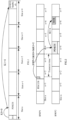
- a case where the BWP switching occurs on a carrier not used to transmit a PUCCH is illustrated by way a specific example below, see a first example.
- a Component Carrier (CC) 1 is used to transmit a PUCCH
- an activated BWP is BWP1
- CC2 is a Secondary Component Carrier (SCC) not used to transmit a PUCCH.
- SCC Secondary Component Carrier
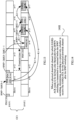
- the base station may continuously count multiple PDSCHs through a Counter DAI (C-DAI) in the DCI used by each PDCCH, and use a Total DAI (T-DAI) to give the total number of HARQ-ACK bits transmitted in a slot n+6, thereby realizing that the HARQ-ACKs for the PDSCHs before the DL BWP switching and after the DL BWP switching on the CC2 are multiplexed in the same PUCCH for transmission, and a resource for the PUCCH is indicated by a HARQ-ACK resource indication
- the HARQ-ACKs for the PDSCH1, the PDSCH2, and the PDSCH3 may also be transmitted in different slots on the BWP1 of the CC1, this is equivalent to determining time-domain locations according to values of K1 in PDCCHs scheduling the PDSCH1, the PDSCH2 and the PDSCH3, respectively, and determining PUCCH resources in corresponding slots according to indication of HARQ-ACK resource indicator fields, and performing transmission separately. If the UL BWP switching is performed on the CC2, then transmission, on the BWP1 of the CC1, of the HARQ-ACK feedback for downlink transmission is also not affected.
- a detailed case for the FDD performed for UL switching or DL switching on the carrier not used to transmit a PUCCH is similar to that for TDD, as shown in FIG.s 6 and 7 , and a specific process thereof will not be repeated.
- the FDD when the DL switching occurs on a carrier used to transmit a PUCCH, since an UL BWP used to transmit the PUCCH has not been changed, a resource indication before and after the switching is not affected, and a HARQ-ACK feedback for downlink transmission before the switching may also be transmitted after the switching.
- the following describes a case where the BWP switching occurs on the carrier used to transmit a PUCCH.
- the step of determining, according to the preset rule, whether to transmit the HARQ-ACK for the physical downlink channel after the BWP switching includes: when the BWP switching occurs on the carrier used to transmit a PUCCH, or when the BWP switching occurs on the carrier used to transmit a PUCCH and the BWP switching is UL BWP switching in case of FDD or when the BWP switching occurs on the carrier used to transmit a PUCCH and is time division duplex (TDD), performing following: not transmitting the HARQ-ACK for the physical downlink channel through a PUCCH after the BWP switching, or not transmitting the HARQ-ACK for the physical downlink channel through a PUCCH alone after the BWP switching, or after the BWP switching, transmitting the HARQ-ACK for the physical downlink channel on an uplink channel determined according to a PDCCH indicating the BWP switching, or according to a PDCCH transmitted after the BWP switching is completed, or according to
- a transmission situation of the HARQ-ACK for the physical downlink channel after the BWP switching may include the following types: the HARQ-ACK for the physical downlink channel is not transmitted through the PUCCH after the BWP switching; or the HARQ-ACK for the physical downlink channel is not transmitted through the PUCCH alone after the BWP switching; or after the BWP switching, an uplink channel is determined according to the PDCCH indicating the BWP switching, or according to the PDCCH transmitted after the BWP switching is completed, or according to a PDCCH transmitted after a point of the BWP switching, the HARQ-ACK for the physical downlink channel may be transmitted on the determined uplink channel
- the uplink channel determined according to the PDCCH indicating the BWP switching, or according to the PDCCH transmitted after the BWP switching is completed, or according to the PDCCH transmitted after the point of the BWP switching includes: a PUCCH determined according to a HARQ-ACK resource indicator field in the PDCCH indicating the BWP switching, or a PUCCH determined according to the HARQ-ACK resource indicator field in the PDCCH transmitted after the BWP switching is completed, or a PUCCH determined by the HARQ-ACK resource indicator field in the PDCCH transmitted after the point of the BWP switching; or, a PUSCH scheduled by the PDCCH indicating the BWP switching, or a PUSCH scheduled by the PDCCH transmitted after the BWP switching is completed, or a PUSCH scheduled by the PDCCH transmitted after the point of the BWP switching.
- the HARQ-ACK for the physical downlink channel may be transmitted on the determined uplink channel after the BWP switching is completed, and the determined uplink channel here may be a PUCCH or a PUSCH.
- the PUCCH may be determined according to the HARQ-ACK resource indicator field in the PDCCH indicating the BWP switching, or may also be determined according to the HARQ-ACK resource indicator field in the PDCCH transmitted after the BWP switching is completed, or may also be determined according to the HARQ-ACK resource indicator field in PDCCH transmitted after the point of the BWP switching.
- a PUSCH scheduled by the PDCCH indicating the BWP switching may be used as the PUSCH for transmitting the HARQ-ACK for the physical downlink channel
- a PUSCH scheduled by the PDCCH transmitted after the BWP switching is completed may also be used as the PUSCH for transmitting the HARQ-ACK for the physical downlink channel
- the PUSCH scheduled by the PDCCH transmitted after the point of the BWP switching may also be used as the PUSCH for transmitting the HARQ-ACK for the physical downlink channel.
- a start symbol of a PUCCH resource corresponding to the HARQ-ACK is ahead of a start symbol of the PUSCH or is aligned with a start symbol of the PUSCH.
- the BWP switching includes downlink (DL) BWP switching and/or uplink (UL) BWP switching.
- DL downlink
- UL uplink
- the BWP switching includes: UL BWP switching and DL BWP switching triggered by a timer or triggered by a PDCCH carrying an uplink grant (UL grant) or a downlink grant (DL grant); or, in case of frequency division duplex (FDD), the BWP switching includes: DL BWP switching triggered by a timer or DL BWP switching triggered by a PDCCH carrying a DL grant and/or UL BWP switching triggered by a PDCCH carrying a UL grant.
- TDD time division duplex
- FDD frequency division duplex
- the BWP switching includes: UL/DL BWP switching triggered by a timer or a PDCCH, wherein the UL BWP switching and the DL BWP switching in case of TDD are performed simultaneously.
- the BWP switching includes: DL BWP switching and/or UL BWP switching triggered by a timer or a PDCCH indication, where the DL BWP switching may be triggered by a timer or a PDCCH carrying a DL grant, and the UL BWP switching may be triggered by a PDCCH carrying a UL grant.
- the method includes: in case of TDD, transmitting the HARQ-ACK using a dynamic HARQ-ACK codebook; or, in case of FDD, when the DL BWP switching is performed, transmitting the HARQ-ACK using a dynamic HARQ-ACK codebook; or, in case of FDD, when the UL BWP switching is performed, transmitting the HARQ-ACK using a dynamic HARQ-ACK codebook or a semi-static HARQ-ACK codebook.
- the HARQ-ACK When transmitting the HARQ-ACK for the physical downlink channel, for TDD and when the DL BWP switching occurs, the HARQ-ACK is transmitted using the dynamic HARQ-ACK codebook; in case of FDD, the DL BWP switching and the UL BWP switching have different corresponding transmissions, that is, when the DL BWP switching occurs, HARQ-ACK is transmitted using a dynamic HARQ-ACK codebook; when the UL BWP switching occurs, HARQ-ACK may be transmitted using the dynamic HARQ-ACK codebook or semi-static HARQ-ACK codebook.
- a HARQ-ACK for a physical downlink channel is not transmitted through a PUCCH on a UL BWP after the switching; or the HARQ-ACK for the physical downlink channel is not transmitted through a PUCCH alone on a UL BWP after the switching; or the HARQ-ACK for the physical downlink channel is transmitted, on the UL BWP after the switching, on a PUCCH determined according to a HARQ-ACK resource indicator field in a PDCCH transmitted after the BWP switching is completed, or on a PUCCH determined according to a HARQ-ACK resource indicator field in a PDCCH transmitted after a point of the BWP switching.
- the HARQ-ACK for the physical downlink channel and the HARQ-ACK corresponding to the PDCCH transmitted after the BWP switching is completed or the HARQ-ACK corresponding to the PDCCH transmitted after a UL BWP switching point are multiplexed on the same PUCCH for transmission.
- the HARQ-ACK corresponding to the PDCCH transmitted after the BWP switching is completed or the HARQ-ACK corresponding to the PDCCH transmitted after the UL BWP switching point includes: a HARQ-ACK of a PDCCH when the PDCCH is a PDCCH indicating a release of a downlink SPS resource, a HARQ-ACK of a PDSCH when the PDCCH is used to schedule transmission of the PDSCH.
- the switching point is a time point at which the UL BWP switching is determined to be performed, for example, an end position of an UL grant indicating the BWP switching is used as the switching point, or a time point at which a timer expires is used as the switching point.
- HARQ-ACK is transmitted using a dynamic HARQ-ACK codebook; in case of FDD, HARQ-ACK may be transmitted using a dynamic HARQ-ACK codebook or a semi-static HARQ-ACK codebook.
- the PUCCH cannot be transmitted during transient time corresponding to the switching, that is, is transmitted after the transient time.
- the UL BWP switching may be triggered by a PDCCH carrying UL grant or triggered by a timer.
- the UL/DL BWP switching may be triggered by a timer or a PDCCH carrying a UL grant.
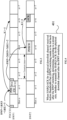
- the first case in which the BWP switching occurs on a carrier used to transmit a PUCCH is described by way of specific examples, see a second example and a third example.
- CC1 is a CC transmitting a PUCCH
- an original activated BWP is BWP1
- a base station sends PDCCH2 in a slot n+2 to schedule the terminal to receive a PUSCH on BWP2, that is, the PDCCH2 is an UL grant indicating the UL /DL BWP switching.
- the PDCCH2 is an UL grant indicating the UL /DL BWP switching.
- a time-domain position of the HARQ-ACK feedback is determined according to a K1 value indicated in the PDCCH1 scheduling the PDSCH.
- the terminal may only acquire a PUCCH resource according to the ARI field in the PDCCH1 scheduling the PDSCH1, but the ARI field actually indicates a PUCCH resource on the BWP1 before the switching, instead of a PUCCH resource on the BWP2 after the switching.
- the base station may count multiple PDSCHs continuously through a C-DAI in the DCI used by the PDCCH1 and the PDCCH3, and give the total number of HARQ-ACK bits in the slot n+7 through a T-DAI, so that the HARQ-ACK for the PDSCH before the BWP switching and the HARQ-ACK for the PDSCH after the BWP switching are multiplexed in the same PUCCH for transmission.
- a PUCCH resource is indicated by the ARI field in the last PDCCH. Because the PDCCH3 occurs after the switching, the ARI field in the PDCCH3 indicates a PUCCH resource on the UL BWP2 after the switching, and there is no conflict with PUCCH resources of other terminals on the UL BWP2.
- CC1 is a CC transmitting a PUCCH, wherein an original activated UL BWP is BWP1, and an original activated DL BWP is also BWP1.
- the base station sends a PDCCH2 to schedule the terminal to receive a PUSCH in UL BWP2, i.e., the PDCCH2 is a UL grant indicating a UL BWP switching.
- a time-domain position of the HARQ-ACK is determined according to a value of K1 indicated in the PDCCH1 scheduling the PDSCH.
- the terminal may only acquire a PUCCH resource according to the ARI field in the PDCCH1 scheduling the PDSCH1, but the ARI field actually indicates a PUCCH resource on the UL BWP1 before the switching, instead of a PUCCH resource on the UL BWP2 after the switching.
- the base station may count multiple PDSCHs continuously through a C-DAI in the DCI used by the PDCCH1 and the PDCCH3, and give the total number of HARQ-ACK bits in the slot n+7 through a T-DAI, so that the HARQ-ACK for the PDSCH before the UL BWP switching and the HARQ-ACK for the PDSCH after the UL BWP switching are multiplexed in the same PUCCH for transmission.
- a PUCCH resource is indicated by the ARI field in the last PDCCH.
- the ARI field in the PDCCH3 indicates a PUCCH resource on the UL BWP2 after the switching, and there is no conflict with PUCCH resources of other terminals on the UL BWP2.
- a HARQ-ACK for a physical downlink channel is not transmitted through a PUCCH on a UL BWP after the switching; or the HARQ-ACK for the physical downlink channel is not transmitted through a PUCCH alone on a UL BWP after the switching; or the HARQ-ACK for the physical downlink channel is transmitted on a PUSCH on the UL BWP after the switching.
- the PUSCH is specifically a PUSCH scheduled by a PDCCH indicating the UL BWP switching, or a PUSCH scheduled by a PDCCH transmitted after the PDCCH indicating the UL BWP switching.
- the PUSCH is not transmitted during transient time corresponding to the switching, that is, is transmitted after the transient time.
- HARQ-ACK is transmitted using a dynamic HARQ-ACK codebook; in case of FDD, HARQ-ACK may be transmitted using a dynamic HARQ-ACK codebook or a semi-static HARQ-ACK codebook.
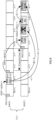
- a second case in which the BWP switching occurs on a carrier used to transmit a PUCCH is described by way of specific examples, see a fourth example and a fifth example.
- the feedback is determined to be performed in a slot n+4 after the switching.
- a PUSCH transmission scheduled by a PDCCH indicating the switching exists in this slot. Therefore, the HARQ-ACK for the PDSCH1 before the switching may be transmitted in a PUSCH in a slot n+4 on a UL BWP after the switching. Since a resource of the PUSCH is scheduled by the PDCCH indicating the UL BWP switching, the scheduled uplink resource is for the UL BWP after the switching. Therefore, there is no resource conflict.
- the feedback is determined to be performed in a slot n+6 after the switching.
- a PUSCH transmission scheduled by a PDCCH transmitted after the switching is completed exists in this slot. Therefore, the HARQ-ACK for the PDSCH1 before the switching may be transmitted in a PUSCH in a slot n+6 on a UL BWP after the switching. Since a resource of the PUSCH is scheduled by a PDCCH after the UL BWP switching, the scheduled uplink resource is for the UL BWP after the switching. Therefore, there is no resource conflict.
- CC1 is a CC transmitting a PUCCH
- an original activated BWP is BWP1.
- the base station sends a PDCCH2 to schedule the terminal to receive a PDSCH in BWP2, i.e., the PDCCH2 is a DL grant indicating a UL/DL BWP switching.
- the PDCCH2 is a DL grant indicating a UL/DL BWP switching.
- the K1 value corresponding to the PDSCH1 before the UL BWP switching a performing process of this case is the same as above, which is not repeated herein.
- a HARQ-ACK for a physical downlink channel is not transmitted through a PUCCH on a UL BWP after the switching; or the HARQ-ACK for the physical downlink channel is not transmitted through a PUCCH alone on a UL BWP after the switching; or the HARQ-ACK for the physical downlink channel is transmitted, on the UL BWP after the switching, on a PUCCH determined according to a HARQ-ACK resource indicator field in a PDCCH transmitted after the BWP switching is completed, or on a PUCCH determined according to a HARQ-ACK resource indicator field in a PDCCH transmitted after a point of the BWP switching.
- the HARQ-ACK for the physical downlink channel and the HARQ-ACK corresponding to the PDCCH transmitted after the BWP switching is completed or the HARQ-ACK corresponding to the PDCCH transmitted after a UL BWP switching point are multiplexed on the same PUCCH for transmission.
- the HARQ-ACK corresponding to the PDCCH transmitted after the BWP switching is completed or the HARQ-ACK corresponding to the PDCCH transmitted after the UL BWP switching point includes: a HARQ-ACK of a PDCCH when the PDCCH is a PDCCH indicating a release of a downlink SPS resource, a HARQ-ACK of a PDSCH when the PDCCH is used to schedule transmission of the PDSCH.
- the switching point is a time point at which the UL BWP switching is determined to be performed, for example, an end position of an UL grant indicating the BWP switching is used as the switching point, or a time point at which a timer expires is used as the switching point.
- HARQ-ACK is transmitted using a dynamic HARQ-ACK codebook.
- the PUCCH cannot be transmitted during transient time corresponding to the switching, that is, is transmitted after the transient time.
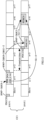
- the third case in which the BWP switching occurs on a carrier used to transmit a PUCCH is described by way of a specific example, see a sixth example.
- a base station sends PDCCH2 in a slot n+2 to schedule the terminal to receive a PDSCH on BWP2, that is, the PDCCH2 is a DL grant indicating a UL /DL BWP switching.
- the PDCCH2 is a DL grant indicating a UL /DL BWP switching.
- a time-domain position of the HARQ-ACK feedback is determined according to a K1 value indicated in the PDCCH1 scheduling the PDSCH1.
- the base station may count multiple PDSCHs continuously through a C-DAI in the DCI used by the PDCCH1 and the PDCCH2, and give the total number of HARQ-ACK bits in the slot n+ 5 through a T-DAI, so that the HARQ-ACK for a PDSCH before the BWP switching and the HARQ-ACK for a PDSCH after the BWP switching are multiplexed in the same PUCCH for transmission.
- a PUCCH resource is indicated by the ARI field in the last PDCCH. Because the PDCCH2 is used to indicate switching, the ARI field in the PDCCH2 indicates a PUCCH resource on the UL BWP2 after the switching, and there is no conflict with PUCCH resources of other terminals on the UL BWP2.
- the base station may count multiple PDSCHs continuously through a C-DAI in the DCI used by the PDCCH1 and the PDCCH3, and give the total number of HARQ-ACK bits in the slot n+7 through a T-DAI, so that the HARQ-ACK for the PDSCH before the BWP switching and the HARQ-ACK for the PDSCH after the BWP switching are multiplexed in the same PUCCH for transmission.
- a PUCCH resource is indicated by the ARI field in the last PDCCH. Because the PDCCH3 occurs after the switching, the ARI field in the PDCCH3 indicates a PUCCH resource on the UL BWP2 after the switching, and there is no conflict with PUCCH resources of other terminals on the UL BWP2.
- the terminal may determine, according to a preset rule, whether a HARQ-ACK for a physical downlink channel may be transmitted after BWP switching, when the HARQ-ACK for the physical downlink channel received before the BWP switching needs to be fed back after the BWP switching.
- the terminal may determine, according to a configured condition, a condition of HARQ-ACK transmission for the physical downlink channel after the BWP switching, and may ensure a normal feedback of the HARQ-ACK for the physical downlink channel during the BWP switching, and improve a system efficiency.
- the above provides an introduction of a method of transmitting a HARQ-ACK message at a terminal side.
- the following provides an introduction of a method of receiving a HARQ-ACK message at a base station side.
- Some embodiments of the present disclosure also provide a method of receiving a Hybrid Automatic Repeat reQuest ACKnowledge (HARQ-ACK) message. As shown in FIG. 14 , the method includes a step 1401.
- HARQ-ACK Hybrid Automatic Repeat reQuest ACKnowledge
- Step 1401 if a physical downlink channel for which a HARQ-ACK needs to be fed back after Bandwidth Part (BWP) switching is transmitted to a terminal before the BWP switching, then determining, according to a preset rule, whether to receive the HARQ-ACK for the physical downlink channel after the BWP switching.
- BWP Bandwidth Part
- the terminal After the base station transmits, to a terminal before BWP switching, a physical downlink channel for which HARQ-ACK needs to be fed back after the BWP switching, the terminal determines, according a preset rule after the terminal receives the physical downlink channel and after the BWP switching, whether the HARQ-ACK for the physical downlink channel may be transmitted after the BWP switching. In a case that the physical downlink channel may be transmitted, the base station receives, according to a preset rule, the HARQ-ACK for the physical downlink channel transmitted after the BWP switching.
- the above method ensures normal feedback of the HARQ-ACK for the physical downlink channel during BWP switching, and improves system efficiency.
- the physical downlink channel includes: a physical downlink shared channel (PDSCH), or a physical downlink control channel (PDCCH) indicating release of a downlink semi-persistent scheduling (SPS) resource.
- PDSCH physical downlink shared channel
- PDCCH physical downlink control channel
- a PDSCH needing a HARQ-ACK feedback after the BWP switching is received before the BWP switching, it may be determined, according to the preset rule, whether a HARQ-ACK for the PDSCH may be transmitted after the BWP switching; if the PDCCH indicating the release of the downlink SPS resource and needing a HARQ-ACK feedback after the BWP switching is received before the BWP switching, it may be determined, according to a preset rule, whether the HARQ-ACK for the PDCCH may be transmitted after the BWP switching.
- the step of determining, according to the preset rule, whether to receive the HARQ-ACK for the physical downlink channel after the BWP switching includes: in a case that the BWP switching occurs on a carrier not used to transmit a physical uplink control channel (PUCCH), receiving the HARQ-ACK for the physical downlink channel after the BWP switching; and/or, in case of frequency division duplex (FDD), in a case that the BWP switching is DL BWP switching, receiving the HARQ-ACK for the physical downlink channel after the BWP switching.
- PUCCH physical uplink control channel
- FDD frequency division duplex
- Whether the BWP switching occurs on the carrier used to transmit a Physical Uplink Control Channel (PUCCH) may be detected first, if the BWP switching occurs on a carrier not used to transmit a PUCCH, then the HARQ-ACK for the physical downlink channel may be received after the BWP switching.
- PUCCH Physical Uplink Control Channel
- Another case is that, in case of FDD, when the BWP switching is the DL BWP switching, the HARQ-ACK for the physical downlink channel is received after the BWP switching; that is, for a FDD system, whether the DL BWP switching occurs on a carrier used to transmit a PUCCH or a carrier not used to transmit the PUCCH does not affect HARQ-ACK transmission.
- This is because, for the FDD, when there is only DL BWP switching, an UL BWP used to transmit the PUCCH is not changed. Therefore, whether an uplink channel transmission resource on the UL BWP is determined based on the PDCCH before the switching or the PDCCH after the switching, no conflict is generated.
- the step of receiving the HARQ-ACK for the physical downlink channel after the BWP switching includes: receiving the HARQ-ACK for the physical downlink channel through a PUCCH or a physical uplink shared channel (PUSCH) on a BWP on a carrier used to transmit the PUCCH.
- PUSCH physical uplink shared channel
- the reception may be performed on one BWP on the carrier used to transmit the PUCCH, specifically, the reception may be performed through the PUCCH or a PUSCH.
- the step of determining, according to the preset rule, whether to receive the HARQ-ACK for the physical downlink channel after the BWP switching includes: when the BWP switching occurs on the carrier used to transmit a PUCCH, or when the BWP switching occurs on the carrier used to transmit a PUCCH and the BWP switching is UL BWP switching in case of FDD or when the BWP switching occurs on the carrier used to transmit a PUCCH and is time division duplex (TDD), not receiving the HARQ-ACK for the physical downlink channel after the BWP switching, or not receiving the HARQ-ACK for the physical downlink channel through a PUCCH alone after the BWP switching, or after the BWP switching, receiving the HARQ-ACK for the physical downlink channel on an uplink channel determined according to a PDCCH indicating the BWP switching, or according to a PDCCH transmitted after the BWP switching is completed, or according to a PDCCH transmitted after a point of the
- a reception situation of the HARQ-ACK for the physical downlink channel after the BWP switching may include the following types: the HARQ-ACK for the physical downlink channel is not received through the PUCCH after the BWP switching; or the HARQ-ACK for the physical downlink channel is not received through the PUCCH alone after the BWP switching; or after the BWP switching, an uplink channel is determined according to the PDCCH indicating the BWP switching, or according to the PDCCH transmitted after the BWP switching is completed, or according to a PDCCH transmitted after a point of the BWP switching, the HARQ-ACK for the physical downlink channel is received on the determined uplink channel.
- the uplink channel determined according to the PDCCH indicating the BWP switching, or according to the PDCCH transmitted after the BWP switching is completed, or according to the PDCCH transmitted after the point of the BWP switching includes: a PUCCH determined according to a HARQ-ACK resource indicator field in the PDCCH indicating the BWP switching, or a PUCCH determined according to the HARQ-ACK resource indicator field in the PDCCH transmitted after the BWP switching is completed, or a PUCCH determined by the HARQ-ACK resource indicator field in the PDCCH transmitted after the point of the BWP switching; or, a PUSCH scheduled by the PDCCH indicating the BWP switching, or a PUSCH scheduled by the PDCCH transmitted after the BWP switching is completed, or a PUSCH scheduled by the PDCCH transmitted after the point of the BWP switching.
- the HARQ-ACK for the physical downlink channel may be received on the determined uplink channel after the BWP switching, and the determined uplink channel here may be a PUCCH or a PUSCH.
- the PUCCH may be determined according to the HARQ-ACK resource indicator field in the PDCCH indicating the BWP switching, or may also be determined according to the HARQ-ACK resource indicator field in the PDCCH transmitted after the BWP switching is completed, or may also be determined according to the HARQ-ACK resource indicator field in PDCCH transmitted after the point of the BWP switching.
- a PUSCH scheduled by the PDCCH indicating the BWP switching may be used as the PUSCH for transmitting the HARQ-ACK for the physical downlink channel
- a PUSCH scheduled by the PDCCH transmitted after the BWP switching is completed may also be used as the PUSCH for transmitting the HARQ-ACK for the physical downlink channel
- the PUSCH scheduled by the PDCCH transmitted after the point of the BWP switching may also be used as the PUSCH for transmitting the HARQ-ACK for the physical downlink channel.
- a start symbol of a PUCCH resource corresponding to the HARQ-ACK is ahead of a start symbol of the PUSCH or is aligned with a start symbol of the PUSCH.
- the BWP switching includes downlink (DL) BWP switching and/or uplink (UL) BWP switching.
- DL downlink
- UL uplink
- the BWP switching includes: UL BWP switching and DL BWP switching triggered by a timer or triggered by a PDCCH carrying an uplink grant (UL grant) or a downlink grant (DL grant); or, in case of frequency division duplex (FDD), the BWP switching includes: DL BWP switching triggered by a timer or DL BWP switching triggered by a PDCCH carrying a DL grant and/or UL BWP switching triggered by a PDCCH carrying a UL grant.
- TDD time division duplex
- FDD frequency division duplex
- the BWP switching includes: UL/DL BWP switching triggered by a timer or a PDCCH, wherein the UL BWP switching and the DL BWP switching in case of TDD are performed simultaneously.
- the BWP switching includes: DL BWP switching and/or UL BWP switching triggered by a timer or a PDCCH indication, where the DL BWP switching may be triggered by a timer or a PDCCH carrying a DL grant, and the UL BWP switching may be triggered by a PDCCH carrying a UL grant.
- the method includes: in case of TDD, transmitting the HARQ-ACK using a dynamic HARQ-ACK codebook; or, in case of FDD, when the DL BWP switching is performed, transmitting the HARQ-ACK using a dynamic HARQ-ACK codebook; or, in case of FDD, when the UL BWP switching is performed, transmitting the HARQ-ACK using a dynamic HARQ-ACK codebook or a semi-static HARQ-ACK codebook.
- the HARQ-ACK When transmitting the HARQ-ACK for the physical downlink channel, in case of TDD and when the DL BWP switching occurs, the HARQ-ACK is transmitted using the dynamic HARQ-ACK codebook; in case of FDD, the DL BWP switching and the UL BWP switching have different corresponding transmissions, that is, when the DL BWP switching occurs, HARQ-ACK is transmitted using a dynamic HARQ-ACK codebook; when the UL BWP switching occurs, HARQ-ACK may be transmitted using the dynamic HARQ-ACK codebook or semi-static HARQ-ACK codebook.
- the base station may receive the HARQ-ACK for the physical downlink channel after the terminal determines according a preset rule the HARQ-ACK for the physical downlink channel may be transmitted after the BWP switching. Transmission of the HARQ-ACK for the physical downlink channel may be implemented, thereby ensuring a normal feedback of the HARQ-ACK for the physical downlink channel during the BWP switching, and improving a system efficiency.
- a base station generally refers to a base station.
- a form of the base station is not limited, and may be a macro base station (Macro Base Station), a micro base station (Pico Base Station), Node B (a name of a 3G mobile base station), and an enhanced base station (eNB) , a Home enhanced base station (Femto eNB or Home eNode B or Home eNB or HeNB), a relay station, an access point, a RRU (Remote Radio Unit), a RRH (Remote Radio Head), a network side node in the 5G mobile communication system, such as a central unit (CU, Central Unit) and a distributed unit (DU, Distributed Unit), etc.
- CU Central Unit
- DU Distributed Unit
- the terminal may be a mobile phone (or cell phone), or other devices capable of sending or receiving wireless signals, including a user equipment (UE), a personal digital assistants (PDA), a wireless modem, a wireless communication device, a handheld device, a laptop computer, a cordless phone, a wireless local loop (WLL) station, a CPE (Customer Premise Equipment) that may convert a mobile signal into a WiFi signal, or a mobile smart hotspot, a smart home appliance, or other devices that may be spontaneous, without human operation, to communicate with mobile communication networks, etc.
- UE user equipment
- PDA personal digital assistants
- WLL wireless local loop
- CPE Customer Premise Equipment
- some embodiments of the present disclosure also provide a device for implementing the above methods.
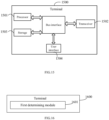
- FIG. 15 is a structural schematic diagram of a terminal provided by some embodiments of the present disclosure.
- the terminal 1500 includes: a processor 1501, a transceiver 1502, a storage 1503, a user interface 1504, and a bus interface.
- the terminal 1500 further includes: a computer program stored in the storage 1503 and executable on the processor 1501.
- the processor 1501 is used to read a program in the storage 1503, and execute the following processes: when a HARQ-ACK for a physical downlink channel received before Bandwidth Part (BWP) switching needs to be fed back after the BWP switching, determining, according to a preset rule, whether to transmit the HARQ-ACK for the physical downlink channel after the BWP switching.
- BWP Bandwidth Part
- a bus architecture may include any number of interconnected buses and bridges. Various circuits, specifically, one or more processors represented by the processor 1501 and a storage represented by the storage 1503, are linked together. The bus architecture may also link various other circuits such as peripherals, voltage regulators and power management circuits, which are well known in the art, and therefore a further description thereof is omitted herein.
- the bus interface provides interfaces.
- the transceiver 1502 may be a plurality of elements, that is, includes a transmitter and a receiver, to provide units used to communicate with various other apparatuses over a transmission medium.
- the user interface 1504 can also be an interface capable of externally/internally connecting the required devices which including but not limited to a keypad, a display, a speaker, a microphone, a joystick, and the like.
- the processor 1501 is responsible for managing the bus architecture and general processing, and the storage 1503 can store data used by the processor 1501 when performing operations.
- the physical downlink channel includes: a physical downlink shared channel (PDSCH), or a physical downlink control channel (PDCCH) indicating release of a downlink semi-persistent scheduling (SPS) resource.
- PDSCH physical downlink shared channel
- PDCCH physical downlink control channel
- the processor 1501 is further configured to perform the following steps: in a case that the BWP switching occurs on a carrier not used to transmit a physical uplink control channel (PUCCH), transmitting the HARQ-ACK for the physical downlink channel after the BWP switching through the transceiver 1502; and/or, in case of frequency division duplex (FDD), in a case that the BWP switching is DL BWP switching, transmitting the HARQ-ACK for the physical downlink channel after the BWP switching.
- PUCCH physical uplink control channel
- FDD frequency division duplex
- the transceiver 1502 is further configured to perform the following step: transmitting the HARQ-ACK for the physical downlink channel through a PUCCH or a physical uplink shared channel (PUSCH) on a BWP on a carrier used to transmit the PUCCH.
- PUSCH physical uplink shared channel
- the processor 1501 is configured to execute the following steps: when the BWP switching occurs on the carrier used to transmit a PUCCH, or when the BWP switching occurs on the carrier used to transmit a PUCCH and the BWP switching is UL BWP switching in case of FDD or when the BWP switching occurs on the carrier used to transmit a PUCCH and is time division duplex (TDD), performing the following by controlling the transceiver 1502: not transmitting the HARQ-ACK for the physical downlink channel through a PUCCH after the BWP switching, or not transmitting the HARQ-ACK for the physical downlink channel through a PUCCH alone after the BWP switching, or after the BWP switching, transmitting the HARQ-ACK for the physical downlink channel on an uplink channel determined according to a PDCCH indicating the BWP switching, or according to a PDCCH transmitted after the BWP switching is completed, or according to a PDCCH transmitted after a point of the BWP switching.
- TDD time
- the uplink channel determined according to the PDCCH indicating the BWP switching, or according to the PDCCH transmitted after the BWP switching is completed, or according to the PDCCH transmitted after the point of the BWP switching includes: a PUCCH determined according to a HARQ-ACK resource indicator field in the PDCCH indicating the BWP switching, or a PUCCH determined according to the HARQ-ACK resource indicator field in the PDCCH transmitted after the BWP switching is completed, or a PUCCH determined by the HARQ-ACK resource indicator field in the PDCCH transmitted after the point of the BWP switching; or, a PUSCH scheduled by the PDCCH indicating the BWP switching, or a PUSCH scheduled by the PDCCH transmitted after the BWP switching is completed, or a PUSCH scheduled by the PDCCH transmitted after the point of the BWP switching.
- the BWP switching includes downlink (DL) BWP switching and/or uplink (UL) BWP switching.
- DL downlink
- UL uplink
- the BWP switching includes: UL BWP switching and DL BWP switching triggered by a timer or triggered by a PDCCH carrying an uplink grant (UL grant) or a downlink grant (DL grant); or, in case of frequency division duplex (FDD), the BWP switching includes: DL BWP switching triggered by a timer or DL BWP switching triggered by a PDCCH carrying a DL grant and/or UL BWP switching triggered by a PDCCH carrying a UL grant.
- TDD time division duplex
- FDD frequency division duplex
- the transceiver when the transceiver transmits HARQ-ACK for the physical downlink channel after the BWP switching, in case of TDD, the transceiver transmits the HARQ-ACK using a dynamic HARQ-ACK codebook; or, in case of FDD, when the DL BWP switching is performed, transmits the HARQ-ACK using a dynamic HARQ-ACK codebook; or, in case of FDD, when the UL BWP switching is performed, transmits the HARQ-ACK using a dynamic HARQ-ACK codebook or a semi-static HARQ-ACK codebook.
- a computer-readable storage medium not covered by the claims of the present disclosure on which a computer program is stored, and when the program is executed by a processor, the processor implements the following steps: when a HARQ-ACK for a physical downlink channel received before Bandwidth Part (BWP) switching needs to be fed back after a BWP switching, determining, according to a preset rule, whether to transmit the HARQ-ACK for the physical downlink channel after the BWP switching.
- BWP Bandwidth Part
- the computer-readable storage medium in the present disclosure may be a transitory computer-readable storage medium, a non-transitory computer-readable storage medium, or a transitory computer-readable storage medium and a non- transitory computer-readable storage medium.
- the terminal includes a first determining module 1601.
- the first determining module is configured to: when a HARQ-ACK for a physical downlink channel received before Bandwidth Part (BWP) switching needs to be fed back after the BWP switching, determine, according to a preset rule, whether to transmit the HARQ-ACK for the physical downlink channel after the BWP switching.
- BWP Bandwidth Part
- the physical downlink channel includes: a physical downlink shared channel (PDSCH), or a physical downlink control channel (PDCCH) indicating release of a downlink semi-persistent scheduling (SPS) resource.
- PDSCH physical downlink shared channel
- PDCCH physical downlink control channel
- the first determining module includes a first transmitting sub-module and/or a second transmitting sub-module.
- the first transmitting sub-module is configured to: in a case that the BWP switching occurs on a carrier not used to transmit a physical uplink control channel (PUCCH), transmit the HARQ-ACK for the physical downlink channel after the BWP switching.
- PUCCH physical uplink control channel
- the second transmitting sub-module is configured to: in case of frequency division duplex (FDD), in a case that the BWP switching is DL BWP switching, transmit the HARQ-ACK for the physical downlink channel after the BWP switching.
- FDD frequency division duplex
- the first transmitting sub-module is further configured to: transmit the HARQ-ACK for the physical downlink channel through a PUCCH or a physical uplink shared channel (PUSCH) on a BWP on a carrier used to transmit the PUCCH.
- PUSCH physical uplink shared channel
- the first determining module is further configured to: when the BWP switching occurs on the carrier used to transmit a PUCCH, or when the BWP switching occurs on the carrier used to transmit a PUCCH and the BWP switching is UL BWP switching in case of FDD or when the BWP switching occurs on the carrier used to transmit a PUCCH and is time division duplex (TDD), not transmitting the HARQ-ACK for the physical downlink channel through a PUCCH after the BWP switching, or not transmitting the HARQ-ACK for the physical downlink channel through a PUCCH alone after the BWP switching, or after the BWP switching, transmitting the HARQ-ACK for the physical downlink channel on an uplink channel determined according to a PDCCH indicating the BWP switching, or according to a PDCCH transmitted after the BWP switching is completed, or according to a PDCCH transmitted after a point of the BWP switching.
- TDD time division duplex
- the uplink channel determined according to the PDCCH indicating the BWP switching, or according to the PDCCH transmitted after the BWP switching is completed, or according to the PDCCH transmitted after the point of the BWP switching includes: a PUCCH determined according to a HARQ-ACK resource indicator field in the PDCCH indicating the BWP switching, or a PUCCH determined according to the HARQ-ACK resource indicator field in the PDCCH transmitted after the BWP switching is completed, or a PUCCH determined by the HARQ-ACK resource indicator field in the PDCCH transmitted after the point of the BWP switching; or, a PUSCH scheduled by the PDCCH indicating the BWP switching, or a PUSCH scheduled by the PDCCH transmitted after the BWP switching is completed, or a PUSCH scheduled by the PDCCH transmitted after the point of the BWP switching.
- the BWP switching includes downlink (DL) BWP switching and/or uplink (UL) BWP switching.
- DL downlink
- UL uplink
- the BWP switching includes: UL BWP switching and DL BWP switching triggered by a timer or triggered by a PDCCH carrying an uplink grant (UL grant) or a downlink grant (DL grant); or, in case of frequency division duplex (FDD), the BWP switching includes: DL BWP switching triggered by a timer or DL BWP switching triggered by a PDCCH carrying a DL grant and/or UL BWP switching triggered by a PDCCH carrying a UL grant.
- TDD time division duplex
- FDD frequency division duplex
- the HARQ-ACK for the physical downlink channel is transmitted after the BWP switching, in case of TDD, the HARQ-ACK is transmitted using a dynamic HARQ-ACK codebook; or, in case of FDD, when the DL BWP switching is performed, the HARQ-ACK is transmitted using a dynamic HARQ-ACK codebook; or, in case of FDD, when the UL BWP switching is performed, the HARQ-ACK is transmitted using a dynamic HARQ-ACK codebook or a semi-static HARQ-ACK codebook.
- the terminal when a HARQ-ACK for a physical downlink channel received before Bandwidth Part (BWP) switching needs to be fed back after the BWP switching, the terminal determines, according to a preset rule, whether the HARQ-ACK for the physical downlink channel is transmitted after BWP switching.
- the terminal may determine, according to a configured condition, a condition of HARQ-ACK transmission for the physical downlink channel after the BWP switching, and may ensure a normal feedback of the HARQ-ACK for the physical downlink channel during the BWP switching, and improve a system efficiency.
- FIG. 17 is a structural schematic diagram of a base station provided by some embodiments of the present disclosure.
- the base station 1700 includes: a processor 1701, a transceiver 1702, a storage 1703, and a bus interface.
- the base station 1700 further includes: a computer program stored in the storage 1703 and executable on the processor 1701.
- the processor 1701 is configured to read a program in the storage 1703, and execute the following process: if a physical downlink channel for which a HARQ-ACK needs to be fed back after Bandwidth Part (BWP) switching is transmitted to a terminal before the BWP switching, determining, according to a preset rule, whether to receive the HARQ-ACK for the physical downlink channel after the BWP switching.
- BWP Bandwidth Part
- a bus architecture may include any number of interconnected buses and bridges. Various circuits, specifically, one or more processors represented by the processor 1701 and a storage represented by the storage 1703, are linked together. The bus architecture may also link various other circuits such as peripherals, voltage regulators and power management circuits, which are well known in the art, and therefore a further description thereof is omitted herein.
- the bus interface provides interfaces.
- the transceiver 1702 may be a plurality of elements, that is, includes a transmitter and a receiver, to provide units used to communicate with various other apparatuses over a transmission medium.
- the processor 1701 is responsible for managing the bus architecture and general processing, and the storage 1703 can store data used by the processor 1701 when performing operations.
- the physical downlink channel includes: a physical downlink shared channel (PDSCH), or a physical downlink control channel (PDCCH) indicating release of a downlink semi-persistent scheduling (SPS) resource.
- PDSCH physical downlink shared channel
- PDCCH physical downlink control channel
- the processor 1701 is further configured to perform following steps: in a case that the BWP switching occurs on a carrier not used to transmit a physical uplink control channel (PUCCH), receiving the HARQ-ACK for the physical downlink channel after the BWP switching through the transceiver 1702; and/or, in case of frequency division duplex (FDD), in a case that the BWP switching is DL BWP switching, receiving the HARQ-ACK for the physical downlink channel after the BWP switching.
- PUCCH physical uplink control channel
- FDD frequency division duplex
- the transceiver 1702 is further configured for: receiving the HARQ-ACK for the physical downlink channel through a PUCCH or a physical uplink shared channel (PUSCH) on a BWP on a carrier used to transmit the PUCCH.
- PUSCH physical uplink shared channel
- the processor 1701 is further configured to: when the BWP switching occurs on the carrier used to transmit a PUCCH, or when the BWP switching occurs on the carrier used to transmit a PUCCH and the BWP switching is UL BWP switching in case of FDD or when the BWP switching occurs on the carrier used to transmit a PUCCH and is time division duplex (TDD), control the transceiver 1702 to not receive the HARQ-ACK for the physical downlink channel after the BWP switching, or not receive the HARQ-ACK for the physical downlink channel through a PUCCH alone after the BWP switching, or after the BWP switching, receive the HARQ-ACK for the physical downlink channel on an uplink channel determined according to a PDCCH indicating the BWP switching, or according to a PDCCH transmitted after the BWP switching is completed, or according to a PDCCH transmitted after a point of the BWP switching.
- TDD time division duplex
- the uplink channel determined according to the PDCCH indicating the BWP switching, or according to the PDCCH transmitted after the BWP switching is completed, or according to the PDCCH transmitted after the point of the BWP switching includes: a PUCCH determined according to a HARQ-ACK resource indicator field in the PDCCH indicating the BWP switching, or a PUCCH determined according to the HARQ-ACK resource indicator field in the PDCCH transmitted after the BWP switching is completed, or a PUCCH determined by the HARQ-ACK resource indicator field in the PDCCH transmitted after the point of the BWP switching; or, a PUSCH scheduled by the PDCCH indicating the BWP switching, or a PUSCH scheduled by the PDCCH transmitted after the BWP switching is completed, or a PUSCH scheduled by the PDCCH transmitted after the point of the BWP switching.
- the BWP switching includes downlink (DL) BWP switching and/or uplink (UL) BWP switching.
- DL downlink
- UL uplink
- the BWP switching includes: UL BWP switching and DL BWP switching triggered by a timer or triggered by a PDCCH carrying an uplink grant (UL grant) or a downlink grant (DL grant); or, in case of frequency division duplex (FDD), the BWP switching includes: DL BWP switching triggered by a timer or DL BWP switching triggered by a PDCCH carrying a DL grant and/or UL BWP switching triggered by a PDCCH carrying a UL grant.
- TDD time division duplex
- FDD frequency division duplex
- the HARQ-ACK for the physical downlink channel is transmitted through the transceiver after the BWP switching
- the HARQ-ACK is transmitted using a dynamic HARQ-ACK codebook
- the HARQ-ACK is transmitted using a dynamic HARQ-ACK codebook
- the HARQ-ACK is transmitted using a dynamic HARQ-ACK codebook or a semi-static HARQ-ACK codebook.
- a computer-readable storage medium not covered by the claims of the present disclosure is also provided, on which a computer program is stored, and when the program is executed by a processor, the processor implements the following step: if a physical downlink channel for which a HARQ-ACK needs to be fed back after Bandwidth Part (BWP) switching is transmitted to a terminal before the BWP switching, determining, according to a preset rule, whether to receive the HARQ-ACK for the physical downlink channel after the BWP switching.
- BWP Bandwidth Part
- the computer-readable storage medium in the present disclosure may be a transitory computer-readable storage medium, a non-transitory computer-readable storage medium, or a transitory computer-readable storage medium and a non-transitory computer-readable storage medium.
- some embodiments of the present disclosure provide another structure of a base station 1800.
- the base station 1800 includes a second determining module 1801.
- the second determining module 1801 is configured to: if a physical downlink channel for which a HARQ-ACK needs to be fed back after Bandwidth Part (BWP) switching is transmitted to a terminal before the BWP switching, determine, according to a preset rule, whether to receive the HARQ-ACK for the physical downlink channel after the BWP switching.
- BWP Bandwidth Part
- the physical downlink channel includes: a physical downlink shared channel (PDSCH), or a physical downlink control channel (PDCCH) indicating release of a downlink semi-persistent scheduling (SPS) resource.
- PDSCH physical downlink shared channel
- PDCCH physical downlink control channel
- the second determining module includes a first receiving sub-module and/or a second receiving sub-module.
- the first receiving sub-module is configured to: in a case that the BWP switching occurs on a carrier not used to transmit a physical uplink control channel (PUCCH), receive the HARQ-ACK for the physical downlink channel after the BWP switching.
- the second receiving sub-module is configured to: in case of frequency division duplex (FDD), in a case that the BWP switching is DL BWP switching, receive the HARQ-ACK for the physical downlink channel after the BWP switching.
- FDD frequency division duplex
- the first receiving sub-module is further configured to: receive the HARQ-ACK for the physical downlink channel through a PUCCH or a physical uplink shared channel (PUSCH) on a BWP on a carrier used to transmit the PUCCH.
- PUSCH physical uplink shared channel
- the second determining module is further configured to: when the BWP switching occurs on the carrier used to transmit a PUCCH, or when the BWP switching occurs on the carrier used to transmit a PUCCH and the BWP switching is UL BWP switching in case of FDD or when the BWP switching occurs on the carrier used to transmit a PUCCH and is time division duplex (TDD), not receive the HARQ-ACK for the physical downlink channel after the BWP switching, or not receive the HARQ-ACK for the physical downlink channel through a PUCCH alone after the BWP switching, or after the BWP switching, receive the HARQ-ACK for the physical downlink channel on an uplink channel determined according to a PDCCH indicating the BWP switching, or according to a PDCCH transmitted after the BWP switching is completed, or according to a PDCCH transmitted after a point of the BWP switching.
- TDD time division duplex
- the uplink channel determined according to the PDCCH indicating the BWP switching, or according to the PDCCH transmitted after the BWP switching is completed, or according to the PDCCH transmitted after the point of the BWP switching includes: a PUCCH determined according to a HARQ-ACK resource indicator field in the PDCCH indicating the BWP switching, or a PUCCH determined according to the HARQ-ACK resource indicator field in the PDCCH transmitted after the BWP switching is completed, or a PUCCH determined by the HARQ-ACK resource indicator field in the PDCCH transmitted after the point of the BWP switching; or, a PUSCH scheduled by the PDCCH indicating the BWP switching, or a PUSCH scheduled by the PDCCH transmitted after the BWP switching is completed, or a PUSCH scheduled by the PDCCH transmitted after the point of the BWP switching.
- the BWP switching includes downlink (DL) BWP switching and/or uplink (UL) BWP switching.
- DL downlink
- UL uplink
- the BWP switching includes: UL BWP switching and DL BWP switching triggered by a timer or triggered by a PDCCH carrying an uplink grant (UL grant) or a downlink grant (DL grant); or, in case of frequency division duplex (FDD), the BWP switching includes: DL BWP switching triggered by a timer or DL BWP switching triggered by a PDCCH carrying a DL grant and/or UL BWP switching triggered by a PDCCH carrying a UL grant.
- TDD time division duplex
- FDD frequency division duplex
- the HARQ-ACK for the physical downlink channel is transmitted after the BWP switching
- the HARQ-ACK is transmitted using a dynamic HARQ-ACK codebook
- the HARQ-ACK is transmitted using a dynamic HARQ-ACK codebook
- the HARQ-ACK is transmitted using a dynamic HARQ-ACK codebook or a semi-static HARQ-ACK codebook.
- the HARQ-ACK for the physical downlink channel transmitted by the terminal may be received after the terminal determines according a preset rule the HARQ-ACK for the physical downlink channel may be transmitted after the BWP switching. Transmission of the HARQ-ACK for the physical downlink channel may be implemented, thereby ensuring a normal feedback of the HARQ-ACK for the physical downlink channel during the BWP switching, and improving a system efficiency.
- the disclosed device and method may be implemented in other ways.
- the device embodiments described above are only illustrative.
- a division of the units is only a logical functional division, and there may be other divisions in actual implementation, for example, multiple units or components may be combined or may be integrated into another system, or some features may be ignored or not implemented.
- the displayed or discussed mutual coupling or direct coupling or communication connection may be indirect coupling or communication connection through some interfaces, devices or units, and may be in electrical, mechanical or other forms.
- the units described as separate components may or may not be physically separated, and components displayed as units may or may not be physical units, that is, may be located in one place, or they may be distributed on multiple network units. Some or all of the units may be selected according to actual needs to achieve the objectives of some embodiments of the present disclosure.
- the function may be stored in a computer readable storage medium.
- the computer software product is stored in a storage medium, including several instructions used to make a computer device (which may be a personal computer, a server, or a base station, etc.) execute all or part of the steps of the methods of the various embodiments of the present disclosure.
- the aforementioned storage media include: a USB disk, a removable hard disk, a ROM, a RAM, a magnetic disk or an optical disk and other media that may store program codes.
Landscapes
- Engineering & Computer Science (AREA)
- Signal Processing (AREA)
- Computer Networks & Wireless Communication (AREA)
- Mobile Radio Communication Systems (AREA)
- Detection And Prevention Of Errors In Transmission (AREA)
Applications Claiming Priority (2)
| Application Number | Priority Date | Filing Date | Title |
|---|---|---|---|
| CN201810302306.0A CN110351056B (zh) | 2018-04-04 | 2018-04-04 | 一种harq-ack消息的传输方法、终端及基站 |
| PCT/CN2019/077996 WO2019192299A1 (zh) | 2018-04-04 | 2019-03-13 | Harq-ack消息的传输方法、终端及基站 |
Publications (3)
| Publication Number | Publication Date |
|---|---|
| EP3771129A1 EP3771129A1 (en) | 2021-01-27 |
| EP3771129A4 EP3771129A4 (en) | 2021-05-26 |
| EP3771129B1 true EP3771129B1 (en) | 2023-10-04 |
Family
ID=68099851
Family Applications (1)
| Application Number | Title | Priority Date | Filing Date |
|---|---|---|---|
| EP19781475.9A Active EP3771129B1 (en) | 2018-04-04 | 2019-03-13 | Harq-ack transmission method, terminal, and base station |
Country Status (7)
| Country | Link |
|---|---|
| US (1) | US11621804B2 (enExample) |
| EP (1) | EP3771129B1 (enExample) |
| JP (2) | JP7354139B2 (enExample) |
| KR (1) | KR102585705B1 (enExample) |
| CN (1) | CN110351056B (enExample) |
| TW (1) | TWI717710B (enExample) |
| WO (1) | WO2019192299A1 (enExample) |
Families Citing this family (21)
| Publication number | Priority date | Publication date | Assignee | Title |
|---|---|---|---|---|
| CN110475392B (zh) * | 2018-05-09 | 2021-06-15 | 电信科学技术研究院有限公司 | 一种模糊期长度确定方法、终端和网络侧设备 |
| CN110474735B (zh) * | 2018-05-11 | 2021-03-23 | 华为技术有限公司 | 通信方法和通信装置 |
| CN111294803B (zh) * | 2019-04-26 | 2023-01-24 | 展讯通信(上海)有限公司 | 直流分量的频域位置的确定方法及装置、存储介质、终端、基站 |
| US20220217559A1 (en) * | 2019-05-02 | 2022-07-07 | Telefonaktiebolaget Lm Ericsson (Publ) | Layer 1 (l1) signaling for fast secondary cell (scell) management |
| WO2020225198A1 (en) * | 2019-05-03 | 2020-11-12 | Telefonaktiebolaget Lm Ericsson (Publ) | Uplink control information handling for sub-slots |
| CN114747168B (zh) * | 2019-10-04 | 2024-07-02 | 瑞典爱立信有限公司 | 对于每个harq过程具有反馈启用/禁用的harq码本构造 |
| CN114586439A (zh) | 2019-10-23 | 2022-06-03 | 联发科技(新加坡)私人有限公司 | 用于移动通信中动态跨载波调度的方法及装置 |
| WO2021098719A1 (en) * | 2019-11-19 | 2021-05-27 | Jrd Communication (Shenzhen) Ltd | Feedback for periodic resources |
| CN113194534B (zh) * | 2020-01-14 | 2023-08-25 | 维沃移动通信有限公司 | 一种定时确定方法及通信设备 |
| WO2021187845A1 (ko) * | 2020-03-14 | 2021-09-23 | 주식회사 윌러스표준기술연구소 | 무선 통신 시스템에서 harq-ack 코드북에 기반한 ack/nack을 전송하는 방법 및 이를 위한 장치 |
| EP4189887A1 (en) * | 2020-07-29 | 2023-06-07 | Telefonaktiebolaget LM ERICSSON (PUBL) | Enhanced one-shot harq-ack codebook transmission |
| CN114337961B (zh) * | 2020-10-10 | 2025-05-09 | 北京紫光展锐通信技术有限公司 | 上行信道传输资源的方法及相关产品 |
| JP7679882B2 (ja) * | 2021-01-13 | 2025-05-20 | 日本電気株式会社 | 端末装置により実行される方法、端末装置及びネットワーク装置により実行される方法 |
| CN115086985A (zh) * | 2021-03-15 | 2022-09-20 | 华为技术有限公司 | 通信方法和装置 |
| CN115333697B (zh) * | 2021-05-11 | 2024-07-05 | 大唐移动通信设备有限公司 | 上行信道的传输方法及相关装置 |
| CN115334659A (zh) * | 2021-05-11 | 2022-11-11 | 大唐移动通信设备有限公司 | 一种信息确认方法、装置及通信设备 |
| US11818079B2 (en) * | 2021-05-28 | 2023-11-14 | Qualcomm Incorporated | Receiver adjustment for wireless communication |
| US11564224B1 (en) * | 2021-06-25 | 2023-01-24 | Asustek Computer Inc. | Method and apparatus for determining hybrid automatic repeat request (HARQ) codebook in a wireless communication system |
| CN115941131B (zh) * | 2021-08-02 | 2025-10-31 | 维沃移动通信有限公司 | 反馈方法、相关设备及可读存储介质 |
| CN114189322B (zh) * | 2021-12-31 | 2023-07-11 | 中国信息通信研究院 | 一种物理控制信道指示方法和设备 |
| CN115604839B (zh) * | 2022-11-29 | 2023-04-07 | 中国移动紫金(江苏)创新研究院有限公司 | 切换调度部分带宽bwp的方法、装置、基站及电子设备 |
Family Cites Families (8)
| Publication number | Priority date | Publication date | Assignee | Title |
|---|---|---|---|---|
| US7782913B2 (en) | 2007-07-20 | 2010-08-24 | Corning Incorporated | Intensity modulation in wavelength converting optical package |
| CN101895366A (zh) * | 2009-05-18 | 2010-11-24 | 大唐移动通信设备有限公司 | 一种零中频信号处理方法、装置及系统 |
| CN103999528B (zh) | 2011-09-30 | 2018-08-07 | 交互数字专利控股公司 | 使用减少的信道带宽的设备通信 |
| US9066357B2 (en) | 2012-12-31 | 2015-06-23 | Telefonaktiebolaget L M Ericsson (Publ) | Methods and devices for reducing interference in heterogeneous communication networks based on inter-cell interference coordination |
| WO2016137061A1 (ko) | 2015-02-26 | 2016-09-01 | 엘지전자 주식회사 | 무선 통신 시스템에서 csi 정보를 피드백하는 방법 및 그 장치 |
| CN107493605B (zh) * | 2017-08-31 | 2021-04-20 | 宇龙计算机通信科技(深圳)有限公司 | 频域资源的设置方法、装置及基站 |
| CN111566969B (zh) * | 2018-02-14 | 2023-04-18 | 松下电器(美国)知识产权公司 | 用户设备、基站和无线通信方法 |
| US20210014008A1 (en) * | 2018-03-27 | 2021-01-14 | Ntt Docomo, Inc. | User terminal and base station |
-
2018
- 2018-04-04 CN CN201810302306.0A patent/CN110351056B/zh active Active
-
2019
- 2019-03-13 JP JP2020554140A patent/JP7354139B2/ja active Active
- 2019-03-13 US US17/044,210 patent/US11621804B2/en active Active
- 2019-03-13 WO PCT/CN2019/077996 patent/WO2019192299A1/zh not_active Ceased
- 2019-03-13 EP EP19781475.9A patent/EP3771129B1/en active Active
- 2019-03-13 KR KR1020207031745A patent/KR102585705B1/ko active Active
- 2019-03-20 TW TW108109530A patent/TWI717710B/zh active
-
2022
- 2022-12-16 JP JP2022200955A patent/JP2023036744A/ja not_active Withdrawn
Non-Patent Citations (1)
| Title |
|---|
| AGUSTIN ADRIAN ET AL: "Efficient Use of Paired Spectrum Bands through TDD Small Cell Deployments", IEEE COMMUNICATIONS MAGAZINE, vol. 55, no. 9, 8 September 2017 (2017-09-08), pages 210 - 211, XP011660077, ISSN: 0163-6804, [retrieved on 20170908], DOI: 10.1109/MCOM.2017.1601173 * |
Also Published As
| Publication number | Publication date |
|---|---|
| JP7354139B2 (ja) | 2023-10-02 |
| TW201943222A (zh) | 2019-11-01 |
| KR102585705B1 (ko) | 2023-10-05 |
| JP2023036744A (ja) | 2023-03-14 |
| WO2019192299A1 (zh) | 2019-10-10 |
| TWI717710B (zh) | 2021-02-01 |
| EP3771129A1 (en) | 2021-01-27 |
| CN110351056B (zh) | 2021-07-09 |
| EP3771129A4 (en) | 2021-05-26 |
| US11621804B2 (en) | 2023-04-04 |
| US20210058197A1 (en) | 2021-02-25 |
| KR20200139231A (ko) | 2020-12-11 |
| JP2021517439A (ja) | 2021-07-15 |
| CN110351056A (zh) | 2019-10-18 |
Similar Documents
| Publication | Publication Date | Title |
|---|---|---|
| EP3771129B1 (en) | Harq-ack transmission method, terminal, and base station | |
| EP3432674B1 (en) | Data transmission methods | |
| US9246663B2 (en) | Systems and methods for feedback reporting | |
| EP3965344B1 (en) | Uplink channel transmission method, terminal, and base station | |
| JP7003263B2 (ja) | データ伝送方法、端末、基地局および記憶媒体 | |
| WO2012167431A1 (en) | Interference control in time division duplex communication | |
| TW202306415A (zh) | 無線通信方法、使用者裝置、及基地台 | |
| CN112584498B (zh) | Uci的传输方法、装置、终端及基站 | |
| US20170346604A1 (en) | Information Transmission Method, and User Equipment and Base Station | |
| EP3965333A1 (en) | Harq-ack transmission method, user equipment, and network side device | |
| JP7179783B2 (ja) | 無線通信システムの情報伝送方法および機器 | |
| EP3432659B1 (en) | Uplink data sending method, uplink data scheduling method, and device | |
| JP7666630B2 (ja) | ユーザ端末の方法及びユーザ端末 | |
| US10536252B2 (en) | Method for sending and receiving information, user equipment, and base station | |
| JPWO2018024068A5 (enExample) | ||
| CN115190596A (zh) | 一种uci在pusch上传输的方法、终端及设备 | |
| HK40019012B (en) | Information transmission method and apparatus for radio communication system |
Legal Events
| Date | Code | Title | Description |
|---|---|---|---|
| STAA | Information on the status of an ep patent application or granted ep patent |
Free format text: STATUS: THE INTERNATIONAL PUBLICATION HAS BEEN MADE |
|
| PUAI | Public reference made under article 153(3) epc to a published international application that has entered the european phase |
Free format text: ORIGINAL CODE: 0009012 |
|
| STAA | Information on the status of an ep patent application or granted ep patent |
Free format text: STATUS: REQUEST FOR EXAMINATION WAS MADE |
|
| 17P | Request for examination filed |
Effective date: 20201021 |
|
| AK | Designated contracting states |
Kind code of ref document: A1 Designated state(s): AL AT BE BG CH CY CZ DE DK EE ES FI FR GB GR HR HU IE IS IT LI LT LU LV MC MK MT NL NO PL PT RO RS SE SI SK SM TR |
|
| AX | Request for extension of the european patent |
Extension state: BA ME |
|
| A4 | Supplementary search report drawn up and despatched |
Effective date: 20210423 |
|
| RIC1 | Information provided on ipc code assigned before grant |
Ipc: H04L 5/00 20060101AFI20210419BHEP Ipc: H04L 1/16 20060101ALI20210419BHEP Ipc: H04L 1/18 20060101ALI20210419BHEP |
|
| DAV | Request for validation of the european patent (deleted) | ||
| DAX | Request for extension of the european patent (deleted) | ||
| RAP1 | Party data changed (applicant data changed or rights of an application transferred) |
Owner name: DATANG MOBILE COMMUNICATIONS EQUIPMENT CO., LTD. |
|
| STAA | Information on the status of an ep patent application or granted ep patent |
Free format text: STATUS: EXAMINATION IS IN PROGRESS |
|
| 17Q | First examination report despatched |
Effective date: 20220131 |
|
| GRAP | Despatch of communication of intention to grant a patent |
Free format text: ORIGINAL CODE: EPIDOSNIGR1 |
|
| STAA | Information on the status of an ep patent application or granted ep patent |
Free format text: STATUS: GRANT OF PATENT IS INTENDED |
|
| RIC1 | Information provided on ipc code assigned before grant |
Ipc: H04L 1/1829 20230101ALI20230316BHEP Ipc: H04L 1/16 20060101ALI20230316BHEP Ipc: H04L 1/18 20060101ALI20230316BHEP Ipc: H04L 5/00 20060101AFI20230316BHEP |
|
| INTG | Intention to grant announced |
Effective date: 20230414 |
|
| GRAS | Grant fee paid |
Free format text: ORIGINAL CODE: EPIDOSNIGR3 |
|
| GRAA | (expected) grant |
Free format text: ORIGINAL CODE: 0009210 |
|
| STAA | Information on the status of an ep patent application or granted ep patent |
Free format text: STATUS: THE PATENT HAS BEEN GRANTED |
|
| AK | Designated contracting states |
Kind code of ref document: B1 Designated state(s): AL AT BE BG CH CY CZ DE DK EE ES FI FR GB GR HR HU IE IS IT LI LT LU LV MC MK MT NL NO PL PT RO RS SE SI SK SM TR |
|
| REG | Reference to a national code |
Ref country code: GB Ref legal event code: FG4D |
|
| REG | Reference to a national code |
Ref country code: CH Ref legal event code: EP |
|
| REG | Reference to a national code |
Ref country code: DE Ref legal event code: R096 Ref document number: 602019038725 Country of ref document: DE |
|
| REG | Reference to a national code |
Ref country code: IE Ref legal event code: FG4D |
|
| REG | Reference to a national code |
Ref country code: LT Ref legal event code: MG9D |
|
| REG | Reference to a national code |
Ref country code: NL Ref legal event code: MP Effective date: 20231004 |
|
| REG | Reference to a national code |
Ref country code: AT Ref legal event code: MK05 Ref document number: 1618912 Country of ref document: AT Kind code of ref document: T Effective date: 20231004 |
|
| PG25 | Lapsed in a contracting state [announced via postgrant information from national office to epo] |
Ref country code: NL Free format text: LAPSE BECAUSE OF FAILURE TO SUBMIT A TRANSLATION OF THE DESCRIPTION OR TO PAY THE FEE WITHIN THE PRESCRIBED TIME-LIMIT Effective date: 20231004 |
|
| PG25 | Lapsed in a contracting state [announced via postgrant information from national office to epo] |
Ref country code: GR Free format text: LAPSE BECAUSE OF FAILURE TO SUBMIT A TRANSLATION OF THE DESCRIPTION OR TO PAY THE FEE WITHIN THE PRESCRIBED TIME-LIMIT Effective date: 20240105 |
|
| PG25 | Lapsed in a contracting state [announced via postgrant information from national office to epo] |
Ref country code: IS Free format text: LAPSE BECAUSE OF FAILURE TO SUBMIT A TRANSLATION OF THE DESCRIPTION OR TO PAY THE FEE WITHIN THE PRESCRIBED TIME-LIMIT Effective date: 20240204 |
|
| PG25 | Lapsed in a contracting state [announced via postgrant information from national office to epo] |
Ref country code: LT Free format text: LAPSE BECAUSE OF FAILURE TO SUBMIT A TRANSLATION OF THE DESCRIPTION OR TO PAY THE FEE WITHIN THE PRESCRIBED TIME-LIMIT Effective date: 20231004 |
|
| PG25 | Lapsed in a contracting state [announced via postgrant information from national office to epo] |
Ref country code: AT Free format text: LAPSE BECAUSE OF FAILURE TO SUBMIT A TRANSLATION OF THE DESCRIPTION OR TO PAY THE FEE WITHIN THE PRESCRIBED TIME-LIMIT Effective date: 20231004 |
|
| PG25 | Lapsed in a contracting state [announced via postgrant information from national office to epo] |
Ref country code: ES Free format text: LAPSE BECAUSE OF FAILURE TO SUBMIT A TRANSLATION OF THE DESCRIPTION OR TO PAY THE FEE WITHIN THE PRESCRIBED TIME-LIMIT Effective date: 20231004 |
|
| PG25 | Lapsed in a contracting state [announced via postgrant information from national office to epo] |
Ref country code: LT Free format text: LAPSE BECAUSE OF FAILURE TO SUBMIT A TRANSLATION OF THE DESCRIPTION OR TO PAY THE FEE WITHIN THE PRESCRIBED TIME-LIMIT Effective date: 20231004 Ref country code: IS Free format text: LAPSE BECAUSE OF FAILURE TO SUBMIT A TRANSLATION OF THE DESCRIPTION OR TO PAY THE FEE WITHIN THE PRESCRIBED TIME-LIMIT Effective date: 20240204 Ref country code: GR Free format text: LAPSE BECAUSE OF FAILURE TO SUBMIT A TRANSLATION OF THE DESCRIPTION OR TO PAY THE FEE WITHIN THE PRESCRIBED TIME-LIMIT Effective date: 20240105 Ref country code: ES Free format text: LAPSE BECAUSE OF FAILURE TO SUBMIT A TRANSLATION OF THE DESCRIPTION OR TO PAY THE FEE WITHIN THE PRESCRIBED TIME-LIMIT Effective date: 20231004 Ref country code: BG Free format text: LAPSE BECAUSE OF FAILURE TO SUBMIT A TRANSLATION OF THE DESCRIPTION OR TO PAY THE FEE WITHIN THE PRESCRIBED TIME-LIMIT Effective date: 20240104 Ref country code: AT Free format text: LAPSE BECAUSE OF FAILURE TO SUBMIT A TRANSLATION OF THE DESCRIPTION OR TO PAY THE FEE WITHIN THE PRESCRIBED TIME-LIMIT Effective date: 20231004 Ref country code: PT Free format text: LAPSE BECAUSE OF FAILURE TO SUBMIT A TRANSLATION OF THE DESCRIPTION OR TO PAY THE FEE WITHIN THE PRESCRIBED TIME-LIMIT Effective date: 20240205 |
|
| P01 | Opt-out of the competence of the unified patent court (upc) registered |
Effective date: 20240422 |
|
| PG25 | Lapsed in a contracting state [announced via postgrant information from national office to epo] |
Ref country code: SE Free format text: LAPSE BECAUSE OF FAILURE TO SUBMIT A TRANSLATION OF THE DESCRIPTION OR TO PAY THE FEE WITHIN THE PRESCRIBED TIME-LIMIT Effective date: 20231004 Ref country code: RS Free format text: LAPSE BECAUSE OF FAILURE TO SUBMIT A TRANSLATION OF THE DESCRIPTION OR TO PAY THE FEE WITHIN THE PRESCRIBED TIME-LIMIT Effective date: 20231004 Ref country code: PL Free format text: LAPSE BECAUSE OF FAILURE TO SUBMIT A TRANSLATION OF THE DESCRIPTION OR TO PAY THE FEE WITHIN THE PRESCRIBED TIME-LIMIT Effective date: 20231004 Ref country code: NO Free format text: LAPSE BECAUSE OF FAILURE TO SUBMIT A TRANSLATION OF THE DESCRIPTION OR TO PAY THE FEE WITHIN THE PRESCRIBED TIME-LIMIT Effective date: 20240104 Ref country code: LV Free format text: LAPSE BECAUSE OF FAILURE TO SUBMIT A TRANSLATION OF THE DESCRIPTION OR TO PAY THE FEE WITHIN THE PRESCRIBED TIME-LIMIT Effective date: 20231004 Ref country code: HR Free format text: LAPSE BECAUSE OF FAILURE TO SUBMIT A TRANSLATION OF THE DESCRIPTION OR TO PAY THE FEE WITHIN THE PRESCRIBED TIME-LIMIT Effective date: 20231004 |
|
| REG | Reference to a national code |
Ref country code: DE Ref legal event code: R097 Ref document number: 602019038725 Country of ref document: DE |
|
| PG25 | Lapsed in a contracting state [announced via postgrant information from national office to epo] |
Ref country code: DK Free format text: LAPSE BECAUSE OF FAILURE TO SUBMIT A TRANSLATION OF THE DESCRIPTION OR TO PAY THE FEE WITHIN THE PRESCRIBED TIME-LIMIT Effective date: 20231004 |
|
| PG25 | Lapsed in a contracting state [announced via postgrant information from national office to epo] |
Ref country code: CZ Free format text: LAPSE BECAUSE OF FAILURE TO SUBMIT A TRANSLATION OF THE DESCRIPTION OR TO PAY THE FEE WITHIN THE PRESCRIBED TIME-LIMIT Effective date: 20231004 |
|
| PG25 | Lapsed in a contracting state [announced via postgrant information from national office to epo] |
Ref country code: SK Free format text: LAPSE BECAUSE OF FAILURE TO SUBMIT A TRANSLATION OF THE DESCRIPTION OR TO PAY THE FEE WITHIN THE PRESCRIBED TIME-LIMIT Effective date: 20231004 |
|
| PG25 | Lapsed in a contracting state [announced via postgrant information from national office to epo] |
Ref country code: SM Free format text: LAPSE BECAUSE OF FAILURE TO SUBMIT A TRANSLATION OF THE DESCRIPTION OR TO PAY THE FEE WITHIN THE PRESCRIBED TIME-LIMIT Effective date: 20231004 Ref country code: SK Free format text: LAPSE BECAUSE OF FAILURE TO SUBMIT A TRANSLATION OF THE DESCRIPTION OR TO PAY THE FEE WITHIN THE PRESCRIBED TIME-LIMIT Effective date: 20231004 Ref country code: RO Free format text: LAPSE BECAUSE OF FAILURE TO SUBMIT A TRANSLATION OF THE DESCRIPTION OR TO PAY THE FEE WITHIN THE PRESCRIBED TIME-LIMIT Effective date: 20231004 Ref country code: IT Free format text: LAPSE BECAUSE OF FAILURE TO SUBMIT A TRANSLATION OF THE DESCRIPTION OR TO PAY THE FEE WITHIN THE PRESCRIBED TIME-LIMIT Effective date: 20231004 Ref country code: EE Free format text: LAPSE BECAUSE OF FAILURE TO SUBMIT A TRANSLATION OF THE DESCRIPTION OR TO PAY THE FEE WITHIN THE PRESCRIBED TIME-LIMIT Effective date: 20231004 Ref country code: DK Free format text: LAPSE BECAUSE OF FAILURE TO SUBMIT A TRANSLATION OF THE DESCRIPTION OR TO PAY THE FEE WITHIN THE PRESCRIBED TIME-LIMIT Effective date: 20231004 Ref country code: CZ Free format text: LAPSE BECAUSE OF FAILURE TO SUBMIT A TRANSLATION OF THE DESCRIPTION OR TO PAY THE FEE WITHIN THE PRESCRIBED TIME-LIMIT Effective date: 20231004 |
|
| PLBE | No opposition filed within time limit |
Free format text: ORIGINAL CODE: 0009261 |
|
| STAA | Information on the status of an ep patent application or granted ep patent |
Free format text: STATUS: NO OPPOSITION FILED WITHIN TIME LIMIT |
|
| 26N | No opposition filed |
Effective date: 20240705 |
|
| PG25 | Lapsed in a contracting state [announced via postgrant information from national office to epo] |
Ref country code: SI Free format text: LAPSE BECAUSE OF FAILURE TO SUBMIT A TRANSLATION OF THE DESCRIPTION OR TO PAY THE FEE WITHIN THE PRESCRIBED TIME-LIMIT Effective date: 20231004 |
|
| PG25 | Lapsed in a contracting state [announced via postgrant information from national office to epo] |
Ref country code: SI Free format text: LAPSE BECAUSE OF FAILURE TO SUBMIT A TRANSLATION OF THE DESCRIPTION OR TO PAY THE FEE WITHIN THE PRESCRIBED TIME-LIMIT Effective date: 20231004 |
|
| REG | Reference to a national code |
Ref country code: CH Ref legal event code: PL |
|
| PG25 | Lapsed in a contracting state [announced via postgrant information from national office to epo] |
Ref country code: LU Free format text: LAPSE BECAUSE OF NON-PAYMENT OF DUE FEES Effective date: 20240313 |
|
| PG25 | Lapsed in a contracting state [announced via postgrant information from national office to epo] |
Ref country code: MC Free format text: LAPSE BECAUSE OF FAILURE TO SUBMIT A TRANSLATION OF THE DESCRIPTION OR TO PAY THE FEE WITHIN THE PRESCRIBED TIME-LIMIT Effective date: 20231004 |
|
| PG25 | Lapsed in a contracting state [announced via postgrant information from national office to epo] |
Ref country code: MC Free format text: LAPSE BECAUSE OF FAILURE TO SUBMIT A TRANSLATION OF THE DESCRIPTION OR TO PAY THE FEE WITHIN THE PRESCRIBED TIME-LIMIT Effective date: 20231004 Ref country code: LU Free format text: LAPSE BECAUSE OF NON-PAYMENT OF DUE FEES Effective date: 20240313 |
|
| REG | Reference to a national code |
Ref country code: BE Ref legal event code: MM Effective date: 20240331 |
|
| PG25 | Lapsed in a contracting state [announced via postgrant information from national office to epo] |
Ref country code: BE Free format text: LAPSE BECAUSE OF NON-PAYMENT OF DUE FEES Effective date: 20240331 |
|
| PG25 | Lapsed in a contracting state [announced via postgrant information from national office to epo] |
Ref country code: IE Free format text: LAPSE BECAUSE OF NON-PAYMENT OF DUE FEES Effective date: 20240313 |
|
| PG25 | Lapsed in a contracting state [announced via postgrant information from national office to epo] |
Ref country code: IE Free format text: LAPSE BECAUSE OF NON-PAYMENT OF DUE FEES Effective date: 20240313 Ref country code: BE Free format text: LAPSE BECAUSE OF NON-PAYMENT OF DUE FEES Effective date: 20240331 Ref country code: CH Free format text: LAPSE BECAUSE OF NON-PAYMENT OF DUE FEES Effective date: 20240331 |
|
| PGFP | Annual fee paid to national office [announced via postgrant information from national office to epo] |
Ref country code: DE Payment date: 20250319 Year of fee payment: 7 |
|
| PGFP | Annual fee paid to national office [announced via postgrant information from national office to epo] |
Ref country code: FR Payment date: 20250326 Year of fee payment: 7 |
|
| PGFP | Annual fee paid to national office [announced via postgrant information from national office to epo] |
Ref country code: GB Payment date: 20250324 Year of fee payment: 7 |
|
| PG25 | Lapsed in a contracting state [announced via postgrant information from national office to epo] |
Ref country code: CY Free format text: LAPSE BECAUSE OF FAILURE TO SUBMIT A TRANSLATION OF THE DESCRIPTION OR TO PAY THE FEE WITHIN THE PRESCRIBED TIME-LIMIT; INVALID AB INITIO Effective date: 20190313 |
|
| PG25 | Lapsed in a contracting state [announced via postgrant information from national office to epo] |
Ref country code: HU Free format text: LAPSE BECAUSE OF FAILURE TO SUBMIT A TRANSLATION OF THE DESCRIPTION OR TO PAY THE FEE WITHIN THE PRESCRIBED TIME-LIMIT; INVALID AB INITIO Effective date: 20190313 |
|
| PG25 | Lapsed in a contracting state [announced via postgrant information from national office to epo] |
Ref country code: FI Free format text: LAPSE BECAUSE OF FAILURE TO SUBMIT A TRANSLATION OF THE DESCRIPTION OR TO PAY THE FEE WITHIN THE PRESCRIBED TIME-LIMIT Effective date: 20231004 |