EP3762852B1 - Datenschutz einer integrierten schaltung - Google Patents
Datenschutz einer integrierten schaltung Download PDFInfo
- Publication number
- EP3762852B1 EP3762852B1 EP19713914.0A EP19713914A EP3762852B1 EP 3762852 B1 EP3762852 B1 EP 3762852B1 EP 19713914 A EP19713914 A EP 19713914A EP 3762852 B1 EP3762852 B1 EP 3762852B1
- Authority
- EP
- European Patent Office
- Prior art keywords
- time programmable
- programmable memory
- bits
- arc
- software
- Prior art date
- Legal status (The legal status is an assumption and is not a legal conclusion. Google has not performed a legal analysis and makes no representation as to the accuracy of the status listed.)
- Active
Links
Images

Classifications
-
- G—PHYSICS
- G06—COMPUTING OR CALCULATING; COUNTING
- G06F—ELECTRIC DIGITAL DATA PROCESSING
- G06F21/00—Security arrangements for protecting computers, components thereof, programs or data against unauthorised activity
- G06F21/50—Monitoring users, programs or devices to maintain the integrity of platforms, e.g. of processors, firmware or operating systems
- G06F21/57—Certifying or maintaining trusted computer platforms, e.g. secure boots or power-downs, version controls, system software checks, secure updates or assessing vulnerabilities
- G06F21/575—Secure boot
-
- G—PHYSICS
- G06—COMPUTING OR CALCULATING; COUNTING
- G06F—ELECTRIC DIGITAL DATA PROCESSING
- G06F21/00—Security arrangements for protecting computers, components thereof, programs or data against unauthorised activity
- G06F21/10—Protecting distributed programs or content, e.g. vending or licensing of copyrighted material ; Digital rights management [DRM]
- G06F21/12—Protecting executable software
- G06F21/121—Restricting unauthorised execution of programs
- G06F21/123—Restricting unauthorised execution of programs by using dedicated hardware, e.g. dongles, smart cards, cryptographic processors, global positioning systems [GPS] devices
-
- G—PHYSICS
- G06—COMPUTING OR CALCULATING; COUNTING
- G06F—ELECTRIC DIGITAL DATA PROCESSING
- G06F21/00—Security arrangements for protecting computers, components thereof, programs or data against unauthorised activity
- G06F21/30—Authentication, i.e. establishing the identity or authorisation of security principals
- G06F21/44—Program or device authentication
-
- G—PHYSICS
- G06—COMPUTING OR CALCULATING; COUNTING
- G06F—ELECTRIC DIGITAL DATA PROCESSING
- G06F21/00—Security arrangements for protecting computers, components thereof, programs or data against unauthorised activity
- G06F21/50—Monitoring users, programs or devices to maintain the integrity of platforms, e.g. of processors, firmware or operating systems
- G06F21/55—Detecting local intrusion or implementing counter-measures
-
- G—PHYSICS
- G06—COMPUTING OR CALCULATING; COUNTING
- G06F—ELECTRIC DIGITAL DATA PROCESSING
- G06F21/00—Security arrangements for protecting computers, components thereof, programs or data against unauthorised activity
- G06F21/50—Monitoring users, programs or devices to maintain the integrity of platforms, e.g. of processors, firmware or operating systems
- G06F21/57—Certifying or maintaining trusted computer platforms, e.g. secure boots or power-downs, version controls, system software checks, secure updates or assessing vulnerabilities
-
- G—PHYSICS
- G06—COMPUTING OR CALCULATING; COUNTING
- G06F—ELECTRIC DIGITAL DATA PROCESSING
- G06F21/00—Security arrangements for protecting computers, components thereof, programs or data against unauthorised activity
- G06F21/60—Protecting data
- G06F21/64—Protecting data integrity, e.g. using checksums, certificates or signatures
-
- G—PHYSICS
- G06—COMPUTING OR CALCULATING; COUNTING
- G06F—ELECTRIC DIGITAL DATA PROCESSING
- G06F21/00—Security arrangements for protecting computers, components thereof, programs or data against unauthorised activity
- G06F21/70—Protecting specific internal or peripheral components, in which the protection of a component leads to protection of the entire computer
- G06F21/71—Protecting specific internal or peripheral components, in which the protection of a component leads to protection of the entire computer to assure secure computing or processing of information
- G06F21/73—Protecting specific internal or peripheral components, in which the protection of a component leads to protection of the entire computer to assure secure computing or processing of information by creating or determining hardware identification, e.g. serial numbers
-
- G—PHYSICS
- G06—COMPUTING OR CALCULATING; COUNTING
- G06F—ELECTRIC DIGITAL DATA PROCESSING
- G06F21/00—Security arrangements for protecting computers, components thereof, programs or data against unauthorised activity
- G06F21/70—Protecting specific internal or peripheral components, in which the protection of a component leads to protection of the entire computer
- G06F21/78—Protecting specific internal or peripheral components, in which the protection of a component leads to protection of the entire computer to assure secure storage of data
-
- G—PHYSICS
- G06—COMPUTING OR CALCULATING; COUNTING
- G06F—ELECTRIC DIGITAL DATA PROCESSING
- G06F8/00—Arrangements for software engineering
- G06F8/60—Software deployment
- G06F8/65—Updates
-
- H—ELECTRICITY
- H04—ELECTRIC COMMUNICATION TECHNIQUE
- H04L—TRANSMISSION OF DIGITAL INFORMATION, e.g. TELEGRAPHIC COMMUNICATION
- H04L9/00—Cryptographic mechanisms or cryptographic arrangements for secret or secure communications; Network security protocols
- H04L9/32—Cryptographic mechanisms or cryptographic arrangements for secret or secure communications; Network security protocols including means for verifying the identity or authority of a user of the system or for message authentication, e.g. authorization, entity authentication, data integrity or data verification, non-repudiation, key authentication or verification of credentials
- H04L9/3226—Cryptographic mechanisms or cryptographic arrangements for secret or secure communications; Network security protocols including means for verifying the identity or authority of a user of the system or for message authentication, e.g. authorization, entity authentication, data integrity or data verification, non-repudiation, key authentication or verification of credentials using a predetermined code, e.g. password, passphrase or PIN
- H04L9/3228—One-time or temporary data, i.e. information which is sent for every authentication or authorization, e.g. one-time-password, one-time-token or one-time-key
-
- H—ELECTRICITY
- H04—ELECTRIC COMMUNICATION TECHNIQUE
- H04L—TRANSMISSION OF DIGITAL INFORMATION, e.g. TELEGRAPHIC COMMUNICATION
- H04L9/00—Cryptographic mechanisms or cryptographic arrangements for secret or secure communications; Network security protocols
- H04L9/32—Cryptographic mechanisms or cryptographic arrangements for secret or secure communications; Network security protocols including means for verifying the identity or authority of a user of the system or for message authentication, e.g. authorization, entity authentication, data integrity or data verification, non-repudiation, key authentication or verification of credentials
- H04L9/3236—Cryptographic mechanisms or cryptographic arrangements for secret or secure communications; Network security protocols including means for verifying the identity or authority of a user of the system or for message authentication, e.g. authorization, entity authentication, data integrity or data verification, non-repudiation, key authentication or verification of credentials using cryptographic hash functions
- H04L9/3242—Cryptographic mechanisms or cryptographic arrangements for secret or secure communications; Network security protocols including means for verifying the identity or authority of a user of the system or for message authentication, e.g. authorization, entity authentication, data integrity or data verification, non-repudiation, key authentication or verification of credentials using cryptographic hash functions involving keyed hash functions, e.g. message authentication codes [MACs], CBC-MAC or HMAC
Definitions
- Computing devices typically store sensitive data owned by users or enterprises, with firmware or operating system software on the computing devices owned by a computing device or secure module manufacturer.
- the firmware or software owners can load software to computing devices that alters security measures, e.g., removes brute force attack mitigations, disables secure boot/trust boot, and/or loads other firmware or software on the computing devices.
- US 2016/306976 Al discloses that a first time software is loaded for execution by a device, the software stored in non-secure storage is authenticated. Authenticating the software may involve a cryptographic operation over the software and a digital signature of the software.
- a verification tag may be generated for the software if authentication of the software is successful, the verification tag based on the software and at least a device-specific secret data.
- the verification tag may be stored within the device. Each subsequent time the software is loaded for execution it may be verified (not authenticated) by using the verification tag to confirm that the software being loaded is the same as the one used to generate the verification tag while avoiding authentication of the software.
- US 2016/026783 A1 discloses a security device which protects the contents of an external NVM device from replay attacks.
- An example method for providing data protection in an integrated circuit according to the disclosure includes determining that an unauthorized update has been made to software or firmware associated with the integrated circuit; and corrupting an anti-replay counter (ARC) value maintained in a one-time programmable memory of the integrated circuit and used by the integrated circuit to protect contents of a non-volatile memory responsive to determining that the unauthorized update has been made to the software or the firmware.
- ARC anti-replay counter
- the determining that the unauthorized update has been made to the software or the firmware associated with the integrated circuit includes detecting a change to the software on the integrated circuit; authenticating at least one of a user and the software in response to detecting the change to the software on the integrated circuit; and determining that the change to the software on the integrated circuit was unauthorized in response the at least one of the user and the software not being authenticated.
- the authenticating of the user includes determining whether the user has been authenticated; and performing at least one authentication procedure to authenticate the user in response to the user not having been authenticated.
- the authenticating of the software includes determining a message authentication code (MAC) for the software by applying a cipher-based message authentication code (CMAC) algorithm to the software using a key derived from a Hardware Unique Key (HUK) associated with the integrated circuit; and comparing the MAC with a previously determined MAC to determine whether the MAC matches the previously determined MAC.
- the corrupting of the ARC value further includes updating an ARC value stored in one-time programmable memory with a current ARC value maintained in volatile memory.
- Corrupting of the ARC value includes determining a first number of bits of the one-time programmable memory storing the ARC value to be set; determining locations of a first set of bits of the one-time programmable memory comprising the first number of bits; and updating the ARC value stored in the one-time programmable memory by setting the first set of bits of the one-time programmable memory.
- the determining the first number of bits of the one-time programmable memory to set further includes determining the first number of bits of the one-time programmable memory to set based on a second number of bits already set in the one-time programmable memory.
- the determining of the first set of bits of the one-time programmable memory to be set further includes randomly selecting the first set of bits of the one-time programmable memory from a second set of bits that have not been set in the one-time programmable memory.
- An example integrated circuit includes means for determining that an unauthorized update has been made to software or firmware associated with the integrated circuit; and means for corrupting an anti-replay counter (ARC) value maintained in a one-time programmable memory of the integrated circuit and used by the integrated circuit to protect contents of a non-volatile memory responsive to determining that the unauthorized update has been made to the software or the firmware.
- ARC anti-replay counter
- Implementations of such an integrated circuit can include one or more of the following features.
- the means for determining that the unauthorized update has been made to the software or the firmware includes means for detecting a change to the software on the integrated circuit; means for authenticating at least one of a user and the software in response to detecting the change to the software on the integrated circuit; and means for determining that the change to the software on the integrated circuit was unauthorized in response the at least one of the user and the software not being authenticated.
- the means for authenticating the user include means for determining whether the user has been authenticated; and means for performing at least one authentication procedure to authenticate the user in response to the user not having been authenticated.
- the means for authenticating the software include means for determining a message authentication code (MAC) for the software by applying a cipher-based message authentication code (CMAC) algorithm to the software using a key derived from a Hardware Unique Key (HUK) associated with the integrated circuit; and means for comparing the MAC with a previously determined MAC to determine whether the MAC matches the previously determined MAC.
- the means for corrupting the ARC value include means for updating a first ARC value stored in one-time programmable memory with a second ARC value maintained in volatile memory of the integrated circuit.
- the integrated circuit further includes means for determining a first number of bits of the one-time programmable memory to be set; means for determining locations of a first set of bits of the one-time programmable memory comprising the first number of bits; and means for updating the ARC value stored in the one-time programmable memory by setting the first set of bits of the one-time programmable memory.
- the means for determining the first number of bits of the one-time programmable memory to set include means for determining the first number of bits of the one-time programmable memory to set based on a second number of bits already set in the one-time programmable memory.
- the means for determining which bits of the one-time programmable memory to set include means for randomly selecting the first set of bits of the one-time programmable memory from a second set of bits that have not been set in the one-time programmable memory.
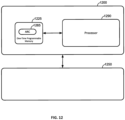
- An example integrated circuit includes a one-time programmable memory and a processor coupled to the one-time programmable memory.
- the processor is configured to determine that an unauthorized update has been made to software or firmware associated with the integrated circuit; and corrupt an anti-replay counter (ARC) value maintained in a one-time programmable memory of the integrated circuit and used by the integrated circuit to protect contents of a non-volatile memory responsive to determining that the unauthorized update has been made to the software or the firmware.
- ARC anti-replay counter
- Implementations of such an integrated circuit can include one or more of the following features.
- the processor being configured to determine that the unauthorized update has been made to the software or the firmware is further configured to detect a change to the software on the integrated circuit; authenticate at least one of a user and the software in response to detecting the change to the software on the integrated circuit; and determine that the change to the software on the integrated circuit was unauthorized in response the at least one of the user and the software not being authenticated.
- the processor being configured to authenticate the user is further configured to determine whether the user has been authenticated; and perform at least one authentication procedure to authenticate the user in response to the user not having been authenticated.
- the processor being configured to authenticate the software is further configured to determine a message authentication code (MAC) for the software by applying a cipher-based message authentication code (CMAC) algorithm to the software using a key derived from a Hardware Unique Key (HUK) associated with the integrated circuit; and compare the MAC with a previously determined MAC to determine whether the MAC matches the previously determined MAC.
- the processor being configured to corrupt the ARC value is further configured to update a first ARC value stored in the one-time programmable memory with a second ARC value maintained in volatile memory of the integrated circuit.
- the processor is further configured to determine a first number of bits of the one-time programmable memory storing the ARC value to be set; determine locations of a first set of bits of the one-time programmable memory comprising the first number of bits; and update the ARC value stored in the one-time programmable memory by setting the first set of bits of the one-time programmable memory.
- the processor being configured to determine the first number of bits of the one-time programmable memory to set is further configured to determine the first number of bits of the one-time programmable memory to set based on a second number of bits already set in the one-time programmable memory.
- the processor being configured to determine which bits of the one-time programmable memory to set is further configured to randomly select the first set of bits of the one-time programmable memory from a second set of bits that have not been set in the one-time programmable memory.
- An example non-transitory, computer-readable medium, having stored thereon computer-readable instructions for providing data protection in an integrated circuit, according to the disclosure includes instructions configured to cause a computer to determine that an unauthorized update has been made to software or firmware associated with the integrated circuit; and corrupt an anti-replay counter (ARC) value maintained in a one-time programmable memory of the integrated circuit and used by the integrated circuit to protect contents of a non-volatile memory responsive to determining that the unauthorized update has been made to the software or the firmware.
- ARC anti-replay counter
- the non-transitory, computer-readable medium includes instructions configured to cause the computer to determine a first number of bits of the one-time programmable memory storing the ARC value to be set; determine locations of a first set of bits of the one-time programmable memory comprising the first number of bits; and update the ARC value stored in the one-time programmable memory by setting the first set of bits of the one-time programmable memory.
- the instructions configured to cause the computer to determine the first number of bits of the one-time programmable memory to set include instructions configured to cause the computer to determine the first number of bits of the one-time programmable memory to set based on a second number of bits already set in the one-time programmable memory.
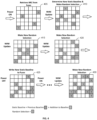
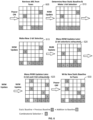
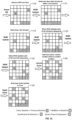
- Fuse map 410 also illustrates another aspect of the process. At least one additional bit is selected by the processor 190 as a random selection component of the ARC. The at least one bit is selected from fuses that have not been set in the fuse map stored in the volatile memory 120. In the example illustrated in FIG. 4 , the random component includes three bits, but the random component may include a greater or fewer number of bits. The random selection is selected again each time data is written to the external NVM 150. The random selection portion of the ARC is not written to the fuses of the one-time programmable memory 125. The random selection portion is maintained only in the representation of the fuse map stored in the volatile memory 120.
- Fuse map 415 illustrates an example of the fuse map 405 in the volatile memory 120 having been updated in response to data being written to the external NVM 150.
- the updated static baseline value includes the at least one bit that was added to the static baseline retrieved from the one-time programmable memory 125. But, the randomly selected portion of the ARC is replaced by a new random selection of one or more bits. In the example illustrated in fuse map 415, three bits were randomly selected from the bits of the fuse map that were not part of the updated static baseline. A greater or fewer number of bits can be selected from the available bits that are not part of the updated static baseline each time that the random component of the ARC is redetermined when data is written to the external NVM 150.
- the fuse map 420 illustrates an example of the fuse map 415 in the volatile memory 120 having been updated in response to data being written to the external NVM 150.
- a new random selection of bits from the fuse map are selected from the bits that are not part of the updated static baseline.
- four bits were selected from the available bits, but a greater or fewer number of bits can be selected from the available bits that are not part of the updated static baseline each time that the random component of the ARC is redetermined when data is written to the external NVM 150.
- the processor 190 determines the power source has been depleted and/or determines that the physical intrusion sensor 312d has detected physical intrusion into the computing device 100.
- the processor then accesses the current fuse map in the volatile memory 120 and writes those values to the fuses of the one-time programmable memory 125 as the new static baseline value.
- the fuse map in the volatile memory 120 was in the state illustrated by fuse map 420.
- the fuses set in this map will become the new static baseline value that is written to the one-time programmable memory 125 by the processor as represented by fuse map 425.
- Fuse map 430 illustrates an example fuse map in the volatile memory 120 in which the static baseline illustrated in fuse map 425 has been updated to include an additional bit.
- the processor 190 can write the additional bit to the fuses of the one-time programmable memory 125.
- the processor can also select a set of one or more randomly selected bits that includes bits from the fuse map in the non-volatile memory that are not part of the updated static baseline. This process of selecting a new random component to the ARC can occur each time that data is written to the external NVM 150, and can continue until an event triggers the processor to write the current fuse map from the volatile memory 120 into the fuses comprising the one-time programmable memory 125.
- a square having a solidly shaded background indicates that the bit was set as part of the static baseline value associated with the (ARC)
- a square having a background shaded with a checkerboard pattern indicates that the bit was set an addition to the static baseline that has been selected to prevent a rollback attack
- a square having a background shaded with a diamond pattern indicates that the bit was set as part of a combinatorial selection component of the transient component of the ARC.
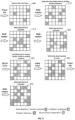
- the monotonic selection portion of the ARC is not written to the fuses of the one-time programmable memory 125 until an event triggers the processor to write the current fuse map from the volatile memory 120 into the fuses comprising the one-time programmable memory 125.
- the monotonic selection portion is maintained only in the representation of the fuse map stored in the volatile memory 120 until such a write event occurs.
- Fuse map 520 illustrates an example illustrated how the fuse map 515 could change after data has been written to the external NVM 150 thirty-two times.
- the combinatorial selection component of the ARC has increment by thirty-two bits. All of the 1-bit options have been exhausted, and the process continues with a 2-bit combinatorial selection component of the ARC.
- the ARC increments from left to right and from bottom to top, but other algorithms could be used to determine the order in which the various permutations of the combinatorial selection component are visited.
- the processor determines the power source has been depleted and/or determines that the physical intrusion sensor 312d has detected physical intrusion into the computing device 100.
- the processor then accesses the current fuse map in the volatile memory 120 and writes those values to the fuses of the one-time programmable memory 125 as the new static baseline value.
- the fuse map in the volatile memory 120 was in the state illustrated by fuse map 520.
- the fuses set in this map will become the new static baseline value that is written to the one-time programmable memory 125 by the processor as represented by fuse map 525.
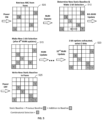
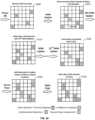
- FIG. 6 is a diagram illustrating another technique for maintaining an anti-replay counter according to the techniques disclosed herein.
- the technique is similar to that illustrated in FIGS. 4 and 5 , but uses a deterministic combinatorial approach to determine the portion of the ARC that is added to the static baseline component as well as the transient component of the ARC.
- the technique illustrated in FIG. 6 is illustrated using a series of fuse maps: fuse map 605, fuse map 610, fuse map 615, fuse map 620, fuse map 625, and fuse map 630, that represent an array of fuses in the one-time programmable memory 125 of the secure processing subsystem 110.
- fuse map 605 fuse map 605
- fuse map 610 fuse map 615
- fuse map 620 fuse map 625
- fuse map 630 fuse map 630
- a square having a solidly shaded background indicates that the bit was set as part of the static baseline value associated with the (ARC)
- a square having a background shaded with a checkerboard pattern indicates that the bit was set an addition to the static baseline that has been selected to prevent a rollback attack
- a square having a background shaded with a diamond pattern indicates that the bit was set as part of a combinatorial component of the ARC.
- the technique illustrated in FIG. 6 uses a combinatorial approach to determine a combinatorial component of the ARC that is added to the static baseline component of the ARC.
- the number of bits that are included in the combinatorial component can vary depending on how often the device may be powered off.
- the techniques illustrated in FIG. 6 may reduce the number of fuses of the one-time programmable memory 125 are written to for each power-down cycle when compared to the techniques illustrated in FIGS. 4 and 5 .
- the technique is similar to that of FIG. 5 , but each of the updates to the fuse map in technique illustrated in FIG. 6 are deterministic and no random selection of bits are made in the technique of FIG. 6 .
- the technique illustrated in FIG. 6 uses a combinatorial approach to determine a combinatorial component of the ARC that is added to the static baseline component of the ARC.
- the number of bits that are included in the combinatorial component can vary depending on how often the device may be powered off.
- the techniques illustrated in FIG. 6 may reduce the number of fuses of the one-time programmable memory 125 are written to for each power-down cycle when compared to the techniques illustrated in FIGS. 4 and 5 .
- the technique is similar to that of FIG. 5 , but each of the updates to the fuse map in technique illustrated in FIG. 6 are deterministic and no random selection of bits are made in the technique of FIG. 6 .
- the combinatorial component of the ARC is a deterministic selection of X bits among the available bits of the one-time programmable memory 125 that have not been set as part of the static baseline.
- the combinatorial component of the ARC is determined for each write of data to the external NVM 150.
- the available bits that can be included in the combinatorial component and the total number of available bits can be determined using the following equations:
- the process illustrated in FIG. 6 can begin when the computing device 100 is powered up like that of the process of FIGS. 4 and 5 discussed above.
- a baseline value for the ARC may have been written to the fuses of the one-time programmable memory 125.
- the processor of the secure processing subsystem 110 can access the one-time programmable memory 125, read the fuse map values from the one-time programmable memory 125, and store a representation of the fuse map in the volatile memory 120 of the secure processing subsystem 110 to generate the fuse map 605.
- the process could start with a different static baseline or no static baseline value at all depending on whether the techniques discussed herein have been used yet to generate and maintain an ARC.
- a new static baseline value can also be determined as discussed above with respect to FIGS. 4 and 5 .
- the processor of the secure processing subsystem 110 can select at least one bit to add to the previous baseline as illustrated in fuse map 610.
- the processor can select at least one bit from the available bits of the fuse map using the deterministic approach (in contrast with the approaches illustrated in FIGS. 4 and 5 in which the at least one bit added to the static baseline value may be randomly selected).
- the processor can be configured to blow the fuses associated with the one or more bits that have been selected in the one-time programmable memory 125 to establish a new static baseline value.
- the static baseline value stored in the one-time programmable memory 125 may initially start with no bits set.
- Fuse map 615 illustrates an example illustrated how the fuse map 610 could change after data has been written to the external NVM 150 once following the updated static baseline being determined.
- the combinatorial portion of the ARC comprises one additional bit at this stage.
- the size ('X') of the combinatorial portion of the ARC grows in 1-bit increments once all of the combinations of bits comprising X bits has been exhausted.
- the deterministic combinatorial algorithm increments from left to right and from bottom to top, but other implementation of the deterministic combinatorial algorithm can be configured to increment through the various permutations of X bit combinations in a different order than the one illustrated in FIG. 6 . For example, the process illustrated in FIG.
- the process 6 can iterate through each of the possible combinations where the combinatorial selection component comprises 1-bit. Once the 1-bit options have been exhausted, the process can iterate through each of the 2-bit options until the 2-bit options have been exhausted. This process can continue, adding another bit as each of the series n-bit options are exhausted, until all possible combinations are exhausted or until the ARC is written to the one-time programmable memory 125.
- the combinatorial selection portion of the ARC is not written to the fuses of the one-time programmable memory 125 until an event triggers the processor to write the current fuse map from the volatile memory 120 into the fuses comprising the one-time programmable memory 125.
- the monotonic selection portion is maintained only in the representation of the fuse map stored in the volatile memory 120 until such a write event occurs.
- Fuse map 620 illustrates an example illustrated how the fuse map 610 could change after data has been written to the external NVM 150 numerous times following the state of the fuse map illustrated in fuse map 615.
- fuse map 625 all of the 1-bit options for the combinatorial portion of the ARC have been exhausted and the combinatorial algorithm is now iterating through 2-bit options, which will be used to determine the combinatorial portion of the ARC each time data is written to the external NVM 150. The 2-bit options will be explored until exhausted.
- Fuse map 625 illustrates an example illustrated how the fuse map 610 could change after data has been written to the external NVM 150 numerous times following the state of the fuse map illustrated in fuse map 620.
- fuse map 625 all of the 1-bit and 2-bit options for the combinatorial portion of the ARC have been exhausted and the combinatorial algorithm is now iterating through 3-bit options, which will be used to determine the combinatorial portion of the ARC each time data is written to the external NVM 150. The 3-bit options will be explored until exhausted.
- the processor determines the power source has been depleted and/or determines that the physical intrusion sensor 312d has detected physical intrusion into the computing device 100.
- the processor then accesses the current fuse map in the volatile memory 120 and writes those values to the fuses of the one-time programmable memory 125 as the new static baseline value.
- the fuse map in the volatile memory 120 was in the state illustrated by fuse map 625.
- the fuses set in this map will become the new static baseline value that is written to the one-time programmable memory 125 by the processor as represented by fuse map 630.
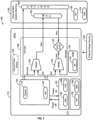
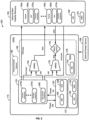
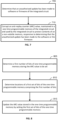
- the process 700 is executed by the computing device before any software or firmware can be executed that was included in an unauthorized update to the software or the firmware which may have at least read-access to the ARCs stored in the one-time programmable memory 125 and the volatile memory 120 of the computing device 100.
- the processor 190 determines whether an unauthorized update of the firmware and/or software of the computing device 100 has been made.
- the processor 190 monitors the firmware and/or software stored in the memory of the secure processing subsystem of the computing device and/or the external NVM.
- One approach for determining whether an unauthorized update to software and/or firmware has occurred is to monitor for changes to the firmware and/or other critical software component(s) of the computing device 100 and to require the user of the computing device 100 to be authenticated either prior to the firmware and/or other critical software component being updated or in response to the firmware being updated on the computing device 100.
- An authorized user of the computing device can approve an update to the firmware and/or software components that may access user or enterprise owned data on the computing devices that may have access to sensitive user data or enterprise data stored therein. Where the computing device 100 is associated with an enterprise, a system administrator, network administrator, or other user authorized by the enterprise may need to be authenticated in order for the firmware and/or software components to be updated.
- a general enterprise user of the computing device 100 may not have full control over the installation and/or updates to firmware and/or software components on the computing device 100.
- the processor 190 may perform an authentication procedure to determine whether the user of the computing device that has attempted to update the firmware and/or other critical software component(s) of the computing device 100.
- the processor may perform user authentication for firmware and/or other critical software component(s) of the computing device 100 that are trusted software components that could access the ARC 140, the transient components 270a-n, and/or the static baseline component 280 stored in the volatile memory 120 or the ARC 165 stored in the one-time programmable memory 125. If the user authentication fails, then the processor 190 can make a determination that the firmware and/or other critical software component(s) of the computing device 100 was unauthorized, and inhibit storage and/or use of the firmware and/or other critical software component(s).
- the processor 190 can authenticate the user using various authentication techniques, and the techniques for securely erasing contents of secured non-volatile memory disclosed herein are not limited to a particular type of authentication technique.
- the user can be required to input a password, PIN, swipe pattern, or other such input that should only be known to an authorized user of the computing device.
- the computing device 300 can include a keypad, keyboard, and/or a touch screen user interface through which the user can provide the input.
- the processor 190 can compare the input to authorization information stored by the computing device 300 in a secure memory location of the computing device 300.
- the user can also be authenticated by the processor 190 using biometric data.
- the sensors 312a-312g of the computing device 300 can include one or more sensors configured to collect biometric data from a user of the computing device 300.
- the computing device 300 can include a fingerprint sensor for capturing one or more fingerprints of from a user of the computing device 300.
- the computing device 300 can include a sensor configured to scan one or more physical characteristics of the user of the computing device 300, such as a sensor configured to capture an image of the user's iris and/or retina, facial features, and/or other anatomical information that may be used to authenticate the user of the computing device 300.
- the authentication may be performed by a trusted execution environment, such as the TEE 380 illustrated in the example implementation of the computing device 300, to prevent an attacker from attempting to circumvent the authentication procedure.
- Authentication information for authorized users of the computing device 100 can be stored in a persistent memory of the computing device and may be encrypted or otherwise protected to prevent unauthorized access to and/or modification of the authentication information utilized by the trusted execution environment and/or other components of the computing device 100 to perform user authentication.
- the processor 190 of the computing device 100 may also maintain a list of firmware and/or critical software components that require user authentication in order to update these elements of the computing device 100.
- the false CMAC value will not match an expected CMAC value previously generated and associated with the firmware and/or critical component(s) of the computing device 100, and the processor 190 can make a determination that the update was unauthorized. If, however, the user has correctly been authenticated, and the CMAC value generated by the processor 190 matches the expected CMAC value, then the software update can be determined to be authorized.
- the secure processing subsystem 110 of the computing device 100 can include a secure bootloader 119 stored in a read-only memory (ROM) 105 that is configured to authenticate one or more firmware image files and/or image files for one or more critical software components of the computing device 100 using various secure boot mechanism techniques.
- the secure bootloader can also be configured to compute the CMAC image before allowing the device to be booted. If a CMAC value computed by the boot loader does not match the expected CMAC image value that was previously calculated and associated with a component to be authenticated by the secure boot loader, then the secure boot loader can determine that the software update was unauthorized.
- the anti-replay counter (ARC) value 165 maintained in a one-time programmable memory 125 of the integrated circuit and used by the integrated circuit to protect contents of a non-volatile memory, can be corrupted responsive to determining that the unauthorized update has been made to the software or the firmware (stage 710).
- the non-volatile memory can be separate from the integrated circuit 110 (e.g., NVM 150) or can be a part of the integrated circuit (e.g., NVM 127 in some aspects).
- the processor 190 corrupts the ARC 165 stored in the one-time programmable memory 125 of the computing device 100.
- the detection of an unauthorized update to software and/or firmware can serve as a trigger event for the processor to update the ARC 165 stored in the one-time programmable memory 125 based on the ARC 140, the transient components 270a-n, and/or the static baseline component 280 stored in the volatile memory 120 maintained in the volatile memory 120.
- the processor writes the ARC 140 stored in the volatile memory 120 to the one-time programmable memory 125 as ARC 165.
- the processor 190 writes the static baseline component 280 to the one-time programmable memory 125 as the ARC 165.
- the processor 190 can combine a transient component 270 with the static baseline component 280 (e.g., as illustrated in FIGS.
- the secure processing subsystem 110 can also be configured to select a most recently determined value of the transient component 270 for generating the ARC to be written to the ARC 165 stored in the one-time programmable memory 125 or may select one of the transient component 270 values in the volatile memory 120.
- the ARC 140, the transient components 270a-n, and/or the static baseline component 280 stored in the volatile memory 120 can be deleted, and the ARC 165 stored in the one-time programmable memory 125 can be corrupted by setting additional bits of the one-time programmable memory 125 storing the ARC 165.
- FIG. 8 provides an example of one such method that can be used to corrupt the ARC 165
- FIGS. 9-11 illustrates example such a corruption technique being applied to the fuse maps from the preceding examples.
- the processor of the secure processing subsystem of the computing device can be configured to corrupt the ARC 165 responsive to an unauthorized update to software and/or firmware to prevent an attacker from being able to access the sensitive data stored in the NVM.
- the ARC 165 stored in the one-time programmable memory 125 of the computing device 100 can be corrupted, and the ARC 140, the transient components 270a-n, and/or the static baseline component 280 stored in the volatile memory 120 of the computing device 100 can be cleared prior to the execution of any of the software included in the unauthorized update to software and/or firmware.
- FIG. 8 is a flow diagram of an example process 800 for corrupting the anti-replay counter according to the techniques disclosed herein.
- the process illustrated in FIG. 8 can be implemented by the processor of the secure processing subsystem 110 of the computing devices 100 and 200 illustrated in FIGS. 1 and 2 , respectively. Furthermore, the process illustrated in FIG. 8 can be used to implement, at least in part, stage 710 of the process illustrated in FIG. 7 .
- the process illustrated in FIG. 8 can be used to alter the ARC 165 prevent an attacker from gaining access to the sensitive data stored in the NVM 150.
- the ARC 165 stored in the one-time programmable memory 125 of the computing device 100 will no longer match the ARC used to when encrypting the payload(s) 155 stored in the NVM 150.
- a first number of bits of the one-time programmable memory storing the ARC value to be set can be determined (stage 805).
- the processor 190 of the secure processing subsystem 110 of the computing device can be configured to determine a number of bits that are to be added to the ARC 165 to render the ARC 165 invalid.
- the secure processing subsystem 110 can be configured to determine whether the ARC 165 stored in the one-time programmable memory 125 includes a threshold number of bits that have been set.
- the threshold number of bits can be selected based on a level of entropy desired with respect to the corruption of the ARC 165.
- a higher desired level of entropy is associated with a larger number of bits of the one-time programmable memory 125 be set, while a lower desired level of entropy is associated fewer bits of the one-time programmable memory 125 being set.
- the more bits of the one-time programmable memory 125 that are set makes it more difficult for an attacker to attempt to deduce what the ARC 165 should have been before being corrupted.
- the secure processing subsystem 110 can be configured to make such a determination to ensure that setting of the additional bits introduces a sufficient amount of entropy into to the ARC 165 such that guessing which bits were part of the ARC 165 and which bits have been added corrupt the ARC 165 would be prohibitively computationally intensive.
- the secure processing subsystem 110 is configured to determine that a first number of bits are to be set in the one-time programmable memory 125 in response to a current number of bits that have already been set in the one-time programmable memory 125 being less than or equal to a predetermined threshold. In this example implementation, the secure processing subsystem 110 is configured to determine that a second number of bits are to be set in the one-time programmable memory 125 in response to the current number of bits that have already been set in the one-time programmable memory 125 exceeding the predetermined threshold. The first number of bits is greater than the second number of bits.
Landscapes
- Engineering & Computer Science (AREA)
- Computer Security & Cryptography (AREA)
- Theoretical Computer Science (AREA)
- Software Systems (AREA)
- Computer Hardware Design (AREA)
- General Engineering & Computer Science (AREA)
- Physics & Mathematics (AREA)
- General Physics & Mathematics (AREA)
- Signal Processing (AREA)
- Computer Networks & Wireless Communication (AREA)
- Health & Medical Sciences (AREA)
- Bioethics (AREA)
- General Health & Medical Sciences (AREA)
- Multimedia (AREA)
- Power Engineering (AREA)
- Technology Law (AREA)
- Remote Sensing (AREA)
- Radar, Positioning & Navigation (AREA)
- Mathematical Physics (AREA)
- Stored Programmes (AREA)
- Storage Device Security (AREA)
Claims (13)
- Ein Verfahren zum Vorsehen von Datenschutz in einem integrierten Schaltkreis (1200), wobei das Verfahren Folgendes aufweist:Detektieren einer Änderung an Software oder Firmware, die mit dem integrierten Schaltkreis (1200) assoziiert ist;Bestimmen, ob ein Nutzer authentisch ist ansprechend auf Detektieren der Änderung an der Software oder der Firmware; undGenerieren eines falschen verschlüsselungsbasierten Nachrichtenauthentifizierungscode-Wertes bzw. CMAC-Wertes (CMAC = cipher-based message authentication code), der nicht auf einem eindeutigen Hardwareschlüssel bzw. HUK (HUK = Hardware Unique Key) basiert, der mit dem integrierten Schaltkreis (1200) assoziiert ist, ansprechend darauf, dass der Nutzer nicht authentisch ist;Bestimmen (705), dass die Änderung an der Software oder Firmware nicht autorisiert war basierend wenigstens teilweise darauf, dass der falsche CMAC-Wert nicht mit einem erwarteten CMAC-Wert übereinstimmt; undKorrumpieren (710) eines Anti-Wiederholungszähler- bzw. ARC-Wertes (ARC = anti-replay counter) (1265), der in einem einmalig programmierbaren Speicher (1225) des integrierten Schaltkreises (1200) geführt wird und durch den integrierten Schaltkreis (1200) genutzt wird zum Schützen von Inhalten eines nicht flüchtigen Speichers (1250) ansprechend auf Bestimmen (705), dass die Änderung an der Software oder der Firmware nicht autorisiert war.
- Verfahren nach Anspruch 1, wobei Korrumpieren (710) des ARC-Wertes (1265) Folgendes aufweist:
Aktualisieren eines ARC-Wertes, der in dem einmalig programmierbaren Speicher (1225) gespeichert ist, mit einem aktuellen ARC-Wert, der in dem flüchtigen Speicher geführt wird. - Verfahren nach Anspruch 2, das weiter Folgendes aufweist:Bestimmen einer ersten Anzahl von Bits des einmalig programmierbaren Speichers (1225), die gesetzt werden sollen;Bestimmen von Positionen eines ersten Satzes von Bits des einmalig programmierbaren Speichers, die die erste Anzahl von Bits aufweisen; undAktualisieren des ARC-Wertes, der in dem einmalig programmierbaren Speicher (1225) gespeichert ist, durch Setzen des ersten Satzes von Bits des einmalig programmierbaren Speichers (1225).
- Verfahren nach Anspruch 3, wobei Bestimmen der ersten Anzahl von Bits des einmalig programmierbaren Speichers, die gesetzt werden sollen, eines von Folgendem aufweist:Bestimmen der ersten Anzahl von Bits des einmalig programmierbaren Speichers (1225), die gesetzt werden sollen, basierend auf einer zweiten Anzahl von Bits, die in dem einmalig programmierbaren Speicher (1125) bereits gesetzt sind; undzufälliges Auswählen des ersten Satzes von Bits des einmalig programmierbaren Speichers (1225) aus einem zweiten Satz von Bits, die in dem einmalig programmierbaren Speicher (1225) nicht gesetzt worden sind.
- Verfahren nach Anspruch 1, wobei der HUK einen Bit-String bzw. eine Bit-Zeichenfolge aufweist, der bzw. die in einer sicheren Speicherposition einer Recheneinrichtung gespeichert ist.
- Verfahren nach Anspruch 1, wobei der HUK einen Bit-String bzw. eine Bit-Zeichenfolge aufweist, der bzw. die in einem einmalig programmierbaren Speicher einer Recheneinrichtung gespeichert ist.
- Ein integrierter Schaltkreis (1200) der Datenschutz vorsieht, wobei der integrierte Schaltkreis (1200) Folgendes aufweist:Mittel zum Detektieren einer Änderung an Software oder Firmware, die mit dem integrierten Schaltkreis (1200) assoziiert ist;Mittel zum Bestimmen, ob ein Nutzer authentisch ist ansprechend auf Detektieren der Änderung an der Software oder der Firmware; undMittel zum Generieren eines falschen verschlüsselungsbasierten Nachrichtenauthentifizierungscode-Wertes bzw. CMAC-Wertes (CMAC = cipher-based message authentication code), der nicht auf einem eindeutigen Hardwareschlüssel bzw. HUK (HUK = Hardware Unique Key) basiert, der mit dem integrierten Schaltkreis (1200) assoziiert ist, ansprechend darauf, dass der Nutzer nicht authentisch ist;Mittel zum Bestimmen (705), dass die Änderung an der Software oder Firmware nicht autorisiert war basierend wenigstens teilweise darauf, dass der falsche CMAC-Wert nicht mit einem erwarteten CMAC-Wert übereinstimmt; undMittel zum Korrumpieren (710) eines Anti-Wiederholungszähler- bzw. ARC-Wertes (ARC = anti-replay counter) (1265), der in einem einmalig programmierbaren Speicher (1225) des integrierten Schaltkreises (1200) geführt wird und durch den integrierten Schaltkreis (1200) genutzt wird zum Schützen von Inhalten eines nicht flüchtigen Speichers (1250) ansprechend auf Bestimmen (705), dass die Änderung an der Software oder der Firmware nicht autorisiert war.
- Integrierter Schaltkreis (1200) nach Anspruch 7, wobei die Mittel zum Korrumpieren (710) des ARC-Wertes (1265) Folgendes aufweisen:
Mittel zum Aktualisieren eines ARC-Wertes, der in dem einmalig programmierbaren Speicher (1225) gespeichert ist, mit einem aktuellen ARC-Wert, der in dem flüchtigen Speicher des integrierten Schaltkreises (1200) geführt wird. - Integrierter Schaltkreis (1200) nach Anspruch 8, der weiter Folgendes aufweist:Mittel zum Bestimmen einer ersten Anzahl von Bits des einmalig programmierbaren Speichers (1225), die gesetzt werden sollen;Mittel zum Bestimmen von Positionen eines ersten Satzes von Bits des einmalig programmierbaren Speichers, die die erste Anzahl von Bits aufweisen; undMittel zum Aktualisieren des ARC-Wertes, der in dem einmalig programmierbaren Speicher (1225) gespeichert ist, durch Setzen des ersten Satzes von Bits des einmalig programmierbaren Speichers (1225).
- Integrierter Schaltkreis (1200) nach Anspruch 9, wobei die Mittel zum Bestimmen der ersten Anzahl von Bits des einmalig programmierbaren Speichers (1225), die gesetzt werden sollen, weiter eines von Folgendem aufweisen:Mittel zum Bestimmen der ersten Anzahl von Bits des einmalig programmierbaren Speichers (1225), die gesetzt werden sollen, basierend auf einer zweiten Anzahl von Bits, die in dem einmalig programmierbaren Speicher (1225) bereits gesetzt sind; undMittel zum zufälligen Auswählen des ersten Satzes von Bits des einmalig programmierbaren Speichers (1225) aus einem zweiten Satz von Bits, die in dem einmalig programmierbaren Speicher (1225) nicht gesetzt worden sind.
- Integrierter Schaltkreis (1200) nach Anspruch 7, wobei der HUK einen Bit-String bzw. eine Bit-Zeichenfolge aufweist, der bzw. die in einer sicheren Speicherposition einer Recheneinrichtung gespeichert ist.
- Integrierter Schaltkreis (1200) nach Anspruch 7, wobei der HUK einen Bit-String bzw. eine Bit-Zeichenfolge aufweist, der bzw. die in einem einmalig programmierbaren Speicher einer Recheneinrichtung gespeichert ist.
- Ein nicht transitorisches computerlesbares Medium mit darauf gespeicherten von einem Computer lesbaren Instruktionen, die, wenn sie ausgeführt werden, einen Computer veranlassen zum Durchführen des Verfahrens nach einem der Ansprüche 1 bis 6.
Applications Claiming Priority (3)
| Application Number | Priority Date | Filing Date | Title |
|---|---|---|---|
| US201862640942P | 2018-03-09 | 2018-03-09 | |
| US16/296,066 US11321466B2 (en) | 2018-03-09 | 2019-03-07 | Integrated circuit data protection |
| PCT/US2019/021275 WO2019173670A1 (en) | 2018-03-09 | 2019-03-08 | Integrated circuit data protection |
Publications (2)
| Publication Number | Publication Date |
|---|---|
| EP3762852A1 EP3762852A1 (de) | 2021-01-13 |
| EP3762852B1 true EP3762852B1 (de) | 2025-07-09 |
Family
ID=67844072
Family Applications (1)
| Application Number | Title | Priority Date | Filing Date |
|---|---|---|---|
| EP19713914.0A Active EP3762852B1 (de) | 2018-03-09 | 2019-03-08 | Datenschutz einer integrierten schaltung |
Country Status (8)
| Country | Link |
|---|---|
| US (1) | US11321466B2 (de) |
| EP (1) | EP3762852B1 (de) |
| KR (1) | KR102843268B1 (de) |
| CN (1) | CN111819561B (de) |
| BR (1) | BR112020018229A2 (de) |
| SG (1) | SG11202007282YA (de) |
| TW (1) | TW201941065A (de) |
| WO (1) | WO2019173670A1 (de) |
Families Citing this family (16)
| Publication number | Priority date | Publication date | Assignee | Title |
|---|---|---|---|---|
| CN104335220B (zh) | 2012-03-30 | 2018-04-20 | 爱迪德技术有限公司 | 用于防止和检测安全威胁的方法和系统 |
| US10853309B2 (en) | 2018-08-13 | 2020-12-01 | Micron Technology, Inc. | Fuseload architecture for system-on-chip reconfiguration and repurposing |
| US11210238B2 (en) * | 2018-10-30 | 2021-12-28 | Cypress Semiconductor Corporation | Securing data logs in memory devices |
| CN113168475B (zh) * | 2019-08-29 | 2025-04-08 | 谷歌有限责任公司 | 保护集成于片上系统上的安全元件的外部数据存储的安全 |
| FR3100905B1 (fr) * | 2019-09-16 | 2022-03-04 | Idemia Identity & Security France | Système sur puce et procédé garantissant la fraicheur des données stockées dans une mémoire extérieure |
| US11681536B2 (en) * | 2019-12-06 | 2023-06-20 | Lattice Semiconductor Corporation | Fast boot systems and methods for programmable logic devices |
| US11579772B2 (en) * | 2020-11-25 | 2023-02-14 | Micron Technology, Inc. | Managing page retirement for non-volatile memory |
| KR20220086286A (ko) | 2020-12-16 | 2022-06-23 | 삼성전자주식회사 | 보호 영역에 데이터를 기입하기 위한 시스템, 장치 및 방법 |
| US11922170B2 (en) * | 2021-06-28 | 2024-03-05 | Samsung Electronics Co., Ltd. | Systems and method for bootup activation of firmware images |
| US20230010319A1 (en) * | 2021-07-12 | 2023-01-12 | Dell Products, L.P. | Deriving independent symmetric encryption keys based upon a type of secure boot using a security processor |
| US20230109011A1 (en) * | 2021-10-04 | 2023-04-06 | Hewlett-Packard Development Company, L.P. | Placing a device in secure mode |
| US20230401340A1 (en) * | 2022-06-14 | 2023-12-14 | Hewlett-Packard Development Company, L.P. | Application-specific integrated circuit (asic) with one-time programmable (otp) bits |
| EP4312136A1 (de) * | 2022-07-25 | 2024-01-31 | Nxp B.V. | Vorrichtungen und verfahren zur verifizierung eines aktualisierten datensatzes |
| WO2024049141A1 (ko) * | 2022-09-02 | 2024-03-07 | 삼성전자주식회사 | 암호화된 데이터를 비휘발성 메모리 내에 저장하기 위한 전자 장치 및 그 방법 |
| US12189755B2 (en) * | 2023-04-24 | 2025-01-07 | Halcyon Tech, Inc. | Automated system for program identity-driven program access control |
| US20250155941A1 (en) * | 2023-11-14 | 2025-05-15 | Smart Modular Technologies, Inc. | Energy source for memory device |
Citations (1)
| Publication number | Priority date | Publication date | Assignee | Title |
|---|---|---|---|---|
| US20160026783A1 (en) * | 2014-07-28 | 2016-01-28 | Broadcom Corporation | System, apparatus, and method for anti-replay protection of data stored in a non-volatile memory device |
Family Cites Families (30)
| Publication number | Priority date | Publication date | Assignee | Title |
|---|---|---|---|---|
| CN1427343A (zh) * | 2001-12-18 | 2003-07-02 | 阳庆电子股份有限公司 | 防止设备及软件内的设定被非授权人员使用或更改的装置 |
| JP4875126B2 (ja) * | 2002-06-06 | 2012-02-15 | エヌヴィディア コーポレイション | Iscsiおよびipsecプロトコルをサポートするギガビットイーサネットアダプタ |
| US20030233562A1 (en) * | 2002-06-12 | 2003-12-18 | Sachin Chheda | Data-protection circuit and method |
| CN100504818C (zh) * | 2003-07-07 | 2009-06-24 | 巨视股份有限公司 | 调控对非易失性存储区访问的方法和判定访问的自动方法 |
| CN1300697C (zh) * | 2003-09-15 | 2007-02-14 | 英业达股份有限公司 | 软件保护方法及系统 |
| US20060143600A1 (en) * | 2004-12-29 | 2006-06-29 | Andrew Cottrell | Secure firmware update |
| IL171963A0 (en) | 2005-11-14 | 2006-04-10 | Nds Ltd | Secure read-write storage device |
| US20080127356A1 (en) * | 2006-11-27 | 2008-05-29 | Mediatek Inc. | Embedded systems and methods for securing firmware therein |
| US7886150B2 (en) * | 2007-05-11 | 2011-02-08 | Mips Technologies, Inc. | System debug and trace system and method, and applications thereof |
| US20090193261A1 (en) * | 2008-01-25 | 2009-07-30 | Mediatek Inc. | Apparatus and method for authenticating a flash program |
| US8677144B2 (en) * | 2008-02-25 | 2014-03-18 | Cavium, Inc. | Secure software and hardware association technique |
| JP5434203B2 (ja) * | 2009-04-02 | 2014-03-05 | 大日本印刷株式会社 | 認証装置、認証プログラム、認証システム、パスワード生成装置、携帯型セキュリティデバイス、およびパスワード生成プログラム |
| US9479509B2 (en) * | 2009-11-06 | 2016-10-25 | Red Hat, Inc. | Unified system for authentication and authorization |
| EP3518128B1 (de) * | 2011-03-30 | 2021-04-28 | Irdeto B.V. | Aktivierung einer softwareanwendung, die auf einer hardwarevorrichtung ausgeführt werden soll |
| US20140075522A1 (en) * | 2012-09-07 | 2014-03-13 | Red Hat, Inc. | Reliable verification of hypervisor integrity |
| US9124434B2 (en) * | 2013-02-01 | 2015-09-01 | Microsoft Technology Licensing, Llc | Securing a computing device accessory |
| CN103544413B (zh) * | 2013-10-31 | 2017-02-15 | 宇龙计算机通信科技(深圳)有限公司 | 一种在智能终端中校验软件版权的方法及装置 |
| US9830479B2 (en) * | 2014-09-16 | 2017-11-28 | Nxp Usa, Inc. | Key storage and revocation in a secure memory system |
| CN110377310B (zh) * | 2014-11-12 | 2023-04-07 | 松下电器(美国)知识产权公司 | 更新管理方法、更新管理装置以及计算机可读取的记录介质 |
| US10353638B2 (en) * | 2014-11-18 | 2019-07-16 | Microsemi SoC Corporation | Security method and apparatus to prevent replay of external memory data to integrated circuits having only one-time programmable non-volatile memory |
| US9563765B2 (en) * | 2015-02-10 | 2017-02-07 | Apple Inc. | Baseband secure boot with remote storage |
| US9697359B2 (en) | 2015-04-15 | 2017-07-04 | Qualcomm Incorporated | Secure software authentication and verification |
| US9729330B2 (en) * | 2015-08-21 | 2017-08-08 | Samsung Electronics Co., Ltd. | Secure pairing of eHealth devices and authentication of data using a gateway device having secured area |
| US9767318B1 (en) * | 2015-08-28 | 2017-09-19 | Frank Dropps | Secure controller systems and associated methods thereof |
| US9953167B2 (en) * | 2015-10-12 | 2018-04-24 | Microsoft Technology Licensing, Llc | Trusted platforms using minimal hardware resources |
| US9917687B2 (en) * | 2015-10-12 | 2018-03-13 | Microsoft Technology Licensing, Llc | Migrating secrets using hardware roots of trust for devices |
| WO2017173136A1 (en) * | 2016-03-30 | 2017-10-05 | The Athena Group, Inc. | Key update for masker keys |
| US10127405B2 (en) | 2016-05-10 | 2018-11-13 | Qualcomm Incorporated | Techniques for determining an anti-replay counter for preventing replay attacks |
| US9916452B2 (en) * | 2016-05-18 | 2018-03-13 | Microsoft Technology Licensing, Llc | Self-contained cryptographic boot policy validation |
| US10924277B2 (en) * | 2018-01-25 | 2021-02-16 | Micron Technology, Inc. | Certifying authenticity of stored code and code updates |
-
2019
- 2019-03-07 US US16/296,066 patent/US11321466B2/en active Active
- 2019-03-08 KR KR1020207025433A patent/KR102843268B1/ko active Active
- 2019-03-08 BR BR112020018229-0A patent/BR112020018229A2/pt unknown
- 2019-03-08 CN CN201980017155.7A patent/CN111819561B/zh active Active
- 2019-03-08 WO PCT/US2019/021275 patent/WO2019173670A1/en not_active Ceased
- 2019-03-08 SG SG11202007282YA patent/SG11202007282YA/en unknown
- 2019-03-08 TW TW108107909A patent/TW201941065A/zh unknown
- 2019-03-08 EP EP19713914.0A patent/EP3762852B1/de active Active
Patent Citations (1)
| Publication number | Priority date | Publication date | Assignee | Title |
|---|---|---|---|---|
| US20160026783A1 (en) * | 2014-07-28 | 2016-01-28 | Broadcom Corporation | System, apparatus, and method for anti-replay protection of data stored in a non-volatile memory device |
Also Published As
| Publication number | Publication date |
|---|---|
| US11321466B2 (en) | 2022-05-03 |
| TW201941065A (zh) | 2019-10-16 |
| SG11202007282YA (en) | 2020-09-29 |
| WO2019173670A1 (en) | 2019-09-12 |
| US20190278914A1 (en) | 2019-09-12 |
| EP3762852A1 (de) | 2021-01-13 |
| CN111819561B (zh) | 2023-11-03 |
| KR102843268B1 (ko) | 2025-08-05 |
| BR112020018229A2 (pt) | 2020-12-29 |
| KR20200129103A (ko) | 2020-11-17 |
| CN111819561A (zh) | 2020-10-23 |
Similar Documents
| Publication | Publication Date | Title |
|---|---|---|
| EP3762852B1 (de) | Datenschutz einer integrierten schaltung | |
| JP4912879B2 (ja) | プロセッサの保護された資源へのアクセスに対するセキュリティ保護方法 | |
| KR101795457B1 (ko) | 보안 기능이 강화된 디바이스의 초기화 방법 및 디바이스의 펌웨어 업데이트 방법 | |
| EP3455779B1 (de) | Techniken um einen anti-replayzähler zu erhalten um replayattacken vorzubeugen | |
| ES2904501T3 (es) | Implementación de un almacenamiento seguro con protección de integridad | |
| US7313705B2 (en) | Implementation of a secure computing environment by using a secure bootloader, shadow memory, and protected memory | |
| US8751818B2 (en) | Method and apparatus for a trust processor | |
| US8281115B2 (en) | Security method using self-generated encryption key, and security apparatus using the same | |
| US8347114B2 (en) | Method and apparatus for enforcing a predetermined memory mapping | |
| US20090282254A1 (en) | Trusted mobile platform architecture | |
| US10126960B2 (en) | Fuse-based anti-replay mechanism | |
| CN104956374A (zh) | 用于软件防回滚恢复的方法 | |
| EP1325401A1 (de) | System zum schutz von dynamischen und statischen daten gegen unerlaubten manipulationen | |
| US20090064273A1 (en) | Methods and systems for secure data entry and maintenance | |
| EP1967977A2 (de) | Verfahren und Vorrichtung zum Schützen eines Flash-Speichers | |
| US10601592B2 (en) | System and method trusted workspace in commercial mobile devices | |
| CN117610083A (zh) | 文件校验方法、装置、电子设备及计算机存储介质 | |
| Amato et al. | Mobile Systems Secure State Management | |
| KR101781970B1 (ko) | 자가 대응 전자문서 불법 유출 방지 장치 및 방법 | |
| CN121435292A (zh) | Fpga采集卡的安全验证方法、电子设备及计算机程序产品 | |
| CN118972839A (zh) | 用于生成安全密钥的方法、无线控制设备和介质 | |
| Altuwaijri et al. | Computer and Information Sciences |
Legal Events
| Date | Code | Title | Description |
|---|---|---|---|
| STAA | Information on the status of an ep patent application or granted ep patent |
Free format text: STATUS: UNKNOWN |
|
| STAA | Information on the status of an ep patent application or granted ep patent |
Free format text: STATUS: THE INTERNATIONAL PUBLICATION HAS BEEN MADE |
|
| PUAI | Public reference made under article 153(3) epc to a published international application that has entered the european phase |
Free format text: ORIGINAL CODE: 0009012 |
|
| STAA | Information on the status of an ep patent application or granted ep patent |
Free format text: STATUS: REQUEST FOR EXAMINATION WAS MADE |
|
| 17P | Request for examination filed |
Effective date: 20200729 |
|
| AK | Designated contracting states |
Kind code of ref document: A1 Designated state(s): AL AT BE BG CH CY CZ DE DK EE ES FI FR GB GR HR HU IE IS IT LI LT LU LV MC MK MT NL NO PL PT RO RS SE SI SK SM TR |
|
| AX | Request for extension of the european patent |
Extension state: BA ME |
|
| DAV | Request for validation of the european patent (deleted) | ||
| DAX | Request for extension of the european patent (deleted) | ||
| STAA | Information on the status of an ep patent application or granted ep patent |
Free format text: STATUS: EXAMINATION IS IN PROGRESS |
|
| 17Q | First examination report despatched |
Effective date: 20230302 |
|
| GRAP | Despatch of communication of intention to grant a patent |
Free format text: ORIGINAL CODE: EPIDOSNIGR1 |
|
| STAA | Information on the status of an ep patent application or granted ep patent |
Free format text: STATUS: GRANT OF PATENT IS INTENDED |
|
| INTG | Intention to grant announced |
Effective date: 20250227 |
|
| GRAS | Grant fee paid |
Free format text: ORIGINAL CODE: EPIDOSNIGR3 |
|
| GRAA | (expected) grant |
Free format text: ORIGINAL CODE: 0009210 |
|
| STAA | Information on the status of an ep patent application or granted ep patent |
Free format text: STATUS: THE PATENT HAS BEEN GRANTED |
|
| AK | Designated contracting states |
Kind code of ref document: B1 Designated state(s): AL AT BE BG CH CY CZ DE DK EE ES FI FR GB GR HR HU IE IS IT LI LT LU LV MC MK MT NL NO PL PT RO RS SE SI SK SM TR |
|
| REG | Reference to a national code |
Ref country code: GB Ref legal event code: FG4D |
|
| REG | Reference to a national code |
Ref country code: CH Ref legal event code: EP |
|
| REG | Reference to a national code |
Ref country code: IE Ref legal event code: FG4D |
|
| REG | Reference to a national code |
Ref country code: DE Ref legal event code: R096 Ref document number: 602019072261 Country of ref document: DE |
|
| REG | Reference to a national code |
Ref country code: NL Ref legal event code: MP Effective date: 20250709 |
|
| PG25 | Lapsed in a contracting state [announced via postgrant information from national office to epo] |
Ref country code: PT Free format text: LAPSE BECAUSE OF FAILURE TO SUBMIT A TRANSLATION OF THE DESCRIPTION OR TO PAY THE FEE WITHIN THE PRESCRIBED TIME-LIMIT Effective date: 20251110 |
|
| PG25 | Lapsed in a contracting state [announced via postgrant information from national office to epo] |
Ref country code: NL Free format text: LAPSE BECAUSE OF FAILURE TO SUBMIT A TRANSLATION OF THE DESCRIPTION OR TO PAY THE FEE WITHIN THE PRESCRIBED TIME-LIMIT Effective date: 20250709 |
|
| REG | Reference to a national code |
Ref country code: AT Ref legal event code: MK05 Ref document number: 1812514 Country of ref document: AT Kind code of ref document: T Effective date: 20250709 |
|
| PG25 | Lapsed in a contracting state [announced via postgrant information from national office to epo] |
Ref country code: IS Free format text: LAPSE BECAUSE OF FAILURE TO SUBMIT A TRANSLATION OF THE DESCRIPTION OR TO PAY THE FEE WITHIN THE PRESCRIBED TIME-LIMIT Effective date: 20251109 |
|
| PG25 | Lapsed in a contracting state [announced via postgrant information from national office to epo] |
Ref country code: NO Free format text: LAPSE BECAUSE OF FAILURE TO SUBMIT A TRANSLATION OF THE DESCRIPTION OR TO PAY THE FEE WITHIN THE PRESCRIBED TIME-LIMIT Effective date: 20251009 |
|
| REG | Reference to a national code |
Ref country code: LT Ref legal event code: MG9D |
|
| PG25 | Lapsed in a contracting state [announced via postgrant information from national office to epo] |
Ref country code: AT Free format text: LAPSE BECAUSE OF FAILURE TO SUBMIT A TRANSLATION OF THE DESCRIPTION OR TO PAY THE FEE WITHIN THE PRESCRIBED TIME-LIMIT Effective date: 20250709 |
|
| PG25 | Lapsed in a contracting state [announced via postgrant information from national office to epo] |
Ref country code: FI Free format text: LAPSE BECAUSE OF FAILURE TO SUBMIT A TRANSLATION OF THE DESCRIPTION OR TO PAY THE FEE WITHIN THE PRESCRIBED TIME-LIMIT Effective date: 20250709 |
|
| PG25 | Lapsed in a contracting state [announced via postgrant information from national office to epo] |
Ref country code: HR Free format text: LAPSE BECAUSE OF FAILURE TO SUBMIT A TRANSLATION OF THE DESCRIPTION OR TO PAY THE FEE WITHIN THE PRESCRIBED TIME-LIMIT Effective date: 20250709 |
|
| PG25 | Lapsed in a contracting state [announced via postgrant information from national office to epo] |
Ref country code: GR Free format text: LAPSE BECAUSE OF FAILURE TO SUBMIT A TRANSLATION OF THE DESCRIPTION OR TO PAY THE FEE WITHIN THE PRESCRIBED TIME-LIMIT Effective date: 20251010 |
|
| PG25 | Lapsed in a contracting state [announced via postgrant information from national office to epo] |
Ref country code: SE Free format text: LAPSE BECAUSE OF FAILURE TO SUBMIT A TRANSLATION OF THE DESCRIPTION OR TO PAY THE FEE WITHIN THE PRESCRIBED TIME-LIMIT Effective date: 20250709 |
|
| PG25 | Lapsed in a contracting state [announced via postgrant information from national office to epo] |
Ref country code: LV Free format text: LAPSE BECAUSE OF FAILURE TO SUBMIT A TRANSLATION OF THE DESCRIPTION OR TO PAY THE FEE WITHIN THE PRESCRIBED TIME-LIMIT Effective date: 20250709 |
|
| PG25 | Lapsed in a contracting state [announced via postgrant information from national office to epo] |
Ref country code: PL Free format text: LAPSE BECAUSE OF FAILURE TO SUBMIT A TRANSLATION OF THE DESCRIPTION OR TO PAY THE FEE WITHIN THE PRESCRIBED TIME-LIMIT Effective date: 20250709 Ref country code: BG Free format text: LAPSE BECAUSE OF FAILURE TO SUBMIT A TRANSLATION OF THE DESCRIPTION OR TO PAY THE FEE WITHIN THE PRESCRIBED TIME-LIMIT Effective date: 20250709 |
|
| PG25 | Lapsed in a contracting state [announced via postgrant information from national office to epo] |
Ref country code: RS Free format text: LAPSE BECAUSE OF FAILURE TO SUBMIT A TRANSLATION OF THE DESCRIPTION OR TO PAY THE FEE WITHIN THE PRESCRIBED TIME-LIMIT Effective date: 20251009 |
|
| PG25 | Lapsed in a contracting state [announced via postgrant information from national office to epo] |
Ref country code: ES Free format text: LAPSE BECAUSE OF FAILURE TO SUBMIT A TRANSLATION OF THE DESCRIPTION OR TO PAY THE FEE WITHIN THE PRESCRIBED TIME-LIMIT Effective date: 20250709 |