EP3761278A1 - Self-service vending device and vending method thereof, and self-service vending system - Google Patents
Self-service vending device and vending method thereof, and self-service vending system Download PDFInfo
- Publication number
- EP3761278A1 EP3761278A1 EP19756946.0A EP19756946A EP3761278A1 EP 3761278 A1 EP3761278 A1 EP 3761278A1 EP 19756946 A EP19756946 A EP 19756946A EP 3761278 A1 EP3761278 A1 EP 3761278A1
- Authority
- EP
- European Patent Office
- Prior art keywords
- goods
- vending
- shelf
- self
- tray
- Prior art date
- Legal status (The legal status is an assumption and is not a legal conclusion. Google has not performed a legal analysis and makes no representation as to the accuracy of the status listed.)
- Granted
Links
Images


Classifications
-
- G—PHYSICS
- G07—CHECKING-DEVICES
- G07F—COIN-FREED OR LIKE APPARATUS
- G07F9/00—Details other than those peculiar to special kinds or types of apparatus
- G07F9/002—Vending machines being part of a centrally controlled network of vending machines
-
- G—PHYSICS
- G06—COMPUTING OR CALCULATING; COUNTING
- G06Q—INFORMATION AND COMMUNICATION TECHNOLOGY [ICT] SPECIALLY ADAPTED FOR ADMINISTRATIVE, COMMERCIAL, FINANCIAL, MANAGERIAL OR SUPERVISORY PURPOSES; SYSTEMS OR METHODS SPECIALLY ADAPTED FOR ADMINISTRATIVE, COMMERCIAL, FINANCIAL, MANAGERIAL OR SUPERVISORY PURPOSES, NOT OTHERWISE PROVIDED FOR
- G06Q20/00—Payment architectures, schemes or protocols
- G06Q20/08—Payment architectures
- G06Q20/18—Payment architectures involving self-service terminals [SST], vending machines, kiosks or multimedia terminals
-
- G—PHYSICS
- G06—COMPUTING OR CALCULATING; COUNTING
- G06Q—INFORMATION AND COMMUNICATION TECHNOLOGY [ICT] SPECIALLY ADAPTED FOR ADMINISTRATIVE, COMMERCIAL, FINANCIAL, MANAGERIAL OR SUPERVISORY PURPOSES; SYSTEMS OR METHODS SPECIALLY ADAPTED FOR ADMINISTRATIVE, COMMERCIAL, FINANCIAL, MANAGERIAL OR SUPERVISORY PURPOSES, NOT OTHERWISE PROVIDED FOR
- G06Q20/00—Payment architectures, schemes or protocols
- G06Q20/08—Payment architectures
- G06Q20/20—Point-of-sale [POS] network systems
- G06Q20/203—Inventory monitoring
-
- G—PHYSICS
- G07—CHECKING-DEVICES
- G07F—COIN-FREED OR LIKE APPARATUS
- G07F11/00—Coin-freed apparatus for dispensing, or the like, discrete articles
- G07F11/004—Restocking arrangements therefor
-
- G—PHYSICS
- G07—CHECKING-DEVICES
- G07F—COIN-FREED OR LIKE APPARATUS
- G07F11/00—Coin-freed apparatus for dispensing, or the like, discrete articles
- G07F11/02—Coin-freed apparatus for dispensing, or the like, discrete articles from non-movable magazines
- G07F11/04—Coin-freed apparatus for dispensing, or the like, discrete articles from non-movable magazines in which magazines the articles are stored one vertically above the other
- G07F11/06—Coin-freed apparatus for dispensing, or the like, discrete articles from non-movable magazines in which magazines the articles are stored one vertically above the other supported individually on pivotally-mounted flaps or shelves
-
- G—PHYSICS
- G07—CHECKING-DEVICES
- G07F—COIN-FREED OR LIKE APPARATUS
- G07F11/00—Coin-freed apparatus for dispensing, or the like, discrete articles
- G07F11/02—Coin-freed apparatus for dispensing, or the like, discrete articles from non-movable magazines
- G07F11/38—Coin-freed apparatus for dispensing, or the like, discrete articles from non-movable magazines in which the magazines are horizontal
- G07F11/40—Coin-freed apparatus for dispensing, or the like, discrete articles from non-movable magazines in which the magazines are horizontal the articles being delivered by hand-operated means
-
- G—PHYSICS
- G07—CHECKING-DEVICES
- G07F—COIN-FREED OR LIKE APPARATUS
- G07F9/00—Details other than those peculiar to special kinds or types of apparatus
- G07F9/02—Devices for alarm or indication, e.g. when empty; Advertising arrangements in coin-freed apparatus
- G07F9/026—Devices for alarm or indication, e.g. when empty; Advertising arrangements in coin-freed apparatus for alarm, monitoring and auditing in vending machines or means for indication, e.g. when empty
-
- G—PHYSICS
- G07—CHECKING-DEVICES
- G07G—REGISTERING THE RECEIPT OF CASH, VALUABLES, OR TOKENS
- G07G1/00—Cash registers
- G07G1/0036—Checkout procedures
-
- G—PHYSICS
- G07—CHECKING-DEVICES
- G07G—REGISTERING THE RECEIPT OF CASH, VALUABLES, OR TOKENS
- G07G1/00—Cash registers
- G07G1/0036—Checkout procedures
- G07G1/0045—Checkout procedures with a code reader for reading of an identifying code of the article to be registered, e.g. barcode reader or radio-frequency identity [RFID] reader
- G07G1/0054—Checkout procedures with a code reader for reading of an identifying code of the article to be registered, e.g. barcode reader or radio-frequency identity [RFID] reader with control of supplementary check-parameters, e.g. weight or number of articles
- G07G1/0072—Checkout procedures with a code reader for reading of an identifying code of the article to be registered, e.g. barcode reader or radio-frequency identity [RFID] reader with control of supplementary check-parameters, e.g. weight or number of articles with means for detecting the weight of the article of which the code is read, for the verification of the registration
-
- G—PHYSICS
- G07—CHECKING-DEVICES
- G07C—TIME OR ATTENDANCE REGISTERS; REGISTERING OR INDICATING THE WORKING OF MACHINES; GENERATING RANDOM NUMBERS; VOTING OR LOTTERY APPARATUS; ARRANGEMENTS, SYSTEMS OR APPARATUS FOR CHECKING NOT PROVIDED FOR ELSEWHERE
- G07C9/00—Individual registration on entry or exit
- G07C9/00174—Electronically operated locks; Circuits therefor; Nonmechanical keys therefor, e.g. passive or active electrical keys or other data carriers without mechanical keys
- G07C9/00896—Electronically operated locks; Circuits therefor; Nonmechanical keys therefor, e.g. passive or active electrical keys or other data carriers without mechanical keys specially adapted for particular uses
Definitions
- the present disclosure relates to the field of intelligent device technology, and more particularly to a self-service vending device, a vending method for a self-service vending device, and a self-service vending system.
- an RFID (Radio Frequency Identification) electronic tag needs to be attached to each of goods, a reader and an antenna are mounted in a cabinet, and through the reader, the RFID tag on the goods in the cabinet is read, the goods in the cabinet before and after the door is closed are acquired, and then the goods taken out by a user is confirmed.
- a self-service vending method and a self-service vending machine are disclosed, but hardware and a flow processing method are not involved.
- a transmitter and an infrared receiver are mounted above and below a shelf, respectively, and whether there are goods on the current shelf is judged through infrared induction, but the RFID electronic tag still needs to be attached to each of goods.
- the RFID tag is high in cost at present, and a method to identify goods by reading the RFID tag is not easy to popularize.
- Embodiments of the present disclosure seek to solve at least one of the problems existing in the related art to at least some extent.
- a first objective of the present disclosure is to provide a self-service vending device, which does not rely on a RFID electronic tag to identify vending information, and is low in cost.
- a second objective of the present disclosure is to provide a self-service vending system.
- a third objective of the present disclosure is to provide a vending method for a self-service vending device.
- a fourth objective of the present disclosure is to provide a non-transitory computer readable storage medium.
- the device includes a device body, a door, at least one shelf mounted in the device body, a weighing module, and a main control module.
- the weighing module includes a micro-control unit and a weighing unit disposed corresponding to each shelf, the micro-control unit and the weighing unit disposed corresponding to each shelf are connected to each other, and the weighing unit is configured to acquire a weight of goods on the corresponding shelf.
- the main control module is connected to the micro-control unit corresponding to each shelf, and configured to obtain weight information of the goods on each shelf after vending, and to determine vending information according to a weight change of the goods on each shelf before and after vending.
- each of the at least one shelf is provided with the micro-control unit and the weighing unit, the weight of the goods on each shelf is monitored by the micro-control unit corresponding to each shelf, the weight information of the goods on each shelf after vending is summarized by the main control module, and the vending information is determined according to the weight change of the goods on each shelf before and after vending, without relying on the RFID electronic tag.
- the self-service vending device according to embodiments of the present disclosure is low in cost and easy to popularize.
- any of the at least one shelf is provided with at least one tray; the weighing unit corresponding to each shelf includes the same number of weighing sensors as that of the trays, and the weighing sensor is arranged corresponding to the tray and configured to acquire the weight of the goods on the tray.
- the self-service vending device further includes an imaging apparatus.
- the imaging apparatus is connected to the main control module and configured to acquire image information when a user purchases goods, so that a purchasing behavior of the user may be monitored, and the device is safer and more reliable.
- the self-service vending device further includes a communication module.
- the communication module is connected to the main control module and configured to upload the weight information of the goods on each shelf to a server.
- the main control module or the server is further configured to determine a kind and a unit weight of the goods on the tray according to an identifier of the tray, and determine the vended number of the goods on the tray according to the weight change of the goods on the tray before and after vending and the unit weight of the goods on the tray.
- the self-service vending device further includes an alarm module.
- the alarm module is connected to the main control module and configured to issue an alarm prompt when it is confirmed that a quotient of the weight change of the goods on the tray before and after vending and the unit weight of the goods on the tray is a non-integer. In this way, related personnel may be timely reminded of an abnormal condition that the goods may be misplaced or replaced.
- the door includes at least one door unit, and the at least one door unit is arranged corresponding to the at least one shelf, which is more convenient and flexible.
- the self-service vending device further includes a user information identification module.
- the user information identification module is connected to the main control module and configured to detect user identification input information.
- the self-service vending device further includes a display module.
- the display module is connected to the main control module and configured to output one or more of unlocking identification information, the kind and the number of current goods, details of goods purchased by the user and deduction information, which is more visual.
- the self-service vending system includes the self-service vending device described above and a server.
- the server is configured to determine vending information according to a weight change of the goods on the shelf of the self-service vending device before and after vending.
- self-service vending system based on the self-service vending device and the server, automatic goods identification and payment of the self-service vending device may be realized without relying on the RFID electronic tag, and the self-service vending system is low in cost and easy to popularize.
- inventions of a third aspect of the present disclosure provide a vending method for a self-service vending device.
- the self-service vending device includes a device body, a door, at least one shelf mounted in the device body, a weighing module, and a main control module.
- the weighing module includes a micro-control unit and a weighing unit corresponding to each shelf, and the main control module is connected to the micro-control unit corresponding to each shelf.
- the vending method includes: acquiring weight information of goods on each shelf after vending; calculating a weight change of the goods on each shelf before and after vending; and determining vending information according to the weight change of the goods on each shelf before and after vending.
- the vending method for the self-service vending device of embodiments of the present disclosure based on the weight detection of the micro-control unit and the weighing unit arranged corresponding to each of the at least one shelf, the weight of goods on each shelf is obtained, and the vending information is determined according to the weight change of the goods on each shelf before and after vending, without relying on the RFID electronic tag, the cost is low, and the method is simple and easy to popularize.
- any of the at least one shelf is provided with at least one tray; the weighing unit corresponding to each shelf includes the same number of weighing sensors as that of the trays, and the weighing sensor is arranged corresponding to the tray and configured to acquire the weight of the goods on the tray.
- determining vending information according to the weight change of the goods on each shelf before and after vending includes: determining a kind and a unit weight of the goods on the tray according to an identifier of the tray; and confirming that the weight change of the goods on the tray before and after vending is an integral multiple of the unit weight of the goods on the tray, and calculating the vended number of the goods on the tray according to the weight change and the unit weight.
- determining vending information according to the weight change of the goods on each shelf before and after vending further includes: issuing an alarm prompt when it is confirmed that a quotient of the weight change of the goods on the tray before and after vending and the unit weight of the goods on the tray is a non-integer. In this way, related personnel may be timely reminded of an abnormal condition that the goods may be misplaced or replaced.
- the self-service vending device further includes an imaging apparatus
- the vending method further includes: acquiring image information acquired by the imaging apparatus when a user purchases goods so as to monitor the user's behavior, so that the vending method is safer and more reliable.
- embodiments of a fourth aspect of the present disclosure provide a non-transitory computer readable storage medium having a computer program stored therein that, when executed, causes the vending method for the self-service vending device as described above to be implemented.
- the misplacement or replacement of the goods may be identified without relying on the RFID tag, thereby guaranteeing benefits of merchants and users.
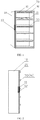
- FIG. 1 is a front view of a self-service vending device according to an embodiment of the present disclosure
- FIG. 2 is a side view of the self-service vending device of FIG. 1
- FIG. 3 is a block diagram of a self-service vending device according to embodiments of the first aspect of the present disclosure
- the self-service vending device 100 includes a device body 10, a door 20, M shelves 30 mounted in the device body 10, a weighing module 40, and a main control module 50.
- the self-service vending device 100 may be a self-service vending cabinet, a self-service vending machine, a self-service vending box or other vending devices, and has a basic structure of a common self-service vending device, for example, the self-service vending device includes a door handle 11 mounted on the door 20 for opening and closing the door 20, and a lock 12 controlled by the main control module 50 for keeping the door closed, a main portion of the lock 12 is mounted on the device body 10, a lock catch is mounted on the door 20, and the door 20 may be a transparent door, so that a user may view goods placed in the device body 10, which will not be described in detail herein.
- M is a positive integer, specifically, the shelves 30 are located in a cavity defined by the device body 10, and the number of the shelves 30 may be chosen according to specific situations. Goods may be placed on the shelves 30. In some embodiments, the same one shelf 30 is required to place a same kind of goods, and is not allowed to place other goods, and goods having the same information, such as having the same type, unit weight, unit price and the like, may be regarded as the goods of the same kind.
- the shelves 30 each may be edited with an identifier, and codes of respective shelves 30 and information related to the goods placed thereon, such as the kind, the unit weight, the unit price, etc ., may be uploaded and prestored at the time of restocking.
- the weighing module 40 includes M micro-control units 41 and M weighing units 42 disposed corresponding to the shelves 30, the micro-control unit 41 and the weighing unit 42 disposed corresponding to each shelf 30 are connected to each other, and the weighing unit 42 is configured to acquire a weight of the goods on the corresponding shelf 30.
- the main control module 50 is connected to each of the M micro control units 41, and is configured to obtain weight information of the goods on each shelf 30 after vending, and to determine vending information according to a weight change of the goods on each shelf 30 before and after vending goods.
- FIG. 4 is a block diagram of a self-service vending device according to an embodiment of the present disclosure
- the main control module 50 may include a main control board 51 and a main control microcontroller unit (MCU) 52, and through the main control board 51, information interaction between the modules of the self-service vending device 100 is realized.
- MCU main control microcontroller unit
- the main control board 51 After detecting a selection ending signal, such as a door-closing signal, the main control board 51 sends a query instruction to the main control MCU 52, the main control MCU 52 sends the query instruction to the micro-control unit 41 of each shelf 30, and the M micro-control units 41 obtain the weight information acquired by the respective weighing module 40, respectively, such as the weight of the goods on each shelf 30, and summarize the weight information of the goods on each shelf 30 to the main control MCU 52.
- a selection ending signal such as a door-closing signal
- the main control MCU 52 may retrieve a weight value of the goods on each shelf 30 acquired and stored at the last door-closing, i.e., before the current vending, calculate the weight change of the goods on each shelf 30 before and after the current vending, determine the kind of the goods placed on each shelf 30 according to the code of each shelf 30, and determine the vended number of the goods on each shelf 30 according to the weight change and the prestored relevant information, such as the unit weight, of the goods pre-placed on each shelf 30.
- a quotient of the weight change and the unit weight of the goods on a certain tray meets an integer proportion, indicating that the goods on this tray are purchased by the user
- the number of the goods purchased by the user is calculated
- a total price is obtained according to the number and the unit price of the goods purchased by the user
- the total price is automatically uploaded to a payment system to settle accounts and deduct money, so as to complete the transaction.
- the self-service vending device 100 may further include a communication module 60.
- the communication module 60 is connected to the main control module 50, and configured to upload the weight information of the goods on each shelf 30 to the server 200.
- the main control module 50 sends received data to the server 200, and the server 200 determines a name and the number of the goods purchased by the user according to the current weight change of the goods on each shelf 30, and then calculate the total price of each kind of goods according to the vended number and the unit price of each kind of goods to settle accounts.
- the server 200 may also provide the goods information and the deduction information to the client 300, and the user may clearly know the shopping condition this time through the client 300.
- the M micro-control unit 41 and the M weighing unit 42 are disposed corresponding to the M shelves, respectively, the M micro-control units 41 monitor the weight of the goods on each shelf 30, and the main control module 50 summarizes the weight information of the goods on each shelf 30 after vending, and determines the vending information according to the weight change of the goods on each shelf 30 before and after vending, without relying on the RFID electronic tag. Therefore, the self-service vending device 100 is low in cost and easy to popularize.
- the goods may be directly placed on the corresponding shelf 30 according to their kinds. It is also possible that trays may be placed on the shelves 30, and the goods may be placed on the trays according to their kinds.
- Ni trays 31 are placed on the i th shelf of the M shelves, where i is a positive integer and i ⁇ M, and Ni is a positive integer.
- the weighing unit 42 corresponding to the respective shelf 30 includes Ni weighing sensors 421, and the Ni weighing sensors 421 are arranged corresponding to the Ni trays 31 and are configured to acquire the weight of goods on the respective trays 31.
- the number of the trays 31 placed on each shelf 30 and the number of the weighing sensors 421 provided for each shelf 30 may be determined according to a specific condition.
- Each tray 31 is placed with goods of same kind and weight, and is not allowed to place goods of different kinds, and the identifier, such as the code, of each tray 31 and the relevant information of the goods placed thereon may be uploaded to the main control module 50 or the server 200 when restocking goods.
- the micro control unit 41 disposed corresponding to the respective shelf 30 is connected to the Ni weighing sensors 421 of the shelf 30, distributes addresses for the weighing sensors 421 of the shelf 30, acquires information from the weighing sensors 421 of the shelf 30, and sends the acquired information to the main control module 50 to identify the vending information.
- the main control module 50 or the server 200 is further configured to determine the kind and the unit weight of the goods on the tray 31 according to the identifier of the tray 31, and determine the vended number of the goods on the tray 31 according to the weight change of the goods on the tray 31 before and after vending and the unit weight of the goods on the tray 31, so that the price of the goods may be calculated for settlement.
- relevant information of the goods placed on the respective tray 31, including the kind, the unit weight and the unit price of the goods, may be retrieved according to the identifier of the tray 31, and it is determined whether the weight change of the goods on the tray 31 before and after vending and the unit weight of the goods on the tray 31 satisfy a relation of an integral multiple, if the relation of integral multiple is satisfied, it is determined that the user has purchased the goods, and the quotient between the weight change and the unit weight of the goods on the tray 31 is regarded as the number of the purchased goods, so that the vending information of the goods on each tray 31 may be obtained. Further, the unit price of the goods on each tray 31 is retrieved to calculate the total price, so as to automatically settle accounts and deduct money to complete the transaction.
- the self-service vending device 100 may further include an alarm module 61.
- the alarm module 61 is connected to the main control module 50, and configured to issue an alarm prompt when the quotient of the weight change of the goods on a tray 31 before and after vending and the unit weight of the goods on the tray 31 is a non-integer.
- the alarm prompt is issued to prompt the user that the position of the current goods is incorrect, and facilitate the user to place the goods to a correct position, and then to do the payment.
- alarm information may be sent to a backstage staff, so as to facilitate the backstage staff to judge whether there is vandalism.
- the self-service vending device 100 further includes an imaging apparatus 70.
- the imaging apparatus 70 is connected to the main control module 50 and is configured to acquire image information of the user when the user purchases the goods.
- the imaging apparatus 70 may be mounted at a top side or left and right sides of the inside of the device body 10. Specifically, the imaging apparatus 70 may shoot a dynamic video after the user opens the door to monitor the user's behavior.
- the backstage staff may call a whole-course purchasing video acquired by the imaging apparatus 7 after the user opens the door, so that the staff may confirm whether the user has bad behaviors, such as intentionally damage or replace the goods and the like.
- the self-service vending device 100 further includes a user information identification module 80, and the user information identification module 80 is connected to the main control module 50 and configured to detect user identification input information.
- the main control module 50 opens the lock after performing personal identity verification through the user information identification module 80, and sends a shooting instruction to the imaging apparatus 70, and the imaging apparatus 70 is powered on to shoot a video after receiving the instruction, so as to monitor the behavior of the user when purchasing goods.
- the user information identification module 80 may be a code scanning module, after the user scans through the client, the server 200 detects and checks the user information, and then sends a door opening instruction to the main control module 50 to control the lock opening, and the user may purchase the goods at will after the door is opened by code scanning.
- the lock may be opened by voice recognition, password entry, or biometric recognition, such as fingerprint information recognition, palm print information recognition, palm vein information recognition, finger vein information recognition, iris information recognition, or face information recognition, which will not be specifically limited herein.
- the self-service vending device 100 may further include a display module 90, and the display module 90 is connected to the main control module 50 and configured to output one or more of unlocking identification information, the kind and the number of current goods, details of goods purchased by the user, and deduction information, so that the user may learn about relevant conditions more intuitively.
- the user may also check the shopping information through the client, which is convenient, intuitive and clear at a glance.
- the self-service vending device 100 may also be provided with a power supply module 91, an illumination module 92, a door switch module 93, and a load control module 94.
- the power supply module 91 is connected to the main control module 50, and the device may be powered through the power supply module 91.
- the illumination module 92 is connected to the main control module 50, and may be mounted inside the device body 10 at two sides of a door frame, and is configured to supplement light for the imaging apparatus 70 during shooting when light is insufficient so as to ensure a shooting effect.
- the door switch module 93 is connected to the main control module 50, and is configured to open the lock 12 when receiving a door opening signal, and to close the lock 12 when receiving a door closing signal.
- the door 20 may be integrated, and may be connected to the device body 10 in an openable-closable manner, or may be in a split form, for example, the door 20 includes M door units, and the M door units are arranged corresponding to the M shelves, that is, one door unit is arranged corresponding to each shelf 30 to independently control the opening and closing of the door unit, which is more convenient and flexible.
- the load control module 94 is connected to the main control module 50 and configured to control a basic load of the device body 10.
- the micro control unit 41 of each shelf 30 controls the weighing sensors of the respective shelf, and summarizes weight data of each shelf 30 to the main control module 50
- the main control module 50 identifies the kind and the number of the goods purchased by the user according to the weight change of the goods on each shelf 30 or each tray 31, or the main control module 50 uploads the summarized data to the server 200
- the server 200 identifies the kind and the number of the goods purchased by the user according to the weight change.
- automatic settlement is performed according to the identified goods information.
- the imaging apparatus 70 may be used to shoot the dynamic video during the shopping of the user to monitor the user's behavior.
- the self-service vending device 100 is safe, reliable, and easy to operate, and the user experiences are improved.
- a network topology of the weighing module 40 is clear and simple in structure, and the weighing unit is convenient to position.
- a self-service vending system 1000 includes the self-service vending device 100 as described in embodiments of the above aspect and a server 200.
- the goods are placed on a certain shelf or a certain tray by kinds, and only the goods of the same kind are allowed to be placed on the same shelf or the same tray.
- the specific constitution and the position arrangement of a weighing module of the self-service vending device 100 may refer to the description of the above embodiments, which will not be elaborated here.
- the self-service vending device 100 acquires the weight information of the goods on each shelf or each tray, and further may upload the acquired weight information to the server 200.
- the server 200 performs data processing and goods recognition, and determines the vending information according to the weight change of goods on the shelf of the self-service vending device 100 before and after vending. Specifically, the server 200 acquires the number of goods purchased by the user according to the weight change of the goods on each shelf or each tray and the unit weight of the respective goods, accumulates the kind and the number of the goods on each shelf or tray purchased by the user, and calculates the total price of the goods purchased by the user according to the number and the unit price of the respective goods. Further, the vending information may be automatically sent to the payment system to settle accounts and deduct money, so as to complete the transaction.
- the self-service vending system 1000 may realize automatic goods identification and payment of the self-service vending device, without relying on the RFID electronic tag. Further, the self-service vending system 1000 has low cost, and is easy to popularize.
- the self-service vending device includes a device body, a door, M shelves mounted in the device body, a weighing module and a main control module, where M is a positive integer.
- the weighing module includes M micro control units and M weighing units disposed corresponding to the M shelves, and the main control module is connected to each of the M micro control units.
- FIG. 6 is a flow chart of a vending method for a self-service vending device according to an embodiment of the present disclosure, and as shown in FIG. 6 , the vending method for the self-service vending device according to embodiments of the present disclosure includes the followings.
- data acquisition is performed by the weighing unit corresponding to the respective shelf so as to acquire the weight information of goods on each shelf.
- vending information is determined according to the weight change of the goods on each shelf before and after vending.
- data calculation and vending information identification may be performed by the self-service vending device itself, or the relevant data may be uploaded to the server, by which the vending information is obtained.
- the kind of the goods placed on each shelf may be determined according to the code of each shelf, the vended number of the goods on each shelf is determined according to the weight change and the prestored relevant information, such as the unit weight, of the goods pre-placed on each shelf, a total price is obtained according to the vended number and the unit price of the goods on each shelf, and the total price is automatically uploaded to the payment system to settle accounts and deduct money, so as to complete the transaction.
- the vending method according to embodiments of the present disclosure can realize automatic identification and automatic transaction, does not need to change the user's shopping habit, and the safe and convenient non-secret payment makes the transaction simple and convenient, and thus the user experience is good.
- the vending method for the self-service vending device of embodiments of the present disclosure based on the weight detection of the M micro-control units and the M weighing units arranged corresponding to the M shelves, respectively, the weight of goods on each shelf is obtained, and the vending information is determined according to the weight change of the goods on each shelf before and after vending, without relying on the RFID electronic tag, the cost is low, the method is simple and easy to popularize.
- the goods may be directly placed on the shelf, or the tray may be mounted on the shelf, and the goods may be placed on the tray, but the same shelf or tray is not allowed to place the goods of different kinds.
- Ni trays 31 are placed on the i th shelf of the M shelves, where i is a positive integer and i ⁇ M, and Ni is a positive integer.
- the weighing unit corresponding to the respective shelf includes Ni weighing sensors, and the Ni weighing sensors are arranged corresponding to the Ni trays and are configured to acquire the weight of goods on the respective trays.
- the trays may be encoded, and relevant information of the trays and the respective goods placed thereon, such as the kind, the unit weight, the unit price, etc. of the respective goods, may be uploaded and prestored at the time of restocking.
- the weight change of the goods on each tray before and after vending is obtained, and the kind and the unit weight of the goods on each tray are determined according to the respective identifier of each tray; whether the weight change of the goods on a tray before and after vending is an integral multiple of the unit weight of the goods on the tray is determined; if the weight change of the goods on the tray before and after vending is an integral multiple of the unit weight of the goods on the tray, it is considered that the user selects the goods on the tray, the vended number of the goods on the tray is calculated according to the corresponding weight change and the unit weight, and all kinds of goods purchased by the user and their respective vended number are accumulated to obtain the vending information.
- the total price may be calculated and then automatically uploaded to the payment system to deduct money, so as to complete the transaction.
- an alarm prompt will be issued.
- the weight change of the goods on a tray before and after vending is not the integral multiple of the unit weight of the goods on the tray, it is considered that there are goods misplaced by the user, or the goods originally placed on the tray are replaced by the user, and at this time, the alarm prompt is issued to prompt the user that the position of the current goods is incorrect, and facilitate the user to place the goods to a correct position, and then to do the payment.
- alarm information may be sent to a backstage staff, so as to facilitate the backstage staff to judge whether there is vandalism.
- the self-service vending device further includes an imaging apparatus, and the user's behavior may be monitored by acquiring from the imaging apparatus the image information of the user when the user purchases goods. Specifically, a dynamic video may be shot by the imaging apparatus after the door is opened. When the alarm information is observed through a background system, the backstage staff may call a whole-course purchasing video acquired by the imaging apparatus after the user opens the door, so that the staff may confirm whether the user has bad behaviors, such as intentionally damage or replace the goods and the like.
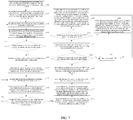
- FIG. 7 is a flow chart of a vending method for a self-service vending device according to an embodiment of the present disclosure, as shown in FIG. 7 , the vending method specifically includes the followings.
- the main control board After receiving a door closing signal, the main control board sends a tare removing instruction to the weighing module, and the weighing module performs a tare removing operation after stabilized.
- the weighing module automatically uploads a signal indicating a weight of 0 gram to the main control MCU after completing the tare removing operation, and signals of all the micro control units are summarized by the main control MCU and sent back to the main control MCU.
- the main control board sends an instruction to enter a calibration mode to the weighing module.
- the weighing module enters the calibration mode after receiving the instruction, and after the weighing module is stabilized and a zero point is calibrated, the weighing module automatically sends an instruction to an upper computer to identify that the zero point is calibrated successfully.
- step S140 whether the weighing module has not automatically send the relevant instruction after several seconds is judged, if yes, return to the step S130, otherwise, enter the step S150.
- the main control board sends an instruction for calibrating a first calibration point to the weighing module.
- the weighing module automatically returns an instruction including the first calibration point M (0 ⁇ M ⁇ K, it can be taken that M ⁇ 1/2P, and P is a maximum range of the weighing module), the main control board displays the M, and then a weight of M in total is placed.
- the main control board sends an instruction for calibrating a second calibration point to the weighing module.
- the weighing module automatically returns an instruction including the second calibration point N (1/2P ⁇ N ⁇ P, M ⁇ N, N ⁇ P), the main control board displays the N, and then a weight of N in total is placed.
- the second calibration point N is successfully calibrated, the weighing module automatically sends a calibration successful instruction to the main control board, and a weighing mode is entered after sending the instruction for Q (2 ⁇ Q ⁇ 10, and Q is an integer) times.
- the weighing module automatically returns a calibration failed instruction
- the main control board sends the instruction for calibrating the first calibration point or the second calibration point to the weighing module
- the weighing module replies that the calibration is failed, and returns to the weighing mode again after a certain time.
- the main control MCU After entering the weighing mode, the main control MCU sends received weight information to the main control board, and the main control board summarizes data and sends the data to a cloud server.
- the cloud server compares the current weight with the last weight, and judges whether the weight is changed, that is, judges whether a difference value of the current weight and the last weight is 0. If the difference value is 0, it indicates that the weight of the tray corresponding to the current weighing unit is not changed, that is, the user does not take any goods away from the tray corresponding to the weighing unit, and the step S250 is entered, otherwise, if the difference value is not 0, the step S260 is entered.
- relevant information of the goods is called from the server to view a name A and a unit weight A1 preset for the goods on the tray corresponding to the weighing unit.
- step S270 whether the weight difference value is K times of A1 is judged, where K is an integer greater than 0. If the weight difference value is K times of Al, the step S280 is entered, otherwise, the step S290 is entered.
- the server accumulates the name and the number of all goods taken out by the user, calls the unit price of each kind of goods, calculates a total price, and sends an instruction to a settlement module to deduct money, and at the same time sends the information back to the main control board and the client.
- the user may check the shopping information through the client.
- the main control board after receiving the information, sends a related instruction to a display module, and the display module outputs details of the goods purchased by the user and money deduction information, and the step S250 is entered.
- an alarm apparatus is initiated to prompt the user that the position of the current goods is incorrect, and facilitate the user to place the goods to a correct position, and then to do the payment. Meanwhile, alarm information may be sent to a backstage staff, and the whole-course video after the self-service vending device opens the door may be called, so as to facilitate the staff to confirm whether the user has bad behaviors, such as intentionally damage or replace the goods and the like.
- Some embodiments of the present disclosure also provide a non-transitory computer readable storage medium having a computer program stored therein that, when executed, causes the vending method for the self-service vending device as described in the above embodiments to be implemented.
- the goods are placed on different shelves or trays by kinds, the same shelf or tray only allows to place the same kind of goods, the weighing unit of each shelf is controlled by the micro-control module of the respective shelf, the weight data of each shelf or each tray are summarized to the main control module, and the vending information is determined according to the weight change of the goods on each shelf before and after vending, without relying on the RFID electronic tag, and the method is low in cost and easy to popularize. Further, with the imaging apparatus to monitor user's behavior, the alarm prompt will be issued when the weight change and the unit weight of a certain kind of goods do not meet an integer proportion, so that the method is safer and more reliable.
- any process or method described in a flow chart or described herein in other ways may be understood to include one or more modules, segments or portions of codes of executable instructions for achieving specific logical functions or steps in the process, and the scope of a preferred embodiment of the present disclosure includes other implementations, in which the order of execution is different from what is shown or discussed, including executing functions in a substantially simultaneous manner or in an opposite order according to the related functions.
- the logic and/or step shown in the flow chart or described in other manners herein, for example, a particular sequence table of executable instructions for realizing the logical function may be specifically achieved in any computer readable medium to be used by the instruction execution system, device or equipment (such as the system based on computers, the system comprising processors or other systems capable of obtaining the instruction from the instruction execution system, device and equipment and executing the instruction), or to be used in combination with the instruction execution system, device and equipment.
- the computer readable medium may be any device adaptive for including, storing, communicating, propagating or transferring programs to be used by or in combination with the instruction execution system, device or equipment.
- the computer readable medium comprise but are not limited to: an electronic connection (an electronic device) with one or more wires, a portable computer enclosure (a magnetic device), a random access memory (RAM), a read only memory (ROM), an erasable programmable read-only memory (EPROM or a flash memory), an optical fiber device and a portable compact disk read-only memory (CDROM).
- the computer readable medium may even be a paper or other appropriate medium capable of printing programs thereon, this is because, for example, the paper or other appropriate medium may be optically scanned and then edited, decrypted or processed with other appropriate methods when necessary to obtain the programs in an electric manner, and then the programs may be stored in the computer memories.
- each part of the present disclosure may be realized by hardware, software, firmware or combination thereof.
- a plurality of steps or methods may be realized by software or firmware stored in the memory and executed by an appropriate instruction execution system.
- the hardware likewise in another embodiment, it may be realized by one or a combination of the following techniques known in the art: a discrete logic circuit having a logic gate circuit for realizing a logic function of a data signal, an application-specific integrated circuit having an appropriate combination logic gate circuit, a programmable gate array (PGA), a field programmable gate array (FPGA), etc.
Landscapes
- Physics & Mathematics (AREA)
- General Physics & Mathematics (AREA)
- Business, Economics & Management (AREA)
- Accounting & Taxation (AREA)
- Finance (AREA)
- Strategic Management (AREA)
- General Business, Economics & Management (AREA)
- Engineering & Computer Science (AREA)
- Theoretical Computer Science (AREA)
- Control Of Vending Devices And Auxiliary Devices For Vending Devices (AREA)
- Vending Machines For Individual Products (AREA)
- Management, Administration, Business Operations System, And Electronic Commerce (AREA)
Abstract
Description
- This application claims priority to and benefits of Chinese Patent Application No.
201810159568.6 201820272408.8, both filed on February 26, 2018 - The present disclosure relates to the field of intelligent device technology, and more particularly to a self-service vending device, a vending method for a self-service vending device, and a self-service vending system.
- At present, for a self-service vending device, an RFID (Radio Frequency Identification) electronic tag needs to be attached to each of goods, a reader and an antenna are mounted in a cabinet, and through the reader, the RFID tag on the goods in the cabinet is read, the goods in the cabinet before and after the door is closed are acquired, and then the goods taken out by a user is confirmed. For example, in some related techniques, a self-service vending method and a self-service vending machine are disclosed, but hardware and a flow processing method are not involved. In some related techniques, a transmitter and an infrared receiver are mounted above and below a shelf, respectively, and whether there are goods on the current shelf is judged through infrared induction, but the RFID electronic tag still needs to be attached to each of goods. However, the RFID tag is high in cost at present, and a method to identify goods by reading the RFID tag is not easy to popularize.
- Embodiments of the present disclosure seek to solve at least one of the problems existing in the related art to at least some extent.
- Accordingly, a first objective of the present disclosure is to provide a self-service vending device, which does not rely on a RFID electronic tag to identify vending information, and is low in cost.
- A second objective of the present disclosure is to provide a self-service vending system.
- A third objective of the present disclosure is to provide a vending method for a self-service vending device.
- A fourth objective of the present disclosure is to provide a non-transitory computer readable storage medium.
- In order to achieve the above objectives, embodiments of a first aspect of the present disclosure provide the self-service vending device. The device includes a device body, a door, at least one shelf mounted in the device body, a weighing module, and a main control module. The weighing module includes a micro-control unit and a weighing unit disposed corresponding to each shelf, the micro-control unit and the weighing unit disposed corresponding to each shelf are connected to each other, and the weighing unit is configured to acquire a weight of goods on the corresponding shelf. The main control module is connected to the micro-control unit corresponding to each shelf, and configured to obtain weight information of the goods on each shelf after vending, and to determine vending information according to a weight change of the goods on each shelf before and after vending.
- In the self-service vending device according to embodiments of the present disclosure, each of the at least one shelf is provided with the micro-control unit and the weighing unit, the weight of the goods on each shelf is monitored by the micro-control unit corresponding to each shelf, the weight information of the goods on each shelf after vending is summarized by the main control module, and the vending information is determined according to the weight change of the goods on each shelf before and after vending, without relying on the RFID electronic tag. In addition, the self-service vending device according to embodiments of the present disclosure is low in cost and easy to popularize.
- In some embodiments of the present disclosure, any of the at least one shelf is provided with at least one tray; the weighing unit corresponding to each shelf includes the same number of weighing sensors as that of the trays, and the weighing sensor is arranged corresponding to the tray and configured to acquire the weight of the goods on the tray.
- In some embodiments of the present disclosure, the self-service vending device further includes an imaging apparatus. The imaging apparatus is connected to the main control module and configured to acquire image information when a user purchases goods, so that a purchasing behavior of the user may be monitored, and the device is safer and more reliable.
- In some embodiments of the present disclosure, the self-service vending device further includes a communication module. The communication module is connected to the main control module and configured to upload the weight information of the goods on each shelf to a server.
- In some embodiments of the present disclosure, the main control module or the server is further configured to determine a kind and a unit weight of the goods on the tray according to an identifier of the tray, and determine the vended number of the goods on the tray according to the weight change of the goods on the tray before and after vending and the unit weight of the goods on the tray.
- In some embodiments of the present disclosure, the self-service vending device further includes an alarm module. The alarm module is connected to the main control module and configured to issue an alarm prompt when it is confirmed that a quotient of the weight change of the goods on the tray before and after vending and the unit weight of the goods on the tray is a non-integer. In this way, related personnel may be timely reminded of an abnormal condition that the goods may be misplaced or replaced.
- In some embodiments of the present disclosure, the door includes at least one door unit, and the at least one door unit is arranged corresponding to the at least one shelf, which is more convenient and flexible.
- In some embodiments of the present disclosure, the self-service vending device further includes a user information identification module. The user information identification module is connected to the main control module and configured to detect user identification input information.
- In some embodiments of the present disclosure, the self-service vending device further includes a display module. The display module is connected to the main control module and configured to output one or more of unlocking identification information, the kind and the number of current goods, details of goods purchased by the user and deduction information, which is more visual.
- In order to achieve the above objectives, embodiments of a second aspect of the present disclosure provide a self-service vending system. The self-service vending system includes the self-service vending device described above and a server. The server is configured to determine vending information according to a weight change of the goods on the shelf of the self-service vending device before and after vending.
- According to the self-service vending system of embodiments of the present disclosure, based on the self-service vending device and the server, automatic goods identification and payment of the self-service vending device may be realized without relying on the RFID electronic tag, and the self-service vending system is low in cost and easy to popularize.
- In order to achieve the above objectives, embodiments of a third aspect of the present disclosure provide a vending method for a self-service vending device. The self-service vending device includes a device body, a door, at least one shelf mounted in the device body, a weighing module, and a main control module. The weighing module includes a micro-control unit and a weighing unit corresponding to each shelf, and the main control module is connected to the micro-control unit corresponding to each shelf. The vending method includes: acquiring weight information of goods on each shelf after vending; calculating a weight change of the goods on each shelf before and after vending; and determining vending information according to the weight change of the goods on each shelf before and after vending.
- According to the vending method for the self-service vending device of embodiments of the present disclosure, based on the weight detection of the micro-control unit and the weighing unit arranged corresponding to each of the at least one shelf, the weight of goods on each shelf is obtained, and the vending information is determined according to the weight change of the goods on each shelf before and after vending, without relying on the RFID electronic tag, the cost is low, and the method is simple and easy to popularize.
- In some embodiments of the present disclosure, any of the at least one shelf is provided with at least one tray; the weighing unit corresponding to each shelf includes the same number of weighing sensors as that of the trays, and the weighing sensor is arranged corresponding to the tray and configured to acquire the weight of the goods on the tray.
- In some embodiments of the present disclosure, determining vending information according to the weight change of the goods on each shelf before and after vending includes: determining a kind and a unit weight of the goods on the tray according to an identifier of the tray; and confirming that the weight change of the goods on the tray before and after vending is an integral multiple of the unit weight of the goods on the tray, and calculating the vended number of the goods on the tray according to the weight change and the unit weight.
- In some embodiments of the present disclosure, determining vending information according to the weight change of the goods on each shelf before and after vending further includes: issuing an alarm prompt when it is confirmed that a quotient of the weight change of the goods on the tray before and after vending and the unit weight of the goods on the tray is a non-integer. In this way, related personnel may be timely reminded of an abnormal condition that the goods may be misplaced or replaced.
- In some embodiments of the present disclosure, the self-service vending device further includes an imaging apparatus, and the vending method further includes: acquiring image information acquired by the imaging apparatus when a user purchases goods so as to monitor the user's behavior, so that the vending method is safer and more reliable.
- To achieve the above objectives, embodiments of a fourth aspect of the present disclosure provide a non-transitory computer readable storage medium having a computer program stored therein that, when executed, causes the vending method for the self-service vending device as described above to be implemented.
- According to the non-transitory computer readable storage medium of embodiments of the present disclosure, by executing the vending method for the self-service vending device as described above, the misplacement or replacement of the goods may be identified without relying on the RFID tag, thereby guaranteeing benefits of merchants and users.
-
-
FIG. 1 is a front view of a self-service vending device according to an embodiment of the present disclosure; -
FIG. 2 is a side view of the self-service vending device ofFIG. 1 ; -
FIG. 3 is a block diagram of a self-service vending device according to an embodiment of the present disclosure; -
FIG. 4 is a block diagram of a self-service vending device according to an embodiment of the present disclosure; -
FIG. 5 is a block diagram of a self-service vending system according to an embodiment of the present disclosure; -
FIG. 6 is a flow chart of a vending method for a self-service vending device according to an embodiment of the present disclosure; and -
FIG. 7 is a flow chart of a vending method for a self-service vending device according to an embodiment of the present disclosure. -
- self-
service vending system 1000; - self-
service vending device 100 andserver 200,client 300; -
device body 10,door 20,handle 11,shelf 30,tray 31,weighing module 40,micro-control unit 41,weighing unit 42,main control module 50,main control board 51,main control MCU 52,communication module 60, alarm module 61,imaging apparatus 70, userinformation identification module 80, display module 90,power supply module 91,illumination module 92,door switch module 93,load control module 94 andweighing sensor 421. - Embodiments of the present disclosure will be described in detail below, examples of which are illustrated in the drawings. The same or similar elements and the elements having the same or similar functions are denoted by like reference numerals throughout the descriptions. Embodiments described below with reference to drawings are explanatory, serve to explain the present disclosure, and are not construed to limit the present disclosure.
- A self-service vending device according to embodiments of a first aspect of the present disclosure is described below with reference to accompanying drawings.
-
FIG. 1 is a front view of a self-service vending device according to an embodiment of the present disclosure,FIG. 2 is a side view of the self-service vending device ofFIG. 1 ,FIG. 3 is a block diagram of a self-service vending device according to embodiments of the first aspect of the present disclosure, and as shown inFIG. 1 to FIG. 3 , the self-service vending device 100 according to embodiments of the present disclosure includes adevice body 10, adoor 20, Mshelves 30 mounted in thedevice body 10, a weighingmodule 40, and amain control module 50. - In embodiments of the present disclosure, the self-
service vending device 100 may be a self-service vending cabinet, a self-service vending machine, a self-service vending box or other vending devices, and has a basic structure of a common self-service vending device, for example, the self-service vending device includes adoor handle 11 mounted on thedoor 20 for opening and closing thedoor 20, and alock 12 controlled by themain control module 50 for keeping the door closed, a main portion of thelock 12 is mounted on thedevice body 10, a lock catch is mounted on thedoor 20, and thedoor 20 may be a transparent door, so that a user may view goods placed in thedevice body 10, which will not be described in detail herein. - M is a positive integer, specifically, the
shelves 30 are located in a cavity defined by thedevice body 10, and the number of theshelves 30 may be chosen according to specific situations. Goods may be placed on theshelves 30. In some embodiments, the same oneshelf 30 is required to place a same kind of goods, and is not allowed to place other goods, and goods having the same information, such as having the same type, unit weight, unit price and the like, may be regarded as the goods of the same kind. Theshelves 30 each may be edited with an identifier, and codes ofrespective shelves 30 and information related to the goods placed thereon, such as the kind, the unit weight, the unit price, etc., may be uploaded and prestored at the time of restocking. - In some embodiments of the present disclosure, as shown in
FIG. 3 , the weighingmodule 40 includesM micro-control units 41 andM weighing units 42 disposed corresponding to theshelves 30, themicro-control unit 41 and the weighingunit 42 disposed corresponding to eachshelf 30 are connected to each other, and the weighingunit 42 is configured to acquire a weight of the goods on thecorresponding shelf 30. - The
main control module 50 is connected to each of the Mmicro control units 41, and is configured to obtain weight information of the goods on eachshelf 30 after vending, and to determine vending information according to a weight change of the goods on eachshelf 30 before and after vending goods. - Specifically,
FIG. 4 is a block diagram of a self-service vending device according to an embodiment of the present disclosure, as shown inFIG. 4 , themain control module 50 may include amain control board 51 and a main control microcontroller unit (MCU) 52, and through themain control board 51, information interaction between the modules of the self-service vending device 100 is realized. After detecting a selection ending signal, such as a door-closing signal, themain control board 51 sends a query instruction to themain control MCU 52, themain control MCU 52 sends the query instruction to themicro-control unit 41 of eachshelf 30, and theM micro-control units 41 obtain the weight information acquired by the respective weighingmodule 40, respectively, such as the weight of the goods on eachshelf 30, and summarize the weight information of the goods on eachshelf 30 to themain control MCU 52. In some embodiments of the present disclosure, themain control MCU 52 may retrieve a weight value of the goods on eachshelf 30 acquired and stored at the last door-closing, i.e., before the current vending, calculate the weight change of the goods on eachshelf 30 before and after the current vending, determine the kind of the goods placed on eachshelf 30 according to the code of eachshelf 30, and determine the vended number of the goods on eachshelf 30 according to the weight change and the prestored relevant information, such as the unit weight, of the goods pre-placed on eachshelf 30. If A quotient of the weight change and the unit weight of the goods on a certain tray meets an integer proportion, indicating that the goods on this tray are purchased by the user, the number of the goods purchased by the user is calculated, a total price is obtained according to the number and the unit price of the goods purchased by the user, and the total price is automatically uploaded to a payment system to settle accounts and deduct money, so as to complete the transaction. - In some embodiments of the present disclosure, determining the vending information according to the weight change of the goods on each
shelf 30 before and after vending may also be implemented by the server. As shown inFIG. 4 , the self-service vending device 100 may further include acommunication module 60. Thecommunication module 60 is connected to themain control module 50, and configured to upload the weight information of the goods on eachshelf 30 to theserver 200. Specifically, themain control module 50 sends received data to theserver 200, and theserver 200 determines a name and the number of the goods purchased by the user according to the current weight change of the goods on eachshelf 30, and then calculate the total price of each kind of goods according to the vended number and the unit price of each kind of goods to settle accounts. Theserver 200 may also provide the goods information and the deduction information to theclient 300, and the user may clearly know the shopping condition this time through theclient 300. - In the self-
service vending device 100 according to embodiments of the present disclosure, theM micro-control unit 41 and theM weighing unit 42 are disposed corresponding to the M shelves, respectively, theM micro-control units 41 monitor the weight of the goods on eachshelf 30, and themain control module 50 summarizes the weight information of the goods on eachshelf 30 after vending, and determines the vending information according to the weight change of the goods on eachshelf 30 before and after vending, without relying on the RFID electronic tag. Therefore, the self-service vending device 100 is low in cost and easy to popularize. - The goods may be directly placed on the
corresponding shelf 30 according to their kinds. It is also possible that trays may be placed on theshelves 30, and the goods may be placed on the trays according to their kinds. In some embodiments of the present disclosure, as shown inFIG. 4 ,Ni trays 31 are placed on the ith shelf of the M shelves, where i is a positive integer and i ≤ M, and Ni is a positive integer. The weighingunit 42 corresponding to therespective shelf 30 includesNi weighing sensors 421, and theNi weighing sensors 421 are arranged corresponding to theNi trays 31 and are configured to acquire the weight of goods on therespective trays 31. The number of thetrays 31 placed on eachshelf 30 and the number of the weighingsensors 421 provided for eachshelf 30 may be determined according to a specific condition. Eachtray 31 is placed with goods of same kind and weight, and is not allowed to place goods of different kinds, and the identifier, such as the code, of eachtray 31 and the relevant information of the goods placed thereon may be uploaded to themain control module 50 or theserver 200 when restocking goods. Themicro control unit 41 disposed corresponding to therespective shelf 30 is connected to theNi weighing sensors 421 of theshelf 30, distributes addresses for the weighingsensors 421 of theshelf 30, acquires information from the weighingsensors 421 of theshelf 30, and sends the acquired information to themain control module 50 to identify the vending information. - In some embodiments of the present disclosure, the
main control module 50 or theserver 200 is further configured to determine the kind and the unit weight of the goods on thetray 31 according to the identifier of thetray 31, and determine the vended number of the goods on thetray 31 according to the weight change of the goods on thetray 31 before and after vending and the unit weight of the goods on thetray 31, so that the price of the goods may be calculated for settlement. - Specifically, relevant information of the goods placed on the
respective tray 31, including the kind, the unit weight and the unit price of the goods, may be retrieved according to the identifier of thetray 31, and it is determined whether the weight change of the goods on thetray 31 before and after vending and the unit weight of the goods on thetray 31 satisfy a relation of an integral multiple, if the relation of integral multiple is satisfied, it is determined that the user has purchased the goods, and the quotient between the weight change and the unit weight of the goods on thetray 31 is regarded as the number of the purchased goods, so that the vending information of the goods on eachtray 31 may be obtained. Further, the unit price of the goods on eachtray 31 is retrieved to calculate the total price, so as to automatically settle accounts and deduct money to complete the transaction. - In some embodiments of the present disclosure, as shown in
FIG. 4 , the self-service vending device 100 according to embodiments of the present disclosure may further include an alarm module 61. The alarm module 61 is connected to themain control module 50, and configured to issue an alarm prompt when the quotient of the weight change of the goods on atray 31 before and after vending and the unit weight of the goods on thetray 31 is a non-integer. Specifically, if the weight change of the goods on atray 31 before and after vending is not the integral multiple of the unit weight of the goods on thetray 31, it is considered that there are goods misplaced by the user, or the goods originally placed on thetray 31 are replaced by the user, and at this time, the alarm prompt is issued to prompt the user that the position of the current goods is incorrect, and facilitate the user to place the goods to a correct position, and then to do the payment. Meanwhile, alarm information may be sent to a backstage staff, so as to facilitate the backstage staff to judge whether there is vandalism. - In some embodiments, as shown in
FIG. 1 to FIG. 4 , the self-service vending device 100 further includes animaging apparatus 70. Theimaging apparatus 70 is connected to themain control module 50 and is configured to acquire image information of the user when the user purchases the goods. Theimaging apparatus 70 may be mounted at a top side or left and right sides of the inside of thedevice body 10. Specifically, theimaging apparatus 70 may shoot a dynamic video after the user opens the door to monitor the user's behavior. When the alarm information is observed through a background system, the backstage staff may call a whole-course purchasing video acquired by the imaging apparatus 7 after the user opens the door, so that the staff may confirm whether the user has bad behaviors, such as intentionally damage or replace the goods and the like. - In some embodiments, as shown in
FIG. 4 , the self-service vending device 100 further includes a userinformation identification module 80, and the userinformation identification module 80 is connected to themain control module 50 and configured to detect user identification input information. For example, themain control module 50 opens the lock after performing personal identity verification through the userinformation identification module 80, and sends a shooting instruction to theimaging apparatus 70, and theimaging apparatus 70 is powered on to shoot a video after receiving the instruction, so as to monitor the behavior of the user when purchasing goods. As an example, the userinformation identification module 80 may be a code scanning module, after the user scans through the client, theserver 200 detects and checks the user information, and then sends a door opening instruction to themain control module 50 to control the lock opening, and the user may purchase the goods at will after the door is opened by code scanning. Besides the code scanning, the lock may be opened by voice recognition, password entry, or biometric recognition, such as fingerprint information recognition, palm print information recognition, palm vein information recognition, finger vein information recognition, iris information recognition, or face information recognition, which will not be specifically limited herein. - As shown in
FIG. 4 , the self-service vending device 100 may further include a display module 90, and the display module 90 is connected to themain control module 50 and configured to output one or more of unlocking identification information, the kind and the number of current goods, details of goods purchased by the user, and deduction information, so that the user may learn about relevant conditions more intuitively. The user may also check the shopping information through the client, which is convenient, intuitive and clear at a glance. - In embodiments of the present disclosure, as shown in
FIG. 4 , the self-service vending device 100 may also be provided with apower supply module 91, anillumination module 92, adoor switch module 93, and aload control module 94. Thepower supply module 91 is connected to themain control module 50, and the device may be powered through thepower supply module 91. Theillumination module 92 is connected to themain control module 50, and may be mounted inside thedevice body 10 at two sides of a door frame, and is configured to supplement light for theimaging apparatus 70 during shooting when light is insufficient so as to ensure a shooting effect. Thedoor switch module 93 is connected to themain control module 50, and is configured to open thelock 12 when receiving a door opening signal, and to close thelock 12 when receiving a door closing signal. In some embodiments, thedoor 20 may be integrated, and may be connected to thedevice body 10 in an openable-closable manner, or may be in a split form, for example, thedoor 20 includes M door units, and the M door units are arranged corresponding to the M shelves, that is, one door unit is arranged corresponding to eachshelf 30 to independently control the opening and closing of the door unit, which is more convenient and flexible. Theload control module 94 is connected to themain control module 50 and configured to control a basic load of thedevice body 10. - In summary, with the self-
service vending device 100 according to embodiments of the present disclosure, themicro control unit 41 of eachshelf 30 controls the weighing sensors of the respective shelf, and summarizes weight data of eachshelf 30 to themain control module 50, themain control module 50 identifies the kind and the number of the goods purchased by the user according to the weight change of the goods on eachshelf 30 or eachtray 31, or themain control module 50 uploads the summarized data to theserver 200, and theserver 200 identifies the kind and the number of the goods purchased by the user according to the weight change. Further, automatic settlement is performed according to the identified goods information. Simultaneously, in order to prevent the vandalism of the user, theimaging apparatus 70 may be used to shoot the dynamic video during the shopping of the user to monitor the user's behavior. The self-service vending device 100 according to embodiments of the present disclosure is safe, reliable, and easy to operate, and the user experiences are improved. By adopting the solution, a network topology of the weighingmodule 40 is clear and simple in structure, and the weighing unit is convenient to position. - Based on the self-service vending device according to embodiments of the above aspect, as shown in
FIG. 5 , a self-service vending system 1000 according to embodiments of a second aspect of the present disclosure includes the self-service vending device 100 as described in embodiments of the above aspect and aserver 200. - In embodiments of the present disclosure, the goods are placed on a certain shelf or a certain tray by kinds, and only the goods of the same kind are allowed to be placed on the same shelf or the same tray. The specific constitution and the position arrangement of a weighing module of the self-
service vending device 100 may refer to the description of the above embodiments, which will not be elaborated here. - During the goods purchasing process, the self-
service vending device 100 acquires the weight information of the goods on each shelf or each tray, and further may upload the acquired weight information to theserver 200. Theserver 200 performs data processing and goods recognition, and determines the vending information according to the weight change of goods on the shelf of the self-service vending device 100 before and after vending. Specifically, theserver 200 acquires the number of goods purchased by the user according to the weight change of the goods on each shelf or each tray and the unit weight of the respective goods, accumulates the kind and the number of the goods on each shelf or tray purchased by the user, and calculates the total price of the goods purchased by the user according to the number and the unit price of the respective goods. Further, the vending information may be automatically sent to the payment system to settle accounts and deduct money, so as to complete the transaction. - Based on the self-
service vending device 100 and theserver 200, the self-service vending system 1000 according to embodiments of the present disclosure may realize automatic goods identification and payment of the self-service vending device, without relying on the RFID electronic tag. Further, the self-service vending system 1000 has low cost, and is easy to popularize. - A vending method for a self-service vending device according to embodiments of a third aspect of the present disclosure is described below with reference to the accompanying drawings. In embodiments of the present disclosure, the self-service vending device includes a device body, a door, M shelves mounted in the device body, a weighing module and a main control module, where M is a positive integer. The weighing module includes M micro control units and M weighing units disposed corresponding to the M shelves, and the main control module is connected to each of the M micro control units.
-
FIG. 6 is a flow chart of a vending method for a self-service vending device according to an embodiment of the present disclosure, and as shown inFIG. 6 , the vending method for the self-service vending device according to embodiments of the present disclosure includes the followings. - At S1, weight information of goods on each shelf after vending is acquired.
- For example, data acquisition is performed by the weighing unit corresponding to the respective shelf so as to acquire the weight information of goods on each shelf.
- At S2, a weight change of the goods on each shelf before and after vending is calculated.
- At S3, vending information is determined according to the weight change of the goods on each shelf before and after vending.
- In embodiments of the present disclosure, data calculation and vending information identification may be performed by the self-service vending device itself, or the relevant data may be uploaded to the server, by which the vending information is obtained.
- Specifically, after the user selects goods, and when a selection completing signal, such as a door closing signal is detected, a weight value of the goods on each shelf acquired and stored at the last door-closing, i.e., before the current vending, is retrieved, the weight change of the goods on each shelf before and after the current vending is calculated, the kind of the goods placed on each shelf may be determined according to the code of each shelf, the vended number of the goods on each shelf is determined according to the weight change and the prestored relevant information, such as the unit weight, of the goods pre-placed on each shelf, a total price is obtained according to the vended number and the unit price of the goods on each shelf, and the total price is automatically uploaded to the payment system to settle accounts and deduct money, so as to complete the transaction. The vending method according to embodiments of the present disclosure can realize automatic identification and automatic transaction, does not need to change the user's shopping habit, and the safe and convenient non-secret payment makes the transaction simple and convenient, and thus the user experience is good.
- According to the vending method for the self-service vending device of embodiments of the present disclosure, based on the weight detection of the M micro-control units and the M weighing units arranged corresponding to the M shelves, respectively, the weight of goods on each shelf is obtained, and the vending information is determined according to the weight change of the goods on each shelf before and after vending, without relying on the RFID electronic tag, the cost is low, the method is simple and easy to popularize.
- In embodiments of the present disclosure, the goods may be directly placed on the shelf, or the tray may be mounted on the shelf, and the goods may be placed on the tray, but the same shelf or tray is not allowed to place the goods of different kinds.
- In some embodiments of the present disclosure,
Ni trays 31 are placed on the ith shelf of the M shelves, where i is a positive integer and i ≤ M, and Ni is a positive integer. The weighing unit corresponding to the respective shelf includes Ni weighing sensors, and the Ni weighing sensors are arranged corresponding to the Ni trays and are configured to acquire the weight of goods on the respective trays. The trays may be encoded, and relevant information of the trays and the respective goods placed thereon, such as the kind, the unit weight, the unit price, etc. of the respective goods, may be uploaded and prestored at the time of restocking. After the user selects the goods, the weight change of the goods on each tray before and after vending is obtained, and the kind and the unit weight of the goods on each tray are determined according to the respective identifier of each tray; whether the weight change of the goods on a tray before and after vending is an integral multiple of the unit weight of the goods on the tray is determined; if the weight change of the goods on the tray before and after vending is an integral multiple of the unit weight of the goods on the tray, it is considered that the user selects the goods on the tray, the vended number of the goods on the tray is calculated according to the corresponding weight change and the unit weight, and all kinds of goods purchased by the user and their respective vended number are accumulated to obtain the vending information. Further, according to the vended number and the unit price of each kind of goods, the total price may be calculated and then automatically uploaded to the payment system to deduct money, so as to complete the transaction. With the method of the present disclosure, neither there is a need to make any modification to the goods or attach labels to the goods, nor to additionally increase the cost of the goods. - In embodiments of the present disclosure, if the quotient of the weight change of the goods on a tray before and after vending and the unit weight of the goods on the tray is a non-integer, an alarm prompt will be issued. Specifically, if the weight change of the goods on a tray before and after vending is not the integral multiple of the unit weight of the goods on the tray, it is considered that there are goods misplaced by the user, or the goods originally placed on the tray are replaced by the user, and at this time, the alarm prompt is issued to prompt the user that the position of the current goods is incorrect, and facilitate the user to place the goods to a correct position, and then to do the payment. Meanwhile, alarm information may be sent to a backstage staff, so as to facilitate the backstage staff to judge whether there is vandalism.
- In some embodiments, the self-service vending device further includes an imaging apparatus, and the user's behavior may be monitored by acquiring from the imaging apparatus the image information of the user when the user purchases goods. Specifically, a dynamic video may be shot by the imaging apparatus after the door is opened. When the alarm information is observed through a background system, the backstage staff may call a whole-course purchasing video acquired by the imaging apparatus after the user opens the door, so that the staff may confirm whether the user has bad behaviors, such as intentionally damage or replace the goods and the like.
- In a practical application, when the self-service vending device is provided with the weighing module, the weighing module needs to remove tare, return to zero and be calibrated so as to obtain more accurate weighing data.
FIG. 7 is a flow chart of a vending method for a self-service vending device according to an embodiment of the present disclosure, as shown inFIG. 7 , the vending method specifically includes the followings. - At S100, after receiving a door closing signal, the main control board sends a tare removing instruction to the weighing module, and the weighing module performs a tare removing operation after stabilized.
- At S 110, the weighing module automatically uploads a signal indicating a weight of 0 gram to the main control MCU after completing the tare removing operation, and signals of all the micro control units are summarized by the main control MCU and sent back to the main control MCU.
- At S120, the main control board sends an instruction to enter a calibration mode to the weighing module.
- At S130, the weighing module enters the calibration mode after receiving the instruction, and after the weighing module is stabilized and a zero point is calibrated, the weighing module automatically sends an instruction to an upper computer to identify that the zero point is calibrated successfully.
- At S140, whether the weighing module has not automatically send the relevant instruction after several seconds is judged, if yes, return to the step S130, otherwise, enter the step S150.
- At S150, the main control board sends an instruction for calibrating a first calibration point to the weighing module.
- At S160, the weighing module automatically returns an instruction including the first calibration point M (0 < M < K, it can be taken that M ≈ 1/2P, and P is a maximum range of the weighing module), the main control board displays the M, and then a weight of M in total is placed.
- At S170, the main control board sends an instruction for calibrating a second calibration point to the weighing module.
- At S180, the weighing module automatically returns an instruction including the second calibration point N (1/2P < N < P, M < N, N ≈ P), the main control board displays the N, and then a weight of N in total is placed.
- At S190, whether the weighing module has not automatically send the instruction including the first calibration point and the instruction including the second calibration point after several seconds is judged, if yes, return to the step S170, otherwise, enter the step S200.
- At S200, the second calibration point N is successfully calibrated, the weighing module automatically sends a calibration successful instruction to the main control board, and a weighing mode is entered after sending the instruction for Q (2 ≤ Q ≤ 10, and Q is an integer) times.
- At S210, if the calibration fails, the weighing module automatically returns a calibration failed instruction, the main control board sends the instruction for calibrating the first calibration point or the second calibration point to the weighing module, the weighing module replies that the calibration is failed, and returns to the weighing mode again after a certain time.
- At S220, in the calibration mode, if there is no operation, the weighing mode is returned again after the certain time.
- At S230, after entering the weighing mode, the main control MCU sends received weight information to the main control board, and the main control board summarizes data and sends the data to a cloud server.
- At S240, the cloud server compares the current weight with the last weight, and judges whether the weight is changed, that is, judges whether a difference value of the current weight and the last weight is 0. If the difference value is 0, it indicates that the weight of the tray corresponding to the current weighing unit is not changed, that is, the user does not take any goods away from the tray corresponding to the weighing unit, and the step S250 is entered, otherwise, if the difference value is not 0, the step S260 is entered.
- At S250, the process is ended.
- At S260, relevant information of the goods is called from the server to view a name A and a unit weight A1 preset for the goods on the tray corresponding to the weighing unit.
- At S270, whether the weight difference value is K times of A1 is judged, where K is an integer greater than 0. If the weight difference value is K times of Al, the step S280 is entered, otherwise, the step S290 is entered.
- At S280, it is determined that the user purchases the goods A having the unit weight of A1, the server accumulates the name and the number of all goods taken out by the user, calls the unit price of each kind of goods, calculates a total price, and sends an instruction to a settlement module to deduct money, and at the same time sends the information back to the main control board and the client. The user may check the shopping information through the client. The main control board, after receiving the information, sends a related instruction to a display module, and the display module outputs details of the goods purchased by the user and money deduction information, and the step S250 is entered.
- At S290, an alarm apparatus is initiated to prompt the user that the position of the current goods is incorrect, and facilitate the user to place the goods to a correct position, and then to do the payment. Meanwhile, alarm information may be sent to a backstage staff, and the whole-course video after the self-service vending device opens the door may be called, so as to facilitate the staff to confirm whether the user has bad behaviors, such as intentionally damage or replace the goods and the like.
- Some embodiments of the present disclosure also provide a non-transitory computer readable storage medium having a computer program stored therein that, when executed, causes the vending method for the self-service vending device as described in the above embodiments to be implemented.
- Generally speaking, according to the vending method for the self-service vending device as described in embodiments of the disclosure, the goods are placed on different shelves or trays by kinds, the same shelf or tray only allows to place the same kind of goods, the weighing unit of each shelf is controlled by the micro-control module of the respective shelf, the weight data of each shelf or each tray are summarized to the main control module, and the vending information is determined according to the weight change of the goods on each shelf before and after vending, without relying on the RFID electronic tag, and the method is low in cost and easy to popularize. Further, with the imaging apparatus to monitor user's behavior, the alarm prompt will be issued when the weight change and the unit weight of a certain kind of goods do not meet an integer proportion, so that the method is safer and more reliable.
- It should be noted that, in the description of the present disclosure, any process or method described in a flow chart or described herein in other ways may be understood to include one or more modules, segments or portions of codes of executable instructions for achieving specific logical functions or steps in the process, and the scope of a preferred embodiment of the present disclosure includes other implementations, in which the order of execution is different from what is shown or discussed, including executing functions in a substantially simultaneous manner or in an opposite order according to the related functions. These and other aspects should be understood by those skilled in the art.
- The logic and/or step shown in the flow chart or described in other manners herein, for example, a particular sequence table of executable instructions for realizing the logical function, may be specifically achieved in any computer readable medium to be used by the instruction execution system, device or equipment (such as the system based on computers, the system comprising processors or other systems capable of obtaining the instruction from the instruction execution system, device and equipment and executing the instruction), or to be used in combination with the instruction execution system, device and equipment. As to the specification, "the computer readable medium" may be any device adaptive for including, storing, communicating, propagating or transferring programs to be used by or in combination with the instruction execution system, device or equipment. More specific examples of the computer readable medium comprise but are not limited to: an electronic connection (an electronic device) with one or more wires, a portable computer enclosure (a magnetic device), a random access memory (RAM), a read only memory (ROM), an erasable programmable read-only memory (EPROM or a flash memory), an optical fiber device and a portable compact disk read-only memory (CDROM). In addition, the computer readable medium may even be a paper or other appropriate medium capable of printing programs thereon, this is because, for example, the paper or other appropriate medium may be optically scanned and then edited, decrypted or processed with other appropriate methods when necessary to obtain the programs in an electric manner, and then the programs may be stored in the computer memories.
- It should be understood that each part of the present disclosure may be realized by hardware, software, firmware or combination thereof. In the above embodiments, a plurality of steps or methods may be realized by software or firmware stored in the memory and executed by an appropriate instruction execution system. For example, if it is realized by the hardware, likewise in another embodiment, it may be realized by one or a combination of the following techniques known in the art: a discrete logic circuit having a logic gate circuit for realizing a logic function of a data signal, an application-specific integrated circuit having an appropriate combination logic gate circuit, a programmable gate array (PGA), a field programmable gate array (FPGA), etc.
- It would be understood by those skilled in the art that all or a part of the steps carried by the method in the above-described embodiments may be completed by relevant hardware instructed by a program. The program may be stored in a computer readable storage medium. When the program is executed, one or a combination of the steps of the method in the above-described embodiments may be completed.
- Reference throughout this specification to "an embodiment," "some embodiments," "an example," "a specific example," or "some examples," means that a particular feature, structure, material, or characteristic described in connection with the embodiment or example is included in at least one embodiment or example of the present disclosure. The appearances of the above phrases in various places throughout this specification are not necessarily referring to the same embodiment or example of the present disclosure. Furthermore, the particular features, structures, materials, or characteristics may be combined in any suitable manner in one or more embodiments or examples. In addition, different embodiments or examples and features of different embodiments or examples described in the specification may be combined by those skilled in the art without mutual contradiction.
- Although embodiments of present disclosure have been shown and described above, it should be understood that above embodiments are just explanatory, and cannot be construed to limit the present disclosure, and for those skilled in the art, changes, modifications, alternatives, and variations can be made to the embodiments within the scope of the present disclosure.
Claims (16)
- A self-service vending device, comprising:a device body, a door, at least one shelf mounted in the device body;a weighing module, comprising a micro-control unit and a weighing unit disposed corresponding to each shelf, the micro-control unit and the weighing unit disposed corresponding to each shelf being connected to each other, and the weighing unit being configured to acquire a weight of goods on the corresponding shelf;a main control module, connected to the micro-control unit corresponding to each shelf, and configured to obtain weight information of the goods on each shelf after vending, and to determine vending information according to a weight change of the goods on each shelf before and after vending.
- The self-service vending device according to claim 1, wherein any of the at least one shelf is provided with at least one tray; the weighing unit corresponding to each shelf comprises the same number of weighing sensors as that of the trays, and the weighing sensor is arranged corresponding to the tray and configured to acquire the weight of the goods on the tray.
- The self-service vending device according to claim 1, further comprising:
an imaging apparatus, connected to the main control module and configured to acquire image information when a user purchases goods. - The self-service vending device according to claim 2, further comprising:
a communication module, connected to the main control module and configured to upload the weight information of the goods on each shelf to a server. - The self-service vending device according to claim 4, wherein the main control module or the server is further configured to determine a kind and a unit weight of the goods on the tray according to an identifier of the tray, and determine the vended number of the goods on the tray according to the weight change of the goods on the tray before and after vending and the unit weight of the goods on the tray.
- The self-service vending device according to claim 5, further comprising:
an alarm module, connected to the main control module and configured to issue an alarm prompt when it is confirmed that a quotient of the weight change of the goods on the tray before and after vending and the unit weight of the goods on the tray is a non-integer. - The self-service vending device according to claim 1, wherein the door comprises at least one door unit, and the at least one door unit is arranged corresponding to the at least one shelf.
- The self-service vending device according to claim 1, further comprising:
a user information identification module, connected to the main control module and configured to detect user identification input information. - The self-service vending device according to claim 5, further comprising:
a display module, connected to the main control module and configured to output one or more of unlocking identification information, the kind and the number of current goods, details of goods purchased by the user and deduction information. - A self-service vending system, comprising:a self-service vending device according to any one of claims 1 to 7;a server, configured to determine vending information according to a weight change of goods on the shelf of the self-service vending device before and after vending.
- A vending method for a self-service vending device, wherein
the self-service vending device comprises a device body, a door, at least one shelf mounted in the device body, a weighing module, and a main control module, the weighing module comprises a micro-control unit and a weighing unit corresponding to each shelf, and the main control module is connected to the micro-control unit corresponding to each shelf; and
the vending method comprises:acquiring weight information of goods on each shelf after vending;calculating a weight change of the goods on each shelf before and after vending; anddetermining vending information according to the weight change of the goods on each shelf before and after vending. - The vending method according to claim 11, wherein any of the at least one shelf is provided with at least one tray; the weighing unit corresponding to each shelf comprises the same number of weighing sensors as that of the trays, and the weighing sensor is arranged corresponding to the tray and configured to acquire the weight of the goods on the tray.
- The vending method according to claim 12, wherein determining vending information according to the weight change of the goods on each shelf before and after vending comprises:determining a kind and a unit weight of the goods on the tray according to an identifier of the tray; andconfirming that the weight change of the goods on the tray before and after vending is an integral multiple of the unit weight of the goods on the tray, and calculating the vended number of the goods on the tray according to the weight change and the unit weight.
- The vending method according to claim 13, wherein determining vending information according to the weight change of the goods on each shelf before and after vending further comprises:
issuing an alarm prompt when it is confirmed that a quotient of the weight change of the goods on the tray before and after vending and the unit weight of the goods on the tray is a non-integer. - The vending method according to claim 13, wherein the self-service vending device further comprises an imaging apparatus, and the vending method further comprises: acquiring image information acquired by the imaging apparatus when a user purchases goods so as to monitor the user's behavior.
- A non-transitory computer readable storage medium, having a computer program stored therein that, when executed, causes a vending method for a self-service vending device according to any one of claims 11 to 15 to be implemented.
Applications Claiming Priority (3)
| Application Number | Priority Date | Filing Date | Title |
|---|---|---|---|
| CN201810159568.6A CN108346221B (en) | 2018-02-26 | 2018-02-26 | Unmanned vending equipment, vending method thereof and unmanned vending system |
| CN201820272408.8U CN208027468U (en) | 2018-02-26 | 2018-02-26 | Unmanned vending equipment and unmanned vending system |
| PCT/CN2019/074078 WO2019161734A1 (en) | 2018-02-26 | 2019-01-31 | Self-service vending device and vending method thereof, and self-service vending system |
Publications (3)
| Publication Number | Publication Date |
|---|---|
| EP3761278A1 true EP3761278A1 (en) | 2021-01-06 |
| EP3761278A4 EP3761278A4 (en) | 2021-11-17 |
| EP3761278B1 EP3761278B1 (en) | 2025-07-02 |
Family
ID=67687892
Family Applications (1)
| Application Number | Title | Priority Date | Filing Date |
|---|---|---|---|
| EP19756946.0A Active EP3761278B1 (en) | 2018-02-26 | 2019-01-31 | Self-service vending device and vending method thereof, and self-service vending system |
Country Status (7)
| Country | Link |
|---|---|
| US (1) | US20210043022A1 (en) |
| EP (1) | EP3761278B1 (en) |
| JP (1) | JP2021511599A (en) |
| ES (1) | ES3036706T3 (en) |
| PH (1) | PH12020551200A1 (en) |
| SG (1) | SG11202006565XA (en) |
| WO (1) | WO2019161734A1 (en) |
Cited By (2)
| Publication number | Priority date | Publication date | Assignee | Title |
|---|---|---|---|---|
| EP4723070A1 (en) * | 2024-10-02 | 2026-04-08 | Meal Revolution GmbH | Vending apparatus for selling products |
| EP4738296A1 (en) * | 2024-10-30 | 2026-05-06 | Sielaff GmbH & Co. KG Automatenbau Herrieden | Goods compartment module for a vending machine, vending machine for storing and dispensing goods |
Families Citing this family (11)
| Publication number | Priority date | Publication date | Assignee | Title |
|---|---|---|---|---|
| CN108389316B (en) * | 2018-03-02 | 2021-07-13 | 北京京东尚科信息技术有限公司 | Vending method, apparatus and computer readable storage medium |
| EP3815013B1 (en) * | 2018-06-28 | 2026-03-04 | Shekel Scales (2008) Ltd. | Systems and methods for weighing products on a shelf |
| US11694501B2 (en) | 2020-02-17 | 2023-07-04 | True Manufacturing Co., Inc. | Refrigerated vending system and method |
| CN113554802B (en) * | 2021-04-21 | 2023-06-02 | 浙江星星冷链集成股份有限公司 | Weighing device and unmanned vending system |
| CN113554809A (en) * | 2021-04-22 | 2021-10-26 | 浙江星星冷链集成股份有限公司 | Commodity information updating device and unmanned vending system |
| CN113554813B (en) * | 2021-04-22 | 2023-06-06 | 浙江星星冷链集成股份有限公司 | Batch shipment management device and unmanned vending system |
| CN113538780A (en) * | 2021-08-06 | 2021-10-22 | 南京宝坚电子科技有限公司 | Device and method for identifying goods through weighing sensor |
| CN113787974A (en) * | 2021-08-18 | 2021-12-14 | 东蒲联合科技(福建)有限责任公司 | Cold-chain logistics vehicle and cargo safe transportation method thereof |
| CN114655623A (en) * | 2022-02-14 | 2022-06-24 | 湖南实锐欣智能科技有限责任公司 | Automatic weighing and counting light and small piece distributed sorting system based on no-object calibration |
| CN115123712B (en) * | 2022-07-22 | 2025-11-14 | 中航电测仪器股份有限公司 | A double-sided multi-position shelving system and a storage and retrieval method |
| CN117133078B (en) * | 2023-10-24 | 2023-12-29 | 珠海微米物联科技有限公司 | Automatic vending system based on gravity sensor |
Family Cites Families (20)
| Publication number | Priority date | Publication date | Assignee | Title |
|---|---|---|---|---|
| JP3213696B2 (en) * | 1996-11-29 | 2001-10-02 | 東芝テック株式会社 | Purchased product registration device and purchased product settlement system using this registration device |
| JP2004139194A (en) * | 2002-10-16 | 2004-05-13 | Shozo Iwamoto | Automatic accounting system |
| US7780081B1 (en) * | 2005-01-03 | 2010-08-24 | RCL Products, Inc. | System and method for security protection, inventory tracking and automated shopping cart checkout |
| SE528646C2 (en) * | 2005-05-19 | 2007-01-09 | Anders Enqvist | Storage cabinets and procedure for the sale of refrigerated and frozen goods |
| GB0609101D0 (en) * | 2006-05-08 | 2006-06-21 | Inventor E Ltd | Stock monitoring |
| MX2012014032A (en) * | 2010-06-04 | 2013-02-27 | Pepsico Inc | Networked vendor for workplace or controlled environment. |
| PL2649597T3 (en) * | 2010-12-08 | 2019-03-29 | Apex Industrial Technologies Llc | Direct access dispensing system |
| WO2013059716A2 (en) * | 2011-10-19 | 2013-04-25 | Ran Margalit | Automated purchasing system |
| JP6165455B2 (en) * | 2013-02-08 | 2017-07-19 | 株式会社フロウ | Product management system |
| US9098825B2 (en) * | 2013-03-26 | 2015-08-04 | Leonard Bashkin | Storage container with inventory control |
| US10290031B2 (en) * | 2013-07-24 | 2019-05-14 | Gregorio Reid | Method and system for automated retail checkout using context recognition |
| US11030604B2 (en) * | 2016-02-29 | 2021-06-08 | Signpost Corporation | Information processing system |
| CN105931371B (en) * | 2016-07-12 | 2018-12-18 | 帮团成都电子商务有限责任公司 | Automatic vending machine and automatic vending method |
| CN106781014B (en) * | 2017-01-24 | 2018-05-18 | 广州市蚁道互联网有限公司 | Automatic vending machine and its operation method |
| CN106920152A (en) * | 2017-03-07 | 2017-07-04 | 深圳市楼通宝实业有限公司 | Self-service vending method and system |
| CN206546607U (en) * | 2017-03-14 | 2017-10-10 | 帮团成都电子商务有限责任公司 | A kind of automatic vending machine and retail kiosk |
| CN107093284B (en) * | 2017-04-21 | 2020-09-15 | 厦门绿链集成服务有限公司 | Fresh food shopping, express delivery and meal ordering integrated intelligent cabinet and implementation method thereof |
| CN107657736A (en) * | 2017-10-23 | 2018-02-02 | 王三勇 | A kind of open vegetable melon and fruit intelligence vending machine |
| CN108346221B (en) * | 2018-02-26 | 2024-05-10 | 合肥美的智能科技有限公司 | Unmanned vending equipment, vending method thereof and unmanned vending system |
| CN208027468U (en) * | 2018-02-26 | 2018-10-30 | 合肥美的智能科技有限公司 | Unmanned vending equipment and unmanned vending system |
-
2019
- 2019-01-31 ES ES19756946T patent/ES3036706T3/en active Active
- 2019-01-31 SG SG11202006565XA patent/SG11202006565XA/en unknown
- 2019-01-31 WO PCT/CN2019/074078 patent/WO2019161734A1/en not_active Ceased
- 2019-01-31 EP EP19756946.0A patent/EP3761278B1/en active Active
- 2019-01-31 US US16/968,522 patent/US20210043022A1/en not_active Abandoned
- 2019-01-31 JP JP2020540495A patent/JP2021511599A/en active Pending
-
2020
- 2020-08-06 PH PH12020551200A patent/PH12020551200A1/en unknown
Cited By (2)
| Publication number | Priority date | Publication date | Assignee | Title |
|---|---|---|---|---|
| EP4723070A1 (en) * | 2024-10-02 | 2026-04-08 | Meal Revolution GmbH | Vending apparatus for selling products |
| EP4738296A1 (en) * | 2024-10-30 | 2026-05-06 | Sielaff GmbH & Co. KG Automatenbau Herrieden | Goods compartment module for a vending machine, vending machine for storing and dispensing goods |
Also Published As
| Publication number | Publication date |
|---|---|
| ES3036706T3 (en) | 2025-09-23 |
| EP3761278A4 (en) | 2021-11-17 |
| SG11202006565XA (en) | 2020-08-28 |
| WO2019161734A1 (en) | 2019-08-29 |
| EP3761278B1 (en) | 2025-07-02 |
| JP2021511599A (en) | 2021-05-06 |
| US20210043022A1 (en) | 2021-02-11 |
| PH12020551200A1 (en) | 2021-08-16 |
Similar Documents
| Publication | Publication Date | Title |
|---|---|---|
| US20210043022A1 (en) | Self-service vending device and vending method thereof, and self-service vending system | |
| US11501594B2 (en) | Vending machine and vending method and vending system therefor | |
| CN108346221B (en) | Unmanned vending equipment, vending method thereof and unmanned vending system | |
| TWI732146B (en) | Intelligent vending equipment and its control method | |
| US10313340B2 (en) | Method and system for tracking an electronic device at an electronic device docking station | |
| US11638490B2 (en) | Method and device for identifying product purchased by user and intelligent shelf system | |
| US10192408B2 (en) | Registry verification for a mechanized store using radio frequency tags | |
| US10235651B2 (en) | Secured delivery locker | |
| EP3767598A1 (en) | Vending device and method | |
| CN208027468U (en) | Unmanned vending equipment and unmanned vending system | |
| CN107862515A (en) | A kind of good selling method and system | |
| CN108460908A (en) | Automatic vending method and system and automatic vending device and automatic vending machine | |
| CN107992779A (en) | A kind of customer behavior measure of supervision, system and unmanned shop | |
| CN109472946B (en) | Intelligent container, RFID tag and inventory method thereof | |
| CN110164036A (en) | Automatic vending machine and its control method | |
| CN106920152A (en) | Self-service vending method and system | |
| CN208156770U (en) | Self-service equipment and self-service system | |
| CN110164029A (en) | Automatic vending machine and its control method | |
| CN110148264B (en) | Management method and equipment of storage cabinet | |
| CN110164032A (en) | Automatic vending machine and its data processing method and automatically vending system | |
| CN109146629A (en) | Locking means, device, computer equipment and the storage medium of target object | |
| CN208433046U (en) | Vending machines and vending systems | |
| CN110164031A (en) | Automatic vending machine | |
| CN209103410U (en) | Vending equipment | |
| JP7091586B2 (en) | Point management server and registration program |
Legal Events
| Date | Code | Title | Description |
|---|---|---|---|
| STAA | Information on the status of an ep patent application or granted ep patent |
Free format text: STATUS: THE INTERNATIONAL PUBLICATION HAS BEEN MADE |
|
| PUAI | Public reference made under article 153(3) epc to a published international application that has entered the european phase |
Free format text: ORIGINAL CODE: 0009012 |
|
| STAA | Information on the status of an ep patent application or granted ep patent |
Free format text: STATUS: REQUEST FOR EXAMINATION WAS MADE |
|
| 17P | Request for examination filed |
Effective date: 20200724 |
|
| AK | Designated contracting states |
Kind code of ref document: A1 Designated state(s): AL AT BE BG CH CY CZ DE DK EE ES FI FR GB GR HR HU IE IS IT LI LT LU LV MC MK MT NL NO PL PT RO RS SE SI SK SM TR |
|
| AX | Request for extension of the european patent |
Extension state: BA ME |
|
| DAV | Request for validation of the european patent (deleted) | ||
| DAX | Request for extension of the european patent (deleted) | ||
| A4 | Supplementary search report drawn up and despatched |
Effective date: 20211019 |
|
| RIC1 | Information provided on ipc code assigned before grant |
Ipc: G07F 9/02 20060101ALI20211013BHEP Ipc: G06Q 20/20 20120101ALI20211013BHEP Ipc: G07C 9/00 20200101ALI20211013BHEP Ipc: G06K 17/00 20060101ALI20211013BHEP Ipc: G07F 11/06 20060101ALI20211013BHEP Ipc: G07F 11/00 20060101AFI20211013BHEP |
|
| STAA | Information on the status of an ep patent application or granted ep patent |
Free format text: STATUS: EXAMINATION IS IN PROGRESS |
|
| 17Q | First examination report despatched |
Effective date: 20230314 |
|
| GRAP | Despatch of communication of intention to grant a patent |
Free format text: ORIGINAL CODE: EPIDOSNIGR1 |
|
| STAA | Information on the status of an ep patent application or granted ep patent |
Free format text: STATUS: GRANT OF PATENT IS INTENDED |
|
| INTG | Intention to grant announced |
Effective date: 20250221 |
|
| GRAS | Grant fee paid |
Free format text: ORIGINAL CODE: EPIDOSNIGR3 |
|
| GRAA | (expected) grant |
Free format text: ORIGINAL CODE: 0009210 |
|
| STAA | Information on the status of an ep patent application or granted ep patent |
Free format text: STATUS: THE PATENT HAS BEEN GRANTED |
|
| AK | Designated contracting states |
Kind code of ref document: B1 Designated state(s): AL AT BE BG CH CY CZ DE DK EE ES FI FR GB GR HR HU IE IS IT LI LT LU LV MC MK MT NL NO PL PT RO RS SE SI SK SM TR |
|
| REG | Reference to a national code |
Ref country code: GB Ref legal event code: FG4D |
|
| REG | Reference to a national code |
Ref country code: CH Ref legal event code: EP |
|
| REG | Reference to a national code |
Ref country code: DE Ref legal event code: R096 Ref document number: 602019071947 Country of ref document: DE |
|
| REG | Reference to a national code |
Ref country code: IE Ref legal event code: FG4D |
|
| REG | Reference to a national code |
Ref country code: ES Ref legal event code: FG2A Ref document number: 3036706 Country of ref document: ES Kind code of ref document: T3 Effective date: 20250923 |
|
| REG | Reference to a national code |
Ref country code: NL Ref legal event code: MP Effective date: 20250702 |
|
| PG25 | Lapsed in a contracting state [announced via postgrant information from national office to epo] |
Ref country code: PT Free format text: LAPSE BECAUSE OF FAILURE TO SUBMIT A TRANSLATION OF THE DESCRIPTION OR TO PAY THE FEE WITHIN THE PRESCRIBED TIME-LIMIT Effective date: 20251103 |
|
| PG25 | Lapsed in a contracting state [announced via postgrant information from national office to epo] |
Ref country code: NL Free format text: LAPSE BECAUSE OF FAILURE TO SUBMIT A TRANSLATION OF THE DESCRIPTION OR TO PAY THE FEE WITHIN THE PRESCRIBED TIME-LIMIT Effective date: 20250702 |
|
| REG | Reference to a national code |
Ref country code: AT Ref legal event code: MK05 Ref document number: 1810167 Country of ref document: AT Kind code of ref document: T Effective date: 20250702 |
|
| PG25 | Lapsed in a contracting state [announced via postgrant information from national office to epo] |
Ref country code: IS Free format text: LAPSE BECAUSE OF FAILURE TO SUBMIT A TRANSLATION OF THE DESCRIPTION OR TO PAY THE FEE WITHIN THE PRESCRIBED TIME-LIMIT Effective date: 20251102 |
|
| PG25 | Lapsed in a contracting state [announced via postgrant information from national office to epo] |
Ref country code: NO Free format text: LAPSE BECAUSE OF FAILURE TO SUBMIT A TRANSLATION OF THE DESCRIPTION OR TO PAY THE FEE WITHIN THE PRESCRIBED TIME-LIMIT Effective date: 20251002 |
|
| REG | Reference to a national code |
Ref country code: LT Ref legal event code: MG9D |
|
| PG25 | Lapsed in a contracting state [announced via postgrant information from national office to epo] |
Ref country code: AT Free format text: LAPSE BECAUSE OF FAILURE TO SUBMIT A TRANSLATION OF THE DESCRIPTION OR TO PAY THE FEE WITHIN THE PRESCRIBED TIME-LIMIT Effective date: 20250702 |
|
| PG25 | Lapsed in a contracting state [announced via postgrant information from national office to epo] |
Ref country code: FI Free format text: LAPSE BECAUSE OF FAILURE TO SUBMIT A TRANSLATION OF THE DESCRIPTION OR TO PAY THE FEE WITHIN THE PRESCRIBED TIME-LIMIT Effective date: 20250702 |
|
| PG25 | Lapsed in a contracting state [announced via postgrant information from national office to epo] |
Ref country code: HR Free format text: LAPSE BECAUSE OF FAILURE TO SUBMIT A TRANSLATION OF THE DESCRIPTION OR TO PAY THE FEE WITHIN THE PRESCRIBED TIME-LIMIT Effective date: 20250702 |
|
| PG25 | Lapsed in a contracting state [announced via postgrant information from national office to epo] |
Ref country code: GR Free format text: LAPSE BECAUSE OF FAILURE TO SUBMIT A TRANSLATION OF THE DESCRIPTION OR TO PAY THE FEE WITHIN THE PRESCRIBED TIME-LIMIT Effective date: 20251003 |
|
| PG25 | Lapsed in a contracting state [announced via postgrant information from national office to epo] |
Ref country code: SE Free format text: LAPSE BECAUSE OF FAILURE TO SUBMIT A TRANSLATION OF THE DESCRIPTION OR TO PAY THE FEE WITHIN THE PRESCRIBED TIME-LIMIT Effective date: 20250702 Ref country code: CZ Free format text: LAPSE BECAUSE OF FAILURE TO SUBMIT A TRANSLATION OF THE DESCRIPTION OR TO PAY THE FEE WITHIN THE PRESCRIBED TIME-LIMIT Effective date: 20250702 |
|
| PG25 | Lapsed in a contracting state [announced via postgrant information from national office to epo] |
Ref country code: LV Free format text: LAPSE BECAUSE OF FAILURE TO SUBMIT A TRANSLATION OF THE DESCRIPTION OR TO PAY THE FEE WITHIN THE PRESCRIBED TIME-LIMIT Effective date: 20250702 |
|
| PG25 | Lapsed in a contracting state [announced via postgrant information from national office to epo] |
Ref country code: BG Free format text: LAPSE BECAUSE OF FAILURE TO SUBMIT A TRANSLATION OF THE DESCRIPTION OR TO PAY THE FEE WITHIN THE PRESCRIBED TIME-LIMIT Effective date: 20250702 Ref country code: PL Free format text: LAPSE BECAUSE OF FAILURE TO SUBMIT A TRANSLATION OF THE DESCRIPTION OR TO PAY THE FEE WITHIN THE PRESCRIBED TIME-LIMIT Effective date: 20250702 |
|
| PG25 | Lapsed in a contracting state [announced via postgrant information from national office to epo] |
Ref country code: RS Free format text: LAPSE BECAUSE OF FAILURE TO SUBMIT A TRANSLATION OF THE DESCRIPTION OR TO PAY THE FEE WITHIN THE PRESCRIBED TIME-LIMIT Effective date: 20251002 |
|
| PG25 | Lapsed in a contracting state [announced via postgrant information from national office to epo] |
Ref country code: SM Free format text: LAPSE BECAUSE OF FAILURE TO SUBMIT A TRANSLATION OF THE DESCRIPTION OR TO PAY THE FEE WITHIN THE PRESCRIBED TIME-LIMIT Effective date: 20250702 |
|
| PGFP | Annual fee paid to national office [announced via postgrant information from national office to epo] |
Ref country code: ES Payment date: 20260203 Year of fee payment: 8 |
|
| PG25 | Lapsed in a contracting state [announced via postgrant information from national office to epo] |
Ref country code: DK Free format text: LAPSE BECAUSE OF FAILURE TO SUBMIT A TRANSLATION OF THE DESCRIPTION OR TO PAY THE FEE WITHIN THE PRESCRIBED TIME-LIMIT Effective date: 20250702 |
|
| PG25 | Lapsed in a contracting state [announced via postgrant information from national office to epo] |
Ref country code: IT Free format text: LAPSE BECAUSE OF FAILURE TO SUBMIT A TRANSLATION OF THE DESCRIPTION OR TO PAY THE FEE WITHIN THE PRESCRIBED TIME-LIMIT Effective date: 20250702 |
|
| PG25 | Lapsed in a contracting state [announced via postgrant information from national office to epo] |
Ref country code: SK Free format text: LAPSE BECAUSE OF FAILURE TO SUBMIT A TRANSLATION OF THE DESCRIPTION OR TO PAY THE FEE WITHIN THE PRESCRIBED TIME-LIMIT Effective date: 20250702 Ref country code: EE Free format text: LAPSE BECAUSE OF FAILURE TO SUBMIT A TRANSLATION OF THE DESCRIPTION OR TO PAY THE FEE WITHIN THE PRESCRIBED TIME-LIMIT Effective date: 20250702 |
|
| PLBE | No opposition filed within time limit |
Free format text: ORIGINAL CODE: 0009261 |
|
| STAA | Information on the status of an ep patent application or granted ep patent |
Free format text: STATUS: NO OPPOSITION FILED WITHIN TIME LIMIT |