EP3756624A2 - Ionenintegrierte plasmagesprühte hydroxylapatitbeschichtungen und verfahren zu deren herstellung - Google Patents
Ionenintegrierte plasmagesprühte hydroxylapatitbeschichtungen und verfahren zu deren herstellung Download PDFInfo
- Publication number
- EP3756624A2 EP3756624A2 EP20180385.5A EP20180385A EP3756624A2 EP 3756624 A2 EP3756624 A2 EP 3756624A2 EP 20180385 A EP20180385 A EP 20180385A EP 3756624 A2 EP3756624 A2 EP 3756624A2
- Authority
- EP
- European Patent Office
- Prior art keywords
- coating
- doped
- hydroxyapatite
- psha
- dopant metal
- Prior art date
- Legal status (The legal status is an assumption and is not a legal conclusion. Google has not performed a legal analysis and makes no representation as to the accuracy of the status listed.)
- Withdrawn
Links
Images










Classifications
-
- A—HUMAN NECESSITIES
- A61—MEDICAL OR VETERINARY SCIENCE; HYGIENE
- A61L—METHODS OR APPARATUS FOR STERILISING MATERIALS OR OBJECTS IN GENERAL; DISINFECTION, STERILISATION OR DEODORISATION OF AIR; CHEMICAL ASPECTS OF BANDAGES, DRESSINGS, ABSORBENT PADS OR SURGICAL ARTICLES; MATERIALS FOR BANDAGES, DRESSINGS, ABSORBENT PADS OR SURGICAL ARTICLES
- A61L27/00—Materials for grafts or prostheses or for coating grafts or prostheses
- A61L27/28—Materials for coating prostheses
- A61L27/30—Inorganic materials
- A61L27/32—Phosphorus-containing materials, e.g. apatite
-
- C—CHEMISTRY; METALLURGY
- C09—DYES; PAINTS; POLISHES; NATURAL RESINS; ADHESIVES; COMPOSITIONS NOT OTHERWISE PROVIDED FOR; APPLICATIONS OF MATERIALS NOT OTHERWISE PROVIDED FOR
- C09D—COATING COMPOSITIONS, e.g. PAINTS, VARNISHES OR LACQUERS; FILLING PASTES; CHEMICAL PAINT OR INK REMOVERS; INKS; CORRECTING FLUIDS; WOODSTAINS; PASTES OR SOLIDS FOR COLOURING OR PRINTING; USE OF MATERIALS THEREFOR
- C09D5/00—Coating compositions, e.g. paints, varnishes or lacquers, characterised by their physical nature or the effects produced; Filling pastes
- C09D5/14—Paints containing biocides, e.g. fungicides, insecticides or pesticides
-
- A—HUMAN NECESSITIES
- A61—MEDICAL OR VETERINARY SCIENCE; HYGIENE
- A61F—FILTERS IMPLANTABLE INTO BLOOD VESSELS; PROSTHESES; DEVICES PROVIDING PATENCY TO, OR PREVENTING COLLAPSING OF, TUBULAR STRUCTURES OF THE BODY, e.g. STENTS; ORTHOPAEDIC, NURSING OR CONTRACEPTIVE DEVICES; FOMENTATION; TREATMENT OR PROTECTION OF EYES OR EARS; BANDAGES, DRESSINGS OR ABSORBENT PADS; FIRST-AID KITS
- A61F2/00—Filters implantable into blood vessels; Prostheses, i.e. artificial substitutes or replacements for parts of the body; Appliances for connecting them with the body; Devices providing patency to, or preventing collapsing of, tubular structures of the body, e.g. stents
- A61F2/02—Prostheses implantable into the body
- A61F2/30—Joints
- A61F2/30767—Special external or bone-contacting surface, e.g. coating for improving bone ingrowth
-
- A—HUMAN NECESSITIES
- A61—MEDICAL OR VETERINARY SCIENCE; HYGIENE
- A61F—FILTERS IMPLANTABLE INTO BLOOD VESSELS; PROSTHESES; DEVICES PROVIDING PATENCY TO, OR PREVENTING COLLAPSING OF, TUBULAR STRUCTURES OF THE BODY, e.g. STENTS; ORTHOPAEDIC, NURSING OR CONTRACEPTIVE DEVICES; FOMENTATION; TREATMENT OR PROTECTION OF EYES OR EARS; BANDAGES, DRESSINGS OR ABSORBENT PADS; FIRST-AID KITS
- A61F2/00—Filters implantable into blood vessels; Prostheses, i.e. artificial substitutes or replacements for parts of the body; Appliances for connecting them with the body; Devices providing patency to, or preventing collapsing of, tubular structures of the body, e.g. stents
- A61F2/02—Prostheses implantable into the body
- A61F2/30—Joints
- A61F2/38—Joints for elbows or knees
-
- A—HUMAN NECESSITIES
- A61—MEDICAL OR VETERINARY SCIENCE; HYGIENE
- A61F—FILTERS IMPLANTABLE INTO BLOOD VESSELS; PROSTHESES; DEVICES PROVIDING PATENCY TO, OR PREVENTING COLLAPSING OF, TUBULAR STRUCTURES OF THE BODY, e.g. STENTS; ORTHOPAEDIC, NURSING OR CONTRACEPTIVE DEVICES; FOMENTATION; TREATMENT OR PROTECTION OF EYES OR EARS; BANDAGES, DRESSINGS OR ABSORBENT PADS; FIRST-AID KITS
- A61F2/00—Filters implantable into blood vessels; Prostheses, i.e. artificial substitutes or replacements for parts of the body; Appliances for connecting them with the body; Devices providing patency to, or preventing collapsing of, tubular structures of the body, e.g. stents
- A61F2/02—Prostheses implantable into the body
- A61F2/30—Joints
- A61F2/38—Joints for elbows or knees
- A61F2/389—Tibial components
-
- A—HUMAN NECESSITIES
- A61—MEDICAL OR VETERINARY SCIENCE; HYGIENE
- A61L—METHODS OR APPARATUS FOR STERILISING MATERIALS OR OBJECTS IN GENERAL; DISINFECTION, STERILISATION OR DEODORISATION OF AIR; CHEMICAL ASPECTS OF BANDAGES, DRESSINGS, ABSORBENT PADS OR SURGICAL ARTICLES; MATERIALS FOR BANDAGES, DRESSINGS, ABSORBENT PADS OR SURGICAL ARTICLES
- A61L27/00—Materials for grafts or prostheses or for coating grafts or prostheses
- A61L27/28—Materials for coating prostheses
- A61L27/30—Inorganic materials
-
- A—HUMAN NECESSITIES
- A61—MEDICAL OR VETERINARY SCIENCE; HYGIENE
- A61L—METHODS OR APPARATUS FOR STERILISING MATERIALS OR OBJECTS IN GENERAL; DISINFECTION, STERILISATION OR DEODORISATION OF AIR; CHEMICAL ASPECTS OF BANDAGES, DRESSINGS, ABSORBENT PADS OR SURGICAL ARTICLES; MATERIALS FOR BANDAGES, DRESSINGS, ABSORBENT PADS OR SURGICAL ARTICLES
- A61L27/00—Materials for grafts or prostheses or for coating grafts or prostheses
- A61L27/28—Materials for coating prostheses
- A61L27/30—Inorganic materials
- A61L27/306—Other specific inorganic materials not covered by A61L27/303 - A61L27/32
-
- A—HUMAN NECESSITIES
- A61—MEDICAL OR VETERINARY SCIENCE; HYGIENE
- A61L—METHODS OR APPARATUS FOR STERILISING MATERIALS OR OBJECTS IN GENERAL; DISINFECTION, STERILISATION OR DEODORISATION OF AIR; CHEMICAL ASPECTS OF BANDAGES, DRESSINGS, ABSORBENT PADS OR SURGICAL ARTICLES; MATERIALS FOR BANDAGES, DRESSINGS, ABSORBENT PADS OR SURGICAL ARTICLES
- A61L27/00—Materials for grafts or prostheses or for coating grafts or prostheses
- A61L27/50—Materials characterised by their function or physical properties, e.g. injectable or lubricating compositions, shape-memory materials, surface modified materials
- A61L27/54—Biologically active materials, e.g. therapeutic substances
-
- C—CHEMISTRY; METALLURGY
- C09—DYES; PAINTS; POLISHES; NATURAL RESINS; ADHESIVES; COMPOSITIONS NOT OTHERWISE PROVIDED FOR; APPLICATIONS OF MATERIALS NOT OTHERWISE PROVIDED FOR
- C09D—COATING COMPOSITIONS, e.g. PAINTS, VARNISHES OR LACQUERS; FILLING PASTES; CHEMICAL PAINT OR INK REMOVERS; INKS; CORRECTING FLUIDS; WOODSTAINS; PASTES OR SOLIDS FOR COLOURING OR PRINTING; USE OF MATERIALS THEREFOR
- C09D1/00—Coating compositions, e.g. paints, varnishes or lacquers, based on inorganic substances
-
- C—CHEMISTRY; METALLURGY
- C09—DYES; PAINTS; POLISHES; NATURAL RESINS; ADHESIVES; COMPOSITIONS NOT OTHERWISE PROVIDED FOR; APPLICATIONS OF MATERIALS NOT OTHERWISE PROVIDED FOR
- C09D—COATING COMPOSITIONS, e.g. PAINTS, VARNISHES OR LACQUERS; FILLING PASTES; CHEMICAL PAINT OR INK REMOVERS; INKS; CORRECTING FLUIDS; WOODSTAINS; PASTES OR SOLIDS FOR COLOURING OR PRINTING; USE OF MATERIALS THEREFOR
- C09D7/00—Features of coating compositions, not provided for in group C09D5/00; Processes for incorporating ingredients in coating compositions
- C09D7/40—Additives
- C09D7/60—Additives non-macromolecular
- C09D7/61—Additives non-macromolecular inorganic
-
- C—CHEMISTRY; METALLURGY
- C23—COATING METALLIC MATERIAL; COATING MATERIAL WITH METALLIC MATERIAL; CHEMICAL SURFACE TREATMENT; DIFFUSION TREATMENT OF METALLIC MATERIAL; COATING BY VACUUM EVAPORATION, BY SPUTTERING, BY ION IMPLANTATION OR BY CHEMICAL VAPOUR DEPOSITION, IN GENERAL; INHIBITING CORROSION OF METALLIC MATERIAL OR INCRUSTATION IN GENERAL
- C23C—COATING METALLIC MATERIAL; COATING MATERIAL WITH METALLIC MATERIAL; SURFACE TREATMENT OF METALLIC MATERIAL BY DIFFUSION INTO THE SURFACE, BY CHEMICAL CONVERSION OR SUBSTITUTION; COATING BY VACUUM EVAPORATION, BY SPUTTERING, BY ION IMPLANTATION OR BY CHEMICAL VAPOUR DEPOSITION, IN GENERAL
- C23C4/00—Coating by spraying the coating material in the molten state, e.g. by flame, plasma or electric discharge
- C23C4/04—Coating by spraying the coating material in the molten state, e.g. by flame, plasma or electric discharge characterised by the coating material
-
- C—CHEMISTRY; METALLURGY
- C23—COATING METALLIC MATERIAL; COATING MATERIAL WITH METALLIC MATERIAL; CHEMICAL SURFACE TREATMENT; DIFFUSION TREATMENT OF METALLIC MATERIAL; COATING BY VACUUM EVAPORATION, BY SPUTTERING, BY ION IMPLANTATION OR BY CHEMICAL VAPOUR DEPOSITION, IN GENERAL; INHIBITING CORROSION OF METALLIC MATERIAL OR INCRUSTATION IN GENERAL
- C23C—COATING METALLIC MATERIAL; COATING MATERIAL WITH METALLIC MATERIAL; SURFACE TREATMENT OF METALLIC MATERIAL BY DIFFUSION INTO THE SURFACE, BY CHEMICAL CONVERSION OR SUBSTITUTION; COATING BY VACUUM EVAPORATION, BY SPUTTERING, BY ION IMPLANTATION OR BY CHEMICAL VAPOUR DEPOSITION, IN GENERAL
- C23C4/00—Coating by spraying the coating material in the molten state, e.g. by flame, plasma or electric discharge
- C23C4/12—Coating by spraying the coating material in the molten state, e.g. by flame, plasma or electric discharge characterised by the method of spraying
- C23C4/134—Plasma spraying
-
- A—HUMAN NECESSITIES
- A61—MEDICAL OR VETERINARY SCIENCE; HYGIENE
- A61F—FILTERS IMPLANTABLE INTO BLOOD VESSELS; PROSTHESES; DEVICES PROVIDING PATENCY TO, OR PREVENTING COLLAPSING OF, TUBULAR STRUCTURES OF THE BODY, e.g. STENTS; ORTHOPAEDIC, NURSING OR CONTRACEPTIVE DEVICES; FOMENTATION; TREATMENT OR PROTECTION OF EYES OR EARS; BANDAGES, DRESSINGS OR ABSORBENT PADS; FIRST-AID KITS
- A61F2/00—Filters implantable into blood vessels; Prostheses, i.e. artificial substitutes or replacements for parts of the body; Appliances for connecting them with the body; Devices providing patency to, or preventing collapsing of, tubular structures of the body, e.g. stents
- A61F2/02—Prostheses implantable into the body
- A61F2/30—Joints
- A61F2/30767—Special external or bone-contacting surface, e.g. coating for improving bone ingrowth
- A61F2002/3093—Special external or bone-contacting surface, e.g. coating for improving bone ingrowth for promoting ingrowth of bone tissue
-
- A—HUMAN NECESSITIES
- A61—MEDICAL OR VETERINARY SCIENCE; HYGIENE
- A61F—FILTERS IMPLANTABLE INTO BLOOD VESSELS; PROSTHESES; DEVICES PROVIDING PATENCY TO, OR PREVENTING COLLAPSING OF, TUBULAR STRUCTURES OF THE BODY, e.g. STENTS; ORTHOPAEDIC, NURSING OR CONTRACEPTIVE DEVICES; FOMENTATION; TREATMENT OR PROTECTION OF EYES OR EARS; BANDAGES, DRESSINGS OR ABSORBENT PADS; FIRST-AID KITS
- A61F2310/00—Prostheses classified in A61F2/28 or A61F2/30 - A61F2/44 being constructed from or coated with a particular material
- A61F2310/00389—The prosthesis being coated or covered with a particular material
- A61F2310/00395—Coating or prosthesis-covering structure made of metals or of alloys
- A61F2310/00419—Other metals
-
- A—HUMAN NECESSITIES
- A61—MEDICAL OR VETERINARY SCIENCE; HYGIENE
- A61F—FILTERS IMPLANTABLE INTO BLOOD VESSELS; PROSTHESES; DEVICES PROVIDING PATENCY TO, OR PREVENTING COLLAPSING OF, TUBULAR STRUCTURES OF THE BODY, e.g. STENTS; ORTHOPAEDIC, NURSING OR CONTRACEPTIVE DEVICES; FOMENTATION; TREATMENT OR PROTECTION OF EYES OR EARS; BANDAGES, DRESSINGS OR ABSORBENT PADS; FIRST-AID KITS
- A61F2310/00—Prostheses classified in A61F2/28 or A61F2/30 - A61F2/44 being constructed from or coated with a particular material
- A61F2310/00389—The prosthesis being coated or covered with a particular material
- A61F2310/00395—Coating or prosthesis-covering structure made of metals or of alloys
- A61F2310/00419—Other metals
- A61F2310/00425—Coating made of magnesium or of Mg-based alloys
-
- A—HUMAN NECESSITIES
- A61—MEDICAL OR VETERINARY SCIENCE; HYGIENE
- A61F—FILTERS IMPLANTABLE INTO BLOOD VESSELS; PROSTHESES; DEVICES PROVIDING PATENCY TO, OR PREVENTING COLLAPSING OF, TUBULAR STRUCTURES OF THE BODY, e.g. STENTS; ORTHOPAEDIC, NURSING OR CONTRACEPTIVE DEVICES; FOMENTATION; TREATMENT OR PROTECTION OF EYES OR EARS; BANDAGES, DRESSINGS OR ABSORBENT PADS; FIRST-AID KITS
- A61F2310/00—Prostheses classified in A61F2/28 or A61F2/30 - A61F2/44 being constructed from or coated with a particular material
- A61F2310/00389—The prosthesis being coated or covered with a particular material
- A61F2310/00395—Coating or prosthesis-covering structure made of metals or of alloys
- A61F2310/00419—Other metals
- A61F2310/00467—Coating made of copper or Cu-based alloys
-
- A—HUMAN NECESSITIES
- A61—MEDICAL OR VETERINARY SCIENCE; HYGIENE
- A61F—FILTERS IMPLANTABLE INTO BLOOD VESSELS; PROSTHESES; DEVICES PROVIDING PATENCY TO, OR PREVENTING COLLAPSING OF, TUBULAR STRUCTURES OF THE BODY, e.g. STENTS; ORTHOPAEDIC, NURSING OR CONTRACEPTIVE DEVICES; FOMENTATION; TREATMENT OR PROTECTION OF EYES OR EARS; BANDAGES, DRESSINGS OR ABSORBENT PADS; FIRST-AID KITS
- A61F2310/00—Prostheses classified in A61F2/28 or A61F2/30 - A61F2/44 being constructed from or coated with a particular material
- A61F2310/00389—The prosthesis being coated or covered with a particular material
- A61F2310/00395—Coating or prosthesis-covering structure made of metals or of alloys
- A61F2310/00419—Other metals
- A61F2310/00473—Coating made of zinc or Zn-based alloys
-
- A—HUMAN NECESSITIES
- A61—MEDICAL OR VETERINARY SCIENCE; HYGIENE
- A61F—FILTERS IMPLANTABLE INTO BLOOD VESSELS; PROSTHESES; DEVICES PROVIDING PATENCY TO, OR PREVENTING COLLAPSING OF, TUBULAR STRUCTURES OF THE BODY, e.g. STENTS; ORTHOPAEDIC, NURSING OR CONTRACEPTIVE DEVICES; FOMENTATION; TREATMENT OR PROTECTION OF EYES OR EARS; BANDAGES, DRESSINGS OR ABSORBENT PADS; FIRST-AID KITS
- A61F2310/00—Prostheses classified in A61F2/28 or A61F2/30 - A61F2/44 being constructed from or coated with a particular material
- A61F2310/00389—The prosthesis being coated or covered with a particular material
- A61F2310/00395—Coating or prosthesis-covering structure made of metals or of alloys
- A61F2310/00419—Other metals
- A61F2310/0052—Coating made of silver or Ag-based alloys
-
- A—HUMAN NECESSITIES
- A61—MEDICAL OR VETERINARY SCIENCE; HYGIENE
- A61F—FILTERS IMPLANTABLE INTO BLOOD VESSELS; PROSTHESES; DEVICES PROVIDING PATENCY TO, OR PREVENTING COLLAPSING OF, TUBULAR STRUCTURES OF THE BODY, e.g. STENTS; ORTHOPAEDIC, NURSING OR CONTRACEPTIVE DEVICES; FOMENTATION; TREATMENT OR PROTECTION OF EYES OR EARS; BANDAGES, DRESSINGS OR ABSORBENT PADS; FIRST-AID KITS
- A61F2310/00—Prostheses classified in A61F2/28 or A61F2/30 - A61F2/44 being constructed from or coated with a particular material
- A61F2310/00389—The prosthesis being coated or covered with a particular material
- A61F2310/00592—Coating or prosthesis-covering structure made of ceramics or of ceramic-like compounds
- A61F2310/00796—Coating or prosthesis-covering structure made of a phosphorus-containing compound, e.g. hydroxy(l)apatite
-
- A—HUMAN NECESSITIES
- A61—MEDICAL OR VETERINARY SCIENCE; HYGIENE
- A61L—METHODS OR APPARATUS FOR STERILISING MATERIALS OR OBJECTS IN GENERAL; DISINFECTION, STERILISATION OR DEODORISATION OF AIR; CHEMICAL ASPECTS OF BANDAGES, DRESSINGS, ABSORBENT PADS OR SURGICAL ARTICLES; MATERIALS FOR BANDAGES, DRESSINGS, ABSORBENT PADS OR SURGICAL ARTICLES
- A61L2300/00—Biologically active materials used in bandages, wound dressings, absorbent pads or medical devices
- A61L2300/10—Biologically active materials used in bandages, wound dressings, absorbent pads or medical devices containing or releasing inorganic materials
- A61L2300/102—Metals or metal compounds, e.g. salts such as bicarbonates, carbonates, oxides, zeolites, silicates
-
- A—HUMAN NECESSITIES
- A61—MEDICAL OR VETERINARY SCIENCE; HYGIENE
- A61L—METHODS OR APPARATUS FOR STERILISING MATERIALS OR OBJECTS IN GENERAL; DISINFECTION, STERILISATION OR DEODORISATION OF AIR; CHEMICAL ASPECTS OF BANDAGES, DRESSINGS, ABSORBENT PADS OR SURGICAL ARTICLES; MATERIALS FOR BANDAGES, DRESSINGS, ABSORBENT PADS OR SURGICAL ARTICLES
- A61L2300/00—Biologically active materials used in bandages, wound dressings, absorbent pads or medical devices
- A61L2300/40—Biologically active materials used in bandages, wound dressings, absorbent pads or medical devices characterised by a specific therapeutic activity or mode of action
- A61L2300/404—Biocides, antimicrobial agents, antiseptic agents
-
- A—HUMAN NECESSITIES
- A61—MEDICAL OR VETERINARY SCIENCE; HYGIENE
- A61L—METHODS OR APPARATUS FOR STERILISING MATERIALS OR OBJECTS IN GENERAL; DISINFECTION, STERILISATION OR DEODORISATION OF AIR; CHEMICAL ASPECTS OF BANDAGES, DRESSINGS, ABSORBENT PADS OR SURGICAL ARTICLES; MATERIALS FOR BANDAGES, DRESSINGS, ABSORBENT PADS OR SURGICAL ARTICLES
- A61L2400/00—Materials characterised by their function or physical properties
- A61L2400/18—Modification of implant surfaces in order to improve biocompatibility, cell growth, fixation of biomolecules, e.g. plasma treatment
-
- A—HUMAN NECESSITIES
- A61—MEDICAL OR VETERINARY SCIENCE; HYGIENE
- A61L—METHODS OR APPARATUS FOR STERILISING MATERIALS OR OBJECTS IN GENERAL; DISINFECTION, STERILISATION OR DEODORISATION OF AIR; CHEMICAL ASPECTS OF BANDAGES, DRESSINGS, ABSORBENT PADS OR SURGICAL ARTICLES; MATERIALS FOR BANDAGES, DRESSINGS, ABSORBENT PADS OR SURGICAL ARTICLES
- A61L2420/00—Materials or methods for coatings medical devices
- A61L2420/02—Methods for coating medical devices
-
- A—HUMAN NECESSITIES
- A61—MEDICAL OR VETERINARY SCIENCE; HYGIENE
- A61L—METHODS OR APPARATUS FOR STERILISING MATERIALS OR OBJECTS IN GENERAL; DISINFECTION, STERILISATION OR DEODORISATION OF AIR; CHEMICAL ASPECTS OF BANDAGES, DRESSINGS, ABSORBENT PADS OR SURGICAL ARTICLES; MATERIALS FOR BANDAGES, DRESSINGS, ABSORBENT PADS OR SURGICAL ARTICLES
- A61L2420/00—Materials or methods for coatings medical devices
- A61L2420/06—Coatings containing a mixture of two or more compounds
-
- A—HUMAN NECESSITIES
- A61—MEDICAL OR VETERINARY SCIENCE; HYGIENE
- A61L—METHODS OR APPARATUS FOR STERILISING MATERIALS OR OBJECTS IN GENERAL; DISINFECTION, STERILISATION OR DEODORISATION OF AIR; CHEMICAL ASPECTS OF BANDAGES, DRESSINGS, ABSORBENT PADS OR SURGICAL ARTICLES; MATERIALS FOR BANDAGES, DRESSINGS, ABSORBENT PADS OR SURGICAL ARTICLES
- A61L2430/00—Materials or treatment for tissue regeneration
- A61L2430/02—Materials or treatment for tissue regeneration for reconstruction of bones; weight-bearing implants
-
- A—HUMAN NECESSITIES
- A61—MEDICAL OR VETERINARY SCIENCE; HYGIENE
- A61L—METHODS OR APPARATUS FOR STERILISING MATERIALS OR OBJECTS IN GENERAL; DISINFECTION, STERILISATION OR DEODORISATION OF AIR; CHEMICAL ASPECTS OF BANDAGES, DRESSINGS, ABSORBENT PADS OR SURGICAL ARTICLES; MATERIALS FOR BANDAGES, DRESSINGS, ABSORBENT PADS OR SURGICAL ARTICLES
- A61L2430/00—Materials or treatment for tissue regeneration
- A61L2430/24—Materials or treatment for tissue regeneration for joint reconstruction
-
- A—HUMAN NECESSITIES
- A61—MEDICAL OR VETERINARY SCIENCE; HYGIENE
- A61L—METHODS OR APPARATUS FOR STERILISING MATERIALS OR OBJECTS IN GENERAL; DISINFECTION, STERILISATION OR DEODORISATION OF AIR; CHEMICAL ASPECTS OF BANDAGES, DRESSINGS, ABSORBENT PADS OR SURGICAL ARTICLES; MATERIALS FOR BANDAGES, DRESSINGS, ABSORBENT PADS OR SURGICAL ARTICLES
- A61L27/00—Materials for grafts or prostheses or for coating grafts or prostheses
- A61L27/02—Inorganic materials
- A61L27/04—Metals or alloys
- A61L27/047—Other specific metals or alloys not covered by A61L27/042 - A61L27/045 or A61L27/06
-
- C—CHEMISTRY; METALLURGY
- C08—ORGANIC MACROMOLECULAR COMPOUNDS; THEIR PREPARATION OR CHEMICAL WORKING-UP; COMPOSITIONS BASED THEREON
- C08K—Use of inorganic or non-macromolecular organic substances as compounding ingredients
- C08K3/00—Use of inorganic substances as compounding ingredients
- C08K3/32—Phosphorus-containing compounds
- C08K2003/321—Phosphates
- C08K2003/325—Calcium, strontium or barium phosphate
-
- C—CHEMISTRY; METALLURGY
- C08—ORGANIC MACROMOLECULAR COMPOUNDS; THEIR PREPARATION OR CHEMICAL WORKING-UP; COMPOSITIONS BASED THEREON
- C08K—Use of inorganic or non-macromolecular organic substances as compounding ingredients
- C08K3/00—Use of inorganic substances as compounding ingredients
- C08K3/02—Elements
- C08K3/08—Metals
Definitions
- the present disclosure relates generally to a coated surface, and more particularly to a hydroxyapatite coated surface.
- Bone repair often involves the use of orthopaedic implants to replace missing bone or to support bone during the healing process. It is typically desirable to coat such orthopaedic implants with osteoconductive materials to encourage bone growth or biological fixation.
- HA Hydroxyapatite
- HA powder is fed into a high temperature torch with a carrier gas.
- the HA powder is partially melted and then impacts the substrate at high velocity whereupon it is rapidly quenched back to room temperature.
- a coated orthopaedic implant comprises a substrate having a bone-facing surface and a coating located on the bone-facing surface of the substrate.
- the coating comprises hydroxyapatite.
- the coating is a doped coating.
- the doped coating comprises calcium and a dopant metal.
- the concentration of the dopant metal is anisotropic in the doped coating.
- the doped coating comprises at least two dopant metals.
- the dopant metal is selected from the group consisting of magnesium, strontium, gallium, zinc, copper, silver, europium, terbium, and combinations thereof.
- the doped coating comprises a doped portion and an undoped portion located between the doped portion and the substrate.
- the doped portion comprises a dopant metal.
- the undoped portion is free or substantially free of the dopant metal.
- a process for forming a coated implant comprises a step of contacting a coating and a step of washing.
- the step of contacting is performed by contacting a hydroxyapatite coating on a substrate with an aqueous solution comprising a dopant metal ion.
- the step of washing the hydroxyapatite coating forms the doped hydroxyapatite coating comprising calcium and a dopant metal.
- the concentration of the dopant metal is anisotropic in the doped hydroxyapatite coating.
- the doped hydroxyapatite coating has improved antibacterial properties compared to the hydroxyapatite coating. In some embodiments, the improvement is at least 10-fold. In some embodiments, the improvement is at least 1,000-fold.
- the percent crystallinity of the doped hydroxyapatite coating is higher than the percent crystallinity of the hydroxyapatite coating. In some embodiments, the percent crystallinity of the doped hydroxyapatite coating is at least about 93% or at least about 95%.
- a coated implant comprises a substrate and a coating on a surface of the substrate.
- the coating includes a doped hydroxyapatite portion and an undoped hydroxyapatite portion.
- the undoped hydroxyapatite portion is located between the doped hydroxyapatite portion and the substrate.
- the doped hydroxyapatite portion comprises calcium and a dopant metal.
- the undoped hydroxyapatite portion does not include the dopant metal.
- references in the specification to "one embodiment,” “an embodiment,” “an example embodiment,” etc., indicate that the embodiment described may include a particular feature, structure, or characteristic, but every embodiment may not necessarily include the particular feature, structure, or characteristic. Moreover, such phrases are not necessarily referring to the same embodiment. Further, when a particular feature, structure, or characteristic is described in connection with an embodiment, it is submitted that it is within the knowledge of one skilled in the art to effect such feature, structure, or characteristic in connection with other embodiments whether or not explicitly described.
- anatomical references such as anterior, posterior, medial, lateral, superior, inferior, etcetera
- terms representing anatomical references may be used throughout the specification in reference to the orthopaedic implants or prostheses described herein as well as in reference to the patient's natural anatomy.
- Such terms have well-understood meanings in both the study of anatomy and the field of orthopaedics. Use of such anatomical reference terms in the written description and claims are intended to be consistent with their well-understood meanings unless noted otherwise.
- the knee prosthesis 10 includes a femoral component 12, a tibial tray component 14, and an insert component 16.
- the tibial tray 14 includes a plate or platform 18 and an elongated stem 20 that extends away from the distal, bone-facing surface 22 of the platform 18.
- the elongated tibial stem 20 is configured to be implanted into a surgically-prepared proximal surface a patient's tibia. It should be appreciated that other fixation members, such as one or more short pegs or posts, may be used in lieu of the elongated stem 20.
- the elongated tibial stem 20 includes an outer surface having a surface roughness (Ra) in a range of 3 microns to 7 microns.
- the insert component 16 is securable to the tibial tray 14 via a snap-fit in the illustrative embodiment. In such a way, the insert 16 is fixed relative to the tibial tray 14 (i.e., it is not rotatable or moveable in the anterior/posterior or medial/lateral directions). It should be appreciated that in other embodiments the insert may be moveable relative to the tibial tray. It should also be appreciated that in other embodiments the tray and insert may be combined in a single, monolithic tibial component/
- the femoral component 12 is configured to be implanted into a surgically prepared end of the patient's femur, and is configured to emulate the configuration of the patient's natural femoral condyles.
- the femoral component 12 comprises a bone surface 24, which is configured to contact the femur bone when implanted.
- the components of the knee prosthesis 10 that engage the natural bone may be constructed with a biocompatible metal, such as a cobalt chrome alloy, although other materials may also be used.
- the bone facing or engaging surfaces of these components such as the distal, bone-facing surface 22 and the tibial stem 20 and the bone-facing surface 24 of the femoral component 12, may be textured to facilitate cementing the component to the bone, as described in greater detail below.
- Such bone facing or engaging surfaces may be coated with a hydroxyapatite coating or a doped hydroxyapatite coating 26, as shown in Figs. 1 2 .
- the present disclosure relates to implants such as orthopaedic prosthesis 10, and methods of making the same.
- Portions of the implants such as the bone facing surfaces, may be coated with hydroxyapatite (HA), as shown in Fig. 2 , which includes a doped hydroxyapatite coating 26.
- HA hydroxyapatite
- a coated substrate comprising a substrate (such as, for example, the bone-facing or engaging surfaces of the prosthesis 10) and a doped hydroxyapatite coating 26 are described in greater detail.
- the doped hydroxyapatite coating 26 comprises a doped portion 28 and an undoped portion 30, as shown in Fig. 2 .
- the doped portion 28 is arranged to form an outer surface 32 of the doped hydroxyapatite coating 26.
- An illustrative process of forming the orthopaedic prosthesis 10 includes a step of forging a material for an implant to form a forged part. Portions of the forged part are then masked. In illustrative embodiments, the bone-engaging surfaces are not masked. The unmasked surfaces are then grit blasted to a surface roughness (Ra) in a range of 3 microns to 7 microns. In some embodiments, the grit-blasted surfaces are coated with plasma-sprayed hydroxyapatite (PSHA). In some embodiments, the PSHA coated part is then washed. As described herein, the PSHA coated surfaces can optionally undergo a process to incorporate a dopant metal into the PSHA coated surface.
- PSHA plasma-sprayed hydroxyapatite
- the illustrative process produces an orthopaedic prosthesis 10 having a doped hydroxyapatite coating 26 on the surface of the orthopaedic prosthesis 10, as shown in Fig. 1 .
- the illustrative process produces an orthopaedic prosthesis 10 having a doped hydroxyapatite coating on the bone-engaging surfaces, such as the elongated stem 20 and the femoral surface 24, as shown in Figs. 1 and 2 .
- a knee prosthesis is shown in Fig. 1
- the doped hydroxyapatite coatings described herein may be equally suitable for components of a hip prosthesis, a shoulder prosthesis, a bone plate, other prosthetic joint components, and other prosthetic implants for use in the body.
- the doped hydroxyapatite coating comprises calcium and at least one dopant metal.
- the dopant metal may provide advantageous properties to the coating such as improving osseointegration, providing infection prophylaxis, providing antibacterial properties, or providing fluorescence.
- the dopant metal may be introduced into the hydroxyapatite coating through an ion-exchange process where lattice positions in the hydroxyapatite coating are replaced with the dopant metal.
- incorporating the dopant metal does not alter the crystalline structure of the hydroxyapatite coating, as determined by XRD.
- the coating such as doped hydroxyapatite coating 26, comprises an outer surface 32 and an inner surface 34 spaced apart from the outer surface 32, as shown in Fig. 2 .
- the outer surface 32 of the coating is arranged to form an outer surface of the implant.
- the inner surface 34 that is arranged to contact the outer surface 36 of the substrate, such as the bone-facing surface, as shown in Fig. 2 .
- the coating on the substrate such as doped hydroxyapatite coating 26, has a particular thickness, T1, as measured by the distance from the outer surface 32 of the coating to the inner surface 34 of the coating.
- T1 thickness
- the coating may be less than about 500, less than about 300 or less than about 250 microns thick.
- the coating is about 50 to about 500, about 50 to about 300, about 50 to about 200, about 50 to about 150, or about 80 to about 150 microns thick.
- the doped hydroxyapatite coating 26 comprises a doped portion 28 and an undoped portion 30, as shown in Fig. 2 .
- the undoped portion 30 is arranged to extend between and interconnect the doped portion 28 and the bone-facing surface.
- the doped portion is arranged to form the outer surface 32 of the coating.
- the concentration of the dopant metal is anisotropic in the coating.
- the doped portion 28 comprises the dopant metal.
- the undoped portion 30 is free of or substantially free of the dopant metal.
- an undoped hydroxyapatite coating that has already been formed on a substrate can be contacted with a dopant metal ion to form a doped hydroxyapatite coating.
- the dopant metal ion is in an aqueous solution.
- the dopant metal ion replaces lattice positions present in the undoped hydroxyapatite coating to form the doped hydroxyapatite coating.
- Such an exchange provides a higher concentration of the dopant metal at the outer surface of the coating relative to the inner surface of the coating.
- the concentration of the dopant metal is higher at the outer surface of the coating compared to the inner surface of the coating such that the concentration of the dopant metal ion is anisotropic in the coating.
- the dopant metal is present only in the doped portion of the doped coating and is not present in the undoped portion of the coating.
- the concentration of the dopant metal decreases from the outer surface of the coating toward the surface of the substrate.
- the doped portion has a thickness T2 that is about 1, about 5, or about 10 microns thick.
- the doped portion is about 0.1 microns, about 0.5 microns, about 1 micron, about 2 microns, about 3 microns, about 4 microns, about 5 microns, about 6 microns, about 7 microns, about 8 microns, about 9 microns, or about 10 microns thick. In some embodiments, the doped portion is about 0.1 microns to about 10 microns, about 0.1 microns to about 6 microns, about 0.5 microns to about 6 microns, or about 0.5 microns to about 4 microns thick. Illustratively, the remainder of the doped coating is the undoped portion.
- the substrate is selected from a natural or a non-natural material. In some embodiments, the substrate comprises a combination of a natural and a non-natural material. In some embodiments, the substrate comprises a material selected from the group consisting of a metal, a plastic, bone, a rubber, a gel, a cellulosic material, and combinations thereof. In some embodiments, the metal is selected from the group consisting of titanium, cobalt, chromium, nickel, gold, silver, an alloy thereof, or a combination thereof. In some embodiments, the substrate may comprise, consist of, or consist essentially of a cobalt chromium alloy. In some embodiments, the substrate may comprise, consist of, or consist essentially of titanium.
- the amount of calcium in the outer surface of the doped hydroxyapatite coating is less than the amount of calcium in the outer surface of the undoped hydroxyapatite coating prior to contacting the undoped hydroxyapatite coating with a dopant solution.
- an untreated PSHA coating may comprise about 33.5% to about 37.5% calcium and preferably about 35% calcium.
- the outer surface of the doped hydroxyapatite coating comprises less than about 38%, less than about 35%, or less than about 33% calcium by weight of the coating.
- the outer surface of the doped hydroxyapatite coating comprises about 33% to about 38% calcium by weight in the outer surface of the coating.
- a doped hydroxyapatite coating on the surface of the substrate comprises calcium and at least one dopant metal.
- the dopant metal is selected from the group consisting of magnesium, strontium, gallium, zinc, copper, silver, europium, terbium, an alloy thereof, and combinations thereof.
- the doped hydroxyapatite coating comprises at least two dopant metals.
- the doped hydroxyapatite coating comprises a combination of two metals such as zinc and copper, zinc and magnesium, zinc and strontium, zinc and gallium, zinc and silver, zinc and europium, zinc and terbium, magnesium and strontium, magnesium and gallium, magnesium and copper, magnesium and silver, magnesium and europium, magnesium and terbium, strontium and gallium, strontium and copper, strontium and silver, strontium and europium, strontium and terbium, gallium and copper, gallium and silver, gallium and europium, gallium and terbium, copper and silver, copper and europium, copper and terbium, silver and europium, silver and terbium, or europium and terbium.
- the coating comprises at least three dopant metals.
- the dopant metal is distributed along the outer surface of the doped hydroxyapatite coating. In some embodiments, the dopant metal is distributed on part of the outer surface of the doped hydroxyapatite coating. In some embodiments, one dopant metal is distributed along one part of the outer surface of the doped hydroxyapatite coating, and a second dopant metal is distributed along a second part of the outer surface of the hydroxyapatite coating. In some embodiments, the two dopant metals are located together (i.e., distributed together) within the same whole or part of the outer surface of the doped hydroxyapatite coating.
- the doped portion of the doped hydroxyapatite coating comprises at least one dopant metal that is present in the doped portion of the doped hydroxyapatite in an amount of at least about 0.1% by weight of the doped portion or at least 0.5% by weight of the doped portion.
- the doped portion comprises about 0.1%, about 0.5%, about 1%, about 1.5%, about 2%, about 2.5%, about 3%, about 3.5%, about 4%, about 4.5%, about 5%, about 5.5%, about 6%, about 6.5%, about 7%, about 7.5%, about 8%, about 8.5%, about 9%, about 9.5%, about 10%, about 10.5%, about 11%, about 11.5%, about 12%, about 12.5%, about 13%, about 13.5%, about 14%, about 14.5%, about 15%, about 15.5%, about 16%, about 16.5%, about 17%, about 17.5%, about 18%, about 18.5%, about 19%, about 19.5%, about 20%, about 20.5%, about 21%, about 21.5%, about 22%, about 22.5%, about 23%, about 23.5%, about 24%, about 24.5%, about 25%, about 25.5%, about 26%, about 27%, about 28%, about 29%, or about 30% by weight at least one dopant metal.
- the doped portion comprises at least one dopant metal in an amount ranging from about 0.1% to about 30%, about 0.1% to about 25%, about 0.25% to about 25%, about 0.5% to about 25%, about 1% to about 25%, about 1.5% to about 25%, about 10% to about 25%, about 12% to about 25%, about 15% to about 25%, about 18% to about 25%, or about 20% to about 25% by weight of the doped portion.
- the doped portion comprises at least one dopant metal in an amount ranging from about 0.1% to about 20%, about 0.1% to about 15%, about 0.5% to about 15%, about 1% to about 15%, about 1% to about 10%, about 2% to about 10%, or about 2% to about 10% by weight of the doped portion.
- the doped portion comprises at least one dopant metal present in an amount ranging from about 2% to about 5%, about 3% to about 6%, about 7% to about 18%, about 7% to about 11%, about 0.25% to about 1%, about 0.1% to about 3%, about 1% to about 4%, about 2% to about 3%, about 9% to about 10%, about 12% to about 13%, about 19% by weight to about 20%, or about 22% to about 23% by weight of the doped portion.
- the dopant metal is present in the doped portion in an amount of about 0.5% by weight of the doped portion. In some embodiments, the dopant metal is present in the doped portion of the doped hydroxyapatite coating in an amount of about 1.9% by weight of the doped portion. In some embodiments, the dopant metal is present in the doped portion of the doped hydroxyapatite coating in an amount of about 2.6% by weight of the doped portion. In some embodiments, the dopant metal is present in the doped portion of the doped hydroxyapatite coating in an amount of about 2.7% by weight of the doped portion.
- the dopant metal is present in the doped portion of the doped hydroxyapatite coating in an amount of about 3.7% by weight of the doped portion. In some embodiments, the dopant metal is present in the doped portion of the doped hydroxyapatite coating in an amount of about 4.7% by weight of the doped portion. In some embodiments, the dopant metal is present in the doped portion of the doped hydroxyapatite coating in an amount of about 7.8% by weight of the doped portion. In some embodiments, the dopant metal is present in the doped portion of the doped hydroxyapatite coating in an amount of about 9.8% by weight of the doped portion.
- the dopant metal is present in the doped portion of the doped hydroxyapatite coating in an amount of about 12.8% by weight of the doped portion. In some embodiments, the dopant metal is present in the doped portion of the doped hydroxyapatite coating in an amount of about 19.8% by weight of the doped portion. In some embodiments, the dopant metal is present in the doped portion of the doped hydroxyapatite coating in an amount of about 22.7% by weight of the doped portion.
- the doped portion of the doped hydroxyapatite coating comprises a particular atomic percentage of at least one dopant metal.
- the atomic percentage of the dopant metal in the doped portion of the doped hydroxyapatite coating is at least about 0.05% or at least about 1%.
- the atomic percentage of the at least one dopant metal ion in the doped portion of the doped hydroxyapatite coating is about 0.05%, about 0.1%, about 0.15%, about 0.2%, about 0.25%, about 0.3%, about 0.35%, about 0.4%, about 0.45%, about 0.5%, about 0.55%, about 0.6%, about 0.65%, about 0.7%, about 0.75%, about 0.8%, about 0.85%, about 0.9%, about 1%, about 1.1%, about 1.2%, about 1.3%, about 1.4%, about 1.5%, about 1.6%, about 1.7%, about 1.8%, about 1.9%, about 2%, about 2.1%, about 2.2%, about 2.3%, about 2.4%, about 2.5%, about 2.6%, about 2.7%, about 2.8%, about 2.9%, about 3%, about 3.1%, about 3.2%, about 3.3%, about 3.4%, about 3.5%, about 3.6%, about 3.7%, about 3.8%, about 3.9%, about 4%, about 4.1%, about 4.2% about 4.3% about 4.4% about 4.
- the atomic percentage of the at least one dopant metal in the doped portion of the doped hydroxyapatite coating is in a range of about 0.05% to about 5.5%, about 0.05% to about 5.2%, about 0.5% to about 5.2%, about 1% to about 4%, about 0.5% to about 2%, about 0.1% to about 1%, about 0.1% to about 0.5%, about 0.5% to about 1%, about 1% to about 2%, about 2% to about 4%, or about 3.5% to about 4%.
- the atomic percentage of the at least one dopant metal in the doped portion of the doped hydroxyapatite coating is in a range of about 0.05% to about 5.5%, about 0.2% to about 5.5%, about 1% to about 5.5%, about 1.5% to about 5.5%, about 2.5% to about 5.5% or about 3% to about 5.5%.
- the at least one dopant metal's atomic percentage is about 0.2%, about 0.6%, about 0.7%, about 0.9%, about 1.4%, about 1.8%, about 2.1%, about 3.6%, about 3.7%, about 4%, or about 5.1% in the doped portion.
- the doped hydroxyapatite coating comprises at least two dopant metals.
- the at least two metals may be present in the doped portion of the doped hydroxyapatite coating in an amount of at least 0.1% by weight of the doped portion for the first dopant metal and an amount of at least 0.1% by weight of the doped portion of a second dopant metal.
- the first dopant is present in the doped portion in an amount of about 0.1%, about 0.5%, about 1%, about 1.5%, about 2%, about 2.5%, about 3%, about 3.5%, about 4%, about 4.5%, about 5%, about 5.5%, about 6%, about 6.5%, about 7%, about 7.5%, about 8%, about 8.5%, about 9%, about 9.5%, about 10%, about 10.5%, about 11%, about 11.5%, about 12%, about 12.5%, about 13%, about 13.5%, about 14%, about 14.5%, about 15%, about 15.5%, about 16%, about 16.5%, about 17%, about 17.5%, about 18%, about 18.5%, about 19%, about 19.5%, about 20%, about 20.5%, about 21%, about 21.5%, about 22%, about 22.5%, about 23%, about 23.5%, about 24%, about 24.5%, about 25%, about 25.5%, about 26%, about 27%, about 28%, about 29%, or about 30% by weight of the do
- the second dopant metal is present in the doped portion in an amount of about 0.1%, about 0.5%, about 1%, about 1.5%, about 2%, about 2.5%, about 3%, about 3.5%, about 4%, about 4.5%, about 5%, about 5.5%, about 6%, about 6.5%, about 7%, about 7.5%, about 8%, about 8.5%, about 9%, about 9.5%, about 10%, about 10.5%, about 11%, about 11.5%, about 12%, about 12.5%, about 13%, about 13.5%, about 14%, about 14.5%, about 15%, about 15.5%, about 16%, about 16.5%, about 17%, about 17.5%, about 18%, about 18.5%, about 19%, about 19.5%, about 20%, about 20.5%, about 21%, about 21.5%, about 22%, about 22.5%, about 23%, about 23.5%, about 24%, about 24.5%, about 25%, about 25.5%, about 26%, about 27%, about 28%, about 29%, or about 30% by weight of the
- the doped portion comprises at least two dopant metals ranging from about 0.5% to about 30% by weight of the doped portion for a first dopant metal and about 0.5% to about 30% by weight for a second dopant metal.
- the first dopant metal is present in the doped portion in an amount of about 2% to about 6% by weight of the coating, about 3% to about 5% by weight of the doped portion, about 3% to about 4% by weight of the coating, about 3.5% to about 4.5% by weight of the doped portion, or about 3.5% to about 4% by weight; and the second dopant metal is present in the doped portion in an amount of about 2% to about 6% by weight of the doped portion, about 3% to about 5% by weight of the doped portion, about 4.5% to about 5.5% by weight of the doped portion, or about 4.5% to about 5% by weight of the doped portion.
- the first dopant is present in the doped portion in an amount of about 3.7% by weight of
- the doped hydroxyapatite coating comprises at least two dopant metals present at a particular atomic percentage.
- the atomic percentage of a first dopant metal in the doped portion of the doped hydroxyapatite coating is in a range of about 0.05% to about 5.5%, about 0.05% to about 5.2%, about 0.5% to about 5.2%, about 1% to about 4%, about 0.5% to about 2%, about 0.10% to about 1%, about 0.1% to about 0.5%, about 0.5% to about 1%, about 1% to about 2%, about 2% to about 4%, or about 3.5% to about 4%.
- the atomic percentage of a second dopant metal in the doped portion is in a range of about 0.05% to about 5.5%, about 0.05% to about 5.2%, about 0.5% to about 5.2%, about 1% to about 4%, about 0.5% to about 2%, about 0.1% to about 1%, about 0.1% to about 0.5%, about 0.5% to about 1%, about 1% to about 2%, about 2% to about 4%, or about 3.5% to about 4%.
- the first dopant metal's atomic percentage is about 1.4%
- the second dopant metal's atomic percentage is about 3.7%.
- the crystal structure of the doped hydroxyapatite coating can be characterized using X-ray spectroscopy, such as X-ray powder diffraction spectroscopy.
- the doped hydroxyapatite coatings exhibit several characteristic 2 ⁇ diffraction angles when characterized by X-ray powder diffraction.
- the numbers shown in parenthesis are the Miller indices associated with each peak. Miller indices are a notation system in crystallography. Miller indices describe crystal planes in the format "(hkl)," where each of h, k, and 1 relate to the x-, y-, and z-axis, respectively, in a unit cell.
- an "(002)” value represents a specific plane of the crystal structure, in particular one that would be parallel to the x axis ("0"), parallel to the y axis ("0"), and intercept the Z-axis at a specific point (0, 0, 1 ⁇ 2), in this case leading to a value of 2, providing a Miller index of (002).
- the X-ray pattern using Cu K ⁇ radiation of the doped hydroxyapatite coatings may exhibit 2 ⁇ diffraction angles including about 26 ⁇ 2° (002), about 28 ⁇ 2° (102), about 32 ⁇ 2° (112), about 50 ⁇ 2° (213), and about 53 ⁇ 2° (004) or about 26 ⁇ 0.5° (002), about 28 ⁇ 0.5° (102), about 32 ⁇ 0.5° (112), about 50 ⁇ 0.5° (213), and about 53 ⁇ 0.5° (004).
- the X-ray pattern of the doped hydroxyapatite coatings may exhibit 2 ⁇ diffraction angles including about 26 ⁇ 1° (002), about 28 ⁇ 1° (102), about 32 ⁇ 1° (112), about 50 ⁇ 1° (213), and about 53 ⁇ 1° (004).
- the X-ray patterns of the doped hydroxyapatite coatings may exhibit 2 ⁇ diffraction angles including about 25.58 ⁇ 0.1°, about 28.13 ⁇ 0.1°, about 31.75 ⁇ 0.1°, 32.17 ⁇ 0.1°, about 49 ⁇ 0.1°, and about 53 ⁇ 0.1°. It is to be understood that the diffraction angles recited herein may be systematically shifted due to variations in instrumentation.
- the doped hydroxyapatite coating when subjected to XRD, produces a (002) XRD peak and a (112) XRD peak.
- the (002) XRD peak and the (112) XRD peak are substantially similar to the XRD peaks of the hydroxyapatite coating that does not comprise a dopant metal.
- the process of incorporating the dopant metal may increase the percent crystallinity of the coating.
- the percent crystallinity of a hydroxyapatite coating may be less than about 85% or about 83%. In some embodiments, the percent crystallinity of a hydroxyapatite coating is about 50% to about 85%. In some embodiments, the percent crystallinity of a doped hydroxyapatite coating may be at least about 85%, at least about 90%, or at least about 95%. In some embodiments, the percent crystallinity of a doped hydroxyapatite coating is about 85% to about 99%, about 90% to about 99%, or about 95% to about 99%.
- the percent crystallinity of a doped hydroxyapatite coating is about 85%, about 86%, about 87%, about 88%, about 89%, about 90%, about 91%, about 92%, about 93%, about 94%, about 95%, about 96%, about 97%, about 98%, or about 99%.
- the crystallinity improves by at least about 5%, at least about 15%, or at least about 25% because of the process of incorporating the dopant metal. In some embodiments, the crystallinity improves in a range of about 5% to about 100%, about 5% to about 80%, about 5% to about 75%, about 10% to about 75%, about 10% to about 50%, or about 15% to about 50%. Illustratively, an improvement in crystallinity from about 83% to about 97% represents a percent improvement of about 17%.
- the doped hydroxyapatite coating as described above provides a functional advantage when compared to the undoped hydroxyapatite coating.
- the dopant metal improves osseointegration, provides infection prophylaxis, is antibacterial, is fluorescent, or a combination thereof when compared to the undoped hydroxyapatite coating.
- a doped hydroxyapatite coating comprising zinc can demonstrate improved antibacterial properties compared to an undoped hydroxyapatite coating.
- about 10-fold, about 100-fold, or about 1,000-fold less bacteria grow in a solution in the presence of the doped hydroxyapatite coating compared to the undoped hydroxyapatite coating.
- the improvement is at least about 10-fold, at least about 100-fold, or at least about 1,000-fold relative to the undoped hydroxyapatite coating.
- a process for forming a coating as described herein.
- the process comprises contacting a hydroxyapatite-coated substrate with an aqueous solution comprising a dopant metal ion and washing the doped hydroxyapatite-coated substrate to form a doped hydroxyapatite coating.
- the XRD pattern of the hydroxyapatite coating before the step of contacting is substantially the same as the XRD pattern after the step of washing such that new crystalline phases are not identified.
- the doped hydroxyapatite coating when exposed to XRD, produces a (002) XRD peak and a (112) XRD peak.
- the process produces a doped hydroxyapatite coating where the concentration of the dopant metal is anisotropic in the doped hydroxyapatite coating.
- the hydroxyapatite coating is applied to the substrate by a plasma spray.
- a titanium substrate is coated with hydroxyapatite using plasma sprayed hydroxyapatite.
- the process includes a step of contacting.
- the contacting step comprises contacting the hydroxyapatite-coated substrate with an aqueous solution comprising a dopant metal.
- the contacting step occurs when the hydroxyapatite coating is exposed to the aqueous solution comprising the dopant metal.
- the hydroxyapatite-coated substrate is positioned in a container and the aqueous solution is added to the container.
- the aqueous solution covers a part or all of the hydroxyapatite-coated substrate.
- the hydroxyapatite-coated substrate may be submerged in the aqueous solution.
- the aqueous solution comprises at least one dopant metal ion formed by dissolving a metal salt in water.
- the aqueous solution comprises a metal salt or a mixture of metal salts.
- the melt salt comprises zinc, gallium, copper, europium, silver, or a combination thereof.
- the aqueous solution comprises at least one dopant metal ion. The at least one dopant metal ion is present in the aqueous solution in an amount of at least about 0.01 mM.
- the at least one dopant metal ion is present in the aqueous solution in a concentration of about 0.01 mM to about 50 mM, about 0.01 mM to about 30 mM, or about 0.01 mM to about 20 mM.
- the contacting step is performed with at least one aqueous solution and the hydroxyapatite-coated substrate.
- the contact step includes a first step of contacting with a first aqueous solution and a second step of contacting with a second aqueous solution.
- a step of washing occurs between the first aqueous solution contacting the hydroxyapatite-coated substrate and a second aqueous solution contacting the hydroxyapatite-coated substrate.
- a first aqueous solution and a second aqueous solution contact the hydroxyapatite-coated substrate consecutively or concurrently.
- the first aqueous solution and the second aqueous solution each include a different metal ion.
- the first aqueous solution and the second aqueous solution include at least one common metal ion.
- the step of exchanging is performed by contacting the hydroxyapatite-coated substrate with an aqueous solution comprising a dopant metal ion.
- the step of exchanging replaces lattice positions in the hydroxyapatite coating with the dopant metal.
- the process of forming a coating comprises contacting a hydroxyapatite-coated substrate with a first aqueous solution comprising a first dopant metal, washing the doped hydroxyapatite-coated substrate, contacting the doped hydroxyapatite-coated substrate with a second aqueous solution, and washing the doped hydroxyapatite-coated substrate of the second aqueous solution.
- a drying step is included between the first washing step the second contacting step with a second aqueous solution. In some embodiments, the drying step is performed at about 60 °C for about 2 hours.
- the aqueous solution has a particular pH. In some embodiments, the aqueous solution has a pH of about 5 to about 9. In some embodiments, the aqueous solution has a pH of about 5, about 5.5, about 6, about 6.5, about 7, about 7.5, about 8, or about 8.5.
- the pH of the solution may contribute to the ability of the locally dissolved hydroxyapatite to recrystallize onto the surface of the substrate. In some illustrative embodiments, the pH may differ between the dopant metals.
- the contacting step is performed at a temperature of at least 25 °C or at least 60 °C. In some embodiments, the contacting step is performed at a temperature of about 20 °C, about 21 °C, about 22 °C, about 23 °C, about 24 °C, about 25 °C, about 26 °C, about 27 °C, about 28 °C, about 50 °C, about 51 °C, about 52 °C, about 53 °C, about 54 °C, about 55 °C , about 56 °C, about 57 °C, about 58 °C, about 59 °C, about 60 °C, about 61 °C, about 62 °C, about 63 °C, about 64 °C, about 65 °C, about 66 °C, about 67 °C , about 68 °C, about 69 °C, about 70 °C, about 71 °C, about 72 °C, about 73
- the contacting step is performed at a temperature of about 25 °C to about 175 °C, about 25 °C to about 60 °C, about 60 °C to about 120 °C, about 120 °C to about 150 °C, about 150 °C to about 175 °C, about 23 °C to about 27 °C, about 57 °C to about 62 °C, about 117 °C to about 123 °C, about 147 °C to about 152 °C, or about 172 °C to about 177 °C.
- a first contacting step occurs at about a first temperature and a second contacting step occurs at about a second temperature.
- the first and second temperature may be about the same temperature, or the first and second temperature may be different temperatures. The difference between the first and second temperatures may be slight or it may be significant.
- the first contacting step is performed at a temperature of about 150 °C
- the second contacting step is performed at a temperature of about 120 °C.
- the first contacting step is performed at a temperature of about 120 °C
- the second contacting step is performed at a temperature of about 150 °C.
- the contacting step is performed for a time of at least 25 minutes. In some embodiments, the contacting step is performed for a time of about 0.5, about 1, about 1.5, about 2, about 2.5, about 3, about 3.5, about 4, about 4.5, about 5, about 5.5, about 6, about 6.5, about 7, about 8, about 9, about 10, about 11, about 12, about 13, about 14, about 15, about 16, about 17, about 18, about 19, about 20, about 21, about 22, about 23, about 23.5, about 24, about 24.5, about 25, about 26, about 27, about 28, about 29, about 30, about 36, about 42, about 48, about 54, about 60, about 66, about 72, about 78, or about 80 hours.
- the contacting step is performed for a time of about 30 minutes (i.e., about 0.5 hours) to about 72 hours. In some embodiments, the contacting step is performed for at time of about 0.5 hour to about 1 hour, about 1 hour to about 2 hours, about 2 hours to about 4 hours, about 2 hours to about 3 hours, about 3 hours to about 4 hours, about 4 hours to about 6 hours, about 5 hours to about 6 hours, about 6 hours to about 24 hours, about 23 hours to about 24 hours, about 24 hours to about 72 hours, or about 71 hours to about 72 hours. In some embodiments, the contacting step is performed for a time of about 1 hour. In some embodiments, the contacting step is performed for a time of about 2 hours.
- the contacting step is performed for about 4 hours. In some embodiments, the contacting step is performed for a time of about 6 hours. In some embodiments, the contacting step is performed for a time of about 24 hours. In some embodiments, the contacting step is performed for about 48 hours. In some embodiments, the contacting step is performed for about 72 hours.
- a first contacting step is performed for a time of about 0.5 hour to about 72 hours, and a second contacting step is performed for a time of about 0.5 hour to about 72 hours.
- the first contacting step and the second contacting step are performed for a similar amount of time.
- the first contacting step is performed for a longer time than the second contacting step.
- the first contacting step is performed for a shorter time than the second contacting step.
- the first contacting step is performed for about 24 hours and the second contacting step is performed for about 4 hours.
- the first contacting step is performed for about 4 hours and the second contacting step is performed for about 24 hours.
- the contacting step is performed with the hydroxyapatite-coated substrate and the aqueous solution sealed in a container. In some embodiments, this container is tightly sealed. In some embodiments, the contacting step is performed in a temperature-controlled oven.
- the doped hydroxyapatite-coated substrate was analyzed using XRD.
- the XRD pattern of the hydroxyapatite coating before the step of contacting is substantially the same as the XRD pattern after the step of washing.
- the doped hydroxyapatite coating, when exposed to XRD produces a (002) XRD peak and a (112) XRD peak.
- the doped hydroxyapatite coating comprises zinc in an amount of about 7% by weight to about 11% by weight in the doped portion. In some embodiments, the doped hydroxyapatite coating comprises zinc in an amount of about 9% by weight to about 10% by weight in the doped portion. In some embodiments, the aqueous solution used for incorporating zinc into the doped portion had a pH about 7 to about 7.6, preferably about 7.1 to about 7.5.
- the doped hydroxyapatite coating comprises gallium in an amount of about 1% by weight to about 4% by weight in the doped portion. In some embodiments, the doped hydroxyapatite coating comprises gallium in an amount of about 2% by weight to about 3% by weight in the doped portion. In some embodiments, the aqueous solution used for incorporating gallium into the doped portion had a pH about 8 to about 8.5, preferably about 8.2 to about 8.4.
- the doped hydroxyapatite coating comprises copper in an amount of about 0.1% by weight to about 3% by weight in the doped portion. In some embodiments, the doped hydroxyapatite coating comprises copper in an amount of about 0.25% by weight to about 1% by weight in the doped portion. In some embodiments, the aqueous solution used for incorporating copper into the doped portion had a pH about 5.5 to about 6, preferably about 5.6 to about 5.8.
- the doped hydroxyapatite coating comprises europium in an amount of about 10% by weight to about 25% by weight in the doped portion. In some embodiments, the doped hydroxyapatite coating comprises europium in an amount of about 12% by weight to about 13% by weight in the doped portion. In some embodiments, the doped hydroxyapatite coating comprises europium in an amount of about 22% by weight to about 23% by weight in the doped portion. In some embodiments, the aqueous solution used for incorporating europium into the doped portion had a pH about 6 to about 7.5, preferably about 6.5 to about 7.
- the doped hydroxyapatite coating comprises silver in an amount of about 1.5% by weight to about 25% by weight in the doped portion. In some embodiments, the doped hydroxyapatite coating comprises silver in an amount of about 7% by weight to about 18% by weight in the doped portion. In some embodiments, the doped hydroxyapatite coating comprises silver in an amount of about 19% by weight to about 20% by weight in the doped portion. In some embodiments, the doped hydroxyapatite coating comprises silver in an amount of about 2% by weight to about 3% by weight in the doped portion. In some embodiments, the aqueous solution used for incorporating silver into the doped portion had a pH about 5 to about 6, preferably about 5.4 to about 5.9.
- the doped hydroxyapatite coating comprises zinc and copper in an amount of about 3% by weight to about 6% by weight for the copper and about 2% by weight to about 5% by weight for the zinc in the doped portion. In some embodiments, the doped hydroxyapatite coating comprises zinc and copper in an amount of about 4% by weight to about 5% by weight for the copper and about 3% by weight to about 4% by weight for the zinc in the doped portion.
- the doped hydroxyapatite coating comprises zinc having an atomic percentage of about 2% to about 5% in the doped portion. In some embodiments, the doped hydroxyapatite coating comprises zinc having an atomic percentage of about 3% to about 4% in the doped portion.
- the doped hydroxyapatite coating comprises gallium in an atomic percentage of about 0.1% to about 3% in the doped portion. In some embodiments, the doped hydroxyapatite coating comprises gallium having an atomic percentage of about 0.75% to about 1% in the doped portion.
- the doped hydroxyapatite coating comprises copper having an atomic percentage of about 0.05% to about 1% in the doped portion. In some embodiments, the doped hydroxyapatite coating comprises copper having an atomic percentage of about 0.6% to about 0.1% in the doped portion. In some embodiments, the doped hydroxyapatite coating comprises copper having an atomic percentage of about 0.15% to about 0.2% in the doped portion.
- the doped hydroxyapatite coating comprises europium having an atomic percentage of about 1.5% to about 5% in the doped portion. In some embodiments, the doped hydroxyapatite coating comprises europium having an atomic percentage of about 2% to about 3% in the doped portion. In some embodiments, the doped hydroxyapatite coating comprises europium having an atomic percentage of about 3% to about 4% in the doped portion.
- the doped hydroxyapatite coating comprises silver having an atomic percentage of about 0.1% to about 6.5% in the doped portion. In some embodiments, the doped hydroxyapatite coating comprises silver having an atomic percentage of about 1.5% to about 2% in the doped portion. In some embodiments, the doped hydroxyapatite coating comprises silver having an atomic percentage of about 5% to about 6% in the doped portion. In some embodiments, the doped hydroxyapatite coating comprises silver having an atomic percentage of about 0.5% to about 0.7% in the doped portion.
- the doped hydroxyapatite coating comprises at least two dopant metals wherein a first dopant is present having an atomic percentage of about 0.5% to about 5% and a second dopant present having an atomic percentage of about 0.5% in the doped portion.
- the doped hydroxyapatite coating comprises zinc having an atomic percentage of about 1% to about 2% and copper having an atomic percentage of about 3% to about 4% in the doped portion.
- the doped hydroxyapatite coating comprises zinc having an atomic percentage of about 1.3% to about 1.4% and copper having an atomic percentage of about 3.7% to about 3.8% in the doped portion.
- a zinc incorporated hydroxyapatite-coated substrate is formed by contacting a hydroxyapatite-coated substrate with a Zinc solution. In some embodiments, the contacting step is performed at about 150 °C for about 72 hours. In some embodiments, the contacting step is performed in a tightly sealed container. In some embodiments, a zinc incorporated hydroxyapatite-coated substrate is formed after the contacting step. In some embodiments, a washing step is performed on the zinc incorporated hydroxyapatite-coated substrate with an aqueous solution. In some embodiments, the aqueous solution is deionized water. In some embodiments, a drying step is performed on the zinc incorporated hydroxyapatite-coated substrate.
- the drying step is performed at a temperature of about 60 °C for about 2 hours.
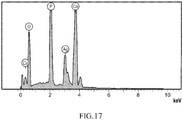
- the zinc incorporated hydroxyapatite-coated substrate is analyzed using EDX and XRD, which provide patterns.
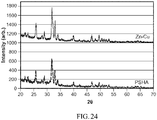
- the XRD patterns of the hydroxyapatite-coated substrate and the zinc incorporated hydroxyapatite-coated substrate are substantially similar.
- a gallium incorporated hydroxyapatite-coated substrate is formed by contacting a hydroxyapatite-coated substrate with a Gallium solution. In some embodiments, the contacting step is performed at about 150 °C for about 72 hours. In some embodiments, the contacting step is performed in a tightly sealed container. In some embodiments, the gallium incorporated hydroxyapatite-coated substrate is formed after the contacting step. In some embodiments, a washing step is performed on the gallium incorporated hydroxyapatite-coated substrate with an aqueous solution. In some embodiments, the aqueous solution is deionized water.
- a drying step is performed on the gallium incorporated hydroxyapatite-coated substrate. In some embodiments, the drying step is performed at a temperature of about 60 °C for about 2 hours. In some embodiments, the gallium incorporated hydroxyapatite-coated substrate is analyzed using EDX and XRD, which provide patterns. In some embodiments, the XRD patterns of the hydroxyapatite-coated substrate and the gallium incorporated hydroxyapatite-coated substrate are substantially similar. In some embodiments, the percentage by weight of calcium in the gallium treated coating is less than the percentage by weight of calcium in the untreated coating.
- a copper incorporated hydroxyapatite-coated substrate is formed by contacting a hydroxyapatite-coated substrate with a copper solution. In some embodiments, the contacting step is performed at about 120 °C for about 4 hours. In some embodiments, the contacting step is performed at about 60 °C for about 24 hours. In some embodiments, the contacting step is performed in a tightly sealed container. In some embodiments, the copper incorporated hydroxyapatite-coated substrate is formed after the contacting step. In some embodiments, a washing step is performed on the copper incorporated hydroxyapatite-coated substrate with an aqueous solution. In some embodiments, the aqueous solution is deionized water.
- a drying step is performed on the copper incorporated hydroxyapatite-coated substrate. In some embodiments, the drying step is performed at a temperature of about 60 °C for about 2 hours. In some embodiments, the copper incorporated hydroxyapatite-coated substrate is analyzed using EDX and XRD, which provide patterns. In some embodiments, the XRD patterns of the hydroxyapatite-coated substrate and the copper incorporated hydroxyapatite-coated substrate are substantially similar. In some embodiments, the percentage by weight of calcium in the copper treated coating is less than the percentage by weight of calcium in the untreated coating.
- a europium incorporated hydroxyapatite-coated substrate is formed by contacting a hydroxyapatite-coated substrate with a europium solution. In some embodiments, the contacting step is performed at about 120 °C for about 2 hours. In some embodiments, the contacting step is performed at about 60 °C for about 24 hours. In some embodiments, the contacting step is performed in a tightly sealed container. In some embodiments, the europium incorporated hydroxyapatite-coated substrate is formed after the contacting step. In some embodiments, a washing step is performed on the europium incorporated hydroxyapatite-coated substrate with an aqueous solution. In some embodiments, the aqueous solution is deionized water.
- a drying step is performed on the europium incorporated hydroxyapatite-coated substrate. In some embodiments, the drying step is performed at a temperature of about 60 °C for about 2 hours. In some embodiments, the europium incorporated hydroxyapatite-coated substrate is analyzed using EDX and XRD, which provide patterns. In some embodiments, the XRD patterns of the hydroxyapatite-coated substrate and the europium incorporated hydroxyapatite-coated substrate are substantially similar. In some embodiments, the percentage by weight of calcium in the europium treated coating is less than the percentage by weight of calcium in the untreated coating.
- a silver incorporated hydroxyapatite-coated substrate is formed by contacting a hydroxyapatite-coated substrate with a silver solution. In some embodiments, the contacting step is performed at about 60 °C for about 24 hours. In some embodiments, the contacting step is performed at about 120 °C for about 4 hours. In some embodiments, the contacting step is performed at about 25 °C for about 24 hours. In some embodiments, the contacting step is performed in a tightly sealed container. In some embodiments, the silver incorporated hydroxyapatite-coated substrate is formed after the contacting step. In some embodiments, a washing step is performed on the silver incorporated hydroxyapatite-coated substrate with an aqueous solution.
- the aqueous solution is deionized water.
- a drying step is performed on the silver incorporated hydroxyapatite-coated substrate. In some embodiments, the drying step is performed at a temperature of about 60 °C for about 2 hours.
- the silver incorporated hydroxyapatite-coated substrate is analyzed using EDX and XRD, which provide patterns. In some embodiments, the XRD patterns of the hydroxyapatite-coated substrate and the silver incorporated hydroxyapatite-coated substrate are substantially similar. In some embodiments, the percentage by weight of calcium in the silver treated coating is less than the percentage by weight of calcium in the untreated coating.
- a zinc-copper incorporated hydroxyapatite-coated substrate is formed by first contacting a hydroxyapatite-coated substrate with a zinc solution. In some embodiments, the contacting step is performed at about 150 °C for about 24 hours. In some embodiments, the first contacting step is performed in a tightly sealed container. In some embodiments, a zinc incorporated hydroxyapatite-coated substrate is formed after the first contacting step. In some embodiments, a washing step is performed to remove the zinc solution. In some embodiments, the washing step is performed with deionized water. In some embodiments, a first drying step is performed at about 60 °C for about 2 hours. In some embodiments, no first drying step is performed.
- a second contacting step is performed using a copper solution. In some embodiments, the second contacting step is performed at about 120 °C for about 4 hours. In some embodiments, the second contacting step is performed in a tightly sealed container. In some embodiments, a zinc-copper incorporated hydroxyapatite-coated substrate is formed after the second contacting step. In some embodiments, a second washing step is performed on the zinc-copper incorporated hydroxyapatite-coated substrate with an aqueous solution. In some embodiments, the aqueous solution is deionized water. In some embodiments, a drying step is performed on the zinc-copper incorporated hydroxyapatite-coated substrate. In some embodiments, this is the second drying step.
- the drying step is performed at a temperature of about 60 °C for about 2 hours.
- the zinc-copper incorporated hydroxyapatite-coated substrate is analyzed using EDX and XRD, which provide patterns.
- the XRD patterns of the hydroxyapatite-coated substrate and the zinc-copper incorporated hydroxyapatite-coated substrate are substantially similar.
- the percentage by weight of calcium in the zinc-copper treated coating is less than the percentage by weight of calcium in the untreated coating.
- a process for forming a coating.
- the process comprises exchanging lattice positions of a hydroxyapatite-coated substrate with a dopant metal to form a doped hydroxyapatite coating, and washing the doped hydroxyapatite coating.
- the doped hydroxyapatite coating is analyzed using EDX and XRD.
- the XRD pattern of the hydroxyapatite coating before the step of contacting is substantially the same as the XRD pattern after the step of washing.
- the XRD patterns of the hydroxyapatite-coated substrate and the doped hydroxyapatite coating are substantially similar.
- Example 1 Preparing a Plasma Sprayed Hydroxyapatite (PSHA) Coating
- a titanium coupon was plasma spray coated with HA. Briefly, a plasma torch was employed to partially melt and accelerate feedstock HA powders onto the coupon. These semi-molten particles coalesce into a coating upon contacting the coupon.
- An SEM image of a PSHA-coated coupon is shown in Fig. 3 .
- Table 1 Weight percent of the untreated coating P (wt%) Ca (wt%) O (wt%) 14.8 33.0 47.2
- Table 2 Atomic percentage of the treated coating P (atomic %) Ca (atomic %) O (atomic % ) 10.37 17.83 63.33
- Example 2 Incorporating Zinc (Zn) into a PSHA Coating.
- An inorganic phosphate-zinc (PiZn) solution was prepared by combining 9 mL of 1 mM inorganic phosphate (Pi) with 0.275 mL 6N sodium hydroxide (NaOH). Then 1 mL of 100 mM Zn(N0 3 ) 2 was added to the mixture. The final zinc concentration in the PiZn solution was 10 mM. The pH of the aqueous solution was about 7.3.
- a PSHA-coated coupon (1.0 inch in diameter, 0.25 inch in thickness), prepared as described in Example 1, was placed at the bottom of a titanium alloy container (1.0 inch in length, 1.125 inch in inner diameter) with the PSHA coating facing up. 8 mL of the PiZn solution was subsequently added to submerge the PSHA-coated coupon. The solution volume was roughly 70% of the container's inner volume. The container was then sealed with a titanium alloy screw cap. TEFLON tape and an O-ring were used to create a tight seal.
- the sealed container was placed in an oven at 150 °C for about 72 hours. The container was removed from the oven and cooled to room temperature.
- the PiZn treated PSHA coupon was washed with deionized (DI) water.
- the PiZn treated coupon was then dried at 60 °C for about 2 hours before being analyzed with energy-dispersive X-ray spectroscopy (EDX) and X-ray powder diffraction (XRD).
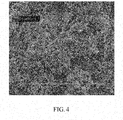
- Fig. 4 shows an SEM of the PiZn treated PSHA coating.
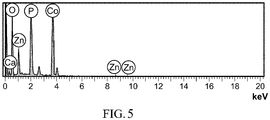
- Fig. 5 shows the EDX pattern of the PiZn treated PSHA coating.
- Fig. 6 shows the XRD pattern of an untreated PSHA coating (denoted PSHA) and PiZn treated PSHA coating (denoted Zn HT).
- Table 3 shows the chemical composition of the PiZn treated PSHA coating.
- Table 4 shows the atomic percent of the chemical components in the PiZn treated PSHA coating.
- Table 3 Weight percent of the treated coating Solution P (wt%) Ca (wt%) O (wt%) Zn (wt%) PiZn 14.8 32.3 43.1 9.8
- Table 4 Atomic percentage of the treated coating Solution P (atomic %) Ca (atomic %) O (atomic %) Zn (atomic % ) PiZn 11.58 19.50 65.28 3.64
- Example 3 Incorporating Gallium (Ga) into a PSHA coating.
- An inorganic phosphate-gallium (PiGa) solution was prepared by mixing Ga(N03)3 in to 500 mL of 2.51 mM Phosphate stock solution to give 0.39 mM Ga 3+ . After thorough mixing and dissolution the pH was adjusted to 8.3 with micro-liter additions of 6N NaOH
- a one-inch PSHA-coated coupon (1.0 inch in length, 1.125 inch in inner diameter) was placed at the bottom of a titanium alloy container with coating facing up. 8 mL of the PiGa solution was subsequently added to submerge the PSHA-coated coupon. The solution volume was roughly 70% of the container's inner volume. The container was then sealed with a titanium alloy screw cap. TEFLON tape and O-ring were used to create a tight seal.
- Fig. 7 shows an SEM of the PiGa treated PSHA coating.
- Fig. 8 shows the EDX pattern of the PiGa treated PSHA coating.
- Fig. 6 previously referred to in Example 2, shows the XRD pattern of untreated PSHA coating (denoted PSHA) and the PiGa treated PSHA coating (denoted Ga HT).
- the XRD shows that the PiGa treated PSHA coating is more crystalline than before treatment, and CaO and other calcium phosphate phases could not be detected in the treated coating. Additionally, no new gallium containing phases were detected after the treatment with the PiGa solution.
- Table 5 shows the chemical composition of the PiGa treated PSHA coating.
- Table 6 shows the atomic% of the chemical components of the PiGa treated PSHA coating.
- Table 5 Weight percent of the treated coating Solution P (wt%) Ca (wt%) O (wt%) Ga (wt%) PiGa 16.1 36.1 45.1 2.6
- Table 6 Atomic percentage of the treated coating Solution P (atomic %) Ca (atomic %) O (atomic %) Ga (atomic %) PiGa 12.17 36.14 65.90 0.86
- Example 4 Incorporating Copper (Cu) into a PSHA Coating.
- a 0.081 mM copper chloride solution was prepared by mixing 0.0138 grams of cupric chloride with 100 mL of DI water.
- a 0.1 mM of calcium nitrate solution was made by mixing tetrahydrate, granular calcium nitrate with DI water.
- a Cu solution was prepared by mixing 4 mL of the copper chloride solution with 4 mL of the calcium nitrate solution 32 mL of DI water in a 100 mL NALGENE jar. Then, the pH was measured using a pH probe.
- a PSHA-coated coupons prepared as described in Example 1, was placed at the bottom of a NALGENE jar with the PSHA coating facing up.
- the solution volume was roughly 40 mL.
- the container was sealed with an appropriate NALGENE jar lid.
- Fig. 9 is an SEM image of the PSHA coating that was treated with Cu solution at 120 °C for 4 hours, showing the PSHA coating incorporating Cu.
- FIG. 10 is an EDX pattern of the PSHA coating treated with the Cu solution at 120 °C for 4 hours.
- Fig. 11 is an EDX pattern of the PSHA coating treated with the Cu solution at 60 °C for 24 hours.
- Fig. 12 shows the XRD pattern of an untreated PSHA coating (denoted PSHA) and a Cu-1 treated PSHA coating (denoted Cu). The XRD shows that the Cu treated PSHA coating was more crystalline than before the treatment. Additionally, no new crystalline phases were detected after treatment. Table 7 lists each trial condition.
- Table 7 Treatment conditions Coupon Initial pH Conditions Initial Weight Final Weight Cu-1 5.714 120 °C for 4h 7.0657g 7.0655g Cu-4 5.707 60 °C for 24h 7.0664g 7.0664g
- Table 8 shows the chemical composition of the Cu treated PSHA coupons.
- Table 9 shows the atomic percent of the chemical components in coupons Cu-1 and Cu-4, analyzed by EDX after treatment (see Table 7 for treatment conditions).
- Table 8 Weight percent of the treated coating Coupon P (wt%) Ca (wt%) O (wt%) Cu (wt%) Cu-1 15.6 34.0 48.5 1.9 Cu-4 15.6 34.7 49.2 0.5
- Table 9 Atomic percentage of the treated coating Solution P (atomic %) Ca (atomic %) O (atomic %) Cu (atomic %) Cu-1 11.42 19.20 68.71 0.68 Cu-4 11.31 19.46 69.04 0.19
- Example 5 Incorporating Europium (Eu) into a PSHA Coating.
- a solution of 38 mL of europium chloride (0.001 N) and of 2 mL Pi stock solution was prepared in a 100 mL NALGENE jar to create a Eu solution. Once the pH was approximately measured to be roughly 6, the solution was titrated with roughly 125 ⁇ L of a NaOH. The final pH stabilized around 7.
- a PSHA-coated coupon was placed at the bottom of a NALGENE jar with the PSHA coating facing up.
- the Eu solution volume was approximately 40 mL.
- the containers were each sealed with an appropriate NALGENE jar lid.
- Fig. 13 is an image showing an EDX pattern of the PSHA coating treated with the Eu solution at 120 °C for 2 hours.
- Fig. 14 is an image of an EDX pattern of the PSHA coating treated with the Eu solution at 60 °C for 24 hours.
- FIG. 15 is a graph showing an XRD pattern of untreated PSHA coating (denoted PSHA) and the PSHA coating treated with the Eu solution at 60 °C for 24 hours (denoted Eu-PSHA).
- the XRD pattern in Fig. 15 shows that the Eu treated PSHA coating is more crystalline than before treatment and new calcium phosphate phases could not be detected in the coating. Additionally, europium crystalline phases were not detected after the treatment.
- Table 10 lists each trial condition.
- Table 11 shows the chemical composition of the Eu treated PSHA coatings.
- Table 12 shows the atomic percent of the chemical components within each Eu treated PSHA coatings (see Table 10). The information for Tables 11 and 12 were generated from an EDX analysis.
- Table 10 Treatment conditions Coupon Initial pH Final pH Conditions Initial Weight Final Weight Eu-3 6.030 7.089 120 °C for 2h 7.09025 g 7.08986 g Eu-4 6.130 7.071 60 °C for 24h 7.06442 g 7.06380 g
- Table 11 Weight percent of the treated coating Coupon P (wt%) Ca (wt%) O (wt%) Eu (wt%) Eu-3 14.7 28.2 44.3 12.8 Eu-4 13.7 21.5 42.1 22.7
- Table 12 Atomic percentage of the treated coating Solution P (atomic %) Ca (atomic %) O (atomic %) Eu (atomic %) Eu-3 11.75 17.47 68.70 2.08 Eu-4 11.80 14.28 69.96 3.96
- Example 6 Incorporating Silver (Ag) into a PSHA Coating.
- a 0.1 mM calcium nitrate solution was prepared by mixing approximately 0.0236 grams of tetrahydrate granular calcium nitrate were mixed with 100 mL of DI water. Then to prepare the final Silver solution, 2 mL of 0.1 mM calcium nitrate solution, 6 mL of 0.1 M silver nitrate, and 32 mL of DI water were mixed together in a NALGENE jar. The pH was then measured using a pH probe.
- a PSHA-coated coupon was placed at the bottom of a 100 mL NALGENE jar with the PSHA coating facing up.
- the solution volume was roughly approximately 40 mL prior to adding the PSHA-coated coupon.
- the container was then sealed with an appropriate NALGENE jar cap.
- Fig. 16 is an EDX pattern of the Ag-2 coating.
- Fig. 17 is an EDX pattern of the Ag-3 coating.
- Fig. 18 is an EDX pattern of the Ag-4 coating.
- FIG. 19 is an XRD pattern of an untreated PSHA coating (denoted PSHA) and the Ag treated PSHA coatings (denoted Ag-2, Ag-3, and Ag-4).
- the XRD shows that no new phases were detected after ion incorporation for Ag-4 and Ag-2.
- Table 13 provides the experimental conditions for each of the three trials.
- Table 14 shows the chemical composition of the PSHA coupons treated with the Silver solution at different conditions.
- Table 15 shows the results of an EDX analysis and the atomic percent of the chemical components in the three PSHA treated coupons with Silver solution in various conditions as shown in Table 13.
- Table 13 Treatment conditions Coupon Initial pH Conditions Initial Weight Final Weight Ag-2 5.707 60 °C for 24 h 7.0481 g 7.0492 g Ag-3 5.500 120 °C for 4 h 7.0601 g 7.0626 g Ag-4 5.845 25 °C for 24 h 7.0610 g 7.0614 g
- Table 14 Weight percent of the treated coating Coupon P (wt%) Ca (wt%) O (wt%) Ag (wt%) Ag-2 16.6 36.2 39.4 7.8 Ag-3 15.2 30.5 34.5 19.8 Ag-4 18.9 40.4 38.1 2.7
- Table 15 Atomic percentage of the treated coating Solution P (atomic %) Ca (atomic %) O (atomic %) Ag (atomic %) Ag-2 13.50 22.71 61.96 1.83 Ag-3 13.64 21.23 60.00 5.13 Ag-4 15.16 25.05 59.17 0.63
- Example 7 Incorporating Zn and Cu into a PSHA Coating.
- PiZn solution 9 mL of Pi concentrate was mixed with 0.275 mL 6N NaOH. Then 1 mL 100 mM Zn(N03)2 was added. The final zinc concentration of the PiZn solution was 10 mM.
- 0.081 mM copper chloride solution approximately, 0.0138 grams of cupric chloride were mixed with 100 mL of DI water.
- 0.1 mM calcium nitrate solution approximately, 0.0236 grams of calcium nitrate were mixed with 100 mL of DI water.
- Copper solution about 4 mL of 0.081 mM copper chloride solution and 4 mL of 0.1 mM calcium nitrate solution were mixed with 32 mL of DI water.
- Dual-Ion 1 and Dual-Ion 2 Two trials were prepared noted as Dual-Ion 1 and Dual-Ion 2 (see Table 16).
- a one inch by one and a quarter inch PSHA-coated coupon was placed at the bottom of a titanium alloy container with the PSHA coating facing up.
- 10 mL of the PiZn solution was added to submerge the PSHA coated coupon.
- the solution volume was roughly 70% of the container's inner volume.
- the container was then sealed with a titanium alloy screw cap. An O-ring were used to create a tight seal.
- the sealed container was placed in an oven at 150 °C for 24 hours.
- the container was removed from the oven and cooled to room temperature.
- the PiZn treated PSHA coating was washed with DI water.
- the PiZn treated PSHA coating was then dried at 60 °C for 2 hours before the second treatment.
- the PiZn treated PSHA coating (Dual-Ion 1) was subjected to a copper treatment.
- the PiZn treated PSHA coating was placed in the Cu solution at the bottom of a NALGENE jar with the PiZn treated PSHA coating facing up.
- the final Cu solution volume was about 40 mL.
- the container was sealed with an appropriate NALGENE jar lid.
- the sealed NALGENE jar was placed in an oven at 120 °C for 4 hours.
- the container of the Cu solution was removed from the oven and allowed to cool to room temperature.
- the Zn-Cu treated PSHA coating was washed with DI water.
- Zn-Cu treated PSHA coating was then dried at 60 °C for 2 hours before being analyzed with EDX and XRD.
- Table 16 shows the experimental design for Dual-Ion 1 and Dual-Ion 2
- Table 17 shows the chemical composition for each sample solution of Zn and Cu incorporated into a PSHA coated coupon.
- Table 18 shows the atomic% of the chemical components in the Zn and Cu treated PSHA coatings (i.e., Dual-Ion 1 and Dual-Ion 2) provided from an EDX analysis.
- Fig. 20 is an EDX pattern of the Dual-ion 1 PSHA coating.
- Fig. 21 is the EDX pattern of the Dual-Ion 2 PSHA coating. The EDX of the Dual-Ion 2 did not detect copper (see Table 16).
- Fig. 22 and Fig. 23 are SEM images of the Dual-Ion 1 PSHA coating and the Dual-Ion 2 PSHA coating, respectively at 1000x magnification.
- Fig. 24 is an XRD pattern of an untreated PSHA coating (denoted PSHA) and the Zn-Cu PSHA coating (Dual-Ion 1) (denoted Zn-Cu).
- Table 16 Treatment conditions Coupon First Treatment (FT) Second Treatment Initial Weight After FT Weight Final Weight Dual Ion-1 PiZn solution 150 °C for 24h Copper solution 120 °C for 4h 7.0574 g 7.0588 g 7.0586 g Dual Ion-2 Copper solution 120 °C for 4h PiZn solution 150 °C for 24h 7.0442 g 7.0443 g 7.0453 g
- Table 17 Weight percent of the treated coating Coupon P (wt%) Ca (wt%) O (wt%) Cu (wt%) Zn (wt%) Dual-Ion 1 14.8 32.0 44.8 4.7 3.7 Dual-Ion 2 15.8 34.1 46.2 - 5.2
- Table 18 Atomic percentage of the treated coating Solution P (atomic %) Ca (atomic %) O (atomic %) Zn (atomic %) Cu (atomic %) Dual-Ion 1 11.35 18.98 66.58 1.35 3.72 Dual-Ion 2 11.85 19.75 67.02 1.84 -
- the Panalytical X'pert Pro X-ray diffractometer employing CuK ⁇ filtered radiation and a graphite secondary monochromator was used for X-ray diffraction (XRD) studies of the particles in the suspension (centrifuged and dried) and in the films (dried and crushed).
- the XRD scan rate was fixed at 1°/min and the step size was 0.02°.
- the accelerating voltage and current used were 45 KV and 40 mA, respectively.
- a PSHA coupon was prepared according to Example 1.
- the PSHA coated coupon was analyzed using XRD, as described above.
- the resulting crystallinity percentages are shown in Table 21.
- a PSHA coupon was prepared according to Example 7.
- the treated PSHA coupon was analyzed using XRD, as described above.
- the resulting crystallinity percentages are shown in Table 22.
- Table 21 Crystallinity Percentage Prior to Treatment Phase Hydroxyapatite (%) a-tricalcium phosphate (TCP) (%) CaO (%) b-TCP (%) Amorphous calcium phosphate (ACP) (%) Content 83.4 3.4 UD* 1.3 11.8
- Table 22 Crystallinity Percentage Post Treatment Phase Hydroxyapatite (%) a-tricalcium phosphate (TCP) (%) CaO (%) b-TCP (%) Amorphous calcium phosphate (ACP) (%) Content 97.4 0.7 UD 0.1 1.6
Landscapes
- Health & Medical Sciences (AREA)
- Chemical & Material Sciences (AREA)
- Life Sciences & Earth Sciences (AREA)
- Engineering & Computer Science (AREA)
- Animal Behavior & Ethology (AREA)
- Oral & Maxillofacial Surgery (AREA)
- Transplantation (AREA)
- General Health & Medical Sciences (AREA)
- Public Health (AREA)
- Veterinary Medicine (AREA)
- Inorganic Chemistry (AREA)
- Medicinal Chemistry (AREA)
- Epidemiology (AREA)
- Dermatology (AREA)
- Orthopedic Medicine & Surgery (AREA)
- Organic Chemistry (AREA)
- Materials Engineering (AREA)
- Biomedical Technology (AREA)
- Heart & Thoracic Surgery (AREA)
- Vascular Medicine (AREA)
- Cardiology (AREA)
- Wood Science & Technology (AREA)
- Physics & Mathematics (AREA)
- Plasma & Fusion (AREA)
- Physical Education & Sports Medicine (AREA)
- Metallurgy (AREA)
- Chemical Kinetics & Catalysis (AREA)
- Mechanical Engineering (AREA)
- Molecular Biology (AREA)
- Plant Pathology (AREA)
- Materials For Medical Uses (AREA)
- Prostheses (AREA)
Applications Claiming Priority (1)
| Application Number | Priority Date | Filing Date | Title |
|---|---|---|---|
| US16/457,173 US20200405908A1 (en) | 2019-06-28 | 2019-06-28 | Ion incorporated plasma sprayed hydroxyapatite coatings and method of making the same |
Publications (2)
| Publication Number | Publication Date |
|---|---|
| EP3756624A2 true EP3756624A2 (de) | 2020-12-30 |
| EP3756624A3 EP3756624A3 (de) | 2021-01-13 |
Family
ID=71105302
Family Applications (1)
| Application Number | Title | Priority Date | Filing Date |
|---|---|---|---|
| EP20180385.5A Withdrawn EP3756624A3 (de) | 2019-06-28 | 2020-06-16 | Ionenintegrierte plasmagesprühte hydroxylapatitbeschichtungen und verfahren zu deren herstellung |
Country Status (5)
| Country | Link |
|---|---|
| US (1) | US20200405908A1 (de) |
| EP (1) | EP3756624A3 (de) |
| JP (1) | JP2021007741A (de) |
| CN (1) | CN112138210A (de) |
| AU (1) | AU2020203869A1 (de) |
Cited By (2)
| Publication number | Priority date | Publication date | Assignee | Title |
|---|---|---|---|---|
| CN118267518A (zh) * | 2024-04-16 | 2024-07-02 | 大连大学附属中山医院 | 一种医用掺铜纳米羟基磷灰石涂层多孔钽植入材料及其制备方法 |
| EP4574180A1 (de) * | 2023-12-19 | 2025-06-25 | Andreas Haas | Modifiziertes knochenersatzmaterial |
Families Citing this family (4)
| Publication number | Priority date | Publication date | Assignee | Title |
|---|---|---|---|---|
| US10182917B2 (en) * | 2016-04-11 | 2019-01-22 | Arthrex, Inc. | Components for artificial joints |
| CN113604134A (zh) * | 2021-08-23 | 2021-11-05 | 安徽新大陆特种涂料有限责任公司 | 一种用于沥青路面的高效环氧基热反射涂料 |
| JPWO2023032948A1 (de) | 2021-08-31 | 2023-03-09 | ||
| CN116730746A (zh) * | 2023-05-05 | 2023-09-12 | 湖南鹏登精密陶瓷有限公司 | 一种氧化锆种植体材料及其表面涂层方法 |
Family Cites Families (8)
| Publication number | Priority date | Publication date | Assignee | Title |
|---|---|---|---|---|
| CA2654235C (en) * | 2006-06-12 | 2015-01-06 | Accentus Plc | Metal implant comprising an anodised oxide surface coated with a ceramic, and with biocidal metal ions |
| CN102014975A (zh) * | 2008-02-29 | 2011-04-13 | 史密夫和内修有限公司 | 用于生物医学应用的梯度涂层 |
| WO2009111307A2 (en) * | 2008-02-29 | 2009-09-11 | Smith & Nephew, Inc. | Coating and coating method |
| JP2012040194A (ja) * | 2010-08-19 | 2012-03-01 | Saga Univ | 生体インプラント |
| CN102631705A (zh) * | 2012-04-27 | 2012-08-15 | 中南大学 | 一种镧掺杂羟基磷灰石复合涂层及其制备方法 |
| CN105664251B (zh) * | 2016-01-29 | 2020-09-18 | 中国科学院上海硅酸盐研究所 | 一种超微量银掺杂羟基磷灰石涂层及其制备方法和应用 |
| CN107161974B (zh) * | 2016-03-07 | 2019-05-14 | 中国科学院上海硅酸盐研究所 | 一种多元离子共掺杂羟基磷灰石粉体材料的制备方法 |
| US10537658B2 (en) * | 2017-03-28 | 2020-01-21 | DePuy Synthes Products, Inc. | Orthopedic implant having a crystalline gallium-containing hydroxyapatite coating and methods for making the same |
-
2019
- 2019-06-28 US US16/457,173 patent/US20200405908A1/en not_active Abandoned
-
2020
- 2020-06-11 AU AU2020203869A patent/AU2020203869A1/en not_active Abandoned
- 2020-06-16 EP EP20180385.5A patent/EP3756624A3/de not_active Withdrawn
- 2020-06-24 CN CN202010594308.9A patent/CN112138210A/zh active Pending
- 2020-06-26 JP JP2020110184A patent/JP2021007741A/ja active Pending
Cited By (3)
| Publication number | Priority date | Publication date | Assignee | Title |
|---|---|---|---|---|
| EP4574180A1 (de) * | 2023-12-19 | 2025-06-25 | Andreas Haas | Modifiziertes knochenersatzmaterial |
| WO2025131925A1 (de) * | 2023-12-19 | 2025-06-26 | Andreas Haas | Modifiziertes knochenersatzmaterial |
| CN118267518A (zh) * | 2024-04-16 | 2024-07-02 | 大连大学附属中山医院 | 一种医用掺铜纳米羟基磷灰石涂层多孔钽植入材料及其制备方法 |
Also Published As
| Publication number | Publication date |
|---|---|
| EP3756624A3 (de) | 2021-01-13 |
| JP2021007741A (ja) | 2021-01-28 |
| CN112138210A (zh) | 2020-12-29 |
| US20200405908A1 (en) | 2020-12-31 |
| AU2020203869A1 (en) | 2021-01-21 |
Similar Documents
| Publication | Publication Date | Title |
|---|---|---|
| EP3756624A2 (de) | Ionenintegrierte plasmagesprühte hydroxylapatitbeschichtungen und verfahren zu deren herstellung | |
| Yan et al. | Improvement of biodegradable and antibacterial properties by solution treatment and micro-arc oxidation (MAO) of a magnesium alloy with a trace of copper | |
| Sedelnikova et al. | Zn-, Cu-or Ag-incorporated micro-arc coatings on titanium alloys: Properties and behavior in synthetic biological media | |
| JP7334314B2 (ja) | 結晶リン酸カルシウムコーティングを有する整形外科用インプラントとその製造方法 | |
| JP7571177B2 (ja) | ガリウム含有ヒドロキシアパタイトコーティングを有する整形外科用インプラント | |
| Gkomoza et al. | Comparative study of structure and properties of thermal spray coatings using conventional and nanostructured hydroxyapatite powder, for applications in medical implants | |
| Bandgar et al. | Enhanced hemolytic biocompatibility of hydroxyapatite by chromium (Cr 3+) doping in hydroxyapatite nanoparticles synthesized by solution combustion method | |
| Meininger et al. | Silver and copper addition enhances the antimicrobial activity of calcium hydroxide coatings on titanium | |
| Karthika | Aliovalent ions substituted hydroxyapatite coating on titanium for improved medical applications | |
| Ibasco et al. | Magnesium-sputtered titanium for the formation of bioactive coatings | |
| Yang et al. | Calcium phosphate coating on magnesium alloy by biomimetic method: investigation of morphology, composition and formation process | |
| Podgorbunsky et al. | Formation on magnesium alloy MA8 bioactive coatings containing nanosized hydroxyapatite | |
| Terleeva et al. | Microplasma synthesis of biocompatible coatings with additions of magnesium, silicon and silver on pure titanium from homogeneous electrolytes | |
| Hsu et al. | Bone-like nano-hydroxyapatite coating on low-modulus Ti–5Nb–5Mo alloy using hydrothermal and post-heat treatments | |
| Drevet et al. | Structural and morphological study of electrodeposited calcium phosphate materials submitted to thermal treatment | |
| Park et al. | Bioactive Calcium Phosphate Coating on Sodium Hydroxide‐Pretreated Titanium Substrate by Electrodeposition | |
| Afshar et al. | Investigation of morphology and bioactive properties of composite coating of HA/vinyl acetate on pure titanium | |
| Vranceanu et al. | Pulsed electrochemical deposition of Ag doped hydroxyapatite bioactive coatings on Ti6Al4V for medical purposes | |
| ŞİMŞEK et al. | Synthesis and characterization of hydroxyapatite produced by microwave assisted precipitation technique | |
| Sedelnikova et al. | Wollastonite and Calcium Phosphate Biocoatings with Zn-and Cu-Incorporation Produced by a Microarc Oxidation Method | |
| Kurella et al. | A multi-textured calcium phosphate coating for hard tissue via laser surface engineering | |
| López-Cuevas et al. | In vitro bioactivity of AISI 316L stainless steel coated with hydroxyapatite-seeded 58S bioglass | |
| Wailerdsak et al. | Synthesis and Characterization of Silver–doped Hydroxyapatite-Coated Polyether ether ketone for Dental Applications | |
| Pupillo | Electrochemical surface treatments for resorbable and permanent biomedical implants | |
| Özbulut et al. | A preliminary investigation on the effect of alloying elements on the bioactivity of titanium-based alloys |
Legal Events
| Date | Code | Title | Description |
|---|---|---|---|
| PUAI | Public reference made under article 153(3) epc to a published international application that has entered the european phase |
Free format text: ORIGINAL CODE: 0009012 |
|
| STAA | Information on the status of an ep patent application or granted ep patent |
Free format text: STATUS: THE APPLICATION HAS BEEN PUBLISHED |
|
| PUAL | Search report despatched |
Free format text: ORIGINAL CODE: 0009013 |
|
| AK | Designated contracting states |
Kind code of ref document: A2 Designated state(s): AL AT BE BG CH CY CZ DE DK EE ES FI FR GB GR HR HU IE IS IT LI LT LU LV MC MK MT NL NO PL PT RO RS SE SI SK SM TR |
|
| AX | Request for extension of the european patent |
Extension state: BA ME |
|
| AK | Designated contracting states |
Kind code of ref document: A3 Designated state(s): AL AT BE BG CH CY CZ DE DK EE ES FI FR GB GR HR HU IE IS IT LI LT LU LV MC MK MT NL NO PL PT RO RS SE SI SK SM TR |
|
| AX | Request for extension of the european patent |
Extension state: BA ME |
|
| RIC1 | Information provided on ipc code assigned before grant |
Ipc: A61F 2/30 20060101AFI20201208BHEP Ipc: C09D 7/61 20180101ALI20201208BHEP Ipc: C08K 3/32 20060101ALN20201208BHEP Ipc: A61L 27/32 20060101ALI20201208BHEP Ipc: C08K 3/08 20060101ALN20201208BHEP Ipc: C09D 5/14 20060101ALI20201208BHEP |
|
| STAA | Information on the status of an ep patent application or granted ep patent |
Free format text: STATUS: REQUEST FOR EXAMINATION WAS MADE |
|
| 17P | Request for examination filed |
Effective date: 20210713 |
|
| RBV | Designated contracting states (corrected) |
Designated state(s): AL AT BE BG CH CY CZ DE DK EE ES FI FR GB GR HR HU IE IS IT LI LT LU LV MC MK MT NL NO PL PT RO RS SE SI SK SM TR |
|
| STAA | Information on the status of an ep patent application or granted ep patent |
Free format text: STATUS: EXAMINATION IS IN PROGRESS |
|
| 17Q | First examination report despatched |
Effective date: 20240612 |
|
| 17Q | First examination report despatched |
Effective date: 20240625 |
|
| STAA | Information on the status of an ep patent application or granted ep patent |
Free format text: STATUS: THE APPLICATION IS DEEMED TO BE WITHDRAWN |
|
| 18D | Application deemed to be withdrawn |
Effective date: 20241026 |