EP3755318B1 - Genetically modified cannabis sativa plants and modified cannabinoid compounds for treatment of substance addiction and other disorders - Google Patents
Genetically modified cannabis sativa plants and modified cannabinoid compounds for treatment of substance addiction and other disorders Download PDFInfo
- Publication number
- EP3755318B1 EP3755318B1 EP19756525.2A EP19756525A EP3755318B1 EP 3755318 B1 EP3755318 B1 EP 3755318B1 EP 19756525 A EP19756525 A EP 19756525A EP 3755318 B1 EP3755318 B1 EP 3755318B1
- Authority
- EP
- European Patent Office
- Prior art keywords
- acid
- day
- pharmaceutical composition
- cannabis sativa
- cannabinoid
- Prior art date
- Legal status (The legal status is an assumption and is not a legal conclusion. Google has not performed a legal analysis and makes no representation as to the accuracy of the status listed.)
- Active
Links
Images
Classifications
-
- A—HUMAN NECESSITIES
- A01—AGRICULTURE; FORESTRY; ANIMAL HUSBANDRY; HUNTING; TRAPPING; FISHING
- A01H—NEW PLANTS OR NON-TRANSGENIC PROCESSES FOR OBTAINING THEM; PLANT REPRODUCTION BY TISSUE CULTURE TECHNIQUES
- A01H6/00—Angiosperms, i.e. flowering plants, characterised by their botanic taxonomy
- A01H6/28—Cannabaceae, e.g. cannabis
-
- A—HUMAN NECESSITIES
- A01—AGRICULTURE; FORESTRY; ANIMAL HUSBANDRY; HUNTING; TRAPPING; FISHING
- A01H—NEW PLANTS OR NON-TRANSGENIC PROCESSES FOR OBTAINING THEM; PLANT REPRODUCTION BY TISSUE CULTURE TECHNIQUES
- A01H1/00—Processes for modifying genotypes ; Plants characterised by associated natural traits
- A01H1/06—Processes for producing mutations, e.g. treatment with chemicals or with radiation
-
- A—HUMAN NECESSITIES
- A61—MEDICAL OR VETERINARY SCIENCE; HYGIENE
- A61K—PREPARATIONS FOR MEDICAL, DENTAL OR TOILETRY PURPOSES
- A61K31/00—Medicinal preparations containing organic active ingredients
- A61K31/33—Heterocyclic compounds
- A61K31/335—Heterocyclic compounds having oxygen as the only ring hetero atom, e.g. fungichromin
- A61K31/35—Heterocyclic compounds having oxygen as the only ring hetero atom, e.g. fungichromin having six-membered rings with one oxygen as the only ring hetero atom
- A61K31/352—Heterocyclic compounds having oxygen as the only ring hetero atom, e.g. fungichromin having six-membered rings with one oxygen as the only ring hetero atom condensed with carbocyclic rings, e.g. methantheline
-
- A—HUMAN NECESSITIES
- A61—MEDICAL OR VETERINARY SCIENCE; HYGIENE
- A61K—PREPARATIONS FOR MEDICAL, DENTAL OR TOILETRY PURPOSES
- A61K31/00—Medicinal preparations containing organic active ingredients
- A61K31/658—Medicinal preparations containing organic active ingredients o-phenolic cannabinoids, e.g. cannabidiol, cannabigerolic acid, cannabichromene or tetrahydrocannabinol
-
- A—HUMAN NECESSITIES
- A61—MEDICAL OR VETERINARY SCIENCE; HYGIENE
- A61K—PREPARATIONS FOR MEDICAL, DENTAL OR TOILETRY PURPOSES
- A61K36/00—Medicinal preparations of undetermined constitution containing material from algae, lichens, fungi or plants, or derivatives thereof, e.g. traditional herbal medicines
- A61K36/18—Magnoliophyta (angiosperms)
- A61K36/185—Magnoliopsida (dicotyledons)
- A61K36/348—Cannabaceae
- A61K36/3482—Cannabis
-
- A—HUMAN NECESSITIES
- A61—MEDICAL OR VETERINARY SCIENCE; HYGIENE
- A61P—SPECIFIC THERAPEUTIC ACTIVITY OF CHEMICAL COMPOUNDS OR MEDICINAL PREPARATIONS
- A61P25/00—Drugs for disorders of the nervous system
- A61P25/22—Anxiolytics
-
- A—HUMAN NECESSITIES
- A61—MEDICAL OR VETERINARY SCIENCE; HYGIENE
- A61P—SPECIFIC THERAPEUTIC ACTIVITY OF CHEMICAL COMPOUNDS OR MEDICINAL PREPARATIONS
- A61P25/00—Drugs for disorders of the nervous system
- A61P25/24—Antidepressants
-
- A—HUMAN NECESSITIES
- A61—MEDICAL OR VETERINARY SCIENCE; HYGIENE
- A61P—SPECIFIC THERAPEUTIC ACTIVITY OF CHEMICAL COMPOUNDS OR MEDICINAL PREPARATIONS
- A61P25/00—Drugs for disorders of the nervous system
- A61P25/28—Drugs for disorders of the nervous system for treating neurodegenerative disorders of the central nervous system, e.g. nootropic agents, cognition enhancers, drugs for treating Alzheimer's disease or other forms of dementia
-
- A—HUMAN NECESSITIES
- A61—MEDICAL OR VETERINARY SCIENCE; HYGIENE
- A61P—SPECIFIC THERAPEUTIC ACTIVITY OF CHEMICAL COMPOUNDS OR MEDICINAL PREPARATIONS
- A61P25/00—Drugs for disorders of the nervous system
- A61P25/30—Drugs for disorders of the nervous system for treating abuse or dependence
-
- A—HUMAN NECESSITIES
- A61—MEDICAL OR VETERINARY SCIENCE; HYGIENE
- A61P—SPECIFIC THERAPEUTIC ACTIVITY OF CHEMICAL COMPOUNDS OR MEDICINAL PREPARATIONS
- A61P25/00—Drugs for disorders of the nervous system
- A61P25/30—Drugs for disorders of the nervous system for treating abuse or dependence
- A61P25/32—Alcohol-abuse
-
- A—HUMAN NECESSITIES
- A61—MEDICAL OR VETERINARY SCIENCE; HYGIENE
- A61P—SPECIFIC THERAPEUTIC ACTIVITY OF CHEMICAL COMPOUNDS OR MEDICINAL PREPARATIONS
- A61P25/00—Drugs for disorders of the nervous system
- A61P25/30—Drugs for disorders of the nervous system for treating abuse or dependence
- A61P25/34—Tobacco-abuse
-
- A—HUMAN NECESSITIES
- A61—MEDICAL OR VETERINARY SCIENCE; HYGIENE
- A61P—SPECIFIC THERAPEUTIC ACTIVITY OF CHEMICAL COMPOUNDS OR MEDICINAL PREPARATIONS
- A61P25/00—Drugs for disorders of the nervous system
- A61P25/30—Drugs for disorders of the nervous system for treating abuse or dependence
- A61P25/36—Opioid-abuse
-
- A—HUMAN NECESSITIES
- A61—MEDICAL OR VETERINARY SCIENCE; HYGIENE
- A61P—SPECIFIC THERAPEUTIC ACTIVITY OF CHEMICAL COMPOUNDS OR MEDICINAL PREPARATIONS
- A61P35/00—Antineoplastic agents
-
- C—CHEMISTRY; METALLURGY
- C07—ORGANIC CHEMISTRY
- C07C—ACYCLIC OR CARBOCYCLIC COMPOUNDS
- C07C39/00—Compounds having at least one hydroxy or O-metal group bound to a carbon atom of a six-membered aromatic ring
- C07C39/23—Compounds having at least one hydroxy or O-metal group bound to a carbon atom of a six-membered aromatic ring polycyclic, containing six-membered aromatic rings and other rings, with unsaturation outside the aromatic rings
-
- C—CHEMISTRY; METALLURGY
- C07—ORGANIC CHEMISTRY
- C07D—HETEROCYCLIC COMPOUNDS
- C07D311/00—Heterocyclic compounds containing six-membered rings having one oxygen atom as the only hetero atom, condensed with other rings
- C07D311/02—Heterocyclic compounds containing six-membered rings having one oxygen atom as the only hetero atom, condensed with other rings ortho- or peri-condensed with carbocyclic rings or ring systems
- C07D311/78—Ring systems having three or more relevant rings
-
- C—CHEMISTRY; METALLURGY
- C07—ORGANIC CHEMISTRY
- C07D—HETEROCYCLIC COMPOUNDS
- C07D311/00—Heterocyclic compounds containing six-membered rings having one oxygen atom as the only hetero atom, condensed with other rings
- C07D311/02—Heterocyclic compounds containing six-membered rings having one oxygen atom as the only hetero atom, condensed with other rings ortho- or peri-condensed with carbocyclic rings or ring systems
- C07D311/94—Heterocyclic compounds containing six-membered rings having one oxygen atom as the only hetero atom, condensed with other rings ortho- or peri-condensed with carbocyclic rings or ring systems condensed with rings other than six-membered or with ring systems containing such rings
-
- C—CHEMISTRY; METALLURGY
- C07—ORGANIC CHEMISTRY
- C07K—PEPTIDES
- C07K14/00—Peptides having more than 20 amino acids; Gastrins; Somatostatins; Melanotropins; Derivatives thereof
- C07K14/415—Peptides having more than 20 amino acids; Gastrins; Somatostatins; Melanotropins; Derivatives thereof from plants
-
- C—CHEMISTRY; METALLURGY
- C12—BIOCHEMISTRY; BEER; SPIRITS; WINE; VINEGAR; MICROBIOLOGY; ENZYMOLOGY; MUTATION OR GENETIC ENGINEERING
- C12N—MICROORGANISMS OR ENZYMES; COMPOSITIONS THEREOF; PROPAGATING, PRESERVING, OR MAINTAINING MICROORGANISMS; MUTATION OR GENETIC ENGINEERING; CULTURE MEDIA
- C12N15/00—Mutation or genetic engineering; DNA or RNA concerning genetic engineering, vectors, e.g. plasmids, or their isolation, preparation or purification; Use of hosts therefor
- C12N15/09—Recombinant DNA-technology
- C12N15/63—Introduction of foreign genetic material using vectors; Vectors; Use of hosts therefor; Regulation of expression
- C12N15/79—Vectors or expression systems specially adapted for eukaryotic hosts
- C12N15/82—Vectors or expression systems specially adapted for eukaryotic hosts for plant cells, e.g. plant artificial chromosomes (PACs)
- C12N15/8241—Phenotypically and genetically modified plants via recombinant DNA technology
- C12N15/8242—Phenotypically and genetically modified plants via recombinant DNA technology with non-agronomic quality (output) traits, e.g. for industrial processing; Value added, non-agronomic traits
- C12N15/8243—Phenotypically and genetically modified plants via recombinant DNA technology with non-agronomic quality (output) traits, e.g. for industrial processing; Value added, non-agronomic traits involving biosynthetic or metabolic pathways, i.e. metabolic engineering, e.g. nicotine, caffeine
-
- C—CHEMISTRY; METALLURGY
- C12—BIOCHEMISTRY; BEER; SPIRITS; WINE; VINEGAR; MICROBIOLOGY; ENZYMOLOGY; MUTATION OR GENETIC ENGINEERING
- C12N—MICROORGANISMS OR ENZYMES; COMPOSITIONS THEREOF; PROPAGATING, PRESERVING, OR MAINTAINING MICROORGANISMS; MUTATION OR GENETIC ENGINEERING; CULTURE MEDIA
- C12N15/00—Mutation or genetic engineering; DNA or RNA concerning genetic engineering, vectors, e.g. plasmids, or their isolation, preparation or purification; Use of hosts therefor
- C12N15/09—Recombinant DNA-technology
- C12N15/63—Introduction of foreign genetic material using vectors; Vectors; Use of hosts therefor; Regulation of expression
- C12N15/79—Vectors or expression systems specially adapted for eukaryotic hosts
- C12N15/82—Vectors or expression systems specially adapted for eukaryotic hosts for plant cells, e.g. plant artificial chromosomes (PACs)
- C12N15/8241—Phenotypically and genetically modified plants via recombinant DNA technology
- C12N15/8242—Phenotypically and genetically modified plants via recombinant DNA technology with non-agronomic quality (output) traits, e.g. for industrial processing; Value added, non-agronomic traits
- C12N15/8257—Phenotypically and genetically modified plants via recombinant DNA technology with non-agronomic quality (output) traits, e.g. for industrial processing; Value added, non-agronomic traits for the production of primary gene products, e.g. pharmaceutical products, interferon
-
- C—CHEMISTRY; METALLURGY
- C12—BIOCHEMISTRY; BEER; SPIRITS; WINE; VINEGAR; MICROBIOLOGY; ENZYMOLOGY; MUTATION OR GENETIC ENGINEERING
- C12N—MICROORGANISMS OR ENZYMES; COMPOSITIONS THEREOF; PROPAGATING, PRESERVING, OR MAINTAINING MICROORGANISMS; MUTATION OR GENETIC ENGINEERING; CULTURE MEDIA
- C12N9/00—Enzymes; Proenzymes; Compositions thereof; Processes for preparing, activating, inhibiting, separating or purifying enzymes
- C12N9/0004—Oxidoreductases (1.)
-
- C—CHEMISTRY; METALLURGY
- C12—BIOCHEMISTRY; BEER; SPIRITS; WINE; VINEGAR; MICROBIOLOGY; ENZYMOLOGY; MUTATION OR GENETIC ENGINEERING
- C12Y—ENZYMES
- C12Y121/00—Oxidoreductases acting on X-H and Y-H to form an X-Y bond (1.21)
- C12Y121/03—Oxidoreductases acting on X-H and Y-H to form an X-Y bond (1.21) with oxygen as acceptor (1.21.3)
- C12Y121/03007—Tetrahydrocannabinolic acid synthase (1.21.3.7)
-
- C—CHEMISTRY; METALLURGY
- C12—BIOCHEMISTRY; BEER; SPIRITS; WINE; VINEGAR; MICROBIOLOGY; ENZYMOLOGY; MUTATION OR GENETIC ENGINEERING
- C12Y—ENZYMES
- C12Y121/00—Oxidoreductases acting on X-H and Y-H to form an X-Y bond (1.21)
- C12Y121/03—Oxidoreductases acting on X-H and Y-H to form an X-Y bond (1.21) with oxygen as acceptor (1.21.3)
- C12Y121/03008—Cannabidiolic acid synthase (1.21.3.8)
-
- C—CHEMISTRY; METALLURGY
- C07—ORGANIC CHEMISTRY
- C07C—ACYCLIC OR CARBOCYCLIC COMPOUNDS
- C07C2601/00—Systems containing only non-condensed rings
- C07C2601/06—Systems containing only non-condensed rings with a five-membered ring
- C07C2601/10—Systems containing only non-condensed rings with a five-membered ring the ring being unsaturated
Definitions
- This disclosure relates to a cannabinoid compound, to a pharmaceutical composition comprising said compound, and to said composition for a use as further defined herein.
- THC tetrahydrocannabinol
- CBD cannabidiol
- WO 2016/127111 relates to a CBD extract and to a cannabidiolic acid extract, which may be for use in the treatment of substance use disorders.
- WO 2017/011210 relates to the preparation of a cannabidiol compound or a derivative thereof.
- WO 2011/017798 and US 2017/211049 refer to the use of Cannabis sativa L as a source of medicinal products and the exploration of cannabinoids and other drugs that act through mammalian receptors for the treatment of medical conditions.
- WO 2011/017798 refers to chronic paint multiple sclerosis and epilepsy. It relates in particular to nucleic acid molecules from Cannabis sativa that encode polypeptides having aromatic prenyltransferase activity.
- US 2017/211049 refers to chronic pain, neuropathic pain in multiple sclerosis, anorexia, nausea, cancer/AIDS wasting and spasticity.
- US 2017/211049 relates in particular to nucleic acid molecules from cannabis which encode polypeptides having cannabichromenic acid synthase activity.
- the compounds described herein may be harvested from a genetically modified Cannabis sativa plant or the compounds described herein may be prepared synthetically.
- the present invention relates to a compound having the structure: or a pharmaceutically acceptable salt thereof.
- the invention relates to a pharmaceutical composition
- a pharmaceutical composition comprising a compound according to the invention and a pharmaceutically acceptable vehicle therefor.
- the invention relates to a pharmaceutical composition according to the invention, wherein the pharmaceutically acceptable vehicle is a capsule, tablet, syrup, lozenge, inhaler, e-cigarette, chewable gum, nasal spray, transdermal patch, liquid, transmucosal vehicle, hydrogel, nanosome, liposome, noisome, nanoparticle, nanosphere, microsphere, microparticle, microemulsion, nanosuspension, or micelle, wherein the pharmaceutical composition is for use in treating a cancer or tumor or wherein the pharmaceutical composition is for use in treating addiction to alcohol, tobacco, opioid, prescription drugs, cocaine, benzodiazepines, amphetamines, hallucinogens, inhalants, phencyclidine, or other illicit drug
- methods of increasing the cannabinoid levels in genetically modified Cannabis sativa plants are disclosed.
- methods are disclosed of genetically modifying a Cannabis sativa plant by genetically modifying the plant to induce the overexpression of the gene that controls the expression of tetrahydrocannabinolic acid (THCA) synthase.
- THCA tetrahydrocannabinolic acid
- the overexpression of THCA synthase catalyzes an increased synthesis of cannabigerolic acid to tetrahydrocannabinolic acid.
- the tetrahydrocannabinolic acid in the genetically modified Cannabis sativa plant is converted into increased levels of cannabinoids in the plant.
- the cannabinoid is (3aR)-2,4,4-trimethyl-7-pentyl-3,3a,4,9b-tetrahydrocyclopenta[c]chromen-9-ol.
- the genetically modified Cannabis sativa plant includes a genetic modification that induces the Cannabis sativa plant to overexpress the gene controlling the expression of cannabidiolic acid (CBDA) synthase.
- CBDA cannabidiolic acid
- the CBDA synthase catalyzes an increased synthesis of cannabigerolic acid to cannabidiolic acid, and the cannabidiolic acid is converted into an increased cannabinoid level in the plant.
- a Cannabis sativa plant is genetically modified to include a genetic modification that induces the plant to overexpress the gene controlling the expression of cannabidiolic acid (CBDA) synthase and the CBDA synthase catalyzes an increased synthesis of cannabigerolic acid to cannabidiolic acid.
- CBDA cannabidiolic acid
- the cannabidiolic acid in the genetically modified Cannabis sativa plant is converted into increased levels of cannabinoids in the plant.
- the cannabinoid is 2-((1R,5R)-3-methyl-5-(prop-1-en-2-yl)cyclopent-2-en-1-yl)-5-pentylbenzene-1,3-diol.
- the genetically modified Cannabis sativa plant includes a second genetic modification that induces the Cannabis sativa plant to overexpress the gene controlling the expression of THCA synthase that catalyzes an increased synthesis of cannabigerolic acid to tetrahydrocannabinolic acid, and the tetrahydrocannabinolic acid is converted into a second increased cannabinoid level in the plant.
- a transgenic Cannabis sativa plant that produces increased levels of cannabinoid compounds.
- the cannabinoid compound is (3aR)-2,4,4-trimethyl-7-pentyl-3,3a,4,9b-tetrahydrocyclopenta[c]chromen -9-ol.
- the cannabinoid compound is 2-((1R,5R)-3-methyl-5-(prop-1-en-2-yl)cyclopent-2-en-1-yl)-5-pentylbenzene-1,3-diol.
- a method of increasing the cannabinoid levels in a Cannabis sativa plant in which the plant includes a genetic modification that induces the plant to overexpress a gene controlling the catalyzation of the synthesis of cannabigerolic acid, and the increased level of cannabigerolic acid is synthesized into cannabinoids in the plant.
- the modified cannabinoid compound (3aR)-2,4,4-trimethyl-7-pentyl-3,3a,4,9b-tetrahydrocyclopenta[c]chromen-9-ol or a pharmaceutically acceptable salt thereof is disclosed.
- a modified cannabinoid compound is 2-((1R,5R)-3-methyl-5-(prop-1-en-2-yl)cyclopent-2-en-1-yl)-5-pentylbenzene-1,3-diol or a pharmaceutically acceptable salt thereof.
- a composition comprises a therapeutically effective dose of the modified cannabinoid compound or a pharmaceutically acceptable salt thereof and a pharmaceutically acceptable vehicle therefor.
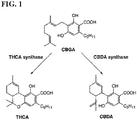
- FIG. 1 shows the biosynthetic pathway of cannabinoid synthesis in the Cannabis sativa plant.
- THCA synthase and CBDA synthase catalyze oxidative cyclization of the monoterpene moiety of cannabigerolic acid (CBGA) to form THCA and CBDA.
- CBDA cannabigerolic acid
- Various cannabinoid compounds and cannabinoid derivatives are generated from the THCA and CBDA.
- Two of the most well-known cannabinoids, THC and CBD are generated from THCA and CBDA by non-enzymatic decarboxylation during smoking and storage.
- Cannabinoids produced by the Cannabis sativa plant have the potential to provide new therapeutic compounds to treat a vast assortment of diseases and other human ailments. More than 100 different cannabinoids have been isolated from cannabis and each cannabinoid compound exhibits various effects.
- THC is well-known for its psychological effects and CBD is known for its non-psychoactive effects.
- THC and related derivatives typically exert therapeutic activities via cannabinoid receptors found in humans and other mammals.
- CBD is an isomer of THC. CBD and CBD derivatives also exhibit anti-oxidative and anti-inflammatory effects through pathways not related to cannabinoid receptors.
- Cannabinoid type 1 (CBi) receptors are found primarily in the brain, including the basal ganglia and in the limbic system, and the hippocampus and the striatum, as well as the cerebellum. CB 1 receptors can be found in the human anterior eye and retina. Research indicates that cannabinoid type 2 (CB 2 ) receptors are responsible for anti-inflammatory and other therapeutic effects related to cannabinoids.
- Cannabis plants that contain high levels of cannabinoids such as THC, for example, are typically known as “marijuana” plants. Cannabis plants with a low cannabinoid content are categorized as “hemp” plants. Individual countries usually determine the levels of cannabinoids that differentiate between cannabis plants that are categorized as marijuana or hemp plants. Generally, the THC content on a dry-weight basis for a cannabis plant categorized as a hemp plant is 0.3% or less. Cannabis sativa plants having THC, CBD, and other cannabinoid content levels greater than 0.3% are typically considered marijuana plants. Medical marijuana typically contains cannabinoid levels between 5 and 20%. Other Cannabis sativa plants may produce cannabinoid levels from 25 to 30%.
- a genetically modified Cannabis sativa plant that produces an increased level of cannabinoids that is at least 20%. In another aspect, a genetically modified Cannabis sativa plant is disclosed herein that produces an increased level of cannabinoids that is about 5 to 20%. In yet another aspect, a genetically modified Cannabis sativa plant is disclosed herein that produces an increased level of cannabinoids that is about 25 to 30%.
- the non-genetically modified Cannabis sativa plant is classified as a hemp plant. In another aspect, the non-genetically modified Cannabis sativa plant is classified as a marijuana plant. In other aspects, the cannabinoid is a THC derivative.
- the cannabinoid is (3aR)-2,4,4-trimethyl-7-pentyl-3,3a,4,9b-tetrahydrocyclopenta[c] chromen-9-ol.
- the cannabinoid is a cannabidiol or cannabidiol derivative.
- the cannabinoid is 2-((1R,5R)-3-methyl-5-(prop-1-en-2-yl)cyclopent-2-en-1-yl)-5-pentyl benzene-1,3-diol.
- the Cannabis sativa plant materials that contain cannabinoids may include the plant or plant part such as the bark, leaves, stem, root, wood, flowers, fruits, seeds, berries, exudates, extracts, or combinations thereof.
- a Cannabis sativa plant includes variants, subspecies, chemovars, genetic crosses, self-crosses, or hybrids.
- a transgenic Cannabis sativa plant is genetically modified to express, repress, alter, or mutate a gene or genes involved in the cannabinoid biosynthesis pathway.
- a genetically modified Cannabis sativa plant disclosed herein may produce increased levels of cannabinoids due to a modified gene or genes encoding an enzyme(s) or protein(s) involved in the biosynthesis of the various cannabinoids.
- the biosynthetic pathway of the Cannabis sativa plant that produces the various cannabinoids starts with the precursor cannabigerolic acid.
- the enzymes THCA synthase and CBDA synthase catalyze the biosynthesis of cannabigerolic acid to tetrahydrocannabinol acid (THCA) and cannabidiol acid (CBDA), respectively, as well as other cannabinoids.
- THCA tetrahydrocannabinol acid
- CBDA cannabidiol acid
- THC, CBD, and other cannabinoid derivatives are generated artificially from THCA and CBDA by non-enzymatic decarboxylation.
- cannabinoids are biosynthesized via this general pathway to include THC (tetrahydrocannabinol), THCA (tetrahydrocannabinolic acid), CBD (cannabidiol), CBDA (cannabidiolic Acid), CBN (cannabinol), CBG (cannabigerol), CBC (cannabichromene), CBL (cannabicyclol), CBV (cannabivarin), THCV (tetrahydrocannabivarin), CBDV (cannabidivarin), CBCV (cannabichromevarin), CBGV (cannabigerovarin), CBGM (cannabigerol monomethyl ether), CBE (cannabielsoin), and CBT (cannabicitran).
- a genetic engineering technique to increase the cannabinoid content in a Cannabis sativa plant involves manipulating the gene controlling the expression of tetrahydrocannabinolic acid (THCA) synthase and/or manipulating the gene controlling the expression of controlling the expression of a cannabidiolic acid (CBDA) synthase.
- THCA tetrahydrocannabinolic acid
- CBDA cannabidiolic acid
- the THCA synthase catalyzes the synthesis of cannabigerolic acid (CBGA) to tetrahydrocannabinolic acid (THCA).
- CBDA cannabigerolic acid
- THCA tetrahydrocannabinolic acid
- the increased expression of THCA synthase thus catalyzes increased levels of CBGA to THCA.
- THCA is subsequently converted or synthesized into other THC related cannabinoids.
- the overexpression of the gene that produces CBDA synthase results in increased levels of CBDA synthase in the Cannabis sativa plant.
- CBDA synthase catalyzes the synthesis of cannabigerolic acid (CBGA) to cannabidiolic acid (CBDA). CBDA is subsequently converted or synthesized into other CBD related cannabinoids. The increased expression of CBDA synthase thus catalyzes increased levels of CBGA to CBDA.
- increased levels of (3aR)-2,4,4-trimethyl-7-pentyl-3,3a,4,9b-tetrahydrocyclopenta[c] chromen-9-ol and 2-((1R,5R)-3-methyl-5-(prop-1-en-2-yl)cyclopent-2-en-1-yl)-5-pentyl benzene-1,3-diol can be generated from transgenic Cannabis sativa plants.
- the genetically modified Cannabis sativa plants disclosed herein may produce cannabinoid content levels on a dry weight-weight basis of, for example, at least, greater than, less than, equal to, or any number in between about 0.10%, 0.15%, 0.20%, 0.25%, 0.30%, 0.35%, 0.40%, 0.45%, 0.50%, 0.55%, 0.60%, 0.65%, 0.70%, 0.75%, 0.80%, 0.85%, 0.90%, 0.95%, 1.00%, 2.00%, 3.00%, 4.00%, 5.00%, 6.00%, 6.00%, 7.00%, 7.00%, 8.00%, 9.00%, 10.00%, 11.00%, 12.00%, 13.00%, 14.00%, 15.00%, 16.00%, 17.00%, 18.00%, 19.00%, 20.00%, 21.00%, 22.00%, 23.00%, 24.00%, 25.00%, 26.00%, 27.00%, 28.00%, 29.00%, 30.00%, 31.00
- enzyme As used herein, the terms “enzyme,” “protein,” “polypeptide,” and “peptide” are used interchangeably herein to designate a series of amino acid residues, connected to each other by peptide bonds between the alpha-amino and carboxy groups of adjacent residues.
- the terms “enzyme,” “protein,” “peptide,” and “polypeptide” refer to a polymer of amino acids, including modified amino acids (e.g., phosphorylated, glycated, glycosylated, etc.) and amino acid analogs, regardless of its size or function.
- Protein and polypeptide are often used in reference to relatively large polypeptides, whereas the term “peptide” is often used in reference to small polypeptides, but usage of these terms in the art overlaps.
- the terms “enzyme,” “protein,” and “peptide” are used interchangeably herein when referring to a gene product and fragments thereof.
- exemplary enzymes, polypeptides, peptides, or proteins include gene products, naturally occurring enzymes, proteins, homologs, orthologs, paralogs, fragments and other equivalents, variants, fragments, and analogs of the foregoing.
- genes encoding a polypeptide related to cannabinoid biosynthesis may be utilized to overexpress or inhibit the expression of the polypeptide in a Cannabis sativa plant in which the polypeptide may normally be found.
- the gene may be used to design a polynucleotide that inhibits or induces the expression of the gene, and the polynucleotide may be introduced into a cell of the Cannabis sativa plant.
- nucleic acid sequence may be determined directly for an enzyme, protein or peptide, or inferred from the corresponding nucleic acid sequence.
- a “nucleic acid” or “nucleic acid sequence” may be any molecule, preferably a polymeric molecule, incorporating units of ribonucleic acid, deoxyribonucleic acid or an analog thereof.
- the nucleic acid can be either single-stranded or double-stranded.
- a single-stranded nucleic acid can be one nucleic acid strand of a denatured double-stranded DNA. Alternatively, it can be a single-stranded nucleic acid not derived from any double-stranded DNA.
- the nucleic acid can be DNA.
- the nucleic acid can be RNA.
- Suitable nucleic acid molecules are DNA, including genomic DNA or cDNA.
- Other suitable nucleic acid molecules are RNA, including mRNA.
- "Heterologous" as applied to nucleic acids is of different origin than that of the natural cannabis plant cell.
- a "vector” refers to a piece of DNA, either single or double stranded.
- the vector can be for example, of plasmid or viral origin, which typically encodes a selectable or screenable marker or transgenes.
- the vector is used to transport the foreign or heterologous DNA into a suitable host cell. Once in the host cell, the vector can replicate independently of or coincidental with the host chromosomal DNA. Alternatively, the vector can target insertion of the foreign or heterologous DNA into a host chromosome.
- transgenic refers to cannabis plants or plant cells that have been “transformed.”
- Transformed describes the introduction of DNA into the cannabis plant or plant cell. In most cases, the DNA is introduced into the cannabis plant or plant cell in the form of a vector containing the DNA segment.
- a transformed Cannabis sativa plant may be identified by selectable markers and report genes in accordance with methods known in the art.
- pressed describes a protein that is produced in a plant cell when its DNA is transcribed to mRNA that is translated to the protein.
- Inhibition describes a measurable decrease in the cellular level of mRNA transcribed from the gene ( i.e.
- coding polynucleotide and/or in the cellular level of a peptide, polypeptide, or protein product of the coding polynucleotide.
- “Overexpression” describes a greater expression level of a gene in a cannabis plant or cell compared to the expression in a wild-type cannabis plant or cell.
- “Suppressed” refers to decreased expression or activity of a protein.
- % sequence identity describes the extent to which the sequences of DNA or protein segments are invariant throughout a window of alignment of sequences such as nucleotide sequences or amino acid sequences and is determined by comparing two optimally aligned sequences over a comparison window.
- An identity fraction for a sequence aligned with a reference sequence is the number of identical components that are shared by the sequences, divided by the length of the alignment not including gaps introduced by the alignment algorithm.
- % identity is the identity fraction times 100.
- Substantially identical describes nucleotide sequences that are more than 85% identical to a reference sequence.
- Promoter describes a regulatory DNA that initializes transcription. Using methods known to a person of ordinary skill in the art, recombinant DNA constructs are assembled and usually include a promoter operably linked to DNA.
- Cannabis sativa plant genes encoding a polypeptide, related to the biosynthesis of THCA or CBDA may be utilized to overexpress or inhibit the expression of the polypeptide in the Cannabis sativa plant in which the polypeptide is normally found.
- the gene or a related vector may be introduced into a cell of the plant in a genetic locus where the gene is not normally found, or a native copy of the gene or related vector may be placed under regulatory control elements that lead to increased expression of the native gene or vector.
- the gene may be used to design a polynucleotide that inhibits the expression of the gene, and the polynucleotide may be introduced into a cell of the cannabis plant.
- genetically modified Cannabis sativa plants may be engineered to increase or decrease the levels of certain cannabinoids synthesized, such as (3aR)-2,4,4-trimethyl-7-pentyl-3,3a,4,9b-tetrahydrocyclopenta[c] chromen-9-ol and 2-((1R,5R)-3-methyl-5-(prop-1-en-2-yl)cyclopent-2-en-1-yl)-5-pentyl benzene-1,3-diol, by overexpressing or inhibiting one or several key genes related to cannabinoid biosynthesis.
- cannabinoids synthesized such as (3aR)-2,4,4-trimethyl-7-pentyl-3,3a,4,9b-tetrahydrocyclopenta[c] chromen-9-ol and 2-((1R,5R)-3-methyl-5-(prop-1-en-2-yl)cyclopent-2-en-1-yl)-5-pentyl benzene
- a transgenic Cannabis sativa plant may be cultivated with increased levels of (3aR)-2,4,4-trimethyl-7-pentyl-3,3a,4,9b-tetrahydrocyclopenta[c] chromen-9-ol and/or 2-((1R,5R)-3-methyl-5-(prop-1-en-2-yl)cyclopent-2-en-1-yl)-5-pentyl benzene-1,3-diol, by exposing a the Cannabis sativa plant or cell to a vector or exogenous DNA construct that includes a promoter that is operable in the Cannabis sativa plant or cell and a DNA sequence capable of encoding an enzyme(s) or protein(s) critical to the cannabinoid biosynthesis pathway thereby inducing increased levels of (3aR)-2,4,4-trimethyl-7-pentyl-3,3a,4,9b-tetrahydrocyclopenta[c] chromen-9-ol and/or 2-(
- the target enzyme is THCA synthase and/or CBDA synthase. Accordingly, the Cannabis sativa plant is transformed by the DNA construct or vector. The transformed plant or cells are selected and the resulting transgenic Cannabis sativa plant is regenerated using conventional techniques.
- the expression of isolated nucleic acids encoding an enzyme or protein involved in the cannabinoid biosynthesis pathway can be achieved by operably linking the DNA or cDNA to a promoter, and then incorporated into an expression vector.
- Vectors can be suitable for replication and integration in either prokaryotes or eukaryotes. Typical expression vectors contain transcription and translation terminators, initiation sequences, and promoters that regulate the expression of the DNA encoding an enzyme or protein involved in the cannabinoid biosynthesis pathway. The vector is then introduced into the appropriate host cell.
- a genetically modified Cannabis sativa plant includes a Cannabis sativa plant transformation vector comprising a nucleic acid encoding a polypeptide having at least 80%, 85%, 88%, 90%, 92%, 95%, 98%, 99%, or 100% sequence identity to a Cannabis sativa plant gene related to enzymes (e.g., THCA synthase, CBDA synthase, etc.), proteins, or other components critical to the cannabinoid biosynthesis pathway, or directly related to the biosynthesis and/or the metabolic pathway generating the cannabinoid compounds (3aR)-2,4,4-trimethyl-7-pentyl-3,3a,4,9b-tetrahydrocyclopenta[c] chromen-9-ol and/or 2-((1R,5R)-3-methyl-5-(prop-1-en-2-yl)cyclopent-2-en-1-yl)-5-pentyl benzene-1,3-dio
- enzymes e.g.,
- the nucleic acid is operably linked to a promoter.
- a nucleic acid construct for a genetically modified Cannabis sativa plant comprises a polynucleotide sequence encoding a polypeptide having at least 80% sequence identity to a Cannabis sativa plant gene related to the cannabinoid and cannabinoid derivatives biosynthesis pathway, and one or more control sequences for driving expression of the polynucleotide sequence in the genetically modified Cannabis sativa plant.
- the compound 2-((1R,5R)-3-methyl-5-(prop-1-en-2-yl)cyclopent-2-en-1-yl)-5-pentyl benzene-1,3-diol has the structure:
- the cannabinoid compounds described herein may be formed as salts, which may be helpful to improve chemical purity, stability, solubility, and/or bioavailability.
- salts include salts of 1-hydroxy-2-naphthoic acid, 2,2-dichloroacetic acid, 2-hydroxyethanesulfonic acid, 2-oxoglutaric acid, 4-acetamidobenzoic acid, 4-aminosalicylic acid, acetic acid, adipic acid, ascorbic acid (L), aspartic acid (L), benzenesulfonic acid, benzoic acid, camphoric acid (+), camphor-10-sulfonic acid (+), capric acid (decanoic acid), caproic acid (hexanoic acid), caprylic acid (octanoi
- Compounds described herein may be harvested from the genetically modified Cannabis sativa plant previously described.
- the compounds described herein may also be prepared synthetically using known techniques with appropriate modifications to the reactants to form the structures shown herein or by other suitable pathways that will be apparent to persons skilled in the art.
- compounds described herein may be synthesized according to one or more of the following pathways described in Razdan, Total Synthesis of Cannabinoids , SISA Incorporated, Cambridge, Massachusetts, such as the THC synthesis described at p. 201 or the CBD synthesis described at p. 224, with appropriate modifications to the reactants, as will be apparent to persons skilled in the art, to yield the structures disclosed herein.
- purity refers to the ratio of a compound's mass to the total sample mass following any purification steps.
- the level of purity is at least about 95%, more usually at least about 96%, about 97%, about 98%, or higher.
- the level of purity may be about 98.5%, 99.0%, 99.1%, 99.2%, 99.3%, 99.4%, 99.5%, 99.6%, 99.7%, 99.8%, 99.9%, or higher.
- enantiomers Compounds described herein that exist in more than one optical isomer form (enantiomers) may be provided either as racemic mixture or by isolating one of the enantiomers, the latter case in which purity as described above may refer to enantiomeric purity.
- cannabinoids and related cannabinoid derivatives typically exert therapeutic and anti-inflammatory activities via CB 1 and CB 2 receptors.
- compounds disclosed herein may also exhibit properties as inhibitors of monoamine oxidase (MAO) activity, including either or both of MAO-A and MAO-B activity. These properties may enable compounds to be effective for treating indications associated with MAO activity, such as depression, pain, substance addiction, smoking cessation, and the like.
- Compounds disclosed herein also (or alternatively) may exhibit anti-inflammatory properties owing to the compound's interaction with inflammation pathways, including by way of example, interleukins such as IL-1 and IL-6, TNF, cyclooxygenase (COX), and the like.
- a compound's ability to inhibit MAO-A and/or MAO-B activity, and/or its ability to inhibit COX and/or other pathways associated with inflammation may be evaluated using assays well known to persons of ordinary skill in the art.
- Hydrogen peroxide is a stable, uncharged and freely diffusible reactive oxygen species (ROS) and second messenger.
- ROS reactive oxygen species
- the generation of H 2 O 2 in the brain is especially high because of the high oxygen consumption in the tissue.
- ROS are essentially produced by mitochondria, and the ability to block mitochondrial enzymes such as MAO may prevent early stage H 2 O 2 production.
- the compounds disclosed herein may specifically target H 2 O 2 , such as by inhibiting the synthesis of H 2 O 2 , thereby modulating H 2 O 2 levels to treat a variety of disorders associated with elevated levels of H 2 O 2 .
- a modified cannabinoid compound as described herein is administered to an individual in need thereof for the treatment of a substance addiction, such as alcohol, tobacco, opioid, prescription drugs, cocaine, benzodiazepines, amphetamines, hallucinogens, inhalants, phencyclidine, or other drug addictions.
- a substance addiction such as alcohol, tobacco, opioid, prescription drugs, cocaine, benzodiazepines, amphetamines, hallucinogens, inhalants, phencyclidine, or other drug addictions.
- Such treatments also are inclusive of treating withdrawal in dependency on benzodiazepines, opiates, or alcohol, as well as symptoms experienced by patients with substance use disorders, such as anxiety, mood symptoms, pain, and insomnia.
- the modified cannabinoid compounds may be effective for treating other types of anxiety disorders, such as post-traumatic stress disorder, general anxiety disorder, panic disorder, social anxiety disorder, and obsessive-compulsive disorder.
- a modified cannabinoid compound as described herein may be administered to an individual in need thereof for the treatment of multiple sclerosis, fibromyalgia, epilepsy or neuropsychiatric disorders that are linked to epilepsy, such as neurodegeneration, neuronal injury, and psychiatric diseases.
- the modified cannabinoid compounds may be effective for potentiating the anticonvulsant activity of other active agents such as phenytoin and diazepam.
- a modified cannabinoid compound as described herein may be used in as an antipsychotic for treating patients with schizophrenia.
- the modified cannabinoid compounds also may be effective to reduce intraocular pressure, such as in the treatment of glaucoma.
- a modified cannabinoid compound as described herein may be administered to an individual in need thereof for the treatment of cancer.
- the modified cannabinoid compound may be effective to block cancer cells from spreading around the body and invading an area entirely; for suppressing the growth of cancer cells and/or promoting the death of cancer cells.
- the modified cannabinoid compounds as described herein may be useful in the treatment of Type 1 diabetes, which is caused by inflammation when the immune system attacks cells in the pancreas; as well as acne, which is caused, in part, by inflammation and overworked sebaceous glands on the body.
- the anti-inflammatory properties of the compounds may lower the production of sebum that leads to acne, including acne vulgaris, the most common form of acne.
- the modified cannabinoid compounds as described herein may be used to treat Alzheimer's disease, and particularly to prevent the development of social recognition deficit in subjects when administered in the early stages of Alzheimer's disease.
- Other examples of disorders that may be treated by the modified cannabinoid compound as described herein include nausea, vomiting, anorexia, and cachexia.
- the compounds may produce an appetite-enhancing effect, for example in AIDS patients or individuals with Alzheimer's disease who refuse food.
- modified cannabinoid compounds as described herein may be useful in the treatment of spasticity caused by multiple sclerosis (MS) or spinal cord injury, movement disorders, such as Tourette's syndrome, dystonia, or tardive dyskinesia.
- MS patients may experience benefits on ataxia and reduction of tremors.
- Analgesic properties of the modified cannabinoid compounds may prove beneficial, for example, in the treatment of neuropathic pain due to multiple sclerosis, damage of the brachial plexus and HIV infection, pain in rheumatoid arthritis, cancer pain, headache, menstrual pain, chronic bowel inflammation and neuralgias.
- the modified cannabinoid compounds as described herein may be useful in the treatment of asthma.
- THC 2% THC
- oral THC 15 mg
- inhalation of cannabis products may irritate the mucous membranes
- oral administration or another alternative delivery system would be preferable.
- cannabis products may act not only as analgesics but also demonstrate anti-inflammatory potential.
- some patients employing cannabis report a decrease in their need for steroidal and nonsteroidal anti-inflammatory drugs.
- Cannabis products often show very good effects in diseases with multiple symptoms that encompassed within the spectrum of THC effects, for example, in painful conditions that have an inflammatory origin (e.g., arthritis), or are accompanied by increased muscle tone (e.g., menstrual cramps, spinal cord injury), or in diseases with nausea and anorexia accompanied by pain, anxiety and depression, respectively (e.g. AIDS, cancer, hepatitis C).
- painful conditions e.g., arthritis
- muscle tone e.g., menstrual cramps, spinal cord injury
- nausea and anorexia accompanied by pain, anxiety and depression, respectively e.g. AIDS, cancer, hepatitis C.
- Suitable doses may vary over a wide range depending on a variety of factors including the type and/or severity of the disease or disorder, previous treatments, the general health, age, and/or weight of the individual, the frequency of treatments, the rate of release from the composition, and other diseases present. This dose may vary according to factors such as the disease state, age, and weight of the subject. For example, higher doses may be administered for treatments involving conditions that are at an advanced stage and/or life threatening. Dosage regimens also may be adjusted to provide the optimum therapeutic response.
- compositions may be formulated together with one or more acceptable pharmaceutical or food grade carriers or excipients.
- acceptable pharmaceutical or food grade carrier or excipient means a non-toxic, inert solid, semisolid or liquid filler, diluent, encapsulating material or formulation auxiliary of any type.
- sugars such as lactose, glucose and sucrose; starches such as corn starch and potato starch; cellulose and its derivatives such as sodium carboxymethyl cellulose, ethyl cellulose and cellulose acetate; powdered tragacanth; malt; gelatin; talc; excipients such as cocoa butter and suppository waxes; oils such as peanut oil, cottonseed oil, safflower oil, sesame oil, olive oil, corn oil and soybean oil; glycols such as propylene glycol; esters such as ethyl oleate and ethyl laurate; agar; buffering agents such as magnesium hydroxide and aluminum hydroxide; alginic acid; pyrogen-free water; isotonic saline; Ringer's solution; ethyl alcohol, and phosphate buffer solutions, as well as compatible lubricants such as sodium lauryl sulfate and magnesium stearate, as well as coloring agents,
- compositions may be prepared by any suitable technique and is not limited by any particular method for its production.
- purified cannabinoids can be combined with excipients and a binder, and then granulated.
- the granulation can be dry-blended with any remaining ingredients, and compressed into a solid form such as a tablet.
- compositions may be administered by any suitable route.
- the compositions may be administered orally, parenterally, by inhalation spray, topically, rectally, nasally, buccally, vaginally, via an implanted reservoir, or ingested as a dietary supplement or food.
- a composition is provided in an inhaler, which may be actuated to administer a vaporized medium that is inhaled into the lungs.
- parenteral as used herein includes subcutaneous, intracutaneous, intravenous, intramuscular, and intracranial injection or infusion techniques. Most often, the pharmaceutical compositions are readily administered orally and ingested.
- compositions may contain any conventional non-toxic pharmaceutically-acceptable carriers, adjuvants or vehicles.
- pH of the formulation may be adjusted with acceptable pharmaceutical or food grade acids, bases or buffers to enhance the stability of the formulated composition or its delivery form.
- Liquid dosage forms for oral administration include acceptable pharmaceutical or food grade emulsions, microemulsions, solutions, suspensions, syrups and elixirs.
- the liquid dosage forms may contain inert diluents commonly used in the art such as, for example, water or other solvents, solubilizing agents and emulsifiers such as ethyl alcohol, isopropyl alcohol, ethyl carbonate, ethyl acetate, benzyl alcohol, benzyl benzoate, propylene glycol, 1,3-butylene glycol, dimethylsulfoxide (DMSO) dimethylformamide, oils (in particular, cottonseed, groundnut, corn, germ, olive, castor, and sesame oils), glycerol, tetrahydrofurfuryl alcohol, polyethylene glycols and fatty acid esters of sorbitan, and mixtures thereof.
- the oral compositions can also include
- Solid dosage forms for oral administration include capsules, tablets, lozenges, pills, powders, and granules.
- the active compound is mixed with at least one inert, acceptable pharmaceutical or food grade excipient or carrier such as sodium citrate or dicalcium phosphate and/or a) fillers or extenders such as starches, lactose, sucrose, glucose, mannitol, and silicic acid, b) binders such as carboxymethylcellulose, alginates, gelatin, polyvinylpyrrolidone, sucrose and acacia, c) humectants such as glycerol, d) disintegrating agents such as agaragar, calcium carbonate, potato or tapioca starch, alginic acid, certain silicates, and sodium carbonate, e) solution retarding agents such as paraffin, f) absorption accelerators such as quaternary ammonium compounds, g) wetting agents such as cetyl alcohol and glycerol monoste
- the solid dosage forms of tablets, capsules, pills, and granules can be prepared with coatings and shells such as enteric coatings and other coatings well known in the pharmaceutical formulating art. They may optionally contain opacifying agents and can also be of a composition that they release the active ingredient(s) only, or preferentially, in a certain part of the intestinal tract or, optionally, in a delayed or extended manner. Examples of embedding compositions which can be used include polymeric substances and waxes. Tablet formulations for extended release are also described in U.S. Pat. No. 5,942,244 .
- Compositions may contain a modified cannabinoid compound or compounds, alone or with other therapeutic compound(s).
- a therapeutic compound is a compound that provides pharmacological activity or other direct effect in the diagnosis, cure, mitigation, treatment, or prevention of disease, or to affect the structure or any function of the body of man or animals.
- a therapeutic compound disclosed herein may be used in the form of a pharmaceutically acceptable salt, solvate, or solvate of a salt, e.g., a hydrochloride. Additionally, therapeutic compound disclosed herein may be provided as racemates, or as individual enantiomers, including the R- or S-enantiomer.
- the therapeutic compound disclosed herein may comprise a R-enantiomer only, a S-enantiomer only, or a combination of both a R-enantiomer and a S-enantiomer of a therapeutic compound.
- the therapeutic compound may have anti-inflammatory activity, such as a non-steroidal anti-inflammatory drug (NSAID).
- NSAIDs are a large group of therapeutic compounds with analgesic, anti-inflammatory, and anti-pyretic properties. NSAIDs reduce inflammation by blocking cyclooxygenase.
- NSAIDs include, without limitation, aceclofenac, acemetacin, actarit, alcofenac, alminoprofen, amfenac, aloxipirin, aminophenazone, antraphenine, aspirin, azapropazone, benorilate, benoxaprofen, benzydamine, butibufen, celecoxib, chlorthenoxacin, choline salicylate, clometacin, dexketoprofen, diclofenac, diflunisal, emorfazone, epirizole; etodolac, etoricoxib, feclobuzone, felbinac, fenbufen, fenclofenac, flurbiprofen, glafenine, hydroxylethyl salicylate, ibuprofen, indometacin, indoprofen, ketoprofen, ketorolac, lactyl phenet
- NSAIDs may be classified based on their chemical structure or mechanism of action.
- Non-limiting examples of NSAIDs include a salicylate derivative NSAID, a p-amino phenol derivative NSAID, a propionic acid derivative NSAID, an acetic acid derivative NSAID, an enolic acid derivative NSAID, a fenamic acid derivative NSAID, a non-selective cyclooxygenase (COX) inhibitor, a selective cyclooxygenase-1 (COX-1) inhibitor, and a selective cyclooxygenase-2 (COX-2) inhibitor.
- An NSAID may be a profen.
- Examples of a suitable salicylate derivative NSAID include, without limitation, acetylsalicylic acid (aspirin), diflunisal, and salsalate.
- Examples of a suitable p-amino phenol derivative NSAID include, without limitation, paracetamol and phenacetin.
- Examples of a suitable propionic acid derivative NSAID include, without limitation, alminoprofen, benoxaprofen, dexketoprofen, fenoprofen, flurbiprofen, ibuprofen, indoprofen, ketoprofen, loxoprofen, naproxen, oxaprozin, pranoprofen, and suprofen.
- acetic acid derivative NSAID examples include, without limitation, aceclofenac, acemetacin, actarit, alcofenac, amfenac, clometacin, diclofenac, etodolac, felbinac, fenclofenac, indometacin, ketorolac, metiazinic acid, mofezolac, nabumetone, naproxen, oxametacin, sulindac, and zomepirac.
- a suitable enolic acid (oxicam) derivative NSAID examples include, without limitation, droxicam, isoxicam, lornoxicam, meloxicam, piroxicam, and tenoxicam.
- a suitable fenamic acid derivative NSAID examples include, without limitation, flufenamic acid, mefenamic acid, meclofenamic acid, and tolfenamic acid.
- a suitable selective COX-2 inhibitors include, without limitation, celecoxib, etoricoxib, firocoxib, lumiracoxib, meloxicam, parecoxib, rofecoxib, and valdecoxib.
- a therapeutically effective amount of a therapeutic compound disclosed herein generally is in the range of about 0.001 mg/kg/day to about 100 mg/kg/day.
- An effective amount may be, e.g., at least 0.001 mg/kg/day, at least 0.01 mg/kg/day, at least 0.1 mg/kg/day, at least 1.0 mg/kg/day, at least 5.0 mg/kg/day, at least 10 mg/kg/day, at least 15 mg/kg/day, at least 20 mg/kg/day, at least 25 mg/kg/day, at least 30 mg/kg/day, at least 35 mg/kg/day, at least 40 mg/kg/day, at least 45 mg/kg/day, or at least 50 mg/kg/day.
- an effective amount of a therapeutic compound may be in the range of about 0.001 mg/kg/day to about 10 mg/kg/day, about 0.001 mg/kg/day to about 15 mg/kg/day, about 0.001 mg/kg/day to about 20 mg/kg/day, about 0.001 mg/kg/day to about 25 mg/kg/day, about 0.001 mg/kg/day to about 30 mg/kg/day, about 0.001 mg/kg/day to about 35 mg/kg/day, about 0.001 mg/kg/day to about 40 mg/kg/day, about 0.001 mg/kg/day to about 45 mg/kg/day, about 0.001 mg/kg/day to about 50 mg/kg/day, about 0.001 mg/kg/day to about 75 mg/kg/day, or about 0.001 mg/kg/day to about 100 mg/kg/day.
- an effective amount of a therapeutic compound disclosed herein may be in the range of, e.g., about 0.01 mg/kg/day to about 10 mg/kg/day, about 0.01 mg/kg/day to about 15 mg/kg/day, about 0.01 mg/kg/day to about 20 mg/kg/day, about 0.01 mg/kg/day to about 25 mg/kg/day, about 0.01 mg/kg/day to about 30 mg/kg/day, about 0.01 mg/kg/day to about 35 mg/kg/day, about 0.01 mg/kg/day to about 40 mg/kg/day, about 0.01 mg/kg/day to about 45 mg/kg/day, about 0.01 mg/kg/day to about 50 mg/kg/day, about 0.01 mg/kg/day to about 75 mg/kg/day, or about 0.01 mg/kg/day to about 100 mg/kg/day.
- compositions described herein may be formulated as an elixir, a beverage, a chew, a tablet, a lozenge, a gum, or the like.
- the pharmaceutical compositions may also be formulated as a pharmaceutically acceptable vehicle such as a capsule, tablet, syrup, lozenge, inhaler, e-cigarette, chewable gum, nasal spray, transdermal patch, liquid, transmucosal vehicle, hydrogel, nanosome, liposome, noisome, nanoparticle, nanosphere, microsphere, microparticle, microemulsion, nanosuspension, or micelle.
- the compositions may also be formulated, for example, as dietary supplements or nutraceuticals.
Landscapes
- Health & Medical Sciences (AREA)
- Life Sciences & Earth Sciences (AREA)
- Chemical & Material Sciences (AREA)
- Organic Chemistry (AREA)
- Genetics & Genomics (AREA)
- Engineering & Computer Science (AREA)
- General Health & Medical Sciences (AREA)
- Bioinformatics & Cheminformatics (AREA)
- Medicinal Chemistry (AREA)
- Biomedical Technology (AREA)
- Pharmacology & Pharmacy (AREA)
- Animal Behavior & Ethology (AREA)
- Public Health (AREA)
- Veterinary Medicine (AREA)
- Biotechnology (AREA)
- Wood Science & Technology (AREA)
- Zoology (AREA)
- Molecular Biology (AREA)
- General Engineering & Computer Science (AREA)
- Natural Medicines & Medicinal Plants (AREA)
- Chemical Kinetics & Catalysis (AREA)
- General Chemical & Material Sciences (AREA)
- Nuclear Medicine, Radiotherapy & Molecular Imaging (AREA)
- Biochemistry (AREA)
- Neurosurgery (AREA)
- Neurology (AREA)
- Microbiology (AREA)
- Addiction (AREA)
- Botany (AREA)
- Psychiatry (AREA)
- Epidemiology (AREA)
- Biophysics (AREA)
- Plant Pathology (AREA)
- Physics & Mathematics (AREA)
- Cell Biology (AREA)
- Mycology (AREA)
- Medical Informatics (AREA)
- Alternative & Traditional Medicine (AREA)
- Nutrition Science (AREA)
- Environmental Sciences (AREA)
Priority Applications (1)
| Application Number | Priority Date | Filing Date | Title |
|---|---|---|---|
| EP21171866.3A EP3884936B1 (en) | 2018-02-20 | 2019-02-11 | Genetically modified cannabis sativa plants and modified cannabinoid compounds for treatment of substance addiction and other disorders |
Applications Claiming Priority (2)
| Application Number | Priority Date | Filing Date | Title |
|---|---|---|---|
| US201862632448P | 2018-02-20 | 2018-02-20 | |
| PCT/US2019/017433 WO2019164689A1 (en) | 2018-02-20 | 2019-02-11 | Genetically modified cannabis sativa plants and modified cannabinoid compounds for treatment of substance addiction and other disorders |
Related Child Applications (2)
| Application Number | Title | Priority Date | Filing Date |
|---|---|---|---|
| EP21171866.3A Division EP3884936B1 (en) | 2018-02-20 | 2019-02-11 | Genetically modified cannabis sativa plants and modified cannabinoid compounds for treatment of substance addiction and other disorders |
| EP21171866.3A Division-Into EP3884936B1 (en) | 2018-02-20 | 2019-02-11 | Genetically modified cannabis sativa plants and modified cannabinoid compounds for treatment of substance addiction and other disorders |
Publications (3)
| Publication Number | Publication Date |
|---|---|
| EP3755318A1 EP3755318A1 (en) | 2020-12-30 |
| EP3755318A4 EP3755318A4 (en) | 2021-04-14 |
| EP3755318B1 true EP3755318B1 (en) | 2022-08-24 |
Family
ID=67687826
Family Applications (2)
| Application Number | Title | Priority Date | Filing Date |
|---|---|---|---|
| EP19756525.2A Active EP3755318B1 (en) | 2018-02-20 | 2019-02-11 | Genetically modified cannabis sativa plants and modified cannabinoid compounds for treatment of substance addiction and other disorders |
| EP21171866.3A Active EP3884936B1 (en) | 2018-02-20 | 2019-02-11 | Genetically modified cannabis sativa plants and modified cannabinoid compounds for treatment of substance addiction and other disorders |
Family Applications After (1)
| Application Number | Title | Priority Date | Filing Date |
|---|---|---|---|
| EP21171866.3A Active EP3884936B1 (en) | 2018-02-20 | 2019-02-11 | Genetically modified cannabis sativa plants and modified cannabinoid compounds for treatment of substance addiction and other disorders |
Country Status (13)
| Country | Link |
|---|---|
| US (4) | US11085047B2 (pl) |
| EP (2) | EP3755318B1 (pl) |
| JP (2) | JP7293561B2 (pl) |
| KR (2) | KR102332631B1 (pl) |
| CN (2) | CN112040942A (pl) |
| AU (2) | AU2019225717B2 (pl) |
| CA (2) | CA3120993C (pl) |
| ES (2) | ES2926328T3 (pl) |
| HU (2) | HUE059916T2 (pl) |
| IL (2) | IL276518B (pl) |
| PL (2) | PL3884936T3 (pl) |
| PT (2) | PT3884936T (pl) |
| WO (1) | WO2019164689A1 (pl) |
Families Citing this family (9)
| Publication number | Priority date | Publication date | Assignee | Title |
|---|---|---|---|---|
| JP4938547B2 (ja) | 2007-05-10 | 2012-05-23 | 日本トムソン株式会社 | 内面シールを備えた直動案内ユニット |
| WO2022103634A1 (en) | 2020-11-16 | 2022-05-19 | Orcosa Inc. | Improved use of cannabinoids in the treatment of epilepsy |
| US11672761B2 (en) | 2020-11-16 | 2023-06-13 | Orcosa Inc. | Rapidly infusing platform and compositions for therapeutic treatment in humans |
| US20240116883A1 (en) * | 2020-11-24 | 2024-04-11 | Yissum Research Development Company Of The Hebrew University Of Jerusalem Ltd. | Cannabinoid derivatives and their use the treatment of inflammation and/or pain and/or obesity |
| WO2022180532A1 (en) * | 2021-02-23 | 2022-09-01 | Puregene Ag | Quantitative trait loci (qtls) associated with a high-varin trait in cannabis |
| CN113099973B (zh) * | 2021-05-17 | 2022-05-27 | 潍坊市华以农业科技有限公司 | 一种药用大麻矮化高产的种植方法 |
| IL312857A (en) * | 2021-11-27 | 2024-07-01 | Miralogx Llc | Synthetic cannabinoid compounds, pharmaceutical compositions, and treatment methods |
| WO2023150347A2 (en) * | 2022-02-07 | 2023-08-10 | Miralogx Llc | Synthetic cannabinoid compounds, pharmaceutical compositions, and treatment methods |
| US20250161331A1 (en) * | 2022-02-25 | 2025-05-22 | Sgn Nanopharma Inc. | Anti-inflammatory drug-cannabinoid-comprising nanoemulsions and methods of using the same |
Family Cites Families (16)
| Publication number | Priority date | Publication date | Assignee | Title |
|---|---|---|---|---|
| US5942244A (en) | 1997-07-31 | 1999-08-24 | Farmo-Nat Ltd. | Local oral herbal slow release tablets |
| GB2438682A (en) | 2006-06-01 | 2007-12-05 | Gw Pharma Ltd | New use for cannabinoids |
| DE102007046086A1 (de) * | 2007-09-26 | 2009-04-09 | Heinz Prof. Dr. Letzel | Pflanzenextrakt aus THC-armen Cannabis zur Behandlung von Erkrankungen |
| GB2456183A (en) * | 2008-01-04 | 2009-07-08 | Gw Pharma Ltd | Anti-psychotic composition comprising cannabinoids and anti-psychotic medicament |
| CA2770774C (en) | 2009-08-12 | 2020-07-14 | National Research Council Of Canada | Aromatic prenyltransferase from cannabis |
| GB2478595B (en) * | 2010-03-12 | 2018-04-04 | Gw Pharma Ltd | Phytocannabinoids in the treatment of glioma |
| GB201111261D0 (en) * | 2011-07-01 | 2011-08-17 | Gw Pharma Ltd | Cannabinoids for use in the treatment of neuro-degenerative diseases or disorders |
| GB201117956D0 (en) | 2011-10-18 | 2011-11-30 | Otsuka Pharma Co Ltd | Phytocannabinoids for use in the treatment of breast cancer |
| US20160108016A1 (en) | 2012-09-06 | 2016-04-21 | Northeastern University | Novel Cannabinergic Compounds and Uses Thereof |
| EP3161140A4 (en) | 2014-06-27 | 2017-12-20 | National Research Council of Canada | Cannabichromenic acid synthase from cannabis sativa |
| WO2016004121A1 (en) | 2014-07-01 | 2016-01-07 | MJAR Holdings, LLC | High cannabidiol cannabis strains |
| UY36530A (es) | 2015-01-22 | 2016-08-31 | Phytoplant Res S L | Métodos para purificar cannabinoides, composiciones y kits de estos |
| WO2016127111A1 (en) * | 2015-02-05 | 2016-08-11 | Colorado Can Llc | Purified cbd and cbda, and methods, compositions and products employing cbd or cbda |
| BR112017025388A2 (pt) * | 2015-05-28 | 2018-08-07 | Tweed Inc. | plantas cannabis tendo expressão modificada de thca sintase |
| US10059683B2 (en) * | 2015-07-10 | 2018-08-28 | Noramco, Inc. | Process for the production of cannabidiol and delta-9-tetrahydrocannabinol |
| CN109890202A (zh) * | 2016-08-18 | 2019-06-14 | 凯诺比生长公司 | 增加和减少大麻素合成的植物和方法 |
-
2019
- 2019-02-11 PL PL21171866.3T patent/PL3884936T3/pl unknown
- 2019-02-11 CN CN201980014261.XA patent/CN112040942A/zh active Pending
- 2019-02-11 CA CA3120993A patent/CA3120993C/en active Active
- 2019-02-11 EP EP19756525.2A patent/EP3755318B1/en active Active
- 2019-02-11 CA CA3091776A patent/CA3091776C/en active Active
- 2019-02-11 PT PT211718663T patent/PT3884936T/pt unknown
- 2019-02-11 KR KR1020207026914A patent/KR102332631B1/ko active Active
- 2019-02-11 WO PCT/US2019/017433 patent/WO2019164689A1/en not_active Ceased
- 2019-02-11 AU AU2019225717A patent/AU2019225717B2/en active Active
- 2019-02-11 HU HUE19756525A patent/HUE059916T2/hu unknown
- 2019-02-11 PL PL19756525.2T patent/PL3755318T3/pl unknown
- 2019-02-11 JP JP2020553539A patent/JP7293561B2/ja active Active
- 2019-02-11 PT PT197565252T patent/PT3755318T/pt unknown
- 2019-02-11 KR KR1020217013642A patent/KR102374793B1/ko active Active
- 2019-02-11 EP EP21171866.3A patent/EP3884936B1/en active Active
- 2019-02-11 ES ES19756525T patent/ES2926328T3/es active Active
- 2019-02-11 CN CN202110459283.6A patent/CN113264914A/zh active Pending
- 2019-02-11 HU HUE21171866A patent/HUE060229T2/hu unknown
- 2019-02-11 ES ES21171866T patent/ES2929366T3/es active Active
- 2019-02-11 US US16/612,472 patent/US11085047B2/en active Active
-
2020
- 2020-01-10 US US16/739,219 patent/US10787675B2/en active Active
- 2020-08-05 IL IL276518A patent/IL276518B/en active IP Right Grant
-
2021
- 2021-04-14 IL IL282342A patent/IL282342B/en unknown
- 2021-04-15 AU AU2021202296A patent/AU2021202296B2/en active Active
- 2021-04-19 JP JP2021070269A patent/JP7322353B2/ja active Active
- 2021-07-22 US US17/383,119 patent/US11629355B2/en active Active
-
2023
- 2023-02-20 US US18/111,822 patent/US12129473B2/en active Active
Also Published As
Similar Documents
| Publication | Publication Date | Title |
|---|---|---|
| US12129473B2 (en) | Synthetic cannabinoid compounds for treatment of pain and anxiety | |
| KR102078357B1 (ko) | 뼈 장애, 연골 장애, 또는 이 둘 다의 관리 또는 개선을 위한 조성물 및 방법 | |
| Kramer et al. | Apigenin: a natural molecule at the intersection of sleep and aging | |
| US20240308945A1 (en) | Synthetic Cannabinoid Compounds, Pharmaceutical Compositions, and Methods of Treating Anxiety and Other Disorders | |
| US8530433B2 (en) | Use of icariside II in manufacture of products for preventing or treating male or female sexual dysfunction | |
| US20250241934A1 (en) | Synthetic Cannabigerol Quinone Analogs and Pharmaceutical Compositions Containing Same for Treating Neurological Disorders | |
| US20240360061A1 (en) | Synthetic Cannabinoid Compounds, Pharmaceutical Compositions, and Treatment Methods | |
| KR20040023197A (ko) | 진피, 적복령, 당귀, 조구등, 석창포, 창출, 백지,산조인, 숙지황, 산수유, 원지를 주성분으로 함유하는치매치료의 약학적 효능 | |
| TWI377949B (en) | A chinese herb extract for treating dementia and preparation method thereof | |
| AU2022397237A1 (en) | Synthetic cannabinoid compounds, pharmaceutical compositions, and treatment methods | |
| WO2025250674A1 (en) | Synthetic cannabinoid analogs, pharmaceutical compositions and methods of treating neurological disorders and other conditions |
Legal Events
| Date | Code | Title | Description |
|---|---|---|---|
| STAA | Information on the status of an ep patent application or granted ep patent |
Free format text: STATUS: THE INTERNATIONAL PUBLICATION HAS BEEN MADE |
|
| PUAI | Public reference made under article 153(3) epc to a published international application that has entered the european phase |
Free format text: ORIGINAL CODE: 0009012 |
|
| STAA | Information on the status of an ep patent application or granted ep patent |
Free format text: STATUS: REQUEST FOR EXAMINATION WAS MADE |
|
| 17P | Request for examination filed |
Effective date: 20200918 |
|
| AK | Designated contracting states |
Kind code of ref document: A1 Designated state(s): AL AT BE BG CH CY CZ DE DK EE ES FI FR GB GR HR HU IE IS IT LI LT LU LV MC MK MT NL NO PL PT RO RS SE SI SK SM TR |
|
| AX | Request for extension of the european patent |
Extension state: BA ME |
|
| A4 | Supplementary search report drawn up and despatched |
Effective date: 20210312 |
|
| RIC1 | Information provided on ipc code assigned before grant |
Ipc: A61K 31/352 20060101AFI20210308BHEP Ipc: C07D 311/04 20060101ALI20210308BHEP Ipc: C07D 311/80 20060101ALI20210308BHEP Ipc: C12N 15/09 20060101ALI20210308BHEP |
|
| DAV | Request for validation of the european patent (deleted) | ||
| DAX | Request for extension of the european patent (deleted) | ||
| RAP1 | Party data changed (applicant data changed or rights of an application transferred) |
Owner name: MYMD PHARMACEUTICALS (FLORIDA), INC. |
|
| RIN1 | Information on inventor provided before grant (corrected) |
Inventor name: WILLIAMS, JONNIE R. |
|
| STAA | Information on the status of an ep patent application or granted ep patent |
Free format text: STATUS: EXAMINATION IS IN PROGRESS |
|
| 17Q | First examination report despatched |
Effective date: 20220118 |
|
| GRAP | Despatch of communication of intention to grant a patent |
Free format text: ORIGINAL CODE: EPIDOSNIGR1 |
|
| STAA | Information on the status of an ep patent application or granted ep patent |
Free format text: STATUS: GRANT OF PATENT IS INTENDED |
|
| INTG | Intention to grant announced |
Effective date: 20220531 |
|
| RIN1 | Information on inventor provided before grant (corrected) |
Inventor name: WILLIAMS, JONNIE R. |
|
| GRAS | Grant fee paid |
Free format text: ORIGINAL CODE: EPIDOSNIGR3 |
|
| GRAA | (expected) grant |
Free format text: ORIGINAL CODE: 0009210 |
|
| STAA | Information on the status of an ep patent application or granted ep patent |
Free format text: STATUS: THE PATENT HAS BEEN GRANTED |
|
| RAP1 | Party data changed (applicant data changed or rights of an application transferred) |
Owner name: MYMD PHARMACEUTICALS, INC. |
|
| AK | Designated contracting states |
Kind code of ref document: B1 Designated state(s): AL AT BE BG CH CY CZ DE DK EE ES FI FR GB GR HR HU IE IS IT LI LT LU LV MC MK MT NL NO PL PT RO RS SE SI SK SM TR |
|
| REG | Reference to a national code |
Ref country code: NL Ref legal event code: FP Ref country code: CH Ref legal event code: EP |
|
| REG | Reference to a national code |
Ref country code: PT Ref legal event code: SC4A Ref document number: 3755318 Country of ref document: PT Date of ref document: 20220905 Kind code of ref document: T Free format text: AVAILABILITY OF NATIONAL TRANSLATION Effective date: 20220831 |
|
| REG | Reference to a national code |
Ref country code: RO Ref legal event code: EPE |
|
| REG | Reference to a national code |
Ref country code: IE Ref legal event code: FG4D |
|
| REG | Reference to a national code |
Ref country code: AT Ref legal event code: REF Ref document number: 1513185 Country of ref document: AT Kind code of ref document: T Effective date: 20220915 Ref country code: DE Ref legal event code: R096 Ref document number: 602019018710 Country of ref document: DE |
|
| REG | Reference to a national code |
Ref country code: SE Ref legal event code: TRGR |
|
| REG | Reference to a national code |
Ref country code: ES Ref legal event code: FG2A Ref document number: 2926328 Country of ref document: ES Kind code of ref document: T3 Effective date: 20221025 |
|
| REG | Reference to a national code |
Ref country code: GR Ref legal event code: EP Ref document number: 20220401960 Country of ref document: GR Effective date: 20221109 |
|
| REG | Reference to a national code |
Ref country code: LT Ref legal event code: MG9D |
|
| REG | Reference to a national code |
Ref country code: HU Ref legal event code: AG4A Ref document number: E059916 Country of ref document: HU |
|
| PG25 | Lapsed in a contracting state [announced via postgrant information from national office to epo] |
Ref country code: RS Free format text: LAPSE BECAUSE OF FAILURE TO SUBMIT A TRANSLATION OF THE DESCRIPTION OR TO PAY THE FEE WITHIN THE PRESCRIBED TIME-LIMIT Effective date: 20220824 Ref country code: NO Free format text: LAPSE BECAUSE OF FAILURE TO SUBMIT A TRANSLATION OF THE DESCRIPTION OR TO PAY THE FEE WITHIN THE PRESCRIBED TIME-LIMIT Effective date: 20221124 Ref country code: LV Free format text: LAPSE BECAUSE OF FAILURE TO SUBMIT A TRANSLATION OF THE DESCRIPTION OR TO PAY THE FEE WITHIN THE PRESCRIBED TIME-LIMIT Effective date: 20220824 Ref country code: LT Free format text: LAPSE BECAUSE OF FAILURE TO SUBMIT A TRANSLATION OF THE DESCRIPTION OR TO PAY THE FEE WITHIN THE PRESCRIBED TIME-LIMIT Effective date: 20220824 Ref country code: FI Free format text: LAPSE BECAUSE OF FAILURE TO SUBMIT A TRANSLATION OF THE DESCRIPTION OR TO PAY THE FEE WITHIN THE PRESCRIBED TIME-LIMIT Effective date: 20220824 |
|
| REG | Reference to a national code |
Ref country code: AT Ref legal event code: MK05 Ref document number: 1513185 Country of ref document: AT Kind code of ref document: T Effective date: 20220824 |
|
| PG25 | Lapsed in a contracting state [announced via postgrant information from national office to epo] |
Ref country code: IS Free format text: LAPSE BECAUSE OF FAILURE TO SUBMIT A TRANSLATION OF THE DESCRIPTION OR TO PAY THE FEE WITHIN THE PRESCRIBED TIME-LIMIT Effective date: 20221224 Ref country code: HR Free format text: LAPSE BECAUSE OF FAILURE TO SUBMIT A TRANSLATION OF THE DESCRIPTION OR TO PAY THE FEE WITHIN THE PRESCRIBED TIME-LIMIT Effective date: 20220824 |
|
| PG25 | Lapsed in a contracting state [announced via postgrant information from national office to epo] |
Ref country code: SM Free format text: LAPSE BECAUSE OF FAILURE TO SUBMIT A TRANSLATION OF THE DESCRIPTION OR TO PAY THE FEE WITHIN THE PRESCRIBED TIME-LIMIT Effective date: 20220824 Ref country code: DK Free format text: LAPSE BECAUSE OF FAILURE TO SUBMIT A TRANSLATION OF THE DESCRIPTION OR TO PAY THE FEE WITHIN THE PRESCRIBED TIME-LIMIT Effective date: 20220824 Ref country code: AT Free format text: LAPSE BECAUSE OF FAILURE TO SUBMIT A TRANSLATION OF THE DESCRIPTION OR TO PAY THE FEE WITHIN THE PRESCRIBED TIME-LIMIT Effective date: 20220824 |
|
| REG | Reference to a national code |
Ref country code: DE Ref legal event code: R097 Ref document number: 602019018710 Country of ref document: DE |
|
| PG25 | Lapsed in a contracting state [announced via postgrant information from national office to epo] |
Ref country code: SK Free format text: LAPSE BECAUSE OF FAILURE TO SUBMIT A TRANSLATION OF THE DESCRIPTION OR TO PAY THE FEE WITHIN THE PRESCRIBED TIME-LIMIT Effective date: 20220824 Ref country code: EE Free format text: LAPSE BECAUSE OF FAILURE TO SUBMIT A TRANSLATION OF THE DESCRIPTION OR TO PAY THE FEE WITHIN THE PRESCRIBED TIME-LIMIT Effective date: 20220824 |
|
| P01 | Opt-out of the competence of the unified patent court (upc) registered |
Effective date: 20230505 |
|
| PG25 | Lapsed in a contracting state [announced via postgrant information from national office to epo] |
Ref country code: AL Free format text: LAPSE BECAUSE OF FAILURE TO SUBMIT A TRANSLATION OF THE DESCRIPTION OR TO PAY THE FEE WITHIN THE PRESCRIBED TIME-LIMIT Effective date: 20220824 |
|
| PLBE | No opposition filed within time limit |
Free format text: ORIGINAL CODE: 0009261 |
|
| STAA | Information on the status of an ep patent application or granted ep patent |
Free format text: STATUS: NO OPPOSITION FILED WITHIN TIME LIMIT |
|
| 26N | No opposition filed |
Effective date: 20230525 |
|
| PG25 | Lapsed in a contracting state [announced via postgrant information from national office to epo] |
Ref country code: SI Free format text: LAPSE BECAUSE OF FAILURE TO SUBMIT A TRANSLATION OF THE DESCRIPTION OR TO PAY THE FEE WITHIN THE PRESCRIBED TIME-LIMIT Effective date: 20220824 |
|
| PG25 | Lapsed in a contracting state [announced via postgrant information from national office to epo] |
Ref country code: MC Free format text: LAPSE BECAUSE OF FAILURE TO SUBMIT A TRANSLATION OF THE DESCRIPTION OR TO PAY THE FEE WITHIN THE PRESCRIBED TIME-LIMIT Effective date: 20220824 |
|
| REG | Reference to a national code |
Ref country code: CH Ref legal event code: PL |
|
| PG25 | Lapsed in a contracting state [announced via postgrant information from national office to epo] |
Ref country code: LU Free format text: LAPSE BECAUSE OF NON-PAYMENT OF DUE FEES Effective date: 20230211 Ref country code: LI Free format text: LAPSE BECAUSE OF NON-PAYMENT OF DUE FEES Effective date: 20230228 Ref country code: CH Free format text: LAPSE BECAUSE OF NON-PAYMENT OF DUE FEES Effective date: 20230228 |
|
| PG25 | Lapsed in a contracting state [announced via postgrant information from national office to epo] |
Ref country code: BG Free format text: LAPSE BECAUSE OF FAILURE TO SUBMIT A TRANSLATION OF THE DESCRIPTION OR TO PAY THE FEE WITHIN THE PRESCRIBED TIME-LIMIT Effective date: 20220824 |
|
| PG25 | Lapsed in a contracting state [announced via postgrant information from national office to epo] |
Ref country code: BG Free format text: LAPSE BECAUSE OF FAILURE TO SUBMIT A TRANSLATION OF THE DESCRIPTION OR TO PAY THE FEE WITHIN THE PRESCRIBED TIME-LIMIT Effective date: 20220824 |
|
| PGFP | Annual fee paid to national office [announced via postgrant information from national office to epo] |
Ref country code: PT Payment date: 20250121 Year of fee payment: 7 Ref country code: DE Payment date: 20250227 Year of fee payment: 7 |
|
| PGFP | Annual fee paid to national office [announced via postgrant information from national office to epo] |
Ref country code: RO Payment date: 20250123 Year of fee payment: 7 |
|
| PGFP | Annual fee paid to national office [announced via postgrant information from national office to epo] |
Ref country code: ES Payment date: 20250303 Year of fee payment: 7 |
|
| PGFP | Annual fee paid to national office [announced via postgrant information from national office to epo] |
Ref country code: IE Payment date: 20250227 Year of fee payment: 7 Ref country code: SE Payment date: 20250227 Year of fee payment: 7 |
|
| PGFP | Annual fee paid to national office [announced via postgrant information from national office to epo] |
Ref country code: BE Payment date: 20250227 Year of fee payment: 7 Ref country code: GR Payment date: 20250226 Year of fee payment: 7 |
|
| PGFP | Annual fee paid to national office [announced via postgrant information from national office to epo] |
Ref country code: FR Payment date: 20250225 Year of fee payment: 7 Ref country code: PL Payment date: 20250120 Year of fee payment: 7 Ref country code: CZ Payment date: 20250123 Year of fee payment: 7 |
|
| PGFP | Annual fee paid to national office [announced via postgrant information from national office to epo] |
Ref country code: IT Payment date: 20250220 Year of fee payment: 7 Ref country code: GB Payment date: 20250227 Year of fee payment: 7 |
|
| PGFP | Annual fee paid to national office [announced via postgrant information from national office to epo] |
Ref country code: MT Payment date: 20250120 Year of fee payment: 7 |
|
| PG25 | Lapsed in a contracting state [announced via postgrant information from national office to epo] |
Ref country code: CY Free format text: LAPSE BECAUSE OF FAILURE TO SUBMIT A TRANSLATION OF THE DESCRIPTION OR TO PAY THE FEE WITHIN THE PRESCRIBED TIME-LIMIT; INVALID AB INITIO Effective date: 20190211 |
|
| PG25 | Lapsed in a contracting state [announced via postgrant information from national office to epo] |
Ref country code: TR Free format text: LAPSE BECAUSE OF FAILURE TO SUBMIT A TRANSLATION OF THE DESCRIPTION OR TO PAY THE FEE WITHIN THE PRESCRIBED TIME-LIMIT Effective date: 20220824 |
|
| PGFP | Annual fee paid to national office [announced via postgrant information from national office to epo] |
Ref country code: NL Payment date: 20260226 Year of fee payment: 8 |
|
| PGFP | Annual fee paid to national office [announced via postgrant information from national office to epo] |
Ref country code: HU Payment date: 20260127 Year of fee payment: 8 |