EP3751948A2 - Von einer mobilen vorrichtung zur drahtlosen kommunikation verwendetes funkressourcenerfassungs- und -auswahlverfahren und mobile vorrichtung mit verwendung davon - Google Patents
Von einer mobilen vorrichtung zur drahtlosen kommunikation verwendetes funkressourcenerfassungs- und -auswahlverfahren und mobile vorrichtung mit verwendung davon Download PDFInfo
- Publication number
- EP3751948A2 EP3751948A2 EP20179608.3A EP20179608A EP3751948A2 EP 3751948 A2 EP3751948 A2 EP 3751948A2 EP 20179608 A EP20179608 A EP 20179608A EP 3751948 A2 EP3751948 A2 EP 3751948A2
- Authority
- EP
- European Patent Office
- Prior art keywords
- resource
- collided
- short
- window
- ues
- Prior art date
- Legal status (The legal status is an assumption and is not a legal conclusion. Google has not performed a legal analysis and makes no representation as to the accuracy of the status listed.)
- Withdrawn
Links
- 238000000034 method Methods 0.000 title claims abstract description 64
- 238000004891 communication Methods 0.000 title abstract description 15
- 238000005259 measurement Methods 0.000 claims description 29
- 230000005540 biological transmission Effects 0.000 claims description 26
- 230000007774 longterm Effects 0.000 claims description 25
- 230000004044 response Effects 0.000 claims description 20
- 230000007246 mechanism Effects 0.000 description 13
- 230000000116 mitigating effect Effects 0.000 description 5
- 238000010187 selection method Methods 0.000 description 4
- 238000013468 resource allocation Methods 0.000 description 3
- 230000010485 coping Effects 0.000 description 2
- 238000010586 diagram Methods 0.000 description 2
- 238000005516 engineering process Methods 0.000 description 2
- 238000012545 processing Methods 0.000 description 2
- 238000006243 chemical reaction Methods 0.000 description 1
- 238000011161 development Methods 0.000 description 1
- 238000001914 filtration Methods 0.000 description 1
- 238000012986 modification Methods 0.000 description 1
- 230000004048 modification Effects 0.000 description 1
- 230000000737 periodic effect Effects 0.000 description 1
- 230000001360 synchronised effect Effects 0.000 description 1
- 230000001960 triggered effect Effects 0.000 description 1
Images










Classifications
-
- H—ELECTRICITY
- H04—ELECTRIC COMMUNICATION TECHNIQUE
- H04W—WIRELESS COMMUNICATION NETWORKS
- H04W74/00—Wireless channel access
- H04W74/08—Non-scheduled access, e.g. ALOHA
- H04W74/0808—Non-scheduled access, e.g. ALOHA using carrier sensing, e.g. carrier sense multiple access [CSMA]
- H04W74/0816—Non-scheduled access, e.g. ALOHA using carrier sensing, e.g. carrier sense multiple access [CSMA] with collision avoidance
-
- H—ELECTRICITY
- H04—ELECTRIC COMMUNICATION TECHNIQUE
- H04W—WIRELESS COMMUNICATION NETWORKS
- H04W72/00—Local resource management
- H04W72/02—Selection of wireless resources by user or terminal
-
- H—ELECTRICITY
- H04—ELECTRIC COMMUNICATION TECHNIQUE
- H04W—WIRELESS COMMUNICATION NETWORKS
- H04W4/00—Services specially adapted for wireless communication networks; Facilities therefor
- H04W4/30—Services specially adapted for particular environments, situations or purposes
- H04W4/40—Services specially adapted for particular environments, situations or purposes for vehicles, e.g. vehicle-to-pedestrians [V2P]
-
- H—ELECTRICITY
- H04—ELECTRIC COMMUNICATION TECHNIQUE
- H04W—WIRELESS COMMUNICATION NETWORKS
- H04W28/00—Network traffic management; Network resource management
- H04W28/02—Traffic management, e.g. flow control or congestion control
- H04W28/04—Error control
-
- H—ELECTRICITY
- H04—ELECTRIC COMMUNICATION TECHNIQUE
- H04W—WIRELESS COMMUNICATION NETWORKS
- H04W72/00—Local resource management
- H04W72/20—Control channels or signalling for resource management
- H04W72/23—Control channels or signalling for resource management in the downlink direction of a wireless link, i.e. towards a terminal
-
- H—ELECTRICITY
- H04—ELECTRIC COMMUNICATION TECHNIQUE
- H04W—WIRELESS COMMUNICATION NETWORKS
- H04W72/00—Local resource management
- H04W72/50—Allocation or scheduling criteria for wireless resources
- H04W72/53—Allocation or scheduling criteria for wireless resources based on regulatory allocation policies
-
- H—ELECTRICITY
- H04—ELECTRIC COMMUNICATION TECHNIQUE
- H04W—WIRELESS COMMUNICATION NETWORKS
- H04W72/00—Local resource management
- H04W72/50—Allocation or scheduling criteria for wireless resources
- H04W72/56—Allocation or scheduling criteria for wireless resources based on priority criteria
-
- H—ELECTRICITY
- H04—ELECTRIC COMMUNICATION TECHNIQUE
- H04W—WIRELESS COMMUNICATION NETWORKS
- H04W92/00—Interfaces specially adapted for wireless communication networks
- H04W92/16—Interfaces between hierarchically similar devices
- H04W92/18—Interfaces between hierarchically similar devices between terminal devices
Definitions
- the disclosure is directed to a radio resource sensing and selecting method used by a mobile device for wireless communication and a mobile device using the same.
- FIG. 1 shows a conventional sidelink communication procedure 100.
- the communication procedure 100 includes not limited to synchronization 101, schedule assignment 102, and data transmission and reception 103.
- a procedure of synchronization 101 is performed to synchronize between a first user equipment (UE) and a second UE which could be both vehicles or different types user devices.
- a procedure of scheduling assignment 102 is performed in order to allocate a resource for the sidelink communication. After the scheduling assignment 102 is completed, then the procedure of data transmission and reception between the first UE and the second UE may commence.
- Each of the procedures 101 102 103 is further described under the circumstance when UEs operation under NR V2X mode 2, where mode 2 indicates that a UE determines (i.e. base station does not schedule) sidelink transmission resource(s) within configured sidelink resources, and under mode 2 a base station does not schedule sidelink transmission resource(s) within configured sidelink resources.
- mode 2 indicates that a UE determines (i.e. base station does not schedule) sidelink transmission resource(s) within configured sidelink resources, and under mode 2 a base station does not schedule sidelink transmission resource(s) within configured sidelink resources.
- the two UEs are synchronized in NR V2X mode 2 in which the two UEs have the same reference timing.
- the transmitter (Tx) UE may select resources at sidelink control information (SCI) and Data resource pools, respectively.
- SCI sidelink control information
- the Tx UE may then transmit or broadcast the SCI in a physical sidelink control channel (PSCCH) at the selected SCI resources, and then the Tx UE may transmit or broadcast data in the physical sidelink shared channel (PSSCH) at the selected data resources.
- PSCCH physical sidelink control channel
- PSSCH physical sidelink shared channel
- the content of the SCI may include not limited to, for example, modulation and coding scheme (MCS) (5 bits), time resource pattern for transmission (T-RPT) (7 bits), timing advance (TA) value (6 bits), an identification (ID) (8 bits), and reserved bits.
- MCS modulation and coding scheme
- T-RPT time resource pattern for transmission
- TA timing advance
- ID identification
- reserved bits are the location information of selected data resources at the data resource pool.
- the resource size of selected SCI resources could be 1 physical resource block (PRB) pair for each UE.
- the NR V2X receiver (Rx) UE may detect all SCI at the SCI resource pool and locate the SCI that have been provided by the corresponding Tx UE. Based on the SCI content such as T-RPT, MCS, and ID provided by the corresponding Tx UE, the Rx UE may detect the data provided by the corresponding Tx UE.
- NR V2X mode 1 a base station would schedule sidelink resources to be used by UEs for sidelink communications.
- a UE would determine the sidelink transmission resources within the sidelink resources configured by a base station or network or within pre-configured sidelink resources as the base station does not perform the scheduling. It should be noted that the disclosure is mostly concerned with NR V2X mode 2.
- the NR V2X mode 2 may have at least four sub-modes including (a) the UE autonomously selects sidelink resource for transmission, (b) the UE assists sidelink resource selections for other UEs, (c) the UE is configured with NR configured grant (type-1 like) for sidelink transmission, and (d) the UE schedules sidelink transmissions of other UEs. Also, the disclosure may assume that the sensing procedure has been defined as SCI decoding from other UEs and / or from sidelink measurements. The disclosure would also take aperiodic traffic into account as aperiodic traffic may have characteristics such as variable packet sizes and traffic occurring at any moment and thus introduce another layer of complexity.
- UE may determine sidelink transmission resources by itself by randomly select resources and / or select resources based on a pre-configured policy.
- UE may determine sidelink transmission resources by itself with assisting information provided by other UEs.
- UE may determine sidelink transmission resources assisted by a NR configured grant which is provided by a base station when the UE briefly moves out of the coverage of the base station.
- UE may determine sidelink transmission resources scheduled by a coordinator, such as a road side unit (RSU) local manager or a group head UE.
- RSU road side unit
- FIG.2 shows a known sensing window 201 to be followed by a resource selection/re-selection window 202 for a Long-Term Evolution (LTE) mode 4 system running in a scenario similar to the NR V2X mode 2.
- LTE Long-Term Evolution
- the sensing window 201 is adopted to perform resource sensing in order to identify idle resources and busy resources. Subsequently, an idle resource could be randomly selected within the resource selection/re-selection window 202.
- the 1000 ms of the width of the sensing window 201 may introduce a latency issue.
- FIG. 3 shows a collision during a resource selection within a resource selection window 301.
- a collision with initial transmission may occur 302 since there could be a high probability for Tx UEs to select the same resource from the resource pool as the within the same period of time.
- the Tx UE may utilize a resource repetition technique by transmitting the same data multiple times 303 304 305.
- such technique may reduce the probability of resource collision, the repetition of the same resource may result in a decrease of resource utilization. Therefore, based on the current state of the NR V2X mode 2 as described thus far, there could be a new or modified mechanism to scope with issues such as latency or resource collisions for the current NR V2X mode 2.
- the disclosure is directed to a radio resource sensing and selecting method used by a mobile device for wireless communication and a mobile device using the same.
- the disclosure is directed to a resource sensing and selecting method used by a user equipment (UE) newly entering a network and operating under NR V2X mode 2.
- the method includes not limited to: receiving aperiodic data traffic; obtaining resource usage information of a resource pool before a first short-term window; determining collided UEs from the resource usage information; determining whether the collided UEs have sufficient resource units; selecting no resource within the first short-term window when the collided UEs lack sufficient resource units and waiting for a second short-term window; and selecting, in a random manner, an idle resource unit from the resource pool at the first short-term window when the collided UEs have sufficient resources.
- the disclosure is directed to a UE which includes not limited to: a transceiver; and a processor coupled to the transceiver and configured to: receive, by using the transceiver, aperiodic data traffic; obtain resource usage information of a resource pool before a first short-term window; determine collided UEs from the resource usage information; determine whether the collided UEs have sufficient resource units; select no resource within the first short-term window when the collided UEs lack sufficient resource units and waiting for a second short-term window; and select, in a random manner, an idle resource unit from the resource pool at the first short-term window when the collided UEs have sufficient resources.
- the disclosure is directed to A resource sensing and selecting method used by a user equipment (UE) and operating under new radio NR V2X mode 2 and has experienced a resource collision.
- the method would include not limited to: receiving aperiodic traffic and experiencing the resource collision of a first resource unit during a first short-term window; releasing the first resource unit and obtaining resource usage information of a resource pool before a second short-term window; determining whether to re-select the first resource unit or a second resource unit which is an idle resource from the resource pool during the second short-term window by determining whether a first priority UE criterion or a second priority UE criterion is met; ceasing to re-select the first resource unit or the second resource unit from the resource pool during the second short-term window in response to having determined that neither the first priority UE criterion nor the second priority UE criterion has been met and waiting for a third short-term window; and re-selecting the first resource unit or
- the disclosure is directed to a radio resource sensing and selecting mechanism for a mobile UE operating under NR V2X mode 2. More specifically, the disclosure provides a short-term resource sensing and policy selection mechanism working along-side a long-term resource sensing window and a resource selecting window for implementing NR V2X mode 2 resource allocations with aperiodic traffic to reduce occurrences of resource selection collisions.
- NR V2X mode 2 for slidelink wireless communications, mobile UEs typically do not receive any assistance information from base stations (e.g. gNB) or from the network.
- resource usage information such as the number of idle resource units and their corresponding locations, number of occupied resource units which are resource units having no resource collision and their corresponding locations, number of collided UE, number of collided resource units for each collided UE and their corresponding locations, and other parameters, can be obtained by conducting an energy or a power level measurements and / or from performing SCI decoding for enhanced short-term sensing.
- the priority criterion of UEs for resource selection could be based on the measurement of resource usage information and / or the use of new SCI information, such as a priority indicator, an indicator of the number of collisions, and the like, so as to reduce the collision issues.
- the disclosure provides an apparatus and a method which include using SCI decoding and / or energy measurement to obtain information related to radio resource allocations and priority information for selecting the radio resources by the UE.
- the disclosure also includes using an enhanced short-term resource sensing and a resource selection (or re-selection) procedure so as to reduce the number of collisions of (re-)selections (i.e.
- Radio resources under the circumstance in which UEs, such as a vehicle, are operating under NR V2X mode 2 and are unable to receive assistance information from a base station or a network while coping with aperiodic data traffic.
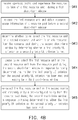
- FIG. 4A is a flow chart which shows a resource sensing and selecting method used by a UE newly entering a network and operating under NR V2X mode 2 according to an exemplary embodiment of the disclosure.
- the UE would receive aperiodic data traffic.
- the UE would obtain resource usage information of a resource pool before a first short-term window.
- the UE would determine collided UEs from the resource usage information.
- the UE would determine whether the collided UEs have sufficient resource units.
- step S405 the UE would select no resource within the first short-term window when the collided UEs lack sufficient resource units and waiting for a second short-term window.
- step S406 the UE would select, in a random manner, an idle resource unit from the resource pool at the first short-term window when the collided UEs have sufficient resources. It would be apparent to an ordinary person skilled in the art that steps S405 and S406 are interchangeable.
- step S414 the UE would cease to re-select the first resource unit or the second resource unit from the resource pool during the second short-term window in response to having determined that neither the first priority UE criterion nor the second priority UE criterion has been met and waiting for a third short-term window.
- step S415 the UE would re-select the first resource unit or the second resource unit randomly or by a pre-configured policy from the resource pool during the second short-term window in response to having determined that either the first priority UE criterion or the second priority UE criterion has been met.
- FIG. 5 is a hardware block diagram of a UE or a mobile device according to an exemplary embodiment of the disclosure.
- the UE of FIG. 5 may include not limited to a processor 501 electrically coupled to a transmitter and a receiver (transceiver) 502, and optionally a user interface, a non-transitory storage medium.
- the processor 501 is configured to at least for implementing the method used as described in FIG. 4A and / or FIG. 4B as well as its exemplary embodiments and alternative variations.
- the transmitter circuit 502 may include one or more transmitting circuits, and the receiver circuit 502 may include one or more receiving circuits configured to transmit and receive signals respectively in the radio frequency or in the mmWave frequency.
- the transmitter circuit and receiver circuit 502 may also perform operations such as low noise amplifying, impedance matching, frequency mixing, up or down frequency conversion, filtering, amplifying, and so forth.
- the transmitter circuit and the receiver circuit 502 may each include one or more digital-to-analog (D/A) converters or analog-to-digital (A/D) converters which are configured to convert from a digital signal format to an analog format during uplink signal processing or from an analog format to a digital format during downlink signal processing.
- the transmitter circuit and receiver circuit 502 may each include an antenna array which may include one or multiple antennas to transmit and receive omni-directional antenna beams or directional antenna beams.
- the user interface provides a way such as a keyboard or a touch screen or a display monitor for a user to interact with the UE and to receive information from the UE.
- the non-transitory storage medium would store programming codes, codebook configurations, buffered data, and/or record configurations assigned by the processor 501.
- the processor 501 could be implemented by using programmable units such as a micro-processor, a micro-controller, a DSP chips, FPGA, etc.
- the functions of the processor 501 may also be implemented with separate electronic devices or ICs. It should be noted that the functions of the processor 501 may be implemented with either hardware or software.
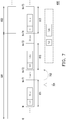
- FIG. 6 shows the hybrid long-term and short-term resource sensing and selection window 600 which include a long-term sensing window 601 and a resource selection window 602.
- the long-term sensing window 601 is indicated in the time axis as spanning from 0 to N + T4.
- the resource selection window 602 is indicated in the time axis as spanning from N + T4 until N + T5.
- FIG. 7 An example of the handling of aperiodic traffic is shown in FIG. 7 .
- a resource selection may occur at the next short-term resource sensing and (re-)selection window.
- a resource selection 702 occurs at the next short-term resource sensing and (re-)selection window 612.
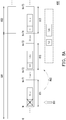
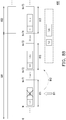
- resource collisions may occur when two UEs are attempting to select the same radio resources within the same short-term resource sensing and (re-)selection window.
- a UE may obtain a resource usage information that can be used in the following short-term resource sensing and (re-)selection window. In the example as shown in FIG.
- the UE may obtain a resource usage information 802 that can be used in the next short-term resource sensing and (re-)selection window 612.
- the UE may obtain a resource usage information 812 that can be used in the next short-term resource sensing and (re-)selection window 612.
- the resource usage information By conducting an energy or a power level measurement during an observation window (indicated as "Observ” in FIGs. 6 , 7 , 8A and 8B ) that comes before the short-term resource sensing and (re-)selection window 611, 612, or 613, the resource usage information could be obtained.
- the purpose of the observation window includes performing energy or power measurements to obtain resource usage information.
- a resource usage information may include a number of idle resources and their corresponding locations, a number of occupied resource units which are resource units having no resource collision and their corresponding locations, a number of collided UEs which has selected collided resources, a number of collided resource units for each collided UE and their corresponding locations.
- hybrid long-term and short-term resource sensing and (re-)selection mechanism There could be at least two types of hybrid long-term and short-term resource sensing and (re-)selection mechanism.
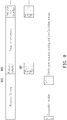
- type 1 an observation window and a short-term resource sensing and (re-)selection window are only overlapped (i.e. occurring at the same time window) with a resource selection window but are not overlapped with a long-term sensing window. This means that when aperiodic traffic occurs, a long latency could be inevitable in order to perform sensing of radio resources.
- Referring shows an example of a type 1 hybrid long-term and short-term resource sensing and (re-)selection mechanism. As shown in FIG.
- the resource selection window may overlap with an observation window and a short-term resource sensing and (re-)selection window, and both the observation window and a short-term resource sensing and (re-) selection window may overlap with the long-term sensing window.
- the type 2 mechanism when aperiodic traffic occurs in a short-term resource sensing and (re-)selection window, a long latency would not be needed. Although the type 2 mechanism does not incur as much latency, it is not easily compatible to LTE V2X and more additional computation complexity could be needed. As shown in FIG.
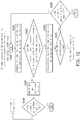
- FIG. 11 shows an enhanced short-term resource sensing and policy selection procedure according to a first exemplary embodiment of the disclosure.
- the procedure of FIG. 11 is applicable to a UE that has newly arrived to a network.
- traffic is assumed to have occurred for an UE operating under NR V2X mode 2.
- a UE operating under NR V2X mode 2 may obtain resource usage information before a first short-term window.
- the resource usage information could be obtained by conducting an energy or power measurement for the case of SCI resource collision.
- the resource usage information could also be obtained by conducting an energy or power measurement and / or SCI decoding for the case of data resource collision while the SCI resources are not collided.
- the resource usage information may include not limited to (1) the number of the idle resource units and their corresponding locations, (2) the number of occupied resource units which are resource units having no resource collision and their corresponding locations, (3) the number of collided UEs which has selected a collided resource unit, and (4) the number of collided resource units for each collided UE and their corresponding locations.
- a UE operating under NR V2X mode 2 may determine whether or not the resources are sufficient for the collided UEs.
- step S1105 the UE would determine whether there are selected resources that have been collided. If so, then the UE would become a collided UE and would obtain resource usage information before a second short-term window; otherwise, the UE would use the selected resources to transmit or broadcast aperiodic traffic and may release the selected resource after the transmission of the aperiodic traffic has been completed.
- step S1103 if the total required resources for all collided UEs is equal to or greater than the threshold M ⁇ ⁇ , then in step S1106, the UE would wait for the next short-term window. In step S1107, the UE would determine if the number of times of waiting is greater than Q1.
- the procedure would stop as the UE would stop transmitting or broadcasting the aperiodic traffic which has failed; otherwise, the procedure starts from step S1101 and keep obtaining the resource usage information before the second short-term window.
- Q1 could be a pre-configured integer which is greater than zero.
- FIG. 12 shows an enhanced short-term resource sensing and policy selection procedure according to a second exemplary embodiment of the disclosure.
- the first priority UE criterion is met by a collided UE when the priority order of all collided UEs can be distinguished, the total number of required resources for a first n ⁇ UEs with higher priority order is less than a threshold M, and the collided UE belongs to the first n ⁇ UEs, where M is the sum of idle resource units and collided resource units, and n ⁇ is the maximum number of the collided UEs that met the first priority UE criterion.
- the procedure of FIG. 12 is applicable to a UE that has experienced a resource collision.
- the UE would re-select resources at a second short-term window for a collided UE operating under the NR V2X mode 2 when the UE has received aperiodic traffic.
- the UE would release the collided resource and obtain resource information before the second short-term window.
- the UE which operates under the NR V2X mode 2 would be classified as a collided UE, and the UE would release the selected collided resource(s) and would conduct a measurement to obtain the resource usage information before the second short-term window.
- the resource usage information can be obtained by conducting a power measurement or an energy measurement for the case of an SCI collision case before the second short-term window. Further, the resource usage information can be obtained by conducting a power measurement or an energy measurement and / or by performing an SCI decoding for the case of a data resource collision when the SCI resources are not collided before the second short-term window.
- the resource usage information would include not limited to the number of the idle resource units and their corresponding locations, the number of occupied resource units which are resource units having no resource collision and their corresponding locations, the number of collided UEs which has selected collided resource units, and number of collided resource units for each collided UE and their corresponding locations.
- step S 1203 the UE operating under the NR V2X mode 2 would decide whether the UE may re-select the resource(s) in the collided resources that has been released and / or the idle resources.
- step S 1204 the UE may re-select such resource(s) randomly or according to a pre-configured policy at the second short-term window if the UE has met the above described the first priority UE criterion or the second priority UE criterion which will be described further with more details.
- step S1207 the UE does not re-select the resource(s) in the collided resources which was released and / or the idle resources at the second short-term window. Instead, the UE would wait for a third short-term window.
- step S1208 the UE would determine whether the number of times of waiting is greater than Q1. If so, the UE would stop transmitting or broadcasting the aperiodic traffic, and the aperiodic traffic transmission is treated as having failed, and Q1 is a pre-configured integer greater than 0.
- the UE would proceed from step S1101 of the procedure in FIG. 11 , and the UE may keep on obtaining the resource usage information and determining whether the collided UEs have sufficient resource units at the next short-term .
- the collided UE becomes a priority UE and may re-select the resource(s) randomly or by a pre-configured policy in the collided resources which has been released and / or the idle resources at the second short-term window.
- the priority UE may re-select the resource(s) by the pre-configured policy according to the proposed first priority UE criterion when the priority order of all collided UEs can be distinguished, and the priority UE may re-select the resource(s) randomly and by the pre-configure policy according to the proposed second priority UE criterion when the priority order of all collided UEs cannot be distinguished.
- step S 1205 the UE would determine whether the selected resource(s) are not collided. If not, then the UE may use the selected resource(s) to transmit or broadcast the aperiodic traffic, and the UE would release the selected resource(s) after the aperiodic traffic transmission has been completed. However, if the selected resource(s) have been collided for the UE, then in step S 1206, the UE may determine whether the number of times of collisions (or quantity of collisions) that has occurred times is more than (or exceeds) Q2 in response to having determined that the first resource unit or the second resource unit which has been selected has collided.
- the UE may cease to transmit or broadcasting the aperiodic traffic in response to having determined that the quantity of collisions has exceeded Q2, and the transmission of the aperiodic traffic is to be treated as having failed.
- the Q2 is pre-configured integer or number greater than 0.
- the procedure would proceed in step S1201 by continuing to release the selected collided resource(s), obtaining the resource usage information, and determining whether to select resource(s) from the resource pool or not.
- the selecting an idle resource unit from the resource pool at a short-term period when the collided UE have sufficient resources may include determining whether the idle resource unit which has been selected has collided, using the idle resource unit which has been selected to perform a transmission when the idle resource unit has not collided, and releasing the idle resource unit after the transmission is finished.
- the proposed first priority UE criterion is to be explained in further details.
- the priority order of all collided UEs can be distinguished.
- the parameters are defined as follows.
- the parameter M is the sum of M1 and M2, where M1 is the number of the released collided resource units, and M2 is the number of the idle resource units.
- L i is the number of collided resource units for collided UE i.
- N is the number of collided UEs.
- the priority order of all collided UEs can be distinguished based on the following information.
- a priority indicator would indicate the level of emergency of the aperiodic traffic having low latency requirement, a collided UE with high level priority indicator would have a high priority order, and the priority indicator could be indicated in the content of a SCI.
- An indicator of collided times for resource collision the indicator having a large value for a collided UE may have a high priority order, and the indicator could be indicated in the content of a SCI.
- L i which indicates the number of collided resource units for collided UE i , as a collided UE with small L i may have a high priority order.
- the disclosure provides a procedure for detecting the priority order of all collided UEs.
- the priority indicator of all collided UEs is compared.
- the collided UE having a high level priority indicator would be considered as having a high priority order.
- the indicators of the number of times of resource collisions are compared when the collided UEs have the same priority indicator. If an indicator of the number of times of resource collisions of a first UE shows a larger value than a second UE, then the first UE may have a higher priority order.
- the number of collided resource units for collided UE (indicated as L i ) are compared when the collided UEs have the same priority indicator as well as the indicator of the number of times of resource collisions showing the same values. Then, a first collided UE having a small L i value than a second collided UE may have a higher priority order.
- the position numbers of the selected collided resource(s) are compared when the collided UEs have the same priority indicator, the same number of times of resource collisions, and the same Li. A first collided UE that has a smaller value of a position number than a second UE may have a higher priority order.
- the disclosure also provides a procedure of resource re-selection by a pre-configured policy according to the proposed first priority UE criterion to be described as follows.
- the collided UE i with a first priority order may re-select resource(s) from the released collided resources and the idle resources as long as L i ⁇ M.
- the collided UE i may re-select resource(s) with first smallest position number from the released collided resources and idle resources.
- the collided UE j with a second priority order may re-select resource(s) in the released collided resources and the idle resources as long as L i + L j ⁇ M.
- the collided UE j may re-select resource(s) with a second smallest position number in the released collided resources and idle resources, and so on.
- the collided UE may not re-select resource(s) when the M resource units are not enough for the collided UE.
- FIG. 13 is an example showing the position numbers for the SCI resource subset 1301 and data resource subset 1302 according to a third exemplary embodiment of the disclosure. It is assumed that the position number of the SCI resource subset 1301 is ⁇ 1 - 12 ⁇ and the position number of the data resource subset is ⁇ 13 - 30 ⁇ .
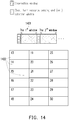
- FIG. 14 is an example showing the resource usage for data resource subset 1302 according to a third exemplary embodiment of the disclosure.
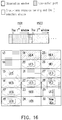
- FIG. 15 is an example showing resource collisions for data resource subset according to a third exemplary embodiment of the disclosure.
- Each UE may randomly selects required resource units from idle resource subset at the 1 st window 1501.
- 6 UEs including UE1, UE2, UE3, UE4, UE5, UE6 would select resources from the idle data resource subset, where UE1 and UE2 are assumed to select 1 resource unit, UE3 and UE4 are assumed to select 2 resource units, and UE5 and UE6 are assumed to select 4 resource units.
- the collided resource subset is ⁇ 17, 18, 28 ⁇ with 3 collided resource units, and the number of collided UEs is 4.
- the 4 collided UEs includes UE2, UE3, UE5 and UE6, where UE2 and UE3 has 1 collided resource unit at collided resource ⁇ 28 ⁇ , UE5 and UE6 has 2 collided resource units at collided resources ⁇ 17, 18 ⁇ . There are also 2 collided resource units for UE5 and UE6, and 1 collided resource unit for UE2 and UE3.
- the idle resource subset is ⁇ 20, 22, 27, 30 ⁇ which include 4 idle resource units.
- FIG. 16 is an example showing collision mitigation at the 2 nd window according to a third exemplary embodiment of the disclosure.
- it is assumed that there are 4 collided UEs, 3 collided resource units, and 4 idle resource unit. It is also assumed that there are 2 collided resource units for UE5 and UE6, and there is 1 collided resource unit for UE2 and UE3.
- the priority order of the 4 collided UEs are assumed to be UE6 > UE5 > UE3 > UE2.
- the collided UE6 will re-select firstly from the resource subset ⁇ 17, 18 ⁇ , the collided UE5 will re-select secondly from the resource subset ⁇ 20, 22 ⁇ , the collided UE3 will re-select thirdly from the resource subset ⁇ 27 ⁇ , the collided UE2 will re-select finally from the resource subset ⁇ 28 ⁇ .
- the resource subset ⁇ 30 ⁇ can be selected by new UEs.
- P 2 (N- ⁇ , ⁇ , M) is the probability for N users select resource from M resource units that N - ⁇ users are not collided to each other and ⁇ users are collided to each other, where 2 ⁇ ⁇ ⁇ N - 1.
- M 6, as shown in FIG. 17 .
- the proposed second priority UE criterion is to be explained in further details.
- the priority order of all collided UEs cannot be distinguished.
- the parameters are defined as follows.
- M is the number of released selected collided resource units.
- L i is the number of collided resource units for collided UE i.
- N is the number of collided UEs.
- the options of the second priority UE criterion is proposed as follows.
- M is the number of the idle resource units.
- L i is the number of collided resource units for collided UE i.
- N N1+N2, where N1 is the number of remaining collided UEs (i.e., the priority collided UEs that can re-select resources in the part of collided resources are excluded) and N2 is the number of new UEs.
- the options of the second priority UE criterion is proposed as follows.
- the disclosure provides a short-term resource (re-)sensing and (re-)selection mechanism according to a fourth exemplary embodiment of the disclosure.
- the position number of the SCI resource 1301 is ⁇ 1-12 ⁇ and the position number of the data resource 1302 subset is ⁇ 13-30 ⁇ .
- FIG. 18 is an example showing resource usage for SCI resource subset according to a fourth exemplary embodiment of the disclosure.
- the idle resource subset as shown in FIG.
- the SCI idle resource subset can be obtained from conducting an energy measurement or a power measurement. If the energy of a resource unit is less than the pre-configured threshold, then the resource unit is indicated as an idle resource unit. If the energy of a resource unit is equal or larger than the pre-configured threshold, then the resource unit is indicated as a busy resource unit, where the busy resource unit may be an occupied resource unit or a collided resource unit.
- FIG. 19 is an example showing a resource collision for SCI resource subset according to a fourth exemplary embodiment of the disclosure.
- Each UE would randomly select one idle resource unit from the idle resource subset at the 1 st window.
- the number of the idle resource units and their corresponding locations, the number of occupied resource units which are resource units having no resource collision and their corresponding locations, the number of the collided UEs, and the number of the collided resource units for each collided UE and their corresponding locations would need to be obtained from an energy measurement or a power measurement before the 2 nd window.
- the collided resource subset is assumed to be ⁇ 3, 4, 10, 11 ⁇ with 4 collided resource units, and the number of collided UEs is 8 (i.e.
- UE2 ⁇ UE9) where UE2 and UE3 has 1 collided resource unit at collided resource ⁇ 3 ⁇ , UE4 and UE5 has 1 collided resource unit at collided resource ⁇ 4 ⁇ , UE6 and UE7 has 1 collided resource unit at collided resource ⁇ 10 ⁇ , and UE8 and UE9 has 1 collided resource unit at collided resource ⁇ 11 ⁇ .
- the idle resource subset is ⁇ 5, 6, 7, 8 ⁇ with 4 idle resource units.
- FIG. 20 shows an example of collision mitigation at the second window according to a fourth exemplary embodiment of the disclosure.
- the collided resource subset 2001 is ⁇ 3, 4, 10, 11 ⁇ , and the number of collided UEs is 8. Assuming that N is the number of collided UEs and is equal to 8, and M is the number of collided resource units and is equal to 4.
- the 2 collided UEs i.e., UE2 and UE3 with smaller position number of collided resource unit may randomly select resources from the collided resource subset ⁇ 3,4,10,11 ⁇ .
- the idle resource subset would be ⁇ 5, 6, 7, 8 ⁇ .
- the 2 collided UEs i.e., UE4 and UE5 with smaller position number of collided resource unit may randomly select resource from the idle resource subset ⁇ 5,6,7,8 ⁇ .
- the other collided UEs UE6, UE7, UE8, and UE9 and new UEs may select the idle resources at the next window.
- the disclosure provides a short-term resource (re-)sensing and (re-)selection mechanism according to a fifth exemplary embodiment of the disclosure.
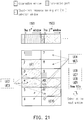
- the fifth exemplary embodiment will once again refer to FIGs 18 - 21 for explanations.
- the idle resource subset is ⁇ 2, 3, 4, 5, 6, 7, 8, 10, 11, 12 ⁇
- the occupied resource subset is ⁇ 1, 9 ⁇ for SCI resources.
- the SCI idle resource subset could be obtained by conducting an energy measurement or a power measurement.
- the resource unit would be indicated as an idle resource unit. If the energy or power of a resource unit is equal or larger than the pre-configured threshold, the resource unit would be indicated as a busy resource unit, where the busy resource unit may be a occupied resource unit or a collided resource unit.
- each UE randomly selects one idle resource unit from the idle resource subset at the 1 st window. It is assumed that 10 UEs would random select resources, and no collision would occur for UE 1 and UE 10, but collisions are assumed to have occurred for UE 2 ⁇ UE 9. These UEs have become collided UEs and may re-select resources based on the second priority UE priority UE criterion at the 2 nd window.
- the number of the idle resource units and their corresponding locations, the number of occupied resource units which are resource units having no resource collision and their corresponding locations, the number of collided UEs, and the number of the collided resource units for each collided UE and their corresponding locations may need to be obtained by conducting power measurement or energy measurement before the 2 nd window.
- the collided resource subset would be ⁇ 3, 4, 10, 11 ⁇ with 4 collided resource units, and the number of collided UEs is 8 (UE2 ⁇ UE9), where UE2 and UE3 has 1 collided resource unit at collided resource ⁇ 3 ⁇ , UE4 and UE5 has 1 collided resource unit at collided resource ⁇ 4 ⁇ , UE6 and UE7 has 1 collided resource unit at collided resource ⁇ 10 ⁇ , and UE8 and UE9 has 1 collided resource unit at collided resource ⁇ 11 ⁇ .
- the idle resource subset is ⁇ 5, 6, 7, 8 ⁇ with 4 idle resource units.
- N ⁇ P i 2 collided UEs (e.g. UE2 and UE3) would select resources from the collided resource subset ⁇ 3,4,10,11 ⁇ .
- FIG. 21 as a continuation of FIG. 20 .
- N 6 remaining collided UEs
- M 4 idle resource units
- the number of remaining collided UEs is 6, and the idle resource subset is ⁇ 5, 6, 7, 8 ⁇ .
- Each of remaining 6 collided UEs may throw a dice or obtain a randomly generated number.
- the other collided UEs UE6, UE7, UE8, and UE9 and new UEs may select the idle resources at the next window.
- the present disclosure is suitable for being used in a mobile wireless device operating under NR V2X mode 2 and is able to reduce the latency and to minimize the impact associated with resource collision when coping with aperiodic traffic.
Landscapes
- Engineering & Computer Science (AREA)
- Computer Networks & Wireless Communication (AREA)
- Signal Processing (AREA)
- Mobile Radio Communication Systems (AREA)
Applications Claiming Priority (1)
| Application Number | Priority Date | Filing Date | Title |
|---|---|---|---|
| US201962861331P | 2019-06-14 | 2019-06-14 |
Publications (2)
| Publication Number | Publication Date |
|---|---|
| EP3751948A2 true EP3751948A2 (de) | 2020-12-16 |
| EP3751948A3 EP3751948A3 (de) | 2021-01-06 |
Family
ID=71094110
Family Applications (1)
| Application Number | Title | Priority Date | Filing Date |
|---|---|---|---|
| EP20179608.3A Withdrawn EP3751948A3 (de) | 2019-06-14 | 2020-06-12 | Von einer mobilen vorrichtung zur drahtlosen kommunikation verwendetes funkressourcenerfassungs- und -auswahlverfahren und mobile vorrichtung mit verwendung davon |
Country Status (4)
| Country | Link |
|---|---|
| US (1) | US20200396719A1 (de) |
| EP (1) | EP3751948A3 (de) |
| CN (1) | CN112087733A (de) |
| TW (1) | TW202103507A (de) |
Cited By (1)
| Publication number | Priority date | Publication date | Assignee | Title |
|---|---|---|---|---|
| CN115474230A (zh) * | 2021-06-10 | 2022-12-13 | 维沃移动通信有限公司 | 信息传输方法、装置及相关设备 |
Families Citing this family (12)
| Publication number | Priority date | Publication date | Assignee | Title |
|---|---|---|---|---|
| US11812470B2 (en) * | 2019-10-07 | 2023-11-07 | Qualcomm Incorporated | Receiver feedback about potential collisions |
| US12464515B2 (en) * | 2020-02-14 | 2025-11-04 | Lenovo (Beijing) Limited | Method and apparatus of group-based resource allocation |
| US12317241B2 (en) * | 2020-07-09 | 2025-05-27 | Samsung Electronics Co., Ltd | Power-efficient resource selection procedure for NR V2X UE with limited power |
| US12279144B2 (en) * | 2021-01-19 | 2025-04-15 | Mediatek Singapore Pte. Ltd. | Resource allocation enhancements for sidelink communications |
| US11838213B2 (en) * | 2021-02-26 | 2023-12-05 | Qualcomm Incorporated | CV2X situationally-dependent service prioritization |
| CN115175127A (zh) * | 2021-04-02 | 2022-10-11 | 夏普株式会社 | 由用户设备执行的方法以及用户设备 |
| WO2022214076A1 (en) * | 2021-04-08 | 2022-10-13 | Mediatek Singapore Pte. Ltd. | Sidelink resource selection based on predefined set |
| JP7746690B2 (ja) * | 2021-05-21 | 2025-10-01 | Smc株式会社 | リモート無線装置及びリモート無線装置の通信方法 |
| CN115707135A (zh) * | 2021-08-06 | 2023-02-17 | 华为技术有限公司 | 侧行传输方法、设备以及存储介质 |
| CN116112966A (zh) * | 2021-08-13 | 2023-05-12 | 极米科技股份有限公司 | 无线感知测量方法、装置、设备及存储介质 |
| CN115004732B (zh) * | 2022-04-18 | 2025-06-06 | 北京小米移动软件有限公司 | 一种基于辅助资源集进行通信的方法、装置及存储介质 |
| WO2024026700A1 (zh) * | 2022-08-02 | 2024-02-08 | 北京小米移动软件有限公司 | 资源选择方法及装置 |
Family Cites Families (3)
| Publication number | Priority date | Publication date | Assignee | Title |
|---|---|---|---|---|
| EP3110052B1 (de) * | 2014-02-22 | 2018-12-05 | LG Electronics Inc. | Verfahren zur minderung der interferenz in einem drahtloskommunikationssystem zur unterstützung von vorrichtung-zu-vorrichtung-kommunikation und vorrichtung dafür |
| US10383114B2 (en) * | 2016-03-24 | 2019-08-13 | Qualcomm Incorporated | On co-channel sidelink LTE V2V and DSRC communication |
| JP6803458B2 (ja) * | 2016-08-11 | 2020-12-23 | 華為技術有限公司Huawei Technologies Co.,Ltd. | リソースエネルギを決定する方法および装置 |
-
2020
- 2020-06-12 US US16/899,583 patent/US20200396719A1/en not_active Abandoned
- 2020-06-12 CN CN202010535228.6A patent/CN112087733A/zh not_active Withdrawn
- 2020-06-12 EP EP20179608.3A patent/EP3751948A3/de not_active Withdrawn
- 2020-06-12 TW TW109119863A patent/TW202103507A/zh unknown
Cited By (1)
| Publication number | Priority date | Publication date | Assignee | Title |
|---|---|---|---|---|
| CN115474230A (zh) * | 2021-06-10 | 2022-12-13 | 维沃移动通信有限公司 | 信息传输方法、装置及相关设备 |
Also Published As
| Publication number | Publication date |
|---|---|
| EP3751948A3 (de) | 2021-01-06 |
| US20200396719A1 (en) | 2020-12-17 |
| TW202103507A (zh) | 2021-01-16 |
| CN112087733A (zh) | 2020-12-15 |
Similar Documents
| Publication | Publication Date | Title |
|---|---|---|
| EP3751948A2 (de) | Von einer mobilen vorrichtung zur drahtlosen kommunikation verwendetes funkressourcenerfassungs- und -auswahlverfahren und mobile vorrichtung mit verwendung davon | |
| JP7357667B2 (ja) | サイドリンクにおけるデータ伝送方法及び端末装置 | |
| JP7500501B2 (ja) | アップリンク伝送リソースのスケジューリング及びアップリンク伝送のための方法、装置 | |
| EP3614774B1 (de) | Verfahren zur vorrichtung-zu-vorrichtung-kommunikation und endgerätevorrichtung | |
| EP4093132A1 (de) | Verfahren und vorrichtung zur betriebsmittelzuteilung durch zusammenarbeit zwischen endgeräten in einem v2x-system | |
| EP4042773B1 (de) | Verfahren und vorrichtung zur ressourcenzuweisung | |
| EP3881636B1 (de) | Verfahren und drahtlose vorrichtungen für d2d-kommunikation | |
| EP3681228A1 (de) | Verfahren zur konfiguration eines ressourcenpools zur sidelink-kommunikation durch ein empfänger-benutzergerät, sender-benutzergerät und basisstation, benutzergerät damit und basisstation damit | |
| WO2020057600A1 (zh) | 信息传输的方法、装置、设备和存储介质 | |
| EP4050950B1 (de) | Ressourcenausschlussverfahren und -gerät sowie vorrichtung und speichermedium | |
| EP2528400A1 (de) | Verfahren, endgerät und basisstation zur auslösung von endgeräten zur übertragung von klangreferenzsignalen | |
| CN109565793A (zh) | 一种终端选择资源的方法及装置、计算机存储介质 | |
| CN106304369A (zh) | 基于接入优先级的资源竞争的方法及装置 | |
| EP4181595B1 (de) | Kommunikationsverfahren und sidelink-vorrichtung | |
| US12336002B2 (en) | Systems, methods, and apparatus for slot structure, channel access, and resource allocation for sidelink communications | |
| US20250254721A1 (en) | Wireless communication method, user equipment, and base station | |
| US11963157B2 (en) | Method and apparatus for using unlicensed band in communication system | |
| US20240015702A1 (en) | Method for reselecting sidelink resource and apparatus for the same | |
| US20240090024A1 (en) | Coordination of periodic and aperiodic sensing for autonomous transmission | |
| CN114827962A (zh) | 侧行链路通信的资源协商方法和装置 | |
| US10142983B2 (en) | Licensed assisted access network system | |
| JP7442630B2 (ja) | 通信リソースのプリエンプティブ予約 | |
| US9894685B2 (en) | Licensed assisted access network system | |
| CN115918202B (zh) | 无线通信方法、终端和网络设备 | |
| EP3461196B1 (de) | Interferenzkoordinationsverfahren |
Legal Events
| Date | Code | Title | Description |
|---|---|---|---|
| PUAI | Public reference made under article 153(3) epc to a published international application that has entered the european phase |
Free format text: ORIGINAL CODE: 0009012 |
|
| STAA | Information on the status of an ep patent application or granted ep patent |
Free format text: STATUS: REQUEST FOR EXAMINATION WAS MADE |
|
| PUAL | Search report despatched |
Free format text: ORIGINAL CODE: 0009013 |
|
| 17P | Request for examination filed |
Effective date: 20200616 |
|
| AK | Designated contracting states |
Kind code of ref document: A2 Designated state(s): AL AT BE BG CH CY CZ DE DK EE ES FI FR GB GR HR HU IE IS IT LI LT LU LV MC MK MT NL NO PL PT RO RS SE SI SK SM TR |
|
| AX | Request for extension of the european patent |
Extension state: BA ME |
|
| AK | Designated contracting states |
Kind code of ref document: A3 Designated state(s): AL AT BE BG CH CY CZ DE DK EE ES FI FR GB GR HR HU IE IS IT LI LT LU LV MC MK MT NL NO PL PT RO RS SE SI SK SM TR |
|
| AX | Request for extension of the european patent |
Extension state: BA ME |
|
| RIC1 | Information provided on ipc code assigned before grant |
Ipc: H04W 74/08 20090101AFI20201130BHEP |
|
| STAA | Information on the status of an ep patent application or granted ep patent |
Free format text: STATUS: THE APPLICATION IS DEEMED TO BE WITHDRAWN |
|
| 18D | Application deemed to be withdrawn |
Effective date: 20210707 |