EP3750335B1 - Systeme und verfahren zur besseren ressourcennutzung in 5g-netzwerken unter verwendung der freigabeschicht - Google Patents
Systeme und verfahren zur besseren ressourcennutzung in 5g-netzwerken unter verwendung der freigabeschicht Download PDFInfo
- Publication number
- EP3750335B1 EP3750335B1 EP19810511.6A EP19810511A EP3750335B1 EP 3750335 B1 EP3750335 B1 EP 3750335B1 EP 19810511 A EP19810511 A EP 19810511A EP 3750335 B1 EP3750335 B1 EP 3750335B1
- Authority
- EP
- European Patent Office
- Prior art keywords
- service
- application
- network
- edge server
- availability
- Prior art date
- Legal status (The legal status is an assumption and is not a legal conclusion. Google has not performed a legal analysis and makes no representation as to the accuracy of the status listed.)
- Active
Links
Images














Classifications
-
- H—ELECTRICITY
- H04—ELECTRIC COMMUNICATION TECHNIQUE
- H04W—WIRELESS COMMUNICATION NETWORKS
- H04W48/00—Access restriction; Network selection; Access point selection
- H04W48/18—Selecting a network or a communication service
-
- H—ELECTRICITY
- H04—ELECTRIC COMMUNICATION TECHNIQUE
- H04W—WIRELESS COMMUNICATION NETWORKS
- H04W8/00—Network data management
- H04W8/18—Processing of user or subscriber data, e.g. subscribed services, user preferences or user profiles; Transfer of user or subscriber data
-
- H—ELECTRICITY
- H04—ELECTRIC COMMUNICATION TECHNIQUE
- H04W—WIRELESS COMMUNICATION NETWORKS
- H04W60/00—Affiliation to network, e.g. registration; Terminating affiliation with the network, e.g. de-registration
Definitions
- the present disclosure relates to the field of mobile edge computing (MEC) and more particularly to determine availability of network resources for providing recommendations to improve resource utilization by a User Equipment (UE) in a Fifth Generation (5G) network.
- MEC mobile edge computing
- UE User Equipment
- 5G Fifth Generation
- MEC Mobile Edge Computing
- a Mobile Edge Computing Server (MECS)/ edge server can be placed in proximity to Access Points (APs-base stations in communication with a User Equipment (UE)) in a mobile network.
- APs-base stations in communication with a User Equipment (UE)
- UE User Equipment
- the MEC enables operators to better adapt traffic to prevailing radio conditions, optimize service quality and improve network efficiency.
- Applications of the MEC include Self-Driving, Gaming, Virtual/Augmented Reality (AR), Remote Tele-surgery and so on.
- the UE requests the edge server for a list of available user applications for a particular service and notifies the users about the user applications available at the edge server for the particular service.
- the performance of the user applications may vary depending on factors such as, but not limited to, current location, network load, presence/absence of network resources (such as edge servers, Radio Access Technology (RAT)), availability of network slices and so on.
- RAT Radio Access Technology
- CMCC "Discussion on RAN support of edge computing in NR” which discloses minutes of a discussion on the potential RAN impact to support edge computing in NR from end-to-end procedure point of view.
- US 2011/ 088068 discloses a method for live media stream selection on a mobile device.
- US 2015/ 372972 discloses a user device to domain name resolver mapping.
- MEC Mobile Edge computing
- UE application interface published anonymously in ETSI GS MEC 016 V.1.1.1 on 1 September 2017, which discloses a mobile edge computing application interface.
- Huawei et al “URSP rules”, which discloses proposed updates and corrections on URSP rules based on the latest SA2 specification.
- the principal object of the embodiments herein is to disclose methods and systems for providing recommendations to complete at least one service by a User Equipment (UE) at a particular location based on availability of network resources, wherein the recommendations include at least one of an application, a Subscriber Identity Module (SIM), a network slice, a Radio Access Technology (RAT) and so on.
- UE User Equipment
- SIM Subscriber Identity Module
- RAT Radio Access Technology
- Another object of the embodiments herein is to disclose methods and systems for determining the availability of an edge server for one or more applications supporting the at least one service.
- Another object of the embodiments herein is to disclose methods and systems for recommending an application for completing a requested service based on at least one of a Round Trip Time and an End-to-End (E2E) delay determined for one or more applications supporting the requested service.
- E2E End-to-End
- Another object of the embodiments herein is to disclose methods and systems for enabling the UE to provide information about network parameters to the edge server and to query the edge server for recommending the application for completing the requested service.
- Another object of the embodiments herein is to disclose methods and systems for determining a network rating to recommend at least one of the application, the RAT/ subscription and the SIM for completing the requested service at the particular location.
- the principal object of the embodiments herein is to disclose methods and systems for providing recommendations to complete at least one service by a User Equipment (UE) at a particular location based on availability of network resources, wherein the recommendations include at least one of an application, a Subscriber Identity Module (SIM), a network slice, a Radio Access Technology (RAT) and so on.
- UE User Equipment
- SIM Subscriber Identity Module
- RAT Radio Access Technology
- Another object of the embodiments herein is to disclose methods and systems for determining the availability of an edge server for one or more applications supporting the at least one service.
- Another object of the embodiments herein is to disclose methods and systems for recommending an application for completing a requested service based on at least one of a Round Trip Time and an End-to-End (E2E) delay determined for one or more applications supporting the requested service.
- E2E End-to-End
- Another object of the embodiments herein is to disclose methods and systems for enabling the UE to provide information about network parameters to the edge server and to query the edge server for recommending the application for completing the requested service.
- Another object of the embodiments herein is to disclose methods and systems for determining a network rating to recommend at least one of the application, the RAT/ subscription and the SIM for completing the requested service at the particular location.
- various functions described below can be implemented or supported by one or more computer programs, each of which is formed from computer readable program code and embodied in a computer readable medium.
- application and “program” refer to one or more computer programs, software components, sets of instructions, procedures, functions, objects, classes, instances, related data, or a portion thereof adapted for implementation in a suitable computer readable program code.
- computer readable program code includes any type of computer code, including source code, object code, and executable code.
- computer readable medium includes any type of medium capable of being accessed by a computer, such as read only memory (ROM), random access memory (RAM), a hard disk drive, a compact disc (CD), a digital video disc (DVD), or any other type of memory.
- ROM read only memory
- RAM random access memory
- CD compact disc
- DVD digital video disc
- a "non-transitory” computer readable medium excludes wired, wireless, optical, or other communication links that transport transitory electrical or other signals.
- a non-transitory computer readable medium includes media where data can be permanently stored and media where data can be stored and later overwritten, such as a rewritable optical disc or an erasable memory device.
- FIGS. 1 through 20 discussed below, and the various embodiments used to describe the principles of the present disclosure in this patent document are by way of illustration only and should not be construed in any way to limit the scope of the disclosure. Those skilled in the art will understand that the principles of the present disclosure may be implemented in any suitably arranged system or device.
- the embodiments herein disclose methods and systems for providing recommendations for completing at least one service by a User Equipment (UE) at a particular location, wherein the recommendations include at least one of an application, a Radio Access Technology (RAT)/subscription, a Subscriber Identity Module (SIM), a network slice of the one or more SIMs and so on.
- UE User Equipment
- RAT Radio Access Technology
- SIM Subscriber Identity Module
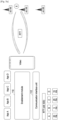
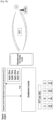
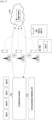
- FIGS. 1a and 1b illustrate a communication system 100 for providing recommendations to a user to complete service(s) at a particular location, according to embodiments as disclosed herein.
- the communication system 100 can be configured to provide content such as, but not limited to, voice, data, video, messaging broadcast, and so on to multiple users in accordance with European Telecommunications Standards Institute (ETSI) Mobile Edge Computing (MEC).
- ETSI European Telecommunications Standards Institute
- MEC Mobile Edge Computing
- the communication system 100 includes a User Equipment 102, base stations 104a-104n and edge servers 106a-106n.
- the UE 102 referred herein can be, any device supporting one or more Subscriber Identity Modules (SIM) and including 5G device characteristics.
- SIM Subscriber Identity Modules
- Examples of the UE 102 can be, but is not limited to, a mobile phone, a smartphone, tablet, a phablet, a personal digital assistant (PDA), a laptop, a computer, a wearable computing device, a vehicle infotainment device, an Internet of Things (IoT) device, a medical equipment or any other processing devices connected to wireless modems or with radio frequency (RF) processing capabilities.
- IoT Internet of Things
- RF radio frequency
- the one or more SIMs supported by the UE 102 may be operated by different service providers/operators.
- the UE 102 may comprise of one or more physical SIMs and/or one or more virtual SIMs.
- the UE 102 can be connected to at least one base station (104a-104n) over an air interface.
- the base stations (104a-104n) can serve the cells of different Radio Access Technologies (RATs).
- RATs can be, but is not limited to, a Fifth Generation (5G), a Long Term Evolution (LTE), an LTE-Advanced, a 3 rd Generation Partnership Project (3GPP), a Wideband Code Division Multiple Access (WCDMA) system, a High Speed Access Data (HSPA), a Global System for Mobile Communications/Enhanced Data rate for GSM Evolution (GSM/EDEGE), a Worldwide Inter-operability for Microwave Access (WiMax), an Ultra Mobile Broadband (UMB), Wi-Fi and so on.
- the one or more SIMs of the UE 104 can support the different RATs/ subscriptions.
- At least one edge server can be placed in proximity to any of the base stations 104a-104n in communication with the UE 102 for low latency communications and application content offloading.
- the edge servers 106a-106n can provide computing resources, storage capacity, connectivity and access to information about the RATs.
- the edge server 106a-106n can support various applications (such as, but not limited to, a video streaming related application, a security racking application, an IoT related application, an Augmented Reality (AR) related application and so on) and content (such as files, videos, audio and so on) which can be offloaded to the nearby UE 102.
- applications such as, but not limited to, a video streaming related application, a security racking application, an IoT related application, an Augmented Reality (AR) related application and so on
- content such as files, videos, audio and so on
- the communication system 100 may also include a cloud server 116 supporting multiple services (server instances of services) as illustrated in FIG. 1b . Further, some of the services supported by the cloud server 116 may be supported by the edge server 106a-106n.
- the UE 102 includes a memory 108, an enablement module/enablement layer module 110, a communication interface module 112 and a display module 114.
- the UE 102 can also be connected to at least one of external server(s) and application servers by using at least one of the Internet, a wired network (a Local Area Network (LAN), Ethernet and so on), a wireless network (a Wi-Fi network, a cellular network, a Wi-Fi Hotspot, Bluetooth, Zigbee and so on) or the like to download applications for services that can be supported by the UE 102.
- LAN Local Area Network
- Ethernet Ethernet
- a wireless network a Wi-Fi network, a cellular network, a Wi-Fi Hotspot, Bluetooth, Zigbee and so on
- Examples of the applications referred herein can be, but is not limited to, a call related application, an Over-the Top-(OTT) application, a streaming application, a file downloading related application, an IoT related application, an Augmented Reality (AR) related application and so on.
- Examples of the services referred herein can be, but is not limited to, a streaming service (streaming of multimedia data such as audio, video, text and so on), a call related service, a file download service, a carousel service (combining file download service and streaming service), a television (TV) service, a media on demand service, or the like.
- the UE 102 can be connected to local database/memory 108 and external databases to provide the content (such as files, data, videos, audio and so on) to the user.
- the enablement module 110 can comprise at least one of a single processor, a plurality of processors, multiple homogenous cores, multiple heterogeneous cores, multiple Central Processing Unit (CPUs) of different kinds and so on.
- the enablement module 110 operates by supporting functions of an enablement layer.
- the enablement layer works in conjunction with at least one of the edge server and application server to provide the content (video, audio, files and so on) and the applications to the user.
- the enablement module 110 can be configured to provide recommendations for completing service(s) requested by the user at a particular location.
- the recommendations can be at least one of information about availability of an edge server, an application, a SIM, a network slice of the SIM, a RAT/subscription and so on for the requested service.
- the network slice referred herein may indicate bandwidth, network resources or the like.
- the enablement module 110 provides the recommendations based on network parameters such as, but not limited to, a Round Trip Time taken between the UE 102 and the application server, an End-to-End (E2E) delay, a network rating and so on.
- E2E End-to-End
- best possible recommendations can be provided to the user for completing the service that can improve user experience in terms of throughput, latency and cost effects.
- the enablement module 110 can use the determined recommendations to complete the service.
- the UE 102 may determine the available services running on the edge server (106a-106n) using a well defined Application Programming Interface (API) interface.
- API Application Programming Interface
- the display module 114 can be configured to display the recommendations determined by the enablement module 110 on a display screen of the UE 102.
- the communication interface module 112 can be configured to establish a connection between the UE 102 and at least one of the application server, the edge server and so on.
- the communication interface module 112 can operate in accordance with functions of a connectivity layer.
- the memory 108 can comprise the applications, information about the recommended applications, information about the network resources, the network parameters and so on.
- the memory 108 may include one or more computer-readable storage media.
- the memory 108 may include non-volatile storage elements. Examples of such non-volatile storage elements may include magnetic hard discs, optical discs, floppy discs, flash memories, or forms of electrically programmable memories (EPROM) or electrically erasable and programmable (EEPROM) memories.
- EPROM electrically programmable memories
- EEPROM electrically erasable and programmable
- the memory 108 may, in some examples, be considered as a non-transitory storage medium.
- the term "non-transitory" may indicate that the storage medium is not embodied in a carrier wave or a propagated signal.
- non-transitory should not be interpreted to mean that the memory 108 is non-movable.
- the memory 108 can be configured to store larger amounts of information than the memory.
- a non-transitory storage medium may store data that can, over time, change (e.g., in Random Access Memory (RAM) or cache).
- RAM Random Access Memory
- FIGS. 1a and 1b show units of the communication system 100, but it is to be understood that other embodiments are not limited thereon.
- the communication system 100 may include less or more number of units.
- the labels or names of the units are used only for illustrative purpose and does not limit the scope of the embodiments herein.
- One or more units can be combined together to perform same or substantially similar function in the communication system 100.
- FIG. 2 is an example block diagram illustrating various units of the enablement module 110 for providing the recommendations for completing the service(s) by the UE 102, according to embodiments as disclosed herein.
- the enablement module 110 includes an edge tracker unit 202, an edge availability based recommendation unit 204, a query based recommendation unit 206, a network slice selector unit 208, a profile selector unit 210, a Quality of Service (QoS) manipulation unit 212 and a resource optimizer based recommendation unit 214.
- QoS Quality of Service
- the edge tracker unit 202 instructs the display module 114 to update a status bar displayed on the screen of the UE 102.
- the updated status bar may indicate the user about the availability of the edge server (106a-106n).
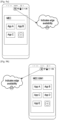
- the display module 114 may display a letter/icon 'M' on the status bar for indicating the availability of the edge server (106a-106n). Embodiments herein are explained considering display of the icon 'M' on the status bar for the indication of the availability of the edge server, but any suitable display indications may be considered.
- the edge tracker unit 202 On determining that the edge server (106a-106n) is available, the edge tracker unit 202 queries the edge service provider for the availability of one or more applications by sending a query command to the edge server (106a-106n). In an example herein, the edge tracker unit 202 queries the edge service provider for the availability of one or more applications by sending a "GET app list" command to the edge server (106a-106n). In response to the query command, the edge tracker unit 202 obtains a response from the edge service provider, wherein the response provides information about the availability of the one or more application server instances at the edge server (106a-106n). In an example herein, the response received from the edge server (106a-106n) can be in a Hypertext Transfer Protocol (HTTP) Response format. Further, the edge tracker unit 202 instructs the display module 114 to provide notifications for the one or more applications resident on the UE 102 based on the availability of the edge server (102a-102n) for the one or more applications.
- the display module 114 On receiving the instructions from the edge tracker unit 202, the display module 114 performs User Interface (UI) based actions.
- the UI based actions can be, but not limited to providing badge notifications, creating a folder and so on.
- the display module 114 on receiving the instructions from the edge tracker unit 202, the display module 114 creates the folder and inserts the one or more applications available at the edge server (106a-106n) in the created folder.
- the display module 114 on receiving the instructions from the edge tracker unit 202, the display module 114 creates a MEC folder and inserts the one or more applications available at the edge server (106a-106n) in the MEC folder.
- the display module 114 assigns the badge notifications for the one or more applications available at the edge server (106a-106n).
- the badge notifications can include one or more letters indicating the availability of the edge server (106a-106n) for the one or more applications.
- assigning the badge notifications may include assigning a letter 'M' for the one or more applications available at the edge server (106a-106n). Embodiments herein are explained considering assigning the letter 'M' for the one or applications for the indication of the availability of the edge server, but any other suitable display indications may be considered.
- the edge tracker unit 202 can be further configured to determine availability of a local storage adapted with the edge server (106a-106n) to upload the contents.
- the local storage can be, but is not limited to, a file server, a Network-Attached Storage (NAS), a local cloud and so on.
- the edge tracker unit 202 determines the availability of the local storage adapted with the edge server (106a-106n) while retrieving the list of available applications at the edge server (106a-106n).
- the edge tracker unit 202 determines the availability of the local storage adopted with the edge server (106a-106n) in accordance with the ETSI standard.
- the edge tracker unit 202 can delegate the task of downloading the content to the edge server (106a-106n) and can download the content later, on determining that the user is moving.
- the content (like files) stored in the local storage can be viewed using a file explorer mounted using a Web Distributed Authoring and Versioning protocol (WebDAV protocol).
- WebDAV protocol Web Distributed Authoring and Versioning protocol
- the content stored in the local storage can also be streamed from the edge server (106a-106n) when the user performs a gesture (such as a click, tap, swipe, or the like) on the content. Thereby, usage of the device storage can be reduced.
- the edge availability based recommendation unit 204 can be configured to recommend one or more applications for completing the service(s) requested by the user.
- the edge availability based recommendation unit 204 can also recommend the application for the currently using a RAT.
- the application can be recommended for the service based on at least one of the Round Trip Time (RTT) and the End-to-End (E2E) delay.
- RTT Round Trip Time
- E2E End-to-End
- the edge availability based recommendation unit 204 recommends the application(s) for completing the first service based on the RTT.
- the first service can be a throughput based service without including any call related service. Examples of the first service can be, but not limited to, a streaming service, a file downloading service, a carousel service and so on.
- the edge availability based recommendation unit 204 determines the RTT between the UE 102 and the application servers for one or more applications supporting the requested service.
- the application servers can be the servers supporting the one or more applications for the requested first service.
- the application server herein can be residing in the edge server (106a-106n).
- the RTT can be determined using any suitable application, compatible with an Operating System (OS) of the UE 102.
- the RTT can be determined based on a time difference measured for a packet to reach the application servers from the UE 102 and vice versa. It should be noted that embodiments herein are not limited to the above methods for measuring the RTT and any other techniques/methods can be used for measuring the RTT without otherwise deterring the intended functions of the features of the embodiments as can be deduced from this description.
- the edge availability based recommendation unit 204 determines the RTT for the one or more applications based on each cell of a plurality of cells associated with the base station (104a-104n) which is in communication with the UE 102.
- the edge availability based recommendation unit 204 averages the calculated RTT for the one or more applications.
- the edge availability based recommendation unit 204 selects the application from the one or more applications with the lowest RTT value for completing the requested first service.
- the averaged RTT value can vary depends on parameters such as, but not limited to, availability of the edge service, network slice characteristics, signal strength at a particular geo-location, current network load and so on. Further, the application with the lowest RTT value indicates that the application is available at the edge server (106a-106n).
- the edge server (106a-106n) can be deployed near to the base station (104a-104n), which is in communication with the UE 102.
- the application available at the edge server may be the best possible application for completing the service at the particular location, thereby achieving the low latency communication.
- the edge availability based recommendation unit 204 determines the RTT for the app A, the app B and the app C based on each cell of the base station (104a-104n) and averages the determined RTT for the app A, the app B and the app C.
- the edge availability based recommendation unit 204 determines that the app A is having the lowest RTT value. Further, based on the RTT value, the edge availability based recommendation unit 204 identifies that the app A can be available at the edge server (106a-106n). Thus, the edge availability based recommendation unit 204 suggests the app A for completing the video streaming service at the particular location.
- the edge availability based recommendation unit 204 recommends the application for the second service based on the E2E delay.
- the second service can be the call related service, conference related service or the like.
- the edge availability based recommendation unit 204 determines the E2E delay for the one or more applications supporting the second service.
- the E2E delay (also called the mouth-to-ear delay) determined for the one or more applications can be the latency between the MO (Mobile Originator) 102 and the MT (Mobile Terminator) (104a-104n).
- the E2E delay can be the delay referring to a time taken for a packet to be transmitted across a Radio Access Network (RAN), from the MO 102 to the MT (104a-104n).
- RAN Radio Access Network
- the edge availability based recommendation unit 204 determines the E2E delay based on each cell of the plurality of cells associated with the base station (104a-104n) which is in further communication with the UE 102.
- the edge availability based recommendation unit 204 averages the calculated E2E delay for the one or more applications.
- the edge availability based recommendation unit 204 selects the application from the one or more applications with the lowest E2E value for completing the requested second service.
- the averaged E2E delay value can vary depends on parameters such as, but not limited to, availability of the edge service, network slice characteristics, signal strength at particular geo-location, MT's location, current network load and so on.
- the application with the lowest E2E delay value indicates that the application is available at the edge server (106a-106n) which is deployed near to the base station (104a-104n) which is in communication with the UE 102.
- the application available at the edge server (106a-106n) may be recommended as the best possible application for completing the service at the particular location, thereby achieving low latency communication.
- an app C2 and an app C3 are the determined applications supporting the call related services.
- the edge availability based recommendation unit 204 determines the E2E delay for the app C1, the app C2 and the app C3 and averages the determined E2E delay for the app C1, the app C2 and the app C3.
- the edge availability based recommendation unit 204 determines that the E2E delay is low for the app C2. Since the app C2 is having the lowest E2E delay, the app C2 can be available at the edge server (106a-106n). Thus, the edge tracker unit 202 suggests the app C2 to the user who can use the app C2 for calling another user.
- the edge availability based recommendation unit 204 instructs the display module 114 to display the recommended application (based on at least one of the RTT and the E2E delay) to the user for completing the requested service. In another embodiment, based on the user priorities set, the edge availability recommendation unit 204 may switch to the recommended application automatically for completing the service.
- the query based recommendation unit 206 can be configured to query the cloud server 116 and recommend the application for completing the service at the particular location.
- the query based recommendation unit 206 sends the request to the cloud server 116.
- the request can include at least one of a cell identifier, an operator network identifier, a geo-location and so on.
- the query can be for the availability of the edge server and the application(s) supporting the requested service.
- the query based recommendation unit 206 receives the recommendations from the cloud server 116 for completing the requested service at the particular location.
- the recommendations can be at least one of the availability of the edge server, the application for completing the requested service, the RAT to use for the application and so on.
- the query based recommendation unit 206 instructs the display module 114 to display the recommendations to the user for completing the requested service.
- the query based recommendation unit 206 queries the edge service provider and recommends the app C for watching the movie based on the availability of the edge server (106a-106n) for the app C.
- the slice selector unit/network slice selector unit 208 can be configured to select the network slice of a SIM present in the UE for the completing the requested service at the particular location.
- the network slice selector unit 208 can select the network slice of the SIM based on factors such as, an availability of a network slice, characteristics of the available network slice and so on. The characteristics of the network slice can be, but not limited to, throughput, latency or the like.
- the network slice selector unit 208 provides an auto mode and a user mode for the selection of the at least one of the SIM and the network slice of the SIM for the requested service.
- the network slice selector unit 208 selects the network slice in accordance with a Single Slice Selection Assistance Information (S-NSSAI) of the 3GPP standard.
- S-NSSAI Single Slice Selection Assistance Information
- the network slice can be selected based on behavior of the network slice in terms of features and services.
- the network slice selector unit 208 can also select the network slice based on pre-configured user priorities.
- the user priorities can be based on at least one of a cost effectiveness factor, a performance factor, a best effort factor and so on.
- the user may be provided with options to select at least one of the network slice, the SIM and so on.
- Each option may include details about the availability of the edge server (106a-106n) for the selected particular service.
- the network slice selector unit 208 can obtain information for the user selected network slice by initiating a Protocol Data Unit (PDU) session establishment with an Access and Mobility Management Function (AMF) instance that is serving the UE 102.
- the information obtained for the network slice can be at least one of a Data Network Name (DNN), a Session and Service Continuity (SSC) mode, a session type and so on.
- the network slice selector unit 208 can provide an interface to the user for requesting a new network slice on demand for the requested service.
- DNN Data Network Name
- SSC Session and Service Continuity
- the profile selector unit 210 can be configured to track the RATs associated with the base station in communication with the UE 102 and the associated subscriptions with the charging details. The subscriptions and the charging details can be tracked based on profiles downloaded to the SIMs of the UE 102. Further, the profile selector unit 210 can provide an interface to the user for buying/editing subscriptions and downloading corresponding profiles of the subscriptions to the SIMs.
- the profile selector unit 210 uses 5G characteristics such as, but not limited to, a resource type, a priority level, a Packet Delay Budget (PDB), a Packet Error Rate (PER), an averaging window, a maximum data burst volume and so on and recommends the RAT/subscription for completing the service requested by the user.
- PDB Packet Delay Budget
- PER Packet Error Rate
- the QoS manipulator unit 212 can be configured to prioritize traffic of the application(s) by manipulating the QoS for different features of the application(s).
- the QoS manipulator 212 prioritizes the traffic of the application(s) which are not available at the edge server (106a-106n).
- the QoS manipulator 212 provides an 5G QoS identifiers (5QI) for the application and further sends the 5QI values to the RAT for providing better bandwidth and latency to such applications.
- 5QI 5G QoS identifiers
- the resource optimizer based recommendation unit 214 can be configured to provide recommendations for completing the services at the particular location based on the network rating.
- the recommendations can be at least one of the application, the RAT, the SIM, and so on for completing the services.
- the resource optimizer based recommendation unit 214 determines the network rating for each of the SIMs.
- the resource optimizer based recommendation unit 214 communicates with the edge tracker unit 202, the edge availability based recommending unit 204, the network slice selector unit 208, the profile selector unit 210 and the QoS manipulator unit 212 and obtains information about the availability of the edge server (106a-106n), the RTT and the E2E delay, the availability/selection of the network slice/SIM, the RAT and the associated subscriptions and the charging details and the QoS manipulated for the application respectively. Using such information, the resource optimizer based recommendation unit 214 determines the network rating. The network rating can be calculated for at least one of the subscription/RAT, the application, the SIM and so on. In addition, the resource optimizer based recommendation unit 214.
- the resource optimizer based recommendation unit 214 may provide the best possible recommendations based on at least one of the network rating and using the information of the updated database.
- the resource optimizer based recommendation unit 214 recommends the application for the requested service. Based on the network rating calculated for the one or more RATs associated with the UE 102, the resource optimizer based recommendation unit 214 recommends the RAT that can be used for the application recommended for the requested service. Further, based on at least one of the characteristics of the available network slices for the SIM and the network rating determined for the one or more SIMs, the resource optimizer based recommendation unit 214 recommends the SIM that can be used for the application recommended for the requested service. In addition, based on at least one of the characteristics of the available network slices for the SIM, the resource optimizer based recommendation unit 214 recommends the network slice for the SIM.
- the network rating can be represented as a function of the parameters such as, but not limited to, signal strength, network load information, network slice availability, edge availability, RTT and so on.
- W1-W5 represents a weightage provided based on the availability of the edge server (106a-106n) and the network slice, signal strength thresholds, charging thresholds, RTT thresholds, the network load and so on.
- the resource optimizer based recommendation unit 214 can provide the recommendations for completing the requested service.
- the resource optimizer based recommendation unit 214 instructs the display module 114 to display the recommendations to the user for completing the service at the particular location.
- the resource optimizer based recommendation unit 214 determines the network rating for the app A and the app B and identifies that the network rating for the app B is greater than the app A. Thus, the resource optimizer based recommendation unit 214 recommends the app B to the user for watching the live football match.
- the resource optimizer based recommendation unit 214 recommends at least one of the application and a SIM for completing the service based on factors such as, but not limited to, a performance factor, a cost effectiveness factor, and so on.
- the resource optimizer based recommendation unit 214 provides recommendations for completing the service irrespective of the charging details.
- the recommendations can be provided by considering the availability of the edge server and the network slice, the signal strength and the network load.
- the resource optimizer based recommendation unit 214 can provide the recommendations based on the performance factor.
- the resource optimizer based recommendation unit 208 considers the charging parameter and provides the recommendations irrespective of other parameters.
- the resource optimizer based recommendation unit 214 can provide the recommendations based on the cost effectiveness factor.
- the resource optimizer based recommendation unit 214 may instruct the display module 114 to provide an interface to the user and receives information from the user regarding a selection of at least one of the performance factor and the cost effectiveness factor for providing the recommendations.
- FIG. 2 shows units of the enablement module 110, but it is to be understood that other embodiments are not limited thereon.
- the enablement module 110 may include less or more number of units.
- the labels or names of the units are used only for illustrative purpose and does not limit the scope of the embodiments herein.
- One or more units can be combined together to perform same or substantially similar function in the enablement module 110.
- FIG. 3 is a flow diagram 300 illustrating a method for providing the recommendations for completing the service(s) on the UE at the particular location, according to embodiments as disclosed herein.
- the method includes determining, by the enablement module 110, the network parameters in response to a request received from the user for the at least one service at the location.
- the network parameters can be, but not limited to, at least one of the availability of the edge server, the RTT and the E2E delay the availability of the network slices, the characteristics of the available network slices, the network load, the charging details, the signal strength and so on.
- the method includes performing, by the enablement module 110, the services by determining the recommendations based on the determined network parameters.
- the recommendations can be at least one of the application, the SIM, the network slice of the SIM, the RAT/the subscription and so on for performing the requested service.
- the recommendation can include the application for the currently used RAT.
- the enablement module 110 may use the recommendations automatically for completing the requested service(s).
- the enablement module 110 may provide the determined recommendations to the user for performing the requested service(s).
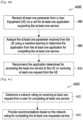
- FIG. 4a is a flow diagram 400A illustrating a method for recommending the application for completing the particular service on the UE at the particular location based on at least one of the RTT and the E2E delay, according to embodiments as disclosed herein.
- the method includes calculating, by the enablement module 110, at least one of the RTT and the E2E delay for the one or more applications supporting the service requested by the user.
- the requested service can include at least one of the first service (such as the streaming service, the file downloading service, the carousel service and so on) and the second service (such as the call related service).
- the enablement module 110 calculates the RTT for the one or more applications supporting the first service and the E2E delay for the one or more applications supporting the second service.
- the enablement module 110 calculates the at least one of the RTT and the E2E delay based on each cell of the plurality of cells of the base station (104a-104n) which is in communication with the UE 102. Further, the enablement module 110 averages the at least one of the RTT and the E2E delay for the one or more applications supporting the requested service.
- the method includes recommending, by the enablement module 110, the application from the one or more applications for completing the requested service based on the calculated at least one of the RTT and the E2E delay.
- the enablement module 110 selects the application with the at least one of the lowest RTT value and the lowest E2E delay from the one or more applications.
- the enablement module 110 recommends the selected application as the recommended application for completing the requested service.
- FIG. 4b is a flow diagram 400B illustrating a method for providing the recommendations for the service(s) by querying the service deployed on the cloud 116, according to embodiments as disclosed herein.
- the method includes receiving, by the cloud server 116 (service deployed on the cloud server 116), the parameters from the enablement module 110 of the UE 102 on the cell for the one or more applications supporting the services.
- the parameters can be, but not limited to, an operator network, availability of an edge server, network slice characteristics, a RTT, signal strength, a geo-location and so on.
- the method includes analyzing, by the cloud server 116, the parameters received from the enablement module 110 using the machine learning model to determine the application from the one or more applications for the service(s).
- the method includes recommend, by the cloud server 116, the determined application that can be used for completing the service on the UE 102 on receiving the request from the enablement module 110.
- the request can include at least one of a cell id, a tower id, a geo-location and so on.
- the enablement module 110 can query the cloud server 116 to recommend the application for completing the requested service at the particular location.
- FIG. 4c is a flow diagram 400C illustrating a method for providing the recommendations for the requested service based on the network rating, according to embodiments as disclosed herein.
- the method includes determining, by the enablement module 110, the network rating on receiving the request from the user for completing the service(s).
- the network rating can be calculated for the at least one of the one or more applications supporting the requested service, the one or more RATs associated with the base station (104a-104n), the one or more SIMs and so on.
- the network rating can be calculated based on the parameters such as, but not limited to, signal strength, network load information, network slice availability, edge availability, RTT and so on.
- the method includes providing, by the enablement module 110, the recommendations for completing the requested service.
- the recommendations can be, but not limited to, the application, the SIM, the RAT, the network slice of the SIM and so on.
- the enablement module 110 can recommend the application for the requested service based on the network rating determined for the one or more applications supporting the requested service. In another embodiment, based on the network rating determined for the one or more RATs, the enablement module 110 can suggest the RAT for the application recommended for the requested service. In yet other embodiment, based on the network rating determined for the one or more SIMs, the enablement module 110 can suggest the SIM to use for the application recommended for the requested service. In yet other embodiment, based on at least one of the network slice characteristics and the network rating determined for the one or more SIMs, the enablement module 110 suggests the network slice of the SIM for the application recommended for the requested service.
- FIGS. 5a , 5b and 5c are example diagrams illustrating recommendation of the application for the requested service based on the RTT, according to embodiments as disclosed herein.
- the enablement module 110 determines the RTT for the app A, the app B, the app C and the app D.
- the RTT can be calculated based on each cell of the plurality of cells associated with the base station (104a-104n) in communication with the UE 102.
- the RTT can be calculated based on a cell having a cell identifier (cid) of 400, a cell of cid 500 and a cell of cid 600 (the serving cells) of the base station (104a-104n).
- the edge server (106a-106n) Since the edge server (106a-106n) is placed near to the base station (104a-104n) serving the cell of cid 500, the RTT calculated based on the cell of cid 500 can be considered to recommend the application.
- the RTT calculated for the app A, the app B, the app C and the app D based on the cell of cid 500 may be 20ms, 16ms, 25ms and 15ms respectively.
- the enablement module 110 identifies that the edge server (106a-106n) may be available for the app D.
- the enablement module 110 recommends the app D for watching the video, since the app D is having the lowest RTT value.
- the low latency communication can be achieved.
- the enablement module 110 determines that an app A, an app B, an app C and an app D are the applications supporting the video streaming/movie related service.
- the enablement module 110 calculates the RTT for the applications supporting the video streaming service.
- the RTT calculated for the app A, the app B, the app C and the app D may be 20ms, 15ms, 25ms and 5ms respectively.
- the enablement module 110 recommends the app D for watching the movie, as the app D is having the lowest RTT value.
- the user launches a video streaming service.
- the enablement module 110 determines the application from the one or more applications as having the lowest RTT value. Once the application is determined, the enablement module 110 provides the suggestion for the user to continue the launched service using the determined application (with the lowest RTT value).
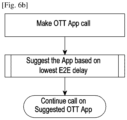
- FIGS. 6a and 6b are example diagrams illustrating recommendation of the application for the call related service based on the E2E delay, according to embodiments as disclosed herein.
- the enablement module 110 calculates the E2E delay for the applications C1-C4 based on each cell of the plurality of cells (a cell of cid 400, a cell of cid 500 and a cell of cid 600) of the base station in communication with the UE 102.
- E2E delay calculated for the app C1, the app C2, the app C3 and the app C4 based on the cell of cid 500 may be 20ms, 5ms, 25ms and 15ms respectively.
- the enablement module 110 identifies the availability of the edge server (106a-106n) for the app C2, as the app C2 is having the lowest E2E delay. Thus, the enablement module 110 recommends the app C2 to the user to make the call to another user.
- the parameters can be, but not limited to, operator network, edge availability, network slice characteristics, RTT, signal strength, location details and so on.
- the edge server based on the received parameters, the edge server (106a-106n) determines that the edge server is placed near to the base station serving the cell of cid 500. Further, the cloud server 116 determines that the app C is the only application available on the edge server (106a-106n) supporting the movie related service. The service (106a-106n) provides the app C as suggestion in response to the request received from the enablement module 110. Thus, the enablement module 110 recommends the app C to the user as the best possible application to watch the movie.
- FIG. 8 is an example sequence diagram illustrating determination of availability of the edge server for the one or more applications, according to embodiments as disclosed herein.
- the enablement module 110 of the UE 102 checks the availability of the edge server. Further, the enablement module 110 sends the 'Registration Request' to the 5G core network using a modem to check whether the edge server (106a-106n) is available or not. In response to the 'Registration Request', the 5G core network sends the 'Registration Accept' to the modem.
- a Radio Interface layer of the UE 102 determines the availability of the edge server (106a-106n) based on the 'Registration Accept' response received from the 5G core network.
- the enablement module 110 validates the availability of the edge server (106a-106n) using the system properties of the UE 102. On determining that the edge server (106a-106n) is available to the base station that is in communication with the UE 102, the enablement module 110 updates the status bar on the UE 102 indicating the availability of the edge server.
- the enablement module 110 queries the Life Cycle Management (LCM) proxy associated with the 5G core network to obtain the information about the list of available applications at the edge server (106a-106n).
- the LCM proxy may send the list of available applications at the edge server (106a-106n) to the enablement module 110.
- the enablement module 110 assigns the indications/badge notifications to the applications available at the edge server (106a-106n).
- FIGS. 9a, 9b and 9c are example diagrams illustrating creation of a folder structure for indicating the availability of the edge server (106a-106n) for the one or more applications, according to embodiments as disclosed herein.
- the enablement module 110 instructs the display module 114 to update the status bar on determining the availability of the edge server (106a-106n).
- the display module 114 notifies the user about the edge server availability by means of 'M' letter/icon on the status bar.
- the display module 114 creates the MEC folder and inserts the one or more applications available at the edge server in the created folder.
- the display module 114 creates the folder which contains the one or more applications supported on the edge server (106a-106n) as illustrated in FIG. 9a .
- the display module 114 creates the folders with respect to the SIMs and inserts the applications available at the respective edger servers (106a-106n) in the folders as illustrated in FIGS. 9b and 9c .
- the folder created with respect to the SIM1 can include applications A-E which are available on the edge server (106a-106n).
- the folder created with respect to the SIM2 can include the app A and the app B which are supported on the edge server (106a-106n).
- FIG. 9d is an example diagram illustrating assignment of the badge notifications for the one or more applications available at the edge server (106a-106n), according to embodiments as disclosed herein.
- a letter 'M' can be added to the applications for indicating the availability of the edge server (106a -106n) for the applications.
- the letter 'M' can be assigned to an app E and an app F that informs the user about the availability of the edge server (106a-106n) for the app E and the app F.
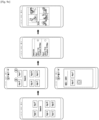
- FIG. 9e is an example diagram illustrating providing of user notifications for indicating the availability of the edge server (106a-106n), according to embodiments as disclosed herein.
- boot up operation which can comprise of the UE 102 starting up, the UE 102 exiting flight mode, and so on
- the enablement module 110 determines that the availability of the edge server (106a-106n) using the 5G registration procedure and receives the list of available applications from the LCM proxy.
- the enablement module 110 instructs the display module 114 to create the folder to insert the applications available at the edge server (106a-106n) or to provide the badge notifications to the applications available at the edge server (106a-106n).
- the user selects the app E (which is available at the edge server) based on at least one of the badge notifications and the folder.
- the user can be provided with the interface to select the network slice of the SIM during the application launch.
- the user can select the network slice 1 of the SIM based on the latency.
- the user can use the network slice 1 of the SIM1 for managing the app E.
- FIG. 10 depicts an example diagram, wherein the local storage is adapted with the edge server for uploading the contents, according to the embodiments as disclosed herein.
- Embodiments herein enable the enablement module 110 to inform the user about the local storage adapted with the edge server (106a-106n).
- the user can delegate the task of downloading the contents (files, video, photos, and so on) to the local cloud adapted with the edge server.
- the user can share information about the uploaded content with other users.
- the user can also obtain the downloaded contents from the edge server which helps in reducing usage of the device storage.
- adapting the local cloud with the edge server (106a-106n) helps in increasing the storage capacity and provides a seamless content sharing experience.
- FIGS. 11a-11h depict example tables, wherein values of the table can be used for determining the network rating, according to embodiments as disclosed herein.
- Embodiments herein enable the enablement module 110 to recommend at least one of the application, the RAT, the SIM, and the network slice of the SIM for the particular service at the particular location based on the network rating.
- the network rating (NWR) can be determined based on the network parameters such as, but not limited to, signal strength, network load information, network slice availability, edge availability, RTT and so on.
- W1-W5 represent the weightage considered based on at least one of the signal strength thresholds, the charging thresholds, the RTT thresholds, the network load, the availability of the edge server and the network slice and so on. Typical values for range of the network parameters are illustrated in FIGS. 11a-11h .
- FIG. 12 is an example flow diagram illustrating recommendation of the RAT for completing the requested service at the particular location based on the network rating, according to embodiments as disclosed herein.
- the enablement module 110 checks whether the UE 102 supports multiple SIMs or not. On determining the UE 102 does not support multiple SIMs, the enablement module 110 suggests the user to continue with the app A's session.
- the enablement module 110 determines the network rating for the one or more RATs/subscriptions supported by the base station (104a-104n) in communication with the UE 102. The enablement module 110 selects the RAT from the one or more RATs for completing the video streaming service based on the network rating. In an embodiment, the enablement module 110 may select the RAT on receiving the input from the user for completing the video streaming service. Further, the enablement module 110 suggests the user to continue the video streaming service on the selected RAT.
- the one or more RATs supported by the base station in communication with the UE 102 may be LTE, 5G and Wi-Fi. The enablement module 110 calculates the network rating for LTE, 5G and Wi-Fi and identifies that 5G may have better network rating. Thus, the enablement module 110 recommends 5G as the best RAT for continuing the video streaming service.
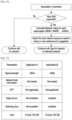
- FIG. 13 is an example table illustrating availability of the edge server/network slice of the SIM for recommending the application for the requested service at the particular location, according to embodiments as disclosed herein.
- the enablement module 110 determines the network rating for the app A and the app B based on the parameters such as, but not limited to, the signal strength, the network load information, the RTT, availability of the edge server and the network slice, the charging details and so on.
- Example values of the parameters with respect to the app A and the app B are illustrated in the table.
- the enablement module 110 determines that the network rating calculated for the app B may be higher than that of the app A.
- the network rating of the app B may be higher because of the availability of the edge server and the network slice for the app B.
- the enablement module 110 selects the app B for watching the live event based on the performance factor even though the charging details associated with the app A is less.
- FIG. 14a and 14b depict example tables, wherein the values of the example table are used to recommend the SIM for the requested service at the particular location, according to embodiments as disclosed herein.
- the UE 102 comprises a SIM1 and a SIM2, that support the app A.
- the enablement module 110 determines the network rating for the SIM1 and the SIM2 based on the parameters such as, but not limited to, the signal strength, the network load information, the RTT, availability of the edge server and the network slice, the charging details and so on.
- Example values of the parameters with respect to the SIM1 and the SIM2 are illustrated in the table as illustrated in FIG. 14a .
- the enablement module 110 determines that the network rating calculated for the SIM1 may be higher than that of the SIM2. Thus, the enablement module 110 selects the SIM1 for the app A (which is supporting the video streaming service) based on the cost effectiveness factor even though the SIM2 has network slice.
- the enablement module 110 determines the network rating for the SIM1 and the SIM2 based on the parameters such as, but not limited to, the signal strength, the network load information, the RTT, availability of the edge server and the network slice, the charging details and so on.
- Example values of the parameters with respect to the SIM1 and the SIM2 are illustrated in the table as illustrated in FIG. 14b .
- the enablement module 110 determines that the network rating calculated for the SIM2 may be higher than that of the SIM1. Thus, the enablement module 110 selects the SIM2 for the app B (which is supporting the autonomous car driving related service) based on the performance factor even though the charging details associated with the SIM1 is less.
- FIGS. 15a and 15b are example diagrams illustrating recommendation of the SIM for the requested service at the particular location, according to embodiments as disclosed herein.
- the enablement module 110 recommends the app A for watching the movie on the UE 102 at the particular location.
- the UE 102 supports a SIM1 of an operator 1 and a SIM2 of an operator 2.
- the serving cell of cid 500 of the base station in communication with the UE 102 can be operated by the operator 1 and the operator 2.
- the enablement module 110 determines the availability of the edge server (106a-106n) for the base station (communicating with the UE 102) with respect to the operator 1 and the operator 2.
- the edge server (106a-106n) may be available for the SIM1 operating by the operator 1 and the SIM2 operating by the operator 2.
- the enablement module 110 determines the applications available at the edge server (106a-106n) with respect to the SIM1 and the SIM2.
- the edge server (106a-106n) available for the SIM1/operator 1 may include the app A, the app B and the app D.
- the edge server (106a-106n) available for the SIM1/operator 1 may include the app C.
- the enablement module 110 selects the SIM1/operator 1 for the recommended app A, since the edge server (106a-106n) available for the SIM1/operator 1 includes the app A. Thus, the enablement module 110 suggests the user to use the app A and the SIM1 for the app A to watch the movie.
- the enablement module 110 determines the availability of the edge server (106a-106n) for the base station (communicating with the UE 102) with respect to the operator 1 and the operator 2.
- the edge server (106a-106n) may be available for the SIM1 operating by the operator 1 and the SIM2 operating by the operator 2.
- the enablement module 110 checks the characteristics of the network slices associated with the SIM1 and the SIM2.
- the characteristics of the network slice associated with the SIM1 can include latency of 1ms and services such as V2V, V2I, V2P, V2N and so on.
- the characteristics of the network slice associated with the SIM2 can include latency of 5ms and services such as V2V, V2I, V2P, V2N and so on.
- the enablement module 110 provides the suggestions to the user to use the SIM1/operator 1 for autonomous driving related applications, since the latency of the network slice associated with the SIM1 is of 1ms.
- FIGS. 16a , 16b , 16c and 16d are example diagrams illustrating recommendation of the network slice from the one or more network slices associated with the SIM for the requested service, according to embodiments as disclosed herein.
- FIG. 16a depicts an example diagram, wherein the network slice can be recommended based on the characteristics of the one or more network slices associated with the SIM.
- a network slice 1 and a network slice 2 are network slices permitted for the same RAT/ subscription.
- the network slice 1 and the network slice 2 are of eMBB (Enhanced Mobile Broadband) network slice/Service Type (SST) but having different characteristics.
- the network slice 1 has a throughput of 300 Mbps and latency of 1ms and the network slice 2 has a throughput of 500 Mbps and latency of 15ms.
- the enablement module 110 can select the network slice 1 for the SIM that can be used for completing the requested service.
- the enablement module 110 can suggest the user to buy the network slice/subscription for completing the requested service.
- FIG. 16b depicts an example diagram, wherein the network slice can be recommended based on the identification of allowed set of network slices.
- the UE 102 has successfully completed its registration procedure.
- the UE may obtain information about a set of allowed network slices for a registration area from the AMF instance that is serving the UE 102.
- the enablement module 110 keeps track of the allowed network slices and recommends the network slice of the SIM for completing the requested service.
- the enablement module 110 can also provide an interface to the user for selecting the network slice for the requested service.
- the enablement module 110 can suggest the user to buy the new network slice for completing the requested service.
- FIG. 16c is an example diagram illustrating extraction of the network slice related information based on a selection of the network slice by the user.
- the enablement module 110 instructs the modem to send a Protocol Data Unit (PDU) Session Establishment Request to the AMS for obtaining details regarding the selected network slice.
- PDU Protocol Data Unit
- the details can be, but not limited to, Data Network Name (DNN), SSC mode, and session type.
- FIG. 16d is an example diagram illustrating the user mode for selecting the network slice for the particular service.
- Embodiments herein provide the user mode and the auto mode for selecting the network slice.
- the enablement module 110 selects the network slice of the SIM for the particular service based on the user priorities set (includes the cost effective factor, the performance factor and the best effort factor).
- the user may provide with the options to select the SIM/network slice. Each option may contain the edge availability details for the particular service.
- the user may be provided an interface to select a form of notification (the badge notifications/creation of the folder) for indicating the availability of the edge server.
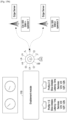
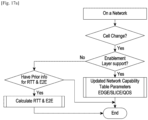
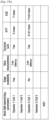
- FIGS. 17a and 17b are example diagrams illustrating updating of the network capabilities based on the cell change for recommending at least one of the network slice and the RAT for the requested service, according to embodiments as disclosed herein.
- the UE 102 checks for the support of the enablement layer for the changed cell location. On determining that the enablement layer does not support, the UE 102 checks for an availability of prior information in the memory 108 for the RTT and the E2E delay. On determining the availability of the prior information for the RTT and the E2E delay, the UE 102 updates the local database with the RTT and the E2E delay. Otherwise, the UE 102 calculates the RTT and the E2E delay and updates the local database.
- the UE 102 instructs the enablement module 110 to update the local database with the availability of the edge server (106a-106n) and the network slice, QoS and other network parameters for the one or more applications.
- the enablement module can use the updated local database (as illustrated in FIG. 17b ) for recommending the at least one of the RAT/ subscription and the network slice to the user for completing the particular service.
- FIG. 18 is an example diagram illustrating feature based Quality of Service (QoS) manipulation for the call related applications, according to embodiments as disclosed herein.
- QoS Quality of Service
- Embodiments herein enable the enablement module 110 to prioritize the applications on determining that the non-availability of the edge server.
- the enablement module 110 assigns the 5QI values for the applications and displays the 5QI values to the RAT for providing better bandwidth and latency.
- a higher 5QI value assigned to the applications indicates the RAT for providing the better bandwidth and the latency.
- the enablement module 110 can assign 5QI:9 for the call/OTT related applications for getting better bandwidth and latency for the OTT related applications.
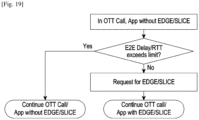
- FIG. 19 is an example flow diagram illustrating handling of at least one of the network slice and the edge availability for recommending the application for the particular service, according to embodiments as disclosed herein.
- the enablement module 110 checks whether at least one of the RTT and E2E delay exceeds a limit. On determining that the at least one of the RTT and E2E delay exceeds the limit, the enablement module 110 suggests the user to continue the call using the OTT applications without the edge server (106a-106n)/the network slice.
- the enablement module 110 suggests make a request with the 5G core network for the edge server (106a-106n) or with the AMF for the network slice.
- the enablement module 110 can also suggest the user to buy the network slice. If the request is successfully registered, the enablement module 110 suggests the user to continue the OTT call using the application for which the edge server and the network slice are available.
- FIG. 20 is an example diagram illustrating providing of the recommendations for completing the service(s) at the particular location, according to embodiments as disclosed herein.
- the UE 102 is in communication with the cell of cid 500 of the base station (104a-104n).
- the edge server (106a-106n) may be or may not be placed near the base station serving the cell of cid 500.
- the enablement module 110 On receiving the request from the user for the service (the video streaming service, the file downloading service and so on) at the particular location, the enablement module 110 provides recommendations to the user for the completing the service based on tracking of the available resources. Based on the request, the enablement module 110 provides an interface for the user to select factors for providing the recommednatons.
- the factors can be, but not limited to, the edge server, the network slice, the QoS and so on.
- the enablement module 110 provides the recommendations to the user for completing the requested service based on the availability of the edge server. If the user selects the network slice for the particular service, the application recommended for the requested service can be used based on the selected network slice. If the user selects the better QoS factor, then the enablement module prioritizes the applications for which the edge server is not available. The applications can be prioritized by assigning 5QI values. Further, the 5QI value can be shared with the RAT/cell of cid 500 associated with the base station to provide the better bandwidth and latency for the applications. In an example herein, the enablement module 110 may assign 5QI:2 for live streaming and 5QI:4 for buffer streaming. Thus, the QoS of the applications can be improved by prioritizing the traffic of such applications.
- the embodiments disclosed herein can be implemented through at least one software program running on at least one hardware device and performing network management functions to control the elements.
- the elements shown in FIG. 1 and FIG.2 can be at least one of a hardware device, or a combination of hardware device and software module.
- the embodiments disclosed herein describe methods and systems for providing recommendations for completing service(s) on a User Equipment (UE) at a particular location. Therefore, it is understood that the scope of the protection is extended to such a program and in addition to a computer readable means having a message therein, such computer readable storage means contain program code means for implementation of one or more steps of the method, when the program runs on a server or mobile device or any suitable programmable device.
- the method is implemented in an embodiment through or together with a software program written in e.g. Very high speed integrated circuit Hardware Description Language (VHDL) another programming language, or implemented by one or more VHDL or several software modules being executed on at least one hardware device.
- VHDL Very high speed integrated circuit Hardware Description Language
- the hardware device can be any kind of portable device that can be programmed.
- the device may also include means which could be e.g. hardware means like e.g. an ASIC, or a combination of hardware and software means, e.g. an ASIC and an FPGA, or at least one microprocessor and at least one memory with software modules located therein.
- the method embodiments described herein could be implemented partly in hardware and partly in software.
- the disclosure may be implemented on different hardware devices, e.g. using a plurality of CPUs.
Landscapes
- Engineering & Computer Science (AREA)
- Computer Networks & Wireless Communication (AREA)
- Signal Processing (AREA)
- Databases & Information Systems (AREA)
- Computer Security & Cryptography (AREA)
- Mobile Radio Communication Systems (AREA)
- Telephonic Communication Services (AREA)
Claims (12)
- Verfahren zum Bereitstellen von zumindest einer Empfehlung zum Durchführen von zumindest einem Dienst auf einem Benutzergerät, UE (102), wobei das Verfahren Folgendes umfasst:Empfangen, durch das UE (102), einer Anforderung von einem Benutzer zum Durchführen von zumindest einem Dienst an einem Standort;Bestimmen (302), durch das UE (102), von zumindest einem Netzwerkparameter, der dem angeforderten zumindest einen Dienst an dem Standort entspricht,wobei der zumindest eine Netzwerkparameter eine Verfügbarkeit von zumindest einem Edge-Server (106a-106n) umfasst;Bestimmen, durch das UE (102), der zumindest einen Empfehlung unter Verwendung des bestimmten zumindest einen Netzwerkparameters; undDurchführen (304), durch das UE (102), des zumindest einen angeforderten Dienstes an dem Standort unter Verwendung der bestimmten zumindest einen Empfehlung,wobei zum Bestimmen der Verfügbarkeit von zumindest einem Edge-Server während eines Startvorgangs oder bei Bestimmen einer Änderung in einem Zellstandort das Bestimmen des zumindest einen Netzwerkparameters, der dem angeforderten zumindest einen Dienst entspricht, Folgendes umfasst:Berechnen einer Rundtripzeit, RTT, für jede von zumindest einer Anwendung, die den zumindest einen angeforderten Dienst unterstützt, basierend auf jeder Zelle von zumindest einer Zelle, die mit einer Basisstation in Kommunikation mit dem UE assoziiert ist, wobei der zumindest eine angeforderte Dienst zumindest ein durchsatzbasierter Dienst ist;Auswählen einer Anwendung mit einer niedrigsten RTT unter der zumindest einen Anwendung basierend auf der Berechnung; undBestimmen, dass der zumindest eine Edge-Server für die ausgewählte Anwendung verfügbar ist, die den zumindest einen angeforderten Dienst unterstützt,wobei die bestimmte zumindest eine Empfehlung Empfehlung der ausgewählten Anwendung umfasst.
- Verfahren nach Anspruch 1, ferner umfassend Bereitstellen, durch das UE (102), der bestimmten zumindest einen Empfehlung an den Benutzer zum Durchführen des zumindest einen Dienstes an dem Standort.
- Verfahren nach Anspruch 1, wobei der zumindest eine Dienst einen Multimedia-Streaming-Dienst, einen anrufbezogenen Dienst, einen Dateidownload-Dienst, einen Karussell-Dienst, einen Fernseh(TV-)Dienst und einen Medien-on-Demand-Dienst beinhaltet.
- Verfahren nach Anspruch 1, wobei der zumindest eine Netzwerkparameter ferner zumindest eines von einer Rundtripzeit, RTT, einer End-to-End-, E2E-Verzögerung, Verfügbarkeit von Netzwerksegmenten für zumindest ein Teilnehmeridentitätsmodul, SIM, Eigenschaften der verfügbaren Netzwerksegmente, Gebührendetails, Signalbedingungen und Netzwerklast beinhaltet.
- Verfahren nach Anspruch 4, wobei das Bestimmen der Verfügbarkeit des zumindest einen Edge-Servers Folgendes beinhaltet:Übertragen, durch das UE, einer Registrierungsanforderung an ein Kernnetzwerk bei Bestimmen einer Änderung in einem Standort einer Zelle, die mit einer Basisstation in Kommunikation mit dem UE assoziiert ist; undBestimmen, durch das UE, der Verfügbarkeit des Edge-Servers und von zumindest einer Anwendung, die auf dem Edge-Server verfügbar ist, basierend auf einer Registrierungsreaktion, die von dem Kernnetzwerk als Reaktion auf die Registrierungsanforderung empfangen wird.
- Verfahren nach Anspruch 5, ferner umfassend Durchführen, durch das UE, von zumindest einer auf Benutzerschnittstelle (UI) basierenden Handlung, um die Verfügbarkeit des zumindest einen Edge-Servers für die zumindest eine Anwendung anzugeben, wobei die zumindest eine auf UI basierende Handlung Folgendes beinhaltet:Bereitstellen von zumindest einer Badge-Benachrichtigung an die zumindest eine Anwendung, die auf dem zumindest einen Edge-Server verfügbar ist; undErstellen eines Ordners basierend auf der Verfügbarkeit des zumindest einen Edge-Servers für die zumindest eine Anwendung, wobei der Ordner die zumindest eine Anwendung beinhaltet, die auf dem zumindest einen Edge-Server verfügbar ist.
- Verfahren nach Anspruch 5, ferner umfassend Hochladen, durch das UE, von zumindest einem Inhalt auf den zumindest einen verfügbaren Edge-Server, wobei der zumindest eine Inhalt, der auf den zumindest einen verfügbaren Edge-Server hochgeladen ist, durch zumindest ein anderes UE heruntergeladen wird.
- Verfahren nach Anspruch 1, wobei, wenn die zumindest eine Empfehlung eine Empfehlung der Anwendung von zumindest einer Anwendung umfasst, die den zumindest einen Dienst unterstützt, das Verfahren ferner Folgendes umfasst:Bestimmen, durch das UE, einer Netzwerkbewertung für die zumindest eine Anwendung basierend auf dem bestimmten zumindest einen Netzwerkparameter, undwobei die Anwendung aus der zumindest einen Anwendung unter Verwendung der bestimmten Netzwerkbewertung empfohlen wird.
- Verfahren nach Anspruch 8, wobei das Bestimmen der zumindest einen Empfehlung unter Verwendung des bestimmten zumindest einen Netzwerkparameters zumindest eines von Folgendem beinhaltet:Bestimmen, durch das UE, einer Empfehlung der RAT von zumindest einer RAT, die mit dem UE assoziiert ist, für die Anwendung, die für die zumindest eine Anforderung bestimmt ist, wobei die RAT unter Verwendung der Netzwerkbewertung empfohlen wird, die für die zumindest eine RAT bestimmt wird, die mit dem UE assoziiert ist;Bestimmen, durch das UE, einer Empfehlung des SIM aus zumindest einem SIM für die Anwendung, die für den zumindest einen Dienst bestimmt wird, wobei das SIM unter Verwendung von zumindest einem von der Netzwerkbewertung, die für das zumindest eine SIM bestimmt wird, und Eigenschaften von Netzwerksegmenten, die für das zumindest eine SIM verfügbar sind, bestimmt wird; undBestimmen, durch das UE, einer Empfehlung des Netzwerksegments für das SIM, um für die Anwendung verwendet zu werden, die für den zumindest einen Dienst bestimmt wird, wobei das Netzwerksegment unter Verwendung von zumindest einem von der Netzwerkbewertung, die für das zumindest eine SIM bestimmt wird, und den Eigenschaften der Netzwerksegmente, die für das zumindest eine SIM verfügbar sind, bestimmt wird.
- Verfahren nach Anspruch 9, wobei eine Benutzereingabe empfangen wird, um das SIM und das Netzwerksegment für die Anwendung zu bestimmen, die für den zumindest einen Dienst empfohlen wird.
- Benutzergerät, UE, (102), das zumindest ein Teilnehmeridentitätsmodul, SIM, und zumindest eine Funkzugangstechnologie, RAT, unterstützt, wobei das UE Folgendes umfasst:einen Sendeempfänger (112);einen Speicher (108); undzumindest einen Prozessor (110), der an den Speicher (108) und den Sendeempfänger (112) gekoppelt ist, wobei der zumindest eine Prozessor (110) zu Folgendem konfiguriert ist:Empfangen einer Anforderung von einem Benutzer zum Durchführen von zumindest einem Dienst an einem Standort;Bestimmen von zumindest einem Netzwerkparameter, der dem angeforderten zumindest einen Dienst an dem Standort entspricht,wobei der zumindest eine Netzwerkparameter eine Verfügbarkeit von zumindest einem Edge-Server (106a-106n) umfasst;Bestimmen von zumindest einer Empfehlung unter Verwendung des bestimmten zumindest einen Netzwerkparameters; undDurchführen des zumindest einen angeforderten Dienstes an dem Standort unter Verwendung der bestimmten zumindest einen Empfehlung,wobei zum Bestimmen der Verfügbarkeit von zumindest einem Edge-Server (106a-106n) während eines Startvorgangs oder bei Bestimmen einer Änderung in einem Zellstandort der zumindest eine Prozessor (110) zu Folgendem konfiguriert ist:Berechnen einer Rundtripzeit, RTT, für jede von zumindest einer Anwendung, die den zumindest einen angeforderten Dienst unterstützt, basierend auf jeder Zelle von zumindest einer Zelle, die mit einer Basisstation in Kommunikation mit dem UE assoziiert ist, wobei der zumindest eine angeforderte Dienst zumindest ein durchsatzbasierter Dienst ist;Auswählen einer Anwendung mit einer niedrigsten RTT unter der zumindest einen Anwendung basierend auf der Berechnung; undBestimmen, dass der zumindest eine Edge-Server für die ausgewählte Anwendung verfügbar ist, die den zumindest einen angeforderten Dienst unterstützt, undwobei die bestimmte zumindest eine Empfehlung Empfehlung der ausgewählten Anwendung umfasst.
- UE nach Anspruch 11, wobei der zumindest eine Prozessor ferner konfiguriert ist, um gemäß einem der Verfahren in Anspruch 2 bis 10 betrieben zu werden.
Applications Claiming Priority (2)
| Application Number | Priority Date | Filing Date | Title |
|---|---|---|---|
| IN201841020690 | 2018-06-01 | ||
| PCT/KR2019/006564 WO2019231275A1 (en) | 2018-06-01 | 2019-05-31 | Systems and methods for better resource utilization in 5g networks using enablement layer |
Publications (4)
| Publication Number | Publication Date |
|---|---|
| EP3750335A1 EP3750335A1 (de) | 2020-12-16 |
| EP3750335A4 EP3750335A4 (de) | 2021-08-11 |
| EP3750335B1 true EP3750335B1 (de) | 2025-03-05 |
| EP3750335C0 EP3750335C0 (de) | 2025-03-05 |
Family
ID=68695475
Family Applications (1)
| Application Number | Title | Priority Date | Filing Date |
|---|---|---|---|
| EP19810511.6A Active EP3750335B1 (de) | 2018-06-01 | 2019-05-31 | Systeme und verfahren zur besseren ressourcennutzung in 5g-netzwerken unter verwendung der freigabeschicht |
Country Status (4)
| Country | Link |
|---|---|
| US (1) | US10863344B2 (de) |
| EP (1) | EP3750335B1 (de) |
| CN (1) | CN112205007B (de) |
| WO (1) | WO2019231275A1 (de) |
Cited By (1)
| Publication number | Priority date | Publication date | Assignee | Title |
|---|---|---|---|---|
| US20230300732A1 (en) * | 2020-08-27 | 2023-09-21 | Zte Corporation | Card-transfer slice switching method, device and storage medium |
Families Citing this family (28)
| Publication number | Priority date | Publication date | Assignee | Title |
|---|---|---|---|---|
| US10440096B2 (en) * | 2016-12-28 | 2019-10-08 | Intel IP Corporation | Application computation offloading for mobile edge computing |
| US10798635B2 (en) * | 2018-12-03 | 2020-10-06 | At&T Intellectual Property I, L.P. | Mobile edge computing for data network traffic |
| CN113259260B (zh) * | 2020-02-11 | 2025-05-23 | 华为云计算技术有限公司 | 部署应用实例和调度应用实例的方法和装置 |
| US11902337B2 (en) * | 2020-05-07 | 2024-02-13 | Tencent America LLC | Methods for discovery of media capabilities of 5G edge |
| US11432201B2 (en) * | 2020-06-26 | 2022-08-30 | T-Mobile Usa, Inc. | Network application programming interface (API) exposure |
| CN113965463B (zh) * | 2020-06-29 | 2024-08-27 | 中兴通讯股份有限公司 | 网络切片切换方法和终端、存储介质及电子装置 |
| US11917478B2 (en) * | 2020-07-31 | 2024-02-27 | T-Mobile Usa, Inc. | Dynamic cellular network selection for Edge-computing of an application |
| CN112566218B (zh) * | 2020-12-01 | 2021-10-26 | 中兴通讯股份有限公司 | Sim卡选择方法、装置、终端及存储介质 |
| US11310733B1 (en) | 2020-12-10 | 2022-04-19 | Amazon Technologies, Inc. | On-demand application-driven network slicing |
| US11601348B2 (en) | 2020-12-10 | 2023-03-07 | Amazon Technologies, Inc. | Managing radio-based private networks |
| US11729091B2 (en) * | 2020-12-10 | 2023-08-15 | Amazon Technologies, Inc. | Highly available data-processing network functions for radio-based networks |
| US11627472B2 (en) | 2020-12-10 | 2023-04-11 | Amazon Technologies, Inc. | Automated deployment of radio-based networks |
| US11252655B1 (en) * | 2020-12-10 | 2022-02-15 | Amazon Technologies, Inc. | Managing assignments of network slices |
| US20220191303A1 (en) * | 2020-12-10 | 2022-06-16 | Amazon Technologies, Inc. | Intersection of on-demand network slicing and content delivery |
| US11886315B2 (en) | 2020-12-10 | 2024-01-30 | Amazon Technologies, Inc. | Managing computing capacity in radio-based networks |
| US11711727B1 (en) | 2021-03-16 | 2023-07-25 | Amazon Technologies, Inc. | Provisioning radio-based networks on demand |
| US11895508B1 (en) | 2021-03-18 | 2024-02-06 | Amazon Technologies, Inc. | Demand-based allocation of ephemeral radio-based network resources |
| US11838273B2 (en) | 2021-03-29 | 2023-12-05 | Amazon Technologies, Inc. | Extending cloud-based virtual private networks to radio-based networks |
| CN115277458B (zh) * | 2021-04-30 | 2023-11-17 | 阿里巴巴新加坡控股有限公司 | 服务提供方法、设备及存储介质 |
| US11743953B2 (en) | 2021-05-26 | 2023-08-29 | Amazon Technologies, Inc. | Distributed user plane functions for radio-based networks |
| US11871240B2 (en) | 2021-06-28 | 2024-01-09 | Amazon Technologies, Inc. | Interfaces for creating radio-based private networks |
| TWI823146B (zh) * | 2021-09-14 | 2023-11-21 | 仁寶電腦工業股份有限公司 | 用於即時mr互動應用之邊緣渲染運算方法及系統 |
| US11930044B2 (en) | 2022-01-05 | 2024-03-12 | International Business Machines Corporation | Mobile edges with smart collectors in cloud security and compliance center |
| US12289797B2 (en) | 2022-03-23 | 2025-04-29 | Apple Inc. | Dynamic profile and radio access technology selection based on application network slice requirements |
| CN114900860B (zh) * | 2022-05-05 | 2024-04-02 | 中国联合网络通信集团有限公司 | 移动终端边缘计算方法、装置、边缘计算服务器及介质 |
| US11855831B1 (en) | 2022-06-10 | 2023-12-26 | T-Mobile Usa, Inc. | Enabling an operator to resolve an issue associated with a 5G wireless telecommunication network using AR glasses |
| US11886767B2 (en) * | 2022-06-17 | 2024-01-30 | T-Mobile Usa, Inc. | Enable interaction between a user and an agent of a 5G wireless telecommunication network using augmented reality glasses |
| US11910221B1 (en) * | 2022-08-10 | 2024-02-20 | International Business Machines Corporation | Edge service deployment with network slice invocation |
Citations (2)
| Publication number | Priority date | Publication date | Assignee | Title |
|---|---|---|---|---|
| KR20100072581A (ko) * | 2008-12-22 | 2010-07-01 | 한국전자통신연구원 | 무선 통신 시스템에서 라디오 액세스 테크놀로지 선택 방법 |
| JP2011199390A (ja) * | 2010-03-17 | 2011-10-06 | Ntt Docomo Inc | 移動機、サーバ及び方法 |
Family Cites Families (23)
| Publication number | Priority date | Publication date | Assignee | Title |
|---|---|---|---|---|
| US20110088068A1 (en) * | 2009-10-09 | 2011-04-14 | Sony Ericsson Mobile Communications Ab | Live media stream selection on a mobile device |
| US9775079B2 (en) * | 2011-09-22 | 2017-09-26 | Panasonic Intellectual Property Corporation Of America | Method and apparatus for mobile terminal connection control and management of local accesses |
| US9049650B2 (en) * | 2012-12-07 | 2015-06-02 | Google Technology Holdings LLC | Methods and apparatus for selecting an inter-radio access technology for an electronic device |
| US20140365944A1 (en) * | 2013-06-09 | 2014-12-11 | Apple Inc. | Location-Based Application Recommendations |
| US10432576B2 (en) * | 2014-06-19 | 2019-10-01 | Instart Logic, Inc. | User device to domain name resolver mapping |
| JP6561632B2 (ja) * | 2015-07-06 | 2019-08-21 | 日本電気株式会社 | エッジサーバ及びその方法 |
| US10645528B2 (en) * | 2015-09-18 | 2020-05-05 | Huawei Technologies Co., Ltd. | System and methods for reliable communication with mobility along a predictable route |
| WO2017063708A1 (en) * | 2015-10-15 | 2017-04-20 | Telefonaktiebolaget Lm Ericsson (Publ) | Apparatus and method for attaching user equipment to a mobile communications network |
| US10264621B2 (en) * | 2016-03-18 | 2019-04-16 | Parallel Wireless, Inc | IuGW architecture |
| US10362511B2 (en) * | 2016-05-17 | 2019-07-23 | Lg Electronics Inc. | Method and apparatus for determining PDU session identity in wireless communication system |
| US10757576B2 (en) * | 2016-08-05 | 2020-08-25 | Nxgen Partners Ip, Llc | SDR-based massive MIMO with V-RAN cloud architecture and SDN-based network slicing |
| US10484451B2 (en) * | 2016-10-18 | 2019-11-19 | Huawei Technologies Co., Ltd. | Virtual network state management in mobile edge computing |
| US10440096B2 (en) * | 2016-12-28 | 2019-10-08 | Intel IP Corporation | Application computation offloading for mobile edge computing |
| CN110800323B (zh) * | 2017-05-05 | 2022-11-15 | Pcms控股公司 | 基于隐私保护位置的服务 |
| CN107770815B (zh) * | 2017-10-18 | 2020-09-11 | 中国联合网络通信集团有限公司 | 一种基于位置的mec方法及设备 |
| CN107566985B (zh) * | 2017-10-20 | 2020-03-31 | 维沃移动通信有限公司 | 一种移动终端主sim卡确定方法及装置 |
| US10674394B2 (en) * | 2017-10-27 | 2020-06-02 | Futurewei Technologies, Inc. | Method and apparatus for reducing network latency |
| US10110495B1 (en) * | 2017-11-22 | 2018-10-23 | Intel Corporation | Multi-access edge computing (MEC) service provision based on local cost measurements |
| US11025456B2 (en) * | 2018-01-12 | 2021-06-01 | Apple Inc. | Time domain resource allocation for mobile communication |
| US10863494B2 (en) * | 2018-01-22 | 2020-12-08 | Apple Inc. | Control signaling for uplink multiple input multiple output, channel state information reference signal configuration and sounding reference signal configuration |
| US10986602B2 (en) * | 2018-02-09 | 2021-04-20 | Intel Corporation | Technologies to authorize user equipment use of local area data network features and control the size of local area data network information in access and mobility management function |
| US11716558B2 (en) * | 2018-04-16 | 2023-08-01 | Charter Communications Operating, Llc | Apparatus and methods for integrated high-capacity data and wireless network services |
| US11019183B2 (en) * | 2018-07-02 | 2021-05-25 | Intel Corporation | Network provenance with multi-interface translation |
-
2019
- 2019-05-31 EP EP19810511.6A patent/EP3750335B1/de active Active
- 2019-05-31 WO PCT/KR2019/006564 patent/WO2019231275A1/en not_active Ceased
- 2019-05-31 CN CN201980036724.2A patent/CN112205007B/zh active Active
- 2019-05-31 US US16/428,817 patent/US10863344B2/en active Active
Patent Citations (2)
| Publication number | Priority date | Publication date | Assignee | Title |
|---|---|---|---|---|
| KR20100072581A (ko) * | 2008-12-22 | 2010-07-01 | 한국전자통신연구원 | 무선 통신 시스템에서 라디오 액세스 테크놀로지 선택 방법 |
| JP2011199390A (ja) * | 2010-03-17 | 2011-10-06 | Ntt Docomo Inc | 移動機、サーバ及び方法 |
Cited By (2)
| Publication number | Priority date | Publication date | Assignee | Title |
|---|---|---|---|---|
| US20230300732A1 (en) * | 2020-08-27 | 2023-09-21 | Zte Corporation | Card-transfer slice switching method, device and storage medium |
| US12557008B2 (en) * | 2020-08-27 | 2026-02-17 | Zte Corporation | Card-transfer slice switching method, device and storage medium |
Also Published As
| Publication number | Publication date |
|---|---|
| CN112205007B (zh) | 2022-11-01 |
| CN112205007A (zh) | 2021-01-08 |
| EP3750335A1 (de) | 2020-12-16 |
| EP3750335A4 (de) | 2021-08-11 |
| US20190373443A1 (en) | 2019-12-05 |
| US10863344B2 (en) | 2020-12-08 |
| EP3750335C0 (de) | 2025-03-05 |
| WO2019231275A1 (en) | 2019-12-05 |
Similar Documents
| Publication | Publication Date | Title |
|---|---|---|
| EP3750335B1 (de) | Systeme und verfahren zur besseren ressourcennutzung in 5g-netzwerken unter verwendung der freigabeschicht | |
| EP2862336B1 (de) | Cloud-dienste in mobilen heterogenen netzwerken | |
| CN105376813B (zh) | 使用地理定位和切换管理来改善网络资源分配的技术 | |
| US10045279B2 (en) | Hybrid network-based and device-based intelligent radio access control | |
| US9549343B2 (en) | Traffic steering across radio access technologies and radio frequencies utilizing cell broadcast messages | |
| EP2827649B1 (de) | Benutzergerät und Verfahren für Benutzergeräterückkopplung von Präferenzen der Flow-to-RAT-Abbildung | |
| US11234157B2 (en) | Network latency aware mobile edge computing routing | |
| WO2020143564A1 (zh) | 一种通信方法和通信装置 | |
| KR20240146092A (ko) | 홈 plmn 구성 변경으로 인한 ue에서의 vplmn 구성 업데이트 관리 | |
| CN111373715A (zh) | 处理应用的业务的方法和功能 | |
| EP3205153B1 (de) | Verfahren und vorrichtung zum routing von verkehr von auf einer mobilen vorrichtung installierten anwendungen | |
| US20140162635A1 (en) | Traffic Steering Across Cell-Types | |
| US12267721B2 (en) | User equipment network slice information storage and packet data unit session establishment for new radio | |
| US20220369198A1 (en) | System and method for processing enhanced route selection descriptors | |
| KR20200089319A (ko) | 5g 또는 다른 차세대 네트워크에 대한 와이파이 액세스 제어 | |
| US9743342B2 (en) | Cell broadcast for signaling resource load from radio access networks | |
| US8868066B2 (en) | Efficient cache selection for content delivery networks and user equipments | |
| WO2013061115A1 (en) | Method and apparatus for supporting usage of a multipath transport protocol | |
| US11057946B2 (en) | Method and device for managing wireless connection | |
| KR20120023315A (ko) | 복수의 cdn 서버를 이용하여 휴대단말로 컨텐츠를 제공하는 방법 및 시스템 | |
| US20250386266A1 (en) | Cell reselection mechanisms interworking | |
| JP7835847B2 (ja) | 第1のノード、第2のノード、および第3のノード、通信システム、ならびにそれによって実行される、デバイスのための1つ以上の進行中の通信セッションのモビリティを処理するための方法 | |
| EP3412021B1 (de) | Mobiles endgerät, puffermodul und verfahren darin zum hochladen einer datei in einem kommunikationsnetz | |
| WO2023217733A1 (en) | Apparatuses and methods for network slice pre-emption | |
| JP7345565B2 (ja) | 通信装置及び通信方法 |
Legal Events
| Date | Code | Title | Description |
|---|---|---|---|
| STAA | Information on the status of an ep patent application or granted ep patent |
Free format text: STATUS: THE INTERNATIONAL PUBLICATION HAS BEEN MADE |
|
| PUAI | Public reference made under article 153(3) epc to a published international application that has entered the european phase |
Free format text: ORIGINAL CODE: 0009012 |
|
| STAA | Information on the status of an ep patent application or granted ep patent |
Free format text: STATUS: REQUEST FOR EXAMINATION WAS MADE |
|
| 17P | Request for examination filed |
Effective date: 20200910 |
|
| AK | Designated contracting states |
Kind code of ref document: A1 Designated state(s): AL AT BE BG CH CY CZ DE DK EE ES FI FR GB GR HR HU IE IS IT LI LT LU LV MC MK MT NL NO PL PT RO RS SE SI SK SM TR |
|
| AX | Request for extension of the european patent |
Extension state: BA ME |
|
| RIC1 | Information provided on ipc code assigned before grant |
Ipc: H04W 4/02 20180101AFI20210312BHEP Ipc: H04W 48/18 20090101ALI20210312BHEP Ipc: H04W 60/00 20090101ALI20210312BHEP Ipc: H04W 28/16 20090101ALI20210312BHEP Ipc: H04W 88/18 20090101ALI20210312BHEP Ipc: H04W 88/06 20090101ALI20210312BHEP |
|
| A4 | Supplementary search report drawn up and despatched |
Effective date: 20210708 |
|
| RIC1 | Information provided on ipc code assigned before grant |
Ipc: H04W 4/02 20180101AFI20210702BHEP Ipc: H04W 48/18 20090101ALI20210702BHEP Ipc: H04W 60/00 20090101ALI20210702BHEP Ipc: H04W 28/16 20090101ALI20210702BHEP Ipc: H04W 88/18 20090101ALI20210702BHEP Ipc: H04W 88/06 20090101ALI20210702BHEP |
|
| DAV | Request for validation of the european patent (deleted) | ||
| DAX | Request for extension of the european patent (deleted) | ||
| STAA | Information on the status of an ep patent application or granted ep patent |
Free format text: STATUS: EXAMINATION IS IN PROGRESS |
|
| 17Q | First examination report despatched |
Effective date: 20230313 |
|
| GRAP | Despatch of communication of intention to grant a patent |
Free format text: ORIGINAL CODE: EPIDOSNIGR1 |
|
| STAA | Information on the status of an ep patent application or granted ep patent |
Free format text: STATUS: GRANT OF PATENT IS INTENDED |
|
| INTG | Intention to grant announced |
Effective date: 20240911 |
|
| RAP3 | Party data changed (applicant data changed or rights of an application transferred) |
Owner name: SAMSUNG ELECTRONICS CO., LTD. |
|
| GRAJ | Information related to disapproval of communication of intention to grant by the applicant or resumption of examination proceedings by the epo deleted |
Free format text: ORIGINAL CODE: EPIDOSDIGR1 |
|
| STAA | Information on the status of an ep patent application or granted ep patent |
Free format text: STATUS: EXAMINATION IS IN PROGRESS |
|
| GRAP | Despatch of communication of intention to grant a patent |
Free format text: ORIGINAL CODE: EPIDOSNIGR1 |
|
| STAA | Information on the status of an ep patent application or granted ep patent |
Free format text: STATUS: GRANT OF PATENT IS INTENDED |
|
| GRAS | Grant fee paid |
Free format text: ORIGINAL CODE: EPIDOSNIGR3 |
|
| INTC | Intention to grant announced (deleted) | ||
| GRAA | (expected) grant |
Free format text: ORIGINAL CODE: 0009210 |
|
| STAA | Information on the status of an ep patent application or granted ep patent |
Free format text: STATUS: THE PATENT HAS BEEN GRANTED |
|
| INTG | Intention to grant announced |
Effective date: 20250122 |
|
| AK | Designated contracting states |
Kind code of ref document: B1 Designated state(s): AL AT BE BG CH CY CZ DE DK EE ES FI FR GB GR HR HU IE IS IT LI LT LU LV MC MK MT NL NO PL PT RO RS SE SI SK SM TR |
|
| REG | Reference to a national code |
Ref country code: GB Ref legal event code: FG4D |
|
| REG | Reference to a national code |
Ref country code: CH Ref legal event code: EP |
|
| REG | Reference to a national code |
Ref country code: IE Ref legal event code: FG4D |
|
| REG | Reference to a national code |
Ref country code: DE Ref legal event code: R096 Ref document number: 602019066953 Country of ref document: DE |
|
| U01 | Request for unitary effect filed |
Effective date: 20250305 |
|
| U07 | Unitary effect registered |
Designated state(s): AT BE BG DE DK EE FI FR IT LT LU LV MT NL PT RO SE SI Effective date: 20250313 |
|
| U20 | Renewal fee for the european patent with unitary effect paid |
Year of fee payment: 7 Effective date: 20250523 |
|
| PG25 | Lapsed in a contracting state [announced via postgrant information from national office to epo] |
Ref country code: RS Free format text: LAPSE BECAUSE OF FAILURE TO SUBMIT A TRANSLATION OF THE DESCRIPTION OR TO PAY THE FEE WITHIN THE PRESCRIBED TIME-LIMIT Effective date: 20250605 |
|
| PG25 | Lapsed in a contracting state [announced via postgrant information from national office to epo] |
Ref country code: ES Free format text: LAPSE BECAUSE OF FAILURE TO SUBMIT A TRANSLATION OF THE DESCRIPTION OR TO PAY THE FEE WITHIN THE PRESCRIBED TIME-LIMIT Effective date: 20250305 |
|
| PGFP | Annual fee paid to national office [announced via postgrant information from national office to epo] |
Ref country code: GB Payment date: 20250422 Year of fee payment: 7 |
|
| PG25 | Lapsed in a contracting state [announced via postgrant information from national office to epo] |
Ref country code: NO Free format text: LAPSE BECAUSE OF FAILURE TO SUBMIT A TRANSLATION OF THE DESCRIPTION OR TO PAY THE FEE WITHIN THE PRESCRIBED TIME-LIMIT Effective date: 20250605 |
|
| PG25 | Lapsed in a contracting state [announced via postgrant information from national office to epo] |
Ref country code: HR Free format text: LAPSE BECAUSE OF FAILURE TO SUBMIT A TRANSLATION OF THE DESCRIPTION OR TO PAY THE FEE WITHIN THE PRESCRIBED TIME-LIMIT Effective date: 20250305 |
|
| PG25 | Lapsed in a contracting state [announced via postgrant information from national office to epo] |
Ref country code: GR Free format text: LAPSE BECAUSE OF FAILURE TO SUBMIT A TRANSLATION OF THE DESCRIPTION OR TO PAY THE FEE WITHIN THE PRESCRIBED TIME-LIMIT Effective date: 20250606 |
|
| PG25 | Lapsed in a contracting state [announced via postgrant information from national office to epo] |
Ref country code: SM Free format text: LAPSE BECAUSE OF FAILURE TO SUBMIT A TRANSLATION OF THE DESCRIPTION OR TO PAY THE FEE WITHIN THE PRESCRIBED TIME-LIMIT Effective date: 20250305 |
|
| PG25 | Lapsed in a contracting state [announced via postgrant information from national office to epo] |
Ref country code: PL Free format text: LAPSE BECAUSE OF FAILURE TO SUBMIT A TRANSLATION OF THE DESCRIPTION OR TO PAY THE FEE WITHIN THE PRESCRIBED TIME-LIMIT Effective date: 20250305 |
|
| PG25 | Lapsed in a contracting state [announced via postgrant information from national office to epo] |
Ref country code: CZ Free format text: LAPSE BECAUSE OF FAILURE TO SUBMIT A TRANSLATION OF THE DESCRIPTION OR TO PAY THE FEE WITHIN THE PRESCRIBED TIME-LIMIT Effective date: 20250305 |
|
| PG25 | Lapsed in a contracting state [announced via postgrant information from national office to epo] |
Ref country code: SK Free format text: LAPSE BECAUSE OF FAILURE TO SUBMIT A TRANSLATION OF THE DESCRIPTION OR TO PAY THE FEE WITHIN THE PRESCRIBED TIME-LIMIT Effective date: 20250305 |
|
| PG25 | Lapsed in a contracting state [announced via postgrant information from national office to epo] |
Ref country code: IS Free format text: LAPSE BECAUSE OF FAILURE TO SUBMIT A TRANSLATION OF THE DESCRIPTION OR TO PAY THE FEE WITHIN THE PRESCRIBED TIME-LIMIT Effective date: 20250705 |
|
| REG | Reference to a national code |
Ref country code: CH Ref legal event code: H13 Free format text: ST27 STATUS EVENT CODE: U-0-0-H10-H13 (AS PROVIDED BY THE NATIONAL OFFICE) Effective date: 20251223 |
|
| PLBE | No opposition filed within time limit |
Free format text: ORIGINAL CODE: 0009261 |
|
| STAA | Information on the status of an ep patent application or granted ep patent |
Free format text: STATUS: NO OPPOSITION FILED WITHIN TIME LIMIT |
|
| REG | Reference to a national code |
Ref country code: CH Ref legal event code: L10 Free format text: ST27 STATUS EVENT CODE: U-0-0-L10-L00 (AS PROVIDED BY THE NATIONAL OFFICE) Effective date: 20260114 |
|
| PG25 | Lapsed in a contracting state [announced via postgrant information from national office to epo] |
Ref country code: CH Free format text: LAPSE BECAUSE OF NON-PAYMENT OF DUE FEES Effective date: 20250531 |
|
| PG25 | Lapsed in a contracting state [announced via postgrant information from national office to epo] |
Ref country code: MC Free format text: LAPSE BECAUSE OF FAILURE TO SUBMIT A TRANSLATION OF THE DESCRIPTION OR TO PAY THE FEE WITHIN THE PRESCRIBED TIME-LIMIT Effective date: 20250305 |
|
| 26N | No opposition filed |
Effective date: 20251208 |