EP3750149B1 - Anzeigetafel - Google Patents
Anzeigetafel Download PDFInfo
- Publication number
- EP3750149B1 EP3750149B1 EP19812458.8A EP19812458A EP3750149B1 EP 3750149 B1 EP3750149 B1 EP 3750149B1 EP 19812458 A EP19812458 A EP 19812458A EP 3750149 B1 EP3750149 B1 EP 3750149B1
- Authority
- EP
- European Patent Office
- Prior art keywords
- transistor
- terminal
- light emitting
- voltage
- driving
- Prior art date
- Legal status (The legal status is an assumption and is not a legal conclusion. Google has not performed a legal analysis and makes no representation as to the accuracy of the status listed.)
- Active
Links
Images





Classifications
-
- H—ELECTRICITY
- H01—ELECTRIC ELEMENTS
- H01L—SEMICONDUCTOR DEVICES NOT COVERED BY CLASS H10
- H01L25/00—Assemblies consisting of a plurality of semiconductor or other solid state devices
- H01L25/03—Assemblies consisting of a plurality of semiconductor or other solid state devices all the devices being of a type provided for in a single subclass of subclasses H10B, H10D, H10F, H10H, H10K or H10N, e.g. assemblies of rectifier diodes
- H01L25/04—Assemblies consisting of a plurality of semiconductor or other solid state devices all the devices being of a type provided for in a single subclass of subclasses H10B, H10D, H10F, H10H, H10K or H10N, e.g. assemblies of rectifier diodes the devices not having separate containers
- H01L25/075—Assemblies consisting of a plurality of semiconductor or other solid state devices all the devices being of a type provided for in a single subclass of subclasses H10B, H10D, H10F, H10H, H10K or H10N, e.g. assemblies of rectifier diodes the devices not having separate containers the devices being of a type provided for in group H10H20/00
- H01L25/0753—Assemblies consisting of a plurality of semiconductor or other solid state devices all the devices being of a type provided for in a single subclass of subclasses H10B, H10D, H10F, H10H, H10K or H10N, e.g. assemblies of rectifier diodes the devices not having separate containers the devices being of a type provided for in group H10H20/00 the devices being arranged next to each other
-
- G—PHYSICS
- G09—EDUCATION; CRYPTOGRAPHY; DISPLAY; ADVERTISING; SEALS
- G09G—ARRANGEMENTS OR CIRCUITS FOR CONTROL OF INDICATING DEVICES USING STATIC MEANS TO PRESENT VARIABLE INFORMATION
- G09G3/00—Control arrangements or circuits, of interest only in connection with visual indicators other than cathode-ray tubes
- G09G3/20—Control arrangements or circuits, of interest only in connection with visual indicators other than cathode-ray tubes for presentation of an assembly of a number of characters, e.g. a page, by composing the assembly by combination of individual elements arranged in a matrix no fixed position being assigned to or needed to be assigned to the individual characters or partial characters
- G09G3/2003—Display of colours
-
- G—PHYSICS
- G09—EDUCATION; CRYPTOGRAPHY; DISPLAY; ADVERTISING; SEALS
- G09G—ARRANGEMENTS OR CIRCUITS FOR CONTROL OF INDICATING DEVICES USING STATIC MEANS TO PRESENT VARIABLE INFORMATION
- G09G3/00—Control arrangements or circuits, of interest only in connection with visual indicators other than cathode-ray tubes
- G09G3/20—Control arrangements or circuits, of interest only in connection with visual indicators other than cathode-ray tubes for presentation of an assembly of a number of characters, e.g. a page, by composing the assembly by combination of individual elements arranged in a matrix no fixed position being assigned to or needed to be assigned to the individual characters or partial characters
- G09G3/2007—Display of intermediate tones
- G09G3/2011—Display of intermediate tones by amplitude modulation
-
- G—PHYSICS
- G09—EDUCATION; CRYPTOGRAPHY; DISPLAY; ADVERTISING; SEALS
- G09G—ARRANGEMENTS OR CIRCUITS FOR CONTROL OF INDICATING DEVICES USING STATIC MEANS TO PRESENT VARIABLE INFORMATION
- G09G3/00—Control arrangements or circuits, of interest only in connection with visual indicators other than cathode-ray tubes
- G09G3/20—Control arrangements or circuits, of interest only in connection with visual indicators other than cathode-ray tubes for presentation of an assembly of a number of characters, e.g. a page, by composing the assembly by combination of individual elements arranged in a matrix no fixed position being assigned to or needed to be assigned to the individual characters or partial characters
- G09G3/2007—Display of intermediate tones
- G09G3/2014—Display of intermediate tones by modulation of the duration of a single pulse during which the logic level remains constant
-
- G—PHYSICS
- G09—EDUCATION; CRYPTOGRAPHY; DISPLAY; ADVERTISING; SEALS
- G09G—ARRANGEMENTS OR CIRCUITS FOR CONTROL OF INDICATING DEVICES USING STATIC MEANS TO PRESENT VARIABLE INFORMATION
- G09G3/00—Control arrangements or circuits, of interest only in connection with visual indicators other than cathode-ray tubes
- G09G3/20—Control arrangements or circuits, of interest only in connection with visual indicators other than cathode-ray tubes for presentation of an assembly of a number of characters, e.g. a page, by composing the assembly by combination of individual elements arranged in a matrix no fixed position being assigned to or needed to be assigned to the individual characters or partial characters
- G09G3/2007—Display of intermediate tones
- G09G3/2077—Display of intermediate tones by a combination of two or more gradation control methods
- G09G3/2081—Display of intermediate tones by a combination of two or more gradation control methods with combination of amplitude modulation and time modulation
-
- G—PHYSICS
- G09—EDUCATION; CRYPTOGRAPHY; DISPLAY; ADVERTISING; SEALS
- G09G—ARRANGEMENTS OR CIRCUITS FOR CONTROL OF INDICATING DEVICES USING STATIC MEANS TO PRESENT VARIABLE INFORMATION
- G09G3/00—Control arrangements or circuits, of interest only in connection with visual indicators other than cathode-ray tubes
- G09G3/20—Control arrangements or circuits, of interest only in connection with visual indicators other than cathode-ray tubes for presentation of an assembly of a number of characters, e.g. a page, by composing the assembly by combination of individual elements arranged in a matrix no fixed position being assigned to or needed to be assigned to the individual characters or partial characters
- G09G3/22—Control arrangements or circuits, of interest only in connection with visual indicators other than cathode-ray tubes for presentation of an assembly of a number of characters, e.g. a page, by composing the assembly by combination of individual elements arranged in a matrix no fixed position being assigned to or needed to be assigned to the individual characters or partial characters using controlled light sources
- G09G3/30—Control arrangements or circuits, of interest only in connection with visual indicators other than cathode-ray tubes for presentation of an assembly of a number of characters, e.g. a page, by composing the assembly by combination of individual elements arranged in a matrix no fixed position being assigned to or needed to be assigned to the individual characters or partial characters using controlled light sources using electroluminescent panels
- G09G3/32—Control arrangements or circuits, of interest only in connection with visual indicators other than cathode-ray tubes for presentation of an assembly of a number of characters, e.g. a page, by composing the assembly by combination of individual elements arranged in a matrix no fixed position being assigned to or needed to be assigned to the individual characters or partial characters using controlled light sources using electroluminescent panels semiconductive, e.g. using light-emitting diodes [LED]
-
- G—PHYSICS
- G09—EDUCATION; CRYPTOGRAPHY; DISPLAY; ADVERTISING; SEALS
- G09G—ARRANGEMENTS OR CIRCUITS FOR CONTROL OF INDICATING DEVICES USING STATIC MEANS TO PRESENT VARIABLE INFORMATION
- G09G2300/00—Aspects of the constitution of display devices
- G09G2300/04—Structural and physical details of display devices
- G09G2300/0439—Pixel structures
- G09G2300/0452—Details of colour pixel setup, e.g. pixel composed of a red, a blue and two green components
-
- G—PHYSICS
- G09—EDUCATION; CRYPTOGRAPHY; DISPLAY; ADVERTISING; SEALS
- G09G—ARRANGEMENTS OR CIRCUITS FOR CONTROL OF INDICATING DEVICES USING STATIC MEANS TO PRESENT VARIABLE INFORMATION
- G09G2300/00—Aspects of the constitution of display devices
- G09G2300/08—Active matrix structure, i.e. with use of active elements, inclusive of non-linear two terminal elements, in the pixels together with light emitting or modulating elements
- G09G2300/0809—Several active elements per pixel in active matrix panels
- G09G2300/0819—Several active elements per pixel in active matrix panels used for counteracting undesired variations, e.g. feedback or autozeroing
-
- G—PHYSICS
- G09—EDUCATION; CRYPTOGRAPHY; DISPLAY; ADVERTISING; SEALS
- G09G—ARRANGEMENTS OR CIRCUITS FOR CONTROL OF INDICATING DEVICES USING STATIC MEANS TO PRESENT VARIABLE INFORMATION
- G09G2300/00—Aspects of the constitution of display devices
- G09G2300/08—Active matrix structure, i.e. with use of active elements, inclusive of non-linear two terminal elements, in the pixels together with light emitting or modulating elements
- G09G2300/0809—Several active elements per pixel in active matrix panels
- G09G2300/0842—Several active elements per pixel in active matrix panels forming a memory circuit, e.g. a dynamic memory with one capacitor
- G09G2300/0852—Several active elements per pixel in active matrix panels forming a memory circuit, e.g. a dynamic memory with one capacitor being a dynamic memory with more than one capacitor
-
- G—PHYSICS
- G09—EDUCATION; CRYPTOGRAPHY; DISPLAY; ADVERTISING; SEALS
- G09G—ARRANGEMENTS OR CIRCUITS FOR CONTROL OF INDICATING DEVICES USING STATIC MEANS TO PRESENT VARIABLE INFORMATION
- G09G2300/00—Aspects of the constitution of display devices
- G09G2300/08—Active matrix structure, i.e. with use of active elements, inclusive of non-linear two terminal elements, in the pixels together with light emitting or modulating elements
- G09G2300/0809—Several active elements per pixel in active matrix panels
- G09G2300/0842—Several active elements per pixel in active matrix panels forming a memory circuit, e.g. a dynamic memory with one capacitor
- G09G2300/0861—Several active elements per pixel in active matrix panels forming a memory circuit, e.g. a dynamic memory with one capacitor with additional control of the display period without amending the charge stored in a pixel memory, e.g. by means of additional select electrodes
- G09G2300/0866—Several active elements per pixel in active matrix panels forming a memory circuit, e.g. a dynamic memory with one capacitor with additional control of the display period without amending the charge stored in a pixel memory, e.g. by means of additional select electrodes by means of changes in the pixel supply voltage
-
- G—PHYSICS
- G09—EDUCATION; CRYPTOGRAPHY; DISPLAY; ADVERTISING; SEALS
- G09G—ARRANGEMENTS OR CIRCUITS FOR CONTROL OF INDICATING DEVICES USING STATIC MEANS TO PRESENT VARIABLE INFORMATION
- G09G2310/00—Command of the display device
- G09G2310/02—Addressing, scanning or driving the display screen or processing steps related thereto
- G09G2310/0243—Details of the generation of driving signals
- G09G2310/0259—Details of the generation of driving signals with use of an analog or digital ramp generator in the column driver or in the pixel circuit
-
- G—PHYSICS
- G09—EDUCATION; CRYPTOGRAPHY; DISPLAY; ADVERTISING; SEALS
- G09G—ARRANGEMENTS OR CIRCUITS FOR CONTROL OF INDICATING DEVICES USING STATIC MEANS TO PRESENT VARIABLE INFORMATION
- G09G2310/00—Command of the display device
- G09G2310/02—Addressing, scanning or driving the display screen or processing steps related thereto
- G09G2310/0264—Details of driving circuits
- G09G2310/0297—Special arrangements with multiplexing or demultiplexing of display data in the drivers for data electrodes, in a pre-processing circuitry delivering display data to said drivers or in the matrix panel, e.g. multiplexing plural data signals to one D/A converter or demultiplexing the D/A converter output to multiple columns
-
- G—PHYSICS
- G09—EDUCATION; CRYPTOGRAPHY; DISPLAY; ADVERTISING; SEALS
- G09G—ARRANGEMENTS OR CIRCUITS FOR CONTROL OF INDICATING DEVICES USING STATIC MEANS TO PRESENT VARIABLE INFORMATION
- G09G2310/00—Command of the display device
- G09G2310/06—Details of flat display driving waveforms
- G09G2310/066—Waveforms comprising a gently increasing or decreasing portion, e.g. ramp
-
- G—PHYSICS
- G09—EDUCATION; CRYPTOGRAPHY; DISPLAY; ADVERTISING; SEALS
- G09G—ARRANGEMENTS OR CIRCUITS FOR CONTROL OF INDICATING DEVICES USING STATIC MEANS TO PRESENT VARIABLE INFORMATION
- G09G2320/00—Control of display operating conditions
- G09G2320/02—Improving the quality of display appearance
- G09G2320/0242—Compensation of deficiencies in the appearance of colours
-
- G—PHYSICS
- G09—EDUCATION; CRYPTOGRAPHY; DISPLAY; ADVERTISING; SEALS
- G09G—ARRANGEMENTS OR CIRCUITS FOR CONTROL OF INDICATING DEVICES USING STATIC MEANS TO PRESENT VARIABLE INFORMATION
- G09G2320/00—Control of display operating conditions
- G09G2320/02—Improving the quality of display appearance
- G09G2320/029—Improving the quality of display appearance by monitoring one or more pixels in the display panel, e.g. by monitoring a fixed reference pixel
- G09G2320/0295—Improving the quality of display appearance by monitoring one or more pixels in the display panel, e.g. by monitoring a fixed reference pixel by monitoring each display pixel
-
- G—PHYSICS
- G09—EDUCATION; CRYPTOGRAPHY; DISPLAY; ADVERTISING; SEALS
- G09G—ARRANGEMENTS OR CIRCUITS FOR CONTROL OF INDICATING DEVICES USING STATIC MEANS TO PRESENT VARIABLE INFORMATION
- G09G2320/00—Control of display operating conditions
- G09G2320/06—Adjustment of display parameters
- G09G2320/0626—Adjustment of display parameters for control of overall brightness
-
- G—PHYSICS
- G09—EDUCATION; CRYPTOGRAPHY; DISPLAY; ADVERTISING; SEALS
- G09G—ARRANGEMENTS OR CIRCUITS FOR CONTROL OF INDICATING DEVICES USING STATIC MEANS TO PRESENT VARIABLE INFORMATION
- G09G2320/00—Control of display operating conditions
- G09G2320/06—Adjustment of display parameters
- G09G2320/0666—Adjustment of display parameters for control of colour parameters, e.g. colour temperature
-
- H—ELECTRICITY
- H10—SEMICONDUCTOR DEVICES; ELECTRIC SOLID-STATE DEVICES NOT OTHERWISE PROVIDED FOR
- H10H—INORGANIC LIGHT-EMITTING SEMICONDUCTOR DEVICES HAVING POTENTIAL BARRIERS
- H10H20/00—Individual inorganic light-emitting semiconductor devices having potential barriers, e.g. light-emitting diodes [LED]
- H10H20/80—Constructional details
- H10H20/85—Packages
- H10H20/857—Interconnections, e.g. lead-frames, bond wires or solder balls
Definitions
- the disclosure relates to a display panel and a method for driving the display panel. More particularly, the disclosure relates to a display panel in which light emitting devices are included in a pixel, and a method for driving the display panel.
- a display panel driving an inorganic light emitting device such as a red LED, a green LED, and a blue LED, as a sub pixel expresses a grayscale or gradation of the sub pixel by means of an amplitude of a driving current.
- FIG. 1 illustrates wavelength shifts according to a magnitude (or amplitude) of a driving current flowing through a blue LED, a green LED, and a red LED.
- US 2010/207849 discloses a display device, including a substrate; a first layer having an array of row electrodes formed in rows across the substrate in a first direction and a second layer having an array of column electrodes formed in columns across the substrate in a second direction different from the first direction wherein the row and column electrodes overlap to form pixel locations; one or more layers of light-emitting material formed between the row and column electrodes to form a two-dimensional array of pixels, the pixels being located in the pixel locations; and a plurality of chiplets located over the substrate, the number of chiplets being less than the number of pixels, each chiplet exclusively controlling a subset of row electrodes and a subset of column electrodes, whereby the pixels are controlled to display an image.
- a display driver hardware circuit includes row selection logic to select a number of rows in an emission group of a display panel, wherein the number of rows is adjustable from a single row to a full panel of the display panel, column selection logic to select a number of columns in the emission group of the display panel, wherein the number of columns is adjustable from a single column to the full panel of the display panel, and emission logic to select a number of pulses per data frame to be displayed, wherein the number of pulses per data frame is adjustable from one to a plurality and a pulse length is adjustable from a continuous duty cycle to a non-continuous duty cycle.
- US 2014/362062 discloses a pixel circuit to drive an electro-optical element of a display backplane comprises an element driver coupled to the electro-optical element, a programming switch coupled to the element driver, and a driver switch coupled to the programming switch and the element driver.
- the driver switch is capable of controlling when the element driver is turned on or turned off, and is capable of pulse-width modulating the drive current provided to the electro-optical element.
- US 2011/279444 discloses a display device including a display having a plurality of pixels, a compensator that for each of a plurality of pixels, calculates an image data compensation amount that compensates a characteristic deviation of a driving transistor of each pixel by measuring the first pixel current generated by the first data voltage and the second pixel current generated by the second data voltage obtained by amending the first data voltage, and initializes a panel capacitor that is parasitic on a plurality of data lines connected to the plurality of pixels in the measurement of the first pixel current and the measurement of the second pixel current; and a signal controller that generates an image data signal by reflecting the compensation amount of the image data.
- EP 3389037 discloses a pixel circuit of a display panel, which includes a light emitting element configured to emit light in accordance with a drive current, a current source including a driving transistor connected to the light emitting element, and the current source is configured to provide the drive current having a different amplitude to the light emitting element in accordance with a level of a voltage applied to a gate terminal of the driving transistor, an amplitude setting circuit configured to apply a voltage having a different level to the gate terminal of the driving transistor, and a pulse width control circuit configured to control a duration of the drive current by controlling the voltage applied to the gate terminal of the driving transistor.
- a display panel including a driving circuit to control an LED which is an inorganic light emitting device mounted on a glass substrate to be stably operated.
- a display panel including a driving circuit appropriate for a highdensity integrated circuit by optimizing a design of a driving circuit driving an LED which is an inorganic light emitting device mounted on a glass substrate.
- a display panel that improves color reproducibility to an input image signal through an LED which is an inorganic light emitting device mounted on a glass substrate, and a display apparatus including the display panel.
- a display panel as set out in claim 1. Additional features are set out in claim 2.
- a wavelength shift according to a grayscale or gradation of an inorganic light emitting device included in a display panel can be prevented.
- a difference of brightness or color among the respective display panel modules can be corrected.
- unit as it appears in the disclosure does not itself have a distinct meaning or serve a particular purpose beyond the generally understood meaning of the term.
- first, second, and so forth are used to describe diverse elements regardless of their order and/or importance and to discriminate one element from other elements, but are not limited to the corresponding elements.
- a certain element for example, first element
- another element for example, second element
- the certain element may be connected to the other element directly or through still another element (for example, third element).
- an element for example, a first element
- another element for example, a second element
- there is no intervening element for example, a third element
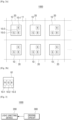
- FIG. 2A is a diagram illustrating a pixel structure of a display panel 1000, according to an embodiment. As illustrated in FIG. 2A , the display panel 1000 includes a plurality of pixels 10 which are arranged in a matrix form.
- the respective pixels 10 include a plurality of sub-pixels 10-1, 10-2 and 10-3.
- one pixel 10 included in the display panel 1000 may include a sub-pixel of three types: a red (R) sub-pixel 10-1, a green (G) sub-pixel 10-2, and a blue (B) sub-pixel 10-3. That is, one set of R, G and B sub-pixels may constitute a unit pixel of the display panel 1000.
- one pixel area 20 of the display panel 1000 may include an area 10 occupied by pixels, and a remaining peripheral area 11.
- the area 10 occupied by pixels 10 may include the R, G and B sub-pixels 10-1 to 10-3.
- the R sub-pixel 10-1 may include an R light emitting device and a driving circuit for driving the R light emitting device.
- the G sub-pixel 10-2 may include a G light emitting device and a driving circuit for driving the G light emitting device.
- the B sub-pixel 10-3 may include a B light emitting device and a driving circuit for driving the B light emitting device.
- FIG. 2A it may be understood that the sub-pixels 10-1 to 10-3 in the one pixel 10 are arranged in an L shape. The left and right sides of the L shape may be reversed.
- the remaining area 11 peripheral to the pixel 10 may, as will be described with reference to FIGS. 5 and 6 , include various circuits for driving the driving circuit according to an embodiment.
- FIG. 2B is a diagram illustrating a sub-pixel structure, according to another embodiment.
- the R, G and B sub-pixels 10-1 to 10-3 may be arranged in a row inside a pixel.
- the disposition form of the sub-pixels is only an example, and a plurality of sub-pixels may be disposed in various forms inside the respective pixels.
- a pixel includes three types of sub-pixels, but is not limited thereto.
- a pixel may be implemented of four types such as R, G, B and white (W), and according to an embodiment, a different number of pixels may be included in one pixel.
- R, G, B and W white
- a different number of pixels may be included in one pixel.
- the pixel 10 includes a sub-pixel of three types such as R, G and B will be described for convenience of explanation.
- FIG. 3 is a block diagram illustrating a configuration of a display panel, according to an embodiment.
- the display panel 1000 includes a driving circuit 300 and a light emitting device 200.
- the display panel 1000 includes a driving circuit 300 formed on the glass 100, and a light emitting device 200 formed on the driving circuit 300.
- the light emitting device 200 are included in the sub-pixels 10-1 to 10-3 of the display panel 1000, and emit light according to driving of the driving circuit 300.
- the light emitting device 200 may be of a plurality of types according to a color of light emitted. For example, a red (R) light emitting device emitting light in red color, a green (G) light emitting device emitting light in green light, and a blue (B) light emitting device emitting light in blue color may be included.
- a type of sub-pixel may be determined according to a type of the light emitting device 200 included in the sub-pixel. That is, the R light emitting device may be included in the R subpixel 10-1.
- the G light emitting device may be included in the G sub-pixel 10-2.
- the B light emitting device may be included in the B sub-pixel 10-3.
- the light emitting device 200 is an inorganic light emitting device (or an inorganic light emitting diode) by means of an inorganic material which is different from an organic light emitting device (or an organic light emitting diode, OLED) fabricated using an organic material.
- the LED refers to an inorganic light emitting device which is distinguished from the OLED.
- the inorganic light emitting device may be a micro light emitting diode (micro-LED).
- micro LED refers to a subminiature inorganic light emitting device of a size less than or equal to 100 micrometers ( ⁇ m) self-illuminating without a backlight or a color filter.
- the driving circuit 300 drives the light emitting device 200.
- the driving circuit 300 may drive the light emitting device 200 and express a gray scale or gradation of the sub-pixel.
- each one of the sub-pixels includes a light emitting device, and thus, unlike a liquid crystal display (LCD) panel using a plurality of LEDs emitting light in a single color as a backlight, the driving circuit 300 may drive the light emitting device 200 and differently express a grayscale or gradation for each sub-pixel.
- LCD liquid crystal display
- the respective sub-pixels included in the display panel 1000 are implemented as the light emitting device 200 and a driving circuit 300 for driving the light emitting device 200. That is, the driving circuit 300 for driving the respective device 200 is present for each sub-pixel.
- the driving circuit 300 uses pulse amplitude modulation (PAM) drive or pulse width modulation to drive the light emitting device 200. That is, the driving circuit 300 may control an amplitude and pulse width of a driving current driving the light emitting device 200 together, and provide, to the light emitting device 200, the driving current of which the amplitude and pulse width are controlled together.
- PAM pulse amplitude modulation
- the amplitude and pulse width of the driving current being controlled does not mean that the amplitude and pulse width of the driving current are controlled simultaneously in time, but means that the PAM drive method and the PWM drive method are employed together to express a grayscale or gradation.
- the PWM drive method is a method of expressing a grayscale or gradation according to a duration of light emission of the light emitting device 200. Accordingly, in a case that the light emitting device 200 is driven using the PWM method, even if the driving current has the same amplitude, it is possible to express various grayscales or gradations by adjusting the pulse width of the driving current and controlling the duration of light emission of the light emitting device 200. Accordingly, it is possible to resolve the problem that occurs in a case in which an LED is driven using the PAM method alone, namely, that a wavelength shift of light emitted by an LED (in particular, micro-LED) may occur as a grayscale or gradation is adjusted.
- the driving circuit 300 includes a current source, a PAM driving circuit and a PWM driving circuit for each sub pixel, which will be described in greater detail below.
- FIG. 4 is a cross-sectional view of a display panel 100, according to an embodiment. With reference to FIG. 4 , only one pixel included in the display panel 1000 is described for convenience of explanation.
- the driving circuit 300 is disposed (or arranged) on a glass 100, and the respective light emitting devices R, G and B 200-1 to 200-3 are arranged (or mounted) on the driving circuit 300 and included in the respective sub pixels 10-1 to 10-3.
- the display panel 1000 in which the driving circuit 300 and the light emitting devices 200-1 to 200-3 are disposed on the glass 100 may be referred to as a display panel of a chip on glass (COG) type.
- the display panel of the COG type is different from a display panel of a chip on board (COB) type in which a driving circuit and a light emitting device layer are disposed on a substrate such as a synthetic resin and the like.
- COB chip on board
- the driving circuit 300 may be implemented as a thin film transistor (TFT) and included in a TFT layer.
- the TFT may be a low temperature poly silicon (LTPS) TFT, but is not limited thereto.
- the TFT layer 300 disposed on the glass 100 and the glass 100 may be added together and referred to as a TFT panel or a glass substrate.
- a type or characteristic of the glass 100 included in the glass substrate is not related to the embodiments so that an explanation thereof is omitted.
- the driving circuit 300 for driving the respective light emitting devices 200-1 to 200-3 is present on the driving circuit layer 300 for each of the light emitting devices 200-1 to 200-3. Accordingly, the light emitting devices R, G and B 200-1 to 200-3 are arranged on the driving circuit 300 so that they are respectively electrically connected to the corresponding driving circuit 300.
- the R light emitting device 200-1 may be mounted or arranged so that an anode electrode 3 and cathode electrode 4 of the R light emitting device 200-1 are respectively connected to an anode electrode 1 and cathode electrode 2 disposed on the driving circuit 300 for driving the R light emitting device 200-1, and the same applies to the G light emitting device 200-2 and the B light emitting device 200-3.
- any one of the anode electrode 1 and the cathode electrode 2 may be implemented as a common electrode.
- the light emitting device 200-1 to 200-3 is a micro-LED of a flip chip type.
- the example is not limited thereto, and according to an embodiment, the light emitting device 200-1 to 200-3 may be a micro-LED of a lateral type or a micro-LED of a vertical type.
- the display panel 1000 may further include a multiplexer (MUX) circuit for selecting any one of the plurality of sub pixels 10-1 to 10-3 included in the pixel 10, an electro static discharge (ESD) circuit for preventing a static electricity occurring on the display panel 1000, a power circuit for supplying power to the driving circuit 300, a clock provision circuit for providing a clock driving the driving circuit 300, at least one gate driver for driving pixels of the display panel 1000 arranged in a matrix form by the horizontal line (or by the row), a data driver (or a source driver) for providing a data voltage (for example, amplitude setup voltage) or a pulse width setup voltage to the respective pixels or to the respective sub-pixels, and so on.
- MUX multiplexer
- ESD electro static discharge
- FIGS. 5 and 6 An example display panel further comprising these various circuits will be described in greater detail below with reference to FIGS. 5 and 6 .
- FIGS. 5 and 6 the same elements described above will not be described in detail.
- FIG. 5 is a cross-sectional view of a display panel 1000', according to an embodiment.
- the display panel 1000' may include a TFT layer 300' including a driving circuit 300 disposed on the glass 100, a light emitting device 200-1 to 200-3 disposed on the driving circuit 300 and included in a sub pixel of the display panel 1000', various circuits 400 for driving the driving circuit 300, and a connection cable 500 electrically connecting the TFT layer 300' with the various circuits 400.
- the TFT layer 300' may include a driving circuit 300 realized as a TFT, and may be formed on a first surface of the glass 100.
- the various circuits 400 may include a MUX circuit for operation of the driving circuit 300, an electro static discharge (ESD) circuit, a power circuit, a clock provision circuit, a gate driver, a data driver, and etc., and may be disposed or arranged on a second surface of the glass 100.
- ESD electro static discharge
- connection cable 500 of the display panel 1000' may be disposed in an edge area of a TFT substrate, and the TFT layer 300' disposed on a first surface of the glass 100 and the various circuits 400 disposed on a second surface of the glass 100 may be electrically connected via the connection cable 500.
- connection cable 500 is disposed in the edge area of the TFT substrate because otherwise, a crack may occur on the glass due to a difference of temperature between a fabrication process of a TFT substrate and a process of filling a hole with conductive materials, where a hole penetrating the glass 100 is disposed and circuits arranged on the opposite sides of the glass 100 are connected to each other,
- all circuits for operation of the driving circuit 300 are, as in the reference numeral 400, separately disposed on the opposite side of the glass 100 surface on which the TFT layer 300' is disposed.
- the example is not limited thereto. That is, all or some of the various circuits may be disposed on the TFT layer 300'.
- all the various circuits described above may be disposed on the TFT layer 300', in which case, it is not necessary that a circuit is additionally arranged on the other surface of the glass 100 and accordingly, the connection cable 500 of FIG. 5 connecting front and rear surfaces of the glass 100 would not be necessary, either.
- the MUX circuit, the ESD circuit, the power circuit, the clock provision circuit, and the gate driver may be implemented as a TFT and included in the TFT layer 300', and the display panel may be implemented in such a way that the data driver circuit is additionally arranged on the other side of the glass 100.
- FIG. 6 is a diagram provided to explain such an embodiment.
- FIG. 6 is a cross-sectional view of a TFT layer 300', according to an embodiment.
- FIG. 6 illustrates a disposition of various circuits included in the TFT layer 300' of the display panel 1000'.
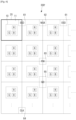
- an entire pixel area 20 occupied by one pixel in the TFT layer 300' may include an area 10 in which various driving circuits 300 for driving the respective R, G and B sub pixels are arranged, and a peripheral remaining area 11.
- a size of the area 10 occupied by a driving circuit for the respective R, G and B sub pixels may be, for example, a size of about a quarter of the entire pixel area 20, but is not limited thereto.
- one pixel area 20 may include the remaining area 11, and so may the other pixels. That is, according to an embodiment, many spaces other than an area occupied by the driving circuit 300 are present in the TFT layer 300', and thus, the ESD circuit 61, the MUX circuit 62, the power circuit 63, the clock provision circuit 64, and the gate driver circuit 65 may be implemented as a TFT and included in the remaining area 11 of the TFT layer 300' as illustrated in FIG. 6 . In this case, the data driver circuit may be arranged on the other surface of the glass 100 as in the reference numeral 400 of FIG. 5 .
- the location, size and number of the respective ESD circuit 61, the MUX circuit 62, the power circuit 63, the clock provision circuit 64, and the gate driver circuit 65 is only an nonlimiting example.
- an embodiment in which various circuits are arranged on both sides as being divided based on the glass 100 is not limited to the example of FIG. 6 , and at least one circuit from among the ESD circuit 61, MUX circuit 62, power circuit 63, clock provision circuit 64, and gate driver circuit 65 of FIG. 6 may be arranged on the other surface of the glass 100 as in the reference numeral 400.
- a constitution and operation of the driving circuit 300 according to various embodiments will not be described in detail with reference to FIGS. 7-11 .
- FIG. 7 is a block diagram of a driving circuit 300 included in a display panel 1000 and/or 1000', according to an embodiment.
- the display panel 1000 and/or 1000' includes a light emitting device 200 and a driving circuit 300.
- the driving circuit 300 includes a PAM driving circuit 310, a current source 320, and a PWM driving circuit 330.
- the driving circuit 300 is provided for each sub pixel, and one driving circuit 300 drives one sub pixel and thus may be referred to as a pixel circuit depending on circumstances.
- the PAM driving circuit 310 may be referred to as a PAM pixel circuit
- the PWM driving circuit 330 may be referred to as a PWM pixel circuit.
- driving circuit PWM driving circuit
- PWM driving circuit 330 PWM driving circuit 330
- FIG. 7 illustrates one sub pixel-related circuit, that is, one light emitting device 200, and a driving circuit 300 for driving the light emitting device 200. Accordingly, the light emitting device 200 and driving circuit 300 as illustrated in FIG. 7 are provided in the display panel 1000 and/or 1000' by the sub pixel.
- the light emitting device 200 may be a micro-LED in any one color from among R, G and B.
- the light emitting device 200 emits light according to a driving current provided by the current source 320.
- the light emitting device 200 may emit light with different brightness according to an amplitude or pulse width of the driving current provided from the current source 320.
- the pulse width of the driving current may be expressed as a duty ratio of the driving current or a driving time of the driving current.
- the light emitting device 200 may emit light of a higher brightness with the increase in the amplitude of the driving current and with the increase in the pulse width (that is, with the increase in the duty ratio or with the increase in the driving time).
- the example is not limited thereto.
- the current source 320 provides a driving current to the light emitting device 200.
- the current source 320 includes a first transistor 325 connected to the light emitting device 200, and may provide a driving current of different amplitudes to the light emitting device 200 according to an amplitude of voltage applied to a gate terminal of the first transistor 325.
- the current source 320 may provide a driving current 200 of an amplitude corresponding to the amplitude of voltage applied to the gate terminal of the first transistor 325 to the light emitting device 200 via the PAM driving circuit 310.
- the voltage of the gate terminal of the first transistor 325 may be controlled via the PWM driving circuit 330 and a pulse width of the driving current may be controlled.
- the PWM driving circuit 330 controls the pulse width of the driving circuit provided to the light emitting device 200.
- the PWM driving circuit 330 may control a voltage applied to the gate terminal of the first transistor 325 according to a pulse width data applied through a data line 5, and control a duration of the driving current, that is, a duration of light emission of the light emitting device 200.
- the pulse width data is a pulse width setup voltage determining a pulse width of the driving current, but is not limited thereto.
- the PWM driving circuit 330 includes two transistors connected to each other using a so-called "diode connected method".
- the PWM driving circuit 330 includes a fourth transistor (331 of FIG. 8 ), and a fifth transistor (332 of FIG. 8 ) connected to a gate terminal and drain terminal of the fourth transistor (331 of FIG. 8 ).
- a voltage in which a threshold voltage of the fourth transistor 331 is taken into consideration may be applied to the gate terminal of the fourth transistor 331.
- a deviation of pulse width of the driving circuit 300 occurring due to a deviation among the driving circuits 300 included in the respective sub pixels of the display panel 1000 and/or 1000' (in other words, a deviation of threshold voltage among fourth transistors included in the respective driving circuit 300) can be compensated.
- a method of compensating a threshold voltage of a fourth transistor 331 through a connection structure of the fourth transistor 331 and a fifth transistor 332 in the PWM driving circuit 330 may be referred to as “internal compensation” or "Vth internal compensation”.
- the PAM driving circuit 310 controls an amplitude of the driving circuit provided to the light emitting device 200.
- the PWM driving circuit 310 applies amplitude data received through the data line 5 to a gate terminal of the first transistor 325, and controls the amplitude of the driving current.
- the amplitude data may be a particular voltage or an amplitude setup voltage which will be described later, but is not limited thereto.
- an amplitude setup voltage corrected based on a current flowing through the light emitting device 200 is applied to the PWM driving circuit 310.
- the driving circuit 300 includes a second transistor 340.
- the second transistor 340 may transfer a current flowing through the first transistor 325 to the data line 5.
- the second transistor 340 is connected to in between the first transistor 325 and the data line 5, and may be turned on according to a control signal (Sense) and transfer a current flowing through the first transistor 325 to the data line 5.
- the current flowing through the data line 5 may be sensed by a current sensor outside of the driving circuit 300.
- a processor outside of the driving circuit 300 or a timing controller (TCON) may correct an amplitude setup voltage based on the current sensed as above, and apply the corrected amplitude setup voltage to the PAM driving circuit 310.
- a deviation of amplitude of the driving circuit 300 occurring due to a deviation among the driving circuits 300 included in the respective sub pixels of the display panel 1000 and/or 1000' (in other words, a deviation of threshold voltage among first transistors included in the respective driving circuit 300) can be compensated.
- a method of compensating a threshold voltage of the first transistor 325 by sensing a current flowing through the first transistor 325 and correcting an amplitude setup voltage may be referred to "external compensation" or "Vth external compensation".
- Vth external compensation a method of compensating a threshold voltage of the first transistor 325 by sensing a current flowing through the first transistor 325 and correcting an amplitude setup voltage
- a deviation of threshold voltage among the first transistors 325 included in each of a plurality of driving circuits included in the display panel 1000 and/or 1000' and a deviation of threshold voltage among the fourth transistors 331 included in each of the plurality of driving circuits included in the display panel 1000 and/or 1000' may be compensated, and thereby it is possible to correct a stain of the display panel and a color deviation among light emitting devices occurring due to the deviation of threshold voltage among the first transistors and the deviation of threshold voltage among the fourth transistors.
- the display panel 1000 and/or 1000' is one module included in a tiled display panel for which a plurality of modules are combined with one another, a difference of brightness of color among the respective modules may be corrected.
- FIG. 8 illustrates a detailed circuit diagram illustrating the driving circuit 300 illustrated in FIG. 7 .
- the driving circuit 300 includes a first transistor 325, a second transistor 340, a third transistor 311, a fourth transistor 331, a fifth transistor 332, a sixth transistor 333, a seventh transistor 336, and an eighth transistor 350.
- the driving circuit 300 includes a first capacitor 312, a second capacitor 334, and a third capacitor 335.
- the display panel 1000 and/or 1000' includes a light emitting device 200 and a driving circuit 300.
- the driving circuit 300 includes a PAM driving circuit 310, a current source 320, a PWM driving circuit 330, a second transistor 340, and an eighth transistor 350.
- the PAM driving circuit 310 applies a voltage input through the data line 5 to a gate terminal of the first transistor 325.
- the PAM driving circuit 310 includes a third transistor 311 of which a source terminal is connected to the data line 5 and a drain terminal is connected to a gate terminal of the first transistor 325, and a first capacitor 312 of which one terminal is connected to a source terminal of the first transistor 325 and the other terminal is commonly connected to the gate terminal of the first transistor 325 and a drain terminal of the third transistor 311.
- the PAM driving circuit 310 when an amplitude setup voltage (PAM data) is input through the data line 5 while the third transistor 311 is turned on according to a control signal (SPAM(n)), charges the input amplitude setup voltage in the first capacitor 312, and applies the voltage charged in the first capacitor 312 to the gate terminal of the first transistor 325.
- PAM data amplitude setup voltage
- SPAM(n) control signal
- the source terminal of the first transistor 325 is commonly connected to one terminal of the first capacitor 312 and a driving voltage terminal 321 of the driving circuit 300.
- the drain terminal of the first transistor 325 is connected to an anode terminal of the light emitting device 200, and the drain terminal of the light emitting device 200 is connected to a ground voltage terminal 322 of the driving circuit 300.
- the current source 320 may, in a state that a driving voltage (VDD) is applied to the driving voltage terminal 321 and the voltage charged in the first capacitor 312 is applied to the gate terminal of the first transistor 325, when a voltage of the ground voltage terminal 322 becomes a ground voltage (VSS), provide, to the light emitting device 200, a driving current of an amplitude corresponding to an amplitude of the voltage charged in the first capacitor 312.
- VDD driving voltage
- VSS ground voltage
- the drain terminal is connected to the gate terminal of the first transistor 325
- the source terminal is commonly connected to a drain terminal of the fourth transistor 331 and a drain terminal of the fifth transistor 332
- the PAM driving circuit 310 and the PWM driving circuit 330 may be electrically connected to or separated from each other according to a control signal (Control) using the eighth transistor 350.
- the PWM driving circuit 330 when a pulse width setup voltage determining a pulse width of a driving current is applied through the data line 5, controls a voltage of the gate terminal of the first transistor 325 on the basis of the pulse width setup voltage.
- the PWM driving circuit 330 includes a fourth transistor 331, a fifth transistor 332 connected to a gate terminal and drain terminal of the fourth transistor 331, a sixth transistor 333 having a drain terminal that is commonly connected to the gate terminal of the fourth transistor 331 and a source terminal of the fifth transistor 332, a second capacitor 334 of which one terminal is commonly connected to the gate terminal of the fourth transistor 331, the source terminal of the fifth transistor 332 and the drain terminal of the sixth transistor 333, a third capacitor 335 of which one terminal receives input of a sweep signal and the other terminal is connected to the other terminal of the second capacitor 334, and a seventh transistor 336 of which a source terminal is connected to the data line 5 and a drain terminal is commonly connected to the other terminal of the second capacitor 334 and the other terminal of the third capacitor 335.
- the eighth transistor 350 is connected to the gate terminal of the first transistor 325 and the drain terminal of the fourth transistor 331.
- a gate terminal voltage of the fourth transistor 331 may be a voltage based on a threshold voltage of the fourth transistor 331 while the fifth transistor 332 is turned on. Thereafter, while the seventh transistor 336 is turned on according to a control signal (SPWM(n)), when a pulse width setup voltage (PWM data) is input through the data line 5, the gate terminal voltage of the fourth transistor 331 may be a voltage based on the threshold voltage and pulse width setup voltage of the fourth transistor 331, and thereafter, when a linearly shifting sweep signal is input through one terminal of the third capacitor 335, the gate terminal voltage of the fourth transistor 331 may be linearly shifted according to the sweep signal.
- SPWM(n) pulse width setup voltage
- PWM data pulse width setup voltage
- the fourth transistor 331 When the linearly-shifted gate terminal voltage of the fourth transistor 331 reaches the threshold voltage of the fourth transistor 331, the fourth transistor 331 may be turned on and a driving voltage (VDD) applied to the source terminal of the fourth transistor 331 may be applied to the gate terminal of the first transistor 325 through the drain terminal of the fourth transistor 331 (in this case, it is necessary that the eighth transistor 350 is also turned on according to the Control signal). Accordingly, the first transistor 325 may be turned off and the driving current flowing through the light emitting device 200 may be stopped, and thereby a light emitting time of the light emitting device 200 can be controlled.
- VDD driving voltage
- an inclination of linear shift of the sweep signal may be the same for all driving circuits 300 included in a display panel, and the gate terminal voltage of the fourth transistor 331 may be linearly shifted from a voltage based on the threshold voltage and pulse width setup voltage of the fourth transistor 331 according to an input of the sweep signal.
- a time required for the gate terminal voltage of the fourth transistor 331 to reach the threshold voltage of the fourth transistor 331 after the sweep signal is applied differs according to an amplitude of the pulse width setup voltage, and thus the PWM driving circuit 330 may express a variety of grayscales or gradations according to the amplitude of the pulse width setup voltage.
- a driving time of a driving current (that is, a pulse width of a driving current) flowing through the first transistor 325 is a period from when the gate terminal voltage of the fourth transistor 331 is linearly shifted in response to the input sweep signal until it reaches the threshold voltage of the fourth transistor 331, and thus is properly determined regardless of the threshold voltage of the fourth transistor 331.
- the display panel 1000 and/or 1000' is a display panel of an active matrix (AM) drive method where the driving circuit 300 for driving the respective sub pixels is implemented as a TFT.
- AM active matrix
- FIG. 9 is a timing diagram of various signals for driving the driving circuit 300 of FIG. 8 , according to an embodiment.
- FIG. 9 illustrates a case where the driving circuit 300 is included in a red sub pixel (in other words, an R sub pixel is selected through a multiplexer (Mux) from among R, G and B sub pixels).
- Mux multiplexer
- the driving circuit 300 may be, while one image frame is displayed, driven in the order of a sensing duration, a reset duration, a data voltage setup duration, and a light emitting duration.
- the sensing duration is a duration for sensing a current flowing through the first transistor 325.
- the sensing duration may include a voltage setup duration for applying a particular voltage to the gate terminal of the first transistor 325, and a current sensing duration for sensing a current flowing through the first transistor 325 corresponding to the particular voltage.
- the particular voltage is a voltage distinct from an amplitude setup voltage determining an amplitude of a driving current provided to the light emitting device 200.
- the particular voltage is a voltage for sensing the current flowing through the first transistor 325 corresponding to the particular voltage and correcting a deviation of threshold voltage among the first transistors 325 included in each of the plurality of driving circuits 300.
- the third transistor 311 when the third transistor 311 is turned on according to the control signal (SPAM(n)) within the voltage setup duration, the particular voltage is charged in the first capacitor 312 through the data line 5. Thereafter, when the second transistor 340 is turned on according to the Sense signal within the current sensing duration, a current corresponding to the particular voltage flowing through the first transistor 325 may be transferred to the data line 5 through the second transistor 340.
- the control signal SPAM(n)
- the particular voltage may be variously set according to embodiments. For example, a particular voltage for sensing a driving voltage (that is, typical current) when the display panel is normally driven and a particular voltage for sensing a driving current (that is, peak current) when the display panel is driven at a maximum brightness may be different from each other, and as necessary, a particular voltage of different amplitudes may be applied through the data line 5 during the voltage setup duration.
- a driving voltage that is, typical current
- a driving current that is, peak current
- the current flowing through the data line 5 may be sensed by a current sensor outside of the driving circuit 300.
- a processor or timing controller (TCON) outside of the driving circuit 300 may correct an amplitude setup voltage for each of the driving circuits 300 on the basis of a current sensed as described above, and apply the corrected amplitude setup voltage to the PAM driving circuit 310 during the data voltage setup duration, and thereby a deviation of threshold voltage among the first transistors 325 included in each of the plurality of driving circuits 300 included in the display panel can be compensated.
- the processor or the timing controller may identify an amplitude of current (for example, y) corresponding to the voltage a from a pre-stored table with which a particular voltage and an amplitude of current are mapped.
- the processor or the timing controller may correct an amplitude setup voltage to be applied to the first transistor 325 during the actual data voltage setup duration afterwards to be less than an amplitude setup voltage that would originally have been applied without the correction. If x is less than y, the amplitude setup voltage may be corrected to have an even higher value and applied to the PAM driving circuit 310.
- the reset duration is a period for setting the gate terminal voltage of the fourth transistor 331 to a voltage based on the threshold voltage of the fourth transistor 331.
- the reset duration may include an initialization duration for setting the gate terminal voltage of the fourth transistor 331 and/or the gate terminal voltage of the first transistor 325 to a preset reference voltage, and a threshold voltage setup duration for setting the gate terminal voltage of the fourth transistor 331 to a voltage based on the threshold voltage of the fourth transistor 331.
- the fifth transistor 332 may be turned on according to a control signal (RES). While the fifth transistor 332 is turned on, the sixth transistor 333 may be turned on or off according to a control signal (Ref).That is, the sixth transistor 333 may be, as illustrated in FIG. 9 , turned on and then turned off during an initialization duration.
- RES control signal
- Ref control signal
- a preset reference voltage in the example of FIG. 9 , a predetermined voltage in the range of 0V to 4V
- the gate terminal voltage of the fourth transistor 331 may be, as illustrated in reference numeral 510 of FIG. 9 , set to the reference voltage while the sixth transistor 333 is turned on.
- the sixth transistor 333 may be turned off, and accordingly, the gate terminal voltage of the fourth transistor 331 may be set to a voltage corresponding to the sum of the driving voltage (VDD) and the threshold voltage (Vth) of the fourth threshold voltage 331.
- the eighth transistor 350 is turned on according to the Control signal while the sixth transistor 333 is turned on , and thus a reference voltage applied to the gate terminal of the fourth transistor 331 may be applied the same to the gate terminal of the first transistor 325. That is, during the initialization duration, both the gate terminal voltage of the fourth transistor 331 and the gate terminal voltage of the first transistor 325 may be set to a predetermined reference voltage (for example, 0V).
- a predetermined reference voltage for example, 0V
- the gate terminal voltage of the fourth transistor 331 and the gate terminal voltage of the first transistor 325 may be clearly set to a reference voltage prior to the threshold voltage setup duration, thereby preventing an inaccurate operation due to floating of the gate terminal voltage of the fourth threshold voltage 331.
- the data voltage setup duration is a period for respectively applying a pulse width setup voltage (PWM data) and an amplitude setup voltage (PAM data) to the PWM driving circuit 330 and the PAM driving circuit 310.
- PWM data pulse width setup voltage
- PAM data amplitude setup voltage
- a pulse width setup voltage is applied through the data line 5 to the gate terminal of the fourth transistor 331 through the second capacitor 334.
- the gate terminal voltage of the fourth transistor 331 may, as illustrated in reference numeral 510 of FIG. 9 , rise by a pulse width setup voltage (Vw), and the increased voltage may be maintained by the second capacitor 334.
- Vw pulse width setup voltage
- an amplitude setup voltage applied through the data line 5 may be charged in the first capacitor 312 and maintained.
- the amplitude setup voltage applied through the data line 5 may be a voltage which is corrected based on a current flowing through the first transistor 325 sensed during the sensing duration.
- a PWM data that is, a pulse width setup voltage is applied first and then, a PAM data, that is, an amplitude setup voltage, is applied.
- the PWM data may be applied after a PAM data is applied.
- the light emitting duration is a period for which the light emitting device 200 emits light according to a pulse width setup voltage and an amplitude setup voltage.
- a voltage of a ground voltage terminal 322 of the driving circuit 300 may fall to a ground voltage (VSS, for example, 0V), and the first transistor 325 may be accordingly turned on and a driving current of an amplitude corresponding to the amplitude setup voltage charged in the first capacitor 312 may be provided to the light emitting device 200. Accordingly, the light emitting device 200 initiates light emission.
- VSS ground voltage
- a sweep voltage may be applied to one terminal of the second capacitor 334 through the third capacitor 335, and thus the gate terminal voltage of the fourth transistor 331 connected to the other terminal of the second capacitor 334 may be linearly reduced from the maintained voltage (VDD + Vth + Vw) according to the sweep voltage.
- the fourth transistor 331 When the gate terminal voltage of the fourth transistor 331 being linearly reduced reaches the threshold voltage Vth of the fourth transistor 331, the fourth transistor 331 may be turned on, and a driving voltage VDD may be applied to the gate terminal of the first transistor 325 via the eighth transistor 350. Accordingly, when the first transistor 325 is turned off, the driving current may be blocked and the light emitting device 200 stops emitting light.
- the light emitting device 200 may emit light from a time when a light emitting duration is started until the gate terminal voltage of the fourth transistor 331 is linearly reduced according to a sweep voltage and reaches the threshold voltage Vth of the fourth transistor 331.
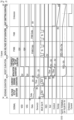
- FIG. 10 is a timing diagram of various signals for driving an entire plurality of driving circuits included in a display panel.
- the same elements described above will not be described in detail.
- the numerical figures of various voltages and times illustrated in FIG. 10 are only an example, and are not limited to the corresponding values.
- the display panel 1000 and/or 1000' includes a plurality of light emitting devices and a plurality of driving circuits for driving the plurality of light emitting devices.
- FIG. 10 illustrates an embodiment of the display panel 1000 and/or 1000' in which the plurality of pixels are configured as 270 horizontal lines.
- SPWM 1 to SPWM 270 and SPAM 1 to SPAM 270 are respectively driven in sequence during the data voltage setup duration.
- the R, G and B sub pixels included in the respective pixels of the display panel 1000 and/or 1000' may have a structure of being connected to a single data line 5.
- the R, G and B sub pixels may respectively receive different data voltages applied through the data line 5 via a multiplexer (Mux, which includes MUX Sel R, MUX Sel G, and MUX Sel B).
- the R, G and B sub pixels included in the respective pixels of the display panel 1000 and/or 1000' may be time-division driven (or, sequentially selected) through a Mux during the data voltage setup duration, and receive input of a pulse width setup voltage or amplitude setup voltage of different magnitudes from the data line 5.
- the R, G and B sub pixels included in the respective pixels of the display panel 1000 and/or 1000' may be sequentially selected through the Mux during the voltage setup duration and receive input of a particular voltage of different magnitudes from the data line 5.
- a particular voltage input to the respective R, G and B sub pixels may be a value which is theoretically or experimentally determined based on a type of a sub pixel.
- a particular voltage of different magnitudes may be input to the respective R, G and B sub pixels, or a particular voltage of the same magnitude may be input to the respective R, G and B sub pixels.
- the display panel 1000 and/or 1000' may be driven in such a way that a current flowing through the first transistor 325 of the driving circuit 300 corresponding to the R, G and B sub pixels during the sensing duration is sensed in different durations within the current sensing duration.
- the display panel 1000 and/or 1000' may be driven to sense a current flowing through first transistors 325 of a plurality of driving circuits included in a plurality of pixels included in one horizontal line (or one row) from among a plurality of pixels configured in a matrix form during the sensing duration.
- the display panel 1000 and/or 1000' may be driven to sense only a current flowing through the first transistors 325 of the plurality of driving circuits included in the plurality of pixels arranged on one horizontal line, with respect to one image frame.
- the display panel 1000 and/or 1000' may be driven to sense a current flowing through the first transistors 325 only with respect to one horizontal line per image frame.
- the display panel 1000 and/or 1000' may be driven to sequentially shift a horizontal line for each image frame and sense a current flowing through the first transistors 325 included in the corresponding line.
- a time for which one image frame is displayed is a very short period of time that a viewer cannot recognize with the naked eye, and thus, even if only one horizontal line of one image frame is sensed as described above, it may be sufficient to compensate a deviation of threshold voltage among the first transistors.
- the example is not limited thereto, and the display panel 1000 and/or 1000' may be driven to sense a current flowing through the first transistors included in two or more horizontal lines during the sensing duration for one image frame.
- all transistors 325, 350, 311, 331, 332, 333, 336 and 340 included in the driving circuit 300 are implemented as a P-channel metal oxide semiconductor field effect transistor (PMOSFET), but are not limited thereto.
- PMOSFET P-channel metal oxide semiconductor field effect transistor
- a driving circuit of which all transistors are implemented as an N-channel metal oxide semiconductor field effect transistor may be implemented to perform the same operation as the driving circuit 300 as described above.
- FIG. 11 illustrates a driving circuit of which all transistors are implemented as an NMOSFET.
- the driving circuit 700 of FIG. 11 may perform the same operation as the driving circuit 300 of FIG. 8 excluding a difference due to a type of transistor (for example, a difference of connection relationship between devices and a difference of polarity of various signals to be applied). Accordingly, in the driving circuit 700 of FIG. 11 , the same reference numeral is used for devices performing the same function as the devices included in the driving circuit 300 of FIG. 8 .
- the configuration and operation of the driving circuit 700 would be easily understood by those skilled in the art through the description shown above, and thus the redundant description will be omitted herein.
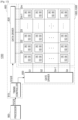
- FIG. 12 is a diagram illustrating a configuration of a display apparatus, according to an embodiment.
- a display apparatus 1200 includes a display panel 1000 and/or 1000', a panel driver 800, and a processor 900.
- the display panel 1000 and/or 1000' includes a plurality of light emitting devices 200 included in a plurality of sub pixels, and a plurality of driving circuits 300 and/or 700 for driving the respective light emitting devices 200.
- the display panel 1000 and/or 1000' may be disposed such that gate lines G1 to Gn and data lines D1 to Dm intersect with each other, and the driving circuit 300 and/or 700 may be disposed in an area in which the intersection is provided.
- the plurality of driving circuits 300 may be respectively configured such that adjacent R, G and B sub pixels form one pixel, but the example is not limited thereto.
- one gate signal line G1 to Gn is illustrated as a line for applying a control signal from the gate driver 830 to the respective driving circuits 300 and/or 700 included in the display panel 1000 and/or 1000'.
- the respective gate signal lines may include a Sense line (Sense 1 to Sense n), a SPWM line (SPWM 1 to SPWM n), and a SPAM line (SPAM 1 to SPAM n).
- the panel driver 800 may be controlled by the processor 900 to drive the display panel 1000 and/or 1000' (in more detail, each of the plurality of driving circuits 300), and may include a timing controller 810, a data driver 820, and a gate driver 830.
- the timing controller 810 may receive an input signal IS, a horizontal synchronizing signal Hsync, a vertical synchronizing signal Vsync and a main clock signal MCLK from the outside, and generate an image data signal, a scanning control signal, a data control signal, a light emission control signal, and the like to the display panel 1000 and/or 1000' and provide the generated signals to the display panel 1000 and/or 1000', the data driver 820, the gate driver 830, and the like.
- the timing controller 810 may, according to various embodiments, apply a control signal (Ref), a control signal (Sweep), a control signal (RES), a control signal (Control), and a control signal (MUX Sel R, G, B) to the driving circuit 300 and/or 700.
- the data driver 820 may, as a means for generating a data signal, receive an image data of a R/G/B component from the processor 900 and generate a data signal (for example, a particular voltage, an amplitude setup voltage, and a pulse width setup voltage). In addition, the data driver 820 may apply the generated data signal to the display panel 1000 and/or 1000'.
- a data signal for example, a particular voltage, an amplitude setup voltage, and a pulse width setup voltage.
- the data driver 820 may apply the generated data signal to the display panel 1000 and/or 1000'.
- the gate driver 830 may, as a means for generating various control signals such as a control signal (Sense), a control signal (SPWM), a control signal (SPAM), and the like, transfer the generated various control signals to a particular row (or a particular horizontal line) of the display panel 1000 and/or 1000'.
- Sense control signal
- SPWM control signal
- SPAM control signal
- the second transistor 340 may be turned on and a current flowing through the first transistor 325 may be sensed through the data line 5.
- the third transistor 311 may be turned on and an amplitude setup voltage output from the data driver 820 may be transferred through the data line 5.
- the seventh transistor 336 may be turned on and a pulse width setup voltage output from the data driver 820 may be transferred through the data line 5.
- the gate driver 830 may apply a driving voltage (VDD) to the driving voltage terminal 321 of the driving circuit 300 and/or 700 according to an embodiment.
- VDD driving voltage
- Some or all of the data driver 820 and the gate driver 830 may, as described above, be included in a TFT layer 300' disposed on one surface of the glass 100 of the display panel 1000 and/or 1000' or implemented as an additional semiconductor integrated circuit (IC) and arranged on the other surface of the glass 100.
- IC semiconductor integrated circuit
- the processor 900 may include various processing circuitry and controls overall operations of the display apparatus 1200.
- the processor 900 may control the panel driver 800 to drive the display panel 1000 and/or 1000' so that the driving circuit 300 and/or 700 performs the operations described above.
- the processor 900 may include one or more of a central processing unit (CPU), micro-controller, application processor (AP), communication processor (CP), ARM processor, or the like.
- CPU central processing unit
- AP application processor
- CP communication processor
- ARM processor ARM processor
- the processor 900 may set a pulse width of a driving current according to a pulse width setup voltage, and control the panel driver 800 to set an amplitude of the driving current according to an amplitude setup voltage.
- the processor 900 may control the panel driver 800 to set an amplitude or pulse width of the driving current by the row (by the horizontal line).
- the processor 900 may collectively apply a driving voltage (VDD) to the plurality of driving circuits 300 and/or 700 via the current source 320 of the plurality of driving circuits 300 and/or 700, and control the panel driver 800 to apply a linear shift voltage (sweep signal) to a PWM driving circuit 330 of each of the plurality of driving circuits 300 and/or 700, and thereby an image can be displayed.
- VDD driving voltage
- the panel driver 800 may collectively apply a driving voltage (VDD) to the plurality of driving circuits 300 and/or 700 via the current source 320 of the plurality of driving circuits 300 and/or 700, and control the panel driver 800 to apply a linear shift voltage (sweep signal) to a PWM driving circuit 330 of each of the plurality of driving circuits 300 and/or 700, and thereby an image can be displayed.
- the detail of the processor 900 controlling the panel driver 800 to control an operation of the respective driving circuits 300 and/or 700 included in the display panel 1000 and/or 1000' is as described above with reference to FIGS. 7 to 11 and thus, the overlapped description will be omitted.
- the processor 900 and the timing controller 810 are separate elements. However, the timing controller 810 may perform a function of the processor 900 without the processor 900.
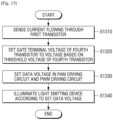
- FIG. 13 is a flowchart illustrating a method for driving a display panel, according to an embodiment.
- the display panel 1000 and/or 1000' may be driven in the order of a sensing duration, a reset duration, a data voltage setup duration, and a light emitting duration for one image frame.
- the display panel 1000 and/or 1000' may be driven during the data voltage setup duration so that a data voltage is set up in the PAM driving circuit 310 and the PWM driving circuit 330, at operation S1330.
- the display panel 1000 and/or 1000' may be, when the seventh transistor 336 of the driving circuit 300 and/or 700 is turned on according to the control signal (SPWM(n)) during the data voltage setup duration, driven so that a pulse width setup voltage applied through the data line 5 is applied to the gate terminal of the fourth transistor 331 through the second capacitor 334 of the driving circuit 300 and/or 700.
- the gate terminal voltage of the fourth transistor 331 may be set to a voltage based on a threshold voltage and pulse width setup voltage of the fourth transistor 331.
- the display panel 1000 and/or 1000' may be, when the third transistor 311 of the driving circuit 300 and/or 700 is turned on according to the control signal (SPAM(n)) during the data voltage setup duration, driven so that an amplitude setup voltage applied through the data line 5 is charged in the first capacitor 312 of the driving circuit 300 and/or 700.
- the amplitude setup voltage applied through the data line 5 may be a voltage which is corrected based on a current flowing through the first transistor 325 sensed during the sensing duration.
- the light emitting device 200 is a micro LED, but is not limited thereto. That is, according to an embodiment, even when the light emitting device 200 is an LED of a size greater than or equal to 100 micrometers, the driving circuit 300 and/or 700 according to the various embodiments described above may be applied.
- the display panel 1000 and/or 1000' may be implemented as an independent display panel without extensibility.
- the example is not limited thereto, and the display panel 1000 and/or 1000' may be implemented as an extensible display module included in some of a large-area tiled display.
- a wavelength shift according to a grayscale or gradation of a light emitting device included in a display panel can be prevented.
- a large-area tiled display panel is configured by combining a display panel in the form of a plurality of modules, a difference of brightness or color among the respective modular display panels can be corrected.
- the above-described embodiments may be implemented as a software program including an instruction stored on machine (e.g., computer)-readable storage media.
- the machine is an apparatus which is capable of calling a stored instruction from the storage medium and operating according to the called instruction, and may include a display apparatus 1200 according to the above-described embodiments.
- the processor may perform a function corresponding to the command directly or using other components under the control of the processor.
- the command may include a code generated or executed by a compiler or an interpreter.
- a machine-readable storage medium may be provided in the form of a non-transitory storage medium.
- non-transitory only denotes that a storage medium does not include a signal but is tangible, and does not distinguish the case where data is semi-permanently stored in a storage medium from the case where data is temporarily stored in a storage medium.
- the method according to the above-described various embodiments may be provided as being included in a computer program product.
- the computer program product may be traded as a product between a seller and a consumer.
- the computer program product may be distributed in the form of (e.g., a compact disc read only memory (CD-ROM)) or through an application store (e.g., PlaystoreTM).
- an application store e.g., PlaystoreTM
- at least a portion of the computer program product may be at least temporarily stored or temporarily generated in a server of the manufacturer, a server of the application store, or a storage medium such as memory.
- Each of the components may include a single entity or a plurality of entities, and some of the corresponding sub components described above may be omitted, or another sub component may be further added to the various embodiments. Alternatively or additionally, some components (e.g., module or program) may be combined to form a single entity which performs the same or similar functions as the corresponding elements before being combined. Operations performed by a module, a program, or other component, according to various embodiments, may be sequential, parallel, or both, executed iteratively or heuristically, or at least some operations may be performed in a different order, omitted, or other operations may be added.
Landscapes
- Engineering & Computer Science (AREA)
- Physics & Mathematics (AREA)
- Computer Hardware Design (AREA)
- General Physics & Mathematics (AREA)
- Theoretical Computer Science (AREA)
- Power Engineering (AREA)
- Microelectronics & Electronic Packaging (AREA)
- Condensed Matter Physics & Semiconductors (AREA)
- Control Of Indicators Other Than Cathode Ray Tubes (AREA)
- Control Of El Displays (AREA)
- Electroluminescent Light Sources (AREA)
Claims (2)
- Anzeigetafel (1000), umfassend:ein Glas (100);eine Vielzahl von Pixeln (10), die in einer Matrixform positioniert ist, wobei jedes Pixel aus der Vielzahl von Pixeln eine Vielzahl von Subpixeln beinhaltet, die jeweils anorganische lichtemittierende Vorrichtungen (200) beinhalten; undeine Vielzahl von Antriebsschaltungen (300), die dazu konfiguriert ist, jeder der anorganischen lichtemittierenden Vorrichtungen, die in den Subpixeln beinhaltet ist, jeweils einen Antriebsstrom bereitzustellen,wobei die Vielzahl von Antriebsschaltungen zwischen dem Glas und der anorganischen lichtemittierenden Vorrichtung angeordnet ist, wobei die Antriebsschaltungen dazu konfiguriert sind, jeweils den Antriebsstrom den anorganischen lichtemittierenden Vorrichtungen bereitzustellen und eine Größe und eine Impulsbreite des Antriebsstroms zu steuern,wobei die anorganischen lichtemittierenden Vorrichtungen an den Antriebsschaltungen montiert und elektrisch mit den Antriebsschaltungen verbunden sind,wobei jede jeweilige Antriebsschaltung aus der Vielzahl von Antriebsschaltungen Folgendes umfasst:eine Stromquelle (320), die einen ersten Transistor (325) umfasst, der mit der entsprechenden anorganischen lichtemittierenden Vorrichtung verbunden ist, wobei die Stromquelle dazu konfiguriert ist, den Antriebsstrom, der der anorganischen lichtemittierenden Vorrichtung bereitgestellt wird, gemäß einer Spannung zu steuern, die an einen Gate-Anschluss des ersten Transistors angelegt wird;eine Pulsamplitudenmodulations(PAM)-Antriebsschaltung (310), die zum Empfangen einer Amplitudeneinstellungsspannung über eine Datenleitung und zum Anlegen der Amplitudeneinstellungsspannung an den Gate-Anschluss des ersten Transistors konfiguriert ist, wobei die Amplitudeneinstellungsspannung die Größe des Antriebsstroms bestimmt; undeine Pulsbreitenmodulations(PWM)-Antriebsschaltung (330), die zum Empfangen einer Pulsbreiteneinstellungsspannung über die Datenleitung und zum Steuern der Pulsbreite des Antriebsstroms durch Steuern des Ein-/Ausschaltens des ersten Transistors basierend auf der Pulsbreiteneinstellungsspannung, die an die PWM-Antriebschaltung angelegt wird, konfiguriert ist,wobei die PAM-Antriebsschaltung Folgendes umfasst:einen zweiten Transistor (340), der einen ersten Anschluss, der mit dem Anodenanschluss der entsprechenden anorganischen lichtemittierenden Vorrichtung verbunden ist, einen zweiten Anschluss, der mit der Datenleitung verbunden ist, und einen Gate-Anschluss, der zum Empfangen eines Steuersignals "Sense" konfiguriert ist, beinhaltet;einen dritten Transistor (311), der einen Source-Anschluss, der mit der Datenleitung (5) verbunden ist, und einen Drain-Anschluss, der mit dem Gate-Anschluss des ersten Transistors verbunden ist, beinhaltet und einen Gate-Anschluss aufweist, der zum Empfangen eines Steuersignals "SPAM(n)" konfiguriert ist; undeinen ersten Kondensator (312), der einen ersten Anschluss, der mit einem Source-Anschluss des ersten Transistors verbunden ist, und einen zweiten Anschluss, der gemeinsam mit dem Gate-Anschluss des ersten Transistors und dem Drain-Anschluss des dritten Transistors verbunden ist, beinhaltet,einen vierten Transistor (331), der einen Source-Anschluss, der mit einem Antriebsspannungsanschluss (321) verbunden ist, aufweist;einen fünften Transistor (332) zum Durchführen einer V-ten internen Kompensation, der zwischen einem Gate-Anschluss des vierten Transistors und einem Drain-Anschluss des vierten Transistors verbunden ist und einen Gate-Anschluss aufweist, der zum Empfangen eines Steuersignals "RES" konfiguriert ist;einen sechsten Transistor (333), der einen Source-Anschluss, der mit der Datenleitung verbunden ist, und einen Drain-Anschluss, der gemeinsam mit dem Gate-Anschluss des vierten Transistors und einem Source-Anschluss des fünften Transistors verbunden ist, beinhaltet und einen Gate-Anschluss aufweist, der zum Empfangen eines Steuersignals "Ref" konfiguriert ist;einen zweiten Kondensator (334), der einen ersten Anschluss, der gemeinsam mit dem Gate-Anschluss des vierten Transistors, dem Source-Anschluss des fünften Transistors und dem Drain-Anschluss des sechsten Transistors verbunden ist, beinhaltet;einen dritten Kondensator (335), der einen ersten Anschluss, der zum Empfangen eines sich linear verschiebenden Sweep-Signals "Sweep" konfiguriert ist, und einen zweiten Anschluss, der mit einem zweiten Anschluss des zweiten Kondensators verbunden ist, beinhaltet; undeinen siebten Transistor (336), der einen Source-Anschluss, der mit der Datenleitung verbunden ist, und einen Drain-Anschluss, der gemeinsam mit dem zweiten Anschluss des zweiten Kondensators und dem zweiten Anschluss des dritten Kondensators verbunden ist, und einen Gate-Anschluss, der zum Empfangen eines Steuersignals "SPWM(n)" konfiguriert ist, beinhaltet,wobei jede jeweilige Antriebsschaltung ferner einen achten Transistor (350), der einen Drain-Anschluss, der mit dem Gate-Anschluss des ersten Transistors verbunden ist, und einen Source-Anschluss, der gemeinsam mit dem Drain-Anschluss des vierten Transistors und einem Drain-Anschluss des fünften Transistors verbunden ist, und einen Gate-Anschluss beinhaltet, der zum Empfangen eines Steuersignals "Control" konfiguriert ist, umfasst,wobei der Source-Anschluss des ersten Transistors gemeinsam mit dem ersten Anschluss des ersten Kondensators und dem Antriebsspannungsanschluss (321) verbunden ist,wobei der Drain-Anschluss des ersten Transistors mit dem Anodenanschluss der entsprechenden anorganischen lichtemittierenden Vorrichtung verbunden ist, undwobei ein Kathodenanschluss der entsprechenden anorganischen lichtemittierenden Vorrichtung mit einem Massespannungsanschluss (322) der Antriebsschaltung verbunden ist.
- Anzeigetafel nach Anspruch 1,
wobei jedes Pixel aus der Vielzahl von Pixeln ein R-Subpixel, das eine rote (R) anorganische lichtemittierende Vorrichtung beinhaltet, ein G-Subpixel, das eine grüne (G) anorganische lichtemittierende Vorrichtung beinhaltet, und ein B-Subpixel, das eine blaue (B) anorganische lichtemittierende Vorrichtung beinhaltet, beinhaltet.
Applications Claiming Priority (3)
| Application Number | Priority Date | Filing Date | Title |
|---|---|---|---|
| KR20180063098 | 2018-05-31 | ||
| KR1020180097414A KR102549315B1 (ko) | 2018-05-31 | 2018-08-21 | 디스플레이 패널 및 디스플레이 패널의 구동 방법 |
| PCT/KR2019/001359 WO2019231073A1 (en) | 2018-05-31 | 2019-01-31 | Display panel and method for driving the display panel |
Publications (4)
| Publication Number | Publication Date |
|---|---|
| EP3750149A1 EP3750149A1 (de) | 2020-12-16 |
| EP3750149A4 EP3750149A4 (de) | 2021-04-21 |
| EP3750149C0 EP3750149C0 (de) | 2025-04-02 |
| EP3750149B1 true EP3750149B1 (de) | 2025-04-02 |
Family
ID=69003133
Family Applications (1)
| Application Number | Title | Priority Date | Filing Date |
|---|---|---|---|
| EP19812458.8A Active EP3750149B1 (de) | 2018-05-31 | 2019-01-31 | Anzeigetafel |
Country Status (3)
| Country | Link |
|---|---|
| EP (1) | EP3750149B1 (de) |
| KR (1) | KR102549315B1 (de) |
| TW (1) | TWI820083B (de) |
Families Citing this family (21)
| Publication number | Priority date | Publication date | Assignee | Title |
|---|---|---|---|---|
| KR102498084B1 (ko) * | 2018-06-01 | 2023-02-10 | 삼성전자주식회사 | 디스플레이 패널 |
| CN110634433B (zh) | 2018-06-01 | 2024-07-09 | 三星电子株式会社 | 显示面板 |
| KR102735085B1 (ko) * | 2020-01-03 | 2024-11-28 | 삼성전자주식회사 | 디스플레이 모듈 및 이의 구동 방법 |
| EP4018431A4 (de) * | 2020-01-03 | 2022-10-12 | Samsung Electronics Co., Ltd. | Anzeigemodul und verfahren zu dessen ansteuerung |
| KR102690265B1 (ko) * | 2020-02-05 | 2024-08-01 | 삼성전자주식회사 | 공통 led 구동 회로를 포함하는 발광 소자 기반 디스플레이 패널 및 발광 소자 디스플레이 장치 |
| TWI731586B (zh) * | 2020-02-14 | 2021-06-21 | 友達光電股份有限公司 | 發光二極體(led)驅動電路 |
| KR102658371B1 (ko) | 2020-04-02 | 2024-04-18 | 삼성디스플레이 주식회사 | 화소 회로 및 표시 패널 |
| KR102758183B1 (ko) * | 2020-04-03 | 2025-01-24 | 삼성디스플레이 주식회사 | 화소 회로 및 표시 패널 |
| WO2022014756A1 (ko) * | 2020-07-17 | 2022-01-20 | 엘지전자 주식회사 | 반도체 발광소자를 이용한 디스플레이 장치 및 이의 제조방법 |
| KR102835341B1 (ko) * | 2020-07-29 | 2025-07-17 | 삼성전자주식회사 | 디스플레이 모듈 |
| KR102744636B1 (ko) | 2020-08-11 | 2024-12-20 | 삼성전자주식회사 | 디스플레이 장치 및 이의 제어 방법 |
| KR102785584B1 (ko) * | 2020-10-05 | 2025-03-26 | 삼성전자주식회사 | 디스플레이 장치 |
| KR102774720B1 (ko) * | 2020-10-05 | 2025-03-04 | 삼성전자주식회사 | 디스플레이 장치 |
| TWI765423B (zh) * | 2020-11-20 | 2022-05-21 | 友達光電股份有限公司 | 畫素驅動裝置及其驅動方法 |
| US11955057B2 (en) | 2021-03-30 | 2024-04-09 | Samsung Electronics Co., Ltd. | Display apparatus |
| KR102757821B1 (ko) * | 2021-03-30 | 2025-01-22 | 삼성전자주식회사 | 디스플레이 장치 |
| KR102846397B1 (ko) * | 2021-07-01 | 2025-08-14 | 삼성전자주식회사 | 디스플레이 장치 |
| KR102868768B1 (ko) * | 2021-08-27 | 2025-10-13 | 삼성전자주식회사 | 디스플레이 장치 |
| KR20230056081A (ko) | 2021-10-19 | 2023-04-27 | 삼성디스플레이 주식회사 | 표시 장치 |
| KR20240127534A (ko) | 2023-02-15 | 2024-08-23 | 삼성디스플레이 주식회사 | 픽셀 회로 및 이를 포함하는 표시 장치 |
| WO2025116260A1 (ko) * | 2023-11-30 | 2025-06-05 | 삼성전자주식회사 | 디스플레이 모듈 및 이를 포함하는 디스플레이 장치 |
Family Cites Families (7)
| Publication number | Priority date | Publication date | Assignee | Title |
|---|---|---|---|---|
| US7088051B1 (en) * | 2005-04-08 | 2006-08-08 | Eastman Kodak Company | OLED display with control |
| US8456387B2 (en) * | 2009-02-18 | 2013-06-04 | Global Oled Technology Llc | Display device with chiplet drivers |
| KR101084236B1 (ko) * | 2010-05-12 | 2011-11-16 | 삼성모바일디스플레이주식회사 | 표시장치 및 그 구동 방법 |
| US9773443B2 (en) * | 2013-06-06 | 2017-09-26 | Intel Corporation | Thin film transistor display backplane and pixel circuit therefor |
| KR102126534B1 (ko) * | 2013-10-31 | 2020-06-25 | 엘지디스플레이 주식회사 | 광원 구동장치 및 이를 이용한 액정표시장치 |
| JP6966942B2 (ja) * | 2015-06-05 | 2021-11-17 | アップル インコーポレイテッドApple Inc. | 表示パネル用の発光制御装置及び方法 |
| EP3389037B1 (de) * | 2017-04-11 | 2020-12-09 | Samsung Electronics Co., Ltd. | Pixelschaltung einer anzeigetafel |
-
2018
- 2018-08-21 KR KR1020180097414A patent/KR102549315B1/ko active Active
-
2019
- 2019-01-31 TW TW108103847A patent/TWI820083B/zh active
- 2019-01-31 EP EP19812458.8A patent/EP3750149B1/de active Active
Also Published As
| Publication number | Publication date |
|---|---|
| EP3750149C0 (de) | 2025-04-02 |
| TW202005079A (zh) | 2020-01-16 |
| KR102549315B1 (ko) | 2023-06-30 |
| KR20190136882A (ko) | 2019-12-10 |
| EP3750149A4 (de) | 2021-04-21 |
| TWI820083B (zh) | 2023-11-01 |
| EP3750149A1 (de) | 2020-12-16 |
Similar Documents
| Publication | Publication Date | Title |
|---|---|---|
| EP3750149B1 (de) | Anzeigetafel | |
| US10825380B2 (en) | Display panel including inorganic light emitting device and method for driving the display panel | |
| US10832615B2 (en) | Display panel including inorganic light emitting device and driving circuit | |
| EP3735685B1 (de) | Anzeigetafel | |
| US10706766B2 (en) | Display panel and method for driving the display panel | |
| EP3824457B1 (de) | Anzeigetafel | |
| KR102657371B1 (ko) | 디스플레이 패널 및 그의 구동 방법 | |
| KR102772017B1 (ko) | 디스플레이 모듈 및 이의 구동 방법 | |
| US12142194B2 (en) | Display apparatus | |
| US20230039449A1 (en) | Display panel | |
| US12135913B2 (en) | Display apparatus | |
| US11961458B2 (en) | Display apparatus and control method therefor | |
| KR20210131852A (ko) | 디스플레이 패널 | |
| KR20200144041A (ko) | 디스플레이 모듈 및 이의 구동 방법 | |
| KR20190007662A (ko) | 유기 발광 표시 장치 및 그의 센싱 방법 | |
| KR102827505B1 (ko) | 디스플레이 장치 | |
| US20250118249A1 (en) | Display device and controlling method thereof | |
| KR102757821B1 (ko) | 디스플레이 장치 |
Legal Events
| Date | Code | Title | Description |
|---|---|---|---|
| STAA | Information on the status of an ep patent application or granted ep patent |
Free format text: STATUS: THE INTERNATIONAL PUBLICATION HAS BEEN MADE |
|
| PUAI | Public reference made under article 153(3) epc to a published international application that has entered the european phase |
Free format text: ORIGINAL CODE: 0009012 |
|
| STAA | Information on the status of an ep patent application or granted ep patent |
Free format text: STATUS: REQUEST FOR EXAMINATION WAS MADE |
|
| 17P | Request for examination filed |
Effective date: 20200910 |
|
| AK | Designated contracting states |
Kind code of ref document: A1 Designated state(s): AL AT BE BG CH CY CZ DE DK EE ES FI FR GB GR HR HU IE IS IT LI LT LU LV MC MK MT NL NO PL PT RO RS SE SI SK SM TR |
|
| AX | Request for extension of the european patent |
Extension state: BA ME |
|
| A4 | Supplementary search report drawn up and despatched |
Effective date: 20210323 |
|
| RIC1 | Information provided on ipc code assigned before grant |
Ipc: G09G 3/32 20160101AFI20210318BHEP Ipc: H01L 33/62 20100101ALI20210318BHEP |
|
| DAV | Request for validation of the european patent (deleted) | ||
| DAX | Request for extension of the european patent (deleted) | ||
| STAA | Information on the status of an ep patent application or granted ep patent |
Free format text: STATUS: EXAMINATION IS IN PROGRESS |
|
| 17Q | First examination report despatched |
Effective date: 20220614 |
|
| GRAP | Despatch of communication of intention to grant a patent |
Free format text: ORIGINAL CODE: EPIDOSNIGR1 |
|
| STAA | Information on the status of an ep patent application or granted ep patent |
Free format text: STATUS: GRANT OF PATENT IS INTENDED |
|
| GRAS | Grant fee paid |
Free format text: ORIGINAL CODE: EPIDOSNIGR3 |
|
| GRAA | (expected) grant |
Free format text: ORIGINAL CODE: 0009210 |
|
| STAA | Information on the status of an ep patent application or granted ep patent |
Free format text: STATUS: THE PATENT HAS BEEN GRANTED |
|
| RIC1 | Information provided on ipc code assigned before grant |
Ipc: G09G 3/32 20160101AFI20250128BHEP |
|
| INTG | Intention to grant announced |
Effective date: 20250207 |
|
| AK | Designated contracting states |
Kind code of ref document: B1 Designated state(s): AL AT BE BG CH CY CZ DE DK EE ES FI FR GB GR HR HU IE IS IT LI LT LU LV MC MK MT NL NO PL PT RO RS SE SI SK SM TR |
|
| REG | Reference to a national code |
Ref country code: GB Ref legal event code: FG4D |
|
| REG | Reference to a national code |
Ref country code: CH Ref legal event code: EP |
|
| REG | Reference to a national code |
Ref country code: IE Ref legal event code: FG4D |
|
| U01 | Request for unitary effect filed |
Effective date: 20250404 |
|
| U07 | Unitary effect registered |
Designated state(s): AT BE BG DE DK EE FI FR IT LT LU LV MT NL PT RO SE SI Effective date: 20250414 |
|
| PG25 | Lapsed in a contracting state [announced via postgrant information from national office to epo] |
Ref country code: ES Free format text: LAPSE BECAUSE OF FAILURE TO SUBMIT A TRANSLATION OF THE DESCRIPTION OR TO PAY THE FEE WITHIN THE PRESCRIBED TIME-LIMIT Effective date: 20250402 |
|
| PG25 | Lapsed in a contracting state [announced via postgrant information from national office to epo] |
Ref country code: NO Free format text: LAPSE BECAUSE OF FAILURE TO SUBMIT A TRANSLATION OF THE DESCRIPTION OR TO PAY THE FEE WITHIN THE PRESCRIBED TIME-LIMIT Effective date: 20250702 Ref country code: GR Free format text: LAPSE BECAUSE OF FAILURE TO SUBMIT A TRANSLATION OF THE DESCRIPTION OR TO PAY THE FEE WITHIN THE PRESCRIBED TIME-LIMIT Effective date: 20250703 |
|
| PG25 | Lapsed in a contracting state [announced via postgrant information from national office to epo] |
Ref country code: PL Free format text: LAPSE BECAUSE OF FAILURE TO SUBMIT A TRANSLATION OF THE DESCRIPTION OR TO PAY THE FEE WITHIN THE PRESCRIBED TIME-LIMIT Effective date: 20250402 |
|
| PG25 | Lapsed in a contracting state [announced via postgrant information from national office to epo] |
Ref country code: HR Free format text: LAPSE BECAUSE OF FAILURE TO SUBMIT A TRANSLATION OF THE DESCRIPTION OR TO PAY THE FEE WITHIN THE PRESCRIBED TIME-LIMIT Effective date: 20250402 |
|
| PG25 | Lapsed in a contracting state [announced via postgrant information from national office to epo] |
Ref country code: RS Free format text: LAPSE BECAUSE OF FAILURE TO SUBMIT A TRANSLATION OF THE DESCRIPTION OR TO PAY THE FEE WITHIN THE PRESCRIBED TIME-LIMIT Effective date: 20250702 |
|
| PG25 | Lapsed in a contracting state [announced via postgrant information from national office to epo] |
Ref country code: IS Free format text: LAPSE BECAUSE OF FAILURE TO SUBMIT A TRANSLATION OF THE DESCRIPTION OR TO PAY THE FEE WITHIN THE PRESCRIBED TIME-LIMIT Effective date: 20250802 |