EP3746979B1 - Image quality improved virtual non-contrast images generated by a spectral computed tomography (ct) scanner - Google Patents
Image quality improved virtual non-contrast images generated by a spectral computed tomography (ct) scanner Download PDFInfo
- Publication number
- EP3746979B1 EP3746979B1 EP19702422.7A EP19702422A EP3746979B1 EP 3746979 B1 EP3746979 B1 EP 3746979B1 EP 19702422 A EP19702422 A EP 19702422A EP 3746979 B1 EP3746979 B1 EP 3746979B1
- Authority
- EP
- European Patent Office
- Prior art keywords
- contrast
- enhanced
- images
- neural network
- training
- Prior art date
- Legal status (The legal status is an assumption and is not a legal conclusion. Google has not performed a legal analysis and makes no representation as to the accuracy of the status listed.)
- Active
Links
Images


Classifications
-
- A—HUMAN NECESSITIES
- A61—MEDICAL OR VETERINARY SCIENCE; HYGIENE
- A61B—DIAGNOSIS; SURGERY; IDENTIFICATION
- A61B6/00—Apparatus or devices for radiation diagnosis; Apparatus or devices for radiation diagnosis combined with radiation therapy equipment
- A61B6/48—Diagnostic techniques
- A61B6/482—Diagnostic techniques involving multiple energy imaging
-
- G—PHYSICS
- G06—COMPUTING OR CALCULATING; COUNTING
- G06T—IMAGE DATA PROCESSING OR GENERATION, IN GENERAL
- G06T12/00—Tomographic reconstruction from projections
- G06T12/30—Image post-processing, e.g. metal artefact correction
-
- G—PHYSICS
- G06—COMPUTING OR CALCULATING; COUNTING
- G06T—IMAGE DATA PROCESSING OR GENERATION, IN GENERAL
- G06T5/00—Image enhancement or restoration
- G06T5/60—Image enhancement or restoration using machine learning, e.g. neural networks
-
- G—PHYSICS
- G06—COMPUTING OR CALCULATING; COUNTING
- G06T—IMAGE DATA PROCESSING OR GENERATION, IN GENERAL
- G06T5/00—Image enhancement or restoration
- G06T5/90—Dynamic range modification of images or parts thereof
- G06T5/92—Dynamic range modification of images or parts thereof based on global image properties
-
- G—PHYSICS
- G06—COMPUTING OR CALCULATING; COUNTING
- G06T—IMAGE DATA PROCESSING OR GENERATION, IN GENERAL
- G06T2207/00—Indexing scheme for image analysis or image enhancement
- G06T2207/10—Image acquisition modality
- G06T2207/10072—Tomographic images
- G06T2207/10081—Computed x-ray tomography [CT]
-
- G—PHYSICS
- G06—COMPUTING OR CALCULATING; COUNTING
- G06T—IMAGE DATA PROCESSING OR GENERATION, IN GENERAL
- G06T2207/00—Indexing scheme for image analysis or image enhancement
- G06T2207/20—Special algorithmic details
- G06T2207/20081—Training; Learning
-
- G—PHYSICS
- G06—COMPUTING OR CALCULATING; COUNTING
- G06T—IMAGE DATA PROCESSING OR GENERATION, IN GENERAL
- G06T2207/00—Indexing scheme for image analysis or image enhancement
- G06T2207/20—Special algorithmic details
- G06T2207/20084—Artificial neural networks [ANN]
-
- G—PHYSICS
- G06—COMPUTING OR CALCULATING; COUNTING
- G06T—IMAGE DATA PROCESSING OR GENERATION, IN GENERAL
- G06T2207/00—Indexing scheme for image analysis or image enhancement
- G06T2207/30—Subject of image; Context of image processing
- G06T2207/30004—Biomedical image processing
Definitions
- the following generally relates to imaging and more particularly to improving an image quality of virtual non-contrast images generated with data acquired with a spectral computed tomography (CT) scanner.
- CT computed tomography
- a CT scanner generally includes a single broadband x-ray tube mounted on a rotatable gantry opposite a detector array.
- the x-ray tube rotates around an examination region located between the x-ray tube and the detector array and emits polychromatic radiation that traverses the examination region.
- the detector array detects radiation that traverses the examination region and generates projection data.
- the projection data is reconstructed to generate volumetric image data, which can be used to generate one or more two-dimensional images.
- the images include pixels represented in terms of gray scale values corresponding to relative radiodensity. These values reflect the attenuation characteristics of the scanned subject and generally show structure such as anatomical structures within the subject.
- a contrast-enhanced CT scan includes scanning a subject that has been administered a radiocontrast agent. Procedures including a contrast-enhanced scan have also included a non-contrast-enhanced scan. For example, for coronary artery disease, contrast-enhanced images are useful to detect vessel narrowing and/or leakage, but are not well-suited to detect vessel calcification because of presence of iodine, and a separate non-enhanced scan is also performed for detecting vessel calcification.
- patients have undergone a non-contrast-enhanced scan and a contrast-enhanced nephrographic scan, where attenuation values between the non-contrast-enhanced and the contrast-enhanced nephrographic images are compared to determine whether a mass is enhancing.
- performing two scans instead of one, increases total patient x-ray radiation dose and scan time, and reduces patient throughput.
- the detected radiation also includes spectral information as the absorption of the radiation by the subject and/or object is dependent on the energy of the photons traversing therethrough.
- spectral information can provide additional information such as information indicative of the elemental or material composition (e.g., atomic number) of the tissue and/or material of the subject and/or object.
- the projection data does not reflect the spectral characteristics as the signal output by the detector array is proportional to the energy fluence integrated over the energy spectrum.
- Such a CT scanner is also referred to herein as a non-spectral CT scanner.
- a CT scanner configured for spectral imaging leverages the spectral information.
- Such a CT scanner is referred to herein as a spectral CT scanner.
- a spectral CT scanner takes advantage of the differences in energy-dependent attenuation properties of materials in the subject (e.g., bone, soft tissue, fat, injected contrast agent) to provide material-specific images through material decomposition.
- An example spectral CT scanner is configured for dual-energy in which projection data is acquired at two different (e.g., higher and lower) energy levels.
- Example dual-energy configurations include: 1) one x-ray tube emitting x-ray radiation at one energy level and two layers of x-ray detectors respectively detecting lower energy x-rays and higher energy x-rays; 2) one x-ray tube with fast kV-switching and a single-layer detector, and 3) two x-ray tube / single-layer detector pairs angularly offset (e.g., 90 degrees) from each other.
- VNC virtual non-contrast
- TCT true non-contrast
- a spectral CT scanner can generate both contrast-enhanced images and VNC images from a single contrast-enhanced scan. In one instance, this mitigates having to perform both a non-contrast-enhanced scan and a contrast-enhanced scan for studies requiring both types of scans. As a result, total patient x-ray radiation dose and scan time are reduced, and patient throughput can be increased.
- VNC images tends to be degraded relative to TNC images.
- the signal can become smaller than ground truth or even missing relative to TNC images.
- the literature provides an example where one kidney stone is present and another is missing in the same VNC images, where the TNC image includes both.
- VNC images tend to exhibit higher noise and more artifact relative to TNC images. Higher noise may lead to reduced sensitivity and an increased false-positive rate in detection. Examples of artifact includes beam hardening and rim artifact. Unfortunately, such degradation in image quality can affect diagnosis.
- a spectral imaging system according to claim 1 is disclosed.
- a spectral imaging system according to claim 7 is disclosed.
- VNC virtual non-contrast
- Contrast-enhanced dual-energy spectral data such as low and high kVp data from a spectral CT scanner, are reconstructed to generate contrast-enhanced low and high kVp images, which are decomposed to generate spectral images, including the VNC image.
- the two kVp images will include beam hardening artifacts, e.g., due to the contrast (i.e. photoelectric absorption).
- the two kVp images will likely include residual beam hardening artifacts.
- the residual beam hardening artifacts can be further reduced during the decomposition, but the resulting VNC image will still include residual beam hardening artifacts, which can reduce image quality.
- a neural network is trained with a set of training spectral images as input and a set of training TNC images as reference data.
- the neural network learns to map the set of training spectral images to the set of training TNC images.
- the set of training spectral images includes spectral images with different noise levels and the set of training TNC images as reference data includes low noise TNC images.
- the mapping is non-linear such that the residual beam-hardening artifacts in the input VNC images are further reduced and/or do not show in the final VNC images, and noise in the input VNC images is reduced in the final VNC images.
- this approach can produce contrast-enhanced images and VNC images with an image quality similar or equivalent to TNC images.
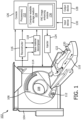
- FIGURE 1 schematically illustrates an example computed tomography (CT) scanner 102 configured for spectral CT imaging, e.g., multi-energy imaging such as dual-energy imaging.
- CT scanner 102 includes a stationary gantry 104 and a rotating gantry 106, which is rotatably supported by the stationary gantry 104 and rotates around an examination region 108 (and a portion of an object or subject therein) about a longitudinal or z-axis 110.
- CT computed tomography
- a radiation source 112 such as an x-ray tube, is supported by and rotates with the rotating gantry 106 around the examination region 108.
- the radiation source 112 emits x-ray radiation that is collimated to form a generally fan, wedge, or cone shaped x-ray radiation beam that traverses the examination region 108.
- the radiation source 112 is a single x-ray tube configured to emit broadband (polychromatic) radiation for a single selected peak emission voltage (kVp) of interest.
- the radiation source 112 is configured to switch between at least two different emission voltages (e.g., 70 keV, 100 keV, 120 keV, etc.) during a scan.
- the radiation source 112 includes two or more x-ray tubes angular offset on the rotating gantry 104 with each configured to emit radiation with a different mean energy spectrum.
- US 8,442,184 B2 describes a system with kVp switching and multiple x-ray tubes.
- a radiation sensitive detector array 114 subtends an angular arc opposite the radiation source 112 across the examination region 108.
- the detector array 114 includes one or more rows of detectors that are arranged with respect to each other along the z-axis direction and detects radiation traversing the examination region 108.
- the detector array 114 For a contrast-enhanced scan, the detector array 114 generates contrast-enhanced spectral projection data (line integrals) such as contrast-enhanced high energy projection data and contrast-enhanced low energy projection data.
- the detector array 114 includes an energy-resolving detector such as a multi-layer scintillator/photo-sensor detector (e.g., US 7,968,853 B2 ).
- an energy-resolving detector such as a multi-layer scintillator/photo-sensor detector (e.g., US 7,968,853 B2 ).
- the detector array 114 includes a photon counting (direct conversion) detector (e.g., WO 2009/072056 A2 ).
- the radiation source 112 includes the broadband, kVp switching and/or multiple X-ray tube radiation sources.
- the detector array 114 includes a non-energy-resolving detector, the radiation source 112 includes kVp switching and/or multiple X-ray tube radiation sources.
- a reconstructor 116 processes the contrast-enhanced spectral projection data and generates contrast-enhanced spectral volumetric image data such as contrast-enhanced high energy volumetric image data and contrast-enhanced low energy volumetric image data.
- the reconstructor 116 can also generate contrast-enhanced non-spectral volumetric image data, e.g., by first combining the high energy projection data and the low energy projection data and then reconstructing the combined projection data and/or by combining the high energy volumetric image data and low energy volumetric image data.
- Spectral and non-spectral images can be derived therefrom.
- the reconstructor 116 can be implemented with a processor such as a central processing unit (CPU), a microprocessor, etc.
- a basis material decomposer 118 decomposes the contrast-enhanced projection data (projection domain decomposition) and/or the contrast-enhanced spectral volumetric image data and/or images (image domain decomposition) into basis components.
- the reconstructor 116 reconstructs the projection data basis components to generate basis component volumetric image data and/or images such as VNC volumetric image data and/or images.
- the basis material decomposer 118 decomposes contrast-enhanced spectral volumetric image data and/or images into basis component volumetric image data and/or images such as VNC volumetric image data and/or images.
- separate basis material decomposers are used for projection and image domain decomposition.
- the basis material decomposer 118 is omitted or not employed.
- the basis material decomposer 118 employs two material decomposition algorithms, each assuming a water-iodine basis material pair or a calcium-iodine basis material pair, to generate VNC images without iodine.
- Another approach is to perform an N-dimensional cluster analysis to decompose the images into components such as iodine or other materials including soft tissue, calcium, etc.
- Other examples are described in Song, et al., "Virtual Non-Contrast CT Using Dual-Energy Spectral CT: Feasibility of Coronary Artery Calcium Scoring," Korean J Radiol 2016;17(3):321-329 , and US 2014/0133729 A1, filed January 13, 2014 , and entitled "Image Processing for Spectral CT”.
- the decomposer 118 can be implemented with a processor or the like.
- a subject support 120 such as a couch, supports a subject or object (e.g., a phantom) 122 in the examination region 108.
- the subject support 120 is movable in coordination with performing an imaging procedure so as to guide the subject or object with respect to the examination region 108 for loading, scanning, and/or unloading the subject or object.
- An injector 124 is configured to inject or administer a material such as one or more (e.g., iodine) contrast agents to the subject or object 122 to be scanned for a perfusion scan.
- a contrast agent can additionally or alternatively be manually administered by a clinician or the like. Where the contrast agent is manually administered to the subject or object 122, the injector 124 can be omitted.
- An operator console 126 includes a human readable output device 128 such as a display monitor, a filmer, etc. and an input device 130 such as a keyboard, mouse, etc.
- the console 126 further includes a processor 132 (e.g., a CPU, a microprocessor, etc.) and computer readable storage medium 134 (which excludes transitory medium) such as physical memory.
- the computer readable storage medium 134 includes a VNC image enhancing module 136.
- the illustrated VNC image enhancing module 136 includes computer executable instructions for processing VNC images to produce improved image quality VNC image (image quality enhanced virtual non-contrast images) similar or equivalent to TNC images generated from a non-contrast-enhanced scan.
- the instructions include a neural network trained with training spectral data and TNC images.
- the spectral CT scanner 102 can produce contrast-enhanced images and VNC images with image quality diagnostically similar or equivalent to TNC images generated from a non-contrast-enhanced scan using data acquired with a single contrast-enhanced scan.
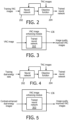
- FIGURES 2-7 schematically illustrate different embodiments for training the neural network.
- the neural network is trained to take into account differences in the delivery of contrast material in the input data.
- the training data sets are constructed such that the distribution of the data feature (i.e., contrast delivery) well represents the distribution of the data feature in real clinical scenarios.
- the training data sets can come from both real clinical scans and simulation.
- An advantage of a simulation is that contrast delivery can be controlled in every data set (including contrast-enhanced spectral CT data and TNC images) and thereby a large number of data sets can be generated that strictly follow a presumed distribution of the data feature.
- the input and training data can be acquired such that contrast delivery is consistent across the data.
- FIGURE 2 schematically illustrates example training of a neural network 202 with training VNC images generated using material decomposition and training TNC images from a non-contrast-enhanced CT scan.
- Parameters of the neural network are updated and converge through a number of iterations using an objective function 204.
- the objective function 204 includes a mathematical function that minimizes an error between the VNC volumetric image data or images output by the neural network 202 and TNC images, e.g., based on a mean squared and/or other difference between the VNC volumetric image data or images output by the neural network 202 and TNC images.
- the parameters are updated until the error falls below of predetermined threshold.
- Other stopping criteria include a predetermined number of iterations, a predetermined time duration, etc.
- FIGURE 3 schematically illustrates an embodiment in which the VNC image enhancing module 136 includes the trained neural network 202 of FIGURE 2 .
- the trained neural network 202 receives the VNC images (which contain high noise and/or artifacts relative to TNC images) generated by the basis material decomposer 118 ( FIGURE 1 ) and outputs image quality improved VNC images, which includes VNC images with less noise and/or artifact than the input VNC images and which has sufficient image quality for diagnosis.
- FIGURE 4 schematically illustrates a variation of FIGURE 2 in which the input to the neural network 202 is training dual-energy (high and low energy) images.
- FIGURE 5 schematically illustrates an embodiment in which the VNC image enhancing module 136 includes the neural network 202 trained in FIGURE 4 .
- the trained neural network 202 receives contrast-enhanced dual-energy images generated by the reconstructor 116 ( FIGURE 1 ) and outputs image quality improved VNC images.
- the basis material decomposer 118 is either omitted from the system 102 of FIGURE 1 or not utilized.
- the neural network 202 handles the material decomposition as it is capable of performing nonlinear mapping of data, and material decomposition often involves solving polynomial equations (e.g., for high energy and low energy) after approximations.
- the noise in the basis material images can be lower than the noise from conventional material decomposition., e.g., because conventional material decomposition only uses measured data on one detector pixel or reconstructed value of one image voxel at a time, but neural network uses a small patch, which includes more than one pixel or voxel.
- projection data includes unique spectral information hidden in the data.
- the physical effects i.e., Compton scatter and photoelectric absorption
- the physical effects can be different with low-Z, high density objects leading to more Compton scatter, and these differences are hidden in the acquired raw projection data.
- Another example is that there are more beam hardening artifacts for high-Z materials relative to low-Z materials. These differences are reduced and/or removed and do not show up in the reconstructed volumetric image data, e.g., to effective scatter correction, beam-hardening compensation, etc.
- corrections that remove spectral information are omitted from the reconstruction.
- the neural network 202 of FIGURES 2-3 is trained with VNC images generated from volumetric image data that was reconstructed without using a correction, such as scatter correction and/or beam-hardening compensation, that removes the unique spectral information
- the neural network 202 of FIGURES 4-5 is trained with high and low energy images reconstructed without using a correction, such as scatter correction and/or beam-hardening compensation, that removes the unique spectral information. This allows the training to take into account the unique spectral information.
- FIGURE 6 schematically illustrates a variation of FIGURE 2 in which the input to the neural network 202 is training dual-energy (high and low energy) projection data.
- FIGURE 7 schematically illustrates an embodiment in which the VNC image enhancing module 136 includes the neural network 202 trained in FIGURE 6 .
- the trained neural network 202 receives contrast-enhanced dual-energy projection data generated by the detector array 114 ( FIGURE 1 ) and outputs image quality improved VNC images.
- the basis material decomposer 118 is either omitted from the system 102 of FIGURE 1 or not utilized.
- a variation includes two of the three embodiments described in FIGURES 2-7 .
- one variation includes the neural network of FIGURES 2 and 4 .
- Another variation includes the neural network of FIGURES 2 and 6 .
- Another variation includes the neural network of FIGURES 4 and 6 .
- Another variation includes all three of the three embodiments described in FIGURES 2-7 .
- Another variation includes a single neural network trained with different types of training such as the training data in FIGURES 2 and 4, 2 and 6 , 4 and 6 , or 2, 4 and 6 .
- These variations can be employed with the input data of FIGURES 3, 5 and/or 7 to image quality improved VNC images.
- FIGURE 8 illustrates an example method in accordance with an embodiment herein.
- a set of training VNC images is received, as described herein and/or otherwise.
- a set of training TNC images is received, as described herein and/or otherwise.
- the set of training VNC images and the set of training TNC images are employed to train a neural network, as described herein and/or otherwise.
- VNC images are received, as described herein and/or otherwise.
- the received VNC images are processed with the trained neural network to produce image quality improved VNC images.
- FIGURE 9 illustrates another example method in accordance with an embodiment herein.
- a set of training dual-energy images is received, as described herein and/or otherwise.
- a set of training TNC images is received, as described herein and/or otherwise.
- the set of training dual-energy images and the set of training TNC images are employed to train a neural network, as described herein and/or otherwise.
- contrast-enhanced dual-energy images are received, as described herein and/or otherwise.
- the contrast-enhanced dual-energy images are processed with the trained neural network to produce image quality improved VNC images.
- FIGURE 10 illustrates another example method in accordance with an embodiment herein.
- a set of training dual-energy projection data is received, as described herein and/or otherwise.
- a set of training TNC images is received, as described herein and/or otherwise.
- the set of training dual-energy projection data and the set of training TNC images are employed to train a neural network, as described herein and/or otherwise.
- contrast-enhanced dual-energy projection data is received, as described herein and/or otherwise.
- the contrast-enhanced dual-energy projection data is processed with the trained neural network to produce image quality improved VNC images.
- the above may be implemented by way of computer readable instructions, encoded or embedded on computer readable storage medium, which, when executed by a computer processor(s), cause the processor(s) to carry out the described acts. Additionally, or alternatively, at least one of the computer readable instructions is carried by a signal, carrier wave or other transitory medium, which is not computer readable storage medium.
- a computer program may be stored/distributed on a suitable medium, such as an optical storage medium or a solid-state medium supplied together with or as part of other hardware, but may also be distributed in other forms, such as via the Internet or other wired or wireless telecommunication systems. Any reference signs in the claims should not be construed as limiting the scope.
Landscapes
- Engineering & Computer Science (AREA)
- Physics & Mathematics (AREA)
- General Physics & Mathematics (AREA)
- Theoretical Computer Science (AREA)
- Health & Medical Sciences (AREA)
- Life Sciences & Earth Sciences (AREA)
- Medical Informatics (AREA)
- Optics & Photonics (AREA)
- Heart & Thoracic Surgery (AREA)
- Nuclear Medicine, Radiotherapy & Molecular Imaging (AREA)
- Biophysics (AREA)
- Pathology (AREA)
- Radiology & Medical Imaging (AREA)
- Biomedical Technology (AREA)
- High Energy & Nuclear Physics (AREA)
- Molecular Biology (AREA)
- Surgery (AREA)
- Animal Behavior & Ethology (AREA)
- General Health & Medical Sciences (AREA)
- Public Health (AREA)
- Veterinary Medicine (AREA)
- Apparatus For Radiation Diagnosis (AREA)
- Image Analysis (AREA)
Applications Claiming Priority (2)
| Application Number | Priority Date | Filing Date | Title |
|---|---|---|---|
| US201862624415P | 2018-01-31 | 2018-01-31 | |
| PCT/EP2019/052157 WO2019149711A1 (en) | 2018-01-31 | 2019-01-30 | Image quality improved virtual non-contrast images generated by a spectral computed tomography (ct) scanner |
Publications (2)
| Publication Number | Publication Date |
|---|---|
| EP3746979A1 EP3746979A1 (en) | 2020-12-09 |
| EP3746979B1 true EP3746979B1 (en) | 2023-11-15 |
Family
ID=65243573
Family Applications (1)
| Application Number | Title | Priority Date | Filing Date |
|---|---|---|---|
| EP19702422.7A Active EP3746979B1 (en) | 2018-01-31 | 2019-01-30 | Image quality improved virtual non-contrast images generated by a spectral computed tomography (ct) scanner |
Country Status (6)
| Country | Link |
|---|---|
| US (1) | US11813101B2 (https=) |
| EP (1) | EP3746979B1 (https=) |
| JP (1) | JP7346429B2 (https=) |
| CN (1) | CN111684486B (https=) |
| ES (1) | ES2968760T3 (https=) |
| WO (1) | WO2019149711A1 (https=) |
Families Citing this family (10)
| Publication number | Priority date | Publication date | Assignee | Title |
|---|---|---|---|---|
| DE102019200270A1 (de) | 2019-01-11 | 2020-07-16 | Siemens Healthcare Gmbh | Bereitstellen eines Differenzbilddatensatzes und Bereitstellen einer trainierten Funktion |
| DE102019200269A1 (de) | 2019-01-11 | 2020-07-16 | Siemens Healthcare Gmbh | Bereitstellen eines Beschränkungsbilddatensatzes und/oder eines Differenzbilddatensatzes |
| JP7433809B2 (ja) * | 2019-08-21 | 2024-02-20 | キヤノンメディカルシステムズ株式会社 | 学習済みモデルの生成方法、および医用処理装置 |
| GB201912701D0 (en) * | 2019-09-04 | 2019-10-16 | Univ Oxford Innovation Ltd | Method and apparatus for enhancing medical images |
| EP3893206A1 (en) * | 2020-04-09 | 2021-10-13 | Koninklijke Philips N.V. | Apparatus for generating an augmented image of an object |
| EP4066741A4 (en) * | 2021-02-01 | 2023-12-20 | Claripi Inc. | DEEP LEARNING-BASED DEVICE AND METHOD FOR CONTRAST ENHANCEMENT OF A CONTRAST-ENHANCED CT IMAGE |
| JP7607496B2 (ja) * | 2021-04-02 | 2024-12-27 | 富士フイルム株式会社 | 学習装置、方法およびプログラム、並びに放射線画像処理装置、方法およびプログラム |
| EP4104767A1 (en) | 2021-06-17 | 2022-12-21 | Koninklijke Philips N.V. | Controlling an alert signal for spectral computed tomography imaging |
| JP7238185B1 (ja) * | 2022-03-14 | 2023-03-13 | ジーイー・プレシジョン・ヘルスケア・エルエルシー | 画像生成装置、医用装置、および記憶媒体 |
| CN121221265A (zh) * | 2023-07-17 | 2025-12-30 | 上海联影医疗科技股份有限公司 | 医学影像的血管跟踪方法、手术路径的规划方法和系统 |
Family Cites Families (14)
| Publication number | Priority date | Publication date | Assignee | Title |
|---|---|---|---|---|
| WO2005009206A2 (en) | 2003-06-25 | 2005-02-03 | Besson Guy M | Dynamic multi-spectral imaging system |
| US7968853B2 (en) | 2005-04-26 | 2011-06-28 | Koninklijke Philips Electronics N.V. | Double decker detector for spectral CT |
| WO2009072056A2 (en) | 2007-12-04 | 2009-06-11 | Koninklijke Philips Electronics N. V. | Monolithically integrated crystalline direct-conversion semiconductor detector for detecting incident x-radiation at ultra-fine pitch and method for manufacturing such an x-ray semiconductor detector |
| JP5715052B2 (ja) | 2008-06-30 | 2015-05-07 | コーニンクレッカ フィリップス エヌ ヴェ | 画像化システム及び画像化方法 |
| US8345944B2 (en) | 2008-08-06 | 2013-01-01 | Siemens Aktiengesellschaft | System and method for coronary digital subtraction angiography |
| US8355555B2 (en) * | 2009-09-17 | 2013-01-15 | Siemens Aktiengesellschaft | System and method for multi-image based virtual non-contrast image enhancement for dual source CT |
| JP6100772B2 (ja) | 2011-07-15 | 2017-03-22 | コーニンクレッカ フィリップス エヌ ヴェKoninklijke Philips N.V. | 画像処理方法及びコンピューティング装置 |
| CN107530037B (zh) * | 2015-12-17 | 2018-11-27 | 皇家飞利浦有限公司 | 用于生成对比剂浓度图的方法 |
| CN106097355A (zh) * | 2016-06-14 | 2016-11-09 | 山东大学 | 基于卷积神经网络的胃肠道肿瘤显微高光谱图像处理方法 |
| WO2017223560A1 (en) * | 2016-06-24 | 2017-12-28 | Rensselaer Polytechnic Institute | Tomographic image reconstruction via machine learning |
| JP6813178B2 (ja) | 2016-12-07 | 2021-01-13 | 学校法人常翔学園 | 生体画像処理装置、出力画像製造方法、学習結果製造方法、及びプログラム |
| CN106600568B (zh) | 2017-01-19 | 2019-10-11 | 东软医疗系统股份有限公司 | 一种低剂量ct图像去噪方法及装置 |
| CN107374657B (zh) * | 2017-06-30 | 2021-05-11 | 上海联影医疗科技股份有限公司 | 对ct扫描数据进行校正的方法及ct扫描系统 |
| CN107516330B (zh) * | 2017-08-31 | 2021-02-09 | 上海联影医疗科技股份有限公司 | 模型生成方法、图像处理方法及医学成像设备 |
-
2019
- 2019-01-30 US US16/965,225 patent/US11813101B2/en active Active
- 2019-01-30 WO PCT/EP2019/052157 patent/WO2019149711A1/en not_active Ceased
- 2019-01-30 JP JP2020541482A patent/JP7346429B2/ja active Active
- 2019-01-30 ES ES19702422T patent/ES2968760T3/es active Active
- 2019-01-30 CN CN201980011363.6A patent/CN111684486B/zh active Active
- 2019-01-30 EP EP19702422.7A patent/EP3746979B1/en active Active
Also Published As
| Publication number | Publication date |
|---|---|
| CN111684486A (zh) | 2020-09-18 |
| US20200367844A1 (en) | 2020-11-26 |
| JP7346429B2 (ja) | 2023-09-19 |
| US11813101B2 (en) | 2023-11-14 |
| ES2968760T3 (es) | 2024-05-13 |
| JP2021511874A (ja) | 2021-05-13 |
| EP3746979A1 (en) | 2020-12-09 |
| WO2019149711A1 (en) | 2019-08-08 |
| CN111684486B (zh) | 2024-05-21 |
Similar Documents
| Publication | Publication Date | Title |
|---|---|---|
| EP3746979B1 (en) | Image quality improved virtual non-contrast images generated by a spectral computed tomography (ct) scanner | |
| CN103649990B (zh) | 用于谱ct的图像处理 | |
| US9498179B1 (en) | Methods and systems for metal artifact reduction in spectral CT imaging | |
| US8615120B2 (en) | Spectral imaging | |
| US11419566B2 (en) | Systems and methods for improving image quality with three-dimensional scout | |
| US11986336B2 (en) | Non-spectral computed tomography (CT) scanner configured to generate spectral volumetric image data | |
| CN102144928A (zh) | 利用多重x射线源的ct测量 | |
| US10984564B2 (en) | Image noise estimation using alternating negation | |
| US11049295B2 (en) | Detection and/or correction of residual iodine artifacts in spectral computed tomography (CT) imaging | |
| US11361415B2 (en) | Material-selective adaptive blending of volumeiric image data | |
| US10552992B2 (en) | Poly-energetic reconstruction method for metal artifacts reduction | |
| WO2016097981A1 (en) | Penalized maximum likelihood material decomposition | |
| WO2019096600A1 (en) | Single ct backprojector with one geometry calculation per voxel for multiple different types of projection data |
Legal Events
| Date | Code | Title | Description |
|---|---|---|---|
| STAA | Information on the status of an ep patent application or granted ep patent |
Free format text: STATUS: UNKNOWN |
|
| STAA | Information on the status of an ep patent application or granted ep patent |
Free format text: STATUS: THE INTERNATIONAL PUBLICATION HAS BEEN MADE |
|
| PUAI | Public reference made under article 153(3) epc to a published international application that has entered the european phase |
Free format text: ORIGINAL CODE: 0009012 |
|
| STAA | Information on the status of an ep patent application or granted ep patent |
Free format text: STATUS: REQUEST FOR EXAMINATION WAS MADE |
|
| 17P | Request for examination filed |
Effective date: 20200831 |
|
| AK | Designated contracting states |
Kind code of ref document: A1 Designated state(s): AL AT BE BG CH CY CZ DE DK EE ES FI FR GB GR HR HU IE IS IT LI LT LU LV MC MK MT NL NO PL PT RO RS SE SI SK SM TR |
|
| AX | Request for extension of the european patent |
Extension state: BA ME |
|
| DAV | Request for validation of the european patent (deleted) | ||
| DAX | Request for extension of the european patent (deleted) | ||
| GRAP | Despatch of communication of intention to grant a patent |
Free format text: ORIGINAL CODE: EPIDOSNIGR1 |
|
| STAA | Information on the status of an ep patent application or granted ep patent |
Free format text: STATUS: GRANT OF PATENT IS INTENDED |
|
| INTG | Intention to grant announced |
Effective date: 20230117 |
|
| GRAJ | Information related to disapproval of communication of intention to grant by the applicant or resumption of examination proceedings by the epo deleted |
Free format text: ORIGINAL CODE: EPIDOSDIGR1 |
|
| STAA | Information on the status of an ep patent application or granted ep patent |
Free format text: STATUS: REQUEST FOR EXAMINATION WAS MADE |
|
| GRAS | Grant fee paid |
Free format text: ORIGINAL CODE: EPIDOSNIGR3 |
|
| STAA | Information on the status of an ep patent application or granted ep patent |
Free format text: STATUS: GRANT OF PATENT IS INTENDED |
|
| GRAP | Despatch of communication of intention to grant a patent |
Free format text: ORIGINAL CODE: EPIDOSNIGR1 |
|
| INTC | Intention to grant announced (deleted) | ||
| INTG | Intention to grant announced |
Effective date: 20230616 |
|
| GRAA | (expected) grant |
Free format text: ORIGINAL CODE: 0009210 |
|
| STAA | Information on the status of an ep patent application or granted ep patent |
Free format text: STATUS: THE PATENT HAS BEEN GRANTED |
|
| AK | Designated contracting states |
Kind code of ref document: B1 Designated state(s): AL AT BE BG CH CY CZ DE DK EE ES FI FR GB GR HR HU IE IS IT LI LT LU LV MC MK MT NL NO PL PT RO RS SE SI SK SM TR |
|
| REG | Reference to a national code |
Ref country code: CH Ref legal event code: EP Ref country code: GB Ref legal event code: FG4D |
|
| REG | Reference to a national code |
Ref country code: DE Ref legal event code: R096 Ref document number: 602019041408 Country of ref document: DE |
|
| REG | Reference to a national code |
Ref country code: IE Ref legal event code: FG4D |
|
| REG | Reference to a national code |
Ref country code: DE Ref legal event code: R084 Ref document number: 602019041408 Country of ref document: DE |
|
| REG | Reference to a national code |
Ref country code: NL Ref legal event code: FP |
|
| REG | Reference to a national code |
Ref country code: GB Ref legal event code: 746 Effective date: 20240117 |
|
| REG | Reference to a national code |
Ref country code: LT Ref legal event code: MG9D |
|
| PG25 | Lapsed in a contracting state [announced via postgrant information from national office to epo] |
Ref country code: GR Free format text: LAPSE BECAUSE OF FAILURE TO SUBMIT A TRANSLATION OF THE DESCRIPTION OR TO PAY THE FEE WITHIN THE PRESCRIBED TIME-LIMIT Effective date: 20240216 |
|
| PG25 | Lapsed in a contracting state [announced via postgrant information from national office to epo] |
Ref country code: IS Free format text: LAPSE BECAUSE OF FAILURE TO SUBMIT A TRANSLATION OF THE DESCRIPTION OR TO PAY THE FEE WITHIN THE PRESCRIBED TIME-LIMIT Effective date: 20240315 |
|
| PG25 | Lapsed in a contracting state [announced via postgrant information from national office to epo] |
Ref country code: LT Free format text: LAPSE BECAUSE OF FAILURE TO SUBMIT A TRANSLATION OF THE DESCRIPTION OR TO PAY THE FEE WITHIN THE PRESCRIBED TIME-LIMIT Effective date: 20231115 |
|
| REG | Reference to a national code |
Ref country code: AT Ref legal event code: MK05 Ref document number: 1632464 Country of ref document: AT Kind code of ref document: T Effective date: 20231115 |
|
| PG25 | Lapsed in a contracting state [announced via postgrant information from national office to epo] |
Ref country code: AT Free format text: LAPSE BECAUSE OF FAILURE TO SUBMIT A TRANSLATION OF THE DESCRIPTION OR TO PAY THE FEE WITHIN THE PRESCRIBED TIME-LIMIT Effective date: 20231115 |
|
| PG25 | Lapsed in a contracting state [announced via postgrant information from national office to epo] |
Ref country code: LT Free format text: LAPSE BECAUSE OF FAILURE TO SUBMIT A TRANSLATION OF THE DESCRIPTION OR TO PAY THE FEE WITHIN THE PRESCRIBED TIME-LIMIT Effective date: 20231115 Ref country code: IS Free format text: LAPSE BECAUSE OF FAILURE TO SUBMIT A TRANSLATION OF THE DESCRIPTION OR TO PAY THE FEE WITHIN THE PRESCRIBED TIME-LIMIT Effective date: 20240315 Ref country code: GR Free format text: LAPSE BECAUSE OF FAILURE TO SUBMIT A TRANSLATION OF THE DESCRIPTION OR TO PAY THE FEE WITHIN THE PRESCRIBED TIME-LIMIT Effective date: 20240216 Ref country code: BG Free format text: LAPSE BECAUSE OF FAILURE TO SUBMIT A TRANSLATION OF THE DESCRIPTION OR TO PAY THE FEE WITHIN THE PRESCRIBED TIME-LIMIT Effective date: 20240215 Ref country code: AT Free format text: LAPSE BECAUSE OF FAILURE TO SUBMIT A TRANSLATION OF THE DESCRIPTION OR TO PAY THE FEE WITHIN THE PRESCRIBED TIME-LIMIT Effective date: 20231115 Ref country code: PT Free format text: LAPSE BECAUSE OF FAILURE TO SUBMIT A TRANSLATION OF THE DESCRIPTION OR TO PAY THE FEE WITHIN THE PRESCRIBED TIME-LIMIT Effective date: 20240315 |
|
| REG | Reference to a national code |
Ref country code: ES Ref legal event code: FG2A Ref document number: 2968760 Country of ref document: ES Kind code of ref document: T3 Effective date: 20240513 |
|
| PG25 | Lapsed in a contracting state [announced via postgrant information from national office to epo] |
Ref country code: SE Free format text: LAPSE BECAUSE OF FAILURE TO SUBMIT A TRANSLATION OF THE DESCRIPTION OR TO PAY THE FEE WITHIN THE PRESCRIBED TIME-LIMIT Effective date: 20231115 Ref country code: RS Free format text: LAPSE BECAUSE OF FAILURE TO SUBMIT A TRANSLATION OF THE DESCRIPTION OR TO PAY THE FEE WITHIN THE PRESCRIBED TIME-LIMIT Effective date: 20231115 Ref country code: PL Free format text: LAPSE BECAUSE OF FAILURE TO SUBMIT A TRANSLATION OF THE DESCRIPTION OR TO PAY THE FEE WITHIN THE PRESCRIBED TIME-LIMIT Effective date: 20231115 Ref country code: NO Free format text: LAPSE BECAUSE OF FAILURE TO SUBMIT A TRANSLATION OF THE DESCRIPTION OR TO PAY THE FEE WITHIN THE PRESCRIBED TIME-LIMIT Effective date: 20240215 Ref country code: LV Free format text: LAPSE BECAUSE OF FAILURE TO SUBMIT A TRANSLATION OF THE DESCRIPTION OR TO PAY THE FEE WITHIN THE PRESCRIBED TIME-LIMIT Effective date: 20231115 Ref country code: HR Free format text: LAPSE BECAUSE OF FAILURE TO SUBMIT A TRANSLATION OF THE DESCRIPTION OR TO PAY THE FEE WITHIN THE PRESCRIBED TIME-LIMIT Effective date: 20231115 |
|
| PG25 | Lapsed in a contracting state [announced via postgrant information from national office to epo] |
Ref country code: DK Free format text: LAPSE BECAUSE OF FAILURE TO SUBMIT A TRANSLATION OF THE DESCRIPTION OR TO PAY THE FEE WITHIN THE PRESCRIBED TIME-LIMIT Effective date: 20231115 |
|
| PG25 | Lapsed in a contracting state [announced via postgrant information from national office to epo] |
Ref country code: CZ Free format text: LAPSE BECAUSE OF FAILURE TO SUBMIT A TRANSLATION OF THE DESCRIPTION OR TO PAY THE FEE WITHIN THE PRESCRIBED TIME-LIMIT Effective date: 20231115 |
|
| PG25 | Lapsed in a contracting state [announced via postgrant information from national office to epo] |
Ref country code: SK Free format text: LAPSE BECAUSE OF FAILURE TO SUBMIT A TRANSLATION OF THE DESCRIPTION OR TO PAY THE FEE WITHIN THE PRESCRIBED TIME-LIMIT Effective date: 20231115 |
|
| PG25 | Lapsed in a contracting state [announced via postgrant information from national office to epo] |
Ref country code: SM Free format text: LAPSE BECAUSE OF FAILURE TO SUBMIT A TRANSLATION OF THE DESCRIPTION OR TO PAY THE FEE WITHIN THE PRESCRIBED TIME-LIMIT Effective date: 20231115 Ref country code: SK Free format text: LAPSE BECAUSE OF FAILURE TO SUBMIT A TRANSLATION OF THE DESCRIPTION OR TO PAY THE FEE WITHIN THE PRESCRIBED TIME-LIMIT Effective date: 20231115 Ref country code: RO Free format text: LAPSE BECAUSE OF FAILURE TO SUBMIT A TRANSLATION OF THE DESCRIPTION OR TO PAY THE FEE WITHIN THE PRESCRIBED TIME-LIMIT Effective date: 20231115 Ref country code: IT Free format text: LAPSE BECAUSE OF FAILURE TO SUBMIT A TRANSLATION OF THE DESCRIPTION OR TO PAY THE FEE WITHIN THE PRESCRIBED TIME-LIMIT Effective date: 20231115 Ref country code: EE Free format text: LAPSE BECAUSE OF FAILURE TO SUBMIT A TRANSLATION OF THE DESCRIPTION OR TO PAY THE FEE WITHIN THE PRESCRIBED TIME-LIMIT Effective date: 20231115 Ref country code: DK Free format text: LAPSE BECAUSE OF FAILURE TO SUBMIT A TRANSLATION OF THE DESCRIPTION OR TO PAY THE FEE WITHIN THE PRESCRIBED TIME-LIMIT Effective date: 20231115 Ref country code: CZ Free format text: LAPSE BECAUSE OF FAILURE TO SUBMIT A TRANSLATION OF THE DESCRIPTION OR TO PAY THE FEE WITHIN THE PRESCRIBED TIME-LIMIT Effective date: 20231115 |
|
| REG | Reference to a national code |
Ref country code: DE Ref legal event code: R097 Ref document number: 602019041408 Country of ref document: DE |
|
| PG25 | Lapsed in a contracting state [announced via postgrant information from national office to epo] |
Ref country code: MC Free format text: LAPSE BECAUSE OF FAILURE TO SUBMIT A TRANSLATION OF THE DESCRIPTION OR TO PAY THE FEE WITHIN THE PRESCRIBED TIME-LIMIT Effective date: 20231115 |
|
| PG25 | Lapsed in a contracting state [announced via postgrant information from national office to epo] |
Ref country code: MC Free format text: LAPSE BECAUSE OF FAILURE TO SUBMIT A TRANSLATION OF THE DESCRIPTION OR TO PAY THE FEE WITHIN THE PRESCRIBED TIME-LIMIT Effective date: 20231115 |
|
| REG | Reference to a national code |
Ref country code: CH Ref legal event code: PL |
|
| PG25 | Lapsed in a contracting state [announced via postgrant information from national office to epo] |
Ref country code: LU Free format text: LAPSE BECAUSE OF NON-PAYMENT OF DUE FEES Effective date: 20240130 |
|
| PLBE | No opposition filed within time limit |
Free format text: ORIGINAL CODE: 0009261 |
|
| STAA | Information on the status of an ep patent application or granted ep patent |
Free format text: STATUS: NO OPPOSITION FILED WITHIN TIME LIMIT |
|
| PG25 | Lapsed in a contracting state [announced via postgrant information from national office to epo] |
Ref country code: LU Free format text: LAPSE BECAUSE OF NON-PAYMENT OF DUE FEES Effective date: 20240130 |
|
| PG25 | Lapsed in a contracting state [announced via postgrant information from national office to epo] |
Ref country code: BE Free format text: LAPSE BECAUSE OF NON-PAYMENT OF DUE FEES Effective date: 20240131 |
|
| PG25 | Lapsed in a contracting state [announced via postgrant information from national office to epo] |
Ref country code: CH Free format text: LAPSE BECAUSE OF NON-PAYMENT OF DUE FEES Effective date: 20240131 |
|
| 26N | No opposition filed |
Effective date: 20240819 |
|
| PG25 | Lapsed in a contracting state [announced via postgrant information from national office to epo] |
Ref country code: SI Free format text: LAPSE BECAUSE OF FAILURE TO SUBMIT A TRANSLATION OF THE DESCRIPTION OR TO PAY THE FEE WITHIN THE PRESCRIBED TIME-LIMIT Effective date: 20231115 |
|
| PG25 | Lapsed in a contracting state [announced via postgrant information from national office to epo] |
Ref country code: SI Free format text: LAPSE BECAUSE OF FAILURE TO SUBMIT A TRANSLATION OF THE DESCRIPTION OR TO PAY THE FEE WITHIN THE PRESCRIBED TIME-LIMIT Effective date: 20231115 Ref country code: CH Free format text: LAPSE BECAUSE OF NON-PAYMENT OF DUE FEES Effective date: 20240131 Ref country code: BE Free format text: LAPSE BECAUSE OF NON-PAYMENT OF DUE FEES Effective date: 20240131 |
|
| REG | Reference to a national code |
Ref country code: BE Ref legal event code: MM Effective date: 20240131 |
|
| PG25 | Lapsed in a contracting state [announced via postgrant information from national office to epo] |
Ref country code: IE Free format text: LAPSE BECAUSE OF NON-PAYMENT OF DUE FEES Effective date: 20240130 |
|
| PG25 | Lapsed in a contracting state [announced via postgrant information from national office to epo] |
Ref country code: IE Free format text: LAPSE BECAUSE OF NON-PAYMENT OF DUE FEES Effective date: 20240130 |
|
| PG25 | Lapsed in a contracting state [announced via postgrant information from national office to epo] |
Ref country code: CY Free format text: LAPSE BECAUSE OF FAILURE TO SUBMIT A TRANSLATION OF THE DESCRIPTION OR TO PAY THE FEE WITHIN THE PRESCRIBED TIME-LIMIT; INVALID AB INITIO Effective date: 20190130 |
|
| PG25 | Lapsed in a contracting state [announced via postgrant information from national office to epo] |
Ref country code: HU Free format text: LAPSE BECAUSE OF FAILURE TO SUBMIT A TRANSLATION OF THE DESCRIPTION OR TO PAY THE FEE WITHIN THE PRESCRIBED TIME-LIMIT; INVALID AB INITIO Effective date: 20190130 |
|
| PG25 | Lapsed in a contracting state [announced via postgrant information from national office to epo] |
Ref country code: FI Free format text: LAPSE BECAUSE OF FAILURE TO SUBMIT A TRANSLATION OF THE DESCRIPTION OR TO PAY THE FEE WITHIN THE PRESCRIBED TIME-LIMIT Effective date: 20231115 |
|
| PG25 | Lapsed in a contracting state [announced via postgrant information from national office to epo] |
Ref country code: TR Free format text: LAPSE BECAUSE OF FAILURE TO SUBMIT A TRANSLATION OF THE DESCRIPTION OR TO PAY THE FEE WITHIN THE PRESCRIBED TIME-LIMIT Effective date: 20231115 |
|
| PGFP | Annual fee paid to national office [announced via postgrant information from national office to epo] |
Ref country code: NL Payment date: 20260122 Year of fee payment: 8 |
|
| PGFP | Annual fee paid to national office [announced via postgrant information from national office to epo] |
Ref country code: GB Payment date: 20260126 Year of fee payment: 8 |
|
| PGFP | Annual fee paid to national office [announced via postgrant information from national office to epo] |
Ref country code: ES Payment date: 20260210 Year of fee payment: 8 |
|
| PGFP | Annual fee paid to national office [announced via postgrant information from national office to epo] |
Ref country code: DE Payment date: 20260127 Year of fee payment: 8 |
|
| PGFP | Annual fee paid to national office [announced via postgrant information from national office to epo] |
Ref country code: FR Payment date: 20260126 Year of fee payment: 8 |