EP3746043B1 - Topische zusammensetzungen - Google Patents
Topische zusammensetzungen Download PDFInfo
- Publication number
- EP3746043B1 EP3746043B1 EP19743182.8A EP19743182A EP3746043B1 EP 3746043 B1 EP3746043 B1 EP 3746043B1 EP 19743182 A EP19743182 A EP 19743182A EP 3746043 B1 EP3746043 B1 EP 3746043B1
- Authority
- EP
- European Patent Office
- Prior art keywords
- skin
- extract
- composition
- oil
- ingredients
- Prior art date
- Legal status (The legal status is an assumption and is not a legal conclusion. Google has not performed a legal analysis and makes no representation as to the accuracy of the status listed.)
- Active
Links
Images

Classifications
-
- A—HUMAN NECESSITIES
- A61—MEDICAL OR VETERINARY SCIENCE; HYGIENE
- A61K—PREPARATIONS FOR MEDICAL, DENTAL OR TOILETRY PURPOSES
- A61K8/00—Cosmetics or similar toiletry preparations
- A61K8/18—Cosmetics or similar toiletry preparations characterised by the composition
- A61K8/96—Cosmetics or similar toiletry preparations characterised by the composition containing materials, or derivatives thereof of undetermined constitution
- A61K8/97—Cosmetics or similar toiletry preparations characterised by the composition containing materials, or derivatives thereof of undetermined constitution from algae, fungi, lichens or plants; from derivatives thereof
- A61K8/9783—Angiosperms [Magnoliophyta]
- A61K8/9789—Magnoliopsida [dicotyledons]
-
- A—HUMAN NECESSITIES
- A61—MEDICAL OR VETERINARY SCIENCE; HYGIENE
- A61K—PREPARATIONS FOR MEDICAL, DENTAL OR TOILETRY PURPOSES
- A61K8/00—Cosmetics or similar toiletry preparations
- A61K8/02—Cosmetics or similar toiletry preparations characterised by special physical form
- A61K8/04—Dispersions; Emulsions
- A61K8/06—Emulsions
- A61K8/062—Oil-in-water emulsions
-
- A—HUMAN NECESSITIES
- A61—MEDICAL OR VETERINARY SCIENCE; HYGIENE
- A61K—PREPARATIONS FOR MEDICAL, DENTAL OR TOILETRY PURPOSES
- A61K8/00—Cosmetics or similar toiletry preparations
- A61K8/02—Cosmetics or similar toiletry preparations characterised by special physical form
- A61K8/04—Dispersions; Emulsions
- A61K8/06—Emulsions
- A61K8/064—Water-in-oil emulsions, e.g. Water-in-silicone emulsions
-
- A—HUMAN NECESSITIES
- A61—MEDICAL OR VETERINARY SCIENCE; HYGIENE
- A61K—PREPARATIONS FOR MEDICAL, DENTAL OR TOILETRY PURPOSES
- A61K8/00—Cosmetics or similar toiletry preparations
- A61K8/18—Cosmetics or similar toiletry preparations characterised by the composition
- A61K8/30—Cosmetics or similar toiletry preparations characterised by the composition containing organic compounds
- A61K8/60—Sugars; Derivatives thereof
-
- A—HUMAN NECESSITIES
- A61—MEDICAL OR VETERINARY SCIENCE; HYGIENE
- A61K—PREPARATIONS FOR MEDICAL, DENTAL OR TOILETRY PURPOSES
- A61K8/00—Cosmetics or similar toiletry preparations
- A61K8/18—Cosmetics or similar toiletry preparations characterised by the composition
- A61K8/30—Cosmetics or similar toiletry preparations characterised by the composition containing organic compounds
- A61K8/64—Proteins; Peptides; Derivatives or degradation products thereof
-
- A—HUMAN NECESSITIES
- A61—MEDICAL OR VETERINARY SCIENCE; HYGIENE
- A61K—PREPARATIONS FOR MEDICAL, DENTAL OR TOILETRY PURPOSES
- A61K8/00—Cosmetics or similar toiletry preparations
- A61K8/18—Cosmetics or similar toiletry preparations characterised by the composition
- A61K8/72—Cosmetics or similar toiletry preparations characterised by the composition containing organic macromolecular compounds
- A61K8/73—Polysaccharides
-
- A—HUMAN NECESSITIES
- A61—MEDICAL OR VETERINARY SCIENCE; HYGIENE
- A61K—PREPARATIONS FOR MEDICAL, DENTAL OR TOILETRY PURPOSES
- A61K8/00—Cosmetics or similar toiletry preparations
- A61K8/18—Cosmetics or similar toiletry preparations characterised by the composition
- A61K8/96—Cosmetics or similar toiletry preparations characterised by the composition containing materials, or derivatives thereof of undetermined constitution
- A61K8/99—Cosmetics or similar toiletry preparations characterised by the composition containing materials, or derivatives thereof of undetermined constitution from microorganisms other than algae or fungi, e.g. protozoa or bacteria
-
- A—HUMAN NECESSITIES
- A61—MEDICAL OR VETERINARY SCIENCE; HYGIENE
- A61Q—SPECIFIC USE OF COSMETICS OR SIMILAR TOILETRY PREPARATIONS
- A61Q17/00—Barrier preparations; Preparations brought into direct contact with the skin for affording protection against external influences, e.g. sunlight, X-rays or other harmful rays, corrosive materials, bacteria or insect stings
- A61Q17/04—Topical preparations for affording protection against sunlight or other radiation; Topical sun tanning preparations
-
- A—HUMAN NECESSITIES
- A61—MEDICAL OR VETERINARY SCIENCE; HYGIENE
- A61Q—SPECIFIC USE OF COSMETICS OR SIMILAR TOILETRY PREPARATIONS
- A61Q19/00—Preparations for care of the skin
- A61Q19/08—Anti-ageing preparations
Definitions
- the present invention relates generally to topical compositions that can be used to improve skin conditions and/or block pollutants from the skin.
- the topical compositions are capable of inhibiting nitric oxide synthase, decreasing TNF- ⁇ production, increasing the production of barrier proteins, and/or blocking the accumulation of PM 2.5 particles.
- the combination of ingredients includes Myrothamnus flabellifolia extract and Alteromonas ferment extract, and, optionally, saccharide isomerate, and/or Opuntia tuna fruit extract.
- the most notable and obvious changes include the development of fine lines and wrinkles, loss of elasticity, increased sagging, loss of firmness, loss of color evenness or tone, coarse surface texture, and mottled pigmentation.
- Less obvious but measurable changes which occur as skin ages or endures chronic insult include a general reduction in cellular and tissue vitality, reduction in cell replication rates, reduced cutaneous blood flow, reduced moisture content, accumulated errors in structure and function, alterations in the normal regulation of common biochemical pathways, and a reduction in the skin's ability to remodel and repair itself.
- barrier proteins such as Filaggrin and Occludin-1
- Filaggrin is the precursor to Natural Moisturizing Factor (NMF) in the skin.
- NMF Natural Moisturizing Factor
- Occludin-1 is a critical protein to the formulation of tight junctions and the skin's moisture barrier function.
- skin aging and associated alterations in appearance and function of the skin, such as the actual age of a person, the amount of exposure to environmental factors (e.g., sun light, pollution, chemicals, smoke, etc.), and how well a person has taken care of their skin.
- environmental factors e.g., sun light, pollution, chemicals, smoke, etc.
- skin aging concerns two processes - intrinsic aging, which is related to the natural aging process and genetic influences, and extrinsic aging, which is accumulated damage due to environmental factors.
- Intrinsic aging process in cells and skin can be related to the loss of proper function of the skin in maintaining biochemical pathways. Such pathways can control the oxidative/reductive environment balance in the skin, the regulation of inflammation, and the maintenance of the moisture balance of the skin. Losses of proper function of the skin can lead to increased oxidative damage, increased inflammation, dry skin, loss of skin firmness, increased skin unevenness, and increased fine lines and wrinkles.
- Factors that cause extrinsic aging can include exposure to ultraviolet (UV) rays, irritants, and pollutants, such as fine particles suspended in the air.
- UV rays through sun exposure or the use of ultraviolet lamps (for example, tanning beds), can induce oxidative stress, inflammation, production of melanin, and even genetic mutations that leads to skin damage.
- the accumulation of oxidative stress through free radical formation can damage skin proteins leading to skin aging, which includes loss of elasticity, loss of dermal proteins, lines and wrinkles, and abnormal pigmentation.
- accumulation of fine particles such as PM 2.5 (fine particles that have an aerodynamic diameter under 2.5 ⁇ m) on the skin can also induce oxidative stress and inflammation. These fine particles may also cause damage on barrier proteins of the skin, leading to loss of moisture and elasticity of the skin.
- US 2017/020808 A1 relates to compositions useful for application to skin and hair comprising saccharide isomerate, Alteromonas ferment extract, and a dermatologically acceptable vehicle.
- KR 2016 0068310 A relates to topical cosmetic compositions comprising Myrothamnus flabellifolia extract.
- the inventors have determined a solution to at least some of the problems associated with current products to counteract some of the intrinsic and/or extrinsic factors that change the appearance and/or condition of skin and eventually cause skin aging.
- the solution resides in a combination of ingredients including Myrothamnusflabellifolia extract and Alteromonas ferment extract, and, optionally, saccharide isomerate and/or Opuntia tuna fruit extract.
- the combination of ingredients can be used to create a topical skin composition to improve overall skin appearance, improve moisture content, improve texture/smoothness, improve firmness, counter oxidative damage, reduce oxidizing agents, increase the oxidative capacity of a composition, increase production of dermal proteins (e.g., Filaggrin and Occludin-1), inhibit nitric oxidative synthase, inhibit TNF- ⁇ , detoxify heavy metals (e.g., cadmium and lead) by chelation, and/or block accumulation of fine particulate matter on the skin.
- dermal proteins e.g., Filaggrin and Occludin-1
- nitric oxidative synthase e.g., nitric oxidative synthase
- TNF- ⁇ oxidative capacity of a composition
- detoxify heavy metals e.g., cadmium and lead
- the topical composition includes (a) an effective amount of Myrothamnus flabellifolia extractand Alteromonas ferment extract. In some instances, the composition further includes an effective amount of saccharide isomerate and/or Opuntia tuna fruit extract.
- the amounts of these ingredients within the composition can vary. For example, the amounts of each ingredient can be as low as 0.000001% to as high as 98% w/w or any range therein. In one aspect, the amount of each of the aforementioned ingredients ( Myrothamnus flabellifolia extract, saccharide isomerate, Alteromonas ferment extract, and Opuntia tuna fruit extract) in a composition can be 0.0001 wt.
- the topical composition can include 0.0001 to 1% by weight of Myrothamnus flabellifolia extract and all ranges and values there between including 0.0001 to 0.005%, 0.005 to 0.01%, 0.01 to 0.05%, 0.05 to 0.1%, 0.1 to 0.5%, and 0.5 to 1%.
- the composition comprises 0.001 to 0.03% by weight of Myrothamnus flabellifolia extract, 0.0001 to 0.02% by weight of saccharide isomerate, 0.001 to 0.03% by weight of Alteromonas ferment extract, or combinations thereof. In some aspects, the composition comprises 0.0001 to 1% by weight of Myrothamnus flabellifolia extract, 0.0001 to 1% by weight of saccharide isomerate, 0.001 to 1% by weight of Alteromonas ferment extract, or combinations thereof.
- the topical composition can include 0.00001 to 3% by weight of Opuntia tuna fruit extract and all ranges and values there between including 0.00001 to 0.0001%, 0.0001 to 0.001%, 0.001 to 0.01%, 0.01 to 0.1%, 0.1 to 0.3%, 0.3 to 0.6%, 0.6 to 0.9%, 0.9 to 1.2%, 1.2 to 1.5%, 1.5 to 1.8%, 1.8 to 2.1%, 2.1 to 2.4%, 2.4 to 2.7%, and 2.7 to 3.0%.
- the Myrothamnusflabellifolia extract can be an aqueous extract of stems and/or leaves of Myrothamnus flabellifolia.
- the saccharide isomerate can include an exopolysaccharide of Vibrio alginolyticus belonging to the family of Thalasso plankton and can be an aqueous extract.
- the Alteromonas ferment extract can include an exopolysaccharide from Kopara and can be an aqueous-alcoholic extract. The Kopara can be from the rim of a French Polynesian atoll.
- the topical composition can be formulated as a mask, lotion, cleanser, moisturizer, cream, gel, eye gel, serum, emulsion (e.g., oil-in-water, water-in-oil, silicone-in-water, water-in-silicone, water-in-oil-in-water, oil-in-water-in-oil, oil-in-water-in-silicone, etc.), gel emulsion, gel serum, solutions (e.g., aqueous or hydro-alcoholic solutions), anhydrous bases (e.g., lipstick or a powder), ointments, milk, paste, aerosol, solid forms, eye jellies, gel serums, gel emulsions, etc.
- emulsion e.g., oil-in-water, water-in-oil, silicone-in-water, water-in-silicone, water-in-oil-in-water, oil-in-water-in-silicone, etc.
- gel emulsion e.
- Kits that include the compositions of the present invention are also contemplated.
- the composition is comprised in a container.
- the container can be a bottle, dispenser, or package.
- the container can dispense a pre-determined amount of the composition.
- the compositions is dispensed in a spray, mist, dollop, or liquid.
- the container can include indicia on its surface. The indicia can be a word, an abbreviation, a picture, or a symbol.
- a method of improving a condition or appearance of skin include applying a topical composition comprising (a) an effective amount of Myrothamnus flabellifolia extract and Alteromonas ferment extract, and, optionally, (b) an effective amount of saccharide isomerate and/or Opuntia tuna fruit extract as defined in the claims to skin in need thereof.
- the condition or appearance of skin to be improved can include a red blotch on skin, a dark circle on, under, or around an eye, skin tone, skin firmness, moisture content of the skin, accumulation of fine particles on the skin, and/or overall skin appearance.
- the skin is treated to reduce the nitric oxide synthase, reduce TNF- ⁇ , increase barrier proteins, and/or block the accumulation of fine particles thereon.
- the barrier proteins can include Occludin-1, Filaggrin and/or other barrier proteins known in the art.
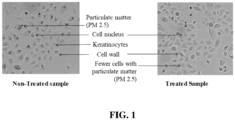
- non-limiting examples for fine particles can include particles with an aerodynamic diameter equal to or less than 2.5 ⁇ m (PM 2.5).
- the Myrothamnus flabellifolia extract is capable of inhibiting Nitric Oxide Synthase, inhibiting TNF- ⁇ , and blocking accumulation of PM 2.5.
- the saccharide isomerate is capable of inhibiting Nitric Oxide Synthase, inhibiting TNF- ⁇ , and increasing production rate of Occludin-1 and Filaggrin barrier proteins.
- the Alteromonas ferment extract is capable of increasing production of hyaluronic acid, inhibiting hyaluronidase, inhibiting elastase, and detoxifying heavy metals (e.g., cadmium and lead) by chelation.
- the Myrothamnus flabellifolia extract can be an aqueous extract of stems and/or leaves of Myrothamnus flabellifolia.
- the saccharide isomerate can contain an exopolysaccharide of Vibrio alginolyticus belonging to the family of Thalasso plankton.
- the Alteromonas ferment extract can include an exopolysaccharide from Kopara.
- the composition in the method can include 0.001 to 0.03% by weight of Myrothamnus flabellifolia extract, 0.0001 to 0.02% by weight of saccharide isomerate, and 0.001 to 0.03% by weight of Alteromonas ferment extract.
- compositions of the present invention can be pharmaceutically or cosmetically elegant or can have pleasant tactile properties.
- “Pharmaceutically elegant,” “cosmetically elegant,” and/or “pleasant tactile properties” describes a composition that has particular tactile properties which feel pleasant on the skin (e.g., compositions that are not too watery or greasy, compositions that have a silky texture, compositions that are non-tacky or sticky, etc.).
- Pharmaceutically or cosmetically elegant can also relate to the creaminess or lubricity properties of the composition or to the moisture retaining properties of the composition.
- a product comprising a composition of the present invention.
- the product can be a cosmetic product.
- the cosmetic product can be those described in other sections of this specification or those known to a person of skill in the art.
- Non-limiting examples of products include a moisturizer, a cream, a lotion, a skin softener, a gel, a wash, a foundation, a night cream, a lipstick, a cleanser, a toner, a sunscreen, a mask, an anti-aging product, a deodorant, an antiperspirant, a perfume, a cologne, etc.
- Topical application means to apply or spread a composition onto the surface of lips or keratinous tissue.
- Topical skin composition includes compositions suitable for topical application on skin and/or keratinous tissue. Such compositions are typically dermatologically-acceptable in that they do not have undue toxicity, incompatibility, instability, allergic response, and the like, when applied to skin and/or keratinous tissue. Topical skin care compositions of the present invention can have a selected viscosity to avoid significant dripping or pooling after application to skin and/or keratinous tissue.
- Keratinous tissue includes keratin-containing layers disposed as the outermost protective covering of mammals and includes, but is not limited to, lips, skin, hair, and nails.
- substantially and its variations are refers to ranges within 10%, within 5%, within 1%, or within 0.5%.
- wt.% refers to a weight, volume, or molar percentage of a component (e.g., ingredient), respectively, based on the total weight, the total volume, or the total moles of material (e.g., topical composition) that includes the component.
- a component e.g., ingredient
- mol.% refers to a weight, volume, or molar percentage of a component (e.g., ingredient), respectively, based on the total weight, the total volume, or the total moles of material (e.g., topical composition) that includes the component.
- 10 grams of component in 100 grams of the material is 10 wt. % of component.
- inhibiting or “reducing” or any variation of these terms includes any measurable decrease or complete inhibition to achieve a desired result.
- promote or “increase” or any variation of these terms includes any measurable increase or production of a protein or molecule (e.g., matrix proteins such as fibronectin, laminin, collagen, or elastin or molecules such as hyaluronic acid) to achieve a desired result.
- matrix proteins such as fibronectin, laminin, collagen, or elastin or molecules such as hyaluronic acid
- the words “comprising” (and any form of comprising, such as “comprise” and “comprises”), “having” (and any form of having, such as “have” and “has”), "including” (and any form of including, such as “includes” and “include”) or “containing” (and any form of containing, such as “contains” and “contain”) are inclusive or open-ended and do not exclude additional, unrecited elements or method steps.
- compositions and methods for their use can "comprise,” “consist essentially of,” or “consist of” any of the ingredients or steps disclosed throughout the specification.
- consisting essentially of a basic and novel property of the compositions and methods of the present invention is their ability to reduce skin inflammation, treat skin aging, and/or reduce accumulation of fine particles on the skin.
- the present invention provides a solution to at least some of the problems associated with skin inflammation, skin aging, and accumulation of fine particles on the skin.
- the solution is premised on combinations of extracts and other compounds as defined in the claims to inhibit nitric oxide synthase, inhibit TNF- ⁇ , increase barrier protein production rate, and/or blocking accumulation of fine particles on the barrier proteins of the skin.
- the combinations of extracts and compounds include (a) an effective amount of Myrothamnus flabellifolia extract and Alteromonas ferment extract; and, optionally, (b) an effective amount of saccharide isomerate and/or Opuntia tuna fruit extract.
- this combination has been shown to reduce nitric oxide synthase activity, decrease TNF- ⁇ production, increase the production of Occludin-1 and/or Filaggrin in human skin cells such as human epidermal keratinocytes, increase production of hyaluronic acid, inhibit hyaluronidase, detoxify heavy metals (e.g., cadmium and lead) by chelation, inhibit elastase, and block accumulation of PM 2.5 particles on skin.
- heavy metals e.g., cadmium and lead
- the present invention is premised on a determination that a combination of active ingredients- (a) an effective amount of Myrothamnus flabellifolia extract and Alteromonas ferment extract; and, optionally, (b) an effective amount of saccharide isomerate and/or Opuntia tuna fruit extract-can be used to improve the skin's visual appearance, reduce skin inflammation, and block fine particle accumulation on the skin.
- the combination can be used to reduce nitric oxide synthase activity, decrease TNF- ⁇ production, and increase the production of Occludin-1 and/or Filaggrin in human skin cells such as human epidermal keratinocytes, detoxify heavy metals (e.g., cadmium and lead) by chelation, and block accumulation of PM 2.5 particles on skin cells such as human keratinocytes.
- human skin cells such as human epidermal keratinocytes
- detoxify heavy metals e.g., cadmium and lead
- This combination of ingredients can be used in different products to treat various skin conditions.
- the combination of ingredients can be formulated in an emulsion (e.g., oil-in-water, water-in-oil), a gel, a serum, a gel emulsion, a gel serum, a lotion, a mask, or a body butter.
- Myrothamnus flabellifolia extract is an extract of Myrothamnus flabellifolia, also known as the resurrection plant, a flowering plant native to Southern Africa.
- Myrothamnusflabellifolia extract is commercially available.
- Myrothamnus flabellifolia extract can be supplied by Rahn under the trade name MYRAMAZE ® .
- the extract can be an aqueous extract or an alcohol extract.
- the extract is a water extract.
- the extract is an extract of the whole plant or one or more parts of the plant.
- the extract is an extract of the leaf and stem of the plant.
- Saccharide isomerate is an exopolysaccharide synthesized by a micro-organism called Vibrio alginolyticus and belonging to the family of Thalasso plankton.
- saccharide isomerate is commercially available.
- saccharide isomerate can be supplied by Barnet Products under the trade name BENOIDERM ® .
- the extract can be an aqueous extract or an alcohol extract.
- the extract can be an aqueous extract.
- Alteromonas ferment extract is exopolysaccharides from "Kopara” (microorganisms mat) living in a unique ecosystem in the rims of French Polynesian atolls. In some embodiments this ingredient is commercially available, e.g., from Lucas Meyer under the trade name Exo-H TM and EXO-P TM .
- the exopolysaccharide can have a molecular weight range of between 100 kDa and 5,000 kDa, preferably a molecular weight range of between 500 kDa and 3,000 kDa, and more preferably a molecular weight range of between 800 kDa and 1,500 kDa.
- the mean average molecular weight of the exopolysaccharide is 1,000 kDa.
- the extract is an aqueous extract.
- the extract is an aqueous-alcoholic extract. It has been determined that this ingredient can be used to increase production of hyaluronic acid, inhibit hyaluronidase, inhibit elastase, and detoxify skin by chelating heavy metals (e.g., cadmium and lead).
- Opuntia tuna fruit extract is an extract from the fruit of prickly pear.
- the extract is commercially available and can be obtained from a variety of commercial sources (see International Cosmetic Ingredient Dictionary and Handbook, 12th edition, volume 2, page 1731 (2008 )).
- the extracts described herein can be extracts made through extraction methods known in the art and combinations thereof.
- extraction methods include the use of liquid-liquid extraction, solid phase extraction, aqueous extraction, ethyl acetate, alcohol, acetone, oil, supercritical carbon dioxide, heat, pressure, pressure drop extraction, ultrasonic extraction, etc.
- Extracts can be a liquid, solid, dried liquid, re-suspended solid, etc.
- compositions of the present invention can include any amount of the ingredients discussed in this specification.
- the compositions can also include any number of combinations of additional ingredients described throughout this specification (e.g., pigments, or additional cosmetic or pharmaceutical ingredients).
- concentrations of any ingredient within the compositions can vary.
- the compositions can comprise, consisting essentially of, or consist of, in their final form, for example, at least about 0.0001%, 0.0002%, 0.0003%, 0.0004%, 0.0005%, 0.0006%, 0.0007%, 0.0008%, 0.0009%, 0.0010%, 0.0011%, 0.0012%, 0.0013%, 0.0014%, 0.0015%, 0.0016%, 0.0017%, 0.0018%, 0.0019%, 0.0020%, 0.0021%, 0.0022%, 0.0023%, 0.0024%, 0.0025%, 0.0026%, 0.0027%, 0.0028%, 0.0029%, 0.0030%, 0.0031%, 0.0032%, 0.0033%, 0.0034%, 0.0035%, 0.0036%, 0.0037%, 0.0038%, 0.0039%, 0.0040%, 0.0041%, 0.0042%, 0.0043%, 0.0044%, 0.0045%, 0.0046%
- compositions of the present invention can include or be incorporated into all types of vehicles and carriers.
- vehicle or carrier can be a pharmaceutically or dermatologically acceptable vehicle or carrier.
- vehicles or carriers include water, glycerin, alcohol, oil, a silicon containing compound, a silicone compound, and wax. Variations and other appropriate vehicles will be apparent to the skilled artisan and are appropriate for use in the present invention.
- concentrations and combinations of the compounds, ingredients, and agents can be selected in such a way that the combinations are chemically compatible and do not form complexes which precipitate from the finished product.
- compositions of the present invention can be structured or formulated into a variety of different forms.
- Non-limiting examples include emulsions (e.g., water-in-oil, water-in-oil-in-water, oil-in-water, silicone-in-water, water-in-silicone, oil-in-water-in-oil, oil-in-water-in-silicone emulsions), creams, lotions, solutions (both aqueous and hydro-alcoholic), anhydrous bases (such as lipsticks and powders), gels, masks, peels, and ointments. Variations and other structures will be apparent to the skilled artisan and are appropriate for use in the present invention.
- compositions can also include additional ingredients such as cosmetic ingredients and pharmaceutical active ingredients.
- additional ingredients such as cosmetic ingredients and pharmaceutical active ingredients.
- additional ingredients are described in the following subsections.
- fragrance agents artificial and natural; e.g., gluconic acid, phenoxyethanol, and triethanolamine
- dyes and color ingredients e.g., Blue 1, Blue 1 Lake, Red 40, titanium dioxide, D&C blue no. 4, D&C green no. 5, D&C orange no. 4, D&C red no. 17, D&C red no. 33, D&C violet no. 2, D&C yellow no. 10, and D&C yellow no.
- flavoring agents / aroma agents e.g., Stevia rebaudiana (sweetleaf) extract, and menthol
- adsorbents e.g., Stevia rebaudiana (sweetleaf) extract, and menthol
- lubricants solvents
- moisturizers including, e.g., emollients, humectants, film formers, occlusive agents, and agents that affect the natural moisturization mechanisms of the skin
- water-repellants e.g., UV absorbers and/or reflectors (physical and chemical absorbers such as para-aminobenzoic acid (“PABA”) and corresponding PABA derivatives, titanium dioxide, zinc oxide, etc.
- essential oils e.g., vitamins (e.g., A, B, C, D, E, and K), trace metals (e.g., zinc, calcium and selenium), anti-irritants (e.g., steroids and non-steroidal anti-inflammatories), botanical
- UV absorption and/or reflecting agents that can be used in combination with the compositions of the present invention include chemical and physical sunblocks.
- chemical sunblocks that can be used include para-aminobenzoic acid (PABA), PABA esters (glyceryl PABA, amyldimethyl PABA and octyldimethyl PABA), butyl PABA, ethyl PABA, ethyl dihydroxypropyl PABA, benzophenones (oxybenzone, sulisobenzone, benzophenone, and benzophenone-1 through 12), cinnamates (octyl methoxycinnamate, isoamyl p-methoxycinnamate, octylmethoxy cinnamate, cinoxate, diisopropyl methyl cinnamate, DEA-methoxycinnamate, ethyl diisopropylcinnamate, glyceryl oct
- Non-limiting examples of moisturizing agents that can be used with the compositions of the present invention include amino acids, chondroitin sulfate, diglycerin, erythritol, fructose, glucose, glycerin, glycerol polymers, glycol, 1,2,6-hexanetriol, honey, hyaluronic acid, hydrogenated honey, hydrogenated starch hydrolysate, inositol, lactitol, maltitol, maltose, mannitol, natural moisturizing factor, PEG-15 butanediol, polyglyceryl sorbitol, saccharide isomerate, salts of pyrrolidone carboxylic acid, potassium PCA, propylene glycol, sodium glucuronate, sodium PCA, sorbitol, sucrose, trehalose, urea, and xylitol.
- acetylated lanolin examples include acetylated lanolin, acetylated lanolin alcohol, alanine, algae extract, Aloe barbadensis, Aloe barbadensis extract, Aloe barbadensis gel, Althea officinalis extract, apricot ( Prunus armeniaca ) kernel oil, arginine, arginine aspartate, Arnica montana extract, aspartic acid, avocado ( Persea gratissima ) oil, barrier sphingolipids, butyl alcohol, beeswax, behenyl alcohol, beta-sitosterol, birch ( Betula alba ) bark extract, borage ( Borago officinalis ) extract, butcherbroom ( Ruscus aculeatus ) extract, butylene glycol, Calendula officinalis extract, Calendula officinalis oil, candelilla ( Euphorbia cerifera ) wax,
- Non-limiting examples of antioxidants that can be used with the compositions of the present invention include acetyl cysteine, ascorbic acid polypeptide, ascorbyl dipalmitate, ascorbyl methylsilanol pectinate, ascorbyl palmitate, ascorbyl stearate, BHA, BHT, t-butyl hydroquinone, cysteine, cysteine HCl, diamylhydroquinone, di-t-butylhydroquinone, dicetyl thiodipropionate, dioleyl tocopheryl methylsilanol, disodium ascorbyl sulfate, distearyl thiodipropionate, ditridecyl thiodipropionate, dodecyl gallate, erythorbic acid, esters of ascorbic acid, ethyl ferulate, ferulic acid, gallic acid esters, hydroquinone, isoocty
- compositions of the present invention can include a structuring agent.
- Structuring agent in certain aspects, assist in providing rheological characteristics to the composition to contribute to the composition's stability.
- structuring agents can also function as an emulsifier or surfactant.
- Non-limiting examples of structuring agents include stearic acid, palmitic acid, stearyl alcohol, cetyl alcohol, behenyl alcohol, stearic acid, palmitic acid, the polyethylene glycol ether of stearyl alcohol having an average of about 1 to about 21 ethylene oxide units, the polyethylene glycol ether of cetyl alcohol having an average of about 1 to about 5 ethylene oxide units, and mixtures thereof.
- the compositions do not include an emulsifier. In other aspects, however, the compositions can include one or more emulsifiers. Emulsifiers can reduce the interfacial tension between phases and improve the formulation and stability of an emulsion.
- the emulsifiers can be nonionic, cationic, anionic, and zwitterionic emulsifiers (See McCutcheon's (1986); U.S. Pat. Nos. 5,011,681 ; 4,421,769 ; 3,755,560 ).
- Non-limiting examples include esters of glycerin, esters of propylene glycol, fatty acid esters of polyethylene glycol, fatty acid esters of polypropylene glycol, esters of sorbitol, esters of sorbitan anhydrides, carboxylic acid copolymers, esters and ethers of glucose, ethoxylated ethers, ethoxylated alcohols, alkyl phosphates, polyoxyethylene fatty ether phosphates, fatty acid amides, acyl lactylates, soaps, TEA stearate, DEA oleth-3 phosphate, polyethylene glycol 20 sorbitan monolaurate (polysorbate 20), polyethylene glycol 5 soya sterol, steareth-2, steareth-20, steareth-21, ceteareth-20, cetearyl glucoside, cetearyl alcohol, C12-13 pareth-3, PPG-2 methyl glucose ether distearate, P
- silicone containing compounds include any member of a family of polymeric products whose molecular backbone is made up of alternating silicon and oxygen atoms with side groups attached to the silicon atoms.
- silicones can be synthesized into a wide variety of materials. They can vary in consistency from liquid to gel to solids.
- Non-limiting examples include silicone oils (e.g., volatile and non-volatile oils), gels, and solids.
- the silicon containing compounds include silicone oils such as a polyorganosiloxane.
- Non-limiting examples of polyorganosiloxanes include dimethicone, cyclomethicone, polysilicone-11, phenyl trimethicone, trimethylsilylamodimethicone, stearoxytrimethylsilane, or mixtures of these and other organosiloxane materials in any given ratio in order to achieve the desired consistency and application characteristics depending upon the intended application (e.g., to a particular area such as the skin, hair, or eyes).
- a "volatile silicone oil” includes a silicone oil have a low heat of vaporization, i.e. normally less than about 50 cal per gram of silicone oil.
- Non-limiting examples of volatile silicone oils include: cyclomethicones such as Dow Corning 344 Fluid, Dow Corning 345 Fluid, Dow Corning 244 Fluid, and Dow Corning 245 Fluid, Volatile Silicon 7207 (Union Carbide Corp., Danbury, Conn.); low viscosity dimethicones, i.e. dimethicones having a viscosity of about 50 cst or less (e.g., dimethicones such as Dow Corning 200-0.5 cst Fluid).
- the Dow Corning Fluids are available from Dow Corning Corporation, Midland, Michigan.
- Cyclomethicone and dimethicone are described in the Third Edition of the CTFA Cosmetic Ingredient Dictionary as cyclic dimethyl polysiloxane compounds and a mixture of fully methylated linear siloxane polymers end-blocked with trimethylsiloxy units, respectively.
- Other non-limiting volatile silicone oils that can be used in the context of the present invention include those available from General Electric Co., Silicone Products Div., Waterford, N.Y. and SWS Silicones Div. of Stauffer Chemical Co., Adrian, Michigan.
- Exfoliating agents include ingredients that remove dead skin cells on the skin's outer surface. These agents may act through mechanical, chemical, and/or other means.
- Non-limiting examples of mechanical exfoliating agents include abrasives such as pumice, silica, cloth, paper, shells, beads, solid crystals, solid polymers, etc.
- Non-limiting examples of chemical exfoliating agents include acids and enzyme exfoliants. Acids that can be used as exfoliating agents include, but are not limited to, glycolic acid, lactic acid, citric acid, alpha hydroxy acids, beta hydroxy acids, etc. Other exfoliating agents known to those of skill in the art are also contemplated as being useful within the context of the present invention.
- Essential oils include oils derived from herbs, flowers, trees, and other plants. Such oils are typically present as tiny droplets between the plant's cells, and can be extracted by several method known to those of skill in the art (e.g., steam distilled, enfleurage (i.e., extraction by using fat), maceration, solvent extraction, or mechanical pressing). When these types of oils are exposed to air they tend to evaporate (i.e., a volatile oil). As a result, many essential oils are colorless, but with age they can oxidize and become darker. Essential oils are insoluble in water and are soluble in alcohol, ether, fixed oils (vegetal), and other organic solvents. Typical physical characteristics found in essential oils include boiling points that vary from about 160° to 240° C and densities ranging from about 0.759 to about 1.096.
- Essential oils typically are named by the plant from which the oil is found.
- rose oil or peppermint oil are derived from rose or peppermint plants, respectively.
- Non-limiting examples of essential oils that can be used in the context of the present invention include sesame oil, macadamia nut oil, tea tree oil, evening primrose oil, Spanish sage oil, Spanish rosemary oil, coriander oil, thyme oil, pimento berries oil, rose oil, anise oil, balsam oil, bergamot oil, rosewood oil, cedar oil, chamomile oil, sage oil, clary sage oil, clove oil, cypress oil, eucalyptus oil, fennel oil, sea fennel oil, frankincense oil, geranium oil, ginger oil, grapefruit oil, jasmine oil, juniper oil, lavender oil, lemon oil, lemongrass oil, lime oil, mandarin oil, marjoram oil, myrrh oil, neroli oil, orange oil, patch
- Thickening agents include substances which that can increase the viscosity of a composition.
- Thickeners include those that can increase the viscosity of a composition without substantially modifying the efficacy of the active ingredient within the composition.
- Thickeners can also increase the stability of the compositions of the present invention.
- thickeners include hydrogenated polyisobutene, trihydroxystearin, ammonium acryloyldimethyltaurate/vp copolymer, or a mixture of them.
- Non-limiting examples of additional thickening agents that can be used in the context of the present invention include carboxylic acid polymers, crosslinked polyacrylate polymers, polyacrylamide polymers, polysaccharides, and gums.
- carboxylic acid polymers include crosslinked compounds containing one or more monomers derived from acrylic acid, substituted acrylic acids, and salts and esters of these acrylic acids and the substituted acrylic acids, wherein the crosslinking agent contains two or more carbon-carbon double bonds and is derived from a polyhydric alcohol (see U.S. Pat. Nos. 5,087,445 ; 4,509,949 ; 2,798,053 ; CTFA International Cosmetic Ingredient Dictionary, Fourth edition, 1991, pp. 12 and 80 ).
- carboxylic acid polymers examples include carbomers, which are homopolymers of acrylic acid crosslinked with allyl ethers of sucrose or pentaerythritol (e.g., CARBOPOL TM 900 series from B. F. Goodrich).
- Non-limiting examples of crosslinked polyacrylate polymers include cationic and nonionic polymers. Examples are described in U.S. Pat. Nos. 5,100,660 ; 4,849,484 ; 4,835,206 ; 4,628,078 ; 4,599,379 ).
- Non-limiting examples of polyacrylamide polymers include polyacrylamide, isoparaffin and laureth-7, multi-block copolymers of acrylamides and substituted acrylamides with acrylic acids and substituted acrylic acids.
- Non-limiting examples of polysaccharides include cellulose, carboxymethyl hydroxyethylcellulose, cellulose acetate propionate carboxylate, hydroxyethylcellulose, hydroxyethyl ethylcellulose, hydroxypropylcellulose, hydroxypropyl methylcellulose, methyl hydroxyethylcellulose, microcrystalline cellulose, sodium cellulose sulfate, and mixtures thereof.
- alkyl substituted cellulose where the hydroxy groups of the cellulose polymer is hydroxyalkylated (preferably hydroxy ethylated or hydroxypropylated) to form a hydroxyalkylated cellulose which is then further modified with a C10 -C30 straight chain or branched chain alkyl group through an ether linkage.
- these polymers are ethers of C10-C30 straight or branched chain alcohols with hydroxyalkylcelluloses.
- Other useful polysaccharides include scleroglucans comprising a linear chain of (1-3) linked glucose units with a (1-6) linked glucose every three units.
- Non-limiting examples of gums that can be used with the present invention include acacia, agar, algin, alginic acid, ammonium alginate, amylopectin, calcium alginate, calcium carrageenan, carnitine, carrageenan, dextrin, gelatin, gellan gum, guar gum, guar hydroxypropyltrimonium chloride, hectorite, hyaluronic acid, hydrated silica, hydroxypropyl chitosan, hydroxypropyl guar, karaya gum, kelp, locust bean gum, natto gum, potassium alginate, potassium carrageenan, propylene glycol alginate, sclerotium gum, sodium carboxymethyl dextran, sodium carrageenan, tragacanth gum, xanthan gum, and mixtures thereof.
- Non-limiting examples of preservatives that can be used in the context of the present invention include quaternary ammonium preservatives such as polyquaternium-1 and benzalkonium halides (e.g., benzalkonium chloride ("BAC") and benzalkonium bromide), parabens (e.g., methylparabens and propylparabens), phenoxyethanol, benzyl alcohol, chlorobutanol, phenol, sorbic acid, thimerosal or combinations thereof.
- quaternary ammonium preservatives such as polyquaternium-1 and benzalkonium halides (e.g., benzalkonium chloride (“BAC”) and benzalkonium bromide), parabens (e.g., methylparabens and propylparabens), phenoxyethanol, benzyl alcohol, chlorobutanol, phenol, sorbic acid, thimerosal or combinations thereof.
- Pharmaceutical active agents are also contemplated as being useful with the compositions of the present invention.
- Non-limiting examples of pharmaceutical active agents include anti-acne agents, agents used to treat rosacea, analgesics, anesthetics, anorectals, antihistamines, anti-inflammatory agents including non-steroidal anti-inflammatory drugs, antibiotics, antifungals, antivirals, antimicrobials, anti-cancer actives, scabicides, pediculicides, antineoplastics, antiperspirants, antipruritics, antipsoriatic agents, anti seborrheic agents, biologically active proteins and peptides, burn treatment agents, cauterizing agents, depigmenting agents, depilatories, diaper rash treatment agents, enzymes, hair growth stimulants, hair growth retardants including DFMO and its salts and analogs, hemostatics, kerotolytics, canker sore treatment agents, cold sore treatment agents, dental and periodontal treatment agents, photosensitizing actives, skin
- Kits are also contemplated as being used in certain aspects of the present invention.
- compositions of the present invention can be included in a kit.
- a kit can include a container.
- Containers can include a bottle, a metal tube, a laminate tube, a plastic tube, a dispenser, a pressurized container, a barrier container, a package, a compartment, a lipstick container, a compact container, cosmetic pans that can hold cosmetic compositions, or other types of containers such as injection or blow-molded plastic containers into which the dispersions or compositions or desired bottles, dispensers, or packages are retained.
- the kit and/or container can include indicia on its surface.
- the indicia for example, can be a word, a phrase, an abbreviation, a picture, or a symbol.
- the containers can dispense a pre-determined amount of the composition.
- the container can be squeezed (e.g., metal, laminate, or plastic tube) to dispense a desired amount of the composition.
- the composition can be dispensed as a spray, an aerosol, a liquid, a fluid, or a semi-solid.
- the containers can have spray, pump, or squeeze mechanisms.
- a kit can also include instructions for employing the kit components as well the use of any other compositions included in the container. Instructions can include an explanation of how to apply, use, and maintain the compositions.
- Combinations of active ingredients disclosed herein can be included in a wide-range of topical product formulations for skin and/or hair.
- Combinations from Example 1 may be prepared as topical skin or hair compositions.
- the combination in Table 1 may be prepared as a facial emulsion for day time use.
- the combination in Table 2 may be prepared as a serum.
- the combination in Table 3 may be prepared as an eye gel.
- the combination of Table 4 may be prepared as a freshener.
- the combination of Table 5 may be prepared as a cleanser.
- the combination of Table 6 may be prepared as a moisturizer.
- compositions disclosed and claimed herein can be made and executed without undue experimentation in light of the present disclosure. More specifically, it will be apparent that certain agents which are both chemically and physiologically related may be substituted for the agents described herein while the same or similar results would be achieved.
- Tables 9 and 10 describe generic formulations or skin testing formulations in which an active ingredient can be incorporated into. These formulations can also be used to determine the types of skin benefits that can be attributed to the active ingredient. These formulations are prepared in such a manner that any resulting skin benefit from topical application of the formula to skin can be directly attributed to the active ingredient being tested.
- the active ingredient that can be tested can be Myrothamnus flabellifolia leaf/stem extract, plankton extract, Alteromonas ferment extract, malachite extract, and/or Opuntia tuna fruit extract, or any combination thereof, or all of such active ingredients, or at least 1, 2, 3, 4, and/or 5 of such active ingredients.
- phase B Add all items in phase B to separate beaker and heat to 70-75°C. Mix phases A and B at 70-75°C. Continue mixing and allow composition to cool to 30°C. Subsequently, add phase C ingredient while mixing. ** The active ingredients identified throughout this specification can be incorporated into a composition as the active ingredient. The active ingredients can be individually used or combined in this composition. The concentration ranges of the active ingredients (or combination of active ingredients) can be modified as desired or needed by increasing or decreasing the amount of water.
- the formulations represented in Table 11-16 are non-limiting examples of the types of formulations that can be prepared in the context of the present invention. Any standard method can be used to prepare such formulations. For instance, simple mixing of the ingredients in a beaker can be used. One should mix such ingredients and add heat as necessary to obtain a homogenous composition.
- the active ingredients that can be used in the formulations include Myrothamnus flabellifolia leaf/stem extract and Alteromonas ferment extract, and, optionally saccharide isomerate, , malachite extract, and/or Opuntia tuna fruit extract.
- Table 11 includes a non-limiting example of a composition of the present invention.
- the composition can be formulated into an emulsion (e.g., o/w, w/o, o/w/o, w/o/w, etc.) and the additional ingredients identified throughout the specification can be included into the Table 11 composition (e.g., by adjusting the water content of the composition). Further, the concentration ranges of the ingredients identified in Table 11 can vary depending on a desired formulation (e.g., cream, lotion, moisturizer cleanser, etc.). TABLE 11 Ingredient % Concentration (by weight) Water q.s.
- Active Ingredient* 0.1% to 10% Glycerin 3 to 40% Butylene glycol 0.0001 to 10% Propylene glycol 0.0001 to 10% Phenoxyethanol 0.0001 to 10% Disodium EDTA 0.0001 to 10% Steareth-20 0.0001 to 10% Chlorhexidine Digluconate 0.0001 to 10% Potassium Sorbate 0.0001 to 10% Preservative* * 0.0001 to 2% TOTAL 100 *
- the active ingredients identified throughout this specification can be incorporated into a composition as the active ingredient.
- the active ingredients can be individually used or combined in this composition.
- the concentration ranges of the active ingredients (or combination of active ingredients) can be modified as desired or needed by increasing or decreasing the amount of water. **Any preservative can be used identified in the specification or those known in the art.
- Table 12 includes a non-limiting example of a composition of the present invention.
- the composition can be formulated into an emulsion (e.g., o/w, w/o, o/w/o, w/o/w, etc.) and the additional ingredients identified throughout the specification can be included into the Table 12 composition (e.g., by adjusting the water content of the composition). Further, the concentration ranges of the ingredients identified in Table 12 can vary depending on a desired formulation (e.g., cream, lotion, moisturizer cleanser, etc.). TABLE 12 Ingredient % Concentration (by weight) Water q.s.
- Active Ingredient* 0.1% to 10% Dimethicone 0.0001 to 10% Triethanolamine 0.0001 to 10% Phenonip 0.0001 to 10% Betaine 0.0001 to 10% Disodium EDTA 0.0001 to 10% Tocopheryl acetate 0.0001 to 10% PRODEW ® 400 0.0001 to 10% Preservative* * 0.0001 to 2% TOTAL 100 *
- the active ingredients identified throughout this specification can be incorporated into a composition as the active ingredient.
- the active ingredients can be individually used or combined in this composition.
- the concentration ranges of the active ingredients (or combination of active ingredients) can be modified as desired or needed by increasing or decreasing the amount of water. **Any preservative can be used identified in the specification or those known in the art.
- Table 13 includes a non-limiting example of a composition of the present invention.
- the composition can be formulated into an emulsion (e.g., o/w, w/o, o/w/o, w/o/w, etc.) and the additional ingredients identified throughout the specification can be included into the Table 13 composition (e.g., by adjusting the water content of the composition).
- the concentration ranges of the ingredients identified in Table 13 can vary depending on a desired formulation (e.g., cream, lotion, moisturizer cleanser, etc.).
- the Table 13 composition can be a moisturizer.
- Table 13 Ingredient % Concentration (by weight) Water q.s.
- the active ingredients identified throughout this specification can be incorporated into composition as the active ingredient.
- the active ingredients can be individually used or combined in this composition.
- the concentration ranges of the active ingredients (or combination of active ingredients) can be modified as desired or needed by increasing or decreasing the amount of water.
- Table 14 includes a non-limiting example of a composition of the present invention.
- the composition can be formulated into an emulsion (e.g., o/w, w/o, o/w/o, w/o/w, etc.) and the additional ingredients identified throughout the specification can be included into the Table 14 composition (e.g., by adjusting the water content of the composition).
- the concentration ranges of the ingredients identified in Table 14 can vary depending on a desired formulation (e.g., cream, lotion, moisturizer cleanser, etc.).
- the Table 14 composition can be a moisturizer.
- Table 14 Ingredient % Concentration (by weight) Water q.s.
- the active ingredients identified throughout this specification can be incorporated into a composition as the active ingredient.
- the active ingredients can be individually used or combined in this composition.
- the concentration ranges of the active ingredients (or combination of active ingredients) can be modified as desired or needed by increasing or decreasing the amount of water.
- Table 15 includes a non-limiting example of a composition of the present invention.
- the composition can be formulated into an emulsion (e.g., o/w, w/o, o/w/o, w/o/w, etc.) and the additional ingredients identified throughout the specification can be included into the Table 15 composition (e.g., by adjusting the water content of composition).
- the concentration ranges of the ingredients identified in Table 15 can vary depending on a desired formulation (e.g., cream, lotion, moisturizer cleanser, etc.).
- the Table 15 composition can be a sunscreen lotion.
- Table 15 Ingredient % Concentration (by weight) Water q.s.
- Active Ingredient* 0.1% to 10% Xanthan Gum 0.0001 to 10% Disodium EDTA 0.0001 to 10% Pentylene Glycol 0.0001 to 10% Capryl Glycol 0.0001 to 10% PEMULEN TM TR-1 0.0001 to 10% Triethanolamine 0.0001 to 10% PVP/Hexadecene Copolymer 0.0001 to 10% FINSOLV ® TN 10 to 30% Sorbitan Isostearate 0.0001 to 10% Sunscreen Ingredient** 2 to 25% TOTAL 100 *
- the active ingredients identified throughout this specification can be incorporated into a composition as the active ingredient.
- the active ingredients can be individually used or combined in this composition.
- the concentration ranges of the active ingredients (or combination of active ingredients) can be modified as desired or needed by increasing or decreasing the amount of water.
- **Sunscreen ingredient can be any sunscreen ingredient, or combination of such ingredients, identified in the specification (e.g. UV absorbing and/or reflecting agents) or known to those of ordinary skill in the art.
- the sunscreen ingredient is a combination of zinc oxide and titanium dioxide.
- Table 16 includes a non-limiting example of a composition of the present invention.
- the additional ingredients identified throughout the specification can be included into the Table 16 composition (e.g., by adjusting the water content of composition).
- the concentration ranges of the ingredients identified in Table 16 can vary depending on a desired formulation (e.g., cream, lotion, moisturizer cleanser, etc.).
- the Table 16 composition can be a cleanser.
- Table 16 Ingredient % Concentration (by weight) Water q.s.
- Active Ingredient* 0.1% to 10% Disodium EDTA 0.0001 to 10% Citric Acid 0.0001 to 10% Pentylene Glycol 0.0001 to 10% Capryl Glycol 0.0001 to 10% Sodium methyl cocoyl taurate 10 to 30% Sodium cocoamphodiacetate 1 to 10% TOTAL 100 *
- the active ingredients identified throughout this specification can be incorporated into a composition as the active ingredient.
- the active ingredients can be individually used or combined in this composition.
- the concentration ranges of the active ingredients (or combination of active ingredients) can be modified as desired or needed by increasing or decreasing the amount of water.
- Formulations having combinations of active ingredients disclosed herein from Example 1 were prepared as topical skin and/or hair compositions.
- the formulations in Tables 17, 18 and 19 were prepared as SPF 25 (Sun Protection Factor 25) facial emulsions and are not according to the invention.
- the formulation in Table 20 was prepared as a facial serum.
- the formulations in Tables 21 and 22 were prepared as eye gels and are not according to the invention.
- the formulation in Table 23 was prepared as a freshener according to the invention.
- Table 24 was prepared as a cleanser according to the invention.
- Table 25 was prepared as a moisturizer and is not according to the invention.
- Tables 26 (not according to the invention) and 27 were prepared as masks.
- Table 28 also disclosed herein was prepared as a serum.
- the formulation can be prepared by mixing the ingredients in a beaker under heat 70-75°C until homogenous. Subsequently, the formulation can be cooled to standing room temperature (20-25°C). Further, and if desired, additional ingredients can be added, for example, to modify the rheological properties of the composition. **Excipients can be added, for example, to modify the rheological properties of the composition.
- the amount of water can be varied so long as the amount of water in the composition is at least 35% w/w, and preferably between 40 to 80% w/w.
- the formulation can be prepared by mixing the ingredients in a beaker under heat 70-75°C until homogenous. Subsequently, the formulation can be cooled to standing room temperature (20-25°C). Further, and if desired, additional ingredients can be added, for example, to modify the rheological properties of the composition. **Excipients can be added, for example, to modify the rheological properties of the composition.
- the amount of water can be varied so long as the amount of water in the composition is at least 35% w/w, and preferably between 40 to 80% w/w.
- the formulation can be prepared by mixing the ingredients in a beaker under heat 70-75°C until homogenous. Subsequently, the formulation can be cooled to standing room temperature (20-25°C). Further, and if desired, additional ingredients can be added, for example, to modify the rheological properties of the composition. **Excipients can be added, for example, to modify the rheological properties of the composition.
- the amount of water can be varied so long as the amount of water in the composition is at least 35% w/w, and preferably between 40 to 80% w/w.
- the formulation can be prepared by mixing the ingredients in a beaker under heat 70-75°C until homogenous. Subsequently, the formulation can be cooled to standing room temperature (20-25°C). Further, and if desired, additional ingredients can be added, for example, to modify the rheological properties of the composition. **Excipients can be added, for example, to modify the rheological properties of the composition.
- the amount of water can be varied so long as the amount of water in the composition is at least 35% w/w, and preferably between 55 to 85% w/w.
- the formulation can be prepared by mixing the ingredients in a beaker under heat 70-75°C until homogenous. Subsequently, the formulation can be cooled to standing room temperature (20-25°C). Further, and if desired, additional ingredients can be added, for example, to modify the rheological properties of the composition. **Excipients can be added, for example, to modify the rheological properties of the composition.
- the amount of water can be varied so long as the amount of water in the composition is at least 35% w/w, and preferably between 70 to 95% w/w.
- the formulation can be prepared by mixing the ingredients in a beaker under heat 70-75°C until homogenous. Subsequently, the formulation can be cooled to standing room temperature (20-25°C). Further, and if desired, additional ingredients can be added, for example, to modify the rheological properties of the composition. **Excipients can be added, for example, to modify the rheological properties of the composition.
- the amount of water can be varied so long as the amount of water in the composition is at least 35% w/w, and preferably between 70 to 95% w/w.
- **Excipients can be added, for example, to modify the rheological properties of the composition.
- the amount of water can be varied so long as the amount of water in the composition is at least 35% w/w, and preferably between 70 to 95% w/w.
- the formulation can be prepared by mixing the ingredients in a beaker under heat 70-75°C until homogenous. Subsequently, the formulation can be cooled to standing room temperature (20-25°C). Further, and if desired, additional ingredients can be added, for example, to modify the rheological properties of the composition. **Excipients can be added, for example, to modify the rheological properties of the composition.
- the amount of water can be varied so long as the amount of water in the composition is at least 35% w/w, and preferably between 40 to 80% w/w.
- the formulation can be prepared by mixing the ingredients in a beaker under heat 70-75°C until homogenous. Subsequently, the formulation can be cooled to standing room temperature (20-25°C). Further, and if desired, additional ingredients can be added, for example, to modify the rheological properties of the composition. **Excipients can be added, for example, to modify the rheological properties of the composition.
- the amount of water can be varied so long as the amount of water in the composition is at least 35% w/w, and preferably between 65 to 85% w/w.
- the formulation can be prepared by mixing the ingredients in a beaker under heat 70-75°C until homogenous. Subsequently, the formulation can be cooled to standing room temperature (20-25°C). Further, and if desired, additional ingredients can be added, for example, to modify the rheological properties of the composition. **Excipients can be added, for example, to modify the rheological properties of the composition.
- the amount of water can be varied so long as the amount of water in the composition is at least 35% w/w, and preferably between 35 to 60% w/w.
- additional ingredients can be added, for example, to modify the rheological properties of the composition.
- **Excipients can be added, for example, to modify the rheological properties of the composition.
- the amount of water can be varied so long as the amount of water in the composition is at least 35% w/w, and preferably between 35 to 60% w/w.
- the formulation can be prepared by mixing the ingredients in a beaker under heat 70-75°C until homogenous. Subsequently, the formulation can be cooled to standing room temperature (20-25°C). Further, and if desired, additional ingredients can be added, for example, to modify the rheological properties of the composition. **Excipients can be added, for example, to modify the rheological properties of the composition.
- the amount of water can be varied so long as the amount of water in the composition is at least 35% w/w, and preferably between 55 to 85% w/w.
- the efficacy of the ingredients were determined by the following methods.
- the following are non-limiting assays that can be used in the context of the present invention. It should be recognized that other testing procedures can be used, including, for example, objective and subjective procedures.
- Myrothamnus flabellifolia extract inhibits TNF- ⁇ , reduces nitric oxide synthase, and blocks the accumulation of fine particles (e.g., PM 2.5) on the skin. It was also determined that saccharide isomerate inhibits TNF- ⁇ , increase production of barrier proteins of Occludin-1 and Filaggrin, and reduces nitric oxide synthase. It was also found that Alteromonas ferment extract chelates heavy metals, such as cadmium and lead. A summary of quantitative results is found in Table 29 and the methods used to determine the properties of the ingredients are provided below.
- TNF- ⁇ Tumor Necrosis Factor Alpha
- Myrothamnus flabellifolia extract and saccharide isomerate have been shown to inhibit TNF- ⁇ production in keratinocytes.
- TNF- ⁇ is the prototype ligand of the TNF superfamily. It is a pleiotropic cytokine that plays a central role in inflammation. Increase in its expression is associated with an up regulation in pro-inflammatory activity.
- the bioassay used to analyze the effect of Myrothamnus flabellifolia extract and saccharide isomerate used a spectrophotometric measurement that reflects the presence of TNF- ⁇ and cellular viability. It was determined that Myrothamnus flabellifolia extract and saccharide isomerate inhibit TNF- ⁇ production in keratinocytes by 76% and 88%.
- Nitric Oxide Synthase Activity Assay Nitric Oxide Synthase Activity Assay: Nitric Oxide synthases (NOS) are a family of enzymes catalyzing the production of nitric oxide (NO) from L-arginine. NOS is an important mediator of vasodilation in blood vessels. This bioassay was used to analyze the effect of saccharide isomerate extract and Myrothamnus flabellifolia extract on the activity of NOS. The bioassay is performed in the presence or absence of the test compound, test extract, or positive control during production of NO by NOS. To measure the activity of NOS under, the NO product is allowed to oxidize to nitrite and nitrate and then the nitrate is reduced to nitrite and measured using an improved Griess method.
- Occludin-1 Changes in the production of Occludin in keratinocytes due to saccharide isomerate extract was measured.
- Occludin-1 is a protein critical to the formulation of tight junctions and the skin's moisture barrier function.
- Occludin-1 production in treated and non-treated keratinocytes was determined by the use of a bioassay that analyzes Occludin-1 concentration in keratinocyte cell lysates. The bioassay was performed using PROTEINSIMPLE ® SIMON TM western blotting protocol.
- HEKa adult human epidermal keratinocytes from Life Technologies (C-005-5C) were grown at 37 °C and 5% CO2 for 24 hours in EPILIFE ® growth media with calcium from Life Technologies (M-EP-500-CA) supplemented with Keratinocyte Growth Supplement (HKGS) from Life Technologies (S-101-5).
- HEKa were then incubated for 24 to 48 hours in growth medium containing test compound, no compound for negative control, or with 1mM CaCl 2 for positive control.
- the HEKa cells were then washed, collected, and stored on ice or colder until lysed on ice using a lysis buffer and sonication.
- the protein concentrations of the samples were determined and used to normalize the samples.
- the lysates were stored at -80 °C until use in the bioassay.
- the PROTEINSIMPLE ® SIMON TM western blotting bioassay assay employed a quantitative western blotting immunoassay technique using an antibody specific for Occludin to quantitatively detect Occludin in the test samples.
- Cell samples were lysed and normalized for protein concentration as described above. Normalized samples and molecular weight standards were loaded and ran on a denatured protein separation gel using capillary electrophoresis. The proteins in the gel were then immobilized and immunoprobed using a primary antibody specific for Occludin. The immobilized proteins were then immunoprobed with an enzyme-linked detection antibody that binds the primary antibody.
- a chemiluminescent substrate solution was then added to the immobilized proteins to allow chemiluminescent development in proportion to the amount of Occludin bound in the immobilization.
- the chemiluminescent development was stopped at a specific time and the intensity of the chemiluminescent signal was measured and compared to positive and negative controls. It was determined that saccharide isomerate increased keratinocyte production of Occludin-1 increased 171%. See table 24.
- Filaggrin is the precursor to Natural Moisturizing Factor (NMF) in the skin. Increased NMF increases the moisture content of the skin.
- NMF Natural Moisturizing Factor
- Filaggrin production in treated and non-treated keratinocytes were determined using a bioassay that analyzes Filaggrin concentration in keratinocyte cell lysates. The bioassay was performed using PROTEINSIMPLE ® Simon TM western blotting protocol. It was determined that saccharide isomerate increased keratinocyte production of Filaggrin by 197%.
- NHEK normal human epidermal keratinocytes
- EPI-200 -Mattek EPILIFE ® growth media with calcium from Life Technologies M-EP-500-CA.
- NHEK were incubated in growth medium overnight at 37 °C in 5% CO2 prior to treatment.
- NHEK were then incubated in growth medium with 1% test compound/extract or no compound/extract for 24 to 36 hours.
- the NHEK were then washed, collected, and stored on ice or colder until lysed on ice using a lysis buffer and sonication.
- the protein concentrations of the samples were determined and used to normalize the samples.
- the lysates were stored at -80 °C until use in the bioassay.
- the bioassay assay employs a quantitative western blotting immunoassay technique using an antibody specific for Filaggrin to quantitatively detect Filaggrin in the test samples.
- Cell samples were lysed and normalized for protein concentration. Normalized samples and molecular weight standards were then loaded and ran on a denatured protein separation gel using capillary electrophoresis. The proteins in the gel were immobilized and immunoprobed using a primary antibody specific for Filaggrin. The immobilized proteins were then immunoprobed with an enzyme-linked detection antibody that binds the primary antibody.
- a chemiluminescent substrate solution was then added to the immobilized proteins to allow chemiluminescent development in proportion to the amount of Filaggrin bound in the immobilization. The chemiluminescent development was stopped at a specific time and the intensity of the chemiluminescent signal was measured and compared to positive and negative controls.
- Alteromonas ferment extract has been shown to chelate heavy metals.
- the biosorption capacity of EXO-P TM i.e., 1% (10 g/L) of pure exopolysaccharide in butylene glycol with heavy metals cadmium and lead was evaluated. It was determined that Alteromonas ferment extract chelates heavy metals such as cadmium and lead.
- the EXO-P TM was placed in contact with metallic cations (heavy metals) at a final concentration of 0.5 mg/mL for the exopolysaccharide Alteromonas ferment extract and 300 ppm (0.3 mg/mL) for the heavy metals, in a total volume of 30 mL in Erlenmeyer flasks.
- the pH was adjusted to 6 and the Erlenmeyer flasks were then placed under agitation for 3 hours at 200 rpm at 25 °C.
- the solutions were then filtered using AMICON ® ultra centrifugal filters (VIVASPIN ® 20, Vivascience) with a 30 kDa threshold under centrifugation at 3,000 G.
- the heavy metal concentration was measured in the filtrate by atomic absorption spectroscopy and the methods were normalized depending on the metallic cations being measured.
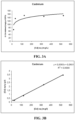
- the curves obtained for cadmium and lead show an increase in retention (expansion) at isotherm ending with a plateau, indicating that the exopolysaccharide's retention sites may have been approaching saturation with the respective metals.
- a 1% (v/v) of EXO-P TM solution corresponds to a final exopolysaccharide Alteromonas ferment extract concentration of 0.1 g/L.
- the observed K d values are all lower than 0.1 g/L (0.01% or 100 mg/L), which indicates that at a concentration of 0.1 g/L (0.01%) of EXO-P TM chelation of the metal by the exopolysaccharide is expected.
- chelation capacities of EXO-P TM for cadmium, and lead were effective from 0.01 to 0.04 g/L and higher.
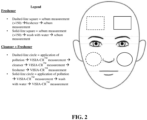
- Cleansing Efficacy of Cleaning Particulate Matter Clinical efficacy of the cleansing effect of an embodiment of the cleanser containing a combination of Alteromonas ferment extract and Myrothamnus flabellifolia extract and an embodiment of the freshener formulation containing a combination of Alteromonas ferment extract and Myrothamnus flabellifolia extract as a follow up step was evaluated on 31 Asian females (average age: 40.65 +/- 8.79 years) using PM 2.5 ultraviolet fluorescent beads applied on the cheeks, as compared to water. It was determined that the cleanser cleaned the skin of fine particle matter better than cleansing with water alone. The freshener also showed an ability to further clean the skin of fine particle matter.
- the cheeks testing areas were marked for "Cleanser + Freshener," and water (control) application, per the randomization scheme to test efficacy of removing fine particle matter on the skin.
- the application of the PM 2.5 (FLUORESBRITE ® Polychromatic Red Microspheres, Polysciences) material to all testing areas was used as the baseline. Images were captured after the PM 2.5 application via VISIA-CR TM (Canfield Imaging Systems, Fairfield NJ, USA) in Standard Light 1 and UV Filter Light. This was followed by imaging analyzing software to establish baseline.
- the Sebumeter SM815 was used prior to the freshener and water application to establish an excess sebum baseline. After baseline was established, the freshener was applied to the forehead, along with water and wiped away with a cotton ball. Immediately after wiping away, the Sebumeter SM815 was used to record the reading. The results indicated that a combination of Alteromonas ferment extract and Myrothamnusflabellifolia extract are effective in removing excess sebum of the skin.
- Clinical efficacy of the serum formulation also disclosed herein containing a combination of Myrothamnus flabellifolia extract, saccharide isomerate, and Opuntia tuna fruit extract was evaluated on the effectiveness to reduce the appearance of fine lines and wrinkles, reduce the appearance of skin yellowness, reduce the visibility of pores, reduce the appearance of skin dullness, improve the appearance of skin texture and/or roughness, reduce hyperpigmentation, reduce the appearance of skin redness, improve the appearance of skin tone, improve overall skin appearance (e.g., from photodamage), and improve skin barrier function.
- a summary of quantitative results compared to baseline is found in Tables 33 and 34 below and the methods used to determine the properties of the ingredients are provided in Table 35 below.
- Recruitment criteria for the study included the following: thirty-five (35) Asian female subjects (ages 25-55 years old), with a minimum of 30 subjects completing the study; visible dull skin; visible hyperpigmentation; uneven skin tone; full face fine lines and wrinkles; visible yellowness and/or sallowness; visible redness; and visible texture and/or roughness.
- the prohibited personal care products i.e., creams, lotions, serum, facial treatment products
- TEWL Transepidermal Water Loss
- Chroma Meter Konica Minolta
- the Chroma Meter (Konica Minolta) was used to assess skin color changes (black-white (L*), green-red (a*), blue-yellow (b*)) at baseline, Week 2, Week 4 time points.
- the Expert Clinical Grader was used to evaluate the entirety of the face (global) for all attributes listed above at baseline, Week 2 and Week 4 time points. After baseline, the subjects were then given the test product and instructed to apply the product in the AM and the PM. The subjects then returned 2 weeks and 4 weeks ( ⁇ 3 days) post-treatment, and the above procedure and measurements were repeated at each visit. Test products were weighed for compliance at each visit and subjects were instructed to not use the test product on the day of their scheduled visit. After the 4 week post-treatment visit, the subjects were instructed to return all testing products.
- enrolled subjects began a washout period on the forearm.
- Subjects received a neutral soap bar (NEUTROGENA ® ) to use for cleansing their forearms (i.e., bathing) for the washout period of three (3) days.
- Subjects received specific instructions prohibiting use of all personal care products (i.e., lotions, creams) on the test sites (e.g., volar forearm) for the entire washout and study duration except for the testing product.
- subjects returned to the facility for baseline measurements.
- the volar forearm was wiped with a damp disposable washcloth and pat dried with a paper towel.
- Two (2) test sites were marked on the volar forearm (one per randomization scheme). Each test site was 4 cm x 4 cm and the test sites were placed at least 2 cm from the wrist joint and 2 cm from the elbow joint. Measurements were made after the subjects acclimated to the temperature and humidity controlled testing room (22 ⁇ 2°C and 40 ⁇ 10% humidity) for 15 minutes.
- Assays that can be used to determine the efficacy of any one of the ingredients or any combination of ingredients or compositions having said combination of ingredients disclosed throughout the specification and claims can be determined by methods known to those of ordinary skill in the art. The following are non-limiting assays that can be used in the context of the present invention. It should be recognized that other testing procedures can be used, including, for example, objective and subjective procedures.
- B 16-F 1 melanocytes can be cultivated in standard DMEM growth medium with 10% fetal bovine serum (Mediatech) at 37°C in 10% CO 2 and then treated with any one of the active ingredients, combination of ingredients, or compositions having said combinations disclosed in the specification for 6 days. Following incubation, melanin secretion is measured by absorbance at 405 nm and cellular viability is quantified.
- Collagen Stimulation Assay Collagen is an extracellular matrix protein critical for skin structure. Increased synthesis of collagen helps improve skin firmness and elasticity.
- This bioassay can be used to examine the effect of any one of the active ingredients, combination of ingredients, or compositions having said combinations disclosed in the specification on the production of procollagen peptide (a precursor to collagen) by human epidermal fibroblasts.
- the endpoint of this assay is a spectrophotometric measurement that reflects the presence of procollagen peptide and cellular viability.
- the assay employs the quantitative sandwich enzyme immunoassay technique whereby a monoclonal antibody specific for procollagen peptide has been pre-coated onto a microplate.
- Standards and samples can be pipetted into the wells and any procollagen peptide present is bound by the immobilized antibody. After washing away any unbound substances, an enzyme-linked polyclonal antibody specific for procollagen peptide can be added to the wells. Following a wash to remove any unbound antibody-enzyme reagent, a substrate solution can be added to the wells and color develops in proportion to the amount of procollagen peptide bound in the initial step using a microplate reader for detection at 450nm. The color development can be stopped and the intensity of the color can be measured.
- subconfluent normal human adult epidermal fibroblasts (Cascade Biologics) cultivated in standard DMEM growth medium with 10% fetal bovine serum (Mediatech) at 37°C in 10% CO 2 , can be treated with each of the combination of ingredients or compositions having said combinations disclosed in the specification for 3 days.
- cell culture medium can be collected and the amount of procollagen peptide secretion quantified using a sandwich enzyme linked immuno-sorbant assay (ELISA) from Takara (#MK101).
- ELISA sandwich enzyme linked immuno-sorbant assay
- Elastin Stimulation Assay Elastin is a connective tissue protein that helps skin resume shape after stretching or contracting. Elastin is also an important load-bearing protein used in places where mechanical energy is required to be stored. Elastin is made by linking many soluble tropoelastin protein molecules, in a reaction catalyzed by lysyl oxidase. Elastin secretion and elastin fibers can be monitored in cultured human fibroblasts by staining of cultured human fibroblasts using immunofluorescent antibodies directed against elastin.
- Laminin Stimulation Assay Laminin and fibronectin are major proteins in the dermal-epidermal junction (DEJ) (also referred to as the basement membrane).
- the DEJ is located between the dermis and the epidermis interlocks forming fingerlike projections called rete ridges.
- the cells of the epidermis receive their nutrients from the blood vessels in the dermis.
- the rete ridges increase the surface area of the epidermis that is exposed to these blood vessels and the needed nutrients.
- the DEJ provides adhesion of the two tissue compartments and governs the structural integrity of the skin.
- Laminin and fibronectin are two structural glycoproteins located in the DEJ.
- laminin and fibronectin are secreted by dermal fibroblasts to help facilitate intra- and inter-cellular adhesion of the epidermal calls to the DEJ.
- Laminin secretion can be monitored by quantifying laminin in cell supernatants of cultured human fibroblasts treated for 3 days with culture medium with or without 1.0% final concentration of the test ingredient(s). Following incubation, laminin content can be measured using immunofluorescent antibodies directed against laminin in an enzyme linked immuno-sorbant assay (ELISA).
- ELISA enzyme linked immuno-sorbant assay
- Measurements are normalized for cellular metabolic activity, as determined by bioconversion of 3-(4,5-dimethylthiazol-2-yl)-5-(3-carboxymethoxyphenyl)-2-(4-sulfophenyl)-2H-tetrazolium (MTS).
- TNF- ⁇ Tumor Necrosis Factor Alpha
- TNF- ⁇ Tumor Necrosis Factor Alpha
- the prototype ligand of the TNF superfamily, TNF- ⁇ is a pleiotropic cytokine that plays a central role in inflammation. Increase in its expression is associated with an up regulation in pro-inflammatory activity.
- This bioassay can be used to analyze the effect of any one of the active ingredients, combination of ingredients, or compositions having said combinations disclosed in the specification on the production of TNF- ⁇ by human epidermal keratinocytes.
- the endpoint of this assay can be a spectrophotometric measurement that reflects the presence of TNF- ⁇ and cellular viability.
- the assay employs the quantitative sandwich enzyme immunoassay technique whereby a monoclonal antibody specific for TNF- ⁇ has been pre-coated onto a microplate.
- Standards and samples can be pipetted into the wells and any TNF- ⁇ present is bound by the immobilized antibody.
- an enzyme-linked polyclonal antibody specific for TNF- ⁇ can be added to the wells.
- a substrate solution can be added to the wells and color develops in proportion to the amount of TNF- ⁇ bound in the initial step using a microplate reader for detection at 450nm. The color development can be stopped and the intensity of the color can be measured.
- Subconfluent normal human adult keratinocytes (Cascade Biologics) cultivated in EPILIFE ® standard growth medium (Cascade Biologics) at 37°C in 5% CO 2 can be treated with phorbol 12-myristate 13-acetate (PMA, 10ng/ml, Sigma Chemical, #P1585-1MG) and any one of the active ingredients, combination of ingredients, or compositions having said combinations disclosed in the specification for 6 hours. PMA has been shown to cause a dramatic increase in TNF- ⁇ secretion which peaks at 6 hours after treatment. Following incubation, cell culture medium can be collected and the amount of TNF-a secretion quantified using a sandwich enzyme linked immuno-sorbant assay (ELISA) from R&D Systems (#DTA00C).
- ELISA sandwich enzyme linked immuno-sorbant assay
- Antioxidant (AO) Assay An in vitro bioassay that measures the total anti-oxidant capacity of any one of the ingredients, combination of ingredients, or compositions having said combinations disclosed in the specification. The assay relies on the ability of antioxidants in the sample to inhibit the oxidation of ABTS ® (2,2'-azino-di-[3-ethylbenzthiazoline sulphonate]) to ABTS ® ⁇ + by metmyoglobin.
- the antioxidant system of living organisms includes enzymes such as superoxide dismutase, catalase, and glutathione peroxidase; macromolecules such as albumin, ceruloplasmin, and ferritin; and an array of small molecules, including ascorbic acid, ⁇ -tocopherol, ⁇ -carotene, reduced glutathione, uric acid, and bilirubin.
- enzymes such as superoxide dismutase, catalase, and glutathione peroxidase
- macromolecules such as albumin, ceruloplasmin, and ferritin
- small molecules including ascorbic acid, ⁇ -tocopherol, ⁇ -carotene, reduced glutathione, uric acid, and bilirubin.
- the sum of endogenous and food-derived antioxidants represents the total antioxidant activity of the extracellular fluid. Cooperation of all the different antioxidants provides greater protection against attack by reactive oxygen or nitrogen radicals, than any single compound alone.
- the overall antioxidant capacity may give more relevant biological information compared to that obtained by the measurement of individual components, as it considers the cumulative effect of all antioxidants present in plasma and body fluids.
- the capacity of the antioxidants in the sample to prevent ABTS oxidation is compared with that of Trolox, a water-soluble tocopherol analogue, and is quantified as molar Trolox equivalents.
- Anti-Oxidant capacity kit # 709001 from Cayman Chemical (Ann Arbor, Michigan USA) can be used as an in vitro bioassay to measure the total anti-oxidant capacity of each of any one of the active ingredients, combination of ingredients, or compositions having said combinations disclosed in the specification. The protocol can be followed according to manufacturer recommendations.
- the assay relied on antioxidants in the sample to inhibit the oxidation of ABTS ® (2,2'-azino-di-[3-ethylbenzthiazoline sulphonate]) to ABTS ® ⁇ + by metmyoglobin.
- the capacity of the antioxidants in the sample to prevent ABTS oxidation can be compared with that Trolox, a water-soluble tocopherol analogue, and can be quantified as a molar Trolox equivalent.
- Oxygen Radical Absorption (or Absorbance) Capacity (ORAC) of any one of the active ingredients, combination of ingredients, or compositions having said combinations disclosed in the specification can also be assayed by measuring the antioxidant activity of such ingredients or compositions.
- Antioxidant activity indicates a capability to reduce oxidizing agents (oxidants).
- This assay quantifies the degree and length of time it takes to inhibit the action of an oxidizing agent, such as oxygen radicals, that are known to cause damage to cells (e.g., skin cells).
- the ORAC value of any one of the active ingredients, combination of ingredients, or compositions having said combinations disclosed in the specification can be determined by methods known to those of ordinary skill in the art ( see U.S. Publication Nos.
- Zen-Bio ORAC Anti-oxidant Assay kit measures the loss of fluorescein fluorescence over time due to the peroxyl-radical formation by the breakdown of AAPH (2,2'-axobis-2-methyl propanimidamide, dihydrochloride).
- Trolox a water soluble vitamin E analog, serves as positive control inhibition fluorescein decay in a dose dependent manner.
- Mushroom tyrosinase activity assay In mammalian cells, tyrosinase catalyzes two steps in the multi-step biosynthesis of melanin pigments from tyrosine (and from the polymerization of dopachrome). Tyrosinase is localized in melanocytes and produces melanin (aromatic quinone compounds) that imparts color to skin, hair, and eyes. Purified mushroom tyrosinase (Sigma) can be incubated with its substrate L-Dopa (Fisher) in the presence or absence of each of the active ingredients, any one of the combination of ingredients, or compositions having said combinations disclosed in the specification. Pigment formation can be evaluated by colorimetric plate reading at 490nm. The percent inhibition of mushroom tyrosinase activity can be calculated compared to non-treated controls to determine the ability of test ingredients or combinations thereof to inhibit the activity of purified enzyme. Test extract inhibition was compared with that of kojic acid (Sigma).
- MMP3 Matrix Metalloproteinase 3 and 9 Enzyme Activity
- MMP9 An in vitro matrix metalloprotease (MMP) inhibition assay.
- MMPs are extracellular proteases that play a role in many normal and disease states by virtue of their broad substrate specificity.
- MMP3 substrates include collagens, fibronectins, and laminin; while MMP9 substrates include collagen VII, fibronectins and laminin.
- this assay is designed to measure protease activity of MMPs using a thiopeptide as a chromogenic substrate (Ac-PLG-[2-mercapto-4-methyl-pentanoyl]-LG-OC2H5)5,6.
- the MMP cleavage site peptide bond is replaced by a thioester bond in the thiopeptide.
- Matrix Metalloproteinase 1 Enzyme Activity (MMP1) Assay An in vitro matrix metalloprotease (MMP) inhibition assay.
- MMPs are extracellular proteases that play a role in many normal and disease states by virtue of their broad substrate specificity.
- MMP1 substrates include collagen IV.
- the Molecular Probes Enz/Chek Gelatinase/ Collagenase Assay kit (#E12055) utilizes a fluorogenic gelatin substrate to detect MMP1 protease activity. Upon proteolytic cleavage, bright green fluorescence is revealed and may be monitored using a fluorescent microplate reader to measure enzymatic activity.
- the Enz/Chek Gelatinase/Collagenase Assay kit (#E12055) from Invitrogen is designed as an in vitro assay to measure MMP1 enzymatic activity.
- the active ingredients, any one of the combination of ingredients, or compositions having said combinations disclosed in the specification can be assayed.
- the assay relies upon the ability of purified MMP1 enzyme to degrade a fluorogenic gelatin substrate. Once the substrate is specifically cleaved by MMP1 bright green fluorescence is revealed and may be monitored using a fluorescent microplate reader. Test materials are incubated in the presence or absence of the purified enzyme and substrate to determine their protease inhibitor capacity.
- COX Cyclooxygenase Assay: An in vitro cyclooxygenase-1 and -2 (COX-1, -2) inhibition assay.
- COX is a bifunctional enzyme exhibiting both cyclooxygenase and peroxidase activities.
- the cyclooxygenase activity converts arachidonic acid to a hydroperoxy endoperoxide (Prostaglandin G2; PGG2) and the peroxidase component reduces the endoperoxide (Prostaglandin H2; PGH2) to the corresponding alcohol, the precursor of prostaglandins, thromboxanes, and prostacyclins.
- This COX Inhibitor screening assay measures the peroxidase component of cyclooxygenases.
- the peroxidase activity is assayed colorimetrically by monitoring the appearance of oxidized N,N,N',N'-tetramethyl-p-phenylenediamine (TMPD).
- This inhibitor screening assay includes both COX-1 and COX-2 enzymes in order to screen isozyme-specific inhibitors.
- the Colormetric COX (ovine) Inhibitor screening assay (#760111, Cayman Chemical) can be used to analyze the effects of each of the active ingredients, any one of the combination of ingredients, or compositions having said combinations disclosed in the specification on the activity of purified cyclooxygnase enzyme (COX-1 or COX-2).
- purified enzyme, heme and test extracts can be mixed in assay buffer and incubated with shaking for 15 min at room temperature. Following incubation, arachidonic acid and colorimetric substrate can be added to initiate the reaction. Color progression can be evaluated by colorimetric plate reading at 590nm. The percent inhibition of COX-1 or COX-2 activity can be calculated compared to non-treated controls to determine the ability of test extracts to inhibit the activity of purified enzyme.
- LO Lipoxygenase
- LO Lipoxygenase
- LOs are non-heme iron-containing dioxygenases that catalyze the addition of molecular oxygen to fatty acids. Linoleate and arachidonate are the main substrates for LOs in plants and animals. Arachadonic acid may then be converted to hydroxyeicosotrienenoic (HETE) acid derivatives, that are subsequently converted to leukotrienes, potent inflammatory mediators.
- HETE hydroxyeicosotrienenoic
- This assay provides an accurate and convenient method for screening lipoxygenase inhibitors by measuring the hydroperoxides generated from the incubation of a lipoxygenase (5-, 12-, or 15-LO) with arachidonic acid.
- the Colorimetric LO Inhibitor screening kit (#760700, Cayman Chemical) can be used to determine the ability of each of the active ingredients, any one of the combination of ingredients, or compositions having said combinations disclosed in the specification to inhibit enzyme activity.
- Purified 15-lipoxygenase and test ingredients can be mixed in assay buffer and incubated with shaking for 10 min at room temperature. Following incubation, arachidonic acid can be added to initiate the reaction and the mixtures can be incubated for an additional 10 min at room temperature.
- Colorimetric substrate can be added to terminate catalysis and color progression can be evaluated by fluorescence plate reading at 490nm.
- the percent inhibition of lipoxyganse activity can be calculated compared to non-treated controls to determine the ability of each of the active ingredients, any one of the combination of ingredients, or compositions having said combinations disclosed in the specification to inhibit the activity of purified enzyme.
- ENZCHEK ® Elastase Assay (Kit# E-12056) from Molecular Probes (Eugene, Oregon USA) can be used as an in vitro enzyme inhibition assay for measuring inhibition of elastase activity for each of the active ingredients, any one of the combination of ingredients, or compositions having said combinations disclosed in the specification.
- the ENZCHEK ® kit contains soluble bovine neck ligament elastin that can be labeled with dye such that the conjugate's fluorescence can be quenched.
- the non-fluorescent substrate can be digested by elastase or other proteases to yield highly fluorescent fragments. The resulting increase in fluorescence can be monitored with a fluorescence microplate reader.
- Digestion products from the elastin substrate have absorption maxima at ⁇ 505 nm and fluorescence emission maxima at ⁇ 515 nm.
- the peptide, N-methoxysuccinyl-Ala-Ala-Pro-Val-chloromethyl ketone can be used as a selective, collective inhibitor of elastase when utilizing the ENZCHEK ® Elastase Assay Kit for screening for elastase inhibitors.
- Oil Control Assay An assay to measure reduction of sebum secretion from sebaceous glands and/or reduction of sebum production from sebaceous glands can be assayed by using standard techniques known to those having ordinary skill in the art.
- the forehead can be used.
- Each of the active ingredients, any one of the combination of ingredients, or compositions having said combinations disclosed in the specification can be applied to one portion of the forehead once or twice daily for a set period of days (e.g., 1, 2, 3, 4, 5, 6, 7, 8, 9, 10, 11, 12, 13, 14, or more days), while another portion of the forehead is not treated with the composition. After the set period of days expires, then sebum secretion can be assayed by application of fine blotting paper to the treated and untreated forehead skin.
- Blotting paper can then be applied to the treated and untreated areas of the forehead, and an elastic band can be placed around the forehead to gently press the blotting paper onto the skin. After 2 hours the blotting papers can be removed, allowed to dry and then transilluminated. Darker blotting paper correlates with more sebum secretion (or lighter blotting paper correlates with reduced sebum secretion.
- Erythema Assay An assay to measure the reduction of skin redness can be evaluated using a Minolta Chroma Meter. Skin erythema may be induced by applying a 0.2% solution of sodium dodecyl sulfate on the forearm of a subject. The area is protected by an occlusive patch for 24 hrs. After 24 hrs., the patch is removed and the irritation-induced redness can be assessed using the a* values of the Minolta Chroma Meter. The a* value measures changes in skin color in the red region. Immediately after reading, the area is treated with the active ingredients, any one of the combination of ingredients, or compositions having said combinations disclosed in the specification. Repeat measurements can be taken at regular intervals to determine the formula's ability to reduce redness and irritation.
- Skin Moisture/Hydration Assay Skin moisture/hydration benefits can be measured by using impedance measurements with the Nova Dermal Phase Meter.
- the impedance meter measures changes in skin moisture content.
- the outer layer of the skin has distinct electrical properties. When skin is dry it conducts electricity very poorly. As it becomes more hydrated increasing conductivity results. Consequently, changes in skin impedance (related to conductivity) can be used to assess changes in skin hydration.
- the unit can be calibrated according to instrument instructions for each testing day. A notation of temperature and relative humidity can also be made. Subjects can be evaluated as follows: prior to measurement they can equilibrate in a room with defined humidity (e.g., 30-50%) and temperature (e.g., 68-72°C).
- Skin Clarity and Reduction in Freckles and Age Spots Assay Skin clarity and the reduction in freckles and age spots can be evaluated using a Minolta Chroma Meter. Changes in skin color can be assessed to determine irritation potential due to product treatment using the a* values of the Minolta Chroma Meter. The a* value measures changes in skin color in the red region. This is used to determine whether each of the active ingredients, any one of the combination of ingredients, or compositions having said combinations disclosed in the specification is inducing irritation. The measurements can be made on each side of the face and averaged, as left and right facial values. Skin clarity can also be measured using the Minolta Meter.
- the measurement is a combination of the a*, b, and L values of the Minolta Meter and is related to skin brightness, and correlates well with skin smoothness and hydration. Skin reading is taken as above.
- skin clarity can be described as L/C where C is chroma and is defined as (a 2 + b 2 ) 1/2 .
- Skin dryness, surface fine lines, skin smoothness, and skin tone can be evaluated with clinical grading techniques.
- clinical grading of skin dryness can be determined by a five point standard Kligman Scale: (0) skin is soft and moist; (1) skin appears normal with no visible dryness; (2) skin feels slightly dry to the touch with no visible flaking; (3) skin feels dry, tough, and has a whitish appearance with some scaling; and (4) skin feels very dry, rough, and has a whitish appearance with scaling. Evaluations can be made independently by two clinicians and averaged.
- Clinical Grading of Skin Tone Assay Clinical Grading of skin tone can be performed via a ten point analog numerical scale: (10) even skin of uniform, pinkish brown color. No dark, erythremic, or scaly patches upon examination with a hand held magnifying lens. Microtexture of the skin very uniform upon touch; (7) even skin tone observed without magnification. No scaly areas, but slight discolorations either due to pigmentation or erythema. No discolorations more than 1 cm in diameter; (4) both skin discoloration and uneven texture easily noticeable. Slight scaliness. Skin rough to the touch in some areas; and (1) uneven skin coloration and texture. Numerous areas of scaliness and discoloration, either hypopigmented, erythremic or dark spots. Large areas of uneven color more than 1 cm in diameter. Evaluations were made independently by two clinicians and averaged.
- Clinical Grading of Skin Smoothness Assay Clinical Grading of Skin Smoothness Assay: Clinical grading of skin smoothness can be analyzed via a ten point analog numerical scale: (10) smooth, skin is moist and glistening, no resistance upon dragging finger across surface; (7) somewhat smooth, slight resistance; (4) rough, visibly altered, friction upon rubbing; and (1) rough, flaky, uneven surface. Evaluations were made independently by two clinicians and averaged.
- SFLs superficial facial lines
- Skin firmness can be measured using a Hargens ballistometer, a device that evaluates the elasticity and firmness of the skin by dropping a small body onto the skin and recording its first two rebound peaks.
- the ballistometry is a small lightweight probe with a relatively blunt tip (4 square mm-contact area) was used. The probe penetrates slightly into the skin and results in measurements that are dependent upon the properties of the outer layers of the skin, including the stratum corneum and outer epidermis and some of the dermal layers.
- Skin softness/suppleness can be evaluated using the Gas Bearing Electrodynamometer, an instrument that measures the stress/strain properties of the skin.
- the viscoelastic properties of skin correlate with skin moisturization. Measurements can be obtained on the predetermined site on the cheek area by attaching the probe to the skin surface with double-stick tape. A force of approximately 3.5 gm can be applied parallel to the skin surface and the skin displacement is accurately measured. Skin suppleness can then be calculated and is expressed as DSR (Dynamic Spring Rate in gm/mm).
- DSR Dynamic Spring Rate in gm/mm
- the appearance of lines and wrinkles on the skin can be evaluated using replicas, which is the impression of the skin's surface. Silicone rubber like material can be used.
- the replica can be analyzed by image analysis. Changes in the visibility of lines and wrinkles can be objectively quantified via the taking of silicon replicas form the subjects' face and analyzing the replicas image using a computer image analysis system.
- Replicas can be taken from the eye area and the neck area, and photographed with a digital camera using a low angle incidence lighting. The digital images can be analyzed with an image processing program and are of the replicas covered by wrinkles or fine lines was determined.
- the surface contour of the skin can be measured by using the profilometer/Stylus method. This includes either shining a light or dragging a stylus across the replica surface. The vertical displacement of the stylus can be fed into a computer via a distance transducer, and after scanning a fixed length of replica a cross-sectional analysis of skin profile can be generated as a two-dimensional curve. This scan can be repeated any number of times along a fix axis to generate a simulated 3-D picture of the skin. Ten random sections of the replicas using the stylus technique can be obtained and combined to generate average values.
- Ra is the arithmetic mean of all roughness (height) values computed by integrating the profile height relative to the mean profile height.
- Rt which is the maximum vertical distance between the highest peak and lowest trough, and Rz which is the mean peak amplitude minus the mean peak height. Values are given as a calibrated value in mm. Equipment should be standardized prior to each use by scanning metal standards of know values.
- MELANODERM TM Assay the efficacy of each of the active ingredients, any one of the combination of ingredients, or compositions having said combinations disclosed in the specification can be evaluated by using a skin analog, such as, for example, MELANODERM TM .
- a skin analog such as, for example, MELANODERM TM .
- Melanocytes one of the cells in the skin analog, stain positively when exposed to L-dihydroxyphenyl alanine (L-DOPA), a precursor of melanin.
- L-DOPA L-dihydroxyphenyl alanine
- the skin analog, MELANODERM TM can be treated with a variety of bases containing each of the active ingredients, any one of the combination of ingredients, or compositions having said combinations disclosed in the specification or with the base alone as a control.
- an untreated sample of the skin analog can be used as a control.
- Keratinocyte Monolayer Permeability - Changes in the permeability of a keratinocyte monolayer due to each of the active ingredients, any one of the combination of ingredients, or compositions having said combinations disclosed in the specification can be measured. Keratinocyte monolayer permeability is a measure of skin barrier integrity. Keratinocyte monolayer permeability in treated and non-treated keratinocytes can be determined using, as a non-limiting example, the In Vitro Vascular Permeability assay by Millipore (ECM642). This assay analyzes endothelial cell adsorption, transport, and permeability.
- adult human epidermal keratinocytes from Life Technologies can be seeded onto a porous collagen-coated membrane within a collection well.
- the keratinocytes are then incubated for 24 hours at 37 °C and 5% CO 2 in EPILIFE ® growth media with calcium from Life Technologies (M-EP-500-CA) supplemented with Keratinocyte Growth Supplement (HKGS) from Life Technologies (S-101-5). This incubation time allows the cells to form a monolayer and occlude the membrane pores.
- the media is then replaced with fresh media with (test sample) or without (non-treated control) test compounds/extracts and the keratinocytes are incubated for an additional 48 hours at 37 °C and 5% CO 2 .
- the media is replaced with fresh media containing a high molecular weight Fluorescein isothiocyanate (FITC)-Dextran and the keratinocytes are incubated for 4 hours at 37 °C and 5% CO 2 .
- FITC Fluorescein isothiocyanate
- FITC can pass through the keratinocytes monolayer and porous membrane into the collection well at a rate proportional to the monolayer's permeability. After the 4 hour incubation, cell viability and the content of FITC in the collection wells can be determined. For the FITC content, the media in the collection well is collected and fluorescence of the media determined at 480nm (Em) when excited at 520nm.
- HA is a polysaccharide involved in stabilization of the structure of the matrix and is involved in providing turgor pressure to tissue and cells.
- HA production in treated and non-treated adult human dermal fibroblasts (HDFa) cells can be determined using the Hyaluronan DuoSet ELISA kit from R&D Systems (DY3614).
- subconfluent HDFa cells from Cascade Biologics (C-13-5C) are incubated at 37 °C and 10% CO 2 in starvation medium (0.15% fetal bovine serum and 1% Penicillin Streptomycin solution in Dulbecco's Modified Eagle Medium) for 72 hours prior to treatment.
- starvation medium 0.15% fetal bovine serum and 1% Penicillin Streptomycin solution in Dulbecco's Modified Eagle Medium
- test compound positive control
- positive control phorbol 12-myristate 13-acetate from Sigma-Aldrich (P1585) and platelet derived growth factor from Sigma-Aldrich (P3201)
- Media is then collected and frozen at -80 °C until use in the ELISA assay.
- the ELISA assay employs a quantitative sandwich enzyme immunoassay technique whereby a capture antibody specific for HA can be pre-coated onto a microplate.
- Standards and media from treated and untreated cells are pipetted into the microplate wells to enable any HA present to be bound by the immobilized antibody.
- an enzyme-linked detection antibody specific for HA is added to the wells.
- a substrate solution is added to the wells to allow color development in proportion to the amount of HA bound in the initial step. The color development is stopped at a specific time and the intensity of the color at 450nm can be measured using a microplate reader.
- Hyaluronidase activity Changes in the activity of hyaluronidase due to each of the active ingredients, any one of the combination of ingredients, or compositions having said combinations disclosed in the specification can be measured.
- Hyaluronidase is an enzyme that degrades HA.
- HA is a polysaccharide involved in stabilization of the structure of the matrix and is involved in providing turgor pressure to tissue and cells.
- hyaluronidase activity can be determined using an in vitro protocol modified from Sigma-Aldrich protocol # EC 3.2.1.35. Briefly, hyaluronidase type 1-S from Sigma-Aldrich (H3506) is added to microplate reaction wells containing test compound or controls.
- Tannic acid can be used as a positive control inhibitor, no test compound can be added for the control enzyme, and wells with test compound or positive control but without hyaluronidase can be used as a background negative control.
- the wells are incubated at 37 °C for 10 minutes before addition of substrate (HA).
- Substrate is added and the reactions incubated at 37 °C for 45 minutes.
- a portion of each reaction solution is then transferred to and gently mixed in a solution of sodium acetate and acetic acid pH 3.75 to stop that portion of the reaction (stopped wells).
- the stopped wells and the reaction wells should both contain the same volume of solution after addition of the portion of the reaction solution to the stopped wells. Both the reaction wells and the stopped wells are incubated for 10 minutes at room temperature.
- PPAR- ⁇ Peroxisome Proliferator-Activated Receptor Gamma
- Activity Changes in the activity of PPAR- ⁇ due to each of the active ingredients, any one of the combination of ingredients, or compositions having said combinations disclosed in the specification can be measured.
- PPAR- ⁇ is a receptor critical for the production of sebum.
- the activity of PPAR- ⁇ can be determined using a bioassay that analyzes the ability of a test compound or composition to inhibit binding of a ligand.
- fluorescent small-molecule pan-PPAR ligand FLUORMONE TM Pan-PPAR Green, available from Life Technologies (PV4894) can be used to determine if test compounds or compositions are able to inhibit binding of the ligand to PPAR- ⁇ .
- the samples wells include PPAR- ⁇ and fluorescent ligand and either: test compound or composition (test); a reference inhibitor, rosiglitazone (positive control); or no test compound (negative control).
- test test
- rosiglitazone positive control
- negative control no test compound
- the wells are incubated for a set period of time to allow the ligand opportunity to bind the PPAR- ⁇ .
- the fluorescence polarization of each sample well can then be measured and compared to the negative control well to determine the percentage of inhibition by the test compound or composition.
- compositions and/or methods disclosed and claimed herein can be made and executed without undue experimentation in light of the present disclosure. More specifically, it will be apparent that certain agents which are both chemically and physiologically related may be substituted for the agents described herein while the same or similar results would be achieved.
Landscapes
- Health & Medical Sciences (AREA)
- Life Sciences & Earth Sciences (AREA)
- Veterinary Medicine (AREA)
- Public Health (AREA)
- General Health & Medical Sciences (AREA)
- Animal Behavior & Ethology (AREA)
- Birds (AREA)
- Epidemiology (AREA)
- Chemical & Material Sciences (AREA)
- Biotechnology (AREA)
- Engineering & Computer Science (AREA)
- Dermatology (AREA)
- Oil, Petroleum & Natural Gas (AREA)
- Dispersion Chemistry (AREA)
- Mycology (AREA)
- Tropical Medicine & Parasitology (AREA)
- Gerontology & Geriatric Medicine (AREA)
- Microbiology (AREA)
- Botany (AREA)
- Cosmetics (AREA)
- Medicines Containing Plant Substances (AREA)
Claims (9)
- Topische Zusammensetzung, umfassend:(a) eine wirksame Menge von Myrothammis flabellifolia-Extrakt und Alteromonas-Ferment-Extrakt und gegeben falls(b) eine wirksame Menge eines Saccharidisomerats und/oder(c) Opuntia tuna-Frucht-Extrakt.
- Zusammensetzung nach Anspruch 1, die ferner ein Sonnenschutzmittel enthält, das aus der Gruppe von Octinoxat, Zinkoxid, Ethylhexylsalicylat, Ensulizol, Homosalat, Avobenzon, Octocrylen, Oxybenzon und Kombinationen davon ausgewählt ist.
- Zusammensetzung nach einem der Ansprüche 1 bis 2, wobei die Zusammensetzung eine wirksame Menge an Myrothammis flabellifolia-Extrakt und Alteromonas ferment-Extrakt enthält, um die Ansammlung von Partikeln mit einem aerodynamischen Durchmesser von 2,5 µm oder weniger auf der Haut zu verhindern.
- Zusammensetzung nach einem der Ansprüche 1 bis 3, wobei der Myrothammis flabellifolia-Extrakt ein Extrakt des Blattes und/oder des Stammes von Myrothammis flabellifolia ist, das Saccharid-Isomerat ein Exopolysaccharid von Vibrio alginolyticus, das zur Familie des Thalasso-Planktons gehört, umfasst und ein wässriger Extrakt ist, und/oder der Alteromonas-Ferment-Extrakt ein Exopolysaccharid aus Kopara umfasst und ein wässrig-alkoholischer Extrakt ist.
- Die Zusammensetzung nach einem der Ansprüche 1 bis 4, wobei die Zusammensetzung eine Emulsion, ein Serum, ein Gel, eine Gel-Emulsion oder ein Gel-Serum ist.
- Die Zusammensetzung nach einem der Ansprüche 1 bis 5, wobei die Zusammensetzung eine Öl-in-Wasser-Emulsion oder Wasser-in-Öl-Emulsion ist.
- Zusammensetzung nach einem der Ansprüche 1 bis 6, wobei die topische Zusammensetzung als mindestens eines der folgenden formuliert ist: Maske, Serum, Feuchtigkeitscreme, Augengel, Gesichtsemulsion, Auffrischungsmittel und Reinigungsmittel.
- Kosmetisches Verfahren zur Verbesserung des Zustands oder des Aussehens der Haut, umfassend das Auftragen einer topischen Zusammensetzung, wie sie in einem der Ansprüche 1 bis 7 definiert ist, wobei die Haut behandelt wird, um die Ansammlung feiner Partikel mit einem aerodynamischen Durchmesser von 2,5 µm oder weniger auf der Haut zu blockieren, und gegebenenfalls die Stickoxid-Synthase zu hemmen und/oderTNF-α zu hemmen.
- Verfahren nach Anspruch 8, wobei die Zusammensetzung auf die Haut eines Gesichts aufgetragen wird.
Applications Claiming Priority (3)
| Application Number | Priority Date | Filing Date | Title |
|---|---|---|---|
| US201862623309P | 2018-01-29 | 2018-01-29 | |
| US201862745078P | 2018-10-12 | 2018-10-12 | |
| PCT/US2019/015377 WO2019148080A1 (en) | 2018-01-29 | 2019-01-28 | Topical compositions |
Publications (3)
| Publication Number | Publication Date |
|---|---|
| EP3746043A1 EP3746043A1 (de) | 2020-12-09 |
| EP3746043A4 EP3746043A4 (de) | 2022-03-09 |
| EP3746043B1 true EP3746043B1 (de) | 2024-10-23 |
Family
ID=67392652
Family Applications (1)
| Application Number | Title | Priority Date | Filing Date |
|---|---|---|---|
| EP19743182.8A Active EP3746043B1 (de) | 2018-01-29 | 2019-01-28 | Topische zusammensetzungen |
Country Status (4)
| Country | Link |
|---|---|
| US (2) | US20190231677A1 (de) |
| EP (1) | EP3746043B1 (de) |
| CN (1) | CN111936118A (de) |
| WO (1) | WO2019148080A1 (de) |
Families Citing this family (9)
| Publication number | Priority date | Publication date | Assignee | Title |
|---|---|---|---|---|
| US11090352B2 (en) * | 2019-02-18 | 2021-08-17 | Mary Kay Inc. | Topical skin compositions for treating rosacea and skin redness |
| WO2021168474A1 (en) * | 2020-02-17 | 2021-08-26 | Mary Kay Inc. | Topical cosmetic compositions |
| CN111265454B (zh) * | 2020-04-10 | 2022-09-20 | 上海新高姿化妆品有限公司 | 一种保湿补水的抗衰老化妆品组合物 |
| EP4142684A1 (de) * | 2020-04-29 | 2023-03-08 | Mary Kay, Inc. | Kosmetische zusammensetzungen und verfahren mit blütenextrakt aus fahnenria alba |
| CN113208960B (zh) * | 2021-05-06 | 2023-01-06 | 科丝美诗(中国)化妆品有限公司 | 一种控油修复皮肤屏障的护肤组合物及其制备方法和应用 |
| US20240366701A1 (en) * | 2021-09-03 | 2024-11-07 | Lubrizol Advanced Materials, Inc. | Extract of myrothamnus sp for promoting hair growth |
| US20230320963A1 (en) * | 2022-04-11 | 2023-10-12 | Mary Kay Inc. | Skin cleanser compositions and methods for use |
| CN116650351A (zh) * | 2023-06-21 | 2023-08-29 | 广东巴松那生物科技有限公司 | 一种护肤水及其制备方法 |
| CN121380652B (zh) * | 2025-12-22 | 2026-03-10 | 南京超旭节能科技有限公司 | 一种具有提升屏障吸收的合金材料 |
Family Cites Families (21)
| Publication number | Priority date | Publication date | Assignee | Title |
|---|---|---|---|---|
| US2798053A (en) | 1952-09-03 | 1957-07-02 | Goodrich Co B F | Carboxylic polymers |
| US3755560A (en) | 1971-06-30 | 1973-08-28 | Dow Chemical Co | Nongreasy cosmetic lotions |
| US4421769A (en) | 1981-09-29 | 1983-12-20 | The Procter & Gamble Company | Skin conditioning composition |
| US4509949A (en) | 1983-06-13 | 1985-04-09 | The B. F. Goodrich Company | Water thickening agents consisting of copolymers of crosslinked acrylic acids and esters |
| GB8401206D0 (en) | 1984-01-17 | 1984-02-22 | Allied Colloids Ltd | Polymers and aqueous solutions |
| GB8414950D0 (en) | 1984-06-12 | 1984-07-18 | Allied Colloids Ltd | Cationic polyelectrolytes |
| GB8622797D0 (en) | 1986-09-22 | 1986-10-29 | Allied Colloids Ltd | Polymeric particles |
| ES2061508T3 (es) | 1986-10-01 | 1994-12-16 | Allied Colloids Ltd | Composiciones polimericas solubles en agua. |
| GB8909095D0 (en) | 1989-04-21 | 1989-06-07 | Allied Colloids Ltd | Thickened aqueous compositions |
| US5087445A (en) | 1989-09-08 | 1992-02-11 | Richardson-Vicks, Inc. | Photoprotection compositions having reduced dermal irritation |
| US5011681A (en) | 1989-10-11 | 1991-04-30 | Richardson-Vicks, Inc. | Facial cleansing compositions |
| FR2819414A1 (fr) * | 2001-01-15 | 2002-07-19 | Cognis France Sa | Preparations cosmetiques et/ou pharmaceutiques comprenant des extraits de plantes dites a resurrection |
| US20040109905A1 (en) | 2002-09-18 | 2004-06-10 | Debasis Bagchi | Method and composition of anthocyanin-rich berry extracts that prevents or inhibits angiogenesis and helicobacter pylori and acts as a powerful antioxidant that provides various health benefits |
| US7175862B2 (en) | 2004-01-28 | 2007-02-13 | Access Business Group International Llc | Method of preparing kakadu plum powder |
| FR2997853B1 (fr) * | 2012-11-09 | 2016-11-04 | Oreal | Utilisation d'extrait de myrothamnus flabellifolia et de rhamnose pour lutter contre les signes du vieillissement cutane. |
| KR102436256B1 (ko) | 2014-12-05 | 2022-08-25 | 코웨이 주식회사 | 미로탐누스 플라벨리폴리아 추출물을 함유하는 환경 스트레스에 대한 피부 보호 효능을 갖는 화장료 조성물 |
| KR20180024026A (ko) * | 2015-07-23 | 2018-03-07 | 마리 케이 인코포레이티드 | 국소 피부 제형들 |
| WO2017019612A1 (en) * | 2015-07-27 | 2017-02-02 | Mary Kay Inc. | Topical skin formulations |
| CN107412042A (zh) * | 2017-05-12 | 2017-12-01 | 佛山文森特知识产权服务有限公司 | 一种具有修复及强化皮肤屏障功能的化妆品组合物及应用 |
| CN111182906A (zh) * | 2017-08-07 | 2020-05-19 | 玫琳凯有限公司 | 处理红斑或皮肤炎症的局部皮肤用组合物 |
| EP3897867A2 (de) * | 2018-12-20 | 2021-10-27 | Mary Kay, Inc. | Kosmetische zusammensetzungen |
-
2019
- 2019-01-28 EP EP19743182.8A patent/EP3746043B1/de active Active
- 2019-01-28 US US16/259,294 patent/US20190231677A1/en not_active Abandoned
- 2019-01-28 CN CN201980023681.4A patent/CN111936118A/zh active Pending
- 2019-01-28 WO PCT/US2019/015377 patent/WO2019148080A1/en not_active Ceased
-
2024
- 2024-08-01 US US18/792,230 patent/US20240390262A1/en active Pending
Also Published As
| Publication number | Publication date |
|---|---|
| US20190231677A1 (en) | 2019-08-01 |
| EP3746043A1 (de) | 2020-12-09 |
| EP3746043A4 (de) | 2022-03-09 |
| CN111936118A (zh) | 2020-11-13 |
| US20240390262A1 (en) | 2024-11-28 |
| WO2019148080A1 (en) | 2019-08-01 |
Similar Documents
| Publication | Publication Date | Title |
|---|---|---|
| US11179305B2 (en) | Topical compositions | |
| US11911635B2 (en) | Topical skin formulations | |
| US20240390262A1 (en) | Topical compositions | |
| EP3324925B1 (de) | Topische hautformulierungen | |
| US20190038689A1 (en) | Topical skin compositions for treating erythema or skin inflammation | |
| US12233151B2 (en) | Cosmetic compositions and methods | |
| US10071033B1 (en) | Topical skin formulations | |
| US11707427B2 (en) | Cosmetic compositions and methods | |
| WO2022192882A9 (en) | Topical compositions for uv protection |
Legal Events
| Date | Code | Title | Description |
|---|---|---|---|
| STAA | Information on the status of an ep patent application or granted ep patent |
Free format text: STATUS: THE INTERNATIONAL PUBLICATION HAS BEEN MADE |
|
| PUAI | Public reference made under article 153(3) epc to a published international application that has entered the european phase |
Free format text: ORIGINAL CODE: 0009012 |
|
| STAA | Information on the status of an ep patent application or granted ep patent |
Free format text: STATUS: REQUEST FOR EXAMINATION WAS MADE |
|
| 17P | Request for examination filed |
Effective date: 20200824 |
|
| AK | Designated contracting states |
Kind code of ref document: A1 Designated state(s): AL AT BE BG CH CY CZ DE DK EE ES FI FR GB GR HR HU IE IS IT LI LT LU LV MC MK MT NL NO PL PT RO RS SE SI SK SM TR |
|
| AX | Request for extension of the european patent |
Extension state: BA ME |
|
| RIN1 | Information on inventor provided before grant (corrected) |
Inventor name: JACOBY, PATRICIA Inventor name: VANPELT, LISHA Inventor name: CUMMINGS, KATHLENE Inventor name: ZHAO, WANLI Inventor name: KALAHASTI, GEETHA Inventor name: GAN, DAVID Inventor name: FRUSHOUR, MICHAEL Inventor name: SANCHEZ, MILAGROS Inventor name: NORMAN, GREG |
|
| DAV | Request for validation of the european patent (deleted) | ||
| DAX | Request for extension of the european patent (deleted) | ||
| A4 | Supplementary search report drawn up and despatched |
Effective date: 20220207 |
|
| RIC1 | Information provided on ipc code assigned before grant |
Ipc: A61Q 19/08 20060101ALI20220201BHEP Ipc: A61K 8/06 20060101ALI20220201BHEP Ipc: A61K 8/99 20170101ALI20220201BHEP Ipc: A61K 8/60 20060101ALI20220201BHEP Ipc: A61K 8/9789 20170101AFI20220201BHEP |
|
| STAA | Information on the status of an ep patent application or granted ep patent |
Free format text: STATUS: EXAMINATION IS IN PROGRESS |
|
| 17Q | First examination report despatched |
Effective date: 20230131 |
|
| P01 | Opt-out of the competence of the unified patent court (upc) registered |
Effective date: 20230525 |
|
| GRAP | Despatch of communication of intention to grant a patent |
Free format text: ORIGINAL CODE: EPIDOSNIGR1 |
|
| STAA | Information on the status of an ep patent application or granted ep patent |
Free format text: STATUS: GRANT OF PATENT IS INTENDED |
|
| INTG | Intention to grant announced |
Effective date: 20240513 |
|
| GRAS | Grant fee paid |
Free format text: ORIGINAL CODE: EPIDOSNIGR3 |
|
| GRAA | (expected) grant |
Free format text: ORIGINAL CODE: 0009210 |
|
| STAA | Information on the status of an ep patent application or granted ep patent |
Free format text: STATUS: THE PATENT HAS BEEN GRANTED |
|
| AK | Designated contracting states |
Kind code of ref document: B1 Designated state(s): AL AT BE BG CH CY CZ DE DK EE ES FI FR GB GR HR HU IE IS IT LI LT LU LV MC MK MT NL NO PL PT RO RS SE SI SK SM TR |
|
| REG | Reference to a national code |
Ref country code: GB Ref legal event code: FG4D |
|
| REG | Reference to a national code |
Ref country code: CH Ref legal event code: EP |
|
| REG | Reference to a national code |
Ref country code: DE Ref legal event code: R096 Ref document number: 602019060793 Country of ref document: DE |
|
| REG | Reference to a national code |
Ref country code: IE Ref legal event code: FG4D |
|
| REG | Reference to a national code |
Ref country code: LT Ref legal event code: MG9D |
|
| REG | Reference to a national code |
Ref country code: NL Ref legal event code: MP Effective date: 20241023 |
|
| REG | Reference to a national code |
Ref country code: AT Ref legal event code: MK05 Ref document number: 1734253 Country of ref document: AT Kind code of ref document: T Effective date: 20241023 |
|
| PG25 | Lapsed in a contracting state [announced via postgrant information from national office to epo] |
Ref country code: NL Free format text: LAPSE BECAUSE OF FAILURE TO SUBMIT A TRANSLATION OF THE DESCRIPTION OR TO PAY THE FEE WITHIN THE PRESCRIBED TIME-LIMIT Effective date: 20241023 |
|
| PG25 | Lapsed in a contracting state [announced via postgrant information from national office to epo] |
Ref country code: NL Free format text: LAPSE BECAUSE OF FAILURE TO SUBMIT A TRANSLATION OF THE DESCRIPTION OR TO PAY THE FEE WITHIN THE PRESCRIBED TIME-LIMIT Effective date: 20241023 |
|
| PG25 | Lapsed in a contracting state [announced via postgrant information from national office to epo] |
Ref country code: IS Free format text: LAPSE BECAUSE OF FAILURE TO SUBMIT A TRANSLATION OF THE DESCRIPTION OR TO PAY THE FEE WITHIN THE PRESCRIBED TIME-LIMIT Effective date: 20250223 Ref country code: PT Free format text: LAPSE BECAUSE OF FAILURE TO SUBMIT A TRANSLATION OF THE DESCRIPTION OR TO PAY THE FEE WITHIN THE PRESCRIBED TIME-LIMIT Effective date: 20250224 Ref country code: HR Free format text: LAPSE BECAUSE OF FAILURE TO SUBMIT A TRANSLATION OF THE DESCRIPTION OR TO PAY THE FEE WITHIN THE PRESCRIBED TIME-LIMIT Effective date: 20241023 |
|
| PG25 | Lapsed in a contracting state [announced via postgrant information from national office to epo] |
Ref country code: FI Free format text: LAPSE BECAUSE OF FAILURE TO SUBMIT A TRANSLATION OF THE DESCRIPTION OR TO PAY THE FEE WITHIN THE PRESCRIBED TIME-LIMIT Effective date: 20241023 |
|
| PG25 | Lapsed in a contracting state [announced via postgrant information from national office to epo] |
Ref country code: BG Free format text: LAPSE BECAUSE OF FAILURE TO SUBMIT A TRANSLATION OF THE DESCRIPTION OR TO PAY THE FEE WITHIN THE PRESCRIBED TIME-LIMIT Effective date: 20241023 |
|
| PG25 | Lapsed in a contracting state [announced via postgrant information from national office to epo] |
Ref country code: ES Free format text: LAPSE BECAUSE OF FAILURE TO SUBMIT A TRANSLATION OF THE DESCRIPTION OR TO PAY THE FEE WITHIN THE PRESCRIBED TIME-LIMIT Effective date: 20241023 |
|
| PG25 | Lapsed in a contracting state [announced via postgrant information from national office to epo] |
Ref country code: NO Free format text: LAPSE BECAUSE OF FAILURE TO SUBMIT A TRANSLATION OF THE DESCRIPTION OR TO PAY THE FEE WITHIN THE PRESCRIBED TIME-LIMIT Effective date: 20250123 |
|
| PG25 | Lapsed in a contracting state [announced via postgrant information from national office to epo] |
Ref country code: AT Free format text: LAPSE BECAUSE OF FAILURE TO SUBMIT A TRANSLATION OF THE DESCRIPTION OR TO PAY THE FEE WITHIN THE PRESCRIBED TIME-LIMIT Effective date: 20241023 Ref country code: LV Free format text: LAPSE BECAUSE OF FAILURE TO SUBMIT A TRANSLATION OF THE DESCRIPTION OR TO PAY THE FEE WITHIN THE PRESCRIBED TIME-LIMIT Effective date: 20241023 Ref country code: GR Free format text: LAPSE BECAUSE OF FAILURE TO SUBMIT A TRANSLATION OF THE DESCRIPTION OR TO PAY THE FEE WITHIN THE PRESCRIBED TIME-LIMIT Effective date: 20250124 |
|
| PG25 | Lapsed in a contracting state [announced via postgrant information from national office to epo] |
Ref country code: PL Free format text: LAPSE BECAUSE OF FAILURE TO SUBMIT A TRANSLATION OF THE DESCRIPTION OR TO PAY THE FEE WITHIN THE PRESCRIBED TIME-LIMIT Effective date: 20241023 |
|
| PG25 | Lapsed in a contracting state [announced via postgrant information from national office to epo] |
Ref country code: RS Free format text: LAPSE BECAUSE OF FAILURE TO SUBMIT A TRANSLATION OF THE DESCRIPTION OR TO PAY THE FEE WITHIN THE PRESCRIBED TIME-LIMIT Effective date: 20250123 |
|
| PG25 | Lapsed in a contracting state [announced via postgrant information from national office to epo] |
Ref country code: SM Free format text: LAPSE BECAUSE OF FAILURE TO SUBMIT A TRANSLATION OF THE DESCRIPTION OR TO PAY THE FEE WITHIN THE PRESCRIBED TIME-LIMIT Effective date: 20241023 |
|
| PG25 | Lapsed in a contracting state [announced via postgrant information from national office to epo] |
Ref country code: DK Free format text: LAPSE BECAUSE OF FAILURE TO SUBMIT A TRANSLATION OF THE DESCRIPTION OR TO PAY THE FEE WITHIN THE PRESCRIBED TIME-LIMIT Effective date: 20241023 |
|
| PG25 | Lapsed in a contracting state [announced via postgrant information from national office to epo] |
Ref country code: EE Free format text: LAPSE BECAUSE OF FAILURE TO SUBMIT A TRANSLATION OF THE DESCRIPTION OR TO PAY THE FEE WITHIN THE PRESCRIBED TIME-LIMIT Effective date: 20241023 |
|
| PG25 | Lapsed in a contracting state [announced via postgrant information from national office to epo] |
Ref country code: RO Free format text: LAPSE BECAUSE OF FAILURE TO SUBMIT A TRANSLATION OF THE DESCRIPTION OR TO PAY THE FEE WITHIN THE PRESCRIBED TIME-LIMIT Effective date: 20241023 |
|
| REG | Reference to a national code |
Ref country code: DE Ref legal event code: R097 Ref document number: 602019060793 Country of ref document: DE |
|
| PG25 | Lapsed in a contracting state [announced via postgrant information from national office to epo] |
Ref country code: SK Free format text: LAPSE BECAUSE OF FAILURE TO SUBMIT A TRANSLATION OF THE DESCRIPTION OR TO PAY THE FEE WITHIN THE PRESCRIBED TIME-LIMIT Effective date: 20241023 |
|
| PG25 | Lapsed in a contracting state [announced via postgrant information from national office to epo] |
Ref country code: CZ Free format text: LAPSE BECAUSE OF FAILURE TO SUBMIT A TRANSLATION OF THE DESCRIPTION OR TO PAY THE FEE WITHIN THE PRESCRIBED TIME-LIMIT Effective date: 20241023 |
|
| PG25 | Lapsed in a contracting state [announced via postgrant information from national office to epo] |
Ref country code: IT Free format text: LAPSE BECAUSE OF FAILURE TO SUBMIT A TRANSLATION OF THE DESCRIPTION OR TO PAY THE FEE WITHIN THE PRESCRIBED TIME-LIMIT Effective date: 20241023 |
|
| PLBE | No opposition filed within time limit |
Free format text: ORIGINAL CODE: 0009261 |
|
| REG | Reference to a national code |
Ref country code: CH Ref legal event code: PL |
|
| STAA | Information on the status of an ep patent application or granted ep patent |
Free format text: STATUS: NO OPPOSITION FILED WITHIN TIME LIMIT |
|
| PG25 | Lapsed in a contracting state [announced via postgrant information from national office to epo] |
Ref country code: SE Free format text: LAPSE BECAUSE OF FAILURE TO SUBMIT A TRANSLATION OF THE DESCRIPTION OR TO PAY THE FEE WITHIN THE PRESCRIBED TIME-LIMIT Effective date: 20241023 |
|
| PG25 | Lapsed in a contracting state [announced via postgrant information from national office to epo] |
Ref country code: MC Free format text: LAPSE BECAUSE OF FAILURE TO SUBMIT A TRANSLATION OF THE DESCRIPTION OR TO PAY THE FEE WITHIN THE PRESCRIBED TIME-LIMIT Effective date: 20241023 Ref country code: LU Free format text: LAPSE BECAUSE OF NON-PAYMENT OF DUE FEES Effective date: 20250128 |
|
| 26N | No opposition filed |
Effective date: 20250724 |
|
| PG25 | Lapsed in a contracting state [announced via postgrant information from national office to epo] |
Ref country code: BE Free format text: LAPSE BECAUSE OF NON-PAYMENT OF DUE FEES Effective date: 20250131 |
|
| PG25 | Lapsed in a contracting state [announced via postgrant information from national office to epo] |
Ref country code: CH Free format text: LAPSE BECAUSE OF NON-PAYMENT OF DUE FEES Effective date: 20250131 |
|
| REG | Reference to a national code |
Ref country code: BE Ref legal event code: MM Effective date: 20250131 |
|
| PG25 | Lapsed in a contracting state [announced via postgrant information from national office to epo] |
Ref country code: IE Free format text: LAPSE BECAUSE OF NON-PAYMENT OF DUE FEES Effective date: 20250128 |
|
| PGFP | Annual fee paid to national office [announced via postgrant information from national office to epo] |
Ref country code: GB Payment date: 20260123 Year of fee payment: 8 |
|
| PGFP | Annual fee paid to national office [announced via postgrant information from national office to epo] |
Ref country code: DE Payment date: 20260121 Year of fee payment: 8 |
|
| PGFP | Annual fee paid to national office [announced via postgrant information from national office to epo] |
Ref country code: FR Payment date: 20260123 Year of fee payment: 8 |