EP3745136B1 - Probenmessvorrichtung und probenmessverfahren - Google Patents
Probenmessvorrichtung und probenmessverfahren Download PDFInfo
- Publication number
- EP3745136B1 EP3745136B1 EP18902344.3A EP18902344A EP3745136B1 EP 3745136 B1 EP3745136 B1 EP 3745136B1 EP 18902344 A EP18902344 A EP 18902344A EP 3745136 B1 EP3745136 B1 EP 3745136B1
- Authority
- EP
- European Patent Office
- Prior art keywords
- reagent
- reagent container
- container holder
- sample
- unit
- Prior art date
- Legal status (The legal status is an assumption and is not a legal conclusion. Google has not performed a legal analysis and makes no representation as to the accuracy of the status listed.)
- Active
Links
Images






Classifications
-
- G—PHYSICS
- G01—MEASURING; TESTING
- G01N—INVESTIGATING OR ANALYSING MATERIALS BY DETERMINING THEIR CHEMICAL OR PHYSICAL PROPERTIES
- G01N35/00—Automatic analysis not limited to methods or materials provided for in any single one of groups G01N1/00 - G01N33/00; Handling materials therefor
- G01N35/02—Automatic analysis not limited to methods or materials provided for in any single one of groups G01N1/00 - G01N33/00; Handling materials therefor using a plurality of sample containers moved by a conveyor system past one or more treatment or analysis stations
- G01N35/025—Automatic analysis not limited to methods or materials provided for in any single one of groups G01N1/00 - G01N33/00; Handling materials therefor using a plurality of sample containers moved by a conveyor system past one or more treatment or analysis stations having a carousel or turntable for reaction cells or cuvettes
-
- B—PERFORMING OPERATIONS; TRANSPORTING
- B01—PHYSICAL OR CHEMICAL PROCESSES OR APPARATUS IN GENERAL
- B01L—CHEMICAL OR PHYSICAL LABORATORY APPARATUS FOR GENERAL USE
- B01L3/00—Containers or dishes for laboratory use, e.g. laboratory glassware; Droppers
- B01L3/52—Containers specially adapted for storing or dispensing a reagent
-
- B—PERFORMING OPERATIONS; TRANSPORTING
- B01—PHYSICAL OR CHEMICAL PROCESSES OR APPARATUS IN GENERAL
- B01L—CHEMICAL OR PHYSICAL LABORATORY APPARATUS FOR GENERAL USE
- B01L9/00—Supporting devices; Holding devices
- B01L9/06—Test-tube stands; Test-tube holders
-
- G—PHYSICS
- G01—MEASURING; TESTING
- G01N—INVESTIGATING OR ANALYSING MATERIALS BY DETERMINING THEIR CHEMICAL OR PHYSICAL PROPERTIES
- G01N35/00—Automatic analysis not limited to methods or materials provided for in any single one of groups G01N1/00 - G01N33/00; Handling materials therefor
- G01N35/02—Automatic analysis not limited to methods or materials provided for in any single one of groups G01N1/00 - G01N33/00; Handling materials therefor using a plurality of sample containers moved by a conveyor system past one or more treatment or analysis stations
- G01N35/04—Details of the conveyor system
-
- G—PHYSICS
- G01—MEASURING; TESTING
- G01N—INVESTIGATING OR ANALYSING MATERIALS BY DETERMINING THEIR CHEMICAL OR PHYSICAL PROPERTIES
- G01N35/00—Automatic analysis not limited to methods or materials provided for in any single one of groups G01N1/00 - G01N33/00; Handling materials therefor
- G01N35/10—Devices for transferring samples or any liquids to, in, or from, the analysis apparatus, e.g. suction devices, injection devices
- G01N35/1002—Reagent dispensers
-
- B—PERFORMING OPERATIONS; TRANSPORTING
- B01—PHYSICAL OR CHEMICAL PROCESSES OR APPARATUS IN GENERAL
- B01L—CHEMICAL OR PHYSICAL LABORATORY APPARATUS FOR GENERAL USE
- B01L2200/00—Solutions for specific problems relating to chemical or physical laboratory apparatus
- B01L2200/16—Reagents, handling or storing thereof
-
- B—PERFORMING OPERATIONS; TRANSPORTING
- B01—PHYSICAL OR CHEMICAL PROCESSES OR APPARATUS IN GENERAL
- B01L—CHEMICAL OR PHYSICAL LABORATORY APPARATUS FOR GENERAL USE
- B01L2300/00—Additional constructional details
- B01L2300/08—Geometry, shape and general structure
- B01L2300/0803—Disc shape
-
- G—PHYSICS
- G01—MEASURING; TESTING
- G01N—INVESTIGATING OR ANALYSING MATERIALS BY DETERMINING THEIR CHEMICAL OR PHYSICAL PROPERTIES
- G01N35/00—Automatic analysis not limited to methods or materials provided for in any single one of groups G01N1/00 - G01N33/00; Handling materials therefor
- G01N2035/00346—Heating or cooling arrangements
- G01N2035/00356—Holding samples at elevated temperature (incubation)
-
- G—PHYSICS
- G01—MEASURING; TESTING
- G01N—INVESTIGATING OR ANALYSING MATERIALS BY DETERMINING THEIR CHEMICAL OR PHYSICAL PROPERTIES
- G01N35/00—Automatic analysis not limited to methods or materials provided for in any single one of groups G01N1/00 - G01N33/00; Handling materials therefor
- G01N2035/00346—Heating or cooling arrangements
- G01N2035/00445—Other cooling arrangements
-
- G—PHYSICS
- G01—MEASURING; TESTING
- G01N—INVESTIGATING OR ANALYSING MATERIALS BY DETERMINING THEIR CHEMICAL OR PHYSICAL PROPERTIES
- G01N35/00—Automatic analysis not limited to methods or materials provided for in any single one of groups G01N1/00 - G01N33/00; Handling materials therefor
- G01N35/02—Automatic analysis not limited to methods or materials provided for in any single one of groups G01N1/00 - G01N33/00; Handling materials therefor using a plurality of sample containers moved by a conveyor system past one or more treatment or analysis stations
- G01N35/04—Details of the conveyor system
- G01N2035/0439—Rotary sample carriers, i.e. carousels
- G01N2035/0443—Rotary sample carriers, i.e. carousels for reagents
-
- G—PHYSICS
- G01—MEASURING; TESTING
- G01N—INVESTIGATING OR ANALYSING MATERIALS BY DETERMINING THEIR CHEMICAL OR PHYSICAL PROPERTIES
- G01N35/00—Automatic analysis not limited to methods or materials provided for in any single one of groups G01N1/00 - G01N33/00; Handling materials therefor
- G01N35/0098—Automatic analysis not limited to methods or materials provided for in any single one of groups G01N1/00 - G01N33/00; Handling materials therefor involving analyte bound to insoluble magnetic carrier, e.g. using magnetic separation
Definitions
- the present disclosure relates to a sample measuring apparatus, a reagent container, and a method of measuring a sample.
- Patent Literature 1 discloses an automatic analyzer 900 (sample measuring apparatus) that includes an analyzing unit 901, which analyzes a sample using a reagent, and a reagent depository 903, which stores multiple reagent bottles 902 each storing the reagent.
- This automatic analyzer 900 of Patent Literature 1 stores the multiple reagent bottles 902 in a reagent holding rack 905 in the reagent depository 903 with the multiple reagent bottles 902 inserted in box-shaped small sections 904, respectively.
- Patent Literature 2 is concerned with an automated analyzer.
- the multiple reagent bottles 902 are stored in the reagent holding rack 905 in the reagent depository 903 with the multiple reagent bottles 902 inserted in the box-shaped small sections 904, respectively, in the automatic analyzer 900 (sample measuring apparatus) described in the above-mentioned Patent Literature 1, the reagent bottles 902 are not likely to be exposed to air in the reagent depository 903. For this reason, the cooling efficiency or the heating efficiency of the reagent is reduced, and it is difficult to keep the reagent cool or warm efficiently. Additionally, there is a disadvantage that the number of parts is increased as more numbers of the box-shaped small sections 904 are provided. Thus, there is the problem that it is difficult to keep the reagent cool or warm efficiently, and also the number of parts is increased.
- One or more aspects aim to keep a reagent cool or warm efficiently and also to inhibit an increase in the number of parts.
- a sample measuring apparatus (100) according to a first aspect of the present invention is defined in claim 1.
- the reagent container (200) it is possible to arrange the reagent container (200) to protrude from the reagent container holder (30) with the reagent container (200) not being covered with the reagent container holder (30). Consequently, the reagent container (200) can be arranged to be exposed to a space, and thus it is possible to improve the cooling efficiency or the heating efficiency of the reagent. Accordingly, it is possible to keep the reagent cool or warm efficiently. Additionally, it is possible to reduce the number of parts than that in a case of providing a box-shaped small section for the reagent container (200).
- the reagent container holder (30) can hold, by suspending, the reagent container (200), it is possible to hold the reagent container (200) stably. Consequently, when the reagent is aspirated from the reagent container (200), it is possible to insert an aspiration tube into the reagent container (200) correctly.
- the reagent container holder (30) includes a plate-shaped member (30a) having a through-hole (33), and the plate-shaped member (30a) holds the reagent container (200) such that a bottom surface (251) of the reagent container (200) is exposed from the through-hole (33).
- the plate-shaped member (30a) holds the reagent container (200) such that a bottom surface (251) of the reagent container (200) is exposed from the through-hole (33).
- the plate-shaped member (30a) comprises suspending portions (32) that each suspend and hold the reagent container (200).
- each suspending portion (32) is tapered downward.
- the reagent container (200) can be guided to a providing position of the suspending portion (32) easily with the shape tapered downward, and thus it is possible to provide the reagent container (200) in the reagent container holder (30) easily.
- the reagent container holder (30) comprises a circular outer circumferential edge such a plurality of the reagent containers (200) are arranged circularly.
- the multiple reagent containers (200) circularly in the circular reagent container holder (30) and store the multiple reagent containers (200) in a depository compactly.
- the reagent container holder (30) includes at least one holding portion (31) that positions the reagent containers (200). With this configuration, it is possible to arrange the reagent containers (200) in predetermined positions of the reagent container holder (30) accurately and also to inhibit the reagent containers (200) from moving with respect to the reagent container holder (30).
- the sample measuring apparatus (100) comprises: a reagent storage (20) comprising a cover (21a) that covers top portions of the reagent containers (200), and the reagent container holder (20) is arranged in the reagent storage (20).
- the reagent storage (20) allows the reagent container holder (30) to be arranged in the reagent storage (20) so as to store the reagent containers (200). With this configuration, it is possible to keep the multiple reagent containers (200) stored in the reagent storage (20) including the cover (21a) covering the top portions cool or warm efficiently.
- the cover (21a) covers a top portion of the reagent storage (20) and comprises an outer circumference greater than an outer circumference of the reagent storage (20).
- the top portion of the reagent storage (20) can be covered with the cover (21a) reliably, and thus it is possible to keep the multiple reagent container (200) stored in the reagent storage (20) cool or warm efficiently.
- the reagent contains any of capture substances that are bound to target substances in the sample by an antigen-antibody reaction, solid-phase carriers that are bound to the capture substances, and labeling substances that are bound to the target substances by the antigen-antibody reaction.
- a reagent container (200) according to a second aspect is used in the sample measuring apparatus (100) according to a first aspect described above.
- a method of measuring a sample according to a third aspect is defined in claim 10.
- the reagent container (200) In the method of measuring a sample according to a third aspect, with the abovedescribed configuration, it is possible to arrange the reagent container (200) to protrude from the reagent container holder (30) with the reagent container (200) not being covered with the reagent container holder (30). Consequently, the reagent container (200) can be arranged to be exposed to a space, and thus it is possible to improve the cooling efficiency or the heating efficiency of the reagent. Accordingly, it is possible to keep the reagent cool or warm efficiently. Additionally, it is possible to reduce the number of parts than that in a case of providing a box-shaped small section for the reagent container (200).
- the reagent container holder (30) can hold, by suspending, the reagent container (200), it is possible to hold the reagent container (200) stably. Consequently, when the reagent is aspirated from the reagent container (200), it is possible to insert an aspiration tube into the reagent container (200) correctly.
- the reagent container holder (30) includes a plate-shaped member (30a) that has a through-hole (33), and the reagent container is provided in the plate-shaped member (30a) such that a bottom surface (251) of the reagent container (200) is exposed from the through-hole (33).
- the reagent containers (200) are provided circularly in the reagent container holder (30) that includes a circular outer circumferential edge. With this configuration, it is possible to arrange the multiple reagent containers (200) circularly in the circular reagent container holder (30) and store the multiple reagent containers (200) in a depository compactly.
- the reagent containers (200) are positioned and provided by holding portions (31) of the reagent container holder (30). With this configuration, it is possible to arrange the reagent containers (200) in predetermined positions of the reagent container holder (30) accurately and also to inhibit the reagent containers (200) from moving with respect to the reagent container holder (30).
- the reagent contains any of capture substances that are bound to target substances in the sample by an antigen-antibody reaction, solid-phase carriers that are bound to the capture substances, and labeling substances that are bound to the target substances by the antigen-antibody reaction.
- the reagent containers (200) are provided in the reagent container holder (30) such that 50% or more of a surface of each reagent container (200) is exposed to a space inside the reagent storage (20).
- 50% or more of the surface of the reagent container (200) can be exposed to the space inside the reagent storage (20), it is possible to further improve the cooling efficiency or the heating efficiency of the reagent.
- a reagent container (200) comprising: a container main body that stores a reagent used to measure a sample; and a contact portion that is brought into contact with a reagent container holder and comprises an outer circumference greater than an outer circumference of the container main body, wherein the reagent container is configured to be suspended and held in the reagent container holder with the contact portion put in contact with the reagent container holder.
- the reagent container (200) in the reagent container (200) according to this embodiment, with the above-described configuration, it is possible to arrange the reagent container (200) to protrude from the reagent container holder (30) with the reagent container (200) not being covered with the reagent container holder (30). Consequently, the reagent container (200) can be arranged to be exposed to a space, and thus it is possible to improve the cooling efficiency or the heating efficiency of the reagent. Accordingly, it is possible to keep the reagent cool or warm efficiently. Additionally, it is possible to reduce the number of parts than that in a case of providing a box-shaped small section for the reagent container (200).
- a reagent container (200) capable of keeping the reagent cool or warm efficiently and also inhibiting an increase in the number of parts. Furthermore, since the reagent container holder (30) can hold, suspending, the reagent container (200), it is possible to hold the reagent container (200) stably. Consequently, when the reagent is aspirated from the reagent container (200), it is possible to insert an aspiration tube into the reagent container (200) correctly.
- the reagent container holder (30) includes a plate-shaped member (30a) that has a through-hole (33), and the reagent container (200) is held such that a bottom surface (251) is exposed from the through-hole (33) of the plate-shaped member (30a).
- the reagent container holder (30) includes a plate-shaped member (30a) that has a through-hole (33), and the reagent container (200) is held such that a bottom surface (251) is exposed from the through-hole (33) of the plate-shaped member (30a).
- the reagent container (200) includes: a bottom surface (251) that can pass through the through-hole (33) of the reagent container holder (30); and a middle side surface portion (252) that is with an outer circumference greater than an outer circumference of the through-hole (33), between the bottom surface and a top surface.
- the reagent container (200) according to a fourth aspect is arranged circularly in the reagent container holder (30) that includes a circular outer circumferential edge. With this configuration, it is possible to arrange the multiple reagent containers (200) circularly in the circular reagent container holder (30) to store the multiple reagent containers (200) compactly.
- the reagent container (200) is positioned and arranged in the reagent container holder (30). With this configuration, it is possible to arrange the reagent container (200) in a predetermined position of the reagent container holder (30) accurately and also to inhibit the reagent container (200) from moving with respect to the reagent container holder (30).
- the reagent container (200) contains any of capture substances that are bound to target substances in the sample by an antigen-antibody reaction, solid-phase carriers that are bound to the capture substances, and labeling substances that are bound to the target substances by the antigen-antibody reaction.
- the capture substances, the solid-phase carriers, or the labeling substances used in the immune testing cool or warm efficiently.
- the sample measuring apparatus 100 is an apparatus that measures a measurement specimen created by adding a predetermined reagent to a sample collected from a subject.
- the subject is mostly a human; however, the subject may be another animal other than a human.
- the sample measuring apparatus 100 performs measurement of a sample collected from a patient for laboratory testing or medical studies, for example.
- the sample is a sample derived from a living body.
- the sample derived from a living body is a liquid such as blood (whole blood, serum, or plasma), urine, or other body fluid collected from the subject, a liquid obtained by performing predetermined preprocessing on the collected body fluid or blood, or the like, for example.
- the sample may be other than the liquid, such as a part of tissues or cells of the subject, for example.
- the sample measuring apparatus 100 detects predetermined target components contained in the sample.
- the target components may include predetermined components, cells, and particles in the sample of blood or urine, for example.
- the target components may be nucleic acids such as DNA (deoxyribonucleic acids), cells and cell substances, antigens or antibodies, proteins, peptides, and the like.
- the sample measuring apparatus 100 may be a measuring apparatus such as a blood cell counter, a blood coagulation measuring apparatus, an immune measuring apparatus, or a urine particle measuring apparatus, or a measuring apparatus other than the above.
- the sample measuring apparatus 100 is an immune measuring apparatus that detects subject substances in the sample by using antigen-antibody reaction.
- the immune measuring apparatus detects antigens or antibodies, proteins, peptides, and the like contained in blood as the target components, for example.
- the immune measuring apparatus obtains serum or plasma as the sample and performs quantitative measurement or qualitative measurement on the antigens or the antibodies and the like contained in the sample.
- the antigen-antibody reaction includes not only a reaction between the antigens and the antibodies but also a reaction using specific binding substances such as aptamers.
- the aptamers are nucleic acid molecules or peptides synthesized to be bound specifically to specific substances.
- the sample measuring apparatus 100 adds predetermined one or more types of reagents to the sample and prepares a measurement specimen.
- the reagents are set in the sample measuring apparatus 100 with the reagents each stored in a bottle-shaped reagent container 200.
- the sample measuring apparatus 100 includes a measuring unit 10, a reagent storage 20, and a reagent container holder 30.
- the reagent stored in the reagent container 200 of the reagent storage 20 is used for immune testing.
- the reagent contains any of capture substances that are bound to target substances in the sample by the antigen-antibody reaction, solid-phase carriers that are bound to the capture substances, and labeling substances that are bound to the target substances by the antigen-antibody reaction.
- the measuring unit 10 measures the sample by using the reagent. Specifically, the measuring unit 10 adds the reagent from the reagent container 200 into the sample to prepare a measurement specimen and measures the sample. Additionally, the measuring unit 10 is configured to detect components contained in the measurement specimen prepared from the sample and the reagent. For a method of detecting the target components by the measuring unit 10, any method such as a chemical method, an optical method, or an electromagnetic method can be adopted depending on the target components. Based on the detection result, the measuring unit 10 measures whether there are the target components, the number or the amount of the target components, a density or a presence rate of the target components, and so on, for example.
- the reagent storage 20 stores the reagent container 200 storing the reagent.
- the reagent storage 20 keeps the reagent cool or warm at a predetermined temperature.
- the reagent storage 20 keeps the reagent cool at a predetermined temperature. That is, the temperature inside the reagent storage 20 is kept lower than the temperature outside the reagent storage 20.
- the reagent container holder 30 is arranged in the reagent storage 20. Additionally, the reagent container holder 30 can hold multiple reagent containers 200. The reagent container holder 30 suspends, or hangs, and holds the reagent containers 200 storing the reagents. Specifically, the reagent container holder 30 includes multiple holding portions 31 that hold the reagent containers 200. Moreover, the reagent containers 200 are set in the reagent container holder 30 automatically by the sample measuring apparatus 100 or manually by a user. Furthermore, the reagent container holder 30 may hold the reagent containers 200 with an engagement portion (not-illustrated) provided in a predetermined part of each reagent container 200 being engaged with a supporting portion of the reagent container holder 30. Additionally, the reagent container holder 30 is formed in a flat shape extending horizontally.
- the reagent container holder 30 has a circular shape in a plan view, for example. Additionally, the reagent container holder 30 allows the multiple reagent containers 200 to be arranged circularly. That is, the multiple holding portions 31 of the reagent container holder 30 are arranged circularly.
- the reagent container holder 30 may have a shape other than a circular shape. For example, the reagent container holder 30 may be formed in a rectangular shape in a plan view. Moreover, the multiple reagent containers 200 may be arranged linearly.
- the multiple holding portions 31 arranged in the form of a single circle may be provided, or the multiple holding portions 31 arranged in the form of double circles may be provided. Additionally, in the reagent container holder 30, the multiple holding portions 31 arranged in the form of triple or more circles may be provided.
- the method of measuring a sample includes the following steps (1) and (2).
- the reagent containers 200 storing the reagents are suspended and provided in the reagent container holder 30.
- the reagent containers 200 it is possible to arrange the reagent containers 200 to protrude from the reagent container holder 30 to the inside of the reagent storage 20 with the reagent containers 200 not being covered with the reagent container holder 30. Consequently, the reagent containers 200 can be arranged to be exposed to the space inside the reagent storage 20, and thus it is possible to improve the cooling efficiency or the heating efficiency of the reagents. Accordingly, it is possible to keep the reagents cool or warm efficiently.
- the sample measuring apparatus 100 is an immune measuring apparatus that detects subject substances in the sample by using the antigen-antibody reaction.
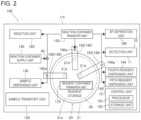
- the sample measuring apparatus 100 includes the measuring unit 10, the reagent storage 20, and the reagent container holder 30. Additionally, in the configuration example of FIG. 2 , the sample measuring apparatus 100 includes a housing 110, a sample transport unit 120, a sample dispensing unit 130, a reaction container supply unit 140, a reaction container transfer unit 150, a reaction unit 160, a reagent container transfer unit 170, a BF separation unit 180, and a reagent dispensing unit 190.
- the measuring unit 10 includes a detection unit 11 and a control unit 12.
- the housing 110 has a box shape that can store the units of the sample measuring apparatus 100 therein.
- the housing 110 may have a configuration in which the units of the sample measuring apparatus 100 are stored on a single layer or may have a layer configuration in which multiple layers are provided in a vertical direction to allocate and arrange the units of the sample measuring apparatus 100 on each layer.
- the sample transport unit 120 is configured to transport the sample collected from the subject to an aspiration position of the sample dispensing unit 130.
- the sample transport unit 120 can transport a rack provided with multiple test tubes each storing the sample to a predetermined sample aspiration position.
- the sample dispensing unit 130 aspirates the sample transported by the sample transport unit 120 and dispenses the aspirated sample into a reaction container 40.
- the sample dispensing unit 130 includes a pipette connected to a fluid circuit for performing aspiration and ejection and a movement mechanism for moving the pipette.
- the sample dispensing unit 130 attaches a dispensing tip set in a not-illustrated tip supply unit to a tip end of the pipette and aspirates a predetermined amount of the sample from the transported test tube into the dispensing tip.
- the sample dispensing unit 130 dispenses the aspirated sample into the reaction container 40 arranged at a predetermined sample dispensing position. After the dispensing, the sample dispensing unit 130 removes the dispensing tip from the tip end of the pipette and discards the dispensing tip.
- the reaction container supply unit 140 stores multiple reaction containers 40.
- the reaction container supply unit 140 can supply the reaction container transfer unit 150 with the reaction containers 40 one by one at a predetermined reaction container supply position.
- the reaction container transfer unit 150 transfers the reaction container 40.
- the reaction container transfer unit 150 obtains the reaction container 40 from the reaction container supply position and transfers the reaction container 40 to corresponding positions of processing of the sample dispensing unit 130, the reagent dispensing unit 190, the reaction unit 160, the detection unit 11, and so on.
- the reaction container transfer unit 150 includes a catcher that grabs the reaction container 40 or a holding portion having a hole in which the reaction container 40 is to be provided, and a movement mechanism that moves the catcher or the holding portion.
- the movement mechanism is moved in a direction of a single axis or directions of multiple axes by one or more linear motion mechanisms capable of moving linearly.
- the movement mechanism may include an arm mechanism that rotates horizontally about a rotational axis and an articulated robot mechanism.
- One or more reaction container transfer units 150 are provided.
- the reagent container transfer unit 170 can transfer the reagent container 200.
- the reagent container transfer unit 170 can lift the reagent container 200 by a not-illustrated hand mechanism and set the reagent container 200 in the corresponding holding portion 31 of the reagent container holder 30.
- the BF separation unit 180 has a function of executing BF separation processing for separating a liquid phase and a solid phase from the reaction container 40.
- the BF separation unit 180 includes one or more processing ports each can be provided with the reaction container 40.
- a magnetic source 182 (see FIG. 16 ) that collects magnetic particles contained in an R2-reagent
- a cleaning unit 181 (see FIG. 16 ) that performs aspiration of a liquid phase and supplying of a cleaning liquid are provided.
- the BF separation unit 180 aspirates a liquid phase in the reaction container 40 and supplies the cleaning liquid by the cleaning unit 181 with the magnetic particles in which the later-described immune complexes are formed being collected.
- the cleaning unit 181 includes an aspiration channel of the liquid phase and an ejection channel of the cleaning liquid and is connected to the not-illustrated fluid circuit. With this, it is possible to separate unnecessary components contained in the liquid phase from the bound immune complex and magnetic particles and remove the unnecessary components.
- the reagent dispensing unit 190 aspirates the reagent in the reagent container 200 and dispenses the aspirated reagent into the reaction container 40.
- the reagent dispensing unit 190 can move an aspiration tube 190a for performing aspiration and ejection of the reagent in a horizontal direction between a reagent aspiration position and a reagent dispensing position. Additionally, the reagent dispensing unit 190 can move the aspiration tube 190a downward to advance into the reagent container 200. Moreover, the reagent dispensing unit 190 can move the aspiration tube 190a upward to retract the aspiration tube 190a to an upper position of the reagent container 200.
- the aspiration tube 190a is connected with the not-illustrated fluid circuit, aspirates a predetermined amount of the reagent from the reagent container 200, and dispenses the reagent into the reaction container 40 transferred to the reagent dispensing position.
- the aspiration tube 190a is connected to a liquid surface sensor.
- the liquid surface sensor is connected to the control unit 12.
- the liquid surface sensor detects a reagent liquid surface based on a change in capacitance due to a contact between the liquid surface of the reagent and the aspiration tube 190a and outputs the detection result to the control unit 12.
- the control unit 12 monitors the operation amount of the reagent dispensing unit 190 to monitor the movement amount of the aspiration tube 190a in the vertical direction.
- the reagent dispensing unit 190 includes a first reagent dispensing unit 191 that dispenses the R1-reagent, a second reagent dispensing unit 192 that dispenses the R2-reagent, and a third reagent dispensing unit 193 that dispenses the R3-reagent. Additionally, the reagent dispensing unit 190 includes a fourth reagent dispensing unit 194 that dispenses an R4-reagent and a fifth reagent dispensing unit 195 that dispenses an R5-reagent.
- the first reagent dispensing unit 191 can move the aspiration tube 190a between a hole portion 21d on the most inner circumference side for aspirating the R1-reagent and a predetermined R1-reagent dispensing position.
- the second reagent dispensing unit 192 can move the aspiration tube 190a between a hole portion 21d on the most outer circumference side for aspirating the R2-reagent and a predetermined R2-reagent dispensing position.
- the third reagent dispensing unit 193 can move the aspiration tube 190a between a hole portion 21d in a radial middle position for aspirating the R3-reagent and a predetermined R3-reagent dispensing position.
- the fourth reagent dispensing unit 194 and the fifth reagent dispensing unit 195 are connected with reagent containers (not illustrated) storing the R4-reagent and the R5-reagent through liquid transfer tubes, respectively, and can eject the reagents into the reaction container 40 transferred by the reaction container transfer unit 150.
- the detection unit 11 includes a light detector 11a (see FIG. 16 ) such as a photomultiplier tube.
- the detection unit 11 uses the light detector 11a to obtain light generated in a reaction process of a luminescent substrate with labeling antibodies bound to the antigens of the sample on which the various types of processing is performed and measures the amount of the antigens contained in the sample.
- the control unit 12 includes a processor 12a such as a CPU and a storage unit 12b such as a ROM, a RAM, and a hard disk.
- the processor 12a functions as a control unit of the sample measuring apparatus 100 by executing a control program stored in the storage unit 12b.
- the control unit 12 controls operations of the above-described units of the sample measuring apparatus 100. Additionally, the control unit 12 measures the result detected by the detection unit 11.
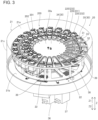
- the sample measuring apparatus 100 includes the box-shaped reagent storage 20 storing the reagent container holder 30.
- the reagent container holder 30 is provided in a case 21 having a function of insulating heat of the reagent storage 20.
- the reagent storage 20 includes the reagent container holder 30 and a cooling mechanism 22 in the case 21 and keeps the reagent in the reagent container 200 set in the reagent container holder 30 cool at a constant temperature appropriate for storing.
- the reagent storage 20 allows the reagent container holder 30 to be arranged in the reagent storage 20 so as to store the multiple reagent containers 200.
- the cover 21a covers top portions of the reagent containers (200).
- the cover 21a has a circular plate shape. Additionally, the cover 21a has an outer circumference greater than an outer circumference of the reagent storage 20. Thus, the cover 21a can cover a top portion of the reagent storage 20 reliably, and thus it is possible to keep the multiple reagent containers 200 stored in the reagent storage 20 cool or warm more efficiently.
- the reagent storage 20 includes the hole portion 21d that allows the reagent dispensing unit 190 to advance into the reagent storage 20.
- the hole portion 21d is provided in the cover 21a. Additionally, multiple hole portions 21d are provided.
- the cooling mechanism 22 includes a cooling unit including the Peltier device or the like and a fin transmitting heat, for example. Additionally, multiple cooling mechanisms 22 are provided near the bottom surface portion 21b of the reagent storage 20. Air inside the reagent storage 20 is sent to the cooling mechanisms 22 by a fan, and the cooled air is circulated in the reagent storage 20.
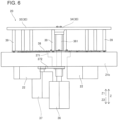
- the reagent container holder 30 includes a first driving unit 36 that rotates the first reagent container holder 34 and a second driving unit 37 that rotates the second reagent container holder 35. Additionally, the reagent container holder 30 includes a rotation table 38 and joint parts 39.
- the reagent container holder 30 is formed in a flat shape extending horizontally. With this, it is possible to keep the reagents cool or warm efficiently and also to inhibit an increase in the number of parts.
- the reagent container holder 30 is configured to hold the reagent containers 200 such that 50% or more of the surface of each reagent container 200 is exposed to the space inside the reagent storage 20.
- 50% or more of the surface of the reagent container 200 can be arranged to be exposed to the space inside the reagent storage 20, it is possible to further improve the cooling efficiency or the heating efficiency of the reagents.
- the reagent container holder 30 is configured to hold the reagent containers 200 such that 80% or more of the surface of each reagent container 200 is exposed to the space inside the reagent storage 20.
- 80% or more of the surface of the reagent container 200 can be arranged to be exposed to the space inside the reagent storage 20, and thus it is possible to further improve the cooling efficiency or the heating efficiency of the reagents.
- the reagent container holder 30 suspends and holds the reagent containers 200 by the suspending portions 32.
- an upper portion of each reagent container 200 can be supported by the reagent container holder 30, and thus it is possible to reliably expose a lower portion of the reagent container 200 storing the reagent to the inside of the reagent storage 20.
- the upper portion of the reagent container 200 can be supported, it is possible to hold the reagent container 200 stably when the reagent is aspirated from the above.
- the reagent container holder 30 is configured to hold the multiple reagent containers 200 such that the exposed portions of the adjacent reagent containers 200 face each other. That is, a space between the adjacent reagent containers 200 other than portions at a height position at which the flat-shaped reagent container holder 30 holds the reagent containers 200 is opened to the inside of the reagent storage 20.
- a space between the adjacent reagent containers 200 other than portions at a height position at which the flat-shaped reagent container holder 30 holds the reagent containers 200 is opened to the inside of the reagent storage 20.
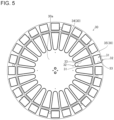
- the reagent container holder 30 is formed such that the multiple reagent containers 200 are arranged circularly and has a substantially circular outer circumferential edge. With this, it is possible to arrange the multiple reagent containers 200 circularly in the substantially circular reagent container holder 30 and store the multiple reagent containers 200 in a depository compactly.
- the first reagent container holder 34 of the reagent container holder 30 is formed in a circular shape.
- the second reagent container holder 35 is formed in a ring shape to surround the first reagent container holder 34 in a plan view. That is, the second reagent container holder 35 is arranged around the first reagent container holder 34.
- the first reagent container holder 34 and the second reagent container holder 35 are arranged concentrically and can be rotated independently from each other. Furthermore, the first reagent container holder 34 and the second reagent container holder 35 are arranged at substantially the same height positions.
- the first reagent container holder 34 on the inner circumference side can hold the multiple reagent containers 200 circularly.
- the second reagent container holder 35 on the outer circumference side can hold the multiple reagent containers 200 circularly.
- the reagent container holder 30 positions and fixes the reagent containers 200 by the holding portions 31. With this, it is possible to arrange each reagent container 200 at a predetermined position in the reagent container holder 30 accurately and also to inhibit the reagent container 200 from moving with respect to the reagent container holder 30.
- the reagent container holder 30 is arranged in a region of an upper half side of the reagent storage 20 in the vertical direction (Z direction).
- the reagent container holder 30 can support the upper half portion of the reagent container 200, and thus it is possible to reliably expose the lower portion of the reagent container 200 storing the reagent to the inside of the reagent storage 20.
- the upper half portion of the reagent container 200 can be supported, it is possible to hold the reagent container 200 stably when the reagent is aspirated from the above.
- the first driving unit 36 is arranged outside the reagent storage 20. Specifically, the first driving unit 36 is arranged outside and below the reagent storage 20.
- the first driving unit 36 rotates a first supporting unit 361.
- the first supporting unit 361 supports the first reagent container holder 34. That is, the first driving unit 36 rotates and drives the first reagent container holder 34 through the first supporting unit 361.
- the first driving unit 36 is a driving source such as a stepper motor or a servomotor, for example.
- the first driving unit 36 rotates the first reagent container holder 34 by rotating and driving the first supporting unit 361 connected to the center of the first reagent container holder 34 and extending vertically.
- a lower end portion is joined to the first driving unit 36, and an upper end portion is joined to the center of the first reagent container holder 34.
- the second driving unit 37 is arranged outside the reagent storage 20. Specifically, the second driving unit 37 is arranged outside and below the reagent storage 20.
- the second driving unit 37 rotates a second supporting unit 371.
- the second supporting unit 371 supports the rotation table 38.
- the rotation table 38 supports the second reagent container holder 35 through the multiple joint parts 39. That is, the second driving unit 37 rotates and drives the second reagent container holder 35 through the second supporting unit 371, the rotation table 38, and the joint parts 39.
- the second driving unit 37 is a driving source such as a stepper motor or a servomotor, for example.
- the second driving unit 37 rotates the second reagent container holder 35 by rotating and driving the rotation table 38 joined to the second reagent container holder 35 through a transmission mechanism 372.
- the rotation table 38 is joined to the transmission mechanism 372 through coupling and the second supporting unit 371.
- through-holes to allow the first supporting unit 361 to pass therethrough are provided in the centers and are rotated independently from the first supporting unit 361.
- the second driving unit 37 and the first driving unit 36 rotate and move independently the second reagent container holder 35 on the outer circumference side and the first reagent container holder 34 on the inner circumference side, respectively.
- the second reagent container holder 35 can be rotated and moved independently from the first reagent container holder 34. Additionally, with the second driving unit 37 provided outside the reagent storage 20, it is possible to inhibit the second driving unit 37 from interfering the reagent container 200 held by the second reagent container holder 35 and also to inhibit transmission of heat of the second driving unit 37 to the inside of the reagent storage 20.
- the reagent container 200 includes a reagent container 201 and a reagent container 202.
- the reagent container 201 includes the later-described container main body 232 storing the R2-reagent.
- the reagent container 202 is a multiply-joined type reagent container in which the later-described container main body 233 storing the R3-reagent and container main body 231 storing the R1-reagent are joined with each other as a pair.
- the reagent container 201 and the reagent container 202 each include a top cover 240 covering the top of the container main body.
- the top cover 240 includes an outer circumference portion 241 along a side surface of the container main body to cover a part of the side surface of the container main body, and a contact portion 242 is provided at a lower end portion of the outer circumference portion 241 to be engaged with the reagent container holder 30.
- the contact portion 242 is supported by the holding portion 31 of the reagent container holder 30.
- the contact portion 242 is brought into contact with the reagent container holder 30.
- the contact portion 242 has an outer circumference greater than an outer circumference of the container main body.
- the top cover 240 includes a grabbed portion 243.
- the top cover 240 is provided with an openable/closable lid portion 220.
- the lid portion 220 of each of the multiple reagent containers 201 arranged and held in the circumferential direction is arranged circularly in the same way.
- Each of the multiple reagent containers 202 arranged and held in the circumferential direction is arranged circularly in the same way.
- the container main bodies 231 and 233 of each of the multiple reagent containers 202 arranged and held in the circumferential direction are each arranged circularly in the same way.
- the container main body 232, the container main body 233, and the container main body 231 are arranged at radially different positions, respectively. Consequently, as illustrated in FIG.
- the hole portions 21d corresponding to the aspiration positions of the R1-reagent to the R3-reagent are provided at three parts so as to be overlapped with predetermined positions on the circle on which the corresponding lid portions 220 of the reagent containers 200 are arranged.
- the reagent containers 200 are inserted and provided in the through-holes 33 of the reagent container holder 30.
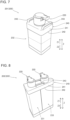
- the reagent container holder 30 includes a plate-shaped member 30a including the through-holes 33. Additionally, the plate-shaped member 30a holds each reagent container 200 to expose a bottom surface 251 of the reagent container 200 from the through-hole 33. With this, it is possible to insert the reagent container 200 from the through-hole 33 of the plate-shaped member 30a and provide the reagent container 200 in the reagent container holder 30 easily.
- the plate-shaped member 30a includes the multiple suspending portions (32) that suspend and hold the reagent containers 200. Furthermore, each suspending portion 32 has a shape tapered downward.
- the reagent container 200 includes the bottom surface 251 that can pass through the through-hole 33 of the reagent container holder 30 and a middle side surface portion 252 between the bottom surface and a top surface that has an outer circumference greater than the outer circumference of the through-hole 33. With this, it is possible to insert the reagent container 200 from the through-hole 33 of the reagent container holder 30 and provide the reagent container 200 in the reagent container holder 30 easily. Additionally, since the middle side surface portion 252 of the reagent container 200 can be put in contact with an edge portion of the through-hole 33 of the reagent container holder 30, it is possible to provide the reagent container 200 while accurately positioning in the vertical direction. that is, it is possible to set the reagent container 200 in the reagent container holder 30 with no backlash. Moreover, it is possible to set the reagent container 200 in the reagent container holder 30 easily.
- the through-hole 33 of the reagent container holder 30 includes a lower stage opening 33a and an upper stage opening 33b provided above the lower stage opening 33a and having an outer circumference greater than an outer circumference of the lower stage opening 33a. That is, the suspending portion 32 includes the lower stage opening 33a and the upper stage opening (33b) provided above the lower stage opening 33a and having the outer circumference greater than the outer circumference of the lower stage opening 33a. Additionally, the bottom surface 251 of the reagent container 200 has an outer circumference smaller than the lower stage opening 33a, and the middle side surface portion 252 of the reagent container 200 has the outer circumference of substantially the same size with the upper stage opening 33b.
- the outer circumference of the upper stage opening 33b is greater than the outer circumference of the bottom surface 251 of the reagent container 200, it is possible to insert the reagent container 200 in the upper stage opening 33b easily as illustrated in FIG. 9A . Moreover, since the reagent container 200 inserted from the upper stage opening 33b can be guided easily to the lower stage opening 33a continuing the upper stage opening 33b, it is possible to insert the reagent container 200 in the lower stage opening 33a easily.
- the outer circumference of the upper stage opening 33b is substantially the same size with the outer circumference of the middle side surface portion 252 of the reagent container 200, it is possible to fix the reagent container 200 in the reagent container holder 30 easily by fitting the middle side surface portion 252 in the upper stage opening 33b as illustrated in FIG. 9B .
- a clearance between the lower stage opening 33a and the reagent container 200 is about 1 mm to 2 mm on one side, for example. Additionally, a clearance between the upper stage opening 33b and the reagent container 200 is about 0.1 mm on one side, for example.
- the through-hole 33 may have a backlash.
- the through-hole 33 may have a large clearance with the reagent container 200 around a corner portion. With this, it is possible to inhibit failing in fitting the reagent container 200 into the through-hole 33 because of a dimension error.
- the upper stage opening 33b has a tapered shape tapered toward the lower stage opening 33a.
- the reagent container 200 can be guided more easily from the upper stage opening 33b to the lower stage opening 33a, and thus it is possible to provide the reagent container 200 in the reagent container holder 30 easily. That is, as illustrated in FIG. 10A , the tapered shape of the upper stage opening 33b allows the reagent container 200 to be guided to the center of the through-hole 33. Then, as illustrated in FIG. 10B , the middle side surface portion 252 of the reagent container 200 is fit and positioned in the upper stage opening 33b.
- the tapered shape of the upper stage opening 33b has an inclination angle of 15 degrees to 60 degrees with respect to a perpendicular direction, for example.
- the reagent container 200 may be inclined such that side surfaces expand upward. With this, the reagent container 200 is provided with the bottom surface 251 passing through the through-hole 33 and the middle side surface portion 252 fitted in the through-hole 33 with no clearance at a predetermined height position. Additionally, as illustrated in FIG. 12 , in the reagent container 200, the middle side surface portion 252 may be provided to protrude from the side surfaces.
- the reagent container 200 may include an engaging portion 260.
- the reagent container holder 30 may include a supporting portion 301 and an engaged portion 302. The reagent container 200 is held by the reagent container holder 30 with the engaging portion 260 engaged with and hooked in the engaged portion 302.
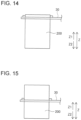
- the reagent container holder 30 may support the upper portion of the reagent container 200. Additionally, as illustrated in FIG. 15 , the reagent container holder 30 may support a portion around a middle portion in the vertical direction of the reagent container 200.
- the immune measuring is performed using the R1-reagent to the R5-reagent as described above.
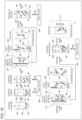
- subject substances 81 are hepatitis B surface antigens (HBsAg) is described with reference to FIG. 16 as an example of the immune measuring.
- a sample containing the subject substances 81 and the R1-reagent are dispensed into the reaction container 40.
- the first reagent dispensing unit 191 dispenses the R1-reagent into the reaction container 40
- the sample dispensing unit 130 dispenses the sample into the reaction container 40.
- the R1-reagent contains capture substances 84 and is reacted with and bound to the subject substances 81.
- the capture substances 84 contain binding substances to allow the capture substances 84 to be bound to solid-phase carriers 82 contained in the R2-reagent.
- biotin and the avidin family a hapten and an anti-hapten antibody, nickel and histigine tag, and glutathione and glutathione-S-transferase for the binding of the binding substances and the solid-phase carriers, for example.
- the "avidin family” means that avidin and streptavidin are included.
- the capture substances 84 are antibodies modified with biotin (biotin antibodies). That is, the capture substances 84 are modified with biotin as the binding substances. After the dispensing of the sample and the R1-reagent, the specimen in the reaction container 40 is heated to a predetermined temperature in the reaction unit 160, and thus the capture substances 84 and the subject substances 81 are bound.
- the second reagent dispensing unit 192 dispenses the R2-reagent into the reaction container 40.
- the R2-reagent contains the solid-phase carriers 82.
- the solid-phase carriers 82 are bound to the binding substances of the capture substances 84.
- the solid-phase carriers 82 are magnetic particles (StAvi-bound magnetic particles) to which streptavidin to be bound to biotin is fixed, for example. The streptavidin of the StAvi-bound magnetic particles is reacted with and bound to biotin as the binding substances.
- the specimen in the reaction container 40 is heated to a predetermined temperature in the reaction unit 160. Consequently, the subject substances 81 and the capture substances 84 are bound to the solid-phase carriers 82.
- the subject substances 81 and the capture substances 84 formed on the solid-phase carriers 82 and unreacted capture substances 84 are separated from each other by primary BF separation processing by the BF separation unit 180.
- the BF separation unit 180 executes one or more times each of the processes of aspirating the liquid phase by the cleaning unit 181 and ejecting the cleaning liquid while the magnetic particles are collected by the magnetic source 182 and agitating while no magnetic particles are collected. Unnecessary components such as the unreacted capture substances 84 are removed from the reaction container 40 by the primary BF separation processing.
- the liquid phase in the reaction container 40 is aspirated eventually, and the process proceeds to the next process.
- the third reagent dispensing unit 193 dispenses the R3-reagent into the reaction container 40.
- the R3-reagent contains labeling substances 83 and is reacted with and bound to the subject substances 81.
- the specimen in the reaction container 40 is heated to a predetermined temperature in the reaction unit 160. Consequently, an immune complex 85 containing the subject substance 81, the labeling substance 83, and the capture substance 84 is formed on each solid-phase carrier 82.
- the labeling substances 83 are ALP (alkaline phosphatase) labeling antibodies.
- the immune complexes 85 formed on the solid-phase carriers 82 and unreacted labeling substances 83 are separated from each other by secondary BF separation processing.
- the BF separation unit 180 executes one or more times each of the processes of aspirating the liquid phase and ejecting the cleaning liquid while the magnetic particles are collected by the magnetic source 182 and agitating while no magnetic particles are collected. Unnecessary components such as the unreacted labeling substances 83 are removed from the reaction container 40 by the secondary BF separation processing. In the secondary BF separation processing, the liquid phase in the reaction container 40 is aspirated eventually, and the process proceeds to the next process.
- the fourth reagent dispensing unit 194 and the fifth reagent dispensing unit 195 dispense the R4-reagent and the R5-reagent into the reaction container 40, respectively.
- the R4-reagent contains a buffer solution.
- the immune complexes 85 bound to the solid-phase carriers 82 are dispersed in the buffer solution.
- the R5-reagent contains a chemiluminescent substrate.
- the buffer solution contained in the R4-reagent has a composition that promotes the reaction between labels (enzymes) of the labeling substances 83 contained in the immune complexes 85 and the substrate.
- step S1 the control unit 12 causes the reaction container transfer unit 150 to transfer the reaction container 40 to the R1-reagent dispensing position.
- the control unit 12 causes the first reagent dispensing unit 191 to dispense the R1-reagent into the reaction container 40.
- step S2 the sample is dispensed into the reaction container 40.
- the control unit 12 causes the sample dispensing unit 130 to aspirate the sample from the test tube on the sample transport unit 120.
- the control unit 12 causes the sample dispensing unit 130 to dispense the aspirated sample into the reaction container 40.
- the sample dispensing unit 130 is controlled to discard the dispensing tip to a not-illustrated discard port. Every time the dispensing operation using the dispensing tip is performed, the sample dispensing unit 130 replaces the dispensing tip with an unused dispensing tip.
- step S3 the control unit 12 causes the reaction container transfer unit 150 to transfer the reaction container 40 to the R2-reagent dispensing position and causes the second reagent dispensing unit 192 to dispense the R2-reagent into the reaction container 40.
- the control unit 12 causes the reaction container transfer unit 150 to transfer the reaction container 40 to the reaction unit 160.
- the reaction container 40 is heated for a predetermined period of time in the reaction unit 160.
- step S4 the control unit 12 causes the BF separation unit 180 to execute the primary BF separation processing.
- the control unit 12 causes the reaction container transfer unit 150 to transfer the reaction container 40 to the BF separation unit 180.
- the BF separation unit 180 is controlled to perform the primary BF separation processing (see FIG. 16 ) on the specimen in the reaction container 40 and remove the liquid components.
- step S5 the control unit 12 causes the reaction container transfer unit 150 to transfer the reaction container 40 to the R3-reagent dispensing position and causes the third reagent dispensing unit 193 to dispense the R3-reagent into the reaction container 40.
- the control unit 12 causes the reaction container transfer unit 150 to transfer the reaction container 40 to the reaction unit 160.
- the reaction container 40 is heated for a predetermined period of time in the reaction unit 160.
- step S6 the control unit 12 causes the BF separation unit 180 to execute the secondary BF separation processing.
- the control unit 12 causes the reaction container transfer unit 150 to transfer the reaction container 40 to the BF separation unit 180.
- the BF separation unit 180 is controlled to perform the secondary BF separation processing (see FIG. 16 ) on the specimen in the reaction container 40 and remove the liquid components.
- step S7 the R4-reagent is dispensed into the reaction container 40.
- the control unit 12 causes the reaction container transfer unit 150 to transfer the reaction container 40 to the R4-reagent dispensing position and causes the fourth reagent dispensing unit 194 to dispense the R4-reagent into the reaction container 40.
- step S8 the R5-reagent is dispensed into the reaction container 40.
- the control unit 12 causes the reaction container transfer unit 150 to transfer the reaction container 40 to the R5-reagent dispensing position and causes the fifth reagent dispensing unit 195 to dispense the R5-reagent into the reaction container 40.
- the control unit 12 causes the reaction container transfer unit 150 to transfer the reaction container 40 to the reaction unit 160.
- the reaction container 40 is heated for a predetermined period of time in the reaction unit 160.
- step S9 the processing of detecting the immune complexes 85 is performed.
- the control unit 12 causes the reaction container transfer unit 150 to transfer the reaction container 40 to the detection unit 11.
- the detection unit 11 measures the intensity of the light generated by making the substrate react with the labels.
- the detection result of the detection unit 11 is outputted to the control unit 12.
- step S10 the reaction container transfer unit 150 is controlled to take out the reaction container 40 done with the measurement processing from the detection unit 11 and discard the reaction container 40 to the not-illustrated discard port.
- the measurement processing operation by the sample measuring apparatus 100 is performed.
Landscapes
- Chemical & Material Sciences (AREA)
- Health & Medical Sciences (AREA)
- General Health & Medical Sciences (AREA)
- Life Sciences & Earth Sciences (AREA)
- Analytical Chemistry (AREA)
- Biochemistry (AREA)
- Physics & Mathematics (AREA)
- General Physics & Mathematics (AREA)
- Immunology (AREA)
- Pathology (AREA)
- Chemical Kinetics & Catalysis (AREA)
- Clinical Laboratory Science (AREA)
- Medicinal Chemistry (AREA)
- Automatic Analysis And Handling Materials Therefor (AREA)
Claims (9)
- Probenmesseinrichtung, umfassend:einen Reagenzbehälterhalter (30), der konfiguriert ist, um einen Reagenzbehälter (200), der ein Reagenz enthält, durch Aufhängen zu halten; undeine Messeinheit (10), die konfiguriert ist, um das Reagenz aus dem Reagenzbehälter (200) in die Probe zu geben, um ein Messpräparat zu präparieren und das Messpräparat zu messen,wobeider Reagenzbehälterhalter (30) ein plattenförmiges Glied (30a) umfasst, das ein Durchgangsloch (33) aufweist, unddadurch gekennzeichnet, dass das plattenförmige Glied (30a) konfiguriert ist, um den Reagenzbehälter (200) so zu halten, dass eine Bodenoberfläche (251) des Reagenzbehälters (200) von dem Durchgangsloch (33) freigelegt ist,das plattenförmige Glied (30a) aufhängende Abschnitte (32) umfasst, die jeweils den Reagenzbehälter (200) aufhängen und halten, unddadurch, dass:
jeder der aufhängenden Abschnitte (32) nach unten hin verjüngt ist oder dadurch, dass:jeder der aufhängenden Abschnitte (32) eine untere Stufenöffnung (33a) und eine obere Stufenöffnung (33b) umfasst, unddie obere Stufenöffnung (33b) oberhalb der unteren Stufenöffnung (33a) bereitgestellt ist und einen Außenumfang umfasst, der größer ist als ein Außenumfang der unteren Stufenöffnung (33a). - Probenmesseinrichtung nach Anspruch 1, wobei
der Reagenzbehälterhalter (30) einen kreisförmigen Außenumfangsrand umfasst, so dass eine Vielzahl von Reagenzbehältern (200) kreisförmig angeordnet ist. - Probenmesseinrichtung nach Anspruch 1 oder 2, wobei
der Reagenzbehälterhalter (30) mindestens einen Halteabschnitt (31) umfasst, der den Reagenzbehälter (200) positioniert. - Probenmesseinrichtung nach einem der Ansprüche 1 bis 3, wobei der Reagenzbehälterhalter (30) Folgendes umfasst:einen ersten Reagenzbehälterhalter (34);eine erste stützende Einheit (361), die den ersten Reagenzbehälterhalter (34) stützt; undeine erste Antriebseinheit (36), welche die erste stützende Einheit (34) dreht.
- Probenmesseinrichtung nach Anspruch 4, wobei
der Reagenzbehälterhalter (30) weiter Folgendes umfasst:einen zweiten Reagenzbehälterhalter (35), der um den ersten Reagenzbehälterhalter (34) angeordnet ist;einen Drehtisch (38), der den zweiten Reagenzbehälterhalter (35) über ein Gelenkteil (39) stützt;eine zweite stützende Einheit (371), die den Drehtisch (38) stützt; undeine zweite Antriebseinheit (37), welche die zweite stützende Einheit (371) dreht. - Probenmesseinrichtung nach einem der Ansprüche 1 bis 5, weiter umfassend:einen Reagenzspeicher (20), der eine Abdeckung (21a) umfasst, die obere Abschnitte einer Vielzahl von Reagenzbehältern (200) abdeckt, undder Reagenzbehälterhalter (30) in dem Reagenzspeicher (20) angeordnet ist.
- Probenmesseinrichtung nach Anspruch 6, wobei
die Abdeckung (21a) einen oberen Abschnitt des Reagenzspeichers (20) abdeckt und einen Außenumfang umfasst, der größer als ein Außenumfang des Reagenzspeichers ist. - Probenmesseinrichtung nach einem der Ansprüche 1 bis 7, wobei
das Reagenz irgendeine der Fängersubstanzen, die durch eine Antigen-Antikörper-Reaktion an Zielsubstanzen in der Probe gebunden sind, Festphasenträger, die an die Fängersubstanzen gebunden sind, und Markierungssubstanzen, die durch die Antigen-Antikörper-Reaktion an die Zielsubstanzen gebunden sind, enthält. - Verfahren zum Messen einer Probe, umfassend:Anordnen eines Reagenzbehälters (200), der ein Reagenz speichert, um von einem Reagenzbehälterhalter (30) aufgehängt zu werden; undMessen einer Probe durch Zugeben des Reagenzes aus dem Reagenzbehälter (200) in die Probe zum Präparieren eines Messpräparats und Messen des Messpräparats,wobei der Reagenzbehälterhalter (30) ein plattenförmiges Glied (30a) umfasst, das ein Durchgangsloch (33) aufweist, wobei der Reagenzbehälter (200) durch das plattenförmige Glied (30a) so gehalten wird, dass eine Bodenoberfläche (251) des Reagenzbehälters (200) von dem Durchgangsloch (33) freigelegt ist, wobeidas plattenförmige Glied (30a) aufhängende Abschnitte (32) umfasst, die jeweils den Reagenzbehälter (200) aufhängen und halten, und wobeijeder der aufhängenden Abschnitte (32) nach unten hin verjüngt ist oder wobeijeder der aufhängenden Abschnitte (32) eine untere Stufenöffnung (33a) und eine obere Stufenöffnung (33b) umfasst, unddie obere Stufenöffnung (33b) oberhalb der unteren Stufenöffnung (33a) bereitgestellt ist und einen Außenumfang umfasst, der größer ist als ein Außenumfang der unteren Stufenöffnung (33a).
Applications Claiming Priority (2)
| Application Number | Priority Date | Filing Date | Title |
|---|---|---|---|
| JP2018010309A JP6959875B2 (ja) | 2018-01-25 | 2018-01-25 | 検体測定装置、試薬容器および検体測定方法 |
| PCT/JP2018/045089 WO2019146272A1 (ja) | 2018-01-25 | 2018-12-07 | 検体測定装置、試薬容器および検体測定方法 |
Publications (3)
| Publication Number | Publication Date |
|---|---|
| EP3745136A1 EP3745136A1 (de) | 2020-12-02 |
| EP3745136A4 EP3745136A4 (de) | 2021-11-17 |
| EP3745136B1 true EP3745136B1 (de) | 2025-01-22 |
Family
ID=67395317
Family Applications (1)
| Application Number | Title | Priority Date | Filing Date |
|---|---|---|---|
| EP18902344.3A Active EP3745136B1 (de) | 2018-01-25 | 2018-12-07 | Probenmessvorrichtung und probenmessverfahren |
Country Status (5)
| Country | Link |
|---|---|
| US (1) | US12130300B2 (de) |
| EP (1) | EP3745136B1 (de) |
| JP (3) | JP6959875B2 (de) |
| CN (1) | CN111630394A (de) |
| WO (1) | WO2019146272A1 (de) |
Families Citing this family (4)
| Publication number | Priority date | Publication date | Assignee | Title |
|---|---|---|---|---|
| JP2023146770A (ja) * | 2022-03-29 | 2023-10-12 | キヤノンメディカルシステムズ株式会社 | 自動分析装置 |
| CN117470603B (zh) * | 2022-07-21 | 2025-07-18 | 大庆油田有限责任公司 | 一种干酪根制备仪 |
| WO2024218519A1 (en) * | 2023-04-20 | 2024-10-24 | Ttp Plc. | A modular biological processing cartridge and container |
| CN119915591B (zh) * | 2025-04-01 | 2025-06-17 | 成都翼泰生物科技有限公司 | 一种痰液混合分散装置及方法 |
Family Cites Families (20)
| Publication number | Priority date | Publication date | Assignee | Title |
|---|---|---|---|---|
| JPH0250681U (de) | 1988-09-30 | 1990-04-09 | ||
| JPH0721220Y2 (ja) | 1990-02-08 | 1995-05-17 | 三井製薬工業株式会社 | 撹拌装置 |
| CA2384535C (en) * | 1991-03-04 | 2006-08-15 | Bayer Corporation | Automated analyzer |
| US5324481A (en) | 1991-06-03 | 1994-06-28 | Abbott Laboratories | Carousel for assay specimen carrier |
| US5807523A (en) * | 1996-07-03 | 1998-09-15 | Beckman Instruments, Inc. | Automatic chemistry analyzer |
| US5856194A (en) * | 1996-09-19 | 1999-01-05 | Abbott Laboratories | Method for determination of item of interest in a sample |
| US6998270B2 (en) | 2001-11-26 | 2006-02-14 | Lab Vision Corporation | Automated tissue staining system and reagent container |
| CN1963527B (zh) * | 2005-11-10 | 2011-12-14 | 深圳迈瑞生物医疗电子股份有限公司 | 全自动生化分析仪及其分析方法 |
| JP2007309740A (ja) * | 2006-05-17 | 2007-11-29 | Olympus Corp | 自動分析装置用の試薬容器 |
| JP4940032B2 (ja) * | 2007-06-29 | 2012-05-30 | 株式会社東芝 | 自動分析装置及びその試薬庫 |
| JP5001769B2 (ja) * | 2007-09-28 | 2012-08-15 | 協和メデックス株式会社 | 自動免疫分析装置 |
| JP5432779B2 (ja) * | 2010-03-12 | 2014-03-05 | シスメックス株式会社 | 分析装置 |
| JP5634856B2 (ja) | 2010-12-24 | 2014-12-03 | シスメックス株式会社 | 試薬保冷庫及びこれを備えた検体分析装置 |
| US8999241B2 (en) | 2011-03-16 | 2015-04-07 | Sysmex Corporation | Specimen analyzer |
| JP2012254498A (ja) * | 2011-06-09 | 2012-12-27 | Honda Motor Co Ltd | 製品搬送ラックの移動方法及びその移動装置 |
| JP6012728B2 (ja) * | 2012-06-25 | 2016-10-25 | 協和メデックス株式会社 | カセット及び試薬セット |
| JP6047393B2 (ja) | 2012-12-17 | 2016-12-21 | 株式会社日立ハイテクノロジーズ | 試薬保管庫および試薬保管庫を備えた自動分析装置 |
| CN204374222U (zh) * | 2014-12-17 | 2015-06-03 | 株式会社东芝 | 旋转工作台、试药库及分析装置 |
| EP3279661B1 (de) | 2015-03-31 | 2020-09-09 | Sysmex Corporation | Immunassay-vorrichtung |
| US20190024970A1 (en) * | 2017-07-21 | 2019-01-24 | Franco Sapia | Beverage Cooling Apparatus |
-
2018
- 2018-01-25 JP JP2018010309A patent/JP6959875B2/ja active Active
- 2018-12-07 EP EP18902344.3A patent/EP3745136B1/de active Active
- 2018-12-07 WO PCT/JP2018/045089 patent/WO2019146272A1/ja not_active Ceased
- 2018-12-07 CN CN201880087710.9A patent/CN111630394A/zh active Pending
-
2020
- 2020-07-24 US US16/937,769 patent/US12130300B2/en active Active
-
2021
- 2021-10-04 JP JP2021163242A patent/JP7186272B2/ja active Active
-
2022
- 2022-11-28 JP JP2022189110A patent/JP7357750B2/ja active Active
Also Published As
| Publication number | Publication date |
|---|---|
| US12130300B2 (en) | 2024-10-29 |
| JP2019128265A (ja) | 2019-08-01 |
| US20200355713A1 (en) | 2020-11-12 |
| WO2019146272A1 (ja) | 2019-08-01 |
| EP3745136A1 (de) | 2020-12-02 |
| EP3745136A4 (de) | 2021-11-17 |
| JP7357750B2 (ja) | 2023-10-06 |
| CN111630394A (zh) | 2020-09-04 |
| JP6959875B2 (ja) | 2021-11-05 |
| JP2023011044A (ja) | 2023-01-20 |
| JP7186272B2 (ja) | 2022-12-08 |
| JP2021193401A (ja) | 2021-12-23 |
Similar Documents
| Publication | Publication Date | Title |
|---|---|---|
| US11994527B2 (en) | Sample measuring apparatus and method of circulating air in reagent storage | |
| US12130300B2 (en) | Sample measuring apparatus, reagent container, and method of measuring sample | |
| US12345724B2 (en) | Sample measuring apparatus, reagent container, and method of measuring sample | |
| EP2546655B1 (de) | Werkzeug und verfahren zur automatischen verarbeitung flüssiger proben | |
| CN102818907B (zh) | 自动分析仪 | |
| EP2743703B1 (de) | Verfahren zum Halten mehrerer Arten von Diagnosetestverbrauchsartikeln in einem einzelnen Direktzugriffsbehälter | |
| US8066943B2 (en) | Clinical analyzer having a variable cycle time and throughput | |
| US10648973B2 (en) | Immunoassay apparatus | |
| JP2004514910A (ja) | 自動臨床分析器における患者標本を自動的に保存および再処理する方法 | |
| US11422142B2 (en) | Reagent container, reagent suction method and sample measuring apparatus | |
| JP2025134797A (ja) | 液体サンプルの自動診断分析装置 | |
| JP5978039B2 (ja) | 自動分析装置 | |
| JP2020126004A (ja) | 保管装置 | |
| HK1176120B (en) | Instrument and process for the automated processing of liquid samples |
Legal Events
| Date | Code | Title | Description |
|---|---|---|---|
| STAA | Information on the status of an ep patent application or granted ep patent |
Free format text: STATUS: THE INTERNATIONAL PUBLICATION HAS BEEN MADE |
|
| PUAI | Public reference made under article 153(3) epc to a published international application that has entered the european phase |
Free format text: ORIGINAL CODE: 0009012 |
|
| STAA | Information on the status of an ep patent application or granted ep patent |
Free format text: STATUS: REQUEST FOR EXAMINATION WAS MADE |
|
| 17P | Request for examination filed |
Effective date: 20200724 |
|
| AK | Designated contracting states |
Kind code of ref document: A1 Designated state(s): AL AT BE BG CH CY CZ DE DK EE ES FI FR GB GR HR HU IE IS IT LI LT LU LV MC MK MT NL NO PL PT RO RS SE SI SK SM TR |
|
| AX | Request for extension of the european patent |
Extension state: BA ME |
|
| DAV | Request for validation of the european patent (deleted) | ||
| DAX | Request for extension of the european patent (deleted) | ||
| A4 | Supplementary search report drawn up and despatched |
Effective date: 20211020 |
|
| RIC1 | Information provided on ipc code assigned before grant |
Ipc: B01L 3/00 20060101ALI20211014BHEP Ipc: B01L 9/06 20060101ALI20211014BHEP Ipc: G01N 35/04 20060101ALI20211014BHEP Ipc: G01N 35/00 20060101AFI20211014BHEP |
|
| STAA | Information on the status of an ep patent application or granted ep patent |
Free format text: STATUS: EXAMINATION IS IN PROGRESS |
|
| 17Q | First examination report despatched |
Effective date: 20230516 |
|
| GRAP | Despatch of communication of intention to grant a patent |
Free format text: ORIGINAL CODE: EPIDOSNIGR1 |
|
| STAA | Information on the status of an ep patent application or granted ep patent |
Free format text: STATUS: GRANT OF PATENT IS INTENDED |
|
| INTG | Intention to grant announced |
Effective date: 20240926 |
|
| GRAS | Grant fee paid |
Free format text: ORIGINAL CODE: EPIDOSNIGR3 |
|
| GRAA | (expected) grant |
Free format text: ORIGINAL CODE: 0009210 |
|
| STAA | Information on the status of an ep patent application or granted ep patent |
Free format text: STATUS: THE PATENT HAS BEEN GRANTED |
|
| AK | Designated contracting states |
Kind code of ref document: B1 Designated state(s): AL AT BE BG CH CY CZ DE DK EE ES FI FR GB GR HR HU IE IS IT LI LT LU LV MC MK MT NL NO PL PT RO RS SE SI SK SM TR |
|
| REG | Reference to a national code |
Ref country code: GB Ref legal event code: FG4D |
|
| REG | Reference to a national code |
Ref country code: CH Ref legal event code: EP |
|
| REG | Reference to a national code |
Ref country code: IE Ref legal event code: FG4D |
|
| REG | Reference to a national code |
Ref country code: DE Ref legal event code: R096 Ref document number: 602018078769 Country of ref document: DE |
|
| REG | Reference to a national code |
Ref country code: NL Ref legal event code: MP Effective date: 20250122 |
|
| PG25 | Lapsed in a contracting state [announced via postgrant information from national office to epo] |
Ref country code: NL Free format text: LAPSE BECAUSE OF FAILURE TO SUBMIT A TRANSLATION OF THE DESCRIPTION OR TO PAY THE FEE WITHIN THE PRESCRIBED TIME-LIMIT Effective date: 20250122 |
|
| PG25 | Lapsed in a contracting state [announced via postgrant information from national office to epo] |
Ref country code: RS Free format text: LAPSE BECAUSE OF FAILURE TO SUBMIT A TRANSLATION OF THE DESCRIPTION OR TO PAY THE FEE WITHIN THE PRESCRIBED TIME-LIMIT Effective date: 20250422 |
|
| PG25 | Lapsed in a contracting state [announced via postgrant information from national office to epo] |
Ref country code: FI Free format text: LAPSE BECAUSE OF FAILURE TO SUBMIT A TRANSLATION OF THE DESCRIPTION OR TO PAY THE FEE WITHIN THE PRESCRIBED TIME-LIMIT Effective date: 20250122 |
|
| PG25 | Lapsed in a contracting state [announced via postgrant information from national office to epo] |
Ref country code: PL Free format text: LAPSE BECAUSE OF FAILURE TO SUBMIT A TRANSLATION OF THE DESCRIPTION OR TO PAY THE FEE WITHIN THE PRESCRIBED TIME-LIMIT Effective date: 20250122 |
|
| PG25 | Lapsed in a contracting state [announced via postgrant information from national office to epo] |
Ref country code: ES Free format text: LAPSE BECAUSE OF FAILURE TO SUBMIT A TRANSLATION OF THE DESCRIPTION OR TO PAY THE FEE WITHIN THE PRESCRIBED TIME-LIMIT Effective date: 20250122 |
|
| REG | Reference to a national code |
Ref country code: LT Ref legal event code: MG9D |
|
| PG25 | Lapsed in a contracting state [announced via postgrant information from national office to epo] |
Ref country code: NO Free format text: LAPSE BECAUSE OF FAILURE TO SUBMIT A TRANSLATION OF THE DESCRIPTION OR TO PAY THE FEE WITHIN THE PRESCRIBED TIME-LIMIT Effective date: 20250422 Ref country code: IS Free format text: LAPSE BECAUSE OF FAILURE TO SUBMIT A TRANSLATION OF THE DESCRIPTION OR TO PAY THE FEE WITHIN THE PRESCRIBED TIME-LIMIT Effective date: 20250522 |
|
| REG | Reference to a national code |
Ref country code: AT Ref legal event code: MK05 Ref document number: 1761834 Country of ref document: AT Kind code of ref document: T Effective date: 20250122 |
|
| PG25 | Lapsed in a contracting state [announced via postgrant information from national office to epo] |
Ref country code: HR Free format text: LAPSE BECAUSE OF FAILURE TO SUBMIT A TRANSLATION OF THE DESCRIPTION OR TO PAY THE FEE WITHIN THE PRESCRIBED TIME-LIMIT Effective date: 20250122 |
|
| PG25 | Lapsed in a contracting state [announced via postgrant information from national office to epo] |
Ref country code: LV Free format text: LAPSE BECAUSE OF FAILURE TO SUBMIT A TRANSLATION OF THE DESCRIPTION OR TO PAY THE FEE WITHIN THE PRESCRIBED TIME-LIMIT Effective date: 20250122 Ref country code: PT Free format text: LAPSE BECAUSE OF FAILURE TO SUBMIT A TRANSLATION OF THE DESCRIPTION OR TO PAY THE FEE WITHIN THE PRESCRIBED TIME-LIMIT Effective date: 20250522 |
|
| PG25 | Lapsed in a contracting state [announced via postgrant information from national office to epo] |
Ref country code: BG Free format text: LAPSE BECAUSE OF FAILURE TO SUBMIT A TRANSLATION OF THE DESCRIPTION OR TO PAY THE FEE WITHIN THE PRESCRIBED TIME-LIMIT Effective date: 20250122 Ref country code: GR Free format text: LAPSE BECAUSE OF FAILURE TO SUBMIT A TRANSLATION OF THE DESCRIPTION OR TO PAY THE FEE WITHIN THE PRESCRIBED TIME-LIMIT Effective date: 20250423 |
|
| PG25 | Lapsed in a contracting state [announced via postgrant information from national office to epo] |
Ref country code: AT Free format text: LAPSE BECAUSE OF FAILURE TO SUBMIT A TRANSLATION OF THE DESCRIPTION OR TO PAY THE FEE WITHIN THE PRESCRIBED TIME-LIMIT Effective date: 20250122 |
|
| PG25 | Lapsed in a contracting state [announced via postgrant information from national office to epo] |
Ref country code: SE Free format text: LAPSE BECAUSE OF FAILURE TO SUBMIT A TRANSLATION OF THE DESCRIPTION OR TO PAY THE FEE WITHIN THE PRESCRIBED TIME-LIMIT Effective date: 20250122 |
|
| PG25 | Lapsed in a contracting state [announced via postgrant information from national office to epo] |
Ref country code: SM Free format text: LAPSE BECAUSE OF FAILURE TO SUBMIT A TRANSLATION OF THE DESCRIPTION OR TO PAY THE FEE WITHIN THE PRESCRIBED TIME-LIMIT Effective date: 20250122 |
|
| PG25 | Lapsed in a contracting state [announced via postgrant information from national office to epo] |
Ref country code: DK Free format text: LAPSE BECAUSE OF FAILURE TO SUBMIT A TRANSLATION OF THE DESCRIPTION OR TO PAY THE FEE WITHIN THE PRESCRIBED TIME-LIMIT Effective date: 20250122 |
|
| PG25 | Lapsed in a contracting state [announced via postgrant information from national office to epo] |
Ref country code: IT Free format text: LAPSE BECAUSE OF FAILURE TO SUBMIT A TRANSLATION OF THE DESCRIPTION OR TO PAY THE FEE WITHIN THE PRESCRIBED TIME-LIMIT Effective date: 20250122 |
|
| PG25 | Lapsed in a contracting state [announced via postgrant information from national office to epo] |
Ref country code: CZ Free format text: LAPSE BECAUSE OF FAILURE TO SUBMIT A TRANSLATION OF THE DESCRIPTION OR TO PAY THE FEE WITHIN THE PRESCRIBED TIME-LIMIT Effective date: 20250122 Ref country code: EE Free format text: LAPSE BECAUSE OF FAILURE TO SUBMIT A TRANSLATION OF THE DESCRIPTION OR TO PAY THE FEE WITHIN THE PRESCRIBED TIME-LIMIT Effective date: 20250122 |
|
| REG | Reference to a national code |
Ref country code: DE Ref legal event code: R097 Ref document number: 602018078769 Country of ref document: DE |
|
| PG25 | Lapsed in a contracting state [announced via postgrant information from national office to epo] |
Ref country code: RO Free format text: LAPSE BECAUSE OF FAILURE TO SUBMIT A TRANSLATION OF THE DESCRIPTION OR TO PAY THE FEE WITHIN THE PRESCRIBED TIME-LIMIT Effective date: 20250122 |
|
| PG25 | Lapsed in a contracting state [announced via postgrant information from national office to epo] |
Ref country code: SK Free format text: LAPSE BECAUSE OF FAILURE TO SUBMIT A TRANSLATION OF THE DESCRIPTION OR TO PAY THE FEE WITHIN THE PRESCRIBED TIME-LIMIT Effective date: 20250122 |
|
| PLBE | No opposition filed within time limit |
Free format text: ORIGINAL CODE: 0009261 |
|
| STAA | Information on the status of an ep patent application or granted ep patent |
Free format text: STATUS: NO OPPOSITION FILED WITHIN TIME LIMIT |
|
| 26N | No opposition filed |
Effective date: 20251023 |
|
| PGFP | Annual fee paid to national office [announced via postgrant information from national office to epo] |
Ref country code: DE Payment date: 20251028 Year of fee payment: 8 |