EP3740405B1 - Ausfallwarnsystem und verfahren für ein fahrzeug - Google Patents
Ausfallwarnsystem und verfahren für ein fahrzeug Download PDFInfo
- Publication number
- EP3740405B1 EP3740405B1 EP18811754.3A EP18811754A EP3740405B1 EP 3740405 B1 EP3740405 B1 EP 3740405B1 EP 18811754 A EP18811754 A EP 18811754A EP 3740405 B1 EP3740405 B1 EP 3740405B1
- Authority
- EP
- European Patent Office
- Prior art keywords
- failure
- vehicle
- data
- parameter
- prediction model
- Prior art date
- Legal status (The legal status is an assumption and is not a legal conclusion. Google has not performed a legal analysis and makes no representation as to the accuracy of the status listed.)
- Active
Links
Images


Classifications
-
- G—PHYSICS
- G06—COMPUTING OR CALCULATING; COUNTING
- G06F—ELECTRIC DIGITAL DATA PROCESSING
- G06F30/00—Computer-aided design [CAD]
- G06F30/10—Geometric CAD
- G06F30/15—Vehicle, aircraft or watercraft design
-
- G—PHYSICS
- G07—CHECKING-DEVICES
- G07C—TIME OR ATTENDANCE REGISTERS; REGISTERING OR INDICATING THE WORKING OF MACHINES; GENERATING RANDOM NUMBERS; VOTING OR LOTTERY APPARATUS; ARRANGEMENTS, SYSTEMS OR APPARATUS FOR CHECKING NOT PROVIDED FOR ELSEWHERE
- G07C5/00—Registering or indicating the working of vehicles
- G07C5/08—Registering or indicating performance data other than driving, working, idle, or waiting time, with or without registering driving, working, idle or waiting time
- G07C5/0816—Indicating performance data, e.g. occurrence of a malfunction
-
- B—PERFORMING OPERATIONS; TRANSPORTING
- B60—VEHICLES IN GENERAL
- B60W—CONJOINT CONTROL OF VEHICLE SUB-UNITS OF DIFFERENT TYPE OR DIFFERENT FUNCTION; CONTROL SYSTEMS SPECIALLY ADAPTED FOR HYBRID VEHICLES; ROAD VEHICLE DRIVE CONTROL SYSTEMS FOR PURPOSES NOT RELATED TO THE CONTROL OF A PARTICULAR SUB-UNIT
- B60W50/00—Details of control systems for road vehicle drive control not related to the control of a particular sub-unit, e.g. process diagnostic or vehicle driver interfaces
- B60W50/08—Interaction between the driver and the control system
- B60W50/14—Means for informing the driver, warning the driver or prompting a driver intervention
-
- B—PERFORMING OPERATIONS; TRANSPORTING
- B60—VEHICLES IN GENERAL
- B60K—ARRANGEMENT OR MOUNTING OF PROPULSION UNITS OR OF TRANSMISSIONS IN VEHICLES; ARRANGEMENT OR MOUNTING OF PLURAL DIVERSE PRIME-MOVERS IN VEHICLES; AUXILIARY DRIVES FOR VEHICLES; INSTRUMENTATION OR DASHBOARDS FOR VEHICLES; ARRANGEMENTS IN CONNECTION WITH COOLING, AIR INTAKE, GAS EXHAUST OR FUEL SUPPLY OF PROPULSION UNITS IN VEHICLES
- B60K35/00—Instruments specially adapted for vehicles; Arrangement of instruments in or on vehicles
- B60K35/20—Output arrangements, i.e. from vehicle to user, associated with vehicle functions or specially adapted therefor
- B60K35/28—Output arrangements, i.e. from vehicle to user, associated with vehicle functions or specially adapted therefor characterised by the type of the output information, e.g. video entertainment or vehicle dynamics information; characterised by the purpose of the output information, e.g. for attracting the attention of the driver
-
- B—PERFORMING OPERATIONS; TRANSPORTING
- B60—VEHICLES IN GENERAL
- B60T—VEHICLE BRAKE CONTROL SYSTEMS OR PARTS THEREOF; BRAKE CONTROL SYSTEMS OR PARTS THEREOF, IN GENERAL; ARRANGEMENT OF BRAKING ELEMENTS ON VEHICLES IN GENERAL; PORTABLE DEVICES FOR PREVENTING UNWANTED MOVEMENT OF VEHICLES; VEHICLE MODIFICATIONS TO FACILITATE COOLING OF BRAKES
- B60T17/00—Component parts, details, or accessories of power brake systems not covered by groups B60T8/00, B60T13/00 or B60T15/00, or presenting other characteristic features
- B60T17/08—Brake cylinders other than ultimate actuators
-
- B—PERFORMING OPERATIONS; TRANSPORTING
- B60—VEHICLES IN GENERAL
- B60T—VEHICLE BRAKE CONTROL SYSTEMS OR PARTS THEREOF; BRAKE CONTROL SYSTEMS OR PARTS THEREOF, IN GENERAL; ARRANGEMENT OF BRAKING ELEMENTS ON VEHICLES IN GENERAL; PORTABLE DEVICES FOR PREVENTING UNWANTED MOVEMENT OF VEHICLES; VEHICLE MODIFICATIONS TO FACILITATE COOLING OF BRAKES
- B60T17/00—Component parts, details, or accessories of power brake systems not covered by groups B60T8/00, B60T13/00 or B60T15/00, or presenting other characteristic features
- B60T17/18—Safety devices; Monitoring
- B60T17/22—Devices for monitoring or checking brake systems; Signal devices
-
- B—PERFORMING OPERATIONS; TRANSPORTING
- B60—VEHICLES IN GENERAL
- B60W—CONJOINT CONTROL OF VEHICLE SUB-UNITS OF DIFFERENT TYPE OR DIFFERENT FUNCTION; CONTROL SYSTEMS SPECIALLY ADAPTED FOR HYBRID VEHICLES; ROAD VEHICLE DRIVE CONTROL SYSTEMS FOR PURPOSES NOT RELATED TO THE CONTROL OF A PARTICULAR SUB-UNIT
- B60W50/00—Details of control systems for road vehicle drive control not related to the control of a particular sub-unit, e.g. process diagnostic or vehicle driver interfaces
- B60W50/0097—Predicting future conditions
-
- B—PERFORMING OPERATIONS; TRANSPORTING
- B60—VEHICLES IN GENERAL
- B60W—CONJOINT CONTROL OF VEHICLE SUB-UNITS OF DIFFERENT TYPE OR DIFFERENT FUNCTION; CONTROL SYSTEMS SPECIALLY ADAPTED FOR HYBRID VEHICLES; ROAD VEHICLE DRIVE CONTROL SYSTEMS FOR PURPOSES NOT RELATED TO THE CONTROL OF A PARTICULAR SUB-UNIT
- B60W50/00—Details of control systems for road vehicle drive control not related to the control of a particular sub-unit, e.g. process diagnostic or vehicle driver interfaces
- B60W50/04—Monitoring the functioning of the control system
-
- G—PHYSICS
- G05—CONTROLLING; REGULATING
- G05B—CONTROL OR REGULATING SYSTEMS IN GENERAL; FUNCTIONAL ELEMENTS OF SUCH SYSTEMS; MONITORING OR TESTING ARRANGEMENTS FOR SUCH SYSTEMS OR ELEMENTS
- G05B23/00—Testing or monitoring of control systems or parts thereof
- G05B23/02—Electric testing or monitoring
- G05B23/0205—Electric testing or monitoring by means of a monitoring system capable of detecting and responding to faults
- G05B23/0218—Electric testing or monitoring by means of a monitoring system capable of detecting and responding to faults characterised by the fault detection method dealing with either existing or incipient faults
- G05B23/0243—Electric testing or monitoring by means of a monitoring system capable of detecting and responding to faults characterised by the fault detection method dealing with either existing or incipient faults model based detection method, e.g. first-principles knowledge model
- G05B23/0254—Electric testing or monitoring by means of a monitoring system capable of detecting and responding to faults characterised by the fault detection method dealing with either existing or incipient faults model based detection method, e.g. first-principles knowledge model based on a quantitative model, e.g. mathematical relationships between inputs and outputs; functions: observer, Kalman filter, residual calculation, Neural Networks
-
- G—PHYSICS
- G05—CONTROLLING; REGULATING
- G05B—CONTROL OR REGULATING SYSTEMS IN GENERAL; FUNCTIONAL ELEMENTS OF SUCH SYSTEMS; MONITORING OR TESTING ARRANGEMENTS FOR SUCH SYSTEMS OR ELEMENTS
- G05B23/00—Testing or monitoring of control systems or parts thereof
- G05B23/02—Electric testing or monitoring
- G05B23/0205—Electric testing or monitoring by means of a monitoring system capable of detecting and responding to faults
- G05B23/0259—Electric testing or monitoring by means of a monitoring system capable of detecting and responding to faults characterized by the response to fault detection
- G05B23/0283—Predictive maintenance, e.g. involving the monitoring of a system and, based on the monitoring results, taking decisions on the maintenance schedule of the monitored system; Estimating remaining useful life [RUL]
-
- G—PHYSICS
- G06—COMPUTING OR CALCULATING; COUNTING
- G06F—ELECTRIC DIGITAL DATA PROCESSING
- G06F30/00—Computer-aided design [CAD]
- G06F30/20—Design optimisation, verification or simulation
-
- G—PHYSICS
- G07—CHECKING-DEVICES
- G07C—TIME OR ATTENDANCE REGISTERS; REGISTERING OR INDICATING THE WORKING OF MACHINES; GENERATING RANDOM NUMBERS; VOTING OR LOTTERY APPARATUS; ARRANGEMENTS, SYSTEMS OR APPARATUS FOR CHECKING NOT PROVIDED FOR ELSEWHERE
- G07C5/00—Registering or indicating the working of vehicles
- G07C5/008—Registering or indicating the working of vehicles communicating information to a remotely located station
-
- G—PHYSICS
- G07—CHECKING-DEVICES
- G07C—TIME OR ATTENDANCE REGISTERS; REGISTERING OR INDICATING THE WORKING OF MACHINES; GENERATING RANDOM NUMBERS; VOTING OR LOTTERY APPARATUS; ARRANGEMENTS, SYSTEMS OR APPARATUS FOR CHECKING NOT PROVIDED FOR ELSEWHERE
- G07C5/00—Registering or indicating the working of vehicles
- G07C5/08—Registering or indicating performance data other than driving, working, idle, or waiting time, with or without registering driving, working, idle or waiting time
- G07C5/0808—Diagnosing performance data
-
- G—PHYSICS
- G07—CHECKING-DEVICES
- G07C—TIME OR ATTENDANCE REGISTERS; REGISTERING OR INDICATING THE WORKING OF MACHINES; GENERATING RANDOM NUMBERS; VOTING OR LOTTERY APPARATUS; ARRANGEMENTS, SYSTEMS OR APPARATUS FOR CHECKING NOT PROVIDED FOR ELSEWHERE
- G07C5/00—Registering or indicating the working of vehicles
- G07C5/08—Registering or indicating performance data other than driving, working, idle, or waiting time, with or without registering driving, working, idle or waiting time
- G07C5/0841—Registering performance data
-
- G—PHYSICS
- G08—SIGNALLING
- G08G—TRAFFIC CONTROL SYSTEMS
- G08G1/00—Traffic control systems for road vehicles
- G08G1/09—Arrangements for giving variable traffic instructions
- G08G1/0962—Arrangements for giving variable traffic instructions having an indicator mounted inside the vehicle, e.g. giving voice messages
-
- G—PHYSICS
- G08—SIGNALLING
- G08G—TRAFFIC CONTROL SYSTEMS
- G08G1/00—Traffic control systems for road vehicles
- G08G1/22—Platooning, i.e. convoy of communicating vehicles
-
- B—PERFORMING OPERATIONS; TRANSPORTING
- B60—VEHICLES IN GENERAL
- B60W—CONJOINT CONTROL OF VEHICLE SUB-UNITS OF DIFFERENT TYPE OR DIFFERENT FUNCTION; CONTROL SYSTEMS SPECIALLY ADAPTED FOR HYBRID VEHICLES; ROAD VEHICLE DRIVE CONTROL SYSTEMS FOR PURPOSES NOT RELATED TO THE CONTROL OF A PARTICULAR SUB-UNIT
- B60W2510/00—Input parameters relating to a particular sub-units
- B60W2510/06—Combustion engines, Gas turbines
- B60W2510/0638—Engine speed
-
- B—PERFORMING OPERATIONS; TRANSPORTING
- B60—VEHICLES IN GENERAL
- B60W—CONJOINT CONTROL OF VEHICLE SUB-UNITS OF DIFFERENT TYPE OR DIFFERENT FUNCTION; CONTROL SYSTEMS SPECIALLY ADAPTED FOR HYBRID VEHICLES; ROAD VEHICLE DRIVE CONTROL SYSTEMS FOR PURPOSES NOT RELATED TO THE CONTROL OF A PARTICULAR SUB-UNIT
- B60W2510/00—Input parameters relating to a particular sub-units
- B60W2510/06—Combustion engines, Gas turbines
- B60W2510/0676—Engine temperature
-
- B—PERFORMING OPERATIONS; TRANSPORTING
- B60—VEHICLES IN GENERAL
- B60W—CONJOINT CONTROL OF VEHICLE SUB-UNITS OF DIFFERENT TYPE OR DIFFERENT FUNCTION; CONTROL SYSTEMS SPECIALLY ADAPTED FOR HYBRID VEHICLES; ROAD VEHICLE DRIVE CONTROL SYSTEMS FOR PURPOSES NOT RELATED TO THE CONTROL OF A PARTICULAR SUB-UNIT
- B60W2510/00—Input parameters relating to a particular sub-units
- B60W2510/08—Electric propulsion units
- B60W2510/081—Speed
-
- B—PERFORMING OPERATIONS; TRANSPORTING
- B60—VEHICLES IN GENERAL
- B60W—CONJOINT CONTROL OF VEHICLE SUB-UNITS OF DIFFERENT TYPE OR DIFFERENT FUNCTION; CONTROL SYSTEMS SPECIALLY ADAPTED FOR HYBRID VEHICLES; ROAD VEHICLE DRIVE CONTROL SYSTEMS FOR PURPOSES NOT RELATED TO THE CONTROL OF A PARTICULAR SUB-UNIT
- B60W2510/00—Input parameters relating to a particular sub-units
- B60W2510/08—Electric propulsion units
- B60W2510/087—Temperature
-
- B—PERFORMING OPERATIONS; TRANSPORTING
- B60—VEHICLES IN GENERAL
- B60W—CONJOINT CONTROL OF VEHICLE SUB-UNITS OF DIFFERENT TYPE OR DIFFERENT FUNCTION; CONTROL SYSTEMS SPECIALLY ADAPTED FOR HYBRID VEHICLES; ROAD VEHICLE DRIVE CONTROL SYSTEMS FOR PURPOSES NOT RELATED TO THE CONTROL OF A PARTICULAR SUB-UNIT
- B60W2510/00—Input parameters relating to a particular sub-units
- B60W2510/10—Change speed gearings
- B60W2510/107—Temperature
-
- B—PERFORMING OPERATIONS; TRANSPORTING
- B60—VEHICLES IN GENERAL
- B60W—CONJOINT CONTROL OF VEHICLE SUB-UNITS OF DIFFERENT TYPE OR DIFFERENT FUNCTION; CONTROL SYSTEMS SPECIALLY ADAPTED FOR HYBRID VEHICLES; ROAD VEHICLE DRIVE CONTROL SYSTEMS FOR PURPOSES NOT RELATED TO THE CONTROL OF A PARTICULAR SUB-UNIT
- B60W2556/00—Input parameters relating to data
- B60W2556/05—Big data
-
- B—PERFORMING OPERATIONS; TRANSPORTING
- B60—VEHICLES IN GENERAL
- B60W—CONJOINT CONTROL OF VEHICLE SUB-UNITS OF DIFFERENT TYPE OR DIFFERENT FUNCTION; CONTROL SYSTEMS SPECIALLY ADAPTED FOR HYBRID VEHICLES; ROAD VEHICLE DRIVE CONTROL SYSTEMS FOR PURPOSES NOT RELATED TO THE CONTROL OF A PARTICULAR SUB-UNIT
- B60W2556/00—Input parameters relating to data
- B60W2556/45—External transmission of data to or from the vehicle
- B60W2556/50—External transmission of data to or from the vehicle of positioning data, e.g. GPS [Global Positioning System] data
-
- B—PERFORMING OPERATIONS; TRANSPORTING
- B60—VEHICLES IN GENERAL
- B60W—CONJOINT CONTROL OF VEHICLE SUB-UNITS OF DIFFERENT TYPE OR DIFFERENT FUNCTION; CONTROL SYSTEMS SPECIALLY ADAPTED FOR HYBRID VEHICLES; ROAD VEHICLE DRIVE CONTROL SYSTEMS FOR PURPOSES NOT RELATED TO THE CONTROL OF A PARTICULAR SUB-UNIT
- B60W2556/00—Input parameters relating to data
- B60W2556/45—External transmission of data to or from the vehicle
- B60W2556/65—Data transmitted between vehicles
-
- G—PHYSICS
- G06—COMPUTING OR CALCULATING; COUNTING
- G06Q—INFORMATION AND COMMUNICATION TECHNOLOGY [ICT] SPECIALLY ADAPTED FOR ADMINISTRATIVE, COMMERCIAL, FINANCIAL, MANAGERIAL OR SUPERVISORY PURPOSES; SYSTEMS OR METHODS SPECIALLY ADAPTED FOR ADMINISTRATIVE, COMMERCIAL, FINANCIAL, MANAGERIAL OR SUPERVISORY PURPOSES, NOT OTHERWISE PROVIDED FOR
- G06Q10/00—Administration; Management
- G06Q10/04—Forecasting or optimisation specially adapted for administrative or management purposes, e.g. linear programming or "cutting stock problem"
-
- G—PHYSICS
- G06—COMPUTING OR CALCULATING; COUNTING
- G06Q—INFORMATION AND COMMUNICATION TECHNOLOGY [ICT] SPECIALLY ADAPTED FOR ADMINISTRATIVE, COMMERCIAL, FINANCIAL, MANAGERIAL OR SUPERVISORY PURPOSES; SYSTEMS OR METHODS SPECIALLY ADAPTED FOR ADMINISTRATIVE, COMMERCIAL, FINANCIAL, MANAGERIAL OR SUPERVISORY PURPOSES, NOT OTHERWISE PROVIDED FOR
- G06Q10/00—Administration; Management
- G06Q10/20—Administration of product repair or maintenance
-
- G—PHYSICS
- G06—COMPUTING OR CALCULATING; COUNTING
- G06Q—INFORMATION AND COMMUNICATION TECHNOLOGY [ICT] SPECIALLY ADAPTED FOR ADMINISTRATIVE, COMMERCIAL, FINANCIAL, MANAGERIAL OR SUPERVISORY PURPOSES; SYSTEMS OR METHODS SPECIALLY ADAPTED FOR ADMINISTRATIVE, COMMERCIAL, FINANCIAL, MANAGERIAL OR SUPERVISORY PURPOSES, NOT OTHERWISE PROVIDED FOR
- G06Q50/00—Information and communication technology [ICT] specially adapted for implementation of business processes of specific business sectors, e.g. utilities or tourism
- G06Q50/40—Business processes related to the transportation industry
Definitions
- the present invention relates to a vehicle failure warning system.
- the present invention further relates to a corresponding vehicle failure warning method.
- Internet of Vehicles technology can connect vehicles by collecting vehicle information, such as the geographic location, the speed and the road condition, to form a huge interactive network. While in such vehicle networks, on-line monitoring and diagnosis of vehicle failures have been allowed, conventional remote monitoring and diagnosis in the prior art are often retrospective and sluggish.
- the word “retrospective” refers to the fact that the remote monitoring and diagnostic means in the prior art generally determine the occurrence of a failure after the vehicle failure has actually occurred and thus only then can diagnose the failure that has occurred and provide maintenance suggestions. This "retrospective” manner often leads to the situation where the condition of the vehicle directly evolves, completely unperceived, from a certain problem, i.e., a "sub-healthy” state, into a vehicle failure, i.e.
- US 2016/0035150 A1 discloses a model generation server which based on vehicle operational data, vehicle/user data, and vehicle service information generates a model (or models) which predicts the occurrence of errors, vehicle component failures and so on.
- the model is a trained model and, for example, the predictive models may be trained and/or stored based on the make, model, or year of vehicles.
- a vehicle analysis and report generation server evaluates vehicle data received from several vehicles to predict the occurrence of certain failure conditions.
- US 2007/271014 A1 relates to a vehicle diagnostic and prognostic method and a system for predicting failures in vehicle components. Detected patterns in collected vehicle data are analysed to predict a failure of a component.
- US 2016/232466 A1 relates to a method and device for determining risks associated with customer requirements in an organisation.
- a plurality of user devices are connected to a risk assessment computing device, and based on processing of the user device data a risk analysis is performed.
- a vehicle failure warning system wherein the vehicle failure warning system is in communication connection with a plurality of vehicles and is capable of warning the vehicles of an imminent failure, the vehicle failure warning system comprising:
- the failure prediction model is a first type of model which is constructed from data of healthy vehicles and used for describing the operation state of the healthy vehicles; or the failure prediction model is a second type of model which is constructed from data of vehicles where a failure is imminent and which is used for describing the operation state of the vehicles where a failure is imminent.
- the failure prediction model is expressed as a mathematical function between a specific failure parameter and at least one influence parameter for the failure parameter.
- the failure prediction module is further configured to: substitute, when analyzing whether there is an imminent failure in the vehicle, a real-time measurement value of the at least one influence parameter into the mathematical function so as to calculate an estimated value of the failure parameter; and determine whether there is an imminent failure in the current vehicle by comparing the estimated value of the failure parameter with the real-time measurement value corresponding to the failure parameter.
- the failure prediction module is further configured to: in the situation where the first type of model is called, if a deviation between the estimated value of the failure parameter and the real-time measurement value corresponding to the failure parameter exceeds a pre-set range, indicate that the failure represented by the failure parameter is imminent in the vehicle; and in the situation where the second type of model is called, if the deviation between the estimated value of the failure parameter and the real-time measurement value corresponding to the failure parameter is within the pre-set range, indicate that the failure represented by the failure parameter is imminent in the vehicle.
- step b) is implemented as follows: the data screened from the data cluster are either data of healthy vehicles, so as to enable the construction of a first type of model for describing the operation state of the healthy vehicles, or data of vehicles where a failure is imminent, so as to enable the construction of a second type of model for describing the operation state of the vehicles where a failure is imminent.
- step c) is implemented by: expressing the failure prediction model as a mathematical function between a specific failure parameter and at least one influence parameter for the failure parameter.
- step d) is implemented by: substituting a real-time measurement value of the at least one influence parameter into the mathematical function so as to calculate an estimated value of the failure parameter, and comparing the estimated value of the failure parameter with the real-time measurement value corresponding to the failure parameter; and in the situation where the first type of model is used, if a deviation between the estimated value of the failure parameter and the real-time measurement value corresponding to the failure parameter exceeds a pre-set range, indicating that the failure represented by the failure parameter is imminent in the vehicle; and in the situation where the second type of model is used, if the deviation between the estimated value of the failure parameter and the real-time measurement value corresponding to the failure parameter is within the pre-set range, indicating that the failure represented by the failure parameter is imminent in the vehicle.
- step c) verifying the failure prediction model using vehicle data unused in constructing the failure prediction model, and adjusting the failure prediction model in the case where the verification does not meet requirements.
- Fig. 1 shows a schematic block diagram of a vehicle failure warning system 1 constructed based on the basic idea of the present invention.
- the vehicle failure warning system according to the present invention comprises a vehicle failure warning system 2 and a plurality of vehicles 3-1, 3-2, ..., and 3-n in communication with the vehicle failure warning system, wherein the plurality of vehicles can also communicate in pairs with each other to perform necessary data transmission.
- the vehicle may have no direct communication with the vehicle failure warning system 2, but instead use another vehicle as a relay station to indirectly transmit data to the vehicle failure warning system 2.
- vehicles in communication connection with the same vehicle failure warning system can be any vehicle and are not limited to vehicles having the same identification, such as the same engine model.
- the type of vehicle is also not limited and can be an electric vehicle, a hybrid vehicle or a conventional fuel-driven vehicle.
- the layout and working mode of the vehicle failure warning system 1 according to the present invention will be illustrated in detail by taking an electric drive system as an example.
- the vehicle failure warning system 2 and the plurality of vehicles 3-1, 3-2, ..., and 3-n directly or indirectly in communication connection therewith jointly construct a networked vehicle failure warning system that overcomes geographical and time constraints.
- Fig. 2 shows a schematic block diagram of an electric drive system 4 for a vehicle according to the present invention, wherein the electric drive system 4 is an object monitored and warned of by the vehicle failure warning system 2.
- the electric drive system 4 mainly comprises a battery system 6 having a battery management system (BMS) and a battery assembly, a motor 7 driven by the battery system 6, an inverter 8 located between the battery system 6 and the motor 7, a transmission 9 which transfers a torque produced by the motor 7 to a terminal load 11, for example, a wheel, and comprises a gear assembly and a transmission control unit (TCU), and a control unit 5 for controlling the operation of the electric drive system 4.
- BMS battery management system
- TCU transmission control unit
- the control unit 5 comprises a vehicle communication module 14, wherein inside the vehicle, the vehicle communication module communicates with the components of the electric drive system 4, in particular the battery management system, the inverter 8, the motor 7, the transmission control unit, and various sensors 10 (such as wheel speed sensors) provided as needed, so as to collect information from these components.
- the collected information comprises but is not limited to: the motor speed, the motor temperature, the gearbox temperature, the battery assembly temperature, current and voltage of relevant parts, etc.; and also, outside the vehicle, the vehicle communication module 14 communicates with the above vehicle failure warning system 2 to transmit the collected vehicle data, data generated by its processing, or other data, for example, GPS information, a vehicle ID, an electric drive system ID, etc., to the vehicle failure warning system 2.
- Fig. 3 shows a schematic structure block diagram of the vehicle failure warning system 2 according to the present invention.
- the present invention relates to a "pre-emptive" vehicle failure warning system which intends to discover a vehicle failure which is imminent but has not yet occurred and then issue an alert.
- the temperature rise of the motor becomes larger and larger until it exceeds the rated temperature rise and causes a bearing fracture, and at this time, the motor changes from a "sub-healthy" state to an "unhealthy” state.
- What is achieved by the present invention is to identify such a sub-healthy state that has not yet exhibited overheating but tends to cause overheating, so that an overheat warning can be issued and the relevant personnel can be urged to perform necessary checks and maintenance on the motor in which the problem has occurred and which is about to overheat, thus the overheating and more serious consequences and greater dangers caused by overheating are prevented.
- the vehicle failure warning system 2 for achieving failure warning comprises a data collection module 15, a prediction model generation module 16 and a failure prediction module 17.
- the data collection module 15 is configured to collect data from the vehicle communication modules 14 of the vehicles that are in communication connection and provide the collected data to the prediction model generation module 16 and/or the failure prediction module 17.
- the prediction model generation module 16 is used to generate a failure prediction model for predicting a vehicle failure, using a big-data processing algorithm based on the vehicle data provided by the data collection module 15, and the failure prediction module 17 is used to predict whether there is a failure which is imminent but has not yet occurred in the vehicle, based on real-time vehicle data collected by the data collection module 15 and the failure prediction model generated by the prediction model generation module 16, thereby issuing a warning to the relevant personnel before the failure occurs.
- the prediction model generation module 16 is configured to generate a corresponding failure prediction model for different vehicle failures.
- vehicle data are relevant to a specific vehicle failure. If vehicle data having little or even no relationship with the specific target failure are transmitted to the prediction model generation module 16, it not only contributes nothing to the establishment of the model but rather increases the calculation cost.
- the data need to be first screened and filtered.
- Such screening and filtering can be executed by a data screening module 18 additionally provided in the vehicle failure warning system 2, wherein the data screening module 18 can be provided independently of the modules 15, 16 and 17, for example, connected between the data collection module 15 and the prediction model generation module 16 as shown in Fig. 3 , or can be integrated as a sub-module in any one of these modules 15-17.
- the prediction model generation module 16 is configured to establish a failure prediction model based on data of healthy vehicles.
- the failure prediction model thus established is actually a model describing the operation state of a healthy vehicle. That is, it describes what operation states and operation parameters should be exhibited by a healthy vehicle.
- unhealthy data in order to ensure that the failure prediction model is established based on pure healthy data, unhealthy data must be filtered out from the data provided by the data collection module 15 to the prediction model generation module 16.
- the data collection module 15 can continuously collect vehicle data from vehicles within a time span until the data need to be provided to the prediction model generation module 16, and at this time the data collection module 15 transmits all the data to the data screening module 18, and the data screening module 18 then deletes the data produced by vehicles in which failures have occurred and then provides the data remaining after deletion to the prediction model generation module 16.
- the prediction model generation module 16 is configured to establish a failure prediction model based on data of sub-healthy vehicles.
- the failure prediction model is actually a model describing the operation state of a vehicle that has experienced a problem which however has not evolved into a failure. That is to say, it describes what operation states and operation parameters should be exhibited by a "sub-healthy" vehicle in which a failure is imminent.
- the data screening module 18 screens data, which are produced in the sub-healthy phase by the vehicle in which a failure has occurred, from the data collected by the data collection module 15 and provides the screened sub-healthy data to the prediction model generation module 16.
- the data screening module 18 is configured to filter and screen the data collected by the data collection module 15 based on the characteristics of the failure prediction model to be established by the prediction model generation module 16, so as to ensure that only the data related to the failure prediction model to be established are provided to the prediction model generation module 16.
- the big-data processing algorithm used by the prediction model generation module 16 to establish the failure prediction model is, for example, a general algorithm or a neural network algorithm, which can be known from the prior art, and will not be further described herein.
- the target failure targeted by the prediction model generation module 16 should be characterized as a measurable physical parameter such as the motor temperature and the inverter temperature, or other physical parameters such as current and voltage.
- the failure prediction model established by the prediction model generation module 16 by means of big data analyses is expressed as a mathematical function between the target failure parameter and influence parameters therefor.
- T denotes the motor winding temperature
- n represents the nth sampling during the driving time
- t n represents the time point of the nth sampling
- FCN denotes a model function for predicting the motor winding temperature T from the influence parameters N, I, V and TO, wherein the influence parameter N denotes the motor speed, the influence parameter I denotes
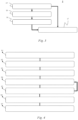
- Fig. 4 shows a working flowchart of the vehicle failure warning system 1 according to the present invention.
- the working mode of the vehicle failure warning system 1 will be illustrated below in conjunction with Fig. 4 .
- step S1 the control unit 5 of each of the plurality of vehicles in communication connection with the vehicle failure warning system 2 collects data of the vehicle in real time and transmits same to the data collection module 15 of the vehicle failure warning system 2 in real time.
- step S2 the data collection module 15 continuously collects the vehicle data within a time span to form a data cluster, wherein the data cluster serves as the basis for constructing a failure prediction model.
- step S3 according to the object and characteristics of the failure prediction model to be generated by the prediction model generation module 16, the data cluster is filtered and screened by the data screening module 18 and then provided to the prediction model generation module 16; and next, in step S4, in the prediction model generation module 16, the failure prediction model is constructed using the big-data processing algorithm based on the provided data.
- step S5 the established failure prediction model is verified using vehicle data unused in constructing the failure prediction model. If the verification meets requirements, the next step is proceeded to in the flow; and if the verification does not meet requirements, the failure prediction model is adjusted until the verification reaches the standard.
- the failure prediction module 17 receives the real-time vehicle data received from the vehicle by the data collection module 15, and also calls the failure prediction model generated by the prediction model generation module 16, and analyzes whether there is an imminent failure in the vehicle according to the real-time vehicle data and the failure prediction model.
- step S7 when determining that there is an imminent failure in the vehicle, the failure prediction module 17 issues a warning to the relevant personnel, such as the driver or the monitoring personnel, and gives relevant suggestions.
- Fig. 4 macroscopically illustrates a vehicle failure warning method implemented by the vehicle failure warning system 1 according to the present invention
- Figs. 5 and 6 respectively illustrate two specific embodiments of such a vehicle failure warning method. Both of the embodiments are based on motor overheating as a target failure, with the key difference therebetween lying in the fact that the failure warning models constructed are different.
- step S11 the data collection module 15 is enabled to collect vehicle data from a plurality of vehicles in communication connection with the vehicle failure warning system 2 within a time span to form a data cluster, wherein the data cluster serves as the basis for constructing a model for predicting motor winding overheating.
- step S12 the data screening module 18 screens data of healthy vehicles associated with motor winding overheating from the data cluster and provides same to the prediction model generation module 16, wherein, vehicle data associated with motor winding overheating may be selected based on physical reasons for motor winding overheating, such as the motor speed, the motor current, the battery voltage and the motor torque. Moreover, the data screening module 18 also ensures that all of the screened data are data of healthy vehicles, which can be achieved by filtering out data produced by vehicles in which failures have occurred within the time span, even up to the time of data screening.
- a first type of prediction model for predicting motor winding overheating is constructed from the provided data using a big-data processing algorithm in the prediction model generation module 16, wherein the first type of prediction model may be expressed as, for example, a mathematical function of which the form can be similar to that of the mathematical function (1) mentioned above.
- step S14 the prediction model is verified using vehicle data unused in constructing the first type of prediction model. Similar to the above step S5, the prediction model is adjusted if the verification does not meet the requirements, until the verification is reached.
- the failure prediction module 17 receives the latest vehicle data from the data collection module 15 in real time, and also calls the prediction model for motor winding overheating constructed in step S13, and analyzes, based on the two, whether there is imminent motor winding overheating in the vehicle.
- the specific analysis method is as follows: substituting the real-time motor speed value, the real-time motor current value, the real-time battery voltage value, and the real-time motor torque value into the mathematical function constructed in step S13 to calculate the estimated motor winding temperature value, wherein the estimated motor winding temperature value has the following meaning: it refers to what motor winding temperature value a healthy electric drive system should have with such a motor speed value, motor current value, battery voltage value and motor torque value.
- This estimated motor winding temperature value is extrapolated based on a large amount of data of healthy electric drive systems. It indicates, in a situation where a large number of healthy electric drive systems once appeared, what motor winding temperature value is exhibited when the healthy electric drive systems exhibit such a motor speed value, motor current value, battery voltage value and motor torque value.
- step S16 the estimated motor winding temperature value is compared to the corresponding real-time motor winding temperature measurement value. If a deviation between the corresponding real-time motor winding temperature measurement value and the estimated motor winding temperature value is within a pre-set range, it indicates that the current operation state of the electric drive system is no different from that of a healthy electric drive system; thus the current electric drive system is healthy and normal, and there is no imminent motor winding overheating; and conversely, if the corresponding real-time motor winding temperature measurement value is higher than the estimated motor winding temperature value by a deviation exceeding the pre-set range, it indicates that there are certain failures in the electric drive system and there is imminent motor winding overheating.
- step S17 an alert is issued to the relevant personnel and relevant suggestions are provided when it is predicted that the motor winding is about to overheat.
- the relevant personnel can learn that the motor is possibly about to overheat before the motor overheats to such an extent as to cause other more serious problems, so that the problematic electric drive system can be intervened with earlier, and thus not only can maintenance costs be saved on, but more importantly, more serious dangers, even life-threatening dangers, can be prevented from occurring.
- the verification of the prediction model in the above step S14 can be specifically implemented as follows: at least one set of unused vehicle data are substituted into the mathematical function so as to calculate a corresponding motor winding temperature value, and then the calculated motor winding temperature value is compared with a corresponding real-time motor winding temperature measurement value; and if the deviation between the two exceeds a pre-set range, it indicates that the current failure prediction model is not accurate enough and needs further adjustment.
- step S21 similar to step S11, the data collection module 15 is enabled to collect vehicle data from a plurality of vehicles within a time span to form a data cluster for modelling.
- step S22 the data screening module 18 screens data of sub-healthy vehicles associated with motor overheating from the data cluster and provides the screened data to the prediction model generation module 16.
- the data are required to meet the following two requirements at the same time: firstly, the data must be data of electric drive systems with motor overheating, and secondly, the data must be data within the period of time from the start of motor temperature rise to the occurrence of motor overheating.
- step S23 similar to step S13, a second type of prediction model for predicting motor overheating is constructed from the provided data using a big-data processing algorithm in the prediction model generation module 16, wherein the prediction model may be expressed as, for example, a mathematical function, and the form of the mathematical function can be similar to the above mathematical function (1), but the function content is different from that of the first type of failure prediction function constructed in the above first embodiment. Since the second type of failure prediction model is established based on a large amount of data of sub-healthy vehicles, i.e., vehicle data shortly before motor overheating, this prediction model describes the state exhibited by the vehicle in which there is imminent motor overheating.
- step S24 the model is verified using the vehicle data unused in constructing the failure prediction model; the model is adjusted if the verification does not meet the requirements until the verification is reached, which is similar to the above steps S5 and S14; and then, in step S25, the failure prediction module 17 receives the latest vehicle data from the data collection module 15 in real time, and also calls the prediction model for motor overheating constructed in step S23, and analyzes, based on the two, whether there is imminent motor overheating in the vehicle.
- the specific analysis method is as follows: substituting the real-time motor speed value, the real-time motor current value, the real-time battery voltage value and the real-time motor torque value into the mathematical function constructed in step S23 to calculate the estimated motor temperature value, wherein the estimated motor temperature value has the following meaning: it indicates that, in the case of exhibiting such a motor speed value, motor current value, battery voltage value and motor torque value, a sub-healthy electric drive system with certain problems that may cause motor overheating would exhibit such a motor temperature value.
- This estimated motor temperature value is extrapolated and obtained based on a large amount of data of sub-healthy electric drive systems. It indicates, in a situation where a large number of sub-healthy electric drive systems once appeared, what motor temperature value is exhibited when the healthy electric drive systems exhibit such a motor speed value, motor current value, battery voltage value and motor torque value.
- step S26 the estimated motor temperature value is compared to the corresponding real-time motor temperature measurement value. If the corresponding real-time motor temperature measurement value is significantly different from the estimated motor temperature value, it indicates that the current operation state of the electric drive system is significantly different from that of a sub-healthy electric drive system, and thus it can be determined that the current electric drive system is healthy and normal, and there is no imminent motor overheating.
- the corresponding real-time motor temperature measurement value is approximate to or the same as the estimated motor temperature value, for example, the deviation between the two is within a pre-set range, it indicates that the operation state of the current electric drive system is similar to that of the operation state of a sub-healthy electric drive system that appeared before, and thus it is very likely that the motor overheating is about to occur as it did in the sub-healthy electric drive systems in history.
- an overheating warning is issued to the relevant personnel and relevant suggestions are provided.
- the idea of the present invention is not limited to the single failure of motor overheating, but is also applicable to any other vehicle failure, such as battery pack failure and gearbox failure.
- the prediction model generation module 16 can also simultaneously construct both of the above-mentioned first type of failure prediction model and the above-mentioned second type of failure prediction model, so that the failure prediction module 17 can call the two types of models together to perform failure warning analyses, and issue a failure warning when both types of models indicate that there is an imminent failure in the current vehicle. This reduces the risk of false alarm and increases the credibility of failure warnings.
Landscapes
- Engineering & Computer Science (AREA)
- Physics & Mathematics (AREA)
- General Physics & Mathematics (AREA)
- Automation & Control Theory (AREA)
- Theoretical Computer Science (AREA)
- Mechanical Engineering (AREA)
- Transportation (AREA)
- Business, Economics & Management (AREA)
- Geometry (AREA)
- Human Computer Interaction (AREA)
- Human Resources & Organizations (AREA)
- Evolutionary Computation (AREA)
- Economics (AREA)
- Strategic Management (AREA)
- Computer Hardware Design (AREA)
- General Engineering & Computer Science (AREA)
- Tourism & Hospitality (AREA)
- General Business, Economics & Management (AREA)
- Marketing (AREA)
- Operations Research (AREA)
- Entrepreneurship & Innovation (AREA)
- Quality & Reliability (AREA)
- Mathematical Analysis (AREA)
- Computational Mathematics (AREA)
- Aviation & Aerospace Engineering (AREA)
- Mathematical Physics (AREA)
- Artificial Intelligence (AREA)
- Pure & Applied Mathematics (AREA)
- Mathematical Optimization (AREA)
- Chemical & Material Sciences (AREA)
- Development Economics (AREA)
- Game Theory and Decision Science (AREA)
- Combustion & Propulsion (AREA)
- Electric Propulsion And Braking For Vehicles (AREA)
- Emergency Alarm Devices (AREA)
- Traffic Control Systems (AREA)
- Health & Medical Sciences (AREA)
- General Health & Medical Sciences (AREA)
- Primary Health Care (AREA)
Claims (10)
- Fahrzeugausfallwarnsystem (2), wobei das Fahrzeugausfallwarnsystem (2) in Kommunikationsverbindung mit einer Mehrzahl von Fahrzeugen (3-1, 3-2... 3-n) steht und in der Lage ist, ein Fahrzeug vor einem unmittelbar bevorstehenden Ausfall zu warnen, wobei das Fahrzeugausfallwarnsystem (2) umfasst:a) ein Datensammelmodul (15), wobei das Datensammelmodul (15) dazu ausgelegt ist, Fahrzeugdaten von der Mehrzahl von Fahrzeugen (3-1, 3-2... 3-n) innerhalb einer Zeitspanne zu sammeln, um einen Datencluster zu bilden; dadurch gekennzeichnet, dass das Fahrzeugausfallwarnsystem (2) ferner umfasst:b) ein Daten-Screening-Modul (18), wobei das Daten-Screening-Modul (18) dazu ausgelegt ist, Daten von dem Daten-Cluster basierend auf Eigenschaften eines zu erzeugenden Ausfallvorhersagemodells zu screenen;c) ein Vorhersagemodell-Erzeugungsmodul (16), wobei das Vorhersagemodell-Erzeugungsmodul (16) dazu ausgelegt ist, das Ausfallvorhersagemodell zum Vorhersagen eines Fahrzeugausfalls aus den durch das Daten-Screening-Modul (18) gescreenten Daten zu erstellen; undd) ein Ausfallvorhersagemodul (17), wobei das Ausfallvorhersagemodul (17) dazu ausgelegt ist, in der Situation, in der das Ausfallvorhersagemodell aufgerufen wird, und basierend auf Echtzeit-Fahrzeugdaten vorherzusagen, ob ein unmittelbar bevorstehender Ausfall im Fahrzeug vorliegt, und eine Warnung auszugeben, wenn vorhergesagt wird, dass ein unmittelbar bevorstehender Ausfall im Fahrzeug vorliegt.
- Fahrzeugausfallwarnsystem (2) nach Anspruch 1, dadurch gekennzeichnet, dass
das erstellte Ausfallvorhersagemodell eine erste Art von Modell und/oder eine zweite Art von Modell ist, wobei die erst Art von Modell ein Ausfallvorhersagemodell ist, das basierend auf Daten intakter Fahrzeuge erstellt ist und zum Beschreiben des Betriebszustands der intakten Fahrzeuge verwendet wird, während die zweite Art von Modell ein Ausfallvorhersagemodell ist, das basierend auf Daten von Fahrzeugen aufgebaut ist, bei denen ein Ausfall unmittelbar bevorsteht, und das zur Beschreibung des Betriebszustands der Fahrzeuge verwendet wird, bei denen ein Ausfall unmittelbar bevorsteht. - Fahrzeugausfallwarnsystem (2) nach Anspruch 1 oder 2, dadurch gekennzeichnet, dassdas Ausfallvorhersagemodell als eine mathematische Funktion zwischen einem spezifischen Ausfallparameter und mindestens einem Einflussparameter für den Ausfallparameter ausgedrückt wird, wobei sich der spezifische Ausfallparameter auf einen Parameter bezieht, der einen spezifischen Fahrzeugausfall kennzeichnet; und/oderdas Vorhersagemodell-Erzeugungsmodul (16) dazu ausgelegt ist, das Ausfallvorhersagemodell aus den gescreenten Daten unter Verwendung eines Big-Data-Verarbeitungsalgorithmus zu erstellen.
- Fahrzeugausfallwarnsystem (2) nach Anspruch 3, dadurch gekennzeichnet, dass
das Ausfallvorhersagemodul (17) ist ferner dazu ausgelegt, beim Vorhersagen, ob ein unmittelbar bevorstehender Ausfall in dem Fahrzeug vorliegt, einen Echtzeit-Messwert des mindestens einen Einflussparameters in die mathematische Funktion zu ersetzen, um einen geschätzten Wert des Ausfallparameters zu berechnen; und zu bestimmen, ob ein unmittelbar bevorstehender Ausfall in dem aktuellen Fahrzeug vorliegt, indem der geschätzte Wert des Ausfallparameters mit dem Echtzeitmesswert, der dem Ausfallparameter entspricht, verglichen wird. - Fahrzeugausfallwarnsystem (2) nach Anspruch 4, dadurch gekennzeichnet, dass
das Ausfallvorhersagemodul (17) ferner dazu ausgelegt ist, in der Situation, in der die erste Art von Modell aufgerufen wird, wenn eine Abweichung zwischen dem geschätzten Wert des Ausfallparameters und dem Echtzeitmesswert, der dem Ausfallparameter entspricht, einen voreingestellten Bereich überschreitet, anzuzeigen, dass der durch den Ausfallparameter gekennzeichnete Ausfall in dem Fahrzeug unmittelbar bevorsteht; und in der Situation, in der die zweite Art von Modell aufgerufen wird, wenn die Abweichung zwischen dem geschätzten Wert des Ausfallparameters und dem Echtzeitmesswert, der dem Ausfallparameter entspricht, innerhalb des voreingestellten Bereichs liegt, anzuzeigen, dass der durch den Ausfallparameter gekennzeichnete Ausfall in dem Fahrzeug unmittelbar bevorsteht. - Fahrzeugausfallwarnverfahren, wobei das Verfahren die folgenden Schritte umfasst:a) Sammeln (S1; S11) von Fahrzeugdaten von einer Mehrzahl von Fahrzeugen (3-1, 3-2... 3-n) innerhalb einer Zeitspanne, um einen Datencluster zu bilden; gekennzeichnet durch:b) Screening (S3; S12) von Daten aus dem Datencluster basierend auf Eigenschaften eines zu erzeugenden Ausfallvorhersagemodells;c) Erstellen (S4) des Ausfallvorhersagemodells zum Vorhersagen eines Fahrzeugausfalls aus den gescreenten Daten;d) Vorhersagen (S6), basierend auf dem Ausfallvorhersagemodell und Echtzeit-Fahrzeugdaten, ob ein unmittelbar bevorstehender Ausfall in einem Fahrzeug vorliegt; unde) Ausgeben (S7) einer Warnung, wenn vorhergesagt wird, dass ein unmittelbar bevorstehender Ausfall im Fahrzeug vorliegt.
- Fahrzeugausfallwarnverfahren nach Anspruch 6, dadurch gekennzeichnet, dass die Schritte b) und c) implementiert werden durch:
in Schritt b) Screenen von Daten intakter Fahrzeuge von dem Datencluster und dann in Schritt c) Erstellen einer ersten Art von Modell zum Beschreiben des Betriebszustands der intakten Fahrzeuge; und/oder in Schritt b) Screenen von Daten von Fahrzeuge in denen ein Ausfall unmittelbar bevorsteht von dem Datencluster und dann in Schritt c) Erstellen einer zweiten Art von Modell zum Beschreiben des Betriebszustands der Fahrzeuge, in denen ein Ausfall unmittelbar bevorsteht. - Fahrzeugausfallwarnverfahren nach Anspruch 6 oder 7, dadurch gekennzeichnet, dass Schritt c) implementiert wird durch:
Ausdrücken des Ausfallvorhersagemodells als mathematische Funktion zwischen einem spezifischen Ausfallparameter und mindestens einem Einflussparameter für den Ausfallparameter, wobei sich der spezifische Ausfallparameter auf einen Parameter bezieht, der einen spezifischen Fahrzeugausfall kennzeichnet; und/oder Erstellen des Ausfallvorhersagemodells aus den gescreenten Daten unter Verwendung eines Big-Data-Verarbeitungsalgorithmus. - Fahrzeugausfallwarnverfahren nach Anspruch 8, dadurch gekennzeichnet, dass Schritt d) implementiert wird durch:Ersetzen eines Echtzeit-Messwerts des mindestens einen Einflussparameters in die mathematische Funktion, um einen geschätzten Wert des Ausfallparameters zu berechnen, und Vergleichen des geschätzten Werts des Ausfallparameters mit dem Echtzeit-Messwert, der dem Ausfallparameter entspricht;und in der Situation, in der die erste Art von Modell verwendet wird, wenn eine Abweichung zwischen dem geschätzten Wert des Ausfallparameters und dem Echtzeitmesswert, der dem Ausfallparameter entspricht, einen voreingestellten Bereich überschreitet, Angeben, dass der durch den Ausfallparameter gekennzeichnete Ausfall in dem Fahrzeug unmittelbar bevorsteht; und in der Situation, in der die zweite Art von Modell verwendet wird, wenn die Abweichung zwischen dem geschätzten Wert des Ausfallparameters und dem Echtzeitmesswert, der dem Ausfallparameter entspricht, innerhalb des voreingestellten Bereichs liegt, Angeben, dass der durch den Ausfallparameter gekennzeichnete Ausfall in dem Fahrzeug unmittelbar bevorsteht.
- Fahrzeugausfallwarnverfahren nach einem der Ansprüche 6-9, dadurch gekennzeichnet, dass der folgende Schritt ferner nach Schritt c) und vor Schritt d) ausgeführt wird:Verifizieren des Ausfallvorhersagemodells unter Verwendung von Fahrzeugdaten, die beim Erstellen des Ausfallvorhersagemodells nicht verwendet wurden, undAnpassen des Ausfallvorhersagemodells in dem Fall, dass die Verifizierung die Anforderungen nicht erfüllt.
Applications Claiming Priority (2)
| Application Number | Priority Date | Filing Date | Title |
|---|---|---|---|
| CN201810052820.3A CN110059325B (zh) | 2018-01-19 | 2018-01-19 | 车辆故障预警系统及对应的车辆故障预警方法 |
| PCT/EP2018/082142 WO2019141411A1 (en) | 2018-01-19 | 2018-11-22 | Vehicle failure warning system and corresponding vehicle failure warning method |
Publications (2)
| Publication Number | Publication Date |
|---|---|
| EP3740405A1 EP3740405A1 (de) | 2020-11-25 |
| EP3740405B1 true EP3740405B1 (de) | 2024-01-24 |
Family
ID=64564842
Family Applications (1)
| Application Number | Title | Priority Date | Filing Date |
|---|---|---|---|
| EP18811754.3A Active EP3740405B1 (de) | 2018-01-19 | 2018-11-22 | Ausfallwarnsystem und verfahren für ein fahrzeug |
Country Status (6)
| Country | Link |
|---|---|
| US (1) | US20210065481A1 (de) |
| EP (1) | EP3740405B1 (de) |
| JP (1) | JP7315562B2 (de) |
| KR (1) | KR102721905B1 (de) |
| CN (1) | CN110059325B (de) |
| WO (1) | WO2019141411A1 (de) |
Families Citing this family (31)
| Publication number | Priority date | Publication date | Assignee | Title |
|---|---|---|---|---|
| US11335137B2 (en) * | 2019-04-05 | 2022-05-17 | Conduent Business Services, Llc | Trained pattern analyzer for roll out decisions |
| CN112394703B (zh) * | 2019-08-14 | 2022-06-10 | 中车时代电动汽车股份有限公司 | 一种车辆故障管理系统 |
| US11551488B2 (en) * | 2019-08-22 | 2023-01-10 | GM Global Technology Operations LLC | Adaptive fault diagnostic system for motor vehicles |
| CN110647539B (zh) * | 2019-09-26 | 2022-06-24 | 汉纳森(厦门)数据股份有限公司 | 一种用于车辆故障的预测方法和系统 |
| CN110728041B (zh) * | 2019-09-27 | 2022-03-25 | 联想(北京)有限公司 | 信息处理方法及电子设备 |
| CN110765604B (zh) * | 2019-10-14 | 2023-05-12 | 湖南银河电气有限公司 | 一种运行工况下设备状态评价方法及系统、存储介质 |
| CN110827541B (zh) * | 2019-11-08 | 2022-04-26 | 腾讯科技(深圳)有限公司 | 一种信息获取方法、装置、设备及存储介质 |
| CN111624433B (zh) * | 2020-07-08 | 2022-08-16 | 深圳技术大学 | 纯电动汽车状态评估方法、系统及计算机可读取存储介质 |
| CN111832974A (zh) * | 2020-07-28 | 2020-10-27 | 重庆长安新能源汽车科技有限公司 | 车辆故障预警方法及存储介质 |
| US12387537B2 (en) | 2020-08-25 | 2025-08-12 | ANI Technologies Private Limited | Determination of health status of vehicular systems in vehicles |
| KR102552699B1 (ko) * | 2020-11-30 | 2023-07-10 | 주식회사 인포카 | 차량 고장 여부를 예측하기 위한 인공 신경망 학습 방법, 차량 고장 여부 판단 방법, 및 이를 수행하는 컴퓨팅 시스템 |
| CN112606779B (zh) * | 2020-12-24 | 2023-01-06 | 东风汽车有限公司 | 一种汽车故障预警方法及电子设备 |
| CN112558592B (zh) * | 2020-12-25 | 2022-04-08 | 浙江吉利控股集团有限公司 | 车辆故障预测方法、预测系统及车辆 |
| CN112862233A (zh) * | 2020-12-25 | 2021-05-28 | 石家庄开发区天远科技有限公司 | 一种基于车联网数据的故障关联性分析系统及方法 |
| US12283135B2 (en) | 2021-01-29 | 2025-04-22 | Rm Acquisition, Llc | Detection and alerting of vehicle safety system issues |
| CN113125937B (zh) * | 2021-03-09 | 2024-09-10 | 浙江零跑科技股份有限公司 | 一种车载印刷电路板组件运行故障的快速预警方法 |
| CN113093709B (zh) * | 2021-04-08 | 2023-06-23 | 重庆理工大学 | 一种主动式随车运行状态监测和故障预报方法 |
| CN113844266A (zh) * | 2021-08-20 | 2021-12-28 | 云度新能源汽车有限公司 | 一种对动力电池进行故障预测和识别的方法和存储设备 |
| CN113869726A (zh) * | 2021-09-27 | 2021-12-31 | 江铃汽车股份有限公司 | 基于售后大数据的预见性质量问题预防发生方法 |
| CN114676782B (zh) * | 2022-03-30 | 2025-07-01 | 山东大学 | 一种基于高频时序数据的车辆故障预警方法及系统 |
| CN114879639A (zh) * | 2022-05-19 | 2022-08-09 | 蔚来动力科技(合肥)有限公司 | 车辆的控制方法、车辆控制系统、车载控制设备及车辆 |
| CN114919413B (zh) * | 2022-05-25 | 2025-06-06 | 浙江吉利控股集团有限公司 | 一种电动车辆电池异常诊断的方法及系统 |
| CN114801751B (zh) * | 2022-06-21 | 2022-10-25 | 深圳市今朝时代股份有限公司 | 一种基于数据分析的汽车电池故障预测系统 |
| CN115096608B (zh) * | 2022-06-30 | 2025-10-31 | 中车石家庄车辆有限公司 | 铁路货车故障预测方法 |
| WO2024059548A1 (en) * | 2022-09-13 | 2024-03-21 | Nikola Corporation | Systems and methods for electric vehicle powertrain thermal management and control |
| DE102022211661A1 (de) * | 2022-11-04 | 2024-05-08 | Volkswagen Aktiengesellschaft | Verfahren zum Beurteilen eines Zustands zumindest einer Funktionseinheit eines zumindest teilweise autonom betriebenen Fahrzeugs einer Fahrzeugflotte |
| EP4626761A1 (de) * | 2022-12-01 | 2025-10-08 | Volvo Truck Corporation | Computersystem und computerimplementiertes verfahren zur steuerung eines fahrzeugs |
| CN116907565B (zh) * | 2023-09-12 | 2023-11-28 | 常州华旋传感技术有限公司 | 一种基于数据分析的旋变传感器性能检测系统及方法 |
| CN118534883B (zh) * | 2024-07-29 | 2024-10-01 | 成都秦川物联网科技股份有限公司 | 基于工业物联网的设备故障智能诊断方法、系统和介质 |
| CN119858451B (zh) * | 2025-01-14 | 2025-11-25 | 重庆赛力斯凤凰智创科技有限公司 | 动力电池故障管控方法及系统 |
| CN120018089B (zh) * | 2025-04-15 | 2025-07-11 | 沈阳安普合科技有限公司 | 车辆数据无线交互系统 |
Family Cites Families (15)
| Publication number | Priority date | Publication date | Assignee | Title |
|---|---|---|---|---|
| US8019501B2 (en) * | 1995-06-07 | 2011-09-13 | Automotive Technologies International, Inc. | Vehicle diagnostic and prognostic methods and systems |
| AU2002235516A1 (en) * | 2001-01-08 | 2002-07-16 | Vextec Corporation | Method and apparatus for predicting failure in a system |
| JP2004272375A (ja) * | 2003-03-05 | 2004-09-30 | Mazda Motor Corp | 遠隔故障予測システム |
| JP5018444B2 (ja) * | 2007-12-13 | 2012-09-05 | 株式会社豊田中央研究所 | 車両故障診断予測装置 |
| US8676432B2 (en) * | 2010-01-13 | 2014-03-18 | GM Global Technology Operations LLC | Fault prediction framework using temporal data mining |
| US8543280B2 (en) * | 2011-04-29 | 2013-09-24 | Toyota Motor Engineering & Manufacturing North America, Inc. | Collaborative multi-agent vehicle fault diagnostic system and associated methodology |
| FR2990516B1 (fr) * | 2012-05-11 | 2015-10-16 | Renault Sas | Estimation de l'etat de charge d'une batterie |
| CN103455026B (zh) * | 2013-08-23 | 2016-02-03 | 王绍兰 | 一种车辆故障诊断和预警方法及装置 |
| US9881428B2 (en) * | 2014-07-30 | 2018-01-30 | Verizon Patent And Licensing Inc. | Analysis of vehicle data to predict component failure |
| IL233995B (en) * | 2014-08-07 | 2020-06-30 | Compucar Car Computers Ltd | System and method for providing an optimal condition indication of a vehicle |
| US20160063418A1 (en) * | 2014-09-03 | 2016-03-03 | General Electric Company | System and Method for Inferring Vehicle Health |
| US20160232466A1 (en) * | 2015-02-09 | 2016-08-11 | Wipro Limited | Method and device for determining risks associated with customer requirements in an organization |
| CN107490485A (zh) * | 2016-11-15 | 2017-12-19 | 宝沃汽车(中国)有限公司 | 车辆健康度检测方法、装置及车辆 |
| CN107153841B (zh) * | 2017-04-24 | 2020-02-18 | 南京康尼机电股份有限公司 | 一种城市轨道交通车辆门系统的亚健康预测方法 |
| US11507715B2 (en) * | 2018-12-03 | 2022-11-22 | International Business Machines Corporation | Detection of vehicle defects |
-
2018
- 2018-01-19 CN CN201810052820.3A patent/CN110059325B/zh active Active
- 2018-11-22 US US16/962,450 patent/US20210065481A1/en not_active Abandoned
- 2018-11-22 EP EP18811754.3A patent/EP3740405B1/de active Active
- 2018-11-22 JP JP2020539723A patent/JP7315562B2/ja active Active
- 2018-11-22 KR KR1020207021609A patent/KR102721905B1/ko active Active
- 2018-11-22 WO PCT/EP2018/082142 patent/WO2019141411A1/en not_active Ceased
Also Published As
| Publication number | Publication date |
|---|---|
| CN110059325A (zh) | 2019-07-26 |
| JP2021511005A (ja) | 2021-04-30 |
| CN110059325B (zh) | 2024-05-03 |
| KR20200104362A (ko) | 2020-09-03 |
| US20210065481A1 (en) | 2021-03-04 |
| WO2019141411A1 (en) | 2019-07-25 |
| EP3740405A1 (de) | 2020-11-25 |
| JP7315562B2 (ja) | 2023-07-26 |
| KR102721905B1 (ko) | 2024-10-28 |
Similar Documents
| Publication | Publication Date | Title |
|---|---|---|
| EP3740405B1 (de) | Ausfallwarnsystem und verfahren für ein fahrzeug | |
| CN106406273B (zh) | 车辆中故障原因的确定 | |
| US10540831B2 (en) | Real-time on-board diagnostics (OBD) output parameter-based commercial fleet maintenance alert system | |
| US20110046842A1 (en) | Satellite enabled vehicle prognostic and diagnostic system | |
| KR102255599B1 (ko) | 차량 고장 진단 서비스 제공 시스템 및 방법 | |
| KR20180105850A (ko) | 차량 고장 진단 시스템 및 그 진단방법 | |
| KR20190107080A (ko) | 클라우드 기반 차량 고장 진단 방법, 장치 및 시스템 | |
| US11120648B2 (en) | Health self learning system and method for electrical distribution systems for automated driving vehicles | |
| CN114407910B (zh) | 智能驾驶车辆的故障处理方法、装置、存储介质 | |
| CN119539054A (zh) | 知识图谱的构建方法以及对车辆故障进行诊断的方法 | |
| US12249191B2 (en) | Method for determining the operating state of vehicle components | |
| CN119105467B (zh) | 一种车辆故障诊断系统、方法、车辆终端及存储介质 | |
| Taie et al. | Remote prognosis, diagnosis and maintenance for automotive architecture based on least squares support vector machine and multiple classifiers | |
| Davari et al. | A fault detection framework based on lstm autoencoder: A case study for volvo bus data set | |
| CN119767271A (zh) | 基于开源鸿蒙系统和星闪技术的车联网组网方法和系统 | |
| CN119310459A (zh) | 用于预测设备电池组错误的方法及装置 | |
| KR102242227B1 (ko) | 차량 게이트웨이를 이용한 차량 진단 정보 제공 시스템 및 방법 | |
| KR20250078352A (ko) | 온보드 성능 모니터링 시스템 및 그 방법 | |
| CN118560282A (zh) | 一种车辆电池故障处理的方法、装置及电子设备 | |
| KR102883756B1 (ko) | 자동차 정밀 진단 및 고장 예측장치 및 그 예측방법 | |
| CN118784450A (zh) | 一种车辆网络方法、装置、车辆、存储介质及产品 | |
| US12001272B2 (en) | Method for the remote-controlled handling of an error finding in a means of transport, means of transport, backend server and system | |
| JP2007248070A (ja) | 車両走行試験装置 | |
| WO2024013879A1 (ja) | 診断制御装置及び診断制御方法 | |
| Minh et al. | System for recognising and monitoring the technical condition of construction machines |
Legal Events
| Date | Code | Title | Description |
|---|---|---|---|
| STAA | Information on the status of an ep patent application or granted ep patent |
Free format text: STATUS: UNKNOWN |
|
| STAA | Information on the status of an ep patent application or granted ep patent |
Free format text: STATUS: THE INTERNATIONAL PUBLICATION HAS BEEN MADE |
|
| PUAI | Public reference made under article 153(3) epc to a published international application that has entered the european phase |
Free format text: ORIGINAL CODE: 0009012 |
|
| STAA | Information on the status of an ep patent application or granted ep patent |
Free format text: STATUS: REQUEST FOR EXAMINATION WAS MADE |
|
| 17P | Request for examination filed |
Effective date: 20200819 |
|
| AK | Designated contracting states |
Kind code of ref document: A1 Designated state(s): AL AT BE BG CH CY CZ DE DK EE ES FI FR GB GR HR HU IE IS IT LI LT LU LV MC MK MT NL NO PL PT RO RS SE SI SK SM TR |
|
| AX | Request for extension of the european patent |
Extension state: BA ME |
|
| DAV | Request for validation of the european patent (deleted) | ||
| DAX | Request for extension of the european patent (deleted) | ||
| STAA | Information on the status of an ep patent application or granted ep patent |
Free format text: STATUS: EXAMINATION IS IN PROGRESS |
|
| 17Q | First examination report despatched |
Effective date: 20220712 |
|
| 17Q | First examination report despatched |
Effective date: 20221109 |
|
| GRAP | Despatch of communication of intention to grant a patent |
Free format text: ORIGINAL CODE: EPIDOSNIGR1 |
|
| STAA | Information on the status of an ep patent application or granted ep patent |
Free format text: STATUS: GRANT OF PATENT IS INTENDED |
|
| INTG | Intention to grant announced |
Effective date: 20230929 |
|
| GRAS | Grant fee paid |
Free format text: ORIGINAL CODE: EPIDOSNIGR3 |
|
| GRAA | (expected) grant |
Free format text: ORIGINAL CODE: 0009210 |
|
| STAA | Information on the status of an ep patent application or granted ep patent |
Free format text: STATUS: THE PATENT HAS BEEN GRANTED |
|
| AK | Designated contracting states |
Kind code of ref document: B1 Designated state(s): AL AT BE BG CH CY CZ DE DK EE ES FI FR GB GR HR HU IE IS IT LI LT LU LV MC MK MT NL NO PL PT RO RS SE SI SK SM TR |
|
| REG | Reference to a national code |
Ref country code: GB Ref legal event code: FG4D |
|
| REG | Reference to a national code |
Ref country code: CH Ref legal event code: EP |
|
| REG | Reference to a national code |
Ref country code: DE Ref legal event code: R096 Ref document number: 602018064558 Country of ref document: DE |
|
| REG | Reference to a national code |
Ref country code: IE Ref legal event code: FG4D |
|
| REG | Reference to a national code |
Ref country code: LT Ref legal event code: MG9D |
|
| REG | Reference to a national code |
Ref country code: NL Ref legal event code: MP Effective date: 20240124 |
|
| PG25 | Lapsed in a contracting state [announced via postgrant information from national office to epo] |
Ref country code: NL Free format text: LAPSE BECAUSE OF FAILURE TO SUBMIT A TRANSLATION OF THE DESCRIPTION OR TO PAY THE FEE WITHIN THE PRESCRIBED TIME-LIMIT Effective date: 20240124 |
|
| PG25 | Lapsed in a contracting state [announced via postgrant information from national office to epo] |
Ref country code: NL Free format text: LAPSE BECAUSE OF FAILURE TO SUBMIT A TRANSLATION OF THE DESCRIPTION OR TO PAY THE FEE WITHIN THE PRESCRIBED TIME-LIMIT Effective date: 20240124 |
|
| PG25 | Lapsed in a contracting state [announced via postgrant information from national office to epo] |
Ref country code: IS Free format text: LAPSE BECAUSE OF FAILURE TO SUBMIT A TRANSLATION OF THE DESCRIPTION OR TO PAY THE FEE WITHIN THE PRESCRIBED TIME-LIMIT Effective date: 20240524 |
|
| PG25 | Lapsed in a contracting state [announced via postgrant information from national office to epo] |
Ref country code: LT Free format text: LAPSE BECAUSE OF FAILURE TO SUBMIT A TRANSLATION OF THE DESCRIPTION OR TO PAY THE FEE WITHIN THE PRESCRIBED TIME-LIMIT Effective date: 20240124 |
|
| PG25 | Lapsed in a contracting state [announced via postgrant information from national office to epo] |
Ref country code: GR Free format text: LAPSE BECAUSE OF FAILURE TO SUBMIT A TRANSLATION OF THE DESCRIPTION OR TO PAY THE FEE WITHIN THE PRESCRIBED TIME-LIMIT Effective date: 20240425 |
|
| REG | Reference to a national code |
Ref country code: AT Ref legal event code: MK05 Ref document number: 1651959 Country of ref document: AT Kind code of ref document: T Effective date: 20240124 |
|
| PG25 | Lapsed in a contracting state [announced via postgrant information from national office to epo] |
Ref country code: RS Free format text: LAPSE BECAUSE OF FAILURE TO SUBMIT A TRANSLATION OF THE DESCRIPTION OR TO PAY THE FEE WITHIN THE PRESCRIBED TIME-LIMIT Effective date: 20240424 Ref country code: HR Free format text: LAPSE BECAUSE OF FAILURE TO SUBMIT A TRANSLATION OF THE DESCRIPTION OR TO PAY THE FEE WITHIN THE PRESCRIBED TIME-LIMIT Effective date: 20240124 |
|
| PG25 | Lapsed in a contracting state [announced via postgrant information from national office to epo] |
Ref country code: ES Free format text: LAPSE BECAUSE OF FAILURE TO SUBMIT A TRANSLATION OF THE DESCRIPTION OR TO PAY THE FEE WITHIN THE PRESCRIBED TIME-LIMIT Effective date: 20240124 |
|
| PG25 | Lapsed in a contracting state [announced via postgrant information from national office to epo] |
Ref country code: AT Free format text: LAPSE BECAUSE OF FAILURE TO SUBMIT A TRANSLATION OF THE DESCRIPTION OR TO PAY THE FEE WITHIN THE PRESCRIBED TIME-LIMIT Effective date: 20240124 |
|
| PG25 | Lapsed in a contracting state [announced via postgrant information from national office to epo] |
Ref country code: RS Free format text: LAPSE BECAUSE OF FAILURE TO SUBMIT A TRANSLATION OF THE DESCRIPTION OR TO PAY THE FEE WITHIN THE PRESCRIBED TIME-LIMIT Effective date: 20240424 Ref country code: NO Free format text: LAPSE BECAUSE OF FAILURE TO SUBMIT A TRANSLATION OF THE DESCRIPTION OR TO PAY THE FEE WITHIN THE PRESCRIBED TIME-LIMIT Effective date: 20240424 Ref country code: LT Free format text: LAPSE BECAUSE OF FAILURE TO SUBMIT A TRANSLATION OF THE DESCRIPTION OR TO PAY THE FEE WITHIN THE PRESCRIBED TIME-LIMIT Effective date: 20240124 Ref country code: IS Free format text: LAPSE BECAUSE OF FAILURE TO SUBMIT A TRANSLATION OF THE DESCRIPTION OR TO PAY THE FEE WITHIN THE PRESCRIBED TIME-LIMIT Effective date: 20240524 Ref country code: HR Free format text: LAPSE BECAUSE OF FAILURE TO SUBMIT A TRANSLATION OF THE DESCRIPTION OR TO PAY THE FEE WITHIN THE PRESCRIBED TIME-LIMIT Effective date: 20240124 Ref country code: GR Free format text: LAPSE BECAUSE OF FAILURE TO SUBMIT A TRANSLATION OF THE DESCRIPTION OR TO PAY THE FEE WITHIN THE PRESCRIBED TIME-LIMIT Effective date: 20240425 Ref country code: FI Free format text: LAPSE BECAUSE OF FAILURE TO SUBMIT A TRANSLATION OF THE DESCRIPTION OR TO PAY THE FEE WITHIN THE PRESCRIBED TIME-LIMIT Effective date: 20240124 Ref country code: ES Free format text: LAPSE BECAUSE OF FAILURE TO SUBMIT A TRANSLATION OF THE DESCRIPTION OR TO PAY THE FEE WITHIN THE PRESCRIBED TIME-LIMIT Effective date: 20240124 Ref country code: BG Free format text: LAPSE BECAUSE OF FAILURE TO SUBMIT A TRANSLATION OF THE DESCRIPTION OR TO PAY THE FEE WITHIN THE PRESCRIBED TIME-LIMIT Effective date: 20240124 Ref country code: AT Free format text: LAPSE BECAUSE OF FAILURE TO SUBMIT A TRANSLATION OF THE DESCRIPTION OR TO PAY THE FEE WITHIN THE PRESCRIBED TIME-LIMIT Effective date: 20240124 |
|
| PG25 | Lapsed in a contracting state [announced via postgrant information from national office to epo] |
Ref country code: PL Free format text: LAPSE BECAUSE OF FAILURE TO SUBMIT A TRANSLATION OF THE DESCRIPTION OR TO PAY THE FEE WITHIN THE PRESCRIBED TIME-LIMIT Effective date: 20240124 Ref country code: PT Free format text: LAPSE BECAUSE OF FAILURE TO SUBMIT A TRANSLATION OF THE DESCRIPTION OR TO PAY THE FEE WITHIN THE PRESCRIBED TIME-LIMIT Effective date: 20240524 |
|
| PG25 | Lapsed in a contracting state [announced via postgrant information from national office to epo] |
Ref country code: SE Free format text: LAPSE BECAUSE OF FAILURE TO SUBMIT A TRANSLATION OF THE DESCRIPTION OR TO PAY THE FEE WITHIN THE PRESCRIBED TIME-LIMIT Effective date: 20240124 Ref country code: PT Free format text: LAPSE BECAUSE OF FAILURE TO SUBMIT A TRANSLATION OF THE DESCRIPTION OR TO PAY THE FEE WITHIN THE PRESCRIBED TIME-LIMIT Effective date: 20240524 Ref country code: PL Free format text: LAPSE BECAUSE OF FAILURE TO SUBMIT A TRANSLATION OF THE DESCRIPTION OR TO PAY THE FEE WITHIN THE PRESCRIBED TIME-LIMIT Effective date: 20240124 Ref country code: LV Free format text: LAPSE BECAUSE OF FAILURE TO SUBMIT A TRANSLATION OF THE DESCRIPTION OR TO PAY THE FEE WITHIN THE PRESCRIBED TIME-LIMIT Effective date: 20240124 |
|
| PG25 | Lapsed in a contracting state [announced via postgrant information from national office to epo] |
Ref country code: DK Free format text: LAPSE BECAUSE OF FAILURE TO SUBMIT A TRANSLATION OF THE DESCRIPTION OR TO PAY THE FEE WITHIN THE PRESCRIBED TIME-LIMIT Effective date: 20240124 |
|
| PG25 | Lapsed in a contracting state [announced via postgrant information from national office to epo] |
Ref country code: SM Free format text: LAPSE BECAUSE OF FAILURE TO SUBMIT A TRANSLATION OF THE DESCRIPTION OR TO PAY THE FEE WITHIN THE PRESCRIBED TIME-LIMIT Effective date: 20240124 |
|
| PG25 | Lapsed in a contracting state [announced via postgrant information from national office to epo] |
Ref country code: EE Free format text: LAPSE BECAUSE OF FAILURE TO SUBMIT A TRANSLATION OF THE DESCRIPTION OR TO PAY THE FEE WITHIN THE PRESCRIBED TIME-LIMIT Effective date: 20240124 Ref country code: CZ Free format text: LAPSE BECAUSE OF FAILURE TO SUBMIT A TRANSLATION OF THE DESCRIPTION OR TO PAY THE FEE WITHIN THE PRESCRIBED TIME-LIMIT Effective date: 20240124 |
|
| REG | Reference to a national code |
Ref country code: DE Ref legal event code: R097 Ref document number: 602018064558 Country of ref document: DE |
|
| PG25 | Lapsed in a contracting state [announced via postgrant information from national office to epo] |
Ref country code: SK Free format text: LAPSE BECAUSE OF FAILURE TO SUBMIT A TRANSLATION OF THE DESCRIPTION OR TO PAY THE FEE WITHIN THE PRESCRIBED TIME-LIMIT Effective date: 20240124 |
|
| PG25 | Lapsed in a contracting state [announced via postgrant information from national office to epo] |
Ref country code: SM Free format text: LAPSE BECAUSE OF FAILURE TO SUBMIT A TRANSLATION OF THE DESCRIPTION OR TO PAY THE FEE WITHIN THE PRESCRIBED TIME-LIMIT Effective date: 20240124 Ref country code: SK Free format text: LAPSE BECAUSE OF FAILURE TO SUBMIT A TRANSLATION OF THE DESCRIPTION OR TO PAY THE FEE WITHIN THE PRESCRIBED TIME-LIMIT Effective date: 20240124 Ref country code: RO Free format text: LAPSE BECAUSE OF FAILURE TO SUBMIT A TRANSLATION OF THE DESCRIPTION OR TO PAY THE FEE WITHIN THE PRESCRIBED TIME-LIMIT Effective date: 20240124 Ref country code: EE Free format text: LAPSE BECAUSE OF FAILURE TO SUBMIT A TRANSLATION OF THE DESCRIPTION OR TO PAY THE FEE WITHIN THE PRESCRIBED TIME-LIMIT Effective date: 20240124 Ref country code: DK Free format text: LAPSE BECAUSE OF FAILURE TO SUBMIT A TRANSLATION OF THE DESCRIPTION OR TO PAY THE FEE WITHIN THE PRESCRIBED TIME-LIMIT Effective date: 20240124 Ref country code: CZ Free format text: LAPSE BECAUSE OF FAILURE TO SUBMIT A TRANSLATION OF THE DESCRIPTION OR TO PAY THE FEE WITHIN THE PRESCRIBED TIME-LIMIT Effective date: 20240124 |
|
| PLBE | No opposition filed within time limit |
Free format text: ORIGINAL CODE: 0009261 |
|
| STAA | Information on the status of an ep patent application or granted ep patent |
Free format text: STATUS: NO OPPOSITION FILED WITHIN TIME LIMIT |
|
| PG25 | Lapsed in a contracting state [announced via postgrant information from national office to epo] |
Ref country code: IT Free format text: LAPSE BECAUSE OF FAILURE TO SUBMIT A TRANSLATION OF THE DESCRIPTION OR TO PAY THE FEE WITHIN THE PRESCRIBED TIME-LIMIT Effective date: 20240124 |
|
| PG25 | Lapsed in a contracting state [announced via postgrant information from national office to epo] |
Ref country code: IT Free format text: LAPSE BECAUSE OF FAILURE TO SUBMIT A TRANSLATION OF THE DESCRIPTION OR TO PAY THE FEE WITHIN THE PRESCRIBED TIME-LIMIT Effective date: 20240124 |
|
| 26N | No opposition filed |
Effective date: 20241025 |
|
| PG25 | Lapsed in a contracting state [announced via postgrant information from national office to epo] |
Ref country code: SI Free format text: LAPSE BECAUSE OF FAILURE TO SUBMIT A TRANSLATION OF THE DESCRIPTION OR TO PAY THE FEE WITHIN THE PRESCRIBED TIME-LIMIT Effective date: 20240124 |
|
| REG | Reference to a national code |
Ref country code: CH Ref legal event code: PL |
|
| PG25 | Lapsed in a contracting state [announced via postgrant information from national office to epo] |
Ref country code: MC Free format text: LAPSE BECAUSE OF FAILURE TO SUBMIT A TRANSLATION OF THE DESCRIPTION OR TO PAY THE FEE WITHIN THE PRESCRIBED TIME-LIMIT Effective date: 20240124 |
|
| PG25 | Lapsed in a contracting state [announced via postgrant information from national office to epo] |
Ref country code: LU Free format text: LAPSE BECAUSE OF NON-PAYMENT OF DUE FEES Effective date: 20241122 |
|
| REG | Reference to a national code |
Ref country code: CH Ref legal event code: PL |
|
| PG25 | Lapsed in a contracting state [announced via postgrant information from national office to epo] |
Ref country code: CH Free format text: LAPSE BECAUSE OF NON-PAYMENT OF DUE FEES Effective date: 20241130 |
|
| REG | Reference to a national code |
Ref country code: BE Ref legal event code: MM Effective date: 20241130 |
|
| PG25 | Lapsed in a contracting state [announced via postgrant information from national office to epo] |
Ref country code: BE Free format text: LAPSE BECAUSE OF NON-PAYMENT OF DUE FEES Effective date: 20241130 |
|
| PG25 | Lapsed in a contracting state [announced via postgrant information from national office to epo] |
Ref country code: IE Free format text: LAPSE BECAUSE OF NON-PAYMENT OF DUE FEES Effective date: 20241122 |
|
| PGFP | Annual fee paid to national office [announced via postgrant information from national office to epo] |
Ref country code: GB Payment date: 20251120 Year of fee payment: 8 |
|
| PGFP | Annual fee paid to national office [announced via postgrant information from national office to epo] |
Ref country code: FR Payment date: 20251120 Year of fee payment: 8 |
|
| PG25 | Lapsed in a contracting state [announced via postgrant information from national office to epo] |
Ref country code: HU Free format text: LAPSE BECAUSE OF FAILURE TO SUBMIT A TRANSLATION OF THE DESCRIPTION OR TO PAY THE FEE WITHIN THE PRESCRIBED TIME-LIMIT; INVALID AB INITIO Effective date: 20181122 |
|
| PG25 | Lapsed in a contracting state [announced via postgrant information from national office to epo] |
Ref country code: CY Free format text: LAPSE BECAUSE OF FAILURE TO SUBMIT A TRANSLATION OF THE DESCRIPTION OR TO PAY THE FEE WITHIN THE PRESCRIBED TIME-LIMIT; INVALID AB INITIO Effective date: 20181122 |
|
| PGFP | Annual fee paid to national office [announced via postgrant information from national office to epo] |
Ref country code: DE Payment date: 20260126 Year of fee payment: 8 |