EP3740246B1 - Unterbrechung des linc-komplexes zur behandlung von laminopathie - Google Patents
Unterbrechung des linc-komplexes zur behandlung von laminopathie Download PDFInfo
- Publication number
- EP3740246B1 EP3740246B1 EP19741662.1A EP19741662A EP3740246B1 EP 3740246 B1 EP3740246 B1 EP 3740246B1 EP 19741662 A EP19741662 A EP 19741662A EP 3740246 B1 EP3740246 B1 EP 3740246B1
- Authority
- EP
- European Patent Office
- Prior art keywords
- substitution
- tail
- muscular dystrophy
- lmna
- sun1
- Prior art date
- Legal status (The legal status is an assumption and is not a legal conclusion. Google has not performed a legal analysis and makes no representation as to the accuracy of the status listed.)
- Active
Links
Images




















Classifications
-
- A—HUMAN NECESSITIES
- A61—MEDICAL OR VETERINARY SCIENCE; HYGIENE
- A61K—PREPARATIONS FOR MEDICAL, DENTAL OR TOILETRY PURPOSES
- A61K48/00—Medicinal preparations containing genetic material which is inserted into cells of the living body to treat genetic diseases; Gene therapy
- A61K48/005—Medicinal preparations containing genetic material which is inserted into cells of the living body to treat genetic diseases; Gene therapy characterised by an aspect of the 'active' part of the composition delivered, i.e. the nucleic acid delivered
-
- C—CHEMISTRY; METALLURGY
- C07—ORGANIC CHEMISTRY
- C07K—PEPTIDES
- C07K14/00—Peptides having more than 20 amino acids; Gastrins; Somatostatins; Melanotropins; Derivatives thereof
- C07K14/435—Peptides having more than 20 amino acids; Gastrins; Somatostatins; Melanotropins; Derivatives thereof from animals; from humans
- C07K14/46—Peptides having more than 20 amino acids; Gastrins; Somatostatins; Melanotropins; Derivatives thereof from animals; from humans from vertebrates
- C07K14/47—Peptides having more than 20 amino acids; Gastrins; Somatostatins; Melanotropins; Derivatives thereof from animals; from humans from vertebrates from mammals
-
- A—HUMAN NECESSITIES
- A61—MEDICAL OR VETERINARY SCIENCE; HYGIENE
- A61K—PREPARATIONS FOR MEDICAL, DENTAL OR TOILETRY PURPOSES
- A61K48/00—Medicinal preparations containing genetic material which is inserted into cells of the living body to treat genetic diseases; Gene therapy
- A61K48/0008—Medicinal preparations containing genetic material which is inserted into cells of the living body to treat genetic diseases; Gene therapy characterised by an aspect of the 'non-active' part of the composition delivered, e.g. wherein such 'non-active' part is not delivered simultaneously with the 'active' part of the composition
-
- A—HUMAN NECESSITIES
- A61—MEDICAL OR VETERINARY SCIENCE; HYGIENE
- A61P—SPECIFIC THERAPEUTIC ACTIVITY OF CHEMICAL COMPOUNDS OR MEDICINAL PREPARATIONS
- A61P17/00—Drugs for dermatological disorders
-
- A—HUMAN NECESSITIES
- A61—MEDICAL OR VETERINARY SCIENCE; HYGIENE
- A61P—SPECIFIC THERAPEUTIC ACTIVITY OF CHEMICAL COMPOUNDS OR MEDICINAL PREPARATIONS
- A61P21/00—Drugs for disorders of the muscular or neuromuscular system
-
- A—HUMAN NECESSITIES
- A61—MEDICAL OR VETERINARY SCIENCE; HYGIENE
- A61P—SPECIFIC THERAPEUTIC ACTIVITY OF CHEMICAL COMPOUNDS OR MEDICINAL PREPARATIONS
- A61P3/00—Drugs for disorders of the metabolism
-
- A—HUMAN NECESSITIES
- A61—MEDICAL OR VETERINARY SCIENCE; HYGIENE
- A61P—SPECIFIC THERAPEUTIC ACTIVITY OF CHEMICAL COMPOUNDS OR MEDICINAL PREPARATIONS
- A61P3/00—Drugs for disorders of the metabolism
- A61P3/02—Nutrients, e.g. vitamins, minerals
-
- A—HUMAN NECESSITIES
- A61—MEDICAL OR VETERINARY SCIENCE; HYGIENE
- A61P—SPECIFIC THERAPEUTIC ACTIVITY OF CHEMICAL COMPOUNDS OR MEDICINAL PREPARATIONS
- A61P43/00—Drugs for specific purposes, not provided for in groups A61P1/00-A61P41/00
-
- A—HUMAN NECESSITIES
- A61—MEDICAL OR VETERINARY SCIENCE; HYGIENE
- A61P—SPECIFIC THERAPEUTIC ACTIVITY OF CHEMICAL COMPOUNDS OR MEDICINAL PREPARATIONS
- A61P9/00—Drugs for disorders of the cardiovascular system
-
- C—CHEMISTRY; METALLURGY
- C12—BIOCHEMISTRY; BEER; SPIRITS; WINE; VINEGAR; MICROBIOLOGY; ENZYMOLOGY; MUTATION OR GENETIC ENGINEERING
- C12N—MICROORGANISMS OR ENZYMES; COMPOSITIONS THEREOF; PROPAGATING, PRESERVING, OR MAINTAINING MICROORGANISMS; MUTATION OR GENETIC ENGINEERING; CULTURE MEDIA
- C12N15/00—Mutation or genetic engineering; DNA or RNA concerning genetic engineering, vectors, e.g. plasmids, or their isolation, preparation or purification; Use of hosts therefor
- C12N15/09—Recombinant DNA-technology
- C12N15/63—Introduction of foreign genetic material using vectors; Vectors; Use of hosts therefor; Regulation of expression
- C12N15/79—Vectors or expression systems specially adapted for eukaryotic hosts
- C12N15/85—Vectors or expression systems specially adapted for eukaryotic hosts for animal cells
- C12N15/86—Viral vectors
-
- C—CHEMISTRY; METALLURGY
- C12—BIOCHEMISTRY; BEER; SPIRITS; WINE; VINEGAR; MICROBIOLOGY; ENZYMOLOGY; MUTATION OR GENETIC ENGINEERING
- C12N—MICROORGANISMS OR ENZYMES; COMPOSITIONS THEREOF; PROPAGATING, PRESERVING, OR MAINTAINING MICROORGANISMS; MUTATION OR GENETIC ENGINEERING; CULTURE MEDIA
- C12N7/00—Viruses; Bacteriophages; Compositions thereof; Preparation or purification thereof
-
- G—PHYSICS
- G01—MEASURING; TESTING
- G01N—INVESTIGATING OR ANALYSING MATERIALS BY DETERMINING THEIR CHEMICAL OR PHYSICAL PROPERTIES
- G01N33/00—Investigating or analysing materials by specific methods not covered by groups G01N1/00 - G01N31/00
- G01N33/48—Biological material, e.g. blood, urine; Haemocytometers
- G01N33/50—Chemical analysis of biological material, e.g. blood, urine; Testing involving biospecific ligand binding methods; Immunological testing
- G01N33/5005—Chemical analysis of biological material, e.g. blood, urine; Testing involving biospecific ligand binding methods; Immunological testing involving human or animal cells
- G01N33/5008—Chemical analysis of biological material, e.g. blood, urine; Testing involving biospecific ligand binding methods; Immunological testing involving human or animal cells for testing or evaluating the effect of chemical or biological compounds, e.g. drugs, cosmetics
- G01N33/502—Chemical analysis of biological material, e.g. blood, urine; Testing involving biospecific ligand binding methods; Immunological testing involving human or animal cells for testing or evaluating the effect of chemical or biological compounds, e.g. drugs, cosmetics for testing non-proliferative effects
-
- A—HUMAN NECESSITIES
- A01—AGRICULTURE; FORESTRY; ANIMAL HUSBANDRY; HUNTING; TRAPPING; FISHING
- A01K—ANIMAL HUSBANDRY; AVICULTURE; APICULTURE; PISCICULTURE; FISHING; REARING OR BREEDING ANIMALS, NOT OTHERWISE PROVIDED FOR; NEW BREEDS OF ANIMALS
- A01K2217/00—Genetically modified animals
- A01K2217/07—Animals genetically altered by homologous recombination
- A01K2217/075—Animals genetically altered by homologous recombination inducing loss of function, i.e. knock out
-
- A—HUMAN NECESSITIES
- A01—AGRICULTURE; FORESTRY; ANIMAL HUSBANDRY; HUNTING; TRAPPING; FISHING
- A01K—ANIMAL HUSBANDRY; AVICULTURE; APICULTURE; PISCICULTURE; FISHING; REARING OR BREEDING ANIMALS, NOT OTHERWISE PROVIDED FOR; NEW BREEDS OF ANIMALS
- A01K2227/00—Animals characterised by species
- A01K2227/10—Mammal
- A01K2227/105—Murine
-
- A—HUMAN NECESSITIES
- A01—AGRICULTURE; FORESTRY; ANIMAL HUSBANDRY; HUNTING; TRAPPING; FISHING
- A01K—ANIMAL HUSBANDRY; AVICULTURE; APICULTURE; PISCICULTURE; FISHING; REARING OR BREEDING ANIMALS, NOT OTHERWISE PROVIDED FOR; NEW BREEDS OF ANIMALS
- A01K2267/00—Animals characterised by purpose
- A01K2267/03—Animal model, e.g. for test or diseases
- A01K2267/035—Animal model for multifactorial diseases
- A01K2267/0375—Animal model for cardiovascular diseases
-
- C—CHEMISTRY; METALLURGY
- C12—BIOCHEMISTRY; BEER; SPIRITS; WINE; VINEGAR; MICROBIOLOGY; ENZYMOLOGY; MUTATION OR GENETIC ENGINEERING
- C12N—MICROORGANISMS OR ENZYMES; COMPOSITIONS THEREOF; PROPAGATING, PRESERVING, OR MAINTAINING MICROORGANISMS; MUTATION OR GENETIC ENGINEERING; CULTURE MEDIA
- C12N2750/00—MICROORGANISMS OR ENZYMES; COMPOSITIONS THEREOF; PROPAGATING, PRESERVING, OR MAINTAINING MICROORGANISMS; MUTATION OR GENETIC ENGINEERING; CULTURE MEDIA ssDNA viruses
- C12N2750/00011—Details
- C12N2750/14011—Parvoviridae
- C12N2750/14111—Dependovirus, e.g. adenoassociated viruses
- C12N2750/14141—Use of virus, viral particle or viral elements as a vector
- C12N2750/14143—Use of virus, viral particle or viral elements as a vector viral genome or elements thereof as genetic vector
Definitions
- the present disclosure relates to use of expression vectors and other compounds in methods to disrupt the Linker of Nucleoskeleton and Cytoskeleton (LINC) complex, uncoupling the nucleus from its linkage to the cytoskeleton, resulting in amelioration of diseases caused by one or more Lmna mutations, so-called laminopathies. More particularly, the present disclosure relates to the expression of dominant negative or mutated SUN domain protein and/or dominant negative or mutated KASH domain protein to disrupt the LINC complex in, for example, cardiomyocytes for suppressing disease progression in dilated cardiomyopathy (DCM).
- DCM dilated cardiomyopathy
- DCM Dilated Cardiomyopathy
- DCM DCM-induced sarcomeric protein titin
- TTN TTN
- the most frequently mutated gene in DCM is TTN, that encodes the giant sarcomeric protein titin, with truncating variants in TTN accounting for almost 15-25% of all congenital forms of DCM [ D. S. Herman et al., N Engl J Med 366: 619-628 (2012 ); U. Tayal, S. et al., Genome Med 9: 20 (2017 )].
- the second most frequently mutated gene is Lamin A (LMNA) accounts for as many as 6-8% of congenital DCM patients [ U. Tayal, S. et al., Genome Med 9: 20 (2017 )].
- LMNA induced DCM is characterized by cardiac conduction disease manifested by electrophysiological (ECG) abnormalities, including atrioventricular block, ventricular arrhythmias and fibrillation.
- ECG electrophysiological
- the risk of sudden cardiac death is greater in patients with LMNA-cardiomyopathy than patients with other forms of DCM [ J. H. Van Berlo et al., Hum Mol Genet 14: 2839-2849 (2005 )].
- Some 450 different mutations have been identified in the LMNA gene, most being missense, resulting in the majority of DCM cases being inherited as autosomal dominants, with this diversity of the mutations complicating genetic approaches to treating LMNA induced DCM.
- LMNA induced DCM can be treated by fitting a pacemaker.
- mice carrying Lmna mutations usually die within a few weeks after birth [ T. Sullivan et al., J Cell Biol 147: 913-920 (1999 ); A. T. Bertrand et al., Hum Mol Genet 21: 1037-1048 (2012 ); V. Nikolova et al., J Clin Invest 113: 357-369 (2004 ); A. S. Wang, et al., Differentiation; research in biological diversity, (2015 )].
- the cause of early death in mice lacking Lmna is uncertain due to multiple tissues being affected. Cardiac myopathy is thought to be a major contributing cause, as Lmna mutant mice develop DCM with conduction abnormalities and focal myocyte degeneration [ V.
- the lamins are nuclear intermediate filament proteins and are the principal constituents of the nuclear lamina, the proteinaceous matrix underlying the inner nuclear membrane (INM).
- the lamina consists of the A-type lamins, consisting of 2 predominant forms, lamins A and lamin C, derived by alternate splicing of LMNA, whereas the two B type lamins (LMNB 1 and 2) are each encoded by two genes: LMNB1 and LMNB2 [ B. Burke and C. L. Stewart, Nat Rev Mol Cell Biol 14: 13-24 (2013 )].
- the lamina provides structural and mechanical integrity to the nucleus, maintains nuclear shape and position within the cell, as well as being determinants of chromatin organization [ T.
- SUN1 and Lap2 both of whose levels are increased.
- the increased level is due to reduced turnover, rather than increased expression, resulting in high levels accumulating in the Golgi which appeared to be cytotoxic at least in the Lmna - / - and Lmna ⁇ 9 mouse disease models [ C. Y. Chen et al., Cell 149: 565-577 (2012 ); C. Stewart and B. Burke, WO/2013/158046 ].
- SUN1 levels are genetically ablated in mice with Lmna mutations, this increases the longevity 3-fold and ameliorates much of the pathology [ C. Y.
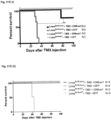
- the median survival of wild-type or Sun1 - / - is > 210 days in a 7 month follow up; Lmna - / - mice had median survival of 41 days; Lmna - / - Sun1 +/ - mice had a median survival of 54 days; Lmna - / - Sun1 - / - mice had a median survival of 104 days (p ⁇ 0.01 comparing and Lmna - / - Sun1 -l- ).
- SUN1 and SUN2 are the 2 principal SUN proteins that are widely expressed in virtually all tissues.
- INM and outer nuclear membrane NNM
- the C-termini of SUN1 and/or 2 bind to the C-termini (KASH domains) of the different Nesprins/SYNE/KASH proteins that traverse the ONM.
- KASH domains C-termini of the different Nesprins/SYNE/KASH proteins that traverse the ONM.
- these 2 families of proteins comprise the LINC complexes that physically couple the interphase nuclei to the cytoskeleton [ M.
- Nesprin/KASH protein interact directly or indirectly with all 3 cytoskeletal protein networks (microtubules, actin microfilaments and intermediate filaments) [ H. F. Horn, Current topics in developmental biology 109: 287-321 (2014 )].
- SUN and KASH/Nesprin proteins of the LINC complex establish a direct physical connection between the cytoplasmic cytoskeletal networks (and their connections e.g. cell adhesion complexes at the cell membrane) and the interphase nuclear interior or nucleoplasm.
- the LINC complex is thought to mediate force transmission between the nucleus and cytoskeleton and consequently regulate changes in gene expression/chromatin organization in response to mechanical/physical stimuli [ S. G.
- the present disclosure aims at providing such a method.
- disruption of the LINC complex rather than removal of accumulated Sun1 protein can ameliorate diseases caused by one or more Lmna mutations.
- One way of achieving the disruption is via an expression construct/vector comprising an operably linked transgene, the expression of which generates dominant negative SUN domain protein or mutated endogenous SUN domain protein and/or dominant negative KASH domain protein or mutated endogenous KASH domain protein.
- the exogenous dominant negative SUN domain and KASH domain proteins act as LINC complex binding competitors, thereby uncoupling the nucleus from its linkage to the cytoskeleton.
- the mutated SUN domain and KASH domain proteins are endogenous Sun and Nesprin proteins that have been mutated in the SUN or KASH domain, respectively, and cannot form a LINC complex because they cannot bind to their cognate LINC complex partner. These strategies may be used to disrupt the LINC complex to treat, for example, laminopathies. The result was achieved without actively reducing the endogenous SUN1 protein levels. Results shown herein support these claims.
- an isolated nucleic acid molecule wherein the nucleic acid molecule comprises an expression vector and a transgene, whereby the transgene is operably linked to the expression vector, wherein expression of the transgene in a transfected cell results in disruption of a LINC complex in the transfected cell.
- the expression vector is a cardiac- or cardiomyocyte-specific expression vector.
- the expression vector comprises a cardiac- or cardiomyocyte-specific promoter selected from the group comprising a cardiac troponin T promoter (cTnT), a ⁇ -myosin heavy chain ( ⁇ -MHC) promoter and a myosin light chain (MLC2v) promoter.
- a cardiac troponin T promoter cTnT
- ⁇ -MHC ⁇ -myosin heavy chain
- MLC2v myosin light chain
- the promoter is cardiac troponin T promoter (cTnT).
- the cardiomyocyte-specific promoter is chicken cardiac troponin T promoter (cTnT).
- the expression vector has cardiac tropism/is cardiotropic.
- the expression vector is a virus expression vector.
- the virus expression vector is selected from the group comprising Lentivirus, Adenovirus and Adeno-associated virus (AAV).
- the virus expression vector is adeno-associated virus (AAV).
- the AAV vector is selected from the group consisting of AAV9 (serotype 9), AAV1 (serotype 1), AAV6 (serotype 6), AAV8 (serotype 8), AAV2i8 and AAV9.45.
- the AAV vector is AAV9 (serotype 9).
- the transgene comprises nucleic acid sequences for expressing a lumenal domain of a SUN domain-containing protein, an N-terminal signal sequence, a signal peptidase cleavage site, and a C-terminal targeting peptide sequence.
- the lumenal domain of the SUN domain-containing protein comprises a coiled coil domain and a SUN domain.
- the coiled coil domain is upstream of the SUN domain.
- the transgene further comprises nucleic acid sequences for expressing an N-terminal signal sequence, a signal peptidase cleavage site, and a C-terminal targeting peptide sequence.
- the transgene comprises nucleic acid sequences for expressing an N-terminal signal sequence, a signal peptidase cleavage site, and a C-terminal targeting peptide sequence, and either the luminal domain of the SUN domain-containing protein or the SUN domain.
- the SUN domain protein is SUN1 or SUN2.
- the luminal domain of Sun1 comprises amino acids 458-913 of full-length mouse Sun1 (Uniprot: Q9D666) or its human equivalent comprising the coiled coil domain and the SUN domain and lacking the transmembrane domain.
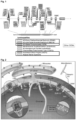
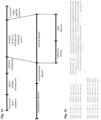
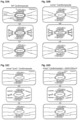
- a schematic of the structure of a dominant negative form of Sun1 is shown in Figure 7 .
- SUN domain constructs it is expected that the SUN domain alone (crystal structure solved by the Kutay and Schwartz labs [ Sosa et al., Cell 149(5):1035-47 (2012 )], instead of the entire luminal domain (coiled coil domain and SUN domain) is sufficient to disrupt the SUN-KASH interaction as it is capable of binding to the KASH domain.
- the human Sun1 SUN domain nucleic acid sequence is set forth in SEQ ID NO: 80. However, the presence of the signal sequence and the KDEL sequence are important for targeting the construct to the perinuclear space.
- the N-terminal signal sequence is derived from a secretory protein or a Type I transmembrane protein.
- the secretory protein or Type I transmembrane protein is selected from the group consisting of human serum albumin, proinsulin, transferrin receptor, EGF receptor, pre-pro-opiomelanocortin, pancreatic digestive enzymes (for example, proteases, amylases and lipases), endoplasmic reticulum luminal proteins, for example protein disulphide isomerases, GRP94 and combinations thereof. More preferably, the N-terminal signal sequence is derived from human serum albumin.
- the N-terminal signal sequence is not preceded at its N-terminus by any other tags.
- the signal peptidase cleavage site is a signal peptidase cleavage site derived from or is one of the group consisting of human serum albumin, proinsulin, transferrin receptor, EGF receptor, pre-pro-opiomelanocortin, pancreatic digestive enzymes (for example, proteases, amylases and lipases), endoplasmic reticulum lumenal proteins, such as protein disulphide isomerases, GRP94 and combinations thereof.
- the signal peptidase cleavage site is a signal peptidase cleavage site derived from human serum albumin.
- the C-terminal targeting peptide sequence prevents secretion of a peptide expressed from the transgene according to any aspect of the present disclosure.
- the C-terminal targeting peptide sequence is a KDEL tetrapeptide Golgi retrieval sequence. Examples of such structures are shown in Figures 11 and 12 .
- the transgene comprises a humanized Sun1DN nucleic acid sequence or a humanized Sun2DN nucleic acid sequence.
- the transgene comprises a signal sequence, a humanized Sun1DN nucleic acid sequence and a KDEL sequence as set forth in SEQ ID NO: 4; or the transgene comprises a signal sequence, a humanized Sun2DN nucleic acid sequence and a KDEL sequence as set forth in SEQ ID NO: 5.
- the transgene further comprises an epitope tag.
- the epitope tag is N-terminal, or located anywhere in the nucleic acid molecule except downstream of (after) the C-terminal targeting peptide sequence [for example KDEL], or located anywhere in the nucleic acid molecule except upstream of (before) the N-terminal signal sequence.
- the epitope tag is selected from the group consisting of cellulose binding domain (CBD), chloramphenicol acetyl transferase (CAT), dihydrofolate reductase (DHFR), one or more FLAG tags, glutathione S-transferase (GST), green fluorescent protein (GFP), haemagglutinin A (HA), histidine (His), Herpes simplex virus (HSV), luciferase, maltose-binding protein (MBP), c-Myc, Protein A, Protein G, streptavidin, T7, thioredoxin, V5, vesicular stomatitis virus glycoprotein (VSV-G), and combinations thereof.
- the epitope tag is haemagglutinin A (HA).
- the nucleic acid molecule of the present disclosure comprises an adeno-associated virus vector (AAV) comprising a chicken cardiac troponin T promoter (cTnT), a transgene according to any aspect of the present disclosure comprising the luminal domain of the SUN domain-containing protein derived from SUN1, an N-terminal signal sequence and a signal peptidase cleavage site which are each derived from human serum albumin, a C-terminal targeting peptide sequence which is a KDEL sequence, and wherein the transgene optionally further comprises haemagglutinin (HA) as an N-terminal epitope tag.
- AAV adeno-associated virus vector
- cTnT chicken cardiac troponin T promoter
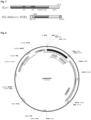
- Figure 10 an example of such a vector is shown in Figure 10 and comprises the nucleic acid sequence set forth in SEQ ID NO: 3.
- the nucleic acid molecule of the present disclosure comprises an adeno-associated virus vector (AAV) comprising a chicken cardiac troponin T promoter (cTnT), a transgene according to any aspect of the present disclosure comprising the luminal domain of the SUN domain-containing protein derived from SUN2, an N-terminal signal sequence and a signal peptidase cleavage site which are each derived from human serum albumin, a C-terminal targeting peptide sequence which is a KDEL sequence, and wherein the transgene optionally further comprises haemagglutinin (HA) as the N-terminal epitope tag.
- AAV adeno-associated virus vector
- cTnT chicken cardiac troponin T promoter
- transgene optionally further comprises haemagglutinin (HA) as the N-terminal epitope tag.
- an example nucleic acid molecule would comprise the vector structure shown in Figure 10 and the transgene nucleic acid sequence set forth in SEQ ID NO: 5.
- a KASH domain may be expressed to disrupt a LING complex by competing with endogenous Nesprins (which comprise a KASH domain) for binding to SUN1 and SUN2 domains.
- the transgene comprises nucleic acid sequences for expressing a KASH domain, and an N-terminal stabiliser polypeptide sequence.
- the KASH domain comprises a transmembrane domain and a SUN-interacting peptide.
- the transgene comprises nucleic acid sequences for expressing a KASH domain that traverses the outer nuclear membrane, a SUN-interacting KASH peptide that extends into the perinuclear space at the C-terminus, and an N-terminal stabiliser polypeptide sequence in the cytoplasm.
- KASH domain constructs with extensions after the last C-terminal amino acid of the naturally occurring KASH domain are not expected to work. i.e. C-terminal tags, or even an additional carboxy-terminal single amino acid, will disrupt KASH interaction with SUN.
- a signal sequence on the N-terminus of SUN domain constructs cannot be preceded by any tags.
- the KASH domain is selected from the group consisting of KASH1 (derived from Nesprin-1 (SYNE1 gene)), KASH2 (derived from Nesprin-2 (SYNE2 gene)), KASH3 (derived from Nesprin-3 (SYNE3 gene)), KASH4 (derived from Nesprin-4 (SYNE4 gene)) and KASH5 (derived from KASH5/CCDC155 (KASH5 gene)).
- KASH1 derived from Nesprin-1 (SYNE1 gene)
- KASH2 derived from Nesprin-2 (SYNE2 gene)
- KASH3 derived from Nesprin-3 (SYNE3 gene)
- KASH4 derived from Nesprin-4 (SYNE4 gene)
- KASH5 derived from KASH5/CCDC155 (KASH5 gene)
- the KASH 1 domain comprises the human amino acid sequence set forth in SEQ ID NO: 7; the KASH 2 domain comprises the human amino acid sequence set forth in SEQ ID NO: 9; the KASH 3 domain comprises the human amino acid sequence set forth in SEQ ID NO: 11; the KASH 4 domain comprises the human amino acid sequence set forth in SEQ ID NO: 13; and the KASH 5 domain comprises the human amino acid sequence set forth in SEQ ID NO: 15.
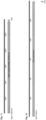
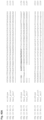
- An alignment of the five KASH amino acid sequences is shown in Figure 14 .
- the KASH domain nucleic acid sequence has at least 80%, at least 85%, at least 90%, at least 95% sequence identity or 100% sequence identity to the nucleic acid sequence of the KASH1 domain set forth in SEQ ID NO: 6; the nucleic acid sequence of the KASH2 domain set forth in SEQ ID NO: 8; the nucleic acid sequence of the KASH3 domain set forth in SEQ ID NO: 10; the nucleic acid sequence of the KASH4 domain set forth in SEQ ID NO: 12; or the nucleic acid sequence of the KASH5 domain set forth in SEQ ID NO: 14.
- the KASH domain is the human KASH1 domain of SYNE1 having at least 80%, at least 85%, at least 90%, at least 95% sequence identity or 100% sequence identity to the nucleic acid sequence of the human KASH1 domain set forth in SEQ ID NO: 6.
- nucleic acid sequence may have less than 100% identity and still encode the same amino acid sequence.
- the KASH domain does not comprise any extensions after the last C-terminal amino acid compared to a naturally occurring KASH domain.
- the N-terminal stabiliser polypeptide sequence is selected from the group consisting of green fluorescent protein (GFP), cellulose binding domain (CBD), chloramphenicol acetyl transferase (CAT), dihydrofolate reductase (DHFR), glutathione S-transferase (GST), luciferase, maltose-binding protein (MBP), Protein A, Protein G, streptavidin, thioredoxin, DHFR, including multiples and combinations thereof.
- GFP green fluorescent protein
- CBD cellulose binding domain
- CAT chloramphenicol acetyl transferase
- DHFR dihydrofolate reductase
- GST glutathione S-transferase
- luciferase maltose-binding protein
- MBP maltose-binding protein
- Protein A Protein G
- streptavidin thioredoxin
- DHFR including multiples and combinations thereof.
- the N-terminal stabilizer polypeptide sequence forms a discretely folded domain.
- the vector is the adeno-associated virus vector (AAV) comprising a cardiac troponin T promoter (cTnT), and the transgene comprises nucleic acid sequences for expressing a KASH domain, and an N-terminal stabiliser polypeptide sequence, wherein the KASH domain is selected from the group comprising KASH1, KASH2, KASH3, KASH4 and KASH5.
- AAV adeno-associated virus vector
- cTnT cardiac troponin T promoter
- the N-terminal stabiliser polypeptide sequence is green fluorescent protein (GFP).
- another approach for disrupting the LING complex is to modify the endogenous SUN domain or KASH domain so that it fails to bind to, or has reduced binding capacity for, its cognate LING complex binding partner.
- one way of producing a modified SUN or KASH domain is to use a CRISPR/Cas system to modify the genes encoding SUN or KASH domain proteins to generate a premature stop codon at the 3' end of the respective protein sequences following CRISPR-induced non-homologous end joining. This would result in a truncated protein with its C-terminal SUN or KASH domain mutated. The truncated protein would be expressed and membrane-localized, but unable to interact with its cognate LING complex partners.
- the transgene comprises nucleic acid sequences for expressing a CRISPR-Cas or other synthetic nuclease system to modify nucleic acid that encodes the SUN domain or KASH domain of endogenous Sun or Nesprin protein, respectively.
- the CRISPR-Cas modifies the endogenous SUN domain or KASH domain of Sun1 or Nesprin-1 protein, respectively, to disrupt a LINC complex.
- the respective nucleic acids are Sun1 and Syne1.
- the transgene comprises nucleic acid sequences for expressing a CRISPR-Cas with a gRNA nucleic acid sequence comprising 5'-GCACAATAGCCTCGGATGTCG-3' (SEQ ID NO: 66) to modify the SUN domain of mouse Sun1.
- the transgene comprises nucleic acid sequences for expressing a CRISPR-Cas with a gRNA nucleic acid sequence targeting the human SUN1 domain set forth in SEQ ID NO: 80.
- the gRNA nucleic acid sequence targets the end of exon 20 comprising a nucleic acid sequence set forth in SEQ ID NO: 81.
- the gRNA nucleic acid sequence targets a SUN1 nucleic acid sequence selected from the group comprising SEQ ID NO: 55; SEQ ID NO: 56; SEQ ID NO: 57; SEQ ID NO: 58; SEQ ID NO: 59; SEQ ID NO: 60; SEQ ID NO: 61; SEQ ID NO: 62; SEQ ID NO: 63; SEQ ID NO: 64 and SEQ ID NO: 65 set forth in Table 3.
- the transgene comprises nucleic acid sequences for expressing a CRISPR-Cas with a gRNA nucleic acid sequence comprising 5'-CCGTTGGTATATCTGAGCAT-3' (SEQ ID NO: 34) to modify the KASH domain of mouse Syne-1.
- the transgene comprises nucleic acid sequences for expressing a CRISPR-Cas with a gRNA nucleic acid sequence targeting the human KASH domain set forth in SEQ ID NO: 6.
- the gRNA nucleic acid sequence comprises a nucleic sequence selected from the group comprising SEQ ID NO: 44; SEQ ID NO: 45; SEQ ID NO: 46; SEQ ID NO: 47; SEQ ID NO: 48; SEQ ID NO: 49; SEQ ID NO: 50; SEQ ID NO: 51; SEQ ID NO: 52; SEQ ID NO: 53 and SEQ ID NO: 54 set forth in Table 3.
- the transgene comprises nucleic acid sequences for expressing a CR!SPR-Cas9 or variant thereof.
- the transgene is a dominant negative construct.
- the transgene is a humanised transgene.
- expression of the transgene results in the disruption of the protein-protein interaction between SUN and KASH domains of the LINC complex.
- the disruption of the protein-protein interaction between SUN and KASH of the LINC complex occurs between the protein interactions selected from the group consisting of Sun1+Nesprin-1, Sun2+Nesprin-1, Sun1+Nesprin-2, Sun1+Nesprin-3, Sun2+Nesprin-2, and Sun2+Nesprin-3.
- the disruption of the protein-protein interaction between SUN and KASH of the LINC complex occurs between the protein interactions of Sun1 and Nesprin-1.
- the AAV vector is formulated for delivery into the myocardium of a subject.
- nucleic acid molecule of any embodiment of the present disclosure for use in treating a disease caused by one or more Lmna mutations in a subject.
- the disease is selected from the group consisting of restrictive dermopathy, familial partial lipodystrophy (for example, Dunnigan type), mandibuloacral dysplasia with type A lipodystrophy, metabolic syndrome, Charcot-Marie-Tooth disease type 2, Charcot-Marie-Tooth disease type 2B1 and diseases presented in normal font in Table 1.
- the nucleic acid molecule according to any aspect of the present disclosure is for use in treating cardiovascular disease in a subject.
- the disease or the cardiovascular disease is characterised by the presence of at least one Lmna mutation.
- the cardiovascular disease is selected from the group consisting of laminopathy, cardiomyopathy, such as dilated cardiomyopathy (DCM), dilated cardiomyopathy 1A, dilated cardiomyopathy with conduction system defects, cardiomyopathy with advanced AV block and arrhythmia, lone atrial fibrillation; muscular dystrophy (often associated with cardiomyopathy), such as cardiomyopathy associated with Emery-Dreifuss muscular dystrophy (autosomal dominant), cardiomyopathy associated with Emery-Dreifuss muscular dystrophy (autosomal recessive), cardiomyopathy associated with Limb-girdle muscular dystrophy type 1B, cardiomyopathy associated with congenital muscular dystrophy; premature aging syndromes (thought to be primarily vascular, but may have cardiac involvement) such as cardiomyopathy associated with Atypical Werner syndrome, cardiomyopathy associated with Hutchinson-Gilford progeria syndrome and the like, as well as diseases presented in bold font in Table 1.
- DCM dilated cardiomyopathy
- an adeno-associated virus vector comprising a cardiac troponin T promoter (cTnT), and the transgene according to any aspect of the present disclosure.
- a pharmaceutical composition comprising the nucleic acid molecule according to any embodiment of the present disclosure for treating a disease.
- the disease is a laminopathy.
- the pharmaceutical composition comprising the nucleic acid molecule according to the present disclosure is for use in treating a cardiovascular disease in a subject.
- a method of treating a disease in a subject comprising administration of a pharmaceutically effective amount of the nucleic acid molecule according to any embodiment of the present disclosure, or the pharmaceutical composition of the present disclosure.
- the disease is characterised by the presence of at least one Lmna mutation.
- the method comprises:
- the Lmna mutation(s) affect(s) lamin A isoform, or lamin C isoform of the Lmna gene, or both lamin A/C isoforms.
- the disease is selected from the group consisting of restrictive dermopathy, familial partial lipodystrophy (for example, Dunnigan type), mandibuloacral dysplasia with type A lipodystrophy, metabolic syndrome, Charcot-Marie-Tooth disease type 2, Charcot-Marie-Tooth disease type 2B1 and diseases presented in normal font in Table 1.
- familial partial lipodystrophy for example, Dunnigan type
- mandibuloacral dysplasia with type A lipodystrophy for example, Dunnigan type
- mandibuloacral dysplasia with type A lipodystrophy for example, Dunnigan type
- mandibuloacral dysplasia with type A lipodystrophy for example, Dunnigan type
- mandibuloacral dysplasia with type A lipodystrophy for example, Dunnigan type
- mandibuloacral dysplasia with type A lipodystrophy for example, Dunnigan type
- the disease is a cardiovascular disease, wherein the cardiovascular disease is selected from the group consisting of laminopathy, cardiomyopathy, such as dilated cardiomyopathy (DCM), dilated cardiomyopathy 1A, dilated cardiomyopathy with conduction system defects, cardiomyopathy with advanced AV block and arrhythmia, lone atrial fibrillation; muscular dystrophy (often associated with cardiomyopathy), such as cardiomyopathy associated with Emery-Dreifuss muscular dystrophy (autosomal dominant), cardiomyopathy associated with Emery-Dreifuss muscular dystrophy (autosomal recessive), cardiomyopathy associated with Limb-girdle muscular dystrophy type 1B, cardiomyopathy associated with congenital muscular dystrophy; premature aging syndromes (thought to be primarily vascular, but may have cardiac involvement) such as cardiomyopathy associated with Atypical Werner syndrome, cardiomyopathy associated with Hutchinson-Gilford progeria syndrome; and diseases
- the subject is a non-human mammal, such as a mouse, or a human.
- the mouse is an N195K mouse (Lmna N195K/ N195K), or a Lmna conditional knockout (Lmnaflox/flox).
- a sixth aspect of the present disclosure there is provided use of the pharmaceutical composition according to the present disclosure or the nucleic acid molecule according to the present disclosure in the manufacture of a medicament for treating a disease caused by one or more Lmna mutations.
- the disease is Lmna mutation-related cardiovascular disease.
- the disease is selected from the group consisting of restrictive dermopathy, familial partial lipodystrophy (for example, Dunnigan type), mandibuloacral dysplasia with type A lipodystrophy, metabolic syndrome, Charcot-Marie-Tooth disease type 2, Charcot-Marie-Tooth disease type 2B1 and diseases presented in normal font in Table 1.
- the cardiovascular disease is selected from the group consisting of laminopathy, cardiomyopathy, such as dilated cardiomyopathy (DCM), dilated cardiomyopathy 1A, dilated cardiomyopathy with conduction system defects, cardiomyopathy with advanced AV block and arrhythmia, lone atrial fibrillation; muscular dystrophy (often associated with cardiomyopathy), such as cardiomyopathy associated with Emery-Dreifuss muscular dystrophy (autosomal dominant), cardiomyopathy associated with Emery-Dreifuss muscular dystrophy (autosomal recessive), cardiomyopathy associated with Limb-girdle muscular dystrophy type 1B, cardiomyopathy associated with congenital muscular dystrophy; premature aging syndromes (thought to be primarily vascular, but may have cardiac involvement) such as cardiomyopathy associated with Atypical Werner syndrome, cardiomyopathy associated with Hutchinson-Gilford progeria syndrome and the like, as well as diseases presented in bold font in Table 1.
- DCM dilated cardiomyopathy
- a seventh aspect of the present disclosure there is provided a method for screening for drug candidates capable of inhibiting or disrupting the LINC complex in a cell.
- a method for screening for drug candidates capable of inhibiting the interaction of the proteins of a LINC complex in a cell which comprises:
- the drug candidate disrupts the protein-protein interaction between SUN and KASH of the LINC complex.
- the drug candidate disrupts the interaction between Sun1 and Nesprin-1 proteins.
- said screening is an in vitro screening.
- said complex is measured by an ELISA method.
- recombinant SUN domain is immobilized on a solid surface and recombinant KASH domain is labelled with an enzyme that can generate a colorimetric or chemiluminescent readout.
- an enzyme that can generate a colorimetric or chemiluminescent readout.
- Compounds that fail to inhibit the SUN-KASH interaction will result in a well in the plate where the recombinant SUN would bind to the enzyme-linked KASH domain.
- the presence of the SUN-KASH interaction can be detected in standard plate readers. If the compound can inhibit SUN-KASH interaction, then following the wash step, the KASH domain would be removed, and there would be reduced or no enzymatic reaction in the well.
- said drug is a drug candidate for inhibiting the interaction of said proteins.
- said complex is measured by a fluorescence anisotropy method.
- the fluorescence anisotropy method employs recombinant SUN and KASH domains.
- the KASH domain is fluorescently labelled with a fluorescein moiety and fluorescence anisotropy of the KASH domain interacting with SUN domain may be measured using standard equipment such as a plate reader incorporating a fluorescence spectrometer function.
- the amount of said first complex is less than the amount of said second complex there will be a difference in the fluorescence anisotropy of the fluorescent KASH and said drug is a drug candidate for inhibiting the interaction of said proteins.
- amino acid or “amino acid sequence,” as used herein, refer to an oligopeptide, peptide, polypeptide, or protein sequence, or a fragment of any of these, and to naturally occurring or synthetic molecules. Where "amino acid sequence” is recited herein to refer to an amino acid sequence of a naturally occurring protein molecule, “amino acid sequence” and like terms are not meant to limit the amino acid sequence to the complete native amino acid sequence associated with the recited protein molecule.
- the term “comprising” or “including” is to be interpreted as specifying the presence of the stated features, integers, steps or components as referred to, but does not preclude the presence or addition of one or more features, integers, steps or components, or groups thereof.
- the term “comprising” or “including” also includes “consisting of”.
- the variations of the word “comprising”, such as “comprise” and “comprises”, and “including”, such as “include” and “includes”, have correspondingly varied meanings.
- CRISPR-Cas and “CRISPR” system are used somewhat interchangeably to refer to a microbial adaptive immune system that uses RNA-guided nucleases to cleave foreign genetic elements. It comprises clustered regularly interspaced short palindromic repeats (CRISPRs), a CRISPR-associated (Cas) endonuclease and a synthetic guide RNA that can be programmed to identify and introduce a double strand break at a specific site within a targeted gene sequence.
- the palindromic repeats are interspaced by short variable sequences derived from exogenous DNA targets known as protospacers, and together they constitute the CRISPR RNA (crRNA) array.
- each protospacer is always associated with a protospacer adjacent motif (PAM), which can vary depending on the specific CRISPR system.
- PAM protospacer adjacent motif
- CRISPR-Cas9 is a specific version of the system referring to use of RNA-guided Cas9 nuclease, originally derived from Streptococcus pyogenes, whereby the target DNA must immediately precede a 5'-NGG PAM. Variations of the CR!SPR-Cas9 system are known [ Ran FA, et al., Nat.
- the term "dominant negative” refers to a mutation whose gene product adversely affects the normal, wild-type gene product within the same cell. This usually occurs if the product can still interact with the same elements as the wild-type product, but block some aspect of its function.
- the transgene is expressed as a protein, and said protein that is functional as a dimer. A mutation that removes the functional domain, but retains the dimerization domain would cause a dominant negative phenotype, because some fraction of protein dimers would be missing one of the functional domains.
- stabiliser polypeptide refers to an inert polypeptide which folds into a discrete domain, thereby ensuring that the remainder of the peptide maintains, for example, the proper topology.
- the stabiliser protein ensures that the KASH protein maintains proper topology on the endoplasmic reticulum membrane and the outer nuclear membrane.
- the stabiliser polypeptide prevents an attached polypeptide from translocating into, for example, the perinuclear space.
- operably linked means that the components to which the term is applied are in a relationship that allows them to carry out their inherent functions under suitable conditions.
- a control sequence which is "operably linked" to a protein coding sequence is ligated thereto, so that expression of the protein coding sequence is achieved under conditions compatible with the transcriptional activity of the control sequences.
- a first nucleic acid sequence is operably linked with a second nucleic acid sequence when the first nucleic acid sequence is placed in a functional relationship with the second nucleic acid sequence.
- a promoter is operably linked to a coding sequence if the promoter affects the transcription or expression of the coding sequence.
- operably linked DNA sequences are contiguous and, where necessary to join two protein-coding regions, in the same reading frame.
- extension refers to one or more amino acids that can be found attached to the N- or the C-terminus of a desired peptide.
- polypeptide refers to one or more chains of amino acids, wherein each chain comprises amino acids covalently linked by peptide bonds, and wherein said polypeptide or peptide can comprise a plurality of chains non-covalently and/or covalently linked together by peptide bonds, having the sequence of native proteins, that is, proteins produced by naturally-occurring and specifically non-recombinant cells, or genetically-engineered or recombinant cells, and comprise molecules having the amino acid sequence of the native protein, or molecules having deletions from, additions to, and/or substitutions of one or more amino acids of the native sequence.
- a "polypeptide", “peptide” or “protein” can comprise one (termed “a monomer”) or a plurality (termed "a multimer") of amino acid chains.
- subject is herein defined as vertebrate, particularly mammal, more particularly human.
- the subject may particularly be at least one animal model, e.g., a mouse, rat and the like.
- the subject may be a human.
- treatment refers to ameliorating, therapeutic or curative treatment.
- the inventors submit that the whole basis of the therapy is that disrupting LINC complex function suppresses Lmna mutation. It is further noted that the target of the claimed methods is the SUN-KASH interaction in the LINC complex. The endogenous protein levels should not be affected.
- transgene for example, the dominant negative transgene
- the transgene will not work if the full length SUN domain protein is inserted between the signal sequence and the KDEL, as it will invert the membrane topology of the protein such that the SUN domain is no longer in the perinuclear space/ER lumen. Only the regions following the transmembrane domain can be used, i.e. the luminal domain.
- mice were maintained at the A*STAR Biological Resource Centre facility and the NUS Animal Facility in accordance with the guidelines of the Institutional Animal Care and Use Committee for each facility.
- the Lmna Flx / Flx mice were generated and characterized as previously described [ A. S. Wang, et al., Differentiation; research in biological diversity, (2015 ); I. Solovei et al., Cell 152: 584-598 (2013 )] ( Figure 33 ).
- mice with a global deletion Lmna Lmna ⁇ / ⁇
- Cre recombinase is driven by the regulatory sequences of the mouse zona pellucida 3 gene (Zp3;Tg(Zp3-cre)93Knw, JAX stock 003651) [ W. N. de Vries et al., Genesis 26: 110-112 (2000 )].
- the Lmna ⁇ / ⁇ :Sun1 -l- and Lmna Flx / Flxmcm:Sun1 - / - mice were obtained by crossing the respective Lamin-Cre mice strains with Sun1 + / - mice as Sunt1 - / - mice are infertile.
- genotyping was performed with a duplex PCR protocol with the following primers were used: FLX/FLX-F1: 5'-CCAGCTTACAGAGCACCGAGCT-3', SEQ ID NO: 16 FLX/FLX-F2: 5'-TCCTTGCAGTCCCTCTTGCATC-3', SEQ ID NO: 17 FLX/FLX-R1: 5'-AGGCACCATTGTCACAGGGTC-3'. SEQ ID NO: 18
- MyHC-tF 5'-ATG ACA GAC AGA TCC CTC CTA TCT CC-3' SEQ ID NO: 22
- MyHC-tR 5'-CTC ATC ACT CGT TGC ATC ATC GAC-3' SEQ ID NO: 23
- MyHC-F 5'-CAA ATG TTG CTT GTC TGG TG-3' SEQ ID NO: 24
- MyHC-R 5'-GTC AGT CGA GTG CAC AGT TT-3' SEQ ID NO: 25
- mcm-3798t 5'-AGG TGG ACC TGA TCA TGG AG-3' SEQ ID NO: 26
- mcm-8346t 5'-ATA CCG GAG ATC ATG CAA GC-3' SEQ ID NO: 27
- mcm-7338 5'-CTA GGC CAC AGA ATT GAA AGA TCT-3' SEQ ID NO: 28
- mcm-7339 5'-GTA GGT GGA AAT TCT AGC ATC ATC C-3' SEQ ID NO: 29
- mice 14 days old and adult mice (3-5 months old) were injected once with 40mg/kg of Tamoxifen (Sigma) dissolved in Corn Oil (Sigma). Mice were sacrificed by CO 2 euthanasia or anesthetised with a gaseous mixture of 1.5% Isoflurane (BioMac) and 1.5LO 2 at various time points after tamoxifen injection. Cardiac arrest was induced by injection of 15% KCI, followed by flushing with PBS to remove blood. Hearts for paraffin embedding were additionally flushed with 4% paraformaldehyde (PFA), left in 4% paraformaldehyde (PFA) overnight, dehydrated in 70% ethanol for at least 24hr and embedded in paraffin.
- PFA paraformaldehyde
- PFA paraformaldehyde
- Hearts for cryosection were embedded in tragacanth gum (Sigma), frozen in isopentane (BDH-AnalaR) cooled in liquid N 2 , cut 9 ⁇ m sections by cryostat (Leica CM3050), collected onto charged slides and stored at -20°C for histological and immunofluorescence staining.
- Hearts for protein and RNA extraction were snap frozen in liquid N2 and stored for further processing.
- mice were anaesthetised with isoflurane (100% O 2 at 0.5L/min, isoflurane atomiser dial at 4%). Mice hearts were stopped with 15% KCI, descending aorta was cut and hearts were flushed with 7mL of EDTA buffer into the right ventricle. Ascending aorta was clamped using Reynolds forceps, the entire heart removed and placed in a 60mm dish containing fresh EDTA buffer.
- Hearts were digested by sequential injections of 10mL EDTA buffer, 3mL Perfusion buffer and 30-50mL Collagenase buffer into the left ventricle. Forceps were used to gently pull the digested heart into smaller pieces ⁇ 1mm and gentle trituration. Enzymatic activity was inhibited by addition of 5ml of Stop buffer. Cell suspension was passed through a 100um filter, and four sequential rounds of gravity settling to enrich for myocytes, ultimately obtaining a highly pure myocyte fraction. The myocyte pellet was snap frozen in liquid N 2 and stored a -80°C until further processing.
- LMNA/C Linuclear nucleic acid/C
- Sun1 monoclonal mouse, 1:500, Burke
- control beta-tubulin rabbit, 1:1000, Abcam
- Mouse papillary muscle from mouse left ventricle was prepared according to the methods described before [ C. N. Toepfer, et al., J Physiol 594: 5237-5254 (2016 )]. Briefly, explanted mouse heart was immediately rinsed with oxygenated ice-cold Krebs-Henseleit solution with 12 unit/mL heparin sodium (EDQM) and 30mM 2,3-Butanedione monoxime (BDM, Sigma) and excess blood was removed. After that, the heart was transferred to ice-cold Krebs-Henseleit solution in a glass petri-dish under a dissection microscope with a cooling stage.
- EQM oxygenated ice-cold Krebs-Henseleit solution with 12 unit/mL heparin sodium
- BDM 2,3-Butanedione monoxime
- Cylindrical papillary (200-300 ⁇ m in diameter and 1.5-2mm in length) were excised from the left ventricle. T-shaped aluminium clips with a hole were crimped onto the ends of a papillary preparation and the prepared papillary chunks were fixed using pins onto a glass petri-dish with a layer of PDMS sylgard 184 (Dow Corning). Papillary preparations were immersed in a 2% Triton X-100 solution at 4 °C overnight.
- the data were collected and processed from the force transducer and DAQ data acquisition device (National Instrument) using a customized software programmed by LabVIEW 2013 (National instrument). At least 5 fibres were tested in each mouse, and at least 3 mice were tested for each experimental group.
- the DN-Sun1 (SS-HA-Sun1L-KDEL) and GFP (SS-GFP-KDEL) vectors were as described [ M. Crisp et al., J Cell Biol. 172: 41-53 (2006 )]. Briefly, almost the entire lumenal domain of Sun1 was tagged at its NH 2 terminus with HA (HA-Sun1L). To introduce the HA-Sun1L as a soluble form into the lumen of the ER and PNS, signal sequence and signal peptidase cleavage site of human serum albumin was fused onto the NH 2 terminus of HA-Sun1L to yield SS-HA-Sun1L.
- a KDEL tetrapeptide was fused to the COOH terminus of SS-HA-Sun1L to form the final SS-HA-Sun1L-KDEL.
- the HA-Sun1L region was replaced with GFP sequence to generate the SS-GFP-KDEL.
- the DN-Sun1 and GFP fragments were amplified with the primers listed below (same forward primer was used for both fragments) and ligated into pENN-AAV-cTnT-PI-eGFP plasmid (kind gift from Dr J. Jian), digested with Ncol and Kpnl, to produce Penn-AAV-cTnT-Sun1DN ( Figure 10 ; SEQ ID NO: 3).
- aav Sun1 F 5'-CgagaattcacgcgggccgccATGAAGTGGGTAACCTTTATTTC-3' SEQ ID NO:30 aav Sun1 R 5'-CgggtcgactctagaggtaccttaCTACAACTCATCTTTCTGGATG-3' SEQ ID NO:31 aav GFP Sun R 5'-CgggtcgactctagaggtacttaCTACAACTCATCTTTGGATCC-3' SEQ ID NO:32
- AAV Viruses were produced as per standard protocol [ H. Wakimoto, et al., in Current Protocols in Molecular Biology. (John Wiley & Sons, Inc., 2001 )].
- Materials supplied by R. Foo pAAV2/9- the trans-plasmid encoding AAV replicase and capsid gene (SEQ ID NO: 2; available from University of Pennsylvania Penn Vector Core); pAdDeltaF6 - the adenoviral helper plasmid (SEQ ID NO: 1) (available from University of Pennsylvania Penn Vector Core); QIAGEN Plasmid Maxi Kit; HEK293T cells (ATCC); Transfection reagent (polyethylenimine e.g., Polysciences).
- AAV-DJ capsid was obtained from Cell Biolabs, Inc.
- the pAAV2/9, AAV-DJ, pAdDeltaF6, DN-Sun1 and GFP plasmids were purified using a QIAGEN Plasmid Maxi Kit.
- HEK293T cells were transfected with the virus combination of pAAV2/9, pAdDeltaF6 and either DN-Sun1 or GFP plasmids. Cells were collected and virus purified by lodixanol gradient ultracentrifugation.
- mice were genotyped at 10 days postnatally. They were then subjected to 1 IP injection of Tmx (40mg/kg of mouse weight) at 14 days postnatally, followed by a concentration of 5 ⁇ 10 ⁇ 10 vg/g AAV9-DN-Sun1 or AAV9-GFP virus injected into the thoracic cavity at 15 days postnatally.
- Tmx 40mg/kg of mouse weight
- AAV AAV virus
- pX330 was obtained from Addgene (#42230, Cambridge, MA, USA).
- the 20nt Sun1 and Syne1 single guide RNA (sgRNA) sequences were designed with the help of CRISPR Design Tool (crispr.genome-engineering.org). A region of the gene of interest was submitted to the tool to identify suitable target sites. Since off-target mutations are possible in CRISPR/Cas9-mediated targeted mutagenesis in the mouse, the CRISPR Design Tool is able to experimentally assess off-target genomic modifications for each gRNA target sites and provide computationally predicted off-target sites for each intended target, ranking the target sequence according to quantitative specificity analysis on the effects of base-pairing mismatch identity, position and distribution.
- RNA sequences were as follows: 5'-GCACAATAGCCTCGGATGTCG-3' for Sun1 ⁇ SUN, (SEQ ID NO: 33) 5'-CCGTTGGTATATCTGAGCAT-3' for Syne1-stop, (SEQ ID NO: 34) 5'-GGTTATGGCCGATAGGTGCAT-3' for Tyrosinase4a (SEQ ID NO: 35)
- plasmids (pSun1 ⁇ SUN, pSyne1-stop and pTyrosinase4a) were then sequenced to verify correct insertion of the target sequences.
- PCR was performed to generate the appropriate transcription templates using a common reverse primer (AAAAGCACCGACTCGGTGCC-3'; SEQ ID NO: 36) and gRNA-specific forward primers that encoded the T7 promoter sequence as follows:
- the gRNA PCR products were then subjected to agarose gel electrophoresis (1.5% agarose) to confirm successful PCR, gel purified and used as templates for in vitro transcription using the MEGAshortscript T7 kit (Life Technologies).
- the gRNAs were purified using MEGAclear kit (Life Technologies) and eluted in RNase-free water. A sample of purified gRNAs were then subjected to agarose gel electrophoresis for quality checks before injecting into zygotes.
- Cas9 mRNA (Sigma, CAS9MRNA, 100ng/ul), Tyrosinase4a gRNA (50ng/ul) and gene-specific gRNA (50 ng/ul) were co-injected into the cytoplasm of the embryos in M2 medium (EmbryoMax ® Sigma) using a microinjection system (Nikon).
- Syne1-stop sgRNA were used to derive Syne1 C'T mutant mice and Sun1 ⁇ SUN sgRNA were used to derive Sun1 ⁇ SUN mutant mice.
- the injected zygotes were cultured in KSOM with amino acids (EmbryoMax ® Sigma) in an incubator maintained at 37°C with 5% CO 2 and 5% O 2 for 2 hours before implanting into 0.5dpc pseudopregnant C3H-ICR females.
- Mouse tails were clipped and each placed in a 1.5 ml Eppendorf tube. 80 ⁇ l of lysis buffer (25 mM NaOH, 0.2 mM EDTA, pH 12) was dispensed into the tube and heated at 95°C for 60 minutes. After heating, the buffer was neutralized with an equal volume of 40 mM Tris-HCl, pH 5. For certain applications, DNA was extracted and purified from mouse tails using DNeasy Blood and Tissue Kit (QIAGEN).
- lysis buffer 25 mM NaOH, 0.2 mM EDTA, pH 12
- CRISPR modified mutant mice were genotyped by PCR followed by gel electrophoresis using a high resolution agarose (2% MetaPhor agarose, Lonza).
- Lmna mutant mice were genotyped as described in Example 1.
- PCR products from mouse tail DNA were subjected to TOPO cloning (Zero BluntTM TOPOTM PCR Cloning Kit, 450245, Thermo Fisher Scientific). Plasmid DNA from at least 10 bacterial colonies were isolated using a mini-prep kit (QIAGEN, QlAprepSpin, Miniprep Kit) and sent for Sanger sequencing.
- limbs were obtained from euthanized mice and muscles were dissected from bone. Tissue digestion was performed by incubating the muscle tissues in enzyme solution consisting of equal volumes of dispase II (Roche, cat. 04942078001) at a concentration of 2.4 U/ml and 1% collagenase II (GIBCO ® Invitrogen, cat 17101-015) in a 37°C water bath for 30 minutes, with occasional mixing at 10 minutes interval. After 30 minutes, enzyme solution was neutralized in D10 media (Dulbeco's Modified Eagle Medium (DMEM) with 10% fetal bovine serum).
- DMEM Dulbeco's Modified Eagle Medium
- D10 media was added to the 100 mm plates with MAFs. To terminally differentiate myoblasts to myotubes, the media was changed to DMEM supplemented with 2% horse serum (Thermo Fisher Scientific GIBCO ® , cat 16050122).
- Lysis-M kit solution (cOmplete; Roche). Cells were washed in ice-cold PBS and lysed with Roche Lysis M buffer, and centrifuged at 14,000g for 10 minutes to remove cell debris. To extract protein from tissue sample, small slices of tissue were rapidly placed into Lysing Matrix D tubes (MP Biomedicals), and snap frozen in liquid nitrogen. After snap freezing, the tubes were either stored at -80°C or used directly for protein analysis.
- Protein extraction buffer 50 mM Tris (pH7.4), 500 mM NaCl, 0.4% SDS, 5 mM EDTA (pH7.4), 1x Protease inhibitor (cOmpleteTM EDTA-free Protease Inhibitor cocktail, Cat no. 04693159001, Roche), 2% Triton, 1 mM Dithiothreitol, in distilled water
- Triton 1 mM Dithiothreitol
- Protein concentration was quantified using bicinchoninic acid (BCA) protein kit (Bio-Rad) before loading protein samples onto a polyacrylamide gel to ensure equal amounts were being analyzed. All protein samples were resolved by SDS-PAGE gel analysis and transferred onto polyvinylidene fluoride (PVDF) membrane (Millipore) by wet transfer for 48 hours at 20V at 4°C. Membranes were blocked in TBS containing 0.1% Tween 20 (TBST) supplemented 5% milk powder (Anlene) for 1 hour at room temperature. Western Blot analysis was performed using primary antibodies diluted in 5% milk powder (diluted in TBST). Membranes were incubated for 2 hours at room temperature or overnight at 4°C.
- BCA bicinchoninic acid
- Bio-Rad Bio-Rad
- All protein samples were resolved by SDS-PAGE gel analysis and transferred onto polyvinylidene fluoride (PVDF) membrane (Millipore) by wet transfer for 48 hours at 20V at 4
- HRP horseradish-peroxidase conjugated antibodies
- the membranes were incubated for 1 hour at room temperature with the secondary antibodies.
- immunoblots visualized by chemiluminescence membranes were incubated in ECL substrate (Pierce) for 1 minute before being exposed to a chemiluminescence sensitive film (Thermo Scientific) and subsequently processed.
- Cells were grown in 8-well slides (Ibidi) and fixed in ice-cold methanol for 15 minutes at -20°C. They were then rinsed in PBS twice and permeabilized and blocked with 0.1% Triton X, 3% BSA in PBS for 15 minutes at room temperature. The fixed and permeabilized cells were then rinsed in PBS three times. Samples were then incubated with primary antibodies (Table 2) for 2 hours at room temperature or overnight at 4°C. Samples were then washed with PBS three times and subsequently incubated with secondary antibodies (Life Technologies) and DAPI (Life Technologies) for 1 hour at room temperature.
- Lmna mice and tamoxifen injection were described in Example 1.
- Lmna ⁇ / ⁇ :Syne1 C'T ⁇ 8/C'T ⁇ 8 and Lmna Fix/Flxmcm :Syne1 C'T ⁇ 8/C'T ⁇ 8 double mutant mice Lmna ⁇ /+ or Lmna Flx / Flxmcm mice were intercrossed with Syne1 C'T ⁇ 8/C'T ⁇ 8 mice.
- RNA sequences to disrupt human SYNE1 KASH domain or SUN1 SUN domain were determined using CRISPR tool in Benchling software (Benchling Inc. USA) and are shown in Table 3.
- Table 3 Potential guide RNA sequences to target final exons in human SYNE1 (Nesprin-1) or SUN1 genes Gene Name ENSEMBL gene ID Chromosome Position Strand Sequence PAM CRISPR enzyme SEQ ID NO: SYNE1 ENSG00000131018 6 515330 - TCGTGTATCTGAGCATGGGG TGGAAT saCas9 44 SYNE1 ENSG00000131018 6 515335 - GCCATTCGTGTATCTGAGCA TGGGGT saCas9 45 SYNE1 ENSG00000131018 6 515340 + TCCACCCCATGCTCAGATAC ACGAAT saCas9 46 SYNE1 ENSG00000131018 6 515320 - GAGCATGGGGTGGAATGACC GGG sp
- Cardiomyocyte specific loss of Lmna results in the rapid onset of heart failure
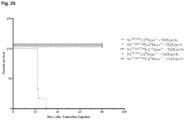
- mice survived slightly longer than the Lmna ⁇ / ⁇ to an average of 26.5 days postnatally ( Figure 26C ).
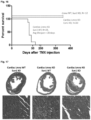
- the same cardiomyocyte specific deletion was performed on a Sun1 - / - background, this resulted in a significant increase in longevity to at least 6 months and beyond after birth ( Figure 26C ).
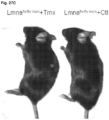
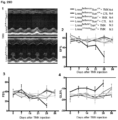
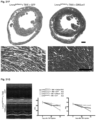
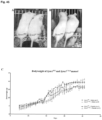
- Lmna Flx / Flx:mcm mice showed laboured breathing, a dishevelled, ungroomed appearance, increased lethargy and kyphosis ( Figure 27C ).
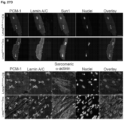
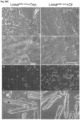
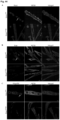
- Immunofluorescence analysis of isolated cardiomyocytes (CM) and sections of Lmna Flx / Flx:mcm hearts showed reduced levels of LaminA protein and cardiomyocyte nuclei without any LaminA expression ( Figure 27D ).
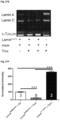
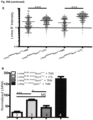
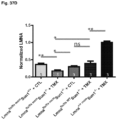
- LaminA protein levels were decreased 3.5 fold in Lmna Flx / Flx:mcm hearts after Cre induction compared to uninduced Lmna Flx / Flx:mcm and Lmna +/+/ mcm hearts ( Figure 27E ).
- mice with Lmna mutations show a significant increase in longevity and health in the absence of Sun1 [ C. Y. Chen et al., Cell 149: 565-577 (2012 )].
- induced deletion of Lmna in cardiomyocytes results in death within 1 month post Cre induction ( Figure 26C ). Strikingly, when the same deletion was induced on a Sun1 null background the mice survived for more than 1 year after Cre induction ( Figure 26C ).
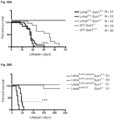
- mice had a mean lifespan of less than 50 days, a longevity half that of the original Lmna N195K / N195K homozygotes ( Figure 30A ).
- Lmna N195K / Flx:mcm +Tmx mutation was induced on a Sun1 null background longevity was significantly extended from ⁇ 50days to >200days ( Figure 30A ), revealing that loss of Sun1 is also effective at preventing DCM caused by Lmna missense mutations specifically in cardiomyocytes.
- Adenovirus Associated Virus was utilized to transduce and express, specifically in cardiomyocytes, a dominant negative SUN1 minigene whose protein product would compete with both SUN1- and SUN2-KASH binding in the cardiomyocyte perinuclear space [ M.
- a region corresponding to the entire luminal domain of the Sun1 gene was tagged at its N terminus with an HA (HA-Sun1L) epitope.
- HA-Sun1L HA-Sun1L
- ER endoplasmic reticulum
- perinuclear space between the INM and ONM - PNS
- the signal sequence and signal peptidase cleavage site of human serum albumin was fused to the N terminus of HA-Sun1L to yield SS-HA-Sun1L.
- a KDEL tetrapeptide was linked to the C- terminus of SS-HA-Sun1L, forming SS-HA-Sun1L-KOEL ( Figure 34 ).
- the signal sequence would ensure the HA-Sun1KDEL accumulates intracellularly within the contiguous peripheral ER and PNS lumen.
- the cDNA sequence encoding the minigene was fused to the chicken cardiotroponin promoter (cTnT) to ensure the minigene is only transcribed in cardiomyocytes [ K. M. Prasad, et al., Gene Ther 18: 43-52 (2011 )].
- cTnT chicken cardiotroponin promoter
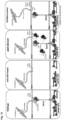
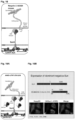
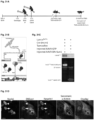
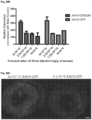
- a diagram of how SS-HA-Sun1L (DN-Sun1) displaces the KASH domain proteins from the LINC complex in the PNS to the ER is presented in Figure 15 (third panel) and Figure 31B .
- CM cardiomyocytes
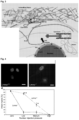
- ON-Sun1 Cells expressing high levels and low levels of ON-Sun1 are indicated by grey and white arrowheads respectively. High levels of ON-Sun1 expression resulted in the displacement of Nesprin-1 from the nuclear envelope. This confirmed that the ON-Sun1 was effective at disrupting the LINC complex in CMs.
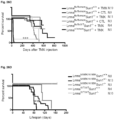
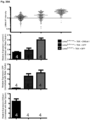
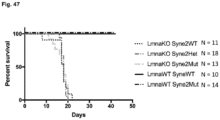
- Figure 20 shows early time period results with male and female mice;
- Figure 31E shows results at 100 days with separate graphs for male and female mice and mice with different virus injection titre removed).
- the truncated protein would be expressed and membrane-localized, but unable to interact with its cognate LINC complex partners.
- Example 2 we found that loss of Sun2 did not ameliorate Lmna-associated pathologies.
- Sun1 appears to be the dominant SUN domain protein mediating Lmna pathology.
- KASH domain proteins only Nesprin-1, Nesprin-2 and Nesprin-3 are broadly expressed [ H. F. Horn, Current topics in developmental biology 109: 287-321 (2014 )). Nesprin-1 and Nesprin-2 are close paralogues that are functionally redundant.
- Nesprin-2 and Nesprin-3 mutant mouse strains derived by conventional gene targeting available in the laboratory, we chose to target the KASH domain of Nesprin-1 using CRISPR to test the possibility of using CRISPR/Cas9 in vivo for treatment of laminopathies.
- the Sun1 gene and the Syne1 gene encoding Nesprin-1 protein were directly targeted in vivo by microinjecting C57/BI6 mouse zygotes with Cas9 mRNA and gRNA targeting the SUN1 (5'-GCACAATAGCCTCGGATGTCG-3'; SEQ ID NO: 66) or KASH1 (5'-CCGTTGGTATATCTGAGCAT-3' SEQ ID NO: 67) domains, followed by implantation into surrogate mothers. Note the SUN1 gRNA targeted Sun1 upstream of the SUN domain so as to ablate the SUN domain.
- a gRNA (5'-GGTTATGGCCGATAGGTGCAT-3'; SEQ ID NO: 68) targeting the tyrosinase gene was co-injected - progeny that had undergone CRISPR genome editing would have white or mosaic coat color resulting from tyrosinase disruption. These pups were genotyped to confirm successful gene disruption and used as founder animals to establish Sun1 or Nesprin-1 mutant colonies.
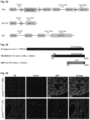
- the Syne1 C'T ⁇ 8 allele is predicted to produce a protein where the final 11 amino acids in the wildtype sequence (SEQ ID NO: 77) are mutated and are followed by an additional 50 amino acids encoded by an alternate reading frame ( Figure 41B ; SEQ ID NO: 78).
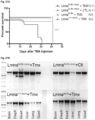
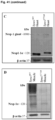
- Immunoblotting performed on Syne1WT and Syne1C'T ⁇ 8 heart and muscle tissues revealed a ⁇ 120kDa band in WT corresponding to the striated muscle-enriched Nesprin-1 ⁇ isoform of the Syne1 gene ( Figure 41C, D ).
- the presumptive Nesprin-1 ⁇ polypeptide appeared to be less abundant and of lower electrophoretic mobility than in the wildtype ( Figure 41C, D ).
- mice mutant for Syne2, encoding Nesprin-2 were generated by conventional gene targeting ( Fig. 46A ).
- Fig. 46A immunofluorescence microscopy of tail tip fibroblasts was carried out.
- Syne2 -/- homozygous mutant fibroblasts expressed little to no Nesprin-2 ( Fig. 46B ).
- Nesprin-1-containing LINC complexes would not be formed in Syne1 C'T ⁇ 8/C'T ⁇ 8 cells and animals. Since AAV-mediated disruption of the LINC complex using dominant negative Sun1 in vivo rescues Lmna pathologies (Example 5), we reasoned that the "KASH-less" Nesprin-1 mutant allele we generated might also rescue Lmna pathology.
- mice heterozygous for a Lmna null (Lmna ⁇ / ⁇ ) allele were intercrossed with Syne1C'T ⁇ 8 mice to obtain Lmna ⁇ / ⁇ :Syne1 C'T ⁇ 8/ C'T ⁇ 8 double mutant mice. While Lmna ⁇ / ⁇ mice lived for 15-17 days, Lmna ⁇ / ⁇ :Syne1 C'T ⁇ 8/ C'T ⁇ 8 double mutant mice lived for up to 42 days ( Figure 24 ). Lmna null mice heterozygous for the Syne1 C'T ⁇ 8 allele did not experience any lifespan extension.
- mice homozygous for a conditional Lmna Flx/Flx allele carrying the inducible cardiomyocyte specific Cre Tg(Myh6-cre/Esr1) (here abbreviated to mcm), in which Cre is induced by a single injection of tamoxifen (Tmx), were used as described in Examples 1-2.
- mice with the same deletion induced on a homozygous Syne1 C'T ⁇ 8/C'T ⁇ 8 background lived for at least 120 days after Tmx induction ( Figure 25 ; no change from day 80-120).
- An in vitro screen can be set up employing recombinant SUN and KASH domains or KASH peptide, for which methods of production have been previously published [ Sosa et al., Cell 149(5): 1035-47 (2012 )].
- One such screen involves an assay technique analogous to an enzyme-linked immunosorbent assay ( Figure 22 right panel, similar to Lepourcelet et al., Cancer Cell. 5(1): 91-102 (2004 )).
- Recombinant SUN domain is immobilized on a solid surface, typically in 96-well plates, and then complexed with recombinant KASH domain linked to an enzyme that can generate a colorimetric or chemiluminescent readout.
- One method for enabling this linkage is to synthesize a biotinylated KASH peptide, which can then be linked with commercially available streptavidin-horseradish peroxidase (HRP) conjugate.
- HRP streptavidin-horseradish peroxidase
- Candidate compounds are obtained from appropriate suppliers and screened for their ability to inhibit KASH-SUN associations in vitro. Compounds that fail to inhibit the SUN-KASH interaction will result in a well in the plate where the recombinant SUN binds to the enzyme-linked KASH domain. Following wash steps and incubation with colorimetric or chemiluminescent HRP substrates, the presence of the SUN-KASH interaction is detected in standard plate readers. If the compound can inhibit SUN-KASH interaction then, following the wash step, the KASH domain is removed and there would be reduced or no enzymatic reaction in the well.
- fluorescence anisotropy or polarization can be used to screen for small molecule inhibitors of SUN-KASH interactions in vitro [ Lea, W.A., and Simeonov, A.. Expert Opin Drug Discov 6: 17-32 (2011 ) ] .
- This assay also employs recombinant SUN and KASH domains.
- the KASH domain is fluorescently labeled; for example a chemically synthesized KASH peptide could be readily functionalized with a fluorescein moiety.
- Fluorescence anisotropy of the interacting KASH domain interacting with SUN domain can be measured using standard equipment such as a plate reader.
- a small molecule inhibitor that disrupts the SUN-KASH interaction can be readily detected as the fluorescence anisotropy of the fluorescent KASH will change if it is not bound to SUN.
- the compounds which successfully pass the in vitro primary screen will then be subjected to cell-based secondary screens ( Figure 23 ).
- cell-based secondary screens Figure 23
- immunofluorescence microscopy will be employed to identify those compounds that can dissociate LINC complexes. This is manifest as dispersal of the KASH component to the peripheral endoplasmic reticulum while the cognate SUN protein is retained in the inner nuclear membrane.
- This microscopy-based assay can be performed first on HeLa cells. Active compounds are then evaluated on cultured cells from disease-relevant tissue, such as cardiac cells.
- An additional secondary screen may include the ability of the identified compound to rescue proliferation defects in Lmna knockout cells.
- the compound can be tested in mouse models of laminopathies such as those described herein for Lmna dilated cardiomyopathy. Efficacy of the leads can be evaluated using lifespan of the mutant mice and echocardiograms, as described herein, to assess heart function.
- DCM caused by LMNA is regarded as being aggressive, and often leads to premature death or cardiac transplantation [ M. Pasotti et al., J Am Coll Cardiol 52: 1250-1260 (2008 ); M. R. Taylor et al., J Am Coll Cardiol 41: 771-780 (2003 )].
- LMNA mutation carriers die of cardiovascular failure or receive a heart transplant, compared with 11% of patients with idiopathic cardiomyopathy. Attempts to ameliorate DCM by fitting a pacemaker have been at best of transient benefit. Consequently it is necessary develop new therapeutic avenues to treat DCM caused by LMNA mutations.
- the molecular mechanisms underlying the varied phenotypes of the laminopathies are still not well understood, though two alternative hypotheses have been proposed to explain the tissue-specific pathologies.
- the first "gene regulation hypothesis” proposes that LMNA mutations/loss disrupt the equilibrium of various molecular pathways due to the mutations altering interactions with NE proteins and chromatin, which in turn alter gene expression.
- Evidence in support of this hypothesis comes from studies reporting changes in signalling pathways including the AKT-MTOR pathway [ J. C. Choi et al., Science translational medicine 4: 144ra102 (2012 )], WNT/ ⁇ -catenin pathway [ L. Hernandez et al., Dev Cell 19: 413-425 (2010 ); C.
- Lmna mutant fibroblasts show nuclear deformation, defective mechanotransduction, and reduced viability when subjected to mechanical strain, together with increased nuclear rupture at low and moderate pressures when compared to WT nuclei [ J. Lammerding et al., J Clin Invest 113: 370-378 (2004 ); J. Lammerding et al., J Cell Biol 170: 781-791 (2005 ); J. Lammerding et al., J Biol Chem 281: 25768-25780 (2006 )].
- AAV-mediated CRISPR/Cas such as CRISPR/Cas9
- delivery to target the Nesprin-1 KASH domain in disease-affected tissue can be used to treat laminopathies, including dilated cardiomyopathy.
- cardiotropic AAVs e.g. AAV9
- a smaller Cas9 derived from Staphylococcus aureus (saCas9) rather than the larger, more commonly used, Streptococcus pyogenes Cas9 may be preferred.
- CRISPR enzymes such as Cpf1, which is small enough for AAV packaging and has a more commonly found protospacer adjacent motif (PAM) than saCas9, could be used [ Zetsche, B., et al., Cpf1 Is a Single RNA-Guided Endonuclease of a Class 2 CR!SPR-Cas System. Cell 163, 759-771 (2015 )].
- RNAs would target the 3' region of the Nesprin-1 gene encoding the KASH domain (Table 3). While we have targeted the region adjacent to the stop codon, in principle any gene region encoding the KASH domain could be targeted as indels generated by CRISPR would likely result in frameshift mutations that disable the KASH domain. However, as the final 4 amino acids in the KASH domain are known to be absolutely required for SUN domain interaction and hence LINC complex formation [ Sosa et al., Cell 149(5):1035-47 (2012 )], it is prudent to select gRNA in the vicinity of the stop codon as even indels that do not result in a frameshift could still mutate the relevant KASH amino acids required for the SUN-KASH interaction.
- Nesprin-1 is very large and has multiple splice isoforms and alternative start sites
- guide RNAs targeted outside the KASH domain while giving rise to some mutant Nesprin-1 isoforms, may not perturb expression of other isoforms of Nesprin-1 protein, including KASH-containing isoforms. This would result in formation of functional or partially functional Nesprin-1/Sun1 LINC complexes that would still be able to drive pathology in Lmna mutants.
- PTCs occurring in the middle of a transcript are more likely to result in NMO [ Eberle et al., PLOS Biology 6: e92 (2008 ); Reber et al., MBoC 29: 75-83 (2018 )].
- the PTC is more than 55 nucleotides upstream of the exon-exon junction and is likely to trigger NMD.
- the PTC is less than 50 nucleotides from the exon-exon junction.
- the PTCs are roughly 2/3 of the way along the length of the transcript, and hence also likely to trigger NMD.
- gRNA 5' proximal to the codon for Y812 would produce indel mutations that cause a frameshift mutation that would mutate Y812 and disrupt KASH binding. As the gRNA would be in the final coding exon, the likelihood of triggering NMO would be low.
- AAVs could be used to deliver CRISPR enzyme and gRNA targeting SUN1 in appropriate disease tissue, such as the heart. Incapacitation of SUN1 KASH binding would then ameliorate the deleterious effects of Lmna mutations.
Landscapes
- Health & Medical Sciences (AREA)
- Life Sciences & Earth Sciences (AREA)
- Engineering & Computer Science (AREA)
- Chemical & Material Sciences (AREA)
- Organic Chemistry (AREA)
- Bioinformatics & Cheminformatics (AREA)
- General Health & Medical Sciences (AREA)
- Genetics & Genomics (AREA)
- Medicinal Chemistry (AREA)
- Pharmacology & Pharmacy (AREA)
- Animal Behavior & Ethology (AREA)
- Public Health (AREA)
- Veterinary Medicine (AREA)
- Biomedical Technology (AREA)
- Biotechnology (AREA)
- Nuclear Medicine, Radiotherapy & Molecular Imaging (AREA)
- General Chemical & Material Sciences (AREA)
- Chemical Kinetics & Catalysis (AREA)
- Zoology (AREA)
- Molecular Biology (AREA)
- Wood Science & Technology (AREA)
- General Engineering & Computer Science (AREA)
- Biochemistry (AREA)
- Immunology (AREA)
- Microbiology (AREA)
- Hematology (AREA)
- Physics & Mathematics (AREA)
- Virology (AREA)
- Heart & Thoracic Surgery (AREA)
- Cardiology (AREA)
- Biophysics (AREA)
- Urology & Nephrology (AREA)
- Plant Pathology (AREA)
- Toxicology (AREA)
- Diabetes (AREA)
- Epidemiology (AREA)
- Obesity (AREA)
- General Physics & Mathematics (AREA)
- Tropical Medicine & Parasitology (AREA)
- Pathology (AREA)
Claims (11)
- Nucleinsäuremolekül, das einen Adeno-assoziierten Virusexpressionsvektor (AAV-Vektor) umfasst, zur Verwendung in einem Verfahren zur Behandlung einer Erkrankung, die durch eine Mutation an LMNA verursacht wird, wobei der AAV-Vektor ein operabel gebundenes Transgen umfasst, wobei die Expression des Transgens in einer transfizierten Zelle zum Aufbruch eines Linker-of-Nucleoskeleton-and-Cytoskeleton- (LINC-) Komplexes in der transfizierten Zelle führt und wobei das Transgen Nucleinsäuresequenzen zum Exprimieren der SUN-Domäne eines eine SUN-Domäne enthaltenden Proteins, eine N-terminale Signalsequenz, eine Signalpeptidase-Spaltstelle und eine C-terminale Targeting-Peptidsequenz umfasst, die die Sekretion eines aus dem Transgen exprimierten Peptids verhindert.
- Nucleinsäuremolekül zur Verwendung nach Anspruch 1, wobei die Expression des Transgens zum Aufbruch der Protein-Protein-Wechselwirkung zwischen SUN und KASH des LINC-Komplexes führt.
- Nucleinsäuremolekül zur Verwendung nach Anspruch 1 oder Anspruch 2, wobei das Transgen Nucleinsäuresequenzen zum Exprimieren der Lumendomäne des eine SUN-Domäne enthaltenden Proteins umfasst, wobei die Lumendomäne eine Coiled-Coil-Domäne und eine SUN-Domäne umfasst.
- Nucleinsäuremolekül zur Verwendung nach einem der Ansprüche 1 bis 3, wobei das eine SUN-Domäne enthaltende Protein SUN1 oder SUN2 ist.
- Nucleinsäuremolekül zur Verwendung nach einem der Ansprüche 1 bis 4, wobei die C-terminale Targeting-Peptidsequenz eine KDEL-Sequenz ist.
- Nucleinsäuremolekül zur Verwendung nach einem der Ansprüche 1 bis 5, wobei der AAV-Vektor ein Herz- oder Kardiomyozyt-spezifischer Expressionsvektor ist.
- Nucleinsäuremolekül zur Verwendung nach einem der Ansprüche 1 bis 6, wobei der AAV-Vektor aus der aus AAV9, AAV1, AAV6, AAV8, AAV2i8 und AAV9.45 bestehenden Gruppe ausgewählt ist.
- Nucleinsäuremolekül zur Verwendung nach einem der Ansprüche 1 bis 7, wobei der AAV-Vektor einen Herz- oder Kardiomyozyt-spezifischen Promotor umfasst.
- Nucleinsäuremolekül zur Verwendung nach einem der Ansprüche 1 bis 8, wobei der AAV-Vektor einen Herz- oder Kardiomyozyt-spezifischen Promotor umfasst, der aus der aus einem Herztroponin-T-Promotor (cTnT), einem α-Myosin-Schwerketten- (α-MHC-) Promotor und einem Myosin-Leichtketten- (MLC2v-) Promotor bestehenden Gruppe ausgewählt ist.
- Nucleinsäuremolekül zur Verwendung nach einem der Ansprüche 1 bis 9, wobei die Erkrankung aus der Gruppe ausgewählt ist, die aus Folgendem besteht: einer Herz-Kreislauf-Erkrankung, restriktiver Dermopathie, familiärer partieller Lipodystrophie, mandibuloakraler Dysplasie mit Typ-A-Lipodystrophie, metabolischem Syndrom, Charcot-Marie-Tooth-Krankheit Typ 2, Charcot-Marie-Tooth-Krankheit Typ 2B1 und Erkrankungen, die in normaler Schrift in Tabelle 1 angeführt sind.
- Nucleinsäuremolekül zur Verwendung nach Anspruch 10, wobei die Herz-Kreislauf-Erkrankung aus der Gruppe ausgewählt ist, die aus Folgendem besteht: Laminopathie, Kardiomyopathie, dilatativer Kardiomyopathie (DCM), dilatativer Kardiomyopathie 1A, dilatativer Kardiomyopathie mit Reizleitungssystemdefekten, Kardiomyopathie mit fortgeschrittenem AV-Block und Arrhythmie, einsamem Vorhofflimmern; Muskeldystrophie, Kardiomyopathie im Zusammenhang mit Emery-Dreifuss-Muskeldystrophie (autosomal dominant), Kardiomyopathie im Zusammenhang mit Emery-Dreifuss-Muskeldystrophie (autosomal rezessiv), Kardiomyopathie im Zusammenhang mit Limb-Girdle-Muskeldystrophie Typ 1B, Kardiomyopathie im Zusammenhang mit kongenitaler Muskeldystrophie; Syndromen des vorzeitigen Alterns, Kardiomyopathie im Zusammenhang mit dem atypischen Werner-Syndrom, Kardiomyopathie im Zusammenhang mit dem Hutchinson-Gilford-Progerie-Syndrom und Erkrankungen, die fettgedruckt in Tabelle 1 angeführt sind.
Priority Applications (1)
| Application Number | Priority Date | Filing Date | Title |
|---|---|---|---|
| EP23176862.3A EP4272819A3 (de) | 2018-01-19 | 2019-01-18 | Unterbrechung des linc-komplexes zur behandlung von laminopathie |
Applications Claiming Priority (2)
| Application Number | Priority Date | Filing Date | Title |
|---|---|---|---|
| SG10201800530Q | 2018-01-19 | ||
| PCT/SG2019/050033 WO2019143300A1 (en) | 2018-01-19 | 2019-01-18 | Disrupting the linc complex for treating laminopathy |
Related Child Applications (3)
| Application Number | Title | Priority Date | Filing Date |
|---|---|---|---|
| EP23176862.3A Division EP4272819A3 (de) | 2018-01-19 | 2019-01-18 | Unterbrechung des linc-komplexes zur behandlung von laminopathie |
| EP23176862.3A Division-Into EP4272819A3 (de) | 2018-01-19 | 2019-01-18 | Unterbrechung des linc-komplexes zur behandlung von laminopathie |
| EP23175820.2 Division-Into | 2023-05-26 |
Publications (5)
| Publication Number | Publication Date |
|---|---|
| EP3740246A1 EP3740246A1 (de) | 2020-11-25 |
| EP3740246A4 EP3740246A4 (de) | 2021-11-17 |
| EP3740246B1 true EP3740246B1 (de) | 2023-06-07 |
| EP3740246C0 EP3740246C0 (de) | 2023-06-07 |
| EP3740246B9 EP3740246B9 (de) | 2023-09-27 |
Family
ID=67301326
Family Applications (2)
| Application Number | Title | Priority Date | Filing Date |
|---|---|---|---|
| EP19741662.1A Active EP3740246B9 (de) | 2018-01-19 | 2019-01-18 | Unterbrechung des linc-komplexes zur behandlung von laminopathie |
| EP23176862.3A Pending EP4272819A3 (de) | 2018-01-19 | 2019-01-18 | Unterbrechung des linc-komplexes zur behandlung von laminopathie |
Family Applications After (1)
| Application Number | Title | Priority Date | Filing Date |
|---|---|---|---|
| EP23176862.3A Pending EP4272819A3 (de) | 2018-01-19 | 2019-01-18 | Unterbrechung des linc-komplexes zur behandlung von laminopathie |
Country Status (9)
| Country | Link |
|---|---|
| US (1) | US12404522B2 (de) |
| EP (2) | EP3740246B9 (de) |
| JP (2) | JP7744130B2 (de) |
| CN (2) | CN118403189A (de) |
| AU (2) | AU2019209002B2 (de) |
| CA (1) | CA3088623A1 (de) |
| ES (1) | ES2953614T3 (de) |
| SG (1) | SG11202006893WA (de) |
| WO (1) | WO2019143300A1 (de) |
Families Citing this family (8)
| Publication number | Priority date | Publication date | Assignee | Title |
|---|---|---|---|---|
| CN113840927A (zh) * | 2019-02-28 | 2021-12-24 | 编码治疗公司 | 用于治疗核纤层蛋白病的组合物及方法 |
| WO2020257520A1 (en) * | 2019-06-18 | 2020-12-24 | Carnegie Mellon University | Specific nuclear-anchored independent labeling system |
| SG10201906637UA (en) * | 2019-07-17 | 2021-02-25 | Agency Science Tech & Res | Treatment/prevention of disease by linc complex inhibition |
| JP2023513749A (ja) | 2020-02-13 | 2023-04-03 | テナヤ セラピューティクス, インコーポレイテッド | 心疾患を治療するための遺伝子療法ベクター |
| CN112717144A (zh) * | 2021-02-02 | 2021-04-30 | 中国人民解放军军事科学院军事医学研究院 | 一种aav9病毒介导的心肌细胞特异性基因表达载体及其用途 |
| CN118922436A (zh) * | 2021-12-01 | 2024-11-08 | 新加坡科技研究局 | Linc复合物抑制多肽 |
| US20250049949A1 (en) * | 2021-12-24 | 2025-02-13 | The Trustees Of The University Of Pennsylvania | Gene therapy for lamin a-associated deficiencies |
| WO2025040788A1 (en) * | 2023-08-24 | 2025-02-27 | Nuevocor Pte. Ltd. | Treatment of cardiomyopathy not associated with laminopathy |
Family Cites Families (4)
| Publication number | Priority date | Publication date | Assignee | Title |
|---|---|---|---|---|
| WO2013158046A1 (en) | 2012-04-20 | 2013-10-24 | Agency For Science, Technology And Research | Rnai-based therapies for cardiomyopathies, muscular dystrophies and laminopathies |
| EP3022522A1 (de) | 2013-07-18 | 2016-05-25 | BAE Systems PLC | Materialinspektionsvorrichtung |
| WO2018119190A1 (en) | 2016-12-21 | 2018-06-28 | Nortwestern University | Microtubule polymerization modulators for treating lmna-related dilated cardiomyopathy |
| GB201701438D0 (en) * | 2017-01-30 | 2017-03-15 | Univ Durham | Skine tissue |
-
2019
- 2019-01-18 WO PCT/SG2019/050033 patent/WO2019143300A1/en not_active Ceased
- 2019-01-18 US US16/962,877 patent/US12404522B2/en active Active
- 2019-01-18 JP JP2020539860A patent/JP7744130B2/ja active Active
- 2019-01-18 CN CN202410420323.XA patent/CN118403189A/zh active Pending
- 2019-01-18 EP EP19741662.1A patent/EP3740246B9/de active Active
- 2019-01-18 EP EP23176862.3A patent/EP4272819A3/de active Pending
- 2019-01-18 CA CA3088623A patent/CA3088623A1/en active Pending
- 2019-01-18 CN CN201980020922.XA patent/CN111886029B/zh active Active
- 2019-01-18 AU AU2019209002A patent/AU2019209002B2/en active Active
- 2019-01-18 ES ES19741662T patent/ES2953614T3/es active Active
- 2019-01-18 SG SG11202006893WA patent/SG11202006893WA/en unknown
-
2023
- 2023-10-31 JP JP2023186379A patent/JP7762698B2/ja active Active
-
2025
- 2025-08-21 AU AU2025220795A patent/AU2025220795A1/en active Pending
Also Published As
| Publication number | Publication date |
|---|---|
| JP7744130B2 (ja) | 2025-09-25 |
| EP3740246A4 (de) | 2021-11-17 |
| AU2025220795A1 (en) | 2025-09-11 |
| ES2953614T3 (es) | 2023-11-14 |
| EP3740246A1 (de) | 2020-11-25 |
| CN111886029B (zh) | 2024-04-12 |
| AU2019209002A1 (en) | 2020-09-03 |
| CA3088623A1 (en) | 2019-07-25 |
| EP4272819A3 (de) | 2024-03-06 |
| JP2024012437A (ja) | 2024-01-30 |
| SG11202006893WA (en) | 2020-08-28 |
| EP3740246B9 (de) | 2023-09-27 |
| EP3740246C0 (de) | 2023-06-07 |
| CN118403189A (zh) | 2024-07-30 |
| AU2019209002B2 (en) | 2025-05-22 |
| JP7762698B2 (ja) | 2025-10-30 |
| EP4272819A2 (de) | 2023-11-08 |
| US12404522B2 (en) | 2025-09-02 |
| CN111886029A (zh) | 2020-11-03 |
| JP2021510529A (ja) | 2021-04-30 |
| WO2019143300A1 (en) | 2019-07-25 |
| US20200347408A1 (en) | 2020-11-05 |
Similar Documents
| Publication | Publication Date | Title |
|---|---|---|
| EP3740246B1 (de) | Unterbrechung des linc-komplexes zur behandlung von laminopathie | |
| Chai et al. | Disrupting the LINC complex by AAV mediated gene transduction prevents progression of Lamin induced cardiomyopathy | |
| JP7750824B2 (ja) | Linc複合体阻害による疾患の処置/防止 | |
| Iskratsch et al. | Formin follows function: a muscle-specific isoform of FHOD3 is regulated by CK2 phosphorylation and promotes myofibril maintenance | |
| JP5248494B2 (ja) | タンパク質、それをコードする核酸および関連する使用方法 | |
| Volonte et al. | Modulation of myoblast fusion by caveolin-3 in dystrophic skeletal muscle cells: implications for Duchenne muscular dystrophy and limb-girdle muscular dystrophy-1C | |
| Leong et al. | Nesprin-1 LINC complexes recruit microtubule cytoskeleton proteins and drive pathology in Lmna-mutant striated muscle | |
| JP2009213490A (ja) | 骨及び/又は関節疾患関連遺伝子 | |
| CN103816540B (zh) | 降低β‑抑制蛋白1与APH‑1蛋白的结合的物质在制备防治神经退行性疾病药物中的应用 | |
| JPWO2004022753A1 (ja) | アクチン関連新規細胞骨格タンパク質lacs | |
| Sun et al. | Mga modulates Bmpr1a activity by antagonizing Bs69 in zebrafish | |
| Alexander et al. | Myosin 18Aα targets the guanine nucleotide exchange factor β‐Pix to the dendritic spines of cerebellar Purkinje neurons and promotes spine maturation | |
| US8367342B2 (en) | Cardiac hypertrophy | |
| WO2008088694A2 (en) | Regulation of lipid droplet formation by modulation of fit1 and fit2 and uses thereof | |
| CN111773387A (zh) | 一种通过改变bin1剪切体比例改善心脏横管结构的方法 | |
| Merkel | The Adherens Junction Interactome and the Role of Vinculin in Cytoskeletal Integration at the Cardiomyocyte ICD | |
| Wang | The intercalated disc-associated Xin family of proteins in cardiac development and function | |
| Xu | Functional analysis of Smyd1 and myomesin in sarcomere organization in zebrafish embryos | |
| Merkel | Characterisation of Mena Promoter Activity and Protein Expression in Wild-type and Gene-trapped Mice |
Legal Events
| Date | Code | Title | Description |
|---|---|---|---|
| STAA | Information on the status of an ep patent application or granted ep patent |
Free format text: STATUS: THE INTERNATIONAL PUBLICATION HAS BEEN MADE |
|
| PUAI | Public reference made under article 153(3) epc to a published international application that has entered the european phase |
Free format text: ORIGINAL CODE: 0009012 |
|
| STAA | Information on the status of an ep patent application or granted ep patent |
Free format text: STATUS: REQUEST FOR EXAMINATION WAS MADE |
|
| 17P | Request for examination filed |
Effective date: 20200811 |
|
| AK | Designated contracting states |
Kind code of ref document: A1 Designated state(s): AL AT BE BG CH CY CZ DE DK EE ES FI FR GB GR HR HU IE IS IT LI LT LU LV MC MK MT NL NO PL PT RO RS SE SI SK SM TR |
|
| AX | Request for extension of the european patent |
Extension state: BA ME |
|
| DAV | Request for validation of the european patent (deleted) | ||
| DAX | Request for extension of the european patent (deleted) | ||
| REG | Reference to a national code |
Ref country code: DE Ref legal event code: R079 Ref document number: 602019030284 Country of ref document: DE Free format text: PREVIOUS MAIN CLASS: A61K0048000000 Ipc: C12N0015860000 |
|
| A4 | Supplementary search report drawn up and despatched |
Effective date: 20211018 |
|
| RIC1 | Information provided on ipc code assigned before grant |
Ipc: A61P 9/00 20060101ALI20211012BHEP Ipc: C07K 14/47 20060101ALI20211012BHEP Ipc: C12N 15/86 20060101AFI20211012BHEP |
|
| GRAP | Despatch of communication of intention to grant a patent |
Free format text: ORIGINAL CODE: EPIDOSNIGR1 |
|
| STAA | Information on the status of an ep patent application or granted ep patent |
Free format text: STATUS: GRANT OF PATENT IS INTENDED |
|
| INTG | Intention to grant announced |
Effective date: 20220513 |
|
| GRAJ | Information related to disapproval of communication of intention to grant by the applicant or resumption of examination proceedings by the epo deleted |
Free format text: ORIGINAL CODE: EPIDOSDIGR1 |
|
| STAA | Information on the status of an ep patent application or granted ep patent |
Free format text: STATUS: REQUEST FOR EXAMINATION WAS MADE |
|
| GRAP | Despatch of communication of intention to grant a patent |
Free format text: ORIGINAL CODE: EPIDOSNIGR1 |
|
| STAA | Information on the status of an ep patent application or granted ep patent |
Free format text: STATUS: GRANT OF PATENT IS INTENDED |
|
| INTC | Intention to grant announced (deleted) | ||
| INTG | Intention to grant announced |
Effective date: 20221020 |
|
| GRAS | Grant fee paid |
Free format text: ORIGINAL CODE: EPIDOSNIGR3 |
|
| GRAA | (expected) grant |
Free format text: ORIGINAL CODE: 0009210 |
|
| STAA | Information on the status of an ep patent application or granted ep patent |
Free format text: STATUS: THE PATENT HAS BEEN GRANTED |
|
| AK | Designated contracting states |
Kind code of ref document: B1 Designated state(s): AL AT BE BG CH CY CZ DE DK EE ES FI FR GB GR HR HU IE IS IT LI LT LU LV MC MK MT NL NO PL PT RO RS SE SI SK SM TR |
|
| REG | Reference to a national code |
Ref country code: GB Ref legal event code: FG4D |
|
| REG | Reference to a national code |
Ref country code: CH Ref legal event code: EP Ref country code: AT Ref legal event code: REF Ref document number: 1575119 Country of ref document: AT Kind code of ref document: T Effective date: 20230615 Ref country code: DE Ref legal event code: R096 Ref document number: 602019030284 Country of ref document: DE |
|
| U01 | Request for unitary effect filed |
Effective date: 20230621 |
|
| U07 | Unitary effect registered |
Designated state(s): AT BE BG DE DK EE FI FR IT LT LU LV MT NL PT SE SI Effective date: 20230721 |
|
| REG | Reference to a national code |
Ref country code: CH Ref legal event code: PK Free format text: BERICHTIGUNG B9 |
|
| REG | Reference to a national code |
Ref country code: NO Ref legal event code: T2 Effective date: 20230607 |
|
| REG | Reference to a national code |
Ref country code: LT Ref legal event code: MG9D |
|
| REG | Reference to a national code |
Ref country code: ES Ref legal event code: FG2A Ref document number: 2953614 Country of ref document: ES Kind code of ref document: T3 Effective date: 20231114 |
|
| PG25 | Lapsed in a contracting state [announced via postgrant information from national office to epo] |
Ref country code: RS Free format text: LAPSE BECAUSE OF FAILURE TO SUBMIT A TRANSLATION OF THE DESCRIPTION OR TO PAY THE FEE WITHIN THE PRESCRIBED TIME-LIMIT Effective date: 20230607 Ref country code: HR Free format text: LAPSE BECAUSE OF FAILURE TO SUBMIT A TRANSLATION OF THE DESCRIPTION OR TO PAY THE FEE WITHIN THE PRESCRIBED TIME-LIMIT Effective date: 20230607 Ref country code: GR Free format text: LAPSE BECAUSE OF FAILURE TO SUBMIT A TRANSLATION OF THE DESCRIPTION OR TO PAY THE FEE WITHIN THE PRESCRIBED TIME-LIMIT Effective date: 20230908 |
|
| PG25 | Lapsed in a contracting state [announced via postgrant information from national office to epo] |
Ref country code: SK Free format text: LAPSE BECAUSE OF FAILURE TO SUBMIT A TRANSLATION OF THE DESCRIPTION OR TO PAY THE FEE WITHIN THE PRESCRIBED TIME-LIMIT Effective date: 20230607 |
|
| PG25 | Lapsed in a contracting state [announced via postgrant information from national office to epo] |
Ref country code: IS Free format text: LAPSE BECAUSE OF FAILURE TO SUBMIT A TRANSLATION OF THE DESCRIPTION OR TO PAY THE FEE WITHIN THE PRESCRIBED TIME-LIMIT Effective date: 20231007 |
|
| PG25 | Lapsed in a contracting state [announced via postgrant information from national office to epo] |
Ref country code: SM Free format text: LAPSE BECAUSE OF FAILURE TO SUBMIT A TRANSLATION OF THE DESCRIPTION OR TO PAY THE FEE WITHIN THE PRESCRIBED TIME-LIMIT Effective date: 20230607 Ref country code: SK Free format text: LAPSE BECAUSE OF FAILURE TO SUBMIT A TRANSLATION OF THE DESCRIPTION OR TO PAY THE FEE WITHIN THE PRESCRIBED TIME-LIMIT Effective date: 20230607 Ref country code: RO Free format text: LAPSE BECAUSE OF FAILURE TO SUBMIT A TRANSLATION OF THE DESCRIPTION OR TO PAY THE FEE WITHIN THE PRESCRIBED TIME-LIMIT Effective date: 20230607 Ref country code: IS Free format text: LAPSE BECAUSE OF FAILURE TO SUBMIT A TRANSLATION OF THE DESCRIPTION OR TO PAY THE FEE WITHIN THE PRESCRIBED TIME-LIMIT Effective date: 20231007 Ref country code: CZ Free format text: LAPSE BECAUSE OF FAILURE TO SUBMIT A TRANSLATION OF THE DESCRIPTION OR TO PAY THE FEE WITHIN THE PRESCRIBED TIME-LIMIT Effective date: 20230607 |
|
| U20 | Renewal fee for the european patent with unitary effect paid |
Year of fee payment: 6 Effective date: 20240122 |
|
| PG25 | Lapsed in a contracting state [announced via postgrant information from national office to epo] |
Ref country code: PL Free format text: LAPSE BECAUSE OF FAILURE TO SUBMIT A TRANSLATION OF THE DESCRIPTION OR TO PAY THE FEE WITHIN THE PRESCRIBED TIME-LIMIT Effective date: 20230607 |
|
| REG | Reference to a national code |
Ref country code: DE Ref legal event code: R097 Ref document number: 602019030284 Country of ref document: DE |
|
| PLBE | No opposition filed within time limit |
Free format text: ORIGINAL CODE: 0009261 |
|
| STAA | Information on the status of an ep patent application or granted ep patent |
Free format text: STATUS: NO OPPOSITION FILED WITHIN TIME LIMIT |
|
| 26N | No opposition filed |
Effective date: 20240308 |
|
| PG25 | Lapsed in a contracting state [announced via postgrant information from national office to epo] |
Ref country code: MC Free format text: LAPSE BECAUSE OF FAILURE TO SUBMIT A TRANSLATION OF THE DESCRIPTION OR TO PAY THE FEE WITHIN THE PRESCRIBED TIME-LIMIT Effective date: 20230607 |
|
| PG25 | Lapsed in a contracting state [announced via postgrant information from national office to epo] |
Ref country code: MC Free format text: LAPSE BECAUSE OF FAILURE TO SUBMIT A TRANSLATION OF THE DESCRIPTION OR TO PAY THE FEE WITHIN THE PRESCRIBED TIME-LIMIT Effective date: 20230607 |
|
| PG25 | Lapsed in a contracting state [announced via postgrant information from national office to epo] |
Ref country code: IE Free format text: LAPSE BECAUSE OF NON-PAYMENT OF DUE FEES Effective date: 20240118 |
|
| PG25 | Lapsed in a contracting state [announced via postgrant information from national office to epo] |
Ref country code: IE Free format text: LAPSE BECAUSE OF NON-PAYMENT OF DUE FEES Effective date: 20240118 |
|
| U20 | Renewal fee for the european patent with unitary effect paid |
Year of fee payment: 7 Effective date: 20250120 |
|
| PGFP | Annual fee paid to national office [announced via postgrant information from national office to epo] |
Ref country code: ES Payment date: 20250203 Year of fee payment: 7 |
|
| PGFP | Annual fee paid to national office [announced via postgrant information from national office to epo] |
Ref country code: NO Payment date: 20250124 Year of fee payment: 7 |
|
| PGFP | Annual fee paid to national office [announced via postgrant information from national office to epo] |
Ref country code: CH Payment date: 20250201 Year of fee payment: 7 |
|
| PGFP | Annual fee paid to national office [announced via postgrant information from national office to epo] |
Ref country code: GB Payment date: 20250122 Year of fee payment: 7 |
|
| PG25 | Lapsed in a contracting state [announced via postgrant information from national office to epo] |
Ref country code: CY Free format text: LAPSE BECAUSE OF FAILURE TO SUBMIT A TRANSLATION OF THE DESCRIPTION OR TO PAY THE FEE WITHIN THE PRESCRIBED TIME-LIMIT; INVALID AB INITIO Effective date: 20190118 |
|
| PG25 | Lapsed in a contracting state [announced via postgrant information from national office to epo] |
Ref country code: HU Free format text: LAPSE BECAUSE OF FAILURE TO SUBMIT A TRANSLATION OF THE DESCRIPTION OR TO PAY THE FEE WITHIN THE PRESCRIBED TIME-LIMIT; INVALID AB INITIO Effective date: 20190118 |