EP3738604A2 - Calciumgesteuerte aktivierung von thrombozyten mittels elektrostimulation - Google Patents
Calciumgesteuerte aktivierung von thrombozyten mittels elektrostimulation Download PDFInfo
- Publication number
- EP3738604A2 EP3738604A2 EP20184433.9A EP20184433A EP3738604A2 EP 3738604 A2 EP3738604 A2 EP 3738604A2 EP 20184433 A EP20184433 A EP 20184433A EP 3738604 A2 EP3738604 A2 EP 3738604A2
- Authority
- EP
- European Patent Office
- Prior art keywords
- calcium ion
- ion concentration
- sample
- prp
- platelet
- Prior art date
- Legal status (The legal status is an assumption and is not a legal conclusion. Google has not performed a legal analysis and makes no representation as to the accuracy of the status listed.)
- Granted
Links
Images


Classifications
-
- A—HUMAN NECESSITIES
- A61—MEDICAL OR VETERINARY SCIENCE; HYGIENE
- A61K—PREPARATIONS FOR MEDICAL, DENTAL OR TOILETRY PURPOSES
- A61K41/00—Medicinal preparations obtained by treating materials with wave energy or particle radiation ; Therapies using these preparations
- A61K41/0004—Homeopathy; Vitalisation; Resonance; Dynamisation, e.g. esoteric applications; Oxygenation of blood
-
- A—HUMAN NECESSITIES
- A61—MEDICAL OR VETERINARY SCIENCE; HYGIENE
- A61K—PREPARATIONS FOR MEDICAL, DENTAL OR TOILETRY PURPOSES
- A61K35/00—Medicinal preparations containing materials or reaction products thereof with undetermined constitution
- A61K35/12—Materials from mammals; Compositions comprising non-specified tissues or cells; Compositions comprising non-embryonic stem cells; Genetically modified cells
- A61K35/14—Blood; Artificial blood
- A61K35/19—Platelets; Megacaryocytes
-
- A—HUMAN NECESSITIES
- A61—MEDICAL OR VETERINARY SCIENCE; HYGIENE
- A61K—PREPARATIONS FOR MEDICAL, DENTAL OR TOILETRY PURPOSES
- A61K38/00—Medicinal preparations containing peptides
- A61K38/16—Peptides having more than 20 amino acids; Gastrins; Somatostatins; Melanotropins; Derivatives thereof
- A61K38/17—Peptides having more than 20 amino acids; Gastrins; Somatostatins; Melanotropins; Derivatives thereof from animals; from humans
- A61K38/18—Growth factors; Growth regulators
-
- A—HUMAN NECESSITIES
- A61—MEDICAL OR VETERINARY SCIENCE; HYGIENE
- A61K—PREPARATIONS FOR MEDICAL, DENTAL OR TOILETRY PURPOSES
- A61K41/00—Medicinal preparations obtained by treating materials with wave energy or particle radiation ; Therapies using these preparations
-
- A—HUMAN NECESSITIES
- A61—MEDICAL OR VETERINARY SCIENCE; HYGIENE
- A61P—SPECIFIC THERAPEUTIC ACTIVITY OF CHEMICAL COMPOUNDS OR MEDICINAL PREPARATIONS
- A61P17/00—Drugs for dermatological disorders
- A61P17/02—Drugs for dermatological disorders for treating wounds, ulcers, burns, scars, keloids, or the like
-
- C—CHEMISTRY; METALLURGY
- C12—BIOCHEMISTRY; BEER; SPIRITS; WINE; VINEGAR; MICROBIOLOGY; ENZYMOLOGY; MUTATION OR GENETIC ENGINEERING
- C12N—MICROORGANISMS OR ENZYMES; COMPOSITIONS THEREOF; PROPAGATING, PRESERVING, OR MAINTAINING MICROORGANISMS; MUTATION OR GENETIC ENGINEERING; CULTURE MEDIA
- C12N13/00—Treatment of microorganisms or enzymes with electrical or wave energy, e.g. magnetism, sonic waves
-
- C—CHEMISTRY; METALLURGY
- C12—BIOCHEMISTRY; BEER; SPIRITS; WINE; VINEGAR; MICROBIOLOGY; ENZYMOLOGY; MUTATION OR GENETIC ENGINEERING
- C12N—MICROORGANISMS OR ENZYMES; COMPOSITIONS THEREOF; PROPAGATING, PRESERVING, OR MAINTAINING MICROORGANISMS; MUTATION OR GENETIC ENGINEERING; CULTURE MEDIA
- C12N5/00—Undifferentiated human, animal or plant cells, e.g. cell lines; Tissues; Cultivation or maintenance thereof; Culture media therefor
- C12N5/06—Animal cells or tissues; Human cells or tissues
- C12N5/0602—Vertebrate cells
- C12N5/0634—Cells from the blood or the immune system
- C12N5/0644—Platelets; Megakaryocytes
-
- C—CHEMISTRY; METALLURGY
- C12—BIOCHEMISTRY; BEER; SPIRITS; WINE; VINEGAR; MICROBIOLOGY; ENZYMOLOGY; MUTATION OR GENETIC ENGINEERING
- C12Q—MEASURING OR TESTING PROCESSES INVOLVING ENZYMES, NUCLEIC ACIDS OR MICROORGANISMS; COMPOSITIONS OR TEST PAPERS THEREFOR; PROCESSES OF PREPARING SUCH COMPOSITIONS; CONDITION-RESPONSIVE CONTROL IN MICROBIOLOGICAL OR ENZYMOLOGICAL PROCESSES
- C12Q1/00—Measuring or testing processes involving enzymes, nucleic acids or microorganisms; Compositions therefor; Processes of preparing such compositions
- C12Q1/56—Measuring or testing processes involving enzymes, nucleic acids or microorganisms; Compositions therefor; Processes of preparing such compositions involving blood clotting factors, e.g. involving thrombin, thromboplastin, fibrinogen
-
- G—PHYSICS
- G01—MEASURING; TESTING
- G01N—INVESTIGATING OR ANALYSING MATERIALS BY DETERMINING THEIR CHEMICAL OR PHYSICAL PROPERTIES
- G01N33/00—Investigating or analysing materials by specific methods not covered by groups G01N1/00 - G01N31/00
- G01N33/15—Medicinal preparations ; Physical properties thereof, e.g. dissolubility
-
- G—PHYSICS
- G01—MEASURING; TESTING
- G01N—INVESTIGATING OR ANALYSING MATERIALS BY DETERMINING THEIR CHEMICAL OR PHYSICAL PROPERTIES
- G01N33/00—Investigating or analysing materials by specific methods not covered by groups G01N1/00 - G01N31/00
- G01N33/48—Biological material, e.g. blood, urine; Haemocytometers
- G01N33/50—Chemical analysis of biological material, e.g. blood, urine; Testing involving biospecific ligand binding methods; Immunological testing
- G01N33/86—Chemical analysis of biological material, e.g. blood, urine; Testing involving biospecific ligand binding methods; Immunological testing involving blood coagulating time or factors, or their receptors
-
- A—HUMAN NECESSITIES
- A61—MEDICAL OR VETERINARY SCIENCE; HYGIENE
- A61K—PREPARATIONS FOR MEDICAL, DENTAL OR TOILETRY PURPOSES
- A61K33/00—Medicinal preparations containing inorganic active ingredients
- A61K33/06—Aluminium, calcium or magnesium; Compounds thereof, e.g. clay
Definitions
- the subject matter disclosed herein relates generally to platelet therapy used in various medical applications, such as treatments for surgery or trauma. Certain embodiments relate to platelet activation and control of clotting by varying various activation conditions including, but not limited to, presence and characteristics of a pulsed electric field and calcium presence and concentration.
- platelet gel also called “activated platelet rich plasma”
- activated platelet rich plasma is an emerging therapeutic approach that may be employed in clinic or other health care facility for a variety of applications, including promoting wound healing (such as after surgery) and hemostasis.
- interest in the use of platelet therapy as a wound healing treatment exists for many types of injuries and conditions, such as nerve injuries, tendinitis, osteoarthritis, cardiac muscle injury, and bone repair and regeneration.
- the derivation of the platelet gel used on a patient may be autologous, meaning that the platelets are derived from the patient's own tissues and/or fluids.
- a blood sample, from the patient may be used to derive the platelet gel used to treat the patient.
- a doctor may draw blood from a patient.
- the blood may then be centrifuged to generate platelet rich plasma (PRP).
- PRP platelet rich plasma
- the clinical workflow may, therefore, involve drawing blood from the patient, centrifuging the blood to separate out the platelets, and performing an ex vivo platelet activation, such as using bovine thrombin.
- the activated platelets or platelet gel may then be applied to the wound or other treatment region.
- the doctor may apply the PRP to the site without adding a platelet activator.
- Platelet activation which includes growth factor release and clotting, is usually induced by the collagen within connective tissue.
- thrombin e.g. bovine thrombin
- the resulting growth factor levels may be fixed based on the biologic response. That is the amounts and/or respective ratios or proportions of different growth factors are dictated by the nature of the thrombin-based activation. In such reactions, therefore, the clinician is unable to adjust or manipulate the respective amounts or proportions of different growth factors, and must instead make do with the conventional activation compositions. Further, in certain clinical scenarios, it may be desirable to have or not have clotting and/or, in the presence of clotting, to control for the mechanical strength or other characteristics of the clot.
- a method for generating an activated product is provided.
- a platelet-rich plasma (PRP) sample is prepared for activation.
- the PRP sample is prepared by adding calcium ions at a respective concentration. The respective concentration is selected based upon whether clots are to be present in an activated product composition generated using the PRP sample and, if clotting is to be present, one or more of a time until clot formation or a mechanical strength of the clots.
- the PRP sample is positioned with respect to electrodes of an electromagnetic stimulation apparatus.
- a set of electrical pulse parameters is specified.
- the PRP sample is exposed to one or more electrical pulses generated in accordance with the parameter values.
- the PRP sample when exposed to the one or more electrical pulses, yields an activated product composition comprising one or more growth factors and having the specified clotting characteristics.
- a method for generating an activated product is provided.
- an anticoagulant-treated platelet-rich plasma (PRP) sample is prepared for activation.
- Calcium ions are added to the PRP sample to achieve a calcium ion concentration selected from a range of possible concentrations. The concentration is selected based upon target levels of one or more growth factors to be present in an activated product composition generated using the PRP sample.
- the PRP sample is exposed to electrical activation stimulus.
- the PRP sample when exposed to the electrical activation stimulus, yields an activated product composition comprising the one or more growth factors at the target levels. Varying the calcium ion concentration without varying the electrical activation stimulus changes one or both of the absolute or relative levels of the one or more growth factors.
- a method for controlling clot mechanical strength in a platelet gel is provided.
- a prospective mechanical strength of one or more clots to be generated in the platelet gel is determined.
- the prospective mechanical strength is greater than what would be observed by generating the platelet gel using thrombin alone.
- a calcium ion concentration corresponding to the prospective mechanical strength is selected from among a plurality of calcium ion concentrations.
- the platelet gel is generated by activating a platelet-rich plasma (PRP) sample comprising calcium ions at the selected calcium ion concentration.
- the PRP sample is activated using electrical stimulus.
- the platelet gel comprises clots that, once formed, have the prospective mechanical strength.
- PRP platelet-rich plasma
- Platelet activation and/or aggregation may be used to treat wounds in vivo and/or ex vivo.
- unactivated platelet rich plasma PRP
- PRP unactivated platelet rich plasma
- platelets in drawn and separated blood are exposed to a platelet activating compound, such as thrombin, which induces the release of growth factors (e.g., platelet-derived growth factor (PDGF)).
- a platelet activating compound such as thrombin
- growth factors e.g., platelet-derived growth factor (PDGF)
- PDGF platelet-derived growth factor
- a doctor may draw blood from a patient and centrifuge the blood sample to produce a platelet rich plasma (PRP) sample.
- a source of calcium ions and a platelet activating compound, such as thrombin may be added to the PRP sample to trigger platelet activation and to form a gel containing the growth factors that is then applied to the wound.
- the PRP sample to which the calcium is added may include a known amount of an anticoagulant (e.g., ACD-A), which may factor into the determination of the amount of calcium added.
- the activation mixture may be exposed to one or more customizable energy exposure protocols (e.g., one or more electrical pulses).
- energy exposure protocols e.g., one or more electrical pulses.
- the presence of different concentrations of calcium ions, with or without the energy exposure may, in accordance with certain implementations discussed herein, be used to control or alter clot formation arising from the platelet activation process and, in some implementations, may prevent clotting altogether.
- varying the mechanical strength of clots may be achieved by controlling one or both of the calcium ion concentration in the activation mixture or energy exposure (e.g., electrical) parameters, as discussed herein.
- energy exposure e.g., electrical
- the resulting mechanical strength of the clots formed in the activated platelet product is greater than what would be seen in a thrombin-based activation alone (i.e., without the addition of the calcium ions).
- manipulation of one or both of the calcium ion concentration in the activation mixture or energy exposure (e.g., electrical) parameters, as discussed herein, may be used to control, customize, or optimize the release or relative proportions of one or more growth factors in the resulting activated platelet product.
- ex vivo platelet activation may involve exposing a blood sample, such as a PRP sample, or any suspension containing platelets (e.g., a platelet suspension or whole blood), to electrical pulses (e.g., exposure to pulsed electric fields) or other suitable activating energy in the presence of Ca ++ ions to trigger platelet activation.
- electrical pulses e.g., exposure to pulsed electric fields
- electrical stimulation or activation may be applied using different electrical parameters (e.g. amplitude, voltage, electric field, energy density, current, pulse width, number of pulses, and so forth), with different parameters or combinations of parameters in conjunction with a specified concentration of Ca ++ to achieve different growth factor levels and/or to control aspects of clot formation.
- an activated composition having specific growth factor and clotting characteristics may be generated and, conversely, the generation of an activated composition having particular growth factor and/or clotting characteristics may determine the electrical pulse parameters and Ca ++ concentration employed in activating a given cellular composition.
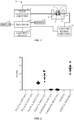
- FIG. 1 shows schematically a pulse generation system 10 for ex vivo platelet activation using Ca ++ concentrations suitable for generating a composition having a particular growth factor profile and clotting characteristics.
- the system 10 includes pulse generating circuitry 12 and opposing electrodes (or arrays of electrodes) 14 and 16.
- the electrodes 14 and 16 are spaced apart on opposing sides of a cuvette 18. That is, the cuvette 18 is disposed between the electrodes and the electrodes 14 and 16 are coupled to the pulse generating circuitry via contacts 20.
- conductive coupling i.e., contact coupling
- this contact-coupling example is provided only to facilitate explanation and to provide a useful context for explaining the present approach, and is not the only suitable mechanism for exposing a sample (as discussed herein) to activation energy.
- non-contact coupling techniques such as capacitive or inductive coupling techniques
- energy coupling to the platelet suspension should be understood as occurring via any suitable mechanism, whether involving contact between the sample container and conduit and electrodes (as shown in this example) or absent such contact using inductive or capacitive effects.
- the pulse generating circuitry 12 when in operation, electrically stimulates or activates a blood, blood component or platelet suspension sample 22 in the presence of Ca ++ within the cuvette 18 so as to activate platelets or other cell types within the sample 22 that release proteins and/or growth factors when activated or stimulated.
- this may take the form of applying pulsed electric fields to the sample contained within the cuvette 18 when the pulse generating circuitry 12 is operating, regardless of the manner in which the electrodes 14 and 16 and cuvette 18 are physically integrated or interfaced.
- the system 10 may be configured to accept or hold different sizes of cuvettes, such as cuvettes of different diameter or width.
- the cuvette 18 may be disposable and/or removable from a sample holder 24 that incorporates the electrodes 14 and 16. Insertion of the cuvette 18 into the sample holder 24 and contact of the electrodes 14 and 16 with the contacts 20 allows the pulse generating circuitry 12 to produce electrical pulses that span the sample 22.
- the cuvette 18 is merely one example of a suitable sample container, and other types of vessels configured to hold the sample 22, contact the electrodes 14 and 16, and conduct the electrical pulses may be used in conjunction with the system 10.
- the spacing between the electrodes 14 and 16 may influence the strength of the pulse's electric field, which is defined as the ratio of the applied voltage and the cuvette gap distance.
- exposing a 1 cm wide cuvette to a 1 kV pulse yields a field strength of 1 kV/cm.
- Field strength, electrode separation distance, and other parameters related to the generated electrical pulses are factors, as discussed herein, that may be varied or adjusted to vary the growth factor levels with respect to one another during an activation procedure.
- the depicted cuvette or container based activation system is suitable for a batch-type processing environment.
- a flow-through type processing environment may instead be employed, where a conduit instead passes through the electrodes 14 and 16, which may be on opposite sides of the conduit or surrounding the conduit.
- Such a flow through arrangement allows a sample to be continuously flowed through the conduit to be exposed to the pulsed electrical fields for activation, with the activated product being collected in a continuous or semi-continuous manner.
- other parameters may also be adjusted so as to configure the activation process.
- the flow rate of the sample (e.g., a platelet suspension) through the conduit and/or the diameter of the conduit may also be accounted for or adjusted as a factor or parameter of the activation process. That is, in addition to the electrical parameters specified for the electrodes, one or both of the flow rate and the electrode spacing may determine the electrical field exposure (or field density exposure) experienced by the sample during activation.
- the system may include control and input circuitry and may be implemented in a dedicated housing or may be coupled to a computer or other processor-based control system.
- the system 10 may include or communicate with a processor 26 that controls the pulse generating circuitry 12.
- Additional components of the system 10 may include a memory 28 storing instructions that are executed by the processor 26. Such instructions may include protocols and/or parameters for generating the electrical pulses using the pulse generating circuitry 12.
- the processor 26 may include, for example, general-purpose single- or multi-chip microprocessors.
- the processor 26 may be any conventional special purpose processor, such as an application-specific processor or circuitry.
- the memory 28 may be any suitable non-transitory computer-readable medium such as a random access memory, mass storage device, a solid state memory device, or removable memory.
- a display 30 may provide indications to an operator related to the operation of the system 10.
- the system 10 may include a user input device 32 (e.g., a keyboard, mouse, touchscreen, trackball, hand held device such as PDA or smart phone or any combination thereof) for activating the pulse generating circuitry 12, selecting or specifying appropriate pulse parameters, or selecting a pre-configured pulse profile from among a number of such profiles (such as profiles each corresponding to different activated product compositions or characteristics (e.g., growth factor profiles, clot strength, presence or absence of clotting, and so forth).
- a user input device 32 e.g., a keyboard, mouse, touchscreen, trackball, hand held device such as PDA or smart phone or any combination thereof
- selecting or specifying appropriate pulse parameters or selecting a pre-configured pulse profile from among a number of such profiles (such as profiles each corresponding to different activated product compositions or characteristics (e.g., growth factor profiles, clot strength, presence or absence of clotting, and so forth).
- the pulse generation system 10 as discussed herein may be implemented as a single-purpose device for platelet or other cell-type activation or as a multi-purpose device that may be used for other electric field exposure applications, such as electroporation, accelerated cell growth via exposure to electrical stimulation in addition to platelet (or other cell-type) activation. Further, the system 10 may be configured to generate electrical pulses according to one or more defined protocols and/or using one or more parameters that may be varied to generate activated products having different characteristics.
- these factors include, but are not limited to: cuvette spacing (i.e., the width of the cuvette 18 across which the pulse is applied), flow rate (in a flow through implementation), voltage, electric field (e.g., strength or density), current, pulse width, pulse duration, and the number of pulses applied.
- the protocols may be generated by user input and/or may be stored in the memory 28 to be selected by the user, such as from a list or menu.
- the pulse generating circuitry 12 may operate under control of the processor 26 to implement protocols that use a specified electric field strength, Ca ++ concentration, pulse length, total exposure time, flow rate (for a flow-through implementation) or other characteristic so as to generate a customized activated cellular composition.
- Such a protocol may be determined by empirical or theoretical studies, such as to correspond to a desired clinical use.
- the system 10 may be configured to receive a user input related to one or more of the electric field strength, Ca ++ concentration, pulse length, flow rate, and/or total exposure time, i.e., the user can vary or specify one or more of these operational parameters. Further, the system 10 may be configured to generate a particular pulse shape or to generate a series of pulses that may differ from one another according to a user input and/or a stored protocol setting.
- a pulse generated by the system 10 may have a duration from about 1 nanosecond to about 100 microseconds, and an electric field strength from about 0.1 kV/cm to about 350 kV/cm, depending on the application.
- the electric field strength of the pulse is the applied voltage divided by the distance between the electrodes 14 and 16. While the pulses generated by the system 10 typically have an electric field strength of 0.1 kV/cm or greater, the pulses typically will not exceed the breakdown field of the suspension which includes the cells.
- the pulse generation system 10 may also include sensing functionality. That is, the pulse generation system 10 may be configured to expose the sample 22 to a sensing signal, which may be an electrical pulse with an electric field strength below that of the electrical pulses used for cellular activation.
- the pulse generation system 10 may, as depicted in FIG. 1 , include current sensing circuitry 34, which may acquire and/or process the sensing signal to estimate some of the electrical or chemical properties of the sample 22, including, but not limited to conductivity and permittivity.
- such sensing circuitry may be used to ascertain a C1 ++ concentration within the sample being processed, such as to confirm that the Ca ++ concentration conforms to a selected protocol and/or to adjust operational parameters based on the observed or measured Ca ++ concentration present in the sample.
- the current sensing circuitry 34 may be coupled to the processor 26, which may control the generation and processing of the sensing signal and may perform a portion of the processing.
- the current sensing circuitry 34 may include a dedicated processor to control the processing of the sensing signal and may communicate with the processor 26 to report the results.
- the current sensing circuitry 34 may be integral with the pulse generating circuitry 12, providing inputs used in the generation of subsequent activation electrical pulses.
- the processing of the sensing signal may be performed by a dedicated processor as described above or the processor 26.
- the prepared PRP was then activated using one of two pulsed electric fields (PEF), i.e., PEF A or PEF B, or in the presence of bovine thrombin (1 U/mL final concentration, Biopharm Laboratories LLC, Bluffdale, UT, USA).
- PEF pulsed electric fields
- bovine thrombin 1 U/mL final concentration, Biopharm Laboratories LLC, Bluffdale, UT, USA.
- PRP samples were recalcified by addition of 1/100 th volume of CaCl 2 (2.5 mM or 20 mM final concentrations, Bachem, Torrance, CA, USA).
- a total of 2 mL of concentrated PRP was treated under each condition in a 2 mm electroporation cuvette (Molecular BioProducts, San Diego, CA, USA) in a system corresponding to that described with respect to FIG. 1 .
- PEF A was parameterized as follows: one pulse; pulse widths were approximately 5 microseconds , ⁇ 3.3 kV voltage amplitude , and more than 300 A current.
- PEF B was parameterized as follows: 120 bipolar pulses, 1 pulse per second, ⁇ 800 V (voltage) and ⁇ 70 A (current).
- Controls included PRP treated with buffer alone (saline) with high CaCl 2 (i.e., 20 mM levels of added CaCl 2 ) alone, and thrombin with low (2.5 mM) and high (20 mM) added CaCl 2 .
- Table 1 summarizes the various combinations of study parameters. Table 1 Run 1 Run 2 Run 3 Run 4 Run 5 Run 6 Run 7 Run 8 PEF A B A B CaCl 2 2.5 mM 2.5 mM 20 mM 20 mM 2.5 mM 20 mM 20 mM Bovine Thrombin 1 U/mL 1 U/mL Buffered Saline 10 mM 10 mM NaCl 0.15 M 0.15 M
- Thromboelastography and activation of plasma prothrombin - For analysis of clot formation in the activated product (i.e., platelet gel), 360 ( ⁇ L of activated PRP was transferred to the TEG cup and recordings initiated immediately following exposure of PRP to activating conditions. Measurements were obtained using a TEG 5000 Hemostasis Analyzer System (Haemonetics Corporation, Braintree, MA, USA). Clotting kinetics and characteristics were followed for 30 minutes.
- activated product i.e., platelet gel
- Platelet alpha granule and T-granule release - Following activation of PRP, a portion of each sample was mixed with the peptide Gly-Pro-Arg-Pro (GPRP) which prevents fibrin polymerization into clots, thereby allowing flow cytometric analysis of platelet surface markers by flow cytometry.
- flow cytometry was used to assess differential release of platelet granules and granule contents as measured by changes in platelet surface P-selectin (CD62P) (for alpha granules) and platelet surface PDI and TLR9 (for T-granules).
- Samples for flow cytometry were fixed fifteen minutes after activation by addition of an equal volume of 2% formaldehyde in 10 mM HEPES, 0.15 M NaCl, pH7.4. Samples were diluted 12-fold in HEPES-Saline buffer (10 mM HEPES, 0.15 M NaCl, pH 7.4; chemicals from Sigma, St.
- FITC-conjugated anti-TLR9 (clone 5G5, Abcam, Cambridge, MA, USA), phycoerythrin (PE)-conjugated P-selectin (clone AK4, BD Pharmingen, San Diego, CA, USA) and CD41-PerCP-Cy5.5 (clone HIP8, BD Pharmingen, San Diego, CA, USA) or to a mixture of FITC-conjugated anti-P-selectin (clone AK4, BD Pharmingen, San Diego, CA, USA), PE-conjugated PDI (clone 1D3, Abcam, Cambridge, MA, USA) and CD41-PerCP-Cy5.5.
- Non-specific staining was determined in parallel using a sample reacted with a mixture of isotype-matched FITC, isotype-matched PE and PerCP-Cy5.5-conjugated normal Ig. After 30 minutes of staining at room temperature, 400 ( ⁇ L of 1% formaldehyde in HEPES-Saline buffer was added. Flow cytometric analysis was performed in a calibrated Becton Dickinson FACSCalibur.
- T-granule release was further evaluated by measurement of PDI by ELISA (Cloud-Clone Corp., Houston, TX, USA) according to the distributor's manual in supernatants collected 15 min after PRP activation.
- EGF epidermal growth factor
- PDGF platelet-derived growth factor
- VEGF vascular endothelial growth factor
- PF4 platelet factor 4
- TEG R represents the enzymatic portion of coagulation and is the period of latency (in minutes) from time that blood was placed in TEG analyzer until the initial fibrin formation.
- TEG K is the time required to reach a pre-defined level of clot strength and represents clot kinetics (graphically depicted in FIG. 3 ).
- TEG Angle is the slope in degrees for the change in amplitude over time due to the rapidity of fibrin build-up and cross-linking and represents fibrinogen level (graphically depicted in FIG. 4 ).
- TEG maximum amplitude (MA) (graphically depicted in FIG.
- TEG MA is considered to represent platelet function and/or aggregation.
- time to initial clot formation was shortest for thrombin treated samples (runs 5 and 6), occurring in less than a minute, conversely, run 3 (PEF A, 20 mM CaCl 2 ) initiated clotting at approximately four 4 minutes, run 4 (PEF B, 20 mM CaCl 2 ) initiated clotting at approximately 9 minutes, and high calcium alone (run 8) initiated clots at about thirteen minutes.
- Clots were not detected by TEG up to 30 min after activation in run 1 (PEF A, 2.5 mM CaCl 2 ), run 2 (PEF B, 2.5 mM CaCl 2 ), or run 7 (i.e., treatment with buffer (no calcium)), which are not shown in Table 2.
- Ca ++ levels in conjunction with activation approach, may be used to control whether clotting occurs at all and, if clotting does occur, the time to initial clot formation (e.g., time to clotting).
- clot strength (MA) (shown in FIG. 5 ) was highest in run 4 (PEF B, 20 mM CaCl 2 ) and the calcium alone control (run 8). Clot strength (MA) was similar for run 6 (thrombin, 20 mM CaCl 2 ) and run 3 (PEF A, 20 mM CaCl 2 ) although clot strength appears to be more variable with run 3.
- FIG. 6 depicts representative TEG tracings depicting the clot mechanical strength (MA) observed over time for one of the volunteers.
- TLR9 Platelet surface toll-like receptor 9
- PEF B 20 mM CaCl 2
- negligible TLR9 expression was observed for runs 1 and 3 (PEF A, 2.5 mM CaCl 2 and PEF A, 20 mM CaCl 2 ), run 2 (PEF B, 2.5 mM CaCl 2 ), and for the no calcium and high calcium only controls (runs 7 and 8).
- the levels of TLR9 were lower than P-selectin, the pattern of TLR9 expression was not distinctly different from that seen for P-selectin.
- the pattern of PDI expression was unique in that the highest levels were seen in run 6 (thrombin, 20 mM CaCl 2 ) instead of run 5 (thrombin, 2.5 mM CaCl 2 ).
- T granule release was also estimated by release of PDI into the supernatants of treated PRP samples as measured by ELISA.
- PDI levels were greatest in the supernatants of run 1, with PRP activated with PEF A and 2.5 mM CaCl 2 , while levels were near or below the detection limit of the assay for samples treated with thrombin (runs 5 and 6). This contrasts with platelet surface PDI measured by flow cytometry, which was highest in run 6 (thrombin, 20 mM CaCl 2 ).
- thrombin 20 mM CaCl 2
- PF4 platelet factor 4
- PDGF platelet-derived growth factor
- VEGF vascular endothelial growth factor
- the relative ability of the treatment conditions to increase amounts of PF4, PDGF, and VEGF in supernatants of PRP were, from most to least: run 6 (thrombin, 20 mM CaCl 2 ) ⁇ run 5 (thrombin, 2.5 mM CaCl 2 ) > run 4 (PEF B, 20 mM CaCl 2 ) ⁇ run 1 (PEF A, 2.5 mM CaCl 2 ) > run 2 (PEF A, 20 mM CaCl 2 ) > run 8 (20 mM CaCl 2 alone) > run 2 (PEF B, 2.5 mM CaCl 2 ) ⁇ no calcium.
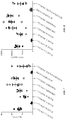
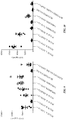
- FIGS. 7, 8 , and 9 In each of FIGS 7, 8 , and 9 (as well as in FIG. 10 , discussed below), individual results are plotted along with the mean and SEM. Results below the detection limit of the assay are plotted at the lower limit of detection.
- PF4, PDGF, and VEGF were highly correlated with one another while EGF levels were not correlated with PF4, PDGF, and VEGF, as shown in Table 6 as a growth factor correlation matrix with corresponding coefficients (r) (top number) and associated probabilities (p values) (bottom number).
- both PEF A and PEF B increased exposure of the alpha granule marker, P-selectin, to a greater extent than 20 mM CaCl 2 alone but to a lesser extent than thrombin, 20 mM CaCl 2
- the levels of PF4, PDGF, and VEGF, but not EGF correlated with platelet alpha granule release as indicated by platelet surface P-selectin expression (MFI) and with T-granule release as indicated by platelet surface TLR9, while EGF levels, but not PF4, PDGF, or VEGF, correlated with the level of PDI present in the supernatant after activation.
- EGF release is distinct from that of PF4, PDGF, and VEGF, suggesting that the distribution of EGF within platelets is also distinct from that of these other factors.
- Potential explanations for the correlation between released soluble PDI with soluble EGF include co-localization in selected platelet granules or localization in distinct granules whose release is triggered by similar stimuli.
- the enhanced release of EGF by PEF A is potentially useful in clinical situations, given that EGF is important for the epithelialization stage of wound healing.
- an activated platelet product that is customized not only for the growth factors present and their relative proportions, but also in terms of the presence or absence of clotting, and/or, the timing of clot formation. That is, in view of the clotting results described herein, it may be appreciated that the presence of clotting or the time to clot formation onset may be optimized in conjunction with growth factor release. For example, PEF A and PEF B in conjunction with high Ca ++ (20 mM CaCl 2 ) results in the release of all growth factors tested above control, though in differing relative proportions.
- PEF A in conjunction with low Ca ++ (2.5 CaCl 2 ) yield an activated product that does not clot but for which all tested growth factors are released.
- samples 2, 3, 4 and 5 have the same type of electrical stimulation, but different levels of added calcium.
- the clotting time can vary, as a function of added Ca, from 10.2 minutes to 17.4 minutes; for one Ca concentration there is not clotting. This offers a means to control clotting/no clotting and further the actual clotting time for these samples, by simply adjusting the Ca concentration.
- the level of added Ca the level of EGF released increases for these samples - 2, 3, 4 and 5 - offering a means to tune the growth factors released by adjusting the Ca level, while keeping in this case the same type of electrical stimulation. In a similar manner, the level of hemolysis can be tuned.
- inventions include generation of an activated platelet product in which one or more of the presence or absence of clots, the timing of clot formation (if present), and/or the mechanical strength of clots (if present) is controlled by the presence or concentration of calcium ions during the activation process.
- the calcium ion concentration is controlled or specified in the presence of pulsed electric fields or a chemical activator (e.g., thrombin) as part of the activation process.
Landscapes
- Health & Medical Sciences (AREA)
- Life Sciences & Earth Sciences (AREA)
- Engineering & Computer Science (AREA)
- Chemical & Material Sciences (AREA)
- General Health & Medical Sciences (AREA)
- Zoology (AREA)
- Bioinformatics & Cheminformatics (AREA)
- Hematology (AREA)
- Biomedical Technology (AREA)
- Immunology (AREA)
- Medicinal Chemistry (AREA)
- Organic Chemistry (AREA)
- Pharmacology & Pharmacy (AREA)
- Biotechnology (AREA)
- Veterinary Medicine (AREA)
- Animal Behavior & Ethology (AREA)
- Public Health (AREA)
- Wood Science & Technology (AREA)
- Epidemiology (AREA)
- Genetics & Genomics (AREA)
- Biochemistry (AREA)
- Microbiology (AREA)
- Cell Biology (AREA)
- Proteomics, Peptides & Aminoacids (AREA)
- General Engineering & Computer Science (AREA)
- Gastroenterology & Hepatology (AREA)
- Molecular Biology (AREA)
- Virology (AREA)
- Developmental Biology & Embryology (AREA)
- Physics & Mathematics (AREA)
- Analytical Chemistry (AREA)
- General Physics & Mathematics (AREA)
- Biophysics (AREA)
- Pathology (AREA)
- Urology & Nephrology (AREA)
- Food Science & Technology (AREA)
- Alternative & Traditional Medicine (AREA)
- Dermatology (AREA)
- Chemical Kinetics & Catalysis (AREA)
- General Chemical & Material Sciences (AREA)
Applications Claiming Priority (3)
| Application Number | Priority Date | Filing Date | Title |
|---|---|---|---|
| US14/984,988 US10633645B2 (en) | 2015-12-30 | 2015-12-30 | Calcium controlled activation of platelets via electrical stimulation |
| EP16829375.1A EP3397268B1 (de) | 2015-12-30 | 2016-12-29 | Calciumgesteuerte aktivierung von thrombozyten mittels elektrostimulation |
| PCT/US2016/069197 WO2017117385A2 (en) | 2015-12-30 | 2016-12-29 | Calcium controlled activation of platelets via electrical stimulation |
Related Parent Applications (1)
| Application Number | Title | Priority Date | Filing Date |
|---|---|---|---|
| EP16829375.1A Division EP3397268B1 (de) | 2015-12-30 | 2016-12-29 | Calciumgesteuerte aktivierung von thrombozyten mittels elektrostimulation |
Publications (3)
| Publication Number | Publication Date |
|---|---|
| EP3738604A2 true EP3738604A2 (de) | 2020-11-18 |
| EP3738604A3 EP3738604A3 (de) | 2021-01-13 |
| EP3738604B1 EP3738604B1 (de) | 2023-09-13 |
Family
ID=57868356
Family Applications (2)
| Application Number | Title | Priority Date | Filing Date |
|---|---|---|---|
| EP20184433.9A Active EP3738604B1 (de) | 2015-12-30 | 2016-12-29 | Calciumgesteuerte aktivierung von thrombozyten mittels elektrostimulation |
| EP16829375.1A Active EP3397268B1 (de) | 2015-12-30 | 2016-12-29 | Calciumgesteuerte aktivierung von thrombozyten mittels elektrostimulation |
Family Applications After (1)
| Application Number | Title | Priority Date | Filing Date |
|---|---|---|---|
| EP16829375.1A Active EP3397268B1 (de) | 2015-12-30 | 2016-12-29 | Calciumgesteuerte aktivierung von thrombozyten mittels elektrostimulation |
Country Status (10)
| Country | Link |
|---|---|
| US (2) | US10633645B2 (de) |
| EP (2) | EP3738604B1 (de) |
| JP (1) | JP7050680B2 (de) |
| KR (1) | KR102722475B1 (de) |
| CN (2) | CN108697763B (de) |
| AU (1) | AU2016380342B2 (de) |
| BR (1) | BR112018013444A2 (de) |
| MX (1) | MX392919B (de) |
| RU (1) | RU2742937C2 (de) |
| WO (1) | WO2017117385A2 (de) |
Cited By (1)
| Publication number | Priority date | Publication date | Assignee | Title |
|---|---|---|---|---|
| EP4582535A1 (de) * | 2024-01-05 | 2025-07-09 | Aventacell Biomedical Corp. Ltd. | Verfahren zur herstellung von exosomen aus menschlichen blutplättchen |
Families Citing this family (2)
| Publication number | Priority date | Publication date | Assignee | Title |
|---|---|---|---|---|
| US10968423B2 (en) | 2018-02-26 | 2021-04-06 | General Electric Company | System and method for electric pulse based activation of biological samples |
| KR102104871B1 (ko) * | 2020-01-02 | 2020-04-27 | 주식회사 엠엔 | 펄스 미세 전자기장 방식의 키성장 보조장치 및 그 장치의 구동방법 |
Family Cites Families (24)
| Publication number | Priority date | Publication date | Assignee | Title |
|---|---|---|---|---|
| JP3180824B2 (ja) * | 1991-08-30 | 2001-06-25 | シスメックス株式会社 | 血液凝固試薬 |
| US5293772A (en) * | 1992-01-17 | 1994-03-15 | Center For Innovative Technology | Instrumentation and method for evaluating platelet performance during clotting and dissolution of blood clots and for evaluating erythrocyte flexibility |
| US6322785B1 (en) | 1999-03-02 | 2001-11-27 | Natrex Technologies | Methods and compositions for bone graft implants |
| US6326711B1 (en) | 1999-09-07 | 2001-12-04 | Tokyo Parts Industrial Co., Ltd. | DC brushless motor having eccentric rotor |
| ATE368229T1 (de) * | 2002-05-01 | 2007-08-15 | Synapse Bv | Diagnostischer test zur bestimmung der konzentration einer transienten proteolytischen aktivität in zusammengesetzten biologischen medien |
| US7565201B2 (en) | 2004-12-17 | 2009-07-21 | Eastern Virginia Medical School | Activation of calcium-mediated cell functions in cells and tissues, including aggregation of human platelets. by nanosecond pulsed electric fields |
| CN101151039A (zh) * | 2005-04-04 | 2008-03-26 | 加利福尼亚大学董事会 | 用于止血调节和伤口愈合治疗的无机材料 |
| EP1717588A1 (de) * | 2005-04-29 | 2006-11-02 | Synapse B.V. | Bestimmung der Thrombinaktivität in Vollblut |
| US7837941B2 (en) * | 2006-04-07 | 2010-11-23 | Agamatrix, Inc. | Method and apparatus for monitoring alteration of flow characteristics in a liquid sample |
| US8034014B2 (en) | 2007-03-06 | 2011-10-11 | Biomet Biologics, Llc | Angiogenesis initation and growth |
| WO2010042658A1 (en) | 2008-10-07 | 2010-04-15 | Bioparadox, Llc | Use of platelet rich plasma composition in the treatment of cardiac conduction abnormalities |
| WO2010057021A1 (en) * | 2008-11-13 | 2010-05-20 | Eastern Virginia Medical School | Activation and aggregation of human platelets and formation of platelet gels by nanosecond pulsed electric fields |
| KR101114712B1 (ko) * | 2009-10-23 | 2012-02-29 | 세원셀론텍(주) | 염화칼슘용액과 제1형 콜라겐으로 혈소판풍부혈장(prp)을 활성화하여 조직재생을 유도하는 조성물의 제조방법 |
| ES2402144T3 (es) * | 2010-05-25 | 2013-04-29 | Gwowei Technology Co., Ltd. | Lisado plaquetario inactivado que contiene factores de crecimiento empobrecido en PDGF y VEGF y su procedimiento de preparación |
| US9314609B2 (en) | 2011-10-28 | 2016-04-19 | Martin Brown | Device for providing electrical stimulation of a human knee |
| CN103110947A (zh) * | 2011-11-16 | 2013-05-22 | 玛旺干细胞医学生物科技股份有限公司 | 用以活化血小板的添加剂 |
| ES2883580T3 (es) * | 2013-03-21 | 2021-12-09 | Collplant Ltd | Composiciones que comprenden colágeno y PRP para la regeneración de tejidos y su método de producción |
| US9238808B2 (en) | 2013-06-06 | 2016-01-19 | General Electric Company | Modular adjustable pulse generator |
| US9078862B2 (en) | 2013-06-06 | 2015-07-14 | General Electric Company | Platelet activation using long electric field pulses |
| US9452199B2 (en) | 2014-01-17 | 2016-09-27 | General Electric Company | Platelet activation and growth factor release using electric pulses |
| US9708597B2 (en) | 2014-01-17 | 2017-07-18 | General Electric Company | Electric pulse generation systems using capacitive coupling |
| EP3107590B1 (de) | 2014-02-20 | 2021-11-17 | Ortho Regenerative Technologies Inc. | Gefriergetrocknete polymerzusammensetzungen zum mischen mit thrombozytenreichem plasma zur herstellung von implantaten zur gewebereparatur und/oder von zusammensetzungen für therapeutische intraartikuläre injektionen |
| WO2015168015A1 (en) | 2014-04-28 | 2015-11-05 | T2 Biosystems, Inc. | Systems and methods for identifying coagulopathies |
| US9752120B2 (en) | 2015-03-31 | 2017-09-05 | General Electric Company | Activated platelet composition with tunable growth factor level |
-
2015
- 2015-12-30 US US14/984,988 patent/US10633645B2/en active Active
-
2016
- 2016-12-29 WO PCT/US2016/069197 patent/WO2017117385A2/en not_active Ceased
- 2016-12-29 RU RU2018121952A patent/RU2742937C2/ru active
- 2016-12-29 CN CN201680082886.6A patent/CN108697763B/zh active Active
- 2016-12-29 JP JP2018533697A patent/JP7050680B2/ja active Active
- 2016-12-29 KR KR1020187022044A patent/KR102722475B1/ko active Active
- 2016-12-29 EP EP20184433.9A patent/EP3738604B1/de active Active
- 2016-12-29 EP EP16829375.1A patent/EP3397268B1/de active Active
- 2016-12-29 MX MX2018008146A patent/MX392919B/es unknown
- 2016-12-29 CN CN202211454001.4A patent/CN115873793A/zh active Pending
- 2016-12-29 AU AU2016380342A patent/AU2016380342B2/en active Active
- 2016-12-29 BR BR112018013444-9A patent/BR112018013444A2/pt not_active Application Discontinuation
-
2020
- 2020-04-16 US US16/850,727 patent/US11591590B2/en active Active
Cited By (1)
| Publication number | Priority date | Publication date | Assignee | Title |
|---|---|---|---|---|
| EP4582535A1 (de) * | 2024-01-05 | 2025-07-09 | Aventacell Biomedical Corp. Ltd. | Verfahren zur herstellung von exosomen aus menschlichen blutplättchen |
Also Published As
| Publication number | Publication date |
|---|---|
| JP7050680B2 (ja) | 2022-04-08 |
| KR102722475B1 (ko) | 2024-10-25 |
| WO2017117385A3 (en) | 2017-08-10 |
| EP3397268B1 (de) | 2020-07-08 |
| AU2016380342A1 (en) | 2018-07-12 |
| KR20180098402A (ko) | 2018-09-03 |
| US20200239868A1 (en) | 2020-07-30 |
| US11591590B2 (en) | 2023-02-28 |
| EP3397268A2 (de) | 2018-11-07 |
| RU2018121952A3 (de) | 2020-04-08 |
| CN108697763B (zh) | 2022-12-09 |
| US20170191052A1 (en) | 2017-07-06 |
| US10633645B2 (en) | 2020-04-28 |
| RU2742937C2 (ru) | 2021-02-11 |
| CN108697763A (zh) | 2018-10-23 |
| AU2016380342B2 (en) | 2023-04-13 |
| CN115873793A (zh) | 2023-03-31 |
| EP3738604A3 (de) | 2021-01-13 |
| MX392919B (es) | 2025-03-24 |
| RU2018121952A (ru) | 2020-01-30 |
| CA3009523A1 (en) | 2017-07-06 |
| WO2017117385A2 (en) | 2017-07-06 |
| EP3738604B1 (de) | 2023-09-13 |
| BR112018013444A2 (pt) | 2019-02-12 |
| MX2018008146A (es) | 2018-12-06 |
| JP2019501911A (ja) | 2019-01-24 |
Similar Documents
| Publication | Publication Date | Title |
|---|---|---|
| US11591590B2 (en) | Calcium controlled activation of platelets via electrical stimulation | |
| US12042526B2 (en) | Platelet activation and growth factor release using electric pulses | |
| JP2013503182A (ja) | 骨溶解治療 | |
| Frelinger III et al. | Tunable activation of therapeutic platelet-rich plasma by pulse electric field: Differential effects on clot formation, growth factor release, and platelet morphology | |
| Picardi et al. | Therapeutic efficiency of platelet gel for the treatment of oral ulcers related to chronic graft versus host disease after allogeneic haematopoietic stem cell transplantation | |
| CA3009523C (en) | Calcium controlled activation of platelets via electrical stimulation | |
| US10927345B2 (en) | Activated platelet composition with tunable growth factor level | |
| Garner et al. | Electrical stimulation of whole blood for growth factor release and potential clinical implications | |
| Cromack et al. | Acceleration of soft tissue repair by a thrombin-derived oligopeptide | |
| KR102516995B1 (ko) | 조정가능한 성장 인자 레벨을 가진 활성화된 혈소판 조성 | |
| JP7248721B2 (ja) | 成長因子レベルを調節可能な活性化血小板組成物 | |
| RU2790831C2 (ru) | Способ получения гемостатического состава | |
| CA3018505C (en) | Activated platelet composition with tunable growth factor level |
Legal Events
| Date | Code | Title | Description |
|---|---|---|---|
| PUAI | Public reference made under article 153(3) epc to a published international application that has entered the european phase |
Free format text: ORIGINAL CODE: 0009012 |
|
| STAA | Information on the status of an ep patent application or granted ep patent |
Free format text: STATUS: REQUEST FOR EXAMINATION WAS MADE |
|
| 17P | Request for examination filed |
Effective date: 20200707 |
|
| AC | Divisional application: reference to earlier application |
Ref document number: 3397268 Country of ref document: EP Kind code of ref document: P |
|
| AK | Designated contracting states |
Kind code of ref document: A2 Designated state(s): AL AT BE BG CH CY CZ DE DK EE ES FI FR GB GR HR HU IE IS IT LI LT LU LV MC MK MT NL NO PL PT RO RS SE SI SK SM TR |
|
| PUAL | Search report despatched |
Free format text: ORIGINAL CODE: 0009013 |
|
| AK | Designated contracting states |
Kind code of ref document: A3 Designated state(s): AL AT BE BG CH CY CZ DE DK EE ES FI FR GB GR HR HU IE IS IT LI LT LU LV MC MK MT NL NO PL PT RO RS SE SI SK SM TR |
|
| RIC1 | Information provided on ipc code assigned before grant |
Ipc: A61P 17/02 20060101ALI20201208BHEP Ipc: A61K 35/19 20150101ALI20201208BHEP Ipc: A61K 38/18 20060101AFI20201208BHEP Ipc: G01N 33/49 20060101ALI20201208BHEP Ipc: A61K 41/00 20200101ALI20201208BHEP Ipc: A61K 33/06 20060101ALI20201208BHEP |
|
| STAA | Information on the status of an ep patent application or granted ep patent |
Free format text: STATUS: EXAMINATION IS IN PROGRESS |
|
| 17Q | First examination report despatched |
Effective date: 20220510 |
|
| GRAP | Despatch of communication of intention to grant a patent |
Free format text: ORIGINAL CODE: EPIDOSNIGR1 |
|
| STAA | Information on the status of an ep patent application or granted ep patent |
Free format text: STATUS: GRANT OF PATENT IS INTENDED |
|
| RIC1 | Information provided on ipc code assigned before grant |
Ipc: A61P 17/02 20060101ALI20230131BHEP Ipc: A61K 41/00 20060101ALI20230131BHEP Ipc: A61K 33/06 20060101ALI20230131BHEP Ipc: G01N 33/49 20060101ALI20230131BHEP Ipc: A61K 35/19 20150101ALI20230131BHEP Ipc: A61K 38/18 20060101AFI20230131BHEP |
|
| INTG | Intention to grant announced |
Effective date: 20230216 |
|
| GRAJ | Information related to disapproval of communication of intention to grant by the applicant or resumption of examination proceedings by the epo deleted |
Free format text: ORIGINAL CODE: EPIDOSDIGR1 |
|
| STAA | Information on the status of an ep patent application or granted ep patent |
Free format text: STATUS: EXAMINATION IS IN PROGRESS |
|
| GRAS | Grant fee paid |
Free format text: ORIGINAL CODE: EPIDOSNIGR3 |
|
| STAA | Information on the status of an ep patent application or granted ep patent |
Free format text: STATUS: GRANT OF PATENT IS INTENDED |
|
| INTC | Intention to grant announced (deleted) | ||
| GRAP | Despatch of communication of intention to grant a patent |
Free format text: ORIGINAL CODE: EPIDOSNIGR1 |
|
| GRAA | (expected) grant |
Free format text: ORIGINAL CODE: 0009210 |
|
| STAA | Information on the status of an ep patent application or granted ep patent |
Free format text: STATUS: THE PATENT HAS BEEN GRANTED |
|
| INTG | Intention to grant announced |
Effective date: 20230724 |
|
| AC | Divisional application: reference to earlier application |
Ref document number: 3397268 Country of ref document: EP Kind code of ref document: P |
|
| AK | Designated contracting states |
Kind code of ref document: B1 Designated state(s): AL AT BE BG CH CY CZ DE DK EE ES FI FR GB GR HR HU IE IS IT LI LT LU LV MC MK MT NL NO PL PT RO RS SE SI SK SM TR |
|
| REG | Reference to a national code |
Ref country code: CH Ref legal event code: EP |
|
| REG | Reference to a national code |
Ref country code: DE Ref legal event code: R096 Ref document number: 602016082846 Country of ref document: DE |
|
| REG | Reference to a national code |
Ref country code: IE Ref legal event code: FG4D |
|
| REG | Reference to a national code |
Ref country code: LT Ref legal event code: MG9D |
|
| REG | Reference to a national code |
Ref country code: NL Ref legal event code: MP Effective date: 20230913 |
|
| PG25 | Lapsed in a contracting state [announced via postgrant information from national office to epo] |
Ref country code: GR Free format text: LAPSE BECAUSE OF FAILURE TO SUBMIT A TRANSLATION OF THE DESCRIPTION OR TO PAY THE FEE WITHIN THE PRESCRIBED TIME-LIMIT Effective date: 20231214 |
|
| PG25 | Lapsed in a contracting state [announced via postgrant information from national office to epo] |
Ref country code: SE Free format text: LAPSE BECAUSE OF FAILURE TO SUBMIT A TRANSLATION OF THE DESCRIPTION OR TO PAY THE FEE WITHIN THE PRESCRIBED TIME-LIMIT Effective date: 20230913 Ref country code: RS Free format text: LAPSE BECAUSE OF FAILURE TO SUBMIT A TRANSLATION OF THE DESCRIPTION OR TO PAY THE FEE WITHIN THE PRESCRIBED TIME-LIMIT Effective date: 20230913 Ref country code: NO Free format text: LAPSE BECAUSE OF FAILURE TO SUBMIT A TRANSLATION OF THE DESCRIPTION OR TO PAY THE FEE WITHIN THE PRESCRIBED TIME-LIMIT Effective date: 20231213 Ref country code: LV Free format text: LAPSE BECAUSE OF FAILURE TO SUBMIT A TRANSLATION OF THE DESCRIPTION OR TO PAY THE FEE WITHIN THE PRESCRIBED TIME-LIMIT Effective date: 20230913 Ref country code: LT Free format text: LAPSE BECAUSE OF FAILURE TO SUBMIT A TRANSLATION OF THE DESCRIPTION OR TO PAY THE FEE WITHIN THE PRESCRIBED TIME-LIMIT Effective date: 20230913 Ref country code: HR Free format text: LAPSE BECAUSE OF FAILURE TO SUBMIT A TRANSLATION OF THE DESCRIPTION OR TO PAY THE FEE WITHIN THE PRESCRIBED TIME-LIMIT Effective date: 20230913 Ref country code: GR Free format text: LAPSE BECAUSE OF FAILURE TO SUBMIT A TRANSLATION OF THE DESCRIPTION OR TO PAY THE FEE WITHIN THE PRESCRIBED TIME-LIMIT Effective date: 20231214 Ref country code: FI Free format text: LAPSE BECAUSE OF FAILURE TO SUBMIT A TRANSLATION OF THE DESCRIPTION OR TO PAY THE FEE WITHIN THE PRESCRIBED TIME-LIMIT Effective date: 20230913 |
|
| REG | Reference to a national code |
Ref country code: AT Ref legal event code: MK05 Ref document number: 1610604 Country of ref document: AT Kind code of ref document: T Effective date: 20230913 |
|
| PG25 | Lapsed in a contracting state [announced via postgrant information from national office to epo] |
Ref country code: NL Free format text: LAPSE BECAUSE OF FAILURE TO SUBMIT A TRANSLATION OF THE DESCRIPTION OR TO PAY THE FEE WITHIN THE PRESCRIBED TIME-LIMIT Effective date: 20230913 |
|
| PG25 | Lapsed in a contracting state [announced via postgrant information from national office to epo] |
Ref country code: IS Free format text: LAPSE BECAUSE OF FAILURE TO SUBMIT A TRANSLATION OF THE DESCRIPTION OR TO PAY THE FEE WITHIN THE PRESCRIBED TIME-LIMIT Effective date: 20240113 |
|
| PG25 | Lapsed in a contracting state [announced via postgrant information from national office to epo] |
Ref country code: AT Free format text: LAPSE BECAUSE OF FAILURE TO SUBMIT A TRANSLATION OF THE DESCRIPTION OR TO PAY THE FEE WITHIN THE PRESCRIBED TIME-LIMIT Effective date: 20230913 |
|
| PG25 | Lapsed in a contracting state [announced via postgrant information from national office to epo] |
Ref country code: ES Free format text: LAPSE BECAUSE OF FAILURE TO SUBMIT A TRANSLATION OF THE DESCRIPTION OR TO PAY THE FEE WITHIN THE PRESCRIBED TIME-LIMIT Effective date: 20230913 |
|
| PG25 | Lapsed in a contracting state [announced via postgrant information from national office to epo] |
Ref country code: SM Free format text: LAPSE BECAUSE OF FAILURE TO SUBMIT A TRANSLATION OF THE DESCRIPTION OR TO PAY THE FEE WITHIN THE PRESCRIBED TIME-LIMIT Effective date: 20230913 Ref country code: RO Free format text: LAPSE BECAUSE OF FAILURE TO SUBMIT A TRANSLATION OF THE DESCRIPTION OR TO PAY THE FEE WITHIN THE PRESCRIBED TIME-LIMIT Effective date: 20230913 Ref country code: IS Free format text: LAPSE BECAUSE OF FAILURE TO SUBMIT A TRANSLATION OF THE DESCRIPTION OR TO PAY THE FEE WITHIN THE PRESCRIBED TIME-LIMIT Effective date: 20240113 Ref country code: ES Free format text: LAPSE BECAUSE OF FAILURE TO SUBMIT A TRANSLATION OF THE DESCRIPTION OR TO PAY THE FEE WITHIN THE PRESCRIBED TIME-LIMIT Effective date: 20230913 Ref country code: EE Free format text: LAPSE BECAUSE OF FAILURE TO SUBMIT A TRANSLATION OF THE DESCRIPTION OR TO PAY THE FEE WITHIN THE PRESCRIBED TIME-LIMIT Effective date: 20230913 Ref country code: CZ Free format text: LAPSE BECAUSE OF FAILURE TO SUBMIT A TRANSLATION OF THE DESCRIPTION OR TO PAY THE FEE WITHIN THE PRESCRIBED TIME-LIMIT Effective date: 20230913 Ref country code: AT Free format text: LAPSE BECAUSE OF FAILURE TO SUBMIT A TRANSLATION OF THE DESCRIPTION OR TO PAY THE FEE WITHIN THE PRESCRIBED TIME-LIMIT Effective date: 20230913 Ref country code: PT Free format text: LAPSE BECAUSE OF FAILURE TO SUBMIT A TRANSLATION OF THE DESCRIPTION OR TO PAY THE FEE WITHIN THE PRESCRIBED TIME-LIMIT Effective date: 20240115 Ref country code: SK Free format text: LAPSE BECAUSE OF FAILURE TO SUBMIT A TRANSLATION OF THE DESCRIPTION OR TO PAY THE FEE WITHIN THE PRESCRIBED TIME-LIMIT Effective date: 20230913 |
|
| PG25 | Lapsed in a contracting state [announced via postgrant information from national office to epo] |
Ref country code: PL Free format text: LAPSE BECAUSE OF FAILURE TO SUBMIT A TRANSLATION OF THE DESCRIPTION OR TO PAY THE FEE WITHIN THE PRESCRIBED TIME-LIMIT Effective date: 20230913 |
|
| REG | Reference to a national code |
Ref country code: DE Ref legal event code: R097 Ref document number: 602016082846 Country of ref document: DE |
|
| PG25 | Lapsed in a contracting state [announced via postgrant information from national office to epo] |
Ref country code: DK Free format text: LAPSE BECAUSE OF FAILURE TO SUBMIT A TRANSLATION OF THE DESCRIPTION OR TO PAY THE FEE WITHIN THE PRESCRIBED TIME-LIMIT Effective date: 20230913 |
|
| PLBE | No opposition filed within time limit |
Free format text: ORIGINAL CODE: 0009261 |
|
| STAA | Information on the status of an ep patent application or granted ep patent |
Free format text: STATUS: NO OPPOSITION FILED WITHIN TIME LIMIT |
|
| PG25 | Lapsed in a contracting state [announced via postgrant information from national office to epo] |
Ref country code: DK Free format text: LAPSE BECAUSE OF FAILURE TO SUBMIT A TRANSLATION OF THE DESCRIPTION OR TO PAY THE FEE WITHIN THE PRESCRIBED TIME-LIMIT Effective date: 20230913 |
|
| REG | Reference to a national code |
Ref country code: CH Ref legal event code: PL |
|
| 26N | No opposition filed |
Effective date: 20240614 |
|
| PG25 | Lapsed in a contracting state [announced via postgrant information from national office to epo] |
Ref country code: LU Free format text: LAPSE BECAUSE OF NON-PAYMENT OF DUE FEES Effective date: 20231229 |
|
| PG25 | Lapsed in a contracting state [announced via postgrant information from national office to epo] |
Ref country code: MC Free format text: LAPSE BECAUSE OF FAILURE TO SUBMIT A TRANSLATION OF THE DESCRIPTION OR TO PAY THE FEE WITHIN THE PRESCRIBED TIME-LIMIT Effective date: 20230913 |
|
| REG | Reference to a national code |
Ref country code: BE Ref legal event code: MM Effective date: 20231231 |
|
| PG25 | Lapsed in a contracting state [announced via postgrant information from national office to epo] |
Ref country code: MC Free format text: LAPSE BECAUSE OF FAILURE TO SUBMIT A TRANSLATION OF THE DESCRIPTION OR TO PAY THE FEE WITHIN THE PRESCRIBED TIME-LIMIT Effective date: 20230913 Ref country code: LU Free format text: LAPSE BECAUSE OF NON-PAYMENT OF DUE FEES Effective date: 20231229 |
|
| REG | Reference to a national code |
Ref country code: IE Ref legal event code: MM4A |
|
| PG25 | Lapsed in a contracting state [announced via postgrant information from national office to epo] |
Ref country code: IE Free format text: LAPSE BECAUSE OF NON-PAYMENT OF DUE FEES Effective date: 20231229 |
|
| PG25 | Lapsed in a contracting state [announced via postgrant information from national office to epo] |
Ref country code: BE Free format text: LAPSE BECAUSE OF NON-PAYMENT OF DUE FEES Effective date: 20231231 |
|
| PG25 | Lapsed in a contracting state [announced via postgrant information from national office to epo] |
Ref country code: CH Free format text: LAPSE BECAUSE OF NON-PAYMENT OF DUE FEES Effective date: 20231231 |
|
| PG25 | Lapsed in a contracting state [announced via postgrant information from national office to epo] |
Ref country code: SI Free format text: LAPSE BECAUSE OF FAILURE TO SUBMIT A TRANSLATION OF THE DESCRIPTION OR TO PAY THE FEE WITHIN THE PRESCRIBED TIME-LIMIT Effective date: 20230913 |
|
| PG25 | Lapsed in a contracting state [announced via postgrant information from national office to epo] |
Ref country code: SI Free format text: LAPSE BECAUSE OF FAILURE TO SUBMIT A TRANSLATION OF THE DESCRIPTION OR TO PAY THE FEE WITHIN THE PRESCRIBED TIME-LIMIT Effective date: 20230913 Ref country code: IE Free format text: LAPSE BECAUSE OF NON-PAYMENT OF DUE FEES Effective date: 20231229 Ref country code: CH Free format text: LAPSE BECAUSE OF NON-PAYMENT OF DUE FEES Effective date: 20231231 Ref country code: BE Free format text: LAPSE BECAUSE OF NON-PAYMENT OF DUE FEES Effective date: 20231231 |
|
| PG25 | Lapsed in a contracting state [announced via postgrant information from national office to epo] |
Ref country code: BG Free format text: LAPSE BECAUSE OF FAILURE TO SUBMIT A TRANSLATION OF THE DESCRIPTION OR TO PAY THE FEE WITHIN THE PRESCRIBED TIME-LIMIT Effective date: 20230913 |
|
| PG25 | Lapsed in a contracting state [announced via postgrant information from national office to epo] |
Ref country code: BG Free format text: LAPSE BECAUSE OF FAILURE TO SUBMIT A TRANSLATION OF THE DESCRIPTION OR TO PAY THE FEE WITHIN THE PRESCRIBED TIME-LIMIT Effective date: 20230913 |
|
| PGFP | Annual fee paid to national office [announced via postgrant information from national office to epo] |
Ref country code: DE Payment date: 20241121 Year of fee payment: 9 |
|
| PGFP | Annual fee paid to national office [announced via postgrant information from national office to epo] |
Ref country code: GB Payment date: 20241121 Year of fee payment: 9 |
|
| PGFP | Annual fee paid to national office [announced via postgrant information from national office to epo] |
Ref country code: FR Payment date: 20241121 Year of fee payment: 9 |
|
| PGFP | Annual fee paid to national office [announced via postgrant information from national office to epo] |
Ref country code: IT Payment date: 20241121 Year of fee payment: 9 |
|
| PG25 | Lapsed in a contracting state [announced via postgrant information from national office to epo] |
Ref country code: CY Free format text: LAPSE BECAUSE OF FAILURE TO SUBMIT A TRANSLATION OF THE DESCRIPTION OR TO PAY THE FEE WITHIN THE PRESCRIBED TIME-LIMIT; INVALID AB INITIO Effective date: 20161229 |
|
| PG25 | Lapsed in a contracting state [announced via postgrant information from national office to epo] |
Ref country code: HU Free format text: LAPSE BECAUSE OF FAILURE TO SUBMIT A TRANSLATION OF THE DESCRIPTION OR TO PAY THE FEE WITHIN THE PRESCRIBED TIME-LIMIT; INVALID AB INITIO Effective date: 20161229 |
|
| PG25 | Lapsed in a contracting state [announced via postgrant information from national office to epo] |
Ref country code: TR Free format text: LAPSE BECAUSE OF FAILURE TO SUBMIT A TRANSLATION OF THE DESCRIPTION OR TO PAY THE FEE WITHIN THE PRESCRIBED TIME-LIMIT Effective date: 20230913 |