EP3738265B1 - Verfahren und vorrichtung zur einstellung von intermodulationsprodukten höherer ordnung neben intermodulationsprodukten niedrigerer ordnung - Google Patents
Verfahren und vorrichtung zur einstellung von intermodulationsprodukten höherer ordnung neben intermodulationsprodukten niedrigerer ordnung Download PDFInfo
- Publication number
- EP3738265B1 EP3738265B1 EP19713556.9A EP19713556A EP3738265B1 EP 3738265 B1 EP3738265 B1 EP 3738265B1 EP 19713556 A EP19713556 A EP 19713556A EP 3738265 B1 EP3738265 B1 EP 3738265B1
- Authority
- EP
- European Patent Office
- Prior art keywords
- order intermodulation
- intermodulation product
- higher order
- user equipment
- carrier
- Prior art date
- Legal status (The legal status is an assumption and is not a legal conclusion. Google has not performed a legal analysis and makes no representation as to the accuracy of the status listed.)
- Active
Links
Images

Classifications
-
- H—ELECTRICITY
- H04—ELECTRIC COMMUNICATION TECHNIQUE
- H04B—TRANSMISSION
- H04B1/00—Details of transmission systems, not covered by a single one of groups H04B3/00 - H04B13/00; Details of transmission systems not characterised by the medium used for transmission
- H04B1/06—Receivers
- H04B1/10—Means associated with receiver for limiting or suppressing noise or interference
- H04B1/1027—Means associated with receiver for limiting or suppressing noise or interference assessing signal quality or detecting noise/interference for the received signal
-
- H—ELECTRICITY
- H04—ELECTRIC COMMUNICATION TECHNIQUE
- H04B—TRANSMISSION
- H04B1/00—Details of transmission systems, not covered by a single one of groups H04B3/00 - H04B13/00; Details of transmission systems not characterised by the medium used for transmission
- H04B1/06—Receivers
- H04B1/10—Means associated with receiver for limiting or suppressing noise or interference
- H04B1/109—Means associated with receiver for limiting or suppressing noise or interference by improving strong signal performance of the receiver when strong unwanted signals are present at the receiver input
-
- H—ELECTRICITY
- H04—ELECTRIC COMMUNICATION TECHNIQUE
- H04L—TRANSMISSION OF DIGITAL INFORMATION, e.g. TELEGRAPHIC COMMUNICATION
- H04L5/00—Arrangements affording multiple use of the transmission path
- H04L5/0091—Signalling for the administration of the divided path, e.g. signalling of configuration information
- H04L5/0096—Indication of changes in allocation
- H04L5/0098—Signalling of the activation or deactivation of component carriers, subcarriers or frequency bands
-
- H—ELECTRICITY
- H04—ELECTRIC COMMUNICATION TECHNIQUE
- H04L—TRANSMISSION OF DIGITAL INFORMATION, e.g. TELEGRAPHIC COMMUNICATION
- H04L5/00—Arrangements affording multiple use of the transmission path
- H04L5/0001—Arrangements for dividing the transmission path
- H04L5/0003—Two-dimensional division
- H04L5/0005—Time-frequency
- H04L5/0007—Time-frequency the frequencies being orthogonal, e.g. OFDM(A) or DMT
- H04L5/001—Time-frequency the frequencies being orthogonal, e.g. OFDM(A) or DMT the frequencies being arranged in component carriers
-
- H—ELECTRICITY
- H04—ELECTRIC COMMUNICATION TECHNIQUE
- H04L—TRANSMISSION OF DIGITAL INFORMATION, e.g. TELEGRAPHIC COMMUNICATION
- H04L5/00—Arrangements affording multiple use of the transmission path
- H04L5/003—Arrangements for allocating sub-channels of the transmission path
- H04L5/0058—Allocation criteria
- H04L5/0066—Requirements on out-of-channel emissions
-
- H—ELECTRICITY
- H04—ELECTRIC COMMUNICATION TECHNIQUE
- H04W—WIRELESS COMMUNICATION NETWORKS
- H04W72/00—Local resource management
- H04W72/20—Control channels or signalling for resource management
- H04W72/23—Control channels or signalling for resource management in the downlink direction of a wireless link, i.e. towards a terminal
Definitions
- the present disclosure is directed to a method and apparatus for adjusting for higher intermodulation products co-located with lower order intermodulation products, such as defining adjustments for reference sensitivity power level requirements in response to considering higher order intermodulation products, which overlaps one of the user equipment downlink allocations.
- NR new radio access technology
- LTE Long Term Evolution
- UMTS Universal Mobile Telecommunications Service
- GSM Global System for Mobile Communication
- EDGE Enhanced Data GSM Environment
- bandwidth extending techniques include the use of carrier aggregation and/or dual carrier, where multiple frequency bands are selected to operate together. For example, by utilizing more than one carrier through carrier aggregation it may be possible to increase the overall transmission bandwidth associated with a particular data channel and correspondingly enhance the data capacity of that channel. Additionally and/or alternatively, a dual or multiple carrier approach can allow two or more spectrum allocations to be paired and/or used in parallel, which similarly can support the ability of enhanced data throughput.
- the use of data resources from multiple frequency bands and/or spectrum allocations together in one or more uplinks has the potential to produce various higher and lower order intermodulation products from a mixing of these signals due to non-linearities in the transceiver that can couple back in through the antenna and possibly interfere with signaling present on a downlink channel.
- the intermodulation products resulting from the multiple uplink allocations can have a wider bandwidth, than the respective individual original uplinks, which can combine and extend to interfere with the frequencies associated with the downlink allocation.
- a higher order intermodulation product may overlap with a downlink allocation, even in instances where a lower order intermodulation product does not.
- the present inventor has recognized that it may be beneficial to consider accommodations for instances in which higher order intermodulation products may overlap with a downlink allocation, including instances in which the lower order intermodulation products do not overlap with the downlink allocation. For example, it may be beneficial for the downlink allocation to be scheduled so as to avoid such concerns, or for transceiver testing requirements to be relaxed when such a condition is detected as being present or possible.
- US 2017/0318587 A1 and US 2017/054535 A1 each describe a method for transmitting and receiving signal by aggregating a plurality of downlink carriers and two uplink carriers.
- US 9,859,947 B2 describes a terminal arranged to eliminate harmonic components and intermodulation distortions components.
- US 8,861,413 B2 relates to measures for enabling power control for inter-band multi-carrier capable devices, such as e.g. inter-band carrier aggregation capable devices.
- Claim 1 defines a method in a user equipment and claim 9 defines a user equipment in a communication network.
- any method and/or apparatus referred to as embodiments but nevertheless do not fall within the scope of the appended claims are to be understood as examples helpful in understanding the invention.
- the present application provides a method in a wireless communication device.
- the method includes receiving an indication of a first uplink resource allocation of resource blocks for a transmission on a first carrier, and receiving an indication of a second uplink resource allocation of resource blocks for a transmission on a second carrier.
- An indication of a downlink allocation for receiving a downlink signal is further received.
- a higher order intermodulation product which is co-located with a lower order intermodulation product for the first and second allocations resulting from any respective higher order and lower order transceiver nonlinearities is identified.
- a determination is then made as to whether the co-located higher order intermodulation products have a region of overlap with the downlink allocation. When the co-located higher order intermodulation products have a region of overlap with the downlink allocation, the reference sensitivity requirement in the region of overlap between the higher order intermodulation product and the downlink allocation is adjusted.
- determining whether the co-located higher order intermodulation products have a region of overlap with the downlink allocation includes instances where the lower order intermodulation products do not have a region of overlap with the downlink allocation.
- the transmission on the first carrier and the transmission on the second carrier support carrier aggregation, which can include a combination of different spectrum bands to form a larger bandwidth channel to transmit data.
- the transmission on the first carrier and the transmission on the second carrier can support dual carrier operation.
- the present application further provides a user equipment in a communication network.
- the user equipment includes a transceiver that sends and receives signals between the user equipment and a network entity of the communication network including receiving an indication of a first uplink resource allocation of resource blocks for a transmission on a first carrier, receiving an indication of a second uplink resource allocation of resource blocks for a transmission on a second carrier, and receiving an indication of a downlink allocation for receiving a downlink signal.
- the user equipment further includes a controller that identifies a higher order intermodulation product, which is co-located with a lower order intermodulation product for the first and second allocations resulting from any respective higher order and lower order transceiver nonlinearities, and determines whether the co-located higher order intermodulation products have a region of overlap with the downlink allocation.
- the controller adjusts the reference sensitivity requirement in the region of overlap between the higher order intermodulation product and the downlink allocation.
- the present application still further provides a method in a network entity.
- the method includes selecting a first uplink resource allocation of resource blocks for a transceiver of a user equipment on a first carrier, and selecting a second uplink resource allocation of resource blocks for the transceiver of the user equipment on a second carrier.
- a higher order intermodulation product which is co-located with a lower order intermodulation product for the first and second uplink resource allocations resulting from any respective higher order and lower order transceiver nonlinearities in the transceiver of the user equipment is then identified.
- a downlink allocation for receiving a downlink signal is then selected, such that the selected downlink allocation avoids overlapping with any higher order intermodulation products, which is identified as being co-located with a lower order intermodulation product for the first and second uplink resource allocations.
- An indication of the first uplink resource allocation, the second uplink resource allocation, and the downlink allocation is then transmitted to the user equipment for use in communicating with the network entity.
- the present application provides a network entity, which includes a controller that selects a first uplink resource allocation of resource blocks for a transceiver of a user equipment on a first carrier, and selects a second uplink resource allocation of resource blocks for the transceiver of the user equipment on a second carrier.
- the controller further identifies a higher order intermodulation product, which is co-located with a lower order intermodulation product for the first and second uplink resource allocations resulting from any respective higher order and lower order transceiver nonlinearities, and selects a downlink allocation for receiving a downlink signal, such that the selected downlink allocation avoids overlapping with any higher order intermodulation products, which is identified as being co-located with a lower order intermodulation product for the first and second uplink resource allocations.
- the network entity further includes a transceiver that sends and receives signals between the user equipment and the network entity including transmitting an indication of the first uplink resource allocation, the second uplink resource allocation, and the downlink allocation to the user equipment for use in communicating with the network entity.
- Embodiments provide a method and apparatus for adjusting for higher order intermodulation products co-located with lower order intermodulation products.
- FIG. 1 is an example block diagram of a system 100 according to a possible embodiment.
- the system 100 can include a wireless communication device 110, such as User Equipment (UE), a base station 120, such as an enhanced NodeB (eNB) or next generation NodeB (gNB), and a network 130.
- the wireless communication device 110 can be a wireless terminal, a portable wireless communication device, a smartphone, a cellular telephone, a flip phone, a personal digital assistant, a personal computer, a selective call receiver, a tablet computer, a laptop computer, or any other device that is capable of sending and receiving communication signals on a wireless network.
- the network 130 can include any type of network that is capable of sending and receiving wireless communication signals.
- the network 130 can include a wireless communication network, a cellular telephone network, a Time Division Multiple Access (TDMA)-based network, a Code Division Multiple Access (CDMA)-based network, an Orthogonal Frequency Division Multiple Access (OFDMA)-based network, a Long Term Evolution (LTE) network, a 5th generation (5G) network, a 3rd Generation Partnership Project (3GPP)-based network, a satellite communications network, a high altitude platform network, the Internet, and/or other communications networks.
- TDMA Time Division Multiple Access
- CDMA Code Division Multiple Access
- OFDMA Orthogonal Frequency Division Multiple Access
- LTE Long Term Evolution
- 5G 5th generation
- 3GPP 3rd Generation Partnership Project
- the higher order IM products which are co-located with the lower order IM's may have more power than the higher order IM products which are not co-located with lower order 1M's.
- the higher order IM products which are not co-located with lower order IM's have sufficient power to interfere with the downlink or with other bands, then it follows that the same may be true for the higher order IM products which are co-located with the lower order IM products.
- the present disclosure includes defining the reference sensitivity power level (Refsens) relaxations or no Refens requirement for the user equipment (UE) in the case that a higher order intermodulation product of multiple uplink carriers is co-located with a lower order intermodulation product and the higher order intermodulation product overlaps one of the UE downlink allocations.
- Refsens reference sensitivity power level
- the 3GPP RAN4 specification has defined Refsens relaxations or no Refsens requirement in the case that intermodulation products from multiple carriers fall on the UE's downlink allocation.
- RAN4 has ignored the issue of higher order intermodulation products which are co-located with lower order intermodulation products.
- Refsens relaxations or no Refsens requirement may have generally been provided in the case that intermodulation products interfere with the UE's downlink receiver. However, they generally have failed to address instances, in which higher order intermodulation products are co-located with lower order intermodulation products and the higher order intermodulation products interfere with the UE's downlink receiver while the co-located lower order IM product does not. In the case that the lower order IM overlaps the UE's downlink, the region of overlap will be extended by the co-located higher order IM product.
- Examples of this issue can be shown by considering the fourth order intermodulation products that are co-located with the second order intermodulation products, and similarly, the fifth order intermodulation products that are co-located with third order intermodulation products. It can be noted that only 'even' higher order intermodulation products are co-located with 'even' lower order intermodulation products, and only 'odd' higher order intermodulation products are co-located with 'odd' lower order intermodulation products.
- the region of overlap will be extended by the higher order IM and either Refsens relaxation or no Refsens requirement could be defined for this extended overlap region.
- the IM products 7 and 9 are the source of adjacent channel leakage in single carrier operation.
- the IM products 8 and 10 occur in dual-carrier operation and unless W 1 and W 2 are equal, one of these IM products will be wider than the corresponding IM for single carrier operation.
- Table 1 can be simplified slightly as in Table 1a below.
- Table 1a IM Products and Harmonics due to 3 nd Order Non-linearity IM# Center Frequency IM Bandwidth 1 3*f 1 3*W 1 2 3*f 2 3*W 2 3
- the IM terms 13 and 15 at 2*f 1 and 2*f 2 occur also in single carrier operation and may have been addressed previously by allowing for spectral "spreading" when defining spurious exceptions for the second harmonic and also for defining Refsens relaxations for harmonics adjacent to the downlink allocation. This spectral spreading is actually due to an IM term generated by a 4th order (or higher even order) non-linearity falling on top of the second harmonic.
- Table 2 can be simplified slightly as in Table 2a below.
- Table 2a IM Products and Harmonics due to 4 th Order Non-linearity IM# Center Frequency IM Bandwidth 1 4*f 1 4*W 1 2 4*f 2 4*W 2 3
- Table 3 can be simplified slightly as in Table 3a below.
- the two-carrier third, fourth and fifth order nonlinearities have been expanded in order to enumerate the intermodulation terms and harmonics resulting from these nonlinearities.
- Recent co-existence studies for NSA NR have generally not included the IM products generated by higher order non-linearities which fall on top of IM products generated by lower order non-linearities.
- these co-located higher order IM products may have more power than the higher order IM products which are not co-located with lower order IM's, they should also be included in the NSA NR co-existence studies.
- IM products in Tables 1, 2, and 3 be considered for inclusion in the dual-carrier self-desense analysis, such as for non-standalone (NSA) fifth generation (5G) standards, and corresponding reference sensitivity relaxations be defined, if necessary, including where the IM products fall in a downlink allocation.
- NSA non-standalone
- 5G fifth generation
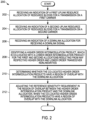
- FIG. 2 illustrates a flow diagram 200 in a user equipment for adjusting reference sensitivity requirement when higher order intermodulation products, which are co-located with lower order intermodulation products overlap with a downlink allocation. More specifically, the flow diagram 200 is illustrative of a method, and includes receiving 202 an indication of a first uplink resource allocation of resource blocks for a transmission on a first carrier, and receiving 204 an indication of a second uplink resource allocation of resource blocks for a transmission on a second carrier. An indication of a downlink allocation for receiving a downlink signal is further received 206.
- a higher order intermodulation product which is co-located with a lower order intermodulation product for the first and second allocations resulting from any respective higher order and lower order transceiver nonlinearities is identified 208.
- a determination 210 is then made as to whether the co-located higher order intermodulation products have a region of overlap with the downlink allocation.
- the reference sensitivity requirement in the region of overlap between the higher order intermodulation product and the downlink allocation is adjusted 212.
- a method consistent with flow diagram 200 illustrated in FIG. 2 can further provide for where adjusting the reference sensitivity requirement in the region of overlap between the higher intermodulation product and the downlink allocation includes relaxing the reference sensitivity.
- an amount that the reference sensitivity is relaxed can correspond to an amount of the noise rise in a receiver of the user equipment resulting from the higher order intermodulation product.
- adjusting the reference sensitivity requirement in the region of overlap between the higher intermodulation product and the downlink allocation can include a suspension of the reference sensitivity requirement.
- the lower order intermodulation product can correspond to a second order intermodulation product and the higher order intermodulation product can correspond to a fourth order intermodulation product.
- the lower order intermodulation product can correspond to a third order intermodulation product and the higher order intermodulation product can correspond to a fifth order intermodulation product.
- the higher order intermodulation product can be two orders higher than the lower order intermodulation product.
- a difference in an order of the lower order intermodulation product and an order of the higher order intermodulation product can be an even number.
- determining whether the co-located higher order intermodulation products have a region of overlap with the downlink allocation can include instances where the lower order intermodulation products do not have a region of overlap with the downlink allocation.
- the transmission on the first carrier and the transmission on the second carrier can support carrier aggregation, which includes a combination of different spectrum bands to form a larger channel to transmit data.
- the transmission on the first carrier and the transmission on the second carrier can support dual carrier operation.
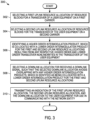
- FIG. 3 is a flow diagram 300 in a network entity for selecting a downlink allocation for use by a user equipment for receiving a downlink signal, which avoids overlap with higher order intermodulation products that are co-located with lower order intermodulation products.
- the flow diagram 300 is similarly illustrative of a method.
- the flow diagram 300 includes selecting 302 a first uplink resource allocation of resource blocks for a transceiver of a user equipment on a first carrier, and selecting 304 a second uplink resource allocation of resource blocks for the transceiver of the user equipment on a second carrier
- a higher order intermodulation product, which is co-located with a lower order intermodulation product for the first and second uplink resource allocations resulting from any respective higher order and lower order transceiver nonlinearities in the transceiver of the user equipment is then identified 306.
- a downlink allocation for receiving a downlink signal is then selected 308, such that the selected downlink allocation avoids overlapping with any higher order intermodulation products, which is identified as being co-located with a lower order intermodulation product for the first and second uplink resource allocations.
- An indication of the first uplink resource allocation, the second uplink resource allocation, and the downlink allocation is then transmitted 310 to the user equipment for use in communicating with the network entity.
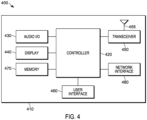
- FIG. 4 is an exemplary block diagram of an apparatus 400, such as the wireless communication device 110, according to a possible embodiment.
- the apparatus 400 can include a housing 410, a controller 420 within the housing 410, audio input and output circuitry 430 coupled to the controller 420, a display 440 coupled to the controller 420, a transceiver 450 coupled to the controller 420, an antenna 455 coupled to the transceiver 450, a user interface 460 coupled to the controller 420, a memory 470 coupled to the controller 420, and a network interface 480 coupled to the controller 420.
- the apparatus 400 can perform the methods described in all the embodiments
- the display 440 can be a viewfinder, a liquid crystal display (LCD), a light emitting diode (LED) display, a plasma display, a projection display, a touch screen, or any other device that displays information.
- the transceiver 450 can include a transmitter and/or a receiver.
- the audio input and output circuitry 430 can include a microphone, a speaker, a transducer, or any other audio input and output circuitry.
- the user interface 460 can include a keypad, a keyboard, buttons, a touch pad, a joystick, a touch screen display, another additional display, or any other device useful for providing an interface between a user and an electronic device.
- the network interface 480 can be a Universal Serial Bus (USB) port, an Ethernet port, an infrared transmitter/receiver, an IEEE 1394 port, a WLAN transceiver, or any other interface that can connect an apparatus to a network, device, or computer and that can transmit and receive data communication signals.
- the memory 470 can include a random access memory, a read only memory, an optical memory, a solid state memory, a flash memory, a removable memory, a hard drive, a cache, or any other memory that can be coupled to an apparatus.
- the apparatus 400 or the controller 420 may implement any operating system, such as Microsoft Windows ® , UNIX ® , or LINUX ® , Android TM , or any other operating system.
- Apparatus operation software may be written in any programming language, such as C, C++, Java or Visual Basic, for example.
- Apparatus software may also run on an application framework, such as, for example, a Java ® framework, a .NET ® framework, or any other application framework.
- the software and/or the operating system may be stored in the memory 470 or elsewhere on the apparatus 400.
- the apparatus 400 or the controller 420 may also use hardware to implement disclosed operations.
- the controller 420 may be any programmable processor.
- Disclosed embodiments may also be implemented on a general-purpose or a special purpose computer, a programmed microprocessor or microprocessor, peripheral integrated circuit elements, an application-specific integrated circuit or other integrated circuits, hardware/electronic logic circuits, such as a discrete element circuit, a programmable logic device, such as a programmable logic array, field programmable gate-array, or the like.
- the controller 420 may be any controller or processor device or devices capable of operating an apparatus and implementing the disclosed embodiments. Some or all of the additional elements of the apparatus 400 can also perform some or all of the operations of the disclosed embodiments.
- the flow diagrams and/or methods of this disclosure can be implemented on a programmed processor.
- the controllers, flowcharts, and modules may also be implemented on a general purpose or special purpose computer, a programmed microprocessor or microcontroller and peripheral integrated circuit elements, an integrated circuit, a hardware electronic or logic circuit such as a discrete element circuit, a programmable logic device, or the like.
- any device on which resides a finite state machine capable of implementing the flowcharts shown in the figures may be used to implement the processor functions of this disclosure.
Landscapes
- Engineering & Computer Science (AREA)
- Signal Processing (AREA)
- Computer Networks & Wireless Communication (AREA)
- Mobile Radio Communication Systems (AREA)
Claims (15)
- Verfahren in einer Benutzereinrichtung, umfassend:Empfangen einer Angabe einer ersten Uplink-Ressourcenzuweisung von Ressourcenblöcken für eine Übertragung auf einem ersten Träger;Empfangen einer Angabe einer zweiten Uplink-Ressourcenzuweisung von Ressourcenblöcken für eine Übertragung auf einem zweiten Träger;Empfangen einer Angabe einer Downlink-Zuweisung zum Empfangen eines Downlink-Signals;Identifizieren eines Intermodulationsprodukts höherer Ordnung für die erste und die zweite Uplink-Ressourcenzuweisung, die mit einem Intermodulationsprodukt niedrigerer Ordnung für die erste und die zweite Uplink-Ressourcenzuweisung gemeinsam angeordnet ist, die sich aus Transceiver-Nichtlinearitäten einer jeweiligen höheren Ordnung und niedrigeren Ordnung ergeben;Bestimmen, ob das identifizierte Intermodulationsprodukt höherer Ordnung eine Überlappungsregion mit der Downlink-Zuweisung aufweist; undAnpassen der Referenzempfindlichkeitsanforderung in der Überlappungsregion zwischen dem Intermodulationsprodukt höherer Ordnung und der Downlink-Zuweisung, wenn das Intermodulationsprodukt höherer Ordnung eine Überlappungsregion mit der Downlink-Zuweisung aufweist.
- Verfahren nach Anspruch 1, wobei das Anpassen der Referenzempfindlichkeitsanforderung in der Überlappungsregion zwischen dem höheren Intermodulationsprodukt und der Downlink-Zuweisung das Lockern der Referenzempfindlichkeit oder eine Aussetzung der Referenzempfindlichkeitsanforderung einschließt.
- Verfahren nach Anspruch 2, wobei ein Grad, in dem die Referenzempfindlichkeit gelockert ist, einem Grad des Rauschanstiegs in einem Empfänger der Benutzereinrichtung entspricht, der aus dem Intermodulationsprodukt höherer Ordnung resultiert.
- Verfahren nach Anspruch 1, wobei das Intermodulationsprodukt niedrigerer Ordnung entweder:einem Intermodulationsprodukt zweiter Ordnung entspricht und das Intermodulationsprodukt höherer Ordnung einem Intermodulationsprodukt vierter Ordnung entspricht; odereinem Intermodulationsprodukt dritter Ordnung entspricht und das Intermodulationsprodukt höherer Ordnung einem Intermodulationsprodukt fünfter Ordnung entspricht.
- Verfahren nach Anspruch 1, wobei das Intermodulationsprodukt höherer Ordnung zwei Ordnungen höher als das Intermodulationsprodukt niedrigerer Ordnung ist.
- Verfahren nach Anspruch 1, wobei eine Differenz zwischen einer Ordnung des Intermodulationsprodukts niedrigerer Ordnung und einer Ordnung des Intermodulationsprodukts höherer Ordnung eine gerade Zahl ist.
- Verfahren nach Anspruch 1, wobei die Übertragung auf dem ersten Träger und die Übertragung auf dem zweiten Träger Trägeraggregation unterstützen, die eine Kombination verschiedener Spektralbänder einschließt, um einen Kanal von größerer Bandbreite zu bilden, um Daten zu übertragen.
- Verfahren nach Anspruch 1, wobei die Übertragung auf dem ersten Träger und die Übertragung auf dem zweiten Träger einen Doppelträgerbetrieb unterstützen.
- Benutzereinrichtung in einem Kommunikationsnetzwerk, wobei die Benutzereinrichtung umfasst:einen Transceiver, der dazu angeordnet ist, Signale zwischen der Benutzereinrichtung und einer Netzwerkentität des Kommunikationsnetzwerks zu senden und zu empfangen, wobei der Transceiver ferner dazu angeordnet ist, eine Angabe einer ersten Uplink-Ressourcenzuweisung von Ressourcenblöcken für eine Übertragung auf einem ersten Träger zu empfangen, eine Angabe einer zweiten Uplink-Ressourcenzuweisung von Ressourcenblöcken für eine Übertragung auf einem zweiten Träger zu empfangen und eine Angabe einer Downlink-Zuweisung zum Empfangen eines Downlink-Signals zu empfangen; undeine Steuerung, die dazu angeordnet ist, ein Intermodulationsprodukt höherer Ordnung für die erste und die zweite Uplink-Ressourcenzuweisung zu identifizieren, das mit einem Intermodulationsprodukt niedrigerer Ordnung für die erste und die zweite Uplink-Ressourcenzuweisungen gemeinsam angeordnet ist, die sich aus Transceiver-Nichtlinearitäten einer jeweiligen höheren Ordnung und niedrigeren Ordnung ergeben, und Bestimmen, ob das Intermodulationsprodukt höherer Ordnung eine Überlappungsregion mit der Downlink-Zuweisung aufweist;wobei, wenn das Intermodulationsprodukt höherer Ordnung eine Überlappungsregion mit der Downlink-Zuweisung aufweist, die Steuerung ferner dazu angeordnet ist, die Referenzempfindlichkeitsanforderung in der Überlappungsregion zwischen dem Intermodulationsprodukt höherer Ordnung und der Downlink-Zuweisung anzupassen.
- Benutzereinrichtung nach Anspruch 9, wobei die Steuerung dazu angeordnet ist, die Referenzempfindlichkeitsanforderung in der Überlappungsregion zwischen dem höheren Intermodulationsprodukt und der Downlink-Zuweisung anzupassen, entweder durch:Lockern der Referenzempfindlichkeit; oderEinschließen einer Aussetzung der Referenzempfindlichkeitsanforderung.
- Benutzereinrichtung nach Anspruch 10, wobei ein Grad, in dem die Steuerung dazu angeordnet ist, die Referenzempfindlichkeit zu lockern, einem Grad des Rauschanstiegs im Transceiver entspricht, der aus dem Intermodulationsprodukt höherer Ordnung resultiert.
- Benutzereinrichtung nach Anspruch 9, wobei das Intermodulationsprodukt niedrigerer Ordnung einem Intermodulationsprodukt zweiter Ordnung entspricht und das Intermodulationsprodukt höherer Ordnung einem Intermodulationsprodukt vierter Ordnung entspricht.
- Benutzereinrichtung nach Anspruch 9, wobei das Intermodulationsprodukt niedrigerer Ordnung einem Intermodulationsprodukt dritter Ordnung entspricht und das Intermodulationsprodukt höherer Ordnung einem Intermodulationsprodukt fünfter Ordnung entspricht.
- Benutzereinrichtung nach Anspruch 9, wobei das Intermodulationsprodukt höherer Ordnung zwei Ordnungen höher als das Intermodulationsprodukt niedrigerer Ordnung ist.
- Benutzereinrichtung nach Anspruch 9, wobei eine Differenz in einem Rang des Intermodulationsprodukts niedrigerer Ordnung und einem Rang des Intermodulationsprodukts höherer Ordnung eine gerade Zahl ist.
Priority Applications (1)
| Application Number | Priority Date | Filing Date | Title |
|---|---|---|---|
| EP23193190.8A EP4254810A3 (de) | 2018-01-12 | 2019-01-11 | Verfahren und vorrichtung zur einstellung von intermodulationsprodukten höherer ordnung neben intermodulationsprodukten niedrigerer ordnung |
Applications Claiming Priority (2)
| Application Number | Priority Date | Filing Date | Title |
|---|---|---|---|
| US201862617116P | 2018-01-12 | 2018-01-12 | |
| PCT/IB2019/000045 WO2019138293A1 (en) | 2018-01-12 | 2019-01-11 | Method and apparatus for adjusting for higher order intermodulation products co-located with lower order intermodulation products |
Related Child Applications (2)
| Application Number | Title | Priority Date | Filing Date |
|---|---|---|---|
| EP23193190.8A Division EP4254810A3 (de) | 2018-01-12 | 2019-01-11 | Verfahren und vorrichtung zur einstellung von intermodulationsprodukten höherer ordnung neben intermodulationsprodukten niedrigerer ordnung |
| EP23193190.8A Division-Into EP4254810A3 (de) | 2018-01-12 | 2019-01-11 | Verfahren und vorrichtung zur einstellung von intermodulationsprodukten höherer ordnung neben intermodulationsprodukten niedrigerer ordnung |
Publications (3)
| Publication Number | Publication Date |
|---|---|
| EP3738265A1 EP3738265A1 (de) | 2020-11-18 |
| EP3738265C0 EP3738265C0 (de) | 2023-10-18 |
| EP3738265B1 true EP3738265B1 (de) | 2023-10-18 |
Family
ID=65911203
Family Applications (2)
| Application Number | Title | Priority Date | Filing Date |
|---|---|---|---|
| EP19713556.9A Active EP3738265B1 (de) | 2018-01-12 | 2019-01-11 | Verfahren und vorrichtung zur einstellung von intermodulationsprodukten höherer ordnung neben intermodulationsprodukten niedrigerer ordnung |
| EP23193190.8A Pending EP4254810A3 (de) | 2018-01-12 | 2019-01-11 | Verfahren und vorrichtung zur einstellung von intermodulationsprodukten höherer ordnung neben intermodulationsprodukten niedrigerer ordnung |
Family Applications After (1)
| Application Number | Title | Priority Date | Filing Date |
|---|---|---|---|
| EP23193190.8A Pending EP4254810A3 (de) | 2018-01-12 | 2019-01-11 | Verfahren und vorrichtung zur einstellung von intermodulationsprodukten höherer ordnung neben intermodulationsprodukten niedrigerer ordnung |
Country Status (5)
| Country | Link |
|---|---|
| US (2) | US11190226B2 (de) |
| EP (2) | EP3738265B1 (de) |
| KR (1) | KR102701101B1 (de) |
| CN (2) | CN111566978B (de) |
| WO (1) | WO2019138293A1 (de) |
Cited By (1)
| Publication number | Priority date | Publication date | Assignee | Title |
|---|---|---|---|---|
| US12283981B2 (en) | 2018-01-12 | 2025-04-22 | Lenovo (Singapore) Pte. Ltd. | Method and apparatus for adjusting for higher order intermodulation products co-located with lower order intermodulation products |
Families Citing this family (3)
| Publication number | Priority date | Publication date | Assignee | Title |
|---|---|---|---|---|
| WO2019219185A1 (en) * | 2018-05-16 | 2019-11-21 | Telefonaktiebolaget Lm Ericsson (Publ) | Interference mitigation |
| US11893570B1 (en) * | 2019-11-22 | 2024-02-06 | United Services Automobile Association (Usaa) | Token based demand and remand system |
| DE112021004406T5 (de) * | 2020-08-21 | 2023-07-20 | Psemi Corporation | Verfahren und systeme zur dynamischen hf-bandzuweisung |
Family Cites Families (21)
| Publication number | Priority date | Publication date | Assignee | Title |
|---|---|---|---|---|
| EP1261228B1 (de) * | 2001-05-25 | 2005-04-06 | NTT DoCoMo, Inc. | Mobilfunkkommunikationssystem zur Interferenzverminderung in bezug auf andere Kommunikationssystem, die ein Nachbarfrequenzband benutzen |
| AU2002364698A1 (en) * | 2002-11-07 | 2004-06-03 | Broadstorm Telecommunications, Inc. | Method and apparatus for adaptive carrier allocation and power control in multi-carrier communication systems |
| US9160310B2 (en) * | 2008-04-30 | 2015-10-13 | Scott R. Velazquez | Linearity compensator for removing nonlinear distortion |
| US9509543B2 (en) * | 2009-06-26 | 2016-11-29 | Qualcomm Incorporated | Method and apparatus that facilitates interference reduction in wireless systems |
| US8583070B2 (en) * | 2010-04-20 | 2013-11-12 | Qualcomm Incorporated | Autonomous electromagnetic emissions reduction for sensitivity improvement |
| US9025478B2 (en) * | 2011-08-16 | 2015-05-05 | Google Technology Holdings LLC | Self-interference handling in a wireless communication terminal supporting carrier aggregation |
| GB2498758B (en) | 2012-01-26 | 2014-02-19 | Broadcom Corp | Power control |
| KR20150013757A (ko) * | 2012-05-11 | 2015-02-05 | 텔레폰악티에볼라겟엘엠에릭슨(펍) | 업링크 제어 전송의 콘텐츠에 기반한 업링크 제어 전송 포맷 파라미터의 선택 |
| GB2502064B (en) * | 2012-05-14 | 2014-04-09 | Broadcom Corp | Power control |
| US9538518B2 (en) * | 2012-08-28 | 2017-01-03 | Lg Electronics Inc. | Method for detecting downlink control channel in wireless communication system and apparatus for same |
| WO2014062161A1 (en) * | 2012-10-16 | 2014-04-24 | Nokia Siemens Networks Oy | A technique for extremely high order im correction |
| US9859947B2 (en) * | 2013-11-13 | 2018-01-02 | Lg Electronics Inc. | Terminal eliminating harmonic components and intermodulation distortions component |
| US9942013B2 (en) * | 2014-05-07 | 2018-04-10 | Qualcomm Incorporated | Non-orthogonal multiple access and interference cancellation |
| US10187186B2 (en) * | 2014-09-30 | 2019-01-22 | Qualcomm Incorporated | Uplink grant management for LTE in unlicensed spectrum |
| US20160302209A1 (en) * | 2014-11-10 | 2016-10-13 | Telefonaktiebolaget L M Ericsson (Publ) | Reducing Interference Caused by Uplink Carrier Aggregation |
| US10404314B2 (en) | 2015-08-17 | 2019-09-03 | Lg Electronics Inc. | Method for transmitting and receiving signal by aggregating three downlink carriers and two uplink carriers |
| US10333663B2 (en) | 2016-05-02 | 2019-06-25 | Lg Electronics Inc. | Method for transmitting and receiving signal by aggregating a plurality of downlink carriers and two uplink carriers |
| US10148311B2 (en) * | 2016-09-26 | 2018-12-04 | Lg Electronics Inc. | Studies about MSD level in aggregating a plurality of downlink carriers and two uplink carriers |
| CN111669837B (zh) * | 2017-07-07 | 2024-04-02 | 皇家飞利浦有限公司 | 干扰协调方法及装置、基站和用户设备 |
| US11190226B2 (en) | 2018-01-12 | 2021-11-30 | Lenovo (Singapore) Pte. Ltd. | Method and apparatus for adjusting for higher order intermodulation products co-located with lower order intermodulation products |
| US11864218B1 (en) * | 2021-06-10 | 2024-01-02 | T-Mobile Usa, Inc. | 5G new radio uplink intermodulation distortion mitigation |
-
2019
- 2019-01-10 US US16/245,250 patent/US11190226B2/en active Active
- 2019-01-11 CN CN201980007763.XA patent/CN111566978B/zh active Active
- 2019-01-11 CN CN202410709828.8A patent/CN118590202A/zh active Pending
- 2019-01-11 EP EP19713556.9A patent/EP3738265B1/de active Active
- 2019-01-11 KR KR1020207019763A patent/KR102701101B1/ko active Active
- 2019-01-11 WO PCT/IB2019/000045 patent/WO2019138293A1/en not_active Ceased
- 2019-01-11 EP EP23193190.8A patent/EP4254810A3/de active Pending
-
2021
- 2021-11-30 US US17/538,690 patent/US12283981B2/en active Active
Cited By (1)
| Publication number | Priority date | Publication date | Assignee | Title |
|---|---|---|---|---|
| US12283981B2 (en) | 2018-01-12 | 2025-04-22 | Lenovo (Singapore) Pte. Ltd. | Method and apparatus for adjusting for higher order intermodulation products co-located with lower order intermodulation products |
Also Published As
| Publication number | Publication date |
|---|---|
| CN111566978A (zh) | 2020-08-21 |
| CN118590202A (zh) | 2024-09-03 |
| US20220094378A1 (en) | 2022-03-24 |
| WO2019138293A1 (en) | 2019-07-18 |
| KR102701101B1 (ko) | 2024-08-29 |
| CN111566978B (zh) | 2024-06-21 |
| US20190222242A1 (en) | 2019-07-18 |
| EP3738265A1 (de) | 2020-11-18 |
| EP4254810A2 (de) | 2023-10-04 |
| US11190226B2 (en) | 2021-11-30 |
| US12283981B2 (en) | 2025-04-22 |
| EP3738265C0 (de) | 2023-10-18 |
| KR20200103713A (ko) | 2020-09-02 |
| EP4254810A3 (de) | 2023-12-20 |
Similar Documents
| Publication | Publication Date | Title |
|---|---|---|
| US12283981B2 (en) | Method and apparatus for adjusting for higher order intermodulation products co-located with lower order intermodulation products | |
| EP3595375B1 (de) | Verfahren, vorrichtung und system zur konfigurierung der übertragungsrichtung | |
| EP4236092A2 (de) | Downlink-steuerung für nicht kohärente gemeinsame übertragung | |
| US20100296488A1 (en) | Apparatus and Method for Measurement Gap Configuration | |
| CN112787696A (zh) | 多trp传输的无线设备功率节省 | |
| US11722970B2 (en) | Method and apparatus for determining per carrier additional maximum power reduction for dual carrier operation | |
| US20230033872A1 (en) | System and Method for Determining PDCCH Monitoring Capability per Component Carriers in a Carrier Aggregation for Span Based PDCCH Monitoring | |
| US20250119903A1 (en) | Mechanism for tb processing over multi-slot scheme | |
| US10999047B2 (en) | Frequency band configuration apparatus, method and communication system | |
| US20210100022A1 (en) | Downlink Control for Multi-TRP Transmissions | |
| US12537556B2 (en) | Method and apparatus for network assignment of the user equipment transmitter local oscillator frequency | |
| US20230362943A1 (en) | Scheduling restriction enhancement for lte and nr dss | |
| US12389247B2 (en) | Uplink carrier aggregation antenna contention resolution | |
| EP3834507B1 (de) | Verfahren und vorrichtung zur bestimmung der zusätzlichen maximalen leistungsreduzierung pro träger für doppelträgerbetrieb | |
| US20240314752A1 (en) | Communication method and apparatus | |
| US20200120695A1 (en) | Uplink time division multiplexing pattern for 5g non-standalone devices | |
| WO2025113246A1 (zh) | 一种干扰消除的方法以及通信装置 | |
| WO2024230975A1 (en) | Method, apparatus and computer program |
Legal Events
| Date | Code | Title | Description |
|---|---|---|---|
| STAA | Information on the status of an ep patent application or granted ep patent |
Free format text: STATUS: UNKNOWN |
|
| STAA | Information on the status of an ep patent application or granted ep patent |
Free format text: STATUS: THE INTERNATIONAL PUBLICATION HAS BEEN MADE |
|
| PUAI | Public reference made under article 153(3) epc to a published international application that has entered the european phase |
Free format text: ORIGINAL CODE: 0009012 |
|
| STAA | Information on the status of an ep patent application or granted ep patent |
Free format text: STATUS: REQUEST FOR EXAMINATION WAS MADE |
|
| 17P | Request for examination filed |
Effective date: 20200629 |
|
| AK | Designated contracting states |
Kind code of ref document: A1 Designated state(s): AL AT BE BG CH CY CZ DE DK EE ES FI FR GB GR HR HU IE IS IT LI LT LU LV MC MK MT NL NO PL PT RO RS SE SI SK SM TR |
|
| AX | Request for extension of the european patent |
Extension state: BA ME |
|
| DAV | Request for validation of the european patent (deleted) | ||
| DAX | Request for extension of the european patent (deleted) | ||
| STAA | Information on the status of an ep patent application or granted ep patent |
Free format text: STATUS: EXAMINATION IS IN PROGRESS |
|
| 17Q | First examination report despatched |
Effective date: 20220223 |
|
| GRAP | Despatch of communication of intention to grant a patent |
Free format text: ORIGINAL CODE: EPIDOSNIGR1 |
|
| RIC1 | Information provided on ipc code assigned before grant |
Ipc: H04B 1/10 20060101ALI20230331BHEP Ipc: H04L 5/00 20060101AFI20230331BHEP |
|
| STAA | Information on the status of an ep patent application or granted ep patent |
Free format text: STATUS: GRANT OF PATENT IS INTENDED |
|
| INTG | Intention to grant announced |
Effective date: 20230511 |
|
| GRAS | Grant fee paid |
Free format text: ORIGINAL CODE: EPIDOSNIGR3 |
|
| GRAA | (expected) grant |
Free format text: ORIGINAL CODE: 0009210 |
|
| STAA | Information on the status of an ep patent application or granted ep patent |
Free format text: STATUS: THE PATENT HAS BEEN GRANTED |
|
| AK | Designated contracting states |
Kind code of ref document: B1 Designated state(s): AL AT BE BG CH CY CZ DE DK EE ES FI FR GB GR HR HU IE IS IT LI LT LU LV MC MK MT NL NO PL PT RO RS SE SI SK SM TR |
|
| REG | Reference to a national code |
Ref country code: GB Ref legal event code: FG4D |
|
| REG | Reference to a national code |
Ref country code: CH Ref legal event code: EP |
|
| REG | Reference to a national code |
Ref country code: DE Ref legal event code: R096 Ref document number: 602019039551 Country of ref document: DE |
|
| REG | Reference to a national code |
Ref country code: IE Ref legal event code: FG4D |
|
| U01 | Request for unitary effect filed |
Effective date: 20231106 |
|
| U07 | Unitary effect registered |
Designated state(s): AT BE BG DE DK EE FI FR IT LT LU LV MT NL PT SE SI Effective date: 20231110 |
|
| U21 | Renewal fee for the european patent with unitary effect paid with additional fee |
Year of fee payment: 6 Effective date: 20240229 |
|
| PG25 | Lapsed in a contracting state [announced via postgrant information from national office to epo] |
Ref country code: GR Free format text: LAPSE BECAUSE OF FAILURE TO SUBMIT A TRANSLATION OF THE DESCRIPTION OR TO PAY THE FEE WITHIN THE PRESCRIBED TIME-LIMIT Effective date: 20240119 |
|
| PG25 | Lapsed in a contracting state [announced via postgrant information from national office to epo] |
Ref country code: IS Free format text: LAPSE BECAUSE OF FAILURE TO SUBMIT A TRANSLATION OF THE DESCRIPTION OR TO PAY THE FEE WITHIN THE PRESCRIBED TIME-LIMIT Effective date: 20240218 |
|
| PG25 | Lapsed in a contracting state [announced via postgrant information from national office to epo] |
Ref country code: ES Free format text: LAPSE BECAUSE OF FAILURE TO SUBMIT A TRANSLATION OF THE DESCRIPTION OR TO PAY THE FEE WITHIN THE PRESCRIBED TIME-LIMIT Effective date: 20231018 |
|
| PG25 | Lapsed in a contracting state [announced via postgrant information from national office to epo] |
Ref country code: IS Free format text: LAPSE BECAUSE OF FAILURE TO SUBMIT A TRANSLATION OF THE DESCRIPTION OR TO PAY THE FEE WITHIN THE PRESCRIBED TIME-LIMIT Effective date: 20240218 Ref country code: GR Free format text: LAPSE BECAUSE OF FAILURE TO SUBMIT A TRANSLATION OF THE DESCRIPTION OR TO PAY THE FEE WITHIN THE PRESCRIBED TIME-LIMIT Effective date: 20240119 Ref country code: ES Free format text: LAPSE BECAUSE OF FAILURE TO SUBMIT A TRANSLATION OF THE DESCRIPTION OR TO PAY THE FEE WITHIN THE PRESCRIBED TIME-LIMIT Effective date: 20231018 |
|
| PG25 | Lapsed in a contracting state [announced via postgrant information from national office to epo] |
Ref country code: RS Free format text: LAPSE BECAUSE OF FAILURE TO SUBMIT A TRANSLATION OF THE DESCRIPTION OR TO PAY THE FEE WITHIN THE PRESCRIBED TIME-LIMIT Effective date: 20231018 Ref country code: PL Free format text: LAPSE BECAUSE OF FAILURE TO SUBMIT A TRANSLATION OF THE DESCRIPTION OR TO PAY THE FEE WITHIN THE PRESCRIBED TIME-LIMIT Effective date: 20231018 Ref country code: NO Free format text: LAPSE BECAUSE OF FAILURE TO SUBMIT A TRANSLATION OF THE DESCRIPTION OR TO PAY THE FEE WITHIN THE PRESCRIBED TIME-LIMIT Effective date: 20240118 Ref country code: HR Free format text: LAPSE BECAUSE OF FAILURE TO SUBMIT A TRANSLATION OF THE DESCRIPTION OR TO PAY THE FEE WITHIN THE PRESCRIBED TIME-LIMIT Effective date: 20231018 |
|
| REG | Reference to a national code |
Ref country code: DE Ref legal event code: R097 Ref document number: 602019039551 Country of ref document: DE |
|
| PG25 | Lapsed in a contracting state [announced via postgrant information from national office to epo] |
Ref country code: CZ Free format text: LAPSE BECAUSE OF FAILURE TO SUBMIT A TRANSLATION OF THE DESCRIPTION OR TO PAY THE FEE WITHIN THE PRESCRIBED TIME-LIMIT Effective date: 20231018 |
|
| PG25 | Lapsed in a contracting state [announced via postgrant information from national office to epo] |
Ref country code: SK Free format text: LAPSE BECAUSE OF FAILURE TO SUBMIT A TRANSLATION OF THE DESCRIPTION OR TO PAY THE FEE WITHIN THE PRESCRIBED TIME-LIMIT Effective date: 20231018 |
|
| PG25 | Lapsed in a contracting state [announced via postgrant information from national office to epo] |
Ref country code: SM Free format text: LAPSE BECAUSE OF FAILURE TO SUBMIT A TRANSLATION OF THE DESCRIPTION OR TO PAY THE FEE WITHIN THE PRESCRIBED TIME-LIMIT Effective date: 20231018 Ref country code: SK Free format text: LAPSE BECAUSE OF FAILURE TO SUBMIT A TRANSLATION OF THE DESCRIPTION OR TO PAY THE FEE WITHIN THE PRESCRIBED TIME-LIMIT Effective date: 20231018 Ref country code: RO Free format text: LAPSE BECAUSE OF FAILURE TO SUBMIT A TRANSLATION OF THE DESCRIPTION OR TO PAY THE FEE WITHIN THE PRESCRIBED TIME-LIMIT Effective date: 20231018 Ref country code: CZ Free format text: LAPSE BECAUSE OF FAILURE TO SUBMIT A TRANSLATION OF THE DESCRIPTION OR TO PAY THE FEE WITHIN THE PRESCRIBED TIME-LIMIT Effective date: 20231018 |
|
| PLBE | No opposition filed within time limit |
Free format text: ORIGINAL CODE: 0009261 |
|
| STAA | Information on the status of an ep patent application or granted ep patent |
Free format text: STATUS: NO OPPOSITION FILED WITHIN TIME LIMIT |
|
| PG25 | Lapsed in a contracting state [announced via postgrant information from national office to epo] |
Ref country code: MC Free format text: LAPSE BECAUSE OF FAILURE TO SUBMIT A TRANSLATION OF THE DESCRIPTION OR TO PAY THE FEE WITHIN THE PRESCRIBED TIME-LIMIT Effective date: 20231018 |
|
| PG25 | Lapsed in a contracting state [announced via postgrant information from national office to epo] |
Ref country code: MC Free format text: LAPSE BECAUSE OF FAILURE TO SUBMIT A TRANSLATION OF THE DESCRIPTION OR TO PAY THE FEE WITHIN THE PRESCRIBED TIME-LIMIT Effective date: 20231018 |
|
| REG | Reference to a national code |
Ref country code: CH Ref legal event code: PL |
|
| 26N | No opposition filed |
Effective date: 20240719 |
|
| PG25 | Lapsed in a contracting state [announced via postgrant information from national office to epo] |
Ref country code: CH Free format text: LAPSE BECAUSE OF NON-PAYMENT OF DUE FEES Effective date: 20240131 |
|
| PG25 | Lapsed in a contracting state [announced via postgrant information from national office to epo] |
Ref country code: CH Free format text: LAPSE BECAUSE OF NON-PAYMENT OF DUE FEES Effective date: 20240131 |
|
| PG25 | Lapsed in a contracting state [announced via postgrant information from national office to epo] |
Ref country code: IE Free format text: LAPSE BECAUSE OF NON-PAYMENT OF DUE FEES Effective date: 20240111 |
|
| PG25 | Lapsed in a contracting state [announced via postgrant information from national office to epo] |
Ref country code: IE Free format text: LAPSE BECAUSE OF NON-PAYMENT OF DUE FEES Effective date: 20240111 |
|
| U20 | Renewal fee for the european patent with unitary effect paid |
Year of fee payment: 7 Effective date: 20250127 |
|
| PGFP | Annual fee paid to national office [announced via postgrant information from national office to epo] |
Ref country code: GB Payment date: 20250121 Year of fee payment: 7 |
|
| PG25 | Lapsed in a contracting state [announced via postgrant information from national office to epo] |
Ref country code: CY Free format text: LAPSE BECAUSE OF FAILURE TO SUBMIT A TRANSLATION OF THE DESCRIPTION OR TO PAY THE FEE WITHIN THE PRESCRIBED TIME-LIMIT; INVALID AB INITIO Effective date: 20190111 |
|
| PG25 | Lapsed in a contracting state [announced via postgrant information from national office to epo] |
Ref country code: HU Free format text: LAPSE BECAUSE OF FAILURE TO SUBMIT A TRANSLATION OF THE DESCRIPTION OR TO PAY THE FEE WITHIN THE PRESCRIBED TIME-LIMIT; INVALID AB INITIO Effective date: 20190111 |
|
| PG25 | Lapsed in a contracting state [announced via postgrant information from national office to epo] |
Ref country code: TR Free format text: LAPSE BECAUSE OF FAILURE TO SUBMIT A TRANSLATION OF THE DESCRIPTION OR TO PAY THE FEE WITHIN THE PRESCRIBED TIME-LIMIT Effective date: 20231018 |
|
| U20 | Renewal fee for the european patent with unitary effect paid |
Year of fee payment: 8 Effective date: 20260126 |