EP3737423B1 - Compositions and methods for treating retinal disorders - Google Patents
Compositions and methods for treating retinal disorders Download PDFInfo
- Publication number
- EP3737423B1 EP3737423B1 EP19701018.4A EP19701018A EP3737423B1 EP 3737423 B1 EP3737423 B1 EP 3737423B1 EP 19701018 A EP19701018 A EP 19701018A EP 3737423 B1 EP3737423 B1 EP 3737423B1
- Authority
- EP
- European Patent Office
- Prior art keywords
- seq
- sequence
- vector
- aav
- tcu
- Prior art date
- Legal status (The legal status is an assumption and is not a legal conclusion. Google has not performed a legal analysis and makes no representation as to the accuracy of the status listed.)
- Active
Links
Images



Classifications
-
- C—CHEMISTRY; METALLURGY
- C12—BIOCHEMISTRY; BEER; SPIRITS; WINE; VINEGAR; MICROBIOLOGY; ENZYMOLOGY; MUTATION OR GENETIC ENGINEERING
- C12N—MICROORGANISMS OR ENZYMES; COMPOSITIONS THEREOF; PROPAGATING, PRESERVING, OR MAINTAINING MICROORGANISMS; MUTATION OR GENETIC ENGINEERING; CULTURE MEDIA
- C12N15/00—Mutation or genetic engineering; DNA or RNA concerning genetic engineering, vectors, e.g. plasmids, or their isolation, preparation or purification; Use of hosts therefor
- C12N15/09—Recombinant DNA-technology
- C12N15/63—Introduction of foreign genetic material using vectors; Vectors; Use of hosts therefor; Regulation of expression
- C12N15/79—Vectors or expression systems specially adapted for eukaryotic hosts
- C12N15/85—Vectors or expression systems specially adapted for eukaryotic hosts for animal cells
-
- A—HUMAN NECESSITIES
- A61—MEDICAL OR VETERINARY SCIENCE; HYGIENE
- A61K—PREPARATIONS FOR MEDICAL, DENTAL OR TOILETRY PURPOSES
- A61K35/00—Medicinal preparations containing materials or reaction products thereof with undetermined constitution
- A61K35/66—Microorganisms or materials therefrom
- A61K35/76—Viruses; Subviral particles; Bacteriophages
- A61K35/761—Adenovirus
-
- A—HUMAN NECESSITIES
- A61—MEDICAL OR VETERINARY SCIENCE; HYGIENE
- A61K—PREPARATIONS FOR MEDICAL, DENTAL OR TOILETRY PURPOSES
- A61K39/00—Medicinal preparations containing antigens or antibodies
- A61K39/12—Viral antigens
- A61K39/235—Adenoviridae
-
- A—HUMAN NECESSITIES
- A61—MEDICAL OR VETERINARY SCIENCE; HYGIENE
- A61K—PREPARATIONS FOR MEDICAL, DENTAL OR TOILETRY PURPOSES
- A61K48/00—Medicinal preparations containing genetic material which is inserted into cells of the living body to treat genetic diseases; Gene therapy
- A61K48/005—Medicinal preparations containing genetic material which is inserted into cells of the living body to treat genetic diseases; Gene therapy characterised by an aspect of the 'active' part of the composition delivered, i.e. the nucleic acid delivered
- A61K48/0058—Nucleic acids adapted for tissue specific expression, e.g. having tissue specific promoters as part of a contruct
-
- A—HUMAN NECESSITIES
- A61—MEDICAL OR VETERINARY SCIENCE; HYGIENE
- A61K—PREPARATIONS FOR MEDICAL, DENTAL OR TOILETRY PURPOSES
- A61K9/00—Medicinal preparations characterised by special physical form
- A61K9/0012—Galenical forms characterised by the site of application
- A61K9/0048—Eye, e.g. artificial tears
-
- A—HUMAN NECESSITIES
- A61—MEDICAL OR VETERINARY SCIENCE; HYGIENE
- A61P—SPECIFIC THERAPEUTIC ACTIVITY OF CHEMICAL COMPOUNDS OR MEDICINAL PREPARATIONS
- A61P27/00—Drugs for disorders of the senses
- A61P27/02—Ophthalmic agents
-
- C—CHEMISTRY; METALLURGY
- C12—BIOCHEMISTRY; BEER; SPIRITS; WINE; VINEGAR; MICROBIOLOGY; ENZYMOLOGY; MUTATION OR GENETIC ENGINEERING
- C12N—MICROORGANISMS OR ENZYMES; COMPOSITIONS THEREOF; PROPAGATING, PRESERVING, OR MAINTAINING MICROORGANISMS; MUTATION OR GENETIC ENGINEERING; CULTURE MEDIA
- C12N15/00—Mutation or genetic engineering; DNA or RNA concerning genetic engineering, vectors, e.g. plasmids, or their isolation, preparation or purification; Use of hosts therefor
- C12N15/09—Recombinant DNA-technology
- C12N15/63—Introduction of foreign genetic material using vectors; Vectors; Use of hosts therefor; Regulation of expression
- C12N15/79—Vectors or expression systems specially adapted for eukaryotic hosts
- C12N15/85—Vectors or expression systems specially adapted for eukaryotic hosts for animal cells
- C12N15/86—Viral vectors
-
- C—CHEMISTRY; METALLURGY
- C12—BIOCHEMISTRY; BEER; SPIRITS; WINE; VINEGAR; MICROBIOLOGY; ENZYMOLOGY; MUTATION OR GENETIC ENGINEERING
- C12N—MICROORGANISMS OR ENZYMES; COMPOSITIONS THEREOF; PROPAGATING, PRESERVING, OR MAINTAINING MICROORGANISMS; MUTATION OR GENETIC ENGINEERING; CULTURE MEDIA
- C12N15/00—Mutation or genetic engineering; DNA or RNA concerning genetic engineering, vectors, e.g. plasmids, or their isolation, preparation or purification; Use of hosts therefor
- C12N15/09—Recombinant DNA-technology
- C12N15/63—Introduction of foreign genetic material using vectors; Vectors; Use of hosts therefor; Regulation of expression
- C12N15/79—Vectors or expression systems specially adapted for eukaryotic hosts
- C12N15/85—Vectors or expression systems specially adapted for eukaryotic hosts for animal cells
- C12N15/86—Viral vectors
- C12N15/861—Adenoviral vectors
-
- C—CHEMISTRY; METALLURGY
- C12—BIOCHEMISTRY; BEER; SPIRITS; WINE; VINEGAR; MICROBIOLOGY; ENZYMOLOGY; MUTATION OR GENETIC ENGINEERING
- C12N—MICROORGANISMS OR ENZYMES; COMPOSITIONS THEREOF; PROPAGATING, PRESERVING, OR MAINTAINING MICROORGANISMS; MUTATION OR GENETIC ENGINEERING; CULTURE MEDIA
- C12N2750/00—MICROORGANISMS OR ENZYMES; COMPOSITIONS THEREOF; PROPAGATING, PRESERVING, OR MAINTAINING MICROORGANISMS; MUTATION OR GENETIC ENGINEERING; CULTURE MEDIA ssDNA viruses
- C12N2750/00011—Details
- C12N2750/14011—Parvoviridae
- C12N2750/14111—Dependovirus, e.g. adenoassociated viruses
- C12N2750/14132—Use of virus as therapeutic agent, other than vaccine, e.g. as cytolytic agent
-
- C—CHEMISTRY; METALLURGY
- C12—BIOCHEMISTRY; BEER; SPIRITS; WINE; VINEGAR; MICROBIOLOGY; ENZYMOLOGY; MUTATION OR GENETIC ENGINEERING
- C12N—MICROORGANISMS OR ENZYMES; COMPOSITIONS THEREOF; PROPAGATING, PRESERVING, OR MAINTAINING MICROORGANISMS; MUTATION OR GENETIC ENGINEERING; CULTURE MEDIA
- C12N2750/00—MICROORGANISMS OR ENZYMES; COMPOSITIONS THEREOF; PROPAGATING, PRESERVING, OR MAINTAINING MICROORGANISMS; MUTATION OR GENETIC ENGINEERING; CULTURE MEDIA ssDNA viruses
- C12N2750/00011—Details
- C12N2750/14011—Parvoviridae
- C12N2750/14111—Dependovirus, e.g. adenoassociated viruses
- C12N2750/14141—Use of virus, viral particle or viral elements as a vector
- C12N2750/14143—Use of virus, viral particle or viral elements as a vector viral genome or elements thereof as genetic vector
-
- C—CHEMISTRY; METALLURGY
- C12—BIOCHEMISTRY; BEER; SPIRITS; WINE; VINEGAR; MICROBIOLOGY; ENZYMOLOGY; MUTATION OR GENETIC ENGINEERING
- C12N—MICROORGANISMS OR ENZYMES; COMPOSITIONS THEREOF; PROPAGATING, PRESERVING, OR MAINTAINING MICROORGANISMS; MUTATION OR GENETIC ENGINEERING; CULTURE MEDIA
- C12N2800/00—Nucleic acids vectors
- C12N2800/22—Vectors comprising a coding region that has been codon optimised for expression in a respective host
-
- C—CHEMISTRY; METALLURGY
- C12—BIOCHEMISTRY; BEER; SPIRITS; WINE; VINEGAR; MICROBIOLOGY; ENZYMOLOGY; MUTATION OR GENETIC ENGINEERING
- C12N—MICROORGANISMS OR ENZYMES; COMPOSITIONS THEREOF; PROPAGATING, PRESERVING, OR MAINTAINING MICROORGANISMS; MUTATION OR GENETIC ENGINEERING; CULTURE MEDIA
- C12N2830/00—Vector systems having a special element relevant for transcription
- C12N2830/008—Vector systems having a special element relevant for transcription cell type or tissue specific enhancer/promoter combination
Definitions
- the present invention relates to a therapy for the treatment and/or prevention of retinal disorders, in particular cone dystrophies, cone-rod dystrophies and Achromatopsia.
- cone dystrophies In some conditions, only, or mostly, the cones are lost or dysfunctional, and rods remain relatively preserved. Such conditions can be known as cone dystrophies or cone-rod dystrophies (CRDs).
- Cone or cone-rod dystrophies are inherited retinal dystrophies characterised by the primary loss of cones, or sometimes by the concomitant loss of both rods and cones. Symptoms include vision loss, sensitivity to bright lights and poor colour vision. For example, Achromatopsia is a severe, hereditary retinal dystrophy with a complete absence of cone function from birth but, presumably, with a normal rod function. Mutations in multiple genes including CNGA3, CNGB3 and PDE6C have been associated with the disease.
- Each of the disease causing genes encodes an essential component of the cone phototransduction cascade that translates light into an electric signal by causing hyperpolarization of the photoreceptor cell.
- the deficiency in, for example, the CNGA3 or CNGB3 protein in the cone photoreceptor cells leads to an inability of the cells to hyperpolarise in response to light. As a result, the cells initially survive, but do not function, and the patient suffers from poor visual acuity, lack of colour vision and photophobia from birth.
- Various groups have developed therapy protocols in CNGA3 -deficient mice that improve cone survival and function, as well as vision.
- KCNV2 genes involved in the pathogenesis of cone dystrophies
- PDE6H genes involved in the pathogenesis of cone dystrophies
- GNAT2 genes involved in the pathogenesis of cone dystrophies
- CACNA2D4 genes involved in the pathogenesis of cone dystrophies
- the KCNV2 gene encodes the potassium voltage-gated channel modifier subfamily V member 2 protein. Mutations in KCNV2 are associated with cone dystrophy with supernormal rod electroretinogram (ERG), or retinal cone dystrophy type 3B, an autosomal recessive disorder that causes lifelong visual loss combined with a supernormal ERG response to a bright flash of light.
- the PDE6H gene encodes the inhibitory (gamma) subunit of the cone-specific cGMP phosphodiesterase. Mutations in this gene are associated with retinal cone dystrophy type 3A (RCD3A).
- the GNAT2 gene encodes the cone-specific alpha subunit of transducin. Mutations in the gene can result in infantile onset cone dystrophy.
- the CACNA2D4 gene encodes the calcium channel, voltage-dependent, alpha-2/delta subunit 4. Mutations in the gene can cause non-progressive cone dysfunction (retinal cone dystrophy 4, RCD4).
- AMD age-related macular degeneration
- TCUs transcriptional control units
- optimized gene sequences expression constructs
- vectors for expressing genes in cone photoreceptors are described herein.
- the TCUs disclosed herein comprise an M-opsin promoter or a fragment thereof under control of the M/L-opsin Locus Control Region (LCR) and are useful for driving high levels of expression in all three human cone types.
- LCR M/L-opsin Locus Control Region
- expression constructs comprising a human CNGA3 gene under control of a TCU optimized for expressing genes in cone photoreceptors, wherein the TCU comprises an M-opsin promoter or fragment thereof under control of the M/L-opsin Locus Control Region.
- the TCUs and expression constructs may contain a mutation of 6 bp immediately downstream of the transcription start site in the M-opsin promoter or fragment thereof (mutation "M8"), wherein the mutation may increase the treatment effect of vectors and expression constructs containing this mutation over time.
- vectors such as viral vectors, comprising the expression constructs disclosed herein.
- the expression construct may be delivered using a vector derived from adenovirus serotype 8 (AAV8) or an alternative strong AAV serotype.
- AAV8 adenovirus serotype 8
- AAV8 an alternative strong AAV serotype
- the invention also provides the nucleic acids, transcriptional control units (TCUs), optimized gene sequences, expression constructs, and vectors for use in methods for the treatment and/or prevention of retinal disorders or dystrophies, including but not limited to cone dystrophies such as Achromatopsia.
- TCUs transcriptional control units
- optimized gene sequences expression constructs
- vectors for use in methods for the treatment and/or prevention of retinal disorders or dystrophies, including but not limited to cone dystrophies such as Achromatopsia.
- the invention provides:
- promoter element (b) may optionally comprise (i) at least the last 500 nucleotides of SEQ ID NO: 17, or (ii) at least the last 500 nucleotides of SEQ ID NO: 2 wherein nucleotides corresponding to nucleotides 1934 to 1939 of SEQ ID NO: 2 have been replaced by SEQ ID NO: 16, or a sequence having at least 90% sequence identity to said sequence (ii) and wherein nucleotides corresponding to nucleotides 1934 to 1939 (GGGCCG) of SEQ ID NO: 2 have been replaced by SEQ ID NO: 16.
- promoter element (b) may comprise at least 200 nucleotides of SEQ ID NO: 3.
- promoter element (b) may comprise SEQ ID NO: 3 [529 bp promoter element in hG1.7] or SEQ ID NO:5 [247 bp promoter element in hG1.4] or a sequence having at least 90% sequence identity to SEQ ID NO:3 or SEQ ID NO: 5.
- nucleotides corresponding to nucleotides 1934 to 1939 (GGGCCG) of SEQ ID NO:2 are replaced by SEQ ID NO: 16.
- the TCU comprises SEQ ID NO: 4 [variant of the hG1.7 promoter construct, four nucleotides missing], SEQ ID NO: 6 [hG1.4 construct] or SEQ ID NO: 15 [hG1.7 promoter construct in product].
- the invention also provides an expression construct comprising a TCU described herein, wherein the TCU is operably linked to a sequence to be expressed in a cone photoreceptor-specific manner.
- the sequence operably linked to the TCU comprises a gene encoding CNGA3, CNGB3, PDE6C, PDE6H, GNAT2, KCNV2 or CACNA2D4.
- the operably linked sequence comprises SEQ ID NO: 7, 8, 9, 10, 11, 12, 13 or 14, or that has at least 80% sequence identity to SEQ ID NO: 7, 8, 9, 10, 11, 12, 13 or 14 and has the ability to rescue cone photoreceptor function.
- the operably linked sequence comprises SEQ ID NO: 8 [CNGA3 codon optimized sequence], or that has at least 80% sequence identity to SEQ ID NO: 8 and has the ability to rescue cone photoreceptor function.
- the invention also provides vectors comprising any of the nucleic acids, TCUs, promoter fragments, codon optimized genes, and/or expression constructs described herein.
- the vector is a viral vector.
- the vector is an AAV vector and/or comprises an AAV genome or a derivative thereof.
- the derivative is a chimeric, shuffled or capsid modified derivative.
- the AAV genome is from a naturally derived serotype or isolate or clade of AAV.
- the AAV genome is from AAV serotype 2 (AAV2), AAV serotype 4 (AAV4), or AAV serotype 8 (AAV8), and/or the AAV capsid is derived from AAV8.
- the genome is derived from AAV2 and the capsid is derived from AAV8.
- AAV vector carries a gene encoding CNGA3.
- the invention further provides host cells containing a nucleic acid or vector disclosed herein, as well as host cells that produce a nucleic acid or viral vector as disclosed herein.
- the host cell is a HEK293 or HEK293T cell.
- compositions comprising a nucleic acid or vector described herein and a pharmaceutically acceptable carrier.
- the invention further provides nucleic acids, vectors, optimized gene sequences, and/or expression constructs described herein for use in a method of preventing or treating retinal disorders.
- the retinal disorder is Achromatopsia.
- the vector for use in the method of preventing or treating retinal disorders is administered to a patient by direct retinal, subretinal, or intravitreal injection.
- SEQ ID NO: 1 shows the DNA sequence of a 1.2 kb fragment of the human M/L opsin Locus Control Region.
- SEQ ID NO:2 shows the DNA sequence of a 2.0 kb fragment of the human M opsin promoter.
- SEQ ID NO:3 shows the DNA sequence of a 500 bp fragment of the human M opsin promoter.
- SEQ ID NO:4 shows the DNA sequence of a variant of the hG1.7(M8) construct, which consists of a 1.2 kb fragment of the human M/L opsin Locus Control Region followed by a 500 bp fragment of the human M opsin promoter, said opsin promoter fragment including the M8 mutation.
- SEQ ID NO: 5 shows the DNA sequence of a 200 bp fragment of the human M opsin promoter.
- SEQ ID NO:6 shows the cDNA sequence of the hG1.4(M8) construct, which consists of a 1.2 kb fragment of the human M/L opsin Locus Control Region followed by a 200 bp fragment of the human M opsin promoter, said opsin promoter fragment including the M8 mutation.
- SEQ ID NO:7 shows the cDNA sequence of the human CNGA3 gene.
- SEQ ID NO:8 shows the codon-optimised cDNA sequence of the human CNGA3 gene.
- SEQ ID NO:9 shows the cDNA sequence of the human PDE6C gene.
- SEQ ID NO: 10 shows the cDNA sequence of the human PDE6H gene.
- SEQ ID NO: 11 shows the cDNA sequence of the human GNAT2 gene.
- SEQ ID NO: 12 shows the cDNA sequence of the human KCNV2 gene.
- SEQ ID NO: 13 shows the cDNA sequence of the human CACNA2D4 gene.
- SEQ ID NO: 14 shows the cDNA sequence of the human CNGB3 gene.
- SEQ ID NO: 15 shows the DNA sequence of the hG1.7(M8) construct, which comprises a 1.2 kb fragment of the human M/L opsin Locus Control Region followed by the sequence GATC, and a 500 bp fragment of the human M opsin promoter, said opsin promoter fragment including the M8 mutation.
- SEQ ID NO: 16 shows the sequence of the M8 mutation.
- SEQ ID NO: 17 shows the DNA sequence of a 2.0 kb fragment of the human M opsin promoter containing the M8 mutation.
- TCUs Transcriptional control units
- the invention provides a TCU optimized for the expression of genes in cone photoreceptor cells of up to 2500 nucleotides in length comprising in a 5' to 3' direction:
- the disclosure provides a TCU that comprises a fragment of the M/L opsin Locus Control Region (LCR).
- the TCU comprises a fragment of the human M/L opsin Locus Control Region (LCR).
- the disclosure provides a TCU that comprises a promoter region, such as a the M opsin promoter or a fragment thereof.
- a promoter region such as a the M opsin promoter or a fragment thereof.
- the TCU disclosed herein comprises the human M opsin promoter or a fragment thereof.
- the TCU comprises fragments and/or variants of the human M/L opsin Locus Control Region (LCR) and the human M-opsin promoter or a fragment thereof, wherein the TCU has cone photoreceptor-specific promoter activity.
- LCR human M/L opsin Locus Control Region
- the TCU comprises an LCR that comprises a sequence of nucleotides, typically contiguous nucleotides, from SEQ ID NO:1 that confers cone photoreceptor-specific expression of an operably linked polynucleotide sequence. Further contemplated is an LCR that comprises a sequence that has at least 90%, at least 95%, at least 98%, or at least 99% sequence identity to SEQ ID NO:1. In some embodiments, the LCR contains a deletion or an insertion of one or more nucleotides, wherein the deletion or insertion does not abolish cone photoreceptor-specific expression of a gene payload operatively linked to the modified LCR.
- the TCU comprises an M opsin promoter or a fragment thereof, wherein the M opsin promoter or fragment thereof comprises a sequence of nucleotides, typically contiguous nucleotides, from SEQ ID NO: 17 that confers cone photoreceptor-specific expression on an operably linked polynucleotide sequence.
- the M opsin promoter or fragment thereof may, for example, comprise up to 1200 nucleotides of SEQ ID NO: 17, and preferably no more than 1100, no more than 1000, no more than 900, no more than 800, no more than 700, no more than 600, no more than 500, no more than 400, no more than 300, or no more than 200 nucleotides of SEQ ID NO: 17.
- the fragment of the M opsin promoter comprises at least 200, 300, 400 or 500 nucleotides of SEQ ID NO: 17. Further contemplated is a fragment of the M opsin promoter having at least 95%, at least 98%, or at least 99% sequence identity to at least 200 contiguous nucleotides of SEQ ID NO: 17, or at least 90%, at least 95%, at least 98%, or at least 99% sequence identity to at least 300, at least 400, or at least 500 contiguous nucleotides of SEQ ID NO: 17.
- the M-opsin promoter or fragment thereof contains a deletion or an insertion of one or more nucleotides, wherein the deletion or insertion does not abolish cone photoreceptor-specific expression of a gene payload operatively linked to the modified M-opsin promoter or fragment.
- the M-opsin promoter or fragment thereof consists essentially of SEQ ID NO: 17. In some embodiments, the M-opsin promoter or fragment thereof consists of SEQ ID NO: 17.
- the TCU comprises a fragment of the M opsin promoter that comprises SEQ ID NO:3 or a sequence that a substantially identical to SEQ ID NO:3.
- a TCU comprising a fragment of the M opsin promoter that comprises at least 200, at least 300, at least 400, or at least 500 nucleotides of SEQ ID NO:3 or a sequence having at least 75%, at least 80%, at least 85%, at least 90%, at least 95%, at least 98%, or at least 99% sequence identity to the at least 200, at least 300, at least 400, or at least 500 nucleotides of SEQ ID NO: 3.
- the fragment of the M opsin promoter consists essentially of SEQ ID NO:3.
- the fragment of the M opsin promoter consists of SEQ ID NO:3.
- the TCU comprises at least 200 nucleotides of SEQ ID NO:3 or a sequence having at least 90% sequence identity to at least 200 nucleotides of SEQ ID NO:3.
- the TCU comprises a fragment of the M opsin promoter that comprises SEQ ID NO:5 or a sequence that is substantially identical to SEQ ID NO:5.
- the fragment of the M opsin promoter consists essentially of SEQ ID NO:5.
- the fragment of the M opsin promoter consists of SEQ ID NO:5.
- promoters or promoter fragments thereof contemplated for use in the TCU are promoters or promoter fragments that differ in sequence from the sequences above but retain cone photoreceptor-specific promoter activity. Such sequences have at least 90%, at least 95%, at least 98%, or at least 99% sequence identity to a sequence of contiguous nucleotides from SEQ ID NO:17 as defined above. Percentage sequence identity of variants is preferably measured over the full length of the corresponding portion of SEQ ID NO:17, or over a 500, 600, 700, 800, 900, 1000, 1100 or 1200 nucleotide section of SEQ ID NO:17 aligned with the variant sequence.
- promoters and fragments thereof that comprises a sequence has at least 75%, at least 80%, at least 85%, at least 90%, at least 95%, at least 98%, or at least 99% sequence identity to SEQ ID NO:3 and/or to SEQ ID NO:5.
- Sequence identity may be calculated using any suitable algorithm.
- the PILEUP and BLAST algorithms can be used to calculate identity or line up sequences (such as identifying equivalent or corresponding sequences (typically on their default settings), for example as described in Altschul S. F. (1993) J Mol Evol 36:290-300 ; Altschul, S, F et al (1990) J Mol Biol 215:403-10 .
- Software for performing BLAST analyses is publicly available through the National Center for Biotechnology Information (http://www.ncbi.nlm.nih.gov/).
- This algorithm involves first identifying high scoring sequence pair (HSPs) by identifying short words of length W in the query sequence that either match or satisfy some positive-valued threshold score T when aligned with a word of the same length in a database sequence.
- T is referred to as the neighbourhood word score threshold (Altschul et al, supra).
- These initial neighbourhood word hits act as seeds for initiating searches to find HSPs containing them.
- the word hits are extended in both directions along each sequence for as far as the cumulative alignment score can be increased. Extensions for the word hits in each direction are halted when: the cumulative alignment score falls off by the quantity X from its maximum achieved value; the cumulative score goes to zero or below, due to the accumulation of one or more negative-scoring residue alignments; or the end of either sequence is reached.
- the BLAST algorithm parameters W, T and X determine the sensitivity and speed of the alignment.
- the BLAST algorithm performs a statistical analysis of the similarity between two sequences; see e.g., Karlin and Altschul (1993) Proc. Natl. Acad. Sci. USA 90: 5873-5787 .
- One measure of similarity provided by the BLAST algorithm is the smallest sum probability (P(N)), which provides an indication of the probability by which a match between two polynucleotide or amino acid sequences would occur by chance.
- P(N) the smallest sum probability
- a sequence is considered similar to another sequence if the smallest sum probability in comparison of the first sequence to the second sequence is less than about 1, preferably less than about 0.1, more preferably less than about 0.01, and most preferably less than about 0.001.
- the UWGCG Package provides the BESTFIT program which can be used to calculate identity (for example used on its default settings) ( Devereux et al (1984) Nucleic Acids Research 12, 387-395 ).
- the TCU comprises an M-opsin promoter or fragment thereof that contains an M8 mutation sequence TCTAGA (SEQ ID NO: 16).
- the TCU comprises an M-opsin promoter or fragment thereof that contains, one, two, there, four, five, or six nucleotides of SEQ ID NO: 16.
- nucleotides corresponding to nucleotides 1934 to 1939 (GGGCCG) of SEQ ID NO:2 may be replaced by SEQ ID NO: 16.
- the TCU includes additional nucleotide sequences not naturally found in the M/L opsin LCR and/or M-opsin promoter regions.
- the additional nucleotide sequence can be 5' or 3' of either the LCR or the M-opsin promoter region.
- the additional sequence is located between the LCR and the M-opsin promoter region.
- the sequence "GATC" is located between the LCR region and the M-opsin region.
- the TCU comprises SEQ ID NO:4. In one embodiment, the TCU comprises SEQ ID NO:6. In one embodiment, the TCU comprises SEQ ID NO: 15.
- TCU comprising a sequence having at least 75%, at least 80%, at least 85%, at least 90%, at least 95%, at least 98%, or at least 99% sequence identity to SEQ ID NO:4, SEQ ID NO:6 or SEQ ID NO: 15.
- the TCU consists essentially of SEQ ID NO:4. In one embodiment, the TCU consists essentially of SEQ ID NO:6. In one embodiment, the TCU consists essentially of SEQ ID NO: 15.
- the TCU consists of SEQ ID NO:4. In one embodiment, the TCU consists of SEQ ID NO:6. In one embodiment, the TCU consists of SEQ ID NO: 15.
- the TCU may further be positioned anywhere within a larger sequence as long as cone photoreceptor-specific promoter activity is retained.
- the TCUs described herein are located 5', or immediately 5', to the gene to be expressed (e.g., the payload) in a cone photoreceptor-specific manner as described herein.
- the TCU can also be used in tandem with other regulatory elements such as one or more further promoters, enhancers and/or LCRs.
- the TCU may be provided in form of an isolated nucleic acid molecule.
- the TCU provided by this disclosure can be used to drive expression of genes (payload) in the cone photoreceptor in a cone photoreceptor-specific manner.
- Cone photoreceptor-specific expression may be defined as expression that is only present in the cone photoreceptor, but not significantly in other cell types.
- Cone photoreceptor-specific expression may be defined as expression that is more than about 10 times greater, 20 times greater, 50 times greater, or 100 or more times greater in the cone photoreceptor than in other cell types, especially rod photoreceptor cells.
- Expression in the cone photoreceptors and other cells types can be measured by any suitable standard technique known to the person skilled in the art. For example, RNA expression levels can be measured by quantitative real-time PCR. Protein expression can be measured by western blotting or immunohistochemistry.
- TCUs provided herein provide expression of an operably linked gene in all cone photoreceptor subtypes.
- the TCU provided by this disclosure can be used to drive significantly increased expression of genes in the cone photoreceptor as compared to a reference TCU or promoter.
- Significantly increased expression can be defined as more than about 10 times, 20 times, 50 times, 100 times, 200 times or 300 times the expression of the gene in the cone photoreceptor when compared with expression driven by a reference TCU or promoter, including but not limited to the original M-opsin promoter.
- Expression in the cone photoreceptors and other cells types can be measured by any suitable standard technique known to the person skilled in the art. For example, RNA expression levels can be measured by quantitative real-time PCR. Protein expression can be measured by western blotting or immunohistochemistry.
- the TCU provided by this disclosure can be used to drive expression of a protein encoding nucleotide sequence in the cone photoreceptor, including nucleotide sequences expressing proteins that are not normally expressed in the cone photoreceptor such as GFP.
- the TCUs provided in this disclosure are useful for expressing genes in cone photoreceptors necessary for the normal function of cone photoreceptors, including, but not limited to, guanine nucleotide-binding protein G(t) subunit alpha-2 (GNAT2), cyclic nucleotide-gated cation channel alpha-3 (CNGA3), cyclic nucleotide-gated cation channel beta-3 (CNGB3), cone cGMP-specific 3',5'-cyclic phosphodiesterase subunit alpha' (PDE6C), retinal cone rhodopsin-sensitive cGMP 3',5'-cyclic phosphodiesterase subunit gamma (PDE6H), potassium voltage-gated channel subfamily V member 2 (KCNV2), and voltage-dependent calcium channel subunit alpha-2/delta-4 (CACNA2D4), which are essential proteins for the normal function of cones.
- GNAT2 guanine nucleotide-binding protein
- the present invention provides TCUs and methods for expressing, for example, GNAT2, CNGA3, CNGB3, PDE6C, PDE6H, KCNV2, and CACNA2D4 genes in cone photoreceptors.
- the PDE6C, GNAT2, CNGA3 and CNGB3 genes are four of the genes contributing to Achromatopsia.
- PDE6C is the alpha subunit of the cone cGMP-specific 3',5'-cyclic phosphodiesterase.
- GNAT2 is the alpha component of cone transducin, an essential element of the cone phototransduction cascade.
- CNGA3 is the alpha subunit of the cone cyclic nucleotide-gated ion channel, which closes in response to light, thereby hyperpolarising the cone cell.
- CNGB3 is the beta subunit of the cone cyclic nucleotide-gated ion channel, which closes in response to light, thereby hyperpolarising the cone cell.
- the invention also provides expression constructs comprising a TCU disclosed herein, operably linked to a sequence, such as a gene sequence, to be expressed in a cone photoreceptor-specific manner.
- operably linked refers to a juxtaposition wherein the components described are in a relationship permitting them to function in their intended manner.
- a control sequence "operably linked" to a coding sequence is ligated in such a way that expression of the coding sequence is achieved under conditions compatible with the control sequences. Multiple copies of the same or different polynucleotide may be introduced into the expression construct.
- An expression construct may be defined as a polynucleotide sequence capable of driving protein expression from a polynucleotide sequence containing a coding sequence.
- the expression construct may for example comprise an PDE6H, PDE6C, GNAT2, KCNV2, CACNA2D4, CNGA3 or CNGB3 coding sequence, for example a polynucleotide selected from SEQ ID NOs: 7 to 14, or a variant of SEQ ID NOs: 7 to 14 that retains the functionality of the protein translated from the sequence selected from SEQ ID NOs: 7 to 14.
- a variant of a polynucleotide selected from the group consisting of SEQ ID NOs: 7 to 14 may be defined as any variant of the sequence of SEQ ID NOs: 7 to 14, including naturally occurring variants in the nucleic acid sequence.
- the variant may be defined as having at least about 60%, 70%, 80%, 90%, 95%, 96%, 97%, 98% or 99% sequence identity to any one of SEQ ID NOs 7 to 14, wherein the polypeptide translated from the variant sequence retains its functionality.
- the variant may be defined as having at least about 60%, 70%, 80%, 90%, 95%, 96%, 97%, 98% or 99% sequence identity to any one of SEQ ID NOs 7 to 14, wherein the polypeptide translated from the variant sequence has the ability to rescue cone photoreceptor function.
- the variant is a codon optimized version of the coding sequence.
- the expression constructs contemplated by the disclosure may recue cone photoreceptor function.
- Rescuing cone photoreceptor function can be defined as restoring at least about 50%, 60%, 70%, 80% 90%, 95%, 96%, 97%, 98%, 99% or 100% of cone photoreceptor function.
- Cone photoreceptor function can be analysed by any suitable standard technique known to the person skilled in the art, for example, by electroretinography analysis of retinal responses.
- Rescuing cone photoreceptor function can also be defined as prolonging cone survival.
- Prolonging cone survival can be defined as extending the time that a cone photoreceptor is functional by about 10%, 20%, 30%, 40%, 50%, 60%, 70%, 80%, 90%, 95%, 96%, 97%, 98%, 99%, 100% or more than 100% when compared with a cone photoreceptor affected by a cone dystrophy.
- Cone photoreceptor function can be analysed by any suitable standard technique known to the person skilled in the art, for example, by electroretinography analysis of retinal responses.
- Examples of prolonging cone survival also include improving ERG activity or slowing loss of ERG activity, improving retinal sensitivity or slowing/halting progressive loss of retinal sensitivity, slowing or halting loss of photoreceptor cells, improving vision or slowing/halting vision loss.
- the expression construct of the invention may comprise a TCU operably linked to a CNGA3 gene.
- the CNGA3 gene sequence comprises SEQ ID NO:7.
- the CNGA3 gene comprises a codon-optimized sequence. "Codon-optimization” relates to the process of altering a naturally occurring polynucleotide sequence to enhance expression in the target organism, for example, humans.
- the human CNGA3 gene, SEQ ID NO:7 has been optimised to create SEQ ID NO:8.
- optimised CNGA3 cDNA of SEQ ID NO:8 rare codons have been replaced with those that occur more frequently and/or those which are frequently found in highly expressed human genes.
- the expression construct comprises a TCU operably linked to SEQ ID NO:8.
- the invention provides vectors comprising the nucleic acids, TCUs, promoters and fragments thereof, optimized genes, and expression constructs disclosed herein.
- the vector may be of any type, for example, it may be a plasmid vector or a minicircle DNA.
- the efficacy of therapy is, in general, dependent upon adequate and efficient delivery of the donated DNA.
- This process is usually mediated by viral vectors.
- the invention provides viral vectors, which may be based, for example, on the herpes simplex virus, adenovirus, or lentivirus.
- the viral vector may be an adeno-associated virus (AAV) vector or a derivative thereof.
- AAV is a particularly attractive vector as it is generally non-pathogenic; the majority people have been infected with this virus during their life with no adverse effects.
- the viral vector comprises an AAV genome from a naturally derived serotype, isolate or clade of AAV, or a derivative thereof.
- An "AAV genome” is a polynucleotide sequence which encodes functions needed for production of an AAV viral particle. These functions include those operating in the replication and packaging cycle for AAV in a host cell, including encapsidation of the AAV genome into an AAV viral particle.
- Naturally occurring AAV viruses are replication-deficient and rely on the provision of helper functions in trans for completion of a replication and packaging cycle. Accordingly and with the additional removal of the AAV rep and cap genes, the AAV genome of the vector of the invention is replication-deficient.
- the AAV genome may be in single-stranded form, either positive or negative-sense, or alternatively in double-stranded form.
- the use of a double-stranded form allows bypass of the DNA replication step in the target cell and so can accelerate transgene expression.
- the AAV genome may be from any naturally derived serotype or isolate or clade of AAV. As is known to the skilled person, AAV viruses occurring in nature may be classified according to various biological systems.
- AAV viruses are referred to in terms of their serotype.
- a "serotype” corresponds to a variant subspecies of AAV which owing to its profile of expression of capsid surface antigens has a distinctive reactivity which can be used to distinguish it from other variant subspecies.
- a virus having a particular AAV serotype does not efficiently cross-react with neutralising antibodies specific for any other AAV serotype.
- AAV serotypes include AAV1, AAV2, AAV3, AAV4, AAV5, AAV6, AAV7, AAV8, AAV9, AAV10 and AAV11, also recombinant serotypes, such as Rec2 and Rec3, recently identified from primate brain.
- the genome may be derived from any AAV serotype.
- the capsid may also be derived from any AAV serotype.
- the genome and the capsid may be derived from the same serotype or different serotypes.
- the genome of the vector disclosed herein is derived from AAV serotype 2 (AAV2), AAV serotype 4 (AAV4), AAV serotype (AAV5) or AAV serotype 8 (AAV8).
- AAV vectors which may be used include vectors derived from AAV44.9 and AAV-Anc80. It is most preferred that the genome is derived from AAV2, which binds to the target cells via the heparin sulphate proteoglycan receptor, but other serotypes of particular interest for use in the invention include AAV4, AAV5 and AAV8, which efficiently transduce tissue in the eye, such as the retinal pigmented epithelium.
- sequences of AAV genomes or of elements of AAV genomes including ITR sequences, rep or cap genes for use in the invention may be derived from the following accession numbers for AAV whole genome sequences: Adeno-associated virus 1 NC_002077, AF063497; Adeno-associated virus 2 NC_001401; Adeno-associated virus 3 NC_001729; Adeno-associated virus 3B NC_001863; Adeno-associated virus 4 NC_001829; Adeno-associated virus 5 Y18065, AF085716; Adeno-associated virus 6 NC_001862; Avian AAV ATCC VR-865 AY186198, AY629583, NC_004828; Avian AAV strain DA-1 NC_006263, AY629583; Bovine AAV NC_005889, AY388617.
- AAV viruses may also be referred to in terms of clades or clones. This refers to the phylogenetic relationship of naturally derived AAV viruses, and typically to a phylogenetic group of AAV viruses which can be traced back to a common ancestor, and includes all descendants thereof. Additionally, AAV viruses may be referred to in terms of a specific isolate, i.e. a genetic isolate of a specific AAV virus found in nature. The term genetic isolate describes a population of AAV viruses which has undergone limited genetic mixing with other naturally occurring AAV viruses, thereby defining a recognisably distinct population at a genetic level.
- clades and isolates of AAV examples include: Clade
- the invention also encompasses use of an AAV genome of other serotypes that may not yet have been identified or characterised.
- the AAV serotype determines the tissue specificity of infection (or tropism) of an AAV virus. Accordingly, preferred AAV serotypes for use in AAV viruses administered to patients in accordance with the invention are those which have natural tropism for or a high efficiency of infection of target cone photoreceptor cells.
- Wild-type AAV containing viral genes, insert their genomic material into chromosome 19 of the host cell.
- the AAV single-stranded DNA genome comprises two inverted terminal repeats (ITRs) and two open reading frames, containing structural (cap) and packaging (rep) genes.
- the AAV genome of a naturally derived serotype or isolate or clade of AAV comprises at least one inverted terminal repeat sequence (ITR).
- Vectors of the invention typically comprise two ITRs, preferably one at each end of the genome.
- An ITR sequence acts in cis to provide a functional origin of replication, and allows for integration and excision of the vector from the genome of a cell.
- Preferred ITR sequences are those of AAV2 and variants thereof.
- the AAV genome typically comprises packaging genes, such as rep and/or cap genes which encode packaging functions for an AAV viral particle.
- the rep gene encodes one or more of the proteins Rep78, Rep68, Rep52 and Rep40 or variants thereof.
- the cap gene encodes one or more capsid proteins such as VP1, VP2 and VP3 or variants thereof. These proteins make up the capsid of an AAV viral particle. Capsid variants are discussed below.
- the ITRs may be provided in cis in addition to the therapeutic gene.
- the AAV virus may therefore be modified: the viral genes may be removed from the genome, producing recombinant AAV (rAAV).
- the rAAV contains the therapeutic gene and at least one ITR.
- the removal of the viral genes renders rAAV incapable of actively inserting its genome into the host cell DNA. Instead, the rAAV genomes fuse via the ITRs, forming circular, episomal structures, or insert into pre-existing chromosomal breaks.
- the structural and packaging genes, now removed from the rAAV are supplied in trans, in the form of a helper plasmid.
- the AAV genome will be derivatised for the purpose of administration to patients.
- derivatisation is standard in the art and the present invention encompasses the use of any known derivative of an AAV genome, and derivatives which could be generated by applying techniques known in the art.
- Derivatives of an AAV genome include any truncated or modified forms of an AAV genome which allow for expression of a Rep-1 transgene from a vector of the invention in vivo.
- a derivative will include at least one inverted terminal repeat sequence (ITR), preferably more than one ITR, such as two ITRs or more.
- ITRs may be derived from AAV genomes having different serotypes, or may be a chimeric or mutant ITR.
- a preferred mutant ITR is one having a deletion of a trs (terminal resolution site). This deletion allows for continued replication of the genome to generate a single-stranded genome which contains both coding and complementary sequences, i.e. a self-complementary AAV genome. This allows for bypass of DNA replication in the target cell, and so enables accelerated transgene expression.
- the one or more ITRs will preferably flank the expression construct cassette containing the promoter and transgene of the invention.
- the inclusion of one or more ITRs is preferred to aid packaging of the vector of the invention into viral particles.
- ITR elements will be the only sequences retained from the native AAV genome in the derivative.
- a derivative will preferably not include the rep and/or cap genes of the native genome and any other sequences of the native genome. This is preferred for the reasons described above, and also to reduce the possibility of integration of the vector into the host cell genome. Additionally, reducing the size of the AAV genome allows for increased flexibility in incorporating other sequence elements (such as regulatory elements) within the vector in addition to the transgene.
- derivatives may additionally include one or more rep and/or cap genes or other viral sequences of an AAV genome.
- a derivative may be a chimeric, shuffled or capsid-modified derivative of one or more naturally occurring AAV viruses.
- the invention encompasses the provision of capsid protein sequences from different serotypes, clades, clones, or isolates of AAV within the same vector.
- the invention encompasses the packaging of the genome of one serotype into the capsid of another serotype, i.e. pseudotyping.
- Chimeric, shuffled or capsid-modified derivatives will be typically selected to provide one or more desired functionalities for the viral vector.
- these derivatives may display increased efficiency of gene delivery, decreased immunogenicity (humoral or cellular), an altered tropism range and/or improved targeting of a particular cell type compared to an AAV viral vector comprising a naturally occurring AAV genome, such as that of AAV2.
- Increased efficiency of gene delivery may be effected by improved receptor or co-receptor binding at the cell surface, improved internalisation, improved trafficking within the cell and into the nucleus, improved uncoating of the viral particle and improved conversion of a single-stranded genome to double-stranded form.
- Increased efficiency may also relate to an altered tropism range or targeting of a specific cell population, such that the vector dose is not diluted by administration to tissues where it is not needed.
- Chimeric capsid proteins include those generated by recombination between two or more capsid coding sequences of naturally occurring AAV serotypes. This may be performed for example by a marker rescue approach in which non-infectious capsid sequences of one serotype are co-transfected with capsid sequences of a different serotype, and directed selection is used to select for capsid sequences having desired properties.
- the capsid sequences of the different serotypes can be altered by homologous recombination within the cell to produce novel chimeric capsid proteins.
- Chimeric capsid proteins also include those generated by engineering of capsid protein sequences to transfer specific capsid protein domains, surface loops or specific amino acid residues between two or more capsid proteins, for example between two or more capsid proteins of different serotypes.
- Hybrid AAV capsid genes can be created by randomly fragmenting the sequences of related AAV genes e.g. those encoding capsid proteins of multiple different serotypes and then subsequently reassembling the fragments in a self-priming polymerase reaction, which may also cause crossovers in regions of sequence homology.
- a library of hybrid AAV genes created in this way by shuffling the capsid genes of several serotypes can be screened to identify viral clones having a desired functionality.
- error prone PCR may be used to randomly mutate AAV capsid genes to create a diverse library of variants which may then be selected for a desired property.
- capsid genes may also be genetically modified to introduce specific deletions, substitutions or insertions with respect to the native wild-type sequence.
- capsid genes may be modified by the insertion of a sequence of an unrelated protein or peptide within an open reading frame of a capsid coding sequence, or at the N- and/or C-terminus of a capsid coding sequence.
- the unrelated protein or peptide may advantageously be one which acts as a ligand for a particular cell type, thereby conferring improved binding to a target cell or improving the specificity of targeting of the vector to a particular cell population.
- the unrelated protein may also be one which assists purification of the viral particle as part of the production process i.e. an epitope or affinity tag.
- the site of insertion will typically be selected so as not to interfere with other functions of the viral particle e.g. internalisation, trafficking of the viral particle. The skilled person can identify suitable sites for insertion based on their common general knowledge.
- the invention additionally encompasses the provision of sequences of an AAV genome in a different order and configuration to that of a native AAV genome.
- the invention also encompasses the replacement of one or more AAV sequences or genes with sequences from another virus or with chimeric genes composed of sequences from more than one virus.
- Such chimeric genes may be composed of sequences from two or more related viral proteins of different viral species.
- the vector of the invention takes the form of a viral vector comprising the promoters and expression constructs of the invention.
- the invention also provides an AAV viral particle comprising a vector of the invention.
- the AAV particles of the invention include transcapsidated forms wherein an AAV genome or derivative having an ITR of one serotype is packaged in the capsid of a different serotype.
- the AAV particles of the invention also include mosaic forms wherein a mixture of unmodified capsid proteins from two or more different serotypes makes up the viral envelope.
- the AAV particle also includes chemically modified forms bearing ligands adsorbed to the capsid surface. For example, such ligands may include antibodies for targeting a particular cell surface receptor.
- AAV2 can be enclosed in a number of different capsid proteins.
- AAV2 can be packaged in its natural AAV2 capsid (AAV2/2) or it can be pseudotyped with other capsids (e.g. AAV2 genome in AAV1 capsid, resulting in AAV2/1, or AAV2 genome in AAV8 capsid, resulting in AAV2/8).
- the AAV capsid is derived from AAV8.
- the operably linked sequence is a CNGA3 gene, it is preferred that the capsid is AAV8 or another capsid other than AAV5.
- a major factor influencing the kinetics of rAAV transgene expression is the rate of virus particle uncoating within the endosome. This, in turn, depends upon the type of capsid enclosing the genetic material.
- the linear single-stranded rAAV genome is stabilised by forming a double-stranded molecule via de novo synthesis of a complementary strand.
- the use of self-complementary DNA may bypass this stage by producing double-stranded transgene DNA. It has been found that self-complementary AAV2/8 gene expression is of faster onset and higher amplitude, compared to single-stranded AAV2/8.
- pseudotyping the AAV2 genome with other AAV capsids can alter cell specificity and the kinetics of transgene expression. For example, when AAV2 is pseudotyped with the AAV4 capsid, transgene expression is targeted specifically to RPE cells. In addition, AAV2/8 is reported to transduce photoreceptors more efficiently than either AAV2/2 or AAV2/5.
- the vector of the invention may be prepared by standard means known in the art for provision of vectors for therapy. Thus, well established public domain transfection, packaging and purification methods can be used to prepare a suitable vector preparation.
- a vector of the invention may comprise the full genome of a naturally occurring AAV virus in addition to a promoter of the invention or a variant thereof.
- a derivatised genome will be used, for instance a derivative which has at least one inverted terminal repeat sequence (ITR), but which may lack AAV genes such as rep or cap.
- ITR inverted terminal repeat sequence
- additional genetic constructs providing AAV and/or helper virus functions may be provided in a host cell in combination with the derivatised genome.
- additional constructs will typically contain genes encoding structural AAV capsid proteins i.e. cap, VP1, VP2, VP3, and genes encoding other functions required for the AAV life cycle, such as rep.
- the selection of structural capsid proteins provided on the additional construct will determine the serotype of the packaged viral vector.
- a particularly preferred packaged viral vector for use in the invention comprises a derivatised genome of AAV2 in combination with the AAV8 capsid protein.
- AAV viruses are replication incompetent and so helper virus functions, preferably adenovirus helper functions can also be provided on one or more additional constructs to allow for AAV replication.
- helper virus functions preferably adenovirus helper functions can also be provided on one or more additional constructs to allow for AAV replication.
- helper constructs There are also systems known to the skilled person that use a single construct that comprises rep, cap and Ad helper functions, so additional helper constructs are not required.
- All of the above additional constructs may be provided as plasmids or other episomal elements in the host cell, or alternatively one or more constructs may be integrated into the genome of the host cell.
- the transcriptional control unit of the invention has the ability to rescue loss of cone photoreceptor function, which may occur for example by mutations in the CNGA3 gene.
- "Rescue” generally means any amelioration or slowing of progression of a retinal disorder or dystrophy phenotype, for example restoring presence of CNGA3 protein in the cone photoreceptor, improving ERG activity or slowing loss of ERG activity, improving retinal sensitivity or slowing/halting progressive loss of retinal sensitivity, slowing or halting loss of photoreceptor cells, improving vision or slowing/halting vision loss.
- transcriptional control unit of the invention can also be tested using techniques based on those in the Examples.
- a transcriptional control unit of the invention can be assembled into a vector of the invention and delivered to the retina of a CNGA3-deficient test animal, such as a mouse, and the effects observed and compared to a control.
- the control will be the other eye of the same animal, which is either untreated or treated with a control vector such as one containing a reporter gene as opposed to a sequence of the invention.
- Electroretinography analysis of retinal responses to light can then be used to confirm that photoreceptor cells in the eyes that are treated with are more sensitive to light than photoreceptors from eyes that are untreated or treated with a control vector.
- the sensitivity of the treated eye to light may for example be at least 1.1, 1.2, 1.5, 2, 5, 10, 20, 50, 100, 200, 500 or 1000-fold greater than that of the untreated or control-treated eye.
- the invention provides nucleic acid molecules (such as TCUs, promoters and fragments thereof, codon-optimized genes, expression constructs, and vectors) for use in methods for the treatment and/or prevention of retinal disorders or dystrophies in a patient in need thereof.
- nucleic acid molecules such as TCUs, promoters and fragments thereof, codon-optimized genes, expression constructs, and vectors
- the retina is composed of the retinal pigment epithelium (RPE) cell layer and three layers of neurosensory cells; namely (from outer to inner), the outer nuclear layer (containing rod and cone photoreceptor cells), the inner nuclear layer (containing bipolar cells), and the ganglion cell layer.
- RPE retinal pigment epithelium
- Retinal disorders or dystrophies can be defined as diseases of the retina, characterised by progressive loss of photoreceptor cells and concomitant loss of vision.
- the retinal disorders or dystrophies may be inherited retinal disorders or dystrophies.
- nucleic acid molecules are provided for the treatment and/or prevention of cone-rod dystrophy and/or cone dystrophy.
- Cone-rod dystrophies can be defined as diseases characterised by progressive loss of cone photoreceptor cells and concomitant loss of vision and may be inherited.
- the retinal disorder is Achromatopsia or macular degeneration.
- the macular degeneration may be age-related macular degeneration (AMD), for example wet or neovascular AMD or geographic atrophy, an inherited macular degeneration condition or an inherited cone dystrophy.
- AMD age-related macular degeneration
- the terms "patient” and “subject” may be used interchangeably.
- the patient is preferably a mammal.
- the mammal may be a commercially farmed animal, such as a horse, a cow, a sheep or a pig, a laboratory animal, such as a mouse or a rat, or a pet, such as a cat, a dog, a rabbit or a guinea pig.
- the patient is more preferably human.
- the subject may be male or female.
- the subject is preferably identified as being at risk of, or having, a retinal disorder or dystrophy.
- beneficial or desired clinical results include, but are not limited to, alleviation of symptoms; diminishment of the extent of the condition, disorder or disease; stabilization (i.e., not worsening) of the state of the condition, disorder or disease; delay in onset or slowing of the progression of the condition, disorder or disease; amelioration of the condition, disorder or disease state; and remission (whether partial or total), whether detectable or undetectable, or enhancement or improvement of the condition, disorder or disease.
- Treatment includes eliciting a clinically significant response without excessive levels of side effects.
- the patient may be asymptomatic and/or may have a predisposition to the disease.
- the invention also provides a vector for use in a method of preventing or treating retinal disorders that comprises a step of identifying whether or not a subject is at risk of developing, or has, retinal disorders, such as cone dystrophies, including, but not limited to, Achromatopsia.
- a prophylactically effective amount of a nucleic acid, such as a vector, as disclosed herein may be administered to such a subject.
- a prophylactically effective amount is an amount which prevents the onset of one or more symptoms of the disease.
- a nucleic acid, such as a vector, as disclosed herein may be administered in order to prevent or delay the onset of one or more symptoms of retinal disorders, such as cone-rod dystrophies, including, but not limited to, Achromatopsia.
- a nucleic acid, such as a vector, as disclosed herein may be administered once the symptoms of the disease have appeared in a subject i.e. to cure existing symptoms of the disease.
- a therapeutically effective amount of the nucleic acid, such as a vector, as disclosed herein may be administered to such a subject.
- terapéuticaally effective amount means an amount of a nucleic acid set forth herein that, when administered to a mammal, is effective in producing the desired therapeutic effect.
- the invention provides a vector for use in methods of treating and/or preventing a retinal disorder or dystrophy, wherein a nucleic acid, such as a vector, as disclosed herein is administered to a patient in need of in a therapeutically effective amount.
- the retinal disorder or dystrophy is a cone dystrophy, including, but not limited to, Achromatopsia.
- a nucleic acid such as a vector
- the invention also provides a vector for use in a method of treating or preventing retinal disorders, such as cone dystrophies, in particular Achromatopsia in a patient in need thereof comprising administering a therapeutically effective amount of a nucleic acid, such as a vector, as disclosed herein to the patient.
- a nucleic acid such as a vector, as disclosed herein, typically by injection
- Delivery to the retinal, subretinal space or intravitreal space is thus preferred.
- a method of treating or preventing cone dystrophies, in particular Achromatopsia in a patient in need thereof comprising administering a therapeutically effective amount of a nucleic acid, such as a vector, as disclosed herein to the patient by direct retinal, subretinal or intravitreal injection.
- a nucleic acid such as a vector
- a nucleic acid such as a vector
- a method of treating or preventing retinal disorders such as cone dystrophies, in particular Achromatopsia by administering said vector to a patient by direct retinal, subretinal or intravitreal injection.
- a nucleic acid such as a vector
- a nucleic acid such as a vector
- Achromatopsia by direct retinal, subretinal or intravitreal injection.
- the invention also provides a nucleic acid, such as a vector, as disclosed herein for use in the treatment of retinal disorders, such as cone dystrophies, in particular Achromatopsia, wherein said vector is administered directly into the retinal, subretinal space or intravitreal space.
- a nucleic acid such as a vector, as disclosed herein for use in the treatment of retinal disorders, such as cone dystrophies, in particular Achromatopsia, wherein said vector is administered directly into the retinal, subretinal space or intravitreal space.
- the administration of the nucleic acid, such as a vector, as disclosed herein is typically by direct retinal or subretinal injection. This includes direct delivery to cone photoreceptor cells.
- the delivery is made typically directly to, or subretinally to, the degenerating retina in a patient suffering from retinal disorders, such as cone-rod dystrophies, in particular Achromatopsia.
- the nucleic acid such as a vector, as disclosed herein may transduce the above target cells without entering any other cell populations. Intravitreal injection may also be used to deliver the vector of the invention.
- the dose of the nucleic acid, such as a vector, as disclosed herein may be determined according to various parameters, especially according to the age, weight and condition of the patient to be treated; the route of administration; and the required regimen. Again, a physician will be able to determine the required route of administration and dosage for any particular patient.
- a typical single dose is between 10 10 and 10 12 genome particles, depending on the amount of remaining retinal tissue that requires transduction.
- a genome particle is defined herein as an AAV capsid that contains a single stranded DNA molecule that can be quantified with a sequence specific method (such as real-time PCR). That dose may be provided as a single dose, but may be repeated for the fellow eye or in cases where the nucleic acid, such as a vector, as disclosed herein may not have targeted the correct region of retina for whatever reason (such as surgical complication).
- the treatment is preferably a single permanent treatment for each eye, but repeat injections, for example in future years and/or with different AAV serotypes may be considered.
- the invention additionally provides a host cell comprising a nucleic acid, such as a vector or a viral vector, or AAV viral particle disclosed herein.
- a host cell comprising a nucleic acid, such as a vector or a viral vector, or AAV viral particle disclosed herein.
- Any suitable host cell can be used to produce the nucleic acids, as such vectors, disclosed herein.
- such cells will be transfected mammalian cells, but other cell types, e.g. insect cells, can also be used.
- HEK293 and HEK293T are preferred for AAV vectors.
- BHK or CHO cells may also be used.
- the invention further provides a pharmaceutical composition
- a pharmaceutical composition comprising a nucleic acid, such as a vector, disclosed herein, as well as a pharmaceutically acceptable carrier, diluent, excipient, adjuvant, buffer, stabiliser, and/or other materials well known to those skilled in the art. Such materials should be non-toxic and should not interfere with the efficacy of the active ingredient.
- a pharmaceutical composition that comprises a pharmaceutically acceptable carrier, diluent, excipient, adjuvant, buffer, stabiliser, and/or other materials well known to those skilled in the art and a nucleic acid sequence, a plasmid, a vector, or a viral vector as described herein.
- carrier or other material may be determined by the skilled person according to the route of administration, i.e. here direct retinal, subretinal or intravitreal injection.
- the pharmaceutical composition is typically in liquid form.
- Liquid pharmaceutical compositions generally include a liquid carrier such as water, petroleum, animal or vegetable oils, mineral oil or synthetic oil. Physiological saline solution, magnesium chloride, dextrose or other saccharide solution or glycols such as ethylene glycol, propylene glycol or polyethylene glycol may be included. In some cases, a surfactant, such as pluronic acid (PF68) 0.001% may be used.
- PF68 pluronic acid
- the active ingredient will be in the form of an aqueous solution which is pyrogen-free and has suitable pH, isotonicity and stability.
- aqueous solution which is pyrogen-free and has suitable pH, isotonicity and stability.
- Those of relevant skill in the art are well able to prepare suitable solutions using, for example, isotonic vehicles such as Sodium Chloride Injection, Ringer's Injection, Lactated Ringer's Injection, Hartmann's solution.
- Preservatives, stabilisers, buffers, antioxidants and/or other additives may be included, as required.
- the vector may be included in a pharmaceutical composition which is formulated for slow release, such as in microcapsules formed from biocompatible polymers or in liposomal carrier systems according to methods known in the art.
- Dosages and dosage regimes can be determined within the normal skill of the medical practitioner responsible for administration of the composition.
- the dosage of active agent(s) may vary, depending on the reason for use, the individual subject, and the mode of administration.
- the dosage may be adjusted based on the subject's weight, the age and health of the subject, and tolerance for the compound(s) or composition.
- nucleic acids, TCUs, promoters, codon-optimized genes, expression constructs, vectors and/or pharmaceutical compositions disclosed herein can be used in combination with any other therapy for the treatment and/or prevention of retinal disorders, such as cone dystrophies, including, but not limited to, Achromatopsia.
- nucleic acids, TCUs, promoters, codon-optimized genes, expression constructs, vectors and/or pharmaceutical compositions disclosed herein can be packaged into a kit.
- the 1250-bp Locus Control Region (LCR) (Smallwood et al., 2002) was combined with various fragments of the green opsin core promoter (bp -480 to +40) into the parent plasmid pAAV/CMV.eGFP, creating pAAV/hG1.7.eGFP plasmid construct and pAAV/hG1.4.eGFP.
- Vector constructs carrying the 'M8' mutated promoters were produced by site-specific mutagenesis.
- pAAV/coCNGA3 was created by cloning the codon- and Kozak-optimised CNGA3 sequence from a pUC57 plasmid (produced by GenScript) into the pAAV plasmid carrying the various green (M) cone opsin promoter constructs.
- Codon optimization was achieved through GenScript's proprietary OptimumGeneTM codon optimization tool.
- Recombinant AAV2 serotype 8 virus and AAV2 serotype 5 virus were produced using the triple transfection of 293Tcells method previously described (Gao et el. 2002). 145cm 2 plates of 293T cell plates (20 plates per virus batch) were transfected with a mix comprising of Plasmid of interest: Viral Capsid plasmid:Helper plasmid DNA in the ratio of 1:1:3, polyethylenimine (PEI - Polysciences Inc., Eppelheim, Germany) and DMEM after a 10 minute incubation. The transfected cells were bedded for 24 hours.
- the human H9 embryonic stem cell (ESC) line (used only as a reference cell line) was maintained on feeder free conditions on E8 medium and geltrex coated 6 well plates. hESCs were dissociated using a dispase and collagenase solution. ESC clumps were collected and resuspended in E8 media. For retinal neuroepithelia differentiation human ESC were maintained until confluent when media without FGF was added to cultures for two days. Proneural induction media (Advanced DMEM/F12, MEM non-essential amino acids, N2 Supplement, 100mM Glutamine and Pen/Strep) was added until optic vesicles were observed.
- Proneural induction media Advanced DMEM/F12, MEM non-essential amino acids, N2 Supplement, 100mM Glutamine and Pen/Strep
- Vesicles were manually excised and kept in 96 well plates in retinal differentiation media (DMEM, F12, Pen/Strep and B27 without retinoic acid) and at 6 weeks of differentiation medium was supplemented with FBS, taurine and glutamax and at 10 weeks RA was added.
- DMEM retinal differentiation media
- F12 F12
- AAV vectors (serotype SsH10) carrying the Green Cone Opsin promoter constructs driving eGFP were added to the medium at 1.2 ⁇ 10 11 vg/well (1-3 organoids/well). Organoids were cultured for a further 28 days before harvesting and analysis.
- Eyes were prepared for fixation by corneal piercing, and then immersed in 1% paraformaldehyde (PFA, pH 7.4). Retinal organoids were fixed by immersion in 1% paraformaldehyde (PFA, pH 7.4). Eyes were left to fix at room temperature for up to an hour, before being removed from solution, and fully immersed in Optimal cutting temperature (OCT) embedding matrix, with the anterior-posterior of the eye suspended in the horizontal-vertical axis within embedding tubes. These were then frozen and stored at -20°C until required for sectioning.
- OCT Optimal cutting temperature
- Subretinal injections were performed on Cpfl5 (CNGA3-deficient) (Hawes et al., 2006) and C57BL/6 mice around 2 weeks after birth. An operating microscope was utilised throughout ophthalmic surgery. A 1.5 cm, 34-gauge hypodermic needle (Hamilton, Switzerland) was inserted tangentially through the sclera, creating a self-sealing scleral tunnel wound (Tan et al. 2009). 1.0 - 1.5 ⁇ l of the viral suspension was injected within the superior and inferior hemispheres of the subretinal space, each creating an ophthalmoscopically-visible bullous retinal detachment.
- mice were utilised for the promoter study, and injected with 1 ⁇ 10 12 viral titre.
- Cpfl5 mice were used in the CNGA3 rescue studies. Mice were injected with CNGA3 viral constructs in a designated eye, with the control viral constructs injected in the contralateral eye. All mice were injected bilaterally.
- ERG recordings were obtained from both eyes simultaneously. Following dark adaptation overnight ( ⁇ 12 hours), one drop of 2.5% phenylephrine and 1% tropicamide (Minims, Bausch & Lomb) was applied onto each eye to dilate the pupil and the eyes were kept moist by applying a lubricant. ERGs were carried out using commercially available equipment (Espion ERG Diagnosys System). Photopic single-flash recordings were obtained at increasing light intensities of 0.1, 1, 3.16, 10, 31.6 and 75.28 cd.s/m 2 on a background of 30 cd/m 2 . Unless indicated Figures show average photopic b-wave amplitudes (mean ⁇ SD) at 4 weeks post-treatment, when vectors had reached peak expression.
- TCU cone-specific transcriptional control unit
- LCR Locus Control Region
- M-opsin green opsin
- each derivative consisted of an alkaline phosphatase (AP) reporter gene under control of the red opsin promoter and a ⁇ -galactosidase (LacZ) under control of the green opsin promoter.
- AP alkaline phosphatase
- LacZ ⁇ -galactosidase
- retinas were analysed either from multiple chimeric founders or from multiple progeny that had stably inherited the transgene. In the latter case, the analysis was performed both before and after crossing to germ-line cre mice to remove the loxP-flanked PGK-neo cassette.
- This disclosure provides an alternative cone-specific transcriptional control unit (TCU) utilising the human LCR and an optimized human green opsin promoter.
- TCU cone-specific transcriptional control unit
- a conserved core element of the human green opsin promoter (0.2kb) was identified and a series of TCUs using engineered green opsin promoters was generated using the LCR region and green opsin promoters of various sizes: 2.0Kb (hG2.0), 1.7Kb (hG1.7) and 1.4Kb (hG1.4), see Figure 2 .
- a red opsin promoter fragment of 1.7Kb PR1.7, analogous to the promoter used by AGTC, Ye et al., 2016) was also generated as a control.
- AAVshh10 vectors containing GFP reporters driven by the promoters described above was generated and the expression in human ES-derived retinal cultures was assessed.
- Example 2- An optimized TCU provides robust expression of a reporter gene in all cone subtypes
- Example 3 Additional optimization of the TCUs and codon optimisation of the human CNGA3 gene
- coding sequence of CNGA3 was subjected to codon-optimisation, to attempt to improve the codon usage bias and CG content, and remove any cryptic processing sites and potential stem-loop structures in the mRNA.
- hG1.4(M8) (SEQ ID NO:6) and hG1.7(M8) (SEQ ID NO: 15) constructs were used in AAV2/8 vectors carrying a human codon optimised CNGA3 cDNA (coCNGA3) and the vectors' efficacy was determined in a CNGA3 knockout mouse model using electroretinographic (ERG) assessments of cone function.
- ERP electroretinographic
- the codon-optimised CNGA3 gene rescued photopic responses in Cnga3 knockout mouse more effectively than wild type human CNGA3 gene ( Figure 5 ).
- Constructs carrying the red opsin promoter (1.7L) driving either the wild type human CNGA3 gene or a codon optimised human CNGA3 gene were packaged in an AAV2/8 serotype and injected subretinally in Cnga3- deficient mice.
- Photopic ERG responses were assessed at 1 month and 2 months post injection. ERG responses in animals receiving the codon-optimised vector were consistently higher than in animals receiving the wild type gene ( Figure 5 ).
- Example 4 AAV2/8 vectors expressing CNGA3 can rescue photopic responses in CNGA3 knockout mouse, while the corresponding AA2/5 construct provides minimal rescue
- AAV2/8-hG1.4(M8).coCNGA3 and AAV2/5-hG1.4(M8).coCNGA3 viral vectors were injected subretinally into 1 month old cnga3 knockout mice.
- Photopic ERG responses were assessed 4 weeks post administration.
- the inventors observed robust photopic responses in AAV2/8 treated eyes with ERG b-wave amplitudes of up to 70 ⁇ V ( Figure 6 A and B ).
- the eyes that received subretinal injections in both hemispheres (superior/inferior) showed the greatest improvement in ERG b-wave amplitude.
- a wild-type mouse has amplitudes of around 100-120 ⁇ V at the same experimental settings. There were no responses from untreated eyes and AAV2/5 treated eyes provide minimal responses ( Figure 6 A and B ). This data shows that the AAV2/8-hG1.4(M8).coCNGA3 vector is able to provide high levels of CNGA3 expression and restore cone-function in CNGA3 knockout mice to that of approximately 60% of wild-type, as measured by cone ERG b-wave amplitudes.
- Example 5 AAV2/8 vectors expressing CNGA3 promote long-term cone survival
- AAV2/8 vectors expressing CNGA3 was assessed by injecting a Cnga3-deficient mouse at 2 weeks of age with AAV2/8-hG1.7(M8).coCNGA3.
- Retinas were isolated and stained with cone arrestin and cleared.
- CngaJ-deficient retinas transduced with AAV2/8-hG1.7(M8).coCNGA3 showed survival of cones in vivo 3-4 months following treatment. The extent of the survival was similar to cone survival of the healthy control (see Figure 8A ) and significantly increased as compared to uninjected CngaJ-deficient retinas (see Figure 8B ).
- Example 6 AAV2/8 vectors expressing CNGA3 preserve of synaptic connectivity in vivo
- AAV2/8 vectors expressing CNGA3 To assess the ability of AAV2/8 vectors expressing CNGA3 to improve the synaptic integrity between cone cells and supporting neurons (bipolar cells), a Cnga3-deficient mouse at 2 weeks of age was injected with AAV2/8-hG1.7(M8).coCNGA3. 3-4 months following treatment, the retinas were isolated and stained with Gpr179 and PNA and then cleared. Synaptic connectivity was determined by measuring the signal intensity of the synaptic marker Gpr179 in single plane confocal images of flat mount retinas. Leica Las X software was used to process the image.
- Gpr179 stainings were traced by drawing a free hand line on several cone pedicle related Gpr179 staining (PNA staining was used to confirm the cone pedicles) and more than 10 rod spherule related Gpr179 staining (A). Signal intensity was output (B; white line:Gpr179, red line: PNA). Peaks of signal intensity from each origin were averaged, and cone pedicle to rod spherule related GPr179 ratio (CP/RS) was calculated. CP/RS from four different locations were used for statistical analysis (Bonferroni's Multiple Comparison Test (ns: p>0.05, **: p ⁇ 0.01, *: p ⁇ _ 0.05)). Retinas from an uninjected Cnga3-deficient mouse and an uninjected C57BL / 6J mouse of the same age (3-4 months) served as negative and positive controls, respectively.
- PNA staining was used to confirm the cone pedicles
- A rod spherule
- transduction of retinas with an AAV2/8 vectors expressing CNGA3 leads to synaptic connectivity similar to that of a healthy control mouse and significantly improved as compared to uninjected retinas.
- Example 7 coCNGA3 delivery using AAV2/8 provides greater benefit than delivery using novel strong AAV serotypes AAV-Anc80, AAV-44.9, and AAV5
- a number of different AAV serotypes and capsids are available for the expression of genes.
- the newly developed Anc80-L65 capsid was shown to have efficient tropism to photoreceptors and to be comparable or even superior to AAV8.
- the novel serotype AAV44.9 has also been shown to exhibit efficient transduction and high expression in photoreceptor cells when tested in combination with a fluorescent marker.
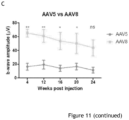
- the ability of four different AAV vectors - Anc80-L65, AAV44.9, AAV5, and AAV8 - to express coCNGA3 and provide sustained ERG responses was compared.
- the respective vectors carrying the hG1.4(M8)-coCNGA3 expression cassette (1.0 x 10 12 vg/mL) were delivered to subretinal space of Cnga3 -deficient mice at the age of 2 weeks, and single flash photopic ERG was recorded at different time points post injection (see Figure 11 ).
- the light stimulus of 10cd.s/m 2 was used for analysis.
- AAV8-mediated gene transfer led to higher ERG responses as compared to either Anc80-L65 (see Figure 11A ), AAV44.9 (see Figure 11B ), or AAV5 (see Figure 11C and Figure 6 ).
- hEBs human embryoid bodies
- MFI median fluorescence intensity
- the relative MFI in the hEBs transduced with the different vectors was assessed by flow cytometry and calculated as ratio to MFI in the EBs transduced with AAV ShH10-1.7L-eGFP.
- the construct hG1.7 provides an approximately 50% increase in GFP expression as compared to the previously known promoter 1.7L.
- a study using a AAV2/5 vector with a CBA promoter to express murine CNGA3 in CNGA3 knockout mice by the Hauswirth lab showed rescue of up to 70% of wild type ERG cone b-wave amplitudes when mice were treated very early on (P14 assessed 3 weeks post treatment - viral titre 1E13) (Pang et al., 2012).
- the inventors achieved similar efficacy in rescuing photopic vision treating the same animal model later in life (1 month - viral titre 7E12). While Achromatopsia in humans is a stationary disorder, the CNGA3 mouse model suffers from cone cell death within the first month indicating that earlier treatment is beneficial.
- the non-specific CBA promoter is unlikely to be used in a CNGA3 trial, but supports the inventors' contention that high levels of CNGA3 expression is important for optimal rescue.
Landscapes
- Health & Medical Sciences (AREA)
- Life Sciences & Earth Sciences (AREA)
- Genetics & Genomics (AREA)
- Engineering & Computer Science (AREA)
- Chemical & Material Sciences (AREA)
- Bioinformatics & Cheminformatics (AREA)
- Organic Chemistry (AREA)
- Biomedical Technology (AREA)
- Biotechnology (AREA)
- General Health & Medical Sciences (AREA)
- General Engineering & Computer Science (AREA)
- Wood Science & Technology (AREA)
- Zoology (AREA)
- Microbiology (AREA)
- Biochemistry (AREA)
- Molecular Biology (AREA)
- Medicinal Chemistry (AREA)
- Public Health (AREA)
- Virology (AREA)
- Veterinary Medicine (AREA)
- Pharmacology & Pharmacy (AREA)
- Animal Behavior & Ethology (AREA)
- Physics & Mathematics (AREA)
- Biophysics (AREA)
- Plant Pathology (AREA)
- Epidemiology (AREA)
- Ophthalmology & Optometry (AREA)
- Mycology (AREA)
- Nuclear Medicine, Radiotherapy & Molecular Imaging (AREA)
- General Chemical & Material Sciences (AREA)
- Chemical Kinetics & Catalysis (AREA)
- Immunology (AREA)
- Medicines That Contain Protein Lipid Enzymes And Other Medicines (AREA)
- Medicines Containing Material From Animals Or Micro-Organisms (AREA)
- Micro-Organisms Or Cultivation Processes Thereof (AREA)
- Pharmaceuticals Containing Other Organic And Inorganic Compounds (AREA)
Priority Applications (4)
| Application Number | Priority Date | Filing Date | Title |
|---|---|---|---|
| SM20240410T SMT202400410T1 (it) | 2018-01-12 | 2019-01-14 | Composizioni e metodi per il trattamento delle patologie retiniche |
| HRP20241483TT HRP20241483T1 (hr) | 2018-01-12 | 2019-01-14 | Sastavi i postupci za liječenje poremećaja mrežnice |
| SI201930833T SI3737423T1 (sl) | 2018-01-12 | 2019-01-14 | Sestavki in postopki za zdravljenje motenj mrežnice |
| RS20241186A RS66227B1 (sr) | 2018-01-12 | 2019-01-14 | Kompozicije i postupci za lečenje poremećaja mrežnjače |
Applications Claiming Priority (2)
| Application Number | Priority Date | Filing Date | Title |
|---|---|---|---|
| GBGB1800546.2A GB201800546D0 (en) | 2018-01-12 | 2018-01-12 | Treatment |
| PCT/GB2019/050092 WO2019138250A1 (en) | 2018-01-12 | 2019-01-14 | Compositions and methods for treating retinal disorders |
Publications (2)
| Publication Number | Publication Date |
|---|---|
| EP3737423A1 EP3737423A1 (en) | 2020-11-18 |
| EP3737423B1 true EP3737423B1 (en) | 2024-09-18 |
Family
ID=61256183
Family Applications (1)
| Application Number | Title | Priority Date | Filing Date |
|---|---|---|---|
| EP19701018.4A Active EP3737423B1 (en) | 2018-01-12 | 2019-01-14 | Compositions and methods for treating retinal disorders |
Country Status (26)
| Country | Link |
|---|---|
| US (2) | US11680276B2 (https=) |
| EP (1) | EP3737423B1 (https=) |
| JP (1) | JP7289306B2 (https=) |
| KR (1) | KR102786552B1 (https=) |
| CN (1) | CN111936172A (https=) |
| AU (1) | AU2019206314B2 (https=) |
| BR (1) | BR112020014191A2 (https=) |
| CA (1) | CA3088079A1 (https=) |
| DK (1) | DK3737423T3 (https=) |
| EA (1) | EA202091655A1 (https=) |
| ES (1) | ES2988499T3 (https=) |
| FI (1) | FI3737423T3 (https=) |
| GB (1) | GB201800546D0 (https=) |
| HR (1) | HRP20241483T1 (https=) |
| HU (1) | HUE068987T2 (https=) |
| IL (1) | IL275985A (https=) |
| LT (1) | LT3737423T (https=) |
| MX (1) | MX2020007366A (https=) |
| PH (1) | PH12020551071A1 (https=) |
| PL (1) | PL3737423T3 (https=) |
| PT (1) | PT3737423T (https=) |
| RS (1) | RS66227B1 (https=) |
| SG (1) | SG11202006618PA (https=) |
| SI (1) | SI3737423T1 (https=) |
| SM (1) | SMT202400410T1 (https=) |
| WO (1) | WO2019138250A1 (https=) |
Families Citing this family (6)
| Publication number | Priority date | Publication date | Assignee | Title |
|---|---|---|---|---|
| US11241460B2 (en) | 2013-03-15 | 2022-02-08 | Astellas Institute For Regenerative Medicine | Photoreceptors and photoreceptor progenitors produced from pluripotent stem cells |
| EP4292600A3 (en) | 2013-03-15 | 2024-04-10 | Astellas Institute for Regenerative Medicine | Photoreceptors and photoreceptor progenitors produced from pluripotent stem cells |
| GB2584664B (en) * | 2019-06-10 | 2023-05-24 | Newcells Biotech Ltd | Improved retinal organoids and methods of making the same |
| CN113025616B (zh) * | 2021-04-21 | 2023-05-02 | 中国热带农业科学院橡胶研究所 | 一种橡胶树泛素基因启动子proHbUBI2及其克隆与应用 |
| AU2022275948A1 (en) * | 2021-05-20 | 2023-12-21 | Artema Therapeutics, Inc. | Kcnv2 variants and their use |
| WO2023039175A2 (en) * | 2021-09-09 | 2023-03-16 | Applied Genetic Technologies Corporation | Predictors of achromatopsia treatment efficacy |
Family Cites Families (6)
| Publication number | Priority date | Publication date | Assignee | Title |
|---|---|---|---|---|
| WO2008073303A2 (en) * | 2006-12-07 | 2008-06-19 | Switchgear Genomics | Transcriptional regulatory elements of biological pathways, tools, and methods |
| US20120172419A1 (en) | 2009-09-15 | 2012-07-05 | Medical College Of Wisconsin Research Foundation Inc. | Reagents and methods for modulating cone photoreceptor activity |
| CN103608455B (zh) * | 2011-01-07 | 2019-01-15 | 应用遗传科技公司 | 用于治疗色盲和其它疾病的启动子、表达盒、载体、药盒和方法 |
| EP3800191B1 (en) * | 2014-03-17 | 2025-08-20 | Adverum Biotechnologies, Inc. | Compositions and methods for enhanced gene expression in cone cells |
| US11021519B2 (en) * | 2015-03-02 | 2021-06-01 | Adverum Biotechnologies, Inc. | Compositions and methods for intravitreal delivery of polynucleotides to retinal cones |
| WO2017144080A1 (en) * | 2016-02-23 | 2017-08-31 | Eyeserv Gmbh | Gene therapy for the treatment of a disease of retinal cone cells |
-
2018
- 2018-01-12 GB GBGB1800546.2A patent/GB201800546D0/en not_active Ceased
-
2019
- 2019-01-14 CA CA3088079A patent/CA3088079A1/en active Pending
- 2019-01-14 EP EP19701018.4A patent/EP3737423B1/en active Active
- 2019-01-14 HR HRP20241483TT patent/HRP20241483T1/hr unknown
- 2019-01-14 PL PL19701018.4T patent/PL3737423T3/pl unknown
- 2019-01-14 EA EA202091655A patent/EA202091655A1/ru unknown
- 2019-01-14 HU HUE19701018A patent/HUE068987T2/hu unknown
- 2019-01-14 CN CN201980018443.4A patent/CN111936172A/zh active Pending
- 2019-01-14 JP JP2020538584A patent/JP7289306B2/ja active Active
- 2019-01-14 KR KR1020207023349A patent/KR102786552B1/ko active Active
- 2019-01-14 PT PT197010184T patent/PT3737423T/pt unknown
- 2019-01-14 RS RS20241186A patent/RS66227B1/sr unknown
- 2019-01-14 SI SI201930833T patent/SI3737423T1/sl unknown
- 2019-01-14 BR BR112020014191A patent/BR112020014191A2/pt unknown
- 2019-01-14 ES ES19701018T patent/ES2988499T3/es active Active
- 2019-01-14 SM SM20240410T patent/SMT202400410T1/it unknown
- 2019-01-14 US US16/961,857 patent/US11680276B2/en active Active
- 2019-01-14 SG SG11202006618PA patent/SG11202006618PA/en unknown
- 2019-01-14 MX MX2020007366A patent/MX2020007366A/es unknown
- 2019-01-14 DK DK19701018.4T patent/DK3737423T3/da active
- 2019-01-14 LT LTEPPCT/GB2019/050092T patent/LT3737423T/lt unknown
- 2019-01-14 WO PCT/GB2019/050092 patent/WO2019138250A1/en not_active Ceased
- 2019-01-14 FI FIEP19701018.4T patent/FI3737423T3/fi active
- 2019-01-14 AU AU2019206314A patent/AU2019206314B2/en active Active
-
2020
- 2020-07-10 PH PH12020551071A patent/PH12020551071A1/en unknown
- 2020-07-12 IL IL275985A patent/IL275985A/en unknown
-
2023
- 2023-06-16 US US18/336,409 patent/US12467066B2/en active Active
Also Published As
Similar Documents
| Publication | Publication Date | Title |
|---|---|---|
| US12467066B2 (en) | Compositions and methods for treating retinal disorders | |
| JP7303816B2 (ja) | Aavベクター | |
| US20170007720A1 (en) | Methods and compositions for gene delivery to on bipolar cells | |
| EA038695B1 (ru) | Способы и композиции для переноса генов по сосудистой сети | |
| JP2018512125A (ja) | 多重ベクターシステム及びその使用 | |
| JP7766393B2 (ja) | 眼疾患のための遺伝子療法 | |
| CN114127296B (zh) | Ube3a基因和表达盒及其应用 | |
| WO2017144080A1 (en) | Gene therapy for the treatment of a disease of retinal cone cells | |
| WO2025247393A1 (zh) | 用于治疗Prom1相关视网膜疾病的新型治疗药物 | |
| KR20230112672A (ko) | 신경변성 질환을 위한 유전자 요법 | |
| WO2020010491A1 (zh) | 编码人nadh脱氢酶亚单位4蛋白的核酸及其应用 | |
| WO2020000641A1 (zh) | 编码人nadh脱氢酶亚单位蛋白的核酸及其应用 | |
| US12533423B2 (en) | Neuroprotective gene therapy targeting the AKT pathway | |
| HK40030486A (en) | Compositions and methods for treating retinal disorders | |
| HK40030486B (en) | Compositions and methods for treating retinal disorders | |
| US12116395B2 (en) | KCNV2 variants and their use | |
| JP2021520231A (ja) | シュタルガルト病の処置のための組成物及び方法 | |
| EA046019B1 (ru) | Композиции и способы лечения нарушений сетчатки | |
| JP2024525742A (ja) | Kcnv2遺伝子治療 | |
| HK40013460A (en) | Methods and compositions for treatment of disorders and diseases involving rdh12 |
Legal Events
| Date | Code | Title | Description |
|---|---|---|---|
| REG | Reference to a national code |
Ref country code: HR Ref legal event code: TUEP Ref document number: P20241483T Country of ref document: HR |
|
| STAA | Information on the status of an ep patent application or granted ep patent |
Free format text: STATUS: UNKNOWN |
|
| STAA | Information on the status of an ep patent application or granted ep patent |
Free format text: STATUS: THE INTERNATIONAL PUBLICATION HAS BEEN MADE |
|
| PUAI | Public reference made under article 153(3) epc to a published international application that has entered the european phase |
Free format text: ORIGINAL CODE: 0009012 |
|
| STAA | Information on the status of an ep patent application or granted ep patent |
Free format text: STATUS: REQUEST FOR EXAMINATION WAS MADE |
|
| 17P | Request for examination filed |
Effective date: 20200730 |
|
| AK | Designated contracting states |
Kind code of ref document: A1 Designated state(s): AL AT BE BG CH CY CZ DE DK EE ES FI FR GB GR HR HU IE IS IT LI LT LU LV MC MK MT NL NO PL PT RO RS SE SI SK SM TR |
|
| AX | Request for extension of the european patent |
Extension state: BA ME |
|
| REG | Reference to a national code |
Ref country code: HK Ref legal event code: DE Ref document number: 40030486 Country of ref document: HK |
|
| DAV | Request for validation of the european patent (deleted) | ||
| DAX | Request for extension of the european patent (deleted) | ||
| RAP3 | Party data changed (applicant data changed or rights of an application transferred) |
Owner name: UCL BUSINESS LTD |
|
| STAA | Information on the status of an ep patent application or granted ep patent |
Free format text: STATUS: EXAMINATION IS IN PROGRESS |
|
| 17Q | First examination report despatched |
Effective date: 20221122 |
|
| GRAP | Despatch of communication of intention to grant a patent |
Free format text: ORIGINAL CODE: EPIDOSNIGR1 |
|
| STAA | Information on the status of an ep patent application or granted ep patent |
Free format text: STATUS: GRANT OF PATENT IS INTENDED |
|
| INTG | Intention to grant announced |
Effective date: 20231019 |
|
| GRAJ | Information related to disapproval of communication of intention to grant by the applicant or resumption of examination proceedings by the epo deleted |
Free format text: ORIGINAL CODE: EPIDOSDIGR1 |
|
| STAA | Information on the status of an ep patent application or granted ep patent |
Free format text: STATUS: EXAMINATION IS IN PROGRESS |
|
| INTC | Intention to grant announced (deleted) | ||
| GRAP | Despatch of communication of intention to grant a patent |
Free format text: ORIGINAL CODE: EPIDOSNIGR1 |
|
| STAA | Information on the status of an ep patent application or granted ep patent |
Free format text: STATUS: GRANT OF PATENT IS INTENDED |
|
| INTG | Intention to grant announced |
Effective date: 20240416 |
|
| GRAS | Grant fee paid |
Free format text: ORIGINAL CODE: EPIDOSNIGR3 |
|
| GRAA | (expected) grant |
Free format text: ORIGINAL CODE: 0009210 |
|
| STAA | Information on the status of an ep patent application or granted ep patent |
Free format text: STATUS: THE PATENT HAS BEEN GRANTED |
|
| P01 | Opt-out of the competence of the unified patent court (upc) registered |
Free format text: CASE NUMBER: APP_45631/2024 Effective date: 20240806 |
|
| AK | Designated contracting states |
Kind code of ref document: B1 Designated state(s): AL AT BE BG CH CY CZ DE DK EE ES FI FR GB GR HR HU IE IS IT LI LT LU LV MC MK MT NL NO PL PT RO RS SE SI SK SM TR |
|
| REG | Reference to a national code |
Ref country code: GB Ref legal event code: FG4D |
|
| REG | Reference to a national code |
Ref country code: CH Ref legal event code: EP |
|
| REG | Reference to a national code |
Ref country code: PT Ref legal event code: SC4A Ref document number: 3737423 Country of ref document: PT Date of ref document: 20241003 Kind code of ref document: T Free format text: AVAILABILITY OF NATIONAL TRANSLATION Effective date: 20240926 |
|
| REG | Reference to a national code |
Ref country code: IE Ref legal event code: FG4D |
|
| REG | Reference to a national code |
Ref country code: DE Ref legal event code: R096 Ref document number: 602019059031 Country of ref document: DE |
|
| REG | Reference to a national code |
Ref country code: DK Ref legal event code: T3 Effective date: 20241015 |
|
| REG | Reference to a national code |
Ref country code: NL Ref legal event code: FP |
|
| PGFP | Annual fee paid to national office [announced via postgrant information from national office to epo] |
Ref country code: LV Payment date: 20240924 Year of fee payment: 7 |
|
| REG | Reference to a national code |
Ref country code: FI Ref legal event code: FGE |
|
| REG | Reference to a national code |
Ref country code: SE Ref legal event code: TRGR |
|
| REG | Reference to a national code |
Ref country code: ES Ref legal event code: FG2A Ref document number: 2988499 Country of ref document: ES Kind code of ref document: T3 Effective date: 20241120 |
|
| PGFP | Annual fee paid to national office [announced via postgrant information from national office to epo] |
Ref country code: MT Payment date: 20240904 Year of fee payment: 7 |
|
| PGFP | Annual fee paid to national office [announced via postgrant information from national office to epo] |
Ref country code: PT Payment date: 20241011 Year of fee payment: 7 |
|
| REG | Reference to a national code |
Ref country code: EE Ref legal event code: FG4A Ref document number: E024664 Country of ref document: EE Effective date: 20241004 |
|
| REG | Reference to a national code |
Ref country code: SK Ref legal event code: T3 Ref document number: E 45266 Country of ref document: SK |
|
| REG | Reference to a national code |
Ref country code: HR Ref legal event code: T1PR Ref document number: P20241483 Country of ref document: HR |
|
| PGFP | Annual fee paid to national office [announced via postgrant information from national office to epo] |
Ref country code: LT Payment date: 20241118 Year of fee payment: 7 |
|
| PGFP | Annual fee paid to national office [announced via postgrant information from national office to epo] |
Ref country code: MC Payment date: 20241126 Year of fee payment: 7 |
|
| PGFP | Annual fee paid to national office [announced via postgrant information from national office to epo] |
Ref country code: FI Payment date: 20241118 Year of fee payment: 7 Ref country code: GR Payment date: 20241219 Year of fee payment: 7 |
|
| REG | Reference to a national code |
Ref country code: HR Ref legal event code: ODRP Ref document number: P20241483 Country of ref document: HR Payment date: 20241029 Year of fee payment: 7 |
|
| PGFP | Annual fee paid to national office [announced via postgrant information from national office to epo] |
Ref country code: BG Payment date: 20241031 Year of fee payment: 7 |
|
| PGFP | Annual fee paid to national office [announced via postgrant information from national office to epo] |
Ref country code: EE Payment date: 20241218 Year of fee payment: 7 |
|
| PGFP | Annual fee paid to national office [announced via postgrant information from national office to epo] |
Ref country code: IS Payment date: 20241129 Year of fee payment: 7 |
|
| PGFP | Annual fee paid to national office [announced via postgrant information from national office to epo] |
Ref country code: CZ Payment date: 20241101 Year of fee payment: 7 Ref country code: HR Payment date: 20241029 Year of fee payment: 7 |
|
| PGFP | Annual fee paid to national office [announced via postgrant information from national office to epo] |
Ref country code: RO Payment date: 20241220 Year of fee payment: 7 Ref country code: SK Payment date: 20241104 Year of fee payment: 7 |
|
| PGFP | Annual fee paid to national office [announced via postgrant information from national office to epo] |
Ref country code: SM Payment date: 20241120 Year of fee payment: 7 Ref country code: RS Payment date: 20241014 Year of fee payment: 7 |
|
| REG | Reference to a national code |
Ref country code: GR Ref legal event code: EP Ref document number: 20240402880 Country of ref document: GR Effective date: 20250120 |
|
| PGFP | Annual fee paid to national office [announced via postgrant information from national office to epo] |
Ref country code: LU Payment date: 20250113 Year of fee payment: 7 |
|
| PGFP | Annual fee paid to national office [announced via postgrant information from national office to epo] |
Ref country code: HU Payment date: 20241120 Year of fee payment: 7 |
|
| REG | Reference to a national code |
Ref country code: HU Ref legal event code: AG4A Ref document number: E068987 Country of ref document: HU |
|
| PGFP | Annual fee paid to national office [announced via postgrant information from national office to epo] |
Ref country code: PL Payment date: 20240919 Year of fee payment: 7 |
|
| PGFP | Annual fee paid to national office [announced via postgrant information from national office to epo] |
Ref country code: TR Payment date: 20250106 Year of fee payment: 7 |
|
| REG | Reference to a national code |
Ref country code: DE Ref legal event code: R097 Ref document number: 602019059031 Country of ref document: DE |
|
| PGFP | Annual fee paid to national office [announced via postgrant information from national office to epo] |
Ref country code: CY Payment date: 20241203 Year of fee payment: 7 |
|
| PLBE | No opposition filed within time limit |
Free format text: ORIGINAL CODE: 0009261 |
|
| STAA | Information on the status of an ep patent application or granted ep patent |
Free format text: STATUS: NO OPPOSITION FILED WITHIN TIME LIMIT |
|
| 26N | No opposition filed |
Effective date: 20250619 |
|
| REG | Reference to a national code |
Ref country code: AT Ref legal event code: UEP Ref document number: 1724145 Country of ref document: AT Kind code of ref document: T Effective date: 20240918 |
|
| PGFP | Annual fee paid to national office [announced via postgrant information from national office to epo] |
Ref country code: SI Payment date: 20250704 Year of fee payment: 7 |
|
| PGFP | Annual fee paid to national office [announced via postgrant information from national office to epo] |
Ref country code: MK Payment date: 20240925 Year of fee payment: 7 |
|
| REG | Reference to a national code |
Ref country code: CH Ref legal event code: U11 Free format text: ST27 STATUS EVENT CODE: U-0-0-U10-U11 (AS PROVIDED BY THE NATIONAL OFFICE) Effective date: 20260201 |
|
| PGFP | Annual fee paid to national office [announced via postgrant information from national office to epo] |
Ref country code: NL Payment date: 20260126 Year of fee payment: 8 |
|
| PGFP | Annual fee paid to national office [announced via postgrant information from national office to epo] |
Ref country code: SE Payment date: 20260127 Year of fee payment: 8 |
|
| PGFP | Annual fee paid to national office [announced via postgrant information from national office to epo] |
Ref country code: GB Payment date: 20260127 Year of fee payment: 8 |
|
| PGFP | Annual fee paid to national office [announced via postgrant information from national office to epo] |
Ref country code: ES Payment date: 20260202 Year of fee payment: 8 |
|
| PGFP | Annual fee paid to national office [announced via postgrant information from national office to epo] |
Ref country code: DE Payment date: 20260128 Year of fee payment: 8 Ref country code: NO Payment date: 20260128 Year of fee payment: 8 Ref country code: DK Payment date: 20260126 Year of fee payment: 8 Ref country code: IE Payment date: 20260127 Year of fee payment: 8 |
|
| PGFP | Annual fee paid to national office [announced via postgrant information from national office to epo] |
Ref country code: AT Payment date: 20260128 Year of fee payment: 8 |
|
| PGFP | Annual fee paid to national office [announced via postgrant information from national office to epo] |
Ref country code: BE Payment date: 20260127 Year of fee payment: 8 Ref country code: IT Payment date: 20260121 Year of fee payment: 8 |
|
| PGFP | Annual fee paid to national office [announced via postgrant information from national office to epo] |
Ref country code: FR Payment date: 20260126 Year of fee payment: 8 |
|
| PGFP | Annual fee paid to national office [announced via postgrant information from national office to epo] |
Ref country code: CH Payment date: 20260201 Year of fee payment: 8 |