EP3732769B1 - Kondensatorausgeglichene treiberschaltung für ein duales eingangsladegerät - Google Patents
Kondensatorausgeglichene treiberschaltung für ein duales eingangsladegerät Download PDFInfo
- Publication number
- EP3732769B1 EP3732769B1 EP18896668.3A EP18896668A EP3732769B1 EP 3732769 B1 EP3732769 B1 EP 3732769B1 EP 18896668 A EP18896668 A EP 18896668A EP 3732769 B1 EP3732769 B1 EP 3732769B1
- Authority
- EP
- European Patent Office
- Prior art keywords
- circuit
- voltage
- switch
- enable
- coupled
- Prior art date
- Legal status (The legal status is an assumption and is not a legal conclusion. Google has not performed a legal analysis and makes no representation as to the accuracy of the status listed.)
- Active
Links
Images


Classifications
-
- H—ELECTRICITY
- H02—GENERATION; CONVERSION OR DISTRIBUTION OF ELECTRIC POWER
- H02J—ELECTRIC POWER NETWORKS; CIRCUIT ARRANGEMENTS OR SYSTEMS FOR SUPPLYING OR DISTRIBUTING ELECTRIC POWER; SYSTEMS FOR STORING ELECTRIC ENERGY
- H02J7/00—Circuit arrangements for charging or discharging batteries or for supplying loads from batteries
- H02J7/34—Parallel operation in networks using both storage and other DC sources, e.g. providing buffering
- H02J7/345—Parallel operation in networks using both storage and other DC sources, e.g. providing buffering using capacitors as storage or buffering devices
-
- H—ELECTRICITY
- H02—GENERATION; CONVERSION OR DISTRIBUTION OF ELECTRIC POWER
- H02J—ELECTRIC POWER NETWORKS; CIRCUIT ARRANGEMENTS OR SYSTEMS FOR SUPPLYING OR DISTRIBUTING ELECTRIC POWER; SYSTEMS FOR STORING ELECTRIC ENERGY
- H02J7/00—Circuit arrangements for charging or discharging batteries or for supplying loads from batteries
- H02J7/90—Regulation of charging or discharging current or voltage
- H02J7/92—Regulation of charging or discharging current or voltage with prioritisation of loads or sources
-
- H—ELECTRICITY
- H02—GENERATION; CONVERSION OR DISTRIBUTION OF ELECTRIC POWER
- H02M—APPARATUS FOR CONVERSION BETWEEN AC AND AC, BETWEEN AC AND DC, OR BETWEEN DC AND DC, AND FOR USE WITH MAINS OR SIMILAR POWER SUPPLY SYSTEMS; CONVERSION OF DC OR AC INPUT POWER INTO SURGE OUTPUT POWER; CONTROL OR REGULATION THEREOF
- H02M1/00—Details of apparatus for conversion
- H02M1/08—Circuits specially adapted for the generation of control voltages for semiconductor devices incorporated in static converters
-
- H—ELECTRICITY
- H02—GENERATION; CONVERSION OR DISTRIBUTION OF ELECTRIC POWER
- H02M—APPARATUS FOR CONVERSION BETWEEN AC AND AC, BETWEEN AC AND DC, OR BETWEEN DC AND DC, AND FOR USE WITH MAINS OR SIMILAR POWER SUPPLY SYSTEMS; CONVERSION OF DC OR AC INPUT POWER INTO SURGE OUTPUT POWER; CONTROL OR REGULATION THEREOF
- H02M1/00—Details of apparatus for conversion
- H02M1/32—Means for protecting converters other than automatic disconnection
-
- H—ELECTRICITY
- H02—GENERATION; CONVERSION OR DISTRIBUTION OF ELECTRIC POWER
- H02M—APPARATUS FOR CONVERSION BETWEEN AC AND AC, BETWEEN AC AND DC, OR BETWEEN DC AND DC, AND FOR USE WITH MAINS OR SIMILAR POWER SUPPLY SYSTEMS; CONVERSION OF DC OR AC INPUT POWER INTO SURGE OUTPUT POWER; CONTROL OR REGULATION THEREOF
- H02M1/00—Details of apparatus for conversion
- H02M1/36—Means for starting or stopping converters
-
- H—ELECTRICITY
- H02—GENERATION; CONVERSION OR DISTRIBUTION OF ELECTRIC POWER
- H02M—APPARATUS FOR CONVERSION BETWEEN AC AND AC, BETWEEN AC AND DC, OR BETWEEN DC AND DC, AND FOR USE WITH MAINS OR SIMILAR POWER SUPPLY SYSTEMS; CONVERSION OF DC OR AC INPUT POWER INTO SURGE OUTPUT POWER; CONTROL OR REGULATION THEREOF
- H02M3/00—Conversion of DC power input into DC power output
- H02M3/02—Conversion of DC power input into DC power output without intermediate conversion into AC
- H02M3/04—Conversion of DC power input into DC power output without intermediate conversion into AC by static converters
- H02M3/10—Conversion of DC power input into DC power output without intermediate conversion into AC by static converters using discharge tubes with control electrode or semiconductor devices with control electrode
- H02M3/145—Conversion of DC power input into DC power output without intermediate conversion into AC by static converters using discharge tubes with control electrode or semiconductor devices with control electrode using devices of a triode or transistor type requiring continuous application of a control signal
- H02M3/155—Conversion of DC power input into DC power output without intermediate conversion into AC by static converters using discharge tubes with control electrode or semiconductor devices with control electrode using devices of a triode or transistor type requiring continuous application of a control signal using semiconductor devices only
- H02M3/156—Conversion of DC power input into DC power output without intermediate conversion into AC by static converters using discharge tubes with control electrode or semiconductor devices with control electrode using devices of a triode or transistor type requiring continuous application of a control signal using semiconductor devices only with automatic control of output voltage or current, e.g. switching regulators
- H02M3/158—Conversion of DC power input into DC power output without intermediate conversion into AC by static converters using discharge tubes with control electrode or semiconductor devices with control electrode using devices of a triode or transistor type requiring continuous application of a control signal using semiconductor devices only with automatic control of output voltage or current, e.g. switching regulators including plural semiconductor devices as final control devices for a single load
-
- H—ELECTRICITY
- H02—GENERATION; CONVERSION OR DISTRIBUTION OF ELECTRIC POWER
- H02M—APPARATUS FOR CONVERSION BETWEEN AC AND AC, BETWEEN AC AND DC, OR BETWEEN DC AND DC, AND FOR USE WITH MAINS OR SIMILAR POWER SUPPLY SYSTEMS; CONVERSION OF DC OR AC INPUT POWER INTO SURGE OUTPUT POWER; CONTROL OR REGULATION THEREOF
- H02M7/00—Conversion of AC power input into DC power output; Conversion of DC power input into AC power output
- H02M7/42—Conversion of DC power input into AC power output without possibility of reversal
- H02M7/44—Conversion of DC power input into AC power output without possibility of reversal by static converters
- H02M7/48—Conversion of DC power input into AC power output without possibility of reversal by static converters using discharge tubes with control electrode or semiconductor devices with control electrode
- H02M7/483—Converters with outputs that each can have more than two voltages levels
- H02M7/4833—Capacitor voltage balancing
-
- H—ELECTRICITY
- H03—ELECTRONIC CIRCUITRY
- H03K—PULSE TECHNIQUE
- H03K17/00—Electronic switching or gating, i.e. not by contact-making and –breaking
- H03K17/06—Modifications for ensuring a fully conducting state
- H03K17/063—Modifications for ensuring a fully conducting state in field-effect transistor switches
-
- H—ELECTRICITY
- H03—ELECTRONIC CIRCUITRY
- H03K—PULSE TECHNIQUE
- H03K17/00—Electronic switching or gating, i.e. not by contact-making and –breaking
- H03K17/12—Modifications for increasing the maximum permissible switched current
- H03K17/122—Modifications for increasing the maximum permissible switched current in field-effect transistor switches
-
- H—ELECTRICITY
- H03—ELECTRONIC CIRCUITRY
- H03K—PULSE TECHNIQUE
- H03K17/00—Electronic switching or gating, i.e. not by contact-making and –breaking
- H03K17/51—Electronic switching or gating, i.e. not by contact-making and –breaking characterised by the components used
- H03K17/56—Electronic switching or gating, i.e. not by contact-making and –breaking characterised by the components used by the use, as active elements, of semiconductor devices
- H03K17/687—Electronic switching or gating, i.e. not by contact-making and –breaking characterised by the components used by the use, as active elements, of semiconductor devices the devices being field-effect transistors
-
- H—ELECTRICITY
- H03—ELECTRONIC CIRCUITRY
- H03K—PULSE TECHNIQUE
- H03K19/00—Logic circuits, i.e. having at least two inputs acting on one output; Inverting circuits
- H03K19/0175—Coupling arrangements; Interface arrangements
- H03K19/0185—Coupling arrangements; Interface arrangements using field effect transistors only
- H03K19/018507—Interface arrangements
- H03K19/018521—Interface arrangements of complementary type, e.g. CMOS
-
- H—ELECTRICITY
- H02—GENERATION; CONVERSION OR DISTRIBUTION OF ELECTRIC POWER
- H02J—ELECTRIC POWER NETWORKS; CIRCUIT ARRANGEMENTS OR SYSTEMS FOR SUPPLYING OR DISTRIBUTING ELECTRIC POWER; SYSTEMS FOR STORING ELECTRIC ENERGY
- H02J2207/00—Details of circuit arrangements for charging or discharging batteries or supplying loads from batteries
- H02J2207/20—Charging or discharging characterised by the power electronics converter
-
- H—ELECTRICITY
- H02—GENERATION; CONVERSION OR DISTRIBUTION OF ELECTRIC POWER
- H02J—ELECTRIC POWER NETWORKS; CIRCUIT ARRANGEMENTS OR SYSTEMS FOR SUPPLYING OR DISTRIBUTING ELECTRIC POWER; SYSTEMS FOR STORING ELECTRIC ENERGY
- H02J2207/00—Details of circuit arrangements for charging or discharging batteries or supplying loads from batteries
- H02J2207/40—Details of circuit arrangements for charging or discharging batteries or supplying loads from batteries adapted for charging from various sources, e.g. AC, DC or multivoltage
-
- H—ELECTRICITY
- H02—GENERATION; CONVERSION OR DISTRIBUTION OF ELECTRIC POWER
- H02J—ELECTRIC POWER NETWORKS; CIRCUIT ARRANGEMENTS OR SYSTEMS FOR SUPPLYING OR DISTRIBUTING ELECTRIC POWER; SYSTEMS FOR STORING ELECTRIC ENERGY
- H02J7/00—Circuit arrangements for charging or discharging batteries or for supplying loads from batteries
-
- H—ELECTRICITY
- H02—GENERATION; CONVERSION OR DISTRIBUTION OF ELECTRIC POWER
- H02M—APPARATUS FOR CONVERSION BETWEEN AC AND AC, BETWEEN AC AND DC, OR BETWEEN DC AND DC, AND FOR USE WITH MAINS OR SIMILAR POWER SUPPLY SYSTEMS; CONVERSION OF DC OR AC INPUT POWER INTO SURGE OUTPUT POWER; CONTROL OR REGULATION THEREOF
- H02M1/00—Details of apparatus for conversion
- H02M1/0083—Converters characterised by their input or output configuration
-
- H—ELECTRICITY
- H02—GENERATION; CONVERSION OR DISTRIBUTION OF ELECTRIC POWER
- H02M—APPARATUS FOR CONVERSION BETWEEN AC AND AC, BETWEEN AC AND DC, OR BETWEEN DC AND DC, AND FOR USE WITH MAINS OR SIMILAR POWER SUPPLY SYSTEMS; CONVERSION OF DC OR AC INPUT POWER INTO SURGE OUTPUT POWER; CONTROL OR REGULATION THEREOF
- H02M1/00—Details of apparatus for conversion
- H02M1/10—Arrangements incorporating converting means for enabling loads to be operated at will from different kinds of power supplies, e.g. from AC or DC
-
- H—ELECTRICITY
- H03—ELECTRONIC CIRCUITRY
- H03K—PULSE TECHNIQUE
- H03K2217/00—Indexing scheme related to electronic switching or gating, i.e. not by contact-making or -breaking covered by H03K17/00
- H03K2217/0063—High side switches, i.e. the higher potential [DC] or life wire [AC] being directly connected to the switch and not via the load
-
- H—ELECTRICITY
- H03—ELECTRONIC CIRCUITRY
- H03K—PULSE TECHNIQUE
- H03K2217/00—Indexing scheme related to electronic switching or gating, i.e. not by contact-making or -breaking covered by H03K17/00
- H03K2217/0072—Low side switches, i.e. the lower potential [DC] or neutral wire [AC] being directly connected to the switch and not via the load
-
- H—ELECTRICITY
- H03—ELECTRONIC CIRCUITRY
- H03K—PULSE TECHNIQUE
- H03K2217/00—Indexing scheme related to electronic switching or gating, i.e. not by contact-making or -breaking covered by H03K17/00
- H03K2217/0081—Power supply means, e.g. to the switch driver
Definitions
- This relates generally to power management devices, and more particularly to control arrangements for power management in a dual input charger apparatus.
- Power management devices are ubiquitous in today's society and help to power most of the electronic devices we use every day such as phones and laptops. Many of those electronic devices contain batteries and batteries need to be charged. However, charging a battery under less than ideal power conditions can adversely affect the life and performance of the battery. To better control the power delivered to batteries, power management devices such as buck converters have been introduced into charging circuits to help to idealize power conditions under which the battery is being charged.
- US 2017/279284 relates to a multiple chargers configuration in one system.
- US 9,843,184 discloses a voltage conversion apparatus.
- a driver circuit having two high-side switches and a single low-side switch, output inductor, and output capacitor is provided.
- the driver can regulate power from multiple charging devices.
- each of these high-side switches share a channel with an input capacitor for that channel and the channels are connected to the low-side switch at a common node.
- the capacitor for one of the channels becomes charged quickly, the capacitor of the other channel will balance itself with the charged capacitor. This balancing may cause a large amount of current to pass through the common node to the uncharged capacitor.
- the high-side switches along this path cannot withstand such a large current and could be damaged.
- a low-impedance bridge and driver circuit is connected between the channels.
- the low-impendence bridge and driver circuit provides a safe path for the large amount of a current that flows during balancing.
- the low impendence bridge and driver circuit may be, for example, a control circuit connected between a first input capacitor and a first high-side switch and between a second input capacitor and a second high-side switch.
- the low impedance bridge and driver circuit may have, for example, a first enable switch and a second enable switch connected in series. A terminal of the first enable switch may be connected between the first input capacitor and the first high-side switch and a terminal of the second enable switch may be connected between the second input capacitor and the second high-side switch.
- the first and second enable switches may be controlled by a logic circuit configured to control the first enable switch and the second enable switch.
- the control circuit controls the enable switch such that they prevent current from passing through the first and second high-side switches in response to the voltage across the first input capacitor being different from the voltage across the second input capacitor.
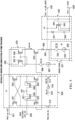
- FIG. 1 illustrates a circuit diagram of a dual input charger apparatus having inputs terminals VBUS1 121 and VBUS2 120.
- the input terminals VBUS1 121 and VBUS2 120 may connect to different power sources such as a USB port, an inductive or wireless charging technology, or a charging plug such as one that plugs into a wall outlet.
- Power flow from the input terminals VBUS1 121 and VBUS2 120 can be connected or disconnected by input switches SW_IN1 101 and SW_IN2 102.
- the ability to connect or disconnect the power flow from a specific power source using input switches SW_IN1 101 and SW_IN2 102 allows the dual input charger apparatus to switch between power sources.
- Connecting the first and second channel at common node 117 allows the dual input charging devices to regulate power from multiple sources without having to duplicate SW_LS 113, output inductor 114, and output capacitor 115.
- the power flowing through either channel to the output terminal VOUT 116 is pulse width modulated by controlling its respective high-side switch to regulate the voltage provided at the output terminal VOUT 116.
- the output capacitor 115 acts to smooth the voltage provided at the output terminal VOUT 116.
- a control circuit 118 connects between the first and second channels.
- the control circuit 118 has two switches 118(a) and 118(b). As illustrated in FIG. 2 , the switches 118(a) and 118(b) may be implemented using N-type field effect transistors ("NFET”) 218(a) and 218(b).
- the NFET transistors 218(a) and 218(b) may be, for example, laterally diffused metal oxide semiconductor field effect transistors ("LDMOS”) or other metal oxide semiconductor (“MOS”) type transistors.
- FIG. 2 further illustrates high-side driver circuits HS_Driver1 231 and HS_Driver2 232 and low-side driver circuit LS_Driver2 233.
- the low-side driver circuit LS_Driver2 233 drives the low-side switch 213 by controlling the voltage to the gate of the low-side switch 213.
- FIG. 3 illustrates current flow along current paths I1 300,12 305, and I3 310 through the dual input driver circuit when the voltage across the input capacitor PMID_CAP1 105 is larger than the voltage across the input capacitor PMID_CAP2 106.
- current may flow in the direction opposite that illustrate and along current path I1 300, I2 304, and I3 310 when the voltage across the input capacitor PMID_CAP2 106 is larger than the voltage across the input capacitor PMID_CAP1 105.
- the current path I1 provides a safe path for excess current caused by the voltage imbalance between PMID_CAP1 105 and PMID_CAP2 106 to flow.
- the ability to shunt the current that would have flowed through the current path I2 and instead cause it to flow along the current path I1 is controlled by turning NFET transistors 218(a) and 218(b) on and off using their respective enable signals EN_VBUS1 425 and EN_VBUS2 426.
- the NFET transistors 218(a) and 218(b) have their source shorted to their body and have an intrinsic body diode between the body and the drain.
- the back-to-back intrinsic body diodes of NFET transistors 218(a) and 218(b) ensures no flows current flows through the control circuit 118 when the voltage level of either EN_VBUS1 425 and EN_VBUS2 426 is too low to overcome the threshold voltage of the NFET transistors 218(a) and 218(b) and cause them to conduct current.
- the control circuit 118 When the voltage across the input capacitor PMID_CAP1 105 is greater than the voltage across the input capacitor PMID_CAP2 106, and when the high-side switch SW_HS1 211 is on, the control circuit 118 will increase the gate to source voltage of the NFET transistor 218(a) causing the current to along current path I1 300 and limiting the current I2 305 flowing through the high-side transistors SW_HS1 211 and SW_HS2 212..
- the control circuit 118 will increase the gate to source voltage of the NFET transistor 218(b) causing the current to along current path I1 300 and limiting the current I2 305 flowing through the high-side transistors SW_HS 1 211 and SW_HS2 212.
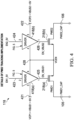
- FIG. 4 illustrates details of the control circuit 118.
- the NFET transistor 218(a) is driven by driver circuit 418(a), and the NFET transistor 218(b) is driven by driver circuit 418(b).
- the driver circuits 418(a) and 418(b) determine the gate to source voltage of the NFET transistors 218(a) and 218(b).
- the gate to source voltage of the NFET transistor 218(a) is determined by the voltage between EN_VBUS 425 and VCEN 428 of the driver 418(a), and the gate to source voltage of the NFET transistor 218(b) is determined by the voltage between EN_VBUS2 426 and VCEN 428 of the driver circuit 418(b) control the gate to source voltage across the NFET transistor 218(b).
- the input VCP1 voltage 421 to the driver 418(a) is a boosted voltage signal that is the sum of the input voltage VBUS1 121 and a constant voltage value such as, for example, six volts.
- the input voltage VCP2 422 to the driver 418(b) is a boosted voltage signal that is the sum of the input voltage at input terminal VBUS2 120 and a constant voltage value such as, for example, six volts.
- the signals EN1_5V and EN2_5V control the logic state of the drivers 418(a) and 418(b).
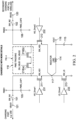
- FIG. 5 illustrates a circuit diagram of the drivers 418(a) and 418(b).
- the drivers 418(a) and 418(b) are substantially identical. The following description will describe only the driver 418(a) for brevity.
- An output circuit 550 regulates the gate to source voltage of an NFET transistor 218(a).
- the output circuit 550 has a Zener diode 541 connected in series with a resistor 542.
- the NFET transistor 543 and output capacitor 544 are arranged in parallel with the series connected Zener diode 541 and resistor 542.
- the voltage across the output capacitor 544 represents the gate-to-source voltage (VDS) of the NFET transistor 218(a).
- the voltage across the capacitor may vary from seven volts to negative seven tenths of a volt.
- the negative voltage ensures that the NFET transistors 218(a) and 218(b) fully turn off.
- the negative voltage ensures that the NFET transistor 218(a) is fully turned off when the enable signal EN_5V 423 is logic LOW.
- the sink switch 533 When the enable signal EN_5V 423 logic is LOW, the sink switch 533 is closed and the sinking ten micro-amp source 532 in sinking circuit 540 will lower the gate to source voltage of the NFET 218(a) to stop current from flowing through the NFET transistor 218(a) along current path I1 300. In this case, current flows through the resistor 542 and then the Zener diode 541 and finally through the node 590 to ground.
- the enable signal EN_5V 423 When the enable signal EN_5V 423 is logic HIGH, the Zener diode 541 will also be served as protection to clamp EN_VBUS 425 so that it will not exceed VCEN 428 plus six volts.
- the enable main signal controls the switch 531 and can interrupt the normal operation of the driver 418(a) and pull the NFET transistor 218(a) low.
- the NFET transistor 543 serves to conduct current from VCEN 428 to the node 590.
- the diode 569 prevents current from flowing from the node 590 in the direction of the PFET (P-type field effect transistor) control transistor 570.
- the sink switch 533 When the enable signal EN_5V 423 is logic HIGH, the sink switch 533 is open and the capacitor 544 of the output circuit 550 is charged by a sourcing two mirco-amp current flowing through the node 590 from the sourcing circuit 530.
- the two micro-amp current will increase the voltage across the capacitor 544 and in turn increase the gate to source voltage of the NFET transistor 218(a).
- the gate to source voltage of the NFET transistor 218(a) exceeds its threshold voltage, current will be able to flow through the channel of the NFET transistor 218(a) along current path I1 to prevent large currents from flowing through the high-side switches 211 and 212.
- the sourcing circuit 530 includes PFET transistors 525 and 526.
- enable signal EN_5V 423 is logic HIGH
- the switch 568 is closed.
- enable signal EN_5V 423 is logic HIGH
- the current sink 567 causes the PFET transistors 525 and 526 to turn on and induces current to flow through the node 595.
- the induced current flows into the sourcing circuit 530 at node 595 from the high-voltage level shifter circuit 620. A portion of the current flows through the PFET transistor 525, and a portion of the current flows through the PFET transistor 526.
- the PFET control transistor 570 controls the current through the node 590 that charges the capacitor 544 causing the NFET transistor 218(a) to turn on and allow current to flow along current path I1 through the channel of the NFET transistor 218(a) to balance the voltage of the input capacitor PMID_CAP2 106 with the voltage of the input capacitor PMID_CAP1 105. As the NFET transistor 218(a) becomes fully turned on, the Isource current flowing through the node 590 becomes zero. This reduces quiescent current consumption of the driver circuit 418(a) and provides soft-start behavior for turning on the NFET transistor 218(a).
- the PFET control transistor 570 acts as a control switch connecting and disconnecting the Isource current to and from the output circuit 550.
- the high-voltage level shifter circuit 620 controls the voltage to the gate of the PFET control transistor 570 by level shifting the enable signal EN_5V 423.
- the high-voltage level shifter circuit shifts the enable signal EN_5V 423 to a value between the VCP1 voltage 421 and the bias voltage 509.
- the output of the high-voltage level shifter circuit 620 to the PFET control transistor 570 can be thought of digital signal having a logic HIGH value corresponding to VCP1 voltage 421 and a logic LOW value corresponding to the bias voltage 509.
- the sources of the PFET transistor 501 and PFET transistor 502 are connected to the VCP1 voltage 421.
- the gate of the PFET transistor 502 is connected to the drain of PFET transistor 501 and the source of the PFET transistor 503.
- the gate of the PFET transistor 501 is connected to the drain of PFET transistor 502 and the source of the PFET transistor 504.
- the drains of the PFET transistors 503 and 504 are controllable connected to ground.
- the switch 514 controls the connection between the drain of the PFET transistor 503 and ground.
- the switch 517 controls the connection between the drain of the PFET transistor 504 and ground.
- the drains of the PFET transistor 503 and 504 will not be connected to ground at the same time because the EN_5V signal causes the switch 514 to be closed and the switch 517 to be open when the enable signal EN_5V 423 is logic HIGH.
- the switch 517 is open when the enable signal EN_5V 423 is logic HIGH because the logic is inverted by inverter 515.
- PFET transistors 503 and 504 are used to clamp the voltage at the drain of PFET transistors 501 and 502 respectively.
- switch 514 When switch 514 is closed, the drain voltage of PFET transistor 501 will decrease until the gate to source voltage of the PFET transistor 503 becomes zero.
- the gate to source voltage of the PFET transistor 503 becomes zero the drain voltage of the PFET transistor 501 is clamped to the bias voltage 509. Meanwhile, because the switch 517 is opened, the drain voltage of PFET transistor 502 will be pulled up to the VCP1 voltage 421. At the same time, the gate voltage of PFET transistor 502 is decreased, clamping the drain of PFET transistor 502 to the VCP1 voltage 421.
- the switch 517 When the enable signal EN_5V 423 is logic HIGH, the switch 517 is open, and the high-voltage level shifter circuit 620 outputs a logic LOW value corresponding to VCP-6V.
- the output of the high-voltage level circuit 620 to the PFET control transistor 570 is logic LOW, the PFET control transistor 570 is turned on, and current Isource flows through to charge up node 590 towards VCP1 voltage 421.
- the switch 517 When the enable signal EN-5V 423 signal is logic LOW, the switch 517 is closed, and the high-voltage level circuit 620 outputs a logic HIGH value corresponding to VCP1 voltage 421.
- the output of the high-voltage level circuit 620 to the PFET control transistor 570 is logic HIGH, the PFET control transistor 570 is off, and no current may flow through to node 590.
- the NFET transistors 505 and 506 further protect and clamp the drain of PFET transistors 501 and 502.
- a bias voltage 509 is supplied to the gates of the PFET transistors 503, 504, 505 and 506.
- the bias voltage 509 is also supplied to the body of the NFET transistors 505 and 506. This configuration allows the NFET transistors to prevent the voltage to the drains of PFET transistors 501and 502 from dropping too low. If the voltage at the drain of the PFET control transistor 570 falls more than one voltage threshold below the bias voltage 509, the NFET transistor 505 will turn on and prevent the drain from falling more than one voltage threshold below the bias voltage 509.
- the voltage threshold corresponds to the voltage threshold of the intrinsic body diode of the NFET transistor 505 and is typically around seven tenths of a volt.
- the NFET transistor 506 will prevent the voltage at the gates of the PFET transistors 501 and 502 from dropping too low. If the voltage at the gate of the PFET control transistor 570 falls more than voltage threshold below the bias voltage 509, the NFET transistor 506 will turn on and prevent the gate from falling more than one voltage threshold below the bias voltage 509. In this case, the voltage threshold corresponds to the voltage threshold of the intrinsic body diode of the NFET transistor 506.
- a charging device can automatically re-route current based on the voltages present at different ports to reduce likelihood of damaging circuit components within the device due to excessive current flows.
- Couple and derivatives thereof mean an indirect, direct, optical, and/or wireless electrical connection.
- that connection may be through a direct electrical connection, through an indirect electrical connection via other devices and connections, through an optical electrical connection, and/or through a wireless electrical connection.
Landscapes
- Engineering & Computer Science (AREA)
- Power Engineering (AREA)
- Computer Hardware Design (AREA)
- Physics & Mathematics (AREA)
- Computing Systems (AREA)
- General Engineering & Computer Science (AREA)
- Mathematical Physics (AREA)
- Power Conversion In General (AREA)
- Charge And Discharge Circuits For Batteries Or The Like (AREA)
- Electronic Switches (AREA)
- Protection Of Static Devices (AREA)
- Dc-Dc Converters (AREA)
Claims (15)
- Duale Eingangsladegerätvorrichtung, umfassend:_ einen ersten Kanal, der mit einem ersten Ladeport verbunden ist und mit dem ein erster Eingangskondensator (PMID CAP1) und ein erster Anschluss eines ersten High-Side-Schalters (SW_HS1) an einem gemeinsamen Knoten verbunden sind;_ einen zweiten Kanal, der mit einem zweiten Ladeport verbunden ist und mit dem ein zweiter Eingangskondensator (PMID CAP2) und ein erster Anschluss eines zweiten High-Side-Schalters (SW_HS2) an einem weiteren gemeinsamen Knoten verbunden sind;_ wobei die jeweiligen zwei zweiten Anschlüsse der ersten und zweiten High-Side-Schalter (SW_HS1, SW_HS2) mit einem gemeinsamen Knoten verbunden sind,_ wobei das duale Eingangsladegerät ferner umfasst:eine Steuerschaltung (118), die zwischen dem gemeinsamen Knoten des ersten Eingangskondensators (PMID CAP1) und dem ersten Anschluss des ersten High-Side-Schalters (SW_HS1) und dem gemeinsamen Knoten des zweiten Eingangskondensators (PMID CAP2) und dem ersten Anschluss des zweiten High-Side-Schalters (SW_HS2) gekoppelt ist,wobei die Steuerschaltung (118) dazu ausgelegt ist, einen Strom, der durch den ersten High-Side-Schalter (SW HS 1) und den zweiten High-Side-Schalter (SW_HS2) fließt, als Reaktion darauf, dass sich eine erste Spannung über den ersten Eingangskondensator (PMID CAP1) von einer zweiten Spannung über den zweiten Eingangskondensator (PMID_CAP2) unterscheidet, parallel zu schalten.
- Vorrichtung nach Anspruch 1 ferner umfassend einen Low-Side-Schalter (SW_LS), der mit dem gemeinsamen Knoten der zweiten Anschlüsse des ersten und des zweiten High-Side-Schalters (SW_HS1, SW_HS2) gekoppelt ist.
- Vorrichtung nach Anspruch 1, wobei die Steuerschaltung (118) umfasst:einen ersten Freigabeschalter und einen zweiten Freigabeschalter, die in Reihe geschaltet sind, wobei der erste Anschluss der beiden in Reihe geschalteten Freigabeschalter mit dem gemeinsamen Knoten des ersten Eingangskondensators (PMID CAP1) und dem ersten Anschluss des ersten High-Side-Schalters (SW_HS1) gekoppelt ist und der zweite Anschluss der beiden in Reihe geschalteten Freigabeschalter mit dem gemeinsamen Knoten des zweiten Eingangskondensators (PMID CAP2) und dem ersten Anschluss des zweiten High-Side-Schalters (SW_HS2) gekoppelt ist;eine erste Treiberschaltung, die dazu ausgelegt ist, den ersten Freigabeschalter anzusteuern; undeine zweite Treiberschaltung, die dazu ausgelegt ist, den zweiten Freigabeschalter anzusteuern.
- Vorrichtung nach Anspruch 3, wobei die erste Treiberschaltung umfasst:eine Ausgangsschaltung, die dazu ausgelegt ist, eine Gate-zu-Source-Spannung des ersten Freigabeschalters auszugeben;eine Senkenschaltung, die mit der Ausgangsschaltung gekoppelt und dazu ausgelegt ist, die von der Ausgangsschaltung ausgegebene Spannung an den ersten Freigabeschalter zu reduzieren;eine mit der Ausgangsschaltung gekoppelte Quellenschaltung, die dazu ausgelegt ist, die von der Ausgangsschaltung ausgegebene Spannung an den ersten Freigabeschalter zu erhöhen;einen Steuerschalter, der dazu ausgelegt ist, den Stromfluss von der Quellenschaltung zur Ausgangsschaltung zu steuern; undeine Hochspannungs-Pegelwandler-Schaltung, die dazu ausgelegt ist, den Spannungspegel eines Freigabesignals zu verschieben, um den Steuerschalter zu öffnen und zu schließen.
- Vorrichtung nach Anspruch 3, wobei die zweite Treiberschaltung umfasst:eine Ausgangsschaltung, die dazu ausgelegt ist, eine Gate-zu-Source-Spannung des zweiten Freigabeschalters auszugeben; eine Senkenschaltung, die mit der Ausgangsschaltung gekoppelt ist und dazu ausgelegt ist, die von der Ausgangsschaltung ausgegebene Spannung an den zweiten Freigabeschalter zu reduzieren;eine mit der Ausgangsschaltung gekoppelte Quellenschaltung, die dazu ausgelegt ist, die von der Ausgangsschaltung ausgegebene Spannung an den zweiten Freigabeschalter zu erhöhen;einen Steuerschalter, der dazu ausgelegt ist, den Stromfluss von der Quellenschaltung zur Ausgangsschaltung zu steuern; undeine Hochspannungs-Pegelwandler-Schaltung, die dazu ausgelegt ist, den Spannungspegel eines Freigabesignals, das dazu ausgelegt ist, den Steuerschalter zu öffnen und zu schließen.
- Vorrichtung nach Anspruch 1, wobei die Steuerschaltung (118) dazu ausgelegt ist, als Reaktion darauf, dass die erste Spannung über den ersten Eingangskondensator (PMID CAP1) größer ist als die zweite Spannung über den zweiten Eingangskondensator (PMID CAP2), Strom zu veranlassen, von dem ersten Kanal zu dem zweiten Kanal zu fließen.
- Vorrichtung nach Anspruch 1, wobei die Steuerschaltung (118) dazu ausgelegt ist, als Reaktion darauf, dass die zweite Spannung über den zweiten Eingangskondensator (PMID CAP2) größer ist als die erste Spannung über den ersten Eingangskondensator (PMID CAP1), Strom zu veranlassen, von dem zweiten Kanal zu dem ersten Kanal zu fließen.
- Vorrichtung nach Anspruch 1, wobei die Steuerschaltung (118) umfasst:
einen ersten Freigabeschalter und einen zweiten Freigabeschalter, die in Reihe geschaltet sind, wobei der erste Anschluss der beiden in Reihe geschalteten Freigabeschalter mit dem gemeinsamen Knoten des ersten Eingangskondensators (PMID CAP1) und dem ersten Anschluss des ersten High-Side-Schalters (SW_HS1) gekoppelt ist und der zweite Anschluss der beiden in Reihe geschalteten Freigabeschalter mit dem gemeinsamen Knoten des zweiten Eingangskondensators (PMID_CAP2) und dem ersten Anschluss des zweiten High-Side-Schalters (SW_HS2) gekoppelt ist. - Vorrichtung nach Anspruch 1 ferner umfassend:eine erste Stromquelle, die mit einem der ersten oder zweiten Kanäle gekoppelt und dazu ausgelegt ist, den jeweils gekoppelten der ersten oder zweiten Kanäle mit Strom zu versorgen;_ wobei der die Steuerschaltung (118) ferner umfasst:___ einen ersten Freigabeschalter und einen zweiten Freigabeschalter, die in Reihe geschaltet sind, wobei der erste Anschluss der beiden in Reihe geschalteten Freigabeschalter mit dem gemeinsamen Knoten des ersten Eingangskondensators (PMID CAP1) und dem ersten Anschluss des ersten High-Side-Schalters (SW_HS1) gekoppelt ist und der zweite Anschluss der beiden in Reihe geschalteten Freigabeschalter mit dem gemeinsamen Knoten des zweiten Eingangskondensators (PMID CAP2) und dem ersten Anschluss des zweiten High-Side-Schalters (SW HS2) gekoppelt ist;eine erste Treiberschaltung, die dazu ausgelegt ist, den ersten Freigabeschalter anzusteuern; und eine zweite Treiberschaltung,die dazu ausgelegt ist, den zweiten Freigabeschalter anzusteuern.
- Vorrichtung nach Anspruch 8 oder 9, wobei die erste Treiberschaltung umfasst:eine Ausgangsschaltung, die dazu ausgelegt ist, eine Gate-zu-Source-Spannung des ersten Freigabeschalters auszugeben;eine Senkenschaltung, die mit der Ausgangsschaltung gekoppelt, dazu ausgelegt ist, die von der Ausgangsschaltung ausgegebene Spannung an den ersten Freigabeschalter zu reduzieren;eine mit der Ausgangsschaltung gekoppelte Quellenschaltung, die dazu ausgelegt ist, die von der Ausgangsschaltung ausgegebene Spannung an den ersten Freigabeschalter zu erhöhen;einen Steuerschalter, der dazu ausgelegt ist, den Stromfluss von der Quellenschaltung zur Ausgangsschaltung zu steuern; und eine Hochspannungs-Pegelwandler-Schaltung, die dazu ausgelegt ist, den Spannungspegel eines Freigabesignals zu verschieben, um den Steuerschalter zu öffnen und zu schließen.
- Vorrichtung nach Anspruch 8 oder 9, wobei die zweite Treiberschaltung umfasst:eine Ausgangsschaltung, die dazu ausgelegt ist, eine Gate-zu-Source-Spannung des zweiten Freigabeschalters auszugeben;eine Senkenschaltung, die mit der Ausgangsschaltung gekoppelt und dazu ausgelegt ist, die von der Ausgangsschaltung ausgegebene Spannung an den zweiten Freigabeschalter zu reduzieren;eine mit der Ausgangsschaltung gekoppelte Quellenschaltung, die dazu ausgelegt ist, die von der Ausgangsschaltung ausgegebene Spannung an den zweiten Freigabeschalter zu erhöhen;einen Steuerschalter, der dazu ausgelegt ist, den Stromfluss von der Quellenschaltung zur Ausgangsschaltung zu steuern; undeine Hochspannungs-Pegelwandler-Schaltung, die dazu ausgelegt ist, den Spannungspegel eines Freigabesignals, das dazu ausgelegt ist, den Steuerschalter zu öffnen und zu schließen.
- Vorrichtung nach Anspruch 8 oder 9, die ferner einen Low-Side-Schalter umfasst, der mit dem ersten Kanal und dem zweiten Kanal an einem gemeinsamen Anschluss gekoppelt ist.
- Vorrichtung nach Anspruch 8 oder 9, wobei die Steuerschaltung (118) dazu ausgelegt ist, als Reaktion darauf, dass die erste Spannung über den ersten Eingangskondensator (PMID CAP1) größer ist als die zweite Spannung über den zweiten Eingangskondensator (PMID CAP2), Strom zu veranlassen, von dem ersten Kanal zu dem zweiten Kanal über den ersten Freigabeschalter und den zweiten Freigabeschalter zu fließen.
- Vorrichtung nach Anspruch 8 oder 9, wobei die Steuerschaltung (118) dazu ausgelegt ist, als Reaktion darauf, dass die zweite Spannung über den zweiten Eingangskondensator (PMID CAP2) größer ist als die erste Spannung über den ersten Eingangskondensator (PMID CAP1), Strom zu veranlassen, von dem zweiten Kanal zu dem ersten Kanal über den ersten Freigabeschalter und den zweiten Freigabeschalter zu fließen.
- Vorrichtung nach Anspruch 9, die ferner umfasst: eine zweite Stromquelle, die mit einem der ersten oder zweiten Kanäle gekoppelt ist, an die die Stromquelle nach Anspruch 9 nicht angeschlossen ist;
wobei die duale Eingangsladegerätvorrichtung dazu ausgelegt ist, zwischen dem Verwenden der ersten Energiequelle und der zweiten Energiequelle zu wählen.
Applications Claiming Priority (3)
| Application Number | Priority Date | Filing Date | Title |
|---|---|---|---|
| US201762612376P | 2017-12-30 | 2017-12-30 | |
| US15/959,575 US10491023B2 (en) | 2017-12-30 | 2018-04-23 | Capacitor balanced driver circuit for dual input charger |
| PCT/US2018/068111 WO2019133956A1 (en) | 2017-12-30 | 2018-12-31 | Capacitor balanced driver circuit for dual input charger |
Publications (3)
| Publication Number | Publication Date |
|---|---|
| EP3732769A1 EP3732769A1 (de) | 2020-11-04 |
| EP3732769A4 EP3732769A4 (de) | 2021-08-25 |
| EP3732769B1 true EP3732769B1 (de) | 2024-09-25 |
Family
ID=67060036
Family Applications (1)
| Application Number | Title | Priority Date | Filing Date |
|---|---|---|---|
| EP18896668.3A Active EP3732769B1 (de) | 2017-12-30 | 2018-12-31 | Kondensatorausgeglichene treiberschaltung für ein duales eingangsladegerät |
Country Status (5)
| Country | Link |
|---|---|
| US (2) | US10491023B2 (de) |
| EP (1) | EP3732769B1 (de) |
| JP (1) | JP7227441B2 (de) |
| CN (1) | CN111434001B (de) |
| WO (1) | WO2019133956A1 (de) |
Families Citing this family (1)
| Publication number | Priority date | Publication date | Assignee | Title |
|---|---|---|---|---|
| CN115065218B (zh) * | 2022-07-01 | 2025-12-09 | 中国科学院近代物理研究所 | 一种主动点扫描电源及控制方法 |
Family Cites Families (23)
| Publication number | Priority date | Publication date | Assignee | Title |
|---|---|---|---|---|
| JP3490165B2 (ja) * | 1994-12-15 | 2004-01-26 | 株式会社アドバンテスト | ドライバ回路 |
| JPH08308217A (ja) * | 1995-04-27 | 1996-11-22 | Canon Inc | Dc/dcコンバータ |
| JPH09285005A (ja) * | 1996-04-09 | 1997-10-31 | Mitsubishi Heavy Ind Ltd | Dc−dcコンバータ |
| US6788103B1 (en) * | 2002-08-06 | 2004-09-07 | Aeluros, Inc. | Activ shunt-peaked logic gates |
| JP4170177B2 (ja) * | 2003-09-02 | 2008-10-22 | 日本無線株式会社 | 蓄電装置 |
| GB2426131B (en) * | 2004-02-17 | 2008-01-23 | Agere Systems Inc | Versatile and intelligent power controller |
| JP2011109875A (ja) * | 2009-11-20 | 2011-06-02 | Japan Aerospace Exploration Agency | 直列/並列接続切り替え式キャパシタ電源ユニットならびにシステム |
| US8541981B2 (en) | 2010-11-10 | 2013-09-24 | Texas Instruments Incorporated | Low-voltage dual-power-path management architecture for rechargeable battery monitoring solutions |
| EP2511791B1 (de) | 2011-04-13 | 2018-06-06 | Dialog Semiconductor GmbH | Erzeugung einer Doppeleingabe-RTC-Einspeisung mit Replikaleistungspfad und autonomem Betriebsmodus aus der Systemeinspeisung |
| JP2013062717A (ja) * | 2011-09-14 | 2013-04-04 | Mitsubishi Electric Corp | 半導体装置 |
| US8981727B2 (en) * | 2012-05-21 | 2015-03-17 | General Electric Company | Method and apparatus for charging multiple energy storage devices |
| US10038427B2 (en) * | 2012-10-17 | 2018-07-31 | Qualcomm Incorporated | Power path switching in an electronic device including a plurality of charging ports |
| US9231431B2 (en) * | 2012-12-12 | 2016-01-05 | Samsung Electronics Co., Ltd | Integrated circuit for wireless charging and operating method thereof |
| US9071138B2 (en) * | 2013-04-12 | 2015-06-30 | Adaptive Digital Power, Inc. | Adaptive digital pulse width modulation generator for buck converters |
| US9203309B2 (en) * | 2013-09-11 | 2015-12-01 | Qualcomm, Incorporated | Multi-output boost regulator with single control loop |
| EP2849323B1 (de) * | 2013-09-17 | 2016-04-20 | Dialog Semiconductor GmbH | Steuerungsschaltung für mehrere spannungsseitige Schalter |
| CN103699280A (zh) * | 2013-11-28 | 2014-04-02 | 安沛科技股份有限公司 | 利用电荷复制方式感测电容变化的电容感测电路 |
| CN105099241B (zh) * | 2014-04-18 | 2019-03-19 | 通用电气公司 | 控制器、电能变换系统和方法 |
| JP6284496B2 (ja) | 2015-02-20 | 2018-02-28 | オムロンオートモーティブエレクトロニクス株式会社 | 電圧変換装置 |
| KR20160140275A (ko) * | 2015-05-29 | 2016-12-07 | 삼성전자주식회사 | 동적 전원 제어를 위한 전자 장치 및 그 방법 |
| US11088549B2 (en) * | 2016-03-22 | 2021-08-10 | Intersil Americas LLC | Multiple chargers configuration in one system |
| CN206790132U (zh) | 2017-01-22 | 2017-12-22 | 湖南电将军新能源有限公司 | 一种用于移动电源的双输入供电电路 |
| CN107492944A (zh) | 2017-09-19 | 2017-12-19 | 天津七二通信广播股份有限公司 | 双备份电源和蓄电池供电管理单元及实现方法 |
-
2018
- 2018-04-23 US US15/959,575 patent/US10491023B2/en active Active
- 2018-12-31 CN CN201880072879.7A patent/CN111434001B/zh active Active
- 2018-12-31 JP JP2020536635A patent/JP7227441B2/ja active Active
- 2018-12-31 EP EP18896668.3A patent/EP3732769B1/de active Active
- 2018-12-31 WO PCT/US2018/068111 patent/WO2019133956A1/en not_active Ceased
-
2019
- 2019-10-25 US US16/664,417 patent/US10778029B2/en active Active
Also Published As
| Publication number | Publication date |
|---|---|
| CN111434001A (zh) | 2020-07-17 |
| EP3732769A4 (de) | 2021-08-25 |
| US20200059109A1 (en) | 2020-02-20 |
| US10778029B2 (en) | 2020-09-15 |
| JP7227441B2 (ja) | 2023-02-22 |
| US20190207405A1 (en) | 2019-07-04 |
| WO2019133956A1 (en) | 2019-07-04 |
| EP3732769A1 (de) | 2020-11-04 |
| US10491023B2 (en) | 2019-11-26 |
| CN111434001B (zh) | 2024-04-26 |
| JP2021509249A (ja) | 2021-03-18 |
Similar Documents
| Publication | Publication Date | Title |
|---|---|---|
| US6313610B1 (en) | Battery protection circuit employing active regulation of charge and discharge devices | |
| US9214821B2 (en) | Charge/discharge control circuit and battery device | |
| KR101117445B1 (ko) | 충방전 제어 회로 및 충전식 전원 장치 | |
| CN111512555A (zh) | 用于功率电子电路的灵活自举 | |
| US9401607B2 (en) | Charge and discharge control circuit and battery device | |
| US9722593B2 (en) | Gate driver circuit | |
| US20120086401A1 (en) | Cell balancing circuit for use in a multi-cell battery system | |
| US9401615B2 (en) | Charging and discharging control circuit and battery device | |
| KR102627710B1 (ko) | 충방전 제어 장치, 및 배터리 장치 | |
| US10686323B2 (en) | Charge/discharge control circuit and battery device including the same | |
| US11943853B2 (en) | Full voltage sampling circuit, driving chip, LED driving circuit and sampling method | |
| KR101751547B1 (ko) | 출력 회로, 온도 스위치 ic, 및 전지 팩 | |
| US7911192B2 (en) | High voltage power regulation using two power switches with low voltage transistors | |
| CN108075463A (zh) | 具有反向电流保护和电源断接检测的集成电路 | |
| EP3732769B1 (de) | Kondensatorausgeglichene treiberschaltung für ein duales eingangsladegerät | |
| CN216774327U (zh) | 电池保护芯片及电池系统 | |
| CN113258630B (zh) | 充放电控制电路以及电池装置 | |
| CN111769541B (zh) | 一种供电电路、防止电压倒流的终端附件和方法 | |
| KR101533880B1 (ko) | 배터리의 충방전 제어회로 | |
| US20080320320A1 (en) | Mobile power control apparatus and method | |
| US20250141352A1 (en) | Multi-function high side field-effect transistor driver circuit |
Legal Events
| Date | Code | Title | Description |
|---|---|---|---|
| STAA | Information on the status of an ep patent application or granted ep patent |
Free format text: STATUS: THE INTERNATIONAL PUBLICATION HAS BEEN MADE |
|
| PUAI | Public reference made under article 153(3) epc to a published international application that has entered the european phase |
Free format text: ORIGINAL CODE: 0009012 |
|
| STAA | Information on the status of an ep patent application or granted ep patent |
Free format text: STATUS: REQUEST FOR EXAMINATION WAS MADE |
|
| 17P | Request for examination filed |
Effective date: 20200730 |
|
| AK | Designated contracting states |
Kind code of ref document: A1 Designated state(s): AL AT BE BG CH CY CZ DE DK EE ES FI FR GB GR HR HU IE IS IT LI LT LU LV MC MK MT NL NO PL PT RO RS SE SI SK SM TR |
|
| AX | Request for extension of the european patent |
Extension state: BA ME |
|
| DAV | Request for validation of the european patent (deleted) | ||
| DAX | Request for extension of the european patent (deleted) | ||
| RIC1 | Information provided on ipc code assigned before grant |
Ipc: H02J 7/34 20060101AFI20210420BHEP Ipc: H02M 1/08 20060101ALI20210420BHEP Ipc: H02M 1/32 20070101ALI20210420BHEP Ipc: H02M 1/36 20070101ALI20210420BHEP Ipc: H02M 3/158 20060101ALI20210420BHEP Ipc: H02K 17/06 20060101ALI20210420BHEP Ipc: H02K 17/12 20060101ALI20210420BHEP Ipc: H03K 19/018 20060101ALI20210420BHEP Ipc: H02M 1/10 20060101ALN20210420BHEP |
|
| A4 | Supplementary search report drawn up and despatched |
Effective date: 20210727 |
|
| RIC1 | Information provided on ipc code assigned before grant |
Ipc: H02J 7/34 20060101AFI20210721BHEP Ipc: H02M 1/08 20060101ALI20210721BHEP Ipc: H02M 1/32 20070101ALI20210721BHEP Ipc: H02M 1/36 20070101ALI20210721BHEP Ipc: H02M 3/158 20060101ALI20210721BHEP Ipc: H02K 17/06 20060101ALI20210721BHEP Ipc: H02K 17/12 20060101ALI20210721BHEP Ipc: H03K 19/018 20060101ALI20210721BHEP Ipc: H02M 1/10 20060101ALN20210721BHEP |
|
| REG | Reference to a national code |
Ref country code: DE Ref legal event code: R079 Free format text: PREVIOUS MAIN CLASS: H02J0007340000 Ipc: H02J0007000000 Ref country code: DE Ref legal event code: R079 Ref document number: 602018074823 Country of ref document: DE Free format text: PREVIOUS MAIN CLASS: H02J0007340000 Ipc: H02J0007000000 |
|
| GRAP | Despatch of communication of intention to grant a patent |
Free format text: ORIGINAL CODE: EPIDOSNIGR1 |
|
| STAA | Information on the status of an ep patent application or granted ep patent |
Free format text: STATUS: GRANT OF PATENT IS INTENDED |
|
| RIC1 | Information provided on ipc code assigned before grant |
Ipc: H02M 1/10 20060101ALN20240416BHEP Ipc: H03K 19/0185 20060101ALI20240416BHEP Ipc: H03K 17/12 20060101ALI20240416BHEP Ipc: H03K 17/06 20060101ALI20240416BHEP Ipc: H02M 7/483 20070101ALI20240416BHEP Ipc: H02M 3/158 20060101ALI20240416BHEP Ipc: H02M 1/36 20070101ALI20240416BHEP Ipc: H02M 1/32 20070101ALI20240416BHEP Ipc: H02M 1/08 20060101ALI20240416BHEP Ipc: H02J 7/00 20060101AFI20240416BHEP |
|
| INTG | Intention to grant announced |
Effective date: 20240502 |
|
| P01 | Opt-out of the competence of the unified patent court (upc) registered |
Free format text: CASE NUMBER: APP_40123/2024 Effective date: 20240705 |
|
| GRAS | Grant fee paid |
Free format text: ORIGINAL CODE: EPIDOSNIGR3 |
|
| GRAA | (expected) grant |
Free format text: ORIGINAL CODE: 0009210 |
|
| STAA | Information on the status of an ep patent application or granted ep patent |
Free format text: STATUS: THE PATENT HAS BEEN GRANTED |
|
| AK | Designated contracting states |
Kind code of ref document: B1 Designated state(s): AL AT BE BG CH CY CZ DE DK EE ES FI FR GB GR HR HU IE IS IT LI LT LU LV MC MK MT NL NO PL PT RO RS SE SI SK SM TR |
|
| REG | Reference to a national code |
Ref country code: GB Ref legal event code: FG4D |
|
| REG | Reference to a national code |
Ref country code: CH Ref legal event code: EP |
|
| REG | Reference to a national code |
Ref country code: DE Ref legal event code: R096 Ref document number: 602018074823 Country of ref document: DE |
|
| REG | Reference to a national code |
Ref country code: IE Ref legal event code: FG4D |
|
| REG | Reference to a national code |
Ref country code: LT Ref legal event code: MG9D |
|
| PG25 | Lapsed in a contracting state [announced via postgrant information from national office to epo] |
Ref country code: NO Free format text: LAPSE BECAUSE OF FAILURE TO SUBMIT A TRANSLATION OF THE DESCRIPTION OR TO PAY THE FEE WITHIN THE PRESCRIBED TIME-LIMIT Effective date: 20241225 |
|
| PG25 | Lapsed in a contracting state [announced via postgrant information from national office to epo] |
Ref country code: GR Free format text: LAPSE BECAUSE OF FAILURE TO SUBMIT A TRANSLATION OF THE DESCRIPTION OR TO PAY THE FEE WITHIN THE PRESCRIBED TIME-LIMIT Effective date: 20241226 Ref country code: FI Free format text: LAPSE BECAUSE OF FAILURE TO SUBMIT A TRANSLATION OF THE DESCRIPTION OR TO PAY THE FEE WITHIN THE PRESCRIBED TIME-LIMIT Effective date: 20240925 |
|
| PG25 | Lapsed in a contracting state [announced via postgrant information from national office to epo] |
Ref country code: BG Free format text: LAPSE BECAUSE OF FAILURE TO SUBMIT A TRANSLATION OF THE DESCRIPTION OR TO PAY THE FEE WITHIN THE PRESCRIBED TIME-LIMIT Effective date: 20240925 |
|
| PG25 | Lapsed in a contracting state [announced via postgrant information from national office to epo] |
Ref country code: LV Free format text: LAPSE BECAUSE OF FAILURE TO SUBMIT A TRANSLATION OF THE DESCRIPTION OR TO PAY THE FEE WITHIN THE PRESCRIBED TIME-LIMIT Effective date: 20240925 |
|
| PG25 | Lapsed in a contracting state [announced via postgrant information from national office to epo] |
Ref country code: RS Free format text: LAPSE BECAUSE OF FAILURE TO SUBMIT A TRANSLATION OF THE DESCRIPTION OR TO PAY THE FEE WITHIN THE PRESCRIBED TIME-LIMIT Effective date: 20241225 |
|
| REG | Reference to a national code |
Ref country code: NL Ref legal event code: MP Effective date: 20240925 |
|
| PG25 | Lapsed in a contracting state [announced via postgrant information from national office to epo] |
Ref country code: RS Free format text: LAPSE BECAUSE OF FAILURE TO SUBMIT A TRANSLATION OF THE DESCRIPTION OR TO PAY THE FEE WITHIN THE PRESCRIBED TIME-LIMIT Effective date: 20241225 Ref country code: NO Free format text: LAPSE BECAUSE OF FAILURE TO SUBMIT A TRANSLATION OF THE DESCRIPTION OR TO PAY THE FEE WITHIN THE PRESCRIBED TIME-LIMIT Effective date: 20241225 Ref country code: LV Free format text: LAPSE BECAUSE OF FAILURE TO SUBMIT A TRANSLATION OF THE DESCRIPTION OR TO PAY THE FEE WITHIN THE PRESCRIBED TIME-LIMIT Effective date: 20240925 Ref country code: GR Free format text: LAPSE BECAUSE OF FAILURE TO SUBMIT A TRANSLATION OF THE DESCRIPTION OR TO PAY THE FEE WITHIN THE PRESCRIBED TIME-LIMIT Effective date: 20241226 Ref country code: FI Free format text: LAPSE BECAUSE OF FAILURE TO SUBMIT A TRANSLATION OF THE DESCRIPTION OR TO PAY THE FEE WITHIN THE PRESCRIBED TIME-LIMIT Effective date: 20240925 Ref country code: BG Free format text: LAPSE BECAUSE OF FAILURE TO SUBMIT A TRANSLATION OF THE DESCRIPTION OR TO PAY THE FEE WITHIN THE PRESCRIBED TIME-LIMIT Effective date: 20240925 |
|
| REG | Reference to a national code |
Ref country code: AT Ref legal event code: MK05 Ref document number: 1727471 Country of ref document: AT Kind code of ref document: T Effective date: 20240925 |
|
| PG25 | Lapsed in a contracting state [announced via postgrant information from national office to epo] |
Ref country code: NL Free format text: LAPSE BECAUSE OF FAILURE TO SUBMIT A TRANSLATION OF THE DESCRIPTION OR TO PAY THE FEE WITHIN THE PRESCRIBED TIME-LIMIT Effective date: 20240925 |
|
| PG25 | Lapsed in a contracting state [announced via postgrant information from national office to epo] |
Ref country code: IS Free format text: LAPSE BECAUSE OF FAILURE TO SUBMIT A TRANSLATION OF THE DESCRIPTION OR TO PAY THE FEE WITHIN THE PRESCRIBED TIME-LIMIT Effective date: 20250125 Ref country code: PT Free format text: LAPSE BECAUSE OF FAILURE TO SUBMIT A TRANSLATION OF THE DESCRIPTION OR TO PAY THE FEE WITHIN THE PRESCRIBED TIME-LIMIT Effective date: 20250127 |
|
| PG25 | Lapsed in a contracting state [announced via postgrant information from national office to epo] |
Ref country code: SM Free format text: LAPSE BECAUSE OF FAILURE TO SUBMIT A TRANSLATION OF THE DESCRIPTION OR TO PAY THE FEE WITHIN THE PRESCRIBED TIME-LIMIT Effective date: 20240925 Ref country code: RO Free format text: LAPSE BECAUSE OF FAILURE TO SUBMIT A TRANSLATION OF THE DESCRIPTION OR TO PAY THE FEE WITHIN THE PRESCRIBED TIME-LIMIT Effective date: 20240925 |
|
| PG25 | Lapsed in a contracting state [announced via postgrant information from national office to epo] |
Ref country code: ES Free format text: LAPSE BECAUSE OF FAILURE TO SUBMIT A TRANSLATION OF THE DESCRIPTION OR TO PAY THE FEE WITHIN THE PRESCRIBED TIME-LIMIT Effective date: 20240925 |
|
| PG25 | Lapsed in a contracting state [announced via postgrant information from national office to epo] |
Ref country code: EE Free format text: LAPSE BECAUSE OF FAILURE TO SUBMIT A TRANSLATION OF THE DESCRIPTION OR TO PAY THE FEE WITHIN THE PRESCRIBED TIME-LIMIT Effective date: 20240925 Ref country code: AT Free format text: LAPSE BECAUSE OF FAILURE TO SUBMIT A TRANSLATION OF THE DESCRIPTION OR TO PAY THE FEE WITHIN THE PRESCRIBED TIME-LIMIT Effective date: 20240925 |
|
| PG25 | Lapsed in a contracting state [announced via postgrant information from national office to epo] |
Ref country code: CZ Free format text: LAPSE BECAUSE OF FAILURE TO SUBMIT A TRANSLATION OF THE DESCRIPTION OR TO PAY THE FEE WITHIN THE PRESCRIBED TIME-LIMIT Effective date: 20240925 Ref country code: PL Free format text: LAPSE BECAUSE OF FAILURE TO SUBMIT A TRANSLATION OF THE DESCRIPTION OR TO PAY THE FEE WITHIN THE PRESCRIBED TIME-LIMIT Effective date: 20240925 |
|
| PG25 | Lapsed in a contracting state [announced via postgrant information from national office to epo] |
Ref country code: IT Free format text: LAPSE BECAUSE OF FAILURE TO SUBMIT A TRANSLATION OF THE DESCRIPTION OR TO PAY THE FEE WITHIN THE PRESCRIBED TIME-LIMIT Effective date: 20240925 Ref country code: SK Free format text: LAPSE BECAUSE OF FAILURE TO SUBMIT A TRANSLATION OF THE DESCRIPTION OR TO PAY THE FEE WITHIN THE PRESCRIBED TIME-LIMIT Effective date: 20240925 |
|
| REG | Reference to a national code |
Ref country code: DE Ref legal event code: R097 Ref document number: 602018074823 Country of ref document: DE |
|
| PG25 | Lapsed in a contracting state [announced via postgrant information from national office to epo] |
Ref country code: MC Free format text: LAPSE BECAUSE OF FAILURE TO SUBMIT A TRANSLATION OF THE DESCRIPTION OR TO PAY THE FEE WITHIN THE PRESCRIBED TIME-LIMIT Effective date: 20240925 |
|
| PG25 | Lapsed in a contracting state [announced via postgrant information from national office to epo] |
Ref country code: DK Free format text: LAPSE BECAUSE OF FAILURE TO SUBMIT A TRANSLATION OF THE DESCRIPTION OR TO PAY THE FEE WITHIN THE PRESCRIBED TIME-LIMIT Effective date: 20240925 |
|
| REG | Reference to a national code |
Ref country code: CH Ref legal event code: PL |
|
| PLBE | No opposition filed within time limit |
Free format text: ORIGINAL CODE: 0009261 |
|
| STAA | Information on the status of an ep patent application or granted ep patent |
Free format text: STATUS: NO OPPOSITION FILED WITHIN TIME LIMIT |
|
| PG25 | Lapsed in a contracting state [announced via postgrant information from national office to epo] |
Ref country code: LU Free format text: LAPSE BECAUSE OF NON-PAYMENT OF DUE FEES Effective date: 20241231 |
|
| 26N | No opposition filed |
Effective date: 20250626 |
|
| PG25 | Lapsed in a contracting state [announced via postgrant information from national office to epo] |
Ref country code: SE Free format text: LAPSE BECAUSE OF FAILURE TO SUBMIT A TRANSLATION OF THE DESCRIPTION OR TO PAY THE FEE WITHIN THE PRESCRIBED TIME-LIMIT Effective date: 20240925 |
|
| REG | Reference to a national code |
Ref country code: BE Ref legal event code: MM Effective date: 20241231 |
|
| PG25 | Lapsed in a contracting state [announced via postgrant information from national office to epo] |
Ref country code: BE Free format text: LAPSE BECAUSE OF NON-PAYMENT OF DUE FEES Effective date: 20241231 |
|
| PG25 | Lapsed in a contracting state [announced via postgrant information from national office to epo] |
Ref country code: CH Free format text: LAPSE BECAUSE OF NON-PAYMENT OF DUE FEES Effective date: 20241231 |
|
| PG25 | Lapsed in a contracting state [announced via postgrant information from national office to epo] |
Ref country code: IE Free format text: LAPSE BECAUSE OF NON-PAYMENT OF DUE FEES Effective date: 20241231 |
|
| PGFP | Annual fee paid to national office [announced via postgrant information from national office to epo] |
Ref country code: DE Payment date: 20251126 Year of fee payment: 8 |
|
| PGFP | Annual fee paid to national office [announced via postgrant information from national office to epo] |
Ref country code: GB Payment date: 20251119 Year of fee payment: 8 |
|
| PG25 | Lapsed in a contracting state [announced via postgrant information from national office to epo] |
Ref country code: HR Free format text: LAPSE BECAUSE OF FAILURE TO SUBMIT A TRANSLATION OF THE DESCRIPTION OR TO PAY THE FEE WITHIN THE PRESCRIBED TIME-LIMIT Effective date: 20240925 |
|
| PGFP | Annual fee paid to national office [announced via postgrant information from national office to epo] |
Ref country code: FR Payment date: 20251120 Year of fee payment: 8 |