EP3724152B1 - Verwendung eines an phycobiliproteinen eingereicherten extrakts als düngemittel - Google Patents
Verwendung eines an phycobiliproteinen eingereicherten extrakts als düngemittel Download PDFInfo
- Publication number
- EP3724152B1 EP3724152B1 EP18833276.1A EP18833276A EP3724152B1 EP 3724152 B1 EP3724152 B1 EP 3724152B1 EP 18833276 A EP18833276 A EP 18833276A EP 3724152 B1 EP3724152 B1 EP 3724152B1
- Authority
- EP
- European Patent Office
- Prior art keywords
- extract
- phycobiliproteins
- phycobiliprotein
- plant
- enriched
- Prior art date
- Legal status (The legal status is an assumption and is not a legal conclusion. Google has not performed a legal analysis and makes no representation as to the accuracy of the status listed.)
- Active
Links
Images


Classifications
-
- C—CHEMISTRY; METALLURGY
- C05—FERTILISERS; MANUFACTURE THEREOF
- C05F—ORGANIC FERTILISERS NOT COVERED BY SUBCLASSES C05B, C05C, e.g. FERTILISERS FROM WASTE OR REFUSE
- C05F11/00—Other organic fertilisers
- C05F11/08—Organic fertilisers containing added bacterial cultures, mycelia or the like
-
- C—CHEMISTRY; METALLURGY
- C05—FERTILISERS; MANUFACTURE THEREOF
- C05F—ORGANIC FERTILISERS NOT COVERED BY SUBCLASSES C05B, C05C, e.g. FERTILISERS FROM WASTE OR REFUSE
- C05F17/00—Preparation of fertilisers characterised by biological or biochemical treatment steps, e.g. composting or fermentation
- C05F17/20—Preparation of fertilisers characterised by biological or biochemical treatment steps, e.g. composting or fermentation using specific microorganisms or substances, e.g. enzymes, for activating or stimulating the treatment
-
- A—HUMAN NECESSITIES
- A01—AGRICULTURE; FORESTRY; ANIMAL HUSBANDRY; HUNTING; TRAPPING; FISHING
- A01C—PLANTING; SOWING; FERTILISING
- A01C21/00—Methods of fertilising, sowing or planting
-
- A—HUMAN NECESSITIES
- A01—AGRICULTURE; FORESTRY; ANIMAL HUSBANDRY; HUNTING; TRAPPING; FISHING
- A01C—PLANTING; SOWING; FERTILISING
- A01C21/00—Methods of fertilising, sowing or planting
- A01C21/002—Apparatus for sowing fertiliser; Fertiliser drill
-
- C—CHEMISTRY; METALLURGY
- C05—FERTILISERS; MANUFACTURE THEREOF
- C05F—ORGANIC FERTILISERS NOT COVERED BY SUBCLASSES C05B, C05C, e.g. FERTILISERS FROM WASTE OR REFUSE
- C05F11/00—Other organic fertilisers
-
- C—CHEMISTRY; METALLURGY
- C05—FERTILISERS; MANUFACTURE THEREOF
- C05G—MIXTURES OF FERTILISERS COVERED INDIVIDUALLY BY DIFFERENT SUBCLASSES OF CLASS C05; MIXTURES OF ONE OR MORE FERTILISERS WITH MATERIALS NOT HAVING A SPECIFIC FERTILISING ACTIVITY, e.g. PESTICIDES, SOIL-CONDITIONERS, WETTING AGENTS; FERTILISERS CHARACTERISED BY THEIR FORM
- C05G1/00—Mixtures of fertilisers belonging individually to different subclasses of C05
-
- Y—GENERAL TAGGING OF NEW TECHNOLOGICAL DEVELOPMENTS; GENERAL TAGGING OF CROSS-SECTIONAL TECHNOLOGIES SPANNING OVER SEVERAL SECTIONS OF THE IPC; TECHNICAL SUBJECTS COVERED BY FORMER USPC CROSS-REFERENCE ART COLLECTIONS [XRACs] AND DIGESTS
- Y02—TECHNOLOGIES OR APPLICATIONS FOR MITIGATION OR ADAPTATION AGAINST CLIMATE CHANGE
- Y02W—CLIMATE CHANGE MITIGATION TECHNOLOGIES RELATED TO WASTEWATER TREATMENT OR WASTE MANAGEMENT
- Y02W30/00—Technologies for solid waste management
- Y02W30/40—Bio-organic fraction processing; Production of fertilisers from the organic fraction of waste or refuse
Definitions
- the invention relates to the use of an extract enriched in phycobiliproteins as a fertilizer, a method for stimulating tillering and/or root development and/or yield of a plant, as well as fertilizer compositions comprising an extract enriched in phycobiliproteins and (i) an amendment and/or (ii) a fertilizer other than phycobiliproteins or an extract containing them.
- Tillering is a property of many species of plants in the order Monocotyledons, especially Poaceae (grasses), which corresponds to the formation of stems from a bud near the base of a plant at an area called the "tillering plateau". Each stem is commonly called a "tiller”. In general, each tiller will bear one inflorescence.
- Tillering is an important agronomic trait that is subject to genetic and hormonal control and directly depends on environmental conditions. Tillering is particularly sought after in cereal cultivation because the increase in the number of tillers is generally correlated with the increase in the number of ears. Stimulation of tillering can therefore directly influence yield.
- Tillering is also sought after for lawns to ensure the formation of a dense carpet of vegetation.
- Tillering of cereals is one of the most important phenological stages that occurs in the winter months (January-February in Europe), subject to limiting factors, such as poor weather conditions (frost, humidity) that make the soil asphyxiated and poorly drained and limited light intensity.
- WO 2016/164819 A2 discloses the use of cyanobacteria for the treatment of corn seeds.
- the extracts enriched in phycobiliproteins can be used as fertilizers, in particular to stimulate tillering and/or root development and/or the yield of a plant.
- the present invention which finds application in the agro-ecological field and agricultural, aims to propose a new fertilizer to stimulate tillering and/or root development and/or the yield of a plant.
- the invention relates to the use of an extract enriched in phycobiliproteins as fertilizer.
- the invention relates to a method for stimulating tillering and/or root development and/or yield of a plant, characterized in that it comprises supplying to said soil an effective amount of an extract enriched in phycobiliproteins.
- the invention relates to a fertilizing composition
- a fertilizing composition comprising an extract enriched in phycobiliproteins and (i) an amendment and/or (ii) a fertilizer other than phycobiliproteins or an extract containing them.
- the terms "phycobiliprotein-containing extract” and “phycobiliprotein extract” are interchangeable and refer to an extract obtained from a source of phycobiliproteins.
- the phycobiliprotein-containing extract used in the context of the present invention is preferably a microalgae extract containing phycobiliproteins, preferably an extract of cyanobacteria, rhodophyceae, glaucocystophyceae or cryptophyceae.
- a microalgae extract containing phycobiliproteins according to the invention is therefore the result of the extraction in a solvent, for example water, of the phycobiliproteins present in the cells of the microalgae.
- the dry mass of phycobiliproteins in the extract containing phycobiliproteins is at least 5% of the total mass of dry matter of the extract, for example at least 10%, at least 15%, 20% for example between 5% and 20%, between 10% and 15%.
- the techniques for extracting phycobiliproteins are widely described in the literature and easy to implement by those skilled in the art, for example aqueous extraction. Conventionally used extraction techniques are detailed below.
- the extract containing phycobiliproteins used in the context of the present invention is enriched in phycobiliproteins.
- fertilizer means a substance, or mixture of substances, whether natural or synthetic, used in agriculture, horticulture and forestry to improve soils, particularly their structure, and to fertilize cultivated plants. Fertilizers include fertilizers and amendments.
- fertilizer refers to fertilizing materials whose main function is to provide plants with elements directly useful for their nutrition (major fertilizing elements, secondary fertilizing elements and trace elements).
- amendment means a substance intended to improve soil quality, and in particular intended to improve soil pH.
- the amendment is chosen from basic mineral amendments of the limestone and/or limestone and magnesium type; humus amendments of the compost or manure type.
- planting stimulation refers to the increase in the number of tillers in a plant. Tillering stimulation is usually assessed by counting the number of tillers per plant.
- the phycobiliproteins useful according to the invention are natural water-soluble polymeric proteins. They consist of a high molecular weight protein part (called apoprotein) and a chromophore (called bilin) covalently linked to the apoprotein.
- the chromophore has an open tetrapyrrolic core, responsible for the color.
- the main chromophores described in the literature are phycocyanobilin, phycoerythrobilin, phycourobilin and cryptoviolin. Each of them has a specific absorption spectrum modified by interactions with the apoprotein.
- Phycobiliproteins are more precisely composed of two homologous polypeptide chains, ⁇ and ⁇ , of approximately 17 and 18 kDa respectively. Some (phycoerythrins, see below) contain an additional ⁇ subunit of 30 kDa. Phycobiliproteins can carry different chromophores. The properties given by their chromophore composition, as well as the conformation and environment of the chromophores in the native protein, led to the classification of phycobiliproteins according to their absorption spectrum.
- phycobiliproteins can coexist in the same species. However, phycoerythrin dominates in Rhodophytes while phycocyanin is more abundant and sometimes alone present in cyanobacteria.
- Phycobiliproteins are found in phycobilisomes in cyanobacteria, rhodophyceae, and glaucocystophyceae, as well as free in the lumen of thylakoids in cryptophyceae.
- Organized in an architecture called phycobilisomes phycobiliproteins are accessory pigments of photosynthesis in addition to chlorophyll. They have a coloring capacity ranging from red to blue.
- the constituent phycobiliproteins of phycobilisomes are APC and PC.
- PE is present in most red algae and many cyanobacteria.
- PEC is present in large quantities in some cyanobacteria.
- Phycobiliproteins represent 85% of the total mass of phycobilisomes.
- the remaining “colorless” proteins are binding polypeptides (Tandeau de Marsac and Cohen-Bazire 1977).
- the present invention arises from the surprising advantages highlighted by the inventors of the effect of an extract enriched in phycobiliproteins on the tillering and/or root development of a plant.
- the invention relates to the use of an extract enriched in phycobiliproteins as fertilizer, in particular to stimulate tillering and/or root development of a plant.
- the invention also relates to a method for stimulating tillering and/or root development of a plant, characterized in that it comprises supplying to said soil an effective amount of an extract enriched in phycobiliproteins.
- the plant belongs to the order of monocotyledons, preferably to the family of Poaceae.
- the inventors have in fact demonstrated that phycobiliproteins or extracts containing them make it possible to stimulate the tillering of monocotyledons, in particular of the family of Poaceae.
- Poaceae commonly called grasses, include in particular most of the species commonly called “grasses” and “cereals”. Cereals are widely cultivated, mainly for their grains, and are used in human and animal food.
- the plant is a poaceae, preferably chosen from wheat, rice, barley, oats, rye, sugar cane, meadow or corn, preferably wheat.
- Phycobiliproteins or phycobiliprotein extracts are commonly obtained from algae, particularly from microalgae containing phycobiliproteins, particularly from cyanobacteria, rhodophyceae, glaucocystophyceae or cryptophyceae.
- the phycobiliprotein extract is a cyanobacteria extract, a rhodophyceae extract, a glaucocystophyceae extract or a cryptophyceae extract.
- the phycobiliprotein extract is a cyanobacteria extract, preferably an extract of cyanobacteria of the genus Arthrospira, preferably Arthrospira platensis.
- the preparation of a phycobiliprotein extract does not present any particular difficulty, many extraction methods are described in the literature.
- the extraction method is not limited to a particular method, and conventional methods can be implemented to prepare a phycobiliprotein extract, such as aqueous extraction.
- Phycobiliprotein extracts can be obtained by a process comprising the following steps: mixing the dry microalgae with water, extraction (solid-liquid separation) and optionally fractionation and/or concentration.
- the phycobiliprotein extract is a microalgae macerate.
- the phycobiliprotein extract is obtained by aqueous maceration by mixing previously dried microalgae (dry algae) with water at an appropriate temperature and duration.
- the dry microalgae are mixed with water at room temperature for 3 hours, the mixture is then centrifuged to recover the liquid fraction.
- the liquid fraction can be used as such as an extract of phycobiliproteins or may undergo one or more subsequent treatments, such as filtration and/or precipitation.
- precipitation makes it possible to enrich the extract with phycobiliproteins.
- the phycobiliprotein extract may be more or less concentrated in phycobiliproteins depending on the intended use.
- the dry mass of phycobiliproteins in the extract containing phycobiliproteins is at least 5% of the total mass of dry matter of the extract, for example at least 10%, at least 15%, 20% for example between 5% and 20%, between 10% and 15%.
- the extract containing phycobiliproteins used in the context of the present invention may be enriched in phycobiliproteins.
- the dry mass of phycobiliproteins in the extract containing phycobiliproteins can be brought to at least 20% of the total mass of dry matter of the extract, for example at least 25%, at least 30%, 35%, 40%, 50% for example between 20% and 50%, between 25% and 40%, between 25% and 35%, between 25% and 30%.
- Enrichment techniques can be of different nature. For example, it is possible to use ultrafiltration techniques, differential precipitation, for example ultrafiltration at 1000 Daltons and/or precipitation with ammonium sulfate.
- the phycobiliprotein-enriched extract may be supplied to the soil in liquid or solid form.
- the phycobiliprotein-enriched extract may be dehydrated for presentation as a water-soluble dry powder, for example, by means of a drum dryer, by spray drying or by freeze-drying.
- the phycobiliprotein-enriched extract may be more or less concentrated in phycobiliproteins depending on the intended use.
- the extract enriched with phycobiliproteins increases tillering, thus meeting the growth needs of the crop, which will be expressed in particular in terms of improved yield. It has also been shown that the extract enriched with phycobiliproteins stimulates the root development of the plant.
- the application to the plants will be carried out by foliar or root route.
- the phycobiliprotein-enriched extract is preferably supplied to the soil in an effective amount of phycobiliproteins, for example in an amount of phycobiliproteins ranging from 0.1 to 5 kg/ha, preferably ranging from 0.2 to 3 kg/ha, preferably in an amount of approximately 1 kg/ha.
- an amount sufficient to increase tillering by at least 5% advantageously by at least 10%, for example by at least 15%, at least 20%, at least 25%, at least 30%, at least 35%, at least 40%, advantageously by at least 30%.
- the phycobiliproteins or an extract containing them are added to the soil in an amount sufficient to increase tillering by at least 5%, advantageously by at least 10%, for example by at least 15%, at least 20%, at least 25%, at least 30%, at least 35%, at least 40%, advantageously by at least 30%.
- the extract enriched in phycobiliproteins can be used as a supplement in fertilizing compositions, such as fertilizers, as a stimulant of tillering and/or root development and/or yield of a plant.
- fertilizing compositions such as fertilizers
- Such compositions make it possible to best meet the growth needs of the plant which will be expressed in particular in terms of improved yield.
- the invention also relates to a fertilizing composition
- a fertilizing composition comprising an extract enriched in phycobiliproteins and (i) an amendment and/or (ii) a fertilizer other than phycobiliproteins or an extract containing them.
- fertilizers examples include calcareous amendments, organic amendments and growing media, root fertilizers of the NP, PK, NPK, etc. type, foliar fertilizers and/or biostimulants or even root nutrient solutions.
- the fertilizer is one or more substances selected from urea, ammonium sulfate, ammonium nitrate, phosphate, potassium chloride, magnesium nitrate, manganese nitrate, zinc nitrate, copper nitrate, phosphoric acid, potassium nitrate and boric acid.
- Example 1 Preparation of an extract containing phycobiliproteins
- the amount of phycobiliproteins in the extracts was measured according to the reference spectrophotometric method described in Bennett et al. (The Journal of Cell Biology, Volume 58, page 419-435, 1973 ).
- the extracts obtained according to the method described above were titrated between 5 and 8 g of phycobiliproteins per liter of extract. This corresponds to a phycobiliprotein content equivalent to 10% of the dry mass contained in the extract, i.e. the dry mass of phycobiliproteins in the extract is 10% of the total mass of dry matter in the extract.
- An alternative process consists of incorporating 100 g of microalgae of the Arthrospira platensis type into 0.9 liters of demineralized water buffered with 5% phosphate buffer. The mixture is then kept stirring at a temperature of 4°C for a period of approximately 24 hours. Then the mixture obtained is centrifuged at 4000 g for 30 minutes. This step allows the phycobiliproteins present in the microalgae cells to be extracted into the water. The phycobiliproteins are found in the supernatant. The supernatant is then recovered and filtered at 50 ⁇ m.
- the precipitate was recovered by centrifugation for 30 minutes at 7000 rpm at +4°C.
- the precipitation pellet was taken up in 500 mL of demineralized water and then subjected to constant volume membrane ultrafiltration on a ceramic membrane with a porosity of 1000 Daltons, in order to remove salts, to obtain an extract enriched in phycobiliproteins.
- This phycobiliprotein-enriched extract was enriched 2.5 times in phycobiliproteins compared to the starting FLM17 extract, i.e. a phycobiliprotein content of 17.5 g/litre of enriched extract. This corresponds to a phycobiliprotein content equivalent to 25% of the dry mass contained in the enriched extract, i.e. the dry mass of phycobiliproteins in the extract is 25% of the total mass of dry matter in the extract.
- Seeds of winter wheat ( Triticum aestivum ), cv. Rubisko, were sown in opaque black boxes containing vermiculite. Immediately after sowing, the substrate was watered with water and the boxes were protected from light for 2 days. The seedlings were then moved and kept in a growth chamber for 5 days until transplanting.
- the nutrient solution was produced according to the classic Hoagland recipe, adapted to the needs of the culture. A renewal of this solution for all the pots, as well as the liquid supply to the roots of the extract "FLM17" in the treated modalities (Table 1) took place every 2 days. ⁇ u>Table 1 ⁇ /u>: Methods tested in the hydroponic trial on winter soft wheat.
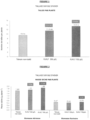
- the FLM17 extract obtained in Example 1 causes a stimulation of winter wheat tillering by an increase in the number of tillers and an increase in total biomass.
- Seeds of winter wheat ( Triticum aestivum ), cv. Rubisko, were sown in opaque black boxes containing vermiculite. Immediately after sowing, the substrate was watered and the boxes were protected from light for 2 days. The seedlings were then moved and kept in a growth chamber for 5 days until transplanting.
- Hoagland Solution Untreated Witness or TNT
- the statistical processing of the data collected for this test was carried out using R Studio software.
- the alpha threshold used in the analyses of variance (ANOVA) and post-hoc tests (Student-Newman-Keuls, SNK) was 5%.
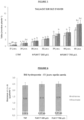
- the average number of tillers per plant of the treated modalities was generally higher than that of the untreated control from the first count, where 41% of the treated plants had tillered (both doses combined) compared to only 17% for the untreated control ( Figure 3 ). This gap continued until the last count, which took place the day before the intermediate harvest.
- nodal roots in the vegetative phase is strongly correlated with the number of tillers developed by some cereals because they are important for the physical and nutritional support of plants.
- Seminal roots are also linked to the uptake of nutrients and water, contributing directly to the overall nutrition of plants ( NAKHFOROOSH et al., Wheat root diversity and root functional characterization, 2014 ; ROGERS & BENFEY, Regulation ofplant root system architecture: implications for crop advancement, 2015 ).
- the FLM17 extract obtained in Example 1 causes a stimulation of winter wheat tillering by an increase in the number of tillers, an acceleration of tillering dynamics and an increase in total biomass.
- Seeds of winter wheat ( Triticum aestivum ), cv. Rubisko, were sown in opaque black boxes containing vermiculite. Immediately after sowing, the substrate was watered with water and the boxes were protected from light for 2 days. The seedlings were then moved and kept in a growth chamber for 5 days until transplanting.
- the nutrient solution was produced according to the classic Hoagland recipe, adapted to the needs of the culture. A renewal of this solution for all the pots, as well as the liquid supply to the roots of the extracts "FLM17" and “FLM17 B” in the treated modalities (Table 4) took place every 2 days. ⁇ u>Table 4. ⁇ /u> Modalities tested on the hydroponic trial on winter soft wheat.
Landscapes
- Life Sciences & Earth Sciences (AREA)
- Chemical & Material Sciences (AREA)
- Soil Sciences (AREA)
- Organic Chemistry (AREA)
- Health & Medical Sciences (AREA)
- Environmental Sciences (AREA)
- Biochemistry (AREA)
- Engineering & Computer Science (AREA)
- Tropical Medicine & Parasitology (AREA)
- Pest Control & Pesticides (AREA)
- Biotechnology (AREA)
- Chemical Kinetics & Catalysis (AREA)
- General Chemical & Material Sciences (AREA)
- Microbiology (AREA)
- Molecular Biology (AREA)
- Fertilizers (AREA)
- Cultivation Of Plants (AREA)
- Breeding Of Plants And Reproduction By Means Of Culturing (AREA)
Claims (22)
- Verwendung eines mit Phycobiliproteinen angereicherten Extrakts als Dünger, wobei der mit Phycobiliproteinen angereicherte Extrakt durch (i) Ausfällung der Phycobiliproteine und (ii) eine Ultrafiltration der ausgefällten Phycobiliproteine erhalten wird.
- Verwendung nach Anspruch 1 zum Stimulieren der Bestockung einer Pflanze und/oder zum Stimulieren der Wurzelentwicklung einer Pflanze und/oder zum Stimulieren des Ertrags einer Pflanze.
- Verwendung nach einem der Ansprüche 1 bis 2, wobei die Pflanze zu der Ordnung der Monokotyledonen gehört, bevorzugt aus der Familie der Poaceae, bevorzugt die Pflanze aus Weizen, Reis, Gerste, Hafer, Roggen, Rohrzucker, Gras oder Mais ausgewählt ist.
- Verwendung nach einem der Ansprüche 1 bis 3, wobei der mit Phycobiliproteinen angereicherte Extrakt ein Extrakt aus Cyanobakterien, ein Extrakt aus Rhodophyceae, ein Extrakt aus Glaucocystophyceae oder ein Extrakt aus Cryptophyceae ist, bevorzugt ein Extrakt aus Cyanobakterien, bevorzugt ein Extrakt aus Cyanobakterien der Gattung Arthrospira, bevorzugt Arthrospira platensis.
- Verwendung nach einem der Ansprüche 1 bis 4, wobei die Trockenmasse an Phycobiliproteinen in dem Extrakt mindestens 10 % der Gesamtmasse des Trockenmaterials des Extrakts beträgt.
- Verwendung nach einem der Ansprüche 1 bis 5, wobei der mit Phycobiliproteinen angereicherte Extrakt in einer Menge, die ausreichend ist, um die Bestockung um mindestens 5 %, bevorzugt mindestens 10 %, mindestens 15 %, mindestens 20 %, mindestens 25 %, mindestens 30 %, mindestens 40 % zu erhöhen, auf den Boden aufgebracht wird.
- Verwendung nach einem der Ansprüche 1 bis 6, wobei der mit Phycobiliproteinen angereicherte Extrakt in einer Menge an Phycobiliproteinen, die von 0,1 bis 5 kg/ha geht, bevorzugt von 0,2 bis 3 kg/ha geht, bevorzugt ungefähr 1 kg/ha auf den Boden aufgebracht wird.
- Verwendung nach einem der Ansprüche 1 bis 7, wobei die Ausfällung der Proteine durch die Hinzufügung von Ammoniumsulfat bewirkt wird.
- Verwendung nach einem der Ansprüche 1 bis 8, wobei die Ultrafiltration der ausgefällten Phycobiliproteine auf einer Membran mit Porosität von ungefähr 1000 Da bewirkt wird.
- Verfahren zum Stimulieren der Bestockung und/oder der Wurzelentwicklung einer Pflanze, dadurch gekennzeichnet, dass es das Aufbringen einer wirksamen Menge eines mit Phycobiliproteinen angereicherten Extrakts auf den Boden umfasst, wobei der mit Phycobiliproteinen angereicherte Extrakt durch (i) Ausfällung der Phycobiliproteine und (ii) eine Ultrafiltration der ausgefällten Phycobiliproteine erhalten wird.
- Verfahren nach Anspruch 10, wobei die Pflanze zu der Ordnung der Monokotyledonen gehört, bevorzugt aus der Familie der Poaceae, bevorzugt die Pflanze aus Weizen, Reis, Gerste, Hafer, Roggen, Gras, Rohrzucker oder Mais ausgewählt ist.
- Verfahren nach einem der Ansprüche 10 bis 11, wobei der mit Phycobiliproteinen angereicherte Extrakt (i) ein Extrakt aus Cyanobakterien, wobei die Cyanobakterien bevorzugt aus der Gattung Arthrospira, bevorzugt Arthrospira platensis, sind, (ii) ein Extrakt aus Rhodophyceae oder (iii) ein Extrakt aus Glaucocystophyceae ist.
- Verfahren nach einem der Ansprüche 10 bis 12, wobei die Trockenmasse an Phycobiliproteinen in dem Extrakt mindestens 10 % der Gesamtmasse des Trockenmaterials des Extrakts beträgt.
- Verfahren nach einem der Ansprüche 10 bis 13, wobei der mit Phycobiliproteinen angereicherte Extrakt in einer Menge, die ausreichend ist, um die Bestockung um mindestens 5 %, bevorzugt mindestens 10 %, mindestens 15 %, mindestens 20 %, mindestens 25 %, mindestens 30 %, mindestens 40 % zu erhöhen, auf den Boden aufgebracht wird.
- Verfahren nach einem der Ansprüche 10 bis 14, wobei der mit Phycobiliproteinen angereicherte Extrakt in einer Menge an Phycobiliproteinen, die von 0,1 bis 5 kg/ha geht, bevorzugt von 0,2 bis 3 kg/ha geht, bevorzugt ungefähr 1 kg/ha auf den Boden aufgebracht wird.
- Verfahren nach einem der Ansprüche 10 bis 15, wobei die Ausfällung der Phycobiliproteine durch die Hinzufügung von Ammoniumsulfat bewirkt wird.
- Verfahren nach einem der Ansprüche 10 bis 16, wobei die Ultrafiltration der ausgefällten Phycobiliproteine auf einer Membran mit Porosität von ungefähr 1000 Da bewirkt wird.
- Düngemittelzusammensetzung, umfassend einen mit Phycobiliproteinen angereicherten Extrakt und (i) einen Zusatz und/oder (ii) einen anderen Dünger als Phycobiliproteine oder einen Extrakt, der diese enthält,
wobei der mit Phycobiliproteinen angereicherte Extrakt durch (i') Ausfällung der Phycobiliproteine und (ii') eine Ultrafiltration der ausgefällten Phycobiliproteine erhalten wird. - Düngemittelzusammensetzung nach Anspruch 18, wobei der Zusatz aus basischen mineralischen Zusätzen vom kalkhaltigen und/oder kalkhaltigen und magnesiumhaltigen Typ, humushaltigen Zusätzen vom Typ Kompost oder Hofdünger ausgewählt ist und/oder wobei der Dünger aus Harnstoff, Ammoniumsulfat, Ammoniumnitrat, Phosphat, Kaliumchlorid, Ammoniumsulfat, Magnesiumnitrat, Mangannitrat, Zinknitrat, Kupfernitrat, Phosphorsäure, Kaliumnitrat und Borsäure ausgewählt ist.
- Düngemittelzusammensetzung nach einem der Ansprüche 18 oder 19, wobei die Trockenmasse an Phycobiliproteinen in dem Extrakt mindestens 10 % der Gesamtmasse des Trockenmaterials des Extrakts beträgt.
- Düngemittelzusammensetzung nach einem der Ansprüche 18 bis 20, wobei die Ausfällung der Phycobiliproteine durch die Hinzufügung von Ammoniumsulfat bewirkt wird.
- Düngemittelzusammensetzung nach einem der Ansprüche 18 bis 21, wobei die Ultrafiltration der ausgefällten Phycobiliproteine auf einer Membran mit Porosität von ungefähr 1000 Da bewirkt wird.
Priority Applications (2)
| Application Number | Priority Date | Filing Date | Title |
|---|---|---|---|
| MA51142A MA51142B1 (fr) | 2017-12-11 | 2018-12-10 | Utilisation de phycobiliprotéines ou d'un extrait en contenant comme engrais |
| EP24193941.2A EP4434959A3 (de) | 2017-12-11 | 2018-12-10 | Verwendung von phycobiliproteinen oder eines extrakts, der als düngemittel enthält |
Applications Claiming Priority (2)
| Application Number | Priority Date | Filing Date | Title |
|---|---|---|---|
| FR1761954A FR3074801B1 (fr) | 2017-12-11 | 2017-12-11 | Utilisation de phycobiliproteines ou d'un extrait en contenant comme engrais |
| PCT/FR2018/053166 WO2019115921A1 (fr) | 2017-12-11 | 2018-12-10 | Utilisation de phycobiliprotéines ou d'un extrait en contenant comme engrais |
Related Child Applications (2)
| Application Number | Title | Priority Date | Filing Date |
|---|---|---|---|
| EP24193941.2A Division EP4434959A3 (de) | 2017-12-11 | 2018-12-10 | Verwendung von phycobiliproteinen oder eines extrakts, der als düngemittel enthält |
| EP24193941.2A Division-Into EP4434959A3 (de) | 2017-12-11 | 2018-12-10 | Verwendung von phycobiliproteinen oder eines extrakts, der als düngemittel enthält |
Publications (3)
| Publication Number | Publication Date |
|---|---|
| EP3724152A1 EP3724152A1 (de) | 2020-10-21 |
| EP3724152C0 EP3724152C0 (de) | 2024-10-16 |
| EP3724152B1 true EP3724152B1 (de) | 2024-10-16 |
Family
ID=61802084
Family Applications (2)
| Application Number | Title | Priority Date | Filing Date |
|---|---|---|---|
| EP18833276.1A Active EP3724152B1 (de) | 2017-12-11 | 2018-12-10 | Verwendung eines an phycobiliproteinen eingereicherten extrakts als düngemittel |
| EP24193941.2A Pending EP4434959A3 (de) | 2017-12-11 | 2018-12-10 | Verwendung von phycobiliproteinen oder eines extrakts, der als düngemittel enthält |
Family Applications After (1)
| Application Number | Title | Priority Date | Filing Date |
|---|---|---|---|
| EP24193941.2A Pending EP4434959A3 (de) | 2017-12-11 | 2018-12-10 | Verwendung von phycobiliproteinen oder eines extrakts, der als düngemittel enthält |
Country Status (10)
| Country | Link |
|---|---|
| US (1) | US11440855B2 (de) |
| EP (2) | EP3724152B1 (de) |
| AR (1) | AR113924A1 (de) |
| CA (1) | CA3085329A1 (de) |
| ES (1) | ES3004535T3 (de) |
| FR (1) | FR3074801B1 (de) |
| MA (2) | MA71263A (de) |
| UY (1) | UY38002A (de) |
| WO (1) | WO2019115921A1 (de) |
| ZA (1) | ZA202004248B (de) |
Citations (1)
| Publication number | Priority date | Publication date | Assignee | Title |
|---|---|---|---|---|
| WO2020102673A1 (en) * | 2018-11-17 | 2020-05-22 | Back of the Yards Algae Sciences LLC | Purification of algal extracts and their applications |
Family Cites Families (8)
| Publication number | Priority date | Publication date | Assignee | Title |
|---|---|---|---|---|
| JPH0616519A (ja) * | 1992-07-02 | 1994-01-25 | Dainippon Ink & Chem Inc | 農園芸用肥料 |
| ES2193845B1 (es) * | 2001-07-16 | 2005-03-01 | Seaweed Canarias, S.L. | Procedimiento para la obtencion de un multiextracto para aplicacion en agroecosistemas. |
| WO2008144583A1 (en) * | 2007-05-16 | 2008-11-27 | Arizona Board Of Regents | Advanced algal photosynthesis-driven bioremediation coupled with renewable biomass and bioenergy production |
| FR2954939B1 (fr) * | 2010-01-04 | 2014-02-07 | Timac Agro Internat | Nouveaux composes phosphates et leur utilisation en tant qu'engrais |
| FR3012445B1 (fr) * | 2013-10-28 | 2015-12-04 | Rawya Lotfy Mansour | Composition pour fertiliser une terre agricole, un procede de fabrication de la composition et l'utilisation de ladite composition |
| WO2016164819A2 (en) * | 2015-04-08 | 2016-10-13 | Terra Biologics Llc | Cyanobacterium treated monocot plant seeds and related methods |
| CN105016907B (zh) * | 2015-08-18 | 2018-05-04 | 崔明华 | 一种绿色高效多功能叶面肥及其制法 |
| CN106542885A (zh) * | 2016-10-18 | 2017-03-29 | 刘桂礼 | 一种绿色叶面肥料 |
-
2017
- 2017-12-11 FR FR1761954A patent/FR3074801B1/fr active Active
-
2018
- 2018-12-07 UY UY0001038002A patent/UY38002A/es not_active Application Discontinuation
- 2018-12-10 AR ARP180103602A patent/AR113924A1/es active IP Right Grant
- 2018-12-10 CA CA3085329A patent/CA3085329A1/fr active Pending
- 2018-12-10 US US16/771,909 patent/US11440855B2/en active Active
- 2018-12-10 MA MA71263A patent/MA71263A/fr unknown
- 2018-12-10 MA MA51142A patent/MA51142B1/fr unknown
- 2018-12-10 EP EP18833276.1A patent/EP3724152B1/de active Active
- 2018-12-10 EP EP24193941.2A patent/EP4434959A3/de active Pending
- 2018-12-10 ES ES18833276T patent/ES3004535T3/es active Active
- 2018-12-10 WO PCT/FR2018/053166 patent/WO2019115921A1/fr not_active Ceased
-
2020
- 2020-07-10 ZA ZA2020/04248A patent/ZA202004248B/en unknown
Patent Citations (1)
| Publication number | Priority date | Publication date | Assignee | Title |
|---|---|---|---|---|
| WO2020102673A1 (en) * | 2018-11-17 | 2020-05-22 | Back of the Yards Algae Sciences LLC | Purification of algal extracts and their applications |
Non-Patent Citations (4)
| Title |
|---|
| DATABASE BIOSIS [online] BIOSCIENCES INFORMATION SERVICE, PHILADELPHIA, PA, US; February 2018 (2018-02-01), MOGOR ATILA FRANCISCO ET AL: "Biostimulant properties of cyanobacterial hydrolysate related to polyamines", XP002783534, Database accession no. PREV201800421835 * |
| DATABASE BIOSIS [online] BIOSCIENCES INFORMATION SERVICE, PHILADELPHIA, PA, US; July 2005 (2005-07-01), SINHA R P ET AL: "Ultraviolet-B-induced destruction of phycobiliproteins in cyanobacteria", XP002789814, Database accession no. PREV200600192158 * |
| JOURNAL OF APPLIED PHYCOLOGY, vol. 30, no. 1, February 2018 (2018-02-01), pages 453 - 460, ISSN: 0921-8971(print), DOI: 10.1007/S10811-017-1242-Z * |
| SINHA R P ET AL: "Ultraviolet-B-induced destruction of phycobiliproteins in cyanobacteria", PHYSIOLOGY AND MOLECULAR BIOLOGY OF PLANTS, vol. 11, no. 2, July 2005 (2005-07-01), pages 313 - 319, ISSN: 0971-5894 * |
Also Published As
| Publication number | Publication date |
|---|---|
| ZA202004248B (en) | 2021-09-29 |
| WO2019115921A1 (fr) | 2019-06-20 |
| EP3724152C0 (de) | 2024-10-16 |
| ES3004535T3 (en) | 2025-03-12 |
| EP3724152A1 (de) | 2020-10-21 |
| UY38002A (es) | 2019-07-31 |
| BR112020011737A2 (pt) | 2020-11-17 |
| EP4434959A2 (de) | 2024-09-25 |
| AR113924A1 (es) | 2020-07-01 |
| FR3074801B1 (fr) | 2020-10-02 |
| MA71263A (fr) | 2025-04-30 |
| CA3085329A1 (fr) | 2019-06-20 |
| MA51142A (fr) | 2021-03-17 |
| MA51142B1 (fr) | 2025-03-28 |
| EP4434959A3 (de) | 2025-01-08 |
| FR3074801A1 (fr) | 2019-06-14 |
| US20210070670A1 (en) | 2021-03-11 |
| US11440855B2 (en) | 2022-09-13 |
Similar Documents
| Publication | Publication Date | Title |
|---|---|---|
| CN109456105A (zh) | 一种缓解茄科作物连作障碍的微生物菌剂制备及使用方法 | |
| EP3066925B1 (de) | Zusammensetzung für den landwirtschaftlichen einsatz zum stimulieren des stickstoff-stoffwechsels von pflanzen, die ein algenextrakt vom typ laminaria und glutamatsäure umfasst, entsprechende verfahren und entsprechende anwendungen | |
| CN107904191A (zh) | 根瘤菌v2‑2 及其应用 | |
| CN107176865A (zh) | 海藻‑蚯蚓水解液高效生物活性增甜液肥制备及使用方法 | |
| Ikhtiyar et al. | Determination of feed quality and mallow organic residues | |
| CA2842955C (fr) | Utilisation des ulvanes comme eliciteurs des mecanismes d'absorption de l'azote et de la synthese proteique | |
| US9056265B2 (en) | Isolated bioactive compounds and method of use | |
| Criollo et al. | The effect of three liquid bio-fertilizers in the production of lettuce (Lactuca sativa L.) and cabbage (Brassica oleracea L. var. capitata) | |
| EP3724152B1 (de) | Verwendung eines an phycobiliproteinen eingereicherten extrakts als düngemittel | |
| US20190208789A1 (en) | Compositions and methods for enhancing plant growth | |
| EP0884293B1 (de) | Düngemittelzusammensetzungen enthaltend natürliche oder synthetische Aminopurinderivate oder Algenextrakte, die diese Produkte enthalten zusammen mit einer Kalziumquelle | |
| CN109804962B (zh) | 一种水产健康生态养殖调水方法 | |
| WO2023057375A1 (fr) | Composition comprenant une souche de mitsuaria noduli | |
| WO2000073244A1 (fr) | La composition de l'engrais biologiquement actif | |
| CN111606742A (zh) | 一种冬枣专用生物源菌肥体系及其使用方法 | |
| EP3340794B1 (de) | Verwendung von pjorotanninen als stimulatoren von mykorrhiza- und rhizopous- symbiose | |
| EP2211624A1 (de) | Verwendung von huminsubstanzen als aktivatoren für molekulare wirkstoffe mit spezifität für die pflanzliche eisenabsorption | |
| CN109956832A (zh) | 一种精制有机肥及其制备方法和应用 | |
| BR112020011737B1 (pt) | Uso de ficobiliproteínas ou um extrato contendo as mesmas como fertilizante | |
| KR20230106953A (ko) | 환경 친화적 재배방법 | |
| KR20240019878A (ko) | 생태계 교란과 유해 및 무용 민물어류를 이용한 액상비료 및 그의 제조방법 | |
| Sambo et al. | INFLUENCE OF CHLORELLA VULGARIS ON THE GROWTH, BIOMASS AND YIELD PARAMETERS OF MAIZE | |
| RU2528711C1 (ru) | Способ получения почвосмеси для проращивания семян и развития саженцев | |
| BR102019006567A2 (pt) | hidrólise enzimática da biomassa de microalga e obtenção de produto à base de aminoácidos livres para uso agrícola | |
| FR3040261A1 (fr) | Utilisation de phlorotannins comme stimulant des symbioses mycorhizienne et rhizobienne |
Legal Events
| Date | Code | Title | Description |
|---|---|---|---|
| STAA | Information on the status of an ep patent application or granted ep patent |
Free format text: STATUS: UNKNOWN |
|
| STAA | Information on the status of an ep patent application or granted ep patent |
Free format text: STATUS: THE INTERNATIONAL PUBLICATION HAS BEEN MADE |
|
| PUAI | Public reference made under article 153(3) epc to a published international application that has entered the european phase |
Free format text: ORIGINAL CODE: 0009012 |
|
| STAA | Information on the status of an ep patent application or granted ep patent |
Free format text: STATUS: REQUEST FOR EXAMINATION WAS MADE |
|
| 17P | Request for examination filed |
Effective date: 20200630 |
|
| AK | Designated contracting states |
Kind code of ref document: A1 Designated state(s): AL AT BE BG CH CY CZ DE DK EE ES FI FR GB GR HR HU IE IS IT LI LT LU LV MC MK MT NL NO PL PT RO RS SE SI SK SM TR |
|
| AX | Request for extension of the european patent |
Extension state: BA ME |
|
| DAX | Request for extension of the european patent (deleted) | ||
| RAV | Requested validation state of the european patent: fee paid |
Extension state: MA Effective date: 20200630 |
|
| RIN1 | Information on inventor provided before grant (corrected) |
Inventor name: VILLAR, LARISSA Inventor name: PEREIRA VIEIRA DEVAULT, MARIANA, CAROLINA Inventor name: CRUZ, FLORENCE Inventor name: YVIN, JEAN-CLAUDE |
|
| STAA | Information on the status of an ep patent application or granted ep patent |
Free format text: STATUS: EXAMINATION IS IN PROGRESS |
|
| 17Q | First examination report despatched |
Effective date: 20230112 |
|
| GRAP | Despatch of communication of intention to grant a patent |
Free format text: ORIGINAL CODE: EPIDOSNIGR1 |
|
| STAA | Information on the status of an ep patent application or granted ep patent |
Free format text: STATUS: GRANT OF PATENT IS INTENDED |
|
| INTG | Intention to grant announced |
Effective date: 20240611 |
|
| GRAS | Grant fee paid |
Free format text: ORIGINAL CODE: EPIDOSNIGR3 |
|
| GRAA | (expected) grant |
Free format text: ORIGINAL CODE: 0009210 |
|
| STAA | Information on the status of an ep patent application or granted ep patent |
Free format text: STATUS: THE PATENT HAS BEEN GRANTED |
|
| AK | Designated contracting states |
Kind code of ref document: B1 Designated state(s): AL AT BE BG CH CY CZ DE DK EE ES FI FR GB GR HR HU IE IS IT LI LT LU LV MC MK MT NL NO PL PT RO RS SE SI SK SM TR |
|
| REG | Reference to a national code |
Ref country code: GB Ref legal event code: FG4D Free format text: NOT ENGLISH |
|
| REG | Reference to a national code |
Ref country code: CH Ref legal event code: EP Ref country code: DE Ref legal event code: R096 Ref document number: 602018075581 Country of ref document: DE |
|
| REG | Reference to a national code |
Ref country code: IE Ref legal event code: FG4D Free format text: LANGUAGE OF EP DOCUMENT: FRENCH |
|
| U01 | Request for unitary effect filed |
Effective date: 20241108 |
|
| U07 | Unitary effect registered |
Designated state(s): AT BE BG DE DK EE FI FR IT LT LU LV MT NL PT RO SE SI Effective date: 20241119 |
|
| U20 | Renewal fee for the european patent with unitary effect paid |
Year of fee payment: 7 Effective date: 20241220 |
|
| REG | Reference to a national code |
Ref country code: ES Ref legal event code: FG2A Ref document number: 3004535 Country of ref document: ES Kind code of ref document: T3 Effective date: 20250312 |
|
| REG | Reference to a national code |
Ref country code: MA Ref legal event code: VAGR Ref document number: 51142 Country of ref document: MA Kind code of ref document: B1 |
|
| PG25 | Lapsed in a contracting state [announced via postgrant information from national office to epo] |
Ref country code: HR Free format text: LAPSE BECAUSE OF FAILURE TO SUBMIT A TRANSLATION OF THE DESCRIPTION OR TO PAY THE FEE WITHIN THE PRESCRIBED TIME-LIMIT Effective date: 20241016 Ref country code: IS Free format text: LAPSE BECAUSE OF FAILURE TO SUBMIT A TRANSLATION OF THE DESCRIPTION OR TO PAY THE FEE WITHIN THE PRESCRIBED TIME-LIMIT Effective date: 20250216 |
|
| PG25 | Lapsed in a contracting state [announced via postgrant information from national office to epo] |
Ref country code: NO Free format text: LAPSE BECAUSE OF FAILURE TO SUBMIT A TRANSLATION OF THE DESCRIPTION OR TO PAY THE FEE WITHIN THE PRESCRIBED TIME-LIMIT Effective date: 20250116 |
|
| PG25 | Lapsed in a contracting state [announced via postgrant information from national office to epo] |
Ref country code: GR Free format text: LAPSE BECAUSE OF FAILURE TO SUBMIT A TRANSLATION OF THE DESCRIPTION OR TO PAY THE FEE WITHIN THE PRESCRIBED TIME-LIMIT Effective date: 20250117 |
|
| PGFP | Annual fee paid to national office [announced via postgrant information from national office to epo] |
Ref country code: CH Payment date: 20250101 Year of fee payment: 7 |
|
| PG25 | Lapsed in a contracting state [announced via postgrant information from national office to epo] |
Ref country code: PL Free format text: LAPSE BECAUSE OF FAILURE TO SUBMIT A TRANSLATION OF THE DESCRIPTION OR TO PAY THE FEE WITHIN THE PRESCRIBED TIME-LIMIT Effective date: 20241016 |
|
| PG25 | Lapsed in a contracting state [announced via postgrant information from national office to epo] |
Ref country code: RS Free format text: LAPSE BECAUSE OF FAILURE TO SUBMIT A TRANSLATION OF THE DESCRIPTION OR TO PAY THE FEE WITHIN THE PRESCRIBED TIME-LIMIT Effective date: 20250116 |
|
| PG25 | Lapsed in a contracting state [announced via postgrant information from national office to epo] |
Ref country code: SM Free format text: LAPSE BECAUSE OF FAILURE TO SUBMIT A TRANSLATION OF THE DESCRIPTION OR TO PAY THE FEE WITHIN THE PRESCRIBED TIME-LIMIT Effective date: 20241016 |
|
| PG25 | Lapsed in a contracting state [announced via postgrant information from national office to epo] |
Ref country code: MC Free format text: LAPSE BECAUSE OF FAILURE TO SUBMIT A TRANSLATION OF THE DESCRIPTION OR TO PAY THE FEE WITHIN THE PRESCRIBED TIME-LIMIT Effective date: 20241016 |
|
| PG25 | Lapsed in a contracting state [announced via postgrant information from national office to epo] |
Ref country code: SK Free format text: LAPSE BECAUSE OF FAILURE TO SUBMIT A TRANSLATION OF THE DESCRIPTION OR TO PAY THE FEE WITHIN THE PRESCRIBED TIME-LIMIT Effective date: 20241016 |
|
| PG25 | Lapsed in a contracting state [announced via postgrant information from national office to epo] |
Ref country code: CZ Free format text: LAPSE BECAUSE OF FAILURE TO SUBMIT A TRANSLATION OF THE DESCRIPTION OR TO PAY THE FEE WITHIN THE PRESCRIBED TIME-LIMIT Effective date: 20241016 |
|
| PLBE | No opposition filed within time limit |
Free format text: ORIGINAL CODE: 0009261 |
|
| STAA | Information on the status of an ep patent application or granted ep patent |
Free format text: STATUS: NO OPPOSITION FILED WITHIN TIME LIMIT |
|
| 26N | No opposition filed |
Effective date: 20250717 |
|
| GBPC | Gb: european patent ceased through non-payment of renewal fee |
Effective date: 20250116 |
|
| PG25 | Lapsed in a contracting state [announced via postgrant information from national office to epo] |
Ref country code: GB Free format text: LAPSE BECAUSE OF NON-PAYMENT OF DUE FEES Effective date: 20250116 |
|
| PG25 | Lapsed in a contracting state [announced via postgrant information from national office to epo] |
Ref country code: IE Free format text: LAPSE BECAUSE OF NON-PAYMENT OF DUE FEES Effective date: 20241210 |
|
| VSFP | Annual fee paid to validation state [announced via postgrant information from national office to epo] |
Ref country code: MA Payment date: 20251104 Year of fee payment: 8 Ref country code: MA Payment date: 20250306 Year of fee payment: 7 |
|
| REG | Reference to a national code |
Ref country code: CH Ref legal event code: U11 Free format text: ST27 STATUS EVENT CODE: U-0-0-U10-U11 (AS PROVIDED BY THE NATIONAL OFFICE) Effective date: 20260101 |
|
| U20 | Renewal fee for the european patent with unitary effect paid |
Year of fee payment: 8 Effective date: 20251222 |
|
| PGFP | Annual fee paid to national office [announced via postgrant information from national office to epo] |
Ref country code: ES Payment date: 20260112 Year of fee payment: 8 |