EP3720904B1 - Automotive components comprising ceramics and methods of forming same - Google Patents
Automotive components comprising ceramics and methods of forming same Download PDFInfo
- Publication number
- EP3720904B1 EP3720904B1 EP18826779.3A EP18826779A EP3720904B1 EP 3720904 B1 EP3720904 B1 EP 3720904B1 EP 18826779 A EP18826779 A EP 18826779A EP 3720904 B1 EP3720904 B1 EP 3720904B1
- Authority
- EP
- European Patent Office
- Prior art keywords
- resin
- paste
- veneer
- automotive component
- component
- Prior art date
- Legal status (The legal status is an assumption and is not a legal conclusion. Google has not performed a legal analysis and makes no representation as to the accuracy of the status listed.)
- Active
Links
Images




Classifications
-
- B—PERFORMING OPERATIONS; TRANSPORTING
- B32—LAYERED PRODUCTS
- B32B—LAYERED PRODUCTS, i.e. PRODUCTS BUILT-UP OF STRATA OF FLAT OR NON-FLAT, e.g. CELLULAR OR HONEYCOMB, FORM
- B32B1/00—Layered products having a non-planar shape
-
- B—PERFORMING OPERATIONS; TRANSPORTING
- B32—LAYERED PRODUCTS
- B32B—LAYERED PRODUCTS, i.e. PRODUCTS BUILT-UP OF STRATA OF FLAT OR NON-FLAT, e.g. CELLULAR OR HONEYCOMB, FORM
- B32B15/00—Layered products comprising a layer of metal
- B32B15/20—Layered products comprising a layer of metal comprising aluminium or copper
-
- B—PERFORMING OPERATIONS; TRANSPORTING
- B32—LAYERED PRODUCTS
- B32B—LAYERED PRODUCTS, i.e. PRODUCTS BUILT-UP OF STRATA OF FLAT OR NON-FLAT, e.g. CELLULAR OR HONEYCOMB, FORM
- B32B21/00—Layered products comprising a layer of wood, e.g. wood board, veneer, wood particle board
- B32B21/04—Layered products comprising a layer of wood, e.g. wood board, veneer, wood particle board comprising wood as the main or only constituent of a layer, which is next to another layer of the same or of a different material
- B32B21/042—Layered products comprising a layer of wood, e.g. wood board, veneer, wood particle board comprising wood as the main or only constituent of a layer, which is next to another layer of the same or of a different material of wood
-
- B—PERFORMING OPERATIONS; TRANSPORTING
- B32—LAYERED PRODUCTS
- B32B—LAYERED PRODUCTS, i.e. PRODUCTS BUILT-UP OF STRATA OF FLAT OR NON-FLAT, e.g. CELLULAR OR HONEYCOMB, FORM
- B32B21/00—Layered products comprising a layer of wood, e.g. wood board, veneer, wood particle board
- B32B21/10—Next to a fibrous or filamentary layer
-
- B—PERFORMING OPERATIONS; TRANSPORTING
- B32—LAYERED PRODUCTS
- B32B—LAYERED PRODUCTS, i.e. PRODUCTS BUILT-UP OF STRATA OF FLAT OR NON-FLAT, e.g. CELLULAR OR HONEYCOMB, FORM
- B32B21/00—Layered products comprising a layer of wood, e.g. wood board, veneer, wood particle board
- B32B21/14—Layered products comprising a layer of wood, e.g. wood board, veneer, wood particle board comprising wood board or veneer
-
- B—PERFORMING OPERATIONS; TRANSPORTING
- B32—LAYERED PRODUCTS
- B32B—LAYERED PRODUCTS, i.e. PRODUCTS BUILT-UP OF STRATA OF FLAT OR NON-FLAT, e.g. CELLULAR OR HONEYCOMB, FORM
- B32B27/00—Layered products comprising a layer of synthetic resin
- B32B27/06—Layered products comprising a layer of synthetic resin as the main or only constituent of a layer, which is next to another layer of the same or of a different material
-
- B—PERFORMING OPERATIONS; TRANSPORTING
- B32—LAYERED PRODUCTS
- B32B—LAYERED PRODUCTS, i.e. PRODUCTS BUILT-UP OF STRATA OF FLAT OR NON-FLAT, e.g. CELLULAR OR HONEYCOMB, FORM
- B32B27/00—Layered products comprising a layer of synthetic resin
- B32B27/38—Layered products comprising a layer of synthetic resin comprising epoxy resins
-
- B—PERFORMING OPERATIONS; TRANSPORTING
- B32—LAYERED PRODUCTS
- B32B—LAYERED PRODUCTS, i.e. PRODUCTS BUILT-UP OF STRATA OF FLAT OR NON-FLAT, e.g. CELLULAR OR HONEYCOMB, FORM
- B32B3/00—Layered products comprising a layer with external or internal discontinuities or unevennesses, or a layer of non-planar shape; Layered products comprising a layer having particular features of form
- B32B3/02—Layered products comprising a layer with external or internal discontinuities or unevennesses, or a layer of non-planar shape; Layered products comprising a layer having particular features of form characterised by features of form at particular places, e.g. in edge regions
- B32B3/08—Layered products comprising a layer with external or internal discontinuities or unevennesses, or a layer of non-planar shape; Layered products comprising a layer having particular features of form characterised by features of form at particular places, e.g. in edge regions characterised by added members at particular parts
-
- B—PERFORMING OPERATIONS; TRANSPORTING
- B32—LAYERED PRODUCTS
- B32B—LAYERED PRODUCTS, i.e. PRODUCTS BUILT-UP OF STRATA OF FLAT OR NON-FLAT, e.g. CELLULAR OR HONEYCOMB, FORM
- B32B3/00—Layered products comprising a layer with external or internal discontinuities or unevennesses, or a layer of non-planar shape; Layered products comprising a layer having particular features of form
- B32B3/10—Layered products comprising a layer with external or internal discontinuities or unevennesses, or a layer of non-planar shape; Layered products comprising a layer having particular features of form characterised by a discontinuous layer, i.e. formed of separate pieces of material
-
- B—PERFORMING OPERATIONS; TRANSPORTING
- B32—LAYERED PRODUCTS
- B32B—LAYERED PRODUCTS, i.e. PRODUCTS BUILT-UP OF STRATA OF FLAT OR NON-FLAT, e.g. CELLULAR OR HONEYCOMB, FORM
- B32B3/00—Layered products comprising a layer with external or internal discontinuities or unevennesses, or a layer of non-planar shape; Layered products comprising a layer having particular features of form
- B32B3/26—Layered products comprising a layer with external or internal discontinuities or unevennesses, or a layer of non-planar shape; Layered products comprising a layer having particular features of form characterised by a particular shape of the outline of the cross-section of a continuous layer; characterised by a layer with cavities or internal voids ; characterised by an apertured layer
- B32B3/266—Layered products comprising a layer with external or internal discontinuities or unevennesses, or a layer of non-planar shape; Layered products comprising a layer having particular features of form characterised by a particular shape of the outline of the cross-section of a continuous layer; characterised by a layer with cavities or internal voids ; characterised by an apertured layer characterised by an apertured layer, the apertures going through the whole thickness of the layer, e.g. expanded metal, perforated layer, slit layer regular cells B32B3/12
-
- B—PERFORMING OPERATIONS; TRANSPORTING
- B32—LAYERED PRODUCTS
- B32B—LAYERED PRODUCTS, i.e. PRODUCTS BUILT-UP OF STRATA OF FLAT OR NON-FLAT, e.g. CELLULAR OR HONEYCOMB, FORM
- B32B3/00—Layered products comprising a layer with external or internal discontinuities or unevennesses, or a layer of non-planar shape; Layered products comprising a layer having particular features of form
- B32B3/26—Layered products comprising a layer with external or internal discontinuities or unevennesses, or a layer of non-planar shape; Layered products comprising a layer having particular features of form characterised by a particular shape of the outline of the cross-section of a continuous layer; characterised by a layer with cavities or internal voids ; characterised by an apertured layer
- B32B3/30—Layered products comprising a layer with external or internal discontinuities or unevennesses, or a layer of non-planar shape; Layered products comprising a layer having particular features of form characterised by a particular shape of the outline of the cross-section of a continuous layer; characterised by a layer with cavities or internal voids ; characterised by an apertured layer characterised by a layer formed with recesses or projections, e.g. hollows, grooves, protuberances, ribs
-
- B—PERFORMING OPERATIONS; TRANSPORTING
- B32—LAYERED PRODUCTS
- B32B—LAYERED PRODUCTS, i.e. PRODUCTS BUILT-UP OF STRATA OF FLAT OR NON-FLAT, e.g. CELLULAR OR HONEYCOMB, FORM
- B32B5/00—Layered products characterised by the non- homogeneity or physical structure, i.e. comprising a fibrous, filamentary, particulate or foam layer; Layered products characterised by having a layer differing constitutionally or physically in different parts
- B32B5/02—Layered products characterised by the non- homogeneity or physical structure, i.e. comprising a fibrous, filamentary, particulate or foam layer; Layered products characterised by having a layer differing constitutionally or physically in different parts characterised by structural features of a fibrous or filamentary layer
-
- B—PERFORMING OPERATIONS; TRANSPORTING
- B32—LAYERED PRODUCTS
- B32B—LAYERED PRODUCTS, i.e. PRODUCTS BUILT-UP OF STRATA OF FLAT OR NON-FLAT, e.g. CELLULAR OR HONEYCOMB, FORM
- B32B9/00—Layered products comprising a layer of a particular substance not covered by groups B32B11/00 - B32B29/00
- B32B9/005—Layered products comprising a layer of a particular substance not covered by groups B32B11/00 - B32B29/00 comprising one layer of ceramic material, e.g. porcelain, ceramic tile
-
- B—PERFORMING OPERATIONS; TRANSPORTING
- B44—DECORATIVE ARTS
- B44C—PRODUCING DECORATIVE EFFECTS; MOSAICS; TARSIA WORK; PAPERHANGING
- B44C1/00—Processes, not specifically provided for elsewhere, for producing decorative surface effects
- B44C1/26—Inlaying with ornamental structures, e.g. niello work, tarsia work
-
- B—PERFORMING OPERATIONS; TRANSPORTING
- B44—DECORATIVE ARTS
- B44C—PRODUCING DECORATIVE EFFECTS; MOSAICS; TARSIA WORK; PAPERHANGING
- B44C3/00—Processes, not specifically provided for elsewhere, for producing ornamental structures
- B44C3/10—Producing and filling perforations, e.g. tarsia plates
-
- B—PERFORMING OPERATIONS; TRANSPORTING
- B60—VEHICLES IN GENERAL
- B60R—VEHICLES, VEHICLE FITTINGS, OR VEHICLE PARTS, NOT OTHERWISE PROVIDED FOR
- B60R13/00—Elements for body-finishing, identifying, or decorating; Arrangements or adaptations for advertising purposes
- B60R13/02—Internal Trim mouldings ; Internal Ledges; Wall liners for passenger compartments; Roof liners
-
- C—CHEMISTRY; METALLURGY
- C08—ORGANIC MACROMOLECULAR COMPOUNDS; THEIR PREPARATION OR CHEMICAL WORKING-UP; COMPOSITIONS BASED THEREON
- C08K—Use of inorganic or non-macromolecular organic substances as compounding ingredients
- C08K3/00—Use of inorganic substances as compounding ingredients
- C08K3/18—Oxygen-containing compounds, e.g. metal carbonyls
- C08K3/20—Oxides; Hydroxides
- C08K3/22—Oxides; Hydroxides of metals
-
- C—CHEMISTRY; METALLURGY
- C08—ORGANIC MACROMOLECULAR COMPOUNDS; THEIR PREPARATION OR CHEMICAL WORKING-UP; COMPOSITIONS BASED THEREON
- C08K—Use of inorganic or non-macromolecular organic substances as compounding ingredients
- C08K3/00—Use of inorganic substances as compounding ingredients
- C08K3/34—Silicon-containing compounds
- C08K3/346—Clay
-
- C—CHEMISTRY; METALLURGY
- C08—ORGANIC MACROMOLECULAR COMPOUNDS; THEIR PREPARATION OR CHEMICAL WORKING-UP; COMPOSITIONS BASED THEREON
- C08K—Use of inorganic or non-macromolecular organic substances as compounding ingredients
- C08K3/00—Use of inorganic substances as compounding ingredients
- C08K3/34—Silicon-containing compounds
- C08K3/36—Silica
-
- C—CHEMISTRY; METALLURGY
- C08—ORGANIC MACROMOLECULAR COMPOUNDS; THEIR PREPARATION OR CHEMICAL WORKING-UP; COMPOSITIONS BASED THEREON
- C08L—COMPOSITIONS OF MACROMOLECULAR COMPOUNDS
- C08L63/00—Compositions of epoxy resins; Compositions of derivatives of epoxy resins
-
- B—PERFORMING OPERATIONS; TRANSPORTING
- B32—LAYERED PRODUCTS
- B32B—LAYERED PRODUCTS, i.e. PRODUCTS BUILT-UP OF STRATA OF FLAT OR NON-FLAT, e.g. CELLULAR OR HONEYCOMB, FORM
- B32B15/00—Layered products comprising a layer of metal
- B32B15/04—Layered products comprising a layer of metal comprising metal as the main or only constituent of a layer, which is next to another layer of the same or of a different material
- B32B15/08—Layered products comprising a layer of metal comprising metal as the main or only constituent of a layer, which is next to another layer of the same or of a different material of synthetic resin
- B32B15/092—Layered products comprising a layer of metal comprising metal as the main or only constituent of a layer, which is next to another layer of the same or of a different material of synthetic resin comprising epoxy resins
-
- B—PERFORMING OPERATIONS; TRANSPORTING
- B32—LAYERED PRODUCTS
- B32B—LAYERED PRODUCTS, i.e. PRODUCTS BUILT-UP OF STRATA OF FLAT OR NON-FLAT, e.g. CELLULAR OR HONEYCOMB, FORM
- B32B15/00—Layered products comprising a layer of metal
- B32B15/04—Layered products comprising a layer of metal comprising metal as the main or only constituent of a layer, which is next to another layer of the same or of a different material
- B32B15/10—Layered products comprising a layer of metal comprising metal as the main or only constituent of a layer, which is next to another layer of the same or of a different material of wood
-
- B—PERFORMING OPERATIONS; TRANSPORTING
- B32—LAYERED PRODUCTS
- B32B—LAYERED PRODUCTS, i.e. PRODUCTS BUILT-UP OF STRATA OF FLAT OR NON-FLAT, e.g. CELLULAR OR HONEYCOMB, FORM
- B32B38/00—Ancillary operations in connection with laminating processes
- B32B38/0012—Mechanical treatment, e.g. roughening, deforming, stretching
- B32B2038/0016—Abrading
-
- B—PERFORMING OPERATIONS; TRANSPORTING
- B32—LAYERED PRODUCTS
- B32B—LAYERED PRODUCTS, i.e. PRODUCTS BUILT-UP OF STRATA OF FLAT OR NON-FLAT, e.g. CELLULAR OR HONEYCOMB, FORM
- B32B38/00—Ancillary operations in connection with laminating processes
- B32B2038/0052—Other operations not otherwise provided for
- B32B2038/0076—Curing, vulcanising, cross-linking
-
- B—PERFORMING OPERATIONS; TRANSPORTING
- B32—LAYERED PRODUCTS
- B32B—LAYERED PRODUCTS, i.e. PRODUCTS BUILT-UP OF STRATA OF FLAT OR NON-FLAT, e.g. CELLULAR OR HONEYCOMB, FORM
- B32B21/00—Layered products comprising a layer of wood, e.g. wood board, veneer, wood particle board
- B32B21/04—Layered products comprising a layer of wood, e.g. wood board, veneer, wood particle board comprising wood as the main or only constituent of a layer, which is next to another layer of the same or of a different material
- B32B21/08—Layered products comprising a layer of wood, e.g. wood board, veneer, wood particle board comprising wood as the main or only constituent of a layer, which is next to another layer of the same or of a different material of synthetic resin
-
- B—PERFORMING OPERATIONS; TRANSPORTING
- B32—LAYERED PRODUCTS
- B32B—LAYERED PRODUCTS, i.e. PRODUCTS BUILT-UP OF STRATA OF FLAT OR NON-FLAT, e.g. CELLULAR OR HONEYCOMB, FORM
- B32B2250/00—Layers arrangement
- B32B2250/03—3 layers
-
- B—PERFORMING OPERATIONS; TRANSPORTING
- B32—LAYERED PRODUCTS
- B32B—LAYERED PRODUCTS, i.e. PRODUCTS BUILT-UP OF STRATA OF FLAT OR NON-FLAT, e.g. CELLULAR OR HONEYCOMB, FORM
- B32B2255/00—Coating on the layer surface
- B32B2255/08—Coating on the layer surface on wood layer
-
- B—PERFORMING OPERATIONS; TRANSPORTING
- B32—LAYERED PRODUCTS
- B32B—LAYERED PRODUCTS, i.e. PRODUCTS BUILT-UP OF STRATA OF FLAT OR NON-FLAT, e.g. CELLULAR OR HONEYCOMB, FORM
- B32B2255/00—Coating on the layer surface
- B32B2255/10—Coating on the layer surface on synthetic resin layer or on natural or synthetic rubber layer
-
- B—PERFORMING OPERATIONS; TRANSPORTING
- B32—LAYERED PRODUCTS
- B32B—LAYERED PRODUCTS, i.e. PRODUCTS BUILT-UP OF STRATA OF FLAT OR NON-FLAT, e.g. CELLULAR OR HONEYCOMB, FORM
- B32B2255/00—Coating on the layer surface
- B32B2255/26—Polymeric coating
-
- B—PERFORMING OPERATIONS; TRANSPORTING
- B32—LAYERED PRODUCTS
- B32B—LAYERED PRODUCTS, i.e. PRODUCTS BUILT-UP OF STRATA OF FLAT OR NON-FLAT, e.g. CELLULAR OR HONEYCOMB, FORM
- B32B2262/00—Composition or structural features of fibres which form a fibrous or filamentary layer or are present as additives
- B32B2262/10—Inorganic fibres
- B32B2262/106—Carbon fibres, e.g. graphite fibres
-
- B—PERFORMING OPERATIONS; TRANSPORTING
- B32—LAYERED PRODUCTS
- B32B—LAYERED PRODUCTS, i.e. PRODUCTS BUILT-UP OF STRATA OF FLAT OR NON-FLAT, e.g. CELLULAR OR HONEYCOMB, FORM
- B32B2264/00—Composition or properties of particles which form a particulate layer or are present as additives
- B32B2264/10—Inorganic particles
- B32B2264/102—Oxide or hydroxide
-
- B—PERFORMING OPERATIONS; TRANSPORTING
- B32—LAYERED PRODUCTS
- B32B—LAYERED PRODUCTS, i.e. PRODUCTS BUILT-UP OF STRATA OF FLAT OR NON-FLAT, e.g. CELLULAR OR HONEYCOMB, FORM
- B32B2264/00—Composition or properties of particles which form a particulate layer or are present as additives
- B32B2264/10—Inorganic particles
- B32B2264/102—Oxide or hydroxide
- B32B2264/1023—Alumina
-
- B—PERFORMING OPERATIONS; TRANSPORTING
- B32—LAYERED PRODUCTS
- B32B—LAYERED PRODUCTS, i.e. PRODUCTS BUILT-UP OF STRATA OF FLAT OR NON-FLAT, e.g. CELLULAR OR HONEYCOMB, FORM
- B32B2264/00—Composition or properties of particles which form a particulate layer or are present as additives
- B32B2264/10—Inorganic particles
- B32B2264/102—Oxide or hydroxide
- B32B2264/1027—Clay
-
- B—PERFORMING OPERATIONS; TRANSPORTING
- B32—LAYERED PRODUCTS
- B32B—LAYERED PRODUCTS, i.e. PRODUCTS BUILT-UP OF STRATA OF FLAT OR NON-FLAT, e.g. CELLULAR OR HONEYCOMB, FORM
- B32B2264/00—Composition or properties of particles which form a particulate layer or are present as additives
- B32B2264/10—Inorganic particles
- B32B2264/104—Oxysalt, e.g. carbonate, sulfate, phosphate or nitrate particles
-
- B—PERFORMING OPERATIONS; TRANSPORTING
- B32—LAYERED PRODUCTS
- B32B—LAYERED PRODUCTS, i.e. PRODUCTS BUILT-UP OF STRATA OF FLAT OR NON-FLAT, e.g. CELLULAR OR HONEYCOMB, FORM
- B32B2305/00—Condition, form or state of the layers or laminate
- B32B2305/72—Cured, e.g. vulcanised, cross-linked
-
- B—PERFORMING OPERATIONS; TRANSPORTING
- B32—LAYERED PRODUCTS
- B32B—LAYERED PRODUCTS, i.e. PRODUCTS BUILT-UP OF STRATA OF FLAT OR NON-FLAT, e.g. CELLULAR OR HONEYCOMB, FORM
- B32B2311/00—Metals, their alloys or their compounds
- B32B2311/24—Aluminium
-
- B—PERFORMING OPERATIONS; TRANSPORTING
- B32—LAYERED PRODUCTS
- B32B—LAYERED PRODUCTS, i.e. PRODUCTS BUILT-UP OF STRATA OF FLAT OR NON-FLAT, e.g. CELLULAR OR HONEYCOMB, FORM
- B32B2605/00—Vehicles
- B32B2605/003—Interior finishings
-
- B—PERFORMING OPERATIONS; TRANSPORTING
- B32—LAYERED PRODUCTS
- B32B—LAYERED PRODUCTS, i.e. PRODUCTS BUILT-UP OF STRATA OF FLAT OR NON-FLAT, e.g. CELLULAR OR HONEYCOMB, FORM
- B32B2605/00—Vehicles
- B32B2605/08—Cars
-
- B—PERFORMING OPERATIONS; TRANSPORTING
- B32—LAYERED PRODUCTS
- B32B—LAYERED PRODUCTS, i.e. PRODUCTS BUILT-UP OF STRATA OF FLAT OR NON-FLAT, e.g. CELLULAR OR HONEYCOMB, FORM
- B32B2607/00—Walls, panels
-
- B—PERFORMING OPERATIONS; TRANSPORTING
- B60—VEHICLES IN GENERAL
- B60R—VEHICLES, VEHICLE FITTINGS, OR VEHICLE PARTS, NOT OTHERWISE PROVIDED FOR
- B60R13/00—Elements for body-finishing, identifying, or decorating; Arrangements or adaptations for advertising purposes
- B60R13/02—Internal Trim mouldings ; Internal Ledges; Wall liners for passenger compartments; Roof liners
- B60R2013/0281—Internal Trim mouldings ; Internal Ledges; Wall liners for passenger compartments; Roof liners made of a plurality of visible parts
-
- C—CHEMISTRY; METALLURGY
- C08—ORGANIC MACROMOLECULAR COMPOUNDS; THEIR PREPARATION OR CHEMICAL WORKING-UP; COMPOSITIONS BASED THEREON
- C08K—Use of inorganic or non-macromolecular organic substances as compounding ingredients
- C08K3/00—Use of inorganic substances as compounding ingredients
- C08K3/18—Oxygen-containing compounds, e.g. metal carbonyls
- C08K3/20—Oxides; Hydroxides
- C08K3/22—Oxides; Hydroxides of metals
- C08K2003/2227—Oxides; Hydroxides of metals of aluminium
Definitions
- the present invention relates to ceramic automotive components and methods of forming the same.
- the invention relates to the formation of porcelain inlays in veneers, e.g. of wood, in automotive trim components, such as panels and instrument panels.
- an automotive component having an inlay formed of a powder in a resin, wherein the powder is or comprises ceramic powder.
- the inventor has found that the problem of changing size during the firing process can be overcome by forming a paste with a powder (such as post-fired ceramics) in a resin, and introducing that as an inlay in a component.
- a powder such as post-fired ceramics
- the result has the appearance of inlaid porcelain piece, but it is recognised that the same solution would work with other powders (and that it could be used outside the automotive context).
- the inlay may be formed in recess having a depth of at least 1.2mm. This can ensure adhesion.
- the component may be trim.
- the component may be a trim panel, instrument panel or the like.
- the component may comprise a decorative veneer and the inlay may be provided in the veneer.
- the veneer may be a wood veneer, for example. Alternatively, it could be metal, plastic, composite (e.g. carbon fibre or the like), or any other suitable material.
- the veneer may be provided as part of a lamination pack, having a support, for attachment to a substrate. The veneer may be adhered to the support. The support may be adhered to the substrate. The recess may extend through the veneer into the support. The recess may extend through the veneer and the support into the substrate.
- the automotive component is preferably a component which is visible in use, and in particular a decorative component.
- the automotive component could be trim, e.g. a trim panel or instrument panel.
- the inlaying technique of the first aspect of the invention is particularly preferred and has the advantage of the component not changing size during firing, such that the inlay fits in the component without leaving gaps
- this method of forming components has a distinct advantage over a traditional process for forming porcelain items in that, when the components are smashed, if they are formed of a powder in a resin are shatterproof, and will not break into the sharp shards typical of broken ceramics.
- a component formed of powder in a resin will offer better performance in the event of a crash than a corresponding component formed of ceramic in the traditional manner.
- a large part (such as an instrument panel) formed from ceramic, or having a large inlay in ceramic, could break into large sharp parts in the event of a crash, which could be extremely hazardous.
- the component of the invention is also less fragile and therefore less likely to chip or crack.
- the powder may comprise alumina.
- the ceramic may be porcelain.
- the ceramic (e.g. porcelain) powder may be post-fired. Use of post-fired porcelain powder (or another ceramic) achieves the same appearance as a fired piece, which is quite different from the unfired porcelain.
- the resin may be an epoxy resin.
- the resin may be clear. This allows the colour (and shine) of the ceramic to be seen best.
- the resin may alternatively be coloured, and may be coloured by inclusion of a dye or pigment (i.e. deliberately coloured). This could produce an attractive appearance too. In either case, the resin can give the material a shine comparable to that of glazed porcelain.
- the component may be lacquered.
- the lacquer may be open pore or high gloss.
- An open pore lacquer allows heat to transfer easily to the porcelain, giving a "cold-to-touch" feel of a traditionally produced porcelain item.
- a high gloss lacquer enhances the visual appeal of the component.
- the lacquer can be polyurethane (which is typically clearer) or polyester.
- the component may comprise a layer of enamel paint on the powder in the resin, or on part thereof.
- the component may be a component of the interior of an automobile, i.e. the passenger compartment, in particular a visible component.
- a method of forming an inlay in an automotive component comprising mixing a ceramic powder into a resin to form a paste and introducing the paste into a recess in the component.
- the method may comprise forming a recess in the component, for example by milling.
- the recess may be formed in a decorative pattern.
- the recess may be formed in or through a veneer and in or through a laminate pack optionally into a substrate e.g. by milling.
- the method may comprise pouring or pressing the paste into the recess.
- the method may comprise over-filling the recess, such that the paste extends beyond the surface in which the recess is formed.
- the method may comprise removing bubbles from the paste in the recess. This may be done by vacuuming or shaking.
- the method may comprise allowing the paste to set, then smoothing the surface of the set paste.
- the set paste and the surrounding component may be smoothed to produce a flat surface.
- the smoothing may be by sanding.
- the method may comprise coating the smoothed surface of the set paste and optionally the surrounding component, e.g. the surrounding veneer, with a lacquer.
- the method may comprise painting the set paste with enamel paint prior to lacquering.
- the method may form an inlay according to the first aspect of the invention and may comprise any of the optional features associated therewith.
- the method may comprise removing bubbles from the paste. This may be done by vacuuming or shaking.
- the method may comprise allowing the paste to set, then smoothing the surface of the set paste.
- the set paste and any surrounding part of the component may be smoothed, optionally to produce a flat surface.
- the smoothing may be by sanding.
- the method may comprise coating the set paste, optionally the smoothed surface of the set paste (if smoothing as taken place) and optionally any surrounding part of the component with a lacquer.
- the method may comprise painting the set paste with enamel paint prior to lacquering.
- the method may comprise firing a ceramic and forming a powder from the post-fired ceramic (e.g. by grinding). This should be done prior to forming the paste.
- automobiles 1, such as that shown in figure 1 are made up of a number of different components, including trim panels.
- the automobile 1 of the invention comprises an instrument panel 2, shown in figure 2 , which includes a ceramic inlay 3 forming a decorative pattern.
- the instrument panel 2 is a passenger instrument panel and also comprises an aperture 14 for an air vent and an aperture 4 for a control for the air vent.
- the inlay 3 discussed below could be provided in another trim component, and indeed another component of the automobile 1, such as the door handle 5 shown in figure 1 , or a component of the passenger compartment 6, such as a gearknob (not shown), switchgear, or the like, could be formed of the material discussed below formed of a powder in a resin.
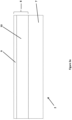
- the instrument panel 2 begins, as shown in figure 3a , as a substrate 7 for connection (e.g. by fasteners, clips or adhesive not shown) to an interior surface of the automobile 1, having a lamination pack 8 attached thereto.
- the lamination pack 8 comprises a veneer 9 (in this example formed of wood) adhered to a support 10, which in turn is attached (e.g. adhered) to the substrate 7.
- the substrate 7 may be formed of aluminium, with the support 10 formed of wood. But of course there are numerous alternatives, for example composites (e.g. a carbon fibre/plastics composite) could play this role.
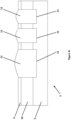
- recesses, or “trenches” 11 are milled into the "A" surface of the instrument panel 2 in the shape of the pattern shown in figure 2 .
- the recesses 11 are cut right through the lamination pack 8 into the substrate 7, to a depth of at least 1.2mm, for example 2mm or 3mm.
- a porcelain ceramic is prepared in the conventional manner, e.g. a quantity of "porcelain body" can be purchased from a vendor.
- the composition of the porcelain body does not appear at all critical, but suitable materials of porcelain body include feldspar, quartz alumina and kaolin.
- the porcelain body is then fired (for example at 1000 degrees C) in the normal way.
- post-fired porcelain could be purchased, from numerous suppliers, such as Wade Ceramics Limited of Stoke on Trent, UK. Indeed, factory seconds, or broken items could be purchased.
- the post-fired porcelain is then finely ground into a powder with an average particle size of around 0.1 microns.
- the ground powder of post-fired porcelain is then mixed with a clear epoxy resin at a ratio of around 1:1 to 1:3 Powder : Resin, to form a paste 12.
- a suitable resin is "Glasscast Clear Epoxy Surface Resin” available from Easy Composites Ltd of Stoke on Trent, UK.
- Other powders could be mixed with resin in the same way, for example, Alumina powder could be used.
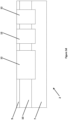
- the paste 12 formed of powdered post-fired porcelain in an epoxy resin is then poured or pressed (or a combination of both) depending on its viscosity into the recesses 11.
- the paste is poured or pressed in to the recesses in such a manner that it is over-filled, extending beyond the "A" surface. Then, the instrument panel 2 is vacuumed (using known apparatus for lamination), or shaken to remove bubbles from the paste 12, then allowed to air-cure.
- the entire "A" surface of the instrument panel 2 is sanded to smooth both the cured ceramic paste 12 and the veneer 9 adjacent thereto, so as to produce a flat surface with the inlaid ceramic in the resin 12 keyed to the surrounding veneer 9.
- the inlay of ceramic in resin 12 can be enamelled by painting with enamel paint.
- a layer of clear, open pored, polyurethane lacquer 13 is coated over the outer surface of the veneer 9 and ceramic-in-resin inlay 12.
- open pored lacquer allows the "coolness" of the porcelain to be felt at the surface. This can be important in the luxury context, where imitation is undesirable, so an item that is formed of porcelain should have the look and feel of porcelain.
Landscapes
- Chemical & Material Sciences (AREA)
- Engineering & Computer Science (AREA)
- Chemical Kinetics & Catalysis (AREA)
- Medicinal Chemistry (AREA)
- Polymers & Plastics (AREA)
- Organic Chemistry (AREA)
- Health & Medical Sciences (AREA)
- Life Sciences & Earth Sciences (AREA)
- Wood Science & Technology (AREA)
- Mechanical Engineering (AREA)
- Dispersion Chemistry (AREA)
- Ceramic Engineering (AREA)
- Vehicle Interior And Exterior Ornaments, Soundproofing, And Insulation (AREA)
Description
- The present invention relates to ceramic automotive components and methods of forming the same. In particular, but not exclusively, the invention relates to the formation of porcelain inlays in veneers, e.g. of wood, in automotive trim components, such as panels and instrument panels.
- In the luxury automotive context it is considered desirable to produce components from novel and aesthetically appealing materials. Over time materials used in luxury cars can often be transferred to other segments of the automotive market and it is recognised that novel materials and manufacturing methods from the automotive market may be adopted in other contexts, for example in furniture. In connection with the production of components from novel materials, in 2011 Bugatti produced a Veyron in 2011, which included certain porcelain components. As is well known, porcelain, and indeed other ceramics, change shape during the firing process. Typically, porcelain shrinks by about 5-10% when fired. Ripples/valleys are also typically produced in the outer surface when fired. Accordingly, it is understood that chrome bezels were applied around the ceramic components in order to hide any gaps.
- Nonetheless porcelain in particular, and other ceramics, remain desirable.
- Other decorative elements are described in the prior art, such as
DE1954420 where a method uses a non-figured veneer (2) with a surface filling upper layer stamped onto it. The stamped upper face has a colour dye impregnated into it (4) to form a tone which is optically improved. The veneer is then clear lacquered. The upper surface can be over stamped with a simulated wood grain. - According to a first aspect of the invention there is provided an automotive component having an inlay formed of a powder in a resin, wherein the powder is or comprises ceramic powder.
- The inventor has found that the problem of changing size during the firing process can be overcome by forming a paste with a powder (such as post-fired ceramics) in a resin, and introducing that as an inlay in a component. Where the powder is porcelain, the result has the appearance of inlaid porcelain piece, but it is recognised that the same solution would work with other powders (and that it could be used outside the automotive context).
- The inlay may be formed in recess having a depth of at least 1.2mm. This can ensure adhesion.
- The component may be trim. In particular, the component may be a trim panel, instrument panel or the like. The component may comprise a decorative veneer and the inlay may be provided in the veneer. The veneer may be a wood veneer, for example. Alternatively, it could be metal, plastic, composite (e.g. carbon fibre or the like), or any other suitable material. The veneer may be provided as part of a lamination pack, having a support, for attachment to a substrate. The veneer may be adhered to the support. The support may be adhered to the substrate. The recess may extend through the veneer into the support. The recess may extend through the veneer and the support into the substrate.
- The automotive component is preferably a component which is visible in use, and in particular a decorative component. As in the first embodiment, the automotive component could be trim, e.g. a trim panel or instrument panel.
- Whilst the inlaying technique of the first aspect of the invention is particularly preferred and has the advantage of the component not changing size during firing, such that the inlay fits in the component without leaving gaps, it has been recognised that this method of forming components has a distinct advantage over a traditional process for forming porcelain items in that, when the components are smashed, if they are formed of a powder in a resin are shatterproof, and will not break into the sharp shards typical of broken ceramics. Thus, even where it is not essential that the ceramic part fits into a specific space, a component formed of powder in a resin will offer better performance in the event of a crash than a corresponding component formed of ceramic in the traditional manner. Indeed, a large part (such as an instrument panel) formed from ceramic, or having a large inlay in ceramic, could break into large sharp parts in the event of a crash, which could be extremely hazardous.
- Moreover, not only can the possibility of breaking into sharp pieces be avoided by the invention, but the component of the invention is also less fragile and therefore less likely to chip or crack.
- The following options apply to both the components of both the first and the second aspects of the invention.
- The powder may comprise alumina. The ceramic may be porcelain. The ceramic (e.g. porcelain) powder may be post-fired. Use of post-fired porcelain powder (or another ceramic) achieves the same appearance as a fired piece, which is quite different from the unfired porcelain.
- The resin may be an epoxy resin. The resin may be clear. This allows the colour (and shine) of the ceramic to be seen best. The resin may alternatively be coloured, and may be coloured by inclusion of a dye or pigment (i.e. deliberately coloured). This could produce an attractive appearance too. In either case, the resin can give the material a shine comparable to that of glazed porcelain.
- The component may be lacquered. The lacquer may be open pore or high gloss. An open pore lacquer allows heat to transfer easily to the porcelain, giving a "cold-to-touch" feel of a traditionally produced porcelain item. A high gloss lacquer enhances the visual appeal of the component. The lacquer can be polyurethane (which is typically clearer) or polyester.
- The component may comprise a layer of enamel paint on the powder in the resin, or on part thereof.
- The component may be a component of the interior of an automobile, i.e. the passenger compartment, in particular a visible component.
- According to a second aspect of the invention, there is provided a method of forming an inlay in an automotive component comprising mixing a ceramic powder into a resin to form a paste and introducing the paste into a recess in the component.
- The method may comprise forming a recess in the component, for example by milling. The recess may be formed in a decorative pattern.
- The recess may be formed in or through a veneer and in or through a laminate pack optionally into a substrate e.g. by milling.
- The method may comprise pouring or pressing the paste into the recess.
- The method may comprise over-filling the recess, such that the paste extends beyond the surface in which the recess is formed.
- The method may comprise removing bubbles from the paste in the recess. This may be done by vacuuming or shaking.
- The method may comprise allowing the paste to set, then smoothing the surface of the set paste.
- The set paste and the surrounding component, e.g. the surrounding veneer, may be smoothed to produce a flat surface. The smoothing may be by sanding.
- The method may comprise coating the smoothed surface of the set paste and optionally the surrounding component, e.g. the surrounding veneer, with a lacquer.
- The method may comprise painting the set paste with enamel paint prior to lacquering.
- The method may form an inlay according to the first aspect of the invention and may comprise any of the optional features associated therewith.
- The method may comprise removing bubbles from the paste. This may be done by vacuuming or shaking.
- The method may comprise allowing the paste to set, then smoothing the surface of the set paste.
- The set paste and any surrounding part of the component may be smoothed, optionally to produce a flat surface. The smoothing may be by sanding.
- The method may comprise coating the set paste, optionally the smoothed surface of the set paste (if smoothing as taken place) and optionally any surrounding part of the component with a lacquer.
- The method may comprise painting the set paste with enamel paint prior to lacquering.
- In the second aspect of the invention, the method may comprise firing a ceramic and forming a powder from the post-fired ceramic (e.g. by grinding). This should be done prior to forming the paste.
- In order that the invention may be more clearly understood embodiments thereof will now be described, by way of example only, with reference to the accompanying drawings, of which:
- Figure 1
- shows a perspective view of an automobile;
- Figure 2
- shows a plan view of part of an instrument panel of the automobile of
figure 1 ; - Figure 3a
- shows a cross sectional view through part of the instrument panel of
figure 2 prior to the formation of a ceramic inlay; - Figure 3b
- shows a cross sectional view through the instrument panel of
figure 3a with recesses cut into it; - Figure 3c
- shows a cross sectional view through the instrument panel of
figure 3b with the recesses over-filled; - Figure 3d
- shows a cross sectional view of the instrument panel of
figure 3c with the outer surface smoothed; and - Figure 3e
- shows a cross sectional view of the instrument panel of
figure 3d with a layer of lacquer thereon. - With reference to the drawings,
automobiles 1, such as that shown infigure 1 are made up of a number of different components, including trim panels. Theautomobile 1 of the invention comprises aninstrument panel 2, shown infigure 2 , which includes aceramic inlay 3 forming a decorative pattern. - The
instrument panel 2 is a passenger instrument panel and also comprises anaperture 14 for an air vent and anaperture 4 for a control for the air vent. Whilst described in the context of thisparticular instrument panel 2, theinlay 3 discussed below, could be provided in another trim component, and indeed another component of theautomobile 1, such as thedoor handle 5 shown infigure 1 , or a component of thepassenger compartment 6, such as a gearknob (not shown), switchgear, or the like, could be formed of the material discussed below formed of a powder in a resin. - Turning to the specific example of the
instrument panel 2, this begins, as shown infigure 3a , as asubstrate 7 for connection (e.g. by fasteners, clips or adhesive not shown) to an interior surface of theautomobile 1, having alamination pack 8 attached thereto. Thelamination pack 8 comprises a veneer 9 (in this example formed of wood) adhered to asupport 10, which in turn is attached (e.g. adhered) to thesubstrate 7. Thesubstrate 7 may be formed of aluminium, with thesupport 10 formed of wood. But of course there are numerous alternatives, for example composites (e.g. a carbon fibre/plastics composite) could play this role. - With reference to
figure 3b , to form theinlay 3, recesses, or "trenches" 11 are milled into the "A" surface of theinstrument panel 2 in the shape of the pattern shown infigure 2 . Therecesses 11 are cut right through thelamination pack 8 into thesubstrate 7, to a depth of at least 1.2mm, for example 2mm or 3mm. - Separately, a porcelain ceramic is prepared in the conventional manner, e.g. a quantity of "porcelain body" can be purchased from a vendor. The composition of the porcelain body does not appear at all critical, but suitable materials of porcelain body include feldspar, quartz alumina and kaolin.
- The porcelain body is then fired (for example at 1000 degrees C) in the normal way. Rather than firing, post-fired porcelain could be purchased, from numerous suppliers, such as Wade Ceramics Limited of Stoke on Trent, UK. Indeed, factory seconds, or broken items could be purchased. The post-fired porcelain is then finely ground into a powder with an average particle size of around 0.1 microns.
- The ground powder of post-fired porcelain is then mixed with a clear epoxy resin at a ratio of around 1:1 to 1:3 Powder : Resin, to form a
paste 12. A suitable resin is "Glasscast Clear Epoxy Surface Resin" available from Easy Composites Ltd of Stoke on Trent, UK. Other powders could be mixed with resin in the same way, for example, Alumina powder could be used. - As shown in
figure 3c , thepaste 12 formed of powdered post-fired porcelain in an epoxy resin is then poured or pressed (or a combination of both) depending on its viscosity into therecesses 11. - The paste is poured or pressed in to the recesses in such a manner that it is over-filled, extending beyond the "A" surface. Then, the
instrument panel 2 is vacuumed (using known apparatus for lamination), or shaken to remove bubbles from thepaste 12, then allowed to air-cure. - Once cured, as shown in
figure 3d , the entire "A" surface of theinstrument panel 2 is sanded to smooth both the curedceramic paste 12 and theveneer 9 adjacent thereto, so as to produce a flat surface with the inlaid ceramic in theresin 12 keyed to the surroundingveneer 9. - Optionally, and not shown, at this stage, the inlay of ceramic in
resin 12 can be enamelled by painting with enamel paint. - Finally, as shown in
figure 3e a layer of clear, open pored,polyurethane lacquer 13 is coated over the outer surface of theveneer 9 and ceramic-in-resin inlay 12. The use of open pored lacquer allows the "coolness" of the porcelain to be felt at the surface. This can be important in the luxury context, where imitation is undesirable, so an item that is formed of porcelain should have the look and feel of porcelain. - The above embodiment is described by way of example only. Many variations are possible without departing from the scope of the invention as defined in the appended claims.
Claims (13)
- An automotive component having an inlay (3) formed of a powder in a resin wherein the powder is or comprises ceramic powder.
- An automotive component according to any preceding claim wherein the inlay is formed in recess (11) having a depth of at least 1.2mm.
- An automotive component according to any preceding claim which is a trim panel or instrument panel (2); and/or is a component of the interior of an automobile.
- An automotive component according to any preceding claim wherein the component comprises a decorative veneer (9) and the inlay (3) is provided in the veneer (9).
- An automotive component according to claim 4 wherein the veneer (9) is provided as part of a lamination pack (8), having a support (10), for attachment to a substrate (7), the support (10) being attached to the substrate (7) and the recess (11) extending through the veneer (9) and the support into the substrate (7).
- An automotive component according to any preceding claim wherein the resin is clear.
- An automotive component according to any preceding claim wherein the resin is coloured, comprising a dye or pigment.
- An automotive component according to any preceding claim which is lacquered.
- An automotive component according to any preceding claim comprising a layer of enamel paint on the powder in the resin, or on part thereof.
- A method of forming an inlay (3) in an automotive component comprising mixing a ceramic powder into a resin to form a paste (12) and introducing the paste into a recess (11) in the component.
- A method according to claim 10 comprising forming a recess (11) in the automotive component; and optionally, wherein the recess (11) is formed through a veneer (9) and through a laminate pack (8) into a substrate (7).
- A method according to claim 10 or 11 wherein the method comprises removing bubbles from the paste (12) by vacuuming or shaking.
- A method according to any of claims 10 to 12 comprising painting the set paste (12) with enamel paint prior to lacquering (13).
Applications Claiming Priority (2)
| Application Number | Priority Date | Filing Date | Title |
|---|---|---|---|
| GB1720221.9A GB2569118B (en) | 2017-12-05 | 2017-12-05 | Automotive components comprising ceramics, novel inlays and methods of forming same |
| PCT/GB2018/053500 WO2019110970A1 (en) | 2017-12-05 | 2018-12-03 | Automotive components comprising ceramics, novel inlays and methods of forming same |
Publications (2)
| Publication Number | Publication Date |
|---|---|
| EP3720904A1 EP3720904A1 (en) | 2020-10-14 |
| EP3720904B1 true EP3720904B1 (en) | 2024-10-23 |
Family
ID=60950140
Family Applications (1)
| Application Number | Title | Priority Date | Filing Date |
|---|---|---|---|
| EP18826779.3A Active EP3720904B1 (en) | 2017-12-05 | 2018-12-03 | Automotive components comprising ceramics and methods of forming same |
Country Status (3)
| Country | Link |
|---|---|
| EP (1) | EP3720904B1 (en) |
| GB (1) | GB2569118B (en) |
| WO (1) | WO2019110970A1 (en) |
Families Citing this family (2)
| Publication number | Priority date | Publication date | Assignee | Title |
|---|---|---|---|---|
| CN113002437A (en) * | 2021-03-24 | 2021-06-22 | 江西昌河汽车有限责任公司 | Novel ceramic automobile logo and forming process thereof |
| GB2619706A (en) * | 2022-06-09 | 2023-12-20 | Bayerische Motoren Werke Ag | Carbon fibre shell |
Citations (2)
| Publication number | Priority date | Publication date | Assignee | Title |
|---|---|---|---|---|
| DE19754420C1 (en) * | 1997-12-08 | 1999-03-04 | Daimler Benz Ag | Method of improvement of veneer appearance |
| EP3315573A1 (en) * | 2015-06-29 | 2018-05-02 | Tatsuta Electric Wire & Cable Co., Ltd. | Heat dissipation material adhering composition, heat dissipation material having adhesive, inlay substrate, and method for manufacturing same |
Family Cites Families (10)
| Publication number | Priority date | Publication date | Assignee | Title |
|---|---|---|---|---|
| US4182393A (en) * | 1978-02-13 | 1980-01-08 | The Goodyear Tire & Rubber Company | Pneumatic rubber tire with adherent polyurethane sidewall |
| DE2926983A1 (en) * | 1979-07-04 | 1981-01-22 | Roemmler H Resopal Werk Gmbh | Decorative laminated plate prodn. method - includes pressing operation which only partly hardens supporting layer |
| JPH0620734B2 (en) * | 1989-08-19 | 1994-03-23 | 株式会社イナックス | Manufacturing method of inlaid tile |
| CA2154461A1 (en) * | 1993-01-21 | 1994-08-04 | Lear Corporation | Method and apparatus for manufacture and product of decorated panels for automobile interiors |
| EP1375460A3 (en) * | 1997-03-07 | 2011-11-16 | William Marsh Rice University | Tubular molecules based on single-wall carbon nanotubes |
| EP1679169A1 (en) * | 2005-01-05 | 2006-07-12 | Zheng Dai Co., Ltd. | Method for manufacturing decorative articles |
| GB2430408B (en) * | 2005-09-22 | 2007-08-22 | Paul Williams | Decorative inlays |
| CN101244678A (en) * | 2007-02-14 | 2008-08-20 | 郑辉章 | Gold/silver enchasing technique for stone embossment |
| US20120315601A1 (en) * | 2010-02-24 | 2012-12-13 | CORONA DENT Ltd. | Long lasting dental restorations and methods for preparation thereof |
| CN102719020B (en) * | 2012-06-29 | 2013-12-25 | 上海瀚氏模具成型有限公司 | Antistatic polypropylene material and preparation method thereof |
-
2017
- 2017-12-05 GB GB1720221.9A patent/GB2569118B/en active Active
-
2018
- 2018-12-03 WO PCT/GB2018/053500 patent/WO2019110970A1/en not_active Ceased
- 2018-12-03 EP EP18826779.3A patent/EP3720904B1/en active Active
Patent Citations (2)
| Publication number | Priority date | Publication date | Assignee | Title |
|---|---|---|---|---|
| DE19754420C1 (en) * | 1997-12-08 | 1999-03-04 | Daimler Benz Ag | Method of improvement of veneer appearance |
| EP3315573A1 (en) * | 2015-06-29 | 2018-05-02 | Tatsuta Electric Wire & Cable Co., Ltd. | Heat dissipation material adhering composition, heat dissipation material having adhesive, inlay substrate, and method for manufacturing same |
Non-Patent Citations (2)
| Title |
|---|
| ANONYMOUS: "L'Or Blanc", 2024, Retrieved from the Internet <URL:https://www.bugatti.com/the-bugatti-heritage/modern-icons/veyron/bugatti-editions/lor-blanc/> [retrieved on 20240529] * |
| ANONYMOUS: "The Bugatti "L'Or Blanc"", 30 June 2011 (2011-06-30), Retrieved from the Internet <URL:https://newsroom.bugatti.com/press-releases/the-bugatti-l-or-blanc-> [retrieved on 20240529] * |
Also Published As
| Publication number | Publication date |
|---|---|
| EP3720904A1 (en) | 2020-10-14 |
| GB2569118B (en) | 2021-02-17 |
| GB201720221D0 (en) | 2018-01-17 |
| WO2019110970A1 (en) | 2019-06-13 |
| GB2569118A (en) | 2019-06-12 |
Similar Documents
| Publication | Publication Date | Title |
|---|---|---|
| US5280052A (en) | Plastic molded pieces having the appearance of a solid metallic piece | |
| US4952462A (en) | Decorative panels and methods of making the same | |
| KR101451671B1 (en) | Door for furniture and method for manufacturing the same | |
| EP3720904B1 (en) | Automotive components comprising ceramics and methods of forming same | |
| US11602879B2 (en) | Polyurethane-based display, method for production thereof, and use of the polyurethane-based display and vehicle with a polyurethane-based display | |
| WO1999000235A1 (en) | In mold bonded composites and a method for manufacturing the composites | |
| CN1100365A (en) | Metallic glass fibre reinforced plastic material and its producing technology | |
| JP2002038698A (en) | Floor material and method of manufacturing the same | |
| WO1999018150A1 (en) | In mold bonded thin composites and a method for manufacturing the composites | |
| JP2896669B1 (en) | Patterning method for lacquered products and lacquered products | |
| JP2001519738A (en) | Synthetic laminate, panel decoration method using this laminate, and panel obtained by this method | |
| KR100444754B1 (en) | Mother-of-pearl tile and the manufacturing method used by used mother-of-pearls | |
| US12599931B2 (en) | Method of manufacturing a decorative part | |
| US5358756A (en) | Motor vehicle veneered interior trim component and method of assembly thereof | |
| JPH06344517A (en) | Production of decorative panel for architectural material | |
| EP2829395A1 (en) | Multilayer stratified cladding for covering and decorating or making structures and objects or parts thereof. | |
| RU2780737C2 (en) | Surface suitable for etching | |
| JP6822040B2 (en) | Decorative film | |
| CN100463798C (en) | Artificial stone composite countertop and manufacturing method thereof | |
| AU2011100093A4 (en) | A tile and method of manufacturing same | |
| AU2023236347A1 (en) | Multilayer composite body | |
| WO1990006858A1 (en) | Polyester pieces having a metallic hand and appearance | |
| JPH05201199A (en) | Manufacture of decorative substrate and decorative substrate manufactured through said method | |
| GB2275438A (en) | Process for producing an multicoloured article or material | |
| HK1011375B (en) | Plastic molded pieces having the appearance of a solid metallic piece |
Legal Events
| Date | Code | Title | Description |
|---|---|---|---|
| STAA | Information on the status of an ep patent application or granted ep patent |
Free format text: STATUS: UNKNOWN |
|
| STAA | Information on the status of an ep patent application or granted ep patent |
Free format text: STATUS: THE INTERNATIONAL PUBLICATION HAS BEEN MADE |
|
| PUAI | Public reference made under article 153(3) epc to a published international application that has entered the european phase |
Free format text: ORIGINAL CODE: 0009012 |
|
| STAA | Information on the status of an ep patent application or granted ep patent |
Free format text: STATUS: REQUEST FOR EXAMINATION WAS MADE |
|
| 17P | Request for examination filed |
Effective date: 20200701 |
|
| AK | Designated contracting states |
Kind code of ref document: A1 Designated state(s): AL AT BE BG CH CY CZ DE DK EE ES FI FR GB GR HR HU IE IS IT LI LT LU LV MC MK MT NL NO PL PT RO RS SE SI SK SM TR |
|
| AX | Request for extension of the european patent |
Extension state: BA ME |
|
| DAV | Request for validation of the european patent (deleted) | ||
| DAX | Request for extension of the european patent (deleted) | ||
| P01 | Opt-out of the competence of the unified patent court (upc) registered |
Effective date: 20230418 |
|
| STAA | Information on the status of an ep patent application or granted ep patent |
Free format text: STATUS: EXAMINATION IS IN PROGRESS |
|
| 17Q | First examination report despatched |
Effective date: 20240104 |
|
| REG | Reference to a national code |
Ref country code: DE Ref legal event code: R079 Ref document number: 602018075801 Country of ref document: DE Free format text: PREVIOUS MAIN CLASS: C08K0003220000 Ipc: B60R0013020000 |
|
| GRAP | Despatch of communication of intention to grant a patent |
Free format text: ORIGINAL CODE: EPIDOSNIGR1 |
|
| STAA | Information on the status of an ep patent application or granted ep patent |
Free format text: STATUS: GRANT OF PATENT IS INTENDED |
|
| RIC1 | Information provided on ipc code assigned before grant |
Ipc: C08L 63/00 20060101ALI20240701BHEP Ipc: C08K 3/36 20060101ALI20240701BHEP Ipc: C08K 3/34 20060101ALI20240701BHEP Ipc: C08K 3/22 20060101ALI20240701BHEP Ipc: B44C 3/10 20060101ALI20240701BHEP Ipc: B44C 1/26 20060101ALI20240701BHEP Ipc: B32B 27/06 20060101ALI20240701BHEP Ipc: B32B 21/14 20060101ALI20240701BHEP Ipc: B32B 21/10 20060101ALI20240701BHEP Ipc: B32B 21/08 20060101ALI20240701BHEP Ipc: B32B 21/04 20060101ALI20240701BHEP Ipc: B32B 15/20 20060101ALI20240701BHEP Ipc: B32B 15/10 20060101ALI20240701BHEP Ipc: B32B 9/00 20060101ALI20240701BHEP Ipc: B32B 5/02 20060101ALI20240701BHEP Ipc: B32B 3/30 20060101ALI20240701BHEP Ipc: B32B 3/26 20060101ALI20240701BHEP Ipc: B32B 3/10 20060101ALI20240701BHEP Ipc: B32B 3/08 20060101ALI20240701BHEP Ipc: B32B 1/00 20060101ALI20240701BHEP Ipc: B60R 13/02 20060101AFI20240701BHEP |
|
| INTG | Intention to grant announced |
Effective date: 20240805 |
|
| GRAS | Grant fee paid |
Free format text: ORIGINAL CODE: EPIDOSNIGR3 |
|
| GRAA | (expected) grant |
Free format text: ORIGINAL CODE: 0009210 |
|
| STAA | Information on the status of an ep patent application or granted ep patent |
Free format text: STATUS: THE PATENT HAS BEEN GRANTED |
|
| AK | Designated contracting states |
Kind code of ref document: B1 Designated state(s): AL AT BE BG CH CY CZ DE DK EE ES FI FR GB GR HR HU IE IS IT LI LT LU LV MC MK MT NL NO PL PT RO RS SE SI SK SM TR |
|
| REG | Reference to a national code |
Ref country code: GB Ref legal event code: FG4D |
|
| REG | Reference to a national code |
Ref country code: CH Ref legal event code: EP |
|
| REG | Reference to a national code |
Ref country code: DE Ref legal event code: R096 Ref document number: 602018075801 Country of ref document: DE |
|
| REG | Reference to a national code |
Ref country code: IE Ref legal event code: FG4D |
|
| REG | Reference to a national code |
Ref country code: LT Ref legal event code: MG9D |
|
| REG | Reference to a national code |
Ref country code: NL Ref legal event code: MP Effective date: 20241023 |
|
| REG | Reference to a national code |
Ref country code: AT Ref legal event code: MK05 Ref document number: 1734598 Country of ref document: AT Kind code of ref document: T Effective date: 20241023 |
|
| PG25 | Lapsed in a contracting state [announced via postgrant information from national office to epo] |
Ref country code: NL Free format text: LAPSE BECAUSE OF FAILURE TO SUBMIT A TRANSLATION OF THE DESCRIPTION OR TO PAY THE FEE WITHIN THE PRESCRIBED TIME-LIMIT Effective date: 20241023 |
|
| PG25 | Lapsed in a contracting state [announced via postgrant information from national office to epo] |
Ref country code: NL Free format text: LAPSE BECAUSE OF FAILURE TO SUBMIT A TRANSLATION OF THE DESCRIPTION OR TO PAY THE FEE WITHIN THE PRESCRIBED TIME-LIMIT Effective date: 20241023 |
|
| PG25 | Lapsed in a contracting state [announced via postgrant information from national office to epo] |
Ref country code: IS Free format text: LAPSE BECAUSE OF FAILURE TO SUBMIT A TRANSLATION OF THE DESCRIPTION OR TO PAY THE FEE WITHIN THE PRESCRIBED TIME-LIMIT Effective date: 20250223 Ref country code: HR Free format text: LAPSE BECAUSE OF FAILURE TO SUBMIT A TRANSLATION OF THE DESCRIPTION OR TO PAY THE FEE WITHIN THE PRESCRIBED TIME-LIMIT Effective date: 20241023 Ref country code: PT Free format text: LAPSE BECAUSE OF FAILURE TO SUBMIT A TRANSLATION OF THE DESCRIPTION OR TO PAY THE FEE WITHIN THE PRESCRIBED TIME-LIMIT Effective date: 20250224 |
|
| PG25 | Lapsed in a contracting state [announced via postgrant information from national office to epo] |
Ref country code: FI Free format text: LAPSE BECAUSE OF FAILURE TO SUBMIT A TRANSLATION OF THE DESCRIPTION OR TO PAY THE FEE WITHIN THE PRESCRIBED TIME-LIMIT Effective date: 20241023 |
|
| PG25 | Lapsed in a contracting state [announced via postgrant information from national office to epo] |
Ref country code: BG Free format text: LAPSE BECAUSE OF FAILURE TO SUBMIT A TRANSLATION OF THE DESCRIPTION OR TO PAY THE FEE WITHIN THE PRESCRIBED TIME-LIMIT Effective date: 20241023 |
|
| PG25 | Lapsed in a contracting state [announced via postgrant information from national office to epo] |
Ref country code: ES Free format text: LAPSE BECAUSE OF FAILURE TO SUBMIT A TRANSLATION OF THE DESCRIPTION OR TO PAY THE FEE WITHIN THE PRESCRIBED TIME-LIMIT Effective date: 20241023 |
|
| PG25 | Lapsed in a contracting state [announced via postgrant information from national office to epo] |
Ref country code: NO Free format text: LAPSE BECAUSE OF FAILURE TO SUBMIT A TRANSLATION OF THE DESCRIPTION OR TO PAY THE FEE WITHIN THE PRESCRIBED TIME-LIMIT Effective date: 20250123 |
|
| PG25 | Lapsed in a contracting state [announced via postgrant information from national office to epo] |
Ref country code: AT Free format text: LAPSE BECAUSE OF FAILURE TO SUBMIT A TRANSLATION OF THE DESCRIPTION OR TO PAY THE FEE WITHIN THE PRESCRIBED TIME-LIMIT Effective date: 20241023 Ref country code: LV Free format text: LAPSE BECAUSE OF FAILURE TO SUBMIT A TRANSLATION OF THE DESCRIPTION OR TO PAY THE FEE WITHIN THE PRESCRIBED TIME-LIMIT Effective date: 20241023 Ref country code: GR Free format text: LAPSE BECAUSE OF FAILURE TO SUBMIT A TRANSLATION OF THE DESCRIPTION OR TO PAY THE FEE WITHIN THE PRESCRIBED TIME-LIMIT Effective date: 20250124 |
|
| PG25 | Lapsed in a contracting state [announced via postgrant information from national office to epo] |
Ref country code: PL Free format text: LAPSE BECAUSE OF FAILURE TO SUBMIT A TRANSLATION OF THE DESCRIPTION OR TO PAY THE FEE WITHIN THE PRESCRIBED TIME-LIMIT Effective date: 20241023 |
|
| PG25 | Lapsed in a contracting state [announced via postgrant information from national office to epo] |
Ref country code: RS Free format text: LAPSE BECAUSE OF FAILURE TO SUBMIT A TRANSLATION OF THE DESCRIPTION OR TO PAY THE FEE WITHIN THE PRESCRIBED TIME-LIMIT Effective date: 20250123 |
|
| PG25 | Lapsed in a contracting state [announced via postgrant information from national office to epo] |
Ref country code: SM Free format text: LAPSE BECAUSE OF FAILURE TO SUBMIT A TRANSLATION OF THE DESCRIPTION OR TO PAY THE FEE WITHIN THE PRESCRIBED TIME-LIMIT Effective date: 20241023 |
|
| PG25 | Lapsed in a contracting state [announced via postgrant information from national office to epo] |
Ref country code: MC Free format text: LAPSE BECAUSE OF FAILURE TO SUBMIT A TRANSLATION OF THE DESCRIPTION OR TO PAY THE FEE WITHIN THE PRESCRIBED TIME-LIMIT Effective date: 20241023 |
|
| PG25 | Lapsed in a contracting state [announced via postgrant information from national office to epo] |
Ref country code: DK Free format text: LAPSE BECAUSE OF FAILURE TO SUBMIT A TRANSLATION OF THE DESCRIPTION OR TO PAY THE FEE WITHIN THE PRESCRIBED TIME-LIMIT Effective date: 20241023 |
|
| PG25 | Lapsed in a contracting state [announced via postgrant information from national office to epo] |
Ref country code: EE Free format text: LAPSE BECAUSE OF FAILURE TO SUBMIT A TRANSLATION OF THE DESCRIPTION OR TO PAY THE FEE WITHIN THE PRESCRIBED TIME-LIMIT Effective date: 20241023 |
|
| PG25 | Lapsed in a contracting state [announced via postgrant information from national office to epo] |
Ref country code: RO Free format text: LAPSE BECAUSE OF FAILURE TO SUBMIT A TRANSLATION OF THE DESCRIPTION OR TO PAY THE FEE WITHIN THE PRESCRIBED TIME-LIMIT Effective date: 20241023 |
|
| REG | Reference to a national code |
Ref country code: DE Ref legal event code: R097 Ref document number: 602018075801 Country of ref document: DE |
|
| PG25 | Lapsed in a contracting state [announced via postgrant information from national office to epo] |
Ref country code: SK Free format text: LAPSE BECAUSE OF FAILURE TO SUBMIT A TRANSLATION OF THE DESCRIPTION OR TO PAY THE FEE WITHIN THE PRESCRIBED TIME-LIMIT Effective date: 20241023 |
|
| PG25 | Lapsed in a contracting state [announced via postgrant information from national office to epo] |
Ref country code: CZ Free format text: LAPSE BECAUSE OF FAILURE TO SUBMIT A TRANSLATION OF THE DESCRIPTION OR TO PAY THE FEE WITHIN THE PRESCRIBED TIME-LIMIT Effective date: 20241023 |
|
| PG25 | Lapsed in a contracting state [announced via postgrant information from national office to epo] |
Ref country code: IT Free format text: LAPSE BECAUSE OF FAILURE TO SUBMIT A TRANSLATION OF THE DESCRIPTION OR TO PAY THE FEE WITHIN THE PRESCRIBED TIME-LIMIT Effective date: 20241023 |
|
| REG | Reference to a national code |
Ref country code: CH Ref legal event code: PL |
|
| PG25 | Lapsed in a contracting state [announced via postgrant information from national office to epo] |
Ref country code: LU Free format text: LAPSE BECAUSE OF NON-PAYMENT OF DUE FEES Effective date: 20241203 |
|
| PLBE | No opposition filed within time limit |
Free format text: ORIGINAL CODE: 0009261 |
|
| STAA | Information on the status of an ep patent application or granted ep patent |
Free format text: STATUS: NO OPPOSITION FILED WITHIN TIME LIMIT |
|
| PG25 | Lapsed in a contracting state [announced via postgrant information from national office to epo] |
Ref country code: SE Free format text: LAPSE BECAUSE OF FAILURE TO SUBMIT A TRANSLATION OF THE DESCRIPTION OR TO PAY THE FEE WITHIN THE PRESCRIBED TIME-LIMIT Effective date: 20241023 |
|
| 26N | No opposition filed |
Effective date: 20250724 |
|
| REG | Reference to a national code |
Ref country code: BE Ref legal event code: MM Effective date: 20241231 |
|
| PG25 | Lapsed in a contracting state [announced via postgrant information from national office to epo] |
Ref country code: BE Free format text: LAPSE BECAUSE OF NON-PAYMENT OF DUE FEES Effective date: 20241231 |
|
| PG25 | Lapsed in a contracting state [announced via postgrant information from national office to epo] |
Ref country code: CH Free format text: LAPSE BECAUSE OF NON-PAYMENT OF DUE FEES Effective date: 20241231 |
|
| PG25 | Lapsed in a contracting state [announced via postgrant information from national office to epo] |
Ref country code: IE Free format text: LAPSE BECAUSE OF NON-PAYMENT OF DUE FEES Effective date: 20241203 |
|
| PGFP | Annual fee paid to national office [announced via postgrant information from national office to epo] |
Ref country code: GB Payment date: 20251201 Year of fee payment: 8 |
|
| PGFP | Annual fee paid to national office [announced via postgrant information from national office to epo] |
Ref country code: FR Payment date: 20251201 Year of fee payment: 8 |
|
| PG25 | Lapsed in a contracting state [announced via postgrant information from national office to epo] |
Ref country code: CY Free format text: LAPSE BECAUSE OF FAILURE TO SUBMIT A TRANSLATION OF THE DESCRIPTION OR TO PAY THE FEE WITHIN THE PRESCRIBED TIME-LIMIT; INVALID AB INITIO Effective date: 20181203 |
|
| PGFP | Annual fee paid to national office [announced via postgrant information from national office to epo] |
Ref country code: DE Payment date: 20251230 Year of fee payment: 8 |