EP3716004B1 - Verfahren und vorrichtung zur anzeigesteuerung eines anzeigebildschirms und speichermedium - Google Patents
Verfahren und vorrichtung zur anzeigesteuerung eines anzeigebildschirms und speichermedium Download PDFInfo
- Publication number
- EP3716004B1 EP3716004B1 EP20165932.3A EP20165932A EP3716004B1 EP 3716004 B1 EP3716004 B1 EP 3716004B1 EP 20165932 A EP20165932 A EP 20165932A EP 3716004 B1 EP3716004 B1 EP 3716004B1
- Authority
- EP
- European Patent Office
- Prior art keywords
- multimedia
- display region
- display
- multimedia element
- target
- Prior art date
- Legal status (The legal status is an assumption and is not a legal conclusion. Google has not performed a legal analysis and makes no representation as to the accuracy of the status listed.)
- Active
Links
Images





Classifications
-
- G—PHYSICS
- G06—COMPUTING OR CALCULATING; COUNTING
- G06F—ELECTRIC DIGITAL DATA PROCESSING
- G06F1/00—Details not covered by groups G06F3/00 - G06F13/00 and G06F21/00
- G06F1/16—Constructional details or arrangements
- G06F1/1613—Constructional details or arrangements for portable computers
- G06F1/1615—Constructional details or arrangements for portable computers with several enclosures having relative motions, each enclosure supporting at least one I/O or computing function
- G06F1/1616—Constructional details or arrangements for portable computers with several enclosures having relative motions, each enclosure supporting at least one I/O or computing function with folding flat displays, e.g. laptop computers or notebooks having a clamshell configuration, with body parts pivoting to an open position around an axis parallel to the plane they define in closed position
-
- G—PHYSICS
- G06—COMPUTING OR CALCULATING; COUNTING
- G06F—ELECTRIC DIGITAL DATA PROCESSING
- G06F3/00—Input arrangements for transferring data to be processed into a form capable of being handled by the computer; Output arrangements for transferring data from processing unit to output unit, e.g. interface arrangements
- G06F3/14—Digital output to display device ; Cooperation and interconnection of the display device with other functional units
- G06F3/1423—Digital output to display device ; Cooperation and interconnection of the display device with other functional units controlling a plurality of local displays, e.g. CRT and flat panel display
- G06F3/1431—Digital output to display device ; Cooperation and interconnection of the display device with other functional units controlling a plurality of local displays, e.g. CRT and flat panel display using a single graphics controller
-
- G—PHYSICS
- G06—COMPUTING OR CALCULATING; COUNTING
- G06F—ELECTRIC DIGITAL DATA PROCESSING
- G06F1/00—Details not covered by groups G06F3/00 - G06F13/00 and G06F21/00
- G06F1/16—Constructional details or arrangements
- G06F1/1613—Constructional details or arrangements for portable computers
- G06F1/1633—Constructional details or arrangements of portable computers not specific to the type of enclosures covered by groups G06F1/1615 - G06F1/1626
- G06F1/1637—Details related to the display arrangement, including those related to the mounting of the display in the housing
- G06F1/1641—Details related to the display arrangement, including those related to the mounting of the display in the housing the display being formed by a plurality of foldable display components
-
- G—PHYSICS
- G06—COMPUTING OR CALCULATING; COUNTING
- G06F—ELECTRIC DIGITAL DATA PROCESSING
- G06F1/00—Details not covered by groups G06F3/00 - G06F13/00 and G06F21/00
- G06F1/16—Constructional details or arrangements
- G06F1/1613—Constructional details or arrangements for portable computers
- G06F1/1633—Constructional details or arrangements of portable computers not specific to the type of enclosures covered by groups G06F1/1615 - G06F1/1626
- G06F1/1637—Details related to the display arrangement, including those related to the mounting of the display in the housing
- G06F1/1652—Details related to the display arrangement, including those related to the mounting of the display in the housing the display being flexible, e.g. mimicking a sheet of paper, or rollable
-
- G—PHYSICS
- G06—COMPUTING OR CALCULATING; COUNTING
- G06F—ELECTRIC DIGITAL DATA PROCESSING
- G06F3/00—Input arrangements for transferring data to be processed into a form capable of being handled by the computer; Output arrangements for transferring data from processing unit to output unit, e.g. interface arrangements
- G06F3/01—Input arrangements or combined input and output arrangements for interaction between user and computer
- G06F3/048—Interaction techniques based on graphical user interfaces [GUI]
- G06F3/0481—Interaction techniques based on graphical user interfaces [GUI] based on specific properties of the displayed interaction object or a metaphor-based environment, e.g. interaction with desktop elements like windows or icons, or assisted by a cursor's changing behaviour or appearance
- G06F3/0482—Interaction with lists of selectable items, e.g. menus
-
- G—PHYSICS
- G06—COMPUTING OR CALCULATING; COUNTING
- G06F—ELECTRIC DIGITAL DATA PROCESSING
- G06F3/00—Input arrangements for transferring data to be processed into a form capable of being handled by the computer; Output arrangements for transferring data from processing unit to output unit, e.g. interface arrangements
- G06F3/01—Input arrangements or combined input and output arrangements for interaction between user and computer
- G06F3/048—Interaction techniques based on graphical user interfaces [GUI]
- G06F3/0487—Interaction techniques based on graphical user interfaces [GUI] using specific features provided by the input device, e.g. functions controlled by the rotation of a mouse with dual sensing arrangements, or of the nature of the input device, e.g. tap gestures based on pressure sensed by a digitiser
- G06F3/0488—Interaction techniques based on graphical user interfaces [GUI] using specific features provided by the input device, e.g. functions controlled by the rotation of a mouse with dual sensing arrangements, or of the nature of the input device, e.g. tap gestures based on pressure sensed by a digitiser using a touch-screen or digitiser, e.g. input of commands through traced gestures
-
- G—PHYSICS
- G06—COMPUTING OR CALCULATING; COUNTING
- G06F—ELECTRIC DIGITAL DATA PROCESSING
- G06F3/00—Input arrangements for transferring data to be processed into a form capable of being handled by the computer; Output arrangements for transferring data from processing unit to output unit, e.g. interface arrangements
- G06F3/01—Input arrangements or combined input and output arrangements for interaction between user and computer
- G06F3/048—Interaction techniques based on graphical user interfaces [GUI]
- G06F3/0487—Interaction techniques based on graphical user interfaces [GUI] using specific features provided by the input device, e.g. functions controlled by the rotation of a mouse with dual sensing arrangements, or of the nature of the input device, e.g. tap gestures based on pressure sensed by a digitiser
- G06F3/0488—Interaction techniques based on graphical user interfaces [GUI] using specific features provided by the input device, e.g. functions controlled by the rotation of a mouse with dual sensing arrangements, or of the nature of the input device, e.g. tap gestures based on pressure sensed by a digitiser using a touch-screen or digitiser, e.g. input of commands through traced gestures
- G06F3/04883—Interaction techniques based on graphical user interfaces [GUI] using specific features provided by the input device, e.g. functions controlled by the rotation of a mouse with dual sensing arrangements, or of the nature of the input device, e.g. tap gestures based on pressure sensed by a digitiser using a touch-screen or digitiser, e.g. input of commands through traced gestures for inputting data by handwriting, e.g. gesture or text
-
- G—PHYSICS
- G06—COMPUTING OR CALCULATING; COUNTING
- G06F—ELECTRIC DIGITAL DATA PROCESSING
- G06F3/00—Input arrangements for transferring data to be processed into a form capable of being handled by the computer; Output arrangements for transferring data from processing unit to output unit, e.g. interface arrangements
- G06F3/01—Input arrangements or combined input and output arrangements for interaction between user and computer
- G06F3/048—Interaction techniques based on graphical user interfaces [GUI]
- G06F3/0487—Interaction techniques based on graphical user interfaces [GUI] using specific features provided by the input device, e.g. functions controlled by the rotation of a mouse with dual sensing arrangements, or of the nature of the input device, e.g. tap gestures based on pressure sensed by a digitiser
- G06F3/0488—Interaction techniques based on graphical user interfaces [GUI] using specific features provided by the input device, e.g. functions controlled by the rotation of a mouse with dual sensing arrangements, or of the nature of the input device, e.g. tap gestures based on pressure sensed by a digitiser using a touch-screen or digitiser, e.g. input of commands through traced gestures
- G06F3/04886—Interaction techniques based on graphical user interfaces [GUI] using specific features provided by the input device, e.g. functions controlled by the rotation of a mouse with dual sensing arrangements, or of the nature of the input device, e.g. tap gestures based on pressure sensed by a digitiser using a touch-screen or digitiser, e.g. input of commands through traced gestures by partitioning the display area of the touch-screen or the surface of the digitising tablet into independently controllable areas, e.g. virtual keyboards or menus
-
- G—PHYSICS
- G06—COMPUTING OR CALCULATING; COUNTING
- G06F—ELECTRIC DIGITAL DATA PROCESSING
- G06F3/00—Input arrangements for transferring data to be processed into a form capable of being handled by the computer; Output arrangements for transferring data from processing unit to output unit, e.g. interface arrangements
- G06F3/14—Digital output to display device ; Cooperation and interconnection of the display device with other functional units
- G06F3/147—Digital output to display device ; Cooperation and interconnection of the display device with other functional units using display panels
-
- G—PHYSICS
- G09—EDUCATION; CRYPTOGRAPHY; DISPLAY; ADVERTISING; SEALS
- G09G—ARRANGEMENTS OR CIRCUITS FOR CONTROL OF INDICATING DEVICES USING STATIC MEANS TO PRESENT VARIABLE INFORMATION
- G09G3/00—Control arrangements or circuits, of interest only in connection with visual indicators other than cathode-ray tubes
- G09G3/03—Control arrangements or circuits, of interest only in connection with visual indicators other than cathode-ray tubes specially adapted for displays having non-planar surfaces, e.g. curved displays
- G09G3/035—Control arrangements or circuits, of interest only in connection with visual indicators other than cathode-ray tubes specially adapted for displays having non-planar surfaces, e.g. curved displays for flexible display surfaces
-
- G—PHYSICS
- G09—EDUCATION; CRYPTOGRAPHY; DISPLAY; ADVERTISING; SEALS
- G09G—ARRANGEMENTS OR CIRCUITS FOR CONTROL OF INDICATING DEVICES USING STATIC MEANS TO PRESENT VARIABLE INFORMATION
- G09G5/00—Control arrangements or circuits for visual indicators common to cathode-ray tube indicators and other visual indicators
- G09G5/14—Display of multiple viewports
-
- H—ELECTRICITY
- H04—ELECTRIC COMMUNICATION TECHNIQUE
- H04M—TELEPHONIC COMMUNICATION
- H04M1/00—Substation equipment, e.g. for use by subscribers
- H04M1/02—Constructional features of telephone sets
- H04M1/0202—Portable telephone sets, e.g. cordless phones, mobile phones or bar type handsets
- H04M1/0206—Portable telephones comprising a plurality of mechanically joined movable body parts, e.g. hinged housings
- H04M1/0208—Portable telephones comprising a plurality of mechanically joined movable body parts, e.g. hinged housings characterized by the relative motions of the body parts
- H04M1/0214—Foldable telephones, i.e. with body parts pivoting to an open position around an axis parallel to the plane they define in closed position
-
- H—ELECTRICITY
- H04—ELECTRIC COMMUNICATION TECHNIQUE
- H04M—TELEPHONIC COMMUNICATION
- H04M1/00—Substation equipment, e.g. for use by subscribers
- H04M1/02—Constructional features of telephone sets
- H04M1/0202—Portable telephone sets, e.g. cordless phones, mobile phones or bar type handsets
- H04M1/026—Details of the structure or mounting of specific components
- H04M1/0266—Details of the structure or mounting of specific components for a display module assembly
- H04M1/0268—Details of the structure or mounting of specific components for a display module assembly including a flexible display panel
-
- G—PHYSICS
- G06—COMPUTING OR CALCULATING; COUNTING
- G06F—ELECTRIC DIGITAL DATA PROCESSING
- G06F2203/00—Indexing scheme relating to G06F3/00 - G06F3/048
- G06F2203/048—Indexing scheme relating to G06F3/048
- G06F2203/04803—Split screen, i.e. subdividing the display area or the window area into separate subareas
-
- G—PHYSICS
- G09—EDUCATION; CRYPTOGRAPHY; DISPLAY; ADVERTISING; SEALS
- G09G—ARRANGEMENTS OR CIRCUITS FOR CONTROL OF INDICATING DEVICES USING STATIC MEANS TO PRESENT VARIABLE INFORMATION
- G09G2340/00—Aspects of display data processing
- G09G2340/04—Changes in size, position or resolution of an image
- G09G2340/0464—Positioning
-
- G—PHYSICS
- G09—EDUCATION; CRYPTOGRAPHY; DISPLAY; ADVERTISING; SEALS
- G09G—ARRANGEMENTS OR CIRCUITS FOR CONTROL OF INDICATING DEVICES USING STATIC MEANS TO PRESENT VARIABLE INFORMATION
- G09G2354/00—Aspects of interface with display user
-
- G—PHYSICS
- G09—EDUCATION; CRYPTOGRAPHY; DISPLAY; ADVERTISING; SEALS
- G09G—ARRANGEMENTS OR CIRCUITS FOR CONTROL OF INDICATING DEVICES USING STATIC MEANS TO PRESENT VARIABLE INFORMATION
- G09G2380/00—Specific applications
- G09G2380/02—Flexible displays
-
- H—ELECTRICITY
- H04—ELECTRIC COMMUNICATION TECHNIQUE
- H04M—TELEPHONIC COMMUNICATION
- H04M2250/00—Details of telephonic subscriber devices
- H04M2250/22—Details of telephonic subscriber devices including a touch pad, a touch sensor or a touch detector
Definitions
- a foldable flexible display screen has now emerged and may be equipped in mobile terminals.
- the space occupied by the terminal can be reduced.
- the terminal can provide a larger usable display area for the user. As such, the user experience can be improved.
- US 2016/378270 A1 discloses an electronic device that includes a flexible display having a deformable form, a processor electrically connected to the display, and a memory electrically connected to the processor, and the processor is configured to display a notification object that provides notification about an existence of information, which is to be displayed on at least a part of a second area of the display expanded according to deformation of the display when an event occurs, on a first area corresponding to an area before expansion of the display.
- EP 3279763 A1 discloses an electronic device including a flexible display and a method thereof.
- the electronic device may include the flexible display and a processor.
- the processor implements the method, including controlling the flexible display to divide a display area into a first area and a second area, controlling the flexible display to display a first graphic element related to a first application in the first area, and a second graphic element related to controlling the first application in the second area, and controlling the first application responsive to detecting an input to the second graphic element.
- EP 3819755 A1 published on 12 May 2021 claims the priority date of 15 August 2018. Its content as filed is therefore considered to be comprised in the state of the art relevant to the question of novelty, pursuant to Article 54(3) EPC.
- This document discloses a display method and apparatus, and is applied to an electronic device with a foldable screen. At least two display areas are formed after the foldable screen is folded. The method includes: detecting a folding angle between a first display area and a second display area; when the folding angle is greater than a preset threshold, determining a first target application based on content displayed in the first display area; and displaying the first target application in the second display area.
- US 2016/239091 A1 discloses systems, methods, and apparatus, including computer programs encoded on computer storage media, for displaying information in various display regions within wearable display devices in a manner that enhances user experience.
- the wearable display devices may include a flexible display region that may be capable of operating in a wrinkled state.
- a wearable display device includes one or more sensors configured to provide information regarding the position of one or more display regions on the wearable display device.
- the device includes a processor that is capable of selecting where to display image data on the device.
- the selection of an appropriate display region is based at least in part on a privacy level associated with the image data and/or the positioning of the wearable device in space with respect to the user.
- Various embodiments of the present disclosure provide a display control method of a display screen of a mobile terminal and a storage medium, which can improve user experience.
- a display control method of a display screen is provided as defined in claim 1.
- the method includes: in response to receiving a second content viewing instruction for a second multimedia element, displaying a multimedia element, which is currently displayed in the first display region, in a third display region; and displaying detailed content of the second multimedia element in the first display region, wherein the second multimedia element is any multimedia element displayed in the third display region.
- the filtering the identified multimedia elements to obtain the target multimedia element includes:
- the filtering the identified multimedia elements to obtain the target multimedia element includes:
- a storage medium is defined in claim 11.
- the mobile terminal may be a device such as a mobile phone or a tablet computer, and is provided with a foldable display which is also referred to as a foldable display screen.
- the foldable display screen has a display function, as well as the characteristic of foldability.
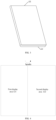
- the foldable display screen at least may include two screen statuses which include a folded status and an unfolded status. When the foldable display screen is in the folded status, a space occupied by the terminal can be reduced, and when the foldable display screen is in the unfolded status, it can provide a larger usable display area for the user.
- n may be 2. That is, the foldable display screen includes two foldable display areas.
- the display screen may be designed as a left-right foldable display screen or an up-down foldable display screen, or may be designed as an outward foldable display screen or an inward foldable display screen.
- Instructions on the structure are made by taking the display screen of the mobile terminal as the left-right foldable display screen as an example.
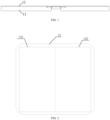
- FIG. 1 is a schematic structural diagram of a mobile terminal in accordance with some embodiments of the present disclosure.
- the mobile terminal includes a housing 11 and a display screen 12.
- One side of the display screen 12 is attached to the housing 11, and the other side is configured for display.
- the housing 11 is a foldable housing.
- a rotating shaft is disposed in the middle of the housing 11.
- the housing on either side is rotatable about the rotating shaft to control the housing 11 to be folded or unfolded and to drive the display screen 12 to be folded or unfolded.
- the display screen of the mobile terminal may be designed as a left-right foldable display screen or an up-down foldable display screen, or may be designed as an outward foldable display screen or an inward foldable display screen. This is not specifically limited in the embodiments of the present disclosure.
- the display screen 12 which is a one-piece flexible display screen, can be divided into three display areas, namely one main screen 121, a first auxiliary screen 122 and a second auxiliary screen 123.
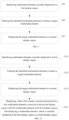
- Step 302 includes filtering the identified multimedia elements to obtain a target multimedia element.
- the range for the mobile terminal to identify the multimedia elements may also be based on an identification range selected by the user, for example, the mobile terminal may provide a region selection box for the user to determine the identification range; or the mobile terminal may automatically determine the identification range according to a touch control operation executed by the user in the first display region, which is not specifically limited in the embodiment of the present disclosure.
- the particular virtual key may be a switch for enabling a display control function.
- a display position of this particular virtual key may be a system setting interface, which is not specifically limited in the embodiment of the present disclosure.
- the mobile terminal receives a triggering instruction from the user on the particular virtual key, namely, after the user turns on the switch, the mobile terminal will enter a display control state.
- the particular triggering instruction may be a click operation of the user on the particular virtual key, which is likewise not specifically limited in the embodiment of the present disclosure.
- Step 1002 includes filtering the identified multimedia elements to obtain a target multimedia element.
- the mobile terminal may obtain a plurality of multimedia elements. Since, on the one hand, the user may be only interested in some of the identified multimedia element, and on the other hand, the second display region cannot contain all the identified multimedia elements due to size limitation, the embodiment of the present disclosure further includes the step of filtering the identified multimedia elements.
- the multimedia element after being filtered is referred to as a target multimedia element herein.
- the manner of filtering the identified multimedia elements includes, but is not limited to the following two manners.
- the type of each of the identified multimedia elements is determined; and when the type of a third multimedia element is a target type, the third multimedia element is classified as the target multimedia element.
- the third multimedia element is any of the identified multimedia elements.
- Types of the multimedia elements include, but are not limited to, text, a picture, audio, a video and the like, which is not specifically limited in the embodiment of the present disclosure.
- the target type may be the text and picture. That is, when any multimedia element in the identified multimedia elements is the text or picture, this multimedia element is classified as content required to be displayed in the second display region, i.e., classified as the target multimedia element.
- user preference information is acquired, and the identified multimedia elements are filtered according to the user preference information to obtain the target multimedia element.
- This manner aims to identify content, which may be of interest to the user, among the identified multiple multimedia elements.
- the acquiring manners of the user preference information include, but are not limited to the followings.
- Step 1003 includes displaying the target multimedia element in a second display region.
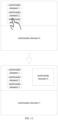
- the multimedia elements currently displayed in the first display region have been transferred to and displayed on the second display region.
- the target multimedia elements are displayed in the second display region in the form of a list.
- abbreviation forms of the various multimedia elements may be displayed in the second display region, which is not specifically limited in the embodiment of the present disclosure.
- steps 1001-1003 above may be implemented on a mobile terminal having two display regions, which is not covered by the claims.
- the expressions such as the first multimedia element, the second multimedia element, the third multimedia element and the like herein are merely used to distinguish the different multimedia elements, and do not constitute any other particular limitation on the multimedia elements.
- the display manner in which the first multimedia element is displayed in the first display region is different.
- the first multimedia element is a web page link
- a web page corresponding to the web page link is displayed in the first display region.
- the first multimedia element is a video link
- a video-playing window corresponding to the video link is displayed in the first display region.
- the first multimedia element is text or a picture or a combination thereof, the entire text content or the entire picture content is directly displayed in the first display region.
- the above first content viewing instruction may be generated in response to a click operation of the user on the first multimedia element, which is not specifically limited in the embodiment of the present disclosure.
- the multimedia element identification will be continued in the first display region, i.e., the above step 401 will be repeatedly executed.
- the expressions such as the first content viewing instruction, the second content viewing instruction and the like are merely used to distinguish different content viewing instructions, and do not constitute any particular limitation on the content viewing instructions.
- the mobile terminal may also automatically display the detailed content of this multimedia element in the first display region, i.e., the main screen, and the content previously displayed in the first display region would be automatically displayed in the third display region, to conduct a temporary storage for a subsequent browsing or viewing of the user.
- the various screens of a multi-screen terminal are effectively used, which can assist the user in acquiring more information more rapidly.
- the multimedia elements can be flexibly displayed among the n display regions.
- the various display regions of the mobile terminal are effectively used and a brand-new display control on a novel display screen is achieved, which can assist users in using the mobile terminal more conveniently and bring great convenience and new experience to the users.
- FIG. 14 is a block diagram of a display control apparatus of a display screen not covered by the claims.
- the apparatus is applied to a mobile terminal having a foldable display screen, wherein display screen includes n display regions, where n is a positive integer not less than 2.
- the apparatus includes an identifying module 1401, a filtering module 1402 and a displaying module 1403.
- the identifying module 1401 is configured to identify multimedia elements currently displayed in a first display region; the filtering module 1402 is configured to filter the identified multimedia elements to obtain a target multimedia element; and the displaying module 1403 is configured to display the target multimedia element in a second display region.
- the displaying module 1403 is further configured to: display, in response to a second content viewing instruction for a second multimedia element received in the third display region, the second multimedia element in the first display region, wherein the second multimedia element is any multimedia element displayed in the third display region; and display a multimedia element, which is currently displayed in the first display region, in the third display region.
- the apparatus 1500 includes: a processing component 1502, a multimedia component 1508 comprising a display and a memory 1504, and may further include one or more of the following components: a power component 1506, an audio component 1510, an input/output (I/O) interface 1512, a sensor component 1514, and a communication component 1516.
- the apparatus 1500 may be implemented with one or more application specific integrated circuits (ASICs), digital signal processors (DSPs), digital signal processing devices (DSPDs), programmable logic devices (PLDs), field programmable gate arrays (FPGAs), controllers, micro-controllers, microprocessors, or other electronic components for executing the above display control methods for a display screen.
- ASICs application specific integrated circuits
- DSPs digital signal processors
- DSPDs digital signal processing devices
- PLDs programmable logic devices
- FPGAs field programmable gate arrays
- controllers micro-controllers, microprocessors, or other electronic components for executing the above display control methods for a display screen.
- the multimedia elements can be flexibly displayed among the n display regions.
- the various display regions of the mobile terminal are effectively used and a brand-new display control on a novel display screen is achieved, which can assist users in using the mobile terminal more conveniently and bring great convenience and new experience to the users.
- Implementations of the subject matter and the operations described in this disclosure can be implemented in digital electronic circuitry, or in computer software, firmware, or hardware, including the structures disclosed herein and their structural equivalents, or in combinations of one or more of them. Implementations of the subject matter described in this disclosure can be implemented as one or more computer programs, i.e., one or more portions of computer program instructions, encoded on one or more computer storage medium for execution by, or to control the operation of, data processing apparatus.
- the program instructions can be encoded on an artificially-generated propagated signal, e.g., a machine-generated electrical, optical, or electromagnetic signal, which is generated to encode information for transmission to suitable receiver apparatus for execution by a data processing apparatus.
- an artificially-generated propagated signal e.g., a machine-generated electrical, optical, or electromagnetic signal, which is generated to encode information for transmission to suitable receiver apparatus for execution by a data processing apparatus.
- a computer storage medium can be, or be included in, a computer-readable storage device, a computer-readable storage substrate, a random or serial access memory array or device, or a combination of one or more of them.
- a computer storage medium is not a propagated signal
- a computer storage medium can be a source or destination of computer program instructions encoded in an artificially-generated propagated signal.
- the computer storage medium can also be, or be included in, one or more separate components or media (e.g., multiple CDs, disks, drives, or other storage devices). Accordingly, the computer storage medium can be tangible.
- the operations described in this disclosure can be implemented as operations performed by a data processing apparatus on data stored on one or more computer-readable storage devices or received from other sources.
- the devices in this disclosure can include special purpose logic circuitry, e.g., an FPGA (field-programmable gate array), or an ASIC (application-specific integrated circuit).
- the device can also include, in addition to hardware, code that creates an execution environment for the computer program in question, e.g., code that constitutes processor firmware, a protocol stack, a database management system, an operating system, a cross-platform runtime environment, a virtual machine, or a combination of one or more of them.
- the devices and execution environment can realize various different computing model infrastructures, such as web services, distributed computing, and grid computing infrastructures.
- a program can be stored in a portion of a file that holds other programs or data (e.g., one or more scripts stored in a markup language document), in a single file dedicated to the program in question, or in multiple coordinated files (e.g., files that store one or more portions, sub-programs, or portions of code).
- a computer program can be deployed to be executed on one computer or on multiple computers that are located at one site or distributed across multiple sites and interconnected by a communication network.
- the processes and logic flows described in this disclosure can be performed by one or more programmable processors executing one or more computer programs to perform actions by operating on input data and generating output.
- the processes and logic flows can also be performed by, and apparatus can also be implemented as, special purpose logic circuitry, e.g., an FPGA, or an ASIC.
- processors or processing circuits suitable for the execution of a computer program include, by way of example, both general and special purpose microprocessors, and any one or more processors of any kind of digital computer.
- a processor will receive instructions and data from a read-only memory, or a random-access memory, or both.
- Elements of a computer can include a processor configured to perform actions in accordance with instructions and one or more memory devices for storing instructions and data.
- a computer will also include, or be operatively coupled to receive data from or transfer data to, or both, one or more mass storage devices for storing data, e.g., magnetic, magneto-optical disks, or optical disks.
- mass storage devices for storing data
- a computer need not have such devices.
- a computer can be embedded in another device, e.g., a mobile telephone, a personal digital assistant (PDA), a mobile audio or video player, a game console, a Global Positioning System (GPS) receiver, or a portable storage device (e.g., a universal serial bus (USB) flash drive), to name just a few.
- PDA personal digital assistant
- GPS Global Positioning System
- USB universal serial bus
- Devices suitable for storing computer program instructions and data include all forms of non-volatile memory, media and memory devices, including by way of example semiconductor memory devices, e.g., EPROM, EEPROM, and flash memory devices; magnetic disks, e.g., internal hard disks or removable disks; magneto-optical disks; and CD-ROM and DVD-ROM disks.
- semiconductor memory devices e.g., EPROM, EEPROM, and flash memory devices
- magnetic disks e.g., internal hard disks or removable disks
- magneto-optical disks e.g., CD-ROM and DVD-ROM disks.
- the processor and the memory can be supplemented by, or incorporated in, special purpose logic circuitry.
- implementations of the subject matter described in this specification can be implemented with a computer and/or a display device, e.g., a VR/AR device, a head-mount display (HMD) device, a head-up display (HUD) device, smart eyewear (e.g., glasses), a CRT (cathode-ray tube), LCD (liquid-crystal display), OLED (organic light emitting diode), or any other monitor for displaying information to the user and a keyboard, a pointing device, e.g., a mouse, trackball, etc., or a touch screen, touch pad, etc., by which the user can provide input to the computer.
- a display device e.g., a VR/AR device, a head-mount display (HMD) device, a head-up display (HUD) device, smart eyewear (e.g., glasses), a CRT (cathode-ray tube), LCD (liquid-crystal display), OLED (organic light emitting dio
- Implementations of the subject matter described in this specification can be implemented in a computing system that includes a back-end component, e.g., as a data server, or that includes a middleware component, e.g., an application server, or that includes a front-end component, e.g., a client computer having a graphical user interface or a Web browser through which a user can interact with an implementation of the subject matter described in this specification, or any combination of one or more such back-end, middleware, or front-end components.
- a back-end component e.g., as a data server
- a middleware component e.g., an application server
- a front-end component e.g., a client computer having a graphical user interface or a Web browser through which a user can interact with an implementation of the subject matter described in this specification, or any combination of one or more such back-end, middleware, or front-end components.
- the components of the system can be interconnected by any form or medium of digital data communication, e.g., a communication network.
- communication networks include a local area network ("LAN”) and a wide area network (“WAN”), an inter-network (e.g., the Internet), and peer-to-peer networks (e.g., ad hoc peer-to-peer networks).
- LAN local area network
- WAN wide area network
- Internet inter-network
- peer-to-peer networks e.g., ad hoc peer-to-peer networks.
- first and second are used for descriptive purposes only and are not to be construed as indicating or implying a relative importance or implicitly indicating the number of technical features indicated.
- elements referred to as “first” and “second” may include one or more of the features either explicitly or implicitly.
- a plurality indicates two or more unless specifically defined otherwise.
- a first element being "on” a second element may indicate direct contact between the first and second elements, without contact, or indirect geometrical relationship through one or more intermediate media or layers, unless otherwise explicitly stated and defined.
- a first element being “under,” “underneath” or “beneath” a second element may indicate direct contact between the first and second elements, without contact, or indirect geometrical relationship through one or more intermediate media or layers, unless otherwise explicitly stated and defined.
Landscapes
- Engineering & Computer Science (AREA)
- Theoretical Computer Science (AREA)
- Physics & Mathematics (AREA)
- General Engineering & Computer Science (AREA)
- General Physics & Mathematics (AREA)
- Computer Hardware Design (AREA)
- Human Computer Interaction (AREA)
- Signal Processing (AREA)
- Mathematical Physics (AREA)
- Computer Graphics (AREA)
- User Interface Of Digital Computer (AREA)
- Controls And Circuits For Display Device (AREA)
Claims (11)
- Verfahren zur Anzeigesteuerung eines Anzeigebildschirms, wobei das Verfahren bei einem mobilen Endgerät angewendet wird, das einen klappbaren Anzeigebildschirm aufweist, wobei der Anzeigebildschirm n Anzeigebereiche aufweist, wobei n gleich 3 ist, und wobei das Verfahren umfasst:Identifizieren (901, 1001) von Multimediaelementen, die aktuell in einem ersten Anzeigebereich angezeigt werden, wobei es sich bei den Multimediaelementen um Inhalt handelt, der in dem ersten Anzeigebereich angezeigt wird;Filtern (902, 1002) der identifizierten Multimediaelemente, um ein Ziel-Multimediaelement zu erhalten;Anzeigen (903, 1003) des Ziel-Multimediaelements in einem zweiten Anzeigebereich; undals Reaktion auf das Empfangen einer ersten Anweisung zur Betrachtung des Inhalts für ein erstes Multimediaelement in dem zweiten Anzeigebereich, Anzeigen eines Multimediaelements, das aktuell in dem ersten Anzeigebereich angezeigt wird, in einem dritten Anzeigebereich; undAnzeigen von detailliertem Inhalt des ersten Multimediaelements in dem ersten Anzeigebereich, wobei das erste Multimediaelement ein beliebiges Multimediaelement ist, das in dem zweiten Anzeigebereich angezeigt wird.
- Verfahren nach Anspruch 1, wobei das Verfahren ferner umfasst:als Reaktion auf das Empfangen einer zweiten Anweisung zur Betrachtung des Inhalts für ein zweites Multimediaelement in einem dritten Anzeigebereich, Anzeigen eines Multimediaelements, das aktuell in dem ersten Anzeigebereich angezeigt wird, in einem dritten Anzeigebereich; undAnzeigen von detailliertem Inhalt des zweiten Multimediaelements in dem ersten Anzeigebereich, wobei das zweite Multimediaelement ein beliebiges Multimediaelement ist, das in dem dritten Anzeigebereich angezeigt wird.
- Verfahren nach Anspruch 1 oder 2, wobei das Filtern (902, 1002) der identifizierten Multimediaelemente zum Erhalten des Ziel-Multimediaelements umfasst:Bestimmen eines Typs jedes der identifizierten Multimediaelemente; undKlassifizieren, wenn ein Typ eines dritten Multimediaelements ein Zieltyp ist, des dritten Multimediaelements als das Ziel-Multimediaelement, wobei das dritte Multimediaelement ein beliebiges der identifizierten Multimediaelemente ist.
- Verfahren nach Anspruch 1 oder 2, wobei das Filtern (902, 1002) der identifizierten Multimediaelemente zum Erhalten des Ziel-Multimediaelements umfasst:Erfassen von Nutzerpräferenzinformationen; undFiltern der identifizierten Multimediaelemente entsprechend den Nutzerpräferenzinformationen, um das Ziel-Multimediaelement zu erhalten.
- Verfahren nach einem der Ansprüche 1 bis 4, das ferner umfasst:
Durchführen, als Reaktion auf das Erfassen eines Ziel-Auslösevorgangs in dem ersten Anzeigebereich, der Schritte des Identifizierens von Multimediaelementen, die aktuell in dem ersten Anzeigebereich angezeigt werden, des Filterns der identifizierten Multimediaelemente, und des Anzeigens eines Ziel-Multimediaelements, das durch das Filtern in dem zweiten Anzeigebereich erhalten wird. - Mobiles Endgerät, wobei das mobile Endgerät einen klappbaren Anzeigebildschirm (12) aufweist, wobei der Anzeigebildschirm (12) n Anzeigebereiche aufweist, wobei n gleich 3 ist, und wobei das mobile Endgerät (1500) aufweist:einen Prozessor (1520); undeinen Speicher (1504), auf dem Anweisungen zur Ausführung durch den Prozessor (1520) gespeichert sind, zum:Identifizieren von Multimediaelementen, die aktuell in einem ersten Anzeigebereich angezeigt werden, wobei es sich bei den Multimediaelementen um Inhalt handelt, der in dem ersten Anzeigebereich angezeigt wird;Filtern der identifizierten Multimediaelemente, um ein Ziel-Multimediaelement zu erhalten;Anzeigen des Ziel-Multimediaelements in einem zweiten Anzeigebereich; undals Reaktion auf das Empfangen einer ersten Anweisung zur Betrachtung des Inhalts für ein erstes Multimediaelement in dem zweiten Anzeigebereich, Anzeigen eines Multimediaelements, das aktuell in dem ersten Anzeigebereich angezeigt wird, in einem dritten Anzeigebereich; undAnzeigen von detailliertem Inhalt des ersten Multimediaelements in dem ersten Anzeigebereich, wobei das erste Multimediaelement ein beliebiges Multimediaelement ist, das in dem zweite Anzeigebereich angezeigt wird.
- Mobiles Endgerät nach Anspruch 6, wobei die Anweisungen ferner von dem Prozessor (1520) ausgeführt werden zum:als Reaktion auf das Empfangen einer zweiten Anweisung zur Betrachtung des Inhalts für ein zweites Multimediaelement in einem dritten Anzeigebereich, Anzeigen eines Multimediaelements, das aktuell in dem ersten Anzeigebereich angezeigt wird, in einem dritten Anzeigebereich; undAnzeigen von detailliertem Inhalt des zweiten Multimediaelements in dem ersten Anzeigebereich, wobei das zweite Multimediaelement ein beliebiges Multimediaelement ist, das in dem dritten Anzeigebereich angezeigt wird.
- Mobiles Endgerät nach Anspruch 6 oder 7, wobei die Anweisungen ferner von dem Prozessor (1520) ausgeführt werden zum:Bestimmen eines Typs jedes der identifizierten Multimediaelemente; undKlassifizieren, wenn ein Typ eines dritten Multimediaelements ein Zieltyp ist, des dritten Multimediaelements als das Ziel-Multimediaelement, wobei das dritte Multimediaelement ein beliebiges der identifizierten Multimediaelemente ist.
- Mobiles Endgerät nach Anspruch 6 oder 7, wobei die Anweisungen ferner von dem Prozessor (1520) ausgeführt werden zum:Erfassen von Nutzerpräferenzinformationen; undFiltern der identifizierten Multimediaelemente entsprechend den Nutzerpräferenzinformationen, um das Ziel-Multimediaelement zu erhalten.
- Mobiles Endgerät nach einem der Ansprüche 6 bis 9, wobei die Anweisungen ferner von dem Prozessor (1520) ausgeführt werden zum:
Durchführen, als Reaktion auf das Erfassen eines Ziel-Auslösevorgangs, der in dem ersten Anzeigebereich erfasst wird, der Schritte des Identifizierens von Multimediaelementen, die aktuell in dem ersten Anzeigebereich angezeigt werden, des Filterns der identifizierten Multimediaelemente, und des Anzeigens eines Ziel-Multimediaelements, das durch das Filtern in dem zweiten Anzeigebereich erhalten wird. - Nicht transitorisches computerlesbares Speichermedium, auf dem eine Computerprogrammanweisung gespeichert ist, die bei Ausführung durch das mobile Endgerät nach einem der Ansprüche 6 bis 10 bewirkt, dass das mobile Endgerät die Schritte des Verfahrens nach einem der Ansprüche 1 bis 5 ausführt.
Applications Claiming Priority (1)
| Application Number | Priority Date | Filing Date | Title |
|---|---|---|---|
| CN201910248420.4A CN111752509B (zh) | 2019-03-29 | 2019-03-29 | 显示屏幕的显示控制方法、装置及存储介质 |
Publications (2)
| Publication Number | Publication Date |
|---|---|
| EP3716004A1 EP3716004A1 (de) | 2020-09-30 |
| EP3716004B1 true EP3716004B1 (de) | 2025-07-02 |
Family
ID=70049898
Family Applications (1)
| Application Number | Title | Priority Date | Filing Date |
|---|---|---|---|
| EP20165932.3A Active EP3716004B1 (de) | 2019-03-29 | 2020-03-26 | Verfahren und vorrichtung zur anzeigesteuerung eines anzeigebildschirms und speichermedium |
Country Status (3)
| Country | Link |
|---|---|
| US (1) | US11132926B2 (de) |
| EP (1) | EP3716004B1 (de) |
| CN (1) | CN111752509B (de) |
Families Citing this family (3)
| Publication number | Priority date | Publication date | Assignee | Title |
|---|---|---|---|---|
| CN113395371B (zh) * | 2021-06-09 | 2022-12-20 | 京东方科技集团股份有限公司 | 显示面板、显示设备和终端 |
| EP4670127A4 (de) | 2023-08-28 | 2026-04-29 | Samsung Electronics Co Ltd | Verfahren und vorrichtung zur erzeugung eines latenten bildes, computerspeichermedium und elektronische vorrichtung |
| CN117176853A (zh) * | 2023-09-01 | 2023-12-05 | 深圳传音控股股份有限公司 | 处理方法、智能终端及存储介质 |
Citations (2)
| Publication number | Priority date | Publication date | Assignee | Title |
|---|---|---|---|---|
| US20160239091A1 (en) * | 2015-02-12 | 2016-08-18 | Qualcomm Incorporated | Controlled display of content on wearable displays |
| EP3819755A1 (de) * | 2018-08-15 | 2021-05-12 | Huawei Technologies Co., Ltd. | Anzeigeverfahren und -vorrichtung |
Family Cites Families (27)
| Publication number | Priority date | Publication date | Assignee | Title |
|---|---|---|---|---|
| KR101405948B1 (ko) * | 2007-10-22 | 2014-06-12 | 엘지전자 주식회사 | 이동 단말기 및 이동 단말기의 화면 표시 방법 |
| JP6129083B2 (ja) * | 2011-03-11 | 2017-05-17 | コーニンクレッカ フィリップス エヌ ヴェKoninklijke Philips N.V. | 相互に関連するオブジェクトの表示 |
| KR101860342B1 (ko) | 2011-09-15 | 2018-05-23 | 엘지전자 주식회사 | 이동 단말기 및 그 제어방법 |
| US9363220B2 (en) * | 2012-03-06 | 2016-06-07 | Apple Inc. | Context-sensitive help for image viewing and editing application |
| KR20130126428A (ko) * | 2012-05-11 | 2013-11-20 | 삼성전자주식회사 | 다중 어플리케이션 실행 장치 및 방법 |
| KR101943357B1 (ko) * | 2012-06-01 | 2019-01-29 | 엘지전자 주식회사 | 이동 단말기 및 그것의 제어방법 |
| KR102086715B1 (ko) * | 2012-11-01 | 2020-03-09 | 삼성전자주식회사 | 가요성 표시부의 화면 출력 제어 방법 및 이를 지원하는 단말기 |
| DE102012024954A1 (de) * | 2012-12-20 | 2014-06-26 | Volkswagen Aktiengesellschaft | Verfahren zur Kennzeichnung einer Teilmenge einer in einer Speichereinheit abgelegten Grundmenge von Datensätzen und zur Visualisierung zumindest eines Teils der gekennzeichneten Teilmenge auf einer Anzeigeeinheit |
| WO2015059342A1 (en) * | 2013-10-21 | 2015-04-30 | Nokia Technologies Oy | Display region transferal folding input |
| CN104010158A (zh) * | 2014-03-11 | 2014-08-27 | 宇龙计算机通信科技(深圳)有限公司 | 移动终端及多方视频通话的实现方法 |
| US9430142B2 (en) * | 2014-07-17 | 2016-08-30 | Facebook, Inc. | Touch-based gesture recognition and application navigation |
| KR20160033507A (ko) * | 2014-09-18 | 2016-03-28 | 엘지전자 주식회사 | 이동 단말기 및 그 제어 방법 |
| KR20160038510A (ko) * | 2014-09-30 | 2016-04-07 | 엘지전자 주식회사 | 이동단말기 및 그 제어방법 |
| US10990272B2 (en) * | 2014-12-16 | 2021-04-27 | Micro Focus Llc | Display a subset of objects on a user interface |
| US9946428B2 (en) * | 2015-01-15 | 2018-04-17 | International Business Machines Corporation | Managing a web-based application's display |
| US9747015B2 (en) * | 2015-02-12 | 2017-08-29 | Qualcomm Incorporated | Efficient display of content on wearable displays |
| US9734779B2 (en) * | 2015-02-12 | 2017-08-15 | Qualcomm Incorporated | Efficient operation of wearable displays |
| KR102462856B1 (ko) * | 2015-06-24 | 2022-11-03 | 삼성전자주식회사 | 디스플레이의 확장 영역에 대한 사용 알림 제공 방법 및 이를 지원하는 전자 장치 |
| CN105488145B (zh) * | 2015-11-26 | 2019-07-09 | 小米科技有限责任公司 | 网页内容的显示方法、装置及终端 |
| CN105335052B (zh) * | 2015-11-30 | 2019-01-04 | 腾讯科技(深圳)有限公司 | 信息处理方法及终端设备 |
| US9699406B1 (en) * | 2016-04-14 | 2017-07-04 | Alexander Mackenzie & Pranger | Methods and systems for multi-pane video communications |
| KR102649254B1 (ko) | 2016-08-03 | 2024-03-20 | 삼성전자주식회사 | 디스플레이 제어 방법, 저장 매체 및 전자 장치 |
| TWI617969B (zh) * | 2016-11-24 | 2018-03-11 | 新加坡商雲網科技新加坡有限公司 | 畫面控制方法及使用者終端 |
| KR102606422B1 (ko) * | 2017-01-31 | 2023-11-29 | 삼성전자주식회사 | 디스플레이 제어 방법, 저장 매체 및 전자 장치 |
| US10788972B2 (en) * | 2017-10-02 | 2020-09-29 | Fisher-Rosemount Systems, Inc. | Systems and methods for automatically populating a display area with historized process parameters |
| US20190212877A1 (en) * | 2018-01-10 | 2019-07-11 | Microsoft Technology Licensing, Llc | Selectively displayable multiple display mode for a gui |
| CN109101149A (zh) * | 2018-07-17 | 2018-12-28 | 维沃移动通信有限公司 | 一种应用图标管理方法及终端 |
-
2019
- 2019-03-29 CN CN201910248420.4A patent/CN111752509B/zh active Active
-
2020
- 2020-03-21 US US16/826,218 patent/US11132926B2/en active Active
- 2020-03-26 EP EP20165932.3A patent/EP3716004B1/de active Active
Patent Citations (2)
| Publication number | Priority date | Publication date | Assignee | Title |
|---|---|---|---|---|
| US20160239091A1 (en) * | 2015-02-12 | 2016-08-18 | Qualcomm Incorporated | Controlled display of content on wearable displays |
| EP3819755A1 (de) * | 2018-08-15 | 2021-05-12 | Huawei Technologies Co., Ltd. | Anzeigeverfahren und -vorrichtung |
Also Published As
| Publication number | Publication date |
|---|---|
| US11132926B2 (en) | 2021-09-28 |
| EP3716004A1 (de) | 2020-09-30 |
| CN111752509B (zh) | 2025-05-23 |
| CN111752509A (zh) | 2020-10-09 |
| US20200312241A1 (en) | 2020-10-01 |
Similar Documents
| Publication | Publication Date | Title |
|---|---|---|
| EP3460647B1 (de) | Verfahren zur steuerung eines bildschirms, vorrichtung und speichermedium | |
| US11175877B2 (en) | Method and device for screen projection, terminal and storage medium | |
| US11354029B2 (en) | Content collection method, apparatus and storage medium | |
| CN109828802B (zh) | 列表视图显示方法、装置及可读介质 | |
| CN110221885B (zh) | 一种界面显示方法及终端设备 | |
| US20210182421A1 (en) | Information acquisition method and device, and storage medium | |
| EP3754458B1 (de) | Verfahren und vorrichtung zum abtasten eines berührungsbildschirms und medium | |
| CN112230914B (zh) | 小程序的制作方法、装置、终端及存储介质 | |
| JP6291072B2 (ja) | ライブビュー制御装置、ライブビュー制御方法、ライブビューシステム及びプログラム | |
| US11503207B2 (en) | Display control method, display control device and computer-readable storage medium | |
| EP3016319A1 (de) | Verfahren und vorrichtung zur dynamischen anzeige einer vorrichtungsliste | |
| EP3716004B1 (de) | Verfahren und vorrichtung zur anzeigesteuerung eines anzeigebildschirms und speichermedium | |
| US20200341615A1 (en) | Method and device for controlling window, and storage medium | |
| US11644942B2 (en) | Method and device for displaying application, and storage medium | |
| KR20160071783A (ko) | 컨텐트를 표시하는 방법 및 디바이스 | |
| CN112825040A (zh) | 用户界面的显示方法、装置、设备及存储介质 | |
| CN114546545A (zh) | 图文显示方法、装置、终端及存储介质 | |
| US11295505B2 (en) | Animation generation using a target animation model and animation state parameters | |
| EP3761162B1 (de) | Verfahren und vorrichtung zur verarbeitung von berührungssignalen und medium | |
| US11665778B2 (en) | Function controlling method, function controlling device and storage medium | |
| US11016660B2 (en) | Method and apparatus for responding to gesture operation and storage medium | |
| CN112612390B (zh) | 显示方法及装置、存储介质 | |
| CN115379274B (zh) | 基于图片的互动方法、装置、电子设备及存储介质 | |
| HK40044241A (en) | User interface display method, device, equipment and storage medium | |
| CN113608649A (zh) | 滑动列表的显示方法、装置、设备和可读存储介质 |
Legal Events
| Date | Code | Title | Description |
|---|---|---|---|
| PUAI | Public reference made under article 153(3) epc to a published international application that has entered the european phase |
Free format text: ORIGINAL CODE: 0009012 |
|
| STAA | Information on the status of an ep patent application or granted ep patent |
Free format text: STATUS: THE APPLICATION HAS BEEN PUBLISHED |
|
| AK | Designated contracting states |
Kind code of ref document: A1 Designated state(s): AL AT BE BG CH CY CZ DE DK EE ES FI FR GB GR HR HU IE IS IT LI LT LU LV MC MK MT NL NO PL PT RO RS SE SI SK SM TR |
|
| AX | Request for extension of the european patent |
Extension state: BA ME |
|
| STAA | Information on the status of an ep patent application or granted ep patent |
Free format text: STATUS: REQUEST FOR EXAMINATION WAS MADE |
|
| 17P | Request for examination filed |
Effective date: 20210312 |
|
| RBV | Designated contracting states (corrected) |
Designated state(s): AL AT BE BG CH CY CZ DE DK EE ES FI FR GB GR HR HU IE IS IT LI LT LU LV MC MK MT NL NO PL PT RO RS SE SI SK SM TR |
|
| STAA | Information on the status of an ep patent application or granted ep patent |
Free format text: STATUS: EXAMINATION IS IN PROGRESS |
|
| 17Q | First examination report despatched |
Effective date: 20220701 |
|
| GRAP | Despatch of communication of intention to grant a patent |
Free format text: ORIGINAL CODE: EPIDOSNIGR1 |
|
| STAA | Information on the status of an ep patent application or granted ep patent |
Free format text: STATUS: GRANT OF PATENT IS INTENDED |
|
| INTG | Intention to grant announced |
Effective date: 20250128 |
|
| GRAS | Grant fee paid |
Free format text: ORIGINAL CODE: EPIDOSNIGR3 |
|
| GRAA | (expected) grant |
Free format text: ORIGINAL CODE: 0009210 |
|
| STAA | Information on the status of an ep patent application or granted ep patent |
Free format text: STATUS: THE PATENT HAS BEEN GRANTED |
|
| P01 | Opt-out of the competence of the unified patent court (upc) registered |
Free format text: CASE NUMBER: APP_21062/2025 Effective date: 20250505 |
|
| AK | Designated contracting states |
Kind code of ref document: B1 Designated state(s): AL AT BE BG CH CY CZ DE DK EE ES FI FR GB GR HR HU IE IS IT LI LT LU LV MC MK MT NL NO PL PT RO RS SE SI SK SM TR |
|
| REG | Reference to a national code |
Ref country code: GB Ref legal event code: FG4D |
|
| REG | Reference to a national code |
Ref country code: CH Ref legal event code: EP |
|
| REG | Reference to a national code |
Ref country code: DE Ref legal event code: R096 Ref document number: 602020053635 Country of ref document: DE |
|
| REG | Reference to a national code |
Ref country code: IE Ref legal event code: FG4D |
|
| REG | Reference to a national code |
Ref country code: NL Ref legal event code: MP Effective date: 20250702 |
|
| PG25 | Lapsed in a contracting state [announced via postgrant information from national office to epo] |
Ref country code: PT Free format text: LAPSE BECAUSE OF FAILURE TO SUBMIT A TRANSLATION OF THE DESCRIPTION OR TO PAY THE FEE WITHIN THE PRESCRIBED TIME-LIMIT Effective date: 20251103 |
|
| PG25 | Lapsed in a contracting state [announced via postgrant information from national office to epo] |
Ref country code: NL Free format text: LAPSE BECAUSE OF FAILURE TO SUBMIT A TRANSLATION OF THE DESCRIPTION OR TO PAY THE FEE WITHIN THE PRESCRIBED TIME-LIMIT Effective date: 20250702 |
|
| REG | Reference to a national code |
Ref country code: AT Ref legal event code: MK05 Ref document number: 1809942 Country of ref document: AT Kind code of ref document: T Effective date: 20250702 |
|
| PG25 | Lapsed in a contracting state [announced via postgrant information from national office to epo] |
Ref country code: IS Free format text: LAPSE BECAUSE OF FAILURE TO SUBMIT A TRANSLATION OF THE DESCRIPTION OR TO PAY THE FEE WITHIN THE PRESCRIBED TIME-LIMIT Effective date: 20251102 |
|
| PG25 | Lapsed in a contracting state [announced via postgrant information from national office to epo] |
Ref country code: NO Free format text: LAPSE BECAUSE OF FAILURE TO SUBMIT A TRANSLATION OF THE DESCRIPTION OR TO PAY THE FEE WITHIN THE PRESCRIBED TIME-LIMIT Effective date: 20251002 |
|
| REG | Reference to a national code |
Ref country code: LT Ref legal event code: MG9D |
|
| PG25 | Lapsed in a contracting state [announced via postgrant information from national office to epo] |
Ref country code: AT Free format text: LAPSE BECAUSE OF FAILURE TO SUBMIT A TRANSLATION OF THE DESCRIPTION OR TO PAY THE FEE WITHIN THE PRESCRIBED TIME-LIMIT Effective date: 20250702 |
|
| PG25 | Lapsed in a contracting state [announced via postgrant information from national office to epo] |
Ref country code: FI Free format text: LAPSE BECAUSE OF FAILURE TO SUBMIT A TRANSLATION OF THE DESCRIPTION OR TO PAY THE FEE WITHIN THE PRESCRIBED TIME-LIMIT Effective date: 20250702 |
|
| PG25 | Lapsed in a contracting state [announced via postgrant information from national office to epo] |
Ref country code: HR Free format text: LAPSE BECAUSE OF FAILURE TO SUBMIT A TRANSLATION OF THE DESCRIPTION OR TO PAY THE FEE WITHIN THE PRESCRIBED TIME-LIMIT Effective date: 20250702 |
|
| PG25 | Lapsed in a contracting state [announced via postgrant information from national office to epo] |
Ref country code: GR Free format text: LAPSE BECAUSE OF FAILURE TO SUBMIT A TRANSLATION OF THE DESCRIPTION OR TO PAY THE FEE WITHIN THE PRESCRIBED TIME-LIMIT Effective date: 20251003 |
|
| PG25 | Lapsed in a contracting state [announced via postgrant information from national office to epo] |
Ref country code: CZ Free format text: LAPSE BECAUSE OF FAILURE TO SUBMIT A TRANSLATION OF THE DESCRIPTION OR TO PAY THE FEE WITHIN THE PRESCRIBED TIME-LIMIT Effective date: 20250702 Ref country code: SE Free format text: LAPSE BECAUSE OF FAILURE TO SUBMIT A TRANSLATION OF THE DESCRIPTION OR TO PAY THE FEE WITHIN THE PRESCRIBED TIME-LIMIT Effective date: 20250702 |
|
| PG25 | Lapsed in a contracting state [announced via postgrant information from national office to epo] |
Ref country code: LV Free format text: LAPSE BECAUSE OF FAILURE TO SUBMIT A TRANSLATION OF THE DESCRIPTION OR TO PAY THE FEE WITHIN THE PRESCRIBED TIME-LIMIT Effective date: 20250702 |
|
| PG25 | Lapsed in a contracting state [announced via postgrant information from national office to epo] |
Ref country code: BG Free format text: LAPSE BECAUSE OF FAILURE TO SUBMIT A TRANSLATION OF THE DESCRIPTION OR TO PAY THE FEE WITHIN THE PRESCRIBED TIME-LIMIT Effective date: 20250702 Ref country code: PL Free format text: LAPSE BECAUSE OF FAILURE TO SUBMIT A TRANSLATION OF THE DESCRIPTION OR TO PAY THE FEE WITHIN THE PRESCRIBED TIME-LIMIT Effective date: 20250702 |
|
| PG25 | Lapsed in a contracting state [announced via postgrant information from national office to epo] |
Ref country code: RS Free format text: LAPSE BECAUSE OF FAILURE TO SUBMIT A TRANSLATION OF THE DESCRIPTION OR TO PAY THE FEE WITHIN THE PRESCRIBED TIME-LIMIT Effective date: 20251002 |
|
| PG25 | Lapsed in a contracting state [announced via postgrant information from national office to epo] |
Ref country code: ES Free format text: LAPSE BECAUSE OF FAILURE TO SUBMIT A TRANSLATION OF THE DESCRIPTION OR TO PAY THE FEE WITHIN THE PRESCRIBED TIME-LIMIT Effective date: 20250702 |
|
| PG25 | Lapsed in a contracting state [announced via postgrant information from national office to epo] |
Ref country code: SM Free format text: LAPSE BECAUSE OF FAILURE TO SUBMIT A TRANSLATION OF THE DESCRIPTION OR TO PAY THE FEE WITHIN THE PRESCRIBED TIME-LIMIT Effective date: 20250702 |
|
| PG25 | Lapsed in a contracting state [announced via postgrant information from national office to epo] |
Ref country code: DK Free format text: LAPSE BECAUSE OF FAILURE TO SUBMIT A TRANSLATION OF THE DESCRIPTION OR TO PAY THE FEE WITHIN THE PRESCRIBED TIME-LIMIT Effective date: 20250702 |
|
| PGFP | Annual fee paid to national office [announced via postgrant information from national office to epo] |
Ref country code: DE Payment date: 20260128 Year of fee payment: 7 |
|
| PG25 | Lapsed in a contracting state [announced via postgrant information from national office to epo] |
Ref country code: IT Free format text: LAPSE BECAUSE OF FAILURE TO SUBMIT A TRANSLATION OF THE DESCRIPTION OR TO PAY THE FEE WITHIN THE PRESCRIBED TIME-LIMIT Effective date: 20250702 |
|
| PG25 | Lapsed in a contracting state [announced via postgrant information from national office to epo] |
Ref country code: SK Free format text: LAPSE BECAUSE OF FAILURE TO SUBMIT A TRANSLATION OF THE DESCRIPTION OR TO PAY THE FEE WITHIN THE PRESCRIBED TIME-LIMIT Effective date: 20250702 Ref country code: EE Free format text: LAPSE BECAUSE OF FAILURE TO SUBMIT A TRANSLATION OF THE DESCRIPTION OR TO PAY THE FEE WITHIN THE PRESCRIBED TIME-LIMIT Effective date: 20250702 |