EP3708704B1 - Verfahren und integriertes system zum färben von verschiedenen formen synthetischer, natürlicher und gemischter textilien mit überkritischem, nichtwässrigem lösungsmittel - Google Patents
Verfahren und integriertes system zum färben von verschiedenen formen synthetischer, natürlicher und gemischter textilien mit überkritischem, nichtwässrigem lösungsmittel Download PDFInfo
- Publication number
- EP3708704B1 EP3708704B1 EP19162459.2A EP19162459A EP3708704B1 EP 3708704 B1 EP3708704 B1 EP 3708704B1 EP 19162459 A EP19162459 A EP 19162459A EP 3708704 B1 EP3708704 B1 EP 3708704B1
- Authority
- EP
- European Patent Office
- Prior art keywords
- dyeing
- dyestuff
- vessel
- liquefied
- textile
- Prior art date
- Legal status (The legal status is an assumption and is not a legal conclusion. Google has not performed a legal analysis and makes no representation as to the accuracy of the status listed.)
- Active
Links
Images





Classifications
-
- D—TEXTILES; PAPER
- D06—TREATMENT OF TEXTILES OR THE LIKE; LAUNDERING; FLEXIBLE MATERIALS NOT OTHERWISE PROVIDED FOR
- D06B—TREATING TEXTILE MATERIALS USING LIQUIDS, GASES OR VAPOURS
- D06B19/00—Treatment of textile materials by liquids, gases or vapours, not provided for in groups D06B1/00 - D06B17/00
-
- D—TEXTILES; PAPER
- D06—TREATMENT OF TEXTILES OR THE LIKE; LAUNDERING; FLEXIBLE MATERIALS NOT OTHERWISE PROVIDED FOR
- D06B—TREATING TEXTILE MATERIALS USING LIQUIDS, GASES OR VAPOURS
- D06B23/00—Component parts, details, or accessories of apparatus or machines, specially adapted for the treating of textile materials, not restricted to a particular kind of apparatus, provided for in groups D06B1/00 - D06B21/00
- D06B23/20—Arrangements of apparatus for treating processing-liquids, -gases or -vapours, e.g. purification, filtration or distillation
-
- D—TEXTILES; PAPER
- D06—TREATMENT OF TEXTILES OR THE LIKE; LAUNDERING; FLEXIBLE MATERIALS NOT OTHERWISE PROVIDED FOR
- D06B—TREATING TEXTILE MATERIALS USING LIQUIDS, GASES OR VAPOURS
- D06B9/00—Solvent-treatment of textile materials
- D06B9/06—Solvent-treatment of textile materials with recovery of the solvent
-
- D—TEXTILES; PAPER
- D06—TREATMENT OF TEXTILES OR THE LIKE; LAUNDERING; FLEXIBLE MATERIALS NOT OTHERWISE PROVIDED FOR
- D06B—TREATING TEXTILE MATERIALS USING LIQUIDS, GASES OR VAPOURS
- D06B23/00—Component parts, details, or accessories of apparatus or machines, specially adapted for the treating of textile materials, not restricted to a particular kind of apparatus, provided for in groups D06B1/00 - D06B21/00
- D06B23/04—Carriers or supports for textile materials to be treated
- D06B23/042—Perforated supports
-
- D—TEXTILES; PAPER
- D06—TREATMENT OF TEXTILES OR THE LIKE; LAUNDERING; FLEXIBLE MATERIALS NOT OTHERWISE PROVIDED FOR
- D06B—TREATING TEXTILE MATERIALS USING LIQUIDS, GASES OR VAPOURS
- D06B23/00—Component parts, details, or accessories of apparatus or machines, specially adapted for the treating of textile materials, not restricted to a particular kind of apparatus, provided for in groups D06B1/00 - D06B21/00
- D06B23/20—Arrangements of apparatus for treating processing-liquids, -gases or -vapours, e.g. purification, filtration or distillation
- D06B23/205—Arrangements of apparatus for treating processing-liquids, -gases or -vapours, e.g. purification, filtration or distillation for adding or mixing constituents of the treating material
-
- D—TEXTILES; PAPER
- D06—TREATMENT OF TEXTILES OR THE LIKE; LAUNDERING; FLEXIBLE MATERIALS NOT OTHERWISE PROVIDED FOR
- D06B—TREATING TEXTILE MATERIALS USING LIQUIDS, GASES OR VAPOURS
- D06B5/00—Forcing liquids, gases or vapours through textile materials to effect treatment, e.g. washing, dyeing, bleaching, sizing impregnating
- D06B5/12—Forcing liquids, gases or vapours through textile materials to effect treatment, e.g. washing, dyeing, bleaching, sizing impregnating through materials of definite length
- D06B5/16—Forcing liquids, gases or vapours through textile materials to effect treatment, e.g. washing, dyeing, bleaching, sizing impregnating through materials of definite length through yarns, threads or filaments
-
- D—TEXTILES; PAPER
- D06—TREATMENT OF TEXTILES OR THE LIKE; LAUNDERING; FLEXIBLE MATERIALS NOT OTHERWISE PROVIDED FOR
- D06B—TREATING TEXTILE MATERIALS USING LIQUIDS, GASES OR VAPOURS
- D06B5/00—Forcing liquids, gases or vapours through textile materials to effect treatment, e.g. washing, dyeing, bleaching, sizing impregnating
- D06B5/12—Forcing liquids, gases or vapours through textile materials to effect treatment, e.g. washing, dyeing, bleaching, sizing impregnating through materials of definite length
- D06B5/22—Forcing liquids, gases or vapours through textile materials to effect treatment, e.g. washing, dyeing, bleaching, sizing impregnating through materials of definite length through fabrics
-
- D—TEXTILES; PAPER
- D06—TREATMENT OF TEXTILES OR THE LIKE; LAUNDERING; FLEXIBLE MATERIALS NOT OTHERWISE PROVIDED FOR
- D06B—TREATING TEXTILE MATERIALS USING LIQUIDS, GASES OR VAPOURS
- D06B5/00—Forcing liquids, gases or vapours through textile materials to effect treatment, e.g. washing, dyeing, bleaching, sizing impregnating
- D06B5/12—Forcing liquids, gases or vapours through textile materials to effect treatment, e.g. washing, dyeing, bleaching, sizing impregnating through materials of definite length
- D06B5/24—Forcing liquids, gases or vapours through textile materials to effect treatment, e.g. washing, dyeing, bleaching, sizing impregnating through materials of definite length through articles, e.g. stockings
-
- Y—GENERAL TAGGING OF NEW TECHNOLOGICAL DEVELOPMENTS; GENERAL TAGGING OF CROSS-SECTIONAL TECHNOLOGIES SPANNING OVER SEVERAL SECTIONS OF THE IPC; TECHNICAL SUBJECTS COVERED BY FORMER USPC CROSS-REFERENCE ART COLLECTIONS [XRACs] AND DIGESTS
- Y02—TECHNOLOGIES OR APPLICATIONS FOR MITIGATION OR ADAPTATION AGAINST CLIMATE CHANGE
- Y02P—CLIMATE CHANGE MITIGATION TECHNOLOGIES IN THE PRODUCTION OR PROCESSING OF GOODS
- Y02P70/00—Climate change mitigation technologies in the production process for final industrial or consumer products
- Y02P70/50—Manufacturing or production processes characterised by the final manufactured product
- Y02P70/62—Manufacturing or production processes characterised by the final manufactured product related technologies for production or treatment of textile or flexible materials or products thereof, including footwear
Definitions
- the present disclosure generally relates to a method and an integrated system for dyeing synthetic, natural, and/or blended textiles in the form of fabrics, yarns, and garments. More particularly, the textile is dyed by non-aqueous solvent medium using supercritical carbon dioxide (Sc-CO 2 ) as a dyeing solvent.
- Sc-CO 2 supercritical carbon dioxide
- Polyesters such as polyethylene terephthalate (PET) and cotton are common clothing materials. Over 75% of all fabric used in the world are made from PET, cotton and PET/cotton blends.
- Traditional aqueous dyeing processes require large amounts of water. The wastewater from dyeing contains pollutants and results in water pollution. With widespread increasing environmental awareness, the textile industry is seeking more environmentally friendly alternatives for textile dyeing in order to tackle the enormous amount of wastewater produced every day around the world.
- One alternative is to use a non-aqueous solvent medium (NASM), in particular supercritical carbon dioxide (Sc-CO 2 ), in the dyeing process.
- NAM non-aqueous solvent medium
- Sc-CO 2 supercritical carbon dioxide
- Sc-CO 2 which exists at conditions greater than the critical temperature of 304.25 K and the critical pressure of 74 bar, is a type of fluid having properties of both gas and liquid. It has advantages of gas such as low viscosity, high diffusivity and very low surface tension. At the same time, it has excellent solubility and can dissolve materials like liquid. In addition, dyeing textiles using Sc-CO 2 have other benefits, such as no extra dyeing auxiliaries required and the non-toxic nature of the Sc-CO 2 . Thus, Sc-CO 2 could potentially replace water as dyeing solvent. Separating the unused dyestuff is relatively easy as compared to other aqueous dyeing methods. In contrast, the unused dyestuff in traditional water dyeing process is mixed with water and extra processing is necessary to recover the unused materials in dyeing. Therefore it is more difficult to achieve recycling of the chemicals.
- Sc-CO 2 dyeing systems are typically designed to only dye a single type of textile material, such as fiber, yarn, fabric or garment.
- An integrated dyeing system designed for multiple forms of textile has not been designed. Accordingly, there is a need for improved Sc-CO 2 dyeing systems that address at least some of the aforementioned needs.
- the document KR 100 570 333 B1 describes a supercritical CO 2 , abbreviated Sc-CO 2 , dyeing system for dyeing hydrophobic fibers, the system comprising: a first pressurizing pump for pressurizing liquefied CO 2 to Sc-CO 2 ; a heater for heating the Sc-CO 2 ; a dyestuff vessel for mixing a dyestuff and the Sc-CO 2 to obtain Sc-CO 2 -mixed dyestuff; a dyeing vessel for dyeing the textile by circulating the Sc-CO 2 -mixed dyestuff between the dyeing vessel and the dyestuff vessel; and a cyclone separator.
- a system for dyeing multiple forms of textile according to the invention using liquefied CO 2 comprises (1) a first pressurizing pump for pressurizing liquefied CO 2 to supercritical CO 2 (Sc-CO 2 ); (2) a heater for heating the Sc-CO 2 ; (3) a dyestuff vessel for mixing a dyestuff and the Sc-CO 2 to obtain Sc-CO 2 -mixed dyestuff; (4) a dyeing vessel for dyeing the textile by circulating the Sc CO 2 and the Sc-CO 2 -mixed dyestuff between the dyeing vessel and the dyestuff vessel; and (5) one or more cyclone separators for removing the dyestuff from the Sc-CO 2 -mixed dyestuff to obtain separated liquefied CO 2 .
- the system according to the invention further comprises a second pressurizing pump for pressurizing CO 2 to liquefied CO 2 ; and a liquefied CO 2 storage vessel for storing the liquefied CO 2 and the separated liquefied CO 2 from the one or more cyclone separators.
- the system further comprises a third pressurizing pump for pressurizing an alcoholic solvent, wherein the alcoholic solvent is selected from the group consisting of methanol, ethanol, and a combination thereof; and the dyestuff is a reactive disperse dye.
- the dyestuff vessel comprises a motor, a mesh basket, one or more stirrer blades, and a heating jacket.
- the dyeing vessel for dyeing a fabric textile comprises a fabric beam, an inlet and an outlet for circulating the Sc-CO 2 , and a heating jacket.
- the dyeing vessel for dyeing a garment textile comprises a garment basket, a garment vessel, a heating jacket, an inlet and an outlet for circulating the Sc-CO 2 , and a motor.
- the dyeing vessel for dyeing a yarn textile comprises a yarn beam, a heating jacket, and an inlet and an outlet for circulating the Sc-CO 2 .
- the method for dyeing a textile according to the invention using liquefied CO 2 comprises (1) loading a textile to a dyeing vessel; (2) pressurizing and heating the liquefied CO 2 to obtain supercritical CO 2 (Sc-CO 2 ); (3) mixing a dyestuff and the Sc-CO 2 in a dyestuff vessel at a first temperature and a first pressure to obtain Sc-CO 2 -mixed dyestuff; (4) circulating the Sc-CO 2 -mixed dyestuff and the Sc CO 2 between the dyeing vessel and the dyestuff vessel for a dyeing period to dye the textile; (5) rinsing the textile using Sc-CO 2 at a second temperature and the first pressure for a rinsing period; and (6) removing the dyestuff from the Sc-CO 2 -mixed dyestuff by one or more cyclone separators and obtaining separated liquefied CO 2 and further pressurizing CO 2 to liquefied CO 2 ; storing the liquefied
- the method further comprises purifying the separated liquefied CO 2 and transferring the separated liquefied CO 2 to a liquefied CO 2 storage vessel for recycling.
- the circulating of the Sc-CO 2 -mixed dyestuff and the Sc-CO 2 between the dyeing vessel and the dyestuff vessel is driven by a circulation pump operating in a single direction or in alternating directions.
- the first temperature is in a range of 60°C to 150°C; the first pressure is in a range of 140 bar to 280 bar; the second temperature is in a range of 40°C to 80°C; the dyeing period is in a range of 30 minutes to 6 hours; and/or the rinsing period is in a range of 10 minutes and 2 hours.
- the method further comprises (1) pressurizing an alcoholic solvent; (2) mixing the alcoholic solvent with the Sc-CO 2 before supplying the Sc-CO 2 to the dyestuff vessel and the dyeing vessel; and (3) removing the alcoholic solvent from the Sc-CO 2 -mixed dyestuff by one or more cyclone separators.
- the alcoholic solvent is selected from the group consisting of methanol, ethanol, and a combination thereof.
- the dyestuff is a reactive disperse dye.
- the alcoholic solvent is present in a range of 3wt% to 12wt% with respect to the Sc-CO 2 , or in a range of 0.1wt% to 5wt% with respect to the Sc-CO 2 .
- the present disclosure generally relates to a method and a 2-in-1 dyeing system for dyeing synthetic, natural, and blended textiles using non-aqueous solvent medium (NASM).
- NAM non-aqueous solvent medium
- the present disclosure uses Sc-CO 2 .
- the textile can be in the form of yarns, fabrics or garments.
- synthetic textiles include, but are not limited to, nylon, polyester, acrylic, and combinations thereof.
- exemplary synthetic textiles include polyethylene terephthalate PET, polybutylene terephthalate (PBT), spandex, and polyethylene furanoate (PEF), and any mixtures thereof.
- the synthetic textile is PET.
- Natural textiles include, but are not limited to, cotton, flax, linen, wool, cashmere, and silk.
- natural textiles can include semi-synthetics, such as viscose, modal, lyocell, rayon, and the like.
- the natural textile is cotton, wool, or a combination thereof.
- Blended textiles can comprises one of more textiles or fibers selected from synthetic textiles or fibers, natural textiles or fibers, and semi-synthetic textiles or fibers.
- Exemplary blended textiles include, but are not limited to, PET/cotton, wool/PET, nylon/PET, cotton/spandex.
- the blended textile is PET/cotton.
- Dyestuff refers to a colored chemical substance that can be used to dye a textile due to the affinity and/or reactivity of the colored substance to the substrate of the textile.
- Dyestuff may be a disperse dye of any color, a reactive disperse dye of any color, or a mixture of any disperse dye and/or reactive disperse dye, wherein the term "reactive disperse” refers to the capability of reacting with components of the natural textile or blended textile.
- the choice of dyestuff in the dyeing system mainly relies on the solubility of the dye in Sc-CO 2 and the reaction of the dye and the properties of the textile to be dyed.
- the dyestuff used for dyeing PET may be disperse red, disperse yellow, or a mixture thereof.
- the dyestuff used for dyeing cotton and wool may be reactive disperse red, reactive disperse yellow, or a mixture thereof.
- the dyestuff used for dyeing PET/cotton blended may be reactive disperse red, reactive disperse yellow, a mixture of reactive disperse red and disperse red, or a mixture of reactive disperse yellow and disperse yellow.
- the quantity of dyestuff added to the system can depend on the weight of the textile that is planned to be dyed and the solubility of the dyestuff used in Sc-CO 2 .
- the amount of dyestuff added is >0.1% of overall weight fraction (owf) of the textile and ⁇ 10% owf, and preferably between 0% owf and 4% owf.
- owf overall weight fraction
- Adding a higher concentration of dyestuff gives the dyed product a greater color strength value as well as a higher absorption (K) to scattering (S) ratio (K/S value).
- High purity dyes preferably >95%, is proposed to use for dyeing in the system such that the change of color, the decomposition of dyestuff and the contamination of dyeing process are limited.
- PET can undergo swelling at high temperature and high pressure condition.
- the swollen PET provides more space for Sc-CO 2 together with dissolved disperse dyestuff to penetrate inside the fiber of the textile.
- the retained dyestuff thus is fixed inside the fiber and the textile is dyed in color during cooling.
- the unfixed dyestuff on the surface is then washed out using Sc-CO 2 during rinsing stage, which is performed at condition with lower dyestuff solubility compared to dyeing condition.
- reactive disperse dye can be used for the dyeing of natural fibers like cotton and wool.
- Reactive disperse dye can react with the hydroxyl functional groups (-OH) of cotton and amine functional groups (-NH 2 ) of wool in the presence of alcoholic solvent, under high temperature and high pressure conditions.
- the alcoholic solvent can be any alcoholic solvent known in the art.
- the alcoholic solvent is methanol, ethanol, or a combination thereof.
- the purity of the alcoholic solvent can be >70%, particularly >99%.
- the amount of alcoholic solvent added to the dyeing vessel by pump depends on the weight of Sc-CO 2 , preferably between 0.1wt% and 12wt%.
- the unbounded reactive disperse dye can then be rinsed off from the treated natural textiles using Sc-CO 2 at lower temperature while the pressure remains the same as the dyeing pressure.
- the process flow for dyeing PET/cotton blend can be the same as the dyeing process for cotton and wool.
- the selection of the optimal temperature and pressure in the dyeing process typically depends on the solubility of the dye used. In general, disperse dyes have higher solubility at high temperature and pressure. Consequently, PET dyeing in the system is typically conducted at in high temperature and pressure, in particular between 90°C to 150°C and 140 bar to 280 bar. Reactive disperse dye typically call for a temperature of between 60°C to 120°C and a pressure of 140 bar to 280 bar.
- the present disclosure aims to provide an improved method for dyeing textiles, such as garment, fabric, and yarn, in a green and sustainable manner without the use of water.
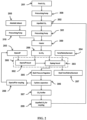
- FIG. 1 is a flowchart showing the major steps for NASM dyeing PET, cotton, wool or PET/cotton blended textile in accordance with the present disclosure.
- the method comprises the steps: (1) loading undyed yarns, fabrics, and/or garments S101 ; (2) pressurizing and heating S102 ; (3) dyeing using circulation pump S103 ; (4) cooling and rinsing S104 ; (5) depressurizing S105 ; and (6) unloading dyed yarns, fabrics, and garments S106 .
- pressurizing and heating S102 are performed on the dyestuff vessel 302 for preparing the appropriate dyeing condition.
- the temperature and pressure conditions vary depending on the type of material for being dyed.
- the dyestuff vessel 302 includes a removable stainless steel mesh basket for dyestuff. After pressurizing and heating S102 the dyestuff vessel 302 to the dyeing condition of 140 bar to 280 bar and 60°C to 150°C, the dyeing system 300 is ready to perform dyeing using circulation pump S103 .
- a motor driven stirrer is turned on for internal circulation inside the dyeing vessel 302 so that Sc-CO 2 dissolves the dyestuff contained in the mesh basket, and the Sc-CO 2 -mixed dyestuff 211 can enter the dyeing vessel 303 for dyeing using circulation pump S103 .
- a lower temperature of 40°C to 80°C is used, whereas the pressure is maintained the same as the pressure used in the dyeing stage at 140 bar to 280 bar.
- the rinsing process comprises continuous supply of fresh Sc-CO 2 for a rinsing period of approximately 10 minutes to 2 hours, particularly between 15 minutes to 1 hour, depending on the amount of unfixed dyestuff and/or Sc-CO 2 soluble impurities or side products remaining on the textiles.
- the Sc-CO 2 After rinsing, the Sc-CO 2 is turned into liquefied CO 2 by performing depressurization S105 , such that the dyestuff and any solvents (e.g., an alcoholic solvent) used are separated during the phase change of CO 2 .
- the dyestuff and any solvents collected can be reused in the dyeing process.
- the dyed yarns, fabrics, and/or garments can be unloaded S106 .
- FIG. 2 is a flowchart showing the method for NASM dyeing PET, cotton, wool or PET/cotton blended textile using Sc-CO 2
- FIG. 3 is a schematic diagram showing the corresponding structure.
- the dyeing system 300 is a 2-in-1 dyeing system comprising a dyestuff vessel 302 and a dyeing vessel 303 , and uses fresh CO 2 201 or recycled liquefied CO 2 209 for dyeing synthetic, natural, and/or blended textiles.
- the fresh CO 2 201 is pressurized by a pressurizing pump 308 to obtain liquefied CO 2 202 .
- the fresh CO 2 201 is pressurized to approximately 20 bar to 150 bar.
- the liquefied CO 2 202 mixed with any recycled liquefied CO 2 209 , is stored in a liquefied CO 2 storage vessel 312 at a temperature preferably between -20°C to 20°C.
- the liquefied CO 2 202 , 209 is then transferred to another pressurizing pump 301 for further pressurization.
- the preferred pressure for obtaining Sc-CO 2 206 for the purpose of the present disclosure is between 140 bar to 280 bar.
- the further pressurized liquefied CO 2 is mixed with alcoholic solvent 205 , for example, methanol or ethanol, which is also pressurized by a pressurizing pump 311 .
- alcoholic solvent 205 for example, methanol or ethanol
- wt% weight percent of alcoholic solvent 205
- no alcoholic solvent 205 is mixed with the pressurized liquefied CO 2 .
- the pressurized liquefied CO 2 is heated to the preferred temperature by a heater 309 .
- the heater 309 can be, for example, a steam heat exchanger, a water heat exchanger, or an electrical heater.
- the obtained Sc-CO 2 206 is used for both the dyestuff vessel 302 and dyeing vessel 303 .
- the Sc-CO 2 206 is the dyeing solvent replacing water.
- the dyestuff vessel 302 can be provided with a motor driven rotating stirrer, comprising a motor 401 , a mesh basket 405 , one or more stirrer blades 407 , and a heating jacket 408 .
- the dyestuff 203 and Sc-CO 2 206 are mixed in the dyestuff vessel 302 .
- the choice of dyestuff 203 in the dyeing system 300 mainly relies on the solubility of the dyestuff 203 in Sc-CO 2 and the reaction of the dyestuff 203 and the nature of textile.
- An exemplary dyestuff vessel 302 is shown in FIG. 4A , and FIG. 4B illustrates the internal structure thereof. The amount of dyestuff is with respect to the weight of fabric.
- the dyestuff 203 and Sc-CO 2 206 are mixed by an internal circulation inside the dyeing vessel 302 driven by the rotational force of the one or more stirring blades 407 to obtain the Sc-CO 2 -mixed dyestuff 211 .
- the stirring blades 407 are twisted and arranged to form preferably an axial flow impeller, or alternatively a radial flow impeller (hereinafter referred to as an "impeller").
- the center of the impeller is connected longitudinally to a motor 401 along a stirrer axis 406 .
- the motor 401 is driven by a magnetic drive 402 .
- the motor 401 may employ other driving method for controlling the stirring blades 407 without departing from the spirit of the present disclosure.
- the impeller can generate a downward and then upward flow of the Sc-CO 2 206 for mixing and dissolving the dyestuff 203 contained in the mesh basket 405 .
- a heating jacket 408 is provided at the body of the dyestuff vessel 302 .
- a cover 403 and a plurality of cover locks 404 are used for opening and hermetically sealing the dyestuff vessel 302 . It is preferred that the cover 403 and the mesh basket 405 are made of stainless steel.
- the Sc-CO 2 206 is also supplied to the dyeing vessel 303 through a bypass channel 310 , and the Sc-CO 2 -mixed dyestuff 211 is also supplied to the dyeing vessel 303 for performing textile dyeing.
- the yarn/fabric/garment 204 is first loaded to the dyeing vessel 303 .
- there are three types of dyeing vessels 303 to be installed to the dyeing system 300 including fabric dyeing vessel 303A for dyeing fabrics, garment dyeing vessel 303B for dyeing garments, and yarn dyeing vessel 303C for dyeing yarns.
- a circulation pump 304 is used for continuously circulating the Sc-CO 2 206 and the Sc-CO 2 -mixed dyestuff 211 between the dyeing vessel 303 and the dyestuff vessel 302 .
- the circulation pump 304 is preferably an electrically powered centrifugal pump, which can thrust the Sc-CO 2 206 and the Sc-CO 2 -mixed dyestuff 211 into the heater 309 or the dyestuff vessel 302 .
- the circulation can be performed in either direction, and not necessarily to be operated in the direction as indicated in FIG. 3 .
- the circulation can also be in alternating directions by operating the circulation pump 304 in an alternating manner, i.e. clockwise, counterclockwise, clockwise, etc.
- FIG. 5 illustrates a fabric dyeing vessel 303A in accordance with certain embodiments of the present disclosure.
- the fabric dyeing vessel 303A comprises a fabric beam 502 , an inlet and an outlet for circulating the Sc-CO 2 , and an electrical heating jacket 503 .
- the heating jacket 503 is preferably an electrical heating jacket and applies heat to the fabric loaded into the fabric dyeing vessel 303A , such that the dyeing operation can be performed at the preferred temperature range of 90°C to 150°C for PET, or 60°C to 120°C for cotton, wool or PET/cotton blend. As substantially surrounded by the heating jacket 503 , the dyeing process can be operated at the preferred temperature.
- the fabric beam 502 is used to tighten the fabrics at position 501 for dyeing.
- the weight of the fabrics is usually in a range from 10g to 40kg, particularly 100g to 20kg.
- the fabric beam 502 is a stainless steel cylindrical shell with holes for the flow of Sc-CO 2 and dyestuff.
- the Sc-CO 2 -mixed dyestuff 211 is flowed from an inlet connecting on the wall to the fabric dyeing vessel 303A to an outlet at the end of the fabric beam 502 , or vice versa, for a backward flow.
- FIG. 9 A similar flow illustrating inlet and outlet of Sc-CO 2 -mixed dyestuff 211 for the case of yarn dyeing vessel 303C is shown in FIG. 9 , which can also be applied to the fabric dyeing vessel 303A in FIG. 5 . Circulating the Sc-CO 2 -mixed dyestuff 211 using either direction of flow or alternatively switching between the two directions is feasible in the dyeing system 300 .
- FIG. 6 illustrates a garment dyeing vessel 303B in accordance with certain embodiments of the present disclosure.
- the garment dyeing vessel 303B comprises a garment basket 601 , a garment vessel 604 , a heating jacket 602 , an inlet and an outlet for circulating the Sc-CO 2 , and a motor 603 .
- the garment basket 601 is preferably in hexagonal shape, which is a movable stainless steel container.
- the weight of the garment is typically in a range of 100g to 5kg.
- the garment is dyed during rotary of the garment basket 601 .
- the garment is packed or hung inside the garment basket 601 for dyeing.
- the rotation is driven by the motor 603 .
- the heating jacket 602 is preferably an electrical heating jacket and applies heat to the garment loaded into the garment dyeing vessel 303B , such that the dyeing operation can be performed at the preferred temperature range of 90°C to 150°C for PET, or 60°C to 120°C for cotton, wool or PET/cotton blend.
- Rotating the garment basket 601 in clockwise, anticlockwise or alternatively bidirectional manner is feasible in the dyeing system 300 .
- the garment basket 601 is fixed inside the garment vessel 604 after loading the garment into the garment basket 601 for dyeing.
- FIG. 8 illustrates a yarn dyeing vessel 303C in accordance with certain embodiments of the present disclosure.
- the yarn dyeing vessel 303C comprises a yarn beam 801 , a heating jacket 802 , and an inlet and an outlet for circulating the Sc-CO 2 803 .
- the yarn beam 801 is a movable beam used for loading yarn cones. Typically, the yarn cones have a total weight in a range from 20g (1 yarn cone) to 40kg (10-20 yarn cones).
- the yarn beam 801 is a stainless steel cylindrical shell with holes for the flow of Sc-CO 2 and dyestuff. Yarn cones are dyed by forward flow, backward flow or alternative flow.
- FIG. 1 a yarn dyeing vessel 303C
- the heating jacket 802 is preferably an electrical heating jacket and applies heat to the garment loaded into the yarn dyeing vessel 303C , such that the dyeing operation can be performed at the preferred temperature range of 90°C to 150°C for PET, or 60°C to 120°C for cotton, wool or PET/cotton blend.
- the dyeing vessel 303 is preferred to be used for a specific type of textile. However, it shall be understood that the dyeing vessel 303 exhibits the potential for dyeing multiple types of textile.
- the dyeing system 300 of the present disclosure can advantageously dye the textile in a green, profitable, and sustainable manner without the use of water. After completing dyeing using circulation pump S103 , the dyeing vessel 303 is cooled and the textile is rinsed accordingly.
- a lower temperature preferably between 70°C and 100°C.
- the pressure is maintained the same as the pressure used in the dyeing stage at 140 bar to 280 bar.
- the unfixed dyestuff on the textile is then rinsed off by the flow of Sc-CO 2 206 .
- a lower temperature preferably between 40°C and 80°C.
- the pressure is maintained the same as the pressure used in the dyeing stage at 140 bar to 280 bar.
- the unfixed dyestuff and/or SC-C0 2 soluble impurities or side products on the textile is then rinsed off by the flow of SC-C02 206.
- the dyed yarn/fabric/garment 207 can be unloaded from the dyeing vessel 303.
- the pressure in the dyeing system 300 can be maintained using a back pressure regulator 305 , which can allow a flow of the Sc-CO 2 206 and the Sc-CO 2 -mixed dyestuff 211 to the cyclone separators 306 when the pressure is higher than the expected range.
- the cyclone separators 306 can separate dyestuff and solvent from Sc-CO 2 .
- a cyclone separator 306 is a separation device that can filter heavier substance from lighter substance. Other separation devices, such as a centrifuge, may also be used to replace the cyclone separators 306 for achieving the same purpose.
- the temperature and pressure are usually lower than those in the dyeing vessel 303 . Due to difference of temperature and pressure, the Sc-CO 2 turns into liquefied CO 2 .
- the dyestuff and solvents (for the case of cotton, wool, and cotton/PET blend) are separated during the phase change of Sc-CO 2 to CO 2 .
- at least two cyclone separators 306 are used to ensure that most of the dyestuff are separated and precipitated at the bottom of the cyclone separators 306 .
- the collected dyestuff and solvent 208 can be reused in the dyeing process.
- the two cyclone separators 306 are operated at relatively low temperature and low pressure, particularly at around 30°C to 80°C and 20 bar to 150 bar.
- the first cyclone separator 306 is operated at around 50°C to 80°C and 70 bar to 150 bar, particularly 60°C to 80°C and 100 bar to 140 bar.
- the second cyclone separator 306 is operated at around 30°C to 50°C and 20 bar to 60 bar, particularly 30°C to 50°C and 20 bar to 50 bar.
- the two cyclone separators 306 are designed for separating dyestuff, alcoholic solvent and CO 2 .
- the separated CO 2 210 from the cyclone separators 306 is then purified by CO 2 purifier 307 and recycled.
- the recycled CO 2 209 is transferred and stored in liquefied CO 2 storage vessel 312 for recycling.
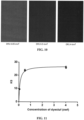
- FIG. 10 shows the color sample of the dyed fabrics for Example 1.
- the textile sample used in Example 1 is a textile made of 98% PET/2% spandex fabric, which is dyed with a disperse red (DR1) by the process and system of the present disclosure.
- Three dyeing batches of different concentrations of DR1, 0.05%owf (on weight of fiber), 0.5%owf, and 4%owf, are added to the mesh basket 405 of the dyestuff vessel 302 .
- 15kg of textile sample is fixed on the fabric beam 502 , and the fabric dyeing vessel 303A is operated at 130°C and 260 bar with 3 hours of circulation using the circulation pump 304 .
- An alternating flow with an interval of 30 minutes is used, such that the Sc-CO 2 206 enters the fabric dyeing vessel 303A from two different directions.
- the fabric dyeing vessel 303A is cooled to 65°C following with 30 minutes of rinsing to remove the unfixed dyestuff.
- FIG. 11 shows the relationship between the average K/S values and different concentrations of DR1 in Example 1.
- the textile samples can also pass the other tests, such as color fastness to washing (AATCC61), color fastness to dry cleaning (AATCC132), color fastness to perspiration (AATCC15), color fastness to water (AATCC107), color fastness to crocking (AATCC8), color fastness to light (AATCC16), and tearing strength (ASTM D1424).
- the three textile samples score greater than 3 in color staining to cotton and polyester of AATCC61, AATCC 132, AATCC15 and AATCC107; and greater than 3.5 in AATCC8 and AATCC16.
- FIG. 12 shows the dyed yarn for Example 2.
- the photo in FIG. 12 although depicted in grayscale (not shown in color), is light yellow in color with hex #feef19.
- the textile sample used in Example 2 is a 100% PET yarn cone, which is dyed with a disperse yellow (DY1) using the dyeing method and system of the present disclosure.
- DY1 disperse yellow
- the textile sample used in Example 2 is a 100% PET yarn cone, which is dyed with a disperse yellow (DY1) using the dyeing method and system of the present disclosure.
- 0.5%owf DY1 is added to the mesh basket 405 .
- 20kg of textile sample is put into the yarn beam 801 , and the yarn dyeing vessel 303C is operated at 120°C and 240 bar with 3 hours of circulation using the circulation pump 304.
- An alternating flow with an interval of 60 minutes is used, such that the Sc-CO 2 206 enters the yarn dyeing vessel 303C from two different directions.
- the yarn dyeing vessel 303C is cooled to 70°C following with 45 minutes of rinsing to remove the unfixed dyestuff.
- the textile sample can also pass the other tests, such as AATCC61, AATCC132, AATCC15, AATCC107, AATCC8, AATCC16, and ASTM D1424.
- AATCC61, AATCC 132, AATCC15 and AATCC107 the scores are greater than 4.5 in color staining to cotton and polyester, and greater than 4 in AATCC8 and AATCC16.
- FIG. 13 shows the color sample of the dyed garment for Example 3.
- the image in FIG. 13 although depicted in grayscale (not shown in color), is navy blue in color with hex #043484.
- the textile sample used in Example 3 is a 100% PET garment, which is dyed with a disperse blue (DB1) using the dyeing method and system of the present disclosure.
- DB1 disperse blue
- the dyestuff vessel 302 4%owf DB1 is added to the mesh basket 405 .
- 1kg of textile sample is put into the garment basket 601 , and the garment dyeing vessel 303B is operated at 130°C and 250 bar with 4 hours of circulation using the circulation pump 304 .
- An alternating flow with an interval of 45 minutes is used, such that the Sc-CO 2 206 enters the garment dyeing vessel 303B from two different directions.
- the garment dyeing vessel 303B is cooled to 70°C following with 60 minutes of rinsing to remove the unfixed dyestuff.
- the textile sample can also pass the other tests, such as AATCC61, AATCC132, AATCC15, AATCC107, AATCC8, AATCC16, and ASTM D1424.
- AATCC61, AATCC 132, AATCC15 and AATCC107 the scores are greater than 4.5 in color staining to cotton and polyester, and greater than 3.5 in AATCC8 and AATCC16.
- FIG. 14 shows the color sample of the dyed fabric for Example 4.
- the image in FIG. 14 although depicted in grayscale (not shown in color), is pumpkin in color with hex #fa8322.
- the textile sample used in Example 4 is a 100% cotton fabric, which is dyed with a reactive disperse yellow (RDY1) using the dyeing method and system of the present disclosure.
- RDY1 reactive disperse yellow
- the dyestuff vessel 302 4%owf RDY1 is added to the mesh basket 405 .
- 15kg of textile sample is put into the fabric beam 502 .
- 3wt% of methanol with respective to the weight of Sc-CO 2 is added into the dyeing system 300 through a pressurizing pump 310 .
- the fabric dyeing vessel 303A is operated at 90°C and 270 bar with 4 hours of circulation using the circulation pump 304 .
- the textile sample can also pass the other tests, such as AATCC61, AATCC132, AATCC15, AATCC107, AATCC8, AATCC16, and ASTM D1424.
- AATCC61, AATCC 132, AATCC15 and AATCC107 the scores are greater than 4 in color staining to cotton and polyester, and greater than 3 in AATCC8 and AATCC16.
- FIG. 15 shows the color sample of the dyed fabric for Example 5.
- the image in FIG. 15 although depicted in grayscale (not shown in color), is pumpkin in color with hex #e47727.
- the textile sample used in Example 5 is a blend fabric of 50% PET and 50% cotton, which is dyed with a reactive disperse yellow (RDY1) using the dyeing method and system of the present disclosure.
- RDY1 reactive disperse yellow
- 15kg of textile sample is put into the fabric beam 502 .
- 6wt% of methanol with respective to the weight of Sc-CO 2 is added into the dyeing system 300 through a pressurizing pump 310 .
- the fabric dyeing vessel 303A is operated at 90°C and 280 bar with 4 hours of circulation using the circulation pump 304 .
- the textile sample can also pass the other tests, such as AATCC61, AATCC132, AATCC15, AATCC107, AATCC8, AATCC16, and ASTM D1424.
- AATCC61, AATCC 132, AATCC15 and AATCC 107 the scores are greater than 4 in color staining to cotton and polyester, and greater than 3 in AATCC8 and AATCC 16.
Landscapes
- Engineering & Computer Science (AREA)
- Textile Engineering (AREA)
- Coloring (AREA)
- Treatment Of Fiber Materials (AREA)
Claims (19)
- Ein System zum Färben mehrerer Arten von Textilien mit Hilfe von verflüssigtem CO2, wobei das System Folgendes umfasst:eine erste Druckaufbaupumpe (301), um verflüssigtes CO2 (202) unter Druck zu überkritischem CO2, abgekürzt Sc-CO2 (206), zu machen;eine Heizvorrichtung (309) zum Erhitzen des Sc-CO2 (206);ein Farbstoffgefäß (302) zum Mischen eines Farbstoffs (203) und des Sc-CO2 (206), um einen Sc-CO2-gemischten Farbstoff (211) zu erhalten;einen Färbekessel (303) zum Färben der Textilie durch Zirkulieren des Sc-CO2 und des Sc-CO2-gemischten Farbstoffs (211) zwischen dem Färbekessel (303) und dem Farbstoffgefäß (302);einen oder mehrere Zyklonabscheider (306) zum Entfernen des Farbstoffs (203) von dem Sc-CO2-gemischten Farbstoff (211), um abgetrenntes verflüssigtes CO2 (210) zu erhalten; undeine zweite Druckaufbaupumpe (308), um CO2 (201) unter Druck zu verflüssigtem CO2 (202) zu machen; undeinen Lagerbehälter (312) für verflüssigtes CO2, um das verflüssigte CO2 (202) und das abgetrennte verflüssigte CO2 (210) aus dem einen oder den mehreren Zyklonabscheidern (306) zu lagern.
- Das System gemäß Anspruch 1, das weiter CO2 (202), ein alkoholisches Lösungsmittel (205) und Farbstoff (203) sowie eine dritte Druckaufbaupumpe (311), um ein alkoholisches Lösungsmittel (205) unter Druck zu setzen, umfasst, worin:das alkoholische Lösungsmittel (205) gewählt ist aus der Gruppe bestehend aus Methanol, Ethanol und einer Kombination davon; undder Farbstoff (203) ein dispergierter Reaktivfarbstoff ist.
- Das System gemäß Anspruch 1, wobei das Farbstoffgefäß (302) einen Motor (401), einen Gitterkorb (405), ein oder mehrere Rührflügel (407) und einen Heizmantel (408) umfasst.
- Das System gemäß Anspruch 1, wobei der Färbekessel (303A) zum Färben einer Textilie einen Textilstrahl (502), einen Einlass und einen Auslass zum Zirkulieren des Sc-CO2 und einen Heizmantel (503) umfasst.
- Das System gemäß Anspruch 1, wobei der Färbekessel (303B) zum Färben einer Bekleidungstextilie einen Kleidungskorb (601), ein Kleidungsgefäß (604), einen Heizmantel (602), einen Einlass und einen Auslass zum Zirkulieren des Sc-CO2 und einen Motor (603) umfasst.
- Das System gemäß Anspruch 1, wobei der Färbekessel (303C) zum Färben einer Garntextilie einen Garnstrahl (801), einen Heizmantel (802) und einen Einlass und einen Auslass zum Zirkulieren des Sc-CO2 (803) umfasst.
- Ein Verfahren zum Färben einer Textilie mit Hilfe von verflüssigtem CO2, wobei das Verfahren folgende Schritte umfasst:das Beladen eines Färbekessels (303, S101) mit einer Textilie;das Unter-Druck-Setzen und Erhitzen von verflüssigtem CO2 (202), um überkritisches CO2 (206), abgekürzt Sc-CO2 (S102), zu erhalten;das Mischen eines Farbstoffs (203) und des Sc-CO2 (206) in einem Färbekessel (302) bei einer ersten Temperatur und einem ersten Druck, um Sc-CO2-gemischten Farbstoff zu erhalten;das Zirkulieren des Sc-CO2-gemischten Farbstoffs (211) und des Sc-CO2 (206) zwischen dem Färbekessel (303) und dem Farbstoffgefäß (302) über einen Färbezeitraum, um die Textilie zu färben; anschließend das Spülen der Textilie mit Hilfe von Sc-CO2 (206) bei einer zweiten Temperatur und dem ersten Druck über einen Spülzeitraum (S104), wobei die zweite Temperatur niedriger ist als die erste Temperatur;das Entfernen des Farbstoffs (203) vom Sc-CO2-gemischten Farbstoff durch einen oder mehrere Zyklonabscheider (306) und das Erhalten von abgetrenntem verflüssigtem CO2 (202);das Unter-Druck-Setzen von CO2 (201), um verflüssigtes CO2 (202) zu erhalten;das Lagern des verflüssigten CO2 (202) in einem Lagerbehälter (312) für verflüssigtes CO2 unddas Lagern des abgetrennten verflüssigten CO2 (210) von dem einen oder den mehreren Zyklonabscheidern (306) in dem Lagerbehälter (312) für verflüssigtes CO2.
- Das Verfahren gemäß Anspruch 7,
das weiter das Reinigen des abgetrennten verflüssigten CO2 (210) und das Überführen des abgetrennten verflüssigten CO2 (210) an einen Lagerbehälter (312) für verflüssigtes CO2 zum Recycling umfasst. - Das Verfahren gemäß Anspruch 7,
wobei das Zirkulieren des Sc-CO2-gemischten Farbstoffs (211) und des Sc-CO2 (206) zwischen dem Färbekessel (303) und dem Farbstoffgefäß (302) von einer Umwälzpumpe (103) angetrieben wird, die in einer einzigen Richtung oder in alternierende Richtungen arbeitet. - Das Verfahren gemäß Anspruch 7,
wobei die erste Temperatur in einem Bereich von 60°C bis 150°C liegt. - Das Verfahren gemäß Anspruch 7,
wobei der erste Druck in einem Bereich von 140 bar bis 280 bar liegt. - Das Verfahren gemäß Anspruch 7,
wobei die zweite Temperatur in einem Bereich von 40°C bis 80°C liegt. - Das Verfahren gemäß Anspruch 7,
wobei der Färbezeitraum in einem Bereich von 30 Minuten bis 6 Stunden liegt. - Das Verfahren gemäß Anspruch 7,
wobei der Spülzeitraum in einem Bereich von 10 Minuten und 2 Stunden liegt. - Das Verfahren gemäß Anspruch 7, das weiter Folgendes umfasst:das Unter-Druck-Setzen eines alkoholischen Lösungsmittels (205);das Mischen des alkoholischen Lösungsmittels (205) mit dem Sc-CO2 (206) vor dem Zuführen des Sc-CO2 (206) zu dem Farbstoffgefäß (302) und dem Färbekessel (303) unddas Entfernen des alkoholischen Lösungsmittels (205) vom Sc-CO2-gemischten Farbstoff (211) durch einen oder mehrere Zyklonabscheider (306).
- Das Verfahren gemäß Anspruch 15,
wobei das alkoholische Lösungsmittel (205) gewählt ist aus der Gruppe bestehend aus Methanol, Ethanol und einer Kombination davon. - Das Verfahren gemäß Anspruch 15,
wobei der Farbstoff (203) ein dispergierter Reaktivfarbstoff ist. - Das Verfahren gemäß Anspruch 15, wobei das alkoholische Lösungsmittel (205) in einem Bereich von 3 Gewichtsprozent bis 12 Gewichtsprozent, bezogen auf das Sc-CO2, vorliegt.
- Das Verfahren gemäß Anspruch 15, wobei das alkoholische Lösungsmittel in einem Bereich von 0,1 Gewichtsprozent bis 5 Gewichtsprozent, bezogen auf das Sc-CO2, vorliegt.
Priority Applications (1)
| Application Number | Priority Date | Filing Date | Title |
|---|---|---|---|
| EP19162459.2A EP3708704B1 (de) | 2019-03-13 | 2019-03-13 | Verfahren und integriertes system zum färben von verschiedenen formen synthetischer, natürlicher und gemischter textilien mit überkritischem, nichtwässrigem lösungsmittel |
Applications Claiming Priority (1)
| Application Number | Priority Date | Filing Date | Title |
|---|---|---|---|
| EP19162459.2A EP3708704B1 (de) | 2019-03-13 | 2019-03-13 | Verfahren und integriertes system zum färben von verschiedenen formen synthetischer, natürlicher und gemischter textilien mit überkritischem, nichtwässrigem lösungsmittel |
Publications (3)
| Publication Number | Publication Date |
|---|---|
| EP3708704A1 EP3708704A1 (de) | 2020-09-16 |
| EP3708704C0 EP3708704C0 (de) | 2023-07-26 |
| EP3708704B1 true EP3708704B1 (de) | 2023-07-26 |
Family
ID=65801962
Family Applications (1)
| Application Number | Title | Priority Date | Filing Date |
|---|---|---|---|
| EP19162459.2A Active EP3708704B1 (de) | 2019-03-13 | 2019-03-13 | Verfahren und integriertes system zum färben von verschiedenen formen synthetischer, natürlicher und gemischter textilien mit überkritischem, nichtwässrigem lösungsmittel |
Country Status (1)
| Country | Link |
|---|---|
| EP (1) | EP3708704B1 (de) |
Family Cites Families (5)
| Publication number | Priority date | Publication date | Assignee | Title |
|---|---|---|---|---|
| JP2002129464A (ja) * | 2000-10-18 | 2002-05-09 | Howa Kk | 超臨界流体による染色装置及び染色方法 |
| JP2003082572A (ja) * | 2001-09-11 | 2003-03-19 | Hisaka Works Ltd | 高圧処理装置 |
| FI116626B (fi) * | 2004-01-27 | 2006-01-13 | Valtion Teknillinen | Menetelmä johtavien polymeeripinnoitteiden saostamiseksi ylikriittisessä hiilidioksidissa |
| KR100570333B1 (ko) * | 2004-05-24 | 2006-04-12 | 주식회사 삼일산업 | 산업용 초임계유체염색기 |
| CN107904986B (zh) * | 2017-12-26 | 2020-11-03 | 中原工学院 | 超临界co2流体天然纺织染料组合物及染色方法 |
-
2019
- 2019-03-13 EP EP19162459.2A patent/EP3708704B1/de active Active
Also Published As
| Publication number | Publication date |
|---|---|
| EP3708704C0 (de) | 2023-07-26 |
| EP3708704A1 (de) | 2020-09-16 |
Similar Documents
| Publication | Publication Date | Title |
|---|---|---|
| Banchero | Supercritical fluid dyeing of synthetic and natural textiles–a review | |
| Long et al. | A novel plant for fabric rope dyeing in supercritical carbon dioxide and its cleaner production | |
| Jahangiri et al. | Natural dyeing of wool by madder (rubia tinctorum l.) root extract using tannin-based biomordants: Colorimetric, fastness and tensile assay | |
| EP3530792B1 (de) | Vorrichtung und verfahren zum wasserfreien färben von spulengarn und produkt | |
| CN103741523B (zh) | 一种超临界co2流体分散染料增溶染色方法 | |
| CN100359091C (zh) | 超临界二氧化碳染色的工艺方法 | |
| Gao et al. | Supercritical carbon dioxide dyeing for PET and cotton fabric with synthesized dyes by a modified apparatus | |
| Broadbent et al. | Supercritical carbon dioxide (SC‐CO2) dyeing of cellulose acetate: An opportunity for a “greener” circular textile economy | |
| KR20050111982A (ko) | 산업용 초임계유체염색기 | |
| Zhao et al. | A heterogeneous binary solvent system for recyclable reactive dyeing of cotton fabrics | |
| Mousa et al. | Dyeing of synthetic fiber-based wool blended fabrics in supercritical carbon dioxide | |
| CN105074083A (zh) | 用于基质的着色和处理的新方法 | |
| CN106977976A (zh) | 黄色分散染料化合物及其合成方法和染色应用 | |
| US20250354330A1 (en) | Method and Integrated System for Non-aqueous Solvent Medium (NASM) Dyeing of Multiple Forms of Synthetic, Natural and Blended Textiles | |
| Prabakaran et al. | Synthesis and characterization of sustainable blue dyes: Enhancing diffusion on nylon fabrics with supercritical CO2 for eco-friendly dyeing methods | |
| EP3708704A1 (de) | Verfahren und integriertes system zum färben von verschiedenen formen synthetischer, natürlicher und gemischter textilien mit überkritischem, nichtwässrigem lösungsmittel | |
| Holme | Recent developments in colorants for textile applications | |
| Yang et al. | High fixation and low energy consumption in reactive dyeing of cotton through combining the dye molecule design and environment-friendly dyeing technique | |
| CN102839518A (zh) | 一种家用干洗机及衣物的干洗方法 | |
| CN102020864B (zh) | 一种利用1-氨基蒽醌生产废渣制造黄色染料的方法 | |
| Freeman et al. | Dye application, manufacture of dye intermediates and dyes | |
| US11802370B2 (en) | Method for decolorizing textiles | |
| CN109322177A (zh) | 一种染色废水循环回用的方法 | |
| Freeman et al. | Dye application, manufacture of dye intermediates and dyes | |
| CN106320020A (zh) | 高性能环保导染匀染剂组合物及其应用 |
Legal Events
| Date | Code | Title | Description |
|---|---|---|---|
| PUAI | Public reference made under article 153(3) epc to a published international application that has entered the european phase |
Free format text: ORIGINAL CODE: 0009012 |
|
| STAA | Information on the status of an ep patent application or granted ep patent |
Free format text: STATUS: REQUEST FOR EXAMINATION WAS MADE |
|
| 17P | Request for examination filed |
Effective date: 20190322 |
|
| AK | Designated contracting states |
Kind code of ref document: A1 Designated state(s): AL AT BE BG CH CY CZ DE DK EE ES FI FR GB GR HR HU IE IS IT LI LT LU LV MC MK MT NL NO PL PT RO RS SE SI SK SM TR |
|
| AX | Request for extension of the european patent |
Extension state: BA ME |
|
| STAA | Information on the status of an ep patent application or granted ep patent |
Free format text: STATUS: EXAMINATION IS IN PROGRESS |
|
| 17Q | First examination report despatched |
Effective date: 20210813 |
|
| GRAP | Despatch of communication of intention to grant a patent |
Free format text: ORIGINAL CODE: EPIDOSNIGR1 |
|
| STAA | Information on the status of an ep patent application or granted ep patent |
Free format text: STATUS: GRANT OF PATENT IS INTENDED |
|
| INTG | Intention to grant announced |
Effective date: 20230215 |
|
| RAP3 | Party data changed (applicant data changed or rights of an application transferred) |
Owner name: THE HONG KONG RESEARCH INSTITUTE OF TEXTILES AND APPAREL LIMITED |
|
| GRAS | Grant fee paid |
Free format text: ORIGINAL CODE: EPIDOSNIGR3 |
|
| GRAA | (expected) grant |
Free format text: ORIGINAL CODE: 0009210 |
|
| STAA | Information on the status of an ep patent application or granted ep patent |
Free format text: STATUS: THE PATENT HAS BEEN GRANTED |
|
| AK | Designated contracting states |
Kind code of ref document: B1 Designated state(s): AL AT BE BG CH CY CZ DE DK EE ES FI FR GB GR HR HU IE IS IT LI LT LU LV MC MK MT NL NO PL PT RO RS SE SI SK SM TR |
|
| REG | Reference to a national code |
Ref country code: CH Ref legal event code: EP |
|
| REG | Reference to a national code |
Ref country code: DE Ref legal event code: R096 Ref document number: 602019033358 Country of ref document: DE |
|
| REG | Reference to a national code |
Ref country code: IE Ref legal event code: FG4D |
|
| U01 | Request for unitary effect filed |
Effective date: 20230823 |
|
| U07 | Unitary effect registered |
Designated state(s): AT BE BG DE DK EE FI FR IT LT LU LV MT NL PT SE SI Effective date: 20230831 |
|
| REG | Reference to a national code |
Ref country code: LT Ref legal event code: MG9D |
|
| PG25 | Lapsed in a contracting state [announced via postgrant information from national office to epo] |
Ref country code: GR Free format text: LAPSE BECAUSE OF FAILURE TO SUBMIT A TRANSLATION OF THE DESCRIPTION OR TO PAY THE FEE WITHIN THE PRESCRIBED TIME-LIMIT Effective date: 20231027 |
|
| PG25 | Lapsed in a contracting state [announced via postgrant information from national office to epo] |
Ref country code: IS Free format text: LAPSE BECAUSE OF FAILURE TO SUBMIT A TRANSLATION OF THE DESCRIPTION OR TO PAY THE FEE WITHIN THE PRESCRIBED TIME-LIMIT Effective date: 20231126 |
|
| PG25 | Lapsed in a contracting state [announced via postgrant information from national office to epo] |
Ref country code: RS Free format text: LAPSE BECAUSE OF FAILURE TO SUBMIT A TRANSLATION OF THE DESCRIPTION OR TO PAY THE FEE WITHIN THE PRESCRIBED TIME-LIMIT Effective date: 20230726 Ref country code: NO Free format text: LAPSE BECAUSE OF FAILURE TO SUBMIT A TRANSLATION OF THE DESCRIPTION OR TO PAY THE FEE WITHIN THE PRESCRIBED TIME-LIMIT Effective date: 20231026 Ref country code: IS Free format text: LAPSE BECAUSE OF FAILURE TO SUBMIT A TRANSLATION OF THE DESCRIPTION OR TO PAY THE FEE WITHIN THE PRESCRIBED TIME-LIMIT Effective date: 20231126 Ref country code: HR Free format text: LAPSE BECAUSE OF FAILURE TO SUBMIT A TRANSLATION OF THE DESCRIPTION OR TO PAY THE FEE WITHIN THE PRESCRIBED TIME-LIMIT Effective date: 20230726 Ref country code: GR Free format text: LAPSE BECAUSE OF FAILURE TO SUBMIT A TRANSLATION OF THE DESCRIPTION OR TO PAY THE FEE WITHIN THE PRESCRIBED TIME-LIMIT Effective date: 20231027 |
|
| PG25 | Lapsed in a contracting state [announced via postgrant information from national office to epo] |
Ref country code: PL Free format text: LAPSE BECAUSE OF FAILURE TO SUBMIT A TRANSLATION OF THE DESCRIPTION OR TO PAY THE FEE WITHIN THE PRESCRIBED TIME-LIMIT Effective date: 20230726 |
|
| U20 | Renewal fee for the european patent with unitary effect paid |
Year of fee payment: 6 Effective date: 20240205 |
|
| PG25 | Lapsed in a contracting state [announced via postgrant information from national office to epo] |
Ref country code: ES Free format text: LAPSE BECAUSE OF FAILURE TO SUBMIT A TRANSLATION OF THE DESCRIPTION OR TO PAY THE FEE WITHIN THE PRESCRIBED TIME-LIMIT Effective date: 20230726 |
|
| REG | Reference to a national code |
Ref country code: DE Ref legal event code: R097 Ref document number: 602019033358 Country of ref document: DE |
|
| PG25 | Lapsed in a contracting state [announced via postgrant information from national office to epo] |
Ref country code: SM Free format text: LAPSE BECAUSE OF FAILURE TO SUBMIT A TRANSLATION OF THE DESCRIPTION OR TO PAY THE FEE WITHIN THE PRESCRIBED TIME-LIMIT Effective date: 20230726 Ref country code: RO Free format text: LAPSE BECAUSE OF FAILURE TO SUBMIT A TRANSLATION OF THE DESCRIPTION OR TO PAY THE FEE WITHIN THE PRESCRIBED TIME-LIMIT Effective date: 20230726 Ref country code: ES Free format text: LAPSE BECAUSE OF FAILURE TO SUBMIT A TRANSLATION OF THE DESCRIPTION OR TO PAY THE FEE WITHIN THE PRESCRIBED TIME-LIMIT Effective date: 20230726 Ref country code: CZ Free format text: LAPSE BECAUSE OF FAILURE TO SUBMIT A TRANSLATION OF THE DESCRIPTION OR TO PAY THE FEE WITHIN THE PRESCRIBED TIME-LIMIT Effective date: 20230726 Ref country code: SK Free format text: LAPSE BECAUSE OF FAILURE TO SUBMIT A TRANSLATION OF THE DESCRIPTION OR TO PAY THE FEE WITHIN THE PRESCRIBED TIME-LIMIT Effective date: 20230726 |
|
| PLBE | No opposition filed within time limit |
Free format text: ORIGINAL CODE: 0009261 |
|
| STAA | Information on the status of an ep patent application or granted ep patent |
Free format text: STATUS: NO OPPOSITION FILED WITHIN TIME LIMIT |
|
| 26N | No opposition filed |
Effective date: 20240429 |
|
| REG | Reference to a national code |
Ref country code: CH Ref legal event code: PL |
|
| PG25 | Lapsed in a contracting state [announced via postgrant information from national office to epo] |
Ref country code: MC Free format text: LAPSE BECAUSE OF FAILURE TO SUBMIT A TRANSLATION OF THE DESCRIPTION OR TO PAY THE FEE WITHIN THE PRESCRIBED TIME-LIMIT Effective date: 20230726 |
|
| GBPC | Gb: european patent ceased through non-payment of renewal fee |
Effective date: 20240313 |
|
| PG25 | Lapsed in a contracting state [announced via postgrant information from national office to epo] |
Ref country code: MC Free format text: LAPSE BECAUSE OF FAILURE TO SUBMIT A TRANSLATION OF THE DESCRIPTION OR TO PAY THE FEE WITHIN THE PRESCRIBED TIME-LIMIT Effective date: 20230726 |
|
| PG25 | Lapsed in a contracting state [announced via postgrant information from national office to epo] |
Ref country code: GB Free format text: LAPSE BECAUSE OF NON-PAYMENT OF DUE FEES Effective date: 20240313 |
|
| PG25 | Lapsed in a contracting state [announced via postgrant information from national office to epo] |
Ref country code: IE Free format text: LAPSE BECAUSE OF NON-PAYMENT OF DUE FEES Effective date: 20240313 |
|
| PG25 | Lapsed in a contracting state [announced via postgrant information from national office to epo] |
Ref country code: IE Free format text: LAPSE BECAUSE OF NON-PAYMENT OF DUE FEES Effective date: 20240313 Ref country code: GB Free format text: LAPSE BECAUSE OF NON-PAYMENT OF DUE FEES Effective date: 20240313 Ref country code: CH Free format text: LAPSE BECAUSE OF NON-PAYMENT OF DUE FEES Effective date: 20240331 |
|
| U20 | Renewal fee for the european patent with unitary effect paid |
Year of fee payment: 7 Effective date: 20250310 |
|
| PG25 | Lapsed in a contracting state [announced via postgrant information from national office to epo] |
Ref country code: CY Free format text: LAPSE BECAUSE OF FAILURE TO SUBMIT A TRANSLATION OF THE DESCRIPTION OR TO PAY THE FEE WITHIN THE PRESCRIBED TIME-LIMIT; INVALID AB INITIO Effective date: 20190313 |
|
| PG25 | Lapsed in a contracting state [announced via postgrant information from national office to epo] |
Ref country code: HU Free format text: LAPSE BECAUSE OF FAILURE TO SUBMIT A TRANSLATION OF THE DESCRIPTION OR TO PAY THE FEE WITHIN THE PRESCRIBED TIME-LIMIT; INVALID AB INITIO Effective date: 20190313 |
|
| PG25 | Lapsed in a contracting state [announced via postgrant information from national office to epo] |
Ref country code: TR Free format text: LAPSE BECAUSE OF FAILURE TO SUBMIT A TRANSLATION OF THE DESCRIPTION OR TO PAY THE FEE WITHIN THE PRESCRIBED TIME-LIMIT Effective date: 20230726 |
|
| U20 | Renewal fee for the european patent with unitary effect paid |
Year of fee payment: 8 Effective date: 20260205 |