EP3704757B1 - Elektrolytzusammensetzung - Google Patents
Elektrolytzusammensetzung Download PDFInfo
- Publication number
- EP3704757B1 EP3704757B1 EP18873129.3A EP18873129A EP3704757B1 EP 3704757 B1 EP3704757 B1 EP 3704757B1 EP 18873129 A EP18873129 A EP 18873129A EP 3704757 B1 EP3704757 B1 EP 3704757B1
- Authority
- EP
- European Patent Office
- Prior art keywords
- electrolyte composition
- ionic
- imtfsi
- block
- organic
- Prior art date
- Legal status (The legal status is an assumption and is not a legal conclusion. Google has not performed a legal analysis and makes no representation as to the accuracy of the status listed.)
- Active
Links
Images









Classifications
-
- H—ELECTRICITY
- H01—ELECTRIC ELEMENTS
- H01M—PROCESSES OR MEANS, e.g. BATTERIES, FOR THE DIRECT CONVERSION OF CHEMICAL ENERGY INTO ELECTRICAL ENERGY
- H01M10/00—Secondary cells; Manufacture thereof
- H01M10/05—Accumulators with non-aqueous electrolyte
- H01M10/056—Accumulators with non-aqueous electrolyte characterised by the materials used as electrolytes, e.g. mixed inorganic/organic electrolytes
- H01M10/0564—Accumulators with non-aqueous electrolyte characterised by the materials used as electrolytes, e.g. mixed inorganic/organic electrolytes the electrolyte being constituted of organic materials only
-
- H—ELECTRICITY
- H01—ELECTRIC ELEMENTS
- H01M—PROCESSES OR MEANS, e.g. BATTERIES, FOR THE DIRECT CONVERSION OF CHEMICAL ENERGY INTO ELECTRICAL ENERGY
- H01M8/00—Fuel cells; Manufacture thereof
- H01M8/10—Fuel cells with solid electrolytes
- H01M8/1016—Fuel cells with solid electrolytes characterised by the electrolyte material
- H01M8/1018—Polymeric electrolyte materials
- H01M8/1041—Polymer electrolyte composites, mixtures or blends
- H01M8/1046—Mixtures of at least one polymer and at least one additive
- H01M8/1048—Ion-conducting additives, e.g. ion-conducting particles, heteropolyacids, metal phosphate or polybenzimidazole with phosphoric acid
-
- C—CHEMISTRY; METALLURGY
- C08—ORGANIC MACROMOLECULAR COMPOUNDS; THEIR PREPARATION OR CHEMICAL WORKING-UP; COMPOSITIONS BASED THEREON
- C08F—MACROMOLECULAR COMPOUNDS OBTAINED BY REACTIONS ONLY INVOLVING CARBON-TO-CARBON UNSATURATED BONDS
- C08F293/00—Macromolecular compounds obtained by polymerisation on to a macromolecule having groups capable of inducing the formation of new polymer chains bound exclusively at one or both ends of the starting macromolecule
-
- C—CHEMISTRY; METALLURGY
- C08—ORGANIC MACROMOLECULAR COMPOUNDS; THEIR PREPARATION OR CHEMICAL WORKING-UP; COMPOSITIONS BASED THEREON
- C08K—Use of inorganic or non-macromolecular organic substances as compounding ingredients
- C08K3/00—Use of inorganic substances as compounding ingredients
- C08K3/02—Elements
- C08K3/08—Metals
-
- C—CHEMISTRY; METALLURGY
- C08—ORGANIC MACROMOLECULAR COMPOUNDS; THEIR PREPARATION OR CHEMICAL WORKING-UP; COMPOSITIONS BASED THEREON
- C08K—Use of inorganic or non-macromolecular organic substances as compounding ingredients
- C08K5/00—Use of organic ingredients
- C08K5/36—Sulfur-, selenium-, or tellurium-containing compounds
- C08K5/41—Compounds containing sulfur bound to oxygen
-
- H—ELECTRICITY
- H01—ELECTRIC ELEMENTS
- H01M—PROCESSES OR MEANS, e.g. BATTERIES, FOR THE DIRECT CONVERSION OF CHEMICAL ENERGY INTO ELECTRICAL ENERGY
- H01M10/00—Secondary cells; Manufacture thereof
- H01M10/05—Accumulators with non-aqueous electrolyte
- H01M10/052—Li-accumulators
-
- H—ELECTRICITY
- H01—ELECTRIC ELEMENTS
- H01M—PROCESSES OR MEANS, e.g. BATTERIES, FOR THE DIRECT CONVERSION OF CHEMICAL ENERGY INTO ELECTRICAL ENERGY
- H01M10/00—Secondary cells; Manufacture thereof
- H01M10/05—Accumulators with non-aqueous electrolyte
- H01M10/052—Li-accumulators
- H01M10/0525—Rocking-chair batteries, i.e. batteries with lithium insertion or intercalation in both electrodes; Lithium-ion batteries
-
- H—ELECTRICITY
- H01—ELECTRIC ELEMENTS
- H01M—PROCESSES OR MEANS, e.g. BATTERIES, FOR THE DIRECT CONVERSION OF CHEMICAL ENERGY INTO ELECTRICAL ENERGY
- H01M10/00—Secondary cells; Manufacture thereof
- H01M10/05—Accumulators with non-aqueous electrolyte
- H01M10/056—Accumulators with non-aqueous electrolyte characterised by the materials used as electrolytes, e.g. mixed inorganic/organic electrolytes
- H01M10/0564—Accumulators with non-aqueous electrolyte characterised by the materials used as electrolytes, e.g. mixed inorganic/organic electrolytes the electrolyte being constituted of organic materials only
- H01M10/0565—Polymeric materials, e.g. gel-type or solid-type
-
- H—ELECTRICITY
- H01—ELECTRIC ELEMENTS
- H01M—PROCESSES OR MEANS, e.g. BATTERIES, FOR THE DIRECT CONVERSION OF CHEMICAL ENERGY INTO ELECTRICAL ENERGY
- H01M10/00—Secondary cells; Manufacture thereof
- H01M10/05—Accumulators with non-aqueous electrolyte
- H01M10/056—Accumulators with non-aqueous electrolyte characterised by the materials used as electrolytes, e.g. mixed inorganic/organic electrolytes
- H01M10/0564—Accumulators with non-aqueous electrolyte characterised by the materials used as electrolytes, e.g. mixed inorganic/organic electrolytes the electrolyte being constituted of organic materials only
- H01M10/0566—Liquid materials
- H01M10/0567—Liquid materials characterised by the additives
-
- H—ELECTRICITY
- H01—ELECTRIC ELEMENTS
- H01M—PROCESSES OR MEANS, e.g. BATTERIES, FOR THE DIRECT CONVERSION OF CHEMICAL ENERGY INTO ELECTRICAL ENERGY
- H01M10/00—Secondary cells; Manufacture thereof
- H01M10/05—Accumulators with non-aqueous electrolyte
- H01M10/056—Accumulators with non-aqueous electrolyte characterised by the materials used as electrolytes, e.g. mixed inorganic/organic electrolytes
- H01M10/0564—Accumulators with non-aqueous electrolyte characterised by the materials used as electrolytes, e.g. mixed inorganic/organic electrolytes the electrolyte being constituted of organic materials only
- H01M10/0566—Liquid materials
- H01M10/0568—Liquid materials characterised by the solutes
-
- H—ELECTRICITY
- H01—ELECTRIC ELEMENTS
- H01M—PROCESSES OR MEANS, e.g. BATTERIES, FOR THE DIRECT CONVERSION OF CHEMICAL ENERGY INTO ELECTRICAL ENERGY
- H01M10/00—Secondary cells; Manufacture thereof
- H01M10/05—Accumulators with non-aqueous electrolyte
- H01M10/056—Accumulators with non-aqueous electrolyte characterised by the materials used as electrolytes, e.g. mixed inorganic/organic electrolytes
- H01M10/0564—Accumulators with non-aqueous electrolyte characterised by the materials used as electrolytes, e.g. mixed inorganic/organic electrolytes the electrolyte being constituted of organic materials only
- H01M10/0566—Liquid materials
- H01M10/0569—Liquid materials characterised by the solvents
-
- H—ELECTRICITY
- H01—ELECTRIC ELEMENTS
- H01M—PROCESSES OR MEANS, e.g. BATTERIES, FOR THE DIRECT CONVERSION OF CHEMICAL ENERGY INTO ELECTRICAL ENERGY
- H01M4/00—Electrodes
- H01M4/02—Electrodes composed of, or comprising, active material
- H01M4/36—Selection of substances as active materials, active masses, active liquids
- H01M4/48—Selection of substances as active materials, active masses, active liquids of inorganic oxides or hydroxides
- H01M4/485—Selection of substances as active materials, active masses, active liquids of inorganic oxides or hydroxides of mixed oxides or hydroxides for inserting or intercalating light metals, e.g. LiTi2O4 or LiTi2OxFy
-
- H—ELECTRICITY
- H01—ELECTRIC ELEMENTS
- H01M—PROCESSES OR MEANS, e.g. BATTERIES, FOR THE DIRECT CONVERSION OF CHEMICAL ENERGY INTO ELECTRICAL ENERGY
- H01M4/00—Electrodes
- H01M4/02—Electrodes composed of, or comprising, active material
- H01M4/36—Selection of substances as active materials, active masses, active liquids
- H01M4/58—Selection of substances as active materials, active masses, active liquids of inorganic compounds other than oxides or hydroxides, e.g. sulfides, selenides, tellurides, halogenides or LiCoFy; of polyanionic structures, e.g. phosphates, silicates or borates
- H01M4/583—Carbonaceous material, e.g. graphite-intercalation compounds or CFx
- H01M4/587—Carbonaceous material, e.g. graphite-intercalation compounds or CFx for inserting or intercalating light metals
-
- C—CHEMISTRY; METALLURGY
- C08—ORGANIC MACROMOLECULAR COMPOUNDS; THEIR PREPARATION OR CHEMICAL WORKING-UP; COMPOSITIONS BASED THEREON
- C08K—Use of inorganic or non-macromolecular organic substances as compounding ingredients
- C08K3/00—Use of inorganic substances as compounding ingredients
- C08K3/02—Elements
- C08K3/08—Metals
- C08K2003/0818—Alkali metal
-
- C—CHEMISTRY; METALLURGY
- C08—ORGANIC MACROMOLECULAR COMPOUNDS; THEIR PREPARATION OR CHEMICAL WORKING-UP; COMPOSITIONS BASED THEREON
- C08K—Use of inorganic or non-macromolecular organic substances as compounding ingredients
- C08K2201/00—Specific properties of additives
- C08K2201/001—Conductive additives
-
- C—CHEMISTRY; METALLURGY
- C08—ORGANIC MACROMOLECULAR COMPOUNDS; THEIR PREPARATION OR CHEMICAL WORKING-UP; COMPOSITIONS BASED THEREON
- C08K—Use of inorganic or non-macromolecular organic substances as compounding ingredients
- C08K3/00—Use of inorganic substances as compounding ingredients
- C08K3/10—Metal compounds
- C08K3/105—Compounds containing metals of Groups 1 to 3 or of Groups 11 to 13 of the Periodic Table
-
- C—CHEMISTRY; METALLURGY
- C08—ORGANIC MACROMOLECULAR COMPOUNDS; THEIR PREPARATION OR CHEMICAL WORKING-UP; COMPOSITIONS BASED THEREON
- C08K—Use of inorganic or non-macromolecular organic substances as compounding ingredients
- C08K5/00—Use of organic ingredients
- C08K5/16—Nitrogen-containing compounds
- C08K5/17—Amines; Quaternary ammonium compounds
- C08K5/19—Quaternary ammonium compounds
-
- C—CHEMISTRY; METALLURGY
- C08—ORGANIC MACROMOLECULAR COMPOUNDS; THEIR PREPARATION OR CHEMICAL WORKING-UP; COMPOSITIONS BASED THEREON
- C08K—Use of inorganic or non-macromolecular organic substances as compounding ingredients
- C08K5/00—Use of organic ingredients
- C08K5/16—Nitrogen-containing compounds
- C08K5/34—Heterocyclic compounds having nitrogen in the ring
- C08K5/3412—Heterocyclic compounds having nitrogen in the ring having one nitrogen atom in the ring
- C08K5/3415—Five-membered rings
-
- C—CHEMISTRY; METALLURGY
- C08—ORGANIC MACROMOLECULAR COMPOUNDS; THEIR PREPARATION OR CHEMICAL WORKING-UP; COMPOSITIONS BASED THEREON
- C08K—Use of inorganic or non-macromolecular organic substances as compounding ingredients
- C08K5/00—Use of organic ingredients
- C08K5/16—Nitrogen-containing compounds
- C08K5/34—Heterocyclic compounds having nitrogen in the ring
- C08K5/3412—Heterocyclic compounds having nitrogen in the ring having one nitrogen atom in the ring
- C08K5/3432—Six-membered rings
-
- C—CHEMISTRY; METALLURGY
- C08—ORGANIC MACROMOLECULAR COMPOUNDS; THEIR PREPARATION OR CHEMICAL WORKING-UP; COMPOSITIONS BASED THEREON
- C08K—Use of inorganic or non-macromolecular organic substances as compounding ingredients
- C08K5/00—Use of organic ingredients
- C08K5/49—Phosphorus-containing compounds
-
- C—CHEMISTRY; METALLURGY
- C08—ORGANIC MACROMOLECULAR COMPOUNDS; THEIR PREPARATION OR CHEMICAL WORKING-UP; COMPOSITIONS BASED THEREON
- C08L—COMPOSITIONS OF MACROMOLECULAR COMPOUNDS
- C08L59/00—Compositions of polyacetals; Compositions of derivatives of polyacetals
-
- H—ELECTRICITY
- H01—ELECTRIC ELEMENTS
- H01M—PROCESSES OR MEANS, e.g. BATTERIES, FOR THE DIRECT CONVERSION OF CHEMICAL ENERGY INTO ELECTRICAL ENERGY
- H01M8/00—Fuel cells; Manufacture thereof
- H01M8/10—Fuel cells with solid electrolytes
- H01M2008/1095—Fuel cells with polymeric electrolytes
-
- H—ELECTRICITY
- H01—ELECTRIC ELEMENTS
- H01M—PROCESSES OR MEANS, e.g. BATTERIES, FOR THE DIRECT CONVERSION OF CHEMICAL ENERGY INTO ELECTRICAL ENERGY
- H01M2300/00—Electrolytes
- H01M2300/0017—Non-aqueous electrolytes
- H01M2300/0025—Organic electrolyte
- H01M2300/0045—Room temperature molten salts comprising at least one organic ion
-
- H—ELECTRICITY
- H01—ELECTRIC ELEMENTS
- H01M—PROCESSES OR MEANS, e.g. BATTERIES, FOR THE DIRECT CONVERSION OF CHEMICAL ENERGY INTO ELECTRICAL ENERGY
- H01M2300/00—Electrolytes
- H01M2300/0017—Non-aqueous electrolytes
- H01M2300/0065—Solid electrolytes
-
- H—ELECTRICITY
- H01—ELECTRIC ELEMENTS
- H01M—PROCESSES OR MEANS, e.g. BATTERIES, FOR THE DIRECT CONVERSION OF CHEMICAL ENERGY INTO ELECTRICAL ENERGY
- H01M2300/00—Electrolytes
- H01M2300/0017—Non-aqueous electrolytes
- H01M2300/0065—Solid electrolytes
- H01M2300/0082—Organic polymers
-
- H—ELECTRICITY
- H01—ELECTRIC ELEMENTS
- H01M—PROCESSES OR MEANS, e.g. BATTERIES, FOR THE DIRECT CONVERSION OF CHEMICAL ENERGY INTO ELECTRICAL ENERGY
- H01M2300/00—Electrolytes
- H01M2300/0085—Immobilising or gelification of electrolyte
-
- H—ELECTRICITY
- H01—ELECTRIC ELEMENTS
- H01M—PROCESSES OR MEANS, e.g. BATTERIES, FOR THE DIRECT CONVERSION OF CHEMICAL ENERGY INTO ELECTRICAL ENERGY
- H01M2300/00—Electrolytes
- H01M2300/0088—Composites
-
- H—ELECTRICITY
- H01—ELECTRIC ELEMENTS
- H01M—PROCESSES OR MEANS, e.g. BATTERIES, FOR THE DIRECT CONVERSION OF CHEMICAL ENERGY INTO ELECTRICAL ENERGY
- H01M2300/00—Electrolytes
- H01M2300/0088—Composites
- H01M2300/0091—Composites in the form of mixtures
-
- H—ELECTRICITY
- H01—ELECTRIC ELEMENTS
- H01M—PROCESSES OR MEANS, e.g. BATTERIES, FOR THE DIRECT CONVERSION OF CHEMICAL ENERGY INTO ELECTRICAL ENERGY
- H01M4/00—Electrodes
- H01M4/02—Electrodes composed of, or comprising, active material
- H01M4/36—Selection of substances as active materials, active masses, active liquids
- H01M4/48—Selection of substances as active materials, active masses, active liquids of inorganic oxides or hydroxides
- H01M4/483—Selection of substances as active materials, active masses, active liquids of inorganic oxides or hydroxides for non-aqueous cells
-
- Y—GENERAL TAGGING OF NEW TECHNOLOGICAL DEVELOPMENTS; GENERAL TAGGING OF CROSS-SECTIONAL TECHNOLOGIES SPANNING OVER SEVERAL SECTIONS OF THE IPC; TECHNICAL SUBJECTS COVERED BY FORMER USPC CROSS-REFERENCE ART COLLECTIONS [XRACs] AND DIGESTS
- Y02—TECHNOLOGIES OR APPLICATIONS FOR MITIGATION OR ADAPTATION AGAINST CLIMATE CHANGE
- Y02E—REDUCTION OF GREENHOUSE GAS [GHG] EMISSIONS, RELATED TO ENERGY GENERATION, TRANSMISSION OR DISTRIBUTION
- Y02E60/00—Enabling technologies; Technologies with a potential or indirect contribution to GHG emissions mitigation
- Y02E60/10—Energy storage using batteries
-
- Y—GENERAL TAGGING OF NEW TECHNOLOGICAL DEVELOPMENTS; GENERAL TAGGING OF CROSS-SECTIONAL TECHNOLOGIES SPANNING OVER SEVERAL SECTIONS OF THE IPC; TECHNICAL SUBJECTS COVERED BY FORMER USPC CROSS-REFERENCE ART COLLECTIONS [XRACs] AND DIGESTS
- Y02—TECHNOLOGIES OR APPLICATIONS FOR MITIGATION OR ADAPTATION AGAINST CLIMATE CHANGE
- Y02E—REDUCTION OF GREENHOUSE GAS [GHG] EMISSIONS, RELATED TO ENERGY GENERATION, TRANSMISSION OR DISTRIBUTION
- Y02E60/00—Enabling technologies; Technologies with a potential or indirect contribution to GHG emissions mitigation
- Y02E60/30—Hydrogen technology
- Y02E60/50—Fuel cells
Definitions
- the present invention relates to electrolyte compositions, and in particular to block copolymer electrolyte compositions and devices comprising the same.
- Solid-state polymer electrolytes are a promising substitute to liquid electrolytes for the fabrication of high performance ion conducting electrolytes, and in particular high-performance lithium-ion conducting electrolytes.
- Polymer electrolytes promise an improvement of the overall electrochemical performance and safety of lithium-based devices due to their good shape flexibility, suppression of dendrite growth, removal of leakage issues and lower flammability relative to liquid electrolytes.
- Block copolymer electrolytes form part of a particular class of polymer electrolytes that have recently attracted attention due to their highly customisable chemical nature.
- polymer electrolytes prepared to date have generally been found to be defective in either ionic conductivity and/or mechanical stability. Poor ionic conductivity leads to the production of solid-state devices that suffer from low storage capacity, energy and power.
- poor mechanical stability adversely affects the electrochemical stability and/or cycleability of the electrolyte.
- block copolymer electrolytes that can provide ionic conductivities comparable to those of their liquid counterparts, as well as sufficiently good mechanical properties to ensure electrochemical stability and cycleability.
- the present invention relates to electrolyte compositions obtained by combining a block copolymer, an organic electrolyte, and a lithium salt. It has surprisingly been observed that by controlling the glass transition temperature (Tg) profile of the electrolyte composition it is possible to provide solid-state electrolytes having high electrochemical and mechanical stability. This may be achieved, for example, by tuning a number of chemical and physical parameters of the composition which include the molar weight of the copolymer, the amount of lithium contained in the electrolyte composition, and the amount and type of the organic electrolyte.
- Tg glass transition temperature
- the present invention provides an electrolyte composition
- a block copolymer comprising (i) a block copolymer, (ii) an organic electrolyte, and (iii) a lithium salt
- the block copolymer comprises a non-ionic block and an ionic block, the non-ionic block comprising polymerised residues of hydrophobic monomers, and the ionic block comprising polymerised monomer residues having covalently coupled thereto (a) a pendant organic ionic liquid cation, the pendant organic ionic liquid cation having a counter anion, (b) a pendant anionic moiety, the pendant anionic moiety having a counter cation, or (c) a combination thereof, and wherein the electrolyte composition has at least two glass transition temperature (Tg) values.
- Tg glass transition temperature
- the at least two Tg values of the electrolyte composition is characteristic of its morphology having micro-phase separation. Without wanting to be confined by theory, such morphology is believed to be beneficial to both the ionic conductivity and the mechanical properties of the composition. For example, it is believed an electrolyte composition morphology characterised by micro-phase separation ensures preferential pathways for ionic diffusion, thus promoting ionic conductivity. On the other hand, it is believed that such micro-phase separation emphasises the composite-like character of the composition, thus improving its overall mechanical properties. It was surprising to observe multiple glass transition temperatures characteristic after the addition of an organic electrolyte (e.g. an ionic liquid), the counter ions and lithium salt to the block copolymer, since these types of additions traditionally have caused block copolymers to plasticise.
- an organic electrolyte e.g. an ionic liquid
- the molar weight of the non-ionic block combined with the ionic block is less than 40,000 g/mol.
- copolymers in which the molar weight of the non-ionic block combined with the ionic block is less than 40,000 g/mol offer a particularly advantageous balance between ionic conductivity and mechanical stability. Without wanting to be confined by theory, it is believed that such a range of molar weights assists with the compactness of the overall polymer structure, at the same time reducing resistance to ionic diffusion.
- the lithium salt is present in an amount of at least 11 wt.% relative to the total weight of the electrolyte composition.
- the organic electrolyte is present in an amount of less than 55 wt.% relative to the total weight of the electrolyte composition.
- an amount of organic electrolyte of less than 55.0 wt.% relative to the total weight of the electrolyte composition reduces adverse plasticising effects and/or assists in providing an advantageous balance between high ionic conductivity and mechanical stability of the electrolyte composition.
- the organic electrolyte is an organic ionic liquid having a cation and a counter anion, the organic ionic liquid not being covalently coupled to the block copolymer.
- the present invention also provides an electrolyte composition
- an electrolyte composition comprising (i) a block copolymer, (ii) an organic ionic liquid having a cation and a counter anion, the organic ionic liquid not being covalently coupled to the block copolymer, and (iii) a lithium salt
- the block copolymer comprises a non-ionic block and an ionic block, the non-ionic block comprising polymerised residues of hydrophobic monomers, and the ionic block comprising polymerised monomer residues having covalently coupled thereto (a) a pendant organic ionic liquid cation, the pendant organic ionic liquid cation having a counter anion, (b) a pendant anionic moiety, the pendant anionic moiety having a counter cation, or (c) a combination thereof, and wherein the electrolyte composition has at least two glass transition temperature (Tg) values.
- Tg glass transition temperature
- the organic ionic liquid not covalently coupled to the block copolymer may herein be referred to as "uncoupled ionic liquid” or "free ionic liquid”.
- the organic ionic liquid not covalently coupled to the block copolymer may be present in an amount of less than 55 wt.% relative to the total weight of the electrolyte composition. Without wanting to be confined by theory, it is believed an amount of uncoupled ionic liquid of less than 55.0 wt.% relative to the total weight of the electrolyte composition reduces adverse plasticising effects and/or assists in providing an advantageous balance between high ionic conductivity and mechanical stability of the electrolyte composition.
- the cation of the organic liquid that is not covalently coupled to the block copolymer is selected from an ammonium cation, a pyridinium cation, a pyrrolidinium cation, a phosphonium cation, and a combination thereof. It was surprisingly observed the choice of the cation selected from an ammonium cation, a pyridinium cation, phosphonium cation, a pyrrolidinium cation, and a combination thereof promotes formation of particularly stable Solid-Electrolyte Interface (SEI) on the surface of an electrode. That advantageously assists with the cycleability of a device comprising the electrode since the tendency to form dendrites is reduced, in turn increasing the safety characteristics of the device.
- SEI Solid-Electrolyte Interface
- the electrolyte composition according to the invention has at least two glass transition temperature (Tg) values as measured by Differential Scanning Calorimetry (DSC), and may also have one or more features selected from:
- the present invention also provides a lithium-based electrochemical cell comprising a negative electrode and an electrolyte composition as described herein.
- the block copolymer of the present invention comprises a non-ionic block.
- non-ionic block is meant a polymer block that does not contain ionic charge.
- the non-ionic block is a neutral polymer block.
- the type of the pendant organic ionic liquid cation is not particularly limited provided it presents as a pendant moiety to the monomer residues forming the backbone of the ionic block.
- polymerised monomer residues of the ionic block derive from monomers that comprise a pendant organic ionic liquid cation of the kind described herein.
- the counter anion of the pendant organic ionic liquid cation is selected from bis(trifluoromethanesulfonyl)imide (TFSI), Triflate (OTf), Tetrafluoroborate (BF 4 ), hexafluorophosphate (PF 6 ), and bis(fluorosulfonyl)imide (FSI), fluorosulfonyl- (trifluoromethanesulfonyl) imide (FTFSI), and a combination thereof.
- TFSI bis(trifluoromethanesulfonyl)imide
- OTf Triflate
- BF 4 Tetrafluoroborate
- PF 6 hexafluorophosphate
- FSI bis(fluorosulfonyl)imide
- FTFSI fluorosulfonyl- (trifluoromethanesulfonyl) imide
- the pendant anionic moiety comprises derivatives of bis(trifluoromethanesulfonyl)imide (TFSI), Triflate (OTf), Tetrafluoroborate (BF 4 ), hexafluorophosphate (PF 6 ), and bis(fluorosulfonyl)imide (FSI), fluorosulfonyl-(trifluoromethanesulfonyl) imide (FTFSI) and a combination thereof.
- TFSI bis(trifluoromethanesulfonyl)imide
- OTf Triflate
- BF 4 Tetrafluoroborate
- PF 6 hexafluorophosphate
- FSI bis(fluorosulfonyl)imide
- FTFSI fluorosulfonyl-(trifluoromethanesulfonyl) imide
- the pendant anionic moiety has a counter cation.
- the block copolymer used according to the invention may be prepared by any suitable means.
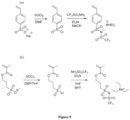
- the block copolymer is prepared by a process comprising the polymerisation of ethylenically unsaturated monomers.
- the polymerisation of the ethylenically unsaturated monomers is preferably conducted using a living polymerisation technique.
- Examples of living polymerisation include ionic polymerisation and controlled radical polymerisation (CRP).
- Examples of CRP include, but are not limited to, iniferter polymerisation, stable free radical mediated polymerisation (SFRP), atom transfer radical polymerisation (ATRP), and reversible addition fragmentation chain transfer (RAFT) polymerisation.
- SFRP stable free radical mediated polymerisation
- ATRP atom transfer radical polymerisation
- RAFT reversible addition fragmentation chain transfer
- the block copolymer is formed by polymerising ethylenically unsaturated monomer under the control of a living polymerisation agent, for example a RAFT agent.
- a living polymerisation agent for example a RAFT agent.
- RAFT agents suitable for use in accordance with the invention may be obtained commercially, for example see those described in the Sigma Aldrich catalogue (www.sigmaaldrich.com), or Boron Molecular catalogue (www.boronmelecular.com).
- the electrolyte composition of the present invention also comprises an organic electrolyte.
- organic electrolyte refers to an organic substance which can conduct electricity by displacement of charged species (e.g. ions).
- the charged species which may or may not be part of the organic electrolyte, may be cationic and/or anionic species (e.g. ions) either provided in solution with the substance or integral to the chemical structure of the substance (e.g. ionic liquids).
- the organic electrolyte comprises carbon.
- the organic electrolyte comprises an organic non-ionic polar compound.
- the compound being “non-ionic” the chemical structure of the compound does not comprise ionic bonds.
- the compound being “polar” the constituting molecules of the compound present asymmetrical charge distribution resulting in positive and negative charge domains. Accordingly, in those instances the organic electrolyte acts as a vehicle for ion diffusion.
- Suitable organic non-ionic polar compounds include linear ethers, cyclic ethers, esters, carbonates, lactones, nitriles, amides, sulfones, sulfolanes, diethylether, dimethoxyethane, tetrahydrofuran, dioxane, dioxolane, methyltetrahydrofuran, methyl formate, ethyl formate, methyl propionate, propylene carbonate, ethylene carbonate, dimethyl carbonate, diethyl carbonate, ethylmethyl carbonate, dibutyl carbonate, butyrolactones, acetonitrile, benzonitrile, nitromethane, nitrobenzene, dimethylformamide, N-methylpyrolidone, dime thy lsulf one, tetramethylene sulfone, sulfolane, thiophene, and a combination thereof.
- the organic ionic liquid not covalently coupled to the block copolymer has a cation and a counter anion. It was surprisingly observed that the type of the cation of the organic ionic liquid not covalently coupled to the block copolymer is in itself an effective parameter that can be modified to assist with the ionic conductivity of the electrolyte compositions while maintaining their good mechanical stability. In particular, it has been observed that improved properties can result when the cation of the uncoupled organic liquid is selected from an ammonium cation, a pyridinium cation, a pyrrolidinium cation, and a phosphonium cation.
- the organic ionic liquid not covalently coupled to the block copolymer comprises a counter anion.
- the counter anion neutralizes the charge of the organic ionic liquid cation, there is no limitation as to the type of the counter anion.
- the organic ionic liquid not covalently coupled to the block copolymer comprises a counter anion selected from aqueous or anhydrous alkyl phosphate, biscarbonate, bistriflimide ((i.e., N(SO 2 CF 3 ) 2 - )), N(SO 2 C 2 F 5 ) 2 - , N(SO 2 CF 3 )(SO 2 C 4 F 9 ) - , carbonate, chlorate, formate, glycolate, perchlorate, hexasubstituted phosphate (including PF 6 - , PF 3 (CF 3 ) 3 - , PF 3 (C 2 F 5 ) 3 - ); tetra-substituted borate (including e.g., BF 4 - , B(CN) 4 - , optionally fluorinated C 1-4 alkyl-BF 3 - (including BF 3 (CH 3 ) - , BF 3 (CF 3 )
- the organic ionic liquid not covalently coupled to the block copolymer comprises a counter anion selected from bis(trifluoromethanesulfonyl)imide (TFSI), Triflate (OTf), Tetrafluoroborate (BF 4 ), hexafluorophosphate (PF 6 ), and bis(fluorosulfonyl)imide (FSI), fluorosulfonyl-(trifluoromethanesulfonyl) imide (FTFSI), and a combination thereof.
- a counter anion selected from bis(trifluoromethanesulfonyl)imide (TFSI), Triflate (OTf), Tetrafluoroborate (BF 4 ), hexafluorophosphate (PF 6 ), and bis(fluorosulfonyl)imide (FSI), fluorosulfonyl-(trifluoromethanesulfonyl) imide (FTFSI), and a combination thereof.
- the lithium salt is selected from lithium bis(trifluoromethane)sulfonimide (Li-TFSI), lithium (bis(fluorosulfonyl)imide (Li-FSI), lithium fluorosulfonyl- (trifluoromethanesulfonyl) imide (Li-FTFSI), lithium triflate (LiOTf), lithium perchlorate (LiClO 4 ), lithium tetrafluoroborate (LiBF 4 ), lithium hexafluorophosphate (LiPF 6 ), and a combination thereof.
- Li-TFSI lithium bis(trifluoromethane)sulfonimide
- Li-FSI bis(fluorosulfonyl)imide
- Li-FTFSI lithium fluorosulfonyl- (trifluoromethanesulfonyl) imide
- LiOTf lithium triflate
- LiClO 4 lithium perchlorate
- LiBF 4 lithium te
- the number of glass transition (Tg) values (as measured by DSC) observed for the electrolyte composition has in itself been found to be an effective parameter that, independently from other parameters described herein, is indicative of the composition mechanical stability and ionic conductivity.
- Tg glass transition
- the "Tg” is a temperature value representative of a temperature or temperature range over which an amorphous polymeric composition (or the amorphous regions in a partially crystalline polymeric composition) changes from a relatively hard and brittle state to a relatively viscous or rubbery state.
- the number of Tg values for a given composition is determined by DSC.
- DSC digital versatile system
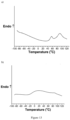
- a Tg value of a composition may be defined by a stepwise increase of the heat capacity as a function of temperature. Presence of a Tg value is determined by either the onset temperature (i.e. start point or end point) or inflection point (i.e. mid-point). A skilled person would know how to analyse such curve and identify the number of discontinuities corresponding to the number of Tg values.
- Tg values of the electrolyte composition The presence of at least two Tg values of the electrolyte composition is believed to indicate the morphology of the composition is characterised by strong micro-phase separation, and that such separation is beneficial to both the ionic conductivity and the mechanical properties of the composition. Without wanting to be confined by theory, it is believed strong micro-phase separation provides preferential pathways for ionic diffusion, thus promoting ionic conductivity. On the other hand, it is believed that such separation emphasises the composite-like character of the composition, thus improving its overall mechanical properties.
- micro-phase separation of the composition is intended to mean the presence or formation of nanometer-sized structures derived from the spatial self-assembly of the composition constituents. Without being confined to theory, such self-assembled structures are believed to form a periodic nanostructured lamellar morphology with connected ion-conducting domains.
- At least one region of nanophase separation may be characterized by a periodic nanostructured lamellar, hexagonal, 3D continuous or discontinuous morphology. Those domains may extend in one-, two- or three-dimensions throughout the composition.
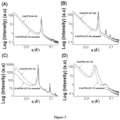
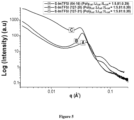
- the periodicity of the nanostructured morphology may be characterized by ordered domains having lattice parameter dimensions in the range of about 1 nm to about 500 nm, as measured by small angle X-ray scattering (SAXS).
- Tg of the electrolyte composition associated with the non-ionic block of the copolymer is not limited to any specific value.
- Tg of the electrolyte composition associated with the non-ionic block may be between about 30°C and about 250°C, between about 30°C and about 200°C, between about 30°C and about 175°C, between about 30°C and about 150°C, between about 30°C and about 125°C, between about 30°C and about 100°C, between about 40°C and about 100°C, between about 50°C and about 100°C, between about 60°C and about 100°C, or between about 70°C and about 100°C.
- Tg of the electrolyte composition associated with the ionic block of the copolymer is not limited to any specific value.
- Tg of the electrolyte composition associated with the ionic block may be between about -100°C and about 50°C, between, between about -100°C and about 20°C, between about -100°C and about 0°C, between about -100°C and about -30°C, between about -100°C and about -70°C, or between about -100°C and about -90°C.
- the electrolyte composition has at least two glass transition temperature (Tg) values as measured by Differential Scanning Calorimetry (DSC), the ionic block, lithium species and organic electrolyte may be provided in any relative amount.
- Tg glass transition temperature
- the (organic electrolyte : ionic block) molar fraction is between about 0.01 and about 1, between about 0.01 and about 0.9, between about 0.01 and about 0.8, between about 0.01 and about 0.7, between about 0.01 and about 0.6, between about 0.01 and about 0.5, between about 0.01 and about 0.4, between about 0.01 and about 0.3, between about 0.01 and about 0.2, between about 0.01 and about 0.1, or between about 0.01 and about 0.05.
- the (organic electrolyte : ionic block) molar fraction may be 0.39.
- the organic electrolyte comprises organic ionic liquid not covalently coupled to the block copolymer (i.e. free ionic liquid)
- the ionic block, lithium species and free ionic liquid may be provided in any relative amount provided the electrolyte composition has at least two glass transition temperature (Tg) values as measured by Differential Scanning Calorimetry (DSC).
- Tg glass transition temperature
- the (free ionic liquid : ionic block) molar fraction is between about 0.01 and about 1, between about 0.01 and about 0.9, between about 0.01 and about 0.8, between about 0.01 and about 0.7, between about 0.01 and about 0.6, between about 0.01 and about 0.5, between about 0.01 and about 0.4, between about 0.01 and about 0.3, between about 0.01 and about 0.2, between about 0.01 and about 0.1, or between about 0.01 and about 0.05.
- the (free ionic liquid : ionic block) molar fraction may be 0.39.
- the (ionic block : lithium : free ionic liquid) molar ratio is selected from 1.00 : 0.00 : 0.33, 1.00 : 0.00 : 0.39, 1.00 : 0.00 : 0.74, 1.00 : 0.20 : 0.21, 1.00 : 0.46 : 0.47, 1.00 : 0.58 : 0.39, 1.00 : 1.00 : 0.00, 1.00 : 1.01 : 0.14, 1.00 : 3.00 : 0.39, 1.00 : 5.81 : 0.00, 1:00 : 5.81 : 0.39, 1.00 : 5.81 : 0.79, 1.00 : 5.81 : 2.36, and 1.00 : 8.72 : 1.57.
- the molar weight of the ionic blocks combined with the non-ionic blocks of the copolymer is in itself an effective parameter that can be tuned to assist with the mechanical stability of the electrolyte compositions while maintaining their good ionic conductivity.
- the molar weight of the ionic blocks combined with the non-ionic blocks of the copolymer is less than about 40,000 g/mol.
- the organic electrolyte is present in an amount of less than 55 wt.% relative to the total weight of the electrolyte composition.
- the organic ionic liquid not covalently coupled to the block copolymer in the electrolyte composition is present in an amount of between about 0.1 wt.% and about 50 wt.%, between about 0.1 wt.% and about 40 wt.%, between about 0.1 wt.% and about 20 wt.%, between about 0.1 wt.% and about 5 wt.%, relative to the total weight of the electrolyte composition.
- the amount of lithium salt is in itself an effective parameter that can be to assist with the ionic conductivity and lithium transport properties of the electrolyte compositions of the present invention while maintaining their good mechanical stability.
- the lithium salt is present in an amount of at least 11 wt.% relative to the total weight of the electrolyte composition.
- the amount of lithium salt may be between about 11 wt.% and about 80 wt.%, between about 11 and 70 wt.% and between about 11 and 60, or between 11 and 55 wt. % relative to the total weight of the electrolyte composition.
- the ionic conductivity and lithium transport properties of the composition can be improved together with its mechanical stability because the amount of uncoupled ionic liquid, and consequently its plasticising effect, can be minimised.
- the present invention also provides a lithium-based electrochemical cell, which comprises an electrolyte composition of the kind described herein.
- the present invention provides a lithium-based electrochemical cell comprising a negative electrode and an electrolyte composition as described herein.
- the negative electrode may comprise (or be made of), expanded graphite, hard carbon (non-graphitisable carbon), coke, carbon black and glassy carbon.
- the lithium-based electrochemical cell of the invention supports a current density at the negative electrode of at least 10 ⁇ A/cm 2 , up to a maximum of 2,500 ⁇ A/cm 2 .
- the cell according to the invention can advantageously undergo such polarisation cycles while still maintaining a current density at the negative electrode of at least 10 ⁇ A/cm 2 .
- a cell undergoing polarisation cycles at a certain current density may also be referred to as being capable of "sustaining" such current density.
- a charge/discharge cycle may be the charge/discharge performed to activate a rechargeable battery following assembly.
- this refers to the procedure adopted to form/activate a negative electrode by way of charging/discharging routines under controlled voltage, temperature and environmental conditions, which is performed with the intention of inducing formation of the solid-electrolyte interphase (SEI) layer at the negative electrode.
- SEI solid-electrolyte interphase
- the lithium-based electrochemical cell of the invention when undergoing a charge/discharge cycle, has a current density at the negative electrode of at least 10 ⁇ A/cm 2 for at least 10 charge/discharge cycles, or of at least 10 ⁇ A/cm 2 for at least 20 charge/discharge cycles, or of at least 10 ⁇ A/cm 2 for at least 50 charge/discharge cycles, or of at least 10 ⁇ A/cm 2 for at least 100 charge/discharge cycles, or of at least 10 ⁇ A/cm 2 for at least 500 charge/discharge cycles, or of at least 10 ⁇ A/cm 2 for at least 1,000 charge/discharge cycles.
- the lithium-based electrochemical cell of the invention comprises a positive electrode.
- positive electrode refers to the electrode at which electrons enter the cell during discharge. By reference to its functionality during discharge, the positive electrode is also commonly referred to in the art as a "cathode”.
- Examples of material which the positive electrode may comprise (or be made of) include an oxide of a lithiated transition metal such as LiCoO 2 , LiNiO 2 , LiMnO 2 , LiMn 2 O 4 , LiFePO 4 , and corresponding substitutes in which a part of the main metal is substituted by one or more other transition metals such as Co, Mn, Al, Mg, Ti.
- the positive electrode may also comprise (or be made of) a carbon based-sulphur composite or carbon porous material for Li/sulphur and Li/air (or oxygen) battery, respectively.
- a lithium-based electrochemical cell of the invention when in a full-cell configuration, may also support a current density at the negative electrode having values described herein.
- a lithium-based electrochemical cell of the invention when in a full-cell configuration and undergoing polarisation or charge/discharge cycles as described herein, may also support a current density at the negative electrode having values described herein.
- a full-cell configuration the cell of the invention can advantageously find application as an energy storage device, for example as a lithium-based rechargeable battery.
- the specific current density that the cell of the invention supports advantageously provides for a lithium rechargeable battery with high discharge capacity and supporting multiple charge-discharge cycles.
- the present invention also provides a lithium-based rechargeable battery comprising a negative electrode, a positive electrode and an electrolyte composition as described herein.
- LiFSI lithium bis(fluorosulfonyl)imide salt
- LiFSI lithium bis(fluorosulfonyl)imide salt
- argon gloveboxes were used for polymer casting and storage.
- the polymer electrolytes were made using a solvent casting method.
- the desired amount by weight of LiFSI, S-ImTFSI (64-16) and N-propyl-N-methylpyrrolidinium bis(fluorosulfonyl)imide ionic liquid (C 3 mpyrFSI) were dissolved in tetrahydrofuran (THF). Polymer thickness was controlled by altering the concentration of the THF solution used.
- the polymer electrolytes were cast on a Teflon mould.
- the polymer electrolytes were first dried at 50 °C using the argon glovebox antechamber for 24 hours and then further dried at 80 °C under high vacuum using a Schlenk line.
- S-ImTFSI 64-16
- RAFT end groups are not included in the molar weight of the S-ImTFSI ( DPof S block - DP of ImTFSI ) calculations.
Landscapes
- Chemical & Material Sciences (AREA)
- Chemical Kinetics & Catalysis (AREA)
- Electrochemistry (AREA)
- General Chemical & Material Sciences (AREA)
- Engineering & Computer Science (AREA)
- Manufacturing & Machinery (AREA)
- Inorganic Chemistry (AREA)
- Physics & Mathematics (AREA)
- Condensed Matter Physics & Semiconductors (AREA)
- General Physics & Mathematics (AREA)
- Dispersion Chemistry (AREA)
- Medicinal Chemistry (AREA)
- Health & Medical Sciences (AREA)
- Polymers & Plastics (AREA)
- Organic Chemistry (AREA)
- Materials Engineering (AREA)
- Composite Materials (AREA)
- Life Sciences & Earth Sciences (AREA)
- Sustainable Development (AREA)
- Sustainable Energy (AREA)
- Compositions Of Macromolecular Compounds (AREA)
- Secondary Cells (AREA)
- Conductive Materials (AREA)
- Battery Electrode And Active Subsutance (AREA)
Claims (16)
- Elektrolytzusammensetzung umfassend:i) ein Blockcopolymer,ii) einen organischen Elektrolyten undiii) ein Lithiumsalz,wobeidas Blockcopolymer einen nichtionischen Block und einen ionischen Block umfasst, wobei der nichtionische Block polymerisierte Reste von hydrophoben Monomeren umfasst und der ionische Block polymerisierte Monomerreste umfasst, die kovalent daran gekoppelt (a) ein anhängendes organisches ionisches flüssiges Kation, wobei das anhängende organische ionische flüssige Kation ein Gegenanion aufweist, (b) eine anhängende anionische Einheit, wobei die anhängende anionische Einheit ein Gegenkation aufweist, oder (c) eine Kombination davon aufweisen unddie Elektrolytzusammensetzung wenigstens zwei Glasübergangstemperaturwerte (Tg) aufweist, gemessen durch Differentialscanning-Kalorimetrie (DSC).
- Elektrolytzusammensetzung nach Anspruch 1, wobei das Molgewicht des nichtionischen Blocks kombiniert mit dem ionischen Block weniger als 40.000 g/mol beträgt, wie bestimmt durch Gelpermeationschromatographie (GPC) oder 1H-Kernmagnetresonanz (NMR).
- Elektrolytzusammensetzung nach Anspruch 1 oder 2, wobei das Lithiumsalz in einer Menge von wenigstens 11 Gew.-% bezogen auf das Gesamtgewicht der Elektrolytzusammensetzung vorhanden ist.
- Elektrolytzusammensetzung nach einem der Ansprüche 1-3, wobei der organische Elektrolyt in einer Menge von weniger als 55,0 Gew.-% bezogen auf das Gesamtgewicht der Elektrolytzusammensetzung vorhanden ist.
- Elektrolytzusammensetzung nach einem der Ansprüche 1-4, wobei der nichtionische Block eine Wiederholungseinheit mit einer der folgenden Strukturen (I) und (II) umfasst:

- Elektrolytzusammensetzung nach einem der Ansprüche 1-5, wobei der ionische Block eine Wiederholungseinheit mit der folgenden Struktur (III) umfasst:

- Elektrolytzusammensetzung nach einem der Ansprüche 1-6, wobei das anhängende organische ionische flüssige Kation 1-Butyl (propyl) -1-methylpyrrolidinium (C4C3mpyr), N-Methyl-N-propylpyrrolidinium (C3mpyr), N-Butyl-N-methylpyrrolidinium (C4mPyr), 1-Ethyl-3-methylimidazolium (C2mim), 1-Propyl-3-methylimidazolium (C3mim), 1-Butyl-3-methylimidazolium (C4mim), 1-Hexyl-3-methylimidazolium (C6mim), 1-Octyl-3-methylimidazolium (C8mim), 1-Dodecyl-3-methylimidazolium (C12mim), 1-Hexadecyl-3-methylimidazolium (C16mim), 1,2-Dimethyl-3-butylimidazolium (C4(2-C1)mim), 1- (3-Aminopropyl) -3-methylimidazolium ((3-Aminopropyl)mim), 1,2-Dimethyl-3-(3-hydroxypropyl)imidazolium ((C2-OH)), N-Ethyltris(2-(2-methoxyethoxy)ethyl) ethanmmonium (N2(2o2o1)3), Trihexyl (tetradecyl) phosphonium (P66614), Diethyl (methyl) (isobutyl)phosphonium (P122i4), Triisobutyl (methyl)phosphonium (P1i4i4i4), Triethyl (methyl) phosphonium (P1222), Trimethyl (isobutyl)phosphoinum (P111i4) oder eine Kombination davon umfasst.
- Elektrolytzusammensetzung nach einem der Ansprüche 1-7, wobei das Gegenanion des anhängenden organischen ionischen flüssigen Kations ausgewählt ist aus Alkylphosphat, Biscarbonat, Bistriflimid, Carbonat, Chlorat, Formiat, Glycolate, Perchlorat, hexasubstituiertem Phosphat, tetrasubstituiertem Borat, gegebenenfalls fluoriertem C1-4-Alkyl-BF3 -, Tosylat, Triflat und einer Kombination davon, wobei das Gegenanion des anhängenden organischen ionischen flüssigen Kations vorzugsweise ausgewählt ist aus Bis(trifluormethansulfonyl)imid (TFSI), Triflat (OTf), Tetrafluorborat (BF4), Hexafluorphosphat (PF6), Bis(fluorsulfonyl)imid (FSI), Fluorsulfonyl(trifluormethansulfonyl)imid (FTFSI) und einer Kombination davon.
- Elektrolytzusammensetzung nach einem der Ansprüche 1-8, wobei die anhängende anionische Einheit Derivate von Bis(trifluormethansulfonyl)imid (TFSI), Triflat (OTF), Tetrafluorborat (BF4), Hexafluorphosphat (PF6), Bis(fluorsulfonyl)imid (FSI), Fluorsulfonyl(trifluormethansulfonyl)imid (FTFSI) oder eine Kombination davon umfasst.
- Elektrolytzusammensetzung nach einem der Ansprüche 1-9 mit einem Molverhältnis organischer Elektrolyt:ionischer Block zwischen etwa 0,01 und etwa 1.
- Elektrolytzusammensetzung nach einem der Ansprüche 1-10 mit einem Molverhältnis Lithiumsalz:ionischer Block zwischen etwa 0,01 und etwa 15.
- Elektrolytzusammensetzung nach einem der Ansprüche 1-11, wobei der organische Elektrolyt eine organische ionische Flüssigkeit mit einem Kation und einem Gegenanion umfasst, wobei die organische ionische Flüssigkeit nicht kovalent an das Blockcopolymer gekoppelt ist, wobei vorzugsweise das Kation der organischen ionischen Flüssigkeit, die nicht kovalent an das Blockcopolymer gekoppelt ist, ausgewählt ist aus einem Ammoniumkation, einem Pyridiniumkation, einem Pyrrolidiniumkation, einem Phosphoniumkation und einer Kombination davon, und das Kation der organischen ionischen Flüssigkeit, die nicht kovalent an das Blockcopolymer gekoppelt ist, bevorzugter ausgewählt ist aus 1-Butyl(propyl)-1-methylpyrrolidinium (C4C3mpyr), N-Methyl-N-propylpyrrolidinium (C3mpyr), N-Butyl-N-methylpyrrolidinium (C4mPyr), N-Ethyltris(2-(2-methoxyethoxy) ethyl) ethanammonium (N2(2o2o1)3), Trihexyl (tetradecyl) phosphonium (P66614), Diethyl (methyl) (isobutyl)phosphonium (P122i4), Triisobutyl (methyl)phosphonium (P1i4i4i4), Triethyl (methyl) phosphonium (P1222), Trimethyl (isobutyl) phosphoinum (P111i4) und einer Kombination davon.
- Elektrolytzusammensetzung nach Anspruch 12, wobei das Anion der organischen ionischen Flüssigkeit, die nicht kovalent an das Blockcopolymer gekoppelt ist, ausgewählt ist aus wässrigem oder wasserfreiem Alkylphosphat, Biscarbonat, Bistriflimid, Carbonat, Chlorat, Formiat, Glycolat, Perchlorat, hexasubstituiertem Phosphat, tetrasubstituiertem Borat, gegebenenfalls fluoriertem C1-4-Alkyl-BF3 -, Tosylat, Triflat und einer Kombination davon.
- Elektrolytzusammensetzung nach einem der Ansprüche 1-13, wobei das Blockcopolymer ein Triblockcopolymer ist.
- Elektrochemische Zelle auf Lithiumbasis, umfassend eine negative Elektrode und eine Elektrolytzusammensetzung nach einem der Ansprüche 1-14, wobei die negative Elektrode vorzugsweise expandierten Graphit, Hartkohlenstoff, Koks, Ruß, glasartigen Kohlenstoff oder eine Kombination davon umfasst.
- Elektrochemische Zelle auf Lithiumbasis nach Anspruch 15, wobei die Zelle eine positive Elektrode aufweist, die ein Oxid eines lithiierten Übergangsmetalls oder einen entsprechenden Ersatz, bei dem ein Teil des Hauptübergangsmetalls durch ein oder mehrere andere Übergangsmetalle substituiert ist, umfasst.
Applications Claiming Priority (2)
| Application Number | Priority Date | Filing Date | Title |
|---|---|---|---|
| AU2017904460A AU2017904460A0 (en) | 2017-11-02 | Electrolyte composition | |
| PCT/AU2018/051189 WO2019084623A1 (en) | 2017-11-02 | 2018-11-02 | Electrolyte composition |
Publications (3)
| Publication Number | Publication Date |
|---|---|
| EP3704757A1 EP3704757A1 (de) | 2020-09-09 |
| EP3704757A4 EP3704757A4 (de) | 2021-07-07 |
| EP3704757B1 true EP3704757B1 (de) | 2025-07-09 |
Family
ID=66331132
Family Applications (1)
| Application Number | Title | Priority Date | Filing Date |
|---|---|---|---|
| EP18873129.3A Active EP3704757B1 (de) | 2017-11-02 | 2018-11-02 | Elektrolytzusammensetzung |
Country Status (8)
| Country | Link |
|---|---|
| US (1) | US11522220B2 (de) |
| EP (1) | EP3704757B1 (de) |
| JP (1) | JP7197573B2 (de) |
| KR (1) | KR102737306B1 (de) |
| CN (1) | CN111316491B (de) |
| AU (1) | AU2018361705B2 (de) |
| ES (1) | ES3037383T3 (de) |
| WO (1) | WO2019084623A1 (de) |
Families Citing this family (7)
| Publication number | Priority date | Publication date | Assignee | Title |
|---|---|---|---|---|
| US11680162B2 (en) * | 2020-04-01 | 2023-06-20 | Alliance For Sustainable Energy, Llc | Compositions for electrolyte fuel cells and other electrochemical conversion devices |
| JP7142796B1 (ja) * | 2021-03-23 | 2022-09-27 | 東レ株式会社 | ブロック共重合体、ならびにそれを用いた高分子電解質材料、高分子電解質成型体、高分子電解質膜、触媒層付電解質膜、膜電極複合体、固体高分子型燃料電池および水電解式水素発生装置 |
| US11996557B2 (en) * | 2021-05-05 | 2024-05-28 | Ut-Battelle, Llc | Direct regeneration of lithium ion cathodes by ionothermal relithiation |
| KR20250006186A (ko) * | 2022-04-21 | 2025-01-10 | 비트로 플랫 글래스 엘엘씨 | ((메트)아크릴레이트-아민 양이온 비스(치환된-설포닐)이미드 음이온)) 단량체의 잔기를 갖는 중합체를 포함하는 전기변색 장치 |
| WO2024039728A1 (en) * | 2022-08-16 | 2024-02-22 | The Research Foundation For The State University Of New York | Halogenated cationic electrolyte additives for rechargable batteries |
| WO2024096099A1 (ja) * | 2022-11-04 | 2024-05-10 | 住友化学株式会社 | 電極材料、正極材料、負極材料、正極、負極、及び電池 |
| WO2026004967A1 (ja) * | 2024-06-28 | 2026-01-02 | 住友化学株式会社 | 重合体、電解質組成物、及び電池、並びに化合物 |
Family Cites Families (18)
| Publication number | Priority date | Publication date | Assignee | Title |
|---|---|---|---|---|
| JP2006307012A (ja) | 2005-04-28 | 2006-11-09 | Yamaguchi Univ | 高分子固体電解質 |
| JP2007302783A (ja) | 2006-05-11 | 2007-11-22 | Canon Inc | 高分子電解質膜及びその製造方法 |
| JP2011119053A (ja) | 2009-12-01 | 2011-06-16 | Konica Minolta Holdings Inc | 電解質組成物及びそれを用いた二次電池 |
| FR2979630B1 (fr) * | 2011-09-05 | 2013-10-04 | Univ Provence Aix Marseille 1 | Copolymeres a blocs dont un polyanionique base sur un monomere anion de type tfsili comme electrolyte de batterie. |
| EP2756357B1 (de) | 2011-09-13 | 2016-11-16 | Ricoh Company, Ltd. | Verfahren zur tonerherstellung, toner und bilderzeugungsverfahren |
| DE102012202377A1 (de) | 2011-10-21 | 2013-04-25 | Tesa Se | Klebemasse insbesondere zur Kapselung einer elektronischen Anordnung |
| JP2013108015A (ja) | 2011-11-22 | 2013-06-06 | Idemitsu Kosan Co Ltd | 有機エレクトロルミネッセンス素子用材料 |
| JP2013185113A (ja) | 2012-03-09 | 2013-09-19 | Canon Inc | ポリエステル多孔体の製造方法 |
| DE102012205908A1 (de) | 2012-04-11 | 2013-10-17 | Evonik Industries Ag | Polymerpulver mit angepasstem Schmelzverhalten |
| WO2014043083A2 (en) | 2012-09-12 | 2014-03-20 | Drexel University | Polymerized ionic liquid block copolymers as battery membranes |
| KR102039602B1 (ko) * | 2012-10-08 | 2019-11-04 | 한양대학교 산학협력단 | 이온성 액체 고분자 전해질용 조성물, 이에 의해 제조된 이온성 액체 고분자 전해질 및 이를 포함하는 리튬이차전지 |
| US10601031B2 (en) | 2014-06-06 | 2020-03-24 | Robert Bosch Gmbh | Polymer electrolyte for a lithium sulfur cell |
| DE102014221731A1 (de) | 2014-06-06 | 2016-01-21 | Robert Bosch Gmbh | Polymerelektrolyt für Lithium-Schwefel-Zelle |
| WO2015185754A2 (de) | 2014-06-06 | 2015-12-10 | Robert Bosch Gmbh | Elektrolyt für lithium-schwefel-zelle |
| KR102207927B1 (ko) | 2014-07-14 | 2021-01-26 | 삼성전자주식회사 | 전해질, 상기 전해질을 포함하는 리튬전지 및 리튬금속전지, 및 상기 전해질의 제조방법 |
| US10361456B2 (en) * | 2014-09-26 | 2019-07-23 | Samsung Electronics Co., Ltd. | Electrolyte, method of preparing the electrolyte, and secondary battery including the electrolyte |
| EP3076470B1 (de) | 2015-04-03 | 2019-10-16 | Samsung Electronics Co., Ltd. | Lithiumsekundärbatterie |
| US10854919B2 (en) | 2017-03-09 | 2020-12-01 | Blue Solutions Canada Inc. | Block copolymer electrolyte for lithium batteries |
-
2018
- 2018-11-02 KR KR1020207011662A patent/KR102737306B1/ko active Active
- 2018-11-02 ES ES18873129T patent/ES3037383T3/es active Active
- 2018-11-02 WO PCT/AU2018/051189 patent/WO2019084623A1/en not_active Ceased
- 2018-11-02 AU AU2018361705A patent/AU2018361705B2/en active Active
- 2018-11-02 JP JP2020518037A patent/JP7197573B2/ja active Active
- 2018-11-02 US US16/649,753 patent/US11522220B2/en active Active
- 2018-11-02 EP EP18873129.3A patent/EP3704757B1/de active Active
- 2018-11-02 CN CN201880071552.8A patent/CN111316491B/zh active Active
Also Published As
| Publication number | Publication date |
|---|---|
| AU2018361705B2 (en) | 2023-01-19 |
| KR20200081371A (ko) | 2020-07-07 |
| JP2021501958A (ja) | 2021-01-21 |
| US20200280095A1 (en) | 2020-09-03 |
| WO2019084623A1 (en) | 2019-05-09 |
| ES3037383T3 (en) | 2025-10-01 |
| CN111316491A (zh) | 2020-06-19 |
| AU2018361705A1 (en) | 2020-03-12 |
| CN111316491B (zh) | 2023-06-16 |
| KR102737306B1 (ko) | 2024-12-02 |
| EP3704757A4 (de) | 2021-07-07 |
| US11522220B2 (en) | 2022-12-06 |
| EP3704757A1 (de) | 2020-09-09 |
| JP7197573B2 (ja) | 2022-12-27 |
Similar Documents
| Publication | Publication Date | Title |
|---|---|---|
| EP3704757B1 (de) | Elektrolytzusammensetzung | |
| KR102160592B1 (ko) | 고 에너지 밀도 리튬 금속 폴리머 배터리 | |
| KR101927267B1 (ko) | 배터리 전해질로서 tfsili 음이온 단량체에 기초한 다가음이온을 함유하는 블록 공중합체 | |
| US8445140B2 (en) | Solid polymer electrolytes based on triblock copolymers, especially polystyrene-poly(oxyethylene)-polystyrene | |
| KR101588266B1 (ko) | 겔 전해질을 갖는 전기화학 셀의 제조방법 | |
| JP5867550B2 (ja) | 含フッ素共重合体の製造方法、ポリマー電解質、リチウム電池用電極及びリチウム電池 | |
| KR102760495B1 (ko) | 고전압 캐소드 재료 및 기타 응용 분야용 전해질 | |
| JP2024051020A (ja) | ケイ素またはケイ素-グラファイト複合材電極のためのポリマー結合剤、および電気化学セルにおけるそれらの使用 | |
| SE518564C2 (sv) | Polymer elektrolyt, battericell innefattande elektrolyten, förfarande för framställning av elektrolyten samt användning av elektrolyten och battericellen | |
| JP5380910B2 (ja) | 有機ラジカル二次電池 | |
| Del Olmo et al. | Enabling room temperature solid-state lithium batteries by blends of copolymers and ionic liquid electrolytes | |
| CN120749227B (zh) | 一种可逆相变电解质及其制备方法、二次电池 | |
| JP4239632B2 (ja) | リチウムイオン伝導性ゲル状電解質 | |
| JP7716965B2 (ja) | 電解質組成物、及び電池 | |
| Chi et al. | Fluorination of PEO-Based Polymer Electrolytes and Their Application in Solid-State Lithium Batteries | |
| JP7528171B2 (ja) | リチウム二次電池用固体電解質及びその調製方法、並びにリチウム二次電池 | |
| Fernández De Añastro Arrieta | Ionogels for sodium rechargeable batteries. |
Legal Events
| Date | Code | Title | Description |
|---|---|---|---|
| STAA | Information on the status of an ep patent application or granted ep patent |
Free format text: STATUS: THE INTERNATIONAL PUBLICATION HAS BEEN MADE |
|
| PUAI | Public reference made under article 153(3) epc to a published international application that has entered the european phase |
Free format text: ORIGINAL CODE: 0009012 |
|
| STAA | Information on the status of an ep patent application or granted ep patent |
Free format text: STATUS: REQUEST FOR EXAMINATION WAS MADE |
|
| 17P | Request for examination filed |
Effective date: 20200529 |
|
| AK | Designated contracting states |
Kind code of ref document: A1 Designated state(s): AL AT BE BG CH CY CZ DE DK EE ES FI FR GB GR HR HU IE IS IT LI LT LU LV MC MK MT NL NO PL PT RO RS SE SI SK SM TR |
|
| AX | Request for extension of the european patent |
Extension state: BA ME |
|
| DAV | Request for validation of the european patent (deleted) | ||
| DAX | Request for extension of the european patent (deleted) | ||
| A4 | Supplementary search report drawn up and despatched |
Effective date: 20210608 |
|
| RIC1 | Information provided on ipc code assigned before grant |
Ipc: H01M 10/0565 20100101AFI20210601BHEP Ipc: H01M 10/0567 20100101ALI20210601BHEP Ipc: H01M 10/0525 20100101ALI20210601BHEP Ipc: H01M 10/0568 20100101ALI20210601BHEP Ipc: H01M 10/0569 20100101ALI20210601BHEP |
|
| P01 | Opt-out of the competence of the unified patent court (upc) registered |
Effective date: 20230525 |
|
| GRAP | Despatch of communication of intention to grant a patent |
Free format text: ORIGINAL CODE: EPIDOSNIGR1 |
|
| STAA | Information on the status of an ep patent application or granted ep patent |
Free format text: STATUS: GRANT OF PATENT IS INTENDED |
|
| INTG | Intention to grant announced |
Effective date: 20250204 |
|
| GRAS | Grant fee paid |
Free format text: ORIGINAL CODE: EPIDOSNIGR3 |
|
| GRAA | (expected) grant |
Free format text: ORIGINAL CODE: 0009210 |
|
| STAA | Information on the status of an ep patent application or granted ep patent |
Free format text: STATUS: THE PATENT HAS BEEN GRANTED |
|
| AK | Designated contracting states |
Kind code of ref document: B1 Designated state(s): AL AT BE BG CH CY CZ DE DK EE ES FI FR GB GR HR HU IE IS IT LI LT LU LV MC MK MT NL NO PL PT RO RS SE SI SK SM TR |
|
| REG | Reference to a national code |
Ref country code: GB Ref legal event code: FG4D |
|
| REG | Reference to a national code |
Ref country code: CH Ref legal event code: EP |
|
| REG | Reference to a national code |
Ref country code: IE Ref legal event code: FG4D |
|
| REG | Reference to a national code |
Ref country code: DE Ref legal event code: R096 Ref document number: 602018083497 Country of ref document: DE |
|
| REG | Reference to a national code |
Ref country code: ES Ref legal event code: FG2A Ref document number: 3037383 Country of ref document: ES Kind code of ref document: T3 Effective date: 20251001 |
|
| REG | Reference to a national code |
Ref country code: NL Ref legal event code: MP Effective date: 20250709 |
|
| PG25 | Lapsed in a contracting state [announced via postgrant information from national office to epo] |
Ref country code: PT Free format text: LAPSE BECAUSE OF FAILURE TO SUBMIT A TRANSLATION OF THE DESCRIPTION OR TO PAY THE FEE WITHIN THE PRESCRIBED TIME-LIMIT Effective date: 20251110 |
|
| PG25 | Lapsed in a contracting state [announced via postgrant information from national office to epo] |
Ref country code: NL Free format text: LAPSE BECAUSE OF FAILURE TO SUBMIT A TRANSLATION OF THE DESCRIPTION OR TO PAY THE FEE WITHIN THE PRESCRIBED TIME-LIMIT Effective date: 20250709 |
|
| REG | Reference to a national code |
Ref country code: AT Ref legal event code: MK05 Ref document number: 1812742 Country of ref document: AT Kind code of ref document: T Effective date: 20250709 |
|
| PG25 | Lapsed in a contracting state [announced via postgrant information from national office to epo] |
Ref country code: IS Free format text: LAPSE BECAUSE OF FAILURE TO SUBMIT A TRANSLATION OF THE DESCRIPTION OR TO PAY THE FEE WITHIN THE PRESCRIBED TIME-LIMIT Effective date: 20251109 |
|
| PGFP | Annual fee paid to national office [announced via postgrant information from national office to epo] |
Ref country code: DE Payment date: 20251118 Year of fee payment: 8 |
|
| PGFP | Annual fee paid to national office [announced via postgrant information from national office to epo] |
Ref country code: GB Payment date: 20251124 Year of fee payment: 8 |
|
| PG25 | Lapsed in a contracting state [announced via postgrant information from national office to epo] |
Ref country code: NO Free format text: LAPSE BECAUSE OF FAILURE TO SUBMIT A TRANSLATION OF THE DESCRIPTION OR TO PAY THE FEE WITHIN THE PRESCRIBED TIME-LIMIT Effective date: 20251009 |
|
| REG | Reference to a national code |
Ref country code: LT Ref legal event code: MG9D |
|
| PG25 | Lapsed in a contracting state [announced via postgrant information from national office to epo] |
Ref country code: AT Free format text: LAPSE BECAUSE OF FAILURE TO SUBMIT A TRANSLATION OF THE DESCRIPTION OR TO PAY THE FEE WITHIN THE PRESCRIBED TIME-LIMIT Effective date: 20250709 |
|
| PG25 | Lapsed in a contracting state [announced via postgrant information from national office to epo] |
Ref country code: FI Free format text: LAPSE BECAUSE OF FAILURE TO SUBMIT A TRANSLATION OF THE DESCRIPTION OR TO PAY THE FEE WITHIN THE PRESCRIBED TIME-LIMIT Effective date: 20250709 |
|
| PGFP | Annual fee paid to national office [announced via postgrant information from national office to epo] |
Ref country code: IT Payment date: 20251120 Year of fee payment: 8 |
|
| PG25 | Lapsed in a contracting state [announced via postgrant information from national office to epo] |
Ref country code: HR Free format text: LAPSE BECAUSE OF FAILURE TO SUBMIT A TRANSLATION OF THE DESCRIPTION OR TO PAY THE FEE WITHIN THE PRESCRIBED TIME-LIMIT Effective date: 20250709 |
|
| PGFP | Annual fee paid to national office [announced via postgrant information from national office to epo] |
Ref country code: FR Payment date: 20251125 Year of fee payment: 8 |
|
| PG25 | Lapsed in a contracting state [announced via postgrant information from national office to epo] |
Ref country code: GR Free format text: LAPSE BECAUSE OF FAILURE TO SUBMIT A TRANSLATION OF THE DESCRIPTION OR TO PAY THE FEE WITHIN THE PRESCRIBED TIME-LIMIT Effective date: 20251010 |
|
| PG25 | Lapsed in a contracting state [announced via postgrant information from national office to epo] |
Ref country code: SE Free format text: LAPSE BECAUSE OF FAILURE TO SUBMIT A TRANSLATION OF THE DESCRIPTION OR TO PAY THE FEE WITHIN THE PRESCRIBED TIME-LIMIT Effective date: 20250709 |
|
| PG25 | Lapsed in a contracting state [announced via postgrant information from national office to epo] |
Ref country code: LV Free format text: LAPSE BECAUSE OF FAILURE TO SUBMIT A TRANSLATION OF THE DESCRIPTION OR TO PAY THE FEE WITHIN THE PRESCRIBED TIME-LIMIT Effective date: 20250709 |
|
| PG25 | Lapsed in a contracting state [announced via postgrant information from national office to epo] |
Ref country code: BG Free format text: LAPSE BECAUSE OF FAILURE TO SUBMIT A TRANSLATION OF THE DESCRIPTION OR TO PAY THE FEE WITHIN THE PRESCRIBED TIME-LIMIT Effective date: 20250709 Ref country code: PL Free format text: LAPSE BECAUSE OF FAILURE TO SUBMIT A TRANSLATION OF THE DESCRIPTION OR TO PAY THE FEE WITHIN THE PRESCRIBED TIME-LIMIT Effective date: 20250709 |
|
| PG25 | Lapsed in a contracting state [announced via postgrant information from national office to epo] |
Ref country code: RS Free format text: LAPSE BECAUSE OF FAILURE TO SUBMIT A TRANSLATION OF THE DESCRIPTION OR TO PAY THE FEE WITHIN THE PRESCRIBED TIME-LIMIT Effective date: 20251009 |
|
| PGFP | Annual fee paid to national office [announced via postgrant information from national office to epo] |
Ref country code: ES Payment date: 20251209 Year of fee payment: 8 |
|
| PG25 | Lapsed in a contracting state [announced via postgrant information from national office to epo] |
Ref country code: RO Free format text: LAPSE BECAUSE OF FAILURE TO SUBMIT A TRANSLATION OF THE DESCRIPTION OR TO PAY THE FEE WITHIN THE PRESCRIBED TIME-LIMIT Effective date: 20250709 |
|
| PG25 | Lapsed in a contracting state [announced via postgrant information from national office to epo] |
Ref country code: SM Free format text: LAPSE BECAUSE OF FAILURE TO SUBMIT A TRANSLATION OF THE DESCRIPTION OR TO PAY THE FEE WITHIN THE PRESCRIBED TIME-LIMIT Effective date: 20250709 |
|
| PG25 | Lapsed in a contracting state [announced via postgrant information from national office to epo] |
Ref country code: DK Free format text: LAPSE BECAUSE OF FAILURE TO SUBMIT A TRANSLATION OF THE DESCRIPTION OR TO PAY THE FEE WITHIN THE PRESCRIBED TIME-LIMIT Effective date: 20250709 |
|
| PG25 | Lapsed in a contracting state [announced via postgrant information from national office to epo] |
Ref country code: CZ Free format text: LAPSE BECAUSE OF FAILURE TO SUBMIT A TRANSLATION OF THE DESCRIPTION OR TO PAY THE FEE WITHIN THE PRESCRIBED TIME-LIMIT Effective date: 20250709 |
|
| PG25 | Lapsed in a contracting state [announced via postgrant information from national office to epo] |
Ref country code: EE Free format text: LAPSE BECAUSE OF FAILURE TO SUBMIT A TRANSLATION OF THE DESCRIPTION OR TO PAY THE FEE WITHIN THE PRESCRIBED TIME-LIMIT Effective date: 20250709 Ref country code: SK Free format text: LAPSE BECAUSE OF FAILURE TO SUBMIT A TRANSLATION OF THE DESCRIPTION OR TO PAY THE FEE WITHIN THE PRESCRIBED TIME-LIMIT Effective date: 20250709 |