EP3703361B1 - Türklingelsystem zum übersetzen von einer sparche in eine andere - Google Patents
Türklingelsystem zum übersetzen von einer sparche in eine andere Download PDFInfo
- Publication number
- EP3703361B1 EP3703361B1 EP20158954.6A EP20158954A EP3703361B1 EP 3703361 B1 EP3703361 B1 EP 3703361B1 EP 20158954 A EP20158954 A EP 20158954A EP 3703361 B1 EP3703361 B1 EP 3703361B1
- Authority
- EP
- European Patent Office
- Prior art keywords
- message
- text
- doorbell
- audio stream
- language
- Prior art date
- Legal status (The legal status is an assumption and is not a legal conclusion. Google has not performed a legal analysis and makes no representation as to the accuracy of the status listed.)
- Active
Links
Images




Classifications
-
- G—PHYSICS
- G08—SIGNALLING
- G08B—SIGNALLING SYSTEMS, e.g. PERSONAL CALLING SYSTEMS; ORDER TELEGRAPHS; ALARM SYSTEMS
- G08B3/00—Audible signalling systems, e.g. audible personal calling systems
- G08B3/10—Audible signalling systems, e.g. audible personal calling systems using electric transmission; using electromagnetic transmission
- G08B3/1008—Personal calling arrangements or devices, i.e. paging systems
- G08B3/1016—Personal calling arrangements or devices, i.e. paging systems using wireless transmission
- G08B3/1025—Paging receivers with audible signalling details
- G08B3/1066—Paging receivers with audible signalling details with other provisions not elsewhere provided for, e.g. turn-off protection
-
- G—PHYSICS
- G06—COMPUTING OR CALCULATING; COUNTING
- G06F—ELECTRIC DIGITAL DATA PROCESSING
- G06F40/00—Handling natural language data
- G06F40/40—Processing or translation of natural language
- G06F40/58—Use of machine translation, e.g. for multi-lingual retrieval, for server-side translation for client devices or for real-time translation
-
- G—PHYSICS
- G10—MUSICAL INSTRUMENTS; ACOUSTICS
- G10L—SPEECH ANALYSIS TECHNIQUES OR SPEECH SYNTHESIS; SPEECH RECOGNITION; SPEECH OR VOICE PROCESSING TECHNIQUES; SPEECH OR AUDIO CODING OR DECODING
- G10L13/00—Speech synthesis; Text to speech systems
-
- G—PHYSICS
- G10—MUSICAL INSTRUMENTS; ACOUSTICS
- G10L—SPEECH ANALYSIS TECHNIQUES OR SPEECH SYNTHESIS; SPEECH RECOGNITION; SPEECH OR VOICE PROCESSING TECHNIQUES; SPEECH OR AUDIO CODING OR DECODING
- G10L15/00—Speech recognition
- G10L15/005—Language recognition
-
- G—PHYSICS
- G10—MUSICAL INSTRUMENTS; ACOUSTICS
- G10L—SPEECH ANALYSIS TECHNIQUES OR SPEECH SYNTHESIS; SPEECH RECOGNITION; SPEECH OR VOICE PROCESSING TECHNIQUES; SPEECH OR AUDIO CODING OR DECODING
- G10L15/00—Speech recognition
- G10L15/08—Speech classification or search
- G10L15/16—Speech classification or search using artificial neural networks
-
- G—PHYSICS
- G10—MUSICAL INSTRUMENTS; ACOUSTICS
- G10L—SPEECH ANALYSIS TECHNIQUES OR SPEECH SYNTHESIS; SPEECH RECOGNITION; SPEECH OR VOICE PROCESSING TECHNIQUES; SPEECH OR AUDIO CODING OR DECODING
- G10L15/00—Speech recognition
- G10L15/22—Procedures used during a speech recognition process, e.g. man-machine dialogue
-
- H—ELECTRICITY
- H04—ELECTRIC COMMUNICATION TECHNIQUE
- H04M—TELEPHONIC COMMUNICATION
- H04M11/00—Telephonic communication systems specially adapted for combination with other electrical systems
- H04M11/02—Telephonic communication systems specially adapted for combination with other electrical systems with bell or annunciator systems
- H04M11/025—Door telephones
-
- H—ELECTRICITY
- H04—ELECTRIC COMMUNICATION TECHNIQUE
- H04N—PICTORIAL COMMUNICATION, e.g. TELEVISION
- H04N7/00—Television systems
- H04N7/18—Closed-circuit television [CCTV] systems, i.e. systems in which the video signal is not broadcast
- H04N7/183—Closed-circuit television [CCTV] systems, i.e. systems in which the video signal is not broadcast for receiving images from a single remote source
- H04N7/186—Video door telephones
-
- H—ELECTRICITY
- H04—ELECTRIC COMMUNICATION TECHNIQUE
- H04W—WIRELESS COMMUNICATION NETWORKS
- H04W4/00—Services specially adapted for wireless communication networks; Facilities therefor
- H04W4/12—Messaging; Mailboxes; Announcements
Definitions
- the present invention relates to an electronic monitoring system, and more particularly, to an electronic doorbell system being configured to communicate with a user.
- a doorbell is a signaling device typically placed near a door to a building's entrance. When a visitor presses a button, the bell rings or otherwise generates a human discernable signal inside the building, alerting the occupant to the presence of the visitor.
- modem doorbells are generally electric switches; and the most recent versions may contain miniature cameras, may be connected to the Internet, and may even incorporate facial recognition technology. These doorbells permit a user to monitor doorbell activation remotely via an application user-accessible device such as a computer or smartphone.
- modem doorbells continue to suffer from several drawbacks. For example, although such doorbells can initiate contact with a remote user, the user might not find it convenient to actually speak to the visitor at the particular time of contact. Also, if the visitor is speaking a different language than what the user is accustomed to, the user might not be able to communicate with the visitor at all. A need therefore exists for an improved doorbell system which eliminates one or more of the foregoing disadvantages.
- US 10,664,688 B2 discloses an electronic doorbell system having the features of the preamble of claim 1.
- US 2017/0238097 A1 discloses a portable sound generator apparatus.
- US 2012/0109632 A1 discloses a mobile device disclosed, which is intended to be utilized by two people in a face-to-face situation and serves as a translation tool for the two people communicating with each other in different languages.
- the electronic doorbell system is configured to enable remote audio communications between a visitor at the doorbell and a user of a mobile computing device by exchanging speech-to-text messages in real time. Additionally, text to speech messages can be exchanged in real time. Audio captured by the visitor is transcribed into text messages and sent to the user of the mobile device using a speech-to-text service. The user of the mobile device can send text messages to the doorbell for playback to the visitor by using a text-to-speech service. The system can also use artificial intelligence to detect the language spoken by the visitor for translating between a predetermined language of the user and the language of the visitor.
- the system can also include a camera for capturing video of the visitor for display to the mobile device simultaneous with exchanging text messages between the visitor and the user, such as during a live Session Initiation Protocol (SIP) communication, Web Real Time Communication (WebRTC) or any other form of Real Time Communication between the doorbell and the mobile device.
- SIP Session Initiation Protocol
- WebRTC Web Real Time Communication
- the electronic doorbell system includes: an electronic doorbell configured to capture an audio stream; a hub in communication with the electronic doorbell, the hub having a processor executing a program stored in a non-transient medium operable to: detect a trigger event from the electronic doorbell; after the trigger event, receive an audio stream captured by the electronic doorbell; and in response to the audio stream, produce a text message corresponding to the audio stream at an electronic device. Additionally, the hub provides the audio stream to a language-translation service to produce a translated audio stream, such as from English to Spanish, and then direct the translated audio stream to the electronic device.
- a language-translation service to produce a translated audio stream, such as from English to Spanish
- the method for electronic monitoring includes: configuring an electronic doorbell to capture an audio stream; detecting a trigger event from the electronic doorbell; after the trigger event, receiving an audio stream captured by the electronic doorbell; and in response to the audio stream, producing a text message corresponding to the audio stream at an electronic device.
- the system 10 can comprise an electronic doorbell system 12, including an electronic doorbell 14, one or more cameras 16, such as first and second cameras 16a and 16b, respectively, a hub or base station 18 and/or a chime 20.
- the base station 18 can communicate with the doorbell 14, the cameras 16 and/or the chime 20 through a wireless local network, such as an IEEE 802.11 wireless Local Area Network (LAN).
- the base station 18, in turn, can connect to network access equipment 22, such as modem and/or router, for communicating with a backend system 24 through a Wide Area Network (WAN) 26 such as the Internet.
- the backend system 24, which could comprise one or more servers, in turn, can communicate with an electronic device 28, such a smart phone, tablet computer, or laptop or desktop computer operated by a user 30.
- WAN Wide Area Network
- the doorbell system 12 can be arranged with respect to a building 32, such as a home or office building.
- the doorbell 14 can be arranged proximal to a door 34 of the building 32, in a traditional location customarily found by visitors, such as against an exterior wall or doorframe of the building 32 adjacent to the door 34 at a height just above a door knob 36.
- Each camera 16 can also be arranged with respect to a building 32, but advantageously at separate locations from the doorbell 14 to provide optimum viewing angles of visitor(s).
- a first camera 16a can be arranged against the exterior wall of the building 32, several feet above the door 34, to provide an optimum angle for viewing a visitor 40 standing in front of the door.
- a second camera 16b can be arranged against a different area of the building 32, such as several feet above a side or back window 42, distal from the first camera 16a, to provide an optimum angle for viewing any person proximal to such alternative access point.
- “Distal” refers to a physical separation between devices such that views and/or sounds captured by the devices far enough away from one another such that the devices are operable provide distinctly different points of observation that are useful to the user 30.
- a camera (not shown) could be mounted on a post or tree located several feet away from the building with a view of the door 34.
- a computer 44 can be connected directly to the system, such as through the network access equipment 22, for allowing a user in the building 32 direct access to the system 12.
- the computer 44 could, for example, comprise a tablet, laptop, or desktop computer. This can serve as a back-up to the device 28 when the user 30 is in the building 32 for communicating over the VoIP telephone call with the visitor 40 as described herein.
- a visitor 40 approaching the door 34 can cause a trigger event.
- trigger events could comprise, for example: the visitor 40 pressing or otherwise actuating a button on the doorbell 14; motion of the visitor 40 being detected by a motion sensor of the doorbell 14 and/or in a floodlight, a camera, or other device located in the vicinity of the doorbell and in communication with thee base station 18; and/or a sound of the visitor 40 being detected by a microphone of the doorbell 14.
- the system 12 is configured to immediately call the user 30 at a predetermined location, such as the device 28.
- the call is an audio form, possibly accompanied by video data, enabled by the base station 18 making a Voice over Internet Protocol (VoIP) call to the device 28.
- VoIP Voice over Internet Protocol
- the system 12 reduces latency by omitting push notifications to the device 28, which otherwise would require the user 30 to open an application program on the device 28 before making any calls, and instead proceeds to immediately call the user's device.
- the remainder of the specific example contained herein assumes such a telephone call.
- an audio stream captured by a microphone of the doorbell 14, and a video stream captured by a camera 16, such as the first camera 16a can be synchronized by the base station 18 to communicate a synchronized media stream in near real time to the device 28.
- Near real time refers to the time delay introduced, by automated data processing and/or network transmission, between the occurrence of an event and the use of the processed data, such as for display or feedback and control purposes. For example, a near real time display depicts an event or situation as it existed at the current time minus the processing time, as nearly the time of the live event.
- an audio stream captured by a microphone of the device 28 can be returned to the base station 18 to communicate to the doorbell 14 to allow a near real time VoIP conversation between the user 30 and the visitor 40 during a call.
- the doorbell 14 can include a button 50, a microphone 52, a speaker 54 and/or a motion sensor 56. As mentioned, some of these functionalities could be provided on or duplicated on devices located apart from the doorbell.
- the doorbell 14 can also include processing and circuitry contained in a doorbell housing configured to be arranged proximal to the door 34.
- the button 50 can be a doorbell button or switch that is sensed by the base station 18 when actuated by the visitor 40.
- the microphone 52 can be configured to capture an incoming audio stream for communication in the system and for detection of sound (such as the voice of visitor 40).
- the speaker 54 can be configured to play an outgoing audio stream for communication to the visitor 40.
- the motion sensor 56 could be an active or passive Infrared (IR) motion sensor for detection of motion (such as by the visitor 40).
- IR Infrared
- the camera 16 can include a lens, a microphone, a speaker and/or a motion sensor.
- the camera 16 can also include processing and circuitry contained in a camera housing configured to be arranged in diverse locations, such as against an exterior wall of the building 32 or even apart from but facing the building.
- the camera 16 can be configured to capture a video stream for communication in the system.
- the camera 16 can also be configured for detection of motion (such as from the visitor 40).
- an operation for a VoIP telephone call to the device 28, triggered by the system 12 is provided in accordance with an aspect of the invention.
- the system 12 can monitor for a trigger event near the doorbell continuously in a loop.
- the base station 18 can monitor the button 50 of the doorbell 14 for actuation by a visitor 40.
- the base station 18 can proceed to decision step 104 to monitor for another triggering event such as the detection of motion and/or sound near the doorbell, such as motion detected by the motion sensor 56, sound detected by the microphone 52, and/or motion or sound detected by the camera 16. If another trigger event is not detected (“No"), the base station 18 can return to decision step 102 in a loop. However, if the button 50 is actuated or pressed at decision step 102 ("Yes"), and/or if another trigger event such as motion and/or sound is detected at decision step 104 ("Yes"), the process 100 can break the monitoring loop and proceed to step 106. Such trigger events can be detected by an event handler 58 of the base station 18.
- the system 12 can proceed to take any or all of several actions near simultaneously.
- the base station 18 can control the chime 20 to ring in the building 32, causing an audible alarm to alert occupants of the building 32 of the presence by the visitor 40.
- the base station 18 can stream audio captured by the doorbell 14 and video captured by the camera 16 (it being understood that the camera may be any of several cameras 16a, 16b, etc. that are active at that time).
- an audio stream manager 60 of the base station 18 can capture the audio stream from the doorbell 14, and a video stream manager 62 of the base station 18 can capture the video stream from the camera 16, along with an audio stream from a microphone 17 of the camera 16, if the camera 16 is so equipped.
- a multiplexor 66 of the base station 18 can synchronize the audio stream from the audio stream manager 60 with the video stream from the video stream manager 62 for later communicating a synchronized media stream to the device 28 after communication has been established.
- the base station 18 can proceed to wake the device 28 for the call.
- the base station 18 can register itself for the VoIP call, through the backend system 24.
- the base station 18 can wake the device 28 for the telephone call by the event handler 58 contacting a system events service 70 of the backend system 24.
- the event handler 58 can request, through the system events service 70, an endpoint for making the call.
- the system events service 70 in turn, can send a wake-up notification to a notify service 72.
- the notify service 72 in turn, can send the wake-up notification to a wake-up handler 80 executing on the device 28.
- the base station 18 can register for the call through the backend system 24 by the event handler 58 contacting a call registration service 74.
- the device 28 can wake via the wake-up handler 80. Also, the device 28 can register to receive the VoIP call through the backend system 24. With the call registered at each endpoint, a call manager 64 of the base station 18 can send a call invite to the device 28 through a signaling service 76.
- the signaling service 76 can provide Session Initiation Protocol (SIP) signaling for initiating, maintaining, and terminating real-time sessions that include voice, video and messaging applications between the system 12 and the device 28.
- SIP Session Initiation Protocol
- a call manager 82 of the device 28, in turn, can receive the invitation. This can appear to the user 30 as the device 28 spontaneously waking and ringing with an immediate incoming phone call with a caller identification (Caller ID) indicating the system 12 as being the caller.
- Caller ID caller identification
- the user 30 can choose to accept or decline the call, such as by tapping an appropriate selection on a touchscreen of the device 28, like other incoming phone calls. If the user chooses to decline the call ("No"), the process 100 can proceed to step 115 in which the base station 18, being operable to detect a failure of the electronic device to answer the call, controls the doorbell 14 to play a predetermined greeting and record a voice message with a defined start and stop from the visitor 40 in response to the greeting. For example, the doorbell 14 may relay "I cannot come to the door right now.” The voice message, in turn, can be sent by the base station 18 to device 28.
- a SIP call is not initiated between the doorbell 14 (through the base station 18) and the device 28. Instead, a prerecorded audio message can be played at the doorbell 14, such as: "We are not able to come to the door right now. Please leave a message.”
- a loaded application program executing on the device 28 can receive the synchronized media stream to the device 28.
- a hub stream manager 68 of the base station 18 can send the synchronized media stream from the multiplexor 66 ("mux") to a media transport tunneling service 78 of the backend system 24.
- the media transport tunneling service 78 can provide Real Time Streaming Protocol (RTSP) signaling to control the media stream as Real-time Transport Protocol (RTP) packets between the base station 18 and the device 28.
- RTSP Real Time Streaming Protocol
- RTP Real-time Transport Protocol
- An application stream manager 84 of the device 28, executing as part of the application program can receive the media stream.
- the user 30 can open the application program on the device 28 to see and hear the media stream in real time through the application program. Alternatively, the user 30 can place the device 28 back into sleep with the possibility of returning to the application program later for viewing the media stream as a recorded event.
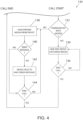
- the process 100 can proceed to a telephone call routine ("Call Start") at process 130.
- a SIP call is initiated between the doorbell 14 (through the base station 18) and the device 28.
- the microphone of the device 28 can be muted.
- the user 30 can choose whether to communicate directly or indirectly with the visitor 40, such as by tapping another selection on the touchscreen of the device 28.
- the process 130 can proceed to step 134 in which the microphone of the device 28 is unmuted, and the base station 18 and the device 28 exchange bi-directional media streams in a VoIP call that is near real time.
- the exchange of bi-directional media streams can comprise outgoing video and audio streams from the system 12 (and the doorbell 18) to the device 28, and only an incoming audio stream from the device 28 to the system 12.
- the doorbell 14 can be configured with a display, and the exchange of bi-directional media streams can comprise outgoing video and audio streams from the system 12 (and the doorbell 18) to the device 28, and incoming video and audio streams from the device 28 to the system 12.
- the process can then proceed to decision step 136 in which the user 30 can choose to end the call at any time. If the user 30 does not end the call ("No"), the process can return to step 134 in which the base station 18 and the device 28 continue to exchange bi-directional media streams. In other words, the SIP session stays active until the user 30 ends the call via the device 28. However, if the user 30 does end the call ("Yes"), the process can return to the process 100 of FIG. 3 ("Call End"), returning to decision steps 102 and 104, monitoring for another trigger event.
- the user 30 can also choose to communicate indirectly with the visitor 40. If the user 30 chooses to communicate indirectly with the visitor 40 ("No"), the process 130 can proceed instead to step 138 in which the microphone of the device 28 continues to be muted, and the device 28 proceeds to receive the synchronized media stream from the base station 18. Despite inhibiting audio from the device 28, the user 30 of the device 28 can still listen/view the media stream from the doorbell 14. In addition, at decision step 140, the user 30 can at any time decide whether to send a message to play at the doorbell 14.
- the user 30 can type or dictate a custom message, and/or select any of multiple predetermined messages, including messages pre-recorded by the user 30 and/or "stock” messages selectable by the user from a pre-programmed list, for playing to the speaker 54 of the doorbell 14.
- One exemplar message could be: "Please leave your package by the door.”
- Another exemplar message could be: "Sorry I cannot come to the door right now. Please contact me later.” If the user 30 decides to send a predetermined message ("Yes"), the process can proceed to step 142 in which the user 30 selects the message at the device 28 for the base station 18 to play at the doorbell 14.
- the process can bypass step 142 and proceed to decision step 144 for ending the call at any time. If the user 30 does not end the call (“No"), the process can return to step 138, continuing to receive at the device 28 the synchronized media stream from the base station 18, in a loop. In other words, the SIP session stays active until the user 30 ends the call via the device 28. In addition, during the call, the user 30 can continue to send messages to be played at the doorbell 14. Also, at any time during the call, the user 30 can unmute the microphone of the device 28 and start talking to the visitor, with an exchange of bi-directional media streams between the base station 18 and the device 28. However, if the user 30 does end the call (“Yes"), the process can return to the process 100 of FIG. 3 ("Call End”), returning to decision steps 102 and 104, monitoring for another trigger event.
- the user 30 can control the device 28 to make a VoIP telephone call without waiting for a trigger event.
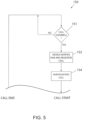
- the user 30 can choose whether to call the doorbell 14 from the device 28. If the user 30 chooses not to call the doorbell 14 ("No"), the process 150 goes no further. However, if the user 30 does choose to call the doorbell 14 ("Yes"), the process 150 can proceed to step 152 in which the device 28 can register itself for a VoIP call and notify the base station 18. In particular, the device 28 can register for the call by contacting the call registration service 74 of the backend system 24.
- the device 28 can notify the base station 18 to receive the call by contacting the system events service 70 of the backend system 24 which, in turn, contacts the event handler 58.
- the base station 18 can register for the call by the event handler 58 contacting the call registration service 74.
- the call manager 82 of the device 28 can send a call invitation to the base station 18 through the signaling service 76.
- the call manager 64 of the base station 18, in turn, can receive the invite and automatically accept the call.
- the process 150 can proceed to the telephone call routine ("Call Start") at process 130 as described above.
- the text communication system 202 can provide bi-directional speech-to-text (STT) and/or text-to-speech (TTS) services for enabling remote communications between a visitor 40 and the user 30.
- STT speech-to-text
- TTS text-to-speech
- the text communication system 202 can allow exchanging speech-to-text and/or text-to-speech messages between the doorbell 14 and the device 28 in real time, such as during a bi-directional, live Session Initiation Protocol (SIP) communication, enabled by the backend system 24, as discussed above.
- SIP Session Initiation Protocol
- the system 200 can detect a trigger event from the doorbell 14, such as at decision steps 102 and 104 as described above with respect to FIG. 3 .
- the base station 18 can receive an outgoing audio stream from the visitor 40, as captured by the microphone 52 of the doorbell 14.
- the base station 18 can then provide the outgoing audio stream to the text communication system 202 to provide a speech-to-text translation to produce an outgoing text message corresponding to the outgoing audio stream in a preferred language of the user 30.
- the base station 18 can direct the outgoing text message to the device 28 to be read by the user 30.
- audio captured by the visitor 40 at the doorbell 14 can be transcribed into text messages and sent to the user 30 of the device 28 using a speech-to-text service of the text communication system 202.
- the user 30 of the device 28 can type and send an incoming text message to the doorbell 14 for audio playback to the visitor 40. This might be done, for example, at times when the user 30 might not find it convenient to actually speak to the visitor 40 at the particular time of contact, but would it find it convenient to send text messages.
- the base station 18 can direct the incoming text message (from the device 28) to the text communication system 202 to provide a text-to-speech translation to produce an incoming audio stream corresponding to the incoming text message in a detected or predetermined language of the visitor 40.
- the base station 18 can then send the incoming audio stream to the speaker 54 of the doorbell 14 to be played for the visitor 40.
- the user 30 of the device 28 can send text messages to the doorbell 14 for playback to the visitor 40 by using a text-to-speech service of the text communication system 202.
- the user could simply select a predetermined text message from among multiple predetermined text messages, such as "Please leave your package by the door.” or "Sorry I cannot come to the door right now. Please contact me later.”
- Such incoming/outgoing text messages can continue back and forth during a chat session so long as the communication path between the device 28 and the doorbell 14 remains open.
- a timing diagram 230 illustrates exemplar communication in the system of FIG. 6 in accordance with an aspect of the invention.
- the device 28 can register with the base station 18 for a call with the doorbell 14, such as during a SIP communication, including as described above with respect to FIGS. 1-5 .
- the user 30 can select chat as a mode for communicating with a visitor 40 at the doorbell 14. Such selection could be made, for example, through an application program 260 executing on the device 28 (see FIG. 8 ).
- the user 30 can communicate through the device 28 to the base station 18 to activate the chat mode ("On").
- the user 30 can indicate a predetermined language of the user 30 for communicating with visitors, such as English.
- the user 30 can indicate a predetermined gender and/or accent of the predetermined language chose, such as female with an Australian accent of English.
- the base station 18 executes to activate the chat mode.
- a trigger event can occur at the doorbell 14 with an outgoing audio message from the visitor 40 following the trigger event.
- the outgoing audio message can be provided to an artificial intelligence system 212 operable to detect a language of the visitor 40, along with gender and/or accent.
- the artificial intelligence system 212 could comprise a neural network implemented by the base station 18.
- the artificial intelligence system 212 could be implemented by a remote system, such as server accessible through the WAN 26.
- an indication of the language spoken by the visitor 40, along with gender and/or accent, as detected by the artificial intelligence system 212 is provided to the base station 18.
- such indication of the language spoken by the visitor 40 is further provided from the base station 18 to the device 28.
- the outgoing audio message from the visitor 40, the indication of the predetermined language of the user 30, and the indication of the language spoken by the visitor 40 are provided from the base station 18 to the text communication system 202.
- a speech-to-text translation service of the text communication system 202 can produce and send an outgoing text message corresponding to the outgoing audio stream back to the base station 18.
- the base station 18, in turn, can direct the outgoing text message to the device 28 during the SIP communication.
- the outgoing text message can appear on the device 28 as an Instant Message (IM) or online chat 262 continuously updating through the application program 260.
- the user 30 can type a text message, or select a predetermined text message as discussed above with respect to FIG. 6 , to produce an incoming text message directed back to the visitor in the online chat 262.
- the incoming text message, the indication of the predetermined language of the user 30, and the indication of the language spoken by the visitor 40 can be provided from the device 28 back to the text communication system 202.
- a text-to-speech translation service of the text communication system 202 can produce and send an incoming audio stream corresponding to the incoming text message back to the device 28.
- the incoming audio stream can be sent by the device 28 to the base station 18 during the SIP communication.
- the base station 18 can send the incoming audio stream to the speaker 54 of the doorbell 14 to be played for the visitor 40.
- Such incoming/outgoing text and audio messages can continue back and forth during a chat session, continuously updating in the online chat 262, so long as the communication path between the device 28 and the doorbell 14 remains open. Accordingly, in addition to providing more convenient text communications between the user 30 and the visitor 40, the system 200 can further use artificial intelligence to detect the language, along with gender and/or accent, spoken by the visitor 40 for translating between a predetermined language of the user 30 and the language of the visitor 40.
- the system 200 can also utilize one or more cameras 16 for capturing a video stream 264 of the visitor 40 for display to the device 28.
- Such display of the video stream 264 can be live, simultaneous with the exchange of the aforementioned text messages between the user 30 and the visitor 40 in the online chat 262, together occurring in real time during the SIP communication.
Landscapes
- Engineering & Computer Science (AREA)
- Physics & Mathematics (AREA)
- Multimedia (AREA)
- Computational Linguistics (AREA)
- Health & Medical Sciences (AREA)
- Audiology, Speech & Language Pathology (AREA)
- Human Computer Interaction (AREA)
- Acoustics & Sound (AREA)
- Signal Processing (AREA)
- Computer Networks & Wireless Communication (AREA)
- Artificial Intelligence (AREA)
- General Physics & Mathematics (AREA)
- Theoretical Computer Science (AREA)
- Evolutionary Computation (AREA)
- Electromagnetism (AREA)
- General Health & Medical Sciences (AREA)
- General Engineering & Computer Science (AREA)
- Interconnected Communication Systems, Intercoms, And Interphones (AREA)
Claims (11)
- Elektronisches Türklingelsystem (12), das umfasst:eine elektronische Türklingel (14), die von einem sich der Tür nähernden Besucher benutzt wird, eine Glocke (20), einen Hub (18), ein Textkommunikations-System (202) sowie eine elektronische Vorrichtung (28), die es dem Benutzer im Inneren des Gebäudes ermöglicht, auf das System zuzugreifen,wobei die elektronische Türklingel (14) einen Klingelknopf (50), ein Mikrofon (52) sowie einen Lautsprecher (54) umfasst und die elektronische Türklingel (14) so eingerichtet ist, dass sie nahe an einer Tür (34) eines Gebäudes (32) angeordnet und so ausgeführt ist, dass sie ein Auslöse-Ereignis generiert und einen Audio-Stream aufnimmt;die Glocke (20) so ausgeführt ist, dass sie in dem Gebäude (32) klingelt;der Hub (18) drahtlos mit der elektronischen Türklingel (14) kommuniziert und einen Prozessor aufweist, der ein in einem nichtflüchtigen Medium gespeichertes Programm ausführt, wobei der Hub (18) betrieben werden kann zum:Empfangen einer Benachrichtigung über das Auslöse-Ereignis von der elektronischen Türklingel (14); sowieEmpfangen des durch die elektronische Türklingel (14) aufgenommenen Audio-Streams nach dem Auslöse-Ereignis, wobei der Audio-Stream in einer ersten Sprache ist,dadurch gekennzeichnet, dassder Hub (18) des Weiteren betrieben werden kann zum:Senden des Audio-Streams in der ersten Sprache zu dem von dem Hub (18) entfernten Textkommunikations-System (202);Empfangen einer Nachricht in einer zweiten Sprache von dem Textkommunikations-System (202), wobei die Nachricht dem von dem Hub (18) zu dem Kommunikationssystem (202) gesendeten Audio-Stream entspricht; undLeiten der Nachricht in der zweiten Sprache zu der elektronischen Vorrichtung (28) in Reaktion auf Empfangen der Nachricht, wobei die Nachricht eine von einem Übersetzungsdienst mit Spracherkennung erzeugte Textnachricht ist.
- System (12) nach Anspruch 1, das des Weiteren umfasst, dass der Prozessor Erkennung der ersten Sprache des Audio-Streams ausführt.
- System (12) nach Anspruch 2, wobei der Hub (18) ein System (212) mit künstlicher Intelligenz implementiert, das zum Erkennen der ersten Sprache betrieben werden kann.
- System (12) nach Anspruch 3, wobei das System (212) mit künstlicher Intelligenz ein neuronales Netz umfasst.
- System (12) nach Anspruch 1, wobei die Nachricht eine ausgehende Textnachricht ist, und es des Weiteren umfasst, dass der Prozessor Empfang einer eingehenden Text Nachricht von der elektronischen Vorrichtung (28) ausführt.
- System (12) nach Anspruch 5, wobei der Audio-Stream ein ausgehender Audio-Stream ist, und es des Weiteren umfasst, dass der Prozessor Erzeugung eines eingehenden Audio-Streams ausführt, der der eingehenden Textnachricht entspricht.
- System (12) nach Anspruch 6, wobei die elektronische Türklingel (14) des Weiteren umfasst, dass der Prozessor Aufnehmen des ausgehenden Audio-Streams mit dem Mikrofon (52) ausführt und den eingehenden Audio-Stream zu dem Lautsprecher (54) sendet.
- System (12) nach Anspruch 6, das des Weiteren umfasst, dass der Prozessor Erkennung der ersten Sprache sowie Bereitstellung einer Anzeige der Sprache für einen Übersetzungsdienst mit Sprachsynthese ausführt.
- System (12) nach Anspruch 8, wobei der eingehende Audio-Stream eine Übersetzung aus der zweiten Sprache in die erste Sprache umfasst.
- System nach Anspruch 1, wobei die Nachricht eine ausgehende Textnachricht ist, und es des Weiteren umfasst, dass der Prozessor Empfang einer eingehenden Textnachricht von der elektronischen Vorrichtung (28) ausführt, wobei die eingehende Textnachricht eine vorgegebene Textnachricht ist, die aus einer Vielzahl vorgegebener Textnachrichten ausgewählt wird.
- Verfahren für elektronische Kommunikation, das umfasst:Ausführen einer elektronischen Türklingel (14) zur Verwendung durch einen sich der Tür nähernden Besucher, wobei sie einen Klingelknopf (50), ein Mikrofon sowie einen Lautsprecher (54) umfasst und die elektronische Türklingel (14) so eingerichtet ist, dass sie nahe an einer Tür (34) eines Gebäudes (32) angeordnet ist und ein Auslöse-Ereignis generiert und einen Audio-Stream aufnimmt;Ausführen einer Glocke (20) zum Klingeln in dem Gebäude (32);Empfangen einer Mitteilung über das Auslöse-Ereignis an einem Hub (18), der drahtlos mit der elektronischen Türklingel (14) kommuniziert;Empfangen einer Nachricht an dem Hub (18) in Form eines durch die elektronische Türklingel (14) aufgenommenen Audio-Streams nach dem Auslöse-Ereignis;Erkennen der Sprache der Nachricht;Senden der Nachricht von dem Hub (18) zu einem von dem Hub (18) entfernten Textkommunikations-System (202);Übersetzen der Nachricht aus der erkannten Sprache in eine andere Sprache an dem Textkommunikations-System (202) zum Erzeugen einer übersetzten Nachricht;Empfangen der übersetzten Nachricht von dem Text Kommunikations-System (202) an dem Hub (18); sowieSenden der übersetzten Nachricht von dem Hub (18) zu einer anderen Vorrichtung, die es einem Benutzer im Inneren des Gebäudes ermöglicht, auf das System zuzugreifen, wobei die übersetzte Nachricht ein Text ist, der durch Transkribieren der Nachricht unter Verwendung eines Übersetzungsdienstes mit Spracherkennung zum Erzeugen einer dem Audio-Stream entsprechenden Textnachricht erzeugt wird.
Applications Claiming Priority (1)
| Application Number | Priority Date | Filing Date | Title |
|---|---|---|---|
| US16/289,302 US11145171B2 (en) | 2019-02-28 | 2019-02-28 | Electronic doorbell system with text communication |
Publications (3)
| Publication Number | Publication Date |
|---|---|
| EP3703361A1 EP3703361A1 (de) | 2020-09-02 |
| EP3703361B1 true EP3703361B1 (de) | 2025-04-30 |
| EP3703361C0 EP3703361C0 (de) | 2025-04-30 |
Family
ID=69740121
Family Applications (1)
| Application Number | Title | Priority Date | Filing Date |
|---|---|---|---|
| EP20158954.6A Active EP3703361B1 (de) | 2019-02-28 | 2020-02-24 | Türklingelsystem zum übersetzen von einer sparche in eine andere |
Country Status (2)
| Country | Link |
|---|---|
| US (1) | US11145171B2 (de) |
| EP (1) | EP3703361B1 (de) |
Families Citing this family (13)
| Publication number | Priority date | Publication date | Assignee | Title |
|---|---|---|---|---|
| US10380429B2 (en) | 2016-07-11 | 2019-08-13 | Google Llc | Methods and systems for person detection in a video feed |
| US11756357B2 (en) * | 2020-10-14 | 2023-09-12 | 1Ahead Technologies | Access management system |
| US12444258B2 (en) * | 2022-05-13 | 2025-10-14 | 1Ahead Technologies | Entry management system |
| US11783010B2 (en) | 2017-05-30 | 2023-10-10 | Google Llc | Systems and methods of person recognition in video streams |
| US10664688B2 (en) | 2017-09-20 | 2020-05-26 | Google Llc | Systems and methods of detecting and responding to a visitor to a smart home environment |
| US11134227B2 (en) * | 2017-09-20 | 2021-09-28 | Google Llc | Systems and methods of presenting appropriate actions for responding to a visitor to a smart home environment |
| US11238866B2 (en) * | 2019-06-17 | 2022-02-01 | Motorola Solutions, Inc. | Intelligent alerting of individuals in a public-safety communication system |
| US11893795B2 (en) | 2019-12-09 | 2024-02-06 | Google Llc | Interacting with visitors of a connected home environment |
| KR102949844B1 (ko) * | 2020-01-22 | 2026-04-07 | 한화비전 주식회사 | 사용자 피드백에 기초한 도어벨 카메라 시스템에 의한 이벤트 생성 |
| US11886829B2 (en) * | 2020-05-18 | 2024-01-30 | T-Mobile Usa, Inc. | Content access devices that use local audio translation for content presentation |
| US11640593B2 (en) * | 2020-05-20 | 2023-05-02 | Stripe, Inc. | System and method for vending machine |
| CN112104649A (zh) * | 2020-09-15 | 2020-12-18 | 百度在线网络技术(北京)有限公司 | 多媒体交互方法、装置、电子设备、服务器和存储介质 |
| JP2023546013A (ja) * | 2020-10-07 | 2023-11-01 | グーグル エルエルシー | コンピューティング装置による音声の増強表現 |
Family Cites Families (18)
| Publication number | Priority date | Publication date | Assignee | Title |
|---|---|---|---|---|
| US6940998B2 (en) | 2000-02-04 | 2005-09-06 | Cernium, Inc. | System for automated screening of security cameras |
| US7194412B2 (en) | 2001-07-19 | 2007-03-20 | Overhead Door Corporation | Speech activated door operator system |
| US7999857B2 (en) | 2003-07-25 | 2011-08-16 | Stresscam Operations and Systems Ltd. | Voice, lip-reading, face and emotion stress analysis, fuzzy logic intelligent camera system |
| US7376565B2 (en) | 2003-12-15 | 2008-05-20 | International Business Machines Corporation | Method, system, and apparatus for monitoring security events using speech recognition |
| TW200701097A (en) | 2005-06-20 | 2007-01-01 | Lite On Technology Corp | A doorbell apparatus capible of identifying visitors and the method thereof |
| US7746986B2 (en) | 2006-06-15 | 2010-06-29 | Verizon Data Services Llc | Methods and systems for a sign language graphical interpreter |
| JP5017441B2 (ja) | 2010-10-28 | 2012-09-05 | 株式会社東芝 | 携帯型電子機器 |
| US9257115B2 (en) * | 2012-03-08 | 2016-02-09 | Facebook, Inc. | Device for extracting information from a dialog |
| US9324322B1 (en) | 2013-06-18 | 2016-04-26 | Amazon Technologies, Inc. | Automatic volume attenuation for speech enabled devices |
| US20160330413A1 (en) | 2013-12-06 | 2016-11-10 | SkyBell Technologies, Inc. | Doorbell communication systems and methods |
| US10601604B2 (en) * | 2014-11-12 | 2020-03-24 | Google Llc | Data processing systems and methods for smart hub devices |
| US10635907B2 (en) | 2015-01-13 | 2020-04-28 | Vivint, Inc. | Enhanced doorbell camera interactions |
| US9646400B2 (en) | 2015-02-12 | 2017-05-09 | At&T Intellectual Property I, L.P. | Virtual doorbell augmentations for communications between augmented reality and virtual reality environments |
| US9838791B2 (en) | 2015-02-23 | 2017-12-05 | Kenneth Wargon | Portable sound generator apparatus |
| US9922647B2 (en) * | 2016-01-29 | 2018-03-20 | International Business Machines Corporation | Approach to reducing the response time of a speech interface |
| US10708472B2 (en) * | 2017-01-04 | 2020-07-07 | Google Llc | Doorbell camera |
| US10664688B2 (en) * | 2017-09-20 | 2020-05-26 | Google Llc | Systems and methods of detecting and responding to a visitor to a smart home environment |
| US10803719B1 (en) * | 2019-01-07 | 2020-10-13 | Amazon Technologies, Inc. | Batteryless doorbell with energy harvesters |
-
2019
- 2019-02-28 US US16/289,302 patent/US11145171B2/en active Active
-
2020
- 2020-02-24 EP EP20158954.6A patent/EP3703361B1/de active Active
Also Published As
| Publication number | Publication date |
|---|---|
| EP3703361C0 (de) | 2025-04-30 |
| US11145171B2 (en) | 2021-10-12 |
| EP3703361A1 (de) | 2020-09-02 |
| US20200279459A1 (en) | 2020-09-03 |
Similar Documents
| Publication | Publication Date | Title |
|---|---|---|
| US11145171B2 (en) | Electronic doorbell system with text communication | |
| US11570292B1 (en) | Providing hands-free service to multiple devices | |
| US11330100B2 (en) | Server based intelligent personal assistant services | |
| EP3703362B1 (de) | Türklingelsystem basierend auf kameraauswahl | |
| US10776588B2 (en) | Smartphone-based telephone translation system | |
| KR101007483B1 (ko) | 로봇 | |
| CN111402900B (zh) | 一种语音交互方法,设备和系统 | |
| US7933226B2 (en) | System and method for providing communication channels that each comprise at least one property dynamically changeable during social interactions | |
| US10140986B2 (en) | Speech recognition | |
| CN102160359B (zh) | 控制系统的方法和信号处理系统 | |
| KR20200016295A (ko) | 비동기식 멀티모드 메시징 시스템 및 방법 | |
| TWI703473B (zh) | 用於聊天機器人與人類通話的可編程智能代理機 | |
| CN102160335B (zh) | 周围电话系统中的对话检测 | |
| US11700325B1 (en) | Telephone system for the hearing impaired | |
| US20040136515A1 (en) | Off-hold alert for telecommunications devices | |
| US10869005B2 (en) | Electronic doorbell system with reduced latency | |
| US7984010B2 (en) | Action agenda determining apparatus | |
| JP6854170B2 (ja) | インターホン装置 | |
| HK40071597A (en) | Method and device for prompting audio working mode of intelligent equipment | |
| JP5650036B2 (ja) | インターホンシステム | |
| JP2024072185A (ja) | 情報端末、インターホンシステム、音声認識システム、制御方法、及びプログラム | |
| JP5124331B2 (ja) | インターホンシステムにおける住宅情報盤 | |
| EP3697069A1 (de) | Verfahren zur bereitstellung eines digitalen assistenten in einer kommunikationssitzung und zugehöriges kommunikationsnetzwerk | |
| JP2024072183A (ja) | 情報端末、インターホンシステム、音声認識システム、制御方法、及びプログラム | |
| JP2023009574A (ja) | 制御装置、制御システム、方法および利用者端末 |
Legal Events
| Date | Code | Title | Description |
|---|---|---|---|
| PUAI | Public reference made under article 153(3) epc to a published international application that has entered the european phase |
Free format text: ORIGINAL CODE: 0009012 |
|
| STAA | Information on the status of an ep patent application or granted ep patent |
Free format text: STATUS: THE APPLICATION HAS BEEN PUBLISHED |
|
| AK | Designated contracting states |
Kind code of ref document: A1 Designated state(s): AL AT BE BG CH CY CZ DE DK EE ES FI FR GB GR HR HU IE IS IT LI LT LU LV MC MK MT NL NO PL PT RO RS SE SI SK SM TR |
|
| AX | Request for extension of the european patent |
Extension state: BA ME |
|
| STAA | Information on the status of an ep patent application or granted ep patent |
Free format text: STATUS: REQUEST FOR EXAMINATION WAS MADE |
|
| 17P | Request for examination filed |
Effective date: 20210531 |
|
| RBV | Designated contracting states (corrected) |
Designated state(s): AL AT BE BG CH CY CZ DE DK EE ES FI FR GB GR HR HU IE IS IT LI LT LU LV MC MK MT NL NO PL PT RO RS SE SI SK SM TR |
|
| STAA | Information on the status of an ep patent application or granted ep patent |
Free format text: STATUS: EXAMINATION IS IN PROGRESS |
|
| 17Q | First examination report despatched |
Effective date: 20220912 |
|
| GRAP | Despatch of communication of intention to grant a patent |
Free format text: ORIGINAL CODE: EPIDOSNIGR1 |
|
| STAA | Information on the status of an ep patent application or granted ep patent |
Free format text: STATUS: GRANT OF PATENT IS INTENDED |
|
| INTG | Intention to grant announced |
Effective date: 20241219 |
|
| GRAS | Grant fee paid |
Free format text: ORIGINAL CODE: EPIDOSNIGR3 |
|
| GRAA | (expected) grant |
Free format text: ORIGINAL CODE: 0009210 |
|
| STAA | Information on the status of an ep patent application or granted ep patent |
Free format text: STATUS: THE PATENT HAS BEEN GRANTED |
|
| AK | Designated contracting states |
Kind code of ref document: B1 Designated state(s): AL AT BE BG CH CY CZ DE DK EE ES FI FR GB GR HR HU IE IS IT LI LT LU LV MC MK MT NL NO PL PT RO RS SE SI SK SM TR |
|
| REG | Reference to a national code |
Ref country code: CH Ref legal event code: EP Ref country code: GB Ref legal event code: FG4D |
|
| REG | Reference to a national code |
Ref country code: IE Ref legal event code: FG4D |
|
| U01 | Request for unitary effect filed |
Effective date: 20250502 |
|
| U07 | Unitary effect registered |
Designated state(s): AT BE BG DE DK EE FI FR IT LT LU LV MT NL PT RO SE SI Effective date: 20250508 |
|
| PG25 | Lapsed in a contracting state [announced via postgrant information from national office to epo] |
Ref country code: ES Free format text: LAPSE BECAUSE OF FAILURE TO SUBMIT A TRANSLATION OF THE DESCRIPTION OR TO PAY THE FEE WITHIN THE PRESCRIBED TIME-LIMIT Effective date: 20250430 |
|
| PG25 | Lapsed in a contracting state [announced via postgrant information from national office to epo] |
Ref country code: NO Free format text: LAPSE BECAUSE OF FAILURE TO SUBMIT A TRANSLATION OF THE DESCRIPTION OR TO PAY THE FEE WITHIN THE PRESCRIBED TIME-LIMIT Effective date: 20250730 Ref country code: GR Free format text: LAPSE BECAUSE OF FAILURE TO SUBMIT A TRANSLATION OF THE DESCRIPTION OR TO PAY THE FEE WITHIN THE PRESCRIBED TIME-LIMIT Effective date: 20250731 |
|
| PG25 | Lapsed in a contracting state [announced via postgrant information from national office to epo] |
Ref country code: PL Free format text: LAPSE BECAUSE OF FAILURE TO SUBMIT A TRANSLATION OF THE DESCRIPTION OR TO PAY THE FEE WITHIN THE PRESCRIBED TIME-LIMIT Effective date: 20250430 |
|
| PG25 | Lapsed in a contracting state [announced via postgrant information from national office to epo] |
Ref country code: HR Free format text: LAPSE BECAUSE OF FAILURE TO SUBMIT A TRANSLATION OF THE DESCRIPTION OR TO PAY THE FEE WITHIN THE PRESCRIBED TIME-LIMIT Effective date: 20250430 |
|
| PG25 | Lapsed in a contracting state [announced via postgrant information from national office to epo] |
Ref country code: RS Free format text: LAPSE BECAUSE OF FAILURE TO SUBMIT A TRANSLATION OF THE DESCRIPTION OR TO PAY THE FEE WITHIN THE PRESCRIBED TIME-LIMIT Effective date: 20250731 |
|
| PG25 | Lapsed in a contracting state [announced via postgrant information from national office to epo] |
Ref country code: IS Free format text: LAPSE BECAUSE OF FAILURE TO SUBMIT A TRANSLATION OF THE DESCRIPTION OR TO PAY THE FEE WITHIN THE PRESCRIBED TIME-LIMIT Effective date: 20250830 |
|
| PG25 | Lapsed in a contracting state [announced via postgrant information from national office to epo] |
Ref country code: SM Free format text: LAPSE BECAUSE OF FAILURE TO SUBMIT A TRANSLATION OF THE DESCRIPTION OR TO PAY THE FEE WITHIN THE PRESCRIBED TIME-LIMIT Effective date: 20250430 |
|
| PG25 | Lapsed in a contracting state [announced via postgrant information from national office to epo] |
Ref country code: CZ Free format text: LAPSE BECAUSE OF FAILURE TO SUBMIT A TRANSLATION OF THE DESCRIPTION OR TO PAY THE FEE WITHIN THE PRESCRIBED TIME-LIMIT Effective date: 20250430 |
|
| PG25 | Lapsed in a contracting state [announced via postgrant information from national office to epo] |
Ref country code: SK Free format text: LAPSE BECAUSE OF FAILURE TO SUBMIT A TRANSLATION OF THE DESCRIPTION OR TO PAY THE FEE WITHIN THE PRESCRIBED TIME-LIMIT Effective date: 20250430 |
|
| PLBE | No opposition filed within time limit |
Free format text: ORIGINAL CODE: 0009261 |
|
| STAA | Information on the status of an ep patent application or granted ep patent |
Free format text: STATUS: NO OPPOSITION FILED WITHIN TIME LIMIT |
|
| REG | Reference to a national code |
Ref country code: CH Ref legal event code: L10 Free format text: ST27 STATUS EVENT CODE: U-0-0-L10-L00 (AS PROVIDED BY THE NATIONAL OFFICE) Effective date: 20260311 |
|
| U20 | Renewal fee for the european patent with unitary effect paid |
Year of fee payment: 7 Effective date: 20260218 |
|
| 26N | No opposition filed |
Effective date: 20260202 |
|
| PGFP | Annual fee paid to national office [announced via postgrant information from national office to epo] |
Ref country code: GB Payment date: 20260226 Year of fee payment: 7 |