EP3702938A1 - Elektronische vorrichtung und verfahren zur gewinnung von inhaltsinformationen auf basis einer angeschlossenen externen vorrichtung - Google Patents
Elektronische vorrichtung und verfahren zur gewinnung von inhaltsinformationen auf basis einer angeschlossenen externen vorrichtung Download PDFInfo
- Publication number
- EP3702938A1 EP3702938A1 EP20159594.9A EP20159594A EP3702938A1 EP 3702938 A1 EP3702938 A1 EP 3702938A1 EP 20159594 A EP20159594 A EP 20159594A EP 3702938 A1 EP3702938 A1 EP 3702938A1
- Authority
- EP
- European Patent Office
- Prior art keywords
- information
- external device
- electronic device
- processor
- item
- Prior art date
- Legal status (The legal status is an assumption and is not a legal conclusion. Google has not performed a legal analysis and makes no representation as to the accuracy of the status listed.)
- Ceased
Links
Images




Classifications
-
- G—PHYSICS
- G06—COMPUTING OR CALCULATING; COUNTING
- G06F—ELECTRIC DIGITAL DATA PROCESSING
- G06F16/00—Information retrieval; Database structures therefor; File system structures therefor
- G06F16/90—Details of database functions independent of the retrieved data types
- G06F16/95—Retrieval from the web
- G06F16/953—Querying, e.g. by the use of web search engines
- G06F16/9538—Presentation of query results
-
- G—PHYSICS
- G06—COMPUTING OR CALCULATING; COUNTING
- G06F—ELECTRIC DIGITAL DATA PROCESSING
- G06F16/00—Information retrieval; Database structures therefor; File system structures therefor
- G06F16/30—Information retrieval; Database structures therefor; File system structures therefor of unstructured textual data
- G06F16/33—Querying
- G06F16/335—Filtering based on additional data, e.g. user or group profiles
-
- H—ELECTRICITY
- H04—ELECTRIC COMMUNICATION TECHNIQUE
- H04N—PICTORIAL COMMUNICATION, e.g. TELEVISION
- H04N21/00—Selective content distribution, e.g. interactive television or video on demand [VOD]
- H04N21/40—Client devices specifically adapted for the reception of or interaction with content, e.g. set-top-box [STB]; Operations thereof
- H04N21/45—Management operations performed by the client for facilitating the reception of or the interaction with the content or administrating data related to the end-user or to the client device itself, e.g. learning user preferences for recommending movies, resolving scheduling conflicts
- H04N21/466—Learning process for intelligent management, e.g. learning user preferences for recommending movies
- H04N21/4668—Learning process for intelligent management, e.g. learning user preferences for recommending movies for recommending content, e.g. movies
-
- G—PHYSICS
- G06—COMPUTING OR CALCULATING; COUNTING
- G06F—ELECTRIC DIGITAL DATA PROCESSING
- G06F16/00—Information retrieval; Database structures therefor; File system structures therefor
- G06F16/20—Information retrieval; Database structures therefor; File system structures therefor of structured data, e.g. relational data
- G06F16/24—Querying
- G06F16/245—Query processing
- G06F16/2457—Query processing with adaptation to user needs
- G06F16/24578—Query processing with adaptation to user needs using ranking
-
- G—PHYSICS
- G06—COMPUTING OR CALCULATING; COUNTING
- G06F—ELECTRIC DIGITAL DATA PROCESSING
- G06F16/00—Information retrieval; Database structures therefor; File system structures therefor
- G06F16/90—Details of database functions independent of the retrieved data types
- G06F16/95—Retrieval from the web
- G06F16/953—Querying, e.g. by the use of web search engines
- G06F16/9535—Search customisation based on user profiles and personalisation
-
- H—ELECTRICITY
- H04—ELECTRIC COMMUNICATION TECHNIQUE
- H04L—TRANSMISSION OF DIGITAL INFORMATION, e.g. TELEGRAPHIC COMMUNICATION
- H04L67/00—Network arrangements or protocols for supporting network services or applications
- H04L67/50—Network services
- H04L67/535—Tracking the activity of the user
-
- H—ELECTRICITY
- H04—ELECTRIC COMMUNICATION TECHNIQUE
- H04N—PICTORIAL COMMUNICATION, e.g. TELEVISION
- H04N21/00—Selective content distribution, e.g. interactive television or video on demand [VOD]
- H04N21/40—Client devices specifically adapted for the reception of or interaction with content, e.g. set-top-box [STB]; Operations thereof
- H04N21/43—Processing of content or additional data, e.g. demultiplexing additional data from a digital video stream; Elementary client operations, e.g. monitoring of home network or synchronising decoder's clock; Client middleware
- H04N21/436—Interfacing a local distribution network, e.g. communicating with another STB or one or more peripheral devices inside the home
- H04N21/43615—Interfacing a Home Network, e.g. for connecting the client to a plurality of peripherals
-
- H—ELECTRICITY
- H04—ELECTRIC COMMUNICATION TECHNIQUE
- H04N—PICTORIAL COMMUNICATION, e.g. TELEVISION
- H04N21/00—Selective content distribution, e.g. interactive television or video on demand [VOD]
- H04N21/40—Client devices specifically adapted for the reception of or interaction with content, e.g. set-top-box [STB]; Operations thereof
- H04N21/45—Management operations performed by the client for facilitating the reception of or the interaction with the content or administrating data related to the end-user or to the client device itself, e.g. learning user preferences for recommending movies, resolving scheduling conflicts
- H04N21/4508—Management of client data or end-user data
- H04N21/4532—Management of client data or end-user data involving end-user characteristics, e.g. viewer profile, preferences
-
- H—ELECTRICITY
- H04—ELECTRIC COMMUNICATION TECHNIQUE
- H04W—WIRELESS COMMUNICATION NETWORKS
- H04W4/00—Services specially adapted for wireless communication networks; Facilities therefor
- H04W4/80—Services using short range communication, e.g. near-field communication [NFC], radio-frequency identification [RFID] or low energy communication
Definitions
- the disclosure relates to a method for recommending contents and an electronic device supporting the same.
- the electronic devices provide functions or services for user convenience or interaction with users.
- the electronic devices provide various contents by building the multimedia platform with an external device.
- the electronic devices provide a recommendation service and a purchase (or download) service of contents corresponding to user preferences.
- the content recommendation of an electronic device has been dependent on a method of determining the user preference based on a history in which a user watches contents, a history in which a user searches for contents, or a history in which a user purchases contents and then of recommending contents associated with the user's preference. That is, the content recommendation of the electronic device has been limited in a method that is based on user activity, such as viewing, searching for, or purchasing contents, and thus the scenario for recommending various contents is required.
- an aspect of the disclosure is to provide a method for recommending contents that recommends contents by using at least a piece of information associated with an external device connected to an electronic device and the electronic device supporting the same.
- an electronic device may include an input/output interface, a communication circuit, and a processor operatively connected to the input/output interface and the communication circuit.
- the processor may obtain at least one information associated with at least one first external device from the at least one first external device connected to the electronic device through the input/output interface or the communication circuit, may generate a user profile including the at least one information, may extract at least one keyword associated with the at least one first external device from the user profile, may transmit the at least one keyword to at least one second external device through the communication circuit, and may receive at least one recommendation content information corresponding to the at least one keyword from the at least one second external device through the communication circuit.
- a content recommendation method of an electronic device may include obtaining at least one information associated with at least one first external device from the at least one first external device connected to the electronic device through an input/output interface of the electronic device or a communication circuit the electronic device, generating a user profile including at least part of the at least one information, extracting at least one keyword associated with the at least one first external device from the user profile, transmitting the at least one keyword to at least one second external device through the communication circuit, and receiving at least one recommendation content information corresponding to the at least one keyword from the at least one second external device through the communication circuit.
- a scenario for recommending contents may be provided in consideration of an external device interacting with an electronic device.
- FIG. 1 is a view illustrating a first example of an operation of an electronic device, according to an embodiment.
- FIG. 2 is a view illustrating a second example of an operation of an electronic device, according to an embodiment.
- FIG. 3 is a view illustrating a third example of an operation of an electronic device, according to an embodiment.
- an electronic device 100 may interact with at least one first external device 200 (e.g., a DVD player, a BD player, a game console device, a smartphone, a sound output device, or the like).
- the electronic device 100 may be connected to the at least one first external device 200, by wire or over a first network 300 (e.g., a short range wireless communication network).
- the electronic device 100 may be connected to the at least one first external device 200 through a specified relay device (e.g. a docking station or the like) by wire.
- the electronic device 100 may receive content data from the at least one first external device 200 and may output contents through the display or speaker included in the electronic device 100.
- the electronic device 100 may transmit at least a piece of content data stored therein (e.g., a memory 140 of FIG. 4 ) to the at least one first external device 200 such that the at least one first external device 200 outputs contents.
- the electronic device 100 may be referred to as a "display device".
- the electronic device 100 may interact with a first external device 400 in another aspect.
- the electronic device 100 may be connected over a second network 600 (e.g., a long range wireless communication) to the at least one first external device 400 (e.g., a refrigerator, an air conditioner, a robotic vacuum, a sensing device, or the like), which becomes the target of IoT technology-based service, and the cloud 500 (or may be referred to as a 'cloud server') that collectively manages at least one first external device 400, and thus may establish an IoT environment 1000.
- the electronic device 100 may function as an interface that supports the centralized monitoring or control of the at least one first external device 400.
- the electronic device 100 may interact with at least one second external device 700 (e.g., a contents provider server).
- the electronic device 100 may establish a third network 800 (e.g., a long range wireless communication network) with the at least one second external device 700 and may receive recommendation content information from the at least one second external device 700 over the third network 800.
- the electronic device 100 may download (or stream) content data corresponding to the recommendation content information from at least one second external device 700 over the third network 800.
- the at least one second external device 700 may include a plurality of servers; the categories, types, or attributes of recommendation content information (or content data corresponding to recommendation content information) provided by the plurality of servers may be different from each other.
- the first server and second server included in the at least one second external device 700 may provide pieces of recommendation content information associated with games and movies, respectively.
- the at least one second external device 700 may include a single server that collectively provides recommendation content information of various aspects (or content data corresponding to the recommendation content information).
- the electronic device 100 may collect at least one information associated with the at least one first external device (200 in FIG. 1 and/or 400 in FIG. 2 ) to generate a user profile and may make a request for the recommendation of contents to the at least one second external device 700 of FIG. 3 , using at least one keyword extracted from the user profile.
- the electronic device 100 may receive recommendation content information from the at least one second external device 700 and may display the recommendation content information through a specified user interface, in response to the request.
- various embodiments associated with content recommendation of the electronic device 100 will be described.
- FIG. 4 is a view illustrating a configuration of the electronic device 100 according to an embodiment.
- the electronic device 100 may include a communication circuit 110, an input/output interface 120, a display 130, the memory 140, and a processor 150.
- the electronic device 100 may omit at least one of the above-described components or may further include another component.
- the electronic device 100 may further include at least one speaker for outputting voice data associated with contents played on the electronic device 100.
- the electronic device 100 may further include at least part of the components of the electronic device 1001 to be described with reference to FIG. 10 .
- the communication circuit 110 may support communication between the electronic device 100 and at least one external device (e.g., the at least one first external device 200 and/or 400 of FIG. 1 and/or 2, the cloud 500 of FIG. 2 , or the at least one second external device 700 of FIG. 3 ).
- the communication circuit 110 may establish a wired or wireless communication with the at least one external device in accordance with a prescribed protocol and may access a specified network (e.g., the first network 300 of FIG. 1 , the second network 600 of FIG. 2 , or the third network 800 of FIG. 3 ) through the wired communication or wireless communication, and thus may support transmission or reception of data or signals with at least one external device.
- a specified network e.g., the first network 300 of FIG. 1 , the second network 600 of FIG. 2 , or the third network 800 of FIG. 3
- the input/output interface 120 may support the transmission of data or signals based on the physical connection between the electronic device 100 and the at least one external device. For example, the input/output interface 120 may transmit, to at least some components of the electronic device 100, data or signals input from at least one external device physically connected to the electronic device 100. Alternatively, the input/output interface 120 may output data or signals provided from at least some components of the electronic device 100 to at least one external device physically connected to the electronic device 100. According to an embodiment, the input/output interface 120 may include a connector (e.g., a high definition multimedia interface (HDMI) connector or a universal serial bus (USB) connector, or the like) that supports a physical connection between the electronic device 100 and at least one external device.
- a connector e.g., a high definition multimedia interface (HDMI) connector or a universal serial bus (USB) connector, or the like
- the display 130 may output various contents by processing an image driving signal corresponding to the image information.
- the display 130 may output contents, which are stored in the electronic device 100 or are provided from the at least one external device.
- the display 130 may output a specified user interface.
- the user interface may be output depending on the user control for a specific menu (e.g., a content recommendation menu) provided by the electronic device 100 (or provided by a controller linked with the electronic device 100) and may include recommendation content information received from at least one external device (e.g., the at least one second external device 700).
- the display 130 may be implemented as a touch screen display including a touch panel.
- the touch panel may detect a signal of a user input to the display 130 through an internal structure such as a capacitive type, a pressure-sensitive type, a resistive type, or the like and may convert the detected signal into an electrical signal to transmit the detected signal to the processor 150.
- an internal structure such as a capacitive type, a pressure-sensitive type, a resistive type, or the like and may convert the detected signal into an electrical signal to transmit the detected signal to the processor 150.
- the memory 140 may store at least one signal or data associated with the operation of the electronic device 100 or may store at least one instruction associated with the functional operations of components of the electronic device 100.
- the memory 140 may store at least one content input in the preloaded form when the electronic device 100 is manufactured or may store at least one content downloaded (or streamed) from at least one external device (e.g., the at least one second external device 700.
- the memory 140 may store at least one application program that supports the playback of the at least one content.
- the processor 150 may be implemented with at least one of a central processing unit, an application processor, or a communication processor and may control the components of the above-described electronic device 100.
- the processor 150 may be electrically or operatively connected to the components of the electronic device 100 to deliver at least one command associated with a functional operation to the components or to perform various arithmetic operations, data processing, or the like.
- the processor 150 may perform a series of processes with regard to the content recommendation of the electronic device 100.
- the processor 150 may collect at least one information about at least one first external device 200 and/or 400 connected to the electronic device 100 to generate a user profile and may extract at least one keyword selected depending on whether a specified condition is satisfied, on the user profile.
- the processor 150 may receive at least one recommendation content information corresponding to at least one keyword from the at least one second external device 700 by providing the extracted at least one keyword to the at least one second external device 700.
- the operations of the processor 150 associated with the content recommendation of the electronic device 100 will be described with reference to FIG. 5 .
- FIG. 5 is a view illustrating an operation process associated with content recommendation of an electronic device, according to an embodiment.
- the electronic device 100 may be connected to at least one external device (e.g., the at least one first external device 200 of FIG. 1 and/or at least one first external device 400 of FIG. 2 ).
- the electronic device 100 may be connected to the at least one external device 200 and/or 400 through the input/output interface 120 of FIG. 4 or a specified relay device (e.g., a docking station or the like) in wired communication.
- the electronic device 100 may be wirelessly connected to the at least one external device 200 and/or 400 through the communication circuit 110 of FIG. 4 .
- the event that the electronic device 100 is connected to the at least one external device 200 and/or 400 may mean that the electronic device 100 is operatively connected to monitor and control the at least one external device 200 and/or 400 or to play contents via the at least one external device 200 and/or 400 as well as being connected in the communication manner.
- the processor 150 of FIG. 4 of the electronic device 100 may collect at least one item of information about at least one external device 200 and/or 400 connected to the electronic device 100. For example, the processor 150 may make a request for information associated with the corresponding external device to the at least one external device 200 and/or 400 and may receive information transmitted by the at least one external device 200 and/or 400 in response to the request.
- the at least one item of information may be a concept including a variety of information associated with the at least one external device 200 and/or 400.
- the processor 150 may collect the identification information of the at least one external device 200 and/or 400, as at least part of the at least one information.
- the identification information may include at least one of model information (e.g., a model type, a model name, manufacturer information, information about date of manufacture, or the like) of the at least one external device 200 and/or 400, location information of the at least one external device 200 and/or 400, operating system information of the at least one external device 200 and/or 400, and connection history information (e.g., information about whether initial connection is made, connection time information, cumulative connection time information, cumulative connection count information, or the like) with the electronic device 100.
- the processor 150 may collect content information, which is provided from the at least one external device 200 and then is played through the electronic device 100 or is provided from the electronic device 100 and then is played through the at least one external device 200, as at least part of the at least one information.
- the content information may include at least one of attribute information (e.g., meta data including genre information, title information, plot information, character information, or production date information of contents, or the like), play time information, cumulative play time information, and cumulative play count information of contents.
- the processor 150 may collect the state information of the at least one external device 400, as at least part of the at least one information.
- the state information may include at least one of operation information (e.g.
- the processor 150 may collect at least part of the above-described at least one information with reference to log information recorded in the electronic device 100 (or the memory 140 of the electronic device 100 in FIG. 4 ).
- the processor 150 may accumulatively manage pieces of recorded information for each related external device and may collect the at least one information from pieces of accumulated information.
- the processor 150 may collect at least part of the above-described at least one information based on the auto detection function of the electronic device 100.
- the processor 150 may generate a user profile based on at least one information collected for the at least one external device 200 and/or 400. For example, the processor 150 may generate a user profile including at least one information corresponding to the at least one external device 200 and/or 400 in a table form to store the user profile in the memory 140. According to various embodiments, the processor 150 may detect at least one external device newly connected to the electronic device 100 or the at least one external device 200 and/or 400, which is disconnected from the electronic device 100 and may update the user profile based on the detection result, in real time or at a specified period.
- the processor 150 may determine the priority of the at least one external device 200 and/or 400 connected to the electronic device 100, based on the generated user profile. According to an embodiment, the priority determined for the at least one external device 200 and/or 400 may be referred to as "user preference information" about the at least one external device 200 and/or 400.
- the processor 150 may learn at least one information corresponding to the at least one external device 200 and/or 400 included in the user profile, with regard to the priority determination.
- the processor 150 may select the at least one external device 200 and/or 400 of which the relative ranking for the interaction with the electronic device 100 is included within a specified threshold ranking range, based on the at least one information learning.
- the processor 150 may determine at least one of the ranking for cumulative connection time with the electronic device 100, the ranking for cumulative connection count with the electronic device 100, the ranking of content cumulative play time through the interaction (e.g., the transmission of content data) with the electronic device 100, and the ranking of content cumulative play count through the interaction with the electronic device 100.
- the processor 150 may determine the priority in consideration of a ranking for at least one element (e.g., cumulative connection time, cumulative connection count, content cumulative play time, and/or content cumulative play count) of the at least one external device 200 and/or 400 and may select the at least one external device 200 and/or 400 included in the threshold ranking range.
- a ranking for at least one element e.g., cumulative connection time, cumulative connection count, content cumulative play time, and/or content cumulative play count
- the processor 150 may determine that at least one external device 200 and/or 400 associated with at least one event information is included in the threshold ranking range, regardless of the priority determination. In this case, the processor 150 may exclude the ranking variations for the at least one external device 200 and/or 400 selected as being included in the threshold ranking range. In other words, the selected at least one external device 200 and/or 400 may remain within the threshold ranking range, and the at least one external device 200 and/or 400 corresponding to the event information may be considered as being within the threshold ranking range.
- the priority determination for the at least one external device 200 and/or 400 is not limited to the above description, and may be determined based on the combination of various usage information included in a user profile.
- the processor 150 may extract and process at least one keyword from a user profile. For example, the processor 150 may extract at least one keyword on at least one information corresponding to at least one external device 200 and/or 400 selected (or considered) as a priority within the threshold ranking range.
- the processor 150 may extract at least one keyword from at least one of model information (e.g., a model type, a model name, manufacturer information, information about date of manufacture, or the like) of the selected at least one external device 200, content information (e.g., genre information, title information, plot information, character information, or production date information of contents, or the like) played through the interaction with the electronic device 100, information about whether the electronic device 100 is first connected, information about food materials being stored, error information, and part exchange notification information.
- model information e.g., a model type, a model name, manufacturer information, information about date of manufacture, or the like
- content information e.g., genre information, title information, plot information, character information, or production date information of contents, or the like
- the processor 150 may process the extracted at least one keyword. For example, the processor 150 may combine at least one keyword extracted from at least one information corresponding to an external device with at least one keyword extracted from at least one information corresponding to another external device. Alternatively, the processor 150 may extend the at least one keyword by adding the related word to the extracted at least one keyword. In this regard, the processor 150 may collect at least one keyword, which is extracted by another electronic device from at least one contents provider server (e.g., the at least one second external device 700 in FIG. 3 ) or at least one arbitrary keyword to build a database in the memory 140. According to various embodiments, the processor 150 may exclude separate processing for the extracted at least one keyword.
- the processor 150 may exclude separate processing for the extracted at least one keyword.
- the processor 150 may transmit the extracted (or processed) at least one keyword to the at least one contents provider server 700.
- the processor 150 may transmit the corresponding keyword to the contents provider server corresponding to the extracted keyword.
- the processor 150 may transmit the DVD player keyword to the contents provider server that treats the contents associated with the DVD player and may transmit a refrigerator keyword to the contents provider server that treats the contents associated with the refrigerator.
- the processor 150 may transmit the extracted at least one keyword to the contents provider server of the single server.
- the processor 150 may receive recommendation content information from the at least one contents provider server 700.
- the processor 150 may receive at least one recommendation content information indicating contents (e.g., new game trailer information, movie information, drama information, music information, food recipe information, device utilization information, device self-repair information, part self-exchange information, or the like) associated with the at least one keyword.
- the electronic device 100 may receive the recommendation content information in the form of a thumbnail image; the thumbnail image may include link information of a website providing product information (e.g., product manufacturer information, product seller information, product price information, or the like) associated with the corresponding recommendation content information.
- the processor 150 may display at least one recommendation content information received from the at least one contents provider server 700 on a specified user interface. For example, when a user input to a specific menu (e.g., content recommendation menu) provided by the electronic device 100 or a controller (a remote control) linked with the electronic device 100 occurs, the processor 150 may output a user interface including at least one recommendation content information to the display 130 of FIG. 4 in response to the user input.
- a specific menu e.g., content recommendation menu
- a controller a remote control
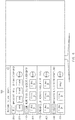
- FIG. 6 is a diagram illustrating a form of content recommendation of an electronic device, according to an embodiment.
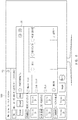
- FIG. 7 is a diagram illustrating a form of providing content information of an electronic device according to an embodiment.
- FIG. 8 is a diagram illustrating a form of releasing content recommendation of an electronic device, according to an embodiment.
- the processor (150 of FIG. 4 ) of the electronic device 100 may output a specified user interface 131 to at least one region of the display 130 in response to a user input for a menu (e.g., a content recommendation menu), which is displayed via the display 130 of FIG. 4 or provided as a hardware button to a controller (remote control) (not illustrated) that interacts with the electronic device 100.
- the processor 150 may display at least one recommendation content information received from at least one contents provider server (e.g., the at least one second external device 700 of FIG. 3 ) on the user interface 131.
- the processor 150 may sequentially display identification information 210, 410, 420, and/or 430 (e.g., a model name) of at least one external device, which is selected (or considered) as the priority within the threshold ranking range, to the user interface 131 depending on the priority.
- the processor 150 may divide the user interface 131 into regions corresponding to the number of the threshold rankings and may sequentially display the identification information 210, 410, 420, and/or 430 of at least one external device in each of the divided regions depending on the priority.
- the divided region may be a region that is visually specified through the line or a virtual region that is not visually specified.
- the user interface 131 may include a scrolling function that is movable vertically or horizontally depending on the resolution of the display 130 and the number of divided regions.
- the processor 150 may display the at least one recommendation content information 211, 411, 421, and/or 431 received from the at least one contents provider server 700 in the lower region of the identification information of the corresponding external device.
- the processor 150 may display the identification information 210 of the external device (e.g., Wii) selected as the highest priority within the threshold ranking range, in the top end region formed in the user interface 131 and may arrange and display at least one recommendation content information 211 corresponding to the external device (e.g., Wii) of the highest priority in at least one recommendation content information received from the at least one contents provider server 700, in the lower region of the identification information 210 within the top end region.
- the external device e.g., Wii
- the processor 150 may generate at least one folder corresponding to at least one external device selected as a priority within a threshold ranking range and may sequentially display the generated at least one folder on the user interface 131 in the order according to the priority.
- the at least one folder may be sequentially displayed in each of the divided regions with respect to the user interface 131.
- the region division for the user interface 131 may be excluded, and the at least one folder may be sequentially displayed in the vertical direction or the horizontal direction with respect to the display 130.
- the processor 150 may display the identification information (e.g., model name) of the corresponding external device as the folder name with respect to the at least one folder and may include at least one recommendation content information received from the at least one contents provider server 700 in a folder of the corresponding external device.
- the processor 150 may display the identification information (e.g., model name) of the corresponding external device as the folder name with respect to the at least one folder and may include at least one recommendation content information received from the at least one contents provider server 700 in a folder of the corresponding external device.
- at least one recommendation content information may be displayed depending on the entrance to the corresponding folder.
- the processor 150 when the processor 150 receives a first user input (e.g., a touch input, a click input, or the like) to one of the at least one recommendation content information 211, 411, 421, and/or 431 displayed through the user interface 131, the processor 150 may enlarge and display recommendation content information in the form of the corresponding thumbnail image.
- the processor 150 may access the contents provider server providing the recommendation content information in the form of the corresponding thumbnail image and may download (or stream) and play image content data corresponding to the corresponding recommendation content information.
- the processor 150 may update the user profile with reference to the external device associated with recommendation content information, in which the first user input occurs, as user preference information.
- the processor 150 may access the related website based on link information included in the corresponding recommendation content information and may output a first pop-up window 10 including the screen of the website.
- the screen within the first pop-up window 10 may include the recommendation content information 211 in the form of a thumbnail image, in which the second user input occurs, and product information 11 (e.g., product manufacturer information, product seller information, product price information, or the like) associated with the recommendation content information 211.
- the processor 150 may exclude the display of at least part of at least one recommendation content information received from at least one contents provider server 700.
- the processor 150 may output a second pop-up window 30 capable of setting whether at least one recommendation content information for at least one external device (200 of FIG. 1 and/or 400 of FIG. 2 ) connected to the electronic device 100 is displayed (or whether at least one recommendation content information is received from at least one contents provider server 700).
- the screen within the second pop-up window 30 may include a first category for providing identification information (e.g., a model name) for at least one external device selected as a priority within a threshold ranking and a second category for providing identification information (e.g., a model name) for at least one external device connected to the electronic device 100 other than the selected at least one external device.
- a first category for providing identification information (e.g., a model name) for at least one external device selected as a priority within a threshold ranking
- a second category for providing identification information (e.g., a model name) for at least one external device connected to the electronic device 100 other than the selected at least one external device.
- the processor 150 may display only the at least one recommendation content information associated with at least one identification information selected by a user input among at least one identification information provided by the first category, on the user interface 131.
- the processor 150 may receive at least one recommendation content information associated with the selected at least one identification information, from at least one contents provider server 700 to display the at least one recommendation content information on the user interface 131, regardless of the priority within the threshold ranking.
- the processor 150 may update a user profile with reference to the external device associated with the identification information selected from a user through the second pop-up window 30 as user preference information.
- FIG. 9 is a view illustrating a content recommendation method of an electronic device according to an embodiment.
- the following operations may be at least partly similar to or may correspond to the operations described above with reference to FIG. 5 , and the redundant descriptions may be omitted.
- the electronic device 100 of FIG. 1 , 2 , 3 , 4 , 5 , 6 , 7 , or 8 may be connected to at least one external device (200 of FIG. 1 and/or 400 of FIG. 2 ).
- the electronic device 100 may be connected to the at least one external device 200 and/or 400 through the input/output interface 120 of FIG. 4 or a specified relay device (e.g., a docking station or the like) in wired communication.
- the electronic device 100 may be wirelessly connected to the at least one external device 200 and/or 400 through the communication circuit 110 of FIG. 4 .
- the processor 150 of FIG. 4 of the electronic device 100 may collect at least one information about the at least one external device 200 and/or 400 connected to the electronic device 100. For example, the processor 150 may make a request for at least one information associated with the corresponding external device to the at least one external device 200 and/or 400 connected to the electronic device 100 to collect the at least one information. Alternatively, the processor 150 may collect at least part of the at least one information with reference to log information recorded in the electronic device 100.
- the processor 150 may accumulatively manage pieces of recorded information for each related external device and may collect the at least one information from pieces of accumulated information.
- the processor 150 may collect at least part of the at least one information based on the auto detection function of the electronic device 100.
- the processor 150 may collect the identification information of at least one external device 200 and/or 400 including at least one of model information (e.g., a model type, a model name, manufacturer information, information about date of manufacture, or the like) of the at least one external device 200 and/or 400, location information of the at least one external device 200 and/or 400, operating system information of the at least one external device 200 and/or 400, and connection history information (e.g., information about whether initial connection is made, connection time information, cumulative connection time information, cumulative connection count information, or the like) with the electronic device 100, as at least part of the at least one information.
- model information e.g., a model type, a model name, manufacturer information, information about date of manufacture, or the like
- location information of the at least one external device 200 and/or 400 e.g., information about whether initial connection is made, connection time information, cumulative connection time information, cumulative connection count information, or the like
- connection history information e.g., information about whether initial connection is made, connection time information,
- the processor 150 may collect content information, which is provided from the at least one external device 200 and then is played through the electronic device 100 or is provided from the electronic device 100 and then is played through the at least one external device 200, as at least part of the at least one information.
- the content information may include at least one of attribute information (e.g., meta data including genre information, title information, plot information, character information, or production date information of contents, or the like), play time information, cumulative play time information, and cumulative play count information of contents.
- the processor 150 may collect the state information of the at least one external device 200 and/or 400 including at least one of operation information (e.g.
- function information being executed, power ON/OFF information, or the like object information (e.g., food material information being stored or expiration date information of food material being stored), and event information (e.g., error information, part exchange notification information, or the like) of the at least one external device 200 and/or 400, as at least part of the at least one information.
- object information e.g., food material information being stored or expiration date information of food material being stored
- event information e.g., error information, part exchange notification information, or the like
- the processor 150 may generate a user profile.
- the processor 150 may generate a user profile including at least one information collected for the at least one external device 200 and/or 400 in the form of a table.
- the processor 150 may extract at least one keyword from the user profile.
- the processor 150 may select at least one external device satisfying a specified condition among the at least one external device 200 and/or 400 and may extract the at least one keyword on at least one information corresponding to the selected at least one external device.
- the processor 150 may extract the at least one keyword from at least one of model information (e.g., a model type, a model name, manufacturer information, information about date of manufacture, or the like) of the selected at least one external device, content information (e.g., genre information, title information, plot information, character information, or production date information of contents, or the like) played through the interaction with the electronic device 100, information about whether the electronic device 100 is first connected, information about food materials being stored, error information, and part exchange notification information.
- model information e.g., a model type, a model name, manufacturer information, information about date of manufacture, or the like
- content information e.g., genre information, title information, plot information, character information, or production date information of contents, or the like
- the specified condition may refer to a condition that a priority determined in consideration of a cumulative connection time with the electronic device 100, a cumulative connection count with the electronic device 100, a content cumulative play time through the interaction (e.g., the transmission of content data) with the electronic device 100, and/or ranking for each content cumulative play count through the interaction with the electronic device 100 is included in a specified threshold ranking range.
- the processor 150 may transmit the extracted at least one keyword to the at least one contents provider server 700 of FIG. 3 or 5 .
- the processor 150 may transmit the extracted at least one keyword to a contents provider server corresponding to the corresponding keyword.
- the processor 150 may transmit the extracted at least one keyword to the contents provider server of the single server.
- the processor 150 may process and transmit the extracted at least one keyword. For example, the processor 150 may combine the extracted at least one keyword or may add the related word to the extracted at least one keyword.
- the processor 150 may receive at least one recommendation content information from the at least one contents provider server 700.
- the processor 150 may receive at least one recommendation content information indicating contents (e.g., new game trailer information, movie information, drama information, music information, food recipe information, device utilization information, device self-repair information, part self-exchange information, or the like) associated with the at least one keyword, in the form of a thumbnail image.
- contents e.g., new game trailer information, movie information, drama information, music information, food recipe information, device utilization information, device self-repair information, part self-exchange information, or the like
- the processor 150 may display at least one recommendation content information received from the at least one contents provider server 700 through a specified user interface.
- An electronic device may include an input/output interface, a communication circuit, and a processor operatively connected to the input/output interface and the communication circuit.
- the processor may obtain at least one information associated with at least one first external device from the at least one first external device connected to the electronic device through the input/output interface or the communication circuit, may generate a user profile including the at least one information, may extract at least one keyword associated with the at least one first external device from the user profile, may transmit the at least one keyword to at least one second external device through the communication circuit, and may receive at least one recommendation content information corresponding to the at least one keyword from the at least one second external device through the communication circuit.
- the processor may obtain at least one of model information of the at least one first external device, information about whether first connection to the electronic device is made, information about cumulative connection time with the electronic device, and information about a cumulative connection count with the electronic device, as at least part of the at least one information.
- the processor may further obtain at least one of meta data, play time information, information about cumulative play time, and information about a cumulative play count for contents played based on connection between the electronic device and the at least one first external device, as the at least part of the at least one information.
- the processor may further obtain at least one of object information included in the at least one first external device, error information of the at least one first external device, and exchange notification information of a part associated with the at least one first external device, as the at least part of the at least one information.
- the processor may determine at least one of ranking for the cumulative connection time, ranking for the cumulative connection count, ranking for the cumulative play time, and ranking for the cumulative play count, with respect to the at least one first external device.
- the processor may determine a priority for the at least one first external device in consideration of the determined at least one ranking and may select at least one first external device included in a specified threshold ranking range based on the priority.
- the processor may determine that at least one first external device associated with at least one of the error information and the exchange notification information of the part is included in the specified threshold ranking range.
- the processor may extract the at least one keyword from at least one information corresponding to the at least one first external device selected or determined as being included in the specified threshold ranking range.
- the electronic device may further include a display.
- the processor may output a user interface including the at least one recommendation content information through the display.
- the processor may display the model information of the at least one first external device selected or determined as being included in the specified threshold ranking range on the user interface depending on the priority and may display the at least one recommendation content information in a lower region of corresponding model information.
- the processor may display at least one folder corresponding to the at least one first external device selected or determined as being included in the specified threshold ranking range, on the user interface depending on the priority and may cause the at least one recommendation content information to be included in a corresponding folder.
- the processor may enlarge and display recommendation content information in response to a user input to the at least one recommendation content information or may download content data corresponding to the recommendation content information from the at least one second external device.
- the at least one recommendation content information may include link information of a website providing information about a product associated with the at least one recommendation content information.
- the processor may access the website based on the link information and may output a screen the website including at least one of manufacturer information of the product, seller information of the product, and price information of the product, to a first pop-up window, as at least part of the product information.
- the processor may output a screen capable of setting whether to display the at least one recommendation content information, to a second pop-up window in response to a user input to an icon included in the user interface.
- a content recommendation method of an electronic device may include obtaining at least one information associated with at least one first external device from the at least one first external device connected to the electronic device through an input/output interface of the electronic device or a communication circuit the electronic device, generating a user profile including at least part of the at least one information, extracting at least one keyword associated with the at least one first external device from the user profile, transmitting the at least one keyword to at least one second external device through the communication circuit, and receiving at least one recommendation content information corresponding to the at least one keyword from the at least one second external device through the communication circuit.
- the obtaining of the at least one information may include obtaining at least one of model information of the at least one first external device, information about whether first connection to the electronic device is made, information about cumulative connection time with the electronic device, and information about a cumulative connection count with the electronic device and obtaining at least one of meta data, play time information, information about cumulative play time, and information about a cumulative play count for contents played based on connection between the electronic device and the at least one first external device.
- the extracting of the at least one keyword may include determining at least one of ranking for the cumulative connection time, ranking for the cumulative connection count, ranking for the cumulative play time, and ranking for the cumulative play count, determining a priority for the at least one first external device in consideration of the determined at least one ranking and selecting at least one first external device included in a specified threshold ranking range based on the priority, and extracting the at least one keyword from at least one information corresponding to the at least one first external device selected as being included in the specified threshold ranking range.
- the content recommendation method may further include outputting a user interface including the at least one recommendation content information through a display of the electronic device.
- the outputting of the user interface may include displaying model information of the at least one first external device selected as being included in the specified threshold ranking range on the user interface depending on the priority and displaying the at least one recommendation content information in a lower region of corresponding model information and displaying at least one folder corresponding to the at least one first external device selected as being included in the specified threshold ranking range, on the user interface depending on the priority and causing the at least one recommendation content information to be included in a corresponding folder.
- the content recommendation method may further include enlarging and displaying recommendation content information in response to a user input to the at least one recommendation content information and downloading content data corresponding to the recommendation content information from the at least one second external device, in response to the user input to the at least one recommendation content information.
- the content recommendation method may further include at least one of outputting a screen including at least one manufacturer information of a product associated with recommendation content information, seller information of the product, and price information of the product to a first pop-up window, in response to the user input to the at least one recommendation content information and outputting a screen capable of setting whether to display the at least one recommendation content information, to a second pop-up window in response to a user input to an icon included in the user interface.
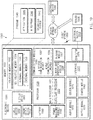
- FIG. 10 is a diagram illustrating an electronic device in a network environment according to an embodiment.
- an electronic device 1001 may communicate with an electronic device 1002 through a first network 1098 (e.g., a short-range wireless communication network) or may communicate with an electronic device 1004 or a server 1008 through a second network 1099 (e.g., a long-distance wireless communication network) in a network environment 1000.
- the electronic device 1001 may communicate with the electronic device 1004 through the server 1008.
- the electronic device 1001 may include a processor 1020, a memory 1030, an input device 1050, a sound output device 1055, a display device 1060, an audio module 1070, a sensor module 1076, an interface 1077, a haptic module 1079, a camera module 1080, a power management module 1088, a battery 1089, a communication module 1090, a subscriber identification module 1096, or an antenna module 1097.
- at least one e.g., the display device 1060 or the camera module 1080
- the display device 1060 or the camera module 1080 among components of the electronic device 1001 may be omitted or one or more other components may be added to the electronic device 1001.
- some of the above components may be implemented with one integrated circuit.
- the sensor module 1076 e.g., a fingerprint sensor, an iris sensor, or an illuminance sensor
- the display device 1060 e.g., a display.
- the processor 1020 may execute, for example, software (e.g., a program 1040) to control at least one of other components (e.g., a hardware or software component) of the electronic device 1001 connected to the processor 1020 and may process or compute a variety of data.
- the processor 1020 may load a command set or data, which is received from other components (e.g., the sensor module 1076 or the communication module 1090), into a volatile memory 1032, may process the command or data loaded into the volatile memory 1032, and may store result data into a nonvolatile memory 1034.
- the processor 1020 may include a main processor 1021 (e.g., a central processing unit or an application processor) and an auxiliary processor 1023 (e.g., a graphic processing device, an image signal processor, a sensor hub processor, or a communication processor), which operates independently from the main processor 1021 or with the main processor 1021. Additionally or alternatively, the auxiliary processor 1023 may use less power than the main processor 1021, or is specified to a designated function. The auxiliary processor 1023 may be implemented separately from the main processor 1021 or as a part thereof.
- a main processor 1021 e.g., a central processing unit or an application processor
- auxiliary processor 1023 e.g., a graphic processing device, an image signal processor, a sensor hub processor, or a communication processor
- the auxiliary processor 1023 may use less power than the main processor 1021, or is specified to a designated function.
- the auxiliary processor 1023 may be implemented separately from the main processor 1021 or as a part thereof.
- the auxiliary processor 1023 may control, for example, at least some of functions or states associated with at least one component (e.g., the display device 1060, the sensor module 1076, or the communication module 1090) among the components of the electronic device 1001 instead of the main processor 1021 while the main processor 1021 is in an inactive (e.g., sleep) state or together with the main processor 1021 while the main processor 1021 is in an active (e.g., an application execution) state.
- the auxiliary processor 1023 e.g., the image signal processor or the communication processor
- the auxiliary processor 1023 may be implemented as a part of another component (e.g., the camera module 1080 or the communication module 1090) that is functionally related to the auxiliary processor 1023.
- the memory 1030 may store a variety of data used by at least one component (e.g., the processor 1020 or the sensor module 1076) of the electronic device 1001.
- data may include software (e.g., the program 1040) and input data or output data with respect to commands associated with the software.
- the memory 1030 may include the volatile memory 1032 or the nonvolatile memory 1034.
- the program 1040 may be stored in the memory 1030 as software and may include, for example, an operating system 1042, a middleware 1044, or an application 1046.
- the input device 1050 may receive a command or data, which is used for a component (e.g., the processor 1020) of the electronic device 1001, from an outside (e.g., a user) of the electronic device 1001.
- the input device 1050 may include, for example, a microphone, a mouse, a keyboard, or a digital pen (e.g., a stylus pen).
- the sound output device 1055 may output a sound signal to the outside of the electronic device 1001.
- the sound output device 1055 may include, for example, a speaker or a receiver.
- the speaker may be used for general purposes, such as multimedia play or recordings play, and the receiver may be used for receiving calls. According to an embodiment, the receiver and the speaker may be either integrally or separately implemented.
- the display device 1060 may visually provide information to the outside (e.g., the user) of the electronic device 1001.
- the display device 1060 may include a display, a hologram device, or a projector and a control circuit for controlling a corresponding device.
- the display device 1060 may include a touch circuitry configured to sense the touch or a sensor circuit (e.g., a pressure sensor) for measuring an intensity of pressure on the touch.
- the audio module 1070 may convert a sound and an electrical signal in dual directions. According to an embodiment, the audio module 1070 may obtain the sound through the input device 1050 or may output the sound through the sound output device 1055 or an external electronic device (e.g., the electronic device 1002 (e.g., a speaker or a headphone)) directly or wirelessly connected to the electronic device 1001.
- the audio module 1070 may obtain the sound through the input device 1050 or may output the sound through the sound output device 1055 or an external electronic device (e.g., the electronic device 1002 (e.g., a speaker or a headphone)) directly or wirelessly connected to the electronic device 1001.
- the electronic device 1002 e.g., a speaker or a headphone
- the sensor module 1076 may generate an electrical signal or a data value corresponding to an operating state (e.g., power or temperature) inside or an environmental state (e.g., a user state) outside the electronic device 1001.
- the sensor module 1076 may include, for example, a gesture sensor, a gyro sensor, a barometric pressure sensor, a magnetic sensor, an acceleration sensor, a grip sensor, a proximity sensor, a color sensor, an infrared sensor, a biometric sensor, a temperature sensor, a humidity sensor, or an illuminance sensor.
- the interface 1077 may support one or more designated protocols to allow the electronic device 1001 to connect directly or wirelessly to the external electronic device (e.g., the electronic device 1002).
- the interface 1077 may include, for example, an HDMI (high-definition multimedia interface), a USB (universal serial bus) interface, an SD card interface, or an audio interface.
- a connecting terminal 1078 may include a connector that physically connects the electronic device 1001 to the external electronic device (e.g., the electronic device 1002).
- the connecting terminal 1078 may include, for example, an HDMI connector, a USB connector, an SD card connector, or an audio connector (e.g., a headphone connector).
- the haptic module 1079 may convert an electrical signal to a mechanical stimulation (e.g., vibration or movement) or an electrical stimulation perceived by the user through tactile or kinesthetic sensations.
- the haptic module 1079 may include, for example, a motor, a piezoelectric element, or an electric stimulator.
- the camera module 1080 may shoot a still image or a video image.
- the camera module 1080 may include, for example, at least one or more lenses, image sensors, image signal processors, or flashes.
- the power management module 1088 may manage power supplied to the electronic device 1001. According to an embodiment, the power management module 1088 may be implemented as at least a part of a power management integrated circuit (PMIC).
- PMIC power management integrated circuit
- the battery 1089 may supply power to at least one component of the electronic device 1001.
- the battery 1089 may include, for example, a non-rechargeable (primary) battery, a rechargeable (secondary) battery, or a fuel cell.
- the communication module 1090 may establish a direct (e.g., wired) or wireless communication channel between the electronic device 1001 and the external electronic device (e.g., the electronic device 1002, the electronic device 1004, or the server 1008) and support communication execution through the established communication channel.
- the communication module 1090 may include at least one communication processor operating independently from the processor 1020 (e.g., the application processor) and supporting the direct (e.g., wired) communication or the wireless communication.
- the communication module 1090 may include a wireless communication module 1092 (e.g., a cellular communication module, a short-range wireless communication module, or a GNSS (global navigation satellite system) communication module) or a wired communication module 1094 (e.g., an LAN (local area network) communication module or a power line communication module).
- a wireless communication module 1092 e.g., a cellular communication module, a short-range wireless communication module, or a GNSS (global navigation satellite system) communication module
- a wired communication module 1094 e.g., an LAN (local area network) communication module or a power line communication module.
- the corresponding communication module among the above communication modules may communicate with the external electronic device through the first network 1098 (e.g., the short-range communication network such as a Bluetooth, a WiFi direct, or an IrDA (infrared data association)) or the second network 1099 (e.g., the long-distance wireless communication network such as a cellular network, an internet, or a computer network (e.g., LAN or WAN)).
- the first network 1098 e.g., the short-range communication network such as a Bluetooth, a WiFi direct, or an IrDA (infrared data association)
- the second network 1099 e.g., the long-distance wireless communication network such as a cellular network, an internet, or a computer network (e.g., LAN or WAN)
- the above-mentioned various communication modules may be implemented into one component (e.g., a single chip) or into separate components (e.g., chips), respectively.
- the wireless communication module 1092 may identify and authenticate the electronic device 1001 using user information (e.g., international mobile subscriber identity (IMSI)) stored in the subscriber identification module 1096 in the communication network, such as the first network 1098 or the second network 1099.
- user information e.g., international mobile subscriber identity (IMSI)
- IMSI international mobile subscriber identity
- the antenna module 1097 may transmit or receive a signal or power to or from the outside (e.g., the external electronic device) of the electronic device 1001.
- the antenna module 1097 may include an antenna including a radiating element composed of a conductive material or a conductive pattern formed in or on a substrate (e.g., PCB).
- the antenna module 1097 may include a plurality of antennas. In such a case, at least one antenna appropriate for a communication scheme used in the communication network, such as the first network 1098 or the second network 1099, may be selected, for example, by the communication module 1090 (e.g., the wireless communication module 1092) from the plurality of antennas.
- the signal or the power may then be transmitted or received between the communication module 1090 and the external electronic device via the selected at least one antenna.
- another component e.g., a radio frequency integrated circuit (RFIC)
- RFIC radio frequency integrated circuit
- At least some components among the components may be connected to each other through a communication method (e.g., a bus, a GPIO (general purpose input and output), an SPI (serial peripheral interface), or an MIPI (mobile industry processor interface)) used between peripheral devices to exchange signals (e.g., a command or data) with each other.
- a communication method e.g., a bus, a GPIO (general purpose input and output), an SPI (serial peripheral interface), or an MIPI (mobile industry processor interface) used between peripheral devices to exchange signals (e.g., a command or data) with each other.
- the command or data may be transmitted or received between the electronic device 1001 and the external electronic device 1004 through the server 1008 connected to the second network 1099.
- Each of the electronic devices 1002 and 1004 may be the same or different types as or from the electronic device 1001.
- all or some of the operations performed by the electronic device 1001 may be performed by one or more external electronic devices among the external electronic devices 1002, 1004, or 1008.
- the electronic device 1001 may request one or more external electronic devices to perform at least some of the functions related to the functions or services, in addition to or instead of performing the functions or services by itself.
- the one or more external electronic devices receiving the request may carry out at least a part of the requested function or service or the additional function or service associated with the request and transmit the execution result to the electronic device 1001.
- the electronic device 1001 may provide the result as is or after additional processing as at least a part of the response to the request.
- a cloud computing, distributed computing, or client-server computing technology may be used.
- the electronic device may be various types of devices.
- the electronic device may include, for example, a portable communication device (e.g., a smartphone), a computer device, a portable multimedia device, a mobile medical appliance, a camera, a wearable device, or a home appliance.
- a portable communication device e.g., a smartphone
- a computer device e.g
- each of the expressions "A or B”, “at least one of A and B”, “at least one of A or B”, “A, B, or C”, “one or more of A, B, and C", or “one or more of A, B, or C”, and the like used herein may include any and all combinations of one or more of the associated listed items.
- the expressions, such as “a first”, “a second”, “the first”, or “the second”, may be used merely for the purpose of distinguishing a component from the other components, but do not limit the corresponding components in other aspect (e.g., the importance or the order).
- an element e.g., a first element
- the element may be coupled with the other element directly (e.g., wiredly), wirelessly, or via a third element.
- module used in the disclosure may include a unit implemented in hardware, software, or firmware and may be interchangeably used with the terms “logic”, “logical block”, “part” and “circuit”.
- the “module” may be a minimum unit of an integrated part or may be a part thereof.
- the “module” may be a minimum unit for performing one or more functions or a part thereof.
- the “module” may include an application-specific integrated circuit (ASIC).
- ASIC application-specific integrated circuit
- Various embodiments of the disclosure may be implemented by software (e.g., the program 1040) including an instruction stored in a machine-readable storage medium (e.g., an internal memory 1036 or an external memory 1038) readable by a machine (e.g., the electronic device 1001).
- the processor e.g., the processor 1020
- the machine may call the instruction from the machine-readable storage medium and execute the instructions thus called. This means that the machine may perform at least one function based on the called at least one instruction.
- the one or more instructions may include a code generated by a compiler or executable by an interpreter.
- the machine-readable storage medium may be provided in the form of non-transitory storage medium.
- non-transitory means that the storage medium is tangible, but does not include a signal (e.g., an electromagnetic wave).
- a signal e.g., an electromagnetic wave.
- non-transitory does not differentiate a case where the data is permanently stored in the storage medium from a case where the data is temporally stored in the storage medium.
- the method according to various embodiments disclosed in the disclosure may be provided as a part of a computer program product.
- the computer program product may be traded between a seller and a buyer as a product.
- the computer program product may be distributed in the form of machine-readable storage medium (e.g., a compact disc read only memory (CD-ROM)) or may be directly distributed (e.g., download or upload) online through an application store (e.g., a Play StoreTM) or between two user devices (e.g., the smartphones).
- an application store e.g., a Play StoreTM
- at least a portion of the computer program product may be temporarily stored or generated in a machine-readable storage medium such as a memory of a manufacturer's server, an application store's server, or a relay server.
- each component e.g., the module or the program of the above-described components may include one or plural entities. According to various embodiments, at least one or more components of the above components or operations may be omitted, or one or more components or operations may be added. Alternatively or additionally, some components (e.g., the module or the program) may be integrated in one component. In this case, the integrated component may perform the same or similar functions performed by each corresponding components prior to the integration. According to various embodiments, operations performed by a module, a programming, or other components may be executed sequentially, in parallel, repeatedly, or in a heuristic method, or at least some operations may be executed in different sequences, omitted, or other operations may be added.
Landscapes
- Engineering & Computer Science (AREA)
- Databases & Information Systems (AREA)
- Theoretical Computer Science (AREA)
- General Engineering & Computer Science (AREA)
- Physics & Mathematics (AREA)
- General Physics & Mathematics (AREA)
- Signal Processing (AREA)
- Data Mining & Analysis (AREA)
- Multimedia (AREA)
- Computational Linguistics (AREA)
- Computer Networks & Wireless Communication (AREA)
- Computer Hardware Design (AREA)
- Information Retrieval, Db Structures And Fs Structures Therefor (AREA)
- User Interface Of Digital Computer (AREA)
Applications Claiming Priority (1)
| Application Number | Priority Date | Filing Date | Title |
|---|---|---|---|
| KR1020190023432A KR20200104719A (ko) | 2019-02-27 | 2019-02-27 | 콘텐츠 추천 방법 및 이를 지원하는 전자 장치 |
Publications (1)
| Publication Number | Publication Date |
|---|---|
| EP3702938A1 true EP3702938A1 (de) | 2020-09-02 |
Family
ID=69845083
Family Applications (1)
| Application Number | Title | Priority Date | Filing Date |
|---|---|---|---|
| EP20159594.9A Ceased EP3702938A1 (de) | 2019-02-27 | 2020-02-26 | Elektronische vorrichtung und verfahren zur gewinnung von inhaltsinformationen auf basis einer angeschlossenen externen vorrichtung |
Country Status (4)
| Country | Link |
|---|---|
| US (1) | US20200272678A1 (de) |
| EP (1) | EP3702938A1 (de) |
| KR (1) | KR20200104719A (de) |
| WO (1) | WO2020175809A1 (de) |
Cited By (1)
| Publication number | Priority date | Publication date | Assignee | Title |
|---|---|---|---|---|
| US20230315724A1 (en) * | 2022-03-29 | 2023-10-05 | Lenovo (United States) Inc. | Automatically searching for topics related to discovered devices |
Families Citing this family (1)
| Publication number | Priority date | Publication date | Assignee | Title |
|---|---|---|---|---|
| KR102844967B1 (ko) | 2020-09-29 | 2025-08-12 | 삼성전자주식회사 | 컨텐츠 추천 서비스를 제공하는 전자 장치 및 그 방법 |
Citations (3)
| Publication number | Priority date | Publication date | Assignee | Title |
|---|---|---|---|---|
| US20100211636A1 (en) * | 2006-09-29 | 2010-08-19 | Michael Ross Starkenburg | Management of profiles for interactive media guidance applications |
| US20150019342A1 (en) * | 2013-07-09 | 2015-01-15 | Qualcomm Incorporated | Real-time context aware recommendation engine based on a user internet of things environment |
| US20160179962A1 (en) * | 2014-12-18 | 2016-06-23 | Microsoft Technology Licensing, Llc | Generation of browser suggestions based on internet of things device data |
Family Cites Families (7)
| Publication number | Priority date | Publication date | Assignee | Title |
|---|---|---|---|---|
| EP1865723A1 (de) * | 2006-06-07 | 2007-12-12 | Sony NetServices GmbH | Video auf Anfrage System |
| JP4388128B1 (ja) * | 2008-08-29 | 2009-12-24 | 株式会社東芝 | 情報提供サーバ、情報提供方法及び情報提供システム |
| KR101924476B1 (ko) * | 2013-01-07 | 2018-12-03 | 엘지전자 주식회사 | 가전기기 및 이동 단말기 |
| WO2014192214A1 (ja) * | 2013-05-30 | 2014-12-04 | パナソニック インテレクチュアル プロパティ コーポレーション オブ アメリカ | 端末の画面を見ながら家電機器を使うユーザのためのアドバイス提供方法 |
| US10990894B2 (en) * | 2013-07-11 | 2021-04-27 | Neura, Inc. | Situation forecast mechanisms for internet of things integration platform |
| KR102571060B1 (ko) * | 2014-11-12 | 2023-08-29 | 삼성전자주식회사 | 디바이스에 콘텐츠 추천 정보를 제공하는 방법 및 장치 |
| KR102607660B1 (ko) * | 2016-11-03 | 2023-11-30 | 삼성전자주식회사 | 전자 장치 및 이의 제어 방법 |
-
2019
- 2019-02-27 KR KR1020190023432A patent/KR20200104719A/ko not_active Ceased
-
2020
- 2020-01-30 WO PCT/KR2020/001389 patent/WO2020175809A1/en not_active Ceased
- 2020-02-13 US US16/790,058 patent/US20200272678A1/en not_active Abandoned
- 2020-02-26 EP EP20159594.9A patent/EP3702938A1/de not_active Ceased
Patent Citations (3)
| Publication number | Priority date | Publication date | Assignee | Title |
|---|---|---|---|---|
| US20100211636A1 (en) * | 2006-09-29 | 2010-08-19 | Michael Ross Starkenburg | Management of profiles for interactive media guidance applications |
| US20150019342A1 (en) * | 2013-07-09 | 2015-01-15 | Qualcomm Incorporated | Real-time context aware recommendation engine based on a user internet of things environment |
| US20160179962A1 (en) * | 2014-12-18 | 2016-06-23 | Microsoft Technology Licensing, Llc | Generation of browser suggestions based on internet of things device data |
Cited By (2)
| Publication number | Priority date | Publication date | Assignee | Title |
|---|---|---|---|---|
| US20230315724A1 (en) * | 2022-03-29 | 2023-10-05 | Lenovo (United States) Inc. | Automatically searching for topics related to discovered devices |
| US12259881B2 (en) * | 2022-03-29 | 2025-03-25 | Lenovo (United States) Inc. | Automatically searching for topics related to discovered devices |
Also Published As
| Publication number | Publication date |
|---|---|
| US20200272678A1 (en) | 2020-08-27 |
| WO2020175809A1 (en) | 2020-09-03 |
| KR20200104719A (ko) | 2020-09-04 |
Similar Documents
| Publication | Publication Date | Title |
|---|---|---|
| US11366584B2 (en) | Method for providing function or content associated with application, and electronic device for carrying out same | |
| US11726647B2 (en) | Content sharing method and electronic device therefor | |
| US11567532B2 (en) | Method for providing screen using foldable display and electronic device for supporting same | |
| US11748126B2 (en) | Electronic device for supporting customized manual | |
| JP6430656B2 (ja) | コンテンツアイテムを表示するシステム、方法、及び装置 | |
| US10853024B2 (en) | Method for providing information mapped between a plurality of inputs and electronic device for supporting the same | |
| EP3900270B1 (de) | System zur verarbeitung von benutzerdaten und steuerungsverfahren dafür | |
| US11848007B2 (en) | Method for operating voice recognition service and electronic device supporting same | |
| US10254958B2 (en) | Electronic device and display method thereof | |
| US11605113B2 (en) | Method for dynamically recommending catalog and electronic device thereof | |
| US20200053399A1 (en) | Method for contents playback with continuity and electronic device therefor | |
| KR20200098068A (ko) | 단어 추천 방법 및 그 전자 장치 | |
| US11599870B2 (en) | Method and apparatus for determining device for payment in multiple electronic devices | |
| US11327818B2 (en) | Electronic device and method for managing data input into input field | |
| KR20210045280A (ko) | IoT 기기를 제어하는 방법 및 이를 위한 전자 장치 | |
| US20200272678A1 (en) | Electronic device and method for obtaining content information based on connected external device | |
| KR20200061210A (ko) | 상태 정보에 기반하여 식별 정보를 변경하는 전자 장치 및 상기 식별 정보를 확인할 수 있는 다른 전자 장치 | |
| KR20190122331A (ko) | 문자를 입력하기 위한 전자 장치 및 그의 동작 방법 | |
| EP3678357A1 (de) | Informationsbereitstellungsverfahren und elektronische vorrichtung zur unterstützung davon | |
| KR102755046B1 (ko) | 외부 장치와 관련된 신호 제어 방법 및 장치 | |
| KR20210085159A (ko) | 서버 장치와 데이터를 송수신하는 전자 장치 | |
| KR20200079081A (ko) | 콘텐트 공유 방법 및 그 전자 장치 | |
| US11695982B2 (en) | Content casting method and electronic device therefor | |
| EP3608911B1 (de) | Verfahren zur verarbeitung eines dynamischen bildes und elektronische vorrichtung dafür | |
| KR20260038134A (ko) | 기능을 실행하는 전자 장치, 이의 동작 방법 및 기록 매체 |
Legal Events
| Date | Code | Title | Description |
|---|---|---|---|
| PUAI | Public reference made under article 153(3) epc to a published international application that has entered the european phase |
Free format text: ORIGINAL CODE: 0009012 |
|
| STAA | Information on the status of an ep patent application or granted ep patent |
Free format text: STATUS: THE APPLICATION HAS BEEN PUBLISHED |
|
| AK | Designated contracting states |
Kind code of ref document: A1 Designated state(s): AL AT BE BG CH CY CZ DE DK EE ES FI FR GB GR HR HU IE IS IT LI LT LU LV MC MK MT NL NO PL PT RO RS SE SI SK SM TR |
|
| AX | Request for extension of the european patent |
Extension state: BA ME |
|
| STAA | Information on the status of an ep patent application or granted ep patent |
Free format text: STATUS: REQUEST FOR EXAMINATION WAS MADE |
|
| STAA | Information on the status of an ep patent application or granted ep patent |
Free format text: STATUS: EXAMINATION IS IN PROGRESS |
|
| 17P | Request for examination filed |
Effective date: 20200907 |
|
| RBV | Designated contracting states (corrected) |
Designated state(s): AL AT BE BG CH CY CZ DE DK EE ES FI FR GB GR HR HU IE IS IT LI LT LU LV MC MK MT NL NO PL PT RO RS SE SI SK SM TR |
|
| 17Q | First examination report despatched |
Effective date: 20200924 |
|
| STAA | Information on the status of an ep patent application or granted ep patent |
Free format text: STATUS: THE APPLICATION HAS BEEN REFUSED |
|
| 18R | Application refused |
Effective date: 20211110 |