EP3702902A1 - Mechanismus zur klassifizierung eines druckmediums - Google Patents
Mechanismus zur klassifizierung eines druckmediums Download PDFInfo
- Publication number
- EP3702902A1 EP3702902A1 EP20159480.1A EP20159480A EP3702902A1 EP 3702902 A1 EP3702902 A1 EP 3702902A1 EP 20159480 A EP20159480 A EP 20159480A EP 3702902 A1 EP3702902 A1 EP 3702902A1
- Authority
- EP
- European Patent Office
- Prior art keywords
- print medium
- ink
- machine learning
- measurement data
- medium
- Prior art date
- Legal status (The legal status is an assumption and is not a legal conclusion. Google has not performed a legal analysis and makes no representation as to the accuracy of the status listed.)
- Granted
Links
Images





Classifications
-
- B—PERFORMING OPERATIONS; TRANSPORTING
- B41—PRINTING; LINING MACHINES; TYPEWRITERS; STAMPS
- B41J—TYPEWRITERS; SELECTIVE PRINTING MECHANISMS, i.e. MECHANISMS PRINTING OTHERWISE THAN FROM A FORME; CORRECTION OF TYPOGRAPHICAL ERRORS
- B41J2/00—Typewriters or selective printing mechanisms characterised by the printing or marking process for which they are designed
- B41J2/005—Typewriters or selective printing mechanisms characterised by the printing or marking process for which they are designed characterised by bringing liquid or particles selectively into contact with a printing material
- B41J2/01—Ink jet
- B41J2/07—Ink jet characterised by jet control
- B41J2/125—Sensors, e.g. deflection sensors
-
- B—PERFORMING OPERATIONS; TRANSPORTING
- B41—PRINTING; LINING MACHINES; TYPEWRITERS; STAMPS
- B41J—TYPEWRITERS; SELECTIVE PRINTING MECHANISMS, i.e. MECHANISMS PRINTING OTHERWISE THAN FROM A FORME; CORRECTION OF TYPOGRAPHICAL ERRORS
- B41J11/00—Devices or arrangements of selective printing mechanisms, e.g. ink-jet printers or thermal printers, for supporting or handling copy material in sheet or web form
- B41J11/009—Detecting type of paper, e.g. by automatic reading of a code that is printed on a paper package or on a paper roll or by sensing the grade of translucency of the paper
-
- B—PERFORMING OPERATIONS; TRANSPORTING
- B41—PRINTING; LINING MACHINES; TYPEWRITERS; STAMPS
- B41J—TYPEWRITERS; SELECTIVE PRINTING MECHANISMS, i.e. MECHANISMS PRINTING OTHERWISE THAN FROM A FORME; CORRECTION OF TYPOGRAPHICAL ERRORS
- B41J2/00—Typewriters or selective printing mechanisms characterised by the printing or marking process for which they are designed
- B41J2/005—Typewriters or selective printing mechanisms characterised by the printing or marking process for which they are designed characterised by bringing liquid or particles selectively into contact with a printing material
- B41J2/01—Ink jet
- B41J2/015—Ink jet characterised by the jet generation process
-
- G—PHYSICS
- G06—COMPUTING OR CALCULATING; COUNTING
- G06N—COMPUTING ARRANGEMENTS BASED ON SPECIFIC COMPUTATIONAL MODELS
- G06N20/00—Machine learning
-
- H—ELECTRICITY
- H04—ELECTRIC COMMUNICATION TECHNIQUE
- H04N—PICTORIAL COMMUNICATION, e.g. TELEVISION
- H04N1/00—Scanning, transmission or reproduction of documents or the like, e.g. facsimile transmission; Details thereof
- H04N1/46—Colour picture communication systems
- H04N1/56—Processing of colour picture signals
- H04N1/60—Colour correction or control
- H04N1/603—Colour correction or control controlled by characteristics of the picture signal generator or the picture reproducer
- H04N1/6033—Colour correction or control controlled by characteristics of the picture signal generator or the picture reproducer using test pattern analysis
-
- H—ELECTRICITY
- H04—ELECTRIC COMMUNICATION TECHNIQUE
- H04N—PICTORIAL COMMUNICATION, e.g. TELEVISION
- H04N1/00—Scanning, transmission or reproduction of documents or the like, e.g. facsimile transmission; Details thereof
- H04N1/46—Colour picture communication systems
- H04N1/56—Processing of colour picture signals
- H04N1/60—Colour correction or control
- H04N1/6097—Colour correction or control depending on the characteristics of the output medium, e.g. glossy paper, matt paper, transparency or fabrics
-
- G—PHYSICS
- G06—COMPUTING OR CALCULATING; COUNTING
- G06F—ELECTRIC DIGITAL DATA PROCESSING
- G06F3/00—Input arrangements for transferring data to be processed into a form capable of being handled by the computer; Output arrangements for transferring data from processing unit to output unit, e.g. interface arrangements
- G06F3/12—Digital output to print unit, e.g. line printer, chain printer
- G06F3/1201—Dedicated interfaces to print systems
- G06F3/1202—Dedicated interfaces to print systems specifically adapted to achieve a particular effect
- G06F3/1203—Improving or facilitating administration, e.g. print management
- G06F3/1204—Improving or facilitating administration, e.g. print management resulting in reduced user or operator actions, e.g. presetting, automatic actions, using hardware token storing data
-
- G—PHYSICS
- G06—COMPUTING OR CALCULATING; COUNTING
- G06F—ELECTRIC DIGITAL DATA PROCESSING
- G06F3/00—Input arrangements for transferring data to be processed into a form capable of being handled by the computer; Output arrangements for transferring data from processing unit to output unit, e.g. interface arrangements
- G06F3/12—Digital output to print unit, e.g. line printer, chain printer
- G06F3/1201—Dedicated interfaces to print systems
- G06F3/1202—Dedicated interfaces to print systems specifically adapted to achieve a particular effect
- G06F3/1203—Improving or facilitating administration, e.g. print management
- G06F3/1208—Improving or facilitating administration, e.g. print management resulting in improved quality of the output result, e.g. print layout, colours, workflows, print preview
-
- G—PHYSICS
- G06—COMPUTING OR CALCULATING; COUNTING
- G06F—ELECTRIC DIGITAL DATA PROCESSING
- G06F3/00—Input arrangements for transferring data to be processed into a form capable of being handled by the computer; Output arrangements for transferring data from processing unit to output unit, e.g. interface arrangements
- G06F3/12—Digital output to print unit, e.g. line printer, chain printer
- G06F3/1201—Dedicated interfaces to print systems
- G06F3/1223—Dedicated interfaces to print systems specifically adapted to use a particular technique
- G06F3/1237—Print job management
- G06F3/1253—Configuration of print job parameters, e.g. using UI at the client
- G06F3/1254—Automatic configuration, e.g. by driver
-
- G—PHYSICS
- G06—COMPUTING OR CALCULATING; COUNTING
- G06N—COMPUTING ARRANGEMENTS BASED ON SPECIFIC COMPUTATIONAL MODELS
- G06N5/00—Computing arrangements using knowledge-based models
- G06N5/01—Dynamic search techniques; Heuristics; Dynamic trees; Branch-and-bound
Definitions
- the invention relates to the field of image reproduction, and in particular, to categorizing print media for print production.
- Production printers may include continuous-forms printers that print on a web of print media (or paper) stored on a large roll.
- a production printer typically includes a localized print controller that controls the overall operation of the printing system, and a print engine that includes one or more printhead assemblies, where each assembly includes a printhead controller and a printhead (or array of printheads).
- Each printhead contains many nozzles for the ejection of ink or any colorant suitable for printing on a medium.
- the ink in any one of the nozzles may be one of a plurality of types (e.g. dye, pigment, Cyan, Magenta, BlacK or Yellow)
- the type of print medium implemented at the printing system effects print quality (e.g., optical density, color fidelity, rub off, smearing, etc.).
- print quality e.g., optical density, color fidelity, rub off, smearing, etc.
- the calibration for the printing system sets various printing system operational parameters to values that control the print quality of the production of the print job onto the print medium.
- the paper setting may include multiple (e.g., 3) settings that correspond to categories of paper.
- a paper setting is entered into the printing system by a system operator, who often selects the setting based on a personal judgement of the paper type. Such a selection method is susceptible to human error.
- Another method of categorizing paper type for the paper setting is to perform physical and chemical tests on the paper. However, this method is time consuming and requires extensive lab analysis.
- a method in one embodiment, includes receiving optical density (OD) measurement data corresponding to application of a halftone pattern using ink on a print medium in a printing system, receiving ink deposition measurement data corresponding to application of the halftone pattern using the inks in a printing system, determining a set of distribution function parameters based on the OD measurement data and the ink deposition measurement data, applying the set of distribution function parameters to machine learning logic trained to classify the print medium and classifying the print medium as a first of a plurality of print medium categories based on the machine learning logic.
- OD optical density
- FIG. 1 is a block diagram illustrating one embodiment of a printing system 130.
- a host system 110 is in communication with the printing system 130 to print a sheet image 120 onto a print medium 180 (e.g., paper, plastic, metal, glass, textile, fabric or other tangible mediums suitable for printing) via a printer 160.
- the resulting print medium 180 may be printed in color and/or in any number of gray shades, including black and white (e.g., Cyan, Magenta, Yellow, and blacK, (CMYK)).
- the host system 110 may include any computing device, such as a personal computer, a server, or even a digital imaging device, such as a digital camera or a scanner.
- the sheet image 120 may be any file or data that describes how an image on a sheet of print medium 180 should be printed.
- the sheet image 120 may include PostScript data, Printer Command Language (PCL) data, and/or any other printer language data.
- the print controller 140 processes the sheet image to generate a bitmap 150 for printing to the print medium 180 via the printer 160.
- the printing system 130 may be a high-speed printer operable to print relatively high volumes (e.g., greater than 100 pages per minute).
- the print medium 180 may be continuous form paper, cut sheet paper, and/or any other tangible medium suitable for printing.
- the printing system 130 in one generalized form, includes the printer 160 that presents the bitmap 150 onto the print medium 180 (e.g., ink, etc.) based on the sheet image 120.
- the printer 160 may be a stand-alone device communicably coupled to the printing system 130 or integrated in the printing system 130.
- the print controller 140 may be any system, device, software, circuitry and/or other suitable component operable to transform the sheet image 120 for generating the bitmap 150, in accordance with printing onto the print medium 180.
- the print controller 140 e.g. Digital Front End, DFE
- the print controller 140 may include processing and data storage capabilities.
- measurement module 190 e.g. spectrodensitomer, spectrophotometer, etc.
- the OD measurement data 220 is communicated (e.g., received) to print controller 140 to be used in the medium classification process.
- the measurement system may be a stand-alone process or be integrated into the printing system 130.
- Ink deposition data 222 may also be communicated (e.g. received) to print controller 140 to be used in the medium classification as will be explained below. Though ink deposition data 222 is shown as received from outside print controller 140, other embodiments may feature ink deposition data 222 being be received from within print controller 140 (e.g. from a module or memory).
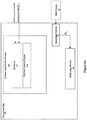
- Figure 2A is a block diagram illustrating an exemplary print controller 140.
- the print controller 140 in its generalized form, includes an interpreter module 212, a halftoning module 214, and medium classification module 216. These separate components may represent hardware used to implement the print controller 140. Alternatively or additionally, the separate components may represent logical blocks implemented by executing software instructions in a processor of the printer controller 140.
- the interpreter module 212 is operable to interpret, render, rasterize, or otherwise convert images (e.g., raw sheetside images such as sheet image 120) of a print job into sheetside bitmaps.
- the sheetside bitmaps generated by the interpreter module 212 are each a 2-dimensional array of pixels representing an image of the print job (i.e., a Continuous Tone Image (CTI)), also referred to as full sheetside bitmaps.
- CTI Continuous Tone Image
- the 2-dimensional pixel arrays are considered "full" sheetside bitmaps because the bitmaps include the entire set of pixels for the image.
- the interpreter module 212 is operable to interpret or render multiple raw sheetsides concurrently so that the rate of rendering substantially matches the rate of imaging of production print engines.
- the halftoning module 214 is operable to represent the sheetside bitmaps as halftone patterns of ink.
- the halftoning module 214 may convert the pixels to halftone patterns of CMYK ink for application to the paper.
- halftoning module 214 converts a contone image to a binary/ multi-bit level image at the same dots per inch (dpi) as the full sheetside bitmap. This is due to halftoning, which is typically implemented as a point operation creating a one to one correspondence of the contone pixels and the halftoned image pixels.
- the resulting halftoned image is used to drive a printhead mechanism of the printer 160.
- this halftoning path may be employed to interpret image data representing all of the possible gray levels that can be printed by all colors to determine the relationship between ink deposition and digital count, which may be used to determine the ink model 217.
- the halftoned image data is converted into deposition (ink per unit area) data (e.g. ink deposition data 222) by converting the halftoned image to ink volumes using drop sizes for the case of an ink jet printer.
- the halftone design itself can be used to establish this deposition vs digital count relationship.
- Print controller 140 also includes a medium classification module 216 that is implemented to classify a paper type for print production and apply a corresponding setting used to select the calibration for the printing system 130 to optimize (e.g., improve) print quality during an application of the sheet image 120 to the medium (e.g., paper) at printer 160.
- the selected calibration of the printing system 130 may be one of a plurality of calibrations that are stored in the printing system 130 and/or printer 160.
- medium classification module 216 classifies paper according to one of three print medium categories: Plain (or Untreated); Ink Jet Coated, or Ink Jet Treated. However, other embodiments may include additional or different categories.
- Figure 2B illustrates one embodiment of a medium classification module 216 implemented in a network 200.
- medium classification module 216 is included within a computing device 280 to perform medium classification and transmit results to print controller 140 via a cloud network 250.
- medium classification module 216 performs medium classification via ink model 217 and machine learning engine 218 (or machine learning logic).
- Ink model 217 determines optical density (OD) vs ink deposition (e.g., magnitude of ink per unit area) for the paper that is to be classified.
- OD optical density
- ink model 217 provides an accurate description as to how an ink interacts with a particular paper type.
- the description is obtained by receiving OD measurement data 220 from measurement module 190 that provides the OD of ink applied to samples of the paper, as well as information regarding the halftone design used to apply the ink to the paper.
- the quantity of ink actually deposited in an area e.g., ink deposition data 222
- the deposition vs digital count information may be obtained by analyzing the threshold array.
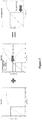
- Figure 3 illustrates graphs of functions implemented to generate an ink model 217.
- having the measured OD vs digital count function (first graph) and the ink deposition vs digital count function (second graph) results in a plot of OD vs ink deposition function (third graph).
- the OD vs digital count (DC) data matches the Ink deposition vs DC case (e.g., both representing uncalibrated responses).
- uncalibrated data should be used because the OD values and ink deposition will be the largest. This allows one to use interpolated rather than extrapolated data to create an accurate ink model 217.
- the measured OD vs digital count function may be derived from the OD measurement data 220
- the OD vs ink deposition function may be derived from the ink deposition data 222
- the OD vs ink deposition function e.g. ink model 2157 may be created based on the OD measurement data 220 and the ink deposition data 222.
- the OD vs ink deposition relationship is used as inputs to a regression to provide parameters that describe the relationship.
- a regression employing a modified version of the Weibull CDF is used for the ink model 217.
- the modified Weibull CDF incorporates paper white and the solid area maximum optical density. This modified Weibull CDF will herein be described as "Weibull CDF" to avoid confusion.
- the forward Weibull CDF ink model relates ink deposition to OD, while the inverse Weibull CDF ink model relates OD to ink deposition.
- the classical version of a Weibull cumulative distribution function (CDF) describes the probability that a real-valued random variable X with a given probability will be found at a value less than or equal to x (where x is a one possible value of the random variable X). Accordingly, the classical Weibull CDF provides the "area under the curve" function of the Weibull probability density function (PDF).
- ink deposition is defined as the total ink mass applied to a unit area.
- the area over which the drop sizes are summed is the printed area associated with the multidrop or binary threshold array (e.g., each pel of the threshold array occupies an area defined by the printer dpi).
- the drop sizes are the determined by converting the halftone threshold array to an array of drop sizes, where for each DC level the respective drop sizes have been determined.
- a two-parameter classical Weibull CDF function has been extended to four parameters to create an ink model for the paper.
- ink model 217 derives the 4 Weibull distribution function parameters that are forwarded to machine learning engine 218, which searches and selects a category of the paper.
- Machine learning engine 218 receives the 4 parameters for each color channel supported by printing system 130 for a medium.
- machine learning engine 218 receives 16 parameters (e.g., for a CMYK embodiment) as input features.
- the machine learning engine 218 may receive 4 parameters for at least one of the color channels supported by printing system for a medium.
- machine learning engine 218 implements a k-nearest neighbor algorithm to classify an unknown medium, in this case, it is used to predict the medium (e.g., paper) type (or category).
- the engine has been trained using features representative of medium characteristics, in this case, the Weibull ink model parameters to accurately determine the paper type.
- the training can be determined using a set of known paper types and parameters, however it can also be refined and improved by adding data from known paper types which have been measured. In this way the learning is adaptive to new information from media that customers use.
- the k-nearest neighbor algorithm may be implemented via a Ball Tree space partitioning data structure in order to organize points in a multi-dimensional space though other suitable multi-dimensional spaces may also be used.
- nearest neighbor search queries are expedited, such that the objective is to find the k points in the tree that are closest to a given test point by some distance metric (e.g. Euclidean distance in the space).
- the k-nearest neighbor implementation being an instance-based learning method, may train the model without memorizing a previous model once the dataset is updated.
- other embodiments may implement other machine learning algorithms (e.g., Random Forests).
- machine learning engine 218 inserts the input features into a data structure as raw sparse data prior to normalization.
- the data is normalized via a scaling between 0-1.
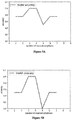
- Figure 4 illustrates one embodiment of a graph showing sparse vs scaled input features. As shown in Figure 4 , the scaled input features are clustered approximately around the (1,1) coordinates in the black color plane scale vs black plane slope Weibull parameter plot, while the raw sparse features are relatively scattered.
- one or more k-points are inserted into the structure.
- the k points are user defined constants that are each associated with a paper category.
- 3 k-points are implemented, and are associated with the Plain; Ink Jet Coated, or Ink Jet Treated paper categories supported by printing system 130.
- 3 and 4 are optimum numbers for nearest neighbors for the current data set.
- the k-nearest neighbor algorithm is performed to determine a k-point to which the input features are closest.
- the data is recursively divided into hyper-spheres with nodes defined by a centroid (C) and radius (r).
- C centroid
- r radius
- the number of candidate points for a neighbor search is reduced through: x + y ⁇ x + y
- the result of the k-nearest neighbor algorithm results in machine learning engine 218 providing a category in which the paper type is most closely related.
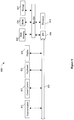
- Figure 6 is a flow diagram illustrating one embodiment of a process for implementing a medium classification process at a printing system.
- medium classification is performed on paper representing a type to which sheet images (or print data) is to be applied.
- Figure 7 is a flow diagram illustrating one embodiment of a process for categorizing a print medium.
- OD measurement data 220 and/or ink deposition data 222 may be received.
- the set of distribution function parameters are determined based on the OD measurement data 220 and the ink deposition data 222.
- the distribution function parameters are provided as input features to a machine learning engine 218 that implements a k-nearest neighbor algorithm to search for and select a category for the paper type.
- the paper type is classified as being associated with a particular category.
- a setting indicating the category of the paper is transmitted.
- the OD measurement data 220 and/or ink deposition data 222 is transmitted from print controller 140 to computing system 280, where the above-described medium classification is performed. Subsequently, print controller 140 receives the setting indicating the paper category via cloud network 250.
- the setting provided represents a suggested paper type, which can be overridden in the case where the operator knows that the actual media type is different than the recommended one. This provides a quality check to prevent cases where the actual paper based on measurements is not the same as the paper type the operator believes they have installed for the print run.
- the category selected during the medium classification process is applied as a medium setting at the printing system, processing block 620, and is used to select the calibration for the printing system to produce one or more print jobs using the paper.
- processing block 630 one or more print jobs are received.
- print data included in the one or more print jobs is applied to the paper.
- Figure 8 illustrates a computer system 800 on which print controller 140 and/or halftone calibration module 216 may be implemented.
- Computer system 800 includes a system bus 820 for communicating information, and a processor 810 coupled to bus 820 for processing information.
- Computer system 800 further comprises a random access memory (RAM) or other dynamic storage device 825 (referred to herein as main memory), coupled to bus 820 for storing information and instructions to be executed by processor 810.
- Main memory 825 also may be used for storing temporary variables or other intermediate information during execution of instructions by processor 810.
- Computer system 800 also may include a read only memory (ROM) and or other static storage device 826 coupled to bus 820 for storing static information and instructions used by processor 810.
- ROM read only memory
- a data storage device 827 such as a magnetic disk or optical disc and its corresponding drive may also be coupled to computer system 800 for storing information and instructions.
- Computer system 800 can also be coupled to a second I/O bus 850 via an I/O interface 830.
- a plurality of I/O devices may be coupled to I/O bus 850, including a display device 824, an input device (e.g., a cursor control device 822 and/or an alphanumeric input device 823).
- the communication device 821 is for accessing other computers (servers or clients).
- the communication device 821 may comprise a modem, a network interface card, or other well-known interface device, such as those used for coupling to Ethernet, token ring, or other types of networks.
- Embodiments of the invention may include various steps as set forth above.
- the steps may be embodied in machine-executable instructions.
- the instructions can be used to cause a general-purpose or special-purpose processor to perform certain steps.
- these steps may be performed by specific hardware components that contain hardwired logic for performing the steps, or by any combination of programmed computer components and custom hardware components.
- Elements of the present invention may also be provided as a machine-readable medium for storing the machine-executable instructions.
- the machine-readable medium may include, but is not limited to, floppy diskettes, optical disks, CD-ROMs, and magneto-optical disks, ROMs, RAMs, EPROMs, EEPROMs, magnetic or optical cards, propagation media or other type of media/machine-readable medium suitable for storing electronic instructions.
- the present invention may be downloaded as a computer program which may be transferred from a remote computer (e.g., a server) to a requesting computer (e.g., a client) by way of data signals embodied in a carrier wave or other propagation medium via a communication link (e.g., a modem or network connection).
- a remote computer e.g., a server
- a requesting computer e.g., a client
- a communication link e.g., a modem or network connection
Landscapes
- Engineering & Computer Science (AREA)
- Theoretical Computer Science (AREA)
- Software Systems (AREA)
- Evolutionary Computation (AREA)
- Data Mining & Analysis (AREA)
- Medical Informatics (AREA)
- Computer Vision & Pattern Recognition (AREA)
- Physics & Mathematics (AREA)
- Computing Systems (AREA)
- General Engineering & Computer Science (AREA)
- General Physics & Mathematics (AREA)
- Mathematical Physics (AREA)
- Artificial Intelligence (AREA)
- Multimedia (AREA)
- Signal Processing (AREA)
- Accessory Devices And Overall Control Thereof (AREA)
Applications Claiming Priority (1)
| Application Number | Priority Date | Filing Date | Title |
|---|---|---|---|
| US16/286,775 US10730293B1 (en) | 2019-02-27 | 2019-02-27 | Medium classification mechanism |
Publications (2)
| Publication Number | Publication Date |
|---|---|
| EP3702902A1 true EP3702902A1 (de) | 2020-09-02 |
| EP3702902B1 EP3702902B1 (de) | 2024-09-25 |
Family
ID=69740202
Family Applications (1)
| Application Number | Title | Priority Date | Filing Date |
|---|---|---|---|
| EP20159480.1A Active EP3702902B1 (de) | 2019-02-27 | 2020-02-26 | Mechanismus zur klassifizierung eines druckmediums |
Country Status (2)
| Country | Link |
|---|---|
| US (1) | US10730293B1 (de) |
| EP (1) | EP3702902B1 (de) |
Families Citing this family (4)
| Publication number | Priority date | Publication date | Assignee | Title |
|---|---|---|---|---|
| EP3702968B1 (de) * | 2019-02-28 | 2023-07-05 | Canon Kabushiki Kaisha | Informationsverarbeitungsvorrichtung, druckvorrichtung und informationsverarbeitungsverfahren |
| JP7059978B2 (ja) * | 2019-04-25 | 2022-04-26 | セイコーエプソン株式会社 | 情報処理装置、学習装置及び学習済モデル |
| CN114654902B (zh) * | 2020-12-23 | 2023-06-02 | 精工爱普生株式会社 | 利用机器学习模型来执行印刷介质的判别处理的方法以及系统 |
| JP7574675B2 (ja) * | 2021-02-03 | 2024-10-29 | セイコーエプソン株式会社 | 機械学習モデルを用いて被判別データのクラスを判別する方法、情報処理装置、及び、コンピュータープログラム |
Citations (6)
| Publication number | Priority date | Publication date | Assignee | Title |
|---|---|---|---|---|
| US20020156754A1 (en) * | 2001-04-23 | 2002-10-24 | Swimm Richard S. | Media selection using a neural network |
| US6803933B1 (en) * | 2003-06-16 | 2004-10-12 | Hewlett-Packard Development Company, L.P. | Systems and methods for dot gain determination and dot gain based printing |
| US20050093907A1 (en) * | 2003-10-31 | 2005-05-05 | Carl Staelin | Ink thickness consistency in digital printing presses |
| US20120218574A1 (en) * | 2011-02-28 | 2012-08-30 | Seiko Epson Corporation | Printing control device and printing control program |
| US20130176600A1 (en) * | 2012-01-09 | 2013-07-11 | Kartheek Chandu | Halftone Calibration Mechanism Employing an Ink Model |
| US9661154B1 (en) * | 2016-02-25 | 2017-05-23 | Ricoh Company, Ltd. | Ink model derivation mechanism using Weibull distribution function |
Family Cites Families (12)
| Publication number | Priority date | Publication date | Assignee | Title |
|---|---|---|---|---|
| US8144368B2 (en) | 1998-01-20 | 2012-03-27 | Digimarc Coporation | Automated methods for distinguishing copies from original printed objects |
| US6036298A (en) | 1997-06-30 | 2000-03-14 | Hewlett-Packard Company | Monochromatic optical sensing system for inkjet printing |
| US6325505B1 (en) | 1997-06-30 | 2001-12-04 | Hewlett-Packard Company | Media type detection system for inkjet printing |
| US6425650B1 (en) | 1997-06-30 | 2002-07-30 | Hewlett-Packard Company | Educatable media determination system for inkjet printing |
| KR100453057B1 (ko) | 2002-09-06 | 2004-10-15 | 삼성전자주식회사 | 잉크젯 프린터에 있어서 인쇄제어방법 |
| WO2004051917A1 (en) | 2002-11-28 | 2004-06-17 | Digimarc Corporation | Systems and methods for authentication of print media |
| US8139860B2 (en) | 2008-07-31 | 2012-03-20 | Fuji Xerox Co., Ltd. | Retrieving and sharing electronic documents using paper |
| US8282183B2 (en) | 2009-10-23 | 2012-10-09 | Eastman Kodak Company | Inkjet printer for detecting the type of print media |
| US8412055B2 (en) * | 2010-05-14 | 2013-04-02 | Ricoh Production Print Solutions LLC | Automatic paper management and color profile utilization |
| US20120139986A1 (en) | 2010-12-03 | 2012-06-07 | Powers Thomas F | Method for determining paper type in printers |
| US9489162B2 (en) | 2014-05-16 | 2016-11-08 | Canon Kabushiki Kaisha | Control system, control apparatus, control method, and non-transitory computer-readable storage medium |
| WO2018058090A1 (en) | 2016-09-26 | 2018-03-29 | University Of Florida Research Foundation Incorporated | Method for no-reference image quality assessment |
-
2019
- 2019-02-27 US US16/286,775 patent/US10730293B1/en not_active Expired - Fee Related
-
2020
- 2020-02-26 EP EP20159480.1A patent/EP3702902B1/de active Active
Patent Citations (6)
| Publication number | Priority date | Publication date | Assignee | Title |
|---|---|---|---|---|
| US20020156754A1 (en) * | 2001-04-23 | 2002-10-24 | Swimm Richard S. | Media selection using a neural network |
| US6803933B1 (en) * | 2003-06-16 | 2004-10-12 | Hewlett-Packard Development Company, L.P. | Systems and methods for dot gain determination and dot gain based printing |
| US20050093907A1 (en) * | 2003-10-31 | 2005-05-05 | Carl Staelin | Ink thickness consistency in digital printing presses |
| US20120218574A1 (en) * | 2011-02-28 | 2012-08-30 | Seiko Epson Corporation | Printing control device and printing control program |
| US20130176600A1 (en) * | 2012-01-09 | 2013-07-11 | Kartheek Chandu | Halftone Calibration Mechanism Employing an Ink Model |
| US9661154B1 (en) * | 2016-02-25 | 2017-05-23 | Ricoh Company, Ltd. | Ink model derivation mechanism using Weibull distribution function |
Also Published As
| Publication number | Publication date |
|---|---|
| US20200269573A1 (en) | 2020-08-27 |
| US10730293B1 (en) | 2020-08-04 |
| EP3702902B1 (de) | 2024-09-25 |
Similar Documents
| Publication | Publication Date | Title |
|---|---|---|
| EP3702902B1 (de) | Mechanismus zur klassifizierung eines druckmediums | |
| US9661154B1 (en) | Ink model derivation mechanism using Weibull distribution function | |
| US12017462B2 (en) | Ink deposition uniformity compensation mechanism | |
| US11521031B2 (en) | Direct deposit ink estimation mechanism | |
| US6504625B1 (en) | System and method for print analysis | |
| CN116940470A (zh) | 有缺陷喷嘴校正机构 | |
| EP4052916B1 (de) | Mechanismus zur korrektur defekter düsen | |
| US11283936B1 (en) | Ink usage estimation for each drop size based on histogram and calibrated drop fraction | |
| EP3534599A1 (de) | Optimierungsmechanismus für eine farbnachschlagetabelle | |
| US11247454B2 (en) | Uncalibrated ink deposition generation mechanism | |
| US20220305804A1 (en) | Print condition setting method and print condition setting system | |
| EP4040768B1 (de) | Tintenmodellerzeugungsmechanismus | |
| US8749843B2 (en) | Robust recognition of clusters of streaks at multiple scales | |
| US11475260B2 (en) | Ink model generation mechanism | |
| US11973919B2 (en) | Color space ink model generation mechanism | |
| US11675991B1 (en) | Color space ink model generation mechanism | |
| US11570332B2 (en) | Color space ink model generation mechanism | |
| US6819792B1 (en) | Automatic detection of colorimetry of unknown CMYK images | |
| US11745501B1 (en) | Drop size monitoring mechanism | |
| US20250286977A1 (en) | Color matching for a printer | |
| US20250284912A1 (en) | Print response drift compensation mechanism | |
| US10979576B1 (en) | Texture analysis mechanism | |
| JP2023006599A (ja) | 機械学習モデルのトレーニング方法、および、学習済みモデル |
Legal Events
| Date | Code | Title | Description |
|---|---|---|---|
| PUAI | Public reference made under article 153(3) epc to a published international application that has entered the european phase |
Free format text: ORIGINAL CODE: 0009012 |
|
| STAA | Information on the status of an ep patent application or granted ep patent |
Free format text: STATUS: REQUEST FOR EXAMINATION WAS MADE |
|
| 17P | Request for examination filed |
Effective date: 20200226 |
|
| AK | Designated contracting states |
Kind code of ref document: A1 Designated state(s): AL AT BE BG CH CY CZ DE DK EE ES FI FR GB GR HR HU IE IS IT LI LT LU LV MC MK MT NL NO PL PT RO RS SE SI SK SM TR |
|
| AX | Request for extension of the european patent |
Extension state: BA ME |
|
| GRAP | Despatch of communication of intention to grant a patent |
Free format text: ORIGINAL CODE: EPIDOSNIGR1 |
|
| STAA | Information on the status of an ep patent application or granted ep patent |
Free format text: STATUS: GRANT OF PATENT IS INTENDED |
|
| INTG | Intention to grant announced |
Effective date: 20240430 |
|
| GRAS | Grant fee paid |
Free format text: ORIGINAL CODE: EPIDOSNIGR3 |
|
| GRAA | (expected) grant |
Free format text: ORIGINAL CODE: 0009210 |
|
| STAA | Information on the status of an ep patent application or granted ep patent |
Free format text: STATUS: THE PATENT HAS BEEN GRANTED |
|
| P01 | Opt-out of the competence of the unified patent court (upc) registered |
Free format text: CASE NUMBER: APP_42497/2024 Effective date: 20240718 |
|
| AK | Designated contracting states |
Kind code of ref document: B1 Designated state(s): AL AT BE BG CH CY CZ DE DK EE ES FI FR GB GR HR HU IE IS IT LI LT LU LV MC MK MT NL NO PL PT RO RS SE SI SK SM TR |
|
| REG | Reference to a national code |
Ref country code: GB Ref legal event code: FG4D |
|
| REG | Reference to a national code |
Ref country code: CH Ref legal event code: EP |
|
| REG | Reference to a national code |
Ref country code: DE Ref legal event code: R096 Ref document number: 602020038184 Country of ref document: DE |
|
| REG | Reference to a national code |
Ref country code: IE Ref legal event code: FG4D |
|
| REG | Reference to a national code |
Ref country code: LT Ref legal event code: MG9D |
|
| PG25 | Lapsed in a contracting state [announced via postgrant information from national office to epo] |
Ref country code: NO Free format text: LAPSE BECAUSE OF FAILURE TO SUBMIT A TRANSLATION OF THE DESCRIPTION OR TO PAY THE FEE WITHIN THE PRESCRIBED TIME-LIMIT Effective date: 20241225 |
|
| PG25 | Lapsed in a contracting state [announced via postgrant information from national office to epo] |
Ref country code: GR Free format text: LAPSE BECAUSE OF FAILURE TO SUBMIT A TRANSLATION OF THE DESCRIPTION OR TO PAY THE FEE WITHIN THE PRESCRIBED TIME-LIMIT Effective date: 20241226 Ref country code: FI Free format text: LAPSE BECAUSE OF FAILURE TO SUBMIT A TRANSLATION OF THE DESCRIPTION OR TO PAY THE FEE WITHIN THE PRESCRIBED TIME-LIMIT Effective date: 20240925 |
|
| PG25 | Lapsed in a contracting state [announced via postgrant information from national office to epo] |
Ref country code: BG Free format text: LAPSE BECAUSE OF FAILURE TO SUBMIT A TRANSLATION OF THE DESCRIPTION OR TO PAY THE FEE WITHIN THE PRESCRIBED TIME-LIMIT Effective date: 20240925 |
|
| PG25 | Lapsed in a contracting state [announced via postgrant information from national office to epo] |
Ref country code: LV Free format text: LAPSE BECAUSE OF FAILURE TO SUBMIT A TRANSLATION OF THE DESCRIPTION OR TO PAY THE FEE WITHIN THE PRESCRIBED TIME-LIMIT Effective date: 20240925 |
|
| PG25 | Lapsed in a contracting state [announced via postgrant information from national office to epo] |
Ref country code: RS Free format text: LAPSE BECAUSE OF FAILURE TO SUBMIT A TRANSLATION OF THE DESCRIPTION OR TO PAY THE FEE WITHIN THE PRESCRIBED TIME-LIMIT Effective date: 20241225 |
|
| REG | Reference to a national code |
Ref country code: NL Ref legal event code: MP Effective date: 20240925 |
|
| PG25 | Lapsed in a contracting state [announced via postgrant information from national office to epo] |
Ref country code: RS Free format text: LAPSE BECAUSE OF FAILURE TO SUBMIT A TRANSLATION OF THE DESCRIPTION OR TO PAY THE FEE WITHIN THE PRESCRIBED TIME-LIMIT Effective date: 20241225 Ref country code: NO Free format text: LAPSE BECAUSE OF FAILURE TO SUBMIT A TRANSLATION OF THE DESCRIPTION OR TO PAY THE FEE WITHIN THE PRESCRIBED TIME-LIMIT Effective date: 20241225 Ref country code: LV Free format text: LAPSE BECAUSE OF FAILURE TO SUBMIT A TRANSLATION OF THE DESCRIPTION OR TO PAY THE FEE WITHIN THE PRESCRIBED TIME-LIMIT Effective date: 20240925 Ref country code: GR Free format text: LAPSE BECAUSE OF FAILURE TO SUBMIT A TRANSLATION OF THE DESCRIPTION OR TO PAY THE FEE WITHIN THE PRESCRIBED TIME-LIMIT Effective date: 20241226 Ref country code: FI Free format text: LAPSE BECAUSE OF FAILURE TO SUBMIT A TRANSLATION OF THE DESCRIPTION OR TO PAY THE FEE WITHIN THE PRESCRIBED TIME-LIMIT Effective date: 20240925 Ref country code: BG Free format text: LAPSE BECAUSE OF FAILURE TO SUBMIT A TRANSLATION OF THE DESCRIPTION OR TO PAY THE FEE WITHIN THE PRESCRIBED TIME-LIMIT Effective date: 20240925 |
|
| REG | Reference to a national code |
Ref country code: AT Ref legal event code: MK05 Ref document number: 1727203 Country of ref document: AT Kind code of ref document: T Effective date: 20240925 |
|
| PG25 | Lapsed in a contracting state [announced via postgrant information from national office to epo] |
Ref country code: NL Free format text: LAPSE BECAUSE OF FAILURE TO SUBMIT A TRANSLATION OF THE DESCRIPTION OR TO PAY THE FEE WITHIN THE PRESCRIBED TIME-LIMIT Effective date: 20240925 |
|
| PG25 | Lapsed in a contracting state [announced via postgrant information from national office to epo] |
Ref country code: PT Free format text: LAPSE BECAUSE OF FAILURE TO SUBMIT A TRANSLATION OF THE DESCRIPTION OR TO PAY THE FEE WITHIN THE PRESCRIBED TIME-LIMIT Effective date: 20250127 Ref country code: IS Free format text: LAPSE BECAUSE OF FAILURE TO SUBMIT A TRANSLATION OF THE DESCRIPTION OR TO PAY THE FEE WITHIN THE PRESCRIBED TIME-LIMIT Effective date: 20250125 |
|
| PGFP | Annual fee paid to national office [announced via postgrant information from national office to epo] |
Ref country code: DE Payment date: 20250218 Year of fee payment: 6 |
|
| PG25 | Lapsed in a contracting state [announced via postgrant information from national office to epo] |
Ref country code: RO Free format text: LAPSE BECAUSE OF FAILURE TO SUBMIT A TRANSLATION OF THE DESCRIPTION OR TO PAY THE FEE WITHIN THE PRESCRIBED TIME-LIMIT Effective date: 20240925 Ref country code: SM Free format text: LAPSE BECAUSE OF FAILURE TO SUBMIT A TRANSLATION OF THE DESCRIPTION OR TO PAY THE FEE WITHIN THE PRESCRIBED TIME-LIMIT Effective date: 20240925 |
|
| PG25 | Lapsed in a contracting state [announced via postgrant information from national office to epo] |
Ref country code: ES Free format text: LAPSE BECAUSE OF FAILURE TO SUBMIT A TRANSLATION OF THE DESCRIPTION OR TO PAY THE FEE WITHIN THE PRESCRIBED TIME-LIMIT Effective date: 20240925 |
|
| PG25 | Lapsed in a contracting state [announced via postgrant information from national office to epo] |
Ref country code: AT Free format text: LAPSE BECAUSE OF FAILURE TO SUBMIT A TRANSLATION OF THE DESCRIPTION OR TO PAY THE FEE WITHIN THE PRESCRIBED TIME-LIMIT Effective date: 20240925 Ref country code: EE Free format text: LAPSE BECAUSE OF FAILURE TO SUBMIT A TRANSLATION OF THE DESCRIPTION OR TO PAY THE FEE WITHIN THE PRESCRIBED TIME-LIMIT Effective date: 20240925 |
|
| PG25 | Lapsed in a contracting state [announced via postgrant information from national office to epo] |
Ref country code: PL Free format text: LAPSE BECAUSE OF FAILURE TO SUBMIT A TRANSLATION OF THE DESCRIPTION OR TO PAY THE FEE WITHIN THE PRESCRIBED TIME-LIMIT Effective date: 20240925 Ref country code: CZ Free format text: LAPSE BECAUSE OF FAILURE TO SUBMIT A TRANSLATION OF THE DESCRIPTION OR TO PAY THE FEE WITHIN THE PRESCRIBED TIME-LIMIT Effective date: 20240925 |
|
| PGFP | Annual fee paid to national office [announced via postgrant information from national office to epo] |
Ref country code: FR Payment date: 20250224 Year of fee payment: 6 |
|
| PG25 | Lapsed in a contracting state [announced via postgrant information from national office to epo] |
Ref country code: SK Free format text: LAPSE BECAUSE OF FAILURE TO SUBMIT A TRANSLATION OF THE DESCRIPTION OR TO PAY THE FEE WITHIN THE PRESCRIBED TIME-LIMIT Effective date: 20240925 Ref country code: IT Free format text: LAPSE BECAUSE OF FAILURE TO SUBMIT A TRANSLATION OF THE DESCRIPTION OR TO PAY THE FEE WITHIN THE PRESCRIBED TIME-LIMIT Effective date: 20240925 |
|
| PGFP | Annual fee paid to national office [announced via postgrant information from national office to epo] |
Ref country code: GB Payment date: 20250220 Year of fee payment: 6 |
|
| REG | Reference to a national code |
Ref country code: DE Ref legal event code: R097 Ref document number: 602020038184 Country of ref document: DE |
|
| PG25 | Lapsed in a contracting state [announced via postgrant information from national office to epo] |
Ref country code: DK Free format text: LAPSE BECAUSE OF FAILURE TO SUBMIT A TRANSLATION OF THE DESCRIPTION OR TO PAY THE FEE WITHIN THE PRESCRIBED TIME-LIMIT Effective date: 20240925 |
|
| PLBE | No opposition filed within time limit |
Free format text: ORIGINAL CODE: 0009261 |
|
| STAA | Information on the status of an ep patent application or granted ep patent |
Free format text: STATUS: NO OPPOSITION FILED WITHIN TIME LIMIT |
|
| 26N | No opposition filed |
Effective date: 20250626 |
|
| PG25 | Lapsed in a contracting state [announced via postgrant information from national office to epo] |
Ref country code: SE Free format text: LAPSE BECAUSE OF FAILURE TO SUBMIT A TRANSLATION OF THE DESCRIPTION OR TO PAY THE FEE WITHIN THE PRESCRIBED TIME-LIMIT Effective date: 20240925 |
|
| PG25 | Lapsed in a contracting state [announced via postgrant information from national office to epo] |
Ref country code: MC Free format text: LAPSE BECAUSE OF FAILURE TO SUBMIT A TRANSLATION OF THE DESCRIPTION OR TO PAY THE FEE WITHIN THE PRESCRIBED TIME-LIMIT Effective date: 20240925 |
|
| REG | Reference to a national code |
Ref country code: CH Ref legal event code: PL |
|
| PG25 | Lapsed in a contracting state [announced via postgrant information from national office to epo] |
Ref country code: LU Free format text: LAPSE BECAUSE OF NON-PAYMENT OF DUE FEES Effective date: 20250226 |
|
| PG25 | Lapsed in a contracting state [announced via postgrant information from national office to epo] |
Ref country code: CH Free format text: LAPSE BECAUSE OF NON-PAYMENT OF DUE FEES Effective date: 20250228 |