EP4040768B1 - Tintenmodellerzeugungsmechanismus - Google Patents
Tintenmodellerzeugungsmechanismus Download PDFInfo
- Publication number
- EP4040768B1 EP4040768B1 EP22150361.8A EP22150361A EP4040768B1 EP 4040768 B1 EP4040768 B1 EP 4040768B1 EP 22150361 A EP22150361 A EP 22150361A EP 4040768 B1 EP4040768 B1 EP 4040768B1
- Authority
- EP
- European Patent Office
- Prior art keywords
- ink
- data
- drop
- drop size
- Prior art date
- Legal status (The legal status is an assumption and is not a legal conclusion. Google has not performed a legal analysis and makes no representation as to the accuracy of the status listed.)
- Active
Links
Images


Classifications
-
- H—ELECTRICITY
- H04—ELECTRIC COMMUNICATION TECHNIQUE
- H04N—PICTORIAL COMMUNICATION, e.g. TELEVISION
- H04N1/00—Scanning, transmission or reproduction of documents or the like, e.g. facsimile transmission; Details thereof
- H04N1/40—Picture signal circuits
- H04N1/405—Halftoning, i.e. converting the picture signal of a continuous-tone original into a corresponding signal showing only two levels
-
- B—PERFORMING OPERATIONS; TRANSPORTING
- B41—PRINTING; LINING MACHINES; TYPEWRITERS; STAMPS
- B41J—TYPEWRITERS; SELECTIVE PRINTING MECHANISMS, i.e. MECHANISMS PRINTING OTHERWISE THAN FROM A FORME; CORRECTION OF TYPOGRAPHICAL ERRORS
- B41J2/00—Typewriters or selective printing mechanisms characterised by the printing or marking process for which they are designed
- B41J2/005—Typewriters or selective printing mechanisms characterised by the printing or marking process for which they are designed characterised by bringing liquid or particles selectively into contact with a printing material
- B41J2/01—Ink jet
- B41J2/015—Ink jet characterised by the jet generation process
- B41J2/04—Ink jet characterised by the jet generation process generating single droplets or particles on demand
- B41J2/045—Ink jet characterised by the jet generation process generating single droplets or particles on demand by pressure, e.g. electromechanical transducers
- B41J2/04501—Control methods or devices therefor, e.g. driver circuits, control circuits
- B41J2/04535—Control methods or devices therefor, e.g. driver circuits, control circuits involving calculation of drop size, weight or volume
-
- B—PERFORMING OPERATIONS; TRANSPORTING
- B41—PRINTING; LINING MACHINES; TYPEWRITERS; STAMPS
- B41J—TYPEWRITERS; SELECTIVE PRINTING MECHANISMS, i.e. MECHANISMS PRINTING OTHERWISE THAN FROM A FORME; CORRECTION OF TYPOGRAPHICAL ERRORS
- B41J2/00—Typewriters or selective printing mechanisms characterised by the printing or marking process for which they are designed
- B41J2/005—Typewriters or selective printing mechanisms characterised by the printing or marking process for which they are designed characterised by bringing liquid or particles selectively into contact with a printing material
- B41J2/01—Ink jet
- B41J2/015—Ink jet characterised by the jet generation process
- B41J2/04—Ink jet characterised by the jet generation process generating single droplets or particles on demand
- B41J2/045—Ink jet characterised by the jet generation process generating single droplets or particles on demand by pressure, e.g. electromechanical transducers
- B41J2/04501—Control methods or devices therefor, e.g. driver circuits, control circuits
- B41J2/0452—Control methods or devices therefor, e.g. driver circuits, control circuits reducing demand in current or voltage
-
- B—PERFORMING OPERATIONS; TRANSPORTING
- B41—PRINTING; LINING MACHINES; TYPEWRITERS; STAMPS
- B41J—TYPEWRITERS; SELECTIVE PRINTING MECHANISMS, i.e. MECHANISMS PRINTING OTHERWISE THAN FROM A FORME; CORRECTION OF TYPOGRAPHICAL ERRORS
- B41J2/00—Typewriters or selective printing mechanisms characterised by the printing or marking process for which they are designed
- B41J2/005—Typewriters or selective printing mechanisms characterised by the printing or marking process for which they are designed characterised by bringing liquid or particles selectively into contact with a printing material
- B41J2/01—Ink jet
- B41J2/015—Ink jet characterised by the jet generation process
- B41J2/04—Ink jet characterised by the jet generation process generating single droplets or particles on demand
- B41J2/045—Ink jet characterised by the jet generation process generating single droplets or particles on demand by pressure, e.g. electromechanical transducers
- B41J2/04501—Control methods or devices therefor, e.g. driver circuits, control circuits
- B41J2/0454—Control methods or devices therefor, e.g. driver circuits, control circuits involving calculation of temperature
-
- B—PERFORMING OPERATIONS; TRANSPORTING
- B41—PRINTING; LINING MACHINES; TYPEWRITERS; STAMPS
- B41J—TYPEWRITERS; SELECTIVE PRINTING MECHANISMS, i.e. MECHANISMS PRINTING OTHERWISE THAN FROM A FORME; CORRECTION OF TYPOGRAPHICAL ERRORS
- B41J2/00—Typewriters or selective printing mechanisms characterised by the printing or marking process for which they are designed
- B41J2/005—Typewriters or selective printing mechanisms characterised by the printing or marking process for which they are designed characterised by bringing liquid or particles selectively into contact with a printing material
- B41J2/01—Ink jet
- B41J2/015—Ink jet characterised by the jet generation process
- B41J2/04—Ink jet characterised by the jet generation process generating single droplets or particles on demand
- B41J2/045—Ink jet characterised by the jet generation process generating single droplets or particles on demand by pressure, e.g. electromechanical transducers
- B41J2/04501—Control methods or devices therefor, e.g. driver circuits, control circuits
- B41J2/04586—Control methods or devices therefor, e.g. driver circuits, control circuits controlling heads of a type not covered by groups B41J2/04575 - B41J2/04585, or of an undefined type
-
- B—PERFORMING OPERATIONS; TRANSPORTING
- B41—PRINTING; LINING MACHINES; TYPEWRITERS; STAMPS
- B41J—TYPEWRITERS; SELECTIVE PRINTING MECHANISMS, i.e. MECHANISMS PRINTING OTHERWISE THAN FROM A FORME; CORRECTION OF TYPOGRAPHICAL ERRORS
- B41J2/00—Typewriters or selective printing mechanisms characterised by the printing or marking process for which they are designed
- B41J2/005—Typewriters or selective printing mechanisms characterised by the printing or marking process for which they are designed characterised by bringing liquid or particles selectively into contact with a printing material
- B41J2/01—Ink jet
- B41J2/21—Ink jet for multi-colour printing
- B41J2/2121—Ink jet for multi-colour printing characterised by dot size, e.g. combinations of printed dots of different diameter
-
- H—ELECTRICITY
- H04—ELECTRIC COMMUNICATION TECHNIQUE
- H04N—PICTORIAL COMMUNICATION, e.g. TELEVISION
- H04N1/00—Scanning, transmission or reproduction of documents or the like, e.g. facsimile transmission; Details thereof
- H04N1/40—Picture signal circuits
- H04N1/407—Control or modification of tonal gradation or of extreme levels, e.g. background level
-
- H—ELECTRICITY
- H04—ELECTRIC COMMUNICATION TECHNIQUE
- H04N—PICTORIAL COMMUNICATION, e.g. TELEVISION
- H04N1/00—Scanning, transmission or reproduction of documents or the like, e.g. facsimile transmission; Details thereof
- H04N1/46—Colour picture communication systems
- H04N1/56—Processing of colour picture signals
- H04N1/60—Colour correction or control
- H04N1/603—Colour correction or control controlled by characteristics of the picture signal generator or the picture reproducer
- H04N1/6033—Colour correction or control controlled by characteristics of the picture signal generator or the picture reproducer using test pattern analysis
- H04N1/605—Colour correction or control controlled by characteristics of the picture signal generator or the picture reproducer using test pattern analysis for controlling ink amount, strike-through, bleeding soakage or the like
Definitions
- the two-parameter classical Weibull CDF function has been extended to four parameters to create an ink model.
- OD ink response data may be generated using uncalibrated ink deposition data.
- the response data may be represented using CIE L*a*b* rather than OD.
- CIE L*a*b* is implemented to provide Delta E calculations.
- Alternate ink models like the Weibull model described previously, can be used to describe the relationship between CIE L*a*b* and ink deposition. For example L* versus ink deposition can use the same equation, by modifying the definitions for p(3) and p(4) to use L* values instead of OD. The alternate model predicts decreased L* values with increased ink deposition x.
- a polynomial function alone or combined with a Weibull like equation, can be used to describe a* and b* vs ink deposition.
- Uncalibrated OD measurement data comprises OD response data measured from a print medium.
- the OD response data comprises an OD versus digital count, where digital count is the gray level representing the pels in the bitmap 150.
- Uncalibrated ink deposition is defined as an average amount of ink deposited per printed device pel, where a pel is a picture element of the printer 160 (e.g., the printing device).
- the amount of ink deposition changes as a function of digital count.
- the pels in bitmap 150 range from 0-255 for a typical 8-bit system.
- the digital count is a control parameter of an output pel.
- an ink deposition curve is the ink deposition (e.g., amount of ink per area) defined over the range of all possible gray levels (e.g., 0-255).
- ink deposition is computed on an average basis to eliminate local variations due to halftoning using a set of discrete drop sizes.
- An area equal to the printed size of the halftone threshold array is a good region to use for the area calculation, since it defines the size of the fundamental halftone patterns.
- Ink drop sizes may be determined by analyzing the amount of ink used and counts of ink drops of each size, as will be discussed in more detail below.
- the reference ink model parameter data may be generated from an uncalibrated OD measurement data for the reference medium and an uncalibrated ink deposition may be generated from measured drop sizes and halftone drop fractions generated for test print jobs (e.g., printed and measured at printing system 130, or another printing system)
- the reference print medium is installed, and one or more test print jobs may be printed, at printing system 130.
- measurement module 190 measures uncalibrated OD measurement data of test data printed to the reference print medium.
- the uncalibrated OD measurement data for the reference print medium may then be received at ink model logic 220.
- Uncalibrated ink deposition data for the reference print medium is generated based on the reference ink model parameter data and the uncalibrated OD measurement data for the reference print medium (see details further below). Subsequently, the process may be repeated with an unknown print medium being installed at printing system 130, and one or more test print jobs being printed to the unknown print medium.
- measurement module 190 measures uncalibrated OD measurement data for printed test data, this time for the unknown print medium.
- the uncalibrated OD measurement data for the unknown print medium may then be received at ink model logic 220.
- ink model generation logic 320 generates the ink model parameter data (e.g., via the Weibull ink model regression) for the unknown print medium based on uncalibrated ink deposition data for the reference print medium using inverse Weibull ink model and the uncalibrated optical density (OD) measurement data for the unknown print medium.
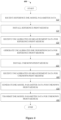
- FIG. 4 is a flow diagram illustrating one embodiment of a process 400 for performing an ink model computation.
- Process 400 may be performed by processing logic that may include hardware (e.g., circuitry, dedicated logic, programmable logic, microcode, etc.), software such as instructions run on a processing device, or a combination thereof.
- processing logic may include hardware (e.g., circuitry, dedicated logic, programmable logic, microcode, etc.), software such as instructions run on a processing device, or a combination thereof.
- process 400 is performed by ink model logic 220.
- process 400 begins at processing block 410, where ink model parameter data is received for the reference print medium.
- the reference print medium is installed at printing system 130, where one or more test print jobs are printed on the reference print medium.
- uncalibrated OD measurement data is received for the test print jobs printed on the reference medium (e.g., form measurement module 190).
- uncalibrated OD measurement data is received for the test print jobs printed on the unknown medium.
- ink model parameter data for the unknown print medium is generated based on the OD measurement data for the unknown medium and the ink deposition data for the reference print medium by using the inverse ink model for the reference print medium.
- the ink model parameter data for the unknown print medium is transmitted. It should be understood that measurements and ink depositions for like digital count values are used to obtain matching sets of data to generate the ink model parameters for the unknown medium. By performing this, ink model parameter data for the unknown print medium has been determined efficiently and with minimal system resources. Ink model parameter data may be used to determine ink drop sizes and/or ink usage estimation in a print system 130.
- the ink model is referred to as a Weibull ink model
- the ink model can be any functional relationship which relates OD to ink deposition for a printer.
- the inverse ink model being an inverse relationship requires a single value to provide a one to one relationship between ink deposition and OD. This one to one relationship for inverse functions is commonly described by the horizontal line test.
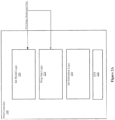
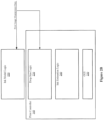
- Drop size generation logic 520 generates drop size data based on the uncalibrated ink deposition data at ink deposition generation logic 510.
- drop size generation logic 520 uses the uncalibrated ink deposition (or UID) data and ink drop count data (e.g., uncalibrated drop fractions) to generate the drop size data.
- Ink drop count data comprises a number of drops that occur at each of the plurality of gray levels.
- Uncalibrated drop fractions may be received by drop size logic 230. Drop fractions represent the ratio of number of drops for a given drop size, relative to the total number of possible drops of all sizes. Drop fractions are expressed as a function vs gray level.
- Figure 6 illustrates one embodiment of a graph of uncalibrated drop fractions as a function of gray level for a four-drop size halftone, where the drop fraction range is between zero and one.
- the drop fractions for each individual drop size, including none, must always sum to a value of one since drops must be one of four different drop sizes.
- an uncalibrated multibit threshold array may be analyzed to determine a number of drops (e.g., drop count) that occur at each DC or gray level.
- uncalibrated drop fractions are the number of drops in the threshold array for one drop size (e.g., small, medium, large and none) divided by the total number of drops for the one drop size in the threshold array, which is determined for each different drop size at each DC level.
- the total number of drops for a single drop size is defined by the size of the threshold array.
- the total number of drops for a single drop size is the product of the number of rows and the number of columns in the threshold array. For example, at DC level 100, if we have 10000 small drops and the array is 256x256, the uncalibrated small drop fraction is 10000/(256*256) or 0.153.
- the uncalibrated drop fraction for the none drop size is not necessary to compute. It can be used for verification since the sum of all uncalibrated drop fractions including none must be equal to one (100%). Uncalibrated drop fraction may be determined for each color plane based on the uncalibrated multibit threshold corresponding to each color plane.
- drop size generation logic 520 determines best fit drop sizes to obtain an ink deposition per area that equals the uncalibrated ink deposition. In one embodiment, generation logic 520 determines the best fit drop sizes by performing a drop size regression. In such an embodiment, a least squares regression process is performed to solve the set of linear equations and obtain the unknown drop sizes.
- ink depositions are determined for each gray level. Based on a set of 256 (e.g., 0-255) simultaneous linear equations of uncalibrated ink deposition values, three equations are implemented to define three unknown drop sizes. Thus, approximately eighty-five (e.g., (256/3) sets of three different drop sizes may be determined, enabling an understanding of how drop sizes change across the tonal range (e.g., assuming an 8-bit halftone). Employing higher bit depth halftones permits obtaining a larger set of drop size estimates by employing the regression process for each pattern of the halftone. For example, a 14 bit halftone enables deriving drop sizes at each gray level for an 8 bit imaging path.
- 256 e.g., 0-255
- drop size generation logic 520 is also implemented to determine drop sizes for printer characteristics other than gray levels since drop sizes may vary depending on such conditions.
- drop size generation logic 520 may determine drop sizes for printer characteristics of print system 130, such as patch sizes, printhead voltages (PHV), printhead temperatures, jetting frequencies, number of jetting nozzles, other system temperatures, and/or etc.
- FIG. 7 is a flow diagram illustrating one embodiment of a process 700 for performing a drop size computation.
- Process 700 may be performed by processing logic that may include hardware (e.g., circuitry, dedicated logic, programmable logic, microcode, etc.), software such as instructions run on a processing device, or a combination thereof.
- processing logic may include hardware (e.g., circuitry, dedicated logic, programmable logic, microcode, etc.), software such as instructions run on a processing device, or a combination thereof.
- process 700 is performed by drop size logic 230.
- process 700 begins at processing block 710, where ink model parameter data is received.
- the ink model parameter data may be received from ink model logic 220.
- the uncalibrated OD measurement data is received.
- the uncalibrated OD measurement data is generated by print engine calibration.
- uncalibrated ink deposition data is generated using the uncalibrated OD measurement data and ink model parameter data (e.g., via inverse Weibull).
- the drop size data is generated based on the uncalibrated ink deposition data (e.g., via a regression using drop fractions).
- the drop size data is transmitted. In one embodiment, the transmitted drop size data may be displayed at a graphical user interface (GUI) 250 at print controller 140.
- GUI graphical user interface
- decision block 760 a determination is made as to whether one or more changes to characteristics of print system 130 has been detected. If so, control is returned to processing block 720 where the process is repeated for updated uncalibrated OD measurement data generated in response to the change in the print system 130 characteristics. Otherwise, control remains at decision block 760 until a change to characteristics of print system 130 has been detected.
- ink estimation logic 240 is implemented to provide an estimation of ink that is to be used to produce a print job.
- ink estimation logic 220 generates estimated ink usage data by computing a sum of ink usage data for each of a plurality of drop sizes generated by each pel forming element 165.
- ink estimation logic 220 uses histograms generated for each color plane (e.g., CMYK), as well as the drop size data and drop fractions, to estimate the print job ink usage. By performing this, ink drop size and/or ink estimation is determined accurately, efficiently and with minimal system resources.
- Ink drop size data may be used to evaluate and determine ink usage estimation in a print system 130.
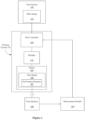
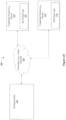
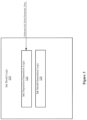
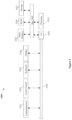
- Figure 8 illustrates a computer system 1000 on which printing system 130, print controller 140, ink model logic 220, drop size logic 230 and/or ink estimation logic 240 may be implemented.
- Computer system 1000 includes a system bus 1020 for communicating information, and a processor 1010 coupled to bus 1020 for processing information.
- Computer system 1000 further comprises a random access memory (RAM) or other dynamic storage device 1025 (referred to herein as main memory), coupled to bus 1020 for storing information and instructions to be executed by processor 1010.
- Main memory 1025 also may be used for storing temporary variables or other intermediate information during execution of instructions by processor 1010.
- Computer system 1000 also may include a read only memory (ROM) and or other static storage device 1026 coupled to bus 1020 for storing static information and instructions used by processor 1010.
- ROM read only memory
- a data storage device 1027 such as a magnetic disk or optical disc and its corresponding drive may also be coupled to computer system 1000 for storing information and instructions.
- Computer system 1000 can also be coupled to a second I/O bus 1050 via an I/O interface 1030.
- a plurality of I/O devices may be coupled to I/O bus 1050, including a display device 1024, an input device (e.g., an alphanumeric input device 1023 and or a cursor control device 1022).
- the communication device 1021 is for accessing other computers (servers or clients).
- the communication device 1021 may comprise a modem, a network interface card, or other well-known interface device, such as those used for coupling to Ethernet, token ring, or other types of networks.
- Embodiments of the invention may include various steps as set forth above.
- the steps may be embodied in machine-executable instructions.
- the instructions can be used to cause a general-purpose or special-purpose processor to perform certain steps.
- these steps may be performed by specific hardware components that contain hardwired logic for performing the steps, or by any combination of programmed computer components and custom hardware components.
- the present invention may be downloaded as a computer program which may be transferred from a remote computer (e.g., a server) to a requesting computer (e.g., a client) by way of data signals embodied in a carrier wave or other propagation medium via a communication link (e.g., a modem or network connection).
- a remote computer e.g., a server
- a requesting computer e.g., a client
- a communication link e.g., a modem or network connection
Landscapes
- Engineering & Computer Science (AREA)
- Multimedia (AREA)
- Signal Processing (AREA)
- Accessory Devices And Overall Control Thereof (AREA)
- Ink Jet (AREA)
Claims (9)
- System, umfassend:mindestens eine physikalische Speichervorrichtung zum Speichern von Tropfengrößenlogik; undeinen oder mehrere Prozessoren, die mit der mindestens einen physikalischen Speichervorrichtung gekoppelt sind, um die Tropfengrößenlogik auszuführen, um Tropfengrößendaten zu erzeugen, die einem Drucksystem auf der Grundlage von Tintenabscheidungsdaten für ein Druckmedium und Tintentropfenzähldaten zugeordnet sind;wobei die Tropfengrößendaten auf der Grundlage einer Vielzahl von Drucksystemeigenschaften erzeugt werden,wobei die Drucksystemeigenschaften Graustufen umfassen,wobei die Tropfengrößendaten durch Durchführung einer Tropfengrößenregression erzeugt werden,wobei die Tropfengrößenregression einen besten Fit der Tropfengrößen für eine Vielzahl von Graustufen bestimmt, um eine Tintenabscheidung pro Fläche gleich den Tintenabscheidungsdaten bestimmt,wobei die Tintenabscheidung für jede Graustufe unter Verwendung der Tropfengrößenregression bestimmt wird.
- System nach Anspruch 1, wobei die Tintentropfenzähldaten eine Anzahl von Tropfen umfassen, die bei jeder der Vielzahl von Graustufen auftreten.
- System nach Anspruch 1, wobei das Erzeugen der Tintenabscheidungsdaten das Anwenden einer Umkehrung von Tintenmodellparameterdaten auf optische Dichtedaten umfasst.
- System nach Anspruch 1, wobei die Tintenschätzungslogik ferner die Tropfengrößendaten überträgt.
- System nach Anspruch 4, ferner umfassend eine grafische Benutzeroberfläche zur Anzeige der Tropfengrößendaten.
- Verfahren, umfassend die Erzeugung von Tropfengrößendaten, die einem Drucksystem auf der Grundlage von Tintenabscheidungsdaten für ein Druckmedium und Tintentropfenzähldaten zugeordnet sind;wobei die Tropfengrößendaten auf der Grundlage einer Vielzahl von Drucksystemeigenschaften erzeugt werden,wobei die Drucksystemeigenschaften Graustufen umfassen,wobei die Tropfengrößendaten durch Durchführung einer Tropfengrößenregression erzeugt werden,wobei die Tropfengrößenregression einen besten Fit der Tropfengrößen für eine Vielzahl von Graustufen bestimmt, um eine Tintenabscheidung pro Fläche gleich den Tintenabscheidungsdaten bestimmt,wobei die Tintenabscheidung für jede Graustufe unter Verwendung der Tropfengrößenregression bestimmt wird.
- Verfahren nach Anspruch 6, wobei die Tintentropfenzähldaten eine Anzahl von Tropfen umfassen, die bei jeder der Vielzahl von Graustufen auftreten.
- Verfahren nach Anspruch 6, wobei das Erzeugen der Tintenabscheidungsdaten das Anwenden einer Umkehrung von Tintenmodellparameterdaten auf optische Dichtedaten umfasst.
- Computerlesbares Medium, das computerlesbare Anweisungen trägt, die, wenn sie von einem Prozessor eines Computers ausgeführt werden, den Computer veranlassen, das Verfahren nach einem der Ansprüche 6 bis 8 auszuführen.
Applications Claiming Priority (1)
| Application Number | Priority Date | Filing Date | Title |
|---|---|---|---|
| US17/165,291 US11738552B2 (en) | 2021-02-02 | 2021-02-02 | Ink model generation mechanism |
Publications (2)
| Publication Number | Publication Date |
|---|---|
| EP4040768A1 EP4040768A1 (de) | 2022-08-10 |
| EP4040768B1 true EP4040768B1 (de) | 2025-07-09 |
Family
ID=79230813
Family Applications (1)
| Application Number | Title | Priority Date | Filing Date |
|---|---|---|---|
| EP22150361.8A Active EP4040768B1 (de) | 2021-02-02 | 2022-01-05 | Tintenmodellerzeugungsmechanismus |
Country Status (3)
| Country | Link |
|---|---|
| US (1) | US11738552B2 (de) |
| EP (1) | EP4040768B1 (de) |
| JP (1) | JP7243880B2 (de) |
Family Cites Families (49)
| Publication number | Priority date | Publication date | Assignee | Title |
|---|---|---|---|---|
| US5111302A (en) | 1988-12-02 | 1992-05-05 | Hewlett-Packard Company | Method and system for enhancing the quality of both color and black and white images produced by ink jet and electrophotographic printers |
| US6484631B2 (en) | 2000-12-28 | 2002-11-26 | Xerox Corporation | Method and system of individualizing tone-reproduction curves calibration and applying thereof |
| US20030179410A1 (en) | 2002-03-21 | 2003-09-25 | Velde Koen Van De | Multilevel colour error-diffusion providing reduced sensitivity to printing process variability errors |
| US7423778B2 (en) | 2003-08-01 | 2008-09-09 | Ecole Polytechnique Federale De Lausanne (Epfl) | Prediction model for color separation, calibration and control of printers |
| US7773256B2 (en) | 2006-11-15 | 2010-08-10 | Eastman Kodak Company | Estimating color of colorants mixed on a substrate |
| DE102008041429B4 (de) | 2008-08-21 | 2013-09-12 | Koenig & Bauer Aktiengesellschaft | Verfahren zur Prüfung zumindest eines in einem laufenden Druckprozess einer Druckmaschine ermittelten Messwertes auf seine Plausibilität |
| DE102008041430B4 (de) | 2008-08-21 | 2011-12-08 | Koenig & Bauer Aktiengesellschaft | Verfahren zur Prüfung zumindest eines in einem laufenden Druckprozess einer Druckmaschine ermittelten Messwertes auf seine Plausibilität |
| JP5188339B2 (ja) | 2008-09-17 | 2013-04-24 | キヤノン株式会社 | 画像形成装置 |
| WO2010044765A1 (en) | 2008-10-15 | 2010-04-22 | Hewlett-Packard Development Company, L. P. | Method of detecting drops |
| US8322811B2 (en) | 2009-12-17 | 2012-12-04 | Ricoh Production Print Solutions LLC | Multi-pass calibration in fixed printhead array printers |
| FR2954216B1 (fr) | 2009-12-23 | 2013-02-08 | Markem Imaje | Systeme de mesure dans un circuit de fluides d'une imprimante a jet d'encre continu, circuit de fluides associe et bloc destine a mettre en oeuvre un tel systeme de mesure |
| EP2619014A2 (de) | 2010-09-24 | 2013-07-31 | Carestream Health, Inc. | Tintenstrahldruckkalibrierung mit test-patches und dichtemesser |
| US8705121B2 (en) | 2010-09-30 | 2014-04-22 | Ricoh Production Print Solutions | Testing printer calibration |
| US9056485B2 (en) | 2010-11-23 | 2015-06-16 | Carestream Health, Inc. | Color medical imaging on film |
| US9096056B2 (en) | 2011-05-19 | 2015-08-04 | Xerox Corporation | Apparatus and method for measuring drop volume |
| US8576450B2 (en) | 2011-06-23 | 2013-11-05 | Hewlett-Packard Development Company, L.P. | Replacing a defective colorant |
| US10154163B2 (en) * | 2011-06-29 | 2018-12-11 | Markem-Imaje Holding | Dynamic user interface |
| JP2013025219A (ja) | 2011-07-25 | 2013-02-04 | Ricoh Co Ltd | 画像形成装置、画像形成方法、及び画像形成プログラム |
| US8734034B2 (en) | 2011-10-19 | 2014-05-27 | Hewlett-Packard Development Company, L.P. | System and method for pre-print ink use estimation |
| US8750512B2 (en) | 2011-10-28 | 2014-06-10 | Aruba Networks, Inc. | Authenticating an ephemeral Diffie-Hellman using a trusted third party |
| US9621762B2 (en) * | 2012-01-09 | 2017-04-11 | Ricoh Company, Ltd. | Halftone calibration mechanism employing an ink model |
| GB2534186A (en) | 2015-01-15 | 2016-07-20 | Landa Corp Ltd | Printing system and method |
| EP2701377A3 (de) | 2012-04-27 | 2014-12-10 | Esko Software Bvba | Berechnung der Spektraleigenschaften von Farbe, die aus der Farbstoffüberlagerung resultiert |
| EP2708363A1 (de) | 2012-09-17 | 2014-03-19 | Tonejet Limited | Druckkopfkalibrierung und Drucken |
| KR20200115664A (ko) | 2012-12-27 | 2020-10-07 | 카티바, 인크. | 정밀 공차 내로 유체를 증착하기 위한 인쇄 잉크 부피 제어를 위한 기법 |
| DE102013113281A1 (de) | 2013-01-16 | 2014-07-31 | manroland sheetfed GmbH | Verfahren zur automatischen Farbvoreinstellung |
| JP2015054934A (ja) | 2013-09-12 | 2015-03-23 | 三洋化成工業株式会社 | インク組成物 |
| WO2015185102A1 (en) | 2014-06-02 | 2015-12-10 | Hewlett-Packard Development Company L.P. | Print calibration |
| US9019561B1 (en) | 2014-06-09 | 2015-04-28 | Xerox Corporation | Profiling data spacing for different halftone states using a single tone reproduction curve |
| JP6217681B2 (ja) | 2015-03-26 | 2017-10-25 | コニカミノルタ株式会社 | 画像形成システム及び画像形成方法 |
| US9565339B2 (en) | 2015-05-12 | 2017-02-07 | Quad/Tech, Inc. | Determination of tone value increase from a printed image |
| JP6676907B2 (ja) | 2015-09-18 | 2020-04-08 | セイコーエプソン株式会社 | 印刷装置、及び印刷制御方法 |
| US9643408B1 (en) | 2016-02-09 | 2017-05-09 | Xerox Corporation | Joint quantization of drop probability functions in multi-size drop inkjet printers |
| US9785873B2 (en) | 2016-02-16 | 2017-10-10 | Ricoh Company, Ltd. | Halftone calibration mechanism |
| US9661154B1 (en) | 2016-02-25 | 2017-05-23 | Ricoh Company, Ltd. | Ink model derivation mechanism using Weibull distribution function |
| US10336062B2 (en) | 2016-03-14 | 2019-07-02 | Board Of Regents, The University Of Texas System | Systems and methods for precision inkjet printing |
| US9656463B1 (en) * | 2016-06-30 | 2017-05-23 | Ricoh Company, Ltd. | Adjusting ink drop size estimates for improved ink use estimates |
| US20200320357A1 (en) | 2016-07-29 | 2020-10-08 | Hewlett-Packard Development Company, L.P. | Converting calibration data |
| WO2018080427A1 (en) | 2016-10-24 | 2018-05-03 | Hewlett-Packard Development Company, L.P. | Color calibration |
| US11184504B2 (en) | 2017-02-16 | 2021-11-23 | Ricoh Company, Ltd. | Dynamic printing system compensation mechanism |
| US10338496B2 (en) | 2017-10-27 | 2019-07-02 | Lexmark International, Inc. | System and methods for adjusting toner density in an imaging device |
| CN107945097B (zh) | 2017-12-18 | 2021-02-19 | 辽宁师范大学 | 基于联合统计模型校正的鲁棒图像水印方法 |
| US10757270B2 (en) | 2018-02-23 | 2020-08-25 | Ricoh Company, Ltd. | Ink estimation mechanism |
| US10549523B2 (en) | 2018-03-01 | 2020-02-04 | Ricoh Company, Ltd. | Ink deposition curve computation mechanism |
| DE102018207728A1 (de) | 2018-05-17 | 2019-11-21 | Heidelberger Druckmaschinen Ag | Kompensation von Dichteschwankungen |
| JP7181029B2 (ja) | 2018-09-05 | 2022-11-30 | ローランドディー.ジー.株式会社 | 印刷システムおよびプリンタの調整方法 |
| US10723133B2 (en) | 2018-10-04 | 2020-07-28 | Ricoh Company, Ltd. | Ink estimation mechanism |
| US10990863B1 (en) | 2020-02-28 | 2021-04-27 | Ricoh Company, Ltd. | Direct deposit ink estimation mechanism |
| US11182113B2 (en) | 2020-02-28 | 2021-11-23 | Ricoh Company, Ltd. | Ink deposition monitoring mechanism |
-
2021
- 2021-02-02 US US17/165,291 patent/US11738552B2/en active Active
-
2022
- 2022-01-05 EP EP22150361.8A patent/EP4040768B1/de active Active
- 2022-01-28 JP JP2022012023A patent/JP7243880B2/ja active Active
Also Published As
| Publication number | Publication date |
|---|---|
| US11738552B2 (en) | 2023-08-29 |
| EP4040768A1 (de) | 2022-08-10 |
| JP2022118716A (ja) | 2022-08-15 |
| US20220242110A1 (en) | 2022-08-04 |
| JP7243880B2 (ja) | 2023-03-22 |
Similar Documents
| Publication | Publication Date | Title |
|---|---|---|
| EP3703353B1 (de) | Mechanismus zur kompensation der gleichmässigkeit von tintenablagerung | |
| US11521031B2 (en) | Direct deposit ink estimation mechanism | |
| US10549523B2 (en) | Ink deposition curve computation mechanism | |
| US9661154B1 (en) | Ink model derivation mechanism using Weibull distribution function | |
| EP4016978B1 (de) | Tintenschätzungsmechanismus | |
| EP4052916B1 (de) | Mechanismus zur korrektur defekter düsen | |
| US10730293B1 (en) | Medium classification mechanism | |
| CN116997469B (zh) | 有缺陷喷嘴补偿机构 | |
| US11247454B2 (en) | Uncalibrated ink deposition generation mechanism | |
| US11738552B2 (en) | Ink model generation mechanism | |
| US11475260B2 (en) | Ink model generation mechanism | |
| EP4432158B1 (de) | Druckerkalibrierungsmechanismus, entsprechendes verfahren und entsprechendes computerlesbares medium | |
| EP4002821B1 (de) | Verfeinerungsmechanismus für gleichförmigkeitskompensation | |
| US11973919B2 (en) | Color space ink model generation mechanism | |
| US11570332B2 (en) | Color space ink model generation mechanism | |
| US11675991B1 (en) | Color space ink model generation mechanism | |
| US11745501B1 (en) | Drop size monitoring mechanism |
Legal Events
| Date | Code | Title | Description |
|---|---|---|---|
| PUAI | Public reference made under article 153(3) epc to a published international application that has entered the european phase |
Free format text: ORIGINAL CODE: 0009012 |
|
| STAA | Information on the status of an ep patent application or granted ep patent |
Free format text: STATUS: REQUEST FOR EXAMINATION WAS MADE |
|
| 17P | Request for examination filed |
Effective date: 20220105 |
|
| AK | Designated contracting states |
Kind code of ref document: A1 Designated state(s): AL AT BE BG CH CY CZ DE DK EE ES FI FR GB GR HR HU IE IS IT LI LT LU LV MC MK MT NL NO PL PT RO RS SE SI SK SM TR |
|
| STAA | Information on the status of an ep patent application or granted ep patent |
Free format text: STATUS: EXAMINATION IS IN PROGRESS |
|
| 17Q | First examination report despatched |
Effective date: 20240725 |
|
| GRAP | Despatch of communication of intention to grant a patent |
Free format text: ORIGINAL CODE: EPIDOSNIGR1 |
|
| STAA | Information on the status of an ep patent application or granted ep patent |
Free format text: STATUS: GRANT OF PATENT IS INTENDED |
|
| INTG | Intention to grant announced |
Effective date: 20250225 |
|
| P01 | Opt-out of the competence of the unified patent court (upc) registered |
Free format text: CASE NUMBER: APP_11832/2025 Effective date: 20250311 |
|
| GRAS | Grant fee paid |
Free format text: ORIGINAL CODE: EPIDOSNIGR3 |
|
| GRAA | (expected) grant |
Free format text: ORIGINAL CODE: 0009210 |
|
| STAA | Information on the status of an ep patent application or granted ep patent |
Free format text: STATUS: THE PATENT HAS BEEN GRANTED |
|
| AK | Designated contracting states |
Kind code of ref document: B1 Designated state(s): AL AT BE BG CH CY CZ DE DK EE ES FI FR GB GR HR HU IE IS IT LI LT LU LV MC MK MT NL NO PL PT RO RS SE SI SK SM TR |
|
| REG | Reference to a national code |
Ref country code: GB Ref legal event code: FG4D |
|
| REG | Reference to a national code |
Ref country code: CH Ref legal event code: EP |
|
| REG | Reference to a national code |
Ref country code: IE Ref legal event code: FG4D |
|
| REG | Reference to a national code |
Ref country code: DE Ref legal event code: R096 Ref document number: 602022017138 Country of ref document: DE |
|
| REG | Reference to a national code |
Ref country code: NL Ref legal event code: MP Effective date: 20250709 |
|
| PG25 | Lapsed in a contracting state [announced via postgrant information from national office to epo] |
Ref country code: PT Free format text: LAPSE BECAUSE OF FAILURE TO SUBMIT A TRANSLATION OF THE DESCRIPTION OR TO PAY THE FEE WITHIN THE PRESCRIBED TIME-LIMIT Effective date: 20251110 |
|
| PG25 | Lapsed in a contracting state [announced via postgrant information from national office to epo] |
Ref country code: NL Free format text: LAPSE BECAUSE OF FAILURE TO SUBMIT A TRANSLATION OF THE DESCRIPTION OR TO PAY THE FEE WITHIN THE PRESCRIBED TIME-LIMIT Effective date: 20250709 |
|
| REG | Reference to a national code |
Ref country code: AT Ref legal event code: MK05 Ref document number: 1812961 Country of ref document: AT Kind code of ref document: T Effective date: 20250709 |
|
| PG25 | Lapsed in a contracting state [announced via postgrant information from national office to epo] |
Ref country code: IS Free format text: LAPSE BECAUSE OF FAILURE TO SUBMIT A TRANSLATION OF THE DESCRIPTION OR TO PAY THE FEE WITHIN THE PRESCRIBED TIME-LIMIT Effective date: 20251109 |
|
| PG25 | Lapsed in a contracting state [announced via postgrant information from national office to epo] |
Ref country code: NO Free format text: LAPSE BECAUSE OF FAILURE TO SUBMIT A TRANSLATION OF THE DESCRIPTION OR TO PAY THE FEE WITHIN THE PRESCRIBED TIME-LIMIT Effective date: 20251009 |
|
| REG | Reference to a national code |
Ref country code: LT Ref legal event code: MG9D |
|
| PG25 | Lapsed in a contracting state [announced via postgrant information from national office to epo] |
Ref country code: AT Free format text: LAPSE BECAUSE OF FAILURE TO SUBMIT A TRANSLATION OF THE DESCRIPTION OR TO PAY THE FEE WITHIN THE PRESCRIBED TIME-LIMIT Effective date: 20250709 |
|
| PG25 | Lapsed in a contracting state [announced via postgrant information from national office to epo] |
Ref country code: FI Free format text: LAPSE BECAUSE OF FAILURE TO SUBMIT A TRANSLATION OF THE DESCRIPTION OR TO PAY THE FEE WITHIN THE PRESCRIBED TIME-LIMIT Effective date: 20250709 |
|
| PG25 | Lapsed in a contracting state [announced via postgrant information from national office to epo] |
Ref country code: HR Free format text: LAPSE BECAUSE OF FAILURE TO SUBMIT A TRANSLATION OF THE DESCRIPTION OR TO PAY THE FEE WITHIN THE PRESCRIBED TIME-LIMIT Effective date: 20250709 |
|
| PG25 | Lapsed in a contracting state [announced via postgrant information from national office to epo] |
Ref country code: GR Free format text: LAPSE BECAUSE OF FAILURE TO SUBMIT A TRANSLATION OF THE DESCRIPTION OR TO PAY THE FEE WITHIN THE PRESCRIBED TIME-LIMIT Effective date: 20251010 |
|
| PG25 | Lapsed in a contracting state [announced via postgrant information from national office to epo] |
Ref country code: SE Free format text: LAPSE BECAUSE OF FAILURE TO SUBMIT A TRANSLATION OF THE DESCRIPTION OR TO PAY THE FEE WITHIN THE PRESCRIBED TIME-LIMIT Effective date: 20250709 |
|
| PG25 | Lapsed in a contracting state [announced via postgrant information from national office to epo] |
Ref country code: LV Free format text: LAPSE BECAUSE OF FAILURE TO SUBMIT A TRANSLATION OF THE DESCRIPTION OR TO PAY THE FEE WITHIN THE PRESCRIBED TIME-LIMIT Effective date: 20250709 |
|
| PG25 | Lapsed in a contracting state [announced via postgrant information from national office to epo] |
Ref country code: BG Free format text: LAPSE BECAUSE OF FAILURE TO SUBMIT A TRANSLATION OF THE DESCRIPTION OR TO PAY THE FEE WITHIN THE PRESCRIBED TIME-LIMIT Effective date: 20250709 Ref country code: PL Free format text: LAPSE BECAUSE OF FAILURE TO SUBMIT A TRANSLATION OF THE DESCRIPTION OR TO PAY THE FEE WITHIN THE PRESCRIBED TIME-LIMIT Effective date: 20250709 |
|
| PG25 | Lapsed in a contracting state [announced via postgrant information from national office to epo] |
Ref country code: RS Free format text: LAPSE BECAUSE OF FAILURE TO SUBMIT A TRANSLATION OF THE DESCRIPTION OR TO PAY THE FEE WITHIN THE PRESCRIBED TIME-LIMIT Effective date: 20251009 |
|
| PG25 | Lapsed in a contracting state [announced via postgrant information from national office to epo] |
Ref country code: ES Free format text: LAPSE BECAUSE OF FAILURE TO SUBMIT A TRANSLATION OF THE DESCRIPTION OR TO PAY THE FEE WITHIN THE PRESCRIBED TIME-LIMIT Effective date: 20250709 |
|
| PG25 | Lapsed in a contracting state [announced via postgrant information from national office to epo] |
Ref country code: SM Free format text: LAPSE BECAUSE OF FAILURE TO SUBMIT A TRANSLATION OF THE DESCRIPTION OR TO PAY THE FEE WITHIN THE PRESCRIBED TIME-LIMIT Effective date: 20250709 |
|
| PGFP | Annual fee paid to national office [announced via postgrant information from national office to epo] |
Ref country code: GB Payment date: 20260123 Year of fee payment: 5 |
|
| REG | Reference to a national code |
Ref country code: DE Ref legal event code: R097 Ref document number: 602022017138 Country of ref document: DE |
|
| PG25 | Lapsed in a contracting state [announced via postgrant information from national office to epo] |
Ref country code: DK Free format text: LAPSE BECAUSE OF FAILURE TO SUBMIT A TRANSLATION OF THE DESCRIPTION OR TO PAY THE FEE WITHIN THE PRESCRIBED TIME-LIMIT Effective date: 20250709 |
|
| PGFP | Annual fee paid to national office [announced via postgrant information from national office to epo] |
Ref country code: DE Payment date: 20260121 Year of fee payment: 5 |
|
| PG25 | Lapsed in a contracting state [announced via postgrant information from national office to epo] |
Ref country code: IT Free format text: LAPSE BECAUSE OF FAILURE TO SUBMIT A TRANSLATION OF THE DESCRIPTION OR TO PAY THE FEE WITHIN THE PRESCRIBED TIME-LIMIT Effective date: 20250709 |
|
| PGFP | Annual fee paid to national office [announced via postgrant information from national office to epo] |
Ref country code: FR Payment date: 20260123 Year of fee payment: 5 |
|
| PG25 | Lapsed in a contracting state [announced via postgrant information from national office to epo] |
Ref country code: CZ Free format text: LAPSE BECAUSE OF FAILURE TO SUBMIT A TRANSLATION OF THE DESCRIPTION OR TO PAY THE FEE WITHIN THE PRESCRIBED TIME-LIMIT Effective date: 20250709 |
|
| PG25 | Lapsed in a contracting state [announced via postgrant information from national office to epo] |
Ref country code: SK Free format text: LAPSE BECAUSE OF FAILURE TO SUBMIT A TRANSLATION OF THE DESCRIPTION OR TO PAY THE FEE WITHIN THE PRESCRIBED TIME-LIMIT Effective date: 20250709 Ref country code: EE Free format text: LAPSE BECAUSE OF FAILURE TO SUBMIT A TRANSLATION OF THE DESCRIPTION OR TO PAY THE FEE WITHIN THE PRESCRIBED TIME-LIMIT Effective date: 20250709 |
|
| PLBE | No opposition filed within time limit |
Free format text: ORIGINAL CODE: 0009261 |
|
| STAA | Information on the status of an ep patent application or granted ep patent |
Free format text: STATUS: NO OPPOSITION FILED WITHIN TIME LIMIT |
|
| REG | Reference to a national code |
Ref country code: CH Ref legal event code: L10 Free format text: ST27 STATUS EVENT CODE: U-0-0-L10-L00 (AS PROVIDED BY THE NATIONAL OFFICE) Effective date: 20260521 |
|
| 26N | No opposition filed |
Effective date: 20260410 |
|
| PG25 | Lapsed in a contracting state [announced via postgrant information from national office to epo] |
Ref country code: LT Free format text: LAPSE BECAUSE OF FAILURE TO SUBMIT A TRANSLATION OF THE DESCRIPTION OR TO PAY THE FEE WITHIN THE PRESCRIBED TIME-LIMIT Effective date: 20250709 |