EP3701653B1 - Kompensation von unterbrechungen in einer drahtlosen verbindung - Google Patents
Kompensation von unterbrechungen in einer drahtlosen verbindung Download PDFInfo
- Publication number
- EP3701653B1 EP3701653B1 EP18793705.7A EP18793705A EP3701653B1 EP 3701653 B1 EP3701653 B1 EP 3701653B1 EP 18793705 A EP18793705 A EP 18793705A EP 3701653 B1 EP3701653 B1 EP 3701653B1
- Authority
- EP
- European Patent Office
- Prior art keywords
- interruption
- data
- wireless
- level
- compression
- Prior art date
- Legal status (The legal status is an assumption and is not a legal conclusion. Google has not performed a legal analysis and makes no representation as to the accuracy of the status listed.)
- Active
Links
Images


Classifications
-
- H—ELECTRICITY
- H04—ELECTRIC COMMUNICATION TECHNIQUE
- H04L—TRANSMISSION OF DIGITAL INFORMATION, e.g. TELEGRAPHIC COMMUNICATION
- H04L69/00—Network arrangements, protocols or services independent of the application payload and not provided for in the other groups of this subclass
- H04L69/04—Protocols for data compression, e.g. ROHC
-
- H—ELECTRICITY
- H04—ELECTRIC COMMUNICATION TECHNIQUE
- H04N—PICTORIAL COMMUNICATION, e.g. TELEVISION
- H04N19/00—Methods or arrangements for coding, decoding, compressing or decompressing digital video signals
- H04N19/10—Methods or arrangements for coding, decoding, compressing or decompressing digital video signals using adaptive coding
- H04N19/102—Methods or arrangements for coding, decoding, compressing or decompressing digital video signals using adaptive coding characterised by the element, parameter or selection affected or controlled by the adaptive coding
- H04N19/127—Prioritisation of hardware or computational resources
-
- H—ELECTRICITY
- H04—ELECTRIC COMMUNICATION TECHNIQUE
- H04L—TRANSMISSION OF DIGITAL INFORMATION, e.g. TELEGRAPHIC COMMUNICATION
- H04L1/00—Arrangements for detecting or preventing errors in the information received
- H04L1/0001—Systems modifying transmission characteristics according to link quality, e.g. power backoff
- H04L1/0014—Systems modifying transmission characteristics according to link quality, e.g. power backoff by adapting the source coding
-
- G—PHYSICS
- G06—COMPUTING OR CALCULATING; COUNTING
- G06T—IMAGE DATA PROCESSING OR GENERATION, IN GENERAL
- G06T9/00—Image coding
-
- H—ELECTRICITY
- H04—ELECTRIC COMMUNICATION TECHNIQUE
- H04B—TRANSMISSION
- H04B7/00—Radio transmission systems, i.e. using radiation field
- H04B7/02—Diversity systems; Multi-antenna system, i.e. transmission or reception using multiple antennas
- H04B7/04—Diversity systems; Multi-antenna system, i.e. transmission or reception using multiple antennas using two or more spaced independent antennas
- H04B7/06—Diversity systems; Multi-antenna system, i.e. transmission or reception using multiple antennas using two or more spaced independent antennas at the transmitting station
- H04B7/0613—Diversity systems; Multi-antenna system, i.e. transmission or reception using multiple antennas using two or more spaced independent antennas at the transmitting station using simultaneous transmission
- H04B7/0615—Diversity systems; Multi-antenna system, i.e. transmission or reception using multiple antennas using two or more spaced independent antennas at the transmitting station using simultaneous transmission of weighted versions of same signal
- H04B7/0617—Diversity systems; Multi-antenna system, i.e. transmission or reception using multiple antennas using two or more spaced independent antennas at the transmitting station using simultaneous transmission of weighted versions of same signal for beam forming
-
- H—ELECTRICITY
- H04—ELECTRIC COMMUNICATION TECHNIQUE
- H04H—BROADCAST COMMUNICATION
- H04H20/00—Arrangements for broadcast or for distribution combined with broadcast
- H04H20/65—Arrangements characterised by transmission systems for broadcast
- H04H20/71—Wireless systems
-
- H—ELECTRICITY
- H04—ELECTRIC COMMUNICATION TECHNIQUE
- H04H—BROADCAST COMMUNICATION
- H04H60/00—Arrangements for broadcast applications with a direct linking to broadcast information or broadcast space-time; Broadcast-related systems
- H04H60/09—Arrangements for device control with a direct linkage to broadcast information or to broadcast space-time; Arrangements for control of broadcast-related services
- H04H60/11—Arrangements for counter-measures when a portion of broadcast information is unavailable
-
- H—ELECTRICITY
- H04—ELECTRIC COMMUNICATION TECHNIQUE
- H04N—PICTORIAL COMMUNICATION, e.g. TELEVISION
- H04N19/00—Methods or arrangements for coding, decoding, compressing or decompressing digital video signals
- H04N19/10—Methods or arrangements for coding, decoding, compressing or decompressing digital video signals using adaptive coding
- H04N19/102—Methods or arrangements for coding, decoding, compressing or decompressing digital video signals using adaptive coding characterised by the element, parameter or selection affected or controlled by the adaptive coding
- H04N19/115—Selection of the code volume for a coding unit prior to coding
-
- H—ELECTRICITY
- H04—ELECTRIC COMMUNICATION TECHNIQUE
- H04N—PICTORIAL COMMUNICATION, e.g. TELEVISION
- H04N19/00—Methods or arrangements for coding, decoding, compressing or decompressing digital video signals
- H04N19/10—Methods or arrangements for coding, decoding, compressing or decompressing digital video signals using adaptive coding
- H04N19/134—Methods or arrangements for coding, decoding, compressing or decompressing digital video signals using adaptive coding characterised by the element, parameter or criterion affecting or controlling the adaptive coding
- H04N19/156—Availability of hardware or computational resources, e.g. encoding based on power-saving criteria
-
- H—ELECTRICITY
- H04—ELECTRIC COMMUNICATION TECHNIQUE
- H04N—PICTORIAL COMMUNICATION, e.g. TELEVISION
- H04N19/00—Methods or arrangements for coding, decoding, compressing or decompressing digital video signals
- H04N19/10—Methods or arrangements for coding, decoding, compressing or decompressing digital video signals using adaptive coding
- H04N19/134—Methods or arrangements for coding, decoding, compressing or decompressing digital video signals using adaptive coding characterised by the element, parameter or criterion affecting or controlling the adaptive coding
- H04N19/164—Feedback from the receiver or from the transmission channel
-
- H—ELECTRICITY
- H04—ELECTRIC COMMUNICATION TECHNIQUE
- H04N—PICTORIAL COMMUNICATION, e.g. TELEVISION
- H04N19/00—Methods or arrangements for coding, decoding, compressing or decompressing digital video signals
- H04N19/10—Methods or arrangements for coding, decoding, compressing or decompressing digital video signals using adaptive coding
- H04N19/169—Methods or arrangements for coding, decoding, compressing or decompressing digital video signals using adaptive coding characterised by the coding unit, i.e. the structural portion or semantic portion of the video signal being the object or the subject of the adaptive coding
- H04N19/17—Methods or arrangements for coding, decoding, compressing or decompressing digital video signals using adaptive coding characterised by the coding unit, i.e. the structural portion or semantic portion of the video signal being the object or the subject of the adaptive coding the unit being an image region, e.g. an object
- H04N19/172—Methods or arrangements for coding, decoding, compressing or decompressing digital video signals using adaptive coding characterised by the coding unit, i.e. the structural portion or semantic portion of the video signal being the object or the subject of the adaptive coding the unit being an image region, e.g. an object the region being a picture, frame or field
-
- H—ELECTRICITY
- H04—ELECTRIC COMMUNICATION TECHNIQUE
- H04N—PICTORIAL COMMUNICATION, e.g. TELEVISION
- H04N19/00—Methods or arrangements for coding, decoding, compressing or decompressing digital video signals
- H04N19/85—Methods or arrangements for coding, decoding, compressing or decompressing digital video signals using pre-processing or post-processing specially adapted for video compression
- H04N19/89—Methods or arrangements for coding, decoding, compressing or decompressing digital video signals using pre-processing or post-processing specially adapted for video compression involving methods or arrangements for detection of transmission errors at the decoder
-
- H—ELECTRICITY
- H04—ELECTRIC COMMUNICATION TECHNIQUE
- H04N—PICTORIAL COMMUNICATION, e.g. TELEVISION
- H04N19/00—Methods or arrangements for coding, decoding, compressing or decompressing digital video signals
- H04N19/10—Methods or arrangements for coding, decoding, compressing or decompressing digital video signals using adaptive coding
- H04N19/134—Methods or arrangements for coding, decoding, compressing or decompressing digital video signals using adaptive coding characterised by the element, parameter or criterion affecting or controlling the adaptive coding
- H04N19/146—Data rate or code amount at the encoder output
- H04N19/152—Data rate or code amount at the encoder output by measuring the fullness of the transmission buffer
-
- Y—GENERAL TAGGING OF NEW TECHNOLOGICAL DEVELOPMENTS; GENERAL TAGGING OF CROSS-SECTIONAL TECHNOLOGIES SPANNING OVER SEVERAL SECTIONS OF THE IPC; TECHNICAL SUBJECTS COVERED BY FORMER USPC CROSS-REFERENCE ART COLLECTIONS [XRACs] AND DIGESTS
- Y02—TECHNOLOGIES OR APPLICATIONS FOR MITIGATION OR ADAPTATION AGAINST CLIMATE CHANGE
- Y02D—CLIMATE CHANGE MITIGATION TECHNOLOGIES IN INFORMATION AND COMMUNICATION TECHNOLOGIES [ICT], I.E. INFORMATION AND COMMUNICATION TECHNOLOGIES AIMING AT THE REDUCTION OF THEIR OWN ENERGY USE
- Y02D30/00—Reducing energy consumption in communication networks
- Y02D30/70—Reducing energy consumption in communication networks in wireless communication networks
Definitions
- Virtual reality is becoming an increasingly popular display method, especially for computer gaming but also in other applications. This introduces new problems in the generation and display of image data as virtual reality devices must have extremely fast and high-resolution displays to create an illusion of reality. This means that a very large volume of data must be transmitted to the device from any connected host. Hitherto, this has meant that long cables are required between a host computing device and a wearable headset having the high-resolution displays for a user.
- wireless signals require maintenance that is not required by a wired connection, especially to account for movement of either a host computing device (i.e. the generating and transmitting device) or client device (i.e. the receiving and outputting device).
- An example of such maintenance is beamforming, by which the host device adjusts a directional wireless signal in order to account for relative movement of the client device. This results in interruption of data transmission over the wireless connection while such adjustment is in progress.
- interruptions are especially problematic when a stream of data is being transmitted and interruptions will be noticeable to a user, for example in the cases of video or audio data. In these cases an interruption may result in loss of data which will appear to the user as a 'skip' or 'judder'.
- the methods of the invention seek to mitigate this problem.
- US 6,697,642 discloses a wireless communication network, that comprises a directional beam antenna, an antenna controller for directing said directional beam antenna in an optimum signal quality beam direction, and coding means operable at two or more coding rates, to switch between said rates responsive to said controller changing said antenna beam direction.
- US 2017/280460 discloses a system in which a wireless communication parameter of a wireless device, such as a wireless local area network (WLAN) device, is set to a first value, and a first frame or packet is wirelessly transmitted or received by the wireless device. An electromagnetic signal that interferes with wireless transmission is detected. Based on the detection of the wireless transmission interference, the wireless communication parameter is set to a second value to increase communication throughput, and a second frame or packet is wirelessly transmitted or received.
- WLAN wireless local area network
- the invention provides a method of compensating for potential interruptions in a wireless spatially selective connection over which data at a first compression level is transmitted from a host device to a client device, the method comprising:
- determining that the interruption is due to start comprises analysing a historical record of previous interruptions to determine a periodicity of the previous interruptions and using the determined periodicity to calculate when a next interruption may be expected.
- a duration of the potential interruption is calculated based on the determined periodicity and the compressing the data at the second compression level and forwarding the data compressed at the second level for the wireless spatially non-selective broadcast is performed at least for the calculated duration of the interruption.
- Determining that the interruption is starting may be determined by determining that a buffer used for storing the data prior to transmittal is full, indicative that an interruption has commenced.
- the method further comprises determining an end of the interruption by determining that the buffer is able to accept data at a rate higher than a predetermined threshold rate and the compressing the data at the second compression level and forwarding the data compressed at the second level for the wireless spatially non-selective broadcast is performed at least until the end of the interruption.
- Determining that the interruption is due to start may comprise receiving information from the transmitting component that an interruption is expected to occur.
- a duration of the potential interruption is determined by receipt of information from the transmitting component of an expected duration of the potential interruption and the compressing the data at the second compression level and forwarding the data compressed at the second level for the wireless spatially non-selective broadcast is performed at least for the duration of the interruption.
- Determining that the interruption is starting may comprise receiving information from the transmitting component that an interruption has commenced.
- an end of the interruption is determined by receipt of information from the transmitting component that the interruption has ended and the compressing the data at the second compression level and forwarding the data compressed at the second level for the wireless spatially non-selective broadcast is performed at least until the end of the interruption.
- the interruption may occur for a predetermined duration and the compressing the data at the second compression level and forwarding the data compressed at the second level for the wireless spatially non-selective broadcast is performed at least until an expected end of the interruption.
- the method preferably further comprises transmitting the data at the first compression level over the wireless spatially selective connection to the client device when it is determined that the interruption has finished.
- the data comprises display data, which may be compressed at the second compression level at least until an end of a frame of the display data that is being compressed at the second compression level.
- the first compression level comprises a zero compression level, with no compression at all.
- the method further comprises:
- the one or more maintenance operations comprises any one or more of:
- the wireless spatially selective connection is preferably transmitted in the 60 GHz wavelength band, which may comply with the IEEE 802.11ad standard.
- the wireless spatially selective connection may be a line-of-sight connection, which may be an optical connection.
- the wireless spatially non-selective broadcast is preferably in a 2.4 or 5 GHz wavelength band, which may comply with the IEEE 802.11ac standard.
- the invention provides a device configured to perform all steps of the method described above.
- the invention provides a computer readable medium including executable instructions which, when executed in a processing system, cause the processing system to perform all steps of the method described above.
- the normal level of compression may be no compression.
- the higher level of compression is determined from the bandwidth available for wireless broadcast.
- This method improves the chance that the data will be transmitted despite the interruption, rather than being lost as occurs in conventional systems.
- the application of a higher level of compression may mean that quality is reduced, but a brief period of low quality will be less disruptive to a user than a break in the stream and outright loss of data.
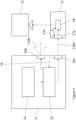
- Figure 1 shows an example display system comprising a host computing device [11], a display control device [12], and a display device [13].
- the host device [11] includes, among other components, an application [14], for example running on a graphics processing unit, which generates display data and a compression engine [15] which applies compression algorithms to reduce the volume of data prior to transmission.
- the application [14] is connected to the compression engine [15] in order to pass generated display data to it.
- the compression engine [15] is in turn connected to a wireless transmitter [16a] of the host device [11]. This maintains a wireless connection [110a] over a wireless spatially selective connection to a corresponding wireless receiver [17a] on the display control device [12] and uses the connection [110a] to transmit the compressed display data to the display control device [12].
- the wireless spatially selective connection may, for example, be a wireless line-of-sight connection, which may in the millimetre wavelength spectrum (10-100 GHz), such as in the 60 GHz wavelength band, or may be another suitable radio wavelength band or may be an optical connection, whether using visible or non-visible light.
- Such a wireless spatially selective connection may be a connection complying with IEEE standards known as 802.11ad or 802.11aj or 802.11ay, which uses frequencies in the millimetre range.
- IEEE 802.11ad microwave Wi-Fi connection has a range that is measured in a few metres so that it can be used for very short range (across a room) high volume data transfers such as HD video transfers.
- the scheme is sometimes known by the name WiGig after the Wireless Gigabit Alliance that endorses it.
- the display control device [12] may be a docking station, set-top box or similar separate display controller, or alternatively it may be co-located with the display device [13] - i.e. sharing the same casing - for example as part of a head-mounted display such as a virtual-reality headset. It includes the aforementioned wireless receiver [17a], connected to a decompression engine [18] which applies algorithms to the received compressed display data in order to re-create at least an approximation of the original data and transmits the decompressed display data to the display device [13] for display.
- display control device [12] There may also be other components included in the display control device [12], such as memory and engines for converting the display data from a general-purpose format to a display-specific format, but these are known and are not shown here.
- the compression engine [15] and the wireless transmitter [16a] in the host device [11] may only be connected by a single connection which carries data.
- a second connection [19] may also be used to carry signals from the wireless transmitter [17a] to the compression engine [15] indicating, for example, the level of bandwidth immediately available in the connection [1 10a] or that an interruption is to take place.
- This connection [19] is shown in Figure 1 by a dashed line from the wireless transmitter [16a] to the compression engine [15].
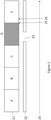
- Figure 2 shows a stream of data sent over the wireless connection [110a].
- frames [21] of display data are represented by individual boxes [21A, B, C, D, E].
- the length of each box [21A, B, C, D, E] from left to right indicates the length of time taken for its transmission
- the height of each box [21A, B, C, D, E] indicates the level of compression used compared to the level of compression used in transmission of the other frames [21A, B, C, D, E], such that a smaller height indicates greater compression.
- the signal carried on the wireless connection [110a] is represented by an interrupted strip [22].
- the interruption [23] represents an interruption in the wireless connection [110a] and/or signal [22], for example due to the wireless transmitter [16] and the wireless receiver [17] having moved relative to each other and a beamforming operation being required to accurately align them again.
- an arrow [24] from the left side of the Figure to the right side represents the passage of time.
- the white frames [21A, B, C, E] represent frames of display data that are transmitted normally as the wireless connection [110a] is not interrupted during transmission. They can then be displayed normally on the display device [13] and will present a smooth image. However, the interruption [23] occurs during the transmission of one frame [21D] - indicated with diagonal hatching - and this frame [21D] may therefore be lost during transmission if the interruption is total. Conventionally, under these circumstances, the previous frame [21C] will be repeatedly shown on the display until a new frame arrives, and this will result in the image 'sticking', disrupting the smooth image.
- the frame [21D] may still be transmitted but it will be delayed and transmission will not be complete until the time indicated by arrow [26], for example.
- it if it is required for display at the time indicated by arrow [25], it will therefore be only partially displayed, leading to the presence of visual artefacts such as tearing in the displayed image. Both cases will be especially noticeable in applications such as virtual reality, in which a detailed moving image is presented and the movement must be both prompt and accurate to avoid causing discomfort to the user.
- Interruptions [23] caused by operations of the wireless transmitter [16a] and wireless receiver [17a], such as beamforming, can be predictable and their timing and length can be extracted from a driver or a wireless controller, if such a secondary connection [19] exists.
- the timings of interruptions may be determined from the history of the wireless connection and transmission characteristics of the link [110].
- techniques for spectral analysis that are good candidates for identifying such patterns, including those of differing periodicity that may result from multiple overlapping interruptions, and for filtering out noise in the bandwidth caused by, for example, movement of the display control device [12] or host device [11].
- Techniques such as fourier or periodicity transforms are two such techniques.
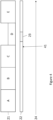
- Figure 3 shows a generic process by which such information can be used, which will be iterated for each of the examples shown in Figures 4-6 .
- the wireless connection [110a] is represented by a narrow strip [22] in the lower part of the Figure, interrupted [23] as previously described.
- the frames [21] produced and transmitted by the host device [11] are also shown as white boxes as in Figure 2 sized according to the compression level used in their transmission and the length of time required to transmit them as previously described.
- the passage of time [24] is indicated by an arrow passing from left to right at the bottom of each Figure.
- the application [14] running on the GPU of the host device [11] generates a frame of display data [21] in the conventional way. It then transmits it to the compression engine [15].
- the wireless transmitter [16a] determines whether it would be appropriate to interrupt the connection [110a]. For example, it might determine that the signal strength has dropped due to movement of the display control device [12] relative to the host device [11]. Alternatively, it might determine that the temperature of the transmitter [16a] has risen and it is necessary to briefly turn off the transmitter [16] for cooling, or it might receive a signal from the wireless receiver [17a] on the display control device [12] requesting an interruption in the connection [110], perhaps for similar reasons.
- Step S32 the compression engine [15] determines whether an interruption is due or has commenced. Examples of methods by which it makes this determination and of its resulting behaviour at Steps S3N3 and S3Y3 are described with reference to Figures 4-6 .
- Figure 4 shows the results of an example system in which the wireless transmitter [16a] sends a signal [19] to the compression engine [15] indicating that it will soon interrupt the connection [110a].
- the wireless transmitter [16a] may send a periodic signal [19] to the compression engine [15] regardless of the determination of whether it will interrupt the connection [110a] but indicating whether it will or won't interrupt the connection. Alternatively, it may only send a signal [19] when it has determined that an interruption [23] is required.
- a flag may be set in the compression engine [15] to indicate whether an interruption [23] is required and due, or the signal [19] may simply serve to instruct the compression engine [15] to apply higher compression to the next frame without any storage of a signal.
- If there is a flag it may be a simple Boolean indication of whether there will be an interruption within a predetermined time period, for example an estimate of the time it will take to transmit a frame, which may then be cleared once that time period has passed. Alternatively, there may also be an indication of how long it will be until the interruption begins, and the compression engine [15] may then take this forecast into account when determining when to apply a higher level of compression to received frames, and for how long.
- Step S32 the compression engine [15] determines whether an interruption is due. This may be by checking a flag as aforementioned, or according to the receipt of a signal [19] from the radio transmitter [16a] or lack of one. The normal case is that an interruption [23] is not required, and in this case the process follows the branch beginning at "No" to Step S3N3.
- the compression engine [15] compresses the received frame to a first compression level. This is the standard compression level used by the system, and may in fact mean that the frame is not compressed at all but is transmitted unchanged. This is the compression level used for frames [21A, B, C, E] as indicated by the fact that they are all the same height in the Figure.
- the wireless transmitter [16a] indicates to the compression engine [15] as aforementioned that an interruption is due.
- the signal [19] from the wireless transmitter [16a] indicates that no data transmission will be possible.
- the compression engine [15] determines that an interruption is due and the process follows the branch beginning at "Yes" to Step S3Y3.
- the compression engine [15] compresses the received frame to a second compression level.
- this second compression level is higher than the first compression level, as indicated by the fact that frame [21D] is smaller than the other frames [21A, B, C, E]. This indicates that it is compressed to a higher degree. This may mean compressing the data where this would not normally occur, or it may mean applying a compression algorithm that will reduce the volume of the data to a greater degree than the standard compression, perhaps at the risk of losing detail and quality in the final image.
- the compression engine [15] then sends the more highly compressed frame [21D] to a second wireless transmitter [16b], which broadcasts the more highly compressed frame [21D] wirelessly [110b].
- the wireless broadcast [110b] would be spatially non-selective, so it would be multi-directional and may, for example, be in the 2.4 or 5 GHz wavelength bands. Such a wireless broadcast may comply with IEEE standards known as 802.11ac or 802.11ax.
- the broadcast [110b] from the wireless transmitter [16b] is received by a wireless transceiver [17b] in the client device, and passed to the decompression engine [18].
- the frame [21D] is processed in the same way as if it had arrived from wireless receiver [17a] but, of course, it will have a higher level of compression, so the de-compression engine [18] will need to know that it had been more highly compressed and will need to apply an appropriate decompression algorithm to the received compressed display data in order to re-create at least an approximation of the original data and transmit the decompressed display data to the display device [13] for display.
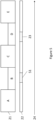
- Figure 5 shows an example in which interruptions [51, 23] are periodic and therefore can be predicted using a historical analysis of the connection [110a/22]. This may be performed by the compression engine [15], which can then use the resulting knowledge of the normal periodicity of the interruptions [51, 23] to determine the time interval before the next interruption will occur.
- the compression engine [15] determines the time that has passed since the last interruption [51] using, for example, an internal timer that is reset to zero every time an interruption occurs. It then determines whether it should expect another interruption soon by comparing the value of the timer to the period of the interruptions as determined by analysis of the historical behaviour of the connection [110a/22]. For example, if previous interruptions have occurred every 5ms and the value of the timer is only 2ms, the compression engine [15] determines that no interruption is due and the process follows the branch beginning at "No" to Step S3N3 at which the compression engine [15] applies a first level of compression to the frame [21A, C, E].
- the compression engine [15] applies a threshold of 4.5ms to allow some additional time, and at Step S32 the timer has a value of 4.7ms - the compression engine [15] determines that it should expect another interruption [23] soon.
- the process then follows the branch beginning at "Yes" to Step S3Y3 and the compression engine [15] applies the second level of compression to the frame [21D] as previously described, and forwards it to the second wireless transmitter [16b] for wireless broadcast [110b] to be received by the wireless receiver [17b].
- Figure 6 shows an example involving a non-periodic interruption [23] in the signal [22].
- This example may also involve a signal [19] from the wireless transmitter [16a] to the compression engine [15] if analysis of the bandwidth of the connection [1 10a] is carried out by the radio transmitter [16a] and a suitable signalling connection [19] is available.
- analysis of the bandwidth of the connection [110a] may be carried out by the compression engine [15], in which case the methods used in these examples may serve as a method for the compression engine [15] to determine that a non-periodic interruption [23] is starting without any signalling from the wireless transmitter [16a].
- the signal [22] is indicated by a strip at the bottom of Figure 6 , but in this example the interruption [23] is preceded [61] and succeeded [62] by periods of low bandwidth in which the level of the available bandwidth is falling and rising respectively.
- the reduction in bandwidth [61] can be detected by the wireless transmitter [16a] due to its intrinsic knowledge of the bandwidth available for transmission or by the compression engine [15] as after a period of low bandwidth compressed data that is ready for transmission but could not be transmitted due to lack of bandwidth will "back up" as the flow buffers between or in the compression engine [15] and/or the wireless transmitter [16a] fill. This lack of space in the buffers can serve as an indication to the compression engine [15] that the level of available bandwidth has fallen.
- the compression engine [15] may use the fall in bandwidth as an indication that an interruption is starting.
- analysis of the history of the connection [110a] may indicate that when the bandwidth falls at a particular rate or below a particular threshold, such behaviour is always followed by an interruption [23]. Accordingly, this knowledge may be used to set a flag indicating that an interruption [23] is starting or it may be used as a signal in itself as previously described.
- the compression engine [15] determines whether the bandwidth has fallen in a manner indicating that an interruption [23] is starting, according to predetermined metrics as previously described. If the bandwidth is at a normal level or within an acceptable boundary, the compression engine [15] determines that an interruption [23] has not started and the process follows the branch beginning at "No" to Step S3N3: the compression engine [15] applies the first level of compression to the received frame [21A, B, C, E].
- Step S32 determines at Step S32 that the bandwidth has fallen in a manner that indicates that an interruption [23] is starting, the process follows the branch beginning at "Yes" to Step S3Y3 and the compression engine [15] applies the second level of compression. This results in the frame [21D] having a smaller volume and therefore increasing the likelihood that it can be transmitted over the low bandwidth wireless broadcast [110b].
- the compression engine [15] could return to the first level of compression as soon as the interruption [23] was known to be over or at another known point after the interruption [23], for example at the beginning of transmission of a subsequent frame [21E] after the interruption [23] as is shown in Figures 4 , 5 , and 6 , since either the frame that was interrupted [21D] was transmitted successfully or it is too late and the deadline for its display has already passed.
- the length of the interruption [23] is not predictable due to the fact that it is not periodic and signals [19] from the wireless transmitter [16a] may not actually indicate the interruption [23] as opposed to being, for example, regular updates on the current bandwidth.
- the compression engine [15] therefore determines that the interruption [23] has ended by an increase [62] in available bandwidth as the connection [110a] returns to its normal state. It may determine this either from an update on the available bandwidth from the wireless transmitter [16a] or by monitoring the level of its output buffers to determine when they begin to empty at an acceptable rate.
- such methods are not limited to the case of an interruption [23] detected due to a reduction in bandwidth [61]; they may be used in any other case.
- the compression engine [15] could begin applying the second level of compression immediately upon receiving a signal [19/41] from the wireless transmitter [16a] that an interruption [23] is due or starting, and in the example shown in Figure 5 the compression engine [15] could return to the first level of compression as soon as analysis of the history of the connection [110] indicates that the interruption [23] should be over.
- the second level of compression may be determined by the amount of bandwidth available on the wireless broadcast. Furthermore, the client device [12] may provide feedback (not shown) to the host device indicating the amount of data received over the wireless broadcast and therefore the throughput can be determined by the host device to select an appropriate second level of compression, that may be used to make sure that the data sent over the wireless broadcast [110b] is received at the highest appropriate quality level.
Landscapes
- Engineering & Computer Science (AREA)
- Signal Processing (AREA)
- Multimedia (AREA)
- Computer Networks & Wireless Communication (AREA)
- Theoretical Computer Science (AREA)
- Computing Systems (AREA)
- Computer Security & Cryptography (AREA)
- Physics & Mathematics (AREA)
- General Physics & Mathematics (AREA)
- Quality & Reliability (AREA)
- Mobile Radio Communication Systems (AREA)
Claims (15)
- Verfahren zum Kompensieren potenzieller Unterbrechungen in einer drahtlosen, räumlich selektiven Verbindung, über die Daten mit einem ersten Komprimierungsniveau von einem Host-Gerät zu einem Client-Gerät übertragen werden, wobei das Verfahren Folgendes beinhaltet:Feststellen (S32), dass eine Unterbrechung der drahtlosen, räumlich selektiven Verbindung, über die Daten mit einem ersten Komprimierungsniveau zu einem Client-Gerät übertragen werden, beginnt oder beginnen soll; gekennzeichnet durchKomprimieren (S3Y3) der Daten mit einem zweiten Komprimierungsniveau, das höher ist als das erste Komprimierungsniveau; undWeiterleiten (S34) der mit dem zweiten Komprimierungsniveau komprimierten Daten zu einer Übertragungskomponente für drahtlosen, räumlich nicht-selektiven Rundfunk, während die Unterbrechung der drahtlosen räumlich selektiven Verbindung auftritt.
- Verfahren nach Anspruch 1, wobei das Feststellen, dass die Unterbrechung beginnen soll, das Analysieren eines historischen Datensatzes früherer Unterbrechungen zum Bestimmen einer Periodizität der früheren Unterbrechungen und das Verwenden der bestimmten Periodizität beinhaltet, um zu berechnen, wann eine nächste Unterbrechung erwartet werden kann, wobei vorzugsweise eine Dauer der potenziellen Unterbrechung auf der Basis der bestimmten Periodizität berechnet wird und das Komprimieren der Daten mit dem zweiten Komprimierungsniveau und das Weiterleiten der mit dem zweiten Niveau komprimierten Daten für den drahtlosen, räumlich nicht-selektiven Rundfunk mindestens für die berechnete Dauer der Unterbrechung durchgeführt wird.
- Verfahren nach einem vorherigen Anspruch, wobei das Feststellen, dass die Unterbrechung beginnt, durch Feststellen erfolgt, dass ein zum Speichern der Daten vor der Übertragung verwendeter Puffer voll ist, was dafür indikativ ist, dass eine Unterbrechung begonnen hat, das vorzugsweise ferner das Bestimmen eines Endes der Unterbrechung durch Feststellen beinhaltet, dass der Puffer Daten mit einer Rate akzeptieren kann, die höher als eine vorbestimmte Schwellenrate ist, und das Komprimieren der Daten mit dem zweiten Komprimierungsniveau und das Weiterleiten der mit dem zweiten Niveau komprimierten Daten für den drahtlosen räumlich nicht-selektiven Rundfunk mindestens bis zum Ende der Unterbrechung durchgeführt wird.
- Verfahren nach Anspruch 1, wobei das Feststellen, dass die Unterbrechung beginnen soll, das Empfangen von Informationen von der Übertragungskomponente beinhaltet, dass eine Unterbrechung erwartet wird, wobei vorzugsweise eine Dauer der potenziellen Unterbrechung durch den Empfang von Informationen von der Übertragungskomponente über eine erwartete Dauer der potenziellen Unterbrechung bestimmt wird und das Komprimieren der Daten mit dem zweiten Komprimierungsniveau und das Weiterleiten der mit dem zweiten Niveau komprimierten Daten für den drahtlosen, räumlich nicht-selektiven Rundfunk mindestens für die Dauer der Unterbrechung durchgeführt wird.
- Verfahren nach Anspruch 1, wobei das Feststellen, dass die Unterbrechung beginnt, das Empfangen von Informationen von der Übertragungskomponente beinhaltet, dass eine Unterbrechung begonnen hat, wobei vorzugsweise ein Ende der Unterbrechung durch den Empfang von Informationen von der Übertragungskomponente bestimmt wird, dass die Unterbrechung beendet ist, und das Komprimieren der Daten mit dem zweiten Komprimierungsniveau und das Weiterleiten der mit dem zweiten Niveau komprimierten Daten für den drahtlosen, räumlich nicht-selektiven Rundfunk mindestens bis zum Ende der Unterbrechung durchgeführt wird.
- Verfahren nach Anspruch 1, wobei die Unterbrechung für eine vorbestimmte Dauer auftritt und das Komprimieren der Daten mit dem zweiten Komprimierungsniveau und das Weiterleiten der mit dem zweiten Niveau komprimierten Daten für den drahtlosen, räumlich nicht-selektiven Rundfunk mindestens bis zu einem erwarteten Ende der Unterbrechung durchgeführt wird.
- Verfahren nach einem vorherigen Anspruch, das ferner das Übertragen der Daten mit dem ersten Komprimierungsniveau über die drahtlose, räumlich selektive Verbindung zu dem Client-Gerät beinhaltet, wenn festgestellt wird, dass die Unterbrechung beendet ist.
- Verfahren nach einem vorherigen Anspruch, wobei die Daten Anzeigedaten umfassen,
wobei die Anzeigedaten vorzugsweise mit dem zweiten Kompressionsniveau mindestens bis zum Ende eines Frames der Anzeigedaten komprimiert wird, die mit dem zweiten Kompressionsniveau komprimiert werden. - Verfahren nach einem vorherigen Anspruch, wobei das erste Kompressionsniveau ein Null-Kompressionsniveau umfasst, bei dem überhaupt keine Kompression stattfindet.
- Verfahren nach einem vorherigen Anspruch, das ferner Folgendes beinhaltet:Durchführen einer oder mehrerer Wartungsoperationen, die die Unterbrechung verursachen; undEinstellen des ersten Komprimierungsniveaus für die Komprimierung der Daten nach Abschluss der Wartungsoperation,wobei die ein oder mehreren Wartungsoperationen vorzugsweise eines oder mehrere umfassen von:Strahlformen;Wechseln des Sende-/Empfangskanals;Eintreten in einen leistungsreduzierten Betriebsmodus;Eintreten in einen Schlummerbetriebsmodus.
- Verfahren nach einem vorherigen Anspruch, wobei die drahtlose, räumlich selektive Verbindung im Millimeterwellenlängenspektrum (10-100 GHz), z.B. im 60-GHz-Wellenlängenband, übertragen wird, und/oder wobei die drahtlose, räumlich selektive Verbindung dem IEEE-802.1-Lad-Standard oder den IEEE-802.1-Laj- oder 802.1-Lay-Standards entspricht.
- Verfahren nach einem der Ansprüche 1 bis 10, wobei die drahtlose räumlich selektive Verbindung eine Sichtlinienverbindung ist, wobei vorzugsweise die drahtlose, räumlich selektive Verbindung eine optische Verbindung ist.
- Verfahren nach einem vorherigen Anspruch, wobei der drahtlose, räumlich nicht-selektive Rundfunk in einem 2,4- oder 5-GHz-Wellenlängenband erfolgt, und/oder wobei der drahtlose, räumlich nicht-selektive Rundfunk dem IEEE 802.1 lac-Standard oder dem IEEE 802.1 lax-Standard entspricht.
- Gerät, das zum Durchführen aller Schritte eines Verfahrens nach einem der vorherigen Ansprüche konfiguriert ist.
- Computerlesbares Medium mit ausführbaren Befehlen, die bei Ausführung in einem Verarbeitungssystem das Verarbeitungssystem zum Durchführen aller Schritte eines Verfahrens nach einem der Ansprüche 1 bis 13 veranlassen.
Applications Claiming Priority (2)
| Application Number | Priority Date | Filing Date | Title |
|---|---|---|---|
| GB1717745.2A GB2568037B (en) | 2017-10-27 | 2017-10-27 | Compensating for interruptions in a wireless connection |
| PCT/GB2018/052960 WO2019081886A1 (en) | 2017-10-27 | 2018-10-15 | COMPENSATION OF INTERRUPTIONS IN A WIRELESS CONNECTION |
Publications (2)
| Publication Number | Publication Date |
|---|---|
| EP3701653A1 EP3701653A1 (de) | 2020-09-02 |
| EP3701653B1 true EP3701653B1 (de) | 2024-08-28 |
Family
ID=60580021
Family Applications (1)
| Application Number | Title | Priority Date | Filing Date |
|---|---|---|---|
| EP18793705.7A Active EP3701653B1 (de) | 2017-10-27 | 2018-10-15 | Kompensation von unterbrechungen in einer drahtlosen verbindung |
Country Status (4)
| Country | Link |
|---|---|
| US (2) | US11375048B2 (de) |
| EP (1) | EP3701653B1 (de) |
| GB (1) | GB2568037B (de) |
| WO (1) | WO2019081886A1 (de) |
Families Citing this family (1)
| Publication number | Priority date | Publication date | Assignee | Title |
|---|---|---|---|---|
| GB2573484B (en) | 2017-10-09 | 2022-08-03 | Displaylink Uk Ltd | Compensating for interruptions in a wireless connection |
Family Cites Families (29)
| Publication number | Priority date | Publication date | Assignee | Title |
|---|---|---|---|---|
| US6292834B1 (en) | 1997-03-14 | 2001-09-18 | Microsoft Corporation | Dynamic bandwidth selection for efficient transmission of multimedia streams in a computer network |
| US6697642B1 (en) * | 2000-07-19 | 2004-02-24 | Texas Instruments Incorporated | Wireless communications apparatus |
| US7002973B2 (en) * | 2000-12-11 | 2006-02-21 | Acme Packet Inc. | System and method for assisting in controlling real-time transport protocol flow through multiple networks via use of a cluster of session routers |
| US20030198184A1 (en) | 2001-08-31 | 2003-10-23 | Joe Huang | Method of dynamically determining real-time multimedia streaming rate over a communications networks |
| US7423990B2 (en) | 2002-06-18 | 2008-09-09 | Vixs Systems Inc. | Dynamically adjusting data rate of wireless communications |
| US6968387B2 (en) | 2003-01-10 | 2005-11-22 | Realnetworks, Inc. | Stochastic adaptive streaming of content |
| US7231559B2 (en) | 2003-12-17 | 2007-06-12 | Sony Corporation | Outage predictor for communication link |
| KR100550567B1 (ko) * | 2004-03-22 | 2006-02-10 | 엘지전자 주식회사 | 무선 네트워크망을 통해 통신하는 서버 시스템 및 그동작방법 |
| US8548048B2 (en) * | 2005-10-27 | 2013-10-01 | Qualcomm Incorporated | Video source rate control for video telephony |
| US8467457B2 (en) | 2007-01-16 | 2013-06-18 | Mobixell Networks (Israel) Ltd | System and a method for controlling one or more signal sequences characteristics |
| US8812673B2 (en) | 2007-02-14 | 2014-08-19 | Alcatel Lucent | Content rate control for streaming media servers |
| US7991904B2 (en) | 2007-07-10 | 2011-08-02 | Bytemobile, Inc. | Adaptive bitrate management for streaming media over packet networks |
| GB0808023D0 (en) * | 2008-05-02 | 2008-06-11 | British Telecomm | Graphical data processing |
| US20100121977A1 (en) | 2008-11-10 | 2010-05-13 | Nokia Corporation | Predictive Bit-Rate Modification of Content Delivery in a Wireless Network |
| US20120195356A1 (en) | 2011-01-31 | 2012-08-02 | Apple Inc. | Resource usage control for real time video encoding |
| US8990351B2 (en) | 2011-04-20 | 2015-03-24 | Mobitv, Inc. | Real-time processing capability based quality adaptation |
| US8958461B2 (en) | 2011-08-29 | 2015-02-17 | Qualcomm Incorporated | System and method for improving channel efficiency in a wireless linkl |
| US8724693B2 (en) * | 2012-05-11 | 2014-05-13 | Oracle International Corporation | Mechanism for automatic network data compression on a network connection |
| US9516563B2 (en) | 2013-01-21 | 2016-12-06 | Intel Corporation | Apparatus, system and method of handover of a beamformed link |
| US9621604B2 (en) | 2013-09-11 | 2017-04-11 | Cisco Technology, Inc. | Statistical remultiplexing of ABR streams |
| US9412332B2 (en) * | 2013-12-20 | 2016-08-09 | Blackberry Limited | Method for wirelessly transmitting content from a source device to a sink device |
| US10091725B2 (en) * | 2014-07-11 | 2018-10-02 | Apple Inc. | Outage delay indication and exploitation |
| US10004035B2 (en) * | 2014-10-13 | 2018-06-19 | Mediatek Inc. | Method of managing data transmission for wireless system |
| US9432556B2 (en) * | 2015-01-05 | 2016-08-30 | Qualcomm Incorporated | Devices and methods for facilitating frame dropping in remote display applications |
| JP6468846B2 (ja) * | 2015-01-07 | 2019-02-13 | ルネサスエレクトロニクス株式会社 | 画像符号化復号システムおよびその診断方法 |
| US10575310B2 (en) | 2016-03-22 | 2020-02-25 | Netgear, Inc. | Wireless communication in an environment with electronic interference |
| US10523895B2 (en) * | 2016-09-26 | 2019-12-31 | Samsung Display Co., Ltd. | System and method for electronic data communication |
| GB2573484B (en) | 2017-10-09 | 2022-08-03 | Displaylink Uk Ltd | Compensating for interruptions in a wireless connection |
| US10693575B2 (en) | 2018-08-31 | 2020-06-23 | At&T Intellectual Property I, L.P. | System and method for throughput prediction for cellular networks |
-
2017
- 2017-10-27 GB GB1717745.2A patent/GB2568037B/en active Active
-
2018
- 2018-10-15 WO PCT/GB2018/052960 patent/WO2019081886A1/en not_active Ceased
- 2018-10-15 US US16/758,940 patent/US11375048B2/en active Active
- 2018-10-15 EP EP18793705.7A patent/EP3701653B1/de active Active
-
2022
- 2022-05-18 US US17/747,908 patent/US12126701B2/en active Active
Also Published As
| Publication number | Publication date |
|---|---|
| US20220279054A1 (en) | 2022-09-01 |
| WO2019081886A1 (en) | 2019-05-02 |
| US20210185151A1 (en) | 2021-06-17 |
| US11375048B2 (en) | 2022-06-28 |
| GB2568037A (en) | 2019-05-08 |
| GB201717745D0 (en) | 2017-12-13 |
| EP3701653A1 (de) | 2020-09-02 |
| US12126701B2 (en) | 2024-10-22 |
| GB2568037B (en) | 2022-08-03 |
Similar Documents
| Publication | Publication Date | Title |
|---|---|---|
| EP3780610B1 (de) | Verfahren, gerät und vorrichtung zur coderatensteuerung in der videocodierung und speichermedium | |
| EP3648105B1 (de) | Verfahren und system zur anpassung der tonqualität und host-seite und speichermedium | |
| EP1471707B1 (de) | Vorrichtung, Verfahren und Verarbeitungsprogramm zum Empfangen und Wiedergeben von Daten | |
| US20190068473A1 (en) | Adaptive Beam Assessment to Predict Available Link Bandwidth | |
| US10425827B2 (en) | Image communication system, image transmission apparatus, image transmission method, and recording medium | |
| CN102739661B (zh) | 一种基于数据统计的网络音频同步输出的方法及系统 | |
| EP2661680B1 (de) | Steuerung und optimierung von systemlatenz | |
| US10931913B2 (en) | Reception apparatus, transmission apparatus, control method, transmission method, and program | |
| US20190341004A1 (en) | Frequency synchronization and phase correction | |
| US12126701B2 (en) | Compensating for interruptions in a wireless connection | |
| KR20130060366A (ko) | 영상 콘텐츠 프레젠테이션 | |
| US8831669B2 (en) | Wireless communication device, mobile phone and wireless communication device control method | |
| EP2958266A1 (de) | Dienstunterbrechungsverarbeitungsverfahren und vorrichtung dafür | |
| US11750861B2 (en) | Compensating for interruptions in a wireless connection | |
| JP5988249B2 (ja) | 無線通信システム及び方法並びにデータ受信装置、方法及びプログラム | |
| CN115499374B (zh) | 一种参数调节方法和相关装置 | |
| US8514858B2 (en) | Packet transmission device, packet transmission method and computer program product stored on non-transitory computer-readable medium | |
| US20120009892A1 (en) | Wireless communication system and method for adjusting used depth of buffer unit in wireless communication system | |
| US11483568B2 (en) | Data transmission to mobile devices | |
| EP4331693A1 (de) | Empfangsvorrichtung für bewegliche bilder, übertragungsvorrichtung für bewegliche bilder, übertragungs-/empfangssystem für bewegliche bilder, steuerungsverfahren und programm | |
| US11229082B2 (en) | Controlled interruptions to wireless signalling | |
| JP7067569B2 (ja) | コンテンツ配信装置及びコンテンツ配信方法 | |
| US20240187930A1 (en) | Coordinating upstream and downstream traffic between access points | |
| CN121239890A (zh) | 一种基于双模无线通信的零终端低延迟投屏方法及系统 | |
| JP2011077912A (ja) | 通信制御装置、通信制御方法、及び通信制御プログラム |
Legal Events
| Date | Code | Title | Description |
|---|---|---|---|
| STAA | Information on the status of an ep patent application or granted ep patent |
Free format text: STATUS: UNKNOWN |
|
| STAA | Information on the status of an ep patent application or granted ep patent |
Free format text: STATUS: THE INTERNATIONAL PUBLICATION HAS BEEN MADE |
|
| PUAI | Public reference made under article 153(3) epc to a published international application that has entered the european phase |
Free format text: ORIGINAL CODE: 0009012 |
|
| STAA | Information on the status of an ep patent application or granted ep patent |
Free format text: STATUS: REQUEST FOR EXAMINATION WAS MADE |
|
| 17P | Request for examination filed |
Effective date: 20200422 |
|
| AK | Designated contracting states |
Kind code of ref document: A1 Designated state(s): AL AT BE BG CH CY CZ DE DK EE ES FI FR GB GR HR HU IE IS IT LI LT LU LV MC MK MT NL NO PL PT RO RS SE SI SK SM TR |
|
| AX | Request for extension of the european patent |
Extension state: BA ME |
|
| DAV | Request for validation of the european patent (deleted) | ||
| DAX | Request for extension of the european patent (deleted) | ||
| STAA | Information on the status of an ep patent application or granted ep patent |
Free format text: STATUS: EXAMINATION IS IN PROGRESS |
|
| 17Q | First examination report despatched |
Effective date: 20210218 |
|
| P01 | Opt-out of the competence of the unified patent court (upc) registered |
Effective date: 20230912 |
|
| GRAP | Despatch of communication of intention to grant a patent |
Free format text: ORIGINAL CODE: EPIDOSNIGR1 |
|
| STAA | Information on the status of an ep patent application or granted ep patent |
Free format text: STATUS: GRANT OF PATENT IS INTENDED |
|
| INTG | Intention to grant announced |
Effective date: 20240322 |
|
| GRAS | Grant fee paid |
Free format text: ORIGINAL CODE: EPIDOSNIGR3 |
|
| GRAA | (expected) grant |
Free format text: ORIGINAL CODE: 0009210 |
|
| STAA | Information on the status of an ep patent application or granted ep patent |
Free format text: STATUS: THE PATENT HAS BEEN GRANTED |
|
| RBV | Designated contracting states (corrected) |
Designated state(s): AL AT BE BG CH CY CZ DE DK EE ES FI FR GR HR HU IE IS IT LI LT LU LV MC MK MT NL NO PL PT RO RS SE SI SK SM TR |
|
| AK | Designated contracting states |
Kind code of ref document: B1 Designated state(s): AL AT BE BG CH CY CZ DE DK EE ES FI FR GR HR HU IE IS IT LI LT LU LV MC MK MT NL NO PL PT RO RS SE SI SK SM TR |
|
| REG | Reference to a national code |
Ref country code: CH Ref legal event code: EP |
|
| REG | Reference to a national code |
Ref country code: DE Ref legal event code: R096 Ref document number: 602018073681 Country of ref document: DE |
|
| REG | Reference to a national code |
Ref country code: IE Ref legal event code: FG4D |
|
| REG | Reference to a national code |
Ref country code: LT Ref legal event code: MG9D |
|
| PG25 | Lapsed in a contracting state [announced via postgrant information from national office to epo] |
Ref country code: NO Free format text: LAPSE BECAUSE OF FAILURE TO SUBMIT A TRANSLATION OF THE DESCRIPTION OR TO PAY THE FEE WITHIN THE PRESCRIBED TIME-LIMIT Effective date: 20241128 |
|
| REG | Reference to a national code |
Ref country code: AT Ref legal event code: MK05 Ref document number: 1719111 Country of ref document: AT Kind code of ref document: T Effective date: 20240828 |
|
| PG25 | Lapsed in a contracting state [announced via postgrant information from national office to epo] |
Ref country code: PT Free format text: LAPSE BECAUSE OF FAILURE TO SUBMIT A TRANSLATION OF THE DESCRIPTION OR TO PAY THE FEE WITHIN THE PRESCRIBED TIME-LIMIT Effective date: 20241230 Ref country code: NL Free format text: LAPSE BECAUSE OF FAILURE TO SUBMIT A TRANSLATION OF THE DESCRIPTION OR TO PAY THE FEE WITHIN THE PRESCRIBED TIME-LIMIT Effective date: 20240828 Ref country code: GR Free format text: LAPSE BECAUSE OF FAILURE TO SUBMIT A TRANSLATION OF THE DESCRIPTION OR TO PAY THE FEE WITHIN THE PRESCRIBED TIME-LIMIT Effective date: 20241129 Ref country code: PL Free format text: LAPSE BECAUSE OF FAILURE TO SUBMIT A TRANSLATION OF THE DESCRIPTION OR TO PAY THE FEE WITHIN THE PRESCRIBED TIME-LIMIT Effective date: 20240828 Ref country code: FI Free format text: LAPSE BECAUSE OF FAILURE TO SUBMIT A TRANSLATION OF THE DESCRIPTION OR TO PAY THE FEE WITHIN THE PRESCRIBED TIME-LIMIT Effective date: 20240828 |
|
| PG25 | Lapsed in a contracting state [announced via postgrant information from national office to epo] |
Ref country code: BG Free format text: LAPSE BECAUSE OF FAILURE TO SUBMIT A TRANSLATION OF THE DESCRIPTION OR TO PAY THE FEE WITHIN THE PRESCRIBED TIME-LIMIT Effective date: 20240828 |
|
| PG25 | Lapsed in a contracting state [announced via postgrant information from national office to epo] |
Ref country code: LV Free format text: LAPSE BECAUSE OF FAILURE TO SUBMIT A TRANSLATION OF THE DESCRIPTION OR TO PAY THE FEE WITHIN THE PRESCRIBED TIME-LIMIT Effective date: 20240828 |
|
| REG | Reference to a national code |
Ref country code: NL Ref legal event code: MP Effective date: 20240828 |
|
| PG25 | Lapsed in a contracting state [announced via postgrant information from national office to epo] |
Ref country code: IS Free format text: LAPSE BECAUSE OF FAILURE TO SUBMIT A TRANSLATION OF THE DESCRIPTION OR TO PAY THE FEE WITHIN THE PRESCRIBED TIME-LIMIT Effective date: 20241228 Ref country code: AT Free format text: LAPSE BECAUSE OF FAILURE TO SUBMIT A TRANSLATION OF THE DESCRIPTION OR TO PAY THE FEE WITHIN THE PRESCRIBED TIME-LIMIT Effective date: 20240828 |
|
| PG25 | Lapsed in a contracting state [announced via postgrant information from national office to epo] |
Ref country code: HR Free format text: LAPSE BECAUSE OF FAILURE TO SUBMIT A TRANSLATION OF THE DESCRIPTION OR TO PAY THE FEE WITHIN THE PRESCRIBED TIME-LIMIT Effective date: 20240828 |
|
| PG25 | Lapsed in a contracting state [announced via postgrant information from national office to epo] |
Ref country code: ES Free format text: LAPSE BECAUSE OF FAILURE TO SUBMIT A TRANSLATION OF THE DESCRIPTION OR TO PAY THE FEE WITHIN THE PRESCRIBED TIME-LIMIT Effective date: 20240828 Ref country code: RS Free format text: LAPSE BECAUSE OF FAILURE TO SUBMIT A TRANSLATION OF THE DESCRIPTION OR TO PAY THE FEE WITHIN THE PRESCRIBED TIME-LIMIT Effective date: 20241128 |
|
| PG25 | Lapsed in a contracting state [announced via postgrant information from national office to epo] |
Ref country code: RS Free format text: LAPSE BECAUSE OF FAILURE TO SUBMIT A TRANSLATION OF THE DESCRIPTION OR TO PAY THE FEE WITHIN THE PRESCRIBED TIME-LIMIT Effective date: 20241128 Ref country code: PT Free format text: LAPSE BECAUSE OF FAILURE TO SUBMIT A TRANSLATION OF THE DESCRIPTION OR TO PAY THE FEE WITHIN THE PRESCRIBED TIME-LIMIT Effective date: 20241230 Ref country code: PL Free format text: LAPSE BECAUSE OF FAILURE TO SUBMIT A TRANSLATION OF THE DESCRIPTION OR TO PAY THE FEE WITHIN THE PRESCRIBED TIME-LIMIT Effective date: 20240828 Ref country code: NO Free format text: LAPSE BECAUSE OF FAILURE TO SUBMIT A TRANSLATION OF THE DESCRIPTION OR TO PAY THE FEE WITHIN THE PRESCRIBED TIME-LIMIT Effective date: 20241128 Ref country code: NL Free format text: LAPSE BECAUSE OF FAILURE TO SUBMIT A TRANSLATION OF THE DESCRIPTION OR TO PAY THE FEE WITHIN THE PRESCRIBED TIME-LIMIT Effective date: 20240828 Ref country code: LV Free format text: LAPSE BECAUSE OF FAILURE TO SUBMIT A TRANSLATION OF THE DESCRIPTION OR TO PAY THE FEE WITHIN THE PRESCRIBED TIME-LIMIT Effective date: 20240828 Ref country code: IS Free format text: LAPSE BECAUSE OF FAILURE TO SUBMIT A TRANSLATION OF THE DESCRIPTION OR TO PAY THE FEE WITHIN THE PRESCRIBED TIME-LIMIT Effective date: 20241228 Ref country code: HR Free format text: LAPSE BECAUSE OF FAILURE TO SUBMIT A TRANSLATION OF THE DESCRIPTION OR TO PAY THE FEE WITHIN THE PRESCRIBED TIME-LIMIT Effective date: 20240828 Ref country code: GR Free format text: LAPSE BECAUSE OF FAILURE TO SUBMIT A TRANSLATION OF THE DESCRIPTION OR TO PAY THE FEE WITHIN THE PRESCRIBED TIME-LIMIT Effective date: 20241129 Ref country code: FI Free format text: LAPSE BECAUSE OF FAILURE TO SUBMIT A TRANSLATION OF THE DESCRIPTION OR TO PAY THE FEE WITHIN THE PRESCRIBED TIME-LIMIT Effective date: 20240828 Ref country code: ES Free format text: LAPSE BECAUSE OF FAILURE TO SUBMIT A TRANSLATION OF THE DESCRIPTION OR TO PAY THE FEE WITHIN THE PRESCRIBED TIME-LIMIT Effective date: 20240828 Ref country code: BG Free format text: LAPSE BECAUSE OF FAILURE TO SUBMIT A TRANSLATION OF THE DESCRIPTION OR TO PAY THE FEE WITHIN THE PRESCRIBED TIME-LIMIT Effective date: 20240828 Ref country code: AT Free format text: LAPSE BECAUSE OF FAILURE TO SUBMIT A TRANSLATION OF THE DESCRIPTION OR TO PAY THE FEE WITHIN THE PRESCRIBED TIME-LIMIT Effective date: 20240828 |
|
| PG25 | Lapsed in a contracting state [announced via postgrant information from national office to epo] |
Ref country code: SM Free format text: LAPSE BECAUSE OF FAILURE TO SUBMIT A TRANSLATION OF THE DESCRIPTION OR TO PAY THE FEE WITHIN THE PRESCRIBED TIME-LIMIT Effective date: 20240828 Ref country code: RO Free format text: LAPSE BECAUSE OF FAILURE TO SUBMIT A TRANSLATION OF THE DESCRIPTION OR TO PAY THE FEE WITHIN THE PRESCRIBED TIME-LIMIT Effective date: 20240828 Ref country code: DK Free format text: LAPSE BECAUSE OF FAILURE TO SUBMIT A TRANSLATION OF THE DESCRIPTION OR TO PAY THE FEE WITHIN THE PRESCRIBED TIME-LIMIT Effective date: 20240828 |
|
| PG25 | Lapsed in a contracting state [announced via postgrant information from national office to epo] |
Ref country code: EE Free format text: LAPSE BECAUSE OF FAILURE TO SUBMIT A TRANSLATION OF THE DESCRIPTION OR TO PAY THE FEE WITHIN THE PRESCRIBED TIME-LIMIT Effective date: 20240828 |
|
| PG25 | Lapsed in a contracting state [announced via postgrant information from national office to epo] |
Ref country code: CZ Free format text: LAPSE BECAUSE OF FAILURE TO SUBMIT A TRANSLATION OF THE DESCRIPTION OR TO PAY THE FEE WITHIN THE PRESCRIBED TIME-LIMIT Effective date: 20240828 |
|
| PG25 | Lapsed in a contracting state [announced via postgrant information from national office to epo] |
Ref country code: SK Free format text: LAPSE BECAUSE OF FAILURE TO SUBMIT A TRANSLATION OF THE DESCRIPTION OR TO PAY THE FEE WITHIN THE PRESCRIBED TIME-LIMIT Effective date: 20240828 Ref country code: IT Free format text: LAPSE BECAUSE OF FAILURE TO SUBMIT A TRANSLATION OF THE DESCRIPTION OR TO PAY THE FEE WITHIN THE PRESCRIBED TIME-LIMIT Effective date: 20240828 |
|
| REG | Reference to a national code |
Ref country code: CH Ref legal event code: PL Ref country code: DE Ref legal event code: R097 Ref document number: 602018073681 Country of ref document: DE |
|
| PLBE | No opposition filed within time limit |
Free format text: ORIGINAL CODE: 0009261 |
|
| STAA | Information on the status of an ep patent application or granted ep patent |
Free format text: STATUS: NO OPPOSITION FILED WITHIN TIME LIMIT |
|
| PG25 | Lapsed in a contracting state [announced via postgrant information from national office to epo] |
Ref country code: MC Free format text: LAPSE BECAUSE OF FAILURE TO SUBMIT A TRANSLATION OF THE DESCRIPTION OR TO PAY THE FEE WITHIN THE PRESCRIBED TIME-LIMIT Effective date: 20240828 |
|
| PG25 | Lapsed in a contracting state [announced via postgrant information from national office to epo] |
Ref country code: LU Free format text: LAPSE BECAUSE OF NON-PAYMENT OF DUE FEES Effective date: 20241015 Ref country code: BE Free format text: LAPSE BECAUSE OF NON-PAYMENT OF DUE FEES Effective date: 20241031 |
|
| PG25 | Lapsed in a contracting state [announced via postgrant information from national office to epo] |
Ref country code: CH Free format text: LAPSE BECAUSE OF NON-PAYMENT OF DUE FEES Effective date: 20241031 |
|
| 26N | No opposition filed |
Effective date: 20250530 |
|
| REG | Reference to a national code |
Ref country code: BE Ref legal event code: MM Effective date: 20241031 |
|
| PG25 | Lapsed in a contracting state [announced via postgrant information from national office to epo] |
Ref country code: SE Free format text: LAPSE BECAUSE OF FAILURE TO SUBMIT A TRANSLATION OF THE DESCRIPTION OR TO PAY THE FEE WITHIN THE PRESCRIBED TIME-LIMIT Effective date: 20240828 |
|
| PGFP | Annual fee paid to national office [announced via postgrant information from national office to epo] |
Ref country code: FR Payment date: 20250924 Year of fee payment: 8 |
|
| PG25 | Lapsed in a contracting state [announced via postgrant information from national office to epo] |
Ref country code: IE Free format text: LAPSE BECAUSE OF NON-PAYMENT OF DUE FEES Effective date: 20241015 |
|
| PGFP | Annual fee paid to national office [announced via postgrant information from national office to epo] |
Ref country code: DE Payment date: 20250923 Year of fee payment: 8 |
|
| PG25 | Lapsed in a contracting state [announced via postgrant information from national office to epo] |
Ref country code: CY Free format text: LAPSE BECAUSE OF FAILURE TO SUBMIT A TRANSLATION OF THE DESCRIPTION OR TO PAY THE FEE WITHIN THE PRESCRIBED TIME-LIMIT; INVALID AB INITIO Effective date: 20181015 |
|
| PG25 | Lapsed in a contracting state [announced via postgrant information from national office to epo] |
Ref country code: HU Free format text: LAPSE BECAUSE OF FAILURE TO SUBMIT A TRANSLATION OF THE DESCRIPTION OR TO PAY THE FEE WITHIN THE PRESCRIBED TIME-LIMIT; INVALID AB INITIO Effective date: 20181015 |