EP3689370A1 - Anti-gdf15 antibodies - Google Patents
Anti-gdf15 antibodies Download PDFInfo
- Publication number
- EP3689370A1 EP3689370A1 EP20156883.9A EP20156883A EP3689370A1 EP 3689370 A1 EP3689370 A1 EP 3689370A1 EP 20156883 A EP20156883 A EP 20156883A EP 3689370 A1 EP3689370 A1 EP 3689370A1
- Authority
- EP
- European Patent Office
- Prior art keywords
- seq
- hu01g06
- variable region
- chain variable
- acid sequence
- Prior art date
- Legal status (The legal status is an assumption and is not a legal conclusion. Google has not performed a legal analysis and makes no representation as to the accuracy of the status listed.)
- Granted
Links
Images














Classifications
-
- C—CHEMISTRY; METALLURGY
- C07—ORGANIC CHEMISTRY
- C07K—PEPTIDES
- C07K16/00—Immunoglobulins [IG], e.g. monoclonal or polyclonal antibodies
- C07K16/18—Immunoglobulins [IG], e.g. monoclonal or polyclonal antibodies against material from animals or humans
- C07K16/22—Immunoglobulins [IG], e.g. monoclonal or polyclonal antibodies against material from animals or humans against growth factors ; against growth regulators
-
- A—HUMAN NECESSITIES
- A61—MEDICAL OR VETERINARY SCIENCE; HYGIENE
- A61K—PREPARATIONS FOR MEDICAL, DENTAL OR TOILETRY PURPOSES
- A61K39/00—Medicinal preparations containing antigens or antibodies
- A61K39/395—Antibodies; Immunoglobulins; Immune serum, e.g. antilymphocytic serum
- A61K39/39533—Antibodies; Immunoglobulins; Immune serum, e.g. antilymphocytic serum against materials from animals
- A61K39/3955—Antibodies; Immunoglobulins; Immune serum, e.g. antilymphocytic serum against materials from animals against proteinaceous materials, e.g. enzymes, hormones, lymphokines
-
- A—HUMAN NECESSITIES
- A61—MEDICAL OR VETERINARY SCIENCE; HYGIENE
- A61K—PREPARATIONS FOR MEDICAL, DENTAL OR TOILETRY PURPOSES
- A61K45/00—Medicinal preparations containing active ingredients not provided for in groups A61K31/00 - A61K41/00
- A61K45/06—Mixtures of active ingredients without chemical characterisation, e.g. antiphlogistics and cardiaca
-
- A—HUMAN NECESSITIES
- A61—MEDICAL OR VETERINARY SCIENCE; HYGIENE
- A61P—SPECIFIC THERAPEUTIC ACTIVITY OF CHEMICAL COMPOUNDS OR MEDICINAL PREPARATIONS
- A61P3/00—Drugs for disorders of the metabolism
- A61P3/02—Nutrients, e.g. vitamins, minerals
-
- A—HUMAN NECESSITIES
- A61—MEDICAL OR VETERINARY SCIENCE; HYGIENE
- A61K—PREPARATIONS FOR MEDICAL, DENTAL OR TOILETRY PURPOSES
- A61K39/00—Medicinal preparations containing antigens or antibodies
- A61K2039/505—Medicinal preparations containing antigens or antibodies comprising antibodies
-
- A—HUMAN NECESSITIES
- A61—MEDICAL OR VETERINARY SCIENCE; HYGIENE
- A61P—SPECIFIC THERAPEUTIC ACTIVITY OF CHEMICAL COMPOUNDS OR MEDICINAL PREPARATIONS
- A61P35/00—Antineoplastic agents
-
- C—CHEMISTRY; METALLURGY
- C07—ORGANIC CHEMISTRY
- C07K—PEPTIDES
- C07K2317/00—Immunoglobulins specific features
- C07K2317/20—Immunoglobulins specific features characterized by taxonomic origin
- C07K2317/24—Immunoglobulins specific features characterized by taxonomic origin containing regions, domains or residues from different species, e.g. chimeric, humanized or veneered
-
- C—CHEMISTRY; METALLURGY
- C07—ORGANIC CHEMISTRY
- C07K—PEPTIDES
- C07K2317/00—Immunoglobulins specific features
- C07K2317/70—Immunoglobulins specific features characterized by effect upon binding to a cell or to an antigen
- C07K2317/76—Antagonist effect on antigen, e.g. neutralization or inhibition of binding
-
- C—CHEMISTRY; METALLURGY
- C07—ORGANIC CHEMISTRY
- C07K—PEPTIDES
- C07K2317/00—Immunoglobulins specific features
- C07K2317/90—Immunoglobulins specific features characterized by (pharmaco)kinetic aspects or by stability of the immunoglobulin
- C07K2317/92—Affinity (KD), association rate (Ka), dissociation rate (Kd) or EC50 value
-
- C—CHEMISTRY; METALLURGY
- C07—ORGANIC CHEMISTRY
- C07K—PEPTIDES
- C07K2319/00—Fusion polypeptide
- C07K2319/30—Non-immunoglobulin-derived peptide or protein having an immunoglobulin constant or Fc region, or a fragment thereof, attached thereto
-
- C—CHEMISTRY; METALLURGY
- C12—BIOCHEMISTRY; BEER; SPIRITS; WINE; VINEGAR; MICROBIOLOGY; ENZYMOLOGY; MUTATION OR GENETIC ENGINEERING
- C12N—MICROORGANISMS OR ENZYMES; COMPOSITIONS THEREOF; PROPAGATING, PRESERVING, OR MAINTAINING MICROORGANISMS; MUTATION OR GENETIC ENGINEERING; CULTURE MEDIA
- C12N15/00—Mutation or genetic engineering; DNA or RNA concerning genetic engineering, vectors, e.g. plasmids, or their isolation, preparation or purification; Use of hosts therefor
- C12N15/09—Recombinant DNA-technology
- C12N15/10—Processes for the isolation, preparation or purification of DNA or RNA
-
- C—CHEMISTRY; METALLURGY
- C12—BIOCHEMISTRY; BEER; SPIRITS; WINE; VINEGAR; MICROBIOLOGY; ENZYMOLOGY; MUTATION OR GENETIC ENGINEERING
- C12N—MICROORGANISMS OR ENZYMES; COMPOSITIONS THEREOF; PROPAGATING, PRESERVING, OR MAINTAINING MICROORGANISMS; MUTATION OR GENETIC ENGINEERING; CULTURE MEDIA
- C12N15/00—Mutation or genetic engineering; DNA or RNA concerning genetic engineering, vectors, e.g. plasmids, or their isolation, preparation or purification; Use of hosts therefor
- C12N15/09—Recombinant DNA-technology
- C12N15/63—Introduction of foreign genetic material using vectors; Vectors; Use of hosts therefor; Regulation of expression
-
- C—CHEMISTRY; METALLURGY
- C12—BIOCHEMISTRY; BEER; SPIRITS; WINE; VINEGAR; MICROBIOLOGY; ENZYMOLOGY; MUTATION OR GENETIC ENGINEERING
- C12N—MICROORGANISMS OR ENZYMES; COMPOSITIONS THEREOF; PROPAGATING, PRESERVING, OR MAINTAINING MICROORGANISMS; MUTATION OR GENETIC ENGINEERING; CULTURE MEDIA
- C12N5/00—Undifferentiated human, animal or plant cells, e.g. cell lines; Tissues; Cultivation or maintenance thereof; Culture media therefor
- C12N5/10—Cells modified by introduction of foreign genetic material
Definitions
- the field of the invention is molecular biology, immunology, cachexia and cachexia-like disorders, and oncology. More particularly, the field is therapeutic antibodies.
- Involuntary weight loss can be categorized into three primary etiologies that include, cachexia, sarcopenia and starvation.
- Cachexia is a debilitating metabolic syndrome associated with numerous diseases, including cancer, AIDS, chronic heart failure (also known as congestive heart failure), chronic obstructive pulmonary disease (COPD), chronic kidney disease, tuberculosis, sepsis and other forms of systemic inflammation.
- Cachexia varies in its manifestations, but generally involves involuntary loss of skeletal muscle mass and some form of underlying illness ( Evans et al. (2008) CLIN. NUTR. 27:793-799 ).
- Cachexia is a wasting disorder involving involuntary weight loss and may be associated with systemic inflammation and/or an acute inflammatory response. Thomas (2007) CLIN. NUTRITION 26:389-399 . Loss of fat mass as well as fat-free mass, such as muscle mass, often is a prominent clinical feature of cachexia. In many but not all cases, cachexia progresses through stages that have been designated precachexia, cachexia and refractory cachexia ( Fearon et al. (2011) LANCET ONC. 12:489-495 ).
- GDF15 also known as MIC-1, PLAB, PDF and NAG-1
- MIC-1 MIC-1
- PLAB MIC-1
- NAG-1 a member of the TGF- ⁇ superfamily
- Monoclonal antibodies against GDF15 have been recognized as potential anti-cachexia therapeutic agents. See, e.g., U.S. Patent No. 8,192,735 .
- Sarcopenia is a clinical condition related to cachexia that is characterized by loss of skeletal muscle mass and muscle strength. The decrease in muscle mass can lead to functional impairment, with loss of strength, increased likelihood of falls, and loss of autonomy. Respiratory function may also be impaired with a reduced vital capacity. During metabolic stress, muscle protein is rapidly mobilized in order to provide the immune system, liver and gut with amino acids, particularly glutamine. Sarcopenia often is a disease of the elderly; however, its development may also be associated with muscle disuse and malnutrition, and may coincide with cachexia. Sarcopenia can be diagnosed based upon functional observations such as low muscle weight and low gait speed. See, e.g., Muscaritoli et al. (2010) CLIN. NUTRITION 29:154-159 .
- Starvation typically results in a loss of body fat and non-fat mass due to inadequate diet and/or nutritional uptake (Thomas (2007) supra ). The effects of starvation often are reversed by improving diet and nutritional, for example, protein, uptake.
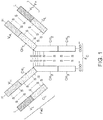
- Naturally occurring antibodies are multimeric proteins that contain four polypeptide chains ( FIG. 1 ). Two of the polypeptide chains are called heavy chains (H chains), and two of the polypeptide chains are called light chains (L chains).
- the immunoglobulin heavy and light chains are connected by an interchain disulfide bond.
- the immunoglobulin heavy chains are connected by interchain disulfide bonds.
- a light chain consists of one variable region (V L in FIG. 1 ) and one constant region (C L in FIG. 1 ).
- the heavy chain consists of one variable region (V H in FIG. 1 ) and at least three constant regions (C H1 , C H2 and C H3 in FIG. 1 ). The variable regions determine the specificity of the antibody.
- Each variable region comprises three hypervariable regions also known as complementarity determining regions (CDRs) flanked by four relatively conserved framework regions (FRs).
- CDRs complementarity determining regions
- FRs relatively conserved framework regions
- the three CDRs referred to as CDR 1 , CDR 2 , and CDR 3 , contribute to the antibody binding specificity.
- Naturally occurring antibodies have been used as starting material for engineered antibodies, such as chimeric antibodies and humanized antibodies.
- the invention is based, in part, upon the discovery of a family of antibodies that specifically bind human GDF15 (hGDF15).
- the antibodies contain hGDF15 binding sites based on the CDRs of the antibodies.
- the antibodies can be used as therapeutic agents.
- the antibodies are engineered, e.g., humanized, to reduce or eliminate an immune response when administered to a human patient.
- the disclosed antibodies prevent or inhibit the activity of ( i.e ., neutralize) hGDF15.
- the antibodies can inhibit the loss of muscle mass, for example, the loss of muscle mass associated with an underlying disease.
- the underlying disease may be selected from the group consisting of cancer, chronic heart failure, chronic kidney disease, COPD, AIDS, multiple sclerosis, rheumatoid arthritis, sepsis, and tuberculosis.
- the loss of muscle mass may be accompanied by a loss of fat mass.
- the disclosed antibodies can also be used to inhibit involuntary weight loss in a mammal.
- the disclosed antibodies may also be used to inhibit the loss of organ mass. Further, a method of treating cachexia and/or sarcopenia in a mammal comprising administering an effective amount of one of at least one of the disclosed antibodies to a mammal in need thereof is disclosed.
- Also disclosed is a method for establishing a steady-state level of mature recombinant human GDF15 (rhGDF15) in plasma or serum in a mammal comprising administering a rhGDF15-immunoglobulin Fc (Fc-rhGDF15) fusion protein to the mammal.
- the Fc-rhGDF15 can be a mouse Fc mature recombinant human GDF15 (mFc-rhGDF15).
- the mammal is a rodent, e.g., a mouse.
- a method of treating obesity in a mammal comprising administering a therapeutically effective amount of Fc-rhGDF15, e.g., a human Fc mature recombinant human GDF15 (hFc-rhGDF15), to the mammal in need thereof, is disclosed.
- a therapeutically effective amount of Fc-rhGDF15 e.g., a human Fc mature recombinant human GDF15 (hFc-rhGDF15)
- hFc-rhGDF15 human Fc mature recombinant human GDF15
- Pharmaceutical compositions comprising an Fc-rhGDF15 fusion protein and a pharmaceutically acceptable carrier are also disclosed.
- antibody 01G06, 03G05, 04F08, 06C11, 08G01, 14F11, or 17B11 means antibody 01G06, 03G05, 04F08, 06C11, 08G01, 14F11, or 17B11, or humanized variants thereof.
- the anti-GDF 15 antibodies disclosed herein are based on the antigen binding sites of certain monoclonal antibodies that have been selected on the basis of binding and neutralization of human GDF15 (hGDF15).
- the antibodies contain immunoglobulin variable region CDR sequences that define a binding site for hGDF15.
- the antibodies are useful for treating cachexia and/or sarcopenia.
- the antibodies can be engineered to minimize or eliminate an immune response when administered to a human patient.
- Cachexia means a metabolic syndrome associated with underlying disease and characterized by involuntary loss of muscle mass. Cachexia is often accompanied by involuntary weight loss, loss of fat mass, anorexia, inflammation, insulin resistance, fatigue, weakness, significant loss of appetite, and/or increased muscle protein breakdown. Cachexia is distinct from starvation, age-related loss of muscle mass, malabsorption, and hyperthyroidism. Underlying diseases associated with cachexia include cancer, chronic heart failure, chronic kidney disease, COPD, AIDS, multiple sclerosis, rheumatoid arthritis, sepsis, and tuberculosis.
- sarcopenia is understood to be a condition characterized primarily by loss of skeletal muscle mass and muscle strength. Sarcopenia is frequently associated with aging. See, Ruegg and Glass (2011) ANNUAL REV. PHARMACOL. TOXICOL. 51:373-395 .
- sarcopenia can be identified in a subject if a value of the appendicular skeletal muscle mass of a subject divided by the height of the subject in meters is more than two standard deviations below the young normal mean. (Thomas (2007) supra; see also Baumgartner et al. (1999) MECH. AGEING DEV. 147:755-763 ).
- antibody means an intact antibody (e.g., an intact monoclonal antibody) or antigen-binding fragment of an antibody, including an intact antibody or antigen-binding fragment that has been modified or engineered, or that is a human antibody.
- antibodies that have been modified or engineered are chimeric antibodies, humanized antibodies, and multispecific antibodies (e.g., bispecific antibodies).
- antigen-binding fragments include Fab, Fab', F(ab') 2 , Fv, single chain antibodies (e.g., scFv), minibodies and diabodies.
- the antibodies disclosed herein comprise: (a) an immunoglobulin heavy chain variable region comprising the structure CDR H1 -CDR H2 -CDR H3 and (b) an immunoglobulin light chain variable region comprising the structure CDR L1 -CDR L2 -CDR L3 , wherein the heavy chain variable region and the light chain variable region together define a single binding site for binding hGDF15 protein.
- the antibody comprises: (a) an immunoglobulin heavy chain variable region comprising the structure CDR H1 -CDR H2 -CDR H3 and (b) an immunoglobulin light chain variable region, wherein the heavy chain variable region and the light chain variable region together define a single binding site for binding hGDF15.
- a CDR H1 comprises an amino acid sequence selected from the group consisting of SEQ ID NO:1 (01G06, 08G01, Ch01G06 Chimeric, Hu01G06 IGHV1-18, Hu01G06 IGHV1-69, Sh01G06 IGHV1-18 M69L, Sh01G06 IGHV1-18 M69L K64Q G44S, Sh01G06 IGHV1-18 M69L K64Q, Sh01G06 IGHV1-69 T30S I69L, Sh01G06 IGHV1-69 T30S K64Q I69L, Hu01G06 IGHV1-18 F1, Hu01G06 IGHV1-18 F2, Hu01G06 IGHV1-69 F1, Hu01G06 IGHV1-69 F2), SEQ ID NO:2 (03G05), SEQ ID NO:3 (04F08), SEQ ID NO:4 (06C11, Ch06C11 Chimeric, HE LM 06C11 IGHV2-70, Hu06C11 IGHV2-5), SEQ ID NO
- the antibody comprises an immunoglobulin heavy chain variable region comprising a CDR H1 comprising the amino acid sequence of SEQ ID NO:1 (01G06, Ch01G06 Chimeric, Hu01G06 IGHV1-18, Hu01G06 IGHV1-69, Sh01G06 IGHV1-69 T30S I69L, Hu01G06 IGHV1-18 F1, Hu01G06 IGHV1-18 F2, Hu01G06 IGHV1-69 F1, Hu01G06 IGHV1-69 F2), a CDR H2 comprising the amino acid sequence of SEQ ID NO:7 (01G06, Ch01G06 Chimeric, Hu01G06 IGHV1-18, Hu01G06 IGHV1-69, Sh01G06 IGHV1-69 T30S I69L), and a CDR H3 comprising the amino acid sequence of SEQ ID NO:15 (01G06, Ch01G06 Chimeric, Hu01G06 IGHV1-18, Hu01G06 IGHV1-69, Sh01G06 I
- the antibody comprises an immunoglobulin heavy chain variable region comprising a CDR H1 comprising the amino acid sequence of SEQ ID NO:2 (03G05), a CDR H2 comprising the amino acid sequence of SEQ ID NO:8 (03G05), and a CDR H3 comprising the amino acid sequence of SEQ ID NO:16 (03G05).
- the antibody comprises an immunoglobulin heavy chain variable region comprising a CDR H1 comprising the amino acid sequence of SEQ ID NO:3 (04F08), a CDR H2 comprising the amino acid sequence of SEQ ID NO:9 (04F08), and a CDR H3 comprising the amino acid sequence of SEQ ID NO:17 (04F08).
- the antibody comprises an immunoglobulin heavy chain variable region comprising a CDR H1 comprising the amino acid sequence of SEQ ID NO:4 (06C11, Ch06C11 Chimeric, Hu06C11 IGHV2-5), a CDR H2 comprising the amino acid sequence of SEQ ID NO:9 (06C11, Ch06C11 Chimeric, Hu06C11 IGHV2-5), and a CDR H3 comprising the amino acid sequence of SEQ ID NO:18 (06C11, Ch06C11 Chimeric, Hu06C11 IGHV2-5).
- the antibody comprises an immunoglobulin heavy chain variable region comprising a CDR H1 comprising the amino acid sequence of SEQ ID NO:1 (08G01), a CDR H2 comprising the amino acid sequence of SEQ ID NO:10 (08G01), and a CDR H3 comprising the amino acid sequence of SEQ ID NO:15 (08G01).
- the antibody comprises an immunoglobulin heavy chain variable region comprising a CDR H1 comprising the amino acid sequence of SEQ ID NO:5 (14F11, Ch14F11 Chimeric, Sh14F11 IGHV2-5, Sh14F11 IGHV2-70), a CDR H2 comprising the amino acid sequence of SEQ ID NO:11 (14F11, Ch14F11 Chimeric, Sh14F11 IGHV2-5, Sh14F11 IGHV2-70), and a CDR H3 comprising the amino acid sequence of SEQ ID NO:19 (14F11, Ch14F11 Chimeric, Sh14F11 IGHV2-5, Sh14F11 IGHV2-70).
- the antibody comprises an immunoglobulin heavy chain variable region comprising a CDR H1 comprising the amino acid sequence of SEQ ID NO:6 (17B11), a CDR H2 comprising the amino acid sequence of SEQ ID NO:12 (17B11), and a CDR H3 comprising the amino acid sequence of SEQ ID NO:20 (17B11).
- the antibody comprises an immunoglobulin heavy chain variable region comprising a CDR H1 comprising the amino acid sequence of SEQ ID NO:1 (Sh01G06 IGHV1-18 M69L K64Q G44S, Sh01G06 IGHV1-18 M69L K64Q, Sh01G06 IGHV1-69 T30S K64Q I69L, Hu01G06 IGHV1-18 F1, Hu01G06 IGHV1-18 F2, Hu01G06 IGHV1-69 F1, Hu01G06 IGHV1-69 F2), a CDR H2 comprising the amino acid sequence of SEQ ID NO:13 (Sh01G06 IGHV1-18 M69L K64Q G44S, Sh01G06 IGHV1-18 M69L K64Q, Sh01G06 IGHV1-69 T30S K64Q I69L), and a CDR H3 comprising the amino acid sequence of SEQ ID NO:15 (Sh01G06 IGHV1-18 M69L K64Q G44S, Sh01G
- the antibody comprises an immunoglobulin heavy chain variable region comprising a CDR H1 comprising the amino acid sequence of SEQ ID NO:1 (Sh01G06 IGHV1-18 M69L K64Q G44S, Sh01G06 IGHV1-18 M69L K64Q, Sh01G06 IGHV1-69 T30S K64Q I69L, Hu01G06 IGHV1-18 F1, Hu01G06 IGHV1-18 F2, Hu01G06 IGHV1-69 F1, Hu01G06 IGHV1-69 F2), a CDR H2 comprising the amino acid sequence of SEQ ID NO:236 (Hu01G06 IGHV1-18 F1), and a CDR H3 comprising the amino acid sequence of SEQ ID NO:15 (Sh01G06 IGHV1-18 M69L K64Q G44S, Sh01G06 IGHV1-18 M69L K64Q, Sh01G06 IGHV1-69 T30S K64Q I69L, Hu01G06 IGHV1-18
- the antibody comprises an immunoglobulin heavy chain variable region comprising a CDR H1 comprising the amino acid sequence of SEQ ID NO:1 (Sh01G06 IGHV1-18 M69L K64Q G44S, Sh01G06 IGHV1-18 M69L K64Q, Sh01G06 IGHV1-69 T30S K64Q I69L, Hu01G06 IGHV1-18 F1, Hu01G06 IGHV1-18 F2, Hu01G06 IGHV1-69 F1, Hu01G06 IGHV1-69 F2), a CDR H2 comprising the amino acid sequence of SEQ ID NO:237 (Hu01G06 IGHV1-18 F2), and a CDR H3 comprising the amino acid sequence of SEQ ID NO:15 (Sh01G06 IGHV1-18 M69L K64Q G44S, Sh01G06 IGHV1-18 M69L K64Q, Sh01G06 IGHV1-69 T30S K64Q I69L, Hu01G06 IGHV1-18
- the antibody comprises an immunoglobulin heavy chain variable region comprising a CDR H1 comprising the amino acid sequence of SEQ ID NO:1 (Sh01G06 IGHV1-18 M69L K64Q G44S, Sh01G06 IGHV1-18 M69L K64Q, Sh01G06 IGHV1-69 T30S K64Q I69L, Hu01G06 IGHV1-18 F1, Hu01G06 IGHV1-18 F2, Hu01G06 IGHV1-69 F1, Hu01G06 IGHV1-69 F2), a CDR H2 comprising the amino acid sequence of SEQ ID NO:238 (Hu01G06 IGHV1-69 F1), and a CDR H3 comprising the amino acid sequence of SEQ ID NO:15 (Sh01G06 IGHV1-18 M69L K64Q G44S, Sh01G06 IGHV1-18 M69L K64Q, Sh01G06 IGHV1-69 T30S K64Q I69L, Hu01G06 IGHV1-18
- the antibody comprises an immunoglobulin heavy chain variable region comprising a CDR H1 comprising the amino acid sequence of SEQ ID NO:1 (Sh01G06 IGHV1-18 M69L K64Q G44S, Sh01G06 IGHV1-18 M69L K64Q, Sh01G06 IGHV1-69 T30S K64Q I69L, Hu01G06 IGHV1-18 F1, Hu01G06 IGHV1-18 F2, Hu01G06 IGHV1-69 F1, Hu01G06 IGHV1-69 F2), a CDR H2 comprising the amino acid sequence of SEQ ID NO:239 (Hu01G06 IGHV1-69 F2), and a CDR H3 comprising the amino acid sequence of SEQ ID NO:15 (Sh01G06 IGHV1-18 M69L K64Q G44S, Sh01G06 IGHV1-18 M69L K64Q, Sh01G06 IGHV1-69 T30S K64Q I69L, Hu01G06 IGHV1-18
- the antibody comprises an immunoglobulin heavy chain variable region comprising a CDR H1 comprising the amino acid sequence of SEQ ID NO:4 (HE LM 06C11 IGHV2-70), a CDR H2 comprising the amino acid sequence of SEQ ID NO:14 (HE LM 06C11 IGHV2-70), and a CDR H3 comprising the amino acid sequence of SEQ ID NO:18 (HE LM 06C11 IGHV2-70).
- the CDR H1 , CDR H2 , and CDR H3 sequences are interposed between fully human or humanized immunoglobulin FR sequences.
- the antibody comprises (a) an immunoglobulin light chain variable region comprising the structure CDR L1 -CDR L2 -CDR L3 , and (b) an immunoglobulin heavy chain variable region, wherein the immunoglobulin light chain variable region and the immunoglobulin heavy chain variable region together define a single binding site for binding hGDF15.
- a CDR L1 comprises an amino acid sequence selected from the group consisting of SEQ ID NO:21 (01G06, Ch01G06 Chimeric, Hu01G06 IGKV1-39, Hu01G06 IGKV1-39 S43A V48I, Hu01G06 IGKV1-39 V48I, Hu01G06 IGKV1-39 F1, Hu01G06 IGKV1-39 F2), SEQ ID NO:22 (03G05), SEQ ID NO:23 (04F08, 06C11, Ch06C11 Chimeric, Sh06C11 IGKV1-16, 14F11, Ch14F11 Chimeric, Hu14F11 IGKV1-16), SEQ ID NO:24 (08G01), and SEQ ID NO:25 (17B11);
- a CDR L2 comprises an amino acid sequence selected from the group consisting of SEQ ID NO:26 (01G06, Ch01G06 Chimeric, Hu01G06 IGKV1-39, Hu01G06 IGKV1-39 S43A V48
- the antibody comprises an immunoglobulin light chain variable region comprising a CDR L1 comprising the amino acid sequence of SEQ ID NO:21 (01G06, Ch01G06 Chimeric, Hu01G06 IGKV1-39, Hu01G06 IGKV1-39 S43A V48I, Hu01G06 IGKV1-39 V48I, Hu01G06 IGKV1-39 F1, Hu01G06 IGKV1-39 F2), a CDR L2 comprising the amino acid sequence of SEQ ID NO:26 (01G06, Ch01G06 Chimeric, Hu01G06 IGKV1-39, Hu01G06 IGKV1-39 S43A V48I, Hu01G06 IGKV1-39 V48I, Hu01G06 IGKV1-39 F1, Hu01G06 IGKV1-39 F2), and a CDR L3 comprising the amino acid sequence of SEQ ID NO:32 (01G06, Ch01G06 Chimeric, Hu01G06 IGKV
- the antibody comprises an immunoglobulin light chain variable region comprising a CDR L1 comprising the amino acid sequence of SEQ ID NO:21 (01G06, Ch01G06 Chimeric, Hu01G06 IGKV1-39, Hu01G06 IGKV1-39 S43A V48I, Hu01G06 IGKV1-39 V48I, Hu01G06 IGKV1-39 F1, Hu01G06 IGKV1-39 F2), a CDR L2 comprising the amino acid sequence of SEQ ID NO:26 (01G06, Ch01G06 Chimeric, Hu01G06 IGKV1-39, Hu01G06 IGKV1-39 S43A V48I, Hu01G06 IGKV1-39 V48I, Hu01G06 IGKV1-39 F1, Hu01G06 IGKV1-39 F2), and a CDR L3 comprising the amino acid sequence of SEQ ID NO:244 (Hu01G06 IGKV1-39 F2).
- a CDR L1 comprising
- the antibody comprises an immunoglobulin light chain variable region comprising a CDR L1 comprising the amino acid sequence of SEQ ID NO:22 (03G05), a CDR L2 comprising the amino acid sequence of SEQ ID NO:27 (03G05), and a CDR L3 comprising the amino acid sequence of SEQ ID NO:33 (03G05).
- the antibody comprises an immunoglobulin light chain variable region comprising a CDR L1 comprising the amino acid sequence of SEQ ID NO:23 (04F08), a CDR L2 comprising the amino acid sequence of SEQ ID NO:28 (04F08), and a CDR L3 comprising the amino acid sequence of SEQ ID NO:34 (04F08).
- the antibody comprises an immunoglobulin light chain variable region comprising a CDR L1 comprising the amino acid sequence of SEQ ID NO:23 (06C11, Ch06C11 Chimeric, Sh06C11 IGKV1-16), a CDR L2 comprising the amino acid sequence of SEQ ID NO:28 (06C11, Ch06C11 Chimeric, Sh06C11 IGKV1-16), and a CDR L3 comprising the amino acid sequence of SEQ ID NO:35 (06C11, Ch06C11 Chimeric, Sh06C11 IGKV1-16).
- the antibody comprises an immunoglobulin light chain variable region comprising a CDR L1 comprising the amino acid sequence of SEQ ID NO:24 (08G01), a CDR L2 comprising the amino acid sequence of SEQ ID NO:29 (08G01), and a CDR L3 comprising the amino acid sequence of SEQ ID NO:32 (08G01).
- the antibody comprises an immunoglobulin light chain variable region comprising a CDR L1 comprising the amino acid sequence of SEQ ID NO:23 (14F11, Ch14F11 Chimeric, Hu14F11 IGKV1-16), a CDR L2 comprising the amino acid sequence of SEQ ID NO:30 (14F11, Ch14F11 Chimeric, Hu14F11 IGKV1-16), and a CDR L3 comprising the amino acid sequence of SEQ ID NO:36 (14F11, Ch14F11 Chimeric, Hu14F11 IGKV1-16).
- the antibody comprises an immunoglobulin light chain variable region comprising a CDR L1 comprising the amino acid sequence of SEQ ID NO:25 (17B11), a CDR L2 comprising the amino acid sequence of SEQ ID NO:31 (17B11), and a CDR L3 comprising the amino acid sequence of SEQ ID NO:37 (17B11).
- the CDR L1 , CDR L2 , and CDR L3 sequences are interposed between fully human or humanized immunoglobulin FR sequences.
- the antibody comprises: (a) an immunoglobulin heavy chain variable region comprising the structure CDR H1 -CDR H2 -CDR H3 and (b) an immunoglobulin light chain variable region comprising the structure CDR L1 -CDR L2 -CDR L3 , wherein the heavy chain variable region and the light chain variable region together define a single binding site for binding hGDF15.
- the CDR H1 is an amino acid sequence selected from the group consisting of SEQ ID NO:1 (01G06, 08G01, Ch01G06 Chimeric, Hu01G06 IGHV1-18, Hu01G06 IGHV1-69, Sh01G06 IGHV1-18 M69L, Sh01G06 IGHV1-18 M69L K64Q G44S, Sh01G06 IGHV1-18 M69L K64Q, Sh01G06 IGHV1-69 T30S I69L, Sh01G06 IGHV1-69 T30S K64Q I69L, Hu01G06 IGHV1-18 F1, Hu01G06 IGHV1-18 F2, Hu01G06 IGHV1-69 F1, Hu01G06 IGHV1-69 F2), SEQ ID NO:2 (03G05), SEQ ID NO:3 (04F08), SEQ ID NO:4 (06C11, Ch06C11 Chimeric, HE LM 06C11 IGHV2-70, Hu06C11 IGHV2-5), SEQ ID NO
- the CDR L1 is an amino acid sequence selected from the group consisting of SEQ ID NO:21 (01G06, Ch01G06 Chimeric, Hu01G06 IGKV1-39, Hu01G06 IGKV1-39 S43A V48I, Hu01G06 IGKV1-39 V48I, Hu01G06 IGKV1-39 F1, Hu01G06 IGKV1-39 F2), SEQ ID NO:22 (03G05), SEQ ID NO:23 (04F08, 06C11, Ch06C11 Chimeric, Sh06C11 IGKV1-16, 14F11, Ch14F11 Chimeric, Hu14F11 IGKV1-16), SEQ ID NO:24 (08G01), and SEQ ID NO:25 (17B11);
- the CDR L2 is an amino acid sequence selected from the group consisting of SEQ ID NO:26 (01G06, Ch01G06 Chimeric, Hu01G06 IGKV1-39, Hu01G06 IGKV1-39 S43A V48I
- the antibody comprises an immunoglobulin heavy chain variable region comprising a CDR H1 comprising an amino acid sequence selected from the group consisting of SEQ ID NO:1 and SEQ ID NO:38 (Hu01G06 IGHV1-18 F1), a CDR H2 comprising an amino acid sequence selected from the group consisting of SEQ ID NO:236 and SEQ ID NO:240 (Hu01G06 IGHV1-18 F1), and a CDR H3 comprising the amino acid sequence of SEQ ID NO:15 (Hu01G06 IGHV1-18 F1) ; and an immunoglobulin light chain variable region comprising a CDR L1 comprising the amino acid sequence of SEQ ID NO:21 (Hu01G06 IGKV1-39 F1), a CDR L2 comprising the amino acid sequence of SEQ ID NO:26 (Hu01G06 IGKV1-39 F1), and a CDR L3 comprising the amino acid sequence of SEQ ID NO:32 (Hu01G06 IGKV1-39 F1).
- the antibody comprises an immunoglobulin heavy chain variable region comprising a CDR H1 comprising an amino acid sequence selected from the group consisting of SEQ ID NO:1 and SEQ ID NO:38 (Hu01G06 IGHV1-18 F2), a CDR H2 comprising an amino acid sequence selected from the group consisting of SEQ ID NO:237 and SEQ ID NO:241 (Hu01G06 IGHV1-18 F2), and a CDR H3 comprising the amino acid sequence of SEQ ID NO:15 (Hu01G06 IGHV1-18 F2); and an immunoglobulin light chain variable region comprising a CDR L1 comprising the amino acid sequence of SEQ ID NO:21 (Hu01G06 IGKV1-39 F2), a CDR L2 comprising the amino acid sequence of SEQ ID NO:26 (Hu01G06 IGKV1-39 F2), and a CDR L3 comprising the amino acid sequence of SEQ ID NO:244 (Hu01G06 IGKV1-39 F
- the antibody comprises an immunoglobulin heavy chain variable region comprising a CDR H1 comprising an amino acid sequence selected from the group consisting of SEQ ID NO:1 and SEQ ID NO:234 (Hu01G06 IGHV1-69 F1), a CDR H2 comprising an amino acid sequence selected from the group consisting of SEQ ID NO:238 and SEQ ID NO:241 (Hu01G06 IGHV1-69 F1), and a CDR H3 comprising the amino acid sequence of SEQ ID NO:15 (Hu01G06 IGHV1-69 F1) ; and an immunoglobulin light chain variable region comprising a CDR L1 comprising the amino acid sequence of SEQ ID NO:21 (Hu01G06 IGKV1-39 F1), a CDR L2 comprising the amino acid sequence of SEQ ID NO:26 (Hu01G06 IGKV1-39 F1) , and a CDR L3 comprising the amino acid sequence of SEQ ID NO:32 (Hu01G06 IGKV1-3
- the antibody comprises an immunoglobulin heavy chain variable region comprising a CDR H1 comprising an amino acid sequence selected from the group consisting of SEQ ID NO:1 and SEQ ID NO:234 (Hu01G06 IGHV1-69 F2), a CDR H2 comprising an amino acid sequence selected from the group consisting of SEQ ID NO:239 and SEQ ID NO:240 (Hu01G06 IGHV1-69 F2), and a CDR H3 comprising the amino acid sequence of SEQ ID NO:15 (Hu01G06 IGHV1-69 F2); and an immunoglobulin light chain variable region comprising a CDR L1 comprising the amino acid sequence of SEQ ID NO:21 (Hu01G06 IGKV1-39 F1), a CDR L2 comprising the amino acid sequence of SEQ ID NO:26 (Hu01G06 IGKV1-39 F1), and a CDR L3 comprising the amino acid sequence of SEQ ID NO:32 (Hu01G06 IGKV1-39 F1).
- the antibody comprises an immunoglobulin heavy chain variable region comprising a CDR H1 comprising an amino acid sequence selected from the group consisting of SEQ ID NO:1 and SEQ ID NO:234 (Hu01G06 IGHV1-69 F2), a CDR H2 comprising an amino acid sequence selected from the group consisting of SEQ ID NO:239 and SEQ ID NO:240 (Hu01G06 IGHV1-69 F2), and a CDR H3 comprising the amino acid sequence of SEQ ID NO:15 (Hu01G06 IGHV1-69 F2); and an immunoglobulin light chain variable region comprising a CDR L1 comprising the amino acid sequence of SEQ ID NO:21 (Hu01G06 IGKV1-39 F2), a CDR L2 comprising the amino acid sequence of SEQ ID NO:26 (Hu01G06 IGKV1-39 F2), and a CDR L3 comprising the amino acid sequence of SEQ ID NO:244 (Hu01G06 IGKV1-39 F
- the antibodies disclosed herein comprise an immunoglobulin heavy chain variable region and an immunoglobulin light chain variable region.
- the antibody comprises an immunoglobulin heavy chain variable region selected from the group consisting of SEQ ID NO:40 (01G06, Ch01G06 Chimeric), SEQ ID NO:42 (03G05), SEQ ID NO:44 (04F08), SEQ ID NO:46 (06C11, Ch06C11 Chimeric), SEQ ID NO:48 (08G01), SEQ ID NO:50 (14F11, Ch14F11 Chimeric), SEQ ID NO:52 (17B11), SEQ ID NO:54 (Hu01G06 IGHV1-18) , SEQ ID NO:56 (Hu01G06 IGHV1-69) , SEQ ID NO:58 (Sh01G06 IGHV1-18 M69L), SEQ ID NO:60 (Sh01G06 IGHV1-18 M69L K64Q G44S), SEQ ID NO:62 (Sh01G06 IGHV1-18 M69L K64Q), SEQ ID
- the antibody comprises an immunoglobulin light chain variable region selected from the group consisting of SEQ ID NO:76 (01G06, Ch01G06 Chimeric), SEQ ID NO:78 (03G05), SEQ ID NO:80 (04F08), SEQ ID NO:82 (06C11, Ch06C11 Chimeric), SEQ ID NO:84 (08G01), SEQ ID NO:86 (14F11, Ch14F11 Chimeric), SEQ ID NO:88 (17B11), SEQ ID NO:90 (Hu01G06 IGKV1-39), SEQ ID NO:92 (Hu01G06 IGKV1-39 S43A V48I or Hu01G06 IGKV1-39 F1), SEQ ID NO:94 (Hu01G06 IGKV1-39 V48I), SEQ ID NO:96 (Sh06C11 IGKV1-16), SEQ ID NO:254 (Hu01G06 IGKV1-39 F2), and SEQ ID NO:98 (Hu14F11 IGKV1-16),
- the antibody comprises an immunoglobulin heavy chain variable region selected from the group consisting of SEQ ID NO:40 (01G06, Ch01G06 Chimeric), SEQ ID NO:42 (03G05), SEQ ID NO:44 (04F08), SEQ ID NO:46 (06C11, Ch06C11 Chimeric), SEQ ID NO:48 (08G01), SEQ ID NO:50 (14F11, Ch14F11 Chimeric), SEQ ID NO:52 (17B11), SEQ ID NO:54 (Hu01G06 IGHV1-18), SEQ ID NO:56 (Hu01G06 IGHV1-69), SEQ ID NO:58 (Sh01G06 IGHV1-18 M69L), SEQ ID NO:60 (Sh01G06 IGHV1-18 M69L K64Q G44S), SEQ ID NO:62 (Sh01G06 IGHV1-18 M69L K64Q), SEQ ID NO:64 (Sh01G06 IGHV1-69 T30S I69L), SEQ ID NO:66 (Sh
- the antibody comprises an immunoglobulin heavy chain variable region comprising the amino acid sequence of SEQ ID NO:40 (01G06, Ch01G06 Chimeric), and an immunoglobulin light chain variable region comprising the amino acid sequence of SEQ ID NO:76 (01G06, Ch01G06 Chimeric).
- the antibody comprises an immunoglobulin heavy chain variable region comprising the amino acid sequence of SEQ ID NO:42 (03G05), and an immunoglobulin light chain variable region comprising the amino acid sequence of SEQ ID NO:78 (03G05).
- the antibody comprises an immunoglobulin heavy chain variable region comprising the amino acid sequence of SEQ ID NO:44 (04F08), and an immunoglobulin light chain variable region comprising the amino acid sequence of SEQ ID NO:80 (04F08).
- the antibody comprises an immunoglobulin heavy chain variable region comprising the amino acid sequence of SEQ ID NO:46 (06C11), and an immunoglobulin light chain variable region comprising the amino acid sequence of SEQ ID NO:82 (06C11).
- the antibody comprises an immunoglobulin heavy chain variable region comprising the amino acid sequence of SEQ ID NO:48 (08G01), and an immunoglobulin light chain variable region comprising the amino acid sequence of SEQ ID NO:84 (08G01).
- the antibody comprises an immunoglobulin heavy chain variable region comprising the amino acid sequence of SEQ ID NO:50 (14F11), and an immunoglobulin light chain variable region comprising the amino acid sequence of SEQ ID NO:86 (14F11).
- the antibody comprises an immunoglobulin heavy chain variable region comprising the amino acid sequence of SEQ ID NO:52 (17B11), and an immunoglobulin light chain variable region comprising the amino acid sequence of SEQ ID NO:88 (17B11).
- the antibody comprises an immunoglobulin heavy chain variable region comprising the amino acid sequence of SEQ ID NO:54 (Hu01G06 IGHV1-18), and an immunoglobulin light chain variable region comprising the amino acid sequence of SEQ ID NO:76 (Ch01G06 Chimeric).
- the antibody comprises an immunoglobulin heavy chain variable region comprising the amino acid sequence of SEQ ID NO:56 (Hu01G06 IGHV1-69), and an immunoglobulin light chain variable region comprising the amino acid sequence of SEQ ID NO:76 (Ch01G06 Chimeric).
- the antibody comprises an immunoglobulin heavy chain variable region comprising the amino acid sequence of SEQ ID NO:58 (Sh01G06 IGHV1-18 M69L), and an immunoglobulin light chain variable region comprising the amino acid sequence of SEQ ID NO:76 (Ch01G06 Chimeric).
- the antibody comprises an immunoglobulin heavy chain variable region comprising the amino acid sequence of SEQ ID NO:60 (Sh01G06 IGHV1-18 M69L K64Q G44S), and an immunoglobulin light chain variable region comprising the amino acid sequence of SEQ ID NO:76 (Ch01G06 Chimeric).
- the antibody comprises an immunoglobulin heavy chain variable region comprising the amino acid sequence of SEQ ID NO:62 (Sh01G06 IGHV1-18 M69L K64Q), and an immunoglobulin light chain variable region comprising the amino acid sequence of SEQ ID NO:76 (Ch01G06 Chimeric).
- the antibody comprises an immunoglobulin heavy chain variable region comprising the amino acid sequence of SEQ ID NO:64 (Sh01G06 IGHV1-69 T30S I69L), and an immunoglobulin light chain variable region comprising the amino acid sequence of SEQ ID NO:76 (Ch01G06 Chimeric).
- the antibody comprises an immunoglobulin heavy chain variable region comprising the amino acid sequence of SEQ ID NO:66 (Sh01G06 IGHV1-69 T30S K64Q I69L), and an immunoglobulin light chain variable region comprising the amino acid sequence of SEQ ID NO:76 (Ch01G06 Chimeric).
- the antibody comprises an immunoglobulin heavy chain variable region comprising the amino acid sequence of SEQ ID NO:40 (Ch01G06 Chimeric), and an immunoglobulin light chain variable region comprising the amino acid sequence of SEQ ID NO:90 (Hu01G06 IGKV1-39).
- the antibody comprises an immunoglobulin heavy chain variable region comprising the amino acid sequence of SEQ ID NO:54 (Hu01G06 IGHV1-18), and an immunoglobulin light chain variable region comprising the amino acid sequence of SEQ ID NO:90 (Hu01G06 IGKV1-39).
- the antibody comprises an immunoglobulin heavy chain variable region comprising the amino acid sequence of SEQ ID NO:56 (Hu01G06 IGHV1-69), and an immunoglobulin light chain variable region comprising the amino acid sequence of SEQ ID NO:90 (Hu01G06 IGKV1-39).
- the antibody comprises an immunoglobulin heavy chain variable region comprising the amino acid sequence of SEQ ID NO:58 (Sh01G06 IGHV1-18 M69L), and an immunoglobulin light chain variable region comprising the amino acid sequence of SEQ ID NO:90 (Hu01G06 IGKV1-39).
- the antibody comprises an immunoglobulin heavy chain variable region comprising the amino acid sequence of SEQ ID NO:60 (Sh01G06 IGHV1-18 M69L K64Q G44S), and an immunoglobulin light chain variable region comprising the amino acid sequence of SEQ ID NO:90 (Hu01G06 IGKV1-39).
- the antibody comprises an immunoglobulin heavy chain variable region comprising the amino acid sequence of SEQ ID NO:62 (Sh01G06 IGHV1-18 M69L K64Q), and an immunoglobulin light chain variable region comprising the amino acid sequence of SEQ ID NO:90 (Hu01G06 IGKV1-39).
- the antibody comprises an immunoglobulin heavy chain variable region comprising the amino acid sequence of SEQ ID NO:64 (Sh01G06 IGHV1-69 T30S I69L), and an immunoglobulin light chain variable region comprising the amino acid sequence of SEQ ID NO:90 (Hu01G06 IGKV1-39).
- the antibody comprises an immunoglobulin heavy chain variable region comprising the amino acid sequence of SEQ ID NO:66 (Sh01G06 IGHV1-69 T30S K64Q I69L), and an immunoglobulin light chain variable region comprising the amino acid sequence of SEQ ID NO:90 (Hu01G06 IGKV1-39).
- the antibody comprises an immuoglobulin heavy chain variable region comprising the amino acid sequence of SEQ ID NO:40 (Ch01G06 Chimeric), and an immunoglobulin light chain variable region comprising the amino acid sequence of SEQ ID NO:92 (Hu01G06 IGKV1-39 S43A V48I).
- the antibody comprises an immunoglobulin heavy chain variable region comprising the amino acid sequence of SEQ ID NO:54 (Hu01G06 IGHV1-18), and an immunoglobulin light chain variable region comprising the amino acid sequence of SEQ ID NO:92 (Hu01G06 IGKV1-39 S43A V48I).
- the antibody comprises an immunoglobulin heavy chain variable region comprising the amino acid sequence of SEQ ID NO:56 (Hu01G06 IGHV1-69), and an immunoglobulin light chain variable region comprising the amino acid sequence of SEQ ID NO:92 (Hu01G06 IGKV1-39 S43A V48I).
- the antibody comprises an immunoglobulin heavy chain variable region comprising the amino acid sequence of SEQ ID NO:58 (Sh01G06 IGHV1-18 M69L), and an immunoglobulin light chain variable region comprising the amino acid sequence of SEQ ID NO:92 (Hu01G06 IGKV1-39 S43A V48I).
- the antibody comprises an immunoglobulin heavy chain variable region comprising the amino acid sequence of SEQ ID NO:60 (Sh01G06 IGHV1-18 M69L K64Q G44S), and an immunoglobulin light chain variable region comprising the amino acid sequence of SEQ ID NO:92 (Hu01G06 IGKV1-39 S43A V48I).
- the antibody comprises an immunoglobulin heavy chain variable region comprising the amino acid sequence of SEQ ID NO:62 (Sh01G06 IGHV1-18 M69L K64Q), and an immunoglobulin light chain variable region comprising the amino acid sequence of SEQ ID NO:92 (Hu01G06 IGKV1-39 S43A V48I).
- the antibody comprises an immunoglobulin heavy chain variable region comprising the amino acid sequence of SEQ ID NO:64 (Sh01G06 IGHV1-69 T30S I69L), and an immunoglobulin light chain variable region comprising the amino acid sequence of SEQ ID NO:92 (Hu01G06 IGKV1-39 S43A V48I).
- the antibody comprises an immunoglobulin heavy chain variable region comprising the amino acid sequence of SEQ ID NO:66 (Sh01G06 IGHV1-69 T30S K64Q I69L), and an immunoglobulin light chain variable region comprising the amino acid sequence of SEQ ID NO:92 (Hu01G06 IGKV1-39 S43A V48I).
- the antibody comprises an immunoglobulin heavy chain variable region comprising the amino acid sequence of SEQ ID NO:40 (Ch01G06 Chimeric), and an immunoglobulin light chain variable region comprising the amino acid sequence of SEQ ID NO:94 (Hu01G06 IGKV1-39 V48I).
- the antibody comprises an immunoglobulin heavy chain variable region comprising the amino acid sequence of SEQ ID NO:54 (Hu01G06 IGHV1-18), and an immunoglobulin light chain variable region comprising the amino acid sequence of SEQ ID NO:94 (Hu01G06 IGKV1-39 V48I).
- the antibody comprises an immunoglobulin heavy chain variable region comprising the amino acid sequence of SEQ ID NO:56 (Hu01G06 IGHV1-69), and an immunoglobulin light chain variable region comprising the amino acid sequence of SEQ ID NO:94 (Hu01G06 IGKV1-39 V48I).
- the antibody comprises an immunoglobulin heavy chain variable region comprising the amino acid sequence of SEQ ID NO:58 (Sh01G06 IGHV1-18 M69L), and an immunoglobulin light chain variable region comprising the amino acid sequence of SEQ ID NO:94 (Hu01G06 IGKV1-39 V48I).
- the antibody comprises an immunoglobulin heavy chain variable region comprising the amino acid sequence of SEQ ID NO:60 (Sh01G06 IGHV1-18 M69L K64Q G44S), and an immunoglobulin light chain variable region comprising the amino acid sequence of SEQ ID NO:94 (Hu01G06 IGKV1-39 V48I).
- the antibody comprises an immunoglobulin heavy chain variable region comprising the amino acid sequence of SEQ ID NO:62 (Sh01G06 IGHV1-18 M69L K64Q), and an immunoglobulin light chain variable region comprising the amino acid sequence of SEQ ID NO:94 (Hu01G06 IGKV1-39 V48I).
- the antibody comprises an immunoglobulin heavy chain variable region comprising the amino acid sequence of SEQ ID NO:64 (Sh01G06 IGHV1-69 T30S I69L), and an immunoglobulin light chain variable region comprising the amino acid sequence of SEQ ID NO:94 (Hu01G06 IGKV1-39 V48I).
- the antibody comprises an immunoglobulin heavy chain variable region comprising the amino acid sequence of SEQ ID NO:66 (Sh01G06 IGHV1-69 T30S K64Q I69L), and an immunoglobulin light chain variable region comprising the amino acid sequence of SEQ ID NO:94 (Hu01G06 IGKV1-39 V48I).
- the antibody comprises an immunoglobulin heavy chain variable region comprising the amino acid sequence of SEQ ID NO:246 (Hu01G06 IGHV1-18 F1), and an immunoglobulin light chain variable region comprising the amino acid sequence of SEQ ID NO:92 (Hu01G06 IGKV1-39 F1).
- the antibody comprises an immunoglobulin heavy chain variable region comprising the amino acid sequence of SEQ ID NO:248 (Hu01G06 IGHV1-18 F2), and an immunoglobulin light chain variable region comprising the amino acid sequence of SEQ ID NO:254 (Hu01G06 IGKV1-39 F2).
- the antibody comprises an immunoglobulin heavy chain variable region comprising the amino acid sequence of SEQ ID NO:250 (Hu01G06 IGHV1-69 F1), and an immunoglobulin light chain variable region comprising the amino acid sequence of SEQ ID NO:92 (Hu01G06 IGKV1-39 F1).
- the antibody comprises an immunoglobulin heavy chain variable region comprising the amino acid sequence of SEQ ID NO:252 (Hu01G06 IGHV1-69 F2), and an immunoglobulin light chain variable region comprising the amino acid sequence of SEQ ID NO:92 (Hu01G06 IGKV1-39 F1).
- the antibody comprises an immunoglobulin heavy chain variable region comprising the amino acid sequence of SEQ ID NO:252 (Hu01G06 IGHV1-69 F2), and an immunoglobulin light chain variable region comprising the amino acid sequence of SEQ ID NO:254 (Hu01G06 IGKV1-39 F2).
- the antibody comprises an immunoglobulin heavy chain variable region comprising the amino acid sequence of SEQ ID NO:68 (HE LM 06C11 IGHV2-70), and an immunoglobulin light chain variable region comprising the amino acid sequence of SEQ ID NO:82 (Ch06C11 Chimeric).
- the antibody comprises an immunoglobulin heavy chain variable region comprising the amino acid sequence of SEQ ID NO:70 (Hu06C11 IGHV2-5), and an immunoglobulin light chain variable region comprising the amino acid sequence of SEQ ID NO:82 (Ch06C11 Chimeric).
- the antibody comprises an immunoglobulin heavy chain variable region comprising the amino acid sequence of SEQ ID NO:46 (Ch06C11 Chimeric), and an immunoglobulin light chain variable region comprising the amino acid sequence of SEQ ID NO:96 (Sh06C11 IGKV1-16) .
- the antibody comprises an immunoglobulin heavy chain variable region comprising the amino acid sequence of SEQ ID NO:68 (HE LM 06C11 IGHV2-70), and an immunoglobulin light chain variable region comprising the amino acid sequence of SEQ ID NO:96 (Sh06C11 IGKV1-16).
- the antibody comprises an immunoglobulin heavy chain variable region comprising the amino acid sequence of SEQ ID NO:70 (Hu06C11 IGHV2-5), and an immunoglobulin light chain variable region comprising the amino acid sequence of SEQ ID NO:96 (Sh06C11 IGKV1-16) .
- the antibody comprises an immunoglobulin heavy chain variable region comprising the amino acid sequence of SEQ ID NO:72 (Sh14F11 IGHV2-5), and an immunoglobulin light chain variable region comprising the amino acid sequence of SEQ ID NO:86 (Ch14F11 Chimeric).
- the antibody comprises an immunoglobulin heavy chain variable region comprising the amino acid sequence of SEQ ID NO:74 (Sh14F11 IGHV2-70), and an immunoglobulin light chain variable region comprising the amino acid sequence of SEQ ID NO:86 (Ch14F11 Chimeric).
- the antibody comprises an immunoglobulin heavy chain variable region comprising the amino acid sequence of SEQ ID NO:50 (Ch14F11 Chimeric), and an immunoglobulin light chain variable region comprising the amino acid sequence of SEQ ID NO:98 (Hu14F11 IGKV1-16) .
- the antibody comprises an immunoglobulin heavy chain variable region comprising the amino acid sequence of SEQ ID NO:72 (Sh14F11 IGHV2-5), and an immunoglobulin light chain variable region comprising the amino acid sequence of SEQ ID NO:98 (Hu14F11 IGKV1-16).
- the antibody comprises an immunoglobulin heavy chain variable region comprising the amino acid sequence of SEQ ID NO:74 (Sh14F11 IGHV2-70), and an immunoglobulin light chain variable region comprising the amino acid sequence of SEQ ID NO:98 (Hu14F11 IGKV1-16) .
- the antibody comprises an immunoglobulin heavy chain variable region comprising the amino acid sequence of SEQ ID NO:46 (Ch06C11 Chimeric), and an immunoglobulin light chain variable region comprising the amino acid sequence of SEQ ID NO:80 (04F08).
- the antibody comprises an immunoglobulin heavy chain variable region comprising the amino acid sequence of SEQ ID NO:50 (Ch14F11 Chimeric), and an immunoglobulin light chain variable region comprising the amino acid sequence of SEQ ID NO:80 (04F08).
- the antibody comprises an immunoglobulin heavy chain variable region comprising the amino acid sequence of SEQ ID NO:44 (04F08), and an immunoglobulin light chain variable region comprising the amino acid sequence of SEQ ID NO:82 (Ch06C11 Chimeric).
- the antibody comprises an immunoglobulin heavy chain variable region comprising the amino acid sequence of SEQ ID NO:50 (Ch14F11 Chimeric), and an immunoglobulin light chain variable region comprising the amino acid sequence of SEQ ID NO:82 (Ch06C11 Chimeric).
- the antibody comprises an immunoglobulin heavy chain variable region comprising the amino acid sequence of SEQ ID NO:44 (04F08), and an immunoglobulin light chain variable region comprising the amino acid sequence of SEQ ID NO:86 (Ch14F11 Chimeric).
- the antibody comprises an immunoglobulin heavy chain variable region comprising the amino acid sequence of SEQ ID NO:46 (Ch06C11 Chimeric), and an immunoglobulin light chain variable region comprising the amino acid sequence of SEQ ID NO:86 (Ch14F11 Chimeric).
- the antibody comprises an immunoglobulin heavy chain variable region comprising the amino acid sequence of SEQ ID NO:48 (08G01), and an immunoglobulin light chain variable region comprising the amino acid sequence of SEQ ID NO:76 (Ch01G06 Chimeric).
- the antibody comprises an immunoglobulin heavy chain variable region comprising the amino acid sequence of SEQ ID NO:40 (Ch01G06 Chimeric), and an immunoglobulin light chain variable region comprising the amino acid sequence of SEQ ID NO:84 (08G01).
- the antibodies disclosed herein comprise an immunoglobulin heavy chain and an immunoglobulin light chain.
- the antibody comprises an immunoglobulin heavy chain selected from the group consisting of SEQ ID NO:100 (01G06), SEQ ID NO:104 (03G05), SEQ ID NO:108 (04F08), SEQ ID NO:112 (06C11), SEQ ID NO:116 (08G01), SEQ ID NO:120 (14F11), SEQ ID NO:124 (17B11), SEQ ID NO:176 (Ch01G06 Chimeric), SEQ ID NO:178 (Hu01G06 IGHV1-18), SEQ ID NO:180 (Hu01G06 IGHV1-69), SEQ ID NO:182 (Sh01G06 IGHV1-18 M69L), SEQ ID NO:184 (Sh01G06 IGHV1-18 M69L K64Q G44S), SEQ ID NO:186 (Sh01G06 IGHV1-18 M69L K64Q), SEQ ID NO:188 (Sh01G06
- the antibody comprises an immunoglobulin light chain selected from the group consisting of SEQ ID NO:102 (01G06), SEQ ID NO:106 (03G05), SEQ ID NO:110 (04F08), SEQ ID NO:114 (06C11), SEQ ID NO:118 (08G01), SEQ ID NO:122 (14F11), SEQ ID NO:126 (17B11), SEQ ID NO:204 (Ch01G06 Chimeric), SEQ ID NO:206 (Hu01G06 IGKV1-39), SEQ ID NO:208 (Hu01G06 IGKV1-39 S43A V48I or Hu01G06 IGKV1-39 F1), SEQ ID NO:210 (Hu01G06 IGKV1-39 V48I), SEQ ID NO:264 (Hu01G06 IGKV1-39 F2), SEQ ID NO:212 (Ch06C11 Chimeric), SEQ ID NO:214 (Sh06C11 IGKV1-16), SEQ ID NO:216 (Ch14F11 Chimeric), and
- the antibody comprises (i) an immunoglobulin heavy chain selected from the group consisting of SEQ ID NO:100 (01G06), SEQ ID NO:104 (03G05), SEQ ID NO:108 (04F08), SEQ ID NO:112 (06C11), SEQ ID NO:116 (08G01), SEQ ID NO:120 (14F11), SEQ ID NO:124 (17B11), SEQ ID NO:176 (Ch01G06 Chimeric), SEQ ID NO:178 (Hu01G06 IGHV1-18), SEQ ID NO:180 (Hu01G06 IGHV1-69), SEQ ID NO:182 (Sh01G06 IGHV1-18 M69L), SEQ ID NO:184 (Sh01G06 IGHV1-18 M69L K64Q G44S), SEQ ID NO:186 (Sh01G06 IGHV1-18 M69L K64Q), SEQ ID NO:188 (Sh01G06 IGHV1-69 T30S I69L), SEQ ID NO:190 (Sh01G06 Iglobulin heavy
- the antibody comprises an immunoglobulin heavy chain comprising the amino acid sequence of SEQ ID NO:176 (Ch01G06 Chimeric), and an immunoglobulin light chain comprising the amino acid sequence of SEQ ID NO:204 (Ch01G06 Chimeric).
- the antibody comprises an immunoglobulin heavy chain comprising the amino acid sequence of SEQ ID NO:192 (Ch06C11 Chimeric), and an immunoglobulin light chain comprising the amino acid sequence of SEQ ID NO:212 (Ch06C11 Chimeric).
- the antibody comprises an immunoglobulin heavy chain comprising the amino acid sequence of SEQ ID NO:198 (Ch14F11 Chimeric), and an immunoglobulin light chain comprising the amino acid sequence of SEQ ID NO:216 (Ch14F11 Chimeric).
- the antibody comprises an immunoglobulin heavy chain comprising the amino acid sequence of SEQ ID NO:178 (Hu01G06 IGHV1-18), and an immunoglobulin light chain comprising the amino acid sequence of SEQ ID NO:206 (Hu01G06 1GKV1-39)
- the antibody comprises an immunoglobulin heavy chain comprising the amino acid sequence of SEQ ID NO:180 (Hu01G06 IGHV1-69), and an immunoglobulin light chain comprising the amino acid sequence of SEQ ID NO:206 (Hu01G06 1GKV1-39)
- the antibody comprises an immunoglobulin heavy chain comprising the amino acid sequence of SEQ ID NO:184 (Sh01G06 IGHV1-18 M69L K64Q G44S), and an immunoglobulin light chain comprising the amino acid sequence of SEQ ID NO:210 (Hu01G06 IGKV1-39 V48I).
- the antibody comprises an immunoglobulin heavy chain comprising the amino acid sequence of SEQ ID NO:188 (Sh01G06 IGHV1-69 T30S I69L), and an immunoglobulin light chain comprising the amino acid sequence of SEQ ID NO:210 (Hu01G06 IGKV1-39 V48I).
- the antibody comprises an immunoglobulin heavy chain comprising the amino acid sequence of SEQ ID NO:184 (Sh01G06 IGHV1-18 M69L K64Q G44S), and an immunoglobulin light chain comprising the amino acid sequence of SEQ ID NO:208 (Hu01G06 IGKV1-39 S43A V48I).
- the antibody comprises an immunoglobulin heavy chain comprising the amino acid sequence of SEQ ID NO:188 (Sh01G06 IGHV1-69 T30S I69L), and an immunoglobulin light chain comprising the amino acid sequence of SEQ ID NO:208 (Hu01G06 IGKV1-39 S43A V48I).
- the antibody comprises an immunoglobulin heavy chain comprising the amino acid sequence of SEQ ID NO:256 (Hu01G06 IGHV1-18 F1), and an immunoglobulin light chain comprising the amino acid sequence of SEQ ID NO:208 (Hu01G06 IGKV1-39 F1).
- the antibody comprises an immunoglobulin heavy chain comprising the amino acid sequence of SEQ ID NO:258 (Hu01G06 IGHV1-18 F2), and an immunoglobulin light chain comprising the amino acid sequence of SEQ ID NO:264 (Hu01G06 IGKV1-39 F2).
- the antibody comprises an immunoglobulin heavy chain comprising the amino acid sequence of SEQ ID NO:260 (Hu01G06 IGHV1-69 F1), and an immunoglobulin light chain comprising the amino acid sequence of SEQ ID NO:208 (Hu01G06 IGKV1-39 F1).
- the antibody comprises an immunoglobulin heavy chain comprising the amino acid sequence of SEQ ID NO:262 (Hu01G06 IGHV1-69 F2), and an immunoglobulin light chain comprising the amino acid sequence of SEQ ID NO:208 (Hu01G06 IGKV1-39 F1).
- the antibody comprises an immunoglobulin heavy chain comprising the amino acid sequence of SEQ ID NO:262 (Hu01G06 IGHV1-69 F2), and an immunoglobulin light chain comprising the amino acid sequence of SEQ ID NO:264 (Hu01G06 IGKV1-39 F2).
- the antibody comprises an immunoglobulin heavy chain comprising the amino acid sequence of SEQ ID NO:194 (HE LM 06C11 IGHV2-70), and an immunoglobulin light chain comprising the amino acid sequence of SEQ ID NO:214 (Sh06C11 IGKV1-16) .
- the antibody comprises an immunoglobulin heavy chain comprising the amino acid sequence of SEQ ID NO:196 (Hu06C11 IGHV2-5), and an immunoglobulin light chain comprising the amino acid sequence of SEQ ID NO:214 (Sh06C11 IGKV1-16) .
- the antibody comprises an immunoglobulin heavy chain comprising the amino acid sequence of SEQ ID NO:200 (Sh14F11 IGHV2-5), and an immunoglobulin light chain comprising the amino acid sequence of SEQ ID NO:218 (Hu14F11 IGKV1-16)
- the antibody comprises an immunoglobulin heavy chain comprising the amino acid sequence of SEQ ID NO:202 (Sh14F11 IGHV2-70), and an immunoglobulin light chain comprising the amino acid sequence of SEQ ID NO:218 (Hu14F11 IGKV1-16).
- an isolated antibody that binds HGDF15 comprises an immunoglobulin heavy chain variable region comprising an amino acid sequence that is at least 70%, 75%, 80%, 85%, 90%, 95%, 98%, or 99% identical to the entire variable region or the FR sequence of SEQ ID NO:40 (01G06, Ch01G06 Chimeric), SEQ ID NO:42 (03G05), SEQ ID NO:44 (04F08), SEQ ID NO:46 (06C11, Ch06C11 Chimeric), SEQ ID NO:48 (08G01), SEQ ID NO:50 (14F11, Ch14F11 Chimeric), SEQ ID NO:52 (17B11), SEQ ID NO:54 (Hu01G06 IGHV1-18), SEQ ID NO:56 (Hu01G06 IGHV1-69), SEQ ID NO:58 (Sh01G06 IGHV1-18 M69L), SEQ ID NO:60 (Sh01G06 IGHV1-18 M69L K64Q G44S), SEQ ID NO:62 (Sh
- an isolated antibody that binds HGDF15 comprises an immunoglobulin light chain variable region comprising an amino acid sequence that is at least 70%, 75%, 80%, 85%, 90%, 95%, 98%, or 99% identical to the entire variable region or the FR sequence of SEQ ID NO:76 (01G06, Ch01G06 Chimeric), SEQ ID NO:78 (03G05), SEQ ID NO:80 (04F08), SEQ ID NO:82 (06C11, Ch06C11 Chimeric), SEQ ID NO:84 (08G01), SEQ ID NO:86 (14F11, Ch14F11 Chimeric), SEQ ID NO:88 (17B11), SEQ ID NO:90 (Hu01G06 IGKV1-39), SEQ ID NO:92 (Hu01G06 IGKV1-39 S43A V48I or Hu01G06 IGKV1-39 F1), SEQ ID NO:94 (Hu01G06 IGKV1-39 V48I), SEQ ID NO:254 (Hu01G06
- Sequence identity may be determined in various ways that are within the skill of a person skilled in the art, e.g., using publicly available computer software such as BLAST, BLAST-2, ALIGN or Megalign (DNASTAR) software.
- BLAST Basic Local Alignment Search Tool
- analysis using the algorithm employed by the programs blastp, blastn, blastx, tblastn and tblastx ( Karlin et al., (1990) PROC. NATL. ACAD. SCI. USA 87:2264-2268 ; Altschul, (1993) J. MOL. EVOL. 36:290-300 ; Altschul et al., (1997) NUCLEIC ACIDS RES.
- 25:3389-3402 are tailored for sequence similarity searching.
- sequence similarity searching For a discussion of basic issues in searching sequence databases see Altschul et al., (1994) NATURE GENETICS 6:119-129 , which is fully incorporated by reference herein.
- Those skilled in the art can determine appropriate parameters for measuring alignment, including any algorithms needed to achieve maximal alignment over the full length of the sequences being compared.
- the search parameters for histogram, descriptions, alignments, expect i.e., the statistical significance threshold for reporting matches against database sequences
- cutoff, matrix and filter are at the default settings.
- blastn The default scoring matrix used by blastp, blastx, tblastn, and tblastx is the BLOSUM62 matrix ( Henikoff et al., (1992) PROC. NATL. ACAD. SCI. USA 89:10915-10919 , fully incorporated by reference herein).
- immunoglobulin heavy chain variable region sequences and/or light chain variable region sequences that together bind human GDF15 may contain amino acid alterations (e.g., at least 1, 2, 3, 4, 5, or 10 amino acid substitutions, deletions, or additions) in the framework regions of the heavy and/or light chain variable regions.
- the antibody binds hGDF15 with a K D of about 300 pM, 250 pM, 200 pM, 190 pM, 180 pM, 170 pM, 160 pM, 150 pM, 140 pM, 130 pM, 120 pM, 110 pM, 100 pM, 90 pM, 80 pM, 70 pM, 60 pM, 50 pM, 40 pM, 30 pM, 20 pM, or 10 pM, or lower.
- K D values are determined by surface plasmon resonance methods or biolayer interferometry under the conditions described in Examples 8, 14, and 15.
- a monoclonal antibody binds to the same epitope on hGDF15 (e.g., mature hGDF15 or cleaved rhGDF15) bound by one or more of the antibodies disclosed herein (e . g ., antibodies 01G06, 03G05, 04F08, 06C11, 08G01, 14F11, or 17B11).
- a monoclonal antibody competes for binding to hGDF15 with one or more of the antibodies disclosed herein (e.g., antibody 01G06, 03G05, 04F08, 06C11, 08G01, 14F11, or 17B11).
- Competition assays for determining whether an antibody binds to the same epitope as, or competes for binding with, an anti-GDF 15 antibody disclosed herein are known in the art.
- Exemplary competition assays include immunoassays (e.g., ELISA assays, RIA assays), surface plasmon resonance analysis (e.g., using a BIAcoreTM instrument), biolayer interferometry and flow cytometry.
- a competition assay involves the use of an antigen (e.g., a hGDF15 protein or fragment thereof) bound to a solid surface or expressed on a cell surface, a test anti-GDF15-binding antibody and a reference antibody (e . g ., antibody 01G06, 03G05, 04F08, 06C11, 08G01, 14F11, or 17B11).
- the reference antibody is labeled and the test antibody is unlabeled.
- Competitive inhibition is measured by determining the amount of labeled reference antibody bound to the solid surface or cells in the presence of the test antibody.
- the test antibody is present in excess ( e.g., 1x, 5x, 10x, 20x or 100x).
- Antibodies identified by competition assay include antibodies binding to the same epitope, or similar (e.g., overlapping) epitopes, as the reference antibody, and antibodies binding to an adjacent epitope sufficiently proximal to the epitope bound by the reference antibody for steric hindrance to occur.
- a reference anti-GDF15 antibody e.g., antibody 01G06, 03G05, 04F08, 06C11, 08G01, 14F11, or 17B11
- the biotinylated reference antibody is mixed with serial dilutions of the test antibody or unlabeled reference antibody (self-competition control) resulting in a mixture of various molar ratios ( e.g., 1x, 5x, 10x, 20x or 100x) of test antibody (or unlabeled reference antibody) to labeled reference antibody.
- the antibody mixture is added to a hGDF15 polypeptide coated-ELISA plate.
- HRP horseradish peroxidase
- the plate is then washed, and horseradish peroxidase (HRP)-strepavidin is added to the plate as the detection reagent.
- HRP horseradish peroxidase
- the amount of labeled reference antibody bound to the target antigen is detected following addition of a chromogenic substrate (e.g., TMB (3,3',5,5'-tetramethylbenzidine) or ABTS (2,2"-azino-di-(3-ethylbenzthiazoline-6-sulfonate)), which are known in the art.
- Optical density readings (OD units) are measured using a SpectraMax® M2 spectrometer (Molecular Devices). OD units corresponding to zero percent inhibition are determined from wells without any competing antibody.
- % inhibition (1- (OD units - 100% inhibition)/(0% inhibition - 100% inhibition)) ⁇ 100.
- a competition assay may be conducted in both directions to ensure that the presence of the label does not interfere or otherwise inhibit binding. For example, in the first direction the reference antibody is labeled and the test antibody is unlabeled, and in the second direction, the test antibody is labeled and the reference antibody is unlabeled.
- test antibody competes with the reference antibody for specific binding to the antigen if an excess of one antibody (e.g., 1x, 5x, 10x, 20x or 100x) inhibits binding of the other antibody, e.g., by at least 50%, 75%, 90%, 95% or 99%, as measured in a competitive binding assay.
- an excess of one antibody e.g., 1x, 5x, 10x, 20x or 100x
- inhibits binding of the other antibody e.g., by at least 50%, 75%, 90%, 95% or 99%, as measured in a competitive binding assay.
- Two antibodies bind to the same epitope if essentially all amino acid mutations in the antigen that reduce or eliminate binding of one antibody reduce or eliminate binding of the other.
- Two antibodies bind to overlapping epitopes if only a subset of the amino acid mutations that reduce or eliminate binding of one antibody reduce or eliminate binding of the other.
- DNA molecules encoding light chain variable regions and/or heavy chain variable regions can be chemically synthesized using the sequence information provided herein.
- Synthetic DNA molecules can be ligated to other appropriate nucleotide sequences, including, e.g., constant region coding sequences, and expression control sequences, to produce conventional gene expression constructs encoding the desired antibodies. Production of defined gene constructs is within routine skill in the art.
- sequences provided herein can be cloned out of hybridomas by conventional hybridization techniques or polymerase chain reaction (PCR) techniques, using synthetic nucleic acid probes whose sequences are based on sequence information provided herein, or prior art sequence information regarding genes encoding the heavy and light chains of murine antibodies in hybridoma cells.
- PCR polymerase chain reaction
- Nucleic acids encoding desired antibodies can be incorporated (ligated) into expression vectors, which can be introduced into host cells through conventional transfection or transformation techniques.
- Exemplary host cells are E.coli cells, Chinese hamster ovary (CHO) cells, human embryonic kidney 293 (HEK 293) cells, HeLa cells, baby hamster kidney (BHK) cells, monkey kidney cells (COS), human hepatocellular carcinoma cells ( e.g., Hep G2), and myeloma cells that do not otherwise produce IgG protein.
- Transformed host cells can be grown under conditions that permit the host cells to express the genes that encode the immunoglobulin light and/or heavy chain variable regions.
- a gene is to be expressed in E. coli, it is first cloned into an expression vector by positioning the engineered gene downstream from a suitable bacterial promoter, e.g., Trp or Tac, and a prokaryotic signal sequence.
- a suitable bacterial promoter e.g., Trp or Tac
- the expressed secreted protein accumulates in refractile or inclusion bodies, and can be harvested after disruption of the cells by French press or sonication.
- the refractile bodies then are solubilized, and the proteins refolded and cleaved by methods known in the art.
- the engineered gene is to be expressed in eukayotic host cells, e.g., CHO cells, it is first inserted into an expression vector containing a suitable eukaryotic promoter, a secretion signal, a poly A sequence, and a stop codon.
- the vector or gene construct may contain enhancers and introns.
- This expression vector optionally contains sequences encoding all or part of a constant region, enabling an entire, or a part of, a heavy or light chain to be expressed.
- the gene construct can be introduced into eukaryotic host cells using conventional techniques.
- the host cells express V L or V H fragments, V L -V H heterodimers, V H -V L or V L -V H single chain polypeptides, complete heavy or light immunoglobulin chains, or portions thereof, each of which may be attached to a moiety having another function (e.g., cytotoxicity).
- a host cell is transfected with a single vector expressing a polypeptide expressing an entire, or part of, a heavy chain (e.g., a heavy chain variable region) or a light chain (e.g., a light chain variable region).
- a host cell is transfected with a single vector encoding (a) a polypeptide comprising a heavy chain variable region and a polypeptide comprising a light chain variable region, or (b) an entire immunoglobulin heavy chain and an entire immunoglobulin light chain.
- a host cell is co-transfected with more than one expression vector (e.g., one expression vector expressing a polypeptide comprising an entire, or part of, a heavy chain or heavy chain variable region, and another expression vector expressing a polypeptide comprising an entire, or part of, a light chain or light chain variable region).
- a polypeptide comprising an immunoglobulin heavy chain variable region or light chain variable region can be produced by growing (culturing) a host cell transfected with an expression vector encoding such a variable region, under conditions that permit expression of the polypeptide. Following expression, the polypeptide can be harvested and purified or isolated using techniques known in the art, e.g., affinity tags such as glutathione-S-transferase (GST) or histidine tags.
- GST glutathione-S-transferase
- a monoclonal antibody that binds hGDF15, or an antigen-binding fragment of the antibody can be produced by growing (culturing) a host cell transfected with: (a) an expression vector that encodes a complete or partial immunoglobulin heavy chain, and a separate expression vector that encodes a complete or partial immunoglobulin light chain; or (b) a single expression vector that encodes both chains ( e.g., complete or partial heavy and light chains), under conditions that permit expression of both chains.
- the intact antibody (or antigen-binding fragment) can be harvested and purified or isolated using techniques known in the art, e.g., Protein A, Protein G, affinity tags such as glutathione-S-transferase (GST) or histidine tags. It is within ordinary skill in the art to express the heavy chain and the light chain from a single expression vector or from two separate expression vectors.
- each humanized antibody has the same or substantially the same affinity for the antigen as the non-humanized mouse antibody from which it was derived.
- chimeric proteins are created in which mouse immunoglobulin constant regions are replaced with human immunoglobulin constant regions. See, e.g., Morrison et al., 1984, PROC. NAT. ACAD. SCI. 81:6851-6855 , Neuberger et al., 1984, NATURE 312:604-608 ; U.S. Patent Nos. 6,893,625 (Robinson ); 5,500,362 (Robinson ); and 4,816,567 (Cabilly ).
- the CDRs of the light and heavy chain variable regions are grafted into frameworks from another species.
- murine CDRs can be grafted into human FRs.
- the CDRs of the light and heavy chain variable regions of an anti-GDF 15 antibody are grafted into human FRs or consensus human FRs.
- consensus human FRs FRs from several human heavy chain or light chain amino acid sequences are aligned to identify a consensus amino acid sequence. CDR grafting is described in U.S. Patent Nos.
- human CDR sequences are chosen from human germline genes, based on the structural similarity of the human CDRs to those of the mouse antibody to be humanized. See, e.g., U.S. Patent No. 6,881,557 (Foote ); and Tan et al., 2002, J. IMMUNOL. 169:1119-1125 .
- ACTIVMABTM technology Vaccinex, Inc., Rochester, NY
- ACTIVMABTM technology Vaccinex, Inc., Rochester, NY
- High levels of combinatorial diversity of IgG heavy and light chains are said to be produced. See, e.g., U.S. Patent Nos. 6,706,477 (Zauderer ); 6,800,442 (Zauderer ); and 6,872,518 (Zauderer ).
- HUMAN ENGINEERINGTM technology Another approach for modifying a mouse antibody into a form suitable for medical use in humans is HUMAN ENGINEERINGTM technology, which is practiced commercially by XOMA (US) LLC. See, e.g., PCT Publication No. WO 93/11794 and U.S. Patent Nos. 5,766,886 (Studnicka ); 5,770,196 (Studnicka ); 5,821,123 (Studnicka ); and 5,869,619 (Studnicka ).
- Any suitable approach including any of the above approaches, can be used to reduce or eliminate human immunogenicity of an antibody.
- Fully human mAbs lacking any non-human sequences can be prepared from human immunoglobulin transgenic mice by techniques referenced in, e.g., Lonberg et al., NATURE 368:856-859, 1994 ; Fishwild et al., NATURE BIOTECHNOLOGY 14:845-851, 1996 ; and Mendez et al., NATURE GENETICS 15:146-156, 1997 .
- Fully human mAbs can also be prepared and optimized from phage display libraries by techniques referenced in, e.g., Knappik et al., J. MOL. BIOL. 296:57-86, 2000 ; and Krebs et al., J. Immunol. Meth. 254:67-84 2001 ).
- the antibodies disclosed herein can be used to treat a variety of disorders, for example, cachexia and/or sarcopenia.
- the antibodies disclosed herein e.g., 01G06, 03G05, 04F08, 06C11, 08G01, 14F11, or 17B11
- the antibodies disclosed herein are used to inhibit the loss of muscle mass, for example, the loss of muscle mass associated with an underlying disease.
- Underlying diseases associated with cachexia include, but are not limited to, cancer, chronic heart failure, chronic kidney disease, COPD, AIDS, multiple sclerosis, rheumatoid arthritis, sepsis, and tuberculosis.
- the disclosed antibodies inhibit loss of muscle mass by at least 40%, 50%, 60%, 70%, 80%, 90%, 95%, 98%, 99%, or 100%.
- a loss of muscle mass is accompanied by a loss of fat mass.
- the antibodies disclosed herein e.g., 01G06, 03G05, 04F08, 06C11, 08G01, 14F11, or 17B11
- the antibodies disclosed herein are used to treat one or more features accompanying cachexia and/or sarcopenia, e.g., involuntary body weight loss.
- the antibodies revert involuntary body weight loss by at least 2%, 5%, 10%, 15%, 20%, 25%, 30% or 35%.
- the antibodies disclosed herein are used to inhibit loss of organ mass, for example, loss of organ mass associated with an underlying disease.
- Underlying diseases associated with cachexia include, but are not limited to, cancer, chronic heart failure, chronic kidney disease, COPD, AIDS, multiple sclerosis, rheumatoid arthritis, sepsis, and tuberculosis.
- the disclosed antibodies inhibit loss of organ mass by at least 40%, 50%, 60%, 70%, 80%, 90%, 95%, 98%, 99%, or 100%.
- loss of organ mass is observed in heart, liver, kidney, and/or spleen.
- the loss of organ mass in accompanied by a loss of muscle mass, a loss of fat mass and/or involuntary weight loss.
- Antibody 01G06, 03G05, 04F08, 06C11, 08G01, 14F11, or 17B11 can be used in therapy.
- antibody 01G06, 03G05, 04F08, 06C11, 08G01, 14F11, or 17B11 can be used to treat cachexia and/or sarcopenia.
- Use of antibody 01G06, 03G05, 04F08, 06C11, 08G01, 14F11, or 17B11 to treat cachexia and/or sarcopenia in a mammal comprises administering to the mammal a therapeutically effective amount of the antibody.
- one or more of the anti-GDF antibodies of the invention can be used to treat a subject suffering from, or who has been diagnosed with, sarcopenia, a muscle wasting disorder and/or significant muscle weight loss, whether or not the subject has, or has been diagnosed with, cachexia or decreased appetite.
- Such a method comprises administering a therapeutically effective amount of one or more antibodies of the invention to the subject in need thereof.
- the Fc-rhGDF15 fusion proteins disclosed herein can be used to treat obesity.
- the hFc-rhGDF15 fusion proteins disclosed herein are used to inhibit weight gain or to reduce body weight by at least 5%, 10%, 15%, 20%, 25%, 30%, 35%, 40%, 45% or 50%.
- Use of an hFc-hGDF15 fusion protein to treat obesity in a mammal comprises administering to the mammal a therapeutically effective amount of the fusion protein.
- treat means the treatment of a disease in a mammal, e.g., in a human. This includes: (a) inhibiting the disease, i.e., arresting its development; and (b) relieving the disease, i.e., causing regression of the disease state.
- a therapeutically effective amount of an active component is in the range of 0.1 mg/kg to 100 mg/kg, e.g., 1 mg/kg to 100 mg/kg, e.g., 1 mg/kg to 10 mg/kg, e.g., 2.0 mg/kg to 10 mg/kg.
- the amount administered will depend on variables such as the type and extent of disease or indication to be treated, the overall health of the patient, the in vivo potency of the antibody or fusion protein, the pharmaceutical formulation, the serum half-life of the antibody or fusion protein, and the route of administration.
- the initial dosage can be increased beyond the upper level in order to rapidly achieve the desired blood-level or tissue level.
- the initial dosage can be smaller than the optimum, and the dosage may be progressively increased during the course of treatment.
- Human dosage can be optimized, e.g., in a conventional Phase I dose escalation study designed to run from 0.5 mg/kg to 20 mg/kg.
- Dosing frequency can vary, depending on factors such as route of administration, dosage amount, serum half-life of the antibody or fusion protein, and the disease being treated. Exemplary dosing frequencies are once per day, once per week and once every two weeks. In some embodiments, dosing is once every two weeks.
- a preferred route of administration is parenteral, e.g., intravenous infusion. Formulation of monoclonal antibody-based drugs and fusion protein-based drugs are within ordinary skill in the art.
- the antibody or fusion protein is lyophilized, and then reconstituted in buffered saline, at the time of administration.
- a second active agent for example, an anti-cancer agent or the other agents discussed below, will also follow the principles discussed hereinabove and will be chosen so as to elicit the required therapeutic benefit in the patient.
- an antibody preferably is combined with a pharmaceutically acceptable carrier.
- pharmaceutically acceptable carrier means buffers, carriers, and excipients suitable for use in contact with the tissues of human beings and animals without excessive toxicity, irritation, allergic response, or other problem or complication, commensurate with a reasonable benefit/risk ratio.
- the carrier(s) should be “acceptable” in the sense of being compatible with the other ingredients of the formulations and not deleterious to the recipient.
- Pharmaceutically acceptable carriers include buffers, solvents, dispersion media, coatings, isotonic and absorption delaying agents, and the like, that are compatible with pharmaceutical administration. The use of such media and agents for pharmaceutically active substances is known in the art.
- compositions containing antibodies or fusion proteins can be presented in a dosage unit form and can be prepared by any suitable method.
- a pharmaceutical composition should be formulated to be compatible with its intended route of administration. Examples of routes of administration are intravenous (IV), intradermal, inhalation, transdermal, topical, transmucosal, and rectal administration. A preferred route of administration for monoclonal antibodies is IV infusion.
- Useful formulations can be prepared by methods known in the pharmaceutical art. For example, see Remington's Pharmaceutical Sciences, 18th ed. (Mack Publishing Company, 1990 ).
- Formulation components suitable for parenteral administration include a sterile diluent such as water for injection, saline solution, fixed oils, polyethylene glycols, glycerine, propylene glycol or other synthetic solvents; antibacterial agents such as benzyl alcohol or methyl paraben; antioxidants such as ascorbic acid or sodium bisulfite; chelating agents such as EDTA; buffers such as acetates, citrates or phosphates; and agents for the adjustment of tonicity such as sodium chloride or dextrose.
- a sterile diluent such as water for injection, saline solution, fixed oils, polyethylene glycols, glycerine, propylene glycol or other synthetic solvents
- antibacterial agents such as benzyl alcohol or methyl paraben
- antioxidants such as ascorbic acid or sodium bisulfite
- chelating agents such as EDTA
- buffers such as acetates, citrates or phosphates
- suitable carriers include physiological saline, bacteriostatic water, Cremophor ELTM (BASF, Parsippany, NJ) or phosphate buffered saline (PBS).
- the carrier should be stable under the conditions of manufacture and storage, and should be preserved against microorganisms.
- the carrier can be a solvent or dispersion medium containing, for example, water, ethanol, polyol (for example, glycerol, propylene glycol, and liquid polyetheylene glycol), and suitable mixtures thereof.
- compositions preferably are sterile. Sterilization can be accomplished, for example, by filtration through sterile filtration membranes. Where the composition is lyophilized, filter sterilization can be conducted prior to or following lyophilization and reconstitution.
- cytokines implicated in cachexia include Activin A and IL-6. Increased activin levels have been associated with cancer-associated cachexia and gonadal tumors. See, e.g., Marino et al. (2013) CYTOKINE & GROWTH FACTOR REV. 24:477-484 .
- Activin A is a member of the TGF-beta family, and is a ligand of the activin type 2 receptor, ActRIIB. See, e.g., Zhou et al. (2010) CELL 142:531-543 . Circulating levels of IL-6 have been shown to correlate with weight loss in cancer patients, as well as with reduced survival. See, e.g., Fearon et al. (2012) CELL METABOLISM 16:153-166 .
- one or more inhibitors of Activin-A or the Activin-A receptor, ActRIIB, IL-6 or the IL-6 receptor (IL-6R) may be administered in combination with (for example, administered at the same time as, administered before, or administered after) an antibody of the present invention that inhibits GDF-15 activity.
- Exemplary inhibitors of Activin A or ActRIIB include, for example, an anti-Activin-A antibody or an antigen binding fragment thereof, an anti-ActRIIB antibody or an antigen binding fragment thereof, a small molecule inhibitor of Activin-A, a small molecule inhibitor of ActRIIB, and a 'decoy' receptor of ActRIIB, such as a soluble ActRIIB receptor and a fusion of the soluble ActRIIB receptor with an Fc molecule (ActRIIB-Fc). See, for example, Zhou et al. (2010), supra.
- Suitable inhibitors of IL-6 or IL-6R include an anti-IL-6 antibody or an antigen binding fragment thereof, an anti-IL-6R antibody or an antigen binding fragment thereof, a small molecule inhibitor of IL-6, a small molecule inhibitor of IL-6R, and a 'decoy' receptor of IL-6R, such as a soluble IL-6 receptor and a fusion of the soluble IL-6 receptor with an Fc molecule (IL6R-Fc).
- IL6R-Fc Fc molecule
- Suitable inhibitors of IL-6 or IL-6R may include, for example, Tocilizumab (Actemra®, Hoffmann-LaRoche), a humanized anti-IL-6R monoclonal antibody approved for treatment of rheumatoid arthritis, and Sarilumab/REGN88 (Regeneron), a humanized anti-IL6R antibody in clinical development for treatment of rheumatoid arthritis; and Selumetinib/ AZD6244 (AstraZeneca), an allosteric inhibitor of MEK, which has been shown to inhibit IL-6 production. Prado et al. (2012) BRITISH J. CANCER 106:1583-1586 .
- TNF ⁇ and IL-1 are cytokines known to be involved in mediation of the proinflammatory response, which are also implicated in muscle depletion, anorexia and cachexia. Increased circulating levels of TNF ⁇ appear to inhibit myogenesis. TNF ⁇ , also known as "cachectin,” stimulates interleukin-1 secretion and is implicated in the induction of cachexia. IL-1 is a potent trigger of the acute-phase inflammatory response, and it has been shown that infusion of IL-1 can lead to marked weight loss and appetite loss. IL-1 has been shown to contribute to the initiation of cancer cachexia in mice bearing a murine colon-26 adenocarcinoma ( Strassmann et al. (1993) J. IMMUNOL.
- TNF ⁇ inhibitors and IL-1 inhibitors that are used in the treatment of rheumatoid arthritis may also be useful in the treatment of cachexia.
- one or more inhibitors of TNF ⁇ or IL-1 may be administered in combination with (for example, administered at the same time as, administered before, or administered after) an antibody of the present invention that inhibits GDF-15 activity.
- Suitable inhibitors of TNF ⁇ or IL-1 include an anti-TNFa antibody or an antigen binding fragment thereof, an anti-IL-1 antibody or an antigen binding fragment thereof, a small molecule inhibitor of TNF ⁇ or IL-1, and a 'decoy' receptor of TNF ⁇ or IL-1, such as a soluble TNF ⁇ or IL-1 receptor and a fusion of the soluble form of TNF ⁇ or IL-1 with an Fc molecule.
- Suitable inhibitors of TNF ⁇ include for example, etanercept (Enbrel®, Pfizer/Amgen), infliximab (Remicade®, Janssen Biotech), adalimumab (Humira®, Abbvie), golimumab (Simponi®, Johnson and Johnson/Merck), and certolizumab pegol (Cimzia®, UCB).
- Suitable IL-1 inhibitors include, for example, Xilonix® antibody that targets IL-1 ⁇ (XBiotech), anikinra (Kinaret®, Amgen), canakinumab (Ilaris®, Novartis), and rilonacept (Arcalyst®, Regeneron).
- the TNF ⁇ inhibitor or IL-1 inhibitor which is typically administered systemically for the treatment of rheumatoid arthritis may be administered locally and directly to the tumor site.
- Myostatin also known as GDF-8, is a member of the TGF- ⁇ family of peptides that is a negative regulator of muscle mass, as shown by increased muscle mass in myostatin deficient mammals.
- Myostatin is a ligand of the activin type 2 receptor, ActRIIB. Accordingly, in certain embodiments of the present invention, one or more inhibitors of myostatin or its receptor may be administered in combination with (for example, administered at the same time as, administered before, or administered after) an antibody of the invention that inhibits GDF-15 activity.
- Suitable inhibitors of myostatin or ActRIIB include an anti-myostatin antibody or an antigen binding fragment thereof, an anti-ActRIIB antibody or an antigen binding fragment thereof, a small molecule inhibitor of myostatin, a small molecule inhibitor of ActRIIB, and a 'decoy' receptor of GDF-8, such as a soluble ActRIIB and a fusion of the soluble form of ActRIIB with an Fc molecule. See, e.g., Lokireddy et al. (2012) BIOCHEM. J. 446(1):23-26 .
- Myostatin inhibitors that may be suitable for the present invention include REGN1033 (Regeneron); see Bauerlein et al. (2013) J.
- Ghrelin or ghrelin mimetics may be useful for increasing food intake and body weight in humans.
- GHS-R1a growth hormone secretagogues
- Suitable ghrelin mimetics include anamorelin (Helsinn, Lugano, CH); See Temel et al. (2013) J.
- GHS molecules can be identified, for example, using the growth hormone secretagogue receptor Ghrelin competition assay described in PCT Publication Nos. WO2011/117254 and WO2012/113103 .
- Agonists of the androgen receptor including small molecules and other selective androgen receptor modulators (SARMs) may be useful in treating cachexia and/or sarcopenia. See, e.g., Mohler et al. (2009) J. MED. CHEM. 52:3597-3617 ; Nagata et al. (2011) BIOORGANIC AND MED. CHEM. LETTERS 21:1744-1747 ; and Chen et al. (2005) MOL. INTERV. 5:173-188 .
- SARMs should act as full agonists, like testosterone, in anabolic target tissues, such as muscle and bone, but should demonstrate only partial or pure androgen receptor antagonistic activities on prostate tissue.
- Suitable SARMs can be identified, for example, by use of the methods and assays described in Zhang et al. (2006) BIOORG. MED. CHEM. LETT. 16:5763-5766 ; and Zhang et al. (2007) BIOORG. MED. CHEM. LETT. 17:439-443 .
- Suitable SARMs include, for example, GTx-024 (enobosarm, Ostarine®, GTx, Inc.), a SARM in phase II clinical development by GTx, Inc. See also, Dalton et al. (2011) J.
- SARMs include 2-(2,2,2)-trifluoroethyl-benzimidazoles ( Ng et al. (2007) BIOORG. MED. CHEM. LETT. 17:1784-1787 ) and JNJ-26146900 ( Allan et al. (2007) J. STEROID BIOCHEM. & MOL. BIOL. 103:76-83 ).
- Beta-blocker MT-102 (PsiOxus Therapeutics, Ltd.) has been evaluated in a phase 2 clinical trial for subjects with cancer cachexia. See Coats et al. (2011) J. CACHEXIA SARCOPENIA MUSCLE 2:201-207 .
- one or more inhibitors of a melanocortin peptide or a melanocortin receptor may be administered in combination (for example, administered at the same time as, administered before, or administered after) with an antibody of the invention that inhibits GDF-15 activity.
- Suitable inhibitors of melanocortins or melanocortin receptors include an anti-melanocortin peptide antibody or an antigen binding fragment thereof, an anti-melanocortin receptor antibody or an antigen binding fragment thereof, a small molecule inhibitor of a melanocortin peptide, a small molecule inhibitor of a melanocortin receptor, and a 'decoy' receptor of a melanocortin receptor, such as soluble melanocortin receptor and a fusion of a soluble melanocortin receptor with an Fc molecule.
- Suitable melacortin receptor inhibitors include, for example, the melanocortin receptor antagonist agouri-related peptide (AgRP(83-132)), which has been demonstrated to prevent cachexia-related symptoms in a mouse model of cancer-related cachexia ( Joppa et al. (2007) PEPTIDES 28:636-642 ).
- AgRP(83-132) the melanocortin receptor antagonist agouri-related peptide
- Anti-cancer agents especially those that can cause cachexia and elevate GDF-15 levels, such as cisplatin, may be used in methods of the present invention in combination with (for example, administered at the same time as, administered before, or administered after) an anti-GDF-15 antibody of the invention.
- Many cancer patients are weakened by harsh courses of radio- and/or chemotherapy, which can limit the ability of the patient to tolerate such therapies, and hence restrict the dosage regimen.
- Certain cancer agents themselves, such as fluorouracil, Adriamycin, methotrexate and cisplatin may contribute to cachexia, for example by inducing severe gastrointestinal complications. See, e.g., Inui (2002) CANCER J. FOR CLINICIANS 52:72-91 .
- an anti-cancer agent is administered in combination with an anti-GDF-15 antibody of the invention, it is possible to decrease the incidence and/or severity of cachexia, and ultimately increase the maximum tolerated dose of such an anti-cancer agent. Accordingly, efficacy of treatment with anti-cancer agents that may cause cachexia can be improved by reducing the incidence of cachexia as a dose-limiting adverse effect, and by allowing administration of higher doses of a given anti-cancer agent.
- the present invention includes pharmaceutical compositions comprising an anti-GDF-15 antibody of the present invention in combination with an agent selected from the group consisting of: an inhibitor of Activin-A, an inhibitor of ActRIIB, an inhibitor of IL-6 or an inhibitor of IL-6R, a ghrelin, a ghrelin mimetic or a GHS-R1a agonist, a SARM, a TNF ⁇ inhibitor, an IL-1 ⁇ inhibitor, a myostatin inhibitor, a beta-blocker, a melanocortin peptide inhibitor, a melanocortin receptor inhibitor, and an anti-cancer agent.
- an agent selected from the group consisting of: an inhibitor of Activin-A, an inhibitor of ActRIIB, an inhibitor of IL-6 or an inhibitor of IL-6R, a ghrelin, a ghrelin mimetic or a GHS-R1a agonist, a SARM, a TNF ⁇ inhibitor, an IL-1 ⁇ inhibitor,
- the present invention also includes methods of treating, preventing or minimizing cachexia and/or sarcopenia in a mammal comprising administering to a mammal in need thereof a pharmaceutical composition or compositions comprising an effective amount of an anti-GDF-15 antibody of the invention in combination with an effective amount of an inhibitor of Activin-A, an inhibitor of ActRIIB, an inhibitor of IL-6 or an inhibitor of IL-6R, a ghrelin, a ghrelin mimetic or a GHS-R1a agonist, a SARM, a TNF ⁇ inhibitor, an IL-1 ⁇ inhibitor, a myostatin inhibitor, a beta-blocker, a melanocortin peptide inhibitor, or a melanocortin receptor inhibitor.
- the invention comprises a method of inhibiting loss of muscle mass associated with an underlying disease comprising administering to a mammal in need thereof a pharmaceutical composition or compositions comprising an effective amount of an anti-GDF-15 antibody of the invention in combination with an effective amount of an inhibitor of Activin-A, an inhibitor of ActRIIB, an inhibitor of IL-6 or an inhibitor of IL-6R, a ghrelin, a ghrelin mimetic or a GHS-R1a agonist, a SARM, a TNF ⁇ inhibitor, an IL-1 ⁇ inhibitor, a myostatin inhibitor, a beta-blocker, a melanocortin peptide inhibitor, or a melanocortin receptor inhibitor to prevent or reduce loss of muscle mass.
- the underlying disease may be selected from the group consisting of cancer, chronic heart failure, chronic kidney disease, COPD, AIDS, multiple sclerosis, rheumatoid arthritis, sepsis, and tuberculosis. Additionally, in certain embodiments, the loss of muscle mass is accompanied by a loss of fat mass.
- the present invention comprises a method of inhibiting or reducing involuntary weight loss in a mammal comprising administering to a mammal in need thereof a pharmaceutical composition or pharmaceutical compositions comprising an effective amount of an anti-GDF-15 antibody of the invention in combination with an effective amount of an inhibitor of Activin-A, an inhibitor of ActRIIB, an inhibitor of IL-6 or an inhibitor of IL-6R, a ghrelin, a ghrelin mimetic or a GHS-R1a agonist, a SARM, a TNF ⁇ inhibitor, a IL-1 ⁇ inhibitor, a myostatin inhibitor, a beta-blocker, a melanocortin peptide inhibitor, or a melanocortin receptor inhibitor.
- the present invention comprises a method of treating cancer, while preventing, minimizing or reducing the occurrence, frequency or severity of cachexia, sarcopenia, or muscle wasting, bone wasting or involuntary loss of body weight in a mammal, comprising administering to a mammal in need thereof a pharmaceutical composition comprising an effective amount of an anti-GDF-15 antibody of the present invention in combination with with one or more anti-cancer agents.
- the invention comprises a method of treating cancer, while preventing, minimizing or reducing the occurrence, frequency or severity of cachexia, sarcopenia or muscle wasting, bone wasting or involuntary loss of body weight in a mammal, comprising administering to a mammal in need thereof a pharmaceutical composition comprising an effective amount of an anti-GDF-15 antibody of the invention in combination with one or more anti-cancer agents known to cause or increase the occurrence, frequency or severity of cachexia, sarcopenia, or muscle wasting, bone wasting or involuntary loss of body weight in a mammal.
- the amount of hGDF15 in the serum of mice bearing various xenograft tumors was measured. Serum was collected from three mice for each of the following tumor xenograft models: Chago, RPMI7951, PC3, TOV21G, HT-1080, K-562, and LS1034. Serum was also collected from three na ⁇ ve mice as a control. Human GDF15 serum levels were determined by ELISA (R&D Systems, Cat. No. DY957E).
- mice bearing human xenograft tumors that induce cachexia had serum levels of hGDF15 above 2 ng/mL, while mice bearing human xenograft tumors that do not induce cachexia had serum levels of hGDF15 below 1ng/mL ( FIG. 2 ). Naive mice had no detectable hGDF15 (control). These results indicate that a serum level of approximately 2 ng/mL GDF15 is a threshold for inducing cachexia in this mouse model. Similar levels of hGDF15 were also observed in plasma when determined by ELISA.
- rhGDF15 corresponds to amino acids 197 to 308 of hGDF15 protein.
- Mature rhGDF15 can be produced in the yeast Pichia pastoris as described in Fairlie et al. (2000) GENE 254:67-76 ).
- Cleaved-rhGDF15 corresponds to amino acids 197 to 308 of hGDF15 protein released from an Fc-rhGDF15 fusion protein.
- cleaved-rhGDF15 was produced by enzymatic digestion of mFc-rhGDF15 fusion protein with Factor Xa, and subsequent purification, prior to injection in mice.
- cleaved-rhGDF15 plasma was collected from a group of three mice after single dose of cleaved-rhGDF15 (1 ⁇ g/g) at different time points (2, 5, 8, 11, and 23 hours).
- Human GDF15 plasma levels were determined by ELISA (R&D Systems, Cat. No. DY957E).
- cleaved-rhGDF 15 was rapidly cleared from the plasma following injection. Eleven hours post-injection, the amount of cleaved-rhGDF15 in the plasma was below 10 ng/mL, and, within 23-hours, cleaved-rhGDF15 was almost completely cleared from the plasma.
- mice Eight-week old female ICR-SCID mice were randomized into two groups of ten mice each. Mice were dosed subcutaneously into the flank every eight hours for three days (a total of nine doses) with one of the following treatments: PBS (control) or cleaved-rhGDF15 at 1 ⁇ g/g. Body weight was measured daily. Statistical analyses were performed using a two-way ANOVA.
- cleaved-rhGDF15 induced body weight loss. After nine doses over a three day period, percent body weight dropped to 88% at day 4 (p ⁇ 0.001), but approximately 24 hours after the last dose the mice began to gain weight. On day 6, the last day of the experiment, percent body weight increased to 94.8 percent (p ⁇ 0.001). These results indicate that weight loss induced by cleaved-rhGDF 15 is not sustained over long periods of time.
- the activity observed with cleaved-rhGDF 15 described herein was similar to that observed with mature rhGDF15 in the existing mouse model (Johnen et al., supra ).
- mice treated with multiple doses of PBS demonstrated a body weight drop due to the stress of repeated dosing and handling.
- rhGDF 15 In view of the large amounts of mature rhGDF 15 (or cleaved-rhGDF 15) and the labor intensity required to induce non-tumor bearing cachexia mouse models (as well as the resulting limitations of these models), we investigated alternate forms of rhGDF 15 to induce a cachetic phenotype in mice.
- This Example describes the construction and production of two fusion proteins consisting of GDF15 and an immunoglobulin Fc fragment, designated mFc-rhGDF15 (mouse IgG1 Fc fused to the amino terminus of mature human GDF15) and rFc-rmGDF15 (rabbit IgG1 Fc fused to the amino terminus of mature mouse GDF15).
- the GDF15 fusion proteins were designed using methods known in the art.
- the mFc-rhGDF15 DNA sequences were constructed from fragments using overlap extension PCR to include (in the following order): 5' HindIII restriction site, Kozak consensus sequence, amino terminal signal sequence, mouse IgG1 Fc, Factor Xa cleavage site, a polypeptide linker (GGGGS) (SEQ ID NO: 139), mature hGDF15, stop codon, and a 3' EcoRI restriction site.
- the rFc-rmGDF15 amino acid sequences were converted to codon-optimized DNA sequences and synthesized to include (in the following order): 5' HindIII restriction site, Kozak consensus sequence, amino terminal signal sequence, rabbit IgG1 Fc, a polypeptide linker (GGGG) (SEQ ID NO: 265), mature mouse GDF15, stop codon, and a 3' EcoRI restriction site.
- the GDF15 fusion proteins were subcloned into the mammalian expression vector pEE14.4 (Lonza, Basel, Switzerland) via HindIII and EcoRI sites using In-FusionTM PCR cloning (Clontech, Mountain View, CA). GDF15 fusion proteins were stably expressed in CHOK1SV cells using the GS SystemTM (Lonza Biologics) in order to produce large quantities of purified protein. Each expression vector was linearized and transfected into CHOK1SV cells. Stable clones were selected in the presence of methionine sulfoximine. Secreted proteins produced by CHOK1SV stably transfected cell lines were purified by Protein A and size exclusion chromatography.
- mFc-rhGDF15 contains mouse IgG1 Fc from amino acids 1-222, Factor Xa cleavage site from amino acids 223-228, an artificial linker sequence from amino acids 229-233, and mature hGDF15 from amino acids 234-345.
- This Example describes the generation of an Fc-GDF15-induced cachexia model in mice.
- Immune-competent (Balb/C) and immune-incompetent (CB17-Scid) mice were randomized into three groups of ten mice each. Each group received one of the following treatments: PBS (control), mFc-rhGDF15 (as described in Example 3), or rFc-rmGDF15 (as described in Example 3) at 1 ⁇ g/g.
- Eight-week old female mice were dosed subcutaneously into the flank for three days (Balb/C) or once (CB17-Scid). Body weight was measured daily.
- fusion proteins mFc-rhGDF15 and rFc-rmGDF15
- ICR-SCID immune-incompetent mice strains.
- the administration of mFc-rhGDF15 or rFc-rmGDF15 induced cachexia, as measured by body weight loss. Similar results were obtained regardless of whether mFc-rhGDF15 was dosed subcutaneously or intraperitoneally.
- mice of different ages 7, 13 and 25 weeks old were divided into two groups of ten and treated with three doses per day of mFc-rhGDF15 or PBS (0.8 ⁇ g/g, 7 week old mice; 0.6 ⁇ g/g, 13 week old mice; or 0.4 ⁇ g/g, 25 week old mice).
- mFc-rhGDF15-induced weight loss was observed in all three mice age populations. In each age population, the mice lost approximately 10% of their body weight following treatment with mFc-rhGDF15 measured at ten days post treatment.
- mFc-rhGDF15 induction of cachexia was investigated by measuring the loss of body weight, the loss of muscle mass, the loss of fat mass, and the expression levels of two molecular markers indicative of muscle degradation (i.e., mMuRF 1 and mAtrogin).
- MuRF1 and Atrogin are E3-ubquitin ligases that are upregulated in multiple models of muscle atrophy and cachexia ( Glass, D. (2010) CURR. OPIN. CLIN. NUTR. MET. CARE 13 :225-229 ).
- mice Eight-week old female ICR-SCID mice were randomly divided into ten groups of ten mice each. Five groups (ten mice each) were dosed subcutaneously in the flank with PBS (control) and five groups (ten mice each) were dosed subcutaneously in the flank with mFc-rhGDF15 at 1.6 ⁇ g/g on day one. Body weight was measured daily for up to 17 days. One control group and one treatment group were sacrificed at different time points (0, 1, 3, 7 and 16 days post dose). Gonadal fat and gastrocnemius muscles were removed surgically from each group of mice at the indicated sacrifice time, and weighed. Tissues were snap frozen in liquid nitrogen, and RNA was isolated from the gastrocnemius muscle samples. Levels of mMuRF1 and mAtrogin mRNA were measured by qRT-PCR in samples corresponding to groups collected after 1, 7, and 16 days post dose. Statistical analyses were performed using a two-way ANOVA.
- mFc-rhGDF15 induced body weight loss in ICR-SCID mice. Percent body weight was 79.4 percent when measured after 16 days following one dose of mFc-rhGDF15 (p ⁇ 0.001). mFc-rhGDF15 also induced loss of fat (adipose tissue), as observed by the loss of gonadal fat ( FIG. 6B ; p ⁇ 0.01 at day 7 and p ⁇ 0.001 at day 16) and loss of muscle, as observed by the loss of gastrocnemius muscle ( FIG. 6C ; p ⁇ 0.05 at days 1 and 3, and p ⁇ 0.0001 at days 7 and 16).
- mFc-rhGDF15 also elevated gene expression of two enzymes associated with muscle degradation and cachexia, mMuRF1 ( FIG. 6D ; 6 ⁇ 0.001 at days 1, 7, and 16) and mAtrogin ( FIG. 6E ; p ⁇ 0.001 at days 1 and 7, and p ⁇ 0.01 at day 16).
- the serum hGDF15 levels were measured following administration of mFc-rhGDF15, to determine the half-life of rhGDF15 in this model.
- Eight-week old female Balb/C nude mice were randomly divided into two groups of twelve mice each. Mice were dosed subcutaneously in the flank every twelve hours for three days (a total of six doses) with one of the following treatments: PBS (control) or mFc-rhGDF15 at 1.33 ⁇ g/g.
- Body weight was measured daily.
- mFc-rhGDF15 induced sustained body weight loss for at least one week after the final injection.
- hGDF15 serum levels were measured 0.2, 5, and 8 days after the last dose of mFc-rhGDF15. Mice were sacrificed at the indicated time, and sera were collected. Human GDF15 serum levels were determined by ELISA (R&D Systems, Cat. No. DY957E). Table 1 provides the serum levels ( ⁇ g/mL) for each mouse in the study.
- Serum samples from day 0.2 and day 5 after the last dose were also analyzed by Western blot (reducing gel; blot with an antibody against hGDF15 (R&D Systems, Cat. No AF957)) and quantified by Licor to determine the stability of mFc-rhGDF15 in the serum. Unexpectedly, two bands were observed. The upper band was approximately 40 kDa, and appeared to be mFc-rhGDF15. The lower band was approximately 15 kDa, and appeared to be cleaved mature rhGDF15. This indicated that mature rhGDF15 was released from mFc-rhGDF15 in the serum.
- Quantification of the two bands showed that about 90% of the rhGDF15 present in the serum was in the form of mFc-rhGDF15, with about 10% of the total rhGDF15 in the serum being present as the cleaved mature form ( FIG. 8 ). Quantification showed a slight decrease in mFc-rhGDF15 in the serum samples collected five days after the last dose, but, surprisingly, a constant level of mature rhGDF15 remained in the serum. The ratio of mature rhGDF 15 to mFc-rhGDF15 slightly increased over time, as a result of a decrease in mFc-rhGDF15 in the serum. Similar results were observed when rFc-rmGDF15 was injected into mice.
- a single dose of mFc-rhGDF15 at 0.1 ⁇ g/g was sufficient to induce significant body weight loss for at least eight days ( FIG. 9A ; ten ICR-SCID mice dosed intrapertioneally with 0.1 ⁇ g/g on day 1).
- the data in Table 1 revealed that rhGDF15 serum levels were stable for at least eight days, when rhGDF15 was administered as an mFc-rhGDF15 fusion protein.
- mice should be losing weight, not gaining weight (i.e., 3.3 ng/mL total rhGDF 15 is above the threshold of approximately 2 ng/mL hGDF15).
- mice would be losing weight, not gaining weight because 3.3 ng/mL mFc-rhGDF15 is above the threshold of approximately 2 ng/mL hGDF15.
- the mice dosed with 0.1 ⁇ g/g mFc-rhGDF15 served as an internal control, because these mice had sustained body weight loss indicating that at least one of the two forms must be active.
- a calculation of 10% of 70 ng/mL total rhGDF 15 in these mice is 7 ng/mL released mature rhGDF15. This amount is consistent with inducing the observed body weight loss and the threshold observed in FIG. 2 .
- the data indicate that the mFc-rhGDF15 is not an active form of the protein, and only the mature rhGDF 15 is active.
- mFc-rhGDF15 sustains a cachetic phenotype by slowly releasing mature rhGDF15 into the serum. These results further indicate that a steady state level of mature rhGDF 15 in the plasma or serum can be achieved in a non-tumor bearing mouse by administering mFc-rhGDF15 to the mouse. Therefore, administration of mFc-rhGDF15 to non-tumor bearing mice is particularly useful as a mouse model of cachexia with a robust and sustained loss of muscle mass, loss of fat mass, and body weight loss (see FIGS. 6A-C ).
- This Example describes the production of anti-GDF15 monoclonal antibodies. Immunizations, fusions, and primary screens were conducted using conventional methods following the Repetitive Immunization Multiple Sites (RIMMS) protocol. Five AJ mice and five Balb/c mice were immunized with 6XHis (SEQ ID NO: 266) tagged recombinant human GDF15 (His-rhGDF15) (R&D Systems, Inc., Minneapolis, MN). Two Balb/c mice with sera displaying the highest anti-GDF15 activity by Enzyme Linked Immunosorbent Assay (ELISA) were chosen for subsequent fusion. Spleens and lymph nodes from the appropriate mice were harvested. B-cells were harvested and fused with a myeloma line.
- 6XHis SEQ ID NO: 266
- His-rhGDF15 tagged recombinant human GDF15
- ELISA Enzyme Linked Immunosorbent Assay
- Fusion products were serially diluted onto forty 96-well plates to near clonality. Two AJ mice with sera displaying the highest anti-GDF15 activity by ELISA were chosen for subsequent fusion. Spleens and lymph nodes from the appropriate mice were harvested. B-cells were harvested and fused with a myeloma line. Fusion products were serially diluted onto forty 96-well plates to near clonality.
- the light chain isotype and heavy chain isotype of each monoclonal antibody in Example 6 was determined using the IsoStripTM Mouse Monoclonal Antibody Isotyping Kit according the kit vendor's instructions (Roche Applied Science, Indianapolis, IN). All antibodies were found to be kappa light chain, and IgG1 or IgG2b heavy chain.
- the heavy and light chain variable regions of the mouse monoclonal antibodies were sequenced using 5' RACE (Rapid Amplification of cDNA Ends).
- Total RNA was extracted from each monoclonal hybridoma cell line using the RNeasy® Miniprep kit according to the kit vendor's instructions (Qiagen, Valencia, CA).
- Full-length first strand cDNA containing 5' ends was generated using the SMARTerTM RACE cDNA Amplification Kit (Clontech, Mountain View, CA) according to the kit vendor's instructions for 5' RACE.
- variable regions of the light (kappa) and heavy (IgG1 or IgG2b) chains were amplified by PCR using KOD Hot Start Polymerase (EMD Chemicals, Gibbstown, NJ) according to the kit vendor's instructions.
- KOD Hot Start Polymerase EMD Chemicals, Gibbstown, NJ
- the Universal Primer Mix A primer (Clontech), a mix of: 5' CTAATACGACTCACTATAGGGCAAGCAGTGGTATCAACGCAGAGT 3' (SEQ ID NO:233) and 5' CTAATACGACTCACTATAGGGC 3' (SEQ ID NO:225), was used as a 5' primer.
- Heavy chain variable regions were amplified using the above 5' primers and a 3' IgG1 constant region specific primer, 5' TATGCAAGGCTTACAACCACA 3' (SEQ ID NO:226), or a 3' IgG2b constant region specific primer, 5' AGGACAGGGGTTGATTGTTGA 3' (SEQ ID NO:227).
- Kappa chain variable regions were first amplified with the above 5' primers and a 3' kappa constant region specific primer, 5' CTCATTCCTGTTGAAGCTCTTGACAAT 3' (SEQ ID NO:228).
- the light chains were subjected to a second, nested, round of PCR using the Nested Universal Primer A (Clontech) 5' primer, 5' AAGCAGTGGTATCAACGCAGAGT 3' (SEQ ID NO:229) and a nested 3' kappa constant region specific primer, 5' CGACTGAGGCACCTCCAGATGTT 3' (SEQ ID NO:230).
- Individual PCR products were either purified using the Qiaquick® PCR Purification kit or isolated by agarose gel electrophoresis and purified using the Qiaquick® Gel Purification kit according to the kit vendor's instructions (Qiagen).
- PCR products were subsequently cloned into the pCR®4Blunt plasmid using the Zero Blunt® TOPO® PCR Cloning according to the kit vendor's instructions (Invitrogen) and transformed into DH5- ⁇ bacteria (Invitrogen) through standard molecular biology techniques. Plasmid DNA isolated from transformed bacterial clones was sequenced using M13 Forward (5' GTAAAACGACGGCCAGT 3') (SEQ ID NO:231) and M13 Reverse primers (5' CAGGAAACAGCTATGACC 3') (SEQ ID NO:232) by Beckman Genomics (Danvers, MA), using standard dideoxy DNA sequencing methods to identify the sequence of the variable region sequences. The sequences were analyzed using Vector NTI software (Invitrogen) and the IMGT/V-Quest web server (imgt.cines.fr) to identify and confirm variable region sequences.
- M13 Forward 5' GTAAAACGACGGCCAGT 3'
- M13 Reverse primers 5
- nucleic acid sequences encoding and the protein sequences defining variable regions of the murine monoclonal antibodies are shown below (amino terminal signal peptide sequences are not shown).
- CDR sequences are indicated by bold font and underlining in the amino acid sequences.
- FIG. 10 The amino acid sequences defining the immunoglobulin heavy chain variable regions for the antibodies produced in Example 6 are aligned in FIG. 10 . Amino terminal signal peptide sequences (for expression/secretion) are not shown. CDR 1 , CDR 2 , and CDR 3 (Kabat definition) are identified by boxes. FIG. 11 shows an alignment of the separate CDR 1 , CDR 2 , and CDR 3 sequences for each antibody.
- FIG. 12 The amino acid sequences defining the immunoglobulin light chain variable regions of the antibodies in Example 6 are aligned in FIG. 12 . Amino terminal signal peptide sequences (for expression/secretion) are not shown. CDR 1 , CDR 2 and CDR 3 are identified by boxes. FIG. 13 shows an alignment of the separate CDR 1 , CDR 2 , and CDR 3 sequences for each antibody.
- Table 2 shows the SEQ ID NO. of each sequence discussed in this Example.
- Table 2 SEQ. ID NO. Nucleic Acid or Protein 39 01G06 Heavy Chain Variable Region-nucleic acid 40 01G06 Heavy Chain Variable Region-protein 75 01G06 Light (kappa) Chain Variable Region-nucleic acid 76 01G06 Light (kappa) Chain Variable Region-protein 1 01G06 Heavy Chain CDR 1 7 01G06 Heavy Chain CDR 2 15 01G06 Heavy Chain CDR 3 21 01G06 Light (kappa) Chain CDR 1 26 01G06 Light (kappa) Chain CDR 2 32 01G06 Light (kappa) Chain CDR 3 41 03G05 Heavy Chain Variable Region-nucleic acid 42 03G05 Heavy Chain Variable Region-protein 77 03G05 Light (kappa) Chain Variable Region-nucleic acid 78 03G05 Light (kappa) Chain Variable Region-protein 2 03G05 Heavy Chain CDR 1 8 03G05 Heavy Chain CDR 2 16 03G05 Heavy Chain C
- each variable sequence above is combined with its respective constant region.
- a complete heavy chain comprises a heavy variable sequence followed by the murine IgG1 or IgG2b heavy chain constant sequence
- a complete kappa chain comprises a kappa variable sequence followed by the murine kappa light chain constant sequence.
- sequences represent the actual or contemplated full length heavy and light chain sequence (i.e., containing both the variable and constant regions sequences) for each antibody described in this Example.
- Signal sequences for proper secretion of the antibodies e.g., signal sequences at the 5' end of the DNA sequences or the amino terminal end of the protein sequences
- stop codons for termination of translation required at the 3' end of the DNA sequences. It is within ordinary skill in the art to select a signal sequence and/or a stop codon for expression of the disclosed full length immunoglobulin heavy chain and light chain sequences.
- the variable region sequences can be ligated to other constant region sequences to produce active full length immunoglobulin heavy and light chains.
- Table 5 shows the correspondence between the full-length sequences of the antibodies discussed in this Example with those presented in the Sequence Listing.
- Table 5 SEQ ID NO. Nucleic Acid or Protein 99 01G06_ Heavy Variable + IgG1 Constant-nucleic acid 100 01G06_ Heavy Variable + IgG1 Constant-protein 101 01G06_ Kappa Variable + Constant-nucleic acid 102 01G06_ Kappa Variable + Constant-protein 103 03G05 Heavy Variable + IgG1 Constant-nucleic acid 104 03G05 Heavy Variable + IgG1 Constant-protein 105 03G05 Kappa Variable + Constant-nucleic acid 106 03G05 Kappa Variable + Constant-protein 107 04F08 Heavy Variable + IgG1 Constant-nucleic acid 108 04F08 Heavy Variable + IgG1 Constant-protein 109 04F08 Kappa Variable + Constant-nucleic acid 110 04F08 Kappa Variable
- Rabbit anti-mouse IgGs were immobilized on carboxymethylated dextran CM4 sensor chips (GE Healthcare) by amine coupling, according to a standard protocol. Analyses were performed at 37°C using PBS containing 0.05% surfactant P20 as running buffer. The antibodies were captured in individual flow cells at a flow rate of 10 ⁇ L/minute. Injection time was varied for each antibody to yield an Rmax between 30 and 60 RU. 250 ⁇ g/mL mouse Fc (Jackson ImmunoResearch, West Grove, PA) was injected at 30 ⁇ L/minute for 120 seconds to block non-specific binding of capture antibodies to mouse Fc portion of the recombinant GDF15 protein when needed.
- Buffer, mFc-rhGDF15, cleaved-rhGDF15, His-rhGDF15, or rhGDF15 diluted in running buffer was injected sequentially over a reference surface (no antibody captured) and the active surface (antibody to be tested) for 240 seconds at 60 ⁇ L/minute.
- the dissociation phase was monitored for up to 1500 seconds.
- the surface was then regenerated with two 60-second injections of 10 mM Glycine-HCl, pH 1.7, at a flow rate of 30 ⁇ L/minute.
- the GDF15 concentration range tested was 30 nM to 0.625 nM.
- Kinetic parameters were determined using the kinetic function of the BIAevaluation software (GE Healthcare) with double reference subtraction. Kinetic parameters for each antibody, k a (association rate constant), k d (dissociation rate constant), and K D (equilibrium dissociation constant) were determined. Kinetic values of the monoclonal antibodies on mFc-rhGDF15, cleaved rhGDF15, His-rhGDF15, or rhGDF15 are summarized in Tables 6, 7, 8, and 9, respectively.
- the data in Table 6 demonstrate that antibodies bind mFc-rhGDF15 with a K D of about 250 pM or less, 200 pM or less, 150 pM or less, 100 pM or less, 75 pM or less, or 50 pM or less.
- This Example demonstrates the reversal of cachexia (as indicated by body weight loss) by antibody 01G06, 03G05, 04F08, 06C11, 14F11, or 17B11 in an mFc-rhGDF15-induced cachexia model.
- mFc-rhGDF15 (2 ⁇ g/g) was administered subcutaneously into the flank of 8-week old female ICR-SCID mice. Body weight was measured daily. When body weight reached 93%, the mice were randomized into seven groups of ten mice each. Each group received one of the following treatments: murine IgG control, 01G06, 03G05, 04F08, 06C11, 14F11, or 17B11 at 10 mg/kg. Treatment was administered once by intra-peritoneal injection.
- the data in FIG. 14 and Table 10 indicate that the disclosed anti-GDF15 antibodies can reverse cachexia in an mFc-rhGDF15-induced mouse model (i.e., a non-tumor bearing mouse model).
- Example 10 Reversal of Cachexia in an HT-1080 Xenograft Tumor Model
- This Example demonstrates the reversal of cachexia (as indicated by body weight loss) by antibody 01G06, 03G05, 04F08, 06C11, 08G01, 14F11 or 17B11 in an HT-1080 fibrosarcoma xenograft model.
- HT-1080 cells were grown in culture at 37°C in an atmosphere containing 5% CO 2 , using Eagle's Minimum Essential Medium (ATCC, Catalog No. 30-2003) containing 10% FBS. Cells were inoculated subcutaneously into the flank of 8-week old female ICR SCID mice with 5 x 10 6 cells per mouse in 50% matrigel. Body weight was measured daily. When body weight reached 93%, the mice were randomized into eight groups of ten mice each.
- the data in FIG. 15 and Table 11 indicate that the disclosed anti-GDF15 antibodies can reverse cachexia in an HT-1080 fibrosarcoma xenograft model.
- HT-1080 cells were grown and inoculated subcutaneously into the flank of 8-week old female ICR SCID mice as described above. When body weight reached 93%, the mice were randomized into two groups of ten mice each. Each group received one of the following treatments: murine IgG control or 01G06 at 10 mg/kg. Treatment was administered once by intra-peritoneal injection. As shown in FIG. 16A , treatment with antibody 01G06 resulted in body weight increase to initial weight or 100% (p ⁇ 0.001) ( FIG. 16A ).
- Water consumption was determined by weighing the water supply given to the mice daily. No significant change in water consumption was observed between groups.
- mice were sacrificed at the time of the dose (baseline or 93% body weight, without treatment) and at the end of study (seven days post dose, either mIgG or 01G06).
- Gonadal fat and the gastrocnemius muscles were removed surgically and weighed as described above in Example 4 and tissues were snap frozen in liquid nitrogen.
- RNA was isolated from the gastrocnemius muscle samples to determine the levels of mMuRF1 and mAtrogin mRNA by RT-PCR, as described in Example 4.
- mice treated with mIgG displayed significant gastrocnemius muscle loss compared to the baseline group, while the group of mice treated with antibody 01G06 did not ( FIG. 16D ).
- the levels of muscular degradation markers, mMuRF1 and mAtrogin were significantly higher in the mIgG group compared to the 01G06 group ( FIG. 16E ).
- Example 11 Reversal of Cachexia in an HT-1080 Xenograft Tumor Model
- This Example demonstrates the reversal of cachexia (as indicated by body weight loss) by antibody 01G06 in an HT-1080 fibrosarcoma xenograft model.
- HT-1080 cells were grown in culture at 37°C in an atmosphere containing 5% CO 2 , using Eagle's Minimum Essential Medium (ATCC, Catalog No. 30-2003) containing 10% FBS. Cells were inoculated subcutaneously into the flank of 8-week old female ICR SCID mice with 5 x 10 6 cells per mouse in 50% matrigel. Body weight was measured daily. When body weight reached 80%, the mice were randomized into two groups of five mice each. Each group received one of the following treatments: murine IgG control, 01G06 dosed at 2 mg/kg on day 1 and day 7.
- Treatment was administered by intra-peritoneal injection. Treatment with antibody 01G06 resulted in body weight increase relative to initial weight or about 100% (p ⁇ 0.001) ( FIG. 17A and Table 12 ).
- Table 12 Treatment % Body weight ANOVA Analysis (compared to mIgG) Gr. Agent mg/kg 1 mIgG 2 66.4 NA 2 01G06 2 97.16 p ⁇ 0.001
- FIGS. 17A-B and Table 12 indicate that the disclosed anti-GDF15 antibodies can reverse cachexia in an HT-1080 fibrosarcoma xenograft model.
- mice were sacrificed at the time of dosing (baseline or 80% body weight loss, without treatment) and at the end of study (seven days post dose, either mIgG or 01G06). Liver, heart, slpeen, kidney, gonadal fat and the gastrocnemius muscles were removed surgically and weighed. As shown in FIG. 17B , a significant loss in liver, heart, spleen, kidney, gonadal fat and gastrocnemius muscle mass was observed seven days post dose with mIgG, but not in the group treated with antibody 01G06. In addition, mice treated with antibody 01G06 displayed significant liver and gonadal muscle gain compared to the baseline group ( FIG. 17B ).
- Example 12 Reversal of Cachexia in a K-562 Xenograft Tumor Model
- This Example demonstrates the reversal of cachexia (as indicated by body weight loss) by antibody 01G06, 03G05, 04F08, 06C11, 08G01, 14F11 or 17B11 in a K-562 leukemia xenograft model.
- K-562 cells were grown in culture at 37°C in an atmosphere containing 5% CO 2 , using Iscove's Modified Dulbecco's Medium (ATCC Catalog No. 30-2005) containing 10% FBS. Cells were inoculated subcutaneously into the flank of 8-week old female CB17SCRFMF mice with 2.5 x 10 6 cells per mouse in 50% matrigel. Body weight was measured daily. When body weight reached 93%, the mice were randomly distributed into eight groups of ten mice each.
- Antibody 01G06 was tested in additional tumor xenograft models including the TOV-21G ovarian xenograft model and the LS1034 colon xenograft model. In each model, antibody 01G06 reversed body weight loss compared to a PBS control (p ⁇ 0.001 for the TOV-21G model and p ⁇ 0.01 for the LS1034 model).
- This Example describes the humanization and chimerization of three murine antibodies, designated 01G06, 06C11, and 14F11, and the characterization of the resulting humanized antibodies.
- the humanized anti-GDF15 antibodies were designed, affinity matured by targeted CDR mutagenesis, and optimized using methods known in the art.
- the amino acid sequences were converted to codon-optimized DNA sequences and synthesized to include (in the following order): 5' HindIII restriction site, Kozak consensus sequence, amino terminal signal sequence, humanized variable region, human IgG1 or Kappa constant region, stop codon, and a 3' EcoRI restriction site.
- Chimeric (murine variable region and human constant region) 01G06, 06C11, and 14F11 heavy (human IgG1) and light (human Kappa) chains were also constructed.
- the murine variable regions were fused to the human constant region, and codon-optimized DNA sequences were synthesized, including (in the following order): 5' HindIII restriction site, Kozak consensus sequence, amino terminal signal sequence, mouse variable region, human IgG1 or Kappa constant region, stop codon, and 3' EcoRI restriction site.
- the humanized and chimeric heavy chains were subcloned into pEE6.4 (Lonza, Basel, Switzerland) via HindIII and EcoRI sites using In-FusionTM PCR cloning (Clontech, Mountain View, CA).
- the humanized and chimeric Kappa light chains were subcloned into pEE14.4 (Lonza) via HindIII and EcoRI sites using In-FusionTM PCR cloning.
- Humanized antibody chains or chimeric antibody chains were transiently transfected into 293T cells to produce antibody.
- Antibody was either purified or used in cell culture media supernatant for subsequent in vitro analysis. Binding of the chimeric and humanized antibodies to human GDF15 was measured as described below. The results are summarized in Tables 24-27.
- Table 14 Antibody Name Light Chain Variable Region Heavy Chain Variable Region Hu01G06-1 Ch01G06 Chimeric Kappa (SEQ ID NO:76) Ch01G06 Chimeric Heavy (SEQ ID NO:40) Hu01G06-14 Ch01G06 Chimeric Kappa (SEQ ID NO:76) Hu01G06 IGHV1-18 Heavy (SEQ ID NO:54) Hu01G06-15 Ch01G06 Chimeric Kappa (SEQ ID NO:76) Hu01G06 IGHV1-69 Heavy (SEQ ID NO:56) Hu01G06-147 Ch01G06 Chimeric Kappa (SEQ ID NO:76) Sh01G06 IGHV1-18 M69L Heavy (SEQ ID NO:58) Hu01G06-148 Ch01G06 Chimeric Kappa (SEQ ID NO:76) Sh01G06 IGHV1-18 M69L K64Q G44S
- Table 15 Antibody Name Light Chain Variable Region Heavy Chain Variable Region Hu06C11-1 Ch06C11 Chimeric Kappa (SEQ ID NO:82) Ch06C11 Chimeric Heavy (SEQ ID NO:46) Hu06C11-7 Ch06C11 Chimeric Kappa (SEQ ID NO:82) HE LM 06C11 IGHV2-70 Heavy (SEQ ID NO:68) Hu06C11-10 Ch06C11 Chimeric Kappa (SEQ ID NO:82) Hu06C11 IGHV2-5 Heavy (SEQ ID NO:70) Hu06C11-12 Sh06C11 IGKV1-16 Kappa (SEQ ID NO:96) Ch06C11 Chimeric Heavy (SEQ ID NO:46) Hu06C11-27 Sh06C11 IGKV1-16 Kappa (SEQ ID NO:96) HE LM 06C11 IGHV2-70 Heavy (SEQ ID NO:82) Ch06C11 Chimeric Heavy (SEQ ID NO:46) Hu06C11-27 Sh06C11 IGKV1
- Table 16 Antibody Name Light Chain Variable Region Heavy Chain Variable Region Hu14F11-1 Ch14F11 Chimeric Kappa (SEQ ID NO:86) Ch14F11 Chimeric Heavy (SEQ ID NO:50) Hu14F11-14 Ch14F11 Chimeric Kappa (SEQ ID NO:86) Sh14F11 IGHV2-5 Heavy (SEQ ID NO:72) Hu14F11-15 Ch14F11 Chimeric Kappa (SEQ ID NO:86) Sh14F11 IGHV2-70 Heavy (SEQ ID NO:74) Hu14F11-11 Hu14F11 IGKV1-16 Kappa (SEQ ID NO:98) Ch14F11 Chimeric Heavy (SEQ ID NO:50) Hu14F11-39 Hu14F11 IGKV1-16 Kappa (SEQ ID NO:98 Sh14F11 IGHV2-5 Heavy (SEQ ID NO:72)
- nucleic acid sequences and the encoded protein sequences defining variable regions of the chimeric and humanized 01G06, 06C11, and 14F11 antibodies are summarized below (amino terminal signal peptide sequences are not shown).
- CDR sequences (Kabat definition) are shown in bold and are underlined in the amino acid sequences.
- FIG. 19 The amino acid sequences defining the immunoglobulin heavy chain variable regions for the antibodies produced in Example 13 are aligned in FIG. 19 . Amino terminal signal peptide sequences (for proper expression/secretion) are not shown. CDR 1 , CDR 2 , and CDR 3 (Kabat definition) are identified by boxes. FIG. 20 show an alignment of the separate CDR 1 , CDR 2 , and CDR 3 sequences for each of the variable region sequences shown in FIG. 19 .
- FIG. 21 The amino acid sequences defining the immunoglobulin light chain variable regions for the antibodies in Example 13 are aligned in FIG. 21 . Amino terminal signal peptide sequences (for proper expression/secretion) are not shown. CDR 1 , CDR 2 and CDR 3 are identified by boxes. FIG. 22 shows an alignment of the separate CDR 1 , CDR 2 , and CDR 3 sequences for each of the variable region sequences shown in FIG. 21 .
- Table 19 is a concordance chart showing the SEQ ID NO. of each sequence discussed in this Example.
- Table 19 SEQ. ID NO. Nucleic Acid or Protein 127 Ch01G06 Chimeric Heavy Chain Variable Region-nucleic acid 40 Ch01G06 Chimeric Heavy Chain Variable Region-protein 1 Ch01G06 Chimeric Heavy Chain CDR 1 7 Ch01G06 Chimeric Heavy Chain CDR 2 15 Ch01G06 Chimeric Heavy Chain CDR 3 53 Hu01G06 IGHV1-18 Heavy Chain Variable Region-nucleic acid 54 Hu01G06 IGHV1-18 Heavy Chain Variable Region-protein 1 Hu01G06 IGHV1-18 Heavy Chain CDR 1 7 Hu01G06 IGHV1-18 Heavy Chain CDR 2 15 Hu01G06 IGHV1-18 Heavy Chain CDR 3 55 Hu01G06 IGHV1-69 Heavy Chain Variable Region-nucleic acid 56 Hu01G06 IGHV1-69 Heavy Chain Variable Region-protein 1 Hu01G06 IGHV1-69 Heavy Chain CDR 1 7 Hu01G06 IGHV1-6
- Table 20 Kabat CDR1 CDR2 CDR3 Variable Region SEQ ID NO: Ch01G06 Chimeric DYNMD (SEQ ID NO:1) QINPNNGGIFFNQKFKG (SEQ ID NO:7) EAITTVGAMDY (SEQ ID NO:15) 40 Hu01G06 IGHV1-18 DYNMD (SEQ ID NO:1) QINPNNGGIFFNQKFKG (SEQ ID NO:7) EAITTVGAMDY (SEQ ID NO:15) 54 Hu01G06 IGHV1-69 DYNMD (SEQ ID NO:1) QINPNNGGIFFNQKFKG (SEQ ID NO:7) EAITTVGAMDY (SEQ ID NO:15) 56 Sh01G06 IGHV1-18 M69L DYNMD (SEQ ID NO:1) QINPNNGGIFFNQKFKG (SEQ ID NO:7) EAITTVGAMDY (SEQ ID NO:15) 56 Sh01G06 IGHV1-18 M69L DYNMD (SEQ ID NO
- each variable sequence above is combined with its respective human constant region.
- a complete heavy chain comprises a heavy variable sequence followed by a human IgG1 heavy chain constant sequence.
- a complete kappa chain comprises a kappa variable sequence followed by the human kappa light chain constant sequence.
- sequences represent the actual or contemplated full length heavy and light chain sequence (i.e., containing both the variable and constant regions sequences) for each antibody described in this Example.
- Signal sequences for proper secretion of the antibodies e.g., signal sequences at the 5' end of the DNA sequences or the amino terminal end of the protein sequences
- stop codons for termination of translation required at the 3' end of the DNA sequences. It is within ordinary skill in the art to select a signal sequence and/or a stop codon for expression of the disclosed full length immunoglobulin heavy chain and light chain sequences.
- the variable region sequences can be ligated to other constant region sequences to produce active full length immunoglobulin heavy and light chains.
- Table 22 is a concordance chart showing the SEQ ID NO. of each sequence discussed in this Example.
- Table 22 SEQ ID NO. Nucleic Acid or Protein 171 Human IgG1 constant-nucleic acid 172 Human IgG1 constant-protein 173 Human Kappa constant-nucleic acid 174 Human Kappa constant-protein 175 Humanized Ch01G06 Chimeric Heavy Human Variable + Human IgG1 constant-nucleic acid 176 Humanized Ch01G06 Chimeric Heavy Human Variable + Human IgG1 constant-protein 177 Humanized Hu01G06 IGHV1-18 Heavy Human Variable + Human IgG1 constant-nucleic acid 178 Humanized Hu01G06 IGHV1-18 Heavy Human Variable + Human IgG1 constant-protein 179 Humanized Hu01G06 IGHV1-69 Heavy Human Variable + Human IgG1 constant-nucleic acid 180 Humanized Hu01G06 IGHV1-69 Heavy Human Variable + Human IgG1 constant-protein 181 Humanized Sh01G06
- Table 23 below shows antibodies containing chimeric immunoglobulin heavy and light chains and exemplary combinations of the full-length chimeric or humanized immunoglobulin heavy and light chains.
- Table 23 Antibody Name Light Chain Heavy Chain Hu01G06-1 Humanized Ch01G06 Chimeric Human Variable + Human Kappa constant (SEQ ID NO:204) Humanized Ch01G06 Chimeric Heavy Human Variable + Human IgG1 constant (SEQ ID NO:176) Hu01G06-46 Humanized Hu01G06 IGKV1-39 Human Variable + Human Kappa constant (SEQ ID NO:206) Humanized Hu01G06 IGHV1-18 Heavy Human Variable + Human IgG1 constant (SEQ ID NO:178) Hu01G06-52 Humanized Hu01G06 IGKV1-39 Human Variable + Human Kappa constant (SEQ ID NO:206) Humanized Hu01G06 IGHV1-69 Heavy Human Variable + Human IgG1 constant (SEQ ID NO:180) Hu01G06-100 Humanized Hu01G06 IG
- the antibody constructs containing the full length chimeric heavy and light chains are designated below:
- binding affinities and kinetics of binding of chimeric and humanized antibodies to mFc-rhGDF15 were measured by surface plasmon resonance, using a BIAcore® T100 instrument (GE Healthcare, Piscataway, NJ).
- Goat anti-human IgGs (Fc fragment specific, Jackson ImmunoResearch, West Grove, PA) were immobilized on carboxymethylated dextran CM4 sensor chips by amine coupling, according to a standard protocol. Analyses were performed at 37°C using PBS containing 0.05% surfactant P20 as running buffer. The antibodies were captured in individual flow cells at a flow rate of 10 ⁇ L/minute. Injection time was varied for each antibody to yield an Rmax between 30 and 60 RU. Buffer or mFc-rhGDF15 diluted in running buffer was injected sequentially over a reference surface (no antibody captured) and the active surface (antibody to be tested) for 240 seconds at 60 ⁇ L/minute.
- the dissociation phase was monitored for up to 1200 seconds.
- the surface was then regenerated with two 60-second injections of 10 mM Glycine-HCl, pH 2.25, at a flow rate of 30 ⁇ L/minute.
- the GDF15 concentration range tested was 20 nM to 0.625 nM.
- Kinetic parameters were determined using the kinetic function of the BIAevaluation software (GE Healthcare) with double reference subtraction. Kinetic parameters for each antibody, k a (association rate constant), k d (dissociation rate constant), and K D (equilibrium dissociation constant) were determined. Kinetic values of purified monoclonal antibodies on mFc-rhGDF15 are summarized in Table 24.
- the results in Table 24 demonstrate that the chimeric and each of the humanized antibodies, have fast association rates (k a ), very slow disassociation rates (k d ) and very high affinities (K D ).
- the antibodies have affinities ranging from about 65 pM to about 200 pM.
- Binding affinities and binding kinetics of mFc-rhGDF15 with chimeric 14F11 (Hu14F11-1), chimeric light 14F11 with chimeric heavy 06C11 (Hu14F11-23), and chimeric light 06C11 with chimeric heavy 14F11 (Hu14F11-24) heavy monoclonal antibody variants (in supernatant) were measured using biolayer interferometry (BLI) on an OctetTM QK instrument (ForteBio, Inc., Menlo Park, CA). The Octet analysis was performed at 30°C using IX Kinetics Buffer (ForteBio, Inc.) as assay buffer.
- Anti-human IgG Fc Capture (AHC) biosensors (ForteBio, Inc.) were used to capture human antibodies onto the sensors. Sensors were saturated in assay buffer for at 300 seconds before the assay. Antibodies were loaded onto sensors by dipping the sensors into antibody supernatant solution for 220 seconds, which typically resulted in capture levels of 1.5-2 nm. Baseline was established by dipping the sensors into 1x assay buffer for 200 seconds. Next, association was monitored for 220 seconds in 400 nM mFc-rhGDF15 protein, and dissociation was followed for 600 seconds in buffer alone.
- AHC Anti-human IgG Fc Capture
- Hu14F11-23 and Hu14F11-24 i.e., antibodies that consist of one chimeric 06C11 chain (heavy or light) mixed with one chimeric 14F11 chain (heavy or light)
- these antibodies have high affinities ranging from about 180 pM to about 310 pM.
- the binding affinities and kinetics of binding of chimeric and humanized antibodies to mFc-rhGDF15, cleaved-rhGDF15, rabbit Fc mature recombinant mouse GDF15 (rFc-rmGDF15), and mouse Fc mature recombinant cynomolgus monkey GDF15 (mFc-rcGDF15) were measured by surface plasmon resonance, using a BIAcore® T100 instrument (GE Healthcare, Piscataway, NJ).
- Goat anti-human IgGs Fc fragment specific, Jackson ImmunoResearch, West Grove, PA
- carboxymethylated dextran CM4 sensor chips by amine coupling, according to a standard protocol.
- Analyses were performed at 37°C using PBS containing 0.05% surfactant P20 as running buffer.
- the antibodies were captured in individual flow cells at a flow rate of 10 ⁇ L/minute. Injection time was varied for each antibody to yield an Rmax between 30 and 60 RU.
- Buffer, mFc-rhGDF15, cleaved-rhGDF15, rFc-rmGDF15, or mFc-rcGDF15 diluted in running buffer was injected sequentially over a reference surface (no antibody captured) and the active surface (antibody to be tested) for 240 seconds at 60 ⁇ L/minute.
- the dissociation phase was monitored for up to 1500 seconds.
- the surface was then regenerated with two 60-second injections of 10 mM Glycine-HCl, pH 2.25, at a flow rate of 30 ⁇ L/minute.
- the GDF15 concentration range tested for each GDF15 protein was 5 nM to 0.3125 nM (two-fold dilutions).
- Kinetic parameters were determined using the kinetic function of the BIAevaluation software (GE Healthcare) with double reference subtraction. Kinetic parameters for each antibody, k a (association rate constant), k d (dissociation rate constant), and K D (equilibrium dissociation constant) were determined. Kinetic values of purified monoclonal antibodies on mFc-rhGDF15, mature human GDF15, rFc-rmGDF15, and mFc-rcGDF15 are summarized in Table 27.
- the results in Table 27 demonstrate that the chimeric and each of the humanized antibodies, have fast association rates (k a ), very slow disassociation rates (k d ) and very high affinities (K D ).
- the antibodies have affinities ranging from less than 5 pM ( e.g., about 4.5 pM) to about 65 pM.
- Example 17 Reversal of Cachexia in an HT-1080 Fibroscarcoma Xenograft Model
- This Example demonstrates the reversal of cachexia (as indicated by body weight loss) by humanized 01G06, 06C11, 14F11 antibodies in an HT-1080 fibrosarcoma xenograft model.
- HT-1080 cells were grown in culture at 37°C and inoculated subcutaneously into the flank of 8-week old female ICR-SCID mice as described above in Example 10. Body weight was measured daily. When body weight reached 93%, the mice were randomly divided into groups of ten mice each. Each group received one of the following treatments: murine IgG control, 01G06, 06C11, 14F11, and their respective humanized versions at 2 mg/kg. Treatment was administered once a day by intra-peritoneal injection.
- Antibody treatment with humanized 01G06 antibodies i.e ., antibodies Hu01G06-122, Hu01G06-127, Hu01G06-135, Hu01G06-138 and Hu01G06-146) resulted in body weight increase relative to initial weight or about 100% (p ⁇ 0.001) ( FIG. 26 ).
- Statistical analysis was performed using ANOVA. Treatment with human IgG (hIgG) was used as a control. Results for reversal of body weights in the HT-1080 model are shown in FIG. 26 and Table 31. Table 31 Gr.
- Treatment % Body weight ANOVA Analysis (compared to hIgG) Agent mg/kg 1 hIgG 2 84.2 NA 2 Hu01G06-122 2 96.3 p ⁇ 0.001 3 Hu01G06-127 2 96.1 p ⁇ 0.001 4 Hu01G06-135 2 93.5 p ⁇ 0.001 5 Hu01G06-138 2 91.9 p ⁇ 0.001 6 Hu01G06-146 2 92.7 p ⁇ 0.001
- This Example demonstrates the reversal of cachexia (as indicated by body weight loss) by humanized 01G06 antibodies (i.e ., antibody Hu01G06-122, Hu01G06-127, Hu01G06-135, Hu01G06-138, or Hu01G06-146) in an mFc-rhGDF15-induced cachexia model.
- mFc-rhGDF15 (1 ⁇ g/g) was administered subcutaneously into the flank of 8-week old female ICR-SCID mice. Body weight was measured daily. When body weight reached 93%, the mice were randomly divided into six groups of ten mice each.
- Treatment % Boby weight ANOVA Analysis (compared to hIgG) Agent mg/kg 1 hIgG 2 70.6 NA 2 Hu01G06-122 2 101.7 p ⁇ 0.001 3 Hu01G06-127 2 103.2 p ⁇ 0.001 4 Hu01G06-135 2 102.5 p ⁇ 0.001 5 Hu01G06-138 2 101.8 p ⁇ 0.001 6 Hu01G06-146 2 102.5 p ⁇ 0.001
- the data in FIG. 27 and Table 32 indicate that the disclosed anti-GDF15 antibodies can reverse cachexia in an mFc-rhGDF15-induced mouse model (i.e., a non-tumor bearing mouse model).
- Example 19 Dose Response Reversal of Cachexia in an HT-1080 Fibroscarcoma Xenograft Model
- This Example demonstrates the dose response reversal of cachexia (as indicated by body weight loss) by humanized Hu01G06-127 and Hu01G06-135 antibodies in an HT-1080 fibrosarcoma xenograft model.
- HT-1080 cells were grown in culture at 37°C and inoculated subcutaneously into the flank of 8-week old female ICR-SCID mice as described above in Example 10. Body weight was measured daily. When body weight reached 93%, the mice were randomly divided into groups of ten mice each.
- Example 20 Reversal of muscle and fat loss in an HT-1080 Xenograft Tumor Model
- This Example demonstrates the reversal of cachexia (as indicated by body weight loss, muscle mass loss and fat mass loss) by antibody 01G06 in an HT-1080 fibrosarcoma xenograft model.
- HT-1080 cells were grown in culture at 37°C in an atmosphere containing 5% CO 2 , using Eagle's Minimum Essential Medium (ATCC, Catalog No. 30-2003) containing 10% FBS. Cells were inoculated subcutaneously into the flank of 8-week old female ICR SCID mice with 5 x 10 6 cells per mouse in 50% matrigel. A cohort of ten 8-week old female ICR SCID mice with the same body weight was selected for subcutaneous inoculation into the flank with matrigel, as a non tumor (SHAM) control arm.
- SHAM non tumor
- Body weight was measured daily. When body weight reached 91% in the tumor bearing mice, the mice were randomly divided into two groups of ten mice each. Each group received one of the following treatments: human IgG control (hIgG) or Hu01G06-127 10 mg/kg on day 1, day 3 and day 6. Treatment was administered by intra-peritoneal injection. Treatment with antibody Hu01G06-127 resulted in body weight increase to 105% of initial weight compared to non-tumor bearing control mice (SHAM; p ⁇ 0.001) ( FIG. 29A and Table 34 ). Table 34 Gr. Treatment % Body weight ANOVA Analysis (compared to hIgG) Agent mg/kg 1 hIgG 10 84.3 NA 2 Hu01G06-127 10 105.4 p ⁇ 0.001 2 SHAM no tumor control none 101.9 p ⁇ 0.001
- the data in FIG. 29A and Table 34 indicate that the disclosed anti-GDF15 antibody can completely reverse cachexia in an HT-1080 fibrosarcoma xenograft model.
- mice were sacrificed at the time of dosing (baseline or 91% body weight loss, without treatment) and at the end of the study (eight days post dose, either hIgG or Hu01G06-127 as well SHAM non tumor control mice). Gonadal fat and the gastrocnemius muscles were removed surgically and weighed. As shown in FIG. 29B , significant gonadal fat mass loss was observed seven days post dose with hIgG, but not in the group treated with antibody Hu01G06-127 compared to baseline control (91% body weight loss).
Landscapes
- Health & Medical Sciences (AREA)
- Chemical & Material Sciences (AREA)
- Life Sciences & Earth Sciences (AREA)
- Medicinal Chemistry (AREA)
- General Health & Medical Sciences (AREA)
- Organic Chemistry (AREA)
- Veterinary Medicine (AREA)
- Public Health (AREA)
- Animal Behavior & Ethology (AREA)
- Pharmacology & Pharmacy (AREA)
- Immunology (AREA)
- Epidemiology (AREA)
- Bioinformatics & Cheminformatics (AREA)
- Engineering & Computer Science (AREA)
- Biochemistry (AREA)
- Biophysics (AREA)
- Proteomics, Peptides & Aminoacids (AREA)
- Molecular Biology (AREA)
- Genetics & Genomics (AREA)
- Diabetes (AREA)
- Obesity (AREA)
- General Chemical & Material Sciences (AREA)
- Chemical Kinetics & Catalysis (AREA)
- Nuclear Medicine, Radiotherapy & Molecular Imaging (AREA)
- Nutrition Science (AREA)
- Hematology (AREA)
- Mycology (AREA)
- Microbiology (AREA)
- Endocrinology (AREA)
- Peptides Or Proteins (AREA)
- Medicines Containing Antibodies Or Antigens For Use As Internal Diagnostic Agents (AREA)
- Micro-Organisms Or Cultivation Processes Thereof (AREA)
- Preparation Of Compounds By Using Micro-Organisms (AREA)
- Medicines That Contain Protein Lipid Enzymes And Other Medicines (AREA)
Abstract
Description
- This application claims the benefit of and priority to
U.S. Provisional Patent Application No. 61/827,325, filed May 24, 2013 U.S. Provisional Patent Application No. 61/745,508, filed December 21, 2012 - The field of the invention is molecular biology, immunology, cachexia and cachexia-like disorders, and oncology. More particularly, the field is therapeutic antibodies.
- Involuntary weight loss can be categorized into three primary etiologies that include, cachexia, sarcopenia and starvation. Cachexia is a debilitating metabolic syndrome associated with numerous diseases, including cancer, AIDS, chronic heart failure (also known as congestive heart failure), chronic obstructive pulmonary disease (COPD), chronic kidney disease, tuberculosis, sepsis and other forms of systemic inflammation. Cachexia varies in its manifestations, but generally involves involuntary loss of skeletal muscle mass and some form of underlying illness (Evans et al. (2008) CLIN. NUTR. 27:793-799). Cachexia is a wasting disorder involving involuntary weight loss and may be associated with systemic inflammation and/or an acute inflammatory response. Thomas (2007) CLIN. NUTRITION 26:389-399. Loss of fat mass as well as fat-free mass, such as muscle mass, often is a prominent clinical feature of cachexia. In many but not all cases, cachexia progresses through stages that have been designated precachexia, cachexia and refractory cachexia (Fearon et al. (2011) LANCET ONC. 12:489-495). Two different, but sometimes overlapping, processes appear to drive the development and progression of cachexia: (a) metabolic processes that act directly on muscle, reducing its mass and function; and (b) reduced food intake, which leads to loss of both fat and muscle (Tsai et al. (2012) J. CACHEXIA SARCOPENIA MUSCLE 3:239-243).
- Although cachexia is a complex and incompletely understood syndrome, it is clear that GDF15 (also known as MIC-1, PLAB, PDF and NAG-1), a member of the TGF-β superfamily, is an important mediator of cachexia in various diseases (Tsai et al., supra). At least some tumors over-express and secrete GDF15, and elevated serum GDF15 levels have been associated with various cancers (Johnen et al. (2007) NAT. MED. 13:1333-1340; Bauskin et al. (2006) CANCER RES. 66:4983-4986). Monoclonal antibodies against GDF15 have been recognized as potential anti-cachexia therapeutic agents. See, e.g.,
U.S. Patent No. 8,192,735 . - Weight loss resulting from cachexia is associated with poor prognosis in various diseases (Evans et al., supra), and cachexia and its consequences are considered to be the direct cause of death in about 20% of cancer deaths (Tisdale (2002) NAT. REV. CANCER 2:862-871). Cachexia is infrequently reversed by nutritional intervention, and currently this syndrome is seldom treated with drug therapy (Evans et al., supra).
- Sarcopenia is a clinical condition related to cachexia that is characterized by loss of skeletal muscle mass and muscle strength. The decrease in muscle mass can lead to functional impairment, with loss of strength, increased likelihood of falls, and loss of autonomy. Respiratory function may also be impaired with a reduced vital capacity. During metabolic stress, muscle protein is rapidly mobilized in order to provide the immune system, liver and gut with amino acids, particularly glutamine. Sarcopenia often is a disease of the elderly; however, its development may also be associated with muscle disuse and malnutrition, and may coincide with cachexia. Sarcopenia can be diagnosed based upon functional observations such as low muscle weight and low gait speed. See, e.g., Muscaritoli et al. (2010) CLIN. NUTRITION 29:154-159.
- Starvation typically results in a loss of body fat and non-fat mass due to inadequate diet and/or nutritional uptake (Thomas (2007) supra). The effects of starvation often are reversed by improving diet and nutritional, for example, protein, uptake.
- Naturally occurring antibodies are multimeric proteins that contain four polypeptide chains (
FIG. 1 ). Two of the polypeptide chains are called heavy chains (H chains), and two of the polypeptide chains are called light chains (L chains). The immunoglobulin heavy and light chains are connected by an interchain disulfide bond. The immunoglobulin heavy chains are connected by interchain disulfide bonds. A light chain consists of one variable region (VL inFIG. 1 ) and one constant region (CL inFIG. 1 ). The heavy chain consists of one variable region (VH inFIG. 1 ) and at least three constant regions (CH1, CH2 and CH3 inFIG. 1 ). The variable regions determine the specificity of the antibody. Each variable region comprises three hypervariable regions also known as complementarity determining regions (CDRs) flanked by four relatively conserved framework regions (FRs). The three CDRs, referred to as CDR1, CDR2, and CDR3, contribute to the antibody binding specificity. Naturally occurring antibodies have been used as starting material for engineered antibodies, such as chimeric antibodies and humanized antibodies. - There is a significant unmet need for effective therapeutic agents for treating cachexia and sarcopenia, including monoclonal antibodies targeting GDF15. Such therapeutic agents have the potential to play an important role in the treatment of various cancers and other life-threatening diseases.
- The invention is based, in part, upon the discovery of a family of antibodies that specifically bind human GDF15 (hGDF15). The antibodies contain hGDF15 binding sites based on the CDRs of the antibodies. The antibodies can be used as therapeutic agents. When used as therapeutic agents, the antibodies are engineered, e.g., humanized, to reduce or eliminate an immune response when administered to a human patient.
- The disclosed antibodies prevent or inhibit the activity of (i.e., neutralize) hGDF15. When administered to a mammal, the antibodies can inhibit the loss of muscle mass, for example, the loss of muscle mass associated with an underlying disease. The underlying disease may be selected from the group consisting of cancer, chronic heart failure, chronic kidney disease, COPD, AIDS, multiple sclerosis, rheumatoid arthritis, sepsis, and tuberculosis. In some embodiments, the loss of muscle mass may be accompanied by a loss of fat mass. The disclosed antibodies can also be used to inhibit involuntary weight loss in a mammal. In some embodiments, the disclosed antibodies may also be used to inhibit the loss of organ mass. Further, a method of treating cachexia and/or sarcopenia in a mammal comprising administering an effective amount of one of at least one of the disclosed antibodies to a mammal in need thereof is disclosed.
- Also disclosed is a method for establishing a steady-state level of mature recombinant human GDF15 (rhGDF15) in plasma or serum in a mammal comprising administering a rhGDF15-immunoglobulin Fc (Fc-rhGDF15) fusion protein to the mammal. The Fc-rhGDF15 can be a mouse Fc mature recombinant human GDF15 (mFc-rhGDF15). In some embodiments, the mammal is a rodent, e.g., a mouse.
- In another aspect, a method of treating obesity in a mammal, for example, a human, comprising administering a therapeutically effective amount of Fc-rhGDF15, e.g., a human Fc mature recombinant human GDF15 (hFc-rhGDF15), to the mammal in need thereof, is disclosed. Pharmaceutical compositions comprising an Fc-rhGDF15 fusion protein and a pharmaceutically acceptable carrier are also disclosed.
- These and other aspects and advantages of the invention will become apparent upon consideration of the following figures, detailed description, and claims. As used herein, "including" means without limitation, and examples cited are non-limiting. As used herein, "antibody 01G06, 03G05, 04F08, 06C11, 08G01, 14F11, or 17B11" means antibody 01G06, 03G05, 04F08, 06C11, 08G01, 14F11, or 17B11, or humanized variants thereof.
- The invention can be more completely understood with reference to the following drawings.
-
FIG. 1 (prior art) is a schematic representation of a typical naturally-occurring antibody. -
FIG. 2 is a graph representing results from an experiment to measure hGDF15 serum levels in naïve mice or mice bearing human xenograft tumors (Chago, RPMI7951, PC3, TOV21G, HT-1080, K-562, LS1034), as determined by ELISA. -
FIG. 3 is a plot representing results from an experiment to determine the plasma pharmacokinetics (PK) of cleaved rhGDF15 administered by subcutaneous injection (1 µg/g) in naïve ICR-SCID mice, as determined by ELISA. -
FIG. 4 is a graph summarizing results from an experiment to measure cachectic activity of cleaved rhGDF15 protein (■) and negative control (PBS (●)) to induce body weight loss in immune-incompetent mice, ICR-SCID. Arrows indicate subcutaneous doses of 1 µg/g of rhGDF15. -
FIGS. 5A and 5B are graphs summarizing results from an experiment to measure cachectic activity of mFc-rhGDF15 (a mouse Fc fused to the amino terminus of a mature recombinant human GDF15; ■), rFc-rmGDF15 (a rabbit Fc fused to the amino terminus of a mature recombinant mouse GDF15; A), and negative control (PBS; ●) to induce body weight loss in immune-competent Balb/C mice (FIG. 5A ) and immune-incompetent CB17-SCID mice (FIG. 5B ). Arrows indicate subcutaneous doses of 1 µg/g of recombinant protein. -
FIGS. 6A-6E are graphs summarizing results from an experiment to demonstrate cachectic activity of mFc-rhGDF15 (■) and negative control (PBS; ●) to induce body weight loss in immune-incompetent ICR-SCID mice (FIG. 6A ; arrows indicate subcutaneous doses of 1 µg/g of mFc-rhGDF15); to induce loss of adipose tissue or gonadal fat mass (FIG. 6B ); to induce loss of muscle mass of gastrocnemius muscle (FIG. 6C ; Gastroc Mass); and to increase mRNA expression of muscle degradation molecular markers (mMuRF1 (FIG. 6D ) and mAtrogin (FIG. 6E )). -
FIG. 7 is a graph summarizing results from an experiment to measure cachectic activity of mFc-rhGDF15 (■) and negative control (PBS; ●) to induce body weight loss in immune-incompetent Balb/C nude mice. Arrows indicate subcutaneous doses of 1.33 µg/g of mFc-rhGDF15. -
FIG. 8 is a graph summarizing results from an experiment to measure serum levels of mFc-rhGDF15 in mice dosed with the recombinant protein. The presence of mFc-rhGDF15 was determined by Western Blot. Two positive bands corresponding to mFc-rhGDF15 and rhGDF15 (according to the appropriate molecular size) were quantified by Licor. The percentage of released-rhGDF15 versus mFc-rhGDF15 was calculated. -
FIG. 9A is a graph summarizing results from an experiment to measure cachectic activity of mFc-rhGDF15 (0.1 µg/g (■), 0.01 µg/g (Δ)) and negative control (mIgG 0.1µg/g (●)) to induce body weight loss in immune-incompetent ICR-SCID mice. Arrows indicate the intraperitoneal dose of the recombinant protein.FIG. 9B is a graph representing the total level of rhGDF15 in the plasma of mice dosed with mFc-rhGDF15 (0.1 µg/g ( ), 0.01 µg/g (■)) five days post dose, as determined by ELISA. -
FIG. 10 is a sequence alignment showing the amino acid sequence of the complete immunoglobulin heavy chain variable region of antibodies 01G06, 03G05, 04F08, 06C11, 08G01, 14F11, and 17B11. The amino acid sequences for each antibody are aligned against one another, and CDR1, CDR2, and CDR3, are identified in boxes. The unboxed sequences represent framework (FR) sequences. Alignment positioning (gaps) is based on Kabat numbering, rather than an alignment algorithm such as Clustal. Numbering above the sequences represents Kabat numbering. -
FIG. 11 is a sequence alignment showing the CDR1, CDR2, and CDR3 sequences for each of the immunoglobulin heavy chain variable region sequences inFIG. 10 . -
FIG. 12 is a sequence alignment showing the amino acid sequence of the complete immunoglobulin light chain variable region of antibodies 01G06, 03G05, 04F08, 06C11, 08G01, 14F11, and 17B11. The amino acid sequences for each antibody are aligned against one another, and CDR1, CDR2, and CDR3, are identified in boxes. The unboxed sequences represent framework (FR) sequences. Alignment positioning (gaps) is based on Kabat numbering, rather than an alignment algorithm such as Clustal. Numbering above the sequences represents Kabat numbering. -
FIG. 13 is a sequence alignment showing the CDR1, CDR2, and CDR3 sequences for each of the immunoglobulin light chain variable region sequences inFIG. 12 . -
FIG. 14 is a graph summarizing results from an experiment to measure cachectic inhibitory activity of anti-GDF15 antibodies 01G06 (■), 03G05 (▲), 04F08 (▼), 06C11 (◊), 14F11 (), and 17B11 (□), and a murine IgG control (●; mIgG) dosed at 10 mg/kg in an mFc-rhGDF15 cachectic model in ICR-SCID mice. The arrow indicates intra-peritoneal injection of antibody.
-
FIG. 15 is a graph summarizing results from an experiment to measure cachectic inhibitory activity of anti-GDF15 antibodies 01G06 (▲), 03G05 (◊), 04F08 (∇), 06C11(□), 08G01 (■), 14F11 (◆), and 17B11 (), and a murine IgG control (●; mIgG), dosed at 10 mg/kg in an HT-1080 fibrosarcoma tumor xenograft model in ICR-SCID mice. The arrows indicate intra-peritoneal injection of antibody every three days.
-
FIGS. 16A-16E are graphs summarizing results from an experiment to demonstrate anti-cachectic activity of anti-GDF15 antibody 01G06 (■), dosed at 10 mg/kg, in immune-incompetent mice (ICR-SCID) bearing an HT-1080 fibrosarcoma tumor xenograft model. Treatment with antibody 01G06 reversed body weight loss (FIG. 16A ); induced a significant increase in food consumption for up to three days post dose (FIG. 16B ); induced a gain of gonadal fat mass (FIG. 16C ); induced a gain of muscle mass of gastrocnemius muscle (FIG. 16D ); and decreased mRNA expression of muscle degradation molecular markers (mMuRF1 and mAtrogin (FIG. 16E )) compared to negative control (murine IgG (●)). InFIG. 16A , the arrow indicates intra-peritoneal injection of antibody. -
FIGS. 17A-17B are graphs summarizing results from an experiment to demonstrate anti-cachectic activity of anti-GDF15 antibody 01G06 (■), dosed at 2 mg/kg, in immune-incompetent mice (ICR-SCID) bearing an HT-1080 fibrosarcoma tumor xenograft model. Treatment with antibody 01G06 reversed body weight loss compared to murine IgG (●) (FIG. 17A ); and induced a gain of organ mass (liver, heart, spleen, kidney) and induced a gain of tissue mass (gonadal and gastrocnemius) (FIG. 17B ) compared to negative control (murine IgG) and baseline (day 1). The arrows inFIG. 17A indicate intra-peritoneal injection of antibody. -
FIG. 18 is a graph summarizing results from an experiment to measure cachectic inhibitory activity of anti-GDF15 antibodies 01G06 (■), 03G05 (▲), 04F08 (X), 06C11(◆), 08G01 (○), 14F11 ( ), and 17B11 (Δ), and a murine IgG control (●) dosed at 10 mg/kg in a K-562 leukemia tumor xenograft model in immune-incompetent (CB17SCRFMF) mice. The arrows indicate intra-peritoneal injection of antibody. -
FIG. 19 is a sequence alignment showing the amino acid sequence of the complete immunoglobulin heavy chain variable region of chimeric 01G06 variable region denoted as Ch01G06 Chimeric; humanized 01G06 heavy chain variable regions denoted as Hu01G06 IGHV1-18, Hu01G06 IGHV1-69, Sh01G06 IGHV1-18 M69L, Sh01G06 IGHV1-18 M69L K64Q G44S, Sh01G06 IGHV1-18 M69L K64Q, Sh01G06 IGHV1-69 T30S I69L, Sh01G06 IGHV1-69 T30S K64Q I69L, Hu01G06 IGHV1-18 F1, Hu01G06 IGHV1-18 F2, Hu01G06 IGHV1-69 F1, and Hu01G06 IGHV1-69 F2; chimeric 06C11 denoted as Ch06C11 Chimeric; humanized 06C11 heavy chain variable regions denoted as HE LM 06C11 IGHV2-70, and Hu06C11 IGHV2-5; chimeric 14F11 denoted as Ch14F11 Chimeric; and humanized 14F11 heavy chain variable regions denoted as Sh14F11 IGHV2-5 and Sh14F11 IGHV2-70. The amino acid sequences for each antibody are aligned against one another, and CDR1, CDR2, and CDR3, are identified in boxes. The unboxed sequences represent framework (FR) sequences. Alignment positioning (gaps) is based on Kabat numbering, rather than an alignment algorithm such as Clustal. Numbering above the sequences represents Kabat numbering. -
FIG. 20 is a sequence alignment showing the CDR1, CDR2, and CDR3 sequences for each of the immunoglobulin heavy chain variable region sequences inFIG. 19 . -
FIG. 21 is a sequence alignment showing the amino acid sequence of the complete immunoglobulin light chain variable region of chimeric 01G06 denoted as Ch01G06 Chimeric; humanized 01G06 light chain variable regions denoted as Hu01G06 IGKV1-39, Hu01G06 IGKV1-39 S43A V48I, Hu01G06 IGKV1-39 V48I, Hu01G06 IGKV1-39 F1, and Hu01G06 IGKV1-39 F2; chimeric 06C11 denoted as Ch06C11 Chimeric; humanized 06C11 light chain variable region denoted as Sh06C11 IGKV1-16; chimeric 14F11 denoted as Ch14F11 Chimeric; and humanized 14F11 light chain variable region denoted as Hu14F11 IGKV1-16. The amino acid sequences for each antibody are aligned against one another, and CDR1, CDR2, and CDR3, are identified in boxes. The unboxed sequences represent framework (FR) sequences. Alignment positioning (gaps) is based on Kabat numbering, rather than an alignment algorithm such as Clustal. Numbering above the sequences represents Kabat numbering. -
FIG. 22 is a sequence alignment showing the CDR1, CDR2, and CDR3 sequences for each of the immunoglobulin light chain variable region sequences inFIG. 21 . -
FIG. 23 is a graph summarizing results from an experiment to measure cachectic inhibitory activity of anti-GDF15 antibodies 01G06 (■), Hu01G06-46 (▲), and Hu01G06-52 (*), and a murine IgG control (●) dosed at 2 mg/kg in an HT-1080 fibrosarcoma tumor xenograft model in ICR-SCID mice. The arrow indicates intra-peritoneal injection of antibody. -
FIG. 24 is a graph summarizing results from an experiment to measure cachectic inhibitory activity of anti-GDF15 antibodies 06C11 (◆), Hu06C11-27 ( ), and Hu06C11-30 (▲), and a murine IgG control (●) dosed at 2 mg/kg in an HT-1080 fibrosarcoma tumor xenograft model in ICR-SCID mice. The arrow indicates intra-peritoneal injection of antibody. -
FIG. 25 is a graph summarizing results from an experiment to measure cachectic inhibitory activity of anti-GDF15 antibodies 14F11 (▲), Hu14F11-39 ( ), and Hu14F11-47 (◆), and a murine IgG control (●) dosed at 2 mg/kg in an HT-1080 fibrosarcoma tumor xenograft model in ICR-SCID mice. The arrow indicates intra-peritoneal injection of antibody. -
FIG. 26 is a graph summarizing results from an experiment to measure cachectic inhibitory activity of anti-GDF15 antibodies Hu01G06-122 (▼), Hu01G06-127 ( ), Hu01G06-135 (◊), Hu01G06-138 (■), and Hu01G06-146 (*), and a human IgG control (●) dosed at 2 mg/kg in an HT-1080 fibrosarcoma tumor xenograft model in ICR-SCID mice. The arrow indicates intra-peritoneal injection of antibody. -
FIG. 27 is a graph summarizing results from an experiment to measure cachectic inhibitory activity of anti-GDF15 antibodies Hu01G06-122 (▼), Hu01G06-127 ( ), Hu01G06-135 (◊), Hu01G06-138 (■), and Hu01G06-146 (*), and a human IgG control (●) dosed at 2 mg/kg in an mFc-rhGDF15 cachectic model in ICR-SCID mice. The arrow indicates intra-peritoneal injection of antibody. -
FIG. 28 is a graph summarizing results from an experiment to measure cachectic dose response inhibitory activity of anti-GDF15 antibodies Hu01G06-127 dosed at 20 mg/kg ( ), 2 mg/kg (Δ), and 0.2mg/kg (∇); Hu01G06-135 at 20 mg/kg (■), 2 mg/kg (▲), and 0.2 mg/kg (▼), and a human IgG control at 20mg/kg (●) in an HT-1080 fibrosarcoma tumor xenograft model in ICR-SCID mice. The arrow indicates intravenous injection of antibody. -
FIGS. 29A-29C are graphs summarizing results from an experiment to demonstrate anti-cachectic activity of anti-GDF15 antibodies Hu01G06-127 (■), dosed at 10 mg/kg, in immune-incompetent mice (ICR-SCID) bearing an HT-1080 fibrosarcoma tumor xenograft model. Treatment with antibody Hu01G06-127 reversed body weight loss (FIG. 29A ); induced a gain of gonadal fat mass (FIG. 29B ); and induced a gain of muscle mass of gastrocnemius muscle (FIG. 29C ) compared to negative control (hIgG (●);FIG. 29A ) similar to levels found in non tumor bearing mice (SHAM (▲);FIG. 29A ). The arrows inFIG. 29A indicate intra-peritoneal injection of antibody. - The anti-GDF 15 antibodies disclosed herein are based on the antigen binding sites of certain monoclonal antibodies that have been selected on the basis of binding and neutralization of human GDF15 (hGDF15). The antibodies contain immunoglobulin variable region CDR sequences that define a binding site for hGDF15.
- By virtue of the neutralizing activity of these antibodies, they are useful for treating cachexia and/or sarcopenia. For use as therapeutic agents, the antibodies can be engineered to minimize or eliminate an immune response when administered to a human patient. Various features and aspects of the invention are discussed in more detail below.
- As used herein, "cachexia" means a metabolic syndrome associated with underlying disease and characterized by involuntary loss of muscle mass. Cachexia is often accompanied by involuntary weight loss, loss of fat mass, anorexia, inflammation, insulin resistance, fatigue, weakness, significant loss of appetite, and/or increased muscle protein breakdown. Cachexia is distinct from starvation, age-related loss of muscle mass, malabsorption, and hyperthyroidism. Underlying diseases associated with cachexia include cancer, chronic heart failure, chronic kidney disease, COPD, AIDS, multiple sclerosis, rheumatoid arthritis, sepsis, and tuberculosis.
- As used herein, "sarcopenia" is understood to be a condition characterized primarily by loss of skeletal muscle mass and muscle strength. Sarcopenia is frequently associated with aging. See, Ruegg and Glass (2011) ANNUAL REV. PHARMACOL. TOXICOL. 51:373-395. In one approach, sarcopenia can be identified in a subject if a value of the appendicular skeletal muscle mass of a subject divided by the height of the subject in meters is more than two standard deviations below the young normal mean. (Thomas (2007) supra; see also Baumgartner et al. (1999) MECH. AGEING DEV. 147:755-763).
- As used herein, unless otherwise indicated, "antibody" means an intact antibody (e.g., an intact monoclonal antibody) or antigen-binding fragment of an antibody, including an intact antibody or antigen-binding fragment that has been modified or engineered, or that is a human antibody. Examples of antibodies that have been modified or engineered are chimeric antibodies, humanized antibodies, and multispecific antibodies (e.g., bispecific antibodies). Examples of antigen-binding fragments include Fab, Fab', F(ab')2, Fv, single chain antibodies (e.g., scFv), minibodies and diabodies.
- The antibodies disclosed herein comprise: (a) an immunoglobulin heavy chain variable region comprising the structure CDRH1-CDRH2-CDRH3 and (b) an immunoglobulin light chain variable region comprising the structure CDRL1-CDRL2-CDRL3, wherein the heavy chain variable region and the light chain variable region together define a single binding site for binding hGDF15 protein.
- In some embodiments, the antibody comprises: (a) an immunoglobulin heavy chain variable region comprising the structure CDRH1-CDRH2-CDRH3 and (b) an immunoglobulin light chain variable region, wherein the heavy chain variable region and the light chain variable region together define a single binding site for binding hGDF15. A CDRH1 comprises an amino acid sequence selected from the group consisting of SEQ ID NO:1 (01G06, 08G01, Ch01G06 Chimeric, Hu01G06 IGHV1-18, Hu01G06 IGHV1-69, Sh01G06 IGHV1-18 M69L, Sh01G06 IGHV1-18 M69L K64Q G44S, Sh01G06 IGHV1-18 M69L K64Q, Sh01G06 IGHV1-69 T30S I69L, Sh01G06 IGHV1-69 T30S K64Q I69L, Hu01G06 IGHV1-18 F1, Hu01G06 IGHV1-18 F2, Hu01G06 IGHV1-69 F1, Hu01G06 IGHV1-69 F2), SEQ ID NO:2 (03G05), SEQ ID NO:3 (04F08), SEQ ID NO:4 (06C11, Ch06C11 Chimeric, HE LM 06C11 IGHV2-70, Hu06C11 IGHV2-5), SEQ ID NO:5 (14F11, Ch14F11 Chimeric, Sh14F11 IGHV2-5, Sh14F11 IGHV2-70), and SEQ ID NO:6 (17B11); a CDRH2 comprises an amino acid sequence selected from the group consisting of SEQ ID NO:7 (01G06, Ch01G06 Chimeric, Hu01G06 IGHV1-18, Hu01G06 IGHV1-69, Sh01G06 IGHV1-18 M69L, Sh01G06 IGHV1-69 T30S I69L), SEQ ID NO:8 (03G05), SEQ ID NO:9 (04F08, 06C11, Ch06C11 Chimeric, Hu06C11 IGHV2-5), SEQ ID NO:10 (08G01), SEQ ID NO:11 (14F11, Ch14F11 Chimeric, Sh14F11 IGHV2-5, Sh14F11 IGHV2-70), SEQ ID NO:12 (17B11), SEQ ID NO:13 (Sh01G06 IGHV1-18 M69L K64Q G44S, Sh01G06 IGHV1-18 M69L K64Q, Sh01G06 IGHV1-69 T30S K64Q I69L), SEQ ID NO:236 (Hu01G06 IGHV1-18 F1), SEQ ID NO:237 (Hu01G06 IGHV1-18 F2), SEQ ID NO:238 (Hu01G06 IGHV1-69 F1), SEQ ID NO:239 (Hu01G06 IGHV1-69 F2), and SEQ ID NO:14 (HE LM 06C11 IGHV2-70); and a CDRH3 comprises an amino acid sequence selected from the group consisting of SEQ ID NO:15 (01G06, 08G01, Ch01G06 Chimeric, Hu01G06 IGHV1-18, Hu01G06 IGHV1-69, Sh01G06 IGHV1-18 M69L, Sh01G06 IGHV1-18 M69L K64Q G44S, Sh01G06 IGHV1-18 M69L K64Q, Sh01G06 IGHV1-69 T30S I69L, Sh01G06 IGHV1-69 T30S K64Q I69L, Hu01G06 IGHV1-18 F1, Hu01G06 IGHV1-18 F2, Hu01G06 IGHV1-69 F1, Hu01G06 IGHV1-69 F2), SEQ ID NO:16 (03G05), SEQ ID NO:17 (04F08), SEQ ID NO:18 (06C11, Ch06C11 Chimeric, HE LM 06C11 IGHV2-70, Hu06C11 IGHV2-5), SEQ ID NO:19 (14F11, Ch14F11 Chimeric, Sh14F11 IGHV2-5, Sh14F11 IGHV2-70), and SEQ ID NO:20 (17B11). Throughout this specification, a particular SEQ ID NO. is followed in parentheses by the antibody that was the origin of that sequence. For example, "SEQ ID NO:2 (03G05)" means that SEQ ID NO:2 comes from antibody 03G05.
- In some embodiments, the antibody comprises an immunoglobulin heavy chain variable region comprising a CDRH1 comprising the amino acid sequence of SEQ ID NO:1 (01G06, Ch01G06 Chimeric, Hu01G06 IGHV1-18, Hu01G06 IGHV1-69, Sh01G06 IGHV1-69 T30S I69L, Hu01G06 IGHV1-18 F1, Hu01G06 IGHV1-18 F2, Hu01G06 IGHV1-69 F1, Hu01G06 IGHV1-69 F2), a CDRH2 comprising the amino acid sequence of SEQ ID NO:7 (01G06, Ch01G06 Chimeric, Hu01G06 IGHV1-18, Hu01G06 IGHV1-69, Sh01G06 IGHV1-69 T30S I69L), and a CDRH3 comprising the amino acid sequence of SEQ ID NO:15 (01G06, Ch01G06 Chimeric, Hu01G06 IGHV1-18, Hu01G06 IGHV1-69, Sh01G06 IGHV1-69 T30S I69L, Hu01G06 IGHV1-18 F1, Hu01G06 IGHV1-18 F2, Hu01G06 IGHV1-69 F1, Hu01G06 IGHV1-69 F2).
- In some embodiments, the antibody comprises an immunoglobulin heavy chain variable region comprising a CDRH1 comprising the amino acid sequence of SEQ ID NO:2 (03G05), a CDRH2 comprising the amino acid sequence of SEQ ID NO:8 (03G05), and a CDRH3 comprising the amino acid sequence of SEQ ID NO:16 (03G05).
- In some embodiments, the antibody comprises an immunoglobulin heavy chain variable region comprising a CDRH1 comprising the amino acid sequence of SEQ ID NO:3 (04F08), a CDRH2 comprising the amino acid sequence of SEQ ID NO:9 (04F08), and a CDRH3 comprising the amino acid sequence of SEQ ID NO:17 (04F08).
- In some embodiments, the antibody comprises an immunoglobulin heavy chain variable region comprising a CDRH1 comprising the amino acid sequence of SEQ ID NO:4 (06C11, Ch06C11 Chimeric, Hu06C11 IGHV2-5), a CDRH2 comprising the amino acid sequence of SEQ ID NO:9 (06C11, Ch06C11 Chimeric, Hu06C11 IGHV2-5), and a CDRH3 comprising the amino acid sequence of SEQ ID NO:18 (06C11, Ch06C11 Chimeric, Hu06C11 IGHV2-5).
- In some embodiments, the antibody comprises an immunoglobulin heavy chain variable region comprising a CDRH1 comprising the amino acid sequence of SEQ ID NO:1 (08G01), a CDRH2 comprising the amino acid sequence of SEQ ID NO:10 (08G01), and a CDRH3 comprising the amino acid sequence of SEQ ID NO:15 (08G01).
- In some embodiments, the antibody comprises an immunoglobulin heavy chain variable region comprising a CDRH1 comprising the amino acid sequence of SEQ ID NO:5 (14F11, Ch14F11 Chimeric, Sh14F11 IGHV2-5, Sh14F11 IGHV2-70), a CDRH2 comprising the amino acid sequence of SEQ ID NO:11 (14F11, Ch14F11 Chimeric, Sh14F11 IGHV2-5, Sh14F11 IGHV2-70), and a CDRH3 comprising the amino acid sequence of SEQ ID NO:19 (14F11, Ch14F11 Chimeric, Sh14F11 IGHV2-5, Sh14F11 IGHV2-70).
- In some embodiments, the antibody comprises an immunoglobulin heavy chain variable region comprising a CDRH1 comprising the amino acid sequence of SEQ ID NO:6 (17B11), a CDRH2 comprising the amino acid sequence of SEQ ID NO:12 (17B11), and a CDRH3 comprising the amino acid sequence of SEQ ID NO:20 (17B11).
- In some embodiments, the antibody comprises an immunoglobulin heavy chain variable region comprising a CDRH1 comprising the amino acid sequence of SEQ ID NO:1 (Sh01G06 IGHV1-18 M69L K64Q G44S, Sh01G06 IGHV1-18 M69L K64Q, Sh01G06 IGHV1-69 T30S K64Q I69L, Hu01G06 IGHV1-18 F1, Hu01G06 IGHV1-18 F2, Hu01G06 IGHV1-69 F1, Hu01G06 IGHV1-69 F2), a CDRH2 comprising the amino acid sequence of SEQ ID NO:13 (Sh01G06 IGHV1-18 M69L K64Q G44S, Sh01G06 IGHV1-18 M69L K64Q, Sh01G06 IGHV1-69 T30S K64Q I69L), and a CDRH3 comprising the amino acid sequence of SEQ ID NO:15 (Sh01G06 IGHV1-18 M69L K64Q G44S, Sh01G06 IGHV1-18 M69L K64Q, Sh01G06 IGHV1-69 T30S K64Q I69L, Hu01G06 IGHV1-18 F1, Hu01G06 IGHV1-18 F2, Hu01G06 IGHV1-69 F1, Hu01G06 IGHV1-69 F2).
- In some embodiments, the antibody comprises an immunoglobulin heavy chain variable region comprising a CDRH1 comprising the amino acid sequence of SEQ ID NO:1 (Sh01G06 IGHV1-18 M69L K64Q G44S, Sh01G06 IGHV1-18 M69L K64Q, Sh01G06 IGHV1-69 T30S K64Q I69L, Hu01G06 IGHV1-18 F1, Hu01G06 IGHV1-18 F2, Hu01G06 IGHV1-69 F1, Hu01G06 IGHV1-69 F2), a CDRH2 comprising the amino acid sequence of SEQ ID NO:236 (Hu01G06 IGHV1-18 F1), and a CDRH3 comprising the amino acid sequence of SEQ ID NO:15 (Sh01G06 IGHV1-18 M69L K64Q G44S, Sh01G06 IGHV1-18 M69L K64Q, Sh01G06 IGHV1-69 T30S K64Q I69L, Hu01G06 IGHV1-18 F1, Hu01G06 IGHV1-18 F2, Hu01G06 IGHV1-69 F1, Hu01G06 IGHV1-69 F2).
- In some embodiments, the antibody comprises an immunoglobulin heavy chain variable region comprising a CDRH1 comprising the amino acid sequence of SEQ ID NO:1 (Sh01G06 IGHV1-18 M69L K64Q G44S, Sh01G06 IGHV1-18 M69L K64Q, Sh01G06 IGHV1-69 T30S K64Q I69L, Hu01G06 IGHV1-18 F1, Hu01G06 IGHV1-18 F2, Hu01G06 IGHV1-69 F1, Hu01G06 IGHV1-69 F2), a CDRH2 comprising the amino acid sequence of SEQ ID NO:237 (Hu01G06 IGHV1-18 F2), and a CDRH3 comprising the amino acid sequence of SEQ ID NO:15 (Sh01G06 IGHV1-18 M69L K64Q G44S, Sh01G06 IGHV1-18 M69L K64Q, Sh01G06 IGHV1-69 T30S K64Q I69L, Hu01G06 IGHV1-18 F1, Hu01G06 IGHV1-18 F2, Hu01G06 IGHV1-69 F1, Hu01G06 IGHV1-69 F2).
- In some embodiments, the antibody comprises an immunoglobulin heavy chain variable region comprising a CDRH1 comprising the amino acid sequence of SEQ ID NO:1 (Sh01G06 IGHV1-18 M69L K64Q G44S, Sh01G06 IGHV1-18 M69L K64Q, Sh01G06 IGHV1-69 T30S K64Q I69L, Hu01G06 IGHV1-18 F1, Hu01G06 IGHV1-18 F2, Hu01G06 IGHV1-69 F1, Hu01G06 IGHV1-69 F2), a CDRH2 comprising the amino acid sequence of SEQ ID NO:238 (Hu01G06 IGHV1-69 F1), and a CDRH3 comprising the amino acid sequence of SEQ ID NO:15 (Sh01G06 IGHV1-18 M69L K64Q G44S, Sh01G06 IGHV1-18 M69L K64Q, Sh01G06 IGHV1-69 T30S K64Q I69L, Hu01G06 IGHV1-18 F1, Hu01G06 IGHV1-18 F2, Hu01G06 IGHV1-69 F1, Hu01G06 IGHV1-69 F2).
- In some embodiments, the antibody comprises an immunoglobulin heavy chain variable region comprising a CDRH1 comprising the amino acid sequence of SEQ ID NO:1 (Sh01G06 IGHV1-18 M69L K64Q G44S, Sh01G06 IGHV1-18 M69L K64Q, Sh01G06 IGHV1-69 T30S K64Q I69L, Hu01G06 IGHV1-18 F1, Hu01G06 IGHV1-18 F2, Hu01G06 IGHV1-69 F1, Hu01G06 IGHV1-69 F2), a CDRH2 comprising the amino acid sequence of SEQ ID NO:239 (Hu01G06 IGHV1-69 F2), and a CDRH3 comprising the amino acid sequence of SEQ ID NO:15 (Sh01G06 IGHV1-18 M69L K64Q G44S, Sh01G06 IGHV1-18 M69L K64Q, Sh01G06 IGHV1-69 T30S K64Q I69L, Hu01G06 IGHV1-18 F1, Hu01G06 IGHV1-18 F2, Hu01G06 IGHV1-69 F1, Hu01G06 IGHV1-69 F2).
- In some embodiments, the antibody comprises an immunoglobulin heavy chain variable region comprising a CDRH1 comprising the amino acid sequence of SEQ ID NO:4 (HE LM 06C11 IGHV2-70), a CDRH2 comprising the amino acid sequence of SEQ ID NO:14 (HE LM 06C11 IGHV2-70), and a CDRH3 comprising the amino acid sequence of SEQ ID NO:18 (HE LM 06C11 IGHV2-70).
- Preferably, the CDRH1, CDRH2, and CDRH3 sequences are interposed between fully human or humanized immunoglobulin FR sequences.
- In some embodiments, the antibody comprises (a) an immunoglobulin light chain variable region comprising the structure CDRL1-CDRL2-CDRL3, and (b) an immunoglobulin heavy chain variable region, wherein the immunoglobulin light chain variable region and the immunoglobulin heavy chain variable region together define a single binding site for binding hGDF15. A CDRL1 comprises an amino acid sequence selected from the group consisting of SEQ ID NO:21 (01G06, Ch01G06 Chimeric, Hu01G06 IGKV1-39, Hu01G06 IGKV1-39 S43A V48I, Hu01G06 IGKV1-39 V48I, Hu01G06 IGKV1-39 F1, Hu01G06 IGKV1-39 F2), SEQ ID NO:22 (03G05), SEQ ID NO:23 (04F08, 06C11, Ch06C11 Chimeric, Sh06C11 IGKV1-16, 14F11, Ch14F11 Chimeric, Hu14F11 IGKV1-16), SEQ ID NO:24 (08G01), and SEQ ID NO:25 (17B11); a CDRL2 comprises an amino acid sequence selected from the group consisting of SEQ ID NO:26 (01G06, Ch01G06 Chimeric, Hu01G06 IGKV1-39, Hu01G06 IGKV1-39 S43A V48I, Hu01G06 IGKV1-39 V48I, Hu01G06 IGKV1-39 F1, Hu01G06 IGKV1-39 F2), SEQ ID NO:27 (03G05), SEQ ID NO:28 (04F08, 06C11, Ch06C11 Chimeric, Sh06C11 IGKV1-16), SEQ ID NO:29 (08G01), SEQ ID NO:30 (14F11, Ch14F11 Chimeric, Hu14F11 IGKV1-16), and SEQ ID NO:31 (17B11); and a CDRL3 comprises an amino acid sequence selected from the group consisting of SEQ ID NO:32 (01G06, Ch01G06 Chimeric, Hu01G06 IGKV1-39, Hu01G06 IGKV1-39 S43A V48I, Hu01G06 IGKV1-39 V48I, 08G01, Hu01G06 IGKV1-39 F1), SEQ ID NO:244 (Hu01G06 IGKV1-39 F2), SEQ ID NO:33 (03G05), SEQ ID NO:34 (04F08), SEQ ID NO:35 (06C11, Ch06C11 Chimeric, Sh06C11 IGKV1-16), SEQ ID NO:36 (14F11, Ch14F11 Chimeric, Hu14F11 IGKV1-16), and SEQ ID NO:37 (17B11).
- In some embodiments, the antibody comprises an immunoglobulin light chain variable region comprising a CDRL1 comprising the amino acid sequence of SEQ ID NO:21 (01G06, Ch01G06 Chimeric, Hu01G06 IGKV1-39, Hu01G06 IGKV1-39 S43A V48I, Hu01G06 IGKV1-39 V48I, Hu01G06 IGKV1-39 F1, Hu01G06 IGKV1-39 F2), a CDRL2 comprising the amino acid sequence of SEQ ID NO:26 (01G06, Ch01G06 Chimeric, Hu01G06 IGKV1-39, Hu01G06 IGKV1-39 S43A V48I, Hu01G06 IGKV1-39 V48I, Hu01G06 IGKV1-39 F1, Hu01G06 IGKV1-39 F2), and a CDRL3 comprising the amino acid sequence of SEQ ID NO:32 (01G06, Ch01G06 Chimeric, Hu01G06 IGKV1-39, Hu01G06 IGKV1-39 S43A V48I, Hu01G06 IGKV1-39 V48I, Hu01G06 IGKV1-39 F1).
- In some embodiments, the antibody comprises an immunoglobulin light chain variable region comprising a CDRL1 comprising the amino acid sequence of SEQ ID NO:21 (01G06, Ch01G06 Chimeric, Hu01G06 IGKV1-39, Hu01G06 IGKV1-39 S43A V48I, Hu01G06 IGKV1-39 V48I, Hu01G06 IGKV1-39 F1, Hu01G06 IGKV1-39 F2), a CDRL2 comprising the amino acid sequence of SEQ ID NO:26 (01G06, Ch01G06 Chimeric, Hu01G06 IGKV1-39, Hu01G06 IGKV1-39 S43A V48I, Hu01G06 IGKV1-39 V48I, Hu01G06 IGKV1-39 F1, Hu01G06 IGKV1-39 F2), and a CDRL3 comprising the amino acid sequence of SEQ ID NO:244 (Hu01G06 IGKV1-39 F2).
- In some embodiments, the antibody comprises an immunoglobulin light chain variable region comprising a CDRL1 comprising the amino acid sequence of SEQ ID NO:22 (03G05), a CDRL2 comprising the amino acid sequence of SEQ ID NO:27 (03G05), and a CDRL3 comprising the amino acid sequence of SEQ ID NO:33 (03G05).
- In some embodiments, the antibody comprises an immunoglobulin light chain variable region comprising a CDRL1 comprising the amino acid sequence of SEQ ID NO:23 (04F08), a CDRL2 comprising the amino acid sequence of SEQ ID NO:28 (04F08), and a CDRL3 comprising the amino acid sequence of SEQ ID NO:34 (04F08).
- In some embodiments, the antibody comprises an immunoglobulin light chain variable region comprising a CDRL1 comprising the amino acid sequence of SEQ ID NO:23 (06C11, Ch06C11 Chimeric, Sh06C11 IGKV1-16), a CDRL2 comprising the amino acid sequence of SEQ ID NO:28 (06C11, Ch06C11 Chimeric, Sh06C11 IGKV1-16), and a CDRL3 comprising the amino acid sequence of SEQ ID NO:35 (06C11, Ch06C11 Chimeric, Sh06C11 IGKV1-16).
- In some embodiments, the antibody comprises an immunoglobulin light chain variable region comprising a CDRL1 comprising the amino acid sequence of SEQ ID NO:24 (08G01), a CDRL2 comprising the amino acid sequence of SEQ ID NO:29 (08G01), and a CDRL3 comprising the amino acid sequence of SEQ ID NO:32 (08G01).
- In some embodiments, the antibody comprises an immunoglobulin light chain variable region comprising a CDRL1 comprising the amino acid sequence of SEQ ID NO:23 (14F11, Ch14F11 Chimeric, Hu14F11 IGKV1-16), a CDRL2 comprising the amino acid sequence of SEQ ID NO:30 (14F11, Ch14F11 Chimeric, Hu14F11 IGKV1-16), and a CDRL3 comprising the amino acid sequence of SEQ ID NO:36 (14F11, Ch14F11 Chimeric, Hu14F11 IGKV1-16).
- In some embodiments, the antibody comprises an immunoglobulin light chain variable region comprising a CDRL1 comprising the amino acid sequence of SEQ ID NO:25 (17B11), a CDRL2 comprising the amino acid sequence of SEQ ID NO:31 (17B11), and a CDRL3 comprising the amino acid sequence of SEQ ID NO:37 (17B11).
- Preferably, the CDRL1, CDRL2, and CDRL3 sequences are interposed between fully human or humanized immunoglobulin FR sequences.
- In some embodiments, the antibody comprises: (a) an immunoglobulin heavy chain variable region comprising the structure CDRH1-CDRH2-CDRH3 and (b) an immunoglobulin light chain variable region comprising the structure CDRL1-CDRL2-CDRL3, wherein the heavy chain variable region and the light chain variable region together define a single binding site for binding hGDF15. The CDRH1 is an amino acid sequence selected from the group consisting of SEQ ID NO:1 (01G06, 08G01, Ch01G06 Chimeric, Hu01G06 IGHV1-18, Hu01G06 IGHV1-69, Sh01G06 IGHV1-18 M69L, Sh01G06 IGHV1-18 M69L K64Q G44S, Sh01G06 IGHV1-18 M69L K64Q, Sh01G06 IGHV1-69 T30S I69L, Sh01G06 IGHV1-69 T30S K64Q I69L, Hu01G06 IGHV1-18 F1, Hu01G06 IGHV1-18 F2, Hu01G06 IGHV1-69 F1, Hu01G06 IGHV1-69 F2), SEQ ID NO:2 (03G05), SEQ ID NO:3 (04F08), SEQ ID NO:4 (06C11, Ch06C11 Chimeric, HE LM 06C11 IGHV2-70, Hu06C11 IGHV2-5), SEQ ID NO:5 (14F11, Ch14F11 Chimeric, Sh14F11 IGHV2-5, Sh14F11 IGHV2-70), and SEQ ID NO:6 (17B11); the CDRH2 is an amino acid sequence selected from the group consisting of SEQ ID NO:7 (01G06, Ch01G06 Chimeric, Hu01G06 IGHV1-18, Hu01G06 IGHV1-69, Sh01G06 IGHV1-18 M69L, Sh01G06 IGHV1-69 T30S I69L), SEQ ID NO:8 (03G05), SEQ ID NO:9 (04F08, 06C11, Ch06C11 Chimeric, Hu06C11 IGHV2-5), SEQ ID NO: 10 (08G01), SEQ ID NO:11 (14F11, Ch14F11 Chimeric, Sh14F11 IGHV2-5, Sh14F11 IGHV2-70), SEQ ID NO:12 (17B11), SEQ ID NO:13 (Sh01G06 IGHV1-18 M69L K64Q G44S, Sh01G06 IGHV1-18 M69L K64Q, Sh01G06 IGHV1-69 T30S K64Q I69L), SEQ ID NO:236 (Hu01G06 IGHV1-18 F1), SEQ ID NO:237 (Hu01G06 IGHV1-18 F2), SEQ ID NO:238 (Hu01G06 IGHV1-69 F1), SEQ ID NO:239 (Hu01G06 IGHV1-69 F2),and SEQ ID NO:14 (HE LM 06C11 IGHV2-70); and the CDRH3 is an amino acid sequence selected from the group consisting of SEQ ID NO:15 (01G06, 08G01, Ch01G06 Chimeric, Hu01G06 IGHV1-18, Hu01G06 IGHV1-69, Sh01G06 IGHV1-18 M69L, Sh01G06 IGHV1-18 M69L K64Q G44S, Sh01G06 IGHV1-18 M69L K64Q, Sh01G06 IGHV1-69 T30S I69L, Sh01G06 IGHV1-69 T30S K64Q I69L, Hu01G06 IGHV1-18 F1, Hu01G06 IGHV1-18 F2, Hu01G06 IGHV1-69 F1, Hu01G06 IGHV1-69 F2), SEQ ID NO:16 (03G05), SEQ ID NO:17 (04F08), SEQ ID NO:18 (06C11, Ch06C11 Chimeric, HE LM 06C11 IGHV2-70, Hu06C11 IGHV2-5), SEQ ID NO:19 (14F11, Ch14F11 Chimeric, Sh14F11 IGHV2-5, Sh14F11 IGHV2-70), and SEQ ID NO:20 (17B11). The CDRL1 is an amino acid sequence selected from the group consisting of SEQ ID NO:21 (01G06, Ch01G06 Chimeric, Hu01G06 IGKV1-39, Hu01G06 IGKV1-39 S43A V48I, Hu01G06 IGKV1-39 V48I, Hu01G06 IGKV1-39 F1, Hu01G06 IGKV1-39 F2), SEQ ID NO:22 (03G05), SEQ ID NO:23 (04F08, 06C11, Ch06C11 Chimeric, Sh06C11 IGKV1-16, 14F11, Ch14F11 Chimeric, Hu14F11 IGKV1-16), SEQ ID NO:24 (08G01), and SEQ ID NO:25 (17B11); the CDRL2 is an amino acid sequence selected from the group consisting of SEQ ID NO:26 (01G06, Ch01G06 Chimeric, Hu01G06 IGKV1-39, Hu01G06 IGKV1-39 S43A V48I, Hu01G06 IGKV1-39 V48I, Hu01G06 IGKV1-39 F1, Hu01G06 IGKV1-39 F2), SEQ ID NO:27 (03G05), SEQ ID NO:28 (04F08, 06C11, Ch06C11 Chimeric, Sh06C11 IGKV1-16), SEQ ID NO:29 (08G01), SEQ ID NO:30 (14F11, Ch14F11 Chimeric, Hu14F11 IGKV1-16), and SEQ ID NO:31 (17B11); and the CDRL3 is an amino acid sequence selected from the group consisting of SEQ ID NO:32 (01G06, Ch01G06 Chimeric, Hu01G06 IGKV1-39, Hu01G06 IGKV1-39 S43A V48I, Hu01G06 IGKV1-39 V48I, 08G01, Hu01G06 IGKV1-39 F1), SEQ ID NO:244 (Hu01G06 IGKV1-39 F2), SEQ ID NO:33 (03G05), SEQ ID NO:34 (04F08), SEQ ID NO:35 (06C11, Ch06C11 Chimeric, Sh06C11 IGKV1-16), SEQ ID NO:36 (14F11, Ch14F11 Chimeric, Hu14F11 IGKV1-16), and SEQ ID NO:37 (17B11).
- In some embodiments, the antibody comprises an immunoglobulin heavy chain variable region comprising a CDRH1 comprising an amino acid sequence selected from the group consisting of SEQ ID NO:1 and SEQ ID NO:38 (Hu01G06 IGHV1-18 F1), a CDRH2 comprising an amino acid sequence selected from the group consisting of SEQ ID NO:236 and SEQ ID NO:240 (Hu01G06 IGHV1-18 F1), and a CDRH3 comprising the amino acid sequence of SEQ ID NO:15 (Hu01G06 IGHV1-18 F1); and an immunoglobulin light chain variable region comprising a CDRL1 comprising the amino acid sequence of SEQ ID NO:21 (Hu01G06 IGKV1-39 F1), a CDRL2 comprising the amino acid sequence of SEQ ID NO:26 (Hu01G06 IGKV1-39 F1), and a CDRL3 comprising the amino acid sequence of SEQ ID NO:32 (Hu01G06 IGKV1-39 F1).
- In some embodiments, the antibody comprises an immunoglobulin heavy chain variable region comprising a CDRH1 comprising an amino acid sequence selected from the group consisting of SEQ ID NO:1 and SEQ ID NO:38 (Hu01G06 IGHV1-18 F2), a CDRH2 comprising an amino acid sequence selected from the group consisting of SEQ ID NO:237 and SEQ ID NO:241 (Hu01G06 IGHV1-18 F2), and a CDRH3 comprising the amino acid sequence of SEQ ID NO:15 (Hu01G06 IGHV1-18 F2); and an immunoglobulin light chain variable region comprising a CDRL1 comprising the amino acid sequence of SEQ ID NO:21 (Hu01G06 IGKV1-39 F2), a CDRL2 comprising the amino acid sequence of SEQ ID NO:26 (Hu01G06 IGKV1-39 F2), and a CDRL3 comprising the amino acid sequence of SEQ ID NO:244 (Hu01G06 IGKV1-39 F2).
- In some embodiments, the antibody comprises an immunoglobulin heavy chain variable region comprising a CDRH1 comprising an amino acid sequence selected from the group consisting of SEQ ID NO:1 and SEQ ID NO:234 (Hu01G06 IGHV1-69 F1), a CDRH2 comprising an amino acid sequence selected from the group consisting of SEQ ID NO:238 and SEQ ID NO:241 (Hu01G06 IGHV1-69 F1), and a CDRH3 comprising the amino acid sequence of SEQ ID NO:15 (Hu01G06 IGHV1-69 F1); and an immunoglobulin light chain variable region comprising a CDRL1 comprising the amino acid sequence of SEQ ID NO:21 (Hu01G06 IGKV1-39 F1), a CDRL2 comprising the amino acid sequence of SEQ ID NO:26 (Hu01G06 IGKV1-39 F1), and a CDRL3 comprising the amino acid sequence of SEQ ID NO:32 (Hu01G06 IGKV1-39 F1).
- In some embodiments, the antibody comprises an immunoglobulin heavy chain variable region comprising a CDRH1 comprising an amino acid sequence selected from the group consisting of SEQ ID NO:1 and SEQ ID NO:234 (Hu01G06 IGHV1-69 F2), a CDRH2 comprising an amino acid sequence selected from the group consisting of SEQ ID NO:239 and SEQ ID NO:240 (Hu01G06 IGHV1-69 F2), and a CDRH3 comprising the amino acid sequence of SEQ ID NO:15 (Hu01G06 IGHV1-69 F2); and an immunoglobulin light chain variable region comprising a CDRL1 comprising the amino acid sequence of SEQ ID NO:21 (Hu01G06 IGKV1-39 F1), a CDRL2 comprising the amino acid sequence of SEQ ID NO:26 (Hu01G06 IGKV1-39 F1), and a CDRL3 comprising the amino acid sequence of SEQ ID NO:32 (Hu01G06 IGKV1-39 F1).
- In some embodiments, the antibody comprises an immunoglobulin heavy chain variable region comprising a CDRH1 comprising an amino acid sequence selected from the group consisting of SEQ ID NO:1 and SEQ ID NO:234 (Hu01G06 IGHV1-69 F2), a CDRH2 comprising an amino acid sequence selected from the group consisting of SEQ ID NO:239 and SEQ ID NO:240 (Hu01G06 IGHV1-69 F2), and a CDRH3 comprising the amino acid sequence of SEQ ID NO:15 (Hu01G06 IGHV1-69 F2); and an immunoglobulin light chain variable region comprising a CDRL1 comprising the amino acid sequence of SEQ ID NO:21 (Hu01G06 IGKV1-39 F2), a CDRL2 comprising the amino acid sequence of SEQ ID NO:26 (Hu01G06 IGKV1-39 F2), and a CDRL3 comprising the amino acid sequence of SEQ ID NO:244 (Hu01G06 IGKV1-39 F2).
- The antibodies disclosed herein comprise an immunoglobulin heavy chain variable region and an immunoglobulin light chain variable region. In some embodiments, the antibody comprises an immunoglobulin heavy chain variable region selected from the group consisting of SEQ ID NO:40 (01G06, Ch01G06 Chimeric), SEQ ID NO:42 (03G05), SEQ ID NO:44 (04F08), SEQ ID NO:46 (06C11, Ch06C11 Chimeric), SEQ ID NO:48 (08G01), SEQ ID NO:50 (14F11, Ch14F11 Chimeric), SEQ ID NO:52 (17B11), SEQ ID NO:54 (Hu01G06 IGHV1-18), SEQ ID NO:56 (Hu01G06 IGHV1-69), SEQ ID NO:58 (Sh01G06 IGHV1-18 M69L), SEQ ID NO:60 (Sh01G06 IGHV1-18 M69L K64Q G44S), SEQ ID NO:62 (Sh01G06 IGHV1-18 M69L K64Q), SEQ ID NO:64 (Sh01G06 IGHV1-69 T30S I69L), SEQ ID NO:66 (Sh01G06 IGHV1-69 T30S K64Q I69L), SEQ ID NO:246 (Hu01G06 IGHV1-18 F1), SEQ ID NO:248 (Hu01G06 IGHV1-18 F2), SEQ ID NO:250 (Hu01G06 IGHV1-69 F1), SEQ ID NO:252 (Hu01G06 IGHV1-69 F2), SEQ ID NO:68 (HE LM 06C11 IGHV2-70), SEQ ID NO:70 (Hu06C11 IGHV2-5), SEQ ID NO:72 (Sh14F11 IGHV2-5), and SEQ ID NO:74 (Sh14F11 IGHV2-70); and an immunoglobulin light chain variable region.
- In other embodiments, the antibody comprises an immunoglobulin light chain variable region selected from the group consisting of SEQ ID NO:76 (01G06, Ch01G06 Chimeric), SEQ ID NO:78 (03G05), SEQ ID NO:80 (04F08), SEQ ID NO:82 (06C11, Ch06C11 Chimeric), SEQ ID NO:84 (08G01), SEQ ID NO:86 (14F11, Ch14F11 Chimeric), SEQ ID NO:88 (17B11), SEQ ID NO:90 (Hu01G06 IGKV1-39), SEQ ID NO:92 (Hu01G06 IGKV1-39 S43A V48I or Hu01G06 IGKV1-39 F1), SEQ ID NO:94 (Hu01G06 IGKV1-39 V48I), SEQ ID NO:96 (Sh06C11 IGKV1-16), SEQ ID NO:254 (Hu01G06 IGKV1-39 F2), and SEQ ID NO:98 (Hu14F11 IGKV1-16), and an immunoglobulin heavy chain variable region.
- In some embodiments, the antibody comprises an immunoglobulin heavy chain variable region selected from the group consisting of SEQ ID NO:40 (01G06, Ch01G06 Chimeric), SEQ ID NO:42 (03G05), SEQ ID NO:44 (04F08), SEQ ID NO:46 (06C11, Ch06C11 Chimeric), SEQ ID NO:48 (08G01), SEQ ID NO:50 (14F11, Ch14F11 Chimeric), SEQ ID NO:52 (17B11), SEQ ID NO:54 (Hu01G06 IGHV1-18), SEQ ID NO:56 (Hu01G06 IGHV1-69), SEQ ID NO:58 (Sh01G06 IGHV1-18 M69L), SEQ ID NO:60 (Sh01G06 IGHV1-18 M69L K64Q G44S), SEQ ID NO:62 (Sh01G06 IGHV1-18 M69L K64Q), SEQ ID NO:64 (Sh01G06 IGHV1-69 T30S I69L), SEQ ID NO:66 (Sh01G06 IGHV1-69 T30S K64Q I69L), SEQ ID NO:246 (Hu01G06 IGHV1-18 F1), SEQ ID NO:248 (Hu01G06 IGHV1-18 F2), SEQ ID NO:250 (Hu01G06 IGHV1-69 F1), SEQ ID NO:252 (Hu01G06 IGHV1-69 F2), SEQ ID NO:68 (HE LM 06C11 IGHV2-70), SEQ ID NO:70 (Hu06C11 IGHV2-5), SEQ ID NO:72 (Sh14F11 IGHV2-5), and SEQ ID NO:74 (Sh14F11 IGHV2-70), and an immunoglobulin light chain variable region selected from the group consisting of SEQ ID NO:76 (01G06, Ch01G06 Chimeric), SEQ ID NO:78 (03G05), SEQ ID NO:80 (04F08), SEQ ID NO:82 (06C11, Ch06C11 Chimeric), SEQ ID NO:84 (08G01), SEQ ID NO:86 (14F11, Ch14F11 Chimeric), SEQ ID NO:88 (17B11), SEQ ID NO:90 (Hu01G06 IGKV1-39), SEQ ID NO:92 (Hu01G06 IGKV1-39 S43A V48I or Hu01G06 IGKV1-39 F1), SEQ ID NO:94 (Hu01G06 IGKV1-39 V48I), SEQ ID NO:96 (Sh06C11 IGKV1-16), SEQ ID NO:254 (Hu01G06 IGKV1-39 F2), and SEQ ID NO:98 (Hu14F11 IGKV1-16).
- In some embodiments, the antibody comprises an immunoglobulin heavy chain variable region comprising the amino acid sequence of SEQ ID NO:40 (01G06, Ch01G06 Chimeric), and an immunoglobulin light chain variable region comprising the amino acid sequence of SEQ ID NO:76 (01G06, Ch01G06 Chimeric).
- In some embodiments, the antibody comprises an immunoglobulin heavy chain variable region comprising the amino acid sequence of SEQ ID NO:42 (03G05), and an immunoglobulin light chain variable region comprising the amino acid sequence of SEQ ID NO:78 (03G05).
- In some embodiments, the antibody comprises an immunoglobulin heavy chain variable region comprising the amino acid sequence of SEQ ID NO:44 (04F08), and an immunoglobulin light chain variable region comprising the amino acid sequence of SEQ ID NO:80 (04F08).
- In some embodiments, the antibody comprises an immunoglobulin heavy chain variable region comprising the amino acid sequence of SEQ ID NO:46 (06C11), and an immunoglobulin light chain variable region comprising the amino acid sequence of SEQ ID NO:82 (06C11).
- In some embodiments, the antibody comprises an immunoglobulin heavy chain variable region comprising the amino acid sequence of SEQ ID NO:48 (08G01), and an immunoglobulin light chain variable region comprising the amino acid sequence of SEQ ID NO:84 (08G01).
- In some embodiments, the antibody comprises an immunoglobulin heavy chain variable region comprising the amino acid sequence of SEQ ID NO:50 (14F11), and an immunoglobulin light chain variable region comprising the amino acid sequence of SEQ ID NO:86 (14F11).
- In some embodiments, the antibody comprises an immunoglobulin heavy chain variable region comprising the amino acid sequence of SEQ ID NO:52 (17B11), and an immunoglobulin light chain variable region comprising the amino acid sequence of SEQ ID NO:88 (17B11).
- In some embodiments, the antibody comprises an immunoglobulin heavy chain variable region comprising the amino acid sequence of SEQ ID NO:54 (Hu01G06 IGHV1-18), and an immunoglobulin light chain variable region comprising the amino acid sequence of SEQ ID NO:76 (Ch01G06 Chimeric).
- In some embodiments, the antibody comprises an immunoglobulin heavy chain variable region comprising the amino acid sequence of SEQ ID NO:56 (Hu01G06 IGHV1-69), and an immunoglobulin light chain variable region comprising the amino acid sequence of SEQ ID NO:76 (Ch01G06 Chimeric).
- In some embodiments, the antibody comprises an immunoglobulin heavy chain variable region comprising the amino acid sequence of SEQ ID NO:58 (Sh01G06 IGHV1-18 M69L), and an immunoglobulin light chain variable region comprising the amino acid sequence of SEQ ID NO:76 (Ch01G06 Chimeric).
- In some embodiments, the antibody comprises an immunoglobulin heavy chain variable region comprising the amino acid sequence of SEQ ID NO:60 (Sh01G06 IGHV1-18 M69L K64Q G44S), and an immunoglobulin light chain variable region comprising the amino acid sequence of SEQ ID NO:76 (Ch01G06 Chimeric).
- In some embodiments, the antibody comprises an immunoglobulin heavy chain variable region comprising the amino acid sequence of SEQ ID NO:62 (Sh01G06 IGHV1-18 M69L K64Q), and an immunoglobulin light chain variable region comprising the amino acid sequence of SEQ ID NO:76 (Ch01G06 Chimeric).
- In some embodiments, the antibody comprises an immunoglobulin heavy chain variable region comprising the amino acid sequence of SEQ ID NO:64 (Sh01G06 IGHV1-69 T30S I69L), and an immunoglobulin light chain variable region comprising the amino acid sequence of SEQ ID NO:76 (Ch01G06 Chimeric).
- In some embodiments, the antibody comprises an immunoglobulin heavy chain variable region comprising the amino acid sequence of SEQ ID NO:66 (Sh01G06 IGHV1-69 T30S K64Q I69L), and an immunoglobulin light chain variable region comprising the amino acid sequence of SEQ ID NO:76 (Ch01G06 Chimeric).
- In some embodiments, the antibody comprises an immunoglobulin heavy chain variable region comprising the amino acid sequence of SEQ ID NO:40 (Ch01G06 Chimeric), and an immunoglobulin light chain variable region comprising the amino acid sequence of SEQ ID NO:90 (Hu01G06 IGKV1-39).
- In some embodiments, the antibody comprises an immunoglobulin heavy chain variable region comprising the amino acid sequence of SEQ ID NO:54 (Hu01G06 IGHV1-18), and an immunoglobulin light chain variable region comprising the amino acid sequence of SEQ ID NO:90 (Hu01G06 IGKV1-39).
- In some embodiments, the antibody comprises an immunoglobulin heavy chain variable region comprising the amino acid sequence of SEQ ID NO:56 (Hu01G06 IGHV1-69), and an immunoglobulin light chain variable region comprising the amino acid sequence of SEQ ID NO:90 (Hu01G06 IGKV1-39).
- In some embodiments, the antibody comprises an immunoglobulin heavy chain variable region comprising the amino acid sequence of SEQ ID NO:58 (Sh01G06 IGHV1-18 M69L), and an immunoglobulin light chain variable region comprising the amino acid sequence of SEQ ID NO:90 (Hu01G06 IGKV1-39).
- In some embodiments, the antibody comprises an immunoglobulin heavy chain variable region comprising the amino acid sequence of SEQ ID NO:60 (Sh01G06 IGHV1-18 M69L K64Q G44S), and an immunoglobulin light chain variable region comprising the amino acid sequence of SEQ ID NO:90 (Hu01G06 IGKV1-39).
- In some embodiments, the antibody comprises an immunoglobulin heavy chain variable region comprising the amino acid sequence of SEQ ID NO:62 (Sh01G06 IGHV1-18 M69L K64Q), and an immunoglobulin light chain variable region comprising the amino acid sequence of SEQ ID NO:90 (Hu01G06 IGKV1-39).
- In some embodiments, the antibody comprises an immunoglobulin heavy chain variable region comprising the amino acid sequence of SEQ ID NO:64 (Sh01G06 IGHV1-69 T30S I69L), and an immunoglobulin light chain variable region comprising the amino acid sequence of SEQ ID NO:90 (Hu01G06 IGKV1-39).
- In some embodiments, the antibody comprises an immunoglobulin heavy chain variable region comprising the amino acid sequence of SEQ ID NO:66 (Sh01G06 IGHV1-69 T30S K64Q I69L), and an immunoglobulin light chain variable region comprising the amino acid sequence of SEQ ID NO:90 (Hu01G06 IGKV1-39).
- In some embodiments, the antibody comprises an immuoglobulin heavy chain variable region comprising the amino acid sequence of SEQ ID NO:40 (Ch01G06 Chimeric), and an immunoglobulin light chain variable region comprising the amino acid sequence of SEQ ID NO:92 (Hu01G06 IGKV1-39 S43A V48I).
- In some embodiments, the antibody comprises an immunoglobulin heavy chain variable region comprising the amino acid sequence of SEQ ID NO:54 (Hu01G06 IGHV1-18), and an immunoglobulin light chain variable region comprising the amino acid sequence of SEQ ID NO:92 (Hu01G06 IGKV1-39 S43A V48I).
- In some embodiments, the antibody comprises an immunoglobulin heavy chain variable region comprising the amino acid sequence of SEQ ID NO:56 (Hu01G06 IGHV1-69), and an immunoglobulin light chain variable region comprising the amino acid sequence of SEQ ID NO:92 (Hu01G06 IGKV1-39 S43A V48I).
- In some embodiments, the antibody comprises an immunoglobulin heavy chain variable region comprising the amino acid sequence of SEQ ID NO:58 (Sh01G06 IGHV1-18 M69L), and an immunoglobulin light chain variable region comprising the amino acid sequence of SEQ ID NO:92 (Hu01G06 IGKV1-39 S43A V48I).
- In some embodiments, the antibody comprises an immunoglobulin heavy chain variable region comprising the amino acid sequence of SEQ ID NO:60 (Sh01G06 IGHV1-18 M69L K64Q G44S), and an immunoglobulin light chain variable region comprising the amino acid sequence of SEQ ID NO:92 (Hu01G06 IGKV1-39 S43A V48I).
- In some embodiments, the antibody comprises an immunoglobulin heavy chain variable region comprising the amino acid sequence of SEQ ID NO:62 (Sh01G06 IGHV1-18 M69L K64Q), and an immunoglobulin light chain variable region comprising the amino acid sequence of SEQ ID NO:92 (Hu01G06 IGKV1-39 S43A V48I).
- In some embodiments, the antibody comprises an immunoglobulin heavy chain variable region comprising the amino acid sequence of SEQ ID NO:64 (Sh01G06 IGHV1-69 T30S I69L), and an immunoglobulin light chain variable region comprising the amino acid sequence of SEQ ID NO:92 (Hu01G06 IGKV1-39 S43A V48I).
- In some embodiments, the antibody comprises an immunoglobulin heavy chain variable region comprising the amino acid sequence of SEQ ID NO:66 (Sh01G06 IGHV1-69 T30S K64Q I69L), and an immunoglobulin light chain variable region comprising the amino acid sequence of SEQ ID NO:92 (Hu01G06 IGKV1-39 S43A V48I).
- In some embodiments, the antibody comprises an immunoglobulin heavy chain variable region comprising the amino acid sequence of SEQ ID NO:40 (Ch01G06 Chimeric), and an immunoglobulin light chain variable region comprising the amino acid sequence of SEQ ID NO:94 (Hu01G06 IGKV1-39 V48I).
- In some embodiments, the antibody comprises an immunoglobulin heavy chain variable region comprising the amino acid sequence of SEQ ID NO:54 (Hu01G06 IGHV1-18), and an immunoglobulin light chain variable region comprising the amino acid sequence of SEQ ID NO:94 (Hu01G06 IGKV1-39 V48I).
- In some embodiments, the antibody comprises an immunoglobulin heavy chain variable region comprising the amino acid sequence of SEQ ID NO:56 (Hu01G06 IGHV1-69), and an immunoglobulin light chain variable region comprising the amino acid sequence of SEQ ID NO:94 (Hu01G06 IGKV1-39 V48I).
- In some embodiments, the antibody comprises an immunoglobulin heavy chain variable region comprising the amino acid sequence of SEQ ID NO:58 (Sh01G06 IGHV1-18 M69L), and an immunoglobulin light chain variable region comprising the amino acid sequence of SEQ ID NO:94 (Hu01G06 IGKV1-39 V48I).
- In some embodiments, the antibody comprises an immunoglobulin heavy chain variable region comprising the amino acid sequence of SEQ ID NO:60 (Sh01G06 IGHV1-18 M69L K64Q G44S), and an immunoglobulin light chain variable region comprising the amino acid sequence of SEQ ID NO:94 (Hu01G06 IGKV1-39 V48I).
- In some embodiments, the antibody comprises an immunoglobulin heavy chain variable region comprising the amino acid sequence of SEQ ID NO:62 (Sh01G06 IGHV1-18 M69L K64Q), and an immunoglobulin light chain variable region comprising the amino acid sequence of SEQ ID NO:94 (Hu01G06 IGKV1-39 V48I).
- In some embodiments, the antibody comprises an immunoglobulin heavy chain variable region comprising the amino acid sequence of SEQ ID NO:64 (Sh01G06 IGHV1-69 T30S I69L), and an immunoglobulin light chain variable region comprising the amino acid sequence of SEQ ID NO:94 (Hu01G06 IGKV1-39 V48I).
- In some embodiments, the antibody comprises an immunoglobulin heavy chain variable region comprising the amino acid sequence of SEQ ID NO:66 (Sh01G06 IGHV1-69 T30S K64Q I69L), and an immunoglobulin light chain variable region comprising the amino acid sequence of SEQ ID NO:94 (Hu01G06 IGKV1-39 V48I).
- In some embodiments, the antibody comprises an immunoglobulin heavy chain variable region comprising the amino acid sequence of SEQ ID NO:246 (Hu01G06 IGHV1-18 F1), and an immunoglobulin light chain variable region comprising the amino acid sequence of SEQ ID NO:92 (Hu01G06 IGKV1-39 F1).
- In some embodiments, the antibody comprises an immunoglobulin heavy chain variable region comprising the amino acid sequence of SEQ ID NO:248 (Hu01G06 IGHV1-18 F2), and an immunoglobulin light chain variable region comprising the amino acid sequence of SEQ ID NO:254 (Hu01G06 IGKV1-39 F2).
- In some embodiments, the antibody comprises an immunoglobulin heavy chain variable region comprising the amino acid sequence of SEQ ID NO:250 (Hu01G06 IGHV1-69 F1), and an immunoglobulin light chain variable region comprising the amino acid sequence of SEQ ID NO:92 (Hu01G06 IGKV1-39 F1).
- In some embodiments, the antibody comprises an immunoglobulin heavy chain variable region comprising the amino acid sequence of SEQ ID NO:252 (Hu01G06 IGHV1-69 F2), and an immunoglobulin light chain variable region comprising the amino acid sequence of SEQ ID NO:92 (Hu01G06 IGKV1-39 F1).
- In some embodiments, the antibody comprises an immunoglobulin heavy chain variable region comprising the amino acid sequence of SEQ ID NO:252 (Hu01G06 IGHV1-69 F2), and an immunoglobulin light chain variable region comprising the amino acid sequence of SEQ ID NO:254 (Hu01G06 IGKV1-39 F2).
- In some embodiments, the antibody comprises an immunoglobulin heavy chain variable region comprising the amino acid sequence of SEQ ID NO:68 (HE LM 06C11 IGHV2-70), and an immunoglobulin light chain variable region comprising the amino acid sequence of SEQ ID NO:82 (Ch06C11 Chimeric).
- In some embodiments, the antibody comprises an immunoglobulin heavy chain variable region comprising the amino acid sequence of SEQ ID NO:70 (Hu06C11 IGHV2-5), and an immunoglobulin light chain variable region comprising the amino acid sequence of SEQ ID NO:82 (Ch06C11 Chimeric).
- In some embodiments, the antibody comprises an immunoglobulin heavy chain variable region comprising the amino acid sequence of SEQ ID NO:46 (Ch06C11 Chimeric), and an immunoglobulin light chain variable region comprising the amino acid sequence of SEQ ID NO:96 (Sh06C11 IGKV1-16).
- In some embodiments, the antibody comprises an immunoglobulin heavy chain variable region comprising the amino acid sequence of SEQ ID NO:68 (HE LM 06C11 IGHV2-70), and an immunoglobulin light chain variable region comprising the amino acid sequence of SEQ ID NO:96 (Sh06C11 IGKV1-16).
- In some embodiments, the antibody comprises an immunoglobulin heavy chain variable region comprising the amino acid sequence of SEQ ID NO:70 (Hu06C11 IGHV2-5), and an immunoglobulin light chain variable region comprising the amino acid sequence of SEQ ID NO:96 (Sh06C11 IGKV1-16).
- In some embodiments, the antibody comprises an immunoglobulin heavy chain variable region comprising the amino acid sequence of SEQ ID NO:72 (Sh14F11 IGHV2-5), and an immunoglobulin light chain variable region comprising the amino acid sequence of SEQ ID NO:86 (Ch14F11 Chimeric).
- In some embodiments, the antibody comprises an immunoglobulin heavy chain variable region comprising the amino acid sequence of SEQ ID NO:74 (Sh14F11 IGHV2-70), and an immunoglobulin light chain variable region comprising the amino acid sequence of SEQ ID NO:86 (Ch14F11 Chimeric).
- In some embodiments, the antibody comprises an immunoglobulin heavy chain variable region comprising the amino acid sequence of SEQ ID NO:50 (Ch14F11 Chimeric), and an immunoglobulin light chain variable region comprising the amino acid sequence of SEQ ID NO:98 (Hu14F11 IGKV1-16).
- In some embodiments, the antibody comprises an immunoglobulin heavy chain variable region comprising the amino acid sequence of SEQ ID NO:72 (Sh14F11 IGHV2-5), and an immunoglobulin light chain variable region comprising the amino acid sequence of SEQ ID NO:98 (Hu14F11 IGKV1-16).
- In some embodiments, the antibody comprises an immunoglobulin heavy chain variable region comprising the amino acid sequence of SEQ ID NO:74 (Sh14F11 IGHV2-70), and an immunoglobulin light chain variable region comprising the amino acid sequence of SEQ ID NO:98 (Hu14F11 IGKV1-16).
- In some embodiments, the antibody comprises an immunoglobulin heavy chain variable region comprising the amino acid sequence of SEQ ID NO:46 (Ch06C11 Chimeric), and an immunoglobulin light chain variable region comprising the amino acid sequence of SEQ ID NO:80 (04F08).
- In some embodiments, the antibody comprises an immunoglobulin heavy chain variable region comprising the amino acid sequence of SEQ ID NO:50 (Ch14F11 Chimeric), and an immunoglobulin light chain variable region comprising the amino acid sequence of SEQ ID NO:80 (04F08).
- In some embodiments, the antibody comprises an immunoglobulin heavy chain variable region comprising the amino acid sequence of SEQ ID NO:44 (04F08), and an immunoglobulin light chain variable region comprising the amino acid sequence of SEQ ID NO:82 (Ch06C11 Chimeric).
- In some embodiments, the antibody comprises an immunoglobulin heavy chain variable region comprising the amino acid sequence of SEQ ID NO:50 (Ch14F11 Chimeric), and an immunoglobulin light chain variable region comprising the amino acid sequence of SEQ ID NO:82 (Ch06C11 Chimeric).
- In some embodiments, the antibody comprises an immunoglobulin heavy chain variable region comprising the amino acid sequence of SEQ ID NO:44 (04F08), and an immunoglobulin light chain variable region comprising the amino acid sequence of SEQ ID NO:86 (Ch14F11 Chimeric).
- In some embodiments, the antibody comprises an immunoglobulin heavy chain variable region comprising the amino acid sequence of SEQ ID NO:46 (Ch06C11 Chimeric), and an immunoglobulin light chain variable region comprising the amino acid sequence of SEQ ID NO:86 (Ch14F11 Chimeric).
- In some embodiments, the antibody comprises an immunoglobulin heavy chain variable region comprising the amino acid sequence of SEQ ID NO:48 (08G01), and an immunoglobulin light chain variable region comprising the amino acid sequence of SEQ ID NO:76 (Ch01G06 Chimeric).
- In some embodiments, the antibody comprises an immunoglobulin heavy chain variable region comprising the amino acid sequence of SEQ ID NO:40 (Ch01G06 Chimeric), and an immunoglobulin light chain variable region comprising the amino acid sequence of SEQ ID NO:84 (08G01).
- In certain embodiments, the antibodies disclosed herein comprise an immunoglobulin heavy chain and an immunoglobulin light chain. In some embodiments, the antibody comprises an immunoglobulin heavy chain selected from the group consisting of SEQ ID NO:100 (01G06), SEQ ID NO:104 (03G05), SEQ ID NO:108 (04F08), SEQ ID NO:112 (06C11), SEQ ID NO:116 (08G01), SEQ ID NO:120 (14F11), SEQ ID NO:124 (17B11), SEQ ID NO:176 (Ch01G06 Chimeric), SEQ ID NO:178 (Hu01G06 IGHV1-18), SEQ ID NO:180 (Hu01G06 IGHV1-69), SEQ ID NO:182 (Sh01G06 IGHV1-18 M69L), SEQ ID NO:184 (Sh01G06 IGHV1-18 M69L K64Q G44S), SEQ ID NO:186 (Sh01G06 IGHV1-18 M69L K64Q), SEQ ID NO:188 (Sh01G06 IGHV1-69 T30S I69L), SEQ ID NO:190 (Sh01G06 IGHV1-69 T30S K64Q I69L), SEQ ID NO:256 (Hu01G06 IGHV1-18 F1), SEQ ID NO:258 (Hu01G06 IGHV1-18 F2), SEQ ID NO:260 (Hu01G06 IGHV1-69 F1), SEQ ID NO:262 (Hu01G06 IGHV1-69 F2), SEQ ID NO:192 (Ch06C11 Chimeric), SEQ ID NO:194 (HE LM 06C11 IGHV2-70), SEQ ID NO:196 (Hu06C11 IGHV2-5), SEQ ID NO:198 (Ch14F11 Chimeric), SEQ ID NO:200 (Sh14F11 IGHV2-5), and SEQ ID NO:202 (Sh14F11 IGHV2-70); and an immunoglobulin light chain.
- In other embodiments, the antibody comprises an immunoglobulin light chain selected from the group consisting of SEQ ID NO:102 (01G06), SEQ ID NO:106 (03G05), SEQ ID NO:110 (04F08), SEQ ID NO:114 (06C11), SEQ ID NO:118 (08G01), SEQ ID NO:122 (14F11), SEQ ID NO:126 (17B11), SEQ ID NO:204 (Ch01G06 Chimeric), SEQ ID NO:206 (Hu01G06 IGKV1-39), SEQ ID NO:208 (Hu01G06 IGKV1-39 S43A V48I or Hu01G06 IGKV1-39 F1), SEQ ID NO:210 (Hu01G06 IGKV1-39 V48I), SEQ ID NO:264 (Hu01G06 IGKV1-39 F2), SEQ ID NO:212 (Ch06C11 Chimeric), SEQ ID NO:214 (Sh06C11 IGKV1-16), SEQ ID NO:216 (Ch14F11 Chimeric), and SEQ ID NO:218 (Hu14F11 IGKV1-16), and an immunoglobulin heavy chain.
- In some embodiments, the antibody comprises (i) an immunoglobulin heavy chain selected from the group consisting of SEQ ID NO:100 (01G06), SEQ ID NO:104 (03G05), SEQ ID NO:108 (04F08), SEQ ID NO:112 (06C11), SEQ ID NO:116 (08G01), SEQ ID NO:120 (14F11), SEQ ID NO:124 (17B11), SEQ ID NO:176 (Ch01G06 Chimeric), SEQ ID NO:178 (Hu01G06 IGHV1-18), SEQ ID NO:180 (Hu01G06 IGHV1-69), SEQ ID NO:182 (Sh01G06 IGHV1-18 M69L), SEQ ID NO:184 (Sh01G06 IGHV1-18 M69L K64Q G44S), SEQ ID NO:186 (Sh01G06 IGHV1-18 M69L K64Q), SEQ ID NO:188 (Sh01G06 IGHV1-69 T30S I69L), SEQ ID NO:190 (Sh01G06 IGHV1-69 T30S K64Q I69L), SEQ ID NO:256 (Hu01G06 IGHV1-18 F1), SEQ ID NO:258 (Hu01G06 IGHV1-18 F2), SEQ ID NO:260 (Hu01G06 IGHV1-69 F1), SEQ ID NO:262 (Hu01G06 IGHV1-69 F2), SEQ ID NO:192 (Ch06C11 Chimeric), SEQ ID NO:194 (HE LM 06C11 IGHV2-70), SEQ ID NO:196 (Hu06C11 IGHV2-5), SEQ ID NO:198 (Ch14F11 Chimeric), SEQ ID NO:200 (Sh14F11 IGHV2-5), and SEQ ID NO:202 (Sh14F11 IGHV2-70), and (ii) an immunoglobulin light chain selected from the group consisting of SEQ ID NO:102 (01G06), SEQ ID NO:106 (03G05), SEQ ID NO:110 (04F08), SEQ ID NO:114 (06C11), SEQ ID NO:118 (08G01), SEQ ID NO:122 (14F11), SEQ ID NO:126 (17B11), SEQ ID NO:204 (Ch01G06 Chimeric), SEQ ID NO:206 (Hu01G06 IGKV1-39), SEQ ID NO:208 (Hu01G06 IGKV1-39 S43A V48I or Hu01G06 IGKV1-39 F1), SEQ ID NO:210 (Hu01G06 IGKV1-39 V48I), SEQ ID NO:264 (Hu01G06 IGKV1-39 F2), SEQ ID NO:212 (Ch06C11 Chimeric), SEQ ID NO:214 (Sh06C11 IGKV1-16), SEQ ID NO:216 (Ch14F11 Chimeric), and SEQ ID NO:218 (Hu14F11 IGKV1-16).
- In some embodiments, the antibody comprises an immunoglobulin heavy chain comprising the amino acid sequence of SEQ ID NO:176 (Ch01G06 Chimeric), and an immunoglobulin light chain comprising the amino acid sequence of SEQ ID NO:204 (Ch01G06 Chimeric).
- In some embodiments, the antibody comprises an immunoglobulin heavy chain comprising the amino acid sequence of SEQ ID NO:192 (Ch06C11 Chimeric), and an immunoglobulin light chain comprising the amino acid sequence of SEQ ID NO:212 (Ch06C11 Chimeric).
- In some embodiments, the antibody comprises an immunoglobulin heavy chain comprising the amino acid sequence of SEQ ID NO:198 (Ch14F11 Chimeric), and an immunoglobulin light chain comprising the amino acid sequence of SEQ ID NO:216 (Ch14F11 Chimeric).
- In some embodiments, the antibody comprises an immunoglobulin heavy chain comprising the amino acid sequence of SEQ ID NO:178 (Hu01G06 IGHV1-18), and an immunoglobulin light chain comprising the amino acid sequence of SEQ ID NO:206 (Hu01G06 1GKV1-39)
- In some embodiments, the antibody comprises an immunoglobulin heavy chain comprising the amino acid sequence of SEQ ID NO:180 (Hu01G06 IGHV1-69), and an immunoglobulin light chain comprising the amino acid sequence of SEQ ID NO:206 (Hu01G06 1GKV1-39)
- In some embodiments, the antibody comprises an immunoglobulin heavy chain comprising the amino acid sequence of SEQ ID NO:184 (Sh01G06 IGHV1-18 M69L K64Q G44S), and an immunoglobulin light chain comprising the amino acid sequence of SEQ ID NO:210 (Hu01G06 IGKV1-39 V48I).
- In some embodiments, the antibody comprises an immunoglobulin heavy chain comprising the amino acid sequence of SEQ ID NO:188 (Sh01G06 IGHV1-69 T30S I69L), and an immunoglobulin light chain comprising the amino acid sequence of SEQ ID NO:210 (Hu01G06 IGKV1-39 V48I).
- In some embodiments, the antibody comprises an immunoglobulin heavy chain comprising the amino acid sequence of SEQ ID NO:184 (Sh01G06 IGHV1-18 M69L K64Q G44S), and an immunoglobulin light chain comprising the amino acid sequence of SEQ ID NO:208 (Hu01G06 IGKV1-39 S43A V48I).
- In some embodiments, the antibody comprises an immunoglobulin heavy chain comprising the amino acid sequence of SEQ ID NO:188 (Sh01G06 IGHV1-69 T30S I69L), and an immunoglobulin light chain comprising the amino acid sequence of SEQ ID NO:208 (Hu01G06 IGKV1-39 S43A V48I).
- In some embodiments, the antibody comprises an immunoglobulin heavy chain comprising the amino acid sequence of SEQ ID NO:256 (Hu01G06 IGHV1-18 F1), and an immunoglobulin light chain comprising the amino acid sequence of SEQ ID NO:208 (Hu01G06 IGKV1-39 F1).
- In some embodiments, the antibody comprises an immunoglobulin heavy chain comprising the amino acid sequence of SEQ ID NO:258 (Hu01G06 IGHV1-18 F2), and an immunoglobulin light chain comprising the amino acid sequence of SEQ ID NO:264 (Hu01G06 IGKV1-39 F2).
- In some embodiments, the antibody comprises an immunoglobulin heavy chain comprising the amino acid sequence of SEQ ID NO:260 (Hu01G06 IGHV1-69 F1), and an immunoglobulin light chain comprising the amino acid sequence of SEQ ID NO:208 (Hu01G06 IGKV1-39 F1).
- In some embodiments, the antibody comprises an immunoglobulin heavy chain comprising the amino acid sequence of SEQ ID NO:262 (Hu01G06 IGHV1-69 F2), and an immunoglobulin light chain comprising the amino acid sequence of SEQ ID NO:208 (Hu01G06 IGKV1-39 F1).
- In some embodiments, the antibody comprises an immunoglobulin heavy chain comprising the amino acid sequence of SEQ ID NO:262 (Hu01G06 IGHV1-69 F2), and an immunoglobulin light chain comprising the amino acid sequence of SEQ ID NO:264 (Hu01G06 IGKV1-39 F2).
- In some embodiments, the antibody comprises an immunoglobulin heavy chain comprising the amino acid sequence of SEQ ID NO:194 (HE LM 06C11 IGHV2-70), and an immunoglobulin light chain comprising the amino acid sequence of SEQ ID NO:214 (Sh06C11 IGKV1-16).
- In some embodiments, the antibody comprises an immunoglobulin heavy chain comprising the amino acid sequence of SEQ ID NO:196 (Hu06C11 IGHV2-5), and an immunoglobulin light chain comprising the amino acid sequence of SEQ ID NO:214 (Sh06C11 IGKV1-16).
- In some embodiments, the antibody comprises an immunoglobulin heavy chain comprising the amino acid sequence of SEQ ID NO:200 (Sh14F11 IGHV2-5), and an immunoglobulin light chain comprising the amino acid sequence of SEQ ID NO:218 (Hu14F11 IGKV1-16)
- In some embodiments, the antibody comprises an immunoglobulin heavy chain comprising the amino acid sequence of SEQ ID NO:202 (Sh14F11 IGHV2-70), and an immunoglobulin light chain comprising the amino acid sequence of SEQ ID NO:218 (Hu14F11 IGKV1-16).
- In certain embodiments, an isolated antibody that binds HGDF15 comprises an immunoglobulin heavy chain variable region comprising an amino acid sequence that is at least 70%, 75%, 80%, 85%, 90%, 95%, 98%, or 99% identical to the entire variable region or the FR sequence of SEQ ID NO:40 (01G06, Ch01G06 Chimeric), SEQ ID NO:42 (03G05), SEQ ID NO:44 (04F08), SEQ ID NO:46 (06C11, Ch06C11 Chimeric), SEQ ID NO:48 (08G01), SEQ ID NO:50 (14F11, Ch14F11 Chimeric), SEQ ID NO:52 (17B11), SEQ ID NO:54 (Hu01G06 IGHV1-18), SEQ ID NO:56 (Hu01G06 IGHV1-69), SEQ ID NO:58 (Sh01G06 IGHV1-18 M69L), SEQ ID NO:60 (Sh01G06 IGHV1-18 M69L K64Q G44S), SEQ ID NO:62 (Sh01G06 IGHV1-18 M69L K64Q), SEQ ID NO:64 (Sh01G06 IGHV1-69 T30S I69L), SEQ ID NO:66 (Sh01G06 IGHV1-69 T30S K64Q I69L), SEQ ID NO:246 (Hu01G06 IGHV1-18 F1), SEQ ID NO:248 (Hu01G06 IGHV1-18 F2), SEQ ID NO:250 (Hu01G06 IGHV1-69 F1), SEQ ID NO:252 (Hu01G06 IGHV1-69 F2), SEQ ID NO:68 (HE LM 06C11 IGHV2-70), SEQ ID NO:70 (Hu06C11 IGHV2-5), SEQ ID NO:72 (Sh14F11 IGHV2-5), and SEQ ID NO:74 (Sh14F11 IGHV2-70).
- In certain embodiments, an isolated antibody that binds HGDF15 comprises an immunoglobulin light chain variable region comprising an amino acid sequence that is at least 70%, 75%, 80%, 85%, 90%, 95%, 98%, or 99% identical to the entire variable region or the FR sequence of SEQ ID NO:76 (01G06, Ch01G06 Chimeric), SEQ ID NO:78 (03G05), SEQ ID NO:80 (04F08), SEQ ID NO:82 (06C11, Ch06C11 Chimeric), SEQ ID NO:84 (08G01), SEQ ID NO:86 (14F11, Ch14F11 Chimeric), SEQ ID NO:88 (17B11), SEQ ID NO:90 (Hu01G06 IGKV1-39), SEQ ID NO:92 (Hu01G06 IGKV1-39 S43A V48I or Hu01G06 IGKV1-39 F1), SEQ ID NO:94 (Hu01G06 IGKV1-39 V48I), SEQ ID NO:254 (Hu01G06 IGKV1-39 F2), SEQ ID NO:96 (Sh06C11 IGKV1-16), and SEQ ID NO:98 (Hu14F11 IGKV1-16).
- Sequence identity may be determined in various ways that are within the skill of a person skilled in the art, e.g., using publicly available computer software such as BLAST, BLAST-2, ALIGN or Megalign (DNASTAR) software. BLAST (Basic Local Alignment Search Tool) analysis using the algorithm employed by the programs blastp, blastn, blastx, tblastn and tblastx (Karlin et al., (1990) PROC. NATL. ACAD. SCI. USA 87:2264-2268; Altschul, (1993) J. MOL. EVOL. 36:290-300; Altschul et al., (1997) NUCLEIC ACIDS RES. 25:3389-3402, incorporated by reference herein) are tailored for sequence similarity searching. For a discussion of basic issues in searching sequence databases see Altschul et al., (1994) NATURE GENETICS 6:119-129, which is fully incorporated by reference herein. Those skilled in the art can determine appropriate parameters for measuring alignment, including any algorithms needed to achieve maximal alignment over the full length of the sequences being compared. The search parameters for histogram, descriptions, alignments, expect (i.e., the statistical significance threshold for reporting matches against database sequences), cutoff, matrix and filter are at the default settings. The default scoring matrix used by blastp, blastx, tblastn, and tblastx is the BLOSUM62 matrix (Henikoff et al., (1992) PROC. NATL. ACAD. SCI. USA 89:10915-10919, fully incorporated by reference herein). Four blastn parameters may be adjusted as follows: Q=10 (gap creation penalty); R=10 (gap extension penalty); wink=1 (generates word hits at every wink.sup.th position along the query); and gapw=16 (sets the window width within which gapped alignments are generated). The equivalent Blastp parameter settings may be Q=9; R=2; wink=1; and gapw=32. Searches may also be conducted using the NCBI (National Center for Biotechnology Information) BLAST Advanced Option parameter (e.g.: -G, Cost to open gap [Integer]: default = 5 for nucleotides/ 11 for proteins; -E, Cost to extend gap [Integer]: default = 2 for nucleotides/ 1 for proteins; -q, Penalty for nucleotide mismatch [Integer]: default = -3; -r, reward for nucleotide match [Integer]: default = 1; -e, expect value [Real]: default = 10; -W, wordsize [Integer]: default = 11 for nucleotides/ 28 for megablast/ 3 for proteins; -y, Dropoff (X) for blast extensions in bits: default = 20 for blastn/ 7 for others; -X, X dropoff value for gapped alignment (in bits): default = 15 for all programs, not applicable to blastn; and -Z, final X dropoff value for gapped alignment (in bits): 50 for blastn, 25 for others). ClustalW for pairwise protein alignments may also be used (default parameters may include, e.g., Blosum62 matrix and Gap Opening Penalty = 10 and Gap Extension Penalty = 0.1). A Bestfit comparison between sequences, available in the GCG package version 10.0, uses DNA parameters GAP=50 (gap creation penalty) and LEN=3 (gap extension penalty). The equivalent settings in Bestfit protein comparisons are GAP=8 and LEN=2.
- In each of the foregoing embodiments, it is contemplated herein that immunoglobulin heavy chain variable region sequences and/or light chain variable region sequences that together bind human GDF15 may contain amino acid alterations (e.g., at least 1, 2, 3, 4, 5, or 10 amino acid substitutions, deletions, or additions) in the framework regions of the heavy and/or light chain variable regions.
- In some embodiments, the antibody binds hGDF15 with a KD of about 300 pM, 250 pM, 200 pM, 190 pM, 180 pM, 170 pM, 160 pM, 150 pM, 140 pM, 130 pM, 120 pM, 110 pM, 100 pM, 90 pM, 80 pM, 70 pM, 60 pM, 50 pM, 40 pM, 30 pM, 20 pM, or 10 pM, or lower. Unless otherwise specified, KD values are determined by surface plasmon resonance methods or biolayer interferometry under the conditions described in Examples 8, 14, and 15.
- In some embodiments, a monoclonal antibody binds to the same epitope on hGDF15 (e.g., mature hGDF15 or cleaved rhGDF15) bound by one or more of the antibodies disclosed herein (e.g., antibodies 01G06, 03G05, 04F08, 06C11, 08G01, 14F11, or 17B11). In some embodiments, a monoclonal antibody competes for binding to hGDF15 with one or more of the antibodies disclosed herein (e.g., antibody 01G06, 03G05, 04F08, 06C11, 08G01, 14F11, or 17B11).
- Competition assays for determining whether an antibody binds to the same epitope as, or competes for binding with, an anti-GDF 15 antibody disclosed herein are known in the art. Exemplary competition assays include immunoassays (e.g., ELISA assays, RIA assays), surface plasmon resonance analysis (e.g., using a BIAcore™ instrument), biolayer interferometry and flow cytometry.
- Typically, a competition assay involves the use of an antigen (e.g., a hGDF15 protein or fragment thereof) bound to a solid surface or expressed on a cell surface, a test anti-GDF15-binding antibody and a reference antibody (e.g., antibody 01G06, 03G05, 04F08, 06C11, 08G01, 14F11, or 17B11). The reference antibody is labeled and the test antibody is unlabeled. Competitive inhibition is measured by determining the amount of labeled reference antibody bound to the solid surface or cells in the presence of the test antibody. Usually the test antibody is present in excess (e.g., 1x, 5x, 10x, 20x or 100x). Antibodies identified by competition assay (i.e., competing antibodies) include antibodies binding to the same epitope, or similar (e.g., overlapping) epitopes, as the reference antibody, and antibodies binding to an adjacent epitope sufficiently proximal to the epitope bound by the reference antibody for steric hindrance to occur.
- In an exemplary competition assay, a reference anti-GDF15 antibody (e.g., antibody 01G06, 03G05, 04F08, 06C11, 08G01, 14F11, or 17B11) is biotinylated using commercially available reagents. The biotinylated reference antibody is mixed with serial dilutions of the test antibody or unlabeled reference antibody (self-competition control) resulting in a mixture of various molar ratios (e.g., 1x, 5x, 10x, 20x or 100x) of test antibody (or unlabeled reference antibody) to labeled reference antibody. The antibody mixture is added to a hGDF15 polypeptide coated-ELISA plate. The plate is then washed, and horseradish peroxidase (HRP)-strepavidin is added to the plate as the detection reagent. The amount of labeled reference antibody bound to the target antigen is detected following addition of a chromogenic substrate (e.g., TMB (3,3',5,5'-tetramethylbenzidine) or ABTS (2,2"-azino-di-(3-ethylbenzthiazoline-6-sulfonate)), which are known in the art. Optical density readings (OD units) are measured using a SpectraMax® M2 spectrometer (Molecular Devices). OD units corresponding to zero percent inhibition are determined from wells without any competing antibody. OD units corresponding to 100% inhibition, i.e., the assay background are determined from wells without any labeled reference antibody or test antibody. Percent inhibition of labeled reference antibody to GDF15 by the test antibody (or the unlabeled reference antibody) at each concentration is calculated as follows: % inhibition = (1- (OD units - 100% inhibition)/(0% inhibition - 100% inhibition))∗100. Persons skilled in the art will appreciate that the competition assay can be performed using various detection systems known in the art.
- A competition assay may be conducted in both directions to ensure that the presence of the label does not interfere or otherwise inhibit binding. For example, in the first direction the reference antibody is labeled and the test antibody is unlabeled, and in the second direction, the test antibody is labeled and the reference antibody is unlabeled.
- A test antibody competes with the reference antibody for specific binding to the antigen if an excess of one antibody (e.g., 1x, 5x, 10x, 20x or 100x) inhibits binding of the other antibody, e.g., by at least 50%, 75%, 90%, 95% or 99%, as measured in a competitive binding assay.
- Two antibodies bind to the same epitope if essentially all amino acid mutations in the antigen that reduce or eliminate binding of one antibody reduce or eliminate binding of the other. Two antibodies bind to overlapping epitopes if only a subset of the amino acid mutations that reduce or eliminate binding of one antibody reduce or eliminate binding of the other.
- Methods for producing antibodies, such as those disclosed herein, are known in the art. For example, DNA molecules encoding light chain variable regions and/or heavy chain variable regions can be chemically synthesized using the sequence information provided herein. Synthetic DNA molecules can be ligated to other appropriate nucleotide sequences, including, e.g., constant region coding sequences, and expression control sequences, to produce conventional gene expression constructs encoding the desired antibodies. Production of defined gene constructs is within routine skill in the art. Alternatively, the sequences provided herein can be cloned out of hybridomas by conventional hybridization techniques or polymerase chain reaction (PCR) techniques, using synthetic nucleic acid probes whose sequences are based on sequence information provided herein, or prior art sequence information regarding genes encoding the heavy and light chains of murine antibodies in hybridoma cells.
- Nucleic acids encoding desired antibodies can be incorporated (ligated) into expression vectors, which can be introduced into host cells through conventional transfection or transformation techniques. Exemplary host cells are E.coli cells, Chinese hamster ovary (CHO) cells, human embryonic kidney 293 (HEK 293) cells, HeLa cells, baby hamster kidney (BHK) cells, monkey kidney cells (COS), human hepatocellular carcinoma cells (e.g., Hep G2), and myeloma cells that do not otherwise produce IgG protein. Transformed host cells can be grown under conditions that permit the host cells to express the genes that encode the immunoglobulin light and/or heavy chain variable regions.
- Specific expression and purification conditions will vary depending upon the expression system employed. For example, if a gene is to be expressed in E. coli, it is first cloned into an expression vector by positioning the engineered gene downstream from a suitable bacterial promoter, e.g., Trp or Tac, and a prokaryotic signal sequence. The expressed secreted protein accumulates in refractile or inclusion bodies, and can be harvested after disruption of the cells by French press or sonication. The refractile bodies then are solubilized, and the proteins refolded and cleaved by methods known in the art.
- If the engineered gene is to be expressed in eukayotic host cells, e.g., CHO cells, it is first inserted into an expression vector containing a suitable eukaryotic promoter, a secretion signal, a poly A sequence, and a stop codon. Optionally, the vector or gene construct may contain enhancers and introns. This expression vector optionally contains sequences encoding all or part of a constant region, enabling an entire, or a part of, a heavy or light chain to be expressed. The gene construct can be introduced into eukaryotic host cells using conventional techniques. The host cells express VL or VH fragments, VL-VH heterodimers, VH-VL or VL-VH single chain polypeptides, complete heavy or light immunoglobulin chains, or portions thereof, each of which may be attached to a moiety having another function (e.g., cytotoxicity). In some embodiments, a host cell is transfected with a single vector expressing a polypeptide expressing an entire, or part of, a heavy chain (e.g., a heavy chain variable region) or a light chain (e.g., a light chain variable region). In some embodiments, a host cell is transfected with a single vector encoding (a) a polypeptide comprising a heavy chain variable region and a polypeptide comprising a light chain variable region, or (b) an entire immunoglobulin heavy chain and an entire immunoglobulin light chain. In some embodiments, a host cell is co-transfected with more than one expression vector (e.g., one expression vector expressing a polypeptide comprising an entire, or part of, a heavy chain or heavy chain variable region, and another expression vector expressing a polypeptide comprising an entire, or part of, a light chain or light chain variable region).
- A polypeptide comprising an immunoglobulin heavy chain variable region or light chain variable region can be produced by growing (culturing) a host cell transfected with an expression vector encoding such a variable region, under conditions that permit expression of the polypeptide. Following expression, the polypeptide can be harvested and purified or isolated using techniques known in the art, e.g., affinity tags such as glutathione-S-transferase (GST) or histidine tags.
- A monoclonal antibody that binds hGDF15, or an antigen-binding fragment of the antibody, can be produced by growing (culturing) a host cell transfected with: (a) an expression vector that encodes a complete or partial immunoglobulin heavy chain, and a separate expression vector that encodes a complete or partial immunoglobulin light chain; or (b) a single expression vector that encodes both chains (e.g., complete or partial heavy and light chains), under conditions that permit expression of both chains. The intact antibody (or antigen-binding fragment) can be harvested and purified or isolated using techniques known in the art, e.g., Protein A, Protein G, affinity tags such as glutathione-S-transferase (GST) or histidine tags. It is within ordinary skill in the art to express the heavy chain and the light chain from a single expression vector or from two separate expression vectors.
- Methods for reducing or eliminating the antigenicity of antibodies and antibody fragments are known in the art. When the antibodies are to be administered to a human, the antibodies preferably are "humanized" to reduce or eliminate antigenicity in humans. Preferably, each humanized antibody has the same or substantially the same affinity for the antigen as the non-humanized mouse antibody from which it was derived.
- In one humanization approach, chimeric proteins are created in which mouse immunoglobulin constant regions are replaced with human immunoglobulin constant regions. See, e.g., Morrison et al., 1984, PROC. NAT. ACAD. SCI. 81:6851-6855, Neuberger et al., 1984, NATURE 312:604-608;
U.S. Patent Nos. 6,893,625 (Robinson );5,500,362 (Robinson ); and4,816,567 (Cabilly ). - In an approach known as CDR grafting, the CDRs of the light and heavy chain variable regions are grafted into frameworks from another species. For example, murine CDRs can be grafted into human FRs. In some embodiments, the CDRs of the light and heavy chain variable regions of an anti-GDF 15 antibody are grafted into human FRs or consensus human FRs. To create consensus human FRs, FRs from several human heavy chain or light chain amino acid sequences are aligned to identify a consensus amino acid sequence. CDR grafting is described in
U.S. Patent Nos. 7,022,500 (Queen );6,982,321 (Winter );6,180,370 (Queen );6,054,297 (Carter );5,693,762 (Queen );5,859,205 (Adair );5,693,761 (Queen );5,565,332 (Hoogenboom );5,585,089 (Queen );5,530,101 (Queen ); Jones et al. (1986) NATURE 321: 522-525; Riechmann et al. (1988) NATURE 332: 323-327; Verhoeyen et al. (1988) SCIENCE 239: 1534-1536; and Winter (1998) FEBS LETT 430: 92-94. - In an approach called "SUPERHUMANIZATION™," human CDR sequences are chosen from human germline genes, based on the structural similarity of the human CDRs to those of the mouse antibody to be humanized. See, e.g.,
U.S. Patent No. 6,881,557 (Foote ); and Tan et al., 2002, J. IMMUNOL. 169:1119-1125. - Other methods to reduce immunogenicity include "reshaping," "hyperchimerization," and "veneering/resurfacing." See, e.g., Vaswami et al., 1998, ANNALS OF ALLERGY, ASTHMA, & IMMUNOL. 81:105; Roguska et al., 1996, PROT. ENGINEER 9:895-904; and
U.S. Patent No. 6,072,035 (Hardman ). In the veneering/resurfacing approach, the surface accessible amino acid residues in the murine antibody are replaced by amino acid residues more frequently found at the same positions in a human antibody. This type of antibody resurfacing is described, e.g., inU.S. Patent No. 5,639,641 (Pedersen ). - Another approach for converting a mouse antibody into a form suitable for medical use in humans is known as ACTIVMAB™ technology (Vaccinex, Inc., Rochester, NY), which involves a vaccinia virus-based vector to express antibodies in mammalian cells. High levels of combinatorial diversity of IgG heavy and light chains are said to be produced. See, e.g.,
U.S. Patent Nos. 6,706,477 (Zauderer );6,800,442 (Zauderer ); and6,872,518 (Zauderer ). - Another approach for converting a mouse antibody into a form suitable for use in humans is technology practiced commercially by KaloBios Pharmaceuticals, Inc. (Palo Alto, CA). This technology involves the use of a proprietary human "acceptor" library to produce an "epitope focused" library for antibody selection.
- Another approach for modifying a mouse antibody into a form suitable for medical use in humans is HUMAN ENGINEERING™ technology, which is practiced commercially by XOMA (US) LLC. See, e.g.,
PCT Publication No. WO 93/11794 U.S. Patent Nos. 5,766,886 (Studnicka );5,770,196 (Studnicka );5,821,123 (Studnicka ); and5,869,619 (Studnicka ). - Any suitable approach, including any of the above approaches, can be used to reduce or eliminate human immunogenicity of an antibody.
- In addition, it is possible to create fully human antibodies in mice. Fully human mAbs lacking any non-human sequences can be prepared from human immunoglobulin transgenic mice by techniques referenced in, e.g., Lonberg et al., NATURE 368:856-859, 1994; Fishwild et al., NATURE BIOTECHNOLOGY 14:845-851, 1996; and Mendez et al., NATURE GENETICS 15:146-156, 1997. Fully human mAbs can also be prepared and optimized from phage display libraries by techniques referenced in, e.g., Knappik et al., J. MOL. BIOL. 296:57-86, 2000; and Krebs et al., J. Immunol. Meth. 254:67-84 2001).
- The antibodies disclosed herein can be used to treat a variety of disorders, for example, cachexia and/or sarcopenia. In some embodiments, the antibodies disclosed herein (e.g., 01G06, 03G05, 04F08, 06C11, 08G01, 14F11, or 17B11) are used to inhibit the loss of muscle mass, for example, the loss of muscle mass associated with an underlying disease. Underlying diseases associated with cachexia include, but are not limited to, cancer, chronic heart failure, chronic kidney disease, COPD, AIDS, multiple sclerosis, rheumatoid arthritis, sepsis, and tuberculosis. In some embodiments, the disclosed antibodies inhibit loss of muscle mass by at least 40%, 50%, 60%, 70%, 80%, 90%, 95%, 98%, 99%, or 100%.
- In some embodiments, a loss of muscle mass is accompanied by a loss of fat mass. The antibodies disclosed herein (e.g., 01G06, 03G05, 04F08, 06C11, 08G01, 14F11, or 17B11) may inhibit loss of fat mass by at least 40%, 50%, 60%, 70%, 80%, 90%, 95%, 98%, 99%, or 100%.
- In other embodiments, the antibodies disclosed herein (e.g., 01G06, 03G05, 04F08, 06C11, 08G01, 14F11, or 17B11) are used to treat one or more features accompanying cachexia and/or sarcopenia, e.g., involuntary body weight loss. In some embodiments, the antibodies revert involuntary body weight loss by at least 2%, 5%, 10%, 15%, 20%, 25%, 30% or 35%.
- In another embodiment, the antibodies disclosed herein (e.g., 01G06, 03G05, 04F08, 06C11, 08G01, 14F11, or 17B11) are used to inhibit loss of organ mass, for example, loss of organ mass associated with an underlying disease. Underlying diseases associated with cachexia include, but are not limited to, cancer, chronic heart failure, chronic kidney disease, COPD, AIDS, multiple sclerosis, rheumatoid arthritis, sepsis, and tuberculosis. In some embodiments, the disclosed antibodies inhibit loss of organ mass by at least 40%, 50%, 60%, 70%, 80%, 90%, 95%, 98%, 99%, or 100%. In some embodiments, loss of organ mass is observed in heart, liver, kidney, and/or spleen. In some embodiments, the loss of organ mass in accompanied by a loss of muscle mass, a loss of fat mass and/or involuntary weight loss.
- Antibody 01G06, 03G05, 04F08, 06C11, 08G01, 14F11, or 17B11 can be used in therapy. For example, antibody 01G06, 03G05, 04F08, 06C11, 08G01, 14F11, or 17B11 can be used to treat cachexia and/or sarcopenia. Use of antibody 01G06, 03G05, 04F08, 06C11, 08G01, 14F11, or 17B11 to treat cachexia and/or sarcopenia in a mammal comprises administering to the mammal a therapeutically effective amount of the antibody.
- Sarcopenia, muscle wasting disorders and significant muscle weight loss may occur in the absence of cachexia, decreased appetite or body weight loss. In certain embodiments, therefore, one or more of the anti-GDF antibodies of the invention (for example, antibody 01G06, 03G05, 04F08, 06C11, 08G01, 14F11, or 17B11) can be used to treat a subject suffering from, or who has been diagnosed with, sarcopenia, a muscle wasting disorder and/or significant muscle weight loss, whether or not the subject has, or has been diagnosed with, cachexia or decreased appetite. Such a method comprises administering a therapeutically effective amount of one or more antibodies of the invention to the subject in need thereof.
- The Fc-rhGDF15 fusion proteins disclosed herein can be used to treat obesity. In some embodiments, the hFc-rhGDF15 fusion proteins disclosed herein are used to inhibit weight gain or to reduce body weight by at least 5%, 10%, 15%, 20%, 25%, 30%, 35%, 40%, 45% or 50%. Use of an hFc-hGDF15 fusion protein to treat obesity in a mammal comprises administering to the mammal a therapeutically effective amount of the fusion protein.
- As used herein, "treat," "treating" and "treatment" mean the treatment of a disease in a mammal, e.g., in a human. This includes: (a) inhibiting the disease, i.e., arresting its development; and (b) relieving the disease, i.e., causing regression of the disease state.
- Generally, a therapeutically effective amount of an active component (e.g., an antibody or a fusion protein) is in the range of 0.1 mg/kg to 100 mg/kg, e.g., 1 mg/kg to 100 mg/kg, e.g., 1 mg/kg to 10 mg/kg, e.g., 2.0 mg/kg to 10 mg/kg. The amount administered will depend on variables such as the type and extent of disease or indication to be treated, the overall health of the patient, the in vivo potency of the antibody or fusion protein, the pharmaceutical formulation, the serum half-life of the antibody or fusion protein, and the route of administration. The initial dosage can be increased beyond the upper level in order to rapidly achieve the desired blood-level or tissue level. Alternatively, the initial dosage can be smaller than the optimum, and the dosage may be progressively increased during the course of treatment. Human dosage can be optimized, e.g., in a conventional Phase I dose escalation study designed to run from 0.5 mg/kg to 20 mg/kg. Dosing frequency can vary, depending on factors such as route of administration, dosage amount, serum half-life of the antibody or fusion protein, and the disease being treated. Exemplary dosing frequencies are once per day, once per week and once every two weeks. In some embodiments, dosing is once every two weeks. A preferred route of administration is parenteral, e.g., intravenous infusion. Formulation of monoclonal antibody-based drugs and fusion protein-based drugs are within ordinary skill in the art. In some embodiments, the antibody or fusion protein is lyophilized, and then reconstituted in buffered saline, at the time of administration. The effective amount of a second active agent, for example, an anti-cancer agent or the other agents discussed below, will also follow the principles discussed hereinabove and will be chosen so as to elicit the required therapeutic benefit in the patient.
- For therapeutic use, an antibody preferably is combined with a pharmaceutically acceptable carrier. As used herein, "pharmaceutically acceptable carrier" means buffers, carriers, and excipients suitable for use in contact with the tissues of human beings and animals without excessive toxicity, irritation, allergic response, or other problem or complication, commensurate with a reasonable benefit/risk ratio. The carrier(s) should be "acceptable" in the sense of being compatible with the other ingredients of the formulations and not deleterious to the recipient. Pharmaceutically acceptable carriers include buffers, solvents, dispersion media, coatings, isotonic and absorption delaying agents, and the like, that are compatible with pharmaceutical administration. The use of such media and agents for pharmaceutically active substances is known in the art.
- Pharmaceutical compositions containing antibodies or fusion proteins, such as those disclosed herein, can be presented in a dosage unit form and can be prepared by any suitable method. A pharmaceutical composition should be formulated to be compatible with its intended route of administration. Examples of routes of administration are intravenous (IV), intradermal, inhalation, transdermal, topical, transmucosal, and rectal administration. A preferred route of administration for monoclonal antibodies is IV infusion. Useful formulations can be prepared by methods known in the pharmaceutical art. For example, see Remington's Pharmaceutical Sciences, 18th ed. (Mack Publishing Company, 1990). Formulation components suitable for parenteral administration include a sterile diluent such as water for injection, saline solution, fixed oils, polyethylene glycols, glycerine, propylene glycol or other synthetic solvents; antibacterial agents such as benzyl alcohol or methyl paraben; antioxidants such as ascorbic acid or sodium bisulfite; chelating agents such as EDTA; buffers such as acetates, citrates or phosphates; and agents for the adjustment of tonicity such as sodium chloride or dextrose.
- For intravenous administration, suitable carriers include physiological saline, bacteriostatic water, Cremophor ELTM (BASF, Parsippany, NJ) or phosphate buffered saline (PBS). The carrier should be stable under the conditions of manufacture and storage, and should be preserved against microorganisms. The carrier can be a solvent or dispersion medium containing, for example, water, ethanol, polyol (for example, glycerol, propylene glycol, and liquid polyetheylene glycol), and suitable mixtures thereof.
- Pharmaceutical formulations preferably are sterile. Sterilization can be accomplished, for example, by filtration through sterile filtration membranes. Where the composition is lyophilized, filter sterilization can be conducted prior to or following lyophilization and reconstitution.
- In addition to the GDF15 (i.e., MIC-1/PLAB/PDF/NAG-1) pathway, other cytokines implicated in cachexia include Activin A and IL-6. Increased activin levels have been associated with cancer-associated cachexia and gonadal tumors. See, e.g., Marino et al. (2013) CYTOKINE & GROWTH FACTOR REV. 24:477-484. Activin A is a member of the TGF-beta family, and is a ligand of the
activin type 2 receptor, ActRIIB. See, e.g., Zhou et al. (2010) CELL 142:531-543. Circulating levels of IL-6 have been shown to correlate with weight loss in cancer patients, as well as with reduced survival. See, e.g., Fearon et al. (2012) CELL METABOLISM 16:153-166. - Accordingly, in certain embodiments of the present invention, one or more inhibitors of Activin-A or the Activin-A receptor, ActRIIB, IL-6 or the IL-6 receptor (IL-6R), may be administered in combination with (for example, administered at the same time as, administered before, or administered after) an antibody of the present invention that inhibits GDF-15 activity. Exemplary inhibitors of Activin A or ActRIIB, include, for example, an anti-Activin-A antibody or an antigen binding fragment thereof, an anti-ActRIIB antibody or an antigen binding fragment thereof, a small molecule inhibitor of Activin-A, a small molecule inhibitor of ActRIIB, and a 'decoy' receptor of ActRIIB, such as a soluble ActRIIB receptor and a fusion of the soluble ActRIIB receptor with an Fc molecule (ActRIIB-Fc). See, for example, Zhou et al. (2010), supra. Suitable inhibitors of IL-6 or IL-6R, include an anti-IL-6 antibody or an antigen binding fragment thereof, an anti-IL-6R antibody or an antigen binding fragment thereof, a small molecule inhibitor of IL-6, a small molecule inhibitor of IL-6R, and a 'decoy' receptor of IL-6R, such as a soluble IL-6 receptor and a fusion of the soluble IL-6 receptor with an Fc molecule (IL6R-Fc). See, e.g., Enomoto et al. (2004) BIOCHEM. AND BIOPHYS. RES. COMM. 323:1096-1102; Argiles et al. (2011) EUR. J. PHARMACOL. 668:S81-S86; Tuca et al. (2013) ONCOLOGY/HEMATOLOGY 88:625-636. Suitable inhibitors of IL-6 or IL-6R may include, for example, Tocilizumab (Actemra®, Hoffmann-LaRoche), a humanized anti-IL-6R monoclonal antibody approved for treatment of rheumatoid arthritis, and Sarilumab/REGN88 (Regeneron), a humanized anti-IL6R antibody in clinical development for treatment of rheumatoid arthritis; and Selumetinib/ AZD6244 (AstraZeneca), an allosteric inhibitor of MEK, which has been shown to inhibit IL-6 production. Prado et al. (2012) BRITISH J. CANCER 106:1583-1586.
- TNFα and IL-1 are cytokines known to be involved in mediation of the proinflammatory response, which are also implicated in muscle depletion, anorexia and cachexia. Increased circulating levels of TNFα appear to inhibit myogenesis. TNFα, also known as "cachectin," stimulates interleukin-1 secretion and is implicated in the induction of cachexia. IL-1 is a potent trigger of the acute-phase inflammatory response, and it has been shown that infusion of IL-1 can lead to marked weight loss and appetite loss. IL-1 has been shown to contribute to the initiation of cancer cachexia in mice bearing a murine colon-26 adenocarcinoma (Strassmann et al. (1993) J. IMMUNOL. 150:2341). See also, Mathys and Billiau (1997) NUTRITION 13:763-770; Fong et al. (1989) AM. J. PHYSIOL. - REGULATORY, INTEGRATIVE AND COMPARATIVE PHYSIOL., 256:R659-R665. Thus, TNFα inhibitors and IL-1 inhibitors that are used in the treatment of rheumatoid arthritis may also be useful in the treatment of cachexia.
- Accordingly, in certain embodiments of the present invention, one or more inhibitors of TNFα or IL-1 may be administered in combination with (for example, administered at the same time as, administered before, or administered after) an antibody of the present invention that inhibits GDF-15 activity. Suitable inhibitors of TNFα or IL-1 include an anti-TNFa antibody or an antigen binding fragment thereof, an anti-IL-1 antibody or an antigen binding fragment thereof, a small molecule inhibitor of TNFα or IL-1, and a 'decoy' receptor of TNFα or IL-1, such as a soluble TNFα or IL-1 receptor and a fusion of the soluble form of TNFα or IL-1 with an Fc molecule. Suitable inhibitors of TNFα include for example, etanercept (Enbrel®, Pfizer/Amgen), infliximab (Remicade®, Janssen Biotech), adalimumab (Humira®, Abbvie), golimumab (Simponi®, Johnson and Johnson/Merck), and certolizumab pegol (Cimzia®, UCB). Suitable IL-1 inhibitors include, for example, Xilonix® antibody that targets IL-1α (XBiotech), anikinra (Kinaret®, Amgen), canakinumab (Ilaris®, Novartis), and rilonacept (Arcalyst®, Regeneron). In certain embodiments, the TNFα inhibitor or IL-1 inhibitor, which is typically administered systemically for the treatment of rheumatoid arthritis may be administered locally and directly to the tumor site.
- Myostatin, also known as GDF-8, is a member of the TGF-β family of peptides that is a negative regulator of muscle mass, as shown by increased muscle mass in myostatin deficient mammals. Myostatin is a ligand of the
activin type 2 receptor, ActRIIB. Accordingly, in certain embodiments of the present invention, one or more inhibitors of myostatin or its receptor may be administered in combination with (for example, administered at the same time as, administered before, or administered after) an antibody of the invention that inhibits GDF-15 activity. Suitable inhibitors of myostatin or ActRIIB, include an anti-myostatin antibody or an antigen binding fragment thereof, an anti-ActRIIB antibody or an antigen binding fragment thereof, a small molecule inhibitor of myostatin, a small molecule inhibitor of ActRIIB, and a 'decoy' receptor of GDF-8, such as a soluble ActRIIB and a fusion of the soluble form of ActRIIB with an Fc molecule. See, e.g., Lokireddy et al. (2012) BIOCHEM. J. 446(1):23-26. Myostatin inhibitors that may be suitable for the present invention include REGN1033 (Regeneron); see Bauerlein et al. (2013) J. CACHEXIA SARCOPENIA MUSCLE: Abstracts of the 7th Cachexia Conference, Kobe/Osaka, Japan, December 9-11, 2013, Abstract 4-06; LY2495655 (Lilly), a humanized anti-myostatin antibody in clinical development by Eli Lilly; see also "A ; NML identifier: NCT01505530; ACE-031 (Acceleron Pharma); and stamulumab (Pfizer). - Agents such as Ghrelin or ghrelin mimetics, or other growth hormone secretagogues (GHS) which are able to activate the GHS receptor (GHS-R1a), also known as the ghrelin receptor, may be useful for increasing food intake and body weight in humans. See Guillory et al. (2013) in VITAMINS AND HORMONES vol. 92, chap.3; and Steinman and DeBoer (2013) VITAMINS AND HORMONES vol. 92, chap. 8. Suitable ghrelin mimetics include anamorelin (Helsinn, Lugano, CH); See Temel et al. (2013) J. CACHEXIA SARCOPENIA MUSCLE: Abstracts of the 7th Cachexia Conference, Kobe/Osaka, Japan, December 9-11, 2013, Abstract 5-01. Other suitable GHS molecules can be identified, for example, using the growth hormone secretagogue receptor Ghrelin competition assay described in
PCT Publication Nos. WO2011/117254 andWO2012/113103 - Agonists of the androgen receptor, including small molecules and other selective androgen receptor modulators (SARMs) may be useful in treating cachexia and/or sarcopenia. See, e.g., Mohler et al. (2009) J. MED. CHEM. 52:3597-3617; Nagata et al. (2011) BIOORGANIC AND MED. CHEM. LETTERS 21:1744-1747; and Chen et al. (2005) MOL. INTERV. 5:173-188. Ideally, SARMs should act as full agonists, like testosterone, in anabolic target tissues, such as muscle and bone, but should demonstrate only partial or pure androgen receptor antagonistic activities on prostate tissue. See, e.g., Bovee et al. (2010) J. STEROID BIOCHEM. & MOL. BIOL. 118:85-92. Suitable SARMs can be identified, for example, by use of the methods and assays described in Zhang et al. (2006) BIOORG. MED. CHEM. LETT. 16:5763-5766; and Zhang et al. (2007) BIOORG. MED. CHEM. LETT. 17:439-443. Suitable SARMs include, for example, GTx-024 (enobosarm, Ostarine®, GTx, Inc.), a SARM in phase II clinical development by GTx, Inc. See also, Dalton et al. (2011) J. CACHEXIA SARCOPENIA MUSCLE 2:153-161. Other suitable SARMs include 2-(2,2,2)-trifluoroethyl-benzimidazoles (Ng et al. (2007) BIOORG. MED. CHEM. LETT. 17:1784-1787) and JNJ-26146900 (Allan et al. (2007) J. STEROID BIOCHEM. & MOL. BIOL. 103:76-83).
- β-adrenergic receptor blockers, or beta-blockers, have been studied for their effect on body weight in cachexic subjects, and have been associated with partial reversal of cachexia in patients with congestive heart failure. See, e.g., Hryniewicz et al. (2003) J. CARDIAC FAILURE 9:464-468. Beta-blocker MT-102 (PsiOxus Therapeutics, Ltd.) has been evaluated in a
phase 2 clinical trial for subjects with cancer cachexia. See Coats et al. (2011) J. CACHEXIA SARCOPENIA MUSCLE 2:201-207. - Melanocortin receptor-knockout mice with a genetic defect in melanocortin signaling exhibit a phenotype opposite that of cachexia: increased appetite, increased lean body mass, and decreased metabolism. Thus, melanocortin antagonism has emerged as a potential treatment for cachexia associated with chronic disease (DeBoer and Marks (2006) TRENDS IN ENDOCRINOLOGY AND METABOLISM 17:199-204). Accordingly, in certain embodiments of the present invention, one or more inhibitors of a melanocortin peptide or a melanocortin receptor may be administered in combination (for example, administered at the same time as, administered before, or administered after) with an antibody of the invention that inhibits GDF-15 activity. Suitable inhibitors of melanocortins or melanocortin receptors include an anti-melanocortin peptide antibody or an antigen binding fragment thereof, an anti-melanocortin receptor antibody or an antigen binding fragment thereof, a small molecule inhibitor of a melanocortin peptide, a small molecule inhibitor of a melanocortin receptor, and a 'decoy' receptor of a melanocortin receptor, such as soluble melanocortin receptor and a fusion of a soluble melanocortin receptor with an Fc molecule. Suitable melacortin receptor inhibitors include, for example, the melanocortin receptor antagonist agouri-related peptide (AgRP(83-132)), which has been demonstrated to prevent cachexia-related symptoms in a mouse model of cancer-related cachexia (Joppa et al. (2007) PEPTIDES 28:636-642).
- Anti-cancer agents, especially those that can cause cachexia and elevate GDF-15 levels, such as cisplatin, may be used in methods of the present invention in combination with (for example, administered at the same time as, administered before, or administered after) an anti-GDF-15 antibody of the invention. Many cancer patients are weakened by harsh courses of radio- and/or chemotherapy, which can limit the ability of the patient to tolerate such therapies, and hence restrict the dosage regimen. Certain cancer agents themselves, such as fluorouracil, Adriamycin, methotrexate and cisplatin, may contribute to cachexia, for example by inducing severe gastrointestinal complications. See, e.g., Inui (2002) CANCER J. FOR CLINICIANS 52:72-91. By the methods of the present invention, in which an anti-cancer agent is administered in combination with an anti-GDF-15 antibody of the invention, it is possible to decrease the incidence and/or severity of cachexia, and ultimately increase the maximum tolerated dose of such an anti-cancer agent. Accordingly, efficacy of treatment with anti-cancer agents that may cause cachexia can be improved by reducing the incidence of cachexia as a dose-limiting adverse effect, and by allowing administration of higher doses of a given anti-cancer agent.
- Thus, the present invention includes pharmaceutical compositions comprising an anti-GDF-15 antibody of the present invention in combination with an agent selected from the group consisting of: an inhibitor of Activin-A, an inhibitor of ActRIIB, an inhibitor of IL-6 or an inhibitor of IL-6R, a ghrelin, a ghrelin mimetic or a GHS-R1a agonist, a SARM, a TNFα inhibitor, an IL-1α inhibitor, a myostatin inhibitor, a beta-blocker, a melanocortin peptide inhibitor, a melanocortin receptor inhibitor, and an anti-cancer agent. The present invention also includes methods of treating, preventing or minimizing cachexia and/or sarcopenia in a mammal comprising administering to a mammal in need thereof a pharmaceutical composition or compositions comprising an effective amount of an anti-GDF-15 antibody of the invention in combination with an effective amount of an inhibitor of Activin-A, an inhibitor of ActRIIB, an inhibitor of IL-6 or an inhibitor of IL-6R, a ghrelin, a ghrelin mimetic or a GHS-R1a agonist, a SARM, a TNFα inhibitor, an IL-1α inhibitor, a myostatin inhibitor, a beta-blocker, a melanocortin peptide inhibitor, or a melanocortin receptor inhibitor.
- In another embodiment, the invention comprises a method of inhibiting loss of muscle mass associated with an underlying disease comprising administering to a mammal in need thereof a pharmaceutical composition or compositions comprising an effective amount of an anti-GDF-15 antibody of the invention in combination with an effective amount of an inhibitor of Activin-A, an inhibitor of ActRIIB, an inhibitor of IL-6 or an inhibitor of IL-6R, a ghrelin, a ghrelin mimetic or a GHS-R1a agonist, a SARM, a TNFα inhibitor, an IL-1α inhibitor, a myostatin inhibitor, a beta-blocker, a melanocortin peptide inhibitor, or a melanocortin receptor inhibitor to prevent or reduce loss of muscle mass. The underlying disease may be selected from the group consisting of cancer, chronic heart failure, chronic kidney disease, COPD, AIDS, multiple sclerosis, rheumatoid arthritis, sepsis, and tuberculosis. Additionally, in certain embodiments, the loss of muscle mass is accompanied by a loss of fat mass.
- In yet further embodiments, the present invention comprises a method of inhibiting or reducing involuntary weight loss in a mammal comprising administering to a mammal in need thereof a pharmaceutical composition or pharmaceutical compositions comprising an effective amount of an anti-GDF-15 antibody of the invention in combination with an effective amount of an inhibitor of Activin-A, an inhibitor of ActRIIB, an inhibitor of IL-6 or an inhibitor of IL-6R, a ghrelin, a ghrelin mimetic or a GHS-R1a agonist, a SARM, a TNFα inhibitor, a IL-1α inhibitor, a myostatin inhibitor, a beta-blocker, a melanocortin peptide inhibitor, or a melanocortin receptor inhibitor.
- Certain anti-cancer agents, such as cisplatin, have one or more undesirable adverse effects that involve causing or increasing one or more syndromes such as cachexia, sarcopenia, muscle wasting, bone wasting or involuntary body weight loss. Accordingly, in certain embodiments, the present invention comprises a method of treating cancer, while preventing, minimizing or reducing the occurrence, frequency or severity of cachexia, sarcopenia, or muscle wasting, bone wasting or involuntary loss of body weight in a mammal, comprising administering to a mammal in need thereof a pharmaceutical composition comprising an effective amount of an anti-GDF-15 antibody of the present invention in combination with with one or more anti-cancer agents. In particular embodiments, the invention comprises a method of treating cancer, while preventing, minimizing or reducing the occurrence, frequency or severity of cachexia, sarcopenia or muscle wasting, bone wasting or involuntary loss of body weight in a mammal, comprising administering to a mammal in need thereof a pharmaceutical composition comprising an effective amount of an anti-GDF-15 antibody of the invention in combination with one or more anti-cancer agents known to cause or increase the occurrence, frequency or severity of cachexia, sarcopenia, or muscle wasting, bone wasting or involuntary loss of body weight in a mammal.
- The following Examples are merely illustrative and are not intended to limit the scope or content of the invention in any way.
- In this example, the amount of hGDF15 in the serum of mice bearing various xenograft tumors was measured. Serum was collected from three mice for each of the following tumor xenograft models: Chago, RPMI7951, PC3, TOV21G, HT-1080, K-562, and LS1034. Serum was also collected from three naïve mice as a control. Human GDF15 serum levels were determined by ELISA (R&D Systems, Cat. No. DY957E). Mice bearing human xenograft tumors that induce cachexia had serum levels of hGDF15 above 2 ng/mL, while mice bearing human xenograft tumors that do not induce cachexia had serum levels of hGDF15 below 1ng/mL (
FIG. 2 ). Naive mice had no detectable hGDF15 (control). These results indicate that a serum level of approximately 2 ng/mL GDF15 is a threshold for inducing cachexia in this mouse model. Similar levels of hGDF15 were also observed in plasma when determined by ELISA. - An existing non-tumor bearing mouse model of cachexia is based on the injection of mature rhGDF15 into a mouse (Johnen et al. (1997) NAT. MED. 13:1333-1340). Mature rhGDF15 corresponds to amino acids 197 to 308 of hGDF15 protein. Mature rhGDF15 can be produced in the yeast Pichia pastoris as described in Fairlie et al. (2000) GENE 254:67-76). Cleaved-rhGDF15 corresponds to amino acids 197 to 308 of hGDF15 protein released from an Fc-rhGDF15 fusion protein. In
FIGS. 3-4 described below, cleaved-rhGDF15 was produced by enzymatic digestion of mFc-rhGDF15 fusion protein with Factor Xa, and subsequent purification, prior to injection in mice. - To investigate the half-life of cleaved-rhGDF15, plasma was collected from a group of three mice after single dose of cleaved-rhGDF15 (1 µg/g) at different time points (2, 5, 8, 11, and 23 hours). Human GDF15 plasma levels were determined by ELISA (R&D Systems, Cat. No. DY957E). As shown in
FIG. 3 , cleaved-rhGDF 15 was rapidly cleared from the plasma following injection. Eleven hours post-injection, the amount of cleaved-rhGDF15 in the plasma was below 10 ng/mL, and, within 23-hours, cleaved-rhGDF15 was almost completely cleared from the plasma. - The rapid clearance of cleaved-rhGDF15 in non-tumor bearing mice was further investigated. Eight-week old female ICR-SCID mice were randomized into two groups of ten mice each. Mice were dosed subcutaneously into the flank every eight hours for three days (a total of nine doses) with one of the following treatments: PBS (control) or cleaved-rhGDF15 at 1 µg/g. Body weight was measured daily. Statistical analyses were performed using a two-way ANOVA.
- As shown in
FIG. 4 , cleaved-rhGDF15 induced body weight loss. After nine doses over a three day period, percent body weight dropped to 88% at day 4 (p<0.001), but approximately 24 hours after the last dose the mice began to gain weight. Onday 6, the last day of the experiment, percent body weight increased to 94.8 percent (p<0.001). These results indicate that weight loss induced by cleaved-rhGDF 15 is not sustained over long periods of time. The activity observed with cleaved-rhGDF 15 described herein was similar to that observed with mature rhGDF15 in the existing mouse model (Johnen et al., supra). - The existing non-tumor bearing mouse model for cachexia relies on the injection of large amounts of mature rhGDF15 delivered in multiple doses per day to induce muscle loss and body weight loss (Johnen et al., supra). It appears that if mature rhGDF15 or cleaved-rhGDF15 is used, the mice do not sustain muscle weight loss or body weight loss for long periods of time without continuous dosing. This limits the usefulness of such models. Moreover, repeated dosing requires frequent handling of these mice which introduces stress that can compromise the reliability of body weight loss measurements. For example, as shown in
FIG. 4 , mice treated with multiple doses of PBS demonstrated a body weight drop due to the stress of repeated dosing and handling. - In view of the large amounts of mature rhGDF 15 (or cleaved-rhGDF 15) and the labor intensity required to induce non-tumor bearing cachexia mouse models (as well as the resulting limitations of these models), we investigated alternate forms of
rhGDF 15 to induce a cachetic phenotype in mice. This Example describes the construction and production of two fusion proteins consisting of GDF15 and an immunoglobulin Fc fragment, designated mFc-rhGDF15 (mouse IgG1 Fc fused to the amino terminus of mature human GDF15) and rFc-rmGDF15 (rabbit IgG1 Fc fused to the amino terminus of mature mouse GDF15). The GDF15 fusion proteins were designed using methods known in the art. The mFc-rhGDF15 DNA sequences were constructed from fragments using overlap extension PCR to include (in the following order): 5' HindIII restriction site, Kozak consensus sequence, amino terminal signal sequence, mouse IgG1 Fc, Factor Xa cleavage site, a polypeptide linker (GGGGS) (SEQ ID NO: 139), mature hGDF15, stop codon, and a 3' EcoRI restriction site. The rFc-rmGDF15 amino acid sequences were converted to codon-optimized DNA sequences and synthesized to include (in the following order): 5' HindIII restriction site, Kozak consensus sequence, amino terminal signal sequence, rabbit IgG1 Fc, a polypeptide linker (GGGG) (SEQ ID NO: 265), mature mouse GDF15, stop codon, and a 3' EcoRI restriction site. - The GDF15 fusion proteins were subcloned into the mammalian expression vector pEE14.4 (Lonza, Basel, Switzerland) via HindIII and EcoRI sites using In-Fusion™ PCR cloning (Clontech, Mountain View, CA). GDF15 fusion proteins were stably expressed in CHOK1SV cells using the GS System™ (Lonza Biologics) in order to produce large quantities of purified protein. Each expression vector was linearized and transfected into CHOK1SV cells. Stable clones were selected in the presence of methionine sulfoximine. Secreted proteins produced by CHOK1SV stably transfected cell lines were purified by Protein A and size exclusion chromatography.
- The nucleic acid sequence and the encoded protein sequence defining the mouse IgG1 Fc-mature human GDF15 fusion protein (mFc-rhGDF15) are shown below. mFc-rhGDF15 contains mouse IgG1 Fc from amino acids 1-222, Factor Xa cleavage site from amino acids 223-228, an artificial linker sequence from amino acids 229-233, and mature hGDF15 from amino acids 234-345.
- Nucleic Acid Sequence Encoding the Mouse IgG1 Fc - Mature Human GDF15 Fusion Protein (mFc-rhGDF15) (SEQ ID NO:219)

- Protein Sequence Defining the Mouse IgG1 Fc - Mature Human GDF15 Fusion Protein (mFc-rhGDF15) (SEQ ID NO:220)
The nucleic acid sequence and the encoded protein sequence defining the rabbit IgG1 Fc-mature mouse GDF15 fusion protein (rFc-rmGDF15) are shown below. rFc-rmGDF15 contains rabbit IgG1 Fc from amino acids 1-223, an artificial linker sequence from amino acids 224-227, and mature mouse GDF15 from amino acids 228-342.

- Nucleic Acid Sequence Encoding the Rabbit IgG1 Fc - Mature Mouse GDF15 Fusion Protein (rFc-rmGDF15) (SEQ ID NO:221)


- Protein Sequence Defining the Rabbit IgG1 Fc - Mature Mouse GDF15 Fusion Protein (rFc-rmGDF15) (SEQ ID NO:222)
The following sequences represent exemplary protein sequences for human IgG1 Fc-mature human GDF15 fusion proteins (hFc-rhGDF15). hFc-rhGDF15 Xa consists of human IgG1 Fc from amino acids 1-227, Factor Xa cleavage site from amino acids 228-233, an artificial linker sequence from amino acids 234-238, and mature hGDF15 from amino acides 239-350. hFc-rhGDF15 consists of human IgG1 Fc from amino acids 1-227, an artificial linker sequence from amino acids 228-232, and mature hGDF15 from amino acids 233-344.

- Protein Sequence Defining the Human IgG1 Fc - Mature Human GDF15 Fusion Protein with Xa Cleavage Site (hFc-hGDF15 Xa) (SEQ ID NO:223)

- Protein Sequence Defining the Human IgG1 Fc - Mature Human GDF15 Fusion Protein with (hFc-hGDF15) (SEQ ID NO:224)


- This Example describes the generation of an Fc-GDF15-induced cachexia model in mice. Immune-competent (Balb/C) and immune-incompetent (CB17-Scid) mice were randomized into three groups of ten mice each. Each group received one of the following treatments: PBS (control), mFc-rhGDF15 (as described in Example 3), or rFc-rmGDF15 (as described in Example 3) at 1µg/g. Eight-week old female mice were dosed subcutaneously into the flank for three days (Balb/C) or once (CB17-Scid). Body weight was measured daily.
- As shown in
FIG. 5A and FIG. 5B , administration of mFc-rhGDF15 or rFc-rmGDF15 induced body weight loss in immune-competent mice (FIG. 5A ) and immune-incompetent mice (FIG. 5B ). These results indicate that a steady-state level of active rhGDF15 was achieved, because regardless of dose (one vs. three doses), both mFc-rhGDF15 and rFc-rmGDF15 induced sustained weight loss over the measured time course (7 days). - The fusion proteins, mFc-rhGDF15 and rFc-rmGDF15, were further tested in additional immune-competent (C57BL6, Swiss Webster) and immune-incompetent (ICR-SCID) mouse strains. In each tested mouse strain, the administration of mFc-rhGDF15 or rFc-rmGDF15 induced cachexia, as measured by body weight loss. Similar results were obtained regardless of whether mFc-rhGDF15 was dosed subcutaneously or intraperitoneally.
- It was also investigated whether mFc-rhGDF15 induced weight loss regardless of the age of the mice treated with fusion protein. Swiss Webster (immune-competent) female mice of different ages (7, 13 and 25 weeks old) were divided into two groups of ten and treated with three doses per day of mFc-rhGDF15 or PBS (0.8 µg/g, 7 week old mice; 0.6 µg/g, 13 week old mice; or 0.4 µg/g, 25 week old mice). mFc-rhGDF15-induced weight loss was observed in all three mice age populations. In each age population, the mice lost approximately 10% of their body weight following treatment with mFc-rhGDF15 measured at ten days post treatment.
- In another experiment, mFc-rhGDF15 induction of cachexia was investigated by measuring the loss of body weight, the loss of muscle mass, the loss of fat mass, and the expression levels of two molecular markers indicative of muscle degradation (i.e.,
mMuRF 1 and mAtrogin). MuRF1 and Atrogin are E3-ubquitin ligases that are upregulated in multiple models of muscle atrophy and cachexia (Glass, D. (2010) CURR. OPIN. CLIN. NUTR. MET. CARE 13 :225-229). - Eight-week old female ICR-SCID mice were randomly divided into ten groups of ten mice each. Five groups (ten mice each) were dosed subcutaneously in the flank with PBS (control) and five groups (ten mice each) were dosed subcutaneously in the flank with mFc-rhGDF15 at 1.6 µg/g on day one. Body weight was measured daily for up to 17 days. One control group and one treatment group were sacrificed at different time points (0, 1, 3, 7 and 16 days post dose). Gonadal fat and gastrocnemius muscles were removed surgically from each group of mice at the indicated sacrifice time, and weighed. Tissues were snap frozen in liquid nitrogen, and RNA was isolated from the gastrocnemius muscle samples. Levels of mMuRF1 and mAtrogin mRNA were measured by qRT-PCR in samples corresponding to groups collected after 1, 7, and 16 days post dose. Statistical analyses were performed using a two-way ANOVA.
- As shown in
FIG. 6A , mFc-rhGDF15 induced body weight loss in ICR-SCID mice. Percent body weight was 79.4 percent when measured after 16 days following one dose of mFc-rhGDF15 (p<0.001). mFc-rhGDF15 also induced loss of fat (adipose tissue), as observed by the loss of gonadal fat (FIG. 6B ; p<0.01 atday 7 and p<0.001 at day 16) and loss of muscle, as observed by the loss of gastrocnemius muscle (FIG. 6C ; p<0.05 atdays days 7 and 16). Administration of mFc-rhGDF15 also elevated gene expression of two enzymes associated with muscle degradation and cachexia, mMuRF1 (FIG. 6D ; 6<0.001 atdays FIG. 6E ; p<0.001 atdays - These results indicated that mFc-rhGDF15 induces cachexia in mice.
- In this Example, the serum hGDF15 levels were measured following administration of mFc-rhGDF15, to determine the half-life of rhGDF15 in this model. Eight-week old female Balb/C nude mice were randomly divided into two groups of twelve mice each. Mice were dosed subcutaneously in the flank every twelve hours for three days (a total of six doses) with one of the following treatments: PBS (control) or mFc-rhGDF15 at 1.33 µg/g. Body weight was measured daily. As shown in
FIG. 7 , mFc-rhGDF15 induced sustained body weight loss for at least one week after the final injection. - In this experiment, hGDF15 serum levels were measured 0.2, 5, and 8 days after the last dose of mFc-rhGDF15. Mice were sacrificed at the indicated time, and sera were collected. Human GDF15 serum levels were determined by ELISA (R&D Systems, Cat. No. DY957E). Table 1 provides the serum levels (µg/mL) for each mouse in the study.
Table 1 Days post last dose se # Treatment Serum GDF15 (µg/mL); ELISA Agent µg/g 0.2 1 mFc-rhGDF15 1.33 10.02 0.2 2 mFc-rhGDF15 1.33 9.54 0.2 3 mFc-rhGDF15 1.33 9.36 5 4 mFc-rhGDF15 1.33 8.24 5 5 mFc-rhGDF15 1.33 8.01 5 6 mFc-rhGDF15 1.33 6.59 8 7 mFc-rhGDF15 1.33 5.60 8 8 mFc-rhGDF15 1.33 5.52 8 9 mFc-rhGDF15 1.33 5.57 - The results in Table 1 reveal that strong, sustained levels of hGDF15 are present in the serum at least eight days after the last dose of mFc-rhGDF15.
- Serum samples from day 0.2 and
day 5 after the last dose were also analyzed by Western blot (reducing gel; blot with an antibody against hGDF15 (R&D Systems, Cat. No AF957)) and quantified by Licor to determine the stability of mFc-rhGDF15 in the serum. Unexpectedly, two bands were observed. The upper band was approximately 40 kDa, and appeared to be mFc-rhGDF15. The lower band was approximately 15 kDa, and appeared to be cleaved mature rhGDF15. This indicated that mature rhGDF15 was released from mFc-rhGDF15 in the serum. Quantification of the two bands showed that about 90% of the rhGDF15 present in the serum was in the form of mFc-rhGDF15, with about 10% of the total rhGDF15 in the serum being present as the cleaved mature form (FIG. 8 ). Quantification showed a slight decrease in mFc-rhGDF15 in the serum samples collected five days after the last dose, but, surprisingly, a constant level of mature rhGDF15 remained in the serum. The ratio ofmature rhGDF 15 to mFc-rhGDF15 slightly increased over time, as a result of a decrease in mFc-rhGDF15 in the serum. Similar results were observed when rFc-rmGDF15 was injected into mice. - The results presented in
FIGS. 7-8 and Table 1 were unexpected. The expectation was that very little, if any, mature rhGDF15 would be cleaved (released) from the mFc-rhGDF15 by day 0.2, and that any cleaved rhGDF15 would be rapidly cleared from the serum, as had been previously observed. For example, inFIG. 4 , a series of nine doses at 1 µg/g per dose (for a total of 9 µg/g) of cleaved-rhGDF15 was required to induce significant body weight loss in mice. These mice gained weight, almost immediately when dosing stopped. In contrast, a single dose of mFc-rhGDF15 at 0.1 µg/g was sufficient to induce significant body weight loss for at least eight days (FIG. 9A ; ten ICR-SCID mice dosed intrapertioneally with 0.1 µg/g on day 1). The data in Table 1 revealed that rhGDF15 serum levels were stable for at least eight days, when rhGDF15 was administered as an mFc-rhGDF15 fusion protein. - To determine the source of activity resulting in sustained body weight loss, we investigated whether the observed rhGDF15 activity was attributable to the mFc-rhGDF15 fusion protein, the released
mature rhGDF 15 form, or both. As shown inFIG. 9A , a low dose of mFc-rhGDF15 (0.1 µg/g) resulted in body weight loss continuing for at least eight days. A lower dose of mFc-rhGDF15 (0.01 µg/g) also induced body weight loss, but the effect was not sustained for longer than 3 days post dose. - In this experiment, plasma was collected from three mice each dosed with 0.1 µg/g or 0.01 µg/g at 5 days post dose. Total rhGDF15 was measured by ELISA as described above. Total rhGDF15 plasma levels in the mice dosed with 0.1 µg/g were above 70 ng/mL, consistent with the observation that these mice had significant weight loss (
FIG. 9B ). Total rhGDF15 plasma levels in mice dosed with 0.01 µg/g were approximately 3.3 ng/mL, but it was observed that these mice were gaining weight (FIG. 9A and FIG. 9B ). As described inFIG. 2 , the threshold for hGDF15 to induce cachexia in tumor bearing mice is approximately 2 ng/mL. Thus, if both forms of rhGDF15 were active (i.e., mFc-rhGDF15 and released mature rhGDF15), then these mice should be losing weight, not gaining weight (i.e., 3.3 ng/mL total rhGDF 15 is above the threshold of approximately 2 ng/mL hGDF15). - To determine which form was the active form (i.e., either mFc-rhGDF15 or released mature rhGDF15), we considered the data from
FIG. 8 which showed that approximately 90% of thetotal rhGDF 15 in serum was in the mFc-rhGDF15 form, and the remaining 10% was the released mature form. Based on this extrapolation, approximately 3.0 ng/mL of rhGDF15 in the plasma was in the mFc-rhGDF15 form (i.e., 90% of 3.3 ng/mL). Once again, if mFc-rhGDF15 were active, these mice would be losing weight, not gaining weight because 3.3 ng/mL mFc-rhGDF15 is above the threshold of approximately 2 ng/mL hGDF15. The mice dosed with 0.1 µg/g mFc-rhGDF15 served as an internal control, because these mice had sustained body weight loss indicating that at least one of the two forms must be active. A calculation of 10% of 70 ng/mL total rhGDF 15 in these mice is 7 ng/mL released mature rhGDF15. This amount is consistent with inducing the observed body weight loss and the threshold observed inFIG. 2 . Thus, the data indicate that the mFc-rhGDF15 is not an active form of the protein, and only themature rhGDF 15 is active. These results were unexpected, because: (a) there was no reason to predict that the Fc fusion protein (mFc-rhGDF15) would be inactive; and (b) there was no reason to predict that the Fc fusion protein would release mature rhGDF15 at the observed rate. - These results indicate that mFc-rhGDF15 sustains a cachetic phenotype by slowly releasing mature rhGDF15 into the serum. These results further indicate that a steady state level of
mature rhGDF 15 in the plasma or serum can be achieved in a non-tumor bearing mouse by administering mFc-rhGDF15 to the mouse. Therefore, administration of mFc-rhGDF15 to non-tumor bearing mice is particularly useful as a mouse model of cachexia with a robust and sustained loss of muscle mass, loss of fat mass, and body weight loss (seeFIGS. 6A-C ). - This Example describes the production of anti-GDF15 monoclonal antibodies. Immunizations, fusions, and primary screens were conducted using conventional methods following the Repetitive Immunization Multiple Sites (RIMMS) protocol. Five AJ mice and five Balb/c mice were immunized with 6XHis (SEQ ID NO: 266) tagged recombinant human GDF15 (His-rhGDF15) (R&D Systems, Inc., Minneapolis, MN). Two Balb/c mice with sera displaying the highest anti-GDF15 activity by Enzyme Linked Immunosorbent Assay (ELISA) were chosen for subsequent fusion. Spleens and lymph nodes from the appropriate mice were harvested. B-cells were harvested and fused with a myeloma line. Fusion products were serially diluted onto forty 96-well plates to near clonality. Two AJ mice with sera displaying the highest anti-GDF15 activity by ELISA were chosen for subsequent fusion. Spleens and lymph nodes from the appropriate mice were harvested. B-cells were harvested and fused with a myeloma line. Fusion products were serially diluted onto forty 96-well plates to near clonality.
- Approximately 3,840 supernatants from the cell fusions were screened by ELISA for binding to rhGDF15. A total of 172 supernatants containing antibodies against GDF15 were further characterized in vitro. A panel of hybridomas was selected, subcloned and expanded. Antibodies were expressed and subsequently purified by affinity chromatography on Protein G resin, under standard conditions.
- The light chain isotype and heavy chain isotype of each monoclonal antibody in Example 6 was determined using the IsoStrip™ Mouse Monoclonal Antibody Isotyping Kit according the kit vendor's instructions (Roche Applied Science, Indianapolis, IN). All antibodies were found to be kappa light chain, and IgG1 or IgG2b heavy chain.
- The heavy and light chain variable regions of the mouse monoclonal antibodies were sequenced using 5' RACE (Rapid Amplification of cDNA Ends). Total RNA was extracted from each monoclonal hybridoma cell line using the RNeasy® Miniprep kit according to the kit vendor's instructions (Qiagen, Valencia, CA). Full-length first strand cDNA containing 5' ends was generated using the SMARTer™ RACE cDNA Amplification Kit (Clontech, Mountain View, CA) according to the kit vendor's instructions for 5' RACE.
- The variable regions of the light (kappa) and heavy (IgG1 or IgG2b) chains were amplified by PCR using KOD Hot Start Polymerase (EMD Chemicals, Gibbstown, NJ) according to the kit vendor's instructions. For amplification of 5' cDNA ends in conjunction with the SMARTer™ RACE cDNA Amplification Kit, the Universal Primer Mix A primer (Clontech), a mix of: 5' CTAATACGACTCACTATAGGGCAAGCAGTGGTATCAACGCAGAGT 3' (SEQ ID NO:233) and 5' CTAATACGACTCACTATAGGGC 3' (SEQ ID NO:225), was used as a 5' primer. Heavy chain variable regions were amplified using the above 5' primers and a 3' IgG1 constant region specific primer, 5' TATGCAAGGCTTACAACCACA 3' (SEQ ID NO:226), or a 3' IgG2b constant region specific primer, 5' AGGACAGGGGTTGATTGTTGA 3' (SEQ ID NO:227). Kappa chain variable regions were first amplified with the above 5' primers and a 3' kappa constant region specific primer, 5' CTCATTCCTGTTGAAGCTCTTGACAAT 3' (SEQ ID NO:228). The light chains were subjected to a second, nested, round of PCR using the Nested Universal Primer A (Clontech) 5' primer, 5' AAGCAGTGGTATCAACGCAGAGT 3' (SEQ ID NO:229) and a nested 3' kappa constant region specific primer, 5' CGACTGAGGCACCTCCAGATGTT 3' (SEQ ID NO:230). Individual PCR products were either purified using the Qiaquick® PCR Purification kit or isolated by agarose gel electrophoresis and purified using the Qiaquick® Gel Purification kit according to the kit vendor's instructions (Qiagen). The PCR products were subsequently cloned into the pCR®4Blunt plasmid using the Zero Blunt® TOPO® PCR Cloning according to the kit vendor's instructions (Invitrogen) and transformed into DH5-α bacteria (Invitrogen) through standard molecular biology techniques. Plasmid DNA isolated from transformed bacterial clones was sequenced using M13 Forward (5' GTAAAACGACGGCCAGT 3') (SEQ ID NO:231) and M13 Reverse primers (5' CAGGAAACAGCTATGACC 3') (SEQ ID NO:232) by Beckman Genomics (Danvers, MA), using standard dideoxy DNA sequencing methods to identify the sequence of the variable region sequences. The sequences were analyzed using Vector NTI software (Invitrogen) and the IMGT/V-Quest web server (imgt.cines.fr) to identify and confirm variable region sequences.
- The nucleic acid sequences encoding and the protein sequences defining variable regions of the murine monoclonal antibodies are shown below (amino terminal signal peptide sequences are not shown). CDR sequences (Kabat definition) are indicated by bold font and underlining in the amino acid sequences.
- Nucleic Acid Sequence Encoding the Heavy Chain Variable Region of the 01G06 Antibody (SEQ ID NO:39)

- Protein Sequence Defining the Heavy Chain Variable Region of the 01G06 Antibody (SEQ ID NO:40)

- Nucleic Acid Sequence Encoding the Kappa Chain Variable Region of the 01G06 Antibody (SEQ ID NO:75)

- Protein Sequence Defining the Kappa Chain Variable Region of the 01G06 Antibody (SEQ ID NO:76)

- Nucleic Acid Sequence Encoding the Heavy Chain Variable Region of the 03G05 Antibody (SEQ ID NO:41)

- Protein Sequence Defining the Heavy Chain Variable Region of the 03G05 Antibody (SEQ ID NO:42)

- Nucleic Acid Sequence Encoding the Kappa Chain Variable Region of the 03G05 Antibody (SEQ ID NO:77)

- Protein Sequence Defining the Kappa Chain Variable Region of the 03G05 Antibody (SEQ ID NO:78)


- Nucleic Acid Sequence Encoding the Heavy Chain Variable Region of the 04F08 Antibody (SEQ ID NO:43)

- Protein Sequence Defining the Heavy Chain Variable Region of the 04F08 Antibody (SEQ ID NO:44)

- Nucleic Acid Sequence Encoding the Kappa Chain Variable Region of the 04F08 Antibody (SEQ ID NO:79)

- Protein Sequence Defining the Kappa Chain Variable Region of the 04F08 Antibody (SEQ ID NO:80)

- Nucleic Acid Sequence Encoding the Heavy Chain Variable Region of the 06C11 Antibody (SEQ ID NO:45)

- Protein Sequence Defining the Heavy Chain Variable Region of the 06C11 Antibody (SEQ ID NO:46)

- Nucleic Acid Sequence Encoding the Kappa Chain Variable Region of the 06C11 Antibody (SEQ ID NO:81)

- Protein Sequence Defining the Kappa Chain Variable Region of the 06C11 Antibody (SEQ ID NO:82)

- Nucleic Acid Sequence Encoding the Heavy Chain Variable Region of the 08G01 Antibody (SEQ ID NO:47)

- Protein Sequence Defining the Heavy Chain Variable Region of the 08G01 Antibody (SEQ ID NO:48)

- Nucleic Acid Sequence Encoding the Kappa Chain Variable Region of the 08G01 Antibody (SEQ ID NO:83)

- Protein Sequence Defining the Kappa Chain Variable Region of the 08G01 Antibody (SEQ ID NO:84)

- Nucleic Acid Sequence Encoding the Heavy Chain Variable Region of the 14F11 Antibody (SEQ ID NO:49)

- Protein Sequence Defining the Heavy Chain Variable Region of the 14F11 Antibody (SEQ ID NO:50)

- Nucleic Acid Sequence Encoding the Kappa Chain Variable Region of the 14F11 Antibody (SEQ ID NO:85)

- Protein Sequence Defining the Kappa Chain Variable Region of the 14F11 Antibody (SEQ ID NO:86)

- Nucleic Acid Sequence Encoding the Heavy Chain Variable Region of the 17B11 Antibody (SEQ ID NO:51)

- Protein Sequence Defining the Heavy Chain Variable Region of the 17B11 Antibody (SEQ ID NO:52)

- Nucleic Acid Sequence Encoding the Kappa Chain Variable Region of the 17B11 Antibody (SEQ ID NO:87)

- Protein Sequence Defining the Kappa Chain Variable Region of the 17B11 Antibody (SEQ ID NO:88)

- The amino acid sequences defining the immunoglobulin heavy chain variable regions for the antibodies produced in Example 6 are aligned in
FIG. 10 . Amino terminal signal peptide sequences (for expression/secretion) are not shown. CDR1, CDR2, and CDR3 (Kabat definition) are identified by boxes.FIG. 11 shows an alignment of the separate CDR1, CDR2, and CDR3 sequences for each antibody. - The amino acid sequences defining the immunoglobulin light chain variable regions of the antibodies in Example 6 are aligned in
FIG. 12 . Amino terminal signal peptide sequences (for expression/secretion) are not shown. CDR1, CDR2 and CDR3 are identified by boxes.FIG. 13 shows an alignment of the separate CDR1, CDR2, and CDR3 sequences for each antibody. - Table 2 shows the SEQ ID NO. of each sequence discussed in this Example.
Table 2 SEQ. ID NO. Nucleic Acid or Protein 39 01G06 Heavy Chain Variable Region-nucleic acid 40 01G06 Heavy Chain Variable Region-protein 75 01G06 Light (kappa) Chain Variable Region-nucleic acid 76 01G06 Light (kappa) Chain Variable Region-protein 1 01G06 Heavy Chain CDR1 7 01G06 Heavy Chain CDR2 15 01G06 Heavy Chain CDR3 21 01G06 Light (kappa) Chain CDR1 26 01G06 Light (kappa) Chain CDR2 32 01G06 Light (kappa) Chain CDR3 41 03G05 Heavy Chain Variable Region-nucleic acid 42 03G05 Heavy Chain Variable Region-protein 77 03G05 Light (kappa) Chain Variable Region-nucleic acid 78 03G05 Light (kappa) Chain Variable Region-protein 2 03G05 Heavy Chain CDR1 8 03G05 Heavy Chain CDR2 16 03G05 Heavy Chain CDR3 22 03G05 Light (kappa) Chain CDR1 27 03G05 Light (kappa) Chain CDR2 33 03G05 Light (kappa) Chain CDR3 43 04F08 Heavy Chain Variable Region-nucleic acid 44 04F08 Heavy Chain Variable Region-protein 79 04F08 Light (kappa) Chain Variable Region-nucleic acid 80 04F08 Light (kappa) Chain Variable Region-protein 3 04F08 Heavy Chain CDR1 9 04F08 Heavy Chain CDR2 17 04F08 Heavy Chain CDR3 23 04F08 Light (kappa) Chain CDR1 28 04F08 Light (kappa) Chain CDR2 34 04F08 Light (kappa) Chain CDR3 45 06C11 Heavy Chain Variable Region-nucleic acid 46 06C11 Heavy Chain Variable Region-protein 81 06C11 Light (kappa) Chain Variable Region-nucleic acid 82 06C11 Light (kappa) Chain Variable Region-protein 4 06C11 Heavy Chain CDR1 9 06C11 Heavy Chain CDR2 18 06C11 Heavy Chain CDR3 23 06C11 Light (kappa) Chain CDR1 28 06C11 Light (kappa) Chain CDR2 35 06C11 Light (kappa) Chain CDR3 47 08G01 Heavy Chain Variable Region-nucleic acid 48 08G01 Heavy Chain Variable Region-protein 83 08G01 Light (kappa) Chain Variable Region-nucleic acid 84 08G01 Light (kappa) Chain Variable Region-protein 1 08G01 Heavy Chain CDR1 10 08G01 Heavy Chain CDR2 15 08G01 Heavy Chain CDR3 24 08G01 Light (kappa) Chain CDR1 29 08G01 Light (kappa) Chain CDR2 32 08G01 Light (kappa) Chain CDR3 49 14F11 Heavy Chain Variable Region-nucleic acid 50 14F11 Heavy Chain Variable Region-protein 85 14F11 Light (kappa) Chain Variable Region-nucleic acid 86 14F11 Light (kappa) Chain Variable Region-protein 5 14F11 Heavy Chain CDR1 11 14F11 Heavy Chain CDR2 19 14F11 Heavy Chain CDR3 23 14F11 Light (kappa) Chain CDR1 30 14F11 Light (kappa) Chain CDR2 36 14F11 Light (kappa) Chain CDR3 51 17B11 Heavy Chain Variable Region-nucleic acid 52 17B11 Heavy Chain Variable Region-protein 87 17B11 Light (kappa) Chain Variable Region-nucleic acid 88 17B11 Light (kappa) Chain Variable Region-protein 6 17B11 Heavy Chain CDR1 12 17B11 Heavy Chain CDR2 20 17B11 Heavy Chain CDR3 25 17B11 Light (kappa) Chain CDR1 31 17B11 Light (kappa) Chain CDR2 37 17B11 Light (kappa) Chain CDR3 - Mouse monoclonal antibody heavy chain CDR sequences (Kabat, Chothia, and IMGT definitions) are shown in Table 3.
Table 3 Kabat CDR1 CDR2 CDR3 Variable Region SEQ ID NO 01G06 DYNMD (SEQ ID NO.1) QINPNNGGIFFNQKFKG (SEQ ID NO:7) EAITTVGAMDY (SEQ ID NO:15) 40 03G05 SYWIH (SEQ ID NO:2) DINPSNGRSKYNEKFKN (SEQ ID NO:8) EVLDGAMDY (SEQ ID NO:16) 42 04F08 TYGMGVT (SEQ ID NO:3) HIYWDDDKRYNPSLKS (SEQ ID NO:9) TGYSNLFAY (SEQ ID NO:17) 44 06C11 TYGMGVS (SEQ ID NO:4) HIYWDDDKRYNPSLKS (SEQ ID NO:9) RGYDDYWGY (SEQ ID NO:18) 46 08G01 DYNMD (SEQ ID NO:1) EINPNNGGTFYNQKFKG (SEQ ID NO:10) EAITTVGAMDY (SEQ ID NO:15) 48 14F11 TYGMGVG (SEQ ID NO:5) DIWWDDDKYYNPSLKS (SEQ ID NO:11) RGHYSAMDY (SEQ ID NO:19) 50 17B11 TSGMGVS (SEQ ID NO:6) HNDWDDDKRYKSSLKS (SEQ ID NO:12) RVGGLEGYFDY (SEQ ID NO:20) 52 Chothia CDR1 CDR2 CDR3 Variable Region SEQ ID NO 01G06 GYTFTDY (SEQ ID NO:38) NPNNGG (SEQ ID NO:143) EAITTVGAMDY (SEQ ID NO:15) 40 03G05 GYTFTSY (SEO ID NO:128) NPSNGR (SEQ ID NO:144) EVLDGAMDY (SEQ ID NO:16) 42 04F08 GFSLSTYGM (SEO ID NO:130) YWDDD (SEQ ID NO:145) TGYSNLFAY (SEQ ID NO:17) 44 06C11 GFSLNTYGM (SEQ ID NO:132) YWDDD (SEQ ID NO:145) RGYDDYWGY (SEQ ID NO:18) 46 08G01 GYTFTDY (SEO ID NO:38) NPNNGG (SEQ ID NO:143) EAITTVGAMDY (SEQ ID NO:15) 48 14F11 GFSLSTYGM (SEQ ID NO:130) WWDDD (SEQ ID NO:146) RGHYSAMDY (SEQ ID NO:19) 50 17B11 GFSLSTSGM (SEQ ID NO:134) DWDDD (SEQ ID NO:147) RVGGLEGYFDY (SEQ ID NO:20) 52 IMGT CDR1 CDR2 CDR3 Variable Region SEQ ID NO 01G06 GYTFTDYN (SEO ID NO:136) INPNNGGI (SEQ ID NO:148) AREAITTVGAMDY (SEQ ID NO:154) 40 03G05 GYTFTSYW (SEQ ID NO:138) INPSNGRS (SEQ ID NO:149) AREVLDGAMDY (SEQ ID NO:155) 42 04F08 GFSLSTYGMG (SEO ID NO:140) IYWDDDK (SEQ ID NO:150) AQTGYSNLFAY (SEQ ID NO:156) 44 06C11 GFSLNTYGMG (SEO ID NO:141) IYWDDDK (SEQ ID NO:150) AQRGYDDYWGY (SEQ ID NO:157) 46 08G01 GYTFTDYN (SEO ID NO:136) INPNNGGT (SEQ ID NO:151) AREAITTVGAMDY (SEQ ID NO:154) 48 14F11 GFSLSTYGMG (SEO ID NO:140) IWWDDDK (SEQ ID NO:152) ARRGHYSAMDY (SEQ ID NO:158) 50 17B11 GFSLSTSGMG (SEO ID NO:142) NDWDDDK (SEQ ID NO:153) ARRVGGLEGYFDY (SEQ ID NO:159) 52 - Mouse monoclonal antibody Kappa light chain CDR sequences (Kabat, Chothia, and IMGT definitions) are shown in Table 4.
Table 4 Kabat/Chothia CDR1 CDR2 CDR3 Variable Region SEQ ID NO 01G06 RTSENLHNYLA (SEQ ID NO:21) DAKTLAD (SEQ ID NO:26) QHFWSSPYT (SEQ ID NO:32) 76 03G05 RASESVDNYGISFMN (SEQ ID NO:22) AASNQGS (SEQ ID NO:27) QQSKEVPWT (SEQ ID NO:33) 78 04F08 KASQNVGTNVA (SEQ ID NO:23) SASYRYS (SEQ ID NO:28) QQYNSYPYT (SEQ ID NO:34) 80 06C11 KASQNVGTNVA (SEQ ID NO:23) SASYRYS (SEQ ID NO:28) QQYNNYPLT (SEQ ID NO:35) 82 08G01 RASGNIHNYLA (SEQ ID NO:24) NAKTLAD (SEQ ID NO:29) QHFWSSPYT (SEQ ID NO:32) 84 14F11 KASQNVGTNVA (SEQ ID NO:23) SPSYRYS (SEQ ID NO:30) QQYNSYPHT (SEQ ID NO:36) 86 17B11 RASQSVSTSRFSYMH (SEQ ID NO:25) YASNLES (SEQ ID NO:31) QHSWEIPYT (SEQ ID NO:37) 88 IMGT CDR1 CDR2 CDR3 Variable Region SEQ ID NO 01G06 ENLHNY (SEO ID NO:160) DAK QHFWSSPYT (SEQ ID NO:32) 76 03G05 ESVDNYGISF (SEQ ID NO:161) AAS QQSKEVPWT (SEQ ID NO:33) 78 04F08 QNVGTN (SEO ID NO:162) SAS QQYNSYPYT (SEQ ID NO:34) 80 06C11 QNVGTN (SEQ ID NO:162) SAS QQYNNYPLT (SEQ ID NO:35) 82 08G01 GNIHNY (SEO ID NO:163) NAK QHFWSSPYT (SEQ ID NO:32) 84 14F11 QNVGTN (SEQ ID NO:162) SPS QQYNSYPHT (SEQ ID NO:36) 86 17B11 QSVSTSRFSY (SEQ ID NO:164) YAS QHSWEIPYT (SEQ ID NO:37) 88 - To create the complete heavy or kappa chain antibody sequences, each variable sequence above is combined with its respective constant region. For example, a complete heavy chain comprises a heavy variable sequence followed by the murine IgG1 or IgG2b heavy chain constant sequence, and a complete kappa chain comprises a kappa variable sequence followed by the murine kappa light chain constant sequence.
- Nucleic Acid Sequence Encoding the Murine IgG1 Heavy Chain Constant Region (SEQ ID NO:165)


- Protein Sequence Defining the Murine IgG1 Heavy Chain Constant Region (SEQ ID NO:166)

- Nucleic Acid Sequence Encoding the Murine IgG2b Heavy Chain Constant Region (SEQ ID NO:167)

- Protein Sequence Defining the Murine IgG2b Heavy Chain Constant Region (SEQ ID NO:168)


- Nucleic Acid Sequence Encoding the Murine Kappa Light Chain Constant Region (SEQ ID NO:169)

- Protein Sequence Defining the Murine Kappa Light Chain Constant Region (SEQ ID NO:170)

- The following sequences represent the actual or contemplated full length heavy and light chain sequence (i.e., containing both the variable and constant regions sequences) for each antibody described in this Example. Signal sequences for proper secretion of the antibodies (e.g., signal sequences at the 5' end of the DNA sequences or the amino terminal end of the protein sequences) are not shown in the full length heavy and light chain sequences disclosed herein and are not included in the final secreted protein. Also not shown are stop codons for termination of translation required at the 3' end of the DNA sequences. It is within ordinary skill in the art to select a signal sequence and/or a stop codon for expression of the disclosed full length immunoglobulin heavy chain and light chain sequences. It is also contemplated that the variable region sequences can be ligated to other constant region sequences to produce active full length immunoglobulin heavy and light chains.
- Nucleic Acid Sequence Encoding the Full Length Heavy Chain Sequence (Heavy Chain Variable Region and IgG1 Constant Region) of 01G06 (SEQ ID NO:99)


- Protein Sequence Defining the Full Length Heavy Chain Sequence (Heavy Chain Variable Region and IgG1 Constant Region) of 01G06 (SEQ ID NO:100)
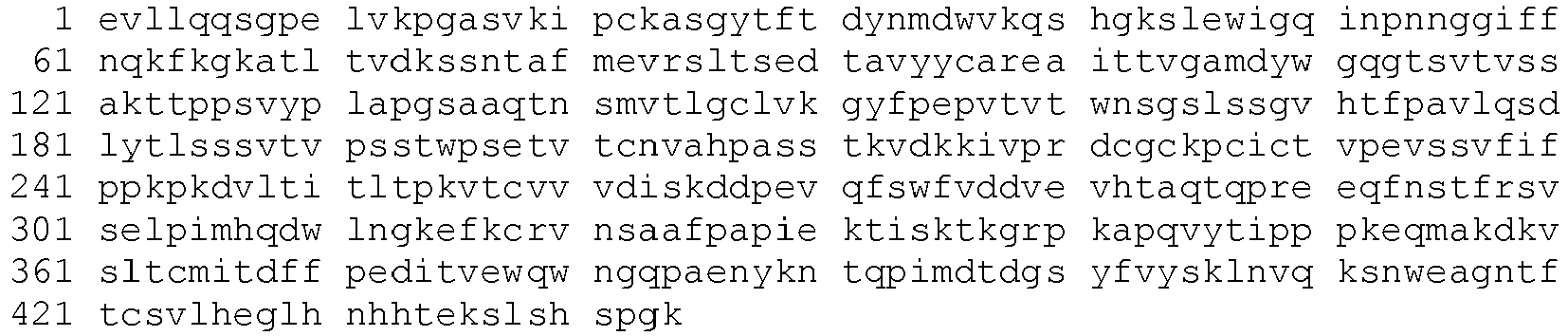
- Nucleic Acid Sequence Encoding the Full Length Light Chain Sequence (Kappa Chain Variable Region and Constant Region) of 01G06 (SEQ ID NO:101)

- Protein Sequence Defining the Full Length Light Chain Sequence (Kappa Chain Variable Region and Constant Region) of 01G06 (SEQ ID NO:102)

- Nucleic Acid Sequence Encoding the Full Length Heavy Chain Sequence (Heavy Chain Variable Region and IgG1 Constant Region) of 03G05 (SEQ ID NO:103)


- Protein Sequence Defining the Full Length Heavy Chain Sequence (Heavy Chain Variable Region and IgG1 Constant Region) of 03G05 (SEQ ID NO:104)
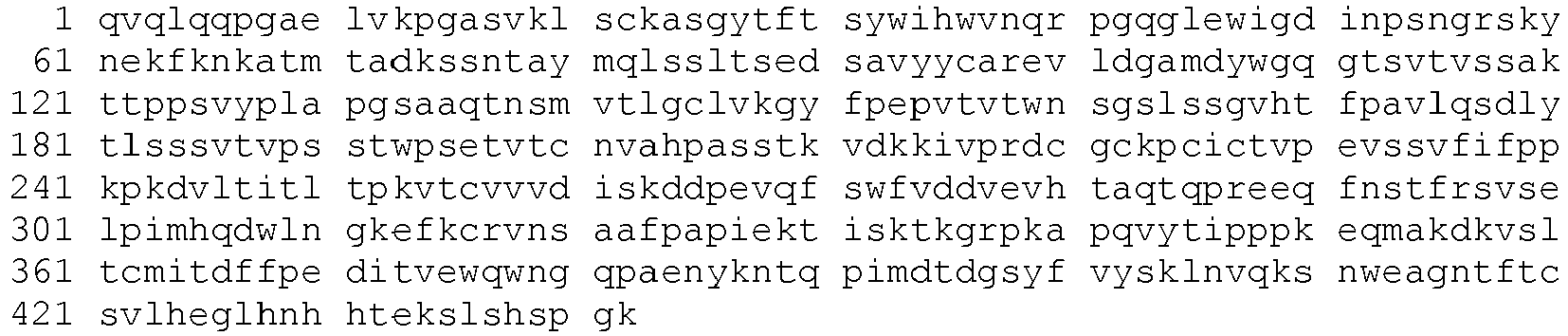
- Nucleic Acid Sequence Encoding the Full Length Light Chain Sequence (Kappa Chain Variable Region and Constant Region) of 03G05 (SEQ ID NO:105)

- Protein Sequence Defining the Full Length Light Chain Sequence (Kappa Chain Variable Region and Constant Region) of 03G05 (SEQ ID NO:106)

- Nucleic Acid Sequence Encoding the Full Length Heavy Chain Sequence (Heavy Chain Variable Region and IgG1 Constant Region) of 04F08 (SEQ ID NO:107)

- Protein Sequence Defining the Full Length Heavy Chain Sequence (Heavy Chain Variable Region and IgG1 Constant Region) of 04F08 (SEQ ID NO:108)

- Nucleic Acid Sequence Encoding the Full Length Light Chain Sequence (Kappa Chain Variable Region and Constant Region) of 04F08 (SEQ ID NO:109)


- Protein Sequence Defining the Full Length Light Chain Sequence (Kappa Chain Variable Region and Constant Region) of 04F08 (SEQ ID NO: 110)

- Nucleic Acid Sequence Encoding the Full Length Heavy Chain Sequence (Heavy Chain Variable Region and IgG1 Constant Region) of 06C11 (SEQ ID NO:111)

- Protein Sequence Defining the Full Length Heavy Chain Sequence (Heavy Chain Variable Region and IgG1 Constant Region) of 06C11 (SEQ ID NO:112)

- Nucleic Acid Sequence Encoding the Full Length Light Chain Sequence (Kappa Chain Variable Region and Constant Region) of 06C11 (SEQ ID NO:113)

- Protein Sequence Defining the Full Length Light Chain Sequence (Kappa Chain Variable Region and Constant Region) of 06C11 (SEQ ID NO:114)

- Nucleic Acid Sequence Encoding the Full Length Heavy Chain Sequence (Heavy Chain Variable Region and IgG2b Constant Region) of 08G01 (SEQ ID NO:115)

- Protein Sequence Defining the Full Length Heavy Chain Sequence (Heavy Chain Variable Region and IgG2b Constant Region) of 08G01 (SEQ ID NO:116)

- Nucleic Acid Sequence Encoding the Full Length Light Chain Sequence (Kappa Chain Variable Region and Constant Region) of 08G01 (SEQ ID NO:117)

- Protein Sequence Defining the Full Length Light Chain Sequence (Kappa Chain Variable Region and Constant Region) of 08G01 (SEQ ID NO:118)

- Nucleic Acid Sequence Encoding the Full Length Heavy Chain Sequence (Heavy Chain Variable Region and IgG1 Constant Region) of 14F11 (SEQ ID NO:119)


- Protein Sequence Defining the Full Length Heavy Chain Sequence (Heavy Chain Variable Region and IgG1 Constant Region) of 14F11 (SEQ ID NO:120)

- Nucleic Acid Sequence Encoding the Full Length Light Chain Sequence (Kappa Chain Variable Region and Constant Region) of 14F11 (SEQ ID NO:121)
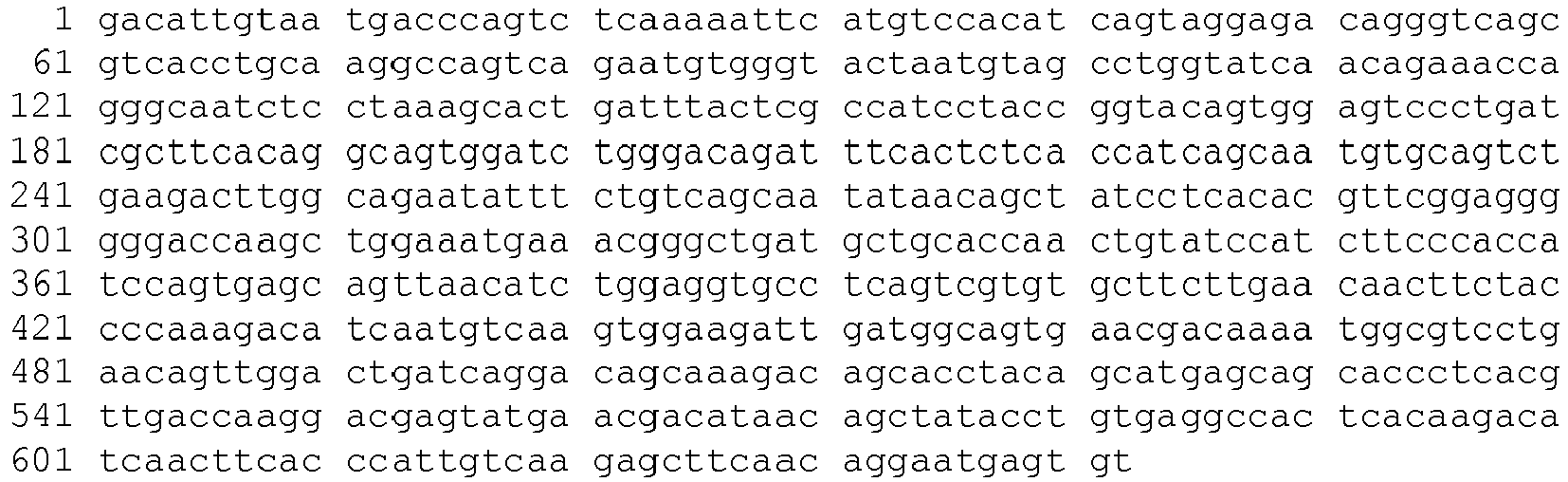
- Protein Sequence Defining the Full Length Light Chain Sequence (Kappa Chain Variable Region and Constant Region) of 14F11 (SEQ ID NO:122)

- Nucleic Acid Sequence Encoding the Full Length Heavy Chain Sequence (Heavy Chain Variable Region and IgG1 Constant Region) of 17B11 (SEQ ID NO:123)
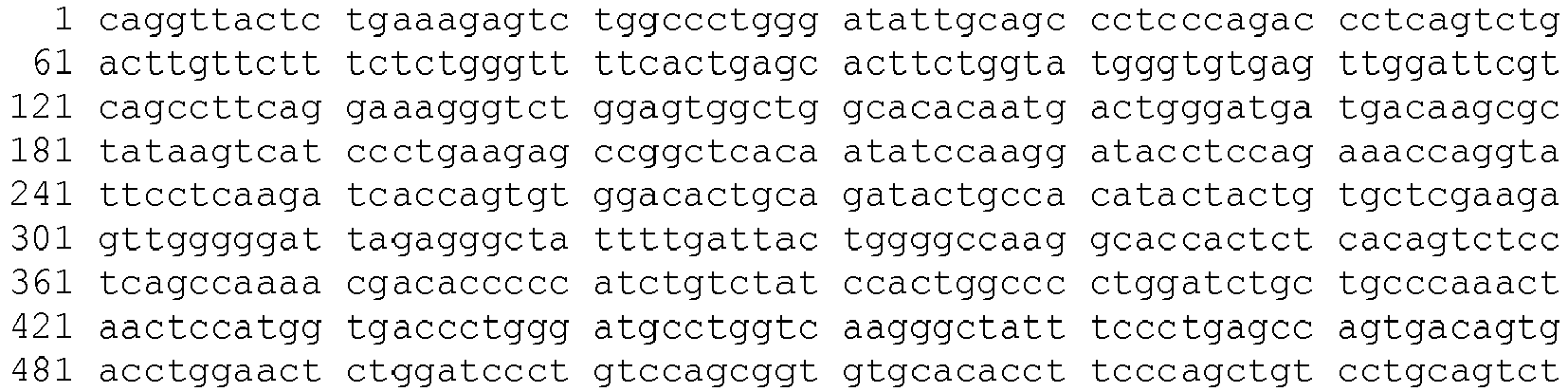

- Protein Sequence Defining the Full Length Heavy Chain Sequence (Heavy Chain Variable Region and IgG1 Constant Region) of 17B11 (SEQ ID NO:124)

- Nucleic Acid Sequence Encoding the Full Length Light Chain Sequence (Kappa Chain Variable Region and Constant Region) of 17B11 (SEQ ID NO:125)

- Protein Sequence Defining the Full Length Light Chain Sequence (Kappa Chain Variable Region and Constant Region) of 17B11 (SEQ ID NO:126)

- Table 5 shows the correspondence between the full-length sequences of the antibodies discussed in this Example with those presented in the Sequence Listing.
Table 5 SEQ ID NO. Nucleic Acid or Protein 99 01G06_ Heavy Variable + IgG1 Constant-nucleic acid 100 01G06_ Heavy Variable + IgG1 Constant-protein 101 01G06_ Kappa Variable + Constant-nucleic acid 102 01G06_ Kappa Variable + Constant-protein 103 03G05 Heavy Variable + IgG1 Constant-nucleic acid 104 03G05 Heavy Variable + IgG1 Constant-protein 105 03G05 Kappa Variable + Constant-nucleic acid 106 03G05 Kappa Variable + Constant-protein 107 04F08 Heavy Variable + IgG1 Constant-nucleic acid 108 04F08 Heavy Variable + IgG1 Constant-protein 109 04F08 Kappa Variable + Constant-nucleic acid 110 04F08 Kappa Variable + Constant-protein 111 06C11 Heavy Variable + IsG1 Constant-nucleic acid 112 06C11 Heavy Variable + IgG1 Constant-protein 113 06C11 Kappa Variable + Constant-nucleic acid 114 06C11 Kappa Variable + Constant-protein 115 08G01 Heavy Variable + IgG2b Constant-nucleic acid 116 08G01 Heavy Variable + IgG2b Constant-protein 117 08G01 Kappa Variable + Constant-nucleic acid 118 08G01 Kappa Variable + Constant-protein 119 14F11 Heavy Variable + IgG1 Constant-nucleic acid 120 14F11 Heavy Variable + IgG1 Constant-protein 121 14F11 Kappa Variable + Constant-nucleic acid 122 14F11 Kappa Variable + Constant-protein 123 17B11 Heavy Variable + IgG1 Constant-nucleic acid 124 17B11 Heavy Variable + IgG1 Constant-protein 125 17B 11 Kappa Variable + Constant-nucleic acid 126 17B11 Kappa Variable + Constant-protein - The binding affinities and kinetics of binding of antibodies to 6X His tagged (SEQ ID NO: 266) recombinant human GDF15 (His-rhGDF15 (R&D Systems, Inc.)), untagged recombinant human GDF15 (rhGDF15 (Peprotech, Rocky Hill, NJ), and recombinant human GDF15 produced as either mouse Fc fused to human GDF15 (mFc-rhGDF15) or a version in which the Fc was enzymatically removed (cleaved-rhGDF15) were measured by surface plasmon resonance, using a Biacore® T100 instrument (GE Healthcare, Piscataway, NJ).
- Rabbit anti-mouse IgGs (GE Healthcare) were immobilized on carboxymethylated dextran CM4 sensor chips (GE Healthcare) by amine coupling, according to a standard protocol. Analyses were performed at 37°C using PBS containing 0.05% surfactant P20 as running buffer. The antibodies were captured in individual flow cells at a flow rate of 10 µL/minute. Injection time was varied for each antibody to yield an Rmax between 30 and 60 RU. 250 µg/mL mouse Fc (Jackson ImmunoResearch, West Grove, PA) was injected at 30 µL/minute for 120 seconds to block non-specific binding of capture antibodies to mouse Fc portion of the recombinant GDF15 protein when needed. Buffer, mFc-rhGDF15, cleaved-rhGDF15, His-rhGDF15, or rhGDF15 diluted in running buffer was injected sequentially over a reference surface (no antibody captured) and the active surface (antibody to be tested) for 240 seconds at 60 µL/minute. The dissociation phase was monitored for up to 1500 seconds. The surface was then regenerated with two 60-second injections of 10 mM Glycine-HCl, pH 1.7, at a flow rate of 30 µL/minute. The GDF15 concentration range tested was 30 nM to 0.625 nM.
- Kinetic parameters were determined using the kinetic function of the BIAevaluation software (GE Healthcare) with double reference subtraction. Kinetic parameters for each antibody, ka (association rate constant), kd (dissociation rate constant), and KD (equilibrium dissociation constant) were determined. Kinetic values of the monoclonal antibodies on mFc-rhGDF15, cleaved rhGDF15, His-rhGDF15, or rhGDF15 are summarized in Tables 6, 7, 8, and 9, respectively.
Table 6 Antibody Binding to mFc-rhGDF15 Antibody ka (1/Ms) kd (1/s) KD (M) n 01G06 5.6E+06 7.0E-04 2.1E-10 7 03G05 1.0E+07 6.4E-04 6.9 E-11 3 04F08 3.6E+06 6.4E-04 1.9E-10 3 06C11 4.5E+06 6.8E-04 1.7E-10 5 08G01 6.0E+06 1.1E-03 1.9E-10 4 14F11 1.7E+06 3.3E-04 2.2E-10 4 17B11 3.7E+06 5.1E-04 1.4 E-10 3 - The data in Table 6 demonstrate that antibodies bind mFc-rhGDF15 with a KD of about 250 pM or less, 200 pM or less, 150 pM or less, 100 pM or less, 75 pM or less, or 50 pM or less.
- Kinetic values of the monoclonal antibodies on cleaved-rhGDF15 are summarized in Table 7.
Table 7 Antibody Binding to Cleaved-rhGDF15 Antibody ka (1/Ms) kd (1/s) KD (M) n 01G06 7.5E+06 8.6E-04 1.1E-10 1 06C11 1.2E+07 2.0E-03 1.7E-10 2 14F11 5.7E+06 6.0E-04 1.1 E-10 1 - The data in Table 7 demonstrate that antibodies 01G06, 06C11 and 14F11 bind cleaved-rhGDF15 with a KD of about 200 pM or less, 150 pM or less, or 100 pM or less.
- Kinetic values of the monoclonal antibodies on His-rhGDF15 are summarized in Table 8.
Table 8 Antibody Binding to His-rhGDF15 Antibody ka (1/Ms) kd (1/s) KD (M) n 01G06 1.4E+07 1.1E-03 8.1 E-11 2 06C11 2.9E+07 1.5E-03 5.1 E-11 2 14F11 4.4E+06 4.2E-04 9.6 E-11 1 - The data in Table 8 demonstrate that antibodies 01G06, 06C11 and 14F11 bind His-rhGDF15 with a KD of about 150 pM or less, 100 pM or less, 75 pM or less, or 50 pM or less.
- Kinetic values of the monoclonal antibodies on rhGDF15 are summarized in Table 9.
Table 9 Antibody Binding to rhGDF15 Antibody ka (1/Ms) kd (1/s) KD (M) n 01G06 2.1E+07 1.9E-03 9.3 E-11 1 06C11 2.2E+07 4.6E-03 2.1E-10 1 14F11 3.1E+07 2.2E-03 7.1 E-11 1 - The data in Table 9 demonstrate that antibodies 01G06, 06C11 and 14F11 bind rhGDF15 with a KD of about 250 pM or less, 200 pM or less, 150 pM or less, 100 pM or less, 75 pM or less, or 50 pM or less.
- This Example demonstrates the reversal of cachexia (as indicated by body weight loss) by antibody 01G06, 03G05, 04F08, 06C11, 14F11, or 17B11 in an mFc-rhGDF15-induced cachexia model. mFc-rhGDF15 (2 µg/g) was administered subcutaneously into the flank of 8-week old female ICR-SCID mice. Body weight was measured daily. When body weight reached 93%, the mice were randomized into seven groups of ten mice each. Each group received one of the following treatments: murine IgG control, 01G06, 03G05, 04F08, 06C11, 14F11, or 17B11 at 10 mg/kg. Treatment was administered once by intra-peritoneal injection. Treatment with antibody 01G06, 03G05, 04F08, 06C11, 14F11, or 17B11 resulted in body weight increase relative to initial weight or about 100% (p<0.001) (
FIG. 14 and Table 10).Table 10 Treatment % Body weight ANOVA Analysis (compared to mIgG) Gr. Agent mg/ kg 1 mIgG 10 77.1 NA 2 01G06 10 94.1 p<0.001 3 03G05 10 95.1 p<0.001 4 04F08 10 95.8 p<0.001 5 06C11 10 93.8 p<0.001 7 14F11 10 95.4 p<0.001 8 17B11 10 92.8 p<0.001 - The data in
FIG. 14 and Table 10 indicate that the disclosed anti-GDF15 antibodies can reverse cachexia in an mFc-rhGDF15-induced mouse model (i.e., a non-tumor bearing mouse model). - This Example demonstrates the reversal of cachexia (as indicated by body weight loss) by antibody 01G06, 03G05, 04F08, 06C11, 08G01, 14F11 or 17B11 in an HT-1080 fibrosarcoma xenograft model. HT-1080 cells were grown in culture at 37°C in an atmosphere containing 5% CO2, using Eagle's Minimum Essential Medium (ATCC, Catalog No. 30-2003) containing 10% FBS. Cells were inoculated subcutaneously into the flank of 8-week old female ICR SCID mice with 5 x 10⁶ cells per mouse in 50% matrigel. Body weight was measured daily. When body weight reached 93%, the mice were randomized into eight groups of ten mice each. Each group received one of the following treatments: murine IgG control, 01G06, 03G05, 04F08, 06C11, 08G01, 14F11 or 17B11 at 10 mg/kg. Treatment was administered every three days by intra-peritoneal injection. Treatment with antibody 01G06, 03G05, 04F08, 06C11, 08G01, 14F11 or 17B11 resulted in body weight increase relative to initial weight or about 100% (p<0.001) (
FIG. 15 and Table 11).Table 11 Treatment % Body weight ANOVA Analysis (compared to mIgG) Gr. Agent mg/ kg 1 mIgG 10 81.4 NA 2 01G06 10 103.3 P<0.001 3 03G05 10 106.1 P<0.001 4 04F08 10 104.3 p<0.001 5 06C11 10 106.6 P<0.001 6 0sG01 10 105.3 p<0.001 7 14F11 10 99.6 p<0.001 8 17B11 10 103.7 p<0.001 - The data in
FIG. 15 and Table 11 indicate that the disclosed anti-GDF15 antibodies can reverse cachexia in an HT-1080 fibrosarcoma xenograft model. - Additional studies were conducted with antibody 01G06 to demonstrate the reversal of cachexia in this mouse model. HT-1080 cells were grown and inoculated subcutaneously into the flank of 8-week old female ICR SCID mice as described above. When body weight reached 93%, the mice were randomized into two groups of ten mice each. Each group received one of the following treatments: murine IgG control or 01G06 at 10 mg/kg. Treatment was administered once by intra-peritoneal injection. As shown in
FIG. 16A , treatment with antibody 01G06 resulted in body weight increase to initial weight or 100% (p<0.001) (FIG. 16A ). - Food consumption was determined by weighing the food supply given to the mice daily (
FIG. 16B ). A significant increase in food consumption was observed in the 01G06 treated group for the first three days post treatment. After that time, no significant change was observed compared to the control group (mIgG). - Water consumption was determined by weighing the water supply given to the mice daily. No significant change in water consumption was observed between groups.
- In this experiment, a group of ten mice were sacrificed at the time of the dose (baseline or 93% body weight, without treatment) and at the end of study (seven days post dose, either mIgG or 01G06). Gonadal fat and the gastrocnemius muscles were removed surgically and weighed as described above in Example 4 and tissues were snap frozen in liquid nitrogen. RNA was isolated from the gastrocnemius muscle samples to determine the levels of mMuRF1 and mAtrogin mRNA by RT-PCR, as described in Example 4.
- As shown in
FIG. 16C , a significant reduction in gonadal fat mass was observed seven days post dose with mIgG, but not in the group treated with antibody 01G06. In addition, mice treated with mIgG displayed significant gastrocnemius muscle loss compared to the baseline group, while the group of mice treated with antibody 01G06 did not (FIG. 16D ). Further, the levels of muscular degradation markers, mMuRF1 and mAtrogin, were significantly higher in the mIgG group compared to the 01G06 group (FIG. 16E ). - These results indicate that the disclosed anti-GDF 15 antibodies can reverse cachexia measured by the loss of muscle mass, the loss of fat and involuntary weight loss in an HT-1080 xenograft tumor model.
- This Example demonstrates the reversal of cachexia (as indicated by body weight loss) by antibody 01G06 in an HT-1080 fibrosarcoma xenograft model. HT-1080 cells were grown in culture at 37°C in an atmosphere containing 5% CO2, using Eagle's Minimum Essential Medium (ATCC, Catalog No. 30-2003) containing 10% FBS. Cells were inoculated subcutaneously into the flank of 8-week old female ICR SCID mice with 5 x 10⁶ cells per mouse in 50% matrigel. Body weight was measured daily. When body weight reached 80%, the mice were randomized into two groups of five mice each. Each group received one of the following treatments: murine IgG control, 01G06 dosed at 2 mg/kg on
day 1 andday 7. Treatment was administered by intra-peritoneal injection. Treatment with antibody 01G06 resulted in body weight increase relative to initial weight or about 100% (p<0.001) (FIG. 17A and Table 12).Table 12 Treatment % Body weight ANOVA Analysis (compared to mIgG) Gr. Agent mg/ kg 1 mIgG 2 66.4 NA 2 01G06 2 97.16 p<0.001 - The data in
FIGS. 17A-B and Table 12 indicate that the disclosed anti-GDF15 antibodies can reverse cachexia in an HT-1080 fibrosarcoma xenograft model. - In this experiment, a group of five mice were sacrificed at the time of dosing (baseline or 80% body weight loss, without treatment) and at the end of study (seven days post dose, either mIgG or 01G06). Liver, heart, slpeen, kidney, gonadal fat and the gastrocnemius muscles were removed surgically and weighed. As shown in
FIG. 17B , a significant loss in liver, heart, spleen, kidney, gonadal fat and gastrocnemius muscle mass was observed seven days post dose with mIgG, but not in the group treated with antibody 01G06. In addition, mice treated with antibody 01G06 displayed significant liver and gonadal muscle gain compared to the baseline group (FIG. 17B ). - These results indicate that the disclosed anti-GDF 15 antibodies can reverse cachexia measured by the loss of key organ mass, loss of muscle mass, loss of fat and involuntary weight loss in an HT-1080 xenograft tumor model.
- This Example demonstrates the reversal of cachexia (as indicated by body weight loss) by antibody 01G06, 03G05, 04F08, 06C11, 08G01, 14F11 or 17B11 in a K-562 leukemia xenograft model. K-562 cells were grown in culture at 37°C in an atmosphere containing 5% CO2, using Iscove's Modified Dulbecco's Medium (ATCC Catalog No. 30-2005) containing 10% FBS. Cells were inoculated subcutaneously into the flank of 8-week old female CB17SCRFMF mice with 2.5 x 10⁶ cells per mouse in 50% matrigel. Body weight was measured daily. When body weight reached 93%, the mice were randomly distributed into eight groups of ten mice each. Each group received one of the following treatments: murine IgG control, 01G06, 03G05, 04F08, 06C11, 08G01, 14F11 or 17B11 at 10 mg/kg. Treatment was administered every three days by intra-peritoneal injection. Treatment with antibody 01G06, 03G05, 04F08, 06C11, 08G01, 14F11 or 17B11 resulted in body weight increase relative to initial weight or about 100% (p<0.001) (
FIG. 18 and Table 13).Table 13 Treatment % Body weight ANOVA Analysis (compared to mIgG) Gr. Agent mg/ kg 1 mIgG 10 90.4 NA 2 01G06 10 106.5 p<0.001 3 03G05 10 109.8 p<0.001 4 04F08 10 108.9 p<0.001 5 06C11 10 109.5 p<0.001 6 08G01 10 107.2 p<0.001 7 14F11 10 107.0 p<0.001 8 17B11 10 105.3 p<0.001 - The data in
FIG. 18 and Table 13 indicate that the disclosed anti-GDF15 antibodies can reverse cachexia in a K-562 xenograft tumor model. - Antibody 01G06 was tested in additional tumor xenograft models including the TOV-21G ovarian xenograft model and the LS1034 colon xenograft model. In each model, antibody 01G06 reversed body weight loss compared to a PBS control (p<0.001 for the TOV-21G model and p<0.01 for the LS1034 model).
- This Example describes the humanization and chimerization of three murine antibodies, designated 01G06, 06C11, and 14F11, and the characterization of the resulting humanized antibodies. The humanized anti-GDF15 antibodies were designed, affinity matured by targeted CDR mutagenesis, and optimized using methods known in the art. The amino acid sequences were converted to codon-optimized DNA sequences and synthesized to include (in the following order): 5' HindIII restriction site, Kozak consensus sequence, amino terminal signal sequence, humanized variable region, human IgG1 or Kappa constant region, stop codon, and a 3' EcoRI restriction site.
- Chimeric (murine variable region and human constant region) 01G06, 06C11, and 14F11 heavy (human IgG1) and light (human Kappa) chains were also constructed. To generate chimeric antibodies, the murine variable regions were fused to the human constant region, and codon-optimized DNA sequences were synthesized, including (in the following order): 5' HindIII restriction site, Kozak consensus sequence, amino terminal signal sequence, mouse variable region, human IgG1 or Kappa constant region, stop codon, and 3' EcoRI restriction site.
- The humanized and chimeric heavy chains were subcloned into pEE6.4 (Lonza, Basel, Switzerland) via HindIII and EcoRI sites using In-Fusion™ PCR cloning (Clontech, Mountain View, CA). The humanized and chimeric Kappa light chains were subcloned into pEE14.4 (Lonza) via HindIII and EcoRI sites using In-Fusion™ PCR cloning.
- Humanized antibody chains or chimeric antibody chains were transiently transfected into 293T cells to produce antibody. Antibody was either purified or used in cell culture media supernatant for subsequent in vitro analysis. Binding of the chimeric and humanized antibodies to human GDF15 was measured as described below. The results are summarized in Tables 24-27.
- Each of the possible combinations of the chimeric or humanized 01G06 immunoglobulin heavy chain and immunoglobulin light chain variable regions is set forth below in Table 14.
Table 14 Antibody Name Light Chain Variable Region Heavy Chain Variable Region Hu01G06-1 Ch01G06 Chimeric Kappa (SEQ ID NO:76) Ch01G06 Chimeric Heavy (SEQ ID NO:40) Hu01G06-14 Ch01G06 Chimeric Kappa (SEQ ID NO:76) Hu01G06 IGHV1-18 Heavy (SEQ ID NO:54) Hu01G06-15 Ch01G06 Chimeric Kappa (SEQ ID NO:76) Hu01G06 IGHV1-69 Heavy (SEQ ID NO:56) Hu01G06-147 Ch01G06 Chimeric Kappa (SEQ ID NO:76) Sh01G06 IGHV1-18 M69L Heavy (SEQ ID NO:58) Hu01G06-148 Ch01G06 Chimeric Kappa (SEQ ID NO:76) Sh01G06 IGHV1-18 M69L K64Q G44S Heavy (SEQ ID NO:60) Hu01G06-149 Ch01G06 Chimeric Kappa (SEQ ID NO:76) Sh01G06 IGHV1-18 M69L K64Q Heavy (SEQ ID NO:62) Hu01G06-150 Ch01G06 Chimeric Kappa (SEQ ID NO:76) Sh01G06 IGHV1-69 T30S I69L Heavy (SEQ ID NO:64) Hu01G06-151 Ch01G06 Chimeric Kappa (SEQ ID NO:76) Sh01G06 IGHV1-69 T30S K64Q I69L Heavy (SEQ ID NO:66) Hu01G06-4 Hu01G06 IGKV1-39 Kappa (SEQ ID NO:90) Ch01G06 Chimeric Heavy (SEQ ID NO:40) Hu01G06-46 Hu01G06 IGKV1-39 Kappa (SEQ ID NO:90) Hu01G06 IGHV1-18 Heavy (SEQ ID NO:54) Hu01G06-52 Hu01G06 IGKV1-39 Kappa (SEQ ID NO:90) Hu01G06 IGHV1-69 Heavy (SEQ ID NO:56) Hu01G06-100 Hu01G06 IGKV1-39 Kappa (SEQ ID NO:90) Sh01G06 IGHV1-18 M69L Heavy (SEQ ID NO:58) Hu01G06-102 Hu01G06 IGKV1-39 Kappa (SEQ ID NO:90) Sh01G06 IGHV1-18 M69L K64Q G44S Heavy (SEQ ID NO:60) Hu01G06-101 Hu01G06 IGKV1-39 Kappa (SEQ ID NO:90) Sh01G06 IGHV1-18 M69L K64Q Heavy (SEQ ID NO:62) Hu01G06-103 Hu01G06 IOKV1-39 Kappa (SEQ ID NO:90) Sh01G06 IGHV1-69 T30S I69L Heavy (SEQ ID NO:64) Hu01G06-104 Hu01G06 IGKV1-39 Kappa (SEQ ID NO:90) Sh01G06 IGHV1-69 T30S K64Q I69L Heavy (SEQ ID NO:66) Hu01G06-152 Hu01G06 IGKV1-39 S43A V48I Kappa (SEQ ID NO:92) Ch01G06 Chimeric Heavy (SEQ ID NO:40) Hu01G06-71 Hu01G06 IGKV1-39 S43A V48I Kappa (SEQ ID NO:92) Hu01G06 IGHV1-18 Heavy (SEQ ID NO:54) Hu01G06-77 Hu01G06 IGKV1-39 S43A V48I Kappa (SEQ ID NO:92) Hu01G06 IGHV1-69 Heavy (SEQ ID NO:56) Hu01G06-110 Hu01G06 IGKV1-39 S43A V48I Kappa (SEQ ID NO:92) Sh01G06 IGHV1-18 M69L Heavy (SEQ ID NO:58) Hu01G06-112 Hu01G06 IGKV1-39 S43A V48I Kappa (SEQ ID NO:92) Sh01G06 IGHV1-18 M69L K64Q G44S Heavy (SEQ ID NO:60) Hu01G06-111 Hu01G06 IGKV1-39 S43A V48I Kappa (SEQ ID NO:92) Sh01G06 IGHV1-18 M69L K64Q Heavy (SEQ ID NO:62) Hu01G06-113 Hu01G06 IGKV1-39 S43A V48I Kappa(SEQ ID NO:92) Sh01G06 IGHV1-69 T30S I69L Heavy (SEQ ID NO:64) Hu01G06-114 Hu01G06 IGKV1-39 S43A V48I Kappa (SEQ ID NO:92) Sh01G06 IGHV1-69 T30S K64Q I69L Heavy (SEQ ID NO:66) Hu01G06-122 Hu01G06 IGKV1-39 S43A V48I Kappa(SEQ ID NO:92) Hu01G06 IGHV1-18 F1 Heavy (SEQ ID NO:246) Hu01G06-119 Hu01G06 IGKV1-39 S43A V48I Kappa(SEQ ID NO:92) Hu01G06 IGHV1-18 F2 Heavy (SEQ ID NO:248) Hu01G06-135 Hu01G06 IGKV1-39 S43A V48I Kappa(SEQ ID NO:92) Hu01G06 IGHV1-69 F1 Heavy (SEQ ID NO:250) Hu01G06-138 Hu01G06 IGKV1-39 S43A V48I Kappa(SEQ ID NO:92) Hu01G06 IGHV1-69 F2 Heavy (SEQ ID NO:252) Hu01G06-153 Hu01G06 IGKV1-39 V48I Kappa (SEQ ID NO:94) Ch01G06 Chimeric Heavy (SEQ ID NO:40) Hu01G06-69 Hu01G06 IGKV1-39 V48I Kappa (SEQ ID NO:94) Hu01G06 IGHV1-18 Heavy (SEQ ID NO:54) Hu01G06-75 Hu01G06 IGKV1-39 V48I Kappa (SEQ ID NO:94) Hu01G06 IGHV1-69 Heavy (SEQ ID NO:56) Hu01G06-105 Hu01G06 IGKV1-39 V48I Kappa (SEQ ID NO:94) Sh01G06 IGHV1-18 M69L Heavy (SEQ ID NO:58) Hu01G06-107 Hu01G06 IGKV1-39 V48I Kappa (SEQ ID NO:94) Sh01G06 IGHV1-18 M69L K64Q G44S Heavy (SEQ ID NO:60) Hu01G06-106 Hu01G06 IGKV1-39 V48I Kappa (SEQ ID NO:94) Sh01G06 IGHV1-18 M69L K64Q Heavy (SEQ ID NO:62) Hu01G06-108 Hu01G06 IGKV1-39 V48I Kappa (SEQ ID NO:94) Sh01G06 IGHV1-69 T30S I69L Heavy (SEQ ID NO:64) Hu01G06-109 Hu01G06 IGKV1-39 V48I Kappa (SEQ ID NO:94) Sh01G06 IGHV1-69 T30S K64Q I69L Heavy (SEQ ID NO:66) Hu01G06-154 Hu01G06 IGKV1-39 F2 Kappa (SEQ ID NO:254) Ch01G06 Chimeric Heavy (SEQ ID NO:40) Hu01G06-155 Hu01G06 IGKV1-39 F2 Kappa (SEQ ID NO:254) Hu01G06 IGHV1-18 Heavy (SEQ ID NO:54) Hu01G06-156 Hu01G06 IGKV1-39 F2 Kappa (SEQ ID NO:254) Hu01G06 IGHV1-69 Heavy (SEQ ID NO:56) Hu01G06-157 Hu01G06 IGKV1-39 F2 Kappa (SEQ ID NO:254) Sh01G06 IGHV1-18 M69L Heavy (SEQ ID NO:58) Hu01G06-158 Hu01G06 IGKV1-39 F2 Kappa (SEQ ID NO:254) Sh01G06 IGHV1-18 M69L K64Q G44S Heavy (SEQ ID NO:60) Hu01G06-159 Hu01G06 IGKV1-39 F2 Kappa (SEQ ID NO:254) Sh01G06 IGHV1-18 M69L K64Q Heavy (SEQ ID NO:62) Hu01G06-160 Hu01G06 IGKV1-39 F2 Kappa (SEQ ID NO:254) Sh01G06 IGHV1-69 T30S I69L Heavy (SEQ ID NO:64) Hu01G06-161 Hu01G06 IGKV1-39 F2 Kappa (SEQ ID NO:254) Sh01G06 IGHV1-69 T30S K64Q I69L Heavy (SEQ ID NO:66) Hu01G06-130 Hu01G06 IGKV1-39 F2 Kappa (SEQ ID NO:254) Hu01G06 IGHV1-18 F1 Heavy (SEQ ID NO:246) Hu01G06-127 Hu01G06 IGKV1-39 F2 Kappa (SEQ ID NO:254) Hu01G06 IGHV1-18 F2 Heavy (SEQ ID NO:248) Hu01G06-143 Hu01G06 IGKV1-39 F2 Kappa (SEQ ID NO:254) Hu01G06 IGHV1-69 F1 Heavy (SEQ ID NO:250) Hu01G06-146 Hu01G06 IGKV1-39 F2 Kappa (SEQ ID NO:254) Hu01G06 IGHV1-69 F2 Heavy (SEQ ID NO:252) - Each of the possible combinations of the chimeric or humanized 06C11 immunoglobulin heavy chain and immunoglobulin light chain variable regions is set forth below in Table 15.
Table 15 Antibody Name Light Chain Variable Region Heavy Chain Variable Region Hu06C11-1 Ch06C11 Chimeric Kappa (SEQ ID NO:82) Ch06C11 Chimeric Heavy (SEQ ID NO:46) Hu06C11-7 Ch06C11 Chimeric Kappa (SEQ ID NO:82) HE LM 06C11 IGHV2-70 Heavy (SEQ ID NO:68) Hu06C11-10 Ch06C11 Chimeric Kappa (SEQ ID NO:82) Hu06C11 IGHV2-5 Heavy (SEQ ID NO:70) Hu06C11-12 Sh06C11 IGKV1-16 Kappa (SEQ ID NO:96) Ch06C11 Chimeric Heavy (SEQ ID NO:46) Hu06C11-27 Sh06C11 IGKV1-16 Kappa (SEQ ID NO:96) HE LM 06C11 IGHV2-70 Heavy (SEQ ID NO:68) Hu06C11-30 Sh06C11 IGKV1-16 Kappa (SEQ ID NO:96) Hu06C11 IGHV2-5 Heavy (SEQ ID NO:70) - Each of the possible combinations of the chimeric or humanized 14F11 immunoglobulin heavy chain and immunoglobulin light chain variable regions is set forth below in Table 16.
Table 16 Antibody Name Light Chain Variable Region Heavy Chain Variable Region Hu14F11-1 Ch14F11 Chimeric Kappa (SEQ ID NO:86) Ch14F11 Chimeric Heavy (SEQ ID NO:50) Hu14F11-14 Ch14F11 Chimeric Kappa (SEQ ID NO:86) Sh14F11 IGHV2-5 Heavy (SEQ ID NO:72) Hu14F11-15 Ch14F11 Chimeric Kappa (SEQ ID NO:86) Sh14F11 IGHV2-70 Heavy (SEQ ID NO:74) Hu14F11-11 Hu14F11 IGKV1-16 Kappa (SEQ ID NO:98) Ch14F11 Chimeric Heavy (SEQ ID NO:50) Hu14F11-39 Hu14F11 IGKV1-16 Kappa (SEQ ID NO:98 Sh14F11 IGHV2-5 Heavy (SEQ ID NO:72) Hu14F11-47 Hu14F11 IGKV1-16 Kappa (SEQ ID NO:98) Sh14F11 IGHV2-70 Heavy (SEQ ID NO:74) - Each of the possible combinations of the chimeric 04F08, 06C11, and 14F11 immunoglobulin heavy chain and immunoglobulin light chain variable regions is set forth below in Table 17.
Table 17 Light Chain Variable Region Heavy Chain Variable Region 04F08 Chimeric Kappa (SEQ ID NO:80) Ch06C11 Chimeric Heavy (SEQ ID NO:46) 04F08 Chimeric Kappa (SEQ ID NO:80) Ch14F11 Chimeric Heavy (SEQ ID NO:50) Ch06C11 Chimeric Kappa (SEQ ID NO:82) 04F08 Chimeric Heavy (SEQ ID NO:44) Ch06C11 Chimeric Kappa (SEQ ID NO:82) Ch14F11 Chimeric Heavy (SEQ ID NO:50) Ch14F11 Chimeric Kappa (SEQ ID NO:86) 04F08 Chimeric Heavy (SEQ ID NO:44) Ch14F11 Chimeric Kappa (SEQ ID NO:86) Ch06C11Chimeric Heavy (SEQ ID NO:46) - Each of the possible combinations of the chimeric 01G06 and chimeric 08G01 immunoglobulin heavy chain and immunoglobulin light chain variable regions is set forth below in Table 18.
Table 18 Light Chain Variable Region Heavy Chain Variable Region Ch01G06 Chimeric Kappa (SEQ ID NO:76) 08G01 Chimeric Heavy (SEQ ID NO:48) 08G01 Chimeric Kappa (SEQ ID NO:84) Ch01G06 Chimeric Heavy (SEQ ID NO:40) - The nucleic acid sequences and the encoded protein sequences defining variable regions of the chimeric and humanized 01G06, 06C11, and 14F11 antibodies are summarized below (amino terminal signal peptide sequences are not shown). CDR sequences (Kabat definition) are shown in bold and are underlined in the amino acid sequences.
- Nucleic Acid Sequence Encoding the Ch01G06 Chimeric Heavy Chain Variable Region (SEQ ID NO:127)

- Protein Sequence Defining the Ch01G06 Chimeric Heavy Chain Variable Region (SEQ ID NO:40)

- Nucleic Acid Sequence Encoding the Hu01G06 IGHV1-18 Heavy Chain Variable Region (SEQ ID NO:53)

- Protein Sequence Defining the Hu01G06 IGHV1-18 Heavy Chain Variable Region (SEQ ID NO:54)

- Nucleic Acid Sequence Encoding the Hu01G06 IGHV1-69 Heavy Chain Variable Region (SEQ ID NO:55)

- Protein Sequence Defining the Hu01G06 IGHV1-69 Heavy Chain Variable Region (SEQ ID NO:56)

- Nucleic Acid Sequence Encoding the Sh01G06 IGHV1-18 M69L Heavy Chain Variable Region (SEQ ID NO:57)

- Protein Sequence Defining the Sh01G06 IGHV1-18 M69L Heavy Chain Variable Region (SEQ ID NO:58)

- Nucleic Acid Sequence Encoding the Sh01G06 IGHV1-18 M69L K64Q G44S Heavy Chain Variable Region (SEQ ID NO:59)

- Protein Sequence Defining the Sh01G06 IGHV1-18 M69L K64Q G44S Heavy Chain Variable Region (SEQ ID NO:60)

- Nucleic Acid Sequence Encoding the Sh01G06 IGHV1-18 M69L K64Q Heavy Chain Variable Region (SEQ ID NO:61)

- Protein Sequence Defining the Sh01G06 IGHV1-18 M69L K64Q Heavy Chain Variable Region (SEQ ID NO:62)

- Nucleic Acid Sequence Encoding the Sh01G06 IGHV1-69 T30S I69L Heavy Chain Variable Region (SEQ ID NO:63)

- Protein Sequence Defining the Sh01G06 IGHV1-69 T30S I69L Heavy Chain Variable Region (SEQ ID NO:64)

- Nucleic Acid Sequence Encoding the Sh01G06 IGHV1-69 T30S K64Q I69L Heavy Chain Variable Region (SEQ ID NO:65)

- Protein Sequence Defining the Sh01G06 IGHV1-69 T30S K64Q I69L Heavy Chain Variable Region (SEQ ID NO:66)

- Nucleic Acid Sequence Encoding the Hu01G06 IGHV1-18 F1 Heavy Chain Variable Region (SEQ ID NO:245)

- Protein Sequence Defining the Hu01G06 IGHV1-18 F1 Heavy Chain Variable Region (SEQ ID NO:246)

- Nucleic Acid Sequence Encoding the Hu01G06 IGHV1-18 F2 Heavy Chain Variable Region (SEQ ID NO:247)

- Protein Sequence Defining the Hu01G06 IGHV1-18 F2 Heavy Chain Variable Region (SEQ ID NO:248)

- Nucleic Acid Sequence Encoding the Hu01G06 IGHV1-69 F1 Heavy Chain Variable Region (SEQ ID NO:249)

- Protein Sequence Defining the Hu01G06 IGHV1-69 F1 Heavy Chain Variable Region (SEQ ID NO:250)

- Nucleic Acid Sequence Encoding the Hu01G06 IGHV1-69 F2 Heavy Chain Variable Region (SEQ ID NO:251)

- Protein Sequence Defining the Hu01G06 IGHV1-69 F2 Heavy Chain Variable Region (SEQ ID NO:252)

- Nucleic Acid Sequence Encoding the Ch06C11 Chimeric Heavy Chain Variable Region (SEQ ID NO:129)

- Protein Sequence Defining the Ch06C11 Chimeric Heavy Chain Variable Region (SEQ ID NO:46)

- Nucleic Acid Sequence Encoding the HE LM 06C11 IGHV2-70 Heavy Chain Variable Region (SEQ ID NO:67)

- Protein Sequence Defining the HE LM 06C11 IGHV2-70 Heavy Chain Variable Region (SEQ ID NO:68)

- Nucleic Acid Sequence Encoding the Hu06C11 IGHV2-5 Heavy Chain Variable Region (SEQ ID NO:69)

- Protein Sequence Defining the Hu06C11 IGHV2-5 Heavy Chain Variable Region (SEQ ID NO:70)

- Nucleic Acid Sequence Encoding the Ch14F11 Chimeric Heavy Chain Variable Region (SEQ ID NO:131)

- Protein Sequence Defining the Ch14F11 Chimeric Heavy Chain Variable Region (SEQ ID NO:50)

- Nucleic Acid Sequence Encoding the Sh14F11 IGHV2-5 Heavy Chain Variable Region (SEQ ID NO:71)

- Protein Sequence Defining the Sh14F11 IGHV2-5 Heavy Chain Variable Region (SEQ ID NO:72)

- Nucleic Acid Sequence Encoding the Sh14F11 IGHV2-70 Heavy Chain Variable Region (SEQ ID NO:73)

- Protein Sequence Defining the Sh14F11 IGHV2-70 Heavy Chain Variable Region (SEQ ID NO:74)

- Nucleic Acid Sequence Encoding the Ch01G06 Chimeric Kappa Chain Variable Region (SEQ ID NO:133)

- Protein Sequence Defining the Ch01G06 Chimeric Kappa Chain Variable Region (SEQ ID NO:76)


- Nucleic Acid Sequence Encoding the Hu01G06 IGKV1-39 Kappa Chain Variable Region (SEQ ID NO:89)

- Protein Sequence Defining the Hu01G06 IGKV1-39 Kappa Chain Variable Region (SEQ ID NO:90)

- Nucleic Acid Sequence Encoding the Hu01G06 IGKV1-39 S43A V48I Kappa Chain Variable Region (also referred to herein as Hu01G06 IGKV1-39 F1 Kappa Chain Variable Region; SEQ ID NO:91)

- Protein Sequence Defining the Hu01G06 IGKV1-39 S43A V48I Kappa Chain Variable Region (also referred to herein as Hu01G06 IGKV1-39 F1 Kappa Chain Variable Region; SEQ ID NO:92)

- Nucleic Acid Sequence Encoding the Hu01G06 IGKV1-39 V48I Kappa Chain Variable Region (SEQ ID NO:93)

- Protein Sequence Defining the Hu01G06 IGKV1-39 V48I Kappa Chain Variable Region (SEQ ID NO:94)

- Nucleic Acid Sequence Encoding the Hu01G06 IGKV1-39 F1 Kappa Chain Variable Region (also referred to herein as Hu01G06 IGKV1-39 S43A V48I Kappa Chain Variable Region; SEQ ID NO:91)

- Protein Sequence Defining the Hu01G06 IGKV1-39 F1 Kappa Chain Variable Region (also referred to herein as Hu01G06 IGKV1-39 S43A V48I Kappa Chain Variable Region; SEQ ID NO:92)

- Nucleic Acid Sequence Encoding the Hu01G06 IGKV1-39 F2 Kappa Chain Variable Region (SEQ ID NO:253)

- Protein Sequence Defining the Hu01G06 IGKV1-39 F2 Kappa Chain Variable Region (SEQ ID NO:254)

- Nucleic Acid Sequence Encoding the Ch06C11 Chimeric Kappa Chain Variable Region (SEQ ID NO:135)

- Protein Sequence Defining the Ch06C11 Chimeric Kappa Chain Variable Region (SEQ ID NO:82)

- Nucleic Acid Sequence Encoding the Sh06C11 IGKV1-16 Kappa Chain Variable Region (SEQ ID NO:95)

- Protein Sequence Defining the Sh06C11 IGKV1-16 Kappa Chain Variable Region (SEQ ID NO:96)

- Nucleic Acid Sequence Encoding the Ch14F11 Chimeric Kappa Chain Variable Region (SEQ ID NO:137)

- Protein Sequence Defining the Ch14F11 Chimeric Kappa Chain Variable Region (SEQ ID NO:86)

- Nucleic Acid Sequence Encoding the Hu14F11 IGKV1-16 Kappa Chain Variable Region (SEQ ID NO:97)

- Protein Sequence Defining the Hu14F11 IGKV1-16 Kappa Chain Variable Region (SEQ ID NO:98)

- The amino acid sequences defining the immunoglobulin heavy chain variable regions for the antibodies produced in Example 13 are aligned in
FIG. 19 . Amino terminal signal peptide sequences (for proper expression/secretion) are not shown. CDR1, CDR2, and CDR3 (Kabat definition) are identified by boxes.FIG. 20 show an alignment of the separate CDR1, CDR2, and CDR3 sequences for each of the variable region sequences shown inFIG. 19 . - The amino acid sequences defining the immunoglobulin light chain variable regions for the antibodies in Example 13 are aligned in
FIG. 21 . Amino terminal signal peptide sequences (for proper expression/secretion) are not shown. CDR1, CDR2 and CDR3 are identified by boxes.FIG. 22 shows an alignment of the separate CDR1, CDR2, and CDR3 sequences for each of the variable region sequences shown inFIG. 21 . - Table 19 is a concordance chart showing the SEQ ID NO. of each sequence discussed in this Example.
Table 19 SEQ. ID NO. Nucleic Acid or Protein 127 Ch01G06 Chimeric Heavy Chain Variable Region- nucleic acid 40 Ch01G06 Chimeric Heavy Chain Variable Region- protein 1 Ch01G06 Chimeric Heavy Chain CDR 17 Ch01G06 Chimeric Heavy Chain CDR 215 Ch01G06 Chimeric Heavy Chain CDR3 53 Hu01G06 IGHV1-18 Heavy Chain Variable Region- nucleic acid 54 Hu01G06 IGHV1-18 Heavy Chain Variable Region- protein 1 Hu01G06 IGHV1-18 Heavy Chain CDR 17 Hu01G06 IGHV1-18 Heavy Chain CDR 215 Hu01G06 IGHV1-18 Heavy Chain CDR 355 Hu01G06 IGHV1-69 Heavy Chain Variable Region- nucleic acid 56 Hu01G06 IGHV1-69 Heavy Chain Variable Region- protein 1 Hu01G06 IGHV1-69 Heavy Chain CDR 17 Hu01G06 IGHV1-69 Heavy Chain CDR 215 Hu01G06 IGHV1-69 Heavy Chain CDR3 57 Sh01G06 IGHV1-18 M69L Heavy Chain Variable Region- nucleic acid 58 Sh01G06 IGHV1-18 M69L Heavy Chain Variable Region- protein 1 Sh01G06 IGHV1-18 M69L Heavy Chain CDR 17 Sh01G06 IGHV1-18 M69L Heavy Chain CDR 215 Sh01G06 IGHV1-18 M69L Heavy Chain CDR3 SEQ. ID NO. Nucleic Acid or Protein 59 Sh01G06 IGHV1-18 M69L K64Q G44S Heavy Chain Variable Region-nucleic acid 60 Sh01G06 IGHV1-18 M69L K64Q G44S Heavy Chain Variable Region-protein 1 Sh01G06 IGHV1-18 M69L K64Q G44S Heavy Chain CDR1 13 Sh01G06 IGHV1-18 M69L K64Q G44S Heavy Chain CDR2 15 Sh01G06 IGHV1-18 M69L K64Q G44S Heavy Chain CDR3 61 Sh01G06 IGHV1-18 M69L K64Q Heavy Chain Variable Region-nucleic acid 62 Sh01G06 IGHV1-18 M69L K64Q Heavy Chain Variable Region-protein 1 Sh01G06 IGHV1-18 M69L K64Q Heavy Chain CDR1 13 Sh01G06 IGHV1-18 M69L K64Q Heavy Chain CDR2 15 Sh01G06 IGHV1-18 M69L K64Q Heavy Chain CDR3 63 Sh01G06 IGHV1-69 T30S I69L Heavy Chain Variable Region-nucleic acid 64 Sh01G06 IGHV1-69 T30S I69L Heavy Chain Variable Region-protein 1 Sh01G06 IGHV1-69 T30S I69L Heavy Chain CDR1 7 Sh01G06 IGHV1-69 T30S I69L Heavy Chain CDR2 15 Sh01G06 IGHV1-69 T30S I69L Heavy Chain CDR3 65 Sh01G06 IGHV1-69 T30S K64Q I69L Heavy Chain Variable Region-nucleic acid 66 Sh01G06 IGHV1-69 T30S K64Q I69L Heavy Chain Variable Region-protein 1 Sh01G06 IGHV1-69 T30S K64Q I69L Heavy Chain CDR1 13 Sh01G06 IGHV1-69 T30S K64Q I69L Heavy Chain CDR2 15 Sh01G06 IGHV1-69 T30S K64Q I69L Heavy Chain CDR3 245 Hu01G06 IGHV1-18 F1 Heavy Chain Variable Region-nucleic acid 246 Hu01G06 IGHV1-18 F1 Heavy Chain Variable Region-protein 1 Hu01G06 IGHV1-18 F1 Heavy Chain CDR1 236 Hu01G06 IGHV1-18 F1 Heavy Chain CDR2 15 Hu01G06 IGHV1-18 F1 Heavy Chain CDR3 247 Hu01G06 IGHV1-18 F2 Heavy Chain Variable Region-nucleic acid 248 Hu01G06 IGHV1-18 F2 Heavy Chain Variable Region-protein 1 Hu01G06 IGHV1-18 F2 Heavy Chain CDR1 237 Hu01G06 IGHV1-18 F2 Heavy Chain CDR2 15 Hu01G06 IGHV1-18 F2 Heavy Chain CDR3 259 Hu01G06 IGHV1-69 F1 Heavy Chain Variable Region-nucleic acid 250 Hu01G06 IGHV1-69 F1 Heavy Chain Variable Region-protein 1 Hu01G06 IGHV1-69 F1 Heavy Chain CDR1 238 Hu01G06 IGHV1-69 F1 Heavy Chain CDR2 15 Hu01G06 IGHV1-69 F1 Heavy Chain CDR3 251 Hu01G06 IGHV1-69 F2 Heavy Chain Variable Region-nucleic acid 252 Hu01G06 IGHV1-69 F2 Heavy Chain Variable Region-protein 1 Hu01G06 IGHV1-69 F2 Heavy Chain CDR1 239 Hu01G06 IGHV1-69 F2 Heavy Chain CDR2 15 Hu01G06 IGHV1-69 F2 Heavy Chain CDR3 129 Ch06C11 Chimeric Heavy Chain Variable Region-nucleic acid 46 Ch06C11 Chimeric Heavy Chain Variable Region-protein 4 Ch06C11 Chimeric Heavy Chain CDR1 9 Ch06C11 Chimeric Heavy Chain CDR2 18 Ch06C11 Chimeric Heavy Chain CDR3 67 HE LM 06C11 IGHV2-70 Heavy Chain Variable Region-nucleic acid 68 HE LM 06C11 IGHV2-70 Heavy Chain Variable Region-protein 4 HE LM 06C11 IGHV2-70 Heavy Chain CDR1 14 HE LM 06C11 IGHV2-70 Heavy Chain CDR2 18 HE LM 06C11 IGHV2-70 Heavy Chain CDR3 69 Hu06C11 IGHV2-5 Heavy Chain Variable Region-nucleic acid 70 Hu06C11 IGHV2-5 Heavy Chain Variable Region-protein 4 Hu06C 11 IGHV2-5 Heavy Chain CDR1 9 Hu06C11 IGHV2-5 Heavy Chain CDR2 18 Hu06C11 IGHV2-5 Heavy Chain CDR3 131 Ch14F11 Chimeric Heavy Chain Variable Region-nucleic acid 50 Ch14F11 Chimeric Heavy Chain Variable Region-protein 5 Ch14F11 Chimeric Heavy Chain CDR1 11 Ch14F11 Chimeric Heavy Chain CDR2 19 Ch14F11 Chimeric Heavy Chain CDR3 71 Sh14F11 IGHV2-5 Heavy Chain Variable Region-nucleic acid 72 Sh14F11 IGHV2-5 Heavy Chain Variable Region-protein 5 Sh14F11 IGHV2-5 Heavy Chain CDR1 11 Sh14F11 IGHV2-5 Heavy Chain CDR2 19 Sh14F11 IGHV2-5 Heavy Chain CDR3 73 Sh14F11 IGHV2-70 Heavy Chain Variable Region-nucleic acid 74 Sh14F11 IGHV2-70 Heavy Chain Variable Region-protein 5 Sh14F11 IGHV2-70 Heavy Chain CDR1 11 Sh14F11 IGHV2-70 Heavy Chain CDR2 19 Sh14F11 IGHV2-70 Heavy Chain CDR3 133 Ch01G06 Chimeric Light (kappa) Chain Variable Region-nucleic acid 76 Ch01G06 Chimeric Light (kappa) Chain Variable Region-protein 21 Ch01G06 Chimeric Light (kappa) Chain CDR1 26 Ch01G06 Chimeric Light (kappa) Chain CDR2 32 Ch01G06 Chimeric Light (kappa) Chain CDR3 89 Hu01G06 IGKV1-39 Light (kappa) Chain Variable Region-nucleic acid 90 Hu01G06 IGKV1-39 Light (kappa) Chain Variable Region-protein 21 Hu01G06 IGKV1-39 Light (kappa) Chain CDR1 26 Hu01G06 IGKV1-39 Light (kappa) Chain CDR2 32 Hu01G06 IGKV1-39 Light (kappa) Chain CDR3 91 Hu01G06 IGKV1-39 S43A V48I Light (kappa) Chain Variable Region-nucleic acid 92 Hu01G06 IGKV1-39 S43A V48I Light (kappa) Chain Variable Region-protein 21 Hu01G06 IGKV1-39 S43A V48I Light (kappa) Chain CDR1 26 Hu01G06 IGKV1-39 S43A V48I Light (kappa) Chain CDR2 32 Hu01G06 IGKV1-39 S43A V48I Light (kappa) Chain CDR3 93 Hu01G06 IGKV1-39 V48I Light (kappa) Chain Variable Region-nucleic acid 94 Hu01G06 IGKV1-39 V48I Light (kappa) Chain Variable Region-protein 21 Hu01G06 IGKV1-39 V48I Light (kappa) Chain CDR1 26 Hu01G06 IGKV1-39 V48I Light (kappa) Chain CDR2 32 Hu01G06 IGKV1-39 V48I Light (kappa) Chain CDR3 91 Hu01G06 IGKV1-39 F1 Light (kappa) Chain Variable Region-nucleic acid 92 Hu01G06 IGKV1-39 F1 Light (kappa) Chain Variable Region-protein 21 Hu01G06 IGKV1-39 F1 Light (kappa) Chain CDR1 26 Hu01G06 IGKV1-39 F1 Light (kappa) Chain CDR2 32 Hu01G06 IGKV1-39 F1 Light (kappa) Chain CDR3 253 Hu01G06 IGKV1-39 F2 Light (kappa) Chain Variable Region-nucleic acid 254 Hu01G06 IGKV1-39 F2 Light (kappa) Chain Variable Region-protein 21 Hu01G06 IGKV1-39 F2 Light (kappa) Chain CDR1 26 Hu01G06 IGKV1-39 F2 Light (kappa) Chain CDR2 244 Hu01G06 IGKV1-39 F2 Light (kappa) Chain CDR3 135 Ch06C11 Chimeric Light (kappa) Chain Variable Region-nucleic acid 82 Ch06C11 Chimeric Light (kappa) Chain Variable Region-protein 23 Ch06C11 Chimeric Light (kappa) Chain CDR1 28 Ch06C 11 Chimeric Light (kappa) Chain CDR2 35 Ch06C11 Chimeric Light (kappa) Chain CDR3 95 Sh06C11 IGKV1-16 Light (kappa) Chain Variable Region-nucleic acid 96 Sh06C11 IGKV1-16 Light (kappa) Chain Variable Region-protein 23 Sh06C11 IGKV1-16 Light (kappa) Chain CDR1 28 Sh06C11 IGKV1-16 Light (kappa) Chain CDR2 35 Sh06C11 IGKV1-16 Light (kappa) Chain CDR3 137 Ch14F11 Chimeric Light (kappa) Chain Variable Region-nucleic acid 86 Ch14F11 Chimeric Light (kappa) Chain Variable Region-protein 23 Ch14F11 Chimeric Light (kappa) Chain CDR1 30 Ch14F11 Chimeric Light (kappa) Chain CDR2 36 Ch14F11 Chimeric Light (kappa) Chain CDR3 97 Hu14F11 IGKV1-16 Light (kappa) Chain Variable Region-nucleic acid 98 Hu14F11 IGKV1-16 Light (kappa) Chain Variable Region-protein 23 Hu14F11 IGKV1-16 Light (kappa) Chain CDR1 30 Hu14F11 IGKV1-16 Light (kappa) Chain CDR2 36 Hu14F11 IGKV1-16 Light (kappa) Chain CDR3 - Humanized monoclonal antibody heavy chain CDR sequences (Kabat, Chothia, and IMGT definitions) are shown in Table 20.
Table 20 Kabat CDR1 CDR2 CDR3 Variable Region SEQ ID NO: Ch01G06 Chimeric DYNMD (SEQ ID NO:1) QINPNNGGIFFNQKFKG (SEQ ID NO:7) EAITTVGAMDY (SEQ ID NO:15) 40 Hu01G06 IGHV1-18 DYNMD (SEQ ID NO:1) QINPNNGGIFFNQKFKG (SEQ ID NO:7) EAITTVGAMDY (SEQ ID NO:15) 54 Hu01G06 IGHV1-69 DYNMD (SEQ ID NO:1) QINPNNGGIFFNQKFKG (SEQ ID NO:7) EAITTVGAMDY (SEQ ID NO:15) 56 Sh01G06 IGHV1-18 M69L DYNMD (SEQ ID NO:1) QINPNNGGIFFNQKFKG (SEQ ID NO:7) EAITTVGAMDY (SEQ ID NO:15) 58 Sh01G06 IGHV1-18 M69L K64Q G44S DYNMD (SEQ ID NO:1) QINPNNGGIFFNQKFQG (SEQ ID NO:13) EAITTVGAMDY (SEQ ID NO:15) 60 Sh01G06 IGHV1-18 M69L K64Q DYNMD (SEQ ID NO:1) QINPNNGGIFFNQKFQG (SEQ ID NO:13) EAITTVGAMDY (SEQ ID NO:15) 62 Sh01G06 IGHV1-69 T30S I69L DYNMD (SEQ ID NO:1) QINPNNGGIFFNQKFKG (SEQ ID NO:7) EAITTVGAMDY (SEQ ID NO:15) 64 Sh01G06 IGHV1-69 T30S K64Q I69L DYNMD (SEQ ID NO:1) QINPNNGGIFFNQKFQG (SEQ ID NO:13) EAITTVGAMDY (SEQ ID NO:15) 66 Hu01G06 IGHV1-18 F1 DYNMD (SEQ ID NO:1) QINPYNHLIFFNQKFQG (SEQ ID NO: 236) EAITTVGAMDY (SEQ ID NO:15) 246 Hu01G06 IGHV1-18 F2 DYNMD (SEQ ID NO:1) QINPNNGLIFFNQKFQG (SEQ ID NO: 237) EAITTVGAMDY (SEQ ID NO:15) 248 Hu01G06 IGHV1-69 F1 DYNMD (SEQ ID NO:1) QINPNNGLIFFNQKFKG (SEQ ID NO: 238) EAITTVGAMDY (SEQ ID NO:15) 250 Hu01G06 IGHV1-69 F2 DYNMD (SEQ ID NO:1) QINPYNHLIFFNQKFKG (SEQ ID NO: 239) EAITTVGAMDY (SEQ ID NO:15) 252 Ch06C 11 Chimeric TYGMGVS (SEQ ID NO:4) HIYWDDDKRYNPSLKS (SEQ ID NO:9) RGYDDYWGY (SEQ ID NO:18) 46 HE LM 06C11 IGHV2-70 TYGMGVS (SEQ ID NO:4) HIYWDDDKRYNPSLKT (SEQ ID NO:14) RGYDDYWGY (SEQ ID NO:18) 68 Hu06C 11 IGHV2-5 TYGMGVS (SEQ ID NO:4) HIYWDDDKRYNPSLKS (SEQ ID NO:9) RGYDDYWGY (SEQ ID NO:18) 70 Ch14F11 Chimeric TYGMGVG (SEQ ID NO:5) DIWWDDDKYYNPSLKS (SEQ ID NO:11) RGHYSAMDY (SEQ ID NO:19) 50 Sh14F11 IGHV2-5 TYGMGVG (SEQ ID NO:5) DIWWDDDKYYNPSLKS (SEQ ID NO:11) RGHYSAMDY (SEQ ID NO:19) 72 Sh14F11 IGHV2-70 TYGMGVG (SEQ ID NO:5) DIWWDDDKYYNPSLKS (SEQ ID NO:11) RGHYSAMDY (SEQ ID NO:19) 74 Chothia CDR1 CDR2 CDR3 Variable Region SEQ ID NO: Ch01G06 Chimeric GYTFTDY (SEQ ID NO:38) NPNNGG (SEQ ID NO:143) EAITTVGAMDY (SEQ ID NO:15) 40 Hu01G06 IGHV1-18 GYTFTDY (SEQ ID NO:38) NPNNGG (SEQ ID NO:143) EAITTVGAMDY (SEQ ID NO:15) 54 Hu01G06 IGHV1-69 GYTFTDY (SEQ ID NO:38) NPNNGG (SEQ ID NO:143) EAITTVGAMDY (SEQ ID NO:15) 56 Sh01G06 IGHV1-18 M69L GYTFTDY (SEQ ID NO:38) NPNNGG (SEQ ID NO:143) EAITTVGAMDY (SEQ ID NO:15) 58 Sh01G06 IGHV1-18M69LK64Q G44S GYTFTDY (SEQ ID NO:38) NPNNGG (SEQ ID NO:143) EAITTVGAMDY (SEQ ID NO:15) 60 Sh01G06 IGHV1-18 M69L K64Q GYTFTDY (SEQ ID NO:38) NPNNGG (SEQ ID NO:143) EAITTVGAMDY (SEQ ID NO:15) 62 Sh01G06 IGHV1-69 T30S I69L GYTFSDY (SEQ ID NO:234) NPNNGG (SEQ ID NO:143) EAITTVGAMDY (SEQ ID NO:15) 64 Sh01G06 IGHV1-69 T30S K64Q I69L GYTFSDY (SEQ ID NO:234) NPNNGG (SEQ ID NO:143) EAITTVGAMDY (SEQ ID NO:15) 66 Hu01G06 IGHV1-18 F1 GYTFTDY (SEQ ID NO:38) NPYNHL (SEQ ID NO:240) EAITTVGAMDY (SEQ ID NO:15) 246 Hu01G06 IGHV1-18 F2 GYTFTDY (SEQ ID NO:38) NPNNGL (SEQ ID NO:241) EAITTVGAMDY (SEQ ID NO:15) 248 Hu01G06 IGHV1-69 F1 GYTFSDY (SEQ ID NO:234) NPNNGL (SEQ ID NO:241) EAITTVGAMDY (SEQ ID NO:15) 250 Hu01G06 IGHV1-69 F2 GYTFSDY (SEQ ID NO:234) NPYNHL (SEQ ID NO:240) EAITTVGAMDY (SEQ ID NO:15) 252 Ch06C11 Chimeric GFSLNTYGM (SEQ ID NO:132) YWDDD (SEQ ID NO:145) RGYDDYWGY (SEQ ID NO:18) 46 HE LM 06C11 IGHV2-70 GFSLNTYGM (SEQ ID NO:132) YWDDD (SEQ ID NO:145) RGYDDYWGY (SEQ ID NO:18) 68 Hu06C 11 IGHV2-5 GFSLNTYGM (SEQ ID NO:132) YWDDD (SEQ ID NO:145) RGYDDYWGY (SEQ ID NO:18) 70 Ch14F11 Chimeric GFSLSTYGM (SEQ ID NO:130) WWDDD (SEQ ID NO:146) RGHYSAMDY (SEQ ID NO:19) 50 Sh14F11 IGHV2-5 GFSLSTYGM (SEQ ID NO:130) WWDDD (SEQ ID NO:146) RGHYSAMDY (SEQ ID NO:19) 72 Sh14F11 IGHV2-70 GFSLSTYGM (SEQ ID NO:130) WWDDD (SEQ ID NO:146) RGHYSAMDY (SEQ ID NO:19) 74 IMGT CDR1 CDR2 CDR3 Variable Region SEQ ID NO: Ch01G06 Chimeric GYTFTDYN (SEQ ID NO:136) INPNNGGI (SEQ ID NO:148) AREAITTVGAMDY (SEQ ID NO:154) 40 Hu01G06 IGHV1-18 GYTFTDYN (SEQ ID NO:136) INPNNGGI (SEQ ID NO:148) AREAITTVGAMDY (SEQ ID NO:154) 54 Hu01G06 IGHV1-69 GYTFTDYN (SEQ ID NO:136) INPNNGGI (SEQ ID NO:148) AREAITTVGAMDY (SEQ ID NO:154) 56 Sh01G06 IGHV1-18 M69L GYTFTDYN (SEQ ID NO:136) INPNNGGI (SEQ ID NO:148) AREAITTVGAMDY (SEQ ID NO:154) 58 Sh01G06 IGHV1-18 M69L K64Q G44S GYTFTDYN (SEQ ID NO:136) INPNNGGI (SEQ ID NO:148) AREAITTVGAMDY (SEQ ID NO:154) 60 Sh01G06 IGHV1-18 M69L K64Q GYTFTDYN (SEQ ID NO:136) INPNNGGI (SEQ ID NO:148) AREAITTVGAMDY (SEQ ID NO:154) 62 Sh01G06 IGHV1-69 T30S I69L GYTFSDYN (SEQ ID NO:235) INPNNGGI (SEQ ID NO:148) AREAITTVGAMDY (SEQ ID NO:154) 64 Sh01G06 IGHV1-69 T30S K64Q I69L GYTFSDYN (SEQ ID NO:235) INPNNGGI (SEQ ID NO:148) AREAITTVGAMDY (SEQ ID NO:154) 66 Hu01G06 IGHV1-18 F1 GYTFTDYN (SEQ ID NO:136) INPYNHLI (SEQ ID NO:242) AREAITTVGAMDY (SEQ ID NO:154) 246 Hu01G06 IGHV1-18 F2 GYTFTDYN (SEQ ID NO:136) INPNNGLI (SEQ ID NO:243) AREAITTVGAMDY (SEQ ID NO:154) 248 Hu01G06 IGHV1-69 F1 GYTFSDYN (SEQ ID NO:235) INPNNGLI (SEQ ID NO:243) AREAITTVGAMDY (SEQ ID NO:154) 250 Hu01G06 IGHV1-69 F2 GYTFSDYN (SEQ ID NO:235) INPYNHLI (SEQ ID NO:242) AREAITTVGAMDY (SEQ ID NO:154) 252 Ch06C11 Chimeric GFSLNTYGMG (SEQ ID NO:141) IYWDDDK (SEQ ID NO:150) AQRGYDDYWGY (SEQ ID NO:157) 46 HE LM 06C11 IGHV2-70 GFSLNTYGMG (SEQ ID NO:141) IYWDDDK (SEQ ID NO:150) AQRGYDDYWGY (SEQ ID NO:157) 68 Hu06C11 IGHV2-5 GFSLNTYGMG (SEQ ID NO:141) IYWDDDK (SEQ ID NO:150) AQRGYDDYWGY (SEQ ID NO:157) 70 Ch14F11 Chimeric GFSLSTYGMG (SEQ ID NO:140) IWWDDDK (SEQ ID NO:152) ARRGHYSAMDY (SEQ ID NO:158) 50 Sh14F11 IGHV2-5 GFSLSTYGMG (SEQ ID NO:140) IWWDDDK (SEQ ID NO:152) ARRGHYSAMDY (SEQ ID NO:158) 72 Sh14F11 IGHV2-70 GFSLSTYGMG (SEQ ID NO:140) IWWDDDK (SEQ ID NO:152) ARRGHYSAMDY (SEQ ID NO:158) 74 - Humanized monoclonal antibody Kappa light chain CDR sequences (Kabat, Chothia, and IMGT definitions) are shown in Table 21.
Table 21 Kabat/Chothia CDR1 CDR2 CDR3 Variable Region SEQ ID NO: Ch01G06 Chimeric RTSENLHNYLA (SEQ ID NO:21) DAKTLAD (SEQ ID NO:26) QHFWSSPYT (SEQ ID NO:32) 76 Hu01G06 IGKV1-39 RTSENLHNYLA (SEQ ID NO:21) DAKTLAD (SEQ ID NO:26) QHFWSSPYT (SEQ ID NO:32) 90 Hu01G06 IGKV1-39 S43A V48I (also known as Hu01G06 IGKV1-39 F1) RTSENLHNYLA (SEQ ID NO:21) DAKTLAD (SEQ ID NO:26) QHFWSSPYT (SEQ ID NO:32) 92 Hu01G06IGKV1-39 V48I RTSENLHNYLA (SEQ ID NO:21) DAKTLAD (SEQ ID NO:26) QHFWSSPYT (SEQ ID NO:32) 94 Hu01G06 IGKV1-39 F1 (also known as Hu01G06 IGKV1-39 S43A V48I) RTSENLHNYLA (SEQ ID NO:21) DAKTLAD (SEQ ID NO:26) QHFWSSPYT (SEQ ID NO:32) 92 Hu01G06 IGKV1-39 F2 RTSENLHNYLA (SEQ ID NO:21) DAKTLAD (SEQ ID NO:26) QHFWSDPYT (SEQ ID NO:244) 254 Ch06C11 Chimeric KASQNVGTNVA (SEQ ID NO:23) SASYRYS (SEQ ID NO:28) QQYNNYPLT (SEQ ID NO:35) 82 Sh06C11 IGKV1-16 KASQNVGTNVA (SEQ ID NO:23) SASYRYS (SEQ ID NO:28) QQYNNYPLT (SEQ ID NO:35) 96 Ch14F11 Chimeric KASQNVGTNVA (SEQ ID NO:23) SPSYRYS (SEQ ID NO:30) QQYNSYPHT (SEQ ID NO:36) 86 Hu14F11 IGKV1-16 KASQNVGTNVA (SEQ ID NO:23) SPSYRYS (SEQ ID NO:30) QQYNSYPHT (SEQ ID NO:36) 98 IMGT CDR1 CDR2 CDR3 Variable Region SEQ ID NO: Ch01G06 Chimeric ENLHNY (SEQ ID NO:160) DAK QHFWSSPYT (SEQ ID NO:32) 76 Hu01G06 IGKV1-39 ENLHNY (SEQ ID NO:160) DAK QHFWSSPYT (SEQ ID NO:32) 90 Hu01G06 IGKV1-39 S43A V48I (also known as Hu01G06 IGKV1-39 F1) ENLHNY (SEQ ID NO:160) DAK QHFWSSPYT (SEQ ID NO:32) 92 Hu01G06 IGKV1-39 V48I ENLHNY (SEQ ID NO:160) DAK QHFWSSPYT (SEQ ID NO:32) 94 Hu01G06 IGKV1-39 F1 (also known as Hu01G06 IGKV1-39 S43A V48I) ENLHNY (SEQ ID NO:160) DAK QHFWSSPYT (SEQ ID NO:32) 92 Hu01G06 IGKV1-39 F2 ENLHNY (SEQ ID NO:160) DAK QHFWSDPYT (SEQ ID NO:244) 254 Ch06C11 Chimeric QNVGTN (SEQ ID NO:162) SAS QQYNNYPLT (SEQ ID NO:35) 82 Sh06C11 IGKV1-16 QNVGTN (SEQ ID NO:162) SAS QQYNNYPLT (SEQ ID NO:35) 96 Ch14F11 Chimeric QNVGTN (SEQ ID NO:162) SPS QQYNSYPHT (SEQ ID NO:36) 86 Hu14F11 IGKV1-16 QNVGTN (SEQ ID NO:162) SPS QQYNSYPHT (SEQ ID NO:36) 98 - To create the complete chimeric and humanized heavy or kappa chain antibody sequences, each variable sequence above is combined with its respective human constant region. For example, a complete heavy chain comprises a heavy variable sequence followed by a human IgG1 heavy chain constant sequence. A complete kappa chain comprises a kappa variable sequence followed by the human kappa light chain constant sequence.
- Nucleic Acid Sequence Encoding the Human IgG1 Heavy Chain Constant Region (SEQ ID NO:171)

- Protein Sequence Defining the Human IgG1 Heavy Chain Constant Region (SEQ ID NO:172)

- Nucleic Acid Sequence Encoding the Human Kappa Light Chain Constant Region (SEQ ID NO:173)

- Protein Sequence Defining the Human Kappa Light Chain Constant Region (SEQ ID NO:174)

- The following sequences represent the actual or contemplated full length heavy and light chain sequence (i.e., containing both the variable and constant regions sequences) for each antibody described in this Example. Signal sequences for proper secretion of the antibodies (e.g., signal sequences at the 5' end of the DNA sequences or the amino terminal end of the protein sequences) are not shown in the full length heavy and light chain sequences disclosed herein and are not included in the final secreted protein. Also not shown are stop codons for termination of translation required at the 3' end of the DNA sequences. It is within ordinary skill in the art to select a signal sequence and/or a stop codon for expression of the disclosed full length immunoglobulin heavy chain and light chain sequences. It is also contemplated that the variable region sequences can be ligated to other constant region sequences to produce active full length immunoglobulin heavy and light chains.
- Nucleic Acid Sequence Encoding the Full Length Ch01G06 Chimeric Heavy Chain (Mouse Heavy Chain Variable Region and Human IgG1 Constant Region) (SEQ ID NO:175)
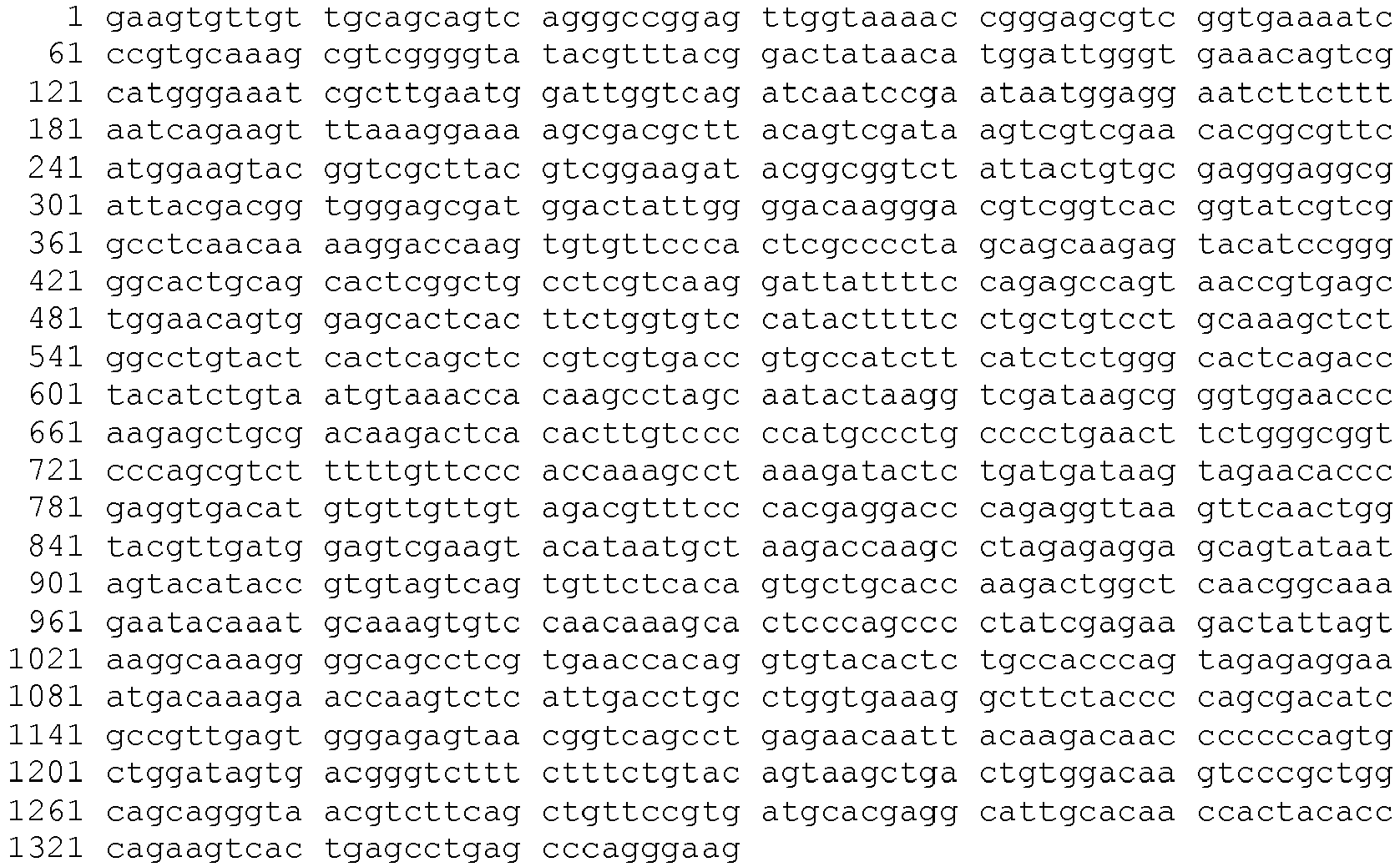
- Protein Sequence Defining the Full Length Ch01G06 Chimeric Heavy Chain (Mouse Heavy Chain Variable Region and Human IgG1 Constant Region) (SEQ ID NO:176)

- Nucleic Acid Sequence Encoding the Full Length Hu01G06 IGHV1-18 Heavy Chain (Humanized Heavy Chain Variable Region and Human IgG1 Constant Region) (SEQ ID NO:177)

- Protein Sequence Defining the Full Length Hu01G06 IGHV1-18 Heavy Chain (Humanized Heavy Chain Variable Region and Human IgG1 Constant Region) (SEQ ID NO:178)

- Nucleic Acid Sequence Encoding the Full Length Hu01G06 IGHV1-69 Heavy Chain (Humanized Heavy Chain Variable Region and Human IgG1 Constant Region) (SEQ ID NO:179)
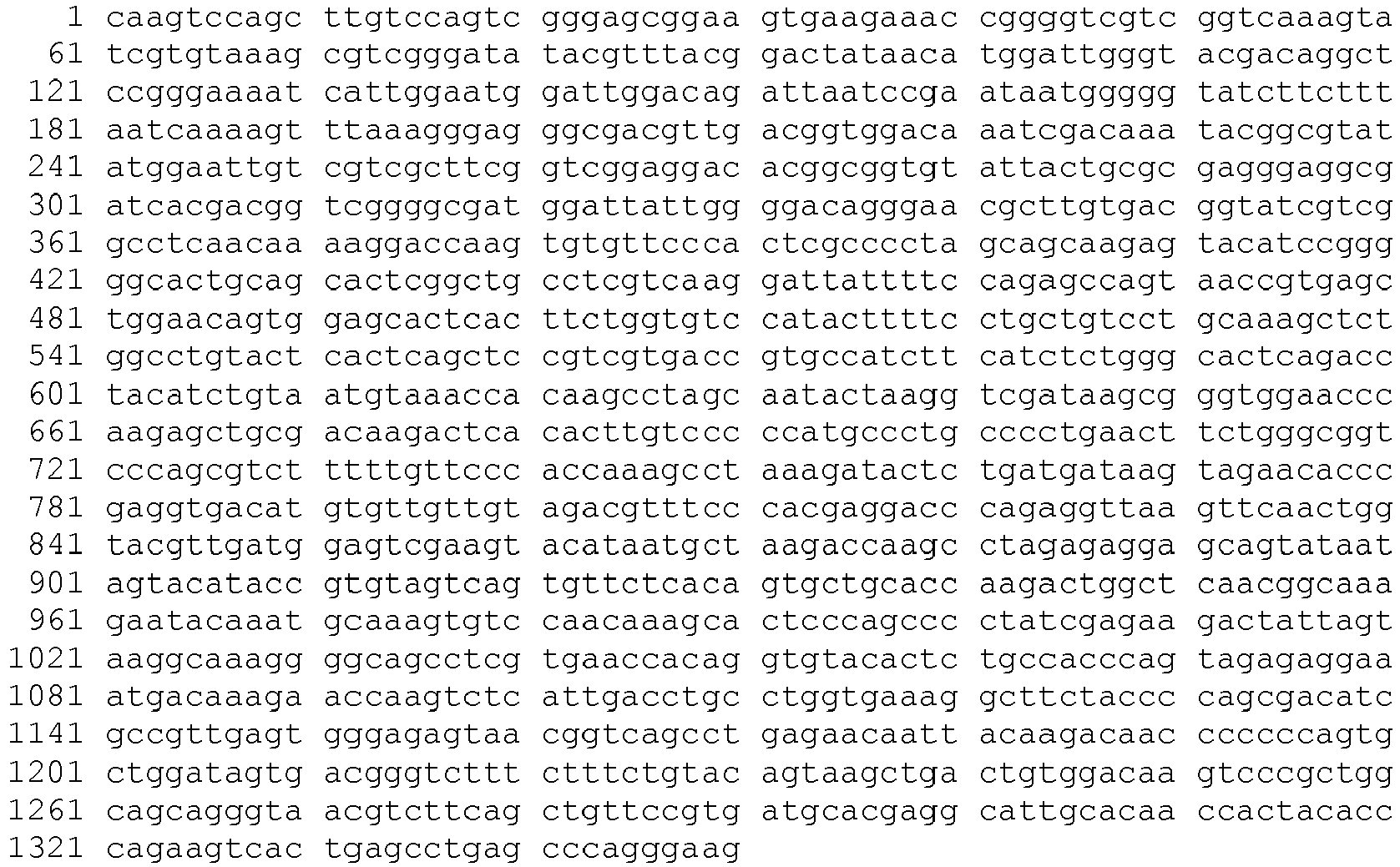
- Protein Sequence Defining the Full Length Hu01G06 IGHV1-69 Heavy Chain (Humanized Heavy Chain Variable Region and Human IgG1 Constant Region) (SEQ ID NO:180)

- Nucleic Acid Sequence Encoding the Full Length Sh01G06 IGHV1-18 M69L Heavy Chain (Humanized Heavy Chain Variable Region and Human IgG1 Constant Region) (SEQ ID NO:181)

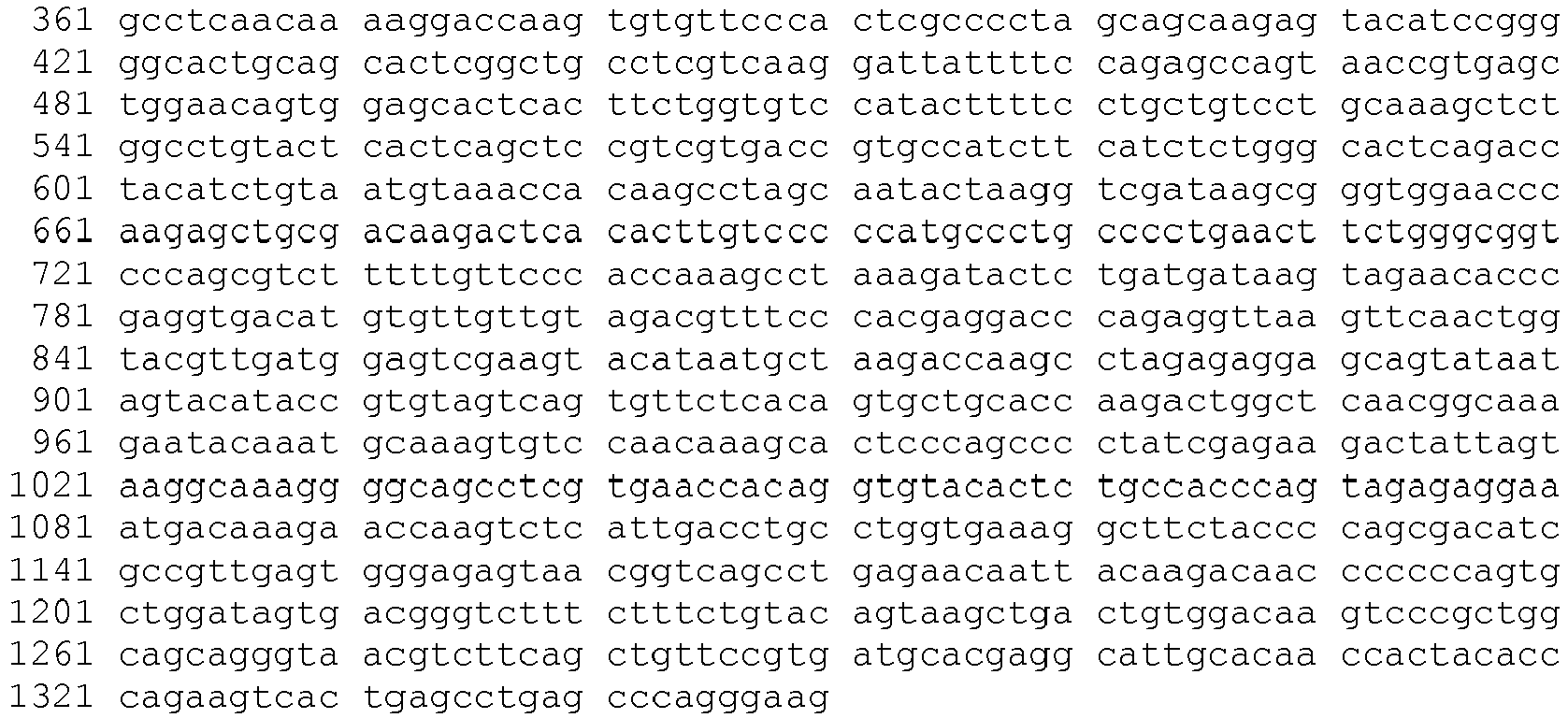
- Protein Sequence Defining the Full Length Sh01G06 IGHV1-18 M69L Heavy Chain (Humanized Heavy Chain Variable Region and Human IgG1 Constant Region) (SEQ ID NO:182)

- Nucleic Acid Sequence Encoding the Full Length Sh01G06 IGHV1-18 M69L K64Q G44S Heavy Chain (Humanized Heavy Chain Variable Region and Human IgG1 Constant Region) (SEQ ID NO:183)


- Protein Sequence Defining the Full Length Sh01G06 IGHV1-18 M69L K64Q G44S Heavy Chain (Humanized Heavy Chain Variable Region and Human IgG1 Constant Region) (SEQ ID NO:184)

- Nucleic Acid Sequence Encoding the Full Length Sh01G06 IGHV1-18 M69L K64Q Heavy Chain (Humanized Heavy Chain Variable Region and Human IgG1 Constant Region) (SEQ ID NO:185)

- Protein Sequence Defining the Full Length Sh01G06 IGHV1-18 M69L K64Q Heavy Chain (Humanized Heavy Chain Variable Region and Human IgG1 Constant Region) (SEQ ID NO:186)

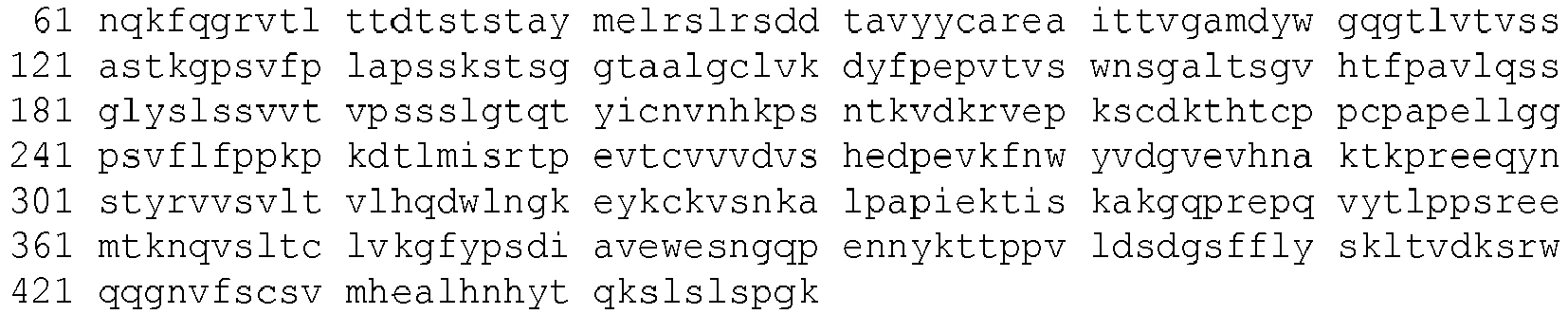
- Nucleic Acid Sequence Encoding the Full Length Sh01G06 IGHV1-69 T30S I69L Heavy Chain (Humanized Heavy Chain Variable Region and Human IgG1 Constant Region) (SEQ ID NO:187)

- Protein Sequence Defining the Full Length Sh01G06 IGHV1-69 T30S I69L Heavy Chain (Humanized Heavy Chain Variable Region and Human IgG1 Constant Region) (SEQ ID NO:188)

- Nucleic Acid Sequence Encoding the Full Length Sh01G06 IGHV1-69 T30S K64Q I69L Heavy Chain (Humanized Heavy Chain Variable Region and Human IgG1 Constant Region) (SEQ ID NO:189)

- Protein Sequence Defining the Full Length Sh01G06 IGHV1-69 T30S K64Q I69L Heavy Chain (Humanized Heavy Chain Variable Region and Human IgG1 Constant Region) (SEQ ID NO:190)

- Nucleic Acid Sequence Encoding the Full Length Hu01G06 IGHV1-18 F1 Heavy Chain (Humanized Heavy Chain Variable Region and Human IgG1 Constant Region) (SEQ ID NO:255)


- Protein Sequence Defining the Full Length Hu01G06 IGHV1-18 F1 Heavy Chain (Humanized Heavy Chain Variable Region and Human IgG1 Constant Region) (SEQ ID NO:256)

- Nucleic Acid Sequence Encoding the Full Length Hu01G06 IGHV1-18 F2 Heavy Chain (Humanized Heavy Chain Variable Region and Human IgG1 Constant Region) (SEQ ID NO:257)

- Protein Sequence Defining the Full Length Hu01G06 IGHV1-18 F2 Heavy Chain (Humanized Heavy Chain Variable Region and Human IgG1 Constant Region) (SEQ ID NO:258)

- Nucleic Acid Sequence Encoding the Full Length Hu01G06 IGHV1-69 F1 Heavy Chain (Humanized Heavy Chain Variable Region and Human IgG1 Constant Region) (SEQ ID NO:259)

- Protein Sequence Defining the Full Length Hu01G06 IGHV1-69 F1 Heavy Chain (Humanized Heavy Chain Variable Region and Human IgG1 Constant Region) (SEQ ID NO:260)


- Nucleic Acid Sequence Encoding the Full Length Hu01G06 IGHV1-69 F2 Heavy Chain (Humanized Heavy Chain Variable Region and Human IgG1 Constant Region) (SEQ ID NO:261)

- Protein Sequence Defining the Full Length Hu01G06 IGHV1-69 F2 Heavy Chain (Humanized Heavy Chain Variable Region and Human IgG1 Constant Region) (SEQ ID NO:262)

- Nucleic Acid Sequence Encoding the Full Length Ch06C11 Chimeric Heavy Chain (Mouse Heavy Chain Variable Region and Human IgG1 Constant Region) (SEQ ID NO:191)


- Protein Sequence Defining the Full Length Ch06C11 Chimeric Heavy Chain (Mouse Heavy Chain Variable Region and Human IgG1 Constant Region) (SEQ ID NO:192)

- Nucleic Acid Sequence Encoding the Full Length HE LM 06C11 IGHV2-70 Heavy Chain (Humanized Heavy Chain Variable Region and Human IgG1 Constant Region) (SEQ ID NO:193)
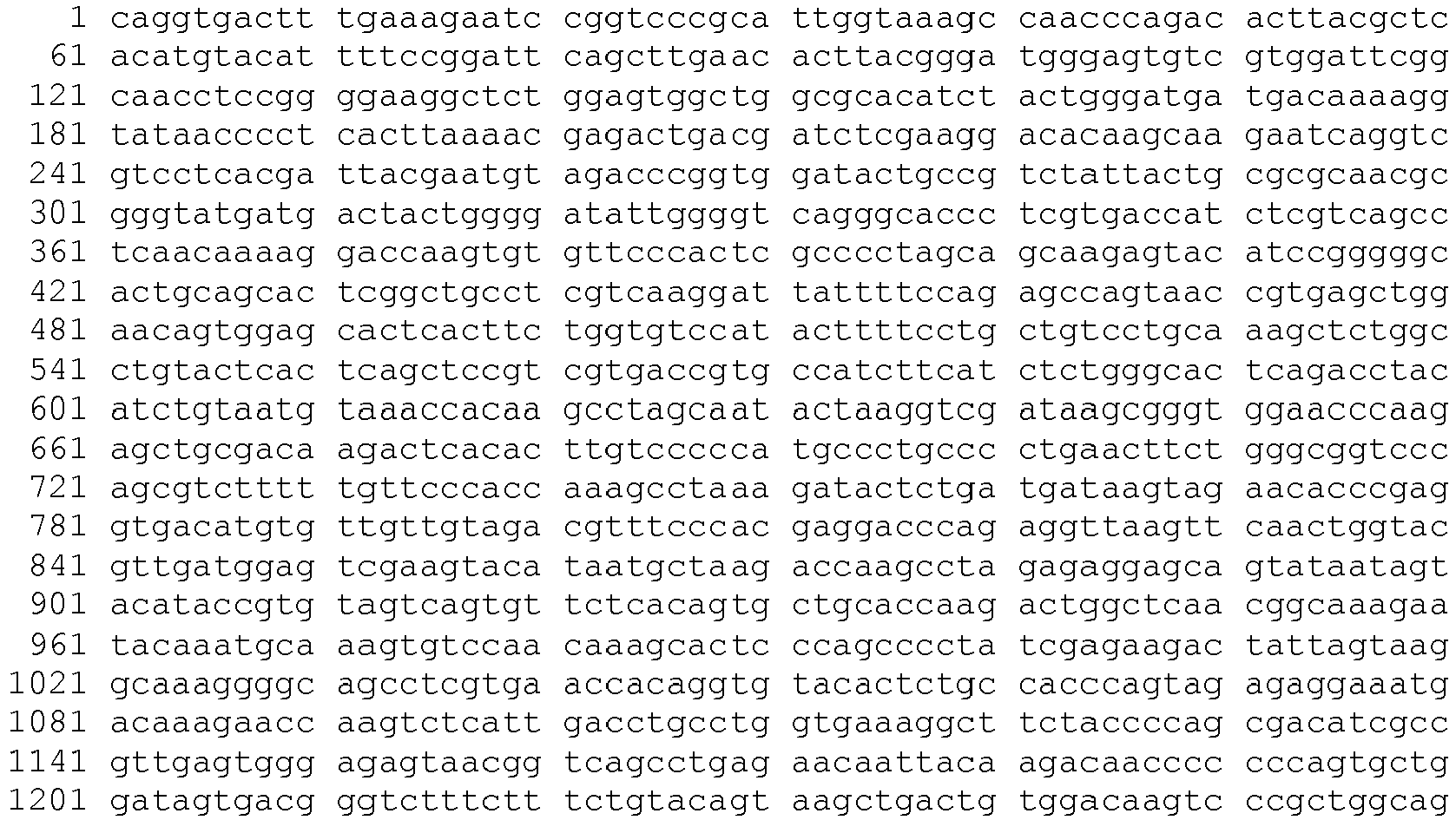

- Protein Sequence Defining the Full Length HE LM 06C11 IGHV2-70 Heavy Chain (Humanized Heavy Chain Variable Region and Human IgG1 Constant Region) (SEQ ID NO:194)

- Nucleic Acid Sequence Encoding the Full Length Hu06C11 IGHV2-5 Heavy Chain (Humanized Heavy Chain Variable Region and Human IgG1 Constant Region) (SEQ ID NO:195)

- Protein Sequence Defining the Full Length Hu06C11 IGHV2-5 Heavy Chain (Humanized Heavy Chain Variable Region and Human IgG1 Constant Region) (SEQ ID NO:196)


- Nucleic Acid Sequence Encoding the Full Length Ch14F11 Chimeric Heavy Chain (Mouse Heavy Chain Variable Region and Human IgG1 Constant Region) (SEQ ID NO:197)

- Protein Sequence Defining the Full Length Ch14F11 Chimeric Heavy Chain (Mouse Heavy Chain Variable Region and Human IgG1 Constant Region) (SEQ ID NO:198)
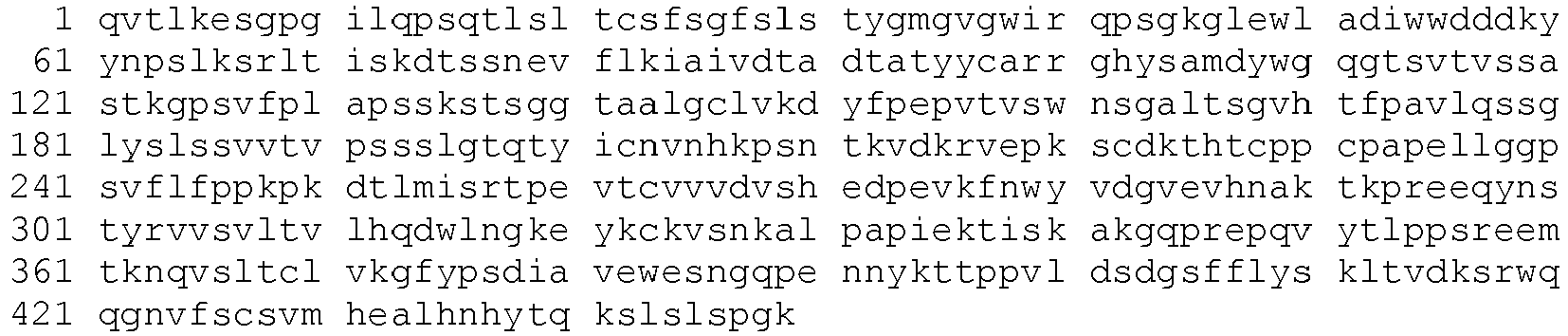
- Nucleic Acid Sequence Encoding the Full Length Sh14F11 IGHV2-5 Heavy Chain (Humanized Heavy Chain Variable Region and Human IgG1 Constant Region) (SEQ ID NO:199)


- Protein Sequence Defining the Full Length Sh14F11 IGHV2-5 Heavy Chain (Humanized Heavy Chain Variable Region and Human IgG1 Constant Region) (SEQ ID NO:200)

- Nucleic Acid Sequence Encoding the Full Length Sh14F11 IGHV2-70 Heavy Chain (Humanized Heavy Chain Variable Region and Human IgG1 Constant Region) (SEQ ID NO:201)


- Protein Sequence Defining the Full Length Sh14F11 IGHV2-70 Heavy Chain (Humanized Heavy Chain Variable Region and Human IgG1 Constant Region) (SEQ ID NO:202)

- Nucleic Acid Sequence Encoding the Full Length Ch01G06 Chimeric Light Chain (Mouse Kappa Chain Variable Region and Human Kappa Constant Region) (SEQ ID NO:203)

- Protein Sequence Defining the Full Length Ch01G06 Chimeric Light Chain (Mouse Kappa Chain Variable Region and Human Kappa Constant Region) (SEQ ID NO:204)

- Nucleic Acid Sequence Encoding the Full Length Hu01G06 IGKV1-39 Light Chain (Humanized Kappa Chain Variable Region and Human Kappa Constant Region) (SEQ ID NO:205)


- Protein Sequence Defining the Full Length Hu01G06 IGKV1-39 Light Chain (Humanized Kappa Chain Variable Region and Human Kappa Constant Region) (SEQ ID NO:206)

- Nucleic Acid Sequence Encoding the Full Length Hu01G06 IGKV1-39 S43A V48I Light Chain (Humanized Kappa Chain Variable Region and Human Kappa Constant Region) (also referred to herein as the full length Hu01G06 IGFV1-39 F1 Light Chain; SEQ ID NO:207)

- Protein Sequence Defining the Full Length Hu01G06 IGKV1-39 S43A V48I Light Chain (Humanized Kappa Chain Variable Region and Human Kappa Constant Region) (also referred to herein as the full length Hu01G06 IGFV1-39 F1 Light Chain; SEQ ID NO:208)

- Nucleic Acid Sequence Encoding the Full Length Hu01G06 IGKV1-39 V48I Light Chain (Humanized Kappa Chain Variable Region and Human Kappa Constant Region) (SEQ ID NO:209)


- Protein Sequence Defining the Full Length Hu01G06 IGKV1-39 V48I Light Chain (Humanized Kappa Chain Variable Region and Human Kappa Constant Region) (SEQ ID NO:210)

- Nucleic Acid Sequence Encoding the Full Length Hu01G06 IGKV1-39 F1 Light Chain (Humanized Kappa Chain Variable Region and Human Kappa Constant Region) (also referred to herein as the Full Length Hu01G06 IGKV1-39 S43A V48I Light Chain; SEQ ID NO:207)

- Protein Sequence Defining the Full Length Hu01G06 IGKV1-39 F1 Light Chain (Humanized Kappa Chain Variable Region and Human Kappa Constant Region) (also referred to herein as the Full Length Hu01G06 IGKV1-39 S43A V48I Light Chain; SEQ ID NO:208)

- Nucleic Acid Sequence Encoding the Full Length Hu01G06 IGKV1-39 F2 Light Chain (Humanized Kappa Chain Variable Region and Human Kappa Constant Region) (SEQ ID NO:263)


- Protein Sequence Defining the Full Length Hu01G06 IGKV1-39 F2 Light Chain (Humanized Kappa Chain Variable Region and Human Kappa Constant Region) (SEQ ID NO:264)

- Nucleic Acid Sequence Encoding the Full Length Ch06C11 Chimeric Light Chain (Mouse Kappa Chain Variable Region and Human Kappa Constant Region) (SEQ ID NO:211)

- Protein Sequence Defining the Full Length Ch06C11 Chimeric Light Chain (Mouse Kappa Chain Variable Region and Human Kappa Constant Region) (SEQ ID NO:212)

- Nucleic Acid Sequence Encoding the Full Length Sh06C11 IGKV1-16 Light Chain (Humanized Kappa Chain Variable Region and Human Kappa Constant Region) (SEQ ID NO:213)


- Protein Sequence Defining the Full Length Sh06C11 IGKV1-16 Light Chain (Humanized Kappa Chain Variable Region and Human Kappa Constant Region) (SEQ ID NO:214)

- Nucleic Acid Sequence Encoding the Full Length Ch14F11 Chimeric Light Chain (Mouse Kappa Chain Variable Region and Human Kappa Constant Region) (SEQ ID NO:215)

- Protein Sequence Defining the Full Length Ch14F11 Chimeric Light Chain (Mouse Kappa Chain Variable Region and Human Kappa Constant Region) (SEQ ID NO:216)

- Nucleic Acid Sequence Encoding the Full Length Hu14F11 IGKV1-16 Light Chain (Humanized Kappa Chain Variable Region and Human Kappa Constant Region) (SEQ ID NO:217)

- Protein Sequence Defining the Full Length Hu14F11 IGKV1-16 Light Chain (Humanized Kappa Chain Variable Region and Human Kappa Constant Region) (SEQ ID NO:218)

- Table 22 is a concordance chart showing the SEQ ID NO. of each sequence discussed in this Example.
Table 22 SEQ ID NO. Nucleic Acid or Protein 171 Human IgG1 constant-nucleic acid 172 Human IgG1 constant-protein 173 Human Kappa constant-nucleic acid 174 Human Kappa constant-protein 175 Humanized Ch01G06 Chimeric Heavy Human Variable + Human IgG1 constant-nucleic acid 176 Humanized Ch01G06 Chimeric Heavy Human Variable + Human IgG1 constant-protein 177 Humanized Hu01G06 IGHV1-18 Heavy Human Variable + Human IgG1 constant-nucleic acid 178 Humanized Hu01G06 IGHV1-18 Heavy Human Variable + Human IgG1 constant-protein 179 Humanized Hu01G06 IGHV1-69 Heavy Human Variable + Human IgG1 constant-nucleic acid 180 Humanized Hu01G06 IGHV1-69 Heavy Human Variable + Human IgG1 constant-protein 181 Humanized Sh01G06 IGHV1-18 M69L Heavy Human Variable + Human IgG1 constant-nucleic acid 182 Humanized Sh01G06 IGHV1-18 M69L Heavy Human Variable + Human IgG1 constant-protein 183 Humanized Sh01G06 IGHV1-18 M69L K64Q G44S Heavy Human Variable + Human IgG1 constant-nucleic acid 184 Humanized Sh01G06 IGHV1-18 M69L K64Q G44S Heavy Human Variable + Human IgG1 constant-protein 185 Humanized Sh01G06 IGHV1-18 M69L K64Q Heavy Human Variable + Human IgG1 constant-nucleic acid 186 Humanized Sh01G06 IGHV1-18 M69L K64Q Heavy Human Variable + Human IgG1 constant-protein 187 Humanized Sh01G06 IGHV1-69 T30S I69L Heavy Human Variable + Human IgG1 constant-nucleic acid 188 Humanized Sh01G06 IGHV1-69 T30S I69L Heavy Human Variable + Human IgG1 constant-protein 189 Humanized Sh01G06 IGHV1-69 T30S K64Q I69L Heavy Human Variable + Human IgG1 constant-nucleic acid 190 Humanized Sh01G06 IGHV1-69 T30S K64Q I69L Heavy Human Variable + Human IgG1 constant-protein 255 Humanized Hu01G06 IGHV1-18 F1 Heavy Human Variable + Human IgG1 constant-nucleic acid 256 Humanized Hu01G06 IGHV1-18 F1 Heavy Human Variable + Human IgG1 constant-protein 257 Humanized Hu01G06 IGHV1-18 F2 Heavy Human Variable + Human IgG1 constant-nucleic acid 258 Humanized Hu01G06 IGHV1-18 F2 Heavy Human Variable + Human IgG1 constant-protein 259 Humanized Hu01G06 IGHV1-69 F1 Heavy Human Variable + Human IgG1 constant-nucleic acid 260 Humanized Hu01G06 IGHV1-69 F1 Heavy Human Variable + Human IgG1 constant-protein 261 Humanized Hu01G06 IGHV1-69 F2 Heavy Human Variable + Human IgG1 constant-nucleic acid 262 Humanized Hu01G06 IGHV1-69 F2 Heavy Human Variable + Human IgG1 constant-protein 191 Humanized Ch06C11 Chimeric Heavy Human Variable + Human IgG1 constant-nucleic acid 192 Humanized Ch06C11 Chimeric Heavy Human Variable + Human IgG1 constant-protein 193 Humanized HE LM 06C11 IGHV2-70 Heavy Human Variable + Human IgG1 constant-nucleic acid 194 Humanized HE LM 06C11 IGHV2-70 Heavy Human Variable + Human IgG1 constant-protein 195 Humanized Hu06C11 IGHV2-5 Heavy Human Variable + Human IgG1 constant-nucleic acid 196 Humanized Hu06C11 IGHV2-5 Heavy Human Variable + Human IgG1 constant-protein 197 Humanized Ch14F11 Chimeric Heavy Human Variable + Human IgG1 constant-nucleic acid 198 Humanized Ch14F11 Chimeric Heavy Human Variable + Human IgG1 constant-protein 199 Humanized Sh14F11 IGHV2-5 Heavy Human Variable + Human IgG1 constant-nucleic acid 200 Humanized Sh14F11 IGHV2-5 Heavy Human Variable + Human IgG1 constant-protein 201 Humanized Sh14F11-IGHV2-70 Heavy Human Variable + Human IgG1 constant-nucleic acid 202 Humanized Sh14F11-IGHV2-70 Heavy Human Variable + Human IgG1 constant-protein 203 Humanized Ch01G06 Chimeric Human Variable + Human Kappa constant-nucleic acid 204 Humanized Ch01G06 Chimeric Human Variable + Human Kappa constant-protein 205 Humanized Hu01G06 IGKV1-39 Human Variable + Human Kappa constant-nucleic acid 206 Humanized Hu01G06 IGKV1-39 Human Variable + Human Kappa constant-protein 207 Humanized Hu01G06 IGKV1-39 S43A V48I Human Variable + Human Kappa constant-nucleic acid 208 Humanized Hu01G06 IGKV1-39 S43A V48I Human Variable + Human Kappa constant-protein 209 Humanized Hu01G06 IGKV1-39 V48I Human Variable + Human Kappa constant-nucleic acid 210 Humanized Hu01G06 IGKV1-39 V48I Human Variable + Human Kappa constant-protein 207 Humanized Hu01G06 IGKV1-39 F1 Human Variable + Human Kappa constant-nucleic acid 208 Humanized Hu01G06 IGKV1-39 F1 Human Variable + Human Kappa constant-protein 263 Humanized Hu01G06 IGKV1-39 F2 Human Variable + Human Kappa constant-nucleic acid 264 Humanized Hu01G06 IGKV1-39 F2 Human Variable + Human Kappa constant-protein 211 Humanized Ch06C11 Chimeric Human Variable + Human Kappa constant-nucleic acid 212 Humanized Ch06C11 Chimeric Human Variable + Human Kappa constant-protein 213 Humanized Sh06C11 IGKV1-16 Human Variable + Human Kappa constant-nucleic acid 214 Humanized Sh06C11 IGKV1-16 Human Variable + Human Kappa constant-protein 215 Humanized Ch14F11 Chimeric Human Variable + Human Kappa constant-nucleic acid 216 Humanized Ch14F11 Chimeric Human Variable + Human Kappa constant-protein 217 Humanized Hu14F11 IGKV1-16 Human Variable + Human Kappa constant-nucleic acid 218 Humanized Hu14F11 IGKV1-16 Human Variable + Human Kappa constant-protein - Table 23 below shows antibodies containing chimeric immunoglobulin heavy and light chains and exemplary combinations of the full-length chimeric or humanized immunoglobulin heavy and light chains.
Table 23 Antibody Name Light Chain Heavy Chain Hu01G06-1 Humanized Ch01G06 Chimeric Human Variable + Human Kappa constant (SEQ ID NO:204) Humanized Ch01G06 Chimeric Heavy Human Variable + Human IgG1 constant (SEQ ID NO:176) Hu01G06-46 Humanized Hu01G06 IGKV1-39 Human Variable + Human Kappa constant (SEQ ID NO:206) Humanized Hu01G06 IGHV1-18 Heavy Human Variable + Human IgG1 constant (SEQ ID NO:178) Hu01G06-52 Humanized Hu01G06 IGKV1-39 Human Variable + Human Kappa constant (SEQ ID NO:206) Humanized Hu01G06 IGHV1-69 Heavy Human Variable + Human IgG1 constant (SEQ ID NO:180) Hu01G06-100 Humanized Hu01G06 IGKV1-39 Human Variable + Human Kappa constant (SEQ ID NO:206) Humanized Sh01G06 IGHV1-18 M69L Heavy Human Variable + Human IgG1 constant (SEQ ID NO:182) Anitbody Name Light Chain Heavy Chain Hu01G06-101 Humanized Hu01G06 IGKV1-39 Human Variable + Human Kappa constant (SEQ ID NO:206) Humanized Sh01G06 IGHV1-18 M69L K64Q Heavy Human Variable + Human IgG1 constant (SEQ ID NO:186) Hu01G06-102 Humanized Hu01G06 IGKV1-39 Human Variable + Human Kappa constant (SEQ ID NO:206) Humanized Sh01G06 IGHV1-18 M69L K64Q G44S Heavy Human Variable + Human IgG1 constant (SEQ ID NO:184) Hu01G06-103 Humanized Hu01G06 IGKV1-39 Human Variable + Human Kappa constant (SEQ ID NO:206) Humanized Sh01G06 IGHV1-69 T30S I69L Heavy Human Variable + Human IgG1 constant (SEQ ID NO:188) Hu01G06-104 Humanized Hu01G06 IGKV1-39 Human Variable + Human Kappa constant (SEQ ID NO:206) Humanized Sh01G06 IGHV1-69 T30S K64Q I69L Heavy Human Variable + Human IgG1 constant (SEQ ID NO:190) Hu01G06-105 Humanized Hu01G06 IGKV1-39 V48I Human Variable + Human Kappa constant (SEQ ID NO:210) Humanized Sh01G06 IGHV1-18 M69L Heavy Human Variable + Human IgG1 constant (SEQ ID NO:182) Hu01G06-106 Humanized Hu01G06 IGKV1-39 V48I Human Variable + Human Kappa constant (SEQ ID NO:210) Humanized Sh01G06 IGHV1-18 M69L K64Q Heavy Human Variable + Human IgG1 constant (SEQ ID NO:186) Hu01G06-107 Humanized Hu01G06 IGKV1-39 V48I Human Variable + Human Kappa constant (SEQ ID NO:210) Humanized Sh01G06 IGHV1-18 M69L K64Q G44S Heavy Human Variable + Human IgG1 constant (SEQ ID NO:184) Hu01G06-108 Humanized Hu01G06 IGKV1-39 V48I Human Variable + Human Kappa constant (SEQ ID NO:210) Humanized Sh01G06 IGHV1-69 T30S I69L Heavy Human Variable + Human IgG1 constant (SEQ ID NO:188) Hu01G06-109 Humanized Hu01G06 IGKV1-39 V48I Human Variable + Human Kappa constant (SEQ ID NO:210) Humanized Sh01G06 IGHV1-69 T30S K64Q I69L Heavy Human Variable + Human IgG1 constant (SEQ ID NO:190) Hu01G06-110 Humanized Hu01G06 IGKV1-39 S43A V48I Human Variable + Human Kappa constant (SEQ ID NO:208) Humanized Sh01G06 IGHV1-18 M69L Heavy Human Variable + Human IgG1 constant (SEQ ID NO:182) Hu01G06-111 Humanized Hu01G06 IGKV1-39 S43A V48I Human Variable + Human Kappa constant (SEQ ID NO:208) Humanized Sh01G06 IGHV1-18 M69L K64Q Heavy Human Variable + Human IgG1 constant (SEQ ID NO:186) Antibody Name Light Chain Heavy Chain Hu01G06-112 Humanized Hu01G06 IGKV1-39 S43A V48I Human Variable + Human Kappa constant (SEQ ID NO:208) Humanized Sh01G06 IGHV1-18 M69L K64Q G44S Heavy Human Variable + Human IgG1 constant (SEQ ID NO:184) Hu01G06-113 Humanized Hu01G06 IGKV1-39 S43A V48I Human Variable + Human Kappa constant (SEQ ID NO:208) Humanized Sh01G06 IGHV1-69 T30S I69L Heavy Human Variable + Human IgG1 constant (SEQ ID NO:188) Hu01G06-114 Humanized Hu01G06 IGKV1-39 S43A V48I Human Variable + Human Kappa constant (SEQ ID NO:208) Humanized Sh01G06 IGHV1-69 T30S K64Q I69L Heavy Human Variable + Human IgG1 constant (SEQ ID NO:190) Hu01G06-122 Humanized Hu01G06 IGKV1-39 F1 Human Variable + Human Kappa constant (SEQ ID NO:208) Humanized Hu01G06 IGHV1-18 F1 Heavy Human Variable + Human IgG1 constant (SEQ ID NO:256) Hu01G06-127 Humanized Hu01G06 IGKV1-39 F2 Human Variable + Human Kappa constant (SEQ ID NO:264) Humanized Hu01G06 IGHV1-18 F2 Heavy Human Variable + Human IgG1 constant (SEQ ID NO:258) Hu01G06-135 Humanized Hu01G06 IGKV1-39 F1 Human Variable + Human Kappa constant (SEQ ID NO:208) Humanized Hu01G06 IGHV1-69 F1 Heavy Human Variable + Human IgG1 constant (SEQ ID NO:260) Hu01G06-138 Humanized Hu01G06 IGKV1-39 F1 Human Variable + Human Kappa constant (SEQ ID NO:208) Humanized Hu01G06 IGHV1-69 F2 Heavy Human Variable + Human IgG1 constant (SEQ ID NO:262) Hu01G06-146 Humanized Hu01G06 IGKV1-39 F2 Human Variable + Human Kappa constant (SEQ ID NO:264) Humanized Hu01G06 IGHV1-69 F2 Heavy Human Variable + Human IgG1 constant (SEQ ID NO:262) Hu06C11-1 Humanized Ch06C11 Chimeric Human Variable + Human Kappa constant (SEQ ID NO:212) Humanized Ch06C11 Chimeric Heavy Human Variable + Human IgG1 constant (SEQ ID NO:176) Hu06C11-27 Humanized Sh06C11 IGKV1-16 Human Variable + Human Kappa constant (SEQ ID NO:214) Humanized HE LM 06C11 IGHV2-70 Heavy Human Variable + Human IgG1 constant (SEQ ID NO:194) Hu06C11-30 Humanized Sh06C11 IGKV1-16 Human Variable + Human Kappa constant (SEQ ID NO:214) Humanized Hu06C11 IGHV2-5 Heavy Human Variable + Human IgG1 constant (SEQ ID NO:196) Hu14F11-1 Humanized Ch14F11 Chimeric Human Variable + Human Kappa constant (SEQ ID NO:216) Humanized Ch14F11 Chimeric Heavy Human Variable + Human IgG1 constant (SEQ ID NO:198) Hu14F11-23 Humanized Ch14F11 Chimeric Human Variable + Human Kappa constant (SEQ ID NO:216) Humanized Ch06C11 Chimeric Heavy Human Variable + Human IgG1 constant (SEQ ID NO:192) Hu14F11-24 Humanized Ch06C11 Chimeric Human Variable + Human Kappa constant (SEQ ID NO:212) Humanized Ch14F11 Chimeric Heavy Human Variable + Human IgG1 constant (SEQ ID NO:198) Hu14F11-39 Humanized Hu14F11 IGKV1-16 Human Variable + Human Kappa constant (SEQ ID NO:218) Humanized Sh14F11 IGHV2-5 Heavy Human Variable + Human IgG1 constant (SEQ ID NO:200) Hu14F11-47 Humanized Hu14F11 IGKV1-16 Human Variable + Human Kappa constant (SEQ ID NO:218) Humanized Sh14F11-IGHV2-70 Heavy Human Variable + Human IgG1 constant (SEQ ID NO:202) - The antibody constructs containing the full length chimeric heavy and light chains are designated below:
- Chimeric 01G06 (Hu01G06-1) = Full Length Ch01G06 Chimeric Heavy Chain (Mouse Heavy Chain Variable Region and Human IgG1 Constant Region) (SEQ ID NO:176) plus Full Length Ch01G06 Chimeric Light Chain (Mouse Kappa Chain Variable Region and Human Kappa Constant Region) (SEQ ID NO:204)
- Chimeric 06C11 (Hu06C11-1) = Full Length Ch06C11 Chimeric Heavy Chain (Mouse Heavy Chain Variable Region and Human IgG1 Constant Region) (SEQ ID NO:192) plus Full Length Ch06C11 Chimeric Light Chain (Mouse Kappa Chain Variable Region and Human Kappa Constant Region) (SEQ ID NO:212)
- Chimeric 14F11 (Hu14F11-1) = Full Length Ch14F11 Chimeric Heavy Chain (Mouse Heavy Chain Variable Region and Human IgG1 Constant Region) (SEQ ID NO:198) plus Full Length Ch14F11 Chimeric Light Chain (Mouse Kappa Chain Variable Region and Human Kappa Constant Region) (SEQ ID NO:216)
- Fifteen of the possible antibody constructs containing the full length immunoglobulin heavy and light chains containing humanized variable regions are designated below:
- Hu01G06-46 = Full Length Hu01G06 IGHV1-18 Heavy Chain (Humanized Heavy Chain Variable Region and Human IgG1 Constant Region) (SEQ ID NO:178) plus Full Length Hu01G06 IGKV1-39 Light Chain (Humanized Kappa Chain Variable Region and Human Kappa Constant Region) (SEQ ID NO:206)
- Hu01G06-52 = Full Length Hu01G06 IGHV1-69 Heavy Chain (Humanized Heavy Chain Variable Region and Human IgG1 Constant Region) (SEQ ID NO:180) plus Full Length Hu01G06 IGKV1-39 Light Chain (Humanized Kappa Chain Variable Region and Human Kappa Constant Region) (SEQ ID NO:206)
- Hu01G06-107 = Full Length Sh01G06 IGHV1-18 M69L K64Q G44S Heavy Chain (Humanized Heavy Chain Variable Region and Human IgG1 Constant Region) (SEQ ID NO:184) plus Full Length Hu01G06 IGKV1-39 V48I Light Chain (Humanized Kappa Chain Variable Region and Human Kappa Constant Region) (SEQ ID NO:210)
- Hu01G06-108 = Full Length Sh01G06 IGHV1-69 T30S I69L Heavy Chain (Humanized Heavy Chain Variable Region and Human IgG1 Constant Region) (SEQ ID NO:188) plus Full Length Hu01G06 IGKV1-39 V48I Light Chain (Humanized Kappa Chain Variable Region and Human Kappa Constant Region) (SEQ ID NO:210)
- Hu01G06-112 = Full Length Sh01G06 IGHV1-18 M69L K64Q G44S Heavy Chain (Humanized Heavy Chain Variable Region and Human IgG1 Constant Region) (SEQ ID NO:184) plus Full Length Hu01G06 IGKV1-39 S43A V48I Light Chain (Humanized Kappa Chain Variable Region and Human Kappa Constant Region) (SEQ ID NO:208)
- Hu01G06-113 = Full Length Sh01G06 IGHV1-69 T30S I69L Heavy Chain (Humanized Heavy Chain Variable Region and Human IgG1 Constant Region) (SEQ ID NO:188) plus Full Length Hu01G06 IGKV1-39 S43A V48I Light Chain (Humanized Kappa Chain Variable Region and Human Kappa Constant Region) (SEQ ID NO:208)
- Hu01G06-122 = Full Length Hu01G06 IGHV1-18 F1 Heavy Chain (Humanized Heavy Chain Variable Region and Human IgG1 Constant Region) (SEQ ID NO:256) plus Full Length Hu01G06 IGKV1-39 F1 Light Chain (Humanized Kappa Chain Variable Region and Human Kappa Constant Region) (SEQ ID NO:208)
- Hu01G06-127 = Full Length Hu01G06 IGHV1-18 F2 Heavy Chain (Humanized Heavy Chain Variable Region and Human IgG1 Constant Region) (SEQ ID NO:258) plus Full Length Hu01G06 IGKV1-39 F2 Light Chain (Humanized Kappa Chain Variable Region and Human Kappa Constant Region) (SEQ ID NO:264)
- Hu01G06-135 = Full Length Hu01G06 IGHV1-69 F1 Heavy Chain (Humanized Heavy Chain Variable Region and Human IgG1 Constant Region) (SEQ ID NO:260) plus Full Length Hu01G06 IGKV1-39 F1 Light Chain (Humanized Kappa Chain Variable Region and Human Kappa Constant Region) (SEQ ID NO:208)
- Hu01G06-138 = Full Length Hu01G06 IGHV1-69 F2 Heavy Chain (Humanized Heavy Chain Variable Region and Human IgG1 Constant Region) (SEQ ID NO:262) plus Full Length Hu01G06 IGKV1-39 F1 Light Chain (Humanized Kappa Chain Variable Region and Human Kappa Constant Region) (SEQ ID NO:208)
- Hu01G06-146 = Full Length Hu01G06 IGHV1-69 F2 Heavy Chain (Humanized Heavy Chain Variable Region and Human IgG1 Constant Region) (SEQ ID NO:262) plus Full Length Hu01G06 IGKV1-39 F2 Light Chain (Humanized Kappa Chain Variable Region and Human Kappa Constant Region) (SEQ ID NO:264)
- Hu06C11-27 = Full Length HE LM 06C11 IGHV2-70 Heavy Chain (Humanized Heavy Chain Variable Region and Human IgG1 Constant Region) (SEQ ID NO:194) plus Full Length Sh06C11 IGKV1-16 Light Chain (Humanized Kappa Chain Variable Region and Human Kappa Constant Region) (SEQ ID NO:214)
- Hu06C11-30 = Full Length Hu06C11 IGHV2-5 Heavy Chain (Humanized Heavy Chain Variable Region and Human IgG1 Constant Region) (SEQ ID NO:196) plus Full Length Sh06C11 IGKV1-16 Light Chain (Humanized Kappa Chain Variable Region and Human Kappa Constant Region) (SEQ ID NO:214)
- Hu14F11-39 = Full Length Sh14F11 IGHV2-5 Heavy Chain (Humanized Heavy Chain Variable Region and Human IgG1 Constant Region) (SEQ ID NO:200) plus Full Length Hu14F11 IGKV1-16 Light Chain (Humanized Kappa Chain Variable Region and Human Kappa Constant Region) (SEQ ID NO:218)
- Hu14F11-47 = Full Length Sh14F11-IGHV2-70 Heavy Chain (Humanized Heavy Chain Variable Region and Human IgG1 Constant Region) (SEQ ID NO:202) plus Full Length Hu14F11 IGKV1-16 Light Chain (Humanized Kappa Chain Variable Region and Human Kappa Constant Region) (SEQ ID NO:218)
- The binding affinities and kinetics of binding of chimeric and humanized antibodies to mFc-rhGDF15 were measured by surface plasmon resonance, using a BIAcore® T100 instrument (GE Healthcare, Piscataway, NJ).
- Goat anti-human IgGs (Fc fragment specific, Jackson ImmunoResearch, West Grove, PA) were immobilized on carboxymethylated dextran CM4 sensor chips by amine coupling, according to a standard protocol. Analyses were performed at 37°C using PBS containing 0.05% surfactant P20 as running buffer. The antibodies were captured in individual flow cells at a flow rate of 10 µL/minute. Injection time was varied for each antibody to yield an Rmax between 30 and 60 RU. Buffer or mFc-rhGDF15 diluted in running buffer was injected sequentially over a reference surface (no antibody captured) and the active surface (antibody to be tested) for 240 seconds at 60 µL/minute. The dissociation phase was monitored for up to 1200 seconds. The surface was then regenerated with two 60-second injections of 10 mM Glycine-HCl, pH 2.25, at a flow rate of 30 µL/minute. The GDF15 concentration range tested was 20 nM to 0.625 nM.
- Kinetic parameters were determined using the kinetic function of the BIAevaluation software (GE Healthcare) with double reference subtraction. Kinetic parameters for each antibody, ka (association rate constant), kd (dissociation rate constant), and KD (equilibrium dissociation constant) were determined. Kinetic values of purified monoclonal antibodies on mFc-rhGDF15 are summarized in Table 24.
Table 24 Antibody ka(1/Ms) kd(1/s) KD(M) n Hu01G06-1 4.2E+06 6.4E-04 1.6 E-10 8 Hu01G06-46 3.6E+06 3.8E-04 1.1E-10 11 Hu01G06-52 3.6E+06 3.6E-04 9.9E-11 10 Hu06C11-1 5.3E+06 8.4E-04 1.8E-10 2 06C11-27 4.7E+06 8.2E-04 1.8 E-10 2 Hu06C11-30 4.8E+06 8.7E-04 1.8 E-10 2 Hu14F11-1 3.0E+06 4.6E-04 1.6 E-10 2 Hu14F11-39 3.0E+06 1.9E-04 6.6 E-11 2 Hu14F11-47 3.3E+06 1.8E-04 6.5 E-11 2 - The results in Table 24 demonstrate that the chimeric and each of the humanized antibodies, have fast association rates (ka), very slow disassociation rates (kd) and very high affinities (KD). In particular, the antibodies have affinities ranging from about 65 pM to about 200 pM.
- Kinetic values of chimeric 01G06 (Hu01G06-1), two initial lead humanized 01G06 monoclonal antibodies (Hu01G06-46 and -52), and sequence optimized humanized 01G06 monoclonal antibody variants Hu01G06-100 through -114 (in supernatant) on mFc-rhGDF15 are summarized in Table 25.
Table 25 Antibody ka (1/Ms) kd (1/s) KD (M) n Hu01G06-1 4.9E+06 7.1E-04 1.4 E-10 3 Hu01G06-46 4.1E+06 4.3E-04 1.0 E-10 3 Hu01G06-52 5.0E+06 4.4E-04 8.9 E-11 3 Hu01G06-100 4.1E+06 6.2E-04 1.5 E-10 3 Hu01G06-101 4.4E+06 6.3E-04 1.4 E-10 3 Hu01G06-102 4.4E+06 4.6E-04 1.1 E-10 3 Hu01G06-103 4.4E+06 4.7E-04 1.1 E-10 3 Hu01G06-104 4.5E+06 5.2E-04 1.2 E-10 3 Hu01G06-105 4.3E+06 5.6E-04 1.3 E-10 3 Hu01G06-106 4.3E+06 7.0E-04 1.6 E-10 3 Hu01G06-107 4.1E+06 4.7E-04 1.2 E-10 3 Hu01G06-108 4.2E+06 4.6E-04 1.2 E-10 3 Hu01G06-109 4.6E+06 5.6E-04 1.3 E-10 4 Hu01G06-110 4.3E+06 5.8E-04 1.4 E-10 4 Hu01G06-111 4.3E+06 6.6E-04 1.6 E-10 3 Hu01G06-112 4.7E+06 5.3E-04 1.2 E-10 3 Hu01G06-113 4.5E+06 4.8E-04 1.1 E-10 3 Hu01G06-114 4.5E+06 5.4E-04 1.3 E-10 3 - The results in Table 25 demonstrate that the sequence optimized antibodies, Hu01G06-100 through -114, have binding affinities ranging from about 89 pM to about 160 pM.
- Binding affinities and binding kinetics of mFc-rhGDF15 with chimeric 14F11 (Hu14F11-1), chimeric light 14F11 with chimeric heavy 06C11 (Hu14F11-23), and chimeric light 06C11 with chimeric heavy 14F11 (Hu14F11-24) heavy monoclonal antibody variants (in supernatant) were measured using biolayer interferometry (BLI) on an Octet™ QK instrument (ForteBio, Inc., Menlo Park, CA). The Octet analysis was performed at 30°C using IX Kinetics Buffer (ForteBio, Inc.) as assay buffer. Anti-human IgG Fc Capture (AHC) biosensors (ForteBio, Inc.) were used to capture human antibodies onto the sensors. Sensors were saturated in assay buffer for at 300 seconds before the assay. Antibodies were loaded onto sensors by dipping the sensors into antibody supernatant solution for 220 seconds, which typically resulted in capture levels of 1.5-2 nm. Baseline was established by dipping the sensors into 1x assay buffer for 200 seconds. Next, association was monitored for 220 seconds in 400 nM mFc-rhGDF15 protein, and dissociation was followed for 600 seconds in buffer alone.
- Kinetic parameters for Hu14F11-1, Hu14F11-23, and Hu14F11-24 were determined using the kinetic function of the ForteBio Analysis Software Version 7.0. Kinetic parameters of the antibody, ka, kd, and KD were determined.
- Kinetic values of Hu14F11-1, Hu14F11-23, and Hu14F11-24 heavy monoclonal antibody variants (in supernatant) on mFc-rhGDF15 are summarized in Table 26.
Table 26 Antibody ka (1/Ms) kd (1/s) KD (M) n Hu14F11-1 6.3E+05 1.9E-05 3.2 E-11 3 Hu14F11-23 3.4E+05 6.2E-05 1.8 E-10 1 Hu14F11-24 7.1E+05 2.2E-04 3.1 E-10 1 - The results in Table 26 demonstrate that Hu14F11-23 and Hu14F11-24, (i.e., antibodies that consist of one chimeric 06C11 chain (heavy or light) mixed with one chimeric 14F11 chain (heavy or light)), retain binding to GDF15. In particular, these antibodies have high affinities ranging from about 180 pM to about 310 pM.
- The binding affinities and kinetics of binding of chimeric and humanized antibodies to mFc-rhGDF15, cleaved-rhGDF15, rabbit Fc mature recombinant mouse GDF15 (rFc-rmGDF15), and mouse Fc mature recombinant cynomolgus monkey GDF15 (mFc-rcGDF15) were measured by surface plasmon resonance, using a BIAcore® T100 instrument (GE Healthcare, Piscataway, NJ).
- Goat anti-human IgGs (Fc fragment specific, Jackson ImmunoResearch, West Grove, PA) were immobilized on carboxymethylated dextran CM4 sensor chips by amine coupling, according to a standard protocol. Analyses were performed at 37°C using PBS containing 0.05% surfactant P20 as running buffer. The antibodies were captured in individual flow cells at a flow rate of 10 µL/minute. Injection time was varied for each antibody to yield an Rmax between 30 and 60 RU. Buffer, mFc-rhGDF15, cleaved-rhGDF15, rFc-rmGDF15, or mFc-rcGDF15 diluted in running buffer was injected sequentially over a reference surface (no antibody captured) and the active surface (antibody to be tested) for 240 seconds at 60 µL/minute. The dissociation phase was monitored for up to 1500 seconds. The surface was then regenerated with two 60-second injections of 10 mM Glycine-HCl, pH 2.25, at a flow rate of 30 µL/minute. The GDF15 concentration range tested for each GDF15 protein was 5 nM to 0.3125 nM (two-fold dilutions).
- Kinetic parameters were determined using the kinetic function of the BIAevaluation software (GE Healthcare) with double reference subtraction. Kinetic parameters for each antibody, ka (association rate constant), kd (dissociation rate constant), and KD (equilibrium dissociation constant) were determined. Kinetic values of purified monoclonal antibodies on mFc-rhGDF15, mature human GDF15, rFc-rmGDF15, and mFc-rcGDF15 are summarized in Table 27.
Table 27 Protein Antibody ka (1/Ms) kd (1/s) KD (M) n mFc-rhGDF15 Hu01G06-122 5.9E+06 2.1E-05 6.5E-12 5 Hu01G06-127 4.6E+06 4.2E-05 1.8E-11 4 Hu01G06-135 5.3E+06 4.4E-05 1.4E-11 5 Hu01G06-138 5.9E+06 4.1E-05 1.1E-11 5 Hu01G06-146 5.3E+06 2.6E-05 9.3E-12 5 Cleaved-rhGDF15 Hu01G06-122 7.9E+06 3.4E-05 7.9E-12 4 Hu01G06-127 6.1E+06 3.6E-05 1.0E-11 4 Hu01G06-135 7.3E+06 6.2E-05 1.0E-11 4 Hu01G06-138 7.9E+06 2.5E-05 4.5E-12 4 Hu01G06-146 6.5E+06 5.2E-05 1.1E-11 4 mFc-rcGDF15 Hu01G06-122 2.3E+06 2.4E-05 1.0E-11 4 Hu01G06-127 1.8E+06 1.6E-05 9.5E-12 4 Hu01G06-135 2.2E+06 7.9E-05 3.8E-11 4 Hu01G06-138 2.3E+06 5.3E-05 2.5E-11 4 Hu01G06-146 2.0E+06 1.5E-05 8.0E-12 4 rFc-rmGDF15 Hu01G06-122 2.2E+07 1.4E-03 6.3E-11 2 Hu01G06-127 3.9E+07 2.1E-03 5.1E-11 2 Hu01G06-135 3.7E+07 1.9E-03 5.5E-11 2 Hu01G06-138 1.9E+07 8.0E-04 4.4E-11 2 Hu01G06-146 1.1E+07 7.2E-04 6.3E-11 2 - The results in Table 27 demonstrate that the chimeric and each of the humanized antibodies, have fast association rates (ka), very slow disassociation rates (kd) and very high affinities (KD). In particular, the antibodies have affinities ranging from less than 5 pM (e.g., about 4.5 pM) to about 65 pM.
- This Example demonstrates the reversal of cachexia (as indicated by body weight loss) by humanized 01G06, 06C11, 14F11 antibodies in an HT-1080 fibrosarcoma xenograft model. HT-1080 cells were grown in culture at 37°C and inoculated subcutaneously into the flank of 8-week old female ICR-SCID mice as described above in Example 10. Body weight was measured daily. When body weight reached 93%, the mice were randomly divided into groups of ten mice each. Each group received one of the following treatments: murine IgG control, 01G06, 06C11, 14F11, and their respective humanized versions at 2 mg/kg. Treatment was administered once a day by intra-peritoneal injection. Antibody treatment with 01G06, Hu01G06-46 and Hu01G06-52 resulted in body weight increase to initial weight or 100% (p<0.001) (
FIG. 23 ). Statistical analysis was performed using ANOVA. Results for reversal of body weight on day in the HT-1080 model are shown inFIG. 23 and Table 28, respectively.Table 28 Gr. Treatment % Body weight ANOVA Analysis (compared to mIgG) Agent mg/ kg 1 mIgG 2 79.5 NA 2 01G06 2 87.6 p<0.001 3 Hu01G06-46 2 95.4 p<0.001 4 Hu01G06-52 2 87.8 p<0.001 - The data in
FIG. 23 and Table 28 indicated that antibodies 01G06, Hu01G06-46 and Hu01G06-52 can reverse cachexia in an HT-1080 fibrosarcoma xenograft model. - Antibody treatment with 06C11, Hu06C11-27, and Hu06C11-30 resulted in body weight increase relative to initial weight or about 100% (p<0.001) (
FIG. 24 ). Statistical analysis was performed using ANOVA. Results for reversal of body weight in the HT-1080 model are shown inFIG. 24 and Table 29.Table 29 Gr. Treatment % Body weight ANOVA Analysis (compared to mIgG) Agent mg/ kg 1 mIgG 2 87.7 NA 2 06C11 2 93.6 p<0.001 3 Hu06C11-27 2 93.2 p<0.001 4 Hu06C11-30 2 89.8 p<0.01 - The data in
FIG. 24 and Table 29 indicate that antibodies 06C11, Hu06C11-27, and Hu06C11-30 can reverse cachexia in an HT-1080 fibrosarcoma xenograft model. - Antibody treatment with 14F11, Hu14F11-39, and Hu14F11-47 resulted in body weight increase relative to initial weight or about 100% (p<0.001) (
FIG. 25 ). Statistical analysis was performed using ANOVA. Results for reversal of body weight in the HT-1080 model are shown inFIG. 25 and Table 30.Table 30 Gr. Treatment % Body weight ANOVA Analysis (compared to mIgG) Agent mg/ kg 1 mIgG 2 87.7 NA 2 14F11 2 96.6 p<0.001 3 Hu14F11-39 2 90.5 p<0.001 4 Hu14F11-47 2 90.7 p<0.001 - The data in
FIG. 25 and Table 30 indicated that antibodies 14F11, Hu14F11-39, and Hu14F11-47 can reverse cachexia in an HT-1080 fibrosarcoma xenograft model. - Antibody treatment with humanized 01G06 antibodies (i.e., antibodies Hu01G06-122, Hu01G06-127, Hu01G06-135, Hu01G06-138 and Hu01G06-146) resulted in body weight increase relative to initial weight or about 100% (p<0.001) (
FIG. 26 ). Statistical analysis was performed using ANOVA. Treatment with human IgG (hIgG) was used as a control. Results for reversal of body weights in the HT-1080 model are shown inFIG. 26 and Table 31.Table 31 Gr. Treatment % Body weight ANOVA Analysis (compared to hIgG) Agent mg/ kg 1 hIgG 2 84.2 NA 2 Hu01G06-122 2 96.3 p<0.001 3 Hu01G06-127 2 96.1 p<0.001 4 Hu01G06-135 2 93.5 p<0.001 5 Hu01G06-138 2 91.9 p<0.001 6 Hu01G06-146 2 92.7 p<0.001 - The data in
FIG. 26 and Table 31 indicated that humanized anti-GDF15 antibodies Hu01G06-122, Hu01G06-127, Hu01G06-135, Hu01G06-138 and Hu01G06-146 can reverse cachexia in an HT-1080 fibrosarcoma xenograft model. - This Example demonstrates the reversal of cachexia (as indicated by body weight loss) by humanized 01G06 antibodies (i.e., antibody Hu01G06-122, Hu01G06-127, Hu01G06-135, Hu01G06-138, or Hu01G06-146) in an mFc-rhGDF15-induced cachexia model. mFc-rhGDF15 (1 µg/g) was administered subcutaneously into the flank of 8-week old female ICR-SCID mice. Body weight was measured daily. When body weight reached 93%, the mice were randomly divided into six groups of ten mice each. Each group received one of the following treatments: human IgG control (hIgG), Hu01G06-122, Hu01G06-127, Hu01G06-135, Hu01G06-138 or Hu01G06-146 at 2 mg/kg. Treatment was administered once by intra-peritoneal injection. Treatment with antibody Hu01G06-122, Hu01G06-127, Hu01G06-135, Hu01G06-138 or Hu01G06-146 resulted in body weight increase relative to initial weight or about 100% (p<0.001) (
FIG. 27 and Table 32).Table 32 Gr. Treatment % Boby weight ANOVA Analysis (compared to hIgG) Agent mg/ kg 1 hIgG 2 70.6 NA 2 Hu01G06-122 2 101.7 p<0.001 3 Hu01G06-127 2 103.2 p<0.001 4 Hu01G06-135 2 102.5 p<0.001 5 Hu01G06-138 2 101.8 p<0.001 6 Hu01G06-146 2 102.5 p<0.001 - The data in
FIG. 27 and Table 32 indicate that the disclosed anti-GDF15 antibodies can reverse cachexia in an mFc-rhGDF15-induced mouse model (i.e., a non-tumor bearing mouse model). - These results indicate that humanized anti-GDF 15 antibodies can reverse cachexia in an mFc-rhGDF15-induced cachexia model.
- This Example demonstrates the dose response reversal of cachexia (as indicated by body weight loss) by humanized Hu01G06-127 and Hu01G06-135 antibodies in an HT-1080 fibrosarcoma xenograft model. HT-1080 cells were grown in culture at 37°C and inoculated subcutaneously into the flank of 8-week old female ICR-SCID mice as described above in Example 10. Body weight was measured daily. When body weight reached 93%, the mice were randomly divided into groups of ten mice each. Each group received one of the following treatments: human IgG control (hIgG; 20 mg/kg), Hu01G06-127 (20 mg/kg, 2 mg/kg, or 0.2 mg/kg) and Hu01G06-135 (20 mg/kg, 2 mg/kg, or 0.2 mg/kg). Treatment was administered once a day by intravenous injection. Antibody treatment with Hu01G06-127 and Hu01G06-135 at 20 mg/kg resulted in body weight increase above the initial weight or 108% (p<0.001) (
FIG. 28 ). Antibody treatment with Hu01G06-127 and Hu01G06-135 at 2 mg/kg resulted in limited body weight decrease compare to control (hIgG) from the initial weight or 88-85% (p<0.001) (FIG. 28 ). Statistical analysis was performed using ANOVA. Results for changes of body weight at the end of the study in the HT-1080 model are shown inFIG. 28 and Table 33.Table 33 Treatment % Body weight ANOVA Analysis (compared to hIgG) Gr. Agent mg/ kg 1 hIgG 20 75.2 NA 2 Hu01G06-127 20 108.9 p<0.001 3 Hu01G06-127 2.0 88.1 p<0.001 4 Hu01G06-127 0.2 80.0 NS 5 Hu01G06-135 20 108.6 p<0.001 6 Hu01G06-135 2.0 85.2 p<0.01 7 Hu01G06-135 0.2 77.3 NS - The data in
FIG. 28 and Table 33 indicated that antibodies Hu01G06-127 and Hu01G06-135 can reverse cachexia in an HT-1080 fibrosarcoma xenograft model in a dose-dependent manner. - This Example demonstrates the reversal of cachexia (as indicated by body weight loss, muscle mass loss and fat mass loss) by antibody 01G06 in an HT-1080 fibrosarcoma xenograft model. HT-1080 cells were grown in culture at 37°C in an atmosphere containing 5% CO2, using Eagle's Minimum Essential Medium (ATCC, Catalog No. 30-2003) containing 10% FBS. Cells were inoculated subcutaneously into the flank of 8-week old female ICR SCID mice with 5 x 10⁶ cells per mouse in 50% matrigel. A cohort of ten 8-week old female ICR SCID mice with the same body weight was selected for subcutaneous inoculation into the flank with matrigel, as a non tumor (SHAM) control arm. Body weight was measured daily. When body weight reached 91% in the tumor bearing mice, the mice were randomly divided into two groups of ten mice each. Each group received one of the following treatments: human IgG control (hIgG) or Hu01G06-127 10 mg/kg on
day 1,day 3 andday 6. Treatment was administered by intra-peritoneal injection. Treatment with antibody Hu01G06-127 resulted in body weight increase to 105% of initial weight compared to non-tumor bearing control mice (SHAM; p<0.001) (FIG. 29A and Table 34).Table 34 Gr. Treatment % Body weight ANOVA Analysis (compared to hIgG) Agent mg/ kg 1 hIgG 10 84.3 NA 2 Hu01G06-127 10 105.4 p<0.001 2 SHAM no tumor control none 101.9 p <0.001 - The data in
FIG. 29A and Table 34 indicate that the disclosed anti-GDF15 antibody can completely reverse cachexia in an HT-1080 fibrosarcoma xenograft model. - In this experiment, a group of ten mice were sacrificed at the time of dosing (baseline or 91% body weight loss, without treatment) and at the end of the study (eight days post dose, either hIgG or Hu01G06-127 as well SHAM non tumor control mice). Gonadal fat and the gastrocnemius muscles were removed surgically and weighed. As shown in
FIG. 29B , significant gonadal fat mass loss was observed seven days post dose with hIgG, but not in the group treated with antibody Hu01G06-127 compared to baseline control (91% body weight loss). Moreover, treatment with Hu01G06-127 not only prevented further fat loss (compared to baseline group), but also, was able to restore the normal levels of gonadal fat (compared to SHAM non-tumor control) (FIG. 29B ). In addition, significant gastrocnemius muscle mass loss was observed seven days post dose with hIgG, but not in the group treated with antibody Hu01G06-127 compared to baseline control (91% body weight loss) (FIG. 29C ). Treatment with Hu01G06-127 not only prevented further muscle loss (compare to baseline group), but also was able to restore the normal levels of gastrocnemius muscle (compared to SHAM non tumor control) (FIG. 29C ). - These results indicate that the disclosed anti-GDF15 antibodies can completely reverse cachexia measured by the loss of muscle mass, loss of fat and involuntary weight loss in an HT-1080 xenograft tumor model.
- The entire disclosure of each of the patent documents and scientific articles referred to herein is incorporated by reference for all purposes.
- The invention may be embodied in other specific forms without departing from the spirit or essential characteristics thereof. The foregoing embodiments are therefore to be considered in all respects illustrative rather than limiting on the invention described herein. Scope of the invention is thus indicated by the appended claims rather than by the foregoing description, and all changes that come within the meaning and the range of equivalency of the claims are intended to be embraced therein.
- 1. An isolated antibody that binds human GDF15 comprising an immunoglobulin heavy chain variable region and an immunoglobulin light chain variable region selected from the group consisting of:
- (a)
- (i) an immunoglobulin heavy chain variable region comprising a CDRH1 comprising an amino acid sequence selected from the group consisting of SEQ ID NO:1 and SEQ ID NO:38 (Hu01G06 IGHV1-18 F2), a CDRH2 comprising an amino acid sequence selected from the group consisting of SEQ ID NO:237 and SEQ ID NO:241 (Hu01G06 IGHV1-18 F2), and a CDRH3 comprising the amino acid sequence of SEQ ID NO:15 (Hu01G06 IGHV1-18 F2); and
- (ii) an immunoglobulin light chain variable region comprising a CDRL1 comprising the amino acid sequence of SEQ ID NO:21 (Hu01G06 IGKV1-39 F2), a CDRL2 comprising the amino acid sequence of SEQ ID NO:26 (Hu01G06 IGKV1-39 F2), and a CDRL3 comprising the amino acid sequence of SEQ ID NO:244 (Hu01G06 IGKV1-39 F2);
- (b)
- (i) an immunoglobulin heavy chain variable region comprising a CDRH1 comprising an amino acid sequence selected from the group consisting of SEQ ID NO:1 and SEQ ID NO:234 (Hu01G06 IGHV1-69 F1), a CDRH2 comprising an amino acid sequence selected from the group consisting of SEQ ID NO:238 and SEQ ID NO:241 (Hu01G06 IGHV1-69 F1), and a CDRH3 comprising the amino acid sequence of SEQ ID NO:15 (Hu01G06 IGHV1-69 F1); and
- (ii) an immunoglobulin light chain variable region comprising a CDRL1 comprising the amino acid sequence of SEQ ID NO:21 (Hu01G06 IGKV1-39 F1), a CDRL2 comprising the amino acid sequence of SEQ ID NO:26 (Hu01G06 IGKV1-39 F1), and a CDRL3 comprising the amino acid sequence of SEQ ID NO:32 (Hu01G06 IGKV1-39 F1);
- (c)
- (i) an immunoglobulin heavy chain variable region comprising a CDRH1 comprising the amino acid sequence of SEQ ID NO:1 (01G06, Ch01G06 Chimeric, Hu01G06 IGHV1-18, Hu01G06 IGHV1-69, Sh01G06 IGHV1-18 M69L, Sh01G06 IGHV1-69 T30S I69L), a CDRH2 comprising the amino acid sequence of SEQ ID NO:7 (01G06, Ch01G06 Chimeric, Hu01G06 IGHV1-18, Hu01G06 IGHV1-69, Sh01G06 IGHV1-18 M69L, Sh01G06 IGHV1-69 T30S I69L), and a CDRH3 comprising the amino acid sequence of SEQ ID NO:15 (01G06, Ch01G06 Chimeric, Hu01G06 IGHV1-18, Hu01G06 IGHV1-69, Sh01G06 IGHV1-18 M69L, Sh01G06 IGHV1-69 T30S I69L); and
- (ii) an immunoglobulin light chain variable region comprising a CDRL1 comprising the amino acid sequence of SEQ ID NO:21 (01G06, Ch01G06 Chimeric, Hu01G06 IGKV1-39, Hu01G06 IGKV1-39 S43A V48I, Hu01G06 IGKV1-39 V48I), a CDRL2 comprising the amino acid sequence of SEQ ID NO:26 (01G06, Ch01G06 Chimeric, Hu01G06 IGKV1-39, Hu01G06 IGKV1-39 S43A V48I, Hu01G06 IGKV1-39 V48I), and a CDRL3 comprising the amino acid sequence of SEQ ID NO:32 (01G06, Ch01G06 Chimeric, Hu01G06 IGKV1-39, Hu01G06 IGKV1-39 S43A V48I, Hu01G06 IGKV1-39 V48I);
- (d)
- (i) an immunoglobulin heavy chain variable region comprising a CDRH1 comprising the amino acid sequence of SEQ ID NO:2 (03G05), a CDRH2 comprising the amino acid sequence of SEQ ID NO:8 (03G05), and a CDRH3 comprising the amino acid sequence of SEQ ID NO:16 (03G05); and
- (ii) an immunoglobulin light chain variable region comprising a CDRL1 comprising the amino acid sequence of SEQ ID NO:22 (03G05), a CDRL2 comprising the amino acid sequence of SEQ ID NO:27 (03G05), and a CDRL3 comprising the amino acid sequence of SEQ ID NO 33 (03G05);
- (e)
- (i) an immunoglobulin heavy chain variable region comprising a CDRH1 comprising the amino acid sequence of SEQ ID NO:3 (04F08), a CDRH2 comprising the amino acid sequence of SEQ ID NO:9 (04F08), and a CDRH3 comprising the amino acid sequence of SEQ ID NO:17 (04F08); and
- (ii) an immunoglobulin light chain variable region comprising a CDRL1 comprising the amino acid sequence of SEQ ID NO:23 (04F08), a CDRL2 comprising the amino acid sequence of SEQ ID NO:28 (04F08), and a CDRL3 comprising the amino acid sequence of SEQ ID NO:34 (04F08);
- (f)
- (i) an immunoglobulin heavy chain variable region comprising a CDRH1 comprising the amino acid sequence of SEQ ID NO:4 (06C11, Ch06C11 Chimeric, Hu06C11 IGHV2-5), a CDRH2 comprising the amino acid sequence of SEQ ID NO:9 (06C11, Ch06C11 Chimeric, Hu06C11 IGHV2-5), and a CDRH3 comprising the amino acid sequence of SEQ ID NO:18 (06C11, Ch06C11 Chimeric, Hu06C11 IGHV2-5); and
- (ii) an immunoglobulin light chain variable region comprising a CDRL1 comprising the amino acid sequence of SEQ ID NO:23 (06C11, Ch06C11 Chimeric, Sh06C11 IGKV1-16), a CDRL2 comprising the amino acid sequence of SEQ ID NO:28 (06C11, Ch06C11 Chimeric, Sh06C11 IGKV1-16), and a CDRL3 comprising the amino acid sequence of SEQ ID NO:35 06C11, Ch06C11 Chimeric, Sh06C11 IGKV1-16);
- (g)
- (i) an immunoglobulin heavy chain variable region comprising a CDRH1 comprising the amino acid sequence of SEQ ID NO:1 (08G01), a CDRH2 comprising the amino acid sequence of SEQ ID NO:10 (08G01), and a CDRH3 comprising the amino acid sequence of SEQ ID NO:15 (08G01); and
- (ii) an immunoglobulin light chain variable region comprising a CDRL1 comprising the amino acid sequence of SEQ ID NO:24 (08G01), a CDRL2 comprising the amino acid sequence of SEQ ID NO:29 (08G01), and a CDRL3 comprising the amino acid sequence of SEQ ID NO:32 (08G01);
- (h)
- (i) an immunoglobulin heavy chain variable region comprising a CDRH1 comprising the amino acid sequence of SEQ ID NO:5 (14F11, Ch14F11 Chimeric, Sh14F11 IGHV2-5, Sh14F11 IGHV2-70), a CDRH2 comprising the amino acid sequence of SEQ ID NO:11 (14F11, Ch14F11 Chimeric, Sh14F11 IGHV2-5, Sh14F11 IGHV2-70), and a CDRH3 comprising the amino acid sequence of SEQ ID NO:19 (14F11, Ch14F11 Chimeric, Sh14F11 IGHV2-5, Sh14F11 IGHV2-70); and
- (ii) an immunoglobulin light chain variable region comprising a CDRL1 comprising the amino acid sequence of SEQ ID NO:23 (14F11, Ch14F11 Chimeric, Hu14F11 IGKV1-16), a CDRL2 comprising the amino acid sequence of SEQ ID NO:30 (14F11, Ch14F11 Chimeric, Hu14F11 IGKV1-16), and a CDRL3 comprising the amino acid sequence of SEQ ID NO:36 (14F11, Ch14F11 Chimeric, Hu14F11 IGKV1-16);
- (i)
- (i) an immunoglobulin heavy chain variable region comprising a CDRH1 comprising the amino acid sequence of SEQ ID NO:6 (17B11), a CDRH2 comprising the amino acid sequence of SEQ ID NO:12 (17B11), and a CDRH3 comprising the amino acid sequence of SEQ ID NO:20 (17B11); and
- (ii) an immunoglobulin light chain variable region comprising a CDRL1 comprising the amino acid sequence of SEQ ID NO:25 (17B11), a CDRL2 comprising the amino acid sequence of SEQ ID NO:31 (17B11), and a CDRL3 comprising the amino acid sequence of SEQ ID NO:37 (17B11);
- (j)
- (i) an immunoglobulin heavy chain variable region comprising a CDRH1 comprising the amino acid sequence of SEQ ID NO:1 (Sh01G06 IGHV1-18 M69L K64Q G44S, Sh01G06 IGHV1-18 M69L K64Q, Sh01G06 IGHV1-69 T30S K64Q I69L), a CDRH2 comprising the amino acid sequence of SEQ ID NO:13 (Sh01G06 IGHV1-18 M69L K64Q G44S, Sh01G06 IGHV1-18 M69L K64Q, Sh01G06 IGHV1-69 T30S K64Q I69L), and a CDRH3 comprising the amino acid sequence of SEQ ID NO:15 (Sh01G06 IGHV1-18 M69L K64Q G44S, Sh01G06 IGHV1-18 M69L K64Q, Sh01G06 IGHV1-69 T30S K64Q I69L); and
- (ii) an immunoglobulin light chain variable region comprising a CDRL1 comprising the amino acid sequence of SEQ ID NO:21 (01G06, Ch01G06 Chimeric, Hu01G06 IGKV1-39, Hu01G06 IGKV1-39 S43A V48I, Hu01G06 IGKV1-39 V48I), a CDRL2 comprising the amino acid sequence of SEQ ID NO:26 (01G06, Ch01G06 Chimeric, Hu01G06 IGKV1-39, Hu01G06 IGKV1-39 S43A V48I, Hu01G06 IGKV1-39 V48I), and a CDRL3 comprising the amino acid sequence of SEQ ID NO:32 (01G06, Ch01G06 Chimeric, Hu01G06 IGKV1-39, Hu01G06 IGKV1-39 S43A V48I, Hu01G06 IGKV1-39 V48I);
- (k)
- (i) an immunoglobulin heavy chain variable region comprising a CDRH1 comprising an amino acid sequence selected from the group consisting of SEQ ID NO:1 and SEQ ID NO:38 (Hu01G06 IGHV1-18 F1), a CDRH2 comprising an amino acid sequence selected from the group consisting of SEQ ID NO:236 and SEQ ID NO:240 (Hu01G06 IGHV1-18 F1), and a CDRH3 comprising the amino acid sequence of SEQ ID NO:15 (Hu01G06 IGHV1-18 F1); and
- (ii) an immunoglobulin light chain variable region comprising a CDRL1 comprising the amino acid sequence of SEQ ID NO:21 (Hu01G06 IGKV1-39 F1), a CDRL2 comprising the amino acid sequence of SEQ ID NO:26 (Hu01G06 IGKV1-39 F1), and a CDRL3 comprising the amino acid sequence of SEQ ID NO:32 (Hu01G06 IGKV1-39 F1);
- (l)
- (i) an immunoglobulin heavy chain variable region comprising a CDRH1 comprising an amino acid sequence selected from the group consisting of SEQ ID NO:1 and SEQ ID NO:234 (Hu01G06 IGHV1-69 F2), a CDRH2 comprising an amino acid sequence selected from the group consisting of SEQ ID NO:239 and SEQ ID NO:240 (Hu01G06 IGHV1-69 F2), and a CDRH3 comprising the amino acid sequence of SEQ ID NO:15 (Hu01G06 IGHV1-69 F2); and
- (ii) an immunoglobulin light chain variable region comprising a CDRL1 comprising the amino acid sequence of SEQ ID NO:21 (Hu01G06 IGKV1-39 F1), a CDRL2 comprising the amino acid sequence of SEQ ID NO:26 (Hu01G06 IGKV1-39 F1), and a CDRL3 comprising the amino acid sequence of SEQ ID NO:32 (Hu01G06 IGKV1-39 F1);
- (m)
- (i) an immunoglobulin heavy chain variable region comprising a CDRH1 comprising an amino acid sequence selected from the group consisting of SEQ ID NO:1 and SEQ ID NO:234 (Hu01G06 IGHV1-69 F2), a CDRH2 comprising an amino acid sequence selected from the group consisting of SEQ ID NO:239 and SEQ ID NO:240 (Hu01G06 IGHV1-69 F2), and a CDRH3 comprising the amino acid sequence of SEQ ID NO:15 (Hu01G06 IGHV1-69 F2); and
- (ii) an immunoglobulin light chain variable region comprising a CDRL1 comprising the amino acid sequence of SEQ ID NO:21 (Hu01G06 IGKV1-39 F2), a CDRL2 comprising the amino acid sequence of SEQ ID NO:26 (Hu01G06 IGKV1-39 F2), and a CDRL3 comprising the amino acid sequence of SEQ ID NO:244 (Hu01G06 IGKV1-39 F2);
- (n)
- (i) an immunoglobulin heavy chain variable region comprising a CDRH1 comprising the amino acid sequence of SEQ ID NO:4 (HE LM 06C11 IGHV2-70), a CDRH2 comprising the amino acid sequence of SEQ ID NO:14 (HE LM 06C11 IGHV2-70), and a CDRH3 comprising the amino acid sequence of SEQ ID NO:18 (HE LM 06C11 IGHV2-70); and
- (ii) an immunoglobulin light chain variable region comprising a CDRL1 comprising the amino acid sequence of SEQ ID NO:23 (Ch06C11 Chimeric, Sh06C11 IGKV1-16), a CDRL2 comprising the amino acid sequence of SEQ ID NO:28 (Ch06C11 Chimeric, Sh06C11 IGKV1-16), and a CDRL3 comprising the amino acid sequence of SEQ ID NO:35 (Ch06C11 Chimeric, Sh06C11 IGKV1-16);
- (o)
- (i) an immunoglobulin heavy chain variable region comprising a CDRH1 comprising the amino acid sequence of SEQ ID NO:4 (Ch06C11 Chimeric), a CDRH2 comprising the amino acid sequence of SEQ ID NO:9 (Ch06C11 Chimeric), and a CDRH3 comprising the amino acid sequence of SEQ ID NO:18 (Ch06C11 Chimeric); and
- (ii) an immunoglobulin light chain variable region comprising a CDRL1 comprising the amino acid sequence of SEQ ID NO:23 (Ch14F11 Chimeric), a CDRL2 comprising the amino acid sequence of SEQ ID NO:30 (Ch14F11 Chimeric), and a CDRL3 comprising the amino acid sequence of SEQ ID NO:36 (Ch14F11 Chimeric); and
- (p)
- (i) an immunoglobulin heavy chain variable region comprising a CDRH1 comprising the amino acid sequence of SEQ ID NO:5 (Ch14F11 Chimeric), a CDRH2 comprising the amino acid sequence of SEQ ID NO:11 (Ch14F11 Chimeric), and a CDRH3 comprising the amino acid sequence of SEQ ID NO:19 (Ch14F11 Chimeric); and
- (ii) an immunoglobulin light chain variable region comprising a CDRL1 comprising the amino acid sequence of SEQ ID NO:23 (Ch06C11 Chimeric), a CDRL2 comprising the amino acid sequence of SEQ ID NO:28 (Ch06C11 Chimeric), and a CDRL3 comprising the amino acid sequence of SEQ ID NO:35 (Ch06C11 Chimeric).
- (a)
- 2. The
antibody item 1, wherein the CDR sequences are interposed between human or humanized framework sequences. - 3. An isolated nucleic acid comprising a nucleotide sequence encoding an immunoglobulin heavy chain variable region of
item 1. - 4. An isolated nucleic acid comprising a nucleotide sequence encoding an immunoglobulin light chain variable region of
item 1. - 5. An expression vector comprising the nucleic acid of
item 3. - 6. An expression vector comprising the nucleic acid of
item 4. - 7. The expression vector of
item 6, further comprising the nucleic acid ofitem 3. - 8. A host cell comprising the expression vector of
item 5. - 9. A host cell comprising the expression vector of
item 6. - 10. A host cell comprising the expression vector of
item 7. - 11. The host cell of
item 9, further comprising the expression vector ofitem 5. - 12. A method of producing a polypeptide comprising an immunoglobulin heavy chain variable region or an immunoglobulin light chain variable region, the method comprising:
- (a) growing the host cell of
item - (b) purifying the polypeptide comprising the immunoglobulin heavy chain variable region or the immunoglobulin light chain variable region.
- (a) growing the host cell of
- 13. A method of producing an antibody that binds human GDF15 or an antigen binding fragment of the antibody, the method comprising:
- (a) growing the host cell of
item - (b) purifying the antibody or the antigen-binding fragment of the antibody.
- (a) growing the host cell of
- 14. An isolated antibody that binds human GDF15, comprising an immunoglobulin heavy chain variable region and an immunoglobulin light chain variable region selected from the group consisting of:
- (a) an immunoglobulin heavy chain variable region comprising the amino acid sequence of SEQ ID NO:248 (Hu01G06 IGHV1-18 F2), and an immunoglobulin light chain variable region comprising the amino acid sequence of SEQ ID NO:254 (Hu01G06 IGKV1-39 F2);
- (b) an immunoglobulin heavy chain variable region comprising the amino acid sequence of SEQ ID NO:250 (Hu01G06 IGHV1-69 F1), and an immunoglobulin light chain variable region comprising the amino acid sequence of SEQ ID NO:92 (Hu01G06 IGKV1-39 F1);
- (c) an immunoglobulin heavy chain variable region comprising the amino acid sequence of SEQ ID NO:40 (01G06, Ch01G06 Chimeric), and an immunoglobulin light chain variable region comprising the amino acid sequence of SEQ ID NO:76 (01G06, Ch01G06 Chimeric);
- (d) an immunoglobulin heavy chain variable region comprising the amino acid sequence of SEQ ID NO:42 (03G05), and an immunoglobulin light chain variable region comprising the amino acid sequence of SEQ ID NO:78 (03G05);
- (e) an immunoglobulin heavy chain variable region comprising the amino acid sequence of SEQ ID NO:44 (04F08), and an immunoglobulin light chain variable region comprising the amino acid sequence of SEQ ID NO:80 (04F08);
- (f) an immunoglobulin heavy chain variable region comprising the amino acid sequence of SEQ ID NO:46 (06C11), and an immunoglobulin light chain variable region comprising the amino acid sequence of SEQ ID NO:82 (06C11);
- (g) an immunoglobulin heavy chain variable region comprising the amino acid sequence of SEQ ID NO:48 (08G01), and an immunoglobulin light chain variable region comprising the amino acid sequence of SEQ ID NO:84 (08G01);
- (h) an immunoglobulin heavy chain variable region comprising the amino acid sequence of SEQ ID NO:50 (14F11), and an immunoglobulin light chain variable region comprising the amino acid sequence of SEQ ID NO:86 (14F11);
- (i) an immunoglobulin heavy chain variable region comprising the amino acid sequence of SEQ ID NO:52 (17B11), and an immunoglobulin light chain variable region comprising the amino acid sequence of SEQ ID NO:88 (17B11);
- (j) an immunoglobulin heavy chain variable region comprising the amino acid sequence of SEQ ID NO:54 (Hu01G06 IGHV1-18), and an immunoglobulin light chain variable region comprising the amino acid sequence of SEQ ID NO:76 (Ch01G06 Chimeric);
- (k) an immunoglobulin heavy chain variable region comprising the amino acid sequence of SEQ ID NO:56 (Hu01G06 IGHV1-69), and an immunoglobulin light chain variable region comprising the amino acid sequence of SEQ ID NO:76(Ch01G06 Chimeric);
- (1) an immunoglobulin heavy chain variable region comprising the amino acid sequence of SEQ ID NO:58 (Sh01G06 IGHV1-18 M69L), and an immunoglobulin light chain variable region comprising the amino acid sequence of SEQ ID NO:76 (Ch01G06 Chimeric);
- (m) an immunoglobulin heavy chain variable region comprising the amino acid sequence of SEQ ID NO:60 (Sh01G06 IGHV1-18 M69L K64Q G44S), and an immunoglobulin light chain variable region comprising the amino acid sequence of SEQ ID NO:76 (Ch01G06 Chimeric);
- (n) an immunoglobulin heavy chain variable region comprising the amino acid sequence of SEQ ID NO:62 (Sh01G06 IGHV1-18 M69L K64Q), and an immunoglobulin light chain variable region comprising the amino acid sequence of SEQ ID NO:76 (Ch01G06 Chimeric);
- (o) an immunoglobulin heavy chain variable region comprising the amino acid sequence of SEQ ID NO:64 (Sh01G06 IGHV1-69 T30S I69L), and an immunoglobulin light chain variable region comprising the amino acid sequence of SEQ ID NO:76 (Ch01G06 Chimeric);
- (p) an immunoglobulin heavy chain variable region comprising the amino acid sequence of SEQ ID NO:66 (Sh01G06 IGHV1-69 T30S K64Q I69L), and an immunoglobulin light chain variable region comprising the amino acid sequence of SEQ ID NO:76 (Ch01G06 Chimeric);
- (q) an immunoglobulin heavy chain variable region comprising the amino acid sequence of SEQ ID NO:40 (Ch01G06 Chimeric), and an immunoglobulin light chain variable region comprising the amino acid sequence of SEQ ID NO:90 (Hu01G06 IGKV1-39);
- (r) an immunoglobulin heavy chain variable region comprising the amino acid sequence of SEQ ID NO:54 (Hu01G06 IGHV1-18), and an immunoglobulin light chain variable region comprising the amino acid sequence of SEQ ID NO:90 (Hu01G06 IGKV1-39);
- (s) an immunoglobulin heavy chain variable region comprising the amino acid sequence of SEQ ID NO:56 (Hu01G06 IGHV1-69), and an immunoglobulin light chain variable region comprising the amino acid sequence of SEQ ID NO:90 (Hu01G06 IGKV1-39);
- (t) an immunoglobulin heavy chain variable region comprising the amino acid sequence of SEQ ID NO:58 (Sh01G06 IGHV1-18 M69L), and an immunoglobulin light chain variable region comprising the amino acid sequence of SEQ ID NO:90 (Hu01G06 IGKV1-39);
- (u) an immunoglobulin heavy chain variable region comprising the amino acid sequence of SEQ ID NO:60 (Sh01G06 IGHV1-18 M69L K64Q G44S), and an immunoglobulin light chain variable region comprising the amino acid sequence of SEQ ID NO:90 (Hu01G06 IGKV1-39);
- (v) an immunoglobulin heavy chain variable region comprising the amino acid sequence of SEQ ID NO:62 (Sh01G06 IGHV1-18 M69L K64Q), and an immunoglobulin light chain variable region comprising the amino acid sequence of SEQ ID NO:90 (Hu01G06 IGKV1-39);
- (w) an immunoglobulin heavy chain variable region comprising the amino acid sequence of SEQ ID NO:64 (Sh01G06 IGHV1-69 T30S I69L), and an immunoglobulin light chain variable region comprising the amino acid sequence of SEQ ID NO:90 (Hu01G06 IGKV1-39);
- (x) an immunoglobulin heavy chain variable region comprising the amino acid sequence of SEQ ID NO:66 (Sh01G06 IGHV1-69 T30S K64Q I69L), and an immunoglobulin light chain variable region comprising the amino acid sequence of SEQ ID NO:90 (Hu01G06 IGKV1-39);
- (y) an immunoglobulin heavy chain variable region comprising the amino acid sequence of SEQ ID NO:40 (Ch01G06 Chimeric), and an immunoglobulin light chain variable region comprising the amino acid sequence of SEQ ID NO:92 (Hu01G06 IGKV1-39 S43A V48I);
- (z) an immunoglobulin heavy chain variable region comprising the amino acid sequence of SEQ ID NO:54 (Hu01G06 IGHV1-18), and an immunoglobulin light chain variable region comprising the amino acid sequence of SEQ ID NO:92 (Hu01G06 IGKV1-39 S43A V48I);
- (aa) an immunoglobulin heavy chain variable region comprising the amino acid sequence of SEQ ID NO:56 (Hu01G06 IGHV1-69), and an immunoglobulin light chain variable region comprising the amino acid sequence of SEQ ID NO:92 (Hu01G06 IGKV1-39 S43A V48I);
- (bb) an immunoglobulin heavy chain variable region comprising the amino acid sequence of SEQ ID NO:58 (Sh01G06 IGHV1-18 M69L), and an immunoglobulin light chain variable region comprising the amino acid sequence of SEQ ID NO:92 (Hu01G06 IGKV1-39 S43A V48I);
- (cc) an immunoglobulin heavy chain variable region comprising the amino acid sequence of SEQ ID NO:60 (Sh01G06 IGHV1-18 M69L K64Q G44S), and an immunoglobulin light chain variable region comprising the amino acid sequence of SEQ ID NO:92 (Hu01G06 IGKV1-39 S43A V48I);
- (dd) an immunoglobulin heavy chain variable region comprising the amino acid sequence of SEQ ID NO:62 (Sh01G06 IGHV1-18 M69L K64Q), and an immunoglobulin light chain variable region comprising the amino acid sequence of SEQ ID NO:92 (Hu01G06 IGKV1-39 S43A V48I);
- (ee) an immunoglobulin heavy chain variable region comprising the amino acid sequence of SEQ ID NO:64 (Sh01G06 IGHV1-69 T30S I69L), and an immunoglobulin light chain variable region comprising the amino acid sequence of SEQ ID NO:92 (Hu01G06 IGKV1-39 S43A V48I);
- (ff) an immunoglobulin heavy chain variable region comprising the amino acid sequence of SEQ ID NO:66 (Sh01G06 IGHV1-69 T30S K64Q I69L), and an immunoglobulin light chain variable region comprising the amino acid sequence of SEQ ID NO:92 (Hu01G06 IGKV1-39 S43A V48I);
- (gg) an immunoglobulin heavy chain variable region comprising the amino acid sequence of SEQ ID NO:40 (Ch01G06 Chimeric), and an immunoglobulin light chain variable region comprising the amino acid sequence of SEQ ID NO:94 (Hu01G06 IGKV1-39 V48I);
- (hh) an immunoglobulin heavy chain variable region comprising the amino acid sequence of SEQ ID NO:54 (Hu01G06 IGHV1-18), and an immunoglobulin light chain variable region comprising the amino acid sequence of SEQ ID NO:94 (Hu01G06 IGKV1-39 V48I);
- (ii) an immunoglobulin heavy chain variable region comprising the amino acid sequence of SEQ ID NO:56 (Hu01G06 IGHV1-69), and an immunoglobulin light chain variable region comprising the amino acid sequence of SEQ ID NO:94 (Hu01G06 IGKV1-39 V48I);
- (jj) an immunoglobulin heavy chain variable region comprising the amino acid sequence of SEQ ID NO:58 (Sh01G06 IGHV1-18 M69L), and an immunoglobulin light chain variable region comprising the amino acid sequence of SEQ ID NO:94 (Hu01G06 IGKV1-39 V48I);
- (kk) an immunoglobulin heavy chain variable region comprising the amino acid sequence of SEQ ID NO:60 (Sh01G06 IGHV1-18 M69L K64Q G44S), and an immunoglobulin light chain variable region comprising the amino acid sequence of SEQ ID NO:94 (Hu01G06 IGKV1-39 V48I);
- (11) an immunoglobulin heavy chain variable region comprising the amino acid sequence of SEQ ID NO:62 (Sh01G06 IGHV1-18 M69L K64Q), and an immunoglobulin light chain variable region comprising the amino acid sequence of SEQ ID NO:94 (Hu01G06 IGKV1-39 V48I);
- (mm) an immunoglobulin heavy chain variable region comprising the amino acid sequence of SEQ ID NO:64 (Sh01G06 IGHV1-69 T30S I69L), and an immunoglobulin light chain variable region comprising the amino acid sequence of SEQ ID NO:94 (Hu01G06 IGKV1-39 V48I);
- (nn) an immunoglobulin heavy chain variable region comprising the amino acid sequence of SEQ ID NO:66 (Sh01G06 IGHV1-69 T30S K64Q I69L), and an immunoglobulin light chain variable region comprising the amino acid sequence of SEQ ID NO:94 (Hu01G06 IGKV1-39 V48I);
- (oo) an immunoglobulin heavy chain variable region comprising the amino acid sequence of SEQ ID NO:246 (Hu01G06 IGHV1-18 F1), and an immunoglobulin light chain variable region comprising the amino acid sequence of SEQ ID NO:92 (Hu01G06 IGKV1-39 F1);
- (pp) an immunoglobulin heavy chain variable region comprising the amino acid sequence of SEQ ID NO:252 (Hu01G06 IGHV1-69 F2), and an immunoglobulin light chain variable region comprising the amino acid sequence of SEQ ID NO:92 (Hu01G06 IGKV1-39 F1);
- (qq) an immunoglobulin heavy chain variable region comprising the amino acid sequence of SEQ ID NO:252 (Hu01G06 IGHV1-69 F2), and an immunoglobulin light chain variable region comprising the amino acid sequence of SEQ ID NO:254 (Hu01G06 IGKV1-39 F2);
- (rr) an immunoglobulin heavy chain variable region comprising the amino acid sequence of SEQ ID NO:68 (HE LM 06C11 IGHV2-70), and an immunoglobulin light chain variable region comprising the amino acid sequence of SEQ ID NO:82 (Ch06C11 Chimeric);
- (ss) an immunoglobulin heavy chain variable region comprising the amino acid sequence of SEQ ID NO:70 (Hu06C11 IGHV2-5), and an immunoglobulin light chain variable region comprising the amino acid sequence of SEQ ID NO:82 (Ch06C11 Chimeric);
- (tt) an immunoglobulin heavy chain variable region comprising the amino acid sequence of SEQ ID NO:46 (Ch06C11 Chimeric), and an immunoglobulin light chain variable region comprising the amino acid sequence of SEQ ID NO:96 (Sh06C11 IGKV1-16);
- (uu) an immunoglobulin heavy chain variable region comprising the amino acid sequence of SEQ ID NO:68 (HE LM 06C11 IGHV2-70), and an immunoglobulin light chain variable region comprising the amino acid sequence of SEQ ID NO:96 (Sh06C11 IGKV1-16);
- (vv) an immunoglobulin heavy chain variable region comprising the amino acid sequence of SEQ ID NO:70 (Hu06C11 IGHV2-5), and an immunoglobulin light chain variable region comprising the amino acid sequence of SEQ ID NO:96 (Sh06C11 IGKV1-16);
- (ww) an immunoglobulin heavy chain variable region comprising the amino acid sequence of SEQ ID NO:72 (Sh14F11 IGHV2-5), and an immunoglobulin light chain variable region comprising the amino acid sequence of SEQ ID NO:86 (Ch14F11 Chimeric);
- (xx) an immunoglobulin heavy chain variable region comprising the amino acid sequence of SEQ ID NO:74 (Sh14F11 IGHV2-70), and an immunoglobulin light chain variable region comprising the amino acid sequence of SEQ ID NO:86 (Ch14F11 Chimeric);
- (yy) an immunoglobulin heavy chain variable region comprising the amino acid sequence of SEQ ID NO:50 (Ch14F11 Chimeric), and an immunoglobulin light chain variable region comprising the amino acid sequence of SEQ ID NO:98 (Hu14F11 IGKV1-16);
- (zz) an immunoglobulin heavy chain variable region comprising the amino acid sequence of SEQ ID NO:72 (Sh14F11 IGHV2-5), and an immunoglobulin light chain variable region comprising the amino acid sequence of SEQ ID NO:98 (Hu14F11 IGKV1-16);
- (aaa) an immunoglobulin heavy chain variable region comprising the amino acid sequence of SEQ ID NO:74 (Sh14F11 IGHV2-70), and an immunoglobulin light chain variable region comprising the amino acid sequence of SEQ ID NO:98 (Hu14F11 IGKV1-16);
- 15. An isolated nucleic acid comprising a nucleotide sequence encoding an immunoglobulin heavy chain variable region of
item 14. - 16. An isolated nucleic acid comprising a nucleotide sequence encoding an immunoglobulin light chain variable region of
item 14. - 17. An expression vector comprising the nucleic acid of
item 15. - 18. An expression vector comprising the nucleic acid of
item 16. - 19. The expression vector of
item 18, further comprising the nucleic acid ofitem 15. - 20. A host cell comprising the expression vector of
item 17. - 21. A host cell comprising the expression vector of
item 18. - 22. A host cell comprising the expression vector of
item 19. - 23. The host cell of
item 21, further comprising the expression vector ofitem 17. - 24. A method of producing a polypeptide comprising an immunoglobulin heavy chain variable region or an immunoglobulin light chain variable region, the method comprising:
- (a) growing the host cell of
item - (b) purifying the polypeptide comprising the immunoglobulin heavy chain variable region or the immunoglobulin light chain variable region.
- (a) growing the host cell of
- 25. A method of producing an antibody that binds human GDF15 or an antigen binding fragment of the antibody, the method comprising:
- (a) growing the host cell of
item - (b) purifying the antibody or the antigen-binding fragment of the antibody.
- (a) growing the host cell of
- 26. An isolated antibody that binds human GDF15 comprising an immunoglobulin heavy chain and an immunoglobulin light chain selected from the group consisting of:
- (a) an immunoglobulin heavy chain comprising the amino acid sequence of SEQ ID NO:258 (Hu01G06 IGHV1-18 F2), and an immunoglobulin light chain comprising the amino acid sequence of SEQ ID NO:264 (Hu01G06 IGKV1-39 F2);
- (b) an immunoglobulin heavy chain comprising the amino acid sequence of SEQ ID NO:260 (Hu01G06 IGHV1-69 F1), and an immunoglobulin light chain comprising the amino acid sequence of SEQ ID NO:208 (Hu01G06 IGKV1-39 F1);
- (c) an immunoglobulin heavy chain comprising the amino acid sequence of SEQ ID NO:176 (Ch01G06 Chimeric), and an immunoglobulin light chain comprising the amino acid sequence of SEQ ID NO:204 (Ch01G06 Chimeric);
- (d) an immunoglobulin heavy chain comprising the amino acid sequence of SEQ ID NO:192 (Ch06C11 Chimeric), and an immunoglobulin light chain comprising the amino acid sequence of SEQ ID NO:212 (Ch06C11 Chimeric);
- (e) an immunoglobulin heavy chain comprising the amino acid sequence of SEQ ID NO:198 (Ch14F11 Chimeric), and an immunoglobulin light chain comprising the amino acid sequence of SEQ ID NO:216 (Ch14F11 Chimeric);
- (f) an immunoglobulin heavy chain comprising the amino acid sequence of SEQ ID NO:178 (Hu01G06 IGHV1-18), and an immunoglobulin light chain comprising the amino acid sequence of SEQ ID NO:206 (Hu01G06 IGKV1-39);
- (g) an immunoglobulin heavy chain comprising the amino acid sequence of SEQ ID NO:180 (Hu01G06 IGHV1-69), and an immunoglobulin light chain comprising the amino acid sequence of SEQ ID NO:206 (Hu01G06 IGKV1-39);
- (h) an immunoglobulin heavy chain comprising the amino acid sequence of SEQ ID NO:184 (Sh01G06 IGHV1-18 M69L K64Q G44S), and an immunoglobulin light chain comprising the amino acid sequence of SEQ ID NO:210 (Hu01G06 IGKV1-39 V48I);
- (i) an immunoglobulin heavy chain comprising the amino acid sequence of SEQ ID NO:188 (Sh01G06 IGHV1-69 T30S I69L), and an immunoglobulin light chain comprising the amino acid sequence of SEQ ID NO:210 (Hu01G06 IGKV1-39 V48I);
- (j) an immunoglobulin heavy chain comprising the amino acid sequence of SEQ ID NO:184 (Sh01G06 IGHV1-18 M69L K64Q G44S), and an immunoglobulin light chain comprising the amino acid sequence of SEQ ID NO:208 (Hu01G06 IGKV1-39 S43A V48I);
- (k) an immunoglobulin heavy chain comprising the amino acid sequence of SEQ ID NO:188 (Sh01G06 IGHV1-69 T30S I69L), and an immunoglobulin light chain comprising the amino acid sequence of SEQ ID NO:208 (Hu01G06 IGKV1-39 S43A V48I);
- (l) an immunoglobulin heavy chain comprising the amino acid sequence of SEQ ID NO:256 (Hu01G06 IGHV1-18 F1), and an immunoglobulin light chain comprising the amino acid sequence of SEQ ID NO:208 (Hu01G06 IGKV1-39 F1);
- (m) an immunoglobulin heavy chain comprising the amino acid sequence of SEQ ID NO:262 (Hu01G06 IGHV1-69 F2), and an immunoglobulin light chain comprising the amino acid sequence of SEQ ID NO:208 (Hu01G06 IGKV1-39 F1);
- (n) an immunoglobulin heavy chain comprising the amino acid sequence of SEQ ID NO:262 (Hu01G06 IGHV1-69 F2), and an immunoglobulin light chain comprising the amino acid sequence of SEQ ID NO:264 (Hu01G06 IGKV1-39 F2);
- (o) an immunoglobulin heavy chain comprising the amino acid sequence of SEQ ID NO:194 (HE LM 06C11 IGHV2-70), and an immunoglobulin light chain comprising the amino acid sequence of SEQ ID NO:214 (Sh06C11 IGKV1-16);
- (p) an immunoglobulin heavy chain comprising the amino acid sequence of SEQ ID NO:196 (Hu06C11 IGHV2-5), and an immunoglobulin light chain comprising the amino acid sequence of SEQ ID NO:214 (Sh06C11 IGKV1-16);
- (q) an immunoglobulin heavy chain comprising the amino acid sequence of SEQ ID NO:200 (Sh14F11 IGHV2-5), and an immunoglobulin light chain comprising the amino acid sequence of SEQ ID NO:218 (Hu14F11 IGKV1-16); and
- (r) an immunoglobulin heavy chain comprising the amino acid sequence of SEQ ID NO:202 (Sh14F11 IGHV2-70), and an immunoglobulin light chain comprising the amino acid sequence of SEQ ID NO:218 (Hu14F11 IGKV1-16).
- 27. An isolated nucleic acid comprising a nucleotide sequence encoding an immunoglobulin heavy chain of
item 26. - 28. An isolated nucleic acid comprising a nucleotide sequence encoding an immunoglobulin light chain of
item 26. - 29. An expression vector comprising the nucleic acid of
item 27. - 30. An expression vector comprising the nucleic acid of
item 28. - 31. The expression vector of
item 30, further comprising the nucleic acid ofitem 27. - 32. A host cell comprising the expression vector of
item 29. - 33. A host cell comprising the expression vector of
item 30. - 34. A host cell comprising the expression vector of
item 31. - 35. The host cell of
item 33, further comprising the expression vector ofitem 29. - 36. A method of producing a polypeptide comprising an immunoglobulin heavy chain or an immunoglobulin light chain, the method comprising:
- (a) growing the host cell of
item - (b) purifying the polypeptide comprising the immunoglobulin heavy chain or the immunoglobulin light chain.
- (a) growing the host cell of
- 37. A method of producing an antibody that binds human GDF15 or an antigen binding fragment of the antibody, the method comprising:
- (a) growing the host cell of
item - (b) purifying the antibody or the antigen-binding fragment of the antibody.
- (a) growing the host cell of
- 38. The antibody of any one of
items - 39. The antibody of any one of
items - 40. The antibody of any one of
items - 41. An isolated antibody that competes with the antibody any one of
items - 42. An isolated antibody that binds to the same epitope on human GDF15 as the antibody of any one of
items - 43. A method of treating cachexia in a mammal comprising administering an effective amount of the antibody of any one of
items - 44. A method of inhibiting loss of muscle mass associated with an underlying disease comprising administering an effective amount of the antibody of any one of
items - 45. The method of
item 44, wherein the underlying disease is selected from the group consisting of cancer, chronic heart failure, chronic kidney disease, COPD, AIDS, multiple sclerosis, rheumatoid arthritis, sepsis, and tuberculosis. - 46. The method of
item 44, wherein the loss of muscle mass is accompanied by a loss of fat mass. - 47. A method of inhibiting or reducing involuntary weight loss in a mammal comprising administering an effective amount of the antibody of any one of
items - 48. A method of inhibiting loss of organ mass associated with an underlying disease comprising administering an effective amount of the antibody of any one of
items - 49. The method of
item 48, wherein the underlying disease is selected from the group consisting of cancer, chronic heart failure, chronic kidney disease, COPD, AIDS, multiple sclerosis, rheumatoid arthritis, sepsis, and tuberculosis. - 50. The method of
item 48, wherein the organ is kidney, liver, heart or spleen. - 51. The method of
item 48, wherein the loss of organ mass is accompanied by a loss of muscle mass, a loss of fat mass or involuntary weight loss. - 52. The method of item 43 further comprising administering a second agent to the mammal in need thereof, wherein the second agent is selected from the group consisting of an inhibitor of Activin-A, an inhibitor of ActRIIB, an inhibitor of IL-6, an inhibitor of IL-6R, a melanocortin peptide inhibitor, a melanocortin receptor inhibitor, a ghrelin, a ghrelin mimetic, a GHS-R1a agonist, a SARM, a TNFα inhibitor, an IL-1α inhibitor, a myostatin inhibitor, a beta-blocker and an anti-cancer agent.
- 53. A method of treating sarcopenia in a mammal comprising administering an effective amount of the antibody of any one of
items - 54. A method of increasing the maximum tolerated dose of an anti-cancer agent in a mammal, the method comprising administering an effective amount of the antibody of any one of
items - 55. The method of
item 54, wherein the anti-cancer agent causes cachexia in the mammal. - 56. The method of
item 55, wherein the antibody is administered in combination with the anti-cancer agent. - 57. A method of establishing a steady-state level of mature rhGDF15 in plasma or serum in a mammal comprising administering an Fc-rhGDF15 fusion protein to the mammal.
- 58. The method of item 57, wherein the mammal is a mouse.
- 59. The method of item 57, wherein the Fc-rhGDF15 fusion protein is mFc-rhGDF15 (SEQ ID NO:220).
- 60. A method of treating obesity in a mammal comprising administering a therapeutically effective amount of an Fc-rhGDF15 fusion protein to the mammal in need thereof.
- 61. A pharmaceutical composition comprising an Fc-rhGDF15 fusion protein and a pharmaceutically acceptable carrier.


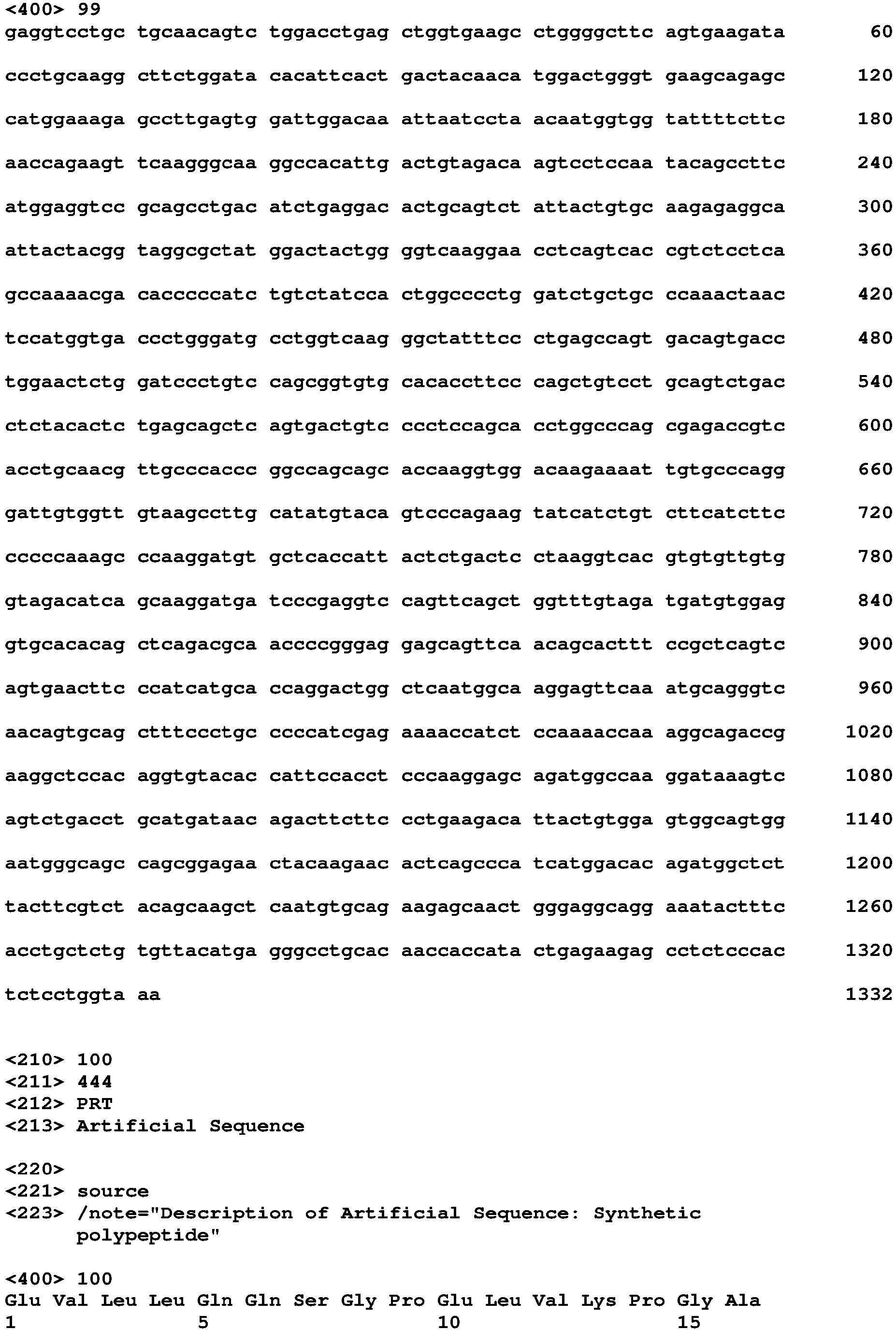

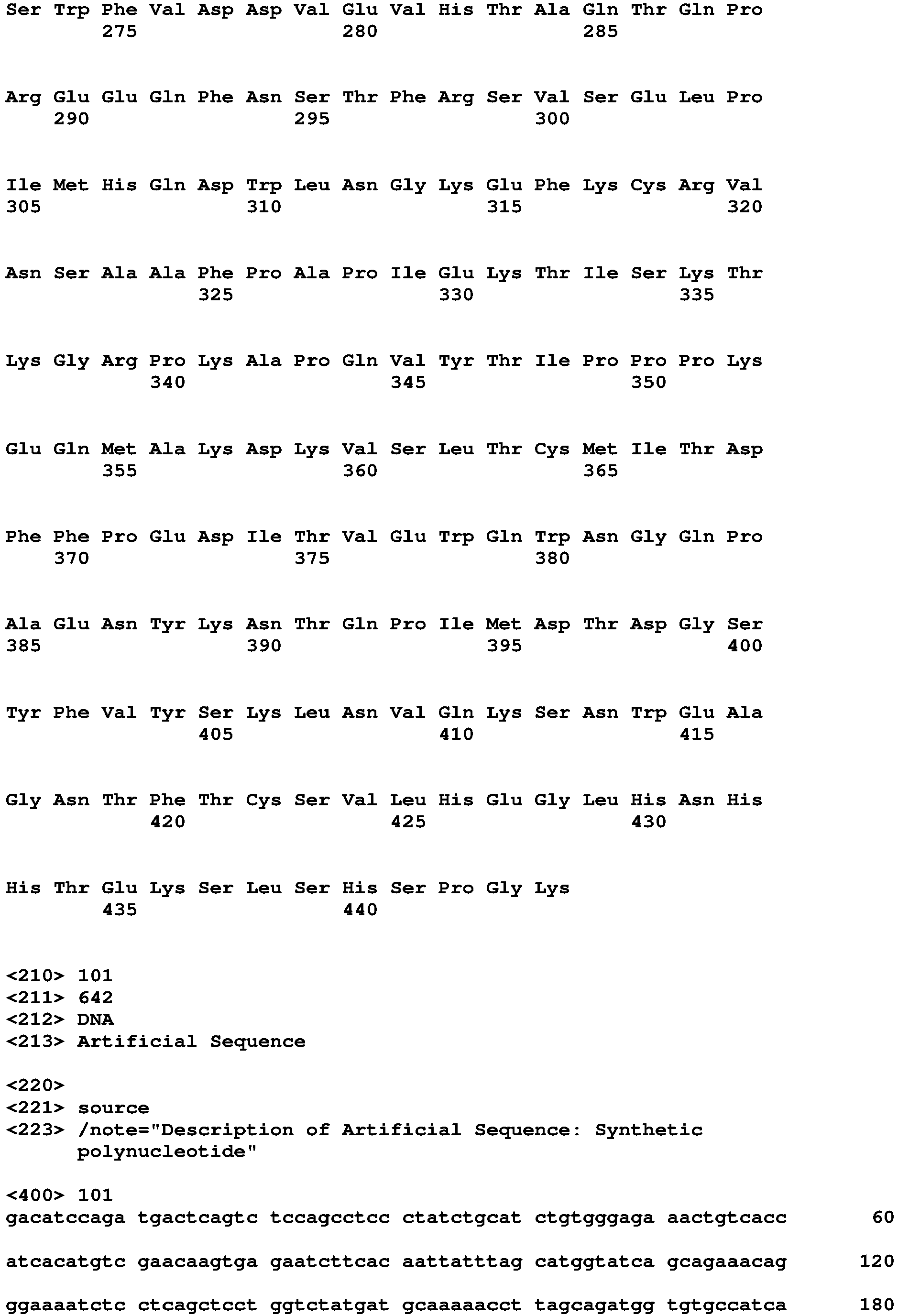


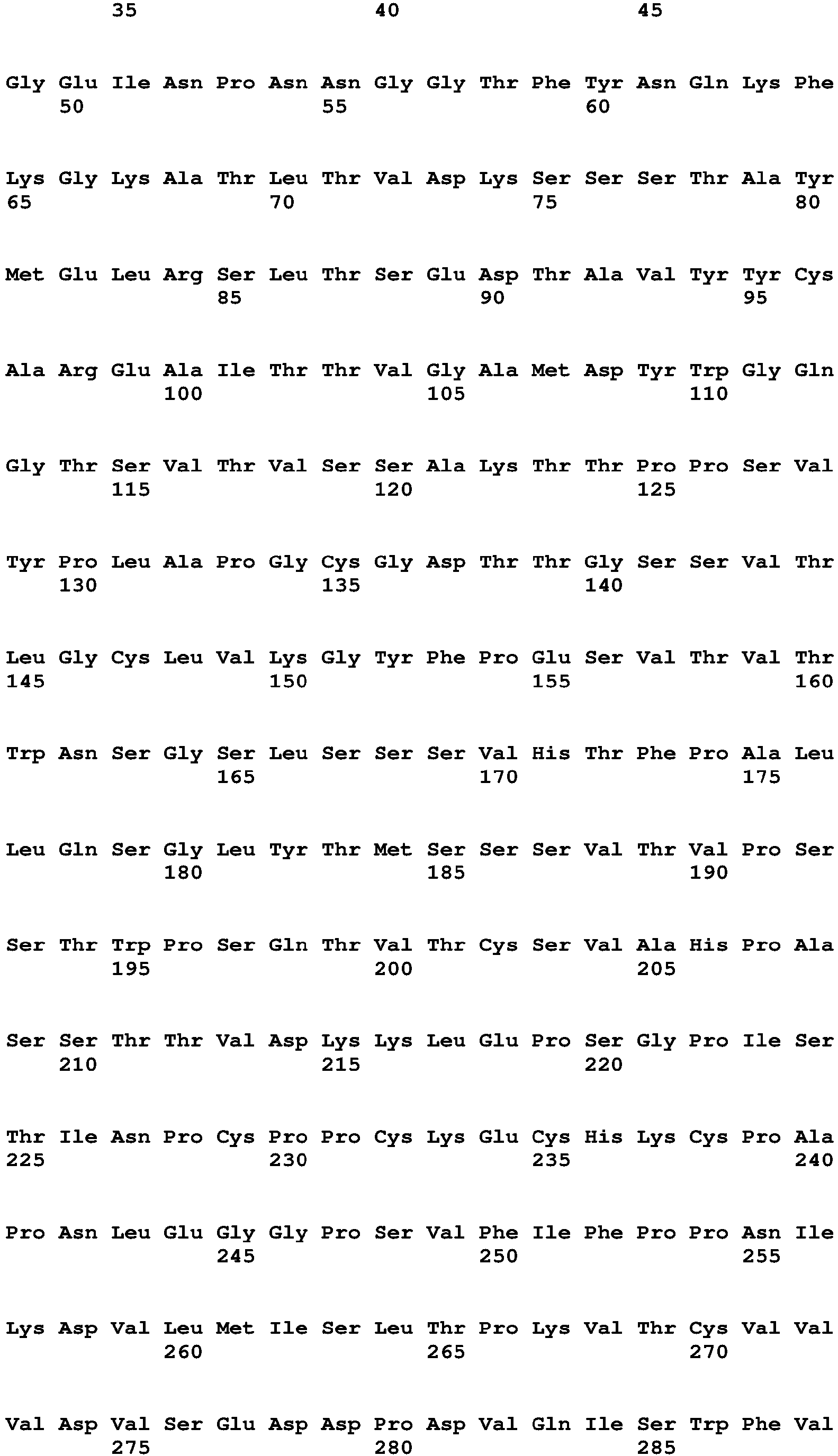


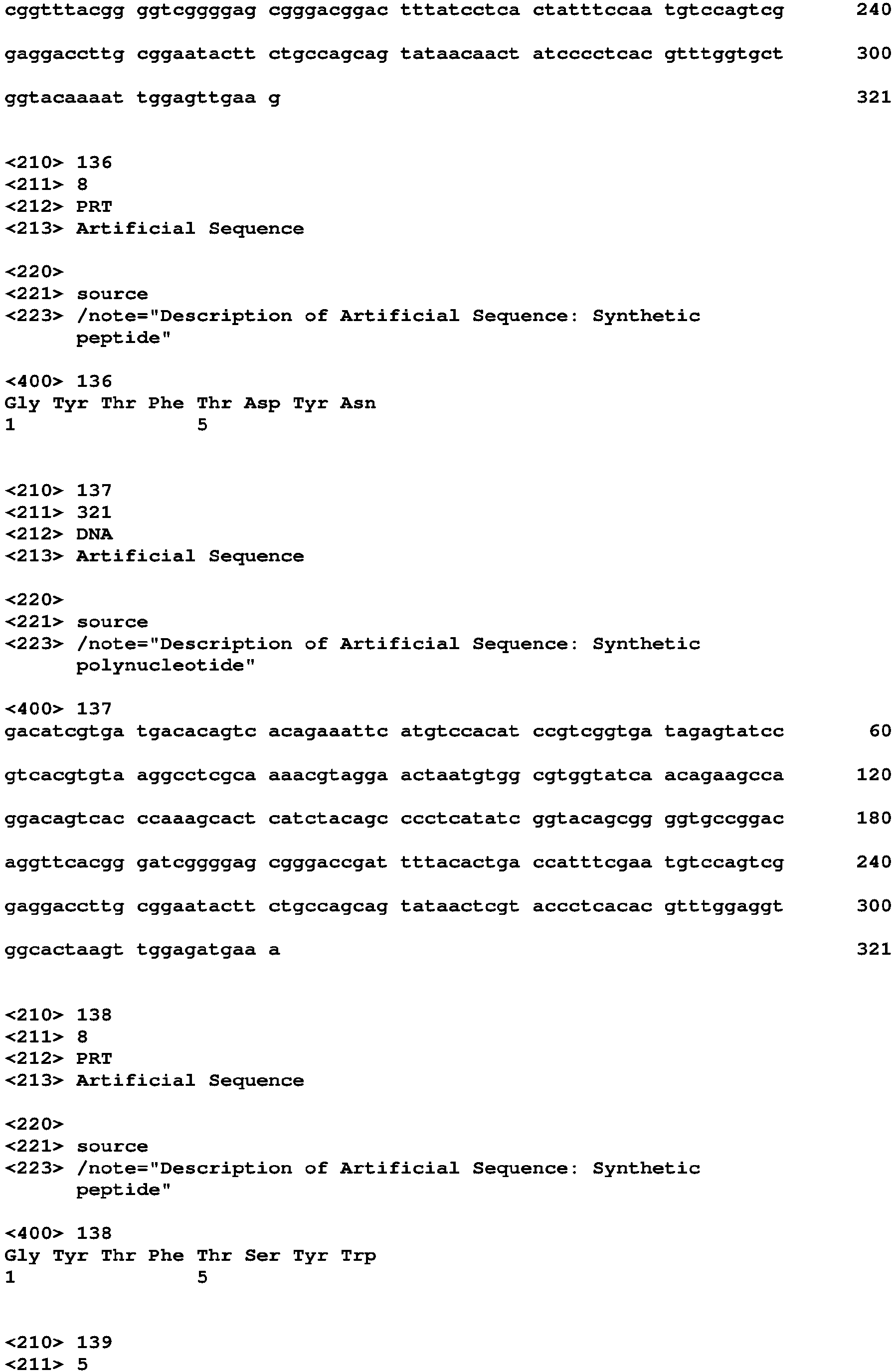


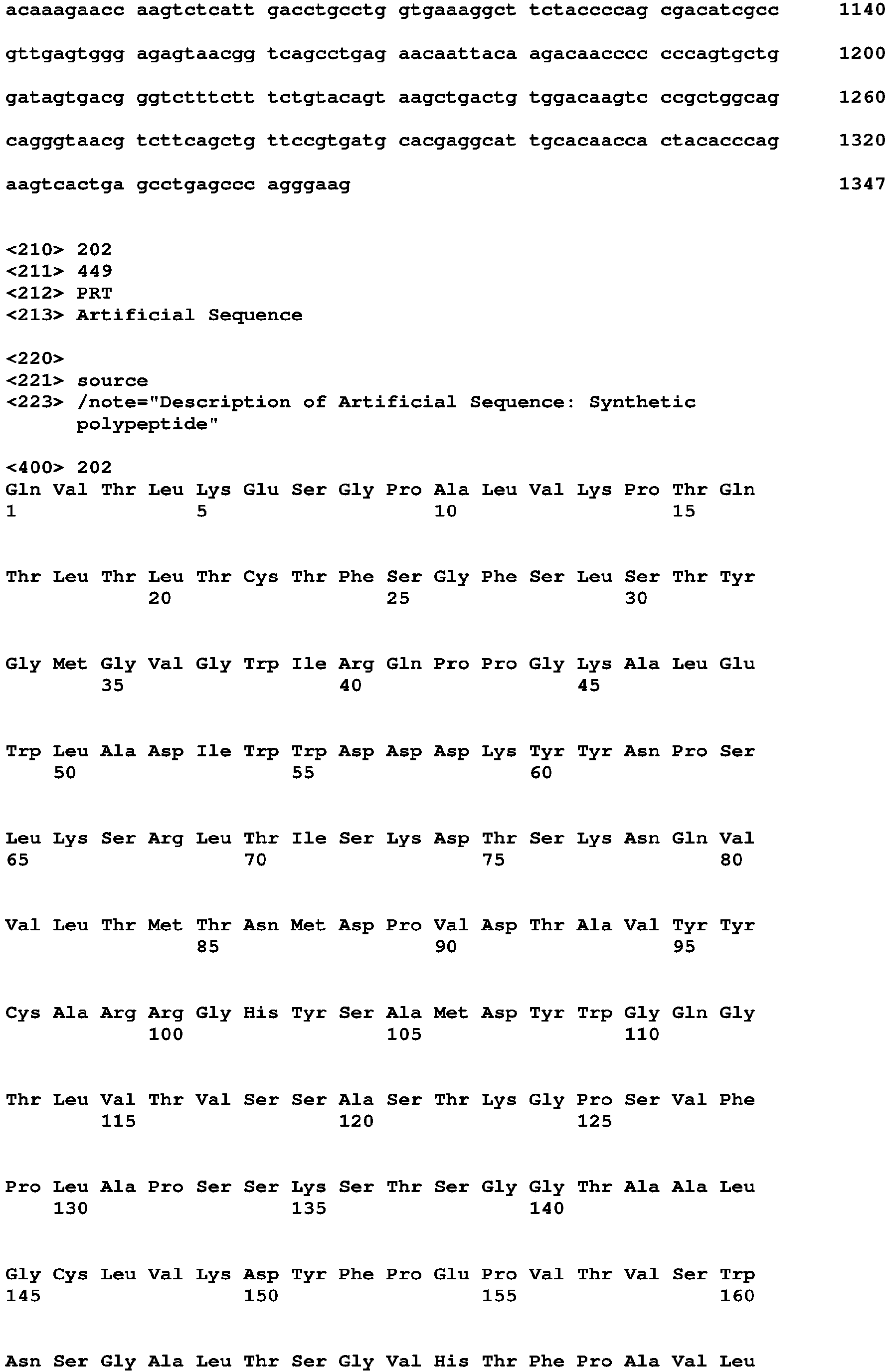


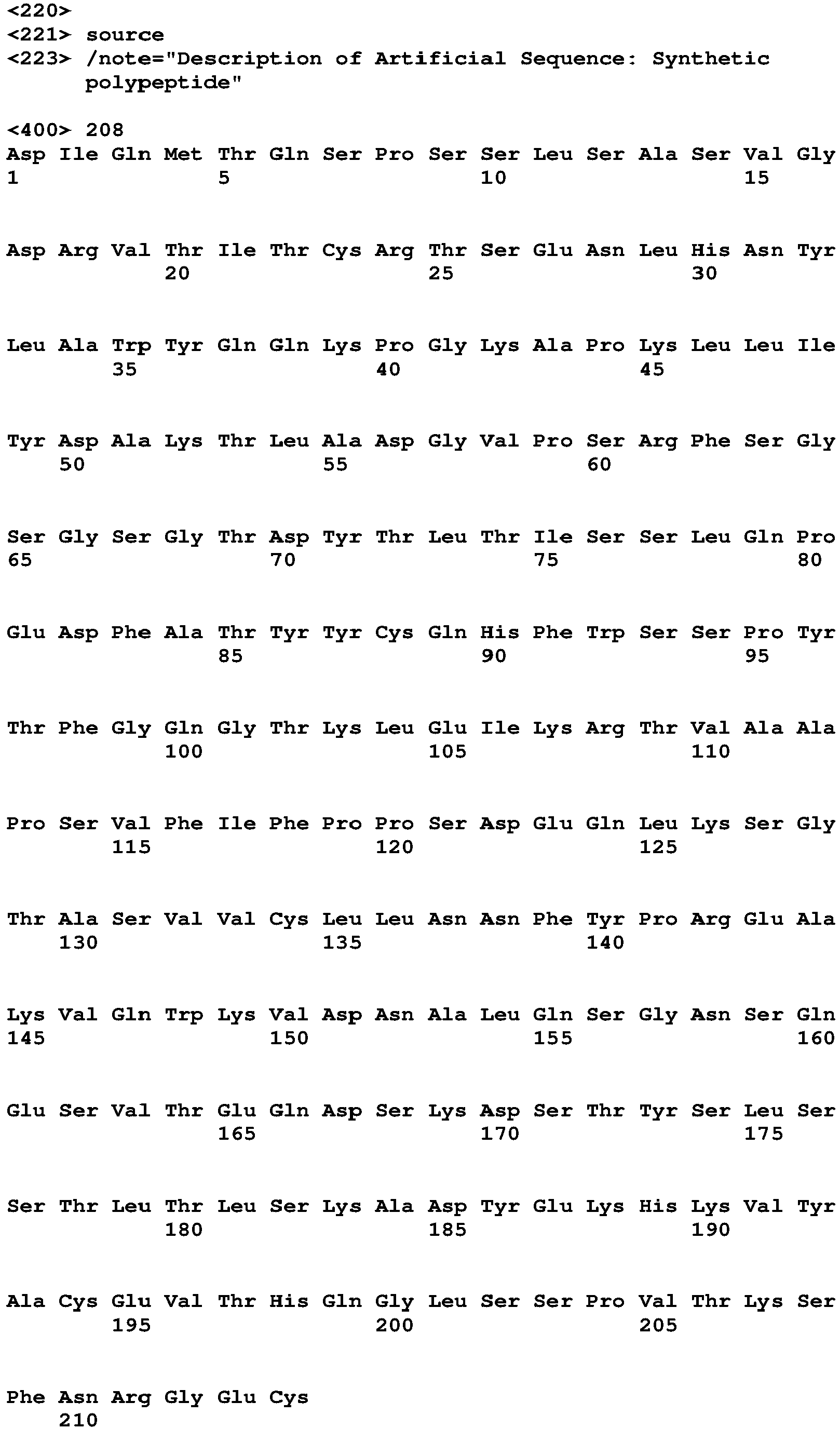
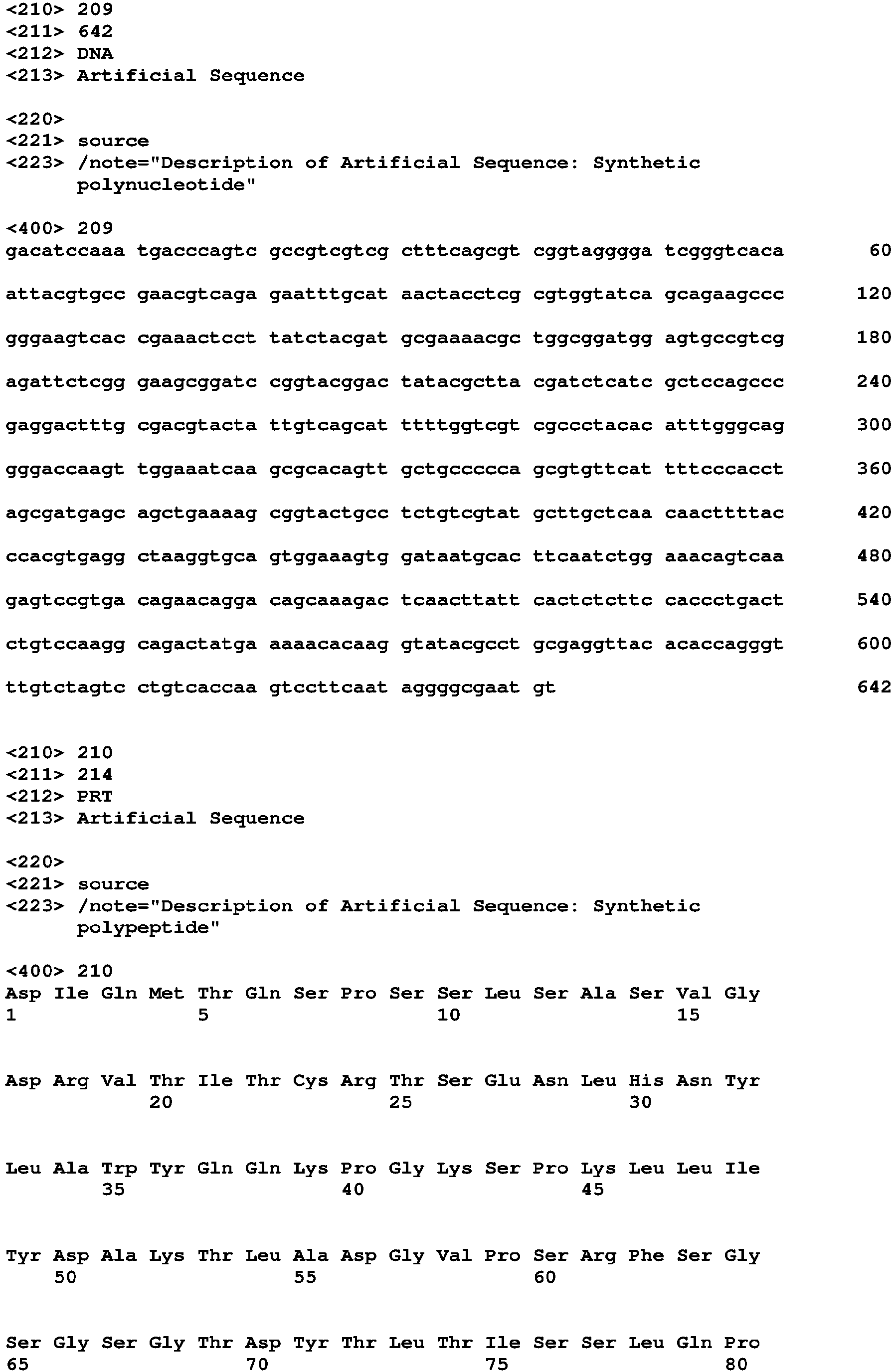


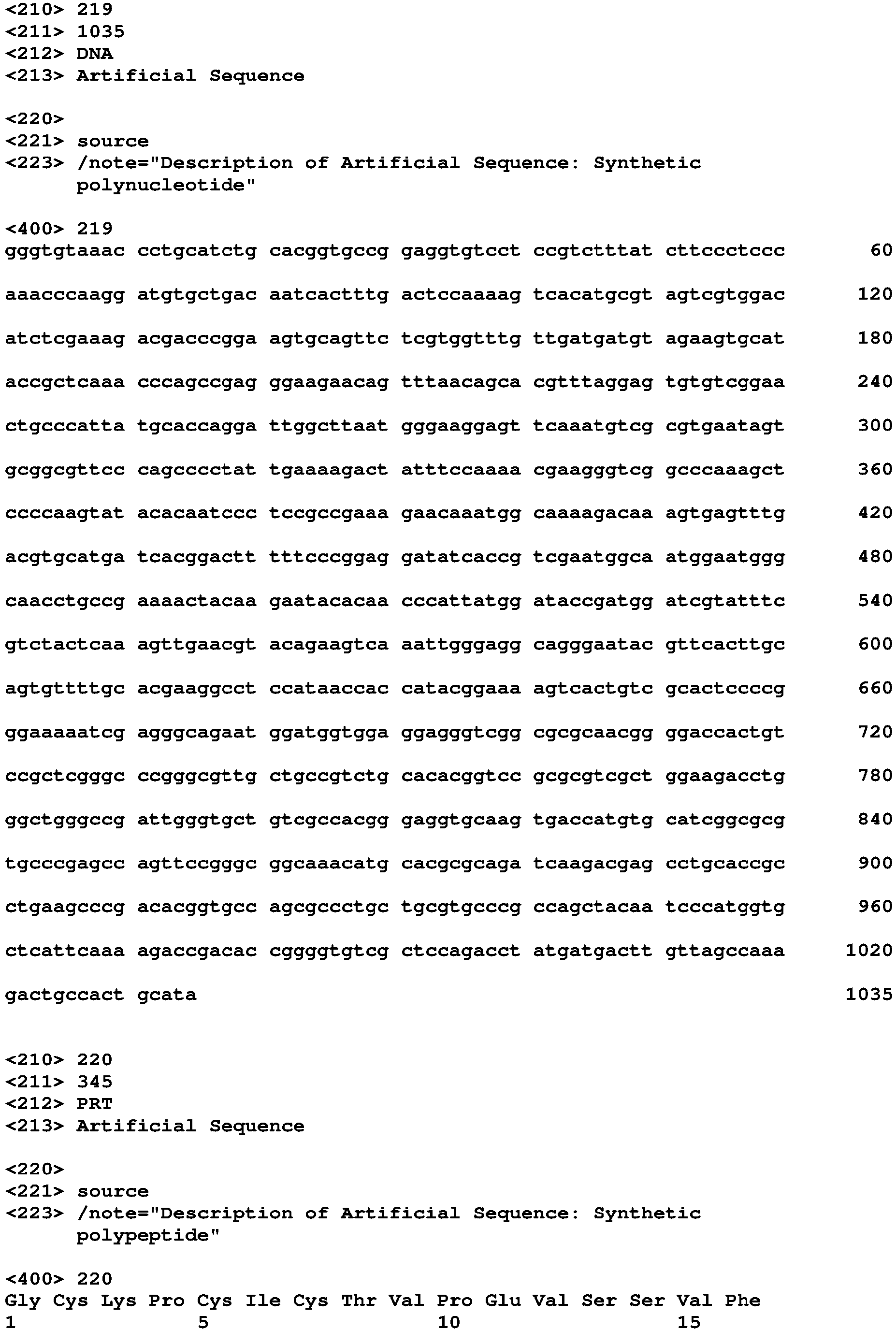


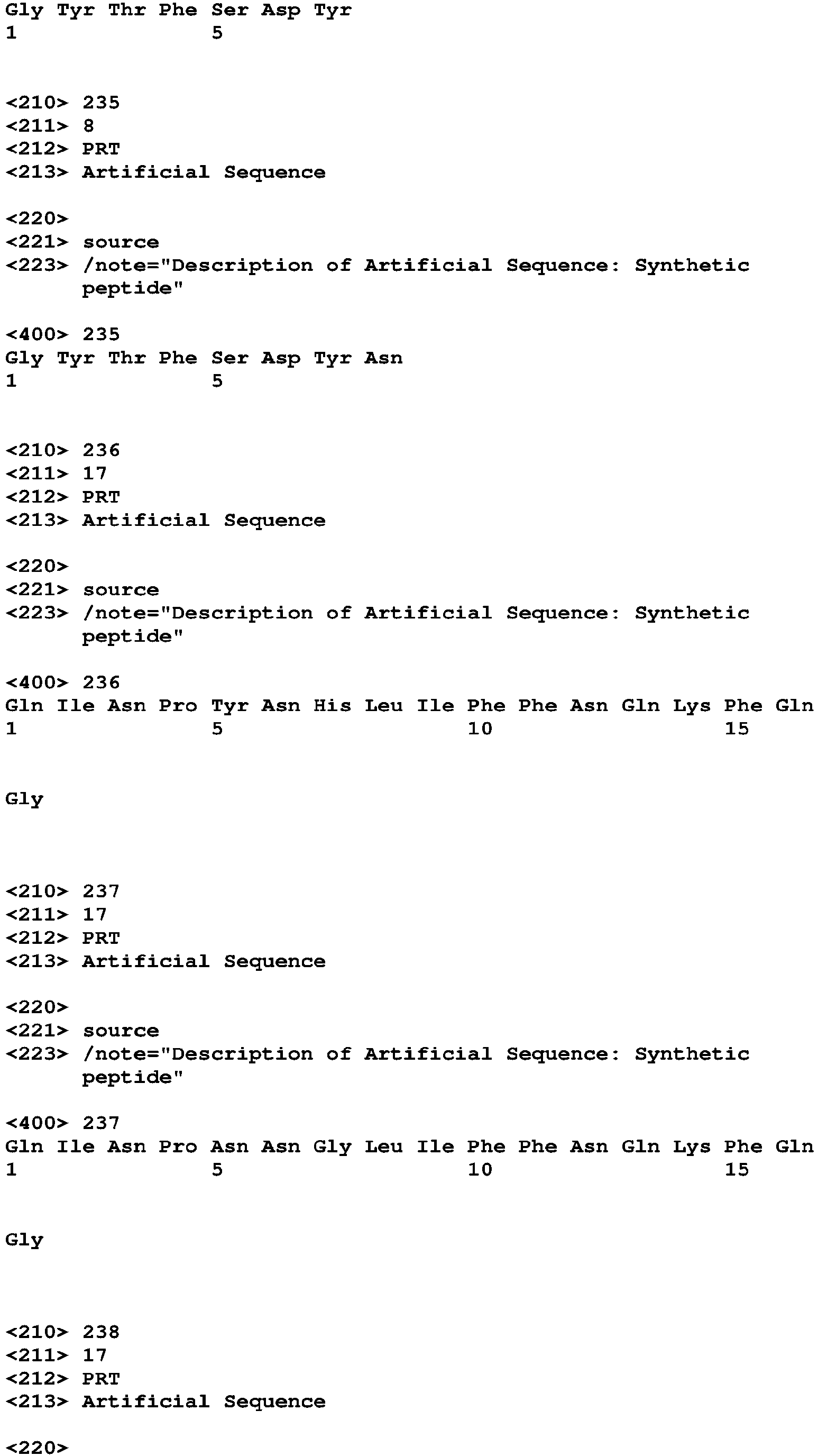


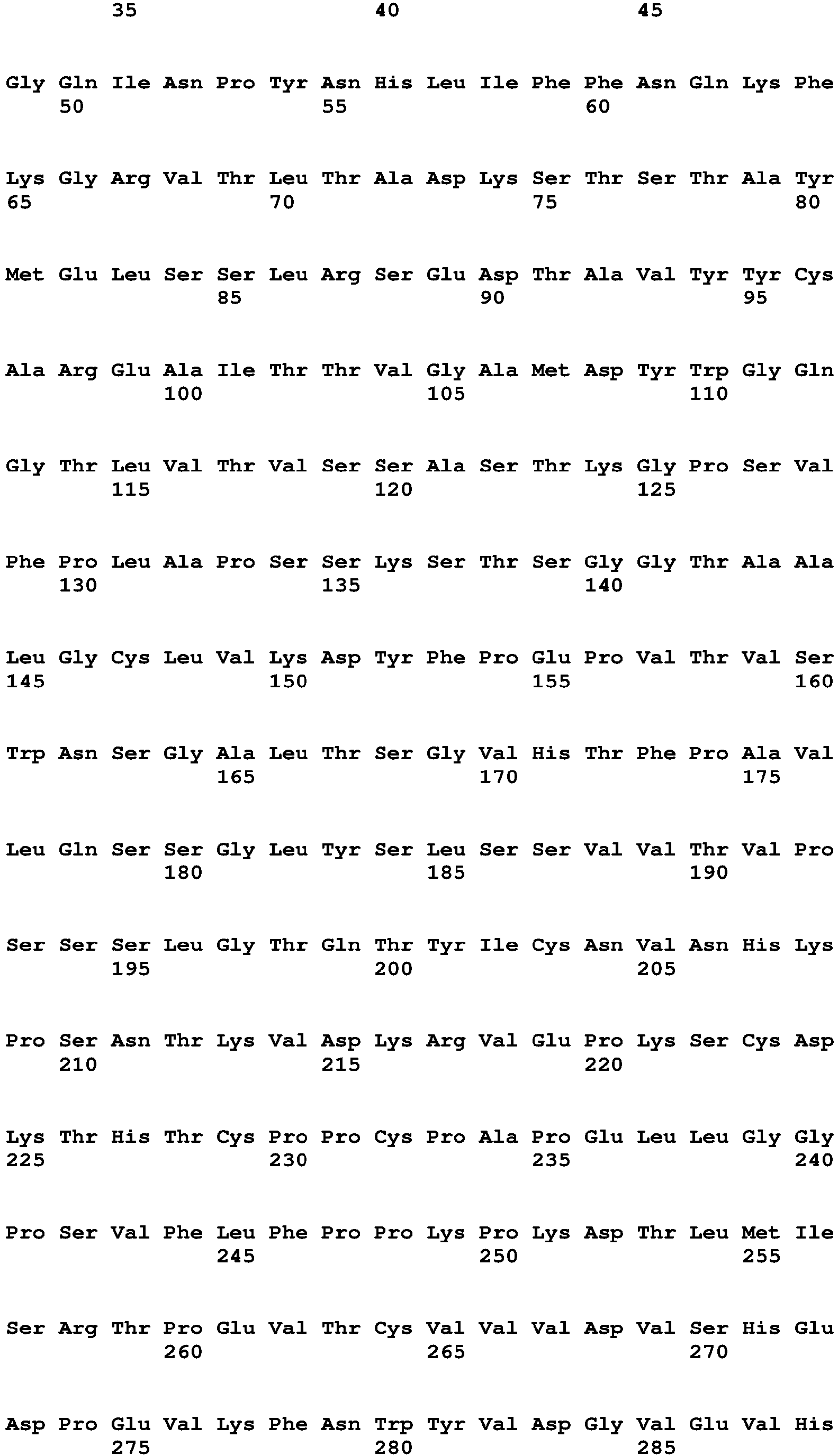


Claims (10)
- An isolated antibody that binds human GDF15, comprising an immunoglobulin heavy chain variable region and an immunoglobulin light chain variable region selected from the group consisting of:(a)(i) an immunoglobulin heavy chain variable region comprising a CDRH1 comprising the amino acid sequence of SEQ ID NO:1 (Hu01G06 IGHV1-69 F1), a CDRH2 comprising the amino acid sequence of SEQ ID NO:238 (Hu01G06 IGHV1-69 F1), and a CDRH3 comprising the amino acid sequence of SEQ ID NO:15 (Hu01G06 IGHV1-69 F1); and(ii) an immunoglobulin light chain variable region comprising a CORL1 comprising the amino acid sequence of SEQ ID NO:21 (Hu01G06 IGKV1-39 F1), a CDRL2 comprising the amino acid sequence of SEQ ID NO:26 (Hu01G06 IGKV1-39 F1), and a CDRL3 comprising the amino acid sequence of SEQ ID NO:32 (Hu01G06 IGKV1-39 F1); and(b)(i) an immunoglobulin heavy chain variable region comprising a CORH1 comprising the amino acid sequence of SEQ ID NO:1 (Hu01G06 IGHV1-18 F2), a CDRH2 comprising the amino acid sequence of SEQ ID NO:237 (Hu01G06 IGHV1-18 F2), and a CDRH3 comprising the amino acid sequence of SEQ ID NO:15 (Hu01G06 IGHV1-18 F2); and(ii) an immunoglobulin light chain variable region comprising a CDRL1 comprising the amino acid sequence of SEQ ID NO:21 (Hu01G06 IGKV1-39 F2), a CDRL2 comprising the amino acid sequence of SEQ ID NO:26 (Hu01G06 IGKV1-39 F2), and a CDRL3 comprising the amino acid sequence of SEQ ID NO:244 (Hu01G06 IGKV1-39 F2).
- The isolated antibody of claim 1, wherein(a) the antibody of claim 1 (a) comprises an immunoglobulin heavy chain variable region comprising the amino acid sequence of SEQ ID NO:250 (Hu01G06 IGHV1-69 F1), and an immunoglobulin light chain variable region comprising the amino acid sequence of SEQ ID NO:92 (Hu01G06 IGKV1-39 F1), wherein the immunoglobulin heavy chain variable region sequence and/or immunoglobulin light chain variable region sequence contain 1, 2, 3, 4, 5, or 10 amino acid substitutions, deletions, or additions in the framework regions of the heavy and/or light chain variable regions; and/or(b) the antibody of claim 1 (b) comprises an immunoglobulin heavy chain variable region comprising the amino acid sequence of SEQ ID NO:248 (Hu01G06 IGHV1-18 F2), and an immunoglobulin light chain variable region comprising the amino acid sequence of SEQ ID NO:254 (Hu01G06 IGKV1-39 F2), wherein the immunoglobulin heavy chain variable region sequence and/or immunoglobulin light chain variable region sequence contain 1, 2, 3, 4, 5, or 10 amino acid substitutions, deletions, or additions in the framework regions of the heavy and/or light chain variable regions.
- The isolated antibody of claim 1, wherein(a) the immunoglobulin heavy chain variable region of the antibody of claim 1 (a) further comprises an amino acid sequence that is at least 90% identical to the framework sequence of SEQ ID NO:250 (Hu01G06 IGHV1-69 F1), and the immunoglobulin light chain variable region of the antibody of claim 1 (a) further comprises an amino acid sequence that is at least 90% identical to the framework sequence of SEQ ID NO:92 (Hu01G06 IGKV1-39 F1); and/or(b) the immunoglobulin heavy chain variable region of the antibody of claim 1 (b) further comprises an amino acid sequence that is at least 90% identical to the framework sequence of SEQ ID NO:248 (Hu01G06 IGHV1-18 F2), and the immunoglobulin light chain variable region of the antibody of claim 1 (b) further comprises an amino acid sequence that is at least 90% identical to the framework sequence of SEQ ID NO:254 (Hu01G06 IGKV1-39 F2).
- An isolated nucleic acid or nucleic acids comprising a nucleotide sequence encoding an immunoglobulin heavy chain of any one of claims 1 to 3 and a nucleotide sequence encoding an immunoglobulin light chain of any one of claims 1 to 3.
- An expression vector or vectors comprising the nucleic acid or nucleic acids of claim 4.
- A host cell comprising the expression vector or vectors of claim 5.
- A method of producing an antibody that binds human GDF15 or an antigen binding fragment of the antibody, the method comprising:(a) growing the host cell of claim 6 under conditions so that the host cell expresses a polypeptide or polypeptides comprising the immunoglobulin heavy chain and the immunoglobulin light chain, thereby producing the antibody or the antigen-binding fragment of the antibody; and(b) purifying the antibody or the antigen-binding fragment of the antibody.
- The antibody of any one of claims 1 to 3, wherein the antibody has a KD of 300 pM or lower, 150 pM or lower, or 100 pM or lower, as measured by surface plasmon resonance or bio-layer interferometry.
- An antibody of any one of claims 1 to 3 for use in treating cachexia and/or sarcopenia in a mammal.
- The antibody for the use according to claim 9, wherein the use further comprises administering a second agent to the mammal in need thereof, wherein the second agent is selected from the group consisting of an inhibitor of Activin-A, an inhibitor of ActRIIB, an inhibitor of IL-6, an inhibitor of IL-6R, a melanocortin peptide inhibitor, a melanocortin receptor inhibitor, a ghrelin, a ghrelin mimetic, a GHS-R1a agonist, a SARM, a TNFα inhibitor, an IL-1α inhibitor, a myostatin inhibitor, a beta-blocker and an anti-cancer agent.
Applications Claiming Priority (4)
| Application Number | Priority Date | Filing Date | Title |
|---|---|---|---|
| US201261745508P | 2012-12-21 | 2012-12-21 | |
| US201361827325P | 2013-05-24 | 2013-05-24 | |
| EP13827058.2A EP2934584B1 (en) | 2012-12-21 | 2013-12-20 | Anti-gdf15 antibodies |
| PCT/US2013/077139 WO2014100689A1 (en) | 2012-12-21 | 2013-12-20 | Anti-gdf15 antibodies |
Related Parent Applications (1)
| Application Number | Title | Priority Date | Filing Date |
|---|---|---|---|
| EP13827058.2A Division EP2934584B1 (en) | 2012-12-21 | 2013-12-20 | Anti-gdf15 antibodies |
Publications (3)
| Publication Number | Publication Date |
|---|---|
| EP3689370A1 true EP3689370A1 (en) | 2020-08-05 |
| EP3689370C0 EP3689370C0 (en) | 2026-03-04 |
| EP3689370B1 EP3689370B1 (en) | 2026-03-04 |
Family
ID=50069279
Family Applications (2)
| Application Number | Title | Priority Date | Filing Date |
|---|---|---|---|
| EP13827058.2A Active EP2934584B1 (en) | 2012-12-21 | 2013-12-20 | Anti-gdf15 antibodies |
| EP20156883.9A Active EP3689370B1 (en) | 2012-12-21 | 2013-12-20 | Anti-gdf15 antibodies |
Family Applications Before (1)
| Application Number | Title | Priority Date | Filing Date |
|---|---|---|---|
| EP13827058.2A Active EP2934584B1 (en) | 2012-12-21 | 2013-12-20 | Anti-gdf15 antibodies |
Country Status (13)
| Country | Link |
|---|---|
| US (6) | US9175076B2 (en) |
| EP (2) | EP2934584B1 (en) |
| JP (3) | JP6758832B2 (en) |
| KR (1) | KR102208861B1 (en) |
| CN (1) | CN105073133B (en) |
| AR (1) | AR094271A1 (en) |
| AU (1) | AU2013364133B2 (en) |
| CA (1) | CA2896076C (en) |
| DK (1) | DK2934584T3 (en) |
| EA (1) | EA038645B1 (en) |
| ES (2) | ES3066738T3 (en) |
| MX (1) | MX370720B (en) |
| WO (1) | WO2014100689A1 (en) |
Families Citing this family (80)
| Publication number | Priority date | Publication date | Assignee | Title |
|---|---|---|---|---|
| EP4793360A2 (en) | 2006-03-31 | 2026-08-19 | Chugai Seiyaku Kabushiki Kaisha | Methods for controlling blood pharmacokinetics of antibodies |
| EP3127921A1 (en) | 2007-09-26 | 2017-02-08 | Chugai Seiyaku Kabushiki Kaisha | Method of modifying isoelectric point of antibody via amino acid substition in cdr |
| TW201920257A (en) | 2008-04-11 | 2019-06-01 | 日商中外製藥股份有限公司 | Antigen-binding molecule capable of binding two or more antigen molecules repeatedly |
| TWI654203B (en) | 2010-11-30 | 2019-03-21 | Chugai Seiyaku Kabushiki Kaisha | Antibodies with calcium-dependent antigen binding ability |
| JP5977814B2 (en) | 2011-04-08 | 2016-08-24 | アムジエン・インコーポレーテツド | Method for treating or ameliorating metabolic disorders using growth differentiation factor 15 (GDF-15) |
| KR20140125803A (en) | 2012-01-26 | 2014-10-29 | 암젠 인크 | Growth differentiation factor 15(gdf-15) polypeptides |
| CA2865158C (en) | 2012-02-24 | 2022-11-01 | Chugai Seiyaku Kabushiki Kaisha | Antigen-binding molecule for promoting disappearance of antigen via fc.gamma.riib |
| JP6254146B2 (en) | 2012-03-27 | 2017-12-27 | エヌジーエム バイオファーマシューティカルス,インコーポレーテッド | Compositions and methods for treating metabolic disorders |
| JP6774164B2 (en) | 2012-08-24 | 2020-10-21 | 中外製薬株式会社 | Mouse FcγRII specific Fc antibody |
| TWI855488B (en) | 2012-08-24 | 2024-09-11 | 日商中外製藥股份有限公司 | Fcγriib-specific fc region variant |
| AU2013322628B2 (en) | 2012-09-26 | 2017-03-02 | Julius-Maximilians-Universitat Wurzburg | Monoclonal antibodies to growth and differentiation factor 15 (GDF-15) |
| ES3066738T3 (en) | 2012-12-21 | 2026-05-14 | Aveo Pharmaceuticals Inc | Anti-gdf15 antibodies |
| CA2899170C (en) | 2013-01-30 | 2022-08-02 | Ngm Biopharmaceuticals, Inc. | Compositions and methods of use in treating metabolic disorders |
| US9161966B2 (en) | 2013-01-30 | 2015-10-20 | Ngm Biopharmaceuticals, Inc. | GDF15 mutein polypeptides |
| SG11201508170TA (en) | 2013-04-02 | 2015-11-27 | Chugai Pharmaceutical Co Ltd | Fc REGION VARIANT |
| LT3027642T (en) | 2013-07-31 | 2020-10-12 | Amgen Inc. | Growth differentiation factor 15 (gdf-15) constructs |
| MX2016005686A (en) * | 2013-10-31 | 2016-08-11 | Regeneron Pharma | Competitive ligand binding assay for detecting neutralizing antibodies. |
| CN120919282A (en) | 2013-11-21 | 2025-11-11 | 布里格姆及妇女医院股份有限公司 | Compositions and methods for treating pulmonary hypertension |
| TW201622743A (en) | 2014-03-19 | 2016-07-01 | 財團法人臺灣基督長老教會馬偕紀念社會事業基金會馬偕紀念醫院 | Immunogenic glycopeptide, composition comprising the same, and use thereof |
| PT3653644T (en) | 2014-03-26 | 2023-12-19 | Univ Wuerzburg J Maximilians | Monoclonal antibodies to growth and differentiation factor 15 (gdf-15), and uses thereof for treating cancer cachexia and cancer |
| GB2524552B (en) * | 2014-03-26 | 2017-07-12 | Julius-Maximilians-Universitãt Wurzburg | Monoclonal antibodies to growth and differentiation factor 15 (GDF-15), and use thereof for treating cancer |
| GB2524553C (en) * | 2014-03-26 | 2017-07-19 | Julius-Maximilians-Universitãt Würzburg | Monoclonal antibodies to growth and differentiation factor 15 (GDF-15), and uses thereof for treating cancer cachexia |
| JP6910800B2 (en) * | 2014-06-20 | 2021-07-28 | アベオ ファーマシューティカルズ, インコーポレイテッド | Treatment of congestive heart failure and other heart failure with GDF15 regulators |
| CA2952032C (en) | 2014-06-20 | 2023-03-14 | Aveo Pharmaceuticals, Inc. | Treatment of chronic kidney disease and other renal dysfunction using a gdf15 modulator |
| US10588980B2 (en) | 2014-06-23 | 2020-03-17 | Novartis Ag | Fatty acids and their use in conjugation to biomolecules |
| JP6704358B2 (en) | 2014-07-30 | 2020-06-03 | エヌジーエム バイオファーマシューティカルズ インコーポレイテッド | Compositions and methods of use for treating metabolic disorders |
| CN106794233B (en) | 2014-08-01 | 2021-11-12 | 布里格姆及妇女医院股份有限公司 | Compositions and methods relating to treatment of pulmonary hypertension |
| EP3851122A1 (en) | 2014-09-25 | 2021-07-21 | Aveo Pharmaceuticals Inc. | Methods of reversing cachexia and prolonging survival comprising administering a gdf15 modulator and an anti-cancer agent |
| KR20170066515A (en) * | 2014-09-30 | 2017-06-14 | 우니베르지타이트 겐트 | A method of treating joint disease |
| AU2015339134B2 (en) | 2014-10-30 | 2021-06-17 | Acceleron Pharma Inc. | Methods and compositions using GDF15 polypeptides for increasing red blood cells |
| CN106687128B (en) | 2014-10-31 | 2022-05-10 | Ngm生物制药有限公司 | Compositions and methods for treating metabolic disorders |
| MX2017005774A (en) | 2014-12-19 | 2017-07-28 | Chugai Pharmaceutical Co Ltd | Anti-myostatin antibodies, polypeptides containing variant fc regions, and methods of use. |
| CN114773469B (en) | 2015-02-05 | 2025-12-19 | 中外制药株式会社 | Antibodies comprising ion concentration-dependent antigen binding domains, variants of the FC region, IL-8-binding antibodies and uses thereof |
| IL255207B2 (en) | 2015-04-23 | 2023-09-01 | Haemalogix Pty Ltd | Kappa myeloma antigen chimeric antigen receptors and uses thereof |
| CN106349388B (en) * | 2015-07-17 | 2021-04-02 | 上海佳文英莉生物技术有限公司 | Antibody for promoting programmed cell necrosis and application thereof |
| GB201512733D0 (en) * | 2015-07-20 | 2015-08-26 | Genagon Therapeutics Ab | Therapeutic agents for treating conditions associated with elevated GDF15 |
| EP3356827B1 (en) | 2015-10-02 | 2023-12-06 | Julius-Maximilians-Universität Würzburg | Gdf-15 as a diagnostic marker to predict the clinical outcome of a treatment with immune checkpoint blockers |
| KR102722730B1 (en) | 2015-10-02 | 2024-10-25 | 율리우스-막시밀리안스 우니버지태트 뷔르츠부르크 | Combination therapy using inhibitors of human proliferation and differentiation factor 15 (GDF-15) and immune checkpoint blockers |
| WO2017074774A1 (en) * | 2015-10-28 | 2017-05-04 | Yale University | Humanized anti-dkk2 antibody and uses thereof |
| EP3394098A4 (en) | 2015-12-25 | 2019-11-13 | Chugai Seiyaku Kabushiki Kaisha | ANTI-MYOSTATIN ANTIBODIES AND METHODS OF USE |
| CN108601833B (en) * | 2016-02-01 | 2022-11-15 | 伊莱利利公司 | Parathyroid hormone-anti-RANKL antibody fusion compounds |
| JP2019510739A (en) * | 2016-02-29 | 2019-04-18 | イーライ リリー アンド カンパニー | GFRAL receptor therapy |
| AU2017228489A1 (en) * | 2016-03-04 | 2018-09-06 | Ngm Biopharmaceuticals, Inc. | Compositions and methods for modulating body weight |
| CN117986363A (en) * | 2016-03-31 | 2024-05-07 | 恩格姆生物制药公司 | Binding proteins and methods of use thereof |
| JP7138567B2 (en) * | 2016-04-27 | 2022-09-16 | ノバルティス アーゲー | Antibodies against growth differentiation factor 15 and their uses |
| US10336812B2 (en) * | 2016-05-10 | 2019-07-02 | Janssen Biotech, Inc. | GDF15 fusion proteins and uses thereof |
| NL2017267B1 (en) * | 2016-07-29 | 2018-02-01 | Aduro Biotech Holdings Europe B V | Anti-pd-1 antibodies |
| CN116271014A (en) | 2016-08-05 | 2023-06-23 | 中外制药株式会社 | Composition for preventing or treating IL-8 related diseases |
| IL264674B2 (en) * | 2016-08-05 | 2023-09-01 | Allakos Inc | Anti-siglec-7 antibodies for the treatment of cancer |
| EP3551214B1 (en) * | 2016-12-06 | 2024-03-13 | St Vincent's Hospital Sydney Limited | Treatment of obesity and eating disorders |
| GB201700567D0 (en) | 2017-01-12 | 2017-03-01 | Genagon Therapeutics Ab | Therapeutic agents |
| JP7280238B2 (en) * | 2017-07-17 | 2023-05-23 | ヤンセン バイオテツク,インコーポレーテツド | ANTIGEN-BINDING REGION FOR FIBRONECTIN TYPE III DOMAIN AND METHODS OF USE THEREOF |
| WO2019140273A1 (en) * | 2018-01-11 | 2019-07-18 | Allakos, Inc. | Anti-siglec-7 antibodies having reduced effector function |
| TWI724392B (en) * | 2018-04-06 | 2021-04-11 | 美商美國禮來大藥廠 | Growth differentiation factor 15 agonist compounds and methods of using the same |
| US12054527B2 (en) | 2018-04-09 | 2024-08-06 | Amgen Inc. | Growth differentiation factor 15 fusion proteins |
| WO2020033797A1 (en) * | 2018-08-09 | 2020-02-13 | The Wistar Institute | Anti-follicule stimulating hormone receptor antibodies |
| CN112912395B (en) * | 2018-08-20 | 2024-08-23 | 辉瑞公司 | Anti-GDF15 antibodies, compositions and methods of use |
| KR102238927B1 (en) * | 2018-08-30 | 2021-04-12 | 서울대학교산학협력단 | Peptide controlling migration of NAG-1 protein in cell and uses thereof |
| EP3850008A1 (en) * | 2018-09-10 | 2021-07-21 | INSERM (Institut National de la Santé et de la Recherche Médicale) | Use of an inhibitor of ntsr1 activation or expression for preventing weight loss, muscle loss, and protein blood level decrease in subjects in need thereof |
| MY205905A (en) | 2018-10-22 | 2024-11-20 | Janssen Pharmaceutica Nv | Glucagon like peptide 1 (glp1)-growth differentiation factor 15 (gdf15) fusion proteins and uses thereof |
| US20220372125A1 (en) * | 2019-10-02 | 2022-11-24 | Aslan Pharmaceuticals Pte. Ltd. | Antigen Specific Binding Domains and Antibody Molecules |
| ES3061099T3 (en) | 2019-10-04 | 2026-03-31 | Amgen Inc | Use of gdf15 for treating cardiometabolic syndrome and other conditions |
| WO2021111636A1 (en) * | 2019-12-06 | 2021-06-10 | 大塚製薬株式会社 | Anti-gdf15 antibody |
| CN114560938B (en) | 2020-03-30 | 2023-05-23 | 中国人民解放军第四军医大学 | Neutralizing monoclonal antibody against GDF15 and application thereof |
| TWI894280B (en) * | 2020-05-26 | 2025-08-21 | 南韓商愛思阿爾法數字醫療科技有限公司 | System for treating cancer cachexia, computing system for treating cancer cachexia and operating method thereof, and non-transitory readable medium |
| CN115698073B (en) * | 2020-06-04 | 2026-03-17 | 大邱庆北科学技术院 | GFRAL antagonist antibodies and their uses |
| JPWO2022092326A1 (en) * | 2020-10-30 | 2022-05-05 | ||
| LT4243928T (en) | 2020-11-10 | 2026-06-10 | Catalym Gmbh | ANTI-GDF15 ANTIBODY AND DOSAGE REGIME FOR THE TREATMENT OF CANCER |
| US11845791B2 (en) | 2021-03-08 | 2023-12-19 | Medimmune, Llc | Antibodies directed against GDF-15 |
| WO2022207846A1 (en) | 2021-03-31 | 2022-10-06 | Cambridge Enterprise Limited | Therapeutic inhibitors of gdf15 signalling |
| IL310535A (en) | 2021-08-10 | 2024-03-01 | Byomass Inc | Anti-GDF15 antibodies, compositions and uses thereof |
| US20260159579A1 (en) * | 2021-11-02 | 2026-06-11 | Pfizer Inc. | Methods of treating mitochondrial myopathies using anti-gdf15 antibodies |
| WO2023122213A1 (en) | 2021-12-22 | 2023-06-29 | Byomass Inc. | Targeting gdf15-gfral pathway cross-reference to related applications |
| CA3250445A1 (en) * | 2022-01-26 | 2025-03-10 | Yunnan Baiyao Group Co., Ltd. | Antibody molecule against growth and differentiation factor 15 and use thereof |
| EP4524158A4 (en) * | 2022-05-09 | 2025-12-17 | Staidson Beijing Biopharmaceuticals Co Ltd | ANTIBODIES SPECIFICALLY RECOGNIZING GDF15 AND ITS USE |
| CN116041497B (en) * | 2022-12-22 | 2026-05-29 | 杭州贤至生物科技有限公司 | Cat calicivirus (FCV) recombinant protein monoclonal antibody and preparation method thereof |
| CN116444667B (en) * | 2023-06-13 | 2023-09-01 | 上海驯鹿生物技术有限公司 | GDF 15-targeted fully-humanized antibody and application thereof |
| AU2024352029A1 (en) * | 2023-09-27 | 2026-04-09 | Aveo Pharmaceuticals, Inc. | Methods of reducing weight loss using anti-gdf15 antibodies |
| AU2024382624A1 (en) | 2023-11-14 | 2026-06-18 | Shanghai Hailu Biological Technology Co., Ltd. | Gdf15 neutralizing antibody and use thereof |
| AU2025205773A1 (en) | 2024-01-05 | 2026-07-09 | Catalym Gmbh | Anti-hgdf-15 antibody for use in the treatment of cancer in a patient in combination with a cancer antigen-targeted drug conjugate that induces cancer cell stress |
Citations (19)
| Publication number | Priority date | Publication date | Assignee | Title |
|---|---|---|---|---|
| US4816567A (en) | 1983-04-08 | 1989-03-28 | Genentech, Inc. | Recombinant immunoglobin preparations |
| WO1993011794A1 (en) | 1991-12-13 | 1993-06-24 | Xoma Corporation | Methods and materials for preparation of modified antibody variable domains and therapeutic uses thereof |
| US5500362A (en) | 1987-01-08 | 1996-03-19 | Xoma Corporation | Chimeric antibody with specificity to human B cell surface antigen |
| US5530101A (en) | 1988-12-28 | 1996-06-25 | Protein Design Labs, Inc. | Humanized immunoglobulins |
| US5565332A (en) | 1991-09-23 | 1996-10-15 | Medical Research Council | Production of chimeric antibodies - a combinatorial approach |
| US5639641A (en) | 1992-09-09 | 1997-06-17 | Immunogen Inc. | Resurfacing of rodent antibodies |
| US5859205A (en) | 1989-12-21 | 1999-01-12 | Celltech Limited | Humanised antibodies |
| US5869619A (en) | 1991-12-13 | 1999-02-09 | Xoma Corporation | Modified antibody variable domains |
| US6054297A (en) | 1991-06-14 | 2000-04-25 | Genentech, Inc. | Humanized antibodies and methods for making them |
| US6072035A (en) | 1992-09-25 | 2000-06-06 | Novartis Corporation | Reshaped monoclonal antibodies against an immunoglobulin isotype |
| US6706477B2 (en) | 1997-09-22 | 2004-03-16 | University Of Rochester | Methods for producing polynucleotide libraries in vaccinia virus |
| US6881557B2 (en) | 2001-07-12 | 2005-04-19 | Arrowsmith Technologies Llp | Super humanized antibodies |
| US6893625B1 (en) | 1986-10-27 | 2005-05-17 | Royalty Pharma Finance Trust | Chimeric antibody with specificity to human B cell surface antigen |
| US6982321B2 (en) | 1986-03-27 | 2006-01-03 | Medical Research Council | Altered antibodies |
| WO2009021293A1 (en) * | 2007-08-16 | 2009-02-19 | St Vincent's Hospital Sydney Limited | Agents and methods for modulating macrophage inhibitory cytokine (mic-1) activity |
| WO2011117254A1 (en) | 2010-03-22 | 2011-09-29 | Prosidion Limited | Piperidine amides as modulators of the ghrelin receptor |
| US20110262444A1 (en) * | 2010-03-03 | 2011-10-27 | Detroit R&D, Inc. | Form-specific antibodies for nag-1 (mic-1, gdf-15), h6d and other tgf-beta subfamily and heart disease and cancer diagnoses |
| US8192735B2 (en) | 2004-04-13 | 2012-06-05 | St Vincent's Hospital Sydney Limited | Method for modulating appetite |
| WO2012113103A1 (en) | 2011-02-25 | 2012-08-30 | Helsinn Healthcare S.A. | Asymmetric ureas and medical uses thereof |
Family Cites Families (32)
| Publication number | Priority date | Publication date | Assignee | Title |
|---|---|---|---|---|
| WO1994003599A1 (en) | 1992-08-04 | 1994-02-17 | Sagami Chemical Research Center | HUMAN cDNA AND PROTEIN WHICH SAID cDNA CODES FOR |
| US6180602B1 (en) | 1992-08-04 | 2001-01-30 | Sagami Chemical Research Center | Human novel cDNA, TGF-beta superfamily protein encoded thereby and the use of immunosuppressive agent |
| US6521227B1 (en) | 1999-11-18 | 2003-02-18 | Peter L. Hudson | Polynucleotides encoding prostatic growth factor and process for producing prostatic growth factor polypeptides |
| US5994102A (en) | 1994-12-15 | 1999-11-30 | Human Genome Sciences, Inc. | Polynucleotides encoding prostatic growth factor and process for producing prostatic growth factor polypeptides |
| AU1830195A (en) | 1994-12-15 | 1996-07-03 | Human Genome Sciences, Inc. | Prostatic growth factor |
| ATE423788T1 (en) | 1995-06-22 | 2009-03-15 | St Vincents Hosp Sydney | NEW TGF-BETA-LIKE CYTOKINE |
| AU8591198A (en) | 1997-07-31 | 1999-02-22 | Johns Hopkins University School Of Medicine, The | Growth differentiation factor-15 |
| JP3762222B2 (en) | 1998-10-07 | 2006-04-05 | ストライカー・コーポレーション | Modified TGF-β superfamily protein |
| US6465181B2 (en) | 1999-03-25 | 2002-10-15 | Abbott Laboratories | Reagents and methods useful for detecting diseases of the prostate |
| CA2372119A1 (en) | 1999-05-17 | 2000-11-23 | Biopharm Gesellschaft Zur Biotechnologischen Entwicklung Und Zum Vertrie B Von Pharmaka Mbh | Neuroprotective properties of gdf-15, a novel member of the tgf-.beta. superfamily |
| CA2405680C (en) | 2000-04-20 | 2018-02-13 | St. Vincent's Hospital Sydney Limited | Diagnostic assay and method of treatment involving macrophage inhibitory cytokine -1 (mic-1) |
| US7141661B2 (en) | 2000-09-08 | 2006-11-28 | The United States Of America As Represented By The Department Of Health And Human Services | Non-steroidal anti-inflammatory drug activated gene with anti-tumorigenic properties |
| CA2390820A1 (en) | 2002-06-17 | 2003-12-17 | St. Vincent's Hospital Sydney Limited | Methods of diagnosis, prognosis and treatment of cardiovascular disease |
| US7919084B2 (en) | 2002-06-17 | 2011-04-05 | St. Vincent's Hospital Sydney Limited | Methods of diagnosis, prognosis and treatment of cardiovascular disease |
| AU2003284357A1 (en) | 2002-11-01 | 2004-06-07 | Genentech, Inc. | Compositions and methods for the treatment of immune related diseases |
| EP1575512A4 (en) | 2002-11-08 | 2007-08-29 | Barnes Jewish Hospital | METHODS AND COMPOSITIONS FOR PROMOTING DIFFERENTIATION OF PROSTATIC EPITHELIAL CELLS |
| US20060188889A1 (en) | 2003-11-04 | 2006-08-24 | Christopher Burgess | Use of differentially expressed nucleic acid sequences as biomarkers for cancer |
| GB2423429B (en) | 2003-10-10 | 2007-04-25 | That Corp | Low-power integrated-circuit signal processor with wide dynamic range |
| JP4829780B2 (en) | 2004-03-26 | 2011-12-07 | 武田薬品工業株式会社 | Preventive and therapeutic agents for respiratory diseases |
| CA2534871C (en) | 2006-02-15 | 2015-08-04 | The Ohio State University Research Foundation | Three-gene test to differentiate malignant from benign thyroid nodules |
| US20070237713A1 (en) | 2006-04-04 | 2007-10-11 | Fan Rong A | PCan065 Antibody Compositions and Methods of Use |
| EP1884777A1 (en) | 2006-08-04 | 2008-02-06 | Medizinische Hochschule Hannover | Means and methods for assessing the risk of cardiac interventions based on GDF-15 |
| KR101245877B1 (en) | 2006-08-04 | 2013-03-20 | 메디치니쉐 호흐슐레 하노버 | Means and methods for assessing the risk of cardiac interventions based on gdf-15 |
| CN101896192A (en) | 2007-10-09 | 2010-11-24 | 圣文森特医院悉尼有限公司 | A method of treating cachexia by removing or inactivating macrophage inhibitory factor-1 |
| EP2103943A1 (en) | 2008-03-20 | 2009-09-23 | F. Hoffman-la Roche AG | GDF-15 for assessing a cardiovascular risk with respect to the administration of antiinflammatory drugs |
| EP2279419A1 (en) | 2008-05-20 | 2011-02-02 | Roche Diagnostics GmbH | Gdf-15 as biomarker in type 1 diabetes |
| GB0902793D0 (en) * | 2009-02-20 | 2009-04-08 | Univ Gent | GDF15 as molecular tool to monitor and enhance phenotypic stability of articular chondrocytes |
| CN105859889B (en) * | 2010-11-17 | 2020-01-07 | 中外制药株式会社 | Multispecific antigen binding molecules with functions that replace the functions of coagulation factor VIII |
| US8790651B2 (en) * | 2011-07-21 | 2014-07-29 | Zoetis Llc | Interleukin-31 monoclonal antibody |
| ES3066738T3 (en) | 2012-12-21 | 2026-05-14 | Aveo Pharmaceuticals Inc | Anti-gdf15 antibodies |
| CA2952032C (en) | 2014-06-20 | 2023-03-14 | Aveo Pharmaceuticals, Inc. | Treatment of chronic kidney disease and other renal dysfunction using a gdf15 modulator |
| JP6910800B2 (en) | 2014-06-20 | 2021-07-28 | アベオ ファーマシューティカルズ, インコーポレイテッド | Treatment of congestive heart failure and other heart failure with GDF15 regulators |
-
2013
- 2013-12-20 ES ES20156883T patent/ES3066738T3/en active Active
- 2013-12-20 EP EP13827058.2A patent/EP2934584B1/en active Active
- 2013-12-20 ES ES13827058T patent/ES2791183T3/en active Active
- 2013-12-20 KR KR1020157019881A patent/KR102208861B1/en active Active
- 2013-12-20 DK DK13827058.2T patent/DK2934584T3/en active
- 2013-12-20 JP JP2015549810A patent/JP6758832B2/en active Active
- 2013-12-20 WO PCT/US2013/077139 patent/WO2014100689A1/en not_active Ceased
- 2013-12-20 US US14/137,415 patent/US9175076B2/en active Active
- 2013-12-20 CA CA2896076A patent/CA2896076C/en active Active
- 2013-12-20 CN CN201380073317.1A patent/CN105073133B/en active Active
- 2013-12-20 EA EA201591198A patent/EA038645B1/en unknown
- 2013-12-20 EP EP20156883.9A patent/EP3689370B1/en active Active
- 2013-12-20 AR ARP130105017A patent/AR094271A1/en active IP Right Grant
- 2013-12-20 MX MX2015007751A patent/MX370720B/en active IP Right Grant
- 2013-12-20 AU AU2013364133A patent/AU2013364133B2/en active Active
-
2015
- 2015-09-24 US US14/863,870 patent/US9725505B2/en active Active
-
2017
- 2017-07-20 US US15/655,263 patent/US10597444B2/en active Active
-
2019
- 2019-01-21 JP JP2019007928A patent/JP2019056018A/en not_active Withdrawn
-
2020
- 2020-03-19 US US16/824,034 patent/US11725047B2/en active Active
-
2021
- 2021-01-25 JP JP2021009528A patent/JP2021061864A/en not_active Withdrawn
-
2023
- 2023-06-16 US US18/336,713 patent/US12258391B2/en active Active
-
2025
- 2025-02-07 US US19/048,087 patent/US20250277019A1/en active Pending
Patent Citations (29)
| Publication number | Priority date | Publication date | Assignee | Title |
|---|---|---|---|---|
| US4816567A (en) | 1983-04-08 | 1989-03-28 | Genentech, Inc. | Recombinant immunoglobin preparations |
| US6982321B2 (en) | 1986-03-27 | 2006-01-03 | Medical Research Council | Altered antibodies |
| US6893625B1 (en) | 1986-10-27 | 2005-05-17 | Royalty Pharma Finance Trust | Chimeric antibody with specificity to human B cell surface antigen |
| US5500362A (en) | 1987-01-08 | 1996-03-19 | Xoma Corporation | Chimeric antibody with specificity to human B cell surface antigen |
| US5693762A (en) | 1988-12-28 | 1997-12-02 | Protein Design Labs, Inc. | Humanized immunoglobulins |
| US7022500B1 (en) | 1988-12-28 | 2006-04-04 | Protein Design Labs, Inc. | Humanized immunoglobulins |
| US5693761A (en) | 1988-12-28 | 1997-12-02 | Protein Design Labs, Inc. | Polynucleotides encoding improved humanized immunoglobulins |
| US5530101A (en) | 1988-12-28 | 1996-06-25 | Protein Design Labs, Inc. | Humanized immunoglobulins |
| US6180370B1 (en) | 1988-12-28 | 2001-01-30 | Protein Design Labs, Inc. | Humanized immunoglobulins and methods of making the same |
| US5585089A (en) | 1988-12-28 | 1996-12-17 | Protein Design Labs, Inc. | Humanized immunoglobulins |
| US5859205A (en) | 1989-12-21 | 1999-01-12 | Celltech Limited | Humanised antibodies |
| US6054297A (en) | 1991-06-14 | 2000-04-25 | Genentech, Inc. | Humanized antibodies and methods for making them |
| US5565332A (en) | 1991-09-23 | 1996-10-15 | Medical Research Council | Production of chimeric antibodies - a combinatorial approach |
| US5821123A (en) | 1991-12-13 | 1998-10-13 | Xoma Corporation | Modified antibody variable domains |
| US5766886A (en) | 1991-12-13 | 1998-06-16 | Xoma Corporation | Modified antibody variable domains |
| US5770196A (en) | 1991-12-13 | 1998-06-23 | Xoma Corporation | Modified antibody variable domains and therapeutic uses thereof |
| US5869619A (en) | 1991-12-13 | 1999-02-09 | Xoma Corporation | Modified antibody variable domains |
| WO1993011794A1 (en) | 1991-12-13 | 1993-06-24 | Xoma Corporation | Methods and materials for preparation of modified antibody variable domains and therapeutic uses thereof |
| US5639641A (en) | 1992-09-09 | 1997-06-17 | Immunogen Inc. | Resurfacing of rodent antibodies |
| US6072035A (en) | 1992-09-25 | 2000-06-06 | Novartis Corporation | Reshaped monoclonal antibodies against an immunoglobulin isotype |
| US6706477B2 (en) | 1997-09-22 | 2004-03-16 | University Of Rochester | Methods for producing polynucleotide libraries in vaccinia virus |
| US6872518B2 (en) | 1997-09-22 | 2005-03-29 | University Of Rochester | Methods for selecting polynucleotides encoding T cell epitopes |
| US6800442B2 (en) | 1997-09-22 | 2004-10-05 | University Of Rochester | Methods of selecting polynucleotides encoding antigens |
| US6881557B2 (en) | 2001-07-12 | 2005-04-19 | Arrowsmith Technologies Llp | Super humanized antibodies |
| US8192735B2 (en) | 2004-04-13 | 2012-06-05 | St Vincent's Hospital Sydney Limited | Method for modulating appetite |
| WO2009021293A1 (en) * | 2007-08-16 | 2009-02-19 | St Vincent's Hospital Sydney Limited | Agents and methods for modulating macrophage inhibitory cytokine (mic-1) activity |
| US20110262444A1 (en) * | 2010-03-03 | 2011-10-27 | Detroit R&D, Inc. | Form-specific antibodies for nag-1 (mic-1, gdf-15), h6d and other tgf-beta subfamily and heart disease and cancer diagnoses |
| WO2011117254A1 (en) | 2010-03-22 | 2011-09-29 | Prosidion Limited | Piperidine amides as modulators of the ghrelin receptor |
| WO2012113103A1 (en) | 2011-02-25 | 2012-08-30 | Helsinn Healthcare S.A. | Asymmetric ureas and medical uses thereof |
Non-Patent Citations (62)
| Title |
|---|
| "Remington's Pharmaceutical Sciences", 1990, MACK PUBLISHING COMPANY |
| A PHASE 2 STUDY OF LY2495655 IN PARTICIPANTS WITH PANCREATIC CANCER, Retrieved from the Internet <URL:clinicaltrials.gov/ct2/NCT01505530> |
| ALLAN ET AL., J. STEROID BIOCHEM. & MOL. BIOL., vol. 103, pages 76 - 83 |
| ALTSCHUL ET AL., NATURE GENETICS, vol. 6, 1994, pages 119 - 129 |
| ALTSCHUL ET AL., NUCLEIC ACIDS RES., vol. 25, 1997, pages 3389 - 3402 |
| ALTSCHUL, J. MOL. EVOL., vol. 36, 1993, pages 290 - 300 |
| ARGILES ET AL., EUR. J. PHARMACOL., vol. 668, 2011, pages S81 - S86 |
| BAUERLEIN ET AL., J. CACHEXIA SARCOPENIA MUSCLE: ABSTRACTS OF THE 7TH CACHEXIA CONFERENCE, 2013 |
| BAUMGARTNER ET AL., MECH. AGEING DEV., vol. 147, 1999, pages 755 - 763 |
| BAUSKIN ET AL., CANCER RES., vol. 66, 2006, pages 4983 - 4986 |
| BOVEE ET AL., J. STEROID BIOCHEM. & MOL. BIOL., vol. 118, 2010, pages 85 - 92 |
| BREIT SAMUEL N ET AL: "The TGF-[beta] superfamily cytokine, MIC-1/GDF15: a pleotrophic cytokine with roles in inflammation, cancer and metabolism", GROWTH FACTORS, HARWOOD ACADEMIC PUBLISHERS GMBH, XX, vol. 29, no. 5, 1 October 2011 (2011-10-01), pages 187 - 195, XP008152690, ISSN: 0897-7194 * |
| CHEN ET AL., MOL. INTERV., vol. 5, 2005, pages 173 - 188 |
| DALTON ET AL., J. CACHEXIA SARCOPENIA MUSCLE, vol. 2, 2011, pages 201 - 207 |
| DEBOERMARKS, TRENDS IN ENDOCRINOLOGY AND METABOLISM, vol. 17, 2006, pages 199 - 204 |
| EIICHI HINOI ET AL: "Positive regulation of osteoclastic differentiation by growth differentiation factor 15 upregulated in osteocytic cells under hypoxia", JOURNAL OF BONE AND MINERAL RESEARCH, vol. 27, no. 4, 1 April 2012 (2012-04-01), pages 938 - 949, XP055106394, ISSN: 0884-0431, DOI: 10.1002/jbmr.1538 * |
| ENOMOTO ET AL., BIOCHEM. AND BIOPHYS. RES. COMM., vol. 323, 2004, pages 1096 - 1102 |
| EVANS ET AL., CLIN. NUTR., vol. 27, 2008, pages 793 - 799 |
| FAIRLIE ET AL., GENE, vol. 254, 2000, pages 67 - 76 |
| FEARON ET AL., CELL METABOLISM, vol. 16, 2012, pages 153 - 166 |
| FEARON ET AL., LANCET ONC., vol. 12, 2011, pages 489 - 495 |
| FISHWILD ET AL., NATURE BIOTECHNOLOGY, vol. 14, 1996, pages 845 - 851 |
| FONG ET AL., AM. J. PHYSIOL. - REGULATORY, INTEGRATIVE AND COMPARATIVE PHYSIOL., vol. 256, 1989, pages R659 - R665 |
| GLASS, D., CURR. OPIN. CLIN. NUTR. MET. CARE, vol. 13, 2010, pages 225 - 229 |
| HENIKOFF ET AL., PROC. NATL. ACAD. SCI. USA, vol. 89, 1992, pages 10915 - 10919 |
| HRYNIEWICZ ET AL., J. CARDIAC FAILURE, vol. 9, 2003, pages 464 - 468 |
| INUI, CANCER J. FOR CLINICIANS, vol. 52, 2002, pages 72 - 91 |
| JOHNEN ET AL., NAT. MED., vol. 13, 1997, pages 1333 - 1340 |
| JOHNEN ET AL., NAT. MED., vol. 13, 2007, pages 1333 - 1340 |
| JONES ET AL., NATURE, vol. 321, 1986, pages 522 - 525 |
| JOPPA ET AL., PEPTIDES, vol. 28, 2007, pages 636 - 642 |
| KARLIN ET AL., PROC. NATL. ACAD. SCI. USA, vol. 87, 1990, pages 2264 - 2268 |
| KNAPPIK ET AL., J. MOL. BIOL., vol. 296, 2000, pages 57 - 86 |
| KREBS ET AL., J. IMMUNOL. METH., vol. 254, 2001, pages 67 - 84 |
| LOKIREDDY ET AL., BIOCHEM. J., vol. 446, no. l, 2012, pages 23 - 26 |
| LONBERG ET AL., NATURE, vol. 368, 1994, pages 856 - 859 |
| MARINO ET AL., CYTOKINE & GROWTH FACTOR REV., vol. 24, 2013, pages 477 - 484 |
| MATHYSBILLIAU, NUTRITION, vol. 13, 1997, pages 763 - 770 |
| MENDEZ ET AL., NATURE GENETICS, vol. 15, 1997, pages 146 - 156 |
| MOHLER ET AL., J. MED. CHEM., vol. 52, 2009, pages 3597 - 3617 |
| MORRISON ET AL., PROC. NAT. ACAD. SCI., vol. 81, 1984, pages 6851 - 6855 |
| MUSCARITOLI ET AL., CLIN. NUTRITION, vol. 29, 2010, pages 154 - 159 |
| NAGATA ET AL., BIOORGANIC AND MED. CHEM. LETTERS, vol. 21, 2011, pages 1744 - 1747 |
| NEUBERGER ET AL., NATURE, vol. 312, 1984, pages 604 - 608 |
| P. ROTH ET AL: "GDF-15 Contributes to Proliferation and Immune Escape of Malignant Gliomas", CLINICAL CANCER RESEARCH, vol. 16, no. 15, 9 June 2010 (2010-06-09), pages 3851 - 3859, XP055106395, ISSN: 1078-0432, DOI: 10.1158/1078-0432.CCR-10-0705 * |
| PRADO ET AL., BRITISH J. CANCER, vol. 106, 2012, pages 1583 - 1586 |
| RIECHMANN ET AL., NATURE, vol. 332, 1988, pages 323 - 327 |
| ROGUSKA ET AL., PROT. ENGINEER, vol. 9, 1996, pages 895 - 904 |
| RUEGGGLASS, ANNUAL REV. PHARMACOL. TOXICOL., vol. 51, 2011, pages 373 - 395 |
| STRASSMANN ET AL., J. IMMUNOL., vol. 150, 1993, pages 2341 |
| TAN ET AL., J. IMMUNOL., vol. 169, 2002, pages 1119 - 1125 |
| TEMEL ET AL., J. CACHEXIA SARCOPENIA MUSCLE: ABSTRACTS OF THE 7TH CACHEXIA CONFERENCE, vol. 92, 2013 |
| THOMAS, CLIN. NUTRITION, vol. 26, 2007, pages 389 - 399 |
| TISDALE, NAT. REV. CANCER, vol. 2, 2002, pages 862 - 871 |
| TSAI ET AL., J. CACHEXIA SARCOPENIA MUSCLE, vol. 3, 2012, pages 239 - 243 |
| TUCA ET AL., ONCOLOGY/HEMATOLOGY, vol. 88, 2013, pages 625 - 636 |
| VASWAMI ET AL., ANNALS OF ALLERGY, ASTHMA, & IMMUNOL., vol. 81, 1998, pages 105 |
| VERHOEYEN ET AL., SCIENCE, vol. 239, 1988, pages 1534 - 1536 |
| WINTER, FEBS LETT, vol. 430, 1998, pages 92 - 94 |
| ZHANG ET AL., BIOORG. MED. CHEM. LETT., vol. 16, 2006, pages 5763 - 5766 |
| ZHANG ET AL., BIOORG. MED. CHEM. LETT., vol. 17, 2007, pages 1784 - 1787 |
| ZHOU ET AL., CELL, vol. 142, 2010, pages 531 - 543 |
Also Published As
Similar Documents
| Publication | Publication Date | Title |
|---|---|---|
| EP2934584B1 (en) | Anti-gdf15 antibodies | |
| KR102473544B1 (en) | Antibody-fynomer conjugates | |
| CN105555803B (en) | Oncostatin M receptor antigen binding proteins | |
| JP2013529076A (en) | Anti-FGFR2 antibody | |
| IL266770B2 (en) | Il-33 antagonist in combination with il-4r antagonist for treatment of inflammatory diseases or disorders of the airway or lungs | |
| JP2022514693A (en) | MUC18-specific antibody | |
| CN108473568A (en) | Multispecific antibody molecules specific for TNF-α, IL-17A and IL-17F | |
| ES2903412T3 (en) | Anti-IL-22R antibodies | |
| KR102598319B1 (en) | Anti-IL-25 antibodies and uses thereof | |
| JP2022514786A (en) | MUC18-specific antibody | |
| WO2021063350A1 (en) | Fusion protein and application thereof | |
| EP4393506A1 (en) | Pharmaceutical composition of anti-il4r antibody and use thereof | |
| HK40028061A (en) | Anti-gdf15 antibodies | |
| HK1215670B (en) | Anti-gdf15 antibodies | |
| RU2800370C2 (en) | Gipr antibody and its glp-1 function protein as well as pharmaceutical composition based on it and its use | |
| US20230064703A1 (en) | Anti-gitr antibodies and uses thereof | |
| CN112203685A (en) | Treatment of autoimmune and inflammatory disorders using antibodies that bind interleukin-17A (IL-17A) | |
| BR112015014768B1 (en) | ANTI-GDF15 ANTIBODIES, THEIR PRODUCTION METHOD, THEIR USE, AND PHARMACEUTICAL COMPOSITION COMPRISING THE SAME | |
| HK1178184B (en) | Anti-erbb3 antibodies |
Legal Events
| Date | Code | Title | Description |
|---|---|---|---|
| PUAI | Public reference made under article 153(3) epc to a published international application that has entered the european phase |
Free format text: ORIGINAL CODE: 0009012 |
|
| STAA | Information on the status of an ep patent application or granted ep patent |
Free format text: STATUS: THE APPLICATION HAS BEEN PUBLISHED |
|
| AC | Divisional application: reference to earlier application |
Ref document number: 2934584 Country of ref document: EP Kind code of ref document: P |
|
| AK | Designated contracting states |
Kind code of ref document: A1 Designated state(s): AL AT BE BG CH CY CZ DE DK EE ES FI FR GB GR HR HU IE IS IT LI LT LU LV MC MK MT NL NO PL PT RO RS SE SI SK SM TR |
|
| RIN1 | Information on inventor provided before grant (corrected) |
Inventor name: LIU, QING Inventor name: POLING, LAURA Inventor name: CHEN, TING Inventor name: LERNER, LORENA Inventor name: CHIU, MARIA, ISABEL Inventor name: ABBOTT, SANDRA Inventor name: WEILER, SOLLY Inventor name: GYURIS, JENO Inventor name: TAO, NIANJUN Inventor name: WENG, ZHIGANG Inventor name: BAI, AILIN Inventor name: WINSTON, WILLIAM, M. |
|
| REG | Reference to a national code |
Ref country code: HK Ref legal event code: DE Ref document number: 40028061 Country of ref document: HK |
|
| STAA | Information on the status of an ep patent application or granted ep patent |
Free format text: STATUS: REQUEST FOR EXAMINATION WAS MADE |
|
| 17P | Request for examination filed |
Effective date: 20210204 |
|
| RBV | Designated contracting states (corrected) |
Designated state(s): AL AT BE BG CH CY CZ DE DK EE ES FI FR GB GR HR HU IE IS IT LI LT LU LV MC MK MT NL NO PL PT RO RS SE SI SK SM TR |
|
| STAA | Information on the status of an ep patent application or granted ep patent |
Free format text: STATUS: EXAMINATION IS IN PROGRESS |
|
| 17Q | First examination report despatched |
Effective date: 20210701 |
|
| RAP3 | Party data changed (applicant data changed or rights of an application transferred) |
Owner name: AVEO PHARMACEUTICALS, INC. |
|
| GRAP | Despatch of communication of intention to grant a patent |
Free format text: ORIGINAL CODE: EPIDOSNIGR1 |
|
| STAA | Information on the status of an ep patent application or granted ep patent |
Free format text: STATUS: GRANT OF PATENT IS INTENDED |
|
| INTG | Intention to grant announced |
Effective date: 20250226 |
|
| GRAJ | Information related to disapproval of communication of intention to grant by the applicant or resumption of examination proceedings by the epo deleted |
Free format text: ORIGINAL CODE: EPIDOSDIGR1 |
|
| STAA | Information on the status of an ep patent application or granted ep patent |
Free format text: STATUS: EXAMINATION IS IN PROGRESS |
|
| GRAP | Despatch of communication of intention to grant a patent |
Free format text: ORIGINAL CODE: EPIDOSNIGR1 |
|
| STAA | Information on the status of an ep patent application or granted ep patent |
Free format text: STATUS: GRANT OF PATENT IS INTENDED |
|
| INTC | Intention to grant announced (deleted) | ||
| INTG | Intention to grant announced |
Effective date: 20250707 |
|
| GRAJ | Information related to disapproval of communication of intention to grant by the applicant or resumption of examination proceedings by the epo deleted |
Free format text: ORIGINAL CODE: EPIDOSDIGR1 |
|
| STAA | Information on the status of an ep patent application or granted ep patent |
Free format text: STATUS: EXAMINATION IS IN PROGRESS |
|
| GRAP | Despatch of communication of intention to grant a patent |
Free format text: ORIGINAL CODE: EPIDOSNIGR1 |
|
| STAA | Information on the status of an ep patent application or granted ep patent |
Free format text: STATUS: GRANT OF PATENT IS INTENDED |
|
| INTC | Intention to grant announced (deleted) | ||
| INTG | Intention to grant announced |
Effective date: 20250925 |
|
| GRAS | Grant fee paid |
Free format text: ORIGINAL CODE: EPIDOSNIGR3 |
|
| GRAA | (expected) grant |
Free format text: ORIGINAL CODE: 0009210 |
|
| STAA | Information on the status of an ep patent application or granted ep patent |
Free format text: STATUS: THE PATENT HAS BEEN GRANTED |
|
| AC | Divisional application: reference to earlier application |
Ref document number: 2934584 Country of ref document: EP Kind code of ref document: P |
|
| AK | Designated contracting states |
Kind code of ref document: B1 Designated state(s): AL AT BE BG CH CY CZ DE DK EE ES FI FR GB GR HR HU IE IS IT LI LT LU LV MC MK MT NL NO PL PT RO RS SE SI SK SM TR |
|
| REG | Reference to a national code |
Ref country code: CH Ref legal event code: F10 Free format text: ST27 STATUS EVENT CODE: U-0-0-F10-F00 (AS PROVIDED BY THE NATIONAL OFFICE) Effective date: 20260304 Ref country code: GB Ref legal event code: FG4D |
|
| REG | Reference to a national code |
Ref country code: DE Ref legal event code: R096 Ref document number: 602013087367 Country of ref document: DE |
|
| REG | Reference to a national code |
Ref country code: IE Ref legal event code: FG4D |
|
| U01 | Request for unitary effect filed |
Effective date: 20260327 |
|
| U07 | Unitary effect registered |
Designated state(s): AT BE BG DE DK EE FI FR IT LT LU LV MT NL PT RO SE SI Effective date: 20260402 |
|
| REG | Reference to a national code |
Ref country code: CH Ref legal event code: W10 Free format text: ST27 STATUS EVENT CODE: U-0-0-W10-W00 (AS PROVIDED BY THE NATIONAL OFFICE) Effective date: 20260507 |
|
| REG | Reference to a national code |
Ref country code: ES Ref legal event code: FG2A Ref document number: 3066738 Country of ref document: ES Kind code of ref document: T3 Effective date: 20260514 |
|
| REG | Reference to a national code |
Ref country code: CH Ref legal event code: R17 Free format text: ST27 STATUS EVENT CODE: U-0-0-R10-R17 (AS PROVIDED BY THE NATIONAL OFFICE) Effective date: 20260519 |
|
| RAP4 | Party data changed (patent owner data changed or rights of a patent transferred) |
Owner name: AVEO PHARMACEUTICALS, INC. |
|
| U1H | Name or address of the proprietor changed after the registration of the unitary effect |
Owner name: AVEO PHARMACEUTICALS, INC.; US |
|
| PG25 | Lapsed in a contracting state [announced via postgrant information from national office to epo] |
Ref country code: RS Free format text: LAPSE BECAUSE OF FAILURE TO SUBMIT A TRANSLATION OF THE DESCRIPTION OR TO PAY THE FEE WITHIN THE PRESCRIBED TIME-LIMIT Effective date: 20260604 |
|
| PG25 | Lapsed in a contracting state [announced via postgrant information from national office to epo] |
Ref country code: PL Free format text: LAPSE BECAUSE OF FAILURE TO SUBMIT A TRANSLATION OF THE DESCRIPTION OR TO PAY THE FEE WITHIN THE PRESCRIBED TIME-LIMIT Effective date: 20260304 |
|
| PG25 | Lapsed in a contracting state [announced via postgrant information from national office to epo] |
Ref country code: GR Free format text: LAPSE BECAUSE OF FAILURE TO SUBMIT A TRANSLATION OF THE DESCRIPTION OR TO PAY THE FEE WITHIN THE PRESCRIBED TIME-LIMIT Effective date: 20260605 |
|
| PG25 | Lapsed in a contracting state [announced via postgrant information from national office to epo] |
Ref country code: NO Free format text: LAPSE BECAUSE OF FAILURE TO SUBMIT A TRANSLATION OF THE DESCRIPTION OR TO PAY THE FEE WITHIN THE PRESCRIBED TIME-LIMIT Effective date: 20260604 |
|
| PG25 | Lapsed in a contracting state [announced via postgrant information from national office to epo] |
Ref country code: HR Free format text: LAPSE BECAUSE OF FAILURE TO SUBMIT A TRANSLATION OF THE DESCRIPTION OR TO PAY THE FEE WITHIN THE PRESCRIBED TIME-LIMIT Effective date: 20260304 |